What the country needs immediately is a programme of employment creation and poverty alleviation where the unemployed will be making things that are being imported today. Last week I saw a packet of pastry sheets made in Malaysia for sale at Cargills. An industry to make pastry sheets can be set up in one day. I see Jam and Fruit Drinks made in Austraila- we did once make these ourselves and can make them within weeks. I see Aloe vira drinks made in India. That can be made in days. We must immediately have a crash programme to make things ourselves and this will achieve both poverty as well as reduce imports. We even imported kirilala. We must also have an effective import control.
Half our people are hungry and live on two meals a day. It is sheer poverty that we can easily avoid. Very soon the poor will storm the bastille. Our President and Prime Minister , the highest elected person should open their eyes before it is late. This is a task that has to be done and can be done.
Archaeologists discovered the largest inscription ever found in Sri Lanka. The largest inscription ever discovered in Sri Lanka was found at the ruins of the Dimbulagala monastery, dating back to the early second century BC.
This discovery was made by officers attached to the Inscriptions Section of the Archeology Department Head Office and the Polonnaruwa Archaeological Survey Team.
Dimbulagala Monastery, also known as Dimbulagala Raja Maha Vihara, is located 16 kilometers southeast of the ancient city of Polonnaruwa in Sri Lanka. The Dimbulagala range houses a number of caves cut into the rock with Brahmi inscriptions over their drip ledges.
The Sri Lankan government appointed eleven expert committee members to investigate the inscription on 17 January 2024, including Ms. Malini Dias, Vice President of the Royal Asiatic Society of Sri Lanka Archaeologists, who specializes in epigraphy, and Professor Karunasena Hettiarachchi.
According to the signs, characters, and unique symbols, the committee announced that the inscription belonged to the beginning of the second century BC or earlier than that.
Sri Jayawardenapura University History and Archaeology professor Karunasena Hettiarachchi said 60 percent of this inscription was unreadable and 40 percent was readable.
This inscription was written in Brahmi characters. We found that 24 Brahmi characters were used on the inscription. At least 1,000 characters were used. Moreover, there are several rare symbols, which have never been seen by officials through their previous inscriptions,” he said.
Meanwhile, the professor stated that the inscription contains six extremely rare symbols that have not previously appeared in the country’s inscriptions.
The professor said that because water is essential for the monks, the inscription also mentions the supply of water to the top of the mountain. Meanwhile, he mentions that this inscription mentions about offering a cave to the Maha Sanfha and offering a pagoda.
Also, the inscription mentions a devotee of the Sangha. Meanwhile, the professor further said that the committee that investigated the matter had a note about any harvest tax.
It is also mentioned here about making a hut called Barajaya and offering it to the Sangha. The professor mentioned that it was difficult to read the letters mentioned in the first and second lines and further mentioned that they mention a king named Diparaja, a person named Shiva, and the wife of a monk named Baghubashiga.
The dating of the inscription may indicate the period of King Lanja Tissa, also known as Lamani Tiss, who was the first ruler of Sri Lanka under the Kingdom of Anuradhapura (119 BC to 109 BC).
The inscription also includes the names of 3 princes named Tissa, Vishaka, and Suratissa.
The Sri Lankan Royal Dynasty, also known as the Ceylon Kings or Kings of Sri Lanka, is arguably the longest in history. It lasted from 543 BC, or more than 2350 years, until 1815 when the British invading forces captured Sri Wickrama Rajasinghe, the last Kandyan king.
The Sri Lanka Navy in the operation with the Sri Lanka Coast Guard on Wednesday also seized 2 Indian trawlers alongside the arrest of 19 Indian fishermen poaching in Sri Lankan waters, the Navy said in a statement.
So far this year, the Sri Lankan Navy has arrested 88 Indian fishermen in the island’s waters and seized 12 Indian trawlers, the statement said. (Representational/ Express Photo)
Sri Lanka has arrested 19 Indian fishermen and two trawlers for illegally fishing in the island nation’s waters near Delft Island in northern Jaffna province, the country’s Navy said on Thursday, in the second such incident this month.
The Sri Lanka Navy in the operation with the Sri Lanka Coast Guard on Wednesday also seized 2 Indian trawlers alongside the arrest of 19 Indian fishermen poaching in Sri Lankan waters, the Navy said in a statement.
The apprehended fishermen and their two trawlers were escorted to the Kankesanthurai Harbour and will be handed over to the Mailadi Fisheries Inspector for further action, it said.
The Navy continues to conduct regular patrols and operations in Sri Lankan waters to curb illegal fishing practised by foreign fishermen as they have a direct impact on the livelihood of locals, it said.
As an extension of these operations, the Northern Naval Command deployed Fast Attack Craft of the Navy and Coast Guard to chase away a cluster of Indian poaching trawlers which were engaged in illegal fishing in Sri Lankan waters close to the Delft Island.
So far this year, the Navy has arrested 88 Indian fishermen in the island’s waters and seized 12 Indian trawlers, the statement said.
The Navy has handed them over to authorities for further legal action.
The fishermen issue is a contentious one in the ties between India and Sri Lanka, with Lankan Navy personnel even firing at Indian fishermen in the Palk Strait and seizing their boats in several alleged incidents of illegally entering Sri Lankan territorial waters.
The Palk Strait, a narrow strip of water separating Tamil Nadu from Sri Lanka, is a rich fishing ground for fishermen from both countries.
There have been periodic instances of Indian fishermen being arrested by Sri Lankan authorities for allegedly crossing the International Maritime Boundary Line and fishing in Sri Lankan waters.
In 2023, the island nation’s Navy arrested 240 Indian fishermen along with 35 trawlers for allegedly poaching in Sri Lankan waters
Ven. Ellawala Medhananda paid special attention to the Buddhist archaeological remains in the North and east. He explored as much as he could in these two provinces, using his own resources. He found that the north and east had many Buddhist ruins and many explorations were needed, before they could be fully examined and recorded.
Ven. Ellawala Medhananda was not able to explore the North as much as he would have liked, due to LTTE control. The Northern Province consists of Jaffna, Kilinochchi, Mannar, Mullaitivu and Vavuniya districts.
Medhananda gave the historical background to the Buddhist civilization of the North. He stated that Jaffna, Elephant Pass and the islands around it was known originally as Nagadipa. Ptolemy had called it ‘Nagadiboy’. Vallipuram manuscript of Vasabha called it Nakadiva.
Medhananda says the North is full of Buddhist remains, every hill, every mound has a Buddhist building. Every village had an aramaya. . Medhananda said that there were over 1500 Buddhist archaeological sites in the districts of Vavuniya, Kilinochchi, Mullaitivu and Mannar. He has found foundations of buildings, lived in caves, inscriptions, pada lanjana and bricks. He says there are many more sites. Medhananda said there are more than 20 archaeological sites on the small Dollar Farm village alone.
Medhananda also named 48 places in Jaffna and 90 places in Vavuniya and Mullaitivu which had Buddhist ruins. Each time I went to Vavuniya and Mullaitivu I found new ruins. He says this list is not complete, there are other unexplored places. There are more than 20 archaeological sites on Dollar Farm alone. Most are in private lands. The ruins showed remains of stupas, foundations of buildings, statues, pada lanjana, bricks, tiles, potsherds.
Vavuniya and Mullaitivu Buddhist ruins have not been examined fully by anyone., said Medhananda . Most of these are not recorded by Department of Archaeology. ‘We have never explored these areas, said Medhananda . Our archeology only concentrated on Anuradhapura, Polonnaruwa and a few other places. Each time I went to Vavuniya and Mullaitivu I found new ruins.
Vavuniya is full of Buddhist ruins. There are hundreds of Buddhist ruins In Vavuniya there are three sets of ruins in a straight line, at Mahakachca kodiya, Erupotana, and Periyapuliyam kulam malai. Odiamalai, Thadda malai, Kurundam malai had inscriptions. Kurundammalai , originally Kurunvashoka vihara, had a lot of ruins. Medhananda said that this was the place where he saw the most ruins. Have not seen so many ruins in any other place I have gone to.
From Jaffna to Wilpattu, all along the ocean strip, one sees places with over 100 ruins. No explorations have been done in this area. These sites were never examined carefully, other than presenting a random report.
in the Northern Province. The viharas seen by Medhananda in his northern explorations include Atambagaskada kiri vihara , Buddhanehela Raja Maha Vihara , Galgiriyagama kanda vihara , Iratperiyakulam vihara , Kadurugoda vihara , Kurundammalai vihara , Madukande Dalada vihara , Mahakachcha kodiya vihara, Mangana vihara . Piyagukatissa vihara , Paribhoga chaitya, Salavana vihara , Tonigala vihara , Valli vihara, Vedikinarimalai Vaddamana parvata vihara .
Medhananda gives 48 places in Jaffna where he has seen Buddhist ruins He says there are others as well. the places listed are Algiriya, Anai kottai, Analativu,Ariyalai, Atchuveli, Buddhatottam, Buddhawalawwa, Chakaveli, Changanai, Chulipuram, Chunnakam, Delft, Elavativu, Gotamalu watte, Karaitivu,Kodiyavatte Mahiyapiddy, Mallakam, Manipai, Marattamadam,Mavaddipuram, Nagachcha kovil precincts, Nagarkovil, Nainativu,Nallur, Neelavarai, Pinwatte, Ponnalai, Poonaryn, Pukuditivu, Puloli, Puttur,Sambaturai,Tellipilai, Tennavali, Tiruadanilai, Tisamalai, Tunukai, Udupiddy, Uduvil, Uratota,Uraturai, Vadukkodai, Valikamam and Valvettiturai. Medhananda says these ruins show bricks, tiles, statues, potsherds, inscriptions. Most are in private lands, Medhananda observed..
Medhananda has also found ruins of some 1538 tanks form Vavuniya, Kilinochchi, Mullaitivu, Elephant pass, Pooneryn Omanthai and Mannar. Medhananda had also made a list of the wewas found in the Northern Province. They are listed by name in his book. He has listed 340 wewa in Vavuniya, mostly called kulam, and 15 wewa in Mannar Iranamadu in Kilinochchi district, was originally Ranmadu wewa.
Medhananda has given a detailed description of the sites he has visited. In Vavuniya, Medhananda explored Buddanehela Raja Maha Vihara . Ruins are fast deteriorating he said. Galkiriyagama kande vihara, had remains of a huge stupa , a Siripatula and ponds. Inscriptions show king Uththiya’s queen had built a structure here.
Kirivehera at Atambagaskada, 6 km from Vavuniya, has a Samadhi Buddha statue, which is far superior to those found in this area. According to villagers was brought from elsewhere; it is 2’ 21/2” high the head dress or ketumala is unique. Eeratiperiyakulam ruined vihara, Vavuniya, ruins show avasa, vihara and 150 year old Bodhi tree. Medhananda had found a stylish statue in pieces and had put it together. ( continued)
HERE ARE THREE MAPS. YOU COULD DECIDE WHETHER TO USE HTEM.
Medhananda was able to explore the Eastern Province with greater freedom than the north. Medhananda has explored 80 Buddhist sites In the Eastern province. They included Agbo Raja Maha Vihara, Ariyakara Raja Maha Vihara, Bollegama Raja Maha Vihara, Balahandu vihara, Bambaragastalawa vihara, Boralukanda temple, Nilaveli. Bowattegala vihara, Buddhangala hermitage, Dighavapi, Diviyagala vihara , Ganegama vihara , Girikumbara vihara , Habutala Karandahela vihara , Harasgala vihara , Henanegala cave temple, Illukpitiya kanda len vihara Ampara. Kalkulam Udagala Dagoba, Kiliveddi bodiya, Kirivehera Raja Maha Vihara, Kombanachhi Ruhunu Somawathi vihara , Kongala natabun vihara , Kopavela vihara , Kotaveheragala vihara , Kuchchaveli Maha vihara, Kudimbigala hermitage, Kukuluvagala vihara, Lankapatuna Samudragiri vihara , Linemalai Sipavata vihara , Malayadikanda vihara, Namalu vihara , Nawinna Raja Maha Vihara ( Ampara), Neelagiri vihara and cave, Niyaguna kanda vihara , Okanda vihara , Omunugala cave temple, Panama raja maha vihara , Piyangala vihara , Pulakunava Maha vihara , Rajagala Maha vihara , Ratgala vihara , Rugama Piyakalutota vihara, Ruhunu magul maha vihara , Samangala hermitage, ,Samudragiri, Sastravela vihara , Seruwila vihara , Sri Pana Raja Maha Vihara, Potuvil, Tilapola pansala, Tiriyaya, Udayagiri Raja Maha Vihara , Vedikkinarmalai rock temple, Veheragala cave temple, Veheragama kubira therun vanaya Ampara, Veherakema Mavala vihara , Velatti badda aramaya and Velgam vihara.
Medhananda has also looked at ruins. These are generally of monasteries or vihara, but some were settlements. Medhananda found ruinsat Ananda kulam , Agbo Raja Maha Vihara , Allai, Arantawala Balagala, Bandaraduva Buriyakulam kanda , Dighavapi, Etha bandi wewa, Galkanda , Hingurana sugar factory (ruins near it). Ichchalanpattai, Kadolupotana kanda Kandikudichchi aru, Kondavattavana, Koravanvadu, Kantalai track 6 and track 13 ruins, Kivulevatta , Kulankullimalai , Kunchinamalai, Mulgama kanda. Moraha Pokuna, Mundikulam malai Narakamulla, Nuwaralagala, Padi kemgala, Pallewela, Paragahakele, Pulmoddai , Punyadi , Ridikanda Ranankaduwa, Sembumalai Serupitiya, Seruwila, Sunetra wewa, Taravakulam, Tirumangala, Toppigala , Valmandiyagala Veheragala, Veheragoda , Veherakema, Veheratenna, and Vilankulam.
Medhananda has also looked at ancient wewas in the Eastern Province. He found 115 ancient wewa in Ampara district, 64 in Batticaloa district and 300 in Trincomalee district. In Batticaloa and Trincomalee most of the wewa were known a ‘kulam’. Medhananda has also listed 66 ancient wewas mentioned in inscriptions.
Medhananda made it a point to record the ancient names of the places he explored. Mahakaccakodiya vihara in Vavuniya was Tittavalkada, Kuchchaveli maha vihara was Samudradevi vihara. Verugal was originally Veheragala. Kottiyar pattu was Kotthasara. Panama was known as Vajana rata in 7th century. A Gama donated to an aramaya become ‘aramagam’ which became ‘Arugam’. Rugam is the Tamilisation of this, said Medhananda .
Medhananda commented on the ruins he saw. The Yan Oya valley is studded with many stupas and other buildings, he said. Inscriptions show that there were Buddhist settlements there. At Lankapatuna Medhananda Found an unprotected moonstone, the rest have been destroyed. I found 6 inscriptions there. After I told them the Department of Archaeology went and copied the inscriptions.
The most number of ruins were found at Ampara. One and a half miles to the east of the preset Devalahinda school, Ampara, there are many ruins of stupas, ponds, Buddha foot prints, and asnagharas. There is a wall fortification 7’ wide, stretching for a distance of about 600 feet.
Sembumale monastery complex spreads over an area of more than hundred acres. Somawathi vihara, Kombanachchiya had ruins no one has seen before. Places like Diviyagala, Damana and Timbirigolle in the vicinity also have inscriptions and ruins. Budu patum kande is ‘full of ruins’. Medhananda found a sandaka pahana there, also interesting bricks.
Veherakema, originally known as Mavala vehera is in the middle of the Lahugala forest. Medhananda took four hours to travel the 7 or 8 miles to get there. He was the first to explore Veherakema. He found a huge rock with the ruins of a probable padhanaghara, columns 6 or 7 feet high and a plain moonstone without decoration.
In the Veheragoda ruins at Ampara, there is a stupa which shows the earlier style of stupa building. This style is also seen at Buddhangala and Rajagala. Veheragoda wewa had a kalugal sorrowwa.
At Karandahela, Medhananda found a lotus petal moonstone, very old bricks, a huge cave, 512 feet long, 30 ft wide, and 82 feet height and a rock carved gal vangediya, one foot deep with circumference of 7’ 2”.
At Veheragalkanda, Medhananda saw a foundation , 50’ x50’ with stone door frame facing the east 9’8” in height There was another structure, 18’8’ by 14 ‘1” with ten pillars in the middle, this could be a gigantic doorway, said Medhananda . When I first visited the place there was a torso of a statue lying there but ‘now it is not to be seen’.
Bambaragastalawa has acres of ruins, many, many stupa on hill tops and flat ground, also remains of viharas, image houses, as well as steps, pillars and caves. There was no road access to Bambaragastalawa. Medhananda had to go thorugh dense forest inhabited by wild animals.
Medhananda said that many of the places he saw have not been looked at by the Department of Archaeology. There are far more Buddhist ruins in Trincomalee district than the 54 given by the Department, Medhananda said. In our exploration at Digamadulla, too we found many inscription and ruins never seen before. The ruins around Dighavapi have not been explored, either.
Medhananda had explored Bambaragastalawa, Lenama, Budubava, Nalitta, and found ruins which the Department of Archaeology had not found. There are no reports in the Department of Archaeology as to the ruins at Mahapattuva , 8 km from Timbirigolla Vidyalaya. I found very fine archaeological ruins at Kadavat maduva near Batticaloa railway station. No one had looked there.
Toppigala has not been properly explored by the Department of Archaeology . Medhananda found 150 archaeological sites in Toppigala. All hillsides around Toppigala such as Motagala, Vesibandagala, Atubandagala, Varakamulla, Kunchinamalai, Devinigala, Kavinigala, had vihara on it. Every hill side around Thoppigala has a ruin of an aramaya. There were inscriptions too. I spend 8 days exploring in Toppigala jungles, said Medhananda .
Viharagal kanda at Trikonamadu has ruins extending for 10 acres. These have not been explored before. The ruins of stupa, walls, caves, asanaghara could be seen. There is an ancient wewa near ruins. The archaeological sites at Vasi bandagala, Aatubandagala, Iddagala, Nelugala, Mavulivala, have not been explored before. There are lots of ruins . Siripalena, Siluminiseya, Devagala in Maduruoya valley also have unseen ruins.
The area north of Badulla –Eravur has not been explored. Lots of Buddhist sites there in the forests, also ruins of irrigation schemes. There are Buddhist ruins also at Perillaveli in Eravur pattu, Batticaloa district. These are in dense forest and have not been seen by the Department of archaeology.
If one travels north along the sea coast road, starting from Trincomalee town, one can see many Buddhist ruins, even at present, he observed. Many ruins can be seen at Ridikanda area in Trincomalee district as well. In Batticaloa district, in the deep forest, there is Vasibandagala, Atubandagala, Iddagala, Nelugala, and Mavulivala, full of ruins which have not been explored.
Medhananda found 114 wewas at Dimbulagala as well as an area which had held paddy fields in the ancient period.Harasgala and Serankada vihara near Maha oya were prosperous in ancient times said Medhananda. Veherapokuna in Maduru oya valley was an important stopping place between Magama and Jaffna. Ruins at Velatti badda aramaya in Uhana, shows that this was a very developed aramaya.
Medhananda said that many of the places he has seen have not been looked at by the Department of Archaeology. There are far more Buddhist ruins in Trincomalee district than the 54 given by the Department, Medhananda said. In our exploration at Digamadulla we found many inscription and ruins never seen before. The ruins around Dighavapi have not been explored, either.
Viharagal kanda at Trikonmadu has ruins extending for 10 acres. These have not been explored before. The ruins of stupa, walls, caves, asanaghara could be seen. There is an ancient wewa near ruins. The archaeological sites at Vasi bandagala, Aatubandagala, Iddagala, Nelugala, Mavulivala, have not been explored before. There are lots of ruins . Siripalena, Siluminiseya, Devagala in Maduruoya valley also have unseen ruins.
The area north of Badulla –Eravur has not been explored. Lots of Buddhist sites there in the forests, also ruins of irrigation schemes. There are Buddhist ruins at Perillaveli in Eravur pattu, Batticaloa district. These are in thick forest and have not been seen by the Department of archaeology.
There are no reports in the Department of Archaeology as to the ruins at Mahapattuva , 8 km from Timbirigolla Vidyalaya. Found very fine archaeological ruins at Kadavat maduva near Batticaloa railway station. No one had looked there. Medhananda had explored Bambaragastalawa, Lenama, Budubava, Nalitta, and found ruins which the Department of Archaeology had not found.
Toppigala has not been properly explored by the Department of Archaeology . Medhananda found 150 archaeological sites in Toppigala. All hillsides around Toppigala such as Motagala, Vesibandagala, Atubandagala, Varakamulla, Kunchinamalai, Devinigala, Kavinigala, had vihara on it. Every hill side around Thoppigala has a ruin of an aramaya. There were inscriptions too. I spend 8 days exploring in Toppigala jungles.
Medhananda found that many areas, now thick forest, had been populated in ancient times. The whole Thottama area was populated. A part was at Digamadulla under Ruhuna, a part was under Wellassa. Irrigation channels at Valmandiyagala showed that this was a large settlement. Periyakulam is actually Manamatta wewa and is part of the Sinhala irrigation schemes.
Medhananda found 114 wewas at Dimbulagala as well as an area which had held paddy fields in the ancient period. .Harasgala and Serankada vihara near Maha oya were prosperous those days, said Medhananda. Veherapokuna in Maduru oya valley was important stopping place between Magama and Jaffna, s said Medhananda . Ruins at Velatti badda aramaya in Uhana, shows that this was a very developed aramaya. At Pulukunava there are ruins all over the place. You see caves all over the hillside, with and without drip ledge and inscription. There are About 70 caves of different sizes. This whole area has been a developed Sinhala Buddhist area, said Medhananda . ( Continued)
Ven Ellawala Medhananda has explored the present day Buddhist ruins of the Eastern Province. He found evidence in today’s Eastern Province , to show that the Eastern Province had a vibrant Buddhist civilization in the ancient and medieval period. He has also shown that it had special features, such as hillside monastic complexes and a series of ‘Muhudu Maha vihara.
Monastic complexes
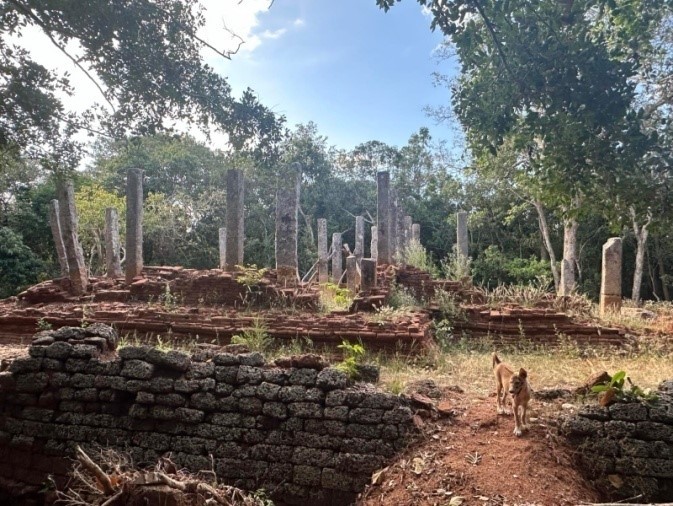
Medhananda found evidence of huge monastic complexes in the Eastern province. There was a monastic complex at Bambaragastalawa in Kumana. This monastery extends to over 450 acres.
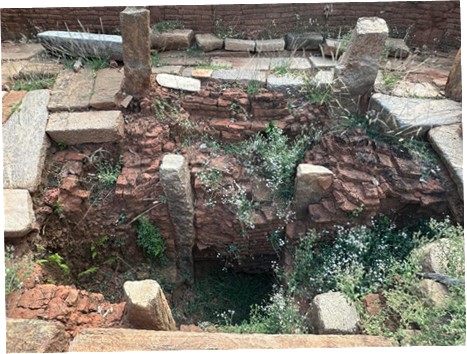
At Bambaragastalawa he found over ten stupas, on hill tops and flat ground. He found rock cut steps, Buddha statues, asanaghara, pillars, caves, viharas, image houses, chaitya and very old bricks. There was a stone seat, 15’ by 5’9”, beautifully carved at the edges. This may be an asanaghara, said Medhananda. He also saw a stupa 50 ft wide and 23 ft high. He found a rectangular arrangement of six rows of six columns each.
There is a huge pilima lena surrounded by smaller lena, said Medhananda. In it there was a reclining Buddha image, 36 feet in length, built with brick, mud and lime plaster, vandalized by treasure hunters. There is a drip ledge all round the cave. Brick walls were built dividing the cave into many rooms, with the top decorated with swan sculptures. The bricks used were excellently burned ones. There was a vestibule 16 by 48 ft in front of cave. It had ten square holes for wooden beams. There was a stone pillar in front, and stone steps indicating two entrances, a wooden door frame and a wooden pillar, of milla wood, concluded Medhananda..
Medhananda had also explored Sembumale monastery, in Kuchchaveli, which covered over hundred acres. He visited the monastic complex at Mahapattuwa in Veheragoda area. This has not been explored by the Department of Archaeology and there is no official record of it. Bovattegala showed ruins of a monastery, said Medhananda .
Medhananda went to Omunugala Cave Monastery ( ‘len vihara’ ) at Ampara.The meditation caves at Omunugala extended from the foot of the mountain to a level little below the summit. They were very impressive. Every cave had its drip ledge inscription. Most caves had remains of walls. There are ancient paintings in one cave. One cave is startling, said Medhananda . The cave and the rock in front have been combined to make something like a two storey house. another cave had rectangular holes drilled into it probably to support beams to an upper storey.
The largest cave, a shrine cave, is about 120’ in length, had walls on three sides and a window. There was a flight of steps leading to a door frame to enter the cave. It had a makara thorana. There are more undiscovered caves but access was very difficult and I did not climb them, said Medhananda..
There was also the magnificent monastic complex at Rajagala. The Rajagala monastery was known as Girikibalavi Tisa Mahavihare. The Rajagala hill range, also known as Rassehela kanda, is 1030 feet above sea level. Both north and south slopes have many ruins. All over the hills there are ruins of stupa. There is a hermitage to the north. Many stone pillars of various heights and sizes, circular, rectangular, octagonal are seen scattered. Stone ponds, one had a sluice. Medhananda noted its special features such as the two water spouts to fill large stone cisterns.There were decorated urinal stones.
There were over hundred caves. Brick and stone walls created separate rooms inside the caves. One cave had a bed and pillow cut out of rock. Cave walls were plastered and painted, paintings have faded. One cave has a roof carved in shape of an umbrella and handle of the umbrella is done in most exquisite fashion, said Medhananda .
Rajagala yielded 70 cave inscription, 20 slab inscription and rock inscriptions. One huge inscription said that the ashes of Mahinda and Ittiya are enshrined there. Another inscription spoke of Saddhatissa and Lanjatissa. (This is not king Lanjatissa). Inscriptions spoke of donations of tanks, caves, fields. Inscription also made reference to statues, taxes and coins. One inscription refers to tilling the land with a golden plough. One Inscription has been tampered with, concluded Medhananda.
Forest hermitages
The eastern Proivnce hosts many forest hermitages today. There is Kudimbigala. Medhananda said that there were Buddhist ruins extending over at least 600 acres around Kudumbigala with numerous stupas on the rocks. Kudimbigala has the only cylindrical stupa known in Sri Lanka, said Medhananda . inscriptions show that Kudimbigala was established by king Kavantissa.
The cave architecture of Kudimbigala was astounding, said Medhananda . The cave technique is amazing. Cave after cave, placed on top of each other for 100 acres or so. He had counted 105 caves. one cave was a Budu madura. One cave was named Maha Sudarsana ,another was Yoda lena. Sita pokunu lena had paintings of 7th century.
There was a huge cave project at Samangala forest hermitage, Ampara. This was a high level hermitage. Inscription indicates that this was started by Saddhatissa. One cave is 60 feet in height and can shelter about 500 people. All caves had drip ledges. There were many inscriptions which have not yet been recorded. No archaeological explorations have been done here. An attempt to turn this into a meditation centre, some years ago, failed, said Medhananda.
There has been a monastery at present day Namalu chetiya. Namalu chetiya was huge, almost as large as Ruvanveli. The villagers used to worship there. The monastery of 150 acres occupied flat ground , rock, hill and forest. There were ponds, flights of steps, heaps of inscriptions and several stone beds. The monastery ended at Heda oya. This would have been a developed, scenic, large monastery, said Medhananda . A monk was living by the stupa in a small hut when Medhananda went there.
Buddhangala aranya Senasana, Ampara has 200 acres of ruins, on five hills. Stone bridges connect one rock to the other. Caves were partitioned into three by walls. Bricks with decorations and inscribed are found in plenty. There was a fine siripatula, circular , 11 feet and well carved. In 1964 Buddhangala was restarted as a hermitage.
Piyangala vana Senasuna, Ampara has over 100 meditation caves with and without drip ledges. Some of the old walls remain. The old badama is there, this is worth examining, said Medhananda.
Cave shrines.
Medhananda has drawn attention to the existence of cave shrines. The most notable of the cave shrines explored by Medhananda was the Karandahela cave complex, in Hulannuge, Ampara, 633 feet above sea level. Karandahela has the biggest cave in Asia. .https://roar.media/sinhala/main/features/caves-in-karandahela-sri-lanka/
At Padikemgala Medhananda found many caves first inhabited by monks, then turned to shrines. There were many shrines in these caves, the paintings on the walls could still be seen. One cave had brick wall with many niches and no windows. Neelagiri pilima lena had two important caves at the top, both are shrines. The caves had walls, one wall was of stones. The walls had been plastered, the plaster can be seen, also the paintings.
Muhudu Maha viharas
Muhudu Maha viharas could be seen in abundance on south, east and northern coastal areas, said Medhananda These shrines were built to be seen from the sea. Medhananda drew attention to the Muhudu maha viharas built along the coast of the Eastern province
Kucceveli Maha vihara was one of these muhudu viharas, he said. Magul Maha vihara , Kirinda had rows of caves with walls and drip ledge. The viharas at Bundala, Gokanna, Gotha pabbata, Jambulkolaptuna Kirinda, Lankapatuna,Okanda, Potuvila, Sangaman kanda, Sastravela, were in existence until recently, he said. Stupas were also built at the mouths of the rivers where they meet the sea, as at Walawe ganga.
Ariyakara viharas
Ruhuna has had several Ariyakara vihara where venerated arahats lived and Ariyawansa sutra was preached.This was very popular in Ruhuna, there is evidence to prove this., said Medhananda . There was Ariyakara Raja maha vihara at Kettama village, in the Eastern Province. It has steps, siripatul, gal vangediya, faded inscription, naga carvings on rock as well as carvings of horse and bahirawa.
Ariyawansa sutra was also preached at Mulhitiya Velegoda near Pulligoda, said Medhananda . this was Pelegama vihara originally. Veheragala, at Rajagala, had Ariyawansa preached there. Inscription says Kubira bhikkhu stayed there. This inscription is still there. Bovattegala Inscription indicates that the Ariyawansa sutra was preached there.
There were other viharas where the Ariyawansa sutra was preached from a seat set on a hilltop. There are such open places with a seat at Molhitiya, Velegala, Mutugalla , Panama, Sastravela, said Medhananda .
Medhananda thinks that there was also an Ariyakara building at ‘Punchi Sigiriya” in Digamadulla. Punchi Sigiriya is not a rock, it is a cave. With a one Sigiriya like painting, seen by Paranavitane, which is fading away. Medhananda was more interested in a ruined building on a hill close by, reached by a flight of steps. Medhananda thinks this was for preaching Ariyawansa sutra.
Forgotten viharas
Medhananda has discovered many forgotten viharas, in the eastern province such as Boralukanda vihara ,Nilaveli. Illukpitiya kanda len vihara, Ampara. Sri Pana Raja Maha Vihara, Pottuvil.
Another forgotten vihara is Kotaveheragala vihara in Yalpota village, Lahugala, the village has just four families doing chena cultivation. Kotaveheragala vihara has a cave second only to that in Karandahele. It has a carved drip ledge. It is divided into four rooms and the walls are still standing. there is an inscription on the steps, faded which says the steps were donated by a monk. It must have been an image house . there are lovely overflowing ponds on the rock . Lots of bricks all over. It is possible to go round the rock to the caves on the other side, but it is dangerous, because bears and leopards come there. This vihara has not been seen by the Department of Archaeology.
Medhananda has explored Somawathi vihara at Kombanachchiya, near Kiliveddi. It has ruins no one has seen before. Malayadikanda vihara has 27 caves and ruined stupa. Niyagunakanda vihara has caves near it with drip ledge inscription. Site has never been examined. Both viharas are near Hingurana sugar factory. In Gal len vihara at Giribawa, Kurunegala the caves had specific names such as sheeta guhe, two caves were maha lena.
Kappangamuyaye Kadurugoda vihara by Namal oya had stupa, columns, and moonstone. There were ruins in the forest around. Ganegama vihara, Ampara had veddha paintings of crocodiles, elephant and other figures . it had a simple sandakada pahana, and a doratupala with punkalasa. there were many Veheragalas in the island, observed Medhananda . Medhananda has also looked atBalahudu , Kukuluvagala and Galaba len vihara.
Some forgotten viharas catered to small populations. Kirivehera Raja Maha Vihara Lahugala, was in village where a few families were living off banana plantations. It was reached by a footpath from Hulannuge junction.
Medhananda also commented on some of the objects found in his explorations. Medhananda took special interest in the bricks that lay in abundance in the sites he explored.Around Verugal ara near Uppar lagoon there are hillocks full of old bricks, he said. At Henangala he found three types of ancient bricks.. At Veheragoda, Ampara , in the ‘Pansal kalla’ section there were bricks measuring 2’1” and 1’2”. Kudagala had bricks some 1’4’x8”x 2 ½ and others 8”x9”x 2 ½ .Buriyakulam kanda ruins would have had very attractive steps judging by the decorative bricks found there.
Medhananda found two clay puvaru 14” by 11” by 1 ½ at Medagama kanda Aranya senasanaya. On one puvaru there was garadi veta carved, resembling the veta at Sanchi. Also an attractive line of flowers. The carvings have been done before firing. These puvaru were probably used for decoration .
The rock cut steps at Padi Kemgala ruins are unique. there are several flights of steps. The first consists of 52 steps which were 2’6” long and 1’2’ wide. This was followed by several sets of 7 steps each, with a resting stone between, ending with a set of rounded steps .the resting stone was 10” by 5 with three circles in it, and a lotus design in the center. The last step was decorated with a curled elephant trunk. I have never been seen such a flight of steps, before exclaimed Medhananda . There was also an inscription which said how the steps were made. That inscription was decorated with two lotus buds on stems. Padi Kemgala ruins also had a moonstone carved in the rock.
Neelagiri pilima lena was probably a very important aramaya. There is set of steps all the way up the hill. there seem to be more than 200 steps. It has breaks in it, for people to stop and rest every 50 feet or so, with arukku gal. There are moon stones at the breaks. the only other flight of steps like this is at Hachchikuchi, said Medhananda .
Medhananda found a special siripatul gala at Konduvattavana ruins in Inginiyagala. It was a round siripatula gala, and siripatula is elevated in the middle of the sculpture. This is rare. the upper terrace of the stupa at Panama Raja Maha Vihara has siripatula on it. I have seen this only in two other places, Vehera galkanda and Dammina, said Medhananda .
In early Buddhism, the Buddha was depicted symbolically by an empty chair. This was one of the earliest symbols used for the Buddha. These empty chairs were housed in Asanghara. The Asanagara found at Pulunkunawa is unique, and not found anywhere else in the country, said Medhananda . It was owalankara in shape. Veheragoda ruins, Ampara had an asanaghara. Medhananda saw a possible asanaghara at Bambaragastalawa too.
Diviyagala vihara in Ampara district has a beautiful moonstone and umbrella stone in good preservation as well as a complete chatragala, and three siripatul. Tampitiya vihara by Tampita wewa, off Pullumalai junction, Batticaloa district, has a very unique guard stone with 9 snake heads, a person holding a pun kalasa and a woman bending down and collecting water. ( continued)
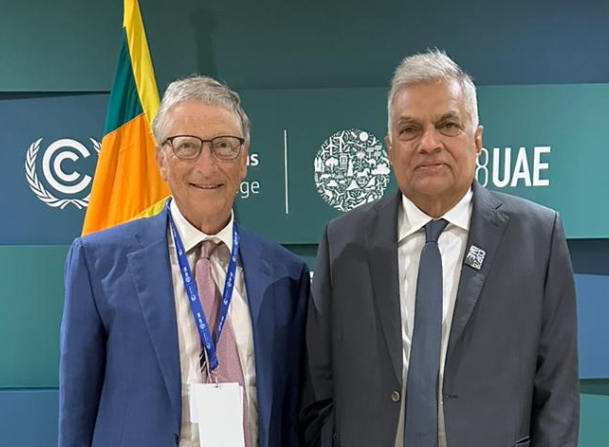
Is Sri Lanka headed in the same Direction with the Bill and Melinda Gates Foundation setting policy in the President’s Office as did the MCC in when the Central Bank Bond scams occurred?
At a time of increasingly adverse weather conditions, there is growing urgency of adopting protective policies towards small farmers and pastoralists. Unfortunately, the Tanzanian government has been adopting policies which are further increasing the difficulties of small farmers and pastoral people.
According to a recent study by GRAIN, a Europe-based organization known for its commitment to protecting small farmer communities, there was an earlier wave of corporate based farming in the post-2008 years which was promoted by multinational companies and donors and led to several land conflicts and destruction of livelihood of small farmers. Several of these projects collapsed, leaving behind a trail of misery spread across many villages.
Despite this terrible experience behind them, now the Tanzanian authorities are repeating a somewhat similar phase of export-led, large farm based agriculture by aggressively turning thousands of hectares into block farms that produce export crops. One difference now is that this more recent change is linked more closely to China. As GRAIN states, With China looking to Tanzania as a new supply source of soybeans, the stage is set for another wave of land grabs, with dire consequences for small farmers.”
This report recommends that instead of wasting scarce public resources on failed model of corporate agriculture” the Tanzanian government should instead focus on efforts to address the real needs of the country’s millions of small food producers.
Meanwhile, this country’s other important rural group of pastoralists have been increasingly threatened by projects which are often publicized as conservation projects but in reality are often more oriented towards the commercial aspects of safari tourism and related activities. The US-based Oakland Institute has been repeatedly drawing attention to the increasing problems of pastoralists, small cultivators and indigenous communities threatened by such projects in terms of displacements, curtailment of livelihood rights and harassment by park authorities and rangers.
Last year the Oakland Institute had released reports regarding several such communities of people facing increasing problems in some conservation and park project areas, including those linked to generous funding from the World Bank.
Now in more recent information releases, the Oakland Institute has stated that problems in some of these areas are intensifying further. In the Ngorongoro Conservation Area (NCA), for example, in mid-January a new plan was announced to remove about 100,000 pastoralists. A big concern is that they are being asked to move away to areas where there is scarcity of water and grazing land. Moreover, already people are living here. Where will they go? So if this displacement takes place it is likely that a series of new land-conflicts can get imposed on two vulnerable rural groups who may be devastated by this. It may be recalled here that at the root of several conflicts in Africa are several land disputes triggered by wrong and distorted policies going back to colonial and neo-colonial legacies.
A little earlier rangers raided a village near Tarangire National Park, shooting several Maasai villagers, arresting 80 of them and seizing nearly 800 of their cattle. In the Ruaha Park area the harassment reported earlier has been increasing.
It is clear that such distorted tourism and conservation policies need to change, and instead new policies should seek to include people as partners in any such initiatives, utilizing the rich local biodiversity knowledge of indigenous and local people to take forward conservation, enhancing livelihoods instead of diminishing or threatening them.
Is Sri Lanka headed in the same Direction with the Bill and Melinda Gates Foundation setting policy in the President’s Office as did the MCC in when the Central Bank Bond scams occurred?
Bharat Dogra is Honorary Convener, Campaign to Save Earth Now. His recent books include ‘India’s Quest for Sustainable Farming and Healthy Food’, ‘Man over Machine’ and ‘Protecting Earth for Children’.
• New higher education institute to be established at Dambulla
State Minister of Defence Hon. Premitha Bandara Tennakoon, visited the General Sir John Kotelawala Defence University (KDU) in Ratmalana today (Feb 8).
State Minister was warmly received by the Vice Chancellor (VC) of KDU Rear Admiral Dammika Kumara. Arriving at the University, he made floral tribute at the War Heroes’ monument of KDU.
After the arrival of KDU Headquarters Complex, Minister Tennakoon had a cordial discussion with the KDU authorities. Afterwards, the Deputy Vice Chancellor (Defence and Administration) conducted a briefing at the VC’s conference hall.
During the discussion, the Minister was also briefed on the progress of the establishment of ‘City College of Technology’ at Dambulla as an expansion to the KDU Wing at Kurunagala District, since he was keen to learn of this new higher educational institute that would open new avenues to the youth in the region.
After the briefing, State Minister had an interaction with the Academic Staff, Foreign students, Officer Cadets and undergrads at the Officer Cadet’s Mess.
Minister Tennakoon together with the Headquarters officials visited the faculties of KDU, museum and new auditorium construction site.
Concluding the official visit, the State Minister made remarks on the Visitor’s Book and also exchanged mementoes with the VC to mark the significance of the event.
Maldivian Chief of Defence Force Lieutenant General Abdul Raheem Abdul Latheef met Defence Secretary General Kamal Gunaratne today (Feb 8). The meeting was held at the Defence Headquarters Complex at Sri Jayewardenepura, Kotte.
During the interaction, Lt. Gen. Latheef expressed eagerness to foster a closer relationship in defence cooperation with Sri Lanka. The discussion was centred on enhancing collaboration in areas including military training, strategic partnerships and security initiatives.
The Defence Secretary praised the historical alliance between the Maldives and Sri Lanka and highlighted the shared commitment to regional stability and security. Both sides emphasized the importance of sustained dialogue and exchange programs to further fortify defence capabilities and promote peace in the region.
Lt Gen. Latheef is a graduate of the Defence Services Command and Staff College, Batalanda and was recently appointed as the Chief of Defence Force by H.E. the President of the Republic of Maldives Dr. Mohamed Muizzu.
The meeting concluded with the sharing of souvenirs to mark the event and the Military Liaison Officer of the Ministry of Defence Maj. Gen. Dhammika Welagedara also present at the occasion.
By Veeragathy Thanabalasingham Courtesy NewsIn.Asia
Colombo, February 8: The five-day visit of National People’s Power (NPP) leader Anura Kumara Dissanayake and his three comrades to India has drawn a flurry of attention in the political arena in Sri Lanka. It is commonplace for Sri Lankan politicians to make visits to India, but the visit of the leaders of the NPP to India has a special significance.
Dissanayake and his comrades were officially invited by the Government of India for discussions. Indian government leaders engaging in talks with Sri Lankan political leaders is nothing new. However, this must be the first time in recent decades that New Delhi has officially invited the leaders of a Sri Lankan leftist political party.
It is reported that the Indian Minister of External Affairs Dr. Subramaniam Jaishankar, National Security Adviser Ajith Doval and Foreign Secretary Vinay Mohan Kwatra discussed the Island nation’s economy, political situation, future politics and regional security with the NPP leaders.
After the meeting on Monday, Dr Jaishankar took to ‘X’ and said ” Pleased to meet @anuradisanayake, Leader of NPP and JVP of Sri Lanka this morning. A good discussion on our bilateral relationship and the mutual benefits from its further deepening. Also spoke about Sri Lanka’s economic challenges and the path ahead.”
During the five-day visit, the NPP delegation toured Prime Minister Narendra Modi’s home state of Gujarat and the Communist Party-ruled South Indian state of Kerala and held discussions with various parties including think tanks.
It is very significant that at time when Sri Lanka prepares for two national elections later this year, the Indian government invited Dissanayake who has announced his candidature for the Presidential election and who is widely believed to have increased his popular support.
The Janata Vimukti Peramuna (JVP), the flagship party of the NPP, has a history of not translating its impressive rhetoric and media dominance into votes in elections. People turn out in large numbers for its rallies and processions but don’t vote for it. However, it cannot be said that history will be repeated after the 2022 mass uprising called Aragalaya” with its left wing overtones.
According to the January survey conducted by the Institute of Health Policy, a Colombo-based research institution, Dissanayake is the most preferred candidate in a Presidential election this year. Fifty percent of respondents said they would vote for him , while 33 percent of the respondents chose the Leader of Opposition Sajith Premadasa and only 9 percent chose President Ranil Wickramasinghe. The survey reiterated the findings of multiple local opinion polls conducted over the past year.
However it is very difficult to believe that Dissanayaka, who got only a 3 percent of the vote in the 2019 Presidential election, will be able to tremendously increase his vote base to cross 50 percent in the coming election. If he does it will certainly be a miracle not only in Sri Lanka but in the region as well.
In any case, it is clear that the Indian government sees the NPP as an important political force in the current political situation in Sri Lanka. As for the JVP, it has a history of adopting a rabid anti-India policy from its inception. Anti-Indianism was an important element in the policies of the JVP, which was started by Rohana Wijeweera in the late 1960s after breaking out of the pro-China Communist Party led by the Late N.Shanmugathasan on communal grounds.
Wijeweera described the Upcountry plantation workers of Indian origin as India’s fifth column and agents of Indian expansionism. He was also said to have talked about clearing the tea plantations and planting potatoes.
In the late 1980s, the JVP led a second armed insurgency following the Indo -Lankan Peace Accord. Many a southern politician who supported the provincial council system in the hope of finding a political solution to the protracted ethnic conflict was assassinated. Former President Chandrika’s husband actor turned politician Vijaya Kumaratunga was one of them. The JVP also called for a boycott of Indian goods.
After several years, the JVP contested the provincial council elections and its members served as members of these councils. At the same time the JVP and its modern avatar NPP have not given up their strong opposition to the 13th Amendment to the Constitution.
When President Wickremesinghe announced his intention to fully implement the 13th Amendment last year, NPP vehemently opposed it as the hard line Sinhala nationalists did.
The fact that New Delhi officially invited NPP leaders for talks shows, that India, in the current geopolitical context, is not bothered about their past anti-Indian policies.
The NPP has also changed its stance towards India. In an interview given by Dissanayake last December to the Colombo Correspondent of ‘The Hindu’, Meera Srinivasan, he said, ” We do know that India, our closest neighbour, has become a major political and economic centre. So, when we take economic and political decisions, we will always care about how it will impact India.”
What is noteworthy is how the leaders of the NPP, who have been maintaining close ties with China for a long time will deal with China after their visit to India.
In an interview with a Colombo-based English daily last week, NPP Member of Parliament Dr Harini Amarasuriya was asked how NPP would handle relations with the superpowers, particularly China and India.
She said, ” The ideal position for us to take is one where we are not aligned with any country but one which allows us to be open to every country. We must engage with a country based on an agenda that suits us. Whether it’s India, China or America, no other country is going to come and work with us or engage with us without an agenda. If we don’t have an agenda of our own, we will have to act according to their agenda.”
Be that as it may, there is no doubt that the anti-Indian political forces in South Sri Lanka will take this opportunity to carry out a campaign against the NPP accusing it of being pro-India. People like Wimal Weerawansa have already shown signs of it. It remains to be seen how NPP leaders will handle that.
Can we expect any softening in the stance of the NPP regarding the political solution of the ethnic problem after their visit to India? It can be presumed that Indian officials would not have shown any interest in taking up the issues related to the ethnic problem with Dissanayake’s team.
While the visit to India is a major political and diplomatic victory for the NPP, many observers wonder whether it is prudent and appropriate on the part of India to consider NPP as a major political force in shaping Sri Lanka’s future.
Colombo, February 8: The visit of a delegation of the Sri Lankan leftist political alliance, the National Peoples’ Power (NPP), to India at the invitation of the Indian government, has raised a lot of interest in Sri Lanka. Commentators are wondering if this means a significant shift in India’s policy vis-à-vis political parties in Si Lanka.
Thus far, India has regularly interacted only with the large, mainstream political parties like the United National Party (UNP), the Sri Lanka Freedom Party (SLFP) and the Sri Lanka Podujana Peramuna (SLPP), besides the Tamil National Alliance (TNA) and the Indian Tamil and Muslim parties. The Janata Vimukthi Peramuna (JVP), which is the main constituent of the NPP, was taboo because it had been rabidly and consistently anti-Indian.
ADVERTISEMENT
The JVP had lambasted the India-Sri Lanka Accord of 1987 and India’s solution of the problem of the Tamil minority through the full implementation of the 13 th. Constitutional Amendment which gives a modicum of autonomy to the Tamil-speaking provinces.
The JVP had opposed India’s plans to enter into a Comprehensive Economic Partnership Agreement (CEPA) and the Economic and Technical Cooperation Agreement (ETCA) with Sri Lanka.
But since Anura Kumara Dissanayaka took charge of the party in 2014, there has been a change. He had personally told the capitalist class that his leftist party stood for private enterprise too.
Dissnayaka told an interviewer that Sri Lanka cannot but take note of economic development in India and his NPP colleague Harini Amarasuriya said that Sri Lanka should have ties with all countries based on its own interests.
With the corruption and misrule characterising the regimes of Mahinda Rajapaksa, Maitripala Sirisena, Gotabaya Rajapaksa and the rise in prices associated with the rule of Ranil Wickremesinghe, people began to yearn for a new leader and a new party. There is therefore a tendency to name the JVP as a possible alternative.
According to the January survey conducted by the Institute of Health Policy, a Colombo-based research institution, 50% of the respondents said they would vote for Dissanayaka, 33% chose the Leader of Opposition Sajith Premadasa and only 9% chose President Ranil Wickramasinghe in the coming Presidential election, expected in September 2024.
However, according to political commentator V.Thanabalasingham, it is very difficult to believe that Dissanayaka, who got only a 3% of the vote in the 2019 Presidential election, will be able to increase his vote base to cross the required 50% in the coming Presidential election.
However, since there is a high possibility of the JVP (or its alliance NPP) getting a fair number of seats in the parliamentary elections which would follow the Presidential poll.
It is in view of these possibilities that India and the US started cultivating the JVP/NPP. US Ambassador Julie Chung had a meeting with Dissanayaka. This was followed by an invitation from India to visit New Delhi, Gujarat and Kerala. In New Delhi, Dissanayaka met the Foreign Minister S.Jaishankar, Foreign Secretary Vinay Kwatra, and National Security Advisor Ajit Doval. Dissanayaka also interacted with researchers in the pro-government security oriented think tank Vivekananda Foundation.
During his trip to Gujarat, he met the Chief Minister Bhupendrabhai Patel, who showcased the economic achievements of his state, known for private enterprise. Dissanayaka’s visit to Kerala, was meant to show how a communist-ruled State is successfully running a government following liberal policies.
Jaishankar, Kwatra and Doval would have impressed upon Dissanayaka, India’s concerns about developments in the Indian Ocean region with the Chinese imposing their will on the littoral states including Sri Lanka, and how Chinese investments could chain these countries to Chinese interests.
They would have impressed upon the Sri Lankan visitor the advantages in tying up with democratic India instead of authoritarian and opaque China.
Some commentators in Sri Lanka feel that India is wooing the JVP/NPP because it wants to look for an alternative party to support to ensure their interests are served. But it appears that the Wickremesinghe government is fully backing Dissanayaka’s Delhi trip. The President is keen on securing the JVP/NPP’s cooperation for his economic policies and the IMF package so that Sri Lanka merges form the economic mire it got into in 2022. These chime with India’s interests.
Wickremesinghe told parliament that he was seeking JVP’s help since in 2015-2019 it cooperated with the Maithripala Sirisena government for the common good. He appealed to the Samagi Janata Balavegaya and the JVP to unite in the pursuit of our nation building dream.”
India would like a united and stable Sri Lanka with consistent policies so that it can collaborate with it to reach common goals. If all parties have the same commitment to facilitate foreign investments on sound principles and follow security policies taking into consideration India’s interests, it would be ideal for New Delhi.
Just as President Wickremesinghe is seeking the cooperation of all parties, India is also attempting to secure the same to further its interests in Sri Lanka.
However, Tamil public opinion is hostile to India’s dalliance with the JVP as the latter has consistently opposed a federal system and even the mild federalism in the 13 th.Amendment. The Tamils see the JVP as a majoritarian Sinhala chauvinist party.
But an argument in favour of India’s cultivating the JVP is that India may be able to change the outlook of the JVP in favour of the Tamils in course of time.
Of course, as stated earlier, India has its own over-riding interests, which are primarily economic and geopolitical. It has to stem China’s intrusions into its backyard and for this, it needs the cooperation of all Sri Lankan parties including the JV/NPP.
I am quoting an earlier paper of mine which if considered can develop the sad state of tourism in our country.
The only addition I make is about the takeover of hotel bookings on the Internet by giant foreign companies that have also taken over advertising. Our tourist board authorities have to think very seriously about the fact that these foreign booking companies advise the payment by the tourist to the hotel- which happens in rupees, but the booking company sends an invoice for fifteen percent to the hotel which the hotelier takes to his bank and the bank pays that invoice in our dollars. In short, our country has lost the dollars from our reserves.
In my foreign travel, I have always paid for hotels in India, Cambodia, Vietnam, and Thailand in dollars. The hotels take over our passports and immediately they see a foreign passport they insist on payment in dollars. Time to think deeply.
Palestinian flag unfurls at the historical Acropolis Temple and the Monument to the Unknown Soldier in Athens
Feb 5, 2024
In the capital Athens, a group unfurled the Palestinian flag in front of the historical Acropolis Temple and the Monument to the Unknown Soldier and sent a message of support to Palestine.
The anarchist group called Ruvikonas” posted on social media, We stand not only with the Palestinians, but also with the heroic Jews who are on the black list of ‘traitors’ by taking a firm stand against a crime committed in their name with their own awareness, especially in Israel.”
The post, which also included photographs of the Palestinian flag unfurled in front of the historical Acropolis Temple and the Tomb of the Unknown Soldier, included the slogan Life and freedom for Palestine”.
Grim Milestone: Over 100,000 Killed, Wounded, Missing in Gaza
Feb 3, 2024
More than 100,000 Palestinians are either dead, injured, or missing and presumed dead in the besieged Gaza Strip, the World Health Organization (WHO) has announced.
This follows more than three months of intense Israeli bombardment of the enclave, with Gaza’s Ministry of Health confirming a total of 27,131 Palestinians killed, and 66,287 wounded in Israel’s ongoing genocide in Gaza starting on October 7.
At the same time, the risk of famine is high and increasing each day,” the WHO Director-General, Tedros Adhanom Ghebreyesus, said on Thursday.
Ghebreyesus said the agency’s teams on the ground report increasing food shortages for medical staff and patients with only one meal per day.”
The WHO chief stressed, We continue to call for safe access for humanitarian personnel and supplies.”
He said the organization has faced great difficulty” in trying to reach hospitals in southern Gaza, with heavy fighting reported near hospitals in Khan Yunis, severely impairing access to health facilities, for patients, health workers and supplies.”
During a UN mission on Monday, the WHO delivered medical supplies to Nasser Medical Complex.
Other missions to deliver fuel and food were denied,” he said.
Despite challenges, Nasser Hospital continues to offer health services, although at reduced capacity.”
The hospital is operating with a single ambulance, and donkey carts are being used for transporting patients.”
He also shared that yesterday we made another attempt to get food to Nasser, but due to delays the food was taken from the trucks by crowds who are also desperate for food.”
We continue to call for health care to be protected and not attacked or militarized, and we continue to call for a ceasefire,” the WHO chief said.
Earlier on Saturday, he said on X that 22,000 people are sheltering in Gaza’s European Hospital due to the ongoing intensive fighting in Khan Yunis, which also impedes access to the hospital.”
The WHO team and partners have witnessed extreme crowding inside the facility — truly inhumane conditions for patients, health workers, and those without a safe place to shelter,” he added.
Ghebreyesus also said he was Horrified by the reports about the killing of civilians, including Palestine RCS staff, at the Al Amal hospital compound today and in the past two days in Khan Yunis, Gaza.”
He stressed, We cannot say it louder: hospitals must be protected, not attacked nor militarized. Ceasefire!”
The North and east of Sri Lanka was Sinhala and Buddhist throughout the ancient, medieval and modern period, right up to the start of British rule in 1815.There is plenty of evidence to prove this, if proof is necessary.
To start with, the north was an integral part of the Raja Rata of the Anuradhapura kingdom. The Raja Rata was divided into uttara passa (north) dakkhina, (south) pacina, (east) and pajjima (west). Uttara passa consisted of today’s Vavuniya, Mullaitivu, Kilinochchi, Mannar, and Jaffna. Each division was ruled by officer appointed by king.
The Northern Province was under the Sinhala king in the ancient and medieval periods. Periyakulam inscription says that during the time of Devanam Piyatissa, Vavuniya was ruled by ‘Naga’ and ‘Uti’ and Mannar was ruled by ‘Kana’.During the time of the Sinhala attakatha, Nagadipa ruler was under Sinhala king, as diparaja.
In Vasabha’s time ((67-111 AD) Jaffna was ruled by Vasabha’s Minister Isigiri. Nelugala inscription indicated that a minister, also named, Asgiri administered the north under Bhatiya Tissa II (143-167) and Kanitta Tissa (167-186). Inscription of Kassapa IV((898-914) at Kadurugoda said Kassapa was the ruler of the south as well as the north. Mannar pillar inscription of Kassapa IV spoke of three Buddhist viharas in the area, Bahaduru Sen Piyangala, Na Vihara and Rakkha vihara.
Kokila sandesaya (15th century) gives a route from Kotte to Jaffna via Mannar. Mannar was a part of the Sitawaka kingdom in the 16th century . During the time of Rajasinha I, (1581-93) Manamperi Mohottala administered Mannar. Baldeus (1632-72) writing during the Dutch occupation, gave a list of places under the Sinhala king. It included Trincomalee, Mannar, Batticaloa, and Jaffna.
When the British, Danish and French envoys came to meet the Udarata king in the 18th century ,they came in through the harbours at Trincomalee and Batticaloa. These ports were under the Udarata king. Batticaloa port was an unfamiliar port and the Udarata king sent experts to guide the ship into Batticaloa port, when it brought in the foreign envoys, who were from Denmark or France, I forget which.
The Northern and Eastern Provinces remained within the last Sinhala kingdom, the Udarata kingdom until the Udarata kingdom came to an end in 1815. The Udarata kingdom was huge, about three times the size of the Portuguese and Dutch possessions.
Another way of showing that the North was ruled by the Sinhala king was by comparing the language and script in northern inscription and those elsewhere, said Ven. Ellawela Medhananda. Medhananda found two cave inscriptions dated to 2 ADat Kandakudichchi aru ruins( Ampara). The script and language resembled that at Ritigala, Vessagiriya, Mihintale. inscriptions of Kassapa IV were found in south, east and northwest of the island. The script and language was the same. Language and script were the same in the Mailagastota , Kallampattuva and Tunukai inscriptions . Mailagastota was in the south, Kallampattuva in the east and Tunukai in the north of Sri Lanka .
.Not only was the north- east Sinhala, it was also Buddhist . It was a part of Sri Lanka ‘s Buddhist heritage. Inscriptions show that in the Anuradhapura period, Abhayagiri Nikaya had monasteries all over the island. They were at Kantaroda in Jaffna, Nedunkerni and Ottimalai in Vanni, also at Badulla, Yapahuwa, Panduvasnuwara and Ramba vihara in Hambantota.
Kannimaduwa inscription found near Kongarayam kulam , Vavuniya speaks of Salapavu vehera and its villages. Vavuniya still retains evidence of this civilization. Kirivehera at Atambagaskada, 6 km from Vavuniya, has a Samadhi Buddha statue, which is far superior to those found in this area. It is 2’ 21/2” high. The head dress or ketumala is unique ,said Ellawela Medhananda. Villagers says it was brought from elsewhere.
Medhananda says the North is full of Buddhist remains, every hill, every mound has a Buddhist building. Every village had an aramaya. Medhananda said that there were over 1500 Buddhist archaeological sites in the districts of Vavuniya, Kilinochchi, Mullaitivu and Mannar. Each time I went to Vavuniya and Mullaitivu I found new ruins. He has found foundations of buildings, lived-in caves, inscriptions, pada lanjana and bricks. He says there are many more sites. Medhananda said there are more than 20 archaeological sites on the small Dollar Farm village alone.
Vavuniya and Mullaitivu are full of Buddhist ruins. There are hundreds of Buddhist ruins in Vavuniya. there are three sets of ruins in a straight line, at Mahakachca kodiya, Erupotana, and Periyapuliyam kulam malai. Odiamalai, Thadda malai, Kurundam malai had inscriptions. Kurundammalai , originally Kurunvashoka vihara, had a lot of ruins. Medhananda said that this was the place where he saw the most ruins. Have not seen so many ruins in any other place I have gone to.
Vavuniya and Mullaitivu Buddhist ruins have not been examined fully by anyone., said Medhananda . Most of these are not recorded by Department of Archaeology. ‘We have never explored these areas, said Medhananda . Our archeology only concentrated on Anuradhapura, Polonnaruwa and a few other places.
From Jaffna to Wilpattu, all along the ocean strip, one sees places with over 100 ruins. No explorations have been done in this area. These sites were never examined carefully, other than presenting a random report.
In his book Pacina passsa, uttara passa, nagenahira palata ha uturu palate Sinhala Bauddha Urumaya” Medhananda gives a list of Buddhist ruins seen by him in the Northern Province. The viharas seen by Medhananda in his northern explorations include Atambagaskada kiri vihara , Buddhanehela Raja Maha Vihara , Galgiriyagama kanda vihara , Iratperiyakulam vihara , Kadurugoda vihara , Kurundammalai vihara , Madukande Dalada vihara , Mahakachcha kodiya vihara, Mangana vihara . Piyagukatissa vihara , Paribhoga chaitya, Salavana vihara , Tonigala vihara , Valli vihara, Vedikinarimalai Vaddamana parvata vihara ,
Medhananda gives 48 places in Jaffna where he has seen Buddhist ruins He says there are others as well. the places listed are Algiriya, Anai kottai, Analativu,Ariyalai, Atchuveli, Buddhatottam, Buddhawalawwa, Chakaveli, Changanai, Chulipuram, Chunnakam, Delft, Elavativu, Gotamalu watte, Karaitivu,Kodiyavatte Mahiyapiddy, Mallakam, Manipai, Marattamadam,Mavaddipuram, Nagachcha kovil precincts, Nagarkovil, Nainativu,Nallur, Neelavarai, Pinwatte, Ponnalai, Poonaryn, Pukuditivu, Puloli, Puttur,Sambaturai,Tellipilai, Tennavali, Tiruadanilai, Tisamalai, Tunukai, Udupiddy, Uduvil, Uratota,Uraturai, Vadukkodai, Valikamam and Valvettiturai. Medhananda says these ruins show bricks, tiles, statues, potsherds, inscriptions. Most are in private lands, Medhananda observed.
Medhananda has given a detailed description of the sites he has visited. In Vavuniya, Medhananda explored Buddanehela Raja Maha Vihara . Ruins are fast deteriorating he said. Galkiriyagama kande vihara, had remains of a huge stupa , a Siripatula and ponds. Inscriptions show king Uththiya’s queen had built a structure here.
The Eastern Province played a special role in the political life of ancient Sri Lanka. The eastern Province functioned as a refuge while the Sinhala state was in formation. Whenever they were in trouble, not only princes but also monks ran to Ruhuna, said Medhananda.
In the period between Devanampiyatissa and Dutugemunu,( 250 BC to 161 BC) the Eastern Province nurtured a second independent kingdom, the Ruhuna kingdom ruled by the Magama kings. The first Magama king, Mahanaga, was the brother of Devanam piyatissa. He left Anuradhapura and founded a separate unit at Ruhuna. The Magama dynasty was therefore closely related to the Anuradhapura kings. They were not a rival dynasty either. There is no evidence of that.
King Kavantissa , a direct descendant of king Mahanaga, united the Ruhuna region under him. The capital of Ruhuna south was Magama, Ruhuna north was Dighavapi, said Medhananda. Kavantissa’s son, Saddhatissa was put in charge of Dighavapi. Medhananda found that Gal Oya was the boundary between Ruhuna and Pihiti , Uva province extended to Pottuvil and Digamadulla included Ampara and Batticaloa.
Dutugemunu, the last Magama king, re-united Ruhuna and Anuradhapura, kicking out Elara, who had done absolutely nothing for Anuradhapura in his time there. The Eastern Province quickly became an asset to the Sinhala king. Thantilage observed that there was high grade copper at Seruwila, Trincomalee was a major port and Ilankaturai had the potential to be a second international port.
The Eastern Province continued under the Sinhala king in ancient and medieval times. Kumachola inscription at Eravur said that the eastern coast (pajinikara) was administered in king Vasabha’s time (67-111 AD) by minister Asigira. Velendagoda Salavana vihara had an inscription dated to Mahinda 1 (730-33). An inscription near Allai wewa is dated to Dappula IV (924-35). Vijayabahu I (1055–1110) fought the Cholas from Ruhuna.Vikramabahu I (1111-32) had hidden in Ruhuna. Kanichchigala in Beerihorowwa division, Ampara district, had an inscription by Nissanka Malla (1187-96). Dathuvamsa (13 century) mentions 27 Sinhala villages around Kotthasara. Kotthasara is present day Kottiyar pattu, in the Trincomalee district. Kottiyar Pattu consists of Muttur, Seruwila and Eechchilampattu.
The Eastern Province continued to be under the Sinhala king. Baldeus (1632-72) writing during the Dutch occupation, gave a list of places under the Sinhala king. It included Trincomalee, Mannar, Batticaloa and Jaffna.
The Eastern province came under the Udarata king as part of the Udarata kingdom. The Udarata kingdom was huge, about three times the size of the Portuguese and Dutch possessions. Envoys from Britain, Denmark, France and Netherlands entered the Udarata kingdom in the 17th and 18th centuries, through the ports of Trincomalee and Batticaloa. The Eastern Province remained with Udarata until the kingdom came to an end in 1815.
The Department of archaeology stated, at a talk I attended, that the Eastern Province had many prehistoric settlements and at least 40 sites of the early brahmi period. It has had a long standing, substantial civilization. There was an unbroken sequence of inscriptions from 3rd century BC to 13 century AD.
The evidence indicates that there were at least 25,000 settlements in Ruhuna, said Medhananda. Medhananda estimated that there was a huge population at Piyangalla vihara. He said Arantalawa was populated in ancient times. This whole area has been populated said Medhananda when he explored Mudugala pilima lena. The area was partly under Ruhuna and partly under Wellassa.
Villages were established close to rivers, as they needed water, observed Medhananda. Medhananda gave the names of some of the villages. Kamboja gama, near Kumbukkan oya, Mayvelesa gama near Heda oya , Dighavapi near Gal oya, Dahadiya near Verugal aru ( Vihara gala ara), Gonagamaya, Uruvela, Magana near Mahaweli.There was alsoKasaba nagara, Giritisa gama, Karaginitisa gama, Vilagama, Malu gama.
Eastern Province was very suitable for agriculture, observed Medhananda. It had flat land, water and excellent drainage. There was evidence of many irrigation schemes. There have been many urban centers.
Eastern Province was part of the Buddhist civilization of Sri Lanka from the very beginning. The ashes of Ven. Mahinda are interred in a stupa at Rajagala, in present day Ampara .Dighavapi is one of the solosmastana of Buddhist worship. There is also Girihandu Seya at Tiriyaya, considered the first stupa and Kukkuta giri parvataya which held Buddha’s lalata dhatu.
Inscriptions show that Eastern Province was Buddhist said H.G Dayasiri and C.B. Ambanwela. They found inscriptions at Kiripokunakanda, Lunubokke, Moralagommana, Imbuldeniyagodakanda and Pahala mawela kande Raja Maha Vihara, which showed this. Medhananda said that inscriptions at Seruwavila, Kulankallumalai, and Ichcilanpattai showed that there were Buddhist settlements there. Kulankallumalai is 3 miles from Ilankathurai. The inscription near Allai wewa speaks of Kavudul Vehera, he added. Sipavata vihara inscription indicated that this area was once a Buddhist agricultural area.
Archaeological Department has listed 54 ancient religious places in the Trincomalee district, but Medhananda says there are many more such sites. If one travels north along the sea coast road, starting from Trincomalee town, one can see many Buddhist ruins even at present. Kucchaveli is one such place. It was once Kanikaravellika samudda vihara. This area included present Sembumale, said Medhananda. Sembumale monastery complex spreads over an area of more than hundred acres.
Many ruins can be seen at Ridikanda area in Trincomalee district said Medhananda. Pulukunawa Maha vihara has ruins all over” indicating that this whole area has been a developed Sinhala Buddhist area. The Yan Oya valley is studded with many stupas and other buildings. Panama pattu forest range is full of archaeological ruins. There is no protection for any of it, continued Medhananda.
The hills in the belt between Karanda oya and Gal oya is full of viharas. Every paddy field, empty land is full of archaeological remains and inscriptions. Wewas and canals which were part of ancient irrigation systems could be seen.
There are Buddhist ruins over at least 600 acres around Kudumbigala. Numerous stupas can be seen today, on the rocks. Madakande Dalada vihara was full of ruins. There are Buddhist ruins at Kusalana kanda, Kudulupothana malai and Othiya malai.
Diviyagala, Damana and Timbirigolle have inscriptions and ruins in the vicinity. Kudimbigala, Veheragoda, Panama vehera also had Buddhist ruins. These were watered by Kudimbigal Ara, Halava oya, Vil oya and Heda oya. Medhananda explored the Thoppigala ruins. He went in 1983 With three others. Every hill side around Thoppigala has a ruin of an aramaya, he said.
Medhananda also found ruins at Nawinna Raja Maha Vihara and Kombanachchi or Ruhunu Somawathi vihara. there are hillocks full of old bricks around Verugal ara near Upparu lagoon, Medhananda said. Medhananda also looked at the Buddhist ruins at Icchilanpathi, Kanchimalali, Kivulevatta, Kulankallumalai, Moraha Pokuna, Naraka mulla, Ranankaduwa, Ratugala and Thottama. Medhananda had explored Boralukanda temple, Nilaveli, Illukpitiya kanda Len vihara, Ampara, Malayadi kanda vihara, Digamadulla and Sri Pana Raja Maha vihara, Pottuvil.
Medhananda emphasized that many of the sites he had explored have not been seen by the Department of Archaeology. No exploration as been done at Samangala forest monastery. There are no reports in the Archeological Department as to the ruins at Mahapattuva or the Ovagiriya temple complex. These places have been ignored in archaeological investigations and it is difficult to get at any prior data, complained Medhananda.
Thottama, Manthottama, Pannala oya and Ambalan oya has archaeological remains which are not registered. There are lots of ruins at Vasi bandagala, Atubandagala, Iddagala, Nelugala, Mavulivala, in Eravur area, which have not been explored before, said Medhananda. Ruins at Pillumalai, Kopavali, Tamketiya have never been investigated. The area north of Badulla –Eravur has not been explored. There are lots of Buddhist sites there in the forests, Also ruins of irrigation schemes. The ruins at Perillaveli are in thick forest. They have not been seen by the Archeological Department. Sipavata vihara inscriptions have not been examined. There are no reports in the Archeological Department as to the ruins at Mahapattuva which are about 8 km from Timbirigolla Vidayalya.
There has been no systematic explorations of Welikanda to Batticaloa , Batticaloa to Badulla, Maduru oya area. these are now deep forest. Viharagal kanda at Trikonmadu has ruins for 10 acres. These have not been explored before. Even the ruins around Dighavapi have not been explored. Serupitiya ruins were examined for the first time by me, no one had gone there before, said Medhananda. Pallewela ruins were also discovered by me, he said. Medhananda has also visited the Bandaraduva and Balagala ruins, ruins near Higurana sugar factory, Veheragala ruins, Mulgama kanda ruins, Koravanvadu ruins.
Medhananda has written extensively of his findings in the Eastern Province. a selection of these are given here.
Neelagiri pilima lena was probably a very important aramaya. There is set of steps all the way up the hill. there seem to be more than 200 steps. It has breaks in it, for people to stop and rest every 50 feet or so. There are moon stones among it. the only other flight of steps like this is at Hachikuchi. There are two important caves at the top, both are shrines. Walls are well built one of stones. They have been plastered. And the plaster is still there, it was then painted over.
Omunugala len vihara, Ampara had astonishing number of caves. They extended from the foot of the mountain to a level little below the summit. One cave is startling. The cave and the rock in front have been combined to make something like a two storey house. The largest cave is about 120’ in length, with walls on three sides and a window. Also an entrance. There is a flight of steps leading to a door frame to enter shrine.
Bambaragastalawa vihara area is full of ruins. This monastery has been over 450 acres. More than ten stupa, very old bricks, rock cut steps, Buddha statues and asanaghara. in one place there was a rectangle of six rows of six columns each, with four feet four inches between each column.
Kudimbigala has Ruins for about 600 acres. Numerous stupas on the rocks can be seen today. The caves technique is amazing. Cave after cave for 100 of acres. I counted 105 caves. 2 are worth describing. There is a trident in one inscription. One cave is called Mahasudarsana. The other cave is Yoda lena. Kudimbigala also has the only cylindrical stupa.
Veheragoda ruins, Ampara. There is stupa which shows the earlier style of building with bricks and lumps of stone this is also seen at Buddhangala and Rajagala. Veheragoda had large bricks which are 2’1” by 1’2”.
Sastravela vihara had 22 stupa. The name originally was Bodigiri naga pabbata Vihara’
Tampitiya vihara had a very unique guard stone with 9 snakes heads, pun kalasa, a woman bending down and collecting water.
Velgama vihara had a new type of relic chamber.
Karandahela vihara. Ampara,. Moon stone is only lotus petal. Bricks of the stupa are very old. There is a rock carved gal vangediya circumference 7 feet. 2 inches deep middle one foot deep. There is on huge cave. 512 feet long, wide 30 ft, height 82 feet.
Konduvattavana ruins. The siripatula is special. It is round, and siripatula is elevated in the middle of the sculpture. This is rare. Kodavattuvana is Tamilised version of ‘Kandewattavana’
Malayadikanda vihara had 27 caves and a ruined stupa.
There are ruins near Kodavattuvan army camp. There is a siripatula there which is round. There is an inscription which names this monastery as Ahali Araba. Its tam lipiya names this area as Aram agama.
Diviyagala vihara in Ampara district has a beautiful moonstone and umbrella stone in good preservation. also three siripatula.
Punyadi ruins. . stupa had ancient bricks, they were of different types. Some had rounded edges.
Kappangamuyaye Kadurugoda vihara near Namal oya had Stupa, columns, moonstone. More in the forest around.
One and a half miles to the east of the present Devalahinda school, there are many ruins of stupas, ponds, Buddha foot prints, asanagharas. There is a wall fortification 7 feet wide stretching for a distance of about 600 feet.
In Punani Grama Sevaka division, there is a ruined panchamaha vihara. 2 miles beyond , Padiettena malai also had Buddhist ruins.
Etha bandi wewa ruins. there have been very attractive steps, judging by the decorative bricks.
Samangala forest monastery provided an inscription where three of the five Magama kings, namely, Uparaja Mahanaga, the brother of Devanam piyatissa, Gotabaya,Kavantissa were listed together. Such inscriptions are rare, said Medhananda.
Inscriptions showed that Linemalai originally had an aramaya known as Sipavata, hosting many monks. One inscription stated that Mahadatika Mahanaga had donated two channels named Dakapunaka and Girigamaka and its taxes to the vihara.
Pulukunawa Maha vihara, all over the hillside you see caves. With and without drip ledge and inscription. About 70 caves of different sizes. Medhananda found 17 inscriptions, there may be more. ( continued)
With the rise of the Tamil Separatist Movement, Buddhists feared for the Buddhist ruins in the north and east. They wanted them listed and shown on maps. Several persons then started to list the Buddhist sites in the north. M. H. Sirisoma, Asst. Archaeological Commissioner prepared a map of Buddhist sites in 1963. This was much valued and greatly used. It is still cited as a pioneer contribution.
Buddhist ruins kept appearing in the north.In 1965, when a Kurukkal chief priest was clearing the jungle in Kilinohchi he had come across the ruins of a Buddhist temple, some Buddha statues, stone carving as well as a Bo tree.
A map drawn up by the Dept of Archaeology in 1980 showed 18 Buddhist sites in Jaffna, 2 in Kilinochchi, 77 in Trincomalee, 27 in Batticaloa and 28 in Ampara. There were 109 sites in Vanni, mostly in Mullaitvu and Vavuniya.
In 1983, Cyril Mathew prepared a 167 page document, titled An appeal to UNESCO to safeguard and preserve the cultural property in Sri Lanka endangered by racial prejudice, unlawful occupation or willful destruction.” it is a privately published monograph, carrying the address. Barnes Place, Colombo 7.”
Cyril Mathew’s book has a large map which shows the location of the Buddhist sides of the north and east. Map lists 21 places in Jaffna, 4 in Mannar, 105 in Vavuniya and Mullaitivu.’
The book also contains information on 24 selected sites, with supporting documents, showing the destruction of these Buddhist monuments. Among the monuments destroyed he lists Kurundanmalai where in 1981 there was an attempt to turn the image house into a Hindu kovil. A siripatula found there was used as a base to light camphor.
Further, the stupa at Nellikulam in Vavuniya had been leveled and cemented and a trident placed there. A Hindu kovil has been constructed in the vihara premises at Mohantankulam in Vavuniya. The entire area, including ruins has been fenced in and turned into a large cattle shed, said Cyril Mathew. A Hindu kovil was to be set up at Samalankulam in Vavuniya.
Cyril Mathew’s book ends with a set of photographs showing the damage caused to several Buddhist monuments in the north and east. The photographs include a wantonly damaged Buddha image from Etambagaskada. Cyril Mathew acknowledged the support of several others in preparing this document. He speaks of the support and cooperation he received from colleagues, friends and well wishers. (See last page)
Starting in 2003 and continuing into 2013 Ellawela Medhananda explored and wrote up his findings on Buddhist ruins in the north and east. Medhananda prepared a set of maps which showed those Buddhist ruins found by him, which are NOT shown on the Buddhist monument map compiled by the Department of Archaeology.
Medhananda‘s map shows 17 new locations for Jaffna, including 4 on the smaller islands and 19 for Vavuniya and Mullaitivu. Mannar has 32 places, of which 15 are lined along the sea coast. The map of the Eastern province showed Ampara 22 places, many along the coast or near it, Trincomalee 6, and Batticaloa 4. Medhananda says this list is incomplete. ‘There should be much more than we found.’
In 2010 the Department of Archaeology initiated a survey of the Buddhist sites in the north. In 2010, the Department of Archeology sent a team to the North, to map out the Buddhist remains in Mullaitivu, Kilinochchi, Vavuniya, Mannar and Jaffna. Their task was to find and list all the Buddhist monuments they found and bring those areas under the authority of the Department of Archaeology. The purpose was to protect these archaeological sites from possible damage by the development projects planned for the Northern Province. See https://www.youtube.com/watch?v=zNeaiDsTBoY for a talk in this project given to Institute of Archaeology and Heritage Studies, Colombo.
The Department obtained a grant from UNDP and started work in 2010. The UNDP grant ended in 2014, but the project continued to 2015.The team paid 14 visits to the Northern Province, staying 10 days per month. We were unable to walk the full area of a site, as we should, said Vasana. The army did not allow us to do so. We were confined to the areas the army permitted us to go, but this included high security forested areas as well. However, they were able to cover 80% of Mullaitivu area and 60% of Vavuniya.
The team first looked at the 44 known sites, but more sites emerged and the project went on to discover a total of 379 sites. They found 48 in Jaffna 16 in Kilinochchi 175 in Mullaitivu 60 in Mannar and 80 in Vavuniya.
We were the first civil unit to go into these areas after the war, Vasana said. It was very difficult. There were no local informants. Also the Department of Archaeology had not been active there for the last 30 years. Therefore, the team did not follow the usual procedure of working with the administrators serving in that district.
Instead, they worked in consultation with the army, who were firmly in control in the north. The army had three regional commands at Jaffna, Wanni and Mullaitivu. The archaeological team worked closely with the brigades under these Commands. The brigades consisted mainly of infantry battalions. The army had been very supportive. They made sure that the team was comfortable. The army had given up their rooms to the archaeological team and had built toilets for the female members. The navy and the civil arakshaka Balakaya had also helped. .Vasana and Kalpa expressed grateful thanks to the armed forces for their support.
The army and the archaeological team had worked together very harmoniously. There was much dedication and cooperation on both sides in executing the project. The army was also very helpful in the actual search. ’They would call us to come and look at the things they had found.’
Once the team had identified a site as a Buddhist archaeological site, they erected an Archaeological Department column there. This concrete column was very heavy, but officers carried it willingly. The team also set boundary stones and put up a board announcing in all three languages. that the place was now an archaeological site. Back in Colombo, the team recorded their findings in three ‘district books’. They also had a large collection of photographs.
The team prepared maps containing the location of these sites. These maps were given to the other Departments to be included in their maps of the north. The locations were also put on the Department website https://archaeologysl.maps.arcgis.com/home/index.html. Wont these ruins disappear in ten years, now that they have been identified,” they were asked. Vasana replied ‘that is why we have put them on the website, so now they cannot do away with them’.
The team obtained GPS positions for all the sites. The team was asked, when you give GPS locators won’t that help people to destroy these places. The team replied that most of these places are in high security forests or high security zones, also we have not publicized the GPS locations.
Vasana said , in answer to a question,that the Department did not take the Sangha along to inspect sites. If we took them that could have created problems”. The only bhikkhu who had explored the area successfully was Ellawela Medhananda.
The team found various types of evidence in these Buddhist sites. The team found a ketarama with brahmi script at Konagaharayan kulam and Vedikumarimalai cave temple. They found a karanduwa of a stupa at Marandankurni, a huge vihara complex, with stupa mound at Sonanochcha kulam, a siripatula at Periyamadu Muttumani Ambal kovil, a pabbata vihara at Mutiyankattakulam and a guard stone at Kokilai. In Mullaitivu, the ruins spread over large areas. There were remains of stupa and many image houses. The Buddhist sites found in Mullaitivu and Mannar were mainly Anuradhapura period , some were early Anuradhapura, some middle Anuradhapura .
In Mullaitivu the team found 175 archaeological sites, but not all were Buddhist, some were pre-Buddhist. The team found 44 huge ( ‘visala’) monasteries , 34 sites where the Buddhist ruins could be identified and another 55 where they could not identify what the function of the Buddhist ruins was.
Here are some of the findings at Mullaitivu. Ambakamun ruins had a standing Buddha statue, stupa mound and ruins of monastery. At Andankulam the team found Buddhist ruins in 4 places there was a stupa 6 meters tall circumference 20 meters, a Buddha statue and asanaya. There was a monastic complex at Janakapura.
Kachchidu had a large ruin complex, with Buddha statue and asana. Kalvilan was a monastery.
At Kalvilan, villagers had built houses over the whole monastic site using material from the Buddhist ruins. Various religious objects were found in the houses such as siripatula gala for washing clothes near the well. The team spoke to the villagers and persuaded them to part with these religious objects. Ruins were found in a paddy field at Kalvilan.
Kanyarkovil had Buddhist ruins. At Kiribbanwewa there was a seat and a cave with ketarama . The site also had two pre-brahmi inscriptions. Koddiyamalai site held two caves with ketarama . There has been a huge monastery at Kokavil. A complete guardstone was found .. Rupavahini is there now. Komalamunai had a huge stupa mound; it has been a monastic complex.Kumbakarna malai also appears to have been a huge monastic complex. There were lots of ruins..the team thought this was probably Kumbaselaka vihara. Kurundavashoka vihara in Komalamunai site had a moonstone and steps.
Mutiankattikulam has been a huge monastery. The team found a korawakgala and asana there. A stupa had emerged in the wewa when the water went down. The Oddusuddan area had lots of Buddhist ruins spread about the area, as at Keridamadu, Kachchilamadu, and Muniyan Kaddikulama. Materials from Buddhist ruins were used for the Oddusuddan kovil.
Buddhist pillars were seen beside the Sivapuram Sri Malai Kovil also stone edict dated to 8 to 10 AD which has been published. ‘Vannammaduva had a complete Buddhist statue in Samadhi, the army took it and it is now kept in the army camp.
Buddhist sites were found in several places in Mannar. Maligapitti had lots of ruins with a stupa mound. Place is surrounded by houses. A Buddha statue was found near Murungan, also a stupa in a banana plantation. Buddhist ruins were found near Murungan hospital including siripatula, an inscription and stone columns. The inscription and siripatula were used for patients to sit on. There were Buddhist sites at Mardamadu Pudalpitti, Neeravi kulam and Pokkaravanni .A. Buddha statue was found at Koviyamadu. The army had placed it inside a hut and were looking after it.
The team found 6 firmly established monasteries in Mannar. They were monastic complexes. They belonged to the Anuradhapura period, but the team did not have the time to accurately identify which Anuradhapura period they belonged to. The large complexes were always near water. The team also found a vast number of inscriptions in Mannar which were not known earlier. The script used in the northern inscriptions was the same as the script found in the southern inscriptions.
In 2013 Sunday Tijmes reported that National Heritage Ministry has gazetted 83 ancient monuments in north and east many of them being ruins of Buddhist temples, Situated in villages in Mannar, Mullativu Jaffna and Vavuniya districts. There are nearly 30 such monuments Majority were in the Mullativu district with one in Jaffna district.
in 2014Island newspaper reported that the Department of Archaeology had accnouced that it has so far discovered 341 ancient sites neglected due to the war in the Northern Province. 125 in Mullaitivu, 68 Vavuniya district, 66 Mannar district, 15 Kilinochchi district, 67 Jaffna district. They are now exploring the Sapumalgaskada and Ruwanmaduwa area in Vavuniya district. Already they have discovered 19 sites with stone inscriptions siripatulas and Buddha statues of the Anuradhapura period.
the Department had also found 84 new sites with inscriptions in 13 divisional secretariats in Ampara district. . They have also found 71 inscriptions in Padiyatalawa, Damana, eragama uhana lahugala, maha oya and Ampara division secretariats. Some inscriptions , of great importance have been fenced off for safety concluded Island. Daily News reported in 2014 that Buddhist ruins dating to Polonnaruwa period have been found at Kilinochchi.
In 2016, the Integrated Strategic Environment Assessment for the Northern Province of Sri Lanka (ISEA-North) 2016-2017 prepared a map of the Buddhist remains in the north. It can be accessed at
A principal instrument of U.S. foreign policy is covert regime change, meaning a secret action by the U.S. government to bring down the government of another country. There are strong reasons to believe that U.S. actions led to the removal from power of Pakistan’s Prime Minister Imran Khan in April 2022, followed by his arrest on trumped-up charges of corruption and espionage, and sentencing this week to 10 years imprisonment on the espionage charge. The political objective is to block Pakistan’s most popular politician from returning to power in the elections on February 8.
The key to covert operations of course is that they are secret and hence deniable by the U.S. government. Even when the evidence comes to light through whistleblowers or leaks, as it very often does, the U.S. government rejects the authenticity of the evidence and the mainstream media generally ignore the story because it contradicts the official narrative. Because editors at these mainstream outlets don’t want to peddle in conspiracy theories,” or are simply happy to be the mouthpieces for officialdom, they give the U.S. government a very wide berth for actual regime-change conspiracies.
Covert regime change by the U.S. is shockingly routine. One authoritative study by Boston University professor Lindsay O’Rourke counts 64 covert regime change operations by the U.S. during the Cold War (1947 and 1989), and in fact the number was far larger because she chose to count repeated attempts within one country as a single extended episode. Since then, U.S. regime change operations have remained frequent, such as when President Barrack Obama tasked the CIA (Operation Timber Sycamore) with overthrowing Syria’s President Bashar al-Assad. That covert operation remained secret until several years after the operation, and even then, was hardly covered by the mainstream media.
All of this brings us to Pakistan, another case where evidence points strongly to U.S.-led regime change. In this case, the U.S. desired to bring down the government of Prime Minister Imran Khan, the charismatic, talented, and hugely popular leader in Pakistan, renowned both for his world-leading cricket mastery and for his common touch with the people. His popularity, independence, and enormous talents make him a prime target of the U.S., which frets about popular leaders who don’t fall into line with U.S. policy.
Imran Khan’s sin” was to be too cooperative with Russian President Vladimir Putin and Chinese President Xi Jinping, while also seeking normal relations with the United States. The great mantra of U.S. foreign policy, and the activating principle of the CIA, is that a foreign leader is either with us or against us.” Leaders who try to be neutral amongst the great powers are at dire risk of losing their positions, or even their lives, at U.S. instigation, since the U.S. does not accept neutrality. Leaders seeking neutrality dating back to Patrice Lumumba (Zaire), Norodom Sihanouk (Cambodia), Viktor Yanukovych (Ukraine), and many others, have been toppled with the not-so-hidden-hand of the U.S. government.
Like many leaders in the developing world, Khan does not want to break relations with either the U.S. or Russia over the Ukraine War. By sheer coincidence of prior scheduling, Khan happened to be in Moscow to meet Putin on the day that Russia launched the special military operation (February 24, 2022). From the start, Khan advocated that the conflict in Ukraine should be settled at the negotiating table rather than on the battlefield. The U.S. and E.U. arm-twisted foreign leaders including Khan to fall into line against Putin and to support Western sanctions against Russia, yet Khan resisted.
Khan probably sealed his fate on March 6 when he held a large rally in northern Pakistan. At the rally, he berated the West, and especially 22 EU ambassadors, for pressuring him to condemn Russia at a vote in the United Nations. He also excoriated NATO’s war against terror in next-door Afghanistan as having been utterly devastating to Pakistan, with no acknowledgment, respect, or appreciation for Pakistan’s suffering.
Khan told the cheering crowds, EU ambassadors wrote a letter to us asking us to condemn and vote against Russia… What do you think of us? Are we your slaves … that whatever you say, we will do?” He added, We are friends with Russia, and we are also friends with America; we are friends with China and with Europe; we are not in any camp. Pakistan would remain neutral and work with those trying to end the war in Ukraine.”
From the U.S. perspective, neutral” is a fighting word. The grim follow-up for Khan was revealed in August 2023 by investigative reporters at The Intercept. Just one day after Khan’s rally, Assistant Secretary of State for the Bureau of South and Central Asian Affairs Donald Lu met in Washington with Pakistan’s Ambassador to the U.S., Asad Majeed Khan. Following the meeting, Ambassador Khan sent a secret cable (a cypher”) back to Islamabad, which was then leaked to The Intercept by a Pakistani military official.
The cable recounts how Assistant Secretary Lu berated Prime Minister Khan for his neutral stance. The cable quotes Lu as saying that people here and in Europe are quite concerned about why Pakistan is taking such an aggressively neutral position (on Ukraine), if such a position is even possible. It does not seem such a neutral stand to us.”
Lu then conveyed the bottom line to Ambassador Khan. I think if the no-confidence vote against the Prime Minister succeeds, all will be forgiven in Washington because the Russia visit is being looked at as a decision by the Prime Minister. Otherwise, I think it will be tough going ahead.”
Five weeks later on April 10, with the U.S. blunt threat hanging over the powerful Pakistani military, and with the military’s hold over the Pakistani parliament, the Parliament ousted Khan in a no-confidence vote. Within weeks, the new government followed with brazenly manufactured charges of corruption against Khan, to put him under arrest and prevent his return to power. In utterly Orwellian turn, when Khan made known the existence of the diplomatic cable that revealed America’s role in his ouster, the new government charged Khan with espionage. He has now been convicted on these charges to an unconscionable 10 years, with the U.S. government remaining silent on this outrage.
When asked about Khan’s conviction, the State Department had the following to say: It’s a matter for the Pakistani courts.” Such an answer is a vivid example of how U.S.-led regime change works. The State Department supports Khan’s imprisonment over Khan’s public revelation of U.S. actions.
Pakistan will therefore hold elections on February 8 with its most popular democratic leader in prison and with Khan’s party the subject of relentless attacks, political murders, media blackouts, and other heavy-handed repression. In all of this, the U.S. government is utterly complicit. So much for America’s democratic” values. The U.S. government has gotten its way for now—and has deeply destabilized a nuclear-armed nation of 240 million people. Only Khan’s release from prison and his participation in the upcoming election could restore stability.
Recently Dr Mahinda Pathirana of the Sabaragamuwa University of Sri Lanka, made an attempt to explain reincarnation via quantum mechanics. He uses the Buddhist teachings, Milinda / Nagasena debate and some of the ideas of the 2nd Century Buddhist Philosopher Nagarjuna. He is bringing Quantum entanglement to explain the method of transferring consciousness and how the birth of a consciousness in another body.
A complex and philosophical question is why we are born into a particular body and life. Is it something random? or predetermined? According to the current understanding of quantum mechanics things happening in the universe are probabilistic rather than deterministic. We know that Brownian motion is a random motion. Is it possible for the universe to be deterministic at certain levels? Remember Albert Einstein stated, God does not play dice”. Therefore, some people say nothing is “random” in the real world.
Those who agree with reincarnation try to highlight the connections between reincarnation and quantum mechanics and quantum entanglement. Quantum entanglement explains how two subatomic particles can be intimately linked to each other even if separated by billions of light-years of space. These particles communicate faster than the speed of light. Neuro-experts point out quantum effects in neural processes. Quantum entanglement links everything in the Universe. Deepak Chopra says that quantum entanglement links everything in the Universe, and therefore it must create consciousness. But I must say that the scientific community does not regard Deepak Chopra to be a credible scientist and his theories lack empirical evidence and they are not supported by mainstream scientific research. Moreover, Art Hobson Prof of Physics, University of Arkansas specifies that quantum entanglement has nothing directly to do with consciousness.
Despite these skeptical ideas can we say consciousness operates on a quantum level? Some claim that consciousness is a manifestation of quantum processes in the brain. The British molecular biologist Francis Crick and neurophysiologist Christof Koch proposed that consciousness is generated by networks of neurons oscillating in synchrony. Crick and Koch (2005) indicated that the claustrum” which is a thin, irregular, sheet-like neuronal grey matter structure that lies beside the insular cortex, may be involved in the processing of consciousness.
Consciousness is a complex and multifaceted phenomenon. However, so far, physicists have explained that quantum entanglement is a physical reality.
Quantum Theory and Consciousness
Consciousness implies awareness: subjective, phenomenal experience of the internal and external worlds. Consciousness creates the physical world moment by moment. Consciousness emerged as a property of complex biological computation during the course of evolution. Some suggest that consciousness is a quantum phenomenon. Connections between neurons alone cannot explain consciousness. Therefore, as an alternative theory some propose the quantum mind or quantum consciousness. Does the human brain use quantum computation? Can quantum theory help us to understand consciousness?
Quantum theory is characterized by the acknowledgment of a fundamental limitation in the classical physical ideas when applied to atomic phenomena. Niels Bohr’s philosophy of quantum mechanics helps us to understand physical realities. We know that Bohr was inspired by Immanuel Kant. Kant stated that without any consciousness we would make no distinction. For Kant, consciousness results from differentiation.
Bohr believed that the discovery of quantum mechanics could and should inform philosophy about new ways of understanding human knowledge. It would replace causal-space-time description of classical physics in order to preserve objectivity. Einstein’s theory is also central to quantum mechanics.
Scientists use string theory to describe the fundamental forces and particles in the universe. Can string theory explain consciousness? String theory highlights that reality is made up of infinitesimal vibrating strings. As string theory describes everything consists of quantum strings. Some experts postulate that the idea of consciousness being directly related to the position and configuration of strings. They think that string theory and consciousness are two sides of the same coin.
Some Neurologists speculate that the functioning of the brain is quantum. Quantum fields have holographic nature (every component already contains all the information of the whole) This indicates the multidimensional nature of reality.
Consciousness is the sensory awareness of the body, the self, and the world. Human consciousness arises from quantum fields. Still, we don’t have an accurate picture of quantum dimensions of reality. We cannot focus on consciousness from the perception of the physical senses. Consciousness goes far beyond the limitations of mechanistic materialism.
Having said that, we know that neurons alone cannot explain consciousness. Can we use quantum mechanics to explain the function of consciousness? Quantum mechanics allows the calculation of properties and behavior of physical systems. Quantum physics suggests that two particles will respond simultaneously to an active agent, regardless of distance. There is a deeper connection between consciousness and quantum mechanics. The mathematics of quantum mechanics might show us how consciousness works. We as humans live in a fundamental nondeterministic world. Quantum interaction remains indeterministic. The universe operates according to deterministic laws of physics such as consciousness. Consciousness belongs to the subatomic world which is fundamentally inscrutable.
Can we conclude that consciousness is based in the brain? Neuropsychologists believe that consciousness may arise from the complex interactions of neural networks in the brain. Conceivably Brain is a quantum processor. Kodukula (2009) theorized that the conscious brain works like a projector.
Here I want to bring an illustration. Most likely you may have seen how Jimi Hendrix played his guitar. Where does that electronic melody come from? Did it come from his Fender Stratocaster guitar itself or from Jimi Hendrix’s fingers? That innovative, powerful, and expressive sound came from the combination of his fingers and Fender Stratocaster guitar. Consciousness too comes as a series of combinations.
Hiroomi Umezawa – Physicist and Distinguished Professor in the Department of Physics at the University of Wisconsin interpreted memory and other conscious phenomena as the result of the energy exchange of energy particles in the cerebral cortical field. Is there a quantum-level substance that can be transmitted between neurons, such as a neurotransmitter, which conveys consciousness-related information? Hameroff and team (2014) proposed that consciousness depends on biologically ‘orchestrated’ coherent quantum processes in collections of microtubules within brain neurons.
Javier García-Castro and Prasad Kodukula Siva state that a fundamental property of the entire universe and that conscious experience emerges by transformation from mind (‘‘jeeton’’) to matter (‘graviton’). Graviton is a postulated quantum that is thought to be the carrier of the gravitational field and jeeton is a quantum particle. Kodukula (2019) hypothesized that the interaction between ‘jeeton’ and ‘graviton’ gives rise to consciousness. This model emphasizes that ‘mind’ is a consequence of ‘jeeton’ and the ‘matter’ is a consequence of ‘graviton’. Their entanglement gives rise to consciousness. However, it’s important to mention that jeeton / graviton theory is a hypothesis and still there is no empirical evidence to prove this fact.
The Concept of Reincarnation and Quantum Physics
The concept of reincarnation cannot be explained through classical Newtonian physics. There is no empirical evidence to prove reincarnation using mathematics or cell biology. However, some experts use Quantum physics to explain the reincarnation process.
Can we use quantum physics to explain metaphysical theories of reincarnation? Quantum physics, as a branch of science, primarily deals with the behavior of matter and energy at the smallest scales. We all agree that Quantum physics opens a totally new world view and provides a new understanding of spiritual philosophy. Quantum physics gives a new cosmovision. Newtonian physics was deterministic and Quantum science is probabilistic. Quantum science is holistic, acknowledging a multi-dimensional universe. Through Newtonian physics we can understand the objective world scientifically through the senses. But Quantum physics can explain things beyond our sensors.
According to quantum theory energy is not continuous but comes in discrete units and the elementary particles behave both like particles and like waves. Quantum physics has evidenced that one particle can be in more than one place at the same time. Subatomic particles communicate instantaneously and travel faster than the speed of light. At the subatomic level, matter does not exist with certainty in definite places. Sometimes a particle acts like a particle, sometimes like a wave. Therefore, the quantum world evolves beyond the common parameters of the space-time characteristic of the macroscopic realm.
Can consciousness exist without or beyond the human brain? Can consciousness open to other dimensions? Human consciousness has multidimensional, holistic and holographic properties. Some physicists conclude that consciousness is primary and the creative basis for the material world. The entire humankind may be living in a universe of consciousness. Consciousness is a great part of the cosmic ocean. consciousness cannot be reduced to matter. Can we detect transmigration of consciousness using quantum physics? Perhaps reincarnation resides quantum definition of physical reality? Those who agree with reincarnation suggest that quantum memory remains after biological death and it transmigrate to another plains as a special type of consciousness and continues, through to another incarnation. This is universal interconnectedness. May be reincarnation is a quantum reality.
Can consciousness move to another reality after death? Jerzy Zbigniew Achimowicz of the Warsaw Medical Academy state that when a human being dies, the seat of mind, generates a quantum solitary electromagnetic wave packet and then reincarnation may happen if given seat of mind (consciousness) finds a brain of a newborn with similar genotype. (consciousness attaches to a new brain?)
Reincarnation Explained in the Buddhist Doctrine
As described by Ṭhānissaro Bhikkhu who is an American Buddhist monk and author, rebirth has always been a central teaching in the Buddhist tradition. The Buddha did not believe in a transmigration of soul and replaced the soul by the theory of mind-continuum (Thupten Tenzlng – Karma and Rebirth in Buddhism). There is a causal link between a subtle form of consciousness present at the time of death and the first moment of consciousness in the next life (Finnigan, 2023).
According to Buddhist doctrine a thought moment occurs when a person dies. It is the mind set during death in the current existence and then grasping the next life. A dying person has exit consciousness. This consciousness is a form of transitory energy. Exit consciousness transforms into another level of consciousness and it can enter another womb when a matching one becomes available. Hence rebirth occurs. Three conditions are essential for conception: the union of mother and father, the mother in season, and the presence of a transformed level of exit consciousness.
The Buddhist concept denies the existence of an eternal soul. Instead of an eternal soul, they believe in transforming consciousness which is not static. These processes are governed by the Karmic force or karmic retribution. Here the analogy is the flame of a dying candle can serve to light the flame of another. A flame is transferred from one candle to another. Hence consciousness is a continuous birth and death of mind-states. It is linking an individual to past and future existences. The person who dies here and is reborn elsewhere is neither the same person, nor another.
Milinda was the King of the Indo-Greek Kingdom who probably reigned from about 155 to 130 BCE. King Milinda had a debate with Bhikkhu Nagasena about rebirth.
In the Milinda / Nagasena debate the king asked:
“When someone is reborn, Venerable Nagasena, is he the same as the one who just died or is he another?”
Ven Nagasena replied: “He is neither the same nor another.”
“Give me an illustration!”
“Milk, once the milking is done, turns after sometimes into curds; from curds it turns into fresh butter; and from fresh butter into ghee. Would it now be correct to say that the milk is the same thing as the curds, or the fresh butter, or the ghee?
“No, it would not. But they have been produced because of it.”
All Buddhist schools agree that there is no enduring, substantial, or independently existing entity that continues from life to life. Instead, there is simply an apparent continuity of momentary consciousness from one lifetime to the next that is imbued with the impressions or traces of the actions one has done in the past. One moment gives rise to the next, in a continuity of causally connected conscious events, but nothing solid or substantial continues from one existence to the next. (Lekshe Tsomo – University of San Diego).
Ven Buddhaghosa – a 5th-century Indian Theravada Buddhist monk states that conception occurs immediately after death, that is, the continuity of consciousness enters a new state of existence without any interval in-between.
If we think consciousness is simply energy and it cannot be destroyed and it transforms. Can we say in Buddhist teaching rebirth occurs due to the transmigration of consciousness? A living being starts a new life in a different physical body form after each biological death.
The Buddhist notion of the mental continuum of an individual is difficult to explain via neuropsychology. I communicated with several world-renowned Psychologists and Psychiatrists. I spoke with Professor Judith Herman of Harvard University, Professor Mary Seeman of University of Toronto, and Professor Philip Zimbardo of Stanford University. Many of these intellectuals expressed their doubt about the said process. Professor Zimbardo was explicit and stated, This process is Not possible in reality It can only be a religious belief with no scientific evidence”. However, Professor Daya Somasundaram- a senior professor of psychiatry at the Faculty of Medicine, University of Jaffna expressed his thoughts thus.
I feel that these beliefs and descriptions are metaphysical or subtle phenomena which are beyond current neuropsychological knowledge or theories. Most scientific and neuropsychological knowledge or speculations tend to confine themselves to very basic and objective, materialistic phenomena as the hard facts of life. They even have problems with admitting subjective phenomena such as consciousness. They would consider the Buddhist descriptions as mere speculations with no objective evidence. But some psychologists and others do go beyond the hard or materialistic views and frontiers to entertain such beliefs and descriptions”.
How Did Consciousness Evolve?
According to Salama, (2008) life began as lipid molecules originating in deep space and fell into the surface of the primordial ocean and then went into numerous changes and transformed into a cell then through the evaluation multicellular beings emerged. Cells have memory and it’s called cellular memory. Based on Darwinian evolution, the scientists surmise that consciousness would have occurred initially some 200 million years ago. They think that consciousness was built upon the mammalian neocortex. The core of human consciousness appears to be associated primarily with phylogenetically ancient structures mediating arousal and activated by primitive emotions (Denton et al., 2009).
Living cells constitute a new class of matter. Cells literally construct themselves. Through consciousness we create the physical world. We cannot explain consciousness through mainstream science. Living things are Kantian wholes where the parts exist for and by means of the whole. The link between the lifeworld and the quantum world should already be broadly evident. Quantum mechanics points to the end result of what consciousness does. Is there a quantum mind, resides in the space between quantum events?
Can Consciousness Continue After Death?
Consciousness is the most important function of the organism. According to William James, consciousness is not a static thing but a process. Neuroscientists believe that consciousness is generated by the brain. They highlight that consciousness must be the product of neural activity. Substantial interconnections among the brainstem, subcortical structures, and the neocortex are essential integrating components of human consciousness.
Different levels of consciousness are distinguished: 1. hyperalertness, 2. alertness (normal state of wakefulness), 3. somnolence or lethargy, 4. obtundation with tendency to fall asleep, 5. stupor, 6. coma and its subtypes, like akinetic mutism, apallic syndrome or persistent vegative state, locked-in syndrome, delirium, and catatonia.
Following a coma, some patients may “awaken” without voluntary interaction or communication with the environment. The patients who are in “persistent vegetative state” show some degree of consciousness–a condition called “minimally conscious state”. Using neuroimaging techniques Neurologists are able to measure the fading consciousness in the human brain.
Is there an irreversible loss of consciousness? There may be consciousness in the dying brain. The brain is assumed to be hypoactive during cardiac arrest. Gang Xu and team analyzed electroencephalogram and electrocardiogram signals in four comatose dying patients before and after the withdrawal of ventilatory support. Two of the four patients exhibited a rapid and marked surge of gamma power, surge of cross-frequency coupling of gamma waves with slower oscillations and increased interhemispheric functional and directed connectivity in gamma bands.
These data demonstrate that the dying brain can still be active. Some researchers have found a surge in brain activity at the time of death. The question remains; is there a survival of consciousness after death? Dr. Sam Parnia a British associate Professor of Medicine at the NYU Langone Medical Center is of the view that human consciousness does not become annihilated after death. What happens to this consciousness? Does it enter a living fetus?
Dr. Robert Lanza is a scientist and author, and a professor at Wake Forest University coined the phrase ‘biocentrism’ which is a theory that the consciousness is released into the universe through sub-atomic particles According to this notion consciousness would not necessarily be dependent on a physical brain in order to survive. Therefore, consciousness is more than an abstract concept.
Consciousness in a Human Fetus
The emergence of consciousness or the mind can be regarded as defining human viability. Development of the embryo begins at Stage one when sperm fertilizes an oocyte and together, they form a zygote. The zygote is a large diploid cell that is the beginning, or primordium, of a human being. The fetus may be having a consciousness, and it reacts to pain and other stimulations.
The fetus reacts to nociceptive stimulations through different motor, autonomic, vegetative, hormonal, and metabolic changes relatively early in the gestation period. The fetus may be aware of the body. But the fetus is almost continuously asleep and unconscious partially due to endogenous sedation.
The newborn infant can be awake, exhibit sensory awareness, and process memorized mental representations. However, Falsaperla and team (2022) state that neuroanatomical point of view, it is rather unlikely that the infant can be seen as a conscious human before 24 weeks of gestational age. (This hypothesis assumes that consciousness is mainly localized in the cortex, consciousness cannot emerge before 24 gestational weeks when the thalamocortical connections from the sense organs are established).
Concluding Thoughts
Is there a mechanism within quantum physics that can be used to validate or explain the notion of reincarnation? Quantum physics indicates the possibility of higher-dimensional spacetimes. The quantum effects are evident in photosynthesis and during the process remarkable efficiency of energy is transferred.
Dr. Maher Abdelsamie proposed 5 dimension aka Meta-Dimension which is believed to mediate the entanglement between quantum particles regardless of their physical separation in the conventional three-dimensional space. Using Meta-Dimension, we can explain the nature of consciousness. The mind set during death or in other words exit consciousness can be redefined as a complex network of entangled quantum states. Can the exit consciousness remain after death and go to another realm?
However, reincarnation is a metaphysical concept. It falls outside the scope of quantum physics and mainstream science. There is currently no scientific evidence to support the idea that quantum mechanics can explain reincarnation.
References
Achimowicz J.Z. (2023). On the quantum theory of reincarnation as the best technology of dying.
Astore, R,A. (2016). Nagarjuna’s Idealism as a Metaphysical Justification Against Ignorance.
Crick F.C., Koch C. What is the function of the claustrum? Philosophical Transactions of the Royal Society of London. Series B: Biological Sciences. 2005;360(1458):1271–1279. doi: 10.1098/rstb.2005.1661.
Denton DA, McKinley MJ, Farrell M, Egan GF. The role of primordial emotions in the evolutionary origin of consciousness. Conscious Cogn. 2009;18(2):500–514.
Faye J, Jaksland R. What Bohr wanted Carnap to learn from quantum mechanics. Stud Hist Philos Sci. 2021 Aug;88:110-119. doi: 10.1016/j.shpsa.2021.05.010. Epub 2021 Jun 17. PMID: 34147731.
Falsaperla R, Collotta AD, Spatuzza M, Familiari M, Vitaliti G, Ruggieri M. Evidences of emerging pain consciousness during prenatal development: a narrative review. Neurol Sci. 2022 Jun;43(6):3523-3532. doi: 10.1007/s10072-022-05968-2. Epub 2022 Mar 4. PMID: 35246816; PMCID: PMC9120116.
Ferrer, A. (2015). From newtonian physics to quantum theory; From new science to spiritual philosophy and wisdom: The crucial question of consciousness.
Finnigan, B.(2023). Conventionalising Rebirth: Buddhist Agnosticism and the Doctrine of Two Truths.” In Global Dialogues in the Philosophy of Religion: From Religious Experience to the Afterlife, edited by Yujin Nagasawa and Mohammad Saleh Zarepour. Oxford University Press.
Gosseries O, Bruno MA, Chatelle C, Vanhaudenhuyse A, Schnakers C, Soddu A, Laureys S. Disorders of consciousness: what’s in a name? NeuroRehabilitation. 2011;28(1):3-14. doi: 10.3233/NRE-2011-0625. PMID: 21335671.
Hameroff S, Penrose R. Consciousness in the universe: a review of the ‘Orch OR’ theory. Phys Life Rev. 2014 Mar;11(1):39-78. doi: 10.1016/j.plrev.2013.08.002. Epub 2013 Aug 20. PMID: 24070914.
Hayen, T. Reincarnation, Quantum Physics, and Spirituality. The International Journal of Regression Therapy.
Jellinger KA. Funktionelle Pathophysiologie des Bewusstseins [Functional pathophysiology of consciousness]. Neuropsychiatr. 2009;23(2):115-33. German. PMID: 19573504.
Kauffman SA, Roli A. A third transition in science? Interface Focus. 2023 Apr 14;13(3):20220063. doi: 10.1098/rsfs.2022.0063. PMID: 37065266; PMCID: PMC10102722.
Kodukula, S. P. (2019). New Hypothesis on Consciousness-Brain as Quantum Processor-Synchronization of Quantum Mechanics and Relativity. International Journal of Physics. 7(2), 31-43. DOI: 10.12691/ijp-7-2-1.
Lagercrantz H, Changeux JP. The emergence of human consciousness: from fetal to neonatal life. Pediatr Res. 2009 Mar;65(3):255-60. doi: 10.1203/PDR.0b013e3181973b0d. PMID: 19092726.
Lagercrantz H. The emergence of consciousness: Science and ethics. Semin Fetal Neonatal Med. 2014 Oct;19(5):300-5. doi: 10.1016/j.siny.2014.08.003. Epub 2014 Aug 24. PMID: 25160864.
Li T, Tang H, Zhu J, Zhang JH. The finer scale of consciousness: quantum theory. Ann Transl Med. 2019 Oct;7(20):585. doi: 10.21037/atm.2019.09.09. PMID: 31807566; PMCID: PMC6861790.
Machado-Curbelo C. ¿Defendemos una visión encefálica de la muerte? [Do we defend a brain oriented view of death?]. Rev Neurol. 2002 Aug 16-31;35(4):387-96. Spanish. PMID: 12235573.
Machado C, Leisman G. Towards an effective definition of death and disorders of consciousness. Rev Neurosci. 2009;20(3-4):147-50. doi: 10.1515/revneuro.2009.20.3-4.147. PMID: 20157985.
Rokyta R. Fetal pain. Neuro Endocrinol Lett. 2008 Dec;29(6):807-14. PMID: 19112406.
Xu G, Mihaylova T, Li D, Tian F, Farrehi PM, Parent JM, Mashour GA, Wang MM, Borjigin J. Surge of neurophysiological coupling and connectivity of gamma oscillations in the dying human brain. Proc Natl Acad Sci U S A. 2023 May 9;120(19):e2216268120. doi: 10.1073/pnas.2216268120. Epub 2023 May 1. PMID: 37126719; PMCID: PMC10175832.
Pathfinder Foundation (PF) hosted its third ‘Dialogue with Diplomats’ in Colombo and deliberated on the topic ‘Role of the Donor Community in Promoting Good Governance and Curbing Corruption in Sri Lanka’.
The Pathfinder ‘Dialogue with Diplomats’ dialogue focused on significant contemporary issues as Sri Lanka’s position has declined considerably in the Corruption Perceptions Index (CPI), which ranks countries and territories based on how corrupt their public sector is perceived. The discussion highlighted that corruption is considered a major problem in the country at all levels of society. Corruption weakens, if not destroys, good governance by eroding the citizenry’s trust.
The eminent panel consisted of Dr. Nishan de Mel, Executive Director, Verité Research, as the Lead Presenter with Ms. Nadishani Perera, Executive Director, Transparency International – Sri Lanka; Ms. Subhashini Abeysinghe, Research Director, Verité Research, and Mr. Bernard Goonetilleke, Chairman, Pathfinder Foundation functioning as Discussants. The participants at this event ranged from representatives of the Colombo-based diplomatic community, international donor agencies, senior government officials, think tanks, NGOs, and private sector members.
A request made to the donor community was to go beyond the usual framework and to request strong anti-corruption measures and accountability as essential conditions for the disbursement of financial aid such as loans, grants, etc. While understanding that the international community represented by diplomats is challenged due to the necessity to balance geopolitics, they were requested to consider this issue from a civil society and public perspective.
Pathfinder ‘Dialogue with Diplomats’ further highlighted that the donor community, including institutions and development agencies, can significantly contribute towards combating corruption and improving governance in the disbursement of official development assistance (ODAs) to Sri Lanka by focusing support on initiatives that make information publicly available, transparency of government actions, and promoting the democratic accountability of the public sector. In this regard, it was suggested that the donor community change the approach of ODA to (a) focus on rewarding end outcomes rather than processes towards such, when directly supporting the government, (b) Support and leverage non-governmental institutions that make government actions visible, comprehensible and accountable to society (c) Use the IMF and Civil Society governance diagnostics as guides to prioritizing assistance towards improving governance. (d) Take care not to substitute (or detract from) the democratic accountability of the government by the ODA positioning itself to deliver the outcomes on behalf of the government – as has often occurred in the past.
The presentations made by the panel and ensuing discussion highlighted several concerns and suggested important areas for consideration by the donor community when providing assistance and engaging with governments. The fact that less transparent processes in procurement are part of the corrupt system as direct perpetrators or enablers have made corruption a deep-rooted problem, ultimately worsening and undermining development efforts by misusing funds. A disturbing fact highlighted was that there has been no change in widespread corruption even with successive governments, as the malady has spread across political parties and the bureaucracy.
During the discussion of the Pathfinder ‘Dialogue with Diplomats’ that followed, it was mentioned that transparent procurement processes concerning donor assistance were a requirement of the IMF. Therefore, such information is available on relevant websites. It was further highlighted that the Organization for Economic Co-operation and Development’s (OECD) set of guidelines could be used by the donor community to address disbursement and combat misuse of funds. Furthermore, it was suggested that international agencies should think strategically when dealing with their local counterparts, careful of being leveraged in a way that could facilitate corrupt systems bypassing accountability.
An area specifically highlighted was Sri Lanka’s lagging in implementing WTO Trade Facilitation commitments related to custom modernization and cross-border formalities and procedures, where there are high levels of corruption, which creates a force against proper reforms, therefore demanding accountability and conditionality when assisting or restructuring is mandatory. The Human Rights Commission of Sri Lanka, which has the competency to address economic crimes, was noted as a platform where citizens could complain about corruption if needed.
The event was the third in a Dialogue with the Diplomatic Community series organized by the Pathfinder Foundation. The first event held in 2022 focused on the Privatization of State-Owned Enterprises (SOEs) in Sri Lanka, and the second dialogue on the ‘Timing of Next Local Government/Presidential Elections and their implications on the Society and Economy’, was held in August 2023.
The PF intends to continue such dialogues, allowing the diplomatic community to discuss crucial issues faced by the country while allowing them to exchange views with individuals and representatives of local institutions that deliberate on issues confronting the country.
Institute of National Security Studies (INSS), the premier think tank on national security established and functioning under the Ministry of Defence organized a Security Salon on Changing Regional Dynamics in the Middle East: Implications from Israel-Hamas Conflict at the Red Sea for Sri Lanka” on Wednesday, the 07th February 2024, from 1000hrs to 1200hrs at the Auditorium of the Ministry of Public Security.
The INSS Security Salons are conducted under the guidance of Defence Secretary General Kamal Gunaratne. Colonel Nalin Herath, RSP, Overlooking Director General and Acting Director (Research) of the Institute of National Security Studies (INSS) moderated the session. The esteemed Guest Speaker for the event was Dr Anant Mishra, Associate Fellow, Centre for Joint Warfare Studies (CENJOWS), India and Visiting Fellow, International Centre for Policing & Security, University of South Wales, United Kingdom. The audience comprised of highly distinguished and professional personnel including former diplomats, selected ministry officials, academia, researchers, policymakers, selected retired military officers, university students and representatives from the Sri Lanka Armed Forces and Sri Lanka Police.
Subsequent to the introduction given by the moderator, the guest speaker Dr Anant Mishracommenced his presentation by outlining the current status of the clash in the Red Sea that has escalated from the conflict between Israel and Hamas. With visual comparisons of the diverse shipping routes and the negative impact posed on them, the speaker emphasized the impact on the dynamics of trade and economy and possible recommendations. In addition, he further brought into account the impact on the prices of food and energy, along with the economic impact of imports and exports caused and on anticipated disruptions to the global context. Thereafter, he emphasized his opinion on the way forward in the current situation.
Following up, several timely related questions under the discussed topic of concern were posed by the audience in the Q and A segment, which were directed to the guest speaker, which showed much enthusiasm. The speaker responded constructively along with adequate facts as well as realistic concerns of the current context. Even though Dr. Anant Mishra said that The most logical thing to do is nothing” in times of conflict, he brought light on the opportunities and threats that are posed on Sri Lanka with the country engaging in the situation while commending the decision, and also emphasized on securing your own backyard”. He further added that Sri Lanka could benefit with additional experience and understanding in engaging with international seas, with also could further connections for bilateral exercises in between allying countries. He primarily discussed and brought the attention of the gathering on the importance of ceasefire and multilateral engagement on a global context.
Notable invitees including former diplomats Hon. Bernard Gunathilake and Hon. HMGS Palihakkara, Director General of Bandaranaike International Diplomatic Training Institute Mrs. Pamela J Deen, Senior Defence Ministry officials and the members of the Diplomatic Corps were also present at the event.
By Sarath Wijesinghe President’s Counsel (LL.M (UCL London)), former Ambassador to UAE and Israel, former Chairman of the Consumer Affairs Authority, President of the Lanka Ambassador’s Forum – United Kingdom, Solicitor in England and Wales
The tertiary and vocational education sector plays an important role in shaping the socio-economic landscape of any nation, and Sri Lanka is no exception. However, it can be observed that the efficiency and effectiveness of Sri Lanka’s Tertiary and Vocational Education Commission (TVEC) have come under scrutiny due to various inefficiencies within its framework. The TVEC serves as a cornerstone in the nation’s educational endeavors, overseeing the tertiary and vocational education sector’s regulatory framework. Established to ensure the quality, relevance, and efficiency of educational programs, the TVEC is vital in in shaping the skills and competencies of Sri Lanka’s workforce. As a primary entity in the area of human capital development, TVEC’s mandate extends to accrediting institutions, updating curriculums, and facilitating partnerships between academia and industry to meet the evolving demands of the global economy. Here, we strive to highlight several critical areas where key reforms are urgently needed, emphasizing the importance of adopting a holistic approach to revamp the TVEC. In essence, the necessary transformation of Sri Lanka’s TVEC is not just about rectifying isolated inefficiencies but requires a comprehensive, multi-dimensional approach. By acknowledging and rectifying key shortcomings within the commission, embracing change and prioritizing education reform, Sri Lanka can better harness its human capital potential and enhance its competitiveness on the global stage. First, it can be observed that addressing the stagnation in updating syllabuses and curriculums is paramount to enhancing the quality of vocational training. In today’s fast-paced and dynamic job market, educational programs must remain agile and responsive to industry demands. By regularly revising and modernizing syllabuses, the TVEC can ensure that graduates are equipped with the latest skills and knowledge needed to excel in their chosen fields. This proactive approach not only enhances the employability of Sri Lankan graduates but also leads to innovation and entrepreneurship, driving economic growth and prosperity. Establishing comprehensive collaboration and partnerships between the TVEC, industry stakeholders, and educational institutions is essential. By actively engaging employers and industry experts in the curriculum development process, the commission can ensure that vocational training programs are aligned with current market trends and industry needs. This collaborative approach not only enhances the relevance and effectiveness of vocational education but also strengthens the link between education and employment, reducing skills gaps and unemployment rates. One of the critical reforms needed within the TVEC is the implementation of a probation period before immediate suspensions. Currently, the absence of such a mechanism leads to rash decisions that can have detrimental effects on educational institutions. Instituting a probationary period would allow for a fair assessment of an institution’s performance, providing an opportunity for improvement before resorting to drastic measures. This proactive approach not only fosters a culture of continuous improvement but also ensures that the commission’s actions are fair and just, ultimately bolstering the credibility and stability of the education system. Moreover, investing in technology and infrastructure is crucial to modernizing Sri Lanka’s vocational education sector. By leveraging digital tools and resources, the TVEC can enhance the delivery of educational content, facilitate remote learning opportunities, and reach a wider audience of students. Additionally, upgrading physical infrastructure, such as vocational training centers and laboratories, is essential to providing students with hands-on learning experiences and practical skills development. These investments not only improve the quality of education but also enhance the overall learning environment, fostering creativity, innovation, and collaboration among students and faculty. Furthermore, promoting lifelong learning and skills development is necessary to ensure the long-term success and resilience of Sri Lanka’s workforce. By offering continuous training and upskilling opportunities, the TVEC can empower individuals to adapt to changing job market dynamics and pursue new career pathways. Additionally, promoting a culture of lifelong learning creates a mindset of innovation and agility, positioning Sri Lanka as a hub for talent and expertise in the global economy. The critical bottleneck in the operations of Sri Lanka’s TVEC stemming from the shortage of resources and personnel is a multifaceted challenge that demands immediate attention. The inadequacy in the number of assessors and administrative staff has profound repercussions, manifesting in prolonged delays in accrediting institutions and issuing certifications. This bottleneck not only frustrates the aspirations of students eager to enter the workforce but also obstructs the seamless operation of vocational training centers, thereby impeding their capacity to contribute effectively to the nation’s economy. The shortage of resources and personnel within the TVEC can be considered to have created a domino effect in the country, amplifying the inefficiencies inherent in its operations. The backlog in accreditation processes not only undermines the trust and confidence of stakeholders but also undermines the credibility of vocational education in Sri Lanka. Both existing as well as previous students of affected institutions are left in limbo, uncertain about their educational and career prospects due to the protracted delays in obtaining necessary certifications and the reputation of the institutions from which they obtained their qualifications. Moreover, vocational training centers, deprived of accreditation, are constrained in their ability to attract students and secure funding, further exacerbating the resource crunch and perpetuating a cycle of underperformance. Addressing the resource constraints faced by the TVEC is imperative to improve its efficiency in accrediting institutions and issuing certifications as well. This involves recruiting and training more assessors and administrative staff to expedite accreditation processes and reduce delays. Investing in capacity-building initiatives and providing ongoing professional development opportunities can enhance the competency and effectiveness of TVEC personnel, enabling them to handle the increasing workload and meet the growing demands of the vocational education sector. Furthermore, streamlining registration procedures for institutions offering foreign qualifications is crucial to eliminating unnecessary bureaucratic hurdles and facilitating the integration of Sri Lankan graduates into the global workforce. Local regulatory bodies ought to take steps to recognize credentials issued by reputable international bodies without imposing localized and inefficient requirements, thereby enhancing the efficiency of the accreditation process and promoting greater mobility and recognition of qualifications on an international scale. This streamlined approach not only benefits individual students by expanding their opportunities for further education and employment abroad but also strengthens Sri Lanka’s position as a competitive player in the global knowledge economy. In addition to these reforms, taking further steps to establish greater collaboration and partnerships between the TVEC, educational institutions, industry stakeholders, and international accrediting bodies can further enhance the quality and relevance of vocational education in Sri Lanka. By harnessing the collective expertise and resources of all stakeholders, the commission can develop more innovative and industry-aligned educational programs, thereby better preparing students for success in the global workforce. As has been observed, one of the most significant hurdles facing the TVEC is the effectiveness of its staff. Insufficient training, resources, and capacity-building initiatives can undermine the competency of personnel and hinder their ability to perform their duties efficiently. Deficiencies in staff effectiveness can lead to delays in accreditation processes, errors in certification issuance, and overall inefficiencies in the functioning of the commission. To address this challenge, it is imperative to invest in ongoing professional development programs tailored to the specific needs of TVEC staff. These programs should encompass a wide range of topics, including regulatory compliance, industry trends, technological advancements, and customer service skills. Additionally, implementing performance evaluation mechanisms can help identify areas for improvement and ensure that staff members are held accountable for their performance, thereby enhancing overall efficiency and effectiveness within the commission. The requirement for institutions offering foreign qualifications to also re-register with the TVEC poses additional challenges that need to be addressed as well, as such institutions are already registered with the Ministry of Foreign Affairs and other bodies such as the British Council in order for them to have been accredited by foreign vocational qualification issuing bodies. One of the primary concerns is the rigid approach to course duration, which overlooks the importance of competency-based learning and hampers the flexibility needed to accommodate diverse student needs and abilities. Unlike in foreign countries where the length of a course may vary based on individual student progress and mastery of competencies, Sri Lankan institutions are expected to adhere strictly to their own prescribed timelines. This inflexible approach not only undermines the quality of education but also restricts the ability of institutions to tailor their programs to meet the needs of students effectively. Moreover, the outdated nature of the Tertiary and Vocational Education Act of 1990 presents a noteworthy obstacle to the commission’s effectiveness. The legislative framework governing the operations of the TVEC has not kept pace with the evolving needs of the education sector, thereby hindering its ability to adapt to changing circumstances and address emerging challenges. Revising this legislation is essential to ensure that it reflects contemporary educational standards, promotes innovation, and fosters collaboration between different stakeholders, including academia, industry, and government. This process should involve comprehensive consultations with relevant stakeholders to identify areas for improvement and develop a legislative framework that is conducive to the advancement of tertiary and vocational education in Sri Lanka. In other countries, the legislation and governance are developed constantly in order to assist the progress of its citizens. For instance, in the United Kingdom, government ministries, such as the Ministry of Health, Ministry of Trade, Ministry of Food, Ministry of Agriculture, and various state institutions, play a direct role in regulation, mirroring the functionality of bodies like the Rail Regulator and other regulatory entities in the UK and Europe. Another notable example is the Philippines, where a significant portion of the population are overseas workers who bring in substantial foreign revenue to the country as a result of their progressive regulatory bodies streamlining the process. However, the effectiveness of regulators in Sri Lanka remains a subject of doubt. In today’s digital age, the integration of technology is paramount for enhancing educational delivery, streamlining administrative processes, and fostering innovation within educational institutions. However, the TVEC’s inadequate IT infrastructure and the lack of proficiency among its staff in utilizing digital tools and methodologies hamper its ability to support the development of Sri Lankan institutions effectively. Investing in IT infrastructure and providing comprehensive training to TVEC staff in the use of digital technologies is essential to overcome this barrier. By harnessing the power of technology, the TVEC can improve communication and collaboration with educational institutions, streamline accreditation processes, and provide valuable resources and support to foster innovation and excellence in teaching and learning. Furthermore, the arbitrary suspension of institutions by the TVEC has far-reaching consequences that extend beyond administrative measures, impacting the lives and futures of students and tarnishing the reputation of affected institutions. Abrupt suspensions deprive existing students of the opportunity to complete their education and obtain certification from the awarding body, causing significant disruption and uncertainty. Moreover, the reputational damage inflicted by unofficial announcements of suspensions on social media platforms such as Facebook exacerbates the challenges faced by suspended institutions, making it difficult for them to regain trust and credibility even after addressing the issues raised by the TVEC. To address these issues, the TVEC must adopt a more transparent, fair, and collaborative approach to suspension processes. Providing written notices to institutions outlining the reasons for suspension, allowing sufficient time for them to address identified issues, and offering support and guidance throughout the remediation process are essential steps to minimize the adverse impact on students and institutions. Additionally, the TVEC should refrain from using unofficial channels such as social media to announce suspensions and instead adhere to established communication protocols to ensure fairness, accountability, and consistency in its actions. In conclusion, the key points addressed here are as follows: • Absence of Probation Period in the Tertiary and Vocational Education Act (No. 20 of 1990) The current legislation lacks adequate provisions for instituting a probationary period before immediate suspensions, leading to hasty decisions without allowing institutions time to rectify alleged issues. • Outdated Syllabuses and Curriculums Despite being crucial in generating foreign revenue through vocational training, TVEC’s failure to update syllabuses and curriculums hampers the quality and relevance of education provided. • Shortage of Resources and Personnel Insufficient staffing and resources within TVEC lead to significant delays in assessing and accrediting institutions, particularly affecting those offering National Vocational Qualifications (NVQs). • Inefficient Accreditation Process TVEC’s accreditation process for vocational training institutes lacks efficiency and adequate speed, resulting in delays and setbacks for institutions dependent on their approval. • Localized Requirements for Foreign Qualifications TVEC’s insistence on additional and localized registration for institutions offering foreign qualifications poses challenges, especially regarding the duration of courses, which should ideally be competency-based rather than strictly timed based on local standards. • Lack of IT Adequacy TVEC’s inadequate IT infrastructure impedes the development of Sri Lankan institutions, hindering their ability to keep pace with technological advancements and educational innovations in the world. • Unfair Suspension Practices Abrupt suspensions of institutions by the TVEC disadvantage existing students who are unable to obtain certifications from the external reputable awarding bodies, causing reputational damage to both current and graduated students. Ideally, the TVEC should provide written notices and allow sufficient time for institutions to rectify issues before resorting to suspension. • Lengthy Upliftment Process After Suspension Institutes suspended by TVEC face prolonged periods of upliftment due to staff shortages within the commission, preventing them from resuming courses and negatively impacting their short-term and long-term reputations. • Unofficial Announcement of Suspensions TVEC’s use of unofficial channels, such as Facebook, to publish suspensions causes irreparable damage to institutions’ reputations before they are given the opportunity to address issues, leading to prolonged consequences even after resolutions are reached. Reimagining Sri Lanka’s Tertiary and Vocational Education Commission is thus not merely a matter of addressing isolated inefficiencies but requires a comprehensive and progressive approach. By implementing reforms such as establishing probationary periods, updating syllabuses regularly, addressing resource shortages, and streamlining registration processes, the nation can unlock the full potential of its human capital and propel itself towards sustainable growth. Critical issues such as staff effectiveness, legislative framework modernization, IT adequacy, and fair suspension processes demand urgent attention. Investing in staff training, revising outdated legislation, enhancing IT infrastructure, and ensuring transparency in suspension procedures are vital steps to ensure an environment conducive to educational advancement and innovation. With concerted efforts and strategic reforms, Sri Lanka can position itself as a global leader in tertiary and vocational education in the future, empowering its citizens with the skills and knowledge needed to thrive in the 21st-century economy. The time for action and change is now, and by embracing the necessary changes rather than being constrained by shackles of outdated systems, Sri Lanka can pave the way for a brighter, more prosperous future for the generations to come.
This book provides a broad picture of Sri Lanka’s on-going political and economic crisis as the culmination of several centuries of colonial and neo-colonial developments. The book presents the Sri Lankan crisis as an exemplification of a broader global existential crisis facing more and more debt trapped countries, especially in the post-colonial Global South. The book’s in-depth case study raises important questions pertaining to sovereignty and political and economic democracy in Sri Lanka and the world at large.
The book also explores the emergence of the crisis in the context of the accelerating geopolitical conflict between China and the USA in the Indian Ocean. It ponders if the debt crisis, economic collapse and political destabilization in Sri Lanka were intentionally precipitated to the advantage of the Quadrilateral Alliance (USA, India, Australia and Japan).
Moving beyond geopolitical rivalry, the book juxtaposes Sri Lanka’s political-economic crisis with the broader ecological crisis of climate change and sea-level rise.
The book concludes with a consideration of the ethical dilemmas behind the debt and survival crisis in Sri Lanka and across the world. It points out a range of social movements and initiatives in Sri Lanka and the Global South which subscribe to collective and ecological alternatives and a Middle Path of sustainability and social justice.
Timely and well-researched
A global perspective on the Sri Lankan crisis
Offers ecological and collective alternatives as crisis resolution
Author / Editor information
Asoka Bandarage, California Institute for Integral Studies, San Francisco, CA, USA.
Reviews
“In this well-written, well-researched scholarly text, Asoka Bandarage brilliantly combines a detailed historical analysis of the political and economic crisis in Sri Lanka and a global ethical perspective pertaining to similar crises elsewhere in the world.” T. Lalithasiri Gunaruwan, Professor, Department of Economics, University of Colombo, Sri Lanka
“A very useful analysis providing depth and background to understanding the current Sri Lankan economic crisis. Bandarage goes well beyond the standard tropes of ‘policy errors’ or culture/identity-based explanations, to locate the Sri Lankan experience in the wider context of profit-, technology- and finance-driven globalization.” Jayati Ghosh, Professor of Economics, University of Massachusetts Amherst, USA
“Crisis in Sri Lanka and the World is a most timely book – and urgently needed for the world that is at a critical crossroads of extreme and accelerating possibilities. For alternatives that are just and sustainable, the crisis needs to be understood both historically as well as in the contemporary context. I cannot think of very many who can do that – both with scholarship and passion – with a fusion of global as well as local and holistic perspectives as Asoka Bandarage has been able to do here.” Sajed Kamal has taught at Boston University, Northeastern University, Antioch New England Graduate School, and Brandeis University
“A powerful, riveting and in-depth analysis of the structural and destructive legacy of colonialism on post-colonial and debt-trapped countries like Sri Lanka … Dr. Bandarage’s superb book is well-researched, expertly synthesized and presented with rigor in an engaging and accessible writing style. It is a tremendous achievement and a must-read for every scholar and student of history, colonialism, underdevelopment, hegemonic domination and ecological disasters. Its cutting-edge scholarship is of critical importance in the fields of economics, political science, environmental studies and policy coordination at the national and international level.” Filomina C. Steady, Professor Emerita, Anthropology and Africana Studies, Wellesley College, USA
“Crisis in Sri Lanka and the World is a valuable addition to any library or private collection concerned with the historical roots and future of the crisis in Sri Lanka and its global implications. In these pages Professor Bandarage writes with urgency and clarity of her nation, its situation in relationship to a history of colonialism, neoliberalism, complex global issues, and climate change. She brings to the table a deep understanding of contemporary international complexities, and the reality of climate change for the world today. Her appeal to a more compassionate understanding of human nature and consciousness itself could not be more timely.” Allan Leslie Combs, Ph.D., Professor Emeritus of Consciousness Studies and Director of the Center for Consciousness Studies, California Institute of Integral Studies
“Bandarage’s book … is a must-read for those seeking alternative methodological stances and more comprehensive perspectives on the analysis of socio-economic crises in emerging economies … . Crisis in Sri Lanka and the World stands out as a refreshing and much-needed addition to the body of literature addressing the Sri Lankan crisis of the 2020s. It provides a holistic viewpoint, highlighting the multifaceted nature of the crisis and tracing its origins back to Sri Lanka’s historical evolution from colonial times. Crisis in Sri Lanka and the World is perhaps the only comprehensive publication written from such a holistic approach so far … .” W. D. Lakshman, Professor Emeritus, University of Colombo
“In Crisis in Sri Lanka and the World, Asoka Bandarage provides a profound and compelling analysis of the contemporary dilemma that goes far beyond conventional approaches. Using an in-depth case study of Sri Lanka, the book provides an incisive analysis of the structural and ideological roots of the interrelated global political, economic and existential crisis. It traces the trajectory of colonialism and neoliberalism which has given rise to environmental and social destruction including economic inequality, debt, poverty and political instability in Sri Lanka and the Global South. While delineating the prevailing system of exploitation and destruction, the book brings clarity and direction to the urgency of change. Going beyond a mere critique of capitalism, the book questions the paradigm of domination and the underlying dualism of self versus the other and calls for a shift towards a partnership approach to life which upholds the ethic of interdependence and harmony. This is a very thorough and insightful work of great value internationally to policymakers and activists in the environmental, social justice and peace movements and to all concerned with resolving the survival crisis facing us.” Roberto Savio, Inter Press News Service, World Social Forum, Othernews, University for Peace of the United Nations
by Gomi Senadhira Former Director General of Commerce, can be contacted via senadhiragomi@gmail.com.) Courtesy The Island
Fig.01
A few years ago, a Washington-based consultancy group, Global Financial Integrity (GFI), released a shocking report on how countries lose billions of dollars through illicit financial flows. One of the main instruments through which such illicit financial flows occur is trade misinvoicing by importers and exporters who deliberately falsify the stated prices on invoices (underinvoicing exports and overinvoicing imports). That report pointed out that Sri Lanka lost on average US$1.6 billion per year during the period 2008–2017. In 2017, the loss was US$1.85 billion.
The report is largely based on the analysis of data submitted by governments each year to the United Nation’s Comtrade database. Though some differences in data are possible due to the cost of shipping and insurance, those cannot account for some of the large gaps in the data. When those large gaps are closely scrutinized, line by line, the true magnitude of misinvoicing can be identified.
The table below illustrates the significant value gap in Sri Lanka’s trade with Thailand, which signals the possibility of large-scale misinvoicing. In 2022, the value gap, most of which could result from overinvoicing imports and underinvoicing exports, was $64.5 million. This was higher than the total export value recorded by Sri Lankan Customs ($57.7 million). By addressing this problem through a customs cooperation arrangement (which does not require a comprehensive FTA) Sri Lanka may be able to gain up to $50 million. That is much higher than the projected gains from the FTA! In addition to that, a substantial amount could be collected as additional taxes. (See Fig. 1)
Interestingly, the gap in export data is mainly due to large gaps between Sri Lankan export data and Thai import data for precious stones and semi-precious stones (HS 7103). These gaps, illustrated in the table below, point to the possibility of large-scale underinvoicing by Sri Lankan and Thai gem traders. In 2022, Sri Lanka’s precious stones and semi-precious stones (HS 7103) exports were valued at $32.7 million by Sri Lankan Customs. However, during that year, Thailand imported $53.3 million worth of precious stones and semi-precious stones from Sri Lanka. The value gap was $20.6 million. (See Fig. 2)
It is widely known within the gem industry how Thai traders manipulate prices in the gem market and avoid paying taxes through false declarations. A few months ago, this was even raised at the Parliament’s Sectoral Oversight Committee on Environment, Natural Resources, & Sustainable Development, chaired by Mr. Ajith Mannapperuma. During the discussion Sri Lankan gem traders complained that they are at disadvantageous position by price manipulation and false declarations by Thai gem merchants and urged government to intervene.
Did our negotiators, or the Sri Lankan Embassy in Bangkok, address this issue during the five years of negotiations?