Expedite District development plans. The Prime Minister instructs District Secretaries.

May 15th, 2023

Prime Minister’s Media

The Prime Minister pointed out that even though it has been more than three months since the instructions were given to submit a district development plan, the district secretaries have not taken steps to submit even a rough plan, and reiterated that the plan should be submitted immediately.

Prime Minister Dinesh Gunawardena mentioned this when the committee for preparing a suitable program for monitoring the activities of the local governments met at Temple Trees on 12.05.2023.

Many matters and methods including continuity of various projects implemented by the local government institutions, management of financial allocations of those institutions, supervision and maintenance of all activities are coordinated through this committee and its progress was discussed here.

The Prime Minister asked to identify the areas that should be given priority in the District and submit a rough District development plan to the committee as soon as possible. He also advised them to obtain the support of the officials in the District in this regard.

He further said that it should include information about development plans that can be implemented in each District, plans that are not yet implemented and the resources available.

Pointing out that the President has already received a complete report on the convening and non-convening of District Development Committees, the Prime Minister said that if steps are not taken to convene the District Development Committees with the participation of the Governors in consultation with the Chairpersons of the Development Committees, steps will be taken to notify the President’s Office regarding officials who are not fulfilling their responsibilities.

This committee was established three months back as per the instructions of President Ranil Wickramasinghe to properly manage the activities of the Local Government bodies as their term of office ended on March 19th.

Minister Douglas Devananda, Prasanna Ranatunga, Nasir Ahmed, State Ministers Ranjith Siyambalapitiya, Janaka Vakkambura, Shehan Semasinghe, Ashoka Priyantha, Governors, District Coordination Committee Co-Chairmen, Prime Minister’s Secretary Mr. Anura Dissanayake, Public Administration, Home Affairs, Provincial Councils and Local Government Ministry Secretary Mr. Ranjith Ashoka and several others were present on the occasion.

Prime Minister’s Media

Sri Lanka’s economic prospects critically hinge on implementation of reform program – IMF

May 15th, 2023

Courtesy Adaderana

Director of the Asia and Pacific Department of the International Monetary Fund (IMF) Krishna Srinivasan says that Sri Lanka’s economy is expected to contract by 3 percent in 2023, before registering a modest growth of 1.5 percent in 2024.

Mr. Srinivasan made this remark during a special press briefing in Colombo on Monday (15) with the IMF staff team visiting Sri Lanka.

He stated that Sri Lanka has been facing a severe crisis because of past policy missteps and back-to-back economic shocks. We have been deeply concerned about the impact of the crisis on the Sri Lankan people, particularly the poor and vulnerable groups, and about the economic costs of the delay in the country’s access to external financing.”

On March 20, the IMF Executive Board approved a 48-month Extended Fund Facility of about 3 billion U.S. dollars to support Sri Lanka’s economic policies and reforms. 

This marked an important step towards the resolution of the crisis,” he said. Sri Lanka immediately received an initial disbursement of about $330 from the EFF arrangement, which is expected to catalyze new external financial including from the Asian Development Bank and the World Bank. 

Given a weak external environment and domestic policy tightening, aimed at restoring macroeconomic stability, the economy is expected to contract by 3 percent in 2023, before registering a modest growth of 1.5 percent in 2024. Prospects hinge quite critically on the implementation of the economic reform program,” Mr. Srinivasan said.

He further said: As you know well by now, the reform program supported under the EFF arrangement is built on strong policy measures and prioritizes five key pillars.

First, an ambitious revenue-based fiscal consolidation, which is accompanied by stronger social safety nets, fiscal institutional reforms, and cost recovery-based energy pricing to ensure the state’s ability to support all its essential expenditures.

Second, restoration of public debt sustainability including through a debt restructuring to ensure stable financing of the government’s operations.

Third, a multi-pronged strategy to restore price stability and rebuild reserves under greater exchange rate flexibility to alleviate the burden of inflation, particularly on the poor, to foster an environment of investment and growth, and to ensure Sri Lanka’s ability to purchase essential goods from abroad.

Fourth, policies to safeguard financial sector stability, to ensure that the financial sector can play its key role in supporting economic growth.

And fifth, structural reforms to address corruption vulnerabilities and enhance growth. Anti-corruption and governance reforms are imperative to ensure the hard-won gains from the reforms benefit the Sri Lankan people. Sri Lanka is the first country in Asia that has undergone the IMF governance diagnostic exercise. The IMF governance diagnostic report is expected to be published by September this year—the mission visited Colombo in March and engaged closely with stakeholders and civil society organizations on this critical reform area. We look forward to further discussion with them.”

He added that, commendably, Sri Lanka has already started implementing many of the challenging policy actions in these five areas. It is now essential to continue the reform momentum under strong ownership by the authorities and the Sri Lankan people, more broadly.”

The IMF’s Director of Asia and Pacific Department stressed that economic impact of the reforms on the poor and vulnerable needs to be mitigated with appropriate measures. 

In this regard, we welcome the authorities’ firm commitment to strengthen social safety nets, including through a minimum spending floor, well-targeted spending through the new social registry and establishment of objective eligibility criteria.”

Let me conclude by saying that the IMF supported program is an opportunity for all Sri Lankans to come together to work through this crisis to restore economic stability and put the country on a sustainable growth path. The key is implementation. The IMF is here to help you along the way,” he added.

Mr. Srinivasan said he is in Colombo—his first visit to Sri Lanka—to further strengthen the IMF’s engagement with a broad spectrum of stakeholders in the country. 

In addition to meeting with the President and top leadership of the country, I have been able to engage with members of the opposition, civil society organizations, trade unions, think tanks, and other stakeholders.” 

He said an IMF staff team, led by Peter Breuer, is also currently in Sri Lanka and will be here until May 23 for regular consultations ahead of the first review mission later this year. The team will communicate further with the media at the end of its visit, he said.

The Director of Asia and Pacific Department also said that Sri Lanka is negotiating with both bilateral and private creditors in good faith and that the debt restructuring process is expected to be completed before the first review of the EFF program in September or October this year.

President orders immediate CID probe into Pastor Jerome’s controversial comments

May 15th, 2023

Courtesy Adaderana

President Ranil Wickremesinghe has ordered the Criminal Investigation Department (CID) to launch an immediate investigation into the controversial statement made by Pastor Jerome Fernando, in a manner that harms religious harmony.

Issuing that order, President Wickremesinghe has mentioned to the President’s Advisor on National Security, Sagala Ratnayake that such irresponsible statements can create religious conflicts and affect the country’s harmony.

Accordingly, Mr. Sagala Ratnayake has informed the CID to launch an investigation into the matter, in accordance with the President’s order.

A video clip related to a sermon delivered by a pastor named Jerome Fernando in front of his congregation, which had been widely circulated on social media in recent days, had stirred much controversy within the country, due to allegations that it included derogatory statements related to Lord Buddha.

Meanwhile, the New Buddhist Front (‘Nawa Bikshu Peramuna’) has lodged a complaint with the CID in Colombo Fort against Pastor Jerome, seeking his immediate arrest and for legal action to be initiated against him.

In addition, the Pivithuru Hela Urumaya (PHU) had also made a complaint before the CID today, seeking to strict legal action against the pastor in question.

What Changed in Sri Lanka Since Aragalaya

May 14th, 2023

Dilrook Kannangara

Last year (2022) saw some unprecedented events in Sri Lanka. For the first time in history, a president and a prime minister were removed and replaced without a vote. Although the parliamentary composition remains same, the direction, policies, events, decision-making, priorities and international standing have changed for the better.

While some lament their loss of ministries, positions, power and trade deals following the events of July 2022, the nation has its own report card.

Corruption significantly reduced since Aragalaya.

Corruption was the biggest pain point that was talked about during Aragalaya. People had to endure extreme corruption which ruined the economy and dashed all hopes of recovery. Whether it was planes, ships, trains, roads, COVID-19, education, prices of goods, etc. people were complaining about corruption. Since Aragalaya all these events and their impact significantly reduced. This is a rare win for Sri Lanka which progressively collapsed into more and more corruption.

Hyperinflation eased.

By April 2022 Sri Lanka was plagued by hyperinflation for the first time in history. Cost of goods was rising daily. Sri Lanka shared the top ranks in world inflation with some nasty companions. Things eased very well within a few months of July 2022 and today inflation is down to a manageable level. More gains are possible. Prices of some essential goods reduced for the first and second time in the last few months. This was unthinkable during 2019 to 2022.

Foreign reserves grew.

By April 2022 Sri Lanka had run out of all useable foreign reserves. This was despite having over $8 billion foreign reserves in 2019. The island nation recovered from absolute zero in July 2022 to over $2 billion by March 2023. A remarkable recovery. Some attribute this to the non-payment of foreign loans which is not true. After January 2022, Sri Lanka did not repay foreign loans but the situation just got worse and worse.

Farmers have fertilizer, fishermen and buses have diesel, stores have goods and people have some hope.

By the start of 2022 the country was in a dire situation without fertilizer for farmers which resulted in mass starvation, crop failure, social unrest and economic shrinkage. Petroleum fuel was a hard-to-find commodity. Queues for kerosine, petrol, diesel, gas and furnace oil extended for 10 kilometres in some cases. People spent days in queues, sleeping in them overnight and even falling dead.

Shops had a limited supply of goods despite ridiculous moves by the government issuing over 9 gazettes for the price of rice and 6 gazettes for the price of coconuts in 2021 and early 2022.

This hopeless situation gradually eased since Aragalaya. Although there is a long way to go, if the post-Aragalaya trajectory continues Sri Lanka will recover from the dark years of 2019 to 2022. What is noteworthy is that these were achieved without gazettes, deployment of the army to warehouses, arresting middlemen and other coercive tactics. Any economist would say such coercive tactics fail to overcome inflation, manage supply and demand mechanics and achieve price control.

Ship mishaps and marine pollution ceased.

As by magic, what became a regular during 2021 to early 2022 totally ceased after Aragalaya. A number of ships sank in Lankan waters causing unprecedented pollution. The island nation had not suffered such enormous marine pollution before. Since Aragalaya succeeding, fishermen, coastal dwellers, Sri Lanka navy and the air force could rest easy.

Tasks leading to debt restructure commenced after Aragalaya.

There is no surprise here. Despite repeated calls by economists, the government was not interested in any debt restructure until July 2022. Although discussions were held between various creditors in early 2022, there was no structured approach to debt restructure. Paris Club did not come to the rescue of Colombo as the latter had no plan of overcoming the crisis. The most the government did was to deny the existence of a debt crisis and waged a verbal war against credit rating agencies. It only made matters worse. By July 2022 letters of credit issued by local banks were turned down by overseas banks and suppliers.

This chaotic situation was carefully untangled by the government since July 2022 and Sri Lanka scored major wins in securing the confidence of all creditors for a credible debt restructure plan. Replacing military officers with civilians with subject matter knowledge also helped.

Political violence significantly reduced since Aragalaya.

Despite violence within Aragalaya, political violence very significantly reduced since Aragalaya. People welcome this development. Violent elements within political circles were tamed as never before. A new sense of respect towards the common masses emerged from within political circles.

Since Aragalaya the Sri Lanka rupee steadied.

Thanks to sensible economic decisions taken since August 2022, Sri Lanka managed to stabilize the local currency. Sri Lankan banks gained confidence and expatriate workers started to remit their usual amounts once again in 2023 after a lapse of 2 years.

There was a cultural awakening too after Aragalaya.

Traditional New Year and Wesak celebrations in 2023 were a refreshing change from what the island endured since 2019. People’s generosity despite severe adversity added to the sweetness of the slow recovery.

However, not everything is rosy since Aragalaya. There are a few striking adverse developments that emerged after Aragalaya.

No elections since Aragalaya.

Not having elections since Aragalaya has obvious and heinous repercussions. Aragalaya succeeded in removing the president, the prime minister and the Cabinet of ministers. However, that is not the way of democracy. The sooner Sri Lanka gets back to democracy to elect their president, prime minister, ministers from an elected parliament, the better. The president and the prime minister have no mandate from the people to hold on to their positions. Voters must be consulted. In addition to presidential and parliamentary elections, local government and provincial council elections are due. These elections must be held as soon as possible.

Celebrate Mother’s Day as a Day of Tribute to Mothers of all Species

May 14th, 2023

Justice for Animals and Nature 

We must celebrate Mother’s Day as a Day of Tribute to the mothers of all Species. All of them raise their offspring with boundless love and affection.

Mother’s Day must be inclusive of all mothers, and not only mothers of the dominant species. It must be celebrated in the future across the board saluting mothers of both humans and non-humans. 

All mothers, irrespective of species, are united by an unbounded love for their offspring.

Justice for Animals and Nature 

SJB’s P. Harrison pledges to support President Ranil’s re-election

May 14th, 2023

Courtesy Adaderana

Vice Chairman of the Samagi Jana Balawegaya (SJB) P. Harrison has pledged his unconditional support to President Ranil Wickremesinghe in the next Presidential Election. 

Speaking to the media in Anuradhapura, the former parliamentarian stated that along with him, almost 100 Pradeshiya Sabha members are ready to unconditionally support the President in his run-up to be re-elected as the President of Sri Lanka, adding that a majority of the SJB are also ready to join them. 

Commenting on the severely delayed 2023 Local Government election, Harrison stated that there is sign of such an election being held”, while claiming that the only possibility of an election being held is a Presidential Election, likely to take place in either June or July 2024. 

For that Presidential Election, we will support President Ranil Wickremesinghe unconditionally. I am not doing this expecting titles in return, I decided to do this because I have served the United National Party for 40 years”, he explained.

Sri Lanka’s dollar crisis reason behind tax increases – Dhammika Perera

May 14th, 2023

Courtesy Adaderana

Commenting on Sri Lanka’s ongoing dollar crisis, MP Dhammika Perera has charged that the island nation is yet to create a stable path for the inflow of dollars into the country. 

Speaking at an event in Middeniya, Hambantota , the business tycoon attributed the ongoing tax crisis in Sri Lanka to the shortage of dollars. 

He explained that owing to the lack of dollars, Sri Lanka’s imports have reduced significantly, thereby directly affecting the income earned through the Customs tariffs and duties. 

In order to earn the money lost from Customs tariffs and duties, other taxes are being increased. The preliminary problem behind this is the lack of dollars. There is still no proper way through which we can earn dollars”, he said in this regard.

Beyond the Myth of TINA to the IMF:  The New Development Bank in the Asian 21st Century

May 13th, 2023

Dr. Darini Rajasingham-Senanayake

Asia is the fastest growing and most dynamic region of the world according to a recent IMF Report; Recovery Unabated Amid Uncertainty”.[i]  Asia and the Pacific will contribute around 70 percent of global growth this year as expansion accelerates after Covid-19 supply chain disruptions, with ongoing geopolitical turmoil and war in Europe, as well as, various hybrid over the horizon cyber and kinetic attacks targeting Indian Ocean ports and shipping.

Global economic expansion would be significantly powered by the BRICS countries: Brazil, Russia, India, China and South Africa, as well as the Association for Southeast Asian Nations (ASEAN), group that includes Indonesia. A series of Exogenous Economic Shocks over the past four years, from terror attacks to Covid-19, and ‘climate catastrophe’ related policy-mistakes temporarily set back the rise of these ‘emerging economies’ of the Global South on the world stage. They are now increasingly set to lead a rebound in a Multipolar ‘Asian 21st Century’ as Euro-American hegemony wanes.

Asian Giants, China and India, have huge populations, domestic markets, resources and the civilizational weight to lead global expansion. In the West, growth is poised to decelerate as rising interest rates, trillion dollar deficits and military budgets weigh, with Inflation high, and banking strains in the United States and Europe. Asia Pacific growth would increase to 4.6 percent despite the somber backdrop of war and economic weakness elsewhere in the world according to the IMF report.

Strategic Sri Lanka which staged its first sovereign Default, loosing economic policy autonomy to the Washington Twins (IMF and World Bank), ironically on the eve of 75 years of Independence, clearly needs to look to Asia and the BRICS as Cold War and colonialism once again roil the Indian Ocean World with nuclear submarines and military bases popping up a dime a dozen these days. Four new US bases in the Philippines were announce just last month.

BRICS back on Track as Empires Rise and Fall

The BRICS was strengthened with the return of President Lula da Silva to the helm in Brazil in January. These powerhouse economies are increasingly trading in their own national currencies, promoting a trend to de-dollarization that has gathered steam in the context of US debt of $ 31 trillion and sanctions on Russia last year.  The search is on for alternatives to the US dollar as the global reserve currency.

The New Development Bank (NDB) or BRICS bank which is a multilateral development bank (MDB) established by the BRICS in 2014 to finance infrastructure and sustainable development projects in the developing world is expanding at this time, also following a China-brokered peace deal between Iran and Saudi Arabia. The NDB launched with $50 billion in seed money, as an alternative to the World Bank and the International Monetary Fund. A liquidity mechanism called the Contingent Reserve Arrangement to support members struggling with payments was also created.

In 2021, Egypt, the United Arab Emirates, Uruguay and Bangladesh took up shares and membership of NDB  while Egypt, Algeria, and Argentina, as well as Mexico and Nigeria are in the pipeline. Nineteen countries including Indonesia had expressed an interest in joining the BRICS group of nations as it prepares to hold an annual summit in South Africa.[ii]

De-dollarize to decolonize:

Saudi Arabia’s petro dollar linked oil reserves had stabilized the US dollar as the Global Reserve currency for decades, but this is changing with talk of the Petro Yuan. Meanwhile, Syria rejoined the Arab League last week after a 12-year long regime change operation failed. These shifts and developments in the Middle East and North Africa (MENA) region may partially explain the rash of turmoil in Muslim world, from Sudan, to Palastine/Israel, to Afghanistan and Pakistan is being de-stablized at this time– as an empire wanes.

Remarkably Argentina, South America’s 2nd largest economy after Brazil, seeking alternatives to the IMF has applied for membership of the NDB. Argentina, victim of the Monroe doctrine for decades is on its 22nd IMF bailout and 9th default, as Buenos Aires was again rocked by anti-IMF protests last month.

The NDB along with the Asia Infrastructure Investment Bank (AIIB), increasingly constitute a Global South alternative to the Washington Consensus and colonial Club de Paris dominated Bretton Woods International development and finance architecture.

Bankrupt by what metric? Beyond The myth of TINA to the IMF

Sri Lanka as an Asian country would best leverage the Asian 21st Century, but Colombo’s Washington-backed Ranil Rajapakse regime that is responsible for the country’s first sovereign default had promoted two myths, that Sri Lanka is Bankrupt” and there is no alternative” (TINA) to the IMF agenda, of austerity and a Firesale of strategic assets! When he took over last year the President promised Famine and 15-hour power cut in a psychological operation to spread fear and prepare the people for asset stripping of the country’s land, transport, energy and telecom infrastructure.

The question is however: by what metric and on whose Data was the island deemed ‘bankrupt’ in order to stage its first ever Sovereign Default last April—ironically, on the eve of its 75th year of ‘Independence’? Bankruptcy means that a person or state that is unable to pay what they owe, lose control of their financial matters, and their property is sold by a third party to pay their creditors.

As one of South Asia’s (SAARC) wealthiest countries in terms of GDP per capita with the best social and human development indicators, Former US Assistant Secretary of South and Central Asia Alice G. Wells termed the lush and fertile tropical island, blessed with two monsoons and extensive marine and mineral resources, valuable real estate”! Others have called it an ‘unsinkable aircraft carrier.’

Whether a shortage of exorbitantly privileged US dollars is adequate to measure the ‘wealth of nations’ also given America’s 31 trillion debt and on-going de-dollarization around the world at this time is not just a philosophical question to elicit yet another theory of value.

 Rather, it flags here the failure by the Washington Consensus to make the elementary distinction between ‘illiquidity’ and ‘insolvency’ in determining the purported bankruptcy of otherwise resource and human capital-rich countries caught in the World Bank’s Middle Income Country (MIC) trap. This in order to conduct a Firesale of assets to benefit predatory bond traders like BlackRock, Adani and the Hamilton Reserve bank. Does this not rather reflect great moral and intellectual bankruptcy?

One year after Sri Lanka’s staged Default it is increasingly clear that the island has lost economic sovereignty and policy autonomy to the Washington Twins (IMF and World Bank), as its strategic assets are being readied for auction, also known as an IMF Firesale. In the context, Sri Lanka would best ban further borrowing on bond markets and engage bi-lateral lenders India and China, and join the NDB, also to renew its Independence and sovereignty in its 75th year and ensure calibrated exit from US dollar denominated Eurobond debt bondage.

IMF Mission creep: Deepening Debt Bondage with Green Bonds

The IMF Board Approved New Extended Fund Facility Arrangement of March 20, 2023 is clearly set to deepen Sri Lanka’s debt in the long term, as it requires the country to borrow $1.4 billion this year (2023), alone, from predatory bond markets despite concerns about corruption, lack of transparency, and high crimes in bond trading.

However, Civil Society organizations have called for a ban on borrowing from private markets given lack on information on the identities of bond holders and information on how the funds were spent.  But the Eurobond business that recommenced after the IMF EFF arrangement is being increasingly white washed with the issue of so-called Green and blue bonds, as the IMF promotes a Firesale of strategic assets (land, Energy, telecom, transport infrastructure), with USAID consultants in the Indian Ocean island that is perpetually in the cross-hairs of big power rivalry.

Simultaneously, the IMF has been involved in mission and mandate creep moving to restructure Sri Lanka’s internal debt, although its mandate is to deal with a country’s external dollar-denominated debt. This has also destabilized already shaky banks and inflated the debt numbers, and there are questions about the veracity, validity and security of the debt data.

At the time of default last year in April, the country’s external dollar denominated debt was estimated by the External resources department at $ 26 billion, but this figure had  suddenly ballooned to $ 86 Billion according to Ranil Rajapakse by May this year! Is this because of renewed money printing in the trillions, albeit of Lankan rupees, following the March 20 IMF bailout agreement to enable another spending spree and bread and circuses to keep the people distracted with repeated Sinhala and Tamil new year and Vesak celebrations as the IMF firesale of strategic assets gains momentum?!

Debt appears to be a numbers game in a country where data security of the Government Cloud is non-existent as the data wipe of the National Medicines Regulatory Authority (NMRA) database in 2020 during Covid-19 panicdemic showed. There have also been several bondscams at the Central Bank and big questions have been raised about the Central Bank’s Annual Report and accounting methodology by a former central bank deputy governor at this time.

Skipping the Coronation Show for the Shanghai Corporation

Empires rise and fall and alternatives emerge despite the captured local and  global media houses from ABC, to BBC, to CNN to Al Jazeera and NDTV. As a Hindu Prime Minister read verses from the Bible at West Minister Abbey last week, not all the pomp and circumstance of King Charles’ coronation could mask the fact that the sun had long set on the British empire.

Missing in action at the coronation was the ‘Jewel in the Crown’: India’s Prime Minister Modi and Foreign Minister Jaishankar, had more important things to do– like hosting the Russian and Chinese Foreign Ministers, Sergie Lavrov and Qin Gang at the Shanghai Corporation Organization, (SCO) in Goa that week.

This year India chairs the SCO and powerful Asian leaders chose to skip the show at West Minister Abbey, despite the World Health Organization (WHO), obligingly killing the Covid-19 panicdemic in time for the removal of masks to enable the AI Facial recognition security operation in London.

Dr. Subrahmanyam Jaishankar said later that he had detailed discussions with Chinese Foreign Minister Qin Gang on bilateral ties on the sidelines of the two-day SCO summit. Focus remains on resolving outstanding issues and ensuring peace and tranquility in the border areas,” he tweeted. The Foreign Ministers meeting meant India holding extensive bi-lateral discussions with China and Russia.

All this was good news for Sri Lanka. These Asian Giants have the heft to lift the strategic island out of the Eurobond debt trap. Should not the Sri Lanka Foreign Ministry ensure that India and China, important bi-lateral creditors, find common cause working together to assist the island, buffeted by Cold War in the Indian Ocean region? This would enable Sri Lanka to hold its ground against the predatory Eurobond traders what forced last year’s first ever Sovereign Debt Default.

After all, it is not a secret that strategic Sri Lanka’s Default which constitutes a loss of economic sovereignty and policy autonomy is linked to Washington’s economic war on China and its Belt and Road initiative (BRI), for infrastructure and global connectivity, also instumentalizing India and the Quadrilateral Group (QUAD).

Remarkably, the Sri Lankan foreign Minister is in Stockholm which is in the Atlantic for the second Indo-Pacific Ministerial Forum meeting this week, as NATO increasingly seeks to move into the Indian Ocean. This is indeed an ominous development in light of the on-going proxy war in Ukraine due to US-led NATO expansion upto Russia’s border.

The Asian 21st Century: The Global South alternative to the Eurobond Debt trap

As the Asian 21st Century becomes a reality in a multipolar world where the BRICS economies have overtaken the G-7 countries, Sri Lanka caught in a Eurobond US dollar denominated debt trap clearly needs to ReOrient as historian and world systems theorist Andre Gunder Frank wrote in his acclaimed book; ReORIENT: Global Economy in the Asian Age” (1998).  Much of Frank’s analysis finds resonance in the book by Kishore Mahabubani titled the Asian 21st Century.

Reading between the lines of the IMF’s Asia Pacific Report makes apparent that the rise of the BRICS in the long predicted ‘Asian 21st Century’ that was sought to be delayed though Covid-19 biowarfare and various hybrid cyber-kinetic ‘Over the Horizon’ Exogenous Economic Shocks is upon us, and no one, least of all Sri Lanka should not be embarrassed to embrace it.

Others would aid US dollar Eurobond debt trapped Sri Lanka only if the county leads its own search for alternatives to IMF narratives and colonial Club de Paris debt bondage as Dr. Yanis Varoufakis, former Finance Minister of Greece who has extensive experience with IMF debt negotiations warned.

As there are no purely economic solutions to fundamentally geopolitical problems, it would be smart Foreign and economic policy for Sri Lanka to bring the Asian Giants India and China together to work for the island’s quick recovery and exit from the US dollar Eurobond Debt trap.  Rather than put all its eggs in the IMF basket, Sri Lanka should be looking to de-dollarize and trade in Yuan, Rubles, Rand, in addition to Indian Rupees, to reduce dependence on an increasingly weaponized US dollar.

The strategic island now more than ever needs to adopt a Look to Asia” policy to leverage the Asian 21st century, regional markets and growth centers in order to grow its economy out of debt. Public-private partnership and innovation is needed to leverage valuable marine and mineral resources also through technology transfers, and new markets in Asia. This would enable exiting dependency on the US dollar, as well as, the Washington Twins and colonial Club de Paris ‘Bailout Business’.

For this the country’s politicians, policy makers and above all the business community, so-called ‘captains of industry’, need to overcome a colonial dependence on USAID consultants and EU ‘experts’ and a striking lack of innovation. So too, safeguards against corruption, fake invoicing and parking foreign currency overseas should be reinstated in the new Central Bank Act.

The BRICS along with the SCO increasingly constitute a new international development and security architecture that presents a more egalitarian Global South alternative to the US-EU dominated Washington Twins and Bretton Woods system.


[i] https://www.imf.org/en/Publications/REO/APAC/Issues/2023/04/11/regional-economic-outlook-for-asia-and-pacific-april-2023

[ii] https://www.youtube.com/watch?v=fm_y3w7x1qk

https://www.bloomberg.com/news/articles/2023-04-24/brics-draws-membership-requests-from-19-nations-before-summit#xj4y7vzkg

DULLEWA ADIGAR AND SOMANA CLOTH – AN EXAMPLE OF “ELITE” SERVILITY – PART I

May 13th, 2023

By Sena Thoradeniya

(1) Introduction

This article was first published in The Island” online edition on March 31, 2020 during the covid pandemic under the title Dullewa Dissawa and Somana Cloth”. Since a modern myth is invented and spread by some columnists who write to English dailies in Sri Lanka that (1) the British Colonialists after suppressing the traditional elite in 1818, have backed a secondary layer which had been subservient to the native chiefs” and (2) that they subverted” the policies of British State particularly in their regions, expressed their resistance to British colonialism”, repudiated colonial authority –  in other words that the Kandyan chieftains who held office under Britishers after the 1848 freedom struggle, opposed British Colonialism in a subtle way. Their main argument supporting this fallacy is pointing out that in some manorial houses floor tiles depicting the portrait of Queen Victoria were laid. If this is an expression of anti-colonialism”, resistance to colonialism” or repudiation of colonialism” the floor tile manufacturers, probably the Victorian tile manufacturers in UK were the biggest anti-colonialists!

How would these columnists, if they get an opportunity interpret the gun carrying Mara, a Degaldoruwa fresco? How would do they interpret murals which depict devas wearing necklaces of Christian crosses, horse riding soldiers wearing British helmets and carrying the union jack and a doorway depicting British coat of arms, British crown and Queen Victoria at Ella Temple? Do these columnists who had photo shoots with Julie Chung along with some other English scribes during the height of the Galle Face charade want to impress Julie Chung that they are anti-British myth makers?

 Above (1) was an Intellectual Myth” invented by the late Newton Gunasinghe (my junior contemporary at Peradeniya having same party affiliations) and propagated by his Sociology golayas”. Many myths were invented by them on 1818 uprising and 1848 uprising respectively dubbing the latter as a plebian uprising; sadly casteism and parochialism (Moratuwa)had found a place in their interpretations.

The writer thought of republishing this essay to show how some native Chief Headmen acted as slaves of British Colonial Government. This piece is only one of this kind the writer has in his possession.  Many other examples will be given in the second part of this essay to illustrate how Kandyan Chieftains in Central Province, Uva, North Western Province, Sabaragamuwa and Nuwarakalaviya acted as cronies of British colonialism seeking higher ranks and above all else land from the Britishers, some astonishing revelations for the first time!

(2) Dullewa Adigar and Somana Cloth – Full Story

Searching and reading our own ancient ola leaf literature and documents generated by colonial officials respectively at the Search Rooms of Colombo and Kandy National Archives is a fascinating exercise.  Whilst reading some diaries of British Assistant Government Agents (AGAs) and Government Agents (GAs) of Matale District (first, administered by an Assistant Government Agent under the Governmenrt Agent of Central Province stationed in Kandy and later by the Government Agent of Matale District), I chanced upon the 1891-1895 Diary of Dullewa Dissawa, a native Chief Headman in colonial era.

From March 1894 he signed as Dullewa Adigar, may be as a result of Governor Gordon’s policy of aristocratic resuscitation.  Dullewa is a village in Asgiri Udasiyapattuwa in Matale District. This should not be confused with some other similar village names such as Dulwala or Diwulwala.  These diary entries were written in single-ruled over-sized books made of foolscap folio paper much thicker than ordinary writing paper, which were bound with hard covers, in black ink in very beautiful copybook handwriting. (Dissawe’s were provided with a paid local clerk). In this particular diary there is a drastic change in handwriting from July 1894, may be due to change of original ghostwriter.  At the end of each month diaries of Chief Headmen had to be submitted to the AGA/GA for approval. AGA/GA made their comments in red ink. In the case of minor native officers’ failure to submit the diary on the due date or making incomplete or false entries were considered as serious offences subject to punishment varying from fines, interdiction or in the worst-case removal from office.

It is not the intention of the writer to focus on Dullewa’s ancestry. Those who are interested in his ancestry may refer Lawrie’s Gazetteer of the Central Province”.  The said Gazetteer, The Ceylon Almanac”, Ceylon Civil List” and the book on Kandyan Office Holders compiled by Kapila Wimaladharma provide information on positions held by the members of the Dullewa family.

According to Dullewa’s diary he had functioned as a member of the Provincial/District Committee appointed under Buddhist Temporalities Ordinance (making inventories of land and movable property owned by Buddhist viharas and devalayas etc.), and a trustee of Vidyodaya Pirivena. His diary indicates that his work associated with the Buddhist Temporalities Ordinance was not appreciated at all by the Buddhist priests. He had even instituted legal action against the Nayaka Unnanse of Dambulla temple. 

For this article I extract certain portions from the diary of Dullewa Dissawa, to describe how he had laboured to find out a Somana cloth fancied by a member of the British Royalty. Somanaya was a woven cloth with beautiful floral designs and other motifs inherent to Kandyan art, worn by males, sometimes used for decorations as a viyan redda (ceilingcloth). Its length was about 6-12 riyanas. In 2005 I have titled a book containing some of my critical essays as Cheevaraya Saha Somanaya” (The Robe and the Somana Cloth). In my village there was a saying, Cheevare nam Cheevare, Somane nam Somane, Cheevarei Somanei dekama behe”. This was an admonition given to young novice monks by their Guru Hamuduruwos and village elders alike. (Choose either the Robe (priesthood) or the Somanaya (lay life); there cannot be a compromise between the two!).

I cannot say whether any other writer had narrated this story of Dullewa’s futile search of a missing Somanaya. But, in my novel Handun Mal Kadulla (2016), a lay preacher at Dambulla narrates this story to a group of pilgrims who had come from Patha Dumbara in bullock carts in 1913, visiting places of worship in Nuwara Kalaviya and Tamankaduwa. The preacher was protesting as he had observed the retinue of an ex- Burmese queen who were visiting Dambulla were asked to occupy some cattle shed.  

On the 19 of November 1892, Dullewa received a telegram from GA Kandy requesting him to meet Governor’s Aide-de-Camp on the 21.  On the appointed day the Aide-de- Camp meets Dullewa along with Ratwatte Banda, the acting Rate Mahattaya (RM) of Kalagam Palatha in present day North Central Province.  Dullewa was informed that His Imperial and Royal Highness, the Arch Duke of Austria was coming to Kalawewa on sport” (read as elephant hunting) on the 7 of January 1893 and halt” at Dambulla for breakfast. A camp” must be put up on the rock of Dambulla and the Arch Duke should be accompanied to the rock temple after breakfast.

As instructed Dullewa went up to the temple and selected a spot” for the camp. He remained at Dambulla with the RM and discussed the arrangements to be made at Kalawewa and the assistance required by the RM from him. RM required fruits of different varieties, juggery, dancers from Kandy and Kegalle Districts and cloths and brass lamps to decorate the bungalow. Dullewa advised the RM to take whatever he wanted from the temple as the temple was in his charge as the trustee.  On his return to Matale, Dullewa met Aluvihare, the RM of Matale and informed him to send notices to headmen to commence work related to the visit of the dignitary without any delay.   

Next he goes to Harispattuwa to meet the RM of Harispattuwa and instructs him to send a troupe of dancers and juggery. He met the Basnayake Nilame (BN) of Vishnu Devalaya and requested him to send dancers from Alutnuwara in Hatara Korale. At Kaudupelella he met a well-to-do mudalali, a person from maritime provinces and asked him to send different varieties of fruit to Dambulla. In the month of January 1893, for nearly a week he supervised the construction of the buildings which included thatching and partitioning of stables. He sent an elephant tracker at the request of RM of Kalawewa and other equipment wanted by the RM including carpets. Dancers and carts laden with all what he wanted arrived from Harispattuwa, Hathara Korale and Matale. From Beligomuwa came cart loads of different varieties of coconut for decorating the pandals.

On the 7 of January 1893 at 10.30 a.m. the Arch Duke and his party arrived at Dambulla, visited the rock temple, had breakfast at the bungalow erected on the rock and proceeded to Kalawewa. The Arch Duke stayed only for four and half hours; but preparations for his visit took 48 days! Dullewa waited at Dambulla for another five days until 12 and learned that the Royal entourage had gone to Kandy.

On the following day Dullewa received a letter from the RM of Kandy Kachcheri requesting him to send a particular cloth” used to decorate the ceiling of the camp at Dambulla as His Imperial Highness had a fancy for it.” When inquired from the people who had been with him at Dambulla, none of them were able to give the kind of information he needed. No one had paid any attention to the different kinds of cloths used to decorate the ceiling. Who does so? Except a colonial master!  

 From then onwards begins a hazardous journey in every Korale of Matale Maha Dissawa in search of a cloth fancied by the Arch Duke. This journey continued for thirteen days, traversing along dirt roads and bridal paths. He goes to Maningomuwa in Udugoda Pallesiya Pattuwa and Wehera. Learning from the Wehera Village Headman that the cloth in reference was in the ceiling of the portion of the camp built by the people of Kandepalla Korale, he made enquiries in the villages of Wahakotte, Galewela, Puwakpitiya with no avail. The distance he covered that day was 9 miles.  

Following day at Beligomuwa, a village in the border of Central Province and North Western Province, a chief of silversmiths informed Dullewa that he saw a cloth resembling the one described in one of the ceilings but did not know who had brought it. In the evening while in conversation with the priest of the village temple Dullewa asked whether the chief of the washer men had borrowed the ceiling cloth belonging to the temple. The priest had answered that the chief of washermen obtained his permission to take the cloth to Dambulla but he did not know whether it was taken to Dambulla or not as the ceiling cloth was in charge of another chief of washer men in some other village far from there. The priest said that he can show the cloth on the following day.

At first, the chief of the washer men had readily consented to give the cloth to Dullewa; later he said that he could not part with it as it is a very old cloth offered to the temple by the people of Hath Korale. Next day in that far off village Dullewa met the chief of the washer men of the village. But the latter had said that he had not seen the said cloth for the last seven years and the cloth used at Dambulla must have been one borrowed by the RM from the priest at Dambulla. Following day Dullewa went to Dambulla temple and inquired whether the priests had given a fine Somana cloth to decorate a portion of the ceiling. The answer was disappointing. The priests had lent some ordinary old cloths.

Thus, Dullewa’s diary entry with respect to the Somana cloth ends without giving us any clue. Only we can surmise is that during the 13-day search the Arch Duke had taken sail from Colombo. 

(3) Interpreting the Somana Story”

Dullewa Adigar had become a nuisance to his colonial masters mainly owing to his insatiable land claims. Did Dullewa behave with this type of servility to save his position and claim for more land thereafter? An answer to this question can be found through the pages of S.M. Burrows’ official diary.

S.M. Burrows, Assistant Government Agent at Matale in his official diary on April 9, 1889, writes that he had a talk with the Government Agent, Central Province (R.W.D. Moir) about the position and pay of the Adigar. In 1884 it was determined to revive this high office presumably as an experiment”, with the view of inducing the present holder of it to become a sort of chief of chiefs as a model to Rate Mahattayas perhaps eventually a native AGA. He and his staff are paid over Rupees 3000 per annum as a long memorandum was drawn up for his guidance. He claimed large extents of valuable land on very flimsy titles and in several of these cases he was allowed his claim should fulfill certain definite conditions. He was also made a Forest Ranger. No doubt in old days the Adigar held a very important position.”

Having said that Burrows continues that in theory the revival of his position may have been perfect but in practice there is an important flaw.  He further writes that in old times Adigar’s head was constantly at stake and was the first to be removed if anything went amiss, in modern times this useful incentive of energy was working and the present holder of the office has made the ingenious discovery that it is possible to draw a large salary and be loaded with honours without doing anything in return.”

We can imagine the reprimands Burrows had made to Dullewa in his one-to-one encounters having written such harsh comments in his official diary that was submitted to his superior officer, the Government Agent of Central Province.

Burrows sarcastically comments that the Adigar has carried out his programme with great success” but he had done nothing”. He won’t even answer a letter though he has a paid clerk to help him; the office file on the subject is full of fruitless attempts to extract diaries as he eventually sent (after two years late) are ludicrous exhibitions of incompetence and his example is a very bad one for other Rate Mahattayas and Presidents here for they naturally say ‘if he is paid so large a salary for doing nothing why should we do any work”? (Presidents mentioned here were Presidents of Village Tribunals).  

Burrows adds that Dullewa has evaded all his duties and yet kept his pay; he behaved most disingenuously about a large grant of land which was promised him on certain conditions carefully explained to him by me. Instead of attempting to carry them out he slipped into Kachcheri when my predecessor’s back was turned and got the Head Clerk to give him the CQPs” (Certificates of Quite Possession). (Burrows’ predecessor was H.L. Moysey).

Burrows concludes that day’s diary entry stating that the experiment”, ‘is now a harmful failure”. He suggests three alternatives; any one of which is better than letting things go on as they are”. (1) To abolish the pay of the post altogether and let the rank remain as honorary without duties. (2) To let the payment of the monthly salary, depend upon a monthly report from this Kachcheri as to how the duties specially assigned by the Governor to the post have been carried out. (3) To direct him to retire on a reasonable pension.

Burrows’ suggestions reduce the Adigar to the level of a village Vidane Arachchi! (An arachchi of a depressed” caste and village).

Was not Dullewa highly rewarded for his loyalty and allegiance to the Crown, for the pains he had taken in search of a somana cloth? But the diaries of AGAs of Matale report on the contrary. In 1896 May, Burrows wrote, I am still awaiting orders as to what is to be done as regards the Adigar”. He has not done an atom of the work”, laid down by Sir Arthur Gordon during the last seven years”. Burrows proposed to remove him from the active list”.   In August Burrows wrote, I do not know whether anything will be settled about the Adigar before I leave”. Burrows left Matale in the latter part of 1896. His successor G.S. Saxton wrote in November, by the way the Adigar went on pension from first instant. I am glad to say.”  

Amitabh Bachchan Expresses Confidence for Link Samahan

May 13th, 2023

Courtesy The Daily Mirror

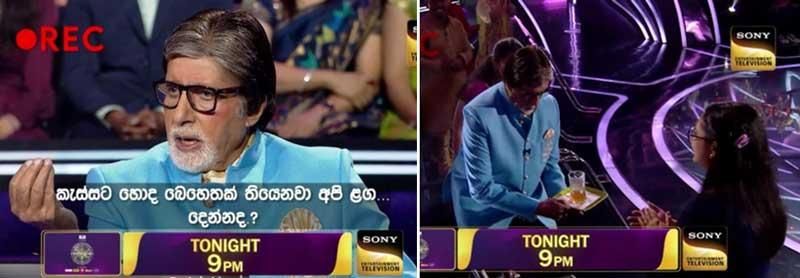
Samahan, a trusted herbal drink from Sri Lanka, was a hot topic recently on a popular Indian television show hosted by veteran film actor Mr. Amitabh Bachchan. The show, called Kaun Banega “Crorepati,” offers cash prizes to participants who answer general knowledge questions correctly.

During the program, the veteran did not hesitate to lend a helping hand to a participant who had cold symptoms during the show by walking away from the stage for a moment, saying that he had just the right drink for her cough called “Samahan”.

Isn’t it wonderful that our local product, which is crafted with a blend of valuable herbs, is gaining attention and recognition in the form of positive discussions and reviews across the world?

Sources say security beefed in Colombo to prevent IUSF threat

May 13th, 2023

Courtesy The Daily Mirror

Highly placed security sources told Daily Mirror that security has been beefed up in Colombo and its surrounding areas following an intelligence report that IUSF students were planning to march into the city in their hundreds over the weekend to take over key government institutions and launch a fresh ’Aragalaya’ against the government.

Following intelligence information received later this week, security was heightened outside the Colombo University premises and several other areas in the city to prevent such a threat.

Police said that by Saturday evening police checkpoints and barricades had also been put up in the entry points into Colombo as security was heightened.

Youth representatives to engage with Parliamentary Sectoral Oversight Committees

May 13th, 2023

Courtesy Adaderana

The orientation workshop for youth representatives of the Sectoral oversight Committees of Parliament took place at Waters Edge Hotel, Battaramulla today (13 May).

Addressing the event, President Ranil Wickremesinghe said that in 25 years when the country has reached the path of success, the youth could proudly claim that, It was the step taken by us today that led to the system change which paved the way for the country’s success.”

The President mentioned that the opportunity has been provided to the youth to contribute to the journey towards a developed Sri Lanka in 2048. He noted that providing the youth representatives the chance to participate in the Sectoral Oversight Committees of the Parliament is a novel approach and emphasized that it has not yet been done in any country in the world.

The President also expressed his confidence that this is the system change that the youth demanded and that they will take maximum advantage of this opportunity.

The Orientation workshop was organized by the Parliament of Sri Lanka with the support of the United Nations Development Program (UNDP).

Prime Minister Dinesh Gunawardena, Speaker Mahinda Yapa Abeywardena and Leader of the Opposition Sajith Premadasa also expressed their views during the occasion.

Following the publication of a newspaper advertisement, these youth representatives were chosen for the Sectoral Oversight Committees related to 17 subject areas established in the Parliament. Accordingly, among the applications received by the Secretary General of the Parliament of Sri Lanka, nearly 550 eligible youth representatives between 18-35 years were invited to this workshop.

These Sectoral Oversight Committees function with the participation of Parliamentarians representing all political parties in the Parliament. According to the provisions of the amended standing orders passed by the Parliament, the Chairperson of a Committee can call five youth representatives each to assist the Committees regarding the inquiries led by these Committees, so it is expected that the youth representatives will be selected in relation to each Committee.

Speaking further President Ranil Wickremesinghe said;
Today there are 535 youth Parliamentary representatives present on this occasion. Today you all come here to participate in the functions of the Parliament; not as an observer, but as young representatives in the Parliamentary Committees. I think this has happened for the first time in the world.

Only the MPs can participate in a Parliamentary Committee, a US Senate Committee, or a Congressional Committee. But under the standing orders made by our Prime Minister, Speaker and Leader of the Opposition, you have been given the opportunity to participate as youth representatives in the Parliamentary Committees.

As mentioned by the Prime Minister, apart from the report of the members of the Committee, you too get the opportunity to include your views in it. We only see debates and Q&A sessions inside the Parliamentary Chamber. But today the function of any Parliament is done through Committees. There are many Committees such as Oversight Committees and Finance Committees.

If we approve funds for certain work, there are Oversight Committees to look into the spending of those funds. There are Oversight Committees to look into the implementation of law and there are also a number of Committees like the Committee on Public Finance.

Therefore, you get the opportunity to participate in all activities in the Parliament other than speaking, voting and attending the Chamber. This has happened for the first time in the world.

When we started this program, some said that this is useless and a waste of time. Some had a big question as to what this was. But a group of youth submitted their names fearlessly. We have selected the best 535 of them for this purpose.

After all of you participate in this program and make this program a success, we can select the others for the next program. Although selecting youth representatives was not a problem this time, it will become a big challenge in the future as we expect more applications for the next program. It is on these programs that we should focus our attention on.

You have got this opportunity today. Only a few people in history got this opportunity. I was lucky enough to get a Deputy Minister position in Parliament at the age of 28. Before that, as I came to the Parliament with then the Leader of Opposition Mr. Jayawardene, I was able to know how the Parliament functioned. But many do not get that opportunity. Today you have got that opportunity. So I would like to say to you, to get the full advantage of it.

How did this system come about? Last year there was a big confusion in this country. It was at that time that I discussed with the former Speaker Mr. Karu Jayasuriya as to how we could answer this issue.

There was no answer to confusions before this. All 225 members of the Parliament were asked to be thrown into the Diyawanna Lake. Doing so will only harm the environment. Anyway, other Party Secretaries will appoint another 225 here. So it is not really a solution. Burning houses or surrounding the Parliament and trying to capture it, are not solutions either.

There were issues then. Why did we go bankrupt? What happened to our economy? Those questions have to be answered. When I was a child, Sri Lanka was second only to Japan. But where are we today? These issues cannot be solved like this.

Accordingly, Mr. Karu Jayasuriya and I discussed together how we can change this system. He was the one who later called me and said that we will include youth representatives in the Oversight Committees and other Committees. I told him to give me a report about it and I gave it to the Speaker. Whether you take the party leaders or the Cabinet, now all of you are included in this. We should especially thank him for submitting this proposal.

I don’t think anyone else will have the opportunity you have. When the economy had collapsed, the country had gone bankrupt and when everyone thinks that this system cannot be continued, a major restructuring is being carried out. Our economy is being restructured, costs are being cut, and new systems are on the way. Now the fuel is distributed based on price formulas. At the same time, many of our corporations have to be restructured. We are thinking of a new education system.

In particular, the Government has planned to bring 05 laws on climate change and several laws on women’s rights. There are many other new laws underway. Therefore you will get the opportunity to discuss these and express your views.

You will get to know how the money is spent, why the money is allocated to certain subjects and why money is not allocated to other subjects. There is currently a Research Department in Parliament to help you. In addition, we will establish a new office called the Parliamentary Budget Office. Support can be obtained from other Ministries. We have planned to convert the J. R. Jayawardene Centre into a political education institution. Then you will get the opportunity to take full advantage of this.

As members of the Parliament, as Chairpersons, we must do that work. We never turned this into a conflict of opinion in the Parliament Chamber. In some cases, there were conflicts between parties and MPs. The Chairpersons and Councilors of this Oversight Committees have a duty to hold those meetings, as well as participate in them and to discuss not only the daily affairs but important matters.

I suggest to the Speaker that these Committees should meet every month. If the Committee meetings are not held, the Chairperson should be inquired. If MPs do not attend the meetings, it should be looked into. If they fail to attend for two months, change them. Otherwise, the opportunities available to this group will be lost.

Take full advantage of this opportunity. This is a historic moment. For the first time, a Parliament appoints representatives like this. This has not happened anywhere. Our Parliament is also an old Parliament. Its history dates back to 1835. How many Parliaments are older than ours? They are the Parliaments in UK, USA, Denmark and Switzerland.

Various programs have been carried out in this Parliament. Today there is a new system. The Commonwealth Parliamentary group can also be informed about this initiative and they can also be invited to come. And I will also inform the International Parliamentary Union We can get support from the UK Parliament and US Congress to continue this program. Those responsibilities have been entrusted to you.

Members of Parliament and youth representatives should join together and carry out this work. We will not end this work here. How can we become a developed country? We cannot always remain to be a developing country. We want a better future. For that, there should be a good economy and the law should be implemented. Give your views on it.

In particular, Mr. Karu Jayasuriya is bringing the Jana Sabha Act to establish a Jana Sabha in every Grama Niladhari division. That would be another special opportunity for youth to participate. The selections for the youth Parliament have now become very limited. The National Youth Service Council is discussing with all the youth organizations at divisional secretariat levels about these selections.

There are a number of other new measures. This system should be changed. It can be done in accordance with the constitution. Instead of waiting for the next Parliament to be appointed, now is the opportunity to get together and do this work. So let’s accept this challenge. Let’s provide successful solutions. In another 25 years, all of you can say that Sri Lanka has become a developed country now, because of the steps we had taken today.

Prime Minister Dinesh Gunawardena
As we enter a special phase in our country’s development, I am reminded of President Ranil Wickremesinghe’s pledge to fulfil a task that we have now been able to implement. Today, more than 500 youth representatives are present for 17 Sectoral Oversight Committees, ushering in a new era of participatory democracy. It is both our responsibility to create a new political chapter through this approach.

Reflecting on the past, it’s been 60 years since the youth were given the right to vote. Before that, we did not have a voice in shaping our country’s future. Unfortunately, due to the improper utilization of our country’s resources, we’ve witnessed a huge wastage over the years.
Without proper supervision, our country’s resources were not being utilized effectively. This is where the contribution of educated and intelligent young people is critical, not only to discuss proposals but to implement them. If Parliament’s Standing Orders have necessary deficiencies, 
they should be open to discussion. Only then can this program be successful in establishing the country’s law, creating political stability, and moving the country forward with a new economy.

I see it as a national task to provide clear participation in building the future of Sri Lanka. The United Nations Development Program has been providing great support to our country, making it possible to bring the results of new participation. We have many challenges to overcome, but with enthusiasm, commitment, and determination, we can overcome them.

We need to embark on a new journey through creativity, not just focus on the challenges ahead. We must also think about the young generation who drop out of education and fail in general and advanced-level studies. We need to think about this problem anew. The President is taking steps to provide them with the necessary training and technical knowledge. Let’s shift from traditional thinking and make the opinions held by Oversight Committees and the suggestions of the youth a great strength for our country’s progress.

Speaker Mahinda Yapa Abeywardena
As I sit here in Parliament, I feel proud to be part of a turning point in our country’s political history. This is the first time that such a program has been implemented, and it’s an honor to be part of it. The President’s idea of using youth representation for this purpose is a testament to his belief that the ideas and suggestions of the youth are necessary for the governance of the country. He established the Youth Parliament and the National Youth Service Council in the distant past to further this belief. The General Secretary of the Parliament also played a key role in making these activities successful.

Our country has faced some unfortunate eras, including two youth rebellions and a thirty-year war. We’ve experimented with various solutions to restore the affairs of the country, and recently, we faced a big crisis. Some people thought of fighting and burning houses as a solution, but it only led to more problems. It’s after such a difficult time that we’ve come to where we are today.

I have been appointed as a guest representative of the Sectoral Committees, which strictly supervise every act and law passed in the country. Deficiencies are discussed before being adopted in Parliament and it’s the responsibility of the youth to provide an intellectual dialogue based on their studies. It’s expected that the future program of the country will be prepared, corrected, and well-implemented based on these discussions.

The opinions of all these people are important for our country. We’ve faced rebellions and wars, and our economy has collapsed. But we have strength, we have a valuable environment, and we have intelligent people. We should not kneel before another country. It’s time for us to come together and work towards a better future for Sri Lanka.

Opposition leader Sajith Premadasa
It is often seen politics there is a huge gap between declaratory policy and action policy. Many are talking of ‘walk the talk’. I believe that today will be a turning point in our country if what has been announced is implemented, the beginning is optimistic, and if this is implemented in a cultured and an efficient manner.

As the opposition, we see this process in a positive aspect. As an opposition, even if the shortcomings of the Government are pointed out, in a cultured political system, when something correct, optimistic, substantive and positive happens, it is impossible to look away without praising it. One must have the guts to appreciate good as good.

This decision taken by the President and all of you is very optimistic. If something good happens to the country in the process of recovering the bankrupt Sri Lanka from that bankruptcy, it should be appreciated. The tripartite Governance of the Executive, Legislature and Judiciary is recognized in the democratic system. There should be distribution of powers. Protection and balance between these three institutions is very important. Today, 530 youth representatives participate in 17 Sectoral Oversight Committees in this country to properly implement that protection and balance process.

If this action is taken as a ranking when comparing the steps taken today with other countries in the world, Sri Lanka is in the first place. This can be called the best process in the world that listens to the youth and gives the youth participation in the democratic process. It is a matter of great joy. There have been many youth riots in this country. Even if we don’t recall that unpleasant past, we should learn from it.

The time has arrived to come together for the common duty of the country, even though we are on various contradictions on policies, theories and philosophies. It should add value to the country and not to share positions. Unconditional support is given to continue the optimal steps taken.

Azusa Kubota Resident Representative for the United Nations Development Programme (UNDP) in Sri Lanka
I’m pleased and deeply humbled to be part of the orientation program for youth representatives of the Sectoral Oversight Committees in more than 60 countries. UNDP supports parliamentary strengthening initiatives because we firmly believe in the important role played by the legislature in fostering democracy and promoting sustainable and inclusive development.

Our global collaboration with the parliaments around the world focuses on strengthening all core functions of the Parliament. These functions include lawmaking, oversight, representation and budget scrutiny. While doing so, we hope to further enhance the inclusivity and representation of the peoples. We promote a greater oversight of transparent governance processes and to improve the effectiveness of its functioning. The current program we have with the Parliament of Sri Lanka is one of such flagship partnerships in the Asia Pacific region.

For over a decade, UNDP has been supporting Sri Lanka’s parliament to strengthen responsiveness, inclusiveness and representation. Its lawmaking processes. For example, working together with our fellow parliamentary development partners. We have continued to strengthen its public relations and communication functions. One concrete result is inclusion of hearing impaired segments of the society in the Parliament process through the provision of real time sign language interpretation services.

In an ideal world, the look of the parliaments on the world should reflect the diversity of the society they represent. However, we know societal barriers and systemic factors often make equal and inclusive representation in its follower’s forms impractical or impossible in many countries. Attaining an equal representation of women in the parliament continues to face notable challenges. Here in Sri Lanka, it remains as a little over 5% of the seats represented by women.

Bringing about changes will require bold policies, such as the introduction of a quota and long term transformation in systems and norms. Therefore, innovative mechanisms such as the one being launched today are catalytic in fulfilling the existing gaps in representation and inclusivity, at least as a short term measure. We in UNDP greatly value the importance of youth representation and participation in the work of the Parliament.

All religious leaders led by the Maha Sangharatna and Ministers, Parliamentary Secretary General Dhammika Dasanayake, Deputy Speaker Ajith Rajapakse, Deputy Chairman of the Committee MP Angajan Ramanathan, Chairman of the Parliamentary Caucus for Youth” Hesha Withanage and a group of invited guests and youth representatives attended the event.

Heavy security presence in Colombo

May 13th, 2023

Courtesy Adaderana

A heavy presence of security personnel was observed in parts of Colombo city since last night (May 12).

This development came after it was reported that a group of at least 750 individuals was preparing to exert pressure on the government.

Unspecified intelligence information had revealed that the group in question was planning to rise up in revolt from inside the University of Colombo.

Police sources said this group’s organized attempt to instigate unrest was foiled after tightening the security.

The police, Special Task Force (STF), riot police and the tri-forces had been deployed to the area adjacent to the Colombo University including the Independence Square, Kollupitiya Junction and the Temple Trees.

In addition, several fire trucks and firefighters were also seen at the scene.

IS THE PROPOSED ASIAN MONETARY FUND A VIABLE ALTERNATIVE FOR THE INTERNATIONAL MONETARY FUND AND CRISIS?

May 12th, 2023

BY EDWARD THEOPHILUS

The International Monetary Fund was established after the Briton-Wood Agreement as a solution for international financial crisis, which was encouraged by the ad hoc work of certain European countries. These countries attempted to gain trade advantages by ad hoc changes in currency values that was meant devaluation of currency to attract demand for products and services. When there was an international financial system without required controls, many countries with economic power had opportunities to behave own way. The clear evidence was France attempted to gain trade advantages in the 1930s using the devaluation of the currency unit. It was not a serious feeling for Sri Lanka, where was a British colony with a strong financial backing. During this period, there was not a Central bank and the Currency Board System was backed by the British Financial System and Sri Lanka rupee was to the British Sterling pound.   

The IMF has been operated for the past seventy years and it is observed by many financial experts that the IMF supported the US financial system and associated countries with strong reserves in US dollars. When the Briton-wood proposal came to the world, there was a suggestion to introduce an international currency called BANCOR, but it was not eventuated. If the BANCOR introduced the current issues, the connection with the value of national currencies in many countries could have been avoided and many problems related to the currency value of developed and developing countries could have been resolved by the new currency, BANCOR. This is an independent opinion based on the current problems.

Malaysia has proposed to establish an Asian Monetary Fund and the structure and objectives of the proposed fund are unknown for many countries and analysts. My feeling is it should not be an institute like Asian Development Bank because the operational pattern and objectives of the proposed Asian Monetary Fund should be aligned to the International Monetary Fund, which provides financial supports for the balance of payment adjustments process in many countries. The balance of payment arrangement is a complex process which involves looking at various controls in a country.  It will be a quite arduous task for many countries, but the proposed fund should be limited to the Asian region and such operations will be easier to considering the problems of the Asian region. 

When considering an international financial support system of the IMF, it is a broader area with contrast problems, which may be associated with cultural and religious aspects. The proposed fund should be limited to a specific region and the major question related to the proposal of Malaysia when there is an international problem is it is right to conder only for one region, ignoring many areas of the world. When considering the Malaysian proposal, I feel it is an egotistical proposal, ignoring many areas of the world and, in the modern world, it is not possible to stick with a bumptious way. Any proposal involves with a more than one country it should be considered broader way.     

Balance of payment rectifying and funding for this purpose are required by many countries in the world and establishing a flexible organisation than the current IMF would be a complicated task as many countries have problems to contribute funds for the working structure of the proposed fund. Which countries agree with the proposed fund and how they are going to contribute to the structure?  The other significant point is whether the proposed fund will work as a competitive organisation with the IMF or an organisation similar to the IMF. International financing system seems it is very complicated and the operation of such a system would be entangled in the current operation.  

International news detail many points less considering the complex environment and people who know about the gigantic task related to the operation of international fund understand the complicated role and dilemmas of the role. The current IMF associated with a bunch of organizations such as IBRD, ADA and other funds which are working together and provide a role helping each other. Could the proposed Asian monetary Fund play a complimentary role?   

The proposed Asian Monetary Fund needs a large sum of capital to enable providing financial support for members countries, especially for the balance of payment arrangement process requires more funds to provide for member countries in the Asian region when there is a trend of increasing inflation that increases resulting unexpected challenges such as COVID-19, how will adjust and adapt the dynamic environment by the proposed fund. Changing the current mode of international financial system is a compact task that should involve in many issues of different countries and the operational justice is giving justice to all countries, which is the adamantine problem.

Countries which are supposed to agree with the proposal need to broadly discuss the issues and combine them to organise to structure the proposed organisation.  

Only Legal Action Against Local and Foreign Conspirators Behind 2022 Regime Change Gives Credibility to Claims and Saves Sri Lanka from a Repeat

May 12th, 2023

Dilrook Kannangara

Those who allege local and foreign conspiracy in 2022 regime change have a responsibility to their people. If their allegations are true, it is a very serious violation of Sri Lanka’s sovereignty, the Constitution (on many counts), the franchise, fundamental rights of individuals, the Penal Code and many other laws. Internationally, it is a direct violation of the Vienna Convention on Diplomatic Missions. Legal action can be taken against all these.

Taking legal action against them is the only way to prove the credibility of claims. Crying to the people is not the way crimes are handled. There is an established process to handle them. Further, taking legal action against offenders saves Sri Lanka from another similar event. If no legal action is taken, it may well repeat again and again.

Both Sri Lanka and USA are bound by the Vienna Convention on Diplomatic Missions and if the US Ambassador is in the wrong, it is a matter of invoking the provisions of the Convention and making a formal complaint. It is that easy. The million-dollar question is why it is not done if allegations are true. Not taking legal action erodes the credibility of these claims. And it also exposes Sri Lanka for another similar interference not just from the US but also from other countries that have embassies in the island.

Locals are also blamed for being part of this conspiracy. If true it violates many local laws from the Constitution, the Penal Code, the Army Act, etc. It also violates people’s fundamental rights over their sovereignty, franchise, etc. There are many avenues for court action.

However, nothing of the sort has even been attempted. When asked from the person making these allegations about court action, he replied that they had far better things to do than crawl to courts. Isn’t defending national security, sovereignty and the Constitution worth their time? If we are to believe him, no; they are unworthy things for him.

Only court action against individual members of the public who participated in various violent acts on or around May 9 and July 9 are for vandalism, arson, looting, mischief, subversion, murder and the like. Nothing against conspiring against the nation, etc.

This reminds observers what happened during the 2020 JVP election campaign. A large number of cardboard files were placed on a platform. Participants of the meeting could pick any one of them and the JVP leader would read it out. But no legal action taken based on those files! No court proceedings and not even complaints to the police.

This not only erodes the credibility of allegations of conspiracy but also puts Sri Lanka in mortal danger of a repeat of events that took place on those dates.

Anyone can make any allegation but until proven beyond reasonable doubt, they remain just opinions.

මැයි දින ප්‍රෝඩාව හා ඩලස්-දයාන් දීගය

May 12th, 2023

C. Wijeyawickrema, LL.B., Ph.D.

හැඳින්වීම

ලංකාවේ කළුසුද්දන්, මාක්ස්වාදීන් හා පක්ෂ දේශපාලකයින් විසින් කරගෙන ගිය තවත් එක් මහජනයා රැවටීමක් ලෙස මැයි දින පෙලපාලිය නම් කල හැකිය. මුලදී සිටම මාක්ස්වාදීන් එය භාවිතා කලේ ඔවුන්ගේ බංගවේවා මන්තරය වාර්ෂිකව මැතිරීම පිණිසය. සාදුකින් පෙලෙනවුන් අන්තිම සටනට සැරසවීමය. එය ඔවුන්ගේ සිංහල බෞද්ධ විරෝධී සංකේතය (සිග්නල් එක) විය. 1960 ගණන්වල දක්නට ලැබුණේ මැයි දිනයට පෙර යූනියන් ප්ලේස් එකේ කඩසාප්පු වල වීදුරු මූණත ලී ගසා වසා දමා තිබීමය. ඊට හේතුව පෙලපාලියේ එන  සමසමාජකාරයින් (බීමත්ව?) ඒවාට ගල් ගසා හානිකිරීම වැලැක්විමටය. පාර්ලිමේන්තුව කතා සාප්පුවක් යන්නට වෛරී දේශපාලනය බද්ධ කිරීමය. විනය, හික්මීම, සදාචාරය බල්ලට ගියේය.

පසු කාලයක 1970 ව  දශකය වනවිට,  කොල හා නිල් පක්ෂවලට මෙහි රස  දැනීමත් සමඟ මැයි දින රාත්‍රිය (මැදියම් රැය) දවල් කාලයට වඩා වැදගත් විය. කොළඹ පෙලපාලි ගොස් රෑ ගම්බිම් බලා එනතෙක් රබර් ගස් වලට මුවාවී බලා සිට ප්‍රතිවාදීන්ගේ බස්වලට ගල් ගැසීමය. මැයි දිනය යනු පක්ෂ දේශපාලකයින්ගේ ගේම් එකක් බව මේ කාලයේදී මට ප්‍රත්‍යක්ෂ වුනේ පෙලපාලියේ තෙමි තෙමී ගමන්කල කොල්වින් පසුව වේදිකාවට නැඟ කල කතාව නිසාය. සහෝදරවරුණි, ඔබලා පෙලපාලියේ එන අතරතුර මම ගෙදර ගොස් ඇඳුම් මාරුකරගෙන ආවා (තෙත ඇඳුම් ගලවා නාගෙන?).  ඊට කලින් හිටපු අධ්‍යාපන ඇමති බදිඋද්දීන් මොහමඩ් කාර් එකක් උඩ ඇලවී නිදාගෙන ජනයා උසිගන්වනවා මම දුටුවෙමි.

2023 මැයි දිනයෙන් එලිදරව්වුණ කාරණා දෙකක් පෙන්වාදීම මෙම සටහනේ අරමුණය.

*1. JVP මැයි දිනය හා බුද්ධාගම

1935 න් පසු බොරුවට හෝ 1964 දී ඇන් ඇම්-කොල්වින්ලා දළදා මාළිගාවට මල්වට්ටියක් රැගෙන ගියේය. තමන්ටත් බෞද්ධ උරුමයක්, නෑකමක් ගාවා ගන්නට දැන්  JVP එක බලවත් ව්‍යායාමයක් දරමින් සිටී. එක් JVP නායකයෙක් ගමක චෛත්‍යයක කොතක් විවෘත කිරීමට ගිය විට කොත කඩා වැටී තුවාලද සිදුවිය. ඔවුන්ගේ මාක්ස්වාදී හැව ගැන තමන්ට බයක් ඇතැයි චම්පික රණවක කියා සිටී.  ඔවුන්ගේ වේදිකාවල බෞද්ධ සූත්‍ර හා ජාතක කතා ගැනත්, රනිල් ජනාධිපති සමඟ තරඟයට මෙන්, දැන් දැන් කියැවේ. අනුර කුමාර හොඳ සිංහල බෞද්ධ පසුබිමක් තිබූ අයෙක් බව එලිදරව් කෙරෙන්නේ දැන්ය. එසේ නම් ඔහු උවිඳු විජේවීර නම් තරුණයා මෙන් පරිණාමය  නොවුනේ මන්ද?

එහෙත් ඔවුන්ගේ රැලිය කාල් මාක්ස් හා ලෙනින්ගේ රූප වලින්, දෑකැත්තෙන් හා මිටියෙන් ආරම්භ වුනේය. ඉන් පිළිඹිඹුවන්නේ ගොවියා හා කම්කරුවාට වඩා මර්ධනය හා ආගම අබින් යන කතාවය. මාක්ස්වාදීන්ට බුදු දහමේ අධ්‍යාත්මය පෙන්වා දීමට ඓතිහාසිකව හාමුදුරුවරු කීපනමක්ම උත්සාහ කලත් (උඩකැන්දවල සරණංකර, වල්පොල රාහුල, බලංගොඩ ආනන්ද මෛත්‍රී) එය නෙළුම් කොලයට දාන වතුර වැනි විය. නොහොත් වැද්දන්ට බණ කියනවා වැනි විය  රුවන්වැලි මහා සෑය සැදූ දුටුගැමුණු රජතුමා ගඩොල් මෝඩයෙක් විය.

විජේවීර තම ක්‍රිස්තියානි බිරිඳගෙන් කල ඉල්ලීමක්වූයේ තම දරුවන් ක්‍රිස්තියානි නොකරණ ලෙසයයි කියැවේ. ඔහුගේ පුතාගේ දේශපාලන දෘෂ්ටි කෝණය වෙනස් මේ හේතුවෙනි. සෝමවංශ අමරසිංහ තමන් මියගිය පසු පාංශුකූලය දීම ගැන තමන් සමඟ කතාකල බව ඇල්ලේ ගුණවංශ හිමිඳුන්  එලිකලේය.

කාල් මාක්ස්ගේ පෝස්ටර් පෙලපාලියට පසුව වෙසක් දිනයට කලින්දා  (මැයි4), සිරසේ ගයාන් විසින්  හඳුන්නෙත්ති සමඟ මෙහෙයවූ  <බුද්ධ දර්ශනයෙන් රාජ්‍ය පාලනයට මඟ> නමැති (මාවත) වීඩියෝ වැඩ සටහන JVP එක, දේවානම්පියතිස්ස රජුට ලංවීමට ගත් උත්සාහයක් ලෙස පෙනෙන්නේ යම් දක්ෂතාවයක් ඇති හඳුන්නෙත්ති බෞද්ධ දර්ශණය ගැන තටමන ආකාරය දකිණ විටය.. ඊට සහභාගී කරගත් හාමුදුරුවරු, විජිතපුරයේ විමලරතන, රළුවේ පද්මසිරි (කොළඹ හා කැලණියේ හිටපු මහාචාර්යවරු), දෙහිපේ චන්දවිමල හා නීතියාගම චන්දිම යන උන්වහන්සේලා තෝරාගත්තේ කුමණ පදනමකින්දැයි සිතෙන්නේ, මේ සඳහා ඉඳුරාගාරේ ධම්මරතන වැනි හිමිනමක් සහභාගී කර නොගැනීම නිසාය.

බෞද්ධයින් රැවටීම නමැති පක්ෂ දේශපාලකයින්ගේ උපක්‍රමය, න්‍යායපත්‍රය JVP එකටත් බෝවීලාද කියා සිතේ. රටේ හාමුදුරුවරුන් 800 ක්ම ඝාතනය කල ඉතිහාසයක් ඇති ඔවුන් දැන්වත් අවංක යයි ඔප්පුකල හැක්කේ නියමාකාරයේ සාකච්චා මාලා මඟින්. හා ධම්මපදය නිවිහැල්ලේ කියවීමෙන් මිස කට පාඩමින් විභාගයකට උත්තර ලියනවා මෙන් නොවේ. මෙය සමාන කල හැක්කේ අගමැති මෝඩිද ලංකාවේ  ඕ මයිගෝඩ්  බෞද්ධයෙක් වගේ හැසිරෙන ආකාරයටය.

*2. පෙඩරල් පප්පලා හා 13-A ප්ල්ස් සීයා ලෙස සැළකෙණ දයාන් ජයතිලක

ඩලස් අලහප්පෙරුමගේ නිදහස් ජනතා සභාවේ මැයි දින මීටිමේ ඉදිරිපෙල ආසනවල ඉඳගෙන සිටි සෙට් එක දයාන් ජයතිලකගේ දේශනාව වසීවුණාමෙන් බලා සිටිනවා දුටු විට මට එය පුදුමයට කාරණයක් වුනේ නැත. ඉදිරිපෙලේ සිටි අය අතරින් චන්න ජයසුමන හැරෙනවිට අන් සියල්ලෝම  පෙඩරල් කාරයෝය. ලැයිස්තුවේ මුලටම ඉන්නේ G.L. පීරිස්ය. ඔස්ලෝ මීටිමට පසුව කොටි බාලසිංහම්ට හිස් එක්සලන්සි කිව්වේ ඔහුය. බොදු බල සේනාවේ ඥානසාර හිමියන් විසින් කාන්තා නේවාසිකාගාරයක මුරකාරකමකටවත් නුසුදුසු යයි කී ඩිලාන් පෙරේරා තවත් පෙඩරල් කාරයෙකි. තිලංග සුමතිපාල, නාලක ගොඩහේවා ගැන මට ශාක්ෂි නැත.  එහෙත් ඩලස් අලහප්පෙරුම ගැන සැකයක් නැත. අරාබි රජෙකුගේ නමින් කාත්තන්කුඩියේ ශාරියා විශ්වවිද්‍යාලයක් දාන්නට හිස්බුල්ලාගේ උගුලට අසුවූයේ කර ගැසුවේ ඔහුය. මෙහි භයානකකම, තකතිරුකම මුල්ගල තැබූ දවසේම ඥානසාර හිමියන් විසින් අනාවරණයකලේය.

13-A යනු, 1921/23 පමණ අතීතයක සිට දෙමළ දේශයක් සඳහා පොන්නම්බලම් අරුණාචලම් ආරම්භකල ටැමිලක්කම් ව්‍යාපාරයේම පුරුකක් බව මෙම පෙඩරල් පප්පලාට පමණක් නොව මේ වනවිට මහින්ද රාජපක්ෂටවත් නොතේරෙන බව මේ හැමදෙනාම කරගෙනයන මගඩියේ සැබෑ කතාවය. රනිල් වික්‍රමසිංහ නම් පෙඩරල් නොව පාලමක් හා බිංගෙයක් දමා රට ඉන්දියාවේ ප්‍රාන්තයක් කිරීමට වුවද සූදානම්ය. 13-A නොව 13-A+ අවශ්‍ය බවත්, එය පමණක් නොව පෙඩරල්ද අවශ්‍ය බවත් මනෝ ගනේෂන් වැනි අය පවා කියද්දීත් මේ 13-A මර උඟුල මේ සිංහල කළු සුද්දන්ට නොතේරෙන්නේ ඇයි?  ලංකාව පෙඩරල් යයි සුප්‍රිම් උසාවිය දැනටමත් කියා නැද්ද?

ඩලස්ගේ අවංකකම ගැන හා ඔහු සමඟ ඉන්නා අතලොස්සේ අවංකකම පෙන්විය යුතුව තිබුණේ ගෝටාභය හා බැසිල්ලා විකාර කල කාලයේදී මිස දැන් නොවේ. මන්ත්‍රී කෑදරකම් අතහැර රටේ නියම අරගලයකට පදනම දමා ගෝටා දමණයකට හෝ නිවැරදි පාරට ගැනීමට මොවුන් ක්‍රියාකලේ නැත. අඩුතරමින් විමල් හා උදය දෙන්නා ඉවත් කල වේලාවේ වත් මොවුන් මීයන් සේ හැසුරුණේය. පසුව ගෝල්පේස් කුමණ්ත්‍රනයකට මඟ පෑදුනේ මෙම බියගුළු හා කෑදර ක්‍රියාකලාපය නිසාය.

දයාන් රස්පුටින්ගේ අවතාරයක් වත්ද?

පොහොට්ටුවේ හා නිල් පක්ෂයේ මන්ත්‍රී පරාණ මෙසේ අන්ද මන්දව  නන්නත්තාරයේ යමින් සිටින විට, ඒ පරිද්දෙන්ම අතරමංවී සිටි දයාන් ජයතිලක නමැති දේශපාලන ගේම්කාරයාගේ ඔඩොක්කුවට නොසිතූවිරූ අන්දමේ ලොතරැයි ටිකට් එකක් වැටුණේය. එය හිඟන්නාගේ පාත්තරයට හෙනහුරා වැටුනා වගේ දෙයක් නොවන්නේ ඩලස් විසින්ම දයාන්ට ඔහු සමඟ එකතුවෙන ලෙස ආරාධනය කල නිසාය.. අතීතයේදී දයාන් හවුල්වු හැමදෙනාම අකරතැබ්බ වලට පත්වී දේශපාලන වශයෙන් විනාශ විය. ඔහු යටතේ දැරු පලාත් සභා ඇමතිකම අත්හැර, වර්ධරාජා පෙරුමාල්ට කලින් ඉන්දියාවට පැන ගන්නට ලංකාවේ හැරල්ඩ් ලැස්කි වශයෙන් (ඔහුගේ මාමා වන කාලෝ ෆොන්සේකා විසින් හැඳින්වූ) දයාන්ට හැකිවිය. කළු සුද්දෙක්වූ කාලෝගේ අනිත් ප්‍රසිද්ධ බැනා රංජන් රාමනායකය

පසුව ප්‍රේමදාසගෙන් අභයදානය ලබාගෙන කොළඹට ආ දයාන් දාසයෙක් මෙන් ප්‍රේමදාසට බැලමෙහෙවර කලේය. හිට්ලර් වාදියෙකුවු ප්‍රේමදාස ජනහිතකාමි නායකයෙක් නොවීය. ගාමන්ට් පැක්ටරි වලින් රටක් ගොඩ නැඟිය නොහැක. ලංකාවේ කිසිම රජෙකුටත් වඩා වැඩියෙන් චෛත්‍යය සැදූ නිසා එවැනි අයෙක් බෞද්ධ  උපාසකයෙක් වෙන්නේත් නැත. කෙසේ වෙතත් ඩෙන්සිල් කොබ්බැකඩුවගේ මරණයට ප්‍රේමදාස ජනාධිපතිව නියෝජනය කලේ දයාන්ය. කුපිතවී සිටි ජනයා කනත්තේදී ඔහුව නිරුවත් කලේය.

රනිල්ගේ හා චන්ද්‍රිකාගේ සමයේදී ඔවුන්ගේ රටකැබලි කිරීමේ (balkanization of Sri Lanka) හා ජනාධිපති ධූරය අහෝසි කිරීමේ පැකේජ් ඩීල් කාලය (1994-2002) දයාන් තෘප්තිමත් ජීවිතයක් ගෙවූ කාලයක් විය. මේ යුද්ධය නම් කවදාවත් දිණන්න බැ යන පිරිස හා මංගල සමරවීර- S.B. දිසානායක සුදු නෙළුම් ගේම් අතරේ දයාන්ට හඬක් තිබුණේය. එහෙත් දේශපාලන රස්පුටින් කෙනෙක් වශයෙන් දයාන්ගේ පුදුම දක්ෂකමවූයේ ඔහු විසින් මහින්ද රාජපක්ෂටත්, රටටත් (සිංහල බෞද්ධයින්ට) කල අපරාධයය.

එය 2002 සටන් විරාම ගිවිසුම මඟින් රනිල් කල, ස්කොට් ජාතික පෝල් හැරිස් විසින් ලෝකයේ සිදුවූ  මහා පාවාදීම යයි හැඳින්වූ රට ජාතිය පාවා දීමට   වඩා දරුණු සිය දිවි නසා ගැනීමක් විය. අවුරුදු 3 කටත් අඩුකාලයකින් හසලක වීරයා වැනියන්ගේ ජීවිත  දානයෙන් නිමකල 30 අවුරුදු යුද්ධයේ ජයග්‍රහණය යුද්ධය නිමවූ 2009 මැයි 19 දාට සති දෙකකට පමණ පසුව, මහින්දගේ නියෝජිතයා වශයෙන් ජීනීවා ගොස්, 13-A ප්ලස් ක්‍රියාත්මක කිරීමට එකඟවීම, 2015 යහපාලන කාලයේ මංගල සමරවීර ජිනීවා ගොස් යුද අපරාධ චෝදනා පිලිගත්තාට වඩා කාළකන්නි හැසිරීමකි.

තානාපතිව සිටිමින් මහින්ද රාජපක්ෂ ආණ්ඩුවට විරුද්ධව ලිපි ලිවීම නිසා පසුව ඔහුව තනතුරෙන් ඉවත්කලත් (බෝගොල්ලාගම විදේශ ඇමති විසින්) ඉන් පසුව ආපසු කැරකී ඇවිත් මහින්ද සුළඟ වේදිකාවට නැඟ මහින්දගේ ප්‍රකාශයක් කියවීමට දයාන්ට ඉඩ ලැබුණේ ඔහුගේ රස්පුටින් ඉනාබේත නිසාම විය යුතුය. යුද ජයග්‍රහණය සඳහා රට සිදුකල දුෂ්කරක්‍රියාව එක වාක්‍යයකින් ගඟට ඉණිකැපීමක් කරන්නට දයාන් සමත්විය. මෙවැන්නන්ට රජකාලයේ දුන් දඬුවම කුමක්ද?

යහපාලනකාලයේදී දයාන් නිහඬව සිටියේ ඔරුමිත්තනාඩු ජරමරය ඔහුගේ මතවාදයම වුවත්, රනිල් අගමැතිට ඔහුව අරහං නිසාත්ය. ගෝටාභයගේ වියත් මඟට හොට දමා ගන්නට ඔහුකල වෑයම අසාර්ථකවූ අතර ඉන් පසු ඔහු දිනේෂ් ගුණවර්ධනව ජනාධිපති අපේක්ෂකයා ලෙස ප්‍රොමෝට් කලේය.

ප්‍රේමදාස පියාගේ පුතා ලඟට ඔහු එකතුවූයේ මෙවන් පසුබිමක් යටතේය. ඉංගිරිස් වලින් කතාකර ඩොලර් ලබාගන්නවා වැනි කතා සජිත් කලේ දයාන්ගේ ආශ්‍රය නිසාය. ඔහු සජිත්ගේ දේශපාලන උපදේශකයා ලෙස ක්‍රියාකිරීම නොරිස්සු පිරිසක් සිටි නිසා දයාන් අතරමංවී සිටියේය. ඩලස්ගේ ආරාධනය දයාන්ගේ පෙර පිනකට සිදුවූවක් වැනිය. මේ අනුව ඩලස්ලා 13-A ප්ලස් , පෙඩරල් කාරයින් වශයෙන් රට හඳුනාගන්නා අතර එය එසේ නොවේ යයි කීමේ වගකීම නිදහස් ජනතා සභාවේ වගකීමය. මගේ මේ සටහනේ අරමුණ වන්නේ දයාන් ගාවා ගැනීම, යකා සමඟ කරන ගනුදෙනුවක් බව පෙන්වාදීමය (Faustian bargain).

ඩලස් වනාහි ඓන්ද්‍රීය බුද්ධිමතෙක් යයි දයාන් පවසයි. ඔහු ඇතුළු පිරිස IMF ට විරුද්ධව චන්දය දීම පසසයි. එහෙත් දයාන් යනු IMF යෑමට විරුද්ධ අයෙක්ද?  පෙරටුගාමීන්, අන්තරේ යන කොටස් සමඟ සන්ධානගත වන්නැයි දයාන් ඩලස්ලාට උපදෙස් දෙයි. මේ කොටස් IMF වලට කැමති අයද? අවස්ථානුකූලව කබරගොයා තලගොයා කිරීමේ ශූක්ෂම කපටිකමක් ඇති දයාන් චාපා කුමාර බණ්ඩා විසින් ජංගි අරගලයක් ලෙසින් නම්කරණ ගෝල්පේස් කුමණ්ත්‍රණය 1953 හර්තාලයට සමානකරයි. මෙය නිර්මාල් රංජිත්, ජයදේව උයන්ගොඩලා මෙන් ගෝල්පේස්වල නියම කතාව වසන් කිරීමේ උත්සාහයකි.

එක රටක් එක නීතියක්

2018/19 දී සිංහල බෞද්ධ ජනයා ගෝටාභය ජනාධිපති කලේ හිට්ලර් කෙනෙක්වගේවී විනය ගරුක රටක් ගොඩ නැඟීමටය. 1956 දී බණ්ඩාරනායක මෙන් ඔහුත් සිංහල බෞද්ධ අභිලාශයේ වින්නඹුවා පමණය. එක රටක් එක නීතියක් කාර්ය සාධක බලකායට ඥානසාර හිමියන් පත්කිරීම, පේරාදෙණිය සරසවියේ කුලපති ලෙස  විශ්‍රාමික භූගෝලවිද්‍යා මහාචාර්ය ජෙරල්ඩ් පීරිස් පත්කිරීම හා MCC මගඩිය විමසීමට ලලිතසිරි ගුණරුවන් පත්කිරීම මෙන් හැසුරුණා නම් ගෝටාභය, ජුලී චුන්, ලලිත් වීරතුංග, පී. බී. ජයසුන්දරලාගේ හිරකාරයෙක් වෙන්නේ නැත. ඔහු විසින් රටට කල හැකි නොමැකෙන සේවයක් නම් ඔහුගේ ජනාධිපති වෘත්තාන්තය  පොතක් වශයෙන් ලිවීමය.

නොයෙක් ආකාරයේ පංචස්කන්ධ විසින් පක්ෂ හා කල්ලි සදාගෙන බලයට ඒමට කෙස්පැලෙන තර්ක ගේනවා මිස සද්භාවයෙන් රටගොඩ නැඟීමට සුදානම් බවක් නොපෙනේ. නාගානන්ද කොඩිතුවක්කුගේ  විනිවිද පදනමේ උද්‍රිත පාඨය වන්නේ එක රටක්-එක නීතියක්-එකම දැයක් යනුය සෙසු සුළු ජනවර්ගවලට කිසිදු හානියක් නොවන ආකාරයෙන් රට සංවර්ධනය කිරීමේ ආකෘතියක් 1940 දශකයේ මුල සිටම කළුකොඳයාවේ ප්‍රඥාශෙඛර නාහිමියන් ක්‍රියාත්මක කලේය. ගෝල්පේස් අරගලකාරයින් ඉල්ලා සිටි මහජන සභා ක්‍රමය බොරුවට හෝ ක්‍රියාත්මක කරන්නට  ජනාධිපති රනිල් විසින් කරු ජයසූරිය (හා වික්ටර් අයිවන්ට) භාරදුන්නේය. මෙය නියමාකාරයේ ජන සභා ක්‍රමයක් කිරීම සඳහා යෝජනාවක් බොදු බල සේනා සංවිධානය විසින් ජනාධිපතිට යවන ලදී.

අතිශයින් පිරිහී ඇති, අසාර්ථක වෙමින් පවතින ලංකාවක් ගොඩ ගත හැක්කේ ගම්මට්ටමින් ජනයා බලවත් කරණ, පක්ෂ දේශපාලනයෙන් තොර ජන සභා සංකල්පයක් මඟින් පමණය. ලැජ්ජා-භය ගමේ පවුල් මට්ටමින්ම ක්‍රියාත්මක විය යුතුය. ජපානයේ කරණවා මෙන් ගම විනාශ නොකර නූතන ආර්ථික ලෝකයකට පිවිසිය හැකිය. අහසින් යන රේල් පාරවල් වෙනුවට කොළඹින් ඈත රජරට ප්‍රදේශයට රටේ අගනුවර ගෙන යායුතුය. ජාතිය, ආගම හෝ භාෂාව වෙනුවට ස්වාභාවික මායිම් සහිත වනසේ ග්‍රාම සේවා වසම් යළි සීමා මායිම් කලයුතුය. ඒ අනුව යමින් ප්‍රාදේශීය හා දිස්ත්‍රික් ලේකම් කාර්යාල මෙන්ම පාර්ලිමේන්තු චන්ද කොට්ඨාශ හා පලාත් පාලන වෝඩ් ද සකස් කල යුතුය. අනිත් අතට ජන සභා පක්ෂ දේශපාලනයෙන් තොර නියෝජිතයින් 12 දෙනෙකු හා ජන සභා සීමාවේ ආගමික හා පොලිස්/යුද හමුදා නියෝජිතයින්ගෙන් සමන්විත විය යුතුය. ජන සභාවලට හැකිතාක් උපරිම වශයෙන් බලතල පැවරිය යුතුය.

හොරෝවිට්ස් අවතාරය

මේ පිළිඹඳ දීර්ග සටහන් ජනාධිපතිලාට, කොමිෂන් සභාවලට යවා ඇතත් (දැන් රනිල් ආර්ථික න්‍යාය අගය කරමින් සිටින පැතුම් කර්නර්ට පවා)

Galleface Book-test-1.pdf

පවතින කළු සුද්දන්ගේ පාලන තන්ත්‍රය යටතේ මෙවැනි සංකල්පයකට ඉඩක් නොදේ. මීට විරුද්ධව කතාකරණ එක් පුද්ගලයෙක් නම් දයාන් ජයතිලකය. ඔහු ලංකාව වැනි පරණ යටත් විජිත වලට ඩොනල්ඩ් හොරෝවිට්ස් ගේ නන් මැජෝරිටරින් විසඳුම් වර්ණනා කරණ අයෙකි (Ethnic groups in conflict, Donald L. Horowitz, 1985). 13-A යනු එවැනි එක් ක්‍රමයකි. හොරොවිට්ස් ක්‍රමය කොපිකල හැම රටක්ම දෙකට තුනට කැඩී ගියේය. ඩලස් විසින් දයාන් ලංකර ගැනීම යනු 1995-2000 නීලන්-ජීඇල්-චන්ද්‍රිකා පැකේජ් ඩීල් අනුව  හා ඉන් පසු 2017 දී ඒවා කොපිකරමින් රනිල්-සුමන්තිරන් ගෙනා ඔරුමිත්තනාඩු රට කැබලි කිරිමේ ප්ලැන අනුමත කිරීමකි. 

මෙම සටහන දයාන්ගේ ඊමේල් ලිපිනයටද කෙළින්ම යවන්නේ මෙය දේශපාලන සටහනක් මිස වෙනත් පුද්ගලික ගණුදෙනුවක් නොවන නිසාය.

හෙද විද්‍යාලය විශ්වවිද්‍යාලයක් බවට පත්කිරීමට රජය ගනු ලැබූ තීරණයත් සමග මෙරට හෙද සේවයේ මහා අනාගත පෙරළියකට අවස්ථාවක් බිහිවී තිබෙනවා…-අග්‍රාමාත්‍ය දිනේෂ් ගුණවර්ධන මහතා

May 12th, 2023

අගමැති මාධ්‍ය අංශය

අග්‍රාමාත්‍යවරයා මේ බව සඳහන් කළේ  ජාත්‍යන්තර හෙද දිනය නිමිත්තෙන්  රාජ්‍ය සේවා එක්සත් හෙද සංගමය 2023.05.12 දින අරලියගහ මන්දිරයේ සංවිධානය කර තිබූ සැමරුම් උත්සවය අවස්ථාවේදීය.   

එහිදී අදහස් දැක් වූ අග්‍රාමාත්‍යවරයා –

අද ජාත්‍යන්තර හෙද දිනය. ජාත්‍යන්තර හෙද දිනයේ පූජ්‍ය මුරුත්තෙට්ටුවේ ආනන්ද නායක ස්වාමීන් වහන්සේගේ ප්‍රධානත්වයෙන් අප රට තුළ රාජ්‍ය සේවා එක්සත් හෙද සංගමය අඛණ්ඩව රැස්වෙනවා. හෙද ක්ෂේත්‍රය  අපේ රටේ නීරෝගී භාවය ඇති කරලීම සඳහා වූ වගකීම් දරන ප්‍රධානතම ක්ෂේත්‍රයක් හැටියට අනාගතයට කැපවුණා.

විශේෂයෙන්   විවිධ ක්ෂේත්‍රයන්ට විවිධ බාධකයන්ට මුහුණ දෙන්නට සිද්ධ වෙනවා.  සෑම සංවිධානයකටම සැලස්මක් අරමුණක් සහ ඉලක්කයක් වගේම තම සාමාජිකයන් මෙන්ම සාමාජිකයන් ජීවත්වන සමාජය සඳහා ද ඉටු කළ යුතු කාර්යභාරයක්ද තිබිය යුතුයි.  එම වැඩපිළිවෙළට රාජ්‍ය  සේවා එක්සත් හෙද සංගමය කැපවී කටයුතු කළ බව මේ අවස්ථාවේදී  විශේෂයෙන් සඳහන් කරන්නට ඕනේ. එය සෙසු වෘත්තිය සමිති වලටත් අනෙක් වෘත්තීයමය ක්ෂේත්‍ර  වලටත් වැදගත් ආදර්ශ රාශියක් එකතු කර තිබෙනවා. අධික විඩාවට පත් වුණු, විවිධ වැටුප් ප්‍රශ්න නිසා අස්ථාවරවූ  හෙද සේවය පුහුණු වීම් ආදියෙන් පෝෂණය වූ හෙද සේවයක් බවට පත්කරන්න හෙද සංගමය කැපවුණා.

රාජ්‍ය සේවා එක්සත් හෙද සංගමය  විශේෂඥ  හෙද සේවයක්  සමාජයට ඇති කර දී තිබෙනවා. දහස් ගණන් දරුවො හෙද සේවයට බැඳිලා ආඩම්බර ව ඩිප්ලෝමාවක් අරගෙන ගමන් කරපු කාල පරිච්ඡේදය වෙනස් කළා. ඒ වෙනුවට විශ්වවිද්‍යාලයක් බවට මේ හෙද විද්‍යාල පරිවර්තනය කළා. හෙද  විද්‍යාලයක් වෙනුවට  හෙද විශ්වවිද්‍යාලයක් දිනා දී  හෙද සේවය වඩාත් දියුණු අවධියකට ගෙනයා යුතුයි කියන අධිෂ්ඨානය තිබුණේ රාජ්‍ය සේවා එක්සත් හෙද සංගමය ට පමණයි.

හෙද ක්ෂේත්‍රයේ සංගමයේ හිටපු සාමාජික සාමාජිකාවන්ට මා අග්‍රාමාත්‍යවරයා හැටියට සුවිශේෂ ගෞරවයක් පිරි නමනවා. ඔබ නිසයි මේ විශ්වවිද්‍යාලය ඇතිවී තිබෙන්නේ මේ තීරණය ගනු ලැබුවේ. එයයි ජනාධිපති රනිල් වික්‍රමසිංහ මැතිතුමාගේ විශේෂ පණිවිඩය

හෙද ක්ෂේත්‍රයෙහි සාමාජික සාමාජිකාවන් ජයග්‍රහණය කරන මේ විශ්වවිද්‍යාලය පසුගියදා ප්‍රකාශයට පත්කරන්නට ජනාධිපතිතුමා විසින් ඉදිරිපත් කරන ලද ඒ තීරණය අනුව අමාත්‍ය මණ්ඩල ප්‍රකාශනය පිළිබඳව තීරණය ප්‍රකාශයට පත්කර තිබෙනවා. ඒ දියුණු විශ්වවිද්‍යාලයක් බවට පරිවර්තනය කර ගත යුතුයි. එය රටට,  සමාජ ගමනට, ආර්ථික ප්‍රගමනයට උදව් වනු ඇති.

මේ දුෂ්කර කාල පරිච්ඡේදයේ  වුවත් ජනාධිපතිතුමා එම තීරණය ගැනීමට අපේ අමාත්‍ය මණ්ඩලය සමඟ එකඟ වීමෙන් විශාල ඉදිරි පියවරක් තබනු ලැබුවා. මේ කාල කාලපරිච්ඡේදය ඉතාම දුෂ්කර ම කාල පරිච්ඡේදයක්. අපේ රටේ කවදාවත් ආර්ථිකය මෙහෙම වැටුණේ නැහැ. ඉතිහාසයේ කිසිම දවසක මෙසේ නොවුණු තත්ත්වයකින් අප යළි ගොඩ ආවා. මේ කඩා වැටුණු ආර්ථිකය  ගොඩ ගැනීම සඳහා වූ ජනාධිපතිතුමා ඇතුළු ආණ්ඩුවේ  ඒ ගමන යද්දි  මෙවැනි විශ්ව විද්‍යාලයක් බිහිකිරීම සඳහා වූ තීරණය ගෙන ඒ ගෞරවය  සෞඛ්‍ය ක්ෂේත්‍රයට ලබාදුන්නා. ජාත්‍යන්තරව ඒ පිළිගැනීම ඇති. මහා අනාගත ගමනකට ගමන් කරන්නට අවස්ථාවක් දැන් බිහිවී තිබෙනවා.

මෙහිදී අදහස් දැක් වූ කොළඹ විශ්ව විද්‍යාලයේ කුලපති, රාජ්‍ය සේවා එක්සත් හෙද සංගමයේ සභාපති, බස්නාහිර පළාතේ ප්‍රධාන සංඝනායක පූජ්‍ය මුරුත්තෙට්ටුවේ ආනන්ද හිමියෝ-

 හෙද හෙදියන් ලෙස ඔබේ මූලික කාර්යභාරය තමයි අසරණ වූ රෝගීන් ගේ සාත්තුව හරියට කිරීම. අඩුපාඩුකම් පිළිබඳ අපි දන්නවා. ඔබ ලඟ සැම විටම දයාව, කරුණාව, මෛත්‍රිය තියෙන්න ඕනේ. බඳවා ගැනීමේදී මේ සියලු දේ බලන්න ඕනේ. බඳවා ගැනීමේ ප්‍රතිපත්තිය ගැන නැවතත් අවධානය යොමු කළ යුතු කාළය එළඹ තිබෙනවා. හෙද සේවාවට, පොලිසියට,  හමුදාවට බඳවා ගැනීමේදී වඩාත් සැලකිලිමත් විය යුතුයි. කිසිම දේශපාලනඥයකුගෙන් බලධාරියෙකු ගෙන් ලියුම් ගන්න එපා. සුදුසුකම් සපුරා ගෙන එන අය තමයි හරියට බදව ගන්න අවශ්‍ය වෙන්නේ. ඉදිරියේ දී පාර්ලිමේන්තුවට වුණත් සුදුසු අය යවන්න. කවදාවත් මේ වගේ අවුල් ඇති වෙන්නේ නැහැ.

අවුරුදු ගාණක් තිස්සේ අපි හෙද උපාධියක් ඉල්ලනවා. ලැබුණේ නැහැ. බාධක ආවා. අද අපට හෙද විශ්වවිද්‍යාලයක් ආරම්භ කරන්න හැකියාව ලැබී තිබෙනවා. බලාපොරොත්තු වෙන්නේ විනය ගරුක ශික්ෂාකාමි හෙද සේවයක්. හෙද සේවයේ ගරුත්වය රැක ගන්න. නිල ඇඳුමෙන් සාප්පු ගානෙ යන්න එපා. ඉල්ලීම් ලබා ගන්න සටන් කරනවා වගේම ඔබේ ගෞරවයත් රැකගන්න. 

මෙහිදී ෆ්ලෝරන්ස් නෛයිටින්ගේල් මැතිනියට පුෂ්පෝපහාර දැක්වීමද සිදු කළ අතර හෙද සේවය වෙනුවෙන් සිදුකළ මෙහෙවර ඇගයීම වෙනුවෙන් පුජ්‍ය මුරුත්තෙට්ටුවේ ආනන්ද හිමියන්ට සහ  හෙද විශ්වවිද්‍යාල ඇති කිරීමට දැක් වූ දායකත්වය ඇගයීම වෙනුවෙන් අග්‍රාමාත්‍ය දිනේෂ් ගුණවර්ධන මහතා වෙත සමරු තිළිණයන් ප්‍රධානය කිරීමද සිදුකෙරිණි.

මෙම අවස්ථාවට අමාත්‍ය බන්දුල ගුණවර්ධන, තායිලන්ත, මැලේෂීයානු, සහ ඉන්දුනීසියානු තානාපතිවරුන් පාර්ලිමේන්තු මන්ත්‍රීවරුන් වන රාජිත සේනාරත්න, වජිර අබේවර්ධන, යදාමිණි  ගුණවර්ධන, අග්‍රාමාත්‍ය ලේකම් අනුර දිසානායක, සෞඛ්‍ය ලේකම් ජනක චන්ද්‍රගුප්ත සහ  හෙද හෙදියෝ රැසක් සහභාගි වූහ.

අගමැති මාධ්‍ය අංශය

Wijeydasa slams Marine Environment Protection Authority (MEPA) for not obeying Attorney General

May 12th, 2023

Courtesy The Daily Mirror

Referring to Sri Lanka’s worst-ever marine disaster associated with the Singapore-registered MV X-Press Pearl container vessel, Justice Minister Dr. Wijeyadasa Rajapakshe said the Marine Environment Protection Authority (MEPA) was not adhering to the instructions given by the Attorney General (AG).

Addressing a news briefing today (12), Dr. Rajapakshe said there had been dissent or different points of view between the MEPA and the AG about which the AG had raised serious concerns.

This scenario could be one of the reasons why this case has been dragging on for so long without any productive results. Hence, I had to get involved in the matter in order to ensure the smooth coordination between the MEPA and the Attorney General,” he pointed out.

The AG is the one who provides legal advice to the President. In that context, the MEPA cannot surpass the AG nor can it ignore his instructions. The MEPA is bound to obey the AG,” the Minister underscored.

Furthermore, he said the AG and MEPA are two crucial parties in this case that should work hand in hand to ensure justice is meted out to Sri Lanka.

Thus, the MEPA should comply with the instruction forwarded by the AG,” he added. (Sheain Fernandopulle)

President pledges to modernize SL education sector within 10 years

May 12th, 2023

Courtesy Adaderana

President Ranil Wickremesinghe today (May 12) pledged to modernize the country’s education sector to create a young generation equipped with knowledge and nourished with abilities within the next 10 years.

Pointing out that a cabinet committee has already been appointed for the modernization of education, the President also stated that he would work on immediate reforms.

He also pointed out that, had the money spent on corporations during the past 10 years been invested on education, Sri Lanka would now have the best education in Asia.

President Wickremesinghe stated this while attending the opening ceremony of Sri Lanka’s first skills and job exhibition Skills Expo 2023”, under the theme An ability for Life – A job for Ability”, at the BMICH, Colombo earlier today.

The exhibition is held at the Sirimavo Bandaranaike hall, at BMICH Premises on May 12, 13 and 14 from 9.00 am to 8.00 pm and is open to the public, free of charge.

The Sri Lanka Skills Expo 2023 exhibition will be a valuable opportunity for members and policy makers from many fields in Sri Lanka to exchange their ideas and enhance skills in those fields and it is expected that it will make a significant contribution to the economic development of the country.

The President inaugurated the Sri Lanka Skills Expo 2023, and did not forget to engage in friendly conversation with the public who were present at the exhibition.


President Ranil Wickremesinghe further commented;

First and foremost, I would like to commend everyone for organizing this exhibition. Looking back at last year, we had our doubts on whether such a training exhibition could be organized. In addition to the turbulent environment in this country, the country’s economy was collapsing. We have now resumed the effort of rebuilding the country’s economy.

I could have prepared a fresh budget to control our expenses. When I looked at the expenses of our country for the last 10 years, I noticed that we spent money on corporations while neglecting education. Had we given the money that was used for Sri Lankan Airlines, Electricity Board, and Petroleum Corporation to the education and health sector, we would be in a position to compete with the countries that have the best education systems in South Asia. Unfortunately, we did not do that, and now we have to pay the debt. I am trying my best to pay off this debt as soon as possible within the next 10 years.

I have decided that we will not allocate funds for similar projects in the future. There were several such programs, and we still have no idea what happened to that money.

We must first work to curb these expenses and reduce them. I understand that we cannot reduce the government’s expenses by saying that we will reduce them; we must grow the country’s economy rapidly.

I have restricted subsidies to education, health, social security, and housing. Additional funds may be provided for these areas.

Our country needs a strong educational system, and the most crucial aspect of this system is providing pupils with the necessary information. We live in a knowledge-based society, and if we can provide the necessary knowledge to everyone, the future development of our country will be confirmed.

Sri Lanka is a country that can create a knowledge-based economy, and therefore plans should be developed to provide knowledge. We also need plans to provide qualifications for jobs after providing school education. Today, many organizations are engaged in this activity.

Our educational system has not been upgraded as much as is required now. We are 10-15 years behind, and we must now reconsider and move forward. The government alone cannot provide the necessary training to impart this knowledge. The majority of such training and knowledge is obtained outside the government. We must collaborate with private and international organizations that have this knowledge.

This year, I consolidated the Ministry of Education under one minister to ensure appropriate implementation of this task. He must monitor the entire system and make appropriate arrangements. I have formed a special cabinet committee to oversee education, and we will start modernization of education from here. We are entering a new world.

Our educational system will transform within the next ten years because we must prepare education for an unknown future. A strong program is required for this, and it is my goal that the youth will be educated about this. We will establish a perfect society that is prepared with the required information and abilities for the future. Arrangements are being developed to supply the required funds beginning in 2024.”

Parliamentary Select Committee to investigate X-Press Pearl, New Diamond disasters

May 12th, 2023

Courtesy Adaderana

The Parliament of Sri Lanka has approved the appointment of a Select Committee to investigate matters relating to the damage caused by both the MT New Diamond and X-Press Pearl vessels.

The setting up of the 21-member Parliamentary Select Committee was approved in Parliament today (12 May).

Accordingly, the committee will be tasked with investigating and making suitable recommendations relating to the disasters caused by both international vessels which were gutted in separate fires within Sri Lanka’s territorial waters.

On September 03, 2020, the MT New Diamond was engulfed in flames about 65km off the Sangamankanda Point on the eastern coast of Sri Lanka.

An explosion of a boiler in the main engine room had led to this unfortunate turn of events, which resulted in the death of one crew member and a major oil spill.

The tanker was transporting 270,000 metric tons of crude oil from the port of Mina Al Ahmadi in Kuwait to the Indian port of Paradip at the time of the incident. It was also reported that 1,700 metric tons of diesel required for the use of the tanker were stored onboard.

On May 20, 2021, Sri Lanka witnessed what is considered one of the worst marine environmental disasters after the Singapore-flagged container ship vessel MV X-Press Pearl, only three months after being commissioned, caught fire some 16km off Colombo.

At the time of the incident, it was transporting at least 1,500 containers including 25 tonnes of nitric acid, other chemicals and low-density polyethylene pellets.

The fire that raged for nearly two weeks resulted in a massive spillage of damaged containers, microplastics, plastic pellets, chemicals and other harmful substances into the sea before the wreckage of the vessel sank on June 02, 2021 while being towed away to deeper waters.

It was revealed that the fire had been the result of a reaction of the chemicals being transported on the ship, from which 25 crew members were evacuated safely.

Global Buddhist Summit on Protection of Buddhism

May 11th, 2023

Senaka Weeraratna

Buddhism is the most endangered religion in the world. Buddhism has lost more territory and space worldwide to other religions in the last one thousand years, than any other World Religion. The encroachment of Buddhist territories still continues. The danger is there for everyone to see. Now the competitors are at the Gates of Buddhist Citadels e.g. Myanmar, Sri Lanka, and Thailand. The moment Buddhist nations take legitimate steps to protect their Buddhist Heritage and space, the Human Rights peddlers scream and protest from treetops backed by a compliant media, ever willing to serve the interest of those who wish to see Buddhism displaced from its traditional primacy. According to the critics of Buddhism, the loss of ground incrementally in the last one thousand years is in keeping with Buddhism’s manifest destiny.  

Buddhists by nature are passive and undemanding. This was clearly seen at the Global Buddhist Summit held in New Delhi recently. A lot of rhetoric on the lofty nature of Buddhism as the ideal religion of the future because of its emphasis on Ahimsa or Non – Violence. But at the same time on the ground level, nobody appears to have raised the issue that Buddhism was gradually losing ground. Buddhist Asia was much bigger in size and territory, say, in the year 1000 ( common era) than it is today. 

Let us ponder on the following points: 

1) Buddhism (and Hinduism ) have been unsuccessful in gaining official recognition as a Religion in 24 of 26 European Union (EU) countries. In the whole of Europe, only three countries have given official recognition to Buddhism in their Constitutions. They are Russia, Austria, and Belgium. This issue should have been raised at the Global Buddhist Summit and a Public Demand made via the final Declaration for the recognition of Buddhist Human Rights and Freedom of Worship (in an official sense) in Europe.   But unfortunately, nobody has taken up the issue of lack of reciprocity on the part of the EU in granting Official Recognition to Buddhism,  

2) Representatives of threatened Buddhist communities or threatened Buddhist countries were not given a platform to air their genuine grievances, 

3) Buddhism is the religion most friendly to all life forms.  It is an Animal Rights Religion par excellence (Norman Phelps).

 Buddhism explicitly includes animals in its moral universe. Buddhist rules of conduct—including the first precept, Do not kill”—apply to our treatment of animals as well as to our treatment of other human beings. Yet, a predominantly Buddhist country like Sri Lanka has failed to reform its animal welfare laws and consequently, the world’s most obsolete and archaic piece of legislation i.e., the Prevention of Cruelty to Animals Ordinance, No. 13 of 1907 (enacted by the British Raj) still governs the welfare of animals with a low Rs. 100 fine as the maximum punishment for an act of heinous cruelty committed on an animal. No deterrent effect with such an abysmal (immeasurably low ) fine. 

What is the reason for this shameful lapse? 

1) The lack of true believers in Buddhist precepts with a strong commitment to upholding Buddhist values in Sri Lanka’s Parliament through, say, the enactment of the Animal Welfare Bill (which should be a cause for concern for Buddhists everywhere) and

2) The sacrifice of the welfare of animals for collecting votes from non – Buddhist communities that see animals as edible and unworthy of statutory protection. The fact that there are hardly any Voices for Animals in the Parliament of Sri Lanka influential enough to push through this legislation has disgraced the country’s Buddhist underpinnings.   

Global Buddhist Summit Conferences must change tact from i.e., fellowship to solidarity and from propagation to defense. An endangered Religion can survive only if there is a workable and well-thought-out survival strategy to save it. What has the Buddhist world learned from the loss of Nalanda University in 1202? or from the transition of South Korea from being a predominantly Buddhist country in the 1950s to a non-Buddhist country in the 1990s?  

None or very little.

The next Global Buddhist Summit must be focused heavily on the Protection of Buddhism. For such a Global Summit additional categories of guests are required. Not necessarily archaeologists or preachers generally speaking, but lawyers, journalists, comparative religion and media experts, and filmmakers, among others. People who can articulate and respond to attacks on Buddhism and its practices in the media, score, and win debating points for Buddhism in both Print and Social Media. 

Unless Buddhists unite to protect space and territory and surmount planned hostility toward it, Buddhism may end up in the Museum (Maldives) or purely as a tourist attraction ( Central Asia), which has been the sad fate of Buddhism in several former Buddhist countries of Asia.

Senaka Weeraratna

The economy During Sigiriya was the Capital of Ceylon.

May 11th, 2023

By Dr Tilak S. Fernando

Although I managed (the author of the book) to systematically detail different epochs of economic development in ancient Ceylon, it is impossible to forecast, in detail, during the Sigiriya reign. It is because it is impossible to categorise Sigiriya’s economy into various sections. The King murdered his father and all his subjects, and the Buddhist clergy despised the King, thereby the King had become a political problem.  

 According to the chronicles, King Kasyapa collected wealth. He kept it in protected custody, but later, out of that fortune, he constructed a beautiful chamber out of gold and lived there as emperor Wesamuni. His wealth was considered by all the kings from the Anuradhapura era.

According to folk stories, once he (Kasyapa 1) ordered the killing of all cooks and horse keepers to be killed as his brother Mugalan would conceal his identity. During the Sigiriya epoch, creative designer trade, army, servants, and agriculture, which were vastly popular in the Anuradhapura era, also existed during the Sigiriya period.

Before Sigiriya’s reign commenced following Thammana and Upatissa towns as capitols, it is impossible to fathom that the security aspect of Sigiriya as a kingdom was chosen after a long spell from the Anuradhapura era. The argument that could be put forward in this regard was that the Sigiriya reign was the outcome of King Kasyapa 1 after murdering his father.

King’s unpopularity

King Kasyapa 1 became unpopular with his subjects and the Buddhist clergy after he ordered his father’s brutal killing. He was always fearful that his brother Mugalan would confront him at any moment as he gave orders to plaster his father into a brick wall. When he became the King, he instructed to kill all cooks and horse keepers.

Sigiriya had a social and economic collaboration. King Kasyapa 1 intended to make Sigiriya a prominent city. According to chronicles, Sigiriya was founded many decades after the Anuradhapura kingdom.

 After so many centuries, Sigiriya is well known today. Maybe, the King made Sigiriya at the time a hideout for him. However, it was systematically done by building a palace for him with other buildings, water gardens, mirror walls, etc. As highlighted in the similar fashion mentioned in the previous episodes (such as in the Anuradhapura era), all of the kings’ income was received out of taxes of his subjects. The King Kasyapa ruled for eighteen years altogether.

Paying Penance

King Kasyapa 1 could have been more pious. One wonders how he managed to rule in the form of Dasaraja Dharmaya fashion (meaning – Charitability, Generosity, Straightforwardness, Humility, Innocence, Peacefulness, Anger, Calmness and Independence). It is debatable how the King became unpopular by giving orders to kill his father.

To forgive the sins for committing his father, he murdered, the King planted in front of his palace around the Sigiriya rock, a few hundred meters apart, parks containing mango trees. He gave instructions to build the Isurumumi Vihara. The King further constructed Buddhist temples andviharas. Although the King could not pardon himself for the murder of his father, it was believed that when his brother Mugalan came to take revenge on him, he may have confronted his brother with all his might. Still, when he was defeated, he cut his own throat to pay for his grave sin of committing to order his father to be plastered to a brick wall.

Frightening Era

The Sigiriya epoch was a frightening social era because people had to serve a king who killed his father. His thoughts were that his bother Mugalan would threaten his life. Prince Mugalan bringing a squad of people from India showed that Ceylon had international connections and that Ceylon earned global respect for Technology and industries during this era. It was because some technology was an excellent skill amongst ancient Ceylonese and still exists to date. The paintings on the rock remain unspoilt. It shows how advanced the Technology had been during Sigiriya’s epoch. The Sigiriya rock is 681 feet high. On top, there are three acres of land where King Kassapa 1 had built a palace and a few more buildings. On top of the rock were around 100 acres of walls recorded with extended drains. These were protected by two gates, one towards the north and one towards the west. A machine from the front Bridge operated a bridge. It shows how advanced was ancient Ceylon technology.                                                                                                                                                      

Ruined Equipment                             

There was some ruined equipment in the Colombo Museum, which belonged to the Sigiriya period. These belonged to the 5th century and were the most modern paraphernalia compared with modern equipment. Among these were agricultural, household and war apparatus. Today England is famous for iron and steel but steel was founded in 1706, 12 years before the Sigiriya era.

Old Ceylonese skills, particularly water management, have been exposed recently from Sigiriya grounds—water management, which goes back to the 5th century. Water could pump up to 681 up to the peak of the Sigiri rock using pipes made out of clay from a tank built by ancient technologists at the base of the Sigira rock. Archaeologists have unearthed a few furrows where clay earth was found out of which these pipes was made out of. Sigiri graffiti on ramparts and on top of the rock in the King’s palace reveals how the water supply was provided to the ponds etc. It showed how advanced the Ceylonese old engineers had been.      

tilakfernando@gamil.com                                                                                                     

Courtesy: The writer translated into English from the text of the late Prasad Milinda Siriwardena, Ceylon Economic Analysis between BC 543 to 1832

සියම් උපසම්පදා සැමරීමට විරුද්ධව  ත්‍රිකුණාමලයේ දී විරෝධතා

May 11th, 2023

මතුගම සෙනෙවිරුවන්

         සියම් රට භික්ෂූන් වහන්සේලා වඩම්මවා උපසම්පදා කර්මය මෙරට සිදු කර මේ වන විට වසර 270 ක් ගත ව වී තිබේ.මේ නිමිති කොට ගෙන සියම් දේශයෙන් සැපැමිණි භික්ෂූන් වහන්සේලා සියක් නමක් පාද චාරිකාවේ යෙදී සිටිති. උන්වහන්සේලා ගේ මීළඟ අභිප්‍රාය වන්නේ සියම් දේශයෙන් වැඩම කළ උපාලි මහ තෙරුන්වහන්සේ ඇතුළු විසි එක් නම ප්‍රථමයෙන් විවේකව වැඩ සිටි ත්‍රිකුණාමල බෝගස් හතර පුණ්‍ය භූමියේ සැමරුම් උත්සවයක් සිදු කිරීමයි.මෙම කටයුත්තට මේ වන විට දෙමළ ජාතික සන්ධානයේ සාමාජිකයන් විරෝධතා දක්වමින් සිටිති.

          දෙදහස් පන්සීයක ලිඛිත ඉතිහාසයක් ඇති සිංහල රාජවාලියේ අසිරිමත්ම සිදු වීම වනුයේ මහින්දාගමනයට රාජ්‍ය අනුග්‍රහය හිමි වීමයි. ලක් බුදු සසුන පිහිටුවීම ත් එතැන් පටන් සිංහල නරපතියන් විසින් මෙම ශාසනය දිවි දෙවනි කොට ආරක්ෂා කරගැනීමට කටයුතු කිරීමත් නිසා ආසියාකරයේ ථෙරවාදී භික්ෂූන් ගේ කේන්ද්‍රස්ථානය ලෙසට ලංකාව පත් විය. වර්ෂ 1505 වන තෙක් නොයෙකුත් සතුරු ආක්‍රමණ හමුවුවේ වුවද අඛණ්ඩව අවිච්ඡින්නව පැවති සම්බුද්ධ ශාසනය  පරංගින් ලංකාවට  සැපත් වීමෙන් පසු බලවත් සේ දුර්වල විය. සිංහල කුමාරවරු සහ රදළයන් පර සමය ගැන්වීමද විහාරස්ථාන සුණු විසූණු කර දැමීම ද  මිෂනාරීන් විසින් ආගම පැතිරවීමෙන් ද ශාසනයට ලැබුණු රාජ්‍ය අනුග්‍රහය ක්‍රමානුකූලව ඉවත් විය. කෝට්ටේ යුගයේ අවසාන සමයේ සීතාවක රාජසිංහයන් ශිව සමයේ පිහිටීම නිසා භික්ෂූන් විශාල පිරිසක් ඝාතනයට ලක් විය. දළදා වහන්සේ පරංගින් ගෙන් බේරා ගැනීමට සපරගමුවේ දෙල්ගමුවට වැඩම වන්නට සිදු විය. මේ තත්වය මත හුදකලා වු භික්ෂූන් වහන්සේලා වෙනුවෙන් වාර්ෂික උපසම්පදා කර්මය සිදු කිරීමේ බලවත් බාධා එල්ල වන්නට ඇත. පළමු වන විමල ධර්ම සූරිය රජු විසින් නව රාජධානියක් උඩරට ඇති කර ගත් පසු නැවත උපසම්පදාව පිහිටු වීමට කටයුතු කළද එය වැඩි කළක් නොපැවතියේ රටේ සතුරු ආක්‍රමණ බලවත් වූ හෙයිනි. අනතුරුව දෙවන විමලධර්ම සූරිය රජු ද රක්ඛංග දේශයෙන් උපසම්පදාව ලබා ගැනීමට දොඩම්වල මුදියනන්සේ ගේ නායකත්වයෙන් දූත කණ්ඩායමක් පිටත් කර හැරියහ. ඔවුනට දැන ගැන්මට හැකි වූයේ එහි උපසම්පදාව පවතින බව පමණකි.අනතුරුව විජයරාජසිංහ රාජ්‍ය කාලය තුල දොරණෑගම මුහන්දිරම් රාළ සහ මාතර රාළ ඇතූල කණ්ඩායමක් පිටත් කර හැරිය නමුදු නැව මුහුදු බත් වූයෙන් වෑයම අසාර්ථක විය..මේ කාලයේ ශාසනය ආරක්ෂා කරගනිමින් විහාරස්ථාන වල වැඩ වාසය කරන ලද්දේ ගණින්නාන්සේ නමින් දක්වන  පිරිසකි.

         කීර්ති ශ්‍රී රාජසිංහ රාජ්‍ය කාලයේ දී සිල්වත් සමාගම යනුවෙන් ප්‍රසිද්ධව සිටි භික්ෂූ පිරිසක් සැබෑ ධර්මය පිළීබඳ අවදියෙන් තැන තැන දේශනා පවත්වමින් සිටි සමයේ රජුගේ හිත දිනාගැනීමට සමත් විය. එහි ප්‍රධානත්වය ගත් වැලිවිට සරණංකර නම් භික්ෂුවක් නිලමේ වරු මෙහෙයවා සියම් දේශයෙන් උපසම්පදාව ගෙන ඒමට වෑයමක් දැරීය. විල්බාගෙදර රාළ පට්ටපොළ මොහොට්ටාල ඇල්ලෙපොළ මොහොට්ටාල  ආයිත්තා ලිද්දේ මුහන්දිරම් ඊරියගම මුහුන්දිරම් යන මේ පිරිස ත්‍රිකුණාමල වරායෙන් නැව් නැගී සියම් දේශයට පිටත්ව ගියහ. ඔවුහු  බලවත් පරිශ්‍රමයක් යොදා ලන්දෙසි නැවකින් සියමට ළඟ විය. සියමත් ලංකාවත් අතර දීර්ඝ කාලයක් තිස්සේ බලවත් සම්බන්ධයක් තිබුණි. සියම් කුමරුවෙකුට කීරවැල්ලේ පරපුරෙන් කුමාරියක පවා සරණ පාවා දුන් බව ජන ප්‍රවාදයේ සඳහන්ය. මෙකල සිටි සියම් රජු ශ්‍රද්ධාවන්තයෙකි. ඔහු මේ දූත පිරිස ආදරයෙන් පිළිගෙන නවාතැන් සලස්වා එරට වැදගත් සිද්ධස්ථානයක් වන සච්චබද්ධ පර්වතය පාමොත් ප්‍රභාත් විහාරය ඇතුළු සිද්ධස්ථාන කීපයක්ම වන්දනා කිරීමට අවස්ථාව සලසා දුන්නේය.

අනතුරුව සියම් රජු විසින් සපයා දුන්  නැව ගඟ දිගේ යාත්‍රාකොට  සියම් වරායට සේන්දු වූ නමුත් නැව දුර්වල විය.  නැවේ දුරුවලතා හේතු කොට ගෙන දූත පිරිසද සියම් භික්ෂුන්ද අධෛර්ය වූ බව පැවසෙයි. කෙසේ වුවත් විල්බාගෙදර රාළ ගේ අප්‍රතිහත ධෛර්ය නිසා ලන්දෙසීන් සමග කතිකා කොට යළි නැවක් ලබා ගත් නුමුදු එයද අබලන් විය. කෙසේ හෝ නැවතත් උත්සාහ වන්ත වී ලන්දේසීන් සතු මස්කාබෙල් නම් විශාල නැවකට ගොඩ වීමට ඔවුන්ට අවස්ථාව හිමි විය.       සියම් දේශයෙන් පිටත් වූ උපසම්පදා භිකෂූන් අතර සියම් උපාලිථෙර  ආර්ය මුණි ථෙර ඉන්ද්‍රසුවණ්න ථෙර ඇතූළු භික්ෂූන්වහන්සේලා විසිඑක් නමක් ද සාමණේරයන් වහන්සේලා හත් නමක්ද උපාසකයෙකුද විය.එසේම ප්‍රසුදන්ත මේස්ත්‍රී ඇතූළු ඇමතියන් පස් දෙනෙකුද මේ ගමනට එක් වී තිබුණි.මේ ගමන පිටත් වීමේ දී බලවත් ශ්‍රද්ධාවෙන් යුක්ත වූ සියම් රජු සතූටු කදුළු වැගිරවූ බව දැක්වෙයි. සියමෙන් පිටත් වූවන් අතර වූ  පට්ටිපොළ මොහොට්ටාල අතරමගදී  මරණයට පත් විය.ඉන්පසු සින්න පට්ටනමට පැමිණි කල්හි විහාල සුළි කුණාටුවක් නිසා නැවු ගණනාවකට අලාභ හානි විය. කෙසේ වෙතත් මේ කිසිම විපතික් අධෛර්ය නොවූ විල්බාගෙදර රළ ලන්දෙසි කොටුවට ගොස් නිරන්තරයෙන් සාකච්ඡා වට කීපයක් පවත්වා එකඟතාවකට පැමිණියේය. පෙර කී පරිදි මස්කාබෙල් නම් නැවෙන් පිටත් වීමට ප්‍රථම  විල්බා ගෙදර රාළ සීනයක් දුටුවේය. මේ සීනය තෙරුම් කර ගැනීමෙන් පසු ඔහු සතුටු වූයේ තමන්ගේ කාර්යය ඒකාන්ත වශයෙන් සඵල වන බව  ඒ සීනයෙන් පෙන්වා දුන් බැවිනි.  මේ කාලයේ මුහුදු ගමන් අතිශයින් භයංකර විය. වීහාල නෞකාවකට ඇරෙන්නට කුඩා යාග්‍රා සුළි කණාටු වලට ඔරෙත්තු නොදුන්නේය. ඒ නිසා ලන්දේසීන් සපයා දුන් විහාල නෞකාව ගමනට පිරිමැසුණේය.බෙතාවියෙන් පිටත් වූ දූත පිරිස නොයෙකුත් වරායන් වල නවත්වා  දීර්ඝ  මුහුදු ගමනකින් පසු වර්ෂ 1753 මැයි මසයේ 14 දින දී ත්‍රිකුණාමල වරායට සැපත් විය.

          මේ කාලයේ  මහ අදිකාරම් ධූරය දැරූවේ ඇහැලේ පොළ අදිකාරම්ය. නැව නිරුපද්‍රිතව ත්‍රිකුණාමලයට ගොඩ බට බව ආරංචි වූ කීර්ති ශ්‍රී රාජසිංහයන් ඇහැලේ පොළ අදිකාරම ප්‍රමුඛ ඉහළ නිළධාරින් පිරිසක් ත්‍රිකුණාමලයට පිටත් කර හැරීය. ඔවුහු එහි පැමිණ නැවේ සිටි භික්ෂුන් ඇතුළු සිංහල දූත පිරිස පොරොත්තුව බලා සිටියහ. නැවෙන් ගොඩ බට භික්ෂුන් වහන්සේලා සන්සුන් ගමනින් ත්‍රිකුණාමලය වරාය අසල සිට ඉතා නුදුරු ව තිබූ වන ගොමුවකින් ගැවසී ගත් නමුත් එළි පෙහෙළි වූ තිබූ රම්‍ය භූමියකට සැපත් විය. තාවකාලික ව කූඩාරම් ගසා  ඒ ස්ථානයේ භික්ෂූන් වහන්සේලාට විවේක ගැනීමට සලස්වා තිබුණි. සියම් උපාලි ථෙර ඇතළු විසි එක් නමද රාජ්‍ය දූත පිරිසද ඉතාමත් ගෞරවයෙන් පිළිගත් අහැලේපොළ මහ අදිකාරම දාන මනාදියෙන්ද රස මසුවුලෙන්ද සතප්පවා භික්ෂූන් වහන්සේලාගෙන් ආශිර්වාද ලබා ගත්හ. මේ අවස්ථාවේ දී මෙම පුණ්‍ය භූමිය වටා බෝධීන් වහන්සේලා සතර නමක් රෝපණය කර අතැයි දැක්වේ.අනතුරුව මේ භික්ෂූහු පා ගමනින්ම සෙංකඩගල මහනුවර බලා පිටත් වූහ.සියම් මහ රජු විසින් ලබා දුන් ධර්ම ග්‍රන්ථ හිස උඩ තබා මහත් ගෞරවයෙන් වඩම්මන ලදහ.තෑගි භෝග දළදා වහන්සේට පූජා දි සත්කාර ඇතූළු සියල්ලම මෙසේ ගෙන යන ලදහ. ඒ ගමන් අතරමග විවේක  ගැනීමටද නවාතැන් සපයා දීමටද ඇරණු පිරිසක් ඒ වින විටද සූදානම් කර තිබුණි.සතිදෙකතුනකින්  පසු මහනුවර මල්වතු මහා විහාරයට පැමීණි භික්ෂූන් වහ්නසේලා එහි නවාතැන් ගත්හ.රාජ්‍ය දූත පිරිස බෝගම්බර නවාතැන් ගත්හ. ඉන්පසු ඇසළ මාසයේ දී සිංහල භික්ෂූන් වහන්සේලා ගේ උපසම්පදා කටයුතු ආරම්භ කළ බව දැක්වෙයි.

        2023 මෙම වර්ෂය වන විට සියම් උපසම්පදාව ගෙනවුත් වර්ෂ 270 ක් සපිරෙයි. ඒ වෙනුවෙන් සියම් දේශයෙන් පැමිණි භික්ෂූන් වහන්සේලා පිරිසක් මේ වන විට දිවයිනේ රැඳී සිටිති. නොයෙකුත් සිද්ධස්ථාන වැඳපුදා ගනිමින් පාද චාරිකාවේ යෙදී සිටිති.

එදා 1753 දී ත්‍රිකුණාමල වරායට ගොඩ බැස පළමුවෙන්ම නවාතැන් ගත් ස්ථානයට සපැමිණ එතැන ධර්ම දේශනා කොට පා ගමනින් මහනුවර බලා ගමන් කිරීම උන් වහන්සේලාගේ අභිප්‍රාය වෙයි. සම්බුද්ද ශාසනයට මෙතරම් වැදගත් කමක් උසුලන ත්‍රිකුණාමල විවේක ස්ථානය අද හඳුන්වන්නේ බෝගස් හතර පුරාවිද්‍යා ස්ථානය යනුවෙනි. 2009 වර්ෂයේ  මාර්තු මස 13 වන දින දී මෙම පුණ්‍ය භූමියෙහි වැදගත් කම සලකා  1593 අංකය යටතේ ගැසට් පත්‍රයකින් පුරාවිද්‍යා රක්ෂිතයක් කර ඇත.ඒ නිසා මෙම වගකීම හිමි පුරාවිද්‍යා දෙපාර්තමේන්තුවට දන්වා මෙම සංවිධාන කටයුතු ආරම්භ කර ඇත. ත්‍රිකුණාමල දිසාපතිවරයා ඇතූළු රාජ්‍ය නිළධාරීන් ගේ මූලිකත්වය යටතේ මෙම කටයුතු සඳහා අවසර ලබා ගැනීමට ත්‍රිකුණාමල පුරාවිද්‍යා සහකාර අධ්‍යක්ෂ වරිය වන නිරූපා ප්‍රිදර්ශනී මහත්මියගේ මාර්ගයෙන් අධ්‍යක්ෂ ජනරාල් වෙත දන්වා යවා තිබේ. අවසර ලබා දී ඇති නමුදු මේ වනතෙක් බුද්ධ ශාසන අමාත්‍යංශයේ පූර්ණ මැදිහත් වීම ලබා ගෙන නොමැති බව වාර්තා වෙයි.එළඹෙන මැයි 14 දින අස්ගිරි මහා විහාරයේ අනුනායක පූජ්‍ය වේඬරුවේ උපාලි ස්වාමීන් වහන්සේගේ මූලිකත්වයෙන් සිදු වන මෙම සැමරීමේ උත්සවයට මේ වන විට පාර්ලිමේන්තු මන්ත්‍රී ආර්.සම්බන්ධන් මහතා ඇතුළු දෙමළ දේශපාලනඥයන්ද අන්තවාදීන් පිරිසක්ද විරෝධය පළ කරමින් සිටී. ආර්. සම්බන්ධන් ලා ත්‍රිකුණාමල කොටුවේ තිබෙන බුදු පිළිමයටත් වෛර කරන පිරිසකි. නැගෙනහිර සහ උතුරේ බෞද්ධ සිද්ධස්ථාන නොපැවතිය යුතු යැයි ඔවුහු ප්‍රකාශ කරති.ඒ අතර බෞද්ධ ස්මාරක කඩා දමමින් ශිව ලිංග තබා ගෙන යති.වසර දෙදහස් පන්සීයක ඉතිහාසය තුළ පැවති සම්බුද්ධ ශාසනික අයිතිය සුරක්ෂිත කිරීමට බාධාවකින් තොරව උත්සව පැවැත්වීමට ඇති අයිතිය අද බෞද්ධයන්ගෙන් පැහැර ගෙන තිබේ.මෙම සිද්දිය එයට හොඳ උදාහරණයකි.

මතුගම සෙනෙවිරුවන්

Vietnam Buddhists donate medicine to Sri Lanka

May 11th, 2023

Prime Minister’s Media Unit

A delegation of Vietnam Buddhist handed over a consignment of medicine to Prime Minister Dinesh Gunawardena at the Temple Trees today (May 11).

This donation was symbolically handed over to the Prime Minister by Most Venerable Thich Vien Minh, Vice Supreme Patriarch of the Council of Vietnam Buddhist Sangha. Thereafter, the Prime Minister handed over this consignment of medicine worth US$ 20,000 to Secretary to the Health Ministry Janaka Chandraguptha.

Most Ven Thich Vien Minh said that Vietnamese Buddhists have a special respect for Sri Lanka as this country supported the long-drawn freedom struggle of Vietnam. Vietnam Ambassador Nguyen Thi Thanh Thuy said Sri Lanka has close relationship with Vietnam even before the country won freedom.

The Prime Minister said that people of Sri Lanka highly admired the great leadership of Ho Chi Minh, the leader of freedom struggle and the first President of the independent Vietnam and added that Sri Lanka was among the first few countries to established diplomatic relations when Vietnam became free.

A group of lading Buddhist Monks and Buddhist leaders from Vietnam, Parliamentarian Yadamini Gunawardena, Secretary to the Prime Minister Anura Dissanayake, Health Secretary Janaka Chandragupta and other officials were present on this occasion.

KOTTE – THE WEALTHIEST IN THE 16TH CENTURY

May 11th, 2023

By Dr Tilak S.  Fernando

In the sixteenth, Ceylon was divided into three regions: Kotte, Up-Country and ‘Yapa’. Of course, the principal and the wealthiest was Kotte. Agriculture (Paddy growing) was the main crop. Still, within the Kotte area, tea, rubber, coconut, Cinnamon, areca nut, and precious stones, including elephants, were sourced from other regions. The King’s income was an important factor in terms of security.

Once, King Buwanekabahu protected his reign from enemy attacks from the Portuguese by signing an accord by offering a bribe of a considerable amount of money (Kurunduwahara three hundred) to obtain war equipment,

Tax depended on each profession, such as Kinnara Badda, Raja Badda, Kottal Badda, Kottal Badda et al. During the 13th Century in Kotte, officials who collected such taxes were called Vidanes. Their duties were to approach those who had to pay taxes to the royalty, and the collected taxes were sent to appropriate sections.

Folks, Their Occupation and Social Status

Villages produced everything required for themselves, which is known as self-sufficiency. The town had connections with other villages to a certain extent. However, there needed to be unity in an economic pattern in villages.

The drummer

The King’s wish was always carried out. Usually, the drummer spread messages to announce that the King wanted his subjects for certain services, such as road building, work on waterways etc. The King was responsible for calling individuals who had to pay taxes to the royalty and explaining how the appropriate tax was calculated. Vidane sent all collected taxes to the relevant section in the Majesty’s section.

Kotte’s epoch was self-sufficient, believing that whatever village/town was minimal. There was no economic unity during this epoch.

The King was powerful enough to call on his subjects at any moment. As a regular practice, the King used his authority to send drummers to collect people when necessary for public works such as war affairs, repairs or construction of waterways.

 In Ceylon, during the middle of the 15th Century total population was 500,000 (Five Hundred Thousand), and a person’s lifetime was limited to 35 years. Infant death rate and deaths of pregnant women during childbirth seemed excessive due to the spreading of pandemics.

During this period, it indicated that paddy cultivation was given a prominent place. According to a classical poem by Hansa Sandesaya, there were 12,000 paddy fields at various locations. And ponds full of coconuts, mangoes and other fruits were grown for beauty.

 When the King donated land for devalaya” /Kovil, the official was known as ‘gamladda’, and the grounds were named ‘ Muttthetuwa’. That official was able to seek assistance to do agriculture from  Neighbours. Kotte King Parakramabahu VI, at the early stages of his reign, converted Vijaya Ba Pirivena into a University.

Trade & Technology.

Whatever was necessary for articles, such as building construction, cattle management, and the jewellery industry, thrived during this era.

In the 15th Century, Cinnamon became the main export product. During the Kotte Reign, King Bunekabahu VI sent a shipload of Cinnamon to India. One Rayan Malaawnayek tried to interfere with the Cinnamon, which caused a battle, as the old history books indicated

Some Ceylonese spices were also seen when Arabian traders were involved in European transactions.

In this Century, there were several agreements with China. History also revealed that Muslims in the coastal area had become busy trading from ferry boats.

During the Kotte reign, traders had gone into the country and collected luxury goods such as Ivory. Whatever was said and done, the Kotte era was considered a golden era out of all kingdoms in the country.

tilakfernando@gmail.com

( The writer translated the late Prasad Milinda Siriwaradena text on- Ceylon Economic Analysis from Sinhala to English between BC 543 and 1832).

Strategic significance of 6th Indian Ocean Conference in Bangladesh

May 11th, 2023

Dr. Shakuntala Bhabani Kolkata India

The sixth international Indian Ocean Conference is set to begin in Bangladesh capital city Dhaka from May 12 which will be attended by about 150 delegates, including high-level representatives from 25 countries.

The theme of this year’s conference is ‘Peace, Prosperity and Partnership for a Resilient Future’ due to the post-Covid situation and the ongoing Russia-Ukraine war.

Bangladesh Prime Minister Sheikh Hasina will inaugurate the conference. She will also host a dinner in honour of the guests who will participate in the conference.

Speaking about the two-day conference, Foreign Minister of Bangladesh AK Abdul Momen said that the event was mainly organised for the coastal countries of the Indian Ocean, but in the changing global context, various important and relevant issues are expected to be discussed.

The Mauritius president, Maldives vice-president and Indian External Affairs Minister S Jaishankar are among the dignitaries who will attend the conference. “Foreign Ministers of Bhutan, Nepal, Bahrain and Singapore alongside the ministerial representatives of Seychelles, Sri Lanka, Madagascar will also participate in the conference,” Momen said.

AK Abdul Momen told reporters that around 150 foreign guests will participate in the conference including representatives from D8, Saarc and BIMSTEC.

The participating ministers will also visit Bangabandhu Memorial Museum at Dhanmondi Road 32 to pay respect to Bangladesh’s Father of the Nation Bangabandhu Sheikh Mujibur Rahman.

The conference is being organised by the India Foundation in association with the Bangladesh Ministry of Foreign Affairs.

Bangladesh minister said that by organising this conference, it is expected that the partnership with the countries along the Indian Ocean will be strengthened in the regional political sphere with Bangladesh.

Bangladesh foreign minister also said that from the discussion of this conference, the participating countries will get an idea of what kind of steps they will take in the future in view of the ongoing global events, and it will be helpful for Bangladesh to take necessary decisions to deal with various crisis situations and overcome them.

The Indian Ocean Conference (IOC) was started in 2016 and in the last six years it has emerged as the “flagship consultative forum” for countries in the region over regional affairs.

The conference endeavours to bring critical states and principal maritime partners of the region together on a common platform to deliberate upon the prospects of regional cooperation for Security and Growth for All in the Region (SAGAR).

However, 6th Indian Ocean Conference in Bangladesh, most importantly, are taking place at a time when Bangladesh government has recently set an ‘Indo-Pacific Outlook’ officially. the overarching goal of Bangladesh’s recent Indo-Pacific Outlook is to enhance country’s ties with the USA and West, India for engagement in this region, accelerates economic growth, and addresses common issues shared by the other nations. Despite Indo-Pacific Strategy’s widespread support, some countries have claimed that it’s only likely to serve to escalate regional instability, slow China’s growth and Bangladesh’s lean towards the US. Bangladesh is hesitant to take any sides in the conflict between the US and its allied countries and China. For instance, the Ministry of Foreign Affairs of Bangladesh had announced a fresh Indo-Pacific Outlook to highlight Bangladesh’s geopolitical standpoint on the region as well as its objectives to move forward as a nonalignment foreign policy. In other words, Bangladesh will likely to clarify on its own stance in the Indo-Pacific region through Indo-Pacific Outlook to take the position of regional leader, rather joining any political bloc. In this way, India-US-Bangladesh relations would reach a new level. Bangladesh could gain trust from the Indian government because India is an active member of the Indo-Pacific alliance. Bangladesh, on the other hand, is handling the Chinese predicament intelligently because its goal is to engage structurally rather than militarily. Chinese ambassador to Dhaka has already stated that Many of Bangladesh’s Indo-Pacific outlook concepts are similar to China’s.

Bangladesh essentially sets an example for the other littoral nations by outlining its Indo-Pacific orientation. Bangladesh-like nations can adopt the method because it is so well-balanced.  It aims to strengthening regional economic cooperation, guaranteeing the security of maritime commerce, combating climate change, investment opportunities and introducing new strategic alliances with other countries. Through upholding norms of international order, the freedom of trade and commerce, prosperity and the sovereign equality of all countries, their outlook aims to help advance the goal of an open, free and fair Indo-Pacific region. In addition, Bangladesh aspires to boost economy through increasing investment and trade; particularly in the areas of public investment and technological networking.

The world has dramatically changed in the past few years. When the block was formed, regional and global political landscape was relatively peaceful and harmonious. China, USA, India, Russia and European Union had minimal conflict of interests. It was a time when multipolarity enjoyed a positive vibe in international relations despite their underlying competition. Today, the world has gradually become polarized and divided on issues of power, resources, and hegemony. The Quad-China confrontation and Ukraine War has been the ultimate test of strategic visions that the West has against China and Russia.

Against this backdrop, India has been promoting the idea of ‘net security provider’ in South Asia and the Indian Ocean region. Again, the geopolitics of Indian Ocean region is now brewing through new strategic and security initiatives such as the Belt and Road Initiative (BRI) of China, Quadrilateral Security Dialogue (QUAD), Indo-Pacific Strategy (IPS), Indo-Pacific Economic Framework (IPEF) and Australia, UK and US (AUKUS) let by the USA and its allies. Besides, India also announced SAGAR vision (Security and Growth for all in the Region, India and its Neighborhood).

The alliance has recently been reactivated by the rise in smuggling, arms trade, and human trafficking in the Indian Ocean Region. Maritime Safety and Security, Countering Terrorism and Radicalization, Combating Trafficking and Transnational Organized Crime, Cyber Security, Protection of Critical Infrastructure and Technology, and Humanitarian Assistance and Disaster Relief. Maritime security and countering terrorism and other crimes in the Indian Ocean have emerged as a focus area for India as part of its Indo-Pacific strategy and the doctrine of Security and Growth for All in the Region (SAGAR).

The main task of this grouping will be to maintain security in the sea area and stop human trafficking and smuggling. The members of the alliance may also work on providing mutual humanitarian assistance. To this end, they will provide mutual training to their Navies and Coast Guards for the next one year. Member States should conduct Naval exercises that would be a milestone for the IOR.

The gains that Bangladesh can expect from its participation are strengthening bilateral relations with member states. Bangladesh must reassess the evolving strategic dynamics of South Asia, the Bay of Bengal and the Indian Ocean region. Particularly, conflicting approaches and strategies of China and India and the US are critical considering Bangladesh’s Three-way balancing. But all states should work together to combat non traditional security threat.

The Indian Ocean gets its strategic significance for various reasons. It was a great maritime route for Asian, European and African States for many years. The Indian Ocean has been considered as a hub of the maritime connectivity project. China’s ‘String of Pearls’ and Belt and Road Initiative (BRI) project and India’s International North South Transport Project (INSTP) go through this Ocean. Even the US Government has transformed its strategy from the Asia Pacific to the Indo Pacific to include the Indian Ocean. The Japan and India proposed ‘Cotton Route’ is also a big issue that can be taken into consideration. Japan-India-Bangladesh strategic troika is also a consideration in recent times.

But there are some problems too. Transnational crimes such as illegal narcotics trade, weapons and human trafficking issues, piracy, armed robbery, drug smuggling, illegal fishing, terrorism, environmental degradation issues are some issues. The Indian Ocean has been used as a safe passage by some evil players. States on the Indian Ocean face these serious challenges every day.

Illegal drug trafficking from India and Afghanistan, Iran through the Indian Ocean route is known to all. According to some sources, the UNODC has estimated that 54 per cent of the heroin in India is produced domestically, while 45 per cent originates from Afghanistan. India is particularly vulnerable to the Southern route due to its Western border with Pakistan. Near this border, in the Western Indian States of Punjab and Haryana, is where many of the heroin seizures occur. In 2012, 105 kg of drugs were seized, which had been trafficked from Pakistan along rail routes. In 2013 alone, the Indian Narcotics Control Bureau reported seizures totaling 4,609 kg. Data collected through seizures by various authorities has confirmed India as a transit country for Southeast Asia, West Africa and North America.

Bangladesh also faces significant problems due to the drug trade through the Indian Ocean and India. The country suffers from illicit drug use among its population, such as in Dhaka where there are an estimated 2.5 million people using drugs. India is a large provider of heroin to the Bangladeshi market, and it is trafficked over the Western and Eastern borders. However, it is unclear whether the heroin originates from Afghanistan or India, as this data has not been sufficiently collected.

Both India and Bangladesh are becoming ever more dependent on maritime trade, with these states importing goods worth over US$ 52 million and US$ 447 million respectively. Therefore, to function effectively they require an absence of maritime crime in order for trade to be uninterrupted, and for their economies to thrive.

Bangladesh faces piracy, illegal fishing and human trafficking in the Bay of Bengal. Although the Bangladeshi Navy and the Coast Guard are very active in the region, the perpetrators are very clever. The Rohingya crisis worsened the situation. Various gangs are involved in human trafficking. Bangladeshis are trafficked to Malaysia, Thailand and North Africa to Greece and Italy (Europe) through the marine route via the Mediterranean Sea.

Marine resources

Many fishermen from Myanmar and India are involved in illegal fishing in the jurisdictional area under Bangladesh. So, Bangladesh faces economic losses in terms of marine resources. Some armed groups kidnap Bangladeshi fishermen for ransom. Basically, fishing in the Sundarbans region has become very dangerous.

Sri Lanka has also faced an increase in heroin use within the country, as well as becoming a transit country for trafficking destined for other places. Much of the heroin entering Sri Lanka arrives on fishing boats or by air, often coming through India or Pakistan. The numbers of seizures which Sri Lankan authorities have conducted remains relatively small, meaning that the data collected is not always reliable. Smugglers in Sri Lanka have come from a variety of countries, including Pakistan, India, Iran and the Maldives.

Environmental degradation in the sea is common now. Climate Change and the rise in sea levels are among other issues. The transnational terrorist threat is seen as a serious threat.

Bangladesh focuses on the Blue Economy. Bangladeshi Prime Minister Hasina inaugurated the third Ministerial Conference titled Promoting Sustainable Blue Economy — making the best use of opportunities from the Indian Ocean” of the Indian Ocean Rim Association (IORA) at the Inter-Continental Dhaka in 2019. Bangladesh, Sri Lanka and India can work together in this regard. All these states are members of some regional platforms such as BIMSTEC and SAARC.

Not only Bangladesh, countries like India, Sri Lanka, Maldives and all States across the Indian Ocean face the same problems. In the disaster period, regional cooperation is much needed. In the past, regional countries helped each other through various operations during disasters.

Now Bangladesh as a host country has got a regional platform to address these problems. To ensure better maritime security, all regional countries should work together to tackle the problems. India and Sri Lanka have given their full support to this alliance. They have promised to hold bilateral or joint military exercises with each of the countries in the alliance. This such a platform. Bangladesh expects cooperation from the other stakeholders and wants to help others to face the challenges.

Thus, there are some opportunities for Bangladesh and also other partners to focus on countering terrorism and extremism, transnational crimes such as narcotics, weapons and human trafficking, humanitarian assistance and disaster relief and protecting the maritime environment.

Sri Lankan Migrant workers & Students are Lucky! But….?

May 11th, 2023

By Dr Tilak S. Fernando

Following a meeting former Foreign Minister Rohitha Bogollagama had with his counterpart Bernard Brice Kouchner in Paris, in 2009, with other senior French officials, on a three-day tour to Paris, it was agreed to accommodate job opportunities for migrants from Sri Lanka in France. It mainly dealt with professionals, skilled workers, and IT and natural science students. It was also proposed that a protocol be signed between the Governments of Sri Lanka and France in this connection, as per Dhamith de Silva in Paris, who has contacts with the IMO (the International Organisation for Migration and part of the United Nations) as the. IMO has connections with 175 member states and a presence in over 100 countries.)

Luncheon at the cost of IOM.

Yadmani of the IOM said a lunch was organised for the Sri Lankan delegation and IOM on Monday, 16 March 2009. The IOM France had been working with the Sri Lankan all panels from the beginning when they visited France. Mr Dhamith de Silva was also at lunch, and Mrs Himali Arunatilake (Ambassador at the time to Geneva) represented the Sri Lankan delegation that visited France.

Mr Sunil Sirisena led the Sri Lanka panel. They were informed to prepare an agreement in Colombo, and the French Minister would accompany them to sign it.

Dhamith De Silva followed it up with another email on October 2022. It read: Dear Shantha, I am forwarding the mail sent to Himali Arunatilake by Marika Seke Maraki sent on 13 March 2009 stating that IOM will give a working lunch on 16 March at the restaurant l’Européen.

Dhamith De Silva also mentioned that they had worked hard to see this project efficaciously. IOM had a working lunch with the Sri Lankan delegation (Mr Sunil Sirisena and others) on 16 March 2009, hosted by IOM France. This meeting was crucial for the panel as they met the French officials the next day. The email was copied to Forster Florian and Seye Maraki, Envoyé le Vendrand, and it contained, as discussed on the phone a few days ago. I confirm that IOM is inviting you for a working lunch on Monday, 16 March 2009, at the restaurant l’Européen, Paris. The booking was under IOM’s name. Apart from being a Sri Lankan delegation member, Dhamith De Silva would also be present at lunch.”

Dhamith de Silva visited Sri Lanka on 7 March 2023. He emailed the Ambassador’s secretary informing her that ‘Mr Dhamith de Siva would like to meet the Ambassador and brief him about the Agreement to be signed with France on Sri Lanka (bilateral Agreement) on the ‘re-admission agreement’ by the EU and Sri Lanka.’ He also mentioned that he previously reported to the former French Ambassadors in Sri Lanka and a few Sri Lankan Ambassadors in Paris. He has also briefed the former Ambassadors of France to Sri Lanka, Madam Christine Robichon, Mr Jean Marin Schuh and the Deputy Ambassadors Mark Lamy and Isabelle Miscot. On the verge of leaving Sri Lanka, he said he could not meet with the Ambassador because he left Sri Lanka suddenly on 8 March 2023. On 18 February 2023, EU-Sri Lanka Joint Readmission Committee met in ColomboIt revealed that Sri Lanka could still go for a bilateral agreement with France to help the labour migration to France and the Sri Lankan students to study in France free of charge.

Categorically unfortunate situation.

It is an unfortunate situation that when an EU country ( France) extends its arm to give a helping hand to Sri Lankans, including those who are illegally resident in France, and students to get free education, it is abandoned by the bureaucratic bungling of those who were in power for the past 12 years, from 2009. To this end, four Ministers had to work together – the Foreign Minister, the Minister of Public Security, the Minister of Foreign Employment and the Ministry of Education. The Foreign Ministry’s legal department apparently restricted it by neglecting to prepare the Agreement when the French were ready to sign; an Executing order should come from the top in Sri Lanka.

It was alleged that restrictions had come up by the Foreign Ministry’s legal department, where they needed help to prepare an agreement when the French were ready to sign. If more facts are required, don’t hesitate to contact Mr Damith Silva at +33. 870. 815. 615. 946 or email him at Dhamith De Silva <dhamithdesilva@yahoo.com>.

Regarding illegal Sri Lankan immigrants in France, Foreign Minister Bogollagama said in 2009 that it was estimated that about 120,000 Sri Lankans lived in France (mostly Tamil), and many enjoy refugee status. He said it has also been suggested that up to 30,000 of those would fall into the illegal category in 2009.

Damith de Silva says he must inform the concerned authorities why this agreement has yet to be signed since 2009. He says he holds French and Sri Lankan dual nationality and has lived in France for the last 41 years.

EC ACT

European Council Decision (2005/372/EC) of 3 March 2005 concerning the conclusion of the Agreement between the European Community and the Democratic Socialist Republic of Sri Lanka on the re-admission of persons residing without authorisation is approved by the decision.

Summary of the EC ACT.

At the time of entry, a person should hold a valid visa or residence authorisation issued by Sri Lanka or entered the territory of the Member State (France).”

The Agreement is without prejudice to the rights, obligations and responsibilities of the Community, the Member State France and Sri Lanka arising from international law and, in particular, from any applicable International Convention or Agreement to which they are Parties.”

The Agreement applies to the territory where the Treaty establishing the European Community is applicable (except the Kingdom of Denmark) and Sri Lanka.

The Contracting Parties will ratify or approve the Agreement under their respective procedures.”

tilakfernnado@gmail.com

ri Lankan Migrant workers & Students are Lucky! But….? – By Dr Tilak S. Fernando

වඩුන්නාගල බෞද්ධ පුරාවිද්‍යා භූමියේ සිදුවන්නේ කුමක් ද? – ගවේෂණාත්මක හෙළිදරව්වක් (වීඩියෝ)

May 11th, 2023

Lanka Lead News

වව්නියාව දිස්ත්‍රික්කයේ නැදුන්කර්නි ප්‍රදේශයේ නයිනමඩු රක්ෂිත භූමිය තුළ පිහිටා ඇති වඩුන්නාගල බෞද්ධ පුරාවිද්‍යා භූමියේ පුරාවිද්‍යාත්මක සාක්ෂි විනාශකරමින් එම ස්ථානයේ හින්දු ශිවලිංගයක් තැන්පත් කිරීමේ ආන්දෝලනාත්මක සිදුවීම පිටුපස ඇති සත්‍ය කතාව සොයා පසුගිය දා ‘අනාගතය අපි‘ සංවිධානයේ ගවේෂණයක් සිදුවිය.

මෙම ගවේෂණයේදී අදාළ ස්ථානය පිළිබඳව ඉපැරණි බෞද්ධ පුරාවිද්‍යා සාධක රැසක් හමු වූ බවත්, වඩුන්නාගල පුරාවිද්‍යා භූමිය සතු ඓතිහාසික බෞද්ධ පදනම එම සාක්ෂි හරහා හෙළිවන බවත් එම සංවිධානයේ ඉසුරු ප්‍රසංග මහතා පවසයි.

මෙම ස්ථානයේ ඓතිහාසික පසුබිම ක්‍රි.පූ. 2 වැනි සියවස දක්වා දිවෙන බව H.C.P බෙල් මහතා හා සෙනරත් පරණවිතාන මහතා හෙළිකර ඇති බවද, පුරාවිද්‍යා චක්‍රවර්ති එල්ලාවල මේධානන්ද හිමියන්ද මෙහි බෞද්ධ උරුමය පැවසෙන සාක්ෂි බොහෝමයක් සොයාගෙන ඇති බවද, ඉසුරු ප්‍රසංග මහතා පෙන්වා දෙයි.

වර්තමානයේ උතුරු හා නැගෙනහිර පළාත්වල සිදුවෙමින් පවතින බෞද්ධ පුරාවිද්‍යාත්මක උරුමයන් සංහාරය කිරීම හුදු ආගමික ගැටුමක් නොවන බවත්, මෙය උතුරේ දෙමළ දේශපාලකයන්ගේ දේශපාලන වුවමනාවක් මත සිදුකරමින් පවතින ක්‍රියාවලියක් බවත් මෙම ගවේෂණයේ දී පැහැදිලි වූ බවත් ඒ මහතා පවසයි.

සවිස්තරාත්මක වීඩියෝව නරඹන්න…

https://www.facebook.com/watch/anagathaya.api.srilanka/

RW is President because of Aragalaya, Foreign Mission behind the protests – Namal

May 11th, 2023

Courtesy The Daily Mirror

MP Namal Rajapaksa today said that more details will surface shortly on who the Foreign Party was who backed the Aragalaya and presently Sri Lanka had a President and cabinet appointed by the Aragalaya. 

“Not just us, even the Janatha Vimukthi Peramuna who were party to the Aragalaya, are now stating that a foreign mission had a role to play in the Aragalaya,” Namal said.

https://youtu.be/NLbq9vmNxq0

“Even a fellow parliamentarian who was with us has written a book exposing the details,” he added.

He further said that the JVP was part of the Aragalaya so if they themselves are now divulging that some foreign missions were behind the Aragalaya, then more details will surface soon. 

“Right now we have a government which has been appointed by the Aragalaya. It is because of the Aragalaya that Ranil Wickremesinghe has become a President and this cabinet has also been appointed because of it,” Namal said. 

UNDP to develop project promoting e-mobility

May 11th, 2023

Courtesy Adaderana

UNDP to develop project promoting e-mobility

The United Nations Development Programme (UNDP) in Sri Lanka is working closely with several Ministries and relevant authorities to develop a project to mainstream e-mobility through the conversion of 500,000 Tuk-Tuks to electric vehicles (EVs) or e-Tuk- Tuks over a 5-year period.

In a statement issued in this regard, the UNDP stated that the project aims to support the conversion of petrol three-wheelers to electric three-wheelers as a means for enhancing mobility as a driver of low-carbon, inclusive, equitable development pathways within Sri Lanka. 

Sri Lanka, like many other global nations, is working towards adopting greener and cleaner approaches for a more sustainable and resilient future.  With the prevailing socio-economic crisis in the island, a shift towards adopting sustainable mobility approaches has been identified as a necessity for a green recovery process”, the statement read.

The proposed three-phased project consists of an incubation phase, a demonstration phase and an acceleration phase. 

The incubation phase will test the conversion process, the demonstration phase will support conversions and the acceleration phase will use market forces for conversion through concessional financing and infrastructure development.

Speaking at a project launch briefing held today (11 May), Minister of Transport and Highways Bandula Gunawardena stated, This pilot project will serve as a platform to launch electric three wheelers in the country. 

Electric three wheelers will not only benefit individual operators but also contribute to spring boarding the country’s economic recovery process.’’

Highlighting the UNDP’s role in the pilot project, Azusa Kubota, Resident Representative, UNDP in Sri Lanka stated, This pilot project is a part of UNDP’s Green Development Portfolio which is currently being developed.  This portfolio aims to build solutions and support Sri Lanka’s development in catalyzing low-carbon, green, and inclusive development within which sustainable transportation and e-mobility play a key role.  Through this pilot project UNDP will support the Government to establish a viable system which can be scaled up and will prioritize marginalised groups, including women and persons with disabilities while keeping equality and equity at the core of our work.”

The incubation phase will support the conversion of 200 petrol three-wheelers to electric three- wheelers. 

Accordingly, tuk-tuks not older than 10 years from the date of manufacture, and those with a petrol 4-stroke three-wheeler will be eligible, while parties from Makumbura and Pettah will also be eligible, priority will be given to applicants whose livelihood is dependent on a single three-wheeler, and preferential selections are given to women owners/ operators and persons with disabilities.

Nishantha Anurudda Weerasinghe, Commissioner General of Motor Traffic noted the importance of the project and the role of DMT in promoting e- Mobility in Sri Lanka, stating ‘‘DMT has established a system for the registration of electric three wheelers in Sri Lanka. We have also developed specifications for electric three wheelers with the support of UNDP. We believe that this intervention will encourage petrol three-wheel owners to come forward and convert their three wheelers to electric three wheelers’’

The strict selection criteria is expected to minimise the risk of failure due to technical issues, the risk of delay in conversions due to limited capacity and will test the performance of different technologies available in the market-opportunity for project stakeholders to test the market for energy efficiency (km/kWh), actual range per charge and functionality of safety features. The findings from the incubation phase will then be used in designing the demonstration phase.

Taking into consideration the above aspects, Pettah and Makumbura have been identified as viable locations for the initial conversion pilot in the Western Province. Thus, it has been decided that 100 petrol three-wheelers will be converted to electric three-wheelers from each location. 

During the pilot phase, UNDP will cover the full cost of conversion to electric three-wheeler and through this aims to support the revival of micro level/informal sector economic activities to inject much needed currency into the local economy. 


Copyright © 2026 LankaWeb.com. All Rights Reserved. Powered by Wordpress