Commader of the Pakistan Navy Admiral Muhammad Amjad Khan Niazi called on Prime Minister Dinesh Gunawardena at the Temple Trees on February 27.
During the discussions, the Prime Minister thanked Pakistan for the support extended to Sri Lanka during the armed conflict as well as at the international forums. He also emphasized on enhancing maritime regional cooperation between Sri Lanka and Pakistan, alongside exploring opportunities for the further expansion of maritime activities between the two nations.
The Prime Minister briefed him on Sri Lanka’s interest in maritime peace and security, being a maritime hub located in close proximity to international sea lanes. Pakistani Navy Commander said his country extends fullest support to Sri Lanka’s policy on maritime security and peace.
The Navy Commander, referring to the strong relationship between the Armed Forces of the two countries said his country would continue extend training opportunities to the armed forces of Sri Lanka.
Secretary to the Prime Minister, Anura Dissanayake, Additional Secretary Harsha Wijewardane, Pakistani Defence Attache, Major General Umar Farooq Bukri, Admiral Muhammad Amjad Khan of Pakistan Navy and Rear Admiral N M J D Nissanka of Sri Lanka Navy were present on this occasion.
‘Alone we can do very little; Together we can do so much’. These words of the American writer Helen Keller are remarkably appropriate in the context of electricity for South Asian countries. Despite the huge potential, very little cooperation between countries in the region has been realized on electricity. Bangladesh, Bhutan, India and Nepal are known as BBIN countries. The socio-economic characteristics of these countries are very similar. Again, if desired, these countries can complement each other in the power sector.
BBIN countries have different patterns of electricity generation and demand. As a result, countries can utilize this potential to produce and supply electricity at the lowest cost among themselves. In this, the power shortage that is seen in each season in each country can be solved. The use of renewable energy will also increase. Indian Energy Exchange has come up with such a proposal.
Again, in February 2021, India approved cross-border electricity trade. As a result, BBIN countries can now increase power exchange and cooperation among themselves.
India could use the Green Energy Corridor to increase hydropower imports from Nepal and Bhutan to attain the renewable energy target of 2030.
Cross-border electricity trade already exists at bilateral levels. For example, Bangladesh, Bhutan and Nepal have bilateral cooperation models with India. Bangladesh also signed a Memorandum of Understanding for hydropower import from Nepal, using transmission lines from India. Since Bangladesh, Bhutan, India and Nepal have variations in the availability of energy resources and demand patterns, exploiting the untapped potential of greater cooperation can help them generate the least-cost electricity, address seasonal energy scarcity and advance the promotion of renewable energy.
These four countries have great similarities in terms of socio-economics. However, the electricity production and consumption patterns of these countries are different. For example, fossil fuel is the main method of electricity generation in Bangladesh. A total of 23 thousand 482 megawatts of electricity comes from here. On the other hand, less than 3 percent of electricity is generated from renewable energy. Besides, 1160 MW electricity is imported from India. It is estimated that the electricity demand in Bangladesh will reach 60,000 megawatts in 2041.
In 2022, Bhutan’s ‘installed power’ capacity was 2,335 MW. 99 percent of Bhutan’s national grid comes from its hydroelectric projects. In 2021, Bhutan generated 11,059 gigawatt-hours of electricity and exported most of it, or about 74 percent, to India. Again this Bhutan has to import electricity during the dry season. Because then the hydropower project was stopped due to lack of water. Bhutan’s Department of Hydropower Systems forecasts that the country’s electricity demand will increase fivefold in 2030 compared to 2022. As a result, Bhutan will have to increase its power generation capacity at a large rate in the coming years.
On the other hand, India could collectively generate 409 GW of electricity till November 2022. The country’s power generation still depends on fossil fuels like Bangladesh. But the country is now increasingly dependent on other renewable energies, including hydropower. The country produces more than 166 GW of electricity in this way. Renewable energy and hydropower provide about 41 percent of India’s electricity grid. India aims to generate 500 GW of electricity from renewable sources by 2030.
Nepal can generate 2 thousand 191 MW electricity. The country is 96.2 percent dependent on hydropower. Besides, there are 3.7 percent thermal power plants. Like Bhutan, Nepal also suffers from power shortages in winter. Because, at this time the speed of water decreases. The country will need 19 thousand 151 megawatts of electricity in 2040. Which is 8.5 times more than their current capacity.
Energy demand in the BBIN region varies from country to country. For example, December, January and February in Bhutan have high electricity demand. But this demand decreases from June to September. Electricity demand is high in Nepal from January to February. On the other hand, Bangladesh’s electricity demand is lowest at this time of the year. The peak demand in Bangladesh is from April to June. And between November and February the electricity demand drops significantly. Some regions of India have high electricity demand from January to March or October to December.
For example, India is considering Nepalese and Bangladesh proposals to allow Kathmandu to sell electricity to Dhaka via Indian territory and Indian infrastructure which would deepen sub-regional cooperation in a big way. Officials say a meeting between Nepali and Indian officials led by energy secretaries of the countries will finalize the matter. The meeting is scheduled to be held in the third week of February in New Delhi.
India offers the opportunity to interconnect the Bangladesh, Bhutan, and Nepal electricity supply industries. The possibility of using Indian power infrastructure for electricity trade between Nepal and Bangladesh is another facet of India’s neighborhood engagement. These bonds of support, trade and economic opportunities should bind the countries, with India as a critical player. Acting in unison would be in the enlightened self-interest of each country in South Asia. This approach makes India a reliable partner. The power trade between Nepal and Bangladesh also reflects the active role of a silent organization BBIN. Nepal will gain from the sale, and Bangladesh will benefit from access to electricity.
Besides opening the opportunity for bilateral trade between Nepal and Bangladesh, a new opportunity for sub-regional energy trade among BBIN countries is also emerging, with India itself pushing for it. For this, transmission line connectivity alone will not be enough. There is a need for harmonized rules and regulations among the participating963.- countries and there should be a multilateral agreement on details including the wheeling charge of electricity among the participating countries. It is hoped that Nepal and Bangladesh will widen collaboration in the power sector and include partner nations to solve the energy interdependency in South Asia.
That is, these four countries can meet each other’s electricity needs at different times of the year. Nepal can generate up to 40 GW of hydropower if it wants. But they are using only 5 percent of their potential. Bhutan has a potential of 23 GW from hydropower but they are only able to use 10 percent of it. Bangladesh’s problem is about adding renewable energy to the grid. Bangladesh can expand its renewable energy path by investing in Nepal and Bhutan.
The economy of Bangladesh is gradually improving. As a result of the increase in the country’s GDP, the per capita income has increased and the standard of living is improving as compared to before. Although the economic momentum has been somewhat hampered in the past few years due to the corona pandemic and the war in Ukraine, we hope to overcome these obstacles soon.
Development of garment industry and increase in expatriate income are playing a major role in the economic development of Bangladesh. Bangladesh’s garment exports in 2020 were around Tk 333,500 crores, which is 7.56 percent of the GDP of that period. In 2021, the total income received by expatriates in Bangladesh was about Tk 2 lakh 33 thousand 200 crores, which is 5.28 percent of the GDP. In 2022, the amount of expatriate income in the country was Tk 222,600 crore, which is 4.55 percent of the GDP. In 2021, Bangladesh was the seventh largest expatriate income earner in the world. Bangladesh receives maximum expatriate income from countries like Saudi Arabia, United Arab Emirates and America, Kuwait, United Kingdom etc. In the fiscal year 2019-2020, Bangladesh received repatriation income of Tk 42,451 crore, Tk 26,200 crore and Tk 25,476 crore respectively from Saudi Arabia, United Arab Emirates and America. According to a survey, 17.39 percent of the total expatriate income received in Bangladesh is spent on land purchase, 33.45 percent is used for investment and 13.74 percent is saved.
The number of Bangladeshi diasporas in different countries of the world is about 13 million. According to 2020 data, about 25,000 expatriates live in Saudi Arabia, 1.2 million in the United Arab Emirates, and about 1 million in the United Kingdom. In the months of October, November and December 2022, the highest expatriate income of Tk 10,250 crore came from America and about Tk 9,650 crore came from Saudi Arabia. A large amount of expatriate income has come from America as a result of relations with relatives of Bangladeshi expatriates in America. Skilled and unskilled workers are going to different countries of the world from Bangladesh. About 5 crore people of Bangladesh are directly or indirectly benefiting from expatriate income. In 2019, about 7 lakh workers from the country went to different countries of the world. In 2021, its number was about 540 thousand. About 75 percent of migrant workers belong to the unskilled class. More than 90 percent of the workers who went abroad in these two years went to Saudi Arabia and Oman. Most of the unskilled workers going abroad are residents of Comilla and Bahmanbaria districts.
Analyzing various information and data, it can be seen that most of the Bangladeshi expatriates staying in various countries of the Middle East including Saudi Arabia, Oman, United Arab Emirates and Malaysia belong to the unskilled labor class. Their hard-earned money is mainly spent on household expenses. Our rural economy is flourishing with the money they send. For example, It was surprised to see that 15-20 years ago there was not much to mention in the markets in various districts in Bangladesh, now AC, fridge, mobile phone sets etc. are being sold in that market. Various types of luxury products including foreign cosmetics are being sold in large sweet shops, confectioneries etc. The image of rural economy is changing due to remittances sent through expatriates. The demand for luxury goods is also increasing and the standard of living is increasing.
There are a large number of Bangladeshis in the United States, United Kingdom, European countries. Expatriates who are financially able to invest heavily in the country live in these countries. Many Bangladeshis living in England, America, etc., who have been staying in those countries for a long time, have already sold their properties in Bangladesh or are showing interest in selling them. As a result, Bangladesh’s relationship with their next generation will gradually decrease and this may lead to a decrease in expatriate income in the country. Bangladeshi expatriates who are employed and engaged in other work are more interested in buying property in England than buying property in the country. Job seekers are losing interest in investing money in the country due to lack of trusted people, bureaucratic complications, recent events etc. On the other hand, many businesses minded people are showing interest in investing in Bangladesh as a fast-growing economy. For example, Rose View Hotel in Sylhet city, Grand Sylhet Hotel, The Palace Resort located in Bahubal in Habiganj, Baraka Power Limited Company in Sylhet, various resorts, shopping malls, various hospitals, etc., have a lot of investment by expatriates in England. In order to strengthen the economy of Bangladesh, various steps should be taken to increase investment and to increase the image of the country by making the rich people staying in America and England interested in entertainment in the country.
It is absolutely necessary to motivate the expatriates in investing by taking up various business ventures of potential entrepreneurs staying in the country. It will increase the relationship between expatriates and the next generation of expatriates with the country. Proper utilization of remittances through expatriates should be ensured. Unnecessary and excessive expenditure needs to be curtailed. Expatriate asset maintenance and oversight issues, lack of trusted individuals and reluctance to take business risks are major issues. Investment sectors need to be identified to increase expatriate investment. Many expatriates of the current generation do not get much encouragement from relatives and acquaintances when they want to come to the country. Expatriates have contributed a lot in various welfare and religious activities.
Diaspora is one of the driving forces of our economy. Identifying the problems of expatriates and eliminating them requires proper planning and proper implementation. Thanks to the expats. Because, the hard-earned money sent by them is strengthening the society, city-centered economy, village-centered economy. Not only sending money, but your well-thought-out opinion and guidance is absolutely necessary for our spiritual-economic-social development.
Santhan is the only Lankan national among the four to have expressed his wish to return to the country. A top official in the Trichy district collector’s office said a review of Santhan’s papers are pending.
Nalini Sriharan (PTI
Close to four months after the six convicts in the Rajiv Gandhi assassination case were released on the Supreme Court’s orders, the four foreign nationals among them continue to spend their days in a special prison camp in Trichy, with no movement on their return to Sri Lanka or any other country of their choice.
Of the seven individuals whose convictions in the Rajiv Gandhi assassination case were upheld by the Supreme Court in 1999, A G Perarivalan was released in May last year while Nalini, T Suthendraraja alias Santhan, V Sriharan alias Murugan, Robert Payas, Jayakumar, and Ravichandran alias Ravi were freed on November 11 last year. While the others walked free, the four Sri Lankan nationals – Nalini’s husband Sriharan alias Murugan, Santhan, Robert Payas and Jayakumar – were sent to the special camp pending a decision by the government on their exit from the country.
Multiple sources in Chennai and Trichy said their departure is being delayed as the Tamil Nadu government has been dragging its feet on paper work from their side. A source in the Sri Lankan High Commission said that while there are no requests pending from the Indian side for the issuance of passports or temporary travel documents for three of them – Murugan, Payas and Jayakumar.
Santhan is the only Lankan national among the four to have expressed his wish to return to the country. A top official in the Trichy district collector’s office said a review of Santhan’s papers are pending.
Murugan, Payas and Jayakumar have immediate relatives in European countries and are seeking to be with them.
Payas is considering options to go to Switzerland, where his mother and sister live, or to the Netherlands, where his son lives. However, two letters he sent to Chief Minister M K Stalin seeking help to leave India have elicited no response. Official sources confirmed that Payas’s letter to the Central government, the Tamil Nadu CM and the Redcross remain unanswered.
Jayakumar’s brother lives in Germany and his nephew (sister’s son) lives in Switzerland. Though his wife and son are Indian citizens and live in Chennai, he prefers to go to a foreign country for a permanent closure of his past,” said an official.
ADVERTISEMENT
Murugan is also waiting for his papers to be cleared before flying to a foreign country, likely London, where his daughter lives. His wife, Nalini, an Indian citizen, who was released along with him, often visits him at the Trichy camp. Murugan, an official said, has a pending case registered against him at Vellore prison.
Payas’s counsel R Prabhu said that at the camp, the four released convicts are being kept with many other convicts and undertrial prisoners because there is lack of clarity on the part of the government in dealing such cases.
While releasing them, the Supreme Court had noted that they had spent over three decades in jail and that their conduct was satisfactory. Unfortunately, their movement is restricted. Considering their undisputed reformed status, they should be allowed to live with dignity,” Prabhu said.
The announcement came days ahead of a mass protest announced by worker unions against the steep rise in taxes and living costs
Sri Lankan President Ranil Wickremesinghe has declared public transport services essential”, in a move that outlaws strike action by those working in the sector. The announcement came days ahead of a mass protest announced by worker unions against the steep rise in taxes and living costs.
The President used his executive powers to invoke an essential services” order declaring public transports, delivery of food or drink, or coal, oil, fuel, the maintenance of facilities for transport by road, rail or air… airports, ports and railway lines, as essential services with immediate effect,” his office said in a statement.
Dozens of worker unions from Sri Lanka’s transport, public health and banking sectors, were preparing to go on a strike on Wednesday, after the government doubled income taxes and increased electricity tariff by three times, as part of measures to qualify for a $2.9 million support package from the International Monetary Fund (IMF). Following its default last year, Sri Lanka has been counting on the IMF to rescue its battered economy.
While President Wickremesinghe recently said his government has completed 15 tasks set out by the fund, the loan is contingent on financing assurances from Sri Lanka’s top bilateral creditors. China, Japan and India are the island nation’s top three bilateral lenders. India and the Paris Club, of which Japan is a member, have already sent their written assurances to the IMF.
Public anger
Meanwhile, Wickremesinghe is also facing increasing public anger over the recent postponement of local body elections. Scheduled for March 9 originally, the polls have now been postponed, owing to the lack of funds”, and authorities are expected to announce a new date later this week.
Opposition parties have condemned the move, accusing the President of stifling democracy. The opposition’s attack on the government further escalated after a member of the JVP-led opposition alliance died from injuries sustained in a huge protest held in Colombo on Sunday, demanding elections. Police fired tear gas and water cannons on protesters, injuring many and provoking sharp criticism from rights defenders and others opposition parties, including the NPP’s chief rival Samagi Jana Balawegaya (SJB or United People’s Force).
In a rare message supporting the NPP’s right to protest, Leader of Opposition and the SJB Sajith Premadasa said in a tweet on Sunday: No leader or party has ever been right all the time, it’s why we need to tolerate dissenting voices within a democracy. Today #NPP protestors were tear gassed and many sustained many serious injuries. The government’s message is loud and clear to the public, ‘shut up and sit down’,” ending with the phrase Wickremesinghe recently used in parliament to silence critics on the other side of the aisle.
Sri Lanka’s Human Rights Commission sought a swift report from the police on its use of force on Sunday, while rights watchdog Amnesty International said in a statement: It is worrying that even after months of widespread protests in the country, the Sri Lankan police needs to be constantly reminded of their duty to facilitate the right to freedom of peaceful assembly and exercise restraint in the use of force while policing assemblies.”
Teenage pregnancy is lower in Sri Lanka than in other countries in South Asia, but it varies with varying socioeconomic conditions within the island
In Sri Lanka, teenage pregnancy is lower than it is in most other developing countries, including South Asian countries. But there are noticeable differences within the island, depending on socio-economic factors, says Kumari Thoradeniya of the Department of Sociology, University of Peradeniya.
In her paper published in Modern Sri Lanka Studies, Vol. XII, No. 01, 2021, Thoradeniya begins by saying that teenage pregnancies can be seen in every country in the world. According to a WHO study dated 2020, globally and annually, there were about 16 million girls between the ages of 15 to 19 who became mothers. Among those who were below 15 years of age, there were about a million who became mothers every year. But the majority of these teenage mothers were from developing countries. According to UNICEF, in 2008, one out of five children born was born to a teenage mother and 80% of these were from developing countries.
According to data published by the Change Care Foundation in 2019, among countries with the highest teenage pregnancies were: Niger (20.3%) Mali (17.5%), and Angola (16.6%). Others having above 10% were Mozambique, Guinea, Chad, Malawi, Congo, Madagascar and Uganda.
The figures for South Asia were lower, perhaps because of better socio-economic conditions. According to the World Population Prospects for 2019, Afghanistan had the highest percentage of teenage pregnancies (12%). The figures for other countries were: Bangladesh 8.2%, India 7.9%, Nepal 6.0%, Pakistan 4.4%, Sri Lanka 4.4%, and Maldives 0.7%. The figure for Bhutan was not available.
Countries with the lowest teenage pregnancies in 2018 were: South Korea (0.1%), Denmark (0.3%), Singapore (0.3%), Switzerland (0.3%), Netherlands (0.3%), Japan (0.4%) and Norway (0.4%).
Thoradeniya says that studies in Sri Lanka showed that there was district-wise variation in the incidence of teenage pregnancy with the poorer and socially backward districts showing a higher incidence.
A comparison of district-wise figures between 2000 and 2018 shows the phenomenon’s relation to socio-economic factors. The figures also show a decline in the incidence of teenage pregnancy, which again is related to socio-economic development.
Here are the figures comparing 2000 with 2018: Colombo (5.2% in 2000 to 3.1% in 2018); Gampaha (8.3% to 3.7%); Kalutara (9.0% to 3.5%); Kandy (5.7% to 3.5%); Matale (7.8% to 3.9%); Nuwar Eliya (6.6% to 4.5%); Galle (8.3% to 4.4%); Hambantota (9.4% to 4.1%); Jaffna (5.9% to 3.7%); Kilinochchi (8.3% to 5.3%); Mannar (6.7% to 4.7%); Vavuniya (7.7% to 4.6%); Mullaitivu (9.6% to 6.9%); Batticaloa (12.2% to 7.8%); Ampara (8.9% to 3.8%); Trincomalee (12.6% to 9.3%); Kurunegala ( 8.8% to 3.5%); Chilaw (14.5% to 6.8%); Anuradhapura (11.3% to 4.9%); Polonnaruwa ( 10.9% to 3.8%); Badulla (7.7% to 5.0%); Monaragala (9.8% to 4.3%); Kegalle (6.2% to 3.5%); Ratnapura (10.5% to 4.2%).
However, Thoradeniya cautions that the table only shows the number of teenage mothers registered with the Family Health Bureau and adds that the Bureau itself believes that there may be more teenage mothers than what is officially reported. The second point se makes is that although there is a decrease in the number of teenage mothers in Sri Lanka in general, some districts show that the percentages are still high.
The highest number of teenage mothers reported are from the districts of Trincomalee, Batticaloa and Mullaitivu, while the lowest numbers are reported from Colombo, Kandy and Kalutara districts. It is clear from these that there is a relative decrease in the number of teenage mothers in the districts where educational and other facilities are available than in the other districts, Thoradeniya points out.
She refers to research done by sociologists at the Kandy General Hospital on 182 teenage mothers which says that 79% of them were from low-income and 21% from lower-middle-class families. No teenage mothers were from middle-class and upper-class families. One reason for this could be that middle-class or upper-class children are more likely to access private hospitals rather than government hospitals. However, the point to be noted is that the majority of those teenage mothers in Kandy General Hospital were from broken families and families with lots of problems such as violence, single parent, and divorced parents.”
In most developed countries teenage pregnancies are considered a health risk rather than a social or economic issue. Therefore, research is focused on finding health solutions. But in developing countries, teenage pregnancies are more connected with social, cultural and economic issues in addition to health risks, Thoradeniya says.
Social factors such as sexual violence, extreme poverty, the impact of the war, lack of social opportunities could be identified as the main factors associated with teenage pregnancies in Sri Lanka. Other factors are a patriarchal culture, despondency over poverty, social pressure and misuse of the social media.
Sexual harassment, rape, violence against girls, the impact of war etc., may be reasons for teenage pregnancy in developing countries, and hence, more research needs to be done in connecting the problem of teenage pregnancies with these broader issues,” Thoradeniya says.
She quotes a 2020 study that points out that Sri Lanka has the highest number of teenage mothers in war-affected areas. One of the reasons for this was that parents there married off their daughters at a tender age to prevent them from being recruited as child soldiers or as helpers on the battleground. War and poverty meant a loss of social opportunity in terms of education and employment.
A large number of mothers go abroad as domestic workers when the children are young. Parents get divorced and remarry. This results in parental negligence that may result in children becoming insecure and exposed to teenage pregnancies.
Be that as it may, the declining number of teenage mothers can be pointed out as a positive development in Sri Lanka, Thoradeniya says.
However, she recommends strong action against gender-based violence. Expansion of educational opportunities, eradication of poverty and restoration of social systems devastated by the effects of the long-drawn civil war are other recommendations, Thoradeniya makes. She also urges the health sector to initiate sex education and family counselling. And development agencies should educate parents on alternative income schemes to dispel despondency and misconceptions about available opportunities to make a living.
P. K. Balachandran
P. K. Balachandran is a senior Indian journalist working in Sri Lanka for local and international media and has been writing on South Asian issues for the past 21 years.
The Court of Appeal today issued a writ of certiorari quashing the charges against former Finance Minister Ravi Karunanayake in connection with two cases filed in Colombo High Court over Central Bank bond issuance.
Court of Appeal two-judge-bench comprising Justices Sobhitha Rajakaruna and Dhammika Ganepola made this order consequent to the writ petitions filed by former Finance Minister Ravi Karunanayake challenging the Attorney General’s decision to file indictment over Central Bank bond issuance.
In his petition, former Minister was challenging the decision made by the Attorney General to indict him at the Colombo High Court in connection with the second Central Bank bond issue took place in March 29, 2016 and March 31.
Karunanayake had named the Attorney General, the Registrar of Colombo High Court, the Member of the Commission of Inquiry and several others as respondents in the petition.
The petitioner states the report of the Commission of Inquiry has alleged that he chaired a meeting held at the Ministry of Finance on 28th March 2016 attended by representatives of three State Banks and other officials.
Karunanayake states that although he was a Minister of Finance, neither the Central Bank of Sri Lanka nor the State Banks came under his purview. He said the Central Bank of Sri Lanka was at that time a subject gazetted under then Prime Minister Ranil Wickremesinghe and three State Banks were gazetted as a subject under the Ministry of State Enterprises under Kabir Hashim.
The petitioner said he could neither give legally binding instructions to the three State Banks nor provide legally binding assurances on behalf of the Central Bank of Sri Lanka as alleged in the conclusions of the Commission of Inquiry. Karunanayake said the Commission of Inquiry has failed to consider the legal position. He further said the decision made by the Commission of Inquiry to the effect that the Petitioner issued instructions” to State Banks and assurances” on behalf of the Central Bank of Sri Lanka at the alleged meeting held on 28th March 2016 are abuse of powers.
He further said the decision made by the Attorney General to indict him or exhibit information against him on the basis that he issued instructions” to State Banks and assurances” on behalf of the Central Bank of Sri Lanka at the alleged meeting held on 28th March 2016 is ultra vires. Karunanayake further said this is the only remedy available to him to seek judicial review of the exercise of statutory discretion by the Attorney General to indict him.
President’s Counsel Faisz Musthapha, Razick Zarook PC, Shavindra Fernando PC, Counsel Faisza Musthapha Markar, Zainab Markar Hasheem, Keerthi Tillekaratne, Riad Ameen, Zamzam Ismail and Rumesh Perera instructed by Dilini Gamage and Sanjeewa Kaluarachchi appeared for former Minister Ravi Karunanayake. Additional Solicitor General Priyantha Nawana PC appeared for the Attorney General. (Lakmal Sooriyagoda)
Earnings from merchandise exports declined by 11.3% to USD 978 in January 2023, as opposed to those recorded in January 2022.
Meanwhile, the deficit in the merchandise trade account narrowed to USD 410 million in January 2023 from USD 857 million recorded in January 2022, the Central Bank of Sri Lanka (CBSL) reported.
However, the merchandise trade deficit in January 2023 widened, compared to the deficit of USD 358 million recorded in December 2022.
The major contributory factors for the Year On Year (Y-o-Y) change in the trade deficit in January 2023 were the gems, diamonds and jewellery sector, tea, plastics and articles thereof, cereals and milling industry related products, building material, base metals, textiles and textile articles and machinery and equipment.
While gems, diamonds and jewellery and tea scetors contributed towards an increase in exports, all other sectors mentioned contributed to the decline in imports.
Attached below is the relevant press release issued by CBSL.
Sri Lanka Police have refuted recent claims that the Criminal Investigation Department (CID) has commenced a probe into an alleged assassination attempt on the President.
Police stated that earlier today (28 Feb.), the website of a renowned radio station posted an article about the CID launching an investigation into a conspiracy to assassinate President Ranil Wickremesinghe, based on information they had received in this regard.
Issuing a statement on the matter, however, the Police confirmed that no such information has been received by the CID, and, accordingly, that no probes are underway.
The relevant article claimed that a group affiliated to a local political party had conspired the assassination while overseas, and that an attempt against the President’s life would be made within the next two weeks
The chairpersons of the People’s Bank and the Bank of Ceylon (BOC) both emphasized that their respective banks are ready to serve their customers tomorrow (March 01), the President’s Media Division (PMD) says.
They expressed their confidence that it is the responsibility of all public servants to support the government’s program to build the country’s economy, and that bank employees will do the same.
These issues were revealed at a meeting held at the Presidential Secretariat today (Feb 28) regarding matters in the banking industry.
The discussion was attended by the heads of state banks and trade union representatives, as well as the Senior Advisor to the President on National Security and Chief of the President’s Staff, Sagala Ratnayake, and the President’s Secretary, Saman Ekanayake.
There was extensive discussion about how to keep the banking operations running so that government programs are not disrupted and customers are not inconvenienced.
Mr. Sagala Ratnayake pointed out that it is not a good situation for the country to send the message to the international community that the banking system is inactive at a time when the government has taken extensive measures to create financial stability in the country.
Although it is a common tradition to issue circulars containing arrangements such as handing over the keys on the day of the strike, handing over the keys to safes containing gold, etc., when bank employees take union action, this has not occurred in relation to the joint bank union action scheduled to take place tomorrow. This was revealed during the discussion.
Accordingly, the Chairmen and the main management of the Banks agreed that the steps will be taken soon.
Ronald Perera, Chairman of the Bank of Ceylon, added that the banking system’s support is required for the government’s economic development program, and he urges all bank employees not to neglect their responsibilities to the country.
Sujeewa Rajapaksa, Chairman of the People’s Bank, stated that steps have been taken and are currently being discussed to address issues with current tax collection.
He also stated that it is everyone’s responsibility to help improve the country’s future by cooperating with understanding at this time when the entire country is experiencing economic difficulties.
Commenting further Chairman of the Bank of Ceylon Ronald C. Perera said: This country is now in a very difficult economic situation. In this situation, several trade unions have announced a strike tomorrow. As Chairman of the Bank of Ceylon, I request that our employees return to work tomorrow because the Bank of Ceylon provides excellent service to its customers. If the bank is closed for even one day, the entire country will suffer greatly.
Furthermore, trade unions demand that the government should make decisions on tax collection and tax rate reductions. As a result, we have discussed this matter with the government. These issues, we believe, will be resolved in the near future. I strongly urge the employees to report for duty on behalf of the bank and its customers.”
People’s Bank Chairman Sujeewa Rajapaksa further said: Several trade unions have organized a strike for tomorrow. As Chairman of the People’s Bank, I request that you report to work as People’s Bank employees. People’s Bank makes a significant contribution to the economy of this country. We serve a large number of people and customers, as well as economic operators. As a result, we ask that you report to duty as usual and complete the necessary tasks to keep the service running. At this time, we ask that you refrain from acting in a way that will harm the government, country, or economy.
President’s Economic Senior Advisor Dr R H S Samaratunga and Director General of Trade Unions Saman Rathnapriya were also present at the discussion.”
For many years it was the propaganda of the Victors full of hate speech directed towards the losers i.e., Axis powers, Germany and Japan, and demonizing one of them i.e.Japanese, as cannibals and savages that characterized the WW2 narrative.
The people of Asia no longer accept the Western sponsored narratives as Gospel truths. There is increasing resistance to propaganda masquerading as historical fact.
The Society for Dissemination of Historical Fact based in Japan is a striking illustration of such resistance.
People of former European colonies are demanding accountability for rapacious colonialism.
Unfortunately, the conversation in Asia having international impact is basically an echo of conversations that are manufactured and manipulated in the West.
It is being corrected however slowly. The most dramatic correction is the recent elevation of Netaji Subash Chandra Bose to the No. 1 position in India’s narrative on how freedom was won. The highly revered Mahatma Gandhi has been demoted to the No. 2 rank.
While the West glorifies their military commanders as national heroes their admiration for Asian and Africans is limited more or less to the likes of Gandhi, Mandela and Martin Luther King of the non – violent creed. These are people who have never won a single battle on the battlefield.
If non – violence is the right way to settle conflict, why that is not promoted to douse the fire raging in Ukraine and Russia remains a mystery. Those who wanted a ceasefire and return to the negotiating table during the 30 year civil war in Sri Lanka are the very countries
that are now pouring fuel to the raging fires in Eastern Europe, at the expense of innocent lives of both countries.
Acknowledging Japan
Japan helped Subash Chandra Bose and his Indian National Army(INA) to attack British military bases and occupation of India.
The battles for India’s independence fought by INA with the support of the Japanese 15th Army at Kohima and Imphal is part of the National Story of India today. Though the combined liberation forces comprising Japanese soldiers and INA lost to superior enemy forces in numbers and military equipment, the ramification of the daring war efforts led eventually to the grant of independence beginning with India and later other South Asian countries like Burma and Ceylon.
Indian Children learn the valour of their Netaji at their mothers knee.
But that is another story.
Japan was the only non-European country that defeated imperial western countries in battle in the sea, land and air. That itself was inspiring for those who could only stand and watch in dismay their nations being conquered and occupied for centuries by Western imperial nations.
Japan awakened the enslaved people of Asia and Africa and bewildered them with daring military exploits.
That is the true legacy of the Japanese during WW2 in respect of which expression of gratitude is long overdue from Asian countries that benefited unmistakably from the former’s efforts.
VIEWSA River for Jaffna and the concept of Jana SabhaC. Wijeyawickrema, LL.B., Ph.D. After reading the essay by Rama Somasuderam on the issue of fresh water supply to Jaffna, [Jaffna Saltwater Scheme Posted on February 25th, 2023 Researched and written by Mr. Rama Somasunderam retired State Secretary of the Ministry of Transport (1990) and retired Additional Secretary of the Ministry of Mahaweli (SLAS). This was called the Jaffna Peninsula Lagoon Scheme which is located at Elephant Pass which is located 30 miles Southeast of Jaffna], I thought of resurrecting an essay printed in Lankaweb for the benefit of our readers. ==================
Did an e-mail stop the completion of the River for Jaffna project? Posted on December 21st, 2013
C. Wijeyawickrema, LL.B., Ph.D.
Introduction
If NPCM Wigneswaran and TNA members want to help Jaffna farmers there is an unusual book that they should read. The principal author of this book of collection of essays, Community based water conservation and development: two contrasting examples from Sri Lanka and from Russia” (OPRO Printers, Moratuwa, Sri Lanka, September 2013) is the well-known engineer D.L.O. Mendis (DLOM). With names and dates, he alleges that the River for Jaffna project (RfJ) was derailed half-way from its completion by two or three non-engineers holding high-level positions in GOSL, just by exchanging a few e-mails between them! Despite this arbitrary act, a technical committee which had the task of prioritizing the water resource development projects to be undertaken in the island listed River for Jaffna as the new number one priority. Therefore, instead of promoting Tamil separatism by way of planting maaveerar trees or using the word genocide, Wigneswaran can help Jaffna people by getting the RfJ project resurrected ASAP. DLOM’s book gives all the information he needs to request, if necessary, funding help from David Cameron, Manmohan Singh or the Canadian one, via MahindaR.
Cows and engineers
DLOM’s book reminded me two engineering episodes that I could never forget. One was about the Mahaveli Authority engineers. They had a hard time figuring out why cows and buffaloes did not use the bridges that they built for the animals to cross the irrigation canals so that the canal bunds do not get damaged. The bridges were at the identified cattle crossings. When this cow issue came to the attention of a new Director General (and who told me this story), who was a people-oriented manager, and a believer in the value of community knowledge,” he asked the field engineers to arrange a joint meeting with the area farmers.
At this high-powered meeting farmers were listening to technical, cost-benefit kind of discussion going on between head office staff and the field engineers. After witnessing this drama patiently, an elderly farmer finally got up and said cows do not like the bridges because under the hot sun concrete bridges are like burning hot coal. Cows simply did not want to get their hooves burnt. Before the meeting turns into another technical discussion, the farmer also volunteered to offer a solution: He said, You make adjustment to cover the surface of the bridge with a thick layer of soil.” The DG told me that after this meeting one engineer was talking about applying for a patent, and he asked him if so, make it a joint one with the farmer. The other was a personal experience of visiting an abandoned working class housing scheme at Nuwara Eliya, built on a hill top by civil engineers of the then Cement Corporation because cement was available in plenty. They were all concrete structures, ice cold for most months of the year and were not habitable even for wild dogs. How engineers lost the ability to use commonsense or to benefit from the social capital” available in plenty with village farmers can be due at least partly to the concrete not soil-based education they have received in an ex-colony of the West. From arts graduates who joined CCS (now CAS) to medical or engineering students have received an education based on the humiliation theory, ‘natives and native systems were primitive and needs modernization or Europeanization.’ This Eurocentric thinking (Europe is superior) created a perpetual class of black whites, not just in Ceylon but all over the colonial and ex-colonial world.
Black-whites are not, they become.
Mendis in his book does not use the phrase black-whites, but the message in the book is that at least in the field that he is an expert, in irrigation, hydraulic engineering has prevailed, ignoring the native (ancient?) concept of eco-villages. Thus, Jungle clearing is the first budget item in irrigation projects, and no space for soil restoration. It is amazing that in a dog-eating-dog world of white R2P and Geneva Human Rights, very few knows that (ancient) paddy farmer in Sri Lanka kept a small plot of the paddy field reserved exclusively for birds. The delicate ancient water conservation systems (Irrigation canal systems) became objects to be cleared (destroyed) for the construction of modern concrete reservoirs, big and bigger. Using historical evidence Mendis demonstrates that Sri Lanka should go back to its ancient eco-systems approach of using water for human benefit.
He compares the eco village idea that became popular with the Ringing Cedar Series by the Russian, Vladimir Mergre (p.5) to home gardens found in the Jaffna peninsula and the dry zone of Sri Lanka. In 1857 the colonial secretary Emerson Tennent compared these Jaffna gardens with the market gardens of Fulham and Chelsea in London (p. 9). With mostly stupid politicians of all colors paying lip services to sustainable development, the destruction of the environment and eradication of past heritage is continuing, and Mendis’ book should be required reading for teachers of universities on the need to empower students with a balanced knowledge that everything European is not great (black-white mind set), and in the case of the story of water, Sri Lanka has had an admirable record.
Fool of bricks
The black-white mentality is pervasive from the president of the country to the GSN (grama sevaka niladharee). Generations of Sri Lankan people grew up under the humiliation paradigm of European colonialism. For them, the colonial master came to modernize, the primitive people in the island. They created an inferiority complex by humiliating natives. Everything that came from Europe was good, and a class of people received training in Christian boarding schools in Colombo, Jaffna, and Kandy for example, on European habits and history. Ever since successive generations, even those who go to universities in the Sinhala medium, ended up as victims of this humiliated mind-set, becoming black whites by default. It is a process of survival that traps them in” black-whites are not; they become.”
This Eurocentric thinking is more visible today than in the past as more economic freedom and more development” is supposed to be taking place today. It is for development” that field officers of the archeology department give permits to dynamite granite rocks sites with ancient ruins. It is because of modernization that younger medical graduates think native Vedamahattya (Ayurvedic physician) is of no good, until they get older and seek his help as the western system, they practiced cannot help them any longer. When LSSP Marxists in the 1940s called King Dutugemunu was a fool of bricks (for building the Ruvanveli Maha Saaya), was it due to stupidity, ignorance, or extremist political ideology? The irony is that white civil servants in Ceylon discovered, protected, and valued ancient Sri Lankan ruins, whereas irrigation engineers and politicians in Sri Lanka after 1948 continued to destroy this heritage for short-term personal gain, placing the future generations at risk.
Black-white irrigation blunders
Mendis points out several irrigation blunders” made in the past.
(1) One is the wrong location of the Uda Walave Reservoir. Rather than submerging all the ancient small tanks”, the reservoir should have been located further upstream at a new site to command the systems of small tanks. This suggestion made in 1967 when the Uda Walawe headworks being constructed (1965-68) was ignored and the country is paying dearly for it by way of unmet water needs (p. 131).
(2) Similarly, the Lunugamvehera was selected (Lower Kirindi Oya Reservoir) without investigating the alternative site, Huratgamuwa site because of a political desire to rush through during 1978-86 (p. 124). By leveling off and submerging small tanks both Uda Walwe and Lunugamvehera projects led to ecological imbalances and mal development (example: droughts in the Hambantota Area) (p. 192).
These projects were all components of the Southern Area (water resource development) Plan, based on hydraulic engineering perspective, while DLO Mendis had proposed a plan based on ecosystems perspective (p. 161, 168-9).
(3) The latest mistake, according to DLOM is the Implementation of the Moragahakande reservoir and the NCP Canal Project (p. 161). Like the two previous projects, this one was also undertaken without considering the alternatives. Because NCP canal is a ridge channel (running along the central dividing ridge in the north-central part of the island) unlike the contour channels used by ancient irrigation canals such as the Jayaganga, DLOM thinks this will create an east-west water use conflict in the near future.
Tragedy of the commons
Politicians acting in haste or in an arbitrary manner created untold damage to the people of Sri Lanka and yet there is no learning from the past mistakes. This is called a new kind of tragedy of the commons, because it is an abuse of public property by a temporary group of politicians in power at a given time. For example, When the Gal Oya project was in preparation the late Dr. S. A. Wickremasinghe suggested vehemently not to build one large downstream reservoir (known later as the Senanayaka Samudraya) but to construct many upstream small reservoirs so that a better fit with the ecological and societal concerns could be achieved. The tax-paying public of Sri Lanka has suffered so much because for known or unknown reasons politicians and engineers ignored his appeal, which now looks as nothing but commonsense advice.
May be JR Jayawardena was also involved in that decision as a minister. But a second disaster was made by JRJ when he implemented the Mahaveli Project, and when it became an accelerated one. Both the environment and the people had to suffer unnecessarily for this mega-techno experiment, and it was hurried for whose benefit? We only know that Mahaveli petrol had a green color added to try to prevent pilfering it. Mahaveli project is an insult to all those Sinhala kings who contributed to a water tank-based civilization in Sri Lanka. No one knows, to what extent, the Mahaveli blunder is responsible directly and or indirectly for increased landslides, microclimate changes, soil erosion and kidney failure disease in the dry zone of the island. The weight of the huge Victoria reservoir on a limestone-covered bed rock must have some repercussion.
Paradigm failure
D.L.O Mendis now in his seventies is one of the engineers who did not become a victim of the black-whitening process. This is why he could escape from becoming a victim of the hydraulic engineering paradigm followed by engineers in developing the 1959 water resources development plan (p. 152). In 1956 R. L. Brohier presented a four-stage model of the development of ancient irrigation system in Sri Lanka (1. Rainwater tanks, 2. Small village tanks, 3. Large reservoirs, each submerging a number of small tanks, and 4. augmentation of a large reservoir by diversion from a river (p. 131). Brohier based his hypothesis on the increasing size of storage reservoirs, without any reference to the invention of the sluice. This made his model erroneous (p. 145).
In the 1980s a new paradigm replacing Brohier’s was presented by Mendis” a seven-stage hypothesis on the evolution and development of water and soil conservation ecosystems (irrigation systems) in ancient Sri Lanka (1. Rain fed agriculture, 2. Seasonal or temporary river diversion and inundation irrigation, 3. permanent river diversion and channel irrigation, 4. Development of weirs and spillways on irrigation channels, 5. invention of the sluice with its access tower (sorowwa and bisokotuwa). 6. Construction of storage reservoirs equipped with sluices, and 7. Damming a perennial river (p. 145))
The concept of Vetiya
Why so many abandoned small tanks (Brohier’s stage 3) were an enigma for irrigation engineers until the engineer P.A.G. Paranagama, around 1990, discovered by accident in the Mau Ara basin (Walawe left bank) that these were not bunds of abandoned small tanks, but examples of Vetiyas, a small earth bund, essentially a water conservation device built to raise the water table (p. 147). Each vetiya raised runoff in the Ara or Oya above the valley bottom and into the permeable reddish brown earth soils of the valley sides, before deflecting it around the vetiya so that it could drain back to the valley bottom and down to the next vetiya in the chain (p. 197). In South India, a small tank is called a yeri or eri, and the term includes the vetiya. The result of this system was that farmers had their Dry Zone Forests Gardens” like the Market Gardens” (home gardens) in Jaffna. In Jaffna the water table was raised by lift irrigation using groundwater whereas in the Dry Zone it was by gravity fed rainwater using the Vetiya.
River for Jaffna
The concept of River for Jaffna is therefore nothing but using the Vetiya idea kind of water conservation method to raise the groundwater level in the Jaffna Peninsula. If some modern environmentalist” is worried about its environmental impact, the only adverse impact will be the need to change from fishing in brackish water lagoon to fishing in a freshwater lagoon. It is like tobacco farmers are offered subsidy to change over to onion or chilly cultivation! Transition from brackish water to freshwater lakes will take time giving room for fishermen to adjust to the change.
The River for Jaffna does not mean creating a new river, overland concrete canal or a huge pipeline. The idea of converting several lagoons is the Jaffna peninsula into freshwater lakes is at least a century old. At present there are over 100,000 water wells in Jaffna and the top part of these wells hold fresh water. If well water is pumped out excessively then salt water underneath comes out and spoils cultivation. So, the purpose of RfJ is to saturate the groundwater with fresh water lagoons and thus keep the salt water down. This can one day help in protecting these wells from the adverse effects of a possible sea-level rise due to global warming. The RfJ is simply a plan to augment the freshwater groundwater supply in the Jaffna peninsula by a erecting a few barrages so that the water coming from the Kanakarayan Aru and three smaller streams to the Elephant Pass Lagoon is taken to the Vadamarachchi Lagoon through Muliyan Link Channel. The project consists of five barrages, one bund and a link channel.
While RfJ is half completed and it is evaluated as the number one priority by a recent expert committee, a different more costly project is being promoted by the National Water Supply and Drainage Board with an ADB loan. This new project plans to take water from the Iranamadu tank to the city of Jaffna. This new project has the following components (i) Improvement of Irainamadu Head Works including high lift irrigation (ii) provision of water supply and sanitation in Jaffna Peninsula (iii) Sewerage and (iv) Construction of Assistant General Manager office building, OIC office and Quarters. Readers can compare the work involved under the new project with the work to be done under the RfJ project.
Water supply and sanitation in Jaffna project
Component 1: Improvement of Iranaimadu Headwork including high lift irrigation.
Component 2: Water Supply
Construction of intake at Iranaimadu
Construction of Treatment Plant at Palai (35,000m3/day)
Supply and laying of treated transmission mains (44km)
Supply and laying of distribution mains (284km)
Construction of 17 nos of Elevated towers and 4 nos of Underground reservoirs.
Component 3: Sewerage
Construction of sewerage net work
Construction of Sewerage treatment plant at Kallundai
Component 4: Capacity Building – Construction of Assistant General Manager office building, OIC office and Quarters
Work need to be done to complete RfJ Scheme
Step 1: Recondition Thondamanaru Barrage
Refurbish the existing Thondamanaru Barrage (where the northern end of Vadamarachchi lagoon joins the sea) and improve the discharge gates to allow for discharge of flood water. This will make Vadamarachchi a freshwater lagoon. The existing barrage is no longer watertight and allows sea water to enter the lagoon.
Step 2: Recondition Ariyalai Barrage
Provide a spillway and gates at the southern end of Upparu Lagoon where it connects to the sea, near Ariyalai to make Upparu a freshwater lagoon. Provide a link channel between Vadamarachchi and Upparu lagoons so that fresh water from Elephant Pass lagoon can be supplied to Upparu lagoon. The spillway and gates were constructed, but the gates are no longer watertight and sea water enters Upparu lagoon.
Step 3: Complete Mulliyan Link Channel
Excavate a 12-metre wide, 4 km long channel, called the Mulliyan Link Channel, from the northern side of the Elephant Pass lagoon to convey fresh water from the Elephant Pass lagoon to the southern end of the Vadamarachchi lagoon, including regulatory gates to control the flow. Unfortunately, only about 80% of this was completed when funds ran out.
Step 4: Complete Spill cum Causeway at Chundikulam
Build a bund at the eastern end of Elephant Pass lagoon at Chundikulam to prevent fresh water going to the sea at that end and a spillway to discharge excess flood water to the sea. This work was completed, and Elephant Pass lagoon became a freshwater lagoon for a few years but unfortunately the bund was breached by subsequent heavy floods, thus allowing sea water access since then.
Conclusion
When RfJ could deliver to people of Jaffna Eco villages, GOSL is trying a massive project with ADB loans. Most people think such large projects have generated a class of commission-based officers and politicians. Sri Lanka has an evil triangle: politician, officer, and NGO. It began maybe thirty years ago, but it is in worse shape now in 2013. This triangle of black-whites is not interested in Small Is Beautiful, Eco Villages, Sustainable Development, global warming, landslide or soil erosion. Mega projects aimed at modernization” whether it was agriculture or irrigation has failed to deliver all over the world. As Mendis points out in his book Sri Lankan dry zone and Jaffna limestone region gave home gardens to people for thousands of years without kidney failures.
The Eco village of the Russian Anastasia is nothing but the living Trinity of the Sri Lankan heritage. The village, the water tank and the temple (mosque/church) were an ecological unit that was in harmony with nature and with society. At a time when a debate is going on whether the need of the people is devolution of powers to politicians in the provinces or the empowerment of people at the village (GSN) level, Mendis’ book shows that eco villages are what we had and what we need. President MR who is now in trouble for acting like a Sinhala Vessantara by accepting 13-A, still has time to consider how the Jana Sabha concept, that he himself promoted some time back with a Director General of Jana Sabha, could be implemented at GSN level with units demarcated based on ecology-geography-hydrology.
A non-political Jana Sabha system where people decide how to run their daily affairs is the only way to prevent genocide talks by Wigneswaran, to have a handle on crime and corruption rampant in the country and to prevent Sri Lanka divided into two warring units. I think Mendis is in a position to write a book linking the Eco Village concept with the GSN level empowerment of people living in eco villages as he is perhaps the only irrigation engineer who saw the link between water conservation and politics.
14 Responses to Did an e-mail stop the completion of the River for Jaffna project?”
One major issue in SL is how we design and build houses and multi story buildings… Whole model is based on concrete and even the interior walls are concrete.. This is a bad and expensive model and concrete is quite expensive and unnecessary since almost every country now use contrete only for the foundations.. In US and Australia we have brick-veneer design and it is quite cheap and fast to deploy… If termite is a issue then we can use brick-steel model and this is much cheaper than concrete and also structure can be erected within few days.. My brother got state of the art alloy fabrication plant in Sri Lanka and I have asked about the metal structure vs concrete costing… He said metal one is quite cheaper than concrete model and metal model can fast deploy and in future it is easier to change any internal walls since structural parts are look after by skeleton like design… My brother also a UK qualified engineer and designed the first north sea oil platform for Philips Petroleum and highly respected in that field… He told me that there is a cement mafia in SL and architect are not properly qualified for modern building design and whole system is corrupt to make money using concrete. These are sad facts and when I told him to push for these designs in SL, he said sadly he does not have time… which is true. Time to get Uni guys to get these modern designs into public domain so that we save so much money.
Sirih, Could you please ask your brother to contact me via Lankaweb. Currently I am involved in a 1000 unit high rise housing project in an ASEAN country and we are in search of new technologies like this. There is another 6000 unit project in the pipeline and we should be able to deploy this technology if there is proven record.
This is where DLOM and the Lankan Engineers behave without wisdom. Intelligence is not wisdom. Wisdom is the knowing of reality before the reality kills you. This is a rare ocation that proves politicians sometimes have better wisdom than bookworms.
RFJ project is an excellent project to be resurrected not ASAP but SASN ( Soon After Sinhalization of North).
I am an Engineer too. I too was working under MDB ( In Sinhala it was called M.S.M Maha Salli Mankollya) Kalawewa Right Bank development in the thick jungle, sleeping on camp beds in wooden huts. There, like army soldiers, we followed the seniors, respected them to find out later most of them are involved in Maha Salli Mangkollya.
Sirih said Whole model is based on concrete and even the interior walls are concrete” !!!
I agree with you completely! Who in his right mind would build interior non-load bearing partition walls out of solid concrete? The cost would indeed be prohibitive!
As you point out, the foundations are usually built from reinforced concrete. But, the structural load bearing frame of a building may be built either using bolted or welded steel I-beams of various sizes, or from steel-reinforced concrete pillars and beams, or an appropriate combination of these to minimize cost. For the floors, relatively thin steel-reinforced floor panels, or honeycomb extruded metal panels, supported on the structural framework, can be used. In Sri Lanka, steel I-beam construction is reserved for large commercial buildings, to minimize the dead load due to reinforced concrete.
The rest of the non-load bearing exterior walls, and interior partition walls, can be built using a SANDWICH construction approach that uses sheet rock panels mounted on an inexpensive framework built from galvanized sheet steel, or inexpensive wood, structural members.
In colder countries, the hollow space within the sandwich wall construction is filled with thermal fiberglass blankets or with pumped-in foam thermal insulation. Interior thermal wall insulation is not used in Sri Lanka, but this could change in the future as energy costs rise, and people demand more comfortable buildings with dust-free actively cooled environments. I remember how keeping our old-style breeze-cooled open verandah homes free of dust was a continuous battle in Sri Lanka.
Recently my family built a large 4-storey building in a suburb of Colombo using this approach to structural design, at a much lower overall cost than the all-concrete method you are rightly criticizing. I am now working with architects to design and build a multistory residence-cum-office building with zero-net-energy use, minimal net water use and net-waste generation, with highly energy efficient natural cooling and dust control built-in, at a fraction of the cost of the approaches currently being used in Sri Lanka. A major problem, of course, is getting the necessary local government permits for these novel approaches.
Alloy, Siri, What is the new technology” ? Brick veneer constuction is not new. It is even older than concrete. Sirih’s brother is talking about use of steel as the structure rather than concrete. There is a lot of pros and cons for both steel and concrete. If steel is cheaper and faster, then why Singapore still use concrete even with the problem of lack of unskilled labour ? For structures up to about 40 stories, concrte is cheaper, but I agree that partition walls should be light weight or steel stud walls. In highrise construction you have to think about fire protection too. This is an old argument still being debated. However, I agree, current Lankan Architects are like frogs in wells. Alloy, this is just one of my fields of specilisation. I know you stated you worked at SEC and the time frame indicates you are few years senior to me.
Friends, Lets not get distracted. River to Jaffna is a dissater. That is the topic. Not building industry. I don’t know why Wijay Ayya give the weapon to Bijjesvaran.
Nanda said But I disagree because brick venneer is a waste of bricks as a structural material.”
True, but I didn’t advocate using ordinary bricks AS A STRUCTURAL MATERIAL, which would be both heavy and structurally weak along the cement bonds holding the bricks together … very weak in tension/bending!
However, thin large and lightweight brick veneer panels are now available to give the look of brick construction to buildings constructed with steel or concrete frames. They are bonded on top of the sheet rock panels for cosmetic/decorative purposes.
There are now even nicer looking decorative synthetic materials available as large sheets in Sri Lanka for giving a fabulous polished granite/marble look to the exteriors of building that would look positively ugly without them.
Thin large and lightweight brick veneer panels are available in the USA; I don’t know about Sri Lanka, I can find out for you from my contacts in SL. Yes, these panels look like laid brick, with simulated cement seams.
The granite/marble look exterior panels are available in Sri Lanka; we have used them on our own building.
No action into Karannagoda committee recommendation yet
Police, Defence Ministry say matter in President’s hands
The Police stated yesterday (27) that the Criminal Investigation Department (CID) is yet to commence investigations into former Army Commander and incumbent Chief of Defence Staff (CDS) Gen. Shavendra Silva as recommended by the committee led by former Navy Commander Admiral of the Fleet Wasantha Karannagoda, which was appointed to look into any lapses by the State Intelligence, the Police, and the armed forces during the mass anti-Government protests and violent incidents across the island on 9 and 10 May 2022.
The committee has recommended a CID probe into Gen. Silva for his failure to take the required measures to prevent the violence incited and the burning of the houses of Parliamentarians on the aforesaid dates.
Speaking to The Daily Morning, Police Media Spokesman, Senior Superintendent of Police, and Attorney Nihal Thalduwa said yesterday that the CID had not commenced any investigation into this matter so far.
The committee’s report should come to the CID. It has been submitted to President Ranil Wickremesinghe and after it is studied by him, it will be communicated to the Police or to Inspector General of Police (IGP) Chandana D. Wickramaratne if necessary. After that, we need to consider.”
Ministry of Defence Media Spokesman, Lieutenant Colonel Nalin Herath told The Daily Morning yesterday: No action or inquiry would be launched at the moment. There are some legal procedures to be followed. Now, the report has been submitted to President Wickremesinghe, after which it would be forwarded to the Attorney General’s Department. Likewise, some sequences should be followed, with the final outcome to be decided by the President.”
According to the said report, Gen. Silva, in his capacity as the CDS, had failed to communicate the orders issued by the Secretary to the Defence Ministry to the relevant officials in order to prevent the violence that had occurred.
In June 2022, former President Gotabaya Rajapaksa appointed a three-member committee, composed of Marshal of the Air Force Roshan Gunathilake and former Army Commander Gen. R.M. Daya Ratnayake, and chaired by Karannagoda.
The Karannagoda committee was appointed after 34 MPs belonging to the ruling Sri Lanka Podujana Peramuna (SLPP), including Dr. Bandula Gunwardana, Shehan Semasinghe, Prasanna Ranatunga, Janaka Bandara Tennakoon, and Gamini Lokuge filed a petition against IGP Wickramaratne, Gen. Silva, the Defence Secretary, the Senior Deputy Inspector General of Police in charge of the Western Province Deshabandu Tennakoon and 13 others, seeking an order that the torching of their residencies be investigated, and to inquire into any lapses that may have taken place from the relevant officials.
Feb 27 (Bernama) – Sri Lanka’s tea production is expected to fully recover next year after last year’s drop, the country’s Environment Minister Naseer Ahamed said.
The tea industry, a key foreign exchange earner, saw its output decline by 16 per cent to 251.5 million kilogrammes in 2022.
The production has dropped because of the fertilizer issue. It will recover by next year,” Naseer told Bernama in New Delhi.
He was in India to attend an environment summit organised by the Energy and Resources Institute, a not-for-profit organisation.
The previous Sri Lankan government of Gotabaya Rajapaksa had banned the use of agrochemicals such as fertilizers, pesticides and herbicides in its organic” agriculture experiment in April 2021.
It led to a significant drop in crop yields, forcing the government to revoke the move in November that year.
Fuel, food and fertilizers were among the key essential goods that were in short supply as Sri Lanka was hit by its worst economic crisis in 2022.
Naseer said the fertilizer issue is now permanently resolved” as the country is again using agrochemicals.
He said tea production will definitely” reach its normal levels next year.
Sri Lanka earned about US$1.3 billion from 250.19 million kg tea exports last year, according to the Tea Exporters Association.
The country also aims to grow its tea export competitiveness and earnings.
We will have more value-added products. In another two years, the value of exports will be much more,” Naseer said.
Colombo, February 26: Although the total government external debt amounts to US$ 35.052 billion as at end of September 2022, only bilateral debt is considered for the debt restructuring process to release the IMF Extended Fund Facility,
The bilateral creditors including China, India, Japan and Paris club member countries have expressed their willingness to restructure their debt amounting to US$10.814 billion, sources said.
The Finance Ministry along with the Central Bank have briefed those creditors on the country’s overall debt situation, the status of the economy and the process of debt restructuring along with its modalities enabling them to extend their assurance to the IMF.
Accordingly, financing assurances from bilateral creditors are required only for their debt as a pre-requisite to the IMFs 4-year economic program for Sri Lanka and to unlock the US$ 2.9 billion loan, a senior Finance Ministry official, familiar with the procedure, told the Business Times.
Sri Lanka is confident of gaining assurances from bilateral creditors for their debt restructuring to obtain International Monetary Fund (IMF) board approval towards unlocking the US$ 2.9 billion bailout package ahead of the IMF/World Bank spring meetings in Washington in mid-April, Finance Ministry sources said
Multilateral and Commercial Debt
Multilateral debt of US$ 9.499 billion and commercial debt of US$ 14.74 billion amounting to US$ 24.239 billion will be dealt with separately, following different debt treatment procedures and this matter has no relevance for the ongoing debt restructuring process.
When asked about the US$ 12.55 billion involved in International Sovereign Bond (ISB) issuance, the source noted that this was categorized as commercial debt’ and most of ISB’s maturity periods will fall on 2024, 2025, 2026, 2027, 2028 and 2029. Each and every ISB has different dates of maturity and varied interest rates.
The only issue at hand is the repayment of US$ 1.25 billion ISB on April 18 this year.
The government is servicing other multilateral loans including from the World Bank and ADB amounting to US$ 9.499 billion.
The Government-guaranteed debt and borrowings of the Central Bank are also a part of Sri Lanka’s total public debt.
However, Newin.Asia adds: However, at the G20 Finance Ministers’ meeting in Bengaluru, China is said to have asked the multilateral lenders to take haircuts if China is asked to take a haircut.
China has so far offered to give Sri Lanka only a two-year moratorium for repayments due to the Chinese EXIMBANK for the years 2022 and 2023. But the IMF has rejected this.
The USA’s IMF package is still secret, right? The President keeps promising to present it ‘soon’. Just like the ‘promised’ IMF loan, which is supposed to act as a suppository to loosen the sphincters of tight-fisted money markets. The package is secret, the promised date is secret, and the IMF is still controlled by the US. So, while the money markets are clearly gaming Sri Lanka, why should China join the US in exploiting SL? As China’s recent statement says, they will support Sri Lanka, but not support the IMF. Yet clearly the English media will allow no such truths to shake their dogged belief in US ‘charity’.
Why do our media listen to the sermons of the English and the US, clearly the most murderous regimes plant Earth has ever encountered? Check out Russian President V Putin’s take below on US pomposity. Then check China’s exposé this week on the depths of US hegemony, and how it relates to recent events in Sri Lanka. In the end, the obsequiousness of the Sri Lankan English media & the polity it represents, relates to the simple matter that the oligarchy has stolen and placed their golden eggs in the vulture’s nest. But is this all that matters?
• ‘This newspaper contacted the Central Bank of Sri Lanka via 0112 477966, 0112 477129, 1935, 0112 477840, and 0112 867384 to find out whether they are working to get back the export revenue deposited in foreign banks. But those numbers were connected to a fax machine. After that, this writer attempted to contact Mahinda Siriwardena, Secretary of the Ministry of Finance via 0112 484511. But he could not be contacted. An officer there asked this writer to contact the Additional Secretary (Legal) of the Ministry of Finance DD Arandara via 0112 484670. But there was no response. The Daily Mirror then called the aforementioned officer again, and she told this writer to contact the State Ministry via 0112 883525. But it was the phone number of the Ministry of Children & Women Affairs. When asked about it again, her answer was that she gave the number looking up the phone directory in a hurry. This newspaper then asked the officer, who did not even know the number of the state ministry, its phone number again, and this writer was asked to dial 0112 484600, extension 1531. When contacted, an officer said the State Ministry of Finance does not have a separate secretary or an additional secretary or any other responsible officer to take any information. Therefore, this newspaper was asked to contact the Additional Secretary of the Ministry of Finance via 0112 484600, extension 1422 to inquire about all these matters. The DM tried to contact the Additional Secretary but he was also not available.’ – ee Sovereignty, $36bn of SL’s export money held offshore
•
Sri Lanka suspended paying bilateral foreign debt in April 2022.
However, the country continues to repay loans
obtained from several multilateral organisations,
such as the World Bank & Asian Development Bank.
– ee Economy,Sri Lanka has to meet $2.6bn
in foreign debt repayments & interest this year
• The US government and allied poodles are ‘gaming’ Sri Lanka’s ‘debt’. They wish to promote further chaos in the country to pursue their military, political and economic goals. US poodles include – not just their international financial institutions (IFIs) like the World Bank, IMF & ADB but also – Sri Lankan officials and a so-called private sector (that already monopolizes the country’s resources, but crave even more, through privatization).
Sri Lanka’s corporations have been caught red-handed parking their profits outside the country. This ee reproduces essays on this ‘bleeding process’ (as Marx called European colonialism), but also the gaming of debt, as well as on the joke of constantly demanding ‘foreign investment’ (see ee Focus).
Under their breath, some of these politically powerful ‘exporters’ argue, there is no modern industry to invest in anyway. There is no doubt, it is more than money we need (see ee Building Blocks) However, as ee continues to argue, these ‘exporters’ are umbilically linked to the colonial import-export plantation oligarchy. They keep continuing their economic terrorism in Sri Lanka to prevent and sabotage any attempt at modern production.
•
Economists… have oversimplified the nature of the problem
by talking only of levels of development,
and ignoring the fact that some nations
not only lack development but are locked
into a stagnant state where development is impossible.
(Ruth C Young, quoted in SBD de Silva’s Political Economy of Underdevelopment)
•
‘The bulk of Sri Lanka’s land is state owned,
and the private land market is inefficient…
This prevents land being utilised to generate capital’
– Economic Blueprint of the SJB Economic Policy Unit
• Killing Buffalo & Mountain Farms for US Land Banks & Tourism – This week ee read reports on the horrifying slaughter of buffaloes and the undermining of mountain farming in Laggala (ee Random Notes). As an ee Reader recalls, before the English invasion of Ceylon, Sinhala Buddhists did not touch the meat of farming animals, and referred to such as ‘gerri muss’ (also see, ee Focus, Cattle in the Kandyan Countryside under English Colonialists)
ee sees this violence against cultivators and animals as directly linked to the privatization of water resources and common lands on which both villager & cattle depend. Intriguing it is then to learn that USAID’s International Development Group, based in Virginia (where the CIA is also domiciled) wants ‘2 technical officers’ for a ‘Land Bank Development’ in Sri Lanka. Deadline for applicants is 8 March (ee Agriculture).
While a supine media is directing people’s attention elsewhere, all land use is about to be centralized in Sri Lanka. And further: individual state institutions will no longer be allowed to give land on lease. Another reader adds: ‘This Land Bank is being pushed by USAID, CIA, Soros’ NED NGOS. They haven’t yet given up on the idea of a Land Bank in Sri Lanka – under the control of the US!’
This land bank is being pushed under the guise of ‘tourism development.’ So it’s no wonder they are attacking food producers! And it is no coincidence that a webinar on debt sponsored by the Ceylon Tobacco Co features the former English diplomat ‘Sir’ Peter Heap, senior advisor to the CTC’s ‘Research Unit’, who claims ‘tourism’ is Sri Lanka’s major resource, and we must therefore act ‘democratic’ like the English, to whom bombings, riots and police teargas are supposedly ‘foreign’:
Almost six months have passed and Toronto woman Shamita Kumar is still looking for a piece of luggage her mom was supposed to have with her in Sri Lanka.
“My aunt was sick, so we were really there to take care of her,” Kumar told CTV News Toronto in an interview.
They packed a variety of things in the suitcase, like bras for a mastectomy and other items to help Kumar’s aunt through treatment. But, Kumar said the bag never even left Canada.
It moved to Montreal and then it came back to Toronto,” she said.
Kumar could see where the bag was thanks to an AirTag that was inside. She said she watched the bag travel along Highway 401, until it stopped at a storage facility in Etobicoke, Ont.
“We’ve been in contact with [Air Canada] for over six months now just trying to figure out how we can get our bag back, or compensation or something,” she said.
For Rees, her luggage had been there since her honeymoon, which was in September, and, at the time, Air Canada told Rees the bag had been donated to charity. During that couple’s hunt, her husband had managed to get inside the storage facility, peek inside the unit, and said he could see bags with labels on them.
Toronto police investigated what they said were four reports of stolen baggage, but ultimately declared the luggage had been obtained legally.
When Kumar called the storage facility to ask about her bag, she was told Air Canada is not a client of that location, and that she’d need to get police involved or permission to go inside – so, she called police.
“They kind of brushed it off saying, ‘Hey ,we can’t really help you with what you want, but there’s a story that was very similar to yours that was put out recently, so maybe if you contact the person in the story, maybe they can help you get to your luggage,’” Kumar recalled, adding it would have been “helpful if police “at least [filed] a report or [took] us to that storage unit.”
A Toronto police spokesperson told CTV News Toronto the service “did investigate several reports of lost luggage in January and ultimately determined they weren’t criminal matters, as it was related to the airline carrier’s policy around unclaimed luggage. We are no longer investigating.”
“I don’t accept the theory that just because there’s a contract between an airline and a third party that it makes it legal to steal someone’s bag,” Gabor Lukacs, president of Air Passengers Rights, told CTV News Toronto. “I am shocked that it is happening again.”
Shamita Kumar and her mother have been trying to get their bag back for almost six months. (Courtesy of Shamita Kumar)
CTV News Toronto reached out to Air Canada to request an interview but no one was made available. A spokesperson did say they knew about Kumar’s case and were still looking for the bag.
Kumar said they have also not received any compensation for the lost luggage.
“It just seems really suspicious given the fact that it’s a storage unit but it’s not associated with Air Canada, but that’s where all the luggage [is] apparently,” she said.
Her mother’s flight was with Air Canada and Sri Lankan Airlines. According to Kumar, they got some money back from Sri Lankan Airlines. But since the bag never left Canada, they were told by the airline there was nothing more they could do.
“Sri Lankan Airlines was a lot more helpful,” said Kumar. “But I don’t think that it was their responsibility.”
According to the Montreal Convention, if a piece of luggage is not found by an airline after 21 days, compensation must be paid.
“It doesn’t mean that the airline can stop searching for it,” said Lukacs. “I would urge the police to continue investigating because based on my understanding on how airlines and relations work, this is not a normal matter. This is not a civil matter anymore.”
For Kumar what’s so frustrating is she can where her bag is, and it’s just a 30-minute drive from her house. She and her mother have sent numerous emails to Air Canada with bag descriptions and screenshots of the AirTag, but they have yet to get any traction.
“It just seems silly at this point where we know where it is we can tell you exactly the location,” said Kumar. All we need is just Air Canada to support us to go get that bag itself.”
Sri Lanka is at a critical moment in its history. Years of economic mismanagement, weak governance, poor policy choices, and the impacts of external shocks such as the COVID-19 pandemic and the Russian invasion of Ukraine, plunged the country into its worst-ever crisis in 2022.
Debt relief from Sri Lanka’s creditors and fresh financing from international financial institutions are urgent to ensure people don’t lose patience with reforms and the opportunity for a change isn’t lost.
In 2022, at least half a million people lost their jobs, most of which were in the industry and services sectors and employed women. Those already classified as poor saw a 65% increase in their cost of living, while the increase was 57% for the non-poor, highlighting the significant loss of welfare for all Sri Lankans.
In times of crisis, people often cope by adopting detrimental survival strategies. For instance, they limit their intake of nutritious foods, forego education and preventive health investments, or take up informal and subsistence work. These negative coping mechanisms can erode decades of progress in human capital with impacts that could last generations. Worsening food insecurity is already translating into an increase in child malnutrition and stunting, which increased from 7.4 to 9.2% between 2021 and 2022.
Complementing the Government’s initiatives to stabilise the economy, the World Bank is helping transform economic governance and increase public sector transparency. This will prevent repeating past mistakes through strengthened fiscal oversight and debt management, and by tackling the sources of the heightened financial sector vulnerabilities. And we are helping Sri Lanka transition towards a more private sector-driven and outward-looking economy by supporting SOE reforms, reducing the cost of trade, and making it easier for the private sector to invest.
Although they are necessary, these reforms can negatively impact people if their immediate effects are not mitigated. To prevent further welfare losses, a more effective social protection system is a priority. Our support focuses on redesigning existing cash transfer programs and improving the social registry to provide targeted cash assistance to those most in need. In addition to cash transfers, the World Bank has been supporting the lives and livelihoods of the people by supplying essential goods such as medicines and school meals.
As Sri Lanka recovers, it is essential not only to help people escape poverty and vulnerability, but also to strengthen their resilience to future shocks in an increasingly volatile world.
Strengthening human capital requires building a more inclusive society. The Government is drafting legislation that will strengthen the institutional framework for gender equality and women’s empowerment. These positive developments should help level the playing field for women to participate in the workforce and protect women and girls from gender-based discrimination.
President Ranil Wickremesinghe has signed a Gazette notification, a short while ago, declaring several services related to ports, airports and passenger transport services as essential services, with immediate effect, the PMD reported.
Accordingly, the special Gazette declares public transport services for passengers or goods, discharge, carriage, landing, storage, delivery and removal of articles of food or drink, or coal, oil, fuel from vessels within any port as defined for the purposes of the Customs Ordinance (Chapter 235), the provision and maintenance of facilities for transport services by road, rail or air, including roads, bridges, culverts, airports, ports and railway lines, as essential services with immediate effect.
The group of 62 individuals including IUSF convenor Wasantha Mudalige and 48 Buddhist monks, who were arrested in relation to forcibly entering the Ministry of Education premises recently have been granted bail.
They have been ordered to be released on bail, after being produced before Kaduwela Magistrate’s Court today (Feb. 27).
A total of 62 protestors including 48 Buddhist monks and several other student activists, including the convenor of the Inter University Students’ Federation (IUSF), were arrested on February 23, after storming the Ministry of Education premises – Isurupaya” in Pelawatte, Battaramulla.
The students broke into the premises demanding that the Buddhist and Pali University in Homagama be reopened and that action be taken against the Sri Lanka Police, over the excessive force used against them during the Satyagraha held at Pitipana Junction in Homagama on February 22.
Water cannons and tear gas were fired by the Police on February 22, in attempts to disperse a group of student Buddhist monks of the Inter-University Bikkhu Federation (IUBF) who were staging a Satyagraha.
The Faculty of Technology of the Ruhuna University will be closed for one week from today following an assault on the Sub-Warden, his wife and mother by a group of students yesterday (Feb. 26).
Accordingly, the Vice Chancellor (VC) of the University of Ruhuna said that the students have also been ordered to vacate the university premises by 2.00 p.m. today (Feb. 27).
The International Finance Corporation (IFC), the World Bank’s investment arm, said it will provide Sri Lanka with a $400 million cross-currency swap facility to help fund essential imports.
Three private banks will receive the facility to fund about 30% of imports, including medicine, food and fertiliser, the IFC said in a statement on February 27.
The funds will provide a much-needed foreign exchange cushion for Sri Lanka, which is grappling with its worst financial crisis in over seven decades partly triggered by a severe shortage of dollars.
The island nation’s economy is estimated to have contracted by 9.2% in 2022 and is expected to shrink a further 4.2% in 2023, according to World Bank data.
We expect this financing to boost confidence in the investor community, attract fresh capital inflows to support the Sri Lankan economy,” said Joon Young Park, IFC’s Portfolio Manager, Financial Institutions Group for South Asia.
IFC is also working on further plans to support client banks with other long-term funding and advisory services in the future, the statement added.
Sri Lanka signed a preliminary agreement with the International Monetary Fund (IMF) for a $2.9 billion bailout last September but has to put its debt on a sustainable repayment track before the funds can be disbursed.
The Supreme Court of Sri Lanka has fixed for hearing a petition filed over the delay in holding the Local Government elections, for Friday, the 3rd of March 2023.
The petition was filed by Samagi Jana Balawegaya (SJB) General Secretary Ranjith Madduma Bandara.
The petitioner claims that the government was violating the people’s fundamental rights by not holding the elections.
The petition has also sought an order from the court seeking to release adequate funds to the Election Commission to hold the Local Government polls.
The National Election Commission last week officially announced that the election has been postponed and will not be held as scheduled on 09th March 2023 due to a lack of funds.
The National Election Commission also stated that a new date for the election will be announced on 3rd March 2023.
If Sri Lankan can secure the 36 billion US dollars of export income owed by Sri Lanka it would be able to improve its economy
The Sunday Times reported in July (2022) about an investigation carried out by the Global Finance Integrity (GFI); a think tank based in Washington, USA operating with government support. Its task is to keep an eye on the export trade of countries of the world. GFI observes whether money is properly exchanged between two countries during a trade. According to its observations, between 2009-2017, the Government of Sri Lanka (GoSL) has not received more than US$ 36 billion due from exports. The money is held offshore.
US$ 36 billion is more than one third of Sri Lanka’s economy. Sri Lanka has an 81-billion-dollar economy. Accordingly, stashing 36 billion dollars owed to Sri Lanka in offshore bank accounts without remitting is a huge issue. There are a number of reasons for this situation. From the exporters’ point of view, they present reasons that can be justified. They give different reasons. Some people may have done this to face the emerging dollar crisis. Or maybe they did this to earn more income from the export trade. Those who provide answer these claims give reasonable explanations to justify those actions.
Between 2009-2017, the Government of Sri Lanka (GoSL) has not received more than US$ 36 billion due from exports
One such explanation is that when all foreign currency received from exports is sent to Sri Lanka, the prevailing law requires that it must be remitted and converted into Sri Lankan rupees through banks. But the current situation has made this more serious. After converting foreign exchange into rupees exporters doubt whether they will be able to get foreign exchange to import raw materials again. We have such an economic system today. In such a situation, exporters justify their actions of stashing foreign currency in foreign banks. Sri Lanka’s tax policy and financial policy are highly volatile. Due to such issues, some exporters give reasons to justify why they refrain from sending foreign currency to Sri Lanka.
There are some exporters who do not even attempt to justify their actions and provide reasons. Their actions are deliberate and fraudulent. Since 2009, the country hasn’t received the dollars that are due. There is a law in Sri Lanka to monitor and regulate such actions. That is the Foreign Exchange Control Law. It was previously known as the Exchange Control Act and was changed to Foreign Exchange Control Act in 2017. As per these Acts, the money related to export trade should be sent back to Sri Lanka without delay within a period of six months. But if there are no authorities who observe and follow up the law, the law will never be enforced. Here, there is a huge drawback in the follow-up process regarding the transactions taking place in the export trade. If we had such a follow-up process, we would not have to wait for an international organization to reveal these matters. The Central Bank division in charge of this follow-up process was keeping mum until the GFI revealed this matter.
Instead of getting the money due to the country from the export income, the Central Bank blames the exporters. What they should do is not accuse them, but investigate this matter and arrange a plan to bring foreign money to the country properly through rules and regulations. The Central Bank of Sri Lanka has all the powers to implement such a process. There is no point in accusing the defendant without implementing the rules.
The GFI report does not give details on the number of offshore institutions where the income from exports is and is being deposited. But the report clearly says that they identify this gap annually by extensively researching and analyzing the data of Sri Lankan customs, export registers, and import registers of countries. That is why no one can say that this data is false or inaccurate. Therefore, efforts should be made to somehow get the export revenue of US$ 36 billion that Sri Lanka owes. Instead, we have been striving for 8-9 months to get a loan of US$ 2.8 billion from the International Monetary Fund (IMF). Being Subject to conditions and with guarantees obtained from various countries, we will only receive 2.8 billion dollars. That too will not be received in instalments.
After converting foreign exchange into rupees exporters doubt whether they will be able to get foreign exchange to import raw materials again
Officials have failed to realise that 36 billion US$ owed to us is being held in foreign banks. This matter was revealed by a report from a foreign organization. Even after that report came out, no official has taken any action with regard. Even if that report was not referred to, they could have least referred the Sunday Times article published following the GFI report. But to this day no action has been taken.
Maturity payments
Former Chairman of Bank of Ceylon and National Gem and Jewellery Authority Rusiripala Tennakoon
Investigating these data is not that difficult. When an export is done through a bank, the bank records the method by which the transaction took place. Along with those records, there is also a place to note whether the foreign exchange related to the transaction was received or not. If the Central Bank of Sri Lanka does not have time to look into these data, at least they could have inquired from commercial banks. But so far no such inquiry has been made. Due to this, there is a shortage of dollars in the country. There is now a shortage of funds to import raw materials for exports. Previously, it was possible to buy those dollars from banks. But if a commercial bank receives the amount of money due for exports, the bank will distribute the money. Accordingly, foreign exchange is distributed among those who need foreign exchange according to their demand. But it cannot be done when the country does not receive dollars. There is no foreign exchange to provide when exporters request foreign exchange from banks for their needs. Such a situation has arisen today. We have faced another serious problem. The Central Bank of Sri Lanka hasn’t been able to pay maturity payments of Sri Lanka Development Bonds. That is because the Central Bank does not have dollars.
Instead of getting the money due to the country from the export income, the Central Bank blames the exporters
Therefore, if Sri Lanka can secure the 36 billion dollars of export income owed by Sri Lanka, it will be able to improve its economy. Presently Sri Lanka’s total external debt is 52 billion US$. But 36 billion dollars of our country’s income is retained in foreign banks without being remitted. The Foreign Exchange Control Act was amended in 2017 by former Finance Minister Ravi Karunanayake. Back then, it was investigated whether remittances were coming to Sri Lanka or not based on the foreign exchange needs at the time. The former finance minister saw a huge shortage in remittances. Therefore, the act was amended. A six-month extension was given from the date of amendment of the act requiring to remit export earnings held in foreign banks to Sri Lankan banks.
When analyzing these matters, we can assume that patronage plays a role in them. If the legal system of our country does not suffice, we can get international support for this. There are several organizations operating under the administration of the United Nations. Their representatives are still in Sri Lanka. We have World Bank representatives, United Nations representatives, the Stolen Asset Recovery Assistance, and and UNODC. We can take their help. Soon enough, these organizations themselves will disclose these matters.
Large-scale businessmen stash dollars in offshore banks in this manner. Small-scale businessmen cannot do this. Patronage is required for this. Large-scale businessmen represent less than one percent of our total population. Fifty percent of them either hold government positions or are indirectly involved in politics. That is the reality. Therefore, law is not enforced against this. An entire country is suffering today because of these criminal acts connected to patronage.
This newspaper contacted the Central Bank of Sri Lanka via 0112 477966, 0112 477, 1935, 0112 477840, and 0112 867384 to find out whether they are working to get back the export revenue deposited in foreign banks. But those numbers were connected to a fax machine. After that, this writer attempted to contact Mahinda Siriwardena, Secretary of the Ministry of Finance via 0112 484511. But he could not be contacted. An officer there asked this writer to contact the Additional Secretary (Legal) of the Ministry of Finance D. D. Arandara via 0112 484670. But there was no response. The Daily Mirror then called the aforementioned officer again and she told this writer to contact the State Ministry via 0112 883525. But it was the phone number of the Ministry of Children and Women Affairs. When asked about it again, her answer was that she gave the number looking up the phone directory in a hurry. This newspaper then asked the officer who did not even know the number of the state ministry its phone number again and this writer was asked to dial 0112 484600 and the extension 1531. When contacted, an officer said that the State Ministry of Finance does not have a separate secretary or an additional secretary or any other responsible officer to take any information. Therefore, this newspaper was asked to contact the Additional Secretary of the Ministry of Finance via 0112 484600 and the extension 1422 to inquire about all these matters. The Daily Mirror tried to contact the Additional Secretary but he was also not available.
It has been reported in today’s papers that the Fisheries Minister Devananda said the proposal to grant permits was a measure to reduce the tension between the fishermen on both sides, by preventing bottom trawling taking place off the northern seas. His mandate as the Minister of Fisheries is to develop the Sri Lankan Fisheries industry and look after the interests of Sri Lankan fishermen and not Indian interests and Indian fishermen. As the Minister of Fisheries it is on him to protect the Sri Lankan Fishermen and fisheries resources within the Sri Lankan waters and put an end to this vexed problem od Indians robing Sri Lankan Fisheries resources by force. If he cant do that why should we have a Minister and why should we have a Government at all.
If he cannot do that then he should resign and allow a person who can look after the Sri Lankan fishing industry and Sri Lankan fishermen, first within Sri Lankan waters without allowing Indians or any other to poach in our waters and thereafter expand the industry to cover the whole Indian Ocean and make Sri Lanka the number one in World Fishing industry.
I hope those northern fishermen who are on strike against the Fisheries Minister’s decision should give this message to the Minister.
The most sought-after jobs in the world can vary depending on various factors, such as the economy, technology, and industry trends.
However, some jobs are generally considered to be in high demand, and they include:
1. Healthcare professionals: Doctors, nurses, and other healthcare professionals are always in high demand as the world’s population continues to grow, and people need medical care.
2. Software developers: As technology continues to play a more significant role in society, software developers who can create and maintain digital systems are in high demand.
3. Data analysts and scientists: With the growing importance of data in business and decision-making, data analysts and scientists are increasingly sought after to help organizations analyze and interpret data.
4. Cybersecurity professionals: As cybersecurity threats become more sophisticated, businesses and organizations need experts who can protect their networks and data from attacks.
5. Engineers: Engineers are always in demand, especially those who specialize in fields such as civil, mechanical, electrical, and chemical engineering.
6. Teachers: Education is critical for the future of society, and good teachers are always needed to teach and inspire the next generation.
7. Sales representatives: Sales representatives who can help businesses sell their products and services are always in high demand.
8. Accountants and financial analysts: Businesses need financial experts to manage their finances and make informed decisions.
9. Project managers: With businesses and organizations increasingly undertaking complex projects, project managers who can lead and oversee these projects are in high demand.
10. Marketing and advertising professionals: In a competitive business environment, marketing and advertising professionals who can help companies stand out and reach their target audience are always in demand.
According to Bangladesh Export Development Bureau, significant agricultural exports are vegetables, tea, flowers, fruits, various spices, tobacco, dry food etc. However, Bangladesh has made significant progress in the export of dry food. These dry foods include various products like biscuits, chanachurs, cakes, potato crackers and nuts. Of the $100 million agricultural products exported from Bangladesh in the last financial year, the share of processed food products is high. There are more than five hundred companies involved in the production of agro-processed food products. Among them there are 20 large and medium enterprises. And more than 100 companies are exporting. Tax rebate and 20 percent cash assistance is being given for export of agricultural products and export of food processing products. As a result, the export earnings in this sector have increased for the last four years. He feels that the entrepreneurs of this sector have started exporting new products keeping in view the demand of the global market, which is showing a positive effect. Due to the corona pandemic, the demand for agricultural and processed food has increased in the global market. The government wants the entrepreneurs of the country to make use of this opportunity and in that case the necessary assistance will be provided. Major exports of agro-processed foods are dry foods like bread, biscuits and chanachur, edible oils and similar products, fruit juices, various spices, beverages and various sugar confectionery like jams and jellies. For example, domestic companies have earned 88.6 million dollars in 5 months of the current financial year by exporting dry food such as biscuits and bread. The main export destinations of Bangladesh’s agricultural products are the European Union, the Middle East and the Gulf region. However, Bangladeshis and other South Asian expatriates living in these countries are the main consumers. Currently, processed food of Bangladesh is being exported to 145 countries of the world.
The Pran Group accounts for the bulk of the exports of agricultural products. Their exports in the outgoing financial year were 340 million dollars. The group, which started exporting food products to France in 1997, has now reached 145 countries. The company exports products such as fruit drinks, beverages, biscuits, sauces, noodles, jelly, spices, fragrant rice, potato crackers, chanachur, jhal-muri etc. Many people around the world have changed their eating habits due to the corona pandemic. To reduce costs they are turning to affordable food especially dry food. That is why they have achieved the milestone of 1 billion dollars in agricultural products export in the last financial year. Bangladesh is making rapid progress due to the modernization of technology and ensuring the production of quality products. Apart from this, the government’s policy support like tax concessions and cash assistance is playing a special role in the export of agricultural products. Many countries in the world do not produce large amounts of processed food. They are mainly import dependent. All in all, the demand for processed food will increase in the coming days. In order to increase the export of agricultural products, our country’s agriculture should be more productive. We still have tariff and non-tariff barriers with many countries in the world in terms of exporting products of this sector. The government needs to take initiatives to eliminate these complications through bilateral discussions. Now the ‘fit for human consumption’ certificate has become a major obstacle in the export of agricultural products. If it is possible to establish an international quality lab in the country and give such a certificate, exports can increase 10 times and earn 13 billion dollars in foreign exchange every year. But there is no institution in Bangladesh to give such certificate. Agricultural products have immense potential in diversifying import-export products. There is also a huge demand for Bangladeshi agricultural products abroad. But the ‘fit for human consumption’ certificate is acting as a major barrier to export. If it is possible to establish an international quality lab in the country and give such a certificate, exports can increase 10 times and earn 13 billion dollars in foreign exchange every year. But there is no institution in Bangladesh to give such certificate. There is no accredited lab in the country to issue quality assurance certificates. Exports without proper quality control have banned imports of freshwater fish, including European Union, potatoes, Russia, potatoes, crabs and cuttlefish, and pig bones and chicken droppings in food.
In the case of export of agricultural products to Bangladesh, the certificate is given by the Directorate of Agricultural Extension, the Directorate of Fisheries for the export of fish, the Directorate of Livestock for the export of meat and animal products. Islamic Foundation issues Halal certificate for export of products to Middle East and BSTI certifies 181 products according to Bangladesh standards at production level. None of these institutions have the capacity to issue ‘fit for human consumption’ certificates as per the parameters set by the buyer states. In this situation, Bangladesh Trade and Tariff Commission has recommended the establishment of a single ‘Health Certification Authority’ with representatives of various organizations that set standards, including the establishment of accredited labs of international standards to prevent wastage of agricultural products in the country and to ensure fair prices. If it is possible to give such a certificate, it is possible to increase the export of agricultural and food products by 10 times and earn 13 billion dollars in foreign exchange every year.
Initiatives should be taken to export various types of products without restricting the export trade to certain products. It is necessary to know what type of product is in demand in any country of the world. For this, Bangladesh embassies and missions abroad have to play an active role. You have to contact the importing company of different countries. For this our exporters need their own initiative. We have to strengthen efforts to find markets in more new countries outside of the countries with which we currently have export trade. To develop export trade, we need to improve the quality of our products. Due to the promotion of international standards, the demand for various types of Bangladeshi products has been created in different countries. Some companies of Bangladesh have achieved unprecedented success especially in the field of export of food and agro-industrial products. A few brands of Bangladesh’s products have gained international fame, creating bright prospects for its market expansion. Diversification of export products and creation of new markets should be continued by exploiting that potential. Timely, effective, practical planning is absolutely necessary for this. Harassment bureaucratic red tape and complexity by government departments often hampers export-oriented industrial sectors. Coordinated initiatives should be taken to eliminate such harassment, lengthy procedures, and administrative complications. To remove the existing obstacles in the export of agricultural products, all concerned should take initiative to implement the integrated plan. There is no doubt that our economy will reach different heights through this. It can give new momentum to the economy.
A bit of news published in the leading British daily ‘The Guardian’ on February 20, 2023 has come to my notice just as idle curiosity. They ran the news under the headline– ‘Bangladesh shuts down main opposition newspaper’ with the subheading– ‘Campaigners fear media crackdown under PM Sheikh Hasina after suspension order upheld’.
What strikes me is that the news was published under the same headline by a number of overseas newspapers, viz. Al Jazeera, the Economic Times, Dawn, Deccan Herald, Arab News, the Week and many others. The journalistic approach of the news and its ‘cut and paste’ methodology give me a hint that the news may have some hidden meaning.
The Guardian’s report and its copycat coverage seem to have been slanted in favour of what they called the opposition newspaper. It is absolutely preposterous to apprehend a fear of media crackdown on all newspapers to be caused by the procedural banning of a single newspaper from among more than 1000 published in the country.
The Guardian report also referred to the closure of 191 websites accusing them of ‘publishing anti-state news’ while it is a common practice and India has also banned a number of anti-India propaganda websites using the emergency powers under the IT Rules, 2021. The government, for emergencies, has recourse to such action which proves effective but is usually criticized by the opposition. One of the major ways by which Bangladesh has been cushioned from the worst effects of religious militancy is the banning of some websites and imposing curbs on cyber-propaganda and anti-state campaigns.
Although, we don’t want the steps to gag the press or impose a ban on the publication of any newspaper especially on this consideration that it may take the bread out of a lot of people’s mouth. And we also like to believe that Sheikh Hasina at the zenith of her political power will not avenge herself on opposition journalists. But we must member that media can be used as a propaganda tool against the government. In this case, govt has to take actions. It is evident in her getting along with some giant journalists who joined hands with to the small clique of conspirators in executing the notorious ‘Minus Two’ formula during 9/11. Besides, the pro-opposition politicians and journalists, particularly after the US sanctions on RAB, are seen to be (ab)using considerable latitude in criticizing the government and most of their venom directed at the premier finds expression in all other newspapers in the country. So, it is pointless to think that the government can escape into a world of no criticism by banning the newspaper of their political rival. So much as few journalists try to show Hasina’s regime as a totalitarian regime, it would be hard for them to gain ground and prove that the government has done it with malice aforethought.
If we take a dispassionate view of what actually happened to Dainik Dinkal ban, we may know the other side of the story. The Dainik Dinkal received declaration under registration number 72/2002 on April 16, 2002. The Department of Films and Publications (DFP), Dhaka in a letter on October 01, 2019 requested the Deputy Commissioner, Dhaka to cancel the newspaper making allegations that the publisher of the newspaper Tariq Rahman, being convicted of a criminal charge has been staying abroad for a long time without handing over the power to the person in charge, and that he (Tariq) changed the address of the office and the printing press without the permission of the appropriate authorities.
In effect, the district office on October 7, 2019 issued a show cause notice asking the daily to explain why the publisher was not handing over his power to a designated person, and why the daily had moved from its original location. But the Dinkal authorities did not pay any heed to the Deputy Commissioner’s show cause notice and the newspaper continued to be published. Later, on October 14, 2021 the DFP again requested the Deputy Commissioner, Dhaka to take action as per the Printing Presses and Publications (Declaration and Registration) Act 1973 against Dinkal for not informing the DFP of the change of its publisher, editor and printing press.
Tariq Rahman, the publisher of Dainik Dinkal, also the acting chairman of the Bangladesh Nationalist Party, by being convicted on criminal charges and staying abroad for a long time without handing over power to the person in charge and by changing the office address and printing press without the permission of the proper authorities violated sections 10, 11, 16, 21(1)(b) of the Printing Presses and Publications (Declaration and Registration) Act 1973” and therefore Dhaka district magistrate Mohammad Mominur Rahman, also Dhaka’s deputy commissioner, in an order on December 26, 2022, cancelled the declaration of the daily under the said Act, which stipulated that the declaration of a newspaper would be cancelled if its printer or publisher had been convicted of an offence involving moral turpitude.
On 29 December 2022, the newspaper filed an appeal to the Press Council Board challenging the District Magistrate’s order and the Press Council Board fixed 10 January 2023 as the date for hearing of the appeal and issued a notice to the Deputy Commissioner asking him to respond to the appeal. Mention may be made here that according to the the Printing Presses and Publications Act, 1973, the owner of a newspaper can appeal to the Appellate Board of the Press Council against the decision of the District Commissioner. The Deputy Commissioner submitted the reply to the Press Council Board on the day of hearing. The Dinkal authority applied to the Press Council Board for more two months for the preparation for the appeal. The Press Council Board on humanitarian grounds allowed them to continue publication till February 7, 2023 and asked them to prepare a reply. The Board fixed the next date of hearing of the appeal on February 7, 2023 by staying the order of the District Commissioner till the same day. The Appellate Board made it clear that no further extension of time would be granted. In the hearing session, the judges sought clarification from the lawyers of the defendants on matters as to: whether Tariq Rahman has lost his legitimacy as the publisher of Daily Dinkal due to his long absence; how being a convict, he is performing the duties of the publisher/editor; and why no formal information/application for change of the printing address in the declaration form has been sent to the office of the District Commissioner. After hearing the arguments of the lawyers on both sides, the court returned the verdict on February 19, 2023.
In the judgement, having considered the above matters, the three-member Appeal Board of the Press Council, headed by Justice Md Nizamul Huq Nasim, not finding any merit in the appeal, dismissed it under Sections 10, 11, 16, 21(1)(b) of the Printing Presses and Publications (Declaration and Registration) Act, 1973, and upheld the order of the District Commissioner leading to the suspension of the newspaper’s publication again. The Appeal Board ordered the authorities of Dainik Dinkal to conduct the activities of the newspaper in compliance with the activities of the District Commissioner and the law. However, the Dinkal authority can go for further legal action to resume the publication of the newspaper.
But to stir up a debate on such a legally settled matter and to jump on the bandwagon without knowing both sides of the story cannot be appreciated. The concern of the USA and its allies over the legal and procedural cancellation of the declaration of a Bangladeshi newspaper is a tempest in a teapot. This is not a concern for freedom of press’ sake nor for the newspaper’s sake. It is for something else; something furthest removed from the interest of the press of Bangladesh or the people.

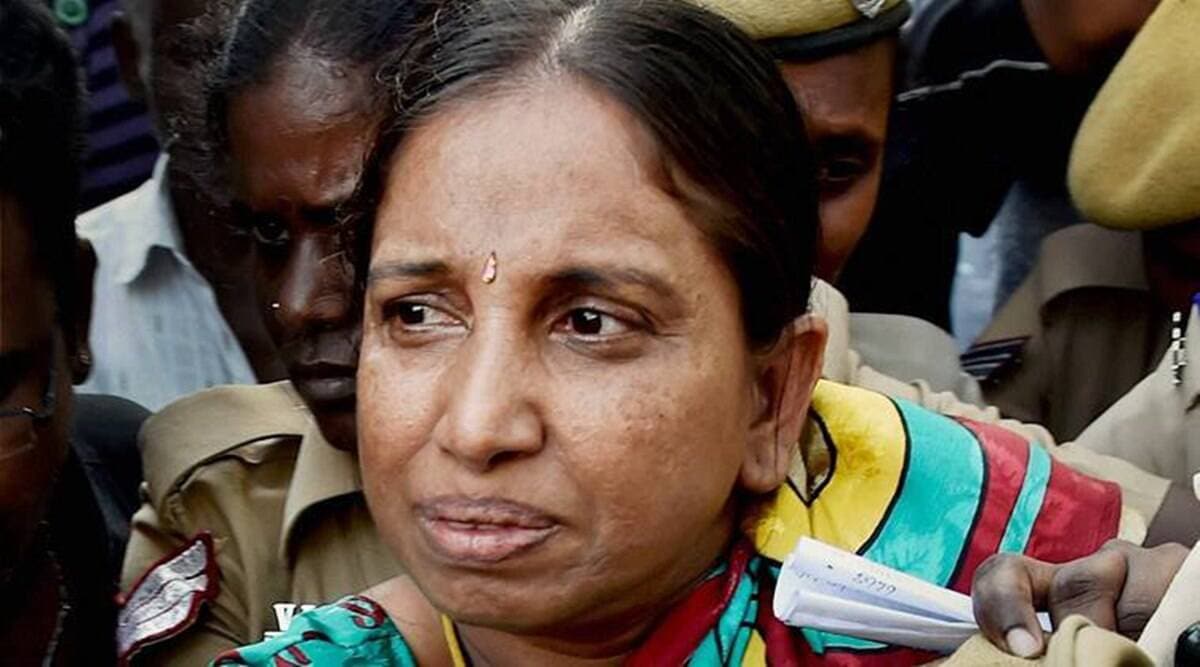 Nalini Sriharan (PTI
 Shamita Kumar and her mother have been trying to get their bag back for almost six months. (Courtesy of Shamita Kumar)
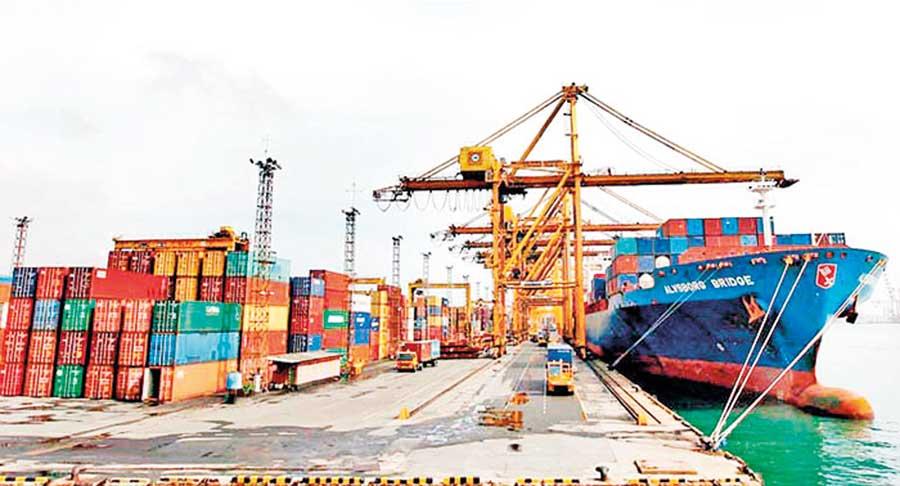
 support. Its task is to keep an eye on the export trade of countries of the world. GFI observes whether money is properly exchanged between two countries during a trade. According to its observations, between 2009-2017, the Government of Sri Lanka (GoSL) has not received more than US$ 36 billion due from exports. The money is held offshore.
  dollars that are due. There is a law in Sri Lanka to monitor and regulate such actions. That is the Foreign Exchange Control Law. It was previously known as the Exchange Control Act and was changed to Foreign Exchange Control Act in 2017. As per these Acts, the money related to export trade should be sent back to Sri Lanka without delay within a period of six months. But if there are no authorities who observe and follow up the law, the law will never be enforced. Here, there is a huge drawback in the follow-up process regarding the transactions taking place in the export trade. If we had such a follow-up process, we would not have to wait for an international organization to reveal these matters. The Central Bank division in charge of this follow-up process was keeping mum until the GFI revealed this matter.
 Former Chairman of Bank of Ceylon and National Gem and Jewellery Authority Rusiripala Tennakoon