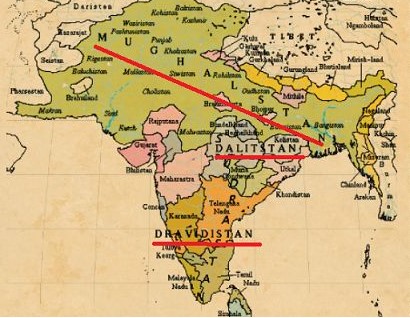
There are some uncomfortable truths about the 13th Amendment, devolution of power and of course provincial councils. Let’s begin with the here-and-now.
Provincial Council elections haven’t been held in years. It is more than 10 years since the Eastern Provincial Council elections were held and more than nine since they were held for the Northern Provincial Council. Did the people in the Northern and Eastern provinces complain? Did their representatives complain? Did any who have screamed for devolution for the last forty years raise even a whimper? Did those who make a living out of talking democracy, reconciliation, good governance, devolution and conflict resolution complain? Have those who are now, in the name of democracy, agitating for local government elections, ever insisted that PC elections be held? Did anyone say ‘constitutional provisions should be implemented?’
No. Simply, no. Humbuggery, yes.
Let’s go back to 1987. Rajiv Gandhi, the then Prime Minister of India, soon to be assassinated by the very terrorist outfit he and his mother before him funded, trained and armed, in effect held a gun to the head of the then President of Sri Lanka, J R Jayewardene, forcing him to sign the Into-Lanka Accord and thereafter get the then parliament (made of parliamentarians who he forced to sign undated letters of resignation) to pass the 13th Amendment. The people were not consulted. There was no debate. Illegality was written all over the document, its enactment and implementation.
It was an act of thuggery endorsed by a man who had excellent thug-credentials (having bashed heads of striking workers in July 1980, looked aside while thugs from his party’s trade union unleashed violence on Tamils in July 1983 and under whose watch two university students were killed in June 1984). And it was designed to further a cause of a bunch of terrorists. Simply, thuggery.
Most importantly, it wrecked rather than made easy administrative functions a case in point being agriculture, in particular agricultural extension. It has been estimated that on average no less than two-thirds of monies allocated to provincial councils have been used to pay salaries and maintain offices. Some PCs, like the Northern Provincial Council, couldn’t even spend all the money allocated to it in certain years. Simply, a white elephant. Nine of them in fact. Nine rogue white elephants.
Today there’s talk of the 13th Amendment being implemented to the letter, meaning police and land powers would be devolved. First of all, not only was the 13th Amendment imposed by a thug and illegally enacted by thug and his minions for the benefit of another bunch of thugs, it had nothing to do with ground realities. Devolution of power as a remedy to stated grievances is a monumental joke given geographic, economical, historical and demographic realities. We need not elaborate, but if you really believe in the Eelamist lie about ‘traditional homelands,’ you could read up on Raja Raja Chola I and how that particular marauder who had no stake in championing ‘Sinhala chauvinism’ described this island: ‘the land of the warlike Sinhalas,’ no less.
That said it has acquired legitimacy, if not in the circumstances of enactment by affirmation through practice — all major political parties have contested provincial council elections at one time or another. Not because they agreed with the narratives of ‘grievance’ and ‘aspirations,’ but that they saw it as a means to advance political projects, as individual politicians and as collectives.
Two factors may have serves to dispel concerns regarding the 13th Amendment. First, the powers vested in the office of the president was the insurance policy against separatism. Secondly, land and police powers were never devolved. With regard to police powers, several amendments beginning with the 17th, in effect, made such devolution unnecessary. Land was not even talked about.
Now, if we are to go with the intent expressed by President Ranil Wickremesinghe, we could very well see Chief Ministers of Provincial Councils having the kind of sway that even the President does not enjoy with regard to policing in their respective domains. Now there’s also the threat of each Chief Minister having the power to override all central government safeguards with regard to the protection of forests and the preservation of archaeological sites at will.
We do know that certain Chief Ministers belonging to certain ethnic groups have been averse to archaeology perhaps out of fear that wild narratives about what happened and creative historiography will be proven beyond a shadow of doubt to be absolute bunkum. We also know that parties such as the JVP have at various points in their history talked of tearing down stupas so that building materials could be put to other use. We had Sunil Handunnetti recently ridicule Buddhists for their preferred forms of worship. What such people in the role of Chief Minister could do should be reason enough to be wary, extremely wary about devolving land powers.
Forests! There are protected areas in all provinces. Even without land powers being devolved forests are being cut down, partly in the name of development and probably more extensively on the sly. Just imagine nine politicians (and we know that it is a profession favoured by crooks, thugs and the uncivilised) with police and land powers running their own fiefdoms. Pretty? Pretty grim!
A word about the JVP is necessary. The JVP gained much ground riding the general antipathy to Indian intervention and opposition to the 13th amendment. Sixty thousand (60,000) people, INCLUDING JVP LEADERS AND ACTIVISTS died in a period of two years (1988-89). The JVP now wants the 13th Amendment to be fully implemented, i.e. with land and police powers devolved. Perhaps we’ve seen the last ‘Il Maha Samaruma’ of the JVP. Anura Kumara Dissanayake and Co., will have to answer to all the party members, supporters and others who perished during the bheeshanaya. Will Dissanayake say ‘those sahodarayas were a bunch of idiots back then!’
What should be done with a piece of legislation describable as ‘by thugs, with thugs and for thugs’?
JVP was the last of the Sinhala political parties to accept 13A and provincial councils in 1999. By then UNP, SLMP, SLMC, EPRLF, SLFP and PA had succumbed to the 13A honeypot. It was a wise decision of the JVP to at last embrace the inevitable. 13A has no benefits for the nation; it adds more expenses, corruption and waste to national coffers and facilitates separatism. However, in the absence of a truly patriotic political party in the country, paying lip service to national unity while enjoying the benefits of provincial councils is the norm. JVP acceded to this norm in 1999 and was instantly rewarded as with the case of the SLFP which was also rewarded in 1993 (UNP, SLMP, SLMC in 1988 and TNA in 2012). Another Roman in Rome!
Today’s norm is the full implementation of 13A which is already enacted. All political parties represented in parliament support 13A implementation (or as falsely termed full” implementation). A law cannot be part” implemented unless its implementation is not practical due to a temporary situation. All laws are mandated to be implemented in full. Constitution is the supreme law of the land and non-compliance is a criminal offence. The oath to uphold the Constitution taken by all 226 includes upholding everything in the Constitution which includes 13A – the only amendment to the Constitution which remained untouched for the longest period of time. Shows that it is more permanent than other parts of the Constitution.
NPP/JVP was seen as less politically matured than other established parties that produced prime ministers and presidents. Recognizing its growing support, NPP/JVP is now par with the rest on 13A. By supporting 13A, JVP is pitching at the few liberal-minded people in the SLPP/SLFP camp and also at the 5% Tamil and Muslim voters of the SLPP. When they too leave the SLPP/SLFP it will be a party of the moribund.
13A is neither a vote winner nor a vote loser. It is a non-issue at elections. Voters have already made up their mind based on other issues and are not going to change just because of the reemerged 13A discussion. It’s irrelevant to the election. Accepting it also shows political maturity.
None of this should be construed as beneficial to the nation. On the contrary, 13A is destructive economically and politically. However, 13A is also an old gramophone disk played during election time which can be played both sides as all political parties do. Voters’ ears are immune to it as the executive president is immune to the crime of non-compliance with the Constitution.
At times of natural disasters, countries actually set aside differences with the foes and extend a helping humanitarian hand.
But the United States and its Western allies have refused to assist the Syrian government even as it faces one of the worst natural disasters in more than a century.
Syria has already faced 12 years of war waged by foreign-backed militants and terrorists as well as sanctions that have ravaged the Arab country.
Over the past years, Damascus has also seen large chunks of its oil, estimated at more than 10 billion dollars, looted by the United States military stationed in the east and northeast.
This is the money that must have gone to reconstruction projects in Syria and invested in vital services.
Now, much-needed equipment is being prevented from reaching the nation as the number of deaths from the 7.8 magnitude earthquake, that shook several regions in southern Turkey and northern Syria, is constantly rising.
The country is struggling to pull people out of the rubble as many governments fear violating U.S. unilateral sanctions imposed on Damascus by sending machinery and other relevant equipment as well as humanitarian aid to help victims of the natural disaster.
Other countries, including Iran, Lebanon, Iraq, Jordan, Libya, Malaysia, Oman, India, and Argentina, have shown no fear and have either delivered aid and equipment or have pledged to do so.
Many Arab leaders have also spoken to Syrian President Bashar al-Assad to express their sympathy and extend their condolences.
Al-Assad chaired an emergency meeting of cabinet ministers and security officials. He says the government will provide everything it can to help all areas affected, including regions occupied by militants or terrorist groups such as the northern city of Idlib, whose residents are living under occupation by terrorists such as the al-Qaeda-affiliated Nusra Front.
Damascus has also announced it will not stand in the way of any country willing to send humanitarian aid or rescue teams to the civilians in these regions.
U.S. State Department spokesperson Ned Price told reporters that Washington will deliver aid to Syria through nongovernmental organizations (NGOs) without engaging with the Syrian government.
These are the same NGOs that Washington sponsors to back the militants and terrorists who are terrorizing the civilian population under their control.
Experts say there is no question that any funds will go to the pockets of the terrorists and not for aid and rescue efforts.
Images have gone viral on social media, from cellphone air traffic tracking applications, that shows how the movement of airplanes appears to be very dense in Turkish airspace, while Syrian airspace is almost devoid of any air movement.
There does appear to be a rush to provide aid to Turkey, unlike Syria.
Syrians have spoken of waiting several hours for rescue teams to arrive, as civilians themselves, using their hands and traditional tools removed what they could from the rubble and tried to save their families and neighbors.
The destruction that the West and some of its allies have inflicted on Syria for more than a decade is indescribable.
The country had enormous capabilities before the 12-year war and used to send aid to countries around the world when they were exposed to such disasters, such as India, Pakistan, Indonesia, and Iran.
The Syrian region of Aleppo has been designated as the most affected part of the country so far, according to government data, when taking into account the number of buildings and houses that have totally collapsed or partially destroyed.
The head of the Aleppo City Council has spoken about “the difficulties in removing rubble and in securing adequate mechanisms and rescue personnel, as a result of the large scale of damage.”
The deputy head of the Aleppo City Council, Ahmed Rahmani, has also said “the violent military battles that took place in the neighborhoods of Aleppo had a major role in the recent collapse of buildings, as a result of the cracking of the soil under the buildings, and the delay in the reconstruction process due to the sanctions imposed on Syria.”
He explained that there is a great shortage of equipment for such operations, especially those used to remove rubble, while also stressing that there is a severe shortage of medicines and fuel needed to operate hospitals.
The Syrian Ministry of Foreign Affairs and Expatriates has appealed to the UN member states, its relevant agencies and funds, the International Committee of the Red Cross, and other humanitarian agencies, including international governmental and non-governmental organizations, to help and support the rescue efforts as the country in wrestling with the devastating earthquake.
Foreign Minister Faisal al-Miqdad held a meeting with representatives of UN organizations and offices operating in Syria and NGOs explaining the impact of unilateral sanctions, which have worsened the situation.
On the other hand, sources have confirmed to different Arab media outlets that a large number of air cargo companies have refrained from landing at Syrian airports, for fear of U.S. and European sanctions.
Several countries have asked Syrian airlines to transport tons of aid on board their civil aircraft, intended for the transportation of large volumes of aid to circumvent the sanctions.
Commander of the Latakia Fire Brigade Lieutenant Colonel Muhannad Jaafar says “the unjust sanctions against Syria contributed directly to the increase in the number of earthquake victims, due to the inability to secure modern machinery and equipment used in such cases.”
Latakia is a port city in Syria’s west strongly affected by the earthquake.
“We have done our duty to the fullest, according to the capabilities available to us. The regiment, with all its elements, is on alert. Rescue operations are continuing until this moment, but unfortunately, we are taking double the time because we do not have cameras to detect victims, heavy equipment, or a sufficient number of vehicles, while if these were available, we could have saved more lives,” Jaafar pointed out.
FM Miqdad says “the earthquake disaster is enormous.” He said “what has increased its depth is the difficult circumstances of Syria, as it is fighting terrorism and those who support it.”
He explained “the sanctions against Syria have increased the difficulty of the disaster,” stressing that “the state is following up, at an external and internal level, the mobilization of support to help the earthquake victims.”
Referring to Syria’s request, through ambassadors, for external support to deal with the disaster, he pointed out that President al-Assad “requested the use of all the state’s capabilities in rescue and relief operations,” and that “all hospitals in Syria have been set up to treat earthquake victims.”?
He extended gratitude to countries that have sent aid and to the leaders of countries who have expressed their desire to help.”
Calling on European governments to deliver aid to his country, he has stressed that “sending it now from Europe does not need a request and (administrative) bureaucracy. Humanitarian aid is not subject to sanctions, according to international laws. Therefore, there is no need for this as an excuse.”
He added Syria has “suffered double standards in international politics.”
He also said if Western countries are not able to fulfill their humanitarian duties, history will not forget this.”
Meanwhile, reports suggest there has been no communication between Syria and Turkey, even at a humanitarian level.
The Israel regime claims it has received a request for relief assistance from Syria, but Foreign Minister al-Miqdad set the record straight, saying “Syria does not consider Israel a state, but rather calls it the Zionist entity, many assassinations, through the Nusra Front and other terror groups, are carried out with direct Israeli support.”
Damascus has stated that probably Israel has received request for aid from Daesh or the Nusra Front.
The occupation entity is the cause of the scourge, wars, and tensions in the region, and is the last one who has the right to speak of aid and assistance,” the Syrian foreign minister confirmed.
Former Minister and Sri Lanka Podujana Peramuna National Organizer Basil Rajapaksa said that he is ready to give up his US citizenship if the dual citizenship was an obstacle to his future political activities.
He told a television political program that not only the dual citizenship, but he is also ready to remove any other legal obstacle to work for the people.
He said the people of the country should decide whether he succeeded or failed.
He said he has a great responsibility at this time, in the backdrop of a President who obtained 6.9 million votes being removed and a parliamentarian killed and violence unleashed against a large number of government politicians.
Basil said they were unable to step outside of their houses and several properties of politicians were attacked and burnt down by the public due to the Aragalaya.
However, Ranil Wickremesinghe who they chose has changed that situation, he said.
Basil said Ranil Wickremesinghe was able to resolve the key issues of gas explosions, fuel queues, and over 10 hours of power cuts.
At present, we are not facing any of those social issues. We believed he is an individual who has the capacity to resolve such issues and he has proven so,” he said. (Darshana Sanjeewa Balasooriya)
Claiming that the Public Utilities Commission of Sri Lanka (PUCSL) has granted special electricity tariff reduction to Housing Apartment Complexes than normal domestic units, Power and Energy Minister Kanchana Wijesekara said today that electricity could be provided to normal domestic units at concessionary rates if the special relief granted to Housing Apartments was withdrawn.
The Minister told Parliament that the eletricity tariff charged from Housing Apartment complexes were 50% lesser than the tariffs charged from normal housing units and raised doubts as to why the PUCSL has allowed such special relief to the Housing Apartments.
The Minister said he expected the PUCSL would change that special relief granted to Housing Apartment Complexes and added that if that was done, domestic consumers could be provided with electricity at concessionary rates.
The Minister also said he was positive that the PUCSL would give the approval to the proposal of electricity tariff revision on February 15 as promised by the Commission.
“The PUCSL promised to the Cabinet and the National Council that it will amend the tariff proposals and give its approval on February 15. We hope they will keep their word,” he said.
He said the power crisis had aggravated due to the delay caused by PUCSL’s approval to tariff hike. (Ajith Siriwardana and Yohan Perera)
President Ranil Wickremesinghe has taken a torch which is burning from both side by trying to fully implement the 13th Amendment to the Constitution, Former President Maithripala Sirisena said today.
He said he wondered why Ranil Wickremesinghe was trying to implement this controversial 13A when the country was facing serious issues.
Mr. Sirisena said none of the former Presidents such as JR Jayawardane who introduced the 13A, Ranasinghe Premadasa, D.B. Wijetunge, Chandrika Bandaranaike, Mahinda Rajapaksa, or himself ever attempted to implement it.
He said it was not an easy task as majority of Sinhalese Buddhists are against it.
“13th Amendment has to be dealt with care,” he said. ( Ajith Siriwardana and Yohan Perera)
The Central Bank of Sri Lanka (CBSL) has urged all persons to be vigilant of the security of the details of their bank cards, owing to the recent rise in financial scams.
Accordingly, CBSL warned all persons to refrain from sharing their usernames, passwords, PIN numbers, One Time Passwords (OTP), Card Verification Values (CVV) and other details related to their bank accounts, with any other third parties.
Former International Monetary Fund (IMF) Resident Country Representative for Sri Lanka, Dr. Nadeem Ul Haque says that the Sri Lankan government needs to take steps to ensure efficiency when it plots the way forward for the country and cut down on the number of subsidies given to the public as well.
He made these remarks while speaking during a panel discussion ‘At HydePark on Ada Derena 24’.
Joining the panel discussion, Economist Dr. Tissa Jayaweera added that even though economic experts like to call for ‘debt forgiveness’ it is not something that will be done by countries giving out money generated by their people to countries that have misappropriated such funds.
In response to a question raised, during the discussion whether Sri Lanka is on track to get the IMF assistance, the former IMF resident coordinator to the island emphasized that the addiction of obtaining debts must stop and that Sri Lanka needs serious policy planning.
IMF programme will not lift you from your issues”, he said.
Speaking further, Dr. Nadeem Ul Haque questioned as to why would the world forgive a country for wasting money, highlighting that this requires a large global consensus.
If debt forgiveness is given, question is how you will prevent it. We have a debt issue because we wasted the money,” he added.
World doesn’t give subsidies to the extent Sri Lanka does,” Dr. Ul Haque claimed.
Sri Lanka’s Tamils are dreaming if they think India will help create Tamil Eelam with 13A land & police powers.It is time that Sri Lanka’s Tamils wake up to reality. At the time of India’s independence, Tamil Nadu sought self-determination, Indian leaders refused, subsequently even Bangladesh was given independence but not Tamil Nadu. Indian leaders squashed every movement in Tamil Nadu for separatism culminating in 16thamendment in 1963 to prevent Tamil Nadu from seceding. Inspite of 72million Tamils, not a word of Tamil is in the Indian National anthem though Tamil is both a National & Official language in India. When India denies 72million Tamils self-determination in India, will India allow Tamils self-determination in Sri Lanka unless India can use the quest to annex Sri Lanka to India! Therefore, Tamils must realize that they are unlikely to have a homeland” in either Tamil Nadu or Sri Lanka. Ironically the West/Church are also using Tamils for their own agenda but here too, Tamils are unlikely to have what they deem their Homeland”. These realities should dawn on Tamils in both Tamil Nadu & Sri Lanka as well as the Tamil Diaspora overseas. They are all being used as pawns in a greater game of politics. All they will be allowed to achieve is limited personal gains & lucrative lifestyles for those engaged in a futile quest & they know it too!
Both Indo-Lanka Accord & 13A had no inputs of Tamils or LTTE. They were drafted by India for India’s advantage. TULF letter to Rajiv Gandhi on 28 Oct 1987 shows how 13a/PC system were all conceptualized by India & not by Tamil politicians or LTTE.
The text of the Accord did not mention devolution” even in the exchange of letters between JR Jayawardena & PM Rajiv Gandhi.
The merger of North East was not a request by Tamils or LTTE but a geopolitical design of India in 1984.
Even the Norwegian brokered 2002 Cease Fire Agreement would not have been signed if not for the nod of approval by India.
LTTE emerged the more powerful of the militants that India trained while India did not blink an eye to order the assassination of Prabakaran. At the same time, India even saved Prabakaran from being captured primarily because India needed him to wrest more control over Sri Lanka for India, diplomatically. This was why Prabakaran was whisked off to Delhi, but kept there till the Accord was signed & PM Rajiv returned. Unfortunately, Prabakaran did not like the treatment given & just 4 years later former PM Rajiv was assassinated.
The quest for separatism may have been promoted in Sri Lanka since 1949, but it would have not got anywhere without India’s tacit approval. Sri Lankan Tamils & LTTE Diaspora must realize that separatism or Eelaam will be allowed only so far as it suits India’s advantage & administered by India.
India that took constitutional measures to prevent separatist quests in India, could have easily taken action to eliminate LTTE after the assassination of Rajiv Gandhi, why didn’t India do so? While the demise of a PM was a dent to India, it was too premature to eliminate LTTE as India had bigger plans for Sri Lanka, not Tamils. That order eventually came on 15 Sept 1987 to the IPKF commander by Dixit to eliminate Prabakaran. The decision came as a result of India preparing another armed group to take over Prabakaran/LTTE & to come under the India propped merged NEPC Chief Minister Varatharaja Perumal. Note how every decision & action was from India. It was on 8 Oct 1987 that IPKF declared war on LTTE. Eventually, India sacrificed over 1000 of its soldiers who were killed by LTTE.
The Indo-Lanka Accord was factually incorrect & if Tamil politicians & LTTE did not have any say in its drafting, we can only conclude that the insertion of historical habitation of Sri Lankan Tamil speaking people” was a ruse to merge North East simply because India’s eye was on Trinco harbor & Trinco Oil tanks which was in the East. Both the habor & oil tanks had nothing to do with the conflict or were even part of LTTE demands. This was a strategic asset India wanted to acquire using their we are for Tamils” song.
The inclusion of Tamil speaking people” was another ruse to get Muslims to agree following an agreement signed in Madras that Muslims could continue to live in the North. It would be interesting to see if India manipulated LTTE to chase Sinhalese & Muslims out of the North as well.
It is noteworthy that Tamils were known as Malabars & the term Ceylon Tamils was coined in 1911 which turned to Sri Lankan Tamils in 1972.
All that Tamils got from India was the official language status with the Indo-Lanka Accord & 13th amendment.
In the exchange of letters, Indian PM made 5 demands. These letters are not binding, because they were not annexed to the Accord & so are not part of the Accord. But it clearly shows, not a word was mentioned about Tamils
To ensure territories of both India & Sri Lanka is not used for activities prejudicial to each other’s unity, territorial integrity & security – nothing to do with Tamils
To ensure no foreign military/intel personnel were prejudicial to Indo-Lanka relations – nothing to do with Tamils
Trincomalee or any other Port in Sri Lanka not to be made available for any military use by any country in a manner prejudicial to India’s interests (while India was anti-US in 1990s no US port or VOA could be set up but now that India is friends with US, Sri Lanka has to allow any US ship to land in Sri Lanka) – nothing to do with Tamils
Joint venture to operate Trinco Oil Tanks – nothing to do with Tamils
Sri Lanka’s agreements with foreign broadcasting organizations to be reviewed by India – nothing to do with Tamils
Indian envoys may be flying in & out of Sri Lanka, we can be certain that discussions are not to please or be of advantage to Tamils, Tamil political parties or LTTE Diaspora. The LTTE Diaspora may be able to fool foreign Govts but it has no chance with India. Sambanthan, Wigneswaran may be disappointed by Sumanthiran tied to West/Church may have other surprises to shock India.
Sri Lanka & even India must take stock of new developments – the West’s honeymoon with Modi is slowly coming to an end, that means Tamils are unlikely to get anything & this is a clue for Sri Lanka to play its cards right.
Two stalwarts of the JVP-led National People’s Power (NPP) alliance, Dr Harini Amarasuriya MP and Mr Tilvin Silva, JVP General Secretary, as reported in the media early February 2023, have made more or less clear the alliance’s stand on the full implementation of the 13th Amendment to the Constitution (suggested by the president): the NPP is broadly for it. But both Amarasuriya and Silva are not convinced of president Ranil Wickremasinghe’s actual commitment to his decision to fully implement the controversial amendment. They both express misgivings about president Wickremasinghe’s real intentions in bringing up the issue at this critical juncture.
Amarasuriya says he didn’t do it when he had ‘opportunities’ to do it in the past. Well, actually, to be fair by Wickremasinghe, he didn’t have any opportunity to make the decisive move. He neither became executive president nor got sufficient parliamentary power to do so before he ultimately got kicked out of parliament altogether for pursuing policies that tended towards the full implementation of 13A. But for the Rajapaksas’ perfidious betrayal of the nearly seven million patriotic Sri Lankans who voted in Gotabaya Rajapaksa as president and 140+ MPs on the SLPP ticket to defeat the yahapalanaya that he had controlled under Sirisena’s lame executive presidency. (The Rajapaksas’ treachery is a different matter.)
Tilvin Silva sees the main parties (presumably, the UNP and SLFP rumps and their utterly disoriented new manifestations) as arousing communal passions through the debate on 13A. Those that he calls ‘diehard racists…’ (who, according to him, had been hiding these few months) are coming out of the woodwork. Who are these so-called ‘racists’? They are, of course, those who are opposed to 13A, the patriots who are opposed to the division of the country into nine virtually independent units, resulting in the disintegration of the unitary state.
Tilvin Silva said that what people in the North and the South are asking for are food, fuel and medicine and so on; but the Northerners have problems. We do not think that any other party except a government of the JVP-led NPP can give real solutions to the problems of people in the North. We would form an NPP government and bring in a new constitution with a mechanism to solve the problems of Tamil people. We get it passed with people’s approval and provide solutions for the problems of the Northerner. Until such times, provincial councils will have their existence,” Silva said, as reported in one national English daily.
It is not clear how the NPP is going to deal with the 13A issue. But if it is hoping to wangle the support of the Sinhala Buddhist masses, who are always at the receiving end, while horse-trading with the federalists, Anura’s chances of becoming president will evaporate soon. As he has already apparently indicated that his prime minister will be Sumanthiran (I am not sure of the authenticity of this piece of information, though) in case he becomes president, the voters in the South will be even more sceptical about voting for him. Sumanthiran is the exact opposite of Lakshman Kadirgamar, whom the Sinhalese universally loved and honoured above all other politicians, but whom the LTTE assassinated as a traitor to the separatist cause.
The truth is that the majority of ordinary Tamils in Jaffna do not want to live in a separate state. They want to live in peace with the other communities of the country. According to Arun Siddharthan, the convener of the Jaffna Civil Society Centre, the proposed full implementation of 13A is a conspiracy of the casteist TNA. People in the North actually suffer from casteism, not from any political discrimination or human rights violations by the Sinhalese majority. Tamils deemed to belong to low castes like himself (but he doesn’t accept casteism; he is a much more honourable man than his racist, casteist opponents) have no human rights. He says he is not allowed to have a press conference in Jaffna. Hence he holds his news briefings in Colombo. At this briefing, Arun Siddharthan refers to the non-implementation in Jaffna of the Prevention of Social Disabilities Act No. 21 of 1957 adopted by the S.W.R.D. Bandaranaike government of the day amidst opposition from casteist Tamil MPs. Arun Siddharthan warns that if the government tries to implement 13A, there will be a communal uprising against it in Jaffna, which, though, in my opinion will be counterproductive. It might provide an opportunity for India to intervene militarily, and make matters worse.
Leaders of the NPP, please stop being misled by your ‘friends’ certain Colombo-based crafty Tamil lawyers and moribund political counsellors who, unlike you, are out and out misanthropic, racists. Trust young Tamil leaders like Arun to befriend the Tamil polity in the North as well as in the South. To increase your appeal among the Sinhalese, please enlist the support of JVP founder Rohana Wijeweera’s son Uvindu wherever he is and young grassroots level nationalist activists like Amith Weerasinghe, who is already doing much to relieve the suffering of the poor of all communities around Kandy in central Sri Lanka (hence disliked by traditional politicians as a threat to their political existence).
What is the point of your insisting on the holding of local government elections? There is no meaning in having elections at this time. Even if they are held, you will not stand to win. You hardly won any seats at the last local government election in 2018, don’t you remember? You will not do better this time if you stick to your purblind policy of cozying up to the casteist elite of the Tamil society in the North, while ignoring the populace suffering at their hands, and while taking the support of the Sinhalese majority for granted. As it is clear to the intelligent voters that you have swallowed the TNA cajolery hook, line, and sinker, people will not trust you enough to vote for you. What you can do instead is to use the next two years to educate the young people of today about the JVP’s heroic past, with a genuine analysis of its costly errors (Uvindu has an idea about that) and organise the multiethnic electorate (dominated by the lower middle and working classes) across the country for a resounding victory at the next presidential and parliamentary elections. Until then, try to help prevent Ranil Wickremasinghe from doing anything really detrimental to the country that is irreversible.
As I wrote in my previous writeup Cynical irony of……….” (Lankaweb/February 2, 2023) We need statesmen/women, not mere politicians. People are fed up with the latter. Anura is not likely to turn out to be a real statesman, even if he gets the chance to do so one day, if he pursues his proven hypocrisy. However, compared to the leading buffoons of the two traditional parties (the UNP and the SLFP/or their ghostly modern reincarnations), Anura Dissanayake would be someone that the people can look towards as an alternative leader, provided he does not forfeit the trust of the majority Sinhala Buddhists in his attempt to win the loyalty of the traditional minority leaders, who will never ever change their spots, though they may change their hunting grounds”.
Let me end this piece with the last paragraph of an essay I wrote four years ago (‘JVP at a crossroads’/Lankaweb//March 6, 2018):
The JVP must take a good hard look at its wasteful past and subject itself to serious reform as a party. It must get rid of its outdated ideologies and outmoded leaders. It must not condemn the voters as idiots for not voting for them. Most important, the JVP’ers must find political allies with whom they can coexist and serve the nation.”
After Harin Fernando, Minister of Tourism and Lands took over the portfolio, he appointed a new team to improve tourism. The new team’s efforts have paid off. Sri Lanka Tourism Board is confident that the estimated 1.55 million tourists will arrive in Sri Lanka, adding an income of 2.8 billion dollars to government coffers by the end of 2023.
Sri Lanka Tourism Board and Tourism Promotions Board should take into a video how a lady and gentleman explained in detail which are listed below.
Valid points
The immigration and emigration department needs to set up a help desk to establish to answer any queries on entry visas and passports etc., thereby cutting down tourists’ time in minimising their valuable time and money instead of wasting in immigration offices in long queues,
Embarkation tax on tourists, including Sri Lankans living abroad, is crazy. It should be abolished.
Duty-Free outlets should have a good selection of wine, foreign liquor, and many brands of cigarettes available for tourists.
Local liquor (such as various types of arrack, all kinds of local Gin and cyder) should be available duty-free in wine shops and supermarkets for passengers coming into the country and leaving. Shop owners and Management staff may check their passports to ensure Sri Lankans abroad, or Asians are living abroad.
All levels of service at all the airport complexes need improvement.
All airports should have an Ambulance service, including ‘Para Medics”. Ministry of Health conducts para medics courses on a two-year full-time basis, similar to Medical Laboratory Technology.
Most of the drivers of tuk-tuk drivers are ‘undesirable’ characters, and they are a danger in the first degree, especially in transporting tourists. They are not concerned about the passengers they carry, and the writer is still determining whether they have insurance coverage! They have a habit of creeping through every space available in traffic jams.
Beggars must be removed from the tourist areas to make tourists feel safe to travel within the country.
English-speaking and courteous guides and specially trained police must be deployed in various parts of the country for tourist assistance.
Ditches and drains should be clean and in a good state of repair.
Finally, private beaches are a must to keep the ‘peeping Toms’ and thieves away from tourists.
The second crucial point comes from the gentleman about the excessive charges on tourists who visit prominent places like the Lotus Tower in Colombo, the Gampola Tower in the Centre of the country or Sigiriya, Lion Rock, where tourists are charged significantly more than the locals. “This is the first country we have seen.” Laments the gentleman. “We have noticed that charges are considerably higher in certain places than the locals. Some groups have commented that “charging structures go up to 25% for tourists more than the locals!
“We have no issue in paying more than the locals, but it should be up to a specific limit. “We are not saying we should voluntarily go for it. It is what we have found amongst a lot of ‘chat groups’. Tourists are unhappy about this, which could be a more pleasant experience. If this trend continues, tourists will look for other destinations. We wish to bring out this point as our ambition is to help the Sri Lankan tourist industry. We know how Sri Lanka is going through a difficult economic period.
Bus Drivers and excessive speeds
The lady spoke about the local traffic. She laments how bus drivers travel at astronomical speeds, and the pedestrians have to walk on the roads where there are no sidewalks (pavements), especially in tourist areas such as Unawatuna and Hikkaduwa. The buses travel so fast and attempt to overtake – when one bus tries to overtake, another bus arrives in the opposite direction, and the passing bus’s wind itself is sufficient to knock someone down. ‘We have heard of near misses often’, she grumbled on the video. It boils down to ‘no one wants to go on holiday and get trapped under a bus in a foreign land!
The gentleman’s conscams”. “When the locals see foreigners, many locals will approach visitors and try to be friendly with them with ulterior motives of taking the foreigners for a ride. Local men will volunteer to assist the tourists by directing them to the local market or showing how fishermen are seated on silts at the seaside in the south of Sri Lanka. When photographs of fishermen are taken instantly, many locals will surround the tourist(s) and ask for significant amounts of money from visitors for photographing the stilt fishermen. They are known as ‘scammers.’ The gentleman said such scammers are found mainly in two cities where scammers operate in earnestness – Colombo and Kandy.
land
Warning to female Tourists.
The lady tourist warns single female tourists not to walk alone to a supermarket, to a cash machine or on the road on their own, as there are men who whistle at female tourists and make funny noises from their mouths. So, she tells female tourists to only walk alone in Sri Lanka if they can tackle them. She explained how a male followed her to a supermarket to seek her attention. He had entered the supermarket, and the guy crawled behind her like her shadow, making funny noises with his mouth, but ultimately she had to tell him “to get lost.”
A female and male give substantial hints to improve Sri Lanka’s tourist industry. The female starts the video in the following manner.
“Our first negative point is, especially in tourist areas, aggressive tuk, tuk drivers tend to harass tourists. She noted tourists would like to walk freely and enjoy the environment, but it was irritating when confronted by ‘aggressive’ tuk-tuk drivers. Tourists would like to walk freely and get familiarised with whatever attracts them, but when tuk-tuk drivers, every five to ten meters, approach tourists and disturb, tourists experience of being peacefully in a relaxed mood and enjoying themselves is lost. She named the worst areas of the three extreme places Sigiriya, Hikkaduwa and Unawatuna.
A male tourist explained that tourists who go to a place of attraction, for example, the Lotus Tower in Colombo, the Gampola tower in the Centre of the country, or Sigiriya – ‘Lion rock, are asked to pay significantly more than the locals. He said, “This is the first country we have visited where that was the case. Tourists are OK with slightly paying a higher amount than the locals, but it does not mean to say we should go and see attractions at will and pay extensive charges. We don’t say tourists should not visit these places, but we are trying to help Sri Lanka’s tourist industry. It is not a pleasant experience at all, and we have found that many groups and tourists are not very happy about this. Tourists are charged up to 25 times higher than the locals in certain places. It means tourists may turn around and seek other tourist destinations at the end of the day.
The lady complains.
‘Many bus drivers manipulate buses so fast on roads that there aren’t sidewalks in tourist areas such as Unawatuna and Hikkaduwa. (pavements). Due to this, pedestrians and tourists have to walk on the street. When one bus tries to overtake another bus in the opposite direction, the wind of the buses can knock down anyone! It boils down to no one wanting to go on holiday and get trapped under a bus in a foreign land.
The other factor is scammers. The gentleman explains how locals get friendly with tourists with ulterior motives of pretending to guide tourists to a local market or the seabeach where fishermen sit on silts. Tourists would like to take pictures of anglers sitting on a pole as souvenirs of Sri Lanka. Suddenly tourists would be surrounded by a crowd of locals demanding money for taking photographs. According to the tourist couple, scamming occurs in Colombo and Kandy, the two major towns.
People Struggle for existence.
According to the gentleman in the video, the saddest part was how difficult life was for the poor villagers in Sri Lanka. People are affected by the country’s present economic situation and begging for food.
The female in the video pointed out that on January 23rd, 2023, how she experienced a ‘power cut’. She must have been out in the town because every hotel should have a generator.
It is important to understand that terrorism was only part of the problem. The bigger problem is the issue of attempts to separate Sri Lanka, a quest started by ITAK from 1949 onwards. ITAK or Illankai Tamil Arasu Katchchi translated meant Tamil State party but camouflaged quest as federal. Its aims & objectives & the use of shamasthi” was promoted as federal. Yet, in 2008, ITAK changed shamasthi” to innaipachchi” & we connote that to mean confederal. Also at the same convention in 2008, ITAK went on to endorse the 1976 Vaddokoddai Resolution for a separate sovereign Eelam State. This clearly showcases, ITAK quest is not federal but confederal. It is why ITAK is eternally demanding Land & Police powers to advance their confederal agenda & come closer to UDI where if a Kosovo-type UDI is declared; the West will support it as they did to Kosovo. The pro-LTTE units have been busy promoting bogus Tamil Nadu & Tamil Homeland bids & falsifying history for this purpose.
The govt must challenge the ITAK to clarify its aims & objectives, the meaning of innaipachchi”, whether it is seeking federal or confederal system.
Legally too ITAK must be challenged. Why is the 6th amendment not being used if the aims & objectives of the ITAK is the goal of establishing a separate state in Sri Lanka.
No legal action can be taken against a party seeking a federal solution – this is why ITAK claims itself to be federal party though its statements and demands are confederal in nature & not federal. Everyone must turn their attention to the ITAK constitution. Have it translated & have it analysed & debated legally.
ITAK must be made to explain why it changed shamashti” to innaipachchi” in 2008.
If shamashti meant federal in 1949, what does innaipachchi” mean in 2008?
ITAK must be made to answer this question. Tamil translators must seek the meaning of these 2 words which will reveal ITAK’s true objective.
Is ITAK’s aim to create a confederation? If so, ITAK is craftily vying for a separate state.
What is CONFEDERACY/CONFEDERATION or CONFEDERAL?
It is a union of independent & sovereign States (this is why land & police powers with full autonomy is being demanded using discrimination” as justification
It is formed with intention to create independent & sovereign States.
According to West’s Encyclopedia of American Law
A Confederation is a union of states in which each member retains some independent control over internal & external affairs, Thus for international purposes, there are separate states, not just one state”
A Federation in contrast is a union of states in which external affairs are controlled by a unified, Central Government”
Obviously, there is a problem. The 2 terminologies clash, while the majority are of the view that Sri Lanka must retain its unitary status and many view federalism as conflicting with the unitary status of Sri Lanka, primarily because it was imposed forcibly on Sri Lanka.
The 6th amendment may not suffice to take legal action against ITAK’s 2008 endorsing of Vaddukoddai Resolution, but if ITAK is vying for a confederal solution, there is scope for legal action especially when ITAK is building its demands for that ultimate UDI goal.
WHAT IS ITAK’S GAMEPLAN DEMANDING 13A LAND & POLICE POWERS?
A Federal system of government
Central Govt can reach direct to the citizens in a province
Federal form of Govt does not allow an unilateral secession – as was seen when President Premadasa annulled the merged NE Province & imposed direct rule
A Confederal/Confederation system of government
Central Govt can reach ONLY upto the govt of the respective province that form the confederacy (ie. the Chief Minister of each Province)
Central Govt CANNOT directly reach the citizens
The most alarming factor is that the govt of a confederation can WITHDRAW from the union – the UDI of 1990 was an experiment in this quest.
The reason for ITAK to change from federalism to confederal in 2008 was to avert the 1990 UDI foiled attempt
ITAK’s journey to separatism
1949 ITAK name denotes as Tamil State Party (usage of Federal Party a ruse)
Aims & objectives of ITAK need to be legally looked at against 2008 endorsement of Vaddukoddai Resolution seeking a separate sovereign state.
Replacing shamashti” (federal in 1949) with innaipachchi” (confederal in 2008)
ITAK reference to self-determination” Tamil Nation” Tamil Homeland” UNITED SRI LANKA” are aligned with confederal form of system & not federal.
ITAK claims to guarantee fundamental rights (right to religion, language, culture etc) aligns with confederal/confederation system. In a federal system, fundamental rights are given by the Central Govt. In a confederal system, fundamental rights are given by the Provincial Govt.
The other key argument that Sinhalese must use is that the Tamils may claim a homeland” but they cannot claim exclusivity” to it when Sinhalese had also been living in these areas & have archaeological & historical proof (isn’t this why there are attempts to destroy this heritage & history as well as the new claim that Tamils were also Buddhists) This is the newest argument.
People should not fall prey to ITAK’s verbal statements. They must take the ITAK constitution, translated it & make it public, analyze it & debate its demands.
ITAK’s constitution says that once it has created a Homeland” for Tamils, it would co-exist & collaborate with the Sinhalese provinces. There are no Sinhalese, Tamil or Muslim provinces in Sri Lanka.
Sri Lankans are living all over the island. LTTE Tamils chased Sinhalese & Muslims out of the North. After chasing Sinhalese & Muslims out of the North, LTTE & pro-separatist Tamils cannot claim only Tamils live in the North. Sinhalese who have been living in the North have every right to stake claim to the North as well.
ITAK pretends to plead for a federal set up, then why is ITAK referring to Tamil & Sinhala provinces?
Such a form of ethnic provinces do not exist in a federal set up because it is the Central Govt with a Central Govt Constitution that rules the island not provinces.
It is time that the nationalist organizations take out the ITAK constitution & demand answers from ITAK.
The US experiment with confederacy was a failure. Co-existence & Collaboration were used & are the same words used by ITAK. The moment a member of the confederacy decides they do not wish to live in co-existence or collaboration, they can declare to separate. This is what ITAK is eyeing & is a one step beyond UDI to prevent Sri Lanka Govt from annulling the province & declaring direct rule. This is why ITAK is using UNITED SRI LANKA with Co-Existence & Collaboration & trying to tweak the constitution to ensure the Centre does not repeat the outcome of the 1990 UDI.
Obviously external parties are weighing these demands against their own geopolitical aspirations.
The Govt & legal luminaries in Sri Lanka as well as patriotic organizations must realize that the neocolonial West agenda is to dismember nations.
Pakistan was created out of India
Bangladesh was created out of Pakistan
Soviet Union was balkanized
Yugoslavia was balkanized
Eritrea was created out of Ethiopia
South Sudan was created out of Sudan
Kosovo was created out of Serbia
Kurdish ‘self-determination’ on the cards
India is on target to be balkanized as well
Self-determination was originally used during de-colonization but has been turned into a political tool to advance western neocolonial agendas & grab resources under transnational control.
Sri Lanka is faced with 2 forms of threats – Global & Local. Before meeting the global threats, its best we identify the local threats first.
Sarath Wijesinghe President’s Counsel, Ambassador to UAE and Israel, President Ambassador’s Forum Solicitor in England and Wales
NHS in the United Kingdom- a wonderful system
NHS is the health system in the United Kingdom provided free to the citizens with a network of General Physicians to every citizen with a support staff, including the improvement and protection of health in the areas covered by the general physicians spread in the country. It is provided free to every citizen free medicine to those who are on income support, aged, low income groups and those declared by the social security department as unable to pay – yet those who could afford will be paying a very moderate amount for drugs. Expenditure in hospitals and the rest of the treatments in the clinics by the hospitals and GP practices too are free for every citizen chose to be treated by NHS. This wonderful system in available in the United Kingdome and similar systems in some EU, and commonwealth countries with some variations. There is no free health service in the United States where citizen is expected to be insured for treatment especially in emergencies, where insurance cover is demanded before treatment.
Private medical system
The private medical system exists in UK at a price to cater those who could afford and who chose to elect it in pace of NHS. This system was introduced just after the war and continued by public demand and support. It promoted high quality of health services to every citizen, all of whom is in the NHS plan covering the entire country spreading GP (general physician) practices all funded by the NHS excellent and ideal system exemplary to other parts of the world. Health is a main issue in USA political system considering to follow the UK model with variations. GP is the advisor and leader in the health system in the village or a cluster of citizens demarcated by the system in practice. It is a good idea for Sri Lanka to adopt a method of a personal private trained career with proper training covering the entire country who will be acting as a health worker who also will be in a position to act as a caregiver worldwide to bring much needed foreign exchange and exchange of knowledge and experiences. Personal care worker can work as a health worker as on voluntary basis in self-funded establishments which is an ideal model to introduce in Sri Lanka. Caregivers are in demand world over like physicians that could be utilized locally as well as worldwide .The state in UK spends 53 million pounds from tax payers money for NHS network with 122000 doctors a with 36622 fully qualified GP practices all strictly monitored paid by the NHS fund as the legal aid fund that funds the legal aid scheme generally managed through legal aid by lawyers and NHS by doctors. The main theme of NHS is patients benefit and patient care includes health care of the community through clusters of GPs hospitals and other organization catering many other diseases and sicknesses. It is given free to the citizen who pays a contribution and tax on the income proportionately who carries a cared called NHS card with a unique number and recognition that gives all his information which is an ideal system to be followed by any other country. NHS strictly considers information confidential which could be accessed only by a General Physician, Hospital, or an authorized medical personal only for the purpose of treating a patient with the consent of the patient. The most important wonder of the system is the ability to access of the notes by any Physician or a hospital only with the permission of the patient will all the medical history with the test results could be accessed from any corner of the country with the NHS reference number easy to carry.
Access to medical health/treatment
A citizen in the extreme end of the country can register with a GP and be treated with access and any hospital in the country can have access to the documents with the permission of the patients o 6733 million population all qualifies to NHS funded by the tax payer costing 600 million pounds. Sri Lankan government spends $ 161 million which is 4.08 of GDP which is substantial for a country like Sri Lanka and a proper caregiving system will save on preventive care as well when a substantial amount of the income is spent on drug prevention and other preventive measures on health sector. The service has to equality and the Physician and Hospital Trusts are responsible for mistakes heavily contested in courts funded and assisted by legal aid. Hospitals, equipment, and services aer of highest quality supervised by governmental and non-governmental organizations and powerful consumer groups led by famous WHICH pressure group. A system akin to NHS was introduced to Sri Lanka by the British Colonial powers but the GP services and the standers that continues to be in operation in Sri Lanka with Hospitals with free services. Out of 25600 MBBS doctors registered 70% are employed in the government service with freedom to be on private practice with. ‘’Ayuradic’’ doctors spread countrywide in all villages the community depends on combined health services practices both western and traditional systems taking the place of the general practitioner and adviser to the community on health and safety supported by the ‘’Public Health inspectors’’, ‘’mid Wife’s, and ‘’health worker’’ of the health department all of whom are in the group of health workers to the community in the health system offered free to the community in addition to the private doctors 9 western and traditional) which is a combination of both systems. Hospitals are free for the citizen with a network of private hospitals which are expensive for the ordinary citizen offering ‘’Channel Services’ ‘by specialized doctors at a price and the drugs are purchased through the network of private pharmacies where the quality is in doubt.
Shortage of drugs and substandard health system
Currently there is a severe shortage of drugs due to the financial crisis in the country. There are reports that there are over 10,000 private hospitals not up to the standards of the expected standards when there are numerous complaints about state hospitals on various grounds. . In UK system it is not necessary to carry his medical file within the country in a emergency or an urgent need- Regional teams are located with regional care through GP and hospitals managed by separate trusts with access to the patient according to the needs- for example when some hospitals are specializes on cancer the patient could be referred to that hospital by the GP generally with the recommendations of the consultant physicians. The system is organized rooted and patient friendly. Patients are treated to ordinary caught to heart surgery free to any citizen refereed by the GP and the consultant Physician. Specialized centres and institutions treats NHS patients from referrals from the GP and consultants channelling through the channels – all free of charge on NHS unless they chose to be private which is very costly yet some choose to go private. Everything is free to all citizens except for the medicine in UK but the system is changed in Sri Lanka due to the economic crisis.
Caregivers and monitoring system
Caregivers should be trained as mini doctors able to treat in emergencies and to work closely with doctors and hospitals on a properly programmed system. Substandard of Pharmacies, drugs and private hospitals are a great hindrance to the health services that has to be looked into as a matter of urgency with the introduction of a proper supervisory mechanism as in UK. Though the Health department is expected to supervise and monitor the isolated health, private hospitals Pharmacies and the health care it is doubtful they perform their duties at all. In overall Sri Lanka needs new life and rejuvenation for the entire health sector and they need not be shy to learn from others when USA is looking into the ways and means of following the UK model in the ‘’United States’’. Will caregiver is a proper model for a mini doctor is a matter left to the leaders of Sri Lanka to implement after a proper extensive research and studies. Sarath7@hotmail.co.uk
In this episode of The Source, we talk with Professor Emeritus of Economics (University of Massachusetts) and founder of Democracy at Work, Richard Wolff, about the economic impact of the Ukraine war. We assess the impact of Western sanctions on Russia as well as how the war has affected the West economically. Interview topics: 0:00 Introduction 0:32 “Economic War” with Russia? 12:01 Moral significance of Western sanctions 14:20 Economic impact on the United States 21:07 Economic impact of military spending 32:21 Economic impact on Ukraine ABOUT RICHARD D. WOLFF: Richard D. Wolff is the founder of Democracy at Work and host the show Economic Update. He is Professor of Economics Emeritus, University of Massachusetts, Amherst where he taught economics from 1973 to 2008. Earlier he taught economics at Yale University and at the City College of the City University of New York. Wolff was also a regular lecturer at the Brecht Forum in New York City. He is currently a Visiting Professor in the Graduate Program in International Affairs of the New School University in New York City.
Sri Lanka and New Zealand explored ways and means to further strengthen and deepen cooperation between the two countries. The discussions took place when Sri Lanka’s High Commissioner in New Delhi Milinda Moragoda met with the Foreign Minister of New Zealand Nanaia Mahuta who is on an official bilateral visit to India.
The meeting between the visiting Foreign Minister of New Zealand and the High Commissioner of Sri Lanka to India was held today at the High Commission of New Zealand in New Delhi.
The discussion focussed on conceptual contours for a cooperation model for smaller countries in the Indian Ocean region. Further, collaboration in the dairy sector was discussed, including possible trilateral arrangements involving Indian investors. Foreign Minister Mahuta and High Commissioner Moragoda also discussed as to how New Zealand’s experience in public financial management and public sector reform could be shared with Sri Lanka.
High Commissioner of New Zealand to Sri Lanka Michael Appleton, senior officials of the New Zealand Foreign Ministry and Deputy High Commissioner of Sri Lanka in New Delhi Niluka Kadurugamuwa also attended these discussions.
Minister Nanaia Mahuta is a tribal member of Waikato-Tainui, Ngāti Maniapoto and Ngāti Manu and her parliamentary experience has enabled her to contribute to the collective aspirations of Māori and all New Zealanders. In 2020, she became the first woman to hold the Foreign Affairs portfolio in New Zealand. Previously, she had also been Minister of Local Government, and Associate Minister for Māori Development.
A circular has been issued by the Inland Revenue Department exempting employees from paying PAYE tax on non-cash benefits such as for vehicles, fuel allowances, housing and medical benefits which have been provided to employees at their places of employment.
This circular has been issued by the Commissioner General of Inland Revenue Department on the instruction of the Secretary to the Ministry of Finance, Economic Stabilization and National Policies yesterday.
The circular calculates an employee’s gains and profits from January 01, 2023 and below is the full list of details.
President Ranil Wickremesinghe said an Anti-Corruption Bill will be introduced and the Government is taking steps to include the ‘Stolen Assets Recovery Initiative (StAR)’ in this Bill, together with the World Bank and the United Nations.
The strategy of the government should be to guide the private sector in business activities, while being in the background. Government should intervene only in areas such as monitoring functions, public facilities and maintenance of law and order. The private sector should be used as the driving force of the economy.”
He ceremonially commenced the Fourth Session of Ninth Parliament today (7) morning.
Delivering the Government’s Policy Statement, the President acknowledged that there are still unresolved issues related to land in the North.
In the Jaffna District, there are 3300 acres of state land including security camps. The extent of 100 acres that had been taken over for the Palali Camp was recently released. A decision has to be made regarding more land to be released for which discussions are being held with the Army and other parties. Discussions have also been initiated regarding the lands around other security camps,” he said.
Speaking further, the President said the Government is streamlining and expediting the process of tracing missing persons.
The mechanism of the Office on Missing Persons will be strengthened and attention has been focused on the people who have been imprisoned for being involved in terrorist activities. They have been imprisoned for many years without trial, he said, adding that measures are being taken to systematically release these prisoners, he noted.
President Ranil Wickremesinghe said new laws will be introduced for the implementation of powers of the Provincial Councils in the fields of education and health.
It is alleged that due to certain practices of the Central Government, the powers of the Provincial Councils have been reduced in the fields of education and health. Therefore, we envision bringing new laws regarding the implementation of powers of the Provincial Councils in these fields.”
President Ranil Wickremesinghe ceremonially commenced the Fourth Session of Ninth Parliament this morning.
Delivering the Government’s Policy Statement, the President said the Kankasanthurai Port is being modernized and expanded.
He said Trincomalee is being developed as a modern international city and a special development plan is also being launched for the Eastern and North-Central provinces that have suffered economic and social setbacks during the conflict. He also said that special attention is being paid to the Upcountry Tamil community, who were first brought to Sri Lanka 200 years ago, to develop the plantation industry in Sri Lanka.
Change should begin from within ourselves. We all should change and that too should be for the betterment. As politicians we should change for the better. Political parties, the Parliament, the executive, the judiciary and the public service should change for the better.”
The President also said there is a question whether the role of the media has been properly fulfilled. Therefore, he said media reforms are needed & a national policy on mass media needs to be considered. He said that it is important for the government and the media industry to take care of a collective self-regulation system.
All are bound to protect the State of Sri Lanka. Any citizen has the opportunity to democratically change Governments through the elections, but no one has the right to create anarchy in Sri Lanka. Not any political party. Not any group. The country cannot be allowed to become an economic or social colony. Anarchy cannot be allowed,” he stressed.
President Ranil Wickremesinghe, delivering the government’s policy statement in parliament today, said he is ready to make politically unpopular decisions, such as introducing new tax policies, to put the country back on track.
I am not here to be popular. I am ready to make unpopular decisions for the sake of the country. People will realize the importance of these decisions in two to three years.”
The Head of State, who arrived in Parliament earlier this morning, inaugurated the Fourth Session of the Ninth Parliament at 10:00 a.m. After he delivered the government’s policy statement, the parliament was adjourned until 9.30 a.m. tomorrow (Feb. 09).
Mentioning that due to the excessive tax reliefs granted in late 2019, tax revenue dropped drastically, the President pointed out that those who issued a clarion call for tax policy revision are now taking issue with it.
As at December 31, 2019, a total of 1.6 million businesses, companies, and individuals were paying taxes. But the number of tax payers dropped to 500,000 by December 2021 leading to a decline in the government tax revenue to an all-time low.”
Some people are urging the government to increase the income tax threshold from Rs. 100,000 to Rs. 200,000, while some want the PAYE tax abolished, the President continued, explaining that the country will incur a loss of Rs. 100 billion if the PAYE tax is scrapped. If the income tax threshold is brought down to Rs. 200,000, the economy will lose Rs. 63 billion. The country cannot afford to lose income tax revenue to the tune of Rs. 163 billion, he added.
In his policy statement, the President highlighted the importance of taking necessary action to rectify the tax divergence noting that in comparison to the other countries in the world, Sri Lanka’s direct taxes are low. All Sri Lankans pay huge sums of money as indirect taxes. In other countries, most of the taxes are collected from a higher income bracket […] The situation in our country is different. In 2021, our direct tax was 21% while indirect was 79%. We should take action to rectify this tax divergence.”
President Wickremesinghe also appreciated the migrant workers for being extremely supportive of the motherland at this critical juncture. By the end of 2022, workers’ remittances reached USD 4 billion in foreign exchange.”
Entrepreneurs and migrant workers made this commitment in the context of political parties and groups influencing them on diverse fronts, proving that they increase export revenues and remit money to Sri Lanka not because of a political party in power but for the sake of the country, the President said further. All of them deserve our respect.”
He said the government envisions bringing new laws pertaining to the implementation of powers of Provincial Councils in the fields of education and health as it is alleged that due to certain practices of the Central Government, the powers of the Provincial Councils have been reduced in these two sectors.
Despite being challenged with difficulties, the Head of State said the government has taken measures to protect the vulnerable groups suffering due to the economic crisis. Meanwhile, preparations are afoot to implement a program to finance them directly through a welfare bank account.
The welfare system in our country is distorted. Even those with higher incomes are subsidized. We are taking measures to change this situation,” President said further, pledging to identify those in absolute poverty and to finance them through a welfare bank account.
President Wickremesinghe, who noted that he would never promise what cannot be delivered, said he is currently implementing all the pledges given in his budget speech, adding that Sri Lanka is now moving from a negative economy towards a positive one. It is clear to many that the future cannot be built on falsehood.”
He also expressed confidence that by the end of 2023, Sri Lanka can achieve economic growth, stating that the country is now moving from a negative economy towards a positive one.
The Head of State, who is hopeful that Sri Lanka can rise out of bankruptcy by 2026, said the country would be able to extricate from this crisis even earlier if all the parties in the parliament join the rebuilding process.
Speaking on the government’s efforts to revive tourism sector hit hard by the 2019 Easter Sunday attacks, Covid-19 pandemic outbreak and the economic crisis, President Wickremesinghe said tourist arrivals saw a record high in January this year even in the midst of street protests. He also mentioned that Sri Lanka managed to rank among the top 10 tourist destinations in the world despite the ongoing crisis situation.
With regard to the IMF bailout plan of USD 2.9 billion for Sri Lanka, the President said the government has reached the final stage of negotiations with the global lender. Speaking on the financial assurances from Sri Lanka’s creditors, he mentioned the positive affirmations received from China, India and Paris Club to restructure the island’s debt.
President Wickremesinghe went on to assure that the government is taking steps to put more weight on developing the North and the East, adding that a general plan is being implemented in this regard.
A separate plan is being implemented for the development of the North, which was the most damaged due to the conflict. Malwatu Oya development project will be commenced. Necessary measures will be taken for the river and water management in the Eastern Province, restoration of Vadamarachchi lake and lagoon, and accordingly, which will provide water for drinking and agricultural purposes. The electricity requirement in these areas is expected to be generated through renewable energy. Solar and green hydrogen power are also used for this purpose.”
He also stated that special attention is being paid to the Upcountry Tamil community, who were first brought to Sri Lanka 200 years ago, to develop plantation industry in Sri Lanka.
While reiterating that there will be no division of the country, the President noted that the government expects to devolve power within a Unitary State. I don’t have a political group in this Parliament. The Party I represent has only one MP. However, as the President, I do not represent that Party. I represent the entire nation. Therefore, I do not engage in party politics.”
He vowed to take steps to streamline and expedite the process of tracing missing persons, adding that the mechanism of the Office on Missing Persons would be strengthened.
The attention of the government has also been focused on the people who have been imprisoned for being involved in terrorist activities, President said further in his policy statement. They have been imprisoned for many years without trial. We are taking measures to systematically release these prisoners.”
Recalling the peak of the crisis situation last year during which severe shortages of essential items, long queues for domestic gas and fuel and daily power cuts of more than 10 hours were experienced, the President said the pressure people felt back then is now eased as a result of the measures taken in the recent past.
Noting that the country’s economic stability has been restored to a certain extent, he said, however, this journey, which is yet to come to an end, has not been easy. President Wickremesinghe reiterated that the government has been able to safely guide the country a long way across a challenging course.
While urging everyone to keep working to steer the country towards a brighter future, President Wickremesinghe underscored that it is the responsibility of every citizen to build a country where the children can live freely.
Several teams of military personnel have been deployed within the Colombo Fort area, to help control the prevailing situation in the wake of various groups taking to the streets this morning (08 Feb.) to stage protest marches and rallies.
A number of protests kicked off this morning, with different groups, including trade union activists, employees of the Inland Revenue Department (IRD), the Maha Sangha and Government Executives, taking to the streets based on several issues including the new tax policy and the 13th Amendment.
President Ranil Wickremesinghe, in his capacity as the Minister of Finance, Economic Stabilization and National Policy, has instructed the Treasury Secretary to provide provisions only for essential government services.
The directive was issued in an attempt to maintain public services until the state revenue situation improves.
Accordingly, the list of expenditure to be funded includes salaries, debt servicing, pensions, medical supplies for hospitals, subsidies for low-income groups, scholarships, farmers’ pensions, school nutrition programs, payments for war heroes and disabled soldiers, utility payments, food supplies for hospitals and prisons, and others.
This move is expected to have a significant impact on the economy, as it will prioritize the most important needs of the people while also preventing the misuse of funds.
Emphasising on the need to abide by the provided categories of expenditure deemed essential, the Treasury noted that releasing funds for any other purpose could negatively impact the people, and thereby slow down the country’s economic recovery.
The decision to only provide funds for essential expenditure is being widely welcomed as a step in the right direction, the President’s Media Division (PMD) reported, adding that it is expected to play a crucial role in restoring stability and growth to the nation’s economy.
The Attorney General (AG) has informed the Court of Appeal that the Cabinet of Ministers has decided not to implement the recommendations of the Political Victimisation Commission, which was chaired by former Justice Upali Abeyratne.
AG Sanjay Rajaratnam had informed the court of this, when the petitions filed by a group of individuals including President Ranil Wickremesinghe and MP Anura Kumara Dissanayake were taken up today (Feb. 08).
The petitions had been filed requesting the court to issue a writ order quashing the panel’s recommendations against them and also seeking an interim order preventing the implementation of the recommendations until the hearing of the petition is concluded.
The three-member Presidential Commission of Inquiry chaired by retired Supreme Court Judge Upali Abeyratne was appointed by then President Gotabaya Rajapaksa on January 20, 2020. The other two members of the commission are retired Court of Appeal Judge Daya Chandrasiri Jayathilake and retired IGP Chandra Fernando.
The Commission was entrusted with the task of inquiring into political victimization and associated background took place in the wake of investigations conducted by the Commission to Investigate Allegations of Bribery or Corruption, FCID, CID and the Special Investigation Unit of the Police from January 8, 2015 to November 16, 2019.
The Commission was also instructed to conduct an in-depth investigation into serious fraud, corruption, abuse of state resources, privileges, power and authority.
As per a newspaper advertisement, the Commission had received 1971 complaints for investigation.
The report of the Presidential Commission of Inquiry was handed over to then President Gotabaya Rajapaksa in December 2020. The report consists of 3 volumes and 2,043 pages.
Later, the former President had formed a special commission of Inquiry to create a suitable mechanism to implement the recommendations of the final report compiled by the Presidential Commission of Inquiry into Political Victimization.
KS Sivakumaran in his book Sri Lankan Tamil literature and culture” (2019) wrote of the evolution of an indigenous Tamil literature of Sri Lanka. Prior to this, in 2015, the Annasi and Kadalagotu festival” had a session Tamil footprint in Sri Lanka literature”, focusing on Tamil writers writing in Sri Lanka. In 1990, LeRoy Robinson interviewed Sivakumaran on Tamil writing for Nagasaki University.” Mavata”, a Sinhala literary magazine, published in the 1970s and 80s, edited by Piyal Somaratne, had dedicated a whole issue, its 46th, to Tamil literature in Sri Lanka.
Sivakumaran said that in 1891 S. Innacitamby of Trincomalee adapted into Tamil a Portuguese novella called Orzon and Valentine”. This was the first Tamil novel written in Ceylon. Siddique Lebbe had written Asenbae sarithiram” in 1888. In 1895 T. Saravanamuttu Pillai of Trincomalee wrote Mohanangi.
Things improved in the 20th century. The Cultural Council of Sri Lanka had an advisory panel on Tamil literature. From 1948-1970 there were a total of 71 novels, 57 collection of short stories, 98 anthologies of poetry and 49 plays published in Tamil by Ceylonese. There were 10 novels in the period 1943-1955, 35 between 1956- 1965 and 26 between 1966- 1970. The period 1965-1970 had two important writers, S Ponnuthurai and M. Thalayasingham. There were several good poets, such as Cheran, continued Sivakumaran.
Sivakumaran speaks of a novel by S Balamanoharan. S Yoganathan wrote five novellas. K Daniel wrote short stories and a novel. Arul Subramaniam also wrote novels. Zubair a Jaffna Muslim, who had also lived in Malaysia and South India wrote a novel and published a short lived magazine. Kohila Mahendran, a trained science teacher wrote short stories and also a novel, said Sivakumaran.
Initially most Tamil novels written in Sri Lanka were either adaptations or translations. Serious novels came to be written after 1956. There was a new political consciousness after 1956. Between 1956 and 1963 a progressive literary movement in Tamil came into full force, said Sivakumaran. S Ganeshalingam, in his novel ‘Tharaiyum Tarakaiyum’ uses the 1958 riots as the background. K Rasathurai wrote a novel where there is reference to a rapacious Sinhala landlord.
One has to go a long way to change conservative thinking in Jaffna. Despite some beneficial material changes, there are areas in Jaffna society where the basic orientation towards an egalitarian society is still lacking. Many Tamil writers deal with this problem, said Sivakumaran.
In the period 1948-1955 there was only one collection of short stories, but there were 40 in 1956-1965, and 16 between 1966-1970. In 1988, that there were more than 200 Tamil short story writers in Sri Lanka, said Sivakumaran.
Short story writers included N Sivaganasundram, a DRO. There was Pathukai by Dominic Jeeva. M. Kanagarasan was a fairly well known writer said Sivakumaran. Poetry, fiction, drama, criticism – he does them all. Also he has translated short stories from Sinhala to Tamil. He is one of the most important Tamil short story writers in Sri Lanka. Absolute mastery of form with a deep concern for the people, said Sivakumaran. There were short story collections such as ‘Eelathu parisuk kathaigal’ and Pottik Kathaikal’. In 1982 Sivakumaran published Sivakumaran Kathaihal, a collection of his short stories previously published in Tamil newspapers.
Some short stories were modeled on the south Indian magazine stories of the 1960s.These were mediocre, romantic escapist pieces. There were other short stories which carried social comment. They depicted the actual situation of the Tamils and were gloomy, said Sivakumaran.
In one short story, by S Yogarasa, a person collecting funds for rehabilitation of Tamils refuses to release the funds to a low caste community. Some stories depict the Eelam war from the eyes of ordinary people who have not taken part in the war. One story is about how these people manage interrogation and attack by armed forces who suspect them all of being terrorist which they aren’t.
M. Kanagarasan’s Bagavanin Pathangalil is on Buddhism. In Colombo, a teenage Tamil girl living in an upstairs flat looks at a Bo-tree through her window. Under the tree a statue of Lord Buddha is enshrined. A little girl near the tree has a piece of bread in her hand. A crow snatches the bread out of her hand. The child’s mother beats her. That was the only food they had for the day. Then the child’s father beats the mother.
The teenage girl comes downstairs with a ten rupee note to give to the poor family. On her way, a passerby steals the bill out of her hand and she returns to her room. Then from her window she sees a father and child come to the Bo tree to offer flowers to the Buddha. The child who was beaten watches them. They see her. They put a few cents in the till and pay their tributes to the Buddha and go away, ignoring the child.
Sivakumaran makes special mention of short stories written by Tamil writers from the estate sector (Malaiha). He reported that Anthony Jeeva, a Catholic, from hill country, ran a small publishing house and started a literary journal edited by him, on the subject of hill country life.
The estate Tamil writers identify themselves according to their hometowns. Somu and Vadivelan were from Matale and indentified as such. Thotta Kaddinalai was published by the Matale Tamil Writers Union.
N. S. M. Ramiah began his career in the late 1950s when a conscious effort was made to evolve Tamil writing based on Sri Lankan life. In his Oru Koodaik Kolunthu (A Basket of Budding Tea Leaves) Ramiah tried to depict plantation life of that era.
There were others. In Dharmikam”, Malaranpan shows how an old estate woman and a Sinhala kangany, a line foreman, help people in adversity regardless of their ethnic connections. During an inter-communal disturbance a mob tries to attack Tamil families in a line. The Sinhala kangany defends them. The old Tamil woman goes out to help deliver the new baby of the leader of the mob, who is a Sinhalese. This situation may seem contrived, but such incidents have actually occurred in real life, said Sivakumaran.
Somu’s story He Is Not Just Another” is about the attempt of a young man to educate his family in a very backward estate. In “Dogs Do Not Become Men” Somu shows that dogs do not show distinctions, unlike human beings who are caste and class conscious. “The Fellow from the Lines” describes distinctions between two old friends who become conscious of their class differences. These are common themes in local Tamil fiction, said Sivakumaran.
In his interview with LeRoy Robinson, Sivakumaran focuses on estate poetry. He spoke of the poet Kurinchi Thennavan, unusual among the writers in that he did not have much formal education. Yet his familiarity with poetic language is surprisingly good. So is his ability to express ideas in a compact manner. Most of his poems are descriptions of the actual hardships of the plantation workers in the hill country.
Tamil creative writing in Sri Lanka was not profitable, said Sivakumaran. The local writer had to bear the cost themselves and also had to see to the sale and distribution of the books. Local Tamil literature did not sell well. There was heavy competition from India. Books printed in South India were less expensive. The local writings were not popular either. Readers preferred the books from South India. Also, very few local books were recommended as Tamil texts for schools. Libraries also did not display books by local Tamil writers, complained Sivakumaran.
Tamil literary journals fared no better. Magazines such as Marumalarchi and “Kalaichelvi” were short lived. The south Indian magazines such as Kumudam,” and Kalki” were avidly read by the middle class Tamils in Ceylon. The only people who read the Tamil magazines published in Sri Lanka are its authors, observed Sivakumaran.
The main emphasis in Tamil theatre was on Tamil folk plays. Nine folk plays were published between 1948 and 1966, on the initiative of S Vithianandan, with the help of Arts Council. Vithiananthan was chair of Tamil drama panel of National Arts Council in 1950. Vithiananthan, backed by the Arts Council, also went to Chilaw, Mannar, Mullaitivu, Trincomalee and other districts and put on drama festivals there. He held seminar and workshops on Tamil folk drama in Jaffna with the support of the Jaffna Cultural Council.
The Folk arts Panel of the Jaffna Cultural Council published Kattavarayan naatakan” edited by E. Balasunderam.This was a religious play in the oral tradition, on a minor god, Kaathavarayar, performed in Batticaloa , Jaffna, and Trincomalee. Balasunderam had gathered scripts from all three places. He said that Sri Lanka Tamils can be distinguished by the regions they live in; they have their own cultural traditions.
Tamil plays, in modern style were written and performed in the universities, especially in University of Jaffna said Sivakumaran, giving examples. Students of Chundikuli Girls School wrote and published seven plays staged by them. Two plays were performed at in St John’s Bosco school in Jaffna under the direction of D.S.Maunaguru, a teacher in Department of Fine arts, University of Jaffna. He was also a skilled performer, recorded Sivakumaran.
There were 50 Tamil schools participating in the Tamil medium Schools short Drama Competition organized by Tower Hall Theatre Foundation and sponsored by the Education ministry, in 2016. The Sinhala division had 300 schools.
Sri Lanka Tamil cinema was a late starter, unlike Sinhala cinema which started in 1948. Tamil cinema failed to win much attention in Sri Lanka and none at all in Tamilnadu. Tamil films from Tamil Nadu were more popular in Sri Lanka, too.
The first locally made Tamil film appeared in 1951. Titled Kusumalatha, it was a dubbed version of Sangavunu Pilithura. In 1962 came the first original Tamil film, “Samathayam’ ,an adaptation of C.N. Annadurai’s Velaikkari , made in 16 mm and Technicolor, produced by Henry Chandrawansa. Samathayam’ was shown for 7 days at the YMBA, Borella.
Thottakkari, released on 28 March 1962, was the first Sri Lankan Tamil film in 35 mm format. It included speeches by the trade unionists S. Thondaman and Azeez and was directed by Krishnakumar who also played the film’s male lead.Krishnakumar had trained under Sirisena Wimalaweera.
1952-1982 saw nearly 50 Tamil films but only about 36 were actually screened said Sivakumaran. Only 28 films were made between 1962-1993. Many of these films were in 16mI and they lad very short runs, some less than week. Some were not shown in commercial theatres at all, said Sinesith. Yasapalitha Nanayakkara, Wilfred Silva, Dharmasena Pathiraja and Sunilsoma Peries had directed some of these Tamil films.
The most remembered Tamil film is Ponmani’ (1977) a Tamil language film made by Dharmasena Pathiraja when Pathiraja was attached to the Sinhala Department of the Jaffna University. This is his only Tamil language film. Set in Jaffna, it traces the fortunes and concerns of an economically depleted upper caste but lower middle class family. The film was produced by Muttiah Rajasingham and the screenplay written by Kavaloor Rajadurai.
The film journal ‘Sinesith’ had an issue celebrating 50 years of Sri Lankan cinema. ( No 34/35, 1997) it did not have an article on Sinhala cinema. Instead it had alengthy article of21 pages on the rise and fall of Tamil cinema in Sri Lanka, followed by a comprehensive list of Tamil films produced in Sri Lanka.
Main reasons for non-implementation/partial implementation of 13-A are:
1. The LTTE waged all-out war which made implementation of 13A by President Jayewardene and Premadasa (the latter had introduced it in Parliament) impossible on the ground.
2. President Chandrika Bandaranaike Kumaratunga by-passed 13A and moved in a federal direction with her ‘union of regions’ package.
3. The Tamil parties rejected 13A even as start-line for talks and disdained pushing for its implementation.
4. President Mahinda Rajapaksa was undecided about full implementation and inclined against it.
5. President Gotabaya Rajapaksa was opposed to the 13th Amendment and provincial/territorial devolution.
Chronology of the Separatist Paradigm (Dravidasthan)
මෙහි පහතින් දක්වෙන්නේරොබට් හාඩ්ග්රේව් යන දකුණු ඉන්දියා ඉතිහාසය පිළිඹඳ විද්වතාගෙන් උපුටාගත් කරුණුය (Chapter10: Religion, politics and the DMK by Robert L. Hardgrave in South Asia Politics and Religion, edited by Donald E. Smith,1966).
,,, E. V. Ramaswamy Naicker, born in 1879, married at the age of 13, became a sannyasi 6 years later, started the Dravidian Federation (DK) party in 1944, as a militant (DK members wear black shirts), anti-religious (philosophy of Hinduism is false and an opiate), anti-Sanskrit (need to de-Sanskritize Tamil language, Ramayanaya is false, destroy the images of sacred Hindu deities such as Rama and Ganesha) movement.
(A) 1917-1963 (legal phase)
*1.1917 August – South India Liberation Front founded (Justice Party)
It was then anti-Brahmin not anti-Hindi (power of Tamil Nadu was in the hands of the Brahmin 2%)
** (**= incident in Sri Lanka)- 1911Arunachalama Ponnambalam got the designation, Malabar Inhabitant changed to Ceylon Tamils at the first census in Ceylon)
**-1921-1924 – Agreement in Ceylon between Tamil and Sinhala politicians for a ratio of 1 Tamil for 2 Sinhala representatives
*2.1925 – Self-Respect Movement began
*3.1931 – Naicker’s trip to Russia
** -1936-1937 – Balanced representation (fifty-fifty demand by GG Ponnambalam (a Christian) in Ceylon.
*4.1937 – Hindi introduced as a compulsory subject in schools (Rajagopalachari of the Congress Party was in control)
Anti-Hindi campaign began, Hindi language changed to an optional subject.
*5.1938 December – Justice Party Convention asked for a separate Tamilnad operating directly under London
*6.1939 – Dravida Nadu Conference asked for a separate and independent Dravidasthan
*7.1940 – Muslims League’s Lahore resolution demanding a Pakistan, mutual support for separate states
**-1940s – C. Sundaralingam, MP for Vavniya spoke of Tamil state in Northern and Eastern Provinces in Ceylon.
*8.1944 – Justice Party reorganized as DK- Dravida Federation (remained a quasi-military organization).
*9.1947 – Jinna refused to help Naicker to help create a Dravidasthan
**-July 1947 – SJV Chelvanayagam proposed merger of Tamil Nad and Tamil state in Ceylon.
**-Nov 1947 – Chelvanayagam’s speech at Trincomalee; promised to snatch Trincomalee from the Sinhala enemies and deliver it to Nehru for India’s security if Nehru so asked.
*10.1949 – DMK formed by C. N. Annadurai. Reasons: Naicker was a dictator, hadno faith in democracy, refused to honor the national flag, boycotted Independence Day celebrations, rejected Indian constitution; married a 28 year old girl when he was 72 and made her heir to the party leadership.
**-Dec. 1949 – Tamil state party (ITAK) was formed in Ceylon by SJV Chelvanayagam wowing for a separate Tamil state.
*11.1952 Indian General Election. Anna said DMK was genuinely communist.” burned Hindi books, painted tar over Hindi signs, burned the flag, burned pictures of Gandhi. (DMK has a tribal mentality-Nehru) Independence demand at the election.
*12.1955 – Hindi became the National (official) language of India
*13.1956 – Reorganization of states on language basis (Naicker abandoned Dravidasthan goal to a smaller Tamilnadu separatism goal)
*14.1957 Tamilnadu election – Independence demand
*15.1962 – DMK Election manifesto (long-range goal was the creation of a Dravidasthan Socialist Federation) Independence demand. Kamraj of the Congress Party won but DMK won 50 seats in the state legislature. In Feb. 1962 Kamraj changed the state name from Madras to Tamilnad. He wanted Madurai (Pandyan capital) as state capital.
*16.1963 – Separatism proscribed from Indian politics(not from people or writers). 1962 දී චීනය ඉන්දියන් දේශසීමා ප්රදේශ අල්ලා ගැනීමෙන් පසු මතුවූ දේශාණුරාගය ඉදිරියේ මෙම තහනම ගෙන ඒමට නේරුට ශක්තිය ලැබුණත් ඉන්පසු බෙදුම්වාදි අරගලය, ඉන්දියා විරෝධී ව්යාපාරයකින් හින්දි විරෝධී සටනක් බවට පෙරලුනේය.
*17.1985 – RajivG failed in his request from Perunchiththiranar (who started the magazine Thenmoli) to stop the Independent Tamilnadu movement.
There was also no shift in the thinking pattern of the small Tamil separatist cell in Sri Lanka operating from Colombo since the separatist fever reached Ceylon in 1918 from Tamil Nadu. With the governor Manning actively behind it during 1921-24, this became an official fever via a concept of balanced representation” supported by both Tamil and Sinhala Colombo politicians (ref. Communalism and language in the politics of Ceylon, by Robert Kearney, 1967, page 37). In 1928 and in 1944 two royal commissions rejected it but it was resurrected in 1949 as the Tamil state party (ITAK).