China Declares War On the United States

February 24th, 2023

Courtesy Unz Review

Introduction

I. Political Hegemony—Throwing Its Weight Around

II. Military Hegemony—Wanton Use of Force

III. Economic Hegemony—Looting and Exploitation

IV. Technological Hegemony—Monopoly and Suppression

V. Cultural Hegemony—Spreading False Narratives

Conclusion

Introduction

Since becoming the world’s most powerful country after the two world wars and the Cold War, the United States has acted more boldly to interfere in the internal affairs of other countries, pursue, maintain and abuse hegemony, advance subversion and infiltration, and willfully wage wars, bringing harm to the international community.

The United States has developed a hegemonic playbook to stage color revolutions,” instigate regional disputes, and even directly launch wars under the guise of promoting democracy, freedom and human rights. Clinging to the Cold War mentality, the United States has ramped up bloc politics and stoked conflict and confrontation. It has overstretched the concept of national security, abused export controls and forced unilateral sanctions upon others. It has taken a selective approach to international law and rules, utilizing or discarding them as it sees fit, and has sought to impose rules that serve its own interests in the name of upholding a rules-based international order.”

This report, by presenting the relevant facts, seeks to expose the U.S. abuse of hegemony in the political, military, economic, financial, technological and cultural fields, and to draw greater international attention to the perils of the U.S. practices to world peace and stability and the well-being of all peoples.

I. Political Hegemony — Throwing Its Weight Around

The United States has long been attempting to mold other countries and the world order with its own values and political system in the name of promoting democracy and human rights.

◆ Instances of U.S. interference in other countries’ internal affairs abound. In the name of promoting democracy,” the United States practiced a Neo-Monroe Doctrine” in Latin America, instigated color revolutions” in Eurasia, and orchestrated the Arab Spring” in West Asia and North Africa, bringing chaos and disaster to many countries.

In 1823, the United States announced the Monroe Doctrine. While touting an America for the Americans,” what it truly wanted was an America for the United States.”

Since then, the policies of successive U.S. governments toward Latin America and the Caribbean Region have been riddled with political interference, military intervention and regime subversion. From its 61-year hostility toward and blockade of Cuba to its overthrow of the Allende government of Chile, U.S. policy on this region has been built on one maxim-those who submit will prosper; those who resist shall perish.

Full document:

China Declares War On The United States, by Gonzalo Lira – The Unz Review

Sri Lanka delays first vote since new president due to lack of funds

February 24th, 2023

Courtesy Alarabiya News

Sri Lanka’s independent election commission indefinitely postponed local polls Friday after the president, installed by parliament last year after his predecessor fled, refused to fund the vote.

The March 9 polls would only have picked local councilors but would be the first electoral test for Ranil Wickremesinghe since he took office in July after months of protests over the island’s worst-ever economic crisis.

They were seen by many as a de facto referendum on unpopular austerity measures he has imposed as he seeks to secure an International Monetary Fund bailout.

But the five-member election commission panel said the vote would not be held as scheduled as Wickremesinghe’s administration had refused to provide the necessary 10 billion rupees ($27 million) and logistical support.

The announcement came a day after Wickremesinghe warned parliament that holding an election during the economic crisis could be disastrous.

We will not have a country if the economy does not develop,” he said.

Wickremesinghe, who replaced Gotabaya Rajapaksa after protesters stormed the presidential palace, has implemented swinging tax hikes and price rises in an effort to secure the IMF bailout.

Sri Lanka has seen more than a year of acute shortages of essentials along with hyper-inflation, and in April defaulted on its $46 billion external debt.

Opposition MPs accused the president of using the economic crisis as an excuse to sabotage democracy.

Wickremesinghe won a parliamentary vote to replace Rajapaksa with the backing of Rajapaksa’s SLPP party, but has no popular mandate.

At the last local elections in 2018, his United National Party won just 10 percent of the 340 councils, while conceding 231 to the SLPP.

The IMF previously said its $2.9 billion rescue depends on Sri Lanka’s bilateral creditors – the biggest of them China – agreeing to restructure their debts.

Sri Lanka okays Adani’s $442-mn wind power plants in Mannar and Pooneryn

February 24th, 2023

Courtesy Times of Oman

New Delhi: Sri Lanka’s Board of Investment has approved the two wind power plants of Adani Green Energy to be built in Mannar and Pooneryn at a total investment of $442 million.

According to the statement released by the Board of Investment of Sri Lanka on Friday, it has issued a letter of approval to Adani Green Energy Limited, for the two wind power plants. Also, the new project will generate 1,500-2,000 new employment opportunities. The wind power plant in Mannar will operate at a capacity of 250 megawatt (MW) while the wind power plant in Pooneryn will operate at a capacity of 100 MW.

The two wind power plants of 350 MW are scheduled to be commissioned in two years and accordingly, will be added to the national grid by 2025.

Fitch Ratings on Thursday affirmed the ‘BBB-‘ ratings on the $400 million senior secured notes issued by the restricted group of India-based Adani Transmission Ltd (ATL, BBB-/Stable).

The outlook is stable, the statement from Fitch said. The restricted group includes six co-issuers — Barmer Power Transmission Service Limited, Chhattisgarh-WR Transmission Limited, Hadoti Power Transmission Service Limited, Raipur-Rajnandgaon-Warora Transmission Limited, Sipat Transmission Limited and Thar Power Transmission Service Limited and one non-issuing Special purpose vehicle (SPV), Adani Transmission (Rajasthan) Ltd (ATRL).

The Dhaka Tribune in a report on Thursday said the Adani Group will supply electricity to Bangladesh for the next 25 years.

According to the agreement the company signed with the Bangladesh government, Adani is setting up a power plant in the Godda district of Jharkhand and once the plant starts to produce power, it will supply electricity to Bangladesh.

The report added that Bangladesh signed the deal with Adani Power back in 2017.

Leading members of the Bohra community meet Prime Minister Gunawardena

February 24th, 2023

Courtesy NewsIn.Asia

Colombo, February 24: A group of leading members of the Bohra community in Sri Lanka called on Prime Minister Dinesh Gunawardena to express gratitude for the cooperation extended to the Bohra centers and international conventions in Sri Lanka.

They briefed the Prime Minister about the religious and welfare activities of their centers. They also said that the Bohra spiritual leader and 53rd Da’i al-Mutlaq, His Holiness Dr Syedna Mufaddal Saifuddin, wishes to meet the Prime Minister during his visit to Sri Lanka in March 2023.

The group included Yusuf Huzefa, Abdeali Khuzema, Fakhrudeen, and Mustafa Yusufally, a press release from the Prime Minister’s Office said

India, China, Sri Lanka, and Pakistan among 32 abstentions in UN vote on Russian invasion of Ukraine

February 24th, 2023

Courtesy NewsIn.Asia

New York, February 24: India abstained in the U.N. General Assembly on February 23 on a resolution that underscored the need to reach as soon as possible a comprehensive, just and lasting peace” in Ukraine in line with the principles of the U.N. Charter.

The 193-member General Assembly adopted the draft resolution, put forward by Ukraine and its supporters, titled Principles of the Charter of the United Nations underlying a comprehensive, just and lasting peace in Ukraine.

The resolution, which got 141 votes in favour and seven against, underscores the need to reach, as soon as possible, a comprehensive, just and lasting peace in Ukraine in line with the principles of the Charter of the United Nations.” India was among the 32 countries that abstained.

For the first time, India votes against Russia in UNSC during procedural vote on Ukraine

The resolution called upon member states and international organisations to redouble support for diplomatic efforts to achieve a comprehensive, just and lasting peace in Ukraine, consistent with the Charter.

It reaffirmed its commitment to the sovereignty, independence, unity and territorial integrity of Ukraine within its internationally recognised borders, extending to its territorial waters and reiterated its demand that Russia immediately, completely and unconditionally withdraw all of its military forces from the territory of Ukraine within its internationally recognised borders, and calls for a cessation of hostilities.

In the year since Russia’s February 24, 2022 invasion of Ukraine, several U.N. resolutions — in the General Assembly, Security Council and Human Rights Council, have condemned the invasion and underlined the commitment to the sovereignty, independence, unity and territorial integrity of Ukraine.

India has abstained on the U.N. resolutions on Ukraine and consistently underlined the need to respect the U.N. Charter, international law and the sovereignty and territorial integrity of states.

New Delhi has also urged that all efforts be made for an immediate cessation of hostilities and an urgent return to the path of dialogue and diplomacy.

In September 2022, External Affairs Minister S. Jaishankar said in his address to the high-level U.N. General Assembly session that in this conflict, India is on the side of peace and dialogue and diplomacy.

Voting pattern in UNGA on anti-Russian resolution. Green is for, Red is against and Yellow is abstaining

As the Ukraine conflict continues to rage, we are often asked whose side are we on. And our answer, each time, is straight and honest. India is on the side of peace and will remain firmly there. We are on the side that respects the UN Charter and its founding principles. We are on the side that calls for dialogue and diplomacy as the only way out,” Jaishankar had said, adding that it is in the collective interest to work constructively, both within the United Nations and outside, in finding an early resolution to this conflict.

India has also consistently underlined that in the conflict, the entire global South has suffered substantial collateral damage” and developing countries are facing the brunt of the conflict’s consequences on food, fuel and fertiliser supplies.

Jaishankar had said that India is on the side of those that are struggling to make ends meet, even as they stare at the escalating costs of food, of fuel and fertilisers.” The UNGA resolution called for an immediate cessation of the attacks on the critical infrastructure of Ukraine and any deliberate attacks on civilian objects, including those that are residences, schools and hospitals.

It urged all member states to cooperate in the spirit of solidarity to address the global impacts of the war on food security, energy, finance, the environment and nuclear security and safety and underscored that arrangements for a comprehensive, just and lasting peace in Ukraine should take into account these factors.

China

China has called for a ceasefire between Ukraine and Russia and a gradual de-escalation of the situation that will pave the way for peace talks, as part of a 12-point proposal to end the conflict.

The plan by China, which was released on Friday morning by the foreign ministry and coincides with the first anniversary of Russia’s invasion of Ukraine, urges an end to Western sanctions against Russia, the establishment of humanitarian corridors for the evacuation of civilians, and steps to ensure the export of grain after disruptions caused global food prices to spike last year.

Conflict and war benefit no one,” the ministry said in a statement.

All parties must stay rational and exercise restraint, avoid fanning the flames and aggravating tensions, and prevent the crisis from deteriorating further or even spiralling out of control,” it said.

All parties should support Russia and Ukraine in working in the same direction and resuming direct dialogue as quickly as possible, so as to gradually deescalate the situation and ultimately reach a comprehensive ceasefire.”

The proposal mainly elaborates on long-held Chinese positions, including that all countries’ sovereignty, independence and territorial integrity be effectively guaranteed”. The plan also called for an end to the Cold War mentality”, which is Beijing’s standard term for what it regards as global dominance by the United States and its interference in other countries’ affairs.

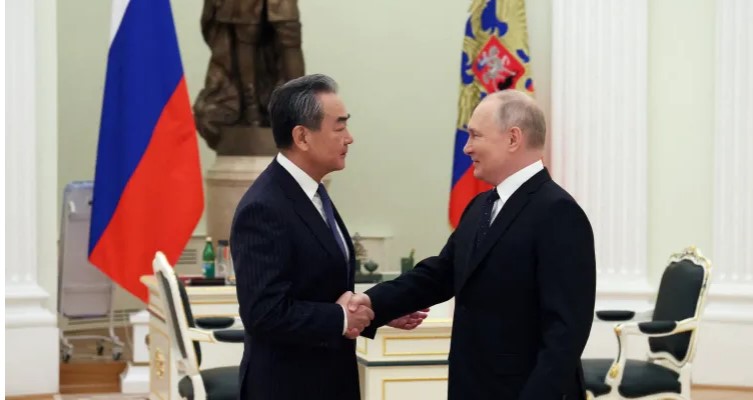
Wang Yi meets Putin in Moscow

Beijing — which claims to be neutral in the conflict — has a no limits” relationship with Russia and has refused to criticise Moscow’s invasion of Ukraine or even refer to it as such. It has also accused the West of provoking the conflict and fanning the flames” by providing Ukraine with arms.

Beijing’s top diplomat Wang Yi visited Moscow this week and pledged a deeper relationship between the countries, while Putin hailed new frontiers” in ties with Beijing and signalled that China’s leader Xi Jinping would visit Russia.

Xi is expected to deliver a peace speech” on Friday, though some analysts have cast doubt on whether Beijing’s efforts to act as a peacemaker will go beyond rhetoric.

The ambassador of the European Union to China, Jorge Toledo, told reporters at a briefing in Beijing on Friday that China had released a position paper not a peace proposal, and the EU will study it.

Ukraine called the position paper” a good sign” and said it expects China to be more active in its support of Ukraine.

We hope they also urge Russia to stop the war and withdraw its troops,” Ukraine’s charge d’affaires Zhanna Leshchynska said at the same briefing.

US State Department spokesman Ned Price had said earlier on Thursday that Washington would reserve judgement on the proposal but that China’s allegiance with Russia meant it was not a neutral mediator.

We would like to see nothing more than a just and durable peace … but we are sceptical that reports of a proposal like this will be a constructive path forward,” he said.

On Thursday, China abstained from voting when the United Nations General Assembly (UNGA) approved a nonbinding resolution that called for Russia to end hostilities in Ukraine and withdraw its forces.

The UNGA overwhelmingly adopted the resolution that demanded Moscow withdraw from Ukraine and stop fighting.

There were 141 votes in favour of the resolution and 32 abstentions. Six countries joined Russia to vote against the resolution: Belarus, North Korea, Eritrea, Mali, Nicaragua and Syria.

Russia’s Deputy UN Ambassador Dmitry Polyanskiy dismissed the UN resolution as useless”.

Ukrainian President Volodymyr Zelenskyy wrote on Twitter that the UN vote was a powerful sign of the unflagging global support” for Ukraine.

U.N. Secretary-General Antonio Guterres told the emergency special session of the General Assembly that resumed on February 22 that Russia’s invasion of Ukraine is an affront to our collective conscience” and said it is high time” to step back from the brink.

The one-year mark of Russia’s invasion of Ukraine stands as a grim milestone — for the people of Ukraine and for the international community. That invasion is an affront to our collective conscience. It is a violation of the United Nations Charter and international law,” Mr. Guterres said adding that the invasion is having dramatic humanitarian and human rights consequences.

In a strong message, Mr. Guterres said the war is fanning regional instability and fuelling global tensions and divisions while diverting attention and resources from other crises and pressing global issues. Meanwhile, we have heard implicit threats to use nuclear weapons. The so-called tactical use of nuclear weapons is utterly unacceptable. It is high time to step back from the brink,” he said.

New LG election dates to be announced next week

February 24th, 2023

Courtesy Adaderana

The new dates for the 2023 Local Government polls will be announced on March 03, 2023, the Election Commission announced in a media release today.

Thereby, the LG election will not be held on March 09 as scheduled due to matters beyond the control of the election body, the communiqué read further.

The decision was taken at a meeting held at the Election Commission this morning (Feb 24) to decide whether the LG polls would be held on March 09.

It was attended by the chairman of the election body, Attorney-at-Law Nimal G. Punchihewa and its members, M.M. Mohammed, S.B. Diwaratne and P.P. Pathirana.

At this meeting, it was also decided to submit a written request to the Speaker of Parliament to intervene to urge the Treasury to make available the funds required to conduct the LG polls, the election body said further.

Meanwhile, a report compiled on the constitutional actions taken by the Election Commission with regard to the LG polls which was initially slated to be held on March 09 will also be handed over to the Speaker, along with the aforementioned request.

“LTTE killed my beloved father” – Arun Siddarths wife Thangathurai Thayani’s heartbreaking story

February 23rd, 2023

Shenali D Waduge

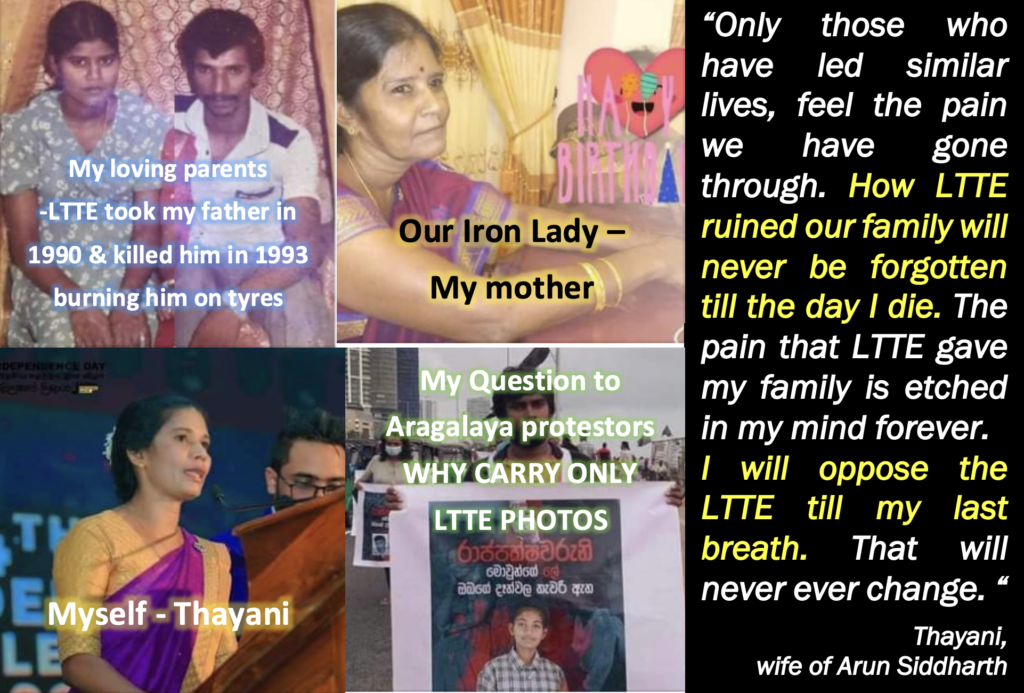
A letter written by Thangathurai Thayani, wife of Arun Siddharth on her mother’s 60th birthday that fell on 4thAugust 2022 should make the human rights organizations feel ashamed and should make the international human rights & terrorism experts wonder why they continue to give lifelines to terrorists/their fronts. She raises two pertinent questions – why doesn’t Geneva invite the victims of LTTE & why didn’t the aragala protestors carry photos of LTTE victims? The Church, the foreign envoys, political parties, media outlets, top corporates & famous personalities that supported the aragala should respond.

Thangathurai’s story:

There was a time, we had no means to convey to society, the injustice to our family. I resolved to one day have my say. We were silenced for 32 years. It was only after the conflict ended in 2009 that we saw some relief. At least we had an opportunity to tell the outside world what we had gone through. I am grateful to the Government of Sri Lanka for this chance to tell our version of the story. I raise my hands in gratitude. It was only after this island was freed from the terror of LTTE, that the victims of LTTE were given a chance to express what they had endured silently.

My father Sellan Thangathurai was a bus driver. He drove a bus plying from Jaffna to Kankasanthurai. My mother’s name is Victoria. I am the eldest. I was born in 1985. My sister was born in 1988. Thereafter my mother had 2 sons, one born in 1989 & another the following year (1990). This was my beautiful family. On 20 February 1990, was the last day that we were able to cherish happy moments with our father. It was the last day that we played with him, cuddled him & felt his warmth. On that fateful day on 20 February 1990 between 11p.m & 12p.m. we heard a knock on our door. They shouted Thangathurai, Thangathurai”. Both parents opened the door & went out. It was Nathan”. He was from our village. He was with two others. Nathan pointed at the other two & said these two are from the LTTE, they want to investigate you. they want to search your house & so I brought them here”

They said they needed to take our father to one of their camps. Our father said he could not leave the family alone in the house & so would come in the morning. They said he had to come with them immediately. Then they grabbed him & took him by force into the vehicle they had come in. There were more inside the vehicle. They took our father away. That night 9 more were taken by LTTE from our village. We joined the 9 families to go to the LTTE camp located in Chunnakam early in the morning. The LTTE commander of this camp was known as Saleem Shiva. Our mother, other mothers, wives, brothers, sisters all fell down at the feet of Saleem Shiva & begged him to release our people. I grabbed his leg & cried, asking him to return our father. Other children also cried. He felt nothing. He took no notice of our tears. Other families from different villages also arrived & began crying to release their family members. All those who were taken by the LTTE were put into LTTE prisons.

We were given an opportunity to see our father. My father took my hand from inside the wired prison & kissed it. Father told my mother to meet some of the LTTE sympathizers in our village & seek their help. He gave some names & said they may help. We went again the next day. They gave my mother our father’s driver’s license & Rs.36 that had been inside his pocket. Saleem told us that father had been taken to LTTE’s camp in Thunnukkai, Mullaitivu for further questioning. Thunnukkai is where LTTE had its torture chambers. We were frozen with grief & came home. Everyone knew that whoever was taken to Thunnukkai camp never returned alive.Our mother took us to every LTTE camp in Jaffna. She even went to the Red Cross & Human Rights Commission appealing to release our father. Our mother had no income & no means to feed 4 of us. With each passing day, life became an ordeal for all of us. My mother went to the LTTE office & told them, that if her husband is not returned, the family would die of starvation. They told my mother to write a letter about the situation at home. A female LTTE came & handed us some school books and clothes. That is because mother had written that she had school going children. They then proposed that she hand over the children to the Sencholai orphanage if our mother could not feed the children. They asked her to join the LTTE. Our mother flatly refused both proposals. They then said that they were giving Rs.200 per month for families without a father & to collect it from the LTTE office. Every month, I accompanied my mother to take that Rs.200.

Many more families who had their fathers taken by LTTE came to pick up this Rs.200 per month. During such an occasion I met Subhashini & Sumajini who were my age. Their fathers had also been taken by LTTE & murdered. 

In order to take that Rs.200, we had to attend LTTE meetings & were taken in buses. We could not refuse. They pretended they would show us our father. But, we never saw our father. We were given lunch parcels. By this time our mother was 29 years. Imagine what life would have been for a 29 year old mother with 4 young children with no clue as to how to bring up the children without a father. When I look back, I think my mother was an iron lady for her determination not to give up. 

Our mother began farming. She went to work in houses. She brought home left over food to feed us. None of our relations came to help us in time of need. The people whom mother left us with while she went to earn, tormented & abused us. As the eldest, I bore much of the pain not wanting to subject my sister & brothers to the same abuses. The hardships I went through after my fathers disappearance is nothing I can relate without pain. I lost my childhood – I can never regain this. This was the darkest period of my life.

It was now 3 years since our father was taken away in 1990. It was October 1993. I was returning home from school. A car stopped with 4 LTTErs inside. They handed a file. Our father was accused of transporting weapons, helping an enemy group of the LTTE & spying. LTTE had announced death sentence upon our father for these crimes. My mother started wailing & threw the chairs in our home at them. We had no way to confirm what they said. However, it was this day that we realized that our father had been killed. I was about 9 years old when my childhood crashed with the killing of my father.

In 2021, the Walk for Unity” initiative commenced from Matara to end in Jaffna. I too participated. I arrived in Colombo & during the press conference I informed about LTTE taking away my father in 1990. A person in the adjoining village listened to my story & came to speak to me. He had been in the same LTTE prison cell as my father. He too had been forcibly taken by LTTE. What he had endured during this period has made him a mental wreck & unable to do any form of work. Both his kidneys are not functioning properly. The camp was known as the butchery. I am not sure if the details of this camp is included in the human rights records of international bodies. I came to know much later that LTTE had torture chambers in Thunnukai, Wattuwakai & Vallipuram. What happened inside these torture chambers need to be included into a book. My father & several others had been killed & burnt on tyres near a roadside.

I had a question to ask. If, LTTE had its own police, own courts & was governing them, why did they not put him in Court, read allegations against him, call for evidence & give him due punishment without torturing him to death & burning him on tyres. LTTE were not taking arms on behalf of the Tamil people. LTTE are only murderers. These are not the one’s who should be allowed to go to Geneva crying justice for the disappeared against the GoSL, it is us who should be going. We are the ones who should be going to Geneva. It is the mothers, females/wives/children of men, LTTE took & disappeared” who should be going to Geneva. 

Many families are traumatized by what LTTE did to them. They are suffering psychologically for years. They are today mental patients. I am with these families, helping them in whatever way I can. I formed the Jaffna Women’s Front. We have 3000 members. They are all victims of LTTE. One or more members of their family members had been taken by LTTE. There are more families who are victims of LTTE & silenced by LTTE guns. Their voices have still not been heard by the international community or human rights organizations. If the victims of LTTE are allowed to go to Geneva, there will be no room in their buildings to put these LTTE victims. You can imagine the numbers! From the time our father was taken away in 1990 & when we heard of his murder in 1993, our mother went to the human rights organizations. She went to every place she could think of, but she was given no relief or justice. During this time, the food she prepared with difficulty, I carried to sell in shops. I was still a girl of 7 or 8 years. There were many refugee camps. I took these food items there & sold them & it was from this little money that all 5 of us survived.

Recently, I met a school friend. She cried after hearing about me selling wade. Only those who have led similar lives, feel the pain we have gone through. How LTTE ruined our family will never be forgotten till the day I die. The pain that LTTE gave my family is etched in my mind forever. I will oppose the LTTE till my last breath. That will never ever change. 

I have one more thing to say.

The photos displayed at the aragalaya caught my attention. I have included a photo of a female LTTE. Those holding the photo had even written sad poems about this LTTE female. This woman is a member of the media unit of the LTTE. She had undergone LTTE military training & held the title of Lt. Col. She was 2 years elder to me. She was not inducted to the LTTE by force. She voluntarily joined the LTTE that was banned by 35 countries. She married another LTTEr in 2007 & had a child. This female LTTEr died during the final stages of the conflict in 2009 and several photos were released to the media. 

I have a question for those carrying this LTTE females photo at the aragalaya.

There are numerous terrorist organizations – Al Qaeda, Boko Haram, ISIS etc. They are brutal and they all have media units. Simply because they worked in their media units, the terrorism, their groups committed, does not absolve them of aiding & abetting terror. 

LTTE killed my father and likewise LTTE has killed similar innocent Tamils in the North. LTTE has killed innocent people in the South too in Kebethigollewa, Aranthalawa, Piliyandala Bus, Pettah train, Batticoloa Muslims. So many have fallen victims. The person the aragala protestors are glorifying belongs to the LTTE that killed ordinary people who know nothing about politics as well as small children.

What I want to ask the aragalaya protestors is this – why can’t they carry a photo of my father, or a photo of the victims of Kebethigollewa, the Buddhist theros killed in Aranthalawa, photo of the LTTE bombing of Dalada Maligawa? If the aragala protestors did that while also carrying the photo of the dead female LTTE, then they can claim to be fighting for justice for all.

Why didn’t the ordinary people in North not participate in the aragalaya? 

That is because the aragalaya was only carrying one-sided version.

The day this was written, was to celebrate the 60th birthday of my mother, the iron lady on 4 August 2022 who after LTTE killed my father in 1990, singlehandedly brought myself & my 3 siblings up under tremendous hardships & turmoil. 

A true story by Thangathurai Thayani (Chairman Jaffna Womens Front) 

thayanijaffna@gmail.com

kmarxedu@gmail.com

https://m.facebook.com/story.php?story_fbid=pfbid0MEzwhThffpeTT6Qhh9Y8xnw5eynJyfdRKATj3DYzBP6vsycmok4fv65oo9zJctPvl&id=100075491365696&mibextid=qC1gEa

It is sad that the real victims are neglected. UNHRC head Navi Pillay arrived in Sri Lanka – she did not meet a single LTTE victim. UNSG Ban Ki Moon arrived in Sri Lanka, he too did not meet a single LTTE victim. Many foreign envoys regularly arrive – they too do not meet LTTE victims. Why is that?

Shenali D Waduge

ARE THERE ACCEPTABLE EVIDENCE THAT FOR SINHALA RACE GENERATED FROM TAMILS?

February 23rd, 2023

BY EDWARD THEOPHILUS

There are many issues, arguments and controversies relating to history and the origin of various races in the world. How did a race generate is a complex question that could not be exactly traced. Nobody can clearly state that a particular race began in that day at that time. Sinhala race begun centuries ago and nobody was seen this beginning. The major reasons for this type of convoluted attitude were based on personal advantages and sometimes, they may be misleading people with a view to gaining advantages.

Various controversies were in this world since the origin of human being and various abstraction had been subjected without logical bases and from time-to-time, human history was added such various fabrication, theories, and many abstractions those were associated with manipulated stories or points. A vital point that people in the current world needs to understand historical aspects mixed with acceptable and unacceptable stories and theories, which were in a hard stand to test and people in modern world are in a disable condition to accurately test such ideas without assumptions. If any idea can test without assumptions that would be the real truth.

How Sinhala race originated in Sri Lanka was also a controversial issue in the modern world and the historical information related to the history of Sinhala race had been mixed with true and manipulated views. One major point could be considered was the story about Sinha. was he an animal or a human called Sinha was a controversial question because he was a strong person like a lion. Biological history evidence that animal cannot beget human. Significant evidence relating to the origin of Sinhala race found in an inscription which mentioned about Arahant Mahinda, found in Gampaha district which was believed to be written in before Christ. According to such evidence Sinhala race was not originated from animal.

The vital point that current people cannot ignore is Sinhala and Tamil people were treated as a single race, as we understand Sinhala people were in the country since before Christ. They were not originated with a clear biological history and they had mixed with other races due to psychological or sexual reasons. The vital point is people who were living in the piece of land called Sri Lanka, was a habitable land and humans liked to live in that land without racial differences as it had been an enjoyable piece of land supported humans to live as it had a soil for agricultural activities and grow various seeds which had been used for human consumption.

Scientifically Sinhala and Tamils may had originated in a single origin whom were separated as races later period and when originated they were human but they were not talking same language. Sinhala people are called such name because the language they were speaking identifies as Indo European and Tamils were talking a language that consist of features of Dravidian language.  This idea goes to the past in many centuries and the differentiation as Sinhala or Tamils were not based on a biological reason but it was a language related differentiation.  The best example is if a Sinhala person talks in Tamil and a Tamil person talk in Sinhala nobody will be able to biologically differentiate two people even they cannot separate based on bodily features. When people think about the reason statement of Mr Vigneswaran that Sinhala people were originated from Tamils was a mere expression that cannot verify either biologically, ethnically or culturally and it was a mere expression to provoke Sinhala people and gain support from Tamils.

The aim of Mr. Vigneswaran as he did in the past, was to attract political support from Tamil people who were divided into several political parties. The nature of behaviour of Tamil people is they love to provocative political party or a candidate indicated that they were interested in provocative statements.  Since the Donor more Commission, political stupids are still using such tactics for personal attraction.

If it investigates the history of Mr. Vigneswaran, it could be revealed that he had been made many statements to attract the attention of people than to express pure truth to gain support as neither a historian nor a scientist.  Such statement is vital for neither the management of human life nor develop valuable theories on the origin of human.

Politics in Sri Lanka seem not like in other democratic countries where people use politics for attracting power. Professionally, Mr. Vigneswaran had been worked in Sinhala areas and it seems that he uses politics after professional life with a view to making money than helping to gain human rights for Tamil people.

The language of Sinhala people originated from Indo Arian languages and the idea of educated people is that Sinhala people have been mixed with many races as indicated in Mahavamsa, Suppa Devi was a lady consorted in an Indian palace who interested in companionship with Sinha who met while she was going with businessmen who were carrying goods for sale but Suppadevi was not for selling goods but was she sold to Sinha by traders, nobody knows.

Before the final conflict with LTTE in 2008, there was a fabricated story that Sinhala people are with light skin and Tamils got dark skin, they were just fabrication and Mahavamsa called King Walagamba was a Sinhala person with a Dark skinned, was a son of King Dutugemunu’s brother Tissa. Finally, it needs to understand human history consist of many fabricated stories and modern people use such fabrication to provoke others and gain political advantages.      

SINHALA VEDAKAM AND WESTERN MEDICINE Part 2

February 23rd, 2023

KAMALIKA PIERIS

C.G. Uragoda continuing his account of ‘Medicine under Sri Lankan kings”, observed that the ancient records confirmed the existence of hospitals in Anuradhapura and Polonnaruwa.  The only hospital for the laity which had been identified   in Anuradhapura at the time was the one found near Thuparama, probably dated to Kassapa IV.

Udaya 1 who ruled from Anuradhapura had built a hospital in Polonnaruwa. An inscription at Alahana Pirivena, Polonnaruwa   indicated that Polonnaruwa had at least one other hospital apart from Alahana. The inscription spoke of a hospital founded by Doti Valakna, indicating that hospitals were also set up by private individuals.

Records indicate that Pandukabhaya and Kassapa V had built hospitals in Anuradhapura, said Uragoda.There is also reference to a hospital in Anuradhapura built by the son of Mahinda IV.The second pillar inscription at the Dorabawila temple, Kurunegala district, was on   fixing boundary stones for land set apart for a hospital to be built in the inner city of Anuradhapura by Kassapa V, and the lands assigned for its maintenance.  This inscription supported the statement in the Mahawamsa that Kassapa V built a hospital in the town (Anuradhapura) and assigned it villages.

 There were specialist hospitals.   Kassapa IV had built a hospital for combating ‘upasagga’, probably an epidemic disease. If so then this may have been the first infectious disease hospital in the island, said Uragoda.The first maternity home was probably the one built by Upatissa II. There were convalescent homes. Pandukabhaya had established a ‘hall for those recovering from illness” at Anuradhapura.  Buddhadasa and Upatissa II built hospitals for the blind.  Institutions for cripples were established by Buddhadasa, Dhatusena, Upatissa II and Udaya I, noted Uragoda.

Hospitals attached to monasteries have been found at Mihintale, Medirigiriya and Alahana Pirivena in Polonnaruwa.Uragoda has described the Mihintale hospital lay out and services. 

Mihintale hospital had an inner and outer court. The outer court had a main entrance with porters lodge, a refectory, a room for preparation and storage of medicines and a room for hot water baths.  

The inner court had cells, arranged in form of a   square. The four corner rooms were larger than the rest. The rooms opened onto a connecting verandah. They all faced the central courtyard.

The room used for medicine was indentified on the basis of stone querns found nearby. Quern-stones are   used for hand-grinding .The hot water bath had an underground duct for draining away waste water. The remains of the duct have been found.

Uragoda also described   Medirigiriya hospital. Medirigiriya was endowed with lands by Udaya II. Medirigiriya seems to have catered to the laity too, not only monks. The inscriptions found there indicated that the diet included mutton (goat) chicken and fish.

 Two slab inscriptions were found at Medirigiriya, one was in Sinhala script. One inscription recorded the emoluments to hospital staff, including physicians, and dispensers.The highest category was the physicians who were referred to as ‘their lordships’. 

 The other inscription gave the management rules of the hospital. This yields much information about the administration of a hospital in ancient times, said Uragoda.    The hospital was administered by a separate department with its own officer and staff. They were distinct and separate from those who were looking after the patients. The nursing staff were forbidden to take on any work of the administrative staff.

The hospital was regularly inspected by officials from the royal palace.’ ‘Lords of the palace establishment year after year come to investigate the affairs of the hospital’ said the inscription.    

Hospital workers were not to steal hospital items. When caught, it was the physicians who judged the case. Punishment included dismissal.    The nursing staff were not to accept any presents or money from tenants of the land surrounding the hospital. But they could accept gifts from patients.

 Medirigiriya hospital was surrounded by lands rented out for a fee. Those living nearby were forbidden to merry make. Inscription said permission shall be given to tenants of houses to drink liquor, play musical instruments, dance and for other acts of that sort in places belonging to the hospital, but outside its boundaries’  Hospital area was to be a silent zone.

  In Polonnaruwa, a monastic hospital was found near Rankot vihara. The structure was the same as at Medirigiriya and Mihintale. Oblong building with cells facing a central courtyard. A second wing with another central courtyard which held a refectory, toilet, and room for medicine trough. A medicine grinder, scissors, hooked copper instrument probably for incising abscesses, and ceramic jars for storing medicine were found. Also a beautifully dressed medicinal trough.  This is the best preserved of the medicine troughs found so far, concluded Uragoda. (Continued)

Sri Lankan Properties Gain Increased Interest among Overseas Buyers as Property Prices Reach Historic Heights: Report

February 23rd, 2023

Press Release LankaPropertyWeb

Overseas buyer interest in Sri Lankan properties increased by 40% in 2022, compared with the year before, according to the Real Estate Market Outlook Report 2023, published by Sri Lanka’s leading real estate portal, LankaPropertyWeb.

The report said that traffic from overseas countries such as the United Kingdom, Australia, the United States, Canada, and Middle-Eastern countries saw the highest increase mainly for residential properties in the Colombo district.

While the average asking price of houses has increased by 4.4% and apartment prices increased by 60.4% during the last year, the increased overseas interest, mainly by expatriates is attributed by the report to the decline in the rupee’s standing against the dollar, which saw the rupee fall by more than 80% and thus making property investments more appealing to overseas investors and expatriates with their earnings in currencies such as USD and GBP. 

The Market Outlook report also shows that despite many of the initial apartments that came to the market in the late 90s and early 2000s reaching over 20 years of age, their value has continued to grow, dispelling the popularly held notion that well-constructed apartment buildings will lose their value as they get old, in the current context of the property market. With construction costs increasing by more than 65% coupled with housing loan rates increasing by triple digits and the majority of new units still being under construction, the high demand for completed buildings and rentals has been highlighted by the report, using the website’s search and demand analysis.

6000+ new residential apartment units are expected to enter the real estate market in the next two years. With this, the report observes that the total number of recognised apartment units will reach approximately 39,000 by the end of 2025, while 1 million square feet of Grade A office space will be added to the market by the same year.

The Market Outlook Report 2023, compiled by the company’s Development Consultancy and Research Team took over 6 months to complete while having to obtain, analyse and validate data worth over a decade from public and own data sources, according to Daham Gunaratna, the company’s Managing Director. Many might be wondering about the effect 2022 will have on Sri Lanka’s economy and the real estate market. It is in this context that LankaPropertyWeb decided to produce the ‘Real Estate Market Outlook 2023’ report, our maiden research report and one of the most comprehensive reports published on Sri Lanka’s real estate market, to give the public a detailed understanding of the current real estate market and its future path”, said Gunaratna at the launch of the report. 

The report further adds that based on sellers’ asking prices, the three-bedroom option has been the most in-demand category among all levels of dwellings over the past years. From all the search traffic for residential houses on the LankaPropertyWeb website in 2022, 42% of the demand has been for three-bedroom dwellings with nearly half (48%) of the apartment unit supply in Colombo being three-bedroom units. Speaking at the launch, the head of Development Consultancy & Research at LankaPropertyWeb, Tharindu Jayarathne said that since the start of 2023, an increase in demand for sales, rentals, and lands was noticed through visitor traffic, with the demand for sales being the highest at a 24% increase, compared to December, 2022. 

Despite the many economic and political unrest the country had to go through, Sri Lankan properties saw a significant price increase, which is evident when comparing the real estate market numbers of 2022 with those of past years. Residential properties have become a good hedge against rising inflation, and the real estate market is expected to boom in years to come”, said Jayarathne. 

The report which covers areas from housing, apartments, lands, and commercial property can be downloaded from LPW.LK/market-insights

www.lankapropertyweb.com

අයන්න කියන්න ලොවටම ඇහෙන්න

February 23rd, 2023

Malinda Seneviratne


‘ලේ හැලුනේ නෑ, සුද්දා තරහ වුනෙත් නෑ; යන්න ගියෙත් නෑ, නොගිහින් හිටියෙත් නෑ.’  ඒ නන්දා මාලිනී අසූව දශකයේ අග භාගයේ එළිදැක්වූ ‘පවන’ ප්‍රසංගයේ ජනප්‍රිය ගීතයක මතකයේ රැඳුනු වචන කිහිපයක්. මේ ‘නිදසස් බයිලාවට’ සුනිල් ආරියරත්න මෙහෙමත් දෙයක් එකතු කරලා තිබුනා: ‘නෑ බැට කෑවේ නේරු පාටෙල් වාගේ, නෑ දිවි දුන්නේ මහත්මා ගාන්ධි වාගේ.’

නිදහසේ කතාව ඔහොමයි එයාලා අපට කිව්වේ.  එතකොට 1815 දී, 1818 දී, 1848 දී සහ ඒ අතර සහ ඉන් පසුව කව්රුවත් බැට කාලා නෑ, කව්රුවත් දිවි දුන්නේ නෑ, ලේ හැලුනෙත් නෑ, පන්සල් විනාශ වුණෙත් නෑ, පොත්ගුල් ගිනිබත් වුණෙත් නෑ, මුඩුබිම් පනතක් ගෙනාවෙත් නෑ, හරිද?

ඉතිහාසය ලියන්නේ ඔහොමයි.  අංක ගණිතය වගේ. සමහර දේවල් එකතු කරනවා, සමහර දේවල් අඩු කරනවා, වැඩිකරනවා. සුනිල් ආරියරත්න, නන්දා මාලිනී වගේම වෙනත් අයත් මේ ඉතිහාස කතා බෙදනවා.  බෙදපු දේවල් අහුලා ගන්න අය ඒවා වළඳනවා, වමාරනවා.  

‘ජනවාර්ගික අර්බුදය’ කියන එකත් මේ අපූරු සුත්‍රයට අවනතයි.  මුල කොතනද කියල ඇහුවොත් එක එක උත්තර ලැබෙනවා. මේ වගේ:

එළාර-දුටුගැමුණු සටනින් නේ පටන් ගත්තේ. අසූව දශකය පුරා ආරක්ෂක අංශ විසින් ඉතා දරුණු විදිහට ඉවක් බවක් නැතිව දෙමල තරුණයින් ඝාතනය කරපු නිසා.  කළු ජූලියෙන්. නෑ, 1983 ජුලි 23වෙනිදා සොල්දාදුවෝ 13 දෙනෙක් මරපු නිසා.  පිස්සුද, ඕකට මුල 1976 මයි 14දා ද්‍රවිඩ එක්සත් විමුක්ති පෙරමුණ වඩුකොඩ්ඩේයි (බටකොට්ටේ) හිදී ඊලාම් කියල වෙනම රටක් වෙනුවෙන් සටන් කිරීමට ගත්ත තීන්දුවයි. 

නෑ බං, යාපනේ නගරාධිපති ඇල්ෆ්‍රඩ් දුරේයප්පා ඝාතනය කෙරුවේ ඊට කලින්නේ; ඒ කියන්නේ 1975 ජූලි 27.  එතකොට ඊට කලින් විවිධ අගමැතිවරු විවිධ දෙමළ නායකයින් එක්ක ගහපු ගිවිසුම්, ධර්මපාල ගේ සිංහල ජාතිවාදය? 

ඔය කියන ගිවිසුම් වල බොහෝ දේවල් පසු කාලයේ ක්‍රියාත්මක වුනා. ධර්මපාලගේ සිංහල බෞද්ධ පුනරුදය ට ගොඩාක් කලින් නේ අරුමුගම් නාවලර් ගේ දෙමළ හින්දු පුනරුද ව්‍යාපාරය පටන් ගත්තේ.  

ඕව වැඩක් නෑ නිදහස කියන්නේ හැමෝම එකතුවෙලා දිනාගත්ත දෙයක්. පොන්නම්බලම් අරුනාචලම්, පොන්නම්බලම් රාමනාදන්, ටී.බී. ජයාහ්, රසීක් ෆරීඩ් වගේ අය ඩී.බී. ජයතිලක, ඩී.එස් ලා එක්ක එකටයි සටන් කෙරුවේ.  

එහෙමද? එතකොට රාමනාදන් ලංකාවේ පළමු විශ්වවිද්‍යාලය යාපනේම හදන්න ඕන කියල කිව්වේ ඇයි?  1815 ඉඳල 1948 වෙනකල් සිංහල මිනිස්සුම ඝාතනය වුනේ ඇයි? ඔය බහු-ජාතික, බහු-ආගමික කතාන්දරය ට අනුකූලව අඩුම තරමින් වාර්ගික අනුපාතවලටවත් ඝාතන සිද්ද නොවුනේ ඇයි?

පොඩ්ඩක් ඉන්න. මේ කිසිම දෙයක් වැදගත් නෑ. එකම දෙයයි මේ අර්බුදයට අදාළ වෙන්නේ. බණ්ඩාරනායක ගෙනාපු භාෂා පනත.  

ඔන්න ඔහොමයි කතාව ඉවර වෙන්නේ. 

හරියට සුනිල් ආරියරත්නගේ ‘ලේ හැලුනේ නෑ’ කතාව වගේ ජනවාර්ගික අර්බුදයේ ‘අයන්න’ ඕකයි කියල අපට කියල දෙනවා සමහර ඉතිහාසාඥයින්.  ඉංග්‍රීසි වෙනුවට සිංහල රාජ්‍ය භාෂාව විය යුතුයි කියපු ඒ කතාවේ ‘ඉංග්‍රීසි වෙනුවට’ කියන කෑල්ලත් හලනවා. ඒ පනත හරහා දෙමළ ජනතාවට කළ අසාධාරණය පසුව නිවැරදි කරපු බවත් හලනවා.  ඉතුරු වෙන්නේ සිංහල ජාතිවාදී ‘අයන්නක්’.

අවුරුදු 131ක් ඉංග්‍රීසි රාජ්‍ය භාෂාව හැටියට තිබුන ඉතිහාසයත්, ඒ ඉතිහාසය තුල සිංහලයින් දසදහස් ගණනක් ඝාතනය  කල බවත් මේ රාජ්‍ය භාෂා දේශපාලනයට අදාළ නැද්ද එතකොට? ඒ කාලය තුල විවිධ පීඩා වින්ද සිංහලයින්ගේ වේදනාව හඳුනාගෙන දේශපාලන බලය ලබාගැනීම සඳහා බණ්ඩාරනායක එය පාවිච්චි කරපු බැවින් සිංහලයින් ජාතිවාදී කියල කියන්න පුලුවන්ද?  නැත්තම් බණ්ඩාරනායක කියන්නේ පට්ට කපටි තුට්ටු දෙකේ දේශපාලනාඥයෙක් කියල ද හිතන්න වෙන්නේ? 

ඉංග්‍රීසි රාජ්‍ය භාෂාව හැටියට තිබුන ඉතිහාසය අදාලම නැද්ද, අප නැවත අසමු.  ඉංග්‍රීසි භාෂාව ඉගෙන ගැනීමෙන් වගේම සුද්දගේ ආගම වැළඳ ගැනීමෙන් වාසි ලබාගත් අය ඒ හරහා සමාජයේ අත්පත් කරගත් දේ ආරක්ෂා කිරීමට කටයුතු කල බව මෙතැනදී අමතක කරමු ද? එතකොට ඉතිහාස පොතේ කොළ කීයක් අඩු වෙයි ද?

බණ්ඩාරනායක භාෂා පනත ගෙනෙද්දී දෙමළ භාෂාවට අසාධාරණයක් නොකරා නම්, ඒ එක්කම ඉංග්‍රීසි භාෂාව ඉවත් නොකරා නම් මේ කතාන්දරය වෙනස් විදිහකට දිග හැරෙන්න තිබුනා, ඇත්ත.  අරක කෙරුවනම්, මේක නොකෙරුවා නම් වගේ කතා ශතවර්ෂ ගණන් කියව කියව ඉන්න පුළුවන්.  

ඒත් ‘ඉතිහාසයට’ ඕව වැදගත් නැහැ. වැදගත් වෙන්නේ අකුරු. හෝඩිය. අකුරු මකල නැති හෝඩියක්.  විශේෂයෙන්ම ‘අයන්න’ තියෙන හෝඩියක්.  විශේෂයෙන්ම ‘අයන්න’ හරියටම හඳුනාගන්න උවමනාවක්.  නැත්තම් ඉතින් ඉතුරු වෙන්නේ වියන්න්යි, කායන්නයි, රයන්නයි. 

In the Food Lab-Lead Found in Recalled Ground Cumin

February 23rd, 2023

By Thomas Tarantelli Courtesy Food Safety Tech

The Sol Andino brand of ground cumin was found to contain 1090 ppm lead.

Laboratory reports recently acquired by the Freedom of Information Law from the New York State Department of Agriculture and Markets show the Sol Andino brand ground cumin to contain 1090 ppm lead as well as 259 ppm chromium. The spice was also analyzed by IS:2446, 1980 method, Detection of Lead Chromate in Chillies, Curry Powder and Turmeric by diphenyl carbizide.” A positive result was given, indicating the presence of hexavalent chromium, which is a component of lead chromate. Lead chromate is a yellow pigment, not allowed in food anywhere in the world as it is toxic, containing both lead and hexavalent chromium. The New York State Department of Agriculture and Markets posted a Class I recall of the Sol Andino ground cumin on July 10, 2017, without mention of the extremely high concentration of lead in the product.

Sol Andino, ground cumin
Sol Andino ground cumin recalled

The author could find no record of an FDA recall for the Sol Andino brand cumin powder containing excessive lead.

Some of us remember the four FDA Class I recalls of Pran brand turmeric for excessive lead in October 2013. These recalls were initiated by the New York State Health Department due to an illness complaint—most likely a child with high blood lead levels. The recalled Pran brand turmeric contained 28–53 ppm lead.

Also worthy of mention is the FDA/Illinois Class I recall of Nabelsi brand Thyme (actually a spice mix containing Thyme) on March 17, 2017.

There have been two cases of high blood levels of lead associated with this product to date. Both cases have been reported through the Illinois Department of Public Health, Environmental Health Protection.”

According to the recall, the Thyme” was found to contain 422 ppm lead.

Wondering if the 422 ppm lead was caused by adulteration of the Thyme” with lead chromate or another lead pigment, a food chemist at the New York State Food Laboratory (a Division of NYS Dept. of Agriculture and Markets) requested from Illinois a sub-sample of the Thyme” for analysis. Lab analysis of the spice found 323 ppm lead, 109 ppm chromium and a positive result for the chromate test. Thus, this recalled Thyme” contains lead chromate.

In both cases, Pran turmeric and Nabelsi Thyme, illness complaints led to the recall of lead adulterated spices.

The New York State Department of Agriculture and Markets has a proactive program. Random samples of spices are sampled from retail markets and subsequently analyzed for unallowed colorants, undeclared allergens and heavy metals. In 2016 this resulted in the Oriental Packing Class I recall of 377,000 lb. of turmeric containing spices for excessive lead. (A typo in the FDA recall attributes the recall to the New York State Health Department, instead of the New York State Dept. of Agriculture and Markets.)

Still, it’s even better to analyze spices being imported into the country at receiving warehouses before the product reaches retail markets. Lead concentrations above 10 ppm can be determined instantaneously with a handheld XRF analyzer.

REVEALED! The main source of H I N D U P H O B I A… | Karolina Goswami’s 10-Point Study

February 23rd, 2023

What is the Real ‘National Question’? (Part II)

February 23rd, 2023

By Shivanthi ranasinghe Courtesy Ceylon Today

The only progress vis-a-vis the prevailing economic crisis is the unfounded report that the IMF may consider approving the USD 2.9 billion Extended Fund Facility (EFF), fondly known as the bailout package”, even without China’s formal assurance of debt-restructuring support. Even if we do finally get IMF’s assistance, which we have been hankering since March 2022, we do not seem to have a clear plan to execute it in order to strengthen our economy. Instead, the objective appears to be to gain our creditors’ confidence so that we may continue to borrow to live as we did before – from loan to loan. 

Despite this lack of progress on the economic front and vision for a better economy, the political focus is on the Local Government (LG) elections and the full implementation of the 13th Amendment to the Constitution (13A). As the LG elections are due, there is some rational for the political interest. However, such an explanation for the sudden interest in implementing the 13A in its full force is absent. 

This thus begs the questions as the reason(s) for President Ranil Wickremesinghe’s sudden interest in implementing the 13A in full as well as the timing. Even if President Wickremesinghe personally believed that the 13A should be implemented in full, surely he would know the timing is bad. After all, he is one of our most experienced politicians. 

As President Wickremesinghe himself admits, economically we are in for a rough ride. The Government is being forced to take many unpopular decisions. The Government is thus in need of support from all political fronts – even the Opposition. At a time when President’s main supporting party, the SLPP, is divided into many smaller enclaves, bringing the most controversial Amendment to the forefront is, without question, foolish. This President Wickremesinghe would know as he had burnt his fingers many times in the past over this issue. Thus, this emphasises the question, why now. 

The 13A’s troubled past

The 13A – was introduced to our Constitution 36 years ago in 1987. Therefore, to still be debating over it is strange, to say the least. These issues are yet unresolved due to a number of reasons. Understanding the sudden urge to bulldoze over these concerns to implement it in full will help understand the reasons for this 13A – completely irrelevant to present day crisis – to precipitate to the forefront. 

The 13A’s history is not pretty. It was forced into our Constitution literally at gunpoint. The year 1987 was a fateful one for Sri Lanka. The Military was successfully containing a terrorist issue that had been simmering since 1975, but was growing out of control since 1983. Though just four years since the explosion of events that led to a full blown war against terrorism, the country had already suffered significantly. 

However, in a surprise move, India intervened and violated our airspace to drop dhal, brinjals and whatnot over the troubled territories in the guise of humanitarian concerns. India’s involvement in this matter was most unfortunate and unnecessary and cost both countries heavily. 

Initially, India’s interest in Sri Lanka’s internal troubles was simple, even if bizarre. In mid 1970s, India was trying to balance the much needed Tamil Nadu support. Indira Gandhi’s Government was fast becoming unpopular and South India was one of the last bastions that still supported Indira’s Government. This was the primary reason for India to allow Tamil insurgents seek sanctuary on Indian soil. 

This soon expanded to funding, training and arming Tamil youth to engage in subversive acts against the Island nation. Whether this expansiveness was still to balance internal politics or had the objective(s) changed on a different agenda is a question we are yet to fully analyse. 

Sri Lanka, at the time, was under the impression that the bilateral relations between the two countries were strong, despite ignoring India’s concerns to support Pakistan in 1971. In any case, national security was not Sirima Bandaranaike’s strong suits. Therefore, her Government never addressed the budding issue with India – even after her Jaffna Mayor Alfred Duraiappah was assassinated. 

Her successor, President JR Jayewardene too, did not address the problem directly with India – despite Indira Gandhi been ousted by political opponent Morarji Desai, who had the support from most political entities in India. Instead, Sri Lanka forged closer relations with the US in the hope that the bigger power would offer us protection from India’s unwarranted aggressiveness. It was in the days of the Cold War when India had sided with Russia. Clearly, that government had not learnt much from the fiasco of inviting the Dutch to oust the Portuguese. 

Sri Lanka’s – stance with the US gave India the legitimacy to support terrorism in Sri Lanka – an illegal act. However, Sri Lanka fought the war on her own, though it had good support from Pakistan, China, Israel, Singapore and South Africa. When Sri Lanka was winning, India intervened but the US continued to stay out of it. 

India communicated its full intention to launch a full-force Military retaliation against the Island nation if Sri Lanka hindered its intervention in any manner. Given less than an hour’s notice by the then External Affairs Minister Natwar Singh, to the Sri Lankan High Commissioner Bernard Tilakaratna, Sri Lanka had to allow her airspace to be violated. Soon after Sri Lanka acceded to the Indo-Lanka Accord on 29.07.1987 with the Indian Naval presence in Sri Lankan territorial waters. 

The Accord led to the 13A. President Jayewardene had to employ extraordinary measures to ensure the passage of the 13A into the Constitution. This included keeping the government parliamentarians in near house-arrest conditions. 

Interestingly, his Prime Minister Ranasinghe Premadasa – father of current Opposition Leader Sajith Premadasa – could not be coerced even then to lend his support to the Accord. Thus, young Premadasa’s support to the full 13A’s implementation is very curious, especially as he always pledges to continue his father’s legacy. 

Who was in Favour of the 13A?

President Jayewardene’s shrewdness is often compared to the cunningness of a fox. Thus, even though the 13A created nine provinces and devolved power, President Jayewardene never enacted Land or Police powers. He also invited India to send in their own troops to ensure the smooth transition of terrorists to mainstream politics. 

He obviously predicted that it would not only be his own Parliament that would object to India’s solution. LTTE too rejected the 13A and took cudgels against India for short changing” them. Very quickly, relations between India and the LTTE deteriorated to the point they in 1991 assassinated Rajiv Gandhi – the very person who intervened on their behalf, violated a dozen international laws and stopped the Sri Lankan Military from eradicating their existence. 

In the meantime, President Jayewardene had a new headache. Opposing the Indian intervention, 13A, Provincial Councils and the power devolved, the JVP who was in relatively good terms with the UNP first took to streets and then to arms. Suddenly, both North and South of the Island were ablaze. Though the war was by two very different forces, they both bitterly opposed the 13A.  

Until the end of the war with the LTTE, neither the North nor East could implement even one letter of the 13A. It was only after the areas were cleared off the terrorists that the two provinces were able to hold provincial council elections and establish the councils. 

It is thus interesting that the TNA, that was LTTE’s one time political proxy and who always maintained that the LTTE was the North and East Tamils’ sole representative is now pushing the 13A’s full implementation. In fact, TNA (after the LTTE’s demise) has on number of occasions have asked for India’s intervention to have the 13A implemented fully. 

The JVP suffered tremendously in the ‘88-‘89 insurgency and lost almost their entire leadership. Even though they have since returned to the political stream and a couple of decades have passed, there are many who would not forget or forgive the many atrocities the JVP committed during this era. They thus remain politically discredited. Yet today,  reaction to President Wickremesinghe pledges to fully implement the 13A is not different to the proverbial deaf elephant’s reaction to music. 

By 2017, much of the drama of the late 1980s has long passed. Yet when Ranil Wickremesinghe, as the Yahapalana Government’s Prime Minister, tried to breath life into this in the form of a new Constitution, it was the Muslim and Tamil parties, notably from the Central Province that refused to support it. 

Thus it is obvious that Sri Lanka is deeply divided over this issue. It is clearly not a majority-minority complex where the Sinhalese as the majority have sided against the aspirations of the collective minority communities. On the contrary. This is being opposed by many, irrespective of race or religion. 

This brings forth the questions as to who really needs the 13A implemented in full and why. If the majority of Sri Lankans are against it, we must explore the possibility of any geopolitical angle that might be pressurising our politicians. Simultaneously, we cannot overlook the probability of a pledge simply made to gain mileage in the election race. 

ranasingheshivanthi
@gmail.com

(The views and opinions expressed in this article are writer’s own and do not necessarily reflect the official policy or position of Ceylon Today)

By Shivanthi Ranasinghe

13A and federalism: US manoeuvrings since 1980s

February 23rd, 2023

By Daya Gamage Former US State Department Foreign Service National Political Specialist Courtesy The Island

Activating the 13th Amendment and devolution of power – possibly with the merger of two provinces –seems to have returned to the national agenda with President Ranil Wickremasinghe taking a lead role. He undertook a similar endeavour as the prime minister in 2001-2004 during the Bush Administration with its Secretary of State Gen. Colin Powell and his deputy Richard Armitage playing a significant role during the Norwegian-initiated peace talks.

Washington policymakers and lawmakers had a very clear agenda: having a strong belief that Sri Lanka’s minority Tamils were discriminated against by the Sinhalese ‘chauvinists’ and their ‘Sinhalese-controlled’ administration, and Tamil grievances could be redressed only with the adoption of a federal system.

The US policy toward Sri Lanka’s ethnic issue has long been guided by the comforting notion that Tamil self-government within a decentralised Sri Lankan state would satisfy the legitimate needs of that minority community and shield it from Sinhalese oppression. The system of dispersing power federally is so deeply rooted in the US political culture that Americans tend to be uncritical in assessing its implications for governance, national unity and social justice. In the light of America’s mixed experience with federalism, one could question whether it is reasonable for Washington to press a small island nation to adopt a federal system when the evidence suggests that beyond a certain degree of administrative and political de-concentration, it would not be a good fit.

Washington believed that the Tamil community (accounting for 12% of the Sri Lankan population) had fewer economic and employment opportunities when compared to the ‘advantaged’ 74% Sinhalese majority, and it would benefit from a federal system.

Washington policymakers arrived at this determination way back in the 1980s, long before the signing of the infamous Indo-Sri Lanka Accord. That determination governed the mindset of the policymakers and lawmakers in the U.S. through 2009 and to date.

Vital documents

I will now disclose contents of two 1980s documents developed in Washington, and they formed Washington’s foreign policy agenda in respect of Sri Lanka, and it to date, in my belief, has remained unknown to Sri Lankan policymakers. Ignorant of these policy determinations, Sri Lanka during those years engaged in discourses with international players

It is also vital to disclose how the Political Office of the United Nations (UN) – always a domain of retired US Foreign Service (FS) Officers – in collaboration with State Department and White House officials – endeavoured to prepare a path to ‘impose’ a federal system in Sri Lanka in keeping with the determinations of those two documents, which escaped the attention of Sri Lankan authorities and prevented them from formulating Sri Lanka’s own independent foreign and national policies beneficial to all ethnic communities.

Washington’s ignorance of the demographic formation of Sri Lanka, caste factor especially among the northern Tamil community, which initially sparked the northern rebellion, dueling nationalisms, economic factors that have affected all ethnic groups, influenced the formulation of the US foreign policy agenda.

Classified 1984/1986 US Documents Advocating Federalism

Here are the two United States Government documents that underpin its policy toward Sri Lanka. The naïve manner in which Sri Lanka has handled its foreign policy dealings and its national agenda placed it on a slippery slope.

In June 1984, the Directorate of Intelligence (CIA) and the State Department’s Near East and South Asia Bureau (NEA) jointly prepared a document called ‘Failure to Share Political Power with Minority Groups’. Declaring President Jayewardene’s commitment to his Sinhalese-Buddhist constituency at the height of the July 1983 communal riots, it said by the general election of 1956 Sinhalese-dominated parties had gained control of the government and driven the small Tamil parties out of the mainstream political life.”

Another document dated September 02, 1986 and authored jointly by the CIA and the NEA noted that ‘northern insurgency’ had politicised Sri Lanka’s Sinhalese and Tamil communities. The ethnic rivalry is at the heart of the conflict, the document says, adding that the Tamils believe – with some adjustments – they need some devolution of power to their districts and that they are victims of political and economic discrimination, suggesting that Washington refrain from providing military assistance to the Sri Lanka administration, as it noted even in another document that Washington shouldn’t get involved in a battle between two ethnic communities.

These three documents laid the foundation for the subsequent structure of Washington’s foreign policy toward Sri Lanka all the way until the end of the separatist Eelam War IV in May 2009 and well beyond.

Washington sentiments

Washington sentiments were amply reflected in this 1984 classified document. This June 1984 document, subsequently declassified, had most revealing sentiments that played a major role in subsequent years during Washington’s intervention in Sri Lanka’s national issues, one of which was the proposal for a federal system in Sri Lanka solely and exclusively focusing on minority Tamil issues.

Washington’s initial (1984) understanding was that a federal structure would extensively satisfy the Tamil demands. The document states, Tamil demands probably would be satisfied by a federal structure that would guarantee Tamils control over security and economic development where they comprise the majority of the population”. This belief was notably expressed by State Department Foreign Service Officers (FSOs) at frequent intervals in subsequent years when Washington intervened in Sri Lankan national affairs; in keeping with this agenda the USAID  in 2005, with active participation of top officials of the U.S. Embassy in Colombo, continuously for three months, convened nationwide public seminars with the assistance of civil society groups underscoring the merits of federalism.

This writer and his State Department associate, Senior Foreign Service (FSO) and Intelligence Officer Dr. Robert K. Boggs, have already addressed these issues deeply in a manuscript currently being prepared – ‘Defending Democracy: Lessons in Strategic Diplomacy from U.S.-Sri Lanka Relations’. It is to be released through an international publisher soon. The two authors’ thirty-year experience, knowledge and understanding of Washington’s foreign policy dealings with the South Asian region centering Sri Lanka and India, and their subsequent research and collection of (mostly hidden) data – most of which the Sri Lankan policymakers never knew even existed (or their infantile approach to national issues never took those seriously) will be featured in this book with their (unconventional) interpretations and analyses. Both authors had extensive experience and gained vast knowledge of Washington’s foreign policy trajectory in the South Asian region and its dealings with Sri Lanka and India during their official engagements in Colombo, New Delhi, Mumbai and Washington.

The June 1984 classified ‘intelligence assessment’ expressed fear that if Washington was seen associating with a regime that battles a minority group it could damage the U.S. prestige in the region and in parts of the Third World and that highly politicised Tamil minority in Sri Lanka might even turn to the Soviet Union for support.” (It is with this rationale that Washington deeply engaged during the 2002-2004 peace talks that it believed could bring favourable acceptance in the international community).

The direct quote is: Increased identification with Jayewardene at this time could damage US prestige in the region and in parts of the Third World. It could be perceived by other small ethnic groups as acceptance by the United States of the use of repression against minorities. Moreover, elements of the highly politicised Tamil minority in Sri Lanka might even turn to the Soviet Union for support.”

The June 1984 ‘Intelligence Assessment’ further declares Tamil demands probably would be satisfied by a federal structure that would guarantee Tamils control over security and economic development where they comprise the majority of the population” – meaning the North-East region of Sri Lanka.

The document opined that Washington believed the Tamils have become convinced that they should have an autonomous homeland with economic and security control.”

What the June 1984 document says about the United States refusal to extend military assistance to the (American-friendly) Jayewardene regime’s request to combat the LTTE terrorism and its total blocking of the supply of military gear to the subsequent Rajapaksa regime during (2006-2009) its military offensive against the separatist movement led to Washington’s strict belief that such military equipment could be used for repressive measures against the Tamils.”, and that other avenues need to be found such as devolution of power and setting up a federal structure.

Lalith Athulathmudali

The then National Security Minister Athulathmudali reached to this writer somewhere in May 1987 to convey the regime’s displeasure at the U.S. ambassador the US Department of Defence’ (USDOD) administrative action preventing American arms manufacturing corporations selling combat equipment to Sri Lanka; the matter was extensively discussed in a tense atmosphere at a National Security Council session chaired by President Jayewardene.

The document justifying Washington’s refusal to provide military assistance says, Some of these weapons would have been useful beyond immediate internal security needs.”

Following are taken from ‘Sri Lanka: The Challenge of Communal Violence’ , a joint intelligence assessment by the Directorate of Intelligence (CIA) Office of Near Eastern and South Asia Bureau of the State Department. June 1984 Secret document subsequently declassified:

1.  President Jayewardene’s failure to deal with the demands of Sri Lanka’s Tamil minority – 18 percent of the population – has brought the Tamils to the brink of open insurrection. In our judgment, Jayewardene, through his political manoeuvering since his election in 1977, has contributed to the deterioration of communal relations by failing to share political power with minority groups

2. Tamil demands probably would be satisfied by a federal structure that would guarantee Tamils control over security and economic development where they comprise the majority of the population.

3. The Tamils, according to Embassy and scholarly reports, have become convinced that they should have both an autonomous homeland and control over security forces and access to more economic development projects.

4. We believe the frustrations of the last year have convinced even moderate Tamils they must press for a separate homeland with the hope of achieving at least a federal relationship with Colombo.

Subsequent U.S. Manipulation for a Federal System

In early 2012, under the auspices of the Office of the Under Secretary-General of the United Nations (Political Affairs) B. Lynn Pascoe, attended by many professionals that included President Barack Obama’s close confidante and information czar Prof. Cass Sustein and his wife Dr. Samantha Power, the U.S. President’s human rights-war crimes-genocide crusader in the National Security Council, to start a process of restructuring several developing Third World nations’ constitutional arrangements to promulgate federalism as an answer to ethnic minority grievances.

The Under-Secretary-General (Political) B. Lynn Pascoe was a retired career diplomat from the US State Department.

Since the early 2012-process commenced a number of closed-door meetings and seminars at which the partition of UN member states has been discussed. Most of the meetings have been held under the direction of the UN Interagency Framework for Coordination on Preventive Action (the Framework Team or FT). The control of the FT fell into the domain of the under-secretary-general of Political Affairs Jeffrey Feltman, who took over from Pascoe in June 2012.The UN slot in the Department of Political Affairs, for decades, has always been assigned to a retired American Foreign Service officer (FSO), and it is the second most influential position next to the Secretary-General.

When a former American FSO occupies the Number Two slot of the UN, the State Department has extensive leverage over the operation of the United Nations, and it has been seen that both branches – the Department of Political Affairs and the US State Department – work together to achieve common objectives. As much as the state department and its representative – US ambassador to UN- maintain jurisdiction over the Human Rights Commission in Geneva under internal UN arrangement, during this period, the Under-Secretary (Political) Jeffrey Feltman oversaw the functioning of UNHRC.

When the process commenced in 2012, Sri Lanka, apart from Nepal, was also a target for the identity federalism engineers.To promote a ‘serious devolution to the peripheral regions’ – whether one calls it federal structure or otherwise – Dr. Samantha Power, who initially attended the Framework Team in early 2012 with the UN Department of Political Affairs, travelled to Sri Lanka in November 2015. So was the UN Under-Secretary-General (Political) Jeffrey Feltman travelled to Sri Lanka for talks in July 2017, during the Sirisena-Wickremesinghe administration.

Richard Boucher, in his capacity as assistant secretary for South Asia in the state department, in one of his official visits to Sri Lanka, at a press conference in Colombo on June 1, 2006, expressed the US policy in this manner: Although we reject the methods that the Tamil Tigers have used, there are legitimate issues that are raised by the Tamil community and they have a very legitimate desire, as anybody would, to be able to control their own lives, to rule their own destinies and govern themselves in their homeland; in the areas they’ve traditionally inhabited”.

Boucher’s recognition of the homeland concept” and traditionally inhabited” areas, the right to govern themselves in their homeland,” and inalienable right to control their own lives,” reflect the 1984/1986 initial formation of the policy.

In 1999 Victor L. Tomseth, who was assistant secretary at the State Department in Washington for South Asia (1982–1984), was asked in an interview by Charles Stuart Kennedy for the Association for Diplomatic Studies and Training if they were involved at all in trying to moderate or do anything about the Tamil movement in Sri Lanka.” Tomseth confirmed that Washington and the embassy in Colombo were fairly proactive in that…But we, the U.S., were trying to do what we could to encourage some kind of dialogue with responsible Tamil political leaders and pushing on the government a bit to think in terms of some kind of structure through federalism or regionalism that would address a lot of the concerns that a lot of Tamils had, not just the radicals,” he declared.

Mr. Tomseth was later (1984–1986) assigned to Colombo as the deputy chief of mission at the US Embassy.

U.S. Misconceptions and Fallacies – What GoSL Never Understood The U.S. apparently never seriously challenged the fundamental notion that the LTTE represented the interests of all Sri Lankan Tamils and the entire population of the two provinces it claimed as the Tamil homeland. Some 45 percent of all Sri Lankan Tamils (excluding plantation Tamils) live outside the North and East in the South among the Sinhalese, including many of the best educated and most professionally accomplished members of the community.

 Pertaining to the northern caste structure, the LTTE was dominated by leaders from only a narrow segment of the caste hierarchy. Given the deep-seated tensions among the various Tamil castes, it is unlikely that many members of either the dominant caste (the Vellarlas comprising about half of the total community) or of the so-called low castes (about 15 percent of the Tamil population) would have agreed that the LTTE spoke for them. In the Eastern Province, which the LTTE claimed in entirety as part of its historical homeland, Tamils of all castes constitute only about 39% of the population there. The Northern Vellarlas think that the Eastern Tamils, known as Mukkuwars,” rank low in Tamil society. Eastern Tamils expressed, in conversation with this writer, during several tours in the 1980s their deep resentment at northerners’ near-control of the administrative structure of the East.

 The US contributed to legitimising the LTTE by exempting it from the organisations being targeted in its war on terrorism (GWoT). Then the international community made a concession of enormous value to the LTTE without receiving any concessions in return. By accepting the Tigers’ claim to be the sole representative of the Tamil people, the West (the US in particular) boosted the LTTE’s prestige, lobbying clout and fund-raising capacity unchallenged by the Sri Lanka governments.

 In 2001 the U.S. signed on to a peace process that essentially granted the LTTE diplomatic parity with the Sri Lankan government and artificially limited the discussion to just the two antagonists.

 Illegality of the Accord and 13A

Given the persistent salience of the 13th Amendment in Indo-Sri Lankan diplomatic discourse, it would be appropriate to mention the underlying legality of the amendment and its checkered implementation. First, there is a reasonable argument to be made that the bilateral accord – the Indo-Sri Lanka Accord of 1987 – that mandated the devolutionary restructuring of the Sri Lankan government was illegal from the very inception. Although signed by President Jayewardene the accord was crafted and implemented by India by using threat of military action. The threat of forcible intervention must have been perceived as real to persuade President Jayewardene to agree to Indian occupation of the North although that surely added fuel to the Sinhalese insurrection in the South. Lt. Gen. A.S. Kalkat, the Commander of the IPKF during 1987-1990, explained in an interview that Rajiv Gandhi had felt compelled by domestic political pressures from Tamil Nadu to launch the military intervention and that he had extracted the Accord from President Jayewardene by the show of power projection, which was the infamous food drop. The General opined that the Accord, opposed by both the Sri Lankan people and the LTTE, was fundamentally flawed in granting autonomy to one fifth of the population in an area comprising one third of the area of the island. The lesson for India and the US., he said, is that an outside power cannot give a political dispensation; only the government of the country could give [that to] its citizens.”

But the 13th Amendment was imposed on the country under duress rather than being legislated through democratic debate, and it remains politically controversial. What is less debatable is that the Indian airdrop and intimidatory diplomatic communications from New Delhi to Colombo prior to the IPKF were violative of at least the spirit of Article 2(4) of the United Nations Charter. That UN Article enjoins all member states to refrain in their international relations from the threat or use of force against the territorial integrity or political independence of any State.” Both the Security Council and the General Assembly have adopted numerous resolutions that contain implicit or explicit references to Article 2(4), condemning, deploring or expressing concern about acts of aggression or the launching of armed intervention. A number of resolutions have included calls for withdrawing troops from foreign territories.

In addition, Article 51 of the Vienna Convention on the Law of Treaties states that an expression of a state’s consent to be bound by [a] treaty which has been procured by coercion of its representative through acts or threats directed against him shall be without legal effect.” Similarly, Article 52 of the same Convention provides that a treaty is void if its conclusion has been procured by the threat or use of force in violation of the principles of international law embodied in the Charter of the United Nations.”

Some Indian commentators have argued that Sri Lanka cannot withdraw from the 1987 Accord—and by extension the Amendment—by reason of the Vienna Convention because neither Sri Lanka nor India are signatories to the Convention. The United States has never ratified the Vienna Convention, but its Department of State as early as 1971 acknowledged that the Convention constituted the authoritative guide to current treaty law and practice,” even for non-parties. Despite being a non-signatory, the U.S. Government has frequently brought cases before the International Court of Justice (ICJ) based on alleged violations of the Vienna Convention. In short, neither India nor the USG has standing under international law to press the Sri Lanka to honor commitments imposed on it illegally.

The Thirteenth Amendment was enacted in the Sri Lanka Constitution as a result of this illegal Indo-Sri Lanka Accord of 1987.

In conclusion, it is essential to state that demographic formation in Sri Lanka is largely ignored by Washington, and Sri Lanka never used it as a negotiating tool. US diplomats who promoted the federal system did not take into account the shifting demography. More Tamils live among the Sinhalese than ever before in the history of the Sri Lankan nation. Tamils in significant numbers left the north and east to settle in the south; they purchase houses and land in Sinhalese-majority areas mostly in the suburban areas. (In fact, no Tamil or any other ethnic community member who has no ancestral roots in the District of Jaffna is allowed to acquire land in that district under the Thesavalamai Law, which is in Sri Lanka’s statute books). In 1981, at the time the LTTE commenced its armed insurrection, 608,144 or 32.8% of Tamils lived outside the northern and eastern provinces. In 2001, approximately 736,480 Tamils lived outside those two provinces. A conservative estimate since December 2004 has been that close to 40% of minority Tamils were domiciled among the Sinhalese outside the two provinces. The Department of Census and Statistics for 2014 reveals that 54% Tamils are living outside north and east. In the capital of Colombo within the city limits and surrounding areas alone the Tamil community is estimated at 30% of the total population of the area.

Another factor that has been ignored: Sri Lanka is 77 percent rural, 19 percent Urban and 5 percent plantation. 77% Rural, Monaragala, Ratnapura, Kegalle. Hambantota in the Sinhalese-majority South, and Vanni, Kilinochchi, Mannar, parts of Trincomalee and Batticaloa in the (total) Tamil districts are included. These rural sectors experience sub-standard education and health facilities, employment issues and less infrastructure facilities. Which means the Sinhalese and Tamils as well as Muslims experience these anomalies. In the Urban 19% sector, the Sinhalese, Tamils and Muslims enjoy all the facilities the Rural Sector population doesn’t enjoy.  Extremely well nurtured educational and health facilities, the best infrastructure, employment opportunities and upward mobility in the society is found in these Urban Sectors such as Jaffna, Colombo, Kandy, Galle, Trincomalee in which all three ethnic communities enjoy the fruits of government patronage. These facts have escaped the attention of the Western nations. When going into negotiations Sri Lanka never focused on these.

The devolution, federal structure and Thirteenth Amendment are being discussed without the above-mentioned facts being taken into account.

(The writer is a retired Foreign Service National Political Specialist of the United States Department of State accredited to the Political Section of the U.S. Embassy, Colombo, Sri Lanka from 1980 through 1995. Previous ten years he was engaged in Public Affairs for the State Department. In 2017, he published a research-analytical book ‘Tamil Tigers’ Debt to America: U.S. Foreign Policy Adventurism & Sri Lanka’s Dilemma’)

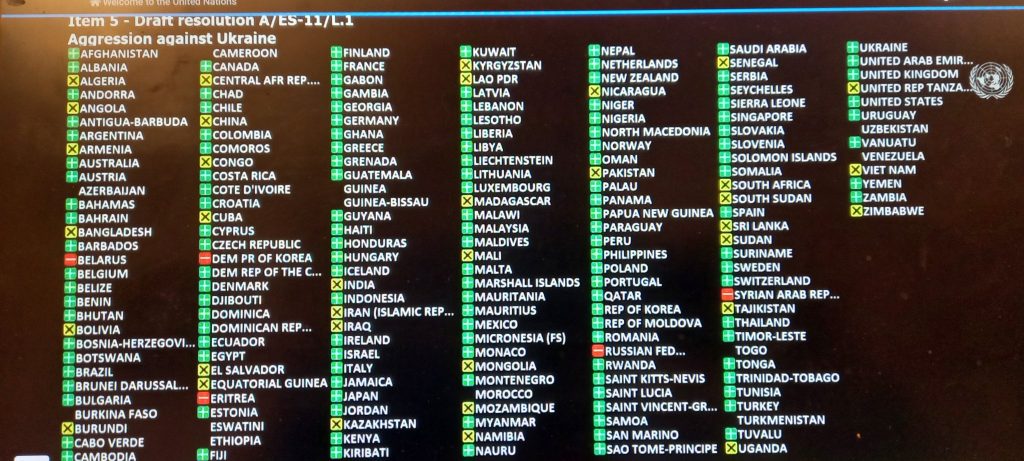
Election Commission has not legally decided on election date – President

February 23rd, 2023

Courtesy Adaderana

President Ranil Wickremesinghe says that the Election Commission has not yet legally decided on a date to hold the election and that there are no funds to conduct an election.

The election has not been postponed and there is no election to be postponed”, he said.

Addressing the parliament this morning (Feb. 23), the president highlighted that his priority is to rebuild the economy. I prioritize the economy. If it is not built, there will be no country left.”

Speaking further, the President also mentioned that the provisions of the constitution can be guaranteed only if the country is protected.

You can’t have a constitution without a nation. The first duty of the president is to protect the nation, and then to protect the constitution.”

Further, President Wickremesinghe informed the parliament that a new anti-corruption bill would be presented to the House within two weeks, keeping in line with the resolutions of the United Nations.

IMF will inevitably be blamed for further depleting Sri Lanka’s economy – Patali

February 23rd, 2023

Courtesy Adaderana

Samagi Jana Balawegaya (SJB) Patali Champika Ranawaka has written to the International Monetary Fund (IMF) office in Sri Lanka, questioning whether the recently introduced electricity tariffs and the fuel price hike is in accordance with the IMF criteria.

Accordingly, the relevant letter was sent by Ranawaka, in his capacity as the Chairman of the Parliamentary Sub Committee on Economic Stabilization Committee, to the IMF office in Sri Lanka, located in the Central Bank of Sri Lanka (CBSL) building.

He asserted that the unrealistic taxes imposed on fuel and electricity will ultimately lead to Sri Lanka’s economy further depleting, adding that the IMF will inevitably be held responsible for this.

MP Ranawaka also raised concerns that the public’s opposition to these taxes will eventually jeopardise the country’s debt stabilisation programme.

56 persons, including IUSF Convener Wasantha Mudalige arrested

February 23rd, 2023

Courtesy Hiru News

Over 50 persons, including the convener of the Inter-University Students Federation (IUSF) Wasantha Mudalige, have been arrested for forcibly entering the Education Ministry in Battaramulla.

The Police stated that nearly 56 persons, including 30 student monks from the Buddhist and Pali University of Sri Lanka, have been arrested.

The group staged a protest today and had entered the Education Ministry, demanding the reopening of the Buddhist and Pali University in Pitipana, Homagama.

The protesters also demanded action against the Police for using tear gas and water cannons to disperse their Sathyagraha held yesterday (22).

The protest comes after the Vice Chancellor of the Buddhist and Pali University of Sri Lanka, Venerable (Prof) Neluwe Sumanawansa Thero announced today (23) that the university will be opened to first-year students only.

Venerable (Prof) Neluwe Sumanawansa Thero said that the university will be open to first-year students on the 27th of February 2023.

The Venerable Thero said, however, it was not possible to reopen the university for all students at once, and the Administrative Board has advised opening the university in phases

SINHALA VEDAKAM AND WESTERN MEDICINE Part 1

February 22nd, 2023

KAMALIKA PIERIS

Western medicine as we know it today was introduced to the island by the British. The western tradition did not recognize the Asian systems of medicine and most local doctors trained in western medicine avoided non western medicine. In 1858 Dr. W.C Ondaatje   wrote on the empiricism of Singhalese doctors and the advantage of European practice.”

This attitude continued. In 1974, Gananath Obeyesekera did a survey on the attitude of western medical practitioners to Asian medicine. He found that most were not interested in indigenous medicine. But 12 out of his sample of 38 doctors felt that   Sinhala vedakam was helpful in certain instances such as arthritis, and oil massage for fractures that has been set.

In the late 19th   century, some Ceylonese doctors trained in western medicine had drawn attention to positive aspects of Sinhala Vedakam (Desiya Chikitsa). The first to do so, according to the available records was Dr John Attygalle. John Attygalle, MD (Aberdeen) was the first Sinhalese to qualify in western medicine. He came from a distinguished family of indigenous medical   practitioners in Madapatha.

Attygalle wrote Notes on Sinhalese medicine” (1888) and four ‘Notes on the Sinhalese materia medica’ (1887, 1888) to the   Journal of the Ceylon Branch of the BMA. He then gathered up all the information and wrote a landmark book titled ‘Sinhalese Materia Medica’ (1917).

Next came Dr. Emmanuel Roberts, whose name originally was Ratnajinendra Rabel Ratnaweera.   In 1909 he wrote ’Notes on native drugs’ in the Journal of the Ceylon Branch of the BMA. In 1919 he published a book on ‘Native remedies used in snake bites’

Emmanuel Roberts had a practice in Dehiwela where he prescribed rasakinda and other local herbs to his patients. The elite families of Colombo went to him for medicine,   and one of them, the painter Harry Pieris,  a descendant of Charles Henry de Soysa, told me that   the drugs provide by Dr.Roberts  were very palatable, unlike the usual decoctions and  that his remedies were available in a pharmacy owned by Roberts, the Oriental Drug Stores.  The other doctors used to laugh at him and call him vedarala.   Dr Hugh de Mel had also prescribed local remedies when he worked with Dr Roberts.

 Desiya Chikitsa practitioners, described as ‘vederala’ by practitioners of western medicine, had managed to hold on   despite the arrival of western medicine. Desiya Chikitsa practitioners gave evidence before the Commission on Indigenous Medicine, in 1947.

They emphatically stated that they were not a part of the Ayurveda system, which came from India. Desiya Chikitsa was a distinct medical system with its own treatment. It was particularly effective for snake bite and fractures. They also said  that Sinhala Vedakam was not a mere collection of prescriptions, evolved in Sri Lanka, and handed down from generation to generation, as popularly supposed.

John Attygalle had observed in his ’Sinhalese material medica(1917)’that the vedaralas of the historic  Udarata kingdom had  possessed valuable remedies handed down from father to son, kept strictly within the familyand taken with them  to the grave.  This would have been picked up and used by those who wished to replace Sinhala Vedakam   with India’s medical system, Ayurveda. But the allegation could be contested.  There would have been competition among those treating the royal family and secrecy may have been necessary, but secret medicines are simply not possible in a public health care system.

 The western trained doctors had looked at the ancient chronicles to see what they said about medicine. John Attygalle looked at medical descriptions in Dipavamsa and Mahavamsa (1917). Then in the 1970s, C de F Goonaratne wrote Some historical aspects of leprosy in the ancient medical literature of Ceylon. (Medical History 1973).

CG Uragoda wrote Medical gleanings from the Mahavamsa’ (1975) and Medical references in ancient inscriptions in Ceylon” (1977) in the Ceylon Medical Journal. Several ancient inscriptions had references to physicians and hospitals, he said. 

 In 1987, Uragoda wrote History of medicine in Sri Lanka from the earliest times to 1948, issued as the centenary publication of the Sri Lanka Medical Association. This had a chapter titled Medicine under Sri Lankan kings”, where Uragoda gathered together the information he had found in the ancient records.

Uragoda   said there was a liberal mention of medical facts in the Mahawamsa. These, taken together with information in the inscriptions,   gave fairly good picture of the medical system that prevailed in ancient Sri Lanka.

Uragoda observed that medicine was a respected profession in ancient Sri Lanka .Kings practiced medicine. King Buddhadasa was known as physician king, he appears to have been adept in medicine, surgery and midwifery as well as veterinary medicine. Aggabodhi VII had studied medical plants over the whole island to find out whether they were suitable for the sick. Parakrama bahu I   was ‘well versed in medical lore’.

There is mention of physicians in the inscriptions. Two cave inscriptions from Piccandiyava off the Puttalam-Anuradhapura road, dated to the early brahmi period, recorded donations by Gobhuti, who was physician and teacher to a king named Devanampiyatissa.  (This need not be the well known king of that name)

The second Dorabawila pillar inscription, of Dappula IV records grant of lands and immunities to a chief physician named Punalna. The lands were exempted of all taxes, an immunity which exceeds the immunities given even to lands owned by the sangha, observed Uragoda.  The Chief Physician was   a member of the Kings Council and an officer of state. Godakumbura thought that Chief Physician would have been the head of the medical service as well.

 There was a betge attached to the royal palace. The physicians of the royal betge were given lands for their use, maintained by the state. The appointments were usually given to the same family, generation after generation.

King Buddhadasa had appointed physicians to villages and given each the produce of ten fields as livelihood. Parakramabahu I had ordered people qualified in the art of healing to seek out villages and market towns and practice their art. ‘To discerning and skilful physicians who were quick at identifying diseases and knew the contents of medical textbooks, he gave maintenance according to their needs, and made them day and night practice the art in the best manner’.

This shows that there was a public health care service in the Anuradhapura and Polonnaruwa periods. Inscriptions also support this view.  There is there is at least one inscription for hospital, another for dispensary and one for medical halls in Anuradhapura, said Uragoda.

Slab inscription   of Mahinda IV says that the king established medical halls. Mahavamsa said that Kassapa IV built houses of medicine in different parts of the town.  It is not clear whether this refers to chemist’s shops where medicine could be purchased or to our patient treatment centers.   Inscriptions of Kassapa V found in Anuradhapura, Medirigiriya and Dorabawila indicate that he had established hospitals and medical halls. The inscription found at Abhayagiri stated that   Kassapa V had established royal medical halls near the southern gate of a particular high street.

The Kirbathvehera pillar inscription proclaims immunities bestowed on a dispensary.  Uragoda thinks that the paucity of references to outdoor treatment probably indicates that the physician paid home visits rather than the sick attending a central dispensary.

The ancient chronicles carried reference to medicines. Vihara Maha Devi had gifted medicine to the sangha. Dutugemunu had in 18 places constantly bestowed on the sick the food and medicine ordered by the physicians. Moggallana II had gifted medicines to the sangha. Mahinda IV had   distributed medicine and beds in all the hospitals and gave the earning from a mandapa to the sangha for purchase of medicines.

Archaeologists have found medicine troughs at Anuradhapura, Mihintale, Medirigiriya, Dighavapi and Polonnaruwa.  Uragoda said that these were probably used for immersion therapy. He observed that Sinhala texts on medicine, Yogarnavaya and Prayoga Ratnavaliya (13 century) speak of bath fluids, containing medicinal oils, milk, ghee, and vinegar .This was used for the management of skin disease, fever, and rheumatism. Uragoda thinks that in ancient times, some households would have had their own medicine baths.(continued)

RE: Canada imposes sanctions on Sri Lankan state officials for human rights violations

February 22nd, 2023

Sri Lanka Canada Association of Markham Suite 135, 4981 Hwy 7 East, Unit 4, Markham, ON L3P 0E3

The Honorable Melanie Joly
Minister of Foreign Affairs
House of Commons
Ottawa, Ontario,
Canada
K1A 0A6

Feb 15th, 2023


RE: Canada imposes sanctions on Sri Lankan state officials for human rights violations

Ms. Melanie Joly,

As Canadians of Sri Lankan origin, we feel that Canadian foreign policy towards Sri Lanka is extremely biased, unfair, and damaging.  Imposing sanctions unilaterally by Canada against two former Presidents of Sri Lanka is unwarranted and serves no purpose, other than politically motivated to please the Tamil Diaspora voter base in Toronto, and the GTA. 

The reason given was that two former Presidents of Sri Lanka – Mr. Mahinda Rajapaksa and his brother, Mr. Gotabaya Rajapaksa, have allegedly committed Human Rights (HRs) violations during the Tamil terrorist war that ended in May 2009. This is against the fact that none of the reputable nor recognized global Human Rights (HRs) organizations – like United Nation (UN), United Nation Human Rights Commission (UNHRC), International Criminal Courts (ICC), have not imposed any form of sanctions against Sri Lanka. Besides, if violation of HRs is the issue here, why not Canada sanction pro-LTTE associations in Canada, UK, and US, which are equally guilty of raising millions of illegal funds to support a terrorist war that killed thousands of innocent Tamils, Sinhalese and Muslims?

After all it was a brutal war started by a vicious terrorist group called Liberation Tigers of Tamil Eelam (LTTE) – that invented suicide bombing by sacrificing innocent Tamil children. There is no such thing called a clean war. The wars are always ugly and brutal as we witness daily in Ukraine, and the previous wars in Iraq, Afghanistan, etc. However, the difference here is whenever a war is started by the West (NATO), so-called HRs champions like Canada, do not utter a word about HR violations or atrocities committed by the Western (NATO) forces. Rather they call it collateral damage.”  Strangely, such standards do not apply to wars in developing countries, like Sri Lanka?

However, to single out a country that had successfully defeated a vicious terrorist group that was determined to carve out a monolithic, fascist separate state in Northern Sri Lanka, is not only unfair but shows clear hypocrisy, double standards, and biased Canadian foreign policy towards Sri Lanka.  If anything, Canada should be ashamed of allowing many pro-LTTE Diaspora organizations to collect millions of dollars in Canada for decades, which helped the Tamil terrorists to prolong their atrocities against innocent Tamils, Sinhalese, and Muslims in Sri Lanka.  It was thanks to former Prime Minister, Mr. Steven Harper, who stopped the illegal fund raising of pro-LTTE organizations by proscribing LTTE terrorist organization in 2006.

( https://www.canada.ca/en/news/archive/2006/04/canada-new-government-lists-ltte-terrorist-organization.html )

What we Sri Lankans do not understand is the audacity of the Canadian government to weaponize HRs and use it against Sri Lanka – a fellow commonwealth country, which has a long and proud history of democratic freedom and rights for its citizens to elect governments of their choice.  Let us focus on human rights violations, since Canada considers itself a champion and a leading voice of HRs everywhere in the world.  However, it is nothing short of hypocrisy and dishonesty for Canada to call itself a champion when Canada has one of the, if not the worst, record of human right violations, systemic racism, and genocide against its own indigenous men, women, and children for centuries.

( https://www.hrw.org/world-report/2021/country-chapters/canada )

It is indeed laughable that Canada claims itself a HRs protector when its recent past shows just the opposite.  Even today, some of the Indigenous communities are living under third-world conditions, with lack of clean drinking water, Medicare, proper housing, and other despicable conditions.  Ironically, Canada is busy sanctioning and lecturing countries like Sri Lanka on alleged HRs violations while ignoring the massive scale of such violations of its own citizens of the first nation communities.

We perfectly understand the hypocrisy of the Canadian foreign policies which seem to be based on domestic ethnic politics – pioneered by the Canadian Liberal Party and its present government, especially regarding Sri Lanka.  It seems the Liberal Party is under the impression that to win elections, they need to exploit various ethnic communities, especially in major cities, like Toronto and the GTA where the largest ethnic vote blocks are, such as Tamils, Sikhs, Chinese, etc.

We do understand how a well-funded, well-organized, pro-LTTE Tamil Diaspora, and number of their Associations have been lobbying the Liberal Government and its parliamentarians relentlessly, to punish Sri Lanka under the false and fabricated propaganda of human right violations – with unproven and unfounded claims of Tamil Genocide.”  These claims are not based on facts, but fabricated lies by various pro-LTTE Tamil groups, with zero evidence or credibility to such claims.  Not a single Global HR body – such as the UN, UNHRC, ICC, including Human Rights Watch (HRW), Amnesty International (AI), have given any legitimacy to these bogus claims. They are purely fabricated by the pro-LTTE Tamil Diaspora organizations to achieve their political and financial agenda in the Western nations like Canada, UK, US,etc.

One of the false justifications given by Canada for sanctions is that such action would help the ethnic reconciliation in Sri Lanka. This is a load of bunk, to say the least.  If anything, these sanctions will polarize the ethnic communities rather than bringing them together, with peace and harmony.  There is not a single country in the world where reconciliation has been achieved by pitting minority ethnic groups against the majority.  South Africa did not achieve its reconciliation by punishing white leaders.  The Truth and Reconciliation Commission (TRC) of South Africa has taken over 20 years since its inception in 1994, to bring closure and reconciliation for its citizens to heal the wounds of apartheid.

( https://theworld.org/stories/2017-04-06/south-africas-imperfect-progress-20-years-after-truth-reconciliation-commission )

Naturally, it takes time to heal the wounds of the ethnic divide in any country.  And the truth and reconciliation process must start within the country by the various groups affected – monitored by an impartial third party, rather than interference and pressure from countries like Canada, that are shamelessly exploiting ethnic conflicts to promote and profit from their domestic political agendas.  

Canada certainly could have helped Sri Lanka to overcome the painful wounds of the war if it acted genuinely with total honesty and integrity rather than its own self interest. There was a time when Canada had a global reputation as an impartial country that was genuinely interested in peace, harmony, and unity around the world.  Unfortunately, that reputation is severely tarnished globally now thanks to its hypocritical and biased foreign policies based on domestic ethnic politics.  And its efforts to weaponize HRs and democracy to punish countries like Sri Lanka has eroded its image further. 

If Canada is genuinely interested, it could have certainly helped Sri Lanka by providing humanitarian support, such as food, medicine, to help the people of Sri Lanka, who are severely affected by the worst economic disaster in its history, due to many factors beyond its control such as the COVID pandemic and the current war in Ukraine – which have devastated the economy with shortages and exorbitant prices of food and energy.  Unfortunately, Canada has not been forthcoming with humanitarian aid, in comparison to other nations that are helping Sri Lanka.

Rather than helping, Canada seems to have taken the opportunity to punish Sri Lanka during its worst economic, and political crisis by slashing sanctions against its former presidents, which is clearly politically motivated to satisfy the Canadian Tamil Diaspora, and to secure their votes.    

Prime Minister Trudeau and his Liberal government may win the domestic politics by exploiting and polarizing various ethnic groups in Canada and elsewhere.  However, by doing so Mr. Trudeau has jeopardized the reputation of Canada, not only in Sri Lanka, but among many countries around the globe.

The former Prime Minister, Honorable Pierre Elliott Trudeau, considered the father of the multiculturalism, who made Canada a beacon of peace, hope, and fairness for millions of immigrants from around the world, would have been extremely disappointed and disapproved of his son’s shameful act of turning domestic politics into partisan ethnic politics, purely for the purpose of winning elections. 

Sincerely,

Jaliya Wickremarachchi

President

Sri Lanka Canada Association of Markham

(SLCAM)

ව්‍යවස්ථා සංශෝධන මාෆියාව/මේනියාව

February 22nd, 2023

Malinda Seneviratne


#gotagohome අරගලය නොහොත් ගෝටව ගෙදර යැවීමේ ව්‍යාපෘතිය නොහොත් ආදරයේ අරගලය අනන්‍ය වූ ඇතැම් පුද්ගලයින්, සංවිධාන සහ බලවේග මුල සිටම ව්‍යවස්ථා සංශෝධන අවශ්‍ය යැයි තර්ක කළෝය. ආර්ථික අර්බුදය කෙසේ වෙතත් දේශපාලන අර්බුද වලට දිගු කාලීන විසඳුම එය යැයි ප්‍රකාශ කරන ලදී. 1978 ව්‍යවස්ථාවේ අවුල් දකින්නත් විසඳුම් යෝජනා කරන්නත්, විසඳන්න ඉදිරිපත් වෙන්නත් අර්බුද අවශ්‍ය නොමැති වූවත් සංශෝධන/ප්‍රතිසංස්කරණ ගැන කතිකාවක් ඇතිවීම සාධනීය වේ.   

ඒ කෙසේ වෙතත් පුද්ගලයෙක් හෝ සංවිධානයක් ව්‍යවස්ථා සංශෝධන යෝජනා කරන්නේ නම් අඩුම තරමින් අදාල ව්‍යවස්ථාමය ලියැකියවිලි අධ්‍යයනය කර තිබීම මැනවි. උදාහරණයක් වශයෙන් කෙනෙක් 20වන සංශෝධනය අහෝසි කර නැවත 19වන සංශෝධනය ස්ථාපිත කළ යුතු යැයි යෝජනා කරන්නේ නම් ඔහුට/ඇයට එම සංශෝධන දෙකෙහිම අඩංගු කරුණු කාරනා පිලිබඳ අවබෝධයක් තිබිය යුතුය. එපමණක් නොව, ඒ ඒ සංශෝධන සම්මත කරගත් ආකාර ගැනද, එවකට පැවති  දේශපාලන වටපිටාව ගැනද, සංශෝධන වල ප්‍රකාශිත අරමුණු මෙන්ම ප්‍රථිපල ගැනද යම් කියවීමක් තිබිය යුතුයි.  

ව්‍යවස්ථා සංශෝධනය යනු එක් මොහොතක දේශපාලන ගැටළුවක් විසඳා ගන්නා ක්‍රියාවලියක් නොවිය යුතුයි. යම් සංශෝධනයකින් වාසියක් ලැබෙන්නේ තමගේ දේශපාලන වීරයන්ට නැතහොත් අවාසියක් වන්නේ තමන්ගේ දේශපාලන වුවමනාවන් වඩාත්ම නියෝජනය කරන දේශපාලන පක්ෂයට හෝ චරිතයට යනාදී කාරණා සංශෝධන වලට ඇති කැමැත්ත හෝ අකමැත්ත තීන්දු කරන්නේ නම් එය සාධනීය මැදිහත් වීමක් නොවේ. එමෙන්ම ව්‍යවස්ථා සංශෝධනය යනු බරපතල කාරණයක් පමණක් නොව අනාගතයට බලපෑම් ඇති කළ හැකි කරුණක් බැවින්, හදිස්සියේ නොකළ යුතු බවද මතක තබා ගත යුතුයි. ව්‍යවස්ථා සංශෝදනයට අදාළ සරල සහ මූලික කොන්දේසි මේවා වේ.
   
1978 සිට 20 වතාවක් සංශෝධනය කර ඇති ව්‍යවස්ථාවක් අප සතුයි. එම සංශෝධන ඉහත ‘කොන්දේසි’ වලට කෙතරම් අවනත වී ඇති දැයි නැතහොත් උල්ලංගනය වී ඇති දැයි නිගමනය කළ හැකි වේ. එම සංශෝධන ඒ ඒ පාර්ලිමේන්තුවේ පැවති බහුතර බලය උපයෝගී කොට ඒ ඒ යුග වල බලයේ සිටි දේශපාලන චරිත සහ පක්ෂ/සන්ධාන වලට වාසිදායක වන ලෙස සම්මත කරගත් ලියැකියවිලිම විය. 17 සිට 20 වන සංශෝධන මෙන්ම යෝජිත 21වන සංශෝධනයේ කෙටුම්පතද විභාග කිරීම වටින්නේ එබැවිනි.     

17වන ව්‍යවස්ථා සංශෝධනය ඉදිරිපත් කර සම්මත කරගත්තේ හදිස්සියෙනි. ඒ ජවිපෙ-පොදු පෙරමුණ ‘පරිවාස’ ආණ්ඩුව සමයේදී ය.  විධායක ජනපති ධූරයේ බලතල සීමා කිරීම එහි අරමුණ විය.  [සැ.යු: විධායක ජනපති ක්‍රමය ඉදිරිපත් කර සම්මත කරගත්තේ ජේ ආර් ජයවර්ධන ප්‍රධාන ඒ.ජා.ප. ආණ්ඩුවයි. ඒ 1978 දී. ජනපති ධූරයේ විධායක බලතල ගැන එම පක්ෂය දුක් වන්න පටන් ගත්තේ 1994 වසරේ එම පක්ෂයට බලය අහිමි වීමෙන් අනතුරුවයි. 1978 ව්‍යවස්ථාවෙන් ජනපතිට අසීමිත බලතල පවරන අතර ප්‍රායෝගිකව විපක්ෂය අතිශයින් දුර්වල කිරීමටත් විධිවිධාන එහි අන්තර්ගත විය. ජේ ආර් විශ්වාස කළේ සමානුපාතික ඡන්ද ක්‍රමය හේතුවෙන් ඔහුගේ පක්ෂය බලයෙන් පහ කළ නොහැකි බවයි. එමෙන්ම කිසිදු පක්ෂයකට තුනෙන් දෙකක බහුතරයක් නොලැබේ යැයි ද ඔහු කල්පනා කළේය. එබැවින් විධායක ජනපති ක්‍රමය වෙනස් නොකළ හැකි බවද ඔහු විශ්වාස කළේය]. විධායක බලතල සීමා කිරීම ප්‍රගතිශීලී පියවරක් වුනාද 17වන සංශෝධනයේ නොයෙකුත් දුර්වලකම් තිබිණ.     

18වන සංශෝධනයෙන් 17 හරහා සම්මත කරගත් සාධනීය කරුණු ආපස්සට හරවන ලද්දේ පාර්ලිමේන්තු බහුතරය පාලක පක්ෂයේ සහ එහි නායකයින්ගේ පටු වූවමනාවන් සාක්ෂාත් කර ගැනීම සඳහාය. 19වන සංශෝධනයටද පාදක වූයේ පටු වුවමනාවන්ය. විශේෂයෙන්ම මුලු රටේම ඡන්දදායකයින්ගෙන් ජනවරමක් ලබාගත් ජනාධිපති කෙනෙකුට ව්‍යවස්ථාව ප්‍රකාරව ලැබුන බලතල පාර්ලිමේන්තුවේ සුළුතර බලයක් පමණක් තිබුන අගමැති කෙනෙකුට පැවරීම එහි අරමුණ විය. 18න් ස්ථාපිත කරන ලද ස්වාධීන කොමිසම් සභා නැවත ගෙන එන ලද වූවත් ව්‍යවස්ථා සභාවේ සංයුතියෙන්ම ඒවායෙන් බලාපොරොත්තු වූ ස්වාධීනත්වය කප්පාදු විය.

19හි බරපතලම වරද නම් එය සම්මත කරගත් ආකාරය වේ. ශ්‍රේෂ්ටාධිකරණයේ විමසුමට කෙටුම් පත යැවීමෙන් අනතුරුව එහි ඇති දොස් නිදොස් කිරීමට උපදෙස් ලැබුනද, ඒ කිසිත් නොතකා සම්පාදකයින්ගේ හිතුමතේට වෙනත් කරුණු එක් කොට මන්ත්‍රීවරුන්ගෙන් වැඩි පිරිසක් නිදිකිරමින් සිටින මොහොතක මහා රෑ 19වන සංශෝධනය සම්මත කරගැනීමෙන් ව්‍යවස්ථා සම්පාදන ක්‍රියාවලිය විහිළුවක් බවට පත් කෙරින. ද්විත්ව පුරවැසිභාවයට අදාළ කරුණු එකතු කරන ලද්දේ සම්පාදකයින්ගේ දේශපාලන විරුද්ධවාදීන් දේශපාලන සමීකරණයෙන් ඉවත් කිරීම වස් රටේ පොදු යහපත තකා ගත පියවරක් නොවේ එය. ඇමති මණ්ඩලය යම් උපරිමයකට යටත් කිරීම සාධනීය ලෙස පෙනුනද ‘ජාතික ආණ්ඩුව’ යන කාරණය පැහැදිළිව නිර්වචනය නොකලේ මෙම කොන්දේසිය වටා යෑමට බව පසුව අනාවරණය විය.     


20වන සංශෝධනයෙන් ස්වාධීන කොමිසම් සභා විෂයෙහි 19වන සංශෝධනයේ අඩුපාඩු නිවැරදි කිරීම පසෙක දා ව්‍යවස්ථා සභාව වෙනුවට පාර්ලිමේන්තු සභාවක් පිහිටුවන ලදී. ද්විත්ව පුරවැසිභාවයට අදාළ කොන්දේසි ඉවත් කරන ලදී. මෙහෙදී මතක තබා ගත යුත්තේ අප රටට හානි කර ඇති දේශපාලන චරිත ගත් කළ පුරවැසියන්ද, ද්විත්ව පුරවැසියන්ද, විදේශිකයින්ද පෙරමුණ ගෙන කටයුතු කර ඇති බවයි. ඒ කෙසේ වෙතත් ද්විත්ව පුරවැසිභාවයට අදාළ කොන්දේසි පැනවීමත් (19න්) ඉවත් කිරීමත් (20න්) පාදක වූයේ පටු දේශපාලන වුවමනාවන් බව පැහැදිලියි. ව්‍යවස්ථා සම්පාදනයේදී නොකළ යුතු දෙයකි එය. 20වැන්න සම්මත කිරීමේදී ශ්‍රේෂ්ටාධිකරණ විමසුමට සහ නිර්දේශවලට ද අවනත වූයෙන් එම කාරණයේදී 19වැන්න සම්පාදකයිට සහ එයට ඡන්දය දුන්න අයට වඩා විනයක් දක්නට තිබිණ.     

මෙම සමස්ථ ක්‍රියාවලිය තුල විශේෂම කරුණක් වන්නේ 17ට පක්ෂ බොහෝ දෙනා 18ටද පක්ෂ වීමයි. එමෙන්ම 18ට පක්ෂ බොහෝ දෙනා 19ටද පක්ෂ විය. 19ට ඇත උස්සපු බොහෝ මන්ත්‍රීවරු 20ටද කැමති විය. 21වන සංශෝධනය සම්මත කිරීමට නම් ඊට පෙර සම්මත වූ 17, 18, 19 සහ 20වන සංශෝධන වලට පක්ෂ වූ අයගේ සහාය අතවශ්‍ය වනු ඇත. මේ සියල්ලෙන් පැහැදිලි වන්නේ ඒ ඒ මොහොතේ දේශපාලන වාසි අවාසි සළකා බලනු වස් යෝජිත් සංශෝධනවල අන්තර්ගතය පිලිබඳ මන්ත්‍රීවරු උනන්දු නොවන බවයි.

21වන සංශෝධනයට අදාළ ක්‍රියාවලිය දිග හැරෙන්නේ මේ ආකාරයටම වේ. තනතුර සහ බලතල වලට වඩා, ප්‍රජාතන්ත්රකරණයට වඩා, කොටින්ම ඇතිවිය හැකි අනතුරු ගැන විමසීමට වඩා පුද්ගලයෙකුට එරෙහි වීම හෝ පක්ෂ වීම වැදගත් වී ඇත. ශ්‍ර්ෂ්ටාධිකරණයේ විමසුම පිළිබඳව වැඩි කතාබහක් ඇසෙන්නට නැත්තේ මන්දැයි නොදනිමු. 19 මෙන්ම 21ද තක්කඩි විදිහට සම්මත කිරීමට සූදානම් කරන්නේ දැයි සාධාරණ සැක මතුවන්නේ මෙබැවිනි.  

21වන ව්‍යවස්ථා සශෝධනය ඉල්ලා අඩි හප්පමින් සටන් පාඨ කියන ‘විප්ලවවාදීන්’ බොහෝ දෙනෙකුට පහත සඳහන් ප්‍රශ්න ඉදිරිපත් කළහොත් ඔවුන් නිහඬ වනු ඇත:  අ) 17වන සංශෝධනයේ කිසිදු වරදක් නොමැතිද? ආ) 18වන සංශෝධනයේ අඩුපාඩු මොනවාද? ඇ) 19වන සංශෝධනයේ වැරැද්දක් ඇත්තෙම නැද්ද?  උත්තරය ‘නැත’ නම් ව්‍යවස්ථා සභාවේ සංයුතිය, ශ්‍රේෂ්ටාධිකරණ විමසුම, ජාතික ආණ්ඩුව යන්න නිර්වචනය නොකිරීම, ද්විත්ව පුරවැසියන් නොවන අය අප රට විනාශ කිරීමට දායක වූයේ නැතිද යනාදී කාරණා විමසන්න. ඈ) 20වන සංශෝධනයේ දුර්වලතා මොනවාද? එමෙන්ම විධායක ජනාධිපති ක්‍රමය අහෝසි කළ යුතුයැයි බෙරිහන් දෙන අයගෙන් ඇසිය යුත්තේ මෙපමණයි: 13වන සංශෝධනය අහෝසි නොකරන තත්ත්වයක් තුල මින් ජනිත වන අනතුරු ගැන කිසිවක් කිව හැකිද? අමතර ප්‍රශ්නයක්: විධායක ජනාධිපති ක්‍රමය කියන තරම් අවුල්සහගත සහ ප්‍රජාතන්ත්‍ර විරෝධී නම්, 1978 ව්‍යවස්ථාව හකුලා දැමා 1972 ව්‍යවස්ථාව ස්ථාපිත කිරීම නොවේද කළ යුත්තේ?

යෝජිත 21වන සංශෝධනය විභාග කළ යුතුය. මේ සඳහා කාලය අවශ්‍යය. ශ්‍රේෂ්ටාධිකරණයේ විමසුමට ද එය ඉදිරිපත් කළ යුතුයි. කෙටුම්පත පැහැදිළිවම පෙන්වා දෙන්නේ සම්පාදකයින් 19වන සංශෝධනයේ දෝෂ එලෙසම ව්‍යවස්ථාගත කිරීමට කැපව සිටින බවයි. යෝජිත ව්‍යවස්ථා සභාවේ සංයුතිය ගත් කළ ස්වාධීනත්වයක් නම් බලාපොරොත්තු විය නොහැක. එය බෙහෙවින්ම පක්ෂ දේශපාලනයට සහ දේශපාලනඥයින්ගේ වුවමනාවන් වෙනුවෙන් සැදුම්ලත් මණ්ඩලයකි.  

44-47 වන වගන්ති ගත කළ විධායක බලය ජනපතිගෙන් අගමැතිට හුවමාරු කිරීමේ වුවමනාවක් පැහැදිලිවේ.  (13වන සංශෝධනය අහෝසි කළහොත්) මෙය අනුවණකමක් නොවන නමුත්, වත්මන් ජනාධිපති පත් කර ඇත්තේ එම ධූරයේ බලතල පිලිබඳ නිසි අවබෝධයකින් යුතු වූ ජනතාවක් විසින් බව උපකල්පනය කළ යුතුයි. එබැවින් නියෝජනය කිරීමේ වරම පිළිබඳව සැළකිලිමත් විය යුතුයි. එසේ නොකළහොත් සම්පාදකයින් මෙන්ම මෙයට අත් ඔසවන මන්ත්‍රීවරුන්ද ප්‍රජාතන්ත්‍රවාදයේ මූලික කොන්දේසි අමතක කර ඇති බවට චෝදනා නැගෙනු ඇත.  

පහුගිය වසර 44 තුල සම්මත කරන ලද සංශෝධන මෙන්ම සම්මත කර ගත ආකාරයද විමසීමේ දී අපට පැහැදිලි වන්නේ දේශපාලන තක්කඩිකම් ඒ හැම අවස්ථාවේදීම මූලික වූ බවයි. වඩාත් ප්‍රජාතන්ත්‍රවාදී තත්ත්වයක් නිර්මාණය කරන්නට අවශ්‍යනම්, එය කඩිනමින්ම කළ යුතු නම්, 1972 වසරේ සම්මත කරගන්නා ලද ජනරජ ව්‍යවස්ථාව වෙත නැවත යා හැකි බවද කිව යුතුමය. ඇත්තවශයෙන්ම සැබෑ දේශපාලන නිදහස එම ව්‍යවස්ථාවෙන් ලබා ගත බැවින් සහ එම නිදහස ලැබී අද සියවසක් ගතවී ඇති මේ මොහොතේ එවන් ක්‍රියාමාර්ගයක් තෝරා ගැනීම අනුචිත නොවනු ඇත.

ණය අරගෙන නිසි ආයෝජනයක් නොකළොත් ණය ගෙවන්න වෙන්නේ   කටුක ලෙසයි. -අග්‍රාමාත්‍ය දිනේෂ් ගුණවර්ධන මහතා.

February 22nd, 2023

අග්‍රාමාත්‍ය මාධ්‍ය අංශය.

  අග්‍රාමාත්‍යවරයා මේ බව සඳහන් කළේ 2023.02.21 දින ජාතික විදුලිබල පද්ධතියට තවත් පුනර්ජනනීය විදුලි ව්‍යාපෘතියක් එක්කරමින්  දියත් කෙරෙන කඩුවෙල මහ නගර සභාවේ “රන් පැලැස්ස″  අපද්‍රව්‍ය පසු  සැලසුම් මධ්‍යස්ථානය විවෘත කිරීමේ අවස්ථාවට එක් වෙමිනි.

මෙහිදී වැඩිදුරටත් අදහස් දැක් වූ අග්‍රාමාත්‍ය වරයා  –

  මෙවැනි සම්ප්‍රදායික නොවන මගක් ගෙන එම සම්ප්‍රදායික නොවන මඟ ජය ගැනීම කඩුවෙල  නගරාධිපතිතුමා ඇතුළු කණ්ඩායමට දැවැන්ත අභියෝගයක් ජය ගැනීමක් වෙනවා අභියෝගයක් ජය ගැනීමට සැලසුමක් හා විශ්වාසයක් අවශ්‍යයි. ඒ වගේම ඉලක්කයට ගමන් කරන්නට තිබෙන ඕනෑකම වෙනුවෙන්ම කැප වෙන්නට පුළුවන් ශක්තියක් තියෙන්න ඕනේ.  පුනර්ජීවන විදුලිය  නිෂ්පාදනය කිරීමේ උවමනාව ලොවටම තිබෙනවා. අපේ රටටත් තිබෙනවා. අපි මේ පිළිබඳ දීර්ඝ කාලයක් තිස්සේ කතා කරමින් සිටිනවා. මෙය යථාර්තයක් බවට පරිවර්තනය කිරීමේ අවශ්‍යතාවය අද වෙනදාටත් වඩා  දැනෙනවා.

  දැවැන්ත විදේශ විනිමය  අර්බුදයක, ඩොලර් අර්බුදයක සිටින රටක් හැටියට පසුගිය මාස හය තුල රට ආර්ථික ස්ථාවරත්වයට පත් කර ගැනීමේ ක්‍රියාමාර්ගයේ ක්‍රමානුකූලව ඉදිරියට ගමන් කළ ද  අපිට තවත් ඉදිරියට ගෙන යන්න තියෙන බර වැඩියි. කඩුවෙල නගරාධිපති තුමා ඇතුළු කණ්ඩායම මේ ආරම්භ කළේ ඒ බර අඩු කිරීමේ පළමු පියවරයි.

අපි රුපියල් වලින් කතා කළත් මෙහි ද ඉතුරු කරන්නේ විදේශ විනිමය යි.

විදුලිබල විදුලිබල මණ්ඩලය ජාතික සංවර්ධනයේ දැවැන්ත කොටසක්.  අපි විදේශීය මුදල් වැය කරලා ගෙනඑන ඉන්ධනවලින් විදුලිබල නිෂ්පාදනයේ විශාල කොටසක් සිදු කරනවා. ලොකු බරක්  උහුලගෙන තමයි මේ ඉදිරියට යන්නේ.

අවුරුදු තුන්දහසකට වැඩි කාලයක්  මේ භූමියේ කැලණි ගඟ ගලනවා.    පරිසර හිතකාමී විදුලි නිෂ්පාදනයට විශාල මුදලක් වැය වෙනවා කියලා   හිතුවට ඊට වඩා කොටකොටසක් අපි වැය කරනවා මේ ආකාරයෙන් ඉන්ධන භාවිතාවෙන් විදුලිය නිෂ්පාදනය කරන්නට. එය වෙනස්   කර ගැනීම සදහා අනුගමනය කළ යුතු අමාරු නමුත් ජය ගත හැකි ගමනකට තමයි මේ ව්‍යාපෘතිය ආරම්භය ලබා දුන්නේ. ඊට සැලැස්මක් ඉලක්කයක් පරමාර්ථයක් සහ අධිෂ්ඨානයක් තිබිය යුතුයි.

කොරතොට කියන්නේ ලක් ඉතිහාසයේ වැදගත් ප්‍රදේශයක්. අද තරුණ ජවය යොදාගනිමින් මේ අමාරු දේ ජයග්‍රහණය කළා.

  රට පුරාම යන එන හැම තැන ම කුණු ගොඩවල් වලින් තමයි නගරයේ දොරටුවේ හෝ අවසානය පිරී තිබෙන්නේ. එයට අපට ජාතික විසඳුමක් ඕනෑ වුණත් ඇති කර ගැනීමට අපොහොසත් වී තිබෙනවා. එවැනි තත්ත්වයක් තුළ   අපද්‍රව්‍ය හැටියට ආහාර වලින් ඉවත් කරන බැහැර කරන අපද්‍රව්‍ය වල තිබෙන රසායනික  හරියාකාරව කළමනාකරණය කර ගනිමින්   මීතේන් වායුව ජනිත කර ගැනීමෙන් ඇති කරගත හැකි විදුලි බලය අවසානයේ දී විදුලි බල පද්ධතියට එක් කරලීමට පුළුවන්.  ඒ තුළින් සාර්ථක ජයග්‍රහණයක් ලැබීම මුළු රටටම ආඩම්බරයක්.

 මෙවන් ව්‍යාපෘති සීයක් දෙසීයක් පළාත් පාලන ආයතන  වලින් ක්‍රියාත්මක කරන්නේ නම් කොයිතරම් අපේ කරේ තියෙන බර අඩු වෙනවාද. අපට ණය ගෙවන්න තියෙන විදේශ විනිමය වෙනසකට භාජනය වෙනවද.  විදුලි බලය වඩාත් අඩු මිලකට පාවිච්චි කිරීමට සැලැස්වීම තුළින් අපේ ජාතික නිෂ්පාදන වල  මිල අදු කරගන්නට හැකියාව ලැබෙනවා.

 ඒ වගේම සූර්ය තාපය ලංකාවෙ තවත් වටිනා වස්තුවක්. පැය 24න් පැය 12ක් සූර්යයාගේ රශ්මිය ලබන මේ භූමියේ එය හරියාකාරව ප්‍රයෝජනයට ගන්න තවම බැරිවෙලා තියෙනවා.  ඊටත් වැඩි සුළං බලය හමායන දිවයිනක් නිසා රට හරහා හමා යන සුළං බලය විදුලිය බවට පරිවර්තනය කරන්න පුළුවන් බව ඔප්පු කරලා තියෙනවා. අපේම ඉංජිනේරුවරු.  නමුත් ක්‍රියාත්මක කිරීම බොහෝ කාලෙකට ඇදී යන ලක්ෂණයක් තමයි අප දකින්නේ.

 තව අවුරුදු විසි පහක දී නිදහසේ සියක් වසරකට පැමිණෙන කොට වැඩි කොටසක්  පුනර්ජීවන විදුලියට පිවිසෙන්නට  අපේ ඉලක්ක සාර්ථක කර ගත්තොත් අප ගෙනයන මේ විශාල බර අඩු කරගන්නට පුළුවන්කම ඇති වෙනවා.

 ණය අරගෙන නිසි ආයෝජනයක් නොකළොත් එහි මිල ගෙවන්න වෙන්නේ හරිම අමාරු කටුක ලෙසයි. ඒ නිසා තමයි ණය ගැනීම සහ එහි ප්‍රතිඵලය කුමක් සඳහාද කියන දේ ගැන යළි යළි සරලව කල්පනා කරන්නට තිබෙන කාල කාලපරිච්ඡේදයක අපි ගමන් කරන්නේ.

ගෙයින් ගෙට පමණක් නොව ගමින් ගමට මෙයාකාරයෙන් දියුණුවේ හා නව තාක්ෂණයේ දැනුම  එක් කරගැනීමට‍ සහාය දීම ගැන එක්සත් ජාතීන්ගේ සංවර්ධන වැඩසටහනට  ස්තූතිවන්ත වෙනවා.

  නවගමුව රජමහ විහාරාධිපති  පූජ්‍ය මල්වානේ පඤ්ඤාසාර හිමි, මහා සංඝරත්නයද පාර්ලිමේන්තු මන්ත්‍රීවරුන් වන ජයන්ත කැටගොඩ, ප්‍රේමනාත්  දොලවත්ත, ප්‍රදීප් උදුගොඩ, මධුර විතානගේ, ජගත් කුමාර, යදාමිණි ගුණවර්ධන, යන අය සහභාගී වූහ.

අග්‍රාමාත්‍ය මාධ්‍ය අංශය.

Gross misuse of overtime allowance facility in Lankan State-Owned Enterprises

February 22nd, 2023

By Asiri Fernando/The Sunday Morning

Colombo, February 19: Staff members of some State-Owned Enterprises (SOEs) continued to rake in large paychecks due to massive overtime and allowance pay at the end of last month, despite the Government’s push to increase utility and fuel tariffs citing a need to be cost-reflective, The Sunday Morning reliably learns.

This, in the wake of a Government circular to all ministries and State institutions, to cut their expenditure for 2023 by 6%.

The Sunday Morning last week learned that a number of employees of the Ceylon Petroleum Storage Terminals Ltd. (CPSTL) has been issued paychecks which included overtime pay equivalent or greater than their basic pay. CPSTL, which is part of the Ceylon Petroleum Corporation (CPC), owes the State billions of rupees in debt.

According to a senior official in the Government, the CPSTL in 2022, while the economic crisis was in full swing, had allocated nearly Rs. 1.8 billion for overtime payment in its budget for 2022, Rs. 3.01 billion for the payment of basic salaries of its employees, and Rs. 500 million allocated to be awarded as bonus.

It is understood that in 2021, even during the Covid-19 pandemic and the resultant drop in the use of motor vehicles, the CPSTL spent close to Rs. 1.6 billion on overtime payments, with Rs. 1.17 billion and Rs 1.7 billion allocated for the years 2020 and 2019 respectively.

The situation with Over Time (OT) pay is clearly being abused by many and the senior management is complacent. This abuse of benefits has been ongoing for decades,” a senior official at the Ministry of Power and Energy, who wished to remain unnamed, said.

According to the source, as recently as January 2023, some employees had more overtime pay listed on the salary strips than the basic salary. In addition, like CPC employees, CPSTL employees are also entitled to a range of allowances.

One employee, whose basic salary is Rs. 131,000 racked up Rs. 136,000 in OT and, with other allowances, his take-home pay was over Rs. 320,000 for January. Another, who earns a basic salary of Rs. 127,000, racked up Rs. 114,000 in OT and with other allowances, his take-home was Rs. 315,000. Why is the Government tolerating such overheads? If we are in debt and we are trying to be cost-effective, then we need to streamline our operations and reduce wastage.

This volume of OT is not possible without administrative support. They are all in this for benefits. On some Sundays, where we only have a few operations of fuel bowsers scheduled to happen, some managers and staff who are in excess to the requirements of the day turn up and clock in. Senior officials sign off on their work records, so all of them get OT, even when such numbers are not needed at the terminal on low traffic days,” the senior official told The Sunday Morning.

When The Sunday Morning contacted CPSTL Director General Management (Finance) Pradeep Kaggodaarachchi regarding the massive OT payments and the allowances granted to the staff, he declined to comment, asking that we address our questions to the Chairman.

CPSTL Chairman Mohamed Uvais Mohamed responding to a query told The Sunday Morning that plans were being drafted to restrict the issuance of OT payments to not exceed an employee’s basic salary. He also stated that this issue was partially due to staff working on Sundays being required to be paid double rates at petroleum terminals.

However, Mohamed stated that the culture of seeking OT payments excessively needed to be addressed and would be taken up in the review process for SOE restructuring.

Meanwhile, a senior CPSTL official who spoke to The Sunday Morning on terms of anonymity defended the massive allocation made to sustain large OT payments.

One of the main reasons for a large OT payment is that our staff work on a shift basis – many of them work 24 hours or sometimes all seven days of the week. That is one reason. Also, Sundays and Poya days incur Special Holiday pay. We are forced to work on such days due to the ongoing crisis. However, earning almost double your salary is unusual. It may be a few individuals. We need to assign more shifts to staff due to a recruitment freeze which has been in effect since the end of 2019,” the CPSTL official said.

According to him, CPSTL which had a staff strength of about 2,400 has now dwindled to approximately 2,000 due to retirement and attrition.

Allowances Galore

According to documents seen by The Sunday Morning, the CPSTL offers their employees nearly 20 allowances and incentives, including an attendance allowance, for which the SOE had forked out Rs. 16 million in 2022, while Rs. 16 million had been paid in 2021.

CPSTL staff who reach a ceiling in their work profession without the prospect of another promotion are paid ‘stagnation allowance,’ which cost the taxpayer Rs. 39 million last year.

As part of the CPC, the loss-making SOE had also forked out Rs. 12 million in 2022 as an ‘Inconvenience Allowance’.

Many senior officials are issued a vehicle loan through the CPSTL which they have to pay 4% interest on and the CPSTL pays the rest of the interest on the employee’s behalf. The abuse comes when the said employees have the vehicle paying a low-interest rate and still use official transportation and fuel for their work. How is this sustainable?” the senior CPSTL official complained.

The official added: This culture of reaping all you can and more from State institutions need to stop. A long time ago, being a State employee was an honourable job. People looked up to you and we weren’t called thieves. How can we describe ourselves now, with such things happening?

No one wants to talk about it as it benefits the administrators and they are afraid of the unions. That’s part of the problem. There is a Government circular that says a State employee can not do OT more than 30% of their basic salary, so how is this all legal?” the official asked.

The Sunday Morning attempted to contact several trade unions close to the petroleum sector but they would not respond to our queries.

Cost Cutting

Last week, Minister of Power and Energy Kanchana Wijesekera, responding to a question from The Sunday Morning, stated that the Ceylon Electricity Board (CEB) planned to cut Rs. 53 billion in expenditure for the year 2023.

The CEB General Manager stated that bonuses would also be trimmed by the CEB. However, when The Sunday Morning asked Minister Wijesekera about how the CPC and CPSTL would reduce their expenditure, he directed us to ask State Minister of Power and Energy D.V. Chanaka. However, neither Minister Chanaka nor his Secretary responded to our queries.

For Industrial Peace

According to to think tank LIRNEasia Founding Chairperson Prof. Rohan Samarajiva, the troubling patterns of OT pay and allowances at CPSTL indicate a managerial subculture at State enterprises which hold monopolies to allow such practices to keep the industrial peace.

He also pointed out that in the State sector there was a culture of keeping the salary looking modest while offering other benefits to retain staff. However, Samarajiva also said that the high OT payments may reflect that the approved cadre amount was not available or that it may be indicative of managerial deficiencies.

One of the key performance indicators for managers at State enterprises is to keep the industrial peace. This is especially true when they hold monopolies in the market,” Samarajiva opined, adding that such practices should be reviewed in the SOE reforms agenda, which is yet to be clearly outlined by the Government, despite the announcement to the effect several months ago.

Frontier Research Product Head (Macroeconomic and Thematic Research) Chayu Damsinghe opined that such wasteful practices may be an indication of a lack of a national employment management strategy, where the longitude and progression of the workforce was planned in advance.

Survey reveals political disarray in Sri Lanka as it battles financial crisis

February 22nd, 2023

By P.K.Balachandran Courtesy NewsIn.Asia

Colombo, February 22 (Counterpoint): The latest Sri Lanka Opinion Tracker Survey (SLOTS) taken in January, shows political disarray in the country even as it battles a severe financial crisis marked by a continuing shortage of foreign exchange and sky-high prices of essential commodities.

The survey found that even the front-runners in the political arena, namely, the National Peoples’ Power/Janatha Vimukthi Peramuna (NPP-JVP) combine and the Samagi Jana Balawegaya (SJB), got approval ratings of 32% and 31% respectively.

President Ranil Wickremesinghe’s United National Party (UNP) got only 9%. And his support base in parliament, the Sri Lanka Podujana Peramuna (SLPP) led by the Rajapaksas, got 8%.

Compared to the July 2022 SLOTS, Wickremesinghe’s UNP had improved by five points while the Rajapaksas’ SLPP had lost 11 points. This should be a matter of concern for the SLPP because Wickremesinghe, who is sustained by the SLPP in parliament, is making headway at its expense. If this trend continues, the SLPP may have to function as a junior partner of the UNP, and the mighty Rajapaksas may have to play second fiddle to Wickremesinghe.

Consequences of Disarray

Be that as it may, the absence of a dominant political force in Sri Lanka bodes ill for the country whose economy is hanging by the thinnest of threads. It is utterly dependent on the promised IMF bailout of US$ 2.9 billion. There is no policy clarity in the polity, with the President Wickremesinghe saying one thing and the opposition rejecting it completely.

The President is firmly pro-reform as per the IMF’s prescriptions. He sees no other way to pull the economy out of the woods, get much-needed foreign direct investment, and the support of international lending agencies. He has repeatedly challenged the opposition to come out with an alternative to his IMF-dependent plan, but none has been put forward thus far. All that the opposition says is that Wickremesinghe is wrong and that he should quit. Wickremesinghe’s answer to this has been that his quitting is not going to solve the economic problem. At any rate, he assumed the office of President at a very difficult time when even the Leader of the Opposition, Sajith Premadasa, did not come forward to take up the challenge.

Wickremesinghe blames the opposition for the delay in the arrival of the IMF’s much-needed bailout. He told businessmen in Kandy, that government had repeatedly missed the deadlines set by the IMF for bringing reforms because of opposition from some entrenched quarters within the system.

However, the President contends that despite the delays, his government has managed to meet all the 15 demands of the IMF and had notified the IMF about that on February 15. He expects the IMF to announce a favorable decision on the bailout in March.

Wickremesinghe has also decried the demand for local bodies elections at this juncture. These local elections costing LKR 10 billion are not only wasteful in these days of scarcity and want, but inconsequential as they will not change the government. His plan is to put the economy ticking again by December 2023 through the IMF-suggested reforms and then go for an early Presidential election in 2024.       

But the opposition will not cease to slam his dependence on the IMF. The opposition contends that the people will not be able to bear the burden of higher taxes and workers/unions will not be able to tolerate job losses due to the inevitable public sector workforce rationalization.

The SJB leader Sajith Premadasa has gone to the extent of saying that he will not honor agreements signed by the Wickremesinghe government, including those with other countries and the IMF. The leftist-nationalist leader Wimal Weerawansa has said that Sri Lanka has been trapped in a US conspiracy to take it over.  

The opposition, the media and civil society also contend that Wickremesinghe has no political legitimacy to take any decision. They point out that Wickremesinghe was not elected by the people directly but by parliament; that he depends on another party to manage his government’s affairs in parliament; and that he is but a front for the dangerous Rajapaksas, who are waiting in the wings to grab power when conditions are ripe.

Adding to the prevailing political instability is mutual recrimination in the opposition camp. The SJB is saying that the NPP/JVP will abolish private property as per its Marxist agenda. But the JVP leader Anura Kumara.Dissanayake has denied any such plan. The new-look JVP wants to convey the impression that it is not against private capital per se.

Though the Rajapaksas’ SLPP is supporting Wickremesinghe in parliament, it has differences with the latter. The SLPP wants more cabinet posts for its MPs so that it can increase its clout among the electorate using these offices. But Wickremesinghe has not obliged them completely. He is exercising his constitutional right to choose his cabinet team as per his political and administrative agenda.

President Ranil Wickremesinghe says SL completed all 15 tasks required for bailout, now up to IMF

February 22nd, 2023

Courtesy The Daily Mirror

After months of struggle and challenges, Sri Lanka has been successful in fulfilling the 15 tasks set by the International Monetary Fund (IMF), and now awaits for the verdict if enough has been done to unlock the bailout, the government said.

President Ranil Wickremesinghe confirmed that only last week​ the final requirement of the Fund was fulfilled and with that Sri Lanka has done its part to obtain the relief package.

The fifteenth issue that had to be addressed was the increase in electricity tariffs as the severely mismanaged Ceylon Electricity Board (CEB) continues to incur losses, and is a heavy burden on the government.

 According to Wickremesinghe, Sri Lanka missed fulfilling the 15 tasks within the set deadline twice. Initially, the IMF gave the government until 31 December 2022 to implement all tasks, and then the deadline was pushed to 31 January 2023. In both instances, Sri Lanka was unable to deliver what was expected from it to release the fund.

Finally, the deadline was pushed back to February 15. By 06:00 p.m. on February 15, we completed all that was expected of us and sent them to Washington.

“Only one of these fifteen issues was being delayed. It is related to the increase in electricity tariffs. The Electricity Board incurs Rs.230 billion each year in losses,” said Wickremesinghe addressing a businessmen and lawyers in Kandy this week.

 The IMF has been firm that government taxes cannot be used to support state-owned institutions, and if so it will not extend assistance.

One person in this country opposed the decision to increase the electricity tariff. As a result, receiving assistance from the International Fund was delayed by six weeks.

All 15 tasks assigned to us have been completed. Now it is up to the International Monetary Fund. This is being discussed further,” said Wickremesinghe.

Further, while the Fund has been urging creditors to restructure debt to help struggling economies recover, China, one of the largest creditors, remains stubborn with the restructuring agenda.  Tomorrow (February 23), Finance Ministers of the G20 countries will hold a discussion in Bangalore, India where the emphasis will be on how the debt of countries with collapsed economies can be restructured.

There I hope to discuss the debt restructuring method of Sri Lanka with the Chinese Finance Minister. As per their stand, we have two or three options to implement,” said Wickremesinghe.

President Ranil Wickremesinghe says IMF deal will be presented to Parliament

February 22nd, 2023

Courtesy The Daily Mirror

President Ranil Wickremesinghe today said that the agreement reached with the IMF would be presented to Parliament and the House could decide whether to pass or reject it.

 Once an agreement with the International Monetary Fund is reached, it will be presented to Parliament and it will have the option to pass or reject it. If the proposal is rejected, the relevant parties should submit alternative proposals to the International Monetary Fund,” the President said.
 
The President made these remarks while delivering the keynote speech at the Tax Forum 2023. The forum, held at the Kingsbury Hotel in Colombo yesterday (21) was organized to discuss the taxation policies introduced by the government in the 2023 budget.
 
According to President Ranil Wickremesinghe, the current tax policy in Sri Lanka is not a normal tax policy, but rather a rescue operation. He warned that if this process is disrupted, Sri Lanka will not be able to join the International Monetary Fund (IMF) program and may lose the opportunity to do business with foreign countries.
 
In addition to his comments on the tax policy, President Ranil Wickremesinghe also stated that the budget presented for the year 2023 in Sri Lanka is not an ordinary budget, but rather an operation to rescue the economy. The President highlighted that, apart from the Sri Lanka Chamber of Commerce, no other party, person, or institution has submitted any proposals or alternatives to the IMF.
 
Commenting on the debt restructuring process with the main creditors of Sri Lanka, the Paris Club, India and China, the President said that the Paris Club has guaranteed its financial support for Sri Lanka, and India is following its own method, but China has not expressed agreement about its method so far. However, President Ranil Wickremesinghe mentioned that their stand will be announced at the G-20 Finance Ministers’ meeting on the 23rd in Bangalore, India.
 
The Tax Forum 2023 was organized by the Sri Lanka Institute of Marketing (SLIM) while Chairman of SLIM Prof. Lakshman R. Watawala, Chairman Sri Lanka Chartered Institute of Personnel Management Ken Vijayakumar, Chairman of Sri Lanka Institute of Chartered Accountants (Faculty of Taxation) Tishan Subasingha and Deputy Commissioner General of Tax Policy and International Affairs N M. M. Miffly joined the panel discussion on the tax policy.
 
President’s Senior Adviser on Climate Change Mr. Ruwan Wijewardene also participated in this event.

Current tax policy not a normal tax policy, but rather a rescue operation”

February 22nd, 2023

Courtesy Hiru News

President Ranil Wickremesinghe says the current tax policy in Sri Lanka is not a normal tax policy, rather a rescue operation.

He warned that if this process is disrupted, Sri Lanka will not be able to join the International Monetary Fund program and may lose the opportunity to do business with foreign countries.

In addition to his comments on the tax policy, President Ranil Wickremesinghe also stated that the budget presented for the year 2023 in Sri Lanka is not an ordinary budget, but rather an operation to rescue the economy.

The President highlighted that, apart from the Sri Lanka Chamber of Commerce, no other party, person, or institution has submitted any proposals or alternatives to the IMF.

The President made these remarks while delivering the keynote speech at the Tax Forum 2023.

The forum, held in Colombo was organized to discuss the taxation policies introduced by the government in the 2023 budget.

The President also stated that once an agreement with the International Monetary Fund is reached, it will be presented to Parliament and it will have the option to pass or reject it. If the proposal is rejected, the relevant parties should submit alternative proposals to the International Monetary Fund.

Commenting on the debt restructuring process with the main creditors of Sri Lanka, the Paris Club, India and China, the President said that the Paris Club has guaranteed its financial support for Sri Lanka, and India is following its own method, but China has not expressed agreement about its method so far.

However, President Ranil Wickremesinghe mentioned that their stand will be announced at the G-20 Finance Ministers’ meeting on the 23rd in Bangalore, India.

Cabinet nod to service $ 2.6 b loans in 1H of 2023

February 22nd, 2023

Courtesy Hiru News

The Cabinet of Ministers at its meeting on Monday approved to service of 2.6 billion dollars in debt payments due in the first half of this year, whilst vesting the authorisation powers to the Treasury Secretary to provide the necessary funds.

Cabinet Co-Spokesman and Minister Bandula Gunawardena said at the post-Cabinet meeting media briefing Sri Lanka will continue to pay back multilateral loans obtained from institutions like the World Bank and Asian Development Bank as well as the bilateral partners.

As per him, of the total of 2.6 billion dollars, just over 2 billion dollars is for loan repayments whilst 540 million dollars is for interest payments.

There are also 709 million dollars in dollar-denominated Sri Lanka Development Bonds to be paid with 46 million dollars as interest payments.

The total amount payable in the first half of 2023 is just under 300 million dollars from what Sri Lanka is expecting from the International Monetary Fund via an Extended Fund Facility of 2.9 billion dollars within the first quarter of the year.

Minister Gunawardana said “Every Government has been doing this,”adding that the Parliament has approved financing the Budget 2023 with loans amounting to almost 5 trillion rupees via financial tools such as SDBs, treasury bills and treasury bonds.

He also said that these debt repayments will be done within the borrowing limits set in the Budget for 2023.

President urges all citizens to unite in efforts to overcome economic crisis and promote reconciliation

February 22nd, 2023

Courtesy Adaderana

During an event held this morning (Feb. 22) at Royal College, Colombo, President Ranil Wickremesinghe urged all citizens, including politicians, professionals, teachers, those engaged in agriculture, the business community, and members of the security forces, police and civil servants, to work together to overcome the current economic crisis and promote reconciliation efforts.

The event was held to honour President Wickremesinghe, who is an alumnus of Royal College. The President called upon the present generation of Royalists to dedicate themselves to serving the country and transforming it into a place where they would like to reside. He urged young Royalists to take up the challenge and shape the future of the nation.

President Wickremesinghe also highlighted that Royalists are trained to live in harmony with all races and religions, emphasizing that the country cannot be divided on the basis of race or religion. He invited all politicians who are also Royalists to collaborate with the government in its efforts to revive the country’s failing economy, emphasizing that it was not a political invitation, but rather a call for a collective effort to address the economic crisis.

The statement made by President Ranil Wickremesinghe is as follows:

I have come here on the invitation of the Prefects of Royal College to address you. I know that you’re going to stand in the sun. I won’t make my speech long. I myself have stood in the sun like this and said when they will shut up so we can go back to the classroom. And I don’t want that to happen to me. Knowing that the Prime Minister has already said that he will not speak, but he will be the Chief Guest at the prize giving, where you will be under a hall.

Before I start to say a few words, I must thank the principals who moulded me and the Prime Minister Dinesh Gunawardena. Mr Disa Bandaranayake, Mr H.D. Sugathapala, headmasters of the Royal Primary, Mr Dudley Silva and Mr Bogoda Premanath. We must thank them for all the influence that they and the other masters and lady teachers had on us in moulding our character.

I must also thank another member of the former Royal College Union Council, Mr Dian Pieris, who, together with me, stood up to save the name of Royal College and for all the other members of the Council who supported us. Otherwise, you would have had another name. But we honoured the intention that the country must have a school named after the President.

President Jayawardene in 1978 inaugurated the President’s college in Sri Jayawardhanapura, Kote, the new capital. I come here together with the Prime Minister to address you while we have also established another achievement of Royal College, where the President and the Prime Minister are from the same school and from the same class.

Royal’s history in politics goes back to about 1860 onwards. A few years after the Colombo Academy started when some of its outstanding students became members of the Legislative Council. They are, as you see in some of their portraits, C. A. Lorenz, and James De Alvis both of who wanted more power in the council. Sir Richard Morgan, the first Asian to be knighted, member of the Executive Committee, acting Attorney General and also Acting Chief Justice and Sir Muthukumarasami. The four of them dominated the politics of Ceylon for the first few years of our modern history. We have Sir Ponnambalam Ramanathan the first member to be elected by the Sri Lankans. His opposing candidate who lost, Sir Marcus Fernando was also a Royalist. It was a question of deciding which Royalists you are going to vote for.

1915 was the turning point in our history when we decided after the 1915 riots that we will become an independent nation. It was Henry Pedris, a young old boy from this school who was executed by the British and we started the whole campaign. Sir Ponnamabam Rahmanathan pleaded for him in the legislative council, since he was also a Royalist. E.W. Perera and Sir James Pieris went to England to plead the cause of the Sinhala Buddhist leaders. They were also Royalists. Then all the key players on the Sri Lankan side in the 1915 riots were Royalists. After independence, we had Sir John Kotalawala as the first Prime Minister after whom the Defence University is named, and we had President J.R. Jayawardene. It was actually about, I would say nearly 44 years ago when we assembled at the quadrangle to felicitate him.

So, Royal College today has in its records, four Prime Ministers and two Presidents. This is an outstanding record for any school. We also have a Sultan of Maldives who was also a Prime Minister, Muhammad Fareed Didi and the man who modernized the Maldives, President Maumoon Abdul Gayoom spent a year or more at Royal College. I think the disease of modernization, he must have gotten from Royal College. Now, we are here as the Royalists from the same class.

There is another record. The first republican constitution was drafted by Dr. Colvin R. de Silva, an old Royalist. The second republican constitution was drafted by J.R. Jayawardene, his classmate. Royalists have done it so well that no one else can change it. Now I think we have equalled that record, when the Prime Minister and I, together with the late Mr Anura Bandaranaike and Mr Malik Samarawickrama established another record. Between us, two of us have held the presidency, some Prime Ministers and one has become the Speaker, two of us have been Leaders of the House and two of us have been Leaders of the Opposition.

So this is what education at Royal has brought us and I hope you will do even better than us. That is my hope. Records are meant to be broken and not to be kept. Are any of you willing to break that record?

So, I have come here to address you at a very difficult time. A situation we have not seen in the last 400 years. A complete collapse of the economy. I won’t talk in general economic terms, but it affects all of you. In all our households, we didn’t have fuel, and electricity and those who were farming didn’t have fertilizer, we have to pay a lot of taxes and prices have gone up, inflation has come and every household has had to face the consequences. There was a total collapse of the country and when I took over the country, Mr Dinesh Gunawardane became Prime Minister, as I mentioned it was our duty to put the country first. I thought that I will take whatever decision that has to be taken to bring the economy back to at least be recognized in the world as no longer being bankrupt, within one year.

It was a tough call, but I did not want it to go on for much longer. I don’t want you’ll to suffer. We want to start fighting back and we want to have an economic resurrection. So I took all the decisions we had to take and the Prime Minister supported me. I knew the decisions I take are going to be unpalatable. It will make me unpopular. But, without those decisions, the country could not come right. And that’s what I learnt in Royal College, do what is correct and do what is good for your country. Remember that. Every decision I have taken I have thought twice or thrice on what is the burden it will impose on us. How unpopular should I become? Should I even take this decision? And when I felt that it was in the country’s interest, I took it because my first task and our first task is to bring the economy back in order. We can’t be a bankrupt country. We can’t be a beggar nation, so we have to learn that there are hard decisions to be taken in life and those decisions have to be taken. And I assure you we will by this year, see a very good improvement in our economic condition and then we will set the stage for the economic recovery of this country, not to go back to an old system which brought us down, but to a new system.

When I first came here and I came along, it was not even a ten-minute walk for me to come from there to here and we stood here in the hall, I realized one issue that all of us knew at that time. We thought we were in one of the best countries in the world because when we became independent, we were second to japan and the London Times said, we will be another Switzerland. So we were here at that time. Today, we are a country which has only Afghanistan below us. We don’t know what the future is. So when we build this future, it’s an economy that must last for 25 years. It must be a new Constitution that must last for 100 years. It must be a society not for us. None of us here are going to live for 25 years. It’s country for you’ll. Most of you here, in the first row, I don’t think you will be even 45 years old in the next 25 years.

And those in the back rows, the seniors will be around 50-55 years. That is the country you will have to live in and I want you’ll to decide what country we will live in. Not for us. That is the challenge you must take. I want you’ll to take that challenge and decide the future of the country. Just as much as President Jayawardane told us in 1977, you’ll decide what your future should be. So, I want you to be there and most of you here are living in a time when young people want to go abroad. They don’t see a future. They want to go away. But, we are Royalists and we must fight back. That’s what we have learnt to do. As you know, we have to fight both alone and with many to uphold the values that we are committed to.

So many of you will go abroad for studies and some of you will stay here. But, you must remember that this school made you a man and come here. I studied at Royal and I could have gone abroad to a university but I didn’t. My father wanted me to go abroad but I stayed here because I valued what I had. And after I passed out I did not go abroad, I stayed here because I owed my education to the state which paid for me and which sentient to the Royal College.

The Prime Minister went abroad and studied there but he remembered his obligation to the country, so he came back. And that is what you have to do. All of you come here to this school and for each of you selected, there were another 100 that were left behind. The country chose you to come here. The school chose you to come here. Then, you have the responsibility to come back to your country or stay in your country and build a new Sri Lanka.

Are you as Royalists, willing to do that? That is your task, you should come back. You should fight the odds and go ahead because we have two difficult tasks in this country. One is to put the economy into order and the other is reconciliation. We can’t be divided by race or religion. Royalists are not. So let us not do that and let us all get together. For all of you who come back, take your place in society and do your best. Whether you are at the highest level or whether you are running a normal business that’s what you have to do.

So, first I would like to ask all the old Royalists, to forget the differences and join together in bringing this country up. I am in no way telling all those in politics to join me, I am only asking all of them to get together to get over this economic crisis. I am asking those in the business world, those who are doing a small business, those who are carrying on their agriculture, and those who are in professions to join us to get over this crisis. I am asking those who are in the military services, police, public service and teaching services to join us in getting over the crisis. That is to get over it now.

But, I want you’ll to come back and ensure that you build the country again to a developed economy in 25 years. That is the task that you have.

I will not speak to you anymore but I would like to conclude with the words which we know of the oath taken by the young men of Athens, which we all had to learn in our days. I don’t know whether you learn it now. But, I would like to repeat the commitment that they gave there which we also have to follow. We will transmit this city not only, not less but greater, better and more beautiful than when it was transmitted to us.” That is the duty of all Royalists.”

The welcome speech was delivered by the Principal of Royal College R. M. M. Rathnayake while the vote of thanks was delivered by Head Prefect of Royal College Kavisha Ratnayake.

Prime Minister Dinesh Gunawardena, Buddhasasana, Religious and Cultural Affairs Minister Vidura Wickremanayake, , Minister of Power and Energy Kanchana Wijesekara, State Minister of Finance Ranjith Siyambalapitiya, State Minister of Justice and Prison Affairs Anuradha Jayaratne, Members of Parliament Rauf Hakeem, Gevindu Kumarathunga, Priyankara Jayaratne, Duminda Dissanayake, Mahindananda Aluthgamage, Dilan Perera, Yadhamini Gunawardena, Kavinda Jayawardena, and Senior Adviser to the President on National Security and Chief of Presidential Staff Sagala Ratnayake, were also among those present at the occasion.

–PMD–

Sri Lanka-France agri cooperation can be developed – envoy

February 22nd, 2023

Courtesy Adaderana

Minister of Plantation Industries Dr. Ramesh Pathirana has highlighted the importance of identifying new localities for rubber plantation as a solution to address shrinking cultivations.

Addressing an event to launch a project funded by France to support small holder rubber planters, the Minister pointed out that rubber planters shifting to other crop cultivation should be strategically addressed.

Meanwhile, the French Ambassador in Sri Lanka pointed out that Sri Lanka and France can improve agricultural cooperation to uplift industries such as rubber, a major foreign exchange earner to the country.

Rubber improvement of Value Chain and Embedded Small Holders Resilience (RIVER) project was launched today at the Ministry of Plantation Industries with the aim of supporting 6,000 small-scale rubber plantations in Sri Lanka. 

Funded by the French Government together with French tyre manufacturing company Michelin, the project will be technically supported by French Consultancy firm KSAPA.


Copyright © 2026 LankaWeb.com. All Rights Reserved. Powered by Wordpress