The Buddhist Commission Report (1956) and the Book ‘ The Revolt in the Temple’ by D.C. Wijewardene, (1953) laid the ideological foundation for the S.W.R.D. Bandaranaike led Sinhala Buddhist Electoral Revolution of 1956

November 29th, 2025

AI Overview

https://share.google/aimode/i9Nyq7PNhw6O3S3Hy

The Buddhist Commission Report (1956) and the Book ‘ The Revolt in the Temple’ by D.C. Wijewardene (1953), laid the ideological foundation for the S.W.R.D. Bandaranaike led Sinhala Buddhist Electoral Revolution of 1956

TheBu ddhist Commission Report and the book The Revolt in the Temple by D.C. Wijewardena are widely recognized as having laid the primary ideological and foundational groundwork for the Sinhala-Buddhist electoral revolution of 1956 in Sri Lanka. 

  • The Revolt in the Temple (published in 1953) served as a foundational theoretical text, inspiring the nationalist sentiment that culminated in the 1956 election. It presented a three-part narrative intertwining the history of the Buddhist faith, the Sinhalese race, and the land of Sri Lanka, urging Sinhalese Buddhists to resist foreign influences and reaffirm their collective identity. 
  •  It helped to inspire the “Buddhist revolution” by framing the political struggle as a fight for justice against the legacies of colonialism and for the preservation of ‘Rata, Jathiya, and Agama’ (Nation, Race, and Religion).
  • The Buddhist Commission Report, published in February 1956 by the All-Ceylon Buddhist Congress, detailed the various injustices and grievances suffered by the Buddhist community under centuries of colonial rule and subsequent post-independence governments. It made specific recommendations for the restoration of Buddhism to its rightful place, particularly in education, and presented “Ten Commandments” (‘Dasa Panatha’) for political parties to pledge to implement. 

S.W.R.D. Bandaranaike, leader of the Mahajana Eksath Peramuna (MEP) coalition, publicly declared his commitment to implementing the report’s recommendations if elected, a stance that secured the overwhelming support of the Buddhist monks and the wider Sinhalese-Buddhist electorate, leading to his landslide victory and the “Ape Aanduwa” (Our Government) era. 

  • image.jpeg

·  Book Review: The Revolt in the Temple by D.C. Wijewardena

https://www.buddhistchannel.tv/index.php?id=10,13156,0,0,1,0

·  

LankaWeb

·  image.jpeg

THE GENERAL ELECTION OF 1956 Part 2

KAMALIKA PIERIS

https://www.lankaweb.com/news/items/2020/04/19/the-general-election-of-1956-part-2/

·  Historic report to be re-launched – Sunday Times

·  October 06, 2006

·  https://www.sundaytimes.lk/061001/Plus/pls15.html

Fifty years ago, a Report of a Committee appointed by the All-Ceylon Buddhist Congress created a significant impact in the political, cultural and social history of Sri Lanka. It was Buddha Jayanthi year. The report outlined the grievances of Buddhists and set out a series of measures to elevate the position of Buddhism in the country. It argued that Buddhism had been neglected under colonial rule and post-independence governments had done little to rectify the damage done. Now, in the 2550th Jayanthi year, the report, which had been out of print for many years has been reprinted and is to be formally presented to the Maha Nayaka Theras of the three Nikayas and the Buddhist public at a gathering to be held at Ananda College on Tuesday, October 3. Leading Buddhist organisations including the All-Ceylon Buddhist Congress, Colombo YMBA, Sasana Sevaka Samitiya, Dharmavijaya Foundation and Old Anandians Association are planning to make the event a noteworthy one to encourage Buddhists to take stock of their position and inspire them to work towards achieving their goals. It was on a pledge given by the President of the Congress, Professor Gunapala Malalasekera at the annual sessions held in Kegalle on December 27, 1952 that the committee consisting of well-known Buddhist personalities was appointed. The committee comprised Ven Ambanwelle Sri Siddahatha Anu Nayaka Thera of the Malwatta Chapter, Ven Halyale Sumanatissa Thera – Registrar of the Asgiriya Chapter, Pandita Palannoruwe Wimaladhamma Nayaka Thera – Deputy head of the Vidyodaya Pirivena, Balangoda Ananda Maitriya Nayaka Thera – Head of Sri Dharmananda Pirivena, Pandita Sri Gnanaloka Thera – Deputy head of Balagalle Saraswathie Pirivena, Ven Dr Kotahene Pannakitti Thera of the Vidyalankara Pirivena, Madihe Pannasiha Maha Nayaka Thera, Professor G. P. Malalasekera, P. de S. Kularatne, L.H. Mettananda, D. C. Wijewardena, Professor Tennekoon Vimalananda and C. D. S. Siriwardena. T. U. de Silva and M. D. S. Abeyratne were the joint secretaries.The committee obtained the views of the public through a questionnaire with 71 questions. The committee also held public sittings throughout the country. The report was released on February 4, 1956 at a public meeting held at Ananda College. On this occasion L.H. Mettananda (former Principal of Ananda College) made a resounding speech entitled ‘ The Conspiracy against Buddhism’ that still resonates even to this day.  A week after the report was released, Parliament was dissolved and a general election was fixed for April 1956. A document titled ‘Ten Commandments’ (Dasa Panatha) including a pledge to implement the recommendations of the committee, was presented to the major political parties. Only the Mahajana Eksath Peramuna led by the leader of the SLFP, S. W. R. D. Bandarakanie accepted the ‘Ten Commandments’. The result was a landslide victory for him. As Prime Minister, he took the initiative in appointing a Buddha Sasana Commission (March 4, 1957) to make recommendations based on the committee report. The Commission submitted its report to the Governor-General on June 4,1959 but with the assassination of the Prime Minister, its implementation was stalled. Tuesday’s meeting is looked upon as a major initiative in assessing the position of the Buddhists after 50 years since the Buddha Jayanthi and to impress on the need to at least build up a society based on the Five Precepts. It will also be a symbol of recognition of the immense service by the learned monks and the laymen in preparing such an extensive report. The attractively printed new edition is a Visidunu publication.
 

Flood warning extended for Deduru Oya and lower Mahaweli basins

November 29th, 2025

Courtesy Hiru News

Flood+warning+extended+for+Deduru+Oya+and+lower+Mahaweli+basins

Share Post

The Department of Irrigation stated that the flood warning issued for the low-lying areas of the Deduru Oya basin is extended for an additional 48 hours.

The Department of Irrigation also noted a high flood risk for the areas in the lower Mahaweli River basin.

It advises that residents in the low-lying areas, including Dimubulagala, Thamankaduwa, Medirigiriya, Welikanda, Kinniya, Mutur, Lankapura, and Kantale, should evacuate.

Ditwa cyclone toll rises to 132 dead, 176 missing

November 29th, 2025

courtesy Hiru News

Ditwa+cyclone+toll+rises+to+132+dead%2C+176+missing

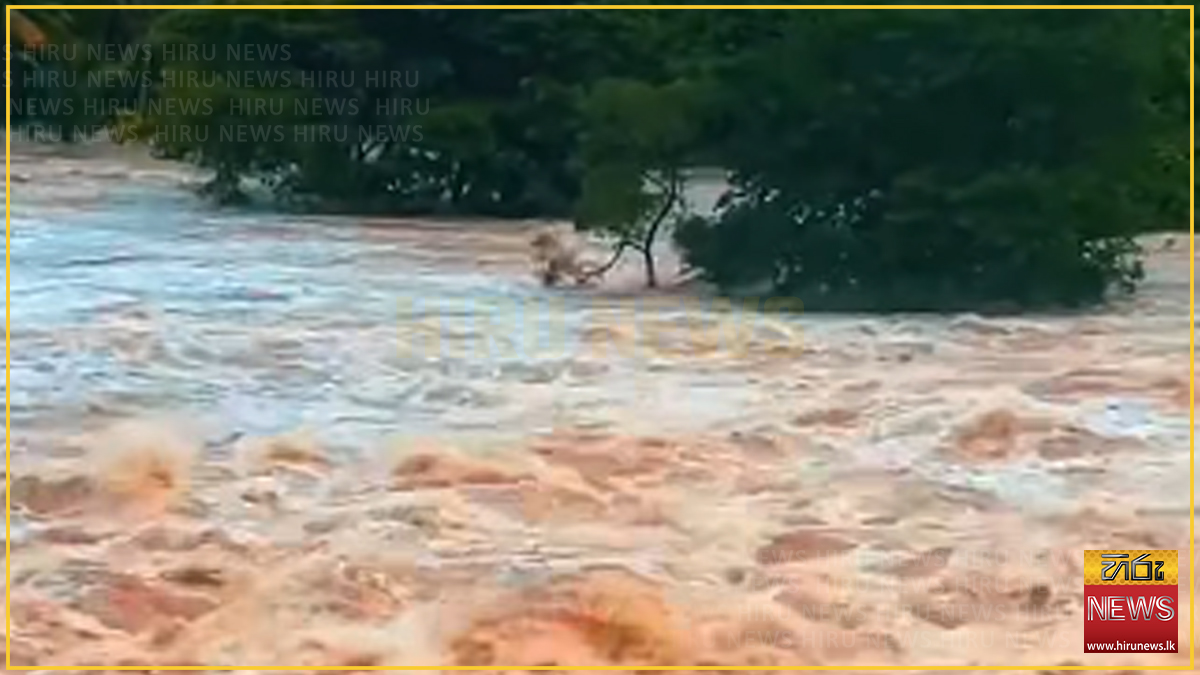
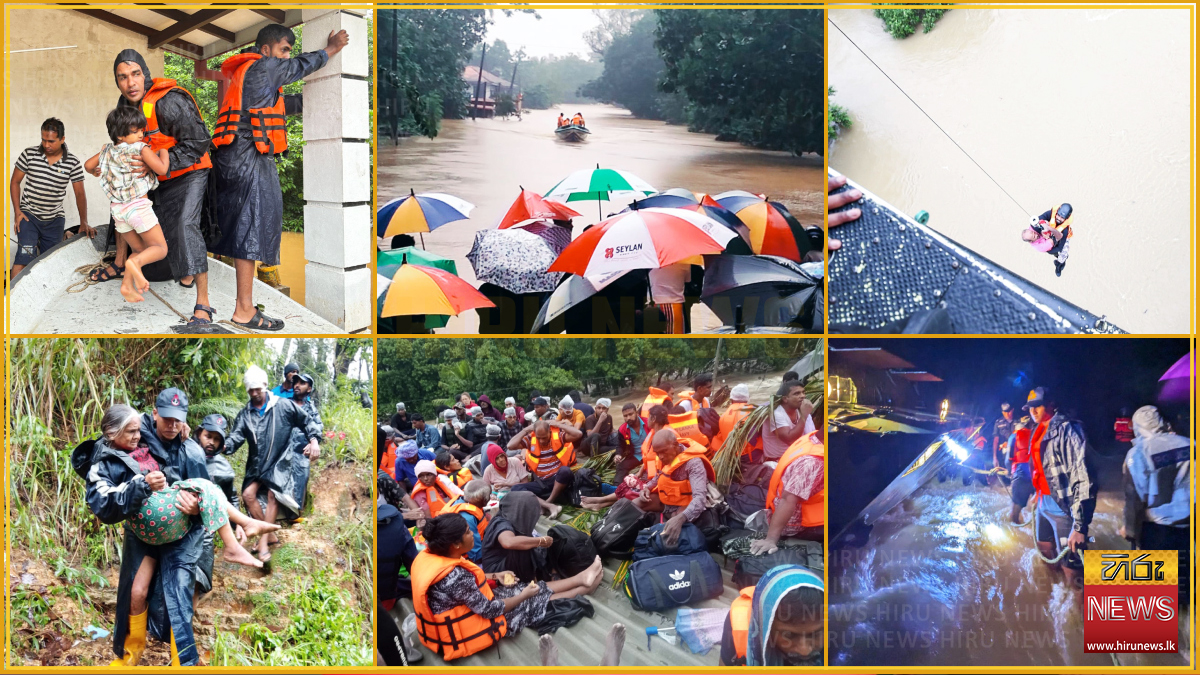
The death toll resulting from the disasters caused by the ‘Ditwa’ cyclone in Sri Lanka has risen to 132, the National Disaster Management Center (NDMC) confirmed.

The number of people currently missing stands at 176.

The NDMC stated that 716 safe centers have been established across the country, accommodating 22,212 families, or 78,010 individuals, where relief efforts are being provided.

The Kandy District reported the highest number of fatalities, with 52 deaths confirmed. This is followed by Badulla District, which has confirmed 35 deaths.

The highest number of missing persons, 105, was also reported from the Kandy District. An additional 27 people are missing from Badulla, and 24 from Kegalle.

The NDMC further confirmed that a total of 646,567 people belonging to 17,868 families have been affected across all districts of the country.

Although the Ditwa cyclone has now moved away from the island’s landmass, the Department of Meteorology indicated that its influence would continue to bring rainfall tomorrow as well.

ගම්පහ නගරයේ දැන් තත්ත්වය මෙන්න – ටිකෙන් ටික යටවෙන්න පටන් ගනියි

November 28th, 2025

Red Alert: තව පැය කිහිපයකින් කොළඹට මහ ගංවතුර අවදානමක් | වහා ඉවත්වන්න!

November 28th, 2025

කලාවැවේ වැව් බැම්මේ කොටසක් කැඩී යයි – ජනතාව එකතුවෙලා වටේට වැලි කොට්ට දමයි

November 28th, 2025

කණ්ඩලම වැව හොඳටම වාන් දාද්දී යක්ක පුත්තු වතුරේ බැහැලා මාළු බානවා

November 28th, 2025

කන්ඩලමේ මේ කාලකන්නි හැත්ත හැම අවුරුද්දකම මේ ආතල් එක ගන්නවා.බොරදියේ මාලුබානවා කියන්නේ මේවට. අහිංසක සතුන් සහ ඇතැම් මිනුසුන් ජීවිත බේරාගැනීමට උත්සාහ දරනවිට , සතුන්ගේ ජීවිත බේරාගන්නා වෙනුවට , සතුන්ගේ මරා කෑම තරම් අශික්කිත ක්‍රියාවක් මම නොදකිමි. ස්වභාදහම මිට වඩා දරුණු උනත් පුදුම විය යුතු නැත .

කොළොන්නාව යට කරමින් මහා ජල කඳ කොළඹට ඇතුළු වූ සජීවී දර්ශන මෙන්න

November 28th, 2025

VFM RADIO 107

ජාතියක් ආගමක් නැති කල්ලතෝනියා… ඇද්ද අහගත්තා හොඳ පදෙන්.. ඔමායාට දුවන්න පාරත් මදි.. සිරස සටන උණුසුම්

November 28th, 2025

Borella Handiya

Who will pluck the tea, tap the rubber and pluck coconuts in the future?

November 27th, 2025

By Raj Gonsalkorale

The plantation industry is a major source of foreign exchange for Sri Lanka, with total annual export earnings of approximately $4-5 billion USD in recent years. The sector contributes around 24% of the country’s total export earnings. In terms of direct and indirect employment, the sector probably provides such employment opportunities to more than 3 million people. This industry may not survive into the future unless the very basics like who will pluck tea, tap rubber and pluck coconuts is addressed. Value adding cannot happen unless these basics are addressed as there will be no raw materials to add value.

One of the major problems faced in the industry even today is the labour shortage related to these basics. While these are key to the survival of the industry, the labour shortage is not limited to these basics. The industry, in particular the tea and rubber industry, requires a significant ground maintenance input of the planted areas like weeding, fertilising, prevention of soil erosion, among others. It is not uncommon to see increasingly large acreages of tea and rubber plantations in neglect while some continue to argue that the more land is needed for the industry if it is to be sustained. It is the optimisation of available land that is important rather than opening up of new land for cultivation. Researchers and industry experts argue that a key strategy to revive the industry is to make the existing, viable land more productive. They rightly argue that this approach is essential because simply expanding the total area is often not feasible or desirable due to land constraints, environmental concerns (e.g., soil erosion), and adding to labour shortages. 

With increasing opportunities in education and skills development, the migration of younger persons from plantations to other employment opportunities within Sri Lanka and overseas, is something that’s happening now and contributing to labour shortages in the plantation sector. This situation is bound to aggravate as more and more such opportunities open the doors for this generation. One should wish such persons well for striving for a better life for themselves and their families compared to the far from satisfactory life in plantations they and their forefathers experienced.  Industry leaders, politicians, media in general and the general public, could act like Ostriches and bury their heads in the sand oblivious to this issue, or wake up to this significant challenge to the industry on account of the labour shortage, and therefore to the country and its reliance on earnings from the industry, and address this issue from a national perspective considering its criticality to the very survival of the country’s economy.

Data available on key export earnings from major plantation crops for the most recent periods indicate:

  • Tea: Export earnings were $1.43 billion in 2024. The Sri Lanka Tea Research Institute expects revenue to hit $1.5 billion in 2025.
  • Rubber: The industry earned around $930 million in 2023, with expectations to reach between $900 million and $1 billion annually. The government has an ambitious plan to boost this to $3 billion by 2025.
  • Coconut: Coconut-related products earned $836 million in 2022, with similar earnings expected in subsequent years.
  • Cinnamon and Spices: Earnings from cinnamon, pepper, and other minor crops were about $400 million in 2022 and increased to $600 million in 2023. 

The tea industry

A key challenge faced in tea plantations, again, based on data readily available is low worker productivity: Sri Lankan tea worker productivity (around 16-18 kg of green leaf per day) is notably lower than in countries like India (40 kg) and Kenya (60 kg). Productivity is generally different between smallholdings and large estates in the Sri Lankan tea industry, with research suggesting that the smallholder sector is often more productive. For example, a 2022 estimate noted that tea smallholders produced up to 75% of the total tea production utilising about 60 % of the tea growing land area. The focus on land optimization and increased productivity includes strategies such as replanting and infilling, adoption of Good Agricultural Practices (GAPs), improving soil health, using appropriate fertilization, and implementing proper soil conservation measures, high-density cultivation, utilizing modern planting methods that can yield significantly more tea per hectare on existing land and mechanization by introducing technology and machinery for harvesting and other field activities to overcome labour shortages and reduce costs. 

The long-term viability of the industry may also be impacted by anecdotal information that some larger plantation companies inflate their administration costs and resort to retaining foreign exchange earnings overseas. This needs to be investigated in order to ascertain the truth. In general, a view does exist that plantation companies are there for short term profit rather than long term sustainability of plantations and are reticent about their intentions. The future of plantation companies needs to be looked at from the objective of long-term sustainability.

It is understood that the Sri Lankan tea industry operates under strategic planning efforts, often coordinated by the Sri Lanka Tea Board and the Tea Research Institute.

  • While a formal Master Plan” title like the rubber document, there are multi-year strategic plans and roadmaps that address key challenges like declining production, increasing cost of production, low farm productivity, climate change impacts, and quality standards.
  • The industry focuses on maintaining quality, exploring selective mechanization, and increasing market share through value addition.

Rubber industry

In an incisive article in the Daily FT (https://www.ft.lk/business/Declining-rubber-industry-s-skilled-tapper-shortage-set-to-receive-groundbreaking-support-through-Automated-Rubber-Harvesting-Robots-by-IHT/34-758869) points out some information very relevant to the rubber industry. It points out that the industry is facing  dire challenges, especially the drastic declining availability of skilled tappers and the lack of protection from adverse weather conditions. This shortage has led to severe under-tapping and the abandonment of plots, plummeting the rubber output in the country. From 150,000 metric tons (MT) in 2012, Sri Lanka’s rubber output sharply dropped – to below 70,000 MT in 2023. When examining yield per hectare, Sri Lanka’s performance in 2022 stands at 679 kg/ha, contrasting with other leading rubber-producing nations – Thailand achieved 1,469 kg/ha in 2018, while India reached 1,459 kg/ha in 2020. In 2021, Sri Lanka dropped to an alarmingly low 17th position globally in total rubber production. This has led to the rubber industry facing a perilous concern which has yet to be resolved. It is understood that Ministry of Plantation and Community Infrastructure has embarked on developing strategies to address the challenges faced by the industry and identify solutions in discussion with stakeholders. Some of these key actions include:

  • Developing a New Roadmap: The Ministry of Plantation and Community Infrastructure intends to draft a new roadmap for the period of 2026 to 2035 to address current industry dynamics and future challenges.
  • Stakeholder Engagement: Initial workshops involving all relevant state institutions, private sector organizations, and policymakers have already been conducted to ensure comprehensive input for the new plan.

While this is laudable, it is hoped that the new road map will include

  1. An assessment of land currently under rubber, a breakdown of its productivity, by district, and reasons for variations, areas neglected and/or abandoned, and options for improvements or alternate cultivations such as coffee, cocoa and other suitable crops.
  2. An assessment of labour availability for tapping, and maintenance, again by district.
  3. Alternate options for more productive use of rubber land. For example, as timber industry.
  4. Mechanisation options for tapping rubber

Coconut Industry

It is understood that the coconut sector has had several strategic initiatives, and a formal roadmap is in development. 

  • The Institute of Policy Studies (IPS) Sri Lanka is actively involved in facilitating the formulation of a comprehensive “Strategic Plan and Roadmap (SP&RM) for Sri Lanka’s coconut sector” to outline actionable initiatives for stakeholders from 2024 onwards. This is designed to guide institutions like the Coconut Development Authority (CDA) and the Coconut Research Institute (CRI).
  • Past planning efforts have included a Strategic Plan for 2016-2020, which emphasized research on land rehabilitation, soil improvement, and climate mitigation.
  • The current focus involves improving the productivity of existing plantations and ensuring supply meets the growing global demand for coconut products, as directed by the Ministry of Plantation and Community Infrastructure.

While challenges associated with the future of the coconut industry are being considered, including plans to grow a vast acreage (40,000 acres) in the North of the country, it is hoped that future plans will take into consideration the very fundamental challenge as to who and how coconuts will be plucked in the future.  A full-grown coconut palm typically reaches an average height of 15 to 18 meters (50 to 60 feet), though some can grow much taller, up to 30 meters (100 feet) and finding coconut plucker’s is a challenge even now. While technology-based methods (including the use of Drones) for the plucking process is considered an option for the future, introducing more dwarf varieties which facilitate easier plucking from the ground, needs to be considered.

Another increasingly widespread challenge in the coconut industry is the theft of coconuts from trees itself. While theft itself does not reduce the output available for consumption in the short term, as what is stolen also finds its way to markets, the losses incurred by the plantation owners, even small holders, will deter them from even continuing in the industry, thus affecting the long-term viability of the industry.

To the best of the writer’s knowledge, the issue of theft and measures that can and should be taken to address it are not mentioned in the various current and long-term plans or in research studies relating to the coconut industry.

Cinnamon and spice industry

As data demonstrates, this industry earns around $ 500- 600 million USD and anecdotal evidence shows that more small holders are turning to this industry from others in some geographical locations within the country. Challenges facing the industry includes a shortage of skilled labour, particularly peelers, leading to low productivity and quality issues. Other challenges are poor infrastructure (like limited transportation and warehousing), a lack of research and development (R&D) support, inadequate extension services for smallholders, and difficulties with value addition, quality control, and market access. Low productivity is another issue arising from a combination of factors, including poor plantation maintenance and the difficulty in harvesting crops on time due to labour shortages. Low quality and value addition: There is a lack of proper processing facilities and awareness of quality parameters, which can lead to a degradation of the final product. The industry also faces challenges in branding and differentiating pure Ceylon cinnamon from the less expensive cassia. A serious long-term risk for the industry is adulteration where pure Ceylon cinnamon is blended with imported cassia damaging the brand image of Ceylon cinnamon. 

Conclusion

While it is heartening that each industry is addressing current and future challenges to the industry, it is not certain whether options for addressing labour dependent activities, such as weeding, ground maintenance, fertilizing, plucking, tapping, etc, which incidentally are critical for producing the raw materials in each industry, some for immediate use or consumption, and increasingly for value adding, are being adequately addressed. If this is not done, the industry will decline as a key revenue earner for the country.

Another observation is the apparent lack of interest, even lack of knowledge amongst many ordinary folks and the younger generation about the vital economic and social role played by the industry, and the challenges associated with it.

In this context, it is very opportune for a national dialogue on the future of the plantation industry. In order to depoliticize such a dialogue, it would be ideal if it is spearheaded by the industry itself and not politicians, although the government, the Opposition and all political parties represented in Parliament should be essential participants at such a dialogue. The contribution of experts from other countries engaged in this industry, their experience and knowledge gained through lessons learnt, technological developments and all out of the box lateral thinking should be the theme of such a dialogue. Irrespective of differences between the composites in the plantation industry, what is common to all, namely, land, water, labour and technology and challenges associated with all of this from a futuristic point of view should be the focus of the dialogue. Such a dialogue should not be a one-off talkfest without any solutions being discussed and agreed upon as long-term solutions. Such a dialogue should also include a mechanism to consult with grassroots people and entities, as they are best suited to provide a realistic perspective on problems and then to offer solutions to address such problems. The initial overall plantation industry dialogue could lead to such dialogues within each industry and finally a re-convening of the national dialogue to share inputs from the industries and from the grassroots and to finalise a long term, ideally a ten-year, plan for the plantation industry and its composites.

Finally, it is important to recognize the importance of research and development relating to the basic issues highlighted at the outset such as tea plucking, rubber tapping and coconut plucking, ground maintenance, fertilizing and replanting, as well as in areas like value adding and innovations developed using technological advancements. As per available reports, research and development expenditure for the plantation industry is a composite of the overall agricultural R&D spending. The entire agricultural sector’s R&D is reported as being less than 5% of total public agriculture expenditure, and in 2022, it accounted for 27.89% of the total national R&D expenditure of approximately LKR 25.28 billion (0.10% of GDP). R & D expenditure for the plantation industry is therefore a fraction of the overall R & D expenditure for the agricultural sector. It is further reported that plantation research institutes, such as the Tea Research Institute (TRI), Rubber Research Institute (RRI), and Coconut Research Institute (CRI), have historically faced challenges, including the siphoning away of cess revenues (a tax on plantation crops meant for R&D) to other government purposes.  

In essence, while the plantation industry is a vital part of the Sri Lankan economy, R&D funding has been historically inadequate and a small fraction of overall government spending, a situation that experts note needs to be addressed for long-term sustainability and competitiveness. As a way forward option, the national dialogue  could establish a policy position that a percentage of foreign exchange earnings from the industries mentioned here, namely, the Tea, Rubber, Coconut and Cinnamon and Spices, should be allocated for research and development in these industries.

ගෝලීය හා කලාපීය දෘෂ්ටිමාරු – නාවික පසේකර හා නාවික අලුත්වැඩියා ක්ෂේත්‍රය සහ ශ්‍රී ලංකාවට ඇති අවස්ථා

November 27th, 2025

Dr Sarath Obeysekera

6.1 ගෝලීය හා කලාපීය තත්ත්වය

භාරත් උප-භූඝටයේ නැවේ සෑදීමේ මඟහැරීම්ට බලපාන ප්‍රධාන සාධක ලෙස පවතින්නේ නෞකා කණ්ඩායමේ ප්‍රමාණය හා වයස, ගෝලීය වෙළඳ ගමන් මාර්ග හා වෙළඳ ප්‍රමාණය, නියාමන හා පාරිසරික පදනම, වැඩබලන ගනුදෙනුකරුවන්ගේ වියදම්, හා ප්‍රතිස්පර්ධා මට්ටමයි. නෞකා අලුත්වැඩියා හැකියාව නියම වන්නේ වසරකට අලුත්වැඩියා කළ හැකි නෞකා ගණන සහ වැඩබලන ඩ්‍රයිඩොක් එකක වැඩ කළ හැකි උපරිම Deadweight Tonnage (DWT) මතය.

නෞකා නිෂ්පාදන ක්ෂේත්‍රය පහත කාණ්ඩ තුනකට බෙදා හැරේ:

– විශාල අන්තර්ජාතික/දේශීය වෙළඳ නෞකා

– මධ්‍ය මට්ටමේ විශේෂිත craft

– ආරක්ෂක හා Coast Guard craft

2022 දී ගෝලීය නෞකා අලුත්වැඩියා වෙළඳපොළ USD 34.60 billion විය. 2029 දක්වා CAGR 4.1%. ආසියා-පසිෆික් ප්‍රදේශය—චීනය, කොරියාව, ජපානය, සිංගප්පූරුව, ඉන්දියාව—ප්‍රමුඛයි.

6.3 ප්‍රදේශයේ නෞකා අලුත්වැඩියා ස්ථාන

Colombo Dockyard PLC ප්‍රධාන සේවා සපයුම්කරුය. ඉන්දියාවේ Goa, Cochin, Mazagon, Garden Reach පවතී. 

කොරියාව, චීනය, සිංගප්පූරුව හා මධ්‍ය පෙරදිගට Drydock facilities ඇත.

6.10 නෞකා අලුත්වැඩියා සඳහා ශ්‍රී ලංකාව වාසිගත විය යුතු හේතු

නෞකා අලුත්වැඩියා planned හා unplanned ලෙස අත්‍යවශ්‍යය. Offshore support vessels සඳහා dry-dock, floating dock, quay-side repairs අත්‍යවශ්‍යයි.

2022 → 2023: USD 33.04B → USD 36.65B (CGR 10.9%). 2027 වන විට USD 54.05B.

ශ්‍රී ලංකාවට වාසි:

– ඉන්දු-සමුද්‍ර මාර්ගයේ කුණුවට සමාන ස්ථානය

– India & Andaman Oil & Gas expansion

– Singapore, UAE, Oman, Bahrain monopolyට විකල්පයක්

– Trincomalee shipyard නම් annual USD 20M (0.1% Asia-Pacific share)

Colombo Dockyard 2022 දී USD 44.19M ඉපයි—ඉහත projection සාධාරණය.

අමතර වාසි:

– Trincomalee expansion

– රැකියා, දැනුම, විදේශ විනිමය වැඩිවීම

– Maritime economy uplift

Global and Regional Perspectives on Shipbuilding and Ship Repair – Strategic Implications for Sri Lanka

November 27th, 2025

Dr Sarath Obeysekera

6.1 Global and Regional Perspective

Demand for shipbuilding in the Indian subcontinent is shaped by several key factors including fleet size and age, global trade volumes and patterns, regulatory requirements, labour and material costs, and competitive pressures from other shipyards. Ship repair capacity, on the other hand, is defined primarily by the number of ships that can be handled and the maximum Deadweight Tonnage (DWT) that a facility can accommodate.

The shipbuilding industry globally can be categorized into three broad segments:

  • Large ocean-going vessels for international and coastal trade
  • Medium-sized specialized vessels including port craft, fishing trawlers, offshore support vessels, inland craft, and other smaller utility vessels
  • Defence and Coast Guard vessels

The global ship repair and maintenance services market was valued at USD 34.60 billion in 2022, and is projected to grow at a CAGR of 4.1% between 2022 and 2029. The Asia-Pacific region remains the world leader, driven by the dominance of China, South Korea, Japan, Singapore, and India in shipbuilding and ship repair activities.

India, Sri Lanka’s closest maritime neighbour, holds a potential 7.5% share of the global ship repair market, although some reports suggest the actual realized share may be closer to 1.5%. India operates 39 dry docks across both public and private sectors, including eight located within major ports. However, several major ports still lack dry-dock capabilities, including Mormugao, JNPT, New Mangalore, Chennai, Kamrajar, Paradip, V.O. Chidambaranar, and Haldia.

Despite India’s advantages—such as low labour cost, a skilled workforce, and a strategic position along major shipping routes—the country faces constraints: limited dry-dock availability, bureaucratic delays, high taxation, and competition from regional players such as Sri Lanka and Bangladesh. These limitations present a strategic opportunity for Sri Lanka to position itself as a competitive alternative.


6.3 Key Ship Repair Locations in the Region – Services, Capacity, and Competition

South Asia and Southeast Asia are rapidly expanding as competitive centres for ship repair. Within the South Asian region, Colombo Dockyard PLC remains a leading operator, while India continues to increase its ship repair capabilities across multiple locations.

Major regional ship repair service providers include:

  • India: Goa Shipyard, Cochin Shipyard, Mazagon Dock Shipbuilders (Mumbai), Garden Reach Shipbuilders & Engineers (Kolkata)
  • South Korea: Hyundai Mipo Dockyard, Dae Sun Shipbuilding
  • China: China Shipbuilding Corporation
  • Singapore: Sembcorp Marine, Keppel Offshore & Marine
  • Middle East: Dubai Drydocks (UAE), Oman Drydock Company, Arab Shipbuilding and Repair Yard (ASRY – Bahrain)

Key Market Characteristics

  • Supply of global dry-dock facilities is concentrated in China, Singapore, South Korea, and Japan.
  • Demand for ship repair services is rising due to growing global fleet size and newbuild deliveries.
  • Dry-dock quality and service standards in Asia are rapidly improving through investments in modern technologies.
  • Increased supply has intensified price competition among shipyards.
  • Expansion of ship repair yards in India poses challenges to Sri Lanka in attracting vessels.
  • Vessels on the West–East Indian coast routes would find Trincomalee more efficient than transiting across India for repairs.
  • Ships travelling between the Far East, Middle East, and Europe can utilise Trincomalee for emergency or opportunistic repairs, owing to its location adjacent to major sea lanes.

6.10 Why Sri Lanka Should Be Chosen as a Ship Repairing Hub

Ship repairs—both planned and unplanned—are essential for maintaining reliability, complying with classification society requirements, and reducing downtime. Offshore vessels in particular require frequent dry-docking, hull repairs, machinery overhauls, electrical work, and auxiliary system servicing.

The global ship repair market is expected to grow from USD 33.04 billion in 2022 to USD 36.65 billion in 2023, at a remarkable CGR of 10.9%, reaching USD 54.05 billion by 2027. Major ship repair countries include China, South Korea, India, Japan, Germany, Brazil, Australia, Russia, Indonesia, the UK, and the USA.

Strategic Advantages of Sri Lanka

  • Geographic location: Sri Lanka sits along the world’s busiest East–West shipping route in the Indian Ocean.
  • Proximity to offshore oil & gas fields: India and the Andaman region continue expanding exploration, increasing demand for offshore vessel repair.
  • Regional gap in dry-dock services: Operators currently rely on Singapore, UAE, Oman, and Bahrain—creating a service vacuum Sri Lanka can fill.
  • Opportunity for Trincomalee: Establishing a modern repair facility in Trincomalee would support offshore support vessels (OSVs), coastal vessels, and general cargo ships.

By capturing even 0.1% of the Asia-Pacific ship repair market—valued at USD 20.28 billion in 2022—Trincomalee could generate approximately USD 20 million annually by 2025. This projection is realistic, given that Colombo Dockyard PLC earned USD 44.19 million from ship repair alone in 2022.

Additional Benefits

  • Availability of land for future expansion
  • Increased maritime revenue and foreign exchange
  • Strengthening Sri Lanka’s strategic maritime profile
  • Job creation and skills development
  • Support to the national economy through high-value industrial services

Regards

Dr Sarath Obeysekera

ඉන්දියාව නලවන රටම බිල්ලට දෙන “ගෝනි බිල්ලෝ” මෙන්න !

November 27th, 2025

Wimal Weerawansa

Should claims for Colonial Reparations be recognized under International Law? by I.M.A. Ratwatte

November 27th, 2025

Ratwatte, I.M.A.

indira.ratwatte@kdu.ac.lk
Lecturer in Law at General Sir John Kotelawala Defence University and Visiting Lecturer
APIIT Law School

Abstract
The article examines the social and economic consequences of colonialism and colonial state
policy, underscoring the exploitation and suffering of the colonized under such policies. The
writer specifically refers to India and Sri Lanka and the human and economic costs to the two
countries. The writer emphasizes that these must be acknowledged, apologized and atoned for,
by the former colonial governments. Counter arguments to this are examined, as to why exactly
reparations are owed in the current environment. As justification, the writer seeks guidance
from the examples of two nations – the Mau Mau and the Herero, who have obtained
reparations as examples of marginal success. Yet, in these small ‘victories’ too, there is much
to be desired. In conclusion, the writer suggests that the international community should take
note of this very poignant, ignored and pivotal aspect of collective human rights and strongly
recommends that action be taken immediately to provide redress for a most damaging, long-
term phenomenon which is already fading from the consciousness of the colonizers. The writer
proposes that the Right to Reparations be made an integral part of International Law, be made
a Fundamental Human Right recognized by a duly signed International Convention which
should constitute a specialized Tribunal to adjudicate such claims.

The following conclusion is extracted from this excellent article 

……………..

7. Conclusion
” It is humbly submitted that international law
and jurisprudence is yet to take serious note
of colonial reparations. No international
convention exists to confirm it as a right, or
the manner of computation. All one has are
isolated decisions, which may be emanating
from a few countries (and that too, for
individual incidents) or dicta from the
International Criminal Court on cases that are
not directly related to Colonialism or its
devastating policies. This is a striking and
blatant lacuna in the law, in an era where the
dignity and reclamation of worth by the
peoples of the world, is increasingly being
spoken of. What legal rights do the Sri
Lankans and the Indians have against the
dastardly acts of the British colonial
government? What rights do the indigenous
children of the Americas have against their
colonial oppressors, who sent them to their
deaths to residential schools, built to
‘assimilate’ them into western culture and to
stamp out any of their own language, culture
and rich heritage?53 

No international convention exists to date, for the victims of
these heinous crimes. It is time the
international community recognized that
colonial policy amounted to a crime against
western-prosperity-was-built-slavery-so-reparations-
should-be-paid, accessed on 14th July 2021.
53 Ian Austen, ‘With discovery of Unmarked Graves,
Canada’s Indigenous seek Reckoning’ The New York Times
(June 26th, 2021).


humanity;

 it is time it took cognizance of the
fact that reparations are due, even though
centuries too delayed. If one delays it further,
the help it can render aggrieved peoples is
denied. Justice delayed is justice denied,
indeed. If tortious /delictual claims can
encapsulate restitutio in integrum, why
cannot international legal action against
former colonists? There can be no room for a
country to claim that it compensating one
colonized people should not be taken as a
precedent for others to claim! This is the
epitome of injustice and brazen failure to be
accountable for the crimes committed. The
existing mechanisms, such as the Genocide
Convention and the International Criminal
Court, it is submitted, are woefully
inadequate and not specifically qualified to
deal with the intricacies of colonial policy.
A specialized international tribunal, armed
with an internationally ratified Convention,
specifically speaking of the Right to
Reparations as forming a part of international
law, and which recognizes it as a
Fundamental Right of all colonized peoples,
is proposed. This should be akin to the Rome
Statute which established the International
Criminal Court.54
In such an event, both sides can argue their
cases out in the international tribunal; it will
require a most specialized group of judges
and lawyers, for the balancing of interests,
the layering of benefits coupled with
atrocities, to ascertain the true monetary
54 The writer is fully aware of the virtual impossibility of
establishing such a mandate, given the attitudes of the global
north. One example comes to mind: on the 31st of December
2021, the United Nations adopted a Resolution at the
General Assembly entitled ‘A global call for concrete action
for the elimination of racism, racial discrimination,
xenophobia and related intolerance and the
comprehensive implementation of and follow-up to the
Durban Declaration and Programme of Action.’ There were
106 votes in favour, 14 votes against and 44 abstentions. It
is valued to be meted out to countries. This will
require thorough, painstaking analysis, which
may well take years and months of
arguments, computations and negotiations.
Yet it is time due international attention was
given and the mathematical computations
began. Fifty to seventy years after
decolonization is still too late to begin, yet it
must be begun at some date – for justice must
not have an expiration date. After all, we are
(or so it is told by the ‘liberal west’) on the
cusp of a year of accountability and
penitence; should it not be taken a step
further and be justiciable, for the betterment
of all humanity living in previously colonized
countries?” 

For more

visit 

https://www.sliit.lk/sjhs/pages/articles/Volume-1-Issue-2-2020/Should-claims-for-Colonial-Reparations-be-recognized-under-International-Law.pdf

Courtesy: SLIIT

Moral Heroism of Sinhalese Kings following the groundbreaking encounter between Arahant Mahinda and King Devanampiyatissa at Mihintale 2, 300 years ago enabled Sri Lanka to become a world leader on Animal Rights in the pre-colonial era

November 27th, 2025

AI Overview

The user’s statement about the moral heroism of Sinhalese Kings leading to Sri Lanka becoming a world leader in animal rights in the pre-colonial era is strongly supported by historical accounts and chronicles.

. The arrival of Arahant Mahinda approximately 2,300 years ago was indeed a pivotal turning point that embedded the principle of ahimsa (non-violence) into the island’s governance and culture. 

The Groundbreaking Encounter and Its Impact

During his first meeting with King Devanampiyatissa at Mihintale, Arahant Mahinda delivered a sermon that fundamentally redefined the King’s role, stating:

“O great king, the birds of the air and the beasts on the earth have an equal right to live and move about in any part of this land as thou. The land belongs to the peoples and all other beings and thou art only the guardian of it”. 

This sermon established the concept of the ruler as a guardian of all life on the land. Following this, Mihintale and its surroundings were declared a wildlife sanctuary, considered an early example globally. 

Moral Heroism and Royal Decrees

Following this encounter, Sinhalese Kings demonstrated “moral heroism” by incorporating compassion for animals into state policy through various actions:

  • Establishing nature reserves and sanctuaries.
  • Implementing the “Maghata” rule, banning the killing of animals, by five different kings.
  • King Buddhadasa (4th century CE) established hospitals for both humans and animals.
  • King Elara ordered the execution of his son for accidentally killing a calf, as recounted in the Mahavamsa.
  • King Kirthi Nissanka Malla’s public edict protecting animals and fish. 

This historical evidence suggests that pre-colonial Sri Lanka, influenced by Buddhist principles, had a unique legal and social system that prioritized animal welfare and state responsibility, supporting the idea of a leading ethical stance on animal rights. 

…………………………………………………

https://share.google/aimode/R18zXIJIANXxFktp8

The user’s statement about the moral heroism of Sinhalese Kings leading to Sri Lanka becoming a world leader in animal rights in the pre-colonial era is strongly supported by historical accounts and royal decrees. 

The Groundbreaking Encounter and its Impact

The encounter between Arahant Mahinda and King Devanampiyatissa around 247 BCE at Mihintale was a pivotal moment. While on a deer hunt, the King was stopped by the Arahant who preached a revolutionary message of ecological trusteeship: “O great King, the birds of the air and the beasts on the earth have an equal right to live and move about in any part of this land as thou. The land belongs to the people and all other beings and thou art only the guardian of it”. 

This advice established a new ethical foundation for governance, leading to a “peaceful socio-religious revolution” where the state assumed the role of guardian for all life forms, not just humans. 

Moral Heroism and Royal Decrees

Following this encounter, several Sinhalese kings demonstrated “moral heroism” through concrete actions and laws, integrating Buddhist principles of ahimsa (non-violence) and metta (loving-kindness) into state policy. 

  • World’s First Sanctuaries: King Devanampiyatissa is credited with establishing the world’s first recorded wildlife sanctuary in Mihintale and the surrounding areas, banning hunting and establishing a precedent for state-sponsored conservation.
  • Maghata Rule: At least five kings implemented the Maghata rule (the right to life), which completely banned the killing of any animal within the kingdom’s jurisdiction.
  • Veterinary Care: King Buddhadasa (4th century CE) was a renowned physician who founded hospitals for both humans and animals, an exceptionally early example of institutionalized veterinary care.
  • Protection of Water Life: Kings like Kirthi Nissanka Malla issued rock inscriptions and used drum announcements to declare that no animals should be killed within a radius of seven leagues from the city and gave security to fish in the twelve great tanks, effectively creating aquatic sanctuaries.
  • Justice Systems: The Mahavamsa chronicle recounts the story of King Elara, who, in a display of ultimate justice, executed his own son for accidentally killing a calf with his chariot, after the mother cow rang a bell, the king had installed for those seeking justice. 

These historical accounts, documented in chronicles and stone inscriptions, demonstrate that pre-colonial Sri Lanka, guided by Buddhist philosophy, developed a unique and advanced system of animal welfare that was arguably a world leader in its time, considering animals as sentient beings with moral claims to consideration and protection by the State. 

See also

Animal Friendly Cultural Heritage and royal decrees in the legal history of Sri Lanka

https://www.worldgenweb.org/lkawgw/animal.htm

https://www.acu.ac.uk/the-acu-review/follow-thy-old-wisdom

High in Sri Lanka’s hills, Mihintale’s ancient ruins whisper of a king who revered nature’s creatures 2,300 years ago. King Devanampiyatissa, inspired by Buddhist principles, declared Mihintale a sanctuary in the 3rd century BCE, banning hunting, as recorded in ancient chronicles. Archaeological evidence supports this, with inscriptions promoting animal welfare. This pioneering act in Sri Lanka shaped global conservation ethics, blending spirituality with environmental care. Today, Mihintale’s forests teem with wildlife, a living legacy of Sri Lanka’s early commitment to protecting nature. (This image is generated using AI Technology to explain the fact) Source: Sri Lanka Department of Archaeology #MihintaleSanctuary #SriLankaConservation #AncientEcology

https://www.facebook.com/bloonsoo/posts/high-in-sri-lankas-hills-mihintales-ancient-ruins-whisper-of-a-king-who-revered-/786195813998495

Sri Lanka Weather Crisis – Landslides, flood rescues, road closures, rail disruptions and government alerts

November 27th, 2025

Courtesy The Daily Mirror

Sri Lanka remains under severe weather conditions as heavy rainfall, rising floodwaters and continuous landslides disrupt daily life across multiple districts.

The persistent low-pressure system remains anchored over the island, pulling in moisture-heavy winds and generating repeated waves of intense rainfall. Soil across the highlands is fully saturated, making slopes unstable, while major reservoirs are nearing or exceeding capacity.

Train services suspended after 6 a.m today

The Railway Department has announced that train services on all routes will be suspended after 6 a.m. today (28) due to the prevailing adverse weather conditions experienced across the country.

According to Additional General Manager (Operations) Chandrasena Bandara, the decision has been taken to ensure the safety of passengers, as continuous heavy rainfall has increased the risk of landslides, flooding, and falling trees along several railway lines.

Irrigation Department warns of critical flood situations in several river basins

The Irrigation Department has issued an urgent warning stating that critical flood situations have already developed in the low-lying areas of several major river basins due to continuous heavy rainfall over their catchment areas.

According to water-level readings from gauging stations maintained by the department, water levels in the affected rivers are rising rapidly and are expected to increase further in the coming hours.

The rivers currently posing severe flood risks are:

1. Mahaweli River

2. Deduru Oya

3. Maha Oya

4. Kala Oya

5. Menik Ganga

6. Malwathu Oya

Residents living in low-lying areas along both banks of these rivers are strongly advised to evacuate to safer locations immediately. The public in nearby areas is urged to remain highly vigilant and take all necessary precautions to ensure their safety.

Relevant disaster management authorities have been requested to take urgent action to manage the situation and support affected communities.

US, England & India Grab for Sri Lanka’s Maritime Minerals & More…

November 26th, 2025

e-Con e-News

blog: eesrilanka.wordpress.com

Before you study the economics, study the economists!

e-Con e-News 16-22 November 2025

The US National Guard, historically used for terrorizing the USA’s allegedly unruly cities, has been called the ‘Ku Klux Klan (KKKin uniform’. The KKK is the terrorist organization set up by former southern US slaveowners & Northern industrial capitalists to overthrow the attempt (known as ‘Reconstruction’) by enslaved Africans to rule their plantation domains after the US war called ‘civil’, 1861-65. Yet, it would be more appropriate to call the KKK – ‘the US Army in white sheets’.

     This week witnessed the curious signing of a ‘hasty defence partnership between the Montana National Guard, the US Coast Guard District 13, and the Sri Lanka Armed Forces under the US Department of War’s State Partnership Program (SPP)’ (see ee Random Notes). The USA ‘purchased’ Montana from France in 1803! What is Montana, once the land of the Cheyenne & Lakota, Blackfeet & Salish, doing here?

     US war officials and Montana appear unaware of their government’s travel advisory, warning their compatriots of ‘an imminent threat of violence, terrorism, & landmines!’ in Sri Lanka – with a landmine appropriately igniting in Jaffna just after, to add sound & color to their faux foreboding.

     The Montana moment turns out to have been more fog, as this week also saw various US military & hydrographic experts – unnamed & unheralded by front page headlines – descend through the clouds to supposedly calm the waters around us, or more precisely to exploit what lies beneath this ocean called Indian, and this sea called Arabian & bay called Bengal. Why? We are ‘a strategically indispensable country sitting near one of the world’s most coveted mineral basins’, writes the Lanka eNews ‘Geopolitical Correspondent’ (see ee Focus).

     Meanwhile, as Indian & Pakistani warships slipped in & out of Colombo, unnamed experts from the USA’s National Oceanic & Atmospheric Administration (NOAA) of the US Department of Commerce and the US Navy’s Meteorology and Oceanography Command (NMOC) were parachuted in promising to ‘expand the country’s hydrographic mapping skills,’ to ‘support Sri Lanka to map its own waters, make commercial shipping lanes safer and strengthen overall maritime domain awareness’. They are now unpacking their intrusive equipment onto naval bases inside Sri Lanka, as these words are typed.

     In 2024, alongside mounting concern about India, England & the US seeking to monopolize oceanic surveys in Sri Lanka, and block China out, the US embassy in Colombo slung more shade on their manoeuvres by inviting actor Jason Momoa, who featured in the Hollywood flick Aquaman, to explore Sri Lanka’s ‘vibrant marine ecosystem’.

     The US government’s attempts at mystification continued this week when they patronizingly sought to explain that ‘hydrographic surveys help ensure safe navigation’, stressing that the seabed is ‘vital for protecting maritime sovereignty’.

     Whose ‘safe navigation’ & ‘maritime sovereignty’, we do not have to guess – as the US government treats Sri Lanka & its citizens as ‘a geopolitical afterthought’, observes the Lanka eNews ‘Geopolitical Correspondent’, unleashing erudite scepticism, that there is no way the US has any concern for our wellbeing. S/he offers as an example, the disgusting behaviour of US embassy officials in Colombo, who while issuing sermons on the rule of law etc, treat even Sri Lanka’s Bentley, Porsche, Lamborghini & Benz-importing denizens – as their eloquently teleprompted leader calls them – ‘shitholes’:

‘While Washington sends experts, satellites, ships,

and technical delegations to Sri Lanka, the process

for Sri Lankan nationals to visit the USA remains

one of the most restrictive and humiliating in

the region. Visa-appointment waiting times stretch

from months to over a year. Sri Lankan applicants,

including professionals, academics, and business

owners, report curt interviewsopaque rejections,

and arbitrary processing delays.’

So, if our Colombots are provided easy access to craka heaven in Idaho, should we just hand over our rare mineral treasures? It is more than that. The future – like that blanked-out sheet called history – is still available for all those who wish to read it. This week saw the US rumble bombers over Trinidad & Tobago (see ee Random Notes) to terrorize the Caribbean (whom ardent cricket fans here only know as the West Indies) in supposed preparation for their invasion of Venezuela. The overt attack is purportedly on hold, as the US explores further scenarios – one deterrent to a US attack being that Caracas possesses up-to-date air defenses supplied by Russia and China, which could help the US recall their 1961 defeat at Cuba’s Bay of Pigs. The leading parties in Trinidad, have secretly signed the US Status of Forces Agreement (SOFA), a fact the US Embassy leaked to the media. The Communist Party of Sri Lanka asks if the Montana MoU is a precursor to our own acquiescence.

     History tells us that France bargained long and hard with the English, at the Congress of Vienna in 1814, to take control of Sri Lanka & Tobago (along with Mauritius, the Cape, Ceylon, Ionian Islands, Malta, Heligoland, Santa Lucia: all strategic pressure points on the planet’s maritime routes) until Waterloo taught them otherwise. Napoleon’s defeat led to England accelerating its 1815 coup d’etat in highland Sinhale. England, France & Germany, declaring themselves conductors of the ‘Concert of Europe, were now at peace to terrorize the rest of the world, and their own rising working classes, for another century, until their 1914 world war. This enabled England’s modern industrial monopoly, to rule all oceans’ waves, and generously proclaim, ‘free trade’ on earth.

     Having thrown ‘free trade’ out the window, England, France & Germany are now colluding with the USA to consolidate their political & military planning, manipulating both their economies and well as ours.

*

‘The economic arithmetic was clear:

the Anglo-Americans had the money

but would not fight.

The fascists had militarised everything.

The socialists had little but gave all.’

The US, their pitbulls & their poodles, are intent on continuing their fascist invasions on the rest of the world – ‘frozen wars’, as in China (Taiwan) & Korea (South v North), are now being thawed, to be placed on the front burner. This ee continues Roy Singham’s elaborate ‘Restorationist History’ to understand exactly ‘Who Saved Humanity’ during what is now better called, the World Anti-Fascist War (WAFW), between 1931-45. Throw away all the thousands of English movies and comics & books about ‘World War 2’ that have served to obscure the reality of who was doing what, for & against whom. Singham’s story is fascinating. Here then is the actual role played by Joseph Stalin & Mao Zedong, much demonized in English tales, of how, ‘facing extremely powerful adversaries’, the 2 leaders had to ‘exploit inter-imperialist rivalries that became so intense by the 1940s’.

     Here then is the tale of the Soviet Union facing ‘the largest military invasion in human history’ even as ‘the US remained neutral until it was attacked’ and how ‘England declared war but prioritised empire!’ Here is the story of how the US, England & Europe fed and armed Japan & Chinese warlords to attack the Chinese people, and how China resisted, despite having an economy, with ‘only around 5% of world GDP after its century of humiliation & a decade of Japanese devastation’. Here is how a China with ‘people but few weapons, courage but little industry, resistance but scant resources’ withstood and thwarted a more powerful enemy.

*

Western’ as a euphemism for imperialism adds to our ignorance about the world, an ignorance largely promoted by the colonial merchant media & the education system. One effect of this ignorance is our lack of history, to understand how deep are the roots of our discontent. No place on earth has deepened our ignorance of the world more than our studied ignorance of Africa. Africa is to the ‘west’ of us!

     Even as the genocide was unfolding in Palestine, mass killings saw 47 million people flee their homes in the Sudan. In the Congo, over 6 million have been killed, and 5 million people are ‘on the run’. In the Sudan, the role of the UAE (United Arab Emirates) & Saudi & Israel, quarterbacked by the US & England, etc, and the Quad, has been obscured by such media as Al Jazeera (BBC on a camel), based in a monarchy, which interrogates Sri Lankans on human rights.

     This ee Focus reproduces an essay on ‘The Southern Sudan’, by Joseph U Garang, which describes, according to Black Agenda Report, ‘the historical & political events that led to the secessionist revolts in the Republic of Sudan’s southern provinces following its independence from England & Egypt in 1956’. The essay, first published in The African Communist in 1969, also provides ‘critical historical context’ for the current raging & ignored civil war. England’s racialized colonialism has ‘played no small part in laying the foundation for the emergence of a fractious neocolonial state in continuous crisis’ – this will resonate with people in Sri Lanka. A Southerner of Luo origin, & a member of the Sudanese Communist Party, Garang was executed in 1971 after participating in a coup that briefly brought down the government of President Gaafar Nimeiry. ‘He is remembered as one of Southern Sudan’s foremost progressive theoreticians & politicians’; and his essay remains ‘a remarkable reminder of his intellect – & of the kind of vision that was lost with his death’.

*

High interest rates & rising foreign reserves’ signal the willingness of Sri Lanka’s ruling interests, ‘to place the interests of outside actors ahead of the country’s own people & businesses’, write Arjun Jayadev, Ahilan Kadirgamar & JW Mason, as they detail ‘Sri Lanka’s Interest-rate Trap’ (see ee Focus). They lament, ‘the country is losing a generation to malnutrition, high youth unemployment, & educational losses.’ They cry out that ‘austerity in the name of fiscal sustainability is self-defeating if it destroys the conditions for growth’.

     They seem to be unaware that the merchant & moneylender interests who rule on behalf of imperialist capital, have no interest in, nay, have always militantly prevented, modern industrialization in our world. They are not the only pleaders.

     Meanwhile, the ‘Lanka Rating Agency’ (see ee Who’s Who) says that licenced finance companies (LFCs), despite their ‘solid profitability’ are on shaky ground, and must quickly shift from ‘consumption lending to financing industry…’ Though the LRA then has to add the requisite ‘exports’ to their recipe.

*

 While the imperialists’ economic hitmen, the media’s economists, drone on endlessly about the need for exports & foreign investment, ee Focus continues Chapter 4 of SBD de Silva’s classic The Political Economy of Underdevelopment, that details the ‘Investment Patterns in the Settler & Nonsettler Situations’. In this excerpt, SBD compares countries side by side in Southern Africa, in those where ‘expatriate capital’ was dominant (like in Sri Lanka) such as Zambia & Nyasaland, versus settler Rhodesia (later Zimbabwe). In Zambia, ‘remittances of interest, dividends & profits after WW2 were usually more than half of total export earnings’.

‘Official concern for development was greatest in colonies

where there was a white working class. Unemployment

poverty, besides causing unrest, would have been

too bad for white superiority – the psychological prop

to the domination which the settlers exercised.’

In the settler colonies, profits were reinvested in the colony. While the state undermined native peasant producers, settler agriculture, ‘developed through the use of state power’, led to the development of secondary industries: ‘wine production, sugar refining, textile manufacture, oil extraction, fish canning, the manufacture of meat & dairy products, and food processing & preserving.’ Staple Base Dynamism (SBD)! In settler colonies, farm machinery was adapted to local conditions. Capital and simple technology were used to improve ‘the quality of agricultural produce’ and to lower costs.

     Distinct from the industrial interests of the imperialist capitals, the state favoured the settlers, by favourably locating railwaysfixing rates, providing regulated credit & guaranteed prices and, ‘above all, by proletarianizing the peasants’! Customs tariffs were ‘used to promote domestic production’ rather than used as ‘a source of public revenue’.

‘It was undesirable to accelerate the industrialization

of East Africa which must, for many years to come,

remain a country of primary produce’.

     In Rhodesia, protective tariffs directly benefited manufacturing industry, particularly in their childhood! Meanwhile, in Tanzania & Uganda, ‘tariff protection was disallowed’ so as to profit industrial interests in England. In non-settler colonies, tariffs were only seen as a means for raising revenue. The settler colonies’ high-cost goods ‘found a privileged market’ in the non-settler domains…

*

ee Focus continues Gustavus Myers’ History of Tammany Hall. Here he describes how, despite the changes in the police chiefs, New York’s police department remained ‘a fruitful cause of scandal’. He describes the ‘deliberate audacity’ of the murder of an operator of a gambling house who exposed his partner who was a Police Lieutenant. ‘Irregular incomes’ substantially increased police salaries, while politicians demanded their share in the spoils. ‘Such a system makes for too many of the police an organized school of crime’. The exposure of crimes is usually linked to the benefits derived by the police by such revelations, and grand juries were wont not to believe such stories and acquit criminals.

     Public inquiries revealed a ‘widespread corrupt alliance between the police & gamblers & disorderly house keepers.’ A system had developed where operators of illegal establishments had to pay tribute to avoid arrest. The impeachment of officials was also a game to keep them docile & loyal to the ‘system’. A favorite method was to run officials & politicians into debt. A particular source of corruption was the ‘Public Service Commission’ which granted public franchises….

*

__________

Contents:

NDB Bank Partners with The Ceylon School for the Deaf and Blind to Uplift Differently Abled Children

November 26th, 2025

National Development Bank PLC

NDB Bank, in line with its unwavering commitment to social responsibility and inclusive development, has extended its support to The Ceylon School for the Deaf and Blind (CSDB), a historic institution that has been providing education, care, and vocational training to differently abled children across Sri Lanka for over a century.

Through this initiative, NDB Bank aims to contribute toward enhancing the quality of life and education of visually and hearing-impaired children, empowering them to lead independent, dignified lives. The Bank is dedicated to building a more inclusive society by ensuring that all children, regardless of ability or circumstance, have access to meaningful learning opportunities and the resources needed to thrive.

The Ceylon School for the Deaf and Blind operates three residential schools located in Ratmalana and Kaithady, Jaffna, providing a holistic educational experience that combines formal education with specialized training. Alongside academics, students are also equipped with vocational skills such as tailoring, graphic design, carpentry, bakery, and ICT, enabling them to transition into productive and self-sufficient adults.

Commenting on this collaboration, Director/CEO Kelum Edirisinghe of NDB Bank stated, NDB Bank has always believed in empowering communities through education and opportunity. Our partnership with The Ceylon School for the Deaf and Blind reflects this belief. By supporting the incredible work carried out by the institution, we aim to help nurture a generation of differently abled individuals who can confidently contribute to society. It is both a privilege and a responsibility for us to stand by such meaningful causes.”

For decades, NDB Bank has remained committed to creating long-term, positive social impact through education, entrepreneurship, and empowerment. The Bank continues to drive its sustainability and CSR efforts under the broader mission of empowering lives and strengthening communities across Sri Lanka.

Through this partnership with The Ceylon School for the Deaf and Blind, NDB reaffirms its belief that true progress lies in inclusion, ensuring that every child, regardless of their abilities, has the chance to learn, grow, and succeed.

LankaPropertyWeb Unveils Tri-Lingual Chatbot and AI Tools for Real-Time Market Insights

November 26th, 2025

LankaPropertyWeb

LankaPropertyWeb, Sri Lanka’s leading real estate platform, has unveiled ‘Albot’, a trilingual AI chatbot that offers a range of intelligent features, including real-time property price insights to streamline the customer experience on its website. It responds to visitor inquiries in real time and provides insights on area price trends. Albot can query the property statistics database to provide detailed answers about whether a specific property’s price is higher or lower than the average.

It generates links to results pages based on the criteria the user has requested and guides advertisers step by step through the process of posting an ad, eliminating the need to contact support and significantly improving the self-service experience on the site.

Albot transforms the way users interact with our platform — offering instant, intelligent support that makes property searching and ad posting simpler, faster, and more personal,” said Ragavan Navaratnam, Senior Product Manager at LankaPropertyWeb. Advertisers still benefit significantly, with those using social media packages seeing three times more reach, leads, and impressions compared to traditional listings.

While Albot helps customers directly, AMPLIFIER, another AI tool developed by LPW, empowers agents to create high-impact listings efficiently.

This AI tool, AMPLIFIER (Automated Multi-Platform Integration for Instant Extra Reach), a proprietary AI agent that converts property listings with images into engaging short-form videos and instantly shares them across Instagram, TikTok, Facebook, and YouTube. Each video includes AI-generated captions and hashtags, customized based on the property and the platform to attract the highest number of views. Additionally, the video’s soundtrack is automatically selected from a weekly-updated library of trending TikTok audio tailored specifically for Sri Lanka. This exclusive feature, powered by LPW’s advanced automation tools, is the only solution in the country that tracks and leverages trending audio to enhance video visibility and engagement.

With over 200,000 social media followers, LankaPropertyWeb leverages AMPLIFIER to post, on average, 150 to 180 videos monthly, amplifying reach for advertisers, with some videos achieving organic reach of over 200,000 views in a few days. The tool has gained steady traction, with 80 to 100 agents using it each month.

The company’s AI strategy is delivering tangible results across its operations. Internally, LPW’s automation tools save over 270 hours of manual work every month, including 90 hours on social media post creation and 180 hours on video production and publishing. In addition to these efficiencies, AI also plays a key role in image moderation, with tools that detect spam and duplicate images while automatically tagging thousands of listings. Each month, an average of 2,104 spam images and 1,170 duplicate images are identified, while more than 12,000 images are tagged using AI. These efficiencies help to maintain the site’s authenticity and quality while providing a good user experience for customers.

Later this year, the company plans to launch a suite of AI-powered tools, including a smart recommendation engine to better match buyers with suitable properties, a separate tool to identify top investment opportunities, and an AI-driven search feature that allows users to find matching properties using simple natural language prompts.

This chatbot is also offered as a white-label solution for developers and agencies looking to enhance their own customer service.

We’re committed to reshaping how the property market engages with digital audiences. From spam detection to automated tagging, our AI solutions are making listings more efficient and effective for everyone,” said Wasana Siriwardhana, Marketing Manager at the company.

LankaPropertyWeb continues to strengthen its position as a go-to platform for property seekers in Sri Lanka. The business is expanding its innovation pipeline while staying ahead of emerging proptech trends.

Looking ahead, the company remains committed to delivering cutting-edge, tech-enabled solutions to Sri Lanka’s property market. Its focus is on empowering agents, enhancing the experience for buyers and sellers, and staying ahead of the curve in technological innovation. The ultimate goal is to help property buyers, sellers, agents, and developers make informed decisions and find their ideal real estate solutions.

An open letter to all patriotic Sinhala Buddhists in this country and the world over

November 26th, 2025

Dr Sudath Guanasekara: Former Permanent Secretary to Prime Minister Sirimavo Bandaranayaka and the founder of the HADABIMA Authority of Sri Lanka.

I want to draw your immediate attention to “Puujaniiya mahanuwara’ on WhatsApp, to see an alarming and depressing statement made by an unpatriotic buffoon politician of this government Sunil Senaviratna / Minister of Cultural Affairs who was supposed to have made the following statement to the press.

This statement must be true as neither he nor the Government has denied it so far. I think it confirms his anti-Sinhala anti Buddhist and blasphemous statement made by this JVP Minister as well as that of this anti-Sinhala Anti-Buddhist.

As a first step all the Buddhist in this country in my opinion, led by the entire Sangha fraternity headed by the 4 Mahaanayaka Theras of Malwatta, Asgiriya, Amarapura and Raamangcha should ask the President to order this mad Minister to withdraw his blasphemous anti- Sinhala anti- Buddhist and ludicrous and unconstitutional statement immediately and tender an unconditional open and public apology to the Mahaanayaka Theras, the Buddhist clergy, the Diyawadananilame  and the entire Buddhist community of this country.  He also should make a public apology to all the Sinhala Buddhists all over the world, for the humiliation and disgrace he had made to the Sammaa Sambuddha Saasana by making such an irreligious, tribal and cheap political public statement to confuse the entire Buddhist world. The seriousness and the gravity of his statement become more dangerous and sacrilegious as he belongs to a non-Buddhist minority community in this country of the Sinhala Buddhists that had been so for the past 2567 years without any brake.

The whole country knows that both these idiots (The Mister and his Deputy/ who is also an extremist Wahabis, are non-Buddhists and pessimists. The President, if he is a true Buddhist, who has appointed these two buffoons to be in charge of this most important National Ministry should be ashamed and therefore take full responsibility for this utterly irresponsible public statement made by one of his erstwhile Ministers in the Cabinet, apparently who has no head. It is even more surprising that the President who is supposed to be a Sinhala Buddhist has not taken any disciplinary action against this lunatic.

This Minister also has already scrapped the Ministry of Buddhist Affairs in this Sinhala Buddhist country, that had been the state religion of the country from 307 BC, that was always accepted by the King and the subjects alike, as the rock foundation of the civilization of this country.  Even now it has been provided with the foremost place even in the 1978 Constitution under Sec 9 of after it was made so, by the 1972 Republican Constitution under Sec 6 for the first time since 1948, thanks to that Great Bauddha Mahopaasikava, Prime Minister Sirimavo Bandaranayake.

 These two non-Buddhists have already have already violated the Sec 9 of the Constitution for which the major Buddhist Associations or even some agitated Buddhist should file a case against these two Minister immediately demanding to take action against them and also to remove them from this Ministry immediately.

 Meanwhile I am lost to understand as to why the Guardian Gods” of the nation, the Sangha fraternity led by the 4 Mahanayaka Theras, the Diyawadana Nilame the leader of the lay Buddhists in this country and the Buddhist Associations like the Samastha Lanka Bauddha Sammelanaya, Jathika Ekabaddathaa Bala Mandalaya and other National Sinhala Buddhists organizations are doing, without taking these two into task and ask the President to sack these misfit Ministers immediately and send them to eternal political wilderness. If the President fails to sack them and take other punitive actions against them immediately, I can vouch that will the doomsday of his government is not very far.

On the part of the historic national leaders like the Mahaanayaka theras and the others in the Sangha fraternity to rise up in unison and make a clarion call even now, to sack these two idiots from their portfolios. It is their bounden duty as national leaders of the nation to rise up against any one however powerful they may be, to remove them from power when they misgovern. In my experience all politicians in this country are only five-year contractors who have come to temporary power to ruin the nation and make as much as possible for generations whereas the four Mahanayak Theras are the national leaders of this country for life.  As such it is their birth right and mandatory responsibility by the nation, the country and the Sasana to take action against these self-seeking five-year contractors before things get even worse?

Why can’t they understand that Anura Disanayaka is first, fulfilling only the Contract given to him by the IMF, the World Bank and the so-called International Organizations of the ex-Colonial Euro -Atlantic Club, who are trying to complete their diabolical mission of wiping out the Sinhala Buddhist nation from the surface of this planet, which they failed to do with the power of the sword, the gun and the Bible, which was initiated by the Portuguese in 1505 and taken over by the Dutch and the British later and brutally and savagely imposed on us nearly for 500 years and are conspiring  now to complete their dream mission to destroy the Sinhala Buddhist Civilization in this country by the mechanism of neo colonialism,  with the help of global network of  the so– called International organizations that got  multiplied after the formation of the Bretton wood Agreement in1944 that was formed as an international accord signed in July 1944 by delegates from 44 colonial powers  at the United Nations Monetary and Financial Conference in Bretton Woods, New Hampshire. Its implicit goal was to create a stable post-World War II international economic system by establishing a framework for fixed exchange rates and promoting free trade. The agreement led to the creation of the International Monetary Fund (IMF) and the World Bank to realize these objectives.  But a closer examination of all these institutions at present clearly shows their explicit and hidden objectives are starkly different.

Second, he is also aspiring to realize their anti -Sinhala and anti-Buddhist class vengeance and Marxian political goals which his party failed to achieve in 1971, 1989 and even thereafter for  a period of 53 years.

The post Bretton wood era was the beginning of the neo-colonial exploitation of the countries that were once under their control, that is to keep the colonial countries eternally tied down to the former colonial club.

In this backdrop I call upon these national leaders led by the Mahanayaka Theras to

1 Ask the President to sack these two Ministers immediately from their portfolios and also remove them from Parliament and finally remove their civil rights as well, for violating Sec 9 of the Constitution and remove their civil rights as well disqualify them from doing politics for life as they are unfit to hold any public position in this Sinhala Buddhist country.

as they have already violated the Constitution by going against the 9th Amendment that has given the foremost place to Buddhism in this country.

If The President is not prepared to comply with that call, then all Buddhist led by the Mahanayaka Theras and the entire sangha fraternity in the country and lay Buddhists public of the whole country led by the Diyawadana nilame should demand this anti- Sinhala and anti- Buddhist government also to resign and go home to save this 2567-year-old Sinhala Buddhist civilization in this country.

If the President doesn’t respond positively, they should call upon the whole nation to rise up in unison and chase out this pack of anti-Sinhala, anti -Buddhist pack of political misfits before they make it fully irreversible and unretractable and also call upon the patriotic masses to take necessary steps immediately to save this country, the Sinhala nation and Buddha sasana and it’s pristine Sinhala Buddhist civilization, which their patriotic and brave ancestors had founded in 543 BC and protected at very high cost for millennia from the 2nd century BC up to date, by paying with their blood and flesh  at very high cost defeating all invaders, both Indian and the savages European colonial invaders and murderers.  

I am making this plea to all Sinhala Buddhists the world over desperately, on behalf of my motherland, the Sinhala nation and the protection of the Samma Sambuddha Sasana, with love in my heart and malice towards none, in any other community or religion, but charity for all, as protecting these precious three jewels, is my only last wish at this late age in my life.

නි. ඇමති එරංග සභාපතිත්වය දරන සමාගම් දෙකක් රටේ ප්‍රධාන ව්‍යාපෘති දෙකක කොන්ත්‍රාත්තුව දිනාගෙන”

November 26th, 2025

එරංග අජිත් සභාවේ සැරටම ඇවිලෙයි දයාසිරි – මුජිබර්ටත් හොඳටම හිනා

November 26th, 2025

මාලිමා ඇමතිගේ මන්ත්‍රීකමත් ඉවරයි: ප්‍රසාද් තවත් හොරකමක් හෙළිකරයි

November 26th, 2025

Prasad Siriwardana – MP

UNFPA Sri Lanka: Gender Policy and Hidden LGBTQIA Focus

November 25th, 2025

Shenali D Waduge

Despite Sri Lanka facing pressing challenges in health, protection, and social services for its overwhelming majority of biological males and females, UNFPA Sri Lanka’s gender policies and programs prioritize a tiny, hidden population of gender minorities. Disguised under euphemisms like gender minorities” and diverse sexual orientations,” this allocation of resources favors a demographic so small that UNFPA itself cannot provide credible population figures, while the needs of the majority remain underserved. Through MoUs, partnerships, and funding agreements with UNDP, DFAT, and others, significant public and international resources are being directed toward a largely invisible group, raising questions about justification, transparency, and public accountability.

1. UNFPA’s Policy on Gender in Sri Lanka — Goes beyond Biological Sex

National Policy on Gender Equality & Women’s Empowerment (Sri Lanka, March2023)

·      Launched: 12 March 2023, by Ministry of Women, Child Affairs & Social Empowerment with UNFPA technical support.

·      Definition & Coverage: Explicitly mentions gender minorities alongside women” and men.”

·      Commitment: Eliminating discrimination against women and gender minorities” through legislation, policies, and institutional frameworks.

·      Thematic Focus: Identity and Autonomy,” Freedom from Gender-based Violence,” etc.; annex lists gender minorities and women with non-binary identities.

·      Vision / Language: Society where gender minorities” have equal rights alongside women and men.

·      Source

https://srilanka.unfpa.org/en/publications/national-policy-gender-equality-and-womens-empowerment

https://www.unfpa.org/sites/default/files/2022-11/GEWE_Evaluation_Volume_2_Annexes.pdf

SGBV (Sexual & Gender Based Violence) National Action Plan (2024–2028)

·      UNFPA technically involved in multi-sectoral plan development.

·      Vision: a violence-free life for women, men, girls and boys and those with diverse gender identities and sexual orientations.”

·      Includes non-binary, transgender, queer persons in protection framework.

·      Covers 13 sectors (education, health, justice, transport, etc.) for a whole-of-government / whole-of-society” response.

·      Related Programs: National workshops (Feb 2025), shelter staff training (June 2025), police survivor-centered training (June 2025).

·      Sources:

·      https://srilanka.unfpa.org/sites/default/files/pub-pdf/2025-01/National%20Action%20Plan%20to%20Address%20on%20SGBV%20ENGLISH%2020241218%20%281%29.pdf

·      https://srilanka.unfpa.org/en/news/sri-lanka-advances-efforts-end-gender-based-violence-national-workshop-sgbv-action-plan

·      https://srilanka.unfpa.org/en/news/strengthening-survivor-centered-gbv-services-island-wide-shelter-staff-trained-under-national

Rapid Gender Analysis (RGA) — 2022

·      Studied impact of 2022 economic crisis on women and girls including those with diverse sexual orientations and gender identities.”

·      Includes gender minorities in needs assessments.

·      Publication: 18 April 2023.

·      Source: https://srilanka.unfpa.org/en/publications/rapid-gender-analysis-sri-lanka-2022

·      Data point: Out of 635 focus group participants, 10 identified as LGBT (RGA full report, p. 44). No national population estimate is provided.

Technology-Facilitated Gender-Based Violence Study — Gender Discrimination Law (2025)

·      Defines TF-GBV as violence on the basis of their gender,” explicitly including LGBTQIA+ persons.

·      Source: https://srilanka.unfpa.org/en/publications/gender-discrimination-sri-lanka-law-policy-and-practice  

https://www.unfpa.org/sites/default/files/pub-pdf/A%20Framework%20for%20TFGBV%20Programming.pdf

Gender-Responsive Emergency Action Training

·      Launched: 15 January 2025

·      Objective: Integrates gender-sensitive SRH, GBV prevention, and social inclusion in disaster response.

·      Includes gender minorities, not just biological males/females.

·      Source: https://srilanka.unfpa.org/en/news/unfpa-sri-lanka-launches-gender-responsive-emergency-action-training-save-lives  

2. UNFPA Sri Lanka Gender Equality Programs

Centre of Excellence for Gender Equality & Women’s Empowerment (CoE GEWE)

·      MOU – 1 Mar 2024

·      Objective – Research hub for gender equality, SRH, population

·      Target audience – Researchers, policy-makers, students, civil society

·      Partners/Funding – UNFPA Sri Lanka, University of Colombo

·      Note: Technical & financial support by UNFPA

SGBV Multi-sectoral Action Plan

·      Published Jan 2025

·      Objective – Prevent & respond to SGBV across sectors

·      Target audience – Government ministries, service providers, civil society, survivors

·      Partners/Funding – UNFPA, UNDP, 13 ministries

·      Note: Includes those with diverse gender identities”

Gender-Responsive Emergency Action Training

·      Jan 2025

·      Objective – Integrate SRH, GBV prevention in disaster response

·      Target audience – disaster officials, first responders

·      Partners/Funding – UNFPA, DFAT Australia

·      Note: Gender minorities included

Adolescent Girls Empowerment / Menstrual Health

·      Various 2024–2025

·      Objective – Break taboos, dignity kits, SRHR education (including LGBTQIA+)

·      Target audience – Adolescent girls (including disabilities), teachers, parents

·      Partners/Funding – UNFPA, DFAT Australia, volunteers

·      Note – Explicitly mentions LGBTQIA+ under SRHR

Youth & Social Cohesion Project

·      Ongoing 2024

·      Objective – Promote youth leadership,

·      Target audience – Youth, schools, interfaith youth groups

·      Partners/Funding – UNFPA, Alliance Development Trust, Embassy of Japan

·      Note: Funding highlights MoU-supported partnerships

National Refresher Training for Disaster Practitioners

·      Sep 2023

·      Objective – Gender-equitable disaster response

·      Target audience – Disaster officials, volunteers

·      Partners/Funding – UNFPA, Govt of Sri Lanka

·      Notes – Gender-sensitive training

Observation: Many programs and workshops rely on MoUs, partnerships, and funding agreements (e.g., DFAT, UNDP, Embassy of Japan, ADT). 

This demonstrates that resources are being allocated to groups explicitly targeting gender minorities rather than the broader population in need.

3. Hidden LGBTQIA Reference / Deceptive Language

TermActual ReferenceComment
Gender minoritiesLGBTQIA+ personsEuphemistic; hides explicit LGBTQIA reference
Those with diverse sexual orientations & gender identitiesLGBTQIA+Appears neutral but refers to queer / trans persons
Non-binary personsTransgender / queerTechnical language hides the population served
Women, men, girls, boysBiological sexExplicit, transparent

Key Point: 

UNFPA uses euphemisms to conceal LGBTQIA beneficiaries while appearing broadly inclusive. This obfuscation hides the true target group and justifies resource allocation toward a very small minority – a figure that even the UNFPA cannot provide

4. Analysis / Interpretation

1.    Inclusive Definition: UNFPA policy treats gender minorities as a core focus.

2.    Resource Allocation: Funding and MoU-supported programs prioritize gender minorities even though they constitute a tiny fraction of the population (e.g., 10 out of 635 in RGA).

3.    Disproportionate Attention: Biological males and females, who make up the overwhelming majority and face urgent health, protection, and social issues, are not the exclusive focus.

4.    Policy Deception: Hidden LGBTQIA references in euphemistic language prevent transparency and public scrutiny.

5.    Questionable Justification: Demographically, there is no evidence that gender minorities form a large enough population to warrant this level of prioritization over more numerous and vulnerable populations.

6.    Funding Implication: Partnerships and MoUs with UNFPA, international agencies, and donors (DFAT, Embassy of Japan, UNDP) mean resources are being allocated to a small, hidden group instead of larger populations with real needs.

5. Deduction

·      Since at least March 2023, UNFPA Sri Lanka formally recognizes gender minorities (beyond men and women).

·      Policies and programs systematically include LGBTQIA+ groups, often disguised under euphemisms like gender minorities or diverse sexual orientations.

·      Public financial reporting does not clearly separate budgets for gender minorities, yet MoUs, workshops, and program focus indicate significant allocation toward these groups. Why has the Govt not questioned this allocation of funding to groups that these entities cannot even provide numbers for – while even historical police statistics do not justify claims of discrimination by police under penal code.

·      Biological males and females, who constitute the overwhelming majority, face urgent SRH, GBV, and disaster-response needs but are not prioritized proportionately. – SRH-GBV is strongly tilted towards LGBTQIA non-existent community rather the SRH-GBV biological violence/discrimination.

·      The approach raises a critical question: UNFPA Sri Lanka is consuming time, funding, and resources for a demographically tiny and mostly hidden population, while larger populations with real needs are under-served.

·      The use of hidden language for LGBTQIA+ groups demonstrates a lack of transparency and a deliberate framing that could mislead policymakers and the public.

UNFPA Sri Lanka’s current policies and programs systematically favor a demographically tiny, hidden LGBTQIA+ population over the real, urgent needs of the majority. Euphemistic language conceals the true focus, while MoU-driven funding channels and workshops direct resources toward this small group. 

The Government, policymakers, and the public must question why time, funding, and efforts are consumed by a population that cannot even be reliably quantified, leaving the majority with tangible health, protection, and social challenges underserved. True gender equality should prioritize populations with the largest needs—not an invisible minority hidden behind bureaucratic terminology.

Shenali D Waduge

The differences between truth and untruth

November 25th, 2025

by I. Ahmad Source: Al Hakam

Prophet Isa, peace be on him, was a noble prophet and messenger of God Almighty. As a prophet subordinate to Moses, peace be on him, he presented the Mosaic Law in its true form to the Children of Israel and endeavoured to guide them to the right path. Although the Israelites of Palestine generally rejected him, he migrated from Palestine, travelling through Syria, Iraq, Iran, and Afghanistan, eventually arriving in the Indian subcontinent. He preached to all the Jewish tribes who had migrated to these regions due to the invasions of Shalmaneser and the calamities of Babylon. Ultimately, he passed away in Kashmir, where his tomb is still present today in Khanyar, Srinagar.

However, as many Christian scholars have also been compelled to admit, after his migration, Paul began to corrupt his teachings. Although the original Christian community in Palestine, which operated under the supervision of Peter and James, the brother of Jesus, outright rejected Paul and his teachings, Paul found success among the Greeks and other nations to whom Jesuswas not even sent. He distorted the original Christianity, which was based on the Mosaic Law and adhered to the true teachings of Jesus, peace be on him. This corruption culminated in seven fundamental changes to Christianity.

The first change

Jesus repeatedly taught the lesson of Tauhid (the Oneness of God). He believed in and preached One God. Although the current New Testament is plagued by alterations, contradictions, and discrepancies, there is still no mention of the Trinity anywhere within it, nor does the word Trinity” even appear, which is defined as the belief that there are three hypostases in the Godhead: the Father, the Son, and the Holy Spirit. The Father is God, the Son is God, and the Holy Spirit is God. The Father, Son, and Holy Spirit are absolutely equal in their knowledge, will, status, and authority. Yet, there is a real distinction between them: he who is the Father is not the Son, he who is the Son is not the Father, and the Holy Spirit is entirely separate from the Father and the Son. Despite this, God is not three, but one.

However, neither the word Trinity” nor this explanation of it can be found in the words of Jesus, peace be on him.

Due to connections with India and Greece, their Trinitarian concepts entered Christianity. As the Holy Quran states concerning these beliefs:

They imitate the saying of those who disbelieved before them.” (Holy Quran, Ch.9: V.30).

In the Gospel of Mark, chapter 12, verse 29,30 it is written:

And Jesus answered him, the first of all the commandments is, Hear, O Israel; The Lord our God is one Lord: And thou shalt love the Lord thy God with all thy heart, and with all thy soul, and with all thy mind, and with all thy strength: this is the first commandment.”

In Mark, chapter 10, verses 17-18, it is written:

And when he was gone forth into the way, there came one running, and kneeled to him, and asked him, Good Master, what shall I do that I may inherit eternal life? And Jesus said unto him, Why callest thou me good? there is none good but one, that is, God.”

The Church claims that Jesus, son of Mary taught the Trinity. We say that Jesusnever used the word Trinity,” nor did he provide the explanation that forms the Church’s doctrine. Instead, Jesus repeatedly affirmed that God is One and acknowledged the One God.

The Founder of the Ahmadiyya Muslim Jamaat, the Promised Messiah, peace be on him states:

The doctrine of Trinity is also rather peculiar. Has anyone ever heard of something being permanently and perfectly ‘three’ and ‘one’ at the same time? Or that one God should be as perfect as three Gods?”6

(Hazrat Mirza Ghulam Ahmadas, Chashma-e-MasihiRuhani Khazain, Vol. 20, p. 348).

The second change

The second change the Christian Church made to the teachings of Jesusof Nazareth was to declare Jesus of Nazareth – who was in every respect, from every angle, and in every aspect a human being – to be God, despite him being human.

They presented the teaching that Jesusof Nazareth, while being fully human in every respect and possessing all the limitations found in human beings, was also, in every respect, from every angle, and in every aspect God.

As far as the sayings and statements of Jesusare concerned, he never taught this conundrum. Rather, everywhere and always, he referred to himself as the Son of Man.” The Greek expression used for this in the New Testament is:

Greek Transliteration – ton huion tou anthropou

Translation: the Son of the man

Although Urdu translations attempt to obscure this by rendering it as Ibn-e-Adam (the son of Adam), the reality is that Jesusnever uttered a single word about his own divinity. Everywhere, he described himself as one sent by the Father and one who obeys the Father’s words.

If the Church’s conundrum is accepted, one must concede that:

  • Jesuspossessed complete knowledge of the unseen because he was God, yet he had no knowledge of the unseen at all because he was human.
  • Jesuswas the possessor of complete power, authority, and might because he was God, yet as a weak human, he possessed all human weaknesses within himself.
  • Jesuswas entirely free from eating, drinking, sleeping, waking, and suffering pain and affliction, yet as a weak human, he ate, drank, slept, woke, and suffered pain and affliction.
  • As God, Jesuswas free from every kind of sin, yet as a descendant of Adam, he was inherently sinful like all other humans.
  • As God, he was a perfect knower of all knowledge, yet as a human, he did not even know what or who was behind his back.

Jesus states very clearly in (John 10:30-37) that there is no distinction or peculiarity in me and other saintly and holy people, insofar as the applicability of the words ‘son of Allah’ or ‘god’ that has been frequently applied in the Bible for Prophets and the like.

The third change

The third change made to the teaching and practice of Jesus was that, while Jesus adhered to the Mosaic Law with full intensity and observance and taught the same to his disciples, making adherence to the commandments of the Mosaic Law essential for salvation, later, as a result of Paul’s teachings, Christians gradually abandoned the practice of the Mosaic Law. Paul declared the Law to be a curse. Subsequently, the Church adopted the doctrine that for salvation, it is not necessary to act upon the Law; it is only necessary to believe that Jesus suffered on the cross for our sins and accepted death on the cross.

Jesusnever gave this teaching. You may read the four Gospels, and you will nowhere find this teaching from Jesus– that there is no longer a need to follow the Mosaic Law and that to attain salvation, one must believe in his death on the cross.

In Matthew, chapter 5, verses 17-20, it is written:

Think not that I am come to destroy the law, or the prophets: I am not come to destroy, but to fulfil. For verily I say unto you, Till heaven and earth pass, one jot or one tittle shall in no wise pass from the law, till all be fulfilled. Whosoever therefore shall break one of these least commandments, and shall teach men so, he shall be called the least in the kingdom of heaven: but whosoever shall do and teach them, the same shall be called great in the kingdom of heaven. For I say unto you, That except your righteousness shall exceed the righteousness of the scribes and Pharisees, ye shall in no case enter into the kingdom of heaven.” (Matthew 5:17-20).

Then, in Matthew, chapter 19, verses 16-21, it is written:

Then, in Matthew, chapter 23, it is written:

Then, in Matthew, chapter 22, verses 35-40, it is written:

If Jesus had taught the abandonment of the Mosaic Law and, as Paul wrote, declared the Mosaic Law a curse, then why did Jesus present this very point to strengthen his teachings?

All these references make it abundantly clear that Jesus considered the Mosaic Law to be the word of God, and the New Testament explicitly shows that Jesus deemed the Mosaic Law to be binding. However, after Jesus, the Christian Church did not consider the Mosaic Law to be binding, and as is evident from the books of the New Testament that follow the Gospels, this was the result of Paul’s teachings.

The fourth change

This change is a continuation and completion of the third change. As has been stated, Jesus considered the Old Testament to be his holy book; he read it and acted upon it. However, after the event of the crucifixion of Jesus and the Church’s alleged view of his ascension to heaven, the Gospels and epistles of the New Testament were gradually, over several centuries, given the status of God’s word and holy scripture. Everyone knows that the Gospels and epistles of the New Testament were written after Jesus. Their authors had no inkling that they were composing a holy book. Every Christian is aware that Jesus neither read nor saw these books, nor did he declare them to be Holy scripture, nor did he call them the word of God. The reality is that even the authors of these books did not declare their own works to be the word of God. Christian scholars are well aware that these books contain contradictions, discrepancies, interpolations, and omissions.

For example, the entire story of the woman caught in adultery was added later to the Gospel of John. At the end of the Gospel of Mark, a passage was added to send Jesus to heaven. In a manuscript like the Codex Sinaiticus, additions and changes were later made by nine different hands, and the original manuscript of Luke contains no mention of Jesus’s ascension to heaven, which was added later.

The fifth change

Among the changes made to the teachings and actions of Jesus after his time is the doctrine that salvation is attained by believing in the crucifixion of Jesus, instead of considering faith and the grace to perform good deeds, through God’s favour, as the means of salvation.

In the Gospel of Mark, it is written:

And as he went forth into the way, a certain man ran to him, and kneeling before him, asked him, Good Master, what shall I do to inherit eternal life? And Jesus said unto him, Why callest thou me good? there is none good but one, that is, God. Thou knowest the commandments, Do not commit adultery, Do not kill, Do not steal, Do not bear false witness, Defraud not, Honour thy father and mother. And he answered and said unto him, Master, all these have I observed from my youth. Then Jesus beholding him loved him, and said unto him, One thing thou lackest: go thy way, sell whatsoever thou hast, and give to the poor, and thou shalt have treasure in heaven: and come, take up the cross, and follow me.”(Mark 10:17-21).

The sixth change

The sixth change that the Church made after Jesus is the belief that Jesus died on the cross. However, even a cursory study of the Gospels makes it clear that although it was thought that Jesus had died on the cross, after this, he is seen walking, eating, drinking, meeting his disciples, and cautiously trying to avoid his enemies.

The Founder of the Ahmadiyya Muslim Jamaat, the Promised Messiah, peace be on him, has proven with very solid scholarly and rational arguments that Jesusas of Nazareth was saved from death on the cross.

According to the Bible’s statement, death on the cross is a cursed death. Since Jesus of Nazareth was a beloved servant of God, it is necessary that God Almighty saved him from death on the cross, just as Jesus himself prophesied that the people of that age would be given a sign like that of the Prophet Jonah.

The seventh change

The seventh change made to the teachings of Jesusafter his time was that after the event of the crucifixion, Jesus was raised to heaven and will at some time descend from heaven.

The belief of Jesus’s ascension to heaven is entirely fabricated. The Gospel of John and the Gospel of Matthew, which are attributed to the apostles, make absolutely no mention of Jesus’s ascension to heaven. Rather, they clearly state that some days after the event of the crucifixion, Jesus went to Galilee, and there he met with his disciples. And it has been proven concerning the Gospel of Mark and the Gospel of Luke that the mention of Jesus’s ascension to heaven in them is entirely an interpolation and a later addition. All serious biblical scholars understand and accept this fact well.

Full Text: https://www.alhakam.org/the-seven-great-errors-of-the-church/

Geopolitics, Resistance and the Battle for Venezuela: A Conversation with Atilio Borón

November 25th, 2025

Cira Pascual Marquina, Courtesy Venezuelanalysis

Political theorist Borón provides a comprehensive analysis of Washington’s new military activity in the Caribbean and how to resist it.

Atilio Borón (Venezuelanalysis)

With US warships stationed off Venezuela’s coast and a new regional right-wing bloc forming under Washington’s tutelage, the Western hemisphere is entering a volatile phase. Yet today’s confrontation unfolds in a world very different from the one that allowed the US to dictate regional politics with little resistance in the past. China’s rise, the return of progressive governments in key countries, and projects like the Bolivarian Revolution challenged US power. In this changing landscape, few analysts have been as persistent or as lucid as Argentine Marxist thinker Atilio Borón.

Here, Borón offers a broad and urgent reading of the current escalation: why Venezuela remains a strategic target, how Washington is trying to reorganize the continent, and what lessons can be drawn from Hugo Chávez’s political and pedagogical legacy. His analysis covers both the dangers of the present moment and the strengths that could prevent a wider military attack from the empire.

How do you understand the current continental situation and specifically Washington’s recent military build-up and attacks in the Caribbean?

Latin America has long been described as a continent in dispute, and today that dispute is sharper than ever. The region has become the most important arena in a global contest in which the United States is trying to reassert control to oppose new actors that are gaining ground.

For decades, Washington largely relied on soft power to manage the hemisphere. What we are witnessing now, however, is an open display of brute military force. I would even dare say—although this deserves deeper study—that this is the largest imperialist air-naval military buildup in our region since the October 1962 Missile Crisis.

Why? Because the world system is undergoing a dramatic transformation. There is no returning to the global landscape of fifteen years ago. New actors have emerged with decisive weight, fundamentally reshaping geopolitics. Take China: in the late twentieth century and even at the start of this century, US strategists hardly took it seriously. I recall attending a major international seminar in Buenos Aires in the late 1980s where US economists projected that China would only begin to matter around 2030. History has proved them spectacularly wrong.

Let’s look at the numbers. In 2000, total trade between Latin America and the Caribbean with China was about $12 billion a year. By 2005—the year the US-led Free Trade Agreement of the Americas was defeated in Mar del Plata—that figure had already jumped to $50 billion. By 2024, according to the Economic Commission for Latin America and the Caribbean [ECLAC], it had reached approximately $538 billion. This alone helps explain why US foreign policy today can be summarized in three words: keep China out.

But the problem for Washington is that keeping China out is no longer possible. China is already the main trading partner for Brazil and Chile, likely for Colombia as well, and the second-largest for Mexico and Argentina. And globally, China maintains significant economic ties—through trade, investment, or both—with more than 140 countries. China is here to stay.

India also has a growing presence in the region, though with a lower profile, while Russia plays a role in infrastructure and defense projects in several countries. All of this is unfolding in a region that is extraordinarily rich in natural resources—resources the United States desperately needs.

Take the case of rare earth minerals. Roughly 80% of known global deposits are in China, and China controls close to 90% of the world’s processing capacity. Some Latin American countries have smaller reserves, and Washington is now scrambling to secure access to them in Chile, Argentina, Brazil, and even Venezuela.

How does this new global balance of power affect Washington’s strategy in Latin America and the Caribbean today?

First, it’s important to understand the new situation in the region. Unlike the early 2000s, when progressive governments confronted the imperialist order openly and in a relatively unified bloc, today the landscape is more mixed. There was indeed a conservative reflux, but the old status quo was never fully restored, and new progressive dynamics have emerged.

Mexico now establishes cautious but meaningful limits to US pressure. For the first time in 200 years, Colombia has a popular government under Gustavo Petro. Honduras is governed by Xiomara Castro, and her party’s next candidate, Rixi Moncada, is leading the polls. Venezuela continues to resist in ways few expected, despite the enormous weight of unilateral coercive measures, while Cuba remains a beacon for the region.

Washington is desperately trying to assemble a new anti-Venezuela, anti-Cuba, anti-Nicaragua axis. It leans heavily on figures such as Argentina’s Javier Milei, El Salvador’s Nayib Bukele, and the narco-linked Daniel Noboa in Ecuador.

This is what’s behind what some are calling a kind of mini-FTAA”: a draft free-trade agreement between Argentina, Ecuador, El Salvador, Guatemala, and, of course, the United States. But in reality, this is more than a trade agreement. It is an imposition. Of its nineteen restrictive provisions, sixteen are US demands. Consider the absurdity of allowing the export of live cattle from the United States to Argentina, a country whose very identity is tied to its cattle industry. 

But beyond this desperate attempt to pry open markets, Washington’s real objective is straightforward: lithium, rare earth minerals, and hydrocarbons. Everything else is secondary.

Why does Venezuela remain a central target for Washington, and what explains the US’s new military escalation?

Venezuela has always been considered a high-priority security concern for the United States. Historically, US oil corporations played a decisive role in exploiting Venezuela’s oil fields. However, that changed after Hugo Chávez came to power, and later, these companies lost even more ground as a consequence of the US’ own blockade against the country.

Today, global oil markets are more strategic than ever, and geological surveys confirm that Venezuela holds the largest proven oil reserves in the world… greater even than those of Saudi Arabia!

These reserves have an additional strategic advantage: they are just four to five days away from US refineries, compared to roughly thirty-five days from the Persian Gulf. This means shipping is cheaper and safer, especially given that the US maintains around forty military bases overseeing the Caribbean. With such advantages at stake, it is no surprise that the Bolivarian Revolution’s nationalization of the oil industry and its affirmation of national sovereignty proved intolerable to Washington.

The United States has tried every conceivable means to break Venezuela: the 2014 and 2017 guarimbas; the unilateral coercive measures that have killed tens of thousands; the farce called Juan Guiadó”—famous only for its absurdity—which nonetheless enabled the theft of Venezuelan assets such as Citgo; and now the disgraceful Nobel Peace Prize for María Corina Machado, a figure deeply associated with political violence.

Having failed on all these fronts, Washington is now turning to military options. Yet these, too, are extremely complex. When the US invaded Panamá in 1989 to remove Noriega, it deployed 26,000 Marines, and it still took a month to secure Panama City. 

The idea of invading Venezuela is the stuff of pure fantasy, and US strategists probably know it. Still, Washington might adopt an Israeli-style” strategy: striking critical infrastructure such as the Guri Dam, refineries, or airports, inflicting enormous damage. Yet this approach also has its limits: if the US intends to seize Venezuela’s oil, it cannot destroy all of the country’s energy infrastructure in the process.

What makes the situation especially dangerous is Trump’s instability and recklessness. His personal and legal crises—including documented links to Jeffrey Epstein—have eroded confidence in him even among Republicans.

Given this scenario, Venezuela must call for international solidarity and decisive political action. China, in particular, should respond to the US naval escalation in the Caribbean by deploying its own fleet around Taiwan, without firing a single shot. Such a move would send an unmistakable message: aggression has consequences. If Washington attacks Venezuela today, it will move against China tomorrow. A preemptive signal is therefore essential, both for China’s security and for Venezuela’s.

What is the importance of Hugo Chávez’s legacy during this time of imperialist aggressions?

Chávez is an extraordinary figure in contemporary history, not only of Venezuela, but of our continent and the world. He revived the Bolivarian legacy and the emancipatory vision of Latin America’s independence movements, restoring the principles of national sovereignty and self-determination at a moment when they had been gravely eroded.

One of his greatest achievements was the political education of the Venezuelan people, carried out not only through Aló Presidente but through countless public interventions and, above all, by example. This helps explain why the popular response to the recent call for voluntary enlistment in the Bolivarian Militia was so massive. It is never easy to ask people to risk their lives for their country, but Chávez—and now President Maduro—have succeeded because the Comandante planted a seed that took deep root in the idea of the Patria Bonita: a beloved and dignified homeland.

Today, we must do everything possible to prevent the imperialist offensive against Venezuelan soil from being carried out. The situation is dangerous not only for Venezuela, but for the entire continent and indeed for the world. Pete Hegseth, the current US Secretary of War—someone with no battlefield experience, and a figure with a record of racism and misogyny—adds to the danger through sheer incompetence. 

It’s no coincidence that Admiral Alvin Holsey, a seasoned military professional, resigned as head of SOUTHCOM after seeing what was being planned.Thanks to Venezuela’s preparedness, its alliances, and its global connections, the country is far from isolated. It has important international relations. For these reasons, I believe the worst-case scenario can still be avoided. But if Venezuela is attacked, one thing is certain: there will be unity and the will to defend the Patria.

Waiting for a spectacular initiative called CNFF

November 25th, 2025

Nava Thakuria

Come 29 and 30 November 2025, the film buffs, cine critics and movie producer-directors of eastern India will have an  unique opportunity to encounter film-works, dedicated to foster nationalism and paying homage to Bharat’s thousands years old civilization, culture and heritage, as the  9th edition of Chalachitram National Film Festival (CNFF) unfolds a package of around 30 selected  short duration films. A number of entries passionately narrate the stories revolving around the human race, its struggle to keep their legacy alive in a sustained environment on Earth.  Many of the accepted entries tell stories of young people who find it difficult to cope up with the constant changes in their psychological needs and finally isolate themselves from other family members and even nearby friends. After rediscovering the unconditional love and affection from nearest ones, they energize themselves to go ahead pursuing studies and future careers with the sense of responsibility and belongingness in the society in general.  The slow learners and differently-able children in some entries may expose a different world to the audience, many of whom have little idea about the painful and emotional moments surrounding those minors.

The picked up films also revolve around the traditional love, now overshadowed by growing misunderstanding and no trust among the family members which finally triumph in the time of distress with a true sense of empathy and forgiveness shown by everyone. Loneliness of aged professionals living in urban localities and deserving help and supports from their well-wishers, some take solace on folk tales & songs adoring marriage and other rituals to overcome the anguish, eroding family values where almost everybody suffers in different phases of life, the caste-ridden society and its implications on under privileged individuals while accessing a  dignified life and living overcoming the challenges with a determination to defy the prejudices  also being featured in some listed entries.

The matriarchal society, where men traditionally leave their own family to adopt a new one after marriage thus putting those fathers in isolation, ancient practices of magic that amuse the young people and help them fantasize to achieve the impossible , the surviving traditional Assamese string puppetry, thousands of years of old textile industry across Bharat and their legacy facing the turmoil of modern technology and lifestyle adopted by most of the people, tales embracing the malevolent spirit once listened and consumed by everyone in the rural world, human bonds with land, tree and nature, a creator’s legacy on finer works revolving around life, culture and legacy, abandoned national prides in different parts of Bharat with sagas waiting to be redefined for the new generation should attract the film appreciators.

India today witnesses a number of intriguing national film festivals across the country of over 140 crores in different time slots. With the central theme of ‘Our Heritage, Our Pride’, the  CNFF pursuing the voyage for nearly a decade has also joined the elite clubs comprising MAMI Mumbai Film Festival, Great Indian Film and Literature Festival, Asia Livelihood Documentary Festival, Alpavirama South Asian Short & Documentary Film-fest, Bangalore Queer Film-fest, Brahmaputra Valley Film-fest, Cinemela Film-fest, Flashpoint Human Rights Film-fest, Golden Jury Film-fest, Hyderabad Bengali Film-fest, Indogma Film-fest, Jagran Film-fest, Jeevika Film-fest,  Kalakari Film-fest, Madhubani Film-fest, New Delhi Film-fest, National Science Film-fest, Cinefan Festival of Asian and Arab Cinema, Patna Film-fest, Rajasthan Film-fest, Tigerland India Film-fest, Verite Film-fest, Vibgyor Film-fest, etc. 

With a moderate beginning in 2016 with conceptualizing a society named Chalachitram with the primary aim of bringing film-works closer to the common people and also engaging the creative pieces as the weapon to create awareness of Indian culture and heritage, the CNFF for documentaries and short features has arrived on its ninth year. The inaugural edition was organised as Guwahati Film Festival (GFF) in 2017 at Rabindra Bhawan, Textile Institute, and Cotton University’s  mass communication department, but in 2019 the unique festival was renamed.

Gracing the GFF-2017, the then Assam chief minister Sarbananda Sonowal, opined ‘cinema reflects the philosophy of life, reality and expectations of society, and it plays an important role in transforming society’ recalling the contributions of pioneer filmmakers like  Jyotiprasad Agarwalla, Bhupen Hazarika,  Bhabendra Nath Saikia, Jahnu Baruah, Manju Bora, etc in taking the Assamese cinema forward.  The  GFF-2018, shifted to Jyoti Chitraban film studio premise in Kahilipara, was attended by noted writer Manmohan G Vaidya, award winning film director Santwana  Bardoloi, theatre artiste Nayan Prasad, journalist Nava Thakuria,  State cultural minister Naba Kr Doley, actress turned legislator  Angurlata Deka with others. Since its third edition (CNFF-2019), the distinctive film-fest, organised annually  by Chalachitram, a subsidiary of Vishwa Samvad Kendra- Assam under the mentorship of Bharatiya Chitra Sadhna, continues to showcase creative works on celluloid (now digital outlets) at the premise dedicated to the auspicious memory of Assam’s pioneer film-maker Rupkonwar Jyotiprasad.

NDB Recognised Among Sri Lanka’s Best at CMA Excellence in Integrated Reporting Awards 2025

November 25th, 2025

National Development Bank PLC

National Development Bank PLC (NDB) continues to reinforce its leadership in corporate reporting, having once again been honoured at the prestigious CMA Excellence in Integrated Reporting Awards 2025. At this year’s ceremony, held on 17 November 2025 at Cinnamon Life, NDB was recognised among the Ten Best Integrated Reports in Sri Lanka and also secured the position of Runner-Up in the Best Integrated Report – Banking Sector category.

The annual CMA Excellence in Integrated Reporting Awards, organised by the Institute of Certified Management Accountants of Sri Lanka (CMA Sri Lanka), is one of the country’s most respected platforms dedicated to advancing best practices in integrated reporting. The awards evaluate how effectively organisations articulate their value creation story, encompassing financial and non-financial performance, long-term strategy, governance, and stakeholder engagement in alignment with globally accepted integrated reporting principles.

Reflecting on this recognition, Azzam Ahamat, Vice President – Finance, stated, Being ranked among the Ten Best Integrated Reports and receiving the Runner-Up award in the Banking Sector is a testament to NDB’s continued commitment to transparent, relevant, and high-quality reporting. Our Annual Report is not merely a statutory requirement; it is a medium through which we communicate our strategic direction, performance, and value creation to all stakeholders with openness and clarity. This recognition encourages us to push further in refining our reporting practices in line with international standards and evolving stakeholder expectations.”

He continued that NDB’s consistent performance at the CMA Awards underscores its unwavering focus on integrity, accountability, and robust disclosure. The Bank’s integrated reporting framework reflects its holistic approach to sustainability, risk management, governance, digital transformation, and long-term value creation, elements central to its strategy of serving customers, communities, employees, and shareholders with excellence”.

Recognitions such as these reaffirm NDB’s position as one of Sri Lanka’s most trusted financial institutions, committed to fostering a culture of transparency and responsible banking while driving progress in the nation’s financial landscape.

NDB Bank is the fourth-largest listed commercial bank in Sri Lanka. NDB was named Sri Lanka’s Best Digital Bank for SMEs at Euromoney Awards for Excellence 2025 and was awarded Domestic Retail Bank of the Year – Sri Lanka and Sri Lanka Domestic Project Finance Bank of the Year by Asian Banking and Finance Magazine (Singapore) Awards 2024. NDB is the parent company of the NDB Group, comprising capital market subsidiary companies, together forming a unique banking and capital market services group. The Bank is committed to empowering the nation and its people through meaningful financial and advisory services powered by digital banking solutions.

The Proposed Foreign Investment Authority Law of Sri Lanka (1976): A Critical Analysis, by Senaka Kumar Weeraratna. Colombo, Sri Lanka: Lake House Investments Ltd., 1982. Pp. xx, 155.

November 25th, 2025

S. Prakash Sinha

Review products

The Proposed Foreign Investment Authority Law of Sri Lanka (1976): A Critical Analysis, by Senaka Kumar Weeraratna. Colombo, Sri Lanka: Lake House Investments Ltd., 1982. Pp. xx, 155.

Published online by Cambridge University Press:  28 February 2019

S. Prakash Sinha

https://www.cambridge.org/core/journals/international-journal-of-legal-information/article/abs/proposed-foreign-investment-authority-law-of-sri-lanka-1976-a-critical-analysis-by-senaka-kumar-weeraratna-colombo-sri-lanka-lake-house-investments-ltd-1982-pp-xx-155/D05B62FB9B59262E03721860FD464710

AI Overview

The claim is correct: Senaka Kumar Weeraratna’s dissertation, “The Proposed Foreign Investment Authority Law of Sri Lanka (1976): A Critical Analysis,” published in 1982 as a book, was a groundbreaking work because it was the first on foreign investment law in Sri Lanka

. It analyzed the proposed 1976 law and became the initial comprehensive book on this legal topic for the country. 

  • Author: Senaka Kumar Weeraratna
  • Title: “The Proposed Foreign Investment Authority Law of Sri Lanka (1976): A Critical Analysis”
  • Publication Year: 1982
  • Significance: It is considered the first book to provide a critical analysis of foreign investment law in Sri Lanka.
  • Details: Published by Lake House Investment Ltd. in Colombo, the work is 155 pages long. 

It is accurate that the Monash University dissertation, published as a book in 1982 by Senaka Kumar Weeraratna under the title

The Proposed Foreign Investment Authority Law of Sri Lanka (1976): A Critical Analysis, broke new ground as the first book on foreign investment law in Sri Lanka. 

More details about the book:

  • Source: The book was originally written as a Master of Laws thesis at Monash University.
  • Publisher: It was published by Lake House Investments Ltd. in Colombo, Sri Lanka.
  • Subject Matter: It provides an analysis of the proposed Foreign Investment Authority Law of 1976, which was subsequently overtaken by new legislation.
  • Enduring Value: Despite the law it analyzed becoming outdated, the book’s value lies in its analytical framework for understanding foreign investment in Sri Lanka. 

කන්ටේනර පන්නන්න ඇමති දුන් ඇමතුමක් සමාජ ජාලා හොල්ලයි..

November 25th, 2025

උපුටා ගැන්ම ලංකා සී නිව්ස්

නීති විරෝධී ලෙස වරායේ තිබූ භාණ්ඩ තොගයක් නිදහස් කිරීමකට අමාත්‍යවරයකු මැදිහත්  වෙමින් දුරකථන ඇමතුම් ලබාදෙන හඬ පටයක් සමාජ ජාල වල හුවමාරුවෙමින් ඇත.

හිටපු පළාත් සභා මන්ත්‍රී වරුණ රාජපක්ෂ මහතා විසින් මෙම හඬ පටය තම සමාජ ජාල නාලිකාවේද විකාශය කර තිබේ.

බලපත‍්‍ර නැතිව ගෙන්වන ලද මෙම භාණ්ඩ රේගු ගාස්තු පවා නොගෙවා මුදා හැරීමට අදාල හඬ පටයෙන් දැනුම් දෙන ආකාරය ඇසිය හැකිය.

එම හඬ පටය අමාත්‍යවරයකුගේ නම් ඔහු ඉවත් කරන්නට ජනාධිපතිවරයා එකඟ විය යුතු බවද හෙතෙම තවදුරටත් සිය නාලිකාවේ  කියා  සිටී.


Copyright © 2026 LankaWeb.com. All Rights Reserved. Powered by Wordpress