Cops who took photos seated on President’s chair face probe – Police tell court

August 26th, 2022

Courtesy The Daily Mirror

An investigation is underway to find out the policemen who took photographs while sitting on the President’s chair and several other locations inside President’s House, police informed Colombo Fort Magistrate.

The Colombo Central Division Criminal Investigation Unit made this revelation before Magistrate Thilina Gamage in response to an allegation made by President’s Counsel Maithri Gunaratne. (Lakmal Sooriyagoda)

Ranjan not granted full freedom, civic rights: Sajith

August 26th, 2022

Courtesy The Daily Mirror

Former MP Ranjan Ramanayake has not got full freedom as he has not been given his civic rights, Leader of Opposition Sajith Premadasa said.

Mr. Premadasa said he and Samagi Jana Balawegaya (SJB) is not happy with the half freedom he has got.

“Mr. Ramanayake has not been released under article 34 of the constitution and therefore he has no civic rights,” he added.

“We will not pressurise the government to grant Mr. Ramanayake his civic rights as he has got freedom after a long imprisonment. We actually thank the President and other Ministers who have been instrumental in getting Ranjan the presidential amnesty, Mr. Premadasa said.

“We will appoint Mr. Ramanayake through the SJB national list whenever a position falls vacant. However that cannot be done as Rajan has not given him full civic rights,” he said. (Yohan Perera)

Will not tolerate any infringement on Sri Lanka’s sovereignty, territorial integrity: China

August 26th, 2022

Courtesy Adaderana

China has always been supporting Sri Lanka in the international fora for protecting its sovereignty, independence and territorial integrity, Ambassador of China to Sri Lanka Qi Zhenhong says.

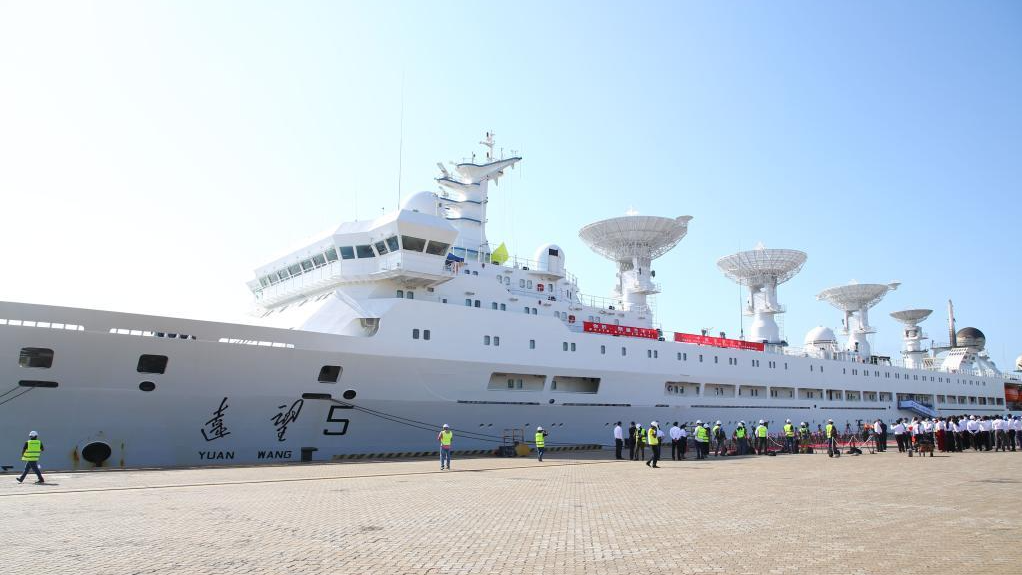
In an article titled, From One-China Principle to Yuan Wang 5: Let’s Join Hands and Resolutely Safeguard Our Sovereignty, Independence and Territorial Integrity”, he reiterated China’s continued commitment to support the island nation.

In contrast, some countries always make various groundless excuses to bully Sri Lanka and trample on the island’s sovereignty and independence repeatedly, the Chinese envoy said further.

He noted that human rights issues in Sri Lanka are likely to be stirred up again at the 51st session of the UN Human Rights Council to be held in Geneva next month.

As the Sri Lankan people are still grappling with severe economic and humanitarian difficulties, many might wonder what those countries who have been always preaching about human rights will actually do. Will they help Sri Lanka to ease its human rights crisis by providing concrete support? Or will they again use human rights as a cover-up tool to interfere into the island nation’s internal affairs and continue to rub salt into the wound of Sri Lankan people? Just let’s wait and see.”

The Chinese envoy said any infringement on the national sovereignty, independence and territorial integrity of Sri Lanka will not be tolerated.

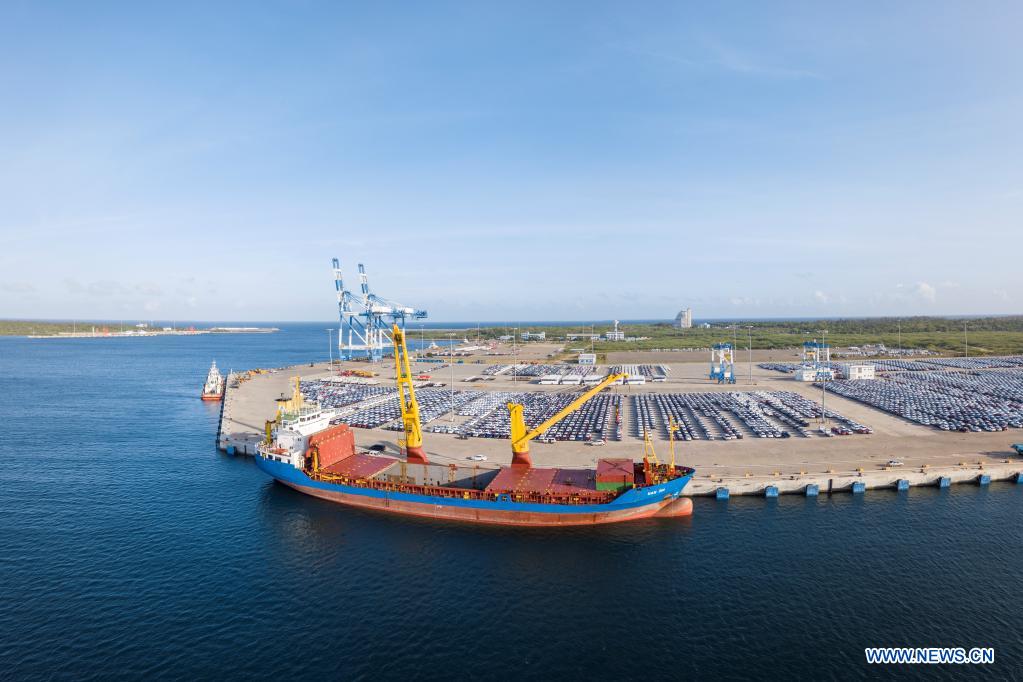
With regard to the visit of the Chinese research vessel Yuan Wang 5 to Sri Lanka, Mr. Qi said approving a foreign vessel’s port call at Hambantota or any other port for replenishment is a decision made by the Sri Lankan government completely within its sovereignty.

All scientific research activities of Yuan Wang 5 complied with the international law and common international practice, he said further, adding that external obstruction based on so called security concerns” but without any evidence from certain forces is de facto a thorough interference into Sri Lanka’s sovereignty and independence.

Fortunately, with China and Sri Lanka’s joint efforts, the incident was resolved properly, which not only safeguards Sri Lanka’s sovereignty and independence, but also defend the international fairness and justice once again.”

The Chinese ambassador also slammed the visit of Nancy Pelosi to Taiwan, claiming that it is a serious violation of the One-China Principle and the provisions of the three China-U.S. joint communiqués.

Mr. Qi remarked that it seriously infringes on China’s sovereignty and territorial integrity, gravely undermines peace and stability across the Taiwan Strait, and sends a seriously wrong signal to the Taiwan independence” separatist forces.

He also dismissed the claims that China has overreacted, escalated the tension and changes the Taiwan Strait status quo. It is the US and the Taiwan separatists that commits irresponsible acts, changes and escalates the Taiwan Strait situation, not China. China has every reason to respond unhesitantly to the severe impacts caused by the Taiwan visit of Speaker Pelosi, second in line to the US presidency and the No. 3 official of the US government.”

Upholding the One-China Principle is not only about safeguarding China’s core interests, but also safeguarding the UN Charter and the basic norms of international relations, the Chinese envoy said further.

More activists arrested over forcible entry to state buildings granted bail

August 26th, 2022

Courtesy Adaderana

The Colombo Fort Magistrate’s Court granted bail to 07 remanded suspects including Dhaniz Ali who were in remand custody over the forcible entry to the Presidential residence.

The order was issued by the Colombo Fort Magistrate Thilina Gamage.

In addition, two more suspects including Lahiru Weerasekara who were named as the suspects in the case were also granted bail today. They were released on surety bail of Rs. 500,000 each.

In the meantime, Colombo Fort Magistrate Thilina Gamage ordered two activists of ‘Aragalaya’ protest movement Piyath Nikeshala and Ven. Balangoda Kashyapa Thero to be released on surety bail of each worth Rs. 500,000.

The two suspects were arrested and remanded in custody on charges of forcible entry to the Prime Minister’s office and damaging its property.

The magistrate issued the order considering the bail requests made by the attorneys who appeared on behalf of the suspects arrested by the Criminal Investigation Department (CID).

The case was fixed to be taken up again on October 12.

Ranjan accepts new position as goodwill ambassador for migrant workers

August 26th, 2022

Courtesy Adaderana

Upon his release from prison earlier today (Aug 26), former MP Ranjan Ramanayake accepted a new position as a goodwill ambassador to promote the welfare of Sri Lankan migrant workers, says Minister of Labour and Foreign Employment Manusha Nanayakkara.

This is a voluntary position to make use of Ramanayake’s tacit knowledge in the area of foreign employment, Minister Nanayakkara said further in a tweet.

Beware the NEDdas!

August 25th, 2022

Malinda Seneviratne

In Sri Lanka’s political lexicon there are two terms that have obtained a lot of play over the past 8 years or so: Toyyas and BayyasBayyas are sometimes taken to be Rajapaksa loyalists but the truth of that identity goes beyond that family and could be best understood as a contradistinction of ToyyasToyyas are certainly anti-Rakapaksa but that’s not all they are.

They are anti-Rajapaksa because they believe the Rajapaksas represent BayyasToyyas would suffer any and all violations that the Rajapaksas are accused of if they were committed by those they believe represent the Toyya community, let’s say. That’s those who can be called Kolombians, candle-light ladies, Colombots, rent-a-protest NGO personalities, funded-voices etc.

They typically are anglicized, speak English and can hardly cobble together five Sinhala or Tamil words into a coherent sentence, are often virulently anti-Buddhist and are somehow ashamed of their Sinhala or Tamil ancestry. In short, the kalu-suddhas. The Uncle Toms, if you want a term that the likes of US Ambassador Julie Chung would understand.

Then we have the Wannabe Toyyas,. Most of them believe that adopting Toyya lifestyles, parroting Toyya political preferences and chorusing Toyya antipathies would give them Toyya membership. They were in for a rude shock when the aragalaya imploded — the Toyyas all but branded them as Bayyas, riffraff and rabble, refusing membership and putting quite some distance between themselves and these clearly confused individuals.

Bayyas are no saints either. Most of them know they will be denied Toyya membership. Some (a few) are happy with who they are and are not interested in membership while the politics of others are defined by undisguised envy of the Toyya community.  

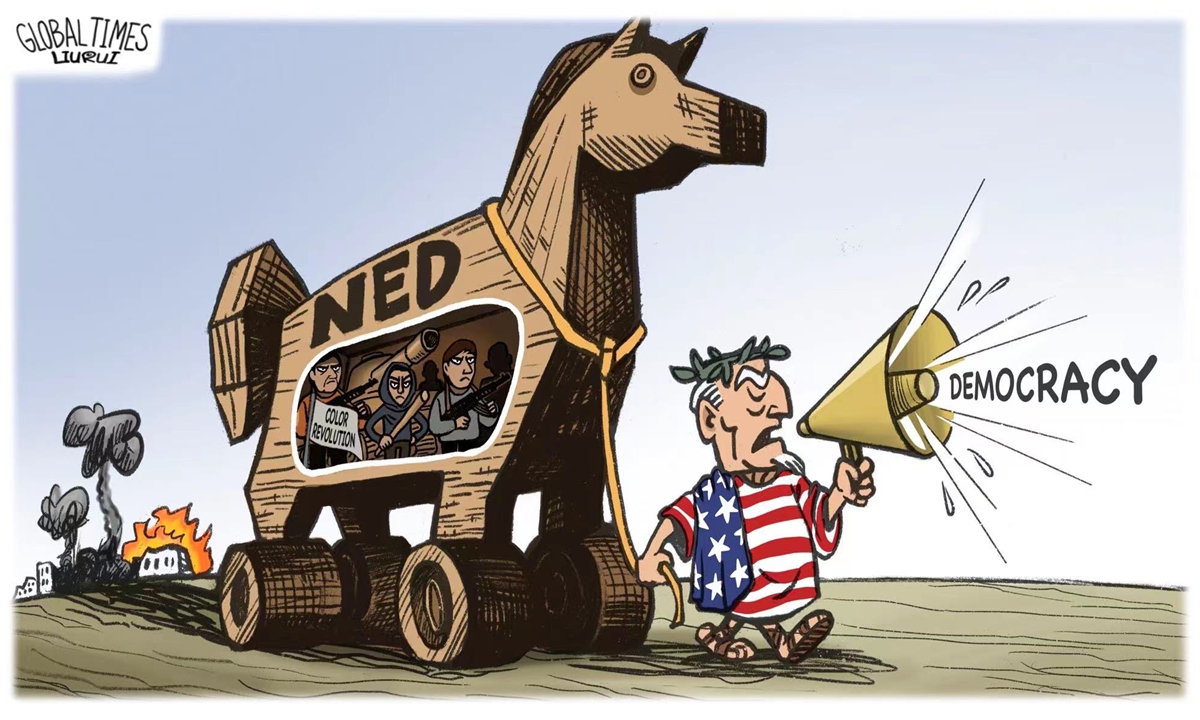
The aragalaya brought to fore another class of people, small in numbers but certainly effective, at least in terms of delivering the deliverables for which their bosses reward them one way or another: the NEDdas, which is derived from ‘National Endowment for Democracy.’ It has not entered the political lexicon, but it ought to, considering the fact that Neddas were in the thick of things over the past few months or rather were thrust into the thick of things after careful and long preparation over several years.

Before we get to NEDdas, we need to get to NED and to do that we need to understand the machinations of the US government and relevant agents.

Whenever the USA proposes democracy or gets teary about human rights countries that are the intended beneficiary of largesse need to worry. This is not because democracy is a bad thing; it is not. It is not because human rights need not be upheld; they need to be. It is all about what these terms portend when uttered by the USA.  

As is abundantly clear to any serious student of the USA and as has been pithily argued by Noam Chomsky in ‘What Uncle Sam really wants,’ Washington doesn’t give two hoots about democracy, human rights, peace or other such lofty ideals. Washington has supported and still supports military juntas, theocracies, monarchies, dictatorships and other forms of totalitarian regimes marked by intolerance, violent crushing of dissent and blatant violation of human rights. Not surprising considering the absolute mockery of democracy and human rights in the USA itself, from back in the day to this very moment.

The terms have currency only when Washington has to deal with regimes or leaders not willing to play comply with US diktat. The USA still does the guns-in-booty-out number but where this is not possible, other means have to be employed. If countries need to be destabilized to get rid of unfriendly leaders or governments and if naked force is not an option for whatever reason subterfuge becomes the default Plan B. The CIA moves in. The CIA has got such a bad reputation, though, that US subterfuge needed a different name, a different lexicon and people wearing different clothes, especially after Congress forbade the agency to organize coup d’etat to secure markets. That’s when the White House and National Security Council moved in to get around the problem. That’s how the National Endowment for Democracy (NED) was set up. 

The four key subsidiaries of NED (National Democratic Institute, International Republican Institute, American Center for International Labor Solidarity and the Center for International Private Enterprise), gives it wide operative space and the requisite vocabulary yielding a civilizational veneer that can entrap the gullible (we are being kind here). It’s founder, Alan Weinstein wasn’t that cute — he called it the Second CIA way back in 1991.

So Washington funds NED, NED creates programs and outsources it to local NGOs in targeted countries who are tasked to make create molehills, turn them into mountains, create or precipitate the creation of objective preconditions where none exist or exploit such that do exist to manufacture and nurture popular dissent. Typically, the envisaged end, despite rhetoric about system-change, is replacement of a government or leader refusing to play ball with Washington by a leadership that is amenable to the advancement of US strategic interests.
 

Today, it is well known that the NED helped disintegrate the Society Union and was in the thick of political changes (not system change) in Georgia, Serbia, Ukraine and the uprisings dubbed ‘Arab Spring’ but which produced an endless and terrifying winter, paradoxically, in the Middle East. Venezuela knows of NED involvement.  It’s not hard to find which countries the NED has funded, which kinds of regimes were targeted and which supported and their relevant loyalties or otherwise to the USA. It is easy to see whether NED-supported groups and governments were or exemplify purported NED-values. 


NED is convenient. The name itself disarms the ignorant and gullible. Those in the know, are clearly beneficiaries as organizations or individuals and as such are willing pawns in Washington’s designs can claim, as some have, ‘No, we never got US funds.’ Indeed, one such individual who would have people believe he is in or is ‘the epicenter of the aragalaya’ (one wonders what other ‘epicenterists’ would have to say to this claim), when confronted with evidence of involvement with NED, backtracked and tried the age-old diversionary tactic — ‘Alright, yes, but what’s wrong with things like voter-education, eh?’ Others could ask, ‘what’s wrong with democracy, human rights etc.?’  A simple counter-question would suffice to floor them all: ‘to what end, really, brother?’

First, the condescension is insufferable. The assumption is that Sri Lankan voters are ignorant and need democracy-tuition. Second, there’s a pernicious twisting of all norms of democracy; constitution and popular will as expressed through the ballot are brushed aside in favour of manufactured and exaggerated popular dissent followed by tacit withdrawal of support for agitation the moment the preferred political outcome is obtained. Third, typically, the track records of the agents roped in make dismal reading.  It is easy after all to identify reasonably intelligent people with chips on their shoulders (which usually has nothing to do with ideological or political bent but about some simmering element of self-doubt or bruised egos) and cultivate them to be deployed at the right time. Yes, the NEDdas.

Now the NEDdas could say (and they have) ‘it doesn’t matter who gives money as long as the job is done.’ Well, that’s an end-justifies-the-means argument. Regardless, if anyone doesn’t care about what this ‘job’ is all about, has no clue and doesn’t care about history and the ways in which NED has operated and for what kind of goals, then such people aren’t really serious about system-change. They, in fact, are doing a job. Hatchet job, one might say.

It’s all about the Golden Rule — he who owns the gold, makes the rules. I wouldn’t call people innocent or naive for not taking the trouble to find out what’s what; I call them irresponsible and dangerous. They charter agitation to waters into which the bad ship ‘US Interests’ can sail in without obstacle. They don’t give a hoot about Sri Lanka. The only Sri Lankans they do care about are themselves. 

NEDdas are easily identified. One could check the organizations that NED funds, for starters. One could check NEDda positions (what they promote, who they condemn — countries included) and compare with NED ‘prerogatives.’ If NEDdas don’t care whether or not money is channeled by or through murderers, sackers of cities and other thugs, then of course they are seriously value-challenged. Should be noted.  

NEDdas. They need watching. Especially by all the hundreds and thousands who with pureness of heart and idealistic fervour about forging a different kind of nation with truly representative and democratic institutions and processes have their all to the aragalaya. There will be hundreds and thousands of other who will walk this path. They too will have their dreams blown up in their faces by NEDdas of the future. It need not be that way. Gotta keep NEDdas at bay though.

This article was first published in the Daily Mirror (August 25, 2022)
malindadocs@gmail.com
[Malinda Seneviratne is the Director, Hector Kobbekaduwa Agrarian Research and Training Institute. These are his personal views.’]

No free meal 

August 25th, 2022

ජයන්ත හේරත්

බයිඩ්න්

ඊයේ

මරු වැඩක් දුන්නේය.

මිලියන් 40 ගේ

ශිෂ්ය ණය

එක පෑන්

පහරකින්

කපා දැමීය,

ඇමෙරිකන් ඩොලර්

ට්රිලියන් භාගයකි,

බිලියන් 500 කි

අපට ගෙවන්නට ඇති

විදේශීය නය මෙන්

10 ගුණයකි.

සිම්පල් ය

දියයුත්තේ

executive ඕර්ඩර්

එකය.

ඕඩරය

ඒ අයුරෙන්ම ක්රියාත්මක විය යුතුය.

14% ට

නොමිලේ

උසස් අධ්යාපනය

සලසනු වෙනුවට

කල යුත්තේ

සියලුම

ශිෂ්යයන්ට

ණය ලබා ගැනීමට පහසුකම් සලසා 

උසස් අධ්යාපනය දීමය.

පුහුණු ශ්‍රමිකයින්

බිහි කිරීමය.

අවසානයේ

කරන්නා වූ රැකියාව

හා

ලබන ආදායම මත

සහනාදායි ක්රමයකට

පොලිය ඇතුව හෝ නැතුව

නැවත ගෙවීමේ ක්රමයකට

උසස් අධ්යාපනය

ලබා ගැනීමට සැලසීමය.

එවිට

නොමිලේ කමින් බොමින්

ජොලි කරමින්

උද්ඝෝෂණ කරන

මානසික තත්වය නැති වී ගොස්

ඉගෙනීම වෙනුවෙන්,

දැනුම ලබා ගැනීම වෙනුවෙන්

තරුණ කාලය යෙදවීමට

වගකීමක් ඇතුව වැඩ කරන්නට 

තරුණ පිරිස පෙළඹෙනු ඇත.

අපේ අසල්වැසි

ඉන්දියාව

කරන්නේ

තරුණ තරුණියන්

අර්ධ පුහුණු ශ්රමිකයන් කර

ණය ලබා දී

ඇමරිකාවට 

අපනයනය

කර ආදායම තර කර ගැනීමය.

අපට වුවද එය පහසුවෙන් කරන්නට පුළුවන.

පුද්ගලීකරණයෙන්

හෝ

මිලිටරීකරණයෙන්

හෝ

අපේ තරුණ පිරිස

කාර්යක්ෂම

පුහුණු ශ්රමිකයන් බවට පත් කල යුතුය,

නව නිර්මාන

කරන පිරිසක් බවට හැරවිය යුතුය

මේවාට

අකුල් හෙලන

අන්තරේ

jvp npp පෙරටුගාමීන්

අඳුනා ගෙන,

අවවාද නොපිලි ගන්නේ නම්

වහාම

ඔවුන්ගේ ශිෂ්යභාවය

අහෝසි කර

විශ්ව විද්යාල පද්ධතිය තුලින් නෙරපා දැමිය යුතුය.

මොවුනට

උඩගෙඩි දෙන්නෝ වෙත් නම්

ඔවුන්ටද දැඩි දඬුවම් ලබා දිය යුතුය.

අන්තරයේ බලය

කුඩු පට්ටම් කර

මකා දමා

විශ්ව විද්යාල පද්ධතිය රැක ගන්නට

පියවර නොගන්න තාක් කල්

රටට සෙතක් වන්නේ නැත.

කොමිස් ගහන්න රුසියා, රුසියා තෙල් එපා කියයි

August 25th, 2022

 Lanka Lead News

ලංකාව තෙල් ප්‍රශ්නයෙන් ගලවා ගැනීමට රුසියාවෙන් අලුත් උත්තරයක් ලබාදී ඇත. මෙම උත්තරය ලංකාවේ ඉන්ධන ප්‍රශ්නයට ඛනිජ තෙල් ඇමැතිවරයා දුන් උත්තරවලට වඩා හාත්පසින්ම වෙනස් එකකි. එය මාසිකව ඩොලර් මිලියන 300 ක් වටිනා ඛනිජ තෙල් වසර දෙකක ණය පදනමක් යටතේ ලබා දීමටයි. මේ සම්බන්ධව රුසියාවේ ඉන්තුම් හෝල්ඩින්ස් සමාගම ලංකා ඛනිජ තෙල් නීතිගත සංස්ථාවට අවබෝධතා ගිවිසුමක් ඉදිරිපත් කර තිබෙන බව ජාතික නිදහස් පෙරමුණේ ජාතික සංවිධායක පාර්ලිමේන්තු මන්ත්‍රී ජයන්ත සමරවීර මහතා ප්‍රකාශ කර ඇත. මේ සම්බන්ධයෙන් කළ සොයා බැලීමකදී අනාවරණය වූයේ ලෝක වෙළෙඳපොළේ පවතින මිලට වඩා සියයට පහළොවත් තිහත් අතර මිලකට අඩුවෙන් ඉන්ධන ලබාදීමට එම සමාගම ලංකා ඛනිජ තෙල් නීතිගත සංස්ථාවට අවබෝධතා ගිවිසුමක් ඉදිරිපත් කර ඇති බවයි.

රටේ පවතින සෑම ගැටලුවකටම මුල ඩොලර් හිඟය බව පුංචි දරුවකු පවා දන්නා කාරණයකි. පසුගියදා රුසියාවේ ඉන්ධන සමාගම ලංකා ඛනිජ තෙල් සංස්ථාවට ඉදිරිපත් කළ ගිවිසුම අපේ රටට අතිශය වැදගත් වේ. නමුත් මේ රටේ අහේතුවකට පහළ වූ ‘කොමිස් කාක්කන්’ හට රුසියා උත්තරය වහකදුරුමය. පසුගිය කාලයේ අපේ රටේ තෙල් පෝලිම්වල සිදු වූ මරණ විස්සකට අධිකය. පාසල් අධ්‍යාපනය, රටේ සේවය යථා පරිදි පවත්වාගෙන යෑම, කර්මාන්ත, කෘෂිකර්මාන්තය පවත්වාගෙන යෑම ආදියට ඉන්ධන නොමැතිකමින් පසුගිය කාලයේ මුළු රටම එකතැන නැවතුණි. රජය මගින් හඳුන්වා දුන් ූඍ ක්‍රමය ඉන්ධන පෝලිම් අවසන් කිරීමට සමත් වුව ද, ත්‍රිරෝද, පෞද්ගලික බස් හිමියන් එයින් සෑහීමකට පත් නොවන බවට දක්නට ඇත. සැබවින්ම ත්‍රිරෝද රථ සඳහා සතියකට ලබාදෙන ඉන්ධන ලීටර් පහක කෝටාව ඔවුන්ට කුලී ගමන් සඳහා ප්‍රමාණවත් නොවේ. පෞද්ගලික බස් රථ හා අනෙකුත් ප්‍රවාහන සේවයන්ට ලැබෙන ඉන්ධන ප්‍රමාණය ද ප්‍රමාණවත් නොවීමෙන් ඔවුන් ද අද නඟන මැසිවිලි අප්‍රමණය. පිරවුම්හල්වලට තෙල් නොලැබීම හා නැවත තෙල් නැවක් මෙරටට පැමිණෙන දිනය වැනි ගැටලුවලට නිසි පිළිතුරක් දීමට අදාළ බලධාරීන්ට නොහැකිව ඇත.

මෙරට ඉන්ධන හිඟයට කදිම නිදසුනක් රුසියානු සමාගමක් මගින් ඉදිරිපත් කර ඇත්තේ මෙවැනි වතාවරණයක් තුළය. අපේ රටට බොහෝ අවස්ථාවල ඉන්ධන ලබා ගත්තේ යම් සැපයුම්කරුවකු හරහාය. ඕමාන් රාජ්‍යයෙන් තෙල් මිලදී ගන්නේ කටාර් රාජ්‍යයේ තෙල් සැපයුම්කරුවකුගෙනි. එම සමාගමේ මූල්‍ය අධ්‍යක්ෂවරයා ලෙස කටයුතු කරන්නේ අපේ රටේ දේශපාලනඥයකු බවට තොරතුරු ලැබී ඇත. ඔහු ගැන හිටපු ඇමැතිවරයකු වරින්වර ප්‍රකාශ ද නිකුත් කළේය. ඉන්ධන සැපයුම්කරු සමාගම් හරහා ඉන්ධන ආනයන කිරීමේදී සාමාන්‍ය මිලට වඩා මිල ඉහළ යෑමක් සිදුවන්නේ කොමිස් මුදල් ගෙවීමට සිදු වීමෙනි. මේ ගෙවීම් සියල්ල සිදු කරන්නේ ඩොලර්වලනි.

රුසියාවෙන් තෙල් මිලදී ගැනීමේදී අලෙවි කරනු ලබන්නේ රූබල්වලටය. මේ හේතු නිසා කොමිස් මුදල් නැති වීම බලවත් පිරිසකට අද ගැටලුවකි. එයට හේතුව රුසියාවේ ඉන්ධන අපනයනය කරනු ලබන සමාගම් රැසක් ඇතත් ඒවායෙන් වැඩි ප්‍රමාණයක් රුසියානු රජයට අයත් වීමය. රාජ්‍ය ආයතන සමග ගනුදෙනු කිරීමේදී කොමිස් මුදල් ගසාකෑමක් සිදුකළ නොහැකි වීමෙන් රුසියාවෙන් ඉන්ධන ලබා ගැනීමට අදාළ බලධාරීන්ට නොහැකි වීමෙන් බාධාවක් වී ඇති බව වර්තා වී ඇත.

රුසියාව තෙල් බැරලයක් අලෙවි කරන්නේ ඩොලර්වලින් ගණනය කළහොත් ඩොලර් 69 ත් 80 ත් අතර මිලකටය. ඉන්දියාව පසුගිය කාලය තුළ ඉන්දීය ණය යෝජනා ක්‍රමය යටතේ අපට ඉන්ධන ලබාදුන්නේ ඩොලර් 150 ක් වැනි මුදලකටය. එසේ ලබාදුන්නේ ඔවුන් ඩොලර් 67 කට ලබාගත් ඉන්ධන බව වැඩි දෙනා කියන කාරණයකි. වැඩි මුදලකට තෙල් ගැනීම යනු අපේ රටේ ඇති බරපතළ ගැටලුවකි.

සපුගස්කන්ද තෙල් පිරිපහදුවේ සේවකයන් සඳහා අතිකාල දීමනා ලෙස රුපියල් කෝටි 250 ත් 300 ත් අතර මුදලක් ගෙවා ඇත. විදුලිබල හා බලශක්ති ඇමැති කංචන විජේසේකර මහතා මේ බව පැවසුවේ පසුගියදා පාර්ලිමේන්තුවේය. එම අතිකාල දීමනා කාහටද යැයි සොයා බලා පාර්ලිමේන්තුවට වාර්තාවක් ඉදිරිපත් කරන බව ද හෙතෙම පැවසීය. පසුගිය කාලය තුළදී රටේ තෙල් නැතුව තෙල් බවුසරයක්වත් දුවන්නේ නැතුව පිරිපහදුව වසා තිබුණු කාලයක් ඔබට මතක ඇති. මෙවන් රටේ අර්බුදකාරී වාතාවරණයක් තිබියදී රටේ ධනය නිකරුණේ වැය කිරීම ජාතියේ අපරාධයකි. තත්ත්වය දැන් පැහැදිලිය. වසා තිබූ පිරිපහදුවේ සේවකයන්ට හා සංස්ථා සේවකයන්ට කෝටි ගණන් දීමනා ගෙවන මුවාවෙන් ඛනිජ තෙල් සංස්ථාවේ බලධාරීන් මේ කරන්නේ බලවත් කොමිස් ගැහිල්ලකි. නමුත් කළ යුත්තේ රුපියල් කෝටි ගණන් කොමිස් ගසාකෑම නොව රුසියාවේ තෙල් සහනය ලබා ගැනීමයි.

රුසියාවෙන් අපේ රටට ඉන්ධන ලබාදුන්න ද මුදල් ගෙවීමේදී අපේ රටට ප්‍රශ්න රාශියකට මැදි වීමට සිදු වී ඇත. ඉන්දියාව රුසියාව අතර මුදල් සම්බන්ධව ගිවිසුමක් ඇති නිසා ඔවුන්ට ගැටලුවක් නොමැත. එහෙත් ලංකාවට තවමත් එවැනි ගිවිසුමක් නොමැති නිසා එයට පිළිතුරු සෙවීමට අපේ රටේ බලධාරීන් වහා ක්‍රියාත්මක විය යුතුය. ඉන්ධන හිඟයට තවමත් තිරසාර ගිවිසුමක් නැත. අප ඉහත කී ‘කොමිස් කාක්කන්ට’ යට නොවී එම ව්‍යාපෘතිය කඩිනමින් ක්‍රියාත්මක කිරීමට ජනපතිවරයා ප්‍රමුඛ ආණ්ඩුව වහා පියවර ගත යුතුව ඇත.

● රමින්ද ලසන්ත මාවතගේ

Central Bank of Sri Lanka (CBSL) Governor to conduct special program for MPs on Sri Lanka’s economic situation

August 25th, 2022

Courtesy Adaderana

Acting Secretary General of Parliament Ms. Kushani Rohanadheera has informed all Members of Parliament to participate for the special program conducted by the Governor of the Central Bank on Sri Lanka’s current economic situation and way forward.”

Organized as per the instructions of the Speaker of Parliament Mahinda Yapa Abeywardena, this interactive discussion is scheduled to be held on Tuesday (August 30), from 2.00 pm to 4.00 pm at the Committee Room No. 1 of the Parliament.

The Acting Secretary General has further informed that this dialogic discourse has been organized with the aim of providing an opportunity for effective discourse on the current economic situation and future economic direction of the country, so that it will be useful for the Members of Parliament to actively participate in the upcoming parliamentary debates regarding fiscal matters.

Sri Lanka reports 6 more Covid-19 deaths, 114 new cases

August 25th, 2022

Courtesy Adaderana

he Director General of Health Services has confirmed another six Covid-19 related deaths for yesterday (August 24).

The deceased includes four males and two females with all but one in the age group of 60 yeas and above. The other is between 30-59 years of age. 

Meanwhile another 114 new Covid-19 infections have been detected today (25) increasing the tally of coronavirus cases reported in the country to 669,581.

Woman arrested over pushing SLPP supporters into Beira Lake remanded

August 25th, 2022

Courtesy Adaderana

The Colombo Magistrate’s Court today ordered to remand until September 01 a woman who was arrested in relation to the incident of pushing a group of Sri Lanka Podujana Peramuna (SLPP) supporters into the Beira Lake at Slave Island on May 09.

The order was issued when the case was taken up before Colombo Fort Magistrate Thilina Gamage today (25).

Accordingly, the magistrate who ordered the woman to be remanded in custody until September 01, further ordered her to be produced in an identification parade following a request made by the police.

‘Aragalaya’ activist Senadhi Guruge remanded

August 25th, 2022

Courtesy Adaderana

A leading activist of ‘Aragalaya’ protest movement, Senadhi Guruge, who was arrested in connection with an assault on two intelligence officers, has been remanded until September 02.

When Guruge was produced before Colombo Fort Magistrate Thilina Gamage earlier today, the police made a request to refer him to an identification parade.

Accordingly, he will be referred to an identification parade on September 02.

Guruge was taken into custody on Thursday (Aug 24) by the crimes unit of Colombo Central Police for allegedly kidnapping two intelligence officers on June 12 and assaulting them.

Meanwhile, Colombo Fort Magistrate’s Court ordered to recall the warrant issued for the arrest of Lahiru Weerasekara, another leading activist of the mass protest movement, after he appeared before the Fort Magistrate’s Court today.

Weerasekara surrendered to the court through his attorneys.

Abolish the white elephant and the national curse, “The Provincial Councils”-An open letter

August 24th, 2022

Dr. Sudath Gunasekara (SLAS) Former Secretary to Prime Minister Sirimavo Bandaaranaayaka, President Sri Lanka Administrative Service (1991-1994) and President Mahanuwara Sinhala Bauddha Jesta Purawwesiyange Sanvidhaanaya.

An open letter to the President, the Prime Minister, Minister of Public Administration, the Minister of local Government and Provincial Councils and all patriotic Members in this Parliament if there is any?

Abolish the white elephant and the national curse, The Provincial Councils” and its root cause, The JR/ Rajiv Accord of 29th July 1987 at least now, if you love your Motherland.

To save Mother Lanka from the following four disasters

*1 First, from running into total bankruptcy due to wasting nearly Rs.331 billion (2020) annually on this white elephant for the past 35 years that has brought zero benefit to the country and the people. (the first disaster)

(it benefits only the parasitic politicians as stated in detail below) on the one hand and on the other depriving the central Government of that colossal sum of revenue that could have been used for meaningful development in the country to alleviate mass poverty in the country)

*2. Second, from overall breakdown of the time-tested District Administration system together with the well set Divisional and village network and resulting in total collapse of governance in the whole country. (the second disaster,).

due to chaotic duplicity, confusion, overlapping and inter-institutional and inter -personal conflicts created by this Indian political intruder in to a deeply rooted traditional District Administration system like un to a fatal virus, that kills it.

*3. Third, the inconvenience, confusion, delay in delivery of services to the people and additional expenses due to centralization of services from the district to the provinces, in contrast to the promised decentralization under the 13th Amendment (third disaster)

*4. Finally, To, save the motherland from disintegration into ethnic enclaves eternally fighting each other for resources like land, water   and the disappearance of a 2500-year-old Sinhala Buddhist unitary Kingdom from the surface of this planet (the fourth disaster)

6.9 million people expected Gotabahaya and his Government to abolish this white elephant

The 6.9 million people who voted Gotabahaya in Nov 2019 and the SLPP in May 2020 demand this Parliament to abolish the white elephant and the curse that is Provincial Councils and its root cause, the JR/ Rajiv Accord of 29th July 1987.But it never happened. Therefore,  they now demand  the present government to abolish this curse to the nation at least now to amend the 35 years of political, economic, social, and administrative confusion and destructions it has already brought about to this country and to stop any such further devastation tomorrow, before this Indian made political time bomb completely destroys this Island nation and its 2500 year old great Sinhala Buddhist civilization, the envy of the whole world and the pivot of the emerging Indo-Pacific World of the  21st century.

I am addressing this note to this Government to lodge a demand on behalf of the whole nation to abolish the Provincial Council system together with the 13th Amendment and the Rajiv/JR Indo Sri Lankan Accord of 29th July 1987, that gave birth to Provincial Councils before they do any further damage to the 2500-year-old unique Sinhala Buddhist legacy in this country with a pinch of Tamil, Muslim and Catholic culture existing in tandem in harmony for millennia past.

The crying need  to abolish these two veritable political, economic social and cultural cankers forthwith that gave birth to Provincial Councils and brought about many more inconsistencies and historical travesties in the Island’s long and checkered history  (explained in detail below), in order to rescue this unique tiny Island nation from disappearing forever from this planet earth in few years due to ethnic disintegration, disunity and infighting between Bhoomiputra Sinhalese and intruder Tamil and Muslim ethnic groups, resulting from this well designed Indian political Atom bomb called the Provincial Councils, planted to destroy this 2500-year-old Glorious Sinhala Buddhist civilization, an all-time pride and a priceless jeweled crown for human civilization on this planet.

Now, let us identify the following catastrophes that have already resulted from these two Indian political conspiracies.

1.Complete disintegration and division of the Sri Lankan State into 9 different ethnic and religious enclaves set at loggerheads fighting for its ownership and resources like land and water and threatening its unitary status and sovereignty as a nation that had been defended and protected at very high cost by our ancient Kings, numbering 196, (from 543 BC to 1815 AD) and its patriotic people for 2500 years.

2. A complete breakdown and disruption of the native District, Divisional and Village administration system, that had been our legacy from the distant past and efficiently used even by the British up to 1948.

3 Destabilization of governance resulting in complete anarchy due to breaking down in the day-to-day civil administration and development and maintenance of law and order thorough out the country due inter-institutional and inter personal conflicts arising from the multiplicity and duplicity of governmentinstitutions created especially after 1987  and the proliferation of mushroom political institutions manned by uneducated, unprofessional and unsuitable political henchmen not concerned about the welfare of the citizens but concerned only about their own wellbeing and protecting ill-gotten privileges and perks and the interests of their political Masters in Colombo. 

4 Colossal wastages of public funds to maintain these parasitic institutions for 35 years from 1987, with no benefit to the country or the people. For example, out of 331 billion tax collection, 316 billion that could have gone in to the revenue of the Central Government has been wasted on PC in 2020 (source CB Public finance). No wonder the country is gone bankrupt.

5 The emergence of a new political culture under the direct control of everything beneath the sun by a new breed of political supermen called Governors at the Provincial level appointed by the President and who are not answerable to the people of the provinces, but have the power to control all political institutions, Government and semi government and all their staff at Provincial, District, Divisional and Village levels. This includes the Government Agents, former Administrative  Heads of the Districts, who formerly were directly answerable, accountable and responsible to Colombo for the implementation  of all programmes and policies of the government within their respective districts in pre 1987 era who commanded authority over all public institutions  in their districts including the Divisional Secretaries Heads of Divisions and Grama Sevakas the bed rock of  good governance in the country who were only answerable to the GAA of the Districts before the PCC came in in 1987. The behaviour of most Governors reminds me the famous story of the Bull in the China shop”

Today all the officers in a district have to serve two masters resulting in waste of their time attending useless and frequent meetings organized by the Governors and Provincial staff and provide reports, thereby increasing their volume of work resulting in a big break down and inefficiency in public service in the country, in addition to unprecedented increase in public expenditure and wastage including a complete breakdown in the delivery of services to people.  

6.The JR/Rajiv Accord was a complete travesty of accepted history of this country, it has laid the permanent foundation for the division of the country in to 9 quasi-Federal states that threaten the sovereignty, and the security of the country. 

Since the first elections for Provincial Councils took place on 28 April 1988 this is how public funds have been spent or rather wasted on their upkeep.

Sri Lanka Provincial Councils: Expenditure

1996 – 2017 | Yearly | LKR millions | Ministry of Finance

Sri Lanka’s Provincial Councils: Expenditure data was reported at 286,031.000 LKR m in Dec 2017. This records an increase from the previous number of 276,147.000 LKR m for Dec 2016. Sri Lanka’s Provincial Councils: Expenditure data is updated yearly, averaging 103,769.000 LKR m from Dec 1996 to 2017, with 22 observations. The data reached an all-time high of 286,031.000 LKR m in 2017. So, with an average of almost 104 m per year, you can visualize how much national wealth has gone down the drain for the past 31 years, which is guessed approximately 3224 m or 3.2 billion rupees. What a colossal wastage and a pathetic and unpardonable misuse of public funds, these councils have wasted under the patronage of self-seeking politicians at the center whose only concern was to collect votes by using these councils and the local politicians who man them as their proxies.

The other important aspect is that much of this money has gone for unproductive items like salaries and remunerations of Politicians and public Servants, buildings, vehicles, meaningless regular and luxury tamashas in five start hotels, foreign joy trips and other activities unrelated to development in the country. Once the Secretary of the Ministry in charge of this subject told me that only 10 % of voted funds are spent on capital work and the balance 90 % is spent for recurrent activities which do not contribute anything for development.

Salaries and allowances to be paid to Governors

According to the Act, No. 37 of 1988.

Salaries and allowances to be paid to Governors. chief Ministers Members of Board of Ministers and to member of Provincial of Councils are given below.

(a) of a Governor of a Province, such Governor shall be entitled to the payment of a monthly salary and allowances equal to the monthly salary and all other allowances currently payable to a Minister of the Cabinet of Ministers;

(b) Chief Minister shall be entitled to the payment of a monthly salary and allowances equal to the monthly salary and all other allowances payable to a Governor of a Province under paragraph (a), less a sum of fifty rupees;(Isn’t this ridiculous)

(c) Member of the Board of Ministers of a Province. such member shall be entitled to the payment of a monthly salary and allowances, equal to the monthly salary and all other allowances currently payable to a Deputy Minister; and

(d)Member Provincial Council, such member shall be entitled to the payment of a monthly salary and allowances equal to fifty per centum of the monthly salary and all other allowances currently payable to a Member of Parliament.

(Salaries and allowances to be expenditure charged on the provincial Funds of a Province.)

This was the situation in 1988. Surely after 35 years things must have changed very much. Probably these payments must have been even doubled in keeping with regular changes that have taken place in respect of politicians at the national level. In addition, the 9 Provincial Councils are also given 9 Chairmen and 9deputies with the same facilities.

Now you will see how public funds have been pilfered and wasted by the politicians at the Provincial level over a period of 35 years. It must also be mentioned that in addition to these privileges’ other benefits such as official Bungalows and servants, vehicles with drivers and unlimited fuel allowances and duty-free vehicle permits are lavishly provided for all these persons.

With all this wastage of public funds, the billion-dollar question the people of this country should ask the government is, what benefit PCC have brought to the Country since 1987. Besides the colossal financial loss to the country, the political, and administrative and institutional mess, chaos and confusion by way of duplicity of mushroom institutions, and increase of an utterly unproductive and lotus-eater set of politicians, and public servants, what benefits they have brought to the country over the past 35 years other than maintaining a set of parasitic Governors, Chief Ministers, Ministers and Council Members, additional office staff, and offices, a fleet of vehicles paying rents for buildings and vehicles, wasting lands and new and unproductive buildings etc. As a result, public expenditure has increased exponentially in the ratio of 1 to 15 times with zero benefit to the country. It also has brought about a complete breakdown of the once highly efficient and economically frugal District Administration in this country. Thus, the Provincial Councils have come to stay as a veritable Huniyama for this country’s peril.

Devolution of power and Decentralization of Administration and enhancing Efficiency in delivery of services that never saw the light of the day.

The promised devolution of power and decentralization of administration to facilitate a better service to the people has never taken place. Instead in practice what has happened is more centralization of authority to the 9 Provincial Councils in 9 Provinces. As a result, today a client has to come all the way to the Provincial Council office of the province to get a jo done which earlier he could have got done at the Divisional office or the District Kachcheri. What a colossal wastage of money and time and a right royal mess in administration and governance resulted from this ill-conceived political experiment done at the instigation of the Indian Government imposed at gun point in 1987. Besides enjoying the ill-gotten benefits for no service rendered in return to the country, the only service the provincial politicians do is acting as political pimps by servicing their political masters in Colombo.

In this backdrop. I ask the question as to why we should have Provincial Councils at all

In this backdrop, the most pertinent question I pose to all politicians, both in and outside the Parliament is as to why we should have Provincial Councils at all in this country; to maintain a useless set of lotus eater politicians and tens of thousands of additional so-called public servants, including 9 Cabinet Secretary level Secretaries and nearly 100 Ministry Secretaries.  Today this is the biggest question the whole nation asks?  Who asked for Provincial Councils?  Was it a request made by the people of this country or by some genius political theorists for better governance? It is interesting to note that California 6 times the area  of Sri Lanka has only 1 Governor where as we have 9 Governors to cover only 26,323 sq miles

No one at Home asked for it. It was India who proposed it first, to appease the Tamilnadu electorate to consolidate power in Delhi by imposing it on the Sri Lankan President by force, almost at gunpoint, well-timed when there was an old and weak President as the Head of Government. I still remember how India invaded our air space in1987 with their war jets and dropped Parippu? to the north and how arrogantly and undiplomatically their Ambassador Dixit behaved in front of the elderly Statesman JR, the Head of the State and the Government of this country, with his right leg on his left leg and a puffing a tobacco pipe in his hawkeyed mouth, at his Ward place residence as if Dixit was the viceroy of India conveying the message of the Indian ‘King,’ threatening a Head of a Vassal State of India of an imminent Indian invasion of the Island, if he refuses to sign the Indo-Sri Lanka Accord of 29th July 1987

The Accord was strategically designed by India to divide and destabilize the country by giving more power to Tamils and destroy the Sinhala Buddhist civilization on this Island.

First, the Accord was strategically designed by India, to give equal and even more power over the native Sinhalese who constitute 75 % of the total population of the Country and who were the Bhoomiputras of this Island nation who found it and built up the civilization over a period of 2500 years.

Second, to divide and destabilize this country on an ethnic basis giving Tamils full power to own and rule nearly half of the country including the North and East Central Sri Lanka (inclusive of Central, Sabaragamuwa and Uva Provinces), although India did not clearly specify these three Provinces. which together form more than 3/5 of the area of the Island leaving the balance 2/5 in the South West for the native Sinhalese together with Tamil, Muslim and other minority communities who will outnumber the Sinhalese in no time.

This was nothing but an extension of the same divide and rule policy started by the colonial British in 1832 by the creation of the provinces more or less on an ethnic basis. This Indian conspiracy becomes crystal clear when we analyze the following impositions India made in this country by the Rajiv/JR Accord of 29th July 1987.

1 The declaration of the Northern and Eastern Provinces comprising 1/ 3 the land area and 2/3 of the coastal lines together with the maritime territory of this Island with its resources as the Traditional Homeland” making Tamils who are less than 5% of the Islands population, the sole owners of the land and other resources of that part of the Island. This was gross discrimination against not only the Sinhalese who are the Bhoomiputras of this island at least from 543 B.C. but even other communities like Muslims. It was also a complete travesty of the Island’s authentic history. These two Provinces have never been a traditional Tamil land at any time of known history. On the contrary, this whole Island had been the traditional Homeland of the Sinhala people at least from 543 BC and it is a historical fact accepted by all historians the world over, other than the Tamils and Indian politicians. It was also a blatant betrayal of all Sinhala Kings, that will make them rise from their graves who have fought against all South Indian invaders to defend their motherland from 543 B.C. up to 1815.A.D.

First, this Accord enabled the Tamils to claim 1/3 of the land area of the country for a mere 5 lakhs Tamils and thereby depriving any Sinhalese or Muslims being settled there while Tamils can settle down in any part of the Island

Second, giving Tamils 2/3 the coastal belt as given in the EELAM map and nearly 3/5 of the marine territory and its resources including the Trincomalee harbor, the best natural harbor in Asia and the second-best in the world together with the British made Oil Farm with 100 oil tanks with an astonishing total capacity of over 1.2 million tones.

Thus, this Accord deprived the Bhoomiputras, the Sinhalese their birthright over their Motherland, which their ancestors have protected against all foreign invasions, both Indian and European for 2500 years and enjoyed for millennia as their beloved motherland from the dawn of history. This Accord was designed by India in order to fix the last nail on the Sinhala nation, with a vicious plan to annex the Island to India in the future.

 Third, made Tamil also an Official language of this country, nullifying Sec 18 of the Constitution of the Republic whereas even in India Tamil is not recognized as an Official language in spite of the fact that there are over 70 million Tamils in Tamilnadu alone.

Fourth, forced Sri Lanka to give Citizenship to all estate Tamils of Indian origin in the Central, Sabargamauwa and Uva Provinces and even Indians living in all other parts of the country even if they are illicit immigrants, disregarding all internationally accepted norms and our own laws on the subject of granting citizenship to foreigners in any country with a future plan to annex the Central, Sabaragamuva and the Uva Provinces to be merged with the  merged N & Eastern Province under the Accord.

Fifth, imposed that the Northern and Eastern Provinces should be merged to form one Tamil Province with provision to merge with two or more other Provinces as one in the future.

 Sixth, these two provinces to have their own laws with regard to Land, Police and Legal Administration and the power to have direct dealings with foreign countries bypassing the Government in Colombo and thereby to enable them to have de facto and de jure EELAM as dreamt by Prabhakaran.

Thus, in sum, the Accord completely destroyed the Independence, sovereignty, the Unitary status and the freedom of this Island Nation and the 1987 Constitution as well, within few minutes, by one man, called Junias Richard Jayawardana, apparently who had an Indian origin, the then President of the country, against the wishes and the will of the people marked by Island wide protests organized by the Opposition and the objections by some of his own Ministers, reducing this country to a veritable vassal State of the Subcontinent of India and declared those two provinces as the historical and traditional Tamil Home land, making it a blatant travesty of accepted history of the island, without any resistance. This was a meek submission on the part of JR he committed for survival. This is no surprise for a man who once declared in the State Council days, that Sri Lanka has to be a state of India if we are going to be developed.

Therefore, We, the Sinhala Buddhist Bhumiputras of this Island nation demand this Parliament to abolish this Accord immediately.

JR was forced to accept the Accord almost at gunpoint and India laid down these   conditions reducing the 1987 Constitution to mere paper scrap. Adding to this JR created PCC to all other Provinces as well accelerating the process of division and disintegration and leading to future political and administrative confusion, that we see today in this country. This Accord was signed under Island wide emergency and after confining all his MPP to a five-star Hotel having obtained their undated letters of resignation. Thus, it was illegal, unconstitutional, immoral and unethical from ab initio.

The implementation of this Accord, to its logical conclusion will definitely wipe out the Sinhala Buddhist nation from the surface of this planet in the long run. Therefore, the crying need, to abolish it immediately, with no delay what so ever. ere the curtain is drawn on the 2500-year-old (from 543 BC. to date) Sinhala Buddhist civilization on this Island for good.

It is in this dangerous and disastrous backdrop that I urge all patriotic people to rise against this Accord and the disastrous Provincial Councils and force the President PM, the government and all political parties to abrogate it immediately as it constitutes the foundation for the division of this small country into 9 small and antagonistic pieces and finally fall into the hands of India. (As you all know a scrambled egg can never be un-scrambled).  I also suggest that people should send all political parties who stand for PCC to the political wilderness.

This is exactly what the people of this country have been agitating and demanding every government, for the past 35 years. But tragically it has not fallen on the deaf ears of our selfish and timid and power-hungry politicians who have no concern for the country or the future of the people. The SLFP under Sirimavo, then Leader of the Opposition, protested against it right from the beginning although later her unworthy successors also embraced it without realizing the inherent dangers that underlies these clauses of the Accord. If I can remember well, I think the present Prime Minister Dinesh Gunawardhana and Mahinda Rajapaksa MP and ex-President were also there in that historic 1987 Peta protest against the Accord where several patriotic people laid down their lives in the name of the country. So at least these two take the leadership in this struggle against the JR/Rajiv Accord and the Provincial Councils

Let us abolish this PCC monster that is gobbling the whole country and the Sinhala Buddhist nation immediately together with the 13th Amendment

As such why talk of PCC elections now, instead of abolishing this national curse and disaster immediately? This is a crucial political decision long overdue that has to be taken by a patriotic Sinhala Buddhist statesman, who loves this country and its people, in order to save this country from total political, economic, social and cultural disaster that has already dawned. In fact, this is a priority one decision that has to be taken as early as possible by this Government. Once the Accord is abolished, the 13th A and the PCC set up under that will also get abolished automatically. The whole country wants it to go. But none of the politicians support it, first, they fear India and second, none of them love the motherland, its people and their legendary civilization,

We all expected Mahinda Rajapaksa to do this immediately after 2009 historic victory over the LTTE when he had all the powers including a 2/3 in Parliament.  Had he done that then no one could have dared to contest it? But unfortunately, he did not do it. Instead, he promised the press that as soon as the 2020 General election is over, they will have the PC elections. I do not know whether he said so to garner the 2/3 and abolish it thereafter. If that was his plan the whole nation will admire him more that his victory over the LTTE. But as usual of all our politicians he too committed the same mistake, after the 2010 Election.

Another reason why I argue for the abolition of PCC is the need to avoid a total disaster in District Administration that will make any retrieval of governance in this country in future impossible, which has already paralyzed it over the past 35 years. Furthermore, that will put an end to all divisive political manipulations such as federal status, self-determination, self-rule of Muslims and EELAM dreams of the Tamils. It will also save billions of rupees now being wasted for the upkeep of these monkey cages and piggeries called Provincial Councils infested with monkeys and goats, a political appendage and a dead weight around the nation’s neck that has burdened the country for the past 35 years and destabilized the total administration almost beyond recovery.

Finally, it will also relieve us from any future subversive Indian or Arabian invasions and conspiracies hatched to divide this country on the ethnic basis with a dream of Indianization of this country or converting it to an Arab land called Kalisthan, as Hisbulla has already done it in the Eastern Katthankudi area, with the support of the then governments infested with unpatriotic vote hunting Sinhala leaders.

Once the PCC are gone all superficial Office holders such as the so-called 9 Governors, 9 ‘Cheap’ Ministers, 45 Provincial Ministers, Presidents of PCC and all such parasitic politicians, who bleed the nation to its bones for 35 years will also go home, relieving the sad burden they have overloaded on this country. Thereafter every one of them will at least plant a manioc stem that will do some service at least to a wild boar.

The professional public servants presently attached to these Councils will have no problem as they could be accommodated in suitable places in the public service until they retire.

 I call upon all Patriotic people to make this demand in one voice from the new President and the Prime Minister to abolish these monkey cages and the dens of thieves that have exponentially increased waste and corruption and completely ruined the decent political culture of this country for the past 35 years and multiplied separatist tendencies and communal agitations dragging the nation to complete disintegration in future on ethnic lines with no chance of redemption in future

I know it very well that no political party, even the UNP that invented it under J.R. or even those who were against them in 1987 ask for their abolition, as they use these Councils members to net votes at all elections for their political survival. and they also use them to provide employment for those who support them at elections.  As we all know politicians are only concerned about their power, luxuries of office and perks. None of the present-day politicians has any love for the country or the Sinhala nation.  They love only power and money. As, such they will not abolish PCC voluntarily. That is why I call upon all the patriotic Sinhala people to rise up in unison demanding them to abolish them immediately, if they want to remain in politics in this country any more in future. If they don’t do it, then it is high time for the masses to find out a Sinhala Buddhist leader or a group of such patriotic men and women who are prepared to do it and install them in power.

For the general public, these Councils are a veritable eyesore when they see the way how public funds are been wasted criminally on the upkeep of these useless lotus-eater Governors, Chief Ministers, Ministers, Members, a plethora of officials and the institutions that that serve their selfish and ulterior ends. None of these politicians in the PCC are concerned about the country or the people. Also none of them do any worthwhile service to the people, other than enjoying the luxuries of office, attending openings, weddings, funerals school functions like sport meets, temple functions, and various other private things, roaming all over the world on pleasure trips and running all over the country at public expense to show their loyalty to their political masters,  misusing public funds, and collecting votes and funds for their political leaders in Colombo and herding people for their meetings like Mayday rallies and propaganda meetings of their masters in Parliament. They all together, ruin the whole country, as it has become obvious now, and throwing their weight on the innocent and helpless masses, on the other hand, I ask these parasitic creatures as to what service they have done to the people of the country that pay their salaries and ill-gotten fabulous perks, other than ruining the country making it another Ethiopia or even worse than that too

Why can’t the SLPP, as a group who constitutes the majority who opposed the 13th A in 1987 at least now agitate for the abolition of this tragic national curse? The people hate this system and curse them too. Now that the SLPP already has the Pradesiya Sabhas, the live wires of Local Government in its hand to organize the election campaign for them at the village and the local levels there is no need for a Provincial apparatus in between for elections either, other than trying to have their appointees as Governors. Meanwhile President Wickramasinha will have his own men to be appointed as Governors very soon.

Now that the country has functioned smoothly without these parasitic and wasteful institutions, almost nearly for the past 4-5 years and has proved beyond all doubts their uselessness there is no justification for their retaining.

 A reorganized strong District Administration headed by professional administrators of the Sri Lanka Administrative Service  supported by other technical staff as it was donein1960s and early 1970s will ensure better governance as it had been the best system of administration in the districts, in the past. Even the British adopted certain aspects of this system to run the country very effectively and efficiently for 133 years. You need to have only 25 efficient GAA for the 25 districts under this system.  It will do away with about 12,000 excess PC employees and nearly 8oo politicians at that level including 9 Governors, 9 Chief Ministers 455 Provincial Council Members, 9 PC Chairmen and a pretty large number of Provincial Council employees may be totaling to about 20,000 of whom none is engaged in any productive service to the nation.

The District Administration will deliver the good as they did especially during 1960s and1970’s

The District Administration will deliver the good as they did especially during 1960s and 1970’s when the food Production drive was inaugurated and the country was made self-sufficient in rice and many other food items. They only had a small number of DROO and Graama Sevakas to implement the programmes in their districts. Of cause the technical and marketing aspects were handled by an efficient team of officers from the Agriculture, Agrarian Services and Cooperative Departments in the districts under their district Heads coordinated by an able set of GAA. All that success were achieved without Provincial Governors Cheap Ministers and Provincial Councilors and provincial staff as we have today who only mess up, delay the work and contribute to enormous wastage of Billions of Public funds.

Therefore, with my firsthand experience in district administration in1960s and 1970s I strongly recommend the immediate abolition of the wasteful, overlapping, cancerous and useless provincial Councils paving the way for the division of this small island in to a number of antagonistic ethnic enclaves, that will destroy the unitary state and the unity of the Sri Lankan nation. That will strengthen the district Administration. I can guarantee its effectiveness, economy and efficiency of delivery of services to people, both cost wise and time wise.

The only parties who get the benefit of the Provincial Council system are the politicians at the top and the provinces, their families and supporters who does not contribute a red cent to the country’s development. Very often defeated candidates at parliamentary elections, favorites of party leaders and their families and close friends          or politically disabled men and women without any experience in public service are appointed as Governors who function as the  direct representatives of the President with fabulous privileges and luxurious perks paid for no service at all to the country or the people when the districts could be administered much better by the 25 GAA without these expensive and wasteful political appendages.

The Provincial Councils have already died and become redundant

The Provincial Councils have already died and become redundant and dysfunctional now nearly for 5 years. The general public, at least 90% don’t want this wasteful and useless political Bermuda Trough to continue as they know that it will finally drag this Island nation to the bottom of the Indiana Ocean. As such if this government can get them abolished, it will definitely bring handsome political dividends.  The vote base of the party or parties who support the abolition of PCC and the JR/Rajiv Accord will rise up exponentially at all future elections.  Therefore, the government will not lose anything by getting them abolished. Instead, people will definitely rally round it, as a mark of appreciation and gratitude for relieving them of this 35-year curse and disaster. In this backdrop, if the present government does this, I can assure that the grateful masses who have suffered for the past 35 years under this curse will rally round it in a manner nobody would have ever imagined.  Besides increasing its vote base, it will also be doing a yeoman service by this country and the nation, for liberating this country out of this wishful Indian trap that has already done enormous political and economic damage to this country

 I can assure you that the abolition of the Provincial Council curse and its umbilical code, the Rajiv/JR Accord will not be second to liberating the country from the LTTE in 2009 and it could be even a bigger achievement of higher historical significance.  It will definitely go down in history as another historic landmark in political reforms in this country.

India also cannot contest the abolition of the JR/Rajiv Accord as it had already been unilaterally broken by India at the very early stages, by not complying with its obligations in the Accord. As such it has ceased to have any legal validity as an international agreement signed between two countries

1833 The British divided the island into 5 Provinces in 1833 viz N, S.E, W and P. Subsequent additions include 6.1845 NWP Kurunegala and Puttalam, 7. 1873 NC, 8. UVa  1886 and 9. Sabaragamuwa 1897 the last. India did with one stroke of the pen on 29th July 1987 what the British could not do for 133 years.

The Impact of  Buddhism in Europe 

August 24th, 2022

Senaka Weeraratna

The greatest impact of Buddhism in Europe is seen in the growth of Atheists (and Atheism) and sharp decline in Monotheism among Europeans of Christian origin. 

The Buddha rejected the idea of an external saviour from the very inception of his mission and advocated self reliance and self – effort for your personal salvation. You save yourself by your own efforts, the Buddha said and not through rituals, prayers and animal sacrifice. 

The Buddha, while rejecting an all mighty God, however never rejected virtue or the goodness in conduct. In fact, he placed a high emphasis on ethics e.g. Noble Eightfold Path:, and developed a perfect system of Ethics without placing a God in the center of his doctrine. 

There is a parallel in what we see happening in Europe today with  Buddhist thinking and way of life. Europeans of Christian heritage are no longer going to Church, do not engage in prayers, nor project themselves as worshippers. Churches are steadily becoming empty. A common sight in Europe.

Great Intellectual Heritage 

But yet they, i.e., Europeans,  have not become aloof or indifferent to Right Thinking, Philosophy and Ethical behavior. They are conscious of their great intellectual heritage and legacy of free thinkers like the German Philosopher Artur Schopenhauer, the French critic Voltaire, and the English Mathematician Bertrand Russell who revolted against orthodox religion.

Europeans are freedom loving and prefer a life unrestricted by religion. They are sensitive to the suffering of others and conscious of Man’s inhumanity towards animals. Many have become Vegetarian or Vegan out of concern and display increasing sensitivity for the lives of non – human sentient beings. They do not kill animals for the purpose of sacrifice to earn a reward for themselves in ‘heaven’.

 One specific group that is ahead of the rest of Europeans in this respect are the Jews. They have experienced the Holocaust and are acutely aware of human imposed suffering on others. A practice that happens daily in human interaction with animals. We shut our hearts and minds to both cruelty against humanity and cruelty against animals. For example, a glaring instance of indifference to the plight of animals in Sri Lanka is the failure to enact the Animal Welfare Bill.

In contrast, European countries with growing Atheism are displaying growing legislative interest in the welfare and protection of animals. 

Jew-buds

The Jews who have turned to Buddhism for solace and insights are called Jew-buds. They are interested in both Judaism and Buddhism. They are an influential group in both the USA and Europe now giving leadership to White skin Buddhist communities in the Western countries.

The movement towards Atheism in Europe is more or less in line with what the Buddha advocated 2, 600 years ago. Rely on yourself to achieve wisdom through your own efforts e.g. Meditation, and develop Compassion by causing no harm to living beings, human and non – human.

Buddhist insights are the main reason that have influenced Europeans to distance themselves from monotheism and embrace Atheism. The average European is no longer interested in playing a numbers game with religion.They do not wear religious labels.  For them it is a private matter.   

They have adequate means to survive to avoid becoming vulnerable to inducements to change religion or transfer their loyalties. There are no significant ‘ Born Again’ communities, in major European cities unlike in former European colonies. 

This movement in Europe towards Atheism is unstoppable with increasing ‘ God Delusion’.

Senaka Weeraratna 

‘Aragalaya’ activist Senadhi Guruge arrested

August 24th, 2022

Courtesy Adaderana

Senadhi Guruge, an activist of the ‘Aragalaya’ movement, was arrested by the police today (Aug 24).

He was taken into custody in connection with an assault on two intelligence officers.

Delisting of former proscribed entities

August 24th, 2022

By Neville Ladduwahetty Courtesy The Island

A media release issued by the Ministry of Defence (MoD) says, The ban was lifted after a study was conducted by a committee consisting of the Ministry of Foreign Affairs, the Attorney General’s Department, intelligence agencies, law enforcement agencies, and the Financial Intelligence Unit of the Central Bank of Sri Lanka.”

The report also states: According to the Ministry, 577 individuals, and 18 organizations, had been blacklisted, in 2021, for financing terrorism, under the United Nations Regulations No. 01 of 2012. However, following lengthy considerations, it was decided to delist 316 individuals, and six organisations as they no longer continue to fund terrorist activities, the Ministry said” (Daily FT, August 17, 2022).

According to the above statement, by the MoD, the reason for delisting some individuals and organisations on the basis that they no longer continue to fund terrorist activities”. However, United Nations Regulations No. 01 of 2012, referred to in the MoD release, is based on the Minister of Foreign Affairs promulgating the United Nations Security Council Resolution 1373 (2001) designating individuals, and entities, related to terrorism and terrorist financing, in national level. Accordingly, Institutions are obliged to have measures, in place, to identify and freeze funds, financial assets or economic resources of such designated persons, and entities, upon order by the Competent Authority who is Secretary to the Ministry of Defence. The Secretary to the MoD is appointed as the Competent Authority for the implementation of UNSCR 1373 and its successor resolutions in Sri Lanka.

When the Minister of Foreign Affairs promulgated UNSC Resolution 1373, it was limited ONLY to identify and freeze funds, financial assets or economic resources”. This is too limited because it misses the full scope of 1373. The scope of UNSCC Resolution goes beyond to any form of support, active or passive, to entities”. Therefore, since these provisions cover activities far beyond funding terrorist activities, the comment in the MoD release that those delisted no longer fund terrorist activities” is too limited a basis for delisting; a fact that is evident from the UNSCR 1373 provisions presented below. This is a serious lapse in the interpretation of UNSC Resolution 1373, by the Minister of Foreign Affairs, and followed by the MoD, and all those organizations, and individuals, who participated in making the decision to delist some individuals and organizations, however rigorous their investigations were.

PROVISIONS of UNSCR 1373

SC Resolution 1373 states as follows:

1. Decides that all States shall: (a) Prevent and suppress the financing of terrorist acts; (b) Criminalize the wilful provision, or collection, by any means, directly, or indirectly, of funds by their nationals, or in their territories, with the intention that the funds should be used, or in the knowledge that they are to be used, in order to carry out terrorist acts; (c) Freeze, without delay, funds and other financial assets, or economic resources, of persons who commit, or attempt to commit, terrorist acts or participate in or facilitate the commission of terrorist acts; of entities owned, or controlled directly or indirectly by such persons; and of persons, and entities, acting on behalf of, or at the direction of such persons and entities, including funds derived, or generated, from property, owned or controlled directly or indirectly by such persons and associated persons, and entities;

(d) Prohibit their nationals, or any persons and entities, within their territories, from making any funds, financial assets or economic resources or financial or other related services available directly or indirectly for the benefit of persons who commit, or attempt to commit, or facilitate, or participate in the commission of terrorist acts of entities owned or controlled, directly or indirectly by such persons and of persons and entities acting on behalf of or at the direction of such persons;

2. Decides also that all States shall: (a) Refrain from providing any form of support, active or passive, to entities or persons involved in terrorist acts, including by suppressing recruitment of members of terrorist groups and eliminating the supply of weapons to terrorists; (b) Take the necessary steps to prevent the commission of terrorist acts, including by provision of early warning to other States by exchange of information; (c) Deny safe haven to those who finance, plan, support, or commit terrorist acts, or provide safe havens; (d) Prevent those who finance, plan, facilitate or commit terrorist acts from using their respective territories for those purposes against other States or their citizens; (e) Ensure that any person, who participates in the financing, planning, preparation or perpetration of terrorist acts or in supporting terrorist acts, is brought to justice and ensure that in addition to any other measures against them, such terrorist acts are established as serious criminal offences in domestic laws and regulations and that the punishment duly reflects the seriousness of such terrorist acts; (f) Afford one another the greatest measure of assistance in connection with criminal investigations or criminal proceedings relating to the financing or support of terrorist acts, including assistance in obtaining evidence in their possession necessary for the proceedings; (g) Prevent the movement of terrorists or terrorist groups by effective border controls and controls on issuance of identity papers and travel documents, and through measures for preventing counterfeiting, forgery or fraudulent use of identity papers and travel documents;

This interpretation is amply demonstrated in the judgment given by the United States Supreme Court in the case of Holder v Humanitarian Law project cited below.

According to the Court material support” to terrorist means even when offerings are not money or weapons but things such as ‘expert advice or assistance’ or ‘training’ intended to instruct in international law or appeals to the United Nations”.

The United States Supreme Court, in the case of Holder v Humanitarian Law Project, when the …court voted 6 to 3 to uphold a federal law banning ‘material support’ to foreign terrorist organizations. The ban holds, the court explained, even when offerings are not money or weapons but things such as ‘expert advice or assistance’ or ‘training’ intended to instruct in international law or appeals to the United Nations” (Washington Post, June 22, 2010). Chief Justice John G. Roberts Jr. in writing the majority opinion said that those challenging the ban simply disagree with the considered judgment of Congress and the Executive that providing material support to a designated terrorist organization – even seemingly benign support bolsters terrorist activities of the organization… (the law) is on its face, a preventive measure – it criminalizes not terrorist attacks themselves, but aid that makes the attack more likely to occur…” (Ibid).

EFFORTS to REVIVE the LTTE

The Island of January 31, 2022, carries a report that states: The Indian National Investigation Agency (NIA) has registered a case and launched a probe in connection with the arrest of three Sri Lankan nationals with fake passports who are allegedly involved in raising money to revive the LTT ….”

The amended Prevention of Terrorism (Special Provisions) Act No. 48, 1979 of Sri Lanka that is tabled in Parliament does not adequately address the act of raising money” by terrorist entities such as the proscribed LTTE. Instead, the amended PTA addresses mainly the rights and entitlements of perpetrators of terrorism, and NOT those who advise and support the many facets of LTTE activities. However, proscribing entities is not a sufficient deterrent to discourage terrorism. Instead, the breadth and scope of the legal provisions that exist need to be strengthened in order to prevent and suppress terrorism.

According to The Island report, the action taken by the NIA is under provisions of Unlawful (Prevention) Act and Foreigners Amendment Act among others of the Penal Code”. Whether these instruments cover only terrorist acts or are sufficiently wide in scope to cover not only fund raising but also material support, needs to be established if they are to prevent and deter terrorism. If not, they need to be extended beyond, into activities such as selecting, training, fund raising and engaging the perpetrators of terrorism, if the legal provisions are to have an impact. Since the Security Council Resolution 1373 is sufficiently wide in scope to address these issues, it is imperative that ALL Member States incorporate its provisions because they are specifically designed to prevent and suppress terrorism. Since those arrested are now engaged in the revival of the LTTE, it is absolutely vital that Sri Lanka takes immediate action to implement the full scope of Security Council Resolution 1373, if terrorism is not to recur.

CONCLUSION

The press release issued by the Ministry of Defence states: 577 individuals, and 18 organizations, had been blacklisted in 2021 for financing terrorism under the United Nations Regulations No. 01 of 2012. However, following lengthy considerations, it was decided to delist 316 individuals and six organizations as they no longer continue to fund terrorist activities the Ministry said” (Daily FT, August 17, 2022).

This means nearly 55% individuals and 33% organizations were delisted from a list as recent as 2021. According to the press release, this decision was taken after a study was conducted by a galaxy of individuals representing the Ministry of Foreign Affairs, the Attorney General’s Department, intelligence agencies, law enforcement agencies and the Financial Intelligence Unit of the Central Bank of Sri Lanka on the basis that they no longer continue to fund terrorist activities”

However, United Nations Regulations No. 01 of 2012 referred to in the MoD release is based on the Minister of Foreign Affairs promulgating the United Nations Security Council Resolution 1373 (2001)”. The promulgation of UNSC Resolution 1373 by the SL Minister of Foreign Affairs is limited ONLY to prohibiting fund raising for terrorist activities. Section 2 of Resolution 1373 prohibits any form of support, active or passive to entities or persons involved in terrorist acts…”. Therefore, the basis for delisting is NOT in keeping with the provisions of UNSC Resolution 1373. This reflects poorly on Sri Lanka’s obligations to the Security Council.

Despite the fact that the grounds for delisting cannot be justified on the basis claimed that they no longer continue to fund terrorist activities”, the reason for doing so appears to be a measure adopted by the government to encourage the participation of the diaspora as it is a strength and source of investment”, as stated by the President. In fact, the President went on to suggest that Sri Lanka should set up a Special Diaspora Office” (Ceylon Today, August 18, 2022).

While the intention to set up a Special Diaspora Office to attract diaspora funds has merit, by delisting first and hoping the diaspora to respond by way of investments is too much to expect in the absence of a quid pro quo. Therefore, the diaspora is bound to expect a political solution to gain their confidence, as suggested by the TNA (The Island, August 21), before they become a source of investment”. Under the circumstances, the grounds for investment would become a bargaining chip to extract the most expansive of political solutions such as a federal arrangement as indicated by one of the delisted entities. Since such an outcome would be a certainty, it would have been more prudent to delist only those who invest, instead of opening the flood gates without any assurances in place.

The reason for such caution is twofold. The unhindered access to Sri Lanka by those delisted could present opportunities for them to engage in active and/or passive support to encourage the revival of the LTTE as reported by the Indian National Investigation Agency. No amount of vigilance by the security establishment would reveal clandestine arrangements as took place with the activities that precipitated the Easter Sunday terrorist attack. The other is that the front runner for the Prime Ministerial post in the UK, Rishi Sunak, has at a meeting with British Tamil conservatives stated: the UK will continue to play a central role to bring about justice and accountability” (The Island, August 21, 2022). In his statement, he stressed his support for the latest UN Resolution on Sri Lanka, which mandated the collection of evidence that may be used in a future war crimes tribunal” (Ibid).

To delist 55% individuals and 33% organisations from a year-old list in the expectation of attracting diaspora investments against the background of the support of a future UK government, and the expectation of a federal arrangement as a political solution without assured commitments is beyond any sense of reality because it would be too high a price for the People of Sri Lanka to accept. Instead, what the MoD should have done was to delist only those who have shown or show good faith by investing to build a prosperous Sri Lanka.

Sri Lanka’s foreign debt – 81% debt held by West & Allies not China

August 24th, 2022

Shenali D Waduge

Much hype and propaganda has fooled the world & Sri Lankans into believing China has trapped Sri Lanka in debt. For every woe Sri Lanka suffers the credit is put on China. This has been the fashionable sing-song-of Colombo cocktail circles who want to dictate how the entirety of Sri Lanka think. Sri Lanka’s economic woes have naturally being pinned on China. The ugly truth is that Sri Lanka’s foreign debt is owed to the West & not China. Holding 81% of Sri Lanka foreign debt the West & its allies are breathing down Sri Lanka. It is not China but West & allies who have trapped Sri Lanka in debt. Over $50billion of Sri Lanka’s $54billion debt is not held with China but West & their allies.

IMF Genie

81% of Sri Lanka’s debt is held by US & European financial institutions together with their Asian allies Japan & India. (source Ben Norton) https://www.youtube.com/watch?v=U52tT5hgtSk

Sri Lanka has gone to IMF 16 times & faced structural adjustments – has structural adjustments done Sri Lanka any good?

Against 81% Sri Lanka’s debt held by West & its allies – Sri Lanka’s debt to China is just 10%. 

Advocata claims China holds $3.5b of the $54b debt Sri Lanka owes foreigners.

This means over $50billion Sri Lanka’s debt is not owed to China.

47% of this 81% foreign debt is held by Western funds & banks. 

Topping this list holding international sovereign bonds are:

  • Allianz (Germany)
  • Amundi Asset Management
  • Ashmore Group (Britain)
  • BlackRock – in 2009 acquired Barclays Global Investors (BGI)
  • Fidelity Investments- US retirement system
  • Hamilton Reserve Bank – holds $250m of Sri Lanka’s 5.875% bond due on 25 July 2022. They filed a legal suit in New York.
  • HBK Capital Management
  • HSBC (Britain)
  • JPMorgan Chase – US retirement system
  • Lord Abbett – US retirement system
  • Morgan Stanley Investment Management
  • Neuberger Berman – US retirement system
  • Pacific Investment Management
  • PIMCO – US retirement system
  • Prudential (U.S.)
  • Saint Kitts & Nevis accused Sri Lanka of excluding certain bondholders from restructuring accusing hanky panky by officials handling restructuring.
  • Rowe Price Associates Inc – US retirement system
  • UBS (Switzerland)

Sri Lanka’s defaulting is causing US retirees suffering from massive losses upto 80% of their original investment value was the argument raised by Hamilton Reserve Bank who took Sri Lanka to courts. Inspite of defaulting repaying on China’s loan of $78m due in July, China’s Exim Bank has not taken Sri Lanka to court.

$12.5billion international sovereign bonds were issued by Sri Lanka on the advice of then governor CBSL Indraji Coomaraswamy. This was taken far before covid 19 impacted Sri Lanka in March 2020. Sri Lanka’s current CBSL head & then Finance Minister Sabry decided to default claiming Sri Lanka was ‘bankrupt’ in April 2022. The above 3 have much to answer for. Taking sovereign bonds and boldly defaulting obviously had not taken stock of how Sri Lanka was to make repayment or the repercussions of declaring Sri Lanka would not repay. Did it not occur to them that their big talk would land the nation in legal issues?

Sri Lanka has hired financial & legal advisers Lazard & Clifford Chance to renegotiate with creditors which include 30 asset managers and bilateral lending from Japan, India & China.

How much is Sri Lanka paying Lazard & Clifford Chance for their advice?

Lazard & Clifford Chance will be up against White & Case LLC the legal advisor and Rothschild & Co as financial advisers for the more than 30 asset managers that hold Sri Lanka’s international bonds.

ADB owns 13% of Sri Lanka’s foreign debt

World Bank owns 9% of Sri Lanka’s foreign debt

Both ADB and World Bank are US dominated with veto power.

Japan owns 10% of Sri Lanka’s foreign debt while Japan exerts influence over ADB.

2% of Sri Lanka’s foreign debt is owed to India though with the current handouts by India, the % would have increased.

The West & its alliances not only yield monetary control over Sri Lanka but its formation of Quad & anti-China military alliance places Sri Lanka to walk on a tight-rope with tremendous pressure using the 81% debt reality. 

When they give – they give with undisclosed & disclosed expectations.

Thus, the West & its allies is using this 81% to exert tremendous pressure on Sri Lanka.

In 2015 US-India installed a puppet regime to power.

By end of 2019 – less than 5% of Sri Lanka’s foreign debt was held by China. 64.6% was in dollars, 14.4% in IMF SDR & 10% Japanese yen.

Given that China is well accustomed to the lies and distortions of western media & can afford to ignore, can Sri Lanka do the same?

Was this 81% foreign debt a malady of the neoliberal policies & associated ills Sri Lanka had to suffer forcing Sri Lanka to be trapped to West?

Was the sudden decision to default on debt primarily without repaying a debt due to China, part of a larger plan to put Sri Lanka further into West-Allies debt?

If IMF bail outs have not succeeded 16 times earlier – how far is the 17thIMF bail out likely to succeed?

How did west & its allies get away by spreading false propaganda. Where were the so-called Sri Lankan economists to set the story straight. Surely, they had all the numbers and should have told the general public the true picture.

It is not only the ‘economic experts’ who are guilty of spreading lies & distortions taking the West-Allies, anti-China stand but the local and international media are equally guilty.

Wall Street Journal China’s lending comes under fire as Sri Lankan debt crisis deepens”

Voice of America China’s Global Image under Strain as Sri Lanka faces debt trap’ accused China of following a debt-trap diplomacy to weaken countries to make them dependent on China.

Associated Press ABC News, Al Arabiya, Al Jazeera too carried the anti-China tempo.

India Today, The Print, Wion, New Indian Express, Business Standard too echoed anti-China rhetoric attributing Sri Lanka’s economic situation to China.

Numerous think tanks across US also carried the same version as did UK & EU news agencies.

Sri Lanka is not in debt to China  

China has not seized assets of Sri Lanka and globally there are close to 20 cases where China has helped countries out of economic crisis instead of asset seizures. China has not taken Sri Lanka to courts either. The differing aspect of West & China’s loans is the manner it looks at how a project can contribute to the future.

In fact China has cancelled more than $3.4billion & restructured $15billion of Africa’s debt. At no time has China exerted pressure on countries in debt.

China has shown by its 30 year development plan how to bring a nation in poverty to become a nation challenging Western hegemony. Over the past 40 years China has taken 800million out of poverty while 37.2million Americans (11.4%) are living in poverty. If Sri Lanka should be seeking advice, it is from China on how to restructure state enterprises given that China has shown how to turn a poverty-stricken China to become where it is today. Sri Lanka has to seriously look away from returning to neoliberal privatization failed models.

Shenali D Waduge

Will IMF Help Ever Come?

August 24th, 2022

Dilrook Kannangara

IMF help is getting delayed and delayed. So many rounds of negotiations have been held but Sri Lanka is yet to see the money. Even if IMF help comes, it will be a loan which will have to be repaid with interest just like other loans. Since all economic powers have to approve (or rather not reject) IMF’s help to Sri Lanka, they use it as a stick against Sri Lanka. IMF officials, and economic powers that can veto IMF help to Sri Lanka have taken the island nation round and round in circles. Tangible help is nowhere in sight. Sri Lankan government must have a Plan B. Relying totally on the IMF is dangerous and will be a disappointment.

Some developed nations face the likelihood of a recession, economic contraction, liquidity crisis and may seek IMF help themselves. Yes; they will need assistance themselves! Helping others comes at a cost to them which they are unwilling to bear. Recession fears have hit USA, Germany and a few other industrialized nations. They can’t get by themselves, let alone help others. In this context, a reasonable double has arisen whether they genuinely want IMF to help Sri Lanka or they want IMF to carefully retain its resources for their own use.

USA, UK, EU and China have already used the IMF stick against Sri Lanka to advance their own interests. If Sri Lanka refuses to oblige, they’d block IMF help. Some of these ensure Sri Lanka will never be able to secure a meaningful amount of IMF loans to overcome the crisis. For instance, IMF demands Sri Lanka reigns in disruptions, achieve political stability and political consensus before they could approve a loan package. On the other hand, USA, UK and the EU want Sri Lanka to allow protests, strikes, disruptions and upheaval to continue by not arresting and punishing violent protestors. It seems that they want to somehow prevent IMF use its limited funds on Sri Lanka and retain it for the benefit of recession-struck western nations.

Sri Lanka has to consider other options too as IMF help may not come after all or it will be too late or too little. IMF help may come at a worse economic cost than the meager loan they may extend. As with many western remedies, the remedy may kill the patient along with the ailment.

Even if Sri Lanka gets IMF help in sizable amounts, there will be a bun fight amongst lenders to get paid first, and, more importantly, a battle to prevent Sri Lanka paying other lenders first. For instance, Japan and China (second and third largest creditors) will not want IMF money to use used to repay bond loans (largest creditor). China would not want it used in order to repay Japan, and vice versa. Both Japan and China have already suspended their projects in Sri Lanka. India, USA and the EU make matters even more complicated. Sri Lanka is stuck in the midst of their rivalries. On top of that there is a large number of foreign investors in Sri Lanka waiting to get out of the island the moment they can profitably translate their rupees into dollars. They too will rush to grab whatever dollars Sri Lanka gets via the IMF as a loan.

The net impact of all these will be Sri Lanka sinking further down in debt without having enough investments to overcome the economic crisis.

Therefore, it is crucially important to look beyond the IMF. But sadly, Lankan leaders are neither creative nor visionary. Just as the people, they too want quick results and IMF is their only hope which may not even materialize.

A GOOD CONCEPT REJECTED IN Sri Lanaka BUT WELCOMED ABROAD

August 24th, 2022

Sugath Kulatunga

A home-grown concept which has been accepted globally, has been considered irrelevant by the EDB which originated the concept. The rural sector in many developing countries offers potential for increased exports, as well as for expanded employment opportunities in what is often one of the poorer segments of the economy. Introducing programmes to stimulate exports from rural regions is a challenge in many countries because of the lack of entrepreneurial skills among the rural population, scattered and sometimes widely dispersed locations of producers, the small scale of production operations and lack of knowledge of market opportunities.

The concept of Export Production Villages (EPV) is based on the belief that there is tremendous potential to mobilize rural based products for export. But the lack of institutional arrangements and access to markets inhibit the development of rural exports. The strategy was to mobilize the producers in a collective institution and link them with established exporters. It envisaged the establishment of a series of Export Production Village Companies harnessing the entrepreneurial talents and skills of rural people through the development of products in the rural areas where they live and providing them with access to buyers. The concept has the advantage of replicability for almost any product group and in almost any geographical area.

As a response to this challenge, Sri Lanka adopted a new approach to develop rural-based exporters. The programme, called the “Export Production Village” scheme, was started in 1981with 21 EPVs which led to increased exports of several types of products as well as additional employment and higher income levels to the rural producers. Sri Lanka was able to capture the Lower Gulf marker for vegetables chiefly due to the competitive supplies from the NCP EPVs.

The marketability of the product depends not only on the international market but also the existence of an exporter committed to purchasing the products. One essential precondition for the approval of a project was therefore the existence of an “export-ready” exporter prepared to cooperate with the EPV. The exporter should have experience in that product line or in associated products, and also either already have orders in hand or be in a position to obtain orders within a short period.

Exporters cooperating with the EPVs are expected to provide feedback from the market on buyers’ requirements; assist in product upgrading; provide quality control, packaging and post-harvest advice (in regard to agricultural products); contribute transport and other servicing facilities if the EPV is unable to afford them; support producers in their requests for bank credit; and assist in technical and management training of EPV personnel.

The EPV scheme in Sri Lanka started as a pilot exercise to test a concept and design a methodology for the systematic development of rural exports.

Whatever the shortcomings of individual EPVs, the scheme has on the whole achieved the objective of validating the concept and the methodology adopted. The overall performance of 21 EPVs indicates that, in relation to the total investment made, the scheme has produced satisfactory results in income generation, export earnings and employment generation.

From a national export development point of view, the scheme has pioneered certain export products, induced exporters to work directly with village producers and demonstrated the potential for export supply development in the rural sector. It has generated greater awareness of the potential for export development in general and rural export development in particular, on a national scale.

EPVs have demonstrated that with proper organization, they can not only retain a higher share of the export benefits at the village level but also bring greater overall advantages to the country as a whole.

Above all, the scheme created a rural producers’ institution capable of doing business in the competitive field of export. One EPV in Dambadeniya has survived all problems and continue to provide employment in basket weaving for over 1000 rural women. This EPV has also was the origination of the Dambadeniya Foundation which has contributed on education, health and housing to the locality. https://www.srilankabusiness.com/emarketplace/emarketplace/seller/profile/shop/dambadeniya-export-products-development-co-ltd

Most of the information on Sri Lanka experience is culled from an article on https://www.thefreelibrary.com/Export+production+villages%3A+Sri+Lanka%27s+novel+approach.-a014345577?utm.

In 1989 at the invitation of the Ghana Export Promotion Council the former Director General of the EDB successfully introduced the EPV model to Ghana under an ITC (UNCTAD/WTO) consultancy. The performance of this project is given in brief quoting official reviews.

1.Extract from an IMF document  https://www.elibrary.imf.org/view/journals/002/2000/002/article-A002-en.xml gives a brief description of the EPV program in Ghana.

The Export Production Village is an example of a GEPC program to foster nontraditional exports. Under the program, small rural producers are organized in companies which interface directly with exporters. The GEPC assists with sponsorship, equity participation, sourcing of production inputs, and extension services. The coverage of the program includes agricultural products, mainly fruits, vegetables, spices, staples and tree crops; shrimp farming; handicraft goods such as batik, rattan furniture, straw baskets, jewelry, and wooden items; and manufactured items, such as salt, processed cashew nuts, and coconut fiber products.”

2. In a review of the Ghana: capacity-building for export-led poverty reduction Geneva 1999, it was said

the new UNDP-funded project of the Government of Ghana, the Government has identified a number of

priority rural districts (Bongo, Dangbe West, Afram Plains, Accra Metropolitan Area and Juabeso Bia) and

products (cashew, mango, honey and beeswax, mushrooms, fish, processed fish, packaged fruits and vegetables, black pepper, straw handicraft) for the development of a number of new EPVs. The project follows an earlier one implemented in the early 1990s) which had already launched various successful EPVs in the country.”

3. Review of ITC, ‘Ghana: Export Production Villages’ (Geneva, April 1998).

Ghana: wooden handicraft in the Aburi EPV Started with 35 woodcarvers in 1990, this EPV has grown to over 300 woodcarvers. It now employs nearly 700 persons (including the woodcarvers). Its annual export turnover has risen from US$ 160,000 in 1990 to US$ 3,250,000 in 1997. It has become a reliable supplier to Getrade and Pier One.”

After initial difficulties in obtaining reliable support from several public bodies for exporting its product, the EPV started in Bolgatanga turned to leading private-sector exporters of straw baskets and done extremely well and the number of women weavers associated with it has grown from 200 in 1993 to 1,000 in 1997. Basket weaving has become the main income-generating activity for women in this area.”

There is also the sad situation where innovative programs initiated during one regime are disregarded to deny any credit to the previous regime. In Sri Lanka a Minister of a changed regime has had the audacity to suggest restoring the EPV scheme under another name. Whereas the EPV model has been

successfully implemented in foreign countries and in fact becomes the seminal concept for wider international programs which are implemented internationally including in China.

With the experience of the successful implementation of the EPV model in several countries the ITC (UNCTED/WTO) conceptualized a wider project with the thrust on Poverty reduction, titled EXPORT LED POVERTY REDCTION. (EPRP).

EPRP projects were implemented in several countries: Bolivia, Brazil, Cambodia,
China, Ethiopia, El Salvador, India, Kenya, Mongolia, Vietnam and South Africa. Many
countries have approached ITC for similar projects, based on the results from existing
projects. The sectors selected included: agriculture products, Community Based Tourism
(CBT), leather products, textiles/clothing and light manufacturing, based on
product/market potential and local resource strengths.EPRP attempts to link small producers to the export value chain, often in collaboration with export-oriented enterprises.

ITC responded to several country requests for the implementation of EPRP projects. Work is currently underway in Bolivia, Brazil, Cambodia, China, Ethiopia, El Salvador, India, Kenya, Mongolia, South Africa and Vietnam.

Another 17 countries had requested ITC’s EPRP technical support and are on the
waiting list for future technical assistance, subject to the availability of funds.

Another success story was the Organic pepper project in Kerala This project was one of the proposals selected in the Development Marketplace Competition hosted by the World Bank in 1999, based on its innovative approaches to poverty reduction at the community level. The project aimed to organise small Indian spice farmers in a few villages, build capacity for organic production. and certification through partnerships with local NGOs, and ultimately provide access to higher-value export markets. The origin of the Project was the initial work done through a former ITC project on EPVs in Kerala done in collaboration with the Spice Board of India.

Group Formation and Culture of Galle Face Protesters -Part I

August 23rd, 2022

By Sena Thoradeniya

During their occupation of the Galle Face Green, Galle Face Protesters (GFP) had brought forth the relationship between youth, politics and culture to the focus of cultural critics. Nobody had ventured into study this phenomenon in detail in the uprisings of 1971, 1988-89 and Tamil Eelam War, although fragmentary  references were made into JVP’s post-1971 Vimukthi Gee”  (of Nandana  Marasinghe fame, assassinated by JVP/DJV; a stern warning for those upper class elements who pampered the GFP coining some adorable names such as Aragalists” and Gotagamians”!) , Nanda Malini’s Pawana” and Sathyaye Geethaya” during JVP’s second insurrection and LTTE’s Pongu Thamil Eluchchivila” celebrations.

In this two-part article we first discuss about formal and informal groups and characteristics of informal groups, relating them to Galle Face protest. In the second part we intend to discuss culture of Galle Face Protesters in depth that arose as a blend of individual level variables of members of different groups of protesters and their group level variables.   

 Since saving space is more important, we in this short piece do not intend to define what is meant by youth, politics and especially culture. It is also not necessary to discuss the political demands” of the GFP or what they understood by politics and how they interpreted the current political situation, some surfaced showing their naivety, inexperience and immaturity, all signifying a lacuna in  theory-based political knowledge; some demands were vague and undefined and some uncertain and concealed. What surfaced were parroting of what were scripted by their masters and handlers, local and foreign.  

The main focus of this article is on Galle Face Culture”, which we do not believe that it will be sustained, developed or become a permanent feature in the cultural landscape of Sri Lanka, although we do not deny that some aspects of it can penetrate into the wider society.  Some other arguments against this may arise questioning our premise   whether it is scientific to examine a culture among some loosely knitted individuals, not inhabiting a particular locality permanently.

But some sort of a culture is discernible among groups of office- train travelers (forcible reservation of seats and sections of compartments, playing cards, repartee etc.), parents who chaperon their children to school and Room Mothers”, students sitting next to each other in a classroom, devotees of Bacchus who habitually go to the same barroom, people living in one lane or adjoining apartments or different floors of flats”  etc.. With the advent of Facebook, WhatsApp and other social media platforms another method of group formation receives our attention.  Newspaper reports are in abundance of Facebook parties organised by people who have never met each other physically or engaged in face-to-face communication.  It is common knowledge that the GF protest had originated with the work of some WhatsApp groups. We have discussed this earlier, highlighting how the foreign-funded media agencies played a crucial role in this regard; this needs further investigations

In Organisation Behaviour (OB), groups are defined as consisting of people who interact frequently over a period of time and who share similar interests, attitudes and see themselves as a group. Although a universal definition of groups does not exist, readers may revive their memories, how sociologists and management and OB theorists had defined groups, group formation and characteristics of groups.

There are two types of groups: formal and informal groups.  Although the Galle Face protest has passed   more than sixty days to this day (at the time of writing the first version of this piece in the first week of June ) and some occupy the Galle Face Green turning it into a village”, according to Group Dynamics (area of study  that is concerned with the interactions and forces between group members in a social situation), we still defined it as an informal group. This informal group was spontaneously constituted of likeminded people, as a result of interactions through social media platforms, attractions to each other in small circles, with personal agendas such as self-glorification and a common need: chasing out GR.

There is no dispute that the protesters had come from different economic, social and cultural backgrounds, making it a heterogenous mix of individuals. One of the many attributes of group formation is propinquity or spatial or geographical proximity of individuals who join groups.  We argue now with the advent of social media platforms, proximity described by earlier theorists has taken a new dimension; technological proximity had taken precedence and had become more active, effective and faster than physical proximity. Friendship had outweighed   economic, political or cultural needs and other issues considered by theorists as triggers of group formation. A childlike measure taken by a President who had not tasted the bitter pill of political undercurrents, setting up a ready to occupy Protest Site” at the Galle face, solved the problem of proximity of the protesters and permanency of occupation.  As wild elephants do not strictly pass through elephant corridors” demarcated by wild life authorities and devastate crops and property of the peasants, protest sites spead out to other parts of the country based on the simple factors of proximity and common need.

Theoretically speaking, age, gender, marital status, personality characteristics, values, attitudes, emotions, perceptions, ability levels and learning, motivation are the individual level variables they had brought into this informal group. They had to adjust themselves to group level variables such as group behaviour, group standards, communication patterns, leadership styles, power and politics and also conflicts, all integral components of a group. Their culture was determined by the interplay of these two types of variables.

It also can be defined as an open group having free entry as well as free exit which allowed more diverse individuals to shape standards, attitudes, values and behaviours of the rest. People are attracted to informal groups for satisfaction of their needs (in this situation their needs were numerous: personal needs such as gaining recognition, status and pride: theatrical appearance of celebrities, actors, singers, lyricists, medical specialists and many more) and to share a common goal, GotaGoHome”, basically an emotional response of anger, not a product of any ideology, liberal in all aspects, although there were some hidden UNP hardliners and UNP digital strategists. Individuals who experience this emotion seek others who have the same emotion. That was one reason for Galle Face Protesters for not being able to lay a foundation for a new political formation and produce a new breed of political leaders. 

 In the initial stages, we observed that this group inclined to become structured, establishing their external networks, norms or rules of conduct. Emergence of informal leaders and spokespersons which were numerous was a part of this structure. This structure, also can be described as a part of group development through mutual acceptance and open communication; some members volunteering to undertake certain roles and assigning of roles to others by informal leaders, showing some sort of a division of labour.

As the Galle Face group was a large informal group, a mixed clique” in management jargon, we observed the emergence of sub-groups and contending forces with some intriguing names, each calmouring for authorship of hashtags, paternity and leadership arousing internal conflicts; goals becoming inconsistent and unachievable.

Theoretically, the emergence of leaders who are acceptable to all and maintaining cohesiveness in a large informal group like Galle Face Green is unattainable and all leaders who emerge in an informal group remain as informal leaders, who are not formally recognised by all. Imbalances had occurred.  Some self-appointed leaders were chased out attaching the ignominious label Left”.  With the ascendance of Ranil Wickremasinghe it lost its steam, compelling many to decamp. First to decamp were UNP supporters.  

The leadership crisis was the main reason behind the protest becoming an easy prey of more organised political parties, that allowed them to hijack the protest, paving the way to forcibly and unlawfully occupy public buildings, violence, destruction, vandalism, arson and finally being neutralisd and forced to retreat.

In its last days the so-called village” turned into an urban ghetto shaping its culture; vagabonds, drug peddlers and addicts and other underworld elements began to occupy some tents and the communal kitchen became a dana shalawa” to many who search for food.

There is no sign of re-grouping; only veiled threats of a comeback. JVP, FSP and IUSF have started to flex muscles showing that they have become the deciding factor of the next operation. Some of them talk about turning points”.  Representatives of the NGO aristocracy had begun to predict a re-emergence of the protest movement, this time a more clearly organised one with leadership being given by the JVP” and the protests will mount nationally as well”. Who else can predict like this except the fund managers?    

UNP bigwigs who were active with the protesters were given high posts within a very short period, in addition to the positions given to defeated UNPers and ex-Ministers;  (1) one, a former appointed MP, who had launched a malicious social media campaign against Rajapksas and supported the GF protesters, extolling them making  a plethora of posters, as a Presidential Advisor, (2) a staunch anti-Rajapaksa campaigner, former appointed MP, who served less than a month as a parliamentarian and  who made millions by selling the duty free vehicle, as the Trade Union Director, (3) head of a foreign-funded election monitoring outfit as a mandarin in the Presidential Secretariat, (4) a member of the NGO cabal as a media head. How do the Pohottuwa strategists bear this ignominy? So, the present government is not a government of the Rajapakisas, for the Rajapaksas, by the Wickremasinghes” as some make jests. 

Future revelations will tell us who were the real architects of the Galle Face Protest- more on foreign hands, who benefited from it and who were taken for a ride!

https://www.lankaweb.com/news/items/category/sena-thoradeniya/

US Footprints at the Galle Face Protest Site

Saturday, August 20th, 2022

By Sena Thoradeniya M.P. Wimal Weerawansa participating in the debate on Emergency Regulations on 27 July said that CIA through USAID and NED (National Endowment for Democracy) have funded various Sri Lankan Non-Governmental Organisations aiming regime change and protesters were attempting to destroy the State with the aid of external forces. He disclosed the amount […]More >

Posted in Sena Thoradeniya | Edit | No Comments »

Who Were Not Afraid of Galle Face Protesters?

Friday, August 19th, 2022

By Sena Thoradeniya Broadly speaking there were two major groups who supported and sympathised with the Galle Face Protesters (GLF); (1) Local players and (2) International players. It was easy to identify the local players, but not the international players who were hidden and used various agents and dubious methods to attain their main objective, […]More >

Posted in Sena Thoradeniya | Edit | No Comments »

Mirihana Outrage: Harbinger of Present and Some Future Events?

Wednesday, August 17th, 2022

Sena Thoradeniya The previous version of this piece was written soon after the Mirihana Incident (31, March,2022) but I was unable to get it published due to some reasons which do not have any importance to the reader. Whilst accepting that during the past one month (in April) many developments had taken place beyond anybody’s […]More >

Ahmadiyya Delegation Meets Hon. Vidura Wickramanayaka.

August 23rd, 2022

By A. Abdul Aziz – Chairman, Press & Media Desk, AMJSL.

A four member delegation from the Ahmadiyya Muslim Jama’at Sri Lanka (AMJSL) visited to Ministry of Buddhasasana, Religious and Cultural Affairs in Colombo on 22 August 2022. 

Ministry Officials welcomed the delegation and arranged to meet  Hon. Vidura Wickramanayaka, Minister of Buddhasasana, Religious and Cultural Affairs.

Honorable Minister was very much delighted and respectfully accepted the Holy Qur’an Sinhala Translation and the Sinhala Translation of the book ‘Life of Muhammad (pbuh)’  –  and the book: World Crisis and the Pathway To Peace – A compilation of addresses in various Parliaments by Ahmadiyya Khalifa His Holiness Hazrat Mirza Masroor Ahmad.

Sri Lanka is not a boxing arena for India to curb China’s influence

August 23rd, 2022

Rabi Sankar Bosu Courtesy CGTN

China’s space-tracking ship Yuanwang-5 dock at Hambantota International Port in Hambantota, Sri Lanka, August 16, 2022. /Xinhua

Editor’s note: Rabi Sankar Bosu is an Indian contributor to Chinese media outlets. He writes about Chinese politics, social and cultural issues, and China-India relations with a special interest in the Belt and Road Initiative. The article reflects the author’s views, and not necessarily those of CGTN.

This week, Sri Lanka has once again made headlines in various news media outlets. The way the United States and Indian media outlets are criticizing the foreign policy of the current Sri Lankan government, as well as the Chinese government over the arrival of a Chinese ship in Sri Lanka is baseless.

China’s space-tracking ship Yuanwang-5 anchored at Sri Lanka’s Hambantota International Port (HIP) for replenishment purposes on August 16. According to media reports, it departed from the Chinese-run port on August 22 after refueling and other supplies. 

Nonetheless, long before the arrival of the Yuanwang-5 in Sri Lanka’s southern port of Hambantota, Washington and New Delhi expressed strong objections to Colombo from allowing the Chinese space-tracking vessel to land at its port without offering any “concrete reasons” for their opposition to it. The U.S. and Indian defense analysts have described the latest generation of the space-tracking ship as China’s “spy ship,” operated by the People’s Liberation Army’s Strategic Support Force (SSF).

The arrival of the Chinese ship took on an entirely different diplomatic dimension when U.S. Ambassador to Sri Lanka Julie Chung met Sri Lankan President Wickremesinghe and raised her country’s concerns. Accordingly, there is little doubt that China’s influence in the Indian Ocean has long been a geopolitical headache for the “security bloc” of the United States, Japan, Australia, and India.

On the other hand, New Delhi fears that Yuanwang-5 might get involved in tracking its satellite, rocket and intercontinental ballistic missile launches, citing the space-tracking vessel’s “military capabilities.” Both Washington and New Delhi’s so-called apprehensions have unmasked their latent attempts to fend off China’s rise in the Indo-Pacific region in order to wage a new Cold War through the so-called Indo-Pacific strategy.

In response, Beijing reaffirms that the Yuanwang-5 ship is serving a maritime monitoring mission in the Pacific Ocean and its arrival at the Sri Lankan port demonstrates the healthy and stable development of bilateral relations between China and Sri Lanka, while Indian media outlets are arguing that India’s security is under threat due to this surveillance ship with several advanced technologies including sensors, which could “track India’s ballistic missiles” from the Hambantota Port.

Indian media analysts should keep in mind that Colombo earlier allowed ships from India, the U.S. and other countries to its ports in compliance with international obligations. Yet China never pressures Colombo to refuse docking of other countries’ ships at its ports by using its financial aid to the debt-ridden island nation, which New Delhi does.

A cargo ship at Sri Lanka’s Hambantota International Port, June 30, 2021. /Xinhua

The docking of China’s latest-generation space-tracking ship may make India feel that it is in an intense competition with Beijing to establish the two countries’ influence in the strategically important country. The welcoming ceremony of the Yuanwang-5 clearly signals that China has friendly ties with Colombo, despite the constant noise from a few other countries. 

So the question is not the landing of the Chinese ship; the main question is New Delhi is really worried about the rise of Chinese influence in Sri Lanka. Many Indian commentators believe that the arrival of the Chinese ship has upset the Indian Prime Minister Narendra Modi-led government. The Modi government has helped Sri Lanka during the time of its worst economic crisis providing nearly $4 billion of support through multiple lines of credit for purchasing food, medicines and other essential commodities.

New Delhi remains wary of Chinese investments under the “Belt and Road Initiative” in Sri Lanka. On July 29, 2017, Colombo leased the Chinese-built Hambantota port to China for 99 years. India accused China of developing the Hambantota port into a naval base and criticized the project as China’s “debt-trap diplomacy.” Nonetheless, New Delhi’s concerns over the Chinese-built port are unnecessary since China holds no military ambitions in Hambantota.

Chinese Foreign Ministry spokesperson Wang Wenbin said on August 16 that “the marine scientific research activities of the Yuanwang-5 ship are consistent with international law and international customary practice. They do not affect the security and economic interests of any country and should not be obstructed by any third party.”

So it’s unjustified for certain countries to cite so-called security concerns to pressure Sri Lanka, Wang said at an earlier press conference.

Accordingly, Beijing has no intention to offend New Delhi. If India continues to have problems with China-funded infrastructure projects and industrialization process under the Belt and Road Initiative in the island nation, it only shows New Delhi seeks to meddle in Sri Lanka’s internal and external affairs. It is hoped that Indian media should not hype up China’s normal activities in the Indian Ocean with prejudiced thinking or stirring up China-Sri Lanka bilateral relations. Hence, India should learn to accept China’s presence in the region and to work with Beijing for its own interests.

(If you want to contribute and have specific expertise, please contact us at opinions@cgtn.com. Follow @thouse_opinions on Twitter to discover the latest commentaries in the CGTN Opinion Section.)

Sri Lanka: Hope May Be A Firefly But It Has Replaced Darkness Of Last Couple Of Months

August 23rd, 2022

Sam Peres Courtesy Outlook

This is in Colombo where I live, and the situation in the interior must be more difficult. However, there is general agreement that the QR system introduced for the distribution of fuel is a success.

Life is not perfect in Sri Lanka, but it is definitely better than it was when the “Go Gota Go” protests began in April. The financial crisis continues but the government is better positioned to handle it. Or perhaps people have reconciled themselves to chronic shortages and understand that the economy cannot stabilise overnight. They are  willing to give President Ranil Wickremesinghe and his team some time to fix the supply chains.

While petrol and diesel are not unlimited, they are available without waiting for hours or days and the quantity issued is manageable. This is in Colombo where I live, and the situation in the interior must be more difficult. However, there is general agreement that the QR system introduced for distribution of fuel is a success.

If you walk around Colombo you may not see much amiss unless you look closer. Power cuts have been scaled back substantially. Once again there is traffic on the road (not as usual but it is no longer a few vehicles driving whilst others wait in line!!) and cooking gas is freely available.

On the other hand, the cost of living is excessively high. The government has started slashing taxes on essential items such as dal, potatoes, onions, soya meat, eggs and several other products. The ministry of education has also started a mid-day meal programme for high-risk primary schools. So things are happening – maybe not as fast as we would like but as reality permits.

Bottom line is, having had our say, now we are keen to return to normalcy and being Sri Lankans (after all we have gone through 30 years of war, several years of civil – JVP unrest, tsunami, Covid-19) we are good at inventing new normal. Weddings, functions, cricket matches, and religious ceremonies are back and giving a semblance of normalcy that we desperately need. Schools are once again operating five days a week (which makes most parents – especially mothers very happy).

Related Stories

Gotabaya Rajapaksa’s Return To Sri Lanka A Headache For Ranil Wickremesinghe

Chinese Spy Ship’s Docking In Sri Lanka And Ranil Wickremesinghe’s Balancing Act Between Two Asian Giants

I have been in touch with some catering companies who have confirmed that after several months, they are again getting bookings to provide food at functions…which also means that the earning opportunities for the informal sector are on the rise. Some are optimistic that Ranil will be able to bring some control to the volatility, after all he is an experienced hand.

One concern is that the Rajapaksas will raise their heads again. People are wary of that and would oppose any such move by the family.

We are engaged in a waiting game. We are all waiting to see where things will head. If there is no visible improvement then mumblings are likely to rise again and then will continue to gain in volume. I think now people are more likely to keep politicians where they belong to and not put them on pedestals. Of course, this is the current mood. As you know, it takes very little to get the trends to change here. Build up racism and religious intolerance and most Sinhalese will fall for it lock stock and barrel.

This October, the personal income tax system introduced by Gotabaya will come to an end. Once again, the high-income earners will start paying higher rates of taxes. The tax threshold was also reduced and taxation will be at the source. There is talk that capital gains will also be taxed. In other words, this will reduce the need to print money to pay the salaries of the government sector. This will help reduce the depreciation of the rupee and hopefully inflation. Thanks to the pegging system introduced by quite a few IT companies, the number of people earning over LKR 1 million per month has increased dramatically. So the government will earn more tax revenues.

Banks have indicated that they can now honour their LOCs and have also started sending money to students studying overseas. People are looking carefully at who the next lot of ministers will be. Ranil’s supposed refusal to appoint some of the people suggested by Basil has gone down well. I noticed today that some of the SLPP don’t want to support the 22nd amendment. Let’s see where that heads. The new tax measures are an important step in the right direction and the education ministry has begun a free midday meal programme for primary students in underprivileged schools.

Ranil is getting some things right, mostly on the economy, and some things worryingly wrong, like the handling of political contradictions. Eventually, bad politics might unravel sensible economic measures.

For now, things are better than they were one month ago. Everything is horrendously expensive. Sri Lanka’s actual poverty rate must be close to 50 per cent, while one-third of all households don’t know when and how their next meal will come. Hope might be a firefly, but you do glimpse it now and then. Earlier there was just darkness.

(The name of the author has been changed on request.)

PTA, a must to tackle terrorism: Cabinet Spokesman

August 23rd, 2022

Courtesy The Daily Mirror

Was there a conspiracy to topple the government

The government today said that the Criminal Investigations Department (CID) sleuths are questioning several suspects including the convener of the IUSF Wasantha Mudalige detained under the provisions of Prevention of Terrorism Act (PTA) to determine whether there was a conspiracy to topple the government.

The Prevention of Terrorism Act (PTA) was a must to tackle the recent wave of terrorism and as such no one would be arrested or charges filed against any Sri Lankan citizen who has not committed any act of violence during the protest campaigns, cabinet spokesman, Minister Bandula Gunawardana said addressing the weekly cabinet press briefing.

He also said that the Convenor of the IUSF and two other IUSF members Ven. Galwewa Siridhamma Thera and Hashan Jeewantha would be detained under the provisions of Prevention of Terrorism Act (PTA) until the recording of their statements are concluded.

The CID was still in the process of questioning them for further information on the matter, he added.

He also said that the government was in the process of replacing the Prevention of Terrorism Act (PTA) with a new National Security Act (NSA) and Justice Minister Dr. Wijeyadasa Rajapakshe was attending to the task.

Minister Gunawardana said the dastardly acts of violence that took place on May 9 this year was a stigma not only to the country but to the parliamentary democracy practiced in Sri Lanka for nearly 100 years.

I have never engaged in any kind of law breaking, violence or unbecoming action. I have never obtained the house allowance paid to ministers or lived in official residences. Never obtained an official weapon (revolver) for my personal use. I am living in a house built with earnings I raised from my blood and sweat. But what happened on May 9th. My house was set on fire destroying it totally with two of my vehicles. My family lived in total fear for several weeks. If these protesters do not let a law abiding, innocent Sri Lankan like me to live in peace with my family in my own house, who are they? Should not the PTA apply on them and take punitive action against them under the law of the land?” Minister Gunawardana asked.

“During the reign of terror on May 9th, residences and properties of 72 Parliamentarians, ministers and deputy and state ministers’ including houses had been subjected to arson attacks by hooligans. The SLPP Parliamentarian Amarakeerti Atukorale together with his bodyguard were murdered in a beastly manner incomprehensible. Should not these murderers be charged under the PTA?” he asked.

Minister Gunawardana assured that charges will be framed under the PTA only on those who have committed extreme violence on innocent civilians and politicians. Those who have committed petty crimes would be charged under the normal law, namely under the civil procedure code or criminal procedure code. (Sandun Jayasekera)

Ex-President Gotabaya may return home by early September – sources

August 23rd, 2022

Courtesy Adaderana

Sri Lanka’s former president Gotabaya Rajapaksa may return home in about two weeks after fleeing a popular uprising in July, two sources familiar with the matter told Reuters on Tuesday, depending in part on arrangements to secure his safety.

One of the sources said his return was partly linked to the costs of his stay in Thailand.

Rajapaksa fled Sri Lanka in the early hours of July 13 after massive protests engulfed Colombo and demonstrators angry with the country’s economic devastation stormed his official residence and office. He resigned as president after reaching Singapore, from where he later flew to Thailand.

Sri Lankan media had reported Rajapaksa could come back on Wednesday, but the sources said the arrival had been deferred as talks continue between the ruling Sri Lanka Podujana Peramuna (SLPP) and the government over his security and other concerns.

He definitely wants to come back. But security is the main issue and intelligence has advised that he delay his return,” said one of the sources, a Sri Lankan government official.

He may return in two weeks or even before that if arrangements for his safety can be made.”

The second source said high cost of his stay in Thailand was a factor in seeking a return home as soon as possible.

The bill has now run to several hundred million rupees as it includes the cost for a private jet, a presidential suite and round the clock security,” the source said. The cost is becoming prohibitive.”

The expenses are largely being borne by some of his supporters, according to another source close to the Rajapaksa family.

All the sources declined to be named discussing the affairs of a former president.

SLPP General Secretary Sagara Kariyawasam said the party had met President Ranil Wickremesinghe seeking arrangements for Rajapaksa’s return.

We have made the request for his return to be facilitated as soon as possible,” Kariyawasam said.

Wickremesinghe told Reuters last week he was not aware” of any plans for Rajapaksa’s return. He also said any legal action against Rajapaksa would proceed in accordance with Sri Lanka’s laws.

Anti-corruption body Transparency International says Sri Lanka has already approached the country’s top court seeking action against persons responsible for the current economic crisis”, including two of Rajapaksa’s brothers who were prime minister and finance minister under him.

As Sri Lanka tries to deal with one of its worst economic crises, a team from the International Monetary Fund will arrive on Wednesday for talks on a possible $3 billion bailout, which will include a debt restructuring framework.

Sources- Reuters

-Agencies

Sri Lanka aims to cut fiscal deficit in budget 2023

August 23rd, 2022

Courtesy Adaderana

Sri Lanka’s 2023 budget would aim to reduce the fiscal deficit to 6.8 per cent in 2023 from the projected 9.9 per cent in 2022, a senior Cabinet Minister said on Tuesday, ahead of the visit by the IMF delegation for a bailout package to the crisis-hit island nation.

Sri Lanka is in the midst of an unprecedented economic crisis that has led to severe shortages of fuel and other essentials, leading to long serpentine queues in front of filling stations.

Sri Lanka is planning to cut the budget deficit to 6.8 per cent of gross domestic product in 2023 from an expected 9.9 per cent in 2022,” Bandula Gunawardena, the Cabinet spokesman and Minister of Mass Media said on Tuesday.

The Cabinet of ministers has approved a fiscal framework for 2023-2025. Sri Lanka is facing the worst fiscal crisis in its history,” he said.

We have to eventually bring down the deficit to 5 per cent of the GDP to manage debt, reduce money printing and have low inflation,” Gunawardena said.

The deficit target was announced ahead of the visit by the IMF delegation which will arrive here tonight. They are to resume talks on reaching the staff level agreement between August 24 and 31.

The government’s statistics office said on Monday that the overall rate of inflation as measured by the National Consumer Price Index on a year-on-year basis had gone up to 66.7 per cent in July over the 58.9 recorded in June.

This was mainly due to the higher price levels prevailing in both food and non-food groups. The food group increased to 82.5 in July 2022 from 75.8 in June 2022,” the release said.

In its latest assessment, the World Bank has said that Sri Lanka has been ranked 5th with the highest food price inflation in the world. Sri Lanka is ranked behind Zimbabwe, Venezuela, and Turkey, while Lebanon leads the list.

The World Bank said record high food prices have triggered a global crisis that will drive millions more into extreme poverty, magnifying hunger and malnutrition while threatening to erase hard-won gains in development.

The war in Ukraine, supply chain disruptions, and the continued economic fallout of the covid-19 pandemic are reversing years of development gains and pushing food prices to all-time highs.

Rising food prices have a greater impact on people in low- and middle-income countries since they spend a larger share of their income on food than people in high-income countries. This brief looks at rising food insecurity and World Bank responses to date.

Source: PTI

Sri Lanka suspends import of over 300 items.

August 23rd, 2022

Courtesy Adaderana

The import of over 300 items has been temporarily suspended with effect from today (August 23) under the Import and Export Control Act through a government notification by the Finance Ministry.

The regulation has been issued by has been issued by President Ranil Wickremesinghe, in his capacity as the Minister of Finance, Economic Stabilization and National Policies, in terms of the powers vested in him by Section 20 of the Imports and Exports (Control) Act, No. 1 of 1969.

Cited as the “Imports and Exports (Control) Regulations No. 13 of 2022”, it temporarily suspends the importation of items listed under 305 HS Codes, effective from August 23 and effective until further notice. 

However, it states that any goods specified in these Regulations, which have been shipped on board with the date of Bill of Lading / Airway Bill on or before August 23, 2022 and which arrived at any sea ports or airports in Sri Lanka on or before September 14, 2022, shall be allowed for Customs clearance.
 
It also says that the regulation shall not be applied for importation of any goods, specified in the these Regulations, by any enterprises / operators, approved under the Temporary Importation for Export Purposes (TIEP) Scheme of the Sri Lanka Customs or any enterprises approved under Section 17 of the Board of Investment of Sri Lanka (BOI) Act.

It further states that importation of any goods, specified in these Regulations, by any approved enterprises for processing and re-export purposes may be allowed by the Controller General of Imports and Exports Control on recommendation of the Secretary, Ministry of Industries or Director General, Export Development Board of Sri Lanka, case by case basis.

The host of items included in the list range from chocolate and other food preparations containing cocoa, condensed milk, yogurt, coconuts, Coconut base arrack, roses to perfumes, beauty or make-up preparations, deodorants, dental floss and trunks, suit-cases, brief-cases to various clothing items. 

See the full list of items below: https://www.scribd.com/embeds/588595553/content?start_page=1&view_mode=scroll&access_key=key-5pXatNjcSBPHWUDsT6SF

Imports & Exports (Cont… by Adaderana Online

Sri Lanka’s Experiment with Organic Farming Fails Miserably

August 23rd, 2022

By Ted Nordhaus, the executive director of the Breakthrough Institute, and Saloni Shah, a food and agriculture analyst at the Breakthrough Institute. Courtesy  Foreign Policy.com

A nationwide experiment is abandoned after producing only misery.

Faced with a deepening economic and humanitarian crisis, Sri Lanka called off an ill-conceived national experiment in organic agriculture this winter. Sri Lankan President Gotabaya Rajapaksa promised in his 2019 election campaign to transition the country’s farmers to organic agriculture over a period of 10 years. Last April, Rajapaksa’s government made good on that promise, imposing a nationwide ban on the importation and use of synthetic fertilizers and pesticides and ordering the country’s 2 million farmers to go organic.

The result was brutal and swift. Against claims that organic methods can produce comparable yields to conventional farming, domestic rice production fell 20 percent in just the first six months. Sri Lanka, long self-sufficient in rice production, has been forced to import $450 million worth of rice even as domestic prices for this staple of the national diet surged by around 50 percent. The ban also devastated the nation’s tea crop, its primary export and source of foreign exchange.

By November 2021, with tea production falling, the government partially lifted its fertilizer ban on key export crops, including tea, rubber, and coconut. Faced with angry protests, soaring inflation, and the collapse of Sri Lanka’s currency, the government finally suspended the policy for several key crops—including tea, rubber, and coconut—last month, although it continues for some others. The government is also offering $200 million to farmers as direct compensation and an additional $149 million in price subsidies to rice farmers who incurred losses. That hardly made up for the damage and suffering the ban produced. Farmers have widely criticized the payments for being massively insufficient and excluding many farmers, most notably tea producers, who offer one of the main sources of employment in rural Sri Lanka. The drop in tea production alone is estimated to result in economic losses of $425 million.

Human costs have been even greater. Prior to the pandemic’s outbreak, the country had proudly achieved upper-middle-income status. Today, half a million people have sunk back into poverty. Soaring inflation and a rapidly depreciating currency have forced Sri Lankans to cut down on food and fuel purchases as prices surge. The country’s economists have called on the government to default on its debt repayments to buy essential supplies for its people.

The farrago of magical thinking, technocratic hubris, ideological delusion, self-dealing, and sheer shortsightedness that produced the crisis in Sri Lanka implicates both the country’s political leadership and advocates of so-called sustainable agriculture: the former for seizing on the organic agriculture pledge as a shortsighted measure to slash fertilizer subsidies and imports and the latter for suggesting that such a transformation of the nation’s agricultural sector could ever possibly succeed.


A worker carries leaves at a tea plantation in Ratnapura, Sri Lanka.A worker carries leaves at a tea plantation in Ratnapura, Sri Lanka.

A worker carries leaves at a tea plantation in Ratnapura, Sri Lanka, on July 31, 2021. ISHARA S. KODIKARA/AFP VIA GETTY IMAGES

Sri Lanka’s journey through the organic looking glass and toward calamity began in 2016, with the formation, at Rajapaksa’s behest, of a new civil society movement called Viyathmaga. On its website, Viyathmaga describes its mission as harnessing the nascent potential of the professionals, academics and entrepreneurs to effectively influence the moral and material development of Sri Lanka.” Viyathmaga allowed Rajapaksa to rise to prominence as an election candidate and facilitated the creation of his election platform. As he prepared his presidential run, the movement produced the Vistas of Prosperity and Splendour,” a sprawling agenda for the nation that covered everything from national security to anticorruption to education policy, alongside the promise to transition the nation to fully organic agriculture within a decade.

Despite Viyathmaga’s claims to technocratic expertise, most of Sri Lanka’s leading agricultural experts were kept out of crafting the agricultural section of the platform, which included promises to phase out synthetic fertilizer, develop 2 million organic home gardens to help feed the country’s population, and turn the country’s forests and wetlands over to the production of biofertilizer.

Following his election as president, Rajapaksa appointed a number of Viyathmaga members to his cabinet, including as minister of agriculture. Sri Lanka’s Ministry of Agriculture, in turn, created a series of committees to advise it on the implementation of the policy, again excluding most of the nation’s agronomists and agricultural scientists and instead relying on representatives of the nation’s small organic sector; academic advocates for alternative agriculture; and, notably, the head of a prominent medical association who had long promoted dubious claims about the relationship between agricultural chemicals and chronic kidney disease in the country’s northern agricultural provinces.

Then, just a few months after Rajapaksa’s election, COVID-19 arrived. The pandemic devastated the Sri Lankan tourist sector, which accounted for almost half of the nation’s foreign exchange in 2019. By the early months of 2021, the government’s budget and currency were in crisis, the lack of tourist dollars so depleting foreign reserves that Sri Lanka was unable to pay its debts to Chinese creditors following a binge of infrastructure development over the previous decade.

Enter Rajapaksa’s organic pledge. From the early days of the Green Revolution in the 1960s, Sri Lanka has subsidized farmers to use synthetic fertilizer. The results in Sri Lanka, as across much of South Asia, were startling: Yields for rice and other crops more than doubled. Struck by severe food shortages as recently as the 1970s, the country became food secure while exports of tea and rubber became critical sources of exports and foreign reserves. Rising agricultural productivity allowed widespread urbanization, and much of the nation’s labor force moved into the formal wage economy, culminating in Sri Lanka’s achievement of official upper-middle-income status in 2020.

By 2020, the total cost of fertilizer imports and subsidies was close to $500 million each year. With fertilizer prices rising, the tab was likely to increase further in 2021. Banning synthetic fertilizers seemingly allowed Rajapaksa to kill two birds with one stone: improving the nation’s foreign exchange situation while also cutting a massive expenditure on subsidies from the pandemic-hit public budget.

But when it comes to agricultural practices and yields, there is no free lunch. Agricultural inputs—chemicals, nutrients, land, labor, and irrigation—bear a critical relationship to agricultural output. From the moment the plan was announced, agronomists in Sri Lanka and around the world warned that agricultural yields would fall substantially. The government claimed it would increase the production of manure and other organic fertilizers in place of imported synthetic fertilizers. But there was no conceivable way the nation could produce enough fertilizer domestically to make up for the shortfall.

Having handed its agricultural policy over to organic true believers, many of them involved in businesses that would stand to benefit from the fertilizer ban, the false economy of banning imported fertilizer hurt the Sri Lankan people dearly. The loss of revenue from tea and other export crops dwarfed the reduction in currency outflows from banning imported fertilizer. The bottom line turned even more negative through the increased import of rice and other food stocks. And the budgetary savings from cutting subsidies were ultimately outweighed by the cost of compensating farmers and providing public subsidies for imported food.

Left: Workers are seen at a tea plantation in Ratnapura, Sri Lanka, on July 31, 2021. ISHARA S. KODIKARA/AFP VIA GETTY IMAGES   Right: A Sri Lankan farmer carries paddy on his head in a field on the outskirts of Sri Lanka’s capital, Colombo, on Sept. 7, 2018. LAKRUWAN WANNIARACHCHI/AFP VIA GETTY IMAGES

Farming is, at bottom, a fairly straightforward thermodynamic enterprise. Nutrient and energy output in the form of calories is determined by nutrient and energy input. For most of recorded human history, the primary way humans increased agricultural production was by adding land to the system, which expanded the amount of solar radiation and soil nutrients available for food production. Human populations were relatively small, under 1 billion people in total, and there was no shortage of arable land to expand onto. For this reason, the vast majority of anthropogenic changes in global land use and deforestation has been the result of agricultural extensification—the process of converting forests and prairie to cropland and pasture. Against popular notions that preindustrial agriculture existed in greater harmony with nature, three-quarters of total global deforestation occurred before the industrial revolution.

Even so, feeding ourselves required directing virtually all human labor to food production. As recently as 200 years ago, more than 90 percent of the global population labored in agriculture. The only way to bring additional energy and nutrients into the system to increase production was to let land lie fallow, rotate crops, use cover crops, or add manure from livestock that either shared the land with the crops or grazed nearby. In almost every case, these practices required additional land and put caps on yields.

Starting in the 19th century, the expansion of global trade allowed for the import of guano—mined from ancient deposits on bird-rich islands—and other nutrient-rich fertilizers from far-flung regions onto farms in Europe and the United States. This and a series of technological innovations—better machinery, irrigation, and seeds—allowed for higher yields and labor productivity on some farms, which in turn freed up labor and thereby launched the beginning of large-scale urbanization, one of global modernity’s defining features.

But the truly transformative break came with the invention of the Haber-Bosch process by German scientists in the early 1900s, which uses high temperature, high pressure, and a chemical catalyst to pull nitrogen from the air and produce ammonia, the basis for synthetic fertilizers. Synthetic fertilizer remade global agriculture and, with it, human society. The widespread adoption of synthetic fertilizers in most countries has allowed a rapid increase in yields and allowed human labor to shift from agriculture to sectors that offer higher incomes and a better quality of life.

The widespread application of synthetic fertilizers now allows global agriculture to feed nearly 8 billion people, of whom about 4 billion depend on the increased output that synthetic fertilizers allow for their sustenance. As a result, the modern food systems that have allowed global agriculture to feed Earth’s population are far more energy intensive than past food systems, with synthetic fertilizers accounting for a significant source of the energy for crops.

As synthetic fertilizers became increasingly available globally after World War II and combined with other innovations, such as modern plant breeding and large-scale irrigation projects, a remarkable thing happened: Human populations more than doubled—but thanks to synthetic fertilizers and other modern technologies, agricultural output tripled on only 30 percent more land over the same period.

The benefits of synthetic fertilizers though go far beyond simply feeding people. It’s no exaggeration to say that without synthetic fertilizers and other agricultural innovations, there is no urbanization, no industrialization, no global working or middle class, and no secondary education for most people. This is because fertilizer and other agricultural chemicals have substituted human labor, liberating enormous populations from needing to dedicate most of their lifetime labor to growing food.


A Sri Lankan farmer applies fertilizer at a vegetable farm in Horana South, Sri Lanka.A Sri Lankan farmer applies fertilizer at a vegetable farm in Horana South, Sri Lanka.

A Sri Lankan farmer applies fertilizer at a vegetable farm in Horana South, Sri Lanka, on Oct. 25, 2017. LAKRUWAN WANNIARACHCHI/AFP VIA GETTY IMAGES

Virtually the entirety of organic agriculture production serves two populations at opposite ends of the global income distribution. At one end are the 700 million or so people globally who still live in extreme poverty. Sustainable agriculture proponents fancifully call the agriculture this population practices agroecology.” But it is mostly just oldfashioned subsistence farming, where the world’s poorest eke out their survival from the soil.

They are the poorest farmers in the world, who dedicate most of their labor to growing enough food to feed themselves. They forego synthetic fertilizers and most other modern agricultural technologies not by choice but because they can’t afford them, caught in a poverty trap where they are unable to produce enough agricultural surplus to make a living selling food to other people; hence, they can’t afford fertilizer and other technologies that would allow them to raise yields and produce surplus.

At the other end of the spectrum are the world’s richest people, mostly in the West, for whom consuming organic food is a lifestyle choice tied up with notions about personal health and environmental benefits as well as romanticized ideas about agriculture and the natural world. Almost none of these consumers of organic foods grow the food themselves. Organic agriculture for these groups is a niche market—albeit, a lucrative one for many producers—accounting for less than 1 percent of global agricultural production.

As a niche within a larger, industrialized, agricultural system, organic farming works reasonably well. Producers typically see lower yields. But they can save money on fertilizer and other chemical inputs while selling to a niche market for privileged consumers willing to pay a premium for products labeled organic. Yields are lower—but not disastrously lower—because there are ample nutrients available to smuggle into the system via manure. As long as organic food remains niche, the relationship between lower yields and increased land use remains manageable.

The ongoing catastrophe in Sri Lanka, though, shows why extending organic agriculture to the vast middle of the global bell curve, attempting to feed large urban populations with entirely organic production, cannot possibly succeed. A sustained shift to organic production nationally in Sri Lanka would, by most estimates, slash yields of every major crop in the country, including drops of 35 percent for rice, 50 percent for tea, 50 percent for corn, and 30 percent for coconut. The economics of such a transition are not just daunting; they are impossible.

Importing fertilizer is expensive, but importing rice is far more costly. Sri Lanka, meanwhile, is the world’s fourth largest tea exporter, with tea accounting for a lion’s share of the country’s agricultural exports, which in turn account for 70 percent of total export earnings.

There is no conceivable way that export sales to the higher value organic market could possibly make up for sharp falls in production. The entire global market for organic tea, for example, accounts for only about 0.5 percent of the global tea market. Sri Lanka’s tea production alone is larger than the entire global organic tea market. Flooding the organic market with most or all of Sri Lanka’s tea production, even after output fell by half due to lack of fertilizer, would almost certainly send global organic tea prices into a spiral.

The notion that Sri Lanka might ever replace synthetic fertilizers with domestically produced organic sources without catastrophic effects on its agricultural sector and environment is more ludicrous still. Five to seven times more animal manure would be necessary to deliver the same amount of nitrogen to Sri Lankan farms as was delivered by synthetic fertilizers in 2019. Even accounting for the overapplication of synthetic fertilizers, which is clearly a problem, and other uncertainties, there is almost certainly not enough land in the small island nation to produce that much organic fertilizer. Any effort to produce that much manure would require a vast expansion of livestock holdings, with all the additional environmental damage that would entail.

Sustaining agriculture in Sri Lanka, for both domestic consumption and high-value export products, was always going to require importing energy and nutrients into the system, whether organic or synthetic. And synthetic fertilizers were always going to be the most economically and environmentally efficient way to do so.


Sri Lanka's President Gotabaya Rajapaksa (center) waves to supporters during a rally ahead of the upcoming 2020 parliamentary elections.Sri Lanka’s President Gotabaya Rajapaksa (center) waves to supporters during a rally ahead of the upcoming 2020 parliamentary elections.

Sri Lankan President Gotabaya Rajapaksa (center) waves to supporters during a rally ahead of the upcoming parliamentary elections, near Sri Lanka’s capital, Colombo, on July 28, 2020.ISHARA S. KODIKARA/AFP VIA GETTY IMAGES

While the proximate cause of Sri Lanka’s humanitarian crisis was a bungled attempt to manage its economic fallout from the global pandemic, at the bottom of the political problem was a math problem and at the bottom of the math problem was an ideological problem—or, more accurately, a global ideological movement that is innumerate and unscientific by design, promoting fuzzy and poorly specified claims about the possibilities of alternative food production methods and systems to obfuscate the relatively simple biophysical relationships that govern what goes in; what comes out; and the economic, social, and political outcomes that any agricultural system can produce, whether on a regional, national, or global scale.

Rajapaksa continues to insist that his policies have not failed. Even as Sri Lanka’s agricultural production was collapsing, he traveled to the U.N. climate change summit in Glasgow, Scotland, late last year, where—when not dodging protests over his human rights record as Sri Lankan defense minister—he touted his nation’s commitment to an agricultural revolution allegedly in sync with nature.” Not long afterward, he fired two government officials within weeks of each other for publicly criticizing the increasingly dire food situation and fertilizer ban.

As farmers begin their spring harvest, the fertilizer ban has been lifted, but fertilizer subsidies have not been restored. Rajapaksa, meanwhile, has established yet another committee—this one to advise the government on how to increase organic fertilizer production in a further demonstration that he and his agricultural advisors continue to deny the basic biophysical realities that constrain agriculture production.

Much of the global sustainable agriculture movement, unfortunately, has proven no more accountable. As Sri Lankan crop yields have plummeted, exactly as most mainstream agricultural experts predicted they would, the fertilizer ban’s leading advocates have gone silent. Vandana Shiva, an Indian activist and ostensible face of anti-modern agrarianism in the global south, was a booster of the ban but turned mute as the ban’s cruel consequences became clear. Food Tank, an advocacy group funded by the Rockefeller Foundation that promotes a phase-out of chemical fertilizers and subsidies in Sri Lanka, has had nothing to say now that its favored policies have taken a disastrous turn.

Soon enough, advocates will surely argue that the problem was not with the organic practices they touted but with the precipitous move to implement them in the midst of a crisis. But although the immediate ban on fertilizer use was surely ill conceived, there is literally no example of a major agriculture-producing nation successfully transitioning to fully organic or agroecological production. The European Union has, for instance, promised a full-scale transition to sustainable agriculture for decades. But while it has banned genetically modified crops and a variety of pesticides as well as has implemented policies to discourage the overuse of synthetic fertilizers, it still depends heavily on synthetic fertilizers to keep yields high, produce affordable, and food secure. It has also struggled with the disastrous effects of overfertilizing surface and ground water with manure from livestock production.

Boosters of organic agriculture also point to Cuba, which was forced to abandon synthetic fertilizer when its economy imploded following the Soviet Union’s collapse. They fail to mention that the average Cuban lost an estimated 10 to 15 pounds of body weight in the years that followed. In 2011, Bhutan, another darling of the sustainability crowd, promised to go 100 percent organic by 2020. Today, many farmers in the Himalayan kingdom continue to depend on agrochemicals.

In Sri Lanka, as elsewhere, there is no shortage of problems associated with chemical-intensive and large-scale agriculture. But the solutions to these problems—be they innovations that allow farmers to deliver fertilizer more precisely to plants when they need it, bioengineered microbial soil treatments that fix nitrogen in the soil and reduce the need for both fertilizer and soil disruption, or genetically modified crops that require fewer pesticides and herbicides—will be technological, giving farmers new tools instead of removing old ones that have been proven critical to their livelihoods. They will allow countries like Sri Lanka to mitigate the environmental impacts of agriculture without impoverishing farmers or destroying the economy. Proponents of organic agriculture, by contrast, committed to naturalistic fallacies and suspicious of modern agricultural science, can offer no plausible solutions. What they offer, as Sri Lanka’s disaster has laid bare for all to see, is misery.

Ted Nordhaus is the co-founder and executive director of the Breakthrough Institute and a co-author of An Ecomodernist Manifesto. Twitter: @TedNordhaus

Saloni Shah is a food and agriculture analyst at the Breakthrough Institute. Twitter: @SaloniShah101

පාණදුරා වාදයේ කාලීන වටිනාකම

August 23rd, 2022

කොළඹ විශ්ව විද්‍යාලයේ ආර්ථික විද්‍යා අංශයේ මහාචාර්ය ලලිතසිරි ගුණරුවන් විසිනි

1873 අගෝස්තු මස 26 හා 28 දෙදින තුළ පාණදුරේදී ඉමහත් ආශ්චර්යාත්මක පරිවර්තනයක් සිදු විය. ඒ අන් කිිසිවක් නොව අධිරාජ්‍ය විරෝධී සහ දේශීයත්වය නියෝජනය කළ බෞද්ධයන් හා සුදු අධිරාජ්‍යවාදය නියෝජනය කරමින් යටත්විජිත පාලනයේ අනුග්‍රහය ලද ක්‍රිස්තියානි මිෂනාරින් අතර පැවැති මහා වාදයයි. මේ වසරේ දී අප සමරන්නේ ඒ අරුම පුදුම සංසිද්ධියේ 149 වැනි අනුස්මරණයයි.

පාණදුරා වාදය යනු හුදු ආගම් දෙකක දර්ශනයන් අතර ඇති වූ මත ගැටුමක් ය යන්න පූර්ණ සත්‍යය නොවේ. එය මතවාදී අරගලයකි. කිසි දා පරාජය කළ නොහැකි බවට ආකල්පමය මතවාදයක් සිය යටත්විජිත පාලිතයන් තුළ ජනනය කරවමින් හිරු නොබසින්නේ යැයි පැවැසුණු සිය අධිරාජ්‍යයට ලෝකයේ බොහෝ රටවල් යටත් කරමින් අයෝමය හස්තයකින් ඒ යටත්විජිත පාලනය කළ බ්‍රිතාන්‍ය අධිරාජ්‍යයට එල්ල වුණු ප්‍රථම හා ප්‍රබලම විප්ලවීය අභියෝගයකි.

පාණදුරා මහා වාදයට  මඟ පෑදු බටහිර සංස්කෘතික ආක්‍රමණය බොහෝ කාලයක් පුරාවට දියත් කෙරෙමින් තිබිණි. දේශීයයාට, විශේෂයෙන් බෞද්ධයාට, තම ආගමික කටයුතු නිදහසේ කරගෙන යාමට අධිරාජ්‍යවාදී පාලන යන්ත්‍රය තුළ ඉඩ නොතිබිණි. 16 වැනි සියවසේ ආරම්භයේ පටන් ප්‍රතිකාල්, ඕලන්ද හා ඉංගිරිසි ආක්‍රමණිකයන්ගේ ග්‍රහණයට මුහුදුබඩ කලාපයන් නතු වෙමින් ද, 1815 උඩරට මහා පාවාදීමෙන් අනතුරුව සමස්ත දේශයේම ස්වෛරීත්වය අහිමි වී යාම නිසා ද, යටත්විජිත පාලකයන් විසින් තමන් මතට ආගන්තුක වූ සිරිත් විරිත් හා මතවාද බලෙන් ආරෝපණය කිරීමේ පීඩනයට ඔවුහු ලක් වී සිටියහ. බෞද්ධ ඉගැන්වීම් ප්‍රසිද්ධියේම අවඥාවට ලක් කෙරුණි.  පන්සල් අවට හා බෞද්ධයන්ගේ ව්‍යාපාරික ස්ථාන අසල බුදුරජාණන්වහන්සේට හා බුදු දහමේ ඉගැන්වීම්වලට නිගා කරමින් පුවරු හා දැන්වීම් ප්‍රදර්ශනය කෙරිණි. බෞද්ධ පොතපත ප්‍රසිද්ධියේ පරිශීලනය ලජ්ජාසහගත දෙයක් බවට පත් කරනු ලැබ තිබිණි. බෞද්ධ සංස්කෘතික ලක්ෂණ අවතක්සේරු කෙරුණේ රජයේ තනතුරු තානාන්තරවලට බඳවා ගැනීම් වලදී පවා බෞද්ධ ගති පැවතුම් ඇත්තන්ට අවහිර ඇති කරමිනි. විටෙක බුද්ධාගම ඇදහීම තහනමට ලක් කරන ලද බව ද වාර්තා වෙයි.

දේශීය සිරිත්-විරිත් හා ගති පැවැතුම් මෙන්ම භාෂාව හා දාර්ශනික පසුබිම ද මේ තර්ජනයේ ප්‍රධාන ඉලක්කයන් වී තිබිණි. විශේෂයෙන් සිංහලයා තුළ තමන් ගේ හරපද්ධතීන් අවතක්සේරු කරවීමටත්, බෞද්ධයන් තුළ දාර්ශනිකත්වය අකා මකා දැමීමටත් යටත්විජිත පාලකයෝ පියවර ගත් හ. ඉංගිරිසිය රජයේ භාෂාව විය. එය නොදන්නන් කොන් කරනු ලැබිණි. මෙසේ සැලසුම් සහගතව එල්ල කෙරුණු පීඩනයන්ට පාත්‍ර වූ දේශීයත්වයේ සන්තානය ක්‍රමයෙන් දුර්වල විය. සංස්කෘතික හා දාර්ශනික මතවාදී ආක්‍රමණය ආයුධ සන්නද්ධ මර්දනයටත් වඩා ප්‍රබල වූ අතර ඒ ඔස්සේ දේශීයත්වයේ මුදුන් මුල් එකින් එක උදුරා දමන ලද්දේ යටත්විජිත බලාධිකාරිය දේශීයයාගේ චින්තනය තුළ ම පිළිගැන්නවීමට පොළඹවමිනි. 18 වැනි සියවස අවසන් වන විට ශ්‍රී ලංකා භූමියෙන් බුදු සසුන අතුරුදහන් වනු ඇති බවට ජේම්ස් ද අල්විස් පඬිතුමා සිදත් සඟරාවට  ප්‍රස්තාවනාවක් ලියමින් 1850 දී සඳහන් කළේ මේ අධිරාජ්‍යවාදී ආක්‍රමණයේ සාර්ථක ඉදිරිගමන නිරීක්ෂණය කළ නිසා විය යුතු ය.

20 වැනි සියවස ඇරෑඹෙන විට ඒ අනාවැකිය බොරු වී තිබුණා පමණක් නොව ශ්‍රී ලාංකික ජන සමාජය තුළ, විශේෂයෙන් සිංහල බෞද්ධයා තුළ, දේශාභිමානය මෙන් ම අධිරාජ්‍ය විරෝධී නිදහස් අරගලයේ පන්නරය ද තීරණාත්මකව මුවහත් වී තිබිණි. මිලාන වෙමින් පැවැති බුදු සසුන වඩාත් දීප්තියෙන් බැබැළීමට පටන් ගෙන තිබිණි. බ්‍රිතාන්‍යයන් විසින් කහකඩයන් ලෙස අවඥා සහගතව හඳුන්වා දෙන ලද බෞද්ධ භික්ෂූන්වහන්සේලා දාර්ශනික පදනමන් වඩවඩාත් ශක්තිමත්ව හා ධෛර්ය සම්පන්නව නැඟී සිටීමට සමත් වූහ. දේශීය විමුක්ති අරගලය ජව සම්පන්නව පන්නරයෙන් යුතුව පෙරට විත් තිබිණි. කිසි විට පරාජය කළ නොහැකි වනු ඇතැයි ද කිසි දා පලවා හැරිය නොහැකි යැයි ද විශ්වාස කළ යටත් විජිත පාලනය දෙදරීමට පටන් ගෙන තිබිණි. කිසිවිටෙක අභියෝගයට ලක් නොවූ අධිරාජ්‍යවාදීන්ට හා ගැත්තන් ට එරෙහිව අලුත් නිදහස් විමුක්ති සටනක් දියත් වී තිබිණි. පාණදුරා වාදයෙන් සිදු කෙරුණු මහා විප්ලවීය චින්තන පරිවර්තනය එයයි. පාණදුරේ බෞද්ධයන් විසින් පණ පෙවුණු නිදහස් අරගලයයි.

බ්‍රිතාන්‍ය පාලනයට එරෙහිව හා සංස්කෘතික ආක්‍රමණයට එරෙහිව මුහුදුබඩ කලාපයේ අන් ප්‍රදේශ වල ජනතාව මෙන් නොව පාණදුරේ බෞද්ධයෝ ඍජුව නැගී සිටියහ. තමන්ට සිදු වන අසාධාරණයන්ට එරෙහිව බ්‍රිතාන්‍ය ආණ්ඩුකාරතැන වෙත 1826 තරම් ඈත දී පෙත්සමක් ඉදිරිපත් කරමින් පැමිණිලි කිරීමට පවා පාණදුරේ බෞද්ධයන් විසින් පියවර ගෙන තිබිණි. පාණදුරේ වලානේ සිරි සිද්ධාර්ථ හිමියන්ගේ ශාසනික හා ආධ්‍යාත්මික වැඩසටහන් ඔස්සේ සහ උන්වහන්සේ විසින් ආරම්භ කරන ලද පරම ධම්ම චේතිය පිරිවෙන ඔස්සේ ක්‍රමයෙන් දියුණු තියුණු කරන ලද බෞද්ධ හික්ෂු දාර්ශනික පදනම හා ආකල්ප මෙන්ම පාණදුරේ ගිහි බෞද්ධ ප්‍රභූන් සිය ව්‍යාපාර තුළින් උපයා ගෙන තිබූ සැලකිය යුතු වත්කම් මත වර්ධනය කරගෙන තිබූ බෞද්ධ ආර්ථික ශක්තිය ද එකට කැටිව මේ ජවය පාණදුරේ බෞද්ධයන්ට ලබා දී තිබිණි. පහතරට සෑම නගරයකම පාහේ සිය මිෂනාරී ව්‍යාපාරය ලබා ඇති සාර්ථකත්වය පාණදුරේ ඇතුළු තවත් සීමිත ප්‍රදේශ කීපයක් තුළ පමණක් ළඟා කර ගත නොහැකි වී ඇති බව ගොගර්ලි පූජකතුමා ඇතුළු වෙස්ලියන් මිෂනාරී පූජකතුමන්ලා විසින් බ්‍රිතාන්‍ය ආණ්ඩුවට ඉදිරිපත් කරනු ලැබ තිබූ වාර්තාවන්ගෙන් මේ බව තවදුරටත් පිළිබිඹු වෙයි.

අධිරාජ්‍යවාදී මිෂනාරී බලයට අභියෝග කිරීමට පාණදුරේ බෞද්ධයන් ශක්තිය හා ආත්මධෛර්යය උත්පාදනය කරගෙන තිබු‍ණේ  ඒ අයුරිනි. පාණදුරේ වෙස්ලියන් දේවස්ථානයේ දී 1873 වසරේ එක් ඉරු දිනක දාවිත් ද සිල්වා දේවගැතිතුමා විසින් බුදු දහමේ ඉගැන්වීම් විවේචනය කරමින් පවත්වන ලද දේශනයට ඊට හරියටම සතියකට පසු පාණදුරේ ගල්කන්දේ විහාරයට (වර්තමාන රන්කොත් විහාරයට) පූජ්‍ය මොහොට්ටිවත්තේ ගුණානන්ද හිමියන් වඩමවා පිළිතුරු දෙසුමක් පැවැත්වීමට සමත් වීම තුළින් පාණදුරේ ජනතාව විසින් ඇති කරගෙන තුබූ ඒ ශක්තිය නිරූපණය වෙයි.  සන්නිවේදන තාක්ෂණ කිසිවක් නොතිබූ යුගයක අන්‍යාගමික දෙසුමක අන්තර්ගතය සටහන් කර ගැනීමට සමත්වීම හා කිසිදු යාන්ත්‍රික ප්‍රවාහන මාධ්‍යයක් නොතිබූ අවදියක කිලෝමීටර 30 ක පමණ දුරකින් කොළඹ කොටහේනේ දීපදුත්තාරාමයේ වැඩසිටි ගුණානන්ද හිමියන් වෙත ඒ දෙසුමේ හරය වාර්තා කිරීම පමණක් සලකා බැලුව ද, එවැන්නක් වර්තමාන සන්නිවේදන හා ගමනාගමන තාක්ෂණය තුළ පවා කිරීම එතරම් පහසු කර්තව්‍යයක් නොවේ. තව ද, වාදයට සහභාගි වීමට කොළඹ කොටහේනේ සිට පාණදුරයට වැඩම කරවන අතර ගුණානන්ද ස්වාමීන්වහන්සේව පැහැරගැනීමට කුමන්ත්‍රණයක් ක්‍රියාත්මක වූ බව සිය තොරතුරු ජාලය ඔස්සේ දැනගැනීමට ද බෞද්ධයෝ සමත් වූහ. එහෙයින් උන්වහන්සේ ගැල්කරුවකු ලෙස වෙස්වළාගෙන පිදුරු කරත්තයක් දක්කාගෙන පාණදුරේ රන්කොත් විහාරයට වැඩි බව වාර්තා වෙයි. වාදීභසිංහ ගුණානන්ද හිමියන් පැහැරගෙන යාමෙන් වාදයට බලපෑමක් එල්ල කිරීමට තිබූ අවදානම ඒ අනුව වැළැක්වීමට එවක බෞද්ධයා ඉතාමත් උපායශීලී වී ඇති අයුරු අපූරු ය. මේ සා බිහිසුණු හා බලවත් අධිරාජ්‍යයකට එරෙහිව නැගිටීම උදෙසා පාණදුරේ බෞද්ධයන් සතුව තිබී ඇති ශක්තිය, අධිෂ්ඨානය හා සූක්ෂ්ම උපායමාර්ගික ප්‍රවේශය අදටත් අප දේශීයත්වය ඉදිරියේ ඇති අභියෝගයන්ට මුහුණදීමට අවශ්‍ය ආදර්ශයන් හා පන්නරය සපයන බව අමුතුවෙන් කිව යුතු නැත.

දෙපාර්ශ්වය වෙන් වෙන් ව සිය ආගමික ස්ථාන වල සිටිමින් අදහස් උදහස් ඉදිරිපත් කිරීමට වඩා එක් වේදිකාවක ප්‍රසිද්ධියේ සංවාදයක් පැවැත්වීම සුදුසු යැයි ක්‍රිස්තියානි පාර්ශ්වයේ මත්තෙස් සුවාරිස් ගුණවර්ධන හා පීතර් දානියෙල් යන මහතුන් සහ බෞද්ධ පාර්ශ්වය වෙනුවෙන් ජෙරමියෙස් දියෙස් හා කුරුකුලසූරිය කොර්නේලිස් ප්‍රේරා අප්පුහාමි  යන මහතුන් එකඟතාවකට එළඹෙන්නේ මේ වාතාවරණය තුළදී ය. ඒ අනුව, වර්තමාන දුම්රිය ස්ථානය අසල පිහිටි සහ එවක ජෙරමියෙස් දියෙස් මැතිඳුන්ට අයත්ව තිබූ පාණදුරේ දොඹගහවත්ත නම් බිම්කඩෙහි වේදිකාවක් ඉදිකර දෙදිනක් පුරා මහා වාදයක් පැවැත්වීමට පියවර ගන්නා ලදී. ඒ සම්බන්ධ පූර්ව අදහස් උදහස් දැක්වීම් සමකාලීන ජනමාධ්‍ය විසින් වාර්තා කර තිබූ අයුරු ද නිරීක්ෂණය කළ හැකි ය.

බුදු දහමේ ඉගැන්වීම් මෙන්ම එහි දාර්ශනික පදනම ද අවඥාවට ලක් කරමින් ඒ වේදිකාව මත අභියෝග කළ දාවිත් ද සිල්වා වෙස්ලියන් දේවගැතිතුමා හා සිරිමාන්න කතිසේරුතුමා මෙන්ම ඒ අයට වාදයේ දී දායකත්වය සැපැයූ ඇස් ලංග්ඩන්, සි. ජයසිංහ, එස් කොලින්ස් හා පී. රුද්‍රිගු යන පාදිලිවරුන් සහ හුණුපොළ නිලමේතුමා ඇතුළු බොහෝ දෙනා ද අභිබවමින් හික්කඩුවේ සිරි සුමංගල, වැලිගම සිරි සුමංගල, බුලත්ගම ධම්මාලංකාර, වස්කඩුවේ සිරි සුභූති හා රත්මලානේ ධම්මාලෝක වැනි දාර්ශනික පාණ්ඩිත්‍යයෙන් හෙබි බෞද්ධ භික්ෂූන්වහන්සේලා ගේ මෙන් ම බටුවන්තුඩාවේ දේවරක්ෂිත පඬිතුමා ද ගේ උපදෙස් හා සහය ලබමින් වාදීභසිංහ මොහොට්ටිවත්තේ ගුණානන්ද ස්වාමීන්වහන්සේ සිංහ නාද පැවැත්වූ හ. පාණදුරා වාදය නමින් ලෝ පතළ වූයේ එයයි. එම ස්ථානයේ සිටිමින් එම වාදයේ තතු වාර්තා කළ සිලෝන් ටෛම්ස් පුවත්පතේ පිටපත් රටපුරා මෙන් ම ජේ. එම්. පීබල්ස් වැනි මහතුන් ගේ ලේඛන ඔස්සේ ලෝකය පුරා ද පැතිර යාමෙන් බුදු දහමේ ඉගැන්වීම් පිළිබඳව පමණක් නොව ශ්‍රී ලාංකිකයාගේ දේශීයත්වයේ අභිමානයට අභියෝග කළ අධිරාජ්‍යවාදීන් ගේ පසුබෑම ද සනිටුහන් වුණු බව දැන් ඉතිහාසයට එක් වී හමාර ය.

පාණදුරා වාදයේ ජයග්‍රහණය පිළිබිඹු කෙරෙනුයේ ඉන් ජනිත වූ ප්‍රතිඵල මත ය. ඒ වන විට ද බෞද්ධ – ක්‍රිස්තියානි දෙපාර්ශ්වය අතර වාද හතරක් පැවැත්වී තිබූ නමුදු පුළුල් ප්‍රචාරයක් සහිතව හා මුහුණට මුහුණ ලා සිදුවුණු පාණදුරා වාදය ඒ සියලු වාද අභිබවා යමින් තීරණාත්මක බලපෑමක් ආගමික, සමාජයීය හා දේශපාලනික ක්ෂේත්‍රයන් කෙරෙහි ඇති කිරීමට සමත් විය. විසි වැනි සියවසේ ජාතික හා ආගමික ප්‍රබෝධයේ සියලුම නියමුවන්ට පාහේ පන්නරය සැපයූයේ පාණදුරා වාදයෙනි. තමන් දස වැනි වියෙහි දී  පියා සමග පාණදුරයට ගොස්  මහා වාදය නැරඹූ බව අනගාරික ධර්මපාලතුමා සඳහන් කර ඇත්තේ ඒ නායකත්වය තුළ ජාතිකත්වයේ වස්තු බීජ පැල කෙරුණේ පාණදුරා වාදයෙන් බව පෙන්නුම් කරමිනි. පාණදුරේ ජෙරමියෙස් දියෙස් ආර්යාව ඇතුළු බෞද්ධ ප්‍රභූන් ගේ ධන පරිත්‍යාගය මත පිහිටුවනු ලැබූ බෞද්ධ පාසල් හා දහම් පාසල් පද්ධතිය පුළුල් කිරීම ද මේ මෙහෙවරෙහි සුවිශේෂී සන්ධිස්ථානයෝ වෙති. කොළඹ විශාඛා – ආනන්ද – නාලන්ද මෙන්ම මහනුවර ධර්මරාජ, ගාල්ලේ මහින්ද – අම්බලන්ගොඩ ධර්මාශෝක හා පාණදුරේ ශ්‍රී සුමංගල වැනි රට පුරා ඇති තවත් බොහෝ බෞද්ධ අධ්‍යාපනස්ථාන පිහිටුවනු ලැබුයේ පාණදුරා වාදයට පින් සිදු වන්නට ය. පාණදුරා වාදයේ අරමුණු හා ජාතික අභිලාෂයන් මල් පල ගැන්වීම උදෙසා අධිෂ්ඨානශීලීව පෙරට යාම ඒ පාසල් පද්ධතියෙන් බිහිවුණු ලක්ෂ සංඛ්‍යාත විද්වතුන් ගේ ඓතිහාසික කාර්යභාරයයි.

ඉතිහාසයේ විවිධ අවස්ථාවන් හි දී ශ්‍රී ලංකා රාජ්‍යයට සිය ස්වෛරීත්වය අහිමි ව ගිය අවස්ථා ඇත. ශතවර්ෂ 20 කට අධික කාලයක් තිස්සේ භාරතීය දේශපාලනික, හමුදාමය හා වෙනත් විවිධාකාර බලපෑම් හමුවේ රාජ්‍යත්වය අස්ථාවර වූ අයුරු මෙන් ම 16 වැනි සියවසේ ආරම්භයේ පටන් ප්‍රතිකාල්, ඕලන්ද හා ඉංගිරිසි ආක්‍රමණිකයන්ගේ ග්‍රහණයට රාජ්‍යය අර්ධ වශයෙන් හෝ සම්පූර්ණ වශයෙන් යටත්වීම මේ සඳහා උදාහරණ සපයයි. භූගෝලීය වශයෙන් වැදගත් වූ උපායමාර්ගික පිහිටීමක් සහිත වීම නිසා ශතවර්ෂ ගණනාවක් පුරාවට ශ්‍රී ලංකාවට එසේ විදේශීය බලපෑම් හා ආක්‍රමණ වලට විවිධ මට්ටම්වලින් නතු වීමට සිදු වීම හා ඒ ඔස්සේ රාජ්‍යයේ ස්වෛරීත්වයට තර්ජන එල්ල වීම වටහා ගැනීම දුෂ්කර නැත. 1815 මාර්තු 2 වැනි දින බ්‍රිතාන්‍ය කිරීටයට පාවා දෙනු ලැබීමත් සමඟ ශ්‍රී ලංකා රාජ්‍යයේ ස්වෛරීත්වය සම්පූර්ණයෙන්ම අහිමි වී ගියේ ය. 1818 ඌව වෙල්ලස්සේ හා 1848 මාතලේ විමුක්ති සටන් මර්දනය කරන ලද්දේ අධිරාජ්‍යවාදී පාලකයන් ගේ වෙඩි පහර හා අධිරාජ්‍ය ගැති කළු සුද්දන් ගේ පාවා දීම් ඔස්සේ ය. එවන් පීඩාවන්ගෙන් දුර්මුඛව ඇද වැටී අසරණව සිටි ශ්‍රී ලාංකික ජාතියට නිදහස හා ස්වෛරීත්වය යළි උදා කර ගත හැකිය යන බලාපොරොත්තුව ඇති කර දුන් පළමු තීරණාත්මක සංසිද්ධිය පාණදුරා වාදයයි.

බලවත් අධිරාජ්‍යයකට යටත්ව දණින් වැටී සිටි ජාතියකට වුව ද අවශ්‍ය නම් අධිෂ්ඨානශීලීව දෙපයින් සිට ගත හැකිය යන පණිවුඩය පාණදුරා වාදයෙන් අපට ඉගැන්වෙන පාඩමයි. එසේම, ජාතික ස්වෛරීත්වය වෙනුවෙන් ලේ – දහදිය කැප කළ අපේ දේශප්‍රේමී පැරැන්නන් වෙනුවෙන් අපට කළ හැකි හොඳම උපහාරය වන්නේ දිවි දෙවැනි කොට දේශයේ ස්වෛරීත්වය සුරැකීම වෙනුවෙන් කැප වීමයි. ඒ බව යළි යළි දු සිහිපත් කිරීම සහ ඒ අනුව පෙළ ගැසීම පාණදුරා වාදය පිළිබඳව කළ හැකි වටිනාම අනුස්මරණයයි.

 2022 අගෝස්තු 18

Why do some think that one has to be politically correct all the time?

August 23rd, 2022

Sasanka De Silva Pannipitiya

The Editor,

Lanka Web,

Dear Sir

Why do some think that one has to be politically correct all the time?

A video doing the rounds on many social media platforms shows a woman being caught red-handed by the owner of a lost credit card.

The gist of the incident was that the lost card was found by someone and given to a security guard on that premises, and instead of trying to restore it to its rightful owner, the guard called his wife and told her to go shopping with it.

When the owner realized the card was lost and it had been used twice, he deactivated the card and identified the woman who was using it after watching the CCTC footage of one such establishment.

Then he rushed to the nearby keels and the woman was caught red-handed trying to use it again for the third time. 

When I read many of the comments posted by other users, I could not help but wonder what is wrong with society. 

Many posts are in favour of the woman who was caught red-handed because she was poor, and the other reason is that there are many other large-scale scamming and looting happening in the country.

Then why try to highlight, according to most, this small incident?

Further, why use social media platforms to highlight such incidents?

I am sure they are just nave that they are unaware that even the law enforcement agencies, even from developed countries, use the same tactics to catch wrongdoers as well as educate the public.

How come two wrongs make one right?

Many try to act philosophically, as long as the problem is not theirs but take a 180-degree turn the moment it becomes one of your problems.

Stealing is stealing, whether the amount involved in the transaction is one cent or one billion in any form of currency, and it is not justified because others with influence and connections are getting away with Scott free.

I believe trying to be too politically correct in all such incidents has now become cancer in our society.

Sasanka De Silva

Pannipitiya.


Copyright © 2026 LankaWeb.com. All Rights Reserved. Powered by Wordpress