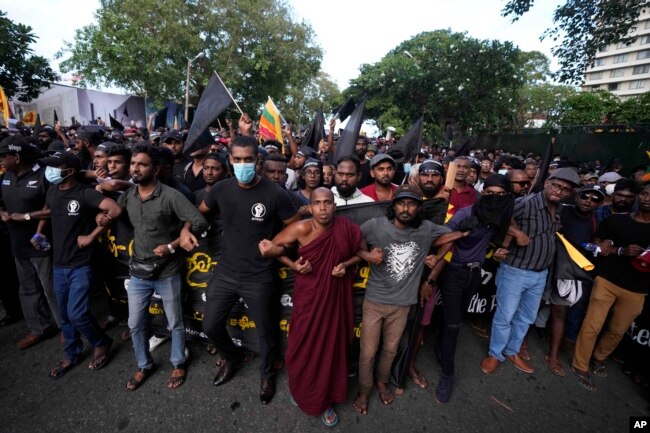
Story Of Bangladesh’s Padma Bridge: More Than Just A Bridge?

June 1st, 2022

Dr. Malika-e-Abida Khattak from Lahore, Punjab, Pakistan,

Bangladesh’s much anticipated Padma Bridge, also a dream project of theBangladesh, is going to be inaugurated on June 25 this year and Prime Minister Sheikh Hasina Wajed will inaugurate the long-awaited bridge at 10:00am.

 The commuters of 21 districts of the south-west part of the country cross the Padma River via ferries through the country’s Banglabazar-Shimulia route. Passengers and drivers have to suffer from long traffic jams. When functioned, it will be the largest bridge in Bangladesh and the first fixed river crossing for road traffic. The two-level steel truss bridge will carry a four-lane highway on the upper level and a single-track railway on a lower level.

As the Padma Bridge, the dream of millions in the south, is going to be inaugurated next month, the miseries of people are going to be ended. The multipurpose bridge, a dream project of Bangladesh connecting the Mawa point of Munshiganj and the Jajira point of Shariatpur in Bangladesh, will make the journey easier for commuters and freight vehicles, and gradually boost the country’s GDP by 1.3-2%. 

The Padma Bridge which is designed in two-tiers with steel-truss composite keeping road on the top and rail below is the deepest foundation bridge in the world. After inaugurating the Padma Bridge on the east side on June 25, Prime Minister Sheikh Hasina will address a mammoth rally on the other side of the river, her first public appearance in the south-western part of the country since late 2018.

Bangladesh’s Prime Minister Sheikh Hasina Wajed, the epitome of her country’s development, showed the confidence and foresight by creating a world example like Padma Bridge. She had to walk on the path of huge obstacles but she has reached her destination. She established the truth by firmly confronting the conspiracy that was spread at the birth of the bridge.

The Padma Bridge bears the signature of Ms. Hasina Wajed’s visionary leadership. The world got a chance to know once again the capacity of Bangladesh in Hasina era. Bangladesh is a country that has repeatedly shown its capabilities.

Work on the Padma Bridge was about to close. The World Bank withdrew its pledge on false charges of corruption, and other donors followed suit. The future of the Padma Bridge was under a threat and the construction work of the Padma Bridge became uncertain. World Bank and donors turn their backs. Critics then burst out laughing, creating a flurry of negative comments that it will not be possible for Hasina to build Padma Bridge.

The World Bank stopped financing to construct the bridge without holding board meeting with the connivance of a person bringing a false corruption allegation which was later proved baseless. Canada court didn’t find no proof of Padma bridge bribery conspiracy.

The then communications minister Abul Hossain had to resign from the cabinet. This was the beginning picture of the construction of the Padma Bridge. But after the construction work started, a great challenge came up. Bold and groundbreaking engineering skills were required in river governance and piling. At the same time construction costs continue to rise.

 The construction of the bridge was in full swing when Corona’s attack started. But the work of the bridge did not stop even for a single day due to the indomitable will of Sheikh Hasina Wajed. Work on the Padma Bridge has moved forward by tackling Corona. When everyone saw that the work of the bridge was progressing under the leadership of Hasina Wajed, some dishonest and conspirators started spreading rumors.

 
Rumors were spread that man’s head would be needed to build bridges. The government has also dealt with it efficiently. It is not only the Padma Bridge that is being built due to the indomitable will of Sheikh Hasina, but also the work of Metro Rail and country’s biggest Tunnel is nearing completion. They will be open to the public this year. Many mega projects are going on at the same time.

Many projects including Rooppur nuclear power plant, Matarbari project, construction of Bangabandhu Railway Bridge over river Jamuna, construction of Pyra sea port, construction of Bangabandhu industrial city are remarkable. But the construction of the Padma Bridge was the most challenging of all. The Padma Bridge is not just a bridge; it is a great asset of the country.

Padma Bridge is a multi-purpose road and railway bridge built over the Padma River in Bangladesh. The south-western part of the country will be connected to the north-eastern part. Construction of the 6.15 km long and 18.10 m wide bridge started on 7 December, 2014.

Today the Padma Bridge is visible. The bridge of pride stands today. As a result of the construction of the Padma Bridge with its own money, the economic potential and image of Bangladesh have been established all over the world. A bold decision by the Prime Minister has earned him international recognition as a self-confident, determined statesman. Bangladesh’s economic progress, continuous GDP growth, and improvement of Bangladesh’s position in various social indicators are recognaized internationally today. The sacrifices made by the Prime Minister for this bridge, the success of the implementation of the Padma Bridge project have made that sacrifice justified.

 
Initially, the construction cost was low, but later it increased a few points and stood at USD 3.868 Billion. Both construction time and construction costs increased. Although there are differing views on construction costs, the most promising thing is that the bridge has been completed and will be open to the public in June.

 
The bridge is deeply connected with politics, economics, culture and social phenomenon.  Building the bridge was a major political challenge for Bangladesh. After opening the bridge, the country’s economy will rise up. The structure of the country’s economy will change.

There will be massive development of agriculture. The bridge will create a groundbreaking chapter in the transportation of agricultural commodities from the southwestern region to capital. Farmers will get good prices for their produce. Extensive industrialization will take place in the southwestern region of the country centered on the Padma Bridge.

 
The Padma Bridge could become a part of the Fourth Industrial Revolution. There will be a revolution in the field of communication and transportation. The development of the tourism industry will be achieved through the bridge. A 6-lane expressway has been constructed at the country’s Munshiganj and Shariatpur sections of the bridge which is very eye-catching and captivating.

 
This bridge will play a unique role in the field of culture. Resorts, hotels and restaurants will be built around this bridge where Bengali food will be served which will make Bengali culture more familiar to foreigners. The Padma Bridge will increase the country’s GDP and increase per capita income.

 This bridge will further strengthen the rail link with the southwestern part of the country. People will be able to travel comfortably in a short time from Dhaka.

Various business establishments will be built around the bridge and the standard of living of the people of the South West will be multiplied.

 If the name of Padma Bridge is pronounced, the name of Sheikh Hasina Wajed should be pronounced. Sheikh Hasina’s name and the Padma Bridge are complemented to each other. There is no chance to separate them. Although the Padma Bridge is not named after Sheikh Hasina Wajed, people will know from generation to generation that this bridge was made possible because of Sheikh Hasina Wajed.

 
Sheikh Hasina Wajed has taken the great challenge of Padma Bridge and won.  Bangladesh has already become a developing country. Padma Bridge will take the country faster. This bridge will play a unique role in taking Bangladesh to line of developed countries.

The decision of building the much-awaited Padma Multipurpose Bridge, which is set to open for traffic on June 25 next, brightened the country’s image in the world and also accelerated the nation’s confidence. The decision to construct the Padma Bridge by own finance has brightened the country’s image in the globe and also accelerated the nation’s confidence

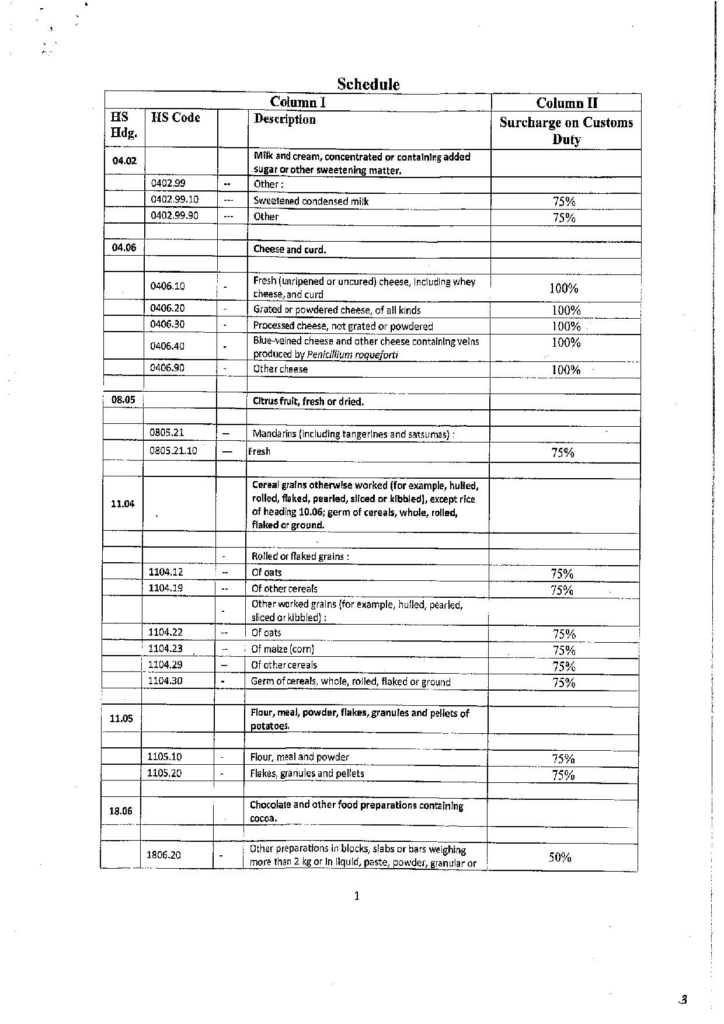
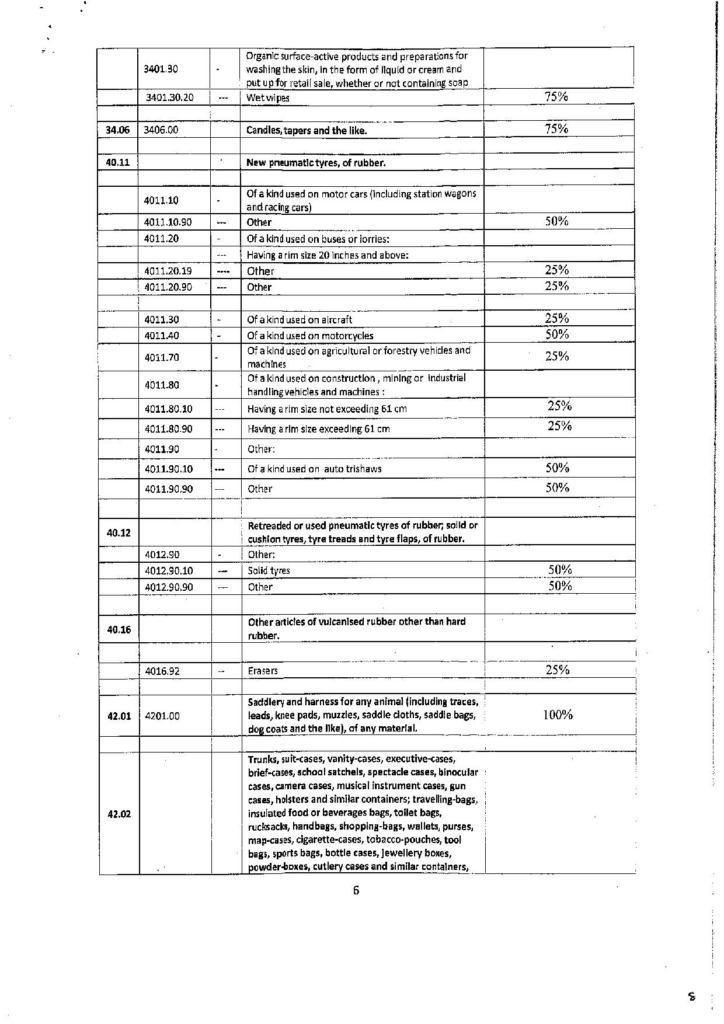
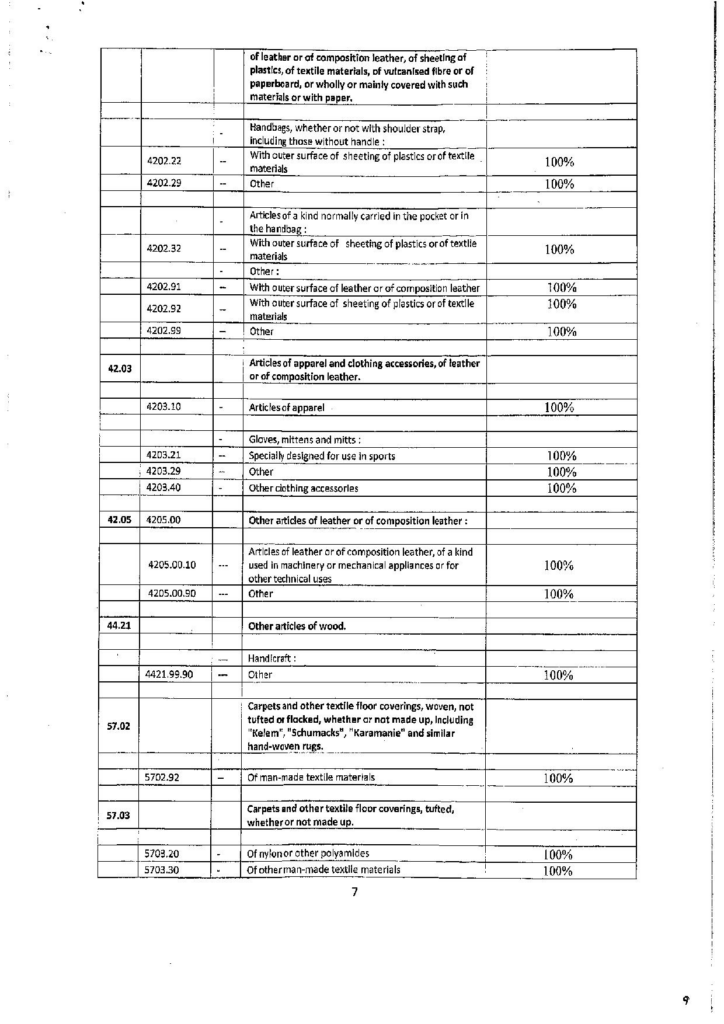
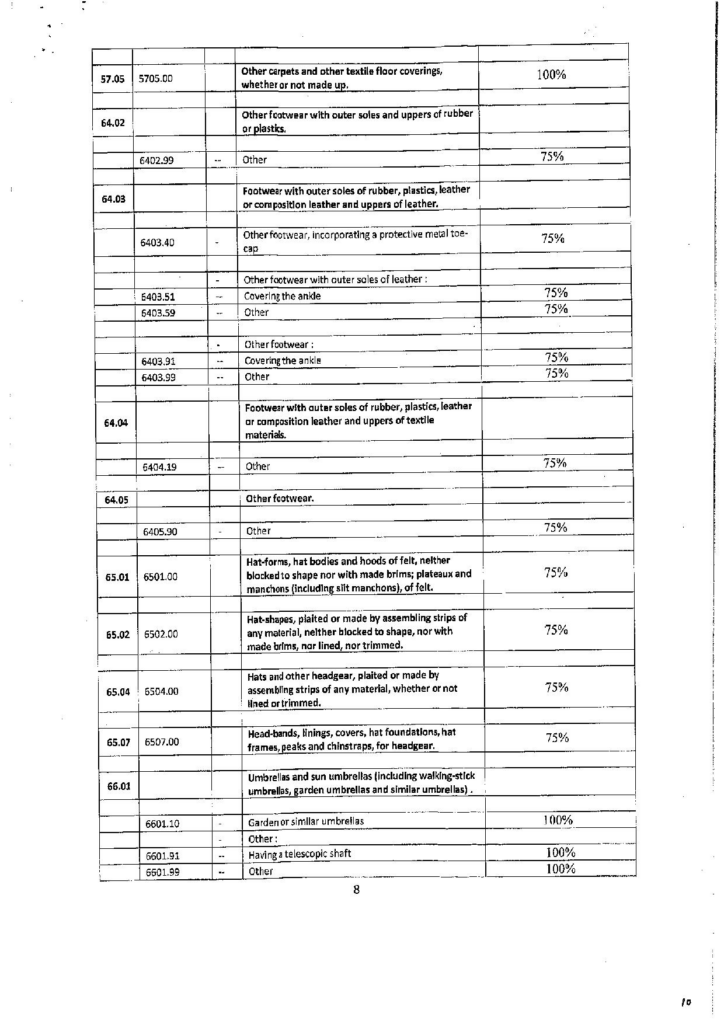
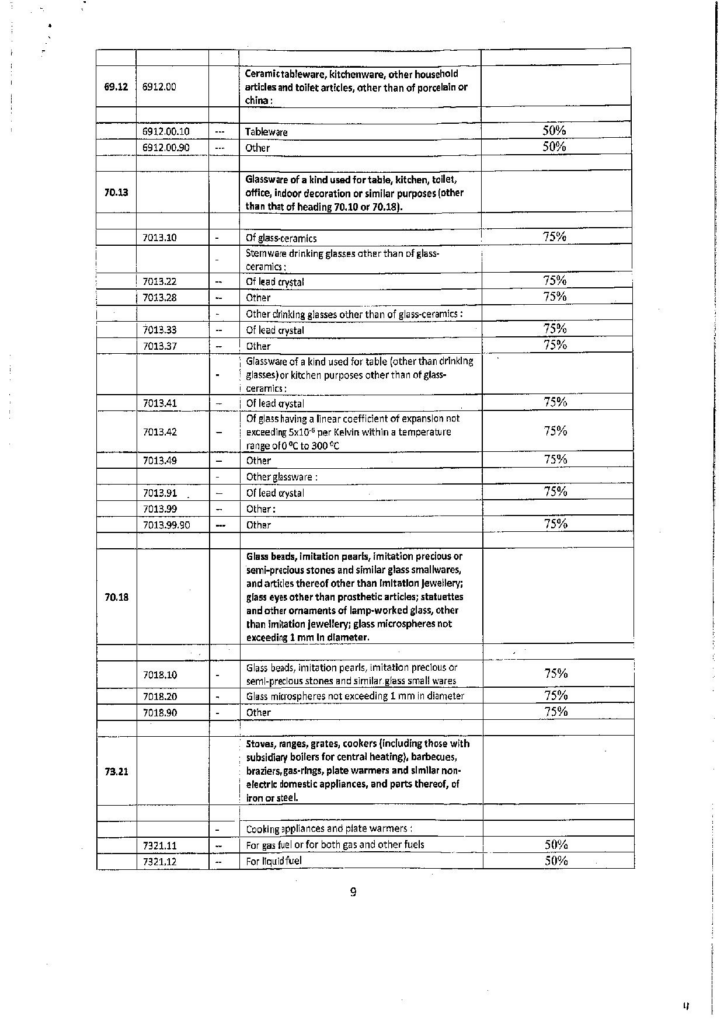
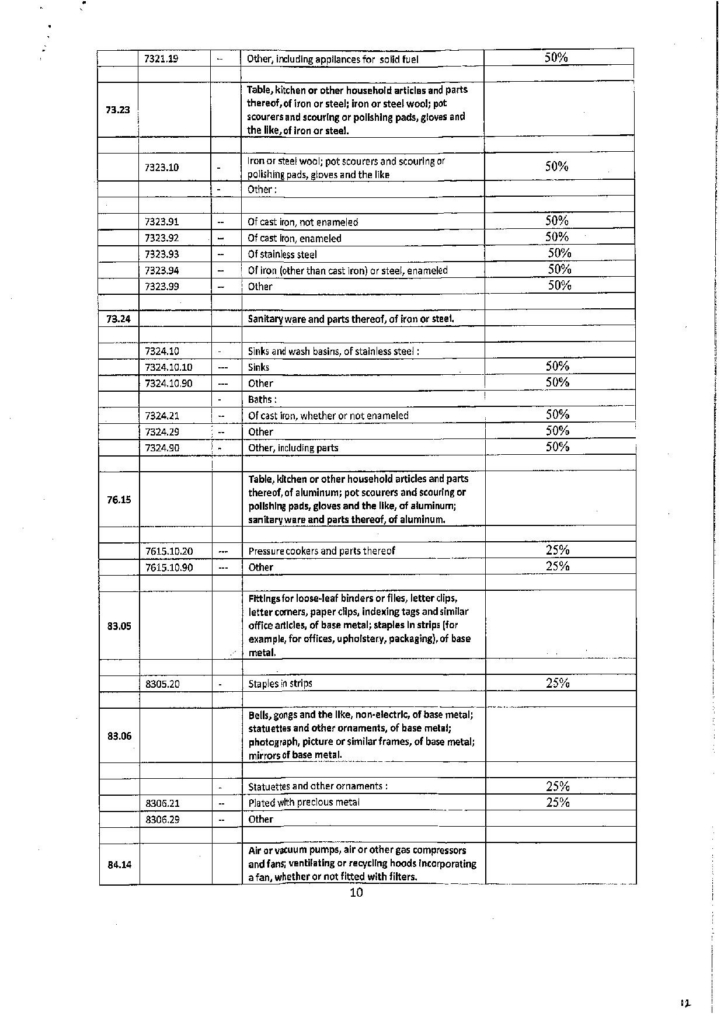
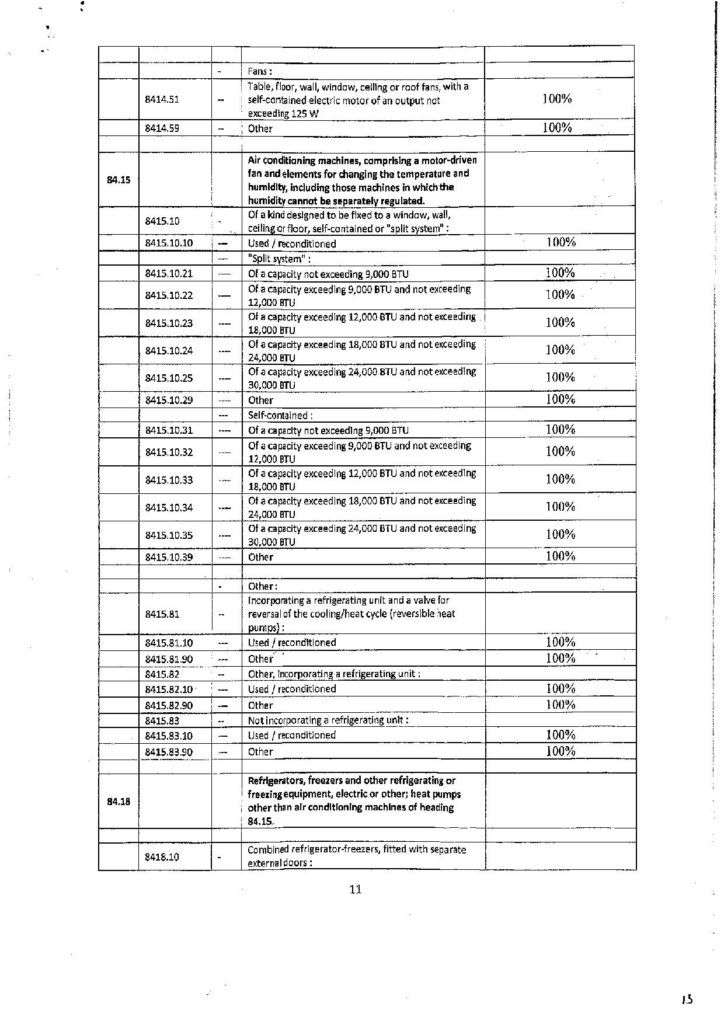
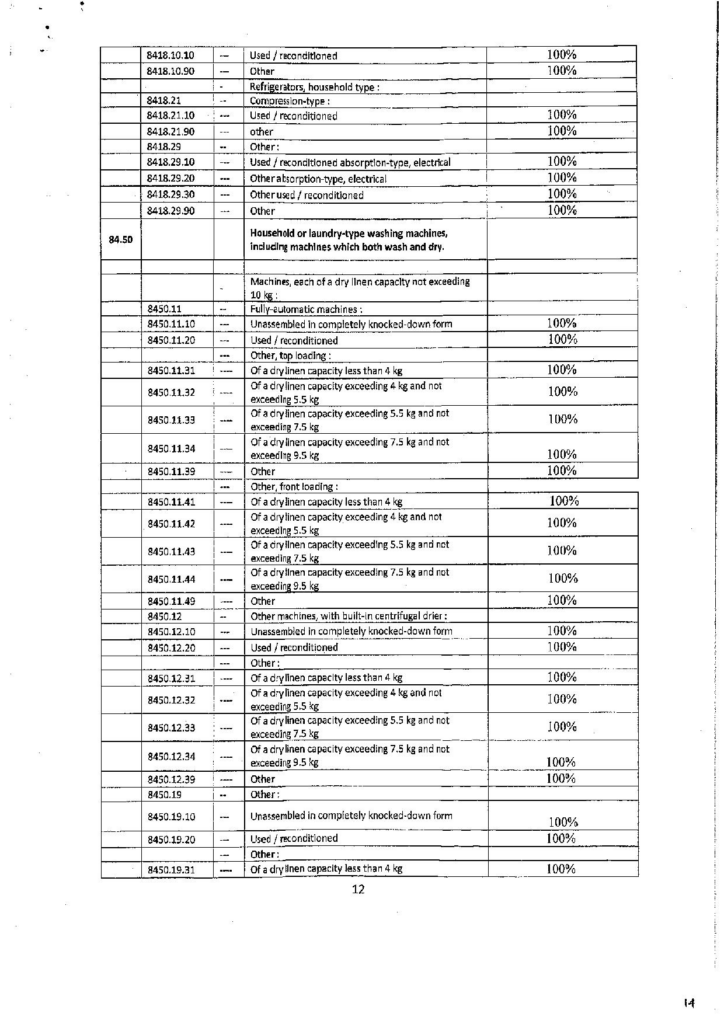
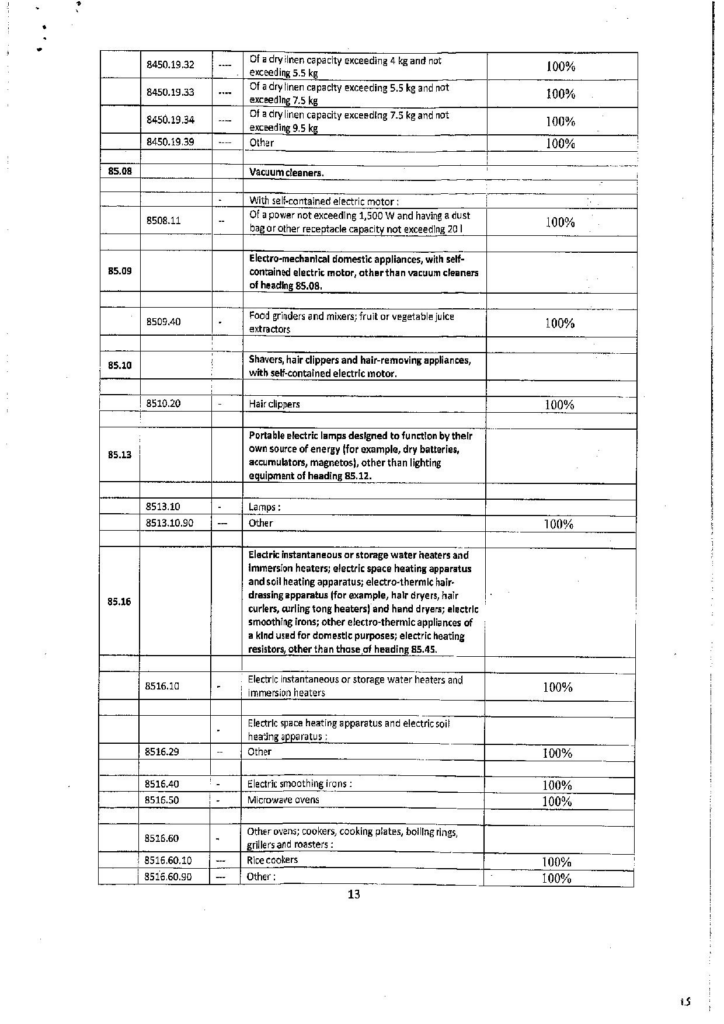
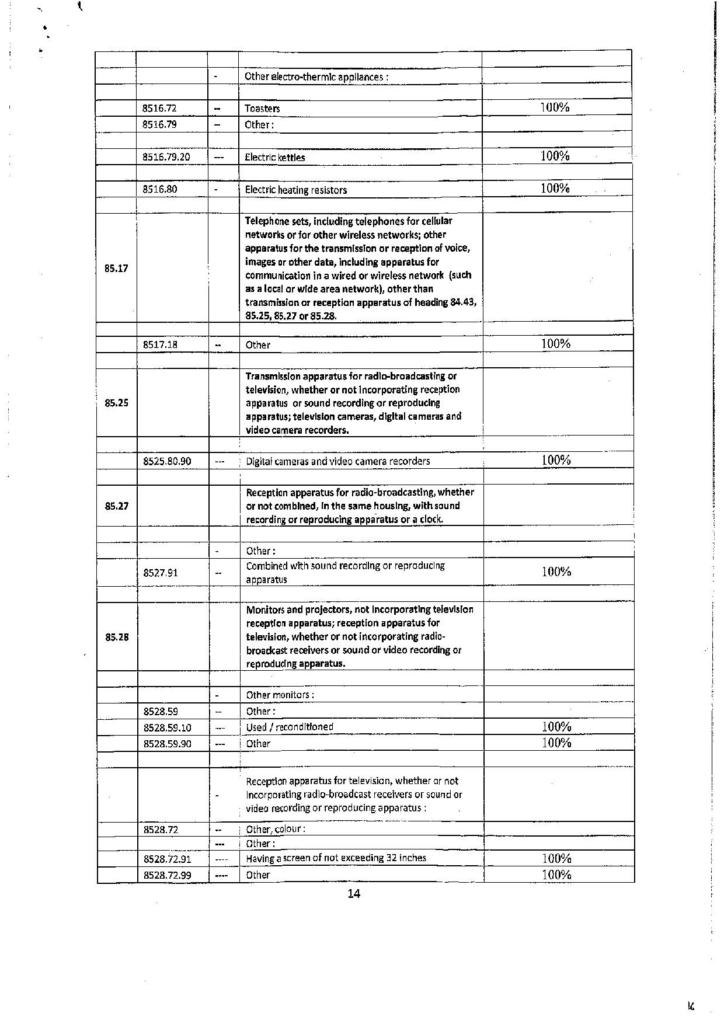
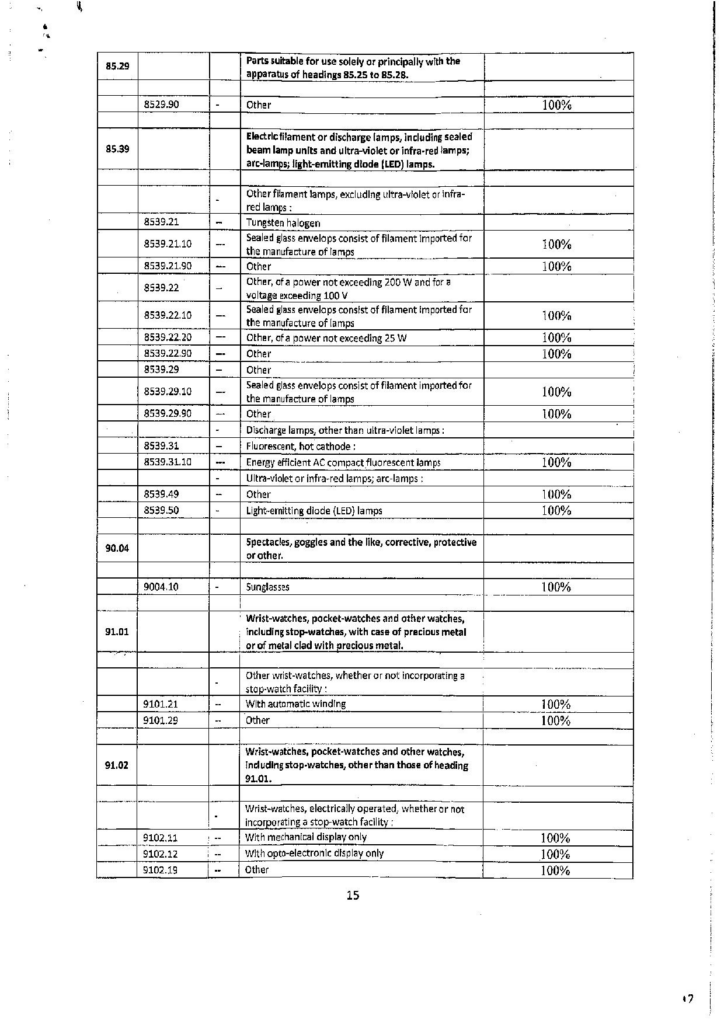
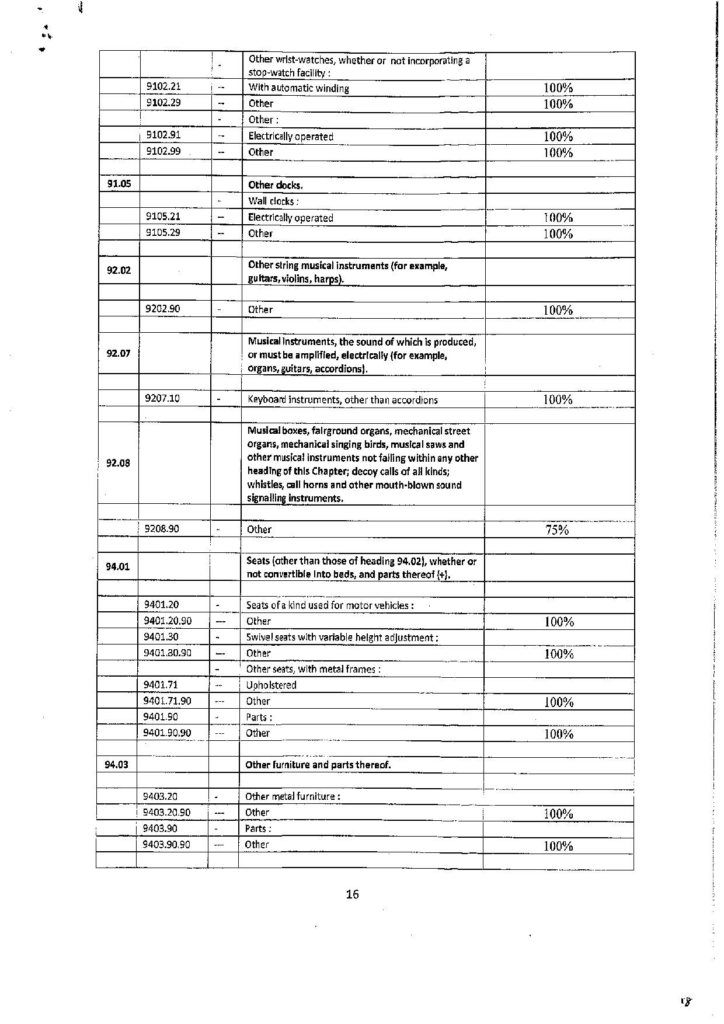
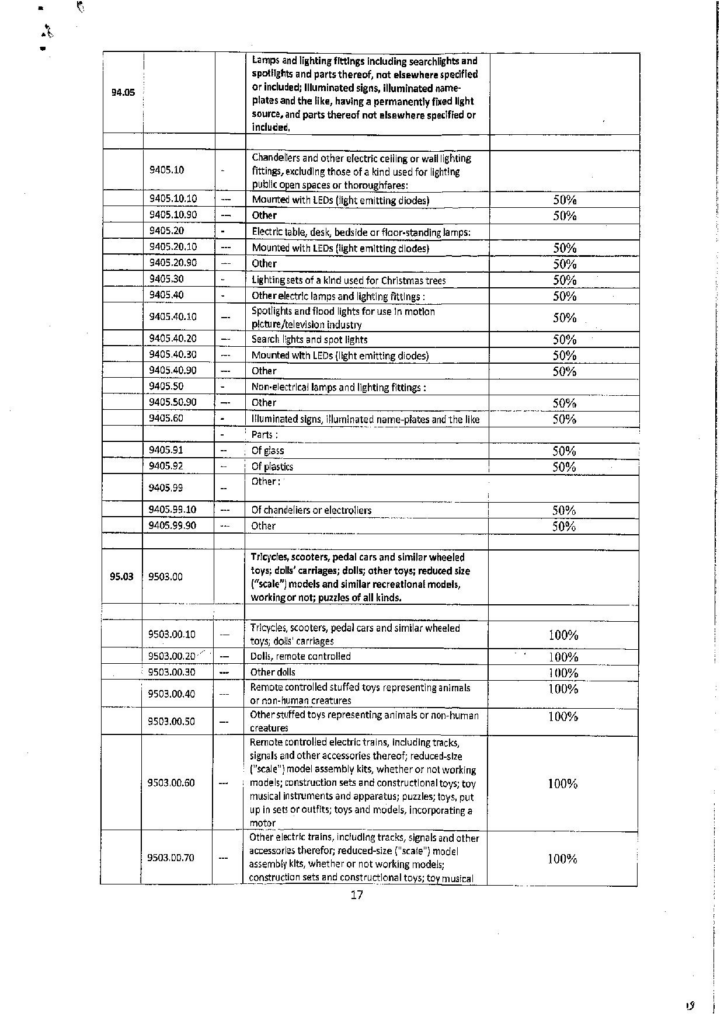
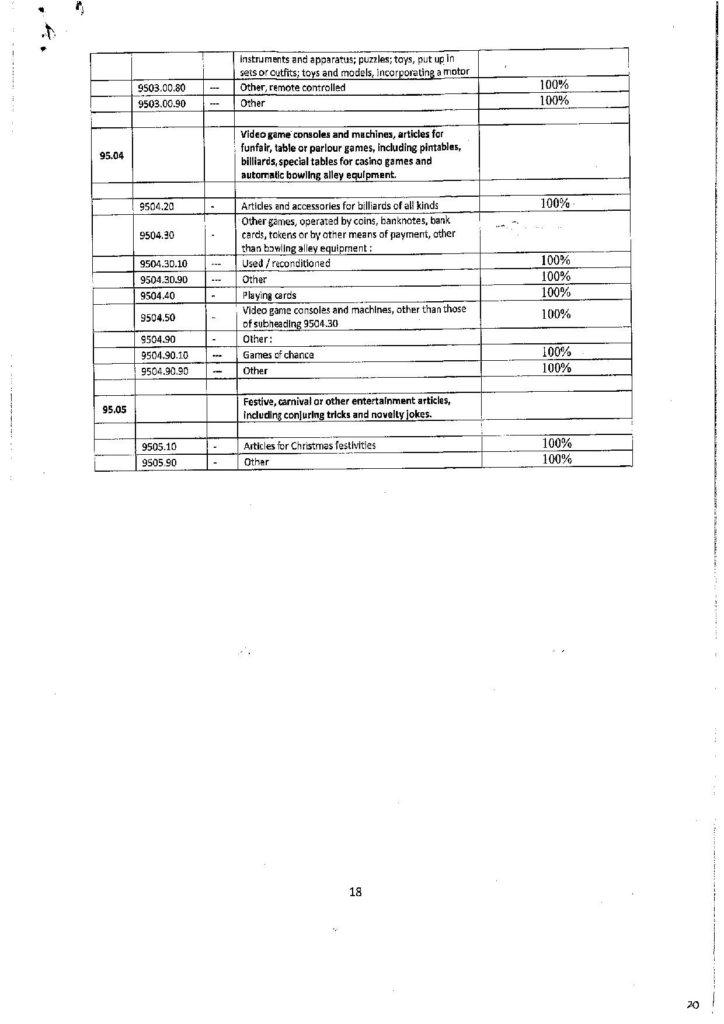
Tax on several imported items significantly increased: Full list

June 1st, 2022

Courtesy NewsIn.Asia

Vegetables. Image credits - Nathan Dumlao / Unsplash

Vegetables. Image credits – Nathan Dumlao / Unsplash

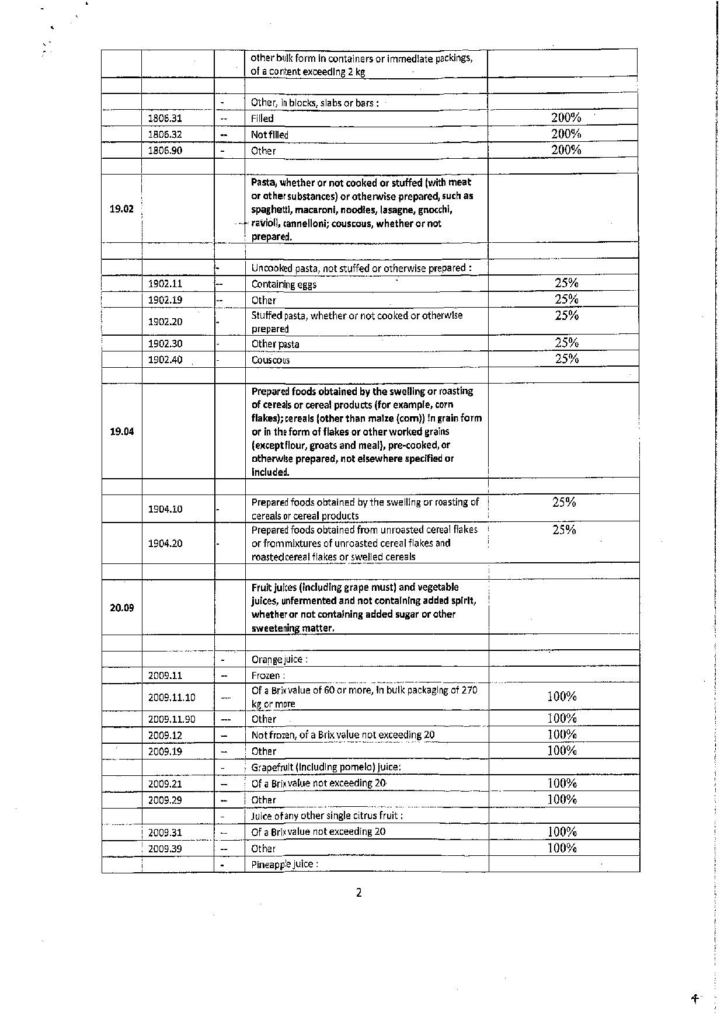
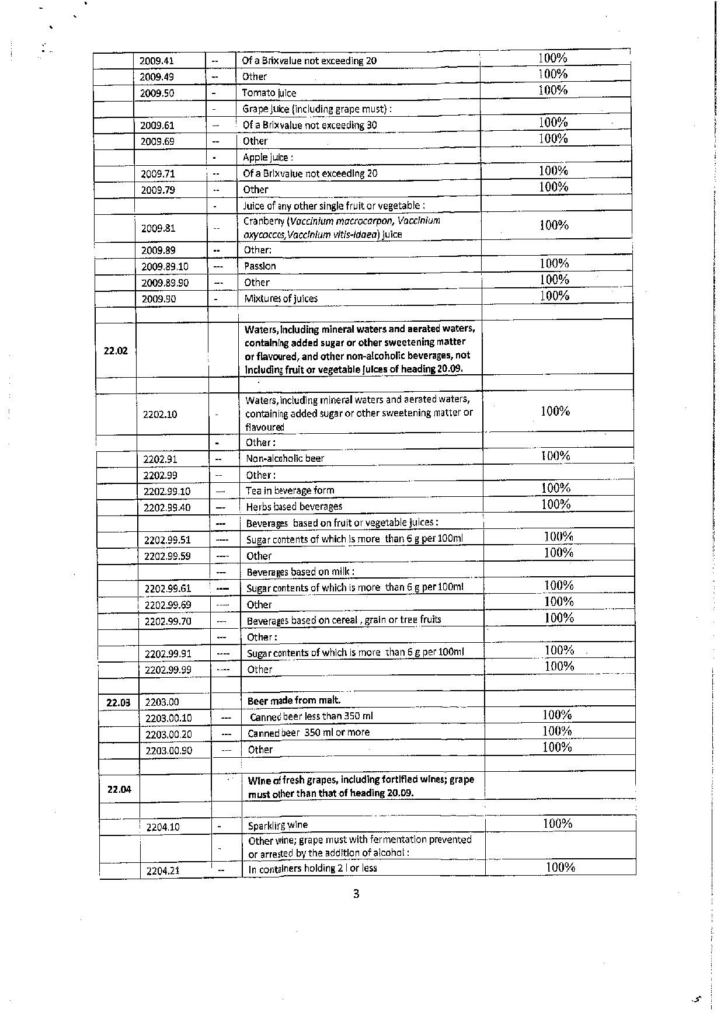
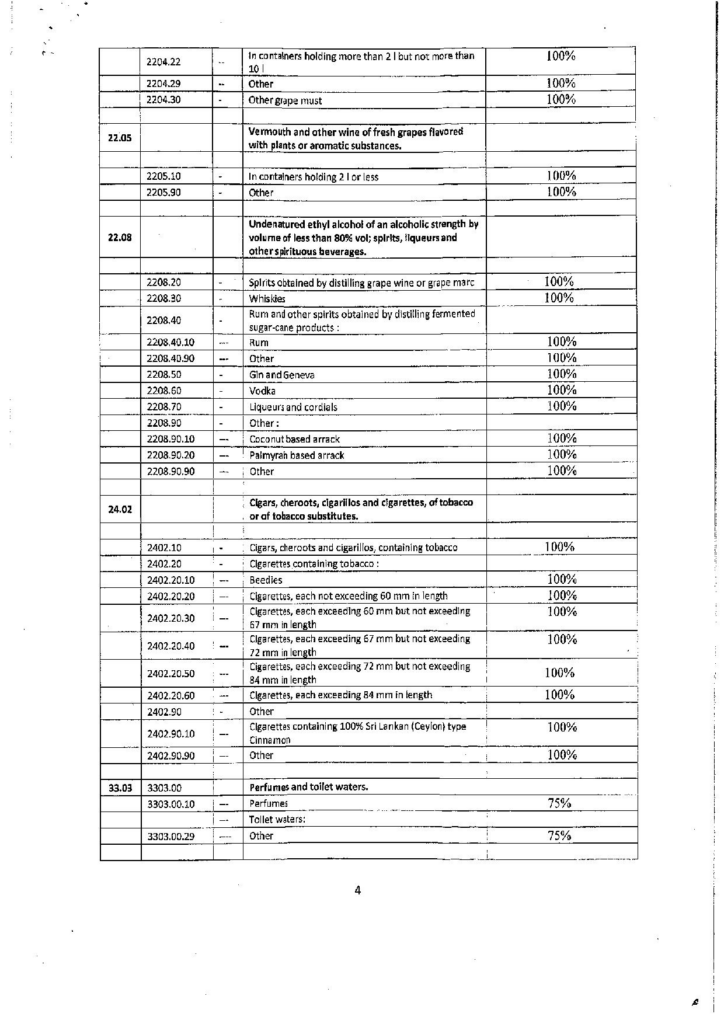
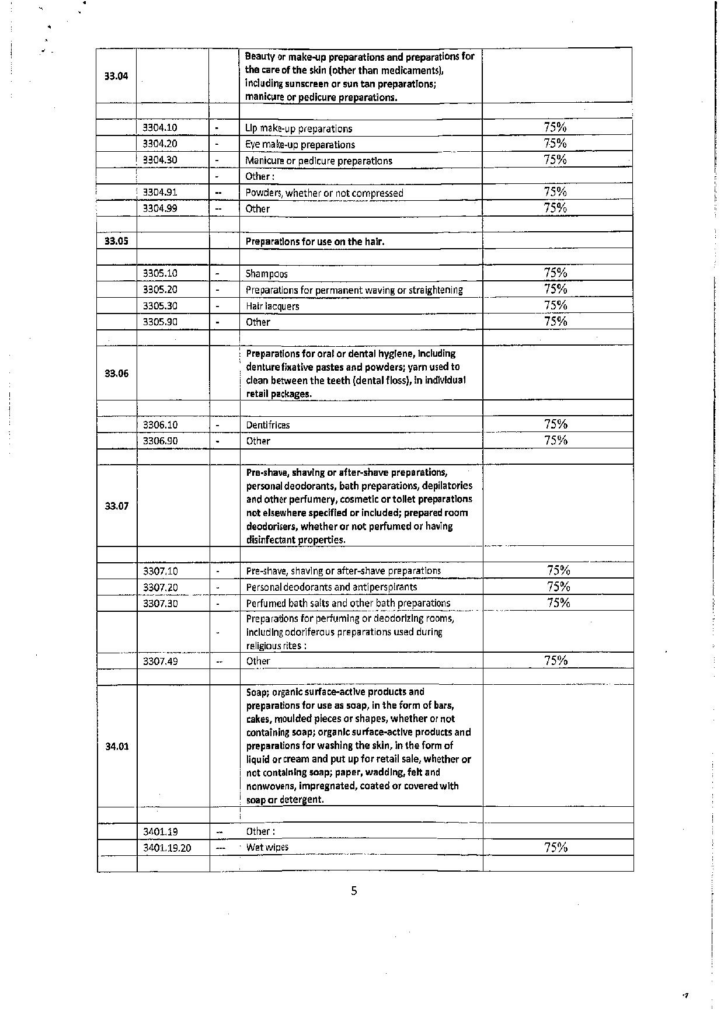
Colombo, June 1 (News1st) – Sri Lanka’s Finance Ministry has decided to impose a 100% surcharge rate on both General and Preferential Custom Duty of multiple products with effect from Wednesday (1).

A surcharge — or additional charge — is essentially a tax levied on a tax. It is calculated on payable tax, not on income generated.

These measures come after Sri Lanka decided to relax import restrictions that it imposed on 369 items with effect from the 1st of June 2022.

Accordingly, a total of 369 HS Codes, which were regulated can be imported without an Import Control License effective from June 01, 2022 subject to applicable rules and regulations including duties and taxes at the time of Customs clearance of cargos/consignments.

The Finance Ministry has also decided to permit open account imports until June 07th, 2022.

Here’s how the new Surcharge works:

The Finance Ministry imposed a 200% surcharge on Chocolate and other food preparations containing cocoa.

Meanwhile, the surcharge imposed on imported Cheese is 100%, which means the Rs. 1000/- tax on a kilogram of imported cheese is now Rs. 2000/-.

The import tax on Apples and Grapes will increase from Rs. 300/- per kilogram to Rs. 600/- per kilogram.

Incidentally, the import tax on Oranges will seek a spike from Rs. 200/- per kilogram to Rs. 600/- per kilogram.

Moreover, the surcharge tax on Cigars, Cheroots, and Cigarettes of Tobacco or of Tobacco substitutes, as well as Liquor and Spirits is 100% in addition to the import tax.

Full list of products as released by the Finance Ministry:

Tags: ImportSri LankaTax

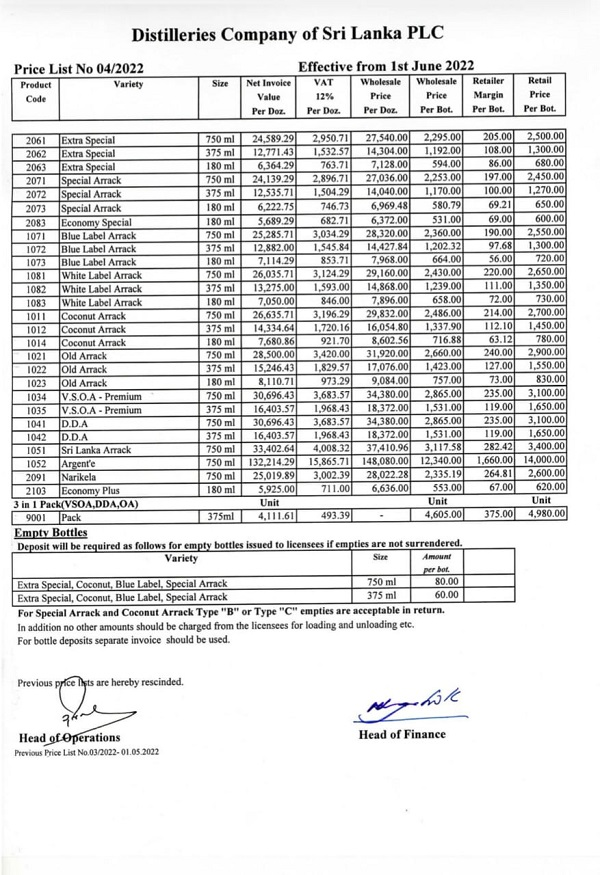
Cigarette & alcohol prices increased

June 1st, 2022

Courtesy NewsIn.Asia

Colombo, June 1 (NewsWire) – Price of a cigarette increased by Rs 5 with effect from today (01 June) due to the increase in VAT.

Meanwhile, The Distilleries Company of Sri Lanka (DCSL) has also announced a hike in the price of locally manufactured liquor.

According to DCSL, the price of a 750 ml bottle of liquor issued under the Extra Special Label has been increased by Rs 680.

ADVERTISEMENT

Thereby, the new price of a 750 ml bottle of liquor issued under the Extra Special Label is Rs 2500 per bottle.

Meanwhile, the price of locally produced beer has been increased by Rs 30.

Tags: Sri Lanka

Related Posts

Lankan Prez appoints commission to inquire into arson, vandalism and murder during youth agitation

June 1st, 2022

By P.K.Balachandran Courtesy NewsIn.Asia

Colombo, June 1: Sri Lankan President Gotabaya Rajapaksa has appointed a Commission of Inquiry to investigate and report on the incidents of arson, looting, and all types of damages to properties and loss of life in several parts of the country between March 31 and May 15.   

The Commission of Inquiry is headed by Supreme Court Justice, President’s Counsel B.P. Aluvihare. Retired Senior Deputy Inspector General of Police S. M. Wickremasinghe and Additional Chief Assessor N.A.S. Wasantha Kumara are other members of the Commission.

ADVERTISEMENT

The Additional Secretary to the President Mr. Buwaneka Herath has been appointed as the Secretary to the commission.

In the violence after the wanton attack on peaceful anti-government protesters on the morning of May 9, scores of buses were destroyed or burnt and about 78 houses and other properties of ministers and ruling party Members of Parliament were torched.   

The police had questioned former Prime Minister Mahinda Rajapaksa and his son Namal Rajapaksa  and some other leaders of the ruling Sri Lanka Podujana Peramuna who had allegedly instigated the initial violence. The area police officers were also questioned. A committee of ex-chiefs of the three forces was set up to inquire into the failure of the forces to stem the violence.

But it is only now, three weeks after the arson, vandalism and murder that followed the May 9 morning violence, is going to be probed. The gap is due to the fact that public sympathy was with the anti-government protesters and not with the politician victims of arson and vandalism. The government felt inhibited by the lack of sympathy.

Nevertheless, no government can let wanton arson, vandalism and murder go uninvestigated and the perpetrators punished, regardless of the biases of the public.

Lankan Prez and PM open avenues for youth involvement in decision making

June 1st, 2022

By P.K.Balachandran Courtesy NewsIn.Asia

Colombo, June 1: As a result of the 50-day Gota Go Home” campaign demanding the ouster of Sri Lankan President Gotabaya Rajapaksa and the exit of the Rajapaksa clan from the government, the President  as well as his new Prime Minister Ranil Wickremesinghe, have woken up to the need to consult and formally take on board, representatives of the youth in governmental decision-making.

President Gotabaya did not quit office as demanded by the demonstrating youth, but all other members of the Rajapaksa clan went out of office. His elder brother and Prime Minister, Mahinda Rajapaksa, was replaced by Ranil Wickremesinghe from the opposition United National Party (UNP).  

ADVERTISEMENT

But he even he stubbornly stuck to his office saying that he still has the peoples’ mandate that he received in the 2019 Presidential election,  Gotabaya Rajapaksa realized that he could not entirely ignore the anger of the youth.

Therefore, he is now trying to placate them by trying to involve them in decision-making.   

On Tuesday, the President met young professionals and a section of the youth who were part of the agitation in front of his office day in and day out for more than a month. In a press release after the meeting, his office said that he got concise proposals” from the youngsters to solve current political and economic problems.

The Confederation of Professionals for a National Policy (CPNP), a group of professionals and youth involved in the ‘Aragalaya’ (Sinhalese term for ‘struggle’) presented to the President,a concise set of proposals outlining actions that should be taken to resolve the current political and economic situation.”

The discussions focused on short, medium and long-term measures that should be taken to address the current political, social and economic crisis. The adoption of a new ‘people-friendly’ Constitution was also discussed.”

Subsequently, it was agreed to hold the next discussion within the next few days, the release said.

President Gotabaya said that several groups representing experts in various fields are ready to build the country and added that he is ready to provide the necessary powers and resources to implement the positive plans of these groups.

The professionals pointed out that a development program with specific targets should be provided to all Ministries annually, and steps should be taken to review the progress towards those targets on a quarterly basis.

The proposal calls for the removal of Ministers and Officials who fail to meet targets by the end of the year.

The discussion which was held under the patronage of Ven. Prof. Pathegama Gnanissara Thera and Shastrapathi Ven. Vitiyala Kavidhaja Thera was attended by Dr. Asoka Jayasena and Mr. Nelum Weragoda representing the Confederation of Professionals for a National Policy and a group of professionals and youth involved in the ‘Aragalaya’ (Struggle). Justice Minister Dr. Wijayadasa Rajapakshe was present.

PM’s Plan

In his address to the nation over TV on May 30, Prime Minister Ranil Wickremesinghe delineated his own plan for the involvement of the youth in decision-making.

The youth are calling for a change in the existing system. They also want to know about the current issues. Therefore, I propose to appoint four youth representatives to each of 15 committees (in parliament).”

One of the representatives will be appointed by the Youth Parliament. The other three will be from the protesting groups and other activist groups. The methodology used to choose the representatives can be decided by the youth organizations themselves,” the Prime Minister  said.

Going further, he said: We hope to involve people with expertise in specific fields in this work. Through this work, young people will be able to learn about problems and provide solutions to them on their own. They will be able to contest elections if they wish to do so.”

It remains to be seen if these proposals will be acted upon. They are clearly a departure from the past and outside the existing institutional framework. The attitude of the entrenched political class and bureaucrats is also uncertain. But an agitation brewed in a severe crisis was bound to have an impact and the new moves of the two men at the helm bear testimony to that.  

Sri Lanka’s President Won’t Be Stepping Down Soon, Minister Says

June 1st, 2022

Courtesy Bloomberg

(Bloomberg) — Sri Lankan President Gotabaya Rajapaksa signaled to a group of lawmakers just before they joined his cabinet that he wouldn’t be stepping down soon, a move that falls short of demands from protesters who want his immediate ouster.

The president had agreed to whittling down his powers when he met with Prime Minister Ranil Wickremesinghe and a few others, said Justice Minister Wijedasa Rajapakshe who attended the meeting last month. 

After this term he won’t continue,” Justice Minister Wijedasa Rajapakshe told Bloomberg News in an interview at his office in Colombo. The government cannot answer whether we will stay the full term, that is uncertain,” he added.

The next presidential election isn’t until November 2023. Wijedasa Rajapakshe said elections can be held when Sri Lanka’s economic position was stabilized and if its citizens wanted this to happen. 

Gotabaya Rajapaksa agreed to a so-called 21st amendment to the constitution that aimed to return to an earlier version, said Wijedasa Rajapakshe. It will give some powers back to the parliament and restores independence to commissions in key decision making. 

The plan, put forward by a newly-appointed multi-party government, is expected to get parliament approval in four to six weeks,  said Wijedasa Rajapakshe, who is not related to the president.

The deliberations come as thousands of protesters have camped outside Gotabaya Rajapaksa’s barricaded office and official residence, calling for his ouster. Sri Lanka is undergoing the worst economic crisis in its independent history, with shortages of everything from fuel to medicine and inflation at nearly 40%.

Despite this, Wijedasa Rajapakshe said he had the confidence” the amendments will get passed, adding that it was being drafted in a way that would also avoid seeking a referendum — a process that would take time. It would be up to the Supreme Court to determine if a referendum was needed to ratify certain changes in the constitution. 

Wijedasa Rajapakshe said a more complete overhaul of the constitution could be done once economic stability returns to Sri Lanka. For now, the current administration and its president must continue or else the country would be dragged into a deeper crisis if there’s no one left to negotiate with the International Monetary Fund for a much-needed bailout, he said. 

We can all go. But then who will govern the country?” Wijedasa Rajapakshe said. The protesters have no answer for that.”

Sri Lanka inflation hits a record of 39%

June 1st, 2022

Courtesy LBC Group TV

Sri Lanka’s headline inflation hit a new high in May, owing to ongoing food and fuel shortages as the country struggles to recover from its worst economic crisis in decades.

The Department of Census and Statistics said in a statement on Tuesday that consumer prices in the capital Colombo jumped 39.1 percent from a year ago.

The Sri Lanka economic crisis: India’s response

June 1st, 2022

AKASH CHOWDHURY Courtesy Observer Research Foundation

It would be strategically and geopolitically prudent for India to extend assistance to Sri Lanka during such trying times.

Sri Lanka, a nation of 22 million people, is today facing an unprecedented economic crisis that threatens to undo much of the progress that had been made since the end of the bloody civil war in 2009. Amidst skyrocketing inflation (which stood at more than 21 percent for March 2022), power cuts lasting well over 10 hours, and shortage of essential items—like food, fuel, and life-saving medicines—the crisis appears to have spilled over into newer domains, with the island nation now also confronted with a political crisis wherein so far Prime Minister Mahinda Rajapaksa has resigned amidst violent clashes between pro-and anti-government demonstrators, a caretaker PM been installed, the national emergency declared (including shoot-on-sight orders issued to the military) and dramatic curbs on the use of social media imposed. So, the question that arises is: What are the factors that led to this?

Even though many economists and policymakers point to the pandemic as the principal cause of the problem—linking the fall in earnings from the tourism sector (one of the most significant contributors to Sri Lanka’s GDP) from over US$4 billion in 2018 to less than the US $150 million in 2021 to the drop in the country’s forex reserves—this crisis long been in the making. Between 2009 and 2018, Sri Lanka’s trade deficit swelled from US$5 billion to US$12 billion. In recent years, the economy has had to withstand multiple shocks due to some of the policy measures—drastic tax cuts, downward interest rate revisions, and a ‘disastrous’ plunge into organic farming through a complete ban on imports of all fertilizers and pesticides—adopted by the Rajapaksa government; more recently, it has also had to contend with an unanticipated spike in the import bill caused by inflation on account of the Ukrainian crisis. Amidst all of this, the one event that can be said to have tipped it over the precipice was Sri Lanka’s effective exclusion from the international credit market—caused by a dramatic downgrading of the nation’s credit ratings in the immediate aftermath of the pandemic. This essentially made it impossible for Colombo to find the means to service its foreign-currency-denominated debt accumulated over the years, thereby, precipitating the crisis it finds itself in today.

The economy has had to withstand multiple shocks due to some of the policy measures—drastic tax cuts, downward interest rate revisions, and a ‘disastrous’ plunge into organic farming through a complete ban on imports of all fertilizers and pesticides—adopted by the Rajapaksa government.

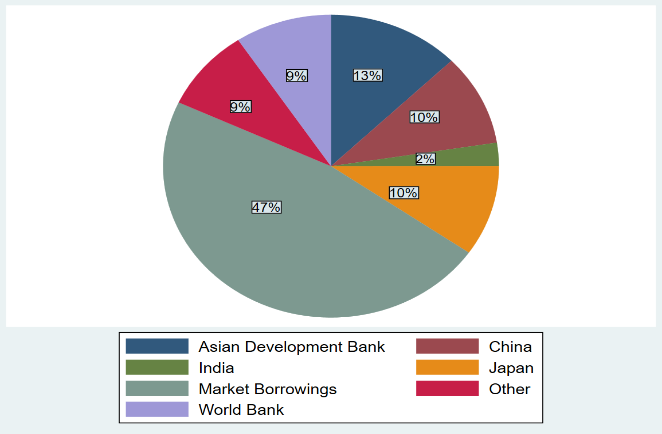
With an outstanding present-day external debt of more than US $50 billion—the largest chunk of it (nearly 47 percent) borrowed from the market, mostly through the instrument of International Sovereign Bonds (ISBs)—and forex reserves of just over US $2 billion (barely enough to foot two months’ import),  it appears increasingly unlikely that the country will be able to repay all its debt. In this article, we look at the reasons why India should facilitate a speedy resolution of this crisis and explore some ways it can address the challenges that beset its neighbour. 

India’s interest

There are three primary reasons why this crisis affects India: China, trade, and potential political instability.

Even though Sri Lanka occupies an integral spot in India’s neighbourhood first policy, there appears to have been some amount of neglect over the years in fostering closer trade and developmental ties between New Delhi and Colombo, leading to Beijing’s rise as the dominant foreign player in the island nation. This is apparent as China being the country’s top single lender and also its biggest source of foreign direct investment, since at least 2015. Even in trade terms, Sri Lanka imports more from China than India.

India’s concerns about Beijing stem from the very nature of Chinese investment in the island nation and what this could mean in the context of this crisis. Criticised often for being made in exchange for political ‘kickbacks’ and the lack of the required transparency of review and assessment—Chinese investments in Sri Lanka have time and again failed to generate the kind of local employment or revenue expected of them to justify the debt, often compelling the Sri Lankan government to default and thereby surrender strategically-located townships and ports such as the Hambantota in exchange. In many instances, Sri Lanka has simply leased out land in exchange for Chinese investment—for instance, in the case of the Port City of Colombo project where Beijing received over 100 hectares in exchange for a US$1.4-billion investment. Through such means, China has found an increasingly larger territorial foothold in the country. Now, as the economic crisis worsens, Sri Lanka could stand to lose control of even more of its land in such strategically-located port cities. This would heighten Indian fears of greater Chinese presence in this region, given its proximity to some of the busiest shipping routes in South Asia, especially since it considers the island-nation a crucial part of its ‘sphere of influence’.               

The figure above gives a break-up of the external debt incurred by Sri Lanka (April 2021). Source:  Department of External Resources (website), Government of Sri Lanka.

In more immediate terms, any major disruption to the normal functioning of the Colombo Port due to the crisis would be a source of major concern to India as it handles over 30 percent of India’s container traffic and 60 percent of its trans-shipment. Sri Lanka is also a major destination for Indian exports—receiving over US$4 billion annual worth of merchandise from India. In the event of a worsening of the economic crisis, there would be major implications for Indian exporters who will have to find alternative markets for their produce. Besides trade, India has a substantial investment in the island-nation in the areas of real estate, manufacturing, petroleum refining, etc.—all of which stand to be adversely impacted by the crisis.

Officials estimate that more than 2,000 of such ‘economic’ refugeeld arris couve in India if the crisis were to continue—and this should be a major cause of concern.

Besides trade, investment, and geopolitics, immediate political instability arising out of the current crisis could also become a source of major concern for India. Over the past few weeks, scores of people have fled from Sri Lanka to India.  Officials estimate that more than 2,000 of such ‘economic’ refugeeld arris couve in India if the crisis were to continue—and this should be a major cause of concern. For one, any significant spike in the number of refugees could trigger the apprehensions of the state around issues of public safety and refugee resettlement and stoke conflict with the local population over the use of common resources. Additionally, there would be fears of a possible return of the Tamil–Sinhalese conflict (from the days of the Lankan civil war) and its potential spillover into India. It would, therefore, only be in India’s interest to play a role in ensuring a speedy end to the economic crisis.

The way forward 

On the list of countries to which Sri Lanka owes the most debt, India ranks third, behind only China and Japan. It thus has a significant role to play in helping the island nation meet its financial commitments during this time of need. For one, it must consider granting Sri Lanka a moratorium on debt repayment and/or the option of restructuring the debt owed to it. This will not only help Colombo better allocate its limited revenues toward meeting the immediate needs of the people such as food, medicine, and fuel but also go a long way in building some much-needed goodwill amongst its leadership: To be able to counteract, in some way, the influence of enormous Chinese investment over the years. Such a move would assume increased salience amongst the political leadership in Sri Lanka against the backdrop of the recent Chinese refusal of President Rajapaksa’s request to consider the restructuring of its debt. Of course, this should be alongside the developmental and humanitarian assistance that India continues to provide.

Any significant spike in the number of refugees could trigger the apprehensions of the state around issues of public safety and refugee resettlement and stoke conflict with the local population over the use of common resources.

Over the longer term, India must stand ready to provide any assistance required by the island nation. As it is only in India’s interest to reduce Sri Lanka’s dependence on China, the former must contribute to closer integration of the island nation into the world economy. Here, a good place to start would be through expanding bilateral trade between New Delhi and Colombo. The India–Sri Lanka Free Trade Agreement (ISFTA), for one, can be utilised to this end. In 2019, only 64 percent of all Sri Lankan exports to India were made under the ISFTA, down from over 90 percent in 2005. On the import side, only 5 percent of all Indian imports were covered under the agreement. This means there is room to renegotiate some of the key inclusion terms of the agreement to spur greater trade-based cooperation between the two countries.

Indeed, at this point, India must do all it can to prevent the crisis from worsening any further.

Sri Lanka’s Poor Hardest Hit by Economic Crisis

June 1st, 2022

Courtesy VOA

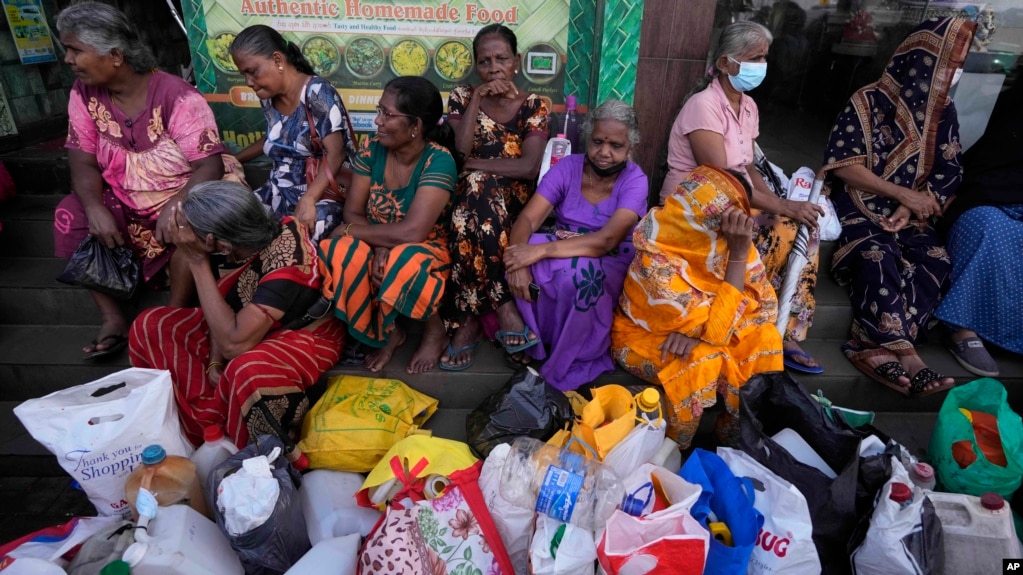
Women wait near an empty fuel station hoping to buy kerosene for cooking, in Colombo, Sri Lanka, May 26, 2022.

Growing economic and political crises in Sri Lanka are pushing more than 10% of its 22 million people beneath the poverty line and millions more are losing jobs, health care and food security, experts say.

The human development impact of the unfolding economic crisis is severe,” a World Bank spokesperson told VOA. The crisis has disrupted economic activities and households’ capacity to afford basic necessities, including adequate nutrition.”

Many low-income Sri Lankans have become unable to afford adequate food because of skyrocketing prices with 46% inflation reported in April.

A worse-case scenario contraction in economic activity in 2022 and 2023 would translate into an increase of over 11 percentage points … with the resulting poverty rate close to 22% in 2023,” the spokesperson said.

The South Asian country is reportedly facing bankruptcy as it has defaulted on its foreign loans for this year, and its foreign currency reserves have plummeted, making it difficult to import fuel and other essential commodities.

While Sri Lanka’s economy has been hammered by the COVID-19 pandemic, with its once lucrative tourism revenues dropping from $5.6 billion in 2019 to $1.08 billion in 2020, its economic woes are rooted in pre-pandemic policies.

Years of high fiscal deficits, driven primarily by low revenue collection, have led to large gross financing needs and unsustainable debt,” they said.

Economic problems have prompted political unrest in the country 12 years after it ended a 25-year civil war, which reportedly took more than 150,000 lives and caused over $200 billion in economic damage.

For more than 50 days, groups of youth activists and other dissidents have protested outside the President’s House, demanding the resignation of President Gotabaya Rajapaksa. Last week, the police used tear gas and water cannon to disperse the protesters, who tried to enter the president’s office.

The protesters accuse Rajapaksa of corruption and nepotism.

Ranil Wickremesinghe, Sri Lanka’s new prime minister who assumed office on May 12, has promised constitutional reforms, including transfer of some presidential powers to the parliament and inclusion of youth in governance.

Anti-government protesters march near the president's official residence in Colombo, Sri Lanka, May 28, 2022.
Anti-government protesters march near the president’s official residence in Colombo, Sri Lanka, May 28, 2022.

Foreign aid, loan

Sri Lanka’s government has sought foreign assistance, including a $3 billion bailout from the International Monetary Fund (IMF), to mitigate the country’s economic challenges.

An IMF team has been engaging in technical discussions on the authorities’ request for an IMF-supported program,” Gerry Rice, IMF spokesman, said on May 19.

Sri Lanka needs to address its long-standing structural economic weaknesses, including a restructuring of debts for sustainability, the World Bank said.

Until an adequate macroeconomic policy framework is in place, the World Bank does not plan to offer new financing to Sri Lanka,” a spokesperson for the bank said.

The island nation has also asked China and India for help.

Last week, Prime Minister Wickremesinghe told The Financial Times he was hopeful China would deliver a substantial loan package that will help remedy his country’s immediate market needs.

Sri Lanka already owes more than $50 billion — including $3.5 billion to China — to multilateral lenders, bondholders and foreign governments.

Thus far, China has indicated a positive” role in Sri Lanka’s talks with the IMF on a possible bailout, according to David Shullman, a China expert at the Atlantic Council.

At the same time, China has not indicated willingness to renegotiate Sri Lanka’s debt for fear that its many other [Belt and Road Initiative] creditors will demand the same type of concession,” Shullman told VOA.

India has pledged $16 million in humanitarian assistance and $3.5 billion in loans and credit to Sri Lanka.

Some information in this article comes from AP and Reuters.

Sri Lanka in talks with IMF to borrow at least $3b: sources

June 1st, 2022

Courtesy The NewArab

Sri Lanka is seeking to overcome its worst economic crisis since independence in 1948.

A $3 billion deal would represent almost four times Sri Lanka’s quota with the IMF [STEFANI REYNOLDS/AFP/Getty-file photo]

Sri Lanka is in talks with the International Monetary Fund (IMF) to borrow at least $3 billion via the lender’s extended fund facility (EFF), sources familiar with the matter told Reuters.

The island state’s government expects another round of technical talks with the IMF in early June and hopes to reach to a staff-level agreement as soon as the end of this month, two of the sources said, speaking on condition of anonymity.

A spokesperson for the IMF didn’t immediately reply to a request for comment. Spokespeople for Sri Lanka’s finance ministry and central bank didn’t respond to a request for comment.

Sri Lanka has requested a rescue plan to overcome its worst economic crisis since independence in 1948.

It defaulted on some overseas debt earlier this year and is struggling to pay for imports of basics such as fuel and medicine.

An EFF programme, which would be the 17th IMF plan for the nation, requires countries to make structural economic reforms “to correct deep-rooted weaknesses,” according to the IMF’s website.

RELATED

Sri Lanka: PM promises swift economic reform plan

World

The New Arab Staff & Agencies

These programmes normally last three years with a grace period of four-and-a-half years to start paying back the loan, once the plan is approved.

A $3 billion deal would represent almost four times the country’s quota with the IMF.

The IMF said last week it was in talks with Sri Lanka for a “comprehensive” reform package, but didn’t specify what type of programme was being negotiated.

Prime Minister Ranil Wickremesinghe, who took office in May after mass protests forced the resignation of his predecessor, Mahinda Rajapaksa, plans to present an interim budget within weeks.

The government announced on Tuesday a taxation overhaul to boost revenue, hiking corporate tax and raising the value added tax rate to 12 percent from 8 percent with immediate effect.

Sri Lanka recently appointed financial and legal advisers to kick off talks with bondholders and bilateral lenders, such as China and Japan.

Airlifting medicines to Sri Lanka and the IMF’s role

June 1st, 2022

Courtesy The New Indian Express

Does anyone expect the International Monetary Fund to just pass on billions of dollars to Sri Lanka without corresponding obligations of placing the economy in order?

IMF

By M R Sivaraman And V Suryanarayan

An Indian ship carrying the first consignment of much-needed rice, milk powder and life-saving medicines reached Colombo harbour on 22 May 2022. Speaking on the occasion, Sri Lankan Foreign Minister Prof. G L Peiris highlighted: India has not sent any assistance anywhere of this scale ever before.”

Unlike earlier Indian assistance to Sri Lanka—to put down the JVP revolt in April 1971, the induction of the IPKF on the invitation of President Jayewardene to restore peace and order, and spontaneous assistance (without even a formal invitation) to tsunami-affected people in December 2004—there was some delay this time.

First, differences between Tamil Nadu and New Delhi had to be resolved and a common policy formulated. The initial proposal was that the state would send relief materials to the Tamils in Sri Lanka. New Delhi, for the right reasons, had a different point of view. The man-made calamity had caused untold suffering to all sections of the population and India’s assistance should reach all, irrespective of ethnic origin.

Talks began between Dr S Jaishankar, Minister for External Affairs, and the Tamil Nadu government, and finally, the latter had a change of heart. Two other factors also contributed to this. The leaders of Tamil political parties in Sri Lanka, TNA leader M A Sumanthiran and Malaiaha Tamil leader Mano Ganesan, appealed to the TN chief minister not to adopt a parochial approach. The top bureaucrats of the Tamil Nadu government also advised him that the need of the hour was a statesmanly approach.

New Delhi saw the writing on the wall and brought about the much-needed change in India’s Lanka policy. In 1971 and 1987, New Delhi equated the stability and security of Lanka with the stability of existing governments, though the rulers were unpopular among large sections of the population. In the present situation, if Delhi had supported the regime of the Rajapaksa brothers that the people want thrown out (Mahinda has already resigned as prime minister), India would have been imitating the American policy of supporting tin-pot dictators in different parts of the world such as Lon Nol in Cambodia, Yahya Khan in Pakistan and Fulgencio Batista in Cuba. In repeated statements, spokesmen of the Ministry of External Affairs have affirmed that India stands for democracy in the island and it would provide assistance to all sections of the people. During his recent visit to Chennai, the prime minister declared that India would stand by the people of Sri Lanka and support democracy, stability and economic recovery.

The India International Centre invited Prof. Suryanarayan to speak on ‘Crisis in Sri Lanka: Implications for India’ on 23 May 2022. Suryanarayan pointed out that once a uniform policy was agreed upon by the Centre and the state, India should have airlifted life-saving medicines and milk powder. It would have proved our commitment to helping in the speedy recovery. The academics and journalists in the audience supported the speaker’s plea, but the only people who supported New Delhi were three Sri Lankan diplomats. As IMF assistance would not be released soon, Lanka’s dependence on India is bound to increase. Colombo has already requested an additional loan to import the much-needed fuel.

It is reliably learnt that every packet, with rice and milk powder, had a label attached—from the people of Tamil Nadu, both in English and Tamil. The bag also had the insignia of the Government of India and the Government of Tamil Nadu. What is more, the Government of Tamil Nadu is planning to airlift medicines with the necessary temperature arranged in the aircraft. The materials that were sent to Colombo were handed over to the minister for food for proper distribution. But due to heavy rains, there was a delay in the relief materials reaching the people.

Lanka became a member of the International Monetary Fund (IMF) in August 1950. It is represented on the Board by the executive director who also covers India, Bhutan and Bangladesh. M R Sivaraman was the executive director from 1996 to 1999 and has a thorough knowledge of IMF thinking and working. Though the Left leaders in Sri Lanka are not happy, given the realities of the situation, Lanka has no other option, but to approach the IMF for a bailout.

Lanka went to the IMF 16 times starting from 1965 with the last Extended Fund Facility (EFF) expiring on 2 June 2019. The total amount sanctioned by the IMF was $4.26 billion, with Lanka drawing only $3.585 million. The gap is attributed to the non-fulfilment of conditionalities. The critics of Lanka point out the gross economic mismanagement, which pushed the country from crisis to crisis, finally leading to the present tragedy.

Does anyone expect the International Financial Institutions to just pass on billions of dollars to Lanka without corresponding obligations of placing the economy in order? The International Financial Institutions are not charitable organisations. The very fact that Lanka went to the IMF 16 times is a clear indication that the fault was not with the institution, but with successive governments of the country, which did not have a coordinated and well-thought-out economic policy to put the nation on a stable path to growth.

The International Financial Institutions are lending the money of others or from borrowed funds at very low rates of interest along with a moratorium on repayments where necessary. Have the critics of these institutions so far suggested any other alternative means of financing crisis-ridden Lanka?

Would Lanka be prepared to pay for the much-needed fuel than the import of luxury items? Should the government not give priority to employment generation schemes rather than continue with fancy projects? Should not Lanka embark upon reforming its tax structure? Should it not try to enhance agricultural production, an area where India can provide help? The forthcoming budget, to be presented by Prime Minister Ranil Wickremesinghe, would show whether Lanka has the political will to discard the policies associated with what Prof. Gunnar Myrdal rightly called the soft state”.

Meanwhile, the trials and tribulations of the common people continue to multiply. The famous lines of Shakespeare in Macbeth echo in our minds: Alas, poor country, almost afraid to know itself. It cannot be called our mother, but our grave …”

M R Sivaraman

Former Revenue Secretary, GoI

V Suryanarayan

Senior Prof (Retd), Centre for South and Southeast Asian Studies, University of Madras

(madras.sivaraman@gmail.com ; suryageeth@gmail.com)

(M R Sivaraman was an executive director of the International Monetary Fund representing Sri Lanka among other countries. V Suryanarayan is Founding Director, Centre for South and Southeast Asian Studies, University of Madras)

Duminda Silva under CID custody, still at J’pura hospital

June 1st, 2022

Courtesy The Daily Mirror

The Housing Development Authority Chairman, Duminda Silva who was taken into CID custody was handed over to prison officials and is currently receiving treatment at Sri Jayewardenepura Hospital. The arrest was made following the Supreme Court order.  

According to sources, the former Minister is to be transferred to prison custody.

He was arrested by the CID last evening while receiving treatment at the Sri Jayewardenepura Hospital.

On May 31, the Attorney General was directed to assist the CID to implement this interim order while reporting to Court the progress of the implementation of the Interim Order.

The Court also issued an Interim Order impounding Duminda Silva’s passport.

In a historical order, the Supreme Court issued an Interim Order suspending the operation of the Presidential Pardon granted by the President to former parliamentarian Duminda Silva. (Chaturanga Samarawickrama and Darshana Sanjeewa Balasuriya)

President appoints 3-member commission to probe recent unrest in Sri Lanka

June 1st, 2022

Courtesy Adaderana

The President has appointed a three-member Presidential Commission to inquire into the incidents of arson, looting, murders, injuries caused to individuals and damages to properties in parts of the country between March 31 and May 15, 2022.

The commission of inquiry is headed by Supreme Court Justice Buwaneka Aluvihare and also includes former Senior DIG S.M. Wickramasinghe and Additional Chief Assessor N.A.S. Wasantha Kumara.

Meanwhile the Additional Secretary to the President Mr. Buwaneka Herath has been appointed as the Secretary to the commission. 

They had received their letters of appointment from President Gotabaya Rajapaksa at the President’s House in Fort this evening (01).

POHOTTU AS USA’ S PROXY Part 3A

May 31st, 2022

KAMALIKA PIERIS

Critics want to know whether Sri Lanka’s foreign exchange problem is a staged default”. Mick Moore has described it as the most man-made and voluntary economic crisis.” The current problems were made in the last two years, he said.  Sri Lanka’s current crisis cannot be blamed on global economic problems. No other Asian country is in the same plight as Sri Lanka.

The precipitating factor was Pohottu’s financial policy, not decades and decades of poor planning and mismanagement, critics agreed. No attempt was made to re-negotiate Sri Lanka’s external debt as they should have done. I asked an Economist to explain this to me, and he told me that all countries borrow, there is nothing wrong in that, but a country must have the capacity to pay back and when it is unable to do so, it must re-negotiate the debt, not keeping paying the interest out of dwindling funds, as Pohottu did.

Rienzie Wijetilleke said that he had worked under several Central Bank Governors and met virtually every Finance Minister and Treasury Secretary during his time but had never before seen such an ignorant, unprincipled set of ministers, secretaries and officials as the Pohottu lot. He says the manner in which Pohottu administration managed the country’s economic and monetary policy must not be forgotten, it must be investigated. What was the logic behind not negotiating with the IMF until Sri Lanka came close to default, he asked.

Wijetilleke stated that a Chartered Accountant cannot be   the Governor of the Central Bank of Sri Lanka (or probably any Central Bank anywhere, I would add).   Central Bank Governor must be suitably qualified, possess sufficient experience, proven expertise and integrity.  To me, Kamalika Pieris, this means promotion from within. There can only be one Central Bank in a country.

Wijetilleke said that the most recent Governor of the CBSL was not only the least-qualified person to hold that post but is also largely responsible for the politicization of the Central Bank and of monetary policy. Officers, such as Dr. P B Jayasundera and other individuals in high positions, had records that should have disqualified them from consideration for those posts, Wijetilleke said.

The senior staff in the Central Bank and Finance Ministry who understood   financial matters, did nothing to stop events, continued Wijetilleke.   I, Kamalika Pieris,  disagree. I think they tried but did not succeed. They were probably told to shut up and keep quiet, if they valued their jobs.

Powerful industrialists and business leaders also cheered the decisions and held position on committees and boards, continued Wijetilleke. They did not care that their names and those of their organizations were used for political mileage. Their acquiescence and silence regarding many illogical decisions that were clearly not in the ‘national interest’ was very surprising, said Wijetilleke, adding I noted that many share prices were not only rising but were breaking records during this time”.

Wijetilleke wants a detailed scrutiny of Central Bank decisions. The monetary policy of the Central Bank must be closely studied. We need to know what drove the decision to print excessive money, to spend billions controlling an exchange rate at an unrealistic peg,   to float the Sri Lanka rupee without any contingent plans and to spend vital reserves on paying bond holders. The budgetary collapse was clear from the outset.

 Wijetilleke wants the minutes of all meetings to be made available for scrutiny, to find out what made the authorities take decisions that they did. These decisions must be investigated by the next administration; also forensic audits must be done regarding the high profits gained by investing in ISBs. (Island. 9.5.2022 p 5)  

Dr. Rani Jayamaha, a very senior Central Bank officer and member of the Monetary Board told COPE that said that she and her former counterpart Board member Sanjeewa Jayawardena were strongly opposed to the use of Central Bank reserves to float the exchange rate. She said that their objections had been tendered in writing.However, this was overruled by Governor of the Central Bank, Prof. W.D. Lakshman,  Secretary to the Treasury and the appointed member, Samantha Kumarasinghe. (Daily News 26.5.22 p 1)  

Asked about the root causes of the economic crisis, Central Bank Governor Dr.Nandalal Weerasinghe said that when the International Monetary Fund (IMF) was approached for a loan in 2020 March to April, they had written to Sri Lanka stating that Sri Lanka had no Debt Sustainability at the time. The Secretary to the Ministry of Finance and the Governor of the Central Bank had been informed in writing that the existing loans would have to be restructured in order to obtain credit facilities, he said.

Accordingly, the Monetary Board of the Central Bank had recommended the relevant technical matters to the Minister of Finance and other senior officials.   The decision was in the hands of  the Cabinet including the Finance Minister.

Parliamentarian Dr. Harsha de Silva said that the Finance Minister had never addressed Parliament and Ajith Nivard Cabraal, who was speaking in Parliament on his behalf, had not informed Parliament of any of this. Sri Lanka’s debt was at a stable level in November 2019 according to the IMF report, then a few months after the presidential election, Sri Lanka’s debt was declared unsustainable, by the IMF, said Harsha de Silva.

Harsha  also observed that a tax cut of Rs.600 billion was initiated with the intervention of the n Secretary to the President, despite the IMF advising against tax reductions. MP Sarath Weerasekara , who  clearly knows nothing about the subject, had said that this decision was taken in order to encourage new entrepreneurs.   We all know that  entrepreneurship is not created by simply reducing income  tax.

Central Bank  has stated that Yahapalana  government  purchased US$ 500 million in international Sovereign Bonds on July 18, 2016 payable on January 18, 2022. Sri Lanka did not borrow anything during 2020, 2021 and 2022.

The ’43 Brigade’   led by Champika Ranawaka defended the Yahapalana administration taking massive commercial loans, claiming that they were necessary to pay installments of loans obtained earlier. ’43 Brigade’   pointed out that out of USD 6.1 billion loans obtained in 2018, a staggering USD 5.8 bn (95% of total borrowings) were repaid as installments and interests. If not for IMF loans, the country would have been bankrupt during the 2016-2019 period due to loans obtained during the Rajapaksa administration. (Island 23.3.22)

Sri Lanka total foreign debt is USD 51 billion,  immediate need is for USD 4.5 billon bridging finance, reported the media. According to the World Bank, Sri Lanka owes over USD 15 billion in bonds, out of a total of USD 45 to 50 billion in long-term debt. The country needs USD 7 to USD 8.6 billion to service its debt load in 2022, whereas it had just USD 1.6 billion in reserves at the end of March 2022, recorded Shivanthi Ranasinghe.

The amount of  national debt owned by various bi-lateral donors and multi-lateral agencies, such as the ADB, World Bank, are known,  said analysts.  Asian Development Bank and the World Bank own 13% and 9% of Sri Lanka’s foreign debt, respectively. China is Sri Lanka’s largest bilateral lender, owning about 10% of its total foreign debt, followed by Japan which also owns 10%. India has around 4 percent.

But Sri Lanka is not in a debt trap with China, continued analysts.  It is  the Euro-American based International Sovereign Bond (ISB) traders that are mainly responsible for the default. Approximately half of Sri Lanka’s total foreign debt (55% according to some estimates) is market borrowings through US- and EU-based ISBs.

 Asset managers  Black Rock and Ashmore Group along with Fidelity, T Rowe Price and TIAA are among Sri Lanka’s main ISB creditors.  But we do not know who owns the ISBs, including one worth $1 billion that is maturing on July 25, 2022.

Dharini Rajasingham Senanayake  asked,  was Sri Lanka’s financial default a Staged Default”. It is increasingly evident that the island’s debt crisis has many external dimensions and is not entirely internally driven. Default would effectively enable the IMF and foreign advisors to effectively takeover  Sri Lanka  economy,  she said.

Dharini  wanted to know, was Sri Lanka pumped and dumped” by the Washington Consensus which up-graded Sri Lanka  to a lower Middle Income Country (MIC), thus making it ineligible for low interest development aid which compelled borrowing on Capital markets. Other countries have fallen into this ‘Middle Income Country Trap .

Sri Lanka’s  Default seems to be  following a deliberate, planned route to deliver Sri Lanka into IMF’s and Washington’s clutches.  The possibility of  Sri Lanka Default was in the air for some time,- at least since the rejections of the Millennium Challenge Corporation (MCC) compact, observed Dharini. Economists had hinted  that this was likely.

Rating Agencies and Sovereign Bond traders work in concert with the Washington Consensus and the OECD Paris Club of Western aid donors, explained Dharini.  Sri Lanka was down-graded to the point of default by Rating Agencies like Moodys, and Fitch. Sri Lanka should not have been down-graded in this manner. The downgrades were principally due to the USD 7 billion payments due to US-based Bond traders like Goldman Sachs, Black Rock and Vanguard.

The IMF’s aid conditions would enable Washington to  hold back a perceived China Threat” and make it impossible for Sri Lanka to source its oil, gas and other Energy requirements at discount rates from Russia.

Selling off strategic assets of the island that had been previously ear-marked by MCC seems to be a pre-condition., observed Dharini. Sri Lanka Business Times of April 17, 2022 announced that the Government heading into IMF negotiations is hoping to raise US$8 billion from the lease or sale of valuable public assets to bolster its rapidly dwindling foreign reserves. This was based on the  report of a newly-appointed economic advisory committee.

Among the main items for sale or long lease were the Katunayake International Airport for $2 billion, Mattala Airport for $300 million and Ratmalana Airport for $400 million. The Colombo North Port Development Project was to be handed over for an investment of $600 million while Colombo Port City lands would be leased out at a total of $4 billion.

Sri Lanka Telecom  shares will be sold at a price of $500 million and Sri Lanka Insurance Corporation shares for $300 million. Lands owned by Sri Lanka Railways and Sri Lankan Airlines  were also to be sold.

There is a difference between illiquidity and insolvency that has been ignored in the rush to monetize strategic transport, energy, land and cyber security assets in this island at the center of the Indian Ocean SLOC (Strategic lanes of communication). Moreover,  it is perfectly absurd to  sell off strategic assets simply because the institution managing them is corrupt, concluded Dharini.

Asoka Bandarage observed that the young ‘Gota Go Home!’ protesters who demand President Gotabaya Rajapaksa’s resignation seem to be unaware of the global dynamics of the Sri Lankan crisis. Perhaps local and foreign interests guiding the protests may want to keep it that way. They are certainly not encouraging the protestors to join global calls for much-needed debt cancellationdebt swaps and regulation of capital market borrowing to prevent debt crises occurring in the first place.

The breakaway  SLPP MPs group, led  by Wimal Weerawansa, Udaya Gammanpila and Vasudeva Nanayakkara in their roadmap issued in   March 2022, stated that that the loans obtained from international capital markets, at a higher rate, comprised 47 percent of the total debt. They urged the government not to repeat this. Instead, loans should be sought from foreign governments.

These eleven  MPs urged the government to initiate talks with relevant parties to restructure debt immediately or face the consequences. The group stressed that the proposed foreign debt, should be restructured as soon as possible.

Media reported that Sri Lanka has hired  two heavyweight financial and legal advisers, Lazard Freres, a  French company  and Clifford Chance, a law firm based in London  to help with renegotiating debts. They will charge very high fees.

 The Government wishes to restructure over $12 billion of overseas debt (total external debt of $51 billion), a mix of loans from China, India, and Japan, as well as all the bonds held by private investment funds that had been building up for years but become unsustainable, said  the media.

Is the Bar Association’s proposal a foothold in a slave system?

May 31st, 2022

By Upali Gunasekera

The Leader of the Opposition Sajith Premadasa told the media that he would not support the 21st Amendment to the Constitution which was to be presented to the Cabinet as it will not be in line with the Bar Association’s proposal.

As a freelance sociologist, it is a responsibility of this writer to present to the country a sociological commentary on the Bar Association’s proposal. This writer presents this review as the first and only researcher in the world to make a comparative study of all the world’s philosophies that have been put forward so far. Through that research he has found a new political philosophy called absolute materialism”.

If Sri Lanka becomes a colony by the resolution of the Bar Association as Sri Lanka became a colony by the Treaty of 1815, the writer wants to get rid of the curse of the future generation that Sri Lanka became a colony while the sociologist who discovered absolute materialism” was alive.

The lifestyle of a society arises on the philosophy of life rooted in that society.

This writer has pointed out that the current economic crisis in Sri Lanka is due to a political conspiracy launched by a group of conspirators to seize political power in Sri Lanka in the mid – 1990s.

An article was published on page 7 of the Daily News. The Bar Association is unable to explain the cause of the current economic and political crisis in Sri Lanka, except to express its views for or against the idea of that article.

Accordingly, the paragraph entitled Background” in the Resolution submitted by the Bar Association is not valid.

Hegel’s dialectical theory states that a conflict of opinion and opposition will eventually lead to a general consensus. Karl Marx said that in order to reach a consensus, two views must be put forward by the two opposing sides of society, and it must be put forward by the respective parties. Karl Marx said that a new social order could be formed according to the general consensus. Engels said that according to the model in which a ship and an artillery shell collide, the two sides must collide. Then a new social order emerges from the rubble that remains after that.

It is clear that the ideological struggle in the Gall Face is based on Hegel’s and Mark’s theory, and the violent struggle in the country is based on Engels’ destructive theory. The general consensus in this struggle was that the overthrown of the Prime Minister and the Cabinet. It is the victory of the entire struggle. The new Government is drafting a Constitution for a new social order.

Minister Harin Fernando, who previously represented agitators, told Hiru TV that nobody should be a Chaw Chaw who says everything is useless.

The good side of the changes that have taken place is that we need to talk. The Bellanwila Dhammaratana Thera pointed out that no wrongdoing should be answered in the wrong way.

It destroys the society. The Governor of the Central Bank said that the society is on progress. It is clear from these statements that the Opposition is inciting the people by making media statements according to the Chow Chow philosophy even as the Government is correcting its mistakes and making progress. The Opposition is preparing to destroy society according to Engels’ destructive theory. This raises the suspicion that an international conspiracy is being hatched to destroy the society using the Opposition and to build a slave society in Sri Lanka as per the proposal of the Bar Association.

What is the qualification of the Bar Association to change the system?

Relevant task

If a diesel system is converted to a gas system, the vehicle owner assigns the relevant task to a technician whom he believes has automotive knowledge. Nevertheless the vehicle may explode. The Bar Association should tell the public if they have sociological knowledge to change the social order.

From what philosophical background should the system be changed?

The Bar Association’s philosophical background needs to be examined, as it does not state what political vision the Bar Association’s proposal is based on. It is then possible to predict what kind of system will emerge from that proposal.

In Hegel’s philosophy, public opinion prevails. Public opinion is also at the forefront of Karl Marx’s philosophy. After Karl Marx, Marx’s followers mixed Indian materialist philosophy with classical Marxist philosophy and turned classical Marxist philosophy upside down, making politics, economics and law the main factors and suppressing public opinion.

The world was left with the unresolved question of whether society was dominated by politics, economy and law or public opinion.

Fortunately, the context of the great struggle for systemic change is taking place in Sri Lanka, this writer has discovered that public opinion is the leading factor in society” in research supervised by a senior professor at the University of Kelaniya

The author was able to find a sublime Constitution there called Absolute Materialism”. It is the Constitution of the supreme Communist society. It has been pointed out here that the Constitutions should be drafted on the basis of the principles of the Supreme Communist social Constitution.

This article is being written at a time when the Supreme Constitution is being written as a book.

Absolute materialist philosophy has shown that consensus must arise between cause and effect. The cause is the people. The President appointed by the people is the effect. Absolute materialist philosophy states that for dialogue between the people and the Executive President, both sides must present their views without political ignorance.”

It has been pointed out in classical Marxist philosophy that there are two main social systems. One of these social systems is the social system in which politics, economy and law are shaped by the consensus that emerges in that society according to the philosophy of life rooted in the society. It is an independent system. In the other social system people are shaped by politics, economics and law. Marx pointed out that it was a slave social system.

Politics, law, morality, religion and philosophy are the product of man’s psychological relationships. They are the makers of human concepts and ideas. This is because they are real active people, shaped by a definite development of their productive forces” (Marx, K. Engels, F. 1969. pp. 24, 25).

If the Executive President is appointed by the people, then the Executive President becomes the effect because of the people. It is in line with the philosophy of Hegel and Karl Marx and the philosophy of absolute materialism. Absolute materialist philosophy has introduced a new principle that the final decision for the Executive President to implement must be based on the consensus that emerges after the dialogue with the realistic ideas put forward by the people.

The system change is that a conversion of current system to a Government in which the surplus of production and the sovereign power are equitably distributed. That request is justified. We need to look at whether the resolution put forward by the Bar Association will fulfill the aspirations of the Galle Face demonstrators.

What should the Inter University Student Association who demands that handover the governance to the people” do? They should contribute to prepare the Constitution as people could come to a consensus with the Executive President by submitting realistic ideas. Then the sovereign power can be shared with.

Review of the Proposal of Bar Association Paragraph 2 of the Objectives” of the Bar Association’s proposal states that they bring this resolution to address the principles that led to the economic and political crisis. The fundamental crisis is not the existence of the Executive President or the manner in which he is appointed. The Constitution does not have a mechanism for the people to have a dialogue with the President. The Bar Association has not identified that fundamental problem.

Main reason

The main reason for the economic crisis was the political conspiracy in the country according to Kautilya’s Diyakawa hawk conspiracy theory. The Bar Association has not even identified that fundamental problem.

It is commendable that the focus has been on debt consolidation, corruption, and the pardon of the President.

Proposal No. 1 of page 4 makes it clear that all activities, including the daily life of the public are subjected to a legal mechanism. Everything will be done by a legal mechanism that has no consensus between the people. As this writer points out above, the Bar Association Resolution No. 1 highlights the characteristics of a slave system.

Proposal No. 2 of the Bar Association proposes to re-establish the 19th Amendment to the Constitution. Then the fate of the country is in the hands of a few.

An independent commission that does not makes a consensus with people and not responsible to even people is a super dictatorship. According to Marx’s statement quoted by this writer above, it is a feature of the slave social system.

Proposal No. 6 in page 6 calls for the abolition of the Executive Presidency and the establishment of a parliamentary model Government with a Cabinet accountable to Parliament headed by the Prime Minister. The Prime Minister is appointed by the Leader of the Opposition with the consent of the party leaders. One who was elected by majority could not be the Prime Minister. The Prime Minister, the Cabinet including Councils and Commissions have the characteristics of a slave society that does not care about public opinion. The Executive of this Parliamentary Government is not clear.

Decision making and implementation in accordance with this Constitution will be done by various councils and legal mechanisms which are not accountable to the people and which are not of an individual nature. People vote for politicians in the hope of their accountability. But politicians are powerless to fulfill accountability. Under this Constitution, politicians will have to pay with their lives and property like they did on May 9, in the event of any crisis. The legal machine operators will survive.

The President can be rectified by bringing an amendment to the Constitution that decisions taken by the Executive President should be implemented in accordance with the realistic dialogue with the people. The author has set out the relevant principle above.

Seemingly the Bar Association is preparing to seize the power of the elected representatives through legal mechanisms to create a slave system. Once this proposal will be implemented the society will explode like a car which explodes due to a faulty conversion of gas system, there will be great bloodshed, as happened in 1818.

The BASL proposal should not be used as a source to commence the 21st Amendment forwarded to the Cabinet on of April 23, 2022.

The writer is a Dip holder in WL. Mgt. (Colombo), B.A. (Jayawardenepura), M.A. (Kelaniya) Freelance Sociologist.

The main reason for the economic crisis was the political conspiracy in the country according to Kautilya’s Diyakawa hawk conspiracy theory. The Bar Association has not even identified that fundamental problem

සාගර ජලය මදි හැඩුවා !

May 31st, 2022

From an FB post dated May 28

අද සිරස රාත්‍රී 7.00 ප්‍රවෘත්ති නැරඹූ බොහෝ දෙනෙකුගේ දෑසේ කදුළු බිදුවක් හෝ නොනැගුණා නම් ඒ පුදුමය කි.

එසේම ලේ කෝප වන තරම් දර්ශන ද එම ප්‍රවුර්ති විකාශනය අතර තුරවිය.

දුක හිතුනේ දකුණු ඉන්දියාවේ තමිල්නාඩුවේ පුංචි තේ කඩයක තේ බීමට එන වතු කම්කරුව න් වැනි දිළිදු ගැහැණු න් ගෙන් සහ මිනිස්සුන් ගෙන් ආධාර ඉල්ලා දමා තිබූ දැන්වීමකි.

තේ කඩේ තබා ඇති පෙට්ටිය කට ලංකාවේ මිනිසුන් ට යැවීමට කීයක් හෝ දමන්න කියා තේ කඩ හිමියා දෑත් එක්කොට කරන ආයාචනයක්ද එහිවිය .

ඊලග ප්‍රවෘත්ති ය වූයේ අව්රුදු 8ක දැරිය ක් බයිසිකලයක් ගැනීමට කැටයක එකතු කරගත් රුපියල් දෙදාහක මුදලක් ලංකාවේ මිනිසුන් ට යැවීමට පාසැලේ විදුහල් පතිතුමා ට බාරදීමය .

දෙදහස් පන්සිය වසරක ඉතිහාසය ක් ඇති අභිමානවත් ජාතියකට අත්වූ අවාසනාවන්ත ඉරණම ඉහත ප්‍රවෘත්ති දෙක නිසා අපේ දෑස ට කදුළු ගෙන ආ හේතුව වේ.

ඊලග ඇගේ මාළු නටන්නට වූ යේ , මේ ආකාරයට තමිල්නාඩුවේ ජනතාව ගෙන් හිගාකා එකතුකොට නැවක පටවා මෙරට එවූ මොහොතේදී එය බාරගැනීමට V8, ප්රාඩෝ වලින් වරාය ගිය මැති මැටි වරු දැකීමෙනි .

ඇ මැටි කමක් තියා මන්ත්‍රී කමක් වත් නැති, “මං ඩීල් කාරයෙක් තමා” කියා නිර්ලජ්ජිත ව තමා වම ප්‍රසිද්ධියේ හදුන්වා දුන් වජිර අබේවර්ධන ද මගුළ් ගෙදර යනවා වාගේ සැරසී පැමිණි ආකාරයත්,

එම ආධාර බාර ගනිමින් G.L.පීරිස් ලොක්කා ඔලුව වනමින් තාලෙට ඇද පැද කී කතාව ත් ය.

ඔහු කීවේ “මේ වගේ ආධාර යක් මීට පෙර ඉතිහාසයේ කවදාවත් අපිට ලැබී නැති බවය .

එහෙම රෙදි ඇදගෙන කීමට මේ පප්පලාට ලැජ්ජාව ක් නැතිවාට , මේ රටේ නීති ගරුක , බදුගෙවන මිනිසුන් නං මේවා බලා සිටීමට වත් බැරිය .

කෙස් පැලෙන තර්ක ඉදිරිපත් කරමින් සීනි හොරුන් ,සුදු ලූණූ හොරුන් ආරක්ෂා කරමින්ද, ජනපති වරයා ව පිස්සු වැට්ටූ 20 වැනි සංශෝධනය මහ ඉහළින්ම වර්ණනා කරමින්ද, කබ්‍රාල් කාරයා ට්‍රිලියන ගනනින් පන්දාහේ කොළ අච්චු ගැහුවාට උද්දමනය ක් ඇති නොවේය කියමින්ද, IMF යෑමට දැම්ම කලබල නොවිය යුතුය කියමින් ද,

පිස්සු කෙළින ආණ්ඩුව ට හරිපාර පෙන්නා දෙනවා වෙනුවට ඇ මැටි කම බේරා ගෙන ආතල් ගැනීම හොඳයයි කියා සිතා කටයුතු කිරීම ද නිසා ඉතිහාසය ගත ආධාර ඉන්දියාවෙන් ලබාගැනීම ට තමා ද ආධාර අනුබල දුන්නේ ය කියා මේ පප්පා නොකීවාට මේ රටේ ජනතාව මේ වන විටත් සුද්ද සිංහළෙන් ම ඒ බැව් කියනවා ඇත.

කෙසේ නුමුත් මේ කාළකන්නි දේශපාලකයො විසින් ම හිගමනට ඇදදැමූ අහිංසක මිනිසුන් ගේ දුක් කදුළු පිසින්නට තම රුපියල හෝ සතය පරිත්‍යාග කල තමිල්නාඩුවේ ජනතාව ට කදුළු පිරි දෑසින් අපි අපේ ආදරය පුදකරමු.

මන්ද අදටත් හොරාකෑ ඩොලර් කෝටි ගනනින් , එකඑකාගේ නමින් ,, ඩුබායි ,ශී ෂෙල්ස්, උගන්ඩා වැනි රටවල තියාගෙන ඉන්නා නීච දේශපාලන හොරුන්ට වඩා තමිල්නාඩුවේ තේ කඩකාරයා ත් අර කුඩා ගැහැණු ළමයාත් කොයිතරම් ශ්‍රේෂ්ඨ ද?

(උපුටා ගැනීමකි.)

How To Make A Rain Fuel Generator

May 31st, 2022

This is the original article A droplet-based electricity generator with high instantaneous power density

Sri Lanka Proposes Return to Higher Tax Rates to Win IMF Loan

May 31st, 2022

Courtesy Bloomberg UK

  • Government plans to return to tax status before 2019 cuts
  • Value-added tax to be raised to 12% in bid to boost revenues

Sri Lanka’s new Prime Minister Ranil Wickremesinghe proposed to raise tax rates to help meet conditions for a bailout from the International Monetary Fund.

The value added tax would rise to 12% from 8%, telecom levy to 15% from 11.25%, and standard corporate tax to 30% from 24%, Wickremesinghe said in a statement Tuesday. The increases will be implemented over the immediate and near term,” he added.

The government is trying to revert to tax rates that existed before President Gotabaya Rajapaksa slashed them in a failed bid to stimulate the economy, before the pandemic disrupted global travel and sapped the island nation of tourism revenue. 

These reforms are now being looked as policies that led to a significant loss of government revenue,” Wickremesinghe said.

This fiscal imbalance has significant adverse spillover effects over the economy,” he added. Sri Lanka’s economic outlook remains vulnerable.”

The bankrupt country must now raise revenues and slash expenditure to win a loan from the IMF. The multilateral lender wants a primary deficit of 2% of gross domestic product by 2025 but Sri Lanka will probably only break even or post a 1% surplus at best, Wickremesinghe had said previously. 

Sri Lanka had introduced a low tax regime shortly after Rajapaksa was elected in 2019, leading to annual revenue losses of as much as 800 billion rupees ($2.2 billion), Wickremesinghe said on Tuesday.

Data earlier Tuesday showed inflation accelerated more than expected toward 40%. Citizens are suffering shortages of food, fuel and medicines as the nation has run out of dollars to pay for imports.

It has frozen repayments on foreign debt and is moving toward talks with global bondholders.

Sri Lanka hikes tax rates to boost government revenues

May 31st, 2022

Courtesy Aljazeera

The crisis-hit country’s inflation rose to 39.1 percent in May, its statistics office said on Tuesday.

Sri Lanka’s cash-strapped government has announced a taxation overhaul to boost revenue amid the country’s crippling economic crisis, hiking value added taxes and corporate income tax, and slashing the relief given to individual taxpayers.

Prime Minister Ranil Wickremesinghe, who took office this month and plans to present an interim budget within weeks, said on Tuesday the measures were necessary as the current state of government finances was unsustainable.

The implementation of a strong fiscal consolidation plan is imperative through revenue enhancement as well as expenditure rationalization measures in 2022,” Wickremesinghe’s office said in a statement.

Sri Lanka’s inflation rose to 39.1 percent in May, its statistics office said – a record level, compared with the previous high of 29.8 percent recorded in April.

An increase in value added tax (VAT) to 12 percent from 8 percent with immediate effect is among the key tax increases announced on Tuesday, which is expected to boost government revenues by 65 billion Sri Lankan rupees ($180.56m).

Other measures, including increasing corporate income tax to 30 percent from 24 percent from October, will earn an additional 52 billion rupees ($143.46m) for the exchequer.

Withholding tax on employment income has been made mandatory and exemptions for individual taxpayers have been reduced, the statement said.

The island nation of 22 million people has been battered by its worst economic crisis since independence from Britain in 1948, with a severe shortage of foreign currency stalling imports of essentials, including food, fuel and medicines.

The roots of the crisis lie in tax cuts enacted by President Gotabaya Rajapaksa in late 2019, which came months before the COVID-19 pandemic that battered the country’s lucrative tourism industry and led to a drop in foreign workers’ remittances.

The tax cuts caused annual public revenue losses of about 800 billion rupees ($2.2bn), the prime minister’s office said in its statement.

The new tax regime and COVID-19’s impact, together with the pandemic relief measures, widened the budget deficit significantly to 12.2 percent of gross domestic product (GDP) in 2021 from 9.6 percent of GDP two years earlier.

In an interview with the Reuters news agency this month, Wickremesinghe – who also holds the finance ministry portfolio – said he would cut expenditures down to the bone” in the upcoming interim budget and reroute funds into a two-year relief programme.

The tax hikes are aimed at putting public revenues back at pre-pandemic levels and focused on fiscal consolidation as the country seeks a loan package from the International Monetary Fund (IMF), said Lakshini Fernando, a macroeconomist at investment firm Asia Securities.

The tax increases are definitely a very positive first step, especially for IMF talks and debt restructuring,” Fernando said.

This was required to take forward discussions and will also help the government in talks with bilateral and multilateral partners to secure more funding,” Fernando said.

Lanka government plans taxation overhaul

May 31st, 2022

Courtesy The Telegraph online

‘The implementation of a strong fiscal consolidation plan is imperative through revenue enhancement as well as expenditure rationalisation measures.

Sri Lanka’s cash-strapped government on Tuesday announced a taxation overhaul to boost revenue amid the country’s crippling economic crisis, hiking value added taxes and corporate income tax, and slashing the relief given to individual taxpayers.

Prime Minister Ranil Wickremesinghe, who took office this month and plans to present an interim budget within weeks, said measures were necessary as the current state of government finances was unsustainable.

The implementation of a strong fiscal consolidation plan is imperative through revenue enhancement as well as expenditure rationalisation measures in 2022,” Wickremesinghe’s office said in a statement.

 Sri Lanka’s inflation rose to 39.1 per cent in May, its statistics office said on Tuesday — a record level, compared to the previous high of 29.8 per cent set in April.

An increase in VAT to 12 per cent from 8 per cent with immediate effect is among the key tax increases announced on Tuesday.

කොවිඩ් 19 අවසානය සහ ඩිජිටල් යටත්විජිතවාදය: උඩු යටිකුරු වූ ලොවක සයිබර් යුද ප්‍රතිමූර්තිය

May 30th, 2022

ආචාර්‍ය ධරණි රාජසිංහම් සේනානායක

මානව ඉතිහාසයේ වූ විශාලතම මුදල් හුවමාරුව සිදු වී ඇත්තේ කොවිඩ් 19 වසංගත කාලය අතරතුර මුහුණු ආවරණ සහ පෞද්ගලික ආරක්ෂණ උපාංග සමඟ මෙන් ම මෙම කාලවකවානුවේ දී සෙසු ලෝකය දරිද්‍රතාවට පත් ව ඇති බව ද පෙනී යයි. එබැවින්, ඔක්ස්ෆම් සංවිධානය (Oxfam)  විසින් ‘Inequality Kills’ නමින් කොවිඩ් 19 වසංගතයේ ආර්ථික පිරිවැය සහ ගෝලීය බලපෑම් පිළිබඳ වාර්තාවක් පසුගිය මස ජාත්‍යන්තර මූල්‍ය අරමුදලේ (IMF) වසන්ත සමුළුව (Spring meetings) පවත්වන කාලයේ දී නිකුත් කර ඇත.

කෙසේ වුවත්, එහි වොෂිංටන් සම්මුතියට (Washington Consensu) සහ ජාත්‍යන්තර මූල්‍ය අරමුදල වෙත පුරෝකථනය කරන ලද කේන්ද්‍රයට හේතු වී ඇති වර්තමාන ජාත්‍යන්තර ස්වෛරී බැඳුම්කර (International Sovereign Bond (ISB)) ණය උගුලට සහ ශ්‍රී ලංකාවේ ආර්ථික කඩා වැටීමට අදාළ ව කොවිඩ් 19 වසංගතයේ ආර්ථික පිරිවැය, වෙනත් ප්‍රතිපත්ති සහ ඒවායේ බලපෑම් පිළිබඳ සුළු විශ්ලේෂණයක් සිදු කර ඇත.

උග්‍ර වන ශ්‍රී ලංකා ආර්ථික අර්බුදය පිළිබඳ විශ්ලේෂණ මගින් ඉන්දියානු සාගරයේ මෙම උපායමාර්ගික දූපතෙහි වර්තමාන ආර්ථික අර්බුදය පිළිබඳ පැහැදිලි කිරීම සඳහා කොවිඩ් 19 වසංගතය සහ ඊට අදාළ ප්‍රතිපත්තිවලට වඩා, සුඛෝපභෝගී හෝටල් සහ සංචාරක කර්මාන්තය මත යැපෙන ආර්ථිකය ඉලක්ක කොට 2019 වසරේ දී එල්ල කළ පාස්කු ප්‍රහාරයට වගකිව යුතු භායානක අයි එස් අයි එස් සංවිධානයේ නැඟී සිටීම හේතුවෙන් වැරදි උපදෙස් මත ක්‍රියාත්මක කළ බදු කපාහැරීම් හේතුවෙන් අහිමි වූ රාජ්‍ය ආදායම පිළිබඳ ප්‍රධාන වශයෙන් අවධානය යොමුකර ඇත.

නැවතත් 2020 වසරේ දී, ස්ටැන්ෆෝර්ඩ් විශ්වවිද්‍යාලයේ ආචාර්‍ය ජයන්ත භාත්චර්යා වැනි විචක්ෂණ වෛද්‍ය ආර්ථික විශේෂඥයන් මෙන්ම, පාකිස්ථානු අග්‍රාමාත්‍ය ඉම්‍ රාන් ඛාන් වැනි රාජ්‍ය නායකයන් පවසා ඇත්තේ දුප්පත් රටවල කොවිඩ් වෛරසය හේතුවෙන් මියයන සංඛ්‍යාවට වඩා වැඩි මිනිසුන් සංඛ්‍යාවක් කොවිඩ් 19 වෛරසය පාලනය කිරීම සඳහා සිදු කරන රට වසා තැබීමෙන් මුහුණ පෑමට සිදුවන කුසගින්න, මන්දපෝෂණය සහ නිරාහාරය හේතුකොටගෙන මියයනු ඇති බවයි.

පාකිස්ථානය වසා දැමීම ඥානාන්විත අයුරින් ප්‍රතික්ෂේප කළ අග්‍රාමාත්‍ය ඛාන් මෙම වසරේ මුල් භාගයේ දී දියත් වූ අරාබි වසන්ත විරෝධතා (Arab Spring protests) මධ්‍යයේ  ‘පාලනතන්ත්‍රය වෙනස් කිරීමේ’ මෙහෙයුමක් හරහා ධුරයෙන් ඉවත් කරන ලදී. එසේ වුවත්, මේ වන විට ශ්‍රී ලංකාවේ ආහාර සහ ඉන්ධන පෝලිම්වල මිනිසුන් මියයනු ද්ක්නට ලැබීම හේතුවෙන් ඔහුගේ ප්‍රකාශය සත්‍ය බව වටහා ගත හැකිය. මේ අනුව, ශ්‍රී ලංකාවේ වත්මන් ආර්ථික අර්බුදයට තුඩු දෙන, ලෝක සෞඛ්‍ය සංවිධානය (WHO) විසින් නිර්දේශිත ජීවනෝපාය මත සහ සුළු හා මධ්‍ය පරිමාණ ව්‍යවසාය ඇතුළුව කොවිඩ් 19 වෛරසය හේතුවෙන් රට වසා දැමීමේ ප්‍රතිපත්තිවල සම්පූර්ණ බලපෑම සහ ආර්ථික පිරිවැය පිළිබඳ අධ්‍යනයක් මෙන් ම ණය නිදහස් කිරීම නිදහස් කිරීම සහ හදිසි නීතිය යටතේ ජාත්‍යන්තර මූල්‍ය අරමුදල (IMF) සමඟ මේ සතියේ සිදුකිරීමට නියමිත සාකච්ඡාවල දී ණය නිදහස් කරගැනීමට සහ අනාගතයේ දී ණය අවලංගු කරගැනීමට උත්සාහ කිරීම ඥානාන්විත ක්‍රියාමාර්ගයක් වනු ඇත.

ගෝලීය වශයෙන් ගත්කල, මෙහි වැදගත්ම කරුණ වන්නේ, වසර දෙකක කොවිඩ් 19 ‘භීතිකාව’ සහ යුක්‍රේන යුද්ධයෙන් පසු ලෝක සෞඛ්‍ය සංවිධානය විසින් විසින් ඉදිරිපත් කරන ලද ‘ස්ථිර හදිසි’ (Permanent Emergency) මාධ්‍ය ආඛ්‍යානය අපහට පෙන්වා දී ඇත්තේ ‘අධිරාජ්‍යයාට වුව කළ හැකි යමක් නොමැති බවයි’.

කොවිඩ් 19 වසංගතය විසින් වසන් කරන ලද ‘බටහිර’ සහ ‘සෙසු ලෝකය’ අතර මුහුණට මුහුණලා පැවැති සීතල යුද්ධයේ දී බටහිර පරදවා සෙසු ලෝකය ඉදිරියට පැමින ඇති සේයාවක් දක්නට ලැබේ. යුරෝපා-ඇමෙරිකා අධිරාජ්‍ය මේ වන විට සම්පූර්ණයෙන්ම පාහේ සුනුවිසුණු වී ඇත: ‘නැඟී එන ආර්ථිකයන්’ බිඳ වට්ටන සහ චීනයේ Belt and Road Initiative (BRI) ව්‍යාපෘතියේ සබඳතා වෙන්වන අතරතුර, The Gain of Function (GoF) පර්යේෂණය පාදක වූ, අර්ධ වශයෙන් වූහාන් පරීක්ෂණාගාර වෙත උපකොන්ත්‍රාත්තු ලබාදුන් කොවිඩ් වෛරසය සහ එන්නත් ජෛව-යුද ව්‍යාපෘතිය, CV මුහුණු ආවරණයකින් ඩිජිටල්කරණය, ලෝකය සහ එහි ධනය, ජනගහණය සහ සංක්‍රමණය පාලනය කිරීම ආදී සත්‍ය හෙළි වීමත් සමඟ එහි සුජාතභාවය බිඳී විසිරී ගොස් ඇත.

මේ වන විට, Moderna’s mRNA එන්නත යනු ‘විකෘති වේගයකින්’ ‘එන්නත්’ නිපදවීම සඳහා එක්සත් ජනපදයේ ආරක්ෂණ උසස් පර්යේෂණ ව්‍යාපෘති නියෝජිත ආයතනය (United States (US) Defense Advanced Research Projects Agency (DARPA)) විසින් ක්‍රියාත්මක කරන ලද වැඩසටහනක් බව මෙන් ම, මොඩර්නා පේටන්ට් බලපත්‍ර සඳහා අයදුම්කොට ඇතැම් SARS-COV2 වර්ග සඳහා පේටන්ට් හිමිකම ලබාගෙන පසුව, කොවිඩ්-19 ලෙස නම් කළ බව ද රහසක් නොවේ.

පළමු ලෝක වෛරසය?

සියලු දත්ත මගින් පෙන්වා දී ඇත්තේ, දරිද්‍රතාව සහ දුර්වල සෞඛ්‍ය සේවා පද්ධති නොතකා එන්නත් නොමැතිව වෛරසය පරාජයට පත්කළ ආසියාව සහ අප්‍රිකාව වැනි ගෝලීය දකුණු ප්‍රදේශයේ කොවිඩ් 19 වෛරසය භයානක ලෙස දරුණු නොවූ බවය.

එහෙත්, දියුණු ජෛව-තාක්ෂණය, විශාල දත්ත-පාදක සෞඛ්‍ය පද්ධති, mRNA එන්නත සහ ගෝලීය මානව ජාන සිතියම් තිබියදීත් කොවිඩ් 19 ‘පළමු ලෝකය’ විනාශ කර බෙදා වෙන්කර ඇති බවක් පෙනෙන්නට තිබේ. අධි පරිභෝජනය, සම රෝගී සහ දැඩි සත්කාර, අධි ඩිජිටල් ජීවන රටා පිළිබඳ සඳහන් කිරීමට ද අවශ්‍ය නොවේ.

ඩිජිටල් යටත්විජිතවාදය සහ ආපදා ධනේශ්වරවාදය

නයෝමි ක්ලෙන් (Naomi Klein) ඇගේ ‘Shock Doctrine’ කෘතියේ දක්වා ඇති ‘ආපදා ධනේශ්වරවාදය’ සක්‍රීය කිරීමට සහ ඩිජිටල් යටත්විජිතවාදය හරහා ගෝලීය පාලනය තහවුරු කිරීමට බටහිර රාජ්‍ය තවමත් කොවිඩ් 19 සහ CoP 26 දේශගුණික ව්‍යසන පසුපස හඹා යමින් සිටියි. එක්සත් ජනපද රජයේ කොවිඩ් 19 ‘සහනවලින්’ ට්‍රිලියන 9ක විශාල කොටස් ලබාගත් යුරෝපා-ඇමරිකානු ආයතනික නායකයන් සහ BlackRock  වැනි හෙජ් අරමුදල් ගෝලීය දකුණු ප්‍රදේශයේ වත්කම් ‘උදුරා ගැනීම’ අඛණ්ඩව සිදු කරයි.

ජනතාව දරිද්‍රතාවයට පත් වීම හේතුවෙන් සෑම තැනකම සිදුවන වත්කම් සූරා කෑම සහ විශාල ධන හුවමාරු දක්වන දර්ශකයක් ලෙස වේගයෙන් වර්ධනය වන කොටස් වෙළෙඳපොළ හඳුනාගත හැකිය. කොළඹ කොටස් හුවමාරු විශ්ලේෂකයකු පවසන අන්දමට දරුණු දරිද්‍රතාව මධ්‍යයේ කොටස් වෙළෙඳපොළේ වර්තමාන ඉහළ යාම සහ සර්පිලීය අසමානතාව මධ්‍යයේ ‘කුසගිනි වෛරසය’ (Hunger Virus) යනුවෙන් ඔක්ෆර්ම් සංවිධානය විසින් හඳුන්වනු ලබන සංකල්පය ‘මායා වෙළෙඳපොළක්’ ද නැද්ද යන රිප්ලිගේ විශ්වාසය මෙන් පෙනෙන්නට තිබේ.

වඩාත් පැහැදිලි කරුණ නම්, 1961 වර්ෂයේ දී ජනාධිපති ඩ්වයිට් ඩී. අයිසන්හොවර් (Dwight D.Eisenhower) විසින් තම සමුගැනීමේ උත්සවයේ දී එක්සත් ජනපද වැසියන්ට ප්‍රසිද්ධියේ අනතුරු හැඟවූ මිලිටරි ව්‍යාපාර බුද්ධිය, පර්යේෂණ සහ මාධ්‍ය කර්මාන්ත සංකීර්ණ සහිත යුරෝපා-ඇමරිකානු ග්ලෝබල් රිසෙට් (Euro-American Global Reset project) ව්‍යාපෘතියේ මූලස්ථානය (DAVOS/WE කණ්ඩායම් සහ කොවිඩ් 19 හේතුවෙන් රට වසා දැමීම ප්‍රවර්ධනය කළ වෙළෙඳ සංගම් වෙත අරමුදල් ලබාදෙන සහ පාලනය කරනු ලබන WHO සහ ILO වැනි එක්සත් ජාතීන්ගේ නියෝජිත ආයතන පිහිටා ඇති) ජිනීවා සහ වොෂිංටන් නගර අතර පිහිටා ඇත.

මෙම සයිබර් ප්‍රතිමූර්තිය තුළ සඟවා ඇත්තේ සත්‍ය පිළිබඳ විශාල චිත්‍රයකි. ස්ථිර කොවිඩ් සහ දේශගුණික ‘හදිසි තත්ත්ව’ මගින් දූෂණ වසංගතයක්, ඩිජිටල් යටත්විජිතවාදය, ජාතික දත්ත සොරාගැනීම, ආයතන, ප්‍රතිපත්ති සම්පාදක ක්‍රියාවලි සහ ජාතික ඖෂධ නියාමන අධිකාරියේ (National Medicines Regulatory Authority (NMRA)) දත්ත ශ්‍රී ලංකා රජයේ Government Cloud  මතින් ඉවත් කිරීම සහ සමාජයේ සහ ප්‍රජාවගේ පූර්ව‍යෙන් තීරණය නොකළ අංශ සක්‍රීය කර ඇත. ඩිජිටල්කරණය මධ්‍යයේ බෙදා වෙන් කර පාලනය කිරීම සිදුකල යුතුය.

අවසන, එක්සත් ජනපදය විසින් පසුගිය වසර දෙකක් තුළ ඩොලර් ට්‍රිලියන 9ක් මුදල් ‘කොවිඩ් සහන’ ලෙස මුද්‍රණය කොට ඇති අතර, පෘථුවියේ වඩාත්ම ණයගැති රට බැවින් යුවාන් ට්‍රිලයනයේ ගැටලුව වන්නේ, බාධක සියල්ල බිඳහෙළා මුහුණු ආවරණ ඉවත්කොට නිදහසේ ජීවත් වීමට එක්සත් ජනපද ඩොල‍ර් සඳහා කොපමණ කාලයක් ගත වේ ද යන්නයි.

Daily Fit පුවත්පතට ආචාර්‍ය ධරණි රාජසිංහම් සේනානායක විසින් ඉදිරිපත් කරන ලද ලිපියක් ඇසුරිනි.

අනෙක් සියල්ල කිරීමට පෙර අගමැතිවරයා විසින් දැන්  වහාම කළ යුතුව ඇති කාර්‍යභාරයන් කීපයක්

May 30th, 2022

සුදත් ගුණසේකර. මහනුවර.

අනෙක් සියල්ලටම පෙර රනිල් වික්‍රමසින්හ අගමැතිවරයා විසින් දැන්  වහාම කළ යුතුව ඇත්තේ උද්ගතව ඇති අලුත්ම තත්වය යටතේ වියරු වැටුන රටේ ජනතාව පාර්ලිමේතුව, රජගෙදර සහ අරලියගහ මැදුරටද ගිනි තැබීමට පෙර වහාම නව දේශපාලන සන්ස්කෘතියකින් වැඩ ආරම්භ කොට  සියළු ව්‍යශනයන්ගෙන් රට බේරාගැනීම යයි  මම යෝජනා කරමි

ඔහුගේ අතීත ක්‍රියාකාරකම් අනුව මෙවැනි අතිෂයින්ම අර්බුධ කාරි අවස්ථාවක එම අර්බුධයන්ට මුහුණ පාන ආකාරය ගැන එතරම් දැඩි බලාපොරොත්තුවක් තැබිය නොහැකි වුවද මේ අවස්ථාවේ මෙම අර්බුධයන් භාරගැනීමට මීට වඩා සුදුස්සෙක් වර්ථමාන පාර්ලිමේන්තුවේ නැති නිසා අපි වර්තමාන අභියෝගට ඔහු ගැළවුම්කාරයා වශයෙන් පිළිගනිමු.ඇතැම්විට කවුරුත් බලපොරොත්තු නොවන අයුරකින් ඔහු ඊට මුහුණ දීමටද පුලුවන. 

එබැවින් ඔහුට සුභ පතහ්මින්‍ වැටී ඇති නරාවලෙන් ගොඩ ඒමට නම් ඔහු ඊට මුහුණ දිය යුතු ආකාරය ගැන අදහස් කීපයක් ඉදිරිපත් කිරීම මෙම ලිපියේ මූලික අරමුණය.

මේ රටේ විෂේශයෙන්ම පසුගිය දසක 3 ½ තුල  රට  ඇද දමා ඇති අඝාධයෙන් එය  ගොඩ ගැනීම සඳහා ඔහු විසින් වහාම ගතයුතු පියවර කීපයක් පහතින් දක්වමි.

1ඔහු විසින් පළමුවෙන්ම කළයුත්තේ වර්තමානයේ රට තුළ පවතින දේශපාලන, ආර්ථික හා සමාජ ගැටළු මොනවාද කියා විචාරසීලිව හරිහැටි තෙරුම් ගැනීමය

2අනතුරුව ඉන් ගොඩ ඒමට ගතයුතු ක්‍රියාමාර්ගයන් මොනවාදැයි පැහැදිළි කර ගත යුතුය.

3 ළඟට එම වැඩ සටහන් ක්‍රියාත්මක කිරීම සඳහා ඊට සුදුසු දේශපාලන සහ පරිපාලන යාන්ත්‍රණක් සකස්කර ගත යුතුය.

4 සිව් වනුව එම යාන්ත්‍රණය ක්‍රියාත්මක කිරීමට වඩාත්ම සුදුසු පුද්ගලයින්  තෝරාගෙන ස්ථාන්ගත කළයුතුය. මන්ද පවතින යාන්ත්‍රණයෙන් පහැදිළි වෙනස්කම් නොකොට අපේෂිත ඉලක්ක කිසිසේත්ම සපුරාගත නොහැකි නිසාය.

5 පස්වනුව සඳහා අවශ්‍ය මුදල් සොයාගත යුතුය.

6 වනුව මනා සැලසුමක් ඇතිව තම වැඩ සටහන ක්‍රියාත්මක් කළයුතුය.

මෙම සටහනෙන් මා බලාපොරුත්තු වණුයේ අර්බුධයට සාර්ථකව මුහුණදීමට නම් වහාම ගතයුතු පියවර කීපයක්

ගැන අදහසක් ඉදිරිපත් කිරීමය.

1 ප්‍රථමයෙන්ම සඳහා පවතින තත්වයෙන්, පලමුව ආර්ථික වශයෙන් රට ගොඩගත හැකි සුවිසේෂී දැණුමක් හා දක්ෂතා ඇති ජනතා විශ්වාශය දිනාගත හැකි විශිෂ්ඨ ගණයේ පුද්ගලයින් කීප දෙනකුගෙන් සමන්විත කුඩා අමාත්‍ය මණ්ඩලයක් පිහිටුවා ගැනීම.

2 එහිදී කිසිම හේතුවක් නිසා ඇමති මණ්ඩලය 17 කට වඩා  වැඩි නොකළ යුතුය

(මුලින් කී 15 දැන් 20 වි ඇත. තව ටික දිනකින් එය 25  සහ අවසානයේ 30 වනු ඇත. සමඟම ව්‍යවස්ථාවේ නැති  කැබිනට් ඇමතිවරුන් යටතේ නැති ගෝථාභයගේ රාජ්‍ය ඇමතිවරුන් 40 ක් පත්කිරීමට සූදානම් බව පැවසේ. බහුතරය රැකගනීමටය.මේ යන්නේ කොහේටද. හිටපු තැනටම නේද? මුළු රටම තමන්ට ගෙදර යන්ට කියා මොර දෙන මෙවැනි අවස්ථාවක මෙවැනි අති විශාල ඇමති මණ්ඩලයක් රටේ ජනතාව කිසිසේත්ම අනුමත නොකරන බව හෝ  ජනාධිපතිට සහ අගමැතිවරයාට තේරුම් ගන්ට බැරිනම් මෙතනින් ඉදිරියට මොවුන් යන්නේ කෙසේද?

ජනපතිගේ අදහස යලිත් ඇමතිවරුන් 70ක් පත් කොට රජය ගෙනයාමටනම් එය සියතින් තම ගෙළ සිඳ ගැනීමකි පළමු ප්‍රස්නය මොවුන්ට පඩිනඩි ගෙවන්නේ කොහෙන්ද. කාර්යාල, යාන වාහන, වෙනත් දීමනා. මේවාට සල්ලිකොහෙන්ද. මින් පැහැදිළි වනුයේ ජනධිපතිවරයාගේ පළමු ප්‍රමුකතා ඇමතීන් 70 පත්කොට ඔවුන්ගේ මන දොල පුරවා සැබෑ මහජන නියෝජනයක් නැතිපක්ෂනායාකයින්ගේ හුදු කුලී හේවායින් වන, ප්‍රජාතන්ත්‍රවාදයේ, විකුර්ථියක්වන, රට ජාතිය ගැන අබමල් රේණුවක හැඟීමක් නැති, ආත්මාර්තකාමී බඩගෝස්තර වාදී පර්පුට්ටන්ගෙන් පිරුණු පාර්ලිමේන්තුවේ බහුතරය රැක ගැනීම මිස රටේ ජනතාවගේ කුසගින්න නිවාලීම ඇතුළු දහසක් ජනතා ප්‍රශ්න විසඳීම නොවන බව නොවේදමේ විගඩම රටේ ජනතාව තව කොපමණකලක් ඉවසයිද?මෙයින් සිදුවන්නේ තවත් රට ගිනිගන්නා එක පමණක් නේද?)

එමනිසා 17 නොඉක්මවනු කියා අගමැති වරයා ජනධිපතිට තරයේ කිව යුතුය. මා අගමැතිනම් ජනාධිපතිවරයා ඊට එකඟ නොවේනම් වහාම ඉල්ලා අස්වෙමි.

2 එසේම එකම රාජ්‍ය ඇමති හෝ නියෝජ්‍ය ඇමති වරයකු මේ අවස්ථාවේදී පත් නොකරණ මෙන්ද ජනපතිට කියණු මැනවි.. එවිට ජනතාව ඔබ සමඟය.එසේ නොවුනහොත් ඔවුන් තවදුරටත් අරගල කරුවන් සමඟය.එසේ වූ විට රටපුරා අරගල උග්‍ර වනු ඒකාන්තය.

 එසේ වූ විට ගෝථාභයටත් පෙර,  6 වන වතාවටත් තවත් ලෝක වාර්තාවක් තබා  ඔබටද යළිත් ගෙදර යාමට සිදුවනු ඇත. ඉන් ගැළවීමට ඇති පළමු ක්‍රමය ඇමතිමණ්ඩලය 17 කට හෝ 18 කට සීමා කිරීමය.

3 ඇමතිවරුන් පත්කිරීමේදී දැන්වත් හොරුන්, තක්කඩීන් බේබද්දන්, පගාමරුවන්, කොමිස් රජවරුන්, බේබද්දන්   සහ පාර්ලිමේන්තුවට එන්නේ නැති, පාර්ලිමේන්තු වේ නිදාගන්නා උන් නැතිව, රට ගැන හා ජනතාව ගැන සිතන රට  වැටී ඇති අඝාධයෙන් ගොඩගත හැකි අය පමණක් ඇමතිවරුන් වශයෙන් පත්කරගන්න.

4 ඔබ  නිමල් සිරිපාල, කෙහෙලිය වැනි මිනිසුන් ඇමතිවරුන් වශයෙන් පත් කිරීමට විරුද්ධවීය යුතු නැද්ද. වෙනුවට මේ වෙලාවේදි ඇමතිවරුන් වශයෙන් පත්කර ගත යුත්තේ රට ගොඩගත හැකි විද්වතුන් කීප දෙනෙක් නොවේද?

(16.5.2022 දින ලන්කාවෙබ් පුවත් අඩවියේ  පලකෙරුණු මගේ ලිපියෙන් යෝජනා කල පරිදි ජාතික ලැයිස්තුවෙන් විද්වතුන් කීප දෙනකු හෝ ඇමතිවරුන් වශයෙන් පත්කර ගෙන රට ගොඩගෙන ජනතා  අසහනයන්ට පිළියම්  යොදනමෙන් මම ඔබගෙන් ඉල්ලමි.මා  ජනාධිපති වරයාගෙන් මෙම ඉල්ලීම නොකරන්නේ, ඔහු වලපල්ලට ගෙනයන ඔහුගේ කුලී උපදේශකයින්ගේ උපදෙස් මිස මිස අප වැන්නන් කියන කිසිවක් ඔහුගේ නොවැටෙන නිසාය.)

5 ඇමති තණතුරු නැතිව පාර්ලිමේන්තුවේ ඉන්ට බැරි මන්ත්‍රී වරුන්ට ගෙදර යන මෙන් කියණු මැනවි

තවද,

6 අපරාධයන් කළ බවට බන්ධනාගාර ගතව සිටින මන්ත්‍රීවරුන්  පාර්ලිමේන්තුවට ගෙන  ඒමද වහාම නතරකළයුතුය.

7 පලාත් සභා වහාම අහෝසි කිරීම සහ ඒවා අකර්මන්‍යවී අවුරුදු පහක් පම ගතව තිබියදීත් රටේ පරිපාලනය ගැන මෙලෝ දෙයක් නොදන්නා, ජනාධිපතිවරයාගේ හෙන්චයියන් පිරිසක් සහ දේශපාලන අනාථයින් පින්පඩි ගෙවමින් ආණ්ඩුකාරයින් වශයෙන් තබාගෙන සිටීම මහා ජාතික අපරාධයක්  නිසා වහාම ඔවුන්ද එම පදවි වලින් ඉවත් කරන මෙන් ජනාධිපති වරයාට දැන්විම. සමඟම ඒවා කල්දැමූ දින සිට ආණ්ඩුකාරයින්ට ගෙවූ වැටුප් සහ දීමනා ආපසු අයකර ගැනීමට පියවර ගැනීම

(2020 වසරේ පලාත් සභාවල වියදම රුපියල් බිලියන 316 ක් ( කියන්නේ රුපියල් කෝටි 31,600 යකි)  බව රජයම වාර්තාකොට ඇත. මේ අනුව පසුගිය අවුරුදු 35 කාලයක් තුල, පලාත් සභා මකරකට නඩත්තුකිරීමට රටේ මහජන මුදල් කොපමණ නාස්ති කොට ඇද්දැයි ඔබට සිතාගත හැක. කෝටි 31,600 35 න් වැඩි කිරීමෙන් උත්තරය ඔබට ලබාගත හැක. (කෝටි 11,06,000). අද රට වැටී ඇති ආර්ථික අඝාධයට එක් ප්‍රධාන හේතුවක් වූයේ මේ පලාත්සභා සුදු අලියා බව දැන් ඔබට  තේරෙනවා ඇතැයි මම සිතමි.මෙන්න මේ නිසා තමයි 1987 සිටම අපි පලාත් සභා වසා දැමිය යුතුයයි කිවේ.

මෙය වහාම නොකලොත් වැඩි දිනක් යාමට පෙර,ගෝටා ගෝ ගමේ සහ නෝ ඩීල් ගමේ අරගල කරුවන්, ආණ්ඩුකාරවරුන්ද ඔවුන්ගේ කාර්යාල වලින් ඇද දමා පලාත් සභාවලටද ගිනි තියන දවස එතරම් ඈතක නොවන බවනම් කිව යුතුය. එසේම ආර්ථික වශයෙන් තවත් සිය දහස් ගුණයකින් ප්‍රපාතයටම යාවි.

8 රට ගොඩ ගැනීමට නම් මේ රටට පුරුදු දිස්ත්‍රික් පාලනය නැවත් පනගැන්විය යුතුය. සඳහා පලාත් ස්භා අහෝසිකොට දිසා පාලනය පූර්ණ ප්‍රතිසන්ස්කරණයක් කොට දිසාවන්හි  පූර්ණ වගකීම වුර්තීය දිසාපතිවරුන්ප්‍රාදේශිය උප දිසාපති සහ ග්‍රාම සේවා නිලධාරීන්ට භාර  දිය යුතුය.

9 තවද ඉන්ධන, ගෘහස්ථ ගෑස්, විදුලිය අඛණ්ඩ සැපයීම වහාම ක්‍රමවත්ව කළයුතුය.

10 රෝහල්වලට සහ ඖෂධ ශාලා වලට  ඖෂධ ලබා දීම මෙන්ම

11. ජනතාවගේ  එදිනෙදා අත්‍යාවශ්‍ය අහාර ද්‍රව්‍ය සැපයීම සහ ඒවායේ මිල පාලනය කිරිම ආදී හදිසි සැපයීම් කෙරෙහිද ඔබගේ දැඩි අවධානය යොමුකළමුකළ යුතුව ඇත.

12 සමගම රටේ පවතින අරාජිකත්වය පාලනය කිරීම සඳහා වහාම අවශ්‍ය පියවර ගත යුතුය

සඳහා අන්තරේ,ජේ, වි,පිය සහ  පෙරටුගාමී පක්ශ තනම් කිරීම, අන්තරේ මෙහෙයවන එහි සභාපති චතුර සේනාරත්න, හිටපු සභාපති ලාල් කාන්ත  සහ කුමාර් ගුනරත්නම් මෙන්ම ජේ.වී.පි යේ මැයි 9 වන දින දීපව්‍යාප්ත තම දිසා නායකයින් ලවා ගිනි තැබීම් කරවූ,(සමුදිතට කී පරිදී ලාල් කාන්ත. දේශපාලන වුර්තීය සන්ගම් මෙහෙයවන ජොසොප් ස්ටාලින්. මහින්ද ජයසින්හ සහ  ගොවි පෙරමුනේ කැඳවුම්කරු ආදි සියළුම ජේ.වී.පී.නායකයින් අත් අඩන්ගුවට ගෙන ඔවුන්ට විරුද්ධව නීතිය ක්‍රියාත්මක කල යුතුය. ඔවුන් සියළු දෙනාම අද මේ කරන්නේද 1971 සහ 1989 රට පුරා සිදුකළ විනාශයේ තුන්වන අදියර යයි මම සිතමි.

ජාතියක් නැති, ආගමක් නැති, මේරටේ පය තබාගෙන නැති,මනසින් රුසියාවේ ජීවත්වන  මේ රට  එහි ඉතිහාශය හෝ සන්ස්කෘතිය  හා සමාජ හරයන් ගැන නොදන්නා මොවුන්ගෙන් විනාශකාරී අරගලය හැර අන් කුමක් බලාපොරුත්තු වන්නද.

13.මෙහිදි කිවයුතු තවත් වැදගත් කරුණක් ඇත. එනම් දිවයිනේ කිසිම ඉන්ධන හලකින් හෝ වෙනත් තැනකින්  බුලිවලට ඉන්ධන නිකුත් නොකලයුතු බවට නීතියක් පැණවීමයි. මන්ද මොවුන් පසුගිය මැයි 9 දා මෙන් යලිත් මෙසේ ලබාගන්නා ඉන්ධන වලින් මුළු රටම ගිනි තියනු ඇති නිසාය.

අගමැති තුමනි,

මේ අවස්ථාවේදි ගොඨාභයට ඔබ ඔහුගේ ගැලවුම් කාරයාය. ඔබ නැතිව ඔහුට පැවැත්මක්ද නැත, එමනිසා අනිවාර්යෙන්ම ඔහුට, ඔබට සවන් දීමට සිදුවනු ඇත, එමනිසා එම අවස්ථාවෙන් උපරිම ප්‍රයෝජන ගෙන ඔබගේ මුලු දේශපාලන ජීවිතයේම රට වෙනුවෙන්  කිරීමට නොහැකිවු විශාල වැඩ කොටසක් කිරීමට ඔබට මේ ස්වර්ණමය අවස්ථාවකැයි මම සිතමි. දැන් 21 වන ව්‍යවස්තාව සම්මත වූ පසු ජනාධිපතිවරයා නාමික රාජ්‍යනායකයා වීමත් සමඟම මේ සියල්ල පහසුවෙන් කිරීමට ඔබට බලතල ලැබෙන නිසා සඳහා අවශ්‍ය පසුබිම සකස්කර ගැනීම ඔබේ වගකීමය.

කුමන රජයක වුවද සාර්ථකත්වයේ ප්‍රධාන විධායක යාන්ත්‍රණය වන්නේ අමාත්ත්‍ය මන්ඩලයයි.අමාත්‍ය මන්ඩලයේ වගකීම්  ජයගැනීමට නම් ඊට සුදුසු දක්ෂ පක්ෂකම් ඇති විද්වත් අමාත්‍ය වරුන් සිටිය යුතුය. එමනිසා ඔබ ඉදිරියේ ඇති යෝධ අභියෝගය ජය ගැනීමටනම්  ඊට ගැළපෙන දෂ පක්ෂකම් ඇති විද්වත් අමාත්‍ය මණ්යලයක් පත්කොට ගැනීම ඔබගේ පූර්ණ වගකීමයි.එය ඔබට කිරීමට නොහැකිනම් ගෝඨාභය වැටුණු වලේ ඔබත් නොවැටී සිටීම නුවනට හුරුයයි මම සිතමි

එකී අරමුණ නිසි පරිදි ඉටුකරගැනීමට නම් මවිසින් මීට පෙරද ප්‍රකාශකොට ඇති පරිදි ජාතික ළැයිස්තුවෙන් හෝ එවැනි පුද්ගලයන් කීපදෙනකු හෝ අමාත්‍යවරුන් වශයෙන් පත්කර ගැනීමේ වගකීම සම්පූර්ණයෙන්ම ඔබ සතු.

තවද කිවයුතු එක් කරුණක් ඇත එනම් පසුගිය අමාත්‍යමණ්ඩලයේ මෙන් විකාර ඇමතිවරුන් නැතිව (උදා              : මැටි ඇමති, එලවලු ඇමති කිතුල් ඇමති ආදී වශයෙන්) අර්ථවත් ලෙස අමාත්‍යාන්ශ නම් කිරීමේ ඇති වැදගත් කමද සඳහන් කරමි

මෙම කරුණු දෙකම අරභයා  පසුගිය දිනක මා ලියූ ලිපියකින් අදාල කොටසක් මෙහි ඇතුලත් කරමි.

යෝජිත අමාත්ය මණ්ඩලය

ජනාධිපති; අමාත්ය මණ්ඩලයේ ප්‍රධානියා, ආණ්ඩුවේ ප්‍රධානියා සහ සන්නද්ධ සේවාවන්හි ප්‍රධානියා

1අග්‍රාමාත්ය, රාජ්‍ය ආරක්ශක,  බුද්ධසාශන හා සන්ස්කෘතික කටයුතු

2 මුදල් හා ක්‍රම සම්පාදන හා රජයේ වැඩ

3 ඉඩම්,  වාරිමාර්ග සහ පරිසර සන්රක්ශන

4 කෘෂිකර්මාන්ත, වැවිලිකර්මාන්ත සහ කුළුබඩු

5 කර්මාන්ත, බලශක්ති හා තාක්ශන 

6 අධ්‍යාපන සහ ක්‍රීඩා

7 අධිකරණ, නිතිය හා සාමය

8 සෞඛ්‍ය, ආයුර්වේද සහ සමාජසේවා

9 නිවාස, පලාත්පාලන හා ජලසම්පාදන

10 වෙළඳ හා නාවික කටයුතු

11 විදේශ සහ ජාත්‍යන්තර කටයුතු (මෙම ඇමති ධුරයට නිතරම පත්කළ යුත්තේ ශ්‍රි.ලන්.වි.සේ  විශිෂ්ඨතම නිලධාරියෙකි- ජාතික ළැයිස්තුවෙන්)

 12 ධීවර සහ සමුද්‍ර සම්පත් –

13 කම්කරු හා රැකිරක්ශා –

 14 ගමනාගමන, මහාමාර්ග හා ගුවන්සේවා 

 15 ප්‍රවෘර්ති, ගුවන්විදුලි, රූපවාහිනී සහ ජන මාධ්‍ය

16`උඩරට ගැමි පුනරුත්ථාපන සහ කන්ද උඩරට (ජාතියේ හදබිම ) සන් රක්ශනය 

17 ස්වදේශ කටයුතු රාජ්ය පරිපාලන හා ග්‍රාම සන්වර්ධන (මෙම ඇමති ධුරයට නිතරම පත්කල යුත්තේ ශ්‍රි.ලන්.ප.සේ විශිෂ්ඨතම නිලධාරියෙකි- ජාතික ළැයිස්තුවෙන්)

(ස්වදේශ කටයුතු, රාජ්‍ය පරිපාලන හා ග්‍රාම සන්වර්ධන අමාත්යාන්ශය මට භාර දෙන්නේනම් 1948 සිට නොකෙරුණු මේ රටට ගැලපෙන දිස්ත්‍රික්ක, ප්‍රාදේෂීය සහ ග්‍රාම පාලන ක්‍රමයක්  6 මසක් අතුලත මට මේරටට නිර්මාණය කොට දිය හැකි බව්ද ප්‍රකාශකරමි).

දැනට තිබෙන අමාත්‍යාශ, දෙපාර්තමේන්තු සහ අනෙකුත් රාජ්ය ආයතන සියල්ල (අනවශ්ය ඒවා වසාදැමීමෙන් පසු ඉතිරිවන) මෙම අමාත්‍යාශ යටතට විධිමත්ව අන්තග්‍රහණය  කළ යුතුය

ජාතික ලැයිස්තුවෙන් ඇමතිමන්ඩලයට  ගත යුතු කීපදනෙක්

සරත් නන්ද ද සිල්වා  හිටපු  අග්‍රවිනිශ්චයකාර ආචාර්ය

ආචාර්ය ගාර්වින් කරුනාරත්න

ගාමිනි විජේසින්හ හිටපු විඝණනාධිපති

නීතිඥ නාගානන්ද කොඩිතුවක්කු

ප්‍රභාත් මහනාම

වන්නියෑලෑ ඇත්තො

ආචාර්ය චන්ද්‍රේ ධර්මවර්ධන.

මෙම ළැයිස්තුවට ලක්ෂ්මන් කදිරගාම වැනි දෙමල නියෝජිතයෙක්ද ඇතුලත් කරගත යුතුය

                (මොවුන් ඇමති තණතුරු භාරගැනීමට අසතුටුනම් යටත් පිරිසෙයින් ජාතික සැලසුම් මන්ඩලයේ උපදේශක වරුන් වශයෙන් හෝ පත්කොට ගතයුතුයයි මම යෝජනා කරමි)

අගමැති තුමනි, දේශප්‍රේමියකු වශයෙන් මම ඔබට මෙන්ම රටට හා ජාතියට ශුභපතමි!

Grow More Food

May 30th, 2022

 Sugath Kulatunga

The Prime Minister is predicting a severe famine by August this year and has proposed an urgent food production drive. There have been many such drives previously which fizzled out quickly. This time it could be different. There will be real hunger and it will not be possible to import food stuff from abroad as the food shortage is global and the opposition is unlikely to sabotage such a drive. If the peak of the famine conditions is in August, we need to plant now. It is good to see that the Prime Minister’s warning has awakened a number pf University academics to come out with their professional advice to overcome the crisis

In the past, there were a few serious attempts to increase food production. The first one I remember was the grow more food campaign launched by Dudley Senanayake, with an emphasis on the production of rice. The campaign was personally led by Dudley, who had a genuine love for agriculture and was following in the footsteps of the Father of the Nation, DS Senanayake. Regrettably, there was credible evidence that the statistics of production were inflated. This permitted the Attha newspaper edited by that intrepid journalist B.A.Sira to stick a sobriquet of pachabahu on poor Dudley. The campaign faded out thereafter.

The next prominent campaign was launched as a cultivation war (waga sangramaya) by Mrs. Bandaranayake. At that time there was a grave shortage of food- mainly rice, so much so, people were requested to skip a rice meal on one day of the week and were encouraged to eat manioc and pulses. The UNP went to town against the consumption of manioc. They invented reports of manioc poisoning and people dying of eating manioc. Today manioc consumption is recommended even to control cancer.

It is unfortunate that our Agriculture authorities have not done much research on foods other than on rice of which they have excelled. For example, Manioc as a food has been overlooked whereas it is the staple food of around 800 million people in the world. Manioc is not only a food but an industrial raw material. Countries like Thailand have introduced new varieties and even tissue culture for rapid multiplication. There are so many varieties of local yams which are not seriously promoted. Particularly in the Philippines and Vietnam there are popular varieties of yams which could be introduced here. In this country, even a temporary shortage of food items is used as a platform to denounce the ruling government. There is never a national approach to rectify the perennial problem. As a long-term solution jak and breadfruit could play a useful role. Breadfruit trees are one of the highest yielding food plants known. A single tree can produce between 50 to 150 fruits per year  can be propagated through tissue culture. But the Agriculture authorities do not think  it important. Today a fruit is Rs150 plus.

To make an immediate impact in vegetables we can adopt greenhouse technology which has been implemented successfully by the EDB for vegetable cultivation from a few years back with the cooperation of leading exporters of vegetables. Idle land around cities could be leased out to Super Markets to grow vegetable under green houses.Micro irrigation is another technology to save water and deliver fertilizer. Government must encourage the domestic production of material and equipment needed for Green houses and micro irrigation.

EDB missed out on an opportunity to introduce the technology a good five years earlier with the assistance of the UN. An ITC (UNCTAD/WTO) project proposal for the implementation of a pilot project with components of greenhouse production, foliage, and coconut fiber was rejected by the EDB Board of Management on an objection raised by a Board Member representing the private sector allegedly on the ground that it is a regional project where our production secrets‚ will be exposed to other countries in the region. The greenhouse module was for a nucleus farm/out-grower module. UNDP Colombo was amused and shocked. UNDP was very impressed with the Sri Lanka proposal they offered to match the ITC funds.

A strategy that has tremendous potential to increase the production of vegetables and fruits is home gardening. It has been promoted in fits and starts but not on a continuous and comprehensive scale. One does need a vast space of land to grow a few papaya trees or a few chili and brinjal plants which can be grown in pots. Of course, it is not as dramatic as exhibiting the exorbitant price of a single chili in Parliament. There is no efficient system for the supply of seeds and providing instructions. The present government had a program for the distribution of quality seeds, but it has fizzled out. The well-run seed farms of the Dept. of Agriculture were privatized. Seeds could be delivered on request by mail.

Railway land, in the centers of  production of fruits and vegetables could be used with cooling facilities ,as collection and packing centers of fruits and vegetables. Thereafter the products could be transported in crates to wholesale distribution centers in  consumption areas in refrigerated wagons. Railway also has the advantage of transporting back the empty crates. It is suggested that the Railway learn from the Assam Rail which uses Reefer wagons to transport perishable products all the way to Calcutta. GMR is perhaps the biggest landowner of developed land in the country. All that idle land from Dematagoda to Fort could be used for a central wholesale center. It will be a profitable venture for the Railway.

Village Fairs have been the centers of exchange of rural products. At present they lack even the basic facilities. They need to be improved.

There are 24 agro-ecological regions in the country which represent combination of particular characteristics of climate, relief and soil and farming systems (C.R.Panabokke). This advantage should be made use of to get optimal results. There has to be ground level planning to prevent gluts in the market. Media should give more space for dissemination of information on agriculture. It will be useful to make home gardening a compulsory subject in Schools and have school gardens. It is also useful to introduce new crops popular in other tropical countries.  To add value and to absorb surplus production during periods of gluts processing facilities must be installed.

In other countries, there are financial awards at the District level to reward the best gardens and farmers. In Thailand, there is a special farmers‚ radio service. Authorities should also take a look at the model of integrated farming in Thailand where crops, livestock, and fish culture are combined in the same land which benefits each other. It is noticed that poultry production which can give very rapid results is now concentrated in large-scale farms. There was a time when many households had a few birds under the deep litter system. This could be revived. When we were children, we had about 10 hens under a deep litter and a stall-fed cow meeting all our needs of eggs and milk. Before 1960 Sri Lanka imported eggs from India. In1960 when Philip Gunawardhana was the Minister of Agriculture importing eggs was banned overnight. A concerted and holistic program was introduced to produce the country’s need for eggs and poultry meat. This included a special loan scheme for loans by the Peoples Bank, import of parent stocks of improved breeds, increase of incubator capacity, system for the distribution of day old and efficient veterinary services. There were no large-scale battery type poultry houses at the time. Most production was from the deep litter system where the feed was mostly kitchen refuse. Even in a limited garden space in Ratmalana we had a goat giving us at least one liter of milk.It is reported that child malnutrition is becoming a serious problem today. With food scarcity it will become critical. Eggs are today the cheapest protein. Deep litter poultry could make a quick contribution to alleviate the nutrition crisis.

Fish has become expensive and scarce and with the fuel shortage it will become worse. Sri Lanka is blessed with numerous inland water bodies where inland fisheries can be developed. In fact the good work done by the Fisheries Dept to establish fingerling nurseries was cut short by a typical fiat of Premadasa. But now the scheme has been revived and freshwater fish like Tilapia have become popular. One wonders why catfish which is so abundant in countries like Thailand and is the most consumed freshwater fish in USA is not cultivated in Sri Lanka. Catfish is a hardy fast breeding fish which can survive when water bodies dry up should be bred in ponds and tanks to supplement protein needs.

It has been estimated that the post-harvest loss in fruits and vegetables is over 40 percent which is due mainly to faulty packaging and transport. It is not an uncommon sight to see workmen seated on jute sack of vegetable transported in lorries. As the transport cost is based on the number of bags they are packed tightly. Some time back the government made an attempt to encourage farmers and middlemen to use nestable crates but was abandoned due to lack of interest. One problem in this system is the cost of transporting the empties back to the production areas. This can be eased if the Railway system is used as a collection, packing, and warehousing facility. They have the land and cheap transport. The empties can be transported back in open wagons to the collection centers.

There is copious lip service given to food security and self-sufficiency in rice. Our self-sufficiency in food is dependent on the increasing import of wheat flour. The free supply of wheat flour/grain under PL 480 has changed our food habits and made us addicted to wheat flour products. The problem has got aggravated with the entry of the Prima project where we provide them with the grain which is milled by them and sold to us minus the wheat germ. Prima investment was perhaps the best investment by Singapore on a BOT basis for twenty years. It was to be transferred back to Sri Lanka during the time of CBK. But Sri Lanka sold it back to Singapore for a paltry sum making Prima a dominant duopoly in the supply of wheat flour to Sri Lanka. Food security in Sri Lanka of staple cereals is based not only on rice but also on wheat flour which contributes over 40 percent of the requirement. That is now in the hands of Prima.

We can learn from the integrated farming system popular in Thailand where mutually supporting farming of cereals, livestock, poultry and fish and fruit trees is practiced in a limited area. We also had the same mix in the old villages other than cereals and fishponds.

As a child I lived in a village where in our small garden we had a stall-fed cow and a deep litter enclosure of a dozen hens. We grew our own herbs and secured fresh vegetables from the nearby ‘koratuwas”. One serious problem that livestock and vegetable growers had was petty thefts. This could become a major disincentive to farmers at a time of food scarcity.

There are at least 15 field officers attached to each Divisional Secretariat. This personnel and Samurdi officers should now be mobilized along with Agricultural staff to launch a comprehensive Food Production Drive The should every household and advise on what could be grown and provide advice, seeds etc.

 If we are to avoid the predicted apocalypse the grow food campaign must start now.

 Sugath Kulatunga

Changes to the electoral system – should we continue with the current proportional representation system?

May 30th, 2022

Jayantha Gonsalkorale CPA Christchurch, New Zealand

Suggestions and recommendations have been made by the Sri Lanka Bar Association to settle the current stalemate and to bring normalcy to Sri Lanka. The country is in an abyss and the biggest losers are the innocent people whose livelihood is dependent on a daily wage and often do not have savings to live through periods of unemployment, the students and our future generation

The Proportional Representation system of electing Members of Parliament needs to be abolished. This system has devastated the social fabric of Sri Lanka and created politicians who are at the mercy of businessmen of various calibre from honest law abiding socially astute to absolute rogues who are engaged in businesses such as drug running, prostitution and unethical business practises.

PR system

Elections held under the PR system members are elected in multi-seat constituencies through proportional representation system where each party is allocated a number of seats from the quota for each district according to the proportion of the total vote that party obtains in the district.

What does this mean. If simplified, the system makes possible for a Party to nominate more than one candidate for an electorate. There can be multiple nominees/candidates from each party and the one who will ultimately represent the electorate will be the person who gets the highest votes or Manapa”. This person can be someone who does not live in that electorate and as such has no clue of the issues and aspirations of the people in that electorate and cannot be held accountable.

The person who received the next highest also plays a role in establishing the final count for the party and will not go into that as the issue being addressed is the unwanted competition between nominees of the same party.

Competition between candidates

The inter-candidate competition within the same party is what leads to corruption. It makes honest politicians dishonest as they get the flavour of making money without any effort. An election campaign around 2005-8 cost a candidate around Rupees 5.0 million. None of these candidates are millionaires prior to entering politics. These election expenses are funded by businessmen from all walks of life from the honest to those in drug running and prostitution just to name two extremes. On winning elections, these funded” MPs become slaves of these businessmen and more often than not, have to provide favours which involves the turning of a blind eye to any illegal activities or providing favours like large contracts. Both these activities lead to a domino effect of corruption and an interdependency between the politician who is supposed to serve the country, to one who serves the businessmen. They end up serving the businessmen and not the people who voted them in. They are in other words accountable to the businessmen who provided funding for the election campaign.

Change needed in the electoral system

One party should only nominate one candidate for an electorate and should be from the electorate. On winning an election, the person will be answerable to the people of the electorate and will be held accountable to the people who voted.

Any infighting between candidates of the same party will cease.

All election campaign costs should be provided by the party funds and any donations made to the party should be disclosed to the public and subject to an audit by the Auditor General.

An electorate with predominantly of people from a different ethnicity will often be represented by a MP of the same ethnicity. Again, this will lead to a greater understanding of the cultural needs of the people.

The cost of Government will be reduced drastically with the reduction of the number of MPs .

The writer makes these suggestions in the interest of the people who have been led up garden path by all Governments since 1977 thanks to the Constitution introduced by our former President late Mr JR Jayawardena.

Politicians prior to this hailed from the electorates who mingled and lived amongst the people who appointed them to the Parliament as a result the people of the electorate were truly represented in the highest decision-making institution of the country, the Parliament. Hence, they were respected.

We need to bring accountability back to the Members of Parliament if Sri Lanka is to progress and rise as a nation again.

Jayantha Gonsalkorale CPA

Christchurch, New Zealand

Khilafat: A Divine Promise

May 30th, 2022

By A. Abdul Aziz.

((Given below is an excerpt of the Friday Sermon delivered by Hazrat Mirza Masroor Ahmad, Supreme Head of the world-wide Ahmadiyya Muslim Community in Islam, on 27 May 2022, at ‘Masjid Mubarak’, Islamabad, Tilford, U.K. gave a discourse on Understanding the True Essence of Khilafat Day.

Ahmadiyya Head (Khalifa) His Holiness, Hazrat Mirza Masroor Ahmad (may Allah strengthen his hands) after reciting Tashahhud, Ta‘awwuz and Surah al-Fatihah, said that today is the 27 May which is known as Khilafat Day in the Ahmadiyya Muslim Community.

Fulfilment of a Divine Promise

His Holiness (may Allah strengthen his hands) said that on this day we hold gatherings commemorating Khilafat Day, but why? It is important to always keep that answer to this question in mind. This day first started on 27 May 1908 when, in fulfilment of His promise, God established Khilafat (Establishment of Spiritual Leadership) in the Ahmadiyya Muslim Community. Hazrat Mirza Ghulam Ahmad – Founder of the Ahmadiyya Muslim Community – the Promised Messiah (peace be on him ) had been informing the Community for some time that his time to pass on was drawing near, however, at the same time, he would give the glad tidings that God had promised this Community’s success which would be led by the system of Khilafat (Establishment of Spiritual Leadership).

Ahmadiyya Khalifa (may Allah strengthen his hands) said that once, the Holy Prophet Muhammad (PBUH) said to his Companions that he would remain among them so long as God willed and after his demise, Khilafat upon the precepts of prophethood would be established; these Caliphs would be in complete subservience to the Holy Prophet (pbuh) and then, this Khilafat would end whenever God willed. Thereafter would follow tyrannical monarchy and upon its end would follow monarchical despotism. The Holy Prophet (pbuh) prophesied when all this would take place in the Muslim Ummah (Community), when God would manifest His mercy and establish Khilafat upon the precepts of prophethood once again. Then, the Holy Prophet (sa) remained silent.

His Holiness (may Allah strengthen his hands) explained that this prophecy of the Holy Prophet (PBUH) about the ending of cruelty was for those who accepted the Promised Messiah (peace be on him) and acted according to his teachings. If people do not avail this opportunity given to them by God, then the result is certainly that which is being seen with the rest of the Muslims world today. His Holiness prayed that may Allah enable everyone to accept the True Servant of the Holy Prophet (PBUH).

A Caliphate to Remain Until the End of Time

His Holiness said that the fact that the Holy Prophet (PBUH) remained silent after mentioning the second establishment of Khilafat upon the precepts of prophethood shows that this second manifestation and system of Khilafat would remain for a long time. There are some who think that the Holy Prophet’s (PBUH) silence afterwards indicated that this Khilafat would end soon after the Promised Messiah’s time. However, the Promised Messiah (peace be on him) himself has explained that this institution of Khilafat would remain and persist.

Ahmadiyya Khalifa quoted the Promised Messiah (peace be on him) who said that according to God’s promise to him which has been published in his book Barahin-e-Ahmadiyya, the second manifestation after him – Khilafat – would remain until the end of time as God would continue to commission people for the safeguarding and progress of this Community and Khilafat. His Holiness said that those of us who have always remained attached to Khilafat are fortunate, and unfortunate are those who wish to limit Khilafat-e-Ahmadiyya to a certain period of time. Such people will only ever experience defeat.

A Second Manifestation to Continue the Task of the Prophet

Ahmadiyya Khalifa quoted the Promised Messiah (peace be on him) who said that he was the first manifestation sent by God, and that after him, there would be others serving as the fulfilment of the second manifestation in the revival of Islam. His Holiness ((may Allah strengthen his hands)) said that thus, the promises made by God to the Promised Messiah (peace be on him) regarding the establishment of Khilafat and the success of this Community will surely be fulfilled and will certainly come to pass. The Promised Messiah (peace be on him) said that according to God’s decree, His chosen ones are always victorious, as He states in the Holy Qur’an:

Allah has decreed: ‘Most surely I will prevail, I and My Messengers.’ Verily, Allah is Powerful, Mighty.” (58:22)

Ahmadiyya Head further quoted the Promised Messiah (peace be on him ) who explained that prophets are commissioned to present God to the people and so that they may sow the seeds, but these seeds do not grow fully during the prophets’ time. Rather, there comes after them a second manifestation which sees to the fulfilment of their mission. Hence, the institution of Khilafat established after the Promised Messiah (peace be on him) serves the same purpose. As such, God inculcates a special bond and love within the hearts of people for Khilafat. In fact, this bond and love are even established in the hearts of new Ahmadis. This is all only possible due to the blessings of God.

His Holiness ((may Allah strengthen his hands)) said that in history we find that the sincerity and loyalty shown at the time of the First Caliph’s  election is a clear indication of God’s help. Even though there was a very small number of hypocrites who wished to raise disorder, they were unable to so much as rear their heads. Similarly there were those who sought to create disorder at the time of the Second Caliph’s  election in Ahmadiyya Community. Yet, the world saw thereafter how rapidly the Community spread, with the establishment of mission houses and the publication of literature etc. Then, during the Third Caliph’s time, despite great opposition from the government, the Community continued to spread. The Fourth Caliph’s time saw new avenues being opened in the spread of Islam and though there were those who sought to hinder him, the Community only continued to flourish that much more. If these were not fulfilments of God’s promise then what were? Then during the fifth caliphate, we have seen the immense progress made by MTA with the establishment of new channels in more languages reaching further than ever before, as a result of which the message of true Islam is being introduced to those who had never heard of it.

Ahmadiyya Caliph (may Allah strengthen his hands) said that upon studying the history of Ahmadiyya Community. We find that God Himself would guide people to accept the Promised Messiah (peace be on him). This then continued into the first caliphate, the second caliphate, the third caliphate, the fourth caliphate and now the fifth caliphate. This is all due to promises made by God to the Promised Messiah (peace be on him). There are innumerable incidents of the miraculous ways in which people are guided towards Islam Ahmadiyyat, such that God’s helping hand is evidently clear.

Miraculous Ways in Which Allah Guides Towards the True Islam

Ahmadiyya Supreme Head (may Allah strengthen his hands) narrated various incidents about how people have been miraculously guided towards accepting Islam Ahmadiyyat. For example, a Christian man in Guinea-Bissau saw a dream in which a man wearing a turban was delivering an address to a crowd of people. He saw this same dream three times but could not recognise who this was. Some time later, he was in a nearby town and saw the Ahmadis watching the Friday Sermon on MTA (Muslim TV Ahmadiyya International). He asked who this was and was informed that this was the Caliph. Afterwards, he prayed with the Ahmadis and then announced that he was accepting Ahmadiyya Jama’at because this man who he saw on MTA was the same person he had seen in his dream, addressing people in the same manner. Hence, these are the ways in which God guides people, even if they reside in far-off places. His Holiness said that some may ask why such incidents don’t occur with them. His Holiness said that these are the blessings of Allah, and it is also necessary for one to be sincere and pure in nature.

Ahmadiyya Khalifa (may Allah strengthen his hands) further  narrated that Ahmadis in Congo-Kinshasa had gone out to propagate the message of Islam Ahmadiyyat but were met with great opposition. Some time later, one of the people who raised opposition called the mission house and said that he wished to accept Ahmadiyya Community with his entire family. When asked what caused this change of heart, he explained that his wife had come across the MTA channel and insisted that he sit with her to watch Ahmadiyya Khalifa delivering his sermon. Though this person was at the forefront of opposition to Ahmadiyyat, upon hearing His Holiness’ sermon, he became enlightened as to the truth and decided to accept Ahmadiyya Community. His Holiness said that this is the manner in which God Himself sees to the fulfilment of His promise made about the success and victory of this Community. Ahmadiyya Khalifa narrated many more incidents about the miraculous ways in which God guided people around the world towards accepting the truth of Islam Ahmadiyyat.

Ahmadiyya Caliph said that these are the ways in which God grants the Community sincere and loyal people and this will continue to happen by the grace of Allah. This is something which worldly people cannot understand. So long as people remain faithfully attached to Khilafat, they will reap the blessings of God. However, to achieve this, it is necessary to always remain mindful of our actions and ensure that they are in accordance with the commandments of God and are for the sake of attaining the pleasure of God Almighty.

As Founder of the Ahmadiyya Muslim Community Hazrat Mirza Ghulam Ahmad – Promised Messiah (peace be on him) explains, God has mentioned the doing of good deeds along with the mention of faith. Hence, we must always remain mindful of these things, so that we may all partake in the bountiful blessings promised by God to the Promised Messiah (peace be on him). We must ensure that we remain attached to Khilafat (System of Caliphate) so that we may be united in spreading the message of God to the entire world.

Ahmadiyya Khalifa (may Allah strengthen his hands) said that every Ahmadi must have a bond of sincerity and loyalty with Khilafat, which will in turn enable them to fulfil the purpose of their oath of allegiance. This in essence, is the true purpose of commemorating Khilafat Day.

Source: www.alislam.,org

Lankan President announces crash plan to meet food crisis  

May 30th, 2022

By P.K.Balachandran Courtesy NewsIn.Asia

Colombo, May 30: The Sri Lankan President Gotabaya Rajapaksa came out of his political shell on Monday, and using his Executive authority, announced a crash plan to meet the impending food crisis.

He issued instructions to Agriculture Ministry officials to immediately launch a public-private partnership to ensure food security in the country.

ADVERTISEMENT

Last week, Prime Minister Ranil Wickremesinghe had warned that Sri Lanka could face a severe food crisis in August which might last till early 2023.

At a meeting with top officials at this house here, President Rajapaksa said that negotiations with several countries to meet the fertilizer requirement had been successful. He therefore requested farmers not to give up cultivation during the Yala Season due to a shortage of fertilizer or any other reason.

The President pointed out that a National Fertilizer Policy should be formulated expeditiously for the import, distribution, proper management, awareness, and coordination among farmers and officials. The President also said that the full involvement of the Ministry of Agriculture is needed to carry out cultivation using chemical or organic fertilizers as per the wishes of the farmers.

By identifying paddy fields that are not used for cultivation during the Yala Season and encouraging the cultivation of essential crops including green gram, cowpea and soybean in these, farmers can be given an  opportunity to earn a higher income, the President said.

He instructed officials to expedite the release of the Kandakadu farm belonging to the National Livestock Development Board for the cultivation of maize, soybean, and other crops.

The government owns a large percentage of uncultivated land. It was decided to identify these lands and hand them over to young farmers.

Cultivating crops at home gardens and lands where government offices are located should be encouraged, he added.

Agriculture Minister Mahinda Amaraweera said that all public servants from Ministers, Members of Parliament and other political leaders should contribute to this action plan and set a precedent.

It was also decided to commence a Cultivation Promotion Week integrating all provinces by identifying the crops to be cultivated and to provide funds allocated to the Provincial Councils for Agriculture, Livestock and fresh-water fishing industries without any limit.

The President instructed the government to make optimal use of the Eppawala phosphate deposit to produce fertilizers containing phosphorus needed for the upcoming Maha Season.

Measures to provide animal feed in order to control the prices of milk, eggs and chicken were also discussed at length.

Plans have been made to reduce post-harvest wastage, save food, store food, preserve and increase the value of agro products, and introduce and popularize alternative foods.

The Secretary to the Ministry of Agriculture M.B.R. Pushpakumara said steps have been taken to implement a number of programs including promoting agriculture-related self-employment and to introduce methods to prevent diseases and damages caused by pesticides in crops.

Heads of line agencies of the Ministry of Agriculture were also present.

If you are selling loss making entities it should be parliament & not SriLankan Airlines” – NPP (Video)

May 30th, 2022

Courtesy Hiru News

Former Member of the Provincial Council of the National People’s Power Samantha Vidyaratne says that it is not right for Air Lanka to make a loss and sell it as a solution.

This was at a press conference held yesterday (29).

Samantha Vidyaratne emphasizes that if all institutions are to be sold on the basis that they are loss-making entities, then the Electricity Board, the Petroleum Corporation, the National Water and Drainage Board and the Railway Department will also have to be sold.

If the entity that buys the SriLanka airlines can make a profit why can’t the government then make a profit he asks.

According to Samantha Vidyaratne, the main reason for the collapse of state institutions is the corrupt process within the governance.

Samantha Vidyaratne says that if entities are to be sold on the argument of loss, then the Parliament should be sold first.

In addition, he states that it is better to sell Temple Trees and the President’s House.

Samantha Vidyaratne concludes that a government with a policy of turning loss-making institutions into profit-making institutions should be appointed, not a government with a policy of selling institutions that are making a loss.

He emphasizes that the most suitable political base for this is the National People’s Power.

Economic crisis: MR, ministers, CBSL Governor, Dr.PBJ ignored IMF warnings

May 30th, 2022

By Shamindra Ferdinando Courtesy The Island

It was disclosed before the Committee on Public Enterprises (COPE) yesterday (25), the then Prime Minister Mahinda Rajapaksa, who served as the Finance Minister, had been briefed, in March-April 2020, on the impending financial crisis of unprecedented magnitude, but he had chosen to ignore the dire warning.

The parliamentary watchdog was told how the International Monetary Fund (IMF) had warned the then Governor of the Central Bank, Prof. W. D. Lakshman, and Treasury Secretary S. R. Attygalle, of Sri Lanka’s inability to procure loans unless the country undertook debt restructuring immediately.

COPE members received a briefing on the circumstances leading to the crisis when senior officials of the Central Bank appeared before the all-party body yesterday. CBSL Governor Dr. Nandalal has stated that the IMF warning hadn’t been heeded at all.

The COPE received confirmation of what has been widely speculated hours after UNP Leader Prime Minister Ranil Wickremesinghe, was sworn in as the new Finance Minister.

Janakantha Silva, Director Legislative Services / Director Communication, Parliament quoted Dr. Weerasinghe as having told COPE that following technical talks held in terms of the Finance Act pertaining to the IMF’s stand, recommendations were made to the then Premier and other senior officials. Dr. Weerasinghe has stated that the relevant decisions should have been made by the Premier, in his capacity as the Finance Minister and the entire Cabinet of Ministers.

The IMF has made its position clear after having asserted Sri Lanka lacked debt sustainability.

Asserting the failure on the part of those who managed the economy for causing a massive crisis, COPE Chairman Prof. Charitha Herath called it a crime. The first time entrant to Parliament recommended the setting up of a Special Parliamentary Select Committee to probe those who neglected their responsibilities thereby caused the current debilitating crisis. Prof. Herath blamed those few who managed the economy during that period.

SLPP National List MP Basil Rajapaksa succeeded Mahinda Rajapaksa in July 2021 as the Finance Minister whereas President Gotabaya Rajapaksa brought in SLPP National List MP Ajith Nivard Cabraal as the Governor of the Central Bank in Sept 2021. Cabraal quit in March to pave the way for Dr. Weerasinghe, the former Bank Deputy Governor to return from retirement in Australia, as its new Governor.

Dr. Harsha de Silva pointed out that the then Finance Minister Mahinda Rajapaksa delegated his responsibilities to the then State Finance Minister Cabraal who refrained from briefing the Parliament as regards the actual situation. Dr. de Silva said that the IMF’s declaration of debt sustainability should be examined against the backdrop of the revenue cut imposed on the recommendation of the then Secretary to the President and one time Central Banker and Treasury Secretary Dr. P.B. Jayasundera that deprived the Treasury of Rs 600 mn in taxes.

Dr. de Silva asked who decided on the tax cut in spite of the IMF specifically advising the government not to do so. The top SJB spokesperson and COPE member asked who decided on such reckless course of action.

COPE member and SLPP lawmaker Rear Admiral (retd) Sarath Weeraselera has said that tax cut was declared to encourage business and trade.

When COPE raised contentious issue of the Central Bank wasting precious funds to prevent depreciation of Sri Lanka Rupee, Dr. Weerasinghe has said this was the responsibility of the Monetary Board comprising five persons. The then Monetary Board member Dr. Ranee Jayamaha has revealed that the then Governor Prof. W.D. Lakshman, Treasury Secretary S.R. Attygalle and nominated member Samantha Kumarasinghe decided on that course of action in spite of her and Sanjiva Jayawardena, PC, opposing them. They had registered their protest in writing.

Dr. Weerasinghe assured the COPE that in spite of the difficulties likely to be experienced within the next three to four months he would try to achieve objectives.

Attack on Opposition Leader at Galle Face goes uninvestigated

May 30th, 2022

By Norman Palihawadane Courtesy The Island

Police said yesterday that no complaint had been made about an incident where Opposition and SJB leader Sajith Premadasa was attacked at Galle Face, on 09 May, and therefore they had not been able to conduct an investigation.

Neither Police Headquarters nor the Fort Police Station had received any complaint, Police Headquarters sources said, adding that investigations, however, were in progress into goon attacks on a group of anti-government protesters at the Galle Face Green, on 09 May, and the subsequent mob violence in many parts of the country.

Opposition Leader Premadasa was attacked at the Galle Face Green when he sought to step in to protect the anti-government protesters against SLPP goons. His security personnel took him to safety. JVP leader Anura Kumra Dissanayake, who visited Galle Face received a rousing welcome. The JVP later faulted Premadasa for having gone there in a luxury vehicle.

Meanwhile, Minister of Public Security Tiran Alles told The Island yesterday that he had given strict instructions to the police that investigations into the May 09 incidents be conducted impartially and expeditiously.

Minister Alles said that the police officers should carry out their duties without fear and favour. He assured that he would, as the Minister stand by and protect every police officer who carries out his duties conscientiously.

Gnanasara Thera visits Saudi Arabia to discuss religious extremism in SL

May 30th, 2022

Courtesy The Daily Mirror

The Kingdom of Saudi Arabia had reportedly extended its support to mitigate religious extremism in Sri Lanka during a special meeting they had with Ven. Galagoda Aththe Gnanasara Thera, who made a recent visit to Saudi on a special invitation, the Daily Mirror learns.

Gnanasara Thera who presently heads the Presidential Task Force for ‘One Country, One Law’ had personally been invited on a two day visit to Saudi Arabia, to attend a top level discussion between the Saudi officials on eradicating religious extremism, about a week ago.

The Thera, who was accompanied by a small party with another prominent Buddhist monk and two laymen including a university lecturer, had reportedly been invited by Crown Saudi Prince Mohammed Bin Salman for a discussion in Riyadh, sources close to the Thera said.

The local party had talks with the Saudi Defence Minister with a ring of top level officials to discuss matters pertaining especially to religious extremism and its influence in Sri Lanka.

The local party had also been taken on a tour in certain state departments in the Saudi Government, including a cyber crime monitoring unit in Riyadh for spreading of religious extremism.

During the discussions it had surfaced that Saudi Government was having a keen interest in Sri Lanka when it comes to religious extremism with its influence and was ready to help mitigate it, the sources further said.

However, when contacted BBS senior representative Dilantha Withanage said that they were neither invited by the Crown Prince of Saudi Arabia nor had any talks with him or the Defence Minister regarding mitigating religious extremism in Sri Lanka and said there were only certain discussions pertaining to the topic which took place.

He however did not rule out his presence in Riyadh with the Ven. Thera for a top level meeting. (Kurulu Koojana Kariyakarawana)


Copyright © 2026 LankaWeb.com. All Rights Reserved. Powered by Wordpress