විරාගයේ අරවින්ද පිලිබඳ භෙළිදරව්ව

February 12th, 2022

වෛද්‍ය රුවන් එම් ජයතුංග

විරාගය නවකතාව සිංහල සාහිත්‍යයේ හැරවුම් ලක්‍ෂයක්ලෙස සැලකිය හැකිය  මාර්ටින් වික්‍රමසිංහ, විරාගයේ අරවින්දගේ චරිතය ඔහුගේ අභ්‍යන්තර අධ්‍යාත්මය ගැඹුරට හාරමින් සජීවී ලෙස නිරූපණය කරයි. අරවින්ද ගේ හැඟීම්, සවිඥානික සහ අවිඥානික මනෝවිද්‍යාත්මක ගැටුම් කතුවරයා විසින් සාහිත්‍ය ශෛලියකින් විස්තර කරයි. විරාගය සිංහල සාහිත්‍යයේ ප්‍රථම සහ හොඳම මනෝවිද්‍යාත්මක නවකතාවලින් එකක් ලෙස සැලකිය හැකිය.

මානව චරිත විනිවිද දැකීමේදී මාර්ටින් වික්‍රමසිංහ විශිෂ්ට විය. නිදසුනක් වශයෙන්, ඔහු පියල් (ගම්පෙරළියේ) ඉදිරිපත් කරන්නේ ජීවන අරගලයක් හරහා පෞද්ගලික වර්ධනයක් අත්විඳින වටකුරු චරිතයකි. පියල් යනු Type A වර්ගයේ පෞරුෂයකි – අභිලාෂකාමී, ඉහළ තත්ත්‍වය ගැන සැලකිලිමත්, සංවේදී සහ නොඉවසිලිමත් ය. අනෙක් අතට සවිමන් කබලාන (යුගාන්තයේ) යනු සෞභාග්‍යයේ ඉණිමඟට නැගීමට ආත්මාර්ථකාමී අවශ්‍යතා ඇති ආත්මාර්ථකාමී බුද්ධිමය ව්‍යාපාරිකයෙකි. විරාගය තුළ මාර්ටින් වික්‍රමසිංහ හඳුන්වා දෙන්නේ අරවින්ද නම් වූ විෂම, සංවේදී නමුත් සාපේක්‍ෂ වශයෙන් ක්‍රියාශීලී නොවන වීතරාගී චරිතයකි.

අරවින්ද සහරුසියානු සාහිත්‍යවේදී ඉවාන් ගන්චරොව් විසින් හඳුන්වා දෙන  Oblomov  චරිතය අතර යම් සමානකම් ඇත –  Oblomov    1859 දී ප්‍රකාශයට පත් කරන ලද නවකතාවකි. ඊල්‍යා ඉලිච් ඔබ්ලෝමොව් යනු කිසිවක් ඉටුකර ගැනීමේ අභිලාෂය සොයා ගැනීමට නොහැකි සහ වැදගත් තීරණ ගැනීමට නොහැකි බව පෙනෙන රුසියානු වංශාධිපතියෙකි. අරවින්ද මෙන් ඔබ්ලොමොව්, ඔල්ගා ඉලින්ස්කායා කෙරෙහි තම ආදරය ප්‍රකාශ කිරීමට අපොහොසත් වේ. අරවින්ද සහ ඔබ්ලොමොව්  “Oblomovism”    ලෙස හඳුන්වන ආවේණික ලාමකතාවක් බෙදාහදා ගනී. Oblomovism යනු උදාසීනත්වය සහ උදාසීනත්වය කෙරෙහි ඇති නැඹුරුවයි. ඔබ්ලොමොව්ගේ චරිතය ශෝකයෙන් පෙළෙන මිනිසෙකුගේ නැඹුරුව නියෝජනය කරයි. අරවින්දගේ චරිතයේ ද එවැනි ප්‍රවණතා තිබේ.  

මාටින් වික‍්‍රමසිංහයන්   අරවින්දගේ අභ්‍යන්තර පෞරුෂය මානය  විස්තර කරයි. අරවින්ද යනු දෙගිඩියාවෙන් හා ආවර්ජනය කරන අභ්‍යන්තරිකයෙකි. ඔහු උත්තේජනයේ බාහිර මූලාශ්‍රවලට වඩා අභ්‍යන්තර හැඟීම් කෙරෙහි අවධානය යොමු කරයි. ඔහුගේ සංයමයෙන් හා අභ්‍යන්තර මානසිකත්වය ඔහුගේ ඉරණමට මඟ පෙන්වයි. ඔහු දුර්ලභ චරිතයක් වන අතර ඔහුගේ  චිත්තවේගීය, අන්තර් පුද්ගල, අත්දැකීම්, ආකල්ප සහ අභිප්‍රේරණ විලාසයෙන් සාමාන්‍ය පුද්ගලයන් ගෙන් වෙනස් වේ. 

වික‍්‍රමසිංහයන්  විස්තර කළ පරිදි අරවින්ද යනු ජීව විද්‍යාත්මක සහජ බුද්ධියට සහ සංස්කෘතික පීඩනයට කොටු වූ දැහැමි චරිතයකි. අරවින්දගේ චරිතයේ සංකීර්ණත්වය සිංහල බෞද්ධ ගැමි සම්ප්‍රදායට අනුව හැදී වැඩුණු මිනිසෙකුගේ අභ්‍යන්තර ලෝකය සහ නාට්‍යාකාර පරිවර්තනයකට තුඩු දෙන ඔහුගේ සැඟවුණු ජීව විද්‍යාත්මක ආශාවන් ඉටු කර ගැනීමට අරගල කරන ආකාරය හෙළි කරයි. සාමූහික සංස්කෘතියක ජීවත් වන ඔහු ඉහළ අනුකූලතාවයක් පෙන්නුම් කළේය. මීට අමතරව අරවින්දට විශ්වාසයක් නැති, පහසුවෙන් කලකිරීමට පත්වන සහ සබඳතාවලදී අනාරක්‍ෂිත ය. එහෙත් ඔහු තුල දෙබිඩි බවක් නොමැත.

John Donne පැවසූ පරිදි කිසිම මිනිසෙක් දූපතක් නොවේ. මිනිසා සමාජ ජීවියෙකු වන අතර, එබැවින් ඔහුගේ සහජ අවශ්‍යතාවයන්ගෙන් එකක් වන්නේ අනෙකුත් මිනිසුන් සමඟ අන්තර් පුද්ගල සම්බන්ධතා ඇති කර ගැනීමට ඇති ආශාවයි. වෙනත් වචන වලින් කිවහොත් සමාජීය වීම සියලු මිනිසුන්ට මූලික වේ. කෙසේ වෙතත්, ජීව විද්‍යාව සහ සමාජය මිනිසුන්ට ඇති එකම බලපෑම නොවේ: සංස්කෘතියේ බලපෑම ද මීට අයත් වෙයි. සිංහල බෞද්ධ ගැමි සංස්කෘතිය අරවින්ද කෙරෙහි විශාල බලපෑමක් ඇති කළේය. ඔහුගේ අදහස්, සදාචාරය සහ හැසිරීම හැඩගැසී ඇත්තේ ප්‍රචණ්ඩත්වයෙන් තොර, සුඛෝපභෝගී නොවන සහ ශක්තිමත් සදාචාර ප්‍රතිරාවය කරන සංස්කෘතියකිනි.

මාර්ටින් වික්‍රමසිංහ සංස්කෘතියේ වැදගත්කම සහ පුද්ගලයාට එහි බලපෑම දැන සිටියේය. සංස්කෘතික අන්තර්ක්‍රියා, සංස්කෘතිකමය වශයෙන් තීරණය කරන ලද හැසිරීම් සහ පුද්ගල ලක්ෂණ ගැන ඔහු දැන සිටියේය. වික්‍රමසිංහ අරවින්දගේ හැසිරීම් රටාව පාලනය කළ සමාජ සංස්කෘතික සාධක පෙන්වා දෙයි.

සංස්කෘතිය යනු මනුෂ්‍යත්වයේ සාමාන්‍ය ප්‍රකාශනයයි, එහි නිර්මාණශීලීත්වයේ ප්‍රකාශනයයි. සංස්කෘතිය අර්ථය, දැනුම, කුසලතා, කර්මාන්ත, ශිෂ්ටාචාරය සහ වටිනාකම් සමඟ සම්බන්ධ වේ. සංස්කෘතිය සහ සිරිත් විරිත් විවිධ ප්‍රජාවන් තුළ සමාජ ක්‍රමයේ කේන්ද්‍රස්ථානය වේ. Hogan (1996) විසින් විස්තර කරන ලද පරිදි සමාජ භූමිකාවන්, ජීවිත සිදුවීම් සහ සමාජ පරිසරයන් ජීවන ගමන් මග තුළ වෙනස් වන අතර, එවැනි සාධක මූලික පෞරුෂ ලක්ෂණ කෙරෙහි වැදගත් බලපෑම් ලෙස යෝජනා කර ඇත. අරවින්ද ගේ ජීවිතය සහ පෞරුෂය සිංහල බෞද්ධ ගැමි සංස්කෘතික හා සදාචාර සම්ප්‍රදායන් අනුව හැඩගැසී ඇත. කෙසේ වෙතත් අරවින්ද්ගේ ළමා වියේ අත්දැකීම් සහ ජීවිතයේ සිදුවීම් ඔහුව තවත් පරිවර්තනය කළේය. සංස්කෘතිය සහ ළමා අත්දැකීම් ඔහුගේ සදාචාරාත්මක හැසිරීම් වලට බලපායි.

ඇතැම් සමාජ විද්‍යාඥයින්ට අනුව සදාචාරය යනු සංස්කෘතික වශයෙන් කොන්දේසි සහිත ප්‍රතිචාරයකි. මානව සදාචාරය ප්‍රධාන පරිණාමීය අනුවර්තනයකි. සදාචාරාත්මක හැසිරීම යනු පරිණාමීය අතීතයක උරුමය වන අතර එහි දී සමාජ ගැති ලෙස හැසිරෙන පුද්ගලයින් අනෙකුත් කණ්ඩායම් සාමාජිකයින්ට වඩා ඉහළ යෝග්‍යතාවයකින් යුක්ත වන අතර එබැවින් ඔවුන්ගේ සමාජ ගැති හැසිරීම පරාර්ථකාමී නොවන ආත්මාර්ථකාමී ය.  මෙම සන්දර්භය තුළ  මාර්ටින් වික්‍රමසිංහ    ප්‍රශ්නයක් මතු කළේය: යහපත් ජීවිතයක් යනු කුමක්ද? තපස (asceticism)  පිළිපැදීම ද ලෞකික සැප අත්හැරීම ද එසේත් නැතිනම් එය වැළඳ ගැනීම ද? අරවින්ද තවුස්බව උත්සාහ කරන නමුත් ඔහුගේ ජීව විද්‍යාත්මක ඉල්ලීම් ක්‍රියාත්මක වන විට ඔහු න්‍යායික සදාචාරය සහ සජීවී සදාචාරය අතර මාරු වෙමින් අවසානයේ සදාචාරාත්මක අපැහැදිලි භාවයට පත් වෙයි. එහෙයින් අරවින්ද  තපස  අසාර්ථක විය.

ලෞකික උපකල්පනවලට අනුව අරවින්ද අසාර්ථකය. වෛද්‍යවරයකු වීමේ ඔහුගේ අභිලාෂය රුධිර භීතිය සහ මළ සිරුරු විච්ඡේදනය කිරීමට ඇති අකමැත්ත ඔහුගේ ඉලක්කය හඹා යෑමෙන් වළක්වන ලදී. අරවින්ද  ගේ නෙක්‍රොෆෝබියාව (Necrophobia)  නොහොත් ශවභීතිකාව සැඟවුණු නොනවතින බියක් ලෙස අනුනාද විය. අරවින්දගේ ඉරණමට බලපාන සමාජ සාධක ගණනාවක් තිබේ. ඔහුගේ පියාගේ අකල් වියෝව සහ පසුව ඇති වූ ආර්ථික ගැටලු නිසා ඔහුට අධ්‍යාපනය අතහැර සුළු රැකියාවක් කිරීමට සිදු විය. එබැවින් ඔහුගේ සමාජ හිණිමඟට නැගීමේ අභිලාෂය කඩාකප්පල් විය. සරල නොවැදගත් ජීවිතයක් ගත කිරීමට අරවින්දට බල කෙරේ. අභ්‍යන්තරව ඔහු ව්‍යාකූල වෙයි.

අරවින්දගේ මුල් ජීවිත අත්දැකීම් සංකීර්ණ වූ අතර ඔහු වඩාත් කැමති බැඳීම් චරිතය වූයේ ඔහුගේ පියාය. නවකතාවට අනුව අරවින්දට තම මව සමඟ ඇත්තේ සීතල සම්බන්ධයකි. කුඩා කාලයේ අරවින්දගේ අනාරක්ෂිත බැඳීම ඔහුට විශාල බලපෑමක් ඇති කළ බව විශ්වාස කිරීම සාධාරණ ය. අරවින්ද කවුද? ඔහු සදාචාරාත්මක ස්වපීඩාකාමීයෙක් ද ?   (moral masochist)   මෙය බරපතල ප්‍රශ්නයකි. සමහරවිට අරවින්දට දඬුවම් කිරීමේ අවිඥානික අවශ්‍යතාවක් තිබුණු බවට උපකල්පනය කල හැකිය.  නවකතාව පුරාවටම පාඨකයන්ට අරවින්දගේ ක්‍රියාවන්හි ස්වයං වධ හිංසා සහ ස්වයං කඩාකප්පල්කාරීත්වය ( self-sabotage)  සොයාගත හැකිය. අරවින්දට මග පෙන්වූයේ අවිඥානික වරදකාරී හැඟීමයි. එය උමතු ස්නායු රෝගයක ආකාරයක් ලෙස මතු වේ.

ලැකාන් අවධාරණය කරන පරිදි උමතු ස්නායු රෝගය මනෝ ව්‍යාධියක් ලෙස සායනිකව වරදවා වටහා ගත හැක. රොසෙන්බර්ග් (1968) පවසන්නේ මානසික අවපීඩනය උමතු ස්නායු රෝගයේ පොදු සංකූලතාවයක් බවයි. නවකතාවේ විස්තර කර ඇති පරිදි අරවින්ද තම ජීවිතයේ අවසාන අවධියේදී විෂාදයේ  (Clinical Depression) ප්‍රධාන රෝග ලක්ෂණ පෙන්නුම් කළේය. අරවින්දට   චිත්තවේගීය වේදනාව විඳදරාගැනීමට අවිඥානික masochistic ආශාවක් ඇත.ඔහුගේ සදාචාරාත්මක ස්වපීඩා කාමය දෘශ්‍යමාන ලක්ෂණයකි. ඔහුට අන් අයගෙන් විවේචනයට ලක් වීමේ අවිඥානක අවශ්‍යතාවයක් ඇත. ඔහුගේ වැඩිමහල් සහෝදරිය ඔහුට පරුෂ වචනයෙන් බැන වදින විට අරවින්ද දක්වන්නේ දැඩි උදාසීනත්වයකි. ඊට අමතරව ඔහු බතීට සහ ඇගේ මවට තම නිවසේ රැඳී සිටින ලෙස ආරාධනා කරන්නේ දැනටමත් ගමේ කුණු කටකතා පැතිර යන බව දැනගෙනය.

ඔහුගේ පෙම්වතිය ,සරෝජිනී තම ආදරය  අරවින්දට ලබාදී ඔහු සමඟ ජීවත් වීමට (living-together) කැමැත්ත දුන් විට අරවින්ද සදාචාරමය උභතෝකෝටිකයකට මුහුණ දෙයි. ආගමික හා සංස්කෘතික සම්ප්‍රදායන් අනුගමනය කරමින් ඔහුට එකට ජීවත්වීම පිළිගත නොහැකි විකල්පයකි. සමාජ සංස්කෘතික හා ආගමික තහංචි අරවින්දට රැඩිකල් තීරණයක් ගැනීමට සහ ඔහුගේ පෙම්වතිය සමඟ සිටීමට බාධා කරයි. එහෙත් ඇයට යෝජනා කිරීමට ඔහුට වෙනත් ශක්‍ය විකල්පයක් නොතිබුණි. අරවින්ද අභ්‍යන්තර සහ බාහිරව ලිංගිකත්වයෙන් ඉවත්ව ගියද, ඔහුගේ අවිනිශ්චිතභාවය විශ්වාසයේ ඌනතාවය සරෝජිනී සමග සම්බන්ධතාවය අනතුරේ හෙළීය.  සරෝජිනී   ඔහුගේ හොඳම මිතුරා සමඟ විවාහ වන අතර අරවින්ද ඔහුගේ ජීවිතයේ ඉතිරි කාලය හුදෙකලාව ජීවත් වෙයි. 

මේ අවස්ථාවේදී වික්‍රමසිංහයන්  පෙන්වා දෙන්නේ අරවින්ද සරෝජිනීට වඩා අඩු ආත්ම විශ්වාසයක් පෙන්නුම් කරන බවයි. ගැහැණු ළමයෙකු ලෙස සරෝජිනී දෙමාපියන්ගෙන් සහ අරවින්දගේ ඥාතීන්ගෙන් විරුද්ධත්වයට මුහුණ දුන් විට එකට ජීවත් වීම  යෝජනා කිරීමට තරම් නිර්භීත වූවාය. නමුත් අරවින්ද අක්‍රිය හා අපැහැදිලි වෙයි. ඔහු අවිනිශ්චිතය. එය අලුත්වැඩියා කළ නොහැකි තරමට ඔවුන්ගේ සම්බන්ධතාවය බිඳ දමයි.  සරෝජිනී තම හොඳම මිතුරා වූ සිරිදාස සමඟ විවාහ වූ විට අරවින්දට තිබුණේ ඉරිසියාවක් නොව හද කම්පාවකි. ඔහු අතීතය අමතක කර වර්තමාන වෙහෙසකර ජීවිතයට හැඩගැසීමට උත්සාහ කරයි. ඔහු තම ජීව විද්‍යාත්මක ආශාවන් යටපත් කර තාපසයෙකු මෙන් ජීවත් වේ.

අරවින්ද ක්‍රමක්‍රමයෙන් පෞරුෂ වෙනස්වීම්වලට මුහුණ දුන්නාද? Seivewright, Tyrer and Johnson (2002) පෙන්නුම් කරන්නේ ස්නායු ආබාධවලදී පෞරුෂ තත්ත්වය වෙනස් විය හැකි බවයි. අරවින්ද තුළ ක්‍රමක්‍රමයෙන් පෞරුෂ වෙනස්වීම් සිදු වන අතර අවසානයේ ඔහු චිත්තවේගීය වශයෙන් හිරිවැටුණු – නිද්රාශීලී චරිතයක් බවට පත් වේ. අරවින්දට ඔහුගේ අවසන් වසරවල උදාසීනත්වය (apathy)  සම්බන්ධ සලකුණු ගණනාවක් තිබේ. උදාසීනත්වය සාමාන්‍යයෙන් නිර්වචනය වන්නේ පෙළඹවීමක් නොමැතිකම සහ දෛනික ජීවන කාර්ය සාධනයේ ක්‍රියාකාරකම්වල අඩුවීමක් ලෙසිනි. ඔහුට උත්සාහයක් නොමැතිකම, ඉලක්කගත හැසිරීම් අඩුවීම, වෙනස් නොවන බලපෑම් සහ ධනාත්මක හෝ සෘණාත්මක සිදුවීම්වලට චිත්තවේගීය ප්‍රතිචාරයක් නොමැතිකම දක්නට තිබේ.සරෝජිනී අහිමි වූ පසු  අරවින්දගේ උදාසීනත්වය වැඩි විය. අරවින්ද සමාජ හුදකලාව මෙන්ම චිත්තවේගී හුදෙකලාව අත්විඳියි. සමාජ ක්‍රියාකාරකම්වලට සහභාගී වීමට අරවින්දගේ ආශ්වාදය අඩු වී ඇත.  ඔහුගේ චිත්තවේගීය වෙන්වීම සහ උදාසීනත්වය melancholic මානසික අවපීඩනය නිසා විය හැකිය. 

අරවින්දට  සීමා සහිත සමාජ-ලිංගික දිශානතියක් ඇති බව පෙනේ.සීමා සහිත සමාජ-ලිංගික දිශානතියක් ඇති පුද්ගලයින් අනියම් ලිංගික හැසිරීම් වල යෙදීමට අඩු කැමැත්තක් දක්වයි; ඔවුන් ආදර සහකරුවන් සමඟ ලිංගිකව හැසිරීමට පෙර වැඩි ආදරය, කැපවීම සහ චිත්තවේගීය සමීපත්වයට කැමති වෙති.   අරවින්දගේ   ලිංගික අවරෝධනය sexual repression ඔහුව හුදකලා පුද්ගලයෙකු බවට පත් කරයි.   අරවින්දගේ අවරෝධනයට වරදකාරීත්වය පදනම් කරගත් ඉතිහාසයක් ඇත. එය  ඔහුගේ  සිංහල බෞද්ධ ගැමි සංස්‌කෘතික සම්ප්‍රදායන් මගින් තවත් ශක්තිමත් වෙයි.  

ප්‍රංශ දාර්ශනික Michel Foucault විශ්වාස කළේ බටහිර සමාජය 17 වැනි සියවසේ සිට 20 වැනි සියවසේ මැද භාගය දක්වා ලිංගිකත්වය යටපත් කළ බවයි. බ්‍රිතාන්‍ය යටත් විජිතයක් ලෙස ශ්‍රී ලංකාව වික්ටෝරියානු සදාචාරයේ බලපෑමට ලක් විය. වික්ටෝරියානු සාහිත්‍යයේ ප්‍රබල සදාචාරය අවධාරණය කළ ද, 1956 දී මාර්ටින් වික්‍රමසිංහ විරාගය තුළ ලිංගිකත්වය පිලිබඳව නිර්භීතව කතා කළේය. අරවින්දගේ පෙම්වතිය වන සරෝජිනී වික්ටෝරියානු සදාචාරයට සහ ආකල්පවලට අභියෝග කලාය. වික්‍රමසිංහ, සරෝජිනීගේ චරිතය හරහා ස්ත්‍රී ලිංගිකත්වය සහ සංවේදන විස්තර කරයි. එහෙයින් සරෝජිනී ඒ යුගයේ සාමාන්‍ය ගැමි දැරියකට වඩා දියුණු චරිතයක් බව පාඨකයාට වැටහේ.

සරෝජිනී ඔහු හැර ගිය පසු අරවින්දට ලෞකික සැප සම්පත් හෝ ධනය රැස්කිරීමේ ආශාවක් තිබුණේ නැත. ඔහුගේ පාළුව සහ නොස්ටැල්ජියාව වර්ධනය වීමට පටන් ගනී. ඔහුට ලිංගිකත්වය අහිමි විය. අරවින්දගේ තනිකම නිසා ඔහු, තමන් ගේ තරුණ සේවිකාවක් වන බතීට සමීප විය. ඔහු ඇය කෙරෙහි සැඟවුණු කාමුක ආශාවක් ඇති කර ගැනීමට පටන් ගනී. බතීගේ අලංකාරය ඔහුගේ  අවරෝධනය   කළ අන්තර්ගතය මතු කරවයි. අරවින්ද සදාචාරය සහ ජීව විද්‍යාත්මක සහජ බුද්ධිය අතර අරගල කරන අතර එය ඔහු තුළ බලාපොරොත්තු සුන්වීමක් ඇති කරයි.

බතී කුඩා කාලයේ අරවින්දට තිබුණේ පිය සෙනෙහසකි. එය ක්‍රමක්‍රමයෙන් කායික ළෙන්ගතුකමක් නොමැතිව සැඟවුණු ආශාවකට පරිවර්තනය විය. කෙසේ වෙතත් සමාජයෙන් ආචාරධර්ම සහ සදාචාරාත්මක පීඩනය හේතුවෙන් ඔහු තම කාමුක ආශාවන් යටපත් කළේය. මෙම තත්ත්වය මනෝවිශ්ලේෂණ මෙවලම් භාවිතයෙන් පැහැදිලි කළ හැකිය. මෝසෙස් සහ ඒකදේවවාදය තුළ, ෆ්‍රොයිඩ් පෙන්වා දුන්නේ ආචාර ධර්ම ආරම්භ වන්නේ “දෙවියන් වහන්සේ කෙරෙහි යටපත් කරන ලද සතුරුකම හේතුවෙන් දැනෙන වරදකාරී හැඟීමකින්” බවයි.

බතී ඔහුගේ ජීව විද්‍යාත්මක ආශාවන් අවදි කරන බව ඔහු සොයා ගත් විට, ඔහු ක්‍රම ක්‍රමයෙන්  සමාජ තහනම බිඳ  දමමින් ඇයට  ළං වීමට උත්සාහ කරයි. බතී සහ අරවින්ද අතර විශාල සමාජ සහ වයස් පරතරයක් ඇත, කෙසේ වෙතත් ඔහුගේ කාමුක ආශාවන් මෙම වෙනස්කම් වසන් කරයි. එහෙත් බතී මේ සඳහා දැඩි ප්‍රතිරෝධයක් පෙන්නුම් කරයි.  එය ඇතැම් විට රළු හැසිරීම් මගින්  ප්‍රදර්ශනය කරයි. බතීට පෙම්වතෙක් සිටින බව දැනගත් අරවින් ද      කෝපයට පත් වේ. අරවින්දගේ ලිංගික ඊර්‍ෂ්‍යාව යනු කාංසාව, කනස්සල්ල, දුක, කෝපය, වෛරය, පසුතැවීම, දොස්, තිත්තකම සහ ඊර්‍ෂ්‍යාවෙන් පිරුණු සංකීර්ණ චිත්තවේගී තත්ත්වකි. බතී ඔහුගේ නිවසේ රැඳී සිටීම ප්‍රතික්ෂේප කිරීම සහ ඇගේ පෙම්වතා සමඟ විවාහ වීමට ඇය ගත් තීරණය අරවින්දව තවත් අසතුටට පත් කරයි. බතීගේ නික්මයාම  ඔහු තුල  ත්‍යජනයක්  ( abandonment) සනිටුහන් කරයි  . බතී ඔහුගේ පසුබිම් වස්තුව විය. දැන් වස්තුව නැතිවී තිබේ . අරවින්දට තම ලිංගිකත්වය දෙවැනි වරටත් ප්‍රකාශ කිරීමට නොහැකි විය.    

මේ අවස්ථාවේදී අරවින්දගේ කායික හා මානසික සෞඛ්‍යය අනතුරේය. ඔහුගේ වරදකාරිත්වය සහ තමා විසින්ම ඇති කර ගත් දුක් වේදනා වර්ධනය වේ. චිත්තවේගීය අර්බුදය මනෝ කායික මෙන්ම කායික රෝගයන්ට  මග පාදයි. සරෝජිනී සහ බතී අහිමි වූ පසු අරවින්ද තුළ යම් යම් මානසික අවපීඩන අංගයන්  ගොඩ නැගෙන අතර    ඔහු තවදුරටත් සමාජ සබඳතාවලින් ඈත් වෙයි. ඔහු මානසික සහ කායික හුදකලාව අත් විඳියි.  ඔහු විදූරණ (alienation) හැඟීම් සමඟ පොරබදමින් සිටී. අරවින්ද දරුණු ලෙස රෝගාතුර වූ විට බතී නැවත පැමිණේ. ඇය තම මහලු ස්වාමියා පියෙකු මෙන් රැකබලා ගනී. ඇයට ඔහු කෙරෙහි ඇත්තේ පිය සෙනෙහසකි. මේ අවස්ථාවේදී අරවින්දගේ හැඟීම් ඉමහත් ලෙස හිරිවැටෙයි. ඔහු බතීගේ රැකවරණය ලබමින් සිටියදී මිය යයි.

වික්‍රමසිංහගේ විරාගය අර්ථ විරහිත බව සහ විකාර බව ඉස්මතු කරයි. ප්‍රංශ දාර්ශනික  ඇබෙයාර් කැමූ විසින් වර්ධනය කරන ලද absurdity  සංකල්පය වික්‍රමසිංහ ග්‍රහණය කර ගන්නට ඇත. කැමූ අර්ථ විරහිතභාවයට හා   absurdity   සඳහා  එරෙහිව සටන් කිරීම සඳහා පාරභෞතික කැරැල්ලක් යෝජනා කළේය. අරවින්ද තම පාරභෞතික කැරැල්ල දියත් කළේ පෙම්වතිය අහිමි වූ විටය. නමුත් ඔහු අසාර්ථක විය.අරවින්ද සමාජයෙන් ඈත් වූ අතර සමාජ සම්ප්‍රදායන් සහ සමාජ ආයතන පිළිබඳව විවේචනාත්මක විය. ඔහුගේ විරසකය නිහඬ විරෝධයක් විය. සමාජ සංස්කෘතික තහංචි අනුගමනය කරමින් ඔහු සිය ජීව විද්‍යාත්මක ආශාවන් යටපත් කළේය. එහෙත් ඔහුව කොටු කර ගත් සමාජ හා සංස්කෘතික බිත්තිවලට එරෙහිව සටන් කිරීමට ඔහුට සදාචාරාත්මක තන්තු තිබුණේ නැත.  

ඔහුගේ ජීවිතයේ අවසාන අවධියේදී අරවින්ද අර්ථ විරහිතභාවය සහ ඔහුගේ ඉරණම පිළිගත්තේය. අවසානයේ අරවින්ද මිය යන්නේ තම අභ්‍යන්තර ආශාවන් පුරවා ගත නොහැකි හුදකලා මිනිසෙකු ලෙසය. ද්‍රව්‍යමය ජීවිතයෙන් අසාර්ථක වුවද ඔහු කිසිඳු බියකින් හෝ චකිතයකින් තොරව තම මරණයට මුහුණ දුන්නේය.  අවසානයේ අරවින්ද වීරයෙක් වෙන්නේ මරණ සාංකාව පරාජය කිරීමෙනි.

වෛද්‍ය රුවන් එම් ජයතුංග 

බෞද්ධ ජනරජ ප්‍රවාදය – 57 වැනි කොටස-‍බෞද්ධ විනිශ්චය

February 12th, 2022

ආචාර්ය වරුණ චන්ද්‍රකීර්ති

යම් ආරවුලක්, ව්‍යාකූල තත්ත්වයක්, වරදක් සම්බන්ධයෙන් විනිශ්චය ලබාදීමට අධිකරණවල පිහිට පැතීම අතීතයේ සිට ම සිදුවිය. ත්‍රිපිටකය තුළින් ද අධිකරණ ක්‍රම පිළිබඳ කරුණු දැනගත හැකි ය. විනය පිටකයේ චුල්ලවග්ග පාළියෙන් අධිකරණ වර්ග සතරක් පිළිබඳව විස්තර දක්වා තිබේ. විවාදාධිකරණය, අනුවාදාධිකරණය, ආපත්‍යධිකරණය, කාත්‍යාධිකරණ යනු එම අධිකරණ වර්ග සතරයි. එම අධිකරණ මූලික වශයෙන් අදාළවන්නේ භික්‍ෂූන්වහන්සේලාගේ විනයට ය. කෙසේ වුව ද, එම ක්‍රම තුළින් ඉගෙනගත හැකි දෑ ද බොහෝ වෙති.

ඛුද්දක නිකායේ මහානිද්දේසපාළිය තුළ මොසවජ්ජ” (මුසාවාදය) යන වචනය විග්‍රහ කරනු ලැබ ඇත්තේ අධිකරණයක සාක්‍ෂි විමැසීමේ අවස්ථාවක් නිදර්ශන වශයෙන් දක්වමිනි. මෙලොවැ කිසිවෙක් සභායෙහි සිටියේ හෝ ගම් සභායෙහි සිටියේ හෝ නෑයන් මැද සිටියේ හෝ සේනා මැද සිටියේ හෝ රදොල් මැද සිටියේ හෝ ශාක්‍ෂියට කැඳවනු ලදුයේ ‘එව එම්බා පුරුෂය, දන්නා දැය කිය’යි ශාක්‍ෂි අසන ලදුයේ හෙතෙම නො දනිමින් හෝ ‘දනිමී’ කියයි, දනිමින් හෝ ‘නො දනිමී’ කියයි, නො දක්මින් හෝ ‘දක්මී’ කියයි, දක්මින් හෝ ‘නො දක්මී’ කියයි; මෙසේ තමා නිසා හෝ මෙරමා නිසා හෝ ධනය නිසා හෝ මඳ වූ අල්ලසක් නිසා හෝ දැනැ දැනැ බොරු කියයි. මේ ‘මොසවජ්ජ’ යී කියනු ලැබෙයි” කියා එහි දැක්වෙයි.

ආරවුලක්, ව්‍යාකූල තත්ත්වයක්, වරදක් පිළිබඳව විනිශ්චයක් ලබාදීමේ දී මැනැවින් කරුණු විමැසිය යුතු බැව් ත්‍රිපිටකයෙහි අන්තර්ගත මෙවැනි කරුණු තුළින් පැහැදිළි වෙයි. එහෙයින්, ත්‍රිපිටකය සහ අටුවා ග්‍රන්ථ හොඳින් විමර්ශනය කර ජනරජයේ අධිකරණ ක්‍රමය ස්ථාපනයකිරීම අපහසු කාර්යයක් නොවේ.

සුළු ප්‍රමාණයේ ආරවුල් ගම් සභා මට්ටමේ දී ම විසඳාගත හැකි ය. එවැනි කාර්යයක් සඳහා අවශ්‍ය විනිශ්චය සභා මෙම ප්‍රවාදයෙන් යෝජිත ගම් සභා සහ නාගරික සභා ආශ්‍රිතව පිහිටුවිය හැක්කේ ය. ආරවුල් සහ වැරැදි වර්ධනයවීමට ඉඩ නො දී මුල් අවස්ථාවේ ම ඒවා විසැඳීම එම ආයතන විසින් කළ යුතු වෙයි. ඒ සඳහා වන වගකීම් ගම් සභා සහ නාගරික සභා වෙතට ම පැවැරිය හැක්කේ ය.

ජාතික මට්ටම දක්වා වර්ධනය නොවුණු සෑම වියවුලක් ම කෝරළ මට්ටමේ දී විසඳා අවසන්කිරීමේ හැකියාව ජනරජයේ අධිකරණ පද්ධතිය විසින් වර්ධනය කරගත යුත්තේ ය. මෙම ප්‍රවාදයෙන් යෝජිත කෝරළ බුද්ධි මණ්ඩලය” සහ එයට අනුබද්ධ නීති අංශය වෙත ඒ පිළිබඳ වගකීම් පැවැරෙයි.

ආරවුල්, ව්‍යාකූල තත්ත්වයන් සහ වැරැදි පිටුදැකිය හැක්කේ ඒ ඒ කාරණය තනි තනිව විමර්ශනයට ලක්කිරීමෙන් පමණක් නොවේ. දැනට පවතින අධිකරණ ක්‍රමය තුළ කෙරෙනුයේ විනිශ්චයට භාජනය වන කාරණය සමඟ සෘජුව බැඳුණු මතුපිට සාධක පමණක් විමසීම ය. යම් විත්තිකරුවකු විසින් වරද කර තිබේ ද, ඔහුගේ හෝ ඇයගේ මානසික තත්ත්වය කෙබඳු ද වැනි කරුණු වරදක් පිළිබඳ විනිශ්චයක දී සළකා බැලෙයි. එයින් ඔබ්බට ගොස් අදාළ වරදට පසුබිම් විය හැකි සමාජ – ආර්ථික කරුණු විමසීමක් වර්තමාන අධිකරණ ක්‍රියාදාමය තුළ සිදු නොවෙයි.

විනිශ්චයට අදාළ කාරණයට පසුබිම් වූ හේතු” විමර්ශනය සඳහා ප්‍රමුඛත්වයක් බෞද්ධ විනිශ්චය තුළින් ලබාදිය යුතු ය. මෙම කාර්යය නො කර එක ම වරද නැවත නැවතත් සිදුකිරීම වැළැක්විය නො හැකි ය. බටහිර ඕස්ට්‍රේලියානු ජනපදයේ සිදුවන මනුෂ්‍ය ඝාතන අතරින් සියයට 48 ක් ගෘහස්ථ ආරවුල් මුල් කරගෙන ඇතිවන බවක් පසුගිය දා වාර්තාවිය. මෙවැනි කරුණු හඳුනාගත හැක්කේ ඒ පිළිබඳ නිශ්චිත විමර්ශනයක් සිදුකෙරෙන්නේ නම් පමණකි. අදාළ විමර්ශන සහ ඒ අනුව කරනු ලබන නිරීක්‍ෂණ නොමැතිව විනිශ්චයට ලක් කරනු ලබන කාරණයට පසුබිම් වූ හේතු හඳුනාගත නො හැකි ය. හේතු හඳුනා නොගෙන අදාළ වැරැදි නැවත නැවත සිදුකිරීම නො වැළැක්විය හැක්කේ ය.

බෞද්ධ විනිශ්චයේ අරමුණ වනුයේ සමාජය සුවපත්කිරීම ය. මේ සඳහා වන විසඳුම් නිර්මාණය කරගැනීමට නම් සෑම ආරවුලකට, ව්‍යාකූල තත්ත්වයකට, වරදකට අදාළ පසුබිම් හේතු සෙවීම සිදුකළ යුත්තේ ය. මෙම කාර්යයේ වගකීම ගම් සභා සහ නාගරික සභාවලට ද, කෝරළ බුද්ධි මණ්ඩලයේ නීති අංශයට ද පැවැරෙයි. එම නිරීක්‍ෂණ ද සැළැකිල්ලට ගෙන විනිශ්චය ලබාදීම අධිකරණවල වගකීම වන අතර, මෙවැනි ආරවුල්, ව්‍යාකූල තත්ත්වයන් සහ වැරැදි නැවත නැවතත් ඇතිවීම වැළැක්වීම සඳහා විසඳුම් යෝජනාකිරීම කෝරළ බුද්ධි මණ්ඩලයේ සහ අදාළ අනෙකුත් ආයතනවල වගකීම වෙයි.

මේ ආකාරයෙන් හඳුනාගන්නා විසඳුම් ක්‍රියාවට නැංවීම ජනරජයේ සෑම මට්ටමක ම පවත්නා ආයතනවල වගතීම වන අතර එයට අදාළ දැනුම විධිමත් සහ අවිධිමත් ආකාරවලින් සමාජගතකිරීමේ වැඩපිළිවෙළක් ද ක්‍රියාත්මක කළ යුත්තේ ය. මෙම කටයුතුවල සාර්ථකත්වය මැන බැලිය යුත්තේ ආරවුල්, ව්‍යාකූල තත්ත්වයන් සහ වැරැදි නැවත නැවතත් සිදු නොවන බව තහවුරුකිරීමෙන් පමණකි.

ආචාර්ය වරුණ චන්ද්‍රකීර්ති

Sri Lanka-India ties at high point, concerns about Chinese presence in country ‘consigned to past’: G L Peiris

February 12th, 2022

Written by Nirupama Subramanian Courtesy The Indian Express

Peiris said the fishermen’s issue – Indian fishermen trespassing in Sri Lankan waters and getting arrested – was now a serious” flashpoint in ties with India.

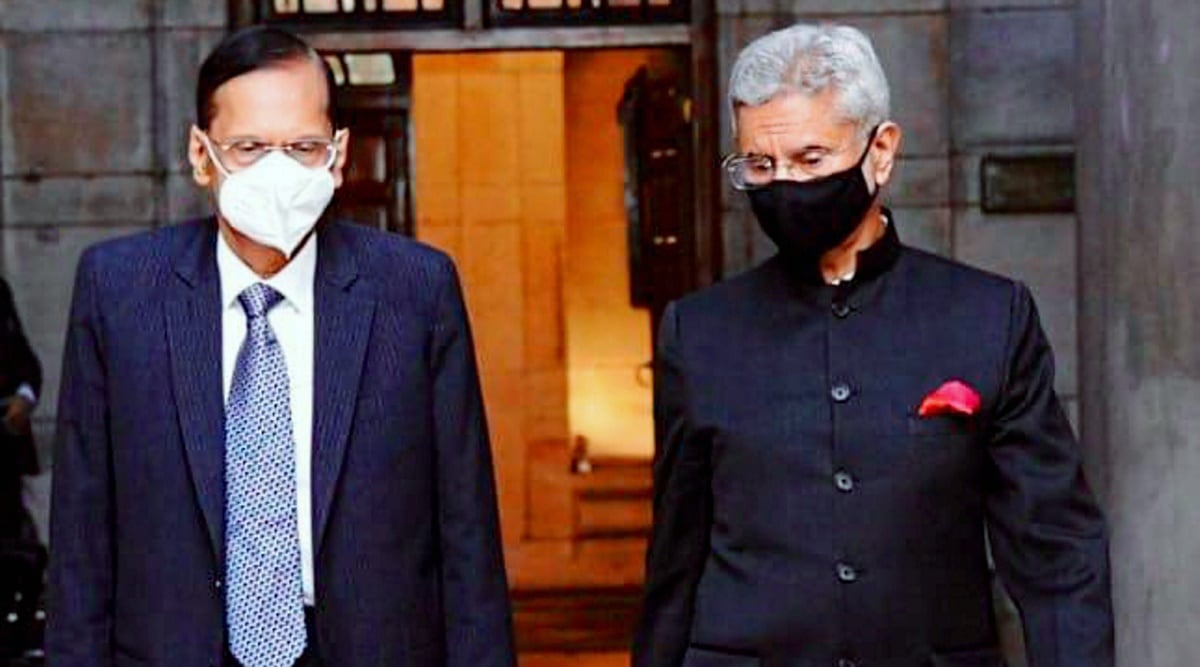
Sri Lanka’s foreign minister G L Peiris with External Affairs Minister S Jaishankar. (PTI/File)

In an interview to The Indian Express, Sri Lanka’s foreign minister G L Peiris, who was in Delhi from February 6-8, said India and Sri Lanka had reached a high point in their relations, and that concerns about the Chinese presence in his country had been consigned to the past”. Peiris said the fishermen’s issue – Indian fishermen trespassing in Sri Lankan waters and getting arrested – was now a serious” flashpoint in ties with India. He blamed the Tamil National Alliance for the hiatus” in the implementation of the 13th Amendment because of its support to the previous Maithripala Sirisena government’s decision to change electoral laws.

Roshan Mahanama and proof of vaccination

February 12th, 2022

By Dr D. Chandraratna Courtesy The Island

Issuing a statement to the media Mr Mahanama has urged the airport authorities to take steps to mitigate inconvenience to passengers in the future. According to his word our ex-cricketer has taken two out of the three vaccines in the UK.

In the media statement he has released, he states that, ‘ I took my second and third vaccinations in the UK. Having been responsible and taking the vaccine on time did not necessarily help me, as the health authority in Sri Lanka refused to issue me the full vaccination certificate as I had not taken the second and third vaccines in Sri Lanka’. What appears to a cursory observer is that the Sri Lankan authorities correctly refused him to board the plane as he had not presented the certificate that he should have obtained from the UK authorities which is Mahanama’s responsibility. It is unfair to blame Sri Lankan health for it is the responsibility of the traveller to do so. Mahanama ought to be aware of the incident involving the world’s Number One Tennis player Novak Djokovic in Australia. No one is above the law as the Australian Prime Minister has said.

There is always some friction between the strict adherence to the rule and the exercise of appropriate discretion in instances when formal law becomes an obstacle in the speedy delivery of justice. But here is a clear and impersonal rule which was correctly adhered to by the BIA authorities.

Mahanama’s request to the BIA authorities to do otherwise does not make sense other than asking them to adjust the rule to his particular circumstance which borders on corrupt practice.

On a personal note, I remember that while on a UN assignment, at the Male airport, an airport police officer ‘planted’ a European traveller and his family and stood them in front of me, breaking the long line of tired passengers waiting for clearance. Slightly aggrieved, I mentioned this to my host who came to the airport to take me to the hotel. The host took the matter so seriously that the police officer was given a warning, I was later informed by letter. It has been mentioned that some countries need to reduce discretion and impose more rules while others should do the reverse. But Sri Lanka is not in the latter category because we have often noticed that discretion minus accountability ends up as corruption, which we must contain in order to be modern.

Mahanama has every right to assert his stance and is free to use every opportunity to seek redress. But the big picture must be kept in mind. The purpose of the rule is to make transparent the society’s rules and to use them even handed. The vast procedural apparatus which is the speciality of the legal profession is a means to deliver such even handed justice.

We do understand that procedures at times take precedence and stymies the substantive ends of justice. Such worship of procedure over substance is a source of political decay in modern democracies but worst is the case when rules are bent to suit individuals.

We know that in our country powerful interest groups can take advantage of existing procedures narrow gains and hinder broad public interest. In those circumstances public interest claims fail to receive adequate representation.

In developing countries it is often the case that those in authority favour friends and family members in violation of procedures.

Striking health workers ignore court ruling, vows to meet govt. challenge

February 12th, 2022

By Rathindra Kuruwita Courtesy The Island

Striking health sector trade unions yesterday (11) declared that they wouldn’t call off their trade union action in spite of a Court ruling issued the previous day. Top spokesperson for the trade union grouping Government Nursing Officers Association (GNOA) head Saman Rathnapriya emphasised that they hadn’t been informed of enjoying orders issued by Court.

District Judge of Colombo Aruna Aluthge has issued two enjoining orders preventing unions from continuing its trade union action.

We have only heard of such an order from the media. We were not called before the Court; nor have we been informed of such enjoining orders. Trade union action is a right guaranteed by the Constitution. If we had been called before the courts, we would have explained why we were doing this,” the former UNP National List MP said.

Countrywide hospitals were severely affected by the strike, launched on 07 Feb.

Rathnapriya said that if the Court had actually issued enjoining orders and his union had been officially informed of them, it would convene a meeting of their executive committee and taken a decision.

The College of Medical Laboratory Science (CMLS) President, Ravi Kumudesh, told The Island that they would file a case against the Secretary to the Ministry of Health, Maj. Gen. Sanjeeva Munasinghe for failing to take tangible measures to prevent them resorting to trade union action.

This strike could have been easily averted. We had given ample time for the government to address our seven demands. However, they did nothing. Secretary to the Ministry of Health could have discussed with us during the past three months. He ignored the demands of 65,000 health sector professionals and that is what has led to a union action. He is responsible for the inconvenience that the people are experiencing,” Kumudesh said.

The CMLS head said that, they were ready to meet any attempts of oppression head on. Instead of making false allegations to undermine legitimate trade union action, the Health Ministry must solve the issues faced by its employees, Kumudesh said.

Now, they are claiming that a person has died at Bibile and they are trying to blame us. Apparently, an ultra sound scan had to be performed and those who perform ultra sound scans are not on strike. If the life of a patient was lost due to conducting surgery, under inadequate facilities; those who took that decision must be held responsible.”

Meanwhile, the Minister of Health Keheliya Rambukwelle said that he expected the health workers to return to duty, respecting the Court order.

Sri Lanka identifies 1,162 new cases of Covid-19 and death toll moves up with 23 new fatalities

February 12th, 2022

Courtesy Adaderana

The Health Ministry says that another 1,162 persons have tested positive for Covid-19 today, as the daily count of new cases continues to rise in the country.

This brings the tally of Covid-19 cases registered in the country thus far to 626,966. 

According to official figures, 594,738 positive cases have recovered.

Following the new development, the number of virus-infected people who are undergoing treatment moved to 16,451. Meanwhile, the death toll stands at 15,777.

The Director-General of Health Services has confirmed 23 new coronavirus-related fatalities for February 11, moving the death toll in the country from the virus to 15,777.

This includes 12 males and 11 females, according to the Department of Government Information.

Four of the deceased were in the age group of 30-59 years. Another one was aged below 30 years and the remaining 18 victims were aged 60 years and above

රාජකාරියට නොපැමිණෙන සුව සේවකයින් සේවය හැරගියා සේ සැලකේ – නීතිඥ ප්‍රතිභා මහානාමහේවා 

February 12th, 2022

Hiru News

Strikes – another form of terrorism

February 11th, 2022

S. Akurugoda

A leading news item appeared in the Divaina dated 08 February 2022, under the title (translated to English) The people must stand up against strikes – Dr Rukshan Bellana” has quite rightly exposed the hidden agenda of the strikes are being carried out by some trade unions affiliated to political parties (https://divaina.lk/ මේ-වර්ජනවලට-එරෙහිව-ජනතාව/) .  As per the news item, Dr. Rukshan Bellana, President of the Government Medical Officers’ Forum, has told that the health service is maintained by the taxes levied on the people of the country and if they have any problems, a civilized society will not allow them to take the patients hostage without resolving them through negotiations. He also said that this was being done as a trade union struggle to do what the political parties wanted and that the trade unions affiliated to the political parties’ should be banned and that the people should unite against such rallies. He said that some of the trade union-based instances and attempts to base themselves on various demands such as going to parliament from national lists and requesting ministerial posts in ministries.

Although Dr Bellana has not named the individuals who are currently posing as trade union leaders, we are fully aware of how a trade union activist attached to the health sector entered the parliament for a week or two via the national list for his political services rendered to the Yahapalana government. What he did to the duty free vehicle license thus obtained has become an interesting issue. The easiest way to find out how they even contributed to the continuation of terrorism in the past is to search their records on line. Interestingly, I found a list of names of the trade union activists attached to the Health services among the list of politicians, so-called civil societies and trade union activists, who were promoting LTTE as an integral part of ‘the solution’ and campaigning in support of the CFA in 2006, in a pro LTTE website (https://www.tamilnet.com/art.html?artid=19261&catid=13).  

Freedom to involve in strikes were very limited (or not at all) for the government employees prior to 1956. As a result of granting some freedom to the government and public sector employees affiliated to political parties  in 1956, we remember how trade unions of ‘comrades’ political parties who called upon workers to ‘establish an administration of the working class’  started strikes throughout   the country even for extremely minor issues.  While addressing a public meeting during the 1960 elections held after the assassination of SWRD,  Mrs Sirimavo Bandaranike  stated how  those ‘comrades’ parties, ‘politically killed him without physically killing’  (‘’nomara maruwa’’)  her husband by promoting strikes.  By allowing politicians of successive governments to interfere with the appointments of various positions within the public service, the government servants and their trade unions are politically divided to an uncontrollable extent today. I remember, as a former employee, how those ‘comrades’ started their first ever strike in the then Ceylon Steel Corporation in 1969 and how they attempted to achieve their dream of ‘an administration of the working class’ by chasing away forcefully the non union members and the leading administration including the Chairman and the General Manger from the site, after their failed strike and return back to work. Some of the officers had to runaway for fear of life and finally, the then the Minister of Industries Mr Phiip Gunawardana had to interfere and ensure their safety for them to reenter the Corporation site.

Although right to strikes is considered as a human right and recognized in almost all so-called democratic champion countries, they have introduced legislations to regulate the strike actions. In particular; they impose limitations for the strikes of workers in public essential services, such as health, security, movements, assistance and welfare, education, and communications. 

In the UK, strike action organized by a trade union is legal provided some tough conditions are met. For example: The union must have conducted a lawful ballot of all the members it believes will be called upon to take part. In Australia, there may be a right to strike in limited circumstances, but in practice there is no right to strike, except for exceptional circumstances.

Under Australian laws, strikes can only happen during bargaining. At all other times they are unlawful.

Even during bargaining there are too many hurdles. Before workers can take a bargaining strike they must prove that they are genuinely trying to reach agreement, hold a secret ballot, give their employer three clear days notice of the strike etc.  If a strike happens outside of bargaining then workers and their unions face dire consequences.

The employer can:

  • Gets an automatic order from the Fair Work Commission requiring a return to work. 
  • Get injunctions from Federal and State Courts.
  • Discipline workers or sack them.
  • Sue unions and workers for contempt of court if orders or injunctions are not followed to the letter.
  • Sue the workers and their union under various laws for fines up to $10,800 for workers and $54,000 for unions.
  • Seek compensation against workers and their unions for lost revenue.

Even if the employer doesn’t want to take legal action, government agencies, such as the Fair Work Ombudsman and the Australian Building and Construction Commission can initiate such actions.

I spent  almost half of employment life outside Sri Lanka including African and Pacific regions, I have not come across or even seen a single strike in those countries similar to what is going on in Sri Lanka. Considering the inconvenience caused to the general public, while accepting the right to strikes, the government should take necessary steps to regulate   the strike actions, at least, in public essential services similar to what the other countries do in the world.

S. Akurugoda

The Challenge to get Sri Lanka on the right track to face  the economic problems of today.

February 11th, 2022

Garvin Karunaratne, Ph.D. Michigan State University

The Editorial of The Island tells it all: The challenge before us is to retrace our steps, figure out where we took wrong turns, and forge ahead in the right direction as many other nations have already done. Easier said than done, but there seems to be no other way.”

The problem is that even to retrace our footsteps there is no consensus in learned opinions. Addressing the Tenth Annual Conference of the Sri Lanka Forum of University economists on 27 th January 2022, Professor Premachandra Atukorale has said that it is impossible to heavily rely on import and exchange controls without compromising on a massive economic collapse and social upheaval.”(Ceylon Today01022022)

Perhaps some detail of how we once handled the economy of Sri Lanka, may be useful to think of how we can retrace our footsteps to the days when we did not have food queues and social upheaval, all the while handling development very  successfully..

In 1968 February I was posted as the Additional Government Agent at Kegalla District. I worked there for two years. I knew of no queues for any essential food during that period. In fact,  I was in charge of providing essential food- as the Deputy Food Controller for the District. At that time every area was covered with a cooperative society and in each division there were Cooperative Unions that were equipped with stores and lorries and on a clockwork basis all essential food was distributed through the cooperatives. This included a measure of rice per person per week, entirely free, under the Rice Ration Scheme, which was done away by President Jayawardena in 1978. Then there was a major Department at work- the Food Commissioner’s Department,  managed at the helm by a senior civil servant, a department that had very large stores full of rice and flour and also attended to imports when necessary.  At the district level there was an Assistant Food Controller who worked directly under me and it was our duty to see that food was always available without any interruption. Importing essentials like dhall, chillies etc was handled by the CWE because depending on the private sector has proved unreliable – the private sector has making a profit as its aim, service to the people comes next.

Even in other Districts there were no food queues

Kegalla District included the electorates of the prime minister Mr Dudley Senanayake, Minister NH Karunaratne, Deputy Ministers Imbulana, Vimala Kannangara, Beligammana and also Dr NM Perera of the Opposition. There was never a delay in providing essential food- and that included rice, lentils, chillies and other curry stuffs.. I had the unenviable task of meeting the hon prime minister every Saturday and Sunday morning at around nine at the Warakapola Rest House and to accompany him to a host of meetings in his electorate, ending in the late evenings, and there was never a person that had a complaint. The Divisional; Secretaries had to work to perfection and they were meticulous. . There were a few bad eggs that I had to get rid of. Had there been any interruption in food supplies, the ministers would have complained to the Prime Minister and Dr NM would have raised the matter in Parliament.

This was also the situation in Matara when I was the Government Agent in 1971 to 1973. There were no Ministers in any electorates and only one Deputy Minister, Mr Tudawe. There were no shortages except during the  JVP insurrection of April 1971.

In those day there was no foreign exchange problem because there were effective controls over the little foreign exchange that came in through exports and other sources. There were no currency dealers who handled foreign exchange like today and the intake of foreign currency was a guarded property, that was used first for importing essentials, and small allocations were made to import useful non essential items like automobiles and fridges.. This was the situation even when we had ample funds – when we financed the Gal Oya Development Project- a massive project building a tank three times the size of Parakrama Samudra at Amparai, bringing 60,000 hectares under cultivation and creating many industries all done with foreign funds we had. We had effective controls- even then. 

In 1970 I worked as the Deputy Director of Small Industries and one of my tasks was to ensure that every small industrialist had an allocation of foreign exchange to import any particular item they required for their manufactures. I can state that every application was inquired into by my inspectors of industry- I had some twenty of them and assessed by me, every genuine small industry received an allocation. Then no foreign funds were allowed for foreign study but an exception was made to provide foreign  funds  for Sunethra and Chandrika Bandaranayake,  and I had the occasion to question the prime minister as to why he did it, That was the only request I had from an earlier prime minister and I felt like allowing it.” was his reply.

Foreign exchange was then a guarded item. When I left the Administrative Service and moved abroad in April 1973 I did not get a single penny. My wife and three children were given only three pounds and five shillings. We had to earn and spend for studies.

 It was by effectively controlling by import and also controlling foreign exchange that all Third World countries managed their economies without any economic collapse. The economic might of India itself is indicative of an economy that did not follow the IMF and used funds borrowed from the IMF to bring about development  by controlling the economy. .

Sri Lanka managed its foreign exchange effectively till President Jayawardena was fooled by the IMF to follow the Structural Adjustment Programme, which advised President Jayawardena to allow the rich to spend foreign exchange as much as they want- for endless foreign travel, to educate their children abroad, import all luxury items and the IMF provided loans for this purpose and mind you to entice the leaders, even provided grace periods when the service and interest charges were not to be paid. The then leaders enjoyed and the rich played with the funds leaving the future leaders to bear the brunt of repayment. That is the process that led us to the present abyss.

Then there were two budgets a local Rupee budget for handling all work in the country including major development tasks, funded with printed money and a foreign exchange budget to handle the foreign exchange that was collected. Recently the Central Bank Governor Cabral had decided that all foreigners staying at hotels should be charged in foreign currency. This is a decision that should have been taken long ago. Other countries like India and Thailand took similar action over decades ago. We unfortunately do not collect even fifty percent of the foreign exchange that comes in today and it is time that we put a dragnet like in the period before 1977.  

Of the period 1948 to 1977, an exception is the period 1974to 1977 when there were shortages due to the Government de emphasising agricultural development in order to have their own Divisional Development Councils Programme and embarking on land reform which stifled development and caused foreign sanctions. Even then Prime Minister Sirimavo managed to make all demanded payments and managed without falling into foreign debt. 1976 and 1977 happen to be the last years when our country was run without a deficit. Since then annually our foreign debt has increased  and is at  $ 56 billion today. .

Thus the manner in which we handled the economy in the pre 1977 period is a tried and tested blue print that was successfully implemented for close upon two decades, which offers us the only path to follow to get out of the present  abyss.

Garvin Karunaratne, Ph.D. Michigan State University, 08022022

Author of :

How the IMF Ruined Sri lanka and Alternative Programmes of Success: Godages, 2006   

How the IMF Sabotaged Third World Development: Kindle/Godages, 2017)

Should Bangladesh Lease Land from South Sudan?

February 11th, 2022

Nandita Roy Bangladesh

For a long period of time, Bangladesh has been striving to ensure food security at home by planning to shop farmland abroad. Recently, South Sudan, an African country, has expressed interest in leasing a vast area of its fallow land to Bangladesh in order to collaborate in agricultural production, processing, and marketing in the central African countries. This is not the first time Bangladesh is going to lease foreign land and earlier, two Bangladeshi companies leased 40,000 hectares of farmland in Tanzania and Uganda. This move of Dhaka in leasing foreign land is one of the various initiatives undertaken to increase food production in the wake of the growing population and decreasing arable land. But this time, citing the feasibility of this proposal, critics raise the question, “Should Bangladesh accept this offer?” “What benefits Bangladesh will get if it accepts this offer?”  

South Sudan, a landlocked country of Central Africa, has a total 644,329 sq KM land area with a total population of 11.06 million. Most of the land of this country is fallow and not being used for cultivation or for any other productive purposes. Undoubtedly, there is a huge untapped possibility that can be accrued by utilizing these lands for agricultural production. The government of South Sudan has been discussing the issue of cultivating crops in their land with the Bangladesh government for a long time. Luckily, the issues have started seeing light as many Bangladeshi entrepreneurs have agreed in considering the proposal seriously to invest there. 

In recent years, Bangladesh is focusing largely on industrialization but the agricultural sector remains the lifeblood and irreplaceable driving force for Bangladesh’s economy. In FY 2020-21, the contribution of agriculture to Bangladesh’s GDP was 13.47 percent. Though the contribution of agriculture to the GDP is gradually declining, it is still the major employment source with 40 percent of total employment. Bangladesh is now self-sufficient in food production with net food produced in 2021 being over 4.53 crore metric tons. The agriculture-friendly policies of the country have contributed greatly to this success. Besides, the skills and expertise of our farmers cannot be ignored while preparing the ledger of success of our agricultural productions. The agricultural scientists, researchers, faculty members of agricultural universities in Bangladesh have been working relentlessly to bring innovative ideas and latest technologies in this sector to ensure maximum output utilizing the limited arable land available and with minimal effect on the environment. 

There are several factors that attract a pointed direction towards why Bangladesh should accept the proposal of leasing land in South Sudan. First, we know that Bangladesh is one of those countries in the world that has one of the lowest rates of arable land per citizen. Leasing land from abroad will help the country to meet the growing food demand of 1.65 million people at home. Second, if Bangladesh can successfully start cultivating agricultural crops in South Sudan, it will bring economic gain for Bangladesh not only by selling the agricultural goods to the local market but also by exporting to 27 other Central African countries. Third, Bangladesh has sufficient expertise in agricultural sectors which can be optimally utilized, and possibly further be expanded, if Bangladesh can successfully start producing in the land leased from South Sudan. Fourth, there are many renowned agricultural scientists in Bangladesh who are doing excellent research work on the country’s agricultural sector. If Bangladesh leases land in South Sudan, these researchers can also contribute to boosting agricultural production in African countries. This is how Bangladesh can contribute, to some extent, to finding a sustainable solution to the prolonged food crisis in Africa.

Fifth, Bangladesh has huge labor, mostly notably farmers, who have expertise and experience in agricultural sectors. If Bangladeshi investors invest in the agricultural sector in South Sudan, it will create huge employment opportunities for Bangladeshi migrant labor, and ultimately contribute to increasing Bangladesh’s foreign exchange reserve. Sixth, once Bangladesh leases land from South Sudan, it will increase Bangladesh’s brand image as it is a sign of the country’s capability and financial strength. Seventh, once successfully implemented, this project will open a new window of opportunities for Bangladesh in other African countries which can be further utilized for increasing financial return for Bangladesh. Eighth, both countries can jointly produce lentils, oil, cotton, and other crops on the leased land and share the products which will bring fortune for both of them by helping them to avoid future food shortages.

The above discussion shows the projected benefits that Bangladesh may avail if it cooperates with South Sudan in the agricultural sector. As it will require hefty investment, Bangladesh should conduct a feasibility study and seek the opinion of the experts of the relevant field before making the final decision. Also, Bangladesh should send a team of multi-sector specialists including agro researchers, agricultural scientists, agricultural extension officials, and marketing and financial experts to examine the potential and financial viability of investing in the agricultural sector of South Sudan. But there is no doubt that it is a great achievement for Bangladesh as it has brightened the country’s image and testified to the country’s increased financial strengths and growing agricultural capacities. Not to mention, if Bangladesh can build agricultural infrastructure in a correct and responsible way, it will create a win-win situation for both countries.

Ambassador Chaminda Colonne highlights citizens’ national responsibility to work together to build motherland

February 11th, 2022

The Embassy and Permanent Mission of Sri Lanka Bangkok, Thailand

Commemorating 74th Anniversary of Sri Lanka’s Independence,

Ambassador Chaminda Colonne highlights citizens’ national responsibility to

work together to build motherland

On 04th February, 2022, Ambassador of Sri Lanka to the Kingdom of Thailand and Permanent Representative to UNESCAP, C.A.Chaminda I. Colonne, Spouse  and Embassy staff proudly celebrated the 74th Anniversary of Independence of Sri Lanka at Ambassador’s Official Residence at Fairview Tower in Bangkok.

The programme comprised of hoisting of the national flag by the Ambassador Chaminda Colonne, singing the national anthem, followed by a two-minutes silence in memory of all patriotic Sri Lankans who sacrificed their lives for the sovereignty and territorial integrity of the country. Ambassador Chaminda Colonne read the speech delivered by President Gotabaya Rajapaksa at the National Independence Day Celebration in Colombo. Independence Day Messages of Prime Minister Mahinda Rajapaksa and Foreign Minster Prof. G.L. Peiris were read by First Secretary and Head of Chancery Saritha Ranatunga.

Delivering her remarks at the occasion Ambassador recalled that beloved motherland was under colonial power for 443 years, and ruled by  Portuguese, Dutch, British, from 1505 to 1948 and the political struggle for independence was unitedly led by our Sinhala, Tamil and Muslim leaders, and the lost freedom was finally won back on 4th February in  1948.

Ambassador stated that ‘we can also overcome today’s  COVID-19 pandemic challenges, as His Excellency the President Gotabaya Rajapaksa is ready to give the necessary leadership. At this difficult time, we all as responsible citizens of Sri Lanka have a national responsibility to work together and build our motherland and support the Government to create a productive citizen, a happy family, a disciplined society and a prosperous nation’.

While recalling Sri Lanka – Thailand bilateral relations based on shared history and common spiritual heritage, guided and nurtured by the timeless message of the Lord Buddha, Ambassador added that her earnest hope is that those excellent bonds of friendship and cooperation will be expanded into new avenues of cooperation, especially in trade, economic fields and investment with the blessings of His Majesty the King Maha Vajiralongkorn Phra Vajiraklaochaoyuhua of the Kingdom of Thailand.

Commemorating Sri Lanka’s 74th Anniversary of Independence, on 04th February 202, Thailand’s National Radio, Radio Thailand World Service and Thailand Elite+ Magazine carried out special messages from the Ambassador and Expat Life magazine published an interview with the Ambassador on Sri Lanka.

The celebration was followed by a lunch hosted by Ambassador Chaminda Colonne and Spouse Stephan Nishantha Senanayake. Country Manager of SriLankan Airlines in Thailand Tharaka Galahitiyawa and family members of the Embassy staff also attended the event.

The Embassy and Permanent Mission of Sri Lanka

Bangkok, Thailand

07th February 2022

වෙල්ඩින්  ක්ෂේත්‍රයේ නව රැකියා අවස්ථා වෙනුවෙන් VTA සහ Tantri Trailers සමාගම අවබෝධතා ගිවිසුම් අත්සන් කෙරේ.

February 11th, 2022

නිපුණතා සංවර්ධන වෘත්තීය අධ්‍යාපන පර්යේෂණ හා නව නිපැයුම් රාජ්‍ය අමාත්‍යාංශය

Tantri Trailers සමාගම සහ නිපුණතා සංවර්ධන, වෘත්තීය අධ්‍යාපන, පර්යේෂණ හා නව නිපැයුම් රාජ්‍ය අමාත්‍යාංශය යටතේ ක්‍රියාත්මක වන ශ්‍රී ලංකා වෘත්තීය පුහුණු අධිකාරිය (VTA) සමඟ අවබෝධතා ගිවිසුම් අත්සන් කිරීම රාජ්‍ය අමාත්‍ය විශේෂඥ වෛද්‍ය සීතා අරඹේපොල මැතිණියගේ ප්‍රධානත්වයෙන් 10 දින සිදු කෙරිණ.

Tantri Trailers සමාගම විසින් ට්‍ර‍ෙලර්, ඉදිකිරීම් යන්ත්‍රාගාර හා උපකරණ, සන්නිවේදන කුළුණු, දොඹකර ඇතුළු උපකරණ හා නිෂ්පාදන රාශියක් නිපදවන අතර රටවල් 30කට අධික සංඛ්‍යාවක් වෙත ඔවුන්ගේ නිෂ්පාදන අපනයනය කරනු ලබයි. මේ අනුව පුහුණු අධිකාරිය සතු පහළ යාගොඩ පිහිටි මධ්‍යස්ථානය Tantri ආයතනය හා එක්ව ක්ෂේත්‍රයේ තුළ පවතින තාක්ෂණය සහිත ආයතනයක් ලෙස වැඩි දියුණු කරන අතර වැඩිදුර පුහුණුව Tantri Trailers කර්මාන්තශාලා තුළින් ලබා දෙයි. එමඟින් වඩා යාවත්කාලීන පුහුණුවක් දරුවන් සඳහා ලැබෙන අතර රැකියා සුරක්ෂිතභාවය ද ඇති වේ

.

මෙහිදී වැඩිදුරටත් අදහස් දක්වමින් ගරු රජ්‍ය අමාත්‍යතුමිය සඳහන් කරන ලද්දේ පුද්ගලික අංශයේ කර්මාන්තකරුවන් සමග එක්ව වෘත්තීය පුහුණු අවස්ථා ඇති කිරීම තුළින් රැකියා සඳහා අවශ්‍ය උසස් තාක්ෂණය දරුවන් හට ලබා දිය හැකි බවයි.

මෙම අවස්ථාව සඳහා ශ්‍රී ලංකා වෘත්තීය පුහුණු අධිකාරියේ සභාපති එරංග බස්නායක මහතා, Tantri Trailers සමාගමේ අධ්‍යක්ෂ මයාන් හපුතන්ත්‍රී මහතා, කලමනාකරණ අධ්‍යක්ෂ අතුල හපුතන්ත්‍රී මහතා, මෝටර් රථ ධාවන ශූර ඩිලන්ත මාලගමුව මහතා ඇතුළු පිරිසක් සහභාගී විය.

මාධ්‍ය ඒකකය

නිපුණතා සංවර්ධන වෘත්තීය අධ්‍යාපන පර්යේෂණ හා නව නිපැයුම් රාජ්‍ය අමාත්‍යාංශය

සමස්ත ලංකා ශාසනාරක්ෂක මණ්ඩලයේ ගැටලු විසඳන්නැයි අග්‍රාමාත්‍යතුමා නිලධාරීන්ට උපදෙස් දෙයි

February 11th, 2022

අග්‍රාමාත්‍ය මාධ්‍ය අංශය

සමස්ත ලංකා ශාසනාරක්ෂක මණ්ඩලයේ දැනට පවතින ගැටලු විසඳීමට කටයුතු කරන්නැයි අග්‍රාමාත්‍ය මහින්ද රාජපක්ෂ මහතා ඊයේ (10) පස්වරුවේ අග්‍රාමාත්‍ය ලේකම්තුමා සහ බුද්ධශාසන ආගමික හා සංස්කෘතික කටයුතු අමාත්‍යාංශයේ ලේකම්තුමා ඇතුළු නිලධාරීන්ට උපදෙස් දුන්නේය.

අරලියගහ මන්දිරයේ දී පැවැති සමස්ත ලංකා ශාසනාරක්ෂක මණ්ඩලයේ සාකච්ඡාවේ දී ඉදිරිපත්වූ කරුණු සැළකිල්ලට ගනිමින් අග්‍රාමාත්‍යතුමා මෙම උපදෙස් ලබා දුන්නේය.

නාගදීප රජමහා විහාරස්ථානය පූජා භූමියක් බවට පත්කිරීමේ සන්නස් පත්‍රය ප්‍රදානය කිරීමේ උත්සවය එළැඹෙන මාර්තු මාසයේ පැවැත්වීමට ද අග්‍රාමාත්‍යතුමාගේ ප්‍රධානත්වයෙන් රැස්වූ මෙම සාකච්ඡාවේ දී තීරණය කෙරිණි.

දහම්පාසල් කොඩි දිනය,දහම් පාසල් දින ජාතික උත්සවය සහ දහම් පාසල් සිසු නිපුණතා ජාතික උත්සවය පැවැත්වීම සම්බන්ධයෙන් ද මෙහි දී අවධානය යොමු විය.

දහම් පාසල් පොත් බෙදා දීමේ ප්‍රවාහන කටයුතු සඳහා දිස්ත්‍රික් ලේකම්වරුන්ගේ සහය ලබා ගන්නැයි අග්‍රාමාත්‍යතුමා මෙහි දී දැනුම් දුන්නේය.

සිවුපස ආධාර ලබා දීමේ වැඩසටහන තමන් ජනාධිපතිවරයා ලෙස කටයුතු කරමින් සිටිය දී ආරම්භ කළ වැඩසටහනක් බව සිහිපත් කළ අග්‍රාමාත්‍යතුමා, දුෂ්කරතා තිබෙන විහාරස්ථානවල ස්වාමීන්වහන්සේලා වෙනුවෙන් එම වැඩපිළිවෙල අඛණ්ඩව ක්‍රියාත්මක විය යුතු බව පැවසීය.

උතුරු හා නැගෙනහිර පළාත්වල පූජා භූමි හා පුරාවිද්‍යා ස්ථානවල දැනට පවතින ගැටලු නිරාකරණය කරමින් ඒවායේ ඇති ශිලා ලේඛන අනාගත පරපුර වෙනුවෙන් සංරක්ෂණය කළ යුතු බවද අග්‍රාමාත්‍යතුමා මෙහි දී අවධාරණය කළේය.

සමස්ත ලංකා ශාසනාරක්ෂක මණ්ඩලය නියෝජනය කරමින් පූජ්‍ය මහාචාර්ය තුඹුල්ලේ සීලක්ඛන්ධ නායක ස්වාමීන්වහන්සේ, පූජ්‍ය මුගුණුවෙල අනුරුද්ධ නායක ස්වාමීන්වහන්සේ, පූජ්‍ය මැදගම ධම්මානන්ද ස්වාමීන්වහන්සේ, පූජ්‍ය මැදගමුවේ විජයමෛත්‍රී අනුනායක ස්වාමීන්වහන්සේ ඇතුළු මහා සංඝරත්නය මෙහි වැඩම කළහ.

මෙම අවස්ථාවට අග්‍රාමාත්‍ය ලේකම් අනුර දිසානායක, බුද්ධශාසන ආගමික හා සංස්කෘතික කටයුතු අමාත්‍යාංශයේ ලේකම් මහාචාර්ය කපිල ගුණවර්ධන මහත්වරු ඇතුළු අමාත්‍යාංශ කිහිපයක ලේකම්වරු, අග්‍රාමාත්‍ය අතිරේක ලේකම් නිශාන්ත වීරසිංහ මහතා සහ රාජ්‍ය ආයතන රැසක ප්‍රධානීහු එක්ව සිටියහ.

Sri Lanka: Government’s Badly Planned Organic Farming Policy Upsets Rice Farmers

February 11th, 2022

By R.M. Samanmalee Swarnalatha Courtesy Eurasiareview

sri lanka farm rice

Sri Lankan government’s badly planned organic farming policy that has banned the use of chemical fertilizer in farms has upset farmers in this rice-growing heartland and a political stronghold of the ruling coalition. The policy has also drawn criticism from agricultural experts, who warn that Sri Lanka’s food security is at stake.

Chairman of Minneriya Integrated Farmer Organization, Anil Gunawardhna argues that the government organic fertilizer program is an utter failure because it was announced without any proper program and work plan to achieve its aims.

The government’s original plan was to achieve this organic cultivation in ten years time.  However, without any discussion with farmers they banned the import of chemical fertilizer,” he complains.

Writing in The Sunday Times in May last year just after the government banned chemical fertilizer imports, agricultural scientist Saman Dharmakeethi criticized the decision predicting that it would cause loss of forests and a food crisis. 

In his election campaign in 2019 under the theme of ‘ Vistas of Prosperity and Splendour’  President Gotabaya Rajapakse, clearly mentioned that building up a community of citizens who are healthy and productive, we need to develop the habit of consuming food with no contamination with harmful chemicals”. In order to guarantee the peoples’ right to such safe food, the entire Sri Lankan agriculture will be promoted to use organic fertilizers within ten years, the election policy platform said.https://googleads.g.doubleclick.net/pagead/ads?client=ca-pub-7107515782730935&output=html&h=280&slotname=8800050277&adk=1815670793&adf=4170075671&pi=t.ma~as.8800050277&w=336&lmt=1644611173&psa=1&format=336×280&url=https%3A%2F%2Fwww.eurasiareview.com%2F11022022-sri-lanka-governments-badly-planned-organic-farming-policy-upsets-rice-farmers%2F&flash=0&wgl=1&uach=WyJXaW5kb3dzIiwiMTQuMC4wIiwieDg2IiwiIiwiOTguMC40NzU4LjgyIixbXSxudWxsLG51bGwsIjY0IixbWyIgTm90IEE7QnJhbmQiLCI5OS4wLjAuMCJdLFsiQ2hyb21pdW0iLCI5OC4wLjQ3NTguODIiXSxbIkdvb2dsZSBDaHJvbWUiLCI5OC4wLjQ3NTguODIiXV1d&dt=1644622260645&bpp=1&bdt=2339&idt=100&shv=r20220209&mjsv=m202202070101&ptt=9&saldr=aa&abxe=1&cookie=ID%3D491c2db089893330-22801faedece003c%3AT%3D1641084031%3ART%3D1641084031%3AS%3DALNI_MbcH5XVOp3A-2a1zAvcMfC7fIWd4g&prev_fmts=0x0%2C336x280&nras=1&correlator=7634018995415&frm=20&pv=1&ga_vid=44937498.1641084070&ga_sid=1644622261&ga_hid=703749957&ga_fc=1&u_tz=0&u_his=2&u_h=1080&u_w=1920&u_ah=1032&u_aw=1920&u_cd=24&u_sd=1&dmc=8&adx=397&ady=1603&biw=1903&bih=929&scr_x=0&scr_y=0&eid=42531397%2C31064806%2C21065724%2C21067496&oid=2&pvsid=546248655667300&pem=614&tmod=26331352&uas=0&nvt=1&ref=https%3A%2F%2Fc.newsnow.co.uk%2F&eae=0&fc=1920&brdim=0%2C0%2C0%2C0%2C1920%2C0%2C1920%2C1032%2C1920%2C929&vis=1&rsz=%7C%7CeEbr%7C&abl=CS&pfx=0&cms=2&fu=0&bc=31&ifi=3&uci=a!3&btvi=2&fsb=1&xpc=2kkYlPYBXi&p=https%3A//www.eurasiareview.com&dtd=105

When President Rajapakse banned the importation of chemical fertilizers and pesticides in April 2021, he cited health concerns. The ban on its importation was imposed through an Extraordinary Gazette Notification on May 6th last year, following the Cabinet endorsement of the plan under the theme of  Creating a Green Socio-economy with Sustainable Solutions for Climate Change”.  The document admitted that the use of chemical fertilizers has led to better harvests but has also contaminated lakes, canals and groundwater.

For more than two decades a mysterious kidney disease has been spreading among farmers in the mainly rice-growing areas, which has baffled both hydrologists and medical experts. It is suspected that the overuse of chemicals in farming may be the cause.

Weaning Away From Green Revolution” Technology

With many vested interests at work, the government is learning a bitter lesson that it is not easy to wean away farmers from the use of chemicals in farming. It needs careful planning and closer consultations with farmers.

The agricultural production system in Sri Lanka consists of two traditional and well-defined components. One is the plantation section, established during the colonial period, consisting of large units, and producing perennial crops such as coffee, tea, rubber, and coconut mainly for export. The other is the smallholder sector comprised of small farms, which produce most of the country’s rice, vegetables, legumes, tubers, spices, and fruits.

While, fertilizers and pesticides have long been used for the production of plantation crops in Sri Lanka, until several decades ago, most of the smallholder operations were farmed with little or no input of agricultural chemicals. Wide use of chemical fertilizer was introduced to the country during the so-called ‘green revolution’ in the decades 1960-70 along with high-yielding” seeds.

Costly Fertilizer Imports and Subsidy

In 2020, Sri Lanka imported (both state and private sector) foreign fertilizers worth  $259 million, representing 1.6 percent of the country’s total imports by value according to Central Bank statistics. Sources indicate that the 2021 import bill could potentially total in the range of $300-$400 million given current international prices. By limiting and/or banning costly foreign exchange draining fertilizer and agrochemical imports, the Sri Lankan government aims to generate significant import cost savings.

But, Professor Buddhi Marambe, a former Dean of Agriculture Faculty at the University of Peradeniya in recent newspaper articles has warned that an overnight shift to organic fertilizer could lead to crop declines that in turn cause huge food shortages within months. We have spoken based on science. Without going for evidence-based decisions, nothing will go right,” he argues, refuting claims by the government that they are being manipulated. Food security is national security,” he stresses, adding, we must have sustainable policies to ensure food security because there is no point relying on food imports from outside”. 

Rice Farmers’ Grievances

Some rural farmers have already decided not to cultivate Sri Lanka’s staple rice in the ongoing ‘Maha’ or next ‘Yala’ cultivation seasons, because of the government’s failure to supply necessary fertilizers. Farmers here are deeply unhappy at the sudden banning of the import of chemical fertilizer. They mainly cultivate paddy, low country vegetables, cereals, grains, and onions. However, in this ‘Maha’ season, they could not use chemical fertilizer, If the government promised to supply the required organic fertilizer, farmers say they didn’t receive it at the correct time.

Rice farmers have thus used different fertilizer that is normally used for tea, cinnamon, and coconut. They say this season’s rice harvest is very disappointing with resulting low incomes.

Piyarathna, Chairman, Eksath Sulu Farmer Organization, representing farmers from Dehiyannewela, Divilunkadawala ,Viharagama, Medirigiriya areas told IDN that there are 142 farmers in their farmer organization and they cultivate more than 190 acres using minor irrigation  water. Our farmers normally harvest 100- 120 bushel (2500-3000 kg) per acre using chemical fertilizer. However, this time farmers can’t expect such harvest due to improper fertilizer usage” he says, adding, farming is now a business enterprise, (and) farmers cultivate not only for (their)consumption”.

Paddy plants take around 3–6 months to grow from seeds to mature plants, depending on the variety and environmental conditions. They undergo three general growth phases: vegetative, reproductive, and ripening. Our farmers cultivate two groups: the short-duration varieties which mature in 105–120 days and the long-duration varieties which mature in 150 days”, he explained.  They (farmers) use hybrid seed and not traditional varieties. These hybrids varieties need quality fertilizer to increase the harvest. By using organic fertilizer farmers can’t expect high yield”.

 Piyarathna says that farmers in the Polonnaruwa area have complained that the compost they have received is of inferior quality with most of the purchased compost having debris, seeds and stones.

Kapila Ariyawasnsa, a 38 year old farmer from the Ekamuthu Bedum Ela Farmer Organization in Mahaweli river irrigation System B told IDN that he cultivate 8 acres of low land  both in Yala and Maha seasons – mainly paddy – and there are also 206 rice farmers belonging to his organization. He thinks that the proposed organic fertilizer program is not practical in their area.

There are not enough resources to make compost in our village. Greenery vegetables can be cultivated using compost, not paddy,” he argues, because  there is no traditional varieties and only have all hybrid seeds (and) these hybrid seeds need required fertilizer for bumper harvest”. Further, he said that he had to spend Rs 23000 (USD 115) to purchase Yuria in black market.

Ariyawasnsa, predicts that the rural economy will collapse after the coming rice harvest. Farmers won’t have the yield this time, they would get only 30 per cent of the harvest” he predicts.  Most of the people in Mahaweli area depend on agriculture”. He added that not only Mahaweli B zone, but most farmers in the Polonnaruwa District, would face bad harvests due to the government’s organic fertilizer program. The current government’s policy (has been based on) unplanned policy decisions” he laments.

Farmer’s Expectation

There is also growing interest among farmers for producing organically-grown food products and they understand the export potential for it. Some farm production units have already experienced considerable success in such ventures. Organic food production and marketing could be greatly expanded in Sri Lanka. But, research is needed to develop organic farming systems and practices that are efficient, productive, and profitable. This is the criticism the government is facing at the moment.

M.G. Dayawathi Chairman of Kalukele People’s company said that banning of chemical fertilizer has affected their company’s microfinance system too. We have given more than 52 lakhs (5.2 million) of cultivation loans to 75 farmers for this Maha season. Unfortunately, farmers would not make the expected income and they are not in position to repay loans” she told IDN Moreover, farmers mortgage their gold and their vehicles to purchase chemical fertilizer in the black market. They are trapped in a loan cycle.  Government cannot expect livelihood improvement (among farmers) with this kind of unplanned program”. 

Sri Lanka says it won’t rush to IMF despite rising economic risks

February 11th, 2022

By Uditha Jayasinghe and Devjyot Ghoshal Courtesy Fxempire

COLOMBO (Reuters) – Sri Lanka’s foreign exchange reserves are plummeting, essential imports are stalling and opposition leaders and some experts warn that time is running out to avoid a sovereign default that would further upend the economy.

71% of retail investor accounts lose money when trading CFDs with this provider

But Finance Minister Basil Rajapaksa is focused on helping the domestic economy shake off the impact of the COVID-19 pandemic before he seeks assistance from the likes of the International Monetary Fund (IMF), a close aide said.

We should not be in a hurry to run here and there without sorting out local issues,” said Milinda Rajapaksha, who works closely with the finance minister and is an additional director general in the media ministry.

It could take up to four to five months to fix issues like local supply chains and restart businesses, which alongside a pickup in tourism and remittances – both major foreign exchange earners – would help stabilise the economy, Rajapaksha said.

You have to look at the external debt crisis separately,” he told Reuters. That’s what we are going to do. Are we going to look at a package like the IMF? Are we going to work with our neighbours and supporters for more swaps and loans?”

Sri Lanka’s foreign exchange reserves are down to $2.36 billion, according to data from the Central Bank of Sri Lanka (CBSL) released earlier this week.

In a note on Monday, Citi Research said that confidence in the Sri Lankan government’s external repayment position remains weak and foreign exchange reserves were declining faster than expected.

Sri Lanka has outstanding sovereign bonds amounting to $12.55 billion, with $1 billion of the bonds maturing in July, according to the CBSL. This year, the island’s government has to repay debt of around $4 billion.

We stick to our base-case scenario that international bonds will need to be restructured by July,” Citi Research said.

On Wednesday, the CBSL said there was currently no need for discussions on debt restructuring as the government would be able to ensure the settlement of its sovereign debt without any interruption or default.”

The government and the CBSL are committed to honour all forthcoming debt obligations,” the central bank said in a statement.

‘VERY DANGEROUS LEVEL’

The lack of dollars is already holding up goods from coming into the import-dependent country of 22 million people, which typically spends about $1.6 billion every month for imports of fuel, essential food and medicine.

In Sri Lanka’s main port of Colombo, thousands of containers packed with essentials like rice and sugar have been stuck for weeks because importers are unable to get hold of foreign exchange.

On the streets of Colombo, prices of everything from milk powder and fuel to auto spares and mobile phones are rising.

Headline inflation rose to 14.2%, the highest in more than a decade, with food inflation hitting 25% in January, according to government data.

Sri Lanka is left with usable foreign exchange reserves of around $800 million, which could be exhausted in a matter of weeks, said Murtaza Jafferjee, Managing Director of stock broker JB Securities.

The amount of reserves basically have come down significantly to a very, very dangerous level,” he said.

To meet the shortfall, Sri Lanka’s government has sought help from India with a $1 billion credit line. It is also in talks with Pakistan and Australia for two credit lines of $200 million each for imports of rice, cement, grains and medicine.

In January, President Gotabaya Rajapaksa sought debt relief from China and assistance to pay for imports. Sri Lanka imports about $3.5 billion worth of goods from China every year.

POLITICAL FUTURE

The government, led by the influential Rajapaksa family, faces a choice between moving immediately to restructure its debt or continuing to scrape by even as it hits ordinary Sri Lankans, said Nishan de Mel, Executive Director of Verité Research think-tank.

So, it is really a question of how much pain the society can bear and how much pain the government is willing to inflict before it changes the path,” he said. It is not a path that looks to be sustainable.”

The IMF on Thursday said the Sri Lankan government had not initiated talks for financial support.

Of course, we stand ready to discuss options if requested and we continue to closely monitor economic and policy developments,” IMF spokesman Gerry Rice said in an online briefing.

For finance minister and veteran lawmaker Rajapaksa, the decision to go to the IMF or another external agency will also depend on political considerations, his aide Rajapaksha said.

The powerful politician is the younger brother of the president and of Prime Minister Mahinda Rajapaksa, and took over the finance portfolio in July, 2021 as the economic crisis gathered steam.

His political future is on the line,” Rajapaksha said, referring to the finance minister. And his political party’s future is on the line.”

(Reporting by Uditha Jayasinghe and Devjyot Ghoshal; Editing by Mike Collett-White)

SJB says its economic experts formulating solution to economic crisis

February 11th, 2022

By Ajith Siriwardana and Yohan Perera Courtesy The Daily Mirror

Sajith Premadasa 

The main Opposition Samagi Jana Balawegaya (SJB) together with its economic experts are currently in the process of formulating a solution to the present economic crisis and are discussing with local and international experts on restructuring Sri Lanka’s debt, the Leader of Opposition Sajith Premadasa told Parliament yesterday.
We are proud to say that the SJB through its economic experts, including MPs Harsha de Silva, Kabir Hashim and Eran Wickramaratne, who have walked the talk, is currently formulating a plan to resolve the economic crisis and are talking to local and international experts to restructure Sri Lanka’s debt with the participation of international political and monetary institutions,” Premadasa said.
Of course we shall oppose any move to bring in more hardships on people of this country who are already in dire straits because of the current corrupt administration,” he added.
The Opposition Leader called for unity among all parties to overcome the current crisis. 

My fellow countrymen, it is time for everyone to unite. We have to unite for a purpose, we have to unite to put a pause to the current deteriorating situation of the economy.  You cannot solve the economic crisis by holding seminars or publishing booklets. We have to convert our policies into action,” he stressed.

Gagan Malik enters 15-day monkhood in Bangkok

February 11th, 2022

Courtesy Ceylon Today

Gagan Malik enters 15-day monkhood in Bangkok

Indian movie superstar Gagan Malik entered the monkhood at a temple in Bangkok yesterday (10).

Malik was ordained at Wat Thatthong and will spend the next 15 days as a monk.

“One of the most important moments of life is going to come tomorrow [Thursday]. Becoming a monk for 15 days in Wat Thatthong (Royal Monastery) Bangkok,” the Bollywood actor said in a Facebook message on Wednesday.

“All other friends and fans can bless me.”

He said in another post on Tuesday that he wanted to learn Dhamma and to promote the religion in India.

“Time to learn Dhamma. Time to understand Impermanence. Time to gain knowledge. Time to roll the wheel of Dhama in India,” he wrote.

Malik is one of the most popular actors in India.

He has fans in many Asian countries, including Thailand.

One of the Malik’s best-known roles was as Prince Siddhartha in the movie Sri Siddhartha Gautama in 2013, which depicted the life of the Lord Buddha.

The movie soundtrack was dubbed in several languages, including Thai, and won several awards, including the best actor and best movie at the UN Vesak Buddhist Film Festival in Hanoi in 2014.

(Bangkok Post)

Island-wide health strike goes on despite court order

February 11th, 2022

Courtesy Adaderana

The island-wide strike action launched by 18 trade unions in the health sector, including those affiliated with nursing, supplementary and paramedical services, is continuing for the fifth consecutive day today despite the enjoining order issued by the court. 

The Government Nursing Officers’ Association said they are yet to receive the enjoining order in writing.

Its chairman, Saman Ratnapriya said the executive committee of the association plans to convene a meeting immediately after receiving the enjoining order and discuss the future course of action.

Last evening, the District Court of Colombo issued two enjoining orders against the Government Nursing Officers’ Association and its chairman Saman Ratnapriya calling for the immediate suspension of their trade union action.

The enjoining orders were issued after taking into account a request made by the Attorney General. He had filed action against the said union and its chairman, seeking an enjoining order from the court to immediately suspend the trade union action of the said association.

The Attorney General also appraised the court of the current deplorable conditions at hospitals due to patient care has been gravely affected.

Nearly 65,000 health workers have joined this indefinite strike action which commenced at 7.00 a.m. Monday (Feb. 07).

The trade union action is based on multiple demands including transforming health professional services into closed services, increasing the special duty allowance to Rs. 10,000, eliminating parallel salary anomalies caused by eliminating only teacher salary anomalies, the establishment of a ‘Health Administration Service’ representing all health professionals and the delays in providing solutions to problems that have arisen for health professionals.

University of Vavuniya declared open under President’s patronage

February 11th, 2022

Courtesy Adaderana

President Gotabaya Rajapaksa today (February 11) declared the Vavuniya Campus, affiliated to the Jaffna University, as a state university named ‘Vavuniya University’.

Accordingly, the institution will be considered the 17th state university in Sri Lanka.

The Faculty of Applied Sciences, the Faculty of Business and the English Language Unit affiliated to the University of Jaffna were established in 1997 as the Vavuniya Campus.

The students and the lecturers have been requesting for a long time to upgrade the Vavuniya Campus to a National University. Taking this into consideration, the government developed the University of Vavuniya as a smart university with modern facilities including lecture halls, faculty buildings and playgrounds under the Higher Education Development Programme in line with the National Policy Framework ‘Vistas of Prosperity and Splendour’, the President’s Media Division (PMD) said.

The PMD statement added that President Rajapaksa was accorded a warm welcome by the residents of the area gathered at the Vavuniya University hostel grounds. He has engaged in a cordial discussion with the residents and inquired about the issues pertaining to the area.

The Head of State unveiled the plaque marking the upgrading of the Vavuniya Campus into a National University and handed over the University’s Centre for Information Technology and the Centre for Coexistence to students.

The President, expressing his views with the students of the Faculty of Information Technology, said that if one could convey the gained knowledge to his or her own region, it would be of great service to their village and the country.

Addressing the gathering, President Rajapaksa said the government hopes to create intellectuals who are resilient to future social changes, through education. 

For a country to be empowered, its education system should be strengthened. Pointing out that this is a productive investment, the President said that the government has given priority to uplifting national education.

At present, the number of students admitted annually to universities has increased. The President assured that steps would be taken to gradually raise the number of students admitted to universities by fulfilling other needs and facilities including university hostels.

The President commended the expeditious steps taken by the university system to reform the curriculum to suit the social needs by imparting knowledge on English language and information technology to the students studying in the arts stream.

While pointing out that the need of the hour is to identify the areas with the highest job demand in the world and to produce educated people, the President added that it is the responsibility of a government to provide facilities for all the students who have passed A/L examination to continue education up to the university degree level.

The President invited all university students to join in building national co-existence in the hearts of their friends, at the dormitory, at the lecture room, at the stadium and in the dining room.

He noted that the bonds made at the University are strong and that such strong relationships will be of great help in the development of the country.

Ministers Dinesh Gunawardena, Douglas Devananda, Governor of the Northern Province Jeevan Theagarajah, MPs Kader Masthan, Kulasingham Thileepan, Secretary to the Ministry of Buddhasasana, Religious and Cultural Affairs Prof. Kapila Gunawardena, Chairman of the University Grants Commission Senior Professor Sampath Amaratunga, other professors, lecturers and undergraduates were present at the inauguration ceremony.

Daily Covid-19 cases count reaches 1,259 today and confirms 31 new deaths from Covid-19

February 11th, 2022

Courtesy Adaderana

The Health Ministry says that another 1,259 persons have tested positive for Covid-19 today, as the daily count of new cases continues to rise in the country.

This brings the tally of Covid-19 cases registered in the country thus far to 624,545. 

According to official figures, 594,348 positive cases have recovered.

Following the new development, the number of virus-infected people who are undergoing treatment moved to 14,474. Meanwhile, the death toll stands at 15,723.

The Director-General of Health Services has confirmed 31 new coronavirus-related fatalities for February 10, moving the death toll in the country from the virus to 15,754.

This includes 18 males and 13 females, according to the Department of Government Information.

Five of the deceased were in the age group of 30-59 years. The remaining 26 victims were aged 60 years and above.

Top CWE officials including chairman interdicted

February 11th, 2022

Courtesy Adaderana

The chairman and the transport manager of Co-operative Wholesale Establishment (CWE) have been interdicted with immediate effect.

The decree was made by Trade Minister Bandula Gunawardene until the conclusion of disciplinary inquiries against the duo.

SL envoy meets Indian finance minister to discuss USD 1 billion credit line

February 11th, 2022

Source: Hindustan Times

Indian Finance minister Nirmala Sitharaman and Sri Lankan high commissioner Milinda Moragoda on Friday discussed the finalisation of a USD 1 billion line of credit to be provided by India to the island nation to purchase essential items to tide over an economic crisis.

Moragoda met Sitharaman and conveyed Sri Lanka’s appreciation for the support provided so far by India. He thanked her for the personal interest she has taken in supporting Sri Lanka at this critical time”, according to a statement from the Sri Lankan High Commission in New Delhi.

The high commissioner also followed up with minister Sitharaman on the early finalisation of the $1-billion line of credit to purchase essential items, which is part of the four-pillar bilateral economic cooperation concept,” the statement said.

As part of the four-pillar package decided during Sri Lankan finance minister Basil Rajapaksa’s visit to New Delhi last year, the Indian side has so far provided a USD 500-million line of credit for purchasing fuel and a currency swap of USD 400 million under the Saarc facility. The Indian side has also deferred the payment of USD 515 million that was due to the Asian Clearing Union.

Use of Filth in Parliament.

February 10th, 2022

Garvin Karunaratne

I refer to Jamila Husain’s article

Rising number of Government (SLPP) MPs resort to using filth in parliament
in your esteemed columns.

I was beside Prime Minister Dudley Senanayake at a meeting, possibly at Tolangamuwa Central. The Prime Minister was presiding and I think it was a meeting organized by the rural development society. 

The speaker from the rural development society was speaking and used the word: aru. The PrimeMinister turned to me  “What is the meaning of Aru. I replied that it was a derogatory manner of referring to a person. The Prime Minister kept on listening, when the speaker used the word MU. “GA what does that word Mu mean?. “It is also a derogatory manner of referring to a person.” I replied. “Stop him speaking at once “ordered the Prime Minister. He was angry.  I got up, snatched the microphone away from the speaker and pushed him  out of the stage.  I was about to get back to my seat beside the Prime Minister when he ordered me. “Apologise to the people for the use of sauch foul language at this meeting” .

I grabbed the microphone and said  that the Prime Minister ordered me to apologise for  the use of that foul language at this public meeting.

What of today?

Garvin Karunaratne

ලංකාවේ නිදහස් අධ්යාපනය

February 10th, 2022

ජයන්ත හේරත්

නිදහස් අධ්යාපනය යනු  අධ්යාපනය සෑම කෙනෙකුටම ලබා ගැනීමේ ඇති අයිතියයි, නිදහසයි.

රජයක යුතුකම විය යුත්තේ ඒ අයිතිය තහවුරු කිරීමයි. ඒ සඳහා අවශ්ය පහසුකම් සැපයීමයි.

අවුරුදු 2500ට පෙරත් අධ්‍යාපන ගාස්තු තිබුනේය. දිසාපාමොක් අහිංසක ගෙන් අද්යාපනයට ගාස්තුව අයකළේය. මිනිස්සු 1000 මරා ඇට මාලයක් පිදීමෙන්ය. මිනී මස් රාත්තල් ලක්ශයක්ය්.

පුද්ගලික මුදලට, හෝ රජය මුදල් යොදා හෝ scholarship ශිෂ්‍යත්ව දී හෝ මුදල් අය නොකර හෝ ණයට හෝ අධ්යාපනය දීමට ඇති පහසුකම් වැඩි දියුණු කිරීම රටේ අනාගත  දියුණුවට බොහෝ උපකාරී වේ.

රජය සහ පුද්ගලික අංශය හමුදාව ඇතුව හෝ නැතුව මෙම පුන්ය කටයුත්තට සහභාගී විය යුතුය. ආණ්ඩුව පලවන උසස් අධ්යාපන යුද්ධය ජය ගත්තේ හමුදාව සමගය.

1965 Dudley මහතාගේ ආණ්ඩුව සහල්  රාත්තල් දෙකක් නොමිළේ සුමානයකට කූපන් පොතකට සලාක ක්රමයට දුන්නේය. ඇති තරම් කන්න තව සහල් වෙළඳ පොලේත් තිබුනි, ගන්න වැඩි මිලට, සල්ලි තියෙන අයට, කන බොන අයට. කුස ගින්න නිවීමට ආහාර අත්යාවශ්යය. ජනතාවට ආහාර සැපයීම ආණ්ඩුවේ වගකීමකි

අධ්යාපනය කියන්නේ මොලයට අවශ්ය ආහාරයයි .  ඒ ආහාර ඇති තරම් ලබා ගැනීමට වෙලඳ පොලේ අධ්යාපනය තිබිය යුතුමයි. පුරවැසියන්ගේ මොලය නිරාහාරව සාගින්නේ තැබීම රජයේ යුතුකමක් නොවේ. හැකියාව තිබියදී නොදීම බරපතල වරදකි. නොදෙන්නයි කීමද බරපතල වරදකි. මිනිසුන්ගේ මූලික අයිතිවාසිකම් වලට පහර දීමකි.

සෑම මට්ටමකම අධ්යාපනය  මිලදී ගැනීම පසුගිය අවුරුදු 50 තුලම ලංකාවේ ජයට සිදු කෙරුනි. තවමත් නොකඩවා සිදු කෙරී ගෙනයමින් පවතී. ඉදිරියටත්  කෙරෙනු ඇත. පස් වන පන්තියේ  ශිෂ්යත්ව, සාමාන්ය පෙළ විභාග, උසස් පෙළ විභාග වලින් සමත් වීමට බොහෝ සිසුන් අධ්යාපනය  මිලදී ගනී.

ශ්රී ලංකාවේ ඊනියා නිදහස් අධ්යාපනය නොමිලේ ලැබෙන්නේ සිසුන් අතලොස්සකට පමණකි. සෑම විශ්ව විද්යාල සිසුවෙකුටම අවම වශයෙන් ඇමරිකානු ඩොලර් 80,000 කට සමාන ශිෂ්යත්වයක් ලැබෙන බව අමතක නොකළ යුතුය..

ශ්රී ලංකාවේ නිදහස් අධ්යාපන ක්රමය බොහෝ කලකට පෙර අවසන් වූයේ සිසුන් අ.පො.ස. සාමාන්ය පෙළ සඳහා පෞද්ගලික උපකාරක පන්ති සඳහා tuition masterඅමතර ඉගැන්වීමවලට  ගාස්තු ගෙවීම ආරම්භ කිරීමත් සමඟ ය. වසර ගණනාවක් තිස්සේ ශ්රී ලංකාව ගාස්තුවක් ගෙවා උපාධියක් හෝ වෘත්තීය සුදුසුකමක් ලබා ගැනීමට අවස්ථාව ලබා දී තිබේ. දශක දෙකකට ආසන්න කාලයක් තිස්සේ රජයේ පාලිත ලාභ ඉපැයීමේ උපාධිධාරී ආයතනයක් වන මැලබේ කාර්මික විශ්ව විද්යාල ආයතනය පරිගණක විද්යා උපාධි ලබා දෙන්නේ එක් වාරයකට රුපියල් 50,000 කට වැඩි ගාස්තුවකට ය. දශක ගණනාවක් තිස්සේ විවෘත විශ්ව විද්යාලය ගාස්තුවක් සඳහා උපාධි ලබා දී ඇත, නීති විද්යාලය ගාස්තුවක් සඳහා උපාධි ලබා දී ඇත, ගණකාධිකාරිවරුන්ට ගාස්තුවක් සඳහා ICMA සුදුසුකම් ලැබෙන අතර ලන්ඩන් 1 වන කොටස සහ 2 වන කොටස ලබා ගැනීමෙන් කෙනෙකුට ඉංජිනේරුවෙකු විය හැකිය. ගාස්තු සඳහා විභාග. රුසියාවේ මාස හයක පුහුණුවෙන් පසු සහකාර වෛද්යවරයෙකුට වෛද්යවරයෙකුට සමාන වෘත්තීය සුදුසුකමක් ලැබේ. මෙම සියලු අවස්ථාවන් ශ්රී ලංකාවෙන් ලබා ගත හැකි නමුත් ඉතා සුළු පරිමාණයකින් ලබා ගත හැකිය. මිනිසුන්ට ඔවුන්ගේ ජීවිත කාලය තුළ ඔවුන්ගේ වෘත්තීන්හි ඉහළම ස්ථානයට පැමිණීමට උපකාර කිරීම සඳහා වඩා විශාල පරිමාණයෙන් තවත් විකල්ප තිබිය යුතුය. එක් විභාගයක ප්රතිපලයකින් හෝ අ.පො.ස. උසස් පෙළ අනුව පුද්ගලයෙකුගේ අනාගතය වයස අවුරුදු 16 දී තීරණය නොකළ යුතුය.

අධ්යාපනය  නොමිළේ සැමට සදහටම දිය නොහැකිය. නොමිලේ අධ්යාපනයක් ලැබීමෙන් පසු රටට පඩි රහිතව ජීවිත කාලය තුලම වැඩ කල යුතු ක්රමයක්ද නොතිබිය යුතුය. එවන් කොන්දේසි තිබුනා නම් කිසිවකු කවදාවත් මිලක් නොගෙවා ඉගෙන ගන්නේ නැත.

බඩට අවශ්ය ආහාර සියල්ලටම කඩේ මුදලාලිට සල්ලි ගෙවා අපි ගන්නවා වගේ මොලයට අවශ්ය ආහාර ද සල්ලි ගෙවා ලබා ගත හැකි විය යුතුය.

ව්‍යාපෘතිය ක්‍රියාත්මක කිරීම වේගවත්, ඇතිධාවනකාරී, විශාල වශයෙන් සමාන්තර සහ පැතුරුණුඅන්දමට (parallel  හා distributed) විය  යුතුය.

රට පුරා සිටින සියලුම වායුසමන ව්‍යවසායකයන් එක මිටකට සමස්ත ලංකා වායුසමන ශිල්පී සංගමයේ මහසභාව උත්කර්ෂවත් ලෙස පැවැත්වේ

February 10th, 2022

ජාතික සංවිධායක ජනක ප්‍රසාද් සමස්ත ලංකා වායුසමන ශිල්පී සංගමය

සමස්ත ලංකා වායු සමන ශිල්පී සංගමයේ මහ සභාව සහ වැඩමුළුව 2022. 02. 07 දින මොරටුව ‘ශ්‍රී ලංකා ජර්මානු කාර්මික අභ්‍යාස ආයතනයේදී පැවැත්විනි. ලංකාවේ සියලුම දිස්ත්‍රික් නියෝජනය කරමින් වායු සමන ක්ෂේත්‍රයේ ව්‍යාපාර ලියාපදිංචියක් හිමි ව්‍යවසායකයෝ ඊට සහභාගි වූහ.
රට පුරා විසිරී සිටින සියලුම වායු සමන ව්‍යවසායකයන් එකම සංවිධානයකට ගොනු කිරීම, ඉහළ ගුණාත්මක හා විශ්වසනීය සේවාවක් ලබාදීම සඳහා ක්ෂේත්‍රයේ ගුණාත්මකභාවය ඉහළ නැංවීම, වෘත්තීයභාවය ඉහළ නැංවීම, වායු සමන ක්ෂේත්‍රයේ ව්‍යවසායකයන් මුහුණ දෙන ගැටලුවලට සාමූහිකව විසඳුම් සොයා ගැනීම, දැනුම – අත්දැකීම් හා හැකියාවන් හුවමාරු කර ගැනීම, නව නිපැයුම් දිරිමත් කිරීම ‘සමස්ත ලංකා වායුසමන ශිල්පී සංගමය’ පිහිටුවීමේ අරමුණ බව එහි ලේකම් අධිකාරී මහතා ප්‍රකාශ කළේය. නුදුරේදීම පළාත් මට්ටමින් හා දිස්ත්‍රික් මට්ටමින් සංගමයේ ශාඛා පිහිටුවන බව ප්‍රකාශ කළ ලේකම් අධිකාරි මහතා ඊට සියලු දෙනා සාමූහිකව උනන්දු විය යුතු බවද අවධාරණය කළේය.
සංගමයේ සභාපති මිතිල ජයවර්ධන මහතාට හදිසි අසනීප තත්වයක් හේතුවෙන් මහසභාවාරයට පැමිණීමට නොහැකි විය. උප සභාපති සංජීව තිලකරත්න මහතා විසින් සභාවේ කටයුතු මෙහෙයවනු ලැබීය. භාණ්ඩාගාරික රොෂාන් ලියනගේ මහතා භාණ්ඩාගාරික වාර්තාව ඉදිරිපත් කළේය. උප ලේකම් ගාමිණී කුලරත්න මහතා ජාතික සංවිධායක ජනක ප්‍රසාද් මහතා ඇතුළු විධායක සභිකයෝ සියලු දෙනා ඊට සහභාගි වූහ.
ලංකා ජර්මානු කාර්මික අභ්‍යාස ආයතනයේ ජ්‍යෙෂ්ඨ උපදේශක පියසිරි උදයකුමාර, ජාතික ආධුනිකත්ව සහ පුහුණු කිරීමේ අධිකාරියේ සහකාර අධ්‍යක්ෂ (අලෙවිකරණ හා වෘත්තීය මාර්ගෝපදේශ) එම්.එල්. ප්‍රියන්ත යන මහත්වරු වායුසමන ක්ෂේත්‍රයේ ව්‍යවසායකයන්ට ඉතා වැදගත් හරවත් දේශන දෙකක් සිදු කළහ.
ජාතික ගීය වාදනය කිරීමෙන් හා සාම්ප්‍රදායික පොල්තෙල් පහන දැල්වීමෙන් ‘සමස්ත ලංකා වායුසමන ශිල්පී සංගමයේ’ මහ සභාවේ කටයුතු ආරම්භ කෙරුණු අතර පැමිණ සිටි සියලුම ව්‍යාපාර නාමයක් හිමි ව්‍යවසායකයන්ට සංගමයේ සාමාජික සහතික පත් එහි විධායක සභිකයන්ගේ අතින් ප්‍රදානය කිරීමද සිදු විය. පැමිණ සිටි සියලුම ව්‍යවසායකයන්ට වෙන වෙනම තමන්ගේ අදහස්, යෝජනා, ගැටලු ඉදිරිපත් කිරීමට අවස්ථාවක් සලසා තිබීමද විශේෂත්වයක් විය. එහිදී බොහෝ දෙනකු නව යෝජනා, අදහස් මෙන්ම රැකියාව කරගෙන යාමේදී මුහුණ දීමට සිදුවන ගැටලු ඉදිරිපත් කළ අතර ඒවාට සාමූහිකව විසඳුම් සපයා ගැනීම පිළිබඳවද මහසභාවේ අවධානය යොමු විය.
සමස්ත ලංකා වායුසමන ශිල්පී සංගමය ඉදිරියේදී රට පුරා විවිධ වැඩසටහන් රාශියක් පැවැත්වීමට සංවිධානය කොට තිබේ.

Indo-Lankan relations begin to be grounded in realities

February 10th, 2022

By P.K.Balachandran/SAM Courtesy NewsIn.Asia

Colombo, February 10: India and Sri Lanka had been at odds for most of the 20 th.Century. The question of the economic and political rights of the people of Indian origin troubled both pre-independence and post-independence governments in the two countries. Then, there was the dispute over Katchchativu island. From 1983, for about 30 years, the question of the political rights of the Sri Lankan Tamils bedevilled India-Lanka relations.

But now, there is a noticeable change in the ground situation that augurs well for a stable relationship between the two countries.

Questions relating to the Indian Origin Tamils’ status have been settled with the grant of Sri Lankan citizenship to them. The Kachchativu issue is a thing of the past after the demise of the Tamil Nadu Chief Minister J.Jayalalithaa. And with the elimination of the Liberation Tigers of Tamil Eelam (LTTE) in 2009, the Sri Lankan Tamil political question has also receded into the background at least as far as India-Lanka relations are concerned.

However, a new factor, the intrusion of China into the economy of Sri Lanka through its massive Belt and Road projects in 2010, raised the hackles of the Indian government. New Delhi saw these infrastructural projects, especially the ports, as having a strategic/military dimension that could, in course of time, pose a security threat to India. China’s acquisition of the strategically located Hambantota port on a 99-year lease only underscored the fear, which was fed further by the notion that China is deliberately pushing Sri Lanka into a debt trap to acquire real estate of strategic value.

The Mahinda Rajapaksa government which brought China into the picture, believed that its ouster in the 2015 elections was an India-engineered plot. The successor government of President Mithripala Sirisena and Prime Minister Ranil Wickremesinghe, were, at the outset, friendly to India. It signed many MoUs signalling a policy of being open to Indian investments also. But many of the MoUs were soon shelved and forgotten, creating disillusionment in New Delhi. The next government headed by President Gotabaya Rajapaksa, paid lip service to the commitment to give India a level playing field vis-à-vis China, but in fact, took away the Eastern Container Terminal project from India and asked India to execute the Western Container Terminal project, from scratch, at double the cost. India had no option but to accept the offer. The other MoUs signed in 2017 remained in the shelf.

However, despite these discouraging developments, the Narendra Modi government did not disengage or take a hard stand on Sri Lanka. It went in for a cooperative approach based on Modi’s oft-repeated ‘mantra’ that India will only execute those projects sought by Sri Lanka and will execute them at a pace with which Sri Lanka is comfortable.

New Delhi corrected its decades-long pro-Tamil tilt and began to address the concerns and sentiments of the Sinhala-Buddhist majority. Promotion of Indo-Lankan Buddhist ties was emphasized like never before. The primordial cultural and religious ties with India were emphasized along with a periodic demonstration of humanitarian concern which India has for Sri Lanka as part of its Neighbourhood First Policy.” New Delhi has frequently demonstrated its claim to be the First Responder” whenever there was a natural disaster in Sri Lanka.

On Chinese investments, the fear psychosis appears to be receding as Sri Lanka has repeatedly stated that it needs Chinese investments for infrastructural development which had been stalled by 30 years of non-development thanks to the war. To assuage India’s anxieties, Sri Lanka has been repeatedly assuring India that it will not do anything that jeopardizes India’s security.

Only recently, Colombo called off a Chinese renewable energy project on three islands in North Lanka that are close to India. The Chinese are miffed, but Colombo stood by its decision not to give the project to the Chinese. It is likely that Colombo will continue to respect New Delhi’s security concerns vis-à-vis North Sri Lanka which is largely Tamil with cultural and emotional links with India.

While there is no movement in regard to many MoUs signed in 2017, there has been significant forward movement vis-à-vis the Trincomalee Oil tanks, a long-standing issue with Sri Lankan governments. On January 6, this year, Sri Lanka and India signed a fresh agreement on the 99 giant oil tanks to supersede the controversial one signed in 2003. The 2003 agreement had given all the tanks to India for 35 years. Through the new agreement, 85 of the 99 tanks will be under the control of Sri Lanka, either directly or indirectly, the latter being through a joint venture with India in which Sri Lanka will have a 51% share. India will manage only 14 tanks.

This is a major Indian concession to Sri Lanka which should warm the cockles of Sri Lankans’ hearts. Referring to this deal at his meeting with the Indian Foreign Minister S.Jaishankar on February 7, Sri Lankan Foreign Minister G.L.Peiris said that the oil tank agreement signals a closer integration between two countries, resulting in substantial benefits; a win-win situation for both.” The deal lays the ground for the implementation of the already envisaged renewable energy sectors.

Peiris and Jaishankar also discussed potential Indian investments in priority sectors such as pharmaceuticals, food processing and manufacturing. The two Ministers agreed on the early finalization of several agreements and MoUs in the areas of defence, culture and education, that are pending.  

Peiris appreciated the financial assistance to the tune of US$ 2.4 billion that India has extended to Sri Lanka at this critical juncture when Sri Lanka is facing an economic and forex drought. He then went on to state that the relationship between India and Sri Lanka has evolved from a transactional relationship into a strategic partnership.” Peiris stated that it is increasingly recognized by the people of Sri Lanka that India is a true friend whom Sri Lanka can rely on at all times.”

India’s generous help during the COVID pandemic and also its US$ 1.5 billion aid to overcome the ongoing forex crisis, and Sri Lanka’s fulsome appreciation of them, indicate that the two countries have found common ground and that the fears of the past have begun to recede.

Both India and Sri Lanka are aware of their respective compulsions and national developmental and security imperatives, and both are prepared to take these into account in formulating their policies.

However, two issues which will continue to bedevil bilateral ties are the Sri Lankan Tamil demand for devolution of power and the issue of poaching of Tamil Nadu fishermen in North Sri Lankan waters. In regard to the Sri Lankan Tamils’ demand for a federal structure, New Delhi can do little because the demand will never be conceded by Colombo and India has no leverage to force anything of this sort on Colombo, especially when India is itself not a federation in the true sense of the term. India’s advice to the Tamil parties has been that even as they agitate for their aspirations, they should unitedly fight to get the existing devolution system under the 13 th. Constitutional Amendment fully implemented. They should also concentrate on economic development, an area in which India can help without alienating Colombo.

On the issue of poaching, the two countries have agreed to urgently activate the dispute solving mechanisms. With mid-sea clashes taking place now, Colombo is worried. Peiris said that the situation has reached a flashpoint. The situation should worry India too partly because the impoverished fishermen of North Lanka could become anti-India, and also go into the waiting arms of China which is eyeing the North Lankan fisheries sector for its investments. Two Chinese aided projects are already functioning and more may be on the cards. The ball is now in India’s court. How India will play it, remains to be seen.

PM challenges Opposition for elections; SJB accepts challenge

February 10th, 2022

Courtesy Adaderana

Prime Minister Mahinda Rajapaksa yesterday challenged the main opposition for an immediate election to show the government’s strength, a challenge which was accepted by the Samagi Jana Balawegaya today.

Prime Minister Rajapaksa challenged the Opposition to a battle in an election and to see if they could defeat the government.

He said that they won’t make decisions thinking of the impending elections. 

If we had made decision thinking of impending elections, there would not have been Norochcholai coal-fired power station, Hambantota port and the Colombo Port City and even the war victory,” the Prime Minister said. 

Meanwhile, SJB MP S. M. Marikar said Premier Rajapaksa at the SLPP rally in Anurhapura challenged us to face an election. We are ready for it and we urge the government to hold the local government election immediately. Let’s see which way the people will go,” 

He said the SJB will also hold a rally at Salgado Stadium in Anurhapura to challenge SLPP.

මහ කන්නයේ අස්වැන්න අඩු වී ඇතැ යි ගොවීන්ගෙන් චෝදනා (වීඩියෝ)

February 10th, 2022

උපුටා ගැන්ම  හිරු පුවත්

කාබනික පොහොර යොදා සිදු කළ මෙවර මහ කන්නයේ අස්වැන්න සැලකිය යුතු ප්‍රමාණයකින් අඩු වී ඇතැ යි බොහෝ ප්‍රදේශවල ගොවීන් පවසනවා.

ඇතැම් ප්‍රදේශවල ගොවීන් පෙන්වා දෙන්නේ, රජයෙන් ප්‍රමාණවත් තරම් කාබනික පොහොර ද නො ලැබුණු බවයි.

මෙවර මහ කන්නය යටතේ කාබනික පොහොර යොදා ගනිමින් ගාල්ල දිස්ත්‍රික්කයේ ප්‍රදේශ කිහිපයක ගොවීන් වී වගාව සිදු කර තිබුණා.

කෙසේ වෙතත් අක්මීමන, වලහන්දූව, යග්ගන, තොටගොඩ ආදී ප්‍රදේශවල ගොවීන් පෙන්වා දෙන්නේ, සිය වගාවන් අසාර්ථක වී ඇති බවයි.

Kuwait Fund grants loan to build medical faculty for Moratuwa University

February 10th, 2022

Courtesy Adaderana

A delegation headed by the Deputy Director-General for Administration & Financial Affairs of the Kuwait Fund for Arab Economic Development (KFAED) Nedhal A. Al-Olayan visited Sri Lanka recently to sign a loan agreement to construct and equip the Medical Faculty at the University of Moratuwa.

The visiting delegation which included Deputy Director for Operations for East, South Asian & Pacific countries Yousef Al-Bader called on Foreign Minister Prof. G. L. Peiris and the Minister of Education Dinesh Gunawardena.

The loan agreement was signed by Secretary to the Treasury and Ministry of Finance of Sri Lanka S.R. Attygalle and Deputy Director-General Nedhal A. Al-Olayan on February 02 at the Finance Ministry in Colombo, in the presence of the Minister of Finance Basil Rajapaksa.

Following the signing ceremony, the delegation also had a brief discussion with the Finance Minister.

During the courtesy call, Foreign Minister Peiris, while recalling the mutually beneficial partnership between Sri Lanka and Kuwait, expressed his gratitude to Kuwait for granting financial support to one of the most prioritized projects in construction and equipping the Faculty of Medicine at the University of Moratuwa.

The Foreign Minister spoke of other important areas of the health sector such as nursing and healthcare support and worker training facilities for the youth in Sri Lanka in order to meet the job demands in Kuwait and other Gulf countries.

Deputy Director-General Nedhal A. Al-Olayan assured Kuwait’s support for prioritised development projects in Sri Lanka and to further advance bilateral engagements between the two countries in the spirit of friendship.

Ambassador of the State of Kuwait to Sri Lanka Khalaf Bu Dhhair and senior officials of the Department of External Resources were present at the signing ceremony while senior officials of the Foreign Ministry were present at the meeting with the Foreign Minister.

Enjoining order issued against Govt Nursing Officers’ Association

February 10th, 2022

Courtesy Adaderana

The District Court of Colombo has issued two enjoining orders against the Government Nursing Officers’ Association and its chairman Saman Ratnapriya calling for the immediate suspension of their trade union action.

The enjoining orders were issued after taking into account a request made by the Attorney General.

He had filed action against the said union and its chairman, seeking an enjoining order from the court to immediately suspend the trade union action of the said association.

The Attorney General also appraised the court of the current deplorable conditions at hospitals due to patient care has been gravely affected.

Accordingly, District Court Judge of Colombo, Aruna Aluthge issued two enjoining orders, preventing the union from continuing the said trade union strike, which puts the lives of the patients at risk.

Additional Solicitor General, President’s Counsel Vikum De Abrew with State Counsels Chathura Gunatilake and Sehan Soyza appeared on behalf of the Attorney General.


Copyright © 2026 LankaWeb.com. All Rights Reserved. Powered by Wordpress