The payment for the organic fertilizer consignment shipped by Qingdao Seawin Biotech Group Co. Ltd. was halted due to an interim injunction issued by the court, the People’s Bank in Sri Lanka said today, in response to the move by the Embassy of China in Colombo to blacklist the state-owned financial institution.
Action pertaining to the payments will accordingly be taken based on the future court decisions, the People’s Bank stated further.
The response came after the People’s Bank was blacklisted by the Economic and Commercial Office of the Chinese Embassy.
The move was attributed to the failure of People’s Bank to make the payment in compliance with the Letter of Credit and the contracts.
In a statement, the Chinese Embassy stressed the People’s Bank of Sri Lanka has recently witnessed vicious event of Letter of Credit default, causing huge losses to the Chinese enterprises in international trade with Sri Lanka.
The Office solemnly reminds all Chinese enterprises to strengthen risk control and avoid accepting L/C issued by People’s Bank of Sri Lanka in international trade with Sri Lanka, the embassy said further.
As per the terms of the contracts, the payment for the controversial organic fertilizer shipment was slated to be made through a Letter of Credit established via the People’s Bank.
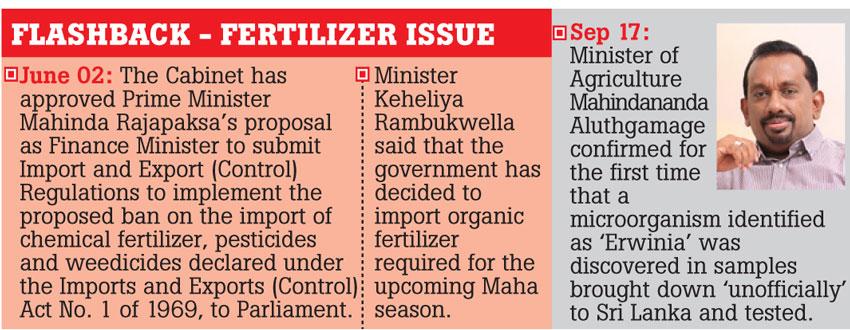
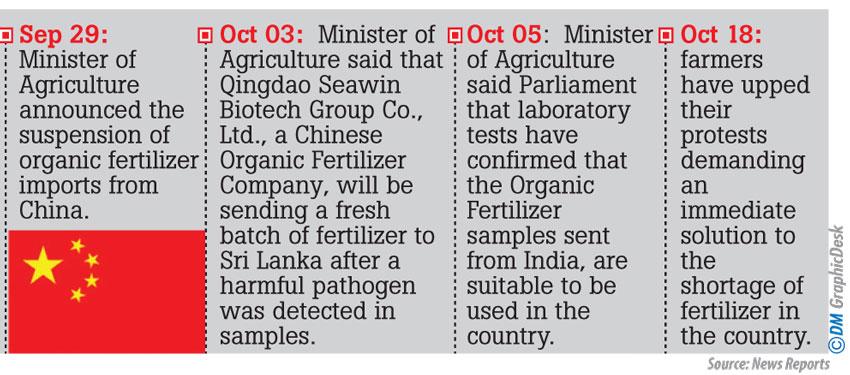
However, in September, the National Plant Quarantine Service (NPQS), which tested the fertilizer samples sent by the Qingdao Seawin Biotech Group Co., Ltd., revealed the detection of the microorganism called ‘Erwinia’. Several days later, Sri Lanka decided to suspend the importation of organic fertilizer from Seawin Biotech.
Later, the Ceylon Fertilizer Company (CFC) has obtained two interim orders from the Colombo Commercial High Court against the Seawin Biotech, its local agent and the state-run People’s Bank, preventing the payment to the Chinese firm on Letter of Credit.
The CFC first obtained a court order on October 26 against the Chinese firm in question, preventing the People’s Bank from making any payment under a Letter of Credit opened in favour of the Chinese company.
In the latest development in the row over a consignment of organic fertilizer containing harmful bacteria shipped from China, the People’s Bank in Sri Lanka has been blacklisted by the Economic and Commercial Office of the Chinese Embassy in Colombo.
The move is attributed to the failure of People’s Bank to make the payment in compliance with the Letter of Credit and the contracts.
In a statement, the Chinese Embassy stressed the People’s Bank of Sri Lanka has recently witnessed vicious event of Letter of Credit default, causing huge losses to the Chinese enterprises in international trade with Sri Lanka.
The Office solemnly reminds all Chinese enterprises to strengthen risk control and avoid accepting L/C issued by People’s Bank of Sri Lanka in international trade with Sri Lanka, the embassy said further.
As per the terms of the contracts, the payment for the controversial organic fertilizer shipment was slated to be made through a Letter of Credit established via the People’s Bank.
However, in September, the National Plant Quarantine Service (NPQS), which tested the fertilizer samples sent by the Qingdao Seawin Biotech Group Co., Ltd., revealed the detection of the microorganism called ‘Erwinia’.
Several days later, Sri Lanka decided to suspend the importation of organic fertilizer from Seawin Biotech.
The Chinese firm retaliated, saying that the NPQS took only three days to draw a suspicious conclusion although it takes more than 6 days to identify Erwinia as per the ISPM27 rule in IPPC (International Plant Protection Convention). After the supplier raised doubts, NPQ Sri Lanka updated the report on October 11th and had used seven days to test, but it still did not indicate the test standards and methods, the company alleged.
The unscientific detection method and conclusion of NPQ in Sri Lanka” are not in compliance with international animal and plant quarantine convention, Seawin Biotech claimed further.
The Chinese firm urged that Swiss SGS group, a top third-party testing organization, should re-test whether the samples contain Erwinia.
But Agriculture Minister Mahindananda Aluthgamage later insisted that the ship carrying the fertilizer consignment containing harmful bacteria will not be allowed into Sri Lanka. He also noted that the samples from this fertilizer shipment will not be re-tested, nor will any payment be made to the Chinese firm in question.
Against this backdrop, the Ceylon Fertilizer Company (CFC) obtained two interim orders from the Colombo Commercial High Court against the Seawin Biotech, its local agent and the state-run People’s Bank, preventing the payment to the Chinese firm on Letter of Credit.
The CFC first obtained a court order on October 26 against the Chinese firm in question, preventing the People’s Bank from making any payment under a Letter of Credit opened in favour of the Chinese company.
Meanwhile, the People’s Bank, in response to the Chinese Embassy’s move, said the payment for the organic fertilizer consignment shipped by Qingdao Seawin Biotech Group Co. Ltd. was halted due to an interim injunction issued by the court.
Action pertaining to the payments will accordingly be taken based on the future court decisions, the People’s Bank stated further.
The Director General of Health Services has confirmed another 10 coronavirus related deaths for October 28, increasing the country’s death toll due to the virus to 13,706.
According to the figures released by the Govt. Information Department, the deaths reported today include 07 males and 03 females.
Five of the deceased are between the ages 30-59 and the remaining five are aged 60 and above.
The daily count of COVID-19 cases confirmed in Sri Lanka moved to 556 today (October 29) as 141 more people were tested positive for the virus, says the Epidemiology Unit.
This brings the total number of confirmed cases of coronavirus reported in the country to 539,416.
As many as 512,165 recoveries and 13,706 deaths have been confirmed in Sri Lanka since the outbreak of the pandemic.
More than 13,500 active cases in total are currently under medical care, official figures showed.
The Samagi Jana Balawegaya (SJB) had organized a protest in Kandy today (29) under the leadership of the Opposition Leader Sajith Premadasa on several issues, including the rising cost of living and the fertilizer crisis.
Meanwhile, the Opposition Leader also visited the Asgiri Theras of Malwatta Chapter today and received blessings.
Sri Lanka as a Nation today is at crossroads in evaluating what went wrong in its seventy four year old post independent time period. It has happened due to various social, economic, cultural and political changes introduced in an inappropriate manner, such as the language policy of the late 50’s and the closed economy of the early 70’s. Being a functional democracy with a voting population that commands a so called 90+ per cent literacy rate it has been proven multiple times in the past most decisions made through franchise were largely attributed to being emotional rather than rational.
Of all such flaws in the past a major mistake was made by the Sri Lankan voters at the Presidential election held on the 16 November, 2019. For the mature voter it was a reasonably clear cut, rationalistic, intelligent decision at the Election, when taking into consideration the two leading candidates. On the contrary the Government at that time put forward Sajith Premadasa – a comparatively young, dynamic, foresighted candidate educated at the London School of Economics possessing over two decades of political experience sans a single law suit against him, armed with a vision that blended ‘social empowerment’ with an ‘export oriented economy’. In an advanced democracy such as UK, Australia, USA, Canada or New Zealand the majority choice would have been Sajith without a shadow of a doubt.
But in a South Asian Nation like Sri Lanka of late emotional factors and materialism have become the deciding factors of a national poll. Gotabaya Rajapaksa became victorious for his over reliance on such factors, while Sajith was spelling out solutions to confronting practical issues of the people. Today a majority of the Sri Lankans do accept that it was a mistake. It is based on a personal qualitative research study done by the author of this article during three months around mid-2021 in two different provinces. Of late most Sri Lankans have begun to witness the leadership characteristics of Sajith, which they do not see in the current President or for that matter in most other leaders. What are those leadership traits? They are as follows:
1. Leading from the front – Example:
A large number of former leaders in the United National Party (UNP) were either reluctant or did not have a strategy or a plan to challenge the autocratic rule of former PM Ranil Wickramasinghe within the party. But Sajith took the lead and did walk out of the grand old party with a majority of its popular politicians, partners and supporters to the dismay of the incumbent party leader. The subsequent General Election delivered a major knockout punchon Ranil by reducing his once largest Sri Lankan political party to a three wheeler mushroom organisation.
2. Being foresighted – Examples:
(a) During the Presidential Election of 2019, Sajith promised to provide sanitary pads to the poorest of the poor ladies in Sri Lanka to eliminate or curb the incidence of diseases such as womb cancer that has had a huge cost impact on the national budget. It was taken as a joke at that time by his opponents, but was an economic measure targeting to save revenue for the state. Today its importance is stressed and put into practice by the leaders of Ireland, New Zealand and Holland. Most others did not see the value of the proposition, since they did not see far like Sajith.
(b) Another case in point was when Sajith as the leader of the opposition became the first sitting member of parliament to inform the house in late January, 2020 before the pandemic broke out in Sri Lanka that the COVID-19 virus was fast approaching the nation and a lockdown of the country should be imposed. He also stressed that personal protective equipment, modern drugs and COVID vaccines authorised by WHO should be introduced to the Sri Lankan people as early as possible free of charge.
The Gotabaya Rajapaksa regime made fun of all such suggestions believing in myth promoting concoctions, throwing holy water pots into rivers etc without relying on scientific evidence. Leading Sri Lankan medical personnel as well as some Government ministers later acknowledged the suggestions made by Sajith were valid and had they been implemented at the correct time COVID-19 would have had a significantly lesser impact on our motherland and its economy.
3. A great listener – Example:
I’ve had meetings, discussions and interactions with Sajith Premadasa in the past. A trait that I always noticed in him is that he’s a great listener. To be a great leader, and to be successful, one must be a good listener”. Definitely, Sajith belongs to that great leader category. Our current incumbent President on the other hand is not a good listener. It was shown on national TV, when he began screaming at officials of the Central Bank of Sri Lanka threatening them to present economic tools to resurrect the economy.
4. Target oriented – Example:
Whenever Sajith undertakes or devolves authority to complete a project or a process it will be based on a target oriented timeline. It was clearly visible when he was the Minister of Housing, Construction and Cultural affairs in constructing and delivering re-awakened villages to poor people and Buddhist daham schools (dahampasal) to underprivileged temples.
5. Honesty and integrity – Example:
Do not need much explanation. Sajith does not have any court cases filed against him in theSri Lankan judicial system with respect to corruption or malpractices. He’s a class act interms of honesty and integrity as opposed to the current incumbent President, who’s had afair share of allegations and court cases against him linked with dishonesty.
6. Team Player – Examples:
(a) Most people in Sri Lanka have noticed Sajith participating in protests or discussions with other members of his Samagi Jana Balavegaya (SJB) party as a team, unlike President Gotabaya who tries to do things on his own making others submissive as shown in a past television news clip, where he orders a public sector employee to consider what he utters from his mouth as a Government circular.
(b) Another example of Sajith being a team player is illustrated by the fact that he devolves power to other politicians in his party to conduct and complete certain tasks. Two such examples are young capable MP’s Buddhika Pathirana and Mayantha Dissanayake, who were sidelined by Ranil in the UNP have been brought into the forefront of the SJB by Sajith.
7. Opposition Leader of a different kind – Example:
In the post independent history of Sri Lanka, Sajith Premadasa is the only opposition leader who has served the people to redress their problems and issues without state funding to provide necessary equipment to hospitals, medical treatment to the needy, water purification apparatus to appropriate village establishments etc in addition to being involved in environmental protection projects such as ‘Project Elephant’ and ‘Project Leopard’. Today for the first time even the Gotabaya Rajapaksa regime has not been able to match such endeavours even with state funds at their disposal.
In management it has been stated that to be an effective leader an individual should be selfaware and prioritise personnel development, focus on developing others, encourage strategic thinking, innovation and action, be ethical and civic-minded and practice effective cross-cultural communication. By carefully analyzing the traits of Sajith Premadasa given above, it is crystal clear they have contributed in making him an effective leader. Therefore now it’s aptly clear why Sri Lanka’s longest serving Finance Minister who was responsible for opening up our economy Ronnie De Mel mentioned publicly a few months back that Sajith is the only hope for our motherland”.
Pakistan High Commissioner to Bangladesh
Imran Ahmed Siddiqui’s recent meeting with Bangladesh Prime Minister Sheikh
Hasina was comprehensively covered in the media. It only shows the strategic
significance of the meeting. The meeting has messages for the region, including
some ominous signs for India, as it has the potential to change the entire
regional geopolitical game.
Bangladesh is indeed a trusted friend of
India in the South Asian region. Bangladesh-India relations can be described as
“all-weather friendship”, just like the ties between Pakistan and
China.
According to a report in the leading
Pakistani media outlet Dawn, Sheikh Hasina invited Pakistan Prime Minister
Imran Khan to visit Bangladesh. Pakistani media outlets reported that Sheikh
Hasina also expressed her interest in visiting Pakistan. This could be a
significant development in terms of regional geopolitics, provided the news is
correct.
Recent incidents in Bangladesh surrounding
the Hindu festival of Durga Puja have indeed created some distance between New
Delhi and Dhaka. This followed issues like India’s National Register of
Citizens and the Citizenship Amendment Act, which had already caused tension
between Bangladesh and India. Delay in the resolution of long-pending issues
like the signing of the Teesta water-sharing deal despite Dhaka’s persistent
demands, killing of civilians across the Bangladesh border, as also the onion
crisis have sowed some distrust between the two longtime friends.
Sheikh Hasina’s counter to India’s angry
diplomatic note on the recent killings of Bangladesh’s Hindus and vandalisation
of their property and socio-cultural symbol has not been particularly palatable
to New Delhi.
It is a fact that Bangladesh is going to
emerge as a self-sufficient economic power in the region. As such, India needs
to behave in a more friendly manner.
Overtures from Islamabad
During his meeting with Sheikh Hasina at
the Prime Minister’s official residence Ganobhaban, the newly appointed
Pakistan High Commissioner handed over to her a message from Imran Khan.
After the meeting, the Bangladesh premier’s
Press Secretary Ihsanul Karim, in his briefing to reporters, said Sheikh Hasina
told the envoy that South Asian countries should be freed from the curse of
hunger and illiteracy and needed to work for the welfare of the people of the
region. The Prime Minister further said that the foreign policy of Bangladesh
formulated by Father of the Nation Bangabandhu Sheikh Mujibur Rahman is
friendship with all, not enmity with anyone”.
During the meeting, High Commissioner Imran
Ahmed Siddiqui said Pakistan is interested in developing its relations with
Bangladesh. He also gifted a photo album, painting, and video footage of Sheikh
Mujibur Rahman’s visit to Pakistan as the Prime Minister of Bangladesh to attend
the 1974 OIC (Organization of Islamic Cooperation) Summit. Hasina thanked the
High Commissioner for handing over the historical memorabilia. She also
commended the publication of a calligraphy book in Bengali by Pakistan on the
occasion of the golden jubilee of Bangladesh’s independence.
Ambassador at Large Mohammad Ziauddin and
the Prime Minister’s Principal Secretary Ahmed Kaikaus were present during the
interaction. While the detailed deliberations of the meeting were not made
public, multiple issues are likely to have cropped up at the discussion table.
Alarm bells for India?
This should ring the alarm bell for India.
China and Pakistan are always scouring for opportunities by utilizing any kind
of strain in Bangladesh-India ties, and would obviously try to exploit the
present regional political scenario.
In this context, one assumes that India
would strive to keep its warm relations with Bangladesh at its level best.
India should keep its promises made earlier to Bangladesh. India shouldn’t
point an accusing finger at Bangladesh for the recent incidents.
Indian politicians should do well to stay
away from making remarks or come up with statements that may disturb the
Bangladesh-India friendly ties. Such comments can only create a gulf between
Bangladesh and India, which is undesirable. It is well established that the
Bangladesh government is going all out to take concrete actions against
culprits who were involved in recent communal violence in Bangladesh. India and
the world know that Bangladesh is a secular country.
PM Hasina is a person of liberal views with
a secular outlook. India should stop spreading baseless propaganda against
Bangladesh. Indian media agencies and religious organizations should desist
from circulating any events and issues which can potentially cause damage to
the bilateral relations between Bangladesh and India.
New Delhi should take effective steps to
stop border killings across the Bangladesh-India border. The long-pending
Teesta issue must be resolved. Interference in the internal affairs of
Bangladesh by some Indian political leaders must be stopped.
India should behave as an ‘all-weather ally
just as China does towards Pakistan. Otherwise, India might lose its most
trustworthy and reliable friend in the world. India and Bangladesh had, have,
and will have – hopefully – eternal strategic ties. Bangladesh needs India and
vice versa. Indian leaders should take serious note of the recent meeting of
the Pakistan envoy with the Bangladesh PM. A single negative incident between India
and Bangladesh has the potential of changing the regional geopolitical
scenario.
The article was first appeared in South
Asia Monitor on October 28, 2021.
Embassy and Permanent Mission of Sri Lanka Bangkok, Thailand
Third session of the Committee on Macroeconomic
Policy, Poverty Reduction and Financing for Development of the United Nations
Economic and Social Commission for Asia and the Pacific (UNESCAP) was virtually
convened in Bangkok, from 20 to 22 October 2021, and
discussed a range of economic policies and innovative financing strategies to
overcome multifaceted challenges, in the post COVID-19 context.
Leading the Sri Lanka
delegation, Ambassador
of Sri Lanka to the Kingdom of Thailand and Permanent Representative to the
UNESCAP, C.A. Chaminda I. Colonne conveyed Sri Lanka’s appreciation to the
Committee on Macroeconomic Policy, Poverty Reduction and Financing for
Development of the UNESCAP for its work to overcome the challenges of COVID-19
pandemic and expressed Sri Lanka’s support for the establishment of a
Consultative Group on financing strategies for the Sustainable Development
Goals, along with China, Japan, Pakistan, France and Finland. Governor of the
Central Bank of Sri Lanka Ajith Nivard Cabraal will be coordinating the said
Group.
As a key
note speaker for the special side event ‘Regional Conversation on Financing for
Development: Financing sustainable development and addressing debt risks in the
aftermath of the COVID-19 pandemic – potential of innovative sustainable
financing strategies’ Governor Cabraal stated that downgrading countries in a
time of global pandemic is creating chaos and that itself causing
vulnerabilities and add further vulnerabilities to countries by downgrading and
providing low access to finance”. Governor Cabraal also highlighted the importance
of providing Special Drawing Rights by the IMF at the very first stage of
pandemic and elaborated on Sri Lanka’s new approaches towards managing debt
risk by reducing market debts, looking for G2G new additional financing, using
under-utilized assets etc.
Delivering
the Country Statement, Additional Director General of the Department of
External Resources, Sampath Manthrinayake of the Ministry of Finance of Sri
Lanka stated that ‘Sri Lanka can work to secure fiscal and debt sustainability
and drive resilient growth and jobs, particularly by focusing on blue and green
economy and smart agriculture, allowing productive local companies to integrate
into global value chains, and attaining higher value addition in manufacturing,
agribusinesses, and service sectors’.
Director General of Sustainable
Development Council of Sri Lanka, Chamindry Saparamadu, Director of Department
of External Resources, Samantha Bandara, First Secretary and Deputy Permanent
Representative of the Mission, Saritha Ranatunga were the other members of Sri
Lanka delegation.
Embassy and Permanent Mission of Sri Lanka Bangkok, Thailand
The government decided, all of a sudden, to implement organic farming in place of chemical agriculture which Sri Lankan farmers are accustomed to for nearly 60 years. President Gotabaya Rajapaksa is pledge-bound to introduce eco-friendly agriculture in steps over a decade according to his manifesto ‘Vistas of Prosperity and Splendour’. Despite the policy envisaged in the manifesto, the government took a hasty move to ban chemical farming ahead of four months for the Maha season (main cultivation season). The decision triggered a crisis of epic proportion in the farming sector with rice growers agitating in the main agricultural districts. Today, in some areas, the fields which should normally look lush with rice paddy remain abandoned since farmers fear cultivation of them due to uncertainty over lack of fertilizer.
The government airlifted a stock of Nano liquid fertilizer from India to be sprayed on crop plants in the absence of Urea chemicals as a source of nitrogen for plant growth. But, things are yet to settle in the farming community. It is all too obvious that farmers ‘unrest is fueled by the opposition – Samagi Jana Balawegaya (SJB) and Janatha Vimukthi Peranuna (JVP) which seek to seize the political momentum for their electoral ends. That is a natural phenomenon in a multi-party democracy. In such a setup, be it whatever party, the opposition always tries to outdo the governing party. As such, there is no point in laying blame on the opposition over farmers’ agitation. Tension is common. The opposition can only fuel and take it to new heights, maybe, through media stunts.
The government only paved the way for it by initiation of action overnight for the introduction of organic farming, a process that requires meticulous planning and long term for implementation otherwise. It involves education of farmers, training of them in the use of organic fertilizer. It is a transformation to be achieved in the span of at least three to five years. Secretary to the Agriculture Ministry Prof. Udith K. Jayasinghe himself admitted that the cancellation of the import of chemical agro inputs was an ill-advised move.
In addition to tension among farmers against the government, a commercial dispute is likely to crop up with China in the rush for the import of organic fertilizer.
Subsequent to the adoption of green agriculture policy by the government in May, this year, the government selected Qingdao Seawin Biotech Group Company Ltd., after a bidding process.
Sri Lanka plant quarantine authorities which tested samples provided by the company detected Erwinia, a harmful bacteria. Detection made headlines in mainstream and social media leading to the call for termination of the deal with the Chinese company. However, the Chinese company has now disputed findings by the Sri Lankan plant quarantine authorities saying that testing done here was not up to the mark in terms of international standards.
The company, through the Chinese embassy in Colombo, issued a statement on Tuesday (October 26) asking for reference of samples to be tested by an independent third party.
The statement says, It was officially listed as a qualified supplier for Tender No. IFB No. SMOF/OFPR/2021/1 on August 11, to supply 99,000 tons of organic fertilizer to Sri Lanka. Course of this event after awarded the tender, Qingdao Seawin Biotech Group signed contracts with the buyers through a local biding agent in Sri Lanka, and strictly fulfilled the contract. It overcame many difficulties, such as busy international and domestic orders, soaring global raw material prices, tight shipping schedules and berthing slot, high sea freight cost and so on, and gave priority to ensure the production and delivery of the tender contract for Sri Lanka. After the buyer issued Letter of Credit (L/C), Qingdao Seawin Biotech Group shipped the organic fertilizer which comply with the quality requirements on September 23 according to the time schedule required by L/C (before September 25). While the goods were on the way by sea, CFC informed that the import permit has not been obtained” and the goods will be rejected”. However, according to international trade practices, it is the buyer’s obligation to obtain the import permit. The failure to obtain the import permit is caused by the buyer’s mistakes and negative inaction. On September 23, Sri Lanka NPQ received the seller’s product samples. On September 27, the seller received an oral notice from the buyer and was informed that Sri Lanka Plant Quarantine Center (NPQ) issued a conclusion of suspecting that the samples contain Erwinia”, but did not provide the test report, test method and standards.
According to ISPM27 rule in IPPC (International Plant Protection Convention), it will take more than six days to identify Erwinia, but NPQ only takes three days to draw a suspicious” conclusion. After the supplier raised doubts, NPQ Sri Lanka updated the report on October 11. Seven days was used to test, but it still did not indicate the test standards and methods. Testing temperature of Erwinia shown in the report is 37, and carrot slices at 37 are used for pathogenicity test. According to the relevant agreement of IPPC, the testing temperature of Erwinia is 25, and healthy plants should be used for pathogenicity test. At least 13~14 days should be used to confirm Erwinia through pathogenicity. The unscientific detection method and conclusion of NPQ in Sri Lanka obviously do not comply with international animal and plant quarantine convention,”
In the same statement, the company insisted that the product samples passed the test of Schutter Group, a third-party international testing organization designated by the buyer (SLSI) and passed the export plant sustainable development of green agriculture.
Nevertheless, the Sri Lankan side vows for accuracy of their test reports. The issue has also been politicized in Sri Lanka with the parties in the opposition – SJB and JVP protesting against the delivery of shipment into the country. Now the Chinese side has called for reference of the matter to another third party testing organization- Swiss SGS group) in this instance.
According to the tone and tenor of the language used in this press release, the Chinese side has taken a hard and fast position. The embassy’s involvement shows how serious they are in this matter. The Foreign Ministries of the two countries are not involved in this dispute. Sri Lankan embassy is kept informed of what is happening, but it is not involved in the problem, according to informed sources. According to all indications, it will lead in the direction of a commercial dispute with the Chinese company unless Sri Lanka agrees to certification of fertilizer samples by a third party.
Again, the problem emerged because of the lack of professionalism in dealing with international transactions.
Farmers in various parts of the country protested today as well, claiming that they are unable to cultivate due to the lack of fertilizer.
During a protest in Hambantota the protesters handed over a letter to the Hambantota District Secretary requesting fertilizer.
Representatives of 41 farmers’ organizations in the Bakamuna area have continued their fast for the fifth day of the hunger strike. Opposition Leader Sajith Premadasa also arrived at the scene in the afternoon.
Meanwhile, Governor of the North Central Province Mahipala Herath inspected an organic fertilizer factory in Habarawatta, Anuradhapura which is successfully operating by distributing organic fertilizer to farmers in the Anuradhapura District.
Many crops including banana, papaya, long beans and chillies have been successfully cultivated in 4 acres of land using organic fertilizer.
State Minister Duminda Dissanayake stated that steps have been taken to release 5,000 metric tons of urea previously imported to Sri Lanka for maize farmers in the Anuradhapura District.
Steps have been taken to provide a stock of urea fertilizer to the Anuradhapura district against the backdrop of the government initiating the promotion of organic farming in the country by suspending the import of chemical fertilizers.
Meanwhile, the Eravur Fertilizer Depot in the Batticaloa District has received stocks of fertilizer required for paddy cultivation during the Maha season using organic fertilizer.
The district has stored 7,275 liters of liquid fertilizer, 612 metric tons of potassium chloride, and 3,300 liters of nano nitrogen liquid fertilizer for the fertilizer requirement, and they will be released to the farms from next Monday.
Meanwhile, Agriculture Minister Mahindananda Aluthgamage addressing a media briefing held at the Presidential Media Center today through online technology stated that some ministries are following a silent policy in encouraging the cultivation of organic fertilizer instead of chemical fertilizer.
Accordingly, the Minister made an allegation against the Ministry of Health and the Ministry of Environment.
The Minister also stated that attention has been paid to import a stock of pesticides and fungicides to combat a pest menace.
State Minister Shashindra Rajapaksa was also present at the media briefing and the two Ministers answered questions raised by journalists.
Ratings agency Moody’s Investors Service (Moody’s”) has today downgraded the Government of Sri Lanka’s long-term foreign currency issuer and senior unsecured debt ratings to Caa2 from Caa1 under review for downgrade. The outlook is stable.
This concludes the review for downgrade initiated on 19 July 2021.
The decision to downgrade the ratings is driven by Moody’s assessment that the absence of comprehensive financing to meet the government’s forthcoming significant maturities, in the context of very low foreign exchange reserves, raises default risks.”
In turn, this assessment reflects governance weaknesses in the ability of the country’s institutions to take measures that decisively mitigate significant and urgent risks to the balance of payments, the statement said.
External liquidity risks remain heightened. A large financing envelope that Moody’s considers to be secure remains elusive and the sovereign continues to rely on piecemeal funding such as swap lines and bilateral loans, although prospects for non-debt generating inflows have improved somewhat since Moody’s placed Sri Lanka’s rating under review for downgrade.”
Persistently wide fiscal deficits due to the government’s very narrow revenue base compound this challenge by keeping gross borrowing needs high and removing fiscal flexibility, the ratings agency stated.
The statement further said:
The stable outlook reflects Moody’s view that the pressures that Sri Lanka’s government faces are consistent with a Caa2 rating level. Downside risks to foreign exchange reserves adequacy remain without comprehensive financing and narrow funding options. Should foreign exchange inflows disappoint, default risk would rise further. However, non-debt generating inflows particularly from tourism and foreign direct investment (FDI) may accelerate beyond Moody’s current expectations, which, coupled with the track record of the authorities to put together continued, albeit partial, financing, may support the government’s commitment and ability to repay its debt for some time.”
Sri Lanka’s local and foreign currency country ceilings have been lowered to B2 and Caa2 from B1 and Caa1, respectively. The three-notch gap between the local currency ceiling and the sovereign rating balances relatively predictable institutions and government actions against the very low foreign exchange reserves adequacy that raises macroeconomic risks, as well as the challenging domestic political environment that weighs on policymaking. The three-notch gap between the foreign currency ceiling and local currency ceiling takes into consideration the high level of external indebtedness and the risk of transfer and convertibility restrictions being imposed given low foreign exchange reserves adequacy, with some capital flow management measures already imposed.”
Father Cyril Gamini, who had been summoned by the Criminal Investigations Department (CID) today to record a statement in connection with the complaint filed by the Director of the State Intelligence Service (SIS), has requested for one week’s time to provide the statement.
This was informed by three Catholics priests who appeared before the CID on behalf of Father Cyril Gamini today (28).
Speaking to reports afterwards, Fr. Shanthi Kumar Welivita stated that they handed over a letter from Father Cyril Gamini to the CID seeking a week’s time to prepare and come give his statement. He said that the CID gave permission for that request.
The SIS chief on Monday (25) filed a complaint with the CID regarding the allegations made by Father Cyril Gamini and several other individuals during an online forum held on October 23 to brief Sri Lankan community living overseas on the Easter Sunday attacks.
The complaint referred to comments made by Rev. Fr. Cyril Gamini Fernando, who is a member of the National Catholic Committee for Justice to Easter Sunday Attack Victims, during the online forum alleging that the country’s intelligence units had provided financial and other assistance to Zahran Hashim, the leader of the National Thowheed Jamaath (NTJ) who was behind the suicide bombings.
The complaint states that it was also alleged, during the webinar, that the then Brigadier Suresh Sallay had played an active role in nurturing Zahran Hashim and his followers.
Major General Sallay had strongly denied the allegations leveled by Father Cyril Gamini and others during the webinar while also charging that the allegations were made with the intention of discrediting him” and are completely false.
Accordingly, the CID yesterday informed the Colombo Magistrate’s Court that investigations have commenced regarding the complaint filed by the Major General Suresh Sallay.
President Gotabaya Rajapaksa has reportedly called for a meeting with the leaders of the government’s allied political parties.
The meeting, chaired by President Rajapaksa and Prime Minister Mahinda Rajapaksa, will be at 5.30 p.m. today (October 28) at the Temple Trees.
According to reports, the focus of the discussion is expected to fall on the Yugadanavi Power Plant deal with the United States-based New Fortress Energy Inc. and other related issues.
New Fortress Energy, in a recent statement, revealed that an agreement was executed with the Sri Lankan government for its investment in West Coast Power Limited (WCP) – the owner of 310 MW Yugadanavi Power Plant in Kerawalapitiya.
The firm said it will acquire a 40% ownership stake in the WCP and plans to develop a new liquefied natural gas (LNG) receiving, storage and regasification terminal located off the coast of Colombo.
The leaders of allied parties had previously sought additional discussions regarding the power plant deal with President Gotabaya Rajapaksa. In their request, the representatives said the agreement needs to be revisited and discussed and also that it should be implemented following proper tender procedure after a formal study.
However, President Rajapaksa responded that it would be more appropriate to discuss the matter with the Prime Minister and the Finance Minister first.
Later, at a meeting held on September 23, PM Mahinda Rajapaksa briefed the political party leaders of the potential consumer benefits from the operation of the Yugadanavi Power Plant.
In the meantime, the trade unions, signaling a red light to the government, have warned that they would resort to large-scale strike action if the agreement with the New Fortress Energy is not scrapped.
The convener of Joint Trade Union Alliance of the Ceylon Electricity Board (CEB), Ranjan Jayalal said plans are already afoot to launch a series of protests on November 03 that would ‘leave the country in darkness.’
The Director General of Health Services has confirmed another 22 coronavirus related deaths for October 27, increasing the country’s death toll due to the virus to 13,696.
According to the figures released by the Govt. Information Department, the deaths reported today includes 09 males and 13 females while one of the victims is a youth below the age of 30.
Six of the deceased are between the ages 30-59 and the remaining fifteen and aged 60 and above.
The Health Ministry says that 142 more persons have tested positive for Covid-19 today, pushing the daily count of new cases to 540.
This brings Sri Lanka’s total coronavirus case count to 538,860 while the number of infected patinets currently being treated island-wide is 13,301.
Total recoveries has also risen to 511,863 and the death toll due to the pandemic is 13,696.
(The
following is only a layman’s personal opinion for what it is worth. It is hoped
that it will be read not as an attack on the intrepid and intelligent young
Minister of Justice Ali Sabry, but as a due appreciation of the difficulties of
the daunting challenge that he has undertaken on behalf of the nation.)
Justice
Minister Ali Sabry was reported to have stated: The traditional brand of
Islamism which has been practiced by Muslims in Sri Lanka for centuries has to
be preserved while the religion should not be practiced according to the likes
of one group” (‘Islamism practiced over centuries has to be preserved – Ali
Sabry’/Daily Mirror Online/October 20, 2021/Yohan Perera). According to the
Daily Mirror correspondent, he made this remark after taking part in a
religious ceremony at the Dewatagaha Mosque, Colombo. (This architecturally
impressive place of Islamic worship is a proud national monument situated at
the heart of the commercial capital; it is a symbol of the peaceful coexistence
of Muslims with Sri Lankans of other faiths.) The minister was reported to have
added: Unity among Muslims in Sri Lanka should also be preserved just like
preserving unity among various religious and ethnic groups.” Sri Lankans of all
beliefs interested in the early restoration of the externally disturbed
customary religious and communal harmony subscribe to that laudable view with
the necessary alterations. But will his equation of Islam with Islamism work in
the current context.
(CAVEAT:
There is no way to check the authenticity of the news report, unless Minister
Ali Sabry confirms or denies what is claimed in it about him. It has not been
indicated in which language he expressed these ideas. Did he actually use the
words Islam and Islamism speaking in English or their equivalents speaking in
another language, or has the DM reporter arbitrarily translated into English
using those two terms what the speaker said in another language?)
But
for the purpose of this essay, I assume that the news portal mentioned above
has reported the Minister’s words correctly, subject to later correction. I
don’t know whether Muslims in Sri Lanka have started using the words Islam
and Islamism interchangeably, which, of course, I’d have thought, is a
near impossibility, given the universally recognized difference in meaning
between the two terms. Google.com defines Islam as ‘the
religion of the Muslims, a monotheistic faith regarded as revealed through
Muhammad as the Prophet of Allah’. Islamism on the other hand, is generally
taken to mean Islamist fundamentalism associated with violent militancy, which
is purely a religio-political movement. The Wikipedia defines Islamism thus:
Islamism (also often called political Islam or Islamic fundamentalism) is a
political ideology which posits that modern states and regions should be
reconstituted in constitutional, economic and judicial terms, in accordance
with what is conceived as a revival or a return to authentic Islamic practice
in its totality”.
Explaining
the relation between Islam and Islamism, the Wikipedia says:
QUOTE
The
relationship between the notions of Islam and Islamism has been subject to
disagreement. Hayri Abaza argues that the failure to distinguish between Islam
and Islamism leads many in the West to support illiberal Islamic regimes, to
the detriment of progressive moderates who seek to separate religion from
politics. A writer for the International Crisis Group maintains that the
conception of ‘political Islam’” is a creation of Americans to explain the
Iranian Islamic Revolution and (that) apolitical Islam was a historical
fluke of the short-lived era of the heyday of secular Arab nationalism between
1945 and 1970”, and it is quietist-political Islam, not Islamism, that requires
explanation.
Another
source distinguishes Islamist from Islamic by the fact that the latter refers
to a religion and culture in existence over a millennium, whereas the first is
a political/religious phenomenon linked to the great events of the 20th
century”. Islamists have, at least at times, defined themselves as
Islamiyyoun/Islamists” to differentiate themselves from Muslimun/Muslims.
Daniel Pipes describes Islamism as a modern ideology that owes more to European
utopian ideologies and isms” than to traditional Islamic religion.”
END OF QUOTE
(By
the way, the Wikipedia is no longer regarded as an easily available smart tool
– once praised as such even by Noam Chomsky – for the amateur researcher for
the reason that the entries are made by voluntary editors at various levels of
scholarship and academic authority and authenticity. The Wikipedia user must be
sufficiently educated and well informed to be able to separate the wheat from
the chaff. In this case, the definitions given are sound enough, to my
understanding.)
When
Ali Sabry made the particular remark, if he actually did so, he probably had in
mind what the Wiki quote refers to as ‘quietist or political Islam’ (which, in
common parlance, is called ‘moderate Islam’). Moderate Islam is
not regarded as a problem, but Islamism definitely is. It need not be
reiterated that the problem of Islamism affects the whole world. As far as Sri
Lanka is concerned, Islamic/Islamist fundamentalism came to prominence
relatively recently, although it has been smoldering since the mid-20th century
as some commentators have pointed out. Given this background, responsible
speakers do not use the two words (Islam and Islamism) as alternatives. I
believe that minister Ali Sabry speaks as a responsible person. That is why I
am sceptical about the Daily Mirror report. But these are strange times. Anything is
possible.
However,
it is somewhat inconceivable that Ali Sabry, who has been entrusted by the
President with such a great responsibility or an array of
responsibilities as he bears in a government that sought election on the main
platform of One Law, One Country” and that is poised to bring in a new
constitution, made this thoughtless identification of Islam with Islamism. The
President seemed to ignore the well expressed opposition of some of his trusted
supporters (particularly the monks) to his selection of Ali Sabry to the
justice portfolio. The President appointed him (only a national list MP) as
Justice Minister, overlooking such eligible candidates for the post as the SLPP
elected MPs Susil Premjayanth, a professionally qualified lawyer with more than
thirty-five years of experience at the bar and in constitution making, Dr
Wijedasa Rajapaksa, a former minister of justice who served under yahapalanaya
and later fell out with that regime. The President did so with a purpose. He
wanted to assure the Muslim community that they are safe and will not be
subjected to discrimination under his rule, particularly in the face of
incursions into Sri Lanka of rampant Islamist extremism, although most Muslims
did not vote for him at the presidential election in November 2019. It is
conceivable that the President’s more important aim in appointing Ali Sabry to
that key post was to enlist the participation of the Muslim community in
governance despite their implicit initial refusal of his goodwill. It is
unlikely that Ali Sabry has forgotten this.
Perhaps, it is
too early to call Ali Sabry’s apparent verbal faux pas a case of letting the
cat out of the bag. But those who have been suspicious of him from the
beginning will say ‘Thank you for the information’. Is he running with the hare
and hunting with the hounds? Or is he trying to sweep the Wahhabist menace
under the carpet? Anyway, let’s hope that he will say something to reassure the
over 90% non-Muslim majority + the many ordinary Muslims who do not
accept and oppose (some openly, many surreptitiously) the Wahhabi
ideology and who are being persecuted by it; they expect him not to allow any
pro-Islamist bias or politically expedient duplicity to cloud his judgement and
betray the trust that the President has reposed in him. From the beginning, Ali
Sabry has acted as or like a pious Muslim who will stand up and speak up for
his community, while performing his duty. There is nothing wrong with that. But
the fact remains that there is only one Minister of Justice for the whole of
Sri Lanka. The person who occupies that position is required to serve the whole
nation without practicing overt or covert discrimination against any community.
Attitudes implied by his apparent readiness (though this has not been
confirmed, to be fair by him) to see an equivalence between traditional Islam
practiced in Sri Lanka and the problematic Islamism that is relatively of more
recent origin at least in Sri Lanka could be seen as incongruent with that
vital national obligation in a less intellectually gifted politician.
A group of university professors, lecturers, and senior officials in the field of agriculture
25th October, 2021
Prof. Udith K. Jayasinghe-Mudalige Secretary Ministry of Agriculture
Dear Sir,
Overcoming
the Current Agriculture Crisis
We, as a senior group of agricultural
researchers and academia, would be pleased to propose a course of action, which
should be consistent with the Government’s vision for a healthy and green
agriculture. We willingly became signatories to this letter to propose solutions acceptable to all
parties including the farmers, the majority of whom are relentlessly and
adamantly demanding to continue with conventional agriculture as they know it.
You will appreciate that pursuing a
goal of converting the country’s agriculture to 100% organic within a season or
two is impossible as evident from the recent happenings and farmers’ revolt
demanding for fertilizer and pesticides. We must note that the situation has
been aggravated owing to the delays to meet the demand by way of organic and/or
synthetic chemical inputs in the requisite
quantities.
While accepting the fact that His
Excellency the President is not an expert in agriculture, but his vision for a
toxin-free nation should be appreciated. Unfortunately, however, his advisors
have not only failed to succinctly provide the requisite advice but also a
strategy and a viable action plan at the ground level towards a ’healthy
agriculture’.
It is also evident from recent discourses that
some of his close advisors are highly biased and ignorant of vital facts
relating to our agriculture. At the same time, many senior officers appear to
be non-committal and adopting a ‘save the skin’ attitude, virtually saying yes
to everything to please the President.
Taking into account
experiences of other countries’ achievements in promoting organic farming and
the intrinsic potential of organic farming with the related current
technologies, we would like to propose a course of action in agriculture that
is consistent with the vision of the government and at the same time acceptable
to farmers.
In this regard we seek an audience with HE the President, and
shall be pleased if you could arrange it.
Anticipating a favourable response
from you,
Yours
truly,
–
Name
Designation
University
Prof. D.K. N.G.
Pushpakumara
Senior
Professor
University of
Peradeniya
Prof. W.A.J.M. De
Costa
Senior
Professor
University of
Peradeniya
Prof. Devika M.
De Costa
Professor
University of
Peradeniya
Prof. Buddhi
Marambe
Senior
Professor
University of
Peradeniya
Prof. Saman
Dharmakeerthi
Professor
University of
Peradeniya
Prof. K.K.I.U.
Arunakumara
Senior
Professor
University of
Ruhuna
Prof. Nalika
Ranathunge
Professor
University of
Ruhuna
Prof. Nilantha
Lakshman
Professor
University of
Ruhuna
Prof. R.M.C.P.
Rajapaksha
Professor
University of
Peradeniya
Dr. Warshi Dandeniya
Senior Lecturer
University of
Peradeniya
Dr. Mojith
Ariyarathna
Senior Lecturer
University of
Peradeniya
Dr. Pradeep
Gajanayake
Senior Lecturer
University of
Sri Jayewardenepura
Prof. Guttila
Yugantha Jayasinghe
Professor
University of
Ruhuna
Prof. Ganganee
Chandima Samaraweera
Professor
University of
Ruhuna
Prof. G.
Thirukkumaran
Professor
University of
Jaffna
Dr. W.M.W.
Weerakoon
Former DG of
Agriculture
Department of
Agriculture
Prof. Jeevika Weerahewa
Senior
Professor
University of
Peradeniya
Dr. H.M. Gunatillake
Former
Director, Environment And Safeguards Division
Asian
Development Bank, Philippines
Dr. Anurudda
Karunarathna
Senior Lecturer
University of
Peradeniya
Dr. Chammi Attanayake
Senior Lecturer
University of
Peradeniya
Prof. B.C.
Walpola
Professor
University of
Ruhuna
Prof. W.A.U.
Vitharana
Professor
University of
Peradeniya
Dr. Parakrama
Waidyanatha
Former Chairman
Coconut
Research Board
Mr. Ajith Silva
Former
Additional Secretary
Ministry of
Environment
Dr. E.R.J.
Samarakoon
Lecturer
University of
Peradeniya
Dr. Samantha
Dissanayaka
Senior Lecturer
University of
Peradeniya
Dr. Nuwan De
Silva
Senior Lecturer
University of
Peradeniya
Dr. Pradeepa
Korale-Gedara
Senior Lecturer
University of
Peradeniya
Dr. Prasad
Neelawala
Senior Lecturer
Uva Wellassa
University
Mr. W.M.M.P.
Hulugalla
Lecturer
University of
Peradeniya
Ms. P.R.M.K.
Fernando
Lecturer
University of Peradeniya
Dr. J.M.
Seneviratne
Former Director
Export
Agricultural Research Station
Prof. Sarath P.
Nissanka
Professor
University of
Peradeniya
Mr. S. A.
Arunapriya
Former Addl.
Secretary
Ministry of
Agriculture
Prof. Venura
Herath
Professor
University of
Peradeniya
Prof. Pradeepa
Silva
Senior
Professor
University of
Peradeniya
Dr. Avanthi
Igalavithana
Senior Lecturer
University of
Peradeniya
Prof. S.
Wijetunga
Professor
University of
Ruhuna
Ms. E. M. G. P.
Hemachandra
Lecturer
University of
Peradeniya
Prof. Indunil
Pathirana
Professor
University of
Ruhuna
Dr. H.B.P. Sandani
Lecturer
The Open
University of Sri Lanka
Dr. V. N. S.
Sirimalwatta
Senior Lecturer
University of
Peradeniya
Dr. W.N.U.
Perera
Lecturer
University of
Peradeniya
Mr. Sandaruwan
Subasinghe
Lecturer
University of
Peradeniya
Dr. Jinendra S
Balasuriya
Senior Lecturer
University of
Ruhuna
Prof. WGD
Lakmini
Professor
University of
Ruhuna
Prof.
Deshapriya Rathnayaka
Professor
University of
Peradeniya
Dr. Gayathri
Beligala
Senior Lecturer
Gampaha
Wickramarachchi University of Indigenous Medicine
Mr. P.P.
Ruwanpathirana
Lecturer
University of
Ruhuna
Dr. A.A.M. Subodinee
Senior Lecturer
University of
Ruhuna
Prof. A.L.
Sandika
Professor
University of
Ruhuna
Ms. A. M. Y. W.
Alahakoon
Lecturer
University of
Peradeniya
Dr. Suranga
Kodithuwakku
Senior Lecturer
University of
Peradeniya
Ms. W.C.S. M. Abeysekara
Lecturer
University of
Ruhuna
Ms. W.T.V.
Thathsaranee
Lecturer
University of
Ruhuna
Dr. Sarath
Weerasena
Former DGA
Department of
Agriculture
Ms. L.M.J.N.K. Disanayaka
Lecturer
University of
Peradeniya
Mr. P.V.S. Harshana
Lecturer
University of
Ruhuna
Prof. A.R.S.B.
Athauda
Professor
University of
Peradeniya
Prof. R.M.
Fonseka
Professor
University of
Peradeniya
Mr. U. I.
Samarawickrama
Lecturer
University of
Ruhuna
Prof. S.S.
Kodithuwakku
Senior
Professor
University of
Peradeniya
Prof. J.K.
Vidanarachchi
Professor
University of
Peradeniya
Prof. L.M.
Abeywickrama
Senior Professor
University of
Ruhuna
Prof. G.W.A.R.
Fernando
Senior
Professor
The Open
University of Sri Lanka
Mr. R.A.A.S. Rathnayaka
Lecturer
Rajarata
University
Dr. N.S.
Abeysingha
Senior Lecturer
Rajarata
University
Ms. Sanduni
Rathnayake
Lecturer
University of
Peradeniya
Prof. Lanka
Ranawake
Professor
University of
Ruhuna
Dr. K.P.P.
Kopiyawattage
Senior Lecturer
Rajarata
University
Dr. D.N. Vidana
Gamage
Senior Lecturer
University of
Peradeniya
Mr. M.B.P. Kumara Mahipala
Senior Lecturer
University of
Paredeniya
Dr. N.T.B.
Madusankha
Senior Lecturer
Gampaha
Wickramarachchi University of Indigenous Medicine
Prof. S.
Subasinghe
Senior
Professor
University of
Ruhuna
Mr. P. C.
Arampath
Senior Lecturer
University of
Peradeniya
Dr. Priyantha
Weerasinghe
Former
Principal Scientist
Horticulture
Crops Research and Development Institute, Department of Agriculture
Prof. G.
Thirukkumaran
Professor
University of
Jaffna
Dr. Sumith
Abeysiriwardena
Former director
Rice Research
and Development Institute of the Dept. of Agriculture
Have
we learnt any lessons from 73 years of so-called ‘independence’? Have we learnt
lessons from 42 elections held since 1931? Have we learnt lessons from
Parliamentary & Presidential forms of governance? Have we studied the
hidden hands behind every revolt, rebellion, insurgency & even terrorism?
Have we identified these entities who are also responsible for dispatching
others in disguise to carry out same destabilizing agenda? Have we a team of
dedicated people who not only study these trends but devise ways to mitigate
same? Is there any point in having such a team if their warnings fall on deaf
ears? Do our leaders know the scale of the threats at hand or are they simply
riding to survive their period of governance & pass on the mantle to the
next but with each turn the country’s sovereignty gets diminished &
diluted. With these thoughts let us move on to the topic.
Regime Change is
the modern form of ‘invasion’ without boots by securing local lackeys to carry
out the task on behalf of their pay masters and sit in prominent positions
& carry out the desired changes. These are generally targeting laws,
legislative documents, reversal of circulars, extraordinary new gazette
notifications and changing anything that legally prevents the paymasters from
securing what they want. Therefore, when local lackeys bring about sudden and
surprising legislative changes – you should know they are only carrying out their
orders.
For
an example during the regime change in 2002 that resulted in terrorists given
territory and confining the national army to barracks while the armed
terrorists went wherever they liked, the US made a proposal to waive off all
loans given to Sri Lanka in lieu of handing over our entire forest cover to US.
If not for environmentalists and patriots objecting, the government would have
happily given into this request.
Colonial Legacies
What
no one can put aside is the colonial legacy we have failed to discard. We are
continuing to embrace 443years of colonial brainwashing totally disregarding
the centuries of traditional rule which saw no constitution, no ethnic strife,
no animosities, no terrorism and was an animal-friendly environment following
the dasa-raja dhamma rule. No politician has seen fit to ask the UN or
diplomats questioning Sri Lanka about ethnic divisions, to produce a single
example of such divisions before 1505. No politician has been brave enough to
tell the UN & the Western diplomats that it was they who divided people as
majority & minority, it was they who coloured the caste system which was
only used to identify the profession of people, it was they who created system
of favorites and promoted those that carried tales to them, it was they who
created a system of education that purposely denied the majority education
& provided education & jobs to minorities to raise their stature above
the majority. That education system completely reversed the education system that
existed. The colonial education system was to denationalize the people and
distance them from their proud history to not defend the nation. This system
continues still as even current curricular is decided by international monetary
agencies who use the carrot of ‘funding’ to decide what type of curriculum is
taught and provide scholarships to the curriculum creators who will never
promote anything of national value. This subtle influence exists in other
sectors of the country’s governance systems as well. When colonial crimes are
not placed on any tribunal- what justice are these former colonial invaders
trying to preach!
Euro-centric laws
When
the colonial invaders realized they could no longer continue to hold power in
the territories they occupied, they handed governance to the local lackeys but
kept power via euro-centric laws that they dictate even to this day. All of the
laws that exist are rooted in the colonial rule where advantage comes to a
handful of nations who form a bloc even inside the UN.
44 countries in Europe, US,
Canada, Australia & New Zealand demand 147 countries function to its
dictates & command. How fair is this?
They
are completely ignoring that these countries existed before them & they had
their own indigenous laws, cultures and traditions which have been completely
dropped out of international legal systems. It is time to review this and the
non-Western countries in the UN must demand a revisit to the indigenous laws
& customs that existed in ancient times to be given their due place. The
current euro-centric laws that exist with neo-liberal policies advantageous to
a handful are never meant to bring ‘EQUALITY’ except to fool masses with
slogans and well-funded dead-end initiatives.
Weakening the Nation & its
People
We have had 2 insurgencies and 3 decades of terror – what is
important is that Sri Lanka lost some promising youth. The external goal was to indoctrinate youth & pit them against
their own with ultimate goal of ‘killing off’ promising youth who would have
become powerful future leaders. These were great losses to
the nation because these youth (for right or wrong) came forward with courage
to fulfil what they were indoctrinated to do. Imagine if that zest was diverted
to build the nation. We would have had very powerful leaders. To prevent
powerful leaders emerging the foreign hands have a knack to create issues to
get our own to eliminate them. Congo lost a promising leader when the US &
UK assassinated Patrice Lumumba. Myanmar’s national leader Aung Sang was also
killed but his daughter was happy to be a neo-liberal pawn.
We
cannot ignore the foreign hands that played a role in each of these devastating
periods of our past. The countries involved, the constitutional changes they
forced upon us, the agreements they forced us to sign, their missionaries sent
(in robes & civil) – these entities still prevail under a different
disguise. But their objective has not changed. Only their modus operandi. We
cannot foolishly think they have mended their ways simply because they extend a
handshake and push new agreements via different players. Have we not learnt
lessons to take stock of the risks and dangers of our actions? Are we not able
to devise alternative ways or in the least come up with out of the box methods
to surprise our historical enemies? Have we failed to identify the gifts &
what is hidden inside?
Regime Change & Constitutions
In
the recent past we have seen numerous West-infused regime change taking place –
the general slogans have been to ‘deliver democracy’ ‘liberate the people’
usher ‘freedoms & rights” etc. With every regime change has been a new
constitution primarily to change the impediments that block the regime changers
getting what they want from the country that they have subtly taken over via their
lackeys. Kosovo had a new constitution but over 10 years after ‘independence’
even entire EU has not recognized Kosovo. South Sudan’s new constitution is
seeing meddling by West too.
The best example Sri Lanka can learn from is looking at Nepal
whose new constitution resulted even in an economic blockade with India
demanding changes to Nepals constitutional clauses which Nepal was not
agreeable to. This resulted in India blocking its borders preventing food,
medicines and fuel entering Nepal via India’s borders. China had to airlift
provisions for the people. Why have we forgotten the parippu drop of 1987 by
the same nation which is now getting a part of Colombo Port- a Port where Sri
Lanka’s imports come through. Imagine a similar scenario when Sri Lanka pursues
with a new constitution if Sri Lanka includes anything disagreeable to
India? When Sri Lanka’s leaders fail
to tell India that the people do not want 13a and even when the country had 2/3
majority if the government in power failed to remove the 13a – can we expect
them to remove 13a in a new constitution?
Ironically,
the country that mothered the constitution does not have a written constitution
but UK and EU & US have a knack of insisting legislative changes to Sri
Lanka which are slowly being rolled out in Sri Lanka & additional pressure
is being exerted using bogus resolutions via UNHRC insisting on further
constitutional changes. Thus, it is all a ploy and part of their bigger plot to
weaken Sri Lanka. Local lackeys are used to come up with fancy reasons to why
changes are needed & dramas are choreographed to use social media to
promote their goals. We must all look at the bigger picture.
Presently,
a key pillar is being targeted with the aim of diminishing the national
security and intelligence apparatus with the UNHRC head threatening to get
witness statements against the army commanders who helped defeat LTTE. Again,
no politician has seen fit to ask the western diplomats or the UN/UNHRC why
restorative justice is being applied to LTTE terrorists and retributive justice
to the world’s only army that defeated an internationally banned terrorist
group. The politicians will soon meet their waterloo in their role for
weakening the nation legislatively, constitutionally & legally – the very
pillars that our enemies are trying to weaken via new constitutional changes
while continuing their infamous divide & rule theatrics funded from abroad.
The
1789 US Constitution has 27 amendments while India’s 1950 constitution has 104
Amendments, the last in 2020.
How dangerous is it to tamper
with a constitution in volatile times?Learn from Africa. None of
these amendments are of any benefit to the People except to centralize power
away from the People. The People presume they are invited to be involved but it
is only a cosmetic façade as the real draft changes happen unknown to the
People. With the People believing changes are for their benefit, they
eventually find out too late that they have been disappointed again and again
& again. Africa’s amendments have been
to tighten the power over the people with feigned ‘freedom’ & ‘security
safeguard’ promises.
Do we really need to change the
constitution when the country is economically & politically unstable & socially
vulnerable!
The 1978 Constitution has seen 20 amendments. 16 out of the 20
by the very architects of the constitution & changed between 1978 &
1988 while the 17a came
only in 2001, 18a in 2010. 19a
showed that constitutions should not be done in a hurry and with
ill-intent.
Representatives
of Sri Lanka should have allegiance to only one country and they must pledge to
only protect the dignity & sovereignty of that country. Anyone must be
allowed to contest – rejecting is left to the People by vote. Will
constitutional changes ever see a pruned Cabinet/Parliament? NO. The National
Unity Government showed politicians greed for power. Will crossovers be banned
in a new constitution? Hardly! Will President/Parliament/Judiciary be willing
to be bound to uphold the constitution as they only hold ‘delegated’ powers
given by the People? No Constitutional Council can have members who are not
answerable to the People.
None of the Governments since 1987 even with a majority in
Parliament took action to remove 13a – however, adverse as it may look, within
the existing constitution, detrimental clause can either be removed or weakened
with additional amendments. There
is no requirement for a new constitution.Land & Police
powers must return to the Centre – national assets and resources belong to the
Centre not to provinces, archaeological and historical sites must remain under
the Centre. We don’t need a new
constitution – a few new amendments can address grey areas.
What
we need more than a constitution is a completely new electoral system for
people to elect people in proportionate to the population that they contest
from & the ability of these people to remove anyone not functioning to
their wishes. It is shocking that a party getting 250,000 votes can send 10 MPs
to parliament because of the current PR system. The entry requirement to
Parliament must be returned to 12.5% instead of the current 5% which will stop
ethnic-king makers from holding governments to ransom.
We must take a holistic look at what is unfolding in Sri
Lanka. Our enemies are laughing
pulling the strings of various people and parties they control to fight each
other and create the necessary coloured revolution for their entry on the
argument that Sri Lanka is incapable of running its own country. A
team of lackeys is deployed to prepare the mental mindset of the people – a
bunch of Sri Lanka haters 24×7 complaining about the country. While they are choreographing
the social change the notion of a new constitution is only to erase the
obstacles that prevent these elements grabbing what should belong to not only
us but future generations.