By supun fernando, CEO at Helpsmaster Courtesy Thrive Global
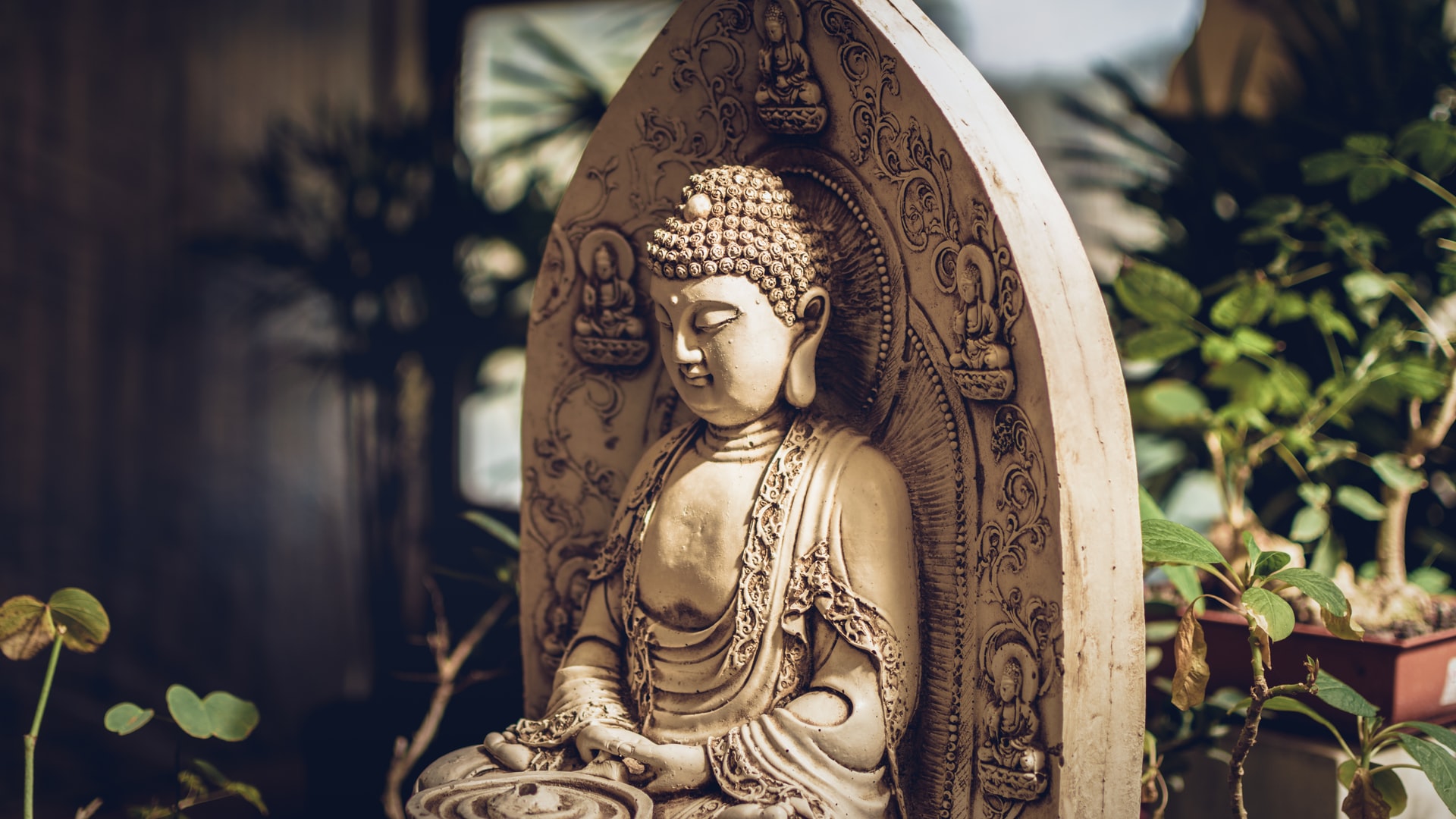
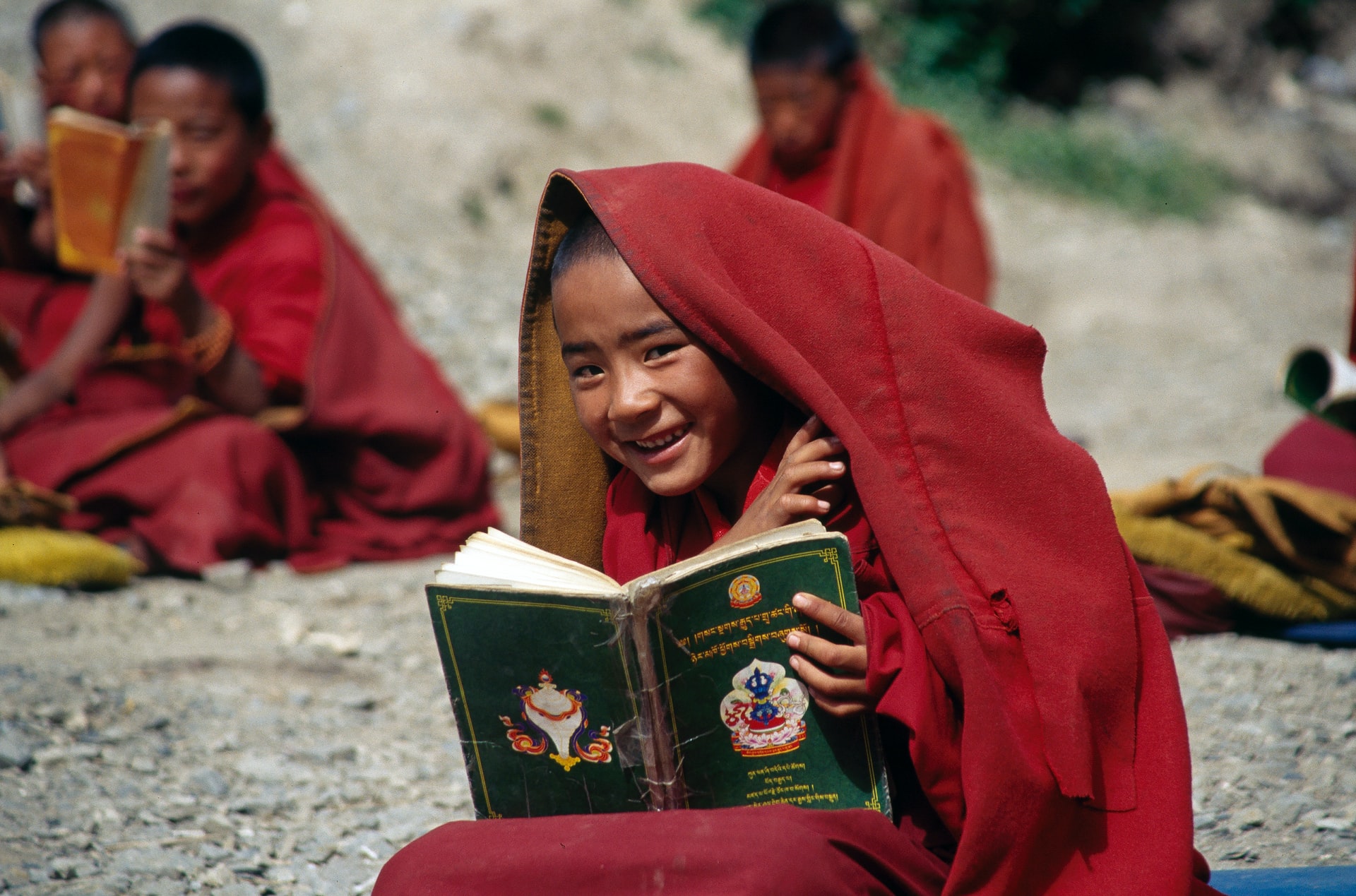
Buddhism is the dominant religion in Myanmar, Japan, Tibet, Laos, Singapore, Sri Lanka, Taiwan, Thailand and Vietnam.The Buddhist philosophy is based on the free will to search inside yourself, whatever you think is physically and mentally good for you and what isn’t (hence it’s flexibility). Buddha himself encouraged people to search their own spirit before embracing […]
Buddhism is the dominant religion in Myanmar, Japan, Tibet, Laos, Singapore, Sri Lanka, Taiwan, Thailand and Vietnam.The Buddhist philosophy is based on the free will to search inside yourself, whatever you think is physically and mentally good for you and what isn’t (hence it’s flexibility). Buddha himself encouraged people to search their own spirit before embracing his knowledge and he always stated he does not want people to follow him because of simple superstitions or blind belief.
和 平 : unsplash.com
Choose their own path in life..
Buddhism is a religion that respects the right of everyone to choose their own path in life, therefore it is tolerant to the other religions, teaching people to live together in harmony, regardless of race, belief or nationality. It recognizes all humans as being equal, preaches upon universal love, kindness and compassion, not only in relation to other humans, but to animals and plants too. Because man and nature share the world, Buddhism states that it is up to us to contribute to the well being of the counter-part in order for us to reach happiness ourselves. The religion sees life as a constantly changing process and the goal of those that practice it is to take full advantage of this asset. Because life is changing so quickly and so often, man can change too, from evil to good, from heartless to compassionate, but only with the help of his own mind and spirit, and Buddhism developed many ways for humans to shape them.
Meditation is important
The most important of these methods is meditation, a way to induce positive state-of-minds, calmness, concentration, positive consciences and emotions (like friendship, love, compassion, etc.). Through meditation and moral behavior, anyone can reach Nirvana, a state of transcendental enlightening, although it is not enough to do these during a single life, each individual soul being the subject of many lives, in all of which, it gathers up karma. The karma is defined by actions, bad or good, that we do intentionally, with sense of what is right or wrong. Basically each person’s karma represents his good and bad deeds, added up throughout all of his lives, the level of his karma, determining the nature of his present life. When, after the passing of several lives, a soul gathers enough good karma, the chain of births and reincarnations is finally broken, the soul then rising into the state of Nirvana, the heavenly rest.— Published on July 15, 2021
The family that runs everything is running out of cash
Since winning the presidency in a landslide nearly two years ago, Gotabaya Rajapaksa has worried not that he has too many relatives in government, but that he has too few. One of the 72-year-old’s elder brothers, Mahinda, himself president for ten years until a surprise election defeat in 2015, is prime minister. Another, Chamal, is minister for irrigation. Chamal’s son, Shasheendra, is minister of state for paddy and grains, organic food, vegetables, fruits, chillies, onions and potatoes, seed production and high-tech agriculture”. Mahinda’s son, Namal, is minister for youth and sports. And state minister for digital technology and enterprise development. And everything else, to judge by his hyperactive Twitter feed.
But there is always room for one more Rajapaksa, 69-year-old Basil above all. Gota” and Mahinda acknowledge him as the brains and organiser-in-chief of the family. He devised the electoral strategy behind its return to power, founding a new party, the Sri Lanka Podujana Peramuna (slpp), which used digital wizardry to rally chauvinists from the ethnic majority, the Sinhalese—all while in prison on a corruption charge stemming from his time as economy minister (his detractors called him Mr 10%”). On July 8th he was back in the cabinet.
The Wakfs Board of Sri Lanka has decided not to permit the slaughter of animals at any mosque.
Issuing a statement, the Director of Wakf and the Department of Muslim Religious and Cultural Affairs said that trustees of all mosques have been informed in this regard.
Accordingly, all trustees are directed to not allow animal slaughter within any mosque premises.
The Ministry of Health reported that another 480 persons have tested positive for Covid-19 today, increasing the daily count of Coronavirus cases to 1,447.
Accordingly, the total number of Covid-19 positive cases confirmed in the country thus far moves to 280,543 with this.
Currently a total of 22,979 patients infected with the virus are under medical care while the tally of recoveries has risen to 253,953.
Meanwhile another 50 coronavirus deaths have been reported within the last 24 hours.
Refreshing Sri Lanka’s COVID-19 vaccination records, the highest number of vaccine administrations within a single day was carried out yesterday (July 14).
A total of 384,763 vaccines had been administered against the COVID-19 virus yesterday.
State Minister of Production, Supply, and Regulation of Pharmaceuticals Prof. Channa Jayasumana said that 349,359 of them were first doses.
Reportedly, 338,572 received the first dose of Sinopharm while 7,416 received the first dose of the US-produced Pfizer vaccine.
Meanwhile, 3,365 persons have received the first dose of the Russia-vaccine Sputnik V.
A total of 35,410 second doses of the Sinopharm vaccine had also been rolled out yesterday.
The United States wants a special forces cooperation agreement with Sri Lanka to sidestep bureaucracy and has no intention of setting up a military base in the country, the American ambassador to the island nation said in a television interview.
The comments represent the latest attempt by ambassador Alaina B Teplitz to assuage concerns over US involvement in the Indian Ocean island after plans to sign a Status of Forces Agreement (SoFA) by the two countries was heavily criticised by local media and some political analysts who see it as a threat to Sri Lanka’s sovereignty.
Also called the Visiting Forces Agreement, it will establish the framework for US military personnel visiting Sri Lanka at the invitation of the government and is still being negotiated by both nations, Teplitz said.
‘The visiting forces agreement is an update to an existing agreement and it is designed to address a number of red tape issues,’ Teplitz told state-run TV channel Rupavahini in an interview late on Saturday.
Giving the example of the 2017 floods in Sri Lanka, Teplitz said the government had sought help from the United States and it brought in relief supplies but the aeroplanes transporting them required clearance from the government.
The agreement would allow the United States to speed up these procedures, she said, so that when there is an emergency ‘we don’t spend time to cut through the red tape.’
Sri Lanka sits near one of the world’s busiest shipping routes in the Indian Ocean and over the last several years China has become a major investor, building ports and highways.
India, which is just next door, is starting to push back against China’s growing influence and so are the United States and Japan, experts say.
Teplitz had earlier this week dismissed the idea that the military pact had anything to do with China.
‘China has nothing to do with the VFA; this is all about the long-standing bilateral partnership with Sri Lanka,’ she said during a live Facebook chat on Wednesday.
She said the US and Sri Lanka currently renegotiate certain administrative issues around entry and exit of military personnel before every single training or ship visit which takes up a lot of time.
The agreement lays down rules for the benefit of both countries — ‘meaning no base, no permanent presence of US troops’, said Teplitz, adding that Sri Lanka retains the right to approve or deny all entry of people, vessels and aircraft.
The debate on the need to have such an agreement has taken centre stage especially after the Easter Sunday attacks and is driving a deeper wedge between the country’s president Sirisena Maithripala and prime minister Ranil Wickremesinghe who are already at loggerheads.
Sirisena said earlier in July he would not sign any military cooperation deals that are ‘unsuitable for the country’.
Days later Wickremesingh told the parliament that negotiations are still on with the United States to agree on a pact but he too would not agree to anything that challenges Sri Lanka’s sovereignty.
Shortages are pushing prices higher for many consumer goods, from bread to construction materials to gasoline, triggering protests among Sri Lankans fed up with the prolonged crisis.
Sri Lanka needs to make foreign debt payments totaling $3.7 billion this yearAP
Sri Lanka has cut back on imports of farm chemicals, cars and even its staple spice turmeric as its foreign exchange reserves dwindle, hindering its ability to repay a mountain of debt as the South Asian island nation struggles to recover from the pandemic.
Toothbrush handles, venetian blinds, strawberries, vinegar, wet wipes and sugar are among the hundreds of foreign-made goods that were banned or made subject to special licensing requirements meant to chip away at a trade deficit that has been deepening the country’s financial quandary for years.
Shortages are pushing prices higher for many consumer goods, from bread to construction materials to gasoline, triggering protests among Sri Lankans fed up with the prolonged crisis.
Thusitha Vipulanayake ran out of motorcycles to sell in August 2020. Usually able to sell at least 30 a month, and a dozen motorized trishaws, he now gets by selling bottled, locally grown turmeric paste and LED lightbulbs.
This is something we never expected,” Vipulanayake said as he sat at his empty motorcycle showroom along a road outside the capital Colombo.
Sri Lanka was in trouble before the pandemic struck, laying low a tourism industry that is a vital source of foreign exchange earnings. It normally provides jobs for more than 3 million people and accounts for about 5% of GDP.
Visitors already were staying away after deadly suicide bombings on Easter Day 2019 killed more than 250 people. But efforts to revive the industry are falling flat as the country endures another wave of COVID-19 infections.
Now, the country’s foreign exchange reserves have dwindled to barely enough to pay for three months of imports at a time when big repayments of its foreign debts are falling due, straining its financial system. The Petroleum Minister, Udaya Gammapilla, recently said the country lacked enough cash to pay for oil imports.
To conserve precious foreign exchange, the government has limited U.S. dollar transactions. Despite the limits imposed last year, imports still outpace the country’s exports of tea, rubber, seafood and garments.
The condition of the economy is in dire straits, there is no doubt about it” said Muttukrishna Sarvananthan, head of the economic research group Point Pedro Institute of Development.
Sri Lanka needs to make foreign debt payments totaling $3.7 billion this year, having paid $1.3 billion so far. That’s in addition to local debt, according to the central bank. Its currency has been gradually weakening against other major currencies, making such repayments more costly in local terms.
Fitch Ratings has downgraded Sri Lanka to its CCC category, indicating a real possibility of default. It says the country’s foreign debt obligation will balloon to $29 billion over the next five years.
And it is facing the possible loss of preferential trade status for its garment exports to Europe, due to criticism over an terrorism law that critics say violates human rights.
To help rebuild its reserves, Sri Lanka obtained a $1.5 billion swap facility from China earlier this year. A $400 million swap from India will be available by August, according to the Central Bank.
Officials say they hope to attract more foreign investment and avoid seeking help from the International Monetary Fund, which tends to impose strict policy conditions on its borrowers.
The government’s decision in April to ban the use of agricultural chemicals, ordering farmers to switch to organic farming, was aimed at saving $400 million a year on imports.
But Sri Lankan farmers rely heavily on such chemicals. Some said they are using cow dung, poultry litter and compost to make up for the loss of fertilizer, but the sudden switch is hurting yields.
The leaders of the country could have done better in making decisions,” farmer Pathmasiri Kumara said he worked in his field in Welimada, a village in the central hills of this tropical island country. These problems come when you don’t come and see the farmers and make decisions sitting on swiveling chairs.”
Look at this potato plant, it’s not growing the way it should because there is no fertilizer,” Kumara said. It’s a very sad situation. This is our main crop and if we don’t get chemical fertilizer we will be losing our income for the entire year, at least by half.”
The pressure is on garment makers, as well, as the European Union reviews its favorable tariff treatment for Sri Lankan products under the GSP, or generalized system of preferences. It eliminates import duties on a large share of Sri Lanka’s products, such as textiles, tea and fish, an advantage worth some $360 million annually, according to the EU.
A decision is not due until next year. But the impact of losing the concessions would be quite severe,” said Sirimal Abeyratne, professor of economics at the University of Colombo.
About 20% of Sri Lanka’s total exports are to EU countries. Another 10% go to the United Kingdom, which may follow the EU’s lead if it suspends its GSP status, said Abeyratne.
In the meantime, Sri Lankans are chafing at the import restrictions that are slowing activity in various industries.
Metlal Weerasuriya waited five months to buy a toilet for his home.
I went to many retail and wholesale shops. They had run out of stocks and there was a waiting list to get one,” said Weerasuriya, a journalist. Finally, he tracked down one advertised online.
So, it took at least five months to buy a commode and complete the bathroom, he said.
Vipulanayake, the motorcycle dealer, said he’s relying on income from a modest rubber plantation he owns, on top of his sales of various other products, to get by.
He’s determined to hold onto his showroom, which is in a prime location.
I believe things will be okay and bikes will come,” he said. Maybe I’m just dreaming, since things are so uncertain.”
By Norman Palihawadana and Shamindra Ferdinando Courtesy The Island
*P CoI faulted for not making specific recommendation against Ranil
*Criminal liability of CNI and SIS Chief highlighted
*Respond within month or face the consequences
The National Catholic Committee for Justice has urged President Gotabaya Rajapaksa to implement the recommendations of the Presidential Commission of Inquiry
(PCoI) in respect of the then President Maithripala Sirisena, who is also the leader of the SLFP and the then Prime Minister and the leader of the UNP Ranil Wickremesinghe.
Archbishop of Colombo Malcolm Cardinal Ranjith yesterday (13) briefed the media at the Archbishop House, Borella, as regards steps taken by the committee to pressure the government to carry out the PCoI recommendations. The Archbishop faulted the SLPP administration for its failure to implement the PCoI recommendations five months after receiving it.
President Sirisena appointed the PCoI in the run-up to the last presidential election. His successor Gotabaya Rajapaksa retained the same commission.
An 18-page report sent to President Gotabaya Rajapaksa, dealing with specific alleged lapses on the part of the incumbent government, was released by the Cardinal to the media yesterday.
Referring to the PCoI report (PCoI Final Report Vol. 1, p 265), the Cardinal asked why the government had refrained from initiating criminal proceedings against Sirisena under suitable provision in the Penal Code. SLFP leader Sirisena now represents the ruling SLPP in Parliament. The SLFP with 14-member parliamentary group is the second largest constituent of the incumbent government.
Cardinal Ranjith also found fault with the PCoI for failing to make specific recommendation in respect of UNP leader Ranil Wickremesinghe, though it recognised his role in facilitating Islamic extremism. Referring to PCoI assessment of PM Wickremesinghe’s soft approach towards Islamic extremism that paved the way for the Easter Sunday carnage (P CoI Final Report Vol 1, p 276-277), the Cardinal said that they couldn’t comprehend why specific recommendation was not made. Wickremesinghe recently re-entered parliament on the UNP’s National List slot.
The PCoI comprised Supreme Court Judge Janak de Silva, Court of Appeal Judge Nishshanka Bandula Karunaratne, retired Supreme Court Judges Nihal Sunil Rajapaksha and A.L. Bandula Kumara Atapattu and former Secretary to the Ministry of Justice W.M.M.R. Adhikari. H.M.P. Buwaneka Herath functioned as the Secretary to the P CoI.
Cardinal said that Wickremesinghe’s lax approach and irresponsible attitude should have been thoroughly investigated.
The Cardinal on behalf of the National Catholic Committee for Justice declared that unless the government responded positively within a month, they would be compelled to resort to other means obtain justice.
The signatries to report sent to President Gotabaya Rajapaksa are Archbishop Malcolm Cardinal Ranjith, Bishop Harold Anthony Perera, Bishop Devsritha Valence Mendis, Bishop Raymond Wickramasinghe, Bishop Maxwell Granville Silva, Bishop J.D. Anthony Jayakody, Bishop P. Anton Ranjith, Very Rev Fr Francis Nicholas Senanayake, Very Rev Fr. Daya A. Shelton Welikadarachchi, Very Rev Fr. S. Bertam Ranjith, Very Rev. Fr. Jayantha Sylvester Ranasinghe, Very Rev Fr. Ciswan De Croos, Very Rev Fr. Nihan Ivan Perera, Very Rev Fr. Shantha Sagara Hettiarachchi, Very Rev Fr. Manokumaran Nagaratnam, Very. Rev Fr. Jude Freely Muthukudarachchi, Rev. Fr Cyril Gamini Fernando, Rev Fr. C.A. Cecil Joy Evangelist Perera, Rev. Fr Camillus Fernando, Rev. Fr. Lawrence Ramanayake, Rev. Fr. Dilan Fernando SSS, Rev. Fr. Mahendra D.P. Goonetilleke, Rev Fr. Lal Pushpadeva OMI, Rev. Fr. Deninton N. S. Subasinghe, Very Rev Fr. Jude Samantha Kumara Fernando, Rev. Fr Gihan T. Perera, Rev Fr. Claude Nishantha Nonis, Rev Fr L.P. Lalith Perera, Rev. Fr. Anton Jude Raj Fernando, Rev. Fr. H. Lakshman Srilal Fonseka, Rev. Fr. Manjula Niroshan Fernando, Rev. Fr. Anton Gihan Nalin Gunetilleke, Rev Fr. W.D. Jude Chrysantha Fernando, and Rev. Fr. P.A.D. Joseph Indika.
Noting that legal action has been initiated against the then Defence Secretary Hemasiri Fernndo over his failure to thwart the Easter Sunday bombings, the Catholic Church asked why action hadn’t been taken in respect of the then Chief of National Intelligence retired DIG Sisira Mendis and Director of State Intelligence Service Senior DIG Nilantha Jayawardena. The Church pointed out that the PCoI had recommended that the Attorney General should consider criminal proceedings against Mendis and Jayawardena under any suitable provision in the Penal Code.
The Church stressed that the P CoI made the recommendation on the basis that the available evidence indicated that there was criminal liability on the part of both Mendis and Jayewardena.
It pointed out that P CoI recommendation in respect of the then Senior DIG Western Province Nandana Munasinghe (criminal liability), DIG Colombo North Deshabandu Tennakoon (disciplinary inquiry), SP Colombo North Sanjeewa Bandara (criminal liability), SP Chandana Atukorale (criminal liability), Director Western Province Intelligence Division B.E.I. Prasanna (criminal liability), ASP S. Kumara (disciplinary inquiry), Acting OIC, Fort Chief Inspector R.M. Sarath Kumarasinghe, OIC Fort Chief Inspector Sagara Wilegoda Liyanage (criminal liability) and OIC Katana Chaminda Nawaratne (disciplinary inquiry).
The Church said that out of the implicated law enforcement officers action had been taken only against the then IGP Pujith Jayasundera.
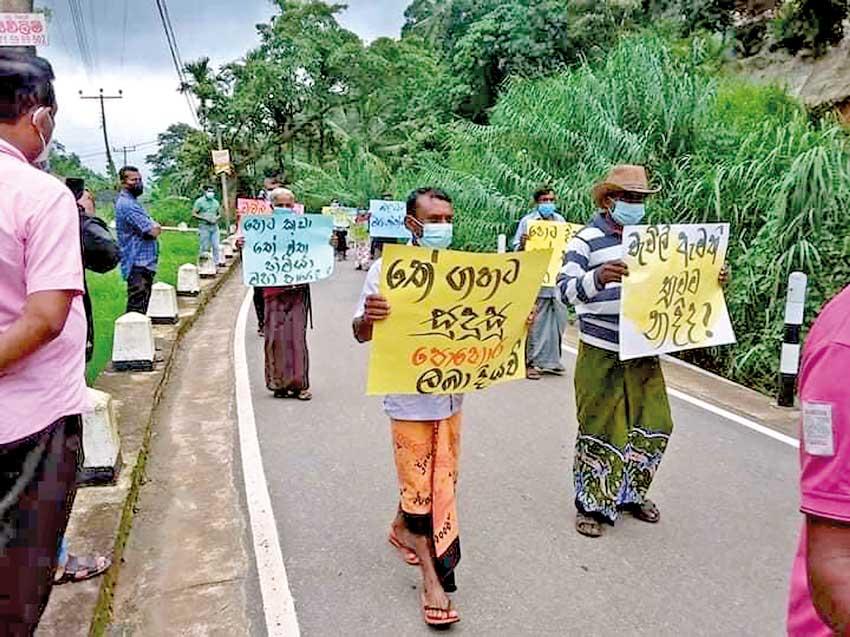
With the islandwide shortage of fertilisers and dealers opting to sell fertilisers at black market prices many tea planters including tea smallholders in the Southern region took to the streets
Many tea planters explained why compost fertiliser will not give an expected yield when compared to chemical fertiliser
Tea growers expect profits, but they won’t be able to experience profits given this situation
Tea estates are on mountainous lands and the run-off will end up in rivers and streams
The government’s move to ban chemical fertilisers has taken a heavy toll on many agriculture-related sectors including the tea industry. At the onset of the decision many tea planters explained why compost fertilisers will not give an expected yield when compared to chemical fertilisers. With the islandwide shortage of fertilisers and dealers opting to sell fertilisers at black market prices, many tea planters including tea smallholders in the Southern region took to streets. Protests were staged at Yatadola, Matugama, Urubokka and several other areas.
If this decision is implemented around 500,000 tea planters scattered in around eight districts will have to look for alternative methods of income. Another 300,000 people work as laborers. The market for Ceylon Tea will die a natural death
Ad hoc decisions and repercussions With the immediate move to ban chemical fertilisers those who had plans to invest in the plantation sector is now in a dilemma,” opined Low Country Tea Planters Association Secretary S. M. P Jayantha. Usually plants for the following year are prepared the previous year and those doing nurseries are now stuck without a proper direction. Those who were expecting to plant will not be able to do so. Tea growers expect profits, but they won’t be able to experience profits given this situation. The government could have planned this process in two years, so that those in different agriculture sectors could have been better prepared for it.
Fertiliser stocks available till September-AluthgamageHowever, when contacted, Minister of Agriculture Mahindananda Aluthgamage said that the Minister of Plantation Industries has requested for 53,000 metric tonnes of fertiliser. This has already been allocated and until September we have no issue about fertilisers. There are stocks in warehouses but farmers are on the streets. So it’s very clear as to who is behind these protests.” said Minister Aluthgamage.
The tea industry was properly managed during the first COVID wave in March 2020,” he added. Government policies were successfully implemented and factories were functioning under health guidelines. The Government even made plans to have an e-auction for tea buyers. Therefore one kilo of green leaves (raw) was priced at Rs. 120. People also started investing in 30-40% bare lands during this time and they started growing tea. The Government also introduced nursery schemes for 50,000 plants and 100,000 plants. Following the drought that struck last year a subsidy scheme was introduced. As such Rs. 25 lakhs per hectare was allocated for replanting funded by ADB low interest rate loan scheme and by 2021 April the plantations were back to their former glory” he said.
It was at a time like this that the Government made plans to ban chemical fertilisers and agrochemicals without consulting the Sri Lanka Tea Board, Tea Research Institute or without consulting any stakeholders including Regional plantation companies, tea small holders from the tea industry.
According to Tea Research Institute recommendations in order to get a potential yield of 2000-2500 kilograms per hectare per year (kg/ha/yr) in the up country region the recommended quantity of Nitrogen, Phosphorus and Potassium is 270, 35, 120 respectively. For a yield of above 3500 kg/ha/yr 400 kilos of nitrogen is required. For the low country region in order to get a potential yield of 2000-2500 kg/ha/yr the recommended quantity of Nitrogen, Phosphorus and Potassium is 270, 35 and 100. For a yield of above 3500 kg/ha/yr 400 kilos of nitrogen is required.
The nitrogen percentage in chemical fertilisers is between 25-30%. But when it comes to compost fertilisers the nitrogen percentage is as low as 2%. Therefore if estates are to move in to using compost fertilisers the requirement would be between 30,000-40,000 kilos. This means more labourers are required when its time to add fertilisers to crops. Right now a labourer gets around Rs. 1150 as a daily income. But if compost fertilisers are being used the cost of planting would increase by about 300%. Tea planters will not be able to bear this cost,” said Jayantha.
Compost fertilisers will not give the same yield as chemical fertilisers. Therefore crop yield is likely to reduce by 30-40%.
Explaining further about the fertiliser subsidy, Jayantha said that between 2000-2006 the cost of crude oil increased from $30-$160. Therefore the market price of urea also increased. As a result, the cost of fertiliser increased to Rs. 5000 and the then government promised to give fertilisers at a subsidized rate of Rs. 1000.
Initially we used to get fertilisers from Middle Eastern countries such as Libya but later on we got low quality, low cost fertilisers from countries such as China. After some time we received complains from farmers saying that the fertilisers are not up to standard. Then farmers were blamed for overusing fertilisers. The National Fertilizer Secretariat is responsible for checking the standards of fertilisers before distributing them to the market. These fertilisers end up in rivers and people have various health conditions when heavy metals get added to water. Therefore before blaming farmers the authorities should do their duty first.
Fertilisers are added every three months but due to low quality and low price farmers started adding it every two months,” he continued.
Speaking about compost fertilisers, he further said that the solid needs to be amended. Tea estates are on mountainous lands and the run-off will end up in rivers and streams. We do not know what sort of bacteria, fungi etc are in these fertilisers. We need to implement soil conservation methods. Already there are methods using leaf manure but these processes will have to be expedited in a large scale. We will need around 180,000 metric tonnes of overall fertilisers. People talk about cow dung etc., but have we advanced our agriculture to implement integrated farming concepts? After all farmers have a democratic right to choose whichever fertiliser they want for their crops.
On the other hand there are full time and part time tea planters. Part time tea planters want an additional income and they too will be affected by this decision,” he added.
Jayantha further said that if this decision is implemented around 500,000 tea planters scattered in around eight districts will have to look for alternative methods of income. Another 300,000 people work as labourers. The market for Ceylon Tea will die a natural death as it will be replaced by other competitive orthodox tea brands in the international market.” he affirmed.
Catholic bishops have given Sri Lanka’s government a one-month deadline to answer their letter sent on behalf of victims of the Easter 2019 church bombings, warning that they will begin organizing the faithful to action if their demands for an official explanation are not met.
Declining to say what any alternative actions” they might take, the bishops and the National Catholic Committee for Justice to Easter Sunday Attack Victims called on President Gotabaya Rajapaksa to provide a credible answer to its letter.
Signing the letter were Cardinal Malcolm Ranjith of Colombo, Bishop Valence Mendis of Chilaw, Bishop Harold Anthony Perera of Kurunegala, Bishop Raymond Wickramasinghe of Galle, and Colombo auxiliary bishops J.D. Anthony Jayakody and Anton Ranjith Pillainayagam.
Cardinal Ranjith said in March 2020 that he was ready to launch street protests if Sri Lanka’s government did not find and arrest the culprits behind the Easter bombings.
It is the right of the people to know the conspiracy behind the Easter Sunday attacks and the government’s responsibility is to expose it to the country immediately,” Cardinal Ranjith said at a news conference in Colombo July 13.
The investigations into the Easter attack were carried out carelessly,” the cardinal said. An independent active investigation should be conducted rather than the current one. We urge the government not to brush the issue under the carpet by taking a few people to court.”
The 17-page letter questions whether the cases to be filed against 42 suspects include the main culprits who masterminded the attack, which claimed 269 lives and injured hundreds of Massgoers.
It is now 26 months since the Easter Sunday bomb attack of April 21, 2019. And by now, nearly five months have gone since the presentation of the final report of the Presidential Commission of Inquiry appointed to investigate this attack,” the letter said.
Yet we are truly saddened by the lethargic pace at which the state machinery is moving in order to find those who are responsible for these attacks; those who planned it and those who, even though they had forewarning about it and could have easily prevented it, did not fulfill that responsibility, and willfully neglected it, and bring them before the law,” it continued.
The correspondence warned that if authorities were attempting to file action only against a few marginally involved people, the big brains” behind the attacks and those who helped them by neglecting their duties would be freed of their culpability.
We hope that your government would take stock of the present lethargic and slow-moving approach to investigations, which seems to reveal a conspiracy to protect certain individuals and prevent the truth from emerging, and take quick action to unravel all causes of this massacre, thus ensuring justice to those affected as soon as possible. Only that will prove to us that you stand for truth and justice, and the protection of the rule of law, and not for political gain,” the letter said.
The government has denied that it is slow-walking its investigation and has said nearly 700 people have been arrested as the legal case against those connected to the bombing continues to be built.
Nine suicide bombers affiliated with the Islamist group National Thowheed Jamath targeted three churches and three luxury hotels in a series of bombings in 2019.
President Gotabaya Rajapaksa has appointed seven Additional Solicitors General of the Attorney General’s Department as President’s Counsel.
Pursuant to Article 33 (e) of the Constitution, the President is empowered to appoint attorneys-at-law who have reached eminence in the profession and have maintained high standards of conduct and professional rectitude, as President’s Counsel (PC).
Accordingly, Additional Solicitors General Milinda Gunetilleke, Harippriya Jayasundara, Vikum de Abrew, Shanaka Wijesinghe, Raveendra Pathiranage, Nerin Pulle, and Chethiya Goonesekere have been appointed as PCs.
The new President’s Counsels are due to be sworn in, in the near future, and the Director-General of Legal Affairs of the Presidential Secretariat, attorney-at-law Harigupta Rohanadeera, has handed over the relevant appointments to the Registrar of the Supreme Court today (14).
The Epidemiology Unit of the Health Ministry reports that another 465 persons have tested positive for COVID-19 in Sri Lanka, moving the daily total of new cases to 1,453.
This brings the total number of confirmed cases of coronavirus reported in the country to 279,059.
As many as 253,014 recoveries and 3,611 deaths have been confirmed in Sri Lanka since the outbreak of the pandemic.
The Epidemiology Unit’s data showed that 22,471 active cases are currently under medical care.
If there is no major change in the situation, the country is expected to be fully open by September, Commander of the Army General Shavendra Silva said.
The Head of the National Operation Centre for Prevention of COVID-19 Outbreak (NOCPCO) mentioned this joining the TV Derana ‘Big Focus’ program today (July 14).
He said that the authorities are working under a policy to administer at least the first dose of the COVID-19 vaccine to the whole country by September.
Accordingly, if they do not encounter any major change in the pandemic situation in the country, the country will be reopened completely by then, General Silva said.
He added that it has also been discussed with Minister of Tourism Prasanna Ranatunga to reopen the country to foreigners.
The Army Chief said, Foreigners cannot come without obtaining both doses of the vaccine. Any person visiting after receiving both doses, whether they are locals or foreigners, will be subjected to an exit PCR. It takes only about 24 hours. Some are released within even just six hours. Accordingly, we can reopen like that.”
Commander of Sri Lanka Army General Shavendra Silva says that there are data issues regarding the information of nearly 300,000 people who received the COVID-19 vaccine.
Joining the TV Derana ‘Big Focus’ program today (July 14), the Head of the National Operation Centre for Prevention of COVID-19 Outbreak (NOCPCO) said that most of these issues had arisen during the first vaccination drive in which the health sectors collected data.
He said, The Army computerized the collected data from day one. But in the health sector, we saw a system of writing in books. So the Air Force was used to collect the data of the first vaccination drive.
However, the Air Force faced issues in various places. Some places refused to provide the data. When the Air Force went to collect data they had been told that data could not be provided.
Currently, data of around 300,000 are yet to be entered. It has to come from the health sector. This problem is in the first million vaccines. There are some data gaps. There are unclear areas.
The second dose of AstraZeneca has to be given to about 560,000. Then [these data] will come out. At that point, the situation will be resolved.”
The Army states that a center will be opened at the Viharamahadevi Park in Colombo from tomorrow (15) to administer the first dose of Sinopharm vaccine to people over the age of 30 in the Western Province.
The Attorney General’s confirmation has been obtained for the bill to ban cattle slaughter in the country.
Government sources said the bill would be submitted to the Cabinet for approval in the next few weeks.
This program is being implemented on a proposal made by the Prime Minister Mahinda Rajapaksa in his capacity as the Minister of Buddha Sasana and the relevant draft will be published in the Gazette after receiving the approval of the Cabinet.
Canada
should be ashamed for several reasons. Firstly, Canada takes pride in throwing
egg at other nations quoting human rights, democracy & freedoms but back
home, Canada has been treating the natives of Canada inhumanely where
assimilation schools have ended up graveyards of slain & buried children.
Canada spearheads the attack against Sri Lanka siding with terrorist LTTE &
their supporters in Canada. It is no surprise both are not only partners in
crime but attempt to hide their guilt by diverting attention elsewhere.
Canada
is a created country based on the principle of terra nullius. It calls itself
multicultural because the success of Canada is due to immigrants who arrived to
live & work there. Canada has to call itself ‘multicultural’ because Canada
must acknowledge the role of immigrants in building Canada. While modern Canada
owes its success to immigrants, Canada was very much occupied by aboriginal
people. Canada’s rich status comes from the resources of stolen lands. The
policy or goal behind the papal bulls & royal decree to ‘discover’ &
take over occupied lands is the same theory Hitler adopted – eliminate those
that are not of your ‘blood’ and take over their lands!
1492 : Canada stolen from
Natives
The
natives of Canada have been living for over 12,000 years in Canada (scientific
discovery of bones/artefacts) There is a link to Asia as at one time Asia &
North America were connected (Bering Sea/Russia & Alaska)
1492
saw invasion by Europe resulting in a human holocaust. Scientists estimate
4-4.5m deaths with only 600,000 indigenous remaining in US by 1800. It is
estimated that the total natives covering American Indians, natives of Alaska,
natives of Hawaii total 7.5million. Paul Rivet claims 40-50m people lived in
the Americas before 1492 while estimates vary. Whatever the numbers what is
certain is that the natives were eliminated in order to take over their lands.
This was immediate-colonial holocaust. Then a further holocaust took place to
ensure the settlers were supreme. The last and most unforgiveable holocaust was
the manner natives were systematically targeted by those that claimed to be
‘civilized’ and came to ‘civilize’ the natives.
What is the Indian Act /
Gradual Civilization Act (1857) / Gradual Enfranchisement Act (1869)
A body of laws that define who
an ‘Indian’ is by the federal government of US & Canada. In Canada, the
Indian Act authorizes the Canadian federal government to regulate & administer
day to day lives of registered Indians & reserve communities even how they
practice their culture & traditions. The Indian Act allows Canada to
determine land base while the Gradual Enfranchisement Act allowed the
Superintendent General of Indian Affairs to even decide if a widow of an
enfranchised Indian was respectable” enough to keep her children. In 1979 the
Canadian government was taken to court claiming Section 12 of the Indian Act
violated the Canadian Bill of Rights but the Canadian Supreme Court declared
otherwise. However, in 1981 the UN Human Rights Committee declared Canada had
breached the Covenant on Civil & Political Rights.
The Canadian Human Rights Act
of 1977 specifically prohibited First Nation people from filing official
complaint that the Indian Act was a human rights violation. How great Canada
human rights are! It was only in 2008 that this section was repealed from the
Canadian Human Rights Act.
The Indian Act (with
amendments) continues to exist and is the only colonial legislation aimed at
assimilating & controlling a specific group of people. So what tosh is
Canada preaching to the world about ‘multiculturalism’ & reconciliation?
Canada appointed a Truth & Reconciliation
Commission in 2015. Did this Commission deliver justice to the victims?
Canada’s natives are called
Indians (1865), In 1982 ‘aboriginal’included Indian, Inuit & Metis
people in Canada. Aboriginal people accounted for 3.8% of
the population enumerated in the 2006. Aboriginal people numbered 1.4 million
in 2011.
Eight in ten Aboriginal people live in Ontario and the western
provinces. Ontario was the province where the largest number of Aboriginal
people lived, 301,425 people, representing 21.5% of the total Aboriginal
population. How many are treated equally & on par with Canadians? https://www12.statcan.gc.ca/nhs-enm/2011/as-sa/99-011-x/99-011-x2011001-eng.cfm
From 1828 Canada operated over 169 Residential Schools for
indigenous children. Children were removed from their families and culture and
forced to learn English, embrace Christianity and adopt the customs of the
country’s white majority (assimilation programs) Systematic physical, sexual
and psychological abuse was widespread within the residential school system https://opentextbc.ca/geography/chapter/4-4-case-study/
Nazi deaths camps & Canada’s
Residential Schools – Both historical events classified as a genocide.
The
Nazis designed their concentration and extermination camps to destroy what they
believed were racially inferior people – Africans, Jewish people, Gypsies and
other minorities
The
purpose of Canada’s Residential Schools was to obliterate the language,
religion and culture of the Indigenous people of Canada – to take the Indian
out of the Indian. The indigenous children were forcibly separated from
families. They were sexually abused in unimaginable ways by nuns and priests
who handled them. These nuns & priests ate bacon & eggs while the
children had to kill birds to satisfy their hunger.
Confederate
Canada were not bothered to give rights to the Natives in 1865 though they held
self-governing resource-rich lands. Colonial Confederate Canada viewed ‘race’
only in terms of English, French, Spanish, Irish – white skin saviours – all
others were ‘subhuman savages’! The Indian Act was passed in 1876 to mould the
Indian into a European. It is laughable that the same nations that drew such
civilizational acts” at the same time preach ‘multiculturalism’. The 1876 Act
defined who was not considered an ‘Indian’ and declared that the Indians could
only gain ‘admission’ to the system was only if they voluntarily gave up being
Indian.
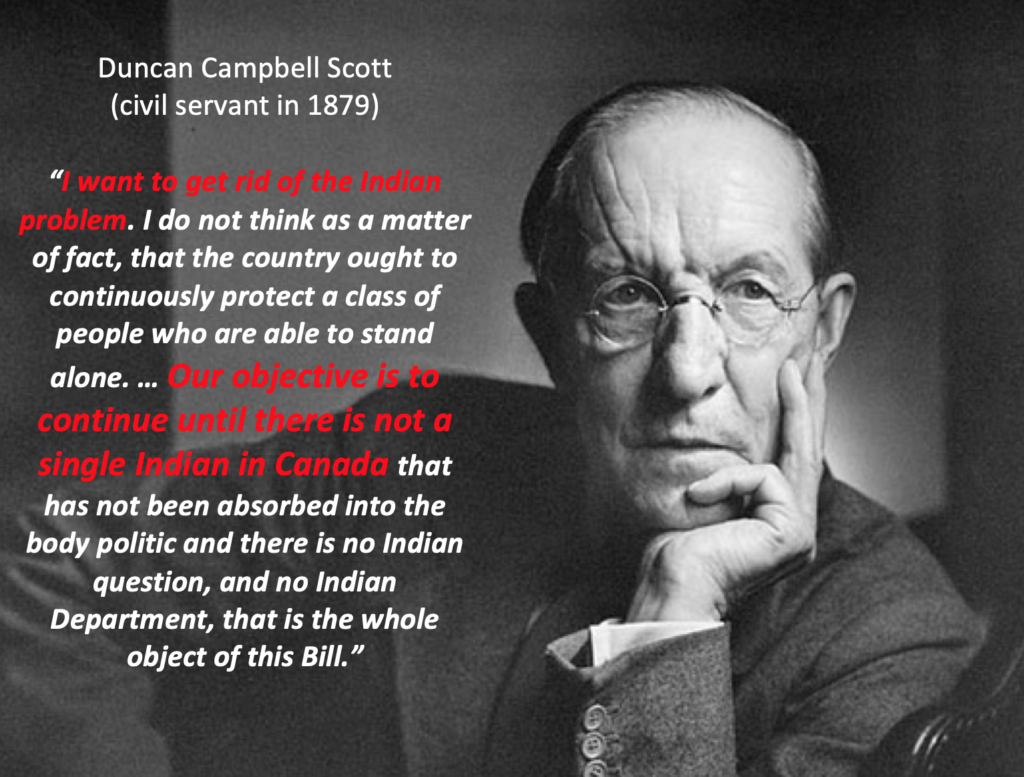
This is the man who sought
judicial approval to remove Indian” children from their families for
‘education’
Peter
Henderson Bryce, President of the American Public Health Association was
recruited by Canada in 1904 to survey the residential schools. His report
revealed that children in these schools were dying at the rate of 24% per year
& rose to 42% over 3 years. In 1 school 76% of the children had died. Bryce
had to pay a price with his career for these revelations. He personally printed
his report & handed to members of Parliament & others – they didn’t
listen and Bryce drowned to death in 1932. Other whistleblowers were either
persecuted or dismissed. Funds were purposely denied for the welfare of
indigenous children by the federal government.
How dare the State of Canada
offer ‘reconciliation’ when they are the perpetrators. It is the victims (the
Indigenous owners of the land called Canada) that must agree to forgive only
after satisfactory remedial actions have been taken by the Canadian government.
Reconciliation cannot be just fancy terms & negotiating how to remain
‘inferior’ rather than admit to stealing resources of the indigenous lands to
create Canada’s economy. Yet, Canada does not wish to place the indigenous of
par & as equals. Why? If Canada has welcomed other races as immigrants &
are treating them as equals, why not the indigenous of Canada?
In 1969 Pierre Trudeau came up
with 3 proposals – Abolish the Indian Act / Transfer responsibility for Indians
to the provinces / Close Federal Dept of Indian Affairs. The proposals were
drafted without inputs of a single indigenous persons and the government
withdrew it as a result of objections. In 1990 the Royal Commission on
Aboriginal Peoples was launched resulting in 440 recommendations.
It’sbeen 13 years since PM
Stephen Harper apologizhed in 2008 for the harms done by Canada to indigenous
children in the residential schools. It was in 2016 that the Canadian Human
Rights Tribunal declared that Canada had racially discriminated 163,000 First
Nation children.
So
long as the mentality of terra nullius remains engraved in the mindsets of
those dictating how Canada is governed the indigenous will remain ‘aliens’ on
their own soil.
While
Canadian motto is Peace, Order, and Good Government” & while countless
‘Reconciliation’ programs like Idle No More movement (2012-present), the Truth
and Reconciliation Commission (2008-2015), and the National Inquiry into
Missing and Murdered Indigenous Women and Girls (2016- present), there is no
change to the manner Canada treats the people who were first living in Canada
before the white settlers & immigrants arrived.
Sri Lanka is
in a foreign exchange crisis. It has short term and long-term reasons. In 1977
when the economy was opened, it was done in a haphazard way. Due to those
deficiencies the nation faces many nasty consequences. A powerful, wealthy,
criminal and anti-national import mafia has been created. They import anything
they like from narcotics to bombs. It is time to wrest control of the imports
industry and fix the largest national security loophole in the country.
How Did We Get Here?
After winning the
1977 election on the promise of opening the economy, the government simply did
just that. There was no planning, no phasing and certainly no national economic
policy underpinning the opening of the economy. Within years the government
realized it had opened floodgates and so many nasties crept into the country
while it bled the foreign reserves dry. However, the import mafia is a very
powerful, rich and influential group that dictated terms to the government. As
a result, no government was courageous enough to take them on. A vain attempt
was made by President Premadasa without much success.
The import
mafia falsify cost of consignments and avoid paying their due taxes, hide
narcotics and even bombs within falsely declared goods imported, falsify
documents to import banned or restricted imports and engages in many other
anti-national and criminal activities. It is not the Central Bank or the
National Economic Commission that determine the exchange rate policy and trade
deficit management. The import mafia decides all these! Sri Lanka’s imports are
roughly twice the value of exports.
Way Out
All import activities
must be carried out by a state corporation based on submissions from businesses
and consumers. No one else must be authorized to import anything directly. This
obviously excludes gifts and small imports made for consumption. Simply by
introducing such a mechanism would eliminate most illegal imports and
unnecessary imports saving billions of dollars annually. It will put the state
in a position to claim the correct amount of import taxes and monitor income
taxes and VAT as well. It will close a huge loophole in national security and
the national economy. At the very least, restrict the number of entities who
can import to entities and individuals the government can trust.
It will also
allow the true protection of local industries that need protection.
It will
ensure Sri Lanka honours trade agreements with other nations and take
retaliatory action against nations that do not allow favourable access to Sri
Lankan exports.
The
government is leaving no stone unturned in looking for ways to get more foreign
income. However, a dollar saved is a dollar earned. Saving the wastage of forex
is the easiest and most effective way to overcome the crisis in the short and
long run.
In addition,
it will weaken the anti-Sri Lanka political camps including the separatist
camp, the underworld and extremists which mostly rely on the import mafia for
funds.
There are existing
agency contracts with local businessmen but these can be easily updated to
include the government as genuine overseas suppliers are not bothered about
personalities. And there are always substitutes.


_570_850.jpg)