Russian Position on Ukraine and Global Security Discussed at Pathfinder Foundation’s ‘Ambassador’s Roundtable’

October 1st, 2025

Pathfinder Foundation

The Ambassador’s Roundtable hosted by Pathfinder Foundation, the Ambassador of the Russian Federation to Sri Lanka and the Maldives, H.E. Levan S. Dzhagaryan, provided a comprehensive overview of his government’s position on the ongoing conflict in Ukraine, NATO expansion, international law, global energy scenario and security dynamics in the region. The event brought together think tank experts and media professionals for a candid discussion on current geopolitical challenges, with a special focus on the Russia-Ukraine conflict.

In his remarks, the Russian Ambassador outlined historical, political, and security factors that led to Russia’s actions in Ukraine and its broader concerns regarding Western policies. Regarding Ukraine and the origins of the conflict, the Ambassador referenced the 2014 coup d’état and noted that it marked a turning point in Russia-Ukraine relations. He highlighted that the post-2014 Ukrainian government pursued policies that alienated Russian-speaking populations in specific regions of Ukraine, and claimed that development contributed to Moscow’s decision to launch its “special military operation” in 2022.

Central to the Ambassador’s presentation was Russia’s longstanding opposition to NATO expansion. He stated that Ukraine’s potential membership posed a direct threat to Russian national security. Drawing parallels to the 1962 Cuban Missile Crisis, and military deployments near its borders, the Ambassador said he believed that the Minsk Agreements were not intended to be fully implemented — a development he described as damaging to diplomatic trust. While reiterating Russia’s stated openness to peace negotiations, the Ambassador emphasised that talks must reflect realities on the ground.” He stressed the Russian government’s position that Ukraine must remain a neutral, non-NATO-aligned state. He also questioned the legitimacy of the Ukrainian leadership, but stated that Russia would be open to negotiations if they were serious and well-prepared.”

He stated that delays in negotiation would only worsen the situation for Ukraine and that Russia remains open to talks — provided its core security demands are addressed.  We are not threatening anyone,” the Ambassador said, but we expect our legitimate security concerns to be respected.”

On the Iranian nuclear issue, the Ambassador reaffirmed Russia’s support for Iran’s peaceful nuclear development under international frameworks and urged the international community to support diplomacy.

Focusing on Russia-Sri Lanka bilateral relations, Ambassador Dzhagaryan observed that Russia-Sri Lanka economic cooperation remains limited due to sanctions against his country. Russian tourists visiting Sri Lanka face difficulties because of restrictions in the international payment system, particularly with blocked credit card transactions. Nonetheless, he announced that direct flights between Russia and Sri Lanka are set to resume in early October, which is expected to significantly boost tourism. He also confirmed that he is exploring avenues for economic collaboration, while acknowledging that sanctions continue to hinder large-scale projects. Regarding Sri Lankan tea and trade, he stated that Sri Lankan tea remains highly popular in Russia, with several well-known Sri Lankan brands widely available across retail outlets. The Ambassador emphasised that sanctions have not affected the tea trade and that Russia remains a key export market for Sri Lankan tea. He further noted that, despite sanctions, Russia’s domestic economy has strengthened, citing increased local production and a reduction in import dependency.

The Ambassador spoke about a recent Buddhist Forum held in Kalmykia, Russia, attended by Sri Lankan participants, and announced a forthcoming visit by a Russian delegation to Sri Lanka in October — an effort to strengthen cultural and religious ties, particularly through shared Buddhist heritage.

Following the Ambassador’s address, a broad-ranging Q&A session covered various topics. On the subject of BRICS, Ambassador Dzhagaryan emphasised that it is not an anti-Western alliance but a cooperative platform. He encouraged Sri Lanka to engage with all BRICS members regarding its membership. He also reiterated Russia’s policy of non-interference in the domestic affairs of sovereign states.

 pics

Pathfinder Foundation AMBASSADOR’S ROUNDTABLE” Russian Embassy Represents Levan Dzhagaryan,  Alexander Dyagilev – Deputy Ambassador. Alexey Tseleshchev – Third Secretary and Bernard Goonetilleke, Chairman of Pathfinder Foundation

NDB Bank Becomes The Only Local Bank to be Named as a Great Place to Work

October 1st, 2025

National Development Bank PLC

NDB Bank is proud to announce that it has once again been certified as a Great Place to Work for the period July 2025 to July 2026, affirming its status as a leading employer and the only local bank in Sri Lanka to receive this esteemed recognition.

The certification is based on extensive independent evaluations by Great Place to Work Sri Lanka, using globally benchmarked criteria that assess employee experience, workplace culture, trust, and people practices. Through confidential employee surveys and a comprehensive audit of HR initiatives, NDB Bank was recognised for fostering a culture that prioritises inclusion, purpose, and continuous development.

Commenting on the recognition, Director and Chief Executive Officer of NDB Bank, Kelum Edirisinghe, stated, “We are proud to be recognised once again as a Great Place to Work and even prouder to be the only local bank to receive this honour. At NDB, we believe that our people are at the heart of every success story. This recognition reinforces our unwavering commitment to cultivating a culture where collaboration, trust, diversity, and respect empower each employee to thrive. It is not just about being a workplace, it is about being a place where people grow, belong, and lead.”

NDB’s employee experience is shaped by a culture that encourages open dialogue, merit-based progression, personal wellbeing, and inclusive leadership. The Bank has continuously invested in professional development, digital literacy, leadership pipelines, and employee recognition programmes that ensure every team member is seen, heard, and valued.

This latest recognition from Great Place to Work adds to NDB’s growing list of accolades from championing digital innovation to expanding its sustainability and financial inclusion initiatives, NDB’s achievements are deeply rooted in the strength of its people and the culture they co-create every day.

As NDB Bank looks ahead, the Bank remains committed to setting new benchmarks in employee engagement, workplace excellence, and purpose-driven leadership, proving once again that being a great bank begins with being a great place to work.

NDB Bank is the fourth-largest listed commercial bank in Sri Lanka. NDB was named Sri Lanka’s Best Bank for Corporates at Euromoney Awards for Excellence 2024 and was awarded Domestic Retail Bank of the Year – Sri Lanka and Sri Lanka Domestic Project Finance Bank of the Year by Asian Banking and Finance Magazine (Singapore) Awards 2024. NDB is the parent company of the NDB Group, comprising capital market subsidiary companies, together forming a unique banking and capital market services group. The Bank is committed to empowering the nation and its people through meaningful financial and advisory services powered by digital banking solutions.

Sri Lanka looks to global examples for digital economy blueprint

October 1st, 2025

Duruthu Edirimuni Chandrasekera Courtesy biometric update

Speaking at last week’s Sri Lanka Fintech Summit 2025, Dr. Hans Wijayasuriya, Chief Advisor to the President on Digital Economy, stressed that the country’s digital economy is open and adaptable, drawing on both local and international elements.

Referring to the kottu roti analogy to illustrate the agility and inclusivity of Sri Lanka’s digital economy, he emphasized its dynamic nature comparable to the local dish that can incorporate various ingredients.

He discussed the development of the digital economy blueprint, which involved analyzing successful models from different countries and various markets and merging successful elements from them. He acknowledged the contributions of past administrations, underscoring the National Data Exchange as part of this foundational work.

India serves as a model for digital public infrastructure due to its success, while the structural design is instigated by Singapore, which is recognized for its citizen engagement and streamlined access. The institutional framework for Sri Lanka’s DPI looks to the United Kingdom, Australia, and Singapore, with Estonia considered for its cybersecurity framework. The strategy involves incorporating diverse international models to create a flexible system.

Dr. Wijayasuriya pointed out that while many of the referenced nations had lengthy implementation periods of 10 to 15 years, Sri Lanka aims for a more aggressive five-year timeline. He recognized the rapid advancements in AI as a pivotal factor that could enable Sri Lanka to lead in this space. The execution of various components must occur concurrently to avoid delays, making parallel development a critical yet challenging aspect of the project. We need to ride this wave with enthusiasm, appropriate change management, process reengineering, capacity building, handholding and the greatest point of this is parallelism.”

Dr. Wijayasuriya noted that it is important for the country to recognize that the citizen journey is a business journey. Getting a passport, multiple agency certificates, needs to be done from one single window. This means that the data exchange and the interoperability are seamless.”

Sri Lanka is running procurements with support from India for its national digital identity system.

Whither LGBTQI tourism?

October 1st, 2025

Courtesy The Daily Mirror

I am writing to express my views on the recent news about Sri Lanka Tourism endorsing the LGBTQI travel initiative. While I understand the importance of promoting tourism and inclusivity, I believe this decision warrants careful consideration.  Dollar earnings by hook or by crook” are not everything.  I think export of Rilaw monkies for meat production is a better alternative to earn dollars than gay tourism. Or even special secluded beach hotels for nudist tourism will be a lesser evil.

Sri Lanka is a country with a rich cultural heritage and traditional values. The potential impact of this initiative on our society and cultural norms needs to be thoroughly assessed.

Economic Benefits vs. Social Costs must be considered. While tourism can bring significant economic benefits, it’s essential to weigh these against potential social costs. We must consider whether this initiative aligns with the values and expectations of the majority of Sri Lankans who are a multi religious community.

I propose that stakeholders, including Maha Sanga and all other  religious leaders, community leaders, cultural experts and tourism industry representatives, engage in an open and respectful public dialogue to discuss the implications of this initiative. This would help ensure that any decisions made are informed and considerate of the diverse perspectives within our society.

Already, most reverened Cardinal Ranjith spoke strongly against this proposal yesterday as shown on TV and advised the president who may be unaware of what govt. officials are doing to take a closer look at this decision.

He stressed that religion means living according to set standards and rules of a religion. 

Let’s work together to find a solution that balances the needs of all parties and communities involved.

Sumith de Silva

Immigration thwarts Sri Lankan syndicate’s attempt to obtain Malaysian passport

October 1st, 2025

Courtesy The Sun

KUALA LUMPUR: A Sri Lankan syndicate’s attempt to fraudulently obtain a Malaysian passport using a child’s identity was thwarted by the Kuala Lumpur Immigration Department.

The incident occurred at the UTC Pudu Immigration Office this morning when a Sri Lankan man arrived with a local woman claiming to be his mother.

They were applying for a first-time child passport under the 10-year-old category.

Kuala Lumpur Immigration director Wan Mohammed Saupee Wan Yusoff said suspicion arose when officers noticed the man’s physical appearance appeared much older than the age on the submitted birth certificate.

He was also unable to follow simple instructions in basic Malay, including when asked to undergo biometric verification, he said in a statement today.

Further investigations revealed the local woman was acting under the syndicate’s instructions.

The syndicate offered a ‘shortcut’ for Sri Lankans to obtain Malaysian passports.

Their modus operandi involved using the birth certificate of the local woman’s biological child.

This enabled the Sri Lankan national to apply for a Malaysian passport by posing as her son.

Both individuals were detained for further investigation under the Passport Act 1966.

Several documents and mobile phones believed to have been used by the syndicate were also seized.

Investigations are underway to trace the syndicate network involved in attempts to unlawfully obtain international travel documents.

Impersonating a Malaysian citizen to obtain a passport is a systematic fraud that threatens national security, Wan Mohammed Saupee added.

Citizens whose documents are misused face the risk of identity theft, legal complications, and false criminal records.” – Bernama

Driving ETCA Forward: Sri Lanka Needs A Chief Negotiator – OpEd

October 1st, 2025

By A. Jathindra, courtesy Eurasia Review

Recent reports have sparked serious concerns about Sri Lanka’s economic future. The country continues to struggle to recover from its lowest point, and prospects for economic stability remain uncertain. As the National People’s Power (NPP) government marks its first year in office, both the U.S. State Department and the Asian Development Bank have issued red alerts about Sri Lanka’s economic outlook.

The State Department highlights that Sri Lanka’s investment climate remains challenging, even though 5 percent GDP growth in 2024 exceeded expectations. The NPP government’s commitment to the $3 billion, four-year (2023–2027) Extended Fund Facility with the IMF has provided some reassurance to investors. However, many remain wary due to the NPP leadership’s historically anti-Western, Marxist-influenced ideology, as noted in the State Department report. Although the government is aiming to boost economic growth to 6% by 2026, the Asian Development Bank’s report notes that Sri Lanka is at a critical juncture, with its prospects for 2026 clouded by external shocks. Economic growth is forecast to slow to 3.3% as the United States imposes a 20% tariff on key Sri Lankan exports.

In response to reciprocal tariffs from the U.S., which are expected to significantly impact the nation, Sri Lanka has requested India to expand its export quota under the Indo-Lanka Free Trade Agreement (ISFTA). In April 2025, Foreign Minister Vijitha Herath announced in parliament, We requested the Indian government to increase the quota to 50 million pieces because this agreement was signed 25 years ago, and now the market has expanded.” If the government recognises that the 25-year-old ISFTA is outdated and inadequate for the current situation, it must be replaced with a new trade strategy. The ISFTA was signed in 1998 and came into force in March 2000.

Given these new challenges, India has continually advised Colombo to update the existing free trade agreement to address foreseeable issues. At this stage, the Economic and Technology Cooperation Agreement (ETCA) has become a key topic of discussion. However, progress on improving the India-Sri Lanka Free Trade Agreement (ISFTA) has stalled, despite numerous rounds of talks under various governments aimed at expanding trade and investment with India.

India remains interested in moving forward. As Santhos Jha, India’s High Commissioner to Sri Lanka, noted, India is not pushing ETCA but is waiting for Sri Lanka to wake up and realise it is indeed beneficial.”

It is well known that the JVP has historically taken a critical stance on both India and the West. The old JVP was vocal not only against ETCA, but also the IMF—though historic bankruptcy forced a change in its position on the IMF. Given this context, continuing to view the issue through an outdated lens will not help Sri Lanka’s economic recovery.

Another important question is: Who truly benefits from ETCA? Deputy Minister of Foreign Affairs Arun Hemachandra told the media, If we can secure favourable terms, we are open to the agreement. If not, we will not sign it. We are committed to safeguarding the nation’s economic sovereignty.” He added, When there is one stronger nation and one weaker nation, we ought to understand that there is a propensity for the stronger nation to dominate the weaker nation. Therefore, we must proceed with caution.”

Ultimately, improving the ISFTA is not about whether a stronger nation benefits from a weaker one; the real question is how Sri Lanka can secure advantages for itself. In international relations, there is no free lunch—compromise is inevitable when dealing with powerful nations that seek dominance in their respective regions. As a small, strategically located island state, Sri Lanka will always be in a relatively weaker position. The challenge, therefore, is how Colombo can strategically manage relationships with stronger nations to serve its own interests. Fear of cooperating with India will not help uplift the country, and rigid ideologies have only served to hold back progress. Since independence, Sri Lanka has witnessed firsthand how political nationalism has dismantled the nation. If there is a trust deficit regarding a new trade partnership with India, the government should initiate fresh negotiations. Against this backdrop, the government must consider appointing a chief negotiator to resolve this matter.

FacebookTwitterEmailFlipboardMastodonLinkedInShare

‘New corporal punishment bill belongs in the dustbin’ – Former Minister Rajapakshe

October 1st, 2025

Courtesy Hiru News

The proposed new bill to amend the Penal Code, which seeks to criminalise corporal punishment, has been strongly criticised by a former government minister and President’s Counsel as a move that could lead to “anarchy” and destabilise the country.

The government maintains that the bill, which Prime Minister Dr Harini Amarasuriya recently said does not target schools or teachers, is aimed at ending disciplinary methods that cause harm to students and providing legal punishment for such offences.

However, several factions, including the Chief Prelates of the Malwatta and Asgiriya chapters of the Siam sect, as well as the Amarapura and Ramanna sects, have already raised concerns, stating that governing by “imitation of foreign practices” and disregarding traditional customs could result in a “social catastrophe.”

Speaking against this backdrop, former Minister of Justice, Dr Wijeyadasa Rajapakshe, explained his stance on the proposed legislation.

Claims of foreign interference

Dr Rajapakshe revealed that similar proposals were consistently rejected during his tenure as Justice Minister, asserting that such amendments are often pushed by external groups.

“There are many organisations, such as international NGO and many other interested groups, that have been interfering in our legislature during the last several decades,” he said. “When I was the minister since 2015, there were many agencies which came with several suggestions, which included this type of amendment to the penal code. Similarly, just to legalise homosexuality and also to pass laws to legalise same-sex marriage. I think that I may have received more than 100 times this kind of suggestion, but every time that I put them into the dustbin.”

Bill a ‘long-term plan’ to destabilise Sri Lanka

The former Minister strongly criticised the current government for accepting the proposal, characterising it as a “long-term plan” designed to destabilise the nation.

“I don’t know why this government accepted this kind of proposal. This is just to make use of our parliament to fulfil some aspirations of international organisations, a few local organisations in Sri Lanka and also some vulnerable groups who wanted to do it. It is a shame that any government pass this law,” he asserted.

Dr Rajapakshe continued: “This is not really happening for the sake of protecting the rights of the children. This is a long-term plan, whereas this is one of the best modes just to destabilise the country. Because these Western forces never wanted to see a country like Sri Lanka stabilised politically, socially and culturally. Therefore, there is a conspiracy to which the government has got caught up. It is really a shame.”

Contributing towards an indisciplined society

Dr Rajapakshe went on to explain how criminalising disciplinary measures would ultimately lead to a lack of social order:

“Hereafter, what will happen is that teachers will be willing to go to jail by addressing and correcting students. They will allow children and students to do whatever they want. Finally, they won’t be disciplined either in school. If there is no discipline in the school, it will lead to an indisciplined society. Finally, the country will fall into a state of anarchy,” Dr Rajapakshe noted.

He concluded that current laws are already sufficient for child protection, and that the proposed bill will have a “disastrous effect” on the next generation. “In fact, for the protection children need, we have passed laws and amended all the laws commencing from the colonial period, and that protection is more than enough. I don’t think that this is a protection. This can have a disastrous effect on the next generation. This act is not to protect the children. This is to destroy the children,” he stated.

මගේ තාත්තා 2012දී බස් කොන්දොස්තර කෙනෙක් : කජ්ජාගේ පුතා කොළඹදී කට අරී

October 1st, 2025

උපුටා ගැන්ම  හිරු පුවත්

2012 දී මගේ තාත්තා බස් කොන්දොස්තර කෙනෙක් හොරණ කොළඹ පාරේ. මට මගේ තාත්තව අඳුන ගන්න පුළුවන්. තාත්තගේ සහෝදර සහෝදරියන්ට තාත්තව අඳුන ගන්න පුළුවන්.  මම කියන්නේ මගේ තාත්තා වෙනුවෙන් සාධාරණය ඉෂ්ට කරන්න කියලා විතරයි.” යැයි මිද්දෙණියේදී ඝාතනයට ලක්වූ අරුණ විදානගමගේ  හෙවත් ‘කජ්ජා” නමැත්තාගේ වැඩිමහල් පුත්‍රයා අද පැවසුවා.

රගර් ක්‍රීඩක වසීම් තාජූඩීන්ගේ මරණයට අරුණ විදානගමගේ හෙවත් ‘කජ්ජා” සම්බන්ධ බවට එල්ල වන චෝදනා ප්‍රතික්ෂේප කරන බව අද (01) මධ්‍ය හමුවකදී ඔහු එලෙස

ඉඳුවර අමීෂ් විදානගමගේ (16) සිය ෆේස්බුක් ගිණුමේද සටහනක් තබමින් මේ සම්බන්ධයෙන් අදහස් පළකර තිබුණා.

වසීම් තාජුඩීන් ඝාතනයට ලක්වූ දිනයේ ඔහුගේ මෝටර් රථය පසුපස හඹාගිය වාහනයේ කජ්ජා නමැත්තා ගමන් කර ඇති බවයි පොලිසිය ඊයේ (30) ප්‍රකාශ කළේ. ඊයේ පැවති ප්‍රවෘත්ති සාකච්ඡාවකදී වැඩබලන පොලිස් මාධ්‍ය ප්‍රකාශක සහකාර පොලිස් අධිකාරි මිනුර සෙනරත් ඒ සම්බන්ධ කරුණු අනාවරණ කර තිබුණා.

කෙසේ වෙතත් මෙම ප්‍රකාශ ප්‍රතික්ෂේප කරමින් ඝාතනයට ලක්වූ කජ්ජා නැමැත්තාගේ පුත්‍රයා අද කොළඹදී ප්‍රවෘත්ති සාකච්ඡාවක් කැඳවමින් කියා සිටියේ තම පියා කිසිදු අවස්ථාවක එවැන්නකට සම්බන්ධ නොවන බවයි. ඔහු මත්ද්‍රව්‍ය ජාවාරම්කරුවෙකු නොවන බව ද එම පුතු සඳහන් කළා.

මාධ්‍ය හමුවේදී ඉඳුවර විදානගමගේ මෙසේද පැවසුවා.

මම නිව්ස් එක බලනකොට මට ඇඬුණා. මොකද මම දන්නවා මගේ තාත්තා ඔහොම දෙයක් කළේ නැහැ කියලා. එදා වීඩියෝ පටය මට පෙන්නද්දි අම්මත් හිටියා මමත් හිටියා සී අයි ඩී එකේ. අම්මාගෙන් වෙනම ප්‍රශ්න කළේ. මගෙන් වෙනම ප්‍රශ්න කළේ. අම්මා  එවෙලේ මට ඇහෙන්න කිව්වා, මට හොඳට මතකයි ‘’නෑ සර් ඕක වෙන්න බෑ. ඔය අරුණ නෙමෙයි. අරුණ මේ වගේ නෙමෙයි. ඔහොම ඉන්නේ නෑ කියලා. නමුත් පස්සේ මාව වාඩි කරවලා විනාඩි පහකට විතර අම්මව ගත්තා වෙනම කාමරයකට. ඒ අරන් එළියට බැස්සා මොනවා කතා කළාද කියලා මම දන්නේ නැහැ. අපේ තත්තාගේ සිද්ධිය සම්බන්ධයෙන් ‍ජෙීසීබී සමන්, තැඹිලි ලහිරු ඔය ගොඩක් කට්ටිය දැන් රට ඉදන් අල්ලගෙන ආවානේ. නමුත් මම කියන්නේ ඇයි ඒ ගොල්ලෝන්ගෙන් විතරක් නැවතුණේ, නමුත් මම කියන්නේ ඒ සිද්ධියේ අපේ අම්මා ඉන්නවා. මට මුලින්ම සැකය අවේ අපේ අම්මා. තාත්තා නැතිවුණාම තාත්තා මරපු එකා මොකටද මගේ අම්මට ලක්ෂ දෙකහමාරක් ‍යොමු කරන්නේ. මළ ගෙදරදී දෙතුන් දෙනකුටම කියලා තිබුණා. මම සාක්ෂි ඇතුව මේ කියන්නේ. ‘මට ඉතුරු වෙන්න ඕන එකා නෙමෙයි ඉතුරු වුණේ කියලා. පවුලේ අයට ඇහිලා තියෙනවා අම්මා කෝල්වලින් කියනවා.  ‘මට ඉතුරු වෙන්න ඕන එකා නෙමෙයි ඉතුරු වුණේ  මම කොහොමද මූව බලාගන්නේ. හදාගන්නේ කියලා. නංගියි මල්ලියි මැරිලා කියලා අම්මා ලංකාවට එනකල් දන්නේ නැහැ. අම්මට ඕන වුණේ ඇත්ත වශයෙන්ම කියනවා නම් මාවයි තාත්තවයි මරන්න. මොකද මමයි තාත්තයි හිටියොත් තමයි අම්මට ඔය හොර සම්බන්ධතාවය ලංකාවේ කරගෙන යන්න බැරි.

2012දී ඔය මැරුණා කිව්ව පුද්ගලයාගේ සිද්ධියට මගේ තාත්තාගේ කිසිම සම්බන්ධයක් නැහැ. මම කිසිම දේශපාලනඥයකුටවත් දේශපාලන පක්ෂයකටවත් නෙමෙයි මම මේ කියන්නේ. මගේ තාත්තා වෙනුවෙන්. මගේ තාත්තගේ නිර්දෝෂී බව තමයි මම මේ ඔප්පු කරන්නේ.

2012 දී මගේ තාත්තා බස් කොන්දොස්තර කෙනෙක්. හොරණ කොළඹ පාරේ. මට මගේ තාත්තව අඳුන ගන්න පුළුවන්. තාත්තගේ සහෝදර සහෝදරියන්ට තාත්තව අඳුන ගන්න පුළුවන්.  මම කියන්නේ මගේ තාත්තා වෙනුවෙන් සාධාරණය ඉෂ්ට කරන්න කියලා විතරයි. මගේ අම්මව අත්අඩංගුවට අරගෙන මේ සම්පත් රාමනායක කියන පුද්ගලයාව අත්අඩංගුවට අරගෙන දෙදෙනාගෙන්ම විමර්ශනයක් කරන්න. 2012 දී නැතිවෙච්ච එකට ඇයි මෙච්චර කාලයකට රජයකට බැරි වුණේ ඒක. මගේ අහිසංක තාත්තා මැරුණට පස්සේ එයගේ පිටට ඔක්කෝම වැරදි දාලා මෙහෙම කරන එක හරිද?

ඕගොල්ලෝ හොඳට හොයලා බලලා කියන්න මගේ තාත්තා මේකට සම්බන්ධ නම් මම වැරැද්ද පිළිගන්නවා. මට සීයට දාහක් විශ්වාසයි මගේ තාත්තා කිසිම වෙලාවක ඒ වැරැද්ද කරන්නේ නැහැ. මගේ තාත්තා කිසිම විටෙක කිසිම මත්ද්‍රව්‍යයක් භාවිතා කරලා නැහැ .  කිසිම මත්ද්‍රව්‍යයක් වෙල‍ෙදාම් කරලා නැති පුද්ගලයෙක්. ඔය සමන්ලට වගේම දකුණු පළාතේ මත්ද්‍රව්‍ය බෙදා හරින්නන්ට බෙදා හරින්න දුන්නේ නැහැ. තාත්තා පොලිසියට ඔත්තු දෙනවා. පොලිසියට අල්ලගෙන ගිහිල්ලා භාරදෙනවා. මගේ තාත්තා ඇඹිලිපිටිය පොලීසියට කුඩු කිලෝ 100ක් අල්ලලා දුන්නා. ඒ ප්‍රශ්නෙට තාත්තාට එක වරක් වෙඩි තිබ්බා.”

මාලිමාවේ ඩෝබිලාට දුන්න අලුත්ම මස් කට්ට.. වසීම් තාජුදීන් නැවතත් ගොඩ ගන්න සූදානම්.. – 220 වන දිගහැරුම

October 1st, 2025

SL Leaders

ඔබ ඇසිය යුතුම බැලිය යුතුම වීඩියෝවක්.. 30 වසරක යුද්ධයේ සිදු වූ අපරාධ ගැන නොදන්න අය මේ වීඩියෝව බලන්න.

October 1st, 2025

SL Leaders

මෙතනින් පස්සෙ ලක්මාලිගෙත් කට වැහෙයිද ? සාක්ෂිත් එක්කම වරුණ හෙළිකරයි | ලක්මාලි නිසා බැටකෑමට නියමිතයි

October 1st, 2025

NEWS CENTER UNLIMITED

ජනපතිගේ ජපන් ගමන ප්‍රෝඩාවක්. දෙරණ වාද පිටියේදී අග මුල සියල්ල එළියට එයි. මාලිමා සුන්බුන් හාන්සි.

October 1st, 2025

Borella Handiya

මාලිමාව මසකට කෝටි තුන බැගින් මහජන මුදල් වංචා කරයි. පාන්ද අහන්න බැරිවෙන්න සාක්ෂි මෙන්න

October 1st, 2025

Udaya Gammanpila

මේ ආණ්ඩුවේ උන්ට මොන්ගල්ද කොහෙද ? දෙහිවල නගර සභාවේ බුදු පිළිමයක් අයින් කරලා

October 1st, 2025

Top News Lk

අල්ලස් කොමිසමේ අධ්‍යක්ෂ ජනරාල්වරයාගේ ස්වාධීනත්වය ගැන වගේම සුදුසුකම් ගැනත් ප්‍රශ්නයක් තියෙනවා

October 1st, 2025

Lanka Voice

Very Lame & disappointing attempt by Chairman SLTDA to defend his Letter endorsing Homosexual Tourism in Sri Lanka.

September 30th, 2025

Shenali D Waduge

When a government official puts pen to paper on official letterhead, it is no small matter. Words have meaning. Subject headings have meaning. Endorsements have meaning. A signed letter cannot be swept aside with excuses on camera. On 9 September 2025, Chairman of the Sri Lanka Tourism Development Authority (SLTDA), Buddhika Hewawasam, issued an official letter to Equal Ground, an NGO lobbying for LGBTQIA rights in Sri Lanka. The letter, on SLTDA letterhead, carries a subject heading that is unambiguous: Subject: Endorsement of [Equal Ground’s LGBTQIA Tourism Project]”

That single line alone is proof of policy endorsement of LGBTQIA tourism.

Yet, in a recent public video, Chairman Hewawasam attempted to tell the people that his letter has been misunderstood” and that Sri Lanka Tourism does not intend to promote LGBTQIA tourism.”

Video link

https://www.facebook.com/sinhala.adaderana.lk/videos/1114696384120858/?rdid=lbUmfW4HnPbSg7Bo#

The Letter:

It is a pity the media questioning him could not even point out basic facts and rebut his attempt to mislead the public. The contradiction is glaring and cannot be ignored.

What the Letter shows

  1. Equal Ground Requested:
  2. Recognition of LGBTQIA tourism as a legitimate tourism segment.
  3. Training and sensitization of tourism officials and stakeholders.
  4. Partnership with the SLTDA for promotion.
  5. Endorsement to give the project legitimacy, including use in international platforms.

Interpretation: Taken together, these requests were not a courtesy gesture; they amount to full-scale institutional adoption of a social agenda:

  • Reframing Sri Lanka’s tourism identity by creating an LGBTQIA segment.”
  • Embedding ideology into state apparatus through staff training and sensitization.
  • Elevating Equal Ground from a private NGO to apolicy-level actor with SLTDA backing.
  • Securing international legitimacy to advance their agenda globally.

Note: Training Sri Lanka tourism officials in DEI would obligate them to actively accommodate LGBTQIA tourists, including constructing gender-neutral restrooms in hotels, resorts, and public tourist sites at taxpayer expense, as well as funding recurring DEI training programs for staff across the tourism sector.

Officials would be required to use preferred pronouns (distorting standard English usage), adapt room allocations and bookings for same-sex couples, design LGBTQIA-focused promotional materials, conduct sensitivity briefings, and ensure all services are explicitly non-discriminatory. Additionally, they would have to manage LGBTQIA-specific event logistics, certify hotels as LGBTQIA-friendly in promotional campaigns, and coordinate same-sex wedding services — all entirely outside SLTDA’s traditional mandate, with a significant portion of staff time devoted to a very small segment of tourists, effectively prioritizing an agenda that risks undermining national culture and social norms.

ALL OF THIS WOULD BE AT SRI LANKAN TAXPAYERS’ EXPENSE, while Sri Lanka’s Constitution recognizes only two genders — male and female, and sexual lifestyles by choice, including LGBTQIA identities, are not a fundamental human right, though all citizens retain constitutional protections.

In short, this is a case of institutional capture of a national tourism authority by a private NGO, transforming SLTDA from a promoter of cultural and natural tourism into a partner in sexual-identity tourism.

  • Chairman Buddhika Hewawasam Committed by:
  • Issuing a formal letter ofendorsement on SLTDA letterhead.
  • Extending recognition of an NGO agenda as part of official tourism policy We recognize the potential of this project to diversity our tourism markets and position Sri Lanka as a safe, inclusive and welcoming destination for all travelers” (haven’t we been doing this since 1980s)
  • Confirming SLTDA’ssupport for Equal Ground’s tourism project – SLTDA is framing LGBTQIA tourism as a legitimate & strategic segment. Worlds like safe, inclusive and welcoming” indicate policy-level acceptance that obligates officials to implement measures with LGBTQIA demands.
  • Agreeing toawareness, training, and promotional initiatives – When Chairman Hewawasam writes Sri Lanka Tourism is pleased to endorse this initiative and grant you the authority to liaise with relevant stakeholders in the tourism industry, including tour operators, hotels, training institutes, guides, and drivers, to conduct the proposed DE&I training and awareness programs” – this binds SLTDA to operational implementation in partnership with the NGO. It’s a pity the media could not even question this as the line commits tax-payer funded infrastructure and staff time for an agenda outside SLTDA’s traditional cultural & natural tourism mandate.
  • Chairman Heawawasam also writes We look forward to working closely with Equal Ground to ensure the success of this initiative”. When even top global companies are cancelling sponsorships for Pride events & LGBTQIA propaganda in view of suffering profit losses due to boycotts – can Chairman Hewawasam explain how revenue will increase against likely decline when social diseases and other factors turn revenue bringing tourists away.

Interpretation:

  • Official Sanction:Private lobbying converted into government endorsement.
  • Policy Capture:SLTDA aligned with Equal Ground’s ideological agenda, granting institutional legitimacy.
  • Operational Commitment:Government resources, staff time, and platforms committed to LGBTQIA tourism.
  • International Signal:Equal Ground can now cite Sri Lanka Tourism as a partner for UN submissions, donor reports, and diplomatic lobbying.

Conclusion: He cannot now naively claim this is not what I meant.” Holding a portfolio as Chairman, he should understand the request, the letter, and the likely outcome before issuing it.

Attempted Whitewash: DEI and Gender Equity Cannot Hide LGBTQIA Endorsement

The Chairman’s verbal address is an attempt to replace explicit references to LGBTQIA tourism with vague terms like Diversity, Equity, and Inclusion (DEI)” or Gender Equity” does not erase the endorsement.

In fact, it exposes the very agenda he is trying to hide. DEI programs globally are inherently tied to sexual orientation and gender identity, often prioritizing LGBTQIA visibility and creating frameworks for special rights. Similarly, introducing gender equity” as justification broadens the scope superficially, but in practice reinforces LGBTQIA-focused policies, including recognition of non-binary and transgender identities.

By replacing explicit LGBTQIA references with DEI and gender equity, the Chairman is not neutralizing the endorsement — he is simply using euphemisms to hide the same obligations. Training, infrastructure changes, promotional programs, and international marketing for LGBTQIA tourism will still be implemented at taxpayer cost, making the endorsement unavoidable and public funds liable.

Governance / Legal Questions

  • Mandate:On what legal grounds can SLTDA recognize or endorse sexual-identity tourism, when Penal Code Sections 365 & 365A criminalize homosexual acts, and the Constitution recognizes only male/female gender?
  • Authority:Was this unilateral, or approved by the Tourism Board, Minister, or Cabinet?
  • Transparency:Why no public consultation, parliamentary debate, or Cabinet circular?
  • Precedent:If one NGO succeeds, what stops dozens of others from lobbying for niche identity” tourism, fragmenting Sri Lanka’s brand?
  • Conflict:Does this align with national policy on equality, or create special rights for one group?

Deduction: By issuing this letter, the Chairman gave policy legitimacy to a private NGO without transparency or legal authority, creating a dangerous precedent for private lobbying dictating national tourism policy.

Consequences Going Forward

Having issued this letter, SLTDA is now bound to:

  1. Implement Training & Sensitization
  2. Conduct LGBTQIA awareness” programs for staff, hoteliers, tour operators.
  3. Spend public funds on modules outside SLTDA’s core mandate.
  4. Promote LGBTQIA Tourism Internationally
  5. Market Sri Lanka as an LGBTQIA-friendly destination.
  6. Allocate budget and personnel to highlight sexual identity as a tourism product.
  7. Formal Partnership with Equal Ground
  8. Continue cooperation with the NGO, channeling state resources and providing legitimacy.
  9. Adjust Policy to Reflect Endorsement
  10. Reinterpret equality” to mean LGBTQIA inclusion.
  11. Justify this endorsement in future reports, plans, and Cabinet briefings.
  12. Risk Legal & Political Conflict
  13. Contradict Penal Code 365 & 365A.
  14. Risk public backlash for prioritizing a niche agenda over national tourism priorities.
  15. Face accountability for overstepping mandate.

Historical Context: Sri Lanka Tourism Since the 1980s

For over four decades, Sri Lanka has hosted millions of tourists of every nationality, religion, and background. Never once was there a demand to segregate or categorize tourists by sexual identity. Packages were based on destination, activities, and experiences — tourists freely chose what appealed to them.

If Sri Lanka seeks niche tourism, it should emulate models like the Maldives, focusing on high-value markets — luxury resorts, diving, wellness retreats, eco-tourism — which genuinely increase revenue.

This NGO-driven agenda forces the state to prioritize a niche sexual-identity tourism segment over core cultural, natural, and high-value tourism priorities. It sets a precedent for private lobbying to dictate national policy, with potential public health consequences and misuse of taxpayer resources.

The subject line of the Chairman’s letter says endorsement.

The body of the letter says support, partnership, and recognition.

Yet on camera, he claims no endorsement was given.

Mr. Chairman, either you cannot read your own English, or you are lying to the public.

Which is it?

If the Chairman truly believes the letter was misunderstood, he must immediately issue a formal clarification to Equal Ground nullifying the endorsement, publicly state in writing that no taxpayer funds will be used for sexual-identity tourism, and reaffirm that SLTDA’s mandate remains cultural and natural tourism, not NGO-driven social agendas.”

Sri Lanka’s tourism deserves leadership that promotes its heritage, natural beauty, and culture — not one that bows to private lobbying and then denies its own written words.

Shenali D Waduge

Rectifying history or wreaking vengeance? – I

September 30th, 2025

By Rohana R. Wasala

An exclusive Sinhala language BREAKINGNEWS episode on a suspicious, so-called ‘truth connect tv’ youtube video (uploaded September 22, 2025) announces that the United Nations Organization recommends the appointment of a Truth Commission to re-establish the Sihela identity”. I remember seeing almost the same video with slightly different lay persons speaking in it, uploaded about a year ago. That’s why it struck me as suspicious. The new uploading has been done to coincide with the current Geneva sessions. The same scene of a long drawn psyop drama aimed at the cultural genocide of the majority community might be re-enacted  next year too, as it has been done over the past four or five years. It is obvious that this special piece of news is meant only for Sinhala speakers (the targeted potential dupes). Here, for the benefit of my readers I wish to translate verbatim the newscaster’s introductory sentence or two, including the one given above within quote marks. He continued:

 At the 60th Session of the United Nations Human Rights Council held today (September 22), Kleppe Ariyamagga Himi, the founder of the Ariyakammattana organization and the convenor of ‘Sri Lanka’s indigenous Nikaya the Sihela Sri Sambuddha Maha Nikaya’, made a historic speech”. (Actually, it is a statement that he read out in an almost empty chamber in that place. It is accessible at the link provided with the video. But the ‘speech’, the statement really, is only in English, so designedly beyond the reach of monolingual Sinhala listeners/readers (on whose behalf Ariyamagga, widely suspected to be a Sinhala fluent ethnic Tamil, is pretending to be engaged in his historic mission. The so-called ‘Sri Lanka’s indigenous Nikaya’ is a baseless new invention that challenges the authority of the three established monastic chapters {or the Siyam, and the now combined Ramanna and Amarapura Nikayas} created under royal patronage by monks brought from Thailand and Myanmar respectively in the 18th and 19th centuries. More about bhikkhu imposter Ariyamagga’s ‘historic speech’ below.)    .

The uploaders or their supporters seem to have blocked a Google translation of the thumbnail description of this video given only in Sinhala, which means that interested Tamil or English speakers, if any, are prevented from understanding what it says. So, I made my own rough translation of that sketch summary for the benefit of my readers here:

The world’s oldest indigenous nation known as Sihela composed of the three main tribes Yakkha, Deva, and Na (ga) have been robbed of  their authentic national identity heritage. This has resulted from an act of deliberate cartographical disinformation about the geographical location of the Buddha’s birthplace by falsely marking on the map of northern India the common holy land named Dambadiva or Jambudipa which, until 1836, remained a part of the island  which is known today  as Sri Lanka.”

The Sinhala phrase that I have translated verbatim as ‘the world’s oldest indigenous nation known as Sihela,’ with its comically extravagant false claim, makes fun of the Sinhalese people’s sense of ethnic identity. .  

The video shows three yellow-robed persons including Ariyamagga and a layman accompanying them entering a building. Ariyamagga’s petition is a four page document, a written statement, submitted by a certain ‘African Green Foundation International’, described as ‘a non-governmental organization in special consultative status’. It is specifically stated that the statement is issued (by the UNHRC) ‘as received in the language of submission only’, which is English. The title is:

Erasure of Ethnic Identity and Sacred Geography: A Call for a Truth Commission led by the United Nations Human Rights Council

The petitioners call upon the UNHRC to

‘ 1. Establish an independent Truth Commission to investigate the erasure of Sīhela ethnic identity and the falsification of Dambadiva/Jambudīpa.

 2. Recognise the inter-religious impact of colonial distortions and promote healing through restorative justice and intercultural dialogue.

 3. Urge global solidarity to support a UN resolution rectifying this colonial-era violation.

 4. Restore the Sīhela People’s Indigenous title and rights under UNDRIP’. 

The statement concludes: This is more than a historical grievance—it is an urgent call to reclaim the true ethnic identity of the Sīhela Peoples and to restore the spiritual integrity of all communities affected by colonial falsification. It is a demand for the right to practice religion in its authentic, undistorted form. Rectifying these distortions is essential not only for the survival of the Sīhela Peoples but also for millions of Buddhists, Hindus, Jains, and Muslims across South Asia who lost access to their true sacred heritage”.

It looks like nothing more than the following happened at the UN in connection with Ariyamagga’s historic mission, in addition to his reading out the ‘statement’ to a hardly identifiable audience apart from the four individuals of the bogus Sihela delegation, staged on September 22: 

Written statement submitted by African Green Foundation International, a non-governmental organization in special consultative status* The Secretary-General has received the following written statement which is circulated in accordance with Economic and Social Council resolution 1996/31. * Issued as received, in the language of submission only. [31 July 2025]”

So, the Secretary General has barely acknowledged receipt of the written statement. The UN has made no recommendation in response to the petition as claimed by the newsflash. 

The ‘truth connect tv’ video’s ‘historic newsflash’ about the UN recommending the appointment of a truth commission to ‘re-establish Sihela identity’ is clearly fake news. The newsreader they have employed (for a fee, no doubt) is a professional, whose professional reputation cannot be at stake, since he is catering to a dumb audience. It’s a very familiar voice for me, but I can’t remember the name of the person (a TV news presenter I usually hear from Sri Lanka) that it belongs to. 

I remember having viewed a similar video with a different, but related theme, nearly three years ago involving the same fake monk Ariyamagga. This was a Youtube video (uploaded December 27, 2022) with the alarmist caption බුදුන් ඉපදුණු මේ ලංකාවට සිදු වු අපරාදෙ අපිත් දැන ගනිමුද (Let’s learn about the enormity of the injustice perpetrated on (Sri) Lanka the birthplace of the Buddha) that captured my attention four or five days later (to be precise, on January 1, 2023). It was both because of the sensationalism of the title and its connection with a popular youtuber who presented its content as an important newsflash issued from a so-called ‘We Rectify Our History’ organization (presumably based in the UK). Five days after uploading, the video had got about 8,500 views, and only 301 subscribers. Though the veteran youtuber announced it as a newsflash under ‘Breaking News’, the maker of the video was someone else who chose to obscure their identity.

 While watching the video, though, I felt that the professional newscaster himself made this video in the manner of a strong believer in the controversial new hypothesis that the Buddha was born in Sri Lanka. I thought ‘could a person like the particular YouTuber (I prefer not to reveal his name for the time being) agree to provide his professional expertise for the propagation of an egregious lie that is harmful to the country?’ In terms of my experience, the YouTuber in question was far too rational, educated, cultured and knowledgeable to embrace such a harebrained ideology. I believed that he was too honest to prostitute his journalism for mercenary ends.

Lucidity, idiomaticity, and precision of expression characterize this person’s Sinhala. Such linguistic elegance is not common among ordinary Sinhala language Youtubers. His professionalism and sophistication as a journalist are hard to match. However, the emphatically positive tone of voice that he adopted right through to the end of the presentation could not be due to any real personal commitment to the authenticity of the ‘Buddha was born in Sri Lanka’ concept. Instead, I tried to rationalise to myself, out of my personal regard for that person, that,  by lending his voice to this video, he might have been helping out a struggling new YouTuber, through his own established fame. That’s what I thought at the time. Yet, he seemed to be overdoing his generosity because, his apparent espousal of that extremely anti-national heresy, might only have provided some justification for the insidious process of cultural genocide that was being carried out, unknown to most ordinary Sri Lankans of diverse ethnicities, against the country’s innocent Sinhala Buddhist majority, something that had been already going on for decades even by then. 

According to that ‘Breaking news’ announcement a certain ‘Ariya Kammattahna Sanvidhanaya/Ariya Kammattahna Organization’ led by a so-called Sri Lankan Buddhist monk by the name of Kleppe Ariyamagga (Ariyamagga of the municipality of Klep in Norway) was going to sue the British government. He had taken steps to institute legal action against the government officials who served during British colonial times. He charged that Britain had distorted historical information relating to the subcontinent of  India and that his fundamental rights were being violated by officials serving today in their place by intentionally failing to rectify those distortions. ……. The case names the Secretary of State for Foreign and Commonwealth Affairs, the State Secretary for Digital, Culture, Media and Sports, Secretary of State for Tourism Zones and National Heritage, and the Secretary of State for Education as respondents……the court action will go ahead as the violations are continuing……”. (This is from the opening of the spoken text of the video as roughly translated by me from Sinhala as other relevant parts of the same spoken script found in the rest of this essay;  details such as names of ministries may not exactly tally with the real ones. – RRW)

The ‘We Rectify Our History’ organization argues that Britain has violated provisions of various legal statutes that it cites such as Britain’s 1998 Human Rights Act, the 1988 Copyrights, Designs, and Patents Act, and the 1907 Hague Convention. It demands that at least certified photocopies of the ancient ola leaf books stashed away in British libraries and museums be made available (to it on behalf of Sri Lankans) free of charge without reserving copyrights and that steps be taken to provide funds for new archaeological excavations needed to correct those (deliberately introduced) errors in our country’s history. 

The plaintiff organization pleaded (on the earlier occasion in 2022) that (the British government) acknowledge that the school education system established under the colonial administration disseminated false information for public consumption without any foundation in Sri Lankans’ (collective) national and religious identity, and also that (the British government) tender an apology to the general public of the world for the crimes committed.

The truth is quite contrary to what Ariyamagga is asserting on both occasions. In Sri Lanka’s ancient chronicles, Buddhist literature and even in colloquial parlance in Buddhist religious contexts today the name Jambudipa (Pali) or Dambadiva (Sinhala) refers to the subcontinent of India. But according to the ‘Buddha was born in Sri Lanka’ theorists, Jambudeepa was in the northern part of Sri Lanka, and Lankadipa was in the south-east corner of the island, with the ancient capital Anuradhapura located there! But they keep changing the map to suit their shifting responses to criticisms from time to time. 

A central complaint made in the aforementioned (false) pleas for justice is that the true location of the Jambudipa where the founder of Theravada Buddhism, Gotama Samana (as they call him), was born and lived, and the locations of its cities and Buddhist holy sites were conspiratorially concealed from the world and that these venues were substituted by those in India by deliberately  altering the maps of Sri Lanka and India. This is alleged to have misled the Theravada Buddhist adherents and deprived them of their right to know the truth about their spiritual master. By ‘Theravada Buddhists’ the petitioner ‘We Rectify Our History’ organization means Sinhalese Buddhists. What does it aim to achieve for the Sinhalese Buddhists by exiling Buddha Gotama to a remote corner of the small island? The ludicrous complaint of the ‘We Rectify Our History’ organization lets the cat out of the bag.

The ‘Buddha was born in Sri Lanka’ idea is obviously a piece of fiction carefully thought up by some evil minded individual or a group of individuals  to confuse the credulous unsophisticated, grievously ill informed (embarrassingly large) section of the Sinhalese Buddhist community about their religion as well as their history. Those who stand to gain by this may be having a field day at present. They must be laughing their heads off in private at the silliness of those Sinhalese Buddhists who have swallowed this and other similar  fabrications such as the Ravana myth hook, line, and sinker. 

To be continued

Vocational training sector: Oppos. for strengthening welding tech.

September 30th, 2025

BY J.A.A.S. Ranasinghe

In today’s rapidly evolving world of construction and manufacturing, the welding industry stands tall as the foundation of countless projects. With its essential role in joining metal components, welding has become an indispensable tool of modern technology. 

Welding is essential in creating structures that can withstand immense pressure, heat, and various environmental conditions. It is not just about sticking two pieces of metal together; welding requires precision, skill, and knowledge of different welding techniques and materials. It has evolved into a high-tech, precision-driven profession that plays a critical role in construction, shipbuilding, oil and gas, renewable energy, and advanced manufacturing sectors. 

Global welding mkt.

Currently, arc welding dominates the total market by over 50%. Globally, there is a total labour force of 775,000 welders of which the United States of America (USA) accounts for around 435,000 welders. Augmented reality (AR) applications are on the rise within the welding industry where AR is improving the quality of fabrication and soldering evaluation before operations begin. AR is expected to significantly influence the training of technicians and students in the fabrication industry. In today’s context, the market is driven by heavy engineering, automotive, construction and aerospace industries.

The global demand for skilled welders has been rising, especially in the Middle East, Europe and the Asia Pacific (APAC). The welding industry has widened career opportunities for welders in the US (0.4-0.8 million), Europe (0.3-1.2 million), and Australia (0.1 million), anticipated attrition on account of retirements, the advancing of technology and changing industries has seen a shortage of welders worldwide. About 25% has been penetrated by the robotic industry.

Expansion of APAC welding mkt.

The APAC market consists of developed markets such as Australia, Japan and emerging markets like China, Hong Kong, South Korea, Vietnam and the Philippines. This economic powerhouse has tremendous potential for growth, creating job opportunities for experienced welders from developing countries like Sri Lanka. The APAC market size is expected to grow from ($) 8.29 billion in 2022 to 11.06 billion in 2030.   

According to Figure 1, APAC market is estimated to grow at a compound annual growth rate of 4.2% till 2030 and this upward trend is driven by heavy engineering, automotive, oil and gas industry and aerospace. The estimated investment in urban infrastructural projects is $ 650 billion in India. Japan is expected to lose 50% of its workforce by 2050, requiring around 250,000 welders. According to the Korea Offshore and Shipbuilding Association, the shortage of skilled welders is expected to reach over 11,000 in June of next year (2026), with an additional 36,000 workers being needed by 2027. Whether we are geared to take up this challenge and train Sri Lankan youth for the penetration of this massive market is the question that begs an answer

Remuneration higher than engineers

It is evidently clear that attending a technical school to become a welder is an investment that pays off quick dividends than pursuing a four-year degree course in a foreign country.

Market oppos. lost for SL

There is a significant shortage of skilled welders in Sri Lanka. The shortage of qualified welders has been a recurrent problem since 2019 and it is regrettable that no cohesive strategy has been applied to tap this goldmine. The above assertion was made by the training provider’s composition of the National Vocational Qualification certificates issued by the training providers in 2022.

It was revealed that the public sector technical training institutes such as the Vocational Training Authority (VTA), the National Apprentice and Industrial Training Authority (NAITA), the National Youth Services Council (NYSC), and the Department of Technical Education and Training (DTET) have been playing a dominant role in the supply of welders. The private sector contribution is a mere 1%. The question to be posed is why our technical Institutions have pathetically failed to produce welders even for the local market, leave aside the foreign employment. It is believed that the Tertiary and Vocational Education Commission is in possession of all the vital data but it has escaped its prime attention to analyse these valuable data scientifically and predict the behaviour for the benefit of the policy makers.

Bridging the skills gap

It is timely that our technical colleges and VT institutes must play a more dynamic role in offering certified, modern welding programmes with international standards (AWS, International Organisation for Standardisation). Universities should collaborate with industry partners instead of working in silos. This collaboration will create hybrid courses, integrating theory with practical skills. The application of the digital dimension is of paramount importance in this direction. Modern welding is not only manual but involves robotics, automated welding systems, computer numerical control cutting and quality assurance through digital platforms. We need to prepare graduates for industry 4.0 welding technologies, ensuring competitiveness in global markets.

Fin. support for students

It need not be reiterated the value of financial support for students who are eager to pursue welding but face the paucity of financial resources to pay for training and certification. The National People’s Power, in its election manifesto, has pledged to create a skilled workforce with a view to sending them to foreign labour markets (page 72) and appointed a dynamic minister under the overall supervision of the Prime Minister. It is fervently hoped that the new Government will arrange scholarships, low-interest training loans and private-public partnerships for the benefit of the youth who aspire to enter into the welding profession. Let the energetic minister give a helping hand to the youth to train them as welders with financial support from the banks as a novel project.

Why high failure rates?

A recent case study in relation to the testing of the competency level of the welders has unveiled significant skill gaps among Sri Lankan welders, raising concerns within the supply side – namely the VT institutions exclusively engaged in the training of welders. According to this study, only 5% has passed with high marks, 15% with moderate marks and 10% with low marks, when local welders were screened by a team of foreign companies of South Korea. Why 70% of the high failure rate is the disturbing question that should receive the serious attention of the Government.

The key reasons adduced for the weaker performance according to foreign job agencies had been an insufficient theoretical foundation, inadequate practical training, and the absence of structured industrial apprenticeships, deficiency in knowledge acquisition and the lack of work ethic and discipline. 

When questioned, a former Chairperson of the Bureau of Foreign Employment (BFE) admitted that the weaknesses and deficiencies were not brought to the notice of the relevant training institutions. As of today, our VT institutions are in the complete dark as far as the above adverse findings are concerned so that they could adopt appropriate measures to rectify their shortcomings. The time has come for the Chairpersons of the BFE and the Foreign Employment Agency to have a close dialogue with the VT institutions and the Association of Licensed Foreign Employment Agencies and interact with them on a constant basis. 

Access to VT edu. 

The largest group of 45% of prime youth fail to enter universities and VT institutes due to a lack of opportunities, various obstacles and financial constraints. The country cannot witness another Type-56 culture. We should make every attempt to absorb these youth into the welding profession by arranging funding facilities in collaboration with the banks and the VT institutions. This prime youth cannot be allowed to be destitute.   

Distinctive advantages

Needless to say, there are enormous benefits that the country could accrue by training welders to the local and foreign labour market. On the one hand, the present high rate of unemployment which exceeds 25% of the youth category could be brought to a one digit rate by generating a national welding pool. Poverty has become a national malady and the billions of financial resources drained out annually by way of the ‘Praja Shakthi’ and ‘Samurdhi’ programmes could be drastically reduced, if this vulnerable group can be found employment prevalent in the welding sector.

Collaboration with the pvt. sector

The extent of collaboration with the private sector in the field of VT remains at a low ebb, despite some initiatives being taken to bring these parties together. A deep-rooted mistrust among some sections on both sides of the equation appears to stifle progress in this endeavour. The Government needs to play a catalytic role in forming tripartite partnerships that have contributed tremendously to economic development like in the US, Singapore, etc., particularly through support mechanisms established to support new ventures and start-ups.

Establishment of a new institute 

It is a matter of satisfaction that Colombo Dockyard PLC former Managing Director Dr. Sarath Obeysekera has ventured into a new VT facility with the collaboration of the IDM Nations Campus International, which has earned a niche name in the field of higher education and training at Magalle, Galle. When inquired, Dr. Obeysekera who is synonymous with the welding industry as a high-profile chief executive officer (CEO) un-hesitantly said that several host of factors prompted him to this collaboration.

End part 1

700 × 400

Hands on training

This institute offers extensive hands-on training in a state-of-the-art welding lab, allowing students to practise and master welding techniques under the guidance of experienced instructors, which is sadly lacking in most of the training institutes. This primarily led to this collaboration. Collaboration with leading welding companies provide students with real-world exposure, access to industry experts and potential internship and job opportunities. This was another key factor, he said. Regular workshops and seminars conducted by industry professionals and university academics enhance students’ knowledge and skills, keeping them updated with the latest trends and technologies. He said that this is extremely important. He recalled the high-failure rates of welders, when screened by foreign companies.

Career develop. support 

The new venture provides comprehensive capacitor discharge services and helps the students’ transition smoothly into the workforce. Flexible learning options include evening and weekend classes to accommodate students with diverse schedules and commitments and on-line theory sessions. The new Institute is equipped with advanced equipment and facilities including AR simulators, ensuring that students are trained using industry-standard tools and techniques. Curriculum differentiation on extensive theory in detail by providing metallurgy and welding is another key driver, he said. In essence, he said, unlocking excellence where precession meets passion in every weld is the motto of this new venture.

Making a statement, IDM Nations Campus International CEO Dr. Lionel Pinto said that the world of work is changing at lightning speed. His mission goes beyond teaching the art of welding – it prepares students to thrive in a world where technology and craftsmanship intersect. In this process, the inculcation of soft skills is also given a high priority, he said.

Let us reposition welding as a respectable and future-ready profession. With the right support from the Government, educational and vocational institutions and industry leaders, Sri Lanka can become a hub for world-class welding professionals. Over to you, the Premier Dr. Harini Amarasuriya and the Minister in charge of VT, Nalin Hewage.

(The writer is a productivity and management consultant)

–—————————-

(The views and opinions expressed in this article are those of the author, and do not necessarily reflect those of this publication)

Hiru TV Salakuna Live | Wimal Weerawansa | Episode 499 | 2025-09-29

September 30th, 2025

Hiru News

Defence Secretary Graces the 18th International Research Conference of KDU

September 30th, 2025

Ministry of Defence  – Media Centre

Defence Secretary, Air Vice Marshal Sampath Thuyacontha (Retd), graced the inauguration of the 18th International Research Conference (IRC) of the General Sir John Kotelawala Defence University (KDU) as the chief guest, today (30 September).

This year’s IRC, held under the theme Bridging Frontiers: Interdisciplinary Research for Sustainable Progress”, convened distinguished diplomats, senior officials, academics and international delegates to deliberate on innovative solutions for contemporary global challenges.

Delivering an inspiring address that underscored the pivotal role of the University in national development and security, the Defence Secretary praised KDU for its dual role as both an academic hub and a national think tank. He stressed that in today’s world, Defence, security, technology, environment, health and social equity are no longer separate conversations; they are interconnected imperatives that demand shared wisdom and united action.”

Highlighting the enduring vision of General Sir John Kotelawala, he commended the University’s legacy of blending military ethos with academic inquiry. He noted that KDU not only equips armed forces with disciplined leadership but also produces advanced research in fields such as medicine, engineering, law and governance, benefiting the nation at large.

Defence Secretary concluded by commending KDU’s unwavering commitment to academic excellence, national service, and global responsibility, wishing the conference every success.

Professor Bahadur Singh attended as the Keynote Speaker.

The Chancellor of KDU, General Shantha Kottegoda (Retd), Secretary to the Ministry of Fisheries Dr. Kolitha Jinadasa, KDU Vice Chancellor Rear Admiral Dhammika Kumara, members of the KDU Board of Management, former Chancellors and Vice Chancellors, foreign diplomats and officials representing Ministry of Defence were present at the ceremony.

Sri Lanka opens AI gates with free Google Gemini for students

September 30th, 2025

Courtesy The Daily Mirror

Sri Lankan students will soon gain free access to Google’s Gemini Advanced research tools and a suite of digital resources, following months of collaboration between the government and tech giant, the Digital Economy Ministry announced yesterday.

The update was delivered at National AI Expo 2025 in Colombo by Digital Economy Deputy Minister Eranga Weeraratne, who said the initiative marks a turning point for education and innovation in the country.

The effort will be rolled out from mid-October.

This is a game changer. Every student in our nation will soon have access, at no cost, to powerful, world-class AI tools, cloud platforms and learning resources,” Weeraratne told the fully packed audience at the expo. According to him, the government’s ambition is not just for the students to use AI but to master it.  With access to such powerful tools comes great responsibility. Use them to build, to innovate and to solve the greatest challenges of our time but always use them wisely, ethically and for the benefit of Sri Lanka and the world,” he said.

Calling on the nation’s youth to seize the opportunity, Weeraratne urged the students to stay curious and continue learning as they prepare to define a new era. 

He also challenged the innovators to share the solutions to pressing national issues with the investors and for businesses to back young talent to create a globally competitive industry rooted in Sri Lanka.

So, let us work together, with passion and purpose, to build a smarter, more prosperous and more compassionate Sri Lanka,” he said, asserting that the announcement is the first in a series of new initiatives to support the country’s AI journey. 

Commission finds fraud and potential safety issues in cinnamon on the EU market

September 30th, 2025

Courtesy EUReporter

Signup to our weekly newsletter to receive exclusive interviews, articles & videos.

We use your sign-up to provide content in ways you’ve consented to and to improve our understanding of you. You can unsubscribe at any time.

A new JRC study reveals cases of fraud and non-compliance with the food safety legislation in cinnamon sold at EU retailers.

As part of the European Commission efforts to fight fraud in the herbs and spices sector, JRC scientists used four in-house developed innovative screening methods to detect and identify possible fraudulent practices. 

They went beyond identifying the substitution of Ceylon cinnamon the most valuable variety, with cassia, a cheaper and less aromatic alternative, and identified other likely types of substitution, investigated compliance with existing European legislation and international standards. The analysis involved  104 cinnamon samples – 44 of which were labelled as Ceylon cinnamon – purchased at retailers in 10 EU countries, and in the UK, Serbia and Sri Lanka.

Over 66 % of the samples analysed failed to meet international quality standards, were non-compliant with EU food safety legislation, suspected of fraud, and/or potentially exceeded the legal coumarin limits. Coumarin is a natural aromatic compound found in cassia and other plants, potentially toxic for liver.

The results of the investigation can help the scientific community and policy makers to set threshold values for the different cinnamon components, and to define when to consider a sample as suspicious. This will allow to undertake a more detailed surveillance and help competent authorities take action.

In 2023, cinnamon was the fifth most imported spice in the EU following ginger, paprika, pepper and turmeric; with cinnamon demand expected to grow over the next years, cinnamon is an attractive target for fraudsters.

There are two main botanical types of cinnamon: Ceylon cinnamon (Cinnamomum verum or Cinnamomum zeylanicum Blume), native to Sri Lanka, and Cassia (Cinnamomum cassia or Cinnamomum aromaticum), native to Myanmar, a cheaper and lower quality alternative with stronger taste, which naturally contains coumarin. Depending on the marketplace, both types may often be labelled simply as cinnamon” which can lead to confusion.

The JRC conducted a holistic study applying several methods of analysis to detect different types of fraud in the sector. As much as 9% of the samples labelled as Ceylon cinnamon, were totally or partially substituted by Cassia cinnamon. 

Other types of fraud, such as substitution of bark by other parts of the cinnamon tree such as roots, leaves, and flowers, were suspected in a high rate of samples. Moreover, around 21 % of the samples failed to meet international standards due to a high total ash content. 

The study also showed that 9.6 % of the samples did not comply with the maximum limit of 2 mg kg-1, set for lead by the European food safety legislation and that 31 of the analysed samples were potentially hazardous for children due to a high coumarin content.

The type of irregularities detected in cinnamon, including fraudulent practises, is diverse and cannot be addressed with only one analytical technique, and standardised methods are needed. The high rate of irregular cinnamon samples in the European market indicates that attention should be paid to the situation by all stakeholders in the sector, policy makers, control laboratories, and manufacturers alike.

The study proposes analytical techniques that can be used as screening and confirmatory methods which could be adopted by official control laboratories to detect fraudulent samples with higher accuracy.

Cinnamon and EU legislation

Cinnamon marketed in the EU must comply with several regulations, on: 

In addition, the regulation on flavourings and certain food ingredients with flavouring properties for use in and on foods sets maximum levels of coumarin ranging from 5 mg kg−1 in desserts to 50 mg kg−1 in traditional and/or seasonal bakery products labelled as containing cinnamon. There isn’t a specific provision which applies to coumarin naturally present in cinnamon.

Related content

Detection of fraudulent practices in commercially available cinnamon

High rate of safety and fraud issues in commercially available cinnamon

Adulteration of herbs and spices

Sri Lanka records highest inflation in 14 months

September 30th, 2025

Courtesy BSS News

COLOMBO, Sept 30, 2025 (BSS/AFP) – Sri Lanka’s inflation rose to its highest 
level in 14 months in September due to higher costs for food, health and 
education, the country’s statistics office said Tuesday.

Year-on-year inflation was 1.5 percent, up from 1.2 percent in August and 
compared with a deflation of 0.5 percent a year earlier, official data 
showed.

September’s inflation was the highest since July last year, when prices rose 
by 2.4 percent. Food prices alone jumped 2.9 percent in September while non-
food items rose at a modest 0.7 percent.

Sri Lanka’s central bank has said it expects prices to rise further by the 
end of the year and could reach a targeted five percent.

Inflation in Sri Lanka hit a record 69.8 percent three years ago at the 
height of the country’s worst economic crisis, when it ran out of foreign 
exchange to finance even the most essential imports.

However, prices have stabilised since the country secured a $2.9-billion 
bailout from the International Monetary Fund (IMF) in early 2023.

The government has also reached debt restructuring agreements with 
international lenders, and the IMF has said the economy has stabilised, 
although recovery remains fragile.

Chief Prelates write to President over LGBTQ tourism and corporal punishment ban

September 30th, 2025

Courtesy Adaderana

The Chief Prelates of all three Buddhist Chapters emphasized that proposed amendments to the Penal Code introducing an offence for corporal punishment, as well as government initiatives to promote tourism through LGBTQ-related activities, could undermine cultural values and give rise to serious social catastrophes.

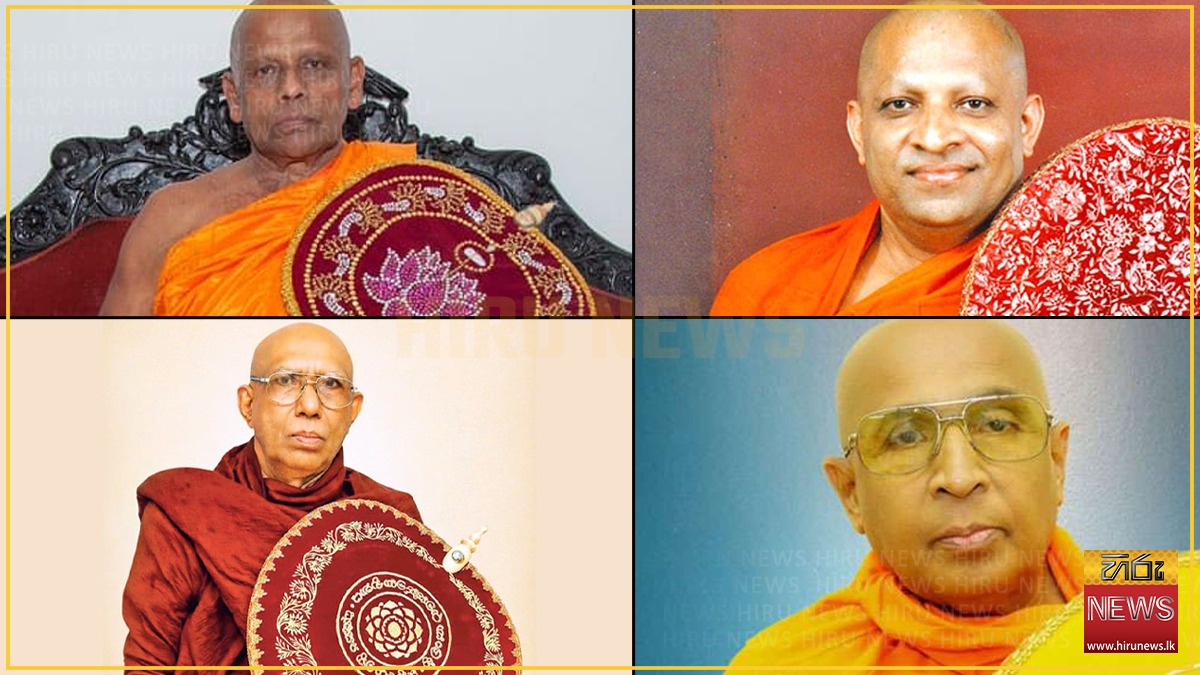
These observations have been made in a joint letter to the President, issued with the signatures of the Most Venerable Thibbatuwawe Sri Siddhartha Sumangalabidhana Mahanayake Thero of the Malwatta chapter of Siam Nikaya, Most Venerable Warakagoda Dhammasiddhi Sri Pagghananda Gnanarathanabidhana Mahanayake Thero of the Asgiriya Chapter of the Siam Nikaya, Most Venerable Karagoda Uyangoda Maithree Moorthi Mahanayaka Thero of the Amarapura Maha Nikaya and Most Venerable Makulewe Wimala Mahanayake Thero of the Sri Lanka Ramanna Maha Nikaya.

In their letter, the Chief Prelates emphasized that disregarding a country’s cultural identity, historical heritage, and traditional customs, while attempting to govern based on narrow arbitrariness or imitation of foreign practices, could result in societal anarchy and the collapse of social order.

The Chief Prelates specifically highlighted concerns regarding the incumbent government’s proposed amendment to Section 82 of the Penal Code to criminalize corporal punishment, as well as the Tourism Development Authority’s (TDA) support for promoting tourism targeting LGBTQ tourists. They described these initiatives as a serious disruption of societal values and a potential source of multiple social crises.

The Chief Prelates urged the President, who has consistently emphasized the significance of Buddhist philosophical principles and their role in sustainable social development, to give urgent attention to this matter and take necessary measures to prevent such actions, which they consider unethical.

The full statement issued by the Chief Prelates of all three Buddhist Chapters follows:https://www.scribd.com/embeds/925305909/content?start_page=1&view_mode=scroll&access_key=key-EDWqVNgtM9LrVCFpD90U

සදාචාර විරෝධී ක්‍රියාවන් ගැන ත්‍රෙනිකායික හිමිවරුන්ගෙන් ජනපතිට ලිපියක් by poor

සාරධර්ම වනසන නීතිවලට හා සමලිංගික චර්යා ප්‍රවර්ධනයට මහ නාහිමිවරු එරෙහි වෙති:ජනපතිට කෙළින්ම ලියති

September 30th, 2025

උපුටා ගැන්ම  හිරු පුවත්

%E0%B7%83%E0%B7%8F%E0%B6%BB%E0%B6%B0%E0%B6%BB%E0%B7%8A%E0%B6%B8+%E0%B7%80%E0%B6%B1%E0%B7%83%E0%B6%B1+%E0%B6%B1%E0%B7%93%E0%B6%AD%E0%B7%92%E0%B7%80%E0%B6%BD%E0%B6%A7+%E0%B7%84%E0%B7%8F+%E0%B7%83%E0%B6%B8%E0%B6%BD%E0%B7%92%E0%B6%82%E0%B6%9C%E0%B7%92%E0%B6%9A+%E0%B6%A0%E0%B6%BB%E0%B7%8A%E0%B6%BA%E0%B7%8F+%E0%B6%B4%E0%B7%8A%E2%80%8D%E0%B6%BB%E0%B7%80%E0%B6%BB%E0%B7%8A%E0%B6%B0%E0%B6%B1%E0%B6%BA%E0%B6%A7+%E0%B6%B8%E0%B7%84+%E0%B6%B1%E0%B7%8F%E0%B7%84%E0%B7%92%E0%B6%B8%E0%B7%92%E0%B7%80%E0%B6%BB%E0%B7%94+%E0%B6%91%E0%B6%BB%E0%B7%99%E0%B7%84%E0%B7%92+%E0%B7%80%E0%B7%99%E0%B6%AD%E0%B7%92%3A%E0%B6%A2%E0%B6%B1%E0%B6%B4%E0%B6%AD%E0%B7%92%E0%B6%A7%C2%A0%E0%B6%9A%E0%B7%99%E0%B7%85%E0%B7%92%E0%B6%B1%E0%B7%8A%E0%B6%B8%C2%A0%E0%B6%BD%E0%B7%92%E0%B6%BA%E0%B6%AD%E0%B7%92

සමාජ පරිහානියට හේතුවන අදූරදර්ශි නීති හඳුන්වාදීම හා සදාචාර විරෝධී සමලිංගික චර්යාවන් ප්‍රවර්ධනය කිරීමට රාජ්‍ය යාන්ත්‍රණය කටයුතු කිරීම සම්බන්ධයෙන් විරෝධය දක්වා ත්‍රෛනිකායික මහානායක ස්වාමීන්වහන්සේලා ජනපති අනුර කුමාර දිසානායක මහතා වෙත ලිපියක් යොමුකර තිබේ.

රටක සංස්කෘතික අනන්‍යතාවන්, ඓතිහාසික උරුමය මෙන්ම චිරාගත සද්චාරිත්‍රයන් නොසලකා පටු අත්තනෝමතීන් හා අන්ධානුකරණයන් මත පදනම්ව රාජ්‍ය පරිපාලනයෙහිලා යමෙක් උත්සාහ දරන්නේ නම් එය රාජ්‍යය අරාජික වීමට මෙන්ම සමස්ත සමාජය බිඳ වැටීමට හේතුවන්නක් බවද උන්වහන්සේලා පවසති.

මල්වතු පාර්ශවයේ මහානායක අතිපූජ්‍ය තිබ්බටුවාවේ ශ්‍රී සිද්ධාර්ථ සුමංගල, අස්ගිරි පාර්ශවයේ මහානායක අතිපූජ්‍ය වරකාගොඩ ශ්‍රී ඤාණරතන, ශ්‍රී ලංකා අමරපුර මහා නිකායේ මහානායක අතිපූජ්‍ය කරගොඩ උයන්ගොඩ මෛත්‍රී මූර්ති, ශ්‍රී ලංකා රාමඤ්ඤ මහා නිකායේ මහානායක අතිපූජ්‍ය මකුලෑවේ විමල යන මහානායක ස්වාමින්ද්‍රයන් වහන්සේලාගේ අත්සනින් යුතුව ජනපතිවරයා වෙත යොමුකළ ලිපියේ මෙසේද සඳහන් වෙයි.

වර්තමාන රජය මගින් දණ්ඩ නීති සංග්‍රහයේ 82 වන වගන්තියට ශාරීරික දඬුවම් කිරීමේ වරද නමින් යෝජිත සංශෝධනය මෙන්ම සංචාරක සංවර්ධන අධිකාරිය මගින් සමලිංගික සේවනය පදනම් කරගත් සංචාරක ක්ෂේත්‍රය ප්‍රවර්ධනයට අනුග්‍රහය ලබාදීම එවන් බරපතල සාරධර්මමය ආරාජිකත්වයක් හා සමාජ අර්බුද ගණනාවක් ඇති කිරීමට හේතුවන්නක් බව සංවේගයෙන් යුතුව අවධාරණය කර සිටිමු.

සමාජ සංස්ථාවන්ගේ කාර්යභාරය මෙන්ම මෙරට සාරධර්මමය අනන්‍යතාව පිළිබඳව නොසලකා හරිමින් ඉතාමත් සුළුතර පිරිසකගේ අවිචාරවත් අවශ්‍යතා පූර්ණය කර ගැනීමේ පටු පරමාර්ථ පෙරදැරිව නීති හා චර්යාවන් ප්‍රවර්ධනය කිරීමට රජය කටයුතු කිරීම පිළිබඳව මහා සංඝරත්නය ලෙස අපගේ බරපතල අප්‍රසාදය පලකර සිටිමු.

හිංසනය පිටුදැක ශික්ෂණයට මුල්තැනක් දීමේ පරමාර්ථයෙන් දණ්ඩ නීති සංග්‍රහය සඳහා යෝජිත සංශෝධන හඳුන්වා දෙන බවට සඳහන් කළද මෙවැනි අදූරදර්ශි නීති මගින් සිදුවනුයේ ශික්ෂණයෙන් තොර ආචාරධර්ම පද්ධතියකට යටත් නොවන සමාජ සංස්ථා හා සමාජ වටිනාකම් වලට ගරු නොකරන නොහික්මුණු තරුණ පරපුරක් බිහි කිරීමය. සමාජ යහපැවැත්ම මෙන්ම පුද්ගල ආරක්ෂාව මත පදනම්ව නීති සකස් කිරීම හා ක්‍රියාත්මක වීම සිදුකළ යුතුය.

එසේම යම් ක්‍රියාවක් සිදු කිරීමේ චේතනාව එම ක්‍රියාවේ සද්භාවය තීරණය කිරීමෙහිලා මූලික වන බව බුදු දහමේ මෙන්ම නීතියේ ද මූලික සංකල්පයකි. ස්වකීය දරුවා ශික්ෂණය කිරීමේ පරමාර්ථයෙන් කටයුතු කරන දෙමාපියන් මෙන්ම ගුණධර්මයන්ගෙන් පෝෂිත නිසි විනයක් සහිත දරු පරපුරක් බිහි කිරීමට කටයුතු කරන ගුරුවරුන්ගේ භූමිකාව ද මේ තුළින් දැඩි අවමානයකට ලක්කර ඇත.

ළමා හිංසනය මෙන්ම අත්තනෝමතික ලෙස ශාරීරික දඬුවම් ලබාදීම සම්බන්ධයෙන් ක්‍රියාමාර්ග ගැනීමට ප්‍රමාණවත් නෛතික ප්‍රතිපාදන දණ්ඩ නීති සංග්‍රහය තුළ අඩංගු වන පසුබිමක අත්තනෝමතික ලෙස සිදු කරන මෙම නීති සංශෝධන මෙරට පවතින ඓතිහාසික සභ්‍යත්වයේ හා ඓතිහාසික අධ්‍යාපන සංස්කෘතියේ න්‍යෂ්ඨිය බිඳ දමමින් දෙමව්පියන් හා දරුවන් අතර මෙන්ම ගුරුවරයා හා ශිෂ්‍යයා අතර පවතින අන්‍යෙයෝන්‍ය සම්බන්ධය, අවබෝධය හා සුහදතාව විනාශ කිරීමේ ආරම්භය බව අප සැවොම අවබෝධ කරගත යුතු කරුණකි.

එහෙත් සමාජ සංස්ථාවන් තුළ අසමතුලිතතාවක් නිර්මාණය වීමට මෙන්ම සමාජ සුරක්ෂාව දැඩි තර්ජනයකට ලක්වීමට හේතුවන මව,පියා,ගුරුවරයා වැනි උත්තරීතර සමාජ සංකල්ප බිඳ වැටීමට තුඩු දෙන මෙවැනි නීති සම්මත කිරීම සමාජ පරිහානියට හේතුවන බව මහජන නියෝජිතයින් අවබෝධ කර නොගැනීම වර්තමාන ශ්‍රීලංකේය දේශපාලන ප්‍රවාහයන්ගේ අන්ධානුකරණ ගති ලක්ෂණ හා මෙරට සංස්කෘතික හර පද්ධතීන් පිළිබඳ පවතින අනවබෝධය මනාව ප්‍රදර්ශනය කරයි.

එසේම අධම්මරාගය හෙවත් මව,පියා,සහෝදරයා,සහෝදරිය ආදි බැඳීම් හා ඥාති සම්බන්ධතාවන් නොසලකා තිරිසන් සතුන් මෙන් ලිංගික ප්‍රීණනය සඳහා පුද්ගලයා යොමු කරවීමත් මිච්ඡාධම්ම හෙවත් සමලිංගික හැසිරීම් ප්‍රවර්ධනය කිරීම මගින් පුද්ගලයාගේ ආයුෂය හා වර්ණය පරිහානියට පත්වන ආකාරය මෙන්ම එය සමාජ බිඳ වැටීමට හේතුවන ආකාරයත් චක්කවත්තී සීහනාද සූත්‍රය තුළ තථාගතයන් වහන්සේ මනාව පැහැදිලි කොට ඇත.

ආර්ථික සංවර්ධනයට මුවාවෙමින් සදාචාර විරෝධී ක්‍රමෝපායන් ප්‍රවර්ධනය කිරීම රටක අරාජිකත්වය උදෙසා හේතුවන අදූරදර්ශි ක්‍රියාවක් බවත් එවැනි ක්‍රියාවන්ගෙන් වැලකී මෙරට චිරාගත සංස්කෘතික හර පද්ධතීන් මත පිහිටා සදාචාර හා සාරධර්ම ප්‍රවර්ධනය කරමින් තිරසර සංවර්ධනයකට යොමු වීමට රජය අවධානය යොමුකළ යුතු බවත් එසේ නොවන්නේම නම් මෙම අප්‍රතිකාරි සංශෝධනයන් සම්බන්ධ මහජන විරෝධයේ දැඩි ප්‍රතිවිපාක විඳීමට රජයට සිදුවන බවත් අවධාරණය කරමු.

බෞද්ධ දාර්ශනික හර පද්ධතීන්ගේ විශිෂ්ටතාව හා එහි ප්‍රායෝගික භාවිතය තිරසර සමාජ සංවර්ධනයකට හේතුවන ආකාරය පිළිබඳ නිරන්තර අදහස් ප්‍රකාශ කරන ගරු ජනාධිපතිතුමන් මේ සම්බන්ධයෙන් කඩිනම් අවධානය යොමුකර මෙම අප්‍රතිකාරී සදාචාර විරෝධී ක්‍රියා වැලැක්වීමට අවශ්‍යය පියවර ගනු ඇතැයි අපි අපේක්ෂා කරමු.

මන්ත්‍රී අර්චුනා අත්අඩංගුවට හොට පැටලුන හේතුව මෙන්න

September 30th, 2025

Neth Fm Balumgala

Consequences of Penal Code Amendment Bill

September 29th, 2025

Shenali Waduge

This Bill is not simply about banning corporal punishment — it is about social engineering

By stripping away parental and teacher authority, it manufactures a generation of children who are:

  1. Narcissistic Youth
    • Conditioned to believe their feelings are supreme and unquestionable.
    • Grow up entitled, arrogant, unable to take correction or responsibility.
  2. Unruly & Undisciplined Citizens
    • With no fear of consequence, youth will break rules at home, in school, and later in society.
    • Respect for elders, teachers, and traditions will collapse.
  3. Manipulable Pawns
    • When children reject authority at home and school, they become highly vulnerable to outside authority — social media influencers, NGOs, extremist groups, foreign-funded campaigns.
    • Youth without roots in discipline or culture are easily recruited for external agendas: street protests, anti-state activism, culture wars.
  4. A Society Turned Upside Down
    • Parents and teachers powerless.
    • Children with unearned power, no duties, no responsibilities.
    • Elders silenced, while youth are weaponized as tools for those who wish to destabilize nations.

Big Picture Warning:
This Bill is not about child protection. It is about child exploitation — creating a narcissistic, unruly generation that can be turned against its own culture, parents, teachers, and country.

THE GOVT MUST IMMEDIATELY WITHDRAW THIS BILL – RUINING THE FUTURE OF THE FUTURE OF SRI LANKA IS MORE TREACHEROUS THAN ANY CRIME

Steps Taken to Enforce the Law against Individuals Using Prohibited and Illegally Produced “Hakka Patas” and “Cheena Patas”

September 29th, 2025

Ministry of Defence  – Media Centre

It has been reported that an illegal explosive called “Cheena Patas” is being produced in some parts of the island using raw materials and other chemicals issued for the firecracker and fireworks industry. Information has also been received that another illegal explosive called “Hakka Patas” is being manufactured using “Cheena Patas” and the raw materials used for firecracker and fireworks production.

These illegal explosives are reportedly used widely to scare away wild animals from farmlands. However, reports indicate that these explosives have caused several severe injuries and deaths to both people and wild animals in the recent past. Furthermore, it has been observed that these explosives pose significant environmental and conservation challenges.

Information has been received that activities related to the production, distribution, storage and sale of the already prohibited explosives, “Hakka Patas” and “Cheena Patas,” continue to take place. Considering these facts and based on a government decision, the Ministry of Defence has taken steps to instruct the relevant authorities to implement special island-wide operations, in coordination with the Sri Lanka Police, to halt these activities and to take steps to strictly enforce the law against those involved in these illegal acts.

Moreover, if individuals engaged in firecracker and fireworks production are found to be involved in or aiding such illegal manufacturing activities in the future, their firecracker and fireworks production licenses will be revoked.

Through this decision, the Government of Sri Lanka has taken a critical step towards protecting both human lives and wildlife in our country. The Ministry of Defence advises the public to refrain from using such harmful illegal explosives and to assist by reporting any incidents of manufacturing, possessing, or selling the already prohibited “Hakka Patas” or the “Cheena Patas” used to produce them, to the nearest police station or wildlife authorities.

PARASATHU MAL -(Flowers that belong to someone else)

September 29th, 2025

Rohan Abeygunawardena

•             Storyline

September 1966 was significant for Sinhala cinema. It featured the story of a young man who loved women, wine, and music. His name was Bonnie Mahattaya.” He was the only child of an aristocratic landowning family from Welhene, a beautiful, remote village. He lost his parents at a very young age and was cared for by a faithful servant. A relative helped him get an education by sending him to a school in Colombo, where children from elite society studied.

The character of the young man reflected the phrase “Walk with kings and keep the common touch.” Young Bonnie had friends from the village who loved art and music. They all looked up to him as their leader. Most evenings, he wandered around the village with his friends and returned to his mansion for a drink and a music session. At home, a village girl staying with him attended to all his needs.

Occasionally, he invited his elite society friends over for dinner or lunch.

Having no motherly or sisterly love as a child, he was searching for love. He never found it but learned what real love was when an attractive young girl refused him and continued her love affair with a handsome young man from the village. He tried everything to break up the affair but failed.

He was trying to grab a flower that belong to someone else. In other words it was a forbidden love that Bonnie was after.

By the time he understood what real love was, he was a sick man. He developed a weak liver due to cirrhosis from heavy drinking. Despite this, he respected the two lovers and helped them.

The storyline described above was from the movie Parasathu Mal.

•             How it was started?

Chitra Balasooriya, a wealthy businessman who owned Chitra Photo Studio in Gampaha town, had a circle of friends like Lionel Algama, Amaradeva, Dayananda Gunawardena, and Mahagama Sekera. All of them were radical thinkers, artists, and aesthetes. They used to meet occasionally, and their conversations focused on literature, movies, and music, both Sinhala and international. They suggested that Chitra should consider producing Sinhala movies. Although he had no idea where to start, he agreed to try.

His friend Dharmadasa Kuruppu said the first step was to get a good script. They approached P.K.D. Seneviratne (PKDS), a well-known Sinhala poet and talented radio play writer who had already written scripts for Sinhala movies like Kurulu Bedda and Sikuru Tharuwa. PKDS told them he was already working on a script that he could finish in two weeks.

When Chitra returned, he handed over the script without any preconditions. The title of the script was Pemwathunge Lokaya,” or Lovers World” in English. Chitra was impressed by the storyline and showed it to his friends. However, a few of them thought that the title was not suitable for a Sinhala movie. At this stage, Mahagama Sekera suggested the title Parasathu Mal,” since the story was about forbidden love. They, including PKDS, agreed on that name.

Chitra decided to make a blockbuster movie and chose the best director. By then, Lester James Peries had already earned a reputation as one of the top directors in Sinhala cinema. He met Lester and offered him the role of director for Parasathumal.”

By that time, Lester had directed an award-winning film, Gamperaliya,” produced by successful business magnate Anton Wickramasinghe. They had already begun producing the movie Delovak Atara.” Anton advised Lester, Lester, don’t take this on. We’ve done two films now, and people will think we’re broke. That’s bad for the company (ref: Lester by Lester).”

•             Selection of a Director

After reviewing the storyline, Lester recommended that they offer the directing job to young Gamini Fonseka.

Gamini entered the film industry as a Second Assistant Director on the famous international movie “Bridge on the River Kwai,” directed by David Lean in the mid-fifties. Lester chose him as his Second Assistant Director for his first Sinhala movie, Rekawa.” It was the revolutionary movie that changed the Sinhala film industry, which was then dominated by a South Indian style of girl, boy, fights, and songs.

Gamini also gained acting experience in Daiwayogaya,” Lester’s Rekawa,” and Sandeshaya.” He became a popular actor after starring in Sandeshaya.

“Lester promised all the assistance towards my production and introduced me to Gamini Fonseka. I had never met him before but had heard he was an ‘Adambarakaraya’ (a proud person).” That did not deter me, as I was a bigger Adambarakaraya,” Balasuriya said (Chandani Kirinde’s interview of Chitra published in Sunday Times on 5th November 2017).

The 28-year-old handsome young man, Gamini Fonseka, took on the challenge of directing his first movie. He also accepted acting in the film by taking on the main role, Bonnie Mahathaya,” himself.

•             Selection of the Actors

Punya Heendeniya (Kamala) was cast to play the challenging role of a typical village girl from that era, where her lover was manipulated by the wealthy playboy Bonnie into ending her love affair with a handsome young man. Tony Ranasinghe was chosen as Kamala’s lover, Sirisena while D.R. Nanayakkara was assigned the role of the loyal family servant, Amaris. Anula Karunathilake was cast as Nona,’ a girl from a poor family looking for a smart young man like Srisena as her husband. Sirimathy Rasadari was cast as Maggie, who lives in Bonnie’s mansion and takes care of Bonnie’s interests.

Other actors were Dharmadasa Kuruppu (as Sedaris), S.A. Jamis (as Kamala’s father), Shanthi Lekha (as Kamala’s mother), Wijeratne Warakagoda (as Tabla player), Shelton Perera (as Harmonium player), Joe Abeywickrama (as Ariyawansa), and Chitra Wakista (as Sirisena’s mother) playing other main roles. Some of the minor roles by Nelson Karunagama, Denawaka Hamine, Francis Perera, Mapa Gunarathna, Daya Wickramaarachchi, D.A.Balasuriya,   Quintus Rodrigo, Nimal Gammudali, and Champa Liyanege.

•             Film Location

Chitra’s next problem was to get a proper location for the movie. From his young days, he was fascinated by the mansion located at Bendiyamulla in Gampaha. The mansion (a legendary Walauwa) was Agra” built by D.D.Karunaratne, one of the richest men in Gampaha, won the 1947 election contesting through the United National Party (UNP). He was made a Senator by First Prime Minister D.S. Senanayake.

By this time, the mansion was owned by his eldest daughter, Chandra Charlotte, who was married to the Director General of the Irrigation Department. When Chitra requested her permission to use her mansion as a film location, she refused.

At this stage, PKDS, who was a close acquaintance of the then Prime Minister Dudley Senanayake and was working as his public relations officer, came forward to help Chitra. However, at the intervention of the Prime Minister, the owner agreed with certain conditions. One condition was not to allow anyone to enter the house without first washing their feet.

•             Selection of Technical Team and Shooting

Chitra and Gamini then selected the technical team. Sumitta Amarasinghe was selected as the Cinematographer and Titus Thotawatte as the Film Editor. Chitra’s friends Lionel Algama and Mahagama Sekera was given the task of Composing Music and Lyricist of the songs respectively. The play back singers were W. D. Amaradeva and Sujatha Attanayake.  The Art Director was Dharmasena Hemapala.

When the shooting of the film commenced man behind the camera Sumitta Amarasinghe helped and directed Gamini who acted as Bonnie Mahattaya or the main character, who had to perform with many emotional and facial expressions to convey the character’s inner thoughts and feelings to the audience.

Gamini with his experience working with directors like David Lean and Lester, directed almost all the other characters to perform well in front of the camera.

•             Lester’s Assistance

As agreed with Chitra and Gamini, Lester visited the location several times and helped them with the direction of few scenes.

A scene where the drunken Bonnie Mahattaya (Gamini) stands on the staircase landing with his silhouette behind him in dim lighting, which captivated many movie fans, was directed by Lester. Many a cinema lovers feel this seen was one of the best shots taken in a Sinhala silver screen, if not the best.

Boni Mahattaya asked the artist Ariyawansa to paint a portrait of Kamala, the girl who captured his heart. Ariyawansa watched her fetch water from a Kalagadi (clay pot) at a village pond called Kohila Kotuwa” and then step out of it. He asked her to do it again so he could get a better view of her. This was another scene directed by Lester, and many people were captivated by the gentle way the typical village girl kindly accepted the artist’s request.

•             Film Critics and Their Views

Although this movie’s story might have been somewhat controversial in Sri Lankan society at the time, Gamini directed it in a way that made it seem like a family-friendly movie. Since there was no legislation controlling or censoring Sinhala movies in the sixties, Gamini’s only reference would have been the banning of Nalangana (Dancer) in 1960.

Late Jayawilal Wilegoda, a pioneer in Sinhala film criticism and dedicated to promoting better Sinhala movies, wrote that the storyline of Parasathumal was something directors and screenwriters aimed to craft, yet they were unable to do so in 129 Sinhala movies screened before this one.

About the acting skills Jayawilal said almost all the actors performed very well but he was of the opinion that D.R. Nanayakkara, the faithful servant of Bonnie Mahttaya’s parents acting was outstanding.

•             Awards

Gamini Fonseka bagged the Best Actor award and P. K. D. Seneviratne got the Best Script Writer award as well as  Sujatha Aththanayaka Best Female Playback Singer for their performance in the movie Parasathu Mal at the 5th Sarasaviya Awards festival held on July 5, 1967, at the Regal Cinema, Colombo.

•             The Flower That Blossomed On Sinhala Silver Screen

Parasathu Mal was one of the best Sinhala movies that depicted village life in the Neo-feudal society that developed after independence. A 1997 government committee recognized Parasathu Mal as one of the top films produced in the first 50 years of Sri Lankan cinema since the screening of Kadawunu Poronduwa (The Broken Promise) in 1947.

The movie was screened on 26th September 1966, nearly sixty years ago.

•             Preservation and Screening in the 21st Century

Today, traditional film projectors have been replaced by digital projectors, and many modern theatres are being built across the country, upgrading their technology. Therefore, it is essential to digitize old Sinhala movies like Parasathu Mal so they can be shown on the advanced digital projection systems used in theatres today, benefiting old, current, and future generations.

Additionally, digitization helps protect films from decay and loss, ensuring their preservation for future audiences.

I believe it is the responsibility of the Film Corporation” to initiate this process. Both the current owners and the corporation could benefit by offering old movies for benefit shows locally and abroad in cities with large Sri Lankan communities, such as Melbourne, Australia; New Zealand; Italy; and others.

This article is dedicated to “King of Sinhala Cinema” Gamini Fonseka, who brought realism, charisma, and a strong screen presence, shaping the golden era of Sri Lankan cinema, and to the crew who worked with him in his first directing attempt on a Sinhala movie. It is also dedicated to producer Chitra Balasooriya, who took the risk of allowing a novice to direct his movie Parasathu Mal.”

I would like to conclude this article with a poem written by PKDS and sung by Pandith Amaradeva at the end of the movie, which summarises the entire storyline.

බටහිර අහස රතු සිත්තම් මැවුනාවේ

දෙනිපෙත අඬනහිරියා මල් පිපුනාවේ

මා ආදරය දුටු වග නොම  හැඟුනාවේ

මා නැතිදා උන්නු සුවඳක්    දැනුනාවේ

Rohan Abeygunawardena

(Writer could be contacted on abeyrohan@gmail.com)

Defence Secretary Graces 81st Anniversary Celebration of the SLESA

September 29th, 2025

Ministry of Defence  – Media Centre

The 81st Anniversary Celebration of the Sri Lanka Ex-Servicemen’s Association (SLESA) was held yesterday (28 September) at the Grand Maitland Reception Hall in Colombo, with the Defence Secretary, Air Vice Marshal Sampath Thuyacontha (Retd), attending as the Chief Guest.

The Defence Secretary and other distinguished guests were warmly welcomed by the President of the SLESA, Lieutenant Colonel Ajith Siyambalapitiya (Retd).

Addressing the gathering, the Defence Secretary stated that the successful eradication of the brutal terrorism that plagued the nation for three decades was due to the correct leadership, timely decisions and systematically implemented plans by the senior officers of the then-Tri-Forces. He also expressed his gratitude for the immeasurable sacrifices and invaluable service rendered by all retired and fallen war heroes for the sake of the motherland’s sovereignty, territorial integrity and peace.

Furthermore, he emphasized that as the country moves towards sustainable development, it is crucial to motivate and guide the current youth population using the experience and knowledge of war veterans. He noted that this would contribute to building a patriotic and disciplined nation.

The Defence Secretary also highlighted the current government’s commitment to fully discharge its responsibilities towards the welfare of all retired service personnel, war heroes with disabilities due to conflict, and the family members of those who made the supreme sacrifice. He announced that after reviewing the issues and challenges presented by these groups during the recent public day programs, a Cabinet paper pertaining to their welfare, including necessary facilities and securing their future, has been submitted for Cabinet recommendation.

The celebration included the presentation of Meritorious Service Medals to members who have dedicatedly served the SLESA and the ‘Lifetime Achievement’ insignia was awarded to current members of the association. Special honorary awards were also presented to recognize the exceptional service rendered to the association by Mr. Quintus Andradi, Rear Admiral Anil Bowatte (Retd), Captain D Wijesinghe (Retd) and Captain I A Sirisena (Retd).

The event was attended by a host of dignitaries, including retired Commanders of the Tri-Forces, the Commander of the Air Force, senior Tri-Forces officers, officials from the Ministry of Defence and members of the SLESA.


Copyright © 2026 LankaWeb.com. All Rights Reserved. Powered by Wordpress