අලුත් අවුරුද්දේ අග්‍රාමාත්‍ය කාර්යය මණ්ඩල කටයුතු ගරු අග්‍රාමාත්‍යතුමාගේ ප්‍රධානත්වයෙන් ඇරඹෙයි

April 19th, 2021

අග්‍රාමාත්‍ය මාධ්‍ය අංශය

සිංහල දෙමළ අලුත් අවුරුද්දෙන් පසුව අග්‍රාමාත්‍ය කාර්යය මණ්ඩල කාර්යාල කටයුතු ගරු අග්‍රාමාත්‍ය මහින්ද රාජපක්ෂ මහතාගේ ප්‍රධානත්වයෙන් අද (19) දින පෙරවරුවේ අරලියගහ මන්දිරයේ දී ආරම්භ විය.

අග්‍රාමාත්‍ය මහින්ද රාජපක්ෂ මහතා මෙහි දී සිය කාර්යය මණ්ඩලයේ නිලධාරීන් ඇතුළු සියලුම සාමාජිකයන්ට අලුත් අවුරුදු සුභාශිංසන එක් කළේය.

කාර්යය මණ්ඩල සමාජිකයන් ද අලුත් අවුරුද්දේ වැඩ ආරම්භ කිරීමට පෙර අග්‍රාමාත්‍යතුමාගේ ආශිර්වාදය ලබා ගැනීම විශේෂත්වයකි.

ප්‍රවාහන අමාත්‍ය ගාමිණි ලොකුගේ, අග්‍රාමාත්‍ය ලේකම් ගාමිණී සෙනරත්, අග්‍රාමාත්‍ය කාර්යය මණ්ඩල ප්‍රධානී යෝෂිත රාජපක්ෂ මහත්වරු ඇතුළු අතිරේක ලේකම්වරුන්,ජ්‍යෙෂ්ඨ සහකාර ලේකම්වරුන්  ඇතුළු අග්‍රාමාත්‍ය කාර්යය මණ්ඩලයේ සමාජිකයෝ සහ අග්‍රාමාත්‍යතුමාට අයත් අමාත්‍යාංශවල පෞද්ගලික කාර්යය මණ්ඩලයන් ද මෙම අවස්ථාවට එක්ව සිටියහ.

අග්‍රාමාත්‍යතුමාගේ ප්‍රධානත්වයෙන් ශ්‍රී ලංකා පොදුජන සන්ධානයේ පක්ෂ නායකයෝ රැස්වෙති.

April 19th, 2021

අග්‍රාමාත්‍ය මාධ්‍ය අංශය

ශ්‍රී ලංකා පොදුජන පෙරමුණ ප්‍රමුඛ ශ්‍රී ලංකා නිදහස් සන්ධානයේ පක්ෂ නායක හමුව ගරු අග්‍රාමාත්‍ය මහින්ද රාජපක්ෂ මහතාගේ ප්‍රධානත්වයෙන්  අද (19) දින පෙරවරුවේ අරලියගහ මන්දිරයේ දී පැවැත්විණි.

මියගිය පක්ෂ නායකයින් සහ රණවිරුවන් සිහි කිරිමෙන් අනතුරුව එළැඹෙන මැයි පළමු වන දිනට යෙදෙන කම්කරු දිනය සැමරීම පිලිබඳව මෙහි දී  සාකච්ඡා විය.

කොරෝනා වසංගත තත්ත්වය හේතුවෙන් මැයි දින පෙළපාලි නොපවත්වා සෞඛ්‍ය මාර්ගෝපදේශ අනුව මැයි දින රැලිය පමණක් පැවැත්වීම පිලිබඳව මෙහි දී පක්ෂ නායකයිගේ අවධානය යොමු වීම විශේෂත්වයකි.

මෙම අවස්ථාවට හිටපු ජනාධිපති මෛත්‍රීපාල සිරිසේන, ජනාධිපති කාර්යය සාධක බලකායේ සභාපති බැසිල් රාජපක්ෂ, අමාත්‍යවරුන් වන ජී. එල්. පීරිස්,දිනේෂ් ගුණවර්ධන මහත්වරු ඇතුලු ශ්‍රී ලංකා නිදහස් පොදුජන සන්ධානයේ පක්ෂ නායකයින් රැසක් සහභාගී වූහ.

ඉන්දියාවේ රෝ එක උමා මහේෂ්වරන්ව අත ඇරලා ප්‍රභාකරන්ව ඉහලට ගත්තා – අරුන් සිද්ධාර්ත්.

April 19th, 2021

සාකච්ඡා කලේ වෛද්‍ය රුවන් එම් ජයතුංග 

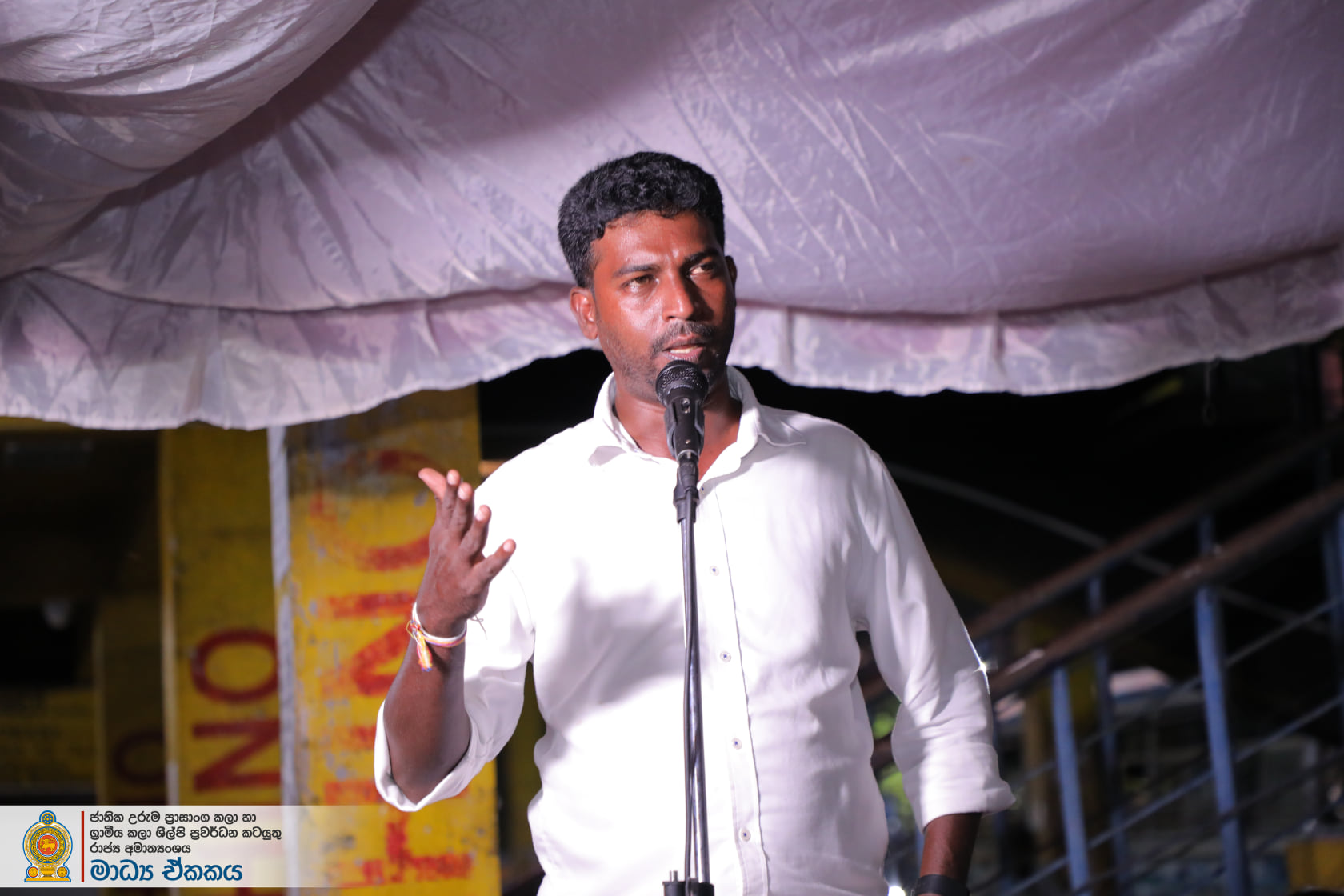
අරුන් සිද්ධාර්ත් කියන්නේ කවුද ? දේශපාලකයෙක්ද නැතිනම් සෝෂල් ඇක්ටිවිස්ට් කෙනෙක්ද ? 

“මම සෝෂල් ඇක්ටිවිස්ට් කෙනෙක් දේශපාලන අරමුණක් සහිතව. මම විශ්වාස කරනවා අපි හැමෝම දේශපාලනය කල යුතුයි කියලා. නැතිනම් සිදුවන්නේ  ප්ලේටෝ කී පරිදි අඥාණ පාදඩයන් ගේ පාළනයට අපිව නතු වෙනවා. ඒ නිසා අපි ඔක්කොම දේශපාලනය විඤාණයක් ඇති කර ගත යුතුයි. ඒ වගේම දේශපාලනය කල යුතුයි.”

2) ඔබ ලංකාවේ සාම්ප්‍රදායක දේශපාලකයන්ට වඩා වෙනස්. ලංකාවේ සාම්ප්‍රදායක දේශපාලකයා විස්තීර්ණ ලෙස කිසිම දෙයක් කියවලා නෑ. ඔවුන් තුල ගැඹුරු දැණුමක් නෑ. තමන් ගේ කතා වලින් ඔවුන් බුද්ධි කළඹනයක් කරන්නේ නෑ. නමුත් ඔබ මැල්කම් එක්ස් පිලිබඳව , ජෙෆර්සන් පිලිබඳව ආදී ලෙස කියවලා තියනවා. මේ වගේ කියවීමක් ලංකාවේ දේශපාලනය කිරීම සඳහා අවශ්‍යද ?

“මම හිතනවා එය අනිවාර්‍යයි කියලා. දැන් ඉන්න තරුණ පරපුර අයි.ටී දැණුමෙන් සන්නධයි. ඔවුන් දැණුම සොයාගෙන යනවා, කියවනවා. ඒ නිසා දේශපාලකයෙක් මෝඩ කතාවක් කියූ විගසම ඔහුව සති ගනනක් ෆේස් බුක් එකෙන් බයිට් කරනවා. මේක හොඳ ලක්‍ෂණයක්. මේක ජනතාව තුල පැතිරිලා ගියොත් දේශපාලකයන්ට අවශ්‍ය විදියට ජනතාව මුලා කිරීමට හැකි වෙන්නේ නෑ.”

3) අරුන් ඔබ කිව්වා ඔබගේ විශ්ව විද්‍යාලය තිබ්බේ ජනතාව අතර කියලා ; 

“ඔව් මම සාම්ප්‍රදායික ඉගෙනීම ඔස්සේ ගියේ නැහැ. මම යුරෝපයේ බොහෝ රටවලට ගියා. මිනිසුන් අතර සමාජ අතර ජීවත් උනා. ඔවුන් ගෙන් බොහෝ දේවල් ඉගෙන ගත්තා. ඒ දැණුම අත්දැකීම් තමයි මම භාවිතා කරන්නේ”

4) උතුරේ ජීවත් වන කාලයේ ඔබට එල්.ටී.ටී. එකෙන් බලපෑම් තිබ්බද ?

මම ඉපදුනේ 1978. එතකොට උතුරේ ගැටුම් ආරම්භ වෙන කාලේ. ඉන්දීය සාම හමුදාව එනකොට මම හිටියේ යාපනයේ. එල්.ටී.ටී.ඊ එකේ සාමාජිකයන්මා ව බඳවාගන්න  කර ගන්න උත්සහ කලා. මම අනෙක් අය වගේ නෙවෙයි ප්‍රශ්න අහනවා. වරක් මම ප්‍රශ්න කලා  එල්.ටී.ටී.ඊ එක විසින් සභාරත්නම් , උමා මහේෂ්වරන් වගේ සංවාදයට විවෘත වූ සටන්කාමීන් මරා දැම්මේ ඇයි කියලා. මේ නිසා මාව බඳවා ගන්න ආපු එල්.ටී.ටී.ඊ ප්‍රාදේශීය නායකයාට තරහා ගියා. ඔවුන් මට එල්ලලා පහර දෙන්න උත්සහ කරන කොට මගේ ඥාතියෙක් මැදිහත් වෙලා තමයි මාව බේර ගන්නේ.

5) ඔබ වරක් කියනවා ප්‍රභාකරන් අමු මෝඩයෙක් කියලා ? 

“ඔව් මම කිව්වා ප්‍රභාකරන් අමු මෝඩයෙක් කියලා. හිටපු සටන්කාමීන් වන සභාරත්නම් , උමා මහේෂ්වරන් වගේ පුද්ගලයන් අතර සිටි නූගත්ම , කිසිම විශන් එක නොතිබුනු පුද්ගලයා තමයි ප්‍රභාකරන්. ඉන්දියාවේ රෝ ඔත්තු සේවය උමා මහේෂ්වරන්ට කියනවා සිංහල ගම්මාන වලට පහර දීලා සිවිල් වැසියන් මරන්න කියලා. නමුත් උමා මහේෂ්වරන් ඒක ප්‍රතික්ශේප කරනවා. ඒ නිසා ඉන්දියාවේ රෝ එක උමා මහේෂ්වරන්ව අත ඇරලා ප්‍රභාකරන්ව ඉහලට ගන්නවා. ප්‍රභාකරන් කියන පරක්කුවට ඩොලර් ෆාම් , කෙන්ට් ෆාම් වලට ගහලා සිංහල සිවිල් වැසියන් මරා දමනවා. රෝ එක දුබළයා ප්‍රබලයා කලා ” 

“ප්‍රභාකරන් එල්.ටී.ටී.ඊ සාමාජිකයන් අතර මුග්ධභාවය නඩත්තු කලා. ඔවුන්ට කිසිම බාහිර දැණුමක් දුන්නේ නෑ. වරක් සාම කාලෙදී මම වන්නියට ගියා. එහිදී එල්.ටී.ටී.ඊ එකේ දේශපාලන අංශයේ  ප්‍රාදේශීය නායිකාවක් මගෙන් ප්‍රශ්න කලා ” ඔබ එන්නේ කොහේ ඉඳන් ද ? ” මම කිව්වා මම එන්නේ මොස්කව් ඉඳන් කියලා. එතකොට මේ එල්.ටී.ටී.ඊ එකේ දේශපාලන අංශයේ  ප්‍රාදේශීය නායිකාව මගෙන් අහනවා මොස්කව් තියෙන්නේ කොලඹ කොහේද කියලා? මේ විප්ලවවාදී ගරිල්ලා කණ්ඩායමක දේශපාලන අංශයේ  ප්‍රාදේශීය නායිකාවක ගේ දේශපාලන භූගෝලීය දැණුම. මේ නිසා තමයි එල්.ටී.ටී.ඊ එකේ සාමාජිකයන් ප්‍රභාකරන්ව අන්ධ විදියට පුදමින් විනාශය කරා ගියේ.”

6) යුද්ධයෙන් පසු උතුරේ තත්වය කොහොමද ?  : 

“උතුර කියන්නේ යුද කම්පනයට විශාල ලෙස භාජනය වූ ප්‍රදේශයක්. බොහෝ ප්‍රශ්න තියනවා. යුද්දයෙන් පසු මේ ප්‍රදේශයේ ආර්ථික , මනෝ සමාජීය ප්‍රශ්න වලට විසඳුම් දීමට පරිණත නායකත්වයක් ආවේ නෑ. ආවේ විග්නේශ්වරන් වගේ ජාතිවාදය අවුස්සලා එදාට සර්වයිව් වෙන පුද්ගලයෙක්. ඔහු කරන්නේ කාගේ හෝ න්‍යාය පත්‍රයක් අනුව උතුරේ සහ දකුනේ ජාතිවාදීන් අවුස්සවලා ප්‍රශ්න යටපත් කරගෙන සිටීම. අපි මේ වගේ ව්‍යාජයන් ප්‍රශ්න කරනවා. ඒ නිසා තමයි අපගේ හඞ යටපත් කරන්නට ඔවුන් උත්සහ කරන්නේ”

7) ඉදිරි කාලයේ ඔබගේ වැඩ කටයුතු මොනවාද

“ඉදිරි කාලයේදීත් අපි අපේ දේශපාලන වැඩ සටහන් කරගෙන යනවා. ජනතාව දැණුවත් කරවනවා. ඒ වගේ ම ඉදිරි කාලයේ මගේ අදහස් අත්දැකීම් අළලා පොතක් ලිවීමටත් අදහස් කරගෙන ඉන්නවා”

බෞද්ධ ජනරජ ප්‍රවාදය – 14 වැනි කොටස – ආණ්ඩු පක්‍ෂය සහ විපක්‍ෂය

April 19th, 2021

ආචාර්ය වරුණ චන්ද්‍රකීර්ති

බෞද්ධ ජනරජය තුළ ජනතාවගේ විධායක බලය” ක්‍රියාත්මක කරවීමට පමණක් බහුපක්‍ෂ ක්‍රමය.යොදාගන්නා බව මෙයට පෙර ලිපිවලින් පැහැදිළි කළෙමු. ඒ අනුව, ජනරජයේ විධායක ජනාධිපතිවරයා තෝරා පත් කරගැනීමට සහ සියළු කෝරළ සභාවල සභාපතිවරුන් තෝරා පත් කරගැනීමට බහුපක්‍ෂ ක්‍රමය යොදා ගැනෙයි. ජනරජයේ ආණ්ඩුවේ පාලනය මෙහෙයවීම සහ ඒ පාලනය පිළිබඳ විධානය භාර කෙරෙනුයේ ජනාධිපතිවරයා ප්‍රමුඛ ජාතික විධායක සභාව” විසිනි.

විෂයානුබද්ධ අමාත්‍ය මණ්ඩලයෙන් සහ දිස්ත්‍රික් නායක මණ්ඩලයෙන් ජාතික විධායක සභාව සමන්විත වෙයි. මේ අනුව විෂයානුබද්ධ ජනතා නියෝජනයකින් සහ භූමිය මත පදනම් වූ ජනතා නියෝජනයකින් ජාතික විධායක සභාව සැකසෙයි.

ජනාධිපතිවරයා විසින් විෂයානුබද්ධ අමාත්‍ය මණ්ඩලයට සාමාජිකයන් තෝරා පත්කර ගනුයේ ඒ ඒ අමාත්‍යංශය පාලනය කිරීමට ස්ථාපිත කරනු ලබන පාලක සභාවලිනි. ඒ ඒ අමාත්‍යංශයට අනුබද්ධ ආයතනවලින් තේරි පත්වෙන ආයතනික සහ වෘත්තීය නියෝජියන්ගෙන් ද ජනාධිපතිවරණයට නාමයෝජනා භාරදෙන විට අපේක්‍ෂකයන් විසින් ඒ ඒ අමාත්‍යංශ සභාවට නම්කිරීම සඳහා යෝජනා කරනු ලබන්නන් අතුරින් ජයග්‍රාහි පාර්ශ්වයේ නියෝජිතයන්ගෙන් ද අමාත්‍යංශ පාලක සභා සැකසෙයි. එ ලෙස අමාත්‍යංශ පාලක සභාවලට පත්වෙන ආයතනික, වෘත්තීය නියෝජිතයන් සහ ජනාධිපතිවරයා විසින් පත්කරනු ලබන අය අතුරින් විෂයානුබද්ධ අමාත්‍ය මණ්ඩලයට සාමාජිකයන් තෝරා ගැනෙයි. මෙය විධායක ජනාධිපතිවරයා හට තම අභිමතය පරිදි කළ හැකි කාර්යයකි.

ජනාධිපතිවරණය සඳහා නාමයෝජනා භාරදෙන අවස්ථාවේ දී ම ඒ ඒ අමාත්‍යංශ පාලක සභාව සඳහා පත්කිරීමට අපේක්‍ෂා කරන සාමාජිකයන් කවුරුන් ද යන වග ප්‍රකාශ කිරීමට නියම කිරීමෙන් එම තේරීම ද ජනතාවගේ අනුමැතියට ලක්වෙයි. එක් එක් අමාත්‍යංශ පාලක සභාව සාමාජිකයන් තිදෙනා බැගින් යෝජනා කරන ලෙස අපේක්‍ෂකයන් හට නියම කළ හැකිය. මෙම පිළිවෙත අනුව, ජනතාවගේ විශ්වාසය දිනාගත හැකි සාමාජිකයන් තිදෙනකු බැගින් සෑම අමාත්‍යංශ පාලක සභාවකට ම නම් කළ හැකි අපේක්‍ෂකයන් පමණක් ජනාධිපතිවරණයට ඉදිරිපත් වනු ඇත්තේ ය.

කෝරළ සභා සඳහා සභාපතිවරුන් තෝරා පත් කරගන්නේ ද ජනාධිපතිවරණයත් සමඟ ම පැවැත්වෙන මැතිවරණයක දී ය. මෙ ලෙස තේරී පත්වන කෝරළ සභා සභාපතිවරුන් අතරින් දිස්ත්‍රික් නායක මණ්ඩලයට සාමාජිකයන් තෝරා ගැනෙයි. ජනාධිපතිවරයාට තම අභිමතය පරිදි මෙම තෝරාගැනීම කළ හැකි ය.

මෙ ලෙස තෝරා පත් කරගන්නා සාමාජිකයන්ගෙන් සැකැසෙන ජාතික විධායක සභාව විෂයානුබද්ධ සහ භෞමික යන අංශ දෙකෙන් සමන්විත වෙයි. මේ අනුව ඒ ඒ විෂයය ගැන සහ භූමිය ගැන දැනුමක් ඇති අය සමඟ එක් වී ආණ්ඩුවේ පාලනය සහ ඒ පාලනය පිළිබඳ විධානය මෙහෙයවීමට ජනාධිපතිවරයාට හැකිවෙයි. තව ද මෙම අරමුණ සාක්‍ෂාත් කරගැනීම උදෙසා විෂයානුබද්ධ අමාත්‍ය මණ්ඩලය සහ දිස්ත්‍රික් නායක මණ්ඩලය වෙන වෙනම ද සහ අවශ්‍ය විටෙක ඒකාබද්ධව ද රැස්කිරීමට ජනාධිපතිවරයාට හැකිය.

බහුපක්‍ෂ ක්‍රමය අනුව තේරී පත්වන ජනතා නියෝජිතයන් (කෝරළ සභා සභාපතිවරුන්) මෙවැනි වාතාවරණයක් තුළ ආණ්ඩු පක්‍ෂය සහ විපක්‍ෂය නියෝජනය කරන්නේ කෙ ලෙසින් ද? රාජ්‍ය මන්ත්‍රණ සභාව” ස්ථාපිත කරනුයේ ඒ වෙනුවෙනි. සියළු කෝරළ සභා සභාපතිවරුන්ගේ නියෝජනයෙන් රාජ්‍ය මන්ත්‍රණ සභාව” සැකසෙයි. ආණ්ඩු පක්‍ෂය සහ විපක්‍ෂය සමන්විත වනුයේ එම නියෝජිතයන්ගෙනි.

කලින් ලිපිවලින් පැහැදිළි කළ ආකාරයට රාජ්‍ය මන්ත්‍රණ සභාව” යනු ජාතික ව්‍යවස්ථාදායක සභාව” නොවේ. රාජ්‍ය මන්ත්‍රණ සභාව යනු හුදෙක් ම විධායක කටයුතුවලට සහායවීමට සහ විධායකයේ යම් වරදක් වේ නම් ඒ පිළිබඳ විවේචන ඉදිරිපත් කරමින් ඒවා නිවැරැදි කිරීමට මැදිහත් වන ආයතනයකි. රාජ්‍ය අයවැය සම්මත කිරීම, දෝෂාභියෝග සහ විශ්වාසභංග යෝජනා ගෙන ඒම වැනි කටයුතු ද එයට පැවරෙයි. දිස්ත්‍රික් නායක මණ්ඩලය නියෝජනය කරන්නේ ද කෝරළ සභා සභාපතිවරුන් විසින් බැවින් ඔවුහු ද රාජ්‍ය මන්ත්‍රණ සභාව නියෝජනය කරති. අවශ්‍යතාව අනුව විෂයානුබද්ධ ඇමැතිවරුන් තම අභිමුඛයට කැඳවීම ද රාජ්‍ය මන්ත්‍රණ සභාවට කළ හැකිය.

මේ අනුව බෞද්ධ ජනරජයේ විධායකය තුළ ඒකාධිපති තත්ත්වයක් නිර්මාණය වීම වැළැක්විය හැකි වෙයි. තව ද, මේ තුළින් විධායකය සහ ව්‍යවස්ථාදායකය පැහැදිළිව ම වෙන් කිරීමට අවස්ථාව ලැබෙයි. විධායකය හා සම්බන්ධ ආයතනවලට (එනම් ජනාධිපති ධුරයට, අමාත්‍ය මණ්ඩලයට, දිස්ත්‍රික් නායක මණ්ඩලයට, රාජ්‍ය මන්ත්‍රණ සභාවට සහ කෝරළ සභා සභාපති ධුරවලට) විධායක හැකියාව ඇති අයට පත්විය හැකි ය.

ජාතික ව්‍යවස්ථාදායක සභාව” සඳහා තේරිපත් වන අය ඒ සඳහා සුදුස්සන් විය යුතුය. ව්‍යවස්ථා සම්පාදන හැකියාවක් නැති අය එම කාර්යයට පත්කිරීම නොකළ යුත්තකි. මෙය කළ හැක්කේ ඒ සඳහා ම වන විධිමත් වැඩපිළිවෙළක් අනුගමනය කිරීමෙනි. මෙම ලිපි මාලාවේ ඊ ළඟ ලිපියෙන් යෝජනා කරන්නේ එවැනි විශේෂිත වැඩපිළිවෙළක් මාර්ගයෙන් ජාතික ව්‍යවස්ථාදායක සභාව” ස්ථාපිත කරනු ලබන ආකාරය ගැනයි.

ආචාර්ය වරුණ චන්ද්‍රකීර්ති

Navy intercepts Lankan boat in high seas; NCB seizes 340 kg heroin and arrests 5

April 19th, 2021

Courtesy The Hindustan Times

The heroin consignment seized by the NCB has a street value of ₹340 crore in India, and ₹1,750 crore in the international market, an official of the federal drug enforcement agency said.By Shishir Gupta, Hindustan Times, New Delhi

The Narcotics Control Bureau (NCB) on Monday seized nearly 340 kg of heroin from a Sri Lankan shipping boat and arrested five people for drug trafficking in Kochi, people familiar with the matter said.

Initial interrogation of the five men has led the NCB to believe that the Sri Lankan boat had picked up the drug consignment from a red-coloured Iranian boat. The NCB hasn’t clarified the intended destination of the drug consignment.

Officials said the Indian naval ship Suvarna intercepted the Lankan boat DU Shashila” in the high seas of the Indian Ocean on suspicion of drug trafficking and brought the boat to Kochi’s Mattancherry Wharf for an extensive search by the NCB.

Each of the 340 packets had been stamped with a crown symbol with the words “KING 2021”, a practice followed by drug trafficking syndicates to brand their merchandise, NCB said.(Sourced)
Each of the 340 packets had been stamped with a crown symbol with the words KING 2021”, a practice followed by drug trafficking syndicates to brand their merchandise, NCB said.(Sourced)

NEWSGL: Colombo Port City Bill received AG’s sanction

April 19th, 2021

By Shamindra Ferdinando Courtesy The Island

SLPP Chairman Prof. G.L. Peiris says that the proposed Colombo Port City Economic Commission Bill is consistent with the Constitution. Prof. Peiris, who is also the Education Minister, insists the Bill received the sanction of the Attorney General.

Prof. Peiris explained to the media the circumstances under which the incumbent government had initiated the proposed Bill. He did so having briefed Ven. Dr. Ittapane Dhammalankara Thera as regards the current political developments, at the Sri Dharmaloka Maha Viharaya, Rukmale, Pannipitiya, on Saturday (17).

President Gotabaya Rajapaksa recently presented the Colombo Port City EC Bill to the Cabinet of ministers. The 76-page Bill provides for the establishment of an EC authorised to grant registrations, licences, authorisations, and other approvals to carry on businesses and other activities in the Special Economic Zone (SEZ) to be established within the Colombo Port City.

Responding to government member Dr. Wijeyadasa Rajapakse’s bombshell accusations that the proposed Bill when enacted in parliament would transform newly reclaimed land adjacent to the Galle Face Green to sovereign Chinese territory, Prof. Peiris emphasized the responsibility on the part of the President in respect of the implementation of the project. Declaring that even an amendment couldn’t be moved without specific approval of the President, Prof. Peiris said all reports pertaining to financial matters, too, should be submitted to the President.

The former law professor also challenged those opposed to the proposed Bill claiming that the police and the military would be excluded from performing duties in the reclaimed land. One-time External Affairs Minister insisted that the police and the military enjoyed the right to exercise powers in terms of the country’s law in case of violations.

The minister said that the government was keen to create an environment conducive for foreign direct investment. However, those who now decried the Colombo Port City EC Bill conveniently forgot the formation of the ‘Greater Colombo Economic Commission’ (GCEC) under a new draconian Bill introduced by the then President J.R. Jayewardene.

Prof. Peiris said unlike JRJ’s Bill, the one proposed by the incumbent government adhered to the Constitution hence the approval from the Attorney General.

Prof. Peiris alleged that the JRJ’s Act paved the way for GCEC to take decisions pertaining to newly formed Export processing Zones (EPZ) and basically conduct its affairs outside the purview of the parliament. Claiming that those who exercised the required powers could transfer funds to and from accounts and anyone violating the secrecy faced jail terms, Prof. Peiris stressed that even the judiciary couldn’t intervene in some matters pertaining to this particular Act introduced in 1978.

According to Prof. Peiris, in 1992, the then President Ranasinghe Premadasa further strengthened the law by depriving the public an opportunity to obtain a restraining order from a court in respect of the all-powerful Commission.

Prof. Peiris accused the UNP and its breakaway faction, the Samagi Jana Balavegaya (SJB) and other interested parties of propagating lies against the project as part of their overall political strategy. The minister acknowledged that the UNP was among those who moved the Supreme Court against the proposed Bill.

Since former Justice Minister Rajapakse strongly condemned the proposed Bill at a hastily arranged media briefing at Abayaramaya under the auspices of Ven Muruththettuwe Ananda thera, several Ministers and State Ministers, Keheliya Ranbukwelle, Mahindananda Aluthgamage, Prof. G. L. Peiris, Namal Rajapaksa, Ajith Nivard Cabraal responded to their colleague on behalf of the government.

A five-member bench of the Supreme Court will begin hearing the petitions today (19).

Among those who filed cases against the proposed Bill were President of the Bar Association Saliya Pieris, PC, former lawmaker Wasantha Samarasinghe on behalf of the JVP, civil society activists, Gamini Viyangoda and K.W. Janaranjana on behalf of Purawesi  Balaya and the Center for Policy Alternatives (CPA).

Viyangoda questioned the government’s motive in depriving the public ample time and space to challenge the constitutionality of the Bill.

Purawesi Balaya spokesperson said that the disputed Bill had been placed on the Order Paper of Parliament on the 8th of April 2021, at a time when the sittings of the Supreme Court were suspended for the vacation. In terms of the Constitution any citizen seeking to challenge a Bill on the grounds that it is inconsistent with the Constitution has to do so within one week of being placed on the Order Paper of Parliament, which in this instance is the 15 th of April 2021. The petitioner said between the 8 th April 2021 and 15 th April 2021, there were the weekend and three public holidays intervening, thereby giving any citizen seeking to challenge the Bill, only two working days to obtain legal advice and representation.

Those who complained bitterly over urgent Bills exercised the same strategy as regards the controversial Bill, the civil society activist said. Responding to another query, Viyangoda said that if the government was confident the Bill didn’t violate the Constitution, it could have been properly discussed at their parliamentary group meeting before being presented to the cabinet of ministers.

කොළඹ වරාය නගරය ඉදිකිරීම තුළින් රටට විශාල ආර්ථික වර්ධනයක් මහාචාර්ය පූජ්‍ය මැදගොඩ අභයතිස්ස හිමි කියයි (වීඩියෝ)

April 19th, 2021

උපුටා ගැන්ම  හිරු පුවත්

කොළඹ වරාය නගරය ඉදිකිරීම තුළින් රටට විශාල ආර්ථික වර්ධනයක් අත්කරගත හැකි බව මහාචාර්ය පූජ්‍ය මැදගොඩ අභයතිස්ස හිමියන්පවසනවා.

වරාය නගරය සම්බන්ධයෙන් ජාතික විද්වත් භික්ෂු සංසදය අද කැඳවා තිබූ ප්‍රවෘත්ති සාකච්ඡාවකදී උන්වහන්සේ මේ බව සදහන් කළා.

Cardinal requests to observe 2-minute silence on April 21

April 19th, 2021

Courtesy Adaderana

His Eminence Malcolm Cardinal Ranjith, Archbishop of Colombo, today requested the public to observe two minutes’ silence at 8.45 a.m. on April 21 as a mark of respect for the victims of the Easter Sunday bombings. 

Sri Lanka on Wednesday marks two years since the devastating Easter Sunday attacks, which killed over 250 in bombings at three churches and three luxury hotels.

Cardinal Ranjith stated that they decided to request all communities in the country to observe 2 minutes’ silence as the first blast had occurred at 8.45 a.m. on the morning of April 21, 2019 at the St. Anthony’s Church in Kochchikade.

He said that the Catholic churches in the country will be observing the 2 minutes’ silence and that all Catholics in Sri Lanka have also been requested to do the same.

We are requesting all the people in the country, especially the religious leaders, to join us in observing two minutes of silence by considering this as a national issue,” he said.

He said that all Catholic churches in the island have been asked to ring bells at 8:45 a.m. and observe two minutes of silence before once again ringing the bells. Afterwards candles or oil lamps will be lit in remembrance of the victims of the Easter attacks followed by various religious observances. 

The Archbishop said that he will be participating in the main service at the St. Anthony’s Church in Kochchikade along with several other religious leaders, diplomats and dignitaries. 

Sri Lanka’s coronavirus death toll climbs to 620

April 19th, 2021

Courtesy Adaderana

The Director General of Health Services has confirmed two more COVID-19 related deaths increasing Sri Lanka’s death toll due to the virus pandemic to 620.

01. 58-year-old female from Mahawa who had been transferred from Galgamuwa Hospital Anuradhapura Teaching Hospital after being identified as Covid-19 positive. She had passed away on April 17 while the cause of death is mentioned as Severe Acute Respiratory Distress Syndrome due to COVID Pneumonia.

02. 84-year-old male from Marassana. He had been transferred from Kandy National Hospital to Teldeniya Base Hospital after testing positive for COVID-19 and had passed away on April 19. The cause of death is mentioned as Severe
COVID Pneumonia in the background of Diabetes Mellitus, Hypertension, Dyslipidaemia and Heart Failure.

291 more persons test positive for Covid-19 today

April 19th, 2021

Courtesy Adaderana

The National Operations Centre for Prevention of COVID-19 Outbreak (NOCPCO) reports that another 87 persons have tested positive for coronavirus in Sri Lanka.

This brings the tally of fresh cases reported so far today to 291.

Meanwhile the total number of COVID-19 cases identified in Sri Lanka thus far has increased to 97,087.

3,111 of them are still under medical care while total recoveries stands at 93,374.

AG files appeal against granting bail to Bond Scam suspects

April 19th, 2021

Courtesy Adaderana

Attorney General Dappula de Livera has filed an appeal before the Supreme Court challenging the order of the Trial-at-Bar granting bail to the Bond Scam suspects, the Coordinating Officer of the Attorney General State Counsel Nishara Jayaratne said.

On April 01, former Minister Ravi Karunanayake and seven suspects who were accused in another bond scam case were granted bail by the Trial-at-Bar consisting of Judges Amal Ranaraja, Namal Balalle, and Aditya Patabendige.

On March 17, 2021, the eight suspects had been placed under remand custody over accusations of criminal misappropriation of bonds valued at Rs. 15 billion during the Central Bank’s treasury bond auction held between March 29 and March 31, 2016.

They were released on cash bails of Rs 01 million and two sureties of Rs 10 million each.

The bench also imposed a foreign travel ban on the accused.

Universities in Sri Lanka to reopen on April 27

April 19th, 2021

Courtesy Adaderana

Minister of Education Professor G.L. Peiris announced that a decision has been taken to reopen all universities in Sri Lanka on April 27 (Tuesday).

Addressing a press briefing in Colombo today, he said that the universities will be reopened for academic activities while strictly following health guidelines.

However, he said that due to an issue existing with regard to reopening hostels, only third year and fourth year students will be brought in at the start. 

Classes for first year and second year students are expected to commence afterwards, the minister said, adding that all necessary arrangements required to conduct university examinations have been organized by the University Grants Commission (UGC).

April 21 declared special holiday for Catholic schools

April 19th, 2021

Courtesy Adaderana

The Archbishop of Colombo, His Eminence Malcolm Cardinal Ranjith, announced that Wednesday (April 21) has been declared a special holiday for all Catholic schools in the country.

This is due to the fact that April 21 will mark two years since the Easter Sunday terror attacks that saw six churches and hotels bombed, killing more than 265 people.

The special holiday is applicable to all Catholic schools in the island governed by the Catholic Church.

The Archbishop of Colombo stated that this will allow the students of these schools and their parents to participate in the programmes planned at respective Catholic churches on that day including the observing of 2 minutes of silence. 

The Cardinal revealed this while addressing a press conference held in Colombo today (19), regarding the second anniversary of the tragic Easter Sunday bombings. 

Port City governed within country’s laws – State Minister

April 18th, 2021

Asela KURULUWANSA Courtesy The Daily News

The Colombo Port City has been gazetted as a land belonging to Sri Lanka and all its activities are being carried out in accordance with the laws of the country, State Finance, Capital Markets and Public Enterprise Reforms State Minister Ajith Nivard Cabraal told Chief Incumbents of the Malwathu and Asgiriya Chapters in Kandy yesterday (18).

State Minister Cabraal visited the Asgiriya and Malwatte Maha Viharaya yesterday (18) morning on the instructions of the President and the Prime Minister, and briefed both the Mahanayake Theras on the functions related to the Port City.

State Minister Lohan Ratwatte and MP Wasantha Yapa Bandara accompanied the State Minister.

Cabraal said the project will create 83,000 new jobs and that this was a turning point in the country’s economy. He stated that some people with vested political interests were trying scuttle the project. The State Minister said the present government has always sought the advice and suggestions of the Mahanayake Theras and that is why the Chief Prelates were first made aware of the misconceptions that were developing regarding the Colombo Port City.

The Port City is governed by a Commission, he said. This project, which brings in a huge amount of foreign exchange to the country, is a turning point in the country’s economy and some people are afraid that this project will bring a huge economic boost to the country. He said that the government hopes to inform the Mahanayake Theras whenever there is any problem or question in this regard and that the present government will act in a very transparent manner and will not do anything secretly. The Most Venerable Thibbatuwawe Sri Siddhartha Sumangala Thera, the Chief Incumbent of Malwatta Chapter said he appreciates the steps taken by the government to inform the Maha Sangha about the Port City. He said people have given a huge mandate in the belief that the present government will not do anything harmful to the country and it is the responsibility of the government to protect that belief.

State Minister Cabraal said that the government will appoint a Committee to study the implementation of the Commission Act pertaining to the Port City. If such a committee is appointed, it should include not only those who are loyal to the government but also educated and moderate people, the Chief Prelate of Malwatte said.

Port City Bill more transparent than GCEC Act – Minister

April 18th, 2021

Chaminda Perera Courtesy The Daily News

Education Minister Prof.G.L.Peiris yesterday said that those who are filing petitions in the Supreme Court, challenging the constitutionality of the Colombo Port City Economic Commission Bill, have forgotten the Greater Colombo Economic Commission Act (GCEC) which was passed in Parliament in 1978.

He said the Greater Colombo Economic Commission Bill adopted in Parliament in 1978 exempted usual tax laws of the country such as Inland Revenue Act and Foreign Exchange Act.

The Minister said that a number of groups including the Samagi Jana Balawegaya and the United National Party are involved in a disinformation campaign over the Bill without any basis.

The Education Minister was speaking to the media after calling on the Most Ven.Ittapane Dhammalankara Thera at Sri Dharma Wijayaloka Maha Viharaya in Pannipitiya yesterday. The Minister during the meeting had made the Thera aware of the current situation of the country.

Over 20 petitions have been filed in the Supreme Court challenging the Colombo Port City Economic Commission Bill. But the SJB and the UNP have forgotten what was done soon after former President J.R. Jayewardene came to power in 1977”, he said.

The Minister said the incumbent President has to approve the Master Plan of the Colombo Port City and any revision in the Master Plan too has to be approved by the President under the Colombo Port City Economic Commission Bill. The accounts of the Commission are required to be audited annually and the final Audit report should to be submitted to the President.

The Minister added that Security Forces and the Police have full access to the Colombo Port city.

The law enforcement authorities can take action if any crime is taking place in the Colombo Port City. The police can take action against any violation of law within the Colombo Port City

He said that the former President Jayewardene believed that an Act in the form of Greater Colombo Economic Commission Bill was the need of the hour to spur development by bringing more and more investments.

This Act passed in the Sri Lanka Parliament in 1978 did not apply to the areas of authority that comes under the purview of the Greater Colombo Economic Commission.This Bill was presented in Parliament within 3 to 4 months of President J.R.Jayewardene forming the UNP government”, he said.

The Minister said that Greater Colombo Economic Commission had allowed banking institutes to accept deposits from non Sri Lankans. This Commission has allowed the banking institutes to operate secret numbered bank accounts of its constituents who are not citizens of Sri Lanka. Powers were given to the Commission to punish those who uncovered the identity of these depositors,” he said.

He said that the Greater Colombo Economic Commission Act introduced by then President J.R.Jayewardene had allowed any fraudster to make deposits in the banking system.

කොළඹ වරාය නගරයේ පූර්ණ හිමිකාරීත්වය මෙරට සතුයි පාලනයෙන් ගිලිහී නැහැ (වීඩියෝ)

April 18th, 2021

උපුටා ගැන්ම  හිරු පුවත්

කොළඹ වරාය නගරයේ පූර්ණ හිමිකාරීත්වය මෙරට සතු බවත්, වරාය භූමියේ කොටසක් වෙනත් පාර්ශවයකට පැවරූ බවට ගෙන යන ප්‍රචාරයන් ප්‍රතික්ෂේප කරන බවත් අධිකරණ අමාත්‍ය අලි සබ්රි ප්‍රකාශ කළා.

මේ අතර, කොළඹ ව්‍යාපාරික සංගමය ද කොළඹ දී අද මාධ්‍ය හමුවක් කැදවමින් කියා සිටියේ කොළඹ වරාය නගරය තුළ ශ්‍රී ලාංකිකයින්ට ද ආයෝජනය කිරීමේ හැකියාව පවතින බවයි.

කොළඹ වරාය නගර ආර්ථික කොමිෂන් සභාව යනු වරාය නගරය තුළ සිදුවන ක්‍රියාකාරකම් පාලනය, කළමනාකරණය සහ නියාමනය සඳහා පිහිටුවන්නක්. කොළඹ වරාය නගරය තුළ ව්‍යාපාර හෝ සේවා සැපයීම සඳහා අවශ්‍ය බලපත්‍ර නිකුත් කිරීමට අපේක්ෂා කරන්නේ එමගින්.

මුහුද ගොඩ කරමින් ඉදිවන කොළඹ වරාය නගරයේ සමස්ත භූමි ප්‍රමාණය හෙක්ටයාර 269ක් වන අතර එහි සමස්ත ආයෝජනය ඇමරිකානු ඩොලර් බිලියන 15ක්.

කෙසේ වෙතත්, මේ දිනවල කොළඹ වරාය නගරය ආර්ථික කොමිෂන් සභාව පිහිටුවීමට අදාළ පනත් කෙටුම්පත පිළිබදව දේශපාලන වේදිකාවේ මෙන්ම සමාජයේ ද දැඩි අවදානයට යොමුව තිබෙනවා.

එමෙන්ම, සමාජය තුළ වරාය නගර ආර්ථික කොමිසම සම්බන්ධයෙන් දැඩි කතාබහක් ඇතිව තිබෙන පසුබිමක මුදල් හා ප්‍රාග්ධන වෙළදපොළ සහ රාජ්‍ය ව්‍යවසාය ප්‍රතිසංස්කරණ රාජ්‍ය අමාත්‍ය අජිත් නිවාඩ් කබ්රාල් ඇතුළු පිරිසක් මේ පිළිබදව දැනුවත් කිරීම සඳහා මල්වතු හා අස්ගිරි මහනාහිමිවරුන් බැහැදුටුවා.

එහිදී මල්වතු පාර්ශවයේ මහනායක අතිපූජ්‍ය තිබ්බටුවාවේ ශ්‍රී සුමංගල මහනාහිමියන් සමඟ රාජ්‍ය අමාත්‍යවරයා ඇතුළු පිරිස සංවාදයක නිරත වුණා

වරාය නගර ව්‍යාපෘතිය ඉතා හොද එකක්.. විජේදාස පොදු අපේක්‍ෂක පෙරහුරුවක…- ජාතික සංවිධාන විජේදාසට වටකර ගුටි..

April 18th, 2021

උපුටාගැණීම ලංකාදීප

ජාතික සංවිධාන එකමුතුව අද (18) රාජගිරියේ පිහිටි සිය මූලස්ථානයේදී මාධ්‍යය සාකච්ඡාවක් පවත්වමින් දේශ හිතෛෂී ජාතික ව්‍යාපාරයේ මහලේකම් වෛද්‍ය වසන්ත බංඩාර මහතා පවසා සිටියේ විජේදාස රාජපක්ෂ මහතා පෝට් සිටි ව්‍යාපෘතිය සම්බන්ධයෙන් ජනතාව නොමඟ යවන බරපතල මුසාවාදයන් ප්‍රචාරය කිරීමට දායකත්වය සපයන බවයි.

එහිදී වසන්ත බංඩාර මහතා අවධාරණය කර සිටියේ පෝට් සිටි ව්‍යාපෘතිය ශ්‍රී ලංකාවට වාසිදායක ලෙස සිදුවනවාය යන කාරණය මනාව තහවුරු වන්නේ ඉන්දියාව සහ අමෙරිකා එක්සත් ජනපදය, මෙම ව්‍යාපෘතියට අදාලව පනත පාර්ලිමේන්තුවට ඉදිරිපත් කිරීමට සැරසෙනවාය යන කාරණය ප්‍රචාරය වූ වහාම දැක්වූ ප්‍රතිචාර හේතුවෙන් බවයි. වෛද්‍යය වසන්ත බංඩාර මහතා පෙන්වා දුන්නේ එම රටවල් කිසිම විටක අප රටේ ආර්ථික ස්වාධීනත්වය තහවුරු වන කිසිදු ව්‍යාපෘතියකට අතීතයේදී ආශිර්වාද පළ නොකළ බවයි. ඒ අනුව විජේදාස රාජපක්ෂ මහතා ඊළඟ ජනාධිපතිවරණයේදී පොදු අපේක්ෂකයා වීමේ අරමුණු ඇතිව සමහර අදේශපාලනික හැසිරීම් වල නියැලෙන බව තහවුරු වන බවද පවසා සිටියේය.

විජේදාස රාජපක්ෂ මහතා අධිකරණ ඇමතිවරයාව සිටිද්දී පැයක් ඇතුලත පනත් හතලිස් ගනණක් සම්මත කිරීම මෙන්ම රණවිරුවන් ජාත්‍යයන්තර අධිකරණයට දැක්වීමට අදාල වන පනත් හතරක් සම්මත කිරීමට දායකවූ අයෙකු බවද සිහිපත් කළ වෛද්‍යය වසන්ත බංඩාර මහතා විජේදාස රාජපක්ෂ මහතා හිතාමතා ජනතාව නොමඟ යවන බවද අනාවරණය කළේය.

මෙම පෝට් සිටි ව්‍යාපෘතියට විරුද්ධව ඇමරිකාව සහ ඉන්දියාව ප්‍රසිද්ධියේ මෙන්ම අප්‍රසිද්ධියේත් කටයුතු කරණ බව කවුරුත් දන්නා බවත් පෝට් සිටිය මුදල් විශුද්ධිකරණ නගරයක් බවට පත්වේයැයි ඇමරිකානු තානාපතිනිය ප්‍රකාශ කළ ද මුලු ඇමරිකාවම මුදල් විශුද්ධිකරණ දේශයක් මෙන්ම එහි උපත සහ ප්‍රචලිත කිරීම තිබෙන්නේ ඇමරිකාවේම බවත් ඔහු පවසය්

ජාතික සංවිධාන එකමුතුවේ කණ්ඩායමට ඇති පූර්ව අත්දැකීම් අණුව ඉන්දියාවත් ඇමරිකාවත් යම්කිසි දෙයකට පක්ෂපාතී වන්නේ නම් හැමවිටම ඒ දෙස සැකයෙන් බැළිය යුතු වන අතරම ඉන්දියාවත් ඇමරිකාවත් යම්කිසි දෙයකට විරුද්ධ වන්නේ නම් මුලින්ම එයට පක්ෂපාතීව ඒ දෙස බැලීම කණ්ඩායමේ භාවිතාව බවත් ඔහු වැඩිදුරටත් පවසයි. ඒ තුළ යම් යම් අඩුපාඩු පවතින්නේ නම් එය නිවැරදි කරගැනීමට කටයුතු කරන බව ද ඔහු පවසයි.

පෝට් සිටි ව්‍යාපෘතිය සම්බන්ධයෙන් ගැඹුරින් කළ අධ්‍යයනයට අණුව මේ දූපත ශ්‍රී ලංකා රජයත් චීන ව්‍යාපාරික ආයතනයත් ගිවිසුම්ගතව නිර්මාණය කිරීමේදී එම චීන ව්‍යාපාරික ආයතනය ශ්‍රී ලංකා මුහුදෙන් වැලි මෙට්‍රික් ටොන් මිලියන 100 පොම්ප කිරීම සඳහා ඇමරිකානු ඩොලර් බිලියන 1.4ක් වියදම් කර ඇති බවත් එම වැලිවල වටිනාකම එමෙන් දෙගුණයක් බවත් මෙම දූපතේ විදේශ ආයෝජන ක්‍රියාවළිය කඩාකප්පල් කිරීමකින් තොරව ඉදිරියට යායුතු වන අතර එය කඩාකප්පල් කිරීමට උත්සාහ දැරීම බරපතළ වරදක් බවත් ඔහු පෙන්වාදෙයි.

මෙම දූපතේ හෙක්ටයාර 116ක් බදු පදනමින් චීන සමාගමට අයත් වන අතර ශ්‍රී ලංකාවට හෙක්ටයාර 62ක් අයත් වෙයි. උද්‍යාන, මාර්ග සහ සෙසු පොදු භූමිය ශ්‍රී ලංකා රජය මගින් පාළනය වේ. චීන සමාගමට අයත් හෙක්ටයාර 116ට ඔවුනට ඇත්තේ බදු අයිතියක් පමණි. මෙම පණතින් පිහිටුවන කොමිෂන් සභාව මගින් එහි ආයෝජනයන් නියාමණය කිරීම සිදුවන බවත් ඒ නිසා මින් චීන කොළනියක් ඇතිවන බවට කරණ ප්‍රකාශ බොළඳ ප්‍රකාශයන් වේ.

පසුගිය රජයේ ජනාධිපතිතුමා විසින් මෙම භූමිය කොළඹ නගරයේ කොටසක් ලෙස ප්‍රකාශයට පත් කරමින් පළමු ගැසට් නිවේදනය නිකුත් කර ඇති අතර ඉන් පසු එම භූමිය නාගරික සංවර්ධන අධිකාරියට පැවරීම ද කර ඇත. ඉන් පසු එවකට නාගරික සංවර්ධන ඇමති ලෙස කටයුතු කළ පාඨලී චම්පික රණවක මහතා විසින් අදාල ගැසට් නිවේදනය නිකුත් කර ඇත. ඉන් පසු හෙක්ටයාර 116ක් පමණක් 99 අවුරුදු බදු පදනමින් චීන සමාගමට ලබාදී තිබේ.

ඒ අනුව චීන සමාගමට හැකි වන්නේ එම හෙක්ටයාර 116 වෙනත් සමාගම් සඳහා නැවත බදු දීමක් පමණක් වන අතර වෙනත් අයිතියක් ඔවුනට හිමි නොවේ.

මෙම ගැසට් නිවේදනයන් අධ්‍යයනය කරණ විට විජේදාස රාජපක්ෂ මහතාගේ පළමු ප්‍රකාශය බොරුවක් බව හෙළිවෙයි. 1934 දෙසැම්බර් 26 දින බළාත්මක කරණ ලද රාජ්‍යයන්හි අයිතීන් සහ වගකීම් පිළිබඳ මොන්ටිවීඩියෝ සම්මුතිය උපුටා දක්වමින් මෙතන වෙනම රටක් හැදෙන්න පුලුවන් යනුයෙන් ඔහු කළ ප්‍රකාශය ද ඉතා බොළඳ ප්‍රකාශයක් වන අතර වෙනම රටක් හැදීමට නම් එම භුමියේ පාරම්පරිකව පදිංචිව සිටි ජන කොට්ඨාශයක් සිටිය යුතුය. වීසා බළපත්‍රයකින් එම ස්ථානයේ පදිංචිව සිටින පුද්ගලයින් සිටි පමණින් වෙනම රටක් නිර්මාණය කිරීමේ පදනමක් ගොඩනොනැගේ.

ඔහු හිටපු අධිකරණ ඇමති වරයෙක් ලෙස කරණ මෙම ප්‍රකාශ පිළිබඳව බරපතළ ලෙස සලකා බැලීමට සිදුවෙයි.

කෙසේ වුවද රජය පැත්තෙන් මෙවැනි වැදගත් ව්‍යාපෘතියක් නීතිගත කිරීමේ පනත් සම්මත කිරීමේදී මීට වඩා මහජන සහභාගිත්වය ලබා ගැනීමට කටයුතු කළ යුතුව තිබූ බවද අවධාරණය කිරීමට වෛද්‍යය වසන්ත බංඩාර මහතා කටයුතු කළේය. එහිදී ඔහු පෙන්වා දුන්නේ පනත කාරක සභා අවස්ථාවට යොමු කළ විට සමාජයෙන් ඉදිරිපත් වන යම් යම් සාධනීය සංශෝධන පනතට ඇතුල් කිරීමට වග බලා ගැනීම ආණ්ඩුව පාර්ශවයේ වගකීමක් බවයි.

– lankaleadnews

Easter attacks were an attempt to strengthen political power – Archbishop of Colombo

April 18th, 2021

Courtesy Adaderana

Archbishop of Colombo Cardinal Malcolm Ranjith says that the 2019 Easter Sunday terror attacks were politically driven.

He claims that the Eater attacks were not carried out over religious extremism but a group that attempted to strengthen their political power by using religious extremism as a pawn.

Urging not to use religion, language, or race to harm another, the Archbishop of Colombo advised one to be free of the perspective of killing others to showcase their power and strength.

The Cardinal mentioned this speaking at an event to bless a memorial erected in memory of those who were killed in the Easter attack.

Archbishop Malcolm Cardinal Ranjith this afternoon ( April 18) blessed two monuments erected in memory of the victims of the terrorist attack on Easter Sunday.

The Cardinal visited the Borella Public Cemetery and blessed a monument erected to commemorate nine victims of the attack. He then blessed another monument erected at the Madampitiya Cemetery to commemorate the victims of the Easter attack.

Coronavirus: 287 more cases and another death reported

April 18th, 2021

Courtesy Adaderana

Ministry of Health on Friday (April 18) confirmed 27 more new cases of the COVID-19 in Sri Lanka as the daily cases count reached 287.

The new development has brought the total number of COVID-19 confirmed in the country thus far to 96,797.

The country’s recovery count is at 93,113 while 3,065 are receiving treatment at selected hospitals across the island.

Meanwhile, another coronavirus death was reported from Pitabeddara today (April 18).

This marks the 618th COVID-19 death reported in Sri Lanka due to the pandemic.

The deceased is a 52-year-old male who had been diagnosed with Covid 19 virus while receiving treatment from the Apeksha Hospital in Maharagama.

He had been subsequently transferred to the IDH hospital where he died yesterday (April 17) from COVID-19 pneumonia and acute leukemia.

Death of liberal democracy in Jaffna led to national disaster

April 17th, 2021

H. L. D. Mahindpala 

No Tamil political leader in the post-Donoughmore period had single-handedly constructed an ideology and changed the course of national politics, almost overnight, asGanapathipillai Gangaser Ponnambalam (8 November 1901 – 9 February 1977). Not only that, no one else has left such a lasting impact – albeit a divisive and devastating one — with his ideology on the national scene as the politics engineered by him. He was, in his own way, an exceptional figure whose role has been overshadowed by his junior  partner, S. J. V. Chelvanayakam, a charismatic figure who in reality extended and built on the ideology founded by him. S.W. R. D. Bandaranaike was Ponnambalam’s counterpart but he  did not create the Sinhala-Buddhist ideology. Rather, he adopted what was already there on the ground and gave leadership to the dormant forces that were struggling  to be born. Ponnambalam, on the other hand, gave birth to an ideology which  he fathered, defined and activated giving leadership  to a political force that entered the blood stream of Tamil politics. In doing so, he reversed the liberal-democratic movement in Jaffna and took it back to communalism  — a force that dominates the North to  this day.

Ponnambalam arrived on the political scene just in time to fill the vacuum in the leadership of Jaffna. By the early thirties the old turbaned Tamil aristocracy was fading away. The last of the iconic leaders of Jaffna, Sir Ponnambalam Ramanathan, passed away in  1930. Jaffna was in  the grip of the English-educated Tamil youth who were  leading Jaffna up the road of liberal democracy and comprehensive nationalism without sectionalism. They were virtually laying down the political agenda of the day. It was a radical movement that went against the  traditional norms  of Jaffna political culture. They were the daring counter force to the dominant Vellala elite which held the reins of power both as loyal subalterns in the British bureaucracy and as the traditional supremacists anointed by the Hindu casteism authored by Arumuka Navalar. It was the Vellalas that dictated and enforced the laws and customs (Tesawalamai) that guided every aspect of the Jaffna way of life, from the  womb  to the tomb. Inside Jaffna the Vellalas ruled with an iron fist to maintain their supremacy.

Outside Jaffna the  Vellala supremacists campaigned to acquire extra seats in the legislature based on allotting seats on a communal basis and not on territorial demarcation of electoral borders.  Getting  seats on communal representation would go to  maintain their disproportionate share of power in the commanding heights of the political and  administrative institutions. Getting seats on a territorial basis would not  only reflect the will of the people which is the ultimate goal in any democratic  system but would also uphold the fundamental principles of democracy. The radical Tamil youth of Jaffna rejected both casteism and communalism and organised their movement to abolish what they considered  to be the two evils of the peninsular political culture. In the mid-twenties the Tamil youth of Jaffna were leading Jaffna out of feudalism, casteism, communalism, dowry-system etc into  modernity. When they talked of nationalism  they meant total swaraj for all without narrow domestic walls” of communalism, or sectionalism”, as the Governor of the day called it

By the late thirties, however, the Jaffna Tamil Youth Congress had lost its grip. Without the old turbaned aristocracy and without the radical youth Jaffna fell into a political vacuum. The political space was  open for Ponnambalam to step in as the anti-thesis of all that was held sacred by the Tamil youth. The political pendulum swung from  liberal-democratic end to naked communalism. Single-handedly, Ponnambalam reversed the libera-democratic trend and took Jaffna back to its communalistic and casteist roots. With that he reigned supreme as the sole representative of Jaffna with no rival in sight until the arrival of Chelvanayakam. The unique characteristic of his politics is that he left an indelible legacy which wound its way, through several twists and turns, until it wound up in its ill-fated historical end in Nandikadal. Chelvanayakam, though he shone brighter than Ponnambalam as a leader, particularly  with his integrity and commitment to the cause, was merely an  ideological pupil of Ponnambalam. In extending and taking Ponnambalamism to a further extreme the pupil outshone the teacher. 

To get a better view of the evolving events, it  is necessary to step back and take a glance at young Ponnambalam as he entered the mainstream. Right from the start he was different from the rest of the pack. To begin with, his contemporaries who went abroad in the twenties and thirties for studies in leading  universities of the West returned home as committed nationalists imbued with either democratic liberalism (S.W. R. D. Bandaranaike and Dudley Senanayaker) or Marxism (N. M. Perera, Philip Gunawardena, Colvin R de Silva, Pieter Keuneman etc). Even the Tamil students like P. Kandiah and A. Vaidiyalingam returned home from Cambridge as communists. They were, in fact, the founding members of the Ceylon Communist  Party along with Pieter Keuneman. Only Ponnambalam was the exception. He went to Cambridge on a scholarship granted by what he contemptuously called the homogenous state” (i.e., the Sinhala state) and returned home without embracing either  liberal or socialist ideals as guiding principles for his politics. He opted for a brand of communal politics minted by him which ran counter to the mainstream politics of  the  time.

Nationalists (Nehru) coming home had to face two enemies : 1. the  imperialists and 2. the separatists (Jinnah) attempting to fragment emerging nations.  Ponnambalam, however,  was not  inspired by either nationalism for the nation, or for the Tamils, or by the ideology of separatism / federalism. In fact, he is on record saying that federalism is bad for Ceylon and worse  for the Tamils.” His formula of 50-50”, or what he called balanced representation”, was his ideology to revise communalism as the determining force of national politics, refusing to go along with the prevailing liberal-democratic politics. His main argument was that 50-50’ would obviate the fears and threats of majoritarianism. Governor Andrew Caldecott rejected it as a crude arithmetical formula”.  Later Lord Soulbury dismissed it as mockery of democracy”. Jaffna Youth Congress was most vociferous in condemning his 50-50 ideology.

Faced with an overwhelming opposition he delivered a marathon  speech on March 15, 1939 to the State Council defending his 50-50” ideology. It was the first time that the Tamil communalism found a mouthpiece to articulate its seminal ideology that was afloat in a vague form demanding extra seats for the Tamils to be on par with the Sinhalese in the Legislative Council. It was seen and rejected as communal representation by the British and the Jaffna youth. There  was a growing  consensus for territorial representation which reflected the democratic will of the nation.

Ponnambalam’s main political theme was to focus on evils of the majority oppressing and denying the  rights of the minorities. But Ponnambalam never referred to how the Vellala majority in Jaffna exploited, oppressed and denied the fundamental human rights of the non-Vellala castes and slaves, particularly the Nalavars and the Pallas. He was exploiting  the majority-minority theme purely on communal lines. His main target was the Sinhalese. He did not extend the same concern for the minority in his own community who were subject to most inhuman forms of oppression by the majority Vellalas. 

To overcome the tag of communalism Ponnambalam made it an issue between the majority and the minority. Instead of demanding one or two extra seats like his predecessors he wrapped the fragmented demands of the old turbaned aristocracy into a consolidated package of 50-50”. It was communalism on a national scale. He wasn’t asking for one or two extra seats in the periphery, either in  the North or Western provinces for the Tamils. He was asking  for a huge share of power at the centre to be on par with the majority. In his speech he explored various theories against majoritarianism and presented his argument as a defence against the abuses of the majority against the minorities. It was this speech that made him a figure  to reckon with in national politics. Needless to say, it enhanced  his stature in the Tamil community.

In May-June 1939 he shot into the limelight again with  his explosive speech at Navalapitiya denigrating the Sinhala-Buddhist culture, its history and the people. In the political heat generated by his 50-50” demand this anti-Sinhala-Buddhist speech was explosive enough to set the nation on fire. But both events – his marathon speech and his virulent speech at Navalapitiya – was sufficient to destroy the communal harmony that prevailed in the colonial and feudal ages. Ponnambalam ignited the first Tamil-Sinhala riots. The nation that began to bleed in Navalapitiya in 1939 never stopped until it ended in Nandikadal in 2009.

Ponnambalam’s main theme was on evils of the majority oppressing and denying the  rights of the minorities. But Ponnambalam never referred to how the Vellala majority in Jaffna exploited, oppressed and denied the fundamental human rights of the non-Vellala castes and slaves, particularly the Nalavars and the Pallas. He was focused on communal politics directed against the Sinhala-Buddhist majority while he was a leader of the Vellalas who never lifted a finger to liberate the oppressed Tamils.  under his very nose.

Ponnambalam’a success in reversing the liberal-democratic trend fostered by the Jaffna Youth Congress was fatal. He was trying to make a case for the Tamils as the victims of the Sinhala majority. But the ground reality was different. The Sinhala masses were in the same boat as the masses of the  other communities though Ponnambalam made it look like a Sinhala vs. Tamil issue. The Jaffna Youth Congress depicted the plight of  the Sinhalese succinctly when they wrote : The Sinhalese peasantry are suffering from a scarcity of land and are becoming rapidly pauperised. The business of the island is in the hands of the Europeans and the Indians. The cocoanut industry is the only industry that remains in the hands of the Sinhalese. Even in this more than seventy-five percent of the estates are mortgaged to Indian capitalists. Even in the professions and the Government service Sinhalese occupy a comparatively inferior place. Whatever the reason for this state of affairs the Sinhalese are becoming sensitive to their inferior position and are crudely attempting to reassert their position. In this delicate state of feeling the granting of the 50–50 demand will make them feel that they are to be reduced to a state of political helplessness, and will call forth the most violent reaction. Communal propaganda will be openly carried on by the Sinhalese… The leadership of the Sinhalese will pass into the hands of avowedly communal elements [like the Sinhala Maha Sabha].” (Communalism or Nationalism? – Reply of Jaffna Youth Congress to Ponnambalam’s speech..)

These two events –his marathon  speech and the Navalapitiya attack on Sinhala-Buddhists,  both coming one after the other  —  coincided with his cry for 50-50” to give birth to a new political consciousness in the North and the South. As pointed out by the Youth Congress, the communalism of one was feeding  the other. In fact, Bandaranaike thanked Ponnambalam for his Navalapitiya tirade against Sinhala-Buddhists because it helped him to mobilise the Sinhalese to his Sinhala Maha Sabha on a larger scale. With  his words and actions Ponnambalam led Jaffna into a political cul-de sac from which  it never came  out. Ponnambalam’s words and actions, when put together, added up to an ideology of the Tamils consisting of three major factors : 1. disproportionate share of power in the centre ; 2. whipping up the cry of victimology and 3. demonising the Sinhala -Buddhists, their history and their culture. Though Ponnambalam did not put all three factors together and spell it out as a cohesive ideology the upshot of his tactics resulted in providing the framework for his successors  to build on this triad to push mono-ethnic politics of the North to the  extreme.

A close examination of Northern politics will reveal that it never  deviated  from  these three factors  identified by Ponnambalam. First, in the post-Ponnambalam period mono-ethnic extremism escalated incrementally heading straight towards the Vadukoddai Resolution which declared war against the democratically elected state demanding a separate state. Tamil extremism encapsulated in the Vadukoddai Resolution has its roots in Ponnambalamism, especially his disproportionate demand for 50-50”. Eelam is an extreme version of 50-50”. Second, the rationale for this demand was the accusation that the Tamils were the  victims of Sinhala-Buddhist majoritarianism and discrimination. In his second length speech to the Soulbury Commission in 1945 he made the same accusation. After examining his claim, the British Commissioners dismissed it as an accusation unsubstantiated by the weight of evidence. Third, for him to make a demand of this proportion he had to buttress it with just not yesterday’s politics but on the entire course of history. To claim 50-50” he had to put Tamil history on par with that of the Sinhalese. Or better still, to denigrate it as being almost inferior to  that of  the Tamils. Demonising the Sinhala-Buddhists and denigrating their history and culture was a primary tool of Tamil politics.

History was an  indispensable element for the Tamils to claim equal  status – i.e., 50-50 at first and then later, separatism. Hijacking history to back their claims was an essential source. A whole new industry sprang up, particularly in academia and the NGOs, to denigrate Sinhala-Buddhist history, culture and heritage. A classic example is Buddhism Betrayed? Religion, Politics and Violence  in Sri Lanka – S. J. Tambiah of Harvard University. Though it came with the with the imprimatur of prestigious Harvard University it lost it credibility because it was seen as a tendentious tract written to  denigrate the Sinhala-Buddhists – a la Ponnambalam. The cover itself betrayed his political bias. In  it  a leading  Buddhist monk was portrayed in a militant pose, indicating clearly the anti-Sinhala-Buddhist mission  of Tambiah. Besides, he begins his book with a stupid question:  If Buddhism preaches nonviolence, why is there so much political violence in Sri Lanka?” And in the following 203 pages he labours to convince the reader that behind all the violence were the Sinhala-Buddhists and their ideology. 

In other words, he produces a mono-causal thesis blaming only the Sinhala-Buddhist ignoring  the complex of history of multifarious factors that converged to create the North-South conflict. He says: …..I have tried to present in narrative form the unfolding of events over a period of about hundred years …The main question to which I shall probe is the extent to which, and the manner in which Buddhism as a religion” espoused by Sri Lankans of the late nineteenth and twentieth centuries has contributed to the current ethnic conflict and collective violence in Sri Lanka.” ( p.3 — Ibid). And then he proceeds to detail how Buddhism has contributed in a significant way to the current conflict. He takes a blinkered view as if Buddhism had acted as the sole miscreant that caused the violence. The dialectics of two forces of the North and the South interacting and clashing does not enter into his  account. It’s Sinhala-Buddhism that is blamed all the way. The fact that Sinhala-Buddhists were reacting to an inimical, uncompromising, intransigent force from the North, determined to impose its minority demands at the expense of the rest of the nation, which can naturally provoke a reaction, has been ignored. What is implied is that as non-violent Buddhists their duty was to give in to all the demands of the minority. The crisis could have been avoided if the Buddhist have been more tolerant and compromising, according to him.

By omitting  the roles played by Northern actors Tambiah has  virtually exonerated the Tamils from any responsibility for the violence. In any case, it is against common sense to believe that violence came only from the uncompromising attitude of the majority. It is like believing in the sound of a clap with one  hand. Besides, this claim is factually wrong. For instance, when Ponnambalam was demanding 50-50” the Sinhala Board of Minister offered him 43 per cent. Ponnambalam rejected it. Which majority in the world had given 43% to a minority of 12% on an issue of so fundamental as power-sharing? The Tamil leadership blundered and the blame is put on the Sinhala-Buddhists.

In contrast, A. J. Wilson, son-in-law of the father of Separatism, S. J. V. Chelvanayakam, has commended Sinhala-Buddhist as the force that has sustained democracy in a pluralistic society. Calvin Woodward, in his review of Wilson’s book, Politics in Sri Lanka, 1947 – 1973, states: The uniqueness of Sri Lanka, Wilson points out, is that it (Sri Lanka) has faced challenges without veering from the democratic path. Certainly then, the key  to the future lies in  an understanding of the past. How and why, in other words, has the democratic experiment been able to work so well in Sri Lanka? The author investigates this and concludes that the  political stability so far maintained in Sri Lank is due mainly two factors, one of indigenous origin and the other the result of Western implantation. Primary is the Buddhist ethos and the doctrine of tolerance. This, according to Wilson, has acted to dissuade the majority community from unduly imposing itself on the minorities and encouraged it to respect the fundamental rights and distinctions of others in the plural society.” (p. 72 – The Ceylon Journal of Historical and  Social Studies – Vol III, July-December, 1973, No.1.)

Of course, it didn’t take long for Prof. Wilson to somersault, like most Tamil intellectuals, after the declaration of war against Sinhala-Buddhist in the  Vadukoddai Resolution endorsed by the Tamil leadership in May 1976. Tamil and pro-Tamil intellectuals fell in line with Ponnambalam to denigrate Sinhala-Buddhist history and devalue its culture in order to push their  claim  for  what Bandaranaike called outrageous demands”.  The intellectual fashion was to follow Ponnambalam every inch of the way. A whole school of Ponnambalayas rose in academia, NGOs and among pseudo-Marxist pundits / political scientists to defend Tamil extremism based on the triad outlined above. The irony is that they imagine themselves to be original thinkers when  they are merely aping  Ponnambalam. Dayan Jayatilleka, the self-styled political scientist, for instance, is wondering why there are no Gramsci’s in Jaffna. Where are the Gramscis of Jaffna?” he  wants to know. He can look till the cows of Jaffna come home and he  will not find any for the simple reason that Ponnambalayas do not breed Gramscis.

Of course, in  his latest Gramscian” utterance he has predicted the end of the Tamils if they don’t band together against the armed Dharmapalas”. The Ponnambalayas in the North – there was no one else in the peninsular landscape – always survived by similar kind of calls to arms. Dayan Jayatilleka is a Ponnambalaya of the South raising phobias against the Sinhalese just like the way Ponnambalam did at Navalapitiya in 1939. Clearly, there is nothing original in regurgitating old Ponna”, as he is known in demotic parlance.. But, according to Dayan’s latest prognosis, Ponnambalamism has come to  a dead-end. So why is it that the Marxists, the Gramscian, the ex-JVPers and the political scientists behaving  like Ponnayas? 

ReplyForward

Embassy of Sri Lanka celebrates Sinhala & Tamil New Year Sunday 18 April 2021 from 1100 EST onwards

April 17th, 2021

Embassy of Sri Lanka Washington D.C.

The Embassy of Sri Lanka, in collaboration with its ‘Overseas Sri Lankans (OSL) Network’ in the USA, will celebrate Sinhala and Tamil New Year on Sunday, April 18, 2021, from 11.00 am onwards. Modeled on the Ratawata Aurudu” programmes done connecting main cities in Sri Lanka during the New Year, the celebrations conducted via zoom/facebook to allow connecting small gatherings consistent with COVID guidelines, will be joined by members of the Sri Lanka community and Friends of Sri Lanka from cities across the USA.

Buddhist, Hindu, Islamic and Christian religious blessings will precede the observance of New Year customs and rituals that will re-create the sense of festivity and provide an understanding of Sri Lankan traditions and culture, especially to children who have grown up in the US, as well as to the Americans who will be joining.

The Message for the New Year from President Gotabaya Rajapaksa, and greetings from Ambassador to the USA Ravinatha Arysinha, Permanent Representative to the UN in New York Ambassador Dr. Mohan Peiris and Consul General in Los Angeles Dr. Lalith Chandradasa will also be featured during the webcast.

The cultural programme that will follow will showcase 25 colorful dance/musical items from children, youth groups and adults from Washington D.C and over 15 States across the US – Maryland, California, Missouri, Texas, Georgia, New Jersey, New York, Ohio, Illinois, South Carolina, Massachusetts, New Mexico, Washington, Florida, and Hawaii.

The Embassy invites Sri Lankans and Friends of Sri Lanka living across the US to join in these festivities organized as part of the Embassy’s outreach programme through the recently established ‘OSL Network’, which now spans all 50 States and contributes to advancing Sri Lanka’s interests through political advocacy, economic empowerment, socio-cultural engagement and several other cross cutting areas.

Embassy of Sri Lanka
Washington D.C.
16 April 2021

ගරු අග්‍රාමාත්‍යතුමා නැකතට හිසතෙල් ගෑමේ චාරිත්‍රය ඉටු කරයි

April 17th, 2021

අග්‍රාමාත්‍ය මාධ්‍ය අංශය

ගරු අග්‍රාමාත්‍ය මහින්ද රාජපක්ෂ මහතා සිංහල දෙමළ අලුත් අවුරුද්දේ හිසතෙල් ගෑමේ නැකත් චාරිත්‍රය අගමැති නිල නිවසේ දී අද (17) දින පෙරවරුවේ ඉටු කළේය.

පූර්වභාග 7.16ට දකුණු දිශාව බලා හිසට නුගපත් ද පයට කරඳ පත් ද තබා නිල් පැහැති වස්ත්‍රාභරණයෙන් සැරසී නුග පත් යුෂ මිශ්‍ර නානු හා තෙල් ගා ස්නානය කිරීම මෙවර සිංහල දෙමළ අලුත් අවුරුදු නැකත් චාරිත්‍රයයි.

පළමුව බුද්ධ මන්දිරයට ගොස් මල් පහන් පූජා කළ අග්‍රාමාත්‍ය මහින්ද රාජපක්ෂ මහතා අනතුරුව හිසතෙල් ගෑමේ නැකත් චාරිත්‍රයට එක් විය.

ඓතිහාසික මාදන්වල රජමහා විහාරාධිපති විශ්වීය බෞද්ධ හික්ෂු සම්මේලනයේ භාණ්ඩාගාරික රාජකීය පණ්ඩිත ශාස්ත්‍රපති වැල්ලගිරිය සුමංගල නාහිමියෝ අග්‍රාමාත්‍යතුමාගේ හිසෙහි නැකතට තෙල් ගල්වා ආශිර්වාද එක් කළහ.

සහකාර අධ්‍යාපන අධ්‍යක්ෂ කිරිඔරුවේ ධීරානන්ද නාහිමියෝ ද මෙහි වැඩම කළහ.

මෙම අවස්ථාවට අග්‍රාමාත්‍ය ආර්යා ශිරන්ති රාජපක්ෂ මහත්මිය, රාජ්‍ය අමාත්‍ය සිරිපාල ගම්ලත් මහතා සහ පවුලේ සමාජිකයෝ පිරිසක් එක්වූහ.

දුමින්ද දිසානායක නැකතට හිසතෙල් ගෑමේ චාරිත්‍රය ඉටු කරයි

April 17th, 2021

තිසර සමල්   – අනුරාධපුර 

සිංහල හින්දු අලුත් අවුරුද්දේ හිස තෙල් ගෑමේ උතු⁣රු මැද පළාත් රාජ්‍ය මහෝත්සවය උතුරු මැද පළාත් ආණ්ඩුකාර මහීපාල හේරත්, රාජ්‍යය අමාත්‍ය දුමින්ද දිසානායක යන මහත්වරුන්ගේ ප්‍රධානත්වයෙන් අද (17) අනුරාධපුර ආයුර්වේද රෝහල් පරිශ්‍රයේදී පැවැත්විණි.

පූර්ව භාග 7.16 ට දකුණු දිශාව බලා හිසට නුග පත්ද, පයට කරඳ පත්ද තබා නිල් පැහැති වස්ත්‍රාභරණයෙන් සැරසී නුග මිශ්‍ර නානුද, තෙල්ද ගා ස්නානය කිරීම මැනවි යනු ජ්‍යොතිෂ නියමයන්ට අනුව මෙම චාරිත්‍රය  ඉටු කරනු ලැබීය.

උතුරු මැද පළාත් ආයුරුවේද කොමසාරිස් වෛද්‍ය සුපිපි සංඝමිත්තා මිය, උතුරු මැද පළාත් සෞඛ්‍ය
 දේශීය වෛද්‍ය, සමාජ සුභ සාධණ පරිවාස සහ ළමා රක්ෂණ සේවා අමාත්‍යංශ ලේකම් නයනා සනායක මත්මිය,  පළාත් ආයුරුවේද රෝහල් අධ්‍යක්ෂ වෛද්‍ය ශ්‍රියානි මල්කාන්ති මහත්මිය ඇතුළු ආයුරුවේද වෛද්‍යවරුන් මෙම උත්සවය සංවිධානය කර තිබිණි.

A Phone Conversation Piloting a New Voyage

April 17th, 2021

By Qi Zhenhong, Chinese Ambassador to Sri Lanka

A Phone Conversation Piloting a New Voyage

On the evening of March 29, Chinese President Xi Jinping had an important phone conversation with Sri Lankan President Gotabaya Rajapaksa. This was the second phone conversation between the two state leaders during the COVID-19 pandemic,  and  a strategic communication with a backdrop of international and regional situation undergoing deep changes, together with economic and social development of the two countries on a critical stage. In the past two weeks, friends from different walks of life in Sri Lanka gave positive comments from different perspectives, which were really enlightening for me. I would also like to share my views on this special conversation.

Firstly, it is essential to keep regular interactions at the top levels of the two countries during the COVID-19 pandemic. Facing the severe challenges caused by the pandemic, the two Presidents had two times of extensive and in-depth phone conversations, reaching broad consensus, and strategically guiding the future development of our bilateral relations. Both sides reconfirmed a state visit to China by President Rajapaksa as soon as the pandemic situation allows. Later this month, the two Presidents plan to virtually attend the Annual Conference of Boao Forum for Asia together. In coming weeks, we are also expecting a series of high-level visits between the two countries, which I believe would greatly strengthen political mutual trust, broaden cooperation fields, and deepen the development of our bilateral relations.

Secondly, the China-Sri Lanka cooperation is based on the alignment of respective strategies. In their recent phone conversation, President Gotabaya expressed once again his strong willingness to learn from Communist Party of China on its governance experience, especially how align Game Samaga Pilisandara” of Sri Lanka with Targeted Poverty Alleviation” and The Rural Vitalization Strategy” of China, and to align Vistas of Prosperity and Splendor” with the high-quality building of the Belt and Road Initiative. President Xi Jinping made positive response his Sri Lankan counterpart and agreed that China and Sri Lanka should learn from each other at the system and governance levels to overcome the challenges of the post-epidemic era.

Qi Zhenhong, Chinese Ambassador in Sri Lanka

Thirdly, China keeps its word, and does what it says. On the second day of the phone conversation between the two heads of state, Sri Lankan Airlines’ cargo plane set off for Beijing. On the third day, 600 thousand doses of Sinopharm vaccines donated by China arrived at Colombo. In addition, the major cooperation projects that leaders of the two countries pay close attention to, including another 500 million USD financial facility extended by China Development Bank, the National Nephrology Specialist Hospital, and the International Finance Centre in the Colombo Port City, have been commissioned or will soon achieve tangible outcomes, which are bringing more and more tangible to Sri Lankan people.

Fourthly, multilateral cooperation has become a new highlight in Sino-Sri Lankan relations. This year marks the 50th anniversary of China’s restoration of its lawful seat in the United Nations, and President Xi Jinping emphasized in the phone conversation that China will never forget Sri Lanka’s valuable support”. At the just-concluded 46th session of the United Nations Human Rights Council, China unreservedly supported Sri Lanka as always, while Sri Lanka stood firmly with China and dozens of other countries on issues related to Hong Kong and Xinjiang. In various international fora, China is willing to make continuous joint efforts with Sri Lanka to firmly support each other on issues concerning respective core interests, promote international justice and fairness, and safeguard the common interests of developing countries.

The traditional friendship between China and Sri Lanka has stood the test of time and is facing extensive opportunities for further development. On behalf of the Chinese Embassy in Sri Lanka, I am willing to work with friends from all walks of life in Sri Lanka to jointly implement the important consensus reached by President Xi Jinping and President Gotabaya Rajapaksa, solidly promote our exchanges and cooperation in various fields, and elevate the China-Sri Lanka strategic cooperative partnership to a new level.

Cabraal: Prez appoints members to Port City Economic Commission

April 17th, 2021

By Shyam Nuwan Ganewatta Courtesy The Island

The President of the country would always appoint members to the Colombo Port City Economic Commission, entrusted with running of that city under the proposed CPCEC Bill, State Minister of Money & Capital Market and State Enterprise Reforms, Ajith Nivard Cabraal, yesterday, told the media, in Colombo.

State Minister Cabraal said that most critics of the Colombo Port City Economic Commission Bill had not even read it.

Sri Lankans don’t need to obtain a visa to enter the Port City as some claim. The Port City will be administered by the Colombo Port City Economic Commission and the Bill we have presented details how the area will be governed,” Cabraal said responding to a question posed by a journalist.

The State Minister said that President Gotabaya Rajapaksa had asked him to counter the misinformation and fake news that was being spread about the Bill. Once people have read and understood the Bill, most who criticise it would have to change their tune, the Minister said.

Journalists also questioned the State Minister on the allegations levelled by MP Wijeyadasa Rajapakse. The State Minister said that Rajapakse had not even asked a question about the Bill during the Parliamentary Group meetings.

As I said earlier, the Port City will be administered by Colombo Port City Economic Commission. All members are appointed by the President. The Chairman of the Commission too is appointed by the President. The President can get rid of them anytime he wants,” Cabraal said.

The State Minister added that no one would be allowed to withdraw money or assets from Sri Lanka and invest in the Port City. This is a special economic zone. We need to attract foreign direct investments. We need to have ease of doing business in this zone and we have to make it an important financial hub in the region.”

Sri Lanka to impose restrictions on arrivals from overseas

April 17th, 2021

Courtesy Adaderana

Some restrictions will have to be imposed on arrivals from overseas taking into account the uptick in positive cases of COVID-19 among individuals arriving in Sri Lanka, says the Chief Epidemiologist Dr. Sudath Samaraweera.

In a statement, he said Sri Lanka has registered 52,710 coronavirus infections so far in 2021 with 1,593 of them coming in from foreign countries.

Reportedly, a large number of positive cases among those who arrived from the Middle East and some from Europe have been identified.

Sri Lanka’s cumulative infections confirmed in April added up to a total of 52,710 and 538 of them – some 15 percent – were from overseas, the chief epidemiologist stated.

As per Epidemiology Unit’s statistics, Sri Lanka has confirmed 78 coronavirus infections among the arrivals from overseas on Friday (April 16).

Dr. Samaraweera went on to note that some countries have already moved to halt foreign travels as third and fourth coronavirus waves continue to heap positive cases.

In order to maintain the progress Sri Lanka had made recently in controlling the spread of the virus, some restrictions will have to be imposed on the arrivals from overseas, Dr. Samaraweera pointed out.

Coronavirus: 252 new cases confirmed within the day

April 17th, 2021

Courtesy Adaderana

Ministry of Health on Friday (April 15) confirmed 85 more new cases of the COVID-19 in Sri Lanka as the daily cases count reached 253.

According to the Department of Government Information, among the new positive cases are 49 individuals who arrived in the country from overseas.

The new development has brought the total number of COVID-19 confirmed in the country thus far to 96,439.

Meanwhile, the country’s recovery count is at 92,832 while 2,990 are receiving treatment at selected hospitals across the island.

Sri Lanka has so far witnessed a total of 608 deaths due to the pandemic.

Two COVID deaths from Kelaniya & Kurunegala

April 17th, 2021

Courtesy Adaderana

Sri Lanka’s COVID-19 death toll climbed to 617 today (April 17) as two more persons were confirmed to have died of the virus infection.

One of the deceased is a 73-year-old woman Kelaniya area. She passed away while receiving treatment at the Colombo National Hospital on Friday (April 16). The cause of death was recorded as COVID pneumonia, diabetes, hypertension, tuberculosis and cerebrovascular accident.

The other victim was identified as a 71-year-old man from Kurunegala area. He passed away on Friday (April 16) while receiving treatment at a private hospital in Colombo. The cause of death was recorded as COVID pneumonia, diabetes and hypertension.

Five arrested in North for promoting LTTE

April 17th, 2021

Courtesy Adaderana

Five persons have been taken into custody for promoting the now-defunct separatist group LTTE, says Minister of Public Security, Rear Admiral (Rtd.) Sarath Weerasekara.

The arrest has been made by the Terrorism Investigation Division (TID).

Three of the arrestees are from Jaffna and the other one is from Kilinochchi, according to Minister Weerasekara.

Water meter theft: Deraniyagala PS Chairman remanded

April 17th, 2021

Courtesy Adaderana

The Chairman of Deraniyagala Pradeshiya Sabha, who was taken into custody over illegal possession of 98 stolen water meters, has been remanded until the 19th of April.

He was produced before Avissawella Magistrate’s Court under the provisions of the Offences Against Public Property Act earlier today (April 17).

Deraniyagala Police had received a complaint regarding the theft of 477 water meters and other equipment from the National Water Supply & Drainage Board (NWSDB).

The complaint had been lodged by an engineer who is working on a project carried out by the NWSDB.

Subsequently, the Deraniyagala Police had initiated investigations into the matter and arrested a clerk and a driver attached to the project.

Upon further investigating the incident, the police officers managed to recover 98 stolen water meters in the possession of Deraniyagala Pradeshiya Sabha Chairman on Friday (April 16).


Copyright © 2026 LankaWeb.com. All Rights Reserved. Powered by Wordpress