External Affairs Minister S Jaishankar’s recent visit to Sri Lanka has only underscored the continuing differences between New Delhi and Colombo on key issues. The only issue on which the two sides seemed to agree was on continued cooperation in figh…
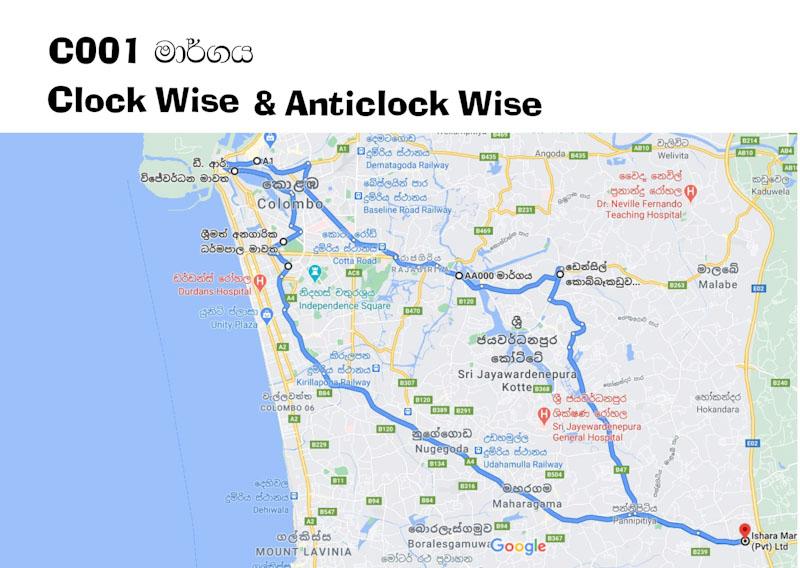
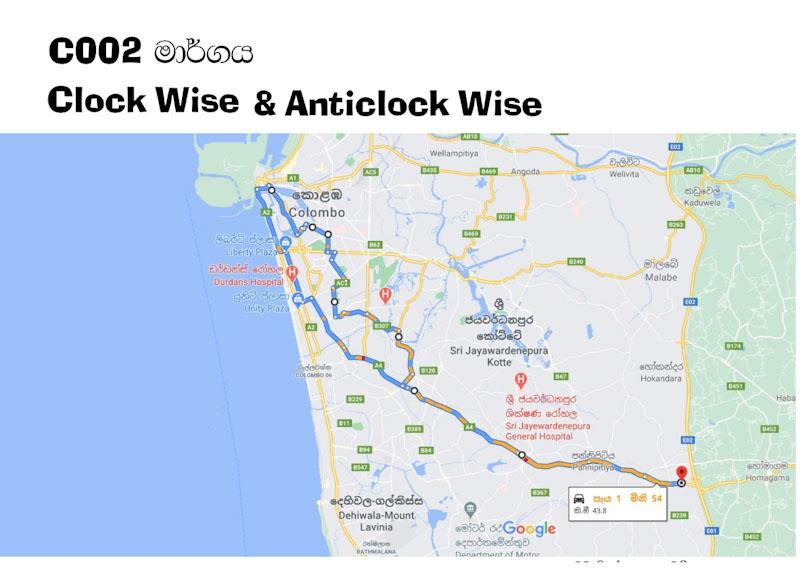
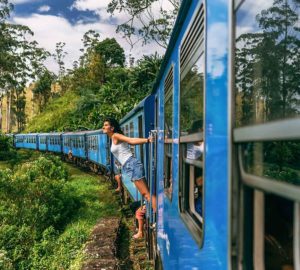
The ‘Park & Ride City Bus Service’ system, will come to effect from today from the Makumbura Multi-modal Transport Centre (MTC), State Minister of Transport Dilum Amunugama said.
He said the launching ceremony of the system will be held under the patronage of President Gotabaya Rajapaksa.
The Park & Ride system is a method introduced for the people to engage in their day-to-day activities, without entering the city of Colombo driving their vehicles,” he said.
The people who come to Colombo in their vehicles can use the allocated parking areas. Thereafter, they may use the air-conditioned luxury bus service to reach the city and return to their parking place after attending to their work,” the State Minister said.
This system was designed to run a citybus every 15 minutes, he said. We have removed one row of seats in each of these buses to provide enough space. These buses have been applied with chemical coating which is resistant to COVID-19 virus. Once the virus come into contact on the surface of these buses, they will perish,” he said.
Also, these buses have been provided with Wi-Fi facilities and GPS tracking facilities. A mobile application has been launched to locate the arrival of the next bus also on the system,” Minister Amunugama said. The Ministry had also decided to introduce E-ticketing system, so that there would be no necessity to use currency noted in the buses,” he said.(Chaturanga Samarawickrama)
A total of 31 Members of Parliament have been asked to self-quarantine in Sri Lanka thus far, after three parliamentarians were identified as Covid-19 positive recently.
This includes 10 MPs who were identified as close associates of Minister Vasudeva Nanayakkara, who had tested positive for the virus earlier today.
Sergeant-at-Arms Narendra Fernando stated that the parliamentarians identified as the minister’s first contacts as well as relevant authorities have been notified.
The remaining 20 parliamentarians are close contacts of State Minister Dayasiri Jayasekara and MP Rauff Hakeem, who have also previously tested positive for Covid-19.
Minister Nanayakkara had reportedly attended all four days of last week’s parliamentary sittings. Accordingly, he had attended Parliament on January 05, 06, 07 and 08 while he had delivered oral response in the House on the last day.
The minister had also reportedly attended an event at the Waters Edge on January 05.
Health officials have taken steps to carry out PCR testing from 10am to 3pm on January 13 and 15 while the Speaker of Parliament has notified the MPs to participate in the testing.
Meanwhile the Secretary General of Parliament Dhammika Dasanayake states that the Proceedings of Parliament will continue in accordance with health guidelines given by the health authorities.
He said that discussions had been held with the health authorities regarding the situation and that all the places where the COVID-19 infected MPs were staying had been disinfected by now.
Mr. Dasanayake states that random PCR tests are being conducted for the parliamentary staff members and also said that arrangements have been made with the health officials to conduct PCR tests for the staff members at the Parliament complex in the next few days. He said that the Staff perform their duties in accordance with health regulations.
Meanwhile, the Committee on Parliamentary Business is scheduled to meet on the 13th January at 2.00 pm under the chairmanship of Speaker Mahinda Yapa Abeywardena to decide the proceedings of next sittings of Parliament.
Mr. Dasanayake further states that the staff of the Secretary General is ready to continue with the proceedings of Parliament in accordance with the decisions taken by the Speaker and the party leaders.
The total count of COVID-19 fatalities in Sri Lanka has gone up as 8 more deaths were confirmed by the Director-General of Health Services.
On January 06, a 52-year-old prison inmate has succumbed to COVID-19 related pneumonia upon admittance to the Welikada Prison Hospital.
A 61-year-old male from Rajagiriya has passed away on January 07 upon admittance to a private hospital in Colombo. The cause of death has been determined as COVID-19 pneumonia and severe diabetic condition.
Meanwhile, two COVID-19 infected persons have passed away on January 08.
One of the deceased is a 45-year-old male from Mattakkuliya. He had passed away at the Colombo National Hospital from COVID-19 related pneumonia.
The other victim is a 36-year-old female from Colombo 12 who had succumbed to COVID-19 pneumonia and epilepsy. She had died upon admittance to Colombo National Hospital.
Three persons have died of COVID-19 related causes on January 10. One among them is a 51-year-old man from Colombo 14. He had been transferred to the Homagama Base Hospital from Colombo National Hospital upon being diagnosed as a COVID-19 patient. The cause of death is known to be COVID-19 pneumonia.
A 70-year-old female receiving treatment at the Kalutara Hospital had been transferred to the Homagama Base Hospital upon identification as a coronavirus patient. The resident of the Bandaragama area has died of COVID-19 pneumonia and a worsened kidney disease.
The other victim is a 67-year-old man from Kalutara South who also had been transferred from the Kalutara Hospital to the Infectious Diseases Hospital (IDH) in Angoda. He had died from COVID-19 pneumonia and blood poisoning.
A 57-year-old man from the Kattankudy area has died from COVID-19 pneumonia and blood poisoning today (January 11). He had been transferred from Batticaloa Teaching Hospital to the Wekanda Base Hospital after testing positive for COVID-19.
Accordingly, the fatality count of Sri Lanka from the novel coronavirus has moved to 240 cases.
The Government Information Department reports that 283 more persons have tested positive for Covid-19, increasing today’s tally of fresh cases to 568 thus far.
The total number of positive cases reported from the Minuwangoda, Peliyagoda, and prisons clusters so far stands at 45,186.
The total number of COVID-19 cases reported in the country has increased to 48,949 while total recoveries are currently at 42,091.
Presently a total of 6,626 patients infected with the virus are under medical care.
Sri Lanka has witnessed a total of 232 deaths from the coronavirus.
The Attorney General’s Department today informed the Batticaloa High Court that it will not continue with the case against MP Sivanesathurai Chandrakanthan alias Pillayan” regarding the murder of former TNA MP Joseph Pararajasingham.
Senior State Counsel Madhawa Tennakoon informed the Batticaloa High Court of this decision today (11).
Six defendants including Pillayan have been charged over the murder while five of them appeared before the court today.
The High Court Judge stated that his decision on the request of the Attorney General’s Department would be delivered next Wednesday.
Tamil Makkal Viduthalai Pulikal (TMVP) leader and parliamentarian Sivanesathurai Chandrakanthan alias Pillayan” was granted bail by the court on November 24, 2020 after spending five years in remand custody.
Pillayan had been in remand custody since his arrest on October 11, 2015 when he arrived at the CID to give a statement in connection with the assassination of the late Tamil politician Joseph Pararajasingham, who was shot dead on Christmas Eve in 2005.
A gunman opened fire on TNA MP Pararajasingham after he received communion at St Mary’s church in Batticaloa, killing him and injuring eight others including his wife.
Contesting at the General Election 2020, Pillayan had obtained the highest number of votes from the district of Batticaloa and entered Parliament.
I like
reading Prof. Kumar David’s (KD) column in the Sunday Island, even
though the contents lean heavily towards Marxist mantras which have passed its
used-by-date long before the fall of the Berlin Wall. What grabbed my
attention was last Sunday’s (2/1/21) column which was a foray into English
literature. As a bibliophile I agree whole-heartedly with his love of
classics and even with some of his likes and dislikes. For instance, one can’t
expect everyone to enjoy James Joyce’s Finnegans Wake, let alone
read it. If I remember correct, Regi Siriwardena took great pride in reading it
though Prof. E. F. C. Ludowyk, the Grand Master of English Lit at Peradeniya,
did not like the text.
KD’s column
indicates that he has very strong likes and dislikes, vibrating sometimes
with visceral hate. He says he loathes” the Bagavad Gita. A modest word
like dislike”, disagree”, I can understand. But loathe”? Isn’t that a bit
too harsh a word for a priggish moralist like KD? In any case, how can one
loathe” the Gita – one of the world’s greatest spiritual
songs that debates the profound moral issue faced by man in the battlefield :
to kill or not to kill. I can understand Prabhakaran loathing it. But
KD??? Incredible!
The central
issue in the Gita is to define the moral duty of man. Finding that,
particularly in times of crises, causes mind-bending agonies. It is the same
question posed by Shakespeare in Hamlet : to be or not to be.
Arjuna and Hamlet are both morally disturbed individuals standing confused in the
middle of a rotten state, not knowing what form their action should take to
meet the challenges facing them. Arjuna agonising over the duty facing him –
the duty of killing – asks Krishna how can he kill his kith and kin.
Hamlet too is agonising over a similar issue. He has to clean up the
rotten, the incestuous, the chaotic state which means eliminating his
kith and kin in power, with killing if necessary. It is a duty cast
upon him by his father’s ghost who seeks revenge. He is tortured and paralysed
by his own doubts and questions. Should he allow the rotten status quo to
continue, or should he take up the sword and go into action wherever it may
lead? What is his moral duty? That is the question.
KD, however,
does not give any reason for loathing the Gita. It sounded somewhat like
a personal reaction as if he was a Jew reacting to the sight of a
Muslim, or vice versa in the Middle East. If he doesn’t like the text, may I
request him to read the introduction to the version edited by the Indian
philosopher S. Radhakrishna, who was also the President of India later. He
illuminates it with his brilliant intellect so lucidly that in the end
you will remember his introduction better than the Gita. His
thought-provoking insights are memorable. For instance, he surveys the
religious field broadly and points out that neither Jesus nor
Buddha gave answers to questions about some of the core issues that had
baffled philosophers, religious leaders, scientists etc., down the ages. Buddha
discouraged those went in search of the origins and the ends of the
universe or life. He dismissed them as irrelevant to the existential
crises faced by man in his cycle in samsara. Jesus too, he points
out, was silent when Pontius Pilate asked: What is truth? If KD doesn’t want to
read the text I am sure he would enjoy Radhakrishna’s introduction.
Now I come to
his literary criticism of T. S. Eliot. I concede that he is entitled to his
tastes and I must respect his choices. But when he came to Eliot he went beyond
expressing his dislike”. He accused Eliot of being pretentious”.
It amounts to a value judgement. He is putting down Eliot as an
ostentatious show-off, exhibitionist, with his verbal fireworks. It is
criticism which is open for criticism. Here KD steps into an area which, I
think, is not his domain.
Neither in
his personal life nor in writing the poetic masterpieces of the 20th
century did Eliot show any signs of pretentiousness.” He became a very
fastidious Englishman, with a bowler hat an umbrella, after he abandoned
the loud and brash American culture into which he was born,
no doubt. He was very Catholic in his literary tastes, though he did not
go that far in his religion. He ended up in the Anglican High Church which was
the nearest to the Catholic church.
I value Eliot
as the most intellectual of all English poets. No other poet has gone down the
path of giving the emotional equivalent of thought, of deep philosophical
thought, as Eliot. He could fill hard, recondite thoughts with feelings and
lead you to meaning and understanding his vision and his
meditations.
But I am
getting far ahead of the issue at hand. I have to first deal with KD
dismissing entire body of Eliot’s work as pretentious”. He
does this by taking the last words in Eliot’s Naming of a
Cat, a poem that plays with words which eventually became a musical
sensation after Andrew Lloyd Webber took those words and gave it a
lyrical lift that entertained millions. But KD dismisses it somewhat
superciliously in one line which goes like this : I also dislike Eliot,
who is pretentious: his ineffable, effable, effanineffable, deep and
inscrutable singular” game. Period.
Here Eliot is
deliberately playing with words. There is no pretentiousness here. Only a master
of the language could play with words the way Eliot did in Cats.
Besides, what was the necessity for the acknowledged poet of the century to be
pretentious? Whom was he going to impress? He wrote like all great writers to
give meaning to the mysteries of life. Eliot was not the kind of poet who
would use words to be pretentious”. Eliot played with these words
as if he was playing with a kitten: lightly, gently, fondly and delicately. To
get a feel of the words let’s view the full poem before going any further. Here
it is:
The Naming Of
Cats by T. S. Eliot
The Naming of Cats is a difficult matter,
It isn’t just one of your holiday games;
You may think at first I’m as mad as a hatter
When I tell you, a cat must have THREE DIFFERENT NAMES.
First of all, there’s the name that the family use daily,
Such as Peter, Augustus, Alonzo or James,
Such as Victor or Jonathan, George or Bill Bailey–
All of them sensible everyday names.
There are fancier names if you think they sound sweeter,
Some for the gentlemen, some for the dames:
Such as Plato, Admetus, Electra, Demeter–
But all of them sensible everyday names.
But I tell you, a cat needs a name that’s particular,
A name that’s peculiar, and more dignified,
Else how can he keep up his tail perpendicular,
Or spread out his whiskers, or cherish his pride?
Of names of this kind, I can give you a quorum,
Such as Munkustrap, Quaxo, or Coricopat,
Such as Bombalurina, or else Jellylorum-
Names that never belong to more than one cat.
But above and beyond there’s still one name left over,
And that is the name that you never will guess;
The name that no human research can discover–
But THE CAT HIMSELF KNOWS, and will never confess.
When you notice a cat in profound meditation,
The reason, I tell you, is always the same:
His mind is engaged in a rapt contemplation
Of the thought, of the thought, of the thought of his name:
His ineffable effable
Effanineffable
Deep and inscrutable singular Name.
The first thing
that strikes in this poem is its whimsicality. The title is whimsical.
The theme is whimsical. And the words are whimsical to suit the title and
the theme. But to KD all of it is pretentious”. Millions who enjoyed the
theme and the words in the musical Cats did not think so. The best of
critics of either the musical or the text did not think so. Those who had
viewed the words in its context did not think so. What can poor Eliot do
if KD does not know how to put his words in context?
Take, for instance, the following lines: When you notice a cat in profound meditation, The reason, I tell you, is always the same: His mind is engaged in rapt contemplation Of the thought, of the thought, of the thought of his name: His ineffable effable Effanineffable Deep and inscrutable singular Name.”
Cat lovers (I’m
one of them) can relate to the cat in profound meditation” and His mind is
engaged in rapt contemplation.” In all seriousness, I tried
to understand his thinking from different angles. Though I tried I failed
to see any pretentiousness” in these playful lines. The staccato beat of
the names – Plato, Admetus, Electra – alone suggests that he was playing with
words which goes with the whimsicality of the poem. The musicality in the
syllabic rhythms was captured in several dramatic and cinematic versions,
starting from Andrew Lloyd Webber in 1981. It was not meant to be serious poem
like The Waste Land where he took the stentorian tone. In it he
was looking down upon humanity and asking:
What are the roots that
clutch, what branches grow out of this stony rubbish?
What he saw from his
Olympian heights was
A heap of broken images, where the sun beats, And the dead tree gives no shelter, the cricket no relief, And dry stone no sound of water.”
He was the Dante of the 20th
century guiding humanity through the modern purgatory. He was dissecting their
souls and exposing the diseased, worm-eaten core. To him the 20th
century was the arid waste land. Even the grim scene he paints of the modern
metropolis is awesome.
Unreal City, Under the brown fog of a winter dawn, A crowd flowed over London Bridge, so many, I had not thought death had undone so many
A version of these are
lines found in Dante’s text. Eliot borrowed it and made it is his own.
It is clear that in
this poem he is using words playfully, as if he was playing
child-like games in his mind. Those who saw the adaptation in the movie CATS
will realise how the rhythmic words tripped off the tongues
fluidly. The words were made to play around with sound. Eliot was toying
with each word and name of cats. Eliot touched a chord in me when he spoke of
the cat’s meditative” thoughts. I have been fascinated by the mysterious,
meditative moods of cats. They are such soothing, calming, relaxing pets to
have around. When they leap like a feather into bed and sleep, snoring, next to
you the whole world seems to be at rest. The soothing sound of peace comes down
with each gentle snore. My wife and I still cry for Bubby” (I wonder what
Eliot would think of that name?) we lost in Melbourne a few years ago. Parting
was so unbearable that I am determined never to adopt a cat.
I think
I’ve said enough about Eliot and cats. I shall now await KD’s response to
understand why Eliot is pretentious” according to him.
C. Wijeyawickrema, B.A. (Hons.), LL.B., M.A., Ph.D.
Dear
Mr. Austin Fernando:
Thank
you very much for your response (Jan. 2) to my previous essay titled, Attempts to
exhume the provincial council cadaver: a reply to Mr. Austin Fernando,”
(Lankaweb, Dec. 31). However, I am not happy with your decision to stop our
exchange, because it appears to me that you did miss my message. The attachment
to my message in Sinhala is simple and clear, and it identified you as a
devolution” thief. You are a cool disciple of the boisterous Dayan Jayatilleke,
in a different panchakanda. What I expected from you was a rational
justification for the Devolution Nirvana of yours, because on this same topic,
DJ never answered several lists of questions sent to him by me over the past
decade.
DJ cannot see the devolution danger because his panchaskanda is wrapped in a Christian-Marxist skin. A comment on
my essay in English in the Lankaweb, states that you are a man of Catholic
Action, now dormant. He connects you with one Paul Perera (who was this man?)
to a Mahaveli land settlement incident in the 1980s. Cardinal Malcolm Ranjith
most probably blocked the prevailing ideological struggle against the Buddhist
civilizational roots in the Island, raised recently by Mrs. Chandrika, Rossie
the Mayor and Mangala, the self-appointed redeemer of pristine Buddhism for the
world. Incidentally, these fit perfectly with Vigneswaran’s theory of the five
Shiva Lingams brought in pre-historic times to bless the island.
The
joining of words by you in your reply, – unexplainable, compounded, confusion”-
reminds me the strategy Dayan Jayatilleke used to escape, when he got cornered
by a challenger. He even told those who
opposed his ideas to go and learn English. Once I sent him an educational reply
titled, English with a smile!”
I
expected that you offer us a reasoned/seasoned justification explaining why you
selected the devolution path. I drew your attention to 7 selected essays
demolishing this devolution panacea such as giving police powers ladder to
separatist monkeys. The late H. L. de Silva, P.C. (Island, 9/6/2007) and Dr. G.
H. Pieris (Island, Sept. 8-15, 2005) provided more than enough facts as to why
the federal option is suicidal. Hence, you have a duty to let us know they were
wrong, and you are correct. In other words, why do you think that the 13-A is
not a death-trap, and it helps the poor, innocent Tamil villager, not the
Eelam-bound Tamil politicians.
In a way Dayan is direct in his blind commitment. See
what Dayan, the unofficial father of 13-A plus project, says on this subject (Colombo
Telegraph Jan. 7, 2021):
…As for my appointment [as SajithP’s foreign affairs consultant]
being a slap in the face of the Tamil constituency”, that’s a laugh. I would
like my critics to point out a single Sinhalese or even Tamil or Muslim in the
public sphere who has been a more consistent advocate and defender of the
principle of devolution, the 13th amendment
and the Provincial Council system and opponent of those who wish to abolish or
truncate that system. No Sinhalese in the public domain has been attacked more
by the Sinhala racist Right over decades, on precisely this issue, than I have.
It is this stand of mine, including in Geneva, that caused Minister Weerasekara
to suggest in the pages of the Daily FT that in the good old days I would have
been spiked to death”.
…. I have, of course,
also critiqued the utterly unrealistic Tamil effort to push beyond the 13th amendment towards a post-unitary new
Constitution, an effort which sank the UNP government. As the Press statement
of the remarks of visiting Indian External affairs Minister, Dr Jaishankar
shows, his specific and concrete ‘marker’ reference was to the 13th amendment.”
Dayan’s delusion is
no different from the delusion that SWRD found in SJVC in 1958. How could a
sane person say that devolution within the framework of 13-A plus is the end of
any Eelam dream, despite a ton of hard evidence available against his theory? What we Sinhala Buddhists have been trying to
prove with ground truths is that 13-A plus arrangement is the beginning of the
end of Sinhaleas a Palestine in
South Asia, the balkanization path. I think the Eelam strategy has not changed
from the one SJVC used before 1976, little now, and more later, except that
American-Indian new love affair against China has given, Eelam-bound Tamil
politicians a new hope of inching towards the point of no return. This is the
hidden meaning of Sumanthiran’s words, devolve us powers that the center
cannot take back, once given.”
Austin,
it is as if you and Dayan have two identical brains! Why is that Lakshman
Kiriella, who once said, any idiot can win wars if there is money,” who is now
suggesting in the parliament that the Romesh de Silva committee could follow
the Orumittanadu blueprint without trying to reinvent the wheel, also elicit a
brain function just like the two of you? On the topic of center-periphery
relations Siddharthan’s committee had no recognized Sinhala Buddhist member, and
Kiriella suggests shamelessly to resurrect Siddharthan’s report. He has already
forgotten the election verdict. The hard-learned experience is that devolution
path is a disaster with absolute certainty of a breakaway sooner than later.
Just think about Vigneshwaran’s five Shiva Lingams, mentioned in my previous
essay. Any person genuinely concerned about peace and harmony ought to think
about decentralization of power to empower people at village level, instead of providing
ladders to jumping separatist monkeys.
We
learn until our death. The data we receive is converted to information, which in
turn provides knowledge. Yes, if we get garbage in, we get garbage out. But
even gossips play an important social role. For example, I cannot remember
whether the gifting of a pistol as a birthday present to a tiger boss by a defence
secretary, reported in a newspaper was gossip or not. Most probably you know if
it was true or not. For example, if you are a Christian, which I did not know
when I replied to your essay, I could have more easily understood your for stand
on the Orumittanadu drama. Please note the word, Orumittanadu, symbolically connects
Chandrika’s package deals, Tissa Vitharana’s APRC majority report, 17 and 19, and
the 2015-19 Yahapalana game of Ranil-Sumanthiran and Jayamapthy, all in one
knot.
I
was not interested in knowing whether you knew Chandrika or any x, y and z. It
is about how your ideas match so well with her ideas, and further, I did not send you a court
document for you to generate your own questions and exonerate yourself. And
then you say < unexplainable-compounded-confusion>! Please read the 7
essays listed.
Educating
Austin
For
example, if you read one of the essays numbered 2, 3, and 5 of my attachment
dealing with Chandrika’s secret 1997 balkanization plan (which Siddharthan copied
for the Orumittanadu thing), what I very clearly pointed out was the fact that
Chandrika was using the spatial unit called an electorate (electoral map used prior
to 1978) for the purpose of carving out ethnic enclaves. This I called the Dangerous
Ampare Path,” because Ampare district happened to be the first victim
of her political dismemberment surgery. Her formula was, if an electorate has
50% or more voters of a particular ethnic group that electorate becomes
qualified to be part of that ethnic Region. Thus, the new S-E region (Oluville
region) is a collection 3 such electorates, Potuvil, Samanture & Kalmune.
Thus,
my point, Austin, that you did not fathom was that, if the Malayanadu Indian
Tamil electorates (or Hill country combined Indian Tamil-Muslim electorates) so
request they cannot be denied a region or a Pondicherry unit within a region.
This means, electorates with Christian/Tamil majorities in the South are also qualified
to make similar demands, if necessary, via appealing to Geneva.
Austin,
now tell me which sentence/s in my essay in Sinhala confused your brain.
I
do not know why you are so excited about my email being copied to the secretary
of defence. I copied it to so many others also as blind copies. I copied it to
SD as my way of appreciating the sacrifice he and the Hasalaka Heroes did, because
of which you are now a happy camper in Colombo. I have been doing it on a regular
basis, not limited to the one email you have received. As for the American security
matter that you are worried, there is no need for me to come to Colombo to meet
him to give what you consider as a big security tip. Just listen to the Talk
with Sudaththa (Sudaa Creation) interview with Wijedasa Rajapaksha, MP on Jan 5,
2021. Something which is commonsense is apparently a big spy story for you!
Evil
Triangle (ET)
All
what you wrote in your Dec 15 essay could be understood easily and succinctly,
if you consider the existence of an ET. It consists of the trio – politician-officer-NGO.
This is a model to explain what has happened to Sinhale since 1931 or 1948. The
NGO here means all private entities, individuals, and non-governmental agencies.
For example, when the army captured Kilinochchi etc. it found that NGOs had not
done any development work for which they received heavy foreign funding. In
India, these NGOs are under strict control, but in Sri Lanka black-white
politicians thrive sharing NGO dollars. Are you going to disagree with me if I
say that officers, from office janitor to ministry secretary, are all corrupt,
except for a small percentage of duty-bound souls?
Politicians.
Marxists and officers are responsible for the Mismanagement and for the
phenomenon known as the Tragedy of the Commons. Have you been to the place that
you people train SLAS officers from new recruits to senior officers such as
district secretaries? The entire premises stinks with toilet smell. Same with
the health ministry building. Please go to the link below to understand the
Ronie de Mel syndrome of public servants. It was the white civil servants who
had sympathy toward poor villagers and performed such dedicated service. Think
of H. R. Freeman who became a State Council member in 1931 and 36. How many CCS/SLAS
guys you could count for doing any creative work or service to the nations? I
worked under two prominent CCS officers and I know how the game had been played.
I
could guess why you wrote an irresponsible reply to my essay. President
Sirisena must be still addressing you the same way he addressed you when you
were the GA, and he was a lowly GS. I wonder whether you address him now calling
him Sir, just like M.J. Perera and Maithripala Senanayake called each other
Sir. This looks like such a trivial matter, but I wrote an essay on this topic,
long before President Sirisena sacked Ranil. Sirisena was either so humble or so
low in self-esteem to seek prior permission from Ranil to continue to call him
Sir. My question was whether Ranil and CBK in turn addressed Sirisena calling
Sir. I was so surprised to see on you tube that at the SWRD statue at Galle
Face on Jan. 8th CBK revealing that Sirisena went to Sirikotha to
obtain permission from Ranil to continue to call him Sir.
I
must be honest with you in this final paragraph. You exhibited a kind of
superiority complex when you tried to underestimate the value of the services
rendered by Sarath Weerasekara and Nalin de Silva, in their respective spheres
of influence. SLAS officers like you are robots on a train track in a tunnel,
with self-respect damaged by (mostly) stupid politicians. See what Anuradha
Yahampath is doing as Governor of EP and how she handles obstructive
politicians there (compare this with how you behaved like a puppet in public
before that stupid Muslim CM). With this wounded and suppressed pride, sometimes
unknowingly, you people float toward arrogance as an outlet to vent your
frustration. This must be why you treated my essay shabbily thinking to dismiss
it with nonsensical sentences. For your information, I spent my working life
doing teaching and research in 11 universities and colleges, in three
countries. As a director institutional research/assessment/effectiveness, I
have gained an ability to penetrate one’s thinking mechanism via his/her
writing. My post graduate research in a new interdisciplinary field of applied
law and applied geography, gave me training to test the efficacy of laws, and
how to make them more effective. It is with this insight that I see
objectively, 13-A path as a disaster to our motherland. So please read my
essays on Lankaweb and learn, learning is what we do until our death.
Good
health and good luck!
C.
Wijeyawickrema, B.A. (Hons.), LL.B., M.A., Ph.D.
I
am requesting Prabath, editor, Island newspaper to forward this reply to you as
I do not know your email address.
USA does not
have a good human rights record and it does not care either. In the domestic
sphere, US has the largest prison population in the world, mainly drug users, and the highest per-capita incarceration rate. 3000 odd
were on death row in 2016. 2.3 millions
American were behind bars. Many adults died in prison. Children can be sentenced to prison under US
law.
In 2010 USA
came under the Universal Period Review of the UN Human Rights Council. After
which, UNHRC issued 228 recommendations on how US can address its HR
violations. US dismissed many of the recommendations.
US has a
horrifying record of human rights abuses abroad, said critics. US armed forces
have committed war crimes in most of the wars it has participated in. By ‘war crimes ‘is meant crimes as defined by
the ICC and in the Geneva Conventions. USA does not care. US military cannot be
brought before the ICC. US has not
signed the Rome Statute and does not come under ICC scrutiny. But the charge of
war crimes remains. Here are some
instances of US war crimes.
U.S. troops
of the 45th
Infantry Division killed about 75 unarmed
prisoners, mostly Italian. In July 1943 in Sicily in two separate incidents. This
is known as Biscari massacre.
In Canicatti,
Italy, one officer, Lieutenant-Colonel McCaffrey had killed eight unarmed
Italian civilians in 1943 when they were helping themselves to items in a soap
factory. The American soldiers under his command had flatly refused to carry
out the order. This killing was exposed in 2005 when
Joseph S. Salemi of New York University, reported it. His father had been in
Canicatti as a corporal. Canicattì had already surrendered when U.S. troops
entered, therefore this was a war crime. It is known as the Canicatti massacre
“Operation
Teardrop” was a US Navy
operation during World War II, conducted
between April and May 1945, to sink German U-boats. Eight captured crewmen from the sunken German
submarine U-546 were
tortured by US military personnel. Historian Philip K. Lundeberg has written
that the beating and torture of U-546’s survivors was motivated by the
interrogators’ need to quickly get information on potential missile attacks by
German submarines. But there were no such missile attacks.
American
soldiers in the Pacific deliberately killed Japanese soldiers who had surrendered.
According to Richard Aldrich, Professor
of History at Nottingham University, it was common practice for U.S. troops not
to take prisoners. British historian Niall Ferguson, said that, in 1943, “a secret [U.S.]
intelligence report noted that it
was with difficulty that American troops
were prevented from killing surrendering Japanese.”
Ulrich Straus
said that troops on the front line intensely hated Japanese military personnel
and were “not easily persuaded” to take or protect prisoners. Army
interrogator Captain Burden noted that
many prisoners at Guadalcanal, were shot during transport because
“it was too much bother to take them in”.
During WWII
submarine USS Wahoo had fired on survivors of the Japanese transport Buyo Maru.
The US strafed thousands of adrift survivors of eight sunken Japanese troop
transports in 1943.
Secret
wartime files made public in 2006 reveal that US soldiers committed 400 sexual
offences in Europe, including 126 rapes in England, between 1942 and 1945, said
Wikipedia. A study by Robert J. Lilly estimates that a total of 14,000 civilian
women in England, France and Germany were raped by American GIs during World
War II. It is estimated that there were around 3,500 rapes by American
servicemen in France between June 1944 and 1945 and one historian has claimed
that sexual violence against women in liberated France was common.
US continued to violate military norms in
its subsequent wars. In the 1950
No Gun Ri massacre in Korean War there was a mass killing of Korean
refugees at a bridge near the village of
No Gun Ri. This was reported by the
Agence Presse in 1999. Over the years survivors’ estimates of the dead have
ranged from 300 to 500.
During the
Vietnam War (1955-1975) US forces committed horrifying atrocities in Vietnam. Information
on these were collected by Vietnam War crimes Working group of the Pentagon and sent to the US archives. These files show
that atrocities by U.S. forces during the
Vietnam War were more extensive than had been officially acknowledged. US
Army investigators found 320 incidents excluding Mai Lai Massacre.
The Mai Lai Massacre was a mass murder of 347 to 504 unarmed
citizens, carried out by US army on 16 March 1968 in the hamlets of Mai Lai and
My Khe in South Vietnam. Those killed were almost entirely civilians,
most of them women and children. Some of the victims were raped, beaten,
tortured, or maimed. some of the bodies found were mutilated.
In
1969 US launched “Operation Breakfast”, a
covert carpet-bombing of neutral
Cambodia. US
also dropped more than 2 million tons of bombs on Laos during the Vietnam War.
Khammouan province in Central Laos is still littered with unexploded bombs, said
National Geographic” in 2015. One bomb
went off at a picnic, when they lit a fire over it.
In 2003 a United States-led
coalition invaded Iraq and threw out its
US stooge, Saddam Hussein. An estimated 151,000 to 1,033,000 Iraqis were killed in the first three
to four years of conflict. Luis Moreno-Ocampo former first Prosecutor of the ICC had said that he was willing to start an
inquiry by the International Criminal Court (ICC) and possibly a trial, for war
crimes committed in Iraq by US and UK.
US went into Afghanistan in 1999 and is still fighting there. A
presidential memorandum of September 7, 2002 authorized U.S. interrogators of
prisoners captured in Afghanistan to deny the prisoners the basic protection required by the Geneva
Convention.This was a violation of the Convention and constituted war crimes.” Afghan prisoners were
subject to cruel and inhuman treatment said critics.
War on Terror”, was an
international military campaign launched by the US after the attack of September 11, 2001 on the World Trade
Centre in Manhattan, New York. US targeted
Muslim armed groups ( which they
had helped create) particularly Al-Qaeda, the Islamic State, and the Taliban.
Analysts observed that there was evidence of US war crimes in the
War on Terror. A leaked report by the International Committee of the Red Cross
and the July 2007 report by Human Rights First and Physicians for Social Responsibility
could be used as evidence of war crimes if there was a Nuremberg-like trial
regarding the War on Terror.
The war
crimes of the US are not confined to invading and killing. The US has bombed countries and assassinated heads of
state. US has assassinated around
40 heads of state, including Lumumba,
Allende, said Shenali Waduge. Shenali
has provided a list of all the
bombings carried out by US, from Nagasaki in 1945. The countries include Guatemala, Korea, Indonesia, Cuba, Congo,
Peru, Vietnam, Cambodia, Libya,
Nicaragua, Iran, Bosnia, Sudan, Afghanistan.
US is guilty
of using biological weapons. US biological weapons were first tested on
American prisoner and solders, without their knowing. Agent Orange was tested on prisoners. Then it was
unleashed on Vietnam.US is also
largest provider of live land mines.
US has
engaged in torture. The best known is Guantanamo. The Guantanamo Bay detention camp was a US
military prison holding prisoners
of the War on Terror. The activities of Guantanamo
were so bad that they were eventually investigated. USA admitted before the UN
Committee against Torture that they had ‘crossed the line’ at its CIA site at
Guantanamo.
Analysts observed that at Guantanamo US practiced precise, refined torture, including use of isolation, hoods, using
detainees individual phobias (such as fear of dogs) to induce stress and many
more ‘treatments’.
There was abusive
and degrading treatment at Guantanamo, beatings, sleep
deprivation, prolonged constraint in uncomfortable positions, prolonged hooding, cultural
and sexual humiliation, enemas as well as other forced injections, and other
physical and psychological mistreatment.
These had been authorized by the Pentagon.
,”On a
couple of occasions, I entered interview rooms to find a detainee chained hand
and foot in a fetal
position to the floor, with no chair, food or water. Most times, they had urinated or defecated on
themselves and had been left there for 18, 24 hours or more, said an FBI agent.”
UN tribunals set up at the behest of the US
and its NATO allies have been charged with bias. They were not impartial, they
were influenced by the US said critics.
In
1997 Louise Arbor, investigating the killing of all passengers on board a
Rwandan presidential aeroplane when it was shot down, covered up the results
when it was revealed that it had not been the Hutu extremists but the
Ugandan-RPF and US forces [the CIA was also implicated] who had shot down the
plane. Arbor was thus an accomplice to a war crime and obstructed justice for
which she was rewarded with a number of lucrative positions.
Christopher Black, a lawyer specializing in
International Law who has appeared for individuals brought before UN
tribunals commented on the way in which
these tribunals have conducted the inquiries. Many
individuals brought before these tribunals had been falsely accused, he said.
These
tribunals use criminal methods against
persons that the US wants
punished, such as first throwing them in prison with no indictments shown or
prior appearance before a court. Prisoners suddenly disappear, isolation being
a method used to exert psychological pressure on them, Black continued.
A
respected Rwandan General who had saved many Rwandan lives was arrested in
2000. Eleven years later the trial judges concluded that the arrest had been
illegal and politically motivated because he had testified that the US and the
UN forces had been directly involved in the violence unleashed in that country.
Tribunals
pressurize the accused to use lawyers either in their pay or whom they could
bend to their will to do their bidding, or those in the pay of the West. Documents and relevant disclosures are
withheld from these lawyers. Indictments/charge
sheets are often false and propagandist and often have parts blackened so that
the defense lawyers cannot understand that whole charge. Lawyers are subject to
harassment, intimidation, are followed, their hotel rooms are broken into and
rumours are spread about them to discourage their appearing for the accused,
Black concluded.
Everybody knew or at least suspected that terrible things were
happening in the US campaigns in Afghanistan and Iraq. But there was no evidence. Wikileaks provided the evidence. In 2010 Wikileaks released a trove of
classified State Department and Pentagon files detailing the realities of the
US campaigns in Afghanistan and Iraq.
These came from US army intelligence official Chelsea Manning who
had secretly fed spectacular dump of 725,000 classified files to Wikileaks. They
showed possible war crimes by US forces in Iraq and Afghanistan,
The most striking piece of
evidence was a video and audio clip from an Apache helicopter gunship attacking
civilians in Baghdad in 2007. The crew spray their targets with machine-gun
fire, making comments like “Oh yeah, look at those dead bastards” and
“It’s their fault for bringing their kids into battle”. They even
shot at a vehicle that stopped to help the wounded.
The
vindictiveness of the American security establishment towards whistle-blowers
is awesome to behold, said Gwynne Dyer. Chelsea Manning, was given a 35-year
sentence. She was pardoned by Obama in 2016 but was jailed again for eight months in 2019 in an
attempt to force her to incriminate Assange. Manning held out under huge
pressure, accumulating $1000 fines for each day she refused to talk, and was
finally released in March 2020 after attempting suicide. The fines still stand,
however, and she is now a bankrupt who owes the US government $256,000.
A
British judge has finally rejected the US attempt to extradite Wikileaks
founder Julian Assange and jail him forever in a high-security ,supermax prison
reported Gwynne Dyer. Judge Vanessa
Baraitser at the Old Bailey in London had to work quite hard to thwart the US
government’s campaign to get its hands on Assange. In the end she ruled that
while the American prosecutors had met the legal criteria for Assange to be
extradited to the US for trial, their request was denied because the US authorities
could not prevent him from attempting to take his own life.
The
road of the whistle-blower is long and lonely. Edward Snowden, who alerted the
world to the scale of the US global electronic surveillance operation in 2013,
is still in exile in Russia. But such people are among the few protections we
have against misdeeds. Daniel Ellsberg was celebrated for his theft and publication of
the Pentagon Papers” detailing the US government’s crimes in Vietnam. Assange
is firmly in that tradition. His revelations about the US military’s misdeeds
in Iraq were as valuable as Ellsberg’s about Vietnam. So take a moment to
honour Julian Assange and Chelsea Manning. They have earned it, said Dyer. ( continued)
This column focuses on local politics. As opposed to global affairs. However, ‘local-global’ is, as sociologists would point out, a false dichotomy. What happens or rather can happen here is by and large determined by overarching global political and economic structures. Local affairs don’t always shape global processes unless the particular ‘local’ enjoys privileged position in the overall structure, but they can inform the manner in which particular countries or country-collectives engage.
Let’s start with a few examples.
The previous government was the darling of Western powers. The leaders believed that the West would help. Then came Brexit. The leaders got the jitters. Prime Minister Ranil Wickremesinghe suddenly opened his eyes and saw ‘The East’. This, after seniors in that administration, before and after the January 2015 election had made many disparaging comments about China, as one would expect for their view of the world was largely a matter of echoing the voice of Washington. So, in essence, Britain sneezed and these ladies and gentlemen caught a cold.
That’s one side of the coin. The USA-led section of the ‘international community’ spared no pains to rubbish the Mahinda Rajapaksa regime. It is no secret that Maithripala Sirisena’s campaign was actively backed by the USA. The language of engagement with ‘Sri Lanka’ changed. The US mission in Colombo, hell-bent on hauling Sri Lanka over the coals with respect to largely inflated horror stories about the war, suddenly wanted the local Tamil allies to go easy on human rights. Come 2019 November the tone changed. Now this is not strange. One does not deal with known friends in the same way that one engages with perceived enemies.
This week, the global touch was inescapable for different but not unrelated reasons. A US story and an Indian story dominated political headlines, the former on account of the assault on Capitol Hill, Washington by supporters of Donald Trump and the latter having to do with the visit by the Indian Foreign Minister Subramanyam Jaishankar. The former is distant but makes for interesting comment considering Washington’s use and abuse of democracy. Sorry, the term ‘democracy.’ So let’s start right there.
On Wednesday supporters of Donald Trump, convinced that their champion had been robbed, gathered outside the Capitol building. They forced entry into the chamber of the House of Representatives wanting Congress to discard the results of the November 3 election. Four died, one from gunshot injuries. Dozens were arrested. Congress prevailed and Trump, in a predictably roundabout way, grudgingly announced he would leave office.
Democracy is the word here. An election was held. Sorry, a selection, for that’s essentially the political process which produces presidents in that country. Some claimed that there was jugglery. Some went to court. Court dismissed these petitions. Now, in the name of democracy, a bunch of irate Trump supporters (a minuscule minority of the voting population) decided that Congress should submit to their will. Trump, remember, lost the popular vote by a massive margin.
The entire carnival showed up the farce that is US politics. First, the vast majority of these ‘rebels’ were white. The way that the authorities responded was in stark contrast to the way that the police reacted to peaceful protests against white police brutality and racism over the past seven months. Racism is what colors the ‘fabric’ and racism tore that cloth a long time ago or rather, racism ensured that the threads would never make a textile worth talking about.
Secondly, we have to measure this against the standard US narrative on democracy and democratization outside its shores. No country has prostituted these terms the way Washington has. The US has invaded countries, mis-described rag-tag agitators as ‘pro-democracy masses’ who were then funded and armed, orchestrated military coups, supported the butchering of pro-democracy protesters who had been duly called ‘insurgents’ and dropped bombs. All in the name of democracy.
As a wit put it, ‘due to travel restrictions, Americans had to invade their own country this year.’ Here’s another that’s making the rounds on social media: ‘The US has invaded the US to spread democracy.’ And here’s the plum atop the pudding: ‘The US is honestly just a comedy show to the rest of the world right now.’
If only we could laugh! It’s no laughing matter to the victims of systemic brutality and racism in the USA. It’s no laughing matter to the recipients of ‘Democracy — US style.’
The Biden administration will no doubt say ‘that’s all Trump stuff’ and maintain the Washington Doctrine on International Affairs. Washington is quiet now. That ‘little affair’ has been sorted out. Democracy, they’ll say, has won the day. It will be business as usual. The US will resume lecturing the world about democracy, peace, human rights, co-existence and reconciliation. Representatives of the nations targeted will have to swallow down the giggles, IF they do see the hypocrisy that is — let’s not bet on that!
India. That’s the other big story. In your face and all. But first a preamble. India is part of the Quad, i.e. the shorthand for the Quadrilateral Security Dialog which includes the USA, Japan and Australia. The purpose is to contain China’s rise, the ‘Asian NATO’ as some call it, never mind that the USA is not part of Asia. The big Sri Lankan story for the USA in recent times was the MCC Compact. The Gotabaya Rajapaksa government didn’t play ball. The US Embassy in a statement informed one and all that the deal was off. Chagrin was written all over it. The local ‘friends’ warned of serious repercussions. The UNHRC sessions are just weeks away. And we have Jaishankar visiting Sri Lanka.
Jaishankar, a retired diplomat and former Foreign Secretary, is well-known for working out ‘friendship’ with the USA and is mentioned for his role in the Indo-US civilian nuclear agreement. Just the other day, he signed on behalf of India, the Basic Exchange and Cooperation Agreement on Geospatial Cooperation (BECA) with the USA. The two countries are the more vocal of the four that make ‘The Quad.’ India, moreover, has expressed concerns about the so-called Chinese footprint in Sri Lanka, never mind the bloodstained Indian footprint courtesy the Indo-Lanka Accord of 1987. The IPKF left, but the footprint remained. Jaishankar even mentioned it.
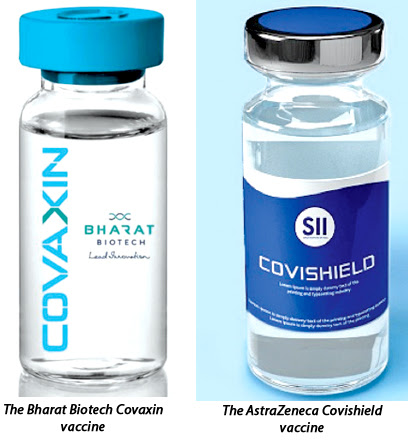
Sure, he spoke of the sweetener in all the deals he made or wanted to make with Sri Lanka in the pursuit of the eminently defensible ‘India First’ foreign policy of his government. He spoke of the Covid-19 vaccine. It is, as yet, untested. It is not expensive. India will give some vaccines FoC and some on a concessionary loan, most likely. Vaccine or not, only 0.5% of the infected will succumb to the virus. What’s the price Sri Lanka has to pay, though? Why, the 13th Amendment or more!
Jaishankar, addressing the media, used Eelam-speak. ‘A united Sri Lanka’ he said. Now ‘unity’ cannot be legislated. A federal arrangement does not necessarily mean unity and neither does a unitary system. Jaishankar doesn’t know, hasn’t been told or knows and ignores the fact that the two main candidates at the last presidential election, Gotabaya Rajapaksa and Sajith Premadasa both pledged to uphold the unitary status of the country. Almost 95% of the country’s voting population voted for these two candidates.
Jaishakar doesn’t care. He has a script. He reads from it.
‘Our support for the reconciliation process in Sri Lanka is long standing,as indeed for an inclusive political outlook that encourages ethnic harmony. It is in Sri Lanka’s own interest that the expectations of the Tamil people for equality, justice, peace and dignity within a united Sri Lanka are fulfilled.that applies equally to the commitments made by the Sri Lankan Government on meaningful devolution, including the 13th Amendment to the Constitution.’
That’s a lecture. He or rather India wants Sri Lanka to inhabit his/India’s version of Sri Lanka’s reality. What’s the reality? The 13th is a white elephant. Romesh De Silva, who heads the experts’ committee tasked to draft a new constitution said as much about ten years ago. We have not had Provincial Council elections in years. No one has complained. Things could be better but no will argue that things are worse on account of PCs remaining dissolved.
The Indian foreign minister met with the President, Prime Minister and his Sri Lankan counterpart. It might appear that his powwows with the leaders of Tamil parties and the Leader of the Opposition Sajith Premadasa were cursory affairs but one hesitates in concluding thus. After all, the proposals to the constitution-drafting committee submitted by both the Tamil National Alliance and the Thamizh Makkal Tesiya Kootani both want the unitary character of the state undone. ‘Unity’ is the word both these entities use. Just like Jaishankar.
India or rather Delhi has a political issue to resolve in Tamil Nadu. There’s opposition to Delhi’s drive to make Hindi a national language in that state. Tamil Nadu is ok with ‘One India’ but not a ‘One India where Tamil could get diluted vis-a-vis Hindi.’ Appeasing Tamils in Sri Lanka, perhaps Delhi believes, might help sort out the political problem in the southern part of the country. ‘Help’ is the key word. It won’t be enough, but it’s not a stone that they would want to leave unturned.
Any devolution that grants control of parts of the country to Tamil political formations, they might believe, would compromise the integrity of the Sri Lankan state. The US could obtain by way of price an MCC Compact without an MCC Compact, so to speak. We don’t know if Jaishankar murmured ‘Geneva’ in his discussion with the president, prime minister and the foreign minister, but certain things can be said in silence.
There would have been talk of the contentious Eastern Terminal. India’s port development operations in the Andaman Islands is not a secret. Compromise the Colombo Port and Delhi is in easy sea-street.
There’s more local play to this story. Sajith Premadasa appointed Dayan Jayatilleke as his advisor on international affairs. Dayan’s genuflection before India is legendary. Not surprisingly, in an article published immediately after his appointment, Dayan responded to an announcement by the Chinese Ambassador Qi Zhenhong, who said, ‘China will promote the alignment of the ‘Belt and Road Initiative’ (BRI) with President Gotabaya Rajapaksa’s Vistas of Prosperity and Splendour” manifesto to promote economic and social engagement between the two countries.
Now, there are two ways to interpret this statement. One is to believe that whatever part of the BRI that’s promoted will be framed by what’s pledged in Rajapaksa’s election manifesto. Nothing wrong with that. Dayan worries that it’s the other way about. He asks the legitimate question: ‘If President GR’s Sri Lanka has joined hands with China to respond to challenging international and regional situations according to a consensus between the two leaders, how will it take a nonaligned, equidistant or balanced stand with regard to US-China internationally and India-China regionally?’
He is the international affairs guru of the Opposition Leader and therefore the ball is in the court of Dinesh Gunawardena. He has to respond to this question.
Dayan, in the same article (‘The Xi factor, Delhi’s deterrence, and the Pakistan model’ in the Daily FT), berates the government for postponing the PC elections. He worries about what the new constitution would and would not do, never mind that we are yet to see a draft and never mind that obtaining the two-thirds parliamentary majority to get it passed will not be easy.
‘The new Constitution will kill the 13th Amendment and the semi-autonomous PC system, de-linking the Sri Lankan state from the Indo-Lanka Accord, removing not only a counterweight to de facto military rule over the island but also a buffer against any potential foreign presence in Trincomalee contrary to the Accord’s Annexures.’
All this, yes, all of it, is almost like a speech written in Delhi. Consider this part: ‘a buffer against any potential foreign presence in Trincomalee contrary to the Accord’s Annexures.’ That’s the Indo-Lanka Accord. The annexures do talk of foreign presence but entities OTHER THAN INDIA! For Dayan, India is not ‘foreign’. Her footprint is alright. Is India part of Sri Lanka? Would Jaishankar respond to this question, ‘Yes, most certainly!’? Of course not. The implication is that Sri Lanka is part of India or rather India’s plaything. Pawn. There’s Indian hegemony written all over Dayan’s and therefore Sajith Premadasa’s and the Samagi Jana Balavegaya’s position on these matters.
And Jaishankar, kindly, invites Sajith Premadasa to visit Delhi. Maybe he will also facilitate a meeting between Prime Minister Modi and the likes of M.A. Sumanthiran and C.V. Wigneswaran, a meeting that such politicians must have requested repeatedly from Indian diplomats in Colombo who they meet with frequently.
Meanwhile, former Prime Minister Ranil Wickremesinghe although in desperately depleted circumstances has chipped in with a request of his own. Yes, Jaishankar covered all the bases, even those that have become politically redundant. Wickremesinghe requested Jaishankar ‘to expedite the supply of the COVID-19 vaccine to Sri Lanka.’ Yes, that’s the sweetener.
What’s the price and who pays it? No one will ask Wickremesinghe. The likes of Premadasa need not answer. The likes of Dayan Jayatilleke are not required to answer and anyway, as has been the practice of this colorful commentator, he will use one convoluted argument after another, replete with selective examples from history and convenient quotes from theoretical texts to conclude ‘it’s worth the price!’.
The Government on the other hand, cannot beat around the bush. What’s the price you want us to pay for India’s ‘amazing’ vaccine, Mister President? What was agreed on our behalf and why?
Well, folks, that’s it for this week. A week where the local was more-than-usually overshadowed by ‘the international’ and where one half of ‘The Quad’ dominated. We’ve drawn and quartered, but just in an analytical sense. We would not be presumptuous to claim anything more!
Myths & Facts f COVID-19: Prevention of COVID-19 with vitamin D: Application of the knowledge of biology, biochemistry, and physiology of vitamin D for effective control of COVID-19.
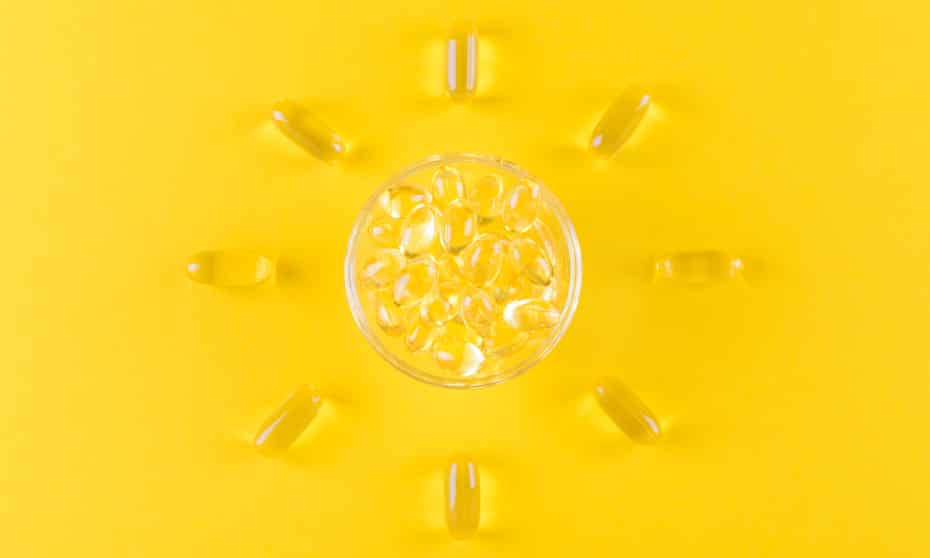
The sunshine drug: vitamin D is created in the skin’s lower layers through the absorption of sunlight and plays a central role in immune and metabolic function Photograph: Getty Images
It’s cheap, widely available and might help us fend off the virus. So should we all be dosing up on the sunshine nutrient?
In March, as coronavirus deaths in the UK began to mount, two hospitals in northeast England began taking vitamin D readings from patients and prescribing them with extremely high doses of the nutrient. Studies had suggested that having sufficient levels of vitamin D, which is created in the skin’s lower layers through the absorption of sunlight, plays a central role in immune and metabolic function and reduces the risk of certain community-acquired respiratory illnesses. But the conclusions were disputed, and no official guidance existed. When the endocrinology and respiratory units at Newcastle upon Tyne Hospitals NHS foundation trust made an informal recommendation to its clinicians to prescribe vitamin D, the decision was considered unusual. Our view was that this treatment is so safe and the crisis is so enormous that we don’t have time to debate,” said Dr Richard Quinton, a consultant endocrinologist at the Royal Victoria Infirmary in Newcastle.
Soon clinicians and endocrinologists around the world began arguing about whether sufficient levels of vitamin D might positively impact coronavirus-related mortality rates. Some considered the nutrient an effective treatment hiding in plain sight; others thought of it as a waste of time. In March, the government’s scientific advisers examined existing evidence and decided there wasn’t enough to act upon. But in April, dozens of doctors wrote to the British Medical Journal describing the correction of vitamin D deficiencies as a safe, simple step” that convincingly holds out a potential, significant, feasible Covid-19 mitigation remedy”.
In the Newcastle hospitals, patients found to be vitamin D-deficient were given extremely high oral doses of the nutrient, often up to 750 times the daily measure recommended by Public Health England. In July, clinicians wrote to the journal Clinical Endocrinology to share their initial outcomes. Of the first 134 coronavirus patients given vitamin D, 94 had been discharged, 24 were still receiving inpatient care, and 16 had died. The clinicians hadn’t clearly associated vitamin D levels with overall death rates, but only three patients with high levels of the nutrient died, and all of them were frail and in their 90s.
Increasingly, others followed the lead of the Newcastle doctors and began taking the vitamin themselves. During the first months of the pandemic, up to 1,000 NHS staff received free wellness packs – including vitamin C, vitamin D and zinc – from a voluntary initiative called the Frontline Immune Support Team, after informal demand from clinicians. And as sales of vitamin D supplements significantly increased, some doctors informally recommended it to patients. In a letter, the British Association of Physicians of Indian Origin advised its members to take the nutrient, though it was not made official policy. We believe that vitamin D3 deficiency is a major risk factor for severe coronavirus infection, for which there is accumulating evidence,” the letter said. People born with darker skin receive less UV light in the deeper layers where D3 is made, and so are prone to more severe D-deficiency at the end of winter in northern latitudes than their fairer-skinned counterparts.”
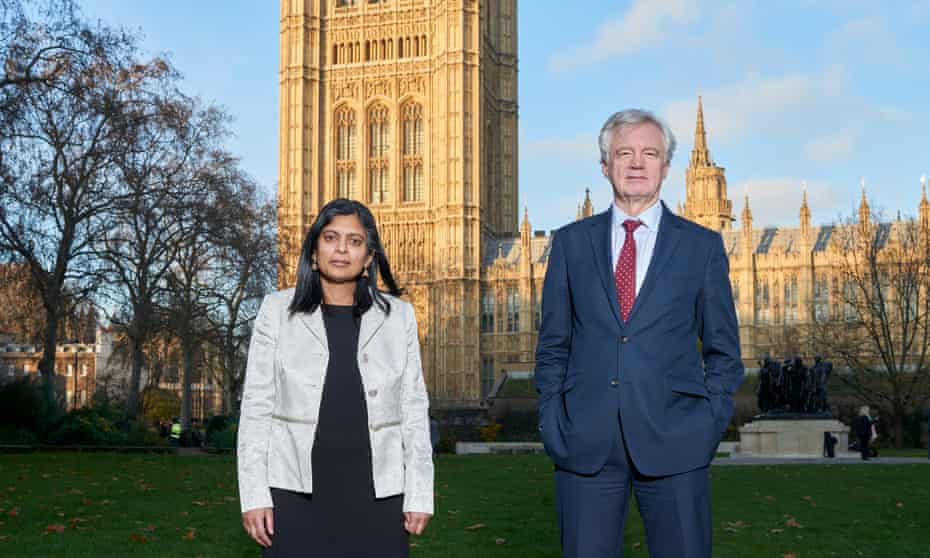
‘All this evidence makes it very plain that vitamin D has a material effect’: Tory MP David Davis with Labour MP Rupa Huq. Photograph: Suki Dhanda/The Observer
By April, Public Health England had revised its vitamin D guidelines, wary of people’s reduced exposure to the sun during lockdown. Whereas once it had suggested only taking small doses in the winter, now it advised everyone to take a daily dose all year round, which was the pre-existing advice only for people of colour, those in care homes and children aged one to four. But it didn’t run an information campaign to inform the public of the change, nor tell those at greater risk to increase their intake, and the majority of people remained unaware of the nutrient’s potential effect.
In 1940, whenChurchill’s government feared people were particularly at risk of the musculoskeletal condition rickets, margarine companies were ordered to fortify their products with vitamin D to safeguard the nutritional status of the nation”. (Back then, the nutrient was universally thought only to impact bone and muscle health, rather than having any effect on immune or metabolic health.) Margarine was fortified with vitamin D until 2013, when the government decided that fortification was unnecessary gold-plating”. It became industry standard to include the nutrient within other fat spreads, but for six years there has been no legal obligation to do so.
To the former Brexit secretary David Davis, the failure to fortify a wider group of foods seems unacceptable. Like clinicians at the height of the first wave of the pandemic, he couldn’t understand why vitamin D wasn’t being pursued as a viable coronavirus treatment. Davis is a Conservative MP with a molecular science degree. In May, he urged the health secretary, Matt Hancock, to review the evidence and consider a free supplement scheme to reverse vitamin D deficiencies, citing the letter sent to the BMJ. Up to 40% of the population is estimated to be vitamin D-deficient this winter. Davis, who is 71, and who takes a high-strength vitamin D supplement daily, hoped the scheme could help mitigate risk, particularly among those most susceptible – the elderly, the obese and people of colour.
While he implored the UK government to take action, studies were continuing around the world and evidence of vitamin D’s efficacy was growing. A French experimental study at a nursing home with 66 people suggested that taking regular vitamin D supplements was associated with less severe Covid-19 and a better survival rate”. A study of 200 people in South Korea suggested that vitamin D deficiency could decrease the immune defences against Covid-19 and cause progression to severe disease”. Preliminary research by Queen Elizabeth Hospital foundation trust and the University of East Anglia found a correlation between European countries with low vitamin D levels and coronavirus infection rates. Broadly, countries closer to the equator have been less affected by Covid-19 than those further away from it, though Brazil and India are notable exceptions. Another study, at Singapore General Hospital, published in the journal Nutrition, found that treating patients with a combination of vitamin D, magnesium and vitamin B12 was associated with a significant reduction” in the worst outcomes.
Only one patient who received vitamin D required ICU admission, and they were later released
A number of other studies made similar reports, though it is only a Spanish study, conducted in early September, that came close to incontrovertibly proving low vitamin D levels have a pivotal role in causing increased death rates. There, 50 patients with Covid-19 were given a high dose of vitamin D, while another 26 patients did not receive the nutrient. Half of patients who weren’t given vitamin D had to be placed in intensive care, and two later died. Only one patient who received vitamin D required ICU admission, and they were later released with no further complications.
To Davis, all of this emerging research pointed towards vitamin D’s efficacy, which made the apparent reluctance across the world of governments, philanthropic organisations and the private sector to fund high- quality studies seem curious.
All the observational studies show strong vitamin D effects on infectiousness, morbidity and mortality,” Davis says. This disease exists seriously above 40 degrees latitude, because that’s where the UV light disappears in the winter.” All of this evidence together, he says, makes it very, very plain that vitamin D has a material effect”.
Still, both the National Institute for Health and Care Excellence (Nice) and Public Health England, having reviewed the potential ability of vitamin D to reduce the risk of coronavirus, continued to announce that there was insufficient evidence to take action. The research was deemed to be of poor quality – not quite enough of it, not quite convincing enough. When the announcements came, Davis grew more frustrated. If you’ve got something that could potentially save tens of thousands of lives – worldwide, hundreds of thousands, if not millions – and you say there’s not quite enough evidence, but it’s indicating in a positive direction, then you do something about it, don’t you?”
In October, Davis made an unlikely alliance with Rupa Huq, the remainer Labour MP and a former sociology lecturer, who is also increasingly convinced of the merits of vitamin D, and the pair began to pile pressure on the government.
If you’ve got something that could potentially save tens of thousands of lives, then you do something about it
A month earlier, Davis had written an article for the Telegraph claiming that correcting Britain’s vitamin D deficiency could save thousands of lives. Huq later wrote in the Times that loudly telling people to take supplements should be an obvious piece of advice”. She pointed to countries where vitamin D levels are high, such as Finland (which fortifies dairy products with the nutrient) and New Zealand (which, since 2011, has prescribed vitamin D to all-aged care home residents, and where people live a more outdoorsy life), and said it was no coincidence that coronavirus cases and deaths in both countries had been rare. They have both also highlighted how black, Asian and ethnic minority people – who have higher levels of melanin in the skin, which tends to reduce the creation of vitamin D from sunlight – have been disproportionately affected by the virus, including an overwhelming disparity among doctors.Advertisement
For UK public health experts, perhaps wary of overstated claims of vitamin D’s benefits, the case for downplaying the link to coronavirus initially mostly depended on retrospective studies and there was no official call for more research. One such recent paper considered by Nice, using vitamin D levels measured up to 14 years ago, found no link between vitamin D levels and more severe illness or mortality from Covid-19, but in another paper the lead author called for high-quality trials to ascertain whether vitamin D plays a beneficial role in the prevention of severe coronavirus reactions. For now, recommendations for vitamin D supplementation to lessen Covid-19 risks appear premature and, although they may cause little harm, they could provide false reassurance leading to changes in behaviour that increase risk of infections,” they concluded. This baffles Davis and Huq. And they believe that now is the chance to begin to erode the UK’s deficiency.
Hancock agreed to meet with Davis and Huq a fortnight after the Spanish study was published. The health secretary had previously claimed, wrongly, that government scientists had run a trial on vitamin D that showed it did not appear to have any impact”, when in fact no such tests had taken place. In a meeting on 8 October, Hancock revealed he was facing resistance from the Department of Health and Social Care (DHSC) clinicians, but that he was nonetheless minded to change government course, later saying publicly there were no downsides” to vitamin D supplements.
Hancock had been adamant there was no link for a long time,” Huq says. But you could see the penny drop and he agreed to do public health messaging recommending vitamin D.” In the meantime, coronavirus deaths continued to rise and, in the US, Dr Anthony Fauci, director of the US National Institute of Allergy and Infectious Diseases, said vitamin D deficiency impacted people’s susceptibility to coronavirus infection and: I would not mind recommending – and I do it myself – taking vitamin D supplements.”
Hancock was adamant there was no link, but you could see the penny drop
At the end of November, the government announced it would offer four months of free vitamin D supplements to all those in care homes and shielders – some 2.7 million people – beginning this month, with the prison service also providing free supplements to all prisoners. Hancock also ordered Nice (which sets NHS clinical guidelines) and Public Health England to produce recommendations on vitamin D for the treatment and prevention of coronavirus. The issue now seems so urgent to the DHSC that it has suggested people purchase their own supplements to ensure they have sufficient levels, ahead of the deliveries of the rations. A number of studies indicate vitamin D might have a positive impact in protecting against Covid-19,” Hancock said.
However, Nice again ruled there was insufficient evidence to prove a causal relationship between vitamin D deficiency and Covid severity, but, for what is believed to be the first time, PHE’s nutrition committee said vitamin D may provide some additional benefit in reducing the risk of acute respiratory infections.” While Nice belatedly called for more research.Advertisement
Without the action of Davis and Huq, many vitamin D advocates believe the government wouldn’t have acted as they eventually did. But Huq, who also takes vitamin D tablets every day, has mixed feelings. I feel, rather disappointingly, the government has dragged its feet on this. But I am pleased that there has been movement, however late in the day, and hope the advent of coronavirus vaccines will not now blow them off course.”
There remains marked frustration over a relative failure to fund vitamin D studies. Our problem has been that major funding bodies haven’t supported clinical trials of vitamin D supplementation to prevent Covid-19, despite the fact that several different research groups in the UK submitted proposals,” Adrian Martineau, a professor of respiratory infection and immunity at Queen Mary University of London, who was able to launch a charity-funded clinical trial in October to investigate whether vitamin D protects against Covid-19, tells me. He was only able to get his own trial off the ground because charities and philanthropists gave us financial support and stepped in where the government didn’t”.
Writing in the Lancet in August, he said: It would seem uncontroversial to enthusiastically promote efforts to achieve reference nutrient intakes of vitamin D… There is nothing to lose from their implementation, and potentially much to gain.” Although extremely large sustained doses of vitamin D can cause toxicity, it is otherwise harmless.
Dr Aseem Malhotra, a cardiologist and writer, has been disappointed over an absence of leadership to ensure people of colour have sufficient levels of the nutrient. Structural racism absolutely has an effect,” he says. But it should not be at the forefront of the conversation. The message should have been: ‘Everyone take vitamin D and cut out the junk food.’ I think it’s a no-brainer, because there is no harm from vitamin D and it’s cheap. It’s pretty scandalous that this hasn’t been dealt with until now.”
Davis now believes there will be increasing government focus on immunological health. Covid kills you if you’ve got a weak immune system,” he says. That’s why vitamin D has a much more general purpose effect than, let’s say, vaccines. We’re going to win this battle in the long run. I just feel for those who have died unnecessarily.”
Ten parliamentarians have been identified to have come in close contact with MP Rauff Hakeem at the parliament.
Tweeting this morning (10), Sri Lanka Muslim Congress (SLMC) Leader MP Rauff Hakeem stated that he had contracted COVID-19 and that he will be entered into a quarantine facility. He also asked his contacts from the past 10 days to take necessary health and safety precautions.
As the parliamentarian had attended the parliamentary session on January 05, steps were being taken to identify the persons who closely associated with MP Hakeem using CCTV footage and direct them to quarantine activities.
Accordingly, ten parliamentarians have been identified to have come in contact with MP Hakeem at the parliament.
In addition, 2 staff members of the parliament have also been identified.
Serjeant-at-Arms Narendra Fernando stated that necessary steps were taken regarding the contacts.
Two Members of Parliament have been diagnosed with the COVID-19 virus so far.
Previously, parliamentarian Dayasiri Jayasekara was diagnosed with the coronavirus.
He is currently receiving treatment at a treatment center in Hikkaduwa and has posted a note on his Twitter account today stating that he is in good health.
Colombo, January 11 (Daily News): With the Sri Lankan cabinet granting approval to sign an agreement with manufacturers when allocating vaccines through the COVAX facility, vaccination against the dreaded COVID-19 is expected to commence shortly.
Sri Lanka has already joined the COVAX facility and the Global Alliance for Vaccines and Immunization (GAVI) which is accredited by the World Health Organization. The COVAX facility is a global initiative that brings together governments and manufacturers to ensure equal distribution among the various countries of the world. The production and development of the vaccines for COVID-19 are being accelerated and it will be ensured that it will reach every country in the world.
Senior Adviser to the President, Lalith Weeratunga, said the first group to be vaccinated would be the frontline health workers, including nurses. Currently, there are approximately 155,000 persons in the health sector. This has also been the recommendation of WHO.
Secondly, the vaccine will be made available to frontline Armed Forces and Police personnel who are actively involved in the pandemic control programme. That group comprises 127,500 persons.
Weeratunga said in a media interview that he was optimistic that a COVID-19 vaccine could be made available to Sri Lankans by end February or by early March the latest. Answering a question, he assured that the vaccine could be made available before the dawn of the 2021 Sinhala – Hindu New Year in April.
President Gotabaya Rajapaksa has appointed a committee headed by Weeratunga to determine the COVID-19 vaccine most suitable to Sri Lanka. The Committee, which included health experts who studied the anti-COVID-19 vaccinations produced by some countries, decided to recommend the Oxford/AstraZeneca vaccine manufactured in India by the Serum Institute of India (SII). Further recommendations were on vaccines manufactured in China and Russia.
The Committee ruled out the Pfizer/BioNTech manufactured in the EU, taking into consideration the cost factor as well as other issues such as the requirement to keep it at a temperature below minus 70 degrees Celsius. Weeratunga pointed out that the Pfizer vaccine cost US$ 20 per dose and it would require ultra-cold freezers for transportation and the cost would be much higher. Furthermore, there could be many delays in importing freezer trucks.
The Oxford AstraZeneca vaccine would cost only US$ 3 per unit (dose) and it would be far easier to transport and keep in normal refrigerators. The Health Ministry has decided on a priority list of recipients for the coronavirus vaccine which consists of vulnerable groups. Among the recipients identified are people above 60 years, frontline workers and other essential workers.
Consultant Epidemiologist at the Health Ministry Dr. Deepa Gamage said Sri Lanka is to receive the vaccine through the COVAX program of the WHO to administer to 20 percent of the population. Initially we were told we had to pay for the vaccine. Later we were told that the vaccine for 20 percent of the population will be given free of charge. The rest we need to purchase if we require,” she said.
Weeratunga said the Treasury has already set aside funds to purchase the first consignment of the vaccine. The Government has initiated discussions with the World Bank to obtain a soft loan worth Rs. 10 billion (US$ 53 million) to purchase vaccines against COVID-19. It is also looking at the possibility of obtaining funding from the Asian Development Bank (ADB) and the European Union for this purpose.
Sri Lanka joined the COVAX facility last year and the Global Alliance for Vaccines and Immunization (GAVI) has accredited the nation, making it eligible to receive the vaccines through the program. The Sri Lankan Cabinet has approved the Part 1 of the COVAX agreement, enabling the country to obtain a limited quantity of the COVID-19 vaccine in the first quarter of this year. Eligible countries are required to submit request applications in two phases to receive the vaccine facility. The first part – which includes information regarding the target group, storage capacity and technical information – was submitted on December 7, 2020.
Confirming this, Additional Secretary of Public Health Services Dr Lakshmi Somatunga said technical sub-committees have examined various aspects of the COVID-19 vaccines including storage and the prioritization of target groups to receive the inoculation.
Weeratunga said 35 percent of the population could be excluded as children and pregnant mothers would not be vaccinated. People above the age of 60, people suffering from serious illnesses, doctors and medical staff and other frontline workers often dealing with coronavirus patients and staff employed at institutions crucial to the economy of the country like the international airports have been identified as those who will first receive the vaccine in Sri Lanka. The vaccine for 20 percent of the population will be received in two stages.
Indian vaccines
India’s drug regulating authorities have approved the AstraZeneca Covishield and Bharat Biotech Covaxin as vaccines for restricted use against COVID-19, paving the way for mass vaccination against the virus. Covishield is the Indian variant of AZD1222, the vaccine developed by AstraZeneca and Oxford University. Pune-based Serum Institute of India developed and manufactured Covishield through a license from AstraZeneca and Oxford. According to medical experts, it is a non-replicating viral vector” vaccine, which means it makes use of another weakened and genetically modified virus – in this case a common cold chimpanzee virus – to help the body develop immunity against the coronavirus. The vaccine carries just the code to make the spike protein (the spike on the virus’s surface). The body’s immune system is supposed to recognize this protein as a threat, and work on building antibodies against it.
Covaxin, developed by Hyderabad-based Bharat Biotech in collaboration with the National Institute of Virology, uses a different platform. Medical experts say it is an inactivated” vaccine, which means it uses the killed SARS-CoV-2 virus, which has no potential to infect or replicate once injected and just serves to boost an immune response.
Both vaccines have received what is known as a restricted use approval in an emergency situation” – similar to an Emergency Use Authorization (EUA) that countries like the UK and US have been granting to companies like Pfizer, Moderna and AstraZeneca for their vaccines.
According to Indian health experts, the restricted approval to Covaxin has been given in clinical trial mode. Bharat Biotech will still have to complete vaccinating nearly 26,000 participants in its phase-3 trial, and then collect and analyze data from these people. Bharat Biotech was earlier testing its vaccine by giving half of its participants a placebo. According to the firm, everyone it is testing now will be given Covaxin and data on safety and efficacy will be analyzed from them over a fixed time period.
India has already approved the two vaccines and commenced its mass vaccination program. Stocks of the two vaccines have been transported to over 30 vaccination hubs, in places like Lucknow, Panchkula, Chennai and Delhi. Indian authorities announced that in the first tranche, the vaccination points will be healthcare facilities where nearly seven million public and private health professionals will be vaccinated over the course of three months. The next to receive vaccines are likely to be frontline workers and then people aged 50 years and above.
Health Minister Dr Harsh Vardhan earlier said the Government expected the first phase of vaccination – targeting around 300 million people based on priority – to be completed by August 2021.
The WHO declared the coronavirus a global pandemic more than nine months ago and since then, the illness it causes, known as COVID-19, has spread to nearly every country in the world. Sri Lanka, with more than 45,000 confirmed cases and 217 deaths, eagerly awaits the vaccine to prevent the spread of the COVID-19 pandemic that has caused much damage to the economy.
Tanzania has signalled that it is not intending to use any Covid-19 vaccine but instead will settle on local herbs for protection against the disease.
Speaking to the EastAfrican Gerald Chamii, a spokesman at the Ministry of Health said, There are no plans in place yet of importing vaccine for Covid-19, our health experts and scientists are still researching and undergoing clinical trials for the local herbs for covid-19.”
Chemii put doubt on the efficacy levels of the current global vaccines claiming the production duration was not efficient enough to warrant a maximum protection.
It takes not less than six months to find a vaccine or cure for a certain disease. We have fared on our own since the pandemic spread, I am not sure if it is wise to have a vaccine imported and distributed to the citizens without undertaking clinical testing to approve if it is safe for our people,” added Mr Chami.
Tanzania is among the first countries in Africa to order for the touted Madagascar Covid herb in the fights against the virus.
Madagascar President Andry Rajoelina is the promoter-in-chief of the substance, marketed as Covid-Organics and sold in the form of a herbal infusion.
Artemisia annua has a long history in its native China, where scientists discovered an active ingredient that made the plant a front-line weapon in the fight against malaria.
The substance has proven effectiveness against malaria, but no clinical trials have tested it against COVID-19, either as a cure or as a preventative.
Little is known in Tanzania on the number of positive cases due to the government’s stun position on the virus.
Tanzania’s President John Pombe Magufuli had declare the East African country as Covid-free and did not place any curfew or confinement to prevent the spread of Coronavirus.
Countries like the United State have warned its citizens from traveling to Tanzania to avoid risks of contracting the virus.
In its update, the U.S. cautioned its citizen against traveling to East Africa, assigning Kenya, Uganda, Tanzania and Burundi Level 4 alert.
Colombo, January 10: We are in a new year, nurturing hope for nation and mankind that the Covid-19 health crisis will pass away from our midst. However, judging by reports that there is yet another more virulent strain going around originated from Britain, rationality tells us that it remains a case of each nation to handle this continuing situation. We also hear of a brain eating amoeba spreading through water in the US which poses deadlier threats. The world may have to face even worse predicaments than coronavirus and the level of preparedness for these scenarios lies in each country maximizing its medical expertise, old or new, to fit the need of the hour.
Immunity
In Sri Lanka, although we followed the same process as the example laid by the Western world, wearing masks and shutting down locations on the detection of even one Covid-19 patient, it is clear that Sri Lankans as a whole are significantly immune to the virus. Many are largely asymptomatic. So why are we so resistant to it when the Western world, the purported hub of Western medical science and ‘development’ is brought to its knees?
The answer could be that although our Allopathic (Western medicine) driven health system has moved us away from much of our local wellbeing practices, such as the administering of the natural immunity boosting Ratha Kalkaya for infants practiced through our Deshiya Chikitsa Sinhala Wedakama, the Lankan ‘thuna paha’ infused traditional diet despite being threatened by the globalised food industry and chemical agriculture, still exists in our midst at least to a basic level which could be the key sustainer of our physical resistance to the virus.
The global media being driven by one particular ideology, we do not hear anything on possible counter narratives from different parts of the world to what is popularly peddled on this virus which Western medical science, is still trying to figure out. Thailand and several countries in Africa are promoting traditional medicine as a last resort for the Covid-19 pandemic.
A respected Allopathic Western medical expert, Dr. Roger Hodkinson, a senior general pathologist certified in 1976 by the Royal College of Physicians and Surgeons of Canada has been under flak for calling the Covid-19 pandemic a ‘hoax’ in his address to the Edmenton City Council in November 2020.
There is utterly unfounded public hysteria driven by the media and politicians. It’s outrageous. This is the greatest hoax ever perpetrated on an unsuspecting public,” Hodkinson told the Council, opining that face masks and distancing were useless because aerosols; hosts of invisible microscopic droplets emitted through breathing already get to the air. Hodkinson proposed to treat Covid-19 as a mere bad flu season. While his medical expertise and stature has been acknowledged by fellow medical critics, he has received significant backlash from those who debunk these statements.
The purpose of using this example, is merely for intellectual pursuit of analysis and does not necessarily mean a justifying of this doctor’s views. Because diversity in Covid-19 narratives doesn’t exist, we will not know multifarious information, especially on immunity that we would like to explore, including knowing ‘medically’ why less vaccinated people, such as us are, resistant to the virus as opposed to distinctly over-vaccinated Westerners.
Chemical agriculture
We do not take flu vaccines every winter season as they do in Europe – such a thought would surely bring a smile to plantation employees who work outdoors, often without warm clothing in the blistering cold of Nuwara Eliya without the luxury of hot baths but never need ‘flu shots.’ Although Sri Lanka has been threatened by chemical agriculture introduced through the green revolution and has lost its authentic traditional diet which would surpass many food cultures in terms of nutrition, it is still in stark contrast to the poisonous fast food pandemic of the West.
What we should understand is that although we have tragically copied to perfection the West and their ‘progress’ if we reflect, shedding all our colonialisation, neo-colonisation and neo-imperialism infused baggage, our pragmatic mind would echo the wisdom of our indigenous knowledge priorities which were always centered around the health of the nation and the health of all living beings which included the soil and the trees. Chemical agriculture if introduced to our ancient ancestors would have been surely looked upon as a cruel abnormality that only fosters sickness.
The likes of Lord Thomas Babington Macaulay, would be indeed overjoyed to see how well colonial machinations have worked. Macaulay was a British politician who had abysmal contempt for ancient knowledge of the people of the Indian subcontinent and funded amply the mission of educating Indians on the Western models of knowledge, and placed on the Minute on Education drafted in 1835 the despicable and ignorant opinion of his that, A single shelf of a good European library is worth the whole native literature of India and Arabia,” as an argument to bulldoze out the respect for ancient knowledge, such as Ayurveda and replace it with Western science.
Yet, for the island of Sri Lanka which was world renowned as a medical hub and other indigenous sciences, the challenge remains to eradicate the country of cognitive impairing viruses created by imperialists, such as Macaulay.
Modern education
We, today, talk of modern education conceptualised by the West as if it was manna from heaven without realising that before this white manna, countries such as Sri Lanka and India had an advanced education system – the Gurukula system that did not separate the spiritual from the worldly and where introspection, contemplation and respecting earth and its resources were a core component of maintaining the health of humans. Non Communicable Diseases (NCDs) of today are linked to our warped way of living and producing food, including the heinous crime against living beings; factory farming through artificial means, breeding life for death, which we learnt from the West. From the Covid-19 deaths that we have in Sri Lanka, what does not get emphasised in the media is that they are connected with NCDs.
Sri Lanka’s Deshiya Chikitsa, as an ancient pre-Ayurveda system of preventive and curative healing could be described as being the closest to mother nature. If these traditional physicians were allowed to fight the Covid-19 battle, they would eliminate not only Covid-19 but also NCDs.
We have failed as a nation for seven decades after independence from the British to understand the value of recognising our Deshiya Chikitsa (Sinhala Wedakama) as a medical discipline, even now in the midst of a pandemic that has brought Europe to its knees.
The few members among the team of Ukranian tourists who came to Sri Lanka within the past fortnight and were detected with the Covid-19 virus had been not comfortable with getting medical treatment in Sri Lanka. Why? Because they associated us only with Allopathy and assessed our medical system comparing it with Western technology. The world does not know that we have at least 30,000 traditional physicians in the country, many of whom have been from March researching into how the many diverse herb combinations (different wattoru) could cure the different stages of this virus alongside NCDs. Yet we are talking about tourism and economic revival while the answers are staring at us in the face. Yet this may change with professionals chipping in to assist the Government.
Professionals alongside traditional physicians stress the importance of using traditional medicine before spending billions of rupees on a vaccine.
Integrated system
Although many of our doctors, Allopathy and Ayurveda, may have been on study tours to countries, such as China, we still have not been inspired to set in motion an integrated system such as one in that country which although being the first nation to be hit by the virus also is the first to control it and has not shied away from acknowledging the role traditional medicine has played in this task. China which maximised at the height of the spread of the Covid-19 virus, simple respiratory treatments common to Sri Lanka, such as vapour inhalation, had almost fully controlled the spread of the disease by May 2020.
On June 6, 2020, Chinese President Xi Jinping in a keynote address delivered at a symposium of experts and scholars had emphasised that the simultaneous and integrated use of Chinese and Western medicine has been a major highlight of the fight against the epidemic. Yu Yanhong and Yu Wenming writing in the Qiushi, a bi-monthly political theory periodical published in China referred to this speech which stated how China has given a full affirmation to the contribution of Traditional Chinese Medicine (TCM) in the prevention and control of Covid-19 and how the Chinese President has asked TCM practitioners in China to ‘boost their national pride’ and explore the ‘best of what the treasure trove of TCM has to offer’, highlighting the need to preserve and develop that medical system.
The article also explained the need to foster China’s integrated system of medicine that has both the Western and Traditional system operating side by side for healing patients in whatever system that suits the ailment/s.
While we can look to such contemporary encouraging examples from Asian countries such as China, we should remind ourselves even at this belated stage that we are a civilisation that has the world’s first hospital in Mihintale. Despite such a history, we have done little to support, protect and foster traditional physicians and their families to safeguard and secure the passing on of this knowledge to the next generations.
Macaulayan mentality
This writer who started researching about traditional physicians and their problems two years ago is aware of a plethora of issues which is sometimes paradoxically within official structures set up to foster their knowledge. The root of the problem is because we carry forth the Macaulayan mentality that has seeped into every sphere of our education structure and possibly not even sparing Ayurveda. Many Ayurveda doctors are humble enough to admit that they have learnt valuable information about Sri Lankan traditional cures from these physicians.
Professionals of Sri Lanka who are now uniting with Ayurveda and traditional physicians as part of the Sinhala Weda Uruma Baraya call for the immediate use of traditional physicians in the Covid-19 battle, to ascertain if the need for purchasing foreign vaccines arises.
At a meeting of the Sinhala Weda Uruma Baraya held last week and attended by professionals, such as Dr. Nandadasa P. Narayana, one of Sri Lanka’s most recognised inventors of international stature and Tilak Kandegama, one of the most authentic voices of Lankan indigenous knowledge, the focus was on Sri Lanka’s immense potential to rise in this pandemic backdrop in an unprecedented world stature using its medical heritage.
I have made the blue print for up to 10 health based inventions connected with Covid-19 and the traditional medical system of Sri Lanka. However, the lack of systematic support for promoting local solutions for the virus does not enable persons like me to be of use to my country. Sri Lanka is losing billions per day with this current health crisis,” said Eng. Dr. Narayana.
We are not a country that needs vaccines for the virus. In one and a half months, we can control the pandemic. This can be done with a simple strategic commitment by using our indigenous knowledge resources,” said Thilak Kandegama who promotes biodiversity centered non-chemical agriculture and has a vast repository of knowledge on the ancient medical practices of Deshiya Chikitsa. What we need is the confidence in what is ours. We need to help the Government liaise with traditional physicians and others who still have diverse knowledge and the expertise in Lankan traditional medical heritage,” he said.
These professionals alongside traditional medicine physicians call for the ensuring of formal opportunity for traditional physicians who have months ago handed over samples of their anti Covid-19 medicines to the Health Ministry and related authorities to get a chance to provide them to Covid-19 patients.
We met Prime Minister Mahinda Rajapaksa and members of the Government and are confident that the people will be happy if the Government uses the skills of traditional physicians and get their medicines cleared by authorities for providing Covid-19 patients.
We can ensure that the world knows about the result before we commit as a nation to spending money on a vaccine,” said Eng. Harsha Kumar Suriyaarachchi, one of the founders of the Sinhala Weda Uruma Baraya.
Traditional physicians
There are many physicians throughout Sri Lanka, such as indigenous medical physician D. D. Hettiarachchi of Ganemulla whose Covid-19 curative and preventive medicines have been taken by hundreds of Sri Lankans in Dubai and Italy who had got them down through beneficiaries at the height of Covid-19 phase 1 and safeguarded fully from the disease.
Traditional physician Amila Sanjeewa in Gampaha who runs a traditional medicine charity said that he has treated around 18,000 persons against the Covid-19 infection (primarily preventive), (including military and police, other officials in the Covid-19 first and second phase and emphasised that he has written proof to provide).
Nilanka Jayasekera, traditional physician from Kandy has given his Covid-19 preventive/curative medicines to those who had wanted them and Sampath Kalutharage and an Ayurveda Shasthri qualified traditional physician had provided Covid-19 preventive and curative medicines to Dombagoda army camp in Kalutara where 692 military personnel came under quarantine alongside curing 11 Covid-19 positive patients.
There are as per information gathered by this writer, at least 37 indigenous physicians who have handed their Covid-19 targeted medicines the to authorities for approval.
By Saeed Shah in Islamabad and Jon Emont in Singapore/Wall Street Journal Courtesy Ceylon Today
Islamabad, January 9 (Wall Street Journal): Governments and religious leaders in Muslim-majority nations are talking to vaccine makers, investigating production processes and issuing guidance in an effort to make sure concerns about products prohibited by Islam don’t interfere with Covid-19 inoculations.
On Friday, the high clerical council in Indonesia, with the world’s largest Muslim population, said that China’s Sinovac vaccine is allowed by Islam, or halal. The decision came after council representatives visited Sinovac’s factory in China last year and conducted a halal audit.
Part of the challenge of rolling out vaccines world-wide will be persuading enough people to take them to reach herd immunity. In many countries, Muslim and non-Muslim, the efforts must overcome safety concerns, suspicions and conspiracy theories, as well as religious and ethical objections.
Gelatin taken from pigs and cells created using tissue from human fetuses, which are both common in vaccine production, are aren’t halal, Muslim scholars say.
Acceptance of vaccinations before the coronavirus pandemic varied widely among Muslim countries, with high trust in countries like Bangladesh and Uzbekistan, according to a study of opinion in 149 countries published in September 2020 in the Lancet medical journal. It found that of the 10 countries with the most marked drop in confidence in vaccines over the four years through 2019, seven were predominantly Muslim: Afghanistan, Azerbaijan, Bosnia and Herzegovina, Indonesia, Malaysia, Nigeria and Pakistan. The other three were Japan, Georgia and Serbia.
In Pakistan, one of only two nations left on earth where polio is still endemic, the authorities have struggled for years to persuade people to let their children have the polio vaccine, with Islamic-related objections prominent among other concerns. Not only do some people contend that the vaccine isn’t halal—despite rulings from senior clerics there saying it is allowed—but an influential conspiracy theory contends that the West is using the inoculation to sterilize Muslims.
Two years ago in Indonesia, the official Muslim clerical organization that decides whether substances are halal ruled that a measles vaccine containing pig gelatin was permitted to be used in Indonesia owing to a lack of halal alternatives. Still, concern over the ingredients contained in the vaccine prompted some parents in conservative parts of the country to reject it for their children.
Those objecting to vaccines for various reasons are generally a minority among Muslims, but governments and religious leaders from Jakarta to Dubai are debating how best to address halal concerns to make sure they don’t become a significant obstacle to inoculating the world’s 1.8 billion Muslims.
This is a serious issue,” said Muhammad Munir, a virologist at Lancaster University in the U.K., adding that none of the Covid-19 vaccines that have so far reached late-stage trials ought to be a problem for Muslims because of the ingredients and processes involved. There is a responsibility on the [Muslim clergy] to have enough knowledge to guide the public properly.”
A vaccine developed by Moderna Inc. and another by Pfizer Inc. and BioNTech SE may offer a solution. They are synthetic, with no human- or animal-sourced ingredients, said Mr. Munir. However, these vaccines are in short supply globally and need to be kept at extremely cold temperatures, which will make distribution difficult in poorer countries.
The decision from Indonesia’s high clerical council Friday means that the Sinovac vaccine is ready for use in Indonesia as soon as the country’s food and drug regulator authorizes it, which is expected in the coming weeks.
Zulkifli Mohamad al-Bakri, the religious affairs minister of Malaysia, where Muslims make up more than 60% of the population, said in late December that a special religious committee had determined that Muslims should follow government instructions and take the vaccines, and noted that Muslims there have been encouraged to get inoculated for other diseases in the past.
A religious body in the United Arab Emirates last month issued an Islamic ruling, known as a fatwa, allowing Muslims there to receive coronavirus vaccines, even if they contain non-halal ingredients. The U.A.E. has already inoculated thousands for Covid-19 with a vaccine developed by Chinese drugmaker Sinopharm and has begun distribution of the Pfizer-BioNTech vaccine.
Such rulings on vaccination programs do not make the inoculations halal, but the vaccine can be used if there is no alternative available,” said Amrahi Buang, president of the Malaysian Pharmacists Society.
To be considered halal, manufacturers have to declare ingredients and give clerics the information they need to assess whether they comply with Islamic principles. To be halal certified, another level, the entire production line would need to be inspected, Mr. Buang said.
Aasim Padela, a professor at the Medical College of Wisconsin and head of the Initiative on Islam and Medicine, said that China could prove more responsive to the Muslim market, as it has in the past with other vaccines.
Anxiety has also been high enough in countries where Muslims are a minority, including the U.S. and the U.K., that Islamic groups there have felt obliged to issue rulings in recent weeks about which vaccines are halal.
Some Christians in the U.S. and elsewhere have also raised objections to the use of the fetal cell lines in Covid-19 inoculations. In December, the Vatican said it was morally acceptable for Catholics to receive such vaccines.
Even if a vaccine contains prohibited substances, Muslim scholars can also rule that the ingredients have been so transformed in the production process that their impure nature has been removed, Islamic experts say.
Rozi Osman, an independent halal consultant based in Malaysia, said that Islamic scripture makes clear that saving lives is more important than rigidly following rules.
Some Muslims are hung up about the halal part, which is ingrained from a young age,” Ms. Osman said. But to protect life is compulsory for Muslims. Some would rather listen to controversial voices rather than the truth.”
—Raffaele Huang, Chester Tay and Feliz Solomon contributed to this article.
Today, the Sri Lankan government announced that it will open its international airports once again. Flight operations will start from the 23rd of January of 2021. Foreign travellers visiting the country can now visit 12 of the country’s major tourist attractions once again; The moves comes following months of Coronavirus travel restrictions in place within Sri Lanka.
Sri Lanka Open Its International Airports From January 23.
Sri Lanka’s Tourism Minister officially announced that all international Airports will be open. He held a meeting on the 5th and said that the date of the opening will be 23rd January.
In a statement he said:
The SriLankan Government had originally shut down their airports and all operations last year due to the pandemic. Sri Lanka was one of the countries that suffered worse in the region, due to the effects of COVID-19. The opening is likely to begin the economic recovery of the country from the pandemic; A recovery which may take a good couple of years ahead.
Authorities Adhere To Strict COVID-19 Regulations
For instance, a group of 560 tourists recently visited Sri Lanka. This group came as a pilot project in December of 2020.
The Government implemented this project successfully and thus ensured the utmost safety of visiting tourists.
Based on this success, the decision was taken to allow foreigners back into the country, and thereby allowed the operation of airports once again.
However, Sri Lanka will allow international tourists into the country, while following strict WHO guidelines. The guidelines include the mandatory ‘Gold Standard’ PCR Tests prior to arrival to the country, and a few days upon arrival – With the aim of spotting and preventing transmission of asymptomatic cases.
There will be a total of 12 key tourism destinations open within the country, including:
Temple of the Sacred Tooth Relic (Dalada Maligawa)
Yala National Park
Minneriya National Park
Sigiriya
Dambulla Temple
Udawalawe
Horton Plains
Sinharaja Forest
Peradeniya Botanic Gardens
Pinnawala Elephant Orphanage
Whale watching
Salusala- the State-owned handloom enterprise.
Minister Ranatunga said the Sri Lanka Tourism Development Authority (SLTDA) should coordinate the visits of tourists to the sites and instructed to take further action in accordance with the health guidelines to prevent the contact of tourists and the general public in these sites.
The Current Covid-19 Situation in Sri Lanka
All flights of SriLankan airlines are currently grounded and are yet to become operational – Though this is expected to change in the coming days/weeks. SriLankan Airlines, the national carrier of Sri Lanka grounded its fleet in March 2020. The airline is yet to start back any operations.
Whilst SriLankan airlines have been grounded, a new startup, FlyLankan, received Government approval to begin operations.
Ten parliamentarians have been identified to have come in close contact with MP Rauff Hakeem at the parliament.
Tweeting this morning (10), Sri Lanka Muslim Congress (SLMC) Leader MP Rauff Hakeem stated that he had contracted COVID-19 and that he will be entered into a quarantine facility. He also asked his contacts from the past 10 days to take necessary health and safety precautions.
As the parliamentarian had attended the parliamentary session on January 05, steps were being taken to identify the persons who closely associated with MP Hakeem using CCTV footage and direct them to quarantine activities.
Accordingly, ten parliamentarians have been identified to have come in contact with MP Hakeem at the parliament.
In addition, 2 staff members of the parliament have also been identified.
Serjeant-at-Arms Narendra Fernando stated that necessary steps were taken regarding the contacts.
Two Members of Parliament have been diagnosed with the COVID-19 virus so far.
Previously, parliamentarian Dayasiri Jayasekara was diagnosed with the coronavirus.
He is currently receiving treatment at a treatment center in Hikkaduwa and has posted a note on his Twitter account today stating that he is in good health.
Prime Minister’s Coordinating Secretary for Political Affairs, Kumarasiri Hettige has tested positive for COVID-19.
He has reportedly visited the parliament on Friday (January 08) and several staff members of the Leader of the House have been identified as close contacts of Mr Hettige.
Sergeant-at-Arms of Parliament Narendra Fernando said his close contacts and relevant heads of departments were informed on the matter.
Earlier today, it was revealed that Sri Lanka Muslim Congress (SLMC) Leader MP Rauff Hakeem has contracted the novel coronavirus.
In a tweet, the parliamentarian appealed to his contacts from the past 10 days to take necessary health and safety precautions.
As the parliamentarian had attended the parliamentary session on January 05, steps were taken to identify the persons who closely associated with MP Hakeem using CCTV footage and direct them to quarantine activities.
Accordingly, ten parliamentarians have been identified to have come in contact with MP Hakeem at the parliament. In addition, 2 staff members of the parliament were also identified.
MP Hakeem is the second lawmaker in the country to test positive for novel coronavirus.
Parliamentarian Dayasiri Jayasekara was diagnosed with the coronavirus on Friday. He is currently receiving treatment at a treatment center in Hikkaduwa and has posted a note on his Twitter account today stating that he is in good health.
Director-General of Health Services has confirmed three more COVID-19 related fatalities in the country.
The new development has brought the death toll from the virus to 232, according to the Department of Government Information.
One of the victims was identified as a 62-year-old inmate who was incarcerated at the Negombo Prison. He was admitted to the Negombo Base Hospital and had passed away on Friday (January 08) after being transferred to the Mulleriyawa Base Hospital. The cause of death was cited as COVID-19 pneumonia.
In the meantime, an 80-year-old woman was residing in Colombo 14 fell victim to the virus today (January 10). She was under medical care at the Apeksha Hospital in Maharagama and was later transferred to the Pimbura Base Hospital. She has died of COVID-19 pneumonia and cancer.
A man from Ratnapura area, who was aged 64, meanwhile died of COVID-19 pneumonia and heart disease while receiving treatment at the Ratnapura Teaching Hospital yesterday (January 09).
The head of the World Health Organization says there is a clear problem” that low- and middle-income countries are not yet receiving supplies of COVID-19 vaccines and urged countries to stop striking bilateral deals with manufacturers.
Rich countries have the majority of the supply,” WHO Director-General Tedros Adhanom Ghebreyesus said in strongly-worded comments on vaccine nationalism at a Geneva news briefing.
He asked countries and manufacturers to stop making bilateral deals and called on those who have ordered excess doses to immediately hand them over to the COVAX vaccine-sharing facility.
While Tedros did not name countries, the European Union said it reached a deal with Pfizer and BioNTech for 300 million additional doses of their COVID-19 vaccine in a move that would give the EU nearly half of the firms’ global output for 2021.
The scramble for shots has accelerated as governments also struggle to tame more infectious variants identified in Britain and South Africa, which are threatening to overwhelm healthcare systems.
Emergencies chief Mike Ryan echoed comments from Tedros, stressing the need to give doses to vulnerable groups and frontline healthcare workers first, no matter where they live.
WHO officials also urged vaccine manufacturers to provide it with data in real-time in order to expedite the rollout.
Until now, wealthier nations including Britain, European Union members, the United States, Switzerland and Israel have been at the front of the queue for vaccine deliveries from companies including Pfizer and partner BioNTech, Moderna and AstraZeneca.
Nearly 88 million people have been reported to be infected by the novel coronavirus globally and around 1.9 million have died since it first emerged in China in December 2019, according to a Reuters tally.
The virus is spreading at alarming rates in some countries,” Tedros said. The problem is that not complying a bit becomes a habit. Not complying gives the virus opportunities to spread.”
Tedros also said he expects to fix travel dates as soon as next week for a long-awaited mission to China to investigate the origins of the novel coronavirus.
Ryan urged countries to not politicised the vaccine and warned that the one distributed so far have zero impact” on transmission dynamics.
Assistant director-general, Mariangela Simao said the WHO has received 13 valid proposals” for possible emergency listing of COVID-19 vaccines since October, and some are at an advanced stage, adding that they expect to receive full data from Russia’s Gamaleya Institute on its vaccine by the end of January.
Sri Lanka’s Covid-19 numbers saw another surge today, as 236 more persons were tested positive for the virus.
Department of Government Information confirmed that all 236 of the newly-identified patients are close contacts of earlier cases linked to the Peliyagoda fish market.
Accordingly, a total of 536 new cases have been reported within the day.
As per statistics, the total number of Covid-19 infections confirmed in the country to date now stands at 48,376.
Recoveries from the virus meanwhile climbed to 41,325 earlier today, as more patients regained health.
However, 6,822 active cases are still under medical care at selected hospitals and treatment centres located across the island.
Sri Lanka has also witnessed 229 deaths related to Covid-19.
The University of Jaffna is a State university. It is funded by the Government of Sri Lanka and Faculty are paid salaries by the GoS. Therefore, all staff are bound by rules & regulations applicable to the Public Sector. Jaffna University is a university where children of all communities gain admission to. It is not a Tamil Only university. LTTE is an internationally proscribed terrorist entity militarily defeated in May 2009. Anyone who wishes to immortalize Prabakaran & his outfit are welcome to do so privately in their homes but not in public and certainly not in state universities. Maybe the ghost of Prabakaran may visit their homes!
The University Grants Commission took a bold decision to demolish the structures put up during previous government to commemorate LTTE and its combatants. These were not war victim memorials but LTTE victim memorials. This not surprisingly has led to numerous hartals and protests in North Sri Lanka & Tamil Nadu. For Tamil Nadu, even if anyone pees in Sri Lanka, it is a political campaign propaganda opportunity. We need not take these dramas seriously. The Indian Government knows how to handle them if they overstep their boundary. This explains the countless visits to remand prison by Prabakaran’s bosom pal- Vaiko.
Who in Sri Lanka are protesting against the demolition of monuments for Prabakaran & LTTE inside a state university? It would naturally be the bankrupt party TNA & its associated entities grappling to survive in politics as Tamils themselves are getting fed up of their lies. So probably they must have roped in a few youth, given them a few handouts and written the slogans for the drama choreographed by them. The police must take photos and compare to see if these are the same faces appearing for all TNA tamashas. The general public in Jaffna are now fed up and wish to simply get on with their lives without being used as guineapigs of Tamil political agendas. We knew this would happen naturally with time. Of course, there is another unseen element involved. There are foreign intel operatives funding and fueling trouble as their task is to ensure Sri Lanka remains unstable and unable to develop. This is the most dangerous player, as we don’t know who they are or what they look like and how they are brainwashing our people. But, this threat is the most challenging and one which requires the public to be alert to. Easter Sunday attack took place with the involvement of these foreign intel operatives. So we should realize that they are conspiring another operation probably using the burial issue as justification.
Linking Jaffna University – LTTE & the Separatist Ideology
Parents toil to somehow send their children to university to see them build a foundation for their future. No parent brings up their child to take up arms and kill people. The university faculty who allowed the LTTE monuments and facilitated LTTE celebrations and candle lit vigils must be taken to task and investigated. They have no right to be using a State University to immortalize terrorists and participate in these functions as well. There are enough of photos circulating of these faculty members singing hosannahs for the LTTE. They must each be asked to give written explanations for their conduct and the GoSL must seriously take action against them. This will serve as a deterrent to any future faculty members thinking they too can allow LTTE celebrations inside an university if a future LTTE friendly government comes to power. The Government and the AG’s department must revise laws to take action against these Public Servants if they are involved in terrorist activities and these must be clearly defined and communicated to all public servants.
The action of the UGC in demolishing the LTTE monuments inside the university will naturally provide oxygen to the plethora of NGOs and others waiting for something to make a fuss about and use with Geneva approaching. The Government must immediately issue a statement why the monuments were demolished and even ask if Western universities will allow Al Qaeda / Boku Haram / ISIS to erect statues of their leaders inside university compounds and hold candle lit vigils for them. This question has to be asked of every NGO/international media finding fault with the Sri Lankan authorities for demolishing a LTTE monument.
Instead the authorities must now invite designs for a Peace Monument that depicts harmony and the future for youth who have to take the mantle of leadership as they are the future leaders of the nation. No university can or should allow any terrorist related structure inside the university compound or celebrations in whatever form of terrorists. All candle lit vigils for terrorists must be banned even if some of these terrorists were once university students. Anyone can commemorate terrorists privately insidetheir homes. However, terrorists are not to be immortalized in public. Those that wish to do so are setting an ugly example to children and youth many of whom did not live during the terror reign of LTTE to see the heinous crimes LTTE committed even to Tamils and foreigners. LTTE or Prabakaran are no heroes. They are only heroes for the LTTE fronts operating overseas – for that is their ticket to making money by holding pro-LTTE events, selling LTTE souvenirs and even working for foreign intel to destabilize Sri Lanka. LTTE are heroes for bankrupt Tamil politicians who have only LTTE slogan to use to stay in politics. LTTE are heroes for a handful of others who are also working hand in glove with our immediate neighbor to eternally destabilize us.
So we must realize that LTTE served a bigger purpose than simply wanting to carve a separate territory. LTTE and terrorism is income generating business. It is the same for all other terrorist outfits too. Just follow their money trail to see the illegal businesses that operate within the terrorist movement – money laundering, monetary scams, illegal business rackets, human smuggling, prostitution Terrorism is nothing but a business.
Universities are centres of learning, to mould individuals to be good citizens not to pass out as terrorists.