SRI LANKA’S ECONOMY RECORDS 4.8% GDP GROWTH IN Q1 2025

June 16th, 2025

Courtesy Hiru News

Sri Lanka’s economy recorded a positive Gross Domestic Product (GDP) growth rate of 4.8% in the first quarter of 2025.

This marks the seventh consecutive quarter of positive growth for the nation, beginning from the third quarter of 2023.

The Department of Census and Statistics announced this, noting that the GDP at constant prices increased to Rs. 3.477 trillion from Rs. 3.318 trillion in the first quarter of 2024.

At current prices, the GDP for the first quarter of 2025 rose to 8,274,915 million rupees, a 4.5% increase from the same quarter in 2024.

 Industrial activities expanded by 9.7%.

This was significantly boosted by increases in the Construction industry, which increased by 10.7% and the Mining industry, which increased by 12.6%, benefiting from increased imports of investment goods and reduced input prices.

 The overall manufacturing industry also showed a remarkable 9.6% increase.

Services activities grew by 2.8%. This sector’s growth was driven by strong performances in Insurance of 17.4% and Financial services of 14.6%.

The DCS attributes this growth to factors such as a relatively stable exchange rate and low interest rates, which have facilitated an increase in domestic credit and imports of investment and intermediate goods.

For more detailed information, the DCS has published the full GDP estimates for the first quarter of 2025 on their website.

Myanmar vs Sri Lanka: Tamil Eelam as an Indian Settler-Colonial Project?

June 15th, 2025

e-Con e-News

blog: eesrilanka.wordpress.com

Before you study the economics, study the economists!

On 7 Years after the Passing of SBD de Silva

e-Con e-News 08-14 June 2025

*

‘They think Singapore has developed because of zero state-interference.

They don’t understand that 90% of the land in Singapore is owned

by the government still. They don’t understand that 25-30% of GDP

in its economy comes from state-owned enterprises;

most of the growth in the ’80-70s was from SoEs.

It transitioned into a high-tech manufacturing economy &

brought in a service sector. So now Lankans & everybody around

the world looks at Singapore and says ‘Oh it’s a service economy.’

No! It grew & developed into a 1st-world country & then took on more

& more services. But it was always an entrepot economy that developed

into an industrialized economy. So if you give them this example they say

‘Oh, Singapore is unique.’ Then you have to give them a different example:

Taiwan, South Korea. No! We have an excuse for everything…’

– Kusum Wijetilleke (see ee Economists)

*

An accidental, inadvertent tribute to SBD de Silva was broadcast in the mass media this week, by the latest of Mr Maharajah’s (or it’s actually Unilever’s) MTV news programs. Rather auspicious & suspicious, we surmised. For here comes SBD de Silva’s 7th death anniversary on June 15.

     Of course, the mass media still never mentions his name. Could SBD be brought back to life, if only because the times demand such a voice, if only in the ghostly dialectical spit of afterlife? The mercantile media would certainly dare not make the mistake again – they can’t force-multiply SB’s message about the need for modern (machine-making) industrialization, through daily, hourly saturation – but at least we got to hear of it once or twice (see below). This ee Focus reproduces and updates Krisantha Sri Bhaggiyadatta’s 2018 tribute to his ‘guru’. ee has for almost 7 years been a continuing tribute to SBD de Silva, but it’s unclear if ee has strayed beyond SB’s focus, into areas he noted (eg, the domination of the economy by ‘minority agents’ of multinational corporations or MNCs) but perhaps feared to tread. This ee Focus therefore reproduces SBD’s fascinating analysis of Burma, another colonized Buddhist country, but that chose to break early from the English ‘Commonwealth’, with crucial lessons for Sri Lanka.

*

So, why does the English media absolutely despise Myanmar (Burma) so? What is the role Indians have played in controlling Myanmar during the English colonial rule? Is it because it is one of the last Theravada Buddhist states in the world? In this ee, SBD de Silva provides startling insight into Burma as another possible ‘stark exception’ (like the Congo & Indo-China) in his thesis on the differences between the economies of non-settler colonial states such as ours in Sri Lanka. Here expatriate interests, ‘invisible but pervasive’, operating through multinational corporations, have easily subverted any attempt at economic independence. In Sri Lanka, within 3 months of a promise by a ‘socialist’ finance minister, to nationalize the economy in 1970, English bankers declared, We shall go on!” (see ee Focus).

     Whereas, in the ‘white dominions’ (USA, Canada, Australia etc) as well as ‘settler colonies’ (South Africa, Kenya, Algeria etc), modern industrialization was pursued despite vehement opposition from Europe’s capitals. In fact, does this explain why the English in London & the French in Paris, etc, have preferred so-called ‘native’ (petty merchant, usurer & landlord) rule, versus white settler (industrial) rule, which competed with them?

     SBD de Silva detailed how, post-‘independence’, Myanmar moved swiftly to dispossess foreign domination of its economy, where Indians had become ‘the visible symbol of the whole system of control & domination of Burma by foreigners’. However, ‘while reflecting a socialist ideology… to some extent merely nationalist in fervour’, it is unclear if Myanmar, besieged by imperialist subversion, has pursued modern industrialization (see ee Focus). Such nationalist writers as Kamalika Pieris have referred to the separatist demand for ‘Tamil Eelam’ as part of a longer-term ‘Indian settler colonial’ project in Sri Lanka. However, there have been no moves to modernize (industrialize) their ‘settlers’ in Sri Lanka, and Tamil plantation workers remain in bondage to a precapitalist (import-export plantation) economy.   

*

While excoriating the rampant ‘corruption’ inside the country, SBD de Silva saw this problem as a product of the English colonial system and the continuing domination of the country by merchants & moneylenders. He always asked, ‘What if there was no corruption? Would the economy be alright then?’ With the wrangling over municipal office still going on long after local elections, ee Focus continues Gustavus Myers’ History of Tammany Hall, about that infamous New York ‘charity’ aka political machine, in a USA tumbling toward ‘civil war’. Myers showed how integral the role played by municipal corruption is, in maintaining the capitalist system. We see the early formations that went on to become the USA’s 2-party system, which is really one capitalist party.  This episode also describes the ‘private organization’ within the board of municipal representatives, formed to ‘receive & distribute bribes’, as in the procurement of ‘licenses’ to operate & profit from slum housing, policing, railroads, ferries, marketplaces, brothels & electricity.  

*

• With debate being raged by the media about whether AI automatically throws people out of work, Indian economist Prabhat Patnaik argues that capitalist economists are recycling old arguments to justify unemployment. For instance, some claim that the introduction of machinery does not give rise to unemployment, as workers have long argued. However, as Marx pointed out at the beginning of Chapter 15 on a very interesting examination of machinery in Capital Volume 1, such unemployment is a tactic of capitalist practice. Patnaik also makes interesting links between the rampant joblessness created by the new machinery of the 19th century, and how England used settler colonialism in the Americas & Pacific to ameliorate the effects of unemployment. Patnaik also traces efforts by Indian planners such as PC Mahalanobis, and China’s efforts to ‘walk on 2 legs’ to ensure that industrialization does not result in mass unemployment (see ee Focus).

*

So, SBD’s ideas about industrialization surfaced on MTV News1st’s ‘Face-to-Face’ program fronted by that slack & trying-hard-to-be-easygoing Niresh Eliatamby, interviewing a coifed Kusum Wijetiileke. This episode was at a relatively higher level than most talkshows in Sri Lanka, and we recommend people watch and encourage such endeavors – but with a critical eye and nose. SB certainly was acid and derisive about the ability of – or need for – the merchant media in Sri Lanka to turn this vital, fully suppressed conversation into a priority for the nation. Unfortunately, as even Confucius says, we must first name things correctly. And tabloidal MTV, and the rest of the merchant media gang, cannot afford such incisive superstars.

     As the show unfolded it became clearer that the program should have been named ‘Mask-to-Mask’ or ‘Euphemism-to-Euphemism – another photocopy of those one-on-one pseudo interrogations (minus the waterboarding!) on massively broadcast tv, modeled on BBCs gnawing Hard Talk, though this was more sotto-sotto talk, exhumed to some degree by Wijetilleke’s passionate demurrals at Eliatamby’s oral egurgitations.

     Eliatamby calls Sri Lankans (read: Sinhala) ‘lazy‘, which Wijetilleke diplomatically rejects by placing such calumny in a more historical perspective. SBD certainly did more cogently, locating such colonial fabrications in their American plantation birthplaces. Eliatamby begins by referring to the existing world, of wars & riots, invoking rather lamely that ‘unfortunate situation in Gaza’. Unfortunate? Then again, funded as the media are by the import lobby, they cannot bite the hand of their multinational sponsors by naming all these wars as ‘English wars’ or US wars or NATOs wars or Trump’s riots.

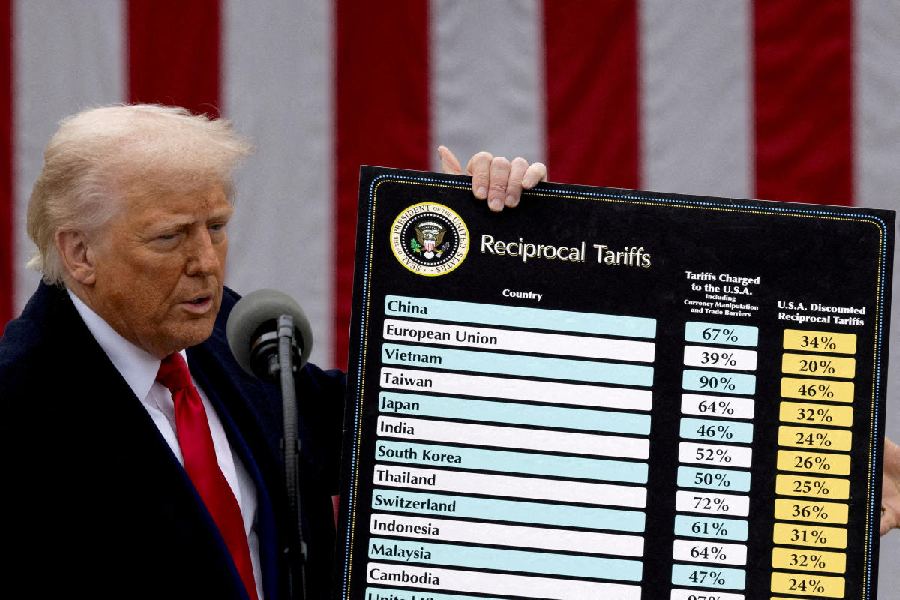
     Eliathamby quickly goes on about the business at hand, the business of which is business, petty trade: Tariffs. Wijetilleke is clear that the USA’s moves are predicated on undermining China’s rise. He does try to explain that all the East Asian miracles, from Japan to Singapore, were fueled by state policy & national enterprises. Wijetilleke does try to effect well that performance called articulate, but he too also cannot be precise. In contrast to sitting President Donald Trump, he calls US President Ronald Reagan ‘diplomatic‘ in his method of imposing the 1982 Plaza Accords, which sought to rein in and hobble Japan’s economy. Reagan’s ‘diplomacy’ was however US-as-usual, accompanied by physical attacks on Japanese vehicles and East Asian people in the Americas more generally. Yet Wijetilleke is by far more relevant and ‘based’ than most of the faces & suits that greet us on these imported screens. He calls for a rigorous & ‘advanced’ National Industrial Policy. But the problem remains, though much more informed about the subject, he lacks the intricacies of an SBD, for such is the juvenile nature of business concourse in Sri Lanka. These petty importers & their media cannot call a spade a spade or a machine tool a machine tool. No ‘face’ is allowed to address the fact that imperialism and their local merchants has not and won’t allow rival industrial economies to grow, certainly not in non-settler colonies dominated by the expatriate quicky-take on an ancient national polity, they prefer to call an island. As SBD always reminded, it’s not because they are selfish, but because it is one of the laws of capitalism, to concentrate & monopolize. SB was, and is, not the only advocate of industrialization, but he’s certainly the only one whose arguments scoured the earth to detail the advances and roadblocks to modern machine-making industrialization, that verboten subject in a non-settler colony such as ours. (see ee Economists, Trump Tariffs – the Clock is Ticking, Kusum Wijetilleke on Face-to-Face)

*

• The Sri Lankan President is in Germany, greeted we are told, by a military salute, just as an English naval ‘strike force’ enters Colombo in his absence! Seig Heil! Germany, just last week, returned 19 decapitated African skulls to New Orleans. A US hospital in that ‘city of jazz’ had sent the crania there in 1872, for the study of African phrenology aka the white supremacist study of physiognomy. Perhaps the Germans wish to appear moral before Sri Lanka’s current President? That is, before they launch into yet another sermon about GSP+ etc – on why their markets are so precious & pure that they wish us to change our laws to suit their current fancies & fashions.

     Yet, they keep refusing to pay reparations to Africa’s Namibia, where they practiced their nascent Nazism – in what became the 20th century’s first genocide (Hitler’s Minister of War Hermann Goering’s father was Imperial Commissioner in Namibia 1885-90). And their current leader Friedrich Merz, an unreconstructed Nazi, keeps sending their latest weapons to kill Russian civilians and soldiers. President Dissanayake will have to present his most concerned ves muhuna to all those Hun sermons. The Nazis always acknowledged ‘white settlers’ as their mentors & older brothers.

     Morality & truth are for slaves, said their infamous German philosopher Friedrich Nietzsche (whose sister failed to colonize Venezuela) – and Europe, with its genocidal (US, Canada, Australia) & settler-colonial satellites (South Africa, Israel, etc) around the world, has to keep reminding us that this is indeed so – by their ‘postmodern art’ exhibition of naked televised horror in West Asia, midst sermonizing about rule of law! The media, in Sri Lanka in particular, also get paid off by the various German NGOs (German Agency for International Cooperation ­– GIZ) & foundations (Friedrich Ebert Stiftung – FES, Konrad Adenauer Stiftung – KAS, Heinrich Böll Stiftung – HBS, etc. The media remain unadulterated agents of MNCs and, more precisely, of the biggest US NGO called NATO! It becomes clear when this media refuse to state clearly that the wars on us, on Palestine & Russia, are nothing but white wars – ‘postcolonial’ academic production notwithstanding – meant to maintain good old imperialism.

*

They are not content to be a cork in the gushing waters

of their time but would ride the crest of the wave &

attempt to direct its course, giving it greater thrust by

whipping up the social forces which constitute

the underlying current… – SBD de Silva,

The Political Economy of Underdevelopment, 1982

15June 2025 witnesses the 7th anniversary of the transition of our very own great economist SBD de Silva. He would have shuddered at being called an ‘economist’. And yet he saw it vital to listen carefully and learn how to challenge the everyday mutterances of those economists, also known as capitalism’s ‘hired prize fighters’.  Nevertheless, he observed, ‘If you wish to really know about the economy, take a walk along the pavement, see what is being sold, where & how it is made.

*

In place of disinterested inquirers, there were hired prize fighters;

in place of genuine scientific research, the bad conscience

& the evil intent of the apologetic.’ – Karl Marx, Capital

*

SBD de Silva strongly felt one has to situate oneself, within the country, to studiously train a point-of-view, dedicating everything one has and can, towards the transformation of the economy. Sri Lanka has no written economic history, he’d lament. Why? Millions of words are printed on tons of imported paper exhibiting our private neuroses & endless shortcomings, our primordial fractiousness, to the world. But our own composite, complex & challenging, yet profound history over, in, on & under this beautiful terrain remains an unexamined enigma. Sri Lanka has, for instance, a preponderance of cultivators, of paddy in particular, farming in different agricultural systems, involving different relationships between people, with different outcomes. Hambantota, Moneragala, Ampara, Batticaloa, Jaffna, Rajarata. Highlands, Dry Zone, Wet Zone. Yet, most are impoverished, with their wealth sucked up by Colombo loansharks & importers, who ‘live on the village, but not in the village’. These merchants & usurers are preventing rural industrialization, which could provide employment during the seasonal gaps in rice cultivation.

     A country refers to millions of living workers who reproduce the country & the world every day. SBD thought, those who call the country an ‘island’, exude a colonial redolence, a perspective pushed by the colonial expatriate & mercenary, the absentee investor, who spent/spends brief sojourns in the country, seeing it though porthole & fort bastion, plantation portico & hotel window, making their fortunes & fleeing: with no long-term commitment to the country & its people…

     SBD de Silva’s 1982 classic The Political Economy of Underdevelopment (PEU) remains a brilliant, awe-inspiring (tho he would despise such adjectives), textual monument to dedicated scholarship, worthy of emulation by scholars everywhere. His introductory chapter examines the state of science & of scientists, the empiricists & the generalizers, the fearless & the frauds, the ‘economists & economizers’ – as once headlined an essay by his also dedicated contemporary GVS de Silva, who challenged economists who claimed to represent only the view from the kitchen.

      For SBD, science developed through ‘a process of interchange’ & challenge: ‘Do you see what I see?’ A person’s work had to be ‘adjusted to already existing work and also pave the way for others’. There was no culture of the university canteen or café brimming with people criticizing & defending the latest scientific theories. Publication has become an isolated act of narcissism to see one’s name attached to ‘ideas in print’; rather, ‘it was supposed to be an expression of one’s social involvement’. He believed humans had a natural urge to relate to society: ‘The social scientist cannot endure loneliness; for him communion is life.’

     Scientific research into society is being bought & sold on the stock market. Ask the World Bank! Publication is a requisite for university teachers to pad a CV, qualify for professorship, assure tenure, give a gloss to their university’s real-estate brand. NGOs arose to help fill that need for diversion, printing out publications en masse, which SB likened to ‘calenderr gahanava vagay’ – calendars being a sure-fire bestseller at new year!

     Corporate publishers bribe professors to demand their books on their syllabi, flooding their overpriced unreadable tomes via the restricted budgets of state (university, public) libraries. The publications end up in basements, in boxes, staring down & daring white ants to indulge their ultra-critical appetites. The universities are supposed to cradle new ideas, but by the 1980s they had become a wasteland for SB. Students only wished a scroll of paper, which declared their possible qualification for a job & tenure, and he thought such seekers could get such papyrus from any academic salesmen with lots of letters behind their names.

     That awful word, imbrication, which has filled so many unreadable postmodern PhD theses of the 21st century, yet perhaps seems the best fit for SBD de Silva’s style of writing: Layered like bricks or tiles, one edge over the other, his carefully honed arguments are layered, tightly fitting to fashion a monument to modern scholarship, a blueprint for a foundation, fortifications, above ground & below, with a roof to build a solid country!

     SBD could spend days on constructing a sentence – one sentence! Choosing, rejecting, savoring & balancing each word. Lean manufacture? Streamlined? Each word was carefully selected so he could then arrange its sound & sense in the correct syntactic order to bring out, sustain, maximize & propel his larger argument. He did the opposite of trying to fill space to impress. He would compare long academic quotations to musical dance sequences thrown in to fill up time or keep an audience awake during a formulaic Hollywood or Bollywood movie – added to pad the requisite number of pages, to qualify as an essay or a thesis. He wondered how intellectual productivity would be commodified, how it could be deemed productive?

     To begin a chapter, SB would declare what he had tried to do so far, and what he was going to try & accomplish next. It was the same with each paragraph, the lead sentence then being explicated in the rest of lines, and woven into his next premise & paragraph. And at the end, he would conclude whether he had accomplished his objective, or failed. He was not afraid to list its shortcomings or the exceptions to his theses. He quipped, that social scientists who live off eternal funding, always ended their tomes with the sentence: ‘More investigation needs to be done…’

     Perhaps such severe prerequisites ensured he would not publish much at all. His only book is what we have bequeathed in words, along with a few articles, secret tape recordings (for he hated to be recorded, saying, ‘But what if I change my mind?’ He also despised the media’s studied superficiality: ‘Let me interview them, what do they know of the economy? Be careful of their cameras!’). So, all we have left to rely on are random notes quickly & unreliably taken & tapped down by an un-stenographic hand on a computer. And he did not give listeners much of a chance. He was old, had only so much time to live… It was like: If you want to know, don’t waste my time. Here it is. One had to listen & listen again. Ask questions, in trepidation, hoping it was the right one. Especially those of us who were not grown to be academics, let alone economists, have had to rely on common sense, which is not that common. Yet, he was always hungry for evidence of & insight into the state of the society, and wished to hear from cultivators, from workers – though he did not believe everything he heard or read. It had to be tested, comparing analysis to the police’s reconstructions of suspects faces through combing memories of facial composition .

     SBD de Silva’s incisive classic PEU scours almost the entire planet, in order to ferret out the deep roots & parasitic florescence of Sri Lanka’s distress. He unearths the different policies imposed on non-settler colonies such as Sri Lanka, compared to those in the imperialist & genocidal & settler-colonial states. We have always said, if we ever got to title a biography of this gentleman who was no gentleman, it would be from one of his favorite utterances, ‘One Thing Leads to Another’. And indeed, this is the very definition of an advancing country – the cascading production of one commodity leading to several new commodities. What the fraudsters who run the plantation, garment, tourism, etc – all nonindustries – simply refuse to do, to invest more in capital accumulation, more in our people…

*

Contents:

Mahinda Rajapaksa: The President who freed a Nation from Fear

June 15th, 2025

Shenali D Waduge

The Moment that Changed a Nation

There comes a moment in every nation’s history when destiny demands a decision. In Sri Lanka, that moment came in 2006. For three decades, the country had endured unimaginable suffering under the LTTE’s reign of terror — a group that pioneered the suicide vest, abducted children for war, assassinated leaders, and massacred civilians without remorse. A generation had grown up with the constant fear of bombs, bullets, and breaking news of death. For too long, the world stood by even though 32 nations had banned LTTE — even worse, many powerful nations and NGOs enabled the violence by their silent support.  Mahinda Rajapakse was defending the Buddha Sasana that was & is the civilizational foundation & future of this sacred island & for that he cannot be found guilty.

This is specifically & covering his service to the Nation & his role as Commander in Chief of Sri Lanka’s Armed Forces.

A leader emerged in 2005. When five Presidents before him hesitatedMahinda Rajapaksa made a bold choice but not before extending the opportunity for peace talks with LTTE-which failed. He chose to end the bloodshed. He did so under the glare of international scrutiny & relentless diplomatic pressure. And in doing so, he not only made history — he gave a nation its future back. But it cost him their wrath & hatred & impetus for revenge.

A Nation under siege — The Reality before 2006

From mid 1970s to 2006, Sri Lanka saw:

  • Over100,000 lives lost to terrorism.
  • Multiple suicide bombingsacross every district & province of Sri Lanka.
  • Assassinations of Presidents, Ministers, unarmed civilians and even moderate Tamil leaders not to mention killing a foreign Prime Minister on foreign soil.
  • Child soldiersabducted from Tamil families and forced into war. A group claiming to represent their own, kidnapped their own & turned them into killers.
  • Churches and NGOs used to convert & as covert logistics hubsfor separatist propaganda.
  • Foreign-funded human rights” groups kept silent on LTTE atrocities but jumped to condemn the Armed Forces.

All their hypocrisies should now be exposed.

Families feared letting children go to school. Commuters feared boarding buses. Parents took separate buses so if anything, untoward happened at least one would be alive. Every ambulance siren was followed by heartbreak. The UN, diplomats, and Western governments watched — some even harbored LTTE fundraisers under the pretext of asylum. These are the people who have the audacity to speak on human rights today.

Mahinda Rajapaksa’s turning point: when peace was weaponized

When Mahinda Rajapaksa assumed presidency in November 2005, he inherited a country caught in a false peace brokered by Norway with India’s nod of approval and signed by Prime Minister Ranil Wickremesinghe and the LTTE.— a Ceasefire Agreement signed in 2002 that LTTE abused to rearm and regroup was a farce. Even as talks were underway, the LTTE assassinated army officials, kidnapped civilians, and fortified its territories. A much-loved Tamil foreign minister Mr. Lakshman Kadiragamar was gunned down inside his own home.

By July 2006, the LTTE’s closure of the Mavil Aru sluice gates, cutting water to over 35,000 Sinhalese and Muslim families, marked the final straw. Water was used as a weapon. The government’s attempt to restore it was met with full-scale attacks.

That was the turning point.

The end of LTTE was precipitated by their own actions.

President Rajapaksa declared:

We gave peace every chance. But the LTTE wanted only war.”

The Leadership Decision: Building the Iron Team

Faced with this growing betrayal, President Rajapaksa made a decision that none before him dared to take. He made it knowing the scale of the consequences.

This is why that decision cannot be forgotten or demeaned using a host of other reasons.

To win a war against an enemy like the LTTE with foreign-backing & support, Mahinda Rajapaksa knew leadership alone was not enough—strategy, unity, and resolve were essential.

He built an unshakeable command structure & rallied the nationalists:

His key strategic appointments:

  • Gotabaya Rajapaksa– Defense Secretary, whose reforms created a war-ready, intelligence-driven military apparatus. Coordinating the war effort with Commanders who did not see eye to eye.
  • General Sarath Fonseka– Army Commander, a battle-hardened soldier who brutally led the armed forces having himself become a victim of a LTTE suicide bomber. He was badly injured in Operation Yaldevi having being shot through the lung.
  • Air Chief Marshal Roshan Goonetileke– Leader of the air force that neutralized LTTE supply routes.
  • Admiral Wasantha Karannagoda– Architect of naval operations that decimated the Sea Tigers & their ability to provide reinforcements to fight via sea.
  • Admiral Sarath Weerasekera – who led the Civil Defense Forces that protected the villages.

This team transformed a fractured security apparatus into a cohesive, disciplined, and victorious force.

He united the tri-forces and police under a single command structure, streamlined logistics, improved troop morale, and launched a humanitarian-focused military campaign. Let us also not forget the countries China, Pakistan, Israel, Russia that provided the military hardware to defeat LTTE when the nations bullying Sri Lanka today refused to do so. High level delegations were regularly sent to India to brief the of the military-humanitarian situation.

Timeline to Victory (2005–2009): Mahinda’s Strategic Steps

2006 – Ceasefire Ends

  • Mavil Aru marks thefirst major government offensive.
  • LTTE exposed as aggressors; government regains initiative.

2007 – Eastern Province Liberated

  • Thoppigala fallsin July.
  • Civil administration and elections begin in the East (democracy returned after decades)

2008 – Ceasefire Agreement Abrogated

  • OnJanuary 2, 2008, the government formally exits the CFA.
  • Launch of fullNorthern offensive into Kilinochchi and Mullaitivu.

2009 – Total Defeat of the LTTE

  • January 2: Kilinochchi captured.
  • May 16–18: Final battle in Mullaitivu; LTTE leaders eliminated.
  • May 19: President Rajapaksa declares victory in Parliament.

Today we have liberated the whole country from LTTE terrorism.”

Fighting Two Wars: Military Offence & the Diplomatic Siege

As the Sri Lankan forces advanced into LTTE-held territory, the world reacted — not in support, but in sabotage.

Even as the military advanced, another battle was raging—an international campaign to stop the final assault.

Western actors and organizations demanded:

  • Ceasefires that would’ve allowed the LTTE terrorists to regroup.
  • Halts on heavy weapons” even as soldiers were under fire.
  • Humanitarian corridors, which the LTTE turned into cover.

United Nations

Ban Ki‑moon, then UN Secretary‑General (12 April 2009), welcomed a 48‑hour pause in hostilities and urged the Sri Lankan government to uphold humanitarian standards:

I call on the Government forces to adhere scrupulously to the commitments of the Government about non‑use of heavy weapons… This is a terrible conflict that must be ended as soon as possible.”

Rosemary DiCarlo, US Envoy to the UN (27 March 2009), criticized Sri Lankan military shelling in civilian areas:

We are very concerned that the government of Sri Lanka continues its shelling in areas where there are large numbers of civilians… we understand quite a number of civilians have perished because of these attacks.”

Walter Kaelin, UN Special Representative on internally displaced persons (7 April 2009), warned:

…we’ll end up with a bloodbath… this must by all means be avoided.”

European Union

EU Foreign Ministers (24 February 2009) jointly called for an immediate ceasefire:

The EU calls for an immediate ceasefire thereby providing for the establishment of full and unrestricted access…to allow aid to reach… and enable traumatized civilians to leave.”

US, UK, Japan & Norway (co‑chairs)

Diplomats including Hillary Clinton and David Miliband (early April 2009) urged both warring sides to pause:

Clinton and Miliband called for a ‘temporary no fire period’ in the Sri Lanka conflict.” 

Additionally, Hillary Clinton stated publicly:

the entire world is very disappointed… it is causing such untold suffering.”

But President Rajapaksa refused to bow:

I will not betray the soldiers who gave their lives.

Nor the people still trapped under the LTTE.”

International Interference:

  • TheUnited Nations, the EU, and Western embassies continuously demanded ceasefires — even when the LTTE used these to regroup. We can recall the landing of the foreign secretaries from UK & France. They were packed off disappointed.
  • Faith-based NGOs, who never condemned the LTTE’s recruitment of child soldiers, accused the government of genocide” terms they toyed with to generate a propaganda of lies to build a front to rally against the war effort.
  • Western media ran one-sided narratives, ignoring the300,000 Tamil civilians rescued by the army or any of the humanitarian efforts taken by the armed forces.

President Rajapaksa refused to be dictated to. He knew that this war was not just physical, but moral and diplomatic. The enemy had even parked a ship to rescue the terrorist leader.

His refusal to stop the final advance in May 2009, despite direct foreign threats, was a testament to his resolve:

I will not betray the soldiers who gave their lives. 

Nor the people still trapped under the LTTE.”

These statements no Sri Lankan leader would dare utter. But Mahinda Rajapakse did.

When even after 16years elected leaders are shy to praise the War Heroes as Ranaviruwo but soldiers” to appease to political correctness & funding partners, what more is there to say.

Victory — But No Applause, Only Accusations

On May 19, 2009, Mahinda Rajapaksa addressed the nation. Sri Lanka had achieved what no nation in the world had done — it defeated a terrorist group militarily while rescuing civilians simultaneously. The country had peace for the first time in 30 years. People who hid under beds in fear of LTTE have the freedom to mock President Rajapakse. It only displays their caliber.

The Aftermath: Rewarded with Accusations

But instead of recognition & accolades, the West unleashed the UNHRC.

  • They demanded accountability” via legally questionable resolutions without acknowledging LTTE crimes.
  • They imposedsanctions on war heroes – they promoted retributive justice against the war heroes that ended terrorism & restorative justice for the terrorists.
  • They fundedTamil diaspora networks to reignite separatism & now even permit terrorist monuments for a separate State that terrorists fought for.

Not a single Western leader was prosecuted for the bloodshed in IraqLibya, or Afghanistan—yet Sri Lanka, which defeated a terrorist group and saved civilians, was singled out.

The Darusman Report, commissioned by the UNSG, was not a UN-sanctioned inquiry but a biased opinion with zero legal basis, leaked & became the basis for legally questionable resolutions—used to falsely reframe Sri Lanka’s victory as a crime.

The same nations that destroyed Iraq, Afghanistan, and Libya with false intelligence and bombed hospitals with drones had the audacity to judge Sri Lanka.

The UNSG never commissioned a Panel of Experts for Western illegal invasions. But for Sri Lanka — a victory against terrorism — he did. It was an ugly precedent created only for Sri Lanka. The first such created after a conflict ended. A conflict that UN/UNSG /UNHRC had done nothing to stop. Statements never ended terrorism. The hypocrisy was deafening.

Warning: The Milosevic Trap — and why Sri Lanka must never repeat it

Slobodan Milošević was falsely accused of genocide, jailed, and died mysteriously in prison. 14 years later, he was exonerated — but it was too late. He was not alive to be told he did not commit war crimes. This was the punishment the West gave him. Ironically, Serbia was also accused of killing 40,000 which ended up being less than 2000.

They are trying to do the same with Mahinda Rajapaksa. His reputation was targeted. His popularity demonized. His victory reframed as a crime. But the people saw through it. He lives. And he must be honored while alive — not mourned in regret.

The Legacy of a National Liberator

History is written by the powerful. But truth is written by the people. 

The People of Sri Lanka must do their duty by a leader that has outshone all post-independent elected leaders. 

Mahinda Rajapaksa:

  • Freed a nation from 30 years of terrorism,
  • Rescued hundreds of thousands of Tamil civilians,
  • Resisted international pressure with dignity and courage,
  • Showed the people of the North & East development that they had never seen under LTTE rule.
  • And proved thatSri Lanka does not need to be lectured by colonizers, but led by patriots.

He is not a war criminal.
He is not a dictator.
He is the liberator of Sri Lanka.
And it’s time we tell the world the real story. The one’s that spread lies to tarnish his image are those either hired, full of hatred, envy & jealousy as they can never match up to him.

Let the Record Show:

If Sri Lanka breathes peace today, it is because one man made the hardest decision of all on behalf of the entire Nation.
Mahinda Rajapaksa deserves not accusations, but admiration. Not sanctions, but salutes.

What can the Nation do to show their appreciation:

  • Build a Defender of the Nation” national monument – commemorating Mahinda Rajapaksa, the tri-forces, and the rescued Tamil civilians — side by side with inscription:

A nation united, a terror defeated — under one flag, one leader, one army.”

  • Publish a People’s Declaration of Gratitude – signature campaign to defend his legacy against false war crimes accusations, acknowledge the peace he restored, thank his for the development North & East saw thereafter.
  • His political leadership must become a lesson in school textbooks alongside the leadership efforts that led to the War Victory.
  • A documentary film The Man who decided to end Terror” – covering LTTE terror, betrayal by international actors, heroism & humanitarianism of the armed forces and the change North & East saw after LTTE was defeated.
  • A Rajapakse Doctrine” for Global South Sovereignty – a policy & research platform that promotes national unity, sovereign decision-making, resistance to foreign interference, Sri Lanka’s counter terrorism model in patriotic think tanks & He will share with leaders like Nkrumah Sankara, Putin – everyone who resisted imperial agendas.

The West has assassinated or overthrown countless leaders who stood up to them — from Lumumba to Gaddafi, Saddam to Allende, Sankara to Milošević.
But Mahinda Rajapaksa survivedsucceeded, and stood firm.

That alone demands not just respect, but a national duty to protect his legacy.

He is the only living President in the world who defeated terrorism militarily — and gave his people peace. That legacy is not his alone. It belongs to the people. Let us defend it, honor it, and carry it forward.

Shenali D Waduge

Special Message from Hazrat Mirza Masroor Ahmad  – Ahmadiyya Khalifa on Global Tensions and Muslim Unity.

June 15th, 2025

by A. Abdul Aziz,

Source: MTA International.

At this time the possibility of war is expanding, with Israel having attacked Iran and the global situation growing increasingly dire. Muslim countries remain asleep and Muslims are neglecting the power of prayer. May Allah grant them wisdom. It is imperative that Muslims unite, develop a strong identity and focus on prayer. All nations face threats, and only through unity and devotion can Muslims overcome these challenges.

(Friday Sermon, 13 th June 2025)

London opticians donate SMART classroom to rural Sri Lankan school children

June 15th, 2025

By Philippa Bassett

A fund-raising initiative inspired by Sri Lankan Sujith Weerasinghe, Specsavers North West London Regional Relationship Manager, has resulted in a primary and secondary school being supplied with laptops, iPads, textbooks, school bags and a SMART classroom.

Donations were raised by store partners from the North West London region who wanted to support the ‘My Hope UK Lanka Foundation’ charity founded by Sujith in 2012.

The primary aim of the charity is to provide practical assistance to underprivileged Sri Lankan communities and children who lack access to key healthcare and essential items such as sight tests and in the case of local children, shoes, school books and stationery.

Commenting on the Specsavers regional support Sujith said: ‘I was approached by the North West London regional chair and vice chair, Lyndon Matroos and Raj Kukadia, who wanted to make a difference and support the Foundation and build on the support garnered by the previous chair, Tejal Sheth.

(Back row centre) Saman Nammunige, Features Journalist, Sujith Weerasinghe, Specsavers North West London Regional Relationship Manager and Dilmith Weerasinghe with pupils and teachers from the primary school in Polonnaruwa, Sri Lanka.

‘The funds raised were used to donate a SMART interactive digital classroom to a secondary school in Polonnaruwa, North Central Province, and a primary school in Kandy, North Central Province, where the district educational director cut the ribbon to re-launch the state-of-the-art classroom.’

In April, over 50 children in Polonnaruwa received a pair of new school shoes and text books. Musical instruments were supplied to both schools and there are on-going plans by the charity to support further education for children in the region, including the supply of musical instruments for those with particular talents. The charity continues to provide practical assistance and hope to those children most in need.

Commenting on the achievements to date, Sujith said: ‘These donations are life changing, as they give hope to the children. Plus, more importantly it builds on their personal skills, developing their confidence, self-worth and self-esteem.

‘As a team and organisation, we remain committed to on-going projects to provide support to remote village schools in Sri Lanka.’

Global war? Day 615; 11 elemental facts, and Mossad

June 15th, 2025

Mazin Qumsiyeh

Jun 13, 2025

Yesterday I told staff that there will be an attack on Iran and to stock on food. It started few hours later. It does not take a genius to figure these things out as all the signs were clear. Trump (Epstein/Mossad videos holding him by the balls) told Iran to surrender to his (Israeli) demands within 60 days. Attack happened on day 61 and only a few days after Iran released secret documents proving that the International Atomic Energy Agency (which is allowing Israel” to have many nuclear bombs) is infiltrated by the Mossad. Is anyone surprised at the turn of events? It maybe worth repeating elemental facts:

1) Zionism is a global racist political movement of which Israel” as a state is merely a stage and a sub-project (the goal is global domination).

2) This project is predicated and built on the largest mass grave and concentration camps in modern history. Liquidating Palestinians and Palestine is a prerequisite for expansion of the project. Conversely Palestinian resistance/steadfastness is also key to ending humanity’s nightmare (see http://qumsiyeh.org/popularresistanceinpalestine/ )

3) Half a million Palestinians have been massacred since 1948

4) Now 8.5 million Palestinians are refugees/displaced people.

5) The Gaza Strip is now the largest (and only) extermination camp on earth.

6) Israel cut off the internet access to the Gaza strip so the extermination/ genocide will stop being broadcast

7) International law was discarded (US veto and spineless politicians arund the world).

8) Zionism runs the US and both engage in war crimes and crimes against humanity.

9) Both empires are run by megalomaniacs not very different than Hitler, maybe only less intelligent and timed when a global war will have no winners.

10) Leaders of the vassal states helping Israel (Egypt, Jordan, Saudi Arabia, UAE, Qatar, the new government of Syria, etc.) are also clueless about the shifting quick sands under their feet. They will soon be discarded by their masters.

11) the concomittant genocide and ecocide is bad for ALL: those who condone it, support it, or neutral to it. No one will be immune from the carnage.

We are living in a period of transition and the old empires are decaying. This is the time of monsters.. Empires start wars, stretch themselves too thin, then collapse. Meanwhile

weapons manufacturers propser, people die, gold and oil prices will continue to go up. So will national debts of states like the USA. Common people get poorer while the rich get richer. Many will have insouciance and denial about the grim fate they help create to others and to themselves. But the global uprising seems to be growing. We live in predictable and interesting times. You can either be active and shape your future or let the evil forces shape the future for you (and they will come for you after they finish with people in our region). No Kings” (US regime gone too far):Find a protest near you. https://www.nokings.org/ Jeffrey Sachs potent analysis https://www.youtube.com/live/iAi0uFQY_r8 Petition: Stop the genocide https://forms.gle/p8MkZSW2527RKZSj7 Toxic trash in West Bank https://www.tamirkalifa.com/ewaste

Palestinian Civil Society Call to Action Ahead of June NYC and Paris Conferences https://docs.google.com/forms/d/e/1FAIpQLSdYnOD8IiU7F-dsty_Un8lcWgo1IK-K-TuUq2tKztCjKV6-hQ/viewform

Israel raised $5bn in bond sales to US investors as Gaza genocide strained economy: Israel has spent some $67bn to carpet bomb Gaza and slaughter tens of thousands of Palestinians https://thecradle.co/articles/israel-raises-record-5-billion-through-bond-sales-to-fund-gaza-genocide

The genocide and ecocide continues unabated. Actions speak louder than words. Time is critical. We in Bethlehem are now under siege. All the gates to our ghetto are closed. Gaza continues to be decimated. Silence is deafening.

Stay tuned, stay humane, ACT to keep hope alive

Mazin Qumsiyeh

A bedouin in cyberspace, a villager at home Professor, Founder, and (volunteer) Director Palestine Museum of Natural History Palestine Institute of Biodiversity and Sustainability Bethlehem University Occupied Palestine http://qumsiyeh.org http://palestinenature.org

facebook pages Personal

https://www.facebook.com/mazin.qumsiyeh.9 Institute https://www.facebook.com/PIBS.PMNH

Why Sri Lankans Are No Longer Preferred Immigrants into Finland!

June 15th, 2025

I have met several Sri Lankan Immigrants come to Finland.

As a Sri Lankan in Finland for almost fifty (50) years, most of the Sri Lankans have not learned the Facts-of-Life in Finland, The Happiest Country in the World for eight (8) years consequetive years.

These are the world’s happiest countries in 2025

These are the world’s happiest countries in 2025New Zealand has been ranked 12, while Finland holds on to the top spot.

The most important aspect in Finland is, Punctuality and Time Management, which Sri Lankans lack!

Why Finland Prefer Philippino, Indian, Vietnamese?

Finland prioritizes recruitment from the Philippines, India, and Vietnam due to their strong talent pools, particularly in sectors like technology, industry, and healthcare, and their established processes for exporting talent. These countries also represent a significant portion of work-based permit applicants in Finland. 

What are the most demanding skills in Finland? In 2025, Finland’s most demanding skills include AI and machine learning, Cybersecurity, Data Analysis, and Healthcare expertise, especially Nursing.

The average salary Finland is €4032 (approximately USD 4183) per month.

The bad news first: finding a job in Finland can be tough for non-Finnish-speakers. 

It is most likely, most of the Sri Lankan immigrants to Finland may be deported!

Express Your Opinion – Read What Others Say!
The Independent Interactive Voice of Sri Lanka on the Internet.

Please visit -: http://www.lankaweb.com/

මෙන්න ගම්මන්පිළගෙන් අයෙත් ආන්දෝලනාත්මක සාක්ෂි රැසක් එළියට

June 14th, 2025

Dasatha News

Child Abuse  Crisis in Sri Lanka

June 13th, 2025

Dr Gamini Withana

The problem of child abuse is considerable in Sri Lanka and there is an urgent need to strengthen the services offered to the victims. Urgent steps are needed to safeguard these children who are affected by the abuse. There are many triggers and factors that place children at risk for abuse and neglect. Sri Lanka continues to battle the problem of child abuse. There has been an increase in the number of reported cases of child abuse in the country over the past few years. It was recently reported that 5,891 of child abuse cases were reported in the country from 2012 to 2020. There have been 54 cases of child abuse reported within the first 15 days of this year.  However, there is no national database on child abuse in Sri Lanka. This is a piece of distressing news. 

According to the experts, child abuse and neglect are the most common types of child maltreatment that impact child well-being.  Child sexual abuse, neglect, and corporal punishment are the most commonly prevailing child protection issues in the country.  In 1995, the penal code was amended to require that sexual acts with minors under the age of consent, 16, be tried under the offense of statutory rape, or under Article 365 of the penal code, which defines unnatural sexual acts and grave abuse. But delays in legal proceedings, lack of witness protection, and lack of assistance to victims are discouraging families and victims from reporting cases or seeking help. The ultimate responsibility to protect its nation’s children lies with the Government. The protection of children requires the combined and closely coordinated involvement of key players, with national governments giving the most important lead. The problem of child abuse is considerable in Sri Lanka and there is an urgent need to strengthen the services offered to the victims.

The WHO Definition of Child Abuse 

 The World Health Organization (WHO) defines Child Sexual Abuse (CSA) as the involvement of a child in sexual activity that he or she does not fully comprehend, is unable to give informed consent to, or for which the child is not developmentally prepared and cannot give consent, or that violates the laws or social taboos of society. Child Sexual Abuse Is a serious problem of considerable magnitude and it has profound consequences for the child. It is known to interfere with growth and development and has also been linked to numerous maladaptive health behaviors, and poor social, mental, and physical health outcomes throughout the lifespan. According to a survey, 90% of people sexually exploiting children are known to the children or are people whom the children trust.

Child Abuse -Sri Lanka’s Situation 

Sri Lanka is facing a nationwide crisis of child abuse. The reports on child abuse, neglect, and exploitation are increasing in Sri Lanka as well. Most child sexual abuse victims never disclose and do not receive needed treatment.  According to the figures tabled in the Sri Lankan Parliament in April 2013, there are about 15,000 legal trials pending Nationwide and more than 4,000 (27%) involve some form of violence towards a child. Parents of sexually abused children are scared to tell anyone due to fear of being shamed in society. A recent Audit Report by the National Audit Office said that 42,073 complaints (53%) had not been resolved. The report further said that cases had not been filed for 55 percent of the complaints submitted to the Attorney General within the previous 10 years. In Sri Lanka, there is also a big need for appropriately trained human resources and adequate child protection budgets. Several well-developed countries of the world have well-developed child protection systems, primarily focused on mandatory reporting, identification, and investigations of affected children, and often taking coercive action. However, Sri Lanka is not having such facilities. A lack of resources and weak political will have made it difficult for Sri Lanka to implement past legislation for protecting children.

Child Sexual Abuse  

Sexual abuse of children can be defined as contacts or interaction between a child and an older or more knowledgeable child or adult (a stranger, sibling, or person in a position of authority, such as a parent or caretaker) when the child is being used as an object of gratification for an older child’s or adult’s sexual needs. These contacts or interactions are carried out against the child using force, trickery, bribery, threats, or pressure. The studies have found a high rate of sexual abuse of both boys and girls within the family and in the community. Local newspapers, in recent times, have been carrying a disturbing number of reports on child rape and sexual harassment. A child is abused once every two hours while at least four women are raped a day in Sri Lanka, according to a top police officer.

Sex between a child and an adult is abusive because of the difference in age, use of force, and lack of understanding between them. Even, child sexual abuse never is the victim’s fault. All children and young people under the age of 18 have a right to be safe and should be protected from harm in any circumstances. One of the common factors that are found in child sexual abuse cases is that the abuse is done in return for something beneficial for the victim or perpetrator.

Some Child Sexual Abuse Perpetrators walk free

Often the complaints and cases stuck with no progress and the investigations show that very few of those cases are resolved through prosecutions. Many child abuse perpetrators walk free without facing charges. For instance, recently  Nirantha Edirisinghe and Upul Hewa were involved in serious child abuse and trading in child pornographic material. Nirantha Edirisinghe, was arrested by the Kollupitiya Police following a tip-off that underage boys were being sexually abused. It is alleged that video footage was sold to clients in foreign countries with the help of Upul Hewa who is residing in Australia. The Police seized 135 CDs containing footages of child abuse, a pen drive, hard disk, memory card, camera, and mobile phone from the suspect’s house. Many photographs of children being sexually abused were discovered in the possession of the suspect and Police say footage saved on storage devices such as CDs recovered will be sent to the Government Analyst and Experts in IT, for a full report. The police report indicates that over 20 boys within 10-12 years of age were sexually abused by Nirantha Edirisinghe.  Although this is a serious crime the suspects seem to be manipulating the investigations and obstructing justice. Recently the key investigator Mrs. Waruni Bogahawaththa had been removed from the investigation. Mrs. Waruni Bogahawaththa is a very efficient and experienced woman police officer who handled many child abuse cases successfully. Due to strange circumstances, Mrs. Waruni Bogahawaththa no longer handles this case. According to some reports the suspects have influenced the investigation by various methods. The suspects have spent a lot of money to conceal the crime. Ironically the National Newspapers maintain silence without reporting this child abuse case. We know that corruption remains part and parcel of daily life in Sri Lanka and it is a sad reality.

Nationwide Crisis

Sri Lanka is facing a nationwide crisis of child abuse. The reports on child abuse, neglect, and exploitation are increasing in Sri Lanka as well. According to the figures tabled in the Sri Lankan Parliament in April 2013, there are about 15,000 legal trials pending Nationwide and more than 4,000 (27%) involve some form of violence towards a child. Parents of sexually abused children are scared to tell anyone due to fear of being shamed in society.   Victims and perpetrators of child abuse do not typically self-report to child protection services, therefore the responsibility of detection and reporting falls on the others.

A recent Audit Report by the National Audit Office said that 42,073 complaints (53%) had not been resolved. The report further said that cases had not been filed for 55 percent of the complaints submitted to the Attorney General within the previous 10 years. In Sri Lanka, there is also a big need for appropriately trained human resources and adequate child protection budgets. Several well-developed countries of the world have well-developed child protection systems, primarily focused on mandatory reporting, identification, and investigations of affected children, and often taking coercive action. However, Sri Lanka does not have such facilities. A lack of resources and weak political will have made it difficult for Sri Lanka to implement past legislation for protecting children. Unfortunately, Sri Lanka has a long way to go to achieve globally accepted child protection standards.

Dr Gamini Withana 

NDB Bank Partners with ACH Education to Simplify Overseas Education for Sri Lankan Students

June 13th, 2025

National Development Bank PLC

Demonstrating its continued commitment to empowering Sri Lankans through financial solutions tailored to real-life aspirations, NDB recently signed a Memorandum of Understanding (MOU) with ACH Education, a leading international education consultancy firm. This strategic collaboration aims to streamline the overseas education journey for Sri Lankan students, offering them comprehensive financial and advisory support, making overseas education seameless.

The official signing ceremony took place with the presence of senior representatives from both institutions. Mr. Gihan Punchihewa, Assistant Vice President – Privilege Banking, signed on behalf of NDB Bank, while Ms. Chanaka Palihakkara, Managing Director of ACH Education, represented the consultancy.

With nearly a decade of experience in the international education sector, ACH Education has successfully guided thousands of Sri Lankan students in pursuing their academic dreams in countries such as Australia, the United Kingdom, New Zealand, Canada, and across Europe. Through expert counselling, admissions assistance, and end-to-end visa support, ACH has earned a strong reputation as a trusted partner in overseas education.

Through this partnership, NDB Bank will play a pivotal role in enhancing the overseas education experience by providing seamless banking solutions including education loans, foreign remittances, and other support services vital to studying abroad. By combining NDB’s financial expertise with ACH’s global education consultancy services, students and their families can expect a more integrated and stress-free approach to planning and funding international education.

Speaking on the collaboration, Mr. Gihan Punchihewa remarked, We understand that pursuing international education is both a major milestone and a significant investment. At NDB, we are proud to stand beside students and their families, offering solutions that simplify the financial aspects of this journey. Partnering with ACH Education allows us to provide a truly end-to-end experience that supports both ambition and achievement.”

As part of this broader initiative, NDB in partnership with ACH Education recently conducted a webinar themed Step into the world of learning without borders.” Attended by over 50 participants of the Bank’s affluent clientele, the session was led by Ms. Chanaka Palihakkara, Founder and Managing Director of ACH Education. The webinar served as a valuable platform to raise awareness on global education opportunities while also highlighting NDB’s Student File offering, a comprehensive solution that caters to the financial needs of students pursuing education overseas.

NDB Bank continues to expand its network of partnerships to deliver value-added services that go beyond traditional banking, aligning with its mission of being a bank for all the moments that matter. The partnership with ACH Education exemplifies this commitment, empowering the next generation of Sri Lankans to dream beyond borders by making overseas education seamless

NDB Bank is the fourth-largest listed commercial bank in Sri Lanka. NDB was named Sri Lanka’s Best Bank for Corporates at Euromoney Awards for Excellence 2024 and was awarded Domestic Retail Bank of the Year – Sri Lanka and Sri Lanka Domestic Project Finance Bank of the Year by Asian Banking and Finance Magazine (Singapore) Awards 2024. NDB is the parent company of the NDB Group, comprising capital market subsidiary companies, together forming a unique banking and capital market services group. The Bank is committed to empowering the nation and its people through meaningful financial and advisory services powered by digital banking solutions.

තරාතිරම නොබලා බලවතුන්ට එරෙහිවද නීතිය ක්‍රියාත්මක වෙද්දී ගැසට් කළ “22” නිසා තහවුරු වන හිටපු අගවිනිසුරුවරයෙකුවනජයන්ත ජයසූරිය මහතාවිසින් කළ ආණ්ඩුක්‍රම ව්‍යවස්ථා අර්ථනිරූපණ වැරදි සම්බන්ධයෙන්ද නීතිය ක්‍රියාත්මක වෙයිද?

June 13th, 2025

නීතීඥ අරුණ ලක්සිරි උණවටුන B.Sc(Col), PGDC(Col) සමායෝජක, වෛද්‍ය තිලක පද්මා සුබසිංහ අනුස්මරණ  නීති අධ්‍යාපන වැඩසටහන

2/3ට වැඩි පාර්ලිමේන්තු මන්ත්‍රී බලයක් ඇති මාළිමා ආණ්ඩුව විසින්
තරාතිරම නොබලා වැරදි කළ බලවතුන්ට එරෙහිව නීතිය ක්‍රියාත්මක කරන බවත්, 2024.07.18 දිනට පෙර ජනාධිපති ධූර කාලය වසර 5ක් ලෙස ආණ්ඩුක්‍රම ව්‍යවස්ථාව අර්ථනිරූපණය කිරීම නිවැරදි නොවන බව 2024.07.18 දින නිකුත් කළ  ගසට් පත්‍රයේ පළවූ 22වන ආණ්ඩුක්‍රම ව්‍යවස්ථා සංශෝධන පනත් කෙටුම්පත නිසා තහවුරු වෙද්දී හිටපු අගවිනිසුරුවරයෙකුවන ජයන්ත ජයසූරිය මහතාට එරෙහිවත් ආණ්ඩුක්‍රම ව්‍යවස්ථාව වැරදි ලෙස අර්ථනිරූපණය කිරීම සම්බන්ධයෙන් නීතිය ක්‍රියාත්මක වෙයිද යන්න පිළිබ‍ඳ විද්වතුන් අතර සාකච්ඡාවක් පවතී.

සිය ධූර කාලය තුළදී කරන ලද නීති විරෝධී ක්‍රියාවන්ට එරෙහිව විශ්‍රාම යාමෙන් පසු නීතිය ක්‍රියාත්මක විය යුත්තේ ජනාධිපතිවරුන්ට එරෙහිව පමණක් නොවේ. එය විධායක, ව්‍යවස්ථාදායක සහ අධිකරණ යන පාලන ආයතන 3ටම අදාල විය යුතුය.

ශ්‍රී ලංකා ජනරජයේ පරමාධිපත්‍යය ජනතාව කෙරෙහි පිහිටා තිබීමත්, පරමාධිපත්‍යය අත්හළ නොහැකි බවද, පරමාධිපත්‍යයට විධායක, ව්‍යවස්ථාදායක, අධිකරණ බලය පමණක් නොව මූලික අයිතිවාසිකම් සහ ඡන්ද බලයද ඇතුළත් කර ආණ්ඩුක්‍රම ව්‍යවස්ථාවේ 3වන ව්‍යවස්ථාව දක්වා තිබීම ධූර දරන්නන්ගේ වෘත්තීය වගවීම,වගකීම, යුතුකම ව්‍යාප්තියේ තරම දක්වයි.  

බන්ධනාගාර කොමසාරිස් ජනරාල් තුෂාර උපුල්දෙණිය මහතාට, හිටපු අභියාචනාධිකරණ සභාපති විනිසුරු බන්දුල කරුණාරත්න මහතාට එරෙහිව ක්‍රියාත්මක වූ නීතිය, ජනාධිපති ධූර කාලය වසර 5ක් ලෙස ආණ්ඩුක්‍රම ව්‍යවස්ථාව වැරදි ලෙස අර්ථනිරූපණය කළ බව 2024.07.18 දින නිකුත් කළ ගසට් පත්‍රයේ පළ කරන ලද 22වන ආණ්ඩුක්‍රම ව්‍යවස්ථා සංශෝධන පනත් කෙටුම්පත නිසා තහවුරු වෙද්දී හිටපු අගවිනිසුරුයෙකුවන ජයන්ත ජයසූරිය මහතාට එරෙහිවත් ආණ්ඩුක්‍රම ව්‍යවස්ථාව නිවැරදිව අර්ථනිරූපණය නොකිරීම සම්බන්ධයෙන් නීතිය  ක්‍රියාත්මක කිරීමට 2/3 වඩා වැඩි පාර්ලිමේන්තු මන්ත්‍රී බලයක් සහිත මාළිමාව ආණ්ඩුවට හැකි වෙයිද යන්න මෙම ලිපියෙන් සාකච්ඡා කරයි.

22වන ආණ්ඩුක්‍රම ව්‍යවස්ථා සංශෝධන පනත් කෙටුම්පත නීතිපතිගේ අනුමැතියෙන් 2024.07.18 දින නිකුත් කළ ගැසට් පත්‍රයේ පළ කරමින් ආණ්ඩුක්‍රම ව්‍යවස්ථාවේ 83වන ව්‍යවස්ථාවේ ආ. ඡේදය සංශෝධනය කර ජනාධිපති ධූර කාලය සම්බන්ධව ඇති සාවුරුද්ද/6 යන්න පස් අවුරුද්ද/5 ලෙස සංශෝධනය කිරීමට ආණ්ඩුක්‍රම ව්‍යවස්ථාවේ 78වන ව්‍යවස්ථාව යටතේ 22වන ආණ්ඩුක්‍රම ව්‍යවස්ථා සංශෝධන පනත් කෙටුම්පත ගැසට් පත්‍රයේ පළ කර ඇත. 

(මෙම පනත් කෙටුම්පතේ සිංහල සහ ඉංග්‍රීසි පාඨ අතර වෙනස්කම් ඇත. ඒ මුල් ව්‍යවස්ථාවේ සිංහල සහ ඉංග්‍රීසි පාඨ අතර වෙනස්කම්ද පවතින හෙයිනි. ආණ්ඩුක්‍රම ව්‍යවස්ථාවේ 3 සහ 23වන ව්‍යවස්ථා ඇසුරෙන් එකී භාෂා වෙනස්කම් දීර්ඝව සාකච්ඡා කළ යුතු වේ. මෙම ලිපියෙන් ඒ ගැන සාකච්ඡා කර නැත.)

22වන ආණ්ඩුක්‍රම ව්‍යවස්ථා සංශෝධන පනත් කෙටුම්පත ගෙන ඒමෙන් පැහැදිලි වන්නේ ජනාධිපති ධූරකාලය අදාලව වසර 5යන්න ලෙස මේ දක්වා ආණ්ඩුක්‍රම ව්‍යවස්ථාවේ සංශෝධනය වී නැති බවයි. එය එක්තරා නීති විශාරදයෙකුගේ අතපසු වීමක් බවත් ඒ සම්බන්ධයෙන් ජනතාවගෙන් සමාව ගන්නා බවත් ජනාධිපතිවරයෙකු අධිකරණ සහ නීති ක්ෂේත්‍රයේ ප්‍රධානීන් සහභාගී වූ උත්සවයක්දී ප්‍රසිද්ධියේ ප්‍රකාශ කර තිබුණි.

ඉන් තවත්  පැහැදිලි වන්නේ ආණ්ඩුක්‍රම ව්‍යවස්ථාව වැරදි ලෙස අර්ථනිරූපණය කරමින් ජනාධිපති ධූරකාලය අදාලව වසර 5ක් ලෙස හිටපු අගවිනිසුරුයෙකුවන ජයන්ත ජයසූරිය මහතා විසින් අර්ථනිරූපණය කර ඇති බවයි. ඒ කවර අනාගත බලාපොරොත්තු සහගතවද යන්න විශ්‍රාම යාමත් සමඟ  එක්සත් ජාතීන්ගේ ශ්‍රී ලාංකාවේ නිත්‍ය නියෝජිත ධූරය 2025.05.07 දින ඔහු ලබා ගැනීමෙන් පමණක් පැවසිය නොහැකිය.

ජනාධිපති ධූර කාලය සම්බන්ධයෙන් අර්ථනිරූපණය කිරීමේදී අණ්ඩුක්‍රම ව්‍යවස්ථාමය වැරදි කර ඇති බව 22වන ආණ්ඩුක්‍රම ව්‍යවස්ථා සංශෝධන පනත් කෙටුම්පත හේතුවෙන් කරුණු එළිදරව්වන හිටපු අගවිනිසුරුයෙකුවන ජයන්ත ජයසූරිය මහතා විශ්‍රාම යාමෙන් පසු එක්සත් ජාතීන්ගේ සංවිධානයේ ශ්‍රී ලංකා නිත්‍ය නියෝජිත ලෙස පත් වීම ලබා ගෙන තිබීමද දෛවයේ සරදමකි.

හිටපු අගවිනිසුරුයෙකුවන ජයන්ත ජයසූරිය මහතා තමන් ඉදිරියට ගෙනා ජනාධිපති ධූර කාලය සම්බන්ධ නඩු වලදී ආණ්ඩුක්‍රම ව්‍යවස්ථාව නිවැරදිව අර්ථනිරූපණය කළානම් ජනාධිපති ධූරකාලය සම්බන්ධයෙන් වසර 5ක් ලෙස සංශෝධනය කිරීමට 22වන ආණ්ඩුක්‍රම ව්‍යවස්ථා සංශෝධන කෙටුම්පත 2024.07.18 දින ආණ්ඩුක්‍රම ව්‍යවස්ථාවේ 78වන ව්‍යවස්ථාව යටතේ ගැසට් කිරීමට උවමණා වන්නේ නැත.

ජනාධිපති ධූර කාලය සම්බන්ධයෙන් වරදක් ඇති බවට වූ ආණ්ඩුක්‍රම ව්‍යවස්ථාවේ වැරැද්ද ශ්‍රේෂ්ඨාධිකරණයට පෙන්වා දීමට ගිය මෙම ලිපියේ කර්තෘට සහ තවත් අයෙකුට  ලක්ෂ ගණනින් නඩු ගාස්තු නියම විය.

මීට ඉහත අවස්ථාවකදී සරත් එන්. සිල්වා හිටපු අගවිනිසුරු විසින් තමන් ලබා දුන් තීන්දුවක් සම්බන්ධයෙන් විශ්‍රාම යාමෙන් පසු ජනතාවගෙන් සමාව ගෙන තිබුණි.

22වන ආණ්ඩුක්‍රම ව්‍යවස්ථා සංශෝධන පනත් කෙටුම්පත නීතිපතිගේ අනුමැතියෙන් 2024.07.18 දින නිකුත් කළ ගැසට් පත්‍රයේ පළ කරමින් ආණ්ඩුක්‍රම ව්‍යවස්ථාවේ 83වන ව්‍යවස්ථාවේ ආ. ඡේදය සංශෝධනය කර ජනාධිපති ධූර කාලය සම්බන්ධව ඇති සාවුරුද්ද/6 යන්න පස් අවුරුද්ද/5 ලෙස සංශෝධනය කිරීමට යාමෙන් හිටපු අගවිනිසුරුවයෙකුවන ජයන්ත ජයසූරිය මහතා විසින් ආණ්ඩුක්‍රම ව්‍යවස්ථාවේ ජනාධිපති ධූර කාලය වසර 5ක් බවට අර්ථනිරූපණය කිරීම නිවැරදි නොවන බව තහවුරු වෙයි.

ආණ්ඩුක්‍රම ව්‍යවස්ථාව ශ්‍රී ලංකා ප්‍රජාතාන්‍ත්‍රික සමාජවාදී ජනරජයේ උත්තරීතර නීතිය වන අතර, නිදහස, සමානත්මතාවය, යුක්තිය, මූලික මානව අයිතිවාසිකම් හා අධිකරණයේ ස්වාධීනත්වය සකල ජනතාවට සහතික කරමින් ප්‍රජාතාන්ත්‍රික සමාජවාදී ජනරජයක් බවට ශ්‍රී ලංකාව පත්කිරීම සඳහා ජනතාවගේ වරම අනුව එය සම්මත කර ඇති අතර

විධායකය, ව්‍යවස්ථාදායකය සහ අධිකරණය ක්‍රියා කළ යුත්තේ ආණ්ඩුක්‍රම ව්‍යවස්ථාවේ සීමා නියම අනුවය. තමන්ගේ අනාගත පෞද්ගලික බලාපොරොත්තු මත ආණ්ඩුක්‍රම ව්‍යවස්ථාව අර්ථනිරූපණය කිරීමට යාම ආණ්ඩුක්‍රම ව්‍යවස්ථාව ආරක්ෂාකර අනුගමනය කිරීමේ ප්‍රතිඥාවද / දිව්රුම් දීමද කඩ කිරීමකි.

බන්ධනාගාර කොමසාරිස් ජනරාල් තුෂාර උපුල්දෙණිය මහතාට එරෙහිව නීතිය ක්‍රියාත්මක කළා මෙන්, හිටපු අභියාචනාධිකරණ සභාපති විනිසුරු බන්දුල කරුණාරත්න මහතාට එරෙහිව නීතිය ක්‍රියාත්මක කළා මෙන් 22වන ආණ්ඩුක්‍රම ව්‍යවස්ථා සංශෝධන පනත් කෙටුම්පත ගෙන ඒමට හේතු වූ ආණ්ඩුක්‍රම ව්‍යවස්ථාව වැරදි ලෙස අර්ථනිරූපණය කළ හිටපු අගවිනිසුරුයෙකු වන ජයන්ත ජයසූරිය මහතාට එරෙහිව නීතිය ක්‍රියාත්මක කිරීමට මාළිමා ආණ්ඩුව සමත් වෙයිද නොඑසේ නම් වැරදි කළ අයට එරෙහිව නීතිය ක්‍රියාත්මක වන්නේ වෙනත් තෝරාගන්නා අරමුණක් හෝ අරමුණු වෙනුවෙන්ද යන්න පැවසීමට තවම කල් වැඩිය.

විධායක ජනාධිපති ධූරය සම්බන්ධ ආණ්ඩුක්‍රම ව්‍යවස්ථාවේ විධිවිධාන අතරින් එනම් ආණ්ඩුක්‍රම ව්‍යවස්ථාවේ VIi වන පරිච්ඡේදයේ 30වන ව්‍යවස්ථාවේ සිට 41වන ව්‍යවස්ථාව දක්වා ඇති ව්‍යවස්ථා අතරින් ජනාධිපති ධූරකාලයට අදාල එනම් ආණ්ඩුක්‍රම ව්‍යවස්ථාවේ 30.2 අනුව්‍යවස්ථාවට අදාල සංශෝධන පමණක් ජනමතවිචාරණයක් මගින් ජනතාව අනුමත කළ යුතු බව සිංහල ආණ්ඩුක්‍රම ව්‍යවස්ථාවේ 83වන ව්‍යවස්ථාවේ දක්වා ඇත්තේ ඇයි? යන්න පිළිබඳවද විද්වතුන් සාකච්ඡා කළ යුතුය.

විධායක ජනාධිපති ධූරය සම්බන්ධයෙන් ආණ්ඩුක්‍රම ව්‍යවස්ථාවේ ඇති 30.2 අනුව්‍යවස්ථාව හැර ජනාධිපති ධූරයට අදාල වෙනත් ව්‍යවස්ථාවක් සංශෝධනය කිරීමට හෝ ඉවත් කිරීමට ජනමතවිචාරණයක් මගින් ජනතාවගේ අනුමැතිය ලබා ගැනීම අවශ්‍ය බව ආණ්ඩුක්‍රම ව්‍යවස්ථාවේ 83වන ව්‍යවස්ථාවේ දක්වා නැත. එනම් ආණ්ඩුක්‍රම ව්‍යවස්ථාවේ 83වන ව්‍යවස්ථාවට ඇතුළත් වී ඇති ජනාධිපති ධූරයට අදාල එකම ව්‍යවස්ථාව වන්නේ 30.2 අනුව්‍යවස්ථාව ය.

ආණ්ඩුක්‍රම ව්‍යවස්ථාවේ ජනතාවගේ පරමාධිපත්‍යය දැක්වෙන 3වන ව්‍යවස්ථාවේ දැක්වෙන්නේ පාලන ආයතනයක් ලෙස විධායකය පැවතීම මිස ජනාධිපති ධූරය සම්බන්ධයෙන් එහි දැක්වෙන්නේ නැත. ආණ්ඩුක්‍රම ව්‍යවස්ථාවේ 4. ආ අනුව්‍යවස්ථාවේ ජනතාව විසින් තෝරා පත්කරගන්නා ජනාධිපති ගැන සඳහන් වුවද එම ව්‍යවස්ථාව ද ආණ්ඩුක්‍රම ව්‍යවස්ථාවේ 83වන ව්‍යවස්ථාවේ ඇතුළත් කර නැත.

එනම් ජනාධිපති ධූරයට අදාල 30.2 අනුව්‍යවස්ථාව හැර ජනාධිපති ධූරයට අදාල අනෙක් ව්‍යවස්ථා සංශෝධනය කිරීමට ජනමතවිචාරණයක් මගින් ජනතාවගේ අනුමැතිය ලබා ගත යුතු බව එක එල්ලේම ආණ්ඩුක්‍රම ව්‍යවස්ථාවේ 83වන ව්‍යවස්ථාව දක්වන්නේ නැත.

මේ සම්බන්ධයෙන්ද මෙම ලිපියෙන් සාකච්ඡා කිරීමට අදහස් නොකරයි.

ලක්ෂ ගණනින් නඩු ගාස්තු නියම කළ ශ්‍රේෂ්ඨාධිකරණ නියෝගවලින් පසු ආණ්ඩුක්‍රම ව්‍යවස්ථාවේ 83වන ව්‍යවස්ථාව සංශෝධනය කිරීමට 2024.07.18 දින ගැසට් කළ “22” නීතියක් නොකළොත් ජනාධිපතිවරණය වසර 6කින් වන ආකාරය, ශ්‍රී ලංකා ජනරජයේ පරමාධිපත්‍යය අනුව ශ්‍රේෂ්ඨාධිකරණය විසින් ආණ්ඩුක්‍රම ව්‍යවස්ථාව අර්ථනිරූපණය කළ යුත්තේ සිංහල සහ ඉංග්‍රීසි ආණ්ඩුක්‍රම ව්‍යවස්ථාවලින් කුමන භාෂාවෙන් ඇති ආණ්ඩුක්‍රම ව්‍යවස්ථාව අනුවද , අධිකරණ තීරණ අනුගම්‍ය පූර්වාදර්ශය ඇතුළු පරිච්ඡේද 10කින් යුත් මෙම ලිපියේ කර්තෘ විසින් සංග්‍රහ කර ඇති 11වන නීති කෘතිය වනආණ්ඩුක්‍රම ව්‍යවස්ථාවේ 70 ව්‍යවස්ථාව සංශෝධනයට 2002 ජනමතවිචාරණයක් අවශ්‍ය වීම, 2015 දී ජනමතවිචාරණයක් අවශ්‍ය නොවීම, සර්ව සාධාරණත්වයේ අයිතිවාසිකම සහ අධිකරණ තීරණ අනගම්‍ය පූර්වාදර්ශය” ISBN 978-955-38965-6-8

නීති කෘතියේ තෙවන මුද්‍රණයද සීමිත පිටපත් සංඛ්‍යාවක් මුද්‍රණය කරන හෙයින් පිටපතක් ලබා ගැනීමට පාඨකයන්ට ඉල්ලුම් කළ හැකිය.

එමෙන්ම ලක්ෂ ගණනින් නඩු ගාස්තු නියම කළ ශ්‍රේෂ්ඨාධිකරණ නියෝගවලින් පසු ආණ්ඩුක්‍රම ව්‍යවස්ථාවේ 83වන ව්‍යවස්ථාව සංශෝධනය කිරීමට 2024.07.18 දින ගැසට් කළ “22” නීතියක් නොකළොත් ජනාධිපතිවරණය වසර 6කින් වන ආකාරය සහ “22” ගැසට් කිරීමට හේතු වූ ආණ්ඩුක්‍රම ව්‍යවස්ථාවේ වැරැද්ද කළේ කවුද මැයෙන් නීති අධ්‍යාපන වැඩසටහනක් 2025 ජූනි 21 සෙනසුරාදා පෙ.ව. 9.00 – ප.ව. 3.00 දක්වා 09, කොළඹ පාර, හඳපාන්ගොඩ වෛද්‍ය තිලක පද්මා සුබසිංහ අනුස්මරණ නීති අධ්‍යාපන වැඩසටහන් දේශන ශාලාවේදී පැවත්වීමට කටයුතු යොදා ඇති අතර ආසන කලින් වෙන්කර ගැනීමටද අවස්ථාව සළසා ඇත.

http://neethiyalk.blogspot.com/2025/06/22_13.html?m=1

නීතීඥ අරුණ ලක්සිරි උණවටුන
B.Sc(Col), PGDC(Col) සමායෝජක,
වෛද්‍ය තිලක පද්මා සුබසිංහ අනුස්මරණ  නීති අධ්‍යාපන වැඩසටහන.
දුරකථන 0712063394
2024.06.09

Half the year gone, 8 SL missions still headless

June 13th, 2025

Courtesy Daily Mirror

Colombo, June 12 (Daily Mirror) – The new government which recalled all 16 Sri Lankan heads of mission in December, last year is yet to fill up eight of them despite the lapse of half of the year now, the Daily Mirror learns.

Out of these 16 missions, the government took measures to fill vacancies only at eight missions, and seven of them were with political appointees in stark contrast to its pre-election rhetoric that Sri Lanka’s Foreign Service would not be politicized. The ruling National People’s Power (NPP) was a major critic of the previous governments for politicization of the Foreign Service.

However, it has now made political appointments to the Sri Lankan missions in key countries such as the United Kingdom, Japan, South Africa and the United Arab Emirates (UAE). Cuba and Pakistan are the other two countries where appointments have been made from outside the service. Former Chief Justice Jayantha Jayasuriya has been appointed Permanent Representative to the United Nations in New York.

The government recalled all the political appointments made by the previous government but not Sri Lankan Ambassador in Washington DC Mahinda Samarasinghe. It triggered concerns among career diplomats.

The past governments used to make political appointments at will, and most of the time relatives of politicians- sons, daughters, daughters’ in law, and siblings – were chosen. However, the new government has not picked relatives of ruling party politicians for diplomatic posts.

Yet, it has failed to make appointments to eight missions even after six months. At the moment, Sri Lankan missions in Malaysia, Kenya, Oman, Nepal, the Seychelles, Iran, Oman and Indonesia operate without heads of missions.

The government is also hamstrung in finding enough diplomats to run all the missions and various divisions in the Foreign Ministry because of lack of recruitments to the Foreign Service. There was a batch recruited last year. Before that, the last recruitment was made in 2018 after a gap of three years.

President invites German investors to explore new opportunities in tourism sector

June 13th, 2025

Courtesy Daily Mirror

Colombo, June 13 (Daily Mirror) – Highlighting the new investment opportunities emerging in Sri Lanka’s tourism industry, President Anura Kumara Dissanayake extended an open invitation to German investors to explore and participate in tourism-related ventures in the country.

The President, currently on an official visit to the Federal Republic of Germany, met with representatives from the German Tourism and Travel Industry Associations and Outbound Tour Operators this morning (13) at the Waldorf Astoria Hotel in Berlin. The discussions focused on fostering stronger partnerships between the two countries in the tourism sector.

During the meeting, President Dissanayake outlined the Sri Lankan government’s progressive initiatives aimed at promoting sustainable tourism. He emphasized ongoing infrastructure improvements, global promotional campaigns, and strengthened safety protocols designed to position Sri Lanka as a premier travel destination built on responsible and sustainable practices.

The President also drew attention to key areas of focus, including human resource development within the tourism industry, the promotion of cultural and eco-tourism, and the introduction of environmental protection initiatives. These efforts, he noted, form part of a broader strategy to enhance the tourism sector while safeguarding the island’s natural landscapes and rich cultural heritage.

No criminal offence in sugar tax reduction in 2020: CID tells court

June 13th, 2025

By Bhagya Silva Courtesy Daily Mirror

Colombo, June 13 (Daily Mirror) – The Criminal Investigation Department (CID) informed the Colombo Magistrate’s Court today that the Attorney General has concluded that no criminal offense had occurred in the process of reducing the special commodity levy on imported sugar from Rs. 50 to 25 cents per kilogram, a decision made four years ago. 

Further investigations has been recommended to determine if any party or individual had gained undue benefit or committed acts of bribery or corruption in connection with the tax cut.

This information was presented before Additional Magistrate Keminda Perera during the proceedings related to the ongoing investigations into whether the benefit from the sugar tax reduction, which came into effect at midnight on October 13, 2020, was passed on to the public or wrongfully accrued by certain individuals or groups.

The CID, citing the Attorney General’s opinion, stated that although no criminal wrong doing has been identified in the decision-making process of the tax reduction itself, the Attorney General has advised further inquiries to ascertain whether anyone received an illegal benefit, bribe or had engaged in corrupt transactions in relation to the policy decision.

After reviewing the Attorney General’s guidance and related documents submitted by the CID, the Additional Magistrate instructed the CID to hand over all relevant reports, files and evidence to the Commission to Investigate Allegations of Bribery or Corruption (CIABOC). The Magistrate emphasised that CIABOC should continue the probe to identify whether any public officials or private individuals had committed offenses involving bribery or illicit gains as a result of the sugar tax reduction.

The case arises from a complaint lodged by Mahinda Siriwardena, former Secretary to the Ministry of Finance, Economic Stabilisation and National Policies, prompting the CID to launch an investigation. At the time, numerous parties alleged that the government incurred a loss exceeding Rs. 160 billion as a result of the tax cut and that the expected benefits were not passed on to the public, sparking claims of a large-scale sugar tax fraud.

Uphold the Rule of Law: A call to Sri Lankan authorities to enforce justice without bias or delay on tourist Visa violations

June 12th, 2025

Shenali D Waduge

Sri Lanka is a nation proud of its rich culture, deep religious traditions, and warm hospitality. Tourists from around the world come here to experience our heritage, natural beauty, and vibrant society. Yet, with this privilege comes responsibility — every visitor must respect and abide by Sri Lanka’s laws, customs, and visa regulations. Unfortunately, violations of these rules—whether through ignorance or willful disregard—are increasingly common, threatening our social fabric, security, and international reputation.

The rule of law is the cornerstone of a sovereign nation. It guarantees that every individual—citizen or visitor—is held accountable to the same legal standards, protecting national security, social harmony, and justice without exception. It is imperative that all relevant Sri Lankan authorities — including the Ministry of Foreign Affairs, Department of Immigration and Emigration, Sri Lanka Tourism Development Authority, Sri Lanka Police, and Ministry of Tourism — act decisively and uniformly to enforce laws and visa conditions against all tourists without exception.

Sri Lankans traveling abroad abide by strict rules and regulations governing their conduct. Our citizens face limitations on carrying religious artifacts, bringing traditional foods, and undergo rigorous security screenings that may intrude on personal privacy. They respect foreign laws prohibiting working, preaching, or conducting business on tourist visas.

If Sri Lankans must respect such laws abroad, the same standards must unquestionably apply to all foreign visitors entering Sri Lanka. No exceptions. The law is universal and reciprocal — those who come to our shores on tourist visas must strictly abide by Sri Lankan laws and visa conditions, including the prohibition on unauthorized work, business activities, religious preaching, or any economic activity.

Tourists must respect Sri Lanka’s cultural and religious norms

Foreign tourists on tourist visas must adhere to the legal framework governing their stay. However, reports and observations reveal numerous violations occurring under the guise of tourism — activities that threaten our economy, culture, and sovereignty:

  • Working without proper permits or engaging in business activities on tourist visas, which is illegal.
  • Operating as tour guides or running transport services such as tri-shaws
  • Renting or leasing properties with the intent to sublease for commercial gain, violating visa conditions.
  • Establishing or funding unauthorized religious activities, prayer centers, or proselytizing on tourist visas.

Sri Lanka’s Buddhist heritage and religious customs command profound respect. Yet many visitors violate these norms by:

  • Disrespecting Buddha images, such as posing disrespectfully or wearing tattoos and clothing featuring Buddha’s image.
  • Ignoring dress codes and protocols at temples (not removing shoes, wearing inappropriate attire).
  • Taking unauthorized photographs in sacred spaces.
  • Exhibiting public displays of affection or boisterous behavior frowned upon in conservative society.

Such behavior undermines Sri Lanka’s cultural dignity. Visitors must be educated and, if necessary, penalized to prevent these offenses.

These violations are not minor oversights; they undermine the integrity of our immigration system and the rule of law. Allowing such breaches sends a dangerous message that some are above the law — an intolerable precedent for a nation committed to justice and fairness.

Ministries and Authorities must Act — Now

Responsibility for enforcing these laws falls squarely on key government bodies, including:

  • Ministry of Foreign Affairs
  • Department of Immigration and Emigration
  • Sri Lanka Tourism Development Authority
  • Ministry of Tourism
  • Sri Lanka Police/Tourist Police and law enforcement agencies

These agencies must urgently review existing laws and enforcement mechanisms to:

  • Close loopholes enabling abuse of tourist visa conditions.
  • Strengthen monitoring systems for foreign visitors’ activities including overstay
  • Enforce penalties against individuals and businesses violating visa and immigration laws, regardless of nationality or status.
  • Equip and mandate frontline officers at ports of entry and within the country to detect and prevent illegal tourism-related activities.
  • Collaborate to maintain Sri Lanka’s sovereignty and uphold international commitments.
  • Take action against locals partnering with tourists for profit from illegal activities.
  • Establish a public hotline for reporting violations by tourists.
  • Launch proactive public awareness campaigns and provide clear multilingual information about visa rules and cultural expectations to educate tourists before and during their visit.

No exception, No Excuse — The Law Is Equal for All

The rule of law must be applied impartially and consistently. Whether the violator is from America, Europe, India, China, Israel, or elsewhere, they must be held accountable. Selective enforcement or inaction erodes public trust and compromises national security.

Moreover, law enforcement officials and government personnel who neglect or deliberately ignore violations must themselves face consequences. Impunity breeds contempt for law and invites further disorder.

We also urge foreign diplomatic missions to cooperate with Sri Lankan authorities by advising their citizens on the importance of respecting local laws and visa conditions, fostering mutual understanding and lawful travel.

Preserving Sri Lanka’s Sovereignty, Integrity, and Social Harmony

Sri Lanka must demonstrate zero tolerance for tourist visa abuses and illegal activities under any pretext. Respect for the law strengthens our country’s image, safeguards our people, and secures the benefits of responsible tourism.

Protecting our local communities from exploitation linked to illegal commercial or religious activities by tourists is essential to preserving social harmony and community well-being.

Unchecked violations risk damaging Sri Lanka’s hard-earned reputation as a safe, respectful, and culturally rich destination, directly impacting tourism revenue and local livelihoods, as well as giving a bad name to the countries of origin of these tourists.

We call upon the government and all relevant agencies to enforce justice without delay or bias. The time to act decisively is now.

Timely and consistent action against individual tourist violations is essential. Failure to address these breaches promptly fosters unnecessary negative public sentiment not just against the individual offender but unfairly against the entire country of origin. This breeds unwarranted generalizations and prejudices toward nations with which Sri Lanka shares long-standing historical, diplomatic, cultural, and economic ties. Protecting these valued relationships depends on upholding justice swiftly and fairly, ensuring that one person’s misconduct does not tarnish the reputation of entire communities or countries.

Most of all, Sri Lanka must prevent jungle law & kangaroo courts taking place when people take the law into their hands because the Government & officials looked the other way or neglected their duty.

Preventing Jungle Law, Vigilantism, and Radicalization

Most of all, Sri Lanka must prevent jungle law and kangaroo courts from taking place when people take the law into their own hands because the Government and officials looked the other way or neglected their duty. Inaction must also not leave room for radicals to exploit the situation and justify violent reactions. We must carefully consider every angle and possibility that could be manipulated to create mischief or unrest within Sri Lanka, as the motive to destabilize our nation remains alive and persistent.

Unchecked, these gaps in enforcement can be weaponized by malicious actors — both local and foreign — who seek to destabilize our nation under the guise of grievance or activism. Every Sri Lankan citizen must keep this possibility in mind and be vigilant. We must not allow ourselves to be fooled, provoked, or manipulated into joining any divisive or destructive action that would push Sri Lanka into deeper turmoil.

Timely, visible enforcement of the law — especially in the case of tourist visa violations — is not merely an administrative or Governmental duty. It is a strategic national imperative that protects our social cohesion, international relations, and internal peace, and requires the vigilance of all Sri Lankan citizens for the good of the nation.

Shenali D Waduge

NDB Araliya Unveils Exciting Gifts to Celebrate Women Who Empower the Nation

June 12th, 2025

National Development Bank PLC

In keeping with its commitment to empowering women through meaningful financial solutions, NDB proudly introduces exciting gifts from NDB Araliya, to women who empower the nation”. Running from 1st June to 31st July 2025, this exclusive campaign rewards both new and existing NDB Araliya account holders with special gifts for qualifying deposits made during the promotional period.

NDB Araliya is a dedicated women’s savings account that encourages financial independence, resilience, and long-term planning. This promotion offers women across Sri Lanka the chance to benefit from their savings habits in more ways than one. Customers who deposit Rs.15,000 or above during the campaign period will receive exciting gifts . These gifts serve as thoughtful tokens of appreciation for the trust and loyalty shown by Araliya account holders, and as a further incentive for women to strengthen their financial footing.

Open to both new and existing customers, the campaign reflects NDB’s belief that every woman should be rewarded for taking proactive steps toward securing her future. Whether opening a new account or topping up an existing one, eligible customers can enjoy exclusive benefits during the promotion period.

Beyond the campaign, the NDB Araliya account offers a range of unparalleled benefits designed with women’s financial well-being in mind. These include a free life protection cover of up to Rs.1,000,000 for the account holder and her immediate family, as well as a free hospitalization cover for both the account holder and her loved ones. Additionally the Bank offers a free NDB Shilpa Children’s savings account with a maximum deposit of Rs. 25,000 during child birth as well. In recognition of long-term saving discipline, Araliya customers maintaining a monthly average balance above Rs.25,000 are also entitled to a special gift voucher on their 21st birthday. Additionally, account holders receive a personalized Araliya-branded ATM debit card and many more exclusive benefits.

NDB provides special loan facilities tailored for female entrepreneurs and salaried women, supporting their dreams of launching or growing a business, or simply managing life’s daily needs with greater confidence.

With the Araliya Women’s Savings Account, NDB continues to make strides in creating financial tools that resonate with the evolving needs of women. This promotion is yet another initiative that reaffirms the Bank’s unwavering dedication to recognizing and uplifting the role of women in the economic and social fabric of the nation.

This commitment is also reflected in NDB’s continued efforts through Vanithabhimana, the flagship initiative that honours and celebrates Sri Lankan women who have made remarkable contributions across sectors, driving progress within their communities and beyond.

Customers are encouraged to visit their nearest NDB branch or visit https://www.ndbbank.com/personal-banking/accounts/araliya-women-savings-account learn more about the NDB Araliya account and participate in this limited-time promotion.

INTERVIEW: I’m just a pilgrim

June 12th, 2025

George Galloway

Pepe Escobar. That which does not kill us makes us stronger. In heaven, all the interesting people are missing. Not so on earth

බ්‍රිතාන්‍යයන් විසින් හඳුන්වා දුන් මුල් කාලීන මුදල් බෝගය වෙත ආපසු යාම.

June 12th, 2025

ජර්මානු වෛද්‍ය විද්‍යාලයේ මහාචාර්ය නිශාන් සී විජේසිංහ

බිතාන්‍ය යටත් විජිත සමයේ මෙරටට හඳුන්වාඳුක් නත්තසූරිය ශාකය (Mexican sunflower (Tithonia diversifolia); ඉතා පුලූල් පාරිසරික සහ දේශගුනික තත්වයන් තුල ව්‍යාප්තවේ.

මෙහි බීජ සුලඟින් මෙන්ම ජලයෙනුත් ව්‍යාප්ත වේ.

එහි කඳන් ද පහසුවෙන් සිටුවා වගා කළ හැක.

එහි පරාගනය මී මැස්සන් විසින් ද පැතිරෙයි.

එය කෘෂිකාර්මික වැටවල් ලෙසද භාවිතා කරන ලදී.

ශාක පත්‍ර කාබනික ගොවිතැන සඳහා සහ ශාකසාර ඖෂධයක් ලෙස භාවිතා කරන ලදී.

එහි මල් මී මැස්සන් ආකර්ෂණය කරයි, එබැවින් වල් මී පැණි නිෂ්පාදනය වැඩි කරයි.

ආහාරයට ගත හැකි පිසින තෙල් නිෂ්පාදනය සඳහා ශාකයේ බීජ භාවිතා කරන ලදී.

දුම්කොළ ආක්‍රමණයට පෙර සිගරට් සෑදීම සඳහා එහි විජලනය වූ මල් භාවිතා කරන ලදී.

මගේ මගපෙන්වීම යටතේ; ගමින් ගම, මෙම ශාකය නැවත වගා කිරීම සහ එයින් සකස් කළ හැකි නිෂ්පාදන සැකසීම හරහා ශ්‍රී ලංකාවේ පිරිසිදු ආර්ථිකයකට සහ නැගී එන සමාජයකට නායකත්වය දිය හැකිය.

ශ්‍රේෂ්ඨාධිකරණ තීන්දුවෙන් ඇමති මණ්ඩලයම අමාරුවේ

June 12th, 2025

Udaya Gammanpila

Sri Lanka: 2009 Post-War to Present — UN Precedents, Bias & International Injustice

June 11th, 2025

Shenali D Waduge

A Dangerous Precedent by UNSG Ban Ki-moon

The UN’s actions against Sri Lanka post-2009 remain unprecedented in UN history. Never before has the Secretary-General appointed a Panel of Experts (PoE) to investigate a concluded internal conflict—especially after a recognized terrorist group was defeated. UN Secretary-General Ban Ki-moon’s decision to appoint such a panel in 2010, bypassing both the UN General Assembly and UN Security Council, violated established UN procedures and set a dangerous precedent that undermines the sovereignty of UN member states.

Critique of UNSG Ban Ki-moon’s appointment of the PoE after a Concluded Conflict

1. Violation of Precedent and Neutrality

No Prior Case: Never before in UN history had a Secretary-General appointed a personal panel to investigate a concluded non-international armed conflict in a sovereign state that had defeated a designated terrorist group (LTTE).

  • Ban Ki-moon created a dangerous precedent by initiating an accountability mechanism outside the UN Security Council or General Assembly.
  • He acted unilaterally, using Articles 98 and 99, which are traditionally exercised in ongoing crises or active threats to peace—not post-conflict internal matters.

2. Misuse of Article 98 and Article 99

  • Article 98 allows the Secretary-General to perform duties entrusted by the General Assembly, Security Council, or other UN bodies—yet no such directive was given to Ban Ki-moon regarding Sri Lanka.
  • Article 99 empowers the Secretary-General to alert the Security Council if a situation threatens international peace.

Article 98(1) states: The Secretary-General shall perform such other functions as are entrusted to him by the General Assembly, the Security Council, or the Economic and Social Council.”

Article 99 empowers the Secretary-General to bring to the attention of the Security Council any matter which in his opinion may threaten the maintenance of international peace and security.”

By May 2009:

    • The war had ended.
    • The LTTE had been militarily defeated.
    • Over 290,000 Tamil civilians were rescued and humanitarian efforts were underway.

In short – there was no ongoing threat to peace warranting Article 99’s invocation.

3. Political Motives over Legal Mandate

  • The timing of the PoE’s creation in June 2010—one year after the war ended & one month after Sri Lanka launched its own accountability mechanism the LLRC —suggests the move was not to protect civilians but to appease diaspora lobbies, international NGOs, and Western diplomatic pressure.
  • Ban Ki-moon did not appoint similar panels for:
    • NATO’s bombing of Libya (2011)
    • U.S. drone strikes in Pakistan, Yemen, Somalia
    • Civilian deaths in Iraq, Syria, Afghanistan, or Yemen
  • Why only Sri Lanka? This selective scrutiny exposes the politicization of accountability under his leadership.

4. Bypassing Member State Consent

  • The PoE was not established through any UN resolution.
  • It was not approved by:
    • The General Assembly
    • The Security Council
    • The Human Rights Council
  • Ban Ki-moon relied solely on a Joint Statement with President Rajapaksa on 23 May 2009, which contained no legal commitment to a UN investigation—only a broad pledge to domestic accountability.

Transforming a political statement into a quasi-legal mandate for a panel with no official UN status demonstrates executive overreach.

5. Undermining Sovereignty and Post-War Recovery

  • Sri Lanka was engaged in:
    • Resettling IDPs
    • Demining former LTTE areas
    • Rebuilding schools, hospitals, places of religious worship and roads
    • Rehabilitating 12,000+ ex-LTTE cadres
  • The PoE’s release in 2011 derailed these efforts by:
    • Fueling international hostility
    • Encouraging UNHRC resolutions (2012 onward)
    • Reinforcing diaspora-funded propaganda

This hindered genuine reconciliation and reignited ethnic polarization—ironically undermining the very peace and accountability Ban Ki-moon claimed to promote.

6. Instrument of One-Sided Narrative

  • The PoE explicitly stated it was not an investigation but an advisory mechanism—yet its findings were LEAKED & thereafter used to:
    • Justify UNHRC country-specific resolutions
    • Fuel foreign intervention demands
    • Pressure Sri Lankan Govt to tweak its internal administrative systems including passing Acts.
    • Label the Sri Lankan military as war criminals, while ignoring LTTE atrocities

By focusing exclusively on alleged violations by the state, the PoE whitewashed the LTTE’s decades of terror—suicide bombings, human shields, child soldiers, ethnic cleansing.

The appointment of the PoE by UNSG Ban Ki-moon was a highly irregular, politically driven decision that violated established norms, undermined Sri Lanka’s sovereignty, and set a dangerous precedent of selective justice.

Rather than fostering reconciliation or peace, it emboldened LTTE-linked propaganda, deepened international mistrust, and exposed the UN’s double standards when dealing with terrorism, sovereignty, and accountability.

The Panel of Experts: A Biased Construct

The three-member panel (Marzuki Darusman, Yasmin Sooka, and Steven Ratner) lacked both independence and objectivity. Their selection alone reveals deep flaws:

  • Yasmin Sooka, a EU employee and Executive Director of the Foundation for Human Rights in South Africa, has drawn criticism for using the organization’s resources to support the International Truth and Justice Project (ITJP), which has published numerous reports alleging war crimes in Sri Lanka. Critics argue these reports rely heavily on anonymous or unverifiable sources, raising concerns about methodological rigor and neutrality.
  • Steven Ratner: A former adviser to the U.S. State Department, with a clear Western geopolitical bias. His past work demonstrates preference for responsibility to protect” (R2P) doctrines often used to justify interventions against states opposing Western hegemony.
  • Marzuki Darusman: The panel’s lead, previously involved in politically contentious inquiries, including in North Korea and Indonesia, his reports have regularly drawn criticism for partiality.

The PoE report itself:

  • Was not an official UN document (yet treated as such),
  • Was not mandated by the UNGA or UNSC,
  • Relied entirely on credible allegations” rather than verified evidence,
  • Did not follow due legal standards of evidence,
  • Did not allow Sri Lanka a chance to rebut allegations before publication.

The PoE was a political instrument, not a judicial body.

Post-War Consultative Mechanisms Ignored

From 2006 until the end of the war, a Consultative Committee met fortnightly, with participation from:

  • UN representatives,
  • Diplomatic missions,
  • INGOs and NGOs,
  • Sri Lankan military and government officials.

These meetings allowed for immediate reporting and redress of any grievances. No major concerns were raised during these sessions. Yet, suddenly after May 2009, an avalanche of war crimes allegations surfaced—many pushed by LTTE diaspora fronts or those living overseas who had never been to Sri Lanka.

This post-war shift suggests a deliberate, politically motivated campaign, exploiting humanitarian concerns for geopolitical gain.

UN’s Hypocrisy: Silence on LTTE Crimes

Despite decades of LTTE atrocities—including:

  • Over 300 suicide bombings,
  • Use of child soldiers (estimated 30% of cadres),
  • Targeted assassinations (including Rajiv Gandhi, Sri Lankan leaders, Tamil dissenters),
  • Ethnic cleansing of Sinhalese and Muslims from the North,
  • Attacks on religious places and transport hubs,
  • In fact today, 11 June in 1990 LTTE killed over 600 policemen across police stations in the Eastern Province.

—the UN never officially designated the LTTE as a terrorist organization.

Why?

  • Was it because Western donors used the LTTE as a bargaining tool in the region?
  • Was it geopolitical strategy to destabilize a non-aligned nation?
  • Was it due to diaspora lobbying in powerful UN member states?

Contrast with UN action on other Terrorist Groups

The UN’s treatment of the LTTE stands in sharp contrast to how it dealt with:

GroupUN Action
Al-Qaeda/TalibanUNSC Resolutions (1267, 1373), sanctions, military authorization
ISIS/DaeshGlobal coalition, sanctions, UN resolutions, criminal tribunals
Boko HaramUNSC sanctions, condemnations, multilateral military response
Hezbollah (by some states)Designation, arms embargoes, regional monitoring

Yet the LTTE:

  • Was never condemned by the UNSC inspite of over 30 years of terror
  • Faced no global sanctions,
  • Maintained international fundraising networks with impunity,
  • Its operatives were living in western capitals & openly carrying out propaganda campaigns with foreign politicians even attending them.
  • Enjoyed media, legal, and diplomatic backing in Western states.

This raises a serious question of double standards.

Why the Targeting of Sri Lanka?

Post-war Sri Lanka faced:

  • UNHRC Resolutions (2012–present) disproportionately blaming state forces, even sanctioning select commanders only.
  • Pressure to adopt hybrid courts (violating its Constitution),
  • Ongoing demonization by UN-affiliated special rapporteurs,
  • Biased reporting by Western-funded think tanks and NGOs.

Yet:

  • No LTTE leader has been indicted by any international body,
  • LTTE financiers and front groups continue operations in Canada, UK, and EU,
  • The UN has made no attempt to deliver justice to Sinhalese, Muslim, or Tamil victims of LTTE terror.

The Legacy of UNHRC’s Selective Justice

This era demonstrates:

  • Institutionalized double standards where only state actors are pursued,
  • Weaponization of human rights for regime change or compliance,
  • Diaspora-led lobbying masquerading as global civil society/HR activists
  • The erosion of trust in international justice mechanisms.

UNHRC-Imposed Legislative and Policy Changes in Sri Lanka

Following the UN Human Rights Council’s resolutions from 2012 onwards, Sri Lanka was subjected to significant international pressure to reform its internal laws and establish new mechanisms. However, many of these changes were criticized domestically for being externally imposed, lacking proper consultation, and undermining national sovereignty.

Key legislative and policy actions influenced or pressured by the UNHRC include:

  • Office on Missing Persons (OMP) Act, 2016:
    Established to investigate cases of enforced disappearances during and after the conflict, this commission was a direct response to UNHRC calls for addressing missing persons. While it aimed at reconciliation, questions remain over its effectiveness and independence.
  • Office for Reparations Act, 2018:
    Created to provide reparations to victims of the war, the establishment of this office reflected the UNHRC’s demands. However, critics argue that the process lacked adequate public consultation and that reparations have been insufficient & included for terrorists first.
  • Transitional Justice Mechanisms:
    Under UNHRC and OHCHR guidance, Sri Lanka was pressured to adopt transitional justice frameworks, including truth commissions and investigations aligned with international human rights standards. These mechanisms often conflicted with Sri Lanka’s sovereignty and existing judicial systems, sparking debates on their legitimacy and applicability. The ground reality that all of UN truth mechanisms were all failures.
  • 13th Amendment (Devolution of Power):
    Although enacted in 1987, ongoing UN pressure focused on the full implementation and expansion of devolved powers to provinces as part of a political solution to ethnic grievances, challenging the country’s unitary state structure. A request that directly violates Sri Lanka’s constitution & showcases UNHRC’s blatant violation of UN charter.
  • Prevention of Terrorism Act (PTA) Amendments:
    The UNHRC consistently pushed for reforms to Sri Lanka’s PTA to better align with international human rights norms. Despite some amendments, the law remains in place, and its application remains a contentious issue in domestic and international discourse. Clearly, the aim is to weaken Sri Lanka’s sovereignty.
  • Expansion of the Human Rights Commission’s Mandate:
    The establishment and empowerment of Sri Lanka’s Human Rights Commission, with mandates influenced by UN expectations, aimed at increased monitoring and reporting on human rights issues, often under scrutiny for potential politicization. The current recommendations by HRCSL reveals its politicization & bias.

These imposed or pressured changes, justified by the UNHRC as necessary for reconciliation and accountability, have instead often deepened divisions, raised sovereignty concerns, and fueled political interference—undermining the country’s post-war recovery and reconciliation process.

The post-war period was Sri Lanka’s moment of recovery, reconciliation, and reconstruction. But rather than supporting this transition, the UN—with Ban Ki-moon’s biased precedent, the flawed PoE, and UNHRC’s selective resolutions—chose to punish a sovereign country for defeating terrorism.

Sri Lanka cannot proceed primarily due to the legally questionable actions of the former UNSG & the legally questionable resolutions together with their demands.

Instead of justice, Sri Lanka received politicized scrutiny. Instead of reconciliation, it received externally driven division. The question remains—is the UN committed to justice for all, or only for those aligned with its power blocs?

Shenali D Waduge

මේසතියේ (ජූනි 12 බ්‍රහස්පතින්දා) උසාවියටඑන, ඉන්දියාව සමඟ අත්සන්කළ හොරගිවිසුම් 7 නඩුව

June 11th, 2025

Kaarige Channel Eka | Dharmasri Kariyawasam

ආණ්ඩුව බයේ හැංගිලා ගහපු ගිවිසුමේ ස්වල්පයක්

පක්ෂ පාට වලට වහල් නොවී සිතුවොත් ,පාවදීම කලාවක් නම් වර්තමාන ජනාධිපති එහි පිකාසෝ නොවේද ?

* ඉන්දියාවේ ආරක්ෂාවට තර්ජනයක් වන අවස්ථා වල ලංකාවේ ජල තීරය ඉන්දියාවට පමණක් භාවිතා කිරීමේ අයිතිය

* ආරක්ෂක තොරතුරු ඉන්දියාවට පමණක් ලබා දීම

* ඉන්දියාවේ යුධ සෙබළුන් සහ ආරක්ෂක අංශ වලට ඕනිම අවස්ථාවක ලංකාවට ඇතුළු වීමේ අයිතිය

* ලංකාවේ සෞ ක්‍ය සේවා අනිත් රටවල් හැර ඉන්දියාවේ සෙබළුන්ට පමණක් සේවය ලබා දීම

* ඉන්දියාවේ යුද උපකරණ ලංකවේ ගබඩා කිරීමේ අයිතිය

* ලංකා භුමිය ඉන්දියාවේ යුද උපකරණ නිෂ්පාදනය යට පමණක් අයිතිය දීම

* ඉහත කරනු වෙන කිසිම පාර්ශව යකට හෙළි නොකිරීම

* ගිවිසුමේ සංශෝදනය කිසිවක් අතීතය බලපාන පරිදි වෙනස් කිරීමට නොහැකි වීම

* ගිවිසුමට විරුද්දව නඩු පැවිරිය නොහැකි වීම සහ ගිවිසුමේ වගන්ති අධිකරණය තුල ප්‍රශ්න කිරීමට නොහැකි වීම

* ගිවිසුම අත්සන් කර මාස තුනක් ඇතුලත අහෝසි කිරීමට නොහැකි වුව හොත් ගිවිසුම අවලංගු කිරීමට නොහැකි වීම

Sri Lanka raises electricity price in line with IMF bailout.

June 11th, 2025

Kuwait Times

COLOMBO: Cash-strapped Sri Lanka on Wednesday announced a 15 percent increase in the electricity price to shore up revenues for the state-run utility, in line with conditions imposed by an IMF bailout. The Public Utilities Commission said it allowed the Ceylon Electricity Board (CEB) to charge the higher rates from Thursday, six months after a controversial reduction that pushed the utility into the red. The government had forced a 20 percent price cut on the CEB in January, despite fears that it would cause the government-owned company to lose money and undermine the national budget.


Ensuring cost-recovery and doing away with subsidies is in line with the conditions set by the International Monetary Fund, which granted a four-year, $2.9 billion loan to help salvage Sri Lanka’s economy. The country had declared bankruptcy after defaulting on its $46 billion foreign debt in April 2022, having run out of foreign exchange to finance even the most essential imports, such as food, fuel and medicines. Months of protests over shortages led to the toppling of then-president Gotabaya Rajapaksa in July 2022.


His successor, Ranil Wickremesinghe, secured the IMF bailout and proceeded to cut subsidies and raise taxes. Wickremesinghe lost the September election, but his successor, Anura Kumara Dissanayake, is pushing ahead with the IMF-backed reforms. Inflation, which peaked at nearly 70 percent in September 2022, has dropped sharply, and the country has been experiencing deflation since September. The IMF says Sri Lanka is slowly emerging from its worst meltdown and that the economy has turned around, although risks remain.- AFP

CID-wanted pardoned inmate back in court for separate charges

June 11th, 2025

By Upali Ananda Courtesy Daily Mirror

According to a document issued by the Anuradhapura Prison Superintendent, W.M. Athula Thilakaratne who received a Presidential pardon on Vesak Poya Day, and who is also an accused wanted by the Criminal Investigation Department (CID), appeared before the Anuradhapura Additional Magistrate’s Court today over a different case pending against him.

Athula Thilakaratne also came to the open courtroom of the Anuradhapura Chief Magistrate’s Court to observe the case against the Anuradhapura Prison Superintendent. This case was about the letter stating that Athula was released from case number HC/69/2018, which had been pending before the Anuradhapura High Court.

When the case against the Prison Superintendent was called, Senior Counsel Aravinda Habakkula, appearing for Prison Superintendent Mohan Karunathna, told court that his client had released Athula Thilakaratne according to the law.

The lawyer added that this was confirmed by the fact that Athula himself was present in court at that moment.

While the lawyer was explaining this, Athula Thilakaratne, who was in the open courtroom along with CID officers, raised his hand and informed the Magistrate that he was present.

Athula’s lawyer, Suranga Mohotti, also told court that his client had come to the Anuradhapura Additional Magistrate’s Court today (11) to appear for another separate case against him.

He added that his client was also at the Chief Magistrate’s Court at that time, appearing in open court because he had been legally cleared of case number HC/69/2018, which had been pending before the Anuradhapura High Court.

A group of CID officers, who had reportedly been searching for Athula Thilakaratne to arrest him, were also present in court for the Prison Superintendent’s case.

After the hearing ended, Athula Thilakaratne was seen chatting with his friends within the court premises and later left the area, passing the CID officers.

Tony Blair Institute to provide financial and technical assistance for four key institutions in Sri Lanka

June 11th, 2025

Courtesy Adaderan

A discussion between Dr Nandika Sanath Kumanayake, Secretary to the President and officials of the Tony Blair Institute for Global Change was held today (11) at the Presidential Secretariat.

The purpose of the meeting was to identify the priorities of the new government’s agenda and to express support for its implementation, President’s Media Division (PMD) said in a statement.

During the discussion, attention was focused on examining the programmes implemented by the Ministry of Digital Economy, the Ministry of Agriculture, the Export Development Board and the Board of Investment. 

The aim was to identify their respective priorities and explore the provision of financial and technical assistance to support these areas, the PMD added.

As part of this field visit, officials from the Tony Blair Institute for Global Change have agreed to visit each ministry, observe the respective programmes closely and provide the necessary support, it said.

Among those present at the occasion were Senior Additional Secretary to the President Roshan Gamage, Senior Additional Secretary to the President Russel Aponso, Managing Director of the Asia Pacific Advisory Division of the Tony Blair Institute Jaleel Rashid, Head of Government Relations for the Asia Pacific team Anna Aden, Director of the Department of Agriculture, Livestock, Land and Irrigation (Agri Technology) B.M.V.S. Basnayake, Director (Development) of the Ministry of Digital Economy Janaka Geekiyanage, Director General of the Board of Investment of Sri Lanka Renuka M. Weerakone and Chairman/Chief Executive Officer of the Export Development Board Mangala Wijesinghe, among others.

–PMD

සීවලී කියූ බොරු වැලකට මෙන්න පිළිතුරු

June 11th, 2025

Udaya Gammanpila

” ආණ්ඩුව, බන්ධනාගාර ලොක්කව කොටු කළාද ? ”

June 10th, 2025

3 Minutes – SEPAL AMARASINGHE

Sri Lanka – UNHRC’s Wartime Bias Exposed

June 10th, 2025

Shenali D Waduge

Between 2006 and 2009, Sri Lanka carried out a decisive military campaign to defeat the LTTE—one of the world’s most lethal terrorist organizations. This operation, aimed at ending nearly three decades of terror, was conducted under international observation with humanitarian safeguards in place.

Yet, the United Nations and UNHRC failed to uphold their mandate of neutrality and justice. Instead of supporting a sovereign nation’s right to combat terrorism and rescue civilians, they distorted facts, omitted critical context, and vilified Sri Lanka based on hearsay, propaganda, and political pressure.

This article reveals how the UN system ignored LTTE atrocities, suppressed evidence, and later retrofitted a biased narrative to criminalize the victors while absolving the terrorists. In doing so, the UN betrayed both its Charter and the very civilians it claims to protect.

1. The Justification Behind Sri Lanka’s Military Action

Sri Lanka’s war against the LTTE did not begin in haste—it followed nearly 30 years of:

  • Suicide bombings, assassinations, and ethnic cleansing,
  • Countless failed ceasefires and peace talks used by the LTTE to rearm & regroup.
  • The international community’s apathy despite mounting civilian casualties.

The final trigger came in July 2006, when the LTTE cut off water to 60,000 civilians by closing the Mavil Aru anicut—weaponizing a basic human need. This humanitarian crisis forced the state to act.

President Mahinda Rajapaksa’s government launched a military campaign to:

  • Eliminate terrorism – not Tamils
  • Rescued over 300,000 Tamil civilians held as human shields & hostages by LTTE.

Unlike post-9/11 – a single event resulted in invasions led by Western powers without investigations, Sri Lanka’s actions were proportionate, targeted, and in response to sustained terror—not ideology or geopolitics.

2. UN/UNHRC’s Failure to Acknowledge Humanitarian Context

Despite the legitimacy of Sri Lanka’s objectives:

  • The UN and UNHRC ignored the LTTE’s provocation and history of violence.
  • They failed to acknowledge the world’s largest wartime civilian rescue: 295,000 plus civilians were evacuated and housed by the state.
  • The ICRC and foreign military attachés acknowledged the army’s professionalism and the government’s humanitarian response—but the UNHRC remained silent.

UN Resident Coordinator Neil Buhne confirmed in 2009 that the government facilitated UN access and cooperation in the war zone.

Neil Buhne, the UN Humanitarian and Resident Coordinator in Sri Lanka, is scheduled to travel to Jaffna in northern Sri Lanka today.”

https://www.un.org/sg/en/content/highlight/2009-04-24.html?utm_source=chatgpt.com

3. Sri Lanka’s Civilian Protection Measures vs. LTTE’s Tactics

Government actions:

  • Declared multiple No Fire Zones (NFZs),
  • Airdropped leaflets, used loudspeakers to direct civilians to safety,
  • Maintained supply chains to hospitals and IDP centers in war zones.

LTTE actions:

  • Fired from within NFZs and civilian sites (hospitals, schools),
  • Executed civilians trying to escape,
  • Hid artillery among civilians to provoke return fire – blurring target.
  • Recruited children and detained families in combat zones.

UN field staff and ICRC witnesses observed many of these atrocities—but their testimony was downplayed or excluded from post-war UN reports.

4. UN Complicity through Silence and Suppression

Throughout the final phase:

  • The UN Secretary-General, diplomats, and humanitarian groups repeatedly called for the LTTE to release civilians—calls that were openly defied.
  • The UN failed to escalate these violations into global action or condemnation.
  • Civilian deaths caused by LTTE brutality were falsely attributed to the Sri Lankan military in post-war reports or rarely acknowledged as LTTE crimes.

Despite UN presence and data collection during the war, post-conflict reports disregarded this primary data and instead relied on diaspora narratives and unverifiable claims.

The UN internal panel (2012) criticized the Resident Coordinator for sidelining the Human Rights Adviser, highlighting operational bias:

In early 2009 the senior UN official in Sri Lanka, Neil Buhne, ‘excluded his Human Rights Adviser from key meetings…’ and agency heads at UN headquarters ‘were not instructing them otherwise.’”

https://www.hrw.org/news/2012/11/14/un-act-failings-sri-lanka?utm_source=chatgpt.com

5. Ignored Forums and Consultations During Wartime

The Sri Lankan government held bi-weekly meetings through the Consultative Committee on Humanitarian Assistance (CCHA), attended by:

  • UN agencies,
  • The ICRC,
  • INGOs and diplomats,
  • Civilian and military officials.

No allegations of war crimes were raised during these sessions.

Yet, after the LTTE’s defeat, these same entities reversed course—leveling grave accusations based on post-war speculation, not real-time data.

6. Selective Condemnation: UN’s silence on LTTE War Crimes

The UNHRC has never formally condemned the LTTE for:

  • Suicide bombings,
  • Political assassinations,
  • Use of human shields,
  • Child soldier recruitment,
  • Attacks on hospitals and civilian buses.

Despite being banned by over 30 countries—including India, the U.S., the U.K., and the EU—the LTTE was never sanctioned under UN resolutions like 1267 or 1373, which targeted similar groups such as al-Qaeda and ISIS.

7. UN Officials and the Problem of Manufactured Narratives

Post-war UN reports relied on questionable sources:

  • Internal UN field data was ignored.
  • Officials like Gordon Weiss inflated death tolls without evidence, later admitting the figures were speculative.
  • Reports by the SLMM (Scandinavian truce monitors) documenting 3,800+ LTTE ceasefire violations were dismissed.
  • Post-war, unverified claims by LTTE-linked INGOs and diaspora activists were cited as credible while wartime data and direct observations were erased.

I (Gordon Weiss) was used as a tool to disseminate exaggerated casualty figures that were not based on evidence but on speculation and political agendas… The UN reports became weapons to discredit Sri Lanka rather than impartial assessments.”
— Confession on how UN reports became biased propaganda.

UN Internal Review Panel (2012): The UN failed to meet its responsibility to protect civilians. It was unprepared, under-resourced, and politically compromised. The lack of coordination and effective leadership exacerbated civilian suffering.”
— Direct indictment of UN operational and moral failure.

8. Inaction on Global LTTE Networks

Even after the LTTE’s defeat:

  • Its fundraising arms and front groups operated in Western democracies under humanitarian covers.
  • The UN did nothing to dismantle these networks or prosecute those funding terror.
  • LTTE diaspora members who celebrated terrorism now influence UN lobbying and media narratives.
  • Post-LTTE defeat a former UNHRC head was seen attending pro-LTTE commemorations & making statements reversing her own official statements.

9. What did the UN do to Save Tamil Civilians?

Nothing.

  • No diplomatic intervention,
  • No peacekeeping initiative,
  • No UN effort to demand LTTE release civilians – except the usual statements no one listens to.

Instead, the UN retrospectively blamed the government that rescued those very civilians—while the terrorist group that caused their suffering was never held accountable.

10. Legal misconduct by UNHRC

The UNHRC weaponized human rights law in a context where International Humanitarian Law (IHL) applied.

  • The war was a non-international armed conflict against a banned terrorist group.
  • Yet, the UNHRC selectively quoted human rights clauses to politically shame Sri Lanka—ignoring the rules of armed conflict under IHL.

Their statements during this period were overwhelmingly one-sided, exposing a political—not legal—agenda.

Conclusion: Institutional Betrayal

The UN and UNHRC’s role during Sri Lanka’s final war against terrorism stands as a case study in:

  • Selective justice,
  • Willful blindness to terrorism,
  • Politicized post-conflict revisionism.

Key questions remain:

  • Why was Sri Lanka denied the same rights other nations exercised in defeating terrorism?
  • Why was LTTE brutality whitewashed while Sri Lanka’s sacrifices were criminalized?
  • Why is the UN silent about its failure to save civilians or support their liberation?

Until these are answered, the UN’s credibility in conflict resolution remains not just compromised—but complicit.

Shenali D Waduge

Don’t Fund the Gaza Humanitarian Foundation: It’s a Genocidal Smokescreen

June 10th, 2025

By Medea Benjamin, Courtesy Palestine Chronicle

Gaza aid center was overrun by starving crowds. (Photo: video grab)

GHF has never been about delivering aid. It’s about using the illusion of aid to control the population of Gaza—and to give cover to war crimes.

Recent reports say that US AID is considering giving $500 million to the Gaza Humanitarian Foundation (GHF)—an aid” initiative launched at Israel’s request. At first glance, that might sound like a generous effort to help desperate Palestinians in Gaza. But peel back even one layer, and you’ll find a deadly political scheme masquerading as humanitarian relief.

This is not about helping hungry people. It’s about controlling them, displacing them, and starving them into submission.

Let’s start with some basics. The Gaza Humanitarian Foundation is not a humanitarian organization. It’s a US- and Israeli-backed scheme run by people with no track record in neutral aid work. Its first director, Jake Wood, resigned on May 25, saying the organization failed to uphold humanitarian principles. Then the Boston Consulting Group, which had secretly helped design GHF’s aid operations, pulled out and apologized to staff who were furious about the firm’s complicity in a system that enabled forced displacement and sidelined trusted UN agencies.

GHF brand new director is Johnnie Moore, an American evangelical PR executive best known for helping Donald Trump recognize Israeli sovereignty over Jerusalem and push the US embassy move there—a move that only fanned the flames of conflict.

GHF’s entire premise is rooted in deception. It was launched with Israeli government oversight, without transparency, without independence, and—critically—without the participation of the United Nations or any respected humanitarian agencies. In fact, the UN has refused to have anything to do with it. So have groups like Doctors Without Borders, the Red Cross, and the World Food Programme, whose leaders have warned in no uncertain terms that GHF’s model militarizes aid, violates humanitarian norms, and places Palestinian lives at even greater risk.

GHF has never been about delivering aid. It’s about using the illusion of aid to control the population of Gaza—and to give cover to war crimes.

People in Gaza are starving because Israel wants them to. There are thousands of aid trucks, many loaded with supplies from the United Nations, that—for months—have been blocked from entering Gaza. They contain food, water, medicine, shelter materials—the lifeblood of a besieged civilian population. But instead of letting them through, the US and Israel are pushing their own version of aid: a privatized, militarized operation. Armed US contractors working with the GHF are reportedly earning up to $1,100 per day, along with a $10,000 signing bonus.

The GHF plan is to make aid available only in the south, forcibly displacing people from the north—driving them toward the Egyptian border, where many fear a permanent expulsion is being engineered.

From the very start of GHF’s operations, with the opening of two distribution sites in southern Gaza on May 26, the chaos turned deadly, with the Israeli military shooting at hungry people seeking food. In its short time of operation, nearly 100 Palestinians have been killed and hundreds more wounded. These are not tragic accidents—they are predictable outcomes of militarizing aid.

Let’s also address the fear-mongering claim that when the UN was in charge of aid delivery, food was being stolen by Hamas. There is no credible evidence of this and Cindy McCain, head of the World Food Programme, has publicly refuted this allegation, saying that trucks have been looted by hungry, desperate people.

The real threat to aid integrity isn’t Hamas—it’s the blockade itself, which has created an artificial scarcity and fueled black markets, desperation, and chaos..

To truly help the people of Gaza, here’s what needs to happen:

  • Shut down GHF and reject all militarized aid schemes.
  • Restore full US funding to UNRWA and the World Food Programme—trusted, experienced agencies that know how to do this work.
  • Demand that Israel end the blockade. Let aid trucks in—UN trucks, Red Cross trucks, WFP trucks. Flood the strip with food, medicines, tents.
  • Demand an immediate ceasefire to stop the killing and create space for meaningful relief and political solutions.

The starvation in Gaza is not a logistical failure. It is Israel’s political choice. And GHF is not a lifeline. It is a lie. It is complicity. It is diabolical. And US taxpayers should not be forced to fund it.

– Medea Benjamin is the cofounder of CODEPINK for Peace, and the author of several books, including Inside Iran: The Real History and Politics of the Islamic Republic of Iran. She contributed this article to the Palestine Chronicle.

Addressing the Consequences of Unchecked Immigration Policies

June 10th, 2025

Prof. Sunil Wimalawansa

The United States (USA) currently faces one of its most critical challenges: the unchecked influx of undocumented individuals across its northern and southern borders. Over the past few years, an estimated 31 million undocumented people have entered the country, a figure significantly higher than the official “catch and release” numbers reported by the current administration, which stand at approximately 13 million.

According to the Department of Border Patrol (CBP), over 65% of border crossings  (borders extending thousands of miles) go undetected, underscoring serious gaps in border security and immigration enforcement. Furthermore, intelligence reports have raised concerns that adversarial nations have exploited this porous border by sending an estimated two million individuals with criminal backgrounds and an additional one million military-age men for espionage and destabilization efforts within the United States. This is the 21st century―there is no safe and sovereign nation without secure borders.

The fiscal impact of this demographic shift is substantial. Roughly 20% of the nation’s healthcare (including Medicaid), welfare, and public education budgets are allocated to serving undocumented populations. These are hardly discussed in the mainstream media, but exaggerate how sinful deportations are.  These expenses place a heavy burden on taxpayers and contribute to rising costs of living nationwide, as well as a disturbing rise in violent crime. Although undocumented immigrants represent less than 10% of the total U.S. population, recent data attribute 56% of violent crimes to this group. Such statistics illustrate profound implications for national security, public safety, and social cohesion.

The growing public concern is often met with resistance by certain factions who oppose deportation efforts. These groups—comprising activists, politicians, billionaire donors to disrupt society, and others—organize protests, as happened in Los Angeles last weekend, to prevent the arrest of violent criminals, engage in legal challenges, and even obstruct enforcement through judicial activism by a handful of ideologically motivated federal judges with lifetime tenure.

These obstructions to arresting and deporting known violent offenders compound the risks to community safety and, eventually, the sovereignty of the USA. Those who vehemently oppose deportation (many paid to do so) should, at a minimum, be made to bear the responsibility for housing and financially supporting them, and formally making them pay for the victims of crimes. An official legal approach is warranted for them if they do not want to deport criminal invaders, those trespassers with criminal records, rather than shifting these costs onto the general population.

The persistence of this crisis cannot be justified on social, economic, or security grounds. Alarmingly, many experts view it as a deliberate political strategy aimed at altering the electorate. By granting de facto citizenship (and driver’s licenses) and voting rights through backdoor mechanisms—as observed in states like California—political factions seek to secure a long-term voter base, thus perpetuating their hold on power at the expense of the nation’s stability.

Sri Lanka, as a smaller island nation with distinct cultural and social dynamics, must heed these lessons. Current proposals to allow visa-free access for South Indians in the northern regions and to resettle foreign populations in eastern provinces (already happening at a smaller scale) carry serious risks of repeating similar mistakes as in the USA. These measures threaten national identity and sovereignty, cultural heritage, enhance the economic downturn, and social harmony. For example, prior government decisions to relocate Maldivian nationals and some Bangladeshis brought in. They settled in the eastern regions of the NCP—under the guise of environmental concerns—but driven mainly by political interests—and have already contributed to rising social tensions, violence, and unrest in the mentioned region.

Sri Lanka’s leadership must undertake a comprehensive assessment of the long-term consequences of immigration and population resettlement policies. Stop favoring ethnic minorities for short-term political gain that ends the harmony and peace within the nation.  Prioritizing national unity, preserving cultural traditions, maintaining social stability, and safeguarding sovereignty should be paramount objectives. Failure to act decisively could lead to divisions and disruptions akin to those currently seen in the United States, jeopardizing the nation’s future peace and prosperity.

ලක්ෂ ගණනින් නඩු ගාස්තු නියම කළ ශ්‍රේෂ්ඨාධිකරණ නියෝගවලින් පසු ගැසට් කළ “22” නීතියක් නොකළොත් ජනාධිපතිවරණය වසර 6කින් වන ආකාරය…!

June 10th, 2025

නීතීඥ අරුණ ලක්සිරි උණවටුන B.Sc(Col), PGDC(Col) සමායෝජක, වෛද්‍ය තිලක පද්මා සුබසිංහ අනුස්මරණ  නීති අධ්‍යාපන වැඩසටහන.

2015 දී පැවැත්වූ ජනාධිපතිවරණයෙන් ජයගත් මෛත්‍රීපාල සිරිසේන මහතා විධායක ජනාධිපති බලතල අඩු කර ගැනීම, ජනාධිපති ධූර කාලය සහ පාර්ලිමේන්තුව පවත්නා කාලය වසර 5කට අඩු කර ගැනීම ඇතුලු ආණ්ඩුක්‍රම ව්‍යවස්ථා සංශෝධනයක් ගෙන ආවේය. එය ආණ්ඩුක්‍රම ව්‍යවස්ථාවට 2015 දී සිදු කළ කරන ලද 19වන ආණ්ඩුක්‍රම ව්‍යවස්ථා සංශෝධනය විය. ( 2002 දීද 19වන ආණ්ඩුක්‍රම ව්‍යවස්ථා සංශෝධන පනත් කෙටුම්පතක් පාර්ලිමේන්තුව ඉදිරිපත් වූ නමුත් ශ්‍රේෂ්ඨාධිකරණ විනිසුරුවරුන් 7ක් විසින් එයට ජනාධිපතිවරණයක් නියම වීමෙන් නතර විය.)

2015 දී ගෙන එනු ලැබු 2වන 19වන ආණ්ඩුක්‍රම ව්‍යවස්ථා සංශෝධනය පනත් කෙටුම්පතද ජනමතවිචාරණයක් මගින් ජනතාව අනුමත කළයුතු එකක් බවට එසමයේ සිටම කතිකාවක් පැවතුණද මේ දක්වා එය නීතියක් ලෙස ස‍ළකා ක්‍රියාත්මක වන අතර ඉන් පසු 20 සහ 21 ලෙසද ආණ්ඩුක්‍රම ව්‍යවස්ථා සංශෝධන ආණ්ඩුක්‍රම ව්‍යවස්ථාවට සිදු කර ඇත.

2024 ජනාධිපතිවරණය පැවැත්වීමට පෙර (2024.07.18 දිනට පෙර) පුරවැසියෙකු සහ නීතීඥවරයෙකු විසින් ජනාධිපතිවරණය වසර 5කින් පැවැත්වීම වැරදි බවත්, ආණ්ඩුක්‍රම ව්‍යවස්ථාව අනුව ජනාධිපතිවරණය පැවැත්විය යුත්තේ වසර 6කින් බවට තීරණයක් ඉල්ලා ශ්‍රේෂ්ඨාධිකරණයේ මූලික අයිතිවාසිකම් නඩු පවරා තිබුණි. ශ්‍රේෂ්ඨාධිකරණ ඒ වන විටත් ජනාධිපති ධූර කාලය වසර 5ක් බව අවස්ථා කිහිපයකදීම තීරණය කර තිබූ අතර, මෙම නඩු නිෂ්ප්‍රභා කළ ශ්‍රේෂ්ඨාධිකරණය පෙත්සම්කරුවන් දෙදෙනාට රු. ලක්ෂයක සහ ලක්ෂ 5 ක් ලෙස නඩු ගාස්තු නියම කරනු ලැබීය.

ජනාධිපති ධූර කාලය වසර 5ක් ලෙස ශ්‍රේෂ්ඨාධිකරණය තීරණය කර එය අභියෝග කළ පෙත්සම්කරුවන්ට ලක්ෂ ගණනින් නඩු ගාස්තු නියම කර තිබියදී ආණ්ඩුක්‍රම ව්‍යවස්ථාවේ 83 ව්‍යවස්ථාවේ ආ. ඡේදය සංශෝධනය කරමින් ජනාධිපති ධූර කාලය සහ පාර්ලිමේන්තුව පවත්නා කාලය අදාලවසාවුරුද්දවෙනුවටපස්අවුරුද්දලෙස සංශොධනය කිරීම සඳහා 22වන ආණ්ඩුක්‍රම ව්‍යවස්ථාව සංශෝධන පනත් කෙටුම්පත ගෙන ඒමට නීතිපතිවරයා අනුමැතිය ලබා දුන් අතර, ආණ්ඩුක්‍රම ව්‍යවස්ථාවේ 78වන ව්‍යවස්ථාව යටතේ 2024.07.18 දින නිකුත් කළ ගැසට් පත්‍රයේ එම 22 වන ආණ්ඩුක්‍රම ව්‍යවස්ථා සංශෝධන පනත් කෙටුම්පත පළ වී ඇත.

ආණ්ඩුක්‍රම ව්‍යවස්ථාවේ 83 ව්‍යවස්ථාවේ ආ. ඡේදය සංශෝධනය කිරීමට ගෙන එනු ලැබූ 22වන ආණ්ඩුක්‍රම ව්‍යවස්ථා සංශෝධන පනත් කෙටුම්පතේ සිංහල සහ ඉංග්‍රීසි භාෂා පාඨ අතර වෙනසක් ඇත. සිංහල භාෂා පාඨයේසාවුරුද්දයන්න ස්ථාන 2ක ඇති අතර ඉංග්‍රීසි භාෂා පාඨයේ “six” ලෙස එක් ස්ථානයක පමණක් ඇත. එසේම 22වන ආණ්ඩුක්‍රම ව්‍යවස්ථා සංශෝධන පනත් කෙටුම්පත මගින් සංශෝධනය කිරීමට යන මුල් ව්‍යවස්ථාවේ එනම් මව් ව්‍යවස්ථාවේ සිංහල සහ ඉංග්‍රීසි භාෂා පාඨ අතර වෙනස් කම් කිහිපයක් ඇත. ඉංග්‍රීසි භාෂා පාඨයේ දැක්වෙන “which” යන්නට අදාල සීමාකිරීමක් සිංහල භාෂා පාඨයේ නොදැක්වෙන අතර සිංහල භාෂා පාඨය පුළුල් අර්ථයක් ගෙන එන අතර, එහි ඇති නිපාත මගින් වාක්‍ය කොටස් එකතු කරන තත්ත්වය පුළුල්ව යොදාගෙන ඇත.

සිංහල භාෂාවේ යොදා ගනු ලබන ව්‍යාකරණ රීති සැළකීමේදී ආණ්ඩුක්‍රම ව්‍යවස්ථාවේ 83. ආ. ඡේදය සංශෝධනය කිරීමට ගෙනවිත් ඇති 22වන ආණ්ඩුක්‍රම ව්‍යවස්ථා සංශෝධන පනත් කෙටුම්පත සමාජයේ විශාල කතිකාවක් ඇති කළයුතු ව්‍යවස්ථා සංශෝධනයක් වෙයි. එම ව්‍යවස්ථා සංශෝධනය මගින්සාවුරුද්දයන්නපස්අවුරුද්දලෙස සංශෝධනය කිරීමට යෝජනා කර තිබීම මගින් තවමත් පවතින්නේ සාවුරුද්ද (6) බව නිගමනය වෙයි. (පදමාලා දෙකක් අතර හෝ පාඨ අතර අනනුකූලත්වයක් ඇති වුවහොත් ආණ්ඩුක්‍රම ව්‍යවස්ථාවේ 23වන ව්‍යවස්ථාව අනුව සිංහල භාෂා පාඨය බලපැවැත්විය යුතුය.)

ආණ්ඩුක්‍රම ව්‍යවස්ථාවේ 83 ව්‍යවස්ථාවේ ආ. ඡේදය සංශෝධනය කරසාවුරුද්දයන්නපස්අවුරුද්දලෙස සංශෝධනය කිරීමට යාම ආණ්ඩුක්‍රම ව්‍යවස්ථාවේ සම්පූර්ණ 83 ව්‍යවස්ථාවේම නීතිමය අර්ථ නිරූපණය අනුව විමසා බැලිය යුතු වන අතර ආණ්ඩුක්‍රම ව්‍යවස්ථාවේ 83වන ව්‍යවස්ථාවේ දැක්වෙන අනෙකුත් ව්‍යවස්ථා සමඟද අනුකූලත්වය සහ අදාලත්වය විමසා බැලිය යුතුය. ඒ සමඟම ආණ්ඩුක්‍රම ව්‍යවස්ථාවේ 3වන ව්‍යවස්ථාවේ ශ්‍රී ලංකා ජනරජයේ පරමාධිපත්‍යය ජනතාව කෙරෙහි පිහිටා ඇති බවත්, 23 වන ව්‍යවස්ථා මගින් ජනතාවගේ පරමාධිපත්‍යය බලය ක්‍රියාත්මක කරමින් නිරූපණය කරන නීති පැනවීමේ භාෂාවත් දක්වා තිබීමද අදාල කර ගත යුතු වේ.

ඒ අනුව ජනාධිපති ධූරකාලය වසර 5ක් බව දැක්වෙන ආණ්ඩුක්‍රම ව්‍යවස්ථාවේ 30.2 අනුව්‍යවස්ථාව සහ පාර්ලිමේන්තුව පවත්නා කාලය වසර 5ක් බව දැක්වෙන ආණ්ඩුක්‍රම ව්‍යවස්ථාවේ 62.2 අනුව්‍යවස්ථාවට වන බලපෑමද, මෙම 22වන ආණ්ඩුක්‍රම ව්‍යවස්ථා සංශෝධන පනත් කෙටුම්පත ජනමතවිචාරණයක් මගින් ජනතාව විසින් අනුමත කළ යුතුවන තත්ත්වයක් මතු වුවහොත් දැනටමත් ජනාධිපති ධූරකාලය වසර 5ක් බව දැක්වෙන ආණ්ඩුක්‍රම ව්‍යවස්ථාවේ 30.2 අනුව්‍යවස්ථාව සහ පාර්ලිමේන්තුව පවත්නා කාලය වසර 5ක් බව දැක්වෙන
ආණ්ඩුක්‍රම ව්‍යවස්ථාවේ 62.2 අනුව්‍යවස්ථාව ජනමතවිචාරණයක් මගින් ජනතාවගේ අනුමැතියෙන් තොරව සංශෝධනය වූ ලෙස සළකන්නේ කෙසේද යන නීතිමය තර්කය පැන නගී. එසේම ජනමතවිචාරණයක් මගින් ජනතාවගේ අනුමැතියෙන් තොරව ජනාධිපති ධූරකාලය වසර 5ක් බව දැක්වෙන ආණ්ඩුක්‍රම ව්‍යවස්ථාවේ 30.2 අනුව්‍යවස්ථාව සහ පාර්ලිමේන්තුව පවත්නා කාලය වසර 5ක් බව දැක්වෙන ආණ්ඩුක්‍රම ව්‍යවස්ථාවේ 62.2 අනුව්‍යවස්ථාව පවතින විට ආණ්ඩුක්‍රම ව්‍යවස්ථාවේ 83. ආ. ඡේදයේසාවුරුද්දවෙනුවටපස්අවුරුද්දලෙස සංශෝධනය කිරීමට ජනමතවිචාරණයක් අවශ්‍ය නොවන තත්ත්වයක්ද පැන නගී. මේ නීතිමය අවස්ථා 2ම එකවර විය හැකිද සහ නොහැකිද යන්න විසඳා ගත යුතුය.

ආණ්ඩුක්‍රම ව්‍යවස්ථාවේ 78වන ව්‍යවස්ථාව යටතේ 2024.07.18 දින නිකුත් කළ ගැසට් පත්‍රයේ පළ කරන ලද එම 22 වන ආණ්ඩුක්‍රම ව්‍යවස්ථා සංශෝධන පනත් කෙටුම්පත පාර්ලිමේන්තුවට ඉදිරිපත් කරසාවුරුද්දසහපස්අවුරුද්දයන ආණ්ඩුක්‍රම ව්‍යවස්ථාවේ පවතින මෙම ගැටලුව නිරාකරණය කර ගැනීම ඉක්මණින් ක්‍රියා නොකළහොත් ජනාධිපතිවරණය වසර 5කින් නොව වසර 6කින් බවට නැවත නෛතික ගැටුමක් ඉදිරියේදී හටගත හැකි අතර එහිදී ආණ්ඩුක්‍රම ව්‍යවස්ථාවේ 83.ආ. ඡේදයේ සිංහල සහ ඉංග්‍රීසි භාෂා පාඨ අතර වෙනස්කම් සහ ශ්‍රී ලංකා ජනරජයේ පරමාධිපත්‍යය ජනතාව කෙරෙහි පිහිටා ඇති බව දැක්වෙන ආණ්ඩුක්‍රම ව්‍යවස්ථාවේ 3වන ව්‍යවස්ථාවත්ජනතාවගේ පරමාධිපත්‍යය බලය ක්‍රියාත්මක කරමින් නිරූපණය කරන නීති පැනවීමේ භාෂාව කුමක්ද යන්න දක්වා ඇති ආණ්ඩුක්‍රම ව්‍යවස්ථාවේ 23වන ව්‍යවස්ථාවත්, 2002 දී පාර්ලිමේන්තුවට ඉදිරිපත් වූ 19වන ආණ්ඩුක්‍රම ව්‍යවස්ථා සංශෝධන පනත් කෙටුම්පතට ශ්‍රේෂ්ඨාධිකරණ විනිසුරුවරුන් 7ක් විසින් ලබා දුන් ශ්‍රේෂ්ඨාධිකරණ තීරණයද 2015 දී පාර්ලිමේන්තුවට ඉදිරිපත් වූ 19වන ආණ්ඩුක්‍රම ව්‍යවස්ථාව සංශෝධන පනත් කෙටුම්පතට ශ්‍රේෂ්ඨාධිකරණ විනිසුරුවරුන් 3ක් ලබා දුන් ශ්‍රේෂ්ඨාධිකරණ තීරණයද 2018 දී මෛත්‍රීපාල සිරිසේන ජනාධිපතිවරයා පාර්ලිමේන්තු විසුරුවාහැරීමට එරෙහිව ශ්‍රේෂ්ඨාධිකරණ විනිසුරුවරුන් 7ක් විසින් ලබා දුන් තීන්දුව ඇතුලු නීතිමය තත්ත්වයන් පුළුල් ලෙස සාකච්ඡා කිරීමක් සිදුවනු ඇත.

එහිදී ආණ්ඩුක්‍රම ව්‍යවස්ථාවේ 83.ආ. ඡේදයේ ජනාධිපති ධූර කාලය සහ පාර්ලිමේන්තුව පවත්නා කාලයට අදාල කාරණා සම්බන්ධයෙන්  “සාවුරුද්දයන්න තවමත් පැවතීම සහ 2015 සිට ජනාධිපති ධූර කාලය වසර 5ක් ලෙස සැළකීමේ පටහැනි තත්ත්වයන් නිරාකරණය වනු ඇත.

ජනාධිපති ධූරකාලය වසර 5ක් බව දැක්වෙන ආණ්ඩුක්‍රම ව්‍යවස්ථාවේ 30.2 අනුව්‍යවස්ථාව සහ පාර්ලිමේන්තුව පවත්නා කාලය වසර 5ක් බව දැක්වෙන ආණ්ඩුක්‍රම ව්‍යවස්ථාවේ  62.2 අනුව්‍යවස්ථාවට වඩා ඉහළින් ආණ්ඩුක්‍රම ව්‍යවස්ථාවේ 83වන ව්‍යවස්ථාව පවත්නා අතරජනමතවිචාරණයක් මගින් ජනතාව අනුමත කළ යුතු ව්‍යවස්ථා කවරක්ද යන්න දක්වා තිබීම එයට හේතුවය. එසේම 83වන ව්‍යවස්ථාව සංශෝධනය කිරීමටද ජනමතවිචාරණයක් අවශ්‍ය බව එහි දැක්වේ.

ආණ්ඩුක්‍රම ව්‍යවස්ථාවේ 83වන ව්‍යවස්ථාවේ ආ. ඡේදයේ සිංහල භාෂා පාඨය ආණ්ඩුක්‍රම ව්‍යවස්ථාවේ 3වන ව්‍යවස්ථාවේ දැක්වෙන ශ්‍රී ලංකා ජනරජයේ ජනතාවගේ පරමාධිපත්‍යය ඇසුරෙන් සහ ආණ්ඩුක්‍රම ව්‍යවස්ථාවේ 23වන ව්‍යවස්ථාවේ දැක්වෙන නීති පැනවීමේ භාෂාව ඇසුරෙන් අර්ථනිරූපණය කිරීමට ක්‍රියා කිරීමේදී ආණ්ඩුක්‍රම ව්‍යවස්ථාවේ 24වන ව්‍යවස්ථාව මගින් යම් අධිකරණයකට ඉංග්‍රීසි භාෂාව, නඩු කටයුතුවලදී භාවිතා කිරීමට ලබා දී ඇති අයිතියද සමග නොගැටේ. යම් අධිකරණයකට ඉංග්‍රීසි භාෂාව භාවිතා කිරීමට ආණ්ඩුක්‍රම ව්‍යවස්ථාවේ 24වන ව්‍යවස්ථාව මගින් නෛතික අවසරය ලබා දී තිබුණද එමගින් ශ්‍රී ලංකා ජනරජයේ ජනතාවගේ පරමාධිපත්‍යය දැක්වෙන ආණ්ඩුක්‍රම ව්‍යවස්ථාවේ 3වන ව්‍යවස්ථාව හෝ ශ්‍රී ලංකාවේ රාජ්‍ය භාෂාව දැක්වෙන ආණ්ඩුක්‍රම ව්‍යවස්ථාවේ 18වන ව්‍යවස්ථාව හෝ නීති පැනවීමේ භාෂාව දැක්වෙන 23වන ව්‍යවස්ථාව හෝ යටපත් කිරීම දක්වා එය ව්‍යාප්ත නොවේ.

ඒ අනුව ආණ්ඩුක්‍රම ව්‍යවස්ථාවේ  83වන ව්‍යවස්ථාවේ 83.ආ. ඡේදයේසාවුරුද්දයන්නපස්අවුරුද්දලෙස සංශෝධනය කිරීමට ගෙනවිත් ඇති 22වන ආණ්ඩුක්‍රම ව්‍යවස්ථා සංශෝධන පනත් කෙටුම්පත පාර්ලිමේන්තුවට ඉදිරිපත් කර සම්මත නොකළහොත් ජනාධිපතිවරයාට වසර 6ක් දක්වා කාලයක් ධූරදැරිය හැකි අවස්ථාවක් සහ තත්ත්වයක් ඇති වෙයි.

එනම් ලක්ෂ ගණනින් නඩු ගාස්තු නියම කළ ශ්‍රේෂ්ඨාධිකරණ නියෝගවලින් පසු ගැසට් කළ “22” සම්මත නොකළොත් ජනාධිපතිවරණය වසර 6කින් පැවැත්වීමට සිඳුවෙයි.

මේ සම්බන්ධයෙන් නීති අධ්‍යාපන වැඩසටහනක් 2025 ජූනි 21 සෙනසුරාදා පෙ.ව. 9.00 – ප.ව. 3.00 දක්වා 09, කොළඹ පාර, හඳපාන්ගොඩ වෛද්‍ය තිලක පද්මා සුබසිංහ අනුස්මරණ නීති අධ්‍යාපන වැඩසටහන් දේශන ශාලාවේදී පැවත්වීමට කටයුතු යොදා ඇත.

http://neethiyalk.blogspot.com/2025/05/22-6-22-28-2025-21.html?m=1

නීතීඥ අරුණ ලක්සිරි උණවටුන
B.Sc(Col), PGDC(Col) සමායෝජක,
වෛද්‍ය තිලක පද්මා සුබසිංහ අනුස්මරණ  නීති අධ්‍යාපන වැඩසටහන.
දුරකථන 0712063394


Copyright © 2026 LankaWeb.com. All Rights Reserved. Powered by Wordpress