Govt. reiterates no decision to withdraw 20A Says amendments can be made at committee stage

September 21st, 2020

Lahiru Pothmulla Courtesy The Daily Mirror

The government today reiterated that it has no decision to withdraw the 20th Amendment to the Constitution but said if needed, amendments to it can be made at the committee stage in Parliament.

Speaking at a news briefing held at the SLPP head office, SLPP Chairman and Minister Professor G.L.Peiris said the opportunity is available to make amendments to the piece of legislation at the committee stage.

The 20A which was included in the Order Paper of Parliament on September 17 will be presented to Parliament tomorrow (22). Within a week of tabling the 20A in Parliament, interested parties have the opportunity to challenge it in the Supreme Court. The Court has to decide within three weeks, whether challenged provisions are inconsistent with the Constitution. Afterwards, during the committee stage in Parliament, the 20A can be amended,” Minister Peiris said.

When asked whether the recommendations and conclusions made by the Prime Minister appointed committee, which was headed by Minister Peiris, to study the 20A would be considered during the committee stage, he said, If that’s what the majority wants.”

The minister reiterated the independent commissions would not be abolished but said, according to the 20A, the appointments to the commissions will be made by the President after considering the observations made by a Parliamentary Council. 

We expect UN not to interfere in domestic affairs of states: President

September 21st, 2020

Courtesy Adaderana

President Gotabaya Rajapaksa says that Sri Lanka expects that the United Nations will place due emphasis on non-interference in the domestic affairs of other states.

The President expressed these views in a pre-recorded statement, at the High-Level Meeting to Commemorate the 75th Anniversary of the United Nations today (21).

At a time when the world is facing a common and an unrivaled threat, the United Nations We Need”, I am certain, will place due emphasis on the sovereign equality of States, respect for territorial integrity and non-interference in their domestic affairs”, President said.

President said that he firmly believes that partnerships fostered between the Member States and the UN continue at their best when no country is held hostage to the interests of a few.

UN Member States agreed in June 2019 that the UN will mark its 75th anniversary with a one-day, high-level meeting of the UN General Assembly on Monday, 21 September 2020 on the theme, ‘The Future We Want, the UN We Need: Reaffirming our Collective Commitment to Multilateralism’.

The President of the 75th Session of the General Assembly Volkan Bozkir made the opening statement at the meeting where leaders and delegates of 180 countries made their representations.

The world is plagued by the unprecedented COVID-19 pandemic, which has jeopardized our economies, health systems, and indeed our societies, just within a few months”, President Rajapaksa observed.

Sri Lanka was able to successfully face the challenge of COVID-19 through proactive intervention. We established the National Action Committee for Preventing COVID-19 even before the first patient was detected in Sri Lanka. Our approach synchronized the military, health as well as civilian authorities of national and regional levels.

Sri Lanka’s recovery rate stands at over 90% well above the global recovery rate.  Our success story owes much to our reliance upon ‘tracing and quarantine’, which was our greatest strength, President stressed.

Sri Lanka is hopeful that we of the United Nations would rededicate ourselves in efforts to strengthen this great institution to ensure the future we want. We owe our peoples and future generations no less”.

The full text of the statement by President Gotabaya Rajapaksa is as follows:

Mr. President,

Mr. Secretary-General,

Excellencies,

Ayubowan!

Your Excellency Volkan Bozkir, I congratulate you on being elected as the President of the 75th Session of the General Assembly.

 I am deeply honoured to represent the people of Sri Lanka on this historic occasion.

Unfortunately, the world is not what the founders of this august body envisaged 75 years ago.

The world is plagued by the unprecedented COVID-19 pandemic, which has jeopardized our economies, health systems and indeed our societies, just within a few months.

Sri Lanka was able to successfully face the challenge of COVID-19 through a proactive intervention. We established the National Action Committee for Preventing COVID-19 even before the first patient was detected in Sri Lanka. Our approach synchronized the military, health as well as civilian authorities of national and regional levels.

Sri Lanka’s recovery rate stands at over 90% well above the global recovery rate.  Our success story owes much to our reliance upon ‘tracing and quarantine’, which was our greatest strength.

Sri Lanka has not reported a single case arising within the local society for over a month now.

Excellencies,

Sri Lanka has committed to the 2030 Agenda of Sustainable Development. Poverty alleviation through an agri-based production economy is a major goal of my Government.

The steps that we had initiated earlier this year for enhancing local production, partial restrictions on imports as well as assisting small and medium scale entrepreneurs paid their dividend.

As we celebrate 65 years of UN membership this year, Sri Lanka is pleased to have contributed significantly to United Nation’s agenda, ranging from peacekeeping operations to programmes of its specialized agencies.

At a time when the world is facing a common and an unrivalled threat, the United Nations We Need”, I am certain, will place due emphasis on the sovereign equality of States, respect for territorial integrity and non-interference in their domestic affairs.

Excellencies,

I firmly believe that partnerships fostered between Member States and the UN continues at their best when no country is held hostage to the interests of a few.

Sri Lanka is hopeful that we of the United Nations would rededicate ourselves in efforts to strengthen this great institution to ensure the future we want. We owe our peoples and future generations no less.

Thank you.”

Bribery Commission files indictments against Ravi and Arjun Aloysius

September 21st, 2020

Courtesy Adaderana

The Commission to Investigate Bribery or Corruption (CIABOC) has filed indictments against former Minister Ravi Karunanayake and the Perpetual Treasuries Limited owner Arjun Aloysius at the Colombo High Court.

Karunanayake has been charged under Section 19 (c) of the Bribery Act for taking up residence –all the while serving as the Finance Minister– at ‘No. 5 PH2, Monarch Housing Complex’ acquired under the Walt & Row Associates (Pvt) Ltd, where the second accused of the case Arjun Aloysius is a director, during the period from 12th February to 30th September, 2016.

The indictments allege that defendant Aloysius had paid a sum of Rs 11.68 million, through cheques of Walt & Row Associates (Pvt) Ltd and Purchasing Capital Company, for the said house.

Arjun Aloysius, the second accused in the case, has also been indicted under Section 19 (c) of the Bribery Act for aiding and abetting the process.

Accordingly, the total number of indictments filed against the two defendants in this case is six.

Wigneswaran a serious threat to peace and reconciliation

September 20th, 2020

H. L. D. Mahindapala

Needling the South with provocative anti-Sinhala-Buddhist hate speech led the North all the way to Nandikadal. So why is C. V. Wigneswaran going down the same old path of divisive and  destructive politics? What does he hope to gain when the mightiest collective forces of the Jaffna Tamils failed to divide the nation under various constitutional formulas by basing their strategy on anti-Sinhala-Buddhist extremism? Besides, his hate speech is  loaded with toxic distortions of known realities which stand in the way of future reconciliation and  peaceful co-existence. It is apparent that he is merely re-enacting the inflammatory role of Hanuman who, in the Mahabaratha, set fire to the nation by gradually extending his flaming tail each time it ran out of fuel.

But Wigneswaran is not alone in propagating anti-Sinhala-Buddhist hate speech. He is, in fact, the latest avatar of a Jaffna-centric ideology that began  with G. G. Ponnamabalam, the father of the anti-Sihala-Buddhist ideology, who first lit the fires of communal passions  with his provocative attack on the Mahavamsa and the Sinhala-Buddhist history. It happened in June 1939 in Navalapitiya and communal riots spread quickly to the neighbouring towns. Since then the anti-Sinhala-Buddhist ideology used to sustain the mono-ethnic extremism of the North has never ceased. Projecting the image of the Sinhalese as the bogey man  threatening  the existence of Tamils has been an essential ingredient for the perpetuation and promotion of mono-ethnic extremism in the North. It has dominated the post-colonial period and dragged the nation through hell fires of death and destruction.

Ponnambalam’s anti-Sinhala-Buddhist ideology gathered momentum incrementally over the years and exploded in its most virulent form when the Tamil leadership officially declared war on May 14, 1976 at Vadukoddai and urged the Tamil to take up arms and never cease until they achieve Eelam. What the Vellala elite who held the reins of power from feudal times did not realise was that they were handing over power for the first time to untried and untested youth who went berserk with the gun. Velupillai Prabhakaran was the first-born child of the Vadukoddai Resolution. He is the ultimate manifestation of the anti-Sinhala-Buddhist ideology bred by Ponnambalam. It was his ideology that led to the longest war with disastrous consequences, particularly to the Tamils.

Tamil leaders never deviated from the anti-Sinhala-Buddhist ideology that sustained them in competitive electoral politics. They had nothing else to offer their electorate. They never offered alternative ideologies like socialism, liberalism, democratic humanism, pluralism etc. The rainbow colours of a multi-cultural and pluralistic society never arched over the skies of Jaffna. From  one end  of the political spectrum to the other Tamil leadership competed with each other promising to deliver more and more of mono-ethnic  extremism demonising the Sinhala-Buddhists and nothing else. The Tamils who lived by the sword of anti-Sinhala-Buddhist ideology also died by it.

It was constructed, defined and set in  motion  when Ponnambalam began his campaign demanding 50% of power to be the equal of the majority Sinhala-Buddhists. Of course, he knew that there was no rational basis on which he could convince the British that a minority of 12% could demand 50% of  power. He had to construct a rationale to justify his disproportionate claim. So, he opted for the strategy of proving that the Tamils were equal, if not superior to the Sinhalese. Mark you, it was also a time when the British  surveyors, archaeologists, and civil servants were digging  into the past and discovering  the glories of the ancient  and medieval Sinhala-Buddhist history. The unearthed discoveries were showering the Sinhalese with an aura of greatness. The grandeur emerging from the buried past was making the Sinhalese look like giants of a great civilisation. The political implication was clear : if they could have built and governed a civilisation of such magnitude then they could easily govern Sri Lankan without the British. The politics of Sinhala nationalism was resting on monumental history.

This placed the Tamils in a virtual vacuum. They had no history of comparable magnitude to base their arguments for such a grossly exaggerated claim of 50% of power to a minority of 12%. In making his over-blown demand, totally out of proportion,  Ponnambalam had to fight not only the political realities of the day but also the overwhelming presence of a past casting long shadows over the national scene. History was not on the side of the Tamils. Ever since then the Tamils have been labouring  to  rewrite history to fill in the blanks and deny the horrors staring  in their face.

In Ponnambalam’s time, the biggest icon in their history that began in the 10th century was Sankilli – a pathological killer of the Tamils and the first recorded ethnic cleanser of Muslims and Sinhalese from Jaffna. On the Christmas eve 1544 he marched down to Mannar and massacred 600 Tamil Catholics, including pregnant women and children, who refused to recognise him as the sole representatives of the Tamils”. The Tamil Catholics owed allegiance to the King of Portugal. Since then the intolerant and inhuman Sankili culture of Tamils killing Tamils became a permanent feature in peninsular  politics.

Prabhakaran emerged as Sankili’s avatar in the 20th century. History didn’t repeat itself as a farce the second  time in Jaffna. Prabhakaran went all out to outdo Sankili. To drive the Muslims out of Jaffna Sankili threw pig’s head into Muslim wells. Prabhakaran, on the contrary, forced them out with a gun pointed to their heads. His megalomania drove him to crush any form of dissent. He  feared his  own people. He slaughtered Neelan Tiruchelvam, Amirthalingam, Uma Maheswaran etc., etc., the cream of Tamil leadership, all because he feared them. S. C. Chandrahasan, son of the father of separatism, S. J. V. Chelvanayakam, and V. Anandasangaree, the President of TULF, are on record saying that Prabhakaran had killed more Tamils than others put together. With a monstrous history of a bloody past, where the Tamils were  deprived of their basic human rights under the Vellalas, the Tamils were desperately in need of a face-lift to make them look good, a defence that would make them look respectable in the eyes of the world. Not having one, Ponnambalam in his time discovered that attack is the best form of defence. 

It was in this setting that Ponnambalam came out swinging against the Mahavamsa and the history of the Sinhala-Buddhists. His strategy was to downgrade Sinhala-Buddhist history in order to prove the superiority of Tamil history. The most popular phrase was to condemn the Sinhala-Buddhists as racist bigots  obsessed with the Mahavamsa mentality”. It became the pop phrase even among the anti-Sinhala-Buddhist Sinhala intellectuals to denigrate those who defended the historical heritage that made Sri Lanka great.  The Mahavamsa mentality” was a phrase used frequently to demean anything and everything that restored to the Sinhala people the heritage they lost under nearly 500 years of colonialism. The Mahavamsa mentality” was also blamed for resisting the divisive politics of the Tamils claiming 50% for just 12%. But none of the intellectuals dared to speak of Jaffna jingoism” leaping from one extremism  to another until it pushed the Tamil people like lemmings over the cliff to their self-destruction. 

Ponnamabalam’s strategy was to attack the past and the present of the Sinhalese for him to advance his claim of 50-50” – a mathematical formula that runs counter to all known democratic principles of  governance. Except in authoritarian regimes all institutions – from  the state to non-governmental institutions — are run on majoritarian consensus with, of course, guarantees to minority rights. But Ponnambalam could not wage a frontal attack on the established and universally accepted principles of democracy. So, he resorted to two deviant tactics: 1. he attacked the past of the Sinhalese to downgrade its value as a legitimate force to inherit power. 2. downgrade the Sinhalese as a majority that discriminates against the minority. The Soulbury Commissioners listened to him on this issue of discrimination and dismissed it as hogwash. The attack on Sinhala-Buddhism was not an issue canvassed at the Commission. However, it became the main  political tool used by the Tamil extremists in the public domain to make the Sinhalese the bogeyman – the cause of all evils of the Tamils. It  still rides  in peninsula politics bedevilling national politics.

From the time of G. G. Ponnambalam in the thirties to  C. V. Wigneswaran, this has been the consistent theme propagated to downgrade not only the Sinhalese, their main target, but also the low-caste Tamils of Jaffna, regional Tamils in Batticoloa and the Indian coolies” in the central hills and even the Tamil-speaking Muslims. Jaffna-centric arrogance and intransigence have been two of the perverse strands that runs through peninsular politics. It is most regrettable that Wigneswaran continues  to harp on the racial superiority of the Tamils in the post-Nazi era. He knows that it  has bred and continues to breed racial hatred with all its tragic consequences. Of course, he  has right to praise his language and culture. What  is unacceptable is when he uses it to devalue Sinhala-Buddhism. His attempt to place Jaffna Tamils at a level far superior to Sinhalese by condemning their history is not  only unhistorical but also provocative playing into the hands of extremists on both sides. It is also counter-productive and it has not led them anywhere except to Nandikdal.

What is worse, it is a hollow claim not  worthy of a man who sat as a judge in the Supreme Court. He repeats that the Tamils (meaning, of course, the high-caste Vellalas) are great because he speaks Tamil, the  oldest language in the  world. His other tack is to denigrate the Mahavamsa and Sinhala-Buddhist  history because it  is the Ponnambalam-Wigneswaran way of making Tamils look superior to the Sinhalese. But both are cheap political tactics that had worsened the North -South inter-ethnic relations. Take, for instance, his claim to be superior because he speaks Tamil, the oldest language in the  world, as opposed to the Sinhala language which he says came into being around 5th century. But this is a silly boast of a vacant mind. No one  denies the antiquity and the  greatness of the Tamil language and its culture. But how can he claim to be great by parroting a language created by another country, another nation? The greatness belongs to the Tamils of S. India who created it and invested it with all its richness. Wigneswaran, or any Tamil in Jaffna, has nothing to do with it. The Wigneswarans are nothing but mediocre  parrots trained to repeat the language that came out of the creative genius of Tamils of S. India. The imitative Jaffna mediocrities had not contributed anything great to  the glory of the Tamil language or its culture. So, when Wigneswaran talks of his greatness because  he  speaks the Tamil language he is fooling himself and not  impressing the  world. Everyone knows that he  is trying to shine in borrowed feathers. Wigneswaran and his anti-Sinhala-Buddhist extremists are pretending that they are the Einsteinian giants of Tamil culture. The more he opens his  mouth to boast about his greatness because he speaks Tamil the more he exposes his mediocrity. 

The Sinhalese, on the  other hand, minted a new language of their own rejecting the dominant classical languages of their time. Sanskrit, Pali and Tamil were already established vehicles for all religious, social and  intellectual uses. The strength  of the Sinhala language is that it never surrendered to these overwhelming linguistic forces of its  time. Rejecting all these languages the Sinhalese created their own linguistic medium for inter-personal communication and expression of their spiritual and philosophical thoughts. If the Tamils came first, and if their language was superior, and if they were the geniuses they claim to be how come they failed to make their language the lingua franca of the nation? Why did the Sinhala language and the Sinhalese triumph over the Tamil geniuses? How did the young Sinhalese beat the old Tamil settlers? Repeating ad nauseam that Tamil language is great because it is one of the oldest doesn’t make it great because of its age. Languages that came later have delivered greater achievements for the  advancement  of mankind.

The Sinhalese, for their part, have proved that it is their language that has served them more than any other language that came with the migrants. Besides, if Wigneswaran wants to prove that his Jaffna culture is great then he  has to match it with the achievements of the Sinhalese and not  bask in the glory of S. India. It is because he can’t that he keeps on attacking  the Mahavamsa – a classic that is the envy of the culturally bankrupt Tamils of Jaffna. Incidentally, if he rejects the Mahavamsa then he has to reject the Tamil historical record, Yalpana Vaipava Malai, written by poet Mylvakanam, in 1736 for the benefit of the Dutch Governor, Jan Maccaras. In his own twisted way, Mylvakanam acknowledges Vijaya and his Sinhala followers as one of the original founders of the nation.

As I know it, Wigneswaran is a clueless political speculator who is hanging on to his obsessions with Tamil greatness mainly because he has no other viable political ideology to make his mark in politics. Sometime back when he was challenging  everyone to debate with him on this issue I accepted his challenge. Then he backtracked. He asked me to present to him my arguments for him to check with academic authorities before agreeing to debate. I asked him whether he, as a prosecuting lawyer, went to court and asked the defence lawyer to reveal his case to him before going to trial. That is Wigneswaran, the great defender of Tamils who does not know whether  he is coming or going. Obviously, he is not sure of his case. Now he is asking for a commission to investigate and adjudicate on what happened in history. He does not know his own Tamil history. He is still learning. In the meantime, he  is playing the Tamil card purely to score points over his political competitors in Jaffna.

He relies entirely on one argument: he is great, the Tamils of Jaffna are great – nay superior to the Sinhalese! – because of the Tamil language. If Wigneswaran claims greatness on a borrowed language shouldn’t the Sinhalese be placed on a far superior scale of greatness for having created a new language and  with it given the world a new culture and a  new civilisation? What have the Jaffna Tamils done in their sterile settlement since the 10th century that can match the achievements of the Sinhalese?

What is more, the Tamils who boast of their great history is yet to produce an authoritative history of Jaffna. The first task of Jaffna University, established in 1972, should have been to produce a scholarly study of its past. More so, because history  has been abused to mislead people into Nandikadal. But it has not done so to this day. Giants of historiography with the stature of Prof. Kingsley de Silva have not yet graced the halls of learning in the Jaffna University.  K. Indrapala, the first professor of history of Jaffna, had to  leave the University in a hurry because his  original thesis on which he obtained his doctorate, was rejected by the politically hostile forces that proclaimed the Tamils were the original settlers from the dawn of time”. Indrapala said that the Malabaris who migrated from S. India decided to remain as permanent settlers only in the 10th century.

The intellectual level of Wigneswaran makes it obvious that the future of reconciliation and even peace is at great risk. If the political thinking of the Tamils is to remain at Wigneswaran’s level we can certainly look forward to another bloody Nandikadal. If Wigneswaran thinking came from a cheap politician trying to win the most number of preferential votes one could turn a blind eye, though repugnant. But when Wigneswaran  fails to distinguish between fact and fiction a serious question arises: How on earth did he pass judgment, fairly and objectively, in the Supreme Court of Sri Lanka? Considering the way he is handling the available evidence before us all shouldn’t there be a commission appointed to review his judgments?

ERASING THE EELAM VICTORY Part 17 C 9

September 20th, 2020

KAMALIKA PIERIS

In both JVP insurgencies, 1971 and 1987, JVP tried to infiltrate all four security services, police, army, navy and air force.  The 1971 insurgency this was not very successful in this. Only about ten persons became   JVP supporters in each of the four services in 1971 said Chandraprema., Some joined the JVP when the insurgency ended.  However, Godahewa observed that several members of the armed forces were recruited into the JVP and used very discreetly.

Wijeweera had tried to recruit   army personnel who were thought to be loyal to SLFP, but they were not interested.  Wijeweera was more successful with the navy. Wijeweera targeted the Sri Lanka navy from the very beginning. A list of navy personnel were submitted to him by a contact.   Wijeweera met this group at Trincomalee navy base and spoke to them,   probably in 1965. And a group of JVP navy men” was created. Many naval personnel attended the JVP classes in 1966 and 1967. Naval ratings who were close to Wijeweera were among the instructors at the JVP training camps.

Able Seaman H.M. Tillekeratne was the ‘Coordinating Officer’ between the Navy and the JVP, and the JVP was planning to appoint him as North-East commander if they seized power.     He was in the habit of regularly travelling between the Elara Camp and the Trincomalee Naval Base.  He was conducting political classes for some Navy personnel. 

The notion that in 1971 the JVP was only interested in taking over police stations is incorrect. This was only a cover. Even then, the target was the armed forces and the military installations. During the 1971 insurgency, JVP took over the Anuradhapura air strip and was eyeing the one at Vavuniya. JVP planned to establish military units in each police area in the country. 

JVP was also planning to take over Trincomalee by sending JVPers parading as football players to start the insurgency there. Towards the end of March, 1971, the Trincomalee Naval Base received a letter from the Peradeniya University requesting to arrange a football match between university students and Navy personnel on the naval base grounds n Trincomalee on April 5. The letter also requested the Navy to arrange for the university team to spend the night at the base, since it was difficult for them to return to Peradeniya the same day after the match.

The naval authorities were wary.  The Navy decided it was not safe to allow a football match between the Navy and University team at Trincomalee. The university authorities were informed that the naval base grounds could not be given for the match.

JVP planned to take over the navy bases in Jaffna or at least their weapons. Sailors who supported the JVP has been posted to the armories there. Within 48 hours of the JVP uprising Superintendent of Police Jaffna, received a message from Colombo of a suspected move to put sleeping tablets into the water filters at the Elara Camp’s officers mess. The police took immediate action. They arrested Tillekeratne and after a squirmish, shot him dead.

After Tillekeratne’s death, police searched his personal belongings and found secret documents, and several bottles of sleeping tablets which were to be put into the water filters of the Elara Camp’s officers’ mess. Tillekeratne’s plan was to seize all weapons and ammunition from the camp’s magazine, before joining his JVP comrades, after making naval officers unconscious.”

Since the army and navy had refused to go over to the JVP wholesale, it was necessary to somehow put them out of action during the 1971 insurgency. JVP had planned to put laxatives and sleeping pills into the food in the army and navy camps.  They   were   going to introduce an ayurvedic laxative, japala seeds, which tasted like coffee. If taken in excess it could even cause death by dehydration. This was known as the ‘japala plot’. The army was aware that something of the sort had been planned. Around March 1971 army officers who were in camp had heard that there was a threat to poison them, said one commentary.

One of the tasks assigned to the JVP in 1987-89 was to    weaken the Sri Lanka army and divert military attention away from the Eelam war. The first targets of the JVP in 1987 were, therefore, armed forces and police.

JVP planned this well. An Increasing number of youth were reported,   when arrested, in 1987, to have in their possession detailed maps of army camps, important government institutions, and residences of government politicians. One youth had several maps of the Panagoda army camp. It was obvious that JVP   was planning large scale strike against the state, noted Chandraprema.

Saman Piyasiri, head of the DJV, had plans of vital military installations, photographs and documents, in his house when he was taken into custody.  The photos included installation of the military police headquarters Sri Lanka.

JVP launched their attacks on military establishments at the height of the Eelam wars. On 15 April 1987, JVP attacked the Pallekele Army Camp in Kandy. Lead by a former soldier, under the directions of Shantha Bandara. JVP successfully raided Pallekelle and took off with firearms and ammunition. JVP   seized 12 Type 56 assault rifles, seven sub-machine guns and ammunition. The daring and ingenuity of the Pallekelle raid in early hours of New Year day showed the imprint of a well organized movement, said Godahewa. 

When the 1987 Vadamarachchi campaign was turning out well, three days after the Indian ‘parippu’ drop, JVP launched two armed attacks on the Katunayake air force base and Kotelawala Defence Academy,  removing a valuable haul of weapons from each.  They had support inside the Air force base    and were able to take away eleven T56 and 15 submachine guns.

 In Oct 1987 JVP  attacked Kallar army camp in Trincomalee and  after a   20 minute gun battle, over ran the camp and took away a huge amount of  weapons, six T56, three LMG spare barrels,  This was the JVP ‘s Largest haul of weapons to date. The Kallar army camp was near Mahindapura in Serunuwara in the Kantalai police division

In Jan 1988 JVP attacked the army training camp at Kumbukke in Horana. In April 1988 there was a second attack on Katunayake Air Base and JVP took away weapons and ammunition. In November 1988 JVP attacked the Pannala National Air Force training camp .The arms haul from Pannala was bigger than those from Kallar. At Pannala JVP was helped by an air force deserter.   There was also an unsuccessful attack on Panagoda army camp.

In the period 1987-1989, soldiers were killed not only by the LTTE but also by the JVP. JVP targeted and   killed members of the armed forces. In 1988, a soldier of Gemunu watch was beheaded when he was on leave at Weeraketiya. In 1989 two soldiers were knifed at Tyre Corporation,  two NIB officers were gunned down in Timbirigasyaya  and a soldier who came to celebrate New Year at Navagamuwa was killed on his way to see an Avurudu play and his severed head displayed. Many STF officers were killed when they came home on visit or on sick leave.

In 1988 JVP ambushed an army commando unit sent out on to track down JVP killers at Kirula in Hungama area. Three commandos died. In April 1989, there was a spate of landmine blasts in Embilipitiya, four soldiers were killed. There were    landmines in Hungama, Tissamaharama, Angunokolapelssa, Kamburupitiya, Urubokka, and Middeniya as well. Land mine in Medirigiriya killed four police officers.

JVP specially targeted the Counter Subversive Unit (CSU) set up to hunt them down. CSD operatives were handpicked as targets, their homes were burned and loved ones killed.  In 1987 PC Sapukotana of Matara police was stabbed and killed. This was the beginning of a series of attacks on CSU operatives, said Gunaratna.   Peliyagoda CSU sub inspector Wickremasinghe was   killed as he was driving. In December 1987 JVP shot dead the Director of the CSU, Terrence Perera. CSU  did not develop after his death.

JVP  humiliated the armed services. In October 1988 an army detachment was attacked with stones by demonstrating school children in Ambalantota. Family members of security forces were made to walk at the head of JVP demonstrations, so that they would be the first to be killed if the force opened fire.

From 1984 onwards JVP had infiltrated the armed forces. JVP infiltration of armed service in 1987-89 was more successful than in 1971 observed Chandraprema. DJV had a registry with names of over 700 service personnel from police, army, navy and air force who held membership in JVP or supported it. The registry also showed how to contact them. 

JVP successfully infiltrated the lower rungs of the police and armed services. Three policemen attached to Kandana and Middeniya police     stations were JVP activists. At Athurugiriya a soldier killed tenother soldiers in the night. A pro JVP  police officer had infiltrated the military police of the army. JVP also had a military officer in the Ops Combine   audio visual unit. He had given JVP the names and addresses of officers engaged in anti JVP operations.

There was  another benefit from the infiltration. JVP infiltration helped to retard army attacks on the JVP. There was   at least a degree of hesitation, said Rohan Gunaratna. The government found that the army was not that eager to go after the JVP in March- April 1987 said Chandraprema. 

Infiltrating the army was not difficult as persons were recruited to army and police without full screening in 1984, said Godahewa. But the army soon realized that its lower rungs had been infiltrated. There were acts of indiscipline and appropriation of arms. The army suspended its training of one batch of recruits suspecting that they were JVPers. And the batch recruited in 1986 to the army was not sent for training until they were fully screened.

The JVP was able to get some service men to desert, mainly from the lower and middle grades. There were over 150 desertions, between 1984-1987   and there were     250 desertions from 1987 onwards, said Chandraprema.  They were asked to bring a weapon with them but   most of the desertions took place without weapons.

These deserters were useful to the JVP .The military campaign in the south was started by three deserters from the army.  Another deserter, a ‘trained ex army man,’ led the operation at Pallekelle. Army deserters had trained JVP in three locations in Kandy district.

However, JVP was unable to infiltrate the armed forces in the number needed to generate large scale desertions.  JVP  even approached those who were suspended from the army.  In 1988 JVP asked the security forces to desert and join JVP.    In late June 1989 the JVP repeated its call to the armed forces to defect from the State by July 29, 1989, but large-scale desertions did not happen.

JVP had also hoped for a large scale mutiny of army. JVP were waiting for forces to mutiny and come to their side but this did not happen, though JVP waited a long time, said Chandraprema.

 JVP then decided on strong arm tactics. JVP issued threats to members of the armed services and police that they should resign or be killed. JVP threatened the families of service personnel who did not desert.  Police officers investigating JVP activity also got death threats. Letters were sent to OIC of police directing them to release suspects already taken into custody. Due to JVP threat many in the army retired or  left the service.

JVP radio repeatedly warned that August 1989 was the deadline for security forces personnel of all ranks to desert or face the consequences which was death.  In  the Ranabima bulletin of 21st April 1989, JVP specially threatened the families of those active in counter-insurgency operations, the  Rapid Deployment Force (RDF) and the Special Task Force (STF). Chandraprema observed that a similar threat had  been made in 1988 as well.

 In 1989 JVP carried out their threats. JVP already had the addresses of captains, lieutenants, and second lieutenants. Over hundred homes of military men were set on fire in south and northwest.   JVP killed 122 members of families of security forces and police in the most brutal fashion. Some were hacked to death, some were burned alive in their homes which were set on fire. JVP  made no   allowance for old people or children.

One such case was the murder of mother, brother, sister in law and two nephews of a DIG ( Udugampola) who was serving in the south. They were shot and whilst still alive, their residence was set on fire with them inside. The IGP had said he wanted to finish off the JVP.

JVP’s decision to kill family members of the security forces and to destroy their property was the main factor in changing the security forces’ approach towards the JVP. The security forces became very angry.  Among the public also, there was a wave of indignation against JVP. JVP had made an irrevocable and fatal mistake.

No one in the JVP took responsibility for the decision to kill servicemen. They all denied it when  they were arrested. JVP’s deputy leader Gamanayake had said that this threat was not intended to be carried out, but only to neutralize active sections of the security forces.

No sooner had they issued death threats to the families of the servicemen, posters appeared all over the country under the name of vigilante group, Deshapremi Sinhala Tharuna Peramuna, announcing, Ape ekata thope dolahak!”

Deshapremi Sinhala Tharuna Peramuna also circulated a note to the families of the JVPers, which read as follows:

“Dear father/Mother/Sister,

“We know that your son/brother/husband is engaged in a brutal murder under the pretence of patriotism. Your son/brother/husband, the so-called patriot, has cruelly taken the lives of mothers like you, of sisters, of innocent little children. In addition he has started killing the family members of the heroic Sinhalese soldiers who fought with the Tamil Tigers and sacrificed their lives, in order to protect the motherland.

“It is not amongst us, ourselves, the Sinhalese people, that your son/brother/husband has launched the conflict in the name of patriotism? Is it then right that you, the wife/mother/sister of this person who engages in human murder of children should be free to live? Is it not justified to put you to death? From this moment, you and all your family members must be ready to die. May you attain nirvana! Deshapremi Sinhala Tharuna Peramuna.”

Then came the counter attack. There were ruthless series of counter terrorist groups, PRRA, Black cats, Yellow cats, Rajaliya, Ukussa. They killed  JVPers and dismembered the bodies and hung placard round their necks warning similar fate to others..

‘In October 1989 after Capt T.E. Nagahawatte, the Assistant Registrar of the Peradeniya University, who was also a volunteer soldier was killed by two gunmen inside the University premises, eighteen heads were found the next day placed neatly around the University pond. The headless corpses had been placed in various postures in the vicinity. Bodies kept appearing by the dozen in the rest of the country, as well.’

The army also attacked the JVP. A Sri Lankan Army official said ‘we have learned too many lessons from Vietnam and Malaysia. We must destroy the insurgents completely. We have no choice. ‘  At Embilipitiya  the  Army intercepted JVP letters at the post office itself, so no extortion letters reached the public. The public appreciated the army effort. By December 1989 all members of the new JVP committee were taken in,  the last was  taken in January 1990. (Continued)

මුන්ට පිස්සු හිමියනේ!

September 20th, 2020

චන්ද්‍රසේන පණ්ඩිතගේ 

ඉන්දියාවේ දඹදිව වැඩ විසු බුදුරජානන්වහන්සේ දෙසු ධර්මස්කන්ධය තමන්ගේ ධර්මය කොටගත්,70%ක ජනතාවක් වාසය කරන ශ්‍රී ලංකාවේ, තවත් ජන කණ්ඩායමක් පෘතුගීසින් මෙරටට ගෙන ආ රෝමානු කතෝලික ධර්මය තම ධර්මය කරගෙන ඇත. තවත් ජන කණ්ඩායමක් ලන්දේසින් මෙරටට ගෙන ආ රෙපරමාදු ධර්මයද  තමන්ගේම ධර්මය කරගෙන සිටි. එංගලන්තයේ උපත ලැබූ එංගලන්ත සබාවේ ධර්මය හා මෙතොදීස්ත සභාවේ ධර්මය තවත් මෙරට වසන ජන කණ්ඩායමක ධර්මයයි. මේ අතර ඉන්දියාවේ ආරම්භවූ හින්දු ධර්මය තමන්ගේ ධර්මය ලෙස සලකන තවත් ජන කණ්ඩායමක් එම ධර්මය තම ධර්මය කරගෙන ඇත. ඒ ආගමික සංස්කෘතීන්ට මෙරට ජනතාව අනුගතවී ඇති ආකාරයයි.

මෙරට ඇත්තේ රෝම ලන්දේසි නීතියයි. එය රටපුරාම බල පැවැත්වෙන නිතිය වේ. ඒ අප සතු නීතියයි.

මෙරට ඇත්තේ එංගලන්තයේ වෙස්ට්මිනිස්ටර් පාර්ලිමේන්තු සම්ප්‍රධායට අනුව ගොඩනගාගත් පාර්ලිමේන්තුවකි.ඒ අපේ දේශපාලනයේ එක උපාංගයකි.

මීළඟට ඇමෙරිකාවේ ජනාධිපති ක්‍රමයට සමාන ජනාධ්පතිවරයෙකු මෙරට ස්ථාපිත කිරීමට ජේ. ආර්. ජයවර්ධන මහතාට අවශ්‍යවී, එම ක්‍රමයද ස්ථාපිත කොට ඒ ආකාරයේ ජනාධිපති වරයෙක්ද අපට නිර්මාණය වී ඇත.

ඒ අතර ඉන්දියාව බලහත්කාරයෙන් මෙරටට පැන පළාත් සභා ක්‍රමයක්ද ස්ථාපිත කොට ඇත.

දැන් අපේ දේශපාලනයේ ඔලුව ඇමරිකන් ක්‍රමයේ වන අතර, කඳ එංගලන්ත වෙස්ට්මිනිස්ටර් ක්‍රමයට නෑකම් කියමින් සිටි තත්වයක් යටතේ කකුල් ඉන්දීය පළාත් සභා ක්‍රමයට ගැට ගසා ඇත.

අපේ දේශපාලන දර්ශනයන් හැම  එකක්ම බටහිර දාර්ශනිකයින් ගෙන් ලබාගත් දැනුමෙන් යුක්තය.

අපි ඉගෙන ගන්නේ මොනවාද? ඉතිහාසය හා සාහිත්‍ය හැරුනවිට හැම දෙයකටම ඇත්තේ විදේශීය ඥාතිත්වයයි.

මෙවන් තත්වයක් පතින විට අපේ විනිශ්චකාර්යින්ද බටහිර රාජ්‍යන්ට ගොස් පුහුණුව ලබා එන තත්වයක් තුලදී.

අපේ එවුන් ද්විත්ව පුරවැසියන් පාර්ලිමේන්තුවට ගියහොත් සිදුවිය හැකි හානිය සම්බන්ධව මහා දේශනා පවත්වමින් සිටි.

ස්වාමිනි! මුළු රටම විදේශීන්ට විවිධ ගිවිසුම් මගින්ද ගැට ගසා ඇති මේ අවදියේ, අපිට දේශප්‍රේමී සටන්කරුවෝ තවමත් බිහිවෙන්නේ,ඇමරිකන් ජාතික හෙන්රි ඕල්කොට් ප්‍රමුඛ ශ්‍රී ලාංකිකයින් විසින් ගොඩනැගු පාසල් වලිනි.

අපි දේශප්‍රේමී කවි මතුරන්නේ, ටිබෙට් ජාතික මහින්ද හිමි ලිවූ කවිය.

අවුරුදු 30ක යුද්ධය පවතී සමයේ අපේ එකද කලාකරුවෙක් සටන් කරන රණවිරුවන්ගේ චිත්ත ධෛර්ය වදන එකද ගීයක් ගායනා කලේ නැත. ඒ අපේ කලාවයි.

එවන්තත්වයක් තුල ද්විත්ව පුරවැසිභාවය හිමියා බිල්ලෙක් ලෙස මවා පාන වංචාවට අසු නොවන්න  ඔබට හොදින්හිතන්න.ඔබට සත්‍ය මනාව වැටහේවි. රට රකින්න

විදේශයන්හි පුරවැසියන්ව ඉන්න අපේ ජනතාවනි පෙරමෙන්ම පෙරට එන්න..
ද්විත්ව පුරවසියෙනි පෙරට එන්න.
රටට ආදරය කරන ජනතාවෙනි අත්වැල් බදාගන්න.
බොරුව හා වංචාව පරදවන්න

තුන්සින්හලේ නැවතත් පිහිටුවීම

September 20th, 2020

සී. ඇම්. මද්දුම බණ්ඩාර  සම්මානිත මහාචාර්ය, පේරාදෙණිය විශ්වවිද්‍යාලය

 පළාත් සභා ක‍්‍රමය ගැන වර්තමානයේ පවතින නිහඬ සමාජ අසන්තුෂ්ටිය තුළින් උත්පාදනය වන නව චින්තනයක් ක‍්‍රමයෙන් මෝදුවෙමින් පවතින අයුරු දැකීම සාමාන්‍ය පුරවැසියන්ගේ අමන්දානන්දයට හේතු වේ. මේ සම්බන්ධයෙන් මීට දින කිහිපයකට පෙර, අග‍්‍රාමාත්‍යතුමන් විසින්ද, පසුව පළාත් සභා ඇමැතිවරයා විසින් ද, කරන ලද ජනමාධ්‍ය ප‍්‍රකාශ වලින් පැවසුන චින්තනය, (ලංකාදීප සැප්තැම්බර් 10 වන දින) මේ රටේ අනාගතය කෙරෙහි බෙහෙවින් වැදගත් සන්ධිස්ථානයක් ලෙස සැලකිය යුතුව ඇත. විශේෂයෙන්, එතුමන් රටේ අනාගතය ගැන දරන ප‍්‍රායෝගික චින්තනය බෙහෙවින් අගය කළ යුතු වේ.

 ශ‍්‍රී ලංකාවේ දැනට පවතින පළාත් 9 මීට වසර 130ට පෙර (1889) අවසන් වරට ව්‍යවස්ථාපිත වූ, යටත්විජිත අරමුණු සපුරාලීම සඳහා ඉදි වූ, පාලන යාන්ත‍්‍රණයක් බව අපි පසුගිය දශක 03 තුළ විවිධ අවස්ථාවල පුනපුනා කියා සිටියෙමු. ඒ වෙනුවට අපේ මාතෘ භූමියට සහ ස්වභාවික සම්පත් පදනමට අනුකූල වූ, රටේ චිරස්ථිතිය බවට හා අනාගත සංවර්ධනයට මං පාදාන්නා වූත්, අද රටට ගැළපෙන පාලන ව්‍යුහයක්, නිර්මාණය විය යුතු බවට අපි අවධාරණය කළ සිටියෙමු. ඒ අනුව දැන් තිබෙන පළාත් සංඛ්‍යාව වෙනුවට ඊට වඩා තුන් ගුණයකින් අඩු අතීතයේ සිට අප උරුම කරගෙන ආ රුහුණු, මායා, පිහිටි නම් වූ පාලන බල ප‍්‍රදේශ තුන පාදක කර ගත් ප‍්‍රාදේශීය රටාවක් නිර්මාණය කර ගැනීම කෙරෙහි අවධානය යොමු කළ යුතු කාලය දැන් එළෙඹ ඇතැයි අගමැතිතුමා පවසන අදහස ඉතා කාලෝචිත වේ.

 * සාමුහික ජනමතය

 edifea2මීට පෙර විපක්ෂ නායකව සිටි ආර්. සම්බන්ධන් මහතා ද, අගමැතිතුමා දරන මතයට සමාන්තර අදහසක් පාර්ලිමේන්තුවේ දී ප‍්‍රකාශ කරන ලදී (2015 ජනවාරි). එතුමා කියා ඇත්තේ ලංකාව වැනි පුංචි රටකට පළාත් තුනේ සිට පහ දක්වා ප‍්‍රමාණයක් හොඳටම සෑහෙන බවයි. එහෙත් පළාත් මායිම් බෙදීම වෙනත් විදිහකට කිරීමේ යටි අදහසක් එතුමා තුළ තිබෙන්නට ඇත. කෙසේ වූව ද, ලංකාව වැනි කුඩා රටකට පළාත් තුන හතරක් හොඳටම සෑහෙන බවට එකඟතාවක් ප‍්‍රධාන ජන කාණ්ඩායම් අතර පවතින බව මෙයින් ගම්‍ය වේ. තවද, පසුගිය රජය කාලයේ පැවතුණ ව්‍යවස්ථා සංශෝධන පිළිබඳ ජනමත විමසීමේ සභාව (නීතිඥ ලාල් විජේනායක කමිටුව) මඟින් ද, ශ‍්‍රී ලංකාව සෑම පළාතකටම මුහුදු වෙරළ තීරයක් පිහිටන සේ ගංගා ද්‍රෝණි අනුව පළාත් පහකට පමණ සීමා කිරීම යෝග්‍ය බව නිර්දේශ කොට ඇත. මෙම වර්ධනය වෙමින් පවතින සාමුහික ජන කතිකාව ක‍්‍රියාත්මක කරලීමට සුදුසු ස්ථාවර දේශපාලන, වාතාවරණයක් දැන් ගොඩනැගී ඇති බව අපගේ විශ්වාසයයි.

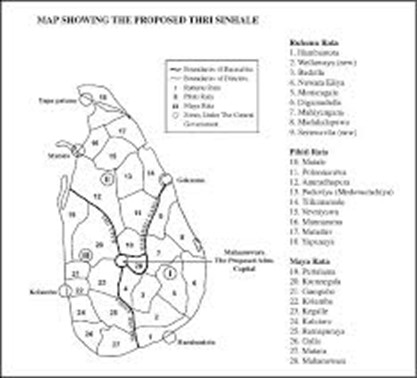
 අගමැතිතුමන් ඉදිරිපත් කර ඇති, අප ඉතිහාසයෙන් උරුම කරගෙන හා රුහුණු, මායා, පිහිටි නම් වූ ත‍්‍රිවිධ බල ප‍්‍රදේශ ව්‍යුහය, ප‍්‍රායෝගිකව නිර්මාණය කළ හැකි ආකාරය මෙම ලිපියෙන් තරමක් දුරට විග‍්‍රහ කිරීමට අපේක්ෂා කෙරේ. එය සාක්ෂාත් කර ගත හැකි යථාර්ථයක් බවටත්, ඒ සඳහා ඉතිහාසයෙන් පාඩම් ඉගෙන ගත අයුරුත්, මෙහිදී පැහැදිලි කර දැක්වීමට ප‍්‍රයත්නයක් දරනු ලැබේ. මේ සම්බන්ධයෙන් පළමුවෙන්ම පැරණි රටවල් බෙදීමේ පදනම ලෙස සැලකුණු ගංගා, ද්‍රෝණි උපයෝගී කරගෙන පිළියෙල කරන ලද සිතියමක් මෙහි දක්වා ඇත (සිතියම බලන්න). සිතියෙමෙහි එක් එක් ප‍්‍රදේශයට ඇතුළත්වන භූමි ප‍්‍රමාණයෙන් පෙන්නුම් කර ඇත. තවද අදාළ වගුවක් මඟින් ජන සංඛ්‍යාවල ජනගහනයේ දළ ජනවාර්ගික සංයුතිය ද පෙන්නුම් කර ඇත (2012 ජන සංගණනය). ප‍්‍රදේශ සංඛ්‍යාව අවම කිරීම සඳහා පවතින ජන අභිලාෂයන් සැලකිල්ලට ගෙන මීට පෙර අප විසින් කරන ලද යෝජනාවලට වඩා වර්තමාන මතය වඩාත් ප‍්‍රායෝගික විය හැකි බව අපගේ හැඟීමයි.

 * ඇසෙන ඇතැම් ප‍්‍රශ්න

 ශ‍්‍රී ලංකාව වැනි ප‍්‍රමාණයෙන් කුඩා රටකට, ප‍්‍රාදේශීය බල ප‍්‍රදේශ අවශ්‍ය වන්නේ ඇයි ද යන ප‍්‍රශ්නය සමහරු අසති. ඈත අතීතයේ සිටම එබඳු ප‍්‍රදේශකරණයක් ස්වභාවිකව සිදුවීමට ඓතිහාසික හේතු සාධක පැවතුණි. විශේෂයෙන් මේ රට කුඩා දිවයිනක් වුවද, එහි පවතින විවිධත්වය අතිමහත්ය. භූමි ලක්ෂණ, දේශගුණය, ගහකොළ, සතාසිව්පාවා මෙන්ම ජනතාව අතර ද මෙය මැනවින් පෙනේ. ‘‘ ඒකීය’’ නොව ‘‘එක්සේසත්’’ සංකල්පයක් ගොඩනැඟුණේ මේ විවිධත්වය එක් චක‍්‍රයක් යටතට ගෙනඒම පිණිසය. යටත්විජිත පාලකයන්ගේ අගනුවරින් පාලනය වන සංකේන්ද්‍රිත පාලනයක් ගොඩනැගුණේ ඉතිහාසයේ පසුකාලවලදී ය. ඊට පෙර ‘‘මහරජ’’ මුළු රටටම අධිපතියා වූ අතර ‘‘යුවරජවරු’’ ප‍්‍රාදේශීය පාලනයට යෙදවීම හා ඊට පහළ මට්ටම්වලදී දිසාවේවරු වැනි ප‍්‍රාදේශීය පාලකයෝ ද, පැන නැගුණහ. මේ නිසා රටේ සමස්ත ධනය, බලය, හෝ පෙර නායකත්වය එක් පෙදෙසකට එක් අගනගරයකට ඒකරාශී වීම සීමා වූ අතර, දුර බැහැර ගම්බිමවල පවා ජීවන මට්ටම් එතරම් පහළට නොවැටි සමාන්තර තත්ත්වයක පවතින්නට ඉඩ තිබුණි. යට දැක් වූ දේශජ ප‍්‍රාදේශීය පාලන තන්ත‍්‍රයකට, රටේ ස්වභාවික සම්පත් පදනම් කොටගත් ප‍්‍රදේශ සීමා උපයෝගි කර ගැනීමට ඒ අනුව හැකිවිය. මෙසේ පිහිටි රටත්, මායා රටත්, දැදුරු ඔය නිම්නයෙන් වෙන් විය. එමෙන්ම පිහිටි රටත්, රුහුණු රටත්, වෙන් වූයේ මහවැලි නිම්නයෙනි. රුහුණු රටත්, මායා රටත්, වෙන් වූයේ බෙන්තොට ගෙඟනි.

 නිදහසින් පසු ජල සම්පත් සහ භූමිය, සංවර්ධනය සඳහා කැපවී ඇති මහා ආයෝජන වෙන සියලූ අංශ අභිබවා සිටී. එම ආයෝජනවලින් නිසිඵල ලබා ගැනීමට නම් ප‍්‍රදේශ සීමා නිර්ණයේදී සොබාවධර්මයෙන් අප උරුම කොටගෙන ඇති සම්පත් යොදවා ගැනීම අදටද මනාව ගැලපේ. විශේෂයෙන් ලෝක දේශගුණ විපර්යාස නිසා ඇතිවන දේශගුණ අවිනිශ්චිතතා උග‍්‍රවෙමින් පවතින මෙවන් සමයක, අතීත ඥානය සොයා යෑමට නැඹුරු වීම බෙහෙවින් යුක්ති යුක්ත වේ.

 * සිතියම් විග‍්‍රහය

 ඉහත සඳහන් පරිදි සිංහලයේ එක් එක් රටවල මායිම්, භූමිය මත නිර්ණය කිරීමේදී, අතීත සම්ප‍්‍රදාය අනුව යමින් ජලපෝෂක ප‍්‍රදේශවල සීමා ඒ සඳහා යොදවා ගන්නා ලදී. මේ සම්බන්ධයෙන් අදාළ වූයේ මහවැලි ගඟ, දැදුරු ඔය සහ බෙන්තොට ගඟ යන සාම්ප‍්‍රදායික ගංගාධාරයන්ය. එසේ බෙදා ගත් කළ රුහුණු රටට දිවයිනේ මුළු බිම් ප‍්‍රමාණයෙන් 31.02% ක් ද, මායා රටට 14.78% ද, පෞරාණික පිහිටි රටට හෙවත්, රජරටට 54.19% ක් ද, ලැබුණි. පිහිටි රටෙහි භූමියෙන් අතිවිශාල ප‍්‍රමාණයක් අදත් වනාන්තර, වන ජීවි ක්‍ෂේම භූමි සහ වැව් ජලාශවලට ද යට වී ඇත. රුහුණු රටෙහි ද, ජාතික වනෝද්‍යානවලට විශාල බිම් ප‍්‍රමාණයක් වෙන් වී ඇත.

 අයත් වන ජන සංඛ්‍යාව 2012 ජන සංගණනයට අනුව රුහුණු රටට දිවයිනේ මුළු ජන සංඛ්‍යාවේ 20.16% ක් ද, මායා රටට 38.21% ද, පිහිටි රටට 41.63% දඅයත් විය. පිහිටි රටෙහි ජනසංඛ්‍යාවෙන් 33.46%ක් දෙමළ සහ මුස්ලිම් ජනයා වීම විශේෂයෙන් කැපීපෙනේ. රුහුණු රටෙහි ද මුළු ජනසංඛ්‍යාවෙන් 25.54%ක් එම ජන වර්ගවලට අයත් විය. රුහුණු, මායා, පිහිටි යන ත‍්‍රි සිංහලයේ සෑම රටකම සිංහල ජනයා මුළු ජනගහනයෙන් තුනෙන් දෙකකට වඩා වැඩි වේ. තවද අතිවිශාල සිංහල ප‍්‍රතිශතයක් එනම්, 84.73% ක් මායා රටේ වෙසෙන බව, සංඛ්‍යා ලේඛනවලින් පැහැදිලි වේ. ඉහත දැක්වූ සංඛ්‍යා දිස්ත‍්‍රික් මට්ටමින් ගණනය කර ඇති හෙයින් ග‍්‍රාම නිලධාරි වසම් මට්ටමින් ගණනය කිරීමේදී සුළු වෙනස්කම් පෙන්වීමට ඉඩ ඇත. ඉහත සඳහන් සිතියම් විග‍්‍රහයෙන් මැවෙන මහා චිත‍්‍රයෙන් ගම්‍ය වන බලපෑම් විවිධ අය විසින් රුචි පරිදි විවරණය කළ හැකිය. එහෙත් සමස්තයක් ලෙස ගත් කල එය රටේ දේශපාලන ස්ථාවර බවට මෙන්ම ආර්ථික දියුණුවට ද, ජනවාර්ගික සංහිඳියාවට ද, ස්වභාව සම්පත් සංරක්ෂණයට මෙන්ම ස්වභාවික ව්‍යසන මඟ හරවා ගැනීමට වඩා මහෝපකාරි විය හැකි බව අපගේ විශ්වාසයයි.

 (සිතියම් විද්‍යාත්මක මෙන්ම සංඛ්‍යා තොරතුරු සම්පාදනය කර ගැනීමේදී, පේරාදෙණිය සරසවියේ ජ්‍යෙෂ්ඨ කථිකාචාරිණි කුමුදුනි කුමාරිහාමි මෙනෙවියට ද, ස්වභාවික සම්පත් සංසදයේ අසේල බණ්ඩාර මහතාට ද, ජාතික ආපදා මධ්‍යස්ථානයේ හිරාන් තිලකරත්න සහ රංජිත් විජේසේකර මහතුන් ද, ලබාදුන් නොමද සහාය බෙහෙවින් අගය කරමි)

My commens on the above article

Sudath Gunasekara

Mahnuwara 20.9.2020.

මෙම ලිපියෙන්  ඉදිරිපත්ව ඇති යෝජනාව එකහෙලා අනුමත කරමි. මන්ද මා සැමදාම දැරු අදහසත් මෙයම බැවිනි.මෙම ලිපියේ කතුවරයා මෙන්ම මාද භුගෝල විද්යා සිස්යයෝ වෙමු. එතුමා සරසවියෙන් පිටවූයේ 1983/4 පමණයයි සිතමි. මා පිටවූයේ 1962 වසරේදීය. එතුමා විස්වවියාල මහාචාර්ය වරයෙකු වීය. මා ශ්‍රී ලන්කා පරිපාලන සේවයට බැදුණු අතර එම විසය පිලිබද සුවිශේසී දැනුමක් සහ වසර 35 ක අත්දැකිම් සමුදායක් ලැබූවෙක්මි. අප දෙදෙනා අතර ඇති වෙනස එපමණි. ජාතික ප්‍රස්න වලදී  මතවාද හා සන්කල්පික වශයෙන් අපි දෙදෙනාම සිටිනුයේ එකම පදනමේය.

එබැවින් මෙම යෝජනාවට එකන්ග වීම ඉතා පහසුය.අනෙක අපි දෙදෙනාම මේ යෝජනාව ඉදිරිපත් කරන්නේ රටේ හා ජාතියේ යහපත වෙනුවෙන් මිස වෙනත් කිසිම අරමුනකින් නොවේ. එක්සේසත් රාජ්යක් වශයෙන් රට ශක්තිමත් වීම , ස්ථාවර රාජ්ය පාලන ක්‍රම්වේදයක් නැවතත් මේ  රට තුල ස්ථාපිත කිරීම, සුද්දා විසින් මේ රට බෙදා පාලනය කිරීම සදහා කෘතීම ලෙස බෙදු රට නැවත සින්හලේ රජවරුන් විසින්  ඔවුන්ගේ තුන්කල් දක්නා ණුවනින් භූමියේ යථාර්තයන් සහ රාජ්ය පාලනයේ පහසුව සහ කාර්යක්ශමතාව  පදනම්කොටගෙන රටේ සම්පත් උපරිම අන්දමෙන් ප්‍රයෝජනයට ගැනීම සදහා ඇතිකරන ලද තුන් සින්හලේ නැවතත් පිහිටවිය යුතු බව මා කියන්නේ දශක තුනකටැත් වැඩිකලක් තිස්සේය.මේ පිළිබද මවිසින් සින්හල සහ ඉන්ග්‍රීසියෙන් ලියනලද ලිපි රාශියක්පුවත්පත්වල සහ ළන්කාවෙබ් පුවත් අඩ්වියේ නිතර පලවී ඇත. ඒ හැම ලිපියකින්ම තුන් හෙලේ ඇති  භූ දේශපාලන සන්කල්පයේ ඇති යථාර්ථය,ස්වාභාවික, දේශපාලනික, ආර්තික හා සමාජික වටිනාකම් සහ අපගේ අභිමානනීය අතීතයේ නැවුම් සුවන්ද සහ ස්ථාවර අනාගතයක පදනම ඉතා පැහැදිලව මවිසින් මා දන්න පමණින් පෙන්වාදී ඇත මේ රටේ හා ජාතියේ අඛණ්ඩ පැවැත්ම සන්දහා තුන් සින්හලය නැවතත් ලක් පොලව මත ස්ථාපිත කිරීම අත්තවසයෙන්ම මගේ එක් වැදගත් සිහිනයකි. එහි මායිම් දැදුරු මහවැලි සහ බෙන්තොටම විය යුතු යයි මම නොකියමි. දැදුරු ඔය සහ බෙන්තොට ගන්ගා කාලීන වශයෙන් වෙනස් වීමේ වරදක් මම නොදකිමි. මන්ද අතීතයේදිද මේ මායිම් වරින් වර සුළුවශයෙන්වෙනස්වු අවස්ථා ඇති බැවිනි. එහෙත් මහවැලිගන්ගනම් කිසිසේත්ම වෙනස් නොවිය යුතුය යන්න මගේ දැඩි ස්ථාවරයයි. තවද මහවැලිගන්ග මෙන්ම මායිම්සදහා තෝරාගන්නා අනෙක් ගන්ගා දෙකද මද්යම කන්දුකරයෙන්ම ආරම්භවන ඒවා වියයුතුය .මන්ද තුන් රටටම මේ රටේ සමස්ථ ජීවී පද්ධතියේ මෙන්ම ශිස්ඨාචාරයේ පදනම වන සියලුම ගන්ගාවන් ආරම්භවන දේශයේ හදවතවන මද්යම කන්දුකරයේ සමාන අයිතියක් අනිවාර්යෙන්ම තිබියයුතු නිසාය.

තුන් සින්හලේ සහ යෝජිත පරිපාලන දිසා 27 ක් සන්දහා  මවිසින් යෝජනාකොට ඇති  මායිම් දැක්වෙන සිතියමද මීට අමුණා ඇත.

Source: Sudath Gunasekara 1991

ඔබගේ ලිපියේ දක්වා ඇති පරිදි අගමැතිතුමා සහ පලත්පාලන ඇමතිතුමාද මේ අදහස අනුමත කොට ඇතිබව මාගේ ඉමහත් අමන්දානන්දයට හේතු වෙයි.

අපගේ මාතෘ භූමියට සහ සින්හල ජාතියට ශුභ අනාගතයක් උදාවීමේ පෙර නිමිත්තක් වශයෙන් මම එය දකිමි.

කුඩා සහ මධ්‍ය පරිමාණ ව්‍යවසාය ක්ෂේත්‍රය අද අප රටේ ආර්ථිකයේ කොඳුනාරටියයි – ගරු අග්‍රාමාත්‍ය මහින්ද රාජපක්ෂ මැතිතුමා

September 20th, 2020

අග්‍රාමාත්‍ය මාධ්‍ය අංශය

කුඩා සහ මධ්‍ය පරිමාණ ව්‍යවසාය ක්ෂේත්‍රය අද අප රටේ ආර්ථිකයේ කොඳුනාරටිය වී ඇති බව” ගරු අග්‍රාමාත්‍ය මහින්ද රාජපක්ෂ මැතිතුමා අද 2020.09.20 දින පැවසීය.

හම්බන්තොට මාගම් රුහුණුපුර ජාත්‍යන්තර සම්මේලන මධ්‍යස්ථානයේ පැවති  කුඩා සහ මධ්‍ය පරිමාණ ව්‍යවසායක සංවර්ධන සම්මන්ත්‍රණය – 2020” සඳහා එක්වෙමින් අග්‍රාමාත්‍යතුමා මෙම අදහස් පළ කර සිටියේය.

කොවිඩ්-19 බලපෑමට ලක් වූ කුඩා හා මධ්‍ය පරිමාණ ව්‍යවසාය නගා සිටුවීම සඳහා රජයක් ලෙස පසුගිය කෙටි කාලය තුළ සහනදායී ණය පොලී අනුපාත හඳුන්වා දෙමින් කාරක ප්‍රාග්ධන අවශ්‍යතා සහ ණය ඇපකර සපුරාදීමට හැකි වූ බව ද අග්‍රාමාත්‍ය මහින්ද රාජපක්ෂ මැතිතුමා මෙහිදී අවධාරණය කළේය.

මෙම අවස්ථාවේදී කොවිඩ් – 19 කුඩා සහ මධ්‍යම පරිමාණ ව්‍යවසාය යෝජනාවලිය සහතිකලත් කළමනාකාර ගණකාධිකාරී ආයතනයේ සභාපති හා කුඩා සහ මධ්‍ය පරිමාණ ව්‍යවසායක සංවර්ධන කමිටුවේ සම්බන්ධීකාරක මහාචාර්ය ලක්ෂ්මන් ආර්. වටවල මහතා විසින් ගරු අග්‍රාමාත්‍යතුමා වෙත භාර දෙන ලදී.

කුඩා සහ මධ්‍ය පරිමාණ ව්‍යවසායන් වෙනුවෙන් ණය ඇපකර ආයතනයක් පිහිටුවීම, ආදායම් බදු සහන ලබාදීම, කම්කරු නීති සංශෝධනය සහ අපනයනය සඳහා අවශ්‍ය ආයතනයක් පිහිටුවීම යනාදී කරුණු මෙම යෝජනාවලියට ඇතුළත් ය.

ගරු අග්‍රාමාත්‍යතුමා  කළ සම්පූර්ණ කතාව මෙසේය,

මේ ශාලාවේ මෙවැනි සම්මන්ත්‍රණයක් පවත්වන්න හැකිවීම පිළිබඳව ප්‍රථමයෙන් සතුටු වෙනවා. පසුගිය වසර පහේ මේ සම්මන්ත්‍රණ ශාලාවේ වී ගබඩා කළේ නැති නිසා, අද ඔබට එය පාවිච්චි කරන්න හැකියාව ලැබිලා තියෙනවා.

පළමුවන ප්‍රාදේශීය කුඩා සහ මධ්‍ය පරිමාණ ව්‍යවසායක සංවර්ධන සම්මන්ත්‍රණය  ආරම්භ කිරීම සඳහා මා හට ආරාධනා කිරීම පිළිබඳව, සහතිකලත් කළමනාකාර ගණකාධිකාරී ආයතනයේ සභාපති හා කුඩා සහ මධ්‍ය පරිමාණ ව්‍යවසායක සංවර්ධන කමිටුවේ සම්බන්ධීකාරක මහාචාර්ය ලක්ෂ්මන් ආර්. වටවල මහතාට ස්තුතිවන්ත වෙනවා.

වෘත්තීය ආයතන, වාණිජ මණ්ඩල, වාණිජ බැංකු සහ කර්මාන්ත පිළිබඳ විශේෂඥයන්ගෙන් සමන්විත මෙම ආයතනයේ, කුඩා සහ මධ්‍ය පරිමාණ ව්‍යවසායක සංවර්ධන කමිටුව පිහිටුවීම, ඉතා කාලෝචිත ක්‍රියාවක්. එය, ඇත්ත වශයෙන්ම කුඩා සහ මධ්‍ය පරිමාණ ව්‍යවසායකයන් හට කරනු ලබන වැදගත් සේවාවක්.

කුඩා සහ මධ්‍ය පරිමාණ ව්‍යවසාය අංශය අද අපේ රටේ ආර්ථිකයේ කොඳුනාරටියයි.  එය, අප රටෙහි සෑම අංශයකම නියෝජනය වීම සතුටක්. අපගේ දළ ජාතික නිෂ්පාදනයෙන් සියයට 52 ක් සඳහා එම අංශය දායක වෙනවා. සමස්ත රැකියාවන්ගෙන් සියට 45 ක් ඊට අයත්. එසේම, එම අංශය, දිවයිනේ මුළු ව්‍යවසායක සංඛ්‍යාවෙන් සියට 75 කින් සමන්විතයි.

හම්බන්තොට දිස්ත්‍රික්කයේ පිහිටි බැංකු නවයක ගනුදෙනුකරුවන් 300 ක් පමණ  මෙම වැදගත් සම්මන්ත්‍රණය සඳහා එක්වීම මම ඉතා අගය කරනවා. නව ආර්ථිකය තුළ මුදල් කළමනාකරණය, බැංකු අරමුදල් සැපයීම සහ ව්‍යවසායක නායකත්වය සම්බන්ධයෙන් කුඩා සහ මධ්‍ය පරිමාණ ව්‍යවසාය අංශය අද මුහුණපාන අභියෝගවලට මුහුණදීම පිණිස විසඳුම්” යන තේමාවෙන් මෙම සම්මන්ත්‍රණය පැවැත්වීම ඉතාම කාලෝචිතයි.

මුදල් අමාත්‍යංශය යටතේ, ශ්‍රී ලංකා මහා බැංකුවේ සහයෝගය ඇතිව, කොවිඩ්-19 මඟින් බලපෑමට ලක් වූ ව්‍යාපාර නගා සිටුවීම සඳහා රුපියල් බිලියන 100 ක මුදලක් ප්‍රදානයක් කිරීමට හැකිවීම, සතුටට කරුණක්.

අපි පසුගිය කෙටි කාලය තුළ ණය සඳහා සහනදායී පොලී අනුපාත හදුන්වා දෙමින්, කාරක  ප්‍රාග්ධන අවශ්‍යතා, ණය ඇපකර ලබාදීම ඔස්සේ කුඩා සහ මධ්‍ය පරිමාණ ව්‍යවසායයන් නැවත නගාසිටුවීමට අවශ්‍ය පියවර ගත්තා.

මෙම සම්මන්ත්‍රණයේදී, විධිමත් මුදල් කළමනාකරණය, ව්‍යාපාර දියුණුකිරීම පිණිස අරමුදල් නිසිපරිදි භාවිතාකිරීම, පුහුණුකිරීම් සහ කුසලතා වර්ධනය දේශීය සහ අපනයන අලෙවිකරණය සහ කම්කරු කටයුතු බඳු වැදගත් ක්ෂේත්‍රයන් ආවරණය වන බව පැහැදිලියි.

කුඩා සහ මධ්‍ය පරිමාණ ව්‍යවසායයන්  මගින් කෙරෙන අපනයනවල ගෝලීය ප්‍රතිශතයේ සාමාන්‍යය සියයට 30 ක්. නමුත්, ලංකාව සම්බන්ධයෙන් එම ප්‍රතිශතය සියයට 5 ක්. එය වැඩිකිරීම සඳහා රජයක් ලෙස අප සහයෝගය දක්වන බව මේ අවස්ථාවේ  ප්‍රකාශ කිරීමට කැමතියි.

කුඩා සහ මධ්‍ය පරිමාණ ව්‍යවසාය නිෂ්පාදන අපනයනය කිරීම සම්බන්ධයෙන්  අපනයන නිවසක් පිහිටුවීම පිළිබඳව මම එම කමිටුවට සුභ පතනවා. ශ්‍රී ලංකාවට වටිනා විදේශ විනිමය ලබාගැනීමට  අදාළ මෙම කාර්යය සඳහා දිරිගැන්වීම රජයක් ලෙස අපි වගකීමෙන් ඉටු කරනවා.

එසේම, හම්බන්තොට වැනි ඉතා දුෂ්කර ප්‍රදේශවල කුඩා සහ මධ්‍ය පරිමාණ ව්‍යවසායකයන් පිළිබඳව අපි නිරන්තරයෙන් අවධානය යොමු කරන බව ප්‍රකාශ කරන්න කැමතියි.

එසේ ම, ණය ඇපකර ආයතනයක් පිහිටුවීම සම්බන්ධයෙන් මෙම කමිටුවේ නිර්දේශ පරිදි කර්මාන්ත අමාත්‍යතුමා ඉදිරිපත් කළ අමාත්‍ය මණ්ඩල සංදේශය පිළිබඳව ද මම සන්තෝෂ වෙනවා.

වත්කම් හිඟකම නිසා අලුතින් පිහිටුවන සමපාර්ශ්විය ඇපකරුවන් ඉදිරිපත් කළ නොහැකි කුඩා සහ මධ්‍ය පරිමාණ ව්‍යවසායකයන් වෙනුවෙන්, විදේශීය මුදල් ලබාදෙන ආයතනවල සහාය ලබාගෙන මෙම ආයතනය  පිහිටුවීම සඳහා මාගේ සහාය ලබා දෙනවා.

හම්බන්තොට දිස්ත්‍රික්කයේ කුඩා සහ මධ්‍ය පරිමාණ ව්‍යවසායක අංශය සංවර්ධනය කිරිම පිණිස බැංකු අංශයට ද සුභ පැතීමට අපි කැමැතියි. අද  දිනෙන් අරඹනු ලබන මේ සම්මන්ත්‍රණය, අනෙකුත් දිස්ත්‍රික්ක වලත් පැවැත්වීමට හැකිවනු ඇතියි මම විශ්වාස කරනවා.

මෙමඟින් කුඩා සහ මධ්‍ය පරිමාණ ව්‍යවසායකයන්  සඳහා සහ ශ්‍රී ලාංකික ආර්ථිකය සඳහා ද ප්‍රතිලාභ ලැබෙන බව විශ්වාසයි. මේ ආයෝජකයන් නැගී එන බවට බැංකු සාක්ෂි දරනවා. බැංකුවලින් තමන් විසින් ගන්නා ලද ණය මුදල් වාරික නිසි කලට ගෙවීමෙන් බැංකු අංශයේ ණය හානිවීම් අඩු වෙනවා. එමගින් බැංකු ගනු දෙනු කරන සියලු පාර්ශ්වයන්ට තව තවත් ණය ලබාදීමට හැකියි.

අවසන් වශයෙන් සහතිකලත් කළමනාකාරී ගණකාධිකාරී ආයතනයේ, කුඩා සහ මධ්‍ය පරිමාණ ව්‍යවසායක සංවර්ධන සම්මන්ත්‍රණයට මාගේ සුභ පැතුම් එක් කරනවා. දේශීය වෙළඳපොලේ, කුඩා සහ මධ්‍ය පරිමාණ ව්‍යවසායකයන් හා අපනයනකරුවන්ට විදේශ විනිමය උපයමින්  දක්වන දායකත්වයට සුභ පතනවා. යැයි අග්‍රාමාත්‍යතුමා පැවසීය.

මෙම අවස්ථාව සඳහා වාරි මාර්ග අමාත්‍ය චමල් රාජපක්ෂ, කර්මාන්ත අමාත්‍ය විමල් වීරවංශ, පරිසර අමාත්‍ය මහින්ද අමරවීර, මුදල්, ප්‍රාග්ධන වෙළඳපොළ සහ රාජ්‍ය ව්‍යවසායක ප්‍රතිසංස්කරණ රාජ්‍ය අමාත්‍ය අජිත් නිවාඩ් කබ්රාල්, ගුවන් සේවා හා අපනයන කලාප සංවර්ධන රාජ්‍ය අමාත්‍ය ඩී.වී. චානක, පාර්ලිමේන්තු මන්ත්‍රී වෛද්‍ය උපුල් ගලප්පත්ති සහතිකලත් කළමනාකාර ගණකාධිකාරී ආයතනයේ සභාපති හා කුඩා සහ මධ්‍ය පරිමාණ ව්‍යවසායක සංවර්ධන කමිටුවේ සම්බන්ධීකාරක මහාචාර්ය ලක්ෂ්මන් ආර්. වටවල, ඩී.එස්.අයි.සමාගම් සමූහයේ සම්මානිත කළමනාකාර අධ්‍යක්ෂ ආචාර්ය කුලතුංග රාජපක්ෂ, හම්බන්තොට දිස්ත්‍රික් වාණිජ මණ්ඩලයේ අධ්‍යක්ෂ සුරේෂ් ද මෙල් මහත්වරු  හා බැංකු සහ මුල්‍ය ආයතන ප්‍රධානීන් ඇතුළු කුඩා හා මධ්‍ය පරිමාණ ව්‍යවසායකයින්  විශාල පිරිසක් එක්ව සිටියහ.

Lucian Rajakarunanayake’s Lament on the fall of democracy.

September 20th, 2020

Bodhi Dhanapala

For there to be a down fall of democracy, there should have been democracy in the first place. Do you think we had “democracy” when the UNP+TNA+SLFP rules the country?

When you are at the very bottom of the well, perhaps you can only look up to see light. If what we see is not democracy, how did we get there?
What the last government created was anarchy and lawlessness, with the country in the hands of a cabal of people who worked closely with some foreign embassies. Didn’t Samantha Powers of the US Pentagon come to this country even to celebrate the political  anniversary of one of those puppets.

The country was almost made into a covert company run from WASHINGTON, THROUGH A FEW LOCAL PUPPETS who did their bidding. This is not a fall of democracy. It may be the fall of the facade of democracy.

Here is a fact check that every one can work through.

1.Did the people give a mandate for these three parties to form a national government?

NO

2. Sirisena became president in January 2014  promising to quit in 100 days. Did he quit?

NO

3. The central bank and the finance ministry were moved under the prime minsiter, and one of his hand picked Singaporen nominees was made the governor of the ban. When a hugh bond scam came to light, a parliamentary commission (COPE) reported on it. Just when the report was to be tabled, the parliament was dissolved so that the people named in the investigation does not get revealed. Does this seem to a very democratic act?
NO

4. Elections were held in August. Was the party getting the largest number of votes called to form the government?

NO

5.  Was the party no forming the government, and having the largest number called to from the opposition?

NO

6. A party with only 19 elected members, namely the TNA was made the opposition, and its leader was appointed the opposition  leader. A constitutional amendment called 19A was passed, limiting the number of cabinet ministers, but it also allowed the new government to appoint any number of minsters to the cabinet of the “national” government.
Is such manipulation a democratic practice?

NO

7.  Under the new government, a second BOND scam was allowed to be carried out, suggesting that a bunch of crooks had captured power.  Did you feel that democracy was reigning supreme and crooks were being punished?

NO

8.  NGO officials  paid by foreign powers and not answerable to the public were appointed to powerful commissions and even decided on important public service appointments, foreign policy etc., and a representative of the American Embassy was allowed to sit in on security deliberations at the highest level and at various levels.

Is that a democratic practice?

NO  

9. The decision to accept “guilt” for war crimes, and co-sponsor a resolution brought in by Western Powers at the behest of vote controlling western Diaspora groups was executed at the UNHCR in Geneva by the Minster Mangala M who was responsible for foreign policy. This was done WITHOUT approval by the cabinet, or by the parliament, and apparently WITHOUT the approval of the President. Is this democratic practice?

NO

10. Free trade agreements with Singapore that even allowed the dumping of garbage from Singapore, MCC and other agreements that gave free access of landing in the country and using it to the US military were to be signed without discussion in the HOUSE. Is that democratic practice?

NO

11., 12, etc are left as an exercise to the reader, for him or her to add on, as there are a lot of stuff on FCID investigations, imported Lamborghinis, Easter bombings, people being dumped to be eaten by crocodiles, Who killed Lasantha and what did Ranil say about it in Parliament at the time? Swiss embassy white vans etc etc !

Remember that when some people loose the privileges that they have been enjoying, they think democracy is falling.

Bodhi Dhanapala

IN REMEMBRANCE OF ANAGARIKA DHARMAPALA

September 20th, 2020

By Rohana R. Wasala

(The 156th birth anniversary of the Anagarika falls today, September 17, 2020. The following lines are in celebration of the event.)

The pioneer of true national thinking
Was none other than the historical 
Hate-figure of anti-nationalists
Great Anagarika Dharmapala
Who engineered social reform through it
To kindle hopes of freedom from foreign rule.

History will recognize Dharmapala
As perhaps the first ideological-
Champion of the unarmed fight for freedom,
And the first proponent of modernity
Truly based on the Buddhist tradition.

Though Brits and colonial parasites
Projected him as a Don Quixote
Tilting at windmills against an empire 
Through their vile  malicious propaganda.

Being a leader gifted with great foresight,
He warned the majority Sinhalese
Of a racially divided country
Where they would be at the receiving end 
When the foreigner would leave them at last
Unless they were united as a race.

Today, as we can see, that prophecy,
Has come true, sad though it is to say this.
Yet the Anagarika’s life mission
Was passing on the word of the Buddha
Across the world for all peoples’ wellbeing.

He was convinced that Sinhala Buddhists
Had a unique responsibility
To protect Buddhism for the whole world
As Lanka is the repository
Of the Dhamma in its first pristine form
The hallowed Theravada tradition
Committed to writing at Matale,
Central Sri Lanka, one hundred plus-
Years Before the Common Era began.

Though religions are anachronistic
In the human reason ruled world today
Their ethical teachings are relevant
To their politically organized
Adherents, while not being so to others,
A situation that causes friction
Usually with unholy repercussions
That endanger the very survival
Of the future of civilization.

The Buddha preached an ethical doctrine
Whose essence is wisdom and compassion,
Something that Albert Einstein chose to call
A cosmic religion in the sense that
All humans could embrace its moral code
Based on kindness, reason, and mind culture, 
And work to create a safe peaceful world. 

Dharmapala knew this before Einstein
As he showed in his great dedication
For spreading the Dhamma across the globe
Without any proselytizing aim.

Being a true disciple of the Buddha 
He didn’t seek to convert non-Buddhist people.  

But he believed that the Dhamma was
The Sinhala Buddhists’ gift to the world
As custodians of the pure Teaching.

Meanwhile he was passionately concerned
About their material wellbeing as well
As any good Buddhist leader would be
He advocated the education 
Of the young for acquiring good life skills
And the study of science and technology
In addition to cultural subjects.

Lanka’s freedom movement and its leaders
And all patriotic politicians
That followed in the subsequent decades
Were deeply influenced by this great man.

All our prime ministers and presidents
Have been inspired by his nationalism.

Had the Anagarika been living- 
Today, he would have highly commended
The current president Gotabhaya
For his moral uprightness, gracefulness
And his commitment to Buddhist values.

All Members of Parliament on both sides,
If they really want to serve the nation
Ought to forget their self-centred concerns
And serve the nation from opposite ends
Through synergetic accommodation
So that this fourth decisive surge that we-
Are in the middle of making since the Year-
The Buddha Jayanti was observed
Towards independence from foreign sway
In order to stand on our own two feet,
Will not be suppressed like the previous three.

May Peace and Progress Bloom in our Troubled Land
Fresh and pure out of its muddy waters!    

Disce Aut Discede Vigi.

September 20th, 2020

Dr.Chula Rajapakse MNZM Wellington NZ

The rapacious speech MP Vigneswaran , elaborated more there  after in the Colombo  Telegraph achieves most is to stoke the dying embers of racial disharmony in Sri Lanka to raise its dangerous flames that , over three decade period of war saw over a hundred thousand dead and many times more injured and maimed.

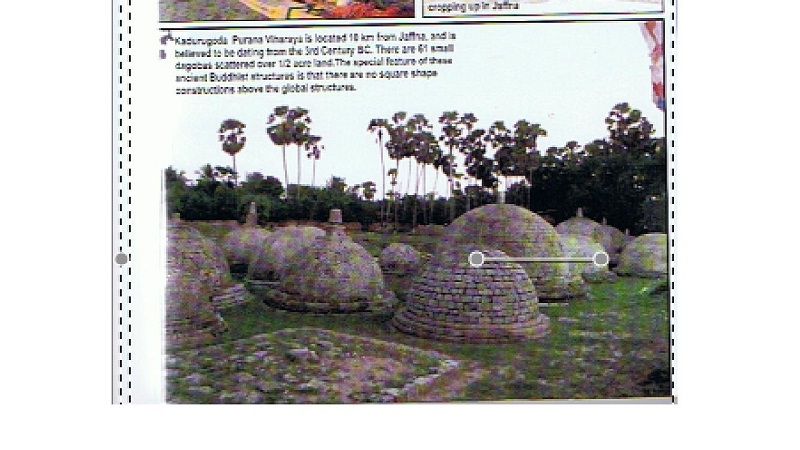
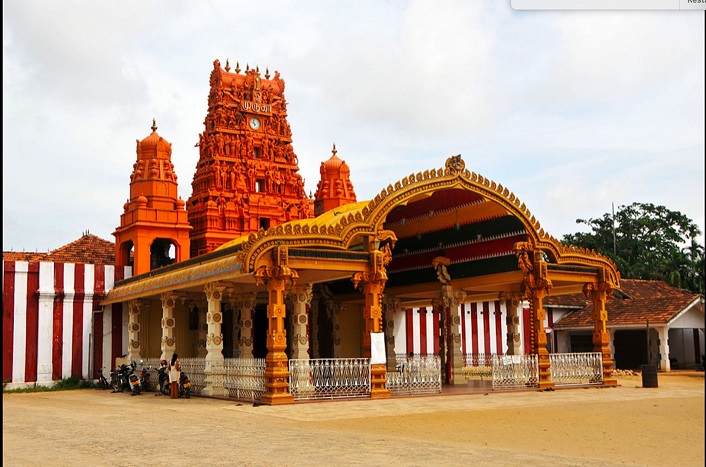
The veracity of your claims can be best assessed by the pictures below , that speaks more than words can, comparing the oldest Tamil monument in Jaffna the Nallur Temple of 948 AD and the Buddhist stupas in Jaffna  from 300 BC.

The Oldest Tamil Monument In Sri Lanka  Nallur Temple Jaffna 948 AD

MP Vigneswaran’s arguments take my mind back to the late fifties to a presentation by this same CV Wigneswaran , lanky and in prominent black rimmed spectacles, for the Best Speakers Prize  at a contest in Royal College Colombo, where he simulated  a closing  address to the Jury on behalf a client accused of murder. My overriding memory of this presentation with all it’s theatrics was the talent this, then  senior English debater  at Royal College, to make a non  existent case, sound so real. Today’s performance of the esteemed Vigi  is to me a clear demonstration that over sixty years a later, he has not lost any of this talent or theatrics.

Whilst his theatrics in the fifties had no consequence, his present theatrics raises the frightening prospect of reigniting a dying flame of racial disharmony in Sri Lanka which  his ancestors , the famed Arunachalam brothers , tried so hard to prevent.

If Vigi has still not learnt these lessons, may I kindly request him to  follow the moto of Royal college, Disce Aut Discede,  learn or depart from Sri Lanka’s political scene .

Dr.Chula Rajapakse MNZM

Wellington NZ 20.9.20

We are targeting 500 listed firms for next 5 years: State Minister Cabraal

September 20th, 2020

Courtesy Adaderana

The Colombo Stock Exchange (CSE) should aim at increasing the number of listed companies from the current number of about 200 to 500 firms, State Minister for Finance, Capital Market and Public Enterprise Reforms Ajith Nivard Cabraal stated.

The digitalization will take away from you, from the brokers as well as the market players a lot of the paperwork and the mandate tasks that have been so far done by you personally. When you are relieved of those duties, I’m sure you will find enough time to make this market work. The Stock Exchange is really the market. The market is buyers and sellers. You need to have buyers, who are increasing and you need to have sellers also who will be providing the supply of the shares in this instance. So, you need to focus on several areas and aspects of this market. First, you have to make sure that the number of shares that you have is expanded regularly. I have been there long enough to know that the number of companies traded in this wonderful Stock Exchange have remained almost stagnant for so many years. Every time when someone asks how many companies are there in the Stock Exchange, we said 200 something. Now, this 200 something has been the number for the past 30 years I think. So, for the next 5 years, we would like to see that number being spoken of as 500 something. I think you can do that. The chairman already mentioned that there is an effort to make these numbers grow and I think if all of you take the pains to do that, then there would be ample opportunity to make that happen,” he stressed.

The state minister made these remarks whilst addressing a special market opening ceremony which was organized today (17) by the Securities and Exchange Commission of Sri Lanka (SEC) and the Colombo Stock Exchange (CSE) under the patronage of  Mahinda Rajapaksa, the Prime Minister of Sri Lanka to mark the Digitalization of the Sri Lankan Stock Market.

Speaking further  Cabraal also expressed the following:

“In 2014, when  Prime Minister, Hon. Mahinda Rajapaksa relinquished to the office, at that time end of 2014, the market capitalization of the CSE was $ 25 billion. By the end of 2019, afraid it has come down to half of that. It was just $12.5 billion. There was a massive drop. It was actually half. So, now we need to grow this market again. We need to make sure that your efforts are directed in making this market to expand as well. This is vital, because after all, as the Director-General of the SEC said, you want the government to come here and use this as the repository of the funds, you got to also be able to provide that. If you are with the $12.5 billion market gap, I don’t think you can do that. So, set your sights high. Set your sight at a $60 billion if I may suggest for the next 5 years. Then you will have a capacity where you can provide funding, not only for the government sector but for the private sector as well.

“We need support and commitment towards the Stock Exchange. I would like to see a direction being taken by all of you, to take this forward. You have started with a digitalization, I think you need to now build on that foundation. There will be plenty to do on that. You got to make sure that you bring in the capital that will be supporting this market and that is not going to be easy. I remember from 2007 onwards, we have been going abroad, we have been making sure that this capital is adequate in this country. Where ever we couldn’t’ raise it locally, we raised it from foreign sources, so you need to do that, you need to provide the capital for the companies, you need to provide capital so that new instruments can be also put into place in this country. We would like to see an SMI Board, SME Board, we would like to see a Startup Board, maybe an IT Board, maybe BOI companies to be listed. So there is plenty of space for you. Now that you got the first hurdle going, the next would be also exciting and we would like to see you doing that. So, there is plenty to do and let’s do it together. So, that we can asher in era of propseperity in our country with a truly representative investor community.”

COVID-19 case count in Sri Lanka at 3,287

September 20th, 2020

Courtesy Adaderana

Three more cases of novel coronavirus have been identified increasing the tally of confirmed cases reported in the country to 3,287.

Three recent arrivals from Saudi Arabia have tested positive for COVID-19 while in quarantine.

Accordingly, 185 patients infected with the virus are being treated at selected hospitals across the island.

Meanwhile, while the total number of recoveries moved to 3,088 with 18 more patients being discharged today (20) over complete recovery.

Sri Lanka has witnessed 13 deaths from the virus so far.

Will Harin be removed from a disciplinary inquiry? (Video)

September 20th, 2020

Courtesy Hiru News

The clergy and politicians expressed various views against the statement made by Harin Fernando.

Ven. Magalkande Sudaththa Thero of the Sinhala Ravaya organization said that Sajith Primadasa’s group is in the group that hates religious leaders and is questioning the Leader of the Opposition Sajith Primadasa about the action to be taken regarding Harin Fernando’s statement.

Meanwhile, Tissa Attanayake, from the Samagi Jana Balawegaya, said that insulting any religion by anyone in his party or any party should not be allowed.

He further said that the UNP has learned its lessons from history.

Meanwhile, State Minister Shehan Semasinghe told the media that he was questioning the Leader of the Opposition Sajith Premadasa on whether a disciplinary inquiry would be held into Harin Fernando’s statement.

Leader of the Opposition Sajith Premadasa stated that discussions will be held within the party regarding the statement made by MP Harin Fernando regarding the Cardinal.

>He stated this while answering questions posed by the media after visiting a church in Matara.

State Minister Piyal Nishantha told the media that MP Harin Fernando could face the same fate as Mangala Samaraweera for criticizing religious leaders.

Small and medium enterprises are the backbone of the economy – PM

September 20th, 2020

Courtesy Hiru News

Prime Minister Mahinda Rajapaksa states that the small and medium scale enterprise sector has become the backbone of the country’s economy.

The Prime Minister was addressing the Small and Medium Enterprise Development Conference held at the Magamruhunupura International Conference Center in Hambantota today

Colombo archdiocese rejects Harin’s remarks at PCoI

September 20th, 2020

Courtesy Hiru News

The archdiocese of Colombo says it condemns the puerile attempt by MP Harin Fernando to find excuses for his own grave misdeed and cast unjustified and unfounded aspersions on Archbishop Malcolm Cardinal Ranjith.

In a statement, it refers to remarks made by the MP at the presidential commission that inquires into the Easter Sunday attacks.

Once again we affirm categorically that the Cardinal and the Bishops as well as the Catholic clergy were in no way made aware of this plot by anyone and so the allegation is baseless,” the statement says.

Bim Saviya with MCC – A Government without Land & Legal professionals unable to adjudicate our Land Rights

September 20th, 2020

The Yahapalana Government & US Government finalized MCC (development arm of US Govt’s Pivot to Asia) in 2018. It was to create a dynamic market for land and was a key component in Yahapalana 8-year National Development Plan – Vision 2020: A Country Enriched. Land & Transport were identified as tools with which MCC would enter Sri Lanka with bim saviya & Title Registration Act playing a key role. MCC Land Project in Sri Lanka is going to use the bim saviya that has removed judicial authority in 1998 Act together with MCC immunity clause to grab our land and leave very little role for the legal fraternity to adjudicate our land rights legally.

Are lawyers & notaries aware their professions are at risk.

Annex 1-33 of MCC clearly shows US Government has laid down plans for Sri Lanka together with USAID, WORLD BANK, US EMBASSY and US Actors. Bim Saviya plays a pivotal role in this plan.

Annex 1-34 of MCC shows that Title Registration (Bim Saviya) will govern government lands that will all be privatized.

Bim Saviya or Title Registration Act was hurriedly enacted in Sri Lanka proposed by World Bank in 1998. Title Registration Act 21 of 1998 is a cut and paste of the 1858 Torrens Law Australia. None of the amendments adopted by other countries adopting Title Registrations were done because recommendations were ignored and consultations limited to those who favored implementing system. Thus land fraud a burning issue in Sri Lanka was not addressed.

From 1998 to 2006 the Bim Saviya could not be launched because of the issues associated to it. It was essentially a failed project. Section 2 of Title Registration Act 1998 created a new title – Commissioner of Title. This separate department had a team of officials tasked to adjudicate judicial process. They were not lawyers but they were entrusted to examine land ownership of 12million land owners in Sri Lanka. These private & State land owners were to be governed by bim saviya. What actually happened was that the task of Judges & the Court was slowly transferred to public administration by the Title Commissioner thereby removing the 3rdpillar (Judiciary) of governance from the People.

Is this not a violation of the Constitution?

Commission of Title adjudication process has been a failure. This is evident in the Commissioner of Title Report of 2018. Only 700,000 blocks out of 12million blocks of land has been converted to bim saviya since 1998. Bim Saviya does not recognize customary laws of Sri Lanka specifically co-ownership. The Commissioner of Title’s role is made difficult because the adjudication process is minus the judiciary.

Cadastral system of drawing plans entrusted to Survey Department also failed as private surveyors were outsourced the task.

MCC is making use of bim saviya as it is a failed project which MCC can manipulate to its advantage. Even MCC in Annex 1-31 acknowledges failures of MCC. In order for MCC to take advantage, MCC is recommending amendments to existing laws Annex 1-34.

Why can’t the Government of Sri Lanka recommend that e-register continues with the existing DEED SYSTEM? Why amend MCC to incorporate what is already in practice by the DEED SYSTEM.

Why does a sovereign government have to accept recommendations from foreign bodies simply because of foreign funding?

How many are aware that after entry of owners name into the bim saviya registry, ownership is conclusive and cannot be altered.The real owner possessing deed cannot seek legal intervention if a fraudster has registered same land under bim saviya. The only relief given to the owner in the 1998 Act is to seek compensation for the land lost from the Government. The government too cannot give the land back to the owner. The role of the Judges in adjudicating land fraud is no more with Act 21, 1998.

Section 33 of Act 21 clearly establishes this. MCC will manipulate this.

Fraudster will register a land in his name, obtain the 12 digit number for a piece of land that does not belong to him and the real owner cannot go to courts after realizing what has happened to his land. His only relief is compensation awarded by the Title Commissioner. His land is lost to a fraudster.

With the role played by Judges & Court passed on to the Title Commissioner, the owner’s fundamental right to access court is denied.

Act 21, 1998 has removed the 3rdpillar from the People. Why has lawyers not raised this to the highest levels? Giving reports is not enough.

Role of judges in land matters is now limited. So too is the role of lawyers.

Let us imagine a poor farmer given freehold title to a piece of State land (he has been living on with a permit) as is being presently promoted by the previous government & even present government. He is now owner of several acres of land.

He is illiterate about electronic systems, he cannot converse or communicate in English. He does not have a deed as recommended by the Electronic Transaction Act 19 of 2006 Section 23. His notary too has no computer or internet to help him. Can the police, CID or even courts come to his help if someone has shifted his name with a forged deed?

He can go to Court – but the Court is likely to say he cannot get his land back & to seek compensation from the Title Commissioner. What he had as a permit holder is now lost. Not only does he not have a piece of land, he has no living or even a place to live & perhaps no compensation as the Govt has no money to give. This opens a new chapter in poverty but MCC claims its ‘gift’ is to alleviate poverty.

Does the Government have money in the Assurance Fund to give compensation for acres of land defrauded from owners?

What is the future of land litigation and the future of the judiciary with section 33 which states ‘ the register is conclusive evidence and ownership registered shall not be questioned in a court‘’ ?

What is the future of the banks that lend money on mortgages to a forged bim saviya registered owner? He can also cancel the mortgage bond.

These issues cannot be taken to court under Section 33 of Act 21, 1998.

What is the future of the existing cases before court?

Counsels who find defendants with Bim Saviya certificates obtained with the adjudication process of Title Commissioner running parallel to the judicial process of the country.  Can the judges dismiss the pending land cases?

Chaos at times in courts where trials come to naught with one owner with deed and another with bim saviya for the same land!

What is the future of co-owners–where only one owner is appointed to be registered as the owner with power over the other co-owners designated as Trustee under Bim Saviya Section 16 of the Act 21 Bim Saviya

What is the future of Counsels who are unable to file legal remedies such as injunctions relating to land ownership? 

What is the future of those who prescribe to land as the Bim Saviya repeals the law of prescription?Section 57 Act 21 of 1998

What is the future of notaries? Do they all practice in English[ MCC sates the language is English]   Do they all have computers and Internet ?

What is the future of Insurance remedy?where the government believes that monetary compensation can be granted to owners in lieu of owners’ rights to access court?

Many are advocating or promoting giving away of state land to farmers.

They believe ownership of lands grants money to owners and the poor will be rich. Anyone who owns land will know the cost of managing  land and cost of cultivation Only those who have deep pockets can cultivate as one has to wait for the crops to cover even the cost leaving alone profit.

Is the real intent to create the above scenario? 

Imagine the fate of all the farmers who will have no land, no deed [Act 19 of 2006 specifically require deeds to be retained with the e-register]

With no rights to access court and no money to cultivate or manage land?

Have the legal fraternity [judges, counsel, notaries] not thought of their own livelihoods being at risk too from Bim Saviya MCC land program? 

To satisfy the US and accept a paltry $480m – is it worth our professionals and our People and the Government ending up eventually landless and without professionals?

Shenali D Waduge

SHOULD PRESIDENT SURRENDER TO GEVINDU KUMARATUNGA, PREMARATNE DOLAWATTE, VASUDEWA, WIMAL, DAYASIRI and few Buddhist Monks?

September 19th, 2020

By M D P DISSANAYAKE

The Vision Statement  issued by Mr Gotabaya Rajapakse,  had received overwhelming approval of the general public.  Then Mr Mahinda  Rajapakse faced the General Election without a new Vision Statement, but committed to comply with that of the elected  President.

Now there are several  brickbats attempting to drive their own personal Agenda’s overriding that of the President. 

a.      GEVENDU KUMARATUNGA:

The new national list MP Mr Gevindu Kumaratunga was an unknown quantity until recent times, even though he is the grandson of Late Munidasa Kumaratunga.    He formed Yuthukama  (යුතුකම) meaning Foremost Duty.   He was not voted into the  parliament by the people. He declared war against the proposed 20 amendment.  According to him, it is difficult to meet the media unless changes are made to the Draft.   Gevindu forgot two factors.  Firstly he is not the media spokesperson for the government=and must be intelligent enough to express views on contentious issues.  Secondly, if he has any concern regarding the Draft, his Foremost Duty (යුතුකම) should be to express his views with the government hierarchy, instead of undressing in public.

      B. PREMARATNE DOLAWATTE: Another young energetic lawyer moving up the ladder, from the Colombo District wasted no time in trying to get into the Picture.  Inspired by Gevindu, he assumed a high role of attempting dictate terms to the President and PM.

     c. WIMAL, DAYASIRI:

These are experts on all fields, willing to step forward to become heros.  Wimal did many improvements as Industries Minister before the general election, but now he is more of a constitutional expert than an Industry Minister.  The Industry Ministry is a complicated specialised role, realising this, the President has  decentralised the role for Pharmaceuticals, Textile, Batiks, Wood and Metal work, Jewellery and Gem manufacture,  Clay related Industries etc.   With microeconomic  attention, the President has given wide powers and funds to State Ministers to embark on large projects in these areas.    Wimal should be happy about the structure and try to work as a team instead of speaking out of turn on matters outside his role.  Dayasiri has held several senior cabinet ministerial roles, but had not made any significant contribution. 

      D. VASUDEWA NANAYAKKARA:

It is no secret that Vasu dislike President Gotabaya.  He has been given a Cool Job, as Minister of Water Supply.   But prefer to speak out of turn, just like Wimal, on any subject.

                  TRYING TO PLAY THE OLD GAMES:

There are several MPs, Ministers, lobby groups trying to play the old game of politics to derail the pathway formulated by the President and approved by the masses. 

This is a great opportunity for the President to exert his authority on Ministers and MPs, trying to undercut his policies.   If the President attempt to bargain or compromise on the gazetted 20 Amendment, it will be an extremely  difficult task for him to formulate a new Constitution.  The President will be deemed as a weak person, lacking leadership.  The Opposition, local and international media will provide widest publicity that Gotabaya has backed down. His authority will be tarnished.

Few SLPP mps and Ministers have provided much needed weapons to the opponents of  the government.  The general public expect stern action by the President, against the culprits, regardless of their standing within the Government  Group. The Political bickering must stop.

Therefore, we hope, the President will NOT agree to  change an iota of the proposed Draft of 20A, but continue further processing  in the Parliament, with due regard to the determinations, if any, by the Supreme Court.

පාර්ලිමේන්තු විපක්ෂය කොහොමද ජනතාවාදී විපක්ෂයක් වෙන්නේ ?

September 19th, 2020

චාර්ල්ස් එස්. පෙරේරා විසින් 

මේක සජිත් ප්‍රේමදාස විපක්ෂ නායකයාගේ තවත් ඩයිනමෝවලින් වැඩකරන මොලේ විකුර්ති අදහසක්  විය හැකියි. විපක්ෂයේ සමගි ජනතා බලවේගයට ලැබුණු මුළු චන්දය  සීයට 23.90වයි( 2,771,980යි). රටේ ජනතාවගෙන්  බහුතරයක් සජිත් ප්‍රේමදාස මහතාට හා ඔහුගේ පක්ෂයට   විරුද්ධව චන්දය දුන්නේ.  ඉතින් කොහොමද පාරලිමේන්තුවේ විපක්ෂය ජනතාවාදී වෙන්නේ. සජිත් ප්‍රේමදාස තාමත් කරන්නේ ජනතාව  රවට්ටන එක. මෙයිටවඩා හොඳ නැද්ද පාරලිමේන්තුවේ විපක්ෂ නායකයා හැටියට වැඩ කලොත්.  එතකොට නේද එ විපක්ෂයම  කියන ප්‍රජාතන්ත්‍ර වාදය ක්‍රියාත්මක වෙන්නේ. 

ගෝටාබය රාජපක්ෂ මැතිතුමාට බහුතර ජනාතාවගේ චන්දය දී ලංකාවේ ජනාධිපති  වශයෙන් පත්කිරීමේදී ඒ අති මහත් ජනතාව එතුමා කෙරෙහි කොන්දේසි විරහිත විශ්වාශයක්  තැබුවා. කොන්දේසි විරහිත කීවේ මා මෑතක ගුවන්විදුලි නාලිකාවක 20වන සංශෝදනය  පිලිබඳ දේශපාලන සංවාදයක් අතර තුර එම සංවාදය හසුරුවන මාද්යවේදියා ආණ්ඩුපක්ෂයේ නියෝජිතයාගෙන් අහනවා තුනෙන්දෙකක  බලයක් දීමේදී ජනතාව දැණහිටියාද  විගනාධිපති කොමිසම අහක් කරනවා කියලා? මොන බොළඳ ප්‍රශ්නයක්ද. සාමාන්‍ය ජනතාව ඔවාගැන දැනුමක් ඇතුවද චන්දය දෙන්නේ ? 

බහුතරයක් ජනතාව ඔවුන්ගේ චන්දය දීමෙන් පෙන්නුවා ඔවුන් ගොටාබය රාජපක්ස ජනාධිපති තුමා  කෙරෙහි ඔවුන්ගේ සම්පුර්ණ විෂවාශය තබන බව. එබැවින් රටට ජාතියට අවශ්‍ය වැඩකටයුතු එතුමා නොපිරිහෙලා කරන බව ජනතාව දන්නවා.  එබැවින් ඔවුන් ජනාධිපතිතුමා හා ඔහුගේ ආණ්ඩුව වැඩකරන විධිය පිළිබඳව ප්‍රශ්නකරන්නේ නෑ . ඇරත් එතුමාගේ චන්ද රැස්වීම් මිනිස්සුන්ට ජනතාවට එතුමා දැනුම්දුන්න එතුමාගේ සෞභාග්යේ දැක්ම තුල  රට ඉදිරියට ගෙනයාමට ඇති භාදකයක් වූ 19වන සංසෝධනය අහක්  කරන බව. 

 මෙවැනි  අනවශ්‍ය ප්‍රශ්න  අහන්නේ ගෝටාබය රාජපක්ෂ ජනාධිපති තුමා වැඩ ආරම්භකළ දවසේ පටන් ඔහුගේ වැඩපිළිවෙලට අකුල්හෙලන්න පටන් ගත්  සජිත් ප්‍රේමදාස විපක්ෂ නායකයා හා ඔහුගේ ගොලොයෝ” ටිකයි , ජනතාවිමුක්තිපෙරමුනේ අනුර  කුමාර දිසානායක, බිමල් රත්නායක,   විජිත හේරත් ආදී ජනතාව අත්හල දේශපාලනයෝ ටිකයි.

මොවුන් දැන් රාජපක්ෂ පවුල් පාලනයට අමතරව කියන කතාව තනි පුද්ගලයෙකුට බලය දීම.  මොවුන් තනි පුද්ගලයකු කියන්නේ ජනාධිපතිතුමාට. හැට නව ලක්ෂයක් පමණ ජනතාවගේ ආදරයට විශ්වාශයට පත්වූ  ගෝටාබය රාජපක්ෂ ජනාධිපති තුමා  සාමාන්‍ය පුදගලයෙක් නොවේ.  

එතුමා  අපේ රටේ නායකයාය්. රටේ පවතින්නේ විධායක ජානාධිපති ආණ්ඩුක්‍රමයකි එබැවින් ගෝටාබය රාජපක්ෂ ජනාධිපති තුමා  ඔහුට චන්දය දුන් මහත් බහුතරයකගේ පමණක් නොවේ ඔහුට චන්දය දුන්  නොදුන් මහත් ජනතාවම නියෝජනය කරන ජනාධිපතිවරයායි.  එබැවින් තනි පුද්ගලයෙකුට  බලය දෙනවා කීම මන්දබුද්ධික කියමනකි. 

20වන සන්ශෝදනයත් සමග සජිත් ප්‍රේමදාසයි  සමගි ජනබලවේගයේ එවුනුයි ජනතාවිමුක්ති පෙරමුනේ එවුනුයි භුමිතෙල් වැදුනු ගැරඬි වගේ හැම පැත්තේම නලියනවා.  මෙවුන් කවදාවත් ප්‍රතිපත්තියක් වශයෙන් ප්‍රජාතන්ත්‍ර වාදය ගරුකරපු  එවුන්  නොවේ . නමුත්  මිනිස්සුන්ට පෙන්ට කියන්න හදන්නේ උන්ට වැඩිය ප්‍රජාතන්ත්‍රවාදය දන්නා කිසිවෙක් නැතුවා වගේ.  මෙවුන්ට දැන් 19වන සංශෝදනය ප්‍රජාතන්ත්‍රවාදයේ සංකේතය වෙලා. 

විවිධ ගුවන් විදුලි නාලිකාවල  පවත්වනු ලබන රතු ඉර වාදපිටිය බලය ආදී   දේශපාලන සංවාදවලට සහබාගිවන සමගි ජනබලවේගය  නියෝජනය කරමින් කතාකරන මර්ක්කාර් , මුජබු රහමන් ,හේෂ  විතාරණ , මනුෂ නානායක්කාර  හර්ෂ ද සිල්වා  අලවතුවල ආදීන් ගේ මුණු දැක්කාමත්  පෙන්නේ නෑ ඔවුන්  ජාතිය රට ආගම වෙනුවෙන් කතාකරන බවක් . 

අහම්බෙන් බලයට පැමිණිලා අවුරුදු හතරහමාරක්  රට අගාදියට ඇද දැමු මේ හැත්ත තාමත් කරන්න හදන්නේ ඒ  කරපු දේමයි. රනිල් වික්‍රමසිංහ කට්ට කයිරාටික දේශපාලකයෙක්.  

රනිල්   හොඳට සැලසුම්කරලා මෛත්‍රීපාල දැලෙදාගෙන කලේ ඔහු ජනාධිපති උවහොත් ඔහුගොනාට අන්දලා ඔහුගේ ජනාධිපති බලතල අගමැතිවශයෙන් ඔහුගේ අතටගෙන බැංකුත්කඩලා හොඳසතුටින් ඔහුට ඔනාවිධියට රටේ නායකයා හැටියට රට රටවල්වල ලංකාව නියෝජනයකරමින් සෑහෙන කාලයක් යහපත්ව ජීවත්වන එකයි. . එක කරන්න ගිහින් අන්තිමේට උනේ තිබ්බ මන්ත්‍රීකමත් නැති කරගත්තා. 

සජිත් ප්‍රේමදාස ටිකක් මන්ද බුද්දික නිසා ඔහුත් කරන්න දඟලන්නේ වික්රමසිංහ කල දේමයි.  ඔහුහිතනවා වෙන්ට පුළුවන් විපක්ෂ නායක භූමිකාව පාවිච්චිකරලා ගොටාබය රාජපක්ෂ ජනාධිපති තුමාට රටකරගන යාමට අපහසු තැනකට  ගෙනල්ලා කොහොම හරි පාලනබලය ඔහු අතට ගත හැකිවේවි කියලා. ඒ නිසා වෙන්නපුළුවන්  ඔහු තාම අඩුවශයෙන්  ජනාධිපති තුමා කල ,කිසිම හොඳ දෙයක් ගැන  කතා නොකරන්නේ. සජිත් ප්‍රේමදාස ගේ ලෝකයේ ඉන්නේ ඔහු විතරයි. 

සජිත් ප්‍රේමදාස  අටවාගෙන තියෙන්නේ  පාරලිමේන්තුව ඇතුලේ තවත් ජනාධිපති කෙනෙකුට  සමාන  ප්‍රතිරුපයයි. 

සාමාන්‍යයෙන් ඔනෑම රටක විපක්ෂය  රජයට ප්‍රෙහේලිකවක් වන හැටියට වැඩ කරන්නේ නෑ. ආණ්ඩුවට පාලනය කරගෙන යන්න ඉඩ දෙනවා. ඒ ඉඩ දීමෙන් විපක්ෂය ජනතාවගේ හිතත් දිනාගන්නවා. ඊට පසු ඊළඟ චන්දයට සුදනම්වෙනවා.  සජිත් ප්‍රේමදාසගේ  නායකත්වයෙන්  ලංකාවේ ඇතිවී තිබෙන පරලිමේන්තු විපක්ෂය  ලෝකයේ වෙනම කොයි රටකවත් නැති වැඩ පිළිවෙලක් ගෙනියන්නේ. මේකටයි මේ අන්ද පාලකයෝ  ප්‍රජාතන්ත්‍ර වාදය කියන්නේ. මෙවුන් දැනටමත් ජනතාවට තිත්තවෙලා. 

ඒකට ජනතාවිමුක්තිපෙරමුනේ සහයත් ලැබුනා තවත් ලැබෙමින් පවතිනවා.  19වන සංශෝද්නයෙන් පමණක් නොවේ, යහපාලනයේ  සම්පුර්ණ සැලැස්ම වුයේ මහින්ද ජනාධිපති තුමා ගෙන ආ සංවර්ධන කටයුතු  සියල්ලක්ම නවතා ඔවුන්ගේම සන්වර්ධන සැලැස්මක්  ගෙන ඒමයි.   කොළොඹ වරාය නගර සංවර්ධනයත් අත් හිටෙව්වා, හම්බන්තොට වරායත්  අවුරුදු 200කට චීනෙට බදු දුන්න,  ගුවන්තොටුපොළ වී ගබඩාවක් කළා.  

ඒ විතරක් නොවේ මහින්ද රාජපක්ෂ ජනාධිපතිතුමා පටන් ගත්  පුංචි දේවල් පවා මොවුන් අහකදමා තිඋයෙනවා. මහින්ද රාජපක්ෂ ජනාධිපතිතුමා නුවර එළියේ  උදලුමඩ  ආරම්භකළ නැණසල  තොරතුරු  තාක්ෂණ මද්යස්තානයත් කාර්ය විරහිතකිරීමට යහපාලනය ක්‍රියාකර තිබෙන බව  ඊයේ   ටීවී නාලිකාවකින් දැනගන්නට ලැබුනා.  

රාජපක්ෂලා රටෙන් තුරන්කරන්නට මොවුන් කෙතරම්   ශ්‍රමයක් යොදවනවාද ?  20 වන සංසෝදනය ගැන කතාකිරීමේදීත් කිරිඇල්ල වගේ සමගිබලවේගයේ එවුන් හදන්නේ  මහින්ද රාජපක්ස මැතිතුමා හා ජනාධිපතිතුමා අතර භේදයක් ඇති කරන්න .  රාජපක්ස පවුලක් ගැන කතා නොකරන වෙලාවක් නෑ. 

මුන්ට සිංහලෙන් කීවාට පරලිමේන්තුවේ රාජපක්ෂ පවුලක් නෑ කියා එක තේරුම් ගන්න තරම් මොලයක් ඔවුන්ට නෑ. පාරලිමේන්තුවේ ඉන්න හැම රාජපක්ෂ කෙනෙක්ම  ජනතාවගේ චන්දයෙන් පත්ව ආ  අයයි? එබැවින් පවුල් කතාවෙන් මුන් කරන්නේ ඒ රාජපක්ෂලාට චන්දය දුන් චන්දදායක්යින්ට කරන අගෞරවයක්.  මේවා කටහැකර මරික්කාර්, හේෂා,  මනුෂ නානායක්කාරලාට අලවතුවලලාට  තේරෙන්නෙම නෑ. 

මෙවුන්   කියනවා ගනාධිකාරිය, ජනාධිපති හා  අගමැති කර්යාලාදිය ප්‍රක්ෂනය 20වන සංශෝදනයෙන් ඉවත් කරලා කියල.  නෑ;  එහෙම කිසිවක් අහක් කරලා නෑ එක තේරුම් ගැනීමේ අපහසුවක් උන්ට තියෙනවා . 19වන සන්සොදනය අහක්කිරීමේදී ව්‍යවස්ථාව 19 ය එන්න පෙර තිබුණු තැනට යනවා. එකයි වෙලා තියෙන්නේ.ආයි අහනවාඇයි වසරින් වසර පරලිමෙන්තුව විසුරුවාහැරීමේ බලය ජනාධිපතිතුමාට පැවරෙන්නේ  කියලා. ඒක මම හිතනවා  අවුරුදු හතරහමාරකට පෙර විසුරුවාහරින්න බෑ කියන තහනමට වඩා හොඳයි. 

එහෙම අවුරුද්දෙන් අවුරුද්දට පාරලිමේන්තුව විසුරුවාහරින්න පුළුවන් යයි  සඳහන් කලත් බුද්ධිමත් ජනාධිපතිවරයෙක් එසේ කරන්න ඉදිරිපත්වෙන්නේ නෑ .  ගොටාබය රාජපක්ෂ ජනාධිපතිතුමා  බහුතර ජනතාව දන්නා හැටියට යහපත් බුද්ධිමත් කෙනෙක් එබැවින් එතුමා  අවුරුද්දෙන් අවුරද්දට  පරලිමේන්තුව විසුරුවාහරින්නේ නැති බව කාරුණික බුද්ධිමත් ජනතාවත් දන්නවා. 

ආයි මුන් අහන එකක් මොකක්ද මෙතරම් හදිස්සිය කියලා. උන්ට බලය තිබුන අවස්ථාවේ උන් මොනවාද කලේ  ? උන් කලේ එතුමාට එතුමාගේ වැඩකිරීම පමාකිරීමයි. දැන් උන්ට ඒක අමතකවෙලා. දැන් අවස්තාව ජනාධිපතිතුමාගේ අතට පැමින තිබෙනවා. ඉතින් මොකටද තවතවත් මුන්ගේ ඉලව් සටකපටකම්වලට  හිස නමන්නේ. එතුමාට කරන්නට ඉඩනොදී පමාකළ වැඩ කොටස් කරගෙන යාමට එතුමාට දැන් අවශ්‍යයි.  ඒකයි හදිස්සිය. ඒක මුන්ට තේරෙන්නේ නැතිවාට කරන්නදෙයක් නෑ. 

ජනාධිපතිතුමාට චන්දය දුන් බහුතරයක් ජනතාව  සජිත් ප්‍රේමදාස හා ඔහුගේ විපක්ෂයේ සිටින මන්ත්‍රීවරුන් කෙරෙහි කිසිම විශ්වාශයක් නෑ. ඉතින් තවතවත් විපක්ෂය රට ඉදිරියට ගෙන යාමට ඉඩ නොදෙන ඔවුන්ගේ ජනතා විරෝධී ක්‍රියාපිලිවෙලට ඉඩ නොදියයුතුයි. ඒ ජනතාව සඳහාත් රටෙත් දියුනුව සඳහා  ගන්න පියවරක්. 

සමගිබලවේගය මෙන්ම ජනතා විමුක්තිපෙරමුනත්  ජනතාව හා රටේ ඉදිරි යහපත් ගමනක් වෙනුවෙන් ඉදිර්පත්වී සිටින පක්ෂ නොවෙයි. ඔවුන්ට බලයට එන්න හදිස්සිය නිසා ජනාධිපති ගොටාබය රාජපක්ෂ මැතිතුමාගේ රජය ජනතා අප්‍රසාදයට ලක්කරන්න ඔවුන්  නින්දිත ප්‍රයත්නයන් ගෙනයනවා .  

පසුදිනක ජනතාවිමුක්ති පෙරමුණේ විජිත හේරත් කියනවා 20වන සංශෝධනය ඒකාධිපතියෙක් හිට්ලර් කෙනෙක් මවන්ට ගෙන එන සන්සොධනයක්ලු; මෙවැනි අසමත්ජාති කාතා කියන ජනතාවිමුක්ති පෙරමුණට  ජනතා අප්‍රසාදය ලැබිලා ඉවරයි; නමුත් ඔවුන්ගේ මෝඩකම නිසා ඔවුන්ට එය තේරුම් ගන්න නොහැකියි.

ලෝකය හා ඇති විශ්වීය සම්බන්ධතාවය

September 19th, 2020

චන්ද්‍රසේන පණ්ඩිතගේ

ඔබට මේ ලෝකය හා ඇති විශ්වීය සම්බන්ධතාවය අවබෝධ කරගැනීමට අවශ්‍ය නම් මේ සිදුවීම සම්බන්ධව සිතා බලන්න.

Image may contain: one or more people, sky, ocean, outdoor, nature and water

1.එදා ඇමරිකාව හා ඉන්දියාව එකතුව එක්සත් ජාතීන්ගේ මානව හිමිකම් කවුන්සලයේදී, මානව හිමිකම් කඩකලා කියා සිරගත කරවීමට සැලසුම් කල ගෝඨාභය රාජපක්ෂයන් මෙරට ජනාධිපති වූ විගසම කොවිඩ් 19 වයිරසය ආරම්භවීම.

2. එම වෛරසය ලොවපුරා පැතිරී ගොස්, ඇමරිකාව කොවිඩ් 19 වෛරසයෙන් බැටකන 1 වෙනි රට බවටත්, ඉන්දියාව 2වෙන් රට බවටත් පත්වී.

3. ශ්‍රී ලංකාව කොවිඩ් 19ට මුහුණදුන් සාර්ථකම රට බවට පෙරමුණේ සිටීම

නිර්මාණය කලේ කවුද?

PM joins national beach clean-up operation -වෙරළ පවිත්‍ර කිරීමේ ජාතික ක්‍රියාන්විතයට – අගමැති එක්වෙයි…

September 19th, 2020
 

අග්‍රාමාත්‍යතුමාගේ ප්‍රධානත්වයෙන් ජාතික සමුද්‍ර සම්පත් සුරැකීමේ සතිය ඇරඹෙයි

September 19th, 2020

අග්‍රාමාත්‍ය මාධ්‍ය අංශය

සමුද්‍රීය පරිසර ආරක්ෂණ අධිකාරියේ ප්‍රධානත්වයෙන් ගල්කිස්ස වෙරළ තීරයේදී පැවති අන්තර්ජාතික වෙරළ පවිත්‍රතා දිනය සහ ජාතික සමුද්‍ර සම්පත් සුරැකීමේ සතියේ සමාරම්භක උත්සවය සඳහා ගරු අග්‍රාමාත්‍ය මහින්ද රාජපක්ෂ මැතිතුමා අද 2020.09.19 දින එක් විය.

අන්තර්ජාතික වෙරළ පවිත්‍රතා වැඩසටහනට සමගාමීව වෙරළ හා සාගර සම්පත් සුරැකීමේ සතිය සංකේතවත් කිරීම සඳහා සමුද්‍රීය පරිසර ආරක්ෂණ අධිකාරියේ ප්‍රධානත්වයෙන් “නිකසල සයුරක්- පිරිසිදු වෙරළක්” යන කාලෝචිත තේමාව යටතේ ස්වභාව සෞන්දර්යයෙන් අනූන ශ්‍රී ලංකාවක් තුළ ජාත්‍යන්තර වෙරළ පවිත්‍රතා වැඩසටහන අද දින ආරම්භ වුණි.

මෙහිදී ජගත් සාගර දිනයට සමඟාමීව පැවති පෝස්ටර් චිත්‍ර තරගාවලියේ ජයග්‍රාහක සිසු සිසුවියක් සඳහා ගරු අග්‍රාමාත්‍ය මහින්ද රාජපක්ෂ මැතිතුමා අතින් ත්‍යාග හා සහතික පත් ප්‍රදානය කිරීමක් හා සමුද්‍ර පරිසර සංරක්ෂණය සඳහා කැප වූ ආයතන ඇඟයීම සංකේතවත් කරමින් ශ්‍රී ලංකා සංචාරක සංවර්ධන අධිකාරියට අග්‍රාමාත්‍යතුමා අතින් සමරු තිළිණයක් ප්‍රදානය කළේය.

අන්තර්ජාතික වෙරළ පවිත්‍රතා දිනය සහ ජාතික සමුද්‍ර සම්පත් සුරැකීමේ සතියට සමඟාමීව මුද්‍රණය කළ “නිකසල සයුරක්- පිරිසිදු වෙරළක්” යන සමරු ග්‍රන්ථය සමුද්‍රීය පරිසර ආරක්ෂණ අධිකාරියේ සභාපති, නීතීඥ දර්ශනී ලහඳපුර මහත්මිය විසින් ගරු අග්‍රාමාත්‍යතුමා වෙත පිළිගන්වන ලදී.

නාගරික සංවර්ධන හා නිවාස අමාත්‍යංශය, සංචාරක අමාත්‍යංශය, ශ්‍රී ලංකා නාවික හමුදාව, සිවිල් ආරක්ෂක දෙපාර්තමේන්තුව හා වෙරළ සම්පත් කළමනාකරණ දෙපාර්තමේන්තුව යන ආයතන හා එක්වසමුද්‍රීය පරිසර ආරක්ෂණ අධිකාරිය විසින් මෙම වැඩසටහන ක්‍රියාත්මක කරනු ලබයි.

ශ්‍රී ලංකාවේ සම්පූර්ණ වෙරළ තීරය ආවරණය වන පරිදි වෙරළ පවිත්‍රතා වැඩසටහන් මාලාවක් මෙම සතිය පුරා සංවිධානය කර ඇති අතර ඒ යටතේ දිවයින වටා තෝරාගත් වෙරළ තීරයන්වල වෙරළ පවිත්‍රතා වැඩසටහන් 70ක් පමණ සිදු කිරීමට නියමිතය.

මෙම අවස්ථාව සඳහා පරිසර අමාත්‍ය මහින්ද අමරවීර, ධීවර අමාත්‍ය ඩග්ලස් දේවානන්ද, පළාත් සභා හා පළාත් පාලන කටයුතු රාජ්‍ය අමාත්‍ය සරත් වීරසේකර, නාගරික සංවර්ධන, වෙරළ සංරක්ෂණ, අපද්‍රව්‍ය බැහැරලීම හා ප්‍රජා පවිත්‍රතා කටයුතු රාජ්‍ය අමාත්‍ය නාලක ගොඩහේවා, යුධ හමුදාපති ලුතිනන් ජෙනරාල් ශවේන්ද්‍ර සිල්වා, නාවික හමුදාපති වයිස් අද්මිරාල් නිශාන්ත උළුගේතැන්න, ගුවන් හමුදාපති එයාර් මාර්ෂල් සුමන්ගල ඩයස් මහත්වරුන් හා සමුද්‍රීය පරිසර ආරක්ෂණ අධිකාරියේ සාමාන්‍යාධිකාරී ආචාර්ය ටර්නි ප්‍රදීප් කුමාර මහතා ඇතුළු රාජ්‍ය ආයතන රැසක ප්‍රධානීන්, නිලධාරී මහත්ම මහත්මීන්, රාජ්‍ය නොවන ආයතන හා සංවිධානවල නියෝජිතයින්, දෙමාපියන්, දූ දරුවන් ඇතුළු ආරාධිත අමුත්තන් රැසක් එක්ව සිටියහ.

Empowering President at the Expense of the PM Helps Rajapaksa Rivals in the Long Run

September 19th, 2020

Dilrook Kannangara

The anti-Rajapaksa camp has a distinct advantage at presidential elections than in parliamentary elections. On the other hand, the Rajapaksa camp has a clear advantage in parliamentary elections than at presidential elections. Given this fact, it is unwise the empower the president at the expense of the PM. What should happen is the opposite. The parliament and the PM must be given more powers and the president less powers. Although more power to the president seems a good idea today because the president is Gotabaya, it will be a disaster for Rajapaksas in the long run.

JR did the same mistake in 1977 when he drafted a new Constitution with total executive power in the hands of the president. He expected his coterie will rule the country forever with his nephew Ranil taking over after him. But alas! Ranil never became the head of state. He was defeated by Chandrika who was 16 years his junior in politics and Sirisena (12 years junior in parliament). This may be the fate of Gotabaya’s nephews too.

A careful look at recent elections prove that Rajapaksas must empower the parliament and not the president. Parliamentary elections give them more power while presidential elections give their rivals more power.

Rajapaksa camp won 46% at the 2004 parliamentary election and their main rival UNP won only 38%. However, at the presidential election a year later, Rajapaksa only improved by 4% whereas the UNP improved a massive 9%. The 2010 presidential election saw UNP backed candidate win 40% against Mahinda’s 58%. However, at the following parliamentary election UNP collapsed to a dismal 29% – that is a gain of 2% for Rajapaksas and a loss of 11% for the UNP. 2015 presidential election was won by the UNP supported candidate with 51% while Rajapaksa managed 48%. At the following parliamentary election, UNP slid down to 45% (a drop of 6%) whereas Rajapaksas despite losing the previous election also reduced 6%. The same pattern continued in 2019 and 2020. UNP managed to win 42% at the presidential election against Rajapaksa’s 52%. However, UNP/SJB collapsed to a dismal 24% which is a drop of 18%! Rajapaksas on the other hand improved by 7%.

At the past election cycles, parliamentary elections favoured Rajapaksas by an average of 3% over presidential election. But presidential elections favoured Rajapaksa rivals by an average of 11% over parliamentary elections.

Look at it another way, Rajapaksas won on average 52% of parliamentary elections whenever they contested to become PM. It was the same when they contested to become President (52%). However, they main rivals managed 45% at presidential elections on average but only managed 34% on average at parliamentary election.

Astronomical population growth rate of minorities worsens this disparity as years pass.

Of course, Rajapaksas won most of these elections. However, these good times won’t last forever. They will end most likely at a presidential election than a parliamentary election. That is why it is suicidal to give more power to the president at the expense of the parliament. GR must not do the mistake of JR. Their nephews paid/will pay for it and their rivals will gain.

Watch: Sri Lanka’s ‘coconut minister’ holds press conference halfway up a coconut tree

September 19th, 2020

Courtesy Scroll.in

State Minister Arundika Fernando, in charge of coconut, fishtail palm, palmyra, and others, was hoisted up a coconut tree in his estate to address reporters.

Constitutions and amendments

September 19th, 2020

By Neville Ladduwahetty Courtesy The Island

The 20th Amendment (20A) to the Constitution has become a topic of spirited debate and discussion. Much of it is generated by misunderstanding the true intent of 20A. It should not be a durable amendment to the Constitution. Instead, it should be temporary, until a comprehensive new Constitution is developed and presented to the nation.

Until then, 20A should serve as a stop gap for the Executive President to address the unprecedented challenges the country has to face following the COVID-19 pandemic. With this in mind, the intent of 20A should be to either repeal those provisions that had been introduced by the 19th Amendment to seriously dilute executive powers as admitted by the framers of 19A or to repeal 19A altogether and restore the executive powers the President had under the 1978 Constitution. It is only by removing the constraints that exist under 19A that the President would be in a position to address the daunting challenges that lie ahead. Without strengthening the hand of the Executive, the formidable task of social and economic recovery that the country is compelled to face because of the global pandemic would be a near impossibility.

THE NEED for 20A

The two most formidable issues that should engage the full attention of the government and the nation are:

(1) The need to continue with the very effective measures adopted to contain COVID-19 in order to prevent the possibility of a resurgance.

(2) The absolute urgency to revive the seriously depressed economy, brought about nationally and globally by the pandemic.

As far as the first issue is concerned, the government has demonstrated very effectively that it has the capabilities and organizing abilities to implement procedures and practices to maintain the health of the nation to such a degree that the President and the Sri Lankan nation have received international acclaim. An equally encouraging aspect is the support extended by the public to the call of the government to practice the health safeguards recommended by the government. What the government and the nation have collectively achieved is a shining example to the world for which we as a nation could be proud of.

The elephant in the room is how to revive the depressed economy. While the measures that need to be adopted are bound to test the skills and ingenuities of the entire nation, an equally important factor that would have a direct bearing is the freedom for the government, in particular the President and the executive branch, to act without being constrained by the fetters introduced by 19A.

There is no denying the fact that 19A was introduced with the deliberate intent of diluting executive powers of the President. In fact, Dr. Jayampathy Wickramaratne P.C., (Dr. JW) referring to 19A, has admitted that the initial attempt was to completely abolish the Presidential system of government”. This attempt failed because the Supreme Court ruled that the intended attempt would require a referendum. The end result was the compromised version of 19A. According to Dr. JW, The experience under 19A clearly showed the need to completely abolish the Presidential form of government and move towards a Parliamentary form…” (The Island, September 8, 2020).

The approach should not be to analyze which Article should be amended and to what degree, since such an exercise would not only be time consuming but also would add to the confusion that already exists in 19A. Instead, the approach should be to undo the entirety of 19A, and for the executive power of the President that had existed under the 1978 Constitution to be restored, for the simple reason that tough measures are needed to overcome the economic black hole Sri Lanka is in, the likes of which the nation as a whole has never seen.

The argument that such an approach would restore what is often described as draconian executive power amounting to a Presidential dictatorship that had existed under the 1978 Constitution, is unfounded if one realizes the full impact of the economic catastrophe the nation is currently facing. The situation is so dire that the bulk of the nation is more concerned with the basics of existence and survival rather than about niceties of Democracy and Good Governance that only the fortunate few could afford to be concerned about.

THE NEED for a NEW CONSTITUTION

Having addressed the short term issues, the next is the long term issue of a new Constitution. The genesis for 19A and 20A is the 1978 Constitution. Therefore, any anomalies and contradictions that exist in amendments invariably are a result of anomalies and contradictions in the 1978 Constitution. Describing the system of government under the 1978 Constitution, Dr. JW quotes Dr. Colvin R. De Silva as having described the 1978 Constitution as a constitutional presidential dictatorship dressed in the raiment of a parliamentary democracy’ (Ibid). The comment is justified because the 1978 Constitution has features of Presidential and Parliamentary systems, notwithstanding that each represents one of the two ideologically completely different systems of government by which practically all democracies are governed. If such contrasting systems are incorporated in a single constitution confusion is inevitable, as evident from the 1978 Constitution and its related amendments. Therefore, the framers of a new constitution should endeavour to base it on either one or the other, a Presidential or a Parliamentary system, but certainly not a mix of both.

PARLIAMENTARY and PRESIDENTIAL

FORMS of GOVERNMENT

Under a Parliamentary system, Parliament is supreme and as described in the 1972 Constitution is the supreme instrument of State Power”. This means that Parliament is responsible for Legislative and Executive functions. A few members of Parliament are selected by the Prime Minister to form the Cabinet of Ministers to exercise the executive functions of the government. Consequently, the Cabinet of Ministers is responsible and answerable to Parliament.

On the other hand, under a Presidential system, the cardinal principle is the separation of Legislative and Executive power. This separation is underscored by the fact that each branch is separately elected by the people and responsible for the exercise of separate powers, namely Legislative and Executive. This separation is clearly outlined in Articles 4 (a) and 4 (b) respectively, of the 1978 Constitution.

Article 4 (a) states: the legislative power of the People shall be exercised by parliament…”.

Article 4 (b) states: the executive power of the People, including the defence of Sri Lanka, shall be exercised by the President…”.

Commenting on the executive power of the people, the Supreme Court in S.D. No. 04/2015 stated: It is in this background that the Court in the Nineteenth Amendment Determination came to a conclusion that the transfer, relinquishment or removal of the power attributed to one organ of government to another organ or body would be inconsistent with Article 3 read with Article 4 of the Constitution. Though Article 4 provides the form and manner of the sovereignty of the people, the ultimate act or decision of the executive functions must be retained by the President. So long as the President remains the Head of the Executive, the exercise of his powers remain supreme or sovereign in the executive field and to others to whom such power is given must derive the authority from the President or exercise the Executive power vested in the President as a delegate of the President”.

On the other hand, Article 43 (1) states: There shall be a Cabinet of Ministers charged with the direction and control of the Government of the Republic which shall be collectively responsible and answerable to Parliament”.

Commenting on Article 43 (1) the Supreme Court in the same case, S.D. No. 04/2015 stated: This important Article underscores that the Cabinet collectively is charged with the exercise of Executive power, which is expressed as the direction and control of the Government of the Republic and the collective responsibility of Cabinet of which the President is the Head. It establishes conclusively that the President is not the sole repository of Executive power under the Constitution. It is the Cabinet of Ministers collectively, and not the President alone, which is charged with the direction and control of the Government.

This Cabinet is answerable to Parliament. Therefore, the Constitution itself recognizes that Executive power is exercised by the President and by the Cabinet of Ministers, and that the President shall be responsible to Parliament and the Cabinet of Ministers, collectively responsible and answerable to Parliament with regard to the exercise of such powers…”.

It is evident from the opinions cited above that the powers of the President depend on whether he acts under provisions of Article 4 (b) or Article 43 (1). For instance, under provisions of 4 (b) the President as the Head of the Executive is sovereign in the executive field”. However, if the President acts under provisions of Article 43 (1) the Court stated that the Constitution itself recognizes that Executive power is exercised by the President and by the Cabinet of Ministers”. The potential for such contrasting interpretations that exist in the 1978 Constitution have been blindly repeated in 19A without regard for their relevance or irrelevance.

Another serious contradiction often overlooked is that a President elected by the People should be recognized as being co-equal with Parliament under provisions of separation of power. Therefore, the President cannot be responsible to another organ of government– the Parliament. Furthermore, if the Cabinet of Ministers derive their authority from the President as interpreted by the Supreme Court, the Cabinet cannot be responsible and answerable to Parliament either. Under the circumstances, Article 33A that calls for the President to be responsible to Parliament for the due exercise performance and discharge of his powers, duties and functions” is a violation of the principle of separation of power.

The few examples cited above amply demonstrate that while the framework of the 1978 Constitution is essentially Presidential, it has sufficient elements of a Parliamentary Democracy to warrant the Judiciary from giving contrasting opinions depending on which Article it interprets. This ambiguity requires Sri Lanka to adopt either a Presidential or a Parliamentary system, but not a mix of both systems. Despite the fact that such contradictions have been brought to the attention of the public, confusion has reigned uninterrupted. Therefore, the need is for Parliament to vote on which system of government is best suited to govern Sri Lanka. Furthermore, when formulating a new constitution, it is also recommended that a fresh approach be incorporated to devolve power to the smallest practical workable unit in order to strengthen operations in the periphery.

CONCLUSION

According to media reports the intention of the government is to introduce the 20th Amendment. Indications are that each Article would be reviewed and amended where necessary. Such an exercise is bound to repeat the contradictions in 19A because the framers mechanically copied provisions from the 1978 Constitution without understanding what separation of power is all about in a Presidential system. Therefore, it is best to repeal 19A completely, and go back to the powers exercised by the President under the 1978 Constitution as a stop gap measure until a new constitution is formulated. Such an interim measure is vital in order to prevent a resurgence of COVID-19 and to equip the executive with necessary powers to revive the depressed economy.

Critics to such an approach may consider it to be the death knell to Parliamentary democracy. What such critics forget is that the country is in such dire straits economically, that drastic measures need to be introduced if the country is to get back to some degree of normalcy. Proof of the merits of such an approach is evident from the uncompromising measures successfully adopted by the government to contain COVID-19; a fact acknowledged internationally. The reversal to the past is intended to be only until such time that a new constitution is tabled and adopted by Parliament and the People at a referendum.

In summary, the essence of the recommendation is for the 20A to define a clear two-step approach. Step One is to repeal all of 19A and strengthen the hand of the President and the executive with necessary powers to address all issues relating to COVID-19, and to also adopt all necessary measures to revive the economy. Step Two is for Parliament to vote and give clear direction as to whether the new constitution should be based on a Presidential or Parliamentary system to address all issues relating to good governance in all respects. Adopting such a clear cut approach without ambiguities would enable Sri Lanka to be free of the current fog of confusion, and embark on a fresh Chapter in her history.

Sirisena promised Pujith retirement perks if he took responsibility: Hemasiri

September 19th, 2020

Yoshitha Pererav Courtesy The Daily Mirror

Former President Maithripala Sirisena on April 24, 2019 informed former IGP Pujith Jayasundara that if he accepted responsibility for the co-ordinated terror attacks on April 21, 2019 and resigned from his position, he would be given the pension and a position as an ambassador in any country he wished to serve, former Defense Secretary Hemasiri Fernando yesterday informed the PCoI probing Easter Sunday attacks.

Testifying before the Commission Mr. Fernando said that after President Sirisena’s communication, former IGP Jayasundara had come to seek his advice in this regard.

However, Fernando said that he could not attend to the former IGP’s matter because it was a serious issue. “I asked him to discuss the matter with his family members,” he said.

Mr. Fernando further added that the former President had informed Jayasundara that he could be released from the Commission headed by Supreme Court Judge Vijith Malalgoda which investigated the causes and background for the coordinated terror attacks. 

Two COVID-19 cases found, total moves to 3,283

September 19th, 2020

Courtesy Adaderana

The total number of positive COVID-19 cases confirmed in the country reached 3,283 as two more arrivals from foreign countries tested positive for the virus today (19).

The new cases include 01 recent returnee from the United States and 01 sea marshal who arrived in the country from Red Sea area, the Department of Government Information said.

In the meantime, the number of recoveries from the disease in Sri Lanka moved up to 3,070 as 10 persons infected with the virus were discharged from hospitals upon recovery earlier today.

The Epidemiology Unit says that 200 active cases are currently under medical care.

Sri Lanka has thus far witnessed 13 deaths due to the virus outbreak.

President inspects developmental projects in Puttalam

September 19th, 2020

Courtesy Adaderana

President Gotabaya Rajapaksa visited Puttalam district today (19) to inspect some of the development projects in the area, says the President’s Media Division (PMD).

Commencing the tour President Rajapaksa has inspected the activities in Palachchonai Estate in Madurankuliya. Coconut, vegetables and several other agricultural crops are cultivated in the 900-acre estate, says the PMD. President has appreciated the successful model cultivation of grapes in 10 acres of land.

President has then declared open the agro-technical institute constructed with funds received by His Eminence Malcolm Cardinal Ranjith from the Government of Italy. The institute has been designed to provide residential practical training to 50 students. The Cardinal said more opportunities will be given to the youth from low-income families in the area.

The institute will operate under the supervision of the Archbishop House in Colombo. President engaged in a cordial discussion with the Rector of the training institute, the PMD added.

During the visit to Model School in Madurankuliya, the President has spent some time speaking to the students. Heeding to their requests to construct the playground in the school, President has instructed the Commander of the Army to expedite the construction work.

President informed the Secretary to the Ministry of Highways to construct a flyover connecting the Primary School on the other side of the road. President has given immediate solutions to several public issues including transport problems, the PMD said further.

Further, the President exchanged pleasantries with the people on his way to Daluwa from Madurankuliya.

Inspecting farm lands of beetroot, tobacco, green chillies and onion the President encouraged farmers to cultivate similar crops.

President also inspected the windmill in Nimalapura, Daluwa.  His Eminence Malcolm Cardinal Ranjith and Member of Parliament Chinthaka Mayadunna were also present.

Buddhist Advisory Council commends President for heeding advice

September 19th, 2020

Courtesy Adaderana

The Buddhist Advisory Council has commended President Gotabaya Rajapaksa for following advice and implementing suggestions of Maha Sangha, says the President’s Media Division (PMD).

Member Theros of the Council are confident that the policies being followed by the President will be instrumental in building a fair and virtuous society.

Five months ago, President Rajapaksa decided to set up the Buddhist Advisory Council to seek the advice and views of MahaSangha in the process of implementing policies of the Government, the PMD said in a statement.

The first meeting between Maha Sangha and the President took place on the 24th of April at the Presidential Secretariat. During the meeting, the President had apprised Theros of the measures taken to prevent the spread of the COVID-19 pandemic and the future activities of the Government. President informed that he intends to meet the Council on the third Friday of every month and invited Theros of the three Chapters to participate.

Member Theros of the Council presented their advice and suggestions to implement strategies pertaining to several areas included in the Vistas of Prosperity and Splendor” national policy statement during the previous 5 sessions.

The Buddhist Advisory Council which met for the 6th time at the Presidential Secretariat yesterday (18) reviewed the progress of the implementation of proposals so far.

Maha Sangha commended and invoked their blessings for paying attention of the Government and executing several proposals put forward by them including protecting historical places with archaeological value, developing Pirivena education by removing deficiencies, providing deeds to Vihara lands, Dhamma School education, National Education Policy, early childhood development, prioritizing national security, controlling the drug menace, environmental protection, creating the background for discourse on Buddha Sasana and taking Buddhist Universities under the purview of Ministry of Education.

The Council has praised the President for taking measures to lay a strong and viable foundation for the future of Ministry of Education by appointing 4 State Ministers for the first time in history.

The MahaSangha pointed out that the decision to amend the Antiquities Ordinance to address the long-standing issues related to Viharas built on archaeological sites has been welcomed by many. 

While highlighting the importance of the Advisory Council which meets once a month, President Rajapaksa said that it had helped him as well as the officials to gain a better perspective of various fields. President assured to take steps to rectify prevailing shortcomings, the statement read further.

Maha Sangha representing the Buddhist Advisory Council, Principal Advisor to the President Lalith Weeratunga, Ministry Secretaries and heads of several institutes were present at the meeting.

Ex-Defence Secretary on why Ranil and IGP were not invited to Security Council meetings

September 19th, 2020

Courtesy Adaderana

Former Chief of National Intelligence Sisira Mendis gave evidence before the Presidential Commission of Inquiry (PCoI) probing the Easter Sunday terror attacks for the 7th day on Thursday (17).

During the proceedings, the legal counsel representing the Director of State Intelligence Service (SIS) Nilantha Jayawardena asked the witness as to how he came to know that an attack had been carried out on Easter Sunday in 2019.

The former National Intelligence chief replied that he came to know of the attacks via a relative from an area of one of the blasts.

The legal counsel then asked the witness if he did not feel ashamed in being updated on such an important piece of information via a relative, to which Mendis responded that it is normal to obtain information from a person in the vicinity of an incident when such a thing occurs.

Subsequently, the chairman of the PCoI on Easter attacks questioned the witness if his mobile phone was deactivated until the attacks, since the day before.

My mobile phone was on ‘silent mode’ since the evening of April 20 and I didn’t have the chance to check the phone for incoming calls,” Mendis responded.


Afterwards, it was the turn of former Defence Secretary Hemasiri Fernando to testify before the PCoI on Easter attacks.

He was asked whether the intelligence information provided by a foreign source on the 04th of April 2019 was discussed at the intelligence review meeting held on April 09.

The witness responded, Nilantha was responsible for taking that information up for discussion since it was information received by him. April 08 in 2019 was a special day for the country’s Ministry of Defence since until then, the Indian Defence Secretary had not visited this country. The Defence Ministry was busy. It was in such a backdrop that the chief of National Intelligence met me and informed of the piece of intelligence. I perused it and said that it is very important and asked him to tell Nilantha to take it up at the meeting the following day. At the meeting next day, Nilantha said that Zahran’s extremism is turning towards violence but he did not say that he is a terrorist. Likewise, he made no mention of the information he received on April 04. Towards the end of the meeting, Sisira Mendis showed me a piece of information received on April 04, which was in his hand. Then I asked Nilantha as to what was done about that piece of information. He replied that he informed the Inspector General of Police (IGP) and that another report is being compiled to be submitted after completion. So, I was content with it.”

The former Defence Secretary went on to say that by March 2019, Commander of the Army Mahesh Senanayake had told him that the State Intelligence Service does not provide information and that they are bypassed. I told him that I will give a reply after talking it out with the President.”

The Commission then asked the witness if he had discussed the matter with then-President, to which he responded in the negative. I did not get a chance to talk it out with the President. A rift had been created between the President and me by external factions. As such the President did not want to talk with me.”

Then-IGP Pujith Jayasundara only participated in the first National Security Council meeting that I attended as the Defence Secretary. The President had given me instructions not to call him for meetings thereafter,” he went on to say.

Fernando further stated that, following the constitutional crisis of October 2018, both former Prime Minister Ranil Wickremesinghe and State Minister of Defence Ruwan Wijewardene were not invited to the Security Council.

After the governmental change in October, I asked the former President whether to invite then-new PM Mahinda Rajapaksa to attend the council. The President said it is unnecessary and said it can be done later.”

The former Defence Secretary noted that then-PM Rajapaksa was not invited to the Security Council during the 52-day government.

The Additional Solicitor General then asked the witness if non-permanent members of the Security Council who did not receive a special invitation, attended the Security Council during his tenure of participation in the council.

Fernando responded that one day, as they were seated until the President’s arrival, they were surprised to see 04 persons walking in behind the President. They were representatives of the Sri Lanka Freedom Party (SLFP) represented by then-President – Dayasiri Jayasekara, Lasantha Alagiyawanna, Mahinda Amaraweera and Thilanga Sumathipala. They were not invited to the National Security Council.”

The witness went on to say that when Ranil Wickremesinghe became the PM after the 52day government, he had met with the President and said, Sir, even when Madam Chandrika Bandaranaike became President in 2002, Ranil Wickremesinghe attended the Security Council.”

Then-President Maithripala Sirisena has responded that it was okay to be called for that but he would not call him for the meetings chaired by him, Fernando said further. By then there was deep hatred between the former President and the PM. As officials, we too were caught in that.”

The Additional Solicitor General asked the witness as to what was the reason behind Pujith Jayasundara not being called for the Security Council. Fernando responded that during the Security Council meeting, then-chief of Defence Staff Ravi Wijegunaratne had made a complaint against a Criminal Investigation Department (CID) officer claiming that a certain officer is attempting to arbitrarily arrest him.

The former President then told IGP Pujith Jayasundara to remove Nishantha Silva since what the President says must be done, the IGP transferred Nishantha Silva to Negombo, the witness stated, adding that it was also communicated to the National Police Commission in line with the due protocol.

Three days later, the former President called me and asked under whose instructions Nishantha Silva was transferred. I told him that it was he who gave instructions for the transfer. He said he did not ask for him to be transferred and slammed the phone down. Later, I went to meet with the President on several days. The President told me Look at what he has done. He has written to the National Police Commission with reference to the Security Council.” He instructed me not to call the IGP for the Security Council anymore. Accordingly, I communicated the President’s order to then-IGP Puijth Jayasundara. Instead of the IGP, Senior DIG Ravi Seneviratne who was then in charge of the CID was invited to the Security Council.”

The Additional Solicitor General then asked the witness if the former President Maithripala Sirisena at some point asked him whether his head was not right, to which Fernando replied in the affirmative.


Copyright © 2026 LankaWeb.com. All Rights Reserved. Powered by Wordpress