ශ්‍රී ලංකාවේ ඉතාලියේ තානාපතිනිය සහ ගරු අග්‍රාමාත්‍ය මහින්ද රාජපක්ෂ මැතිතුමා අතර හමුවක්

September 14th, 2020

අග්‍රාමාත්‍ය මාධ්‍ය අංශය

ශ්‍රී ලංකාවේ ඉතාලි තානාපතිනි රීටා ජුලියානා මැනෙල්ලා මහත්මිය අද 2020.09.14 දින අරලියගහ මන්දිරයේදී  ගරු අග්‍රාමාත්‍ය මහින්ද රාජපක්ෂ මැතිතුමා හමුවූවාය.

ඉතාලිය හා ශ්‍රී ලංකාව අතර සහයෝගයෙන් කටයුතු කළ හැකි ක්ෂේත්‍ර ගණනාවක් පිළිබඳව දෙරටේ නියෝජිතයෝ මෙහිදී සාකච්ඡා කළහ.

ඉතාලි රජය මේ වන විටත් ශ්‍රී ලංකාවේ ග්‍රාමීය සංවර්ධන හා කෘෂිකාර්මික ව්‍යාපෘති සඳහා ආධාර ලබා දී ඇති නමුත් ආහාර සැකසීම, ජලජීවී වගාව සහ පාරිසරික සංචාරක ව්‍යාපාරය ඇතුළු විශේෂ ක්ෂේත්‍ර කිහිපයක් ඔස්සේ අනාගත සහයෝගීතාව වර්ධනය කිරීමට උනන්දුවක් දක්වයි.

ඉතාලියේ  සමාගම්  රැසක් ශ්‍රී ලංකාවේ සංචාරක ආශ්‍රිත ආයෝජන කෙරෙහි වැඩි උනන්දුවක් දක්වන බව තානාපතිනි ජුලියානා මැනෙල්ලා මහත්මිය පෙන්වා දුන්නාය.

සංචාරක ප්‍රවර්ධනය සඳහා තවදුරටත් ශ්‍රී ලංකාවේ සංවර්ධනය කළ හැකි ප්‍රදේශ කිහිපයක් පිළිබඳව අග්‍රාමාත්‍ය මහින්ද රාජපක්ෂ මැතිතුමා එහිදී තානාපතිනියගේ  අවධානය යොමු කළේය.

ශ්‍රී ලංකාව සහ ඉතාලිය අතර විධිමත් රාජ්‍ය තාන්ත්‍රික සබඳතා 1952 දී පිහිටුවන ලදී.  2016 දී මිලාන්හි කොන්සල් ජනරාල්වරයකු පත් කිරීම ඔස්සේ මෙම සබඳතා තවත් වර්ධනය විය.

ජාත්‍යන්තර ප්‍රජාතන්ත්‍රවාදී දින පණිවිඩය

September 14th, 2020

අග්‍රාමාත්‍ය මාධ්‍ය අංශය

ජාත්‍යන්තර ප්‍රජාතන්ත්‍රවාදී දිනය ලෝකයේ ප්‍රජාතන්ත්‍රවාදයේ තත්ත්වය සමාලෝචනය කිරීමට අවස්ථාවක් සපයයි.” ප්‍රජාතන්ත්‍රවාදය සුරක්ෂිත කළ රටක අග්‍රාමාත්‍යවරයා වශයෙන් ජාත්‍යන්තර ප්‍රජාතන්ත්‍රවාදී දිනයට සමගාමීව පණිවිඩයක් නිකුත් කිරීමට ලැබීම පිළිබඳව මම ප්‍රථමයෙන් සතුටට පත් වෙමි.

ප්‍රජාතන්ත්‍රවාදය ශක්තිමත් කිරීම හා තහවුරු කිරීම සඳහා ලොව රටවල් දිරිමත් කරමින් 2007 දී එක්සත් ජාතීන්ගේ මහා මණ්ඩලය සෑම වරසකම සැප්තැම්බර් 15 වන දා ජාත්‍යන්තර ප්‍රජාතන්ත්‍රවාදී දිනය ලෙස නම් කළේය.

වත්මන් මිනිස් සමාජය තුළ සියල්ලෝම තම ප්‍රජානත්ත්‍රවාදී අයිතිවාසිකම් තහවුරු විය යුතු බව විශ්වාස කරති. ඔවුන්ගේ ජීවිතය, නිදහස හා සතුට ලැබීමේ අයිතිය රැකදීම ප්‍රජාතන්ත්‍රවාදයේ පරමාර්ථය විය යුතු බව අපි විශ්වාස කරමු.

අපේ රටේ ජනතාවගේ ජීවත්වීමේ අයිතිවාසිකම් වෙනුවෙන් ප්‍රජාතන්ත්‍රවාදය රැක ගැනීමට ජිනීවා මානව හිමිකම් කවුන්සලයට පිය නැගූ අතීතය මේ මොහොතේදී ද මාගේ සිහියට නැගේ. ත්‍රස්තවාදය නිමා කරමින් රටට සාමය උදා කොට අපි එදා ප්‍රාර්ථනා කළේ ශ්‍රී ලංකාවේ ප්‍රජාතන්ත්‍රවාදය තහවුරු කිරීමයි.

නියෝජිත ප්‍රජාතන්ත්‍රවාදය වෙනුවෙන් අප බලයට පත් වන සෑම අවස්ථාවකම පෙනී සිටීමට හැකිවීම රටක් ලෙස ආඩම්බර විය හැකි කරුණකි. මැතිවරණ නොපවත්වන ආණ්ඩුවලට එරෙහිව පෙළ ගැසෙමින් රටේ ජනතාව සමඟ ප්‍රජාතන්ත්‍රවාදයේ ජයග්‍රහණය උදෙසා අපි  කටයුතු කළෙමු.

ඉදිරියටත් නිදහස් හා සාධාරණ මැතිවරණ නියමිත කාල තුළ පවත්වමින් ජනතාව අප කෙරෙහි තැබූ ප්‍රජාතන්ත්‍රවාදයේ උතුම් හරයන් රැකීමට රජයක් ලෙස අපි  කැපවන බව ප්‍රකාශ කරමු.

ප්‍රජානත්ත්‍රවාදය රැක ගනිමින් නිදහස්, නිවහල්, ස්වෛරී රාජ්‍යක් ලෙස අනාගත ලොවට පිය නගන්නට ජාත්‍යන්තර ප්‍රජාතන්ත්‍රවාදී දිනය යෙදෙන අද දිනයේ මම සියලු ශ්‍රී ලාංකිකයින්ට ආරාධනා කර සිටිමි.

මහින්ද රාජපක්‍ෂ
ශ්‍රී ලංකා ප්‍රජාතාන්ත්‍රික සමාජවාදී ජනරජයේ අග්‍රාමාත්‍ය

With a ministry of its own now, Sri Lanka’s Batik industry is poised for growth

September 14th, 2020

By B.A.Hussainmiya Courtesy NewsIn.Asia

B.A.Hussainmiya suggests integration of the dispersed cottage industry to enable it to grow both stylistically and economically.

With a ministry of its own now, Sri Lanka’s Batik industry is poised for growth

Colombo, September 14 (newsin.asia): In the latest round of Ministerial appointments made by the new Gotabaya Rajapaksa government in Sri Lanka, the Batik industry has been given an elevated status. For the first time, it has been bought under a separate State Ministry.

This is meant to encourage improvements in the Batik industry. Accordingly, several plans are afoot and programs are underway to make it a national level industry to appeal to all sections of the community.

The State Minister for Batik, Handloom, and Local Apparel Products Dayasiri Jayasekara is envisaging the introduction of mandatory wearing of Batik or handloom apparels by government employees once a week, as a step to promote local apparels.

In order to achieve this, the prices of Batik and handloom apparels are expected to be reduced to make them affordable for all employees. By the same token, the Ministry proposes to take steps to stop the import of fabrics, garments, textiles, batik, and handloom products.

The Ministry considers it important to develop the Batik industry on par with that of Indonesia, Malaysia, and Thailand to make it one of the major money spinners.

Brought by the Dutch from Indonesia

Batik originated in Indonesia and was introduced to Sri Lanka by the Dutch. But the Batik industry in Sri Lanka has developed into a unique form of textile art exclusive to the country.
It is a small-scale industry bringing economic benefits primarily from foreign customers. It is now the most visible of the island’s crafts with galleries and factories, large and small, in many tourist areas. Rows of small stalls selling Batiks can be found all along Hikkaduwa on the Galle Road. Mahaweva is famous for its Batik factories.

Batik was originally a fashion statement among the Kandyan elite at the time of the Kings. Aristocratic ladies of the central Lankan kingdom were skilled practitioners of Batik. Soon Batik was introduced to the artisan classes, who developed tapestry, regional flags and traditional clothes for the aristocrats. But Batik was limited to being a cottage industry until the late 1970s.

Batik clothes remain a fashion dress among certain classes in Sri Lanka who can afford them. The designs and patterns employed in Sri Lankan Batik are unique and exclusive to Sinhala culture. But Batik has to come out of this elitist cocoon to be an industry in the proper sense of the term. It has to become a national industry. As in Indonesia, which is the mother of Batik, Sri Lanka has to exploit all her special natural resources from raw material to skills to create a niche.

What is Batik?

The word batik means wax painting.” It is both an art and a craft, which is becoming popular in the West as a wonderfully creative medium. Batik is a process known as resist dyeing”, in which the surface design on cloth is applied with a semifluid substance (wax, in the case of Batik) that resists dye. When the substance is removed the resulting negative space” or motif contrasts with the dye. Repeated applications of resist and dye create a complex design.

Resist dyeing has a broad geographic distribution, historically found in all continents except on the Pacific Islands and Australia. The resist substances include mud, pastes (rice, peanut, cassava, or bean), starch, hot resin, paraffin, and beeswax. Monochromatic palettes of white (cloth color) and dark brown such as the bogolan mud cloths of Mali, or white and indigo as in the Batiks of the Blue Hmong are common, and motifs tend to be geo-metric such as those found in West Africa, Turkistan, the Middle East, mainland Southeast Asia, and south China. In Indonesia, particularly in Java, Batik has developed intricate styles not found elsewhere, and its sophistication is mirrored in the use of Batik cloths in Indonesian dresses.

Batik is historically the most expressive and subtle of the resist methods. The ever widening range of techniques available offers the artist the opportunity to explore a unique process in a flexible and exciting way. Contemporary Batik, while owing much to the past, is markedly different from the more traditional and formal styles. For example, the artist may use etching, discharge dyeing, stencils, and other tools for waxing and dyeing; wax recipes with different resist values; and work with silk, cotton, wool, leather, paper or even wood and ceramics.

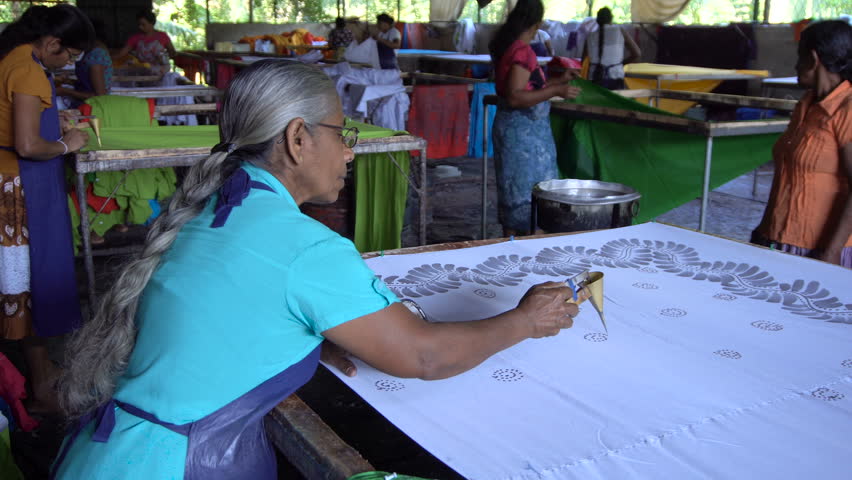
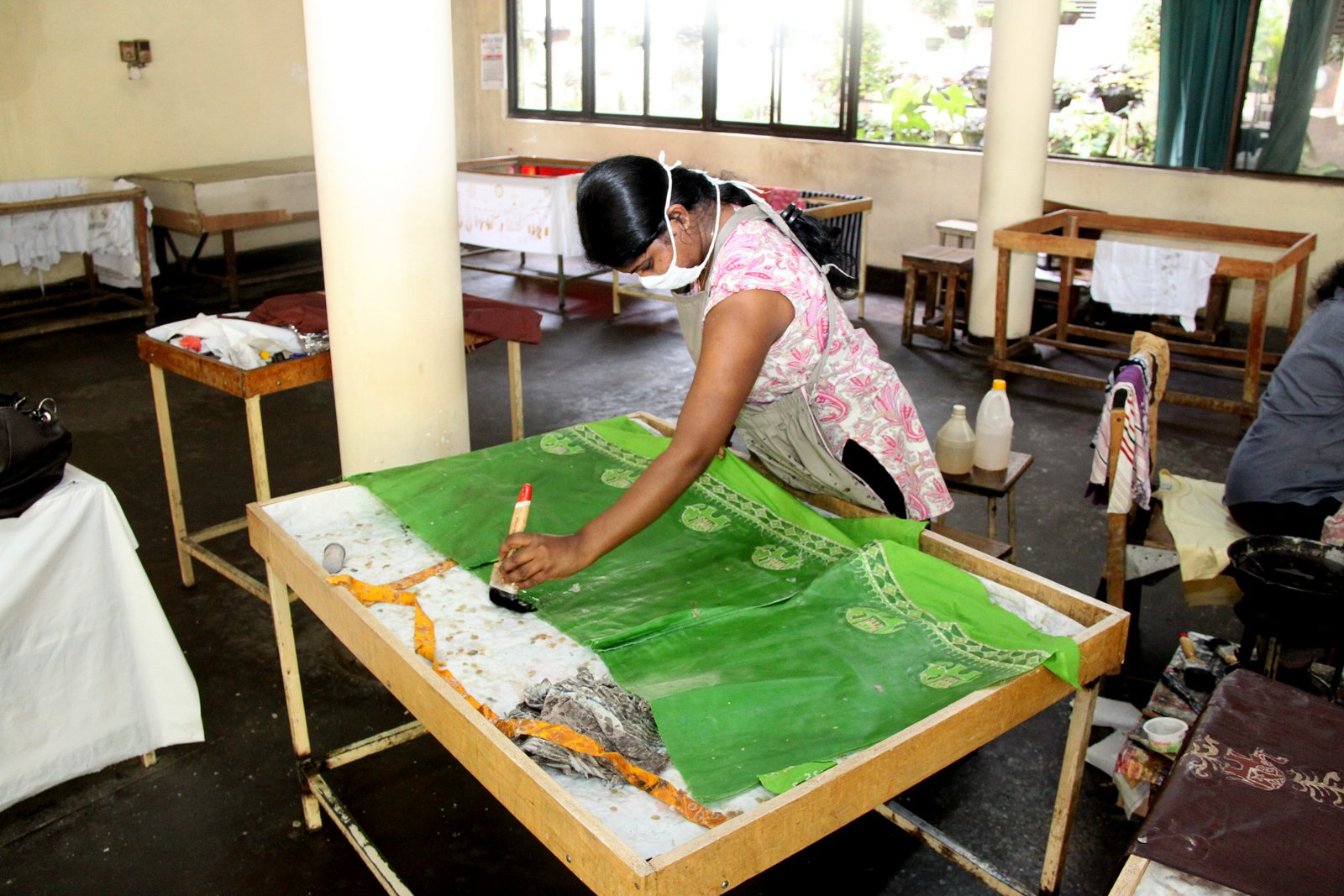
The rise of fine Batik in Indonesia hinged on the availability of imported high thread count cotton fabric from Europe after the industrial revolution. Women create resist patterns on this cloth by gliding molten hot wax from a copper stylus called a canting, which barely touches the cloth; coarse cloth would cause snags and wax drips. Both the surface and the underside of the cloth are waxed, so that the pattern is complete on both sides of the cloth. After each waxing, the cloth is dyed, and then boiled to remove the wax. Then another element of the design is waxed and the process is repeated.

The use of a stylus to create a hand-drawn Batik pattern is called tulis (writing”); the creation of tulis batik takes as much as two weeks for the waxing and a little over a month by the time the final dye bath is completed. Care must be taken to keep it from cracking the wax, as this indicates poor craftsmanship.

Although Indonesia has emerged as one of the important homes of the Batik trade followed by Malaysia and Thailand, Batik making has a long history elsewhere. No evidence of very old cotton Batiks have been found in India but frescoes in the Ajanta caves depict head wraps and garments which could well have been Batiks. In Java and Bali, temple ruins contain figures whose garments are patterned in a manner suggestive of Batik.

By 1677 there is evidence of a considerable export trade, mostly of silk from China to Java, Sumatra, Persia and Hindustan. In Egypt, linen and occasionally woolen fabrics, have been excavated bearing white patterns on a blue background. These are the oldest known dating from 5th century A.D. They were made in Egypt or Syria. In central Africa resist dyeing using cassava and rice paste has existed for centuries in the Yoruba tribe of Southern Nigeria and Senegal.

Indonesia, particularly the island of Java, is where Batik has reached the highest peak of excellence. The Dutch brought Indonesian craftsmen to teach the craft to Dutch warders in several factories in Holland from 1835. The Swiss produced imitation Batik. A wax block form of printing was developed in Java using a cap.By the early 1900s the Germans had developed mass production of Batiks. There are many examples of this form of Batik as well as hand-produced work in many parts of the world today. Computerization of Batik techniques is a very recent development.

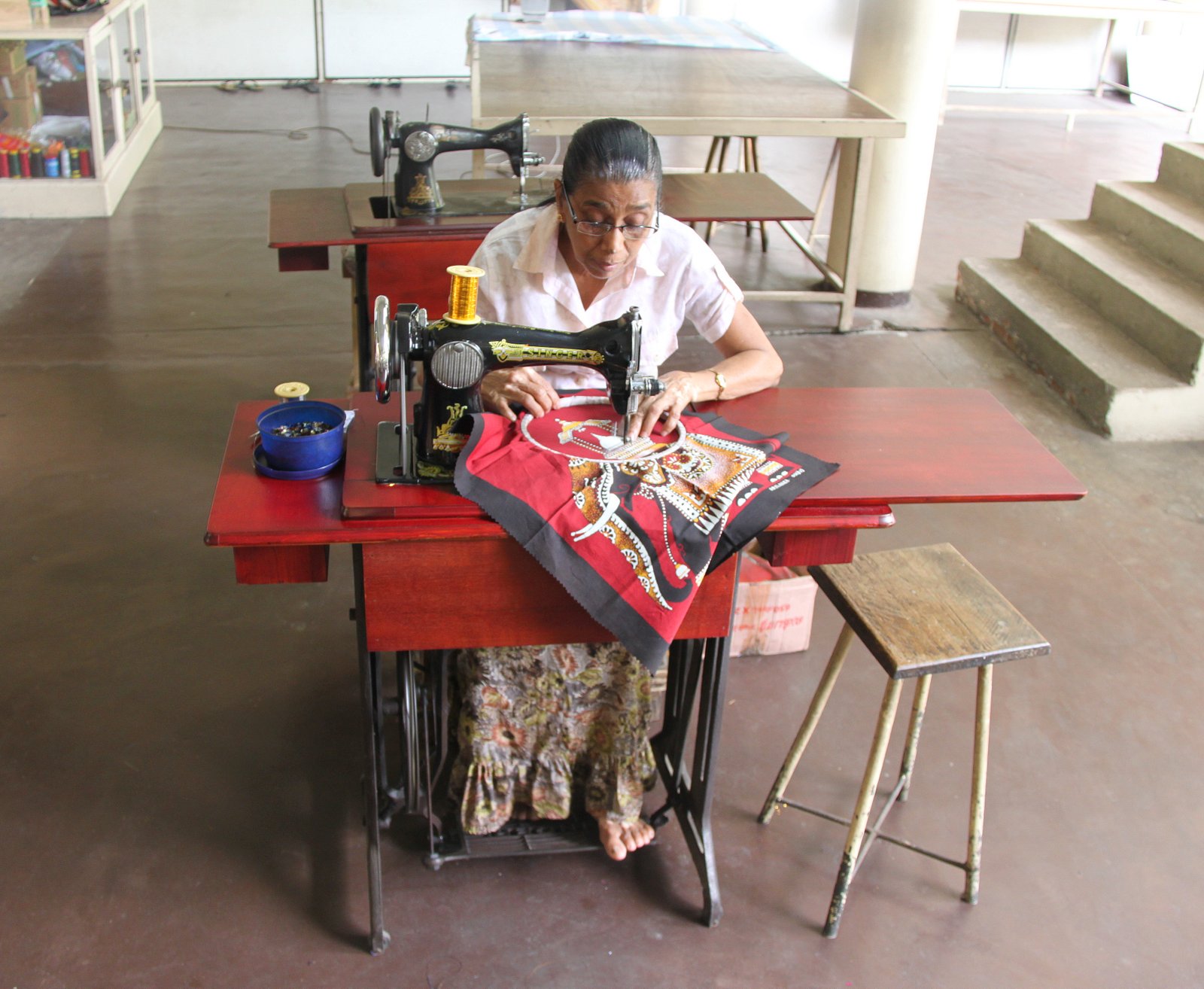
A tailor gives finishing touches in a Batik factory

Suggestions for Sri Lanka

Finally, I have some suggestions to make for Sri Lanka: Today, Batik textile manufacturing in Sri Lanka is deeply rooted in the local culture and many a local artist has embraced it as his own, developing unique wax resist and dying techniques to create Batik designs that are unique to Sri Lanka.

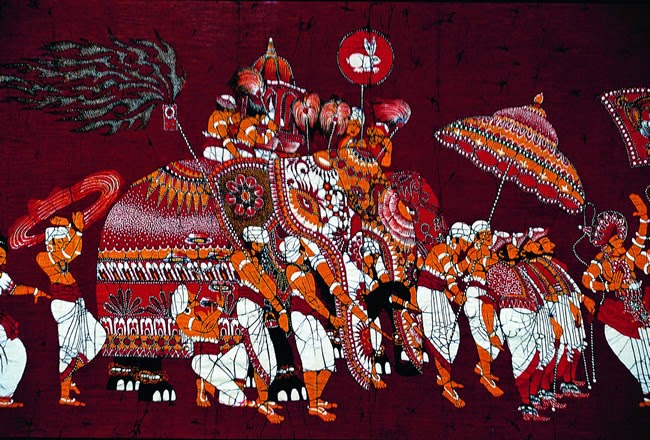
Currently, the Eastern province is famous for producing good quality handloom clothes with vibrant colors. The sarongs woven there are increasingly in demand among the higher echelons of society. However, based as it is mostly in areas dominated by Muslim culture, the clothes woven do not have human or animal motifs. But the Batiks produced in Sinhalese areas have no such restrictions. They carry paintings of humans and fauna as design motifs. For example, Kandy Perahara scenes depicting Kandyan dancers and elephants are a popular motif in the Kandyan Batik clothes.

I suggest that the government broad bases the production of Batik clothes. Indeed the Eastern province Muslim weavers can also get engaged in the Batik industry by creating their own motifs avoiding depictions of human figures. For example, they can employ geometrical motifs as it is done in Indonesia or floral motifs that can appeal to many consumers. It is ideal if the Eastern handloom industry can absorb Batik making techniques to produce a hybrid textile culture. This I believe can add to the value of this industry both economically and stylistically.

Crushing LTTE: Gotabaya’s armed forces shape up

September 14th, 2020

By P.K. Balachandran/Ceylon Today  Courtesy NewsIn.Asia

The inspiring story of the Sri Lankan armed forces’ make over done by Defense Secretary Gotabaya Rajapaksa is told in a gripping way by the current Defense Secretary Maj.Gen.(Rtd) Kamal Gunaratne.

Crushing LTTE: Gotabaya’s armed forces shape up

Colombo, September 14: In 2005, when Gotabaya Rajapaksa took over as Sri Lanka’s Defense Secretary at the request of the newly elected President Mahinda Rajapaksa, the country’s armed forces were in a depleted, ill-equipped and dispirited state. They were being outwitted and outmaneuvered by the intrepid and innovative LTTE.

The Lankan Army, Navy and the Air force were short of manpower and suitable equipment. Their strategies and tactics were ill-suited to the new challenges posed by the LTTE, which kept coming up with innovations in asymmetric warfare to the discomfiture of the Lankan tri-forces.

Successive Governments contributed to the mess by their lackadaisical policies on war and peace, and by being subservient to external powers that poked their noses with their own ends in view. Adding insult to injury, a Sri Lanka which was battling for survival was being hammered internationally for denying minority and human rights.

But come Gotabaya Rajapaksa to the helm as Defense Secretary, a sea change occurred in strategy, tactics, manpower, leadership, training and equipment. With the full backing of President Mahinda Rajapaksa and Treasury Secretary Dr. P.B. Jayasundera, Lanka’s demoralised armed forces were energised to the optimum. Continuous battlefield successes boosted troop morale and helped increase recruitment.

Gotabaya’s strategy of shelving the defensive approach and replacing it by an uninterrupted and multi-pronged assault on the enemy sealed the fate of the LTTE in less than three years.

How all this was done is related in a gripping way by Major General Kamal Gunaratne, a former field commander and the present Defense Secretary, in his new book Gotabaya” published last week by VijithaYapa.

Army

That the Army, the main armed force, was under-manned was known for quite some time. Gotabaya knew that successive Governments feared that the country would not be able to afford a large Army. But he was convinced that spending adequately on men and material now would result not only in the elimination of the scourge of terrorism but also save money for the country by ridding it of recurring war expenditure and a prolonged disruption of the economy.

But convincing the decision makers was not easy. President Rajapaksa and Treasury Secretary Jayasundera subjected Gotabaya to searching questions but were soon won over by the force of Gotabaya’s arguments. General Gunaratne notes that the rapport between the trio was so good that never once did Gotabaya return empty handed from the weekly Defense Council meetings.

The Army size was increased immediately from 70,000 to 120,000 and eventually to 300,000. This helped it conduct multi-pronged and continuous operations to hem in and crush the LTTE. Gotabaya even got the much smaller and expensive equipment-dependent Navy and Air force to recruit an extra 10,000 and 5,000 men respectively,so that these men could help hold captured territory while the Army kept going on the offensive. Thanks to the Api Venuven Api propaganda offensive launched by Gotabaya to instill pride in soldiering, recruitment burgeoned.

Choosing Army Chief

The other important task was to get a suitable Amy Commander. Gotabaya felt that Major General Sarath Fonseka was the kind of pushy and hard as nails type he wanted at the helm in place of the incumbent Lieutenant General Shantha Kottegoda. But there were three issues: Kottegoda was a friend and Mahinda wanted him to complete his term. Besides, Fonseka was on the verge of retirement. But the goal-oriented Gotabaya would not let these factors stand in his way. He got Fonseka, and Mahinda compensate Kottegoda by sending him off as Ambassador to Brazil. After the change of guard, Gotabaya, in consultation with Fonseka, changed personnel at various levels based on competence rather in place of seniority.

The next item on Gotabaya’s agenda was to see that India did not interfere and stop the war as it did in 1987 when it stopped the Vadamarachchi operation and saved the LTTE from an early death. He contacted the Indian High Commissioner Alok Prasad and suggested the formation of a Troika” of very senior Indian and Sri Lankan officials to coordinate relations.

Due to the close cooperation fostered by the Troika, the Mahinda Rajapaksa Government was able to conduct the war uninterrupted till the end, whilst maintaining cordial relations with India,” General Gunaratne writes.

Gotabaya got the Army Infantry Fighting Vehicles (IFV) so that they could move speedily and without being killed by enemy fire. He also got Baktar Shikan missiles from Pakistan and Green Arrow missiles from China to destroy LTTE positions from more than a kilometer away. Five Chinese radars were secured to pin point enemy targets for the Army’s guns.

To eliminate middlemen, streamline purchases and cut out corruption, the Defense Secretary set up Lankan Logistics and Technologies. In an earlier era, due to middlemen in cahoots with politicians, the forces were issued American M16s assault rifles in preference to T-56s, though the former was more expensive and had failed to perform under Sri Lankan climatic conditions. Later the M16s were replaced by the cheaper and better performing T-56s. When the Army asked for Russian Armored Personnel Carriers with a 30 mm cannon, the Government got Chinese T063 2 APCs with only a medium machine gun. Centralised purchases by Lanka Logistics helped end inappropriate buying of that sort.

President Gotabaya Rajapaksa appoints Maj.Gen.(Rtd) Kamal Gunaratne as Defense Secretary

Air Force

The Air force too was poorly quipped and under-manned. Its men were not trained to handle modern equipment. It needed a huge upgrade”. Since most of the serviceable aircraft were old, their ability to stay in the air was limited which affected their combat usefulness. Ground troops expecting air support were often disappointed with help from the Air force.

Gotabaya knew that equipping the Air force or Navy was going to be very costly. But with the cooperation of Treasury Secretary Dr. Jayasundera, Gotabaya bought four new MiG-27 ground attack aircraft and sent four grounded MiG -27s overseas for overhauling. All the Kfir fighters were sent for overhauling. With the help of techno-savvy Air Chief Air Marshal Roshan Goonetileke, Gotabaya secured Unmanned Aerial Vehicles (UAV) for pin point target spotting and reconnaissance of enemy territory. He got laser guided bombs for ground attack aircraft. An integrated UAV and ground located monitoring system enabled sharing of real time intelligence. To train pilots and airmen, Gotabaya imported Chinese trainer aircraft.

Navy

Though Sri Lanka is an island, and the LTTE was getting sustenance from and shelter in Tamil Nadu across the Palk Strait, successive Lankan Governments did not take the Navy seriously. Dvora Fast Attack Craft were acquired from Israel but soon the LTTE Sea Tigers ungraded themselves to be a potent combat force” using fast and better gunned craft and also suicide boats. Navy chief, Admiral Wasantha Karannagoda, was asked what he wanted immediately. Karannagoda said he wanted increased fire power and a gun system which could fire accurately when the vessel was being tossed about. The stabilised fire control system” was expensive but Gotabaya sanctioned its purchase and also got this and other equipment made locally. The request for 30 mm guns in place of the 25 mm guns were granted to enable Navy vessels to fire from a greater distance. To relieve the Navy of the burden of ferrying troops and civilians between the North and the South, Gotabaya used a passenger vessel Jetliner”.

Fonseka vs Karannagoda

While the Army and the Navy were improving their performance by leaps and bounds, there was one insurmountable problem before Gotabaya – the unseemly quarrel between Army Commander Fonseka and Navy chief Karannagoda. They were both from the same school, Ananda College, and were friends there. But as commanders they could not see eye to eye. At one point the Army and the Navy were poised for an armed battle with each other on Mandaithivu island which was prevented only by Gotabaya’s intervention, General Gunaratne recalls.

When all else failed, Gotabaya resorted to spiritual intervention and invited the two warring chiefs to a sermon by Ven Uduwe Dhammaloka Thero at Temple Trees. But this too had no effect. Finally, Gotabaya gave up. But he saw to it that at every other level, the Army and the Navy cooperated. Admiral Karannagoda told General Gunaratne later that Gotabaya should be given an award for managing the antagonism and preventing it from affecting the war effort in any way.

Will study 20A in depth before making recommendations: Minister Peiris

September 14th, 2020

Lahiru Pothmulla Courtesy The Daily Mirror

The committee chaired by Minister of Education Professor G. L. Peiris which was appointed to look into the 20th Amendment to the Constitution, will study it in depth before making recommendations, Minister Peiris today said.

Cabinet ministers Udaya Gammanpila, Ali Sabry, Nimal Siripala de Silva, Wimal Weerawansa and State Ministers Susil Premajayantha, S. Viyalendran and MPs Dilan Perera and Premanath C. Dolawatte were appointed as the committee members by Prime Minister Mahinda Rajapaksa.

Speaking at a news briefing today, Minister Professor Peiris said the government was open to criticisms made over the 20A.

As the committee, we will thoroughly analyse the 20A and will give recommendations and conclusions to the Prime Minister tomorrow. The findings will be submitted to the Cabinet on Wednesday. The 20A was brought to find solutions to pressing issues. A completely new Constitution is the need of the hour but it is a time consuming process,” he said.

He said the Constitution of Sri Lanka which is over 40 years old had not been changed along with the changes that took place in the society. In a new Constitution, Minister Peiris said reforming the electoral system will take priority.

Today, voters find it difficult to meet the representatives they elected to discuss their grievances, since the MPs represent an entire district. We should consider a new electoral system which is a combination of the first-past-the-post electoral system and proportional representation at 70 to 30 percentage respectively. We need to ensure an elected representative represents a constituency so that he or she can heed to the people’s plights in the area,” Minister Peiris said.

He also said by-elections are needed to test the popularity of the government and a threshold on election campaign expenditures to create a level playing field. 

Ranil to continue as UNP Leader till early Jan.

September 14th, 2020

JAMILA HUSAIN Courtesy The Daily Mirror

Ranil Wickremesinghe will continue as the leader of the United National Party at least till early January despite his earlier announcement that he is ready to resign and appoint a new leader, senior party sources told Daily Mirror yesterday just after a secret ballot elected former Gampaha District MP Ruwan Wijewardene as the UNP’s new Deputy Leader.

Ruwan Wijewardene contested for the post with Ravi Karunanayake, and he won through the secret ballet with 28-10 votes. Sources said the deputy leader will now be prepared by Wickremesinghe and other senior members to eventually take over the party after Wickremesinghe steps down from the post.

“As of now there is no certain date that Ranil will step down but it is expected he will hand over the leadership by early January and Ruwan will eventually take over. The party wanted a young leader and Ruwan was elected by receiving majority votes,” a source said. Ruwan was appointed to the post after the UNP claimed that it fell vacant following the suspension of Sajith Premadasa after he was appointed the leader of the Samagi Jana Balawegaya.

Ruwan will continue to maintain the same powers as what Sajith held in the party. Initially the Working Committee of the UNP decided to elect a new leader by Sept.6, when the party celebrated its 74th anniversary, but continuous talks between the seniors and contenders failed. Last week, the party held discussions continuously with a final breakthrough made over the weekend by shortlisting the candidates between Ruwan Wijewardene, Ravi Karunanayake and Arjuna Ranatunga. 

Ruwan Wijewardene elected UNP Deputy Leader

September 14th, 2020

Courtesy Adaderana

Former MP Ruwan Wijewardene has been elected as the Deputy Leader of the United National Party (UNP).

He was reportedly elected to the position following a secret ballot held during the UNP’s Working Committee meeting today (14).

Former Minister and UNP Vice Leader Ravi Karunanayake had also contested for the position.

Former State Minister Ruwan Wijewardene had obtained 28 votes while Karunanayake had received 10 votes. 

Wijewardene had previously held the position of Deputy General Secretary in the UNP.

The position of UNP Deputy Leader was previously held by incumbent Opposition Leader Sajith Premadasa, who was stripped of the post after he became the leader of the ‘Samagi Jana Balawegaya’ (SJB).

President instructs to implement plans to meet domestic liquid milk demand

September 14th, 2020

Courtesy Adaderana

President Gotabaya Rajapaksa has instructed officials to implement a short-term and long-term plan in collaboration with the public, private sectors and small-scale farmers to meet the local demand for liquid milk.

The President stressed the need to improve grass cultivation, dairy cow breeding and research institute services in order to achieve the set targets expeditiously.

President Rajapaksa made these remarks during a discussion held at the Presidential Secretariat today (14) on the future activities of the State Ministry of Livestock Farm Promotion and Dairy and Egg Related Industries.

Less than 40% of the country’s annual liquid milk requirement is produced locally. As a result, people are deprived of the opportunity to consume nutritious fresh liquid milk. The President has pledged to increase liquid milk production in the next decade in his National Policy Framework ‘Vistas of Prosperity and Splendour’.

The Government intends to expand the research activities that would help in introducing new breeds of dairy cattle suitable for different geographical areas of the country.

During this meeting the cultivation of high-quality grasses and cattle feed production to increase the production of milk, was discussed at length.

Small scale dairy farmers provide 85% of the total liquid milk production. ‘They should be strengthened and steps should be taken to increase the percentage’, said Mr. Basil Rajapaksa, the Head of the Presidential Task Force on Economic Revival. Farmers are discouraged due to the rising cost of production per liter of milk. 

Mr. Basil Rajapaksa pointed out the need to provide dairy farmers cattle feed including grasses under concessionary rates. It was pointed out that farmers should be encouraged at the institutional level to produce animal feed needed for both the public and private sector.

While highlighting the importance of involvement of the Central Environmental Authority in resolving issues related to animal husbandries, the President said that these measures should not be a burden on the farmer.

Mr. Basil Rajapaksa said animal farms run traditionally should not be closed down based on complaints by the public without conducting an investigation.

Measures have been taken to rear 15,000 milking cows with the assistance of 15 estate companies with the aim of increasing the dairy production, Minister of Agriculture Mahindananda Aluthgamage said.

Expanding the production of chicken and eggs and diverting large scale producers to the export market was also discussed during the meeting. Investors of the private sector said they anticipate foreign exchange earnings of USD 16 million in 2020 by exporting eggs, chicken and related products.

Secretary to the President P. B. Jayasundera, Secretaries to Cabinet and State Ministries, heads of line institutes and several private-sector investors were also present during the meeting.

-PMD

Covid-19: nine new cases brings total to 3,262

September 14th, 2020

Courtesy Adaderana

Nine more novel coronavirus cases have been identified increasing the total number of confirmed cases reported in the country thus far to 3,262.

According to the Govt. Information Department, five passengers who arrived from United Arab Emirates (UAE) and another four arrivals from Bangladesh tested positive for Covid-19.

Accordingly, 28 new cases have been confirmed so far today (14).

244 patients infected with the virus are currently being treated at hospitals while the total number of recoveries in the country has climbed to 3,005.

UN rights chief urges UNHRC to give renewed attention to Sri Lanka

September 14th, 2020

Courtesy Adaderana

The United Nations human rights chief said on Monday that she is troubled that the new Government of Sri Lanka is swiftly reneging on its commitments” to the Human Rights Council since it withdrew its support for resolution 30/1.

U.N. High Commissioner for Human Rights Michelle Bachelet also warned that the proposed 20th amendment to the Constitution may negatively impact on the independence of key institutions, including the National Human Rights Commission.

The comments from Michelle Bachelet came in her global human rights update during the 45th session of the U.N. Human Rights Council in Geneva, during which she encouraged the Council to give renewed attention to Sri Lanka.

The pardon given in March to a former Army sergeant convicted of participating in unlawful killings; appointments to key civilian roles of senior military officials allegedly involved in war crimes and crimes against humanity; and moves within the police and judiciary to thwart the investigation of such crimes, set a very negative trend.”

The surveillance and intimidation of victims, their families, human rights defenders, journalists and lawyers should cease immediately,” she said. 

I encourage the Council to give renewed attention to Sri Lanka, in view of the need to prevent threats to peace, reconciliation and sustainable development.”


Excerpt of statement by UN High Commissioner for Human Rights Michelle Bachelet:

In Sri Lanka, I am troubled that the new Government is swiftly reneging on its commitments to the Human Rights Council since it withdrew its support for resolution 30/1. Among other developments, the proposed 20th amendment to the Constitution may negatively impact on the independence of key institutions, including the National Human Rights Commission. The pardon given in March to a former Army sergeant convicted of participating in unlawful killings; appointments to key civilian roles of senior military officials allegedly involved in war crimes and crimes against humanity; and moves within the police and judiciary to thwart the investigation of such crimes, set a very negative trend. The surveillance and intimidation of victims, their families, human rights defenders, journalists and lawyers should cease immediately. I encourage the Council to give renewed attention to Sri Lanka, in view of the need to prevent threats to peace, reconciliation and sustainable development.”

Sri Lanka’s 13th COVID-19 death reported

September 14th, 2020

Courtesy Adaderana

The person who passed away at the Chilaw Hospital earlier this evening (14) has been identified to have been infected with COVID-19, confirmed the Department of Government Information.

The deceased is a 60-year-old seaman who had been undergoing quarantine after returning from abroad, according to Dr. Sudath Samaraweera of the Epidemiology Unit of the Health Ministry.

He had arrived in Sri Lanka from Bahrain on the 02nd of September; however, he had not been identified as COVID-19 patient at the point of arrival.

On 09th of September, he had been admitted to the Chilaw Hospital over an illness. According to the Government Information Department the nearest cause of death is considered to be a heart attack.

This is the thirteenth death reported in Sri Lanka from the coronavirus pandemic, the According to the Government Information Department said.

Sri Lanka has, so far, reported a total of 3,234 COVID-19 infections within the country. Among them, 3,005 have completely recovered from the infection.

As per the Epidemiology Unit, 217 active cases are currently under medical attention at selected hospitals across the country.

AN OPEN LETTER TO DR.KOHONA -DESIGNATED SRI LANKAN AMBASSADOR TO CHINA

September 13th, 2020

Malin  Abeyatunge

Congratulations to you on being designated to china as Sri Lankan Ambassador. I watched the Sirasa Pathekade program by Asoka Dias  interviewing you. President Gotabaya has quite rightly picked the right person to the right position. Mr. Kohana has already identified his role and Sri Lankans can be assured that he will perform his duties to the best of his ability.

I Remember  having met him in Colombo when the LTTE at its peak, as a representative of one of the  foreign organisation based in Melbourne against LTTE. SPUR org  had many a discussions  over the LTTE problem with him during this time. I can recollect Mr. S.L. Gunasekera too among the other patriots I met during that period. Because of the time constraints at the above interview, Dr Kohana touched his plan only on at macro level. As a dual citizen living in Australia (Melbourne),I wish to bring another area at micro level to your focus  where Sri Lanka can expand (if not started yet) and that is selling Education’ to Chinese students. Australia has made one of their most lucrative income earning investments in the past before  Covid-19.   Australia was in forefront before COVID-19 in attracting foreign Chinese students to their Australian Universities  but it has  come to a halt due to both China and Australia are currently at logger heads both politically and economically.

Australia’s world- class international education sector contributed $34 billion to the local economy last year, an increase of 15.3 per cent. Minister for Education Dan Tehan said Australia hosted a record 690,000 international students in 2018 who paid tuition fees and spent money on living costs.” Sources-GOOGLE. The above quote is just to give you a glimpse of how lucrative business it is.  So, let us make hay while the sun shines. This would be the ideal time for Sri Lanka to walk into Australian shoes and  start a new investment strategy in selling education to the stranded Chinese students. Open up a few of our top level universities to them. Invite them to join our Universities. He can  discuss this with the Minister of Higher Education Dr, G.L.Peiris in promoting this concept.

Australian Universities were providing following educational programs like Basic English courses for novices and beginners, business and accounting degrees and post-degrees; diplomas  in many fields etc. and there is a big vacuum in these fields now where our universities can fit in.  The Sri Lankan Foreign Student Agencies can throw some light into this too. So my request to you is to give this matter a serious thought and grab this opportunity.

Malin  Abeyatunge

China’s Belt and Road Initiative is creating a new continent “Eurasia” says veteran Lankan communist leader

September 13th, 2020

Courtesy NewsIn.Asia

DEW Gunasekera said that the Lankan communists convinced Colombo to sign the Rubber-Rice Pact with China in 1952 and to recognize Communist China in 1957

China’s Belt and Road Initiative is creating a new continent “Eurasia” says veteran Lankan communist leader

Colombo, September 13 (Xinhua): China’s Belt and Road Initiative (BRI), of which Sri Lanka is an early participant, is beneficial to developing countries and creates multi-polarity in world affairs.

Former General Secretary of the Communist Party of Sri Lanka (CPSL) D.E.W. Gunasekera told Xinhua that the China-Sri Lanka ties have reached a new high due to the implementation of the BRI and massive Chinese investment in infrastructure and energy projects in the island country.

BRI, a reference to the Silk Road Economic Belt and the 21st Century Maritime Silk Road, is aimed at building a trade, investment and infrastructure network that connects Asia with Europe and Africa along the ancient trade routes.

Gunasekera, who served as the general secretary of the CPSL for 16 years until his resignation in August, said China’s development has enabled a multipolar world with new economic centers emerging in Africa, Latin America and Eurasia.

A new continent called Eurasia is emerging due to the Belt and Road Initiative,” Gunasekera said. The Asian economy is the vanguard of the world economy.”

Cooperation with China is imperative for developing countries like Sri Lanka so as to safeguard national interests and make use of China’s massive market, Gunasekera said.

He said that the CPSL played a significant role in convincing the then government of Sri Lanka to sign the Rubber-Rice Pact with China in 1952, and establish the formal diplomatic ties with China in 1957.

Commenting on China’s development, Gunasekera recalled that he was part of a CPSL delegation to visit Shenzhen in 1980s, when only basic infrastructure had been built in the fishing village in south China, which has now been transformed into a global technology hub.

PM appoints committee to study 20A

September 13th, 2020

Courtesy Adaderana

Prime Minister Mahinda Rajapaksa has taken steps to appoint a committee comprising of parliamentary representatives to study the 20th Amendment to the Constitution.

The committee comprising of Cabinet Ministers, State Ministers, and Members of Parliament will be chaired by Ministers of Education Prof. G. L. Peiris.

Cabinet Ministers Udaya Gammanpila, Ali Sabry, Nimal Siripala de Silva, Wimal Weerawansa, and State Ministers Susil Premajayantha, S. Viyalendran have been appointed to the committee.

In addition, parliamentarians Dilan Perera, and Premanath C. Dolawatte have been added as members of the committee.

The report of the committee is scheduled to be handed over to the Premier on September 15.

Sri Lanka realty battle heats up

September 13th, 2020

Sambit Saha   |   Calcutta Courtesy The Telegraph (India)

Multiple cases being fought over the fate of the $300-million Altair project declared as a ‘flagship foreign investment project’ in the island nation

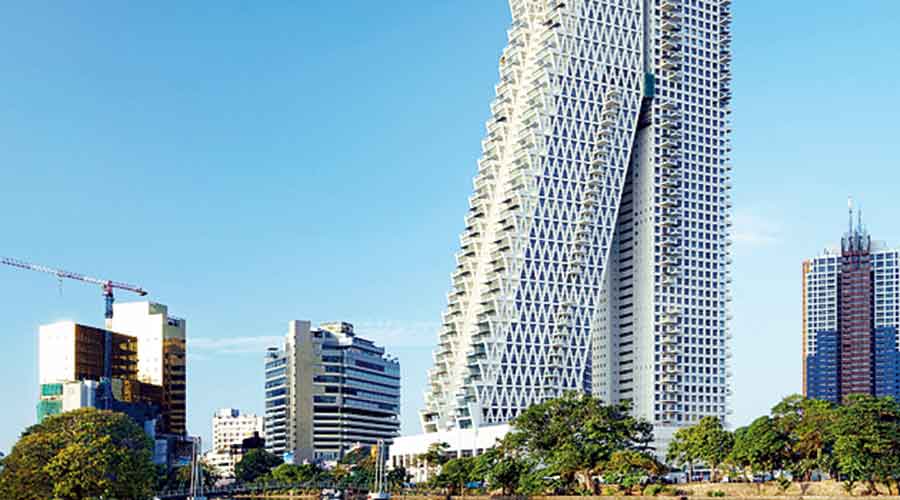
The Altair project in Sri Lanka

wo strands of a bruising court battle are looming on either side of the Palk Strait as a clutch of top builders from Calcutta mount legal challenges to claw back at a prestigious development in Colombo.

Multiple cases are being fought before the company law court in India and the commercial court in Sri Lanka over the fate of the $300-million Altair project which has been declared as a ‘flagship foreign investment project’ in the island nation. 

The first round in what appears to be a long battle has gone to the challenger Jaideep Halwasiya who was granted a stay by the National Company Law Appellate Tribunal (NCLAT) over his ouster from the board of the Indian firm which used to be the main promoter of the Sri Lankan subsidiary which is building Altair. 

However, Halwasiya may have to toil hard to maintain the early lead as the Commercial High court of Colombo is ready to hear a case filed by the Indian parent to challenge the manner in which it has been reduced to a minority in Altair after the Supreme Court of Sri Lanka paved the way for the hearing on September 8. The Commercial High Court in Colombo could hear the matter as early as Monday or Tuesday while the NCLAT order was delivered on September 4.

The dispute

At the heart of the dispute is a change in ownership of the Sri Lankan company, Indocean Developers Pvt Ltd (IDPL), the promoter of Altair.

Calcutta-based AA Infraproperties (AAI) used to own 100 per cent share of IDPL. Its stake is now down to 13.84 per cent after Halwasiya issued fresh shares to entities linked to him.

South City Projects (Kolkata) Ltd, which holds 87.5 per cent in AAI — the remaining 12.5 per cent is with Halwasiya — claims that the issuance of shares in IDPL was an act of fraud perpetrated by Halwasiya to wrest control of Altair. 

SCPL, which is owned by top city builders Sushil Mohta, Pradeep Sureka, Jugal Khetawat, Rajendra Bachhawat and Emami Group, has in turn lost control of Altair — two towers leaning one over another overlooking the sea — which is nearing completion after at least two years of delay.NCLAT order

A bench comprising acting chairperson Bansi Lal Bhat overturned an order of NCLT, Calcutta, which declined to grant an interim stay to Halwasiya plea to challenge his removal from AAI via an extraordinary general meeting of January 4 and the induction of three additional directors by an AGM on September 24, 2019.

While returning the matter to the lower court, NCLAT observed: We are of the opinion that the impugned order suffers from (a) grave legal infirmity besides factual frailty. (The) Same cannot be supported. The appeal is allowed and the impugned order is set aside.
Appointment of respondents No. 4 to 6 as directors and removal of the appellant as the director is stayed till the decision on the company petition by the tribunal.” AAI had sought to remove Halwasiya from the board after the change in shareholding of IDPL came to light. Battlefield Colombo

AAI had moved Commercial High Court in Colombo to challenge the dilution of their equity interest in IDPL. However, it now appears that the court has to first adjudicate on who represents AAI after the NCLAT order. There is only one director representing the interests of South City promoters after the appointment of three directors were stayed. The other director is Halwasiya himself.

AAI is challenging the validity of a power of attorney purportedly granted to Halwasiya in 2019 to represent the Indian parent in Sri Lanka.

India needs to invest in regional disaster relief mechanisms | Opinion

September 13th, 2020

Courtesy The Hindustan Times

With climate uncertainty, humanitarian emergencies in the region are poised to grow. India must invest in regional frameworks for disaster management and take the lead in setting up a road map for greater cooperation

On September 3, a fire broke out in a large crude carrier MT New Diamond off the eastern coast of Sri Lanka. The Indian Oil Corporation (IOC)-chartered ship was carrying 270,000 tonnes of oil en route to Odisha and was helped by the Indian Coast Guard (ICG) and Navy to douse the fire, rescue crew members, and prevent an oil spill. India’s response was initiated through the South Asian Cooperative for Environment Protection (Sacep) for coordinating pollution response in the South Asian Seas region. In 2018, India signed an MoU with Sacep assigning the ICG as the competent authority for implementation under the initiative.

This response is unique in that it was evoked through a regional framework for addressing environmental emergencies. Historically, a key feature of India’s humanitarian assistance and disaster relief (HADR) strategy has been the emphasis on bilateral engagement with the affected country. This year, for instance, Indian assistance to tackle the MV Wakashio oil spill in Mauritius and the help provided to countries in the wake of the Covid-19 pandemic have both technically been bilateral in nature. An often-cited reason for this is India’s insistence on respecting territorial sovereignty while extending relief measures. The emphasis on bilateral emergency assistance has impeded the development of a regional mechanism for disaster relief in India’s neighbourhood.

In the aftermath of the 2015 Nepal earthquake, India launched its biggest-ever relief operation. Although successful, the operation garnered criticism from a few quarters in Nepal who accused it of hindering other international efforts. Moreover, the international response featured bilateral assistance from six different South Asian countries but lacked a coordinated relief effort, including from the South Asian Association for Regional Cooperation (Saarc) and the Bay of Bengal Initiative for Multi-Sectoral Technical and Economic Cooperation (Bimstec).

As seen in the MT New Diamond case, India’s neighbours would probably approve of the deployment of Indian military assets through a regional agreement as opposed to a unilateral relief operation on their soil. In a recent Brookings India policy brief, Neighbourhood First Responder: India’s Humanitarian Assistance and Disaster Relief, I highlight the bilateral and regional dimensions of emergency assistance provided by India in its neighbourhood over the last 20 years.

Saarc has codified disaster management by adopting the comprehensive framework on disaster management in 2006 and establishing the Saarc Disaster Management Centre (SDMC) as part of its mandate. In 2011, Saarc approved the Agreement on South Asia Rapid Response to Natural Disasters (SARRND), which formalised a policy for a cooperative response mechanism in the region. Also, the Saarc Food Bank was established in 2007.

Under Bimstec, India has been leading efforts towards the Environment and Disaster Management” priority area and established the Bimstec Centre for Weather and Climate as a platform to share information and build capacities on disaster-warning systems.

While these are commendable initiatives, there is still a long way to go towards building an effective regional disaster relief mechanism. This is best exemplified by the fact that despite having an official policy in the form of SARRND, no Saarc-level contingent has ever been deployed during emergencies in the region. Similarly, in Bimstec, although member-countries have shown a willingness to work together on relevant issues, there is a large gap to fill in terms of establishing operating procedures for joint relief campaigns.

With climate uncertainty, humanitarian emergencies in the region are poised to grow. India must invest in regional frameworks for disaster management and take the lead in setting up a road map for greater cooperation. Building capacities through training and joint exercises and coordinating comparative advantages for collective action will help India leverage goodwill among its neighbours through its disaster relief programmes.

Saneet Chakradeo is a research analyst at the Centre for Social and Economic Progress (formerly Brookings India)The views expressed are personal

How can this happen?

September 13th, 2020

By Noor Nizam, September 12th., 2020.

The Sunday Morning says that Sri Lanka stands to lose the opportunity of claiming one-fourth the value of the MT New Diamond and one-fourth the crude oil on board (67,500 metric tonnes) due to an oversight by Sri Lanka’s maritime authorities. 

The Undersigned had published this article/content and had forwarded it to the Attorney General’s Office, Chairman MEPA and the Office of the Secretary to the President as shown below. An immediate inquiry regarding this has to take has to be launched by the President immediately regarding the failure of the political and administrative officials to have allowed this to happen, even when a”citizen” of Sri Lanka had requested for immediate action citing “The International Convention On Salvage, IMO 1989” to make the claim as early as September 7th., 2020 

Noor Nizam.

……………….

The emails sent attached below:

Noor Nizam <noornizam7@yahoo.ca>

To:

administration@attorneygeneral.gov.lk

,ch@mepa.gov.lk

,ps@presidentsoffice.lk

Mon., Sep. 7 at 12:51 a.m.

Dear Sirs,

Please kindly find below an article published regarding salvaging the burning oil tanker MT. New Diamond of the shores of Ampara in the Eastern Province for your kind information and necessary action please.

Sincerely.

Noor Nizam.

……………………………………………….

The article/content attached below:

SRI LANKA BEING THE FIRST “VOLUNTEER” TO RESCUE BURNING OIL TANKER NEW DIAMOND SHOULD PURSUE A COURSE OF ACTION DEEMED PROPER TO BUY THE 270000 MT OF CRUDE OIL AND 170000 MT OF DIESEL IN THE SALVAGED TANKER. 

By Noor Nizam – Peace and Political Activist, Political Communication Researcher & SLFP/SLPP Stalwart, September 6th., 2020.

The law of salvage is a principle of Maritime Law whereby any person who helps recover another person’s ship or cargo in peril at sea is entitled to a reward commensurate with the value of the property salved. Maritime law is inherently international, and although salvage laws vary from one country to another, generally there are established conditions to be met to allow a claim of salvage. The law of salvage is the result of the Latin negotiorum gestio concept. In the circumstances of the “SALVAGING” the Super Oil Tanker MT. New Diamond off the coast of Ampara in the Eastern Province, Sri Lanka is fully qualified to make this legitimate claim.

Sri Lanka should make the best of this great achievement in maritime history where the Sri Lankan authorities (Government, Sri Lankan Navy, Air Force and the Ports Authority ) took control of dosing the fire under tremendous stress and averted a great world disaster to maritime environment in the Indian Ocean, which was expressed by Dharshani Lahandapura, the chair of Sri Lanka’s Marine Environmental Protection Authority (MEPA), that an oil spill from the ship would be “one of the biggest environmental disasters not only in the region but in the world”. 

Dosing this fire and bringing it under control, as it is now by the Sri Lankan team is being praised by many developed nations in the region. It is only correct that Sri Lanka which has the “FIRST CALL” on the salvage of this Oil Tanker MT New Diamond  owned by Liberia-based Porto Emporios Shipping Inc., for being the first “VOLUNTEER” to go to it’s rescue, in accordance with “The International Convention On Salvage, IMO 1989”, should pursue a course of action deemed proper to buy the 2700 MT of the crude oil and the 1700 MT of diesel in the tanker, once it is fully salvaged and anchored in a safe point. The ship was chartered for the voyage by the Indian Oil Corporation which will try to claim the crude oil and the diesel without giving an option to Sri Lanka to buy the salvage cargo.

With the ongoing new developments of this crisis and the intervention of International players and high profile business and technical experts arriving in Sri Lanka and moving to the disaster zone where the Oil tanker is floating, held by a tugboat, many proposition are being suggested to make sure that there will “NOT” be further losses to the owners of the vessel, even at the cost of great loss to Sri Lanka and our eastern coastal environment threatened by oil spills. Because Sri Lanka has never experienced such a disaster in the past and Sri Lankan officials have not much “ON-THE-JOB TRAINING” in this area, they can be “DUPED” by these so-called international experts to agree to terms and conditions of the “Salvage” claims “DETRIMENTAL” to Sri Lanka’s benefits of “GAINS”. Therefore Sri Lankan Officials should move forward in this matter very cautiously and carefully to get the maximum benefits for our “MAATHRUBOOMIYA”. This does not undermine the ability and capabilities of our officials, but only just to ring a bell of warning.

Immediately the fire was announced and the Sri Lankan Navy, Air Force and the Ports Authority took control of dosing the fire under tremendous stress, while the Indian coast guard, the 2 Russian ships docked at the Hambantota habour joined and later a tug boat hired by the owners came into the scene, the undersigned with farsighted thought made comments in this medium that the the Government of Sri Lanka and or it’s authorities responsible for this should register the claim of salvage” immediately with the owners of the Oil tanker. This was because The Sri Lankan government (Navy, Air Force and the Ports Authority) were incurring a lot of expenses and engagement of manpower resources to save this great valuable oil tanker and the crude oil in it from a great environmental disaster as was stated by the Sri Lanka Navy on Sept. 4th, 2020.

20 වන විවස්ථා සන්සෝධනයේ පහත සදහන් කරුණු වළට මුලු රටම විරුද්ධය

September 13th, 2020

ආචාර්ය සුදත් ගුණසේකර

13.9.2020

1  අමාත්යය මන්ඩලයේ 30 සීමාව ඉවත් කිරීම

2 ජනාධිපති කමට තරග කිරීමේ වයස සීමාව අවුරුදු 30 දක්වා අඩුකිරීම

3 ද්විත්ව පුරවැසියන්ට මැතිවරණ වලට තරන්ග කිර්‍රිමට අවසර දීම සහ රජය යටතේ දෙස් විදෙස්වල (තානාපතිකම් වැනී තනතුරු දැරීමට අවසර දීම

4 ආණ්ඩුක්‍රම විවස්ථාවේ 53 විවස්ථාවේ විධිවිධාන වෙනස් කිරීම. කෙසේ වුවද එය වෙනස්කළයුතුම නම් එයට” එසේ දිවුරුම් දී වුවත් පසුව ඊට හැනිව ක්‍රියා කළහොත් වහාම ඒ පුද්ගලයා අදාල තනතුරෙන් ඉවත් කිරීම ‘

එබැවින් මෙම කරුණු 20 වන සන්ශෝධනයෙන් වහාම ඉවත්කළ යුතුයයි මා ඇතුළු මුලු රටම රයයට යෝජනා කරයි.

මන්ද 69 ලක්සයක් අපේ මිනිසුන් මේ රජයට චන්දය දීලා රනිල් ගෙදර යැව්වේ මේ විකාර කිරීමට නොවන නිසාය.

අමාත්යය මන්ඩලයේ

යහපාලනය රජය යටතේ මුලු ලෝකයේම ලොකුම ඇමැතිමන්ඩලය තිබුණේ මේ රටේය.සමහරවිට එය 112 දක්වාද වැඩිවී එම සන්ක්යාව 157 දක්වාද වැඩිවී තිබිණ. ලන්කාව වැනි කුඩා රටකට එය දැරිය නොහැකි අතිවිශාල බරකි. ඒ නිසා ඇත්ත වශයෙන්ම මේ රටේ අති බහුතරයේ අපේක්ශාව එය උපරිමය 15 ක් පමණ වියයුතුයි කියාය. 

ජනාධිපති තරන්ගයේ වයස සීමාව 30 දක්වා අඩු කිරීම

 19 වන සන්ශෝධනයෙන් යහපාලන රජය මෙය 35 දක්වා වැඩිකළේ නාමල් රාජපක්ස තරන්ගයෙන් ඉවත්කිරිමටය. දැන් ඒ ප්‍රස්නය නොපවතින බැවින් සහ මේ රටේ ජනාධිපති තනතුර වැනි වගකිවයුතු තනතුරකට  පත්වන විට එම භාර්ධූර වගකීම දැරීමට තරම් මුහුකුරාගිය බවක් සහ දැණුමක් තිබීම අනිවාර්ය වන නිසා එය 35 වීම වඩා සුදුසුය. සෙනේට් එක තිබුණු කාලයේත් මට මතකයි ඒ සන්දහා අවස්ය අවම වය අවුරුදු 35 විය. වයස 30 වනවිට  එවැනි අසාමාන්ය තත්වයකට  පත්ව සිටියේ ඝෞතම බුදුන් වැනි අති විශේස පුද්ගලයෙකු පමණි. ලෝකයේ සාර්ථක පාලකයින් අතර සිටි  අලෙසැන්ඩර්ද එබන්දු තවත් එක් පුද්ගලයෙකි.

ද්විත්ව පුරවැසියන්ට මැතිවරණ වලට තරන්ග කිර්‍රිමට

ද්විතව පුරවැසියන් දෙපත් නයින් වැනිය. එසේම ඔවුන් බිරින්දන් 2 ක් සිටින අය වැනිය. ඔවුන් කිසි සේත්ම විස්වාශ නොකටැයුතුය. මන්ද වගකීම දෙකට බෙදෙනබැවිනි. එවැනි අයකුගෙන් මේ රටට කිසිම  පක්සපාතිත්වයක් බලාපොරුත්තු විය නොහැක.රනිල් වික්‍රමසින්හ අර්ජුන මහෙන්ද්‍රන් මහ බැන්කුවට පත්කොට රටට සිදුවූ මහා විනාසය මේ අයට මතක නැද්ද. එමනිසා ජනාදිපතිවරයා පමණක් නොව කවුරු උනත් මෙවැනි තීරණ ගැනීම නොකල යුතුය. විශේසයෙන්ම තානාපතිකම් වැනි තණතුරුවලට පුද්ගලයින් පත්කිරීමේදී එම තණතුරේ කාර්යභාරය නිසි පරිදි ඉටුකිරිම්මට ඔහු හෝ ඇය තුල ඇති විසේසග්න දැනුමට අමතරව මේ රටට ඔවුන් තුල තිබෙන නොබෙදුණු ආදරය සහ බැදීම ඉතාමත් වැදහත් වේ. එමනිසා කිසිසේත්ම  දෙබිඩි නයින් එවැනි තනතුරුවලට කිසිසේත්ම පත් නොකළ යුතුය යනු බහුතර මතයයි.එසේ කිරීම නයින් රෙද්ද අස්ස්සේ දමාගැනීමකි.

ආණ්ඩුක්‍රම විවස්ථාවේ 53 වගන්තිය

මෙයද එසේම නොවෙනස්ව පැවැතියයුතුය. කෙසේ වුවද ඒ අතර ඒ සදහා එකතුකළයුතු අලුත් වගන්තියක් සදහන් කිරීමට මා කැමති වෙමි. එනම්  53 අනුව කෙනෙකු දිවුරා එය කඩකළහොත් ඔහු හෝ ඇය වහාම එම ධුරයෙන් ඉවථ් කළයුතුය කියාය”.

 ගරු ජනාධිපති තුමා සහ ගරු අගමැති තුමා කෙරෙහි මේ රටේ 69 ලක්සයක් දෙසප්‍රේමී සින්හල ජනතාව තැබූ අචල භක්තිය හා විස්වාසය  බින්දකුදු පලුදු නොවන පරිදි ඒ දෙදෙනම කටයුතු කරණු ඇතැයි යනු සමස්ථ ජාතියේම  පරම අපේක්සාවයි.

 එසේ නොකළහොත් 2015 දී තමන්ට සිදුවූ දෙය මෙන්ම 2019 දී විපක්සයට සිදුවු දේ යලිත් සිදුනොවෙතැයි නොසිතිය යුතුයයි මම අවධාරනය කරමි.

එතුමන්ලාගේ අන්තේ වාසිකයින් වන කිසිවෙකුගෙන් මෙවැනි උපදෙස් කිසිදාක බලාපොරුත්තු විය නොහැක  එසේකිරීම ඉබ්බන්ගෙන් පිහාතුටු ලබාගත නොහැකිවාක් මෙනි.

පෙර රජ දවස මෙන් රජුන්ට නිවැරැදි උපදෙස් දීමට තරම් කසේරුකාවක් ඇති, වේදේහය්න්ගේ මහුසධ පඩ්තුමා තුමන්, චන්ද්‍රගුප්තයින්ට කෞටිලුයන්  සහ ශ්‍රි වික්‍රම රාජසින්හ රජුට කොත්මලේ ගණිතයා වැනි රාජ්ය උපදේශකයින් දැන් ලොව පහලවන්නේ නැත.

වර්තමානයේ උපදේශකයා යනු රජුන් කියන ඔනෑම දෙකට එහෙයි කියා තම තනතුර හා වරප්‍රසාද පමණක් ආරක්ශාකරගන්නා එකම චේතාව පෙරදැරිකොටගෙන  කටයුතු කරන  පුද්ගලයාටය.

රජු ඉරට සදයයියයි කීවොත් ඔහුද එසේය මහරජ එය සදමයැයිද  සඳට ඉරයයි කිවිටද එසේය  මහරජ එය ඉරම වේදැයිද කියයි. 

වර්තමානයේ දීර්ගායුශ ඇත්තේ එවැනි අයට පමණි. 

Twelve new cases of COVID-19 reported

September 13th, 2020

Courtesy Adaderana

Twelve more new cases of coronavirus infection have jumped the total number of COVID-19 cases in Sri Lanka to 3,231.

Six among the latest cases are recent arrivals from Kuwait while remaining 06 are from the United Arab Emirates. 

Accordingly, 36 new cases of COVID-19 infection have been reported within the day so far, with 16 returnees from Qatar, 04 from the UAE, 02 from the Maldives, 01 from Ethiopia, and 01 Ukranian testing positive earlier today (13).

As per the Epidemiology Unit of the Ministry of Health, 223 active cases are currently under medical care at various hospitals across the island.

Meanwhile, the number of recoveries in the country moved up to 2,996 as 13 patients were discharged today upon complete recovery from the disease.

Sri Lanka has witnessed 12 deaths from the virus so far.

Three (03) more persons confirmed for Covid -19: SL Country total increases to 3,234

September 13th, 2020

Courtesy Hiru News

Three (03) more persons have been confirmed for Covid -19 in Sri Lanka.

The Sri Lanka Country total has increased to 3,234.

Information on MPs who prevented the arrest of extremists – Easter Commission

September 13th, 2020

Courtesy Hiru News

Former senior DIG of the Eastern province Edson Gunatillake says that muslim radicals have been taking arms since 2008 and 2009 under the pretense of fighting the LTTE, and spread their radicalistic ideas.

He expressed this view last evening while giving his statement before the Presidential Commission of Inquiry on the Easter Attacks.

The witness informed the commission that an individual named Zahran was involved in one of the 18 armed radical groups which emerged during the 2008 to 2009.

He said that Hizbulla commenced cultivating dates in the east and that disputes occurred between muslim sectors during this period.

He further noted that the radicals who received the protection of a group of ministers including Rishard Bathiudeen, M L A M Hizbulla and A L M Athawulla, were also connected to Al-qaeda and Jihad organizations. 

Instructions to plant one million plants on both sides of the road

September 13th, 2020

Courtesy Hiru News

Instructions+to+plant+one+million+plants+on+both+sides+of+the+road

Highways Minister Johnston Fernando has instructed officials to expedite the green project of planting one million saplings on both sides of the road.

Participating in the 100,000 km road development progress review meeting currently underway, he said that in line with the new Government policy statement, the project of planting one million saplings nationwide has been launched with the aim of implementing sustainable environmental management.

Minister Johnston Fernando has instructed the authorities to identify suitable plant species for planting on both sides of the roads endemic to each province.

Chief Justice Burnside (1882) rejected Vellala “show of force and terror” and confirmed one law, one nation.

September 12th, 2020

H. L. D. Mahindapala

Once upon a colonial time, when the Vellalas dominated the casteist fiefdom of Jaffna, a husband of a low-caste Tamil decided to bury his wife  accompanied by the ritual of beating the tom-tom. But beating the tom-tom was an exclusive privilege accorded only to the Vellalas, the highest caste. The ritual of beating the tom-tom by low-castes was taboo. It was considered to be an intrusion into the domain preserved exclusively for the Vellalas. Angered by the violation of this ritual a Vellala mob waylaid the low-caste mourners and assaulted them. The triumph  of the Vellalas was in humiliating and putting the low-castes in their place. Any challenge to the supremacy of the Vellalas was resisted fiercely and ruthlessly from the Dutch period. However, in attacking the low-caste mourners the Vellalas had crossed line. The Police of the British Raj decided to act. They charged the Vellala Supremacists with unlawful assembly. The law found them guilty but the Vellalas appealed.

One of the eminent leaders of the Vellalas, Sir Ponnamblam Ramanathan, a disciple of Arumuka Navalar, the demi-god of the Vellalas, appeared on behalf of the Vellalas. He contended in appeal that the accused (the Vellalas) had the right to act in the way they did, in view of Section 8 of Regulation no. 18 of 1806. It was not brought to the notice of the Court that this Regulation had been repealed by Regulation 20 of 1844 (the year in which the British abolished slavery). In Queen vs. Ambalavanar, His Lordship Burnside, CJ.,. assuming that Regulation of 1806 was still in force, said: In  the present, it might be sufficient to ask what does this mean? Does it really mean that by the laws of this country one of Her Majesty’s subjects could be prevented from honouring  the dead in a particular way;  because some other person or body of people said they had the exclusive privilege of doing so? But suppose it is conceded that this the law, and that the Supreme Court should be moved for a writ of injunction to prevent a woman from being carried to the grave to the sound of tom-tom, does it follow that a body of men may assemble themselves together, and by show of force and to the terror of the other subjects of the Queen enforce their own edict to that effect against the party who favoured the tom-tom. I apprehend not. I say it with diffidence in the face of the learned Counsel’s contention. I trust that none of the ancient rights of the Malabar inhabitants of Jaffna Patnam will be jeopardised. Notwithstanding the contention and the venerable authority on which it is based, I make, bold to hold that the Malabar inhabitants of the Province of Jaffna Patnam, whoever they may be, must one and all be subject to the universal proposition of law applicable to the whole colony, that the people cannot take the law into their own hands, and seek to administer it after the fashion of Judge Lynch.” (p. 19, Tesawalamai, T. Sri Ramanathan, Lecturer in Law, The Nadaraja Press, 1965).

In this brief paragraph Chief Justice Bruce Lockhart Burnside (1882) summarised succinctly how the Vellalas perverted the socio-political culture of the peninsula with its ideology of casteist supremacy. It was not meant to be a sociological study of the Vellala culture of Jaffna. He was merely analysing clinically the reality prevailing in Jaffna. In the process he paints a grim picture of the human condition under the grip of the Vellalas. In dealing with this incident he goes to the nub of Vellala politics and questions the validity of its ancient rights” and its venerable authority”.  He sees this incident as an attempt by the Vellala Supremacists to take the law into their hands. The violence unleashed on the mourners is nothing but a clear show of force and terror” to impose their will on other subjects.

It also demonstrates that the Vellalas used its ancient rights” to rule Jaffna with an  iron-fist from the womb to the tomb. His comment on the body of men who would assemble themselves together and by show of force and to the terror of the other subjects of the Queen enforce their own edict” was prophetic. It is the Vellala leadership that met in Vadukoddai in May 1976 and unleashed force and terror to enforce their Eelamist edict. He rejected the claim of the Vellalas to exclusive rights based on venerable authority” and declared that this is one nation with one law.

In his summation he concluded by saying, whoever they may be, must one and all be subject to the universal proposition of law applicable to the whole colony, that the people cannot take the law into their own hands, and seek to administer it after the fashion of Judge Lynch.”. This is a total condemnation of the Vellalas taking the law into their hands and lynching their own people. This was not an exceptional incident. This was the norm since the reinforcement of Vellala power under Tesawalamai in the Dutch period. No other leadership had vilified, dehumanized, persecuted, oppressed and denied the basic fundamental human rights of their own people to walk this earth with dignity as the Vellalas of Jaffna.

Casteism turned Jaffna into a political peninsula of the Vellalas, run by the Vellalas, for the Vellalas. Vellalaism was a religio-political force that enthroned the Vellalas as the God-given rulers of Jaffna. It was the work of Arumuka Navalar, the Hindu guru who single-handedly changed the religio-political culture of Jaffna and enthroned the Vellalas at the peak of the casteist hierarchy in the absence of  Brahmins who were the  divinely casteist superiority of the Vellalas that turned them into political supremacists. What is  more, only the Vellalas had the power and the resources to determine  and  direct politics of the peninsula. They were the owners and controllers of commanding heights of Jaffna. They owned/controlled/dominated the land, the kovils, the Churches, the non-Governmental schools, professions, and, most of all, a disproportionate share of position in the state bureaucracy. They were, in short, the most privileged elite who wielded power both inside and outside the boundaries of Jaffna. They were at the top of the socio-political hierarchy and with English language skills there were none to challenge them in Jaffna.

In fact, in the first decades of the 20th century they did  not consider themselves to be a minority. They considered themselves  to be a majority on the national scene. (See: The Ceylon National Congress in Disarray 1920-1: Sir  Ponnambalam Arunachalam leaves the Congress – K. M. de Silva, The Ceylon Journal of Historical and Social Studies, Vol II, July-December, 1972.) It was also a time when national politics was determined by the English-speaking elite of the North and the South. There were no mass movements. That came after in the thirties after Donoughmore Constitution.

The British Raj was negotiating mainly  with the English-speaking elite of both communities. It was a time when Sir. Ponnambalam Arunachalam and Sir. Ponnambalam Ramanathan were virtually the national leaders defining and determining the politics of  the day. And the Southern elite accepted their leadership until the Northern elite drifted apart demanding disproportionate power from 1921. Prof. K. M. de Silva’s magisterial essay, (cited above) analysing in depth the first political ruptures led by the Vellala leaders, tells the tragic parting of ways with incalculable consequences.

Initially, with the gradual invasion of modernity into the crumbling castesit fortress, Vellalas first fought to  retain their power and privileges with rival castes (e.g. Madapallis). Under the British rule low-level resistance came from the low-castes, as seen in  this case. But, by and large, the Vellalas kept the other castes under their heel. Under Navalar’s revised Saivism they had the religious authority to condemn and exclude certain categories as pariahs (outcasts). Navalar’s Saivism sanctified and empowered the Vellalas to reduce a segment of their own people to subhuman level. The Turumbas, the lowest  of the low-castes, were not allowed to talk in sunlight in case they polluted the sight of the pure Vellalas. They could walk only in the night when the Vellalas had gone to sleep. This was the entrenched political culture of the peninsula which even the colonial masters failed to dismantle despite the British abolishing slavery in 1844.

Vellala supremacy came out of Hinduism. In classical Hinduism the Brahmins constituted the anointed high priests – the highest in the casteist hierarchy. But there was religious taboo  on Brahmins crossing the seas. So, when the waves of Vellalas crossed the Palk Straits, leaving the Brahmins behind, there was no one to fill the place of the high priests in the peninsula, The gap was filled by the Hindu revisionist, Arumuka Navalar, the caste fanatic who crowned the Vellalas as the God-given lords of the land to take the place of the Brahmins – the law-givers and hence the rulers of Jaffna. He fortified their supremacy with his new interpretation of Saivite Hinduism. This is the religious source of Vellalaism.

But before Arumuka Navalar sanctified and reinforced Vellalaism as a God-given commandment, the rights and the powers of the Vellalas were codified and legally enthroned by the Dutch in the Tesawalamai, the Bible of the Vellalas endorsed by 12 leading Vellala mudliyars of the time. This is the secular source of Vellalaism. The sum and substance of the Tesawalamai was to legitimize the supremacy of the Vellalas. Untrammelled ownership of slaves was handed over to the Vellalas. It was the legalised beginning of subhuman slavery in Jaffna. . 

For instance, the Pallas were classified as the menials to the Vellalas. They were slaves from their origin.” The rights of the Vellala owners were defined as (1) Right to exact service; (2) Right to control the marriage of Slaves; (3) Right of appropriating children. (The child of female slave belongs to the Master).(4) Right over the slaves’ properties. (p. 16 – Ibid). Also, a freed person insolent could be brought to slavery again.” Also, a freed person insolent could be brought to slavery again. (p.16 – Ibid.) The best piece of Tamil literature that came out of sterile peninsular culture, Kanal, K. Daniel, a Turumban, dramatised graphically the suffering and the exploitation of the low-castes by the ruthless Vellalas.

This is only a thumb-nail sketch of the subhuman  history of Vellalaism. Its tyrannical abuse of power became an inviolable code to maintain the supremacy of the Vellalas. The Vellala determination to impose its casteist will is exposed in the judgment of Burnside, CJ. Some of the main characteristics of the Vellalas are contained  in  the judgment. The iron-fisted rule, inherent Vellala violence, the subjugation and the oppression of the Tamil people, exclusiveness rejecting the other”, the overall political culture that dehumanised their own Tamil people, rejecting change and adhering to feudal fascism, the Vellalas ganging up against anyone else challenging its power, are revealed explicitly in the judgment. The Vellala determination to be the unchallenged lord and master of the Jaffna, excluding  the other” (even if they are Tamils) has been demonstrated in Burnside’s judgment.

Clearly, it is not Tamilness”, nor the greatness of Tamils and their culture, nor the concept of a Tamil nation” that made the Tamils into what they are today. It is Vellalaism that morphed into Tamilness”. It is the Vellala oppressors and persecutors of the non-Vellala Tamil people who are posing today in verti as Tamil nationalists”. By definition, the Tamils included all the Tamil-speaking people of Jaffna. But the non-Vellalas were not  admitted into the Vellala-dominated Jaffna  society. The non-Vellalas were pariahs, the outcasts, who were not quality Tamils. The Vellalas who were in a commanding position to define and determine the political agenda, controlled events to  feather their  own nest. Jane Russell, in her penetrating study of communalism under the Donoughmore Constitution ( 1931 – 1947), documents how the Vellalas manipulated the system to keep the non-Vellalas out of the power elite.

The rise of G. G. Ponnambalam represents the radical shift towards  communalism in Jaffna. He combined in his person the two most virulent forces : communalism and casteism. Both went in hand in hand to shape the future of Jaffna politics. Ponnambalam’s virulent communal campaign laid the foundations for subsequent communal conflagration. He was no Tamil nationalist. He was a rabid, casteist communalist – and both went together in Jaffna. It was his campaign that snuffed out the idealistic Youth Congress, a formidable force in the late twenties dedicated to combat communalism and casteism. The Gandhian movement could not  stand up to the overwhelming  force of casteist communalism ignited by Ponnambalam. Vellalaism and Ponnambalist communalism were inseparable. In fact, when the Tamils talk of homeland”, or the heartland” they mean the haven  of the Vellalas and not  the Tamils. To the Tamils outside the Vellala circles Jaffna was a hell-hole created by the Vellalas.

Though the Tamils boast about their Tamilness” the Jaffnaites were not even recognised as Tamils by the Dutch and British administrators. As documented in Burnside’s judgement, the word Tamil was not even used to describe the Jaffnaites by the colonial masters. They were referred to as Malabaris” because they were recruited as cheap labour from Malabar.  Chief Justice Burnisde reference is precise: the Malabar inhabitants of the Province of Jaffna Patnam”. There is no reference to the Tamils at all.

Sri Lankan Tamils did not  exist in the eyes of the world. Not until Sir. Ponnambalam Arunachalam named them in the first census conducted in 1901. The Vellalas embraced Tamilness” and Tamil nationalism”  only when  they found that Vellaism had passed its use-by-date to win power in competitive electoral politics. Arumuka Navalar’s Vellala casteism had lost its divine status in the 20th century. . It was no longer marketable as a political force to survive in post-Donoughmore politics. Tamil nationalism was the last refuge of Vellala exploiters of the Tamil people. Nationalism replaced casteism. Twentieth century  did not recognise casteism as a viable political force.

If the grandson of G. G. Ponnambalam dares to look back objectively he will realise that his grandfather never talked of two nations. The idea of Tamils as a separate nation, like the Muslims of India, was not  in his political vocabulary. That came later with his junior, S. J. V. Chelvanayakam. The truth is that Ponnambalam condemned any separateness. He, in fact, declared that federalism  is bad the Ceylon and  worse for the Tamils. So, when the grandson talks of two nation he is in reality mocking his grandfather. Besides, he is refusing blindly to accept the reality facing him. He cannot get a separate state without the consent of the international community. Erik Solheim, the peace-maker, made it categorically clear that no  nation in the world was willing to recognise the two-nation theory. He should know because he dealt with international actors who were vital for the survival of Prabhakaran, the low-caste hero of the high caste Vellalas.

Besides, the claim of a Tamil homeland has been debunked comprehensively by two eminent scholars: Prof. K.M.de Silva and Prof. G. H. Peiris. In their masterpieces they have provided irrefutable evidence to reject the homeland  theory. The Tamil ideologues, on the contrary,  are striving laboriously to construct theories that would be politically useful for separatism. The officially  accepted theory for Eelam was presented in the Vadukoddai Resolution which contains concoctions and distortions to claim that they were makers of history from  the dawn of time. But Prof. K. Indrapala, the first professor of history of Jaffna University, wrote in his doctoral thesis that the Tamils established their first settlements  only around the 10th century. This not gel with the authorised version of history of the Vellalas. So, he had to leave the University in a hurry. Later he recanted  and constructed a new theory to fit into the political agenda of the separatists. The Tamils are still searching history to confirm their claim in politics.

Finally, when the grandson contradicts his grandfather it exposes the credibility of both. Tamils have been floating in this dilemma of credibility. They do not know whether to believe the Vadukoddian history or Vadukoddian politics that led them all the way to Nandikadal. The future of Tamils depends on coming down to earth from the homelands they build in the air and accept the reality of peaceful co-existence which is only place available for  all communities. They must accept that  the  place occupied by the Tamils, despite all its imperfections, is far, far superior to the place given to the oppressed Tamils by the casteist Vellalas or fascist Prabhakaranists. 

අග්‍රාමාත්‍යතුමා කැලණිය රජමහා විහාරයේ නිල වෙබ් අඩවිය අන්තර්ජාලයට මුදා හරියි

September 12th, 2020

අග්‍රාමාත්‍ය මාධ්‍ය අංශය

ලොව පුරා විසිරී සිටින බෞද්ධ ජනතාවට මෙන්ම බෞද්ධ දර්ශනය පිළිබඳ උනන්දුවක් දක්වන අන්‍යාගමිකයින්ටත් දැනුම ලබා ගැනීම සඳහා කැලණිය රජමහා විහාරයේ නිල වෙබ් අඩවිය අද පටන් හේතුවක් වනු ඇතැයි අග්‍රාමාත්‍ය මහින්ද රාජපක්ෂ මැතිතුමා අද 2020.09.12 දින පැවසීය.

කැලණිය රජමහා විහාරයේ නිල වෙබ් අඩවිය www.kelaniyatemple.lk අන්තර්ජාලයට මුදා හැරීමේ කල්‍යාණෝදා” උත්සවය අවස්ථාවට එක් වෙමින් අග්‍රාමාත්‍ය මහින්ද රාජපක්ෂ මැතිතුමා මේ බව සඳහන් කළේය.

බෞද්ධ දර්ශනය පිළිබඳවත්, ස්වාමීන් වහන්සේලාට යොමුවන විවිධ ප්‍රශ්න පිළිබඳවත්, පිළිතුරු සැපයීමට රජය විසින් කළ යුතු කාර්යක් අද කැලණිය රජ මහා විහාරාධිපති මහාචාර්ය කොල්ලුපිටියේ මහින්ද සංඝරක්ඛිත නාහිමියන් ඇතුළු දායක සභාව විසින් ඉටු කොට ඇතැයි අග්‍රාමාත්‍ය මහින්ද රාජපක්ෂ මැතිතුමා පැවැසීය.

කැලණිය රජමහා විහාරයේ දායක සභාවේ සභාපති වෛද්‍ය සමන් වීරසිංහ මහතාගේ සංකල්පයකට අනුව මෙම නව වෙබ් අඩවිය නිර්මාණය කර තිබේ.

ශ්‍රී කල්‍යාණි දුරුතු ධර්ම දේශනා – 12 ග්‍රන්ථය” අග්‍රාමාත්‍ය මහින්ද රාජපක්ෂ මැතිතුමාට දායක සභාවේ සභාපති වෛද්‍ය සමන් වීරසිංහ මහතා විසින් පිළිගන්වන ලදී.

කැලණිය රජමහා විහාරයේ නිල වෙබ් අඩවිට ආරම්භ කිරීම ඵෙතිහාසික අවස්ථාවක් බවත්, ලොව පුරා බෞද්ධ ප්‍රබෝධයක් ඇති අවස්ථාවක බෞද්ධ දර්ශනය පිළිබඳව උනන්දු වන සියලු දෙනාට මෙම නව වෙබ් අඩවිය ඔස්සේ බෞද්ධ කරුණු අධ්‍යනය කළ හැකි බවත්,  ශ්‍රී කල්‍යාණි ධර්ම විද්‍යාලාධිපති කැලණිය විශ්වවිද්‍යාලයේ ජ්‍යේෂ්ඨ කථිකාචාර්ය දෙනියායේ පඤ්ඤාලෝක හිමියෝ පැවසූහ.

අග්‍රාමාත්‍ය මහින්ද රාජපක්ෂ මැතිතුමා කැලණිය රජ මහා විහාරාධිපති මහාචාර්ය කොල්ලුපිටියේ මහින්ද සංඝරක්ඛිත නාහිමියන්ගේ සුව දුක් විමසා උත්සව සභාවට එක්ව සිටි අනෙකුත් ස්වාමීන්වහන්සේලා සමඟ සුහද පිළිසදරක ද නිරත විය.

කොළඹ නව කෝරලේ හා නව තොටමුණේ උප ප්‍රධාන සංඝනායක පානාකාවේ ශ්‍රී පේමරතන නාහිමි ඇතුළු මහා සංඝරත්නය, රාජ්‍ය අමාත්‍යවරුන් වන සිසිර ජයකොඩි, ප්‍රසන්න රණවීර මහත්වරු ඇතුළු කැලණිය රජ මහා විහාර දායක සභාවේ සාමාජිකයින්, ශ්‍රී කල්‍යාණි ධර්ම විද්‍යාලයේ සිසු දරුවන් ඇතුළු පිරිසක් මෙම අවස්ථාවට එක්ව සිටියහ.

මාලඹේ, ශ්‍රී විමලාරාම විහාරයේ අවුකන බුද්ධ ප්‍රතිමා අනුරුවට අග්‍රාමාත්‍යතුමා ප්‍රථම මල් පූජාව පවත්වයි

September 12th, 2020

අග්‍රාමාත්‍ය මාධ්‍ය අංශය

මාලඹේ, ශ්‍රී විමලාරාම විහාරස්ථ පුදබිමේ ඉදි කළ දහඅට රියන් අවුකන බුද්ධ ප්‍රතිමා වහන්සේගේ අනුරුව සහිත ප්‍රතිමා වහන්සේ නිරාවරණය කිරීමේ උත්සවය හා බුද්ධ මන්දිරය හා සංඝාවාසයට මංගල ශිලා ප්‍රතිෂ්ඨාපනය කිරීමේ උත්සවයට අද 2020.09.12 දින ගරු අග්‍රාමාත්‍ය මහින්ද රාජපක්ෂ මැතිතුමා එක්විය.

ධර්මායථනාධිපති පූජ්‍ය ඇල්ලේ ගුණවංශ නාහිමියෝ දහඅට රියන් අවුකන බුද්ධ ප්‍රතිමා වහන්සේගේ අනුරුව සහිත ප්‍රතිමා වහන්සේ නිරාවරණය කළහ.

ඊට අදාළ සමරු ඵලකය හා බුද්ධ ප්‍රතිමා වහන්සේට ප්‍රථම මල් පූජාව ගරු අග්‍රමාත්‍ය මහින්ද රාජපක්ෂ මැතිතුමා අතින් සිදු විය.

මෙම අවස්ථාව සඳහා බස්නාහිර පළාත් ප්‍රධාන සංඝනායක  මහාචාර්ය මැදගම නන්දවංශ නාහාමි, ශ්‍රී ලංකා රාමඤ්ඤ මහ නිකායේ නියෝජ්‍ය ලේඛකාධිකාරී මාලඹේ, ශ්‍රී විමලාරාම විහාරස්ථානයේ විහාරාධිපති ආචාර්ය විලේබොඩ ගුණසිරි ස්වාමීන් වහන්සේ ඇතුළු ගරුතර මහා සංඝ රත්නය හා රාජ්‍ය අමාත්‍ය සරත් වීරසේකර, පාර්ලිමේන්තු මන්ත්‍රීවරුන් වන ප්‍රදීප් උදුගොඩ, ජගත් කුමාර මහත්වරු ඇතුළු ප්‍රදේශවාසී බෞද්ධ බැතිමතුන් රැසක් එක්ව සිටියහ.

SL’s response to COVID-19 swift, decisive & coordinated: WHO

September 12th, 2020

Courtesy The Daily News

Sri Lanka’s response to the COVID-19 pandemic has been swift, decisive and coordinated using whole-of-society approach under the strong leadership of President Gotabaya Rajapaksa with technical guidance from the Health Ministry and the World Health Organization (WHO), a monthly selection of case studies released by the WHO said.

The monthly selection of case studies titled ‘COVID-19: WHO’s Action in Countries | August 2020’ featured several countries including Sri Lanka, Bhutan, Lebanon, Malaysia, Morocco, Myanmar and Russia. The report which was released on September 9 said Sri Lanka has ‘a Robust Health System Responding Effectively to COVID-19 Pandemic.’ It said the Health Ministry has received strong political support from the President of Sri Lanka since the emergence of COVID-19 in Wuhan, China.

“Sri Lanka has successfully controlled the COVID-19 epidemic in the country through its past investments to build a robust and resilient health system. On January 27, the first case of COVID-19 was detected in Sri Lanka following which the President immediately took the lead of the national COVID-19 response. Using WHO guidelines as a reference, the Health Ministry developed the Sri Lanka Preparedness and Response Plan for COVID-19,” it said.

It said adherence to public health and social measures was tested in the recently concluded general election.

The election was successfully conducted island-wide without any amplifying event. It is one of Sri Lanka’s biggest success stories and illustrates just how far the country has come in controlling this deadly virus,” it said.

The description on Sri Lanka further said, The government is also committed to continue its efforts in finding, isolating, testing and treating cases as well as tracing and putting contacts in quarantine. It is important to put critical attention in protecting the gains in this area and continue to explore opportunities to further strengthen its future preparedness to deal with future epidemics and public health emergencies such as natural disasters, dengue and other emerging threats.

With the strong political leadership, committed and capacitated health workers, empowered communities and coordinated support of development partners, the country can withstand and better prepared for future health emergencies.”

The publication is the fifth edition of the country case studies since the Country Strategy and Support (CSS) department started developing them in April 2020.

A total of 49 COVID-19 country case studies have been published so far by the WHO. (Lahiru Pothmulla)

Sri Lanka navy plugs leak on fire-hit supertanker

September 12th, 2020

Courtesy Reuters

COLOMBO (Reuters) – The Sri Lankan navy said on Saturday it had sealed an inlet on the fire-stricken New Diamond oil supertanker that was leaking fuel oil and sparking fears of an environmental disaster.

A team of divers that inspected the rear of the tanker, which caught fire last week, found a sea water inlet leaking a mix of fuel oil and sea water.

They took immediate action to completely seal the inlet,” the navy said in a statement.

The tanker, which is carrying about 2 million barrels of oil, is currently 45 nautical miles (83 km) off Sri Lanka’s east coast, the navy said.

The fire onboard the 20-year old Panama-flagged very large crude carrier that broke out on Sept. 3 has since been extinguished, and the cargo of crude oil remains intact.

But the New Diamond left two long trails of fuel oil after the Navy towed it out to sea this week.

Sri Lanka’s Marine Protection Authority has said it plans to take action against the ship’s owner under the country’s laws to protect the marine ecosystem.

Twenty- three (23) more persons confirmed for Covid -19: SL Country total increases to 3,195

September 12th, 2020

Courtesy  Hiru News

Twenty- three (23) more persons have been confirmed for Covid -19.

They are returnees from Qatar, Kuwait, India and UAE.<

The Sri Lanka country total has increased to 3,195.

Case filed against MP Kiriella’s daughter for clearing an echo sensitive area in Hanthana (video)

September 12th, 2020

Courtesy Hiru News

The Central Environmental Authority (CEA) has taken legal action against the daughter of MP Lakshman Kiriella for clearing an eco-sensitive area in the Hanthana Reserve.

Meanwhile, it was reported to us that another group had cleared another 30 acres of land that did not belong to the Hanthana ecological area.

Hanthana has been a popular destination for many locals and foreigners since the days of the Kingdom of Senkadagala in Kandy and during the British rule.

Hanthana, rich in biodiversity and temperate climate, is a mountain range of unique value to Senkadagala.<

Residents allege that a significant area of ​​the 30-acre site has been cleared.

Meanwhile, the Hanthana Conservation Organization recently revealed that an ecologically sensitive area ​​over the height of 3000 meters has been cleared in the Hanthana Reserve.

However, in a statement, Kandy District Parliamentarian Lakshman Kiriella stated that he had purchased the land in 1990.

The announcement further stated that with the enthusiasm created in the country for cultivation after the appointment of the new government, only the grass that had grown there had been reduced due to the difficulty in entering the land where tea and pepper had been grown earlier.

However, the Central Environmental Authority states that it has decided to file a case against the owner of the land in connection with the incident.

A 9-member committee to study the proposed 20th amendment

September 12th, 2020

Courtesy Hiru News

The Chief Secretary of the Kotte Sri Kalyani Samagari Dharma Maha Sangha Sabha Ven. Prof. Kotapitiye Rahula Thero stated that constitutional amendments are essential for decisions to be taken by one leader.

This was during a discussion with Minister Prof. GL Peiris on the 20th Amendment to the Constitution and a new Constitution.

Meanwhile, a nine-member committee appointed by the Prime Minister is scheduled to meet next Monday to study the proposed 20th Amendment to the Constitution.

It is chaired by Minister G.L. Peiris. The other members are Ministers Udaya Gammanpila, Ali Sabri, Wimal Weerawansa, Nimal Siripala de Silva, State Ministers Susil Premajayantha, S. Viyalendran, MPs Premanath C. Dolawatta and Dilan Perera.


Copyright © 2026 LankaWeb.com. All Rights Reserved. Powered by Wordpress