The expert committee appointed to review the Millennium Challenge Corporation (MCC) agreement handed over its final report to Prime Minister Mahinda Rajapaksa today (24).
The report was handed over to the PM by the chairman of the committee Professor Lalithasiri Gunarunwan at Temple Trees this evening.
The report is expected to be handed over to the President tomorrow (25) while the Prime Minister will also table the final report at the next Cabinet meeting.
The committee was appointed with effect from January 01, based on a cabinet decision taken on December 18 last year, to conduct a comprehensive study on the agreement and make necessary recommendations to the government.
The government had decided to suspend the implementation of the previous government’s decision on signing the agreement until the committee reaches its conclusions.
The committee is chaired by Professor Lalithasiri Gunarunwan and comprises former Secretary of Transport Ministry D. S. Jayaweera, President’s Counsel Nihal Jayawardena and Civil Activist Nalaka Jayaweera.
The four-member committee had handed over its preliminary report to President Gotabaya Rajapaksa in February. Prime Minister Rajapaksa had tabled the interim report of the committee to the Cabinet of Ministers.
The Cabinet of Ministers had decided not to sign the Millennium Challenge Cooperation (MCC) in its present form based on the recommendations of the committee.
The committee of experts, in its interim report, concluded that the MCC agreement contains clauses that are not in agreement with the Constitution of Sri Lanka and are detrimental to the sovereignty of the country.
The government said it decided not to sign the agreement taking into consideration several facts concerning the MCC deal such as its obscure manner, inclusion of clauses that are against the country’s Constitution and are detrimental to its sovereignty, inclusion of clauses that can adversely affect national security and national, economic, social and cultural affairs and concerns that sprung up regarding the island nation’s sovereignty, independence and national security.
Former Justice Minister Dr. Wijeyadasa Rajapakse, PC, on Monday (22), said that on his intervention the then President Maithripala Sirisena and Prime Minister Ranil Wickremesinghe thwarted a bid to arrest Gotabaya Rajapaksa.
Wijeyadasa Rajapaksa appreciated both President Sirisena and Premier Wickremesinghe listened to his advice in spite of the then ministers Patali Champika Ranawaka, Rajitha Senaratne and civil society activist J.C. Weliamuna PC pushing for wartime Defence Secretary’s arrest.
The former President of the Bar Association said so on live political programme ‘Salakuna’ anchored by Chamuditha Samarawickrema. ‘Hiru’ panel included Chapa Bandara and Madushan de Silva.
Sri Lanka Podujana Peramuna (SLPP) Colombo District candidate Wijeyadasa Rajapakse said that the government pushed for Gotabaya Rajapaksa’s arrest over the lucrative overseas security operation undertaken by the Avant Garde Maritime Services (AGMS).
The former lawmaker pointed out that those who had wanted Gotabaya Rajapaksa behind bars over AGMS operation conveniently forgot that the then Defence Secretary implemented a decision taken at the National Security Council (NSC). In case the government asserted that the decision taken by the previous administration had been contrary to the law, the entire NSC should have been taken into custody, Wijeyadasa Rajapaksa said.
The former minister said that Premier Wickremesinghe knew the law and he (Wijeyadasa) was able to convince President Sirisena against taking the former Defence Secretary into custody. Wijeyadasa Rajapaksa revealed that top envoys of half a dozen countries made representations to him as regards the legitimacy of the AGMS operation. Declining to name the countries involved in the deliberations, the former minister quoted some of the envoys as having told him that the AGMS vessel that had been taken into custody along with a consignment of weapons also carried arms and equipment belonging to them.
Wijeyadasa Rajapaksa alleged that an influential section of the government had conspired with some officers of the Attorney General’s Department and was on the verge of taking Gotabaya Rajapaksa into custody when he heard of the plot at the last moment. “I got to know of a clandestine meeting at Dr. Rajitha Senaratne’s home and quickly brought it to the attention of Suhada Gamlath, the senior official at the AG Department in charge of the subject,” Wijeyadasa Rajapakse said.
The former minister named a senior AG Department employee involved in the clandestine moves to put Gotabaya Rajapaksa behind bars.
Decisions as regards arrests had been made at Temple Trees, Wijeyadasa Rajapakse alleged, adding that in addition to Premier Wickremesinghe, Ravi Karunanayake, Patali Champika Ranawaka, Mangala Samaraweera, J.C. Weliamuna, Anura Kumara Dissanayake were involved in the process. Some politicians took over the duties and responsibilities of law enforcement authorities, the former Justice Minister alleged.
At the onset of the interview, Wijeyadasa Rajapakse flayed Dr. Senaratne for criticizing him over the handling of the AGMS affair.
The former minister recalled how the Court of Appeal in March 2000 upheld a petition against Dr. Senaratne for doing business with the state institutions. In spite of the Court of Appeal ruling resulting in Dr. Senaratne losing his seat, UNP leader re-appointed him to Parliament on the National List, Rajapakse said. The ex-minister revealed that on the instructions of the then President Chandrika Bandaranaike Kumaratunga, Deputy Minister Dilan Perera moved the court with him as the counsel.
Commenting on President Mahinda Rajapakse’s efforts to secure control in parliament in 2007 as the country headed towards all-out war, ex-minister Wijeyadasa Rajapakse faulted President Mahinda Rajapaksa for accommodating Dr. Senaratne among those who crossed over from the UNP to the SLFP-led UPFA. President Rajapaksa declined to heed request not to take Dr. Senaratne along with the UNP group which switched allegiance in January 2007.
Responding to criticism directed at him by former State Minister and Samagi Jana Balavegaya (SBJ) Kalutara District candidate Ajith P. Perera, Wijeyadasa Rajapakse alleged that the critic was a member of the footnote gang that worked overtime to protect the interests of those responsible for Treasury bond scams perpetrated by the previous government. Asked by ‘Hiru’ panel whether Ajith P. Perera benefited from treasury bond thieves, Wijeyedasa Rajapakse said it should be a matter for the Criminal Investigation Department (CID) to inquire into.
Responding to more queries regarding the AGMS affair, Wijeyadasa Rajapakse said that as a result of President Sirisena and Premier Wickremesinghe accepting his reasoning, they, too, were publicly accused of protecting thieves.
Wijeyadasa Rajapaksa revealed a meeting called by Premier Wickremesinghe at the Prime Minister’s Office to discuss ways and means to take Gotabaya Rajapaksa into custody. Pushed for further details, the former minister said that he hadn’t been unaware as to why the meeting was called though he participated. Among those present, in addition to Premier Wickremesinghe were Dr. Senaratne, Ravi Karunanayake, Patali Champika Ranawaka, Anura Kumara Dissanayake, Arjuna Ranatunga, Mangala Samaraweera and J.C. Weliamuna. The meeting was told that AGMS proprietor Nissanka Senadhipathy, formerly of the Army provided the required backing for Gotabaya Rajapaksa. Alleging that two lorry loads of cash had been delivered to Gotabaya Rajapaksa, those who wanted the former Defence Secretary arrested expressed the view there was a golden opportunity to take care of him, Wijeyadasa Rajapakse said.
They were convinced that there wouldn’t be another chance, the ex-Justice minister said, adding how he explained the need to prove Gotabaya Rajapaksa accepted a bribe from Nissanka Senadhipathy.
Wijeyadasa Rajapaksa recalled how he warned his colleagues taking into custody the man who had played a significant role in Sri Lanka’s triumph over terrorism could lead to bloodshed on the streets. Wijeyadasa Rajapaksa quoted President Sirisena as having told him how immense pressure was brought on him by those seeking Gotabaya Rajapaksa’s arrest.
Wijeyadasa Rajapakse also discussed, briefly, the role played by R. Paskaralingham, Charitha Ratwatte as well as Malik Samarawickrema in the decision making process. President’s Counsel Wijeyadasa Rajapaksa denied ever having advised Nissanka Senadhipathy with regard to his operations or depending on him. The SLPP candidate said that he challenged former Director, CID, SSP Sharnie Abeysekerea to prove allegation that Senadhipathy brought him a house overseas.
Responding to another query, Wijeyadasa Rajapakse pointed out that Dr. Senaratne was on record as having said that Nissanka Senadhipathy hadn’t collected money sent to him (Dr. Senaratne) though he requested him to do so. The former justice minister said that the reference was to four cheques worth Rs 50 mn each sent by AGMS proprieto Nissanka Senadhipathy to Dr. Senaratne.
Insaf Ibrahim, the suicide bomber who carried out the attack on Cinnamon Grand hotel, had spent around Rs. 45 million between January and April of 2019 on National Thowheed Jamaath (NTJ) operations, CI Ravindra Wimalasiri of CID informed the PCoI probing into Easter Attacks yesterday.
Wimalasiri said that Insaf Ibrahim owned several companies. “During the first four months of 2019, he had spent Rs. 45 million without keeping records. We found that money had been used to promote extremism.”
During yesterday’s proceedings, the Commission played some of Insaf’s voice clips recorded on the eve of the Easter attacks.
In one voice clip, Insaf says he booked tickets to Malaysia for his family so that they can escape the repercussions after the attacks. Insaf also advises his wife to move to Malaysia if she feels Sri Lanka is not a safe place to live with the children.
The witness said Insaf had stored four-voice recordings, in a pen drive, explaining why he had become a Jihadist and suicide bomber, how his wife should manage his properties. He had left a message to his workers as well.
According to CI Wimalasiri Insaf asked his family to forgive him after Easter attacks. “If I regret this path, it will be a serious matter for the whole Muslim community,” Insaf said.
In one of the recordings, he blames All Ceylon Jamiyathul Ulama for revealing the names of those who had vandalised Buddha statues in Mawanella. “All Ceylon Jamiyathul Ulama is taking harsh action against real Muslims and we can’t ignore some parts of Islam. This is a bad example.”
Wimalasiri also said that according to their investigations it was Fatima Jiffry, who blew herself at Mahawila Gardens residence in Dematagoda, was the person who had influenced Insaf and Ilham Ibrahim to become Islamic extremists.
Media should help preserve national identity and cultural values, President Gotabaya Rajapaksa said
Colombo, June 23 (newsin.asia): Sri Lankan President Gotabaya Rajapaksa on Tuesday highlighted the need for the media to preserve the Sri Lankan identity and Sri Lankan cultural values and in that context, emphasized the necessity of establishing guidelines for selecting foreign programs for telecasting.
He made this comment during a progress review meeting with the government-owned Independent Television Network (ITN) at the Presidential Secretariat.
The said that changes should be made to create a new television culture. Programs to improve knowledge were discussed. The majority of the attendees accepted the National Policy Framework; ‘Vistas of Prosperity and Splendor’ presented during the Presidential election campaign.
The President stated that he does not want media to promote his personal image. What I expect is to take to the people, the vision enshrined in the policy framework, which my government is committed to executing,” the President added.
In both Nepal and Sri Lanka the issue is safeguarding national sovereignty
Just as the Sri Lankan government is having difficulty in taking a decision on the US Millennium Challenge Corporation’s 500 million dollar transport and land registration compact, the Nepalese government is on the horns of a dilemma in regard to MCC-Nepal. In both countries, the issue is the preservation of national sovereignty and neutrality in foreign policy in the light of certain provisions of the MCC compact.
Both Sri Lanka and Nepal had initially shown a keen interest in the MCC because the envisaged projects are in the area of infrastructure development and because it is a grant and not a loan. But subsequently they dragged their feet due to political changes at home and abroad.
Interestingly, both in Sri Lanka and Nepal, opponents of the MCC compact are in the ruling party. Both countries had left the issue to be examined by a committee. While in the Sri Lankan case the committee is yet to submit its final report (though its unfavorable view is no secret), in the Nepalese case, the committee had suggested that the government should accept the MCC compact only if the unequal” clauses are done away with.
But unlike in Sri Lanka, the Nepalese government has already included some of the MCC projects is it’s plan and has already spent US$ 16.4 million on some of them, even before the US could move in the matter. The US is to wait until the compact is approved by the Nepalese parliament, a prospect which is getting less and less likely with the ruling party divided and demonstrations taking place on the streets.
The MCC-Nepal compact projects were to start in June 2020. If government does not formulate its policy and does not get parliamentary approval for it, the compact will not be proceeded with.
MCC-Nepal
As per the existing understanding, but not yet sanctioned by parliament, the MCC compact will provide Nepal a grant of US$ 500 million, and Nepal will provide US$ 130 million. US$ 500 million will go to the energy sector and US$ 130 million will go to roads sector. The plan is to construct a 300 km 400 KV transmission lines with the additional aim of exporting power to India. The compact will also maintain 300 km roads. The compact will be run by the Millennium Challenge Account Nepal (MCA-Nepal) established by the Nepalese government. However, decisions will be made by the Washington-based MCC Board.
According to Nepalese commentators, the objectionable sections are the following: 7.1, which says that the MCC rules will prevail over the domestic laws of Nepal” and 5.1 (iii), which says that MCC funding cannot be used to violate US law or United States Government policy.”
It is also said that the MCC will get the upper hand over intellectual-property rights, procurement, payment of tax, liability or loss of its property, auditing and suspension of the project, among others. Moreover, Section 6.8 provides immunity for MCC staff in all courts and tribunals of Nepal.” Further, the Compact states that if the project is not finished in five years, the money will go back to the US treasury, and delays could scuttle the project. The MCC compact projects are to start in June 2020. It might be cancelled if it does not do so.
Geo-Political Aspect
Opponents inside and outside the ruling Nepal Communist Party (NCP) and Nepalese nationalists see a geo-political angle in the MCC compact. They suspect that the US is trying to use the compact primarily to counter China’s Belt and Road Initiative (BRI) in Nepal. In support of this they cite US documents linking the MCC with America’s Indo-Pacific Strategy (IPS) to contain in China, though the compact itself does not mention Indo-Pacific Strategy.” Critics cite a US State Department document titled A Free and Open Indo-Pacific: Advancing a Shared Vision” which recognizes the MCC and the Overseas Private Investment Corporation (OPIC) as economic pillars of the IPS.
According to reports, the US National Security Strategy (NSS) of 2017 states that the MCC will be used for executing diplomacy and assistance abroad. It claims that Chinese dominance is diminishing the sovereignty” of many countries in the Indo-Pacific region. The NSS envisages a strategic partnership with India and supporting it for a leadership role in the Indo-Pacific.
After the unofficial Indian economic blockade of Nepal in 2015, the Nepalese government has been trying to build road and rail connections with China and be a part of China’s BRI. In this context, Nepalese nationalists fear that the MCC will lead to Nepal’s veering from its traditional non-aligned” path. Some see the MCC agreement as a violation of the Constitution of Nepal’s Article 51 (m), which commits the country to non-alignment.
US Troops?
Nepalese nationalists fear that US troops will land in Nepal on the pretext of safeguarding MCC projects against a Chinese threat, though the compact prohibits spending the grant for any military purpose and the US Embassy in Kathmandu has refuted such rumors. But a former Nepal Army chief Dharmapal Thapa wrote on his Facebook page that MCC is but a stepping stone for US troops to be stationed in Nepal.
It is pointed out that several high-profile American officials had visited Nepal recently. Among them were the Indo-Pacific Commander Philip A Davidson, Deputy Assistant Secretary Joseph Felter, and Deputy Assistant Secretary of State for South Asia David J Ranz. The visits bolstered the view that the MCC is a US move to counter China’s Belt and Road Initiative in Nepal. In fact, Ranz admitted that to the Nepalese media.
It is recalled that the Mustang district in Nepal was used by the CIA to support the anti-Chinese Khampa rebellion in Tibet in the 1950s and early 1960s. Following the Sino-Indian border war in 1962, the US gave Nepal military aid to the tune of US$ 1.8 million in 1965-66. However, in 1974, the Nepalese government had to disarm the Khampa rebels at China’s insistence.
There is opposition from Nepalese nationalists to exporting power to India on the grounds that the earnings could make Nepal more economically dependent on India, than it is already. Many essential goods, including fuel, come to Nepal from India and millions of Nepalese work in India under an agreement which allows that. These migrants send back remittances which help sustain the Nepalese economy. However, when India imposes a blockade or applies a sanction, the Nepalese suffer, become anti-India, and turn to China for succor.
Internal Divisions
The Nepalese Prime Minister and Chairman of the ruling Nepal Communist Party Khadga Prasad Oli is for the MCC even as he is a full supporter China’s BRI. But the main decision making bodies of the NCP have turned against the MCC compact. A task force on MCC headed by former Prime Minister Jhala Nath Khanal suggested that parliament should not approve it until the US removes the unequal provisions. Agitations have been held against the MCC.
However, the opposition Nepali Congress, which is pro-India and anti-China, has demanded the early passage of the MCC bill, on the grounds that Nepal will lose the trust of international donors if it makes a fuss about MCC which is an outright grant for infrastructural development. Nepal would also be seen going back on its word, it is pointed out. Nepal inked the MCC accord in 2017 when the present Co-Chairman of the NCP, Pushpa Kamal Dahal ‘Prachanda’ was Prime Minister. But as NCP Co-Chairman now, Prachanda is opposing the MCC! (Courtesy: Daily Mirror)
The UNP says that it strongly condemns the statement made by the former Parliamentarian Harin Fernando and the Archbishop Malcolm Cardinal Ranjith.
In a statement, they said the Cardinal’s mediation with the government after the Easter Sunday Attack should not be forgotten.
The UNP press release further states that former MP Harin Fernando has been removed from the UNP and he is a national list candidate for the Samagi Jana Balavegaya.
Former Parliamentarian Harin Fernando, a National List Member of the Samagi Jana Balavegaya, has insulted and accused His eminence the Archbishop Malcolm Cardinal Ranjith at a public meeting held in Medirigiriya, Polonnaruwa on the 21st of this month.
However, speaking at a meeting of the Samagi Jana Balavegaya Badulla organisers, the former MP Harin Fernando reaffirmed his position in the face of strong opposition.
Politicians today expressed their displeasure regarding the statement made by former MP HArin Fernando regarding His eminence Malcolm Cardinal Ranjith, the Archbishop of Colombo.
Pivithuru Hela Urumaya leader and former MP Udaya Gammanpila stated that the Cardinal appeared on behalf of the entire Catholic community.
Speaking at a press conference held today, he further stated that Harin Fernando has insulted the entire Catholic community.
Meanwhile, Namal Rajapaksa stated that the former parliamentarian Harin Fernando should be questioned before the Presidential Commission appointed to probe the Easter Sunday attack.
He further stated that they are blaming the religious leaders to cover up the terrorist activities during their government.
Field Marshal Sarath Fonseka said that the Cardinal’s remarks were not biased.
Former Hambantota District MP D. V. Chanaka alleges that Sajith Premadasa has made use of Harin Fernando to make his point across the country.
Speaking further he said that Sajith Premadasa as the leaders should remove Harin Fernando from the national list without asking for forgiveness.
Insaf Ahamed, the suicide bomber who blew himself up at the Cinnamon Grand hotel, had spent nearly Rs.45 million within the first four months of 2019 for National Thowheed Jamath (NTJ) to conduct extremist activities in the country, CI Raveendra Wimalasiri of the CID informed the PCoI probing into the Easter Attacks yesterday.
He informed the Commission that Insaf Ahamed owned several companies and always maintained a record on what purpose he was using funds. However, in the first four months of 2019 he had used Rs. 45 million but there was no record of the purpose. During investigations it was revealed that money had been used to conduct extremist activities within the country,” he informed the Commission.
During the testimony, the Commission had played voice recordings of Insaf Ahamed, which had been recorded on the day before the Easter attacks. According to a recording Insaf had booked air tickets to Malaysia for his family to escape the country after the attacks. In the recording, he advises his wife to move to Malaysia, if she feels that it was a safe place to live with the children. In a pen drive, Insaf had stored four voice recordings pertaining to his decision to convert as a Jihadist and commit suicide, how his wife was to manage his business and properties after his death and a message to his staff and workers. In the voice record where he explains his decision to commit suicide, he asks his family and the country to forgive him after Easter attacks.
If I regret this path, it will be a serious matter for the whole Muslim community,” Insaf says in his final voice recording. He also said that by revealing the names of persons who vandalized Buddha statues in Mawanella, people attached to The All Ceylon Jamiyyathul Ulama had shown their hypocrisy.
The All Ceylon Jamiyyathul Ulama is taking harsh action against real Muslims and if we don’t like some parts of Islam it is a dangerous situation,” he mentioned in the recording. Meanwhile, CI Raveendra Wimalasiri informed the Commission that on April 17, 2019, Insaf had informed his family that he was flying to Zambia for a business conference. Subsequently his family had dropped him at the airport and proceeded to Mannar.
However after sometime Insaf had taken a taxi from the airport and gone back to his house at Mahawila Gardens, in Dematagoda,” CI Wimalasiri informed the Commission. The witness said that Insaf had sent several what’s app messages to his wife mentioning that he was in Zambia.
He also said that during the investigation, Insaf’s wife had revealed that her sister-in-law, Fathima Jiffry, who blew herself at the Mahawila gardens residence in Dematagoda, was the main reason for the two brothers Insaf and Ilham to convert as Islamic extremists in the country. (Yoshitha Perera)
Allegations of match-fixing by former Sports Minister Mahindananda Aluthgamage has brought the 2011 Cricket World Cup final, which Sri Lanka lost to India, under scrutiny. But are these legitimate allegations or politically motivated statements?
What is the allegation?
Speaking to a private television channel last week, Aluthgamage alleged that Sri Lanka had sold” the final of the 2011 Cricket World Cup against India in Mumbai. He pointed to the four changes Sri Lanka made to the team that beat New Zealand in the semi-final, presumably a suggestion that it was done to handicap the team’s chances in the final.
He told the private television channel: We sold the World Cup final. I stand by what I say. It took place when I was the Minister of Sports. However, I do not wish to expose details for the sake of the country. The game against India in 2011, the game we could have won, was fixed. I say this with responsibility and I can come forward for a debate. The people are concerned about it. I would not involve the cricketers in this.”
Aluthgamage later told the Daily Mirror that an investigation should be carried out into how certain cricket officials” purchased car companies and set up new businesses within a year of that lost final.
Sri Lanka lost the final by six wickets, despite making a competitive score of 275 and at one point having reduced India to 31 for 2.
The en masse resignations of captain Kumar Sangakkara, his deputy Mahela Jayawardene, the Aravinda de Silva-led selection committee and head coach Trevor Bayliss in the weeks after the final seemed to arouse suspicion at the time and fueled various conspiracy theories, but there has been no credible evidence to suggest that anything other than a fair match had been played out that night.
Allegations of match fixing and corruption are not new to Sri Lankan cricket, with the International Cricket Council (ICC) having conducted investigations into what it classified as serious allegations of corruption”. The issue was addressed at heads-of-state level, when General Manager of the ICC’s Anti-Corruption Unit Alex Marshall met with then President Maithripala Sirisena and Prime Minister Ranil Wickremesinghe in 2018 to discuss the severity of the situation in Sri Lanka. Another former sports minister Harin Fernando claimed the ICC had rated Sri Lankan cricket as one of the most corrupt in the world. Sri Lanka Cricket (SLC) has repeatedly claimed the situation has been blown out of proportion, arguing that no allegations have been made by the ICC against the cricket establishment or active players.
Who is the allegation against?
Despite making such a stunning allegation, Aluthgamage has not divulged the names of those who he was accusing, only reiterating that it didn’t involve any players. When Daily Mirror spoke to the former minister, he elaborated on the allegations.
The team who played the final match was not the team we had selected, finalized and sent. At the last moment, without the consultation of either me, or officials of Sri Lanka Cricket, four new players had been included to the team. We saw this only when we watched the match. How could four players get replaced without due approvals and consultations? The new players were inexperienced compared to the rest of the team. Why did they do that out of the blue?” Aluthgamage questioned.
Aluthgamage’s comments seem to suggest that even Sri Lanka Cricket (SLC) officials did not know of these four changes, in which case he could be directing his allegations towards those who were involved in the team selection process or perhaps an influence outside of the cricket establishment that could be powerful enough to force these changes through. There is no way of knowing for certain unless the minister himself specifies who he believes sold” the final.
He also told the Daily Mirror that he had written to the International Cricket Council in 2012 about the alleged fixing of matches and three other issues he noticed in Sri Lankan cricket, but received no response from the sport’s governing body. Aluthgamage is not the first to question the integrity of that final, with World Cup winning captain and former member of parliament Arjuna Ranatunga suggesting, as recently as 2017, that an investigation should be carried out into that defeat.
Who has responded to the allegations?
Former national captains Kumar Sangakkara and Mahela Jayawardene were the first to respond to the comments – the former suggesting that Aluthgamage should take his evidence” to the ICC, while the other asked for names and evidence” and is the election around the corner”.
Aluthgamage sniped back saying that players need not make a big deal about it because the allegations were not directed at them. His political ally, former deputy speaker of Parliament and ex-president of SLC Thilanga Sumathipala weighed in saying, Former Minister Aluthgamage had the right to do what he did, and he said players are not involved, and his statement will follow due procedure.” He also jibed at the former cricketers, saying, Why are they getting worried and tweeting about it if they are not guilty of anything? If they have not done anything
“He needs to come out with a name and if he has proof, he should take it to the ICC Anti-Corruption Unit. Why is he talking about this after nine years?” Aravinda de Silva asked, urging the Board of Control for Cricket in India to also investigate the allegations.
Are the former minister’s allegations credible?
It’s difficult to say unless Aluthgamage, as former national captain Jayawardene has suggested, comes out with the names of those involved and any other information on which he is basing his allegations.
It is worth however revisiting a statement the former minister made when he spoke to the Daily Mirror: At the last moment, without the consultation of either me or Sri Lanka Cricket officials, four new players had been included to the team.” This suggestion, that the minister’s and SLC officials’ approval was necessary in team selection ahead of matches, was contradicted by Nishantha Ranatunga, the Secretary of SLC at the time. “There is no reason to tell the minister or the SLC officials before finalizing the team. Usually the team is decided by the Captain, the Coach and the Chairman of Selectors and then conveyed to us,” Nishantha Ranatunga said.
The four changes the minister has pointed out to be suspicious could also be chalked up to being tactical changes, primarily revolving around an injury suffered by one player – Angelo Mathews. Since his debut three years earlier, Mathews had proven himself to be one of Sri Lanka’s most important players thanks to his skill as an all-rounder, with his contributions as a bowler just as significant as a middle order batsman.
Losing Mathews to a thigh injury, picked up during Sri Lanka’s semi-final against New Zealand, and not having a like-for-like replacement meant that the selectors, as suggested by Aravinda de Silva, would have to make at least two changes – to bring in a specialist batsman and bowler — to compensate. Sri Lanka flew in two stand-by players, Suraj Randiv and Chaminda Vaas, and after ICC’s technical committee confirmed the legitimacy of Mathews’ injury, Randiv replaced him in the 15-man squad ahead of the final. Additionally, Sri Lanka opted to replace two spinners, who had been largely ineffectively through the tournament, with an additional fast bowler and a different spinner. This resulted in the four changes: Mathews, Chamara Silva, Rangana Herath and Ajantha Mendis making way for Chamara Kapugedera, Nuwan Kulasekera, Thisara Perera and Suraj Randiv.
Is it being investigated?
Unlike the claims made by Arjuna Ranatunga, the Minister of Sports Dullas Alahapperuma seems to have taken Aluthgamage’s allegations seriously and has launched a special investigation. The investigation will be carried out by a special unit of the Sports Ministry that was set up to investigate offences related to sports, consisting of officers from the Sri Lanka Police Department. This unit was established when the Prevention of Offences Relating to Sports Act was passed in parliament last year.
The Act also criminalizes, among many offences, match-fixing, corruption and illegal manipulation, also carrying punishment for failure to cooperate in relation to the investigation of an offense and failure to disclose information.
The Act also punishes those who make false accusations about an offense and in the event that Aluthgamage is found guilty of such, as defined by the Act, it would prove to be the cruelest example of irony, as the Prevention of Offences Relating to Sports Act was first drafted during Althugamage’s five-tenure as Sports Minister between 2010 and 2015. The ICC has not released an official media release on Aluthgamage’s allegations, but multiple news outlets have quoted the ICC, saying that they are looking to engage with the minister to determine if any of his allegations warrant an investigation.
Eleven more persons have tested positive for the COVID-19 virus as of 10.00 pm today (23), says the Ministry of Health.
The Department of Government Information said these new infections were detected among the group of returnees from the United States.
Thereby, the total count of novel coronavirus cases in the country has risen to 1,991.
Earlier today, 29 other COVID-19 patients were found in the country. They had arrived from Mumbai, India as a part of the crew of a ship anchored in the island.
Accordingly, a total of 40 cases of novel coronavirus have been identified so far within the day.
In the meantime, the number of recoveries in Sri Lanka now stands at 1,548.
The Epidemiology Unit’s tally says that 432 active cases are currently under medical care.
Sri Lanka has confirmed 11 deaths due to the COVID-19.
When
we were studying Demography at the university, a popular topic was Brain Drain,
and we were not happy about the population policy planning at that time as the
government policy did not direct and address required policy measures to
control brain drain. The major reason to
displease the government policy was that competent human resources were subject
to leave from the country looking for higher earnings from overseas. Later,
since the 1980s the government has been encouraging to send skilled people
overseas for employment as such policy has been contributed to increasing
foreign exchange inflow, reduce unemployment, and empowering rural people. Many
rural women left overseas for a small wage that was a large amount when
converted to Sri Lanka rupees in a situation where the monetary unit of the
country has been radically depreciating. Going overseas for employment has
become a fashion as it becomes a way to make quick money disregarding the
dignity of labour and the war and terrorist activities too in the country
promoted going overseas and it has come to young people’s minds that the
purpose of education is to go overseas for employment than it is using for the
country where they were born.
People
going overseas for employment is a common facet in all countries in the world.
People in developed countries have gone overseas for employment, the purpose of
leaving from the native place is a preference of individuals who prefer a
different environment to gain experience, and some low-income countries
encourage citizens to go overseas for employment for specific economic
reasons. Sri Lanka followed similar
reasons in the past. In the beginning, many people go overseas with a strong
mind comeback after a few years with a wheelbarrow of money and some people go
with the family, and when the family adapts to the overseas environment they
have no idea of going back to the homeland, and some people begin doing
business. Many employees who have gone oversea from Sri Lanka were semi-skilled
or unskilled labour who have difficulties in finding employment with sufficient
wages for living, and hyperinflation created in the country after the 1978
liberal economic policy forced people to look for jobs overseas. Many people who have gone overseas are
performing unskilled and lower grade work, and some of them addicted to
anti-social behaviour.
When
the world is getting hardships from the COVID pandemic it seems that Sri Lankan
employees in many countries especially in the Middle East want to come back and
when they come back, they become unemployed in the country. Sri Lanka needs to
develop new policies to treat employees coming from overseas. Two major issues
with those who are coming from overseas are first finding employment, and the
second is earning in Sri Lanka isn’t adequate to satisfy the lifestyle they adapted
in overseas.
The
government could develop short-term and medium-term policies to solve the
problem. It can assume that 25% of
exodus employees from overseas can quickly train to go overseas again if they
are quality workers and qualified personnel, however, domestic workers in
Middle East houses will have to compete with people from other countries. The
COVID pandemic has created job losses in many countries. Last week it reported
that unemployment in Australia 7.1% of the laborforce and economists predict
that it will be double in the next month.
If it assesses from the 1990s economic downturn it would take more than
two years to recover.
The
following policy actions would be useful.
Retraining people in TVET
institutions for the same job area or shift into other fields. Each electorate
needs two TVET institutions with ten skill training courses from Certificate 1
to Diploma level. TVET institutions need
to develop short programs and curriculum for programs. TVET programs need to
structured consistent international standards ( Certificate 1, Certificate 2,
Certificate 3, Certificate 4, Diploma, and National Advanced Diploma). Changes
in the curriculum are essential to the modern environment and the curriculum
structure in the TVET system in Sri Lanka has not been changed consistently to
the modernization of skills and knowledge level. They need skills to apply values in the work
environment. The application of values
in the work environment is far behind and kids are needed to give skills to
become competent employees.
Under the education
reforms, if the government introduced Vocational Education in Secondary
contexts, many of these returnees can appoint as TVET teachers in secondary
schools with a one-year teacher training program. (If the government interested
in such a program, I can provide the program and curriculum in English). TVET training should offer in English with
promoting languages such as Mandarin, Korean, Japanese, German, and others.
Interested people could
be given training for initiating a small business. Entrepreneurial skills should be promoted
with broader skills in accounting, business strategies, marketing, and many
other areas to initiate many businesses and each business can provide jobs for
at least five persons. This strategy
would be helpful to reduce unemployment in the country.
The banking system needs
to introduce a credit project to help these returnees with credits and other
financial help. Many people in Sri Lanka
are lacking knowledge in developing projects, monitoring projects, and remedial
management.
People
have been working overseas need broader skills to adapt to the environment of
Sri Lanka, during the past several decades, the work environment in the country
has changed and the behaviour of people also changed, sometimes people come
back to the country they might have difficulties to deal with people in the
country who have adapted to the strange culture. I observed that Sinhala
language has changed and many words added to usage and modern Sinhala usage is
difficult to understand.
So
far in the game of Sri Lankan Cricket, there had been only one Leader who rose
to the occasion and won the world cup final to Sri Lanka.
That was none other than Arjuna Ranatunga. Since then, we had big names,
Aravinda De Silva, Ravi Ratnayake, Roshan Mahanama, Chaminda Vass, Lahiru
Thirimanne, Upul Tharanga, Chamara Kapugedera, Lasith Malinga, Hashan
Tilekeratne, Sanath Jayasuriya, Marvan Atapattu, Angelow Mathews, Rangana
Herath, Dinesh Chandimal, Dilshan Tilekeratne, Suranga Lakmal,
Mahela Jayawardene, Kumar Sangakkara, Tissara Perera and currently Dimuth
Karunaratne. This is a staggering list of 20 players as ODI
captains, whilst not all of them had the opportunity to face a World Cup Final,
none of them succeeded. Change of 20 captains is an alarming situation,
in order to critically examine the reasons for our failure to win a world cup
since days of Arjuna Ranatunga, it is imperative to conduct Leadership
Successive Planning strategy post-mortem, which will help in our future goal
setting.
2.2011
WORLD CUP FINAL:
At
the end of the game, the economy rate of fast bowlers were:
Lasith
Malinga: 4.67, Nuwan Kulasekera 7.8 and Tissera Perera 6.11.
At
the end, the spinners had following unused overs:
Suraj
Randiv 1, Dilshan 5 and Murali 2.
During
41 to 50 overs, out of spinners, only Suraj Randiv ( comparatively a new
comer )was chosen for bowling, and in 3 overs India scored 12 runs,
an excellent performance by the spinner. Murali had 2 more overs
left ( with no wicket), with economy rate of 4.88, but was not used
during these overs. Dilshan had 5 more overs left, ( with one
wicket) with a economy rate of 5.40, but was also not used during these
overs.
During
these overs, Yuvraj Singh and M S Dhoni were batting. It is well known
Yuvraj Singh had been vulnerable against spin bowling with the moving
ball and his foot movements. MS Dhoni has failed in many instances, playing
against spin bowling, under pressure.
The
Spinners were replaced by fast bowling attack. Tissara Perera gave 12 runs in 2
overs, Lasith Malinga gave 14 runs in 2 overs and Nuwan Kulasekera
gave 18 runs in two overs. Why part-time spinner Dilshan and world best
spinner Murali were not used during death bowling? If Suraj
Randiv was effective in 3 overs, why others two spinners were ignored?
Did
any bad blood interfere with decision making on the field?
Though
some individual players achieved hallmarks, they cannot be ranked in the top
category of Captains like Arjuna Ranatunga.
Bakhtin, Mikhail
M.(1984). Problems of Dostoevsky’s Poetics. Translated by Caryl Emerson.
Minneapolis: University of Minnesota Press.
Breger, Louis.(1989).
Dostoevsky: The Author as Psychoanalyst, New York University Press.
Davison, R. M. (1999).Dostoevsky’s the Devils: A Critical Companion.
Edited by William J. Leatherbarrow. Evanston, Ill.: Northwestern
University Press.
Deborah A.,
Maiorova, O.(2015). Dostoevsky in Context. Cambridge: Cambridge
University Press. Dostoevsky, Fyodor. (1994).Crime and Punishment.
Trans. Constance Garnett. New York: Barnes & Noble Books.
Dostoevsky, Fyodor.
(2004), The Double: Great Short Works of Fyodor Dostoevsky, trans. George
Bird, Perennial, Classic Edition, HarperCollins Publishers, New York
Dostoevsky, Fyodor
(2009). Notes from Underground and The Double. trans. Ronald Wilks. London
& New York: Penguin Classics.
Frank, J. (2010).
Dostoevsky. Princeton: Princeton University Press.
Freud, Sigmund.
Dostoevsky and Parricide” from The Collected Papers. Readings on
Fyodor Lantz, K.A.(2004). The Dostoevsky Encyclopedia. Westport:
Greenwood Press.
Pavlovic, R .,
Pavlovic, A. (2012).Dostoevsky and Psychoanalysis,” British Journal of
Psychiatry.
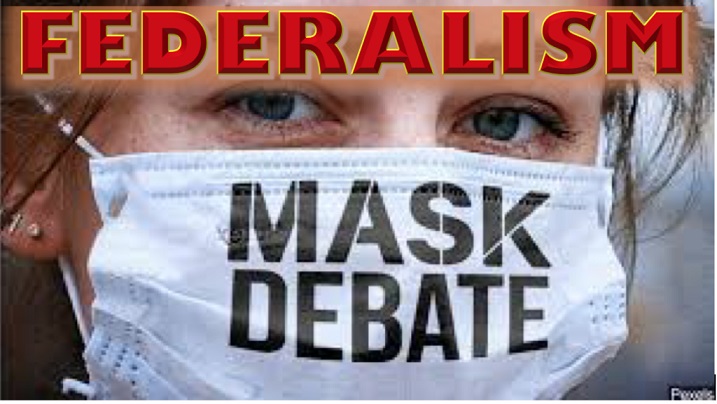
Let’s just imagine a scenario where the 9 provinces of Sri Lanka were given substantial autonomy to make its own decisions but remain within the ambit of what is oft described as a united Sri Lanka”. Let’s also imagine the present crisis that has enveloped the world causing over 470,665 deaths and affected over 9million people. Containing the spread of the virus has been the only successful method thus far. Let’s now imagine countries that have succeeded in containing the virus & those countries that have failed & probe why they have failed. The lessons to take from this is applicable to many more scenarios and which should clearly show Sri Lanka’s leaders as well as the general public why no form of federalism should be implemented in Sri Lanka.
USA has been the worst hit country with 122,247deaths and over 2million cases. One of the core reasons for the spread and the inability to curtail or contain the spread is that the federal states have their own laws and regulations and the mindset of the people have conformed to that thinking as well. So you have one set of states applying very rigid rules & regulations while another set of States going full liberal in allowing people to behave as they like. Not wearing the mask as a simple and basic requirement has resulted in a major increase in covid-19 and tragic fatalities.
South Carolina, Montana, Wisconsin and South Dakota do not require facial masks
Oklahoma, Ohio, Washington, Texas, North Carolina, Florida – part of state requires to wear face mask
Arizona, Georgia, Alabama, Colorado, Iowa only employees need to wear masks
Cases are rising in states that are not wearing masks.
But the crux of the argument is that in one country the varied laws & regulations is impacting on the whole country. In some cases, the politicization of the issue may likely create a bigger crisis.
Just to spite the republican ruling party leader of the country, imagine the opposing democratic party State head declaring that in his State people could do the exact opposite to what the country’s President declares!
Ultimately, the entire state will suffer and has suffered.
Fast forward to Sri Lanka, imagine a scenario if the type of federalism that TNA seeks which is essentially confederalism in nature existed during this corona crisis!
Will TNA head ruling the North wish to listen to the instructions given by the country’s President?
We know the measures and safeguards the Sri Lankan President, the health authorities and the Armed Forces, Police & intelligence agencies have taken to curtail and control the covid-19. What if the Northern Chief Minister rules that the armed forces, police or intelligence will have no role in the North’s covid-19 operations. What if a sudden spike in covid cases arose and the Chief Minister is too obstinate to seek help from the Centre, what if the Northern Chief Minister foolishly invites corona cases from Tamil Nadu to arrive without checking – the whole Northern Province would be made vulnerable by the TNA Northern Chief Minister just to play politics with the Centre. In so doing he is playing with the lives of the people and placing them in grave danger & death. When that happens what will he do, accuse the Centre of neglecting the North, ignoring his pigheaded obstinacy.
We have had 33 years of Provincial Council system brought in as a result of the 13thamendment. The PC’s have been given fund allocations but we can see that most of the development has been from the central government fund rather than the PC fund that has developed the provinces. Is there really any reason to continue with this system? In a small country like Sri Lanka we do not need the confusions and contradictions visibly taking place even in US and India.
The best example of federal hiccups was seen in India during the Mumbai terror attacks. It took a few days for the Centre to get permission from the State administrative apparatus to send in its elite troops to squash the terrorists. The delay resulted in unnecessary loss of life and kept entire populace in fear. Sri Lanka does not need to knowingly invite or walk into the same problems.
We have seen how inept and docile the Chief Ministers of North Sri Lanka have been since 2013 and they have done no magic for the people of the North except shed crocodile tears internationally on what has not been done. What they could have done but didn’t while they had the means to do is never spoken of.
In this present health pandemic, the country has 1 President who is steering the covid-19 operations together with a Task Force and Team comprising heath, public officials, army, police & intelligence and has successfully succeeded in curtailing, containing and controlling the spread of covid-19, shows we do not need 9 autonomous headaches with their laws & rules to worsen and destroy that success.
Even the citizens of US are angered in the manner fellow states opt not to wear masks jeopardizing the whole country & its people by their selfishness.
These are strong reasons why Sri Lanka must rethink whether to continue with the PC system as tied to it, are agendas and divisive programs that would impede Sri Lanka’s growth. Policy planners must wake up to the choke points that would be used by external elements as well as internal traitors and ensure those choke points are eliminated. Federalism is one such copied notion geographically unsuited for Sri Lanka, by a jobless few wanting to plug an ideology to give themselves relevance in politics.
Ideological concepts like federalism are practical chaos is what covid-19 has exposed.
Imagine federalism where even a MASK is debated for months at the cost of 122,247 deaths!
a dry canal-associated evergreen forest or canal forest, a new type of forest vegetation discovered from the ancient capital of Polonnaruwa in north-central Sri Lanka, courtesy of Magdon Jayasuriya.
A new type of forest ecology has been discovered from the ancient kingdom of Polonnaruwa in north-central Sri Lanka, centered around the irrigation canals abandoned there more than 700 years ago.
The unique new forest type closely resembles the riverine forests that are found alongside rivers and other bodies of water, but has a different species composition and vegetation structure.
Sri Lanka boasts a legacy of extensive ancient irrigation systems scattered within the island’s dry zone, raising the prospect of the discovery of more of these dry canal-associated evergreen forests.”
POLONNARUWA, Sri Lanka — For centuries, Sri Lanka’s ancient civilization diverted river water to large reservoirs and man-made canals for agriculture. After the collapse of the island’s hydraulic civilization about 700 years ago, these canals were abandoned. But water still flows through them today, nurturing a different type of vegetation.
That’s what plant ecologist Magdon Jayasuriya discovered when he examined one such abandoned ancient irrigation canal built between the 11th and 14th centuries, historically known as the Kingdom of Polonnaruwa. The canal was built to divert water from the Mahaweli River to a cascade of small reservoirs and farmlands scattered near what is today Somawathiya National Park.
The canal forest closely resembles a riverine forest or dry riverine evergreen forest, but differ in plant species diversity and characteristics. These differences may be because of factors ranging from the water flow, to the availability of groundwater, to the steepness of the banks, Jayasuriya told Mongabay.
Riverine forests
Riverine forests, found adjacent to bodies of water, are natural habitats with unregulated natural water flow. The canal forest, by contrast, would have experienced regulated and maintained water flow when the canal was in use, and a less uniform flow after its abandonment. The banks of the canal are also shallower than riverbanks due to seasonal strong and unregulated water flow creating more habitats in the latter and adding more diversity, according to the study.
The canopy of the canal forest appears shorter, too, at about 10-12 meters (33-40 ft), while river forests can grow to heights of about 20-25 m (65-82 ft).
The new forest type is dominated by Vitex leucoxylon, a tree known locally as nebada and which accounts for more than half of the vegetation. Terminalia arjuna, or kumbuk, a tree generally found in greater abundance within river forests, makes up only a fifth of the canal forest vegetation, the study says.
Ancient irrigation engineers used canals to divert water to cascading reservoir systems, retaining the water for irrigation purposes. Image courtesy of IUCN Sri Lanka.
Based on detailed analysis of the plant species found within this forest ecology, Jayasuriya said the Polonnaruwa area may have had savanna forests, though there is no direct evidence of such today. Hinting at the possibility of savanna forests in the past, Jayasuriya cites the presence of Tamilnadia uliginosa and Antidesma ghaesembilla trees, considered savanna species.
It is possible that over 700 years ago during pre-Polonnaruwa, this canal would have flowed through a savanna forest though it is not present today,” Jayasuriya said.
Jayasuriya said he had to take an uncomfortable tractor journey across Samawathiya National Park, lying in the flood plain of the Mahaweli River, to study this new vegetation type. Due to time constraints, I couldn’t fully study the forest. As Sri Lanka has lots of ancient irrigational canals and tanks, I’m sure canal forests would exist elsewhere as well, but would have been overlooked,” Jayasuriya said.
He called for further study of this vegetation type in Sri Lanka, with the support of both archaeologists and hydrologists.
The discovery of this new forest vegetation type after a long period is evidence of the possibility of many ecologically important discoveries waiting to be made,” Jayasuriya said, adding that young researchers in particular should delve into the field.
Citation:
Jayasuriya, A. H. M. (2019).A new forest vegetation type in Sri Lanka: Dry canal-associated evergreen forest. Ceylon Journal of Science,48(4), 375-381. doi:10.4038/cjs.v48i4.7679
The Attorney General has informed the Presidential Commission of Inquiry on political victimization that the process cannot be issued on his officers in terms of Section 16 of the Act.
Nine students of the University of Kelaniya have been arrested by the Police today (22) over the incident of removing CCTV cameras at the university premises in February, 2020.
On February 24, certain members of the Student Union of the University of Kelaniya had forcibly removed the CCTV cameras fixed at university premises for security purposes.
The Student Union had objected to the fixation of the cameras charging that this was done as a measure to control students.
After the removal of the cameras, the members of the Student Union had claimed responsibility for the action and stated that it had been done as a sign of protest.
The next day (February 25), the removed CCTV cameras had been returned to a point in the university.
On February 28, 04 university students, including a Buddhist monk, were remanded over the incident.
Opportunity is now open to commence productions in many sectors with the limiting of imports of several non-essential items, President Gotabaya Rajapaksa said.
As pledged in “Saubhagyaye Dekma” policy statement the way has been paved for a people-centric production economy. The current challenge before the industrialists is to win the domestic and global market, President observed.
President made these comments during a discussion with the members of the Inter-Ministerial Task Force on Industrial and Enterprise Development held at the Presidential Secretariat today (22).
At present there are several tasks before to be performed by businessmen. They include satisfying consumer needs, creation of new industries and introducing new technology to the country. President emphasized the importance of maintaining the highest possible level of standards in every product manufactured and every service provided in the country.
The Government apparatus is geared to assist the industrial sector. The ground work including the provision of loans at single digit interest rate has been laid. President Rajapaksa said he expects the industrialists to show results by manufacturing an array of goods ranging from brooms to medical drugs domestically.
Representatives of several fields including motor vehicle assembly industrialists, motor spare parts manufacturers association, packaging manufacturers, power cables industrialists, national marine manufacturers association, metal industrialists, leather industry advisory committee, rubber related products manufacturers association, advisory committee of electrical & electronic equipment, timber and timber-related products industrialists association, joint apparel association forum, apparel industrialists, cosmetic manufacturers association and advisory committee on the drug manufacturing attended in this meeting.
Minister of Industries, Wimal Weerawansa, Secretary to the President, P.B. Jayasundera and Ministry Secretaries participated in the discussion.
Police Inspector Neomal Rangajeewa of the Police Field Force Headquarters revealed at the Presidential Commission to Investigate Political Victimization that original evidence has disappeared regarding the Welikada Prison incident in 2012.
He also presented two CDs containing the voice of a drug dealer, Velesuda.
It was revealed today at the Presidential Commission probing into the Easter Sunday Attacks, that two ministers had attended the wedding of Ibrahim Ilham, a suicide bomber on Easter Sunday.
This was through a statement from Fatima Jeffery the mother in law of Ibrahim Ilham.
She testified before the commission that her youngest daughter, Fatima Jifri, married Ibrahim Ilham, a well-known businessman in Dematagoda in 2012.
She said that she remembers that the then Minister Rauf Hakeem and another Minister had come to the wedding ceremony.
However, she said that she could not recall who the other minister was and that she could check with her children if specific information is required.
The Catholic Church says it is deeply saddened and disturbed by the statement made by the former Parliamentarian Harin Fernando regarding the Archbishop Malcolm Cardinal Ranjith.
This was in response to allegations made by the National List Member of the Samagi Jana Balavegaya, Harin Fernando at a meeting held at Polonnaruwa – Medirigiriya yesterday regarding Archbishop Malcolm Cardinal Ranjith.
Harin Fernando said that Sajith Premadasa lost the Catholic votes due to the politics of his eminence the Archbishop Malcolm Cardinal Ranjith.
However, the Catholic Church responded to this statement at a press conference held at the Archbishop’s House today.
The Rev. Dr. Cecil Joy, Director of the Daham Sevana Church in Kalutara, Rev. Fr. Camilles Fernando, Spokesperson of the Archdiocese, Rev. Fr. Benedict Joseph the former Director of National Communications and Rev. Fr. Jude Chrishantha Fernando condemned the allegations.
Catholics in many areas including Negombo and Katuwapitiya expressed their displeasure over the statement made by Harin Fernando.
In addition, there is strong opposition from politicians and other parties regarding this statement of former MP Harin Fernando.
Dr. Sudath Gunasekara Former Secretary to Prime Minister Mrs Bandaranayaka and President Sri Lanka Administrative Services Association (1991-1994)
1 Abolition
of the Provincial Councils that have been a white
elephant breading and benefitting only politicians at provincial levels and
that has wasted billions or even trillions of public funds for the past 33
years with no benefit at all for the country or the people and has become a
political and Administrative disaster for this country, aggravating separatism
laying the foundation for a Federal State in this country. To continue a rotten
and devastative political machinery spending
billions that only multiplies a useless set of parasitic political rogues like
9 Governors, 5 Chief Ministers, another 36 Ministers and nearly 700 parasitic
politicians and 9 institutions called Provincial Councils wasting billions with
no service to the country at all when the whole nation is deeply sunk in a
national debt trap, where the debt ratio
to GDP stood at the end of 2018 at 80% and now it could be even 100%, is
disastrous for any country.
2 Abolishing
the Rajiv /JR Accord of 29 July 1987 whish has
almost nullified the Sri Lankan Constitution of 1987 reducing it to a mere
piece of useless demy paper by compelling us to
1) Accept the Northern and Eastern Provinces
as the Traditional Home land of the Tamils comprising 1/3 of the country and
2/3 of the coastal belt plus the marine resources for just less than 5 % of the
nation’s population who are claiming a separate Rata (EELAM) for Tamils, first for
the N&E provinces within this country and later to embrace the whole of Sri
Lanka that would finally form the Head Quarters of their dream world EELAM
Empire.
11) Making
Tamil also an Official Language in this country and
111)
Granting Sri Lankan Citizenship to all Estate Tamils contrary to the
Nehru/Kotalawala Pact of 1954 and
thereby paving the way for India to convert the entire Central Hill country of
this country in to an overseas Indian Protectorate in future.
(This is a total distortion of the history
of this land of the Sinhala Nation that was there for 2500 years and a criminal
and unprecedented betrayal of the Motherland and the Sinhala Nation by the
treacherous politicians in 1987 which has to be reversed at least now if we are
going to exist as a nation on this planet earth.)
3 Prohibit
all political parties based on Ethnicity, Language or Religion and have only
national political Parties.
.4 Reducing
the Cabinet to a maximum of 15 and the number of
Politicians in Parliament to 150 and abolish Pradesiya Sabhas and return to
Village Committees or Councils
5 Abolish the present District MP system and
PR system and revert to the old electoral system where we will again have true
representatives of the people in Parliament.
5 Abolition of Pensions and excessive privileges to politicians and
converting politics to a ‘Mahajana Sevayak and a Desa Sevayak” instead of the
present political culture of public exploitation and torment. Also do away with
Official vehicles to all; instead give them a loan to buy their own vehicles
and pay the mileage as it was done in the past.
6 Creation
of a new Political Culture by laying down minimum educational and other
qualifications like unblemished character, substantial wealth and a Strict Code
of Conduct to Politicians and making attendance in Parliament compulsory
7 Abolition
of the duty free car permit system to everybody
8
Abolish official vehicles to everybody and restore the old system of giving a
loan to purchase a vehicle to those who need to have a vehicle for their
official duties and have a vehicle pool at every Ministry, Department Kachchery
and Public Institution and improve the train service to make transport cheap
for public servants as well as the general public and avoid traffic congestion
and deaths on roads.
9 Pruning
exorbitant and overlapping Public institutionsand reducing overstaffed Public Service
to manageable levels to cut down public expenditure. At present there is one
public servant for every 16 people.
10 Ending
the menace of University ragging by addressing
their grievances and to convert the youth of this country to a dignified and
valuable asset for development.
11 Declaring
all lands over 5000 ft above Sea level as a strictly protected natural reserves
and prohibiting any form of settlement above 3500 ft MSL as it had been in the
past, to protect the water sheds of the country, as
rivers originating on these hills decide the entire life system and all
economic activities in this country like Agriculture, Hydroelectricity
potentials and all other industries the underpinning of human civilization on
this Island.
12 Making
Buddhism the State Religion as it had been
throughout history in this country
13 One country, One Nation, One Law, One official
Language one National Anthem, One National Flag
14 Need
for a clear Action Plan to solve the plight of the Kandyan Peasants (all Sinhalese) for 205 years (from 1815-2020) to rectify all
injustices done to them from 1815, not
attended to for the past 72 years by all Governments, although we are supposed
to have got some fake Independence in 1948 from the Colonial British.
15 Create
an independent efficient, productive and people centric Public service and
Judiciary free from Politics and Recruitments to Public Service and Judiciary
only on competitive exams and meritocracy to be the only criterion in selection
and appointment.
16 Prohibiting
all communal and religious Political Parties and replacing them with National
Political Parties [f you can’t think of a system to run the country without
political Parties imported from the colonial west and ending the tyranny of minority politics in this country wedded to a
One nation concept.
17
Formulate a National Plan generating avenues of self-employment
in the fields of Agriculture, Livestock, Fisheries, Industries, Shipping,
Aviation, trade and Commerce and Services instead of trying to pack all men and
women to an already excessive and unproductive government service that has
become a big burden to the national coffers and tax payers
18 Liberate
Foreign Service from inundating it with political appointments and replace it
with full time Professional men like USA and India and men and women who can
take Sri Lanka to the world and bring the whole world to Sri Lanka to develop
this country
19 Make
Sri Lanka number 1 in the world in Fishing Industry
by making use of the Indian Ocean that stretches from Africa in the West to
Australia in the East and South Pole in the South and making this country a major naval power in the world by using our
strategic location on the globe in relation to the Great East and West trade
routes and its enormous economic potentials of fabulous ports around the
Island. (The Indian Ocean is the third-largest of the world’s oceanic
divisions, covering 70,560,000 km² or 19.8% of the water on the Earth’s
surface. It is bounded by Asia to the north, Africa to the west, and Australia
to the east)
20.To convert this country to
an International hub in Aviation, Shipping, trade, Banking and all kind of
Services to make this Island a world Giant making use of its strategic
location and god given resources both natural and Human.
21 Take
immediate action against Hindu and Muslim vandalism against Buddhist religious
places in the North and East and to take steps to protect those places and the
Monks living there.
22 Reduce
excessive public holidays (some years running in to 132) to world average of 12
per year and to limit religious holidays only to those who profess those
religionsto
save hundreds of millions of man days to boost development to catch up with the
competitive world
23 Restore Death Penalty immediately to
persons involved in drug dealing
24
Designation of Ministers should be confined to Cabinet Ministers and Deputies
only
25 A
national Planning Council and a Supreme national Advisory Council consisting of
non-political personalities
26 A new Constitution based on the
history, State craft, legal systems, cultural heritage and traditions and
customs of the 2500 year old civilization that suits this country best without blindly
following imported alien systems. That will end up with what is called A Civilization
State” as expounded by Martin Jacques in his When China Rules the World.
27 Ban the tragic House Maids trade with Middle East
countries that has completely ruined our culture and valued social fabrics and
reduced this country to a land supplying slave women to oil rich countries. And
replacing it with
a) Avenues of a dignified and safe
employment for them within the country and
b)
Start a programme of sending professionals and technicians as an
exportable item to earn foreign exchange, if the government cannot develop
other means of earning Foreign Exchange
28 Eliminate underworld and drug
lawlessness and restore Law and Order in the country
29 Ban all imports that affect
local production to develop agriculture and Industry
30 Deploy a vigorous incentive
scheme to motivate local industries, inventions and agriculture that will form
the sound foundation for economic development.
Realization of these objectives
entails far and wide structural changes in systems, institutions, education and
attitudes of people underpinning patriotism with the final goal of making Sri
Lanka the miracle of Asia at least.
By Noor Nizam – Peace and Political Activist, Political Communication Researcher, SLPP Stalwart and Convener – The Muslim Voice” & former Press and Information Officer – Presidential Secretariat (2011-2015), 20th., June, 2020.
The
above words of WISHES” will be the pillars of STRENGTH”, REALITY” and
FULFILLNESS” that will lead Sri Lanka, our Maathruboomiya” and Sri Lankans to
the goals and VISION” that HE. Gotabaya Rajapaksa had laid down in his
Presidential election manifest – “Vistas of Prosperity and Splender”
in 2019 and that which will be carried through in the 2020 August general
election platform of the Sri Lanka People’s
Freedom Alliance (SLPFA).
The love of a brother towards his sibling President is
heartwarming to experience from the kind and compassionate words expressed by
former President and now Prime Minister, honouarble Mahinda Rajapaksa to his
brother HE. Gotabaya Rajapaksa – I wish for you wisdom, fortitude &
patience”. These words will be the pillars of STRENGTH”, REALITY” and
FULFILLNESS” that will lead Sri Lanka, our Maathruboomiya” and Sri Lankans to
the goals and VISION” that HE. Gotabaya Rajapaksa and the Rajapaksa family
along with their teams will be striving in the years to come, to make it a
REALITY” to all Sri Lankans, the Sinhalese, Tamils, Muslims, Burghers and
other minority communities who call Sri Lanka our home. On this occasion the
The Muslim Voice” on behalf of the Muslim Community who voted you at the 2019
Presidential elections wish the very best on the 71st., birthday today
to HE. President Gotabaya Rajapaksa.
In the view of the Muslims who shall support the SLPFA at the
next general elections, you have been selected by God AllMighty Allah to lead
the Nation of Buddhists/Sinhalese, Tamils, Muslims, Burghers and other minorities
towards Peace, Prosperity, Harmony and Dignity as a Sri Lankan Nation that will
set an example to the World in the coming years. May God AllMighty Allah
safeguard you from all evils, including political evils and give you all the
strength, vigour and support/cooperation of the Nation and our MAATHRUBOOMIYA”
to achieve your mission in life a success, with a 2/3 majority win for the Sri Lanka
People’s Freedom Alliance (SLPFA) at the August 2020 general
elections.