Those
that demanded Sri Lanka stop ‘triumphalism’ when the nation celebrated victory
over LTTE in May 2009, have been triumphing victory over Germany & Japan
since 1945 by even enacting battle victories annually. V_E Day Europe has been
celebrated annually since 1946 on 8 May. The 6year war ended with Germany’s
surrender. Sri Lanka’s LTTE refused offers to lay down arms & surrender and
was vanquished by the Sri Lanka Army in 3 years. What is special about this 75th anniversary V-E DAY for
Germany is that the defeated country leader has announced a one-off public
holiday as a ‘day
of liberation and the toppling of the Nazi regime”. Now if a defeated country is also celebrating
defeat of its own Nazi leader Hitler and regarding Hitler’s defeat as
liberating the German people from Nazi rule, perhaps it’s time for Tamils too to openly celebrate the defeat of LTTE on 19
May 2009 and liberation of the Tamil people from LTTE tyranny.
World War 2 & LTTE
The War began with Germany’s invasion of Poland on 1 September 1939. LTTE’s downfall began when it closed the Mavil Aru anicut in July 2006. The World War 2 saw 60million deaths. Sri Lanka’s Armed Forces saved close to 300,000 Tamils and accepted surrender of close to 12,000 LTTE combatants which included 594 child soldiers, later given a Presidential Pardon.
Hilter, the Nazi leader committed suicide on 30 April during the Battle of Berlin in 1945 but Prabakaran LTTE leader was too shy to bite his cyanide capsule and was killed trying to escape on 18 May 2009.
VE Day celebrations – Re-enacting
war victories
V-E Day is observed on May 8, 1945 in
Great Britain, Western Europe, the United States and Australia, and on May 9 in
the Soviet Union and New Zealand. In
France, Norway and Russia, 8 May is a holiday. The Allied countries annually re-enact battle
victories. People get to see exactly how the War was fought.
All of the mega-events planned by Allied nations for the 75th anniversary victory over Germany has had to be scaled down because of COVID19. Veterans could not attend because of impact to health.
The
Queen was just 19years on the first V-E Day celebrations.
Between 1945 and 1950,
Europe witnessed the largest episode of forced migration. Between 12 million
and 14 million German-speaking civilians were forcibly ejected from their
places of birth in Czechoslovakia, Hungary, Romania, Yugoslavia, and what are
today the western districts of Poland to ruined Germany. Historians claim some
500,000 died in this transfer operation.
Germans had to wear
white armbands to be easily recognizable. German men, women and children were
beaten mercilessly.
Historians
claim over 1million German women were raped during and after. The UK Telegraph
say some 3million Germans died after World War 2 and during Allied occupation
of Germany.
De-nazification of Germany began with banning of anything to do with Nazi (an error by GoSL in not de-nazifying LTTE and removing all ideological emblems associated with LTTE eelam separatism)
Allies continue to occupy
Germany
Germany
was defeated in 1945. But the Allies remained in Germany till 1955 (10 years
Germany was occupied by the Allies)
The
Berlin Wall that divided East and West German was destroyed in 1991 unifying
Germany. It was only in 1994 that Allied Troops from US – UK and France left
Germany having being stationed in Berlin since end World War 2.
US
had 200,000 troops in Germany in 1990 which was reduced to 42,450 by 2014 in 38
facilities across Germany.
UK
has 20,000 troops in Germany which has been reduced to 4000 and UK will even
after Brexit decide to keep its troops in Germany. Upto 2008 France had 4000
troops in Germany.
The
very countries demanding Sri Lanka remove its troops inside its own country,
maintain bases by force in Germany with thousands of foreign troop presence!
Tamils – take a lesson from
Germany
While
the Allied Troops have celebrated annually, Germany, the country that the
Allies defeated use 8 May to commemorate the Germans who fought against Nazism and
those that lost their lives in World War 2. Ideally, Sri Lanka must also use Sri Lanka’s Victory Day to remember with
gratitude the many Tamils that bravely stood against LTTE and were killed by
LTTE because of it.
Ironically,
while Germany suffered for years after end of war, Sri Lanka’s North saw
development never seen throughout defacto LTTE rule of 30 years. Roads, train
service, renovations to schools and other properties damaged and even areas
which never had electricity since 1980s saw a new life. All that the North was
enjoying post-LTTE defeat was suppressed and diminished by the bandwagon of
external trouble-makers who helped LTTE thrive and was partially seeking
revenge and a means of sustaining their $300m annually profitable LTTE kitty
alive.
Allies
celebrate 75 years since end of Hitler and Nazi rule. Sri Lanka in a few days-time
will celebrate 11years since end of LTTE defeat. This is no better a time for
the Tamils to relook at what life was like during LTTE rule, what life became
for them after LTTE rule, how has TNA and other Tamil political parties
actually served them, what are LTTE fronts really up to in drumming separatism
while living overseas and holding foreign citizenship, how large is the LTTE
kitty now without expense on maintaining LTTE combatants and buying weapons,
who is running the global LTTE illegal network that profits from money
laundering, credit card scams, hawala system, tax holiday manipulations by
registering as charities, human smuggling, illegal refugee application process
that involves paying to get burnt with cigarette butt ends and trained to act
in front of foreign immigration officials to gain sympathy …. How long can this
façade continue? How many have benefitted from this system of lying and
cheating? Isn’t it better to be inclusive citizens and partner development
instead of aligning to the bogus bandwagon of lies and liars?
If Germany are now looking at defeat of Hitler & Nazis as being liberated, it is good for Tamils to also think that they have been liberated of Prabakaran & LTTE.
Significantly the gift from India arrived while Sri Lankans were celebrating the Buddhist festival Vesak.
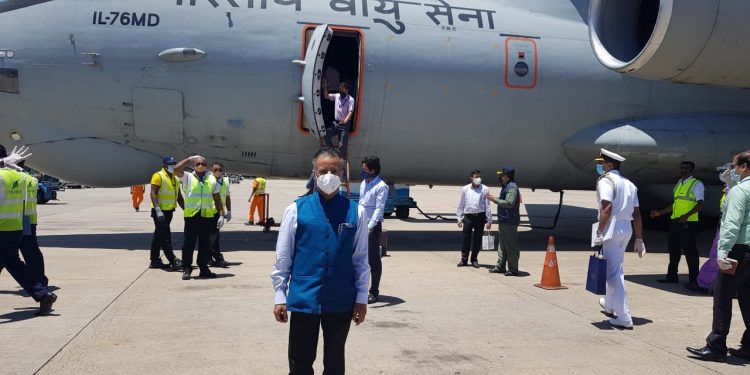
the Indian High Commissioner-designate Gopal Baglay with the IAF aircraft which the medical consignment in the background)
Colombo, May 8 (newsin.asia): As a special friendly gesture from the Government and the people of India in the on-going auspicious Vesak week, a 12.5 tonne gift consignment of essential medicines and medical items arrived in Colombo on Friday from India by a special Indian Air Force flight.
The medical consignment reached Colombo with the High Commissioner-designate of India to Sri Lanka Gopal Baglay on board the same flight.
The gift consignment – the fourth in recent weeks – underscores the vision of Indian Prime Minister Narendra Modi, enunciated in his video conference with SAARC leaders on 15th March 2020, to jointly fight the COVID-19 pandemic. Three consignments of essential life-saving medicines and medical gloves from India were handed over to Sri Lanka last month.
Soon after landing at BIA, the High Commissioner-designate conveyed greetings from the people of India to the people of Sri Lanka on the occasion of Vesak. He also stated that the mission entrusted to him highlights the very high significance of steadfast friendship, solidarity and cooperation between India and Sri Lanka – two of the closest maritime neighbors in South Asia and the Indian Ocean Region.
The 12.5 tonne medical consignment reached Colombo on Friday, Vesak Day .
He also stated that India’s continued commitment to share its resources with friends and partner nations even at a time when many countries the world over faced scarcity of medical products due to the COVID-19 pandemic and consequent supply chain disruptions, is in line with the abiding faith of India’s leadership in the dictum of ‘vasudhaiva kutumbakam’ (the whole world is but one family).
The High-Commissioner-designate assumes his duties while observing stipulated health protocol.
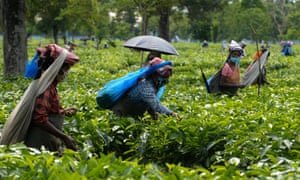
India’s ‘champagne of teas’ among those affected as country’s tea board estimates output could drop 9%, amid strain in China and Sri Lanka
Trouble is brewing for the world’s tea producers as the coronavirus lockdown shut down the harvest in several important regions, including the picking of India’s champagne of teas”.
Despite forecasts of increased demand from drinkers stuck at home across the world, producers have become frustrated by the enforced quarantining of their workforce, with India’s output expected to drop by 9% in 2020.
Lockdown measures in the north-eastern Indian state of Assam halted work for more than a month. The global coronavirus outbreak escalated at the worst possible time for Indian tea producers, just as the most valuable harvest of the year was ready to be plucked.
India has very specific production periods, experts said, called flushes. The prized first flush of Darjeeling, the champagne of teas” harvested in the country’s north-eastern, has been severely hit. This harvest, which is generally picked between March and April, accounts for as much as 40% of annual revenue.
Other tea exporting countries, including China, Sri Lanka and Vietnam, have also experienced disruption, though Kenya – the main supplier of tea to the UK – has so far avoided major problems. The International Tea Committee has predicted the country may see output riseby 15% this year.
Because of the weather, [Kenya] can produce tea all year round,” said Ibi Idoniboye, senior market analyst for Mintec.
Operations have also been affected in Sri Lanka, where tea production in the first quarter of the year declined to the lowest levels in decades. Exports have also suffered compared with the same period last year, falling 14.1 million kilograms to 59.5 million kilograms.
The country’s weekly tea auctions, a 125-year-old tradition, were held online for the first time in April to comply with social distancing measures. The auctions, usually held in Colombo, are among the biggest in the world and attract around 200 people.
This [the pandemic] is the first time tea production was affected in a country wide level,” said Roshan Rajadurai of the Planters’ Association. Work stopped completely for a couple of days, he said, but the government allowed agricultural activities to resume again.
Hundreds of thousands of workers continue to work plucking the tea. Other areas of productions, for example packaging, are not operating at full capacity.
On top of the complications posed by the Covid-19 outbreak, tea producers have also faced an unprecedented drought, added Rajadurai.
Meanwhile, in Vietnam exports fell 2.5% in volume to 26,000 tonnes during the first quarter of 2020.
While there hasn’t been any disruption to supply of tea in the UK, it is likely that prices will continue to rise, driven by the disruption to operation and speculation over shortages, said Idoniboye. I’d expect to see that tea will still be appreciating for the next few weeks but at some stage it will hit a ceiling,” he added.
Gopal Baglay, who has served as spokesperson of the external affairs ministry and whose last stint was in the Prime Minister’s Office, was named the next high commissioner to Colombo in February.
Gopal Baglay reiterated India’s commitment to share its resources with friends and partners at a time when many countries are facing a scarcity of medical products due to the Covid-19 pandemic and supply chain disruptions. (HT File Photo)
India’s high commissioner-designate to Sri Lanka, Gopal Baglay, who was unable to join his post for more than two months because of Covid-19-related restrictions, flew to Colombo on Friday in an air force transport aircraft that ferried 12.5 tonnes of medical supplies.
Baglay, who has served as spokesperson of the external affairs ministry and whose last stint was in the Prime Minister’s Office, was named the next high commissioner to Colombo in February.
On Friday, Baglay hopped on to an Il-76 transport aircraft of the Indian Air Force that transported 12.5 tonnes of essential medicines and medical items as a special friendly gesture from the Indian government during the auspicious Vesak week.
This was the fourth consignment of medical supplies sent by India to Sri Lanka in recent weeks, underscoring Prime Minister Narendra Modi’s vision of jointly fighting the Covid-19 pandemic that he had outlined during his video conference with leaders of the South Asian Association for Regional Cooperation (Saarc) states on March 15.
Three consignments of life-saving medicines and medical gloves were delivered to Sri Lanka last month.
Soon after landing in Colombo, Baglay conveyed the greetings of the Indian people on the occasion of Vesak. He said the mission entrusted to him highlights the very high significance of steadfast friendship, solidarity and cooperation between India and Sri Lanka, two of the closest maritime neighbours in South Asia and the Indian Ocean region”, according to a statement from the Indian high commission.
Baglay reiterated India’s commitment to share its resources with friends and partners at a time when many countries are facing a scarcity of medical products due to the Covid-19 pandemic and supply chain disruptions. He later assumed his duties while observing health protocols.
In a separate development, India said on Friday it is dispatching packages of medicines, including hydroxychloroquine, paracetamol and other drugs, to more than 25 countries in Africa to fight Covid-19.
This is in keeping with India’s traditionally strong bonds of friendship and solidarity with Africa, which has reached new heights in the last few years,” the external affairs ministry said in a statement.
Prime Minister Modi had a telephone conversation with South African President Cyril Ramaphosa, who is the current chairperson of the African Union, on April 17 and conveyed India’s full support for the joint African effort against the Coronavirus. Modi also spoke with Ugandan President Yoweri Kaguta Museveni on April 9 and Ethiopian Prime Minister Abiy Ahmed on May 6.
During April, external affairs minister S Jaishankar spoke to his counterparts in several African countries to reiterate India’s solidarity in the fight against Covid-19 and offered them all assistance.
The president emphasised the need to focus promoting medical tourism by highlighting the “successful efforts taken by Sri Lanka to contain the spread of the coronavirus.”
Sri Lanka will target high-spending tourists to revive the tourism sector which has been shattered by the coronavirus pandemic, President Gotabaya Rajapaksa has said. Widespread travel restrictions and the closure of airports and national borders to curb the spread of the virus had plunged international tourism into its worst crisis.
During a meeting with the members of the newly-appointed Presidential Task Force on Economic Revival and Poverty Eradication, Gotabaya Rajapaksa said tourism sector which make a huge contribution to the national economy should be revitalized to suit the changing situations.
He proposed that Sri Lanka take steps to issue visas with a recognised health certificate when tourists begin to return to the island country, the Colombo Gazette reported. He also proposed that Sri Lanka Tourism target countries where the coronavirus has been contained. The president emphasised the need to focus promoting medical tourism by highlighting the successful efforts taken by Sri Lanka to contain the spread of the coronavirus.”
He also urged the authorities to target long-term tourists who often travel to other countries during the winter season. The president also noted that promoting domestic tourism can ensure the hotel industry is protected. He expressed optimism that the economy adversely affected by the COVID-19 pandemic could be re-built on a solid basis as the government is preparing to resume day-to-day life and work from next week.
The number of coronavirus patients in Sri Lanka on Friday reached 824, the Ministry of Health said. The Ministry of Health added that 9 deaths due to COVID -19 have been reported so far in Sri Lanka.
About thirteen Polymerase Chain Reaction (PCR) tests conducted by the laboratories other than the laboratories of the Health Ministry so far had been found to be erroneous, the Association of Government Medical Laboratory Technologists said yesterday.
Association Chairman Ravi Kumudesh said that eight PCR tests conducted by the laboratory at Sri Jayawardhanepura University, four reports by the Colombo University and one from the Kotalawala Defence University (KDU) were among those found to be erroneous.
He said a special grade nurse of the National Hospital, an individual from Salamulla in Kolonnawa, another one from Bandaranaikepura in Rajagiriya and a woman from Modara were recently tested positive for COVID-19 due to erroneous reports. However, subsequent tests reported negative.
He said in the letter that the first samples of the patients were sent to the labs coming under Ministry of Higher Education despite the fact that several previous PCR reports done at these labs were found to be erroneous. It could be an act of sabotage and it should be investigated,” he said.
He said this situation would deteriorate the confidence people had on PCR tests and laboratory technologists. No report issued by the Health Ministry laboratories had been erroneous so far,” he said.
Ten laboratories of the Health Ministry are equipped to conduct PCR tests and around 200 professional technologists are ready at any time to attend to the service,” he said.
Mr Kumudesh said his Association had informed this situation in writing to the President and other authorities.
Mr Kumudesh said this situation had risen when there were ample facilities at the Health Ministry to conduct the PCR test and added that the officials who refer the test outside the Health Ministry laboratories should take the responsibility and disciplinary action should be taken against them.
New COVID-19 positive patients have not been reported so far today (08), says Director General of Health Services Dr. Anil Jasinghe.
The total count of coronavirus cases in Sri Lanka currently stands at 824 with 240 recoveries.
According to the Epidemiology Unit’s tally, 575 active cases are currently under medical care at the IDH Hospital, Welikanda Base Hospital, Colombo East Base Hospital, Iranawila Hospital, Kattankudy Base Hospital, Navy Hospital and Homagama Base Hospital.
In the meantime, 135 suspected coronavirus patients are under observation at selected hospitals in the country.
Colombo District has confirmed a record total of 150 coronavirus cases, while Kalutara, Gampaha and Puttalam districts followed with 34, 36 and 35 positive cases, respectively.
To date, nine COVID- 19 patients in the country have succumbed to the virus
The name of President Gotabaya Rajapaksa has appeared in the Quarterly Publication of the United States Federal Register of Individuals Who Have Chosen to Expatriate.
The US citizenship of President Rajapaksa came under scrutiny last year, especially in the months leading to the presidential election in November, as Sri Lanka’s laws do not allow dual citizens or non-citizens to contest national elections.
Political opponents, certain media reports and social media posts alleged that President Rajapaksa had not successfully renounced his citizenship since his name was not listed in the Federal Register.
The US Embassy in Sri Lanka, speaking on the matter, had previously stated that renunciation of US citizenship by an individual might take several months to be published in the Federal Register
Accordingly, this latest publication proves that President Gotabaya Rajapaksa is no longer a citizen of the United States and does not hold dual citizenship.
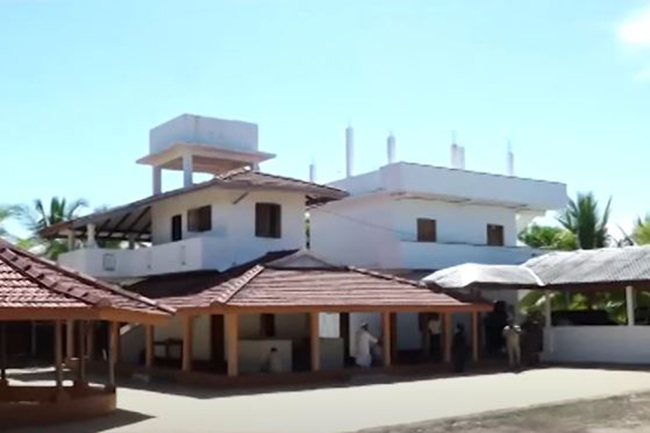
A hotel in Palamunai in Kattankudy, which had been used by the Easter Sunday attacks ringleader Zahran Hashim to recruit Islamic women to his extremist cause, has been raided on Friday (08).
The raid was carried out by the Special Task Force (STF) and the Criminal Investigation Department (CID).
The location was uncovered based on the information divulged by one of the suspects previously arrested over the terror attacks.
According to the CID, following the information divulged by the suspects arrested in connection with the Easter attacks, a large number of training sites used by extremists were identified.
Ada Derana correspondent stated that investigations have confirmed that the location had been used by extremists to hold lectures with the aim of radicalizing Islamic women.
Reports have further confirmed that Zahran Hashim personally conducted lectures at this hotel.
The officers of the CID have recorded statements from the owner of the hotel on Friday evening.
An operational guideline introducing the procedure to be adopted by barber shops and salons that are serving customers during the outbreak of COVID-19 has been issued.
Issuing the guideline, Director General of Health Services Dr. Anil Jasinghe stated that this guideline is an addendum to the main guideline – Interim Operational Guidelines on Preparedness and Response for COVID-19 outbreak for Work Settings” – which was published on April 27 by the Ministry of Health.
The purpose of the new guideline is to facilitate limited activities of a salon or barber shops, considering its service as a public need during the coronavirus outbreak, Dr. Jasinghe said.
Accordingly, cutting/trimming, dyeing of hair, manicure and pedicure and waxing of arms and legs will be the only services that the salons and barber shops are allowed to render.
Since, the physical distance between the barber/dresser cannot be maintained in this work setting, the Health Ministry has introduced special measures to be adopted.
Barber/dresser is mandated to wear a mask and a goggle/eye shield when attending to customers.
A foot-operated bin for discarding the used masks and tissues need to be placed at the shop.
The barbers and dressers also need to ensure that at least 1-metre distance is maintained with the customers, except during the procedure.
The number of customers entering the building and in the waiting area should be limited according to the space available.
The guideline also emphasized that magazines, newspapers, service menus and other unnecessary items should be removed.
Barber or the dresser is advised to attend to the customer from behind and sides and is urged not to have a face-to-face encounter.
The guideline requires the barbers and dressers to wash all towels and capes after each use and to avoid sharing equipment and tools among them.
It does not recommend shaving beards and moustaches. In the meantime, the barbers and dressers are advised not to reuse razor blades.
Air conditioners with re-circulation of air are also not recommended in the guideline. The shop owners are urged to leave the doors open as much as possible to avoid contact. If the doors are kept closed, doorknobs and handles need to be disinfected every three hours. Alternatively, a separate employer can be assigned to handle the door for customers, guideline mentioned.
Dr. Jasinghe says that any owner or a manager who intends to reopen their salon should make a request to the Medical Officer of Health (MoH) in the respective area.
The application can also be downloaded from the official website of the Health Ministry (health.gov.lk).
No salon or barber shop will be allowed to resume functions without a valid written certificate issued by the MoH, Dr. Jasinghe has noted.
The operational guideline for barber shops and salons is attached below:
The Prime Minister Edouard Philippe of France announced
today that the first stage of de-confinement of the French people who had
been in confinement since 17 March,2020, will begin from 11 May 2020. People
are allowed to leave their homes and go for a distance of 100km from their
homes without having a certificate of leaving home for a specific
purpose.
France which had been an unfortunate victim of the Corona pandemic
with 137 779 covid-19 affected persons; and 25 987 deaths from the virus has
decided to open the country to commence economic activities to revitalise its
economy. Some enterprises have commenced work and others may follow. The
Commercial Centres are open. Even lakes and beaches may open subject
restrictions imposed by the relevant authorities.
Those who venture out of homes should wear masks. The public
transport is opened under conditions of keeping the required physical
distansing, specifying special hours for office and other workers.. The
Restaurants and Bars are to be kept closed. The Schools will still not be
opened, though some schools and colleges may open by the 18th May. The places
of worship will remain closed.
If one is ill and suspects having the Corona Virus then he
should call a Doctor. It is only if one has fever and difficulty in
breathing that one should telephone No.15. There are no Centres of Confinement
as in Sri Lanka. One has to restrict oneself to self confinement, (until one
recovers or dies). What is in bracket I have added as the Government is not
specific.
It is only now that the government seems to be collecting
information with regard to contacts and associates of persons affected by the
virus. For a long time there was a dearth of masks and whatever was
available were meant for the medical professionals.
Now the Government says that every one should wear a mask. Though
the Government says that the elderly and the invalids should be given
masks free, they are not available even in Pharmacies. However some
pharmacies sell hand made masks for about Rs.1500,00 each.
The elderly have to go to do their own shopping or buy their
medicine in pharmacies. There are no ambulant traders going from door to door
to sell consumer articles or even bread to the people remaining in
confinement. France is unable to imagine such facilities. All those good
services happen only in Sri Lanka.
France has money to look after its people living in fear of
Covid-19 better than it is doing now. The Army and the Police have been
mobilised by the government, but we in some parts of France do not see the Army
and Police carrying out any special work in these parts of France. The
Army and Police personnel are not as kind, polite and serviable as they are in
Sri Lanka.
What is striking here is that the government calls a press
conference and allows the journalists to pose questions. The Opposition
political parties do not carry vicious campaigns against the Government
criticising the Government for the way it is managing the Covid-19.
The Political parties do not interfere into the activities taken by the
government in its fight against Covid-19.
This is a lesson for the politicians of Sri Lanka who instead of
helping with the excellent work the President and his government is
doing to meet the situation in difficult circumstances keep urging the
Government in different forums in the TV to recall the Parliament that
had been Constitutionally dissolved by the President of Sri Lanka. Why recall a
dissolved parliament, when the President has the necessary laws which had been
passed before to deal with any situation arising in the cause of
attending to the pandemic situation.
Some parliamentarians not satisfied being left outside the
limelight have even filed action in courts to find out whether they could find
a legal means to get the President to recall the dissolved parliament. One
cannot say what decision the Courts would take considering an earlier
case where a President had dissolved the parliament rightly under article
33 of the Constitution, and the Courts overlooking the Article 33,had
ruled that the President has no power to dissolve the Parliament
until the end of four and half years.
The Article 33 showed a way out of a most undemocratic situation
of an article introduced by the Government to the Constitution that
deprived the President from dissolving the Government before the end of
four and half years even when the Prime Minister and the government had
lost the trust of the people. There the Courts deprived democracy” to
function for four and a half years.
Let us hope that the President and the Government in Sri Lanka
with the Medical Services and Armed Forces will be able to continue the good
work it is doing to fight the Covid -19, until it calls for an election
to have a new Parliament.
When I read the article below I thought that the theories forwarded by the Chamber of commerce using jargon that talks about U development and V development is quite confusing.
U theory or V theory can only be implemented only if the people representing V need to change their mindset from welfare state to productive state
We started with Janasiviya and later Samurdi and now 5000 Rs per month, can never make this country develop under U or V theory
When you see the queues formed in front of Grama Niladari’s office, you note that most of the women, in particular, are well dressed and well-fed with youngsters wearing blue jeans and designer clothes ( maybe imitations). I have no doubt that giving 5000 k for such person is not justifiable
If we try to cultivate a welfare state we will never make the people work for the development.
Agriculture development has been encouraged but you can see barely anyone trying g to cultivate crops in the home garden
In Jaffna, people are more sensible and they grow in lands where ever possible
I remember my father who comes from a farming family in upcountry telling us to grow as much as possible in the garden
He worked for the Irrigation department and his colleagues from Jaffna go home during the weekend , starting with wearing Veetti after Maho station. changing trouser and shirt and take his bicycle when he reaches home, go to his plot he grew vegetables
In Russia, young students in Universities are compelled to go to fields in summer to pluck cabbages and dig potato fields
Our office staff In this part of the country come home put on his sarong and either take, a shot of arrack or sit in front of the TV watching the propaganda or some vulgar music show
If we want to implement U or V, we need to change and be ready to carry the simple Mammoty and dig to cultivate
When you see the growing vegetables you get a satisfaction
and your morale goes up
Put the country into a Vaga Sangramaya after Covid war
and make the people understand that they need to contribute to
development
Suppose that an individual has been authorised to get rid of
an existing tree, which perhaps had been perceived by many as producing
unpalatable fruit.
Following such riddance, the replacement has been required to be made within a particular time.
However, subsequent unforeseen circumstances had not made it possible to carry out the replacement within the stipulated time.
It seems now necessary that the replacement is made as soon as possible.
As authorised by the constitution, the president has dissolved parliament and, as obligations arising therefrom, stipulated the dates of the election of new members and convening of the new parliament.
However, subsequent unforeseen circumstances in
Sri Lanka, arising from Covid 19, have rendered the obligations regarding the
dates not possible to fulfill. Accordingly, it is apparent that he is absolved
of the need to fulfill such obligations with regard to the dates.
The Parliament Elections Act (No. 1 of 1981), hereinafter
referred to as the Act, seems to have been based on Article 101 (1) of the
constitution and, in this Article, item (i) enables, among other things,
Parliament to enact law to make provision ‘…for other matters as are
necessary or incidental to the election of Members of Parliament….’
Of the Act, Section 24 (3), supported by Section 129, seems
to provide the elections commission with adequate authority to, in ‘unforeseen
circumstances’, postpone an election ‘in any electoral district’ and hold it
subsequently, and in the manner indicated therein.
Here, the terms ‘in any electoral district’ does not
appear to necessarily mean one particular district (several could be
involved).
In any case, the governing principle here seems to be not quantitative, but ‘unforeseen circumstances’. The whole purpose of this provision seems to be to enable the meeting of these circumstances and, therefore, could apply generally to all districts.
Additionally, in case of difficulties in effecting any of the provision in the Act, Section 129 therein essentially seems to enable the commissioner to issue all directions deemed necessary, for providing for any special or unforeseen circumstances or determining or adjusting any question or matter for which no provision or effective provision is made in the Act.
Thus, these sections in the Act seem to provide the
elections commission the necessary authority to postpone the general election
and conduct it as soon as it is conducive and in accordance with requirements.
In any case, ‘the doctrine of necessity’, in the face of the
unforeseen circumstances arising from Covid 19, seems applicable in providing
the necessary authority to the elections commission.
Upon conducting the election, it would be the responsibility of the president to convene the new parliament at the earliest possible date.
Orders formulation of detailed plans for every sector including tourism.
Colombo, May 7 (newsin.asia): Sri Lankan President Gotabaya Rajapaksa is optimistic that the economy adversely affected by the COVID – 19 pandemic, could be re-built on a solid basis, a Presidential press statement said on Thursday.
The Presidential Task Force in charge of the Economic Revival and Poverty Eradication has been entrusted with the responsibility of formulating a new economic model to achieve this objective. The President directed the Task Force to prepare economic plans with specified targets for different areas that come under its purview and implement them.
The President expressed these views at a meeting with members of the newly-appointed Task Force held at the Presidential Secretariat on Wednesday, to discuss modalities relating to the resumption of civilian life and work from May 11th.
The apparel and tourism sectors which make a huge contribution to the national economy should be revitalized to suit the changing situation, the President said.
He was of the view that new opportunities are now open to attract tourists from countries where the COVID – 19 virus has been subdued. Medical tourism can be promoted by highlighting the capabilities of the Sri Lankan indigenous medical system which was used for treatment of the virus infected people. In order to encourage high-spending tourists, visas must be issued to them supplemented by an internationally recognized certificate.
Some tourists prefer to stay longer than usual especially during the winter. The President highlighted the possibility of strengthening the tourism sector by attracting such long term travelers. Members of the Task Force were told to pay attention to promoting domestic tourism so that the local hotel industry could be saved from collapse.
The President also pointed out the possibility of attracting more foreign investors to invest in the Port City and the Industrial Zone in Hambantota. The Ministry Secretaries were entrusted with the responsibility of identifying opportunities for investments instead of seeking foreign loans.
During the last few weeks a number of new innovations have been made in the country. Steps should be taken to introduce these products to the global market.
Head of the Task Force Basil Rajapaksa said that the newly instituted Task Force has the capability of fulfilling its mandate with a new vision in order to achieve objectives set out by the President. The Task Force will support new businesses and will extend the fullest cooperation to already existing large, medium and small scale enterprises, he stated.
Although the private sector offices have been advised to resume work at 10.00 am daily from May 11th, industrial and production activities can be adjusted in accordance with their requirements. Basil Rajapaksa warned that no loss of employment should take place both in the state and private sectors while the country is moving forward.
Recalling recent requests by Sri Lankan students studying in other countries for repatriation the President remarked that its was an indication that a large number of students are going overseas to pursue higher education. This has caused an immense outflow of foreign exchange. President Gotabaya Rajapaksa said that measures should be taken to expand investment opportunities in the field of tertiary education in the country so that outgoing foreign exchange could be saved while providing educational facilities to foreign students, in Sri Lanka.
A large amount of money is being spent to import medicines annually. Most of these medicines can be manufactured locally. The Task Force was requested to prepare necessary background material to develop pharmaceutical production in the country.
The production of vegetable and other seeds required by farmers domestically, was also discussed.
Secretary to the President P. B. Jayasundera, Secretary to the Prime Minister Gamini Senarath, several Ministry Secretaries and a number of leading businessmen joined the discussion.
Modi says Buddha’s advocacy of selfless service is pertinent for fighting the pandemic.
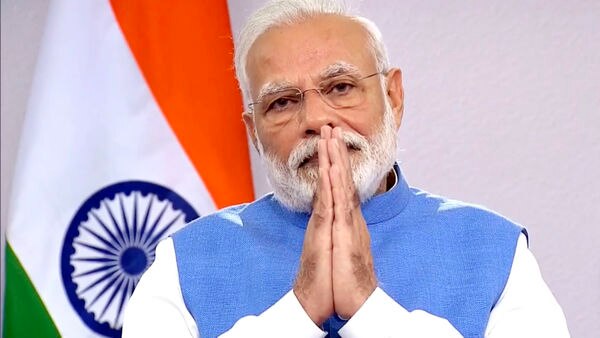
Colombo, May 7 (newsin.asia): Addressing the Virtual Vesak Global Celebrations on Buddha Purnima day on Thursday, Indian Prime Minister Narendra Modi said that Lord Buddha is synonymous with service and dedication.
Those who are engaged in the service of humanity at all times, day and night, are the true followers of Lord Buddha,” Modi said.
Indian Prime Minister recalled that he was part of the Vesak celebrations in 2015 and 2018 in New Delhi, and in 2017 in Colombo. This year, the Ministry of Culture, Government of India, in collaboration with the International Buddhist Confederation (IBC), a global Buddhist umbrella organization, organized a Virtual Prayer Event with the participation of all the supreme heads of the Buddhist Sanghas from around the world, a press release from the Indian High Commission said.
Prayers on the occasion were streamed live from the Sacred Garden Lumbini, Nepal, Mahabodhi Temple, Bodhgaya, India, Mulgandha Kuti Vihara, Sarnath, India, Parinirvana Stupa, Kushinagar, India, Pirith Chanting from Ruwanweli Maha Seya in the sacred and historic Anuradhapura stupa premises, Sri Lanka, Boudhanath, Swayambhu, Namo Stupa, Nepal apart from other popular Buddhist sites.
During the current COVID-19 global pandemic we are fortunate to see many people around us, who serve others, treat a patient, feed a poor person, clean a hospital, maintain law and order on roads/ They all are working round the clock,” Prime Minister Modi stated.
Every such person deserves a salute, a tribute,” he said.
Recalling the four truths of mercy, compassion, nonchalance in happiness or sorrow, and acceptance of people with their good and bad traits, Modi said that these continue to inspire India.
Speaking about India’s approach to COVID-19, Modi said, …India is standing firmly in selflessness, without any distinction, with the person in distress, both in the country and throughout the world.”
Eighteen more persons were confirmed to have contracted the COVID-19 virus as of 11.55 pm on Thursday (07), while Sri Lanka’s COVID-19 cases count soared to 823.
With the detection of 18 new positive cases, the total number of patients who tested positive for coronavirus within the day has risen to 26.
In the meantime, coronavirus recoveries tally in the country has moved up to 232.
The Epidemiology Unit says that 582 active cases are currently under medical care at selected hospitals across the country.
The country’s death toll from COVID-19 stands at 09.
Sri Lanka saw the highest daily surge in confirmed COVID-19 cases on April 27, with 65 new infections. The tally went up from 523 to 588 just within 24 hours
At
the heart of Buddha’s teachings is the accountability factor. You and only you
are accountable for the good or bad one does. Following the Dhammapada – path of the Dhamma
we build ourselves a moral foundation. The core of that is the 5 precepts of which ‘hurting’
and ‘killing’ all sentient beings plays an integral part. Sri Lanka
has set an example for the rest of the world to follow. Vesak is not only a
festival of colour and lights but it is also a week that there is no slaughter
of animals. Just as we have followed customs of Abrahamic faiths, why not they
too consider declaring a slaughter-free religious festival?
Start with one festival and see the change.
All beings tremble before danger,
all fear death.
When a man considers this, he
does not kill or cause to kill.
All beings fear before danger,
life is dear to all.
When a man considers this, he
does not kill or cause to kill.
Whosoever tries to find happiness
through hurting other beings, will not find happiness.
Dhammapada
It is in reading these lines that we understand
that not just humans but animals also feel joy and pain, fear and sadness just
like humans. No arguments can oppose
this fundamental fact & truth.
Since age of discovery and Abrahamic invasions,
native cultures, traditions and rituals were not only replaced but they were
made to believe the later-day arriving new cultures and traditions were superior.
People followed them and many continue to do so too alongside their own rituals.
How about this time round, these Abrahamic faiths extend
their moral superiority to another level by drawing their attention to Buddha’s
humble call to give life to animals, at least by declaring they too will have slaughter-less
religious festivals and instead enjoy their festivities without denying the
life to an animal for their joy & meal.
Let the joy of any festivity manifest into giving
freedom of life to an animal. No ‘feast’ can be a happy event when an animal’s
life has been nullified for it. Festivals of this nature tragically cause death
not to thousands but to millions of animals.
Follow the magnanimous precedent set by Sri Lanka in
legally enforcing a closure of all slaughter houses and ban on sale of meat for
Vesak and also on Poya holidays. Two days of meat-free Vesak will do no harm
but it will mean the lives saved to millions of animals.
With COVID-19 man is forced to change his set ways.
One essential element of importance is that we can never return to a daily
routine we had been used to. Nature has again reminded us that humans are only
a guest and not the master. Animals are not invited guests either. Man and
animal need to coexist with compassion and humaneness.
Few days ago I was watching an interesting
program hosted by ITN between 10pm and 12pm where the National Innovation
Council chairman presented six innovations done by Sri Lankans. They were
mostly the solutions related to the ongoing Covid-19 pandemic. The chairman
stated that about 250 innovation have been brought to the council in recent
times for assessment with a view for getting patents as well as funding
arrangements. The sudden upsurge in the interest towards innovations is a very
good sign that our youths want to catch up with the rest of the world.
The Chairman was even advising the
innovators not to divulge their ideas as sometimes one single innovation can not
only change the fortunes of that inventor but that of the whole country. I
fully agree with him. At the end of this write up I will give clues to two
innovations which I believe has great potential.
However the absence of any senior academic
at least to explain what they are engaged on was conspicuous. Does that mean that there is no
involvements of our academics from universities in the innovations?. I remember
reading a news report in one of the national news papers that some Peardeniya
dons got together and repaired a few ventilators that were not working and
handed over to the Ministry of Health for use in hospitals to fight Covid-19.
It was also mentioned that they could not repair few other ventilators due to
the lack of spare parts in the country. If the parts could be identified, then
they could easily order them from overseas or else they should be able to make
them locally. That is the type of innovations we are looking for from them. If
they can understand the functionality of the various parts of the system then
they can design and manufacture the relevant parts including the controller to
suit. I give below how one guy study the controller of a 3D printer and solve
the puzzle.
With only about three months reading of
books left behind by my daughter who did an IT course and hands on experience I
myself was able to do the logic analysis of a simple devise (a Real Time Clock
which I bought for Rs. 300) with a $12 logic analyzer and the results is shown
below:
Following video explains the process.
I am sure our dons with PhDs and so on can
easily do the replication of ventilator machines (or any other
dysfunctional machine, but they may be
too lazy to try it or are involved with trivial matters. For me this all
started when I wanted to reset data in the toner control chips of an expensive
printing machine few months ago. As they say the necessity is the mother of
invention.
In order to overcome the problem of lack of
sufficient number of well trained personnel on the field of digital technology,
I suggest we start teaching this subject right after the A’Level while they
wait for the results for uni admissions. This can be conducted via a series of
online classes from a central location. Six months of teaching will be more
than sufficient to cover the digital logic and the microarchitecture levels of
the computer organization. It can also cover the history of the computer
technology.
History of the making of the microprocessor
(or the digital technology based on silicon) is interesting. I give below an
account of its development.
Now about the two items of innovations
where there can be huge potential:
We have sea right round our country. And we
have probably hundreds of deep sea fishing boats going out to sea. They scour
the sea without much clue as to where the fish shoals might be. It seems
sometime they follow debris floating in the deep sea as possible locations
where fish can be found. The scanning systems available that can be fixed on
board so far can only do so beneath the boat in a small conical prism. So, some
scanning by sonar is probably the best to locate fish shoals within several
kilometers. There are products from big companies like HP for analyzing the
echo using the mathematical Fourier series. In fact these are used in oil
explorations. One can easily google and find out about that technology.
Then there is another one that I myself am
interested. A clue can be found in the following video:
This video is about how the 5G mobile
transmissions affect us all particularly the bees.
The Sri Lankan nationals were also booked under sections 14 and 14c of the Foreigners Act for violating the visa regulations by indulging in religious activities.
ALIGARH (UP): Thirteen Tablighi Jamaat members, including two Sri Lankan nationals, were arrested here for allegedly staying in a mosque in violation of the coronavirus lockdown orders, police said on Wednesday.
While the two Sri Lankan nationals have been sent to jail, the other 11 Jamaat members were released on bail, they said.
The Sri Lanka embassy in Delhi has been informed about the arrest of its two citizens, they added.
“The 13 were booked under IPC sections 188 (disobedience to order duly promulgated by public servant) and 269 (negligent act likely to spread infection of disease dangerous to life),” police said.
The Sri Lankan nationals were also booked under sections 14 and 14c of the Foreigners Act for violating the visa regulations by indulging in religious activities, they added.
As per the guidelines issued by the Centre, religious places and places of worship will remain shut during the lockdown imposed to curb the spread of coronavirus.
The district authorities have launched a drive to trace all members of the Tablighi Jamaat who have been in “hiding” since the lockdown was imposed on March 25.
A gathering held at Tablighi Jamaat’s headquarters at Nizamuddin in Delhi in mid-March, which was attended by delegates from across India and also abroad, had become a key source for the spread of COVID-19.
At least 9,000 people participated in the congregation, after which many of the attendees travelled to various parts of the country.
District Magistrate Chandra Bhushan had issued an appeal that “it was in public interest that such persons are immediately traced”.
During the past two days, 72 such individuals, who belonged to different districts of the state, were identified, police said.
The district authorities with the help of some local Muslim leaders, including former legislator from Aligarh Haji Zameer Ullah, made the arrangements for sending these persons to their native places after completing medical formalities.
Zameer Ullah, in a statement, urged the UP chief minister to take necessary steps for the early release of the two Sri Lankan nationals on humanitarian grounds since they were the victims of the circumstances and also in view of the holy month of Ramzan.
We have taller buildings but shorter tempers, wider Freeways, BUT NARROW VIEWPOINTS. We spend more, but have less, we buy more, but enjoy less. We have bigger houses and smaller families, more conveniences, but less time.
We have more degrees but less sense, more knowledge, BUT LESS JUDGEMENT. more experts, yet more problems, more medicine, but less wellness.
We drink too much, smoke too much, spend too recklessly, laugh too little, drive too fast, get too angry, stay up too late, get up too tired, read too little, watch TV too much, AND PRAY TOO SELDOM.
We have multiplied our possessions, but reduced our values. We talk too much, LOVE TOO SELDOM, and hate too often. We’ve learned how to make a living, but not a life. We’ve added years to life not life to years.
We’ve been all the way to the moon and back, but have trouble crossing the street to meet a new neighbor. We conquered outer space BUT NOT INNER SPACE. We’ve done larger things, but not better things. We’ve cleaned up the air, BUT POLLUTED THE SOUL.
We’ve conquered the atom, but not our prejudice. We write more, but learn less. We plan more, but accomplish less. We’ve learned to rush, but not to wait.
We build more computers to hold more information, to produce more copies than ever, but we communicate less and less. These are the times of fast foods and slow digestion, big men and small character, steep profits and SHALLOW RELATIONSHIPS.
These are the days of two incomes but more divorce, fancier houses, but broken homes. These are days of quick trips, disposable diapers, THROWAWAY MORALITY, one night stands, overweight bodies, and pills that do everything from cheer, to quiet, to kill.
By Sasanka Perera & Dev Nath Pathak Courtesy NewsIn.Asia
The multi-lingual broadcasts over Radio Ceylon culturally united communities divided into nation states after decolonization.
A young Sunil Dutt listening to Hindi film star Nalini Jaywant speaking over Radio Ceylon
New Delhi, May 6 (newsin.asia): Radio, in our view is not merely a matter of technology through which music, entertainment, information, news and increasingly fake news and many other forms of knowledge come to people. More importantly, by bringing all this, radio like all other forms of mass media also becomes a means of politics. When we refer to politics, we do not mean the contemporary popular understanding of the word that tend to denote divisive party politics in different national settings or across borders. Rather, we mean by it, a kind of social transformative politics of knowledge and ideas — whether actual programs on radio stations self-consciously tap into this potential or not.
And if there are intended politics by radio, there are also forms of cultural politics that come into being around radio. Such cultural politics engendered by radio programs, and listeners’ engagement with radio, could play a significant role in the formation of radio-communities across cultural contexts.
Communities of listeners in Sri Lanka, and in other parts of South Asia, could be bound by an invisible link created by waves of broadcasting. But this is not the same community that anthropologists have spoken of. The radio’s communities revel in partial anonymity, with partial unawareness of who all are tuned into radio to consume the same program. And yet, they are partaking on the same broadcast content, invisibly connected, and intangibly interacting with one another.
At times, the intangible interaction acquires tangibility as the anchor on the radio may announce the names of two or more listeners from different parts of the region sharing their sentiments and ideas.
It is in this latter broader understanding of politics that we would like to excavate two specific memories in this essay. One is the memory of Radio Ceylon itself and what it stood for in its time. The second is the iconic radio program, Binaca Geetmala, initially broadcast by Radio Ceylon, and later continued by the Sri Lanka Broadcasting Corporation (SLBC) when the former was renamed after the 1972 Constitution officially changed the name of the country. More specifically, what we have in mind is to explore briefly and reflect upon the cultural politics Radio Ceylon and Binaca Geetmala set in motion and to pose the question if such processes of politics is not possible in contemporary South Asia..
Cultural Politics of Radio Ceylon
Known as Colombo Radio, the precursor to Radio Ceylon was established in 1925 with the creative reuse of a radio transmitter ‘rescued’ from a sunken German submarine. It was effectively South Asia’s first public radio station. But the technical push that rapidly moved Radio Ceylon to write itself a more memorable history came in 1949 when the British military’s Radio SEAC managed by its South East Asia Command was moved to Colombo. Radio SEAC’s initial purpose was to entertain and provide information to British and allied troops in the region and beyond in the context of the Second World War.
In 1949, this World War Two military-cultural tool became Radio Ceylon. From this time onwards until its latter decline from the late 1960s onwards, Radio Ceylon’s sense of cultural politics and its interest in speaking to the world and to simultaneously bring the world of global culture to the region becomes apparent. It is in this context that V.S. Sambandan referred to this phase of Radio Ceylon as when Ceylon ruled the airwaves.”
Radio Ceylon’s sense of politics can be broadly identified in the following three ways:
1) First, to usher in a sense of professinal programing to radio in South Asia at a time such practices were literally unknown. In this context, and with particular reference to India Sambandan notes, for Indian radio enthusiasts of decades gone by, it was Radio Ceylon that set the standards” at a time when there were no commercial broadcasts in India for the purpose of entertainment. As such, listening to Radio Ceylon broadcasts was affectively taking a break from the monotonous, though informative, broadcasts of All India Radio (AIR)…”
2) Second, to speak to, entertain and inform the local population (in Ceylon) in Sinhala and Tamil and also in English.
3) Third, to speak to South Asia and particularly to India in English and Tamil (for India’s South, and particularly to what is known today as Tamil Nadu) and later in Hindi/Urdu (for the Hindustani belt) when Binaca Geetmala began. As noted by Sambandan, once tuned in, the listener was treated not just to music of the highest quality. The magnetic voices of broadcasters, Jimmy Barucha (English), Ameen Sayani (Hindi) and Mayilvaganam (Tamil), to mention just three, ensnared the listeners, taking Radio Ceylon to the top slot in the region’s radio network.”
At the height of Radio Ceylon’s popularity from the 1950s to 1970s, its following in India was considerable in addition to its local fan base. This was not only because of its offerings of Hindi movie songs via Binaca Geetmala as we will discuss later. But this was also because of the popularity of its English language songs and music from the West, which were not as readily available in India or elsewhere in South Asia at the time. As Nirupama Rao, the former Indian High Commissioner to Sri Lanka noted, I first heard The Beatles over Radio Ceylon. We grew up listening to songs over Radio Ceylon.”
It is this sense of cultural politics, which stands out as Radio Ceylon’s global cultural sensibility and cosmopolitanism. Its programs offered an opening to the country’s presence at the time as well as a window to global cultural fare. As Sambanadan notes, for Indians of the radio generation, Radio Ceylon was the first introduction to paradise-island and to the world of music.”
However since the late 1970s and more clearly since the 1980s there is a clear decline in Radio Ceylon’s and later Sri Lanka Broadcasting Corporation’s popularity both locally and in India. The reasons are quite similar.
The introduction of Vividh Bharathi, All India Radio’s commercial services offered an initial challenge to Radio Ceylon by presenting similar programs. It is no accident that Binaca Geetmala also moved to Vividh Bharathi and from Colombo to Delhi in 1989. On the other hand the cheap availability of prerecorded audio cassettes with popular music from 1970s onwards offered alternatives to Radio Ceylon’s programs, which people could listen to at their own time.
From the 1980s onwards the advent of television, private radio stations and finally FM stations also offered many more alternatives. These same conditions impacted the station’s local standing too. Equally crucially, over time, Sri Lanka Broadcasting Corporation could not live up to the standards Radio Ceylon had set in its own time. This was partly a matter of too closely entangling itself in the affairs of the state.
Also, as noted by Sambandan, SLBC lagged behind the times.” The ideal as he further notes should have been for SLBC to leverage its past and harness itself to the current developments in radio broadcasting.” This has simply not taken place.
Cultural Politics of Binaca Geetmala
The cultural politics of Binaca Geetmala has to be understood in the context the broader cultural politics of Radio Ceylon. Binaca Geetmala was a weekly program of radio countdown of Hindi cinema chart-busters blended with interesting infotainment on Hindi cinema anchored by Amin Sayani in what may be called ‘Hindustani,’ a mixture of Urdu and Hindi languages. It was aired via shortwave by Radio Ceylon from 1952 to 1988, and from 1989 to 1994 on All India Radio. Its peak however was during its run at Radio Ceylon.
The program had songs creatively interrupted by commentaries in the sonorous voice of Amin Sayani. The commentaries gave entertaining details of the songs, lyrics, and the singers. In other words, the songs were not merely presented for entertainment. They were also situated in their boarder socio-cultural context via the kind of information referred to above. The dramatic affect of the program was entrenched by fine editing and mixing. The songs that were added anew in each program were welcome with a bugle sound, which became iconic, and the songs, which stayed on in the program for many weeks, were also given an extraordinary bugle sound, an acoustic salute, referring to their longevity.
The memory of such an instance opens the locked secrets of cultural mobility beyond national territorial borders in South Asia. It also hints at the socio-cultural predilections toward something, which nation states might not have favored. After all, the Binaca Geetmala was not conceived by All India Radio (AIR), BBC, Voice of America or any other such national broadcaster of a powerful country with a variety of programs in different languages catering to linguistic communities across the world. These can only be seen as programs of power projection, which powerful countries have conventionally undertaken as in the case of BBC’s Sinhala, Hindi and many other language services and All India Radio’s Sinhala Service. Instead, Binaca Geetmala was a creation of Radio Ceylon, the national broadcaster of Sri Lanka, a country that had no interest or possibility of power projection across international borders. Nevertheless, in practice, Radio Ceylon, became a household name in the length and breath of India, which moved, The Hindu in a 2006 essay to describe the phenomenon as when Ceylon ruled the airwaves.”
In the political context in which Binaca Geetmala was conceived, it was a veritable godsend savior for Hindi cinema music lovers. In 1952, the same year that the program first aired, the government of India had banned Hindi cinema songs on All India Radio indicating its thinking on culture in extremely puritanical terms. B. V. Keskar, the Minister of Information and Broadcasting in the cabinet of Prime Minister Jawaharlal Nehru, was of the view that Hindi cinema songs will pollute the cultural sensibilities of post-independent India. At the time, it was state policy to encourage only what was thought to be pure, authentic, traditional, and classical music on the national radio in India.
It is in this specific context that the team of Binaca Geetmala approached Radio Ceylon, and quickly made arrangements to air the program from Colombo. Being hosted by the national broadcaster of Ceylon owned by the Ceylonese government, and that too to broadcast a genre of songs and music self-consciously banned by the Government of India on its own airwaves was quite a bold decision. It showed that democratic and independent decision-making was possible in Ceylon at the time even when it came to issues that literally crossed international borders.
Crucially however, this was the realm of culture and not politics as it is popularly understood. Nevertheless, the decision to broadcast Binaca Geetmala was clearly a political decision as it was also a subversive decision on the part of a government-owned radio station of a small country. It was a matter of very casually disregarding publicly stated cultural sensitivities of its bigger neighbor across the ocean.
The songs of Hindi cinema that Radio Ceylon broadcast were also received well by Sri Lankan listeners as well as audiences across India to whom the program was specifically targeted. This is in addition to secondary audiences in Nepal, Bangladesh and elsewhere in South Asia where short wave radio could reach, and where a taste for Hindi cinema songs was already established.
The growing listenership in Sri Lanka is particularly intriguing where Hindi is neither spoken nor understood. But it is Radio Ceylon’s Binaca Geetmala that played the most crucial role in popularizing Hindi film songs in Sri Lanka. In turn, this also ushered in another important dynamic of cultural politics. That is, the wholesale adaptation of the melodies of the most popular of these songs, to which Sinhala lyrics was introduced. For a short time in the 1960s the Sri Lankan government explicitly banned the practice of adapting Hindi movie song melodies for Sinhala lyrics. But given the porousness of the realm of culture, this was not a ban that could be sustained over time.
But the popularization of Binaca Geetmala and Radio Ceylon in India arose for different reasons. At one level, this phenomenon was not surprising since there was already a practice of Hindi language announcers joining Radio Ceylon to work in its Hindi service since the early 1950s. Partly, this was a lingering practice from the colonial era where colonial citizens could travel across to any country in the empire and particularly the region without much of a difficulty. This was also the time, the kind of restrictive nationalisms that took root in the region later, had not yet made its presence. So crossing borders and working across borders, particularly in the realm of culture was not embedded with the kind of anxieties one would experience today.
Also, as the earliest radio station in colonial South Asia, Radio Ceylon was a signpost for many artists willing to contribute to the realm of sound-art. Among many, Sunil Dutt was one of the announcers in the Hindi Service of Radio Ceylon. Later, Dutt became a well-known Hindi cinema star when he joined the film industry in Bombay. In other words, for listeners in India (not only in its Hindi belt, but in other language regions too), Hindi programming from Ceylon was a matter of ‘listening to the sounds of home’ and familiarization of the comfort-zone of home that were nevertheless emanating from beyond the borders of home.
More crucially, when this popular genre of songs was banned on All India Radio in 1952 as referred to above, Radio Ceylon was the only publicly accessible service, which offered such fare.
Besides all this, such a program also meant the production of commercial jingles for various products sold in India that added to the revenue of the government of Ceylon and later, Sri Lanka. On the other hand, Radio Ceylon also offered to Indian listeners music of the world through its very cosmopolitan English language service as referred to in the earlier section.
The transnational significance of the Radio Ceylon mapped a popular soundscape of South Asia. The popularity of Radio Ceylon and its presentation of popular Hindi cinema songs forced the cabinet of Pundit Jawaharlal Nehru to rethink its ban on cinema songs on the All India Radio. As a result, it decided to reinstate film songs on AIR in 1957. Moreover, All India Radio also started a special service called Vividh Bharti, which was dedicated to the songs of Hindi cinema was a direct response to the challenge from Radio Ceylon.
One of us (Dev Nath Pathak), as a growing boy in a small town in remote northern Bihar has anecdotal memory; Listening to radio was an important, and generic aspect of growing up; and amid various radio programs, it was particularly important to listen the Radio Ceylon. More importantly, the channel never appeared to be non-Indian and Ceylon seemed more like another town located somewhere very near though territorially afar. And despite the return of Hindi cinema songs on All India Radio later, Radio Ceylon remained popular among listeners until its pronounced decline.
Concluding Comments
In his 2006 essay on Radio Ceylon, Sambandan begins his discussion with the following observation and question: Once the pride of the region, Radio Ceylon is today a fading memory. Can the Sri Lanka Broadcasting Corporation regain its lost glory?” Sambandan’s reflections are an apt place to conclude our own thoughts.
There is no doubt that Radio Ceylon’s and Binaca Geetmala’s pioneering role in the soundscape of South Asia and particularly in India have been overtaken by radical cultural and technological transformations as briefly explained earlier. In this context, Radio Ceylon’s contemporary manifestation in the form of Sri Lanka Broadcasting Corporation, has become irrelevant in the South Asian soundscape since Binaca Geetmala went off the air in 1994.
Nevertheless the memories and histories of these earlier institutional innovations can be the ground for fertile thinking in the larger scheme of South Asia today. One source of memory is various recordings of Binaca Geetmala (particularly) which appeared in cassette and LP record forms, and now available on online music portals. These recorded programs remind a listener of what happened then. They concretize the listeners’ sense of nostalgia.
Even now, the Sri Lanka Broadcasting Corporation continues to have a Hindi Service and continues to receive letters from India requesting songs. But unlike in the past, the service now plays older songs produced before the 1970s and its listenership’s general age is about 50 years. The youth are not a part of its depleted fan base.
This brief history reveals a number of issues. One is a typical commonsense anxiety that popular music is a threat to traditional forms of music such as the folk and the classical. The nation state as well as some sections of the public operated on the premise of this anxiety. Efforts were made to protect what was thought of as the ‘authentic-traditions’, as in the case of the Indian example of banning Hindi cinema sings referred to earlier. The second alludes to the industry as well as a creative radio station such as Radio Ceylon, despite being owned by the Ceylonese state, catching up faster with the pulse of people than hegemonic and conventional national politics. This was evident from the soaring popularity of Radio Ceylon and its programs including Binaca Geetmala in India and Sri Lanka in particular and elsewhere in South Asia more generally. And the third refers to the fact that popular music travels across borders, and is capable of carving a sizable fan following, and also synergized diverse locals.
These three issues, put together, underlines the trans-local implications of what Radio Ceylon once stood for. It created a dynamic soundscape of South Asia inspite of the borders thrown up by nation states and the boundaries of minds. Radio was a window to the world and to the self. Radio Ceylon’s history, if understood within the nuances it offers, would provide and ideal basis to engage in cultural politics in contemporary times, albeit taking into account and addressing prevailing conditions, tastes and modes of broader politics.
( Authors Sasanka Perera & Dev Nath Pathak are from the Department of Sociology, South Asian University, New Delhi. This essay, drafted to organize the preliminary ideas for broader research project by the authors was initially published in Guvan Viduli Sameeksha, Volume 3; February 2020 published by the Department of Cultural Affairs, Government of Sri Lanka)
Acting Inspector General of Police has ordered the Terrorist Investigation Division (TID) to conduct a thorough investigation into the Non-Governmental Organisation, headed by lawyer Ejaaz Hizbullah, who is in the custody of the CID, as a suspect in connection with the Easter Sunday attacks.
The investigation into the NGO was ordered since it had been largely funded by two of the suicide bombers, who carried out the Easter Sunday attacks on churches and hotels, on 21 April 2019, Police headquarters sources said.
It has been revealed that the head office of the NGO is located in a building, purchased by the bombers.
The CID has received several reports that Mohammed Zahran Hashim, who planned the suicide attacks, on Easter Sunday, last year, had visited the building. The CID is conducting an investigation into the incident. The TID has been assigned to investigate the activities of the NGO.
Investigations have revealed that about six million rupees was credited to this NGO’s account, annually, and the NGO has spent a similar amount yearly. The account now has less than Rs. 20,000 and the cash flow, to the account, has ceased after the Easter Sunday attacks.
Investigators have also raised suspicions whether those involved in the Easter Sunday attacks also deposited the money in the NGO’s account, since the deposits made to the account ceased abruptly, after the attack.
It has been revealed that the Madrasa School, in Madurankuliya, was also started by the NGO, under investigation.
Investigations have revealed that the orphans were enrolled in the Madrassa school.
A senior CID officer said the orphaned children had been given jungle combat training and the CID had raided the training centre, in Wanathavilluwa.
The CID investigations have revealed that several politicians have worked closely with this NGO.