What damage Corona had done to Sri Lankan well-knitted society

April 7th, 2020

Dr Sarath Obeysekera 

In the cities and villages people in Sri Lanka have lived harmoniously helping each other and enjoying good times and share the sorrow 

I have sadly noted that our neighbors do not even talk to each other let alone distancing physically 

People have become selfish like in the Western countries where they do not even know who your Neighbour is 

When a bread van, grocery van or vegetable van comes some people do not call their neighbors and share the information

I am afraid that we will take a long time to revive our close relationship in the society which had been in existence for many centuries, after the cessation of Corona Hostility

Dr. Sarath Obeysekera
CEO Walkers Colombo Shipyard
Colombo
Sri Lanka

ප්‍රජා -තන්ත්‍ර-වාදය නමැති නාස් ලණුවෙන් ගැලවෙමු! (තුන්‌‌වෙනි කොටස)

April 7th, 2020

චන්ද්‍රසිරි විජයවික්‍රම, LL.B.,Ph.D.

හෙළ ජාතික අභිමානේ
වැඩු විරුවන් සේ පොරණේ
දිනු මව්බිම සව්සිරියෙන් සරසව්
පිබිදෙව් පිබිදෙව් සැරසෙව්…//

වීර විකුම් පෑ පෙර දරුවෝ, දෙස රැස මුර කෙරුවෝ
ඒ ලෙය ඇති ඔබ සුරවිරුවෝ – නොමවව් ණයකරුවෝ
දැය දියුණට පැද යන නැවියා
ගොවියා බිම දෙවියා
විපතෙහි සැපතෙහි නොසැලෙයි නොතැවෙයි අටලෝදම හුරු හෙළයා

හෙළ ජාතික අභිමානේ…/

මුහුදට ඈදෙන මහ ගංඟා – කුඹුරට යලි හරවා
ධාන්‍ය වගා කොට සිරිලක මේ – පෙරදිග කෙත කරවා
අරපිරිමැස්මට පුරුදු වෙලා බිඳලව් දුක සංකා
පැරකුම් යුගයක් නැවතත් අරඹව් නිජ භූමි තලේ ලංකා

හෙළ ජාතික අභිමානේ…/

(ගායනය: සී. ටී. ප්‍රනාන්‌දු)

කොරෝනා තන්ත්‍රවාදය (කැටැස්ට්‍රොෆික් තියරි ඔෆ් ප්ලෑනින්)

මෙම ලිපි මාලාවේ කලින් කොටස් දෙකෙන් පෙන්‌වා දීමට තැත් කලේ ලංකාවේ ප්‍රජාතන්ත්‍රවාදයක් නැති බවත් ඇත්තේ ප්‍රජා-නාස්ලණු-වාදයක් බවත්‌ය. කොරෝනා සිද්‌ධියෙන් පෙනීයන්නේ, මේ යුද්‌ධය නම් කවදාවත් දිණන්න බෑ කියූ කල්ලි, සිංහල බෞද්‌ධ විරෝධී දේශපාලන පක්‍ෂ නායකයින් හා ආණ්ඩුවේ නොවන ඩොලර් සංවිධාන මුස්ලිම් මළමිනී පස්සේ යමින් සිටින බවය. බිමාල් රත්නායක නම් ජේවීපීකාරයා කියන්නේ මළමිනී මුස්ලිම් අයගේ යයි සඳහන් කිරීම ජාතිවාදය කියාය! මුස්ලිම් මිනී වලලන්න දියයුතුය කියන පෙත්සමට අත්සන් කල 164 දෙනා හා සංවිධාන 17, සුප්‍රකට මහාවංශ විරෝධී කල්ලියමය (කලම්බු ටෙලිග්‍රාෆ්, අප්‍රියෙල් 5). සජිත්ලා කාවින්ලා වෙනුවට දැන් හකීම්ලා අල්ලාගේ නීතියක් ගැන කතා කරයි. හලාල් දිනාගත් ඔවුන් දැන් වෛද්‍ය විද්‍යාව, චන්ද දේශපාලනයෙන් යටකරන්නට සිතයි. මෙහිදී ඉම්තියාස් බකීර් මාකර්, අලි සබ්‍රි පවා ඉන්නේ වැට උඩය. සමහර මුස්ලිම් පල්ලි හැසිරෙන ආකාරය අනුව සිතාගත හැක්කේ වැඩියෙන් ඔවුන් ඉන්නා ගම්, නගර වල මුස්ලිම් බලකොටු හදාගන්නා මනසක් ඔවුන්ට නොතිබේද යනුය. ඒ අස්සේ අතරමංවී ඉන්නා සුමන්තිරන්ලාගේ ආශාව පාර්ලිමේන්තුව යලි කැඳවීමය. හරියට මේ හොර ගුහාව කොරෝනාව නිසා දැන් මහෝෂධ පණ්ඩිතයන්ගෙන් පිරී ඉතිරී ගිය ආකරයක් යයි සිතාය.

දුගී බව තවත් වැඩි කරණ සංවර්‌ධන ව්‍යාපාර!

පාස්කු ප්‍රහාරයෙන් නිසි පාඩම් ඉගෙන නොගත්, සිංහල දේශපාලකයින් මෙවරවත්, ප්‍රඥාවෙන් නොහොත් සම්මා දිට්‌ඨි හා සම්මා සංකප්ප (නිවැරදි දැක්‌ම, නිවැරදි කල්පනාව) යෙන් ක්‍රියාකරතැයි කළු සුද්දන් නොවන ජනතාව ජනාධිපති ගෝඨාභය ගෙන් බලාපොරොත්තුවේ. කොරෝනාවෙන් උගත් පාඩම් වශයෙන් දේශීය කර්‌මාන්ත පුනරුදයක් ඇතිකිරීම දැනටමත් අරඹා ඇතැයි මීගමුවේ රෙක්ස් ඉන්ඩස්ට්‍රීස් ආයතනය විසින් දැඩි සත්කාර ඒකක ඇඳන් නිෂ්පාදනය කිරීමේ උත්සවයේදී (අප්‍රියෙල් 4) ඇමති විමල් වීරවංශ විසින් කල ප්‍රකාශයෙන් පෙනෙනුයේ මුළු රටේම මානසික වෙනසක් සිදුවෙමින් පැවතීම, කොරෝනාව ගෙනා වෙස්‌වළාගත් භාග්‍යයක් ලෙස පාලකයින්ට අවභොධව ඇති බව නොවේද? ගම් වල කෙල්ලන් පැක්ටරි වල ගාල් කර ශ්‍රමය සූරාකා සුද්දියන්ට ජංගිමස්සවා, සංචාරකයින්ට බීරපොවා හා ගණිකාවන් සපයා, රාත්‍රී සමාජ ශාලා දමා, ගම්වල දුප්පත් ස්ත්‍රීන් අරාබියේ වැඩකාරකමට යවා, ලුනුමිරිස් බෝතල් රට යවා, මිනිරන්, ඛනිජ වැලි ආදී සම්පත් අමු අමුවේ පිටරට පටවා රටක් සමෘධිමත් කල නොහැකිය. දුගී බව අඩුකිරීමට යයි ලෝක බැංකු ණය ලබාගෙන කරණ සංවර්‌ධන ව්‍යාපාරම දුප්පත් රටවල දුගීබවට හේතුවන අන්දම ප්‍රසිද්‌ධ ලාංකික භූගෝල විද්‍යඥයෙකුවූ ඇමෙරිකාවේ වසන ලක්‍ෂ්මන් යාපා විසින් විග්‍රහ කර ඇත.

මේවායින් සිදුවූයේ තිරසර සංවර්‌ධනයක් නොව තොග පිටින් සිංහල සමාජය පිරිහී යාමය. මේ ජේ. ආර්. විසින් රටට පැටවූ, ගෝලීය-ධනවාදී-වානිජ-ආර්‌ථික ක්‍රමයෙන් හොද්ද බොරකර ගත්තේ කුමණ පිරිස්ද? එසේම, මේ රට ගලවා ගැනීමේ ව්‍යායාමයේදී සිංහල, විශේෂයෙන් සිංහල බෞද්‌ධ චන්ද උඩ මිස, ඒ වෙනුවට සුළු ජන වර්‍ගවල නායකයින් පස්සේ හිඟමනේ යෑම, සිංහල බෞද්‌ධ චන්ද අඩුවීමට හේතුවන බව 2014 චන්දයේදි පැහැදිලි විය. මෙහිදී මතකයට එන්නේ ජනාධිපති මහින්දගේ පරාජයට හේතු දක්වමින්, දයාන් ජයතිලක, නාලක ගොඩහේවා හා රජිව විජේසිංහ ඒ දිනවල ලියූ ලිපිය.

ඇස් පාදන නස්පැත්ති

ප්‍රජා-තන්ත්‍ර-වාදය නම් කළු සුද්දන්ගේ බොරුව හරිමඟට ගැනීමට පොදු ලෝක සංසිද්‌ධියක් වන <යම් විනාශයක් සිදුවූ විට ඇස් පෑදීම නොහොත් නිසි සැලැස්මක් සැදීම> යන සංකල්පය යොදා ගැනීමට අවස්ථාවක් උදාවී ඇත. එහෙත් වෙන රටවල මෙන් නොව ලංකාවේ මේ සංකල්පය පවා කෙළෙසා ගන්නා බව මීතොටමුල්ල කුණු කන්ද අරුවක්කාලු හුණුගල් වලකට ගෙනයාමේ ව්‍යාපාරයෙන් පැහැදිලි විය. ඩිමාන්ඩ් මැනේජ්මන්ඩ් යන උපක්‍රමය කෙටිකාලීනව චන්ද මත යැපෙන උගත් හා නූගත් කියන දේශපාලකයින්ට අරහංය. සී ටී ප්‍රනාන්‌දු ගේ සිංදුව ඉදිරියේ එනවා යයි දුටු කොරෝනා වයිරසයට කල ස්‌තුති කිරීමක් සේය! නෝම් චොම්ස්කි නම් කියන්නේ, අනාගත විනාශ වැලැක්‌වීමට ක්‍රියාකිරීමෙන් ලාභ (වාසි) ලබාගත නොහැකි බවයි. මේ නිසා ඒ කරුමයට පව් ගෙවන්නේ යම් යම් ලෝකල් ජන කොට්ඨාශ විසින්‌ය. කොරෝනාව මේ සූරාකෑමේ විපාකය ලෝකයේ හැමෝටම සමසේ බෙදා දුන්නේය. ඒ නිසා දැන් කොරෝනා ප්‍රජාතන්ත්‍රවාදයක් අපට ඇත. මුහුණු පොත සල්ලි ඇති නැති ලෝකයේ හැම දෙනාටම සමාන වේදිකාවක් සදා දුන්නත්, බොහෝ අය එය වඳුරන්ට දුන් දැලි පිහියක් සේ අයුතු ලෙස භාවිතා කරනවා මෙන්, කොරෝනාවෙන් ඥානවන්ත ලෙස නිසි ප්‍රයෝජනයක් ගැනීමට ලෝක දේශපාලන සංස්ථාවලට දැන් අවකාශයක් ලැබී තිබේ.

බුදු දහම හා විනය

තවත් පෙන්වා දීමට සැදූ කරුණක් නම් රට හරිමඟට ගැනීමට ගතයුතු පියවරවල් බෞද්‌ධ රාජ්‍ය ප්‍රතිපත්ති වලට පටහැනි නොවන බවය. බෞද්‌ධ සූත්‍රවල, ජාතක කථාවල ඇති ප්‍රජාතන්ත්‍රවාදය, සමානාත්මතාවය, නීතියේ ආධිපත්‍යය වෙන ලබ්ධිවල නැත. 69 ලක්‍ෂයක් චන්දය දුන්නේ රටේ විනයක් (විනය හා ආරක්‍ෂාව කාරණා දෙකකි) ඇති කිරීම, අනිත් හැම දේටම වඩා අත්‍යාවශ්‍ය යයි දැන දැනම නොවේද? බෞද්‌ධ රාජ්‍ය පාලනයක් යටතේ, සමාජයේ විනය නැවත ගොඩනැඟීම නොකර, රට ගොඩ ගත නොහැකිය. ජේවීපී තුණ්ඩු නීති යටතේ 1971/88-89 කාලයේ තිබූ විනය (ලැජ්ජාව නොව භය) දැන් නැත්තේ ඇයි? දණ හිසෙන් පහලට වෙඩි තියන්න දන්නා පොලිස් භටයින් නැද්ද? ඇඳිරිනීතිය කඩකරණ අය මහ ඉලුප්පලම වැනි ගොවිපලකට හෝ ආමි කෑම්ප් වලට හෝ ගෙන ගොස් ටෙන්ට් වල දමා ආමි මුර ඇතිව වගා කිරීමට යොදවා ගත යූතු නොවේද? රාජෝ හරණන්, රාජෝ හරණන් පදය හා කිසා ගෝතමී හොයා ගිය අබ මිටත් මීට සමානය කියා මට සිතේ.

මිලිටන්ට් බුඩිසම්?

බොදු බල සේනාවේ ලංජනය වූ නාගයා මෙහිදී වැදගත්‌ය. මැහැළිය ගැරඬියා කියා ගත් දර පොල්ල නැවතුනේ නාගයා පෙනේ පිප්පූ විටය. මඩිහේ පඤ්ඤාසීහ නාහිමියන් ජේ. ආර් ට යැවූ සංදේශවත්, සෝම හාමුදුරුවන්ගේ බණමඩුවත් නොකල දෙයක් ඥානසාර හිමිඳුන් ඉටු කලේ මුළුරටම කලඹවමින්‌ය. අසරණවූ මහානායක හාමුදුරුවරුන් පවා කුමක් හෝ කරණ ලෙස උන්වහන්සේට කියනවා මා අසා ඇත. සිංහල බෞද්‌ධයින්ට හරිහමන් නායකයෙක් නැතැයි වේදිකාව වල කියමින් මිලිටන්ට් සමාජ (පටිසෝතගාමි) ව්‍යාපාරයක් ආරම්භවිය. මිලිටන්ට් යනු ගාන්‌ධි හා මාටින් ලූතර් කිං කල දේමය. දැඩි විනය, ප්‍රතිපත්තිය, අවංකකම (උජූච) හා අහිංසාව (පහරට පෙරළා පහර නොදීම) ඊට අයත්‌ය. රොනල්ඩ් රේගන් විසින් ගඩාෆිගේ කූඩාරමට බෝම්බ දැම්මේ ගඩාෆි දන්නා භාෂාව එය යයි කියමින්‌ය! ආණ්ඩුව මොනදේ කර හෝ කොරෝනාව ජය නොගත්තොත්, බොරු ප්‍රජා-තන්ත්‍ර කාරයින් කෝරෝනා තන්ත්‍රකාරයින් වීමට නොිවසිල්ලෙන් බලා සිටී. චන්දය මිස, විද්‍යාව-රට ගැන නොසිතීමේ ආනිශංස අවුරුදු 72 ක් පුරාම රට වැසියා භුක්ති වින්ඳේය. 1978 දී ඉන් ගැලවී උඩුගං බලා පීණූ මට, අවුරුදු තුනක් යද්දීම මගේ අරමුණට ලඟාවිය හැකිවූයේ සුදුස්සාට සුදුසු තැන දීමේ ඇමෙරිකන් සංස්කෘතිය නිසාය. ලංකාවේ අදටත් නැත්තේ මෙය නොවේද? මෙය නීතියේ බලයෙන් සමාජයේ ඇතිකල හැකි දෙයකි.

බෞද්‌ධ විප්ලවය

කලක් කතෝලික පාදිලිවරයෙක්‌ව සිටි නලින් ස්වාරිස්, ද බුද්‌ධාස් වේ ටු හියුමන් ලිබරේෂන්: අ සෝෂියෝ-හිස්ටොරිකල් ඇප්‍රෝච් (1999, 2011) යන ආචාර්ය උපාධි නිබන්‌ධනයේ බුදුරජාණන් වහන්සේගේ ක්‍රියාවලියේ සාමාජික විප්ලවීය අංශය ගැන පෙන්වන, සුත්‍රයකින් උපුටා ගත් එක් වාක්‍යයක් නම්, බ්‍රාහ්මණ කුලයේ අය ලොවට පහල වන්නේ වේදවල කියා ඇති පරිදි මහා බ්‍රහ්මයාගේ ශීර්‌ෂයෙන් නොව ස්ත්‍රියගේ යෝනියෙන්‌ බවය. පසුකලෙක බුදුන්ද එක් හින්‌දු අවතාරයක් කලත්, බලවත් හින්‌දු බ්‍රාහ්මණ ආධිපත්‍යය යටතේ බුදු දහම ඉන්‌දියාවෙන් අතුගෑවී ගියේය. බාබර් ගෙන් ඇරඹුණ මෝගල් මුස්ලිම් ආක්‍රමණිකයින්, දැන් ලංකාවේ මුහුදු මහා විහාරයේදී මෙන් ඉන්දියාවේ බෞද්‌ධ නටබුන් හෑමක් කලේය. ස්ත්‍රීන් මුදා හැරීමට ඒ කාලයේ සිදුකල විප්ලවය මෙන්, බෞද්‌ධ ජනාධිපති කෙනෙකුට, ලංකාවේ ඒකීය රටක්, එක නීතියක් හදන්නට නම් කාති උසාවි, ශාරියා, වහාබ් වාදය හා මුහුණ වැසීම, හෙල්මට් නොදැමීම, මළමිනී ගිනි නොතැබීම, හලාල්, බහු භාර්‌යාසේවනය යන මේ දුර්‌මත, පොදු සමාජයට තර්‌ජනයක් වන්නේ නම්, ඒවා නීතියෙන් පාලනය කළ යුතුමය. වෙනත් ජන කොටස් වලට හානිකර මානව අයිතිවාසිකමක්, යම් තනි ජන කොටසකට තිබිය නොහැක.

අතීතයේ සිදුකල අසාධාරණකම් නිවැරදි කිරීම

මේ සම්බන්‌ධයෙන් ඩී. එස්.-අයිවෝර් ජෙනිනිංස් 29(2) භාධකයට ප්‍රතිවිරුද්‌ධ මතයක් තම ආචාර්ය උපාධියේ දේවනේසන් නේසයියා (ඩිස්ක්‍රිමිනේෂන් විත් රීසන්?: ද පොලිසි ඔෆ් රිසවේෂන් ඉන් යූ.එස්.ඒ., ඉන්ඩියා ඇන්ඩ් මැලේසියා, 1997) විසින් විග්‍රහ කලේය. ඓතිහාසිකව වෙනස්කම් වලට, අසාධාරණයට, ලක්‌වූ ජන කොටස්‌ වලට යුක්තිය ඉෂ්ට කිරීම, එතෙක් වරප්‍රසාද භුක්ති විඳි ජනයාට කරණ හානියක්, ඔවුන්ගේ මානව අයිතිවාසිකම් උඳුරා ගැනීමක් නොවන බව නේසයියා පෙන්‌වා දුන්නේය. 29(2) වගන්තියෙන් කළු සුද්දන් කලේ 1815 ගිවිසුම අළුත් කිරීමය! සිංහල ජාතියට කල මේ හිරිහැර යුක්ති සහගත ලෙස නිවැරදි කිරීම ප්‍රජාතන්ත්‍ර විරෝධීද? 1972 වනවිට මේ 29(2) ඒ වනවිට ඇතිකල මානසික තුවාලය උඩුදුවා අවසානය. 1956 අපේ ආණ්ඩුවට වූයේද එයමය. මෙවැනිම ආකාරයේ වෙනස්කම් කිරීම් වලට ලක්‌වූ රුවන්ඩාවේ මහජාතිය‌වූ හුතු ජනයා, සුද්දන් යටතේ එහි වරප්‍රසාදලත් ටුට්සි සුළු ජනයා ලක්‍ෂ 5-10 අතර සංඛ්‍යාවක් 1994 අප්‍රියෙල්-ජූලි මාස තුල සමූල ඝාතනය කරනලදී! ලංකාවේ 1983 ජූලි කොළඹ දෙමළ ජනයාට වූ විපත, බෞද්‌ධයින් කල දෙයක් නොව ජේ ආර් ගේ ආණ්ඩුවට සම්බ‌න්‌ධ තග්ස්ලා විසින් දෙමළ දේපල ගිනිතැබීමකි. ඉන් පසු එවැනි දේ සිදු නොවීමෙන්ම එය පිටිපසින් තිබූ රාජ්‍ය හස්තය එලිකරන්නේය.

ලංකාවේ තිබෙනවාය කියන ප්‍රජාතන්ත්‍රවාදය කෙළෙසූ තුන්වන විධිය

කලින් කොටසේ සඳහන් කල, ලංකාවේ කළු සුද්දන් විසින් සුද්දන් ඔවුන්ට අටවාදී ගිය ප්‍රජාතන්ත්‍රවාදය කෙළෙසූ විධි දෙකට අමතරව (නීතියේ ආධිපත්‍යයේ මුල්ගල් ඉදිරීම, තමා කැමති නියෝජිතයෙකු තෝරාගැනිමේ අයිතිය විනාශ කිරිම), 1978 න් පසු සිදුකල තවත් විනාශයක් නම් බිම් මට්ටමේ සිවිල් සේවය ජතතා මර්‌ධනය සඳහා දේශපාලන ආයුධයක් කර ගැනීමය. මෙය දෙයාකාරයකින් සිදුවිය. කිසි විද්‍යාත්මක පදනමකින් තොරව ග්‍රාම සේවක වසම් සංක්‍යාව 4,000 සිටි 15,000 දක්වා වැඩිකර, ඒ තනතුරු සඳහා නූගත් දේශපාලන හෙංචයියලා දැමීමය. මේ නිසා එම තනතුර සඳහා තිබූ ගෞරවය කෙළෙසුන අතර, බල ප්‍රදේශය කුඩාවීම නිසා වැසියාට සිදුවිය හැකි අනිසි බලපෑම වැඩිවිය. ජන ජීවිතයට කෙළින්ම සම්බන්‌ධ වැදගත් තනතුරක්, බලයට පත්‌වෙන දේශපාලන පක්‍ෂයේ අතකොළුවක් කරගත හැකිවිය.

ගමේ ජනයා බලවත් කිරීම

ගම්මට්ටමින් ප්‍රජාතන්ත්‍රවාදය ගොඩනැඟිය හැක්කේ රාජ්‍ය නිලධාරියාගේ අනිසි බලපෑමෙන් හා ගමේ පක්‍ෂ දේශපාලනයෙන් තොර ජන සභා/ජන මූල සභා මඟිනි. 1971 ජේවීපී කැරැල්ලට පසුව ඇතිකල ජනතා කොමිටි සංකල්පය (රට පුරා කොමිටි 9,000 ක්?) අසාර්‌ථක වූයේ එය පක්‍ෂ දේශපාලන ඉත්තන්ගෙන් පිරවීම නිසාය. මෙය සමානකල හැක්කේ ජනසතු කල තේ වතුවල පාලනයට වතු කොන්‌දොස්තරලා වෙනුවට බස් කොන්‌දොස්තරලා පත් කිරීමටය. කඳුකරයට දේශපාලන හරකුන් කල විනාශය ගැන ඛේදනීය වාර්‌තා කිහිපයක්‌ම විශ්‍රාමික සිවිල් නිලධාරී සිදත් ගුණසේකර විසින් ලංකාවෙබ් අඩවිය මඟින් ඉදිරිපත් කලේය. ලංකාවේ හදබිම්, මේ දේශපාලකයින් පටු චන්ද වාසිය බලා සදහටම විනාශකරමින් සිටී. ශ්‍රී පාද කන්දට අතතැබීමට භයවීම නිසා මහවැලි, කළණි, වලවේ හා කළු යන ගංඟා හතරේ ජල පෝෂක ප්‍රදේශ ඉඩම් මංකොල්ලයෙන් බේරුණේය. නැත්නම් මේ ගංඟා හතර නැති ලංකාව කාන්තාරයක් වන්නේය තවද, සුද්දා කැලෑ රැක ගැනීමේ අගය දැන සිටියේය. එහෙත් මෝඩ දේශපාලක කළු සුද්දන්ට අද මිස හෙටක් නැත. මේවා නිවැරදි කල හැක්කේ චන්දය නොව, නිසි බලය හරහා ස්‌වභාව ධ‌ර්‌මයට යුක්තිය ඉෂ්ට කිරීමෙනි.

ඕල්කොට් ප්‍රාතිහාර්යය

1840 ස් ගණන්වලදී, ජේම්ස් දි අල්විස් විසින් දශකයක, දෙකක කාලයක් තුල බුදු දහම ලංකාවෙන් මැකී යනවා යයි කිව්වත්, 1873 පානදුරා වාදයෙන් රටේ හාමුදුරුවරු මේ මතය පරාජය කලේය. එහෙත් 1880 දී, ලෝකයේ ප්‍රථම සුදු බෞද්‌ධයා යයි හැඳින්‌වෙන ඕල්කට්තුමා ලංකාවට ආවාට පසු ගුප්ත ලෙස මෙන් පන්සල් තිරයෙන් පිටුපසට ගියේ ඕල්කොට් බෞද්‌ධයින් නිසාද? මෙහිදී මතුවන ලොකු ප්‍රශ්ණයක් වන්නේ ආනන්ද විද්‍යාලයට ඕල්කොට් ගෙනා ලෙඩ්බෙටර්, විශ්‍රාම ගත් පසු ලන්ඩන් ගොස් ආපසු සිය පරණ පාදිලි වෘත්තියට බැසීමය. ඔහු රීස් ඩේවිඩ්ස් කෙනෙක් වූයේ නැත. සුමංගල නාහිමියන්ට නොතේරුණත්, ගුනානන්ද හා ධර්‌මපාල තරුණයාට ඕල්කොට් චරිතය වැඩිකල් නොගොස්ම වැටහුණාද? ඕල්කොට් බෞද්‌ධයින්, පසු කලෙක ධර්‌මපාලතුමා ලංකාවෙන් එලවා ගැනීමට හවුල් වුනාද? මේ මාතෘකාව ගැන පොතක් කොලට් සේනානායක හා නාරද කරුණාතිලක විසින් ලියා ඇත.

කළුකොඳයාවේ නාහිමියන් කල විප්ලවය

ධර්‌මපාලතුමාගෙන් ආභාෂය ලත් හාමුදුරුවරුන් අතරින් කැපී පෙනෙන්නේ කළුකොඳයාවේ ප්‍රඥාශේඛර නාහිමියන්‌ය. හිටගෙන බණ කියන, නිදාගෙන බණ කියන හාමුදුරුනමක් වශයෙන් ප්‍රචලිත මේ හිමිඳුන්ගෙන්, කළු සුද්දන් විසින් ධ‌ර්‍මපාලතුමාව ලංකාවෙන් එලවා ගැනීමෙන් පසු, ලංකාවට සිදුවූ සමාජ සේවය දන්නා අය අද සිටීද? උන්වහන්සේ විසින් 1933 සිට සැලැසුම් කර 1940 දී කෑගලු දිස්ත්‍රික්කයෙන් ඇරඹූ, ඉතාමත් සාර්‌ථකවූ. ග්‍රාම ප්‍රතිසංස්කරණ හා අපරාධ මර්‌දන ව්‍යාපාරය, සෙසු දිස්ත්‍රික් 20 ට ද ව්‍යාප්තකිරීම උන්වහන්සේගේ අරමුණ විය. එහෙත් ඩී. බී.ජයතිලක, ඩී. එස්. සේනානායක, බණ්ඩාරණායක යන ඩොනමෝර් ඇමතිවරු ඊට සහයෝගයක් දුන්නේ නැත. සූරියමල් විකුණමින් ලොරි වලින් මැලේරියා ප්‍රදේශවල බඩු බෙදු මාක්ස්වාදීන්ට මේ ව්‍යාපාරය නයාට අඳුකොළ සේ වෙන්නට ඇත. මේ කාලයේ ගම් පෙරළිය, දිවි නැඟුම කියමින් ගමට ආවඩන උදවිය මෙම කළුකොඳයාවේ මොඩලය, ජන සභා, ජන මූල සභා අදහසම නොවේදැයි සිතා බැලිය යුතුය (ප්‍රඥාශෙඛර ස්‌වයංලිඛිත චරිතාපදානය, 1970, පිටු 119, 371-76, 407).

මෙහිදී බොහෝ අය නොදන්නා කරුණක් ඊට සමානම පක්‍ෂ දේශපාලකයාගෙන් තොර මහජනයා මූලිකවූ ගැමි දිවිය නම් ව්‍යාපාරයක් 1999 දී පොලොන්නරුවෙන් අරඹා 2014 සැප්තැම්බර් වනවිට දිස්ත්‍රික් 11 ක ග්‍රාමීය සංවිධාන 1,844 වශයෙන් වර්‌ධනය වීමය. ඒ මඟින් යටිතල පහසුකම් යෝජනා 9,400 ක් යටතේ, නිශ්පාදක සමූහ 433 ක් පිහිටුවන ලද අතර ඒ හරහා ජීවන මට්ටම ඉහළ නංවීමේ ව්‍යපෘති 386,622 ඇති කරණ ලදී (ද අයිලන්ඩ්, 2014 ඔක්තෝබර් 14). එහෙත් මෙම ගැමි දිරිය දේශපාලකයින් විසින් කඩාකප්පල් කර දමන ලදී. දේශපාලකයාගේ ඇඟිලි ගැසීම් වලට ඉඩ තිබ්බොත්, ජනාධිපති ගෝඨාභයගේ ජනමූල සභාවලටද මේ ඉරණම අත්‌වීමේ අවදානමක් ඇත

පවතින ක්‍රමය උඩු යටිකුරු කිරීමේ යෝජනා

2019 නොවැම්බර් ජනාධිපති මැතිවරණයේදී පවතින ක්‍රමය නොහොත් ප්‍රජා-තන්ත්‍ර-වාදය හාස්‍යයට ලක්කල අය අතරින් කැපී පෙණුනේ නාගානන්ද කොඩිතුවක්කුය. විශ්‍රාමලත් ගණකාධිකාරී ගාමිණී විජේසිංහගේ අදහස් වලට හා රොහාන් පල්ලෙවත්තට අමතරව හදිසියේ කඩාවැදුන මහේෂ් සේනානායක ඇමෙරිකන් තානාපති කාර්‌යාලයේ අපේක්‍ෂකයා වූ බව ඔප්පු විය. ශ්‍රී සද්‌ධර්‍මය හා පන්සලේ ඓතිහාසික කාර්යභාරය පටලවා ගත්තා මිස නාගානන්දගේ පණිවුඩය කිරි ගහට ඇන්නා වැනිය. මේ පණිවුඩය පවතින තන්ත්‍රවාදය යටතේ ක්‍රියාවට නැංවිය හැකිද? මීට අමතරව, බ්‍රදර් චාල්ස් තෝමස් හා පිටිදූවේ සිරි සද්‌ධම්ම, කාගම සිරිනන්ද යන හිමිවරුන්ද තම තමන්ගේ දෘෂ්ටි කෝණයට අනුව රටේ වියයුතු විප්ලවීය වෙනස්කම් පෙන්වා දෙමින් සිටී.

තුන්වන බලවේගයක් යයි කියා එකතු කරගත් කළු සුද්දන් පිරිසක් සමඟ දියාරු ගමනක් ජේවීපී කාරයින් යෝජනා කරයි. නාගානන්ද මෙන්ම මොවුන්ද පන්සලට අකමැතිය. 1988/89 කාලයේ ඔවුන් හාමුදුරුවරු 724 ක් ඝාතනය කලේය (ධර්‌මන් වික්‍රමරත්න, ලංකාවෙබ්, 2015, අගෝස්තු 10). විලේගොඩ ආරියදේව හිමි, විමල් වීරවංශ හා අන්තිමේදී සෝමවංශ අමරසිංහ මෙම පිරිස යහමඟට ගැනීමට අසමත්‌ව වෙන්‌වී ගියේය. සමහර විට තාමත් ඉතිරිව ඇත්තේ සුනිල් හඳුන්නෙත්තිද කියා මට සිතේ.

විශේෂයෙන් කොටි ත්‍රස්තවාදය කාලයේ මායිම් ගම්මානවල සිටි හාමුදුරුවරුන් කල අසීමිත සේවය, හාමුදුරුවරුන් දේශපාලනයෙන් ඈත් කිරීමට කුමණ්ත්‍රනය කරණ කළුසුද්දන්ට මේ වනවිට අමතකවී ඇත. එක අතක තුවක්කුව තබා ගෙන දවල් දන් වැළදූ හාමුදුරුවරු, කොටින් පපුවට තුවක්කුව තැබුවාට භය නොවූ හාමුදුරුවරු (වව්නියාව මඩුකන්ඳ දළදා රජමහා විහාරයේ ආනන්‌ද හිමි (දිවයින ඉරිඳා සංග්‍රහය, අප්‍රියෙල් 5), (අදටත් මඩකලපුව මංගලාරාමයේ අම්පිටියේ සුමනරතන හිමියන්) එසේ කළේ තම දේපල රැකීමටද? ඇල්ලේ ගුණවංශ හාමුදුරුවන් වෙඩිතැබීම් වලට මුහුණ දුන්නේ කා වෙනුවෙන්ද? අතුරැලියේ රතන හා බොදු බල සේනාවේ ඥානසාර හාමුදුරුවරු පෙන්වා දෙන ප්‍රතිකර්‌ම, පවතින ක්‍රමය තුලින්ම නිහඬ විප්ලව ලෙස යම් යම් ශල්‍යකර්‌ම මඟින් ලඟාකර ගත හැකි ඒවාය.

මෙම ශල්‍ය කර්‌ම බොහොමයක්ම (උදාහරණයක් වශයෙන් වැව් පිළිසකර කර, වස විසෙන් තොර ගොවිතැන, සූර්ය බලය, හෙල-නිල වෙදකම) ජන මූල සභා මඟින් ක්‍රියාවට නැඟිය හැකිය. ඒවාට අවශ්‍ය විනය හා මඟ පෙන්‌වීමේ මිනිස් බලකාය මෙම දෙනම මූලිකව පිහිටුවා ගත් අපේ ජන බල පක්‍ෂ සංවිධානය හරහා රටේ පන්සල් (පල්ලි/කෝවිල්) යුදහමුදාව හා සිවිල් ආරක්‍ෂක බලකාය එකතුව සැපයීම ඒකාධිපතිවාදයක් නොවේ. එය යම්තමින් හෝ තිබෙනවා යයි කියන ප්‍රජාතන්ත්‍රවාදය රැක ගැනීමේ මඟය. විනය පිටකය නැති ත්‍රිපිටකයක් නැතිවා වැනිය. ඒකීය රාජ්‍යයක්, එක නීතියක් යන අදහස් ක්‍රියාත්මක කල යුත්තේ ගම් මට්ටමේ සිටය. මෙහි විද්‍යාත්‌මක තේරුම නම් යම් රටක නීති පද්‌ධතිය ඒ රටේ භූගෝල විද්‍යාවට (ඉතිහාසය යනු අතීත භූගෝල විද්‍යාවය) අනුකූළ විය යුතුය යන සිද්‌ධාන්තය අනුගමනය කලයුතු බවය.

පොසොන් කියන්නේ ලංකාවට විශාලම ආක්‍රමණය සිදූවූ දවසටය!

ඉහත සඳහන් ප්‍රකාශය කරන්නේ රනිල් වික්‍රමසිංහ විසින් උපුල් ශාන්ත සන්නස්ගලටය. සන්නස්ගලගේ මේ වීඩියෝව (මාර්තු 6, 2020) ලංකාවේ ප්‍රජාතන්ත්‍රවාදය නමැති නරාවල වටහා ගැනීමට කැමති හැම දෙනා විසින්ම අනිවාර්‌යයෙන්ම බැලිය යුතුයයි මම සිතමි. අතේ පිරිත් නූල් බැඳගත් උපාසකයින් සාක්කුවේ පිහි ඇති අය නොවේදැයි ඉන් පෙනී යන්නේය.
https://www.youtube.com/watch?v=_u2dMEOH3Cs

(මතු සම්බන්‌ධයි)

Curfew passes for employees of Export related industries

April 7th, 2020

Dr sarath obeysekera 

A news item today indicates that police headquarters will be issuing curfew passes for employees of companies having 50 or more workers 

Having bitter experience with area police officers in obtaining a curfew pass for myself as a CEO o export-oriented shipbuilding industry, I  have to watch and see how new procedure can help the industry

I do not think that law enforcement officers have any idea about the fact that the. Companies who apply for permits and whether they are eligible for the permits 

When I sent a letter to obtain a curfew permit for one of my engineers who went to police in Galle  to get a curfew permit 

A police office in Galle had sent him to MOH of Galle and get his recommendation 

He went to MOH who had no clue about export-oriented business had bluntly told him that they give permission only for food transporters etc

He told my engineer to agree in writing that when he returns from Colombo after some days of work in our yard  he should be ready to go on quarantine for 21 days !!

The reason he cited was that Galle has been so far safe and he does not want Colombians” to spread Corona in the south !!!

The point I am trying to make is whether anyone in the government or police or health department understands the importance of earning foreign currency to the country to buy oil, food, medicines, etc

 I fervently hope the DIG  in charge is well conversant with the importance of earning foreign currency for the country and take positive action to revive the dying industries 

Dr Sarath Obeysekera
CEO Walkers Colombo Shipyard
Colombo
Sri Lanka

Managing Systemic Risks During Pandemic

April 7th, 2020

by Asanga Abeyagoonasekera*

The oldest form of systemic risk, which is that arising from viruses and pandemics”  Ian Goldin & Mike Mariathasan, The Butterfly Defect (Princeton 2014)

‘Pain of one nation is the pain of another; as we are all interconnected’ was the opening sentence of  my 2015 book ‘Towards a better world order’. We are experiencing this today as the collective pain of humanity.

Geopolitics and Interdependence

Pandemics have no respect for borders nor individual social status. Pandemics killed world leaders including Pharaoh Ramses V of Egypt, Emperor Marcus Aurelius of Rome, Ferdinand IV of Spain, Emperor Fu-Lin of China, Queen Mary II of England, King William II of Orange, Tsar Peter II of Russia, and King Louis XV of France. In the present context Coronavirus (COVID-19) has infected close to a million including the British Prime Minister. Pandemics can infect anyone anywhere.  

The 21st Century has faced four pandemics. The first case was in February 2003 as SARS was reported in Guangdong province in China. SARS spread in four months to 26 countries with 774 deaths and 8000 cases. The second was the H5N1 Bird Flu triggered in 1997 during a poultry outbreak in Hong Kong. The third near pandemic was H1N1 Swine Flu which emerged in April 2009 in Mexico City and New York spreading to 30 countries in weeks. Unlike the previous two, the Swine Flu pathogen originated in the West rather than in the East Asian provinces. This was a clear early warning to how dangerous supercities and airport hubs can be in terms of health risks- it was a warning ignored. The virulence and severity of H1N1 influenza killed 570,000[iii]. The fourth is the Coronavirus that has killed more than 40,000 people around the world as of 2nd April according to WHO.

Larry Klayman [i] , a former federal prosecutor under the administration of President Ronald Reagan, said in an interview that he was willing to work with Sri Lankans and others to build international pressure on China. He was accusing China that the novel coronavirus was designed  to be a biological weapon of war… creation and release, accidental or otherwise, of a variation of coronavirus known as COVID-19 by the People’s Republic of China and its agencies and officials as a biological weapon in violation of China’s agreements under international treaties, and recklessly or otherwise allowing its release from the Wuhan Institute of Virology into the city of Wuhan”. These are baseless allegations. It will create geopolitical tensions and disunity at a time of human distress.

 One may wonder who was behind or which nation released the past outbreaks in our human history? It is a time for trans-national cooperation and coordination since national governments alone will not be able to manage the magnitude of this global challenge. While the exchange of physical goods and services will be reduced due to the Pandemic you cannot halt the globalization and the globalized interdependent world we have created. According to Robert Keohane and Joseph Nye, ‘complex interdependencies[ii] is what the world has experienced during the past few decades. If managed insufficiently will lead us to overly complex interdependencies and will trigger systemic risks such as the present Pandemic.

Interdependence in such times is evident even from the past. One of the first epidemics in the recorded history which started in Athens in 430 BC did not start in Athens but in Ethiopia and travelled to Egypt and then to Athens. Spanish Flu did not start in Spain, Spain was open to reporting the cases. Globalisation is not a new phenomenon. It has transported pathogens to many nations. The Spanish Flu in 1918 came in three increasingly deadly waves with nine months intervals between them, killing 50 to 100million people worldwide. This deadly outbreak killed 17 million in India alone. 

Butterfly Effect to Butterfly Defect

 American mathematician Edward Lorenz[iv] work in Chaos theory which found the ‘Butterfly Effect’, explaining how a hurricane formation is influenced by minor perturbations such as flapping of the wings of a distant butterfly several weeks earlier. A small change in one place can lead to major differences in a remote area. In the same manner negative unintended ripple effects of Coronavirus that triggered in Wuhan ended up affecting many nations including Iran, Italy, Spain and USA currently holding the highest infected cases.

I was introduced to the concept of  the ‘Butterfly Defect’ by Prof Ian Goldin at the University of Oxford[v]. It is a remarkable work of scholarship co-authored with Mike Mariathasan and published by Princeton University which predicted in 2014 that the next financial crisis will arise from a Pandemic. His book examines how globalization creates systemic risks from

micro distresses from the closely-knit systems and connections we have built and the importance of significant investment in mitigating the risk factors arising from such a system.

Prof Goldin explains, ‘Systemic risks cannot be removed because it is endemic to globalization. It is a process to be managed, not a problem to be solved’. Out of the risks, he identified Pandemics and the health risk from Globalization. What triggered in Wuhan ended up in so many countries so fast due to globalization. Despite the immense health benefits we have felt from globalization, world health officials did not identify the systemic risk from a Pandemic such as Coronavirus. According to Goldin and Mariathasan ‘Globalization, population growth, and urbanization have facilitated the transmission of infectious diseases. The complexity of Global travel and global integration any patient zero is now but a few degrees of separation from formerly isolated communities’ was clear from the present Pandemic we all are facing. There are three lessons to be learned for systemic thinking regarding the health risks arising from globalization according to Prof.Goldin. First, to identify risks, mechanisms for early detection are essential. Second, once a pandemic is detected mechanisms for early response must be enacted. Third, systemic risks require systemic responses. The COVID-19 was picked up too late, the communication was late and systemic responses to fix was late. This is a wake-up call to WHO and global leaders.

Multilateralism during Pandemic

While national borders are shut, each nation has adopted their way of containing the Coronavirus. After Italy’s death rate, all of Europe was on Curfew and lockdown. According to Judy Dempsey, Senior fellow at Carnegie Europe ‘Whenever there is a crisis, European Union leaders have the habit of saying that the bloc will emerge stronger. They have been repeatedly

disproved of this slogan, which has lost all meaning[vi].’

The importance of Multilateralism is discussed from Europe to South Asia where leaders have dismantled multilateral organisations such as SAARC in the past is now finding ways of discussing activating health funds and strengthening regional cooperation. The ultra-nationalist narrative is weakened by the Pandemic showing a direction towards cooperation and promoting multilateral efforts are the only way forwards. Ambassador Rajiv Bhatia who is a Distinguished Fellow from Gateway House identified four main points which is relevant and timely. First, COVID-19 is a global challenge and needs to be addressed on a national and international level. Second, The Government of India has been studying the approach of affected countries and assimilating elements that apply to India in its strategy of containment. Third, India is adopting a sober view vis-à-vis China, maintaining a constructive spirit, sending assistance where required – rather than falling prey to disputes – as the pandemic has affected all of mankind. Finally, Prime Minister Modi is proactively initiating multilateral cooperation through the South Asian Association of Regional Cooperation (SAARC) and G20. Appreciating the multilateral directive taken by ‘Prime Minister Modi’s prompt convening of a video summit of SAARC countries for a more coordinated containment response to the pandemic was, therefore, a bold diplomatic step: other countries are now replicating this in combating the geopolitical, economic and health dimensions of the disease’[vii]

At the video conference as a blanket security measure, PM Modi pledged US$10million while Sri Lankan President Gotabaya Rajapaksa contributed US$5 million the second-highest contribution from South Asia even at a time when Sri Lankan economy is the lowest-performing in the region. Sri Lanka’s  exports and tourism sector have been affected by multiple risk factors starting from the  Easter Sunday terror attack in April 2019.

A twice slapped economy from Easter attack and Pandemic- Sri Lanka will need to navigate a global recession this year. Hopefully, another wave of the Pandemic will not trigger in the coming months. While developed nations such as Singapore will prepare for the next several waves the developing countries with their squeezed health budgets will find its limitation in facing the next several waves of the Pandemic if it triggers. 

Local to Global leadership to manage systemic risks

Sri Lankan authorities started taking strict measures to contain and manage the virus from 19th March, after soft-pedalling until election nominations were submitted for the upcoming Parliament election. As explained by  S. Ratnajeevan H. Hoole member of the election commission, ‘Mr. Deshapriya was insisting that April 25 is possible. It seemed that he was afraid to disagree with the President. Here is the strategy that was finally agreed upon. It was decided to accept nominations as announced, and then gazette the names of candidates and polling booths as required in Section 24(1) of the Parliamentary Elections Act of 1981……The country is functioning with Votes on Account without a Parliament’ [viii].

If we had the Parliament functioning, we would have many stakeholders including the opposition discussing the mitigating strategy and perhaps would be able to recalibrate a better strategy than the curfew in place. How long does the Government wish to continue the Curfew strategy? What are the short and long-term impacts to the economy from a lockdown or curfew strategy? Importance of a mitigating strategy rather than a suppression(curfew) strategy? How do we protect the elder community the most vulnerable? How can we sustain as a nation if there are multiple waves of the Pandemic in the future? How do we have better sustainable debt management practices during and post Pandemic? Are some critical questions that could have been discussed in the Parliament by enabling and echoing multiple expert stakeholder advice from our society.

The number of infected cases exceeded 100, at 143 by 31st March and curfew has been declared with the international airport shut. Sri Lankan citizenry is now aware of the significant threat while some senseless politicians started distributing face masks in public for popularity and certain individuals violating curfew laws, what people should understand is the effort taken by the authorities to bring the numbers down. People typically think of a linear sequence such as 2,4,6,8,10.. of growth but Coronavirus has a slow exponential growth rate 2,4,8,16,32,64..which needs to be understood by the public. Human beings are social creatures who admire to group in packs and crowds naturally rejecting social distancing would have to practice against their natural behaviour especially in the month of April where they get-together for Easter falling on 12th April, followed by Sinhalese and Tamil New Year in Sri Lanka and on 23rd April Ramadan. It is the first time in century every faith will be practised in isolation and quarantine. Practicing social distancing and the quick adaptation of the polity towards best practices will be a key factor for the success to bring down the curve of the outbreak in the Island.

Sri Lanka is far behind testing when compared to nations like Australia as compared by a Sri Lankan medical Dr Ravi P. Rannan-Eliya, Sri Lanka has done nearly 2280 tests as of 30th March and of these tests, 115 persons were positive which is 5.5% of tested cases found positive. ‘This is a relatively high rate compared to other countries such as Australia which has a population similar to ours has done 160,000 tests and found 3,966 positive cases– positive case rate 2.47%’ [ix]. Sri Lanka and many South Asian nations need to get the testing capacity increased to efficiently manage the spread of the outbreak, curfew and lockdown alone will not help.

While we suppress and manage the local threat we must prepare for the next wave or several waves of the Pandemic. Due to complex interdependencies of the global arena triggering systemic risks to our Island nation it’s time we prepare for such risks. The transition of the political environment from pre-pandemic to post-pandemic will require the national leaders who were inward-looking with their ultra-nationalist and populist agenda to move away to a global and multilateral agenda and understand the complex systemic risks we face. Not only the top leadership the next lot of Parliamentarians who will be elected in few months would need to understand that ‘we could harvest the benefits of globalization while building resilience and mitigating against the inevitable interdependency and vulnerability arising from increased connectivity and complexity’[x] .

The world we live has its complex interdependencies due to globalization. Managing these interdependencies is the key challenge which will get us ahead of the curve. Most leaders found a direction towards confining their focus and energy to local issues more than addressing global challenges to create a sustainable environment. It’s time to rediscover ourselves while nature is reset. While industrialists mourn, wildlife will be left in peace.  Was this a lesson to the fragmented human race?

End Notes

 [i] Klayman, Sri Lanka must ensure China is held accountable:US Lawyer

http://www.dailymirror.lk/hard-talk/Sri-Lanka-must-ensure-China-is-held-accountableUS-Lawyer/334-185719

[ii] Keohane and Nye, 1977, Power and Interdependence: world politics in transition

[iii] Jonathan Lynn,2010, https://www.reuters.com/article/us-flu-who/who-to-review-its-handling-of-h1n1-flu-pandemic-idUSTRE5BL2ZT20100112

[iv] Lorenz,1963,”Deterministic

Nonperiodic Flow”, Journal of the Atmosphearic Sciences 20(2):130-141

[v] Goldin, https://press.princeton.edu/books/hardcover/9780691154701/the-butterfly-defect

[vi] Judy Dempsey Carnegie Europe, https://carnegieeurope.eu/strategiceurope/81352

[vii] Rajiv Bhatia Gateway House, https://www.gatewayhouse.in

[viii] Hoole, Democracy In Crisis: Avoiding Dictatorship,https://www.colombotelegraph.com/index.php/democracy-in-crisis-avoiding-dictatorship/?fbclid=IwAR2K2nKiIA-BHblxYwIKLpDT7_HdEaRFfaqs-VGYrMATbBjXB4e3I5C7mr8

[ix]Dr Ravi P. Rannan-Eliya, Daily Mirror,

http://www.dailymirror.lk/news-features/Sri-Lanka-needs-rapid-expansion-of-testing/131-185909

[x]Goldin,https://press.princeton.edu/books/hardcover/9780691154701/the-butterfly-defect

*Asanga Abeyagoonasekera is an alumnus of the NESA Center, National Defense University, Washington DC, USA. He studied ‘Butterfly Defect’ under Professor Ian Goldin at Oxford University.
Asanga is the author of ‘Sri Lanka at Crossroads(WorldScientific,Singapore). He was the former Director General at the national security think tank(INSSSL) under Ministry of Defence and former Executive Director at the foreign policy think tank(LKIIRSS) under Ministry of Foreign Affairs Sri Lanka. He can be contacted at asangaaa@gmail.com The article was initially published by NESA Center Department of Defence WashingtonDC.

Discovery : A Term Rooted in Church Dogmas – Dr C K Raju

April 7th, 2020

Centre for Indic Studies

BCG vaccination policies make a ten times difference in COVID-19 incidence, mortality: New study

April 7th, 2020

Courtesy URO Today

Study co-authored by Indian-American cancer surgeon comes even as clinical trials on the efficacy of BCG vaccine for Covid-19 are underway.

San Francisco, California (UroToday.com) Countries that do not have a BCG vaccination policy saw ten times greater incidence of and mortality from Covid-19, compared with those who do, a forthcoming study from medical researchers in the US and UK, which analysed data from 178 countries, has found.

BCG, or Bacillus Calmette-Guérin, is a vaccine for tuberculosis and is administered at birth in countries that have historically suffered from the disease, such as India. Many rich nations, such as the US, Italy and Holland, have never had a universal BCG vaccination policy.

The study looked at Covid-19 instances and mortality for 15 days between 9 and 24 March in 178 countries and concluded that incidence of Covid-19 was 38.4 per million in countries with BCG vaccination compared to 358.4 per million in the absence of such a program. The death rate was 4.28/million in countries with BCG programs compared to 40/million in countries without such a program.” Out of the 178 countries studied, 21 had no vaccination program, while the status was unclear in 26 countries. The latter group was treated as not having a policy for the purpose of this study.

While we expected to see a protective effect of BCG, the magnitude of the difference (almost 10 fold) in incidence and mortality (of Covid-19) between countries with and without a BCG vaccination program was pleasantly surprising,” said Dr. Ashish Kamat, a co-author of the paper and professor of Urologic Oncology (Surgery) and cancer research at MD Anderson Cancer Center in Houston, Texas.

In recent weeks, BCG has emerged as a candidate vaccine for Covid-19, and a 4,000-person clinical trial to test its efficacy against the disease is currently underway in Australia. But what that means for populations that were inoculated with BCG vaccine in their childhood is not yet clear as SARS-CoV-2 continues to spread around the world, having now infected more than a million people.

There exists a plethora of evidence from well conducted studies in prestigious peer reviewed journals, as well as through randomized control trials about the effectiveness of BCG vaccine, to confer protective immunity against viral infection,” Dr Kamat said, speaking with ET on the phone from the US.

The question of whether populations that have received BCG vaccination are more resistant to Covid-19 is a critical one as countries put in place lockdowns and economies grind to a halt, hitting people at the economic margins hard, especially in countries such as India. Every day of the ongoing lockdown will cost the Indian economy $4.64 billion, Acuité Research said in a report. But having witnessed the morbid dance of the disease in countries such as Italy, where more than 13,000 people have died, governments are disinclined to take a chance.

Countries with national program of whole-population BCG vaccination appear to have a lower incidence and death rate from Covid-19. This may be due to the known immunological benefits of BCG vaccination. In the absence of a specific vaccination against Covid-19, population-based BCG vaccination may have a role in reducing the impact of this disease,” says the paper, 

currently available on ResearchGate, a portal where scientists share studies, and is being reviewed for publication by multiple scientific journals. It’s co-authored by Paul Hegarty and Helen Zafirakis of the Mater Misericordiae University Hospital, Dublin, Ireland and Andrew DiNardo at the Baylor College of Medicine, Houston, Texas.

Dr. Kamat says his institution is now also embarking on its own clinical trial by vaccinating healthcare workers. We are commencing a study in the near future, initially planned for about 1,000 healthcare workers, but with plans to rapidly expand to multiple sites as the demand increases. We will vaccinate healthcare workers at highest risk first, such as those who work in emergency centers, ICUs and watch for how protective the vaccine proves. Clearly the data will be monitored and will be done under the auspices of regulatory bodies including the FDA.” He added that talks are on with institutions in India to take part in the study.

BCG vaccine is used in early stage immunotherapy in bladder cancer and Dr. Kamat is a top authority in that field. He is also the president of the International Bladder Cancer Group.

The study says while there might be confounding factors in the correlation, the trend is striking. We recognize that these data are observational and based on a single time-point and that there may be several confounding issues such as limited testing and reporting in many countries. However as these data are derived from 178 countries, the trend is striking and supports the mechanistic data that exists for BCG as a protective agent not only for viral and other infections but also against cancer.”

But childhood inoculation doesn’t necessarily mean life-long immunity. But a PPD (purified protein derivative) test can indicate whether or not a person still has BCG-induced immunity or needs to be revaccinated. This could be used to selectively revaccinate high-risk groups or to decide who among the population might be safer against SARS-CoV-2 and could potentially go back into the workforce, for instance,” Dr. Kamat said, adding that any policy decision relating to Covid-19 should wait for what the clinical trials say.

Earlier this week, a study from the New York Institute of Technology also noted that countries with a universal vaccination policy, such as Japan and Brazil, seemed to be impacted less by Covid-19 compared with those that did not, such as Italy, US and The Netherlands.

The results from clinical trials involving BCG vaccination for Covid-19 will be closely watched. Indians have always been at the forefront of advances in medicine; here it is ironic that one of our oldest immunotherapies (BCG, used in India for decades) might help against the newest threat facing our civilization,” Dr. Kamat said.

Author: Sruthijith, KK, ET Bureau, Editor, The Economic Times

Citation: BCG Vaccination Policies Make a Ten Times Difference in Covid-19 Incidence, Mortality: New Study.” The Economic Times. Accessed April 3, 2020. https://m.economictimes.com/industry/healthcare/biotech/healthcare/nations-without-bcg-vaccination-saw-higher-cases/articleshow/74956201.cms.

Coronavirus: More ‘striking’ evidence BCG vaccine might protect against Covid-19

April 7th, 2020

Kevin O’Sullivan Courtesy The Irish Times

Study shows countries with vaccination programmes have far fewer cases

On Monday, scientists in Melbourne, Australia, started administering BCG vaccine or a placebo to thousands of healthcare workers. Photograph: iStock

On Monday, scientists in Melbourne, Australia, started administering BCG vaccine or a placebo to thousands of healthcare workers.

More striking” evidence has emerged that the BCG vaccine given to counter TB may provide protection against Covid-19 and significantly reduce death rates in countries with high levels of vaccination.

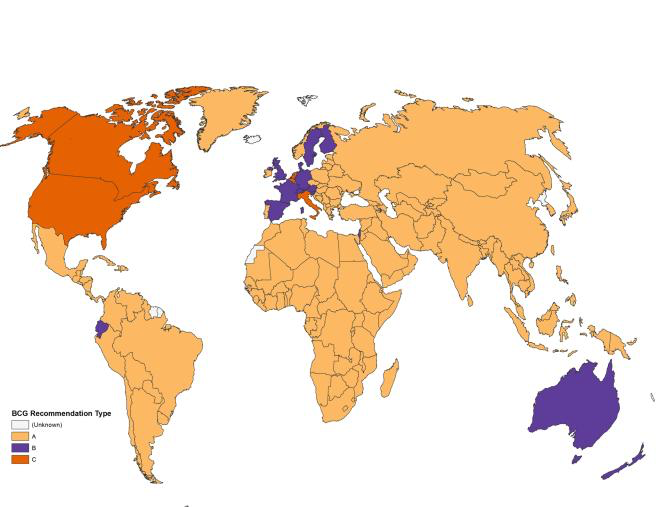
A study of 178 countries by an Irish medical consultant working with epidemiologists at the University of Texas in Houston shows countries with vaccination programmes – including Ireland – have far fewer coronavirus cases by a factor 10, compared to where BCG programmes are no longer deployed.

Map displaying BCG vaccination policy by country. A: The country currently has universal BCG vaccination program. B: The country used to recommend BCG vaccination for everyone, but currently does not. C: The country never had universal BCG vaccination programs.

This translates into a death rate up to 20-times less, according to urologist Paul Hegarty of the Mater Hospital, Dublin.

Their correlation” study, expected to be published shortly by PLOS journal, is largely a statistical one and comes with caveats because of possibility of confounding factors. But it is more comprehensive than an initial one conducted in New York, which prompted a scaling up of clinical trials on people with Covid-19.

To reduce the possibility of error, the researchers re-evaluated cases during the course of the pandemic and made country-by-country comparisons including between Ireland and the UK, Mr Hegarty said. We did not expect to see such a marked difference.”

Over the 15 days, incidence of Covid-19 was 38 per million in countries with BCG vaccination whereas the incidence of Covid-19 was 358 per million in the absence of such a programme. The death rate was 4.28 per million in countries with BCG programmes and 40 per million in countries without such a programme,” he added.

He trained in Houston but continued to work with colleagues there as BCG vaccine is used to treat bladder cancer and reduces its recurrence – another indication it has broader benefits beyond TB.

A global shortage of BCG vaccine prompted the Department of Health to end blanket immunisation in 2015 though it is believed there is a high degree of immunity within the Irish population. It is still widely used in developing countries, where it prevents infant deaths from a variety of causes. The UK ran a more modest BCG vaccination programme to Ireland’s, starting in 1953 and ending in 2005.

BCG-vaccinated older people experience decreased respiratory infections while in bladder cancer patients BCG boosts immunity, reduces tumour size and decreases mortality.

Mr Hegarty said they were heartened by similar results to the New York study and were in discussion about a clinical trial in the US. This would be targeted at healthcare workers experiencing shocking” rates of infectivity – accounting for one in four cases in Ireland.

As the pandemic unfolds clinical trials were critical, given a coronavirus vaccine is expected to take a minimum of 12 to 18 months to develop. In the meantime, repurposing existing and safe vaccines that induce non-specific immune benefits may be an additional tool”.

On Monday, scientists in Melbourne, Australia, started administering BCG vaccine or a placebo to thousands of healthcare workers. A clinical trial of 1,000 healthcare workers started recently in the Netherlands, said Dr Mihai Netea of Radboud University Medical Centre.

He said he expected results within three to six months. He did not advocate giving the vaccine to populations until that was completed because of the possibility of side effects as a novel virus was involved, and because not enough vaccine was available – though production could be scaled up quickly.

Immunologist Prof Luke O’Neill of Trinity College, who has worked on the vaccine for years, confirmed at least seven trials had begun or were about to begin but stressed the need for physical distancing and hardwashing proven ways to curb transmission.

The non-specific immune benefits of BCG are known for decades. Introduced to Ireland in 1937, it has a strong safety record. Recent studies show revaccination is safe.

US virologist Robert Gallo of the Institute of Human Virology in Maryland has confirmed he is working with a team who will make an announcement shortly that will have a major effect” on global efforts to tackle Covid-19.

Best known for his role in the discovery of HIV as the infectious agent responsible for AIDS, Prof Gallo did not go into detail other than to indicate it involves deployment of an adjusted existing vaccine” that will be available within months.

Prognosis – Nations with Mandatory TB Vaccines Show Fewer Coronavirus Deaths

April 7th, 2020

By 

Countries with mandatory policies to vaccinate against tuberculosis register fewer coronavirus deaths than countries that don’t have those policies, a new study has found.

The preliminary study posted on medRxiv, a site for unpublished medical research, finds a correlation between countries that require citizens to get the bacillus Calmette-Guerin (BCG) vaccine and those showing fewer number of confirmed cases and deaths from Covid-19. Though only a correlation, clinicians in at least six countries are running trials that involve giving frontline health workers and elderly people the BCG vaccine to see whether it can indeed provide some level of protection against the new coronavirus.

Gonzalo Otazu, assistant professor at the New York Institute of Technology and lead author of the study, started working on the analysis after noticing the low number of cases in Japan. The country had reported some of the earliest confirmed cases of coronavirus outside of China and it hadn’t instituted lockdown measures like so many other countries have done.

Otazu said he knew about studies showing the BCG vaccine provided protection against not just tuberculosis bacteria but also other types of contagions. So his team put together the data on what countries had universal BCG vaccine policies and when they were put in place. They then compared the number of confirmed cases and deaths from Covid-19 to find a strong correlation.

Among high-income countries showing large number of Covid-19 cases, the U.S. and Italy recommend BCG vaccines but only for people who might be at risk, whereas Germany, Spain, France and the U.K. used to have BCG vaccine policies but ended them years to decades ago. China, where the pandemic began, has a BCG vaccine policy but it wasn’t adhered to very well before 1976, Otazu said. Countries including Japan and South Korea, which have managed to control the disease, have universal BCG vaccine policies. Data on confirmed cases from low-income countries was considered not reliable enough to make a strong judgment.

relates to Nations with Mandatory TB Vaccines Show Fewer Coronavirus Deaths

Caution Urged

With nearly 900,000 cases and 45,000 deaths, the world is struggling to control Covid-19. Any vaccine for the disease is more than a year away from being available and the effectiveness of drugs under trial won’t be known for months to come. That’s why it’s reasonable to look at whether BCG vaccine could provide protection against Covid-19, said Eleanor Fish, professor at the University of Toronto’s immunology department. Otazu’s study is yet to undergo review by peers, a strict criteria for science studies.

I would read the results of the study with incredible caution,” Fish said.

Otazu, who said he’s already received comments from other experts, is working on a second version of his study that will address some of their concerns. He has also submitted the study for a formal review process with the journal Frontiers in Public Health.

‘It’s like the BCG vaccine creates bookmarks for the immune system to use later’

One of the first to conduct the trial of BCG vaccine’s effectiveness against coronavirus is Mihai Netea, an infectious-disease expert at Radboud Universty Medical Center in the Netherlands. Netea’s team has already enrolled 400 health workers in the trial—200 got the BCG vaccine and 200 received a placebo. He doesn’t expect to see any results for at least two months. He’s also about to start a separate trial to study the effectiveness of the BCG vaccine on those older than 60. Other trials are taking place in Australia, Denmark, Germany, the U.K. and the U.S.

Scientists are still working to better understand why the BCG vaccine may be effective against not just tuberculosis but other disease microbes. Netea’s decade-long work shows that BCG vaccine sensitizes the immune system in such a way that, whenever any pathogen that relies on the same attack strategy as the tuberculosis bacteria attacks, it is ready to respond in a better way than the immune system of those who haven’t received the vaccine.

It’s like the BCG vaccine creates bookmarks for the immune system to use later in life,” Netea said.

Even if BCG vaccine is shown to be effective, that’s no reason to stockpile.

People should not hoard or try to get BCG vaccine like they did toilet paper,” Otazu said. There is a small chance that the BCG vaccine could increase the risk of coronavirus, but scientists won’t know until after the clinical trials.

In any case, the BCG vaccine shouldn’t be the only tool to fight Covid-19.

No country in the world has managed to control the disease just because the population was protected by BCG,” Otazu said. Social distancing, testing and isolating cases will need to be implemented to manage the spread of the disease.

PM requests public support for govt’s efforts in fight against COVID-19

April 7th, 2020

Courtesy Adaderana

Prime Minister Mahinda Rajapaksa has urged the general public to give utmost support to the government’s efforts to save the country from COVID-19 outbreak.

He stated this today (07), delivering a special statement on the situation that prevails in the country.

In his address to the nation, the Premier outlined the measures taken by the government to mitigate the pandemic outbreak and appreciated the sacrifices made by health workers, security forces and other public servants who are on the COVID-19 frontline.

In the face of a pandemic like this, our attentiveness, commitment and discipline decide whether we will survive,” the PM also stressed.

Speaking on the preventive measures taken to face the local outbreak of the virus, PM Rajapaksa said, since the evacuation of the group of Sri Lankans who were stranded in Wuhan, many quarantine centres equipped with all required amenities were established across the country. In addition, a special hospital was erected in Welikanda just within 6 days to treat patients who test positive for COVID-19. He also mentioned the use of state intelligence service to trace those who evade the quarantine process.

In order to keep children safe from the virus outbreak, schools and other educational institutions were closed off as soon as Sri Lanka confirmed its very first coronavirus patient, he added.

As the curfew was imposed, the government has taken on the responsibility of providing essentials to the general public, the Premier said adding that the government has already provided direct relief to 5.3 million citizens.

We will not give up this fight,” PM Rajapaksa reassured the citizens while requesting their support for government’s endeavours to keep them safe from the COVID-19 outbreak.

He also noted that all political party leaders have keenly come forward to support the government in the fight against coronavirus.

We have only one common enemy at the moment and it is the coronavirus,” the Prime Minister said urging the general public to set aside any divisions among them.

Dambulla Economic Center closed until further notice

April 7th, 2020

Courtesy Adaderana

A decision has been taken to close the Dambulla Dedicated Economic Center until further notice.

The lack of proper hygiene procedures followed by the public who visit the center is the reason behind this decision, according to Chairman of the Economic Center Trade Association Channa Arawwa.

He added that there is a risk of the virus spreading due to the large number of people visiting the economic center.

The economic center, which had been closed in the past few days, was scheduled to re-open tomorrow.

More confirmed COVID-19 cases hike count to 185

April 7th, 2020

Courtesy Adaderana

Two more patients have been confirmed to have contracted the novel coronavirus earlier this evening (07), said the Epidemiology Unit of the Health Ministry.

Seven new patients have tested positive for the COVID-19 virus as of 7 pm today.

Accordingly, the confirmed COVID-19 case count in Sri Lanka rises to 185.

A total of 147 COVID-19 patients are currently under medical care while 42 patients have recovered from the virus and have been discharged from hospital. 

Over 255 suspected patients are under observations at selected hospitals while the death toll due to coronavirus in Sri Lanka stands at 06.

Twenty-eight days have passed since the detection of the first COVID-19 patient in Sri Lanka while 185 patients have been identified since then.

Three more Covid-19 cases brings total to 183

Three more patients who have contracted the Coronavirus have been identified, raising the total number of confirmed cases in the country to 183, the Ministry of Health said.

Five new patients were identified within today while three of them are from the quarantine center in Punani, according to the Director General of Health Services Dr. Anil Jasinghe.

As of 4.00 p.m. today (07), a total of 145 COVID-19 patients are currently under medical care while 42 patients have recovered from the virus and have been discharged from hospital. 

Over 255 suspected patients are under observations at selected hospitals while the death toll due to coronavirus in Sri Lanka stands at 06.

Twenty-eight days have passed since the detection of the first COVID-19 patient in Sri Lanka while 183 patients have been identified since then. 

Antibody or rapid testing not effective in identifying COVID-19: top health officials

April 7th, 2020

Courtesy Adaderana

It has been decided that all persons who undergo the quarantine process at quarantine centers will be subjected to a Polymerase chain reaction (PCR) testing, said Specialist Physician Dr. Ananda Wijewickrama of the National Institute of Infectious Diseases.

He mentioned this speaking at a special live discussion telecasted on TV Derana on overcoming the COVID-19 challenge together. The discussion was joined by Specialist Dr. Amal Harsha De Silva, Deputy Director-General of Health Services, Dr. Jayaruwan Bandara, Director of Medical Research Institute of Sri Lanka, Prof. Neelika Malavige, Director of Centre for Dengue Research and Specialist Physician Prof. Arjuna de Silva.

During the discussion, the medical professionals focused on the importance of testing, testing procedures and on the various methods of testing recommended on social media.

According to Prof. Malawige, antibody testing or rapid testing is not effective in identifying the COVID-19 virus in a person’s body. 

She pointed out that the coronavirus is different from a dengue virus and the antibody generation against the COVID-19 virus inside a body takes at least 10 since the infection. Therefore, the blood sample may test negative if tested before 10 days have passed, providing inaccurate results. 

Thereby, PCR testing is the recommended and accepted method of testing for the coronavirus. However, rapid testing can be used for other purposes such as contact tracing, she added.

Drive-through testing, as seen in South Korea and Dubai, also utilizes the PCR testing method. Drive through testing is useful in certain ways that it could prevent the infection spreading in hospitals and to effectively utilize PPE gear as there is a shortage of such protective gear in the world, said Prof. Arjuna de Silva. 

Although there may not be issues with the [PCR] machines in the country, inaccuracies may occur due to sensitivity issues over errors in sample handling, says Prof. Neelika Malwige. Therefore, the sample quality and the method of transferring the samples to the laboratory is important in accurately testing a sample.

Meanwhile, in order to re-open the country, further, expanded testing is needed. Yet, the country is currently lacking in resources to carry out a large amount of testing within a short period, said Dr. Amal Harsha De Silva.

Specialists’ calculations have estimated that at least 5000 tests should be carried out per day. However, there is an issue of practicality, pointed out Prof. Arjuna de Silva. 
 
However, the districts that indicate no issues can be opened for activity within the district after proper testing, he added. The chancellors of the 6 medical faculties have written to President with a plan to systematically reopen the country.

Prof. Malawige said, Currently, Sri Lanka has the ability to carry out about 1500 tests through the 7 PCR machines. By next week, the Colombo, Kelaniya, Rajarata, KDU and Karapitiya medical faculties can easily commence testing.

If PCR machines of medical faculties and the private health sector are utilized, 3000 single-sample tests can easily be carried out per day.” 

Sample pooling can further increase the capacity, added Dr. Amal Harsha De Silva.

Lack of proper protective gear, such as N95 masks, for persons who carry out the testing, has also slowed down the testing process.

Local manufacturers of N95 masks can test if their products are up to standard through the Sri Lanka Institute of Nanotechnology (SLINTEC), noted Prof. Malawige.

The N95 masks should be there for the use of persons who work in testing laboratories, Intensive Care Units or directly handle patients. The surgical masks should be used by healthcare workers, patients or persons who take care of the patients. The general public, need not wear N95 mask and may use homemade cloth masks, unless infected or is showing COVID-19 symptoms, according to Prof. Arjuna de Silva.

The reason why only a few deaths are reported from Sri Lanka while thousands die in other countries, is the effective measures taken by the health ministry, security forces and other authorities in order to curtail the spread of the virus, says Dr. Jayaruwan Bandara.

However, a limited number of individuals without discipline have infected by socializing and not following protocol, he added. 

If a person fears that they might have contracted the infection what they should do is call ‘1390’ and follows the instructions instead of visiting a hospital immediately. Further, not withholding information on your condition from the doctor is vital in this situation.

Although there are many test kits or equipment recommended to combat COVID-19 through social media, they have not been tested practically for their validity; their effectiveness is only calculated on paper, points out Dr. Jayaruwan Bandara.

Meanwhile, Prof. Malawige added that the Nawinna Ayurveda Research Center has approached her with a scientifically developed method to combat the virus and she has agreed to conduct research on this solution as well.

Spreading misinformation on coronavirus punishable by 5 years in prison – Police

April 7th, 2020

Courtesy Adaderana

DIG Ajith Rohana says that spreading misinformation in social media on COVID-19 prevention can lead up to 5-year imprisonment.

Speaking to Ada Derana this morning (07), he said cases will be filed against such persons.

DIG Rohana also urged any individual showing coronavirus symptoms to inform the nearest police station, health authorities or paramedic ambulance services before getting admitted to a hospital.

Providing false information for hospital admission can put medical staff at risk and eventually lead them to self-isolate, he stressed, urging people to adhere to the preventive measures.

Britain has millions of coronavirus antibody tests, but they don’t work

April 6th, 2020

Courtesy The Times (UK)

Ministers had hoped tests would pave way for an easing of lockdown restrictions

None of the antibody tests ordered by the government is good enough to use, the new testing chief has admitted.

John Newton said that tests ordered from China were able to identify immunity accurately only in people who had been severely ill and that Britain was no longer hoping to buy millions of kits off the shelf.

Instead government scientists hope to work with companies to improve the performance of antibody tests. Professor Newton said he was optimistic” that one would come good in months.

However, Dame Deirdre Hine, the public health expert who chaired an official review that criticised failures of modelling in the 2009 swine flu pandemic, said that it was difficult to understand” why the government had not planned for more testing.

The scientist tasked with evaluating the antibody tests for the government said that it would be at least a month until one was good enough to offer to millions of people.

Sir John Bell, regius professor of medicine at the University of Oxford, wrote: Sadly, the tests we have looked at to date have not performed well. We see many false negatives (tests where no antibody is detected despite the fact we know it is there) and we also see false positives.

None of the tests we have validated would meet the criteria for a good test as agreed with the MHRA [Medicines and Healthcare products Regulatory Agency]. This is not a good result for test suppliers or for us.”

Sir John acknowledged that large-scale testing is therefore a strategy which will be crucial for getting us back to our normal lives in the coming months”. He wrote: The government will be working with suppliers both new and old to try and deliver this result so we can scale up antibody testing for the British public. This will take at least a month.”

Professor Newton, of Public Health England, was appointed to oversee testing last week as Matt Hancock, the health secretary, responded to criticism of the failure to increase checks quickly enough by promising to use private labs and hit 100,000 daily tests this month.

Professor Newton said that his priority was three mega labs” for testing NHS staff and that he did not expect university and commercial labs to be much help in hitting the target.

That’s a very clear message: we are not relying on lots of people coming forward to help us to achieve what’s required and we shouldn’t get too distracted by that,” he said. There’s a big, big ask at the moment which is quite specific [on testing NHS staff]. So a lot of these companies who are offering their capacity may not be directly related to that ask and therefore they might not be as helpful at the moment.”

The antigen test to see who has the virus will be crucial in allowing NHS staff back to work if they do not have the virus, and a separate test that tells who has recovered from infection is seen as crucial to ending the lockdown.

The government has ordered millions of antibody tests but yesterday Mr Hancock said that we still don’t have any that are good enough”.

Professor Newton said that all of the tests failed evaluations and are not good enough to be worth rolling out in very large scale”.

Some of the tests have not been total failures, but Professor Newton said: The test developed in China was validated against patients who were severely ill with a very large viral load, generating a large amount of antibodies . . . whereas we want to use the test in the context of a wider range of levels of infection including people who are quite mildly infected. So for our purposes, we need a test that performs better than some of these other tests.”

The government is still looking for commercial tests but it has accepted that rollout is months away.

Previously officials had spoken of sending millions of home test kits in days, but Professor Newton said the idea that we might have it in days was based on the fact that we might just buy the existing test, and at the moment the judgment is that that wouldn’t be the best thing to do. It would be better to try and improve the test”.

He added: The scientists in Oxford who have been evaluating them are working with manufacturers to say, ‘We’ve tested your test, and it doesn’t seem to perform quite well enough, but we think we can work with you to improve it.’ So it is a little bit uncertain but there are commercial partners able to work with us. I’m optimistic.”

Dame Deirdre, who chaired the official review into the swine flu, said: I am finding it difficult to understand why both the antigen testing and the antibody testing is taking so long to get off the ground.”

In 2010 Dame Deirdre’s report said that ministers and officials had unrealistic expectations of modelling, which could not be reliable in the early phases when there was insufficient data. Once better data was available, modelling became extremely accurate.”

She said: I think that if there is anything perhaps where the response could have been better this time it is on the whole question of testing.”

The government also risks losing an opportunity to buy 400,000 tests a week from South Korean manufacturers, because of officials’ failure to respond to the offer, it has been claimed. Ten days ago a British businessman approached health officials after a Korean investor who has connections with LG helped to persuade five manufacturers to sell their diagnostic tests to the UK. Steve Whatley, who runs a financial technology business, said: We just need a letter saying, ‘Subject to the tests being proven, then the UK will take x amounts of kits per week for x long.’ ”

At-risk doctors kept waiting
Less than a third of doctors with symptoms of Covid-19 are able to get tested for the disease, according to a survey by the Royal College of Physicians (Kat Lay writes).

It also found that one in five did not have access to the personal protective equipment they need to safely treat coronavirus patients.

Andrew Goddard, the RCP president, said the findings of the survey of 2,513 respondents, were a stark indication of the incredibly difficult situation facing our members working in the NHS”.

Matt Hancock told Sky News yesterday that 8 per cent of NHS frontline staff were self-isolating and off work. However, the RCP’s survey suggested the figure could be as high as 14 per cent.

Many of those off work are thought to be in isolation because of a member of their household with symptoms. The poll found almost nine out of ten doctors could not access Covid-19 testing for someone in those circumstances.

Professor Goddard added: The government’s current strategy to deliver testing that would support NHS staff to return to the workforce as quickly as possible clearly isn’t working.” He called for the government to publish its plan, timeline, and the challenges that it expected.

Covid-19, how much testing do we need?

April 6th, 2020

By  Chandre Dharmawardana.

A number of distinguished medical professionals  led by Dr. Ruvaiz Haniffa ,  Head, Dept. of Family Medicine,  University of Colombo, published an appeal (see  the Island , 1st April, Daily Mirror  and other newspapers) emphasizing the  Need for rapid expansion in testing for COVID-19 in Sri Lanka”.

While creating a data base is essential for constructing epidemiological models, another very effective approach uses  information-based intervention. Detectives examining social media or gossip learn about  Covid-19 contacts, religious gatherings etc., and aggressively follow every lead.  Sri Lanka is currently in stage 3A (WHO classification)  where clusters are being identified.   To avoid deteriorating to stage 3B,  authorities have to   trace contacts  and  isolate cases. This  is  an intelligence-driven attacking approach” (IDAA). The military  in Sri Lanka  was thus able to identify over 20,000 people and enforce  self-quarantining. Direct sampling would not have found these people, or if found, it would be too late.

So we need BOTH the IDAA and direct TESTING of optimally selected samples.

Even people who seem perfectly healthy may be carries of the virus. Testing suspected cases” may not be enough. But no country can test  even a significant fraction of the population? But what is that significant fraction? How can we get away with testing even smaller fractions? How do we sample populations?

Test kits for the new virus are in  short supply and now reserved for priority cases. Leading companies are scrambling to provide test kits to countries  buckling  under the virus. There are also cheap wonder test kits” that quick-buck inventors and alternative-medicine Gurus  have put out, claiming fast test results. These should be avoided and only  kits using proven methods  must be used.

 According to Health Canada guide lines, a  person with a confirmed  virus infection” must have positive nucleic acid amplification tests on at least two specific genome targets or a single positive target with nucleic acid sequencing.

Many Western governments (e.g., France) had comprehensive plans for dealing with Pandemics, put in place after the SAARs epidemic. But the rise of neo-liberals and Human-Rights lobbies with their belief in minimal government intervention and devolution (e.g., in Spain)  led to the disbanding of all such programs, leaving matters  to the private sector” and to local authorities”.  USA  is still in that mode and lagging behind  in fighting Covid-19. Today, many governments are scrambling to re-assemble those safety nets at great cost. 

The article by Dr. Haniffa and his learned colleagues suggests the use of existing laboratories in the country to do the testing. Even if we had 25 such labs, and even if each lab did several hundred tests a day, it is clear that even if test kits are available,  the time delay in getting  useful answers, coordinating timing  and data processing  a huge number of samples reliably under emergency conditions is impossible. We need good data in real time. A further six months delay for  peer review can be avoided  if the program is under  medical and scientific experts.

So, testing boils down to the  crucial question of what is the smallest  sample  needed  to  get at a reliable answer”? The medical professionals had not addressed this most crucial question, but their involvement is needed. Otherwise we can only address the basic statistical question of how big a sample should be,  without additional wisdom.

Ramanayake’s Audio files.

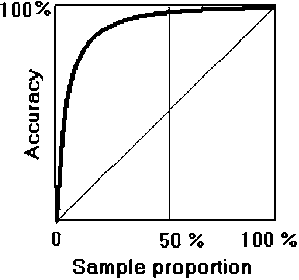
Take a simpler problem. For instance, actor turned MP  Ramanayake’s now notorious telephone recordings run into, say 10,000  audio files. It takes too long to review ALL the tapes. What  is the minimum number (sample size) of files  that we should listen to, to have a very good chance of picking up the most juicy one?   Elementary mathematics shows that the sample should be a fraction 1/e of the total, where e”  is the number 2.7182 which is the base of Napier’s system of natural logarithms. So, it is probably enough to listen to approximately 10,000 divided by 2.7, i.e., about 3704 audio files to pick up the most interesting one!  As the attached graph shows, increasing the sample size even to 50%  does not strongly  increase the chances of catching the incriminating case significantly.

The same sampling technique can be used if you have to select the best candidate from 1000 applicants to a job. Your best candidate is most likely to be within the first 370 that you interview!

The audio tapes, or candidates for a prescribed job, presumably all form a set of similar objects or individuals. But human populations are not uniform. Even the individuals in the population of each district are still too dis-similar to form a statistically uniform sample”. It is here that judicious planning is needed. Judging that the Covid-19 is most likely to be found in urban populations than in rural populations (say), one may take samples from each city population in a given district. One doesn’t even have to take a census of each city to know their proportions – they follow a mathematical law known as  Zipf’s  law. In any case, once the uniform demographic to be tested” (having a normal distribution) is  identified, one can use the inverse of Napier’s number  and so take about 37% of each demographic to make  the test samples for each district.

Of course, a good team of statisticians can work out a better statistical models  to minimize the sample size,  improve  the  gathering of data and deal with non-normal, multi-modal and other  distributions.  The data provides an empirical basis for  constructing a trustworthy epidemiological model  for  Covid-19  affecting the country. However, one really needs a time dependent model taking account of the amount of virus (viral load ) absorbed by the patient during the process of infection. The interaction between the virus and the immune system is a race in time.  If you get a large dose, you get higher viremia, more dissemination, higher infection, and worse disease.

So, the suggestions by the health professionals must be taken seriously, but using a good sampling scheme rapidly deployed to make the testing affordable and meaningful. This will also be an important research contribution to the epidemiology of the disease.   No country should rely on the Covid-19 growth curves of other countries. For instance, the rate of growth of Covid-19 in a country with a large demographic of young people will be quite different from that of an European country with a large demographic of old over-fed people. Furthermore, once a patient is identified as having the virus, there is still no clear way of predicting if the disease will become acute. The British government under Mr. Boris Johnson used a limited epidemiological model constructed by Imperial College, London, and is said to have paid the price in money and lives on being misled on how Covid-19 will develop in the UK.

Sri Lanka should also attempt making  its own vaccines. Time-tested techniques for making SARS-CoV-2 vaccines are by inactivating whole virus particles with formaldehyde and adding a booster like alum, and doing clinical trials.

All this can be derailed by a politically powerful Natha Deiyyo devotee”  who may come forward with a quick revelation of what the status of the  epidemic is, after claiming that Western Science is a Patta Pal Boru” fabrication, as happened with the investigation of the Chronic Kidney Disease Endemic affecting the North Central Province of Sri Lanka. Similarly, die-hard Muslim groups have already risen asking for Mulsim burials (bathing the corpse etc.), showing the ever persistent power of faith over reason. 

By  Chandre Dharmawardana.

සිංහල වෙදකමට එරෙහි අනුකාරකයන් ගේ නැගීම

April 6th, 2020

මතුගම සෙනෙවිරුවන්

                 කොරෝනා වසංගත තත්වය තුළ වර්තමාන දේශපාලනය පිළිබඳ ලිට්මස් පරීක්ෂාවක්ද කරන්නට හැකිව තිබේ. රුවන්වැලි මහා සෑය ඉදිරිපස දිව්රුම් දුන් ජනපතිවරයෙකු මෑත කාලීන දේශපාලනයේ දක්නට ලැබීමේ ආශ්වාදයෙන් සිටි මෙරට බහුතර ජනතාව බලාපොරොත්තු කඩ වේ දෝ යන බියකින් පසුවෙති.සිංහල බෞද්ධ චන්ද බහුතරය යනු පරම්පරා ගණණාවක සිට ශක්තිමත් වුණු සිංහල ජාතිකත්වයේ අපේක්ෂාවන්ය. තමන්ගේ ජීවන රටාව නිදහසේ කර ගෙන යෑමට සහ තමන්ගේ ජාතික උරුමය ආරක්ෂා කර ගනිමින් ඒ තුළ අනාගතය උදෙසා ශක්තිමත්ව නැගී සිටීම මේ අපේක්ෂා අභිලාශයන් අතර විය. රට පුරා වසංගතයක තත්වය ඇතිවන කල්හි වැඩි කලබලයක් නොමැතිව මේ බහුතරය නිවාස අඩස්සියට පත් වූහ. ඔවුහු යලි පාර්ලිමේන්තුව කැඳවන්නට හෝ මැතිවරණයක් විගැහින් තබන්නට උද්ඝෝෂණ නොකළහ.රටේ ජනනායකයාට දී තිබූ   විශාල ජනමතය කෙරෙහි ඔවුහු විශ්වාසය තැබූහ. විශේෂයෙන්ම තිස් වසරක යුද්ධයෙන් රට මුදවා ගත් හමුදාව කෙරෙහිද විශ්වාසය තැබූහ.

       රාජ ධම්මෝ ප්‍රජා රක්ඛා යනුවෙන් පැරණි පොත පතේ සඳහන්ව තිබෙන්නේ රජෙකුගේ නැතිනම් පාලකකයෙකු ගේ යුතුකම් පහදවා ලීම පිණිසය. රාජ ධර්මයෙහි හැසිරීම ලෙහෙසි පහසු නැත. මනා පුහුණුවක් දැඩි තීරණ ගැනීමේ හැකියාවක් සහ කාරුණික හදවතක් නොහොත් බෝසත් චර්යාවක් පාලකයෙකුට පිහිටා තිබිය යුතුය. චන්දයෙන් පත්වන බෙහෝ පාලකයන් හට මෙවැනි ගතිගුණ එකක් හෝ පිහිටන්නේ නම් කලාතුරකිනි. හේතුව එම පුද්ගලයා ප්‍රජා පාලනය පිළිබඳ මනා අන්තර්ඥානයකින් පුහුණුවූවකු නොවන බැවිනි. නමුත් වාසනා ගුණය හෝ පැවති දේශපාලන බලය මත පත්වන ජනප්‍රිය දේශපාලකයා සැබවින්ම ජනතාවගෙන් දුරස්තරව කටයුතු කිරීම ස්වභාවිකය.

          ජනතාවගේ මූලික අවශ්‍යතාවයන් අතර ආහාර සහ බෙහෙත් මුල් තැනේ ලා සැලකිය හැකිය. ආහාර නිපදවා ගනිමින් යම් ආනයනික ආහාර ද පරිභෝජනය කරලීම මේ රටේ ජීවන චර්යාව විය. නමුත් විවෘත ආර්ථිකයෙන් පසු ආහාර සුරක්ෂිතතාවය ගැන සැලකිල්ලක් යොමු නොකරමින් ආනයනික ආහාර ගැන පමණක් ප්‍රවර්ධනය කර තැබීමට රජය කටයුතු කළහ. ජනතාවගේ බඩ ගින්න නිවීම සඳහා හොඳම විකල්පය රටින් ආහාර ගෙන්වීම යැයි මේ දේශපාලකයන් කල්පනා කරන්නට ඇත. නමුත් පසුගිය කාලයේ දී ඇති වූ සුනාමිය ගං වතුර වැනි ආපදා සම්පන්න අවස්ථාවලදී ආහාර සුරක්ෂිතතාවයේ වටිනාකම යලි යලි මතක් කර දුන් බව පැවසිය යුතුය. එහෙත් ආණ්ඩු කරනවුන් මේ තත්වය තේරුම් නොගත්හ.එසේත් නැතිනම් රටින් ගෙන්වන භාණ්ඩ වලින් ලැබෙන කොමිස් මුදලට ගිජුව සිටියහ.වර්තමාන වංසගත තත්වය හමුවේ නැවත එම යථාර්තය දැඩිව පෙන්වා දෙමින් පවතී.

         නිරෝගීව ජීවත් වීම උදෙසා බෙහෙත් හේත් සපයා ගැනීමට නිදහස තිබිය යුතුය. තමන් රුචිකරන විශ්වාස කරන වෙද හෙදකම් ලබා ගැනීම හැකි විය යුතුය. සිංහල බහුතරය අතීතයේ පටන් ස්වභාවික වෙදකම් තුළින් තමන් ට වැළඳෙන ලෙඩ රෝග සුව කරගත් පිරිසක් විය.එයට අවශ්‍ය වෛද්‍යවරුන් සංඛ්‍යාවක් ගම්බදව ජීවත්වි සිටියහ. ලන්දේසීන් සහ ඉංග්‍රීසිහු මෙම ජීවන රටාව වෙනස් කළහ. ඔවුහු ඒ කාලයේ පැතිරුණු වසංගත රෝගීන් ගාල් කරලීම පිණිස රෝහල් සහ කඳවුරු තනා මේ රටට ආගන්තුක බෙහෙත් වර්ග ලබා දුන්හ. මැලේරියාවට ක්වීනීන් ලබා දීම උදාහරණයකට ගත හැකිය. නමුත් බෙහෝ රෝග වලට දිව්‍ය ඖෂධයක් වන ත්‍රයිලෝක විජය පත්‍ර නොහොත් කංසා පැළැටිය වගා කරලීම තහනම් කළහ. සිංහල වෙද මහත්වරුන් ගේ ග්‍රමීය නායකත්වය අහෝසි කරලීම පිණීස ගම්වල ඇපොතිකරිවරු පිටත් කර හැරියහ.එසේම පොලිස් කාරයන් මෙන් හැඳ පැළඳ ගත් මහජන සෞඛ්‍ය පරීක්ෂකවරු නොහොත් සැන්ටිපෝට් වරු  සනීපාරක්ෂක නීතිය ක්‍රියාත්මක කරලීමට යෙදවූහ.වසංගත වලින් හෙම්බත්ව අසරණව සිටි ගැමියන් අතරට ක්‍රිස්තියානි මිෂනාරීන්ද පැමිණීම සුලභ දර්ශනයක් විය.

     එහෙත් මදක් අතීතයට ගොස් බලන කල්හි සිංහලයන් ගේ සෞඛ්‍ය පිළිවෙත් වල වටිනාකම අවබෝධ කරගත හැකිය. වසංගත ඔවුන් හැඳින්වූයේ අම්මාවරුන් ගේ ලෙඩ සහ දෙයියන් ගේ ලෙඩ වශයෙනි. මේ ලෙඩ වලින් මග හැරීමට පත්තිනි මෑනියන්ට මෙන්ම අවලොකිතේශවර නාථ දෙවියන්ට භාරහාර වූහ. ගම්මඩු දෙවොල් මඩු නැටූහ. මළ ගෙදරකට ගොස් පැමිණි විට නා පිරිසිදු වී ඒමට පොදු ළිඳක් වෙත ගියහ.කිළිහරණය උදෙසා විවිධ තහංචි අනුගමනය කළහ. ගමේ වෙදනා සහ පන්සලේ ස්වාමීන් වහන්සේ එකට එකතු වී වදකහ ඉඟුරු සුදුලූණු කොහොඹ කොළ වන්ඩුවේ තම්බා කොටා මිරිකා පෙරුන්කායම් අනුපාන කොට දමා (ගැබිණියන්ට මී පැණි) ගමේ සියලු දෙනට කෝප්ප කාල බැගින් බොන්නට සැලැස්වූහ.අම්මාවරුන්ගේ ලෙඩ සෑදී ඇති නිවෙස් වල කොහොඹ අත්තක් එල්ලා තැබූහ.අදටත් ඒ සිරිත් වලින් සමහරක්  ජන සමාජය අතර ජීවමානව පවතී. පැරණි සිංහල ගෙදරක වැසිකිලිය පිහිටා තිබූයේ නිවසට මදක් ඈතිනි.නිවස තුළම එය පිහිටා තිබුණහොත් වාස්තු දෝෂ ඇති වන බවද විශ්වාස කළහ.මේවා නූතන සමාජයට විහිලුවට කාරණයක් විය. ඒ උපහාසය නූතනයන් තුළට පැමිණෙන්නේ සුද්දන් ගේ අධ්‍යාපනය හරහා බව සිහිපත් කළ යුතුය.

      කොරෝනාව(Sars-Cov-2RNA) ලෝකයට අලුත් දෙයක් නොවන බව විද්‍යාඥයන් දනී. ඔවුහු තමන්ගේ බල අවශ්‍යතාවයන් පිණිස මෙම වෛරස නඩත්තු කරති. වසූරිය වසංගත කාරකය පවා තවමත් විද්‍යාගාර වල සුරක්ෂිතව පවතින බව දක්වා ඇත. වරින් වර විවිධ එන්නත් හඳුන්වා දෙමින් ලෝක සෞඛ්‍ය පිළිබඳ තීරණ ගැනීමේ ආධිපත්‍ය පැතිරවීම කරන අතර ගෝලීය තත්වයකට හැඩ ගැසීමේ හේතුවෙන් බෙහෝ රටවල් මේ සම්මුතීන් හට හිස නමති. නමුත් 2008 බීජිං නුවර දී මුලු දුන් සෞඛ්‍ය සමුලුවකදී ගත් තීරණ අතර වැදගත් එකඟතාවයක් විය. එනම් ඒ ඒ රටවල පවතින දේශීය වෙදකම් සෞඛ්‍ය සංරක්ෂණය සඳහා යොදා ගැනීමේ පහසුකම් ඇති කිරීමට පියවර ගත යුතු ආකාරයයි. චීනුන් මේ සම්මුතිය අකුරටම පිළීපදින අතර එහි රෝහල් වල දේශීය වෛද්‍ය ක්‍රම වලින් ප්‍රතිකාර ලබාගන්නන් හට පහසුකම් සලසා දීතිබේ.ඔවුන් වූහාන් වල කොරෝනා මර්දනයට මේ වෙදකම් මැනවින් දායක කරගත්හ.

    ලංකාවේ තත්වය මෙය නොවේ. හැට ගණන් වලින් පසුව මේ රටේ දක්ෂ වෙද පරම්පරාවන් අභාවයට ගියහ. 1950 දී සිංහල වෙදකම පිළිබඳ පැවැත්වූ කොමිෂන් සභා වාර්තාවක් ඇති අතර රජය අද පිළිගනු ලබනුයේ 1947 වසරේ මුලු දුන් ආයුර්වේද කොමිෂන් සභා වාර්තාවේ නිර්දේශයන්ය. ඒ අනුව අද ආයුර්වේද රෝහල් වල වෙදකම් කරන්නේ වෛද්‍ය වරු නොවේ. දොස්තරලාය. නාඩි පරීක්ෂාව වෙනුවට ඔවුහු ලෙඩ නලාව භාවිත කරති. ටයිපටි පළඳිති. බටහිර වෛද්‍යවරු මෙන් සිවිල් බලය ලබා ගැනීමට සහ ධනය ඉපැයීම මූලික අරමුණ කොට ගනිති. දහනව වන සියවසේ වසූරිය හා මැලේරියා (කැලෑ උණ ) එන විට නව බෙහෙත් සොයා ගත් සිංහල වෙදපරම්පරාවේ දක්ෂතාවයන් මොවුන්ට නැත. ලෝක සෞඛ්‍ය සංවිධානය මගින් ප්‍රකාශ කරන සියලුම දේ යහපත් යැයි පිළිගනිමින් තමන් සතුව තිබෙන අගනා මූල ධර්ම නොසලකා හරිති. අද කොරොනා සඳහා බෙහෙතක් නොමැතිව බටහිර වෙදකම් අසරණව සිටින අවස්ථාවක සාර්ථක ප්‍රතිකාර පන්තියක් ඉදිරිපත් කොට රෝගීන් සුවපත් කරලීමට මේ අනුකාරකයන් ඉදිරිපත් නොවෙති.ඒ වෙනුවට ටයිපටි පැළඳ ගත් බටහිර වෛද්‍ය නිළධාරී සංගමයේ අතැමුන් වාෂ්ප මුට්ටිය (වේදුව ) ගැන කතා කරති. නමුත් සිංහල ප්‍රතිකාර පන්තිය මත සිට පර්යේෂණ ඇරඹීමට  මැලිවෙති . සිංහල වෙදකම ගැන කතා නොකරන ඔවුහු ලෝක සෞඛ්‍ය සංවිධානයේ  මිනී වළලන ක්‍රමවේදය අනුමත කරති. මේ ලිපිය අවසන් කරලිමට ප්‍රථම මැදමුලනේ කතාවක් කිව යුතුව තිබේ. ඒ මෙසේය.

       පනස් ගණන්වල බණ්ඩාරනායක මහතා සමග විපක්ෂයට ගිය ඩී.ඒ.රාජපක්ෂ මහතා ‌ගේ පුතුන් සිවුදෙනෙක්ම ජනප්‍රිය ‌දේශපාලනඥයන් වූහ.‌ ‌දෙදෙනෙක්ම ජනාධිපති තනතුරුට පත් විය.‌මේ සහෝදරයන් සිවුදෙනා හැට ගණන් වලදී ‌කොළඹ විද්‍යාල වල ඉගෙනුම ලබන කළ සති අන්තවල ‌දී ඩී.ඒ.රාජපක්ෂ මහතා සමග මැදමුලනට පිටත්ව යන අතර මාතර ‌වෙද මහත්මයෙක් හමුවී යන බව පැවසේ. ‌මේ ‌වෙද මහත්මයා   කලු ‌වෙදමහත්මයා යන නමින් ප්‍රසිද්ධ විය.  රාජපක්ෂ මන්ත්‍රීවරයා සමග තිබෙන හිතවත් කම නිසා ඔහුගේ ළමුන් ‌හොඳට පරීක්ෂා කර ‌විරේක ‌බෙහෙත් කෂාය එහෙම නියම කරයි.සිංහල කමට සිංහල ආහාර වලින් ‌පෝෂිතව සිංහල ‌වෙදකමෙන් නිරෝගී වූ ළමුන් සිවු ‌දෙනෙකු එලෙස පසුකලකදී රටේ ‌දේශපාලනයෙහි මූලිකත්වය ගත්හ.
බැසිල් රාජපක්ෂ මහතා ගම්පහ වික්‍රමාරච්චි ආයුර්වේද ආයතනයට පැමිණි අවස්ථාවක ‌වෛද්‍යවරු ඉදිරපිට ‌මේ කතාව ප්‍රකාශ කරන ලද බව ආයුර්වේද වෛද්‍ය නිමල් කරුණාසිරි මහතා දක්වා ඇත..කලු ‌වෙද මහත්මයගෙ තිත්ත ‌බේත් බිව්ව එක තිත්ත ‌වෙච්ච හැටියි ඔහු සඳහන් කලේ. අද ‌වෙන ‌කොට ‌මේ සහෝදරයන්ට සිංහල ‌වෙදකම තිත්ත ‌බේත් වගේ තිත්ත ‌වී ඇති බව පෙනේ.සිංහල කම ‌හොඳට ඇගේ තියෙන මහින්දට ‌මේ වටිනාකම් ඉඳහිට මතක් වුණත් ඒවා ස්ථාවර කරන්න ‌වෙහෙසෙන්නේ නැහැ.‌මේ ‌කොරෝනා කාලෙ වත් සිංහල ‌වෙදකම මතක් වුණොත් රටේ ‌රෝබිය දුරු කරගන්න පිළිවන් ‌වෙන බව නිසැකයි.නමුත් අනුරුද්ධ පාදෙණිය මහතා විශ්වාස කරන වාෂ්ප මුට්ටියට එහා ගොස් පැරණි වට්ටෝරු වලින් ප්‍රත්‍යක්ෂ බෙහෙතක් සොයා ගැනීම තුළින් පමණයි ඉදිරි වසංගත තත්වයන්ට පවා මුහුණ දීමට හැකිවන්නේ.දැනටමත් රට තොට පතල වෙද මහත්වරු කීප දෙනෙකුම එවැනි බෙහෙත් සාදා තිබේ. ඔවුන් කැඳවා සිංහල බෙහෙතට තැනක් ලබා දිය යුතුයි.

මතුගම සෙනෙවිරුවන්


කේතුමතී රාජධානියේ හඬ

April 6th, 2020

Sangkallpa

The pandemic is a portal’ –

April 6th, 2020

Arundhati Roy: Courtesy Financial Times Life & Arts 

The novelist on how coronavirus threatens India — and what the country, and the world, should do next   

Who can use the term gone viral” now without shuddering a little? Who can look at anything any more — a door handle, a cardboard carton, a bag of vegetables — without imagining it swarming with those unseeable, undead, unliving blobs dotted with suction pads waiting to fasten themselves on to our lungs? 

 Who can think of kissing a stranger, jumping on to a bus or sending their child to school without feeling real fear? Who can think of ordinary pleasure and not assess its risk? Who among us is not a quack epidemiologist, virologist, statistician and prophet? Which scientist or doctor is not secretly praying for a miracle? Which priest is not — secretly, at least — submitting to science?

 And even while the virus proliferates, who could not be thrilled by the swell of birdsong in cities, peacocks dancing at traffic crossings and the silence in the skies? 

 The number of cases worldwide this week crept over a million. More than 50,000 people have died already. Projections suggest that number will swell to hundreds of thousands, perhaps more. The virus has moved freely along the pathways of trade and international capital, and the terrible illness it has brought in its wake has locked humans down in their countries, their cities and their homes. But unlike the flow of capital, this virus seeks proliferation, not profit, and has, therefore, inadvertently, to some extent, reversed the direction of the flow. It has mocked immigration controls, biometrics, digital surveillance and every other kind of data analytics, and struck hardest — thus far — in the richest, most powerful nations of the world, bringing the engine of capitalism to a juddering halt. Temporarily perhaps, but at least long enough for us to examine its parts, make an assessment and decide whether we want to help fix it, or look for a better engine.

 The mandarins who are managing this pandemic are fond of speaking of war. They don’t even use war as a metaphor, they use it literally. But if it really were a war, then who would be better prepared than the US? If it were not masks and gloves that its frontline soldiers needed, but guns, smart bombs, bunker busters, submarines, fighter jets and nuclear bombs, would there be a shortage? 

Night after night, from halfway across the world, some of us watch the New York governor’s press briefings with a fascination that is hard to explain. We follow the statistics, and hear the stories of overwhelmed hospitals in the US, of underpaid, overworked nurses having to make masks out of garbage bin liners and old raincoats, risking everything to bring succour to the sick. About states being forced to bid against each other for ventilators, about doctors’ dilemmas over which patient should get one and which left to die. And we think to ourselves, My God! This is America!” 

 The tragedy is immediate, real, epic and unfolding before our eyes. But it isn’t new. It is the wreckage of a train that has been careening down the track for years. Who doesn’t remember the videos of patient dumping” — sick people, still in their hospital gowns, butt naked, being surreptitiously dumped on street corners? Hospital doors have too often been closed to the less fortunate citizens of the US. It hasn’t mattered how sick they’ve been, or how much they’ve suffered.

 At least not until now — because now, in the era of the virus, a poor person’s sickness can affect a wealthy society’s health. And yet, even now, Bernie Sanders, the senator who has relentlessly campaigned for healthcare for all, is considered an outlier in his bid for the White House, even by his own party. 

 The tragedy is the wreckage of a train that has been careening down the track for years 

And what of my country, my poor-rich country, India, suspended somewhere between feudalism and religious fundamentalism, caste and capitalism, ruled by far-right Hindu nationalists? 

 In December, while China was fighting the outbreak of the virus in Wuhan, the government of India was dealing with a mass uprising by hundreds of thousands of its citizens protesting against the brazenly discriminatory anti-Muslim citizenship law it had just passed in parliament. 

 The first case of Covid-19 was reported in India on January 30, only days after the honourable chief guest of our Republic Day Parade, Amazon forest-eater and Covid-denier Jair Bolsonaro, had left Delhi. But there was too much to do in February for the virus to be accommodated in the ruling party’s timetable. There was the official visit of President Donald Trump scheduled for the last week of the month. He had been lured by the promise of an audience of 1m people in a sports stadium in the state of Gujarat. All that took money, and a great deal of time. 

 Then there were the Delhi Assembly elections that the Bharatiya Janata Party was slated to lose unless it upped its game, which it did, unleashing a vicious, no-holds-barred Hindu nationalist campaign, replete with threats of physical violence and the shooting of traitors”.

 It lost anyway. So then there was punishment to be meted out to Delhi’s Muslims, who were blamed for the humiliation. Armed mobs of Hindu vigilantes, backed by the police, attacked Muslims in the working-class neighbourhoods of north-east Delhi. Houses, shops, mosques and schools were burnt. Muslims who had been expecting the attack fought back. More than 50 people, Muslims and some Hindus, were killed. 

 Thousands moved into refugee camps in local graveyards. Mutilated bodies were still being pulled out of the network of filthy, stinking drains when government officials had their first meeting about Covid-19 and most Indians first began to hear about the existence of something called hand sanitiser.

March was busy too. The first two weeks were devoted to toppling the Congress government in the central Indian state of Madhya Pradesh and installing a BJP government in its place. On March 11 the World Health Organization declared that Covid-19 was a pandemic. Two days later, on March 13, the health ministry said that corona is not a health emergency”. 

 Finally, on March 19, the Indian prime minister addressed the nation. He hadn’t done much homework. He borrowed the playbook from France and Italy. He told us of the need for social distancing” (easy to understand for a society so steeped in the practice of caste) and called for a day of people’s curfew” on March 22. He said nothing about what his government was going to do in the crisis, but he asked people to come out on their balconies, and ring bells and bang their pots and pans to salute health workers.

 He didn’t mention that, until that very moment, India had been exporting protective gear and respiratory equipment, instead of keeping it for Indian health workers and hospitals. 

 Not surprisingly, Narendra Modi’s request was met with great enthusiasm. There were pot-banging marches, community dances and processions. Not much social distancing. In the days that followed, men jumped into barrels of sacred cow dung, and BJP supporters threw cow-urine drinking parties. Not to be outdone, many Muslim organisations declared that the Almighty was the answer to the virus and called for the faithful to gather in mosques in numbers. 

 On March 24, at 8pm, Modi appeared on TV again to announce that, from midnight onwards, all of India would be under lockdown. Markets would be closed. All transport, public as well as private, would be disallowed. 

 He said he was taking this decision not just as a prime minister, but as our family elder. Who else can decide, without consulting the state governments that would have to deal with the fallout of this decision, that a nation of 1.38bn people should be locked down with zero preparation and with four hours’ notice? His methods definitely give the impression that India’s prime minister thinks of citizens as a hostile force that needs to be ambushed, taken by surprise, but never trusted.

 Locked down we were. Many health professionals and epidemiologists have applauded this move. Perhaps they are right in theory. But surely none of them can support the calamitous lack of planning or preparedness that turned the world’s biggest, most punitive lockdown into the exact opposite of what it was meant to achieve. 

 The man who loves spectacles created the mother of all spectacles. 

 As an appalled world watched, India revealed herself in all her shame — her brutal, structural, social and economic inequality, her callous indifference to suffering. 

 The lockdown worked like a chemical experiment that suddenly illuminated hidden things. As shops, restaurants, factories and the construction industry shut down, as the wealthy and the middle classes enclosed themselves in gated colonies, our towns and megacities began to extrude their working-class citizens — their migrant workers — like so much unwanted accrual. 

 Many driven out by their employers and landlords, millions of impoverished, hungry, thirsty people, young and old, men, women, children, sick people, blind people, disabled people, with nowhere else to go, with no public transport in sight, began a long march home to their villages. They walked for days, towards Badaun, Agra, Azamgarh, Aligarh, Lucknow, Gorakhpur — hundreds of kilometres away. Some died on the way.

 Our towns and megacities began to extrude their working-class citizens like so much unwanted accrual 

 They knew they were going home potentially to slow starvation. Perhaps they even knew they could be carrying the virus with them, and would infect their families, their parents and grandparents back home, but they desperately needed a shred of familiarity, shelter and dignity, as well as food, if not love. 

 As they walked, some were beaten brutally and humiliated by the police, who were charged with strictly enforcing the curfew. Young men were made to crouch and frog jump down the highway. Outside the town of Bareilly, one group was herded together and hosed down with chemical spray. 

 A few days later, worried that the fleeing population would spread the virus to villages, the government sealed state borders even for walkers. People who had been walking for days were stopped and forced to return to camps in the cities they had just been forced to leave. 

 Among older people it evoked memories of the population transfer of 1947, when India was divided and Pakistan was born. Except that this current exodus was driven by class divisions, not religion. Even still, these were not India’s poorest people. These were people who had (at least until now) work in the city and homes to return to. The jobless, the homeless and the despairing remained where they were, in the cities as well as the countryside, where deep distress was growing long before this tragedy occurred. All through these horrible days, the home affairs minister Amit Shah remained absent from public view. 

 When the walking began in Delhi, I used a press pass from a magazine I frequently write for to drive to Ghazipur, on the border between Delhi and Uttar Pradesh. 

 The scene was biblical. Or perhaps not. The Bible could not have known numbers such as these. The lockdown to enforce physical distancing had resulted in the opposite — physical compression on an unthinkable scale. This is true even within India’s towns and cities. The main roads might be empty, but the poor are sealed into cramped quarters in slums and shanties. 

 Every one of the walking people I spoke to was worried about the virus. But it was less real, less present in their lives than looming unemployment, starvation and the violence of the police. Of all the people I spoke to that day, including a group of Muslim tailors who had only weeks ago survived the anti-Muslim attacks, one man’s words especially troubled me. He was a carpenter called Ramjeet, who planned to walk all the way to Gorakhpur near the Nepal border.

 Maybe when Modiji decided to do this, nobody told him about us. Maybe he doesn’t know about us”, he said. 

 Us” means approximately 460m people. 

 State governments in India (as in the US) have showed more heart and understanding in the crisis. Trade unions, private citizens and other collectives are distributing food and emergency rations. The central government has been slow to respond to their desperate appeals for funds. It turns out that the prime minister’s National Relief Fund has no ready cash available. Instead, money from well-wishers is pouring into the somewhat mysterious new PM-CARES fund. Pre-packaged meals with Modi’s face on them have begun to appear. 

 In addition to this, the prime minister has shared his yoga nidra videos, in which a morphed, animated Modi with a dream body demonstrates yoga asanas to help people deal with the stress of self-isolation. 

  The narcissism is deeply troubling. Perhaps one of the asanas could be a request-asana in which Modi requests the French prime minister to allow us to renege on the very troublesome Rafale fighter jet deal and use that €7.8bn for desperately needed emergency measures to support a few million hungry people. Surely the French will understand.

 As the lockdown enters its second week, supply chains have broken, medicines and essential supplies are running low. Thousands of truck drivers are still marooned on the highways, with little food and water. Standing crops, ready to be harvested, are slowly rotting. 

 The economic crisis is here. The political crisis is ongoing. The mainstream media has incorporated the Covid story into its 24/7 toxic anti-Muslim campaign. An organisation called the Tablighi Jamaat, which held a meeting in Delhi before the lockdown was announced, has turned out to be a super spreader”. That is being used to stigmatise and demonise Muslims. The overall tone suggests that Muslims invented the virus and have deliberately spread it as a form of jihad. 

 The Covid crisis is still to come. Or not. We don’t know. If and when it does, we can be sure it will be dealt with, with all the prevailing prejudices of religion, caste and class completely in place. 

 Today (April 2) in India, there are almost 2,000 confirmed cases and 58 deaths. These are surely unreliable numbers, based on woefully few tests. Expert opinion varies wildly. Some predict millions of cases. Others think the toll will be far less. We may never know the real contours of the crisis, even when it hits us. All we know is that the run on hospitals has not yet begun. 

 India’s public hospitals and clinics — which are unable to cope with the almost 1m children who die of diarrhoea, malnutrition and other health issues every year, with the hundreds of thousands of tuberculosis patients (a quarter of the world’s cases), with a vast anaemic and malnourished population vulnerable to any number of minor illnesses that prove fatal for them — will not be able to cope with a crisis that is like what Europe and the US are dealing with now. 

 All healthcare is more or less on hold as hospitals have been turned over to the service of the virus. The trauma centre of the legendary All India Institute of Medical Sciences in Delhi is closed, the hundreds of cancer patients known as cancer refugees who live on the roads outside that huge hospital driven away like cattle. 

 People will fall sick and die at home. We may never know their stories. They may not even become statistics. We can only hope that the studies that say the virus likes cold weather are correct (though other researchers have cast doubt on this). Never have a people longed so irrationally and so much for a burning, punishing Indian summer. 

 What is this thing that has happened to us? It’s a virus, yes. In and of itself it holds no moral brief. But it is definitely more than a virus. Some believe it’s God’s way of bringing us to our senses. Others that it’s a Chinese conspiracy to take over the world.

 Whatever it is, coronavirus has made the mighty kneel and brought the world to a halt like nothing else could. Our minds are still racing back and forth, longing for a return to normality”, trying to stitch our future to our past and refusing to acknowledge the rupture. But the rupture exists. And in the midst of this terrible despair, it offers us a chance to rethink the doomsday machine we have built for ourselves. Nothing could be worse than a return to normality. 

 Historically, pandemics have forced humans to break with the past and imagine their world anew. This one is no different. It is a portal, a gateway between one world and the next. 

 We can choose to walk through it, dragging the carcasses of our prejudice and hatred, our avarice, our data banks and dead ideas, our dead rivers and smoky skies behind us. Or we can walk through lightly, with little luggage, ready to imagine another world. And ready to fight for it. 

 Arundhati Roy’s latest novel is ‘The Ministry of Utmost Happiness’ Copyright © Arundhati Roy 2020    

Mindfulness, social action in Covid-19 crisis

April 6th, 2020

By ASOKA BANDARAGE courtesy Asia Times

Personal stress reduction certainly has merits in a crisis like the current one, but it can also be exploited and misused

In Buddhist teaching, mindfulness is inextricably tied to an ethical approach to life that upholds virtuous, non-violent action. Image: iStock

Calling the Covid-19 pandemic the worst crisis since World War II, one that may bring a recession with no parallel in the recent past,” United Nations Secretary General Antonio Guterres has urged world leaders to understand that humankind is at stake.”

The numbers of infections and deaths attributed to Covid-19 are increasing exponentially. Human activity has come to a halt with worldwide community lockdowns, quarantining and social isolation. The dystopian future projected in science-fiction movies seems to be here: surreal, empty airports; eerie, ghost-like city centers; a still landscape without humans.

As human interaction shifts more and more online, faith groups, psychologists, yoga and Pilates instructors and innumerable others are offering helpful services to grief-stricken, fearful and anxious people via webinars, zoom meetings and the like. One of the most popular of these offerings is mindfulness meditation, which teaches individuals to find peace and stability within themselves amid the tremendous uncertainties and frightening realities around them.

For example, a webinar by Jon Kabat-Zinn, founder of Mindfulness Based Stress Reduction (MBSR), on March 25 attracted more than 21,000 people from 115 countries and had more than 96,000 subsequent views as of this Sunday. Kabat-Zinn’s stated vision is to make the whole world an MBSR classroom.”

Indeed, mindfulness – the cultivation of present-moment awareness and equanimity by focusing on breathing and body sensations – is based on Buddhist teaching, and is a valuable tool for finding the much-needed inner solace and guidance for these challenging times. Mindfulness practice can also help develop sensitivity to the realities of impermanence, suffering and interdependence of life and cultivate compassion toward the self and others. Both have acute relevance to the Covid-19 pandemic.

Diverse schools of mindfulness meditation have become popular in the West over the last few decades, with leading advocates from corporate, media and Hollywood elites. Microsoft co-founder Bill Gates, who predicted a huge threat of a global pandemic in 2015 and conducted a simulation in late 2019 predicting up to 65 million deaths due to a coronavirus, is reportedly a dedicated if not obsessive meditator.”

Leading tech companies, consulting firms and banks including Google, Apple, Deutsche Bank and McKinsey and Co promote employee meditation to relieve stress and increase productivity. It is said that in Silicon Valley meditation is no fad, it could make your career.” Ironically, even the US military is teaching mindfulness meditation to enhance the performance and resilience of soldiers.

However, these profit- and power-focused approaches to mindfulness ignore the dangerous global and national policies that harm people and the environment, so that the core principles of interdependence and compassion become mere platitudes.

In Buddhist teaching, mindfulness is inextricably tied to an ethical approach to life that upholds virtuous, non-violent action. The corporate approach to mindfulness, on the other hand, does not offer direction or tools to understand how socio-economic forces have contributed to the emergence of the Covid-19 pandemic and to the interrelated ecological and social crises. Nor does it help explore the ethical criteria and actions needed to create sustainable and socially just development. Referred to as McMindfulness” by critics, it can be argued that this form of mindfulness actually weakens interest in social-change activism and social transformation.

Expanding mindfulness

Mindfulness practice calls for awareness of the present moment and seeing reality objectively. The Buddhist teaching also calls for an understanding of the causes of suffering, as exhibited in the current pandemic: greed, hatred and ignorance. How can we focus the awareness, wisdom and compassion provided by mindfulness to challenging the prioritization by many governments of profit and defense over universal health care, an imbalance that has left so many vulnerable to Covid-19?

India, the biggest importer of weapons in the world, spends nearly five times as much on defense as on health care. When US President Donald Trump visited India amid the spread of the coronavirus in February 2020, he signed an agreement facilitating an arms deal of $3 billion worth of weapons from the US, the world’s biggest producer of armaments. Interest in the expansion of the US-India alliance against China in the Indo-Pacific region prevailed over health and human security even after the World Health Organization had declared the coronavirus outbreak a Public Health Emergency of International Concern.”

Given the lack of basic necessities, thousands of migrant workers in Indian cities have been forced to find their way back to their villages since a lockdown was declared on March 25, often walking hundreds of kilometers without food or water. In New York and other epicenters of the disease in the US, thousands of people without health insurance or steady incomes are forced into food-service work, as home health aides and other jobs that are declared essential. Many doctors and other hospital workers in the US and elsewhere have to work without adequate access to masks and protective gear, putting their lives on the line.

The pandemic clearly shows that the health of the self cannot be separated from the health of the other. Still, corporate interests and policymakers are continuing their socially and environmentally destructive agendas, ignoring the fundamental biological and social principle of interdependence.

In this context, how can mindfulness meditators and others protest the inhumane acts of the International Monetary Fund withholding emergency loans requested by Venezuela and Iran to fight Covid-19, assumedly because of US political interests? Likewise, how can we bring awareness and compassion to the reality that energy companies like TC Energy (formerly TransCanada) are seeking to continue such controversial projects as the Keystone XL Pipeline during the Covid-19 crisis, disregarding protests by indigenous communities who would be most affected?

Post-Covid-19 world

Everyone is waiting for the vaccine, the technological fix that will presumably eliminate the virus threat and allow the world to return to normalcy.” When we eventually come out of quarantine and isolation, what kind of world will we step into? A healthy, happy, secure world for all?

No, unfortunately, it will most likely be an even more unsustainable, unequal, corrupt and repressive world than what we had in the pre-Covid-19 era. In the US alone, coronavirus-related job loss is estimated at 47 million, with an unemployment rate of 32%. While the US Senate stimulus package just passed will provide minimum support for workers, the $500 billion corporate bailout package to the airline and other industries will allow them to get back into business without environmental and social accountability.

Ecologists are saying that Covid-19 is just the tip of the iceberg, the beginning of mass pandemics caused by increasing habitat and biodiversity loss due to human encroachment and climate change. Indeed, if we don’t redress climate change and environmental collapse soon, the next coronavirus pandemics will likely make life on Earth even more precarious.

In the tradition of emergency responses eroding our social liberties, if we are not vigilant of the increased technological surveillance and state and corporate control over our lives and widespread loss of civil and democratic rights during this crisis, we may not be able to get them back.

In the midst of the pandemic, Bill Gates is calling for a digital certificate” to identify individuals receiving the upcoming Covid-19 vaccine. Backed by a massive organization called ID2020, these certificates are expected to be used to grant access to other social and economic rights and services. Mass vaccination to eradicate Covid-19 is seen as the opportunity to introduce a worldwide digital ID, and ID2020 is already testing one in Bangladesh that is biometrically linked” to fingerprints.

Reportedly, a covert way to embed the record of a vaccination directly in a patient’s skin” – called a quantum dot tattoo” – is also being researched at the Massachusetts Institute of Technology with support from the Bill and Melinda Gates Foundation.

Mindfulness and activism

In response to this unprecedented crisis, if more and more educated and relatively privileged mindfulness meditators simply turn inward, they will become a part of the problem and not a part of the solution. Sitting on a cushion and closing one’s eyes to escape the fear and horror, only turning inward, we fail to extend our awareness to these developments and their ethical, social justice and ecological implications.

We cannot let mindfulness practice drawn from the Buddha’s profound teaching become a new soma, the suppressive-escapist elixir distributed in Aldous Huxley’s Brave New World to pacify, silence and disengage people from difficult and painful social realities.

But the silence of meditation practice and the collective action of social movements need not be antithetical; in fact, they can complement each other in creative and diverse ways. We need to explore the many ways that the inner transition of awareness, compassion and resilience from mindfulness meditation – and other practices, such as communion with nature, prayer and chanting – can be applied to an outer political and economic transition in order to meet the unprecedented challenges of the Covid-19 pandemic, the economic recession and the survival of humankind.

Faced with the deranged and apocalyptic path of neoliberal post-industrialism, increasing numbers of groups are distancing themselves from agribusiness and megalithic corporations and living and working in ecological and community based ways on the land with each other. The Covid-19 crisis makes it abundantly clear that electing ethical and responsible individuals into political office, people’s representatives who can uphold environmental sustainability and human well-being over corporate profit, is both an act of ethical mindfulness and political activism.

The culturally conditioned, media-driven belief that we cannot do much to change the world is mistaken. The origin and historical evolution of the dominant trajectory of global military and economic expansion is attributable to a small elite. Understandably, most people are currently preoccupied with survival, but it is possible for some of us, including mindfulness meditators, to awaken ourselves to the larger social and ecological realities and exercise our agency, rights and responsibilities as parents, teachers, citizens and humans.

As the late cultural anthropologist Margaret Mead said, Never doubt that a small group of thoughtful, committed citizens can change the world; indeed, it’s the only thing that ever has.”

මැග්නිෆිකා නෞකාවේ සිටි ශ්‍රී ලංකික සූපවේදියා හිරුට තුති පුදයි

April 6th, 2020

උපුටා ගැන්ම  හිරු පුවත්

ඔස්ට්‍රේලියාවේ සිට ඉතාලිය බලා යාත්‍රා කරමින් තිබෙන MSC මැග්නිෆිකා නෞකාවේ සිටි ශ්‍රී ලංකික සූපවේදියා අද මෙරටට ගොඩබැස්සා.

ඒ, නාවික හමුදාව හා ශ්‍රී ලංකා වරාය අධිකාරිය එක්ව දියත් කළ විශේෂ මෙහෙයුමකින්.

අදාළ තරුණයාගේ ඉල්ලීම සම්බන්ධයෙන් අප ඊයේ හිරු ප්‍රධාන ප්‍රවෘත්ති විකාශයන් තුළින් බලධාරීන්ගේ අවධානය යොමු කළ අතර එම තරුණයා දින 21 ක නිරෝධායන ක්‍රියාවලියක් සඳහා ගාල්ල, බූස්ස නාවික හමුදා කඳවුර වෙත යොමුකර තිබෙනවා.

කොවිඩ් 19 වෛරසය ව්‍යාප්තියත් සමඟ ලොව බොහෝ රටවල් මගී නෞකාවන් තම වරායන් වෙත ඇතුළු කර නොගැනීමට පියවර ගෙන ඇති පසුබිමක ඔස්ට්‍රේලියාවේ සිට ඉතාලිය දක්වා යාත්‍රා කරමින් ඇති MSC මැග්නිෆිකා මගී නෞකාවේ සේවය කරන ශ්‍රී ලාංකික සූපවේදී අනුර බණ්ඩාර හේරත් මහතා සමාජ මාධ්‍ය ඔස්සේ කළ ඉල්ලීම අප හිරු ප්‍රවෘත්ති ඔස්සේ  ඊයේ විකාශය කළා.

එහිදී ඔහු ඉල්ලා සිටියේ ඉන්ධන ඇතුළු සේවාවන් ලබාගැනීම සඳහා නෞකාව අද දින ශ්‍රි ලංකාව වෙත ළඟවන බවත් එහිදී තමන්ට ශ්‍රී ලංකාවට පැමිණීමට අවකාශ සලසා දෙන ලෙසයි.

අදාළ ඉල්ලීම සම්බන්ධයෙන් ජනාධිපතිවරයාගේ හා කොවිඩ් 19 මැඩලීමේ ජනාධිපති කාර්ය සාධන බලකායේ අවධානය යොමු වූ අතර ඒ අනුව ඔහු ලංකාවට ගෙන්වා ගැනීමට කටයුතු කෙරුණා.

ඒ අනුව MSC මැග්නෆිකා මගී නෞකාව අද පෙරවරුවේ කොළඹ වරායට මුහුදු සැතපුම් 4.4 ක් පමණ ආසන්නයට ළඟා වූ අවස්ථාවේදී එය වෙත ළඟා වූ නාවික හමුදා රසායනික, ජීව විද්‍යාත්මක, විකිරණ හා න්‍යෂ්ඨික හදිසි ප්‍රතිචාර දැක්වීම පිළිබඳ ඒකකය අනුර බණ්ඩාර මහතාව ආරක්ෂිතව ගොඩබිම වෙත රැගෙන ඒමට කටයුතු කළා.

මෙහිදී මෙම මගී නෞකාවේ හෘදයාබාධයකින් පෙළුණු 75 හැවිරිදි ජර්මානු ජාතික කාන්තාවක්ද ගොඩබිමට රැගෙන ඒමට කටයුතු කෙරුණා.

ගොඩබිමට ළඟා වූ අනුර බණ්ඩාර මහතා සහ අදාළ රෝගී කාන්තාව වරාය පරිශ්‍රයේදී පූර්ණ විෂබීජහරණයකට ලක්කෙරුණේ මෙලෙසින්.

Four more Covid-19 patients recover & number of confirmed cases stands at 178.

April 6th, 2020

Courtesy Adaderana

Four more Covid-19 patients have recovered and have been discharged from hospital, according to the Ministry of Health. 

This brings the total number of Coronavirus patient who have recovered in the country to 38.

The number of confirmed cases of Covid-19 in Sri Lanka currently stands at 178.

135 of those patients are currently under medical care while over 250 suspected patients are under observation.

There have been 05 fatalities due to Coronavirus in the country. 

Samagi Jana Balawegaya commends govt’s measures to combat COVID-19

April 6th, 2020

Courtesy Adaderana

President Gotabaya Rajapaksa and Prime Minister Mahinda Rajapaksa discussed matters relating to the prevailing situation in the wake of COVID-19 spread with the representatives of Samagi Jana Balawegaya at the Presidential Secretariat today (06).

President Rajapaksa elaborated on the measures already taken by the Government to prevent the spread of the lethal virus and the future actions in this regard, stated President’s Media Division.

The responsible manner in which the Government acted following the declaration by the World Health Organization about the pandemic was explained by the President. The Government was able to take several swift actions to safeguard the citizens of this country, President said.

Every step to ensure uninterrupted day-to-day civilian life was taken. These timely measures were instrumental in controlling the spread. Actions were taken under the guidance of experts in collaboration with the health sector and security forces. Pre-testing with the assistance of medical consultants to identify the infected and those associated with them will continue. This will be helpful for the early detection of the affected, President added.

The quarantine process continues at 40 centers. Programs have been initiated with the assistance of Public Health Officers (PHIs) to mitigate the spread of COVID- 19 in areas where the infected have been identified. President lauded the service of the PHIs in detection and observation processes.

The representatives of Samagi Jana Balawegaya expressed their satisfaction over the measures taken by the Government so far. Both parties agreed that this should continue without political or any other differences.

Prime Minister Mahinda Rajapaksa stated that if there are any shortcomings in the government programs, immediate action will be taken to rectify them.
 
President Rajapaksa and the leader of the Samagi Jana Balawegaya, Sajith Premadasa requested the employers to attend to the needs of their employees who are engaged in various daily wage based industries including construction sector as they can get stranded and have not been able to return to their homes.

A stock of essential medicine required for daily healthcare services including medicine for non-communicable diseases is to arrive in the island from India tomorrow (07) upon the request by the government.  

The President explained that after taking the current global economic and social crisis into account, plans are already underway to implement an appropriate economic model suitable to Sri Lanka. President Rajapaksa highlighted that the experts have been consulted to uplift the apparel and tourism industries which have suffered a setback and the government will take action under their instructions when the opportunity permits.
 
In addition to Samurdhi beneficiaries, 700,000 senior citizens, disabled persons and Kidney patients have been granted an allowance of Rs 5,000 without any discrimination. Chief of the Presidential Task Force, Basil Rajapaksa stated that if any individual had not received their allowance yet, he/she is entitled to make an appeal with their respective Grama Niladhari Officer.
 
Government and the Samagi Jana Balawegaya paid their attention to future plans in number fields including healthcare.
 
Ministers Dinesh Gunawardena, Nimal Siripala De Silva, Wimal Weerawansa, Dullas Alahapperuma, Bandula Gunawardana, and Johnston Fernando represented the government while Samagi Jana Balawegaya was represented by its leader Sajith Premadasa and General Secretary, Ranjith Maddumabandara. Secretary to the President, Dr. P.B. Jayasundara and several others were present as well.

Teen who stabbed PHI placed in detention center

April 6th, 2020

Courtesy Adaderana

The suspect who stabbed a Public Health Inspector (PHI) who was on COVID-19 prevention duty has been produced before the Mawanella Magistrate’s Court today (06).

Accordingly, the teenaged suspect has been ordered to be placed at the Consultation Centre of the Boys’ Detention House in Algoda, Dehiowita until the 25th of August.

A 16-year old had attacked a PHI attached to the Rambukkana Public Health Office on coronavirus prevention duty at Paththampitiya area in Rambukkana at around 3.00 pm on Saturday (04). 

The assaulted PHI is currently receiving treatment at Rambukkana Hospital.

The suspect was arrested by the officers of Rambukkana Police at Heenabowa area yesterday (05).

Rambukkana Police is probing the incident further.

COVID-19 testing further expanded in coming days – Health Min.

April 6th, 2020

Courtesy Adaderana

Minister of Health Pavithra Wanniarachchi says that Sri Lanka’s health sector has always been ahead of the South Asian countries with regard to the coronavirus eradication program.

She added that Polymerase chain reaction (PCR) tests are now being carried out in many hospitals across the island to identify COVID-19 infections.

The COVID-19 testing will be further expanded within the coming days, Wanniarachchi added.

Nearly 15,000 curfew violators arrested

April 6th, 2020

Courtesy Adaderana

Sri Lanka Police says that 171 individuals have been arrested for violating the curfew within the period of 06 hours ending from 12 noon today (6).

Issuing a statement, it said that 86 vehicles were also taken into custody during this period.

Accordingly, as of 12 noon today police have arrested a total of 14,966 persons for violating the curfew from across the country while 3,751 vehicles have also been taken into custody. 

Sri Lanka Police has warned of strict legal action against people caught violating the countrywide curfew.

They will be immediately arrested, even without a warrant, and police bail will not be granted for them, police said.

Police also noted that none of the vehicles taken into custody will be released back to their respective owners, until the prevailing Coronavirus threat is eliminated.

The government imposed an island-wide curfew with the intention of minimizing public movement in order to contain the spread of the coronavirus (Covid-19) outbreak in the country.

Ayurvedic practitioners requested to find alternative medicine against COVID-19

April 6th, 2020

Courtesy Adaderana

A representative consortium of over 60 of Sri Lanka’s leading indigenous medical practitioners was invited to immediately explore possibilities of finding an alternative traditional medicine to cure the COVID-19 pandemic. 

The meeting took place at the invitation of the Health Ministry and Head of the National Operation Centre for Prevention of COVID-19 Outbreak (NOCPCO) at Rajagiriya last afternoon (05), stated Sri Lanka Army.

The joint gesture, mooted by the Ayurvedic Medical Council (AMC) at the Ministry of Health and Indigenous Medicine, NOCPCO and General (retd) Daya Ratnayake, former Commander of the Army and Chairman, Sri Lanka Ports Authority was co-chaired by Hon Minister of Health and Indigenous Medicine Pavithra Wanniarachchi and Lieutenant General Silva, Head of the NOCPCO and Chief of Defence Staff and Commander of the Army.

General (retd) Daya Ratnayake at the outset after NOCPCO Head welcomed the Minister and the gathering told the objective of the assembly tracing historical and ancestral roots that testify to the herbal and indigenous expertise, the country has had possessed down the generations, and how it had effectively cured people using exotic herbal medicine mixtures, concoctions, etc and other healing practices. 

A presentation, submitted by Ayurvedic practitioners explained how indigenous medical practices could be applied in the treatment of this deadly epidemic and other associated preventive measures, inclusive of the conduct of precautionary, curative and post-treatment phases of the indigenous practices, etc. 

Those leading practitioners were unanimous in finding a permanent medical solution to the deadly pandemic and pointed out how such practices could be applied with precision.

Minister Wanniarachchi and Lieutenant General Silva towards the end of productive discussions and deliberations urged the gathering to find an alternative indigenous medicine at the earliest, identical to how China has now discovered. Lieutenant General Silva further asserted that armed forces in consultation with the Health Ministry would do everything possible to facilitate its production process if at all such attempts proved successful.

Ven Dhamma Dammissara Thero, leading Ayurvedic practitioners, Commissioner of Ayurveda, Mr Chatura Kumarathunga, State Secretary of Ministry of Health and Indigenous Medicine, Mrs Vijitha Senevirathna, Additional Secretary of Ministry of Health, Mrs H.W. M Pushpalathamenike, Deputy Director of Health Ministry, Dr T Weerarathna, Convener, National Committee for Provincial Ayurveda Commissioners, Major General (Dr) Sanjeewa Munasinghe and Senior Officers were present during the discussion.

Ancient inscriptions on rock surfaces reveal that organized herbal medical services have existed within the country for centuries and Sri Lanka claims to be the first country in the world to have established dedicated hospitals with the capability of performing surgeries even for the animals. The rock, Mihintale still has the ruins of what many believe to be the first hospital in the world. Historically, the Ayurvedic physicians enjoyed a noble position in the country’s social hierarchy due to their royal patronage.

Woman remanded for spreading fake news on social media

April 6th, 2020

Courtesy Adaderana

A woman has been remanded over spreading false information on the coronavirus through social media, stated the Police.

Police had made the arrest in Wadduwa yesterday (05), based on an investigation conducted by the Criminal Investigation Department (CID).

The arrested suspect had been produced before the Colombo Chief Magistrate yesterday and was placed in remand custody until April 9.

Persons who create fake news on social media, as well as those who share such false information, will also be arrested, said the Police.

The Government Medical Officers Association (GMOA ) is misleading the nation and recommends the wrong test for identifying infected persons.

April 5th, 2020

Sri Lanka News

The Government Medical Officers Association (GMOA) today urged the health authorities to speed up the COVID-19 testing of some 42,000 personnel who have been in contact with over 160 patients tested positive for the virus in the country.

GMOA member Dr. Naveen De Soyza said it was revealed at a meeting held at the Presidential Secretariat yesterday that about 42,000 people have been in contact with those tested positive. He said the current pace of testing was not adequate to efficiently counter the spread of the virus.

“We have requested the authorities to immediately conduct the blood tests for COVID-19 instead of the usual PCR test which is time-consuming,” he said. The GMOA requested to increase the number of tests done per day to isolate infected people as much as possible.

Apparently the GMOA member Dr. Naveen De Soyza is not aware of the test facilities available for identifying coronavirus infected persons.

The blood test Dr. Naveen De Soyza is refereeing to the antibodies test suitable for patients to check the immunity after recovering from the infections and not suitable for those who are having the infection.

The following information is extracted BBC website.

Coronavirus: Why does testing matter?

By Rachel SchraerHealth reporter Courtesy BBC

The UK has announced new plans to boost testing for coronavirus following widespread criticism for not increasing the number of tests more quickly.

But why is testing important and how does the UK compare with other countries?

What is the test?

The main type of test to see if someone has Covid-19, is taking a swab of their nose or throat.

This is sent off to a lab to look for signs of the virus’s genetic material.

Can I get tested?

Testing is not yet available for most people.

At the moment, most tests are reserved for seriously ill patients in hospital.

It means the majority of people who have symptoms can’t find out if they are currently infected with coronavirus.

Tests are now being made available to doctors and nurses who have symptoms, or who live in a household with someone who does. Tests for other health and care workers will follow.

Health Secretary Matt Hancock said on Thursday that 5,000 NHS staff had now been tested across various testing sites.

Overall, 163,100 people in the UK have been tested since the end of January.

Why isn’t the UK doing more tests?

The UK has not had the resources to do mass testing.

Health Secretary Matt Hancock said on Thursday: “We have the best scientific labs in the world but we did not have the scale. My German counterpart for instance could call upon 100 testing labs ready and waiting when the crisis struck.”

The government is aiming to carry out 100,000 tests a day in England by the end of April. By 2 April, daily testing had reached around 10,200.

Some NHS trusts say they can only carry out a limited number of tests because of shortages of swabs, testing kits and reagents.

A reagent is the substance used to extract the virus’s genetic material so it can be studied more easily. At the moment there is high global demand for reagents, which is why they are hard to obtain.

At first, Public Health England was only using its own eight laboratories. This has been expanded to 40 NHS labs – so, 48 labs in total.

The government says it is now working to recruit more laboratories at universities and research institutes. These will be used to test NHS workers.

Plans have also been announced to work with commercial partners such as Boots and Amazon, as well as with big pharmaceutical companies to build up the UK’s diagnostic capacity.

Why is testing important?

There are two main reasons for testing people – to diagnose who has got the virus and who has had it.

Having this information could help the health service plan for extra demand, including on intensive care units.

Testing could also inform decisions around social distancing measures. For example, if large numbers of people were found to have already been infected, then a lockdown might become less necessary.

And not testing more widely means many people might be self-isolating for no reason, including NHS workers.

An antibody test is used to see whether someone has already had the virus. They look for signs of immunity in the blood by using a drop of blood on a device, a bit like a pregnancy test.

The government has bought three-and-a-half million antibody tests, but they are not yet available to use. The tests are still being checked to make sure they work.

How about the rest of the world?

South Korea, which has been able to test far more widely than the UK has, acted very quickly to approve the production of testing kits, allowing it to build up a stockpile.

Despite having a slightly smaller population than the UK, it has twice as many labs and about two-and-a-half times the weekly testing capacity.

Germany has carried out more than three times as many tests as the UK.

By 27 March, it had tested 1,096 per 100,000 citizens, while as of 1 April, the UK had tested 348 per 100,000 of the population.

That compares with 895 per 100,000 for Italy, 842 per 100,000 for South Korea, 348 per 100,000 for USA and 27 per 100,000 for Japan.

දුමක් අල්ලා කැඳක් පොවා දින 3න් කොරෝනා සුව කළ හැකි බව වෛද්‍යවරුන් සොයා ගනී -Ayurvedha Medicine Corona

April 5th, 2020

Aruna lk

මේ වන විට මුලු ලෝකය ම ගිලගනිමින් සිටින මාරාන්තික කොරෝනා වෛරස් තත්ත්වය ඉතා පහසුවෙන් මර්ධනය කළ හැකි දේශීය ඖෂධයක් තමන් සතුව ඇති බව මෙරට ප්‍රධාන රෝහල් 4ක සේවය කරන විශේෂඥ වෛද්‍යවරයකු හා තවත් බටහිර වෛද්‍යවරුන් 3 දෙනකු පවසයි.

Tablighi Jamaat Linked to One Third of Indian and a Number of Sri Lankan COVID-19 Cases

April 5th, 2020

Dilrook Kannangara

The cremation/burial drama seems to be a distraction from the real issue – Tablighi Jamaat. The event held in New Delhi from March 13-15 by this group is the super spreader of the Coronavirus in India. 34 had participated from Sri Lanka too.

An Introduction quoted from senior Indian bureaucrat, diplomat and politician K Natwar Singh is given below. He calls on the Indian government to ban the organization. Sri Lanka must also consider banning their affiliated organisations in the island.

Quoted

Alami Markaz in Nizamuddin is the headquarter of the fanatical Tablighi Jamaat. Its leader is Maulana Saad Kandhalvi. He is absconding. Many of his followers are responsible for a large number of coronavirus deaths, particularly in Tamil Nadu. These fanatics spread the pandemic in various parts of the country, by not observing the guidelines laid down by the Central government—social distancing, no shaking hands and above all stay at home”.

Unquote.

1,023 cases out of a total of 3,030 cases in India as at 3 April 2020 have linked with Tablighi Jamaat. That is more than one third. 39 Indian deaths are also linked to them. It was reported that 34 from Sri Lanka attended the service too and they are in Sri Lanka. Pakistan (a Muslim country!) has quarantined all Tablighi Jamaat missionaries.

Quote – The Tablighi Jamaat’s chief, Maulana Saad Kandhalvi, and other members of the group have been booked under the Epidemic Disease Act, 1897 and relevant sections of the Indian Penal Code for violating government orders of not organising public gatherings and maintaining social distance to contain the spread of coronavirus.

Coronavirus outbreak: Here’s all need to know about Tablighi Jamaat

Sri Lanka must also follow suit to arrest and punish the organisers of this event under the same Act. The British introduced the same Act in both Sri Lanka and India with only minor differences. An offence in India is also an offence in Sri Lanka under the Act.

Pointing out these facts is not arousing racism. It is realism. Lives and health of 21 million people must not be put to risk. There is no bigger racism than the callous disregard of life and health of fellow countrymen belonging to other spiritual followings. Sri Lankan government and the military must act now as it is a military matter, not just a health issue anymore. Don’t get sidetracked by petty cremation/burial dramatization.


Copyright © 2026 LankaWeb.com. All Rights Reserved. Powered by Wordpress