Shenali D Waduge Political Analyst
The Easter Sunday attacks of 21 April 2019 have been thoroughly examined through multiple investigations, including the Presidential Commission of Inquiry, the Parliamentary Select Committee, court proceedings, police investigations, and international intelligence investigations. Hundreds of witnesses were interviewed, and extensive documentary evidence was reviewed over several years. Given this exhaustive scrutiny, the sudden naming of Major General Suresh Sallay as Suspect No. 3” in 2026 raises serious questions that the public deserves to have answered.
1. QUESTIONS BASED ON THE PRESIDENTIAL COMMISSION OF INQUIRY (PCoI)
The Presidential Commission recorded 457 testimonies over 214 days, resulting in a 472 page report focused on prevention and institutional failures.
Yet, did it ever identify Suresh Sallay as a suspect or person of interest?
1. The Commission reported extensively on intelligence warnings and failures – was Suresh Sallay’s name mentioned anywhere in the PCoI findings?
2. Of the 457 testimonies from officials and security personnel, did any implicate Sallay in operational decisions prior to the attacks?
3. The report was presented to the President in 2021. Why does the publicly acknowledged portion omit Sallay entirely from the list of officials accountable for intelligence failures?
4. The PCoI identified top defence and police authorities responsible for lapses – was Suresh Sallay among these individuals who held command when the April 2019 warnings were issued?
5. If any annexures or unpublished pages existed, have they ever been verified to include Sallay’s name?
6. Did the Commission record the recipients of intelligence briefings, and was Sallay among them?
Request to Readers:
Carefully observe that Suresh Sallay’s name does not appear in the official PCoI findings or testimonies.
Ask yourself: can someone who was not in the operational chain of command at the time reasonably be considered a suspect after 7 years?
Reflect on the timing — why is Sallay suddenly being named in 2026, years after multiple investigations and judicial reviews?
2. QUESTIONS BASED ON THE PARLIAMENTARY SELECT COMMITTEE (PSC)
The PSC (May–Oct 2019) heard multiple testimonies and made recommendations for reform.
1. Which chief intelligence figures did the PSC hold accountable and why does Sallay’s name not appear among them?
2. Did the PSC recommend any charges against Sallay, or did it focus on institutional and other individual failures?
3. Was Sallay operationally responsible within the intelligence chain at the time of the PSC investigation?
4. Which agencies were primarily responsible for failures, according to evidence, and did Sallay appear in any accountability chain?
5. Did the PSC distinguish between administrative lapses and operational intelligence failures?
6. Were temporary or acting officers handling intelligence flows at the time, and could any of the operational gaps be reasonably attributed to Sallay?
Request to Readers (for PSC)
Observe that Sallay is not mentioned in the PSC findings as operationally or administratively responsible.
Reflect: can someone who was not in the chain of responsibility reasonably be implicated seven years later?
Consider whether naming him now aligns with evidence or seems to rely on conjecture to build a new narrative.
3. QUESTIONS BASED ON THE A.N.J. DE ALWIS AND S.I. IMAM COMMITTEE REPORTS
Separate committees by senior retired judges were established to examine intelligence handling before the attacks and media narratives after the attacks.
Their reports are publicly available and have been referenced in multiple official and media discussions.
1. Did the De Alwis committee’s publicly released report on intelligence handling ever specifically name Suresh Sallay as a suspect, conspirator, or person of operational responsibility in connection with the Easter Sunday attacks?
2. If the De Alwis committee examined intelligence preparedness and response, which officers and agencies did it identify as responsible for failures – and was Sallay among them in any section of the report?
3. Did the De Alwis committee provide any evidence or testimony showing that Sallay had operational command responsibility over intelligence units during the period when warnings were issued before 21 April 2019?
4. Were there any sections in the De Alwis report that linked the chain of operational intelligence failures to individuals who were not in command at the time – and if so, what evidence did the committee cite?
5. Did the De Alwis committee receive or review operational communications, call logs, or directives involving Sallay in relation to the NTJ threat prior to 21 April 2019?
6. Did the Imam committee’s report, which analysed media claims about alleged meetings or interactions between intelligence officers and alleged extremists, ever establish that Suresh Sallay had an operational relationship with the attackers either in Sri Lanka or from overseas (where he was during the Easter Sunday bombings)?
7. Did either committee recommend criminal or disciplinary action against any senior intelligence or security official based on verifiable evidence – and if so, did Sallay’s name ever feature in those recommendations?
Request to Readers
Note that both the De Alwis and Imam committees issued detailed public reports without naming Sallay as having operational responsibility or being implicated in the planning or execution of the Easter Sunday attacks.
Consider the nature of these inquiries: they involved retired judges, independent review of intelligence and media evidence, and were intended to document factual findings, not narrative assertions.
Ask yourself:
if extensive and independent committee reviews did not establish any operational link or culpability for Sallay, why is he now suddenly designated as a suspect in 2026?
Reflect on whether proposing new theories at this stage – theories not supported by the actual findings of these committees – constitutes logical argumentation or speculative reconstruction.
4. QUESTIONS BASED ON INTERNATIONAL INTELLIGENCE ASSISTANCE
Multiple foreign intelligence agencies, including the Federal Bureau of Investigation (FBI), Research and Analysis Wing (RAW), MI6, and the Australian Secret Intelligence Service (ASIS), assisted Sri Lankan authorities with warnings and intelligence about the extremist group National Thowheed Jamaath (NTJ) prior to the Easter Sunday attacks.
1. Indian intelligence issued official warnings of an imminent attack from 4 April 2019 onwards.Were these warnings ever formally addressed to or received by Suresh Sallay (note: He was not in the country. He did not hold position as Intel head)
2. If warnings were sent two weeks prior to 21 April 2019, which Sri Lankan intelligence officials were listed as recipients in the documented communications – was Sallay among them?
3. Did any foreign intelligence agency, in its public or released reports, identify Sallay as the operational lead responsible for
a) collecting, analysing, or acting upon these warnings, or
b) having any direct connection to the attackers?
4. International reports highlighted extremist networks with links to the Islamic State. Did any such report mention Sallay in any operational or decision-making context or potential links with the attackers prior to April 2019?
5. The FBI and other agencies formally indicted the three individuals responsible for the attacks. Have investigators provided evidence that Suresh Sallay had any link – operational, financial, or communicational – to any of these indicted individuals to justify naming him as “Suspect No.‚3”?
Request to Readers
Foreign intelligence agencies issued warnings and analysed extremist networks, yet public reports from these agencies do not identify Sallay as responsible or operationally involved.
Consider the FBI indictments: the named perpetrators were clearly identified, yet Sallay was not among them, nor linked in any publicly documented operational context.
1. Mohamed Naufer – organized recruitment, propaganda and training
2. Mohamed Anwar Mohamed Riskan – prepared the improvised devices used by suicide bombers.
3. Ahamed Milhan Hayathu Mohamed – scouted attack locations.
Ask yourself:
if multiple international agencies, with independent verification and global oversight, did not connect Sallay to the attacks even during their interviews, why is he now being portrayed as a principal suspect?
Reflect on whether the current narrative relies on substantiated evidence or on post-facto conjecture, possibly motivated by political or personal vendettas.
5. QUESTIONS BASED ON FOREIGN INTELLIGENCE FINDINGS
Several of the world’s top foreign intelligence agencies were involved in the investigation, including:
· Federal Bureau of Investigation (FBI)
· MI6 (UK Secret Intelligence Service)
· Research and Analysis Wing (RAW, India)
· Australian Secret Intelligence Service (ASIS)
Key Questions for Clarification:
1. Did any foreign intelligence investigation identify Retired Major General Suresh Sallay as being connected to the Easter Sunday attackers?
2. If foreign agencies analyzed the electronic devices of the suicide bombers, did those analyses reveal any communication with Sallay?
3. When international investigators traced the foreign connections of the attackers, was Sallay’s name ever mentioned in any reports or intelligence briefs?
4. Following the attacks, if foreign intelligence agencies cooperated with Sri Lankan authorities, did any of them formally identify Sallay as part of the operational network?
5. If foreign investigators mapped the extremist cell responsible for the attacks, where does Sallay appear in that network-if at all? If Sallay was not named in these operational maps, what is the basis for labeling him as “Suspect No. 3” in 2026?
6. Did any foreign intelligence agency formally communicate to the Government of Sri Lanka that Suresh Sallay should be investigated as a suspect in connection with the Easter Sunday attacks?
7. Did any foreign intelligence agency conclude that the failure to prevent the Easter attacks was due to deliberate interference by Sallay?
8. If the FBI and other foreign intelligence agencies had already established the operational identities of the attackers years ago, why is Sallay only being labeled as “Suspect No. 3” in 2026?
9. Does the current investigative narrative provide direct evidence showing that Sallay had operational contact with the indicted perpetrators, or is this a retrospective attribution made years later?
10. How can investigators reconcile the fact that credible international investigations previously assigned operational responsibility to other individuals, yet now attempt to implicate a senior military intelligence officer who was not in operational command at the time?
11. Did any domestic or foreign investigation conclude that the Easter Sunday attacks were carried out with the objective of influencing the 2019 presidential election in Sri Lanka?
12. Across seven years of investigations, multiple commissions of inquiry, court proceedings, parliamentary hearings, and foreign intelligence cooperation, is there a single verified document prior to 2026 that names Sallay as involved in the planning, facilitation, or execution of the attacks?
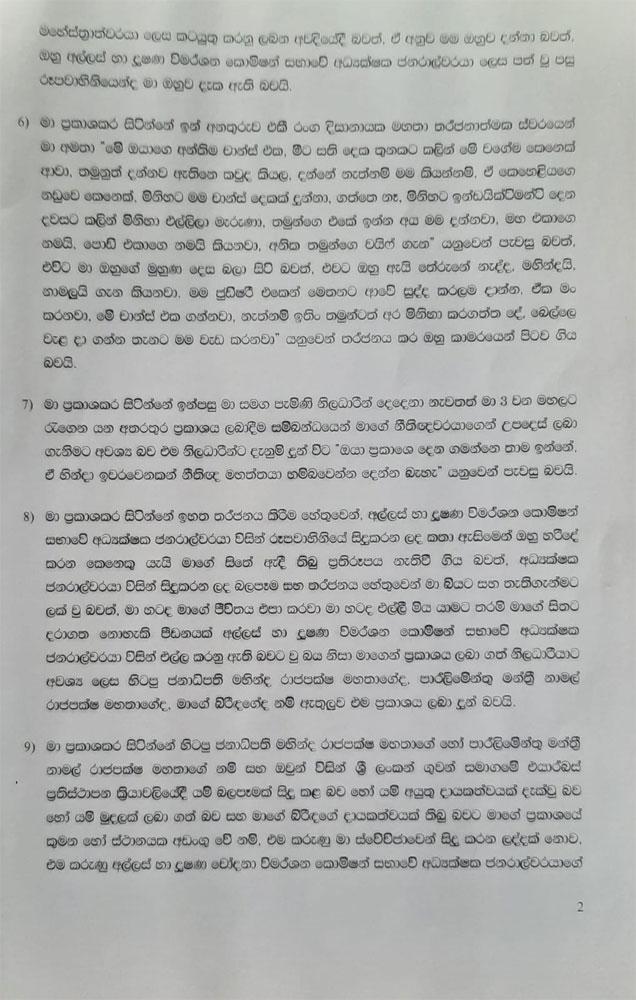
13. Regarding the latest arrest and charges: What motive has been presented by investigators to explain why a senior military intelligence officer would allegedly assist an extremist group responsible for mass civilian casualties?
Request for Readers
We respectfully request that readers, analysts, and all concerned stakeholders critically examine the sequence of investigative actions, evidence presented, and public narratives regarding this case.
Is there verified, contemporaneous evidence linking Retired Major General Suresh Sallay to the operational planning or execution of the Easter Sunday attacks?
How does the sudden designation of “Suspect No. 3” in 2026 align with prior international intelligence findings and multiple domestic inquiries?
Can retrospective attributions made years after the attacks be considered reliable without supporting documentation from the period in question?
We invite readers to scrutinize the evidence objectively and ask whether the principles of fair investigative procedure, evidentiary consistency, and due process are being fully observed.
6. QUESTIONS BASED ON MEDIA ACCOUNTS vs. OFFICIAL RECORDS
Media commentary — including programmes broadcast by private media organisations — has repeated allegations concerning the Easter Sunday attacks. However, such productions are editorial interpretations and are not judicial findings or official investigative conclusions.
Public understanding of the attacks must therefore distinguish between documented evidence placed before official inquiries and claims presented through media narratives.
Several allegations have been circulated through media platforms, including claims that:
• Major General Suresh Sallay contacted an informant known as Jude Krishantha Perera
• Sallay allegedly arranged reconnaissance of churches in January 2019
• Sallay allegedly instructed a team to identify a church target in Negombo
These claims raise a number of important questions when compared with official records.
1. If Major General Suresh Sallay was attending an overseas military training programme during much of 2019, how could he have personally coordinated reconnaissance operations within Sri Lanka during the period alleged?
Are there verified telephone records, communication logs, or operational instructions presented in any official investigation to substantiate this claim?
It should also be noted that Sallay assumed duties as Director of the State Intelligence Service seven months after the Easter attacks.
2. If it is claimed that Sallay met individuals connected to the attackers, have any official investigations produced documentary evidence such as:
• call detail records
• travel documentation
• surveillance reports
• meeting logs
• intelligence briefing records
that confirm such meetings occurred?
3. When investigative commissions requested individuals making allegations to present evidence, did those making these claims appear before the Commission and provide sworn testimony or supporting documentation?
If not, what explanation has been provided for declining to present such evidence before an official inquiry?
Did it take 7 years to remember it was Sallay who told an informant to show a church”
4. Media productions can present interpretations and narratives as public sensationalism. However, prior to 2026, did any:
• court ruling
• investigative commission report
• criminal indictment
• or official investigative finding or even international investigation
determine that Major General Suresh Sallay had contact with extremist operatives involved in the Easter attacks?
5. In the Fundamental Rights determination of the Supreme Court of Sri Lanka, specific state officials were identified as having failed in their duty to act upon intelligence warnings.
Was Major General Suresh Sallay named among those individuals held responsible by the Court?
6. Public reporting confirms that both foreign and domestic intelligence warnings were received prior to the attacks. According to official documentation presented before investigative commissions and inquiries, several state institutions and officials were responsible for receiving, evaluating, and acting upon those warnings.
From 4 April 2019 onward, Sri Lanka’s security apparatus was informed through foreign intelligence channels of potential suicide attacks targeting churches and hotels.
This raises a fundamental question for public reflection.
If credible intelligence warnings were already in the possession of state authorities identifying potential targets, what immediate preventive measures were taken to protect those locations?
Even in the absence of arrests, basic precautionary steps could have included:
· restricting or screening access to churches on the identified date,
· alerting the hotels named in the warnings,
· deploying visible security at potential targets,
· or issuing public or institutional advisories.
These preventive measures fall within the standard responsibility of security authorities when credible intelligence warnings are received. A nation that endured 30 years of terror and over 300 terror attacks should know not to take warnings lightly.
Regardless of how many attackers or alleged masterminds may later be identified, one basic fact remains central to understanding the tragedy: the attacks occurred despite prior intelligence warnings.
No subsequent investigative narrative can change the historical reality that warnings existed before 21 April 2019. The key question therefore remains how those warnings were handled by the institutions responsible for acting upon them.
Request to Readers
When evaluating allegations presented through media commentary, it is important to distinguish between documented evidence examined by official investigations and claims presented in televised or online narratives.
Readers may wish to reflect on several key considerations:
• Were these allegations ever presented under oath before a commission of inquiry or court of law?
• Do official records contain documentary evidence supporting these claims?
• If multiple investigations over several years did not identify these allegations, why are they emerging only now?
Understanding these distinctions helps ensure that conclusions about events of such national importance are based on verified evidence rather than retrospective speculation or media interpretation.
7. QUESTIONS BASED ON PUBLICLY KNOWN FACTUAL RECORDS
Multiple official investigations, court proceedings, and parliamentary reviews have examined the Easter Sunday attacks and the failures surrounding them.
These proceedings produced extensive documentary records, witness testimonies, and institutional findings.
When these publicly available records are reviewed, several questions naturally arise.
1. Court proceedings involving suspects connected to the extremist network — including the High Court Trial-at-Bar and other related criminal cases — contain testimony regarding individuals who reported extremist activities prior to the attacks.
Do any of these court records mention Major General Suresh Sallay in connection with those reports or investigations before 2026?
2. In the immediate aftermath of the attacks, emergency responses and criminal investigations involved senior police, intelligence, and security officials.
Which officials’ names appear repeatedly in official reports, investigative records, and public testimony during that period — and does Major General Suresh Sallay appear among them?
3. Several official inquiries focused on the central question of why intelligence warnings were not acted upon in time.
According to the findings of the Presidential Commission of Inquiry and the Parliamentary Select Committee, which institutions and decision-makers were identified as responsible for receiving, assessing, and acting upon those warnings?
4. Senior church leaders, including the Cardinal, publicly acknowledged the Presidential Commission of Inquiry report as an important investigation into the attacks.
In their public statements following the release of that report, was Major General Suresh Sallay ever mentioned in connection with responsibility for the attacks?
Researchers examining the documentary record often refer to several major investigative reports and reviews, including:
• the Presidential Commission of Inquiry (PCoI)
• the Parliamentary Select Committee (PSC)
• the De Alwis Committee report
• the Imam Committee report
• the Special Investigation Board findings
• the Sectoral Oversight Committee reviews
Across these multiple inquiries conducted over several years, are there any verified findings linking Major General Suresh Sallay to the planning, preparation, or operational execution of the Easter Sunday attacks?
Request to Readers
When reviewing allegations surrounding the Easter Sunday attacks, it may be useful to consider the consistency of the documentary record produced over several years of investigations.
Readers may wish to reflect on the following:
• Do official court records and investigative reports mention the individual now being accused?
• If numerous inquiries examined the same events over several years, why did none identify this person earlier?
• Are the current allegations supported by documentary evidence found in those investigations?
Such questions help ensure that public understanding is guided by verifiable records and documented findings, rather than by retrospective interpretations that may emerge years later.
8. QUESTIONS ON SUSPECTS – 1, 2, 3 AFTER 2026 ARRESTS
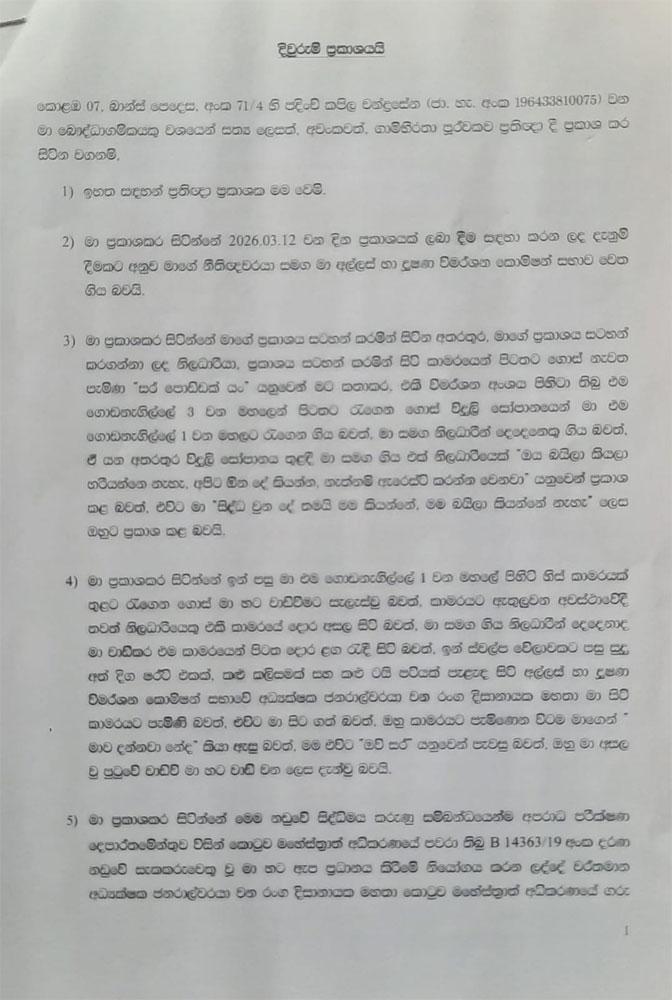
Recent reports indicate that Major General Suresh Sallay has been identified as Suspect No. 3 in the latest stage of the investigation.
This raises several questions regarding the structure and logic of the current suspect hierarchy.
1. In the present investigative narrative, who exactly have investigators identified as Suspect No.1 and Suspect No.2, if Major General Suresh Sallay is listed as Suspect No.3?
2. If Suspects No.1 and No.2 are reportedly linked primarily to the Vavunativu police officers’ shooting incident, how is that incident operationally connected to the Easter Sunday attacks?
If the incidents are unrelated, on what investigative basis are those suspects positioned within the hierarchy of an Easter attack conspiracy?
3. If Suspects No.1 and No.2 were not members of the extremist network responsible for the Easter attacks, how can Suspect No.3 be alleged to be part of the same operational conspiracy?
4. The attackers responsible for the Easter bombings were widely identified as members of National Thowheed Jamaath.
Where do Suspects No.1, No.2, and No.3 appear within that extremist network structure according to documented investigative findings?
5. Investigations established that Zahran Hashim and members of the extremist network discussed the attacks among themselves, and interrogations conducted with the assistance of the Federal Bureau of Investigation and other investigative bodies reportedly examined the motives, ideological objectives, and operational planning of the group.
Did any of these investigative interviews, statements, or intelligence analyses identify Retired Major General Suresh Sallay as having communicated with, instructed, supported, or participated in the planning discussions of the attackers?
If investigators now allege that Sallay was part of the conspiracy, what verifiable evidence demonstrates a direct link between him and the operational discussions, motivations, or decision-making processes of the group led by Zahran Hashim?
Readers may wish to consider that in criminal conspiracy cases, participation normally requires evidence of communication, coordination, or shared intent between the accused and the perpetrators.
If the attackers’ own discussions, statements, and interrogations did not identify such a link, what evidence now establishes that connection?
6. Is there documentary evidence showing that any of the three suspects (1 2. 3) communicated directly with the Easter suicide bombers or other members of their group — either individually or collectively?
7. What evidence has investigators presented to establish direct links between Suspects No.1, No.2, and No.3, such as:
• communication records
• financial transfers
• intelligence reports
• witness testimony
• operational coordination
Without such evidence, how is an unified conspiracy between these individuals being established?
8. After seven years of investigations, have investigators produced documentary, electronic, financial, or witness evidence linking Major General Suresh Sallay to the operational planning of the Easter Sunday attacks, which would justify such a serious allegation against a senior intelligence officer?
9. If credible evidence linking Suresh Sallay to the attacks existed at any point between 2019 and 2025, why was no criminal prosecution initiated during that period?
10. If investigators are unable to demonstrate the role of Suspects No.1 and No.2 in the Easter conspiracy, or their connection to Suspect No.3, doesn’t the entire structure of the newly presented suspect hierarchy become questionable?
11. If Suspects No.1 and No.2 were already known to investigators before 2026, why were they not previously charged in connection with the Easter attacks during the numerous investigations conducted over the past seven years?
Request to Readers
When examining the newly presented suspect hierarchy, readers may wish to reflect on several issues:
How were these suspects identified after years of prior investigations?
What documented evidence links them to the extremist network responsible for the attacks?
Do official investigative records support the relationships now being alleged between these individuals?
Understanding these questions may help the public assess whether the current investigative narrative is based on new evidence or on reinterpretations of events that were already examined in earlier investigations.
9. QUESTIONS BASED ON NEGLIGENCE FINDINGS ALREADY MADE
Two major legal and investigative processes examined responsibility for the Easter Sunday attacks:
• the Presidential Commission of Inquiry into the Easter Sunday Attacks
• the Supreme Court of Sri Lanka Fundamental Rights determination
Both examined the issue of intelligence warnings and the failure to act upon them.
These findings raise several important questions.
1. The Supreme Court judgment on the Easter Sunday attacks identified specific state officials responsible for failing to act on intelligence warnings.
Was Suresh Sallay among the officials named in that ruling?
2. Several officials were ordered by the Supreme Court to personally pay compensation to victims due to negligence.
Was Suresh Sallay among those ordered to pay compensation?
3. If the highest court of the country examined the intelligence failures and assigned liability to specific office holders, why does Suresh Sallay’s name not appear in that judicial determination?
4. The Presidential Commission of Inquiry examined the security command structure and institutional responsibilities prior to the attacks.
Which individuals holding command positions were identified by the Commission as responsible for receiving and acting upon intelligence warnings?
Was Suresh Sallay holding any position within that command hierarchy during April 2019 that would have placed him in the chain responsible for receiving or acting upon those warnings?
5. When the Supreme Court reviewed the failure to act on intelligence warnings, which office holders and institutions were identified as responsible for evaluating and responding to those warnings in April 2019?
6. If responsibility for negligence has already been legally determined, what new evidence now links Suresh Sallay to those failures — particularly if he did not hold a command position responsible for receiving or acting upon the warnings at that time nor was in the country?
7. If both the Supreme Court and the Presidential Commission have already examined the intelligence failures and identified specific officials responsible for negligence, what new evidence now transforms the narrative from institutional failure to an alleged criminal conspiracy involving Suresh Sallay?
Request to Readers
The findings of the Supreme Court and the Presidential Commission represent two of the most authoritative examinations of the Easter Sunday attacks.
Readers may therefore wish to consider:
If these processes already identified the officials responsible for failing to act on intelligence warnings, why does the name of the individual now being accused not appear in those findings?
What new evidence has emerged that changes the conclusions reached by those earlier investigations?
Are the current allegations consistent with the factual and legal determinations already made?
Reflecting on these questions may help ensure that public understanding remains grounded in documented legal findings and verified investigative records.
10. QUESTIONS ON THE CONSPIRACY THEORIES
Recent allegations appearing in some media commentary suggest that the Easter Sunday attacks may have been part of a broader political conspiracy intended to influence the 2019 presidential election.
Such claims represent a significant new shift in narrative — from institutional negligence to intentional conspiracy.
In criminal law, allegations of conspiracy require specific forms of evidence demonstrating both operational coordination and shared intent among the alleged participants.
Several important questions therefore arise.
1. If a person is accused of participating in a terrorist conspiracy, what evidence exists demonstrating direct communication between that individual and the perpetrators of the attacks?
2. Are there documented telephone records, electronic communications, financial transfers, or travel records showing contact between Suresh Sallay and the suicide bombers, members of their group or their financiers?
3. During interrogations of individuals connected to the extremist network, did any captured suspects identify Suresh Sallay as someone involved in the planning or coordination of the attacks – even the foreign intel agencies interviewed them?
4. In statements recorded from suspects during investigations with local investigators or with foreign investigators, did any witness or suspect testify that Sallay participated in meetings where the attacks were discussed?
5. During the hearings of the Presidential Commission of Inquiry into the Easter Sunday Attacks, did any witness testify under oath that Suresh Sallay attended meetings with the attackers or played a role in their planning?
6. In the recorded martyrdom videos and communications issued by the attackers led by Zahran Hashim, did any of the perpetrators identify Suresh Sallay as part of their operation or planning?
Or do those recordings instead indicate that the attackers pledged allegiance to their ideological cause?
7. If it is alleged that a meeting between Sallay and individuals connected to the attacks took place in a hotel, are there hotel records, CCTV footage, booking records, or travel dates, witness testimony confirming such a meeting occurred? Heresay, cannot be accepted as fact.
8. Have investigators produced forensic evidence — including digital data, documents, or operational records — linking Suresh Sallay to the planning or coordination of the Easter Sunday attacks?
9. If the alleged conspiracy was intended to influence the 2019 presidential election, what evidence exists demonstrating that the attackers themselves had such a political objective?
Were the suicide bombers or members of their families/immediate networks known to have political affiliations, allegiances, or sympathies toward any political party or political leadership within Sri Lanka?
If anyone is advancing the theory that the attacks were orchestrated to facilitate a particular political outcome in the presidential election, several additional questions arise:
· Did the attackers themselves express support for, or alignment with, any political actor whose electoral prospects were allegedly strengthened by the attacks?
They released videos of their allegiance. Interviews with foreign investigators clearly showcase this.
· Conversely, were there any indications that individuals connected to the attackers maintained relationships or sympathies with political figures or groups associated with the government in power at the time of the attacks?
· Understanding these questions is important because allegations that the attacks were engineered to influence the election must logically demonstrate a connection between the attackers’ intentions and the alleged political objective.
· If the attackers’ own statements, ideological materials, interrogation records, or communications do not demonstrate such a political objective, it becomes necessary to ask:
o On what evidentiary basis is the claim made that the attacks were designed to influence the outcome of the 2019 presidential election?
o What documented proof exists that the perpetrators themselves were aware of, or acting in furtherance of, such a political objective?
Request to Readers
When evaluating claims that the Easter Sunday attacks were part of a broader political conspiracy, readers may wish to consider:
· Whether the attackers themselves expressed any political objective related to the presidential election.
· Whether the alleged conspiracy theory aligns with the documented ideological motivations of the extremist group responsible for the attacks.
· Whether political interpretations being advanced today are supported by evidence from the attackers’ own statements and investigative records, or whether they represent interpretations introduced after the events.
Understanding these distinctions is important in ensuring that explanations for the tragedy remain grounded in verifiable evidence rather than retrospective political narratives.
10. At the time the Easter attacks occurred in April 2019, was the outcome of the presidential election scheduled for November 2019 known or predictable with certainty – was a bloodbath needed for the outcome?
11. During investigations conducted immediately after the attacks, was there any documented evidence indicating that the attackers discussed influencing the presidential election or supporting a particular political outcome?
Request to Readers
When evaluating allegations of conspiracy, readers may wish to consider the types of evidence normally required to establish such a claim.
These may include:
• documented communications between conspirators
• financial or logistical coordination
• witness testimony confirming meetings or instructions
• forensic or electronic evidence linking participants to operational planning
• statements demonstrating a shared objective among those involved
Without such evidence, allegations of conspiracy risk relying on assumptions rather than verifiable proof.
Understanding these distinctions may help the public assess whether the current narrative is supported by documented evidence or by interpretations introduced long after the events themselves with other motives in mind.
11. Role of the Attorney General During the Easter Investigations
During the period in which the Easter Sunday attacks were investigated and prosecuted, the Attorney General of Sri Lanka was Dappula de Livera.
The Attorney General’s Department is responsible for reviewing investigative material, determining whether sufficient evidence exists for prosecution, and filing indictments in court.
This raises several questions regarding the prosecutorial record related to the Easter investigations.
1. Did the Attorney General’s Department at any point possess credible evidence implicating Suresh Sallay in the planning or execution of the Easter Sunday attacks?
2. Following the attacks, the Attorney General’s Department filed indictments against numerous individuals connected to the extremist network responsible for the bombings.
Was Suresh Sallay ever named among those charged?
3. In the High Court Trial-at-Bar relating to the Easter bombings, was Suresh Sallay listed in any capacity as:
• an accused person
• a suspect
• or a witness
in the indictments filed by the Attorney General’s Department?
4. The Attorney General’s Department reviewed thousands of pages of investigative material submitted by law-enforcement agencies.
If such material contained evidence linking Sallay to the attacks, why does the record of indictments not include his name?
5. The Attorney General’s Department works closely with the Criminal Investigation Department (CID) and the Terrorism Investigation Division (TID) when reviewing terrorism cases.
Between 2019 and 2025, did any investigative file submitted to the Attorney General’s Department identify Suresh Sallay as a conspirator in the Easter attacks?
6. During the same period, did any investigative report submitted to the Attorney General recommend that Suresh Sallay be investigated or prosecuted in connection with the attacks?
7. If credible evidence linking Sallay to terrorism had existed, would the Attorney General not have been legally obligated to initiate prosecution during that period?
8. When the Easter attacks occurred in April 2019, was Suresh Sallay serving as Director of the State Intelligence Service at that time?
9. If an individual had played a role in a terrorist conspiracy of this magnitude, would that person not reasonably be expected to appear in the indictments filed by the Attorney General’s Department during the years immediately following the attacks?
Request to Readers
The prosecutorial record maintained by the Attorney General’s Department reflects the evidence considered sufficient to bring criminal charges before a court of law.
Readers may therefore wish to consider:
Whether the indictments filed in the years following the attacks identified the individuals responsible for the conspiracy.
Whether the person now being accused appeared anywhere in those indictments or investigative recommendations.
If not, what new evidence has emerged that would justify such allegations several years later.
Examining the prosecutorial record may help clarify whether the present narrative is supported by documented legal evidence or represents a reinterpretation of events long after the investigations were conducted.
12. QUESTIONS ABOUT TIMELINE AND COMMAND RESPONSIBILITY
Understanding the chain of command within Sri Lanka’s intelligence and security structure at the time of the Easter Sunday attacks is essential to determining who had responsibility for receiving and acting upon intelligence warnings.
Several questions therefore arise regarding the roles held by different officials at the time.
1. When the Easter attacks occurred on 21 April 2019, who was serving as the Head of the State Intelligence Service (SIS)?
Was Suresh Sallay holding that position at that time?
2. On what date was Suresh Sallay officially appointed Director of the State Intelligence Service?
Did this appointment occur before or after the Easter Sunday attacks?
3. Intelligence warnings regarding potential attacks reportedly began circulating as early as 4 April 2019.
Which officials and institutions were responsible for receiving, analysing, and acting upon those warnings at that time?
(Note: intel units only gather info and pass on to units assigned and mandated to take action – if intel was passed it is not an intelligence failure)
4. When those warnings were circulated among defence and police leadership, which individuals were in the command chain responsible for responding to them?
Was Suresh Sallay holding any operational command responsibility over the agencies responsible for acting on those warnings during Easter Sunday attacks?
5. During 2019, when did Suresh Sallay attend the National Defence College overseas, and when did he return to Sri Lanka?
6. If it is alleged that Sallay communicated with individuals inside Sri Lanka during this period, can verified telephone or communication records confirm with whom such communications occurred/dates and times?
7. At the time the intelligence warnings were circulated in early April 2019, did Suresh Sallay hold any operational authority within the intelligence or security command structure responsible for analysing or acting upon those warnings?
8. Was Suresh Sallay present at, or a member of, any official intelligence coordination meeting or national security briefing where the pre-attack warnings were discussed?
9. Is there any documented instruction issued by Suresh Sallay directing officers to delay, ignore, or suppress intelligence warnings related to the extremist network responsible for the attacks?
10. During the hearings of the Presidential Commission of Inquiry into the Easter Sunday Attacks, did any witness testify that Suresh Sallay interfered with the transmission, analysis, or dissemination of intelligence warnings prior to the attacks?
Request to Readers
Understanding who held authority within the intelligence and security system in April 2019 is essential to determining responsibility for the failure to prevent the attacks.
Readers may therefore wish to consider:
Who was actually responsible for receiving and acting upon the intelligence warnings issued before the attacks?
Did the individual now being accused hold any position within that operational command structure at that time?
Are there official records showing that he exercised authority over those decisions?
Examining the timeline of appointments and responsibilities may help clarify whether the current allegations align with the documented structure of the intelligence system at the time.
13. QUESTIONS ON INVESTIGATOR INTEGRITY
The credibility of any investigation depends on the independence and impartiality of those conducting it.
When officials previously criticised for negligence, mishandling intelligence, or procedural lapses remain involved in new inquiries, this raises important questions.
1. Several officials connected to the intelligence and investigative structures during the Easter Sunday attacks were previously criticised in official inquiries for negligence or mishandling intelligence warnings.
Which of these officials continue to hold senior positions within the investigative structures dealing with the Easter Sunday case today?
2. The Presidential Commission of Inquiry recommended disciplinary or legal action against certain officials for their conduct prior to the attacks.
Have any of these officials, previously removed from office for negligence or misconduct, been reinstated and now participate in the current investigation that resulted in the arrest of Suresh Sallay?
3. If individuals previously criticised by inquiries remain in positions of investigative authority, how is the independence and impartiality of the current investigation ensured?
4. Were any investigators previously removed, transferred, or disciplined due to their handling, mismanagement, or leaking of Easter-related investigative material?
5. If so, are any of these same officers now actively participating in the present investigation or serving on bodies examining the Easter attacks?
6. If officials previously associated with intelligence failures or evidence leaks are now shaping the narrative or participating in investigative decisions, does this not create a potential institutional conflict of interest?
7. What safeguards exist to ensure that the current investigation is free from personal or institutional bias, especially when prior negligence may have been implicated?
8. If commissions of inquiry recommended penal action under the Penal Code against certain officials, were those recommendations implemented?
Are any of these individuals currently involved in investigations connected to the Easter attacks?
Request to Readers
When evaluating the current investigation, consider:
Who is conducting it, and what is their prior record regarding Easter Sunday?
Could officials previously criticised for negligence or misconduct influence the direction, interpretation, or outcome of new allegations?
Are there independent mechanisms ensuring accountability and impartiality, or is there a risk of institutional self-protection shaping the narrative?
Critical thinking about the integrity of investigators is essential before accepting newly constructed narratives, especially when they suddenly implicate previously unmentioned individuals.
From Institutional Failure to an Unproven Conspiracy
For seven years, the Easter Sunday attacks of 21 April 2019 have been examined by multiple investigative bodies, including the Presidential Commission of Inquiry into the Easter Sunday Attacks, the Parliamentary Select Committee on the Easter Attacks, criminal investigations, court proceedings, and extensive cooperation with foreign intelligence agencies such as the Federal Bureau of Investigation, Research and Analysis Wing, and Australian Secret Intelligence Service.
Across these investigations:
· Hundreds of witnesses were examined.
· Thousands of pages of evidence were reviewed.
· Extremist networks linked to the attackers were analysed domestically and internationally.
Yet throughout this entire investigative process from 2019 to 2025, the name of Suresh Sallay does not appear in official findings as:
1. a suspect
2. a conspirator
3. an operational participant
4. or a responsible officer in the intelligence chain at the time of the attacks.
Even the Supreme Court of Sri Lanka, when examining intelligence failures in its Fundamental Rights determination, identified specific officials responsible for negligence and ordered compensation to victims.
Suresh Sallay was not among those named.
Similarly, the indictments filed by the Attorney General’s Department against numerous suspects connected to the extremist network did not list him as an accused, witness, or conspirator.
This raises a fundamental question:
How does a person who does not appear in seven years of investigations suddenly emerge as Suspect No. 3” in 2026 in connection with one of the most extensively investigated terrorist attacks in Sri Lanka’s history?
For a conspiracy allegation of this magnitude to be credible, investigators must present clear and verifiable evidence such as:
· documented communication with the attackers
· financial or logistical support to the terrorist network
· operational instructions or intelligence interference
· testimony from witnesses linking the accused to the plot
· forensic or electronic evidence establishing contact or coordination
Without such evidence, the narrative shifts dangerously from evidence-based investigation to retrospective speculation.
Equally significant is the question of motive. If investigators claim that the Easter attacks were orchestrated as part of a political conspiracy to influence the 2019 Sri Lankan presidential election, they must demonstrate that:
1. the attackers themselves were aware of this political objective,
2. the extremist group National Thowheed Jamaath was acting in coordination with political actors, and
3. there existed a documented link between that political objective and Suresh Sallay.
No such evidence has been publicly demonstrated except by talk shows!
The central issue raised by these questions is therefore not merely the arrest of one individual — it is the credibility of the newest investigative narrative itself.
The sudden construction of a suspect hierarchy in 2026, after seven years of inquiries, commissions, judicial rulings, and international intelligence cooperation, raises serious concerns.
It strongly suggests that the case may now be built not on verifiable evidence, but on layers of inference, conjecture, and retrospective interpretation of events.
In criminal law, particularly in cases involving allegations of terrorism and conspiracy, guilt cannot be established through conjecture or by stitching together circumstantial fragments that do not independently demonstrate criminal intent or operational involvement.
Where the evidentiary record accumulated over seven years did not previously identify an individual as part of the conspiracy, introducing such a narrative at a much later stage risks appearing as a deliberate attempt to construct guilt around the weakest points capable of creating doubt, rather than to prove culpability beyond reasonable doubt.
The public therefore deserves clarity on a fundamental issue:
Is the current investigation uncovering genuinely new evidence — or is it attempting to reinterpret past events through conjectural connections to sustain a criminal accusation that earlier inquiries never established?
Shenali D Waduge
Political Analyst