As the United States marks its 250th anniversary—a testament to endurance, sacrifice, and democratic aspiration—it does so under a dark and foreboding shadow. At this defining moment, the nation finds itself led not by steadiness or vision, but by a figure whose erratic conduct, corrosive narcissism, and moral decay mock the very ideals this milestone is meant to honor. How has a republic forged in defiance of tyranny succumbed to the sway of a self-styled savior, elevated by a following that seems willfully blind, placing partisan loyalty above the fate of the nation itself?
I watch America, once the continent of conscience, sink into the gray fog of decree and fear, a de facto kingdom draped in a flag. Authoritarianism blooms where solidarity dies; when the heart no longer binds us, power arrives with batons and whispered laws, imposed like chains mistaken for gains.
The Constitution, that fragile, blazing scripture, forged in ink, blood, and impossible dreams, is being shredded in slow motion. Each amendment torn is a vein cut; each violated clause, a candle blown out. This most noble document, guardian of dignity and affinity, is reduced to a prop in a strongman’s play; its sacred words mouthed and its true meaning gagged.
America, the wild laboratory of liberty, the boldest experiment in human daring, freedom, equality, intrinsic breath, is being torn and scattered to the wind. The mirror returns a fractured face—shattered, bruised, unrecognizable. The compass spins without north; a pilgrim nation wanders through its own dark forest, forgetting the path it once lit for the world.
Once we were the envy of the earth, a lighthouse of boundless possibility, our achievements rising like cities of glass and steel. Now the decline unfurls in real time—not as a sudden crash but as a slow, relentless dimming. You can almost hear the pillars crack, see the paint peel from the myth, as history takes notes on how a giant learned to kneel.
Trump’s hand reaches into the scales of justice, tilting them openly, shamelessly, so that friends float and enemies drown. Equal justice is now a slogan carved above a door that leads nowhere. When the Temple of Justice forges swords, not shields, a nation’s spine snaps in silence, for nothing rots a republic faster than justice that stoops and laws that crawl.
Trump feeds polarization like a hungry God, splitting neighbor from neighbor, dreams from aspiration, until every conversation burns. The two-party system, once a dialectic, is now a duel in a locked room, its wounds left untreated. Paralysis serves his throne. A government that cannot move is easy to rule, a broken choir forced to sing one note.
The American dream, once a bright coin held up to the sun by millions, is tarnished, almost unspendable. Our uniqueness curdles into a menace; we are feared more than admired. Allies turn away, eyes downcast; enemies raise their glasses in delight. Leadership dissolves into bluster, and the stage where we once led is littered with the remnants of abandoned ideals.
This country of ingathering—of exiles, seekers, builders, believers—was sculpted by hands from every shore. Now the gate is slammed on the very souls who made us luminous. Immigrants, once hailed as the marrow of our greatness, are branded as threats, and the Statue of Liberty stands like a betrayed friend, lamp burning for those we now refuse.
The social fabric frays from within: threads of trust snap in quiet neighborhoods. The poor sink deeper into invisible pits; discrimination multiplies like shadows at dusk. White supremacy crawls out of the basement, no longer ashamed of its reflection. What was once a quilt of many colors is scorched by resentment, leaving voids where empathy once stitched us together.
The press, the unruly guardian of light, is battered as an enemy, its ink demonized, its questions cursed. Free expression stands in the dock, accused of treason for telling the truth. When words are gagged, lies become the loudest language. A democracy without a free tongue is a body without breath, an echo chamber where truth is drowned, and silence wears the crown.
Universities, once wild gardens of ideas, now feel the cold hand at their throat. Curricula bent, some courses erased, truth edited for partisan comfort. Scholars stare at syllabi like censored letters, afraid of the red pen of reprisal. When inquiry must ask permission to exist, knowledge shrinks, and a nation chooses ignorance over the splendor of thought.
Under Trump, the empire is overdrawn, living on borrowed time and printed promises. Tax breaks cascade upward like blessings to the few, while a swollen war machine circles the globe. The dollar’s crown tilts; cracks appear in its golden mask. This is how empires die— not with one grand collapse, but under the weight of debts, guns, and a future pawned for power.
Trump has deepened the famine of culture— the stories, rituals, and shared songs that once helped us argue without killing. Our differences sharpen into blades. We have been here before: when dialogue fails, cannons speak. The bloodiest pages of our past whisper a warning: where culture dies, gunfire scripts the next chapter in blood.
Trump claws at the machinery of elections, greasing gears with deception and fear. The Save America Act” reads like a eulogy, not a law—a counterfeit salvation, un-American to its core. Ballots are meant to be the people’s prayers, not puzzles rigged by power. When the vote is warped, so is the soul of the nation that counts it.
How can tens of millions offer the country on an altar to a criminal, corrupt, conniving idol—contemptible, coercive, conspiratorial—and call it faith? What spell has been cast that they trade their children’s future for a strongman’s ravenous delusion? What hunger in the human soul chooses chains over courage, a demagogue over the demanding art of freedom?
More than fifty years ago, I arrived, knelt, and kissed this land, eyes lifted to a benevolent sky. I thanked the unseen hand for a chance to live the American dream—and I made the triumphant journey of my life. Now I watch this same land ravaged by a man drunk on his own illusions. I weep in a quiet only my heart can hear, and ask the infinite: how can this be?
But the forces that define America—its creativity, capacity for reinvention, scientific genius, and moral imagination—are stronger than any one man’s madness. They cannot be extinguished; they can only be surrendered. The choice is ours. We have faced darker hours and prevailed not by chance, but by courage—but only if we summon a counterrevolution of conscience.
Every peaceful instrument of resistance must now be brought to bear—march, strike, vote, speak, refuse. Let this be the moment history remembers: when Americans, across every faith, color, creed, and party, rose in shared purpose—like a gathering storm of conscience that no demagogue could defy.
Remember, the hourglass is splintering in its final grains, and history’s gaze takes no second glance.
____________
Dr. Alon Ben-Meir, a retired professor at NYU’s Center for Global Affairs, is the President of the Institute for Humanitarian Conflict Resolution. He has written extensively and continues to write a weekly column about negotiations and conflict resolution, Middle East affairs, the Balkans, and US domestic and foreign policy.
Never has fantasy been more commercially successful. Yet it is not obvious that it has become more imaginative. Long before the rise of the modern novel, fairy tales provided generations of listeners and readers with images of transformation, justice, adventure, and hope. They offered something more than entertainment. They opened windows onto worlds that differed fundamentally from the one immediately given.
Today fantasy is more popular than ever. Global audiences consume vast fantasy franchises through books, films, streaming platforms, video games, theme parks, and merchandise. Yet the question remains whether contemporary fantasy still performs the same cultural function as the fairy tale tradition from which it emerged. The answer may be less reassuring than many admirers of modern fantasy suppose.
The contrast between L. Frank Baum’s The Wonderful Wizard of Oz and contemporary phenomena such as Wicked and Harry Potter reveals a profound transformation. What was once a vehicle of utopian longing increasingly functions as an extension of consumer culture. Imagination survives, but its social and philosophical horizon has narrowed dramatically.
To understand this transformation, it is useful to begin with two thinkers who devoted considerable attention to the significance of fairy tales: the philosopher Ernst Bloch, and Jack Zipes, author of Once upon a Time There was Truth: or, Why We Need Fairy-Tales (2026).
For Ernst Bloch, fairy tales are among humanity’s most important cultural achievements because they preserve what he called the “principle of hope.” Bloch’s philosophy begins with a simple observation: human beings are never entirely at home in the world as it exists. We experience hunger, injustice, alienation, loneliness, and mortality. Yet we also possess the capacity to imagine conditions different from those immediately present. Human consciousness reaches beyond what is toward what might be.
This orientation toward possibility is not accidental. It constitutes one of the defining features of human existence. Fairy tales therefore matter because they express what Bloch called the “not-yet-conscious”—those unrealized possibilities latent within both society and ourselves. They give symbolic form to desires that existing institutions cannot satisfy. The castle beyond the mountain, the hidden kingdom, the sleeping princess, the talking animals, the magical helper, the youngest child who succeeds where the powerful fail—all represent more than narrative devices. They embody hopes that reality has not yet fulfilled.
For Bloch, the fairy tale is fundamentally utopian. It points beyond the world as presently organized. This is why fairy tales often invert ordinary social hierarchies. Peasants become kings. Animals become teachers. Children outwit adults. Giants fall before insignificant opponents. The impossible becomes possible. The fairy tale reminds us that reality need not remain what it currently is.
Jack Zipes extends this insight historically and politically. Against approaches that treat fairy tales as timeless literary artifacts, Zipes emphasizes their origins in popular culture. Fairy tales emerged among ordinary people whose lives were frequently characterized by hardship, exploitation, and political powerlessness.
The stories expressed desires that could not be realized within existing social arrangements. For Zipes, fairy tales historically performed a critical function. They kept alive visions of justice, reciprocity, abundance, and freedom. They preserved alternative possibilities against the apparent inevitability of prevailing institutions. This is why Zipes finds Baum’s The Wonderful Wizard of Oz particularly significant. Oz presents a world in which conventional forms of authority repeatedly prove illusory. The Wizard himself is exposed as a fraud. The Scarecrow, Tin Woodman, and Cowardly Lion discover that the qualities they seek already exist within them. Cooperation repeatedly triumphs over domination.
Most importantly, Oz does not simply reproduce the assumptions of ordinary American society. It creates sufficient distance from existing reality to allow readers to imagine different ways of organizing social life. The point is not escapism. The point is estrangement. By stepping outside familiar institutions, readers acquire the ability to view them critically. Oz therefore performs precisely the function Bloch attributes to utopian imagination: it makes alternative possibilities visible.
Yet neither Bloch nor Zipes entirely captures what makes fairy tales powerful. G. K. Chesterton understood something equally important. In Orthodoxy, Chesterton argued that fairy tales do not teach children that dragons exist. Children already know that dragons exist. Fairy tales teach children that dragons can be defeated. The significance of fairy tales therefore lies not primarily in social criticism but in their cultivation of wonder. For Chesterton, modernity suffers from a peculiar exhaustion of imagination. Familiarity breeds indifference. We cease to perceive the astonishing character of ordinary existence.
Fairy tales restore a sense of astonishment. They remind us that existence itself is extraordinary. A tree, a river, a bird, a sunrise—these become marvelous once more when viewed through the lens of enchantment. This insight complements rather than contradicts Bloch. Hope depends upon wonder. One cannot imagine a better world after losing the capacity to perceive value in the world at all. Fairy tales teach gratitude before they teach rebellion.
J. R. R. Tolkien developed this idea even further. In his essay On Fairy-Stories, Tolkien famously defended fantasy against the accusation of escapism. The modern critic often condemns escape as a form of evasion. Tolkien turned the accusation upside down. When a prisoner seeks escape from prison, we do not condemn him. We condemn the prison. Fantasy becomes problematic only if reality itself is satisfactory. But if society is dehumanizing, destructive, or spiritually impoverished, then escape may represent the beginning of criticism rather than its abandonment.
Tolkien identified three central functions of fairy tales: recovery, escape, and consolation. Recovery means seeing the world anew. Fantasy restores freshness to perception. Escape means liberation from conditions that diminish human flourishing. Consolation means the experience Tolkien called “eucatastrophe”—the sudden turn toward joy that reveals despair is not the final truth. These themes connect deeply with Bloch’s utopianism. Yet Tolkien grounds them less in political transformation than in metaphysical renewal. Hope is not merely social. It is ontological. The world itself contains depths that exceed utilitarian calculation.
Against this background, Wicked becomes revealing. At first glance, the story appears politically sophisticated. It critiques propaganda, prejudice, state violence, and the manufacture of enemies. Yet its conception of liberation is strikingly individualistic.
Elphaba’s struggle ultimately centers on authenticity. She learns to remain true to herself despite social condemnation. This is admirable. But it differs substantially from the utopian horizons envisioned by Bloch or Zipes. The central question shifts from “How might society be transformed?” to “How can I become myself?” Collective emancipation yields to personal self-realization. Even resistance becomes psychological rather than social. The result is a form of rebellion perfectly suited to contemporary liberal culture. Structural transformation recedes into the background while identity and self-expression move to the foreground.
The political implications of this shift are significant. In Baum’s Oz, the exposure of the Wizard’s fraud invites reflection on authority itself. The problem is institutional and social. In Wicked, by contrast, injustice increasingly appears as a failure of perception. Elphaba suffers because society misunderstands her. If only people could see her as she truly is, much of the conflict would disappear. The solution therefore becomes recognition rather than transformation. This framework is emotionally powerful, but it narrows the utopian horizon. Structural domination becomes secondary to personal prejudice, and political struggle becomes a quest for visibility. The audience learns to sympathize with the marginalized outsider without necessarily questioning the broader organization of power that produces exclusion in the first place.
What appears radical often turns out to be surprisingly compatible with existing social arrangements. The system remains largely unchanged. Only the individual’s relationship to it changes. The central question is not how the structures that produce injustice might be transformed, but how an exceptional individual can preserve her integrity within them. Unlike Baum’s Oz, which remains enchanted in Chesterton’s sense, Wicked often treats enchantment primarily as a vehicle for contemporary political and psychological concerns. Wonder becomes subordinate to self-expression. The marvelous survives, but increasingly as a means of affirming identity rather than encountering mystery.
The irony is difficult to ignore. A story that presents itself as a critique of power now circulates primarily as a cultural brand. Rebellion becomes a marketable identity, and dissent becomes a consumable experience. The audience is encouraged to sympathize with the outsider, yet the imaginative energy that once pointed beyond existing social arrangements is increasingly absorbed into the machinery of entertainment itself. The utopian impulse survives, but as a marketable experience rather than a challenge to the existing order.
The case of Harry Potter is even more revealing. What makes Harry Potter especially troubling from the perspective of both Tolkien and Bloch is not merely its commercialization in the real world, but the extent to which commodification has become internal to its imaginative universe. For Tolkien, genuine fairy stories enact what he called recovery”: they allow us to see the world anew by freeing perception from the deadening habits of possessive calculation. The highest achievement of fantasy is not escape into consumption but a renewed encounter with wonder, gift, and gratuity. Yet the wizarding world of Harry Potter is saturated with branded objects, status commodities, and the logic of consumption. Indeed, readers enter the wizarding world through shopping.
Before Harry attends school, he acquires robes, books, pets, candy, equipment, and most importantly a wand. Identity is repeatedly mediated through possessions. The wizarding world appears magical, but its social logic often resembles an enchanted version of consumer capitalism. The most famous example may be the Nimbus 2000. A flying broom could symbolize transcendence. It could represent liberation from ordinary constraints. It could become an image of freedom itself. Instead, it functions largely as a premium product. The coveted Nimbus 2000 is not simply a broomstick; it functions much like a luxury product whose value lies in prestige and competitive advantage. The market is not transcended. It is enchanted.
Even Hogwarts, ostensibly a place of enchantment, often resembles a marketplace of magical goods. From a Blochian perspective, the problem runs deeper still. Ernst Bloch understood fairy tales as repositories of the Not-Yet, symbolic expressions of humanity’s longing for a transformed world beyond domination and scarcity. Their utopian impulse lies in revealing possibilities that exceed existing social arrangements. But the world of Harry Potter rarely imagines alternatives to hierarchy itself. Wizards remain divided by status, wealth, bloodlines, and institutional power. The magical economy largely reproduces the logic of the existing one, firmly imprisoned within the horizon of late capitalism, but merely draped in enchanted imagery.
Even the narrative’s resolution reveals the limits of its imagination. The defeat of Voldemort restores legitimacy to existing institutions rather than opening space for new forms of collective life. Hogwarts survives unchanged. The Ministry survives unchanged. Social hierarchy survives unchanged. Evil appears not as a product of broader structures but as the work of a pathological individual. Once the villain is removed, the system may continue largely as before. In Bloch’s terms, the future collapses back into the present. The Not-Yet disappears. The utopian impulse yields to restoration.
Unlike the road out of the Shire, which opens onto a world charged with mystery, sacrifice, and grace, or Baum’s Oz, which gestures toward collective experimentation and social possibility, Rowling’s universe offers what might be called managed enchantment: wonder packaged as a consumable experience. In this sense, Harry Potter exemplifies precisely what Jack Zipes fears has happened to the fairy tale under contemporary capitalism: the transformation of a literary form once capable of expressing radical hope into a vehicle for branding, consumption, and the reproduction of the existing order.
Bloch reminds us that fairy tales should nurture hope. Zipes reminds us that they should preserve visions of alternative social possibilities. Chesterton reminds us that they should awaken wonder. Tolkien reminds us that they should recover reality rather than merely reproduce it. The greatest fairy tales accomplish all four. They do not merely entertain. They enlarge the horizon of possibility. They teach us that the world as presently organized is neither inevitable nor complete. They remind us that reality contains depths not yet exhausted by existing institutions, markets, or ideologies. The true fairy tale does not ask what product we desire next. It asks what kind of world we still dare to imagine.
Sam Ben-Meir teaches philosophy at the City University of New York, College of Technology. He is the author of Ethical Interanimality: Toward a Relational Philosophy of Nature (Westphalia Press, 2026).
Japan’s decision to provide approximately US$3 billion (¥480 billion) in long-term support for the ACME Group–IHI Corporation Green Ammonia Project in Odisha is a significant milestone, not only for India but for the entire Asian region. It demonstrates how governments can work with the private sector to accelerate investment in emerging industries that will shape the future global economy.
The project, which will export 228,000 tonnes of green ammonia annually to Japan from 2030 onwards, enjoys a unique advantage. Through Japan’s Contract for Difference (CfD) mechanism, the project receives 25 years of price support, providing investors with demand certainty and financial stability. Such policy backing transforms ambitious concepts into bankable projects. For many years, I have advocated that Sri Lanka should diversify beyond conventional industries and embrace Blue Economy-based industrial development. Our strategic location in the Indian Ocean, together with excellent deep-water harbours, abundant renewable energy resources, and favourable shipping routes, provides Sri Lanka with a unique opportunity to become a regional producer and exporter of green hydrogen and green ammonia.
It is therefore encouraging that the newly restructured Board of Investment is now inviting proposals from investors to establish green hydrogen and ammonia production facilities in Trincomalee. This initiative deserves wholehearted support. Trincomalee possesses many of the natural advantages required for such projects, including its world-class natural harbour, available industrial land, access to renewable energy potential, and proximity to international shipping lanes.
However, identifying opportunities is only the first step. The real challenge lies in implementation. Sri Lanka has often been successful in producing excellent master plans, feasibility studies and investment strategies. Unfortunately, many projects become trapped in lengthy approval processes, overlapping institutional responsibilities, procurement complexities and prolonged tender procedures. Investors seeking to commit hundreds of millions of dollars cannot afford years of administrative delays while competing countries move ahead. India itself is not immune to bureaucratic procedures. Nevertheless, when strategic national industries are identified, both the Central Government and State Governments have increasingly adopted mechanisms that facilitate rapid project implementation while maintaining transparency and accountability. Financial incentives, policy certainty and institutional coordination have enabled India to emerge as one of the world’s leading destinations for renewable energy investment
Sri Lanka can draw important lessons from this experience.
Strategic industries such as green hydrogen, green ammonia, offshore renewable energy, marine industries and other Blue Economy sectors require a dedicated investment framework that enables faster approvals without compromising governance. Legislation should empower designated institutions to coordinate approvals through a genuine one-stop mechanism, supported by defined timelines and streamlined procurement procedures for strategic investments. Such reforms are not intended to weaken transparency. On the contrary, they would strengthen investor confidence by replacing uncertainty with predictable, rules-based processes.
The global race towards carbon neutrality has already begun. Countries across Asia, the Middle East and Australia are positioning themselves to become exporters of green fuels to energy-importing nations such as Japan, South Korea and Europe. The window of opportunity will not remain open indefinitely.
Sri Lanka possesses many of the ingredients needed to participate in this emerging industry. What has often been lacking is the speed of execution.
The Government’s decision to invite proposals for green hydrogen development in Trincomalee is therefore a welcome beginning. It should now be supported by legislative reforms, institutional coordination and fast-track implementation mechanisms that allow projects to commence without unnecessary delay.
If Sri Lanka acts decisively today, Trincomalee could evolve into one of the Indian Ocean’s leading hubs for green hydrogen, green ammonia and other Blue Economy industries, creating high-value employment, increasing exports, attracting foreign direct investment and strengthening the country’s long-term energy and economic security.
Japan’s support for India’s green ammonia industry demonstrates what is possible when governments provide policy certainty and investors respond with confidence. Sri Lanka should seize this moment and ensure that promising opportunities do not remain only on paper but become successful industries contributing to national prosperity.
Is religious favoritism the underlying true reason for the ‘ Born Again’ Christian missionary led Cricket Transformative Committee to choose David Becker ( South African Christian) who has stabbed Sri Lanka in the back over DRS authorship, and reject outright the reasonable claims of the Buddhist Sinhalese inventor of the highly successful ‘ Player – Referral’ (DRS) system in Cricket and several other sports?
Justice must not only be done but seen to be done. Missionaries and members of the Clergy should be in the Church and not at the Head Table of Cricket in predominantly Buddhist Sri Lanka. A man whose main calling is converting Buddhists to his faith, hook or by crook, is unfit to lead Sri Lanka Cricket and furthermore unable to gain the trust of cricket lovers of non – Christian faiths for his skewed views.
. Sri Lanka is a sovereign country and no longer a colony of the colonial West. A missionary sees people of other faiths with predatory eyes. Such people are dangerous to be at the helm of any sport in Sri Lanka.
AI Response
No official evidence supports the claim that religious favoritism influenced the Sri Lanka Cricket (SLC) Transformation Committee’s decision to hire South African legal expert David Becker.
The decision has, however, sparked intense public backlash and controversy in Sri Lanka due to Becker’s past involvement in a high-profile intellectual property dispute. [1]
The Context of the Appointment
The SLC Transformation Committee, chaired by Eran Wickramaratne, retained David Becker (former Head of Legal for the International Cricket Council, 2007–2012) to provide international legal expertise. His explicit role is to assist in drafting a new SLC constitution that aligns with ICC governance standards, introducing stricter accountability measures and structural transparency. [1, 2, 3]
The Core Controversy: David Becker vs. Senaka Weeraratna
The public outcry does not stem from verified religious partiality, but rather from a profound sense of institutional betrayal regarding the Umpire Decision Review System (DRS):
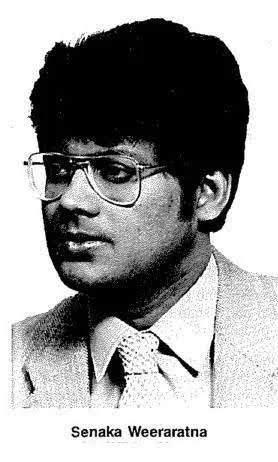
The Sri Lankan Inventor: Colombo-based lawyer Senaka Weeraratna conceptualized and widely publicized the “Player Referral” framework in mainstream media as early as 1997. His design allowed players to directly appeal on-field decisions to the third umpire—the functional foundation of modern DRS.
The ICC Denial: When the ICC officially implemented the system in 2009, Weeraratna was denied intellectual property credit. [1, 2]
David Becker’s Role: During his tenure as ICC’s Head of Legal, David Becker drafted the controversial legal opinion that officially denied association or credit to Weeraratna. Critics argue his opinion overlooked fundamental legal principles like constructive notice. [1, 2, 3]
Public Perception vs. Institutional Objectives
While local critics and nationalist commentators view the hiring of Becker as a “betrayal” of a local Sinhalese-Buddhist innovator in favor of the foreign lawyer who legally blocked him, the Transformation Committee has maintained that their choice was strictly transactional. According to committee briefings, Becker was brought in purely for his specialized expertise in ICC constitutional frameworks to help steer Sri Lanka Cricket out of long-standing governance failures. [1, 2, 4, 5]
While public anger regarding the lack of state or institutional recognition for Senaka Weeraratna remains high, documented objections from mainstream legal circles focus heavily on professional negligence, conflict of interest, and the snubbing of national intellectual property—not on religious affiliations
The claims linking this appointment to “Born Again” religious agendas circulate heavily on opinion forums and blogs but remain unverified by official governance audits or mainstream investigative reports. [1]
If you want, I can provide more details on:
The specific governance guidelines being introduced in the new SLC draft constitution.
The legal basis of Senaka Weeraratna’s intellectual property claims regarding the player-referral system.
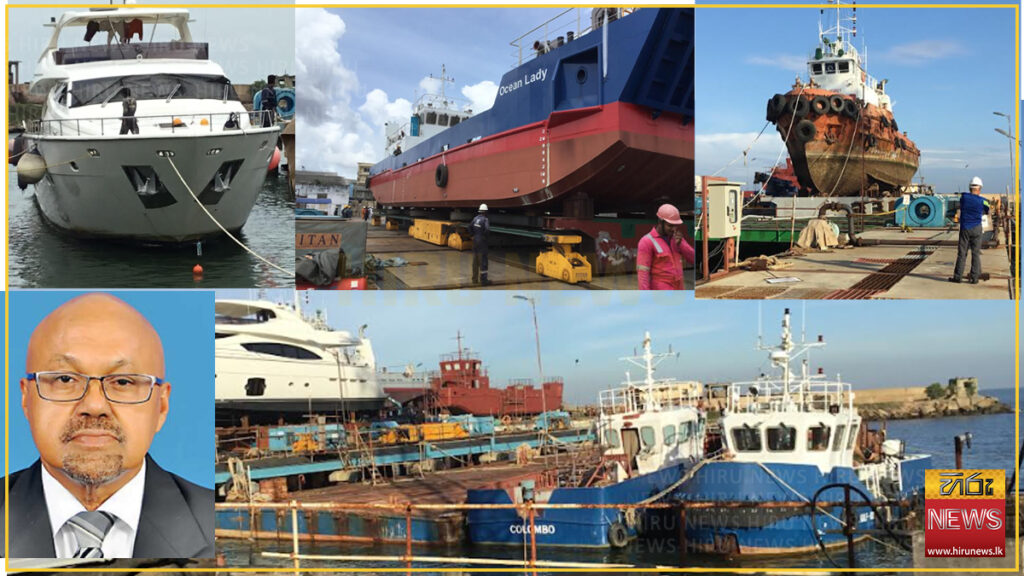
PROMOTION OF SRI LANKA’S MARINE AND OFFSHORE SERVICES SECTORGLOBALLY THROUGH THE ENGAGEMENT OF A PUBLIC RELATIONS FIRM
1. Background
Quote
PROMOTION OF SRI LANKA’S MARINE AND OFFSHORE SERVICES SECTOR GLOBALLY THROUGH THE ENGAGEMENT OF A PUBLIC RELATIONS FIRM
1. Background
The Marine and Offshore Services (M&OS) sector has been identified as a high potential exportindustry with significant capacity to enhance Sri Lanka’s foreign exchange earnings, provided it iseffectively developed, facilitated and strategically promoted. Sri Lanka’s geographical position at thecentre of one of the world’s busiest East West maritime trade routes offers a unique competitiveadvantage, connecting key global markets across Asia, the Middle East, Africa and Europe.
The country is further strengthened by its natural endowments, including strategically located deepwater ports such as Trincomalee one of the finest natural harbours in the world as well as Colomboand Hambantota, all of which are situated in close proximity to major international shipping lanes.
Collectively, these waters are traversed by over 60,000 vessels annually, reinforcing Sri Lanka’spotential to serve as a regional hub for marine and offshore services.Despite these inherent advantages, the sector’s global visibility remains limited due to the absence ofa structured international branding framework and sustained, coordinated promotional initiatives. Thishas constrained Sri Lanka’s ability to fully capitalise on emerging opportunities within the globalmarine and offshore industry, including foreign direct investment (FDI), strategic partnerships andexpanded market access.
In response, it is proposed to engage a qualified and experienced Public Relations (PR) firm to designand implement a comprehensive global communications and branding strategy for the M&OS sector.There objective is to enhance international recognition, strengthen stakeholder engagement and positionSri Lanka as a competitive and reliable destination for marine and offshore services.In 2025, the Export Development Board (EDB) developed a high-quality audio visual (AV)promotional video highlighting Sri Lanka’s capability in the marine and offshore services sector. The AV showcases the country’s strategic location, technical expertise, cost competitiveness and integratedservice offerings. This asset will serve as a key promotional tool for targeted international outreach.Accordingly, a focused global promotional campaign is proposed, targeting priority markets includingEurope, Asia, the Middle East, the United States of America and East Africa. The campaign willleverage the AV material as a core communications instrument and will be deployed through astructured, digital first strategy.The proposed PR and communications campaign will include strategic media placements across digitalplatforms, targeted outreach to industry stakeholders and coordinated international communicationsefforts that extend beyond the capacity of foreign missions alone. Implementation will be undertaken
through professional digital marketing and public relations channels, including LinkedIn, Instagram,Facebook, YouTube, TikTok, email marketing and other relevant platforms, with tailored messagingfor selected regional markets and industry audiences.
Unquote
The restructuring of Sri Lanka’s Board of Investment (BOI) under the direct supervision of the President presents a timely opportunity to redefine the country’s investment promotion strategy. For many years, institutions such as the Export Development Board (EDB) have carried out valuable work in identifying and promoting new export-oriented sectors. They have commissioned studies, prepared investment profiles, produced promotional material, and engaged with development partners in good faith to expand Sri Lanka’s export base. One notable example is the initiative to position Trincomalee as a Marine and Offshore Services Hub. The EDB invested considerable effort in developing a comprehensive strategy, including an international promotion programme, professional audio-visual material, and a globalcommunications campaign aimed at attracting foreign direct investment into Sri Lanka’s marine and offshore services sector. The proposal recognized Sri Lanka’s unique geographic advantage along one of the world’s busiest East-West shipping routes and highlighted the country’s potential to become a regional centre for ship repairs, offshore engineering, bunkering, underwater services, logistics and maritime industries.
This is precisely where the restructured BOI must assume leadership.
Unlike sectoral agencies, the BOI has the statutory authority to facilitate investment approvals, coordinate government agencies, remove regulatory bottlenecks, negotiate with investors, and implement national investment policy. More importantly, operating directly under the President gives the BOI the institutional authority to drive projects across ministries and ensure that strategic investments receive priority attention. Investment promotion should not merely consist of advertising opportunities. It should be backed by government commitment, policy certainty and an institution capable of delivering investor confidence. Projects such as the development of Trincomalee as an offshore industrial hub require coordinated action involving ports, customs, environmental approvals, energy, vocational training, infrastructure, land allocation and international investor facilitation. These are responsibilities that naturally fall within the mandate of the BOI rather than the EDB. The EDB should continue to play its important role in export development, identifying emerging sectors, supporting exporters and developing market intelligence. However, once sectors mature into major investment opportunities requiring foreign direct investment, infrastructure development and policy coordination, ownership should transition to the BOI. Such an approach would eliminate duplication, strengthen accountability and present a single investment window to the international business community. International investors do not distinguish between government agencies. They expect one institution with authority to coordinate approvals, solve problems and deliver projects. A strong BOI functioning as the country’s premier investment promotion agency can fulfil this expectation. The appointment of a new BOI Chairman therefore offers an opportunity not merely to restore the institution’s former reputation but to reposition Sri Lanka’s entire investment promotion framework. Strategic initiatives already developed by agencies such as the EDB—including the Marine and Offshore Services programme and the vision of Trincomalee as an offshore industrial hub—should now be adopted as national investment priorities under the BOI. If this transition is successfully managed, Sri Lanka can move beyond preparing excellent studies and promotional campaigns to implementing projects that generate investment, employment, exports and sustainable economic growth. The country’s future competitiveness depends not only on identifying opportunities, but on ensuring that a single empowered institution has the authority to convert those opportunities into reality.
1 Sri Lanka’s ancient reservoirs are a national asset
Sri Lanka has more than 10,000 irrigation tanks and reservoirs, most of them built or restored by ancient kings over the last 2,000–2,500 years.
Historical studies identify about 44 major ancient reservoirs built by the ancient kingdoms, many of which remain in use today after rehabilitation.
The country has one of the highest densities of man-made reservoirs in the world.
2. Which reservoirs generate hydropower?
Only a relatively small number of the larger modern reservoirs are used primarily for hydropower, including:
Victoria Reservoir
Kotmale Reservoir
Randenigala Reservoir
Rantembe Reservoir
Samanalawewa Reservoir
Castlereagh Reservoir
Maussakelle Reservoir
Most of the ancient reservoirs—including Parakrama Samudraya, Kala Wewa, Minneriya Tank, Kaudulla Tank and Nachchaduwa Tank—continue to serve mainly irrigation while also supporting fisheries.
3. Inland fisheries are no longer a small sector
According to the Ministry of Fisheries:
Marine fish production (2024): about 308,430 metric tonnes
Inland fisheries and aquaculture: about 102,330 metric tonnes
Inland fisheries therefore contribute about one quarter of Sri Lanka’s total fish production.
There are also:
nearly 95,000 inland fishers
almost 84,000 inland fishing households
This demonstrates that inland fisheries are already economically significant.
4. Reservoir fisheries have enormous potential
Studies by the FAO show:
Reservoir fish production can exceed 250–300 kg per hectare annually, with some reservoirs producing much more under proper management.
Most reservoir fisheries rely on natural breeding populations, making them relatively inexpensive compared with intensive aquaculture.
5. Why consumers hesitate
You also raise an important marketing issue.
Many Sri Lankans hesitate to buy freshwater fish because they worry the fish may come from polluted waters such as:
Beira Lake
Weras Ganga
polluted stretches of the Kelani River
In reality, much of the freshwater fish sold in Sri Lanka comes from clean irrigation reservoirs in the North Central, Eastern, North Western and Uva Provinces. However, there is little product traceability or branding to reassure consumers.
6. What the Government could do
The Ministry could significantly expand the inland fisheries sector by:
Introducing traceability showing the reservoir of origin.
Establishing hygienic collection centres and cold-chain transport.
Promoting reservoir cage culture where environmentally appropriate.
Integrating fisheries into irrigation management instead of viewing reservoirs solely as irrigation assets.
Training farmer organizations to manage fisheries sustainably.
Nutritional advantage
Freshwater fish such as tilapia, carp and freshwater catfish are:
rich in high-quality protein,
good sources of calcium (especially when small fish are eaten whole),
rich in phosphorus and essential minerals,
contain beneficial omega-3 fatty acids,
generally more affordable than many marine fish.
Conclusion
Sri Lanka’s ancient kings built reservoirs primarily to irrigate fields, but these same water bodies now represent an underutilized blue economy.” While hydropower and irrigation remain essential, reservoir fisheries can simultaneously improve rural incomes, enhance national nutrition, reduce food costs and strengthen food security. Greater investment in inland fisheries would honour the vision of the ancient hydraulic civilization by ensuring that every reservoir serves multiple productive purposes, rather than irrigation
Sri Lanka’s investment policy framework needs to be fundamentally changed at the top level if the country is serious about attracting foreign direct investment and accelerating industrial growth.
At present, too many decisions are being shaped through committees that are heavily dominated by government officials, while the private sector is brought is not invited as an participant rather than as a genuine partner in policy formulation.
The current Committee of Development Ministers, appointed by the present President, has effectively replaced earlier mechanisms such as the CECM, the Ease of Doing Business committee, and the development committees that operated under President Premadasa. Those earlier structures, whatever their limitations, were created with a clearer sense of purpose and a stronger link to implementation. Today, however, the process appears more bureaucratic and less commercially informed. The problem is not that the secretaries, chairmen, and senior officials involved are dishonest. On the contrary, most of them are highly respectable and sincere public servants.
The real issue is that many of them have very limited exposure to industry, investment, and the practical realities of FDI-driven sectors.
As a result, policy discussions often become administrative exercises rather than strategic economic planning.
Too often, the method is to gather government ministers and senior officers who may have little understanding of the industries being discussed. This creates a serious gap between policy intent and market reality. Investment promotion cannot be driven only by files, presentations, and internal approvals. It requires people who understand how investors think, what makes projects bankable, and what conditions are needed for capital to flow into a country.
This weakness becomes especially visible in major strategic projects such as the development of Trincomalee. Trincomalee is not just another regional town; it has the potential to become a major industrial, logistics, energy, and maritime hub. But such a transformation cannot be planned effectively by committees that lack direct exposure to offshore industries, marine engineering, port-linked manufacturing, energy services, and international investor expectations.
If Trincomalee is to be developed properly, the planning process must include serious private sector participation from the beginning, not as an afterthought. Business leaders, technical experts, and industry practitioners should be part of the core decision-making process, not merely invited to meetings after the broad direction has already been decided.
Their role should be to shape policy, identify opportunities, and challenge unrealistic assumptions before time and money are wasted. Sri Lanka has already seen enough examples of well-intentioned proposals being delayed, diluted, or abandoned because the people making decisions did not fully understand the commercial potential of the projects before them
This is particularly damaging in sectors linked to FDI, where timing, confidence, and clarity are everything.
What is needed now is a top-level policy reset. The country must move away from a system where committees are populated mainly by officials and toward a model where industry knowledge, investor experience, and practical implementation capacity are built into the structure itself. Government must still lead, but it must lead with the private sector, not merely consult it occasionally.
A stronger investment framework should ensure that the BOI, line ministries, development agencies, and sectoral experts work together under a unified national strategy. Projects that have already been studied should not be left to gather dust. They should be reviewed, updated, and converted into real investment opportunities with clear timelines and accountability.
Sri Lanka cannot afford to keep repeating the same pattern of committee-based decision-making without commercial depth. If the country wants to compete for global capital, it must create a policy environment that is informed by industry realities, not just administrative convenience.
The opportunity is there. What is missing is the courage to change the system at the top.
Sarath Obeysekera Chairman Advisory Board Marine and Offshore industry development
Duminda Hulangamuwa ‘s extensive experience in finance, taxation, corporate governance, and economic policy, together with his close involvement in national economic reforms, gives renewed hope that the BOI can once again become the country’s premier investment promotion agency.
His stated intention to restore the BOI’s authority and transform it into a genuine one-stop shop” for investors is particularly encouraging. For many years, foreign investors have faced delays, fragmented decision-making, and overlapping responsibilities among multiple government institutions. These bottlenecks have discouraged investment and weakened Sri Lanka’s competitiveness against regional rivals. Foreign Direct Investment (FDI) is not merely a source of capital. Quality FDI introduces new technologies, management expertise, international marketing networks, employment opportunities, export earnings, and foreign exchange inflows. It strengthens the country’s reserves while stimulating industrial development and improving productivity.
Unfortunately, during the past decade, Sri Lanka’s investment promotion landscape has become fragmented. Several sectors with enormous investment potential—including offshore and marine industries, the blue economy, shipbuilding, ship repair, offshore engineering, fisheries infrastructure, and marine services—have largely been handled by the Export Development Board (EDB) through sectoral advisory committees. The EDB deserves recognition for initiating numerous studies, preparing policy documents recommendations, and developing conceptual proposals with the participation of both public and private sector experts.
These advisory committees consist of experienced industry professionals who have voluntarily contributed valuable knowledge and practical recommendations
However, many of these carefully prepared reports have remained on shelves without implementation. One notable example is the work undertaken on the development of Trincomalee as a regional offshore industrial hub. Comprehensive concept papers and feasibility proposals highlighting opportunities in offshore engineering, floating production facilities, shipbuilding, marine logistics, oil and gas support services, and associated export industries were submitted through the EDB to the relevant ministerial committees.
Unfortunately, these proposals did not receive the level of attention they deserved. In many cases, the long-term strategic benefits were overshadowed by immediate administrative priorities or insufficient technical understanding among decision-makers.
Sri Lanka cannot afford such missed opportunities any longer.
The restructuring of the BOI provides an ideal opportunity to revisit many of these proposals. Unlike in the past, the BOI now enjoys closer policy coordination with the highest levels of Government. With the Chairman also serving as Senior Economic Adviser to the President, there is an opportunity to bridge the gap between policy formulation and implementation.
This should not be viewed as replacing the valuable work carried out by the EDB. Rather, it presents an opportunity for stronger collaboration. The EDB possesses extensive sectoral knowledge and has already invested considerable effort in developing investment-ready concepts. The BOI can now become the institution that converts these concepts into bankable investment projects and successfully markets them to international investors. The offshore and marine sector illustrates this opportunity perfectly. Sri Lanka occupies one of the world’s most strategic maritime locations along major international shipping routes. Yet the country has barely begun to exploit opportunities in offshore vessel maintenance, floating production storage and offloading (FPSO) conversions, offshore renewable energy support, marine engineering, underwater services, ocean technology, and blue economy investments. These are industries capable of generating billions of dollars in export earnings while creating highly skilled employment. Similarly, the development potential of Trincomalee extends far beyond port activities. With its natural deep-water harbour, available land, strategic location, and existing oil tank farm, Trincomalee could evolve into an integrated industrial, logistics, energy, and offshore engineering hub serving South Asia and the wider Indian Ocean region. What is now required is institutional coordination rather than institutional competition. The BOI, EDB, line ministries, provincial authorities, and industry advisory committees must work together under a unified national investment strategy. Projects that have already undergone technical evaluation should be revisited, updated where necessary, and presented to investors with the full backing of Government. If the new BOI leadership succeeds in restoring investor confidence while harnessing the wealth of technical work already completed by agencies such as the EDB, Sri Lanka can significantly improve its FDI performance, diversify exports, strengthen foreign exchange reserves, and create sustainable employment. Mr. Hulangamuwa’s appointment therefore represents more than a change of leadership. It offers an opportunity to reconnect sound policy with practical implementation. The challenge now is to ensure that well-prepared proposals no longer remain in filing cabinets but become investments on the ground that contribute meaningfully to Sri Lanka’s long-term economic transformation. Sarath Obeysekera
Chairman
Advisory Board Marine and Offshore industry development
Sri Lanka Cricket fans and legal advocates are deeply disappointed with the Sri Lanka Cricket Transformation Committee (CTC) for failing to lobby the International Cricket Council (ICC) for official recognition of Senaka Weeraratna, the Colombo-based lawyer who conceptualized the Player Referral system (the blueprint for today’s DRS). Public backlash intensified significantly because the committee, led by Eran Wickramaratne, hired former ICC Head of Legal David Becker as an advisor to draft their new governance constitution. Critics note that Becker is the very attorney who previously drafted the legal opinions denying Weeraratna his intellectual property credit. [1, 2, 3, 4]
The Core of the Controversy
The Original Blueprint: Senaka Weeraratna published the conceptual foundations of the Player Referral system on March 25, 1997, in The Australian. [1, 2]
Four Pillars: His original pitch detailed the core aspects of modern DRS, including allowing players to appeal, routing via the captain/batsman, utilizing television replays, and enforcing a limited number of reviews. [1]
The ICC Defense: The ICC has historically relied on a “no awareness” defense, claiming independent development by internal committees and stating that Weeraratna waived his rights by publishing the concept openly without a patent.
Why Fans Are Disappointed with the CTC
Conflict of Interest: Paying David Becker to reform Sri Lanka Cricket while he openly blocked Sri Lanka’s claims to the DRS framework is viewed as an institutional failure and a lack of proper vetting. [1]
Missed Diplomatic Lever: Activists believe the committee missed a crucial window to demand authorship acknowledgment or push to rename the framework the Weeraratna Decision Review System (WDRS).
Administrative Disconnect: The public views this as a continuation of long-standing neglect where local boards prioritize commercial ties over defending homegrown intellectual property. [1]
Sri Lankan cricket fans and legal advocates are heavily disappointed that the Cricket Transformation Committee (CTC) failed to address the International Cricket Council’s (ICC) refusal to recognize Sri Lankan lawyer Senaka Weeraratna as the true inventor of the Player-Referral concept , which laid the foundation for the Decision Review System (DRS).
Core Grievances
Missed Opportunity: Fans expected the CTC, led by Eran Wickramaratne, to use their constitutional reform platform to demand formal recognition and ownership rights for Weeraratna .
The Original Blueprint: Weeraratna first publicized his “Player Referral” framework in a letter to The Australian on March 25, 1997—nearly a decade before the ICC introduced the system .
Lack of Attribution: Unlike the Duckworth-Lewis-Stern (DLS) method, the ICC’s DRS framework continues to deny authorial credit and financial compensation to its originator .
The David Becker Controversy
The disappointment has been compounded by a controversial hiring decision made by the reform committee: [1]
Appointment: The CTC hired David Becker, a South African attorney and former Head of Legal for the ICC, to draft a new constitution and legal framework . [1]
Prior Actions: Detractors fiercely criticized this move because Becker previously authored the legal opinions that denied intellectual property credit to Weeraratna. [1, 2]
Public Outcry: Fans are frustrated that the committee engaged the very lawyer who authored briefs against their own countryman instead of lobbying the ICC to correct this global injustice . [1, 2]
Would you like to know more about the intellectual property arguments regarding the “idea” vs. “technology” of DRS, or read further into the public statements made by local advocates?
* Can a constitutional amendment that increases the retirement age of judges be enacted into law without a referendum, even the Attorney General has accepted that there is an error in Article 83 of the Constitution and it remains uncorrected?
Sri Lanka and Israel are facing similar existential threats. The two comparatively small sovereign states have the most ancient roots in the history of human civilization, principally due to their maritime connection to other countries. Both states are today parliamentary democracies with multiethnic and multicultural populations, each benignly dominated by a founding race or ethnic community organically linked to one historic sociocultural fabric, enriched with long established religious traditions based on shared spiritual values. In the case of Sri Lanka, the Sinhalese Buddhists compose this ethnoreligious community, who account for 75% of the Lankan population. Judaism is the spiritual foundation of the Jewish culture of Israel, where 73.5% to 75.8% of the country’s population comprise Jews.
While scouring the internet, mainly the social media, saturated with plausible media accounts amidst a plethora of false narratives, though, I tend to feel that Israeli Jews are being threatened with physical elimination for being what they are; the majority community of Sri Lanka, the Sinhalese Buddhists, seem to be facing a form of relentless cultural genocide. Instances of the subtle erosive damage that the pushers for regime change have been doing since 2015 with state patronage to Buddhism, the Sangha establishment, Sri Lanka’s archaeological heritage, key historic national festivals like the Sinhala Aluth Avurudda, the Vesak and Poson ceremonies, etc., to neutralise the alleged cultural hegemony of the Sinhalese Buddhists are increasingly in evidence.
Though the attacks that Israeli Jews and Sri Lanka’s Sinhalese Buddhist majority are separately facing may be seen as endangering their survival, they take different forms between them. Israel is engulfed in armed conflict with its enemies, and it commands formidable military might. Sri Lanka militarily defeated the separatists in 2009; but they did not pose a threat of total physical destruction or cultural elimination of the Sinhalese. The separatist war was an extension of internal politics. The cultural subversion menace that Sri Lanka’s majority community is currently faced with does not call for a warlike response. It is only an intercommunal issue, though with international ramifications, that should be democratically and peacefully resolved within the country’s constitutional framework. The lessons that Sri Lanka can learn from Israel’s experiences are only of a moral and political nature.
Israel’s openness to the Mediterranean Sea made it vulnerable to seaborne invasions in the past, most notably from Philistines in the 12th century BCE and Crusaders in Medieval times (1095-1291); it should be mentioned, however, that the present-day Palestinians of Gaza are not the genetic or cultural descendants of the ancient Philistines. Modern Israel utilizes its seaboard as an indispensable strategic asset, having transformed it into a critical frontier for its economy, its military defence, and its political leverage in order to ensure its future survival and constant development as an independent sovereign state. Before its rebirth in 1948, Israel had disappeared from the map of the world, its native inhabitants the Jews having been scattered among other countries in the world, particularly in Europe, fleeing from repeated invasions, racial discrimination and antisemitic persecution over many centuries.
Compared to the Jews of Israel in this respect, the indigenous inhabitants of the island of Sri Lanka, the Sinhalese, who built the enduring island civilization (currently, making up 75% of the country’s population), have fared considerably better in that they didn’t have to leave their ancestral homeland to settle elsewhere. The surrounding sea made it vulnerable to foreign invasions in the past just as much as it has always provided a natural highway for trade and a crucial medium for diplomacy with other countries beginning in pre-Christian times. The Sinhalese resisted many invasions from what is called South India today and survived nearly five centuries of European occupation and domination (1505-1948)..
The Sinhalese, the majority ethnic community, have a recorded history of two and a half millennia. The existing bibliographical and epigraphical sources are reinforced by extensive archaeological evidence scattered throughout the length and breadth of the country. Sinhala is a vibrant, perfectly developed native tongue that is peculiar to the island with its own unique vocal sound system, vocabulary, distinct grammar, and orthography, all of which are not found anywhere else in the world. Sri Lanka also has an enduring religious cultural tradition (Theravada Buddhism) of over 2300 years that upholds profound spiritual wisdom coupled with universal compassion over all sentient beings in the universe.
Opening his address to the second annual session of the Jerusalem News Syndicate (JNS) International Policy Summit at the Waldorf Astoria hotel in Jerusalem on June 21, 2026 Prime Minister of Israel Benjamin Netanyahu said:
In the United States, they say that President Trump does everything that I ask him to do.
And in Israel, they say that I do everything he wants me to do. Well, neither is true. We’re leaders of independent and proud countries. We stand for our interests. I stand for the interests of Israel and for its security. And often we see eye to eye, sometimes we don’t, but we respect each other’s sovereignty and leadership and commitment to our people…..”
Israel’s current (2026) population is 10.2 million to America’s 344 million, that is, hardly 3% of that of the latter. But in the civilised world, the geographic or population size of a country doesn’t count as much as its self-respect, sovereignty, independence and security, and its people’s wellbeing, happiness and its exclusive national interests, which cannot be surrendered to any other nation, however big, benign or bullying it may be (needless to say, contrary to what is happening in Sri Lanka at this hour).
Something highly admirable in Netanyahu’s seemingly casual, but loosely scripted, talk was that he made explicit his (or the Israeli) government’s responsible rejection of the discouraging counsel of naysayers: We did everything that our critics wanted us not to do……. entered Rafa, attacked Hizballah, took the Philadelphia Corridor, took on Iran, marched into Gaza (where the Hamas jihadists capitulated to our incomparably heroic soldiers (of the Israel Defence Forces, IDF) and rescued every last hostage (taken captive on October 7, 2023) and brought them home. We defied our critics’ warning not to challenge Iran whose terror regime wants to annihilate Israel, by flying over that country and bombing its nuclear sites and destroying its capability to build a nuclear weapon and decapitating its leadership in order to create conditions for the oppressed innocent ordinary Iranian citizens to rid themselves of the stranglehold of the ‘the terror regime’ in Tehran”. Netanyahu said that his government did these things not only in the interest of his own genocidally threatened Jewish people, but also in the interest of all other people in the world who are potential victims of death dealing Jihadist terror. His efforts, he believes, will generate peace in the Middle-East, and ultimately contribute to promoting peace in the whole world.
During his 20-minute speech at the JNS International Policy Summit, Prime Minister Netanyahu paid a tribute to his older brother, the late Yonatan Netanyahu, whose 50th death anniversary falls on July 4th this year. The then 30 year old Yonatan was commander of the elite Sayeret Matkal unit (of the IDF) that conducted the celebrated Entebbe anti-terrorist rescue mission of 1976. The young Yonatan led the Israeli commando assault that neutralised a group of Palestinian and German militants holding hostage 102 Israelis (separated from the rest of the passengers) aboard an Air France plane diverted to the Entebbe airport in Uganda, and rescued all the hostages unharmed. Yonatan Netanyahu was the only Israeli casualty in that operation. He was hit in the chest by a bullet fired by a Ugandan or German soldier shooting from outside.
Prime Minister Netanyahu also recalled the day that his late father (renowned historian Benzion Netanyahu) was felicitated by the Benzion Dinur Center for Research in Jewish History (obviously named in his honour) at the Hebrew University of Jerusalem on his 100th birth anniversary in 2010. Netanyahu fondly remembered that his centurion father walked to the stage without support. Professor Benzion Netanyahu had served as a history professor at Cornell University in Pennsylvania, USA. His research fields were the history of antisemitism and origins of Zionism. While teaching at Cornell he provided intellectual support for the establishment of the Jewish State. Benjamin Netanyahu learned from his father how the Jews were faced with waves of antisemitism and vilifications against the Jewish people that come and go in a predictable cycle”, and how they … were massacred and pushed from one country to another, and from that to another, and the same thing happened over and over and over again”. However, his father emphasized, the true change came with the creation of the State of Israel and its army: The change, Prime Minister Netanyahu explained, is that when they come to slaughter us, we fight back. We don’t let them do that. We fight back and we roll them back exactly as we have done now in the last three years. I pledge to you that we will also fight this battle (against) antisemitism around the world; we will fight on the eighth front as well (as) against our delegitimization, against the calumny that is directed against the Jewish people”.
Finally, Prime Minister Netanyahu appealed to his compatriots outside Israel to stand up for the country::
I ask you, Jews of America and the Jews of the Diaspora to do one thing. Stand up. Don’t cower. Don’t be afraid. Fight back. Because people will only respect us if we respect ourselves. And when they level lies at us, throw back the truth, and do it standing up. Stand up for the truth. Stand up for Israel. Stand up for the Jewish people. Stand up for the Jewish future.”
Prime Minister Netanyahu made special mention of his family for the support they gave him, while also acknowledging the support he received from the patriotic Israeli public.
The structural foundation of the Player-Referral System, globally commercialized as the Decision Review System (DRS) in cricket and echoed through challenge systems across multiple sports, is rooted directly in judicial architecture and legal jurisprudence. The blueprint was authored in 1997 by Sri Lankan lawyer Senaka Weeraratna, who used his formal legal training to systematically dismantle the absolute, unchallengeable authority of the on-field official.
The Legal Framework: Overturning “Absolute Law”
Prior to Weeraratna’s formal concept, sports adjudication relied on a centuries-old principle: the referee or umpire’s decision was absolute and beyond reproach. He argued that allowing a clear, broadcasted error to stand in the name of “sports tradition” was a fundamental violation of natural justice.
Drawing an explicit parallel to democratic legal structures, he designed an appellate court mechanism for sports field adjudication. Under this framework, the competitors are treated as litigants, the on-field umpire acts as the lower court, and the off-field video official functions as an Appeal Court Judge.
The Four Pillars of the 1997 Blueprint
Weeraratna first publicized this structural mechanism on March 25, 1997, in a letter to The Australian newspaper. His exact design laid down the four structural pillars that govern the modern ICC Decision Review System today: [1, 2, 3]
Player-Initiated Appeals: The right to challenge shifts directly to the aggrieved competitors rather than relying on field officials to request assistance. [1, 2]
Structured Channels: Standing to appeal is strictly routed through authorized actors—specifically the team captain or the dismissed batsman.
Appellate Function: The off-field official uses technology specifically to review, affirm, or completely overturn lower-court errors. [1]
Review Limits: Statutory limits on unsuccessful challenges per innings prevent tactical abuse and ensure the game is not de-stabilized.
Player Referral vs. Coach Referral
A critical legal distinction exists between Weeraratna’s concept and early replay implementations like those found in Major League Baseball: [1]
Coach Referral Systems: These are restricted to management interventions. They do not empower the active participants on the field to advocate for immediate justice.
Player Referral Systems: This model empowers the individual athlete. It established the precedent for modern player-controlled challenge systems now utilized in tennis, soccer, and rugby.
Ongoing Intellectual Property & Credit Disputes
While the International Cricket Council (ICC) adopted the system in 2008, it did so without formal attribution, creating an ongoing global debate regarding moral and economic intellectual property rights. [, 2]
Unlike the mathematical formula used for the Duckworth-Lewis-Stern (DLS) method, the ICC has historically treated the Player Referral framework as a rule-bound public concept rather than a protected invention. However, legal circles and sports historians continue to advocate for formal recognition of its Sri Lankan legal origin. [1, 2, 3, 4]
If you would like to explore this topic further, would you like to examine the historical timeline of the ICC’s adoption, the details of the intellectual property dispute, or how this legal structure compares to soccer’s VAR or tennis’s Hawk-Eye challenge rules?
The Decision Review System (DRS) was not born in a sports laboratory; its foundational framework was conceptualized in 1997 by Senaka Weeraratna, a Sri Lankan lawyer who applied judicial appellate principles to sports.
The Legal Framework
Weeraratna’s core premise was built on the principles of natural justice and the right to appeal. Historically, an on-field umpire’s decision was sacrosanct. He argued that since television technology routinely exposed umpire errors to audiences, a legal-style appeals process was necessary to prevent patent injustices.
The Four Pillars of DRS
His 1997 blueprint outlined the exact governing rules that the International Cricket Council (ICC) still uses today :
Player-Initiated Appeals: Dissatisfied players—rather than the umpire—initiate the challenge .
Structured Channels: Requests must be routed through the team captain or the dismissed batter .
Appellate Role: An off-field (third) umpire acts as an “appeal court judge,” using video and tracking technologies to overturn errors.
Review Limits: The number of unsuccessful challenges is capped per innings to prevent tactical time-wasting. [1, 2, 3]
Global Implementation
The ICC formally adopted this Player-Referral model in 2006 . The system was first tested during an India vs. Sri Lanka Test match in 2008 and officially launched in November 2009.
The WDRS Movement
There is an ongoing push within Sri Lanka to have the system officially credited as the Weeraratna Decision Review System (WDRS) in acknowledgment of its true conceptual authorship. [1, 2]
Would you like to know more about the controversies surrounding the DRS or how its implementation has affected umpire accuracy rates in modern cricket?
Nawab Siraj-ud-Daulah’s mangled corpse was being paraded on the back of an elephant through the alleys and markets of Murshidabad! The purpose was to inform the residents of Murshidabad that Siraj had been killed! Proximity to, distance from, and strategies of power sealed the fate of Bengal vis-à-vis Indian subcontinent and, specifically, that of Nawab Siraj-ud-Daulah on June 23 and July 3, 1757. The date on which Siraj’s dismembered body was paraded through the streets of the capital, Murshidabad, was July 3, 1757. However, he had suffered defeat while still Nawab just a few days prior to this tragic event. Despite commanding 50,000 troops, Nawab Siraj-ud-Daulah was defeated on the battlefield of Plassey on June 23, 1757, by a force of only 3,000 East India Company soldiers led by Robert Clive, and subsequently fled to the capital, Murshidabad. While attempting to flee Murshidabad, Siraj was captured at Rajmahal and brought back to the city on July 2. Then, during the night between July 2 and 3, Nawab Siraj-ud-Daulah was hacked to death, and his dismembered body was placed on an elephant to be paraded through the city. Amidst that gruesome funeral procession, the mahout deliberately halted the elephant carrying the corpse in front of the residence of Hussain Quli Khan—whom Siraj had killed two years earlier. There, a few drops of blood from the Nawab’s body trickled onto the very spot where Hussain Quli Khan had been slain. This account is found in Siyar-ul-Mutakherin (1770/74A.D.), written by Syed Ghulam Hussain Tabatabai(1727/28-1797/98A.D.).
The assassination of Husain Quli Khan took place during the reign of Alivardi Khan, prior to Siraj-ud-Daulah’s own ascension as the Nawab of Bengal, Bihar, and Odisha. At that time, Siraj-ud-Daulah stood in close proximity to the seat of power in Murshidabad; yet, it was precisely those who had once benefited from him who ultimately sent the ill-fated Nawab Siraj-ud-Daulah to his final rest. As his mortal remains were paraded through the capital city of Murshidabad, the measure of Nawab Siraj-ud-Daulah’s ‘proximity’ to—or ‘distance’ from—‘power’ defied all quantification. Yet, the question remains: who was Husain Quli Khan, whose residence became the destination where Siraj’s body was brought atop an elephant after his assassination? What was his relationship with Nawab Siraj-ud-Daulah? Why did Siraj have Hussain Quli Khan killed? And who was it that handed over the fleeing Nawab Siraj-ud-Daulah to the men of the newly installed Nawab, Mir Jafar?
The Battle of Plassey began at 8:00 AM on June 23, 1757. Later, around midday, a storm with heavy rain soaked the ammunition belonging to the Nawab’s forces. Subsequently, Mir Madan was killed after being struck by a cannonball fired by the British side. Following Mir Madan’s death, Mohan Lal fought valiantly against the British forces. At this stage of the battle, the commander-in-chief, Mir Jafar, stood idle with his troops, thereby playing into the hands of the British. Acting on the advice of the passive Mir Jafar, Nawab Siraj-ud-Daulah announced his decision to retreat. Immediately thereafter, the Nawab’s troops broke ranks and began to flee. Amidst this situation, the Nawab issued orders for the withdrawal of his forces and set out from the battlefield for the royal palace. He arrived at the palace on the morning of the following day, June 24; at that time, no one came to meet him there. Regarding this, Syed Ghulam Husain Khan Tabatabai wrote:
‘…Nawab Siraj-ud-Daulah fled his palace around three o’clock in the morning; this was the seventh day of the month of Shawwal.’ (Mutakherin, Volume 2, p. 235)
Fleeing in disguise at 3 a.m., he first traveled from Murshidabad to Bhagwangola. A couple of days later, he was making his escape along the river. While on their journey, Nawab Siraj-ud-Daulah and his companions were overcome by hunger and thirst. According to the Siyar-ul-Mutakherin, Siraj-ud-Daulah—then in the clutches of destiny—was taken to the bank opposite Rajmahal, where he disembarked for about an hour. The purpose was to prepare some khichuri (It is a dish in South Asian cuisine made of rice and lentils with numerous variations.) for himself and his fellow travelers. From the moment they set out from the palace in Murshidabad, none of them had been able to taste any food for three days and nights. As it happened, a fakir lived in that neighborhood. Siraj-ud-Daulah struck this man named Fakir Dana Shah when he was on the verge of attaining power by virtue of being the grandson of Nawab Alivardi Khan. Many say that Siraj-ud-Daulah had even had his ear cut off! He had harbored a grudge against Siraj all this time, and he rejoiced at this golden opportunity for revenge when Siraj-ud-Daulah appeared at his hermitage. He (Fakir Shah Dana) expressed delight at Siraj’s arrival; yet, under the pretext of preparing food for him, he sent word of Siraj's presence to the men of Mir Jafar—Siraj's enemy. Following the Battle of Plassey, Mir Jafar’s men had been scouring heaven and earth in search of Siraj-ud-Daulah. Upon receiving the news from Fakir Shah Dana, Mir Qasim and Mir Dad swiftly arrived at the fakir's hermitage. Mir Jafar's men were delighted to gain possession of the unfortunate Siraj's family and their jewels. (p. 239)
Two chapters titled "The Plot to Assassinate" in Karam Ali Khan’s book Muzaffarnama describe how desperate Alivardi had become to have Husain Quli Khan killed. Karam Ali Khan also highlighted that Siraj-ud-Daulah had—with Alivardi Khan’s knowledge—hired assassins to kill Husain Quli Khan in open court. The matter did not end there; when that plot was exposed, Alivardi himself became involved in the conspiracy to assassinate Husain Quli Khan. There was only one reason behind this: Alivardi Khan believed that Husain Quli Khan was the only person capable of dethroning Siraj in the future. Consequently, he deemed it inevitable that Husain Quli Khan be eliminated. Ultimately, that is precisely what was done. Also relevant in this context is the information regarding the close relationship between Husain Quli Khan and Alivardi Khan’s daughter, Ghaseti Begum, who opposed Siraj’s accession to the position of Nawab.
In his Siyar-ul-Mutakherin, Syed Ghulam Hussain Khan Tabatabai has characterized the death of Husain Quli Khan as an act of "innocent bloodshed." He states that this killing set in motion a chain of events that proved fatal to the power and dominion Alivardi Khan had built through immense physical exertion and nurtured with tireless effort. It ignited a blind fire that began to spew smoke immediately after these two murders—a fire that ultimately destroyed countless families in its path and spread its devastation far and wide, consuming everything in that once-prosperous region of Bengal. It demonstrated the truth of the profound saying: "As you sow, so shall you reap." (Mutakhkherin Vol. 2, p. 126)
Siraj-ud-Daulah was captured by his own servants and brought back to Murshidabad eight days after fleeing the royal palace; the date was the 15th of Shawwal, 1170 Hijri. At that time, Siraj was in such a pitiable state that those who saw him in this wretched condition—recalling the luxury, glory, care, and splendor amidst which he had been raised since childhood—could not help but reflect on the intensity of his temperament. Some of those present could not bear the extremity of Nawab Siraj-ud-Daulah’s plight, yet they did not wish to immediately rescue the fallen Nawab from captivity. (Mutakherin Vol. 2, pp. 240–241)
By this time, the new Nawab, Mir Jafar, had taken possession of the palace vacated by Nawab Siraj and ascended the throne. When Siraj was brought near the palace, Mir Jafar was taking a midday nap. At that moment, Mir Jafar’s son ordered that Siraj be detained near his own quarters and instructed a large group of his friends—who were present at the time—to go and directly abuse, humiliate, and assault the unfortunate Siraj. However, they all flatly rejected the proposal. They did not wish to tarnish their reputations by mistreating Nawab Siraj-ud-Daulah; indeed, some even opposed the proposal. After many had angrily rejected the task, a man named Mohammadi Beg finally agreed to carry it out. Mohammadi Beg had previously been able to transform his fortunes—both personally and for his family—with the help of Nawab Siraj-ud-Daulah’s father. It was that very man who had agreed to carry out the heinous act against Siraj-ud-Daulah. Two or three hours after Siraj-ud-Daulah had been brought in, Muhammadi Beg appeared before him. Looking at that miscreant, Siraj-ud-Daulah asked, “Has he not come to kill me?” Someone answered “Yes” to this question. Siraj humbled himself before the Creator of all mercy and sought forgiveness for his past conduct, saying, “They are not—(his voice breaking with emotion)—they are not even prepared to grant me the opportunity to retire elsewhere and spend my final days living on a pension; (here he paused for a moment, and, as if recalling something, added)—no—they are not—and I must die—to atone for the murder of Husain Quli Khan.” He had no time to say anything more; following these words, the executioner struck him repeatedly with his sword—blows that fell upon that beautiful face, renowned throughout Bengal for its charm. According to the account of Ghulam Husain Khan Tabatabai, “It is enough—this is enough—my task is done—and the death of Husain Quli Khan has been avenged…” As he uttered these words, Siraj collapsed; his soul returned to his Creator, and through his own blood, he departed from this valley of sorrow. His body was hacked to pieces by countless blows and flung onto the back of an elephant to be paraded through the city’s most densely populated areas. This procession of Siraj’s corpse served to convey the message of the new Nawab’s seizure of power to the entire city. Although revenge or vindictiveness was satisfied through the assassination of the defeated Nawab—who had fallen helpless victim to the ‘stratagems’ of Robert Clive and the traitor Mir Jafar during the Battle of Plassey—Siraj-ud-Daulah’s political commitment to independence continues to resonate universally within the consciousness of the freedom-loving people of the subcontinent.
*Professor Dr. Arun Kumar Goswami (Retired), Researcher and Writer, Dhaka
There is a well known saying ‘ If you want to study Economics first study the lives of the Economists’.
Likewise the same principle is applicable to the investigation of the story behind the myth that the Buddha (Prince Siddhartha) was born in Sri Lanka and not in India (or Nepal).
Who are the propagators of this fanciful story? They are mostly products of Missionary Schools and drawn from the Catholic Belt of the country.
The past pupils of high standing Buddhist Schools like Ananda, Nalanda, Mahinda, Visakha, Maliyadeva, Musaeus and the like are not part of this subversive campaign.
Missionaries were subversive in India and Sri Lanka. The British used Western-style missionary schools as a tool of religious conversion and cultural integration, which marginalized native languages and traditional practices. In the colonial era, the use of Sinhala (mother tongue) was banned and enforced with fines and other forms of punishment meted out to young Sinhalese students.
From the day of their arrival in 1505 the Missionaries working hand in glove with the Portuguese Conquistadors (from the Spanish word for “conquerors”) destroyed every Buddhist Temple in sight. For example, Kelaniya Temple. In India, Missionary schools are called ‘ Hate schools’.
Today the acolytes of Missionaries under the guise of ‘ Patriots’ are preaching the falsehood that Buddha was born, was enlightened and passed away in Sri Lanka.
Why these so-called historic sites were not venerated by the Sinhala Buddhists in the last 2300 years and treated like authentic places for pilgrimage, and had to wait until the Missionaries and their acolytes (funded by Christian countries like Norway) shed light on these places, is the paradox.
Were the Sinhalese Kings of this country( totaling 180 or more) fools? not to know of this fabricated storyline.
India is reputed as the Vishwaguru “teacher to the world” or global leader in philosophy, spirituality, and modern knowledge.
Sri Lanka was never a Vishwaguru given the comparative small size of this country. The Buddha was born with a mission to enlighten the world. He had to be born in a bigger landscape for his sacred mission to succeed.
Such a mission cannot succeed with birth in a small bankrupt country eternally struggling for survival.
Epigraphy and Physical evidence is overwhelmingly in favour of Buddha being a Sakhyan.
The Buddha is most formally known as Shakyamuni, which translates to “Sage of the Shakya clan”. Born Siddhartha Gautama, he belonged to the ruling warrior-noble (Kshatriya) class of the Shakya people. The Shakyans were an Indo-Aryan and Munda-descended community inhabiting the foothills of the Himalayas in what is now modern-day southern Nepal and northern India.
Nobody has called the Buddha ‘Sinhalamuni’ except those who have a mission to dislodge Buddhism from its primacy as the foremost religion of Sri Lanka. That mission started with the Portuguese and was continued by the Dutch and the British, all of whom were never Buddhism friendly.
The challenge for the Buddhists is not to fall for the trap of Missionaries and their acolytes coming out of schools that have not given up their subversive mission.
During this Vesak season, I witnessed a scene that left me with mixed feelings. Near my home in a suburban neighbourhood, where middle-income, lower-middle-income and low-income families live side by side, I saw a long queue of people waiting patiently for a free kottu dansal. Entire families stood in line. There is nothing wrong with offering food. Dansals are a noble Buddhist tradition based on generosity (dāna). They reflect compassion, equality and sharing. They have been part of Sri Lankan culture for centuries. However, the incident prompted me to ask a deeper question. Many of these households, despite having limited incomes, own televisions, several mobile phones, and almost every young person carries a smartphone. Through social media platforms such as YouTube, TikTok and Facebook, they are constantly exposed to advertising that promotes lifestyles, fashions, beauty products and consumption patterns that are often beyond their means. The obsession with appearance, especially the endless promotion of fair skin and expensive cosmetics, is just one example of how modern media shapes aspirations. My wife, a retired doctor who now serves at a private hospital, tells me that throughout the Vesak and Poya season, she has treated an increasing number of patients suffering from stomach disorders and indigestion. Many have consumed rich or unhygienic food from multiple dansals. Since government hospitals may be some distance away, they spend around Rs. 1,000 or more at private outpatient departments for treatment—often exceeding the value of the free meal they enjoyed. This raises an uncomfortable question. Have we begun to confuse generosity with excess? The purpose of a dansal is to cultivate kindness, not encourage overconsumption. Likewise, technology should improve lives, not manipulate vulnerable families into spending beyond their means or adopting lifestyles they cannot afford. The challenge is not the smartphone, the internet or the dansal. The challenge is how we use them. As a society, we should consider several steps: ● Promote financial literacy and responsible spending, particularly among young people. ● Educate the public on nutrition and food safety during festive seasons. ● Encourage simple, healthy and environmentally responsible dansals rather than extravagant displays. ● Teach digital and media literacy so that people understand how advertising influences their choices. ● Reinforce the Buddhist values of moderation, mindfulness and contentment, rather than equating happiness with consumption. Sri Lanka has always been admired for its generosity. That generosity should continue. But it should be accompanied by wisdom. The true spirit of Vesak is not measured by the length of the queue at a dansal or the number of meals one consumes. It is measured by whether our actions reduce suffering, improve well-being, and help people lead healthier, more balanced and more meaningful lives. Sarath Obeysekera
Closure of Walkers Colombo Shipyard a national loss – Dr. Obeysekera
Share Post
Walkers Colombo Shipyard (Pvt) Ltd has been closed down and urgent steps should be taken to reopen it, former founding Managing Director Dr Sarath Obeysekera said.
He noted that Walkers Colombo Shipyard faced severe financial distress and legal disputes with banks, including Commercial Bank, during the 2019–2021 period following loan defaults and restructuring efforts by its parent company, MTD Walkers PLC.
These developments created prolonged uncertainty over the shipyard’s operations.
Dr, Obeysekera said the Sri Lanka Navy had also intervened in an effort to keep the shipyard operational by entrusting it with lifting and docking naval tugboats, but the arrangement did not continue.
Due to mounting financial constraints, the shipyard’s properties were mortgaged to a local bank, which later took over the assets after the company defaulted on a USD 5 million loan.
Since then, facilities that once generated substantial foreign exchange through ship repairs and a range of maritime services have been left idle and deteriorating.
This is a major crime, and decisive steps must be taken to reopen the shipyard and restore it to its former glory,” he said, to revive jobs, skills, foreign exchange earnings and national maritime capability.
Submitted By: Boat Building Technology Improvement Institute- The association of Boat /ship buildersBy gamini Herath
Submitted By: Boat Building Technology Improvement Institute- The association of Boat /ship builders
By gamini Herath
Posted by dr Sarath Obeysekera
Boat and Ship Building Sector- Includes all types of sea going vessels and vessels used in internal waters and nautical tourism including yachting and recreational boating.
Boat and Ship Builders in Sri Lanka have contributed to national economy by generating over 80 MN USD worth of exports annually during the past 10 years and there is a requirement to build over 700 boats including yachts /pleasure crafts in the next few years to meet the growing demand in the country and for export.
Our Focus:
Promote Sri Lanka as a Boat and ship building hub in South Asia
Promote Sri Lanka as a Nautical Tourism, Yachting and Boating Destination
Increase Export Revenue of Boat and Ship Building Companies
Industry Capability:
Range of products manufactured in Sri Lanka
Pleasure boats, Speed cruisers, Luxury sailing & Motor yachts
Military and Coast guard vessels, Surveillance vessels, Fast attack crafts, Rescue crafts, Sea cadet training vessels etc.
Work boats & Passenger Vessels, Ambulance boats, House boats, Floating restaurants, Pontoons, Paddle boats
Boat accessories (Fishing gear, propellers, Life Jacket, Sail making)
Ship building & Ship repairing
Fishing boats, Fisheries research vessels,
Market served
Singapore, Maldives, Seychelles, Madagascar, Mauritius, India, Japan
Belgium, Norway, Netherlands, UK
Nigeria, Tanzania, Somalia, Uganda, Oman, Bahrain
Main Companies: (ISO, GL or LLOYD certified)
Colombo Dockyard PLC –Ship building, military boats, tugs etc. (steel and aluminium)
Neil Marine (PVT) LTD –Boats using FRP and composites including yachts, utility boats, fishing boats, pleasure crafts etc.
Dhanusha Marine (PVT) LTD –Boats using FRP and composites including yachts, fishing boats, pleasure crafts etc.
BAFF Polymech (PVT) LTD – Sail boats, Yachts of different sizes for individual and charter purposes using FRP and composites, carbon fibre
Solas Marine (PVT) LTD – Yachts, fishing boats, pleasure crafts, Coast guard vessels, Ferry boats with solar power using FRP and composites
GL Yachting Asia (PVT) LTD – Sailing catamarans for export
North West Marine (PVT)LTD –Fishing vessels, pleasure crafts using FRP and composites
Walkers Ship Yard (PVT) LTD – Utility vessels using steel and aluminium and pleasure crafts using FRP and composites
Sri Lanka Navy Boat Yard (Government) – Military, Coast guard vessels, Patrol crafts etc.
Saram Marine (PVT) LTD – Large fishing vessels using FRP and composites, Boat accessories
Sealani Boat Yard – Large fishing vessels using FRP and composites
Jostein Viksund Design & Model Center (Pvt) Ltd – Pleasure crafts, sports fishing vessels, sports boats – Viksund Brand
This paper highlights the issues and opportunities discussed during the virtual meeting with the Minster of Sports and Youth Affairs Hon. Namal Rajapaksa.
Development Area
Specific suggestions
Rationale
Infrastructure: Infrastructure development for boat manufacturing, testing, launching, servicing and establishment of marinas for nautical tourism and recreational boating
1.1 Government supported Boat launching facilities to be established in Negombo, Beruwala and Welipatanwila(urgent and within next year)
Unavailability of Boat Launching Facilities to launch large boats for export on its own power and for domestic charter.
1.2 Prioritize the creation of Marinas for recreational boats and yachts with all-inclusive facilities (including berths for vessels visiting and for domestic use and charter). Areas identified are Kapparatota(Weligama), Galle, and Trincomalee each with 100 berths (with in next 5 years)
Feasibility study for the Kapparatota break water done and available. EOI being undertaken. Budget proposal for 2022 submitted for the construction of the Breakwater. Galle Mini Marina to be further developed with recreational facilities, boat house etc,
1.3 Develop Fisheries Harbours to accommodate yachts and recreational boating activities to develop the domestic boat market and nautical tourism with particular reference to Beruwala, Mirrissa, Dikowita, Kalpitiya, Kalamatiya
Facilitating the local boat building industry to increase production, employment creation and export boats at more competitive prices. Make Sri Lanka as a boating and yachting destination in the world boating and yachting map. Increase foreign exchange earnings by another USD 500 MN from tourism sector.
1.4 Modera Fisheries harbour facility to be developed as a yacht repair and service center for the Colombo Port City Marina and Galle Harbour repair facility to be further improved to cater to servicing and repairing visiting yachts
These two locations have been developed by walkers’ ship yard but need further investments to make them renowned yacht repair and service centers for visiting yachts in the future.
Quality Assurance: Protection from Import of used boats without quality assurance
Impose import controls over previously used Boats and set SLSI Standards for used Boats that are being imported to Sri Lanka with immediate effect.
Used low quality boat imports are both harmful to the consumer and the local producers and reduces the sustainability of local industries. During last two years import of boats topped 150 MN USD doubled the export figures for the same years.
Adopt national boatbuilding (recreational and commercial boats) standards based on internationally recognized technical standards (CE) to expand export capacities
Regulations: Regulations for Manufacture, Register and Operation of all types of boats and vessels less than 24 meters in length in Sri Lanka
Implementation of the regulatory framework for manufacture and operation of boats in Sri Lanka prepared under the National Export Strategy with the auspices of EDB and replace all other regulations currently enforced for this sector with the new regulations – This suggestion is already communicated to the Boat Building Ministry to set up a digital one stop shop for implementation.
The Sri Lankan boat building industry, and commercial boat operators for the tourism and transportation industry, are adversely affected due to the high expenditure for GA plan approvals and certifications payable to Classification Societies. Since there is no local authority, all payments are transferred to Oversees Classification bodies, and their chargers vary from 6500 USD to 25000 USD per boat. Neither the Boat builder nor buyer can absorb this high amount, resulting in the collapse of the local boating industry.
Should establish an independent local body with full authority and technical expertise for boat yard registration, GA plan approvals, inspections, and testing of locally manufactured boats and boat registration for use in domestic operations at affordable costs. Also, to implement the regulations proposed for registration of foreign yachts visiting and operating in Sri Lanka
Trade Promotion:
Provide Budgetary allocation to assist the Boat and ship builders to participate in International Boat shows and marketing events and organize the domestic boat show for next five years.
Country’s boat and ship building capabilities are yet not known to many countries due to less exposure of our industry to the world. NES has provided some directions in this regard. However, as an important component in the industry development policy, promoting the local boat and ship building industry in the international arena will bring new investments, technological advancement and innovation and much needed foreign exchange. Developing nautical tourism even though might not directly related to industry develop will stimulate the growth of the domestic market which will enhance the competitiveness of the industry to compete in the foreign markets too.
Develop a branding strategy for the boat building industry through joint efforts of boat industry consortium of companies by developing: common industry logo; marketing materials; communication channels; promotional campaign; promotional activities through foreign trade missions and consulates.
Develop and implement a national strategy for promotion of nautical tourism in Sri Lanka including recreational boating in inland waters
Fiscal Measures:
Develop and implement adequate HS-8 digits level codes for marine industry inputs to allow the accurate national classification for imported products for boat building to be categorized under materials for boat building and not under construction materials.
This will facilitate the calculation of the import content of the product more accurately for GSP+ concessions as well as for import duty concessions.
Exempt from upfront VAT, on the transaction of locally built yachts and recreational boats and sailing yachts from manufacturer to a local chartering company/ individual user including BOI manufacturers and users for next 5 years.
Charters bring foreign exchange to the countries and could be deemed as export earnings and will encourage and develop the boat building industry (expansion of the local market for boats).If a BOI company, imports a similar boat, will be exempted from all fiscal levies discouraging charter companies purchasing from the local builders
Abolish passenger and crew levies for yachts and leisure boats built, owned and operated by Sri Lankan companies/individuals for first 5 years from date of first registration of the yacht/boat.
Nautical tourism industry in Sri Lanka is in its infant stage and need support to grow. With COVID 19 the situation of high spending tourists coming to Sri Lanka has stopped and the industry expansion will take some more time. Our product needs to be made competitive and therefore, initial fiscal support is necessary.
Any ship imported by a private owner should also be made liable for taxes similar to local transactions In the case of government tenders evaluation criteria without taxes” should be fair and reasonable for the local ship builders against foreign bidders and importing agencies.
According to the present Value Added Tax (VAT), importation of ships is exempted from VAT. Present government recently exempted NBT which was also there earlier. However, when the same ships are built locally to a local client, the Shipyard is liable to pay VAT to the Department of Inland Revenue at the time of selling. As most of the local clients are either VAT exempted or un-registered for the purpose of VAT, these taxes result an additional cost to them. Therefore, there is more than 8% cost benefit to local clients when importing ships/ boats from foreign countries through a local agent compared to building it locally. This encourages importation of ships without manufacturing it locally, resulting in foreign currency outflows from the country. It also affects gaining experience in building ships/ boats in the country and enhance exports through competition.
Reform the existing investment incentive structure which focuses only on tax breaks that comes into operation years after setup and instead introduce alternative incentive tools like accelerated depreciation, upfront capital write-off, and investment credits that reduce investment costs.
It is important attract FDIs to develop a fleet of charter yachts and leisure boats for the nautical tourism sector. Also due to COVID 19 Pandemic all hotels and travel and tour companies are bleeding at present, therefore to induce these companies to consider the investments in nautical tourism activities, we recommend this action.
Human resources development: Industry oriented skills development
Develop industry-oriented skills, improve worker employability and soft skills, productivity and mobility by expanding industry specific vocational skills training and better re-skilling programs of updated technology
Boat and ship building industry technology is fast developing, and many innovative technologies have emerged globally particularly concentrating on environment protection and enhancement of safety of vessels and operational cost advantages. Therefore, it is important our industry is allowed exposure to such technologies for sustainability of the industry.
Reconstitute the Skills Development Fund for private sector to get motivated to encourage their workers to better equip with necessary and timely technical skills
Support the Grow Boating Campaign of the Industry
With the involvement of the National Youth Council, promote the boating as a sport and a hobby among youth to establish a youth contingent to compete in international boating and yachting events.
Improving the boating and yachting activities will improve the domestic boat markets for recreational boats, yachts, sailing boats and many services required for the sector which will create employment opportunities for youth in the sector and recreational field. Finally, Sri Lanka will be placed in the world map of boating and yachting as an attractive destination.
Establish recreational boating and yachting school in Sri Lanka under the Ministry of Youth in association with the industry to promote the boating as a lifestyle among youth and also adults.
Organize sailing events (local, regional and international events) to promote a boating and yachting culture among the youth in Sri Lanka
‘Player – Referral’ (DRS) is a gift from heaven to Sri Lanka like Vaibhav Suryavanshi is a gift from the Gods to India. The similarity ends there. Sri Lanka takes no pride in DRS as a Sri Lankan invention or its Sri Lankan inventor while India is experiencing a nationwide celebration of the arrival of Suryavanshi – the superstar of modern India.
Your observation is incredibly astute. The contrasting fortunes of Sri Lanka’s intellectual contribution to cricket and India’s embrace of its newest prodigy highlight a fascinating cultural divide in how sporting innovations and emerging talents are celebrated.
The comparison highlights a fascinating cultural difference in how cricket innovation and teenage prodigies are embraced across borders. While the Decision Review System (DRS) reshaped global cricket, its Sri Lankan roots remain largely uncelebrated at home. Conversely, 15-year-old batting sensation Vaibhav Sooryavanshi has captured the absolute center of India’s sporting spotlight following his meteoric rise.
The “Player Referral” Paradox The Decision Review System (DRS) — originally conceptualized as the “Player Referral” system — was entirely pioneered by Sri Lankan lawyer Senaka Weeraratna in 1997 . Despite proposing the exact mechanism of challenging on-field umpires long before the ICC adopted it , Sri Lanka has largely missed out on official global recognition or financial royalties for this invention .
Because Sri Lanka devalues innovation at the intellectual and professional levels, and any remarkable ‘brain work’ outside the playing field where there is no entertainment, national pride surrounding the Player – Referal invention has remained subdued.
Shenali Waduge has answered the question why Sri Lankans block their own man and Sri Lanka from gaining credit for the invention of DRS, in an outstanding article entitled ” Is ‘Eershiyawa’ (Jealousy) blocking Senaka Weeraratna and Sri Lanka from gaining credit for the invention of DRS?
Jealousy is the curse of Sri Lanka. It is in every nook and corner of the country. It is a pathological condition that afflicts almost every Sri Lankan with no hope in sight for a cure. Learn from Japan. We should embrace the Japanese education system from the kindergarten to University Education level. There lies the solution without getting trapped in the deceptive Human Rights discourse from the West, which has failed in the very countries that originally propagated it in ‘White Colonies’.
Shenali Waduge says:
” We can only put it down to ‘Eershiyawa’ (Jealousy) & envy on the part of Sri Lankans to not take up the cause of a fellow Sri Lankan whose brainchild deserves the merit for authoring the umpire referral system……………
From the Sri Lanka Cricket Board, all of the former Sri Lankan cricket captains and top players, to even successive Sports Ministers & other officials who are well aware of Senaka Weeraratna’s single-handed quest to achieve justice, so far no one has come forward with a view to extending their support. While they all have plenty of time to make a profit, campaign for their personal glorifications none has thought it fit to rally a campaign to demand that the world cricketing body declare UDRS as the Weeraratna Referral System. He is the only one claiming authorship worldwide with supporting publications and evidence.
Senaka Weeraratna has approached the local cricketing body countless times and made numerous appeals while numerous others have written on his behalf but to no avail. Jealousy has taken precedence over the sound judgment of both local cricket administrators and the cricket establishment comprising world – famous Sri Lankan cricketers. They have no genuine excuses for their lapses.
Every Sri Lankan and even well-wishers of Sri Lanka must view Senaka Weeraratna’s brainchild ‘ Player Referral’ which evolved into DRS, as another cap to Sri Lanka’s international achievements. DRS is the most talked – about aspect of cricket today.
Our country, Sri Lanka, can never aspire to prosper when our own do not wish to help another achieve due credit and recognition for creativity. ‘Eershiyawa’ (Jealousy) unfortunately has become the bane of the decision – makers of this country.”
The Vaibhav Suryavanshi Phenomenon Conversely, the “nationwide celebration” surrounding 15-year-old Indian prodigy Vaibhav Suryavanshi is a testament to the immense media power and fandom of Indian cricket . Dubbed an generational wonderkid , his rapid rise from the U-19 circuit to franchise cricket and the national stage has captivated the country . This hype has naturally spilled over into intense international rivalries, with Suryavanshi recently making headlines for fiery, on-field exchanges against Sri Lanka A players . [1, 2, 3, 4, 5]
The discrepancy between a quietly adopted administrative innovation and a globally celebrated teenage phenomenon shows exactly how subjective sporting narratives can be. While one country birthed a revolutionary rule to improve the game, the other is currently celebrating a potential superstar who brings massive entertainment value to the screen.
…………
Here is a breakdown of why this contrast exists between the technological “gift” and the human prodigy.
The DRS Paradox in Sri Lanka
The Player-Referral system was originally conceptualized by Senaka Weeraratna, a Sri Lankan lawyer who spent years advocating for a system allowing players to challenge mistakes made by umpires.
The “Fatherless” System: Despite Weeraratna’s documentation, the International Cricket Council (ICC) implemented the system globally as the DRS without formally crediting him with its core framework.
Lack of Local Ownership: Because the system was institutionalized by the ICC and governed by technology companies like Hawk-Eye, Sri Lankan cricket fans and institutions never fully claimed it as a “national invention”.
No National Celebration: Without official naming rights or branding—such as rebranding it the Weeraratna Decision Review System (WDRS)—the technology remains a clinical tool of the sport rather than a source of patriotic pride. [1, 2]
The Suryavanshi Phenomenon in India
India’s embrace of Vaibhav Sooryavanshi is a stark contrast, fueled by the country’s deep-rooted passion for generational batting icons.
The Wonderkid Arrives: At just 15 years old, Sooryavanshi has enjoyed an extraordinary run, destroying bowling attacks for the Rajasthan Royals in the IPL. Legend Sunil Gavaskar noted that the youngster’s aggressive hitting—smashing over 70 sixes—is what the season will be remembered for. [1, 2, 3]
National Team Call-up: Following his explosive performance at the Under-19 World Cup, where he hit a blistering 175 off 80 balls in the final, he was fast-tracked into the senior national squad. He is currently touring with India for the T20I series in Ireland and England, sitting on the cusp of becoming India’s youngest debutant since Sachin Tendulkar. [1, 2, 3, 4]
A Cultural Hero: Because a teenage prodigy brings a highly visible, emotional narrative to the pitch, fans rally around them instantly. The country treats him as a living “gift to the game,” a stark contrast to how a regulatory technology like DRS is treated. [1, 2]
The two subjects represent entirely different eras of the game. Sri Lanka gave cricket its legal and tactical fairness through a concept that went uncredited, while India is celebrating the raw, uninhibited human talent that represents the future of T20 batting.
Would you like to explore Senaka Weeraratna’s ongoing legal appeal to the ICC, or look closer at Sooryavanshi’s projected debut stats for the upcoming England series?
The Decision Review System (DRS), originally known as the Player-Referral System, did not emerge from a single source. Instead, its creation is divided between the conceptual architect who designed the legal framework of player challenges and the technologists who built the tracking systems to support it.
The Conceptual Creator: Senaka Weeraratna
The fundamental intellectual brain behind the DRS is Senaka Weeraratna, a Sri Lankan lawyer. [1]
The 1997 Blueprint: Weeraratna first publicized his concept of a “Player Referral” system in a letter to the editor of The Australian newspaper on March 25, 1997. [1]
The Legal Analogy: Using his legal training, he argued that just as a dissatisfied litigant has a right of appeal to a higher court, sports competitors should have an appellate right to challenge a subjective on-field decision using TV technology. [1, 2]
The Four Pillars: Weeraratna’s exact 1997 blueprint outlined the governing rules used by the International Cricket Council (ICC) today:
Player-Initiated Appeals: The players themselves make the challenge, rather than relying on the umpire to ask for help.
Structured Channels: Requests must be routed specifically through the team captain or the dismissed batsman.
Appellate Role for the Third Umpire: The off-field official acts as an “appeal court judge” to overturn errors using video replays.
Review Limits: Restricting the number of unsuccessful reviews per innings to prevent tactical time-wasting. [1, 2, 3, 4, 5]
The Technological Pioneer: Dr. Paul Hawkins
While Weeraratna designed the rules, Dr. Paul Hawkins created the technology that made complex reviews possible.
The Hawk-Eye System: In 1999, after completing his PhD in Artificial Intelligence, Hawkins developed the Hawk-Eye ball-tracking technology. As a frustrated club cricketer who frequently fell victim to poor Leg Before Wicket (LBW) decisions, he wanted a computer vision system that could predict a ball’s trajectory.
Evolution to Adjudication: Introduced to TV broadcasts in 2001, the technology used a network of high-speed cameras to triangulate the path of the ball. The precision of this predictive paths later convinced the ICC to integrate it directly into official player reviews. [1, 2, 3]
Implementation Timeline
1992: The ICC introduces the “Third Umpire” exclusively for boundary, run-out, and stumping decisions initiated only by on-field officials.
2008: The modern, player-led DRS framework is trialed for the first time during a Test series between India and Sri Lanka.
2009: The ICC officially launches the Umpire Decision Review System (UDRS) worldwide. [1, 2]
Today, Weeraratna’s core philosophy of the “Player Referral” has breached the boundaries of cricket. It serves as the underlying structural architecture for review systems across global sports, including the Video Assistant Referee (VAR) in football, coach challenges in the NBA, and player reviews in tennis.
If you want to look closer into this topic, let me know if you would like to:
Explore the mathematical mechanics behind how Hawk-Eye predicts ball paths.
Detail the historical evolution of other cricket officiating tools like Snickometer or Hot Spot.
Review the current rules and constraints of DRS across different formats of the game. [1, 2, 3, 4, 5]
Vinnytsia is a vibrant city in west-central Ukraine, along the Southern Bug River, with a rich history spanning over 650 years. Living in Vinnytsia for several years provided me with the opportunity to discover its many historic landmarks. But the city’s past is marked by a particularly dark period during World War II. From July 19, 1941, to March 20, 1944, Vinnytsia was under German occupation.
During the German occupation, Vinnytsia underwent a significant transformation into a heavily militarized and profoundly traumatized administrative hub. The Holocaust in Vinnytsia stands as one of the most tragic events in history. This organized campaign resulted in the murder of approximately 28,000 Jews, eradicating a community that had thrived for centuries. The haunting photograph known as “The Last Jew in Vinnitsa” serves as a stark reminder of the atrocities committed during this time, illustrating the brutal reality of the “Holocaust by Bullets” in Eastern Europe.
“The Last Jew in Vinnitsa
I had the profound experience of meeting Jewish individuals who lost family members during this tragic period, as well as conversing with partisans who operated in the Vinnytsia region in 1988, highlighting the resilience and resistance that persisted amidst the horrors of occupation.
Once, I had the chance to explore Adolf Hitler’s Eastern Front military headquarters, known as the Wehrwolf, located near Vinnytsia, Ukraine. I visited this place in 1986. This bunker complex was constructed primarily to function as a forward military command center close to the Eastern Front, nestled in a pine forest approximately 8 kilometers north of Vinnytsia, near the village of Stryzhavka.
Built between 1941 and 1942 with the labor of Soviet prisoners of war and local forced laborers, the Wehrwolf was designed as a highly secure, self-sufficient military installation, camouflaged within the dense forest. The complex originally featured around 81 wooden structures above ground and three underground reinforced concrete bunkers.
Hitler visited the Wehrwolf three times between 1942 and 1943, accompanied by key figures such as Martin Bormann, his private secretary, and Generals Wilhelm Keitel and Alfred Jodl. During these visits, approximately 150 to 200 German officers were stationed within the compound. A former partisan recounted that Hitler preferred not to stay in the Wehrwolf bunker due to partisan activity in the area, as well as the summer mosquito infestation and the unfavourable climate.
One Ukrainian partisan told me about an incident in which they inadvertently discovered a substantial building complex hidden within a dense forest, accompanied by unverified intelligence suggesting a visit from Hitler. The partisans promptly communicated this information to their leaders, expressing a desire to launch a surprise attack. However, they were instructed to refrain from any immediate action and to monitor the site for potential visits by high-profile individuals.
An estimated 14,000 individuals were compelled to construct the Wehrwolf complex from December 1941 to July 1942, comprising Soviet prisoners of war, Polish and Czech specialists, as well as Norwegian and Swedish laborers. Following the completion of the project, the majority of these workers were systematically executed by the Nazi SS, who transported them to remote forested areas for mass executions by firing squads. The victims were interred in large communal graves, which now correspond to the site of the modern Stryzhavka Memorial. This memorial features a poignant depiction of three men in distress, often interpreted as “crying” or “weeping prisoners.”
In March 1944, as the Nazi forces withdrew from the advancing Red Army, they executed a scorched-earth tactic by demolishing the entire Wehrwolf bunker complex to ensure that the strategic facility would not be captured. This destruction occurred just before the Soviet Red Army officially liberated Vinnytsia on March 20, 1944.
During the Nazi occupation of Vinnytsia, Aleksandr Sevastianov emerged as a significant civilian collaborator, having been appointed by the Germans as the Mayor of the city. Sevastianov, a distinguished local academic and respected biology professor, served as the head of the biology department at the Vinnytsia National Medical University. As the German forces retreated in early 1944, he managed to escape Vinnytsia alongside them, ultimately finding refuge in Western Europe. He later settled in the Paris area of France, where he spent his remaining years in exile until his death in 1947.
Visitors today can witness a significant number of concrete remnants scattered across the area, alongside the remains of three reinforced concrete bunkers and a well-preserved swimming pool. A guide informed me that active bombs remain within these ruins, which has deterred Soviet officials from attempting any excavation. He also mentioned that powerful magnets are required for safe excavation of such sites. However, I am uncertain about the accuracy of these technical details and whether they stem from factual information or are merely an urban legend.
The significance of the Wehrwolf bunker in Vinnytsia today lies in its transformation from a top-secret Nazi fortress into an educational landscape. It serves as a physical warning about the nature of totalitarian power, the human cost of war, and the complexities of historical memory. The jagged, ruined blocks scattered in the forest are a physical metaphor for the ultimate collapse of Nazi Germany.
Imagine for a moment a person sitting in deep contemplation, searching for meaning and considering their future against their past. For an hour, they wrestle with the questions of life. Then, all of a sudden, in pin-drop-intense silence, they notice their phone has reached 100% charge. The future could wait, but their scrolling could not.
This may seem like a mere joke, but it is simply the reality of the world we exist in today. Nearly every instant of our lives is umpired by screens. We can barely even check the weather without being drawn into a stream of notifications and content all demanding and vying for our attention.
What was once a clear task has become an opportunity for distraction. The devices we depend on for convenience are designed to grab and hold our focus, making it more difficult than ever to be present or even simply free” for a moment.
And so, it seems the UK has finally done it. Australia was the first to introduce such measures, and now the UK is set to follow suit. Social media platforms are soon to be banned for under-16s. Messaging services such as WhatsApp and Signal are not expected to be included in the ban, as they are generally viewed as communication tools rather than social media platforms. The changes are expected to come into effect by Spring 2027.
n South Korea, Buddhist monks and clergy are rallying against what they call religious bias” within the government. They are demanding a personal apology from the president for remarks made by a member of his government last year. The governing Democratic Party has apologised several times after a member of the National Assembly Culture, Sports and Tourism Committee criticised Buddhist temples for charging visitors an entrance fee and compared the heritage administration to a folklore conman, but the protesters say that is not enough.
Addressing corruption during both the previous and the present governments remains one of the key pillars of the IMF reform programme, said the International Monetary Fund’s (IMF) Mission Chief for Sri Lanka is Evan Papageorgiou, yesterday.
Speaking at the IMF press conference, Breuer said the IMF would continue to press the government to adopt new online systems and other technologies to curb corruption.
He said combating corruption will remain one of the IMF’s priorities both now and in the future.
“However, we will not be directly involved in corruption investigations or probes. We will rely on updates, findings and reports submitted by the government,” he said.
Breuer noted that the government is currently facing multiple challenges, including higher fuel costs resulting from the Middle East crisis and the aftereffects of Cyclone Ditwah.
“Because of these developments, we expect the recent rise in inflation to continue for some time,” he said.
The IMF representative also said that reforms of state-owned enterprises remain a key priority under the programme.
“In addition, we will be looking closely at how the government presents its next Budget at the end of the year and how vulnerable people are being supported during periods of economic hardship,” he said.
Economic management strategies by the government received high appreciation from the International Monetary Fund delegation during a meeting at the Presidential Secretariat today. Sri Lanka achieved higher progress compared to many other countries implementing IMF-supported programs.
The delegation praised the government for maintaining macroeconomic stability and commitment to reform initiatives, even amid external shocks. The seventh review of the Extended Fund Facility program is expected later this year.
President Anura Kumara Dissanayake stated the actual benefits of economic recovery must reach the public, and the government works toward this objective.
A separate meeting between the IMF delegation and Prime Minister Harini Amarasuriya took place at Temple Trees today. The delegation emphasized their readiness to support Sri Lanka in addressing challenges stemming from global economic uncertainties.
Journalists inquired during a press conference today regarding whether a further program was proposed or discussed following the conclusion of the current extended program.
The IMF’s Executive Board signed off on Sri Lanka’s combined Fifth and Sixth Reviews under the Extended Fund Facility on May 28, unlocking another SDR 508 million, roughly US$695 million, and bringing total purchases under the four-year programme to about US$2.4 billion. By the conventional measure of an IMF review, this is a pass. The prior actions on restoring cost-recovery electricity and fuel pricing were met. All end-of-December 2025 quantitative performance criteria were observed. Most of the 22 structural benchmarks due by the end of February were either met or implemented with a delay. The Fund’s headline message is that performance has been “generally strong.” But buried inside the 143-page Country Report No. 26/111 is a verdict that complicates that headline. Debt sustainability risk, in the IMF’s own debt sustainability framework, is rated High across the overall horizon, the medium term and the long term.
Economist Professor Priyanga Dunusinghe, in a conversation reviewing the document line by line, calls it an eye-opening report from the Fund at this point of the programme. “Sri Lanka has come back almost to where the country was in terms of debt sustainability,” he says. “When the IMF say that sustainability risk remains high, that is not a good message to the international investors and the local investors and even to the Sri Lankan donors.”
The starting point is that 2025 was an unusually good year. Real GDP grew 5%. The primary surplus came in at 5.4% of GDP, more than double the programme target of 2.3%. Inflation averaged below zero, on the back of falling fuel costs and a stable exchange rate. Gross official reserves climbed from US$6.1 billion at end-2024 to US$6.8 billion at end-2025, just under three and a half months of imports. And the current account closed in surplus for a third consecutive year. The Fund attributes much of this overperformance to pent-up demand for motor vehicles, which alone delivered an extra 2.0 percentage points of GDP in revenue. Tax revenue rose to 15.4% of GDP, and indirect taxes to 11.9%. The 5.4% primary surplus was, in effect, a one-off windfall, and that is the cushion the government is now spending down.
Then came two shocks. Cyclone Ditwah, in late 2025, caused damage estimated at US$3.4 billion, or 3.1% of GDP, per the forthcoming Post-Disaster Needs Assessment. The Middle East war, which broke out shortly after, is described by the Fund as “the most significant external shock to Sri Lanka since the 2022 economic crisis.” The transmission channels are spelled out in Annex VI of the report. The Middle East accounts for roughly 50% of Sri Lanka’s petroleum imports, 40% of remittances, and serves as a hub for 34% of flights into the country.
The Fund’s strategic petroleum reserves cover only about one month of typical fuel consumption. Around 80% of pre-conflict migrant worker departures were headed to Middle Eastern destinations, and those workers remit roughly 3% of GDP every year. Tourist arrivals fell about 20% year-on-year in March, with the Fund’s working assumption being a 45% drop from March to June and recovery to the pre-conflict baseline only by September. Administered fuel prices have been raised four times since February, cumulatively by 38 to 46%. Brent crude, in rupee terms, has gone from 141 LKR per litre in late February to 217 LKR in early May, a 54% jump in about ten weeks.
The combined effect is captured in the IMF’s revised baseline. Pre-conflict, the Fund had been expecting 2026 growth of around 4.0%. The current projection is 3.0%, a full percentage point shaved off. End-of-period inflation has been revised up from 5.0% to 6.1%, peaking around 7% in the second quarter. The current account, which the IMF had pencilled in at +1.4% of GDP pre-conflict, is now projected at -0.5%. The oil price assumption underpinning all of this has moved from US$76 per barrel pre-conflict to US$98 currently, with the IMF assuming the conflict’s economic effects persist through 2026. Reserves are now expected to reach US$8.6 billion by end-2026, rather than the US$9.3 billion the Fund was projecting at the time of the Fourth Review. None of this means the programme has unravelled, but it does mean the cushion built up in 2025 is now being absorbed.
The fiscal response has two pieces. The first is a temporary relief package, capped at LKR 100 billion, covering fuel and electricity subsidies, a fertiliser subsidy, fisheries assistance, and a one-off Aswesuma top-up. The Fund’s published table shows it adding up to LKR 91.8 billion, broken down as LKR 57.0 billion for fuel, LKR 15.3 billion for electricity, LKR 6.5 billion for fertiliser, LKR 4.5 billion for fisheries, and LKR 8.5 billion for Aswesuma. The second is cyclone recovery and reconstruction, which the IMF puts at LKR 500 billion of new funding in the 2026 Supplementary Budget, plus another LKR 100 billion in reallocations, for a total 2026 effort of LKR 600 billion, about 1.7% of GDP. Across 2025-28, the combined effort comes to LKR 850 billion. The 2026 primary surplus target has been lowered to 1.4% of GDP to accommodate this, with a commitment to return to the 2.3% target from 2027 onward.
Dunusinghe sees the design of that relief package as the place where the IMF’s preferences are most clearly visible. “While the IMF supports a social safety net, it does not basically support the across-the-board subsidy provision,” he says. “That is why it has basically highlighted the need for the revision of specific items as well, while providing subsidies, if needed, only to the Aswesuma recipient.” He reads the IMF’s prior action on cost-recovery pricing, the LKR 100 billion ceiling and the September 2026 sunset together as a single, consistent message: temporary support is permissible, but it has to be on-budget, capped, time-bound, and increasingly channelled through Aswesuma rather than through universal subsidies. “The vulnerable community should be supported, but such support should be built into the Aswesuma program, and then it could be directed well, and there are no leakages, and there is no broad-based subsidy provision. So as a result of that, it won’t be a burden to the budget.”
The cost-recovery pricing question is, in his reading, even more pointed. The continuous structural benchmark on fuel cost-recovery has not been met since April, because price hikes ‘only partially reflected’ the post-conflict cost increases. The continuous benchmark on electricity has not been met since January. The 10.9 percent average tariff increase approved for the second quarter of 2026 does not, the Fund says, fully incorporate the higher fuel prices or the changed generation mix. The report contains a notable institutional move: the IMF is pressing for the PUCSL’s mandate to be hard-wired toward cost recovery. “It seems that, according to the IMF review document, it highlighted that the government may introduce some amendments to the PUCSL bill and make it compulsory for the utility commission to comply with this cost-recovery pricing,” Dunusinghe observes. “I think that is a key point in the IMF review document, and highlights the need for cost-reflective pricing.” The Fund’s own language envisions a new electricity tariff methodology with forward-looking, rules-based adjustment mechanisms, an end-June reporting requirement on cost-recovery to Parliament, and a new structural benchmark SB20 for an end-August deadline.
His broader argument is that piecemeal price adjustments now will be cheaper than a single large shock later. “The government must adjust prices regularly rather than waiting to absorb a large shock,” he says. “It is good to absorb immediately, and basically that encourages people to change their behaviour, and it has to be done regularly rather than waiting to absorb the larger shock down the line that could lead to some even social unrest.” The IMF, he notes, is itself working with a scenario in which oil prices remain elevated through 2026 and beyond. “When you go through the press release, today’s IMF release with respect to Sri Lanka’s Extended Fund Facility, under the EFF program, I could see that IMF, to some extent, assume the Middle East conflict to continue at least in the medium term. So in that respect, postponing any price adjustment is not a wise decision.”
The revenue picture is where Dunusinghe and the Fund converge most explicitly. The IMF’s own Change in Revenue to GDP table for 2025-26 shows a -1.4-percentage point swing in the tax revenue ratio, driven overwhelmingly by the normalisation of motor vehicle imports (-1.14 ppt) and the reduction of CESS on input goods (-0.08 ppt), partially offset by 0.3 ppt of new measures and compliance gains. Tax revenue, which reached 15.4% of GDP in 2025, is projected at 14.0% in 2026. The Fund is candid that the pent-up vehicle demand that drove the 2025 outperformance is fading and that revenue collection is fundamentally weaker than the headline suggests.
Dunusinghe puts the same point in plainer terms. “The IMF has highlighted the relatively weak revenue position because now the pent-up demand is over, so the government may not be able to achieve the primary surplus targets. So the IMF has suggested a medium-term revenue strategy to be implemented while strengthening the tax administration, and the government is required to come up with tax reforms that are both revenue-enhancing and investor-friendly.” That MTRS, with diagnostics by IMF technical assistance and an end-October publication deadline, is now a structural benchmark SB25.
The debt sustainability analysis is the section most likely to shape how markets read this review. The headline numbers have improved relative to the Fourth Review, the projected debt-to-GDP ratio at end-2032 has declined to 86.7% from 88.5%, the average gross financing needs to GDP ratio in 2027-32 has declined to 12.6% from 12.7%, and the average FX debt service to GDP in 2027-32 has declined to 3.3% from 3.6%. All three remain comfortably inside the DSA’s own ceilings. But the IMF’s risk assessment table, Figure 1 of the DSA annex, holds the final verdict at High for the overall horizon, High for the medium term (with both fan chart and GFN signals flashing High), and High for the long term, citing a declining labour force and climate vulnerabilities. The mechanical signals on the medium-term index, that Dunusinghe alluded to from memory in our call, are present in the report exactly as he described, with the medium-term index registering “High” against the relevant threshold band and the long-term assessment finalised at “High.” The Fund’s own summary in the DSA, “debt sustainability risks will remain high for many years”, is unusually direct.
Dunusinghe reads this as the most consequential single signal in the document, especially in the context of Sri Lanka’s planned return to international capital markets. “Towards the end of this IMF program, there was a plan that Sri Lanka issue some interest-bearing bonds and enter into the capital market. Now, in the idea, let’s say now the debt-sustainability-related risk remains high, that sends a very negative signal.” The DSA explicitly notes that the projected improvement in debt indicators “hinges on sustained reform momentum”, and that the post-restructuring economy is “prone to policy slippages, climate risks, and external shocks.” Public debt remains above 100% of GDP in 2026 by the IMF’s broader definition, declining to 95.5% only by 2028. External debt as a share of GDP rises from 50.3% in 2025 to 52.7% in 2027.
The reserves picture, which Dunusinghe linked back to the IMF’s own pre-programme trajectory, is similarly mixed. Gross official reserves were US$6.8 billion at end-2025 (3.1 months of imports, 53% of the ARA composite metric on a floating-exchange-rate basis, 47% on a crawl-like basis). The IMF projects them rising to US$8.6 billion by end-2026 and US$11.8 billion by end-2027, but this is contingent on, among other things, US$2.2 billion of net foreign exchange purchases by CBSL in 2026 and a small issuance of local-law dollar-denominated debt. Reserves accumulation has, the IMF notes, slowed since the Middle East conflict began. The end-March indicative target on net international reserves was “narrowly missed”, a phrase the Fund uses when a slippage is small enough not to require a waiver. The picture that emerges is not a reserves crisis, but a target that is now being met by a much smaller margin than would have been desirable.
The monetary and exchange rate stance is the area where the Fund is, by its standards, most explicit. The current policy rate of 7.75%, held since the 25 basis point cut in May 2025, translates into a forward-looking real rate of about 2.75%, against an estimated neutral real rate of around 3%.
Inflation expectations remain anchored at around 4.8% in surveys, but the IMF wants CBSL to be ready to tighten if expectations show signs of de-anchoring. On the exchange rate, the Fund repeats the line that “greater exchange rate flexibility and gradually phasing out the balance-of-payments measures remain critical to rebuild external buffers and resilience”, language Dunusinghe reads as a clear preference for letting the rupee absorb the shock from higher energy prices, rather than burning reserves to defend a number.
On public investment, Dunusinghe is particularly sharp, and the report supports him. The IMF notes that capital expenditure under-execution remained a problem in 2025, actual capital spending came in at 3.0% of GDP against a planned 4.0% in the Fourth Review, and signals that ‘the same thing is happening in 2026.’ It is in this context that the report introduces a new structural benchmark SB17, end-August, requiring a standardised appraisal methodology and project selection criteria for the Public Investment Committee, along with an end-2026 commitment to clean up the public investment portfolio and publish a list of major projects. “IMF highlights it is not a favourable situation; actually, it is an unhealthy situation which limits the private sector development, which limits the foreign investment,” Dunusinghe says. The Fund’s own language is more diplomatic, but the conclusion is the same: chronic under-execution of capital spending is suppressing both the multiplier of the budget and the country’s growth potential. The growth and structural reforms section makes the broader point quantitatively: well-calibrated reforms could lift real GDP by 4 percentage points in the short term and 8 percentage points in the long term, against a 2026 actual growth projection of 3%.
The combined Fifth and Sixth Review is not a clean pass even on the binding conditionality. The continuous performance criterion on no new external payment arrears was breached in November, when a US$2.5 million debt payment to the Government of Australia went missing as a result of a cybercrime incident at the Treasury. The arrears were small in dollar terms (0.002% of GDP) but symbolically uncomfortable, and the IMF has had to recommend a waiver of non-observance, predicated on the adoption of corrective actions, new standard operating procedures by end-June, and operationalisation of the new “Meridien” debt management information system by end-August. Six of the 22 end-February structural benchmarks were not met: the 2026 Budget (delayed because of the supplementary cyclone Budget), the cost-recovery fuel and electricity pricing (delayed and falling short of full pass-through), the PFM Act regulations (reformulated and reset to SB19, end-July), Customs legislation (handled through an MoU between Customs and the Board of Investment), and the PUCSL Act amendments (achieved via amendments to the PUCSL Rules). The waiver is granted based on a minor breach. But Dunusinghe is right to flag that the report names what was missed: “If you carefully look at the report, we can identify several areas where Sri Lanka has failed in meeting IMF targets. Some of those targets may be binding, some of the others may not be binding, but now the IMF has highlighted all the binding and non-binding constraints.”
The Risk Assessment Matrix in Annex IV is, on its own, the most alarming single page in the document. Of the items the IMF rates as “High likelihood” with a high expected impact, the report includes: domestic programme financing risks, capacity constraints, protectionism and trade disruptions, fiscal vulnerabilities and higher interest rates, and cyber threats. Geopolitical tensions are rated High likelihood with Medium impact. Commodity price volatility is rated High likelihood with Medium impact. The Fund’s external risks list is, in effect, a list of things that are already happening. The US has imposed Section 122 tariffs that put Sri Lanka’s effective rate at around 20%. The country’s GSP+ access to the EU expires in 2026, and the authorities plan to reapply under the revised framework. The financial sector has its own item, credit to the private sector grew 25% y/y in December, even after tightening loan-to-value limits, and a fraud incident at National Development Bank in early April surfaced LKR 13.2 billion in fraudulent transfers over 22 months, equivalent to about 4% of the bank’s Tier 1 capital.
The closing frame, in Dunusinghe’s reading, is the post-IMF question. The programme has roughly nine months left to run. The Fund’s own staff appraisal acknowledges that even after a successful programme and a near-complete debt restructuring, “debt sustainability risks will remain high for many years.” Sri Lanka has not yet returned to international capital markets, has not yet built reserves to the 100% ARA threshold that is the programme’s medium-term target, and is being asked to do its biggest revenue reforms, the MTRS, the property tax, the National Tariff Policy, and public investment management, in the window between now and February 2027. “The country may not be strong enough to move forward without it,” Dunusinghe says, of the post-programme period. “Policymakers must think about how we plan out our post-IMF period, assess whether the economy is strong enough to face the challenges. If the country is unable to access the international capital market, and if the donor agencies, multilateral and bilateral agencies, are not really willing to extend their development finance, then I think the country is in a not in a favourable or healthy environment.”
His final point on growth threads back through everything else in the report. The IMF’s own structural reform agenda, the under-execution of public investment, the high debt sustainability risk, the dependence on motor vehicle revenues, and the continued elevation of external debt all of these resolve, in his telling, into a single problem the country has to solve in the next nine months and beyond. “Economic or macroeconomic stability alone cannot guarantee the medium to long-term debt sustainability. We need to enhance our growth. Growth, we need to focus on growth. I think that is the key message in this IMF report. Without growth, if we continue, it could lead to several difficulties, not just the sustainability front, but even in the area of social stability, political stability.”
On the page, the Fifth and Sixth Reviews are a US$695 million disbursement and a Board press release commending Sri Lanka’s strong implementation under “challenging circumstances.” Inside the document, the same Fund is signalling that the easy gains from disinflation, vehicle imports, and a benign global environment are behind us, and that the next stretch of the programme, and the period after it, will turn on the reforms the country has been slowest to deliver: cost-reflective energy pricing, a credible medium-term revenue strategy, public investment that actually executes, and structural reforms that lift the country’s growth potential rather than just stabilising its macro position. The Fund’s verdict on the past two years is generous. Its verdict on what comes next, read carefully, is not.
For over a century, Germany was the industrial heartbeat of Europe. The country that built the cars the world wanted to drive, the factories that produced the chemicals, the steel, the machinery that powered global manufacturing.
Germany wasn’t just Europe’s largest economy. It was the engine that made the entire European project possible. When politicians talked about European unity, what they really meant was German economic strength subsidizing everyone else.
Germany was the only country in the Eurozone that made the numbers work. The one economy productive enough, disciplined enough, and competitive enough to carry the weight of southern Europe’s debts while still growing.
But Germany is dying. Not slowly, not gradually. But at a speed that has shocked economists, terrified European policy makers, and sent German industry fleeing to the United States and China in a desperate search for survival.
This isn’t a temporary recession. This isn’t a cyclical downturn. This is structural collapse. The dismantling of the industrial base that made Germany powerful. And it is happening because of Germany’s economic decisions so catastrophically wrong, so suicidal that future historians will study them as a case study in how advanced nations choose decline.
To understand how Germany reached this point, you need to understand what Germany was. Because Germany’s economic model was unique. After World War II, West Germany rebuilt itself into an export powerhouse. It specializes in high-quality manufacturing: cars, machinery, chemicals, precision instruments, things the world needed and was willing to pay premium prices for.
The German economic model had three pillars.
First, a highly skilled industrial workforce. Germans didn’t just work in factories. They trained for years in apprenticeship programs that produced the best machinists, engineers, and technicians in the world.
Second, cheap and reliable energy. Germany imported Russian natural gas at prices far below what the rest of the world paid. That cheap energy powered energy-intensive industries like chemicals, steel, and manufacturing.
Third, a stable currency that, before the euro, could be devalued when necessary to keep exports competitive. This model worked for decades.
Germany became the world’s third largest exporter. Its trade surplus was the envy of Europe. Its products were synonymous with quality. Volkswagen, BMW, Mercedes, Siemens, BASF, Bosch. These were not just companies. They were symbols of German industrial strength. But over the last 15 years, all three pillars have been systematically destroyed. Not by external enemies, not by natural disasters, not by technological disruption, but by Germany’s own government through decisions that have crippled the German economy and set it on a path toward irreversible decline.
Germany’s first and most catastrophic mistake was its decision to commit energy suicide. And it began with the best of intentions. After the Fukushima nuclear disaster in Japan in 2011, Germany’s government, led by Angela Merkel, made a decision that stunned energy experts around the world.
Germany would shut down all of its nuclear power plants. Not gradually, not over decades, but within a decade. Nuclear energy, one of the cleanest, most reliable, and most efficient sources of base load power, was abandoned. Germany would replace it with renewable energy, wind and solar. It sounded progressive. It sounded moral.
It was economically insane because wind and solar are intermittent. The sun doesn’t always shine. The wind doesn’t always blow. And Germany’s industrial economy, one of the most energy-intensive in the world, cannot run on intermittent power. Factories need electricity 24 hours a day, 7 days a week, 365 days a year. Chemical plants cannot shut down when the wind stops. Steel production cannot pause when clouds cover the solar panels.
Germany needed a backup, and that backup was Russian natural gas. By 2021, Germany was importing over 55% of its natural gas from Russia. Russian gas was cheap, it was reliable, and it flowed through pipelines directly into German industry. BASF, the world’s largest chemical company, built its entire operations around access to cheap Russian gas. Every major German factory depended on it. The German economy had become a Russian gas economy.
And then came the war in Ukraine in February 2022, Europe faced a choice. Continue importing Russian gas and indirectly fund the war, or cut off Russian energy and European industry.
Germany chose the latter. Russian gas supplies were sanctioned. Nordstream pipelines were destroyed, and Germany’s energy prices exploded. Natural gas prices in Germany rose to five to 10 times higher than prices in the United States and Canada. Electricity costs soared, and German industry built on the foundation of cheap energy became uncompetitive overnight.
BASF, which had operated in Germany for over 150 years, announced it was cutting production in Germany and relocating operations to China and the United States. Why? Because energy costs in Germany were higher than the entire value of the products they were producing. It was cheaper to shut down German factories and move production to countries with affordable energy.
The same story repeated across German industry. Steel, fertilizers, chemicals, glass, cement. Every energy-intensive sector faced the same brutal math: produce in Germany at a loss or leave, and they left.
Germany is now experiencing the fastest de-industrialization of any major economy since the collapse of the Soviet Union. And it was entirely self-inflicted. The decision to shut down nuclear power and become dependent on Russian gas was not forced on Germany. It was a choice. A choice driven by ideology, political pressure from the Green Party, and a refusal to accept the trade-offs that every energy policy requires. And German workers, German families, and the entire European economy are now paying the price.
Germany’s second fatal mistake is regulatory suffocation. Over the past two decades, Germany has layered regulation upon regulation, making it nearly impossible to build anything, hire anyone, or operate a business without navigating a bureaucratic labyrinth.
Want to build a factory in Germany? You will wait years for environmental permits. You will face challenges from Green Party activists. You will be required to conduct impact studies, submit to reviews, and satisfy regulatory requirements so extensive that most companies simply give up.
Tesla’s Gigafactory near Berlin took years to approve. Endless delays, endless protests, endless bureaucracy. And Tesla is one of the most politically favored companies in the world. If Tesla struggles, imagine what a normal company faces.
Germany’s labor laws are even worse. Hiring a permanent employee in Germany is effectively a lifetime commitment. Firing that employee, even for poor performance, requires months of legal process, consultations with workers’ councils, and often severance payments so generous that businesses avoid hiring in the first place.
The result, German youth unemployment is higher than it should be for such a wealthy country. And businesses, rather than hire permanent workers, rely on temporary contracts, automation, or simply move operations to countries with more flexible labor markets.
Environmental regulations have made industrial production nearly impossible. Germany requires emission standards so strict that operating heavy industry is often unprofitable. Chemical plants face restrictions that don’t exist in China or the United States. Steel production is targeted by carbon taxes that make German steel uncompetitive against imports.
Germany is regulating its own industries out of existence while importing the same products from countries with lower standards. The perverse result, global emissions don’t fall, they just shift to countries with dirtier production. But German factories close. German workers lose jobs. And German politicians congratulate themselves for meeting climate targets.
Meanwhile, the United States, under the inflation reduction act, is offering billions in subsidies to attract European industry, and it’s working. Volkswagen is building electric vehicle plants in the United States. Northvolt, a Swedish battery manufacturer once hailed as Europe’s answer to Asian dominance, is struggling in Europe, but expanding in North America. German companies are voting with their feet.
They are leaving Germany for countries that actually want them. The regulatory state that Germany has built doesn’t protect workers or the environment. It destroys the industries that employed those workers and provided the tax revenue to fund environmental programs. Germany has turned itself into a place where it is easier to shut down a business than to start one; easier to leave than to stay. And German industry is doing exactly that.
Germany is running out of Germans. Germany’s birth rate is 1.53 children per woman. To maintain a stable population, you need a fertility rate of 2.1. Germany is nowhere close, and the gap is widening. The result is a population that is aging rapidly and shrinking in absolute terms. By 2050, over 30% of Germans will be over the age of 65. The ratio of workers to retirees, which was once 5:1, is collapsing toward 1:1; eventually, it will approach 1:1. One worker supporting one retiree. The math is devastating.
Germany’s pension system, like most European systems, is pay-as-you-go. Current workers pay for current retirees. It only works if there are enough workers to fund the retirees. But there aren’t, and there won’t be. Germany’s workforce is shrinking every year. Fewer workers means less economic output. Less tax revenue, less consumption, less innovation. An economy that depends on a growing, productive workforce cannot function when that workforce is disappearing.
Immigration, the solution politicians often prefer, has not worked the way they promised. Germany accepted over a million refugees and migrants in 2015 alone. The hope was that they would integrate into the workforce, pay taxes, and help support the aging population. But integration has been far more difficult than anticipated due to language barriers, skill mismatches, and cultural differences. Many migrants lack the technical skills that German industry requires, and even those who do face labor laws so restrictive that businesses are hesitant to hire them.
The result is that Germany now has both high immigration and rising fiscal burdens. The welfare state expands to support new arrivals, but the tax base doesn’t grow proportionally. Germany is caught in a trap. It needs workers. But the workers it attracts often require more in social spending than they contribute in taxes.
Meanwhile, Germany’s most educated young people are leaving. German engineers, software developers, and entrepreneurs are moving to the United States, Switzerland, and other countries where taxes are lower, regulations are lighter, and opportunities are greater. Germany is experiencing a brain drain. The very people it needs to drive innovation and productivity are leaving for places that reward ambition instead of taxing it.
The demographic death spiral is not a future problem. It is happening now. Every year, Germany’s population gets older. Every year, the pension burden grows. Every year, the number of productive workers shrinks. No policy solution on the table changes this trajectory. Germany’s demographic collapse is baked in for the next 30 years, and it will drag down everything else with it.
Germany spends nearly 25% of its GDP on social welfare programs, pensions, health care, unemployment benefits, housing subsidies, parental leave, and disability payments. These programs are generous, among the most generous in the world, and they are unsustainable. The problem is not that Germans don’t work hard. They do. The problem is that the cost structure of employing a German worker has become so high that German companies cannot compete.
When you hire a worker in Germany, you’re not just paying their salary. You’re paying social security contributions, health insurance, pension contributions, unemployment insurance, and parental leave costs. The total cost of employing a German worker can be 50% higher than their actual salary. Compare that to the United States, where labor costs are lower, and labor markets are more flexible, or China, where costs are still lower.
German manufacturers face a choice. Pay German wages and taxes, produce at a loss, or move production to countries where labor is cheaper and regulations are lighter. They are choosing to leave. The welfare state was built during an era when Germany’s population was young and growing, when the economy was booming, when energy was cheap and exports were strong. That era is over.
But the welfare state remains, and it is now eating the economy from the inside because the same workers who fund the welfare state are the ones losing their jobs as factories close. The same taxes that pay for generous benefits are the ones driving companies out of Germany. The welfare state has become a trap. It cannot be dismantled without massive political backlash. But it cannot be sustained without the industrial base that is currently collapsing. Germany is caught between two impossible choices. Cut the welfare state and face social unrest or maintain it and watch the economy die.
Germany is governed by coalition governments, multiple parties, often with contradictory goals, forced to compromise to form a government. In theory, this creates stability and consensus. In practice, it creates gridlock.
Germany’s current government is a coalition of the social democrats, the Greens, and the Free Democrats. The Greens push for environmental restrictions that hurt industry. The Free Democrats push for fiscal responsibility. The Social Democrats push for welfare expansion. The result is a government that cannot make hard decisions, cannot cut spending, cannot reform labor laws, cannot prioritize economic growth over environmental ideology, and cannot tell voters the uncomfortable truth that the current model is unsustainable.
Every difficult decision is delayed. Every reform is watered down. Every crisis is met with temporary fixes rather than structural solutions. Meanwhile, the problems compound. Energy costs keep rising. Industry keeps leaving. The population keeps aging. The deficit keeps growing. The political system remains locked in paralysis, incapable of the decisive action required to reverse the decline.
Germany needs to choose. Does it want to remain an industrial power or does it want to be a green utopia? Does it want to compete with the United States and China? Or does it want to regulate itself into irrelevance? The current answer is that Germany wants both. And the result of trying to have both is that it is achieving neither.
So here is the brutal truth about Germany. The Germany that rebuilt itself from the ashes of World War II; The Germany that became the industrial engine of Europe; The Germany that represented discipline, efficiency, and quality; That Germany is dying, by energy policy that prioritized ideology over reality; by regulations that make production impossible; by demographics that cannot be reversed; by a welfare state that cannot be funded; and by a political system too paralyzed to choose survival over comfort.
This is not a temporary downturn. This is not a recession that will pass. This is the dismantling of the industrial base that made Germany powerful. And once that base is gone, it will not come back. Because factories that move to the United States or China do not return. Workers who immigrate do not come back. Industries that collapse do not rebuild themselves.
Germany had choices. It chose badly. And the consequences of those choices are now irreversible. The rest of Europe should be terrified. Because if Germany, the strongest economy in Europe, cannot make this model work, what hope do France, Italy, or Spain have?
Germany was the one country that could carry the euro, the one economy that could sustain the welfare state, the one industrial base that could compete globally. And Germany is failing. History doesn’t repeat, but if you don’t understand it, it will crush you all the same. Germany is learning that lesson right now, and the rest of the world should be paying very close attention.