The UN’s actions against Sri Lanka post-2009 remain unprecedented in UN history. Never before has the Secretary-General appointed a Panel of Experts (PoE) to investigate a concluded internal conflict—especially after a recognized terrorist group was defeated. UN Secretary-General Ban Ki-moon’s decision to appoint such a panel in 2010, bypassing both the UN General Assembly and UN Security Council, violated established UN procedures and set a dangerous precedent that undermines the sovereignty of UN member states.
Critique of UNSG Ban Ki-moon’s appointment of the PoE after a Concluded Conflict
1. Violation of Precedent and Neutrality
No Prior Case: Never before in UN history had a Secretary-General appointed a personal panel to investigate a concluded non-international armed conflict in a sovereign state that had defeated a designated terrorist group (LTTE).
Ban Ki-moon created a dangerous precedent by initiating an accountability mechanism outside the UN Security Council or General Assembly.
He acted unilaterally, using Articles 98 and 99, which are traditionally exercised in ongoing crises or active threats to peace—not post-conflict internal matters.
2. Misuse of Article 98 and Article 99
Article 98 allows the Secretary-General to perform duties entrusted by the General Assembly, Security Council, or other UN bodies—yet no such directive was given to Ban Ki-moon regarding Sri Lanka.
Article 99 empowers the Secretary-General to alert the Security Council if a situation threatens international peace.
Article 98(1) states: The Secretary-General shall perform such other functions as are entrusted to him by the General Assembly, the Security Council, or the Economic and Social Council.”
Article 99 empowers the Secretary-General to bring to the attention of the Security Council any matter which in his opinion may threaten the maintenance of international peace and security.”
By May 2009:
The war had ended.
The LTTE had been militarily defeated.
Over 290,000 Tamil civilians were rescued and humanitarian efforts were underway.
In short – there was no ongoing threat to peace warranting Article 99’s invocation.
3. Political Motives over Legal Mandate
The timing of the PoE’s creation in June 2010—one year after the war ended & one month after Sri Lanka launched its own accountability mechanism the LLRC —suggests the move was not to protect civilians but to appease diaspora lobbies, international NGOs, and Western diplomatic pressure.
Ban Ki-moon did not appoint similar panels for:
NATO’s bombing of Libya (2011)
U.S. drone strikes in Pakistan, Yemen, Somalia
Civilian deaths in Iraq, Syria, Afghanistan, or Yemen
Why only Sri Lanka? This selective scrutiny exposes the politicization of accountability under his leadership.
4. Bypassing Member State Consent
The PoE was not established through any UN resolution.
It was not approved by:
The General Assembly
The Security Council
The Human Rights Council
Ban Ki-moon relied solely on a Joint Statement with President Rajapaksa on 23 May 2009, which contained no legal commitment to a UN investigation—only a broad pledge to domestic accountability.
Transforming a political statement into a quasi-legal mandate for a panel with no official UN status demonstrates executive overreach.
5. Undermining Sovereignty and Post-War Recovery
Sri Lanka was engaged in:
Resettling IDPs
Demining former LTTE areas
Rebuilding schools, hospitals, places of religious worship and roads
Rehabilitating 12,000+ ex-LTTE cadres
The PoE’s release in 2011 derailed these efforts by:
Fueling international hostility
Encouraging UNHRC resolutions (2012 onward)
Reinforcing diaspora-funded propaganda
This hindered genuine reconciliation and reignited ethnic polarization—ironically undermining the very peace and accountability Ban Ki-moon claimed to promote.
6. Instrument of One-Sided Narrative
The PoE explicitly stated it was not an investigation but an advisory mechanism—yet its findings were LEAKED & thereafter used to:
Justify UNHRC country-specific resolutions
Fuel foreign intervention demands
Pressure Sri Lankan Govt to tweak its internal administrative systems including passing Acts.
Label the Sri Lankan military as war criminals, while ignoring LTTE atrocities
By focusing exclusively on alleged violations by the state, the PoE whitewashed the LTTE’s decades of terror—suicide bombings, human shields, child soldiers, ethnic cleansing.
The appointment of the PoE by UNSG Ban Ki-moon was a highly irregular, politically driven decision that violated established norms, undermined Sri Lanka’s sovereignty, and set a dangerous precedent of selective justice.
Rather than fostering reconciliation or peace, it emboldened LTTE-linked propaganda, deepened international mistrust, and exposed the UN’s double standards when dealing with terrorism, sovereignty, and accountability.
The Panel of Experts: A Biased Construct
The three-member panel (Marzuki Darusman, Yasmin Sooka, and Steven Ratner) lacked both independence and objectivity. Their selection alone reveals deep flaws:
Yasmin Sooka, a EU employee and Executive Director of the Foundation for Human Rights in South Africa, has drawn criticism for using the organization’s resources to support the International Truth and Justice Project (ITJP), which has published numerous reports alleging war crimes in Sri Lanka. Critics argue these reports rely heavily on anonymous or unverifiable sources, raising concerns about methodological rigor and neutrality.
Steven Ratner: A former adviser to the U.S. State Department, with a clear Western geopolitical bias. His past work demonstrates preference for responsibility to protect” (R2P) doctrines often used to justify interventions against states opposing Western hegemony.
Marzuki Darusman: The panel’s lead, previously involved in politically contentious inquiries, including in North Korea and Indonesia, his reports have regularly drawn criticism for partiality.
The PoE report itself:
Was not an official UN document (yet treated as such),
Was not mandated by the UNGA or UNSC,
Relied entirely on credible allegations” rather than verified evidence,
Did not follow due legal standards of evidence,
Did not allow Sri Lanka a chance to rebut allegations before publication.
The PoE was a political instrument, not a judicial body.
Post-War Consultative Mechanisms Ignored
From 2006 until the end of the war, a Consultative Committee met fortnightly, with participation from:
UN representatives,
Diplomatic missions,
INGOs and NGOs,
Sri Lankan military and government officials.
These meetings allowed for immediate reporting and redress of any grievances. No major concerns were raised during these sessions. Yet, suddenly after May 2009, an avalanche of war crimes allegations surfaced—many pushed by LTTE diaspora fronts or those living overseas who had never been to Sri Lanka.
This post-war shift suggests a deliberate, politically motivated campaign, exploiting humanitarian concerns for geopolitical gain.
UN’s Hypocrisy: Silence on LTTE Crimes
Despite decades of LTTE atrocities—including:
Over 300 suicide bombings,
Use of child soldiers (estimated 30% of cadres),
Targeted assassinations (including Rajiv Gandhi, Sri Lankan leaders, Tamil dissenters),
Ethnic cleansing of Sinhalese and Muslims from the North,
Attacks on religious places and transport hubs,
In fact today, 11 June in 1990 LTTE killed over 600 policemen across police stations in the Eastern Province.
—the UN never officially designated the LTTE as a terrorist organization.
Why?
Was it because Western donors used the LTTE as a bargaining tool in the region?
Was it geopolitical strategy to destabilize a non-aligned nation?
Was it due to diaspora lobbying in powerful UN member states?
Contrast with UN action on other Terrorist Groups
The UN’s treatment of the LTTE stands in sharp contrast to how it dealt with:
Group
UN Action
Al-Qaeda/Taliban
UNSC Resolutions (1267, 1373), sanctions, military authorization
ISIS/Daesh
Global coalition, sanctions, UN resolutions, criminal tribunals
Boko Haram
UNSC sanctions, condemnations, multilateral military response
Hezbollah (by some states)
Designation, arms embargoes, regional monitoring
Yet the LTTE:
Was never condemned by the UNSC inspite of over 30 years of terror
Faced no global sanctions,
Maintained international fundraising networks with impunity,
Its operatives were living in western capitals & openly carrying out propaganda campaigns with foreign politicians even attending them.
Enjoyed media, legal, and diplomatic backing in Western states.
This raises a serious question of double standards.
Why the Targeting of Sri Lanka?
Post-war Sri Lanka faced:
UNHRC Resolutions (2012–present) disproportionately blaming state forces, even sanctioning select commanders only.
Pressure to adopt hybrid courts (violating its Constitution),
Ongoing demonization by UN-affiliated special rapporteurs,
Biased reporting by Western-funded think tanks and NGOs.
Yet:
No LTTE leader has been indicted by any international body,
LTTE financiers and front groups continue operations in Canada, UK, and EU,
The UN has made no attempt to deliver justice to Sinhalese, Muslim, or Tamil victims of LTTE terror.
The Legacy of UNHRC’s Selective Justice
This era demonstrates:
Institutionalized double standards where only state actors are pursued,
Weaponization of human rights for regime change or compliance,
Diaspora-led lobbying masquerading as global civil society/HR activists
The erosion of trust in international justice mechanisms.
UNHRC-Imposed Legislative and Policy Changes in Sri Lanka
Following the UN Human Rights Council’s resolutions from 2012 onwards, Sri Lanka was subjected to significant international pressure to reform its internal laws and establish new mechanisms. However, many of these changes were criticized domestically for being externally imposed, lacking proper consultation, and undermining national sovereignty.
Key legislative and policy actions influenced or pressured by the UNHRC include:
Office on Missing Persons (OMP) Act, 2016: Established to investigate cases of enforced disappearances during and after the conflict, this commission was a direct response to UNHRC calls for addressing missing persons. While it aimed at reconciliation, questions remain over its effectiveness and independence.
Office for Reparations Act, 2018: Created to provide reparations to victims of the war, the establishment of this office reflected the UNHRC’s demands. However, critics argue that the process lacked adequate public consultation and that reparations have been insufficient & included for terrorists first.
Transitional Justice Mechanisms: Under UNHRC and OHCHR guidance, Sri Lanka was pressured to adopt transitional justice frameworks, including truth commissions and investigations aligned with international human rights standards. These mechanisms often conflicted with Sri Lanka’s sovereignty and existing judicial systems, sparking debates on their legitimacy and applicability. The ground reality that all of UN truth mechanisms were all failures.
13th Amendment (Devolution of Power): Although enacted in 1987, ongoing UN pressure focused on the full implementation and expansion of devolved powers to provinces as part of a political solution to ethnic grievances, challenging the country’s unitary state structure. A request that directly violates Sri Lanka’s constitution & showcases UNHRC’s blatant violation of UN charter.
Prevention of Terrorism Act (PTA) Amendments: The UNHRC consistently pushed for reforms to Sri Lanka’s PTA to better align with international human rights norms. Despite some amendments, the law remains in place, and its application remains a contentious issue in domestic and international discourse. Clearly, the aim is to weaken Sri Lanka’s sovereignty.
Expansion of the Human Rights Commission’s Mandate: The establishment and empowerment of Sri Lanka’s Human Rights Commission, with mandates influenced by UN expectations, aimed at increased monitoring and reporting on human rights issues, often under scrutiny for potential politicization. The current recommendations by HRCSL reveals its politicization & bias.
These imposed or pressured changes, justified by the UNHRC as necessary for reconciliation and accountability, have instead often deepened divisions, raised sovereignty concerns, and fueled political interference—undermining the country’s post-war recovery and reconciliation process.
The post-war period was Sri Lanka’s moment of recovery, reconciliation, and reconstruction. But rather than supporting this transition, the UN—with Ban Ki-moon’s biased precedent, the flawed PoE, and UNHRC’s selective resolutions—chose to punish a sovereign country for defeating terrorism.
Sri Lanka cannot proceed primarily due to the legally questionable actions of the former UNSG & the legally questionable resolutions together with their demands.
Instead of justice, Sri Lanka received politicized scrutiny. Instead of reconciliation, it received externally driven division. The question remains—is the UN committed to justice for all, or only for those aligned with its power blocs?
COLOMBO: Cash-strapped Sri Lanka on Wednesday announced a 15 percent increase in the electricity price to shore up revenues for the state-run utility, in line with conditions imposed by an IMF bailout. The Public Utilities Commission said it allowed the Ceylon Electricity Board (CEB) to charge the higher rates from Thursday, six months after a controversial reduction that pushed the utility into the red. The government had forced a 20 percent price cut on the CEB in January, despite fears that it would cause the government-owned company to lose money and undermine the national budget.
Ensuring cost-recovery and doing away with subsidies is in line with the conditions set by the International Monetary Fund, which granted a four-year, $2.9 billion loan to help salvage Sri Lanka’s economy. The country had declared bankruptcy after defaulting on its $46 billion foreign debt in April 2022, having run out of foreign exchange to finance even the most essential imports, such as food, fuel and medicines. Months of protests over shortages led to the toppling of then-president Gotabaya Rajapaksa in July 2022.
His successor, Ranil Wickremesinghe, secured the IMF bailout and proceeded to cut subsidies and raise taxes. Wickremesinghe lost the September election, but his successor, Anura Kumara Dissanayake, is pushing ahead with the IMF-backed reforms. Inflation, which peaked at nearly 70 percent in September 2022, has dropped sharply, and the country has been experiencing deflation since September. The IMF says Sri Lanka is slowly emerging from its worst meltdown and that the economy has turned around, although risks remain.- AFP
According to a document issued by the Anuradhapura Prison Superintendent, W.M. Athula Thilakaratne who received a Presidential pardon on Vesak Poya Day, and who is also an accused wanted by the Criminal Investigation Department (CID), appeared before the Anuradhapura Additional Magistrate’s Court today over a different case pending against him.
Athula Thilakaratne also came to the open courtroom of the Anuradhapura Chief Magistrate’s Court to observe the case against the Anuradhapura Prison Superintendent. This case was about the letter stating that Athula was released from case number HC/69/2018, which had been pending before the Anuradhapura High Court.
When the case against the Prison Superintendent was called, Senior Counsel Aravinda Habakkula, appearing for Prison Superintendent Mohan Karunathna, told court that his client had released Athula Thilakaratne according to the law.
The lawyer added that this was confirmed by the fact that Athula himself was present in court at that moment.
While the lawyer was explaining this, Athula Thilakaratne, who was in the open courtroom along with CID officers, raised his hand and informed the Magistrate that he was present.
Athula’s lawyer, Suranga Mohotti, also told court that his client had come to the Anuradhapura Additional Magistrate’s Court today (11) to appear for another separate case against him.
He added that his client was also at the Chief Magistrate’s Court at that time, appearing in open court because he had been legally cleared of case number HC/69/2018, which had been pending before the Anuradhapura High Court.
A group of CID officers, who had reportedly been searching for Athula Thilakaratne to arrest him, were also present in court for the Prison Superintendent’s case.
After the hearing ended, Athula Thilakaratne was seen chatting with his friends within the court premises and later left the area, passing the CID officers.
A discussion between Dr Nandika Sanath Kumanayake, Secretary to the President and officials of the Tony Blair Institute for Global Change was held today (11) at the Presidential Secretariat.
The purpose of the meeting was to identify the priorities of the new government’s agenda and to express support for its implementation, President’s Media Division (PMD) said in a statement.
During the discussion, attention was focused on examining the programmes implemented by the Ministry of Digital Economy, the Ministry of Agriculture, the Export Development Board and the Board of Investment.
The aim was to identify their respective priorities and explore the provision of financial and technical assistance to support these areas, the PMD added.
As part of this field visit, officials from the Tony Blair Institute for Global Change have agreed to visit each ministry, observe the respective programmes closely and provide the necessary support, it said.
Among those present at the occasion were Senior Additional Secretary to the President Roshan Gamage, Senior Additional Secretary to the President Russel Aponso, Managing Director of the Asia Pacific Advisory Division of the Tony Blair Institute Jaleel Rashid, Head of Government Relations for the Asia Pacific team Anna Aden, Director of the Department of Agriculture, Livestock, Land and Irrigation (Agri Technology) B.M.V.S. Basnayake, Director (Development) of the Ministry of Digital Economy Janaka Geekiyanage, Director General of the Board of Investment of Sri Lanka Renuka M. Weerakone and Chairman/Chief Executive Officer of the Export Development Board Mangala Wijesinghe, among others.
Between 2006 and 2009, Sri Lanka carried out a decisive military campaign to defeat the LTTE—one of the world’s most lethal terrorist organizations. This operation, aimed at ending nearly three decades of terror, was conducted under international observation with humanitarian safeguards in place.
Yet, the United Nations and UNHRC failed to uphold their mandate of neutrality and justice. Instead of supporting a sovereign nation’s right to combat terrorism and rescue civilians, they distorted facts, omitted critical context, and vilified Sri Lanka based on hearsay, propaganda, and political pressure.
This article reveals how the UN system ignored LTTE atrocities, suppressed evidence, and later retrofitted a biased narrative to criminalize the victors while absolving the terrorists. In doing so, the UN betrayed both its Charter and the very civilians it claims to protect.
1. The Justification Behind Sri Lanka’s Military Action
Sri Lanka’s war against the LTTE did not begin in haste—it followed nearly 30 years of:
Suicide bombings, assassinations, and ethnic cleansing,
Countless failed ceasefires and peace talks used by the LTTE to rearm & regroup.
The international community’s apathy despite mounting civilian casualties.
The final trigger came in July 2006, when the LTTE cut off water to 60,000 civilians by closing the Mavil Aru anicut—weaponizing a basic human need. This humanitarian crisis forced the state to act.
President Mahinda Rajapaksa’s government launched a military campaign to:
Eliminate terrorism – not Tamils
Rescued over 300,000 Tamil civilians held as human shields & hostages by LTTE.
Unlike post-9/11 – a single event resulted in invasions led by Western powers without investigations, Sri Lanka’s actions were proportionate, targeted, and in response to sustained terror—not ideology or geopolitics.
2. UN/UNHRC’s Failure to Acknowledge Humanitarian Context
Despite the legitimacy of Sri Lanka’s objectives:
The UN and UNHRC ignored the LTTE’s provocation and history of violence.
They failed to acknowledge the world’s largest wartime civilian rescue: 295,000 plus civilians were evacuated and housed by the state.
The ICRC and foreign military attachés acknowledged the army’s professionalism and the government’s humanitarian response—but the UNHRC remained silent.
UN Resident Coordinator Neil Buhne confirmed in 2009 that the government facilitated UN access and cooperation in the war zone.
Neil Buhne, the UN Humanitarian and Resident Coordinator in Sri Lanka, is scheduled to travel to Jaffna in northern Sri Lanka today.”
3. Sri Lanka’s Civilian Protection Measures vs. LTTE’s Tactics
Government actions:
Declared multiple No Fire Zones (NFZs),
Airdropped leaflets, used loudspeakers to direct civilians to safety,
Maintained supply chains to hospitals and IDP centers in war zones.
LTTE actions:
Fired from within NFZs and civilian sites (hospitals, schools),
Executed civilians trying to escape,
Hid artillery among civilians to provoke return fire – blurring target.
Recruited children and detained families in combat zones.
UN field staff and ICRC witnesses observed many of these atrocities—but their testimony was downplayed or excluded from post-war UN reports.
4. UN Complicity through Silence and Suppression
Throughout the final phase:
The UN Secretary-General, diplomats, and humanitarian groups repeatedly called for the LTTE to release civilians—calls that were openly defied.
The UN failed to escalate these violations into global action or condemnation.
Civilian deaths caused by LTTE brutality were falsely attributed to the Sri Lankan military in post-war reports or rarely acknowledged as LTTE crimes.
Despite UN presence and data collection during the war, post-conflict reports disregarded this primary data and instead relied on diaspora narratives and unverifiable claims.
The UN internal panel (2012) criticized the Resident Coordinator for sidelining the Human Rights Adviser, highlighting operational bias:
In early 2009 the senior UN official in Sri Lanka, Neil Buhne, ‘excluded his Human Rights Adviser from key meetings…’ and agency heads at UN headquarters ‘were not instructing them otherwise.’”
5. Ignored Forums and Consultations During Wartime
The Sri Lankan government held bi-weekly meetings through the Consultative Committee on Humanitarian Assistance (CCHA), attended by:
UN agencies,
The ICRC,
INGOs and diplomats,
Civilian and military officials.
No allegations of war crimes were raised during these sessions.
Yet, after the LTTE’s defeat, these same entities reversed course—leveling grave accusations based on post-war speculation, not real-time data.
6. Selective Condemnation: UN’s silence on LTTE War Crimes
The UNHRC has never formally condemned the LTTE for:
Suicide bombings,
Political assassinations,
Use of human shields,
Child soldier recruitment,
Attacks on hospitals and civilian buses.
Despite being banned by over 30 countries—including India, the U.S., the U.K., and the EU—the LTTE was never sanctioned under UN resolutions like 1267 or 1373, which targeted similar groups such as al-Qaeda and ISIS.
7. UN Officials and the Problem of Manufactured Narratives
Post-war UN reports relied on questionable sources:
Internal UN field data was ignored.
Officials like Gordon Weiss inflated death tolls without evidence, later admitting the figures were speculative.
Reports by the SLMM (Scandinavian truce monitors) documenting 3,800+ LTTE ceasefire violations were dismissed.
Post-war, unverified claims by LTTE-linked INGOs and diaspora activists were cited as credible while wartime data and direct observations were erased.
I (Gordon Weiss) was used as a tool to disseminate exaggerated casualty figures that were not based on evidence but on speculation and political agendas… The UN reports became weapons to discredit Sri Lanka rather than impartial assessments.” — Confession on how UN reports became biased propaganda.
UN Internal Review Panel (2012): The UN failed to meet its responsibility to protect civilians. It was unprepared, under-resourced, and politically compromised. The lack of coordination and effective leadership exacerbated civilian suffering.” — Direct indictment of UN operational and moral failure.
8. Inaction on Global LTTE Networks
Even after the LTTE’s defeat:
Its fundraising arms and front groups operated in Western democracies under humanitarian covers.
The UN did nothing to dismantle these networks or prosecute those funding terror.
LTTE diaspora members who celebrated terrorism now influence UN lobbying and media narratives.
Post-LTTE defeat a former UNHRC head was seen attending pro-LTTE commemorations & making statements reversing her own official statements.
9. What did the UN do to Save Tamil Civilians?
Nothing.
No diplomatic intervention,
No peacekeeping initiative,
No UN effort to demand LTTE release civilians – except the usual statements no one listens to.
Instead, the UN retrospectively blamed the government that rescued those very civilians—while the terrorist group that caused their suffering was never held accountable.
10. Legal misconduct by UNHRC
The UNHRC weaponized human rights law in a context where International Humanitarian Law (IHL) applied.
The war was a non-international armed conflict against a banned terrorist group.
Yet, the UNHRC selectively quoted human rights clauses to politically shame Sri Lanka—ignoring the rules of armed conflict under IHL.
Their statements during this period were overwhelmingly one-sided, exposing a political—not legal—agenda.
Conclusion: Institutional Betrayal
The UN and UNHRC’s role during Sri Lanka’s final war against terrorism stands as a case study in:
Selective justice,
Willful blindness to terrorism,
Politicized post-conflict revisionism.
Key questions remain:
Why was Sri Lanka denied the same rights other nations exercised in defeating terrorism?
Why was LTTE brutality whitewashed while Sri Lanka’s sacrifices were criminalized?
Why is the UN silent about its failure to save civilians or support their liberation?
Until these are answered, the UN’s credibility in conflict resolution remains not just compromised—but complicit.
Gaza aid center was overrun by starving crowds. (Photo: video grab)
GHF has never been about delivering aid. It’s about using the illusion of aid to control the population of Gaza—and to give cover to war crimes.
Recent reports say that US AID is considering giving $500 million to the Gaza Humanitarian Foundation (GHF)—an aid” initiative launched at Israel’s request. At first glance, that might sound like a generous effort to help desperate Palestinians in Gaza. But peel back even one layer, and you’ll find a deadly political scheme masquerading as humanitarian relief.
This is not about helping hungry people. It’s about controlling them, displacing them, and starving them into submission.
Let’s start with some basics. The Gaza Humanitarian Foundation is not a humanitarian organization. It’s a US- and Israeli-backed scheme run by people with no track record in neutral aid work. Its first director, Jake Wood, resigned on May 25, saying the organization failed to uphold humanitarian principles. Then the Boston Consulting Group, which had secretly helped design GHF’s aid operations, pulled out and apologized to staff who were furious about the firm’s complicity in a system that enabled forced displacement and sidelined trusted UN agencies.
GHF brand new director is Johnnie Moore, an American evangelical PR executive best known for helping Donald Trump recognize Israeli sovereignty over Jerusalem and push the US embassy move there—a move that only fanned the flames of conflict.
GHF’s entire premise is rooted in deception. It was launched with Israeli government oversight, without transparency, without independence, and—critically—without the participation of the United Nations or any respected humanitarian agencies. In fact, the UN has refused to have anything to do with it. So have groups like Doctors Without Borders, the Red Cross, and the World Food Programme, whose leaders have warned in no uncertain terms that GHF’s model militarizes aid, violates humanitarian norms, and places Palestinian lives at even greater risk.
GHF has never been about delivering aid. It’s about using the illusion of aid to control the population of Gaza—and to give cover to war crimes.
People in Gaza are starving because Israel wants them to. There are thousands of aid trucks, many loaded with supplies from the United Nations, that—for months—have been blocked from entering Gaza. They contain food, water, medicine, shelter materials—the lifeblood of a besieged civilian population. But instead of letting them through, the US and Israel are pushing their own version of aid: a privatized, militarized operation. Armed US contractors working with the GHF are reportedly earning up to $1,100 per day, along with a $10,000 signing bonus.
The GHF plan is to make aid available only in the south, forcibly displacing people from the north—driving them toward the Egyptian border, where many fear a permanent expulsion is being engineered.
From the very start of GHF’s operations, with the opening of two distribution sites in southern Gaza on May 26, the chaos turned deadly, with the Israeli military shooting at hungry people seeking food. In its short time of operation, nearly 100 Palestinians have been killed and hundreds more wounded. These are not tragic accidents—they are predictable outcomes of militarizing aid.
Let’s also address the fear-mongering claim that when the UN was in charge of aid delivery, food was being stolen by Hamas. There is no credible evidence of this and Cindy McCain, head of the World Food Programme, has publicly refuted this allegation, saying that trucks have been looted by hungry, desperate people.
The real threat to aid integrity isn’t Hamas—it’s the blockade itself, which has created an artificial scarcity and fueled black markets, desperation, and chaos..
To truly help the people of Gaza, here’s what needs to happen:
Shut down GHF and reject all militarized aid schemes.
Restore full US funding to UNRWA and the World Food Programme—trusted, experienced agencies that know how to do this work.
Demand that Israel end the blockade. Let aid trucks in—UN trucks, Red Cross trucks, WFP trucks. Flood the strip with food, medicines, tents.
Demand an immediate ceasefire to stop the killing and create space for meaningful relief and political solutions.
The starvation in Gaza is not a logistical failure. It is Israel’s political choice. And GHF is not a lifeline. It is a lie. It is complicity. It is diabolical. And US taxpayers should not be forced to fund it.
– Medea Benjamin is the cofounder of CODEPINK for Peace, and the author of several books, including Inside Iran: The Real History and Politics of the Islamic Republic of Iran. She contributed this article to the Palestine Chronicle.
The United States (USA) currently faces one of its most critical challenges: the unchecked influx of undocumented individuals across its northern and southern borders. Over the past few years, an estimated 31 million undocumented people have entered the country, a figure significantly higher than the official “catch and release” numbers reported by the current administration, which stand at approximately 13 million.
According to the Department of Border Patrol (CBP), over 65% of border crossings (borders extending thousands of miles) go undetected, underscoring serious gaps in border security and immigration enforcement. Furthermore, intelligence reports have raised concerns that adversarial nations have exploited this porous border by sending an estimated two million individuals with criminal backgrounds and an additional one million military-age men for espionage and destabilization efforts within the United States. This is the 21st century―there is no safe and sovereign nation without secure borders.
The fiscal impact of this demographic shift is substantial. Roughly 20% of the nation’s healthcare (including Medicaid), welfare, and public education budgets are allocated to serving undocumented populations. These are hardly discussed in the mainstream media, but exaggerate how sinful deportations are. These expenses place a heavy burden on taxpayers and contribute to rising costs of living nationwide, as well as a disturbing rise in violent crime. Although undocumented immigrants represent less than 10% of the total U.S. population, recent data attribute 56% of violent crimes to this group. Such statistics illustrate profound implications for national security, public safety, and social cohesion.
The growing public concern is often met with resistance by certain factions who oppose deportation efforts. These groups—comprising activists, politicians, billionaire donors to disrupt society, and others—organize protests, as happened in Los Angeles last weekend, to prevent the arrest of violent criminals, engage in legal challenges, and even obstruct enforcement through judicial activism by a handful of ideologically motivated federal judges with lifetime tenure.
These obstructions to arresting and deporting known violent offenders compound the risks to community safety and, eventually, the sovereignty of the USA. Those who vehemently oppose deportation (many paid to do so) should, at a minimum, be made to bear the responsibility for housing and financially supporting them, and formally making them pay for the victims of crimes. An official legal approach is warranted for them if they do not want to deport criminal invaders, those trespassers with criminal records, rather than shifting these costs onto the general population.
The persistence of this crisis cannot be justified on social, economic, or security grounds. Alarmingly, many experts view it as a deliberate political strategy aimed at altering the electorate. By granting de facto citizenship (and driver’s licenses) and voting rights through backdoor mechanisms—as observed in states like California—political factions seek to secure a long-term voter base, thus perpetuating their hold on power at the expense of the nation’s stability.
Sri Lanka, as a smaller island nation with distinct cultural and social dynamics, must heed these lessons. Current proposals to allow visa-free access for South Indians in the northern regions and to resettle foreign populations in eastern provinces (already happening at a smaller scale) carry serious risks of repeating similar mistakes as in the USA. These measures threaten national identity and sovereignty, cultural heritage, enhance the economic downturn, and social harmony. For example, prior government decisions to relocate Maldivian nationals and some Bangladeshis brought in. They settled in the eastern regions of the NCP—under the guise of environmental concerns—but driven mainly by political interests—and have already contributed to rising social tensions, violence, and unrest in the mentioned region.
Sri Lanka’s leadership must undertake a comprehensive assessment of the long-term consequences of immigration and population resettlement policies. Stop favoring ethnic minorities for short-term political gain that ends the harmony and peace within the nation. Prioritizing national unity, preserving cultural traditions, maintaining social stability, and safeguarding sovereignty should be paramount objectives. Failure to act decisively could lead to divisions and disruptions akin to those currently seen in the United States, jeopardizing the nation’s future peace and prosperity.
By Chaturanga Pradeep Samarawickrama Courtesy The Daily Mirror
The Colombo Port, long considered the economic heartbeat of Sri Lanka, is heading towards a ‘natural death’ due to mismanagement at the Sri Lanka Ports Authority (SLPA), Co-Convenor of the Joint Alliance of Port Trade Unions (JAPTU) Shyamal Sumanaratne warned.
Speaking at a special media briefing yesterday in Colombo, Sumanaratne questioned whether President Anura Kumara Dissanayake is fully aware of the deteriorating state of affairs within the Ports Authority and the looming crisis surrounding the East Container Terminal (ECT).
Sumanaratne alleged that under the current administration, the SLPA has fallen into disarray, plagued by poor leadership and stalled projects. Despite sending six letters to Ports Minister Bimal Ratnayake and the Deputy Minister highlighting these issues, no responses have been received to date, he said.
He welcomed the recent removal of the Managing Director of the Ports Authority who previously served as the Project Director for the Eastern Container Terminal, but urged further action, over the departure of an experienced Ports Board member with crucial maritime expertise.
The trade union leader further accused SLPA’s current administration of misleading President Dissanayake by claiming that the Eastern Container Terminal would be ready for opening by June 30. In reality, Sumanaratne said, the terminal’s launch could be delayed by another year and a half.
He attributed this to a series of detrimental actions under the current leadership, including the transfer of key administrative officials, the cancellation of tenders, and the halting of critical procurement processes. Notably, the tender for the purchase of ‘Straddle Carriers’ essential equipment for container operations was cancelled after the new administration assumed office and has yet to be reissued. According to Sumanaratne, it would take a minimum of 200 days to acquire this equipment once an order is placed.
He also noted that essential infrastructure, including computer systems, transportation equipment, and the recruitment of trained personnel for terminal operations, remains incomplete. Additionally, work on the terminal’s route has reportedly been suspended on the recommendation of a committee appointed by the Deputy Minister of Ports.
The NPP government promised so much to port workers, but not a single promise has been delivered,” he said.
The media briefing was also attended by Thushari Priyanka, President of the National Employees’ Union; Indika Samarawickrama, President of the Free Employees’ Union; and Dickson Gomez, President of the United Employees’ Union, among other union representatives.
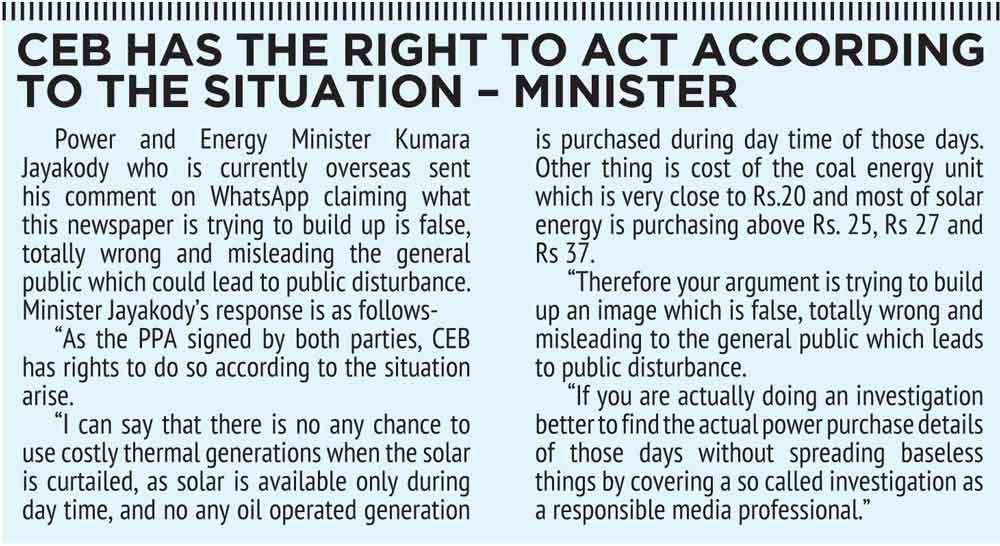
However, when this newspaper contacted Eng. Hedigallage to find out about the US$ 1 million payment to RMA Energy for the consultancy service provided for this project, and also to know how Dr. Siyambalapitiya could change his stance regarding RE addition to the grid after assuming duties as Chairman CEB, the former accused this newspaper of slinging mud at him
All these unacceptable explanations are given perhaps for two reasons. The first could be to conceal their inability to manage the system and the second reason is because a group of CEB officials connected to the diesel mafia are heavily losing their ‘income’ when electricity is generated from solar
When purchasing solar power, we- the CEB — pay them with rupees whereas we have to pay in dollars when purchasing coal or diesel power to procure the fuel. Just because this group of CEB Engineers are receiving commissions from this coal and diesel generation, but not a cent from solar generation, they opt to purchase power generated from coal and diesel,” sources said
By Nirmala Kannangara
Startling revelations have come to the fore as to how the present administration of the Ceylon Electricity Board (CEB) is attempting to promote thermal and coal power by curtailing renewable power generation.
For the first time in the history the CEB, it has switched off all rooftop solar plantsa over 100kW and instructed all rooftop and ground mounted solar system owners to switch off their inverters voluntarily to ensure the reliable and stable operation of the national grid during recent New Year season. The CEB claimed that this decision was taken due to the significantly low demand observed in the system.
However, most of the roof top solar owners disregarded this unusual directives. It is now reported how the CEB Engineers have forcibly entered ground mounted solar farms in many parts of the country during the festive season and switched off their inverters from 9am to 4pm for five consecutive days.
Giving various unacceptable explanations as to why Renewable Energy (RE) has to be curtailed, the CEB maintains that this curtailment was facilitated to maintain an adequate level of dispatchable generation and improve sufficient system inertia.
All these unacceptable explanations are given perhaps for two reasons. The first could be to conceal their inability to manage the system and the second reason is because a group of CEB officials connected to the diesel mafia are heavily losing their ‘income’ when electricity is generated from solar. When coal and thermal generations are minimised, these vested parties do not get their ‘commission’ as solar generation does not benefit them although it benefits the country. This is the first time orders were given to switch off not only roof top solar inverters, but also ground mounted solar as well,” a highly reliable source from the Sustainable Energy Authority told this newspaper.
Development Master Action Plan
Sri Lanka Sustainable Energy Authority (SLSEA) and the CEB drafted the ‘Renewable Energy Development Master Action Plan (REDMAP) 2023/ 2026’ in 2022 highlighting the importance in adding renewable energy (RE) to the national grid, especially from wind and solar. This was part of the Long-Term Generation Plan (LTGEP) that was drafted in line with the government’s policy to target achieving 70% RE by 2030, and to ensure timely implementation of RE additions to the system. CEB’s decision to ignore the instruction given in these reports and purchasing diesel and coal at a higher cost has raised eyebrows amongst their own engineers.
When purchasing solar power, we- the CEB — pay them with rupees whereas we have to pay in dollars when purchasing coal or diesel power to procure the fuel. Just because this group of CEB Engineers are receiving commissions from this coal and diesel generation, but not a cent from solar generation, they opt to purchase power generated from coal and diesel,” sources said.
As per the REDMAP, the proposed plan was to generate 1,795MW solar and 575 MW wind and other RE from 2023 to 2026. Having issued a report as such, what was the reason for the CEB to curtail RE and go ahead with costly thermal and coal power?
When drafting the REDMAP, Consultancy service to the Asian Development Bank (ADB) was provided by the Resource Management Associates (Pvt) Ltd (RMA) which is also known as RMA Energy, which was headed by the present Chairman of CEB Dr. Thilak Siyambalapitiya until September 2024 and presently by his wife.
RMA Energy provides consultancy services to ADB and World Bank (WB) on the country’s power sector. Having recommended to add more RE generation to the national grid at the time the report was drafted, this decision was ignored once he became CEB chairman and he wanted to purchase costly coal and thermal power by curtailing RE generation. It was even alleged that he was attempting to tender rooftop solar and ground mounted solar which is less than 10 MW for an unknown reason,” the Sustainable Energy Authority source told on condition of anonymity.
As per the CEB and Public Utilities Commission of Sri Lanka (PUCSL) official data, from the time the REDMAP was issued and up to now only 793 MW Solar plants have been commissioned, a figure which includes rooftop solar units.
US$ 1 million paid
According to sources, it was the ADB that gave the grant to prepare this report ‘Way Forward of Integration of Renewable Energy Resources to the National Grid from 2023 to 2026 by Means of Appropriate Business Models’. Director General Power Sector Reform Secretariat and member of the Energy Committee, Eng. Pubudu Niroshan Hedigallage, has made a status most on his Face Book account, adding that US$ 1 million has been paid to RMA Energy for the consultancy services provided.
However, when this newspaper contacted Eng. Hedigallage to find out about the US$ 1 million payment to RMA Energy for the consultancy service provided for this project, and also to know how Dr. Siyambalapitiya could change his stance regarding RE addition to the grid after assuming duties as Chairman CEB, the former accused this newspaper of slinging mud at him.
I know who is behind this mud slinging campaign. You can write anything you want, but I am not scared of mud slinging,” Eng. Hedigallage said.
Meanwhile questions have been raised as to how Dr. Siyambalapitiya’s wife Namalee Siyambalapitiya continued to work for RMA Energy in the capacity of director even after the former had resigned from his post to accept CEB Chairmanship.
RMA earns hundreds of thousands of Dollars from these consultancies annually related to Sri Lankan power sector. What sought of conflict-of-interest policy has he adopted before he took over office at CEB? Has he divested of his interest in RMA Energy? Has his wife divested of her interest in RMA Energy? Have they resigned from all operations of RMA Energy and handed over the RMA Energy Management and technical control of the company? Since RMA is currently consultants to Offshore Wind Power on pre-feasibility assessment, have they recused themselves from this engagement or any project related to the country’s power sector? Is Tharaka Siyambalapitiya who is the senior project engineer of this company an offspring or a relative of the CEB Chairman?
Conflict of interest
Though the NPP government that assumed power promised to put a complete stop to all frauds, it has not lived up to its promises and appointed Dr. Siyambalapitiya to the CEB with such conflict of interest in place at CEB – the den of corruption,” sources alleged.
Questions have been further raised whether the decision to curtail solar power generation was due to ‘the rapid’ increase in rooftop and ground mounted solar and other inverter base Non-Conventional Renewable Energy (NCRE) plant installation which has resulted in substantial frequency fluctuations owing to low system inertia which becomes critical during disturbances leading to the frequent activation of the Under Frequency Load Shedding (UFLS) scheme and increasing the risk of tripping major thermal power plants? The SLSEA has said that the CEB should reveal to the consumers as to why frequency fluctuation is reported now and never before.
They claim that after the country’s economic recession, the demand for electricity has gone down steadily while rooftop and ground mounted solar parks have come up in numbers and these additions to the national grid is the cause for the frequency fluctuation. Before Dr. Siyambalapitiya took office there were no concerns for the safety and stability of the national grid, but it’s only now that they talk about a risk of tripping major thermal and coal power plants. Why is this?” sources alleged.
Deputy General Manager (System Control) CEB, Eng. M.B.S. Samarasekara by letter dated November 12, 2024, to AGM (Transmission Non-Wired Operation) has informed that immediate mitigatory actions must be taken to improve system demand and system stability during weekends and holidays with high NCRE penetration to the system.
***This letter ***further states, ‘This is to bring to your attention a matter of significant importance regarding the stability and reliability of the Sri Lankan power system, especially considering the rapid increase in rooftop solar plant installations and other inverter base NCRE plants.
‘The rapid increase in rooftop solar installations has introduced significant irregularities to the operations of the power system. This issue is particularly severe during long holidays, especially on sunny Sundays when industrial and commercial demands are exceptionally low. On these days, many dispatchable plants are not dispatched to accommodate the must run NCRE generation, resulting in substantial frequency fluctuations due to low system inertia. This problem becomes critical during disturbances, leading to the frequent activation of the UFLS scheme and increasing the risk of tripping major thermal power plants, particularly the Lakvijaya power plant.
‘On September 22, 2024, the system’s minimum demand of 670 MW occurred around 10.53hrs. During this period system operators observed significant fluctuations in system frequency, even the machine loads were adjusted. Consequently, it was necessary to curtail available NCRE (inverter based) generation to avoid further demand reduction and improve system inertia by adding more generation plants. The lowest recorded demand in 2024 at 670 MW prompted the curtailment of approximately 160 MW of NCRE between 10 and 15.00hrs to prevent system demand from dropping further to 600 MW. This curtailment has facilitated to maintain and adequate system inertia. Following the curtailment system demand increased to 820 MW, allowing for the dispatch of higher inertia plants in order to enhance system stability and resilience.
‘It is noted that the system frequency is experiencing rapid fluctuations and instability especially during daytime when the demand is exceptionally low. This instability is alarming and indicates the need for immediate mitigative actions, such as the incorporation of fast frequency arresting solutions into the system as soon as possible.
‘It is noted that during extremely low demand periods with the increasing of non-dispatchable renewable energy sources have compelled the National System Control Center (NSCC) to shut down more dispatchable plants, resulting in a significant reduction in system inertia. This loss of inertia substantially increases the risk of a total system collapse in the event of any system faults or disturbances.
‘Given these challenges, it is unlikely that the system can maintain resilience during such incidents.
‘As an immediate step to mitigate low demand risks, it is suggested to introduce new tariff rates of the industrial category on weekends and special holidays could encourage increased electricity usage on these low demand period until the proposed power system ancillary services are in place. By offering incentivised rates industries would be motivated to shift more operations to these days to help improve system demand and enhance the grid stability and resilience.
‘The investigation into operating large hydro power plants such as Victoria, Kothmale, Samanalawewa, Uma Oya and New Lakshapana in synchronous condenser mode reveals a promising opportunity to enhance grid stability and reactive power support. With the recent installation of Automatic Voltage Regulators these plants have the potential to operate effectively in this mode. Notably, New Lakshapana has the necessary infrastructure for synchronous condenser operation established during its refurbishment, though this capacity has yet to be fully utilised. Implementing this mode across these hydro plants could significantly strengthen grid stability by providing crucial reactive power without generating active power.
‘Evaluating the feasibility of operating Gas Turbine Generator 7 (GT 7) in synchronous condenser mode presents a promising opportunity to enhance system inertia and stability. As GT 7 has the highest inertia constant (H constant) in the Kelanitissa thermal fleet, operating it in this mode would allow it to provide essential reactive power and stabilise frequency fluctuations without generating active power. This approach could lead to a notable improvement in system resilience and ultimately strengthening overall grid stability under varying demand and supply conditions.
‘It is imperative to prioritise the installation of fast frequency reserves and energy storage systems such as battery energy storage systems (BESS), fast acting Gas Turbines, Flywheel Energy Storage Systems etc. These systems can provide the necessary rapid response to frequency deviations, thereby enhancing the stability and reliability of the power system.
‘These recurring low demand periods (especially holidays with good sunny and windy environment) highlight the critical necessity for an NCRE control desk with forecasting and monitoring facility at the National System Control Center and respective Distribution Control in order to effectively ensure grid security within permissible limits. Therefore, the implementation of an NCRE control desk should be given priority.
‘The spinning reserve requirement has to be reviewed accordingly when more NCRE is added, as a hot spinning reserve of 5% may not be satisfactory to maintain the system stability and reliability in future.
‘In future major generation contributions will be generated from NCRE sources and may require curtailments. Therefore, a proper mechanism for curtailments has to be formulated for future NCRE additions (at least for above 5MW scale).
‘Additionally, it is advisable to evaluate the minimum operating power and ramp rates for both hydro power plants and the CEB thermal power plants. This assessment will ensure sufficient capacity to accommodate additional power plants within the system, resulting in a significant improvement in system inertia.
‘Accordingly, please make immediate arrangements to effectively tackle these challenges and ensure resilient operation even during power system disturbances. This requires the timely commissioning of fast frequency response sources and the outline of alternative methods such as a new tariff category for low demand periods and the operation of existing plants in synchronous condenser mode where feasible. These measures will help stabilise the grid and improve system resilience’.
Stability and reliability
Although Eng. Samarasekera’s said letter has recommended to take certain steps claiming their ‘significant importance regarding the stability and reliability of the country’s power system’, the suggested decisions should have been implemented by the CEB before this situation occurred.
Their deliberate failure cannot penalise either the consumers or investors. The prevailing least cost long term generation expansion plan approved by the PUCSL contains 20MW/50Mwh battery storage in 2024, 100MW/400MWh batter storage in 2025 and a further100MW/400MWh battery storage in 2026. CEB has not taken any action to have these storage facilities in place and now recommending having battery storage facilities. The consumers and investors should question the CEB why the energy storage systems and synchronous machine in the generation plan was not implemented by CEB,” sources added.
Even though Eng. Samarasekara has proposed many ways to face this challenge in his letter, the management has selected switching off existing Solar and curtailing the future expansion of Solar catering to the requirement of Thermal Mafia citing various technical reasons, it is learnt.
When we contacted Eng. Samarasekera to find out why the CEB is interested in promoting thermal and coal generation and why he has requested to formulate a proper mechanism to curtail for future NCRE additions, Samarasekera wanted this newspaper to get the information from CEB Spokesman Eng. Dhammika Wimalaratne.
When Eng. Wimalaratne was contacted regarding this matter he said that the CEB had requested all rooftop solar system operators to switch off their inverters from April 12 to April 21, with the utmost concern for the safety and stability of the national grid.
With the country being bankrupt and the economy shrunk, factories were closed down and the demand for electricity dropped significantly. However, in the meantime, due to low interest bank loans given for solar installations, the number of rooftop and ground mounted solar parks came up rapidly. As a result, solar power generation went up speedily and due to low demand, CEB had to shut down coal and thermal plants to balance the situation. The larger power plants provide a critical service to the grid called ‘inertia’, which helps keep the electricity frequency stable though solar or RE cannot provide such an assurance to the grid. Without adequate inertia, even a small problem can cause frequency problems, leading to partial or total blackouts. The demand on the national grid was reduced to as low as 1550 MW in the morning hours during the festive season. As a result, a surge in solar generation forced CEB to shut down large synchronous generators—such as hydro, and thermal plants—which are crucial for grid stability.
When asked whether the CEB and the Sustainable Energy Authority didn’t know what the future consequences would be, when drafting the LTGEP and REDMAP that planned 2, 728 MW renewable energy plants by 2026, Eng. Wimalaratne said that it should be asked from those who drafted these reports and that he cannot give a proper answer to it.
This is a good question, but it should be posed to those who drafted the reports. Without having battery energy storage system there is no way we can store the solar generated power. As the country faced the financial crisis, many factories and businesses were closed down and the electricity demand came down whereas the generation picked up after the banks gave low interest loans to install solar panels. Last December we got a loan from the ADB to set up 100 MW battery energy storage system. We hope that we will not have to curtail solar generation once this system is implemented,” he said.
According to him, only rooftop solar inverter owners were asked to switch off but not the ground mounted solar inverters.
Solar parks interfered with
Although Eng. Wimalaratne said so, several ground mounted solar companies on condition of strict condition of anonymity told this newspaper that CEB Engineers entered their solar parks forcibly during the festive season and switched off their inverters which has caused huge losses to their businesses.
We invested several billions of rupees for these projects. But due to the CEB’s arbitrary decision we lost around Rs.200, 000 per day. Who is going to compensate for this loss?” asked representatives of ground mounted solar companies.
According to Eng. Wimalaratne, until battery energy storage systems are installed, the national grid has to rely on large synchronous machines to supply inertia and ensure stability.
CEB Engineers have forcibly entered ground mounted solar farms during the festive season and switched off inverters
At present, Sri Lanka does not have this facility nor advanced solar inverters that can provide this support. Sri Lanka has over seven million electricity consumers, but a mere 100,000 have installed rooftop solar panels. When the grid becomes unstable, everyone has to pay the price,” he added.
Although Eng. Wimalaratne said that larger power plants provide a critical service to the grid to keep the electricity frequency stable though solar or RE cannot provide such an assurance, questions are raised why the Ministry of Energy is conducting pre-feasibility assessment stakeholder workshop to develop Offshore Wind Power potential in the country.
By letter dated March 5, 2025, Additional Secretary (Development and Procurement), Ministry of Energy, T. Prassanth has sent a letter to the Director General Sri Lanka Sustainable Energy Authority inviting them to attend a workshop for the said workshop.
***The letter states, ‘The Ministry of Power and Energy along with the Sri Lanka Sustainable Energy Authority implemented technical assistance from the World Bank to conduct studies towards developing offshore wind power potential in Sri Lanka.
‘The study was conducted by Pondera Consult, an experienced international offshore wind consultancy based in the Netherlands in collaborating with their national counterpart, RMA Energy.
We are pleased to inform you that, as communicated, a follow-up workshop is organised to present the pre-feasibility findings.****
CEB maintains that this curtailment was facilitated to maintain an adequate level of dispatchable generation and improve sufficient system inertia
When contacted, Additional Secretary (Development and Procurement), Ministry of Energy, T. Prassanth, to find out how much RMA Energy were paid to this project, the former said that she doesn’t know as this workshop was started few months ago.
This is not a loan, but a grant from the World Bank. So, we do not know how much this consultancy firm was paid as their fee is paid straight to that company but not through the government or the Ministry,” she said.
When met Chairman Dr. Thilak Siyambalapitiya in his office to find out how much the electricity consumers have to pay for the whims of the thermal and coal interested CEB Engineers though he and his company-RMA Energy when providing consultancy services when drafting the REDMAP and for the ongoing offshore wind power feasibility assessment project, the proposal to add more RE to the grid by 2030, he said that after the country faced an adverse economic situation, the power demand came down rapidly but the RE addition increased.
‘I explained you in detail how a power system is planned and operated to ensure stability and economic operation and how the share of renewable energy in the grid has grown from a minimum of 29% in 2012 to 55% in 2024. This growth did not happen by accident, but through efforts of all: governments, SLSEA, CEB, LECO and RE investors.
‘Long-term generation expansion plan of CEB 2023, approved by PUCSL was based on the demand forecast which says ‘demand has to be 18,725 GWh in 2025’. However, we will cross 16,000 GWh this year. Peak forecast will be 3283 MW; but we will not even cross 2800 MW this year. The conclusion is that the demand is not growing as expected. For 2024, PUCSL approved 160 MW of rooftop solar but we have facilitated 650 MW of new solar, this mean the supply is growing but customer demand is not growing. By January 2024, there should have been 20 MW and by January 2025, 100 MW of battery storage. None of them are available. They should have been procured to purchase these batteries in 2023 and 2024 respectively but procurement process was started only recently. The previous management was grappling with the economic crisis, I do not blame anyone for that delay.
Surplus of generation
‘So, until the demand grows plus storage is established, especially on holidays, all types of power plants have to be cut back. Electricity thus has to be produced at the same time the customer wants it. When there is a surplus of generation, we first cut off all our oil burning power plants, which are very expensive which is more than Rs 35 per unit. Hydropower generation is then curtailed but it is limited by drinking water and irrigation requirements downstream, determined by the Water Board and Mahaweli Authority. Then we curtail CEB’s own renewable energy power plants- Mannar wind power 100 MW and the smaller hydropower plants at Nilambe, Uda Walawe and Inginiyagala. Then if the supply is still in excess, we curtail the coal power plant which purchase price is Rs 19 per unit in order to absorb solar power (price ranges from Rs 15.50 to 42, depending on which year, and which type of contract you signed).
If you log on to CEB website you can see how CEB power plants of all sorts are curtailed on any day, to absorb renewable energy.
‘Like any other similar power plants worldwide, the coal power plant has a special feature. It cannot be cut back to very low levels of production as it has to be switched off completely. If switched off during daytime there will be a delay and an additional cost to restart because it is required to meet the customer demand in the night. Yet in the run-up to the New Year holidays, CEB switched off one coal generator completely, and cut back the other 2 to the minimum during daytime to maximise absorbing solar power and then ramped up at nightfall.
‘Renewable energy is curtailed only as a last resort. The very low demand during New Year holidays was anticipated. It became acute this year, owing to large solar capacity installed in 2024, against a demand that is not growing. So 2025 holidays were different to 2024, more supply, stagnant demand. Hence the cautious cut backs of solar PV larger than 100 kW, on commercial and industrial roofs, and cut back of others only as required’.
When it was said that there are allegations against him for the attempt to curtail, RE, though his own company RMA Energy provided consultancy service to draft the REDMAP that stated the importance in adding RE to the grid and proposed how much RE should add to the system from 2023 to 2026, Dr. Siyambalapitiya said that the consultancy service was provided to the ADB somewhere in 2022 but not to the government of Sri Lanka or to the CEB.
Yes we proposed what the RE capacity that should be added, and how it is to be added and where, well into the future,” he said.
When he was told that CEB Engineers are alleging that he is behind the planned curtailment as he has an interest in coal generation, Dr. Siyambalapitiya queried what evidence this newspaper has that he has interest in coal generation, and what kind of interest is alleged.
‘I am a 65-year old power system planner by profession, since 1982. My overall objective is to work whenever, wherever I am, to ensure Sri Lanka gets electricity at the lowest economic cost, within the government policy framework, whichever the government is in power. So depending on the world trends, I campaign for Sri Lanka to build/not to build different types of power plants for/against government policy and objectives of least cost.
CEB’s decision to purchase diesel and coal at a higher cost has raised eyebrows amongst its own engineers
As you would see, different types of electricity generation has many features: stability, cost, intermittency, renewable, fossil.It is a balancing act; not an argument of this against that, but all types of power plants, big, small, fossil, renewable working together to serve a reliable power supply at lowest cost, aligning with government policy.”
When asked whether he and his wife have divested of their interest in RMA Energy and have resigned from all operations of this company and have no hand in any management and technical control of RMA after accepting the Chairmanship of the CEB which is conflict of interest, and also whether the company has refused offshore wind power pre-feasibility assessment or any other ongoing project in the country’s power sector since he took over CEB office, Dr. Siyambalapitiya said that he resigned as the Managing Director RMA Energy when he took over office at CEB in September 2024.
A new MD has taken over RMA Energy. The company provides consultancy services to banks, developers, governments worldwide. My wife or I have not divested shares in the company. I have no hand in any operations of the company. The company, in any case, is not a service provider to CEB or the Government or Sri Lanka. Offshore wind power pre-feasibility study was conducted for the World Bank in 2023-2024 which was concluded in 2024. I was the team leader of the Sri Lanka study team. The study was won through a competitive bid in 2023.
After I left the Company, the team leader position was also transferred to the new MD. Certainly there was a concluding seminar on the Off Shore windpower study a few weeks ago, to present the findings. The World Bank requested the Ministry of Energy to decide and invite participants to attend a seminar, in which, who did the study, was disclosed, as it is the policy of the government and the World Bank. The study was concluded well before I joined CEB in 2024.
Finally, I agreed to be CEB Chairman for a limited period and that period has now ended. As soon as the government finds a replacement, I will be leaving office,” he said.
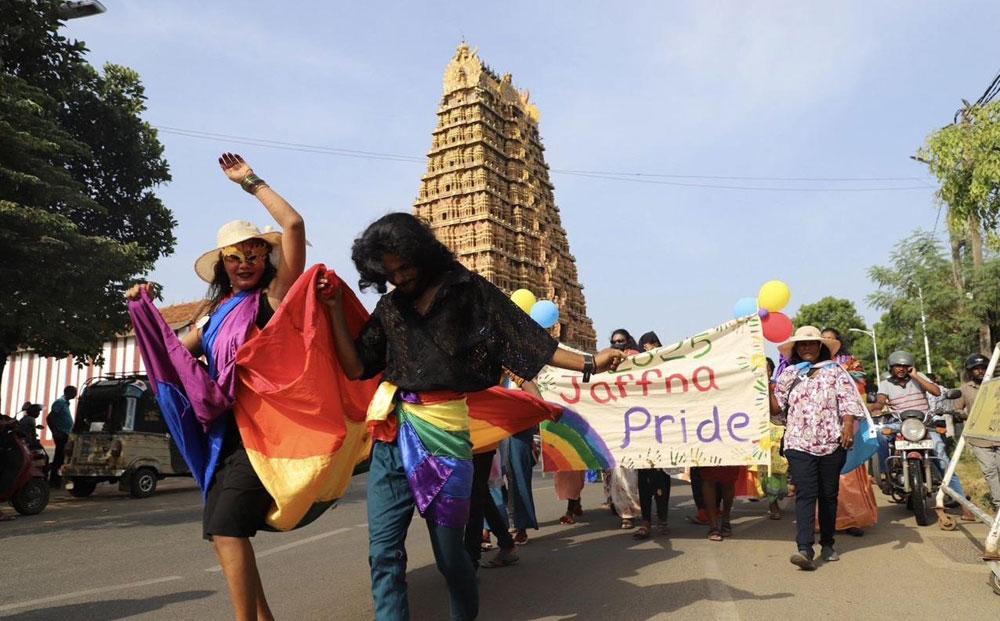
A protest promoting LGBTQ rights near the Nallur Kandaswamy Temple in Jaffna has drawn strong criticism from Geethanath Cassilingam, Chief Organizer of the Sri Lanka Podujana Peramuna (SLPP) for the Jaffna District, who said the act goes against Tamil culture and religious values.
In a statement, he stressed that while individuals may seek rights, they must also respect the traditions and beliefs of the Tamil community, especially in sacred spaces.
Cassilingam said, What a shocking shame to see a group of people promoting gay rights and forcing their so called beliefs in front of the sacred Nallur Kandaswamy temple in Jaffna, a sacred place for not only people of Jaffna but the whole country and worldwide devotees.”
He said the protest was against Tamil culture and added it was shocking to see them mocking this culture by promoting their beliefs in front of the most sacred place in Jaffna.
Furthermore, Cassilingam claimed that these groups have hidden agendas and are funded by secret groups who want to enforce their western beliefs on our children.
Meanwhile, he referred to another incident near the temple where many activists and individuals firmly voiced their opinion against a cafe selling meat within the Nallur Temple area and collectively changed the cafe to change their menu to vegetarian in respect of the sacred premises.
However these groups are now quiet when the Tamil culture is being mocked by these groups who are enforcing their so called rights in sacred places,” he stated.
This so called western culture must stay away from religious and holy sites and they must respect the cultures of communities as they ask for rights for themselves,” he added.
Colombo, June 10 (Daily Mirror) – President Anura Kumara Dissanayake has condemned widespread corruption within crucial state departments, revealing that some officials entrusted with upholding the law are themselves engaging in criminal activity.
Speaking at a Poson Poya commemoration event in Mihintale, President Dissanayake addressed the ongoing controversy surrounding a recent Presidential pardon, using the occasion to highlight deep-rooted misconduct within the public service.
Not all, but certain officials in key departments have been found participating in corrupt and illegal practices,” the President said, pointing to alarming examples across multiple institutions.
He accused the Prisons Department of unlawfully releasing inmates, and claimed that some police officers have turned into protectors of criminals rather than working to suppress crime. He also alleged that officials in the Immigration Department are issuing forged passports to underworld figures, while the Department of Motor Traffic is involved in corrupt dealings concerning vehicle registrations.
This is the state of the country,” the President declared, adding that the nation’s social structure is under threat from such systemic failures.
However, he noted that recent law enforcement efforts have led to the arrests of several officials from the Immigration, Department of Motor Traffic, Prisons, and Police services on corruption charges.
Over the past decade, global corporations have positioned themselves as champions of diversity, equity, and inclusion (DEI), aligning publicly with the LGBTQIA+ community through sponsorship of Pride Parades, rainbow branding, and internal inclusive” workplaces. These initiatives were widely heralded as progressive milestones, signaling a new era of social responsibility. The LGBTQIA community thought the corporates had their interests at heart. That could be further from the truth. In reality, corporations viewed the LGBTQIA community as a niche market to exploit for profit. As economic returns faltered, corporate enthusiasm for LGBGTQIA is fast on the decline.
Increasingly, major corporations are quietly retreating from Pride sponsorships, scaling back DEI efforts, and removing rainbow branding. This shift is not accidental—it reflects a stark economic reality: corporate investments in Pride and DEI are failing to generate the profits they expected. If they thought they would win customers – they have discovered they have lost more than they have won.
What once seemed like a winning strategy is now seen by many business leaders as a liability. The profit-driven corporate embrace of inclusivity” is collapsing, revealing that much of the movement was a performative and ideological ploy rather than genuine support or concern for LGBTQIA demanded lifestyle.
Customers Who’ve Stopped Shopping Due to LGBTQIA+ Promotion
Bud Light (Anheuser‑Busch): Sales dropped nearly30%, nationwide massive boycott after partnering withtrans influencer Dylan Mulvaney. Bud Light lost USD26billion.
Target: Target lost shoppers due to Pride merchandise and inclusive bathroom policies – Surveys showed a drop from 42% to 38% in customer loyalty—Target removed Pride-themed merchandise from many stores
Walmart: In 2024 terminated DEI programs, ended racial equity training, ceased evaluating LGBTQIA & decided not to renew its 5 year $100m commitment.
Companies Dropping Pride Parade Sponsorships (by Country)
United States: San Francisco Pride:
Comcast
Anheuser-Busch
Diageo
La Crema
Together, these departures resulted in around USD300,000 in lost funding
Other US cities: Comcast, Coca‑Cola, PepsiCo, Citi, Amazon (Audible), Target, and Nissan pulled support, causing USD200,000–750,000 shortfalls
New Zealand: Auckland Pride:
NZME
Vodafone
BNZ
ANZ All pulled sponsorship over a dispute concerning police uniforms
United Kingdom: Birmingham Pride:
City council withdrew £15,000+ funding amid budget cuts
Canada: Toronto Pride:
Criticism over corporate float” dominance; small and racialized community groups priced out or marginalized
Companies Removing LGBTQIA+ Rainbow Colors or Branding
Hansen (Denmark): Removed rainbow logo and LGBTQIA+ content from U.S. communications after safety threats and boycott threats
Nike: For the first time since 1999,did not launch a Pride collection in 2024, shifting instead to internal community programs
Target: Scaled back Pride displays, limited in-store merchandise, and discontinued a decade-long partnership with GLSEN
Google/Alphabet: Displayed inconsistent rainbow branding—applied it in Western markets but withheld it in others—highlighting selective usage.
What this shows us is:
Corporate backing was conditional—valuable only while it served profit or image goals.
Consumers exert power—backlashes (like those against Bud Light and Target) had real financial impact.
Event organizers are bearing the cost—Pride parades face sizeable funding gaps.
DEI branding lacks consistency—companies employ rainbow logos selectively, often withdrawing when politically risky.
The Profit Motive behind Corporate Support
LGBTQIA movement was a corporate profit initiative from the outset & nothing else.
Companies anticipated that:
Creating a new customer base:creating a younger generation of consumers purchasing pro-LGBTQIA merchandise.
Increased brand loyalty:Belief that diversity” would boost sales.
Attracting global talent:Belief that inclusivity” would improve employee recruitment. Merit has regained due place.
Market differentiation:Belief that use of Rainbow branding and participation in Pride parades would provide brand presence in public.
Expectations led to substantial investments for sponsorship, LGBTQIA events, hiring promoters, etc – the calculated revenue corporates expected their investment to translate to did not occur.
Example 1: Levi Strauss – Jennifer Sey former Brand President:
It’s a strategy to make money. … When those campaigns stop doing that, they’re going to stop doing it.”
Sey states corporate Pride branding was entirely profit-motivated — and that support evaporates once it stops being financially advantageous.
Example 2: Out Leadership CEO / Merrill Lynch
And we brought in twobillion dollars of LGBTQ assets…
We got Merrill Lynch to support LGBT rights because I tied it directly to business.”
This confirms that corporations often make calculated decisions, directly linking LGBTQIA+ initiatives to asset and revenue goals.
Example 3: Target CEO’s Investor Acknowledgement
Target CEO Brian Cornellpublicly admitted during investor calls that:
Sales fell nearly6% after launching Pride merchandise, partially due to a negative guest reaction.”
Theyscaled back Pride products to protect team safety and appease customers.
This shows astrategic policy reversal, based entirely on profit and public reaction — not on principle.
Example 4: Starbucks Internal Memo
A Starbucks memo instructed stores toremove Pride decorations, citing political caution:
Rather than demonstrating inclusivity… our store will disavow decorations entirely.”
Pride organizations in 2025 reported budget shortfalls of $200,000–$750,000 because top sponsors like Anheuser-Busch, MasterCard, Comcast, and Target withdrew their funding.
The clear rationale: avoid political and consumer backlash to protect profits, even at the expense of previous support.
Example 5: Pullbacks in Streaming Platforms
Axios notes thatNetflix, HBO Max, Apple TV+, and others significantly reduced Pride Month promotions, while Hulu and Peacock did not — signaling a selective, economically driven pullback.
Public Perception: Profit vs. Principle
AJune 2025 Pew poll found:
68%of LGBTQ+ adults believe corporate Pride support is profit-driven.
Only16% view it as genuine. – hype failed, consumers are fed up
A 2024 Axios/YouGov poll found that 68% of LGBTQ+ adults believed corporate Pride support was primarily profit-driven, and only 16% believed it was sincere. Consumers, even within the community, began disengaging
Consumer skepticism reveals that corporate allyship is mainly transactional.
The corporate push into LGBTQIA+ branding, DEI programs, and Pride sponsorships began in earnest around 2012–2015, peaked between 2018–2022, and began collapsing in 2023–2025.
Estimated Corporate Investment Duration: 8 to 10 Years
Year
Key Events & Milestones
2012–2015
Early adopters (Apple, Google, Levi’s, Nike, Starbucks) began visibly supporting Pride.
2016–2018
DEI departments expanded rapidly; brands like Target, Disney, Netflix doubled down.
2019
50th anniversary of Stonewall – corporate participation hit record highs.
2020–2022
Post-George Floyd era triggered aggressive DEI funding and woke marketing.
2023
Bud Light backlash marks the beginning of serious public revolt.
2024–2025
Major pullbacks: Target, Anheuser-Busch, Nike, Walmart, and Pride event sponsors exit.
Summary
Most brandsinvested for 8–10 years in LGBTQIA+/DEI efforts.
Why they stopped: public backlash, falling profits, and growing political risk.
The Reality Check: No Profit, rising costs
The corporate assumption that DEI and Pride sponsorships would boost long-term profitability has not materialized in practice. Firms are now experiencing the opposite effect—growing costs, declining returns, and reputational backlash. Resulting in CEOs & brand managers quietly retreating to avoid controversy.
The DEI Bubble Is Deflating – Departments quietly dissolving
Corporations are laying off DEI staff and cutting budgets for inclusivity” programs. DEI departments are often first to be downsized in cost-cutting cycles.
The freeze in USAID funding has significantly affected LGBTQIA+ programs globally, driven primarily by the January 2025 executive order from President Trump to pause foreign aid, explicitly excluding DEI and gender-identity initiatives including transgender surgeries.
Google, Meta, and Amazonhave all laid off DEI staff since 2023.
Netflix’s DEI teamwas reduced during budget restructuring.
Smaller companiesand franchises have either merged DEI with HR or eliminated it altogether.
This retraction speaks volumes: if the initiatives had been driving real profit or productivity, they would have been protected. Instead, it’s clear they were maintained for optics, not outcomes.
Globally too the pinch was being felt among LGBTQIA+ Communities
South Asia (India, Nepal, Bangladesh, Pakistan)
Nearly all USAID-funded LGBTI projects—including health, legal aid, and entrepreneurship initiatives—were suspended
Hyderabad’s Mitr Clinic, Andhra Pradesh’s first trans healthcare center, shut down after serving 150–200 clients monthly
Philippines
Organizations like LoveYourself lost critical support for HIV testing and LGBTQIA+
Uganda
Africa Queer Network, funded largely by USAID, had to cease operations, with staff sent home and services discontinued
Global Advocacy Organizations
Outright International paused programs in 32+ countries; the LGBTQ+ Victory Institute lost ~$600,000—two-thirds of its yearly budget
Corporate Blowback: The Backlash that Broke the Illusion
The LGBTQIA+–corporate alliance is fast collapsing following a wave of consumer backlash, brand boycotts & public criticism. Many corporations now find themselves scrambling to contain the fallout from what has become an ideological liability.
Disney, once a DEI poster child, faced subscription declines and investor criticism over LGBTQIA+ content in children’s programming. The backlash grew so intense that the company quietly walked back several projects and reshuffled its leadership.
These events sent an unmistakable message: the assumed customer base was not as aligned as anticipated. The promise of increased loyalty, goodwill, and revenue failed to materialize. Instead, these companies watched their reputation fracture across political lines.
Rainbow Branding becomes a risk
Rainbow logos and merchandisinghave started disappearing.
Starbucks,Levi’s, and Walmart either scaled back or completely withdrew Pride-themed decor and advertising.
Streaming giants such asNetflix and HBO Max significantly toned-down Pride promotions in 2025.
Rainbow branding is now perceived by large swaths of consumers asideological activism, leading to boycotts, security risks for employees, and damage to long-standing brand trust.
Corporate support for LGBTQIA+ causes was never unconditional. It was a calculated business strategy — one that presumed mass consumer alignment and overlooked cultural complexity. When financial returns didn’t meet expectations, and when backlash threatened market share, these companies retreated.
What began as a show of solidarity with LGBTQIA community now appears, to be a short-term marketing ploy, leaving a wake of disillusioned youth, fractured trust, and an entire movement wondering what happened.
The Medical Fallout: Rise in Youth Transitions, Lifelong treatments & health crises
Surging Youth Transitions fueled by Corporate-Backed Narratives
The normalization of gender identity fluidity — promoted aggressively through corporate campaigns, DEI trainings, and media — has led to a dramatic increase in the number of children and adolescents identifying as transgender or non-binary.
According to recent data:
In the U.S., the number of youth (ages 13–17) identifying as transgendermore than doubled between 2017 and 2023 (Williams Institute, UCLA).
The UK’sTavistock Gender Identity Development Service (GIDS) saw a 4000% increase in referrals over a decade, particularly among girls identifying as trans boys.
In Canada and parts of Europe, similar exponential growth has been reported, with clinicians concerned over a surge in teen-onset gender dysphoria.
These numbers don’t reflect a natural organic trend but a socially and ideologically driven surge — enabled by corporate messaging and health care systems incentivized to provide pharmaceutical and surgical solutions.
The Business of Transition: A multi-billion-dollar Industry
Pharmaceutical giants profit immensely from the gender transition process, which often requires lifelong dependence on medical treatments:
Hormones & Puberty Blockers
Lupron (Leuprolide)– originally used for prostate cancer – is now widely prescribed to children to pause puberty.” It can cost $10,000+ per year and must be administered for years.
Estrogen and Testosterone therapies– used for gender affirmation – are often lifetime medications, generating stable revenue for companies like AbbVie, Pfizer, and Eli Lilly.
Industry analysts estimate theglobal gender reassignment market will reach $1.95 billion by 2030, driven primarily by hormonal drugs and surgeries.
Surgeries
Top surgeries (double mastectomy for transmasculine youth): $9,000–$15,000 per patient.
Bottom surgeries: $25,000–$100,000+ depending on procedures, with long-term complications requiring follow-up treatments.
In the U.S., some states now cover these under Medicaid or insurance — meaning the pharmaceutical and medical industries are reimbursed by taxpayers. (the call to make LGBTQIA legal is to enable these operations via taxpayer funding)
Psychological Risks and Irreversible Outcomes
A 2021 study in theJournal of Sex & Marital Therapy found no conclusive evidence that hormone therapy reduces long-term suicide risk or improves mental health, contradicting the justification often cited for early interventions.
60–70%of youth with gender dysphoria resolve their identity without intervention if left alone through puberty — yet these children are being fast-tracked into permanent changes.
Detransitioners, a growing group, are beginning to speak out against how corporate and activist narratives pushed them into irreversible decisions, often as minors.
HIV/AIDS and Pharmaceutical Dependency
While corporations paraded Pride flags, the actual health metrics within parts of the LGBTQIA+ community worsened:
In the U.S.,70% of new HIV diagnoses in 2022 were among gay and bisexual men, according to the CDC.
PrEP medications (like Truvada and Descovy)— developed by Gilead Sciences — are now being marketed to youth and transgender individuals as part of inclusive healthcare.”
The HIV treatment and prevention drug market is projected to surpass$37 billion by 2030, with most profits coming from daily, lifelong regimens.
LGBTQIA+ community claimed this addiction as empowerment,” but it was nothing other than medical dependency that benefits pharmaceutical giants far more than patients.
LGBTQIA+ Community was Marketed — Not Empowered
Corporate LGBTQIA+ activism had less to do with empowerment and more to do with market creationfor profit:
Children were turned intolifelong medical customers.
Major corporations profited from the illusion of allyship,” while the community became increasingly medicalized, divided, and now abandoned as profits decline.
As former GSK executive Martin Roussel admitted in a 2023 industry forum:
The LGBTQIA+ market was a strategic opportunity — a culturally activated, politically protected group with clear pharmaceutical dependencies. It was a perfect storm for long-term ROI.”
Who Really Benefited?
Pride flags are reducing. Rainbow packaging is disappearing. DEI departments are being dismantled. Yet, the medical interventions, identity confusion, and health burdens remain — particularly among the youngest and most vulnerable.
The LGBTQIA+ community — and especially transitioning youth — were used.
As corporations retreat from LGBTQIA+ branding and DEI initiatives under mounting public and financial pressure, questions must now be asked of the UN and its agencies — the very institutions that lobbied governments worldwide to legalize and normalize these ideologies under the banner of human rights. For years, bodies like the UNHRC, OHCHR, and UNDP aggressively partnered with corporations to promote sexual orientation and gender identity (SOGI) legislation, often overriding cultural, religious, and democratic resistance in Global South nations. Now that the private sector is quietly withdrawing due to brand damage, consumer backlash, and a lack of commercial return, these agencies remain unapologetically entrenched, offering no introspection or accountability.
Nowhere is this more evident than in CEDAW — a treaty created to eliminate discrimination against women, but which has since morphed into a platform for ideological overreach.
Through General Recommendations,” the CEDAW Committee has demanded decriminalization of homosexuality, legal recognition of transgender identities, and education reforms promoting gender theory — all under a treaty that never mentioned gender identity” or sexual orientation” to begin with. Feminist groups globally have begun to reject this shift, warning that CEDAW is now undermining the very women and girls it was created to protect, by erasing biological sex in favor of gender identity and silencing legitimate child protection concerns.
These unelected bodies — unlike the corporations now fleeing — are not accountable to markets or electorates. Their continued pressure on sovereign states, without local consent or benefit, reveals an ideological agenda divorced from lived realities. When both profit and people push back, and when even corporate allies abandon ship, who exactly are these UN agencies still speaking for? And why are their agendas immune to the same scrutiny applied to the private sector?
It is a warning for Sri Lankan Parents.
What this means for Sri Lanka
1. Wake-Up Call against Blind Imitation
Sri Lanka and similar nations have often felt pressured to mimic Western liberal trends — from legalizing same-sex relationships to embedding DEI policies in public and corporate life. But now, as Western nations and their corporations are reversing course, it becomes evident that these trends were not based on deep, lasting values — they were ideologically fashionable and profit-driven fads.
Lesson: Following Western trends without cultural, social, or economic alignment can lead to policy disasters that harm a society more than help it.
2. Proof that ‘Inclusivity’ was a Manufactured Trend
The sudden retreat of corporate giants — after pushing DEI and LGBTQIA+ branding for a decade — proves that much of this was strategic PR, not moral commitment. It was manufactured to:
Capture youth markets,
Exploit identity trends, and
Earn social capital cheaply.
Lesson: Legislating based on Western ideological hype — rather than national values, local data, or cultural context — exposes nations to foreign social experiments with no accountability when those experiments fail.
3. Policy Reversals in the West = Time to Reassess at Home
If the very nations that promoted LGBTQIA+ rights, gender identity policies, and DEI mandates are now:
Defunding programs,
Firing DEI departments,
Reversing school curricula, and
Backing out of pride campaigns, then why should Sri Lanka or any other countryblindly legalize or endorse what is clearly no longer seen as valuable even by its creators?
Nations like Sri Lanka must stop legislating based on temporary Western approval. What is trending today in Washington or London may be abandoned tomorrow — but the damage to Sri Lanka could be permanent.
In 2023, a deceptively packaged proposal was tabled to amend Section 365 and fully repeal Section 365A of Sri Lanka’s Penal Code — laws that currently criminalize unnatural sexual acts and gross indecency. LGBTQIA+ lobbyists and their foreign-funded backers claimed these were colonial relics” and tools of discrimination.” This is an outright falsehood. A legal Trojan Horse. A weaponized lie to justify their lobbying.
These lobbyists are not pursuing equality — they are hijacking Sri Lanka’s legal system to decriminalize all forms of homosexuality, erase protections for children, and break down religious, cultural, and moral safeguards that have protected society for generations. They are not even bothered about adults sexually abusing children to satisfy their lusts.
What Rewriting Penal Code 365 Really Means:
1. Decriminalize Homosexuality in All Forms
By removing the words man” and woman” from Section 365, the rewritten version proposed in 2023 which the Human Rights Commission of Sri Lanka is now recommending removes any criminal penalty for any unnatural sexual act — regardless of context, setting, or potential for harm. The lame excuse that this abuse is covered in other acts omits to accepts that only in 365/365A does the crime specifically cover same-sex sexual abuse. In other provisions, the lawyers would need to argue the case & everything would boil down to interpretations. The disadvantage would always be with the victim.
What rewriting Penal Code 365 actually means:
Male-male, female-female, and nonbinary sexual acts — allfully legalized.
Anal and oral sex— formerly prosecutable under 365 — now protected by law.
Only bestiality remains penalized. Every other human-to-human act —no matter how unnatural, exploitative, or immoral — becomes fair game.
Bottom line: Does the above remotely cover discrimination or does it advocate lust? This is not about ending discrimination. This is about enshrining any form of homosexual conduct as untouchable in the law — regardless of age, setting, or consequence.
2. Erase Protections for Male Children (particularly under 365A)
Section 365A is one of the few legal shields male children have in Sri Lanka against predators. Rather than repeal this entirely as was the 2023 proposal, this should be amended to include female & 365A should be further strengthened. However, the Human Rights Commission Sri Lanka appears to want to remove this safeguard too.
If 365A is repealed:
Indecent behavior, grooming, and coercive acts toward boys — such as exposing, touching, or verbal abuse — will no longer be punishable unless statutory rape can be proven.
Underage male victimslose legal recourse unless a full sexual assault with penetration occurs — a near-impossible standard in many real-life abuse cases.
Bottom line: This is legal disarmament of the system meant to protect boys from abuse in homes, schools, temples, churches, and tuition centers. It’s open season on male children, and the LGBTQIA+ lobby knows it.
Presenting 365A as a discrimination” the LGBTIQA lobbyists want to completely remove this provision. HRCSL are also happy to oblige. Once again look at the list of prominent names who are also agreeable!
3. Remove Legal Safeguards in Schools, Hostels, and Orphanages
Sections 365 and 365A currently empower authorities to monitor and prosecute sexual misconduct. The repeal will strip away these powers.
What’s at stake:
Hostel wardens, principals, clergy, and matronslose legal grounds to intervene unless rape is proven.
Indecent exposure, molestation, and grooming in orphanages and schools?No longer prosecutable.
Same-sex sexual experimentation or coercion in boarding facilities?Now protected behavior.
Bottom line: Children in institutional care become sitting ducks, while the system looks away — not out of ignorance, but because the law now forbids action. How can HRCSL even recommend such?
4. Open the door to Foreign Ideologies that contradict Sri Lanka’s Cultural & Religious Values
Let us be clear: This is not a domestic legal reform. This is a foreign ideological coup.
These laws are being rewritten under direct pressure from foreign-funded NGOs, Western embassies, UN agencies, and LGBTQIA+ global lobby groups.
Their goal is to:
Introducegender-fluid education in schools (how bizarre to even promote the idea that a person is neither male nor female – those promoting such need immediate mental appraisal)
Legalizesame-sex marriage
Normalizeminors undergoing gender transition (the West is now reversing having experienced the dangers)
Punish cultural dissent as hate speech” – this new term was specifically introduced to silent the sane voices
Bottom line: This isn’t modernization — it’s moral invasion. It’s a hostile cultural takeover — by stealth — disguised as human rights.” It is an attack on the nation’s Buddhist, Hindu, Islamic, and Christian foundations.
Expose the Lobbyists — Call Out the Cowards
Let it be stated without apology:
The lobbyists behind this scheme — both local and foreign — have deceived the Sri Lankan people, misled the President, manipulated the Cabinet, and attempted to outmaneuver the legal system by using human rights” as a mask to push a foreign agenda.
They haveexploited children’s rights rhetoric to promote sexual permissiveness.
They haveshamed the public into silence, using Western media tools.
They haveinfiltrated law faculties, civil society groups, and public discourse to normalize what is not normal.
They have lied. And now they must be named, shamed, and held accountable.
This is not progress.” This is cultural betrayal, and the Sri Lankan people must rise with clarity and courage to reject this ideological blackmail.
This Is Not Reform — It’s Surrender
Repealing or rewriting Penal Code Sections 365 and 365A is:
Not about ending discrimination – Police statistics prove a non-existent discrimination”
Not supported by crime data or judicial necessity
Not requested by the general public
Not aligned with any religious or cultural value in Sri Lanka
Australia is desperate. Driven by US hegemony, Australia is on a mission to get anyone it can get to confront China. For this reason, the Australian Defence Minister was in Sri Lanka. The two countries agreed to strengthen defence cooperation and dialog but fell short of any concrete agreement. Sri Lanka has no regional or global security threats or enemies, therefore, Sri Lanka should not invite trouble and certainly not fight others’ wars. This is a golden opportunity for Sri Lanka to put Australia on the mat on Tamil terrorists. Unlike other US military proxies, Australia is yet to ban Tamil terrorist groups. Banning Tamil terrorist groups must be a precondition for any defence understanding with Australia. No deal is possible without it.
Though it is a large country, Australia has a small military. It will be routed easily in a war with China. Its diverse population is very unlikely to take up arms against a war they cannot win. This has led to desperate attempts by Australia to win neighbors for its impending war with China. Despite calling the Indonesian president a human-rights abusing dictator, Australia has reached out to him a number of times begging him to agree to defence deals. All south Pacific nations and other neighbors have been wooed by repeated diplomatic moves.
Sensing the desperation, these countries have played their cards right. They have demanded massive economic and other benefits in return. These include funding for education, infrastructure, sport, English language education, increased migration quotas, recognition of their languages in Australia’s cultural funding mechanisms, mutual recognition of universities, wheat and other food donations and a number of other sweeteners. Sri Lanka must ask the same. This is the time.
However, despite getting these Sri Lanka should not get involved in regional conflicts. The maximum Sri Lanka should do is provide verbal support, diplomatic support and follow the friend to all, enemy to none” stance. If Australia refuses to ban Tamil terrorist groups as banned terrorist groups, Sri Lanka should flatly refuse any defence agreement or discussion. If USA, UK, the EU and India could ban Tamil terrorist groups, there is no reason why Australia cannot. After all Sri Lanka is not looking for backup to fight a losing war with China.
Dr. Mrs. Mareena Thaha Reffai 23a, auburn side Dehiwala
Dear Mr. President,
There is no doubt that we, the people had great hopes when we brought you into power. Whatever the masses may say, the majority still believe in you and we recognize the fact that you need time to fulfil all your promises and some are harder than you imagined and it is highly appreciated you’re allowing the Ministry of justice take its independent course without political interference.
All well and commendable, but unfortunately you have failed miserably in one aspect, which, the intellectuals, the decent people, the educated masses of this country expected dearly. It is the way the behavior of today’s politicians in the parliament. In spite of boasting of educated majority in the parliament – at least on your side, I must say, watching the happenings of the parliament procedures is – to say the least, painful, worse than a fish market.
I remember being taken to watch the parliament procedures as a student those days when my uncle Mr. A.C.S. Hameed was a parliamentarian. I still remember the awe and respect I felt for the politicians – though, then too, there were heated arguments and vehement opposition but all were expressed with due respect and dignity. No thumping of desks nor shouting matches – certainly no personal insults. We students learnt how to conduct a debate or a negotiation and we felt great respect for our law makers.
But now! The procedures may serve as vulgar entertainment for some but certainly it is repulsive and horrible to watch the so called lawmakers. Even in our class rooms such childish, uncouth behavior will not be tolerated, leave alone in any respectable organization. These uncultured so called leaders often behave like village thugs, shout without prior permission to speak often going beyond his/her given time, while the Speaker shouts himself/herself hoarse. Half of what is said is lost in the roar by the opposition. All in all, it is an unruly, unattractive, ugly circus. Yes, that’s what it is.
Known for discipline, we expected from NPP, decent behavior, as opposed to the past politicians, when you took over. But no, the same attitude, same disrespect for the highest echelon of the country, same thuggery and boorish behavior goes on. Those days it was seen only be visitors, but knowing that not only the whole country, even the entire world is watching, these bunch of LEADERS do not feel ashamed to behave in this unbecoming way.
Its time we put this right. Strict rules must be applied in our parliament and the parliamentarians must be given a training on the etiquette of performing in front of million of viewers; and decorum, decency and dignity must be maintained. No wonder there are no manners, no chivalry and no respect to be seen among our countrymen either, as the Tamil saying goes, How the leaders are, so will be the citizens”.
I sincerely hope as our country marches towards a clean, non corrupt governance, it will also bring in the manners of gentlemen and ladies, the manners of the true exemplary leaders to the country and the people, specially the youngsters will really respecting the elders and will feel like emulating them.
Former President Ranil Wickremesinghe is scheduled to appear before the Criminal Investigation Department (CID) on Wednesday (11).
Former President Wickremesinghe will appear before the CID to provide a statement in relation to a complaint made by former Minister of Health Keheliya Rambukwella over the alleged importation of substandard human immunoglobulin vaccines.
Keheliya Rambukwella had previously lodged a complaint with the CID regarding the importation of medicines into the country.
Several ministers from the previous government have already provided statements as part of the investigation related to that complaint.
The Commissioner General of Prisons Thushara Upuldeniya, who was suspended from duty today (09), has been arrested by the Criminal investigation Department (CID), police confirmed.
Accordingly, the CID arrested the Commissioner General of Prisons this evening in connection with investigations into allegations that he aided and abetted the unlawful release of an inmate from Anuradhapura Prison under the Presidential Pardon granted for Vesak Poya.
The suspect is currently in the custody of the CID and is scheduled to be produced before Magistrate’s Court No. 01 at the Aluthkade Courts Complex tomorrow (June 10).
The CID is conducting further investigations into the incident.
Earlier today, a decision was taken by the Cabinet of Ministers to suspend the services of Commissioner General of Prisons Thushara Upuldeniya.
The decision was taken during today’s weekly Cabinet meeting chaired by President Anura Kumara Dissanayake.
The move comes as the CID launched an investigation over claims that an inmate of the Anuradhapura Prison was unlawfully released as part of the Presidential Pardon granted for this year’s Vesak Poya.
Accordingly, in order to facilitate an impartial inquiry, Commissioner General of Prisons Thushara Upuldeniya has been suspended.
Meanwhile, yesterday (08), the Superintendent of the Anuradhapura Prison was arrested by the CID over allegations of unlawfully releasing an inmate of the Anuradhapura Prison under the Presidential Pardon granted for Vesak Poya.
While Sri Lanka waged its final campaign to eliminate the LTTE terrorist organization between 2006 and 2009, the United Nations and UNHRC once again failed in their duty to uphold international law, protect civilians, or address terrorism impartially.
Context Behind Sri Lanka’s Decision to Militarily Defeat the LTTE
Unlike the swift and unilateral military actions taken by the United States and its allies after the 9/11 attacks—such as the bombing of Afghanistan (2001) and invasion of Iraq (2003) [1]—Sri Lanka’s campaign followed nearly three decades of sustained violence, failed peace efforts, and persistent LTTE violations of ceasefire agreements.
The LTTE’s insurgency included over 200 suicide attacks, ethnic cleansing of Muslims and Sinhalese from the North and East, political assassinations (including Prime Minister Rajiv Gandhi and Sri Lankan President Premadasa), and the use of child soldiers[2][3].
In July 2006, the LTTE closed the Mavil Aru sluice gates, cutting off water to 60,000 civilians, triggering a humanitarian crisis condemned by both domestic and international actors [4].
President Mahinda Rajapaksa launched a military campaign with the dual aim of defeating terrorism and rescuing over 300,000 Tamil civilians held hostage as human shields by the LTTE [5].
UN and UNHRC’s Omission of Humanitarian Context
Despite the legitimate and humanitarian basis for the operation:
The UNHRC made no formal acknowledgment of Sri Lanka’s extensive record of ceasefires and negotiations from 1987 to 2006, including the failed 2002 Norwegian-brokered peace process [6].
The Mavil Aru incident, a clear war crime by the LTTE under international humanitarian law (IHL), was never condemned by the UN [7].
Sri Lanka’s 2009 operation is regarded as the largest humanitarian rescue mission during wartime, saving nearly 295,000 civilians, as confirmed by the UN Resident Coordinator and ICRC [8].
The ICRC, active in the conflict zone until May 2009, confirmed government cooperation in civilian evacuations and casualty treatment under the laws of war[9].
International Observations during Final Phase
UN Resident Coordinator Neil Buhne stated in 2009 that the Government cooperated with humanitarian agencies and facilitated civilian movement”[10].
Military attachés from India, China, Pakistan, and several EU countries visited the North and confirmed the Sri Lankan military’s professional conduct, particularly its adherence to minimizing civilian harm [11].
Civilian Protection Measures by the State
The government designatedNo Fire Zones (NFZs) and announced them through radio broadcasts and leaflets in Tamil, encouraging civilians to relocate [12].
Over 1.2 million food parcels were air-dropped into LTTE-held areas via the Air Force and WFP coordination missions [13].
LTTE Violations of International Law
The LTTE deliberately moved artillery into the NFZs and used civilians as human shields, breaching IHL Articles 51 and 58 of Additional Protocol I to the Geneva Conventions [14].
Eyewitnesses, including UN field staff, confirmed LTTE snipers fired on fleeing civilians and laid landmines to prevent escape [15].
UN internal reports from 2009—later redacted—documented these atrocities but were ignored in official UN narratives [16].
Consultative Committee on Humanitarian Assistance (CCHA)
The CCHA, initiated in 2006 and chaired by senior officials, met bi-weekly with participation from the UN, ICRC, EU, USAID, and major INGOs [17].
All operational data and field access were transparently shared. No allegations of war crimes were raised during these meetings—a fact documented in CCHA minutes [18].
UN’s Failure to Condemn LTTE War Crimes
Despite the LTTE being a proscribed terrorist group:
The UN remained silent on the LTTE’s forced recruitment of over 5,700 children (as reported by UNICEF Sri Lanka)[19].
The LTTE’s repeated bombings of buses, trains, and religious sites—including the attack on the Sacred Tooth Relic Temple in 1998—were never the subject of UNHRC resolutions [20].
Global Counterterrorism Standards vs. Sri Lanka’s Experience
Under UNSC Resolutions 1267 (1999) and 1373 (2001), states were urged to freeze assets and take action against terror groups. These resolutions have been enforced against al-Qaeda, Taliban, and ISIS—but never the LTTE [21].
The LTTE was banned by India (1992), USA (1997), UK (2001), and EU (2006)[22]. These bans remain in effect, yet no UN action followed to dismantle LTTE networks operating globally.
Distorted UN Reports and Diaspora Influence
TheDarusman Report (2011), commissioned unilaterally by the UN Secretary-General, disregarded the UN Country Team’s field data and reports [23].
Gordon Weiss, former UN spokesman, admitted in media interviews that the civilian death toll he cited was speculative” and not based on verifiable data [24].
The SLMM (Sri Lanka Monitoring Mission) recorded 3,829 LTTE ceasefire violations between 2002 and 2005[25]. These were never acknowledged in UN assessments.
Post-War Narratives Driven by LTTE Diaspora
Western INGOs, such as those later exposed for receiving funds from LTTE fronts, were primary sources for post-war allegations [26].
Post-conflict claims only emerged after the defeat of the LTTE, when verification and firsthand documentation had ceased—a clear break from accepted human rights investigative standards[27].
UN Inaction in rescuing Tamil Civilians
No UN resolution was passed demanding the LTTE release civilians.
No safe corridors or international protection missions were deployed.
Instead, the UN disproportionately focused on state conduct, despite LTTE’s use of civilians as military shields—an act amounting to war crimes under IHL[28].
Conclusion: UN’s Accountability Gap (2006–2009)
The record reveals:
Selective enforcementof international norms—targeting only state actors like Sri Lanka.
Double standardsin counterterrorism, especially compared to action taken against ISIS or Boko Haram.
Credibility erosiondue to reliance on diaspora allegations and sidelining of real-time field evidence.
Key Questions the UN must answer:
Why was Sri Lanka denied support while combating a proscribed terrorist group?
Why were LTTE atrocities underreported or ignored despite clear documentation?
Why were international norms of neutrality abandoned in favor of post-war politicization?
Until these issues are transparently addressed, the UN’s role in Sri Lanka will remain one of complicity through omission.
Shenali D Waduge
Sources
[1] UN Security Council Resolutions 1368 (2001), 1373 (2001) on Afghanistan/Iraq. [2] LTTE Suicide Attacks Database – Ministry of Defence, Sri Lanka (2009). [3] Children in Armed Conflict: Sri Lanka”, UNICEF Reports 1998–2009. [4] Government of Sri Lanka, Mavil Aru Incident: A Humanitarian Crisis” – 2006 Cabinet Report. [5] Ministry of Foreign Affairs, Humanitarian Operation: Final Report” (2009). [6] Chronology of Peace Talks and LTTE Violations,” South Asia Terrorism Portal (SATP). [7] ICRC Commentaries on the Geneva Conventions – Customary IHL. [8] UN Resident Coordinator Statement – Neil Buhne, May 2009. [9] ICRC Annual Report on Sri Lanka Operations, 2009. [10] UN Press Briefing, May 2009 – UN Sri Lanka Office. [11] Foreign Military Attaché Reports – Ministry of Defence, Sri Lanka Archives. [12] NFZ Announcements and Leaflets” – Ministry of Defence Archive (2009). [13] WFP & SLAF Joint Air Drop Records – 2008–2009. [14] ICRC Database of Customary International Humanitarian Law – Rule 97. [15] UN OCHA Staff Reports (2009) – Restricted Documents Archive. [16] Petrie Report” – UN Internal Review Panel on UN Actions in Sri Lanka (2012). [17] CCHA Meeting Minutes – Available through Ministry of Disaster Management. [18] Interview with Prof. Rajiva Wijesinha – Former Secretary to the Ministry of Disaster Management. [19] UNICEF Sri Lanka Reports – Recruitment of Children by LTTE (2002–2007). [20] LTTE Attacks on Civilians – MoD Archive, 1998–2008. [21] UNSC Resolution 1373 Implementation Tracker – UN CTED. [22] U.S. State Department – Foreign Terrorist Organization List; EU and UK Lists. [23] Darusman Report Review” – Analysis by Legal Advisory Council, GoSL. [24] Gordon Weiss, Interview with ABC Australia, 2010. [25] SLMM Ceasefire Monitoring Reports – 2002–2006. [26] US Senate Hearing on LTTE Diaspora Funding, 2006. [27] UN Guidelines for Human Rights Investigations – OHCHR Manual (2001). [28] Geneva Conventions Additional Protocol I, Articles 51(7), 58(c).
Before you study the economics, study the economists!”
e-Con e-News 01-07 June 2025
June furnishes us with humid, dripping, sopping, sodden, swampy examples of how the media in Sri Lanka lives in another world, perhaps in the City of London, or Wall Street, New York. Look how they act surprised by the annual SouthWest Monsoon, which had already long begun in the ocean outside wintry Southern-Eastern Africa (if there’s such a thing as a beginning, to winds) and seasonally lashes the country as it heads for the Himalayas and further north & east. Yet, like transport investigators tardy to the scene of an Ashok-Leyland bus accident, with news-media editorialists lamenting the loss of housing, roofs & lives, faking tears that are soon flushed away with the bountiful rains, the media then faithfully and belatedly tracks the devastation by flood and landslide, just as they devotedly trail the movement of the sun over our heads from Devundra to Pandatharippu in April & August, pretending to be exacting astronomers. But it is all reaction. There is little information for preparing people for this spell of wind & rain, or its failures, what cultivators & workers (the real majority!) should be doing or do, and the expected consequences… – and,where are the interviews with CEB repairing workersthe 50, 000 power outages across the country? – or, what precautions people may take, let alone discussing appropriate clothing or ‘fashions’! So, who decides this local media’s agendas & priorities? Well, we don’t have to look too far… (& don’t act surprised!).
‘USAID spends over a quarter billion dollars yearly
training & funding a vast sprawling network of more
than 6,200 reporters & nearly 1,000 ‘independent’
news outlets or journalism organizations…
the largest global propaganda network ever created’
– Lee Camp (see ee Media, Giant US Propaganda Web!)
*
‘Overseas School of Colombo’s first-ever Media Open Day sets
a new standard – opening its doors, hearts & soul to the media’
(see ee Workers)
*
‘CIC Holdings delivers resilient FY25 results with 9% topline growth’
(see ee Agriculture)
*
‘LOLC Group posts Rs41bn net profit; assets top Rs2trillion mark
The robust performance was fueled by steady expansion in financial services,
a series of strategic international acquisitions, & improving economic conditions.’
(see ee Finance)
*
Almost every single English medium in Sri Lanka reproduce & repeat company ‘press releases’, most times without changing one hyperbolic word. Since these ‘news’ items are actually non-industrial products (mere hulang) from these import merchant’s public relations (PR) agencies, shouldn’t they be clearly delineated as ‘paid’ advertisements? Most ‘news’ are pure ads, and repeated verbatim throughout media (see ee News Index below)! If this merchant media (owners, editors, reporters) are being paid (over & under the table) to reprint these ‘infocommercials’, shouldn’t they be declared as income and taxed, or exposed by the Bribery Commission? What says the Internal Revenue Department about these ‘paid printers’ who are usually full of ‘shlock & awe’ about politicians’ corruptions, etc? That is, when they are not photocopying corporate junk or state ‘media divisions’ signalling good intentions, all liberally deploying the infinitive tense: ‘to do’, ‘to implement’, with no follow-up on any such thing done or implemented. Then there are the mind-boggling array of prizes and awards being handed out daily – shouldn’t all these elaborate ceremonies be listed as tax-evading expenditures? Does the answer lie with that award-winning & prize-giving Institute of Marketing (SLIM), which claims to be Sri Lankan?
In this month of banks & financial institutions releasing their ‘first quarter’ (1Q2025) statements, shouldn’t their hyper claims about revenues & profits & premiums be modified by use of the words ‘reported’ or ‘claimed’? & how do they make their profits? Is it investment in production? or usury & speculation in real-estate? No such questions are asked! The nouns, verbs, adjectives & adverbs used in headlines include: ‘surpass, highest, top, robust, hike, achieve, leads,historic, strong’ – while providing no investigation into such nouns, verbs, adjectives & adverbs by the so-called ‘independent’ ‘free’ ‘nursemaids of democracy’ and ‘5th Estate’, offer no veracity to such claims. And it’s not just companies but ubiquitous nosey envoys (going far beyond their station, as if sticking up a middle finger in scatological defiance) & so-called NGOS (funded by OGs – other governments) – look (above) at the self-righteous hype of these international schools – which are illegal under the Education Act but operating under the Business Act.
Meanwhile, the Central Bank Governor, that good ‘non-medical Dr’ N Weerasinghe (A Heroic Lion) assures the US Chamber of Commerce in Sri Lanka (AmCham), that the ‘Collapse of the economy in 2028 is a myth’! Yet, one media cheerleader even exerts themselves to caution, albeit in obtuse financial jargon:
Sri Lanka ‘risks’ asset price inflation without real economic gains
‘Merchandise trade indicators reinforce concerns, with import expenditure
jumping 12.7% year-on-year to US$6.57bn in the first 4 months of 2025,
widening the trade deficit to $2.26bn. A notable surge in motor vehicle imports,
up a staggering 707.9% y-o-, has contributed to the imbalance, outpacing
export growth despite a 6.4% uptick in export earnings. While tourism earnings
rose to $257mn & remittance inflows hit $646mn, foreign investments in
government securities saw a net outflow of $12mn signaling persistent
global investor caution. ‘One would take a fleeting look at the data & say
bulls may be charging forward… but they should keep an eye on
storm clouds ahead. Without real economic productivity, Sri Lanka risks
liquidity-fueling asset price inflation rather than sustainable progress.’
(see ee Economists)
*
The controversial Lanka Sama Samaja Party (LSSP) leader NM Perera’s 120th Birth Anniversary falls on June 6. As Finance Minister of a government that had won by a landslide in 1970, he famously informed his PM, Sirimavo Bandaranaike: ‘Madam, the kitty is empty.’ We all know what followed next, in 1971 (insurrection), 1973 (OPEC), 1974 (famine), and 1975 (destabilization), and sabotage of any industrial endeavours. And while now ‘Next’ turns out to be, not what comes after, but another English company stealing our labour, it is apropos that present LSSP leader Tissa Vitarana’s resounds the alarm, with a call to ‘Save Sri Lanka – We are in Danger‘. (see ee Focus)
Indeed, with the US attack on Russia’s nuclear force on June 1, the white world appears ready to imperil the whole world, including themselves. Yet, their media diverted to a purported rift between US President Don Trump and a senior advisor, E Musk, who only appear to differ on the recipe for how to cook & eat us, and our ranking on their menu!
Vitarana recalls the accomplishments of Sri Lanka’s first political party, the LSSP, formed in 1935 under English colonial rule (but, what about AE Goonesinha’s Ceylon Labour Party formed in 1928?). Vitarana lists the LSSP’s early ‘22 Demands’ including ‘free education & health, and complete trade union rights for all employees’. He also recalls the jailing of their leadership by the English (we should note here that SA Wickremesinghe was also jailed by the English, as a founder of the Communist Party of SL, which gave their full support to the USSR’s defeat of Germany’s Nazi war machine).
Vitarana also describes the LSSP’s controversial coalition with the SLFP, which resulted in LSSP leader Colvin R de Silva’s formulation of the first Republican Constitution in 1972. It turns out our English rulers and their readers do not know or care about what a Republic really means. He thus draws attention to the dangerous military agreements demanded by the USA & India that undermine such claims to be a Republic. He also describes the current state of affairs where ‘70% of families in Sri Lanka [live] below the poverty line’, adding: ‘Farmers & their families are deeply in debt to traders & mill owners. Suicides go unreported.’ He notes LSSP leader and Finance Minister NM Perera, who ‘by discouraging imports… promoted the national economy by increasing local food production & value-added industries’. Yet, curiously, there’s no mention of the modern (machine-making) industrialization required (as noted by the Karl Marx he invokes), to sustain all these otherwise utopian demands…
*
While we may wonder about such terms as ‘Global North’ (where Russia & much of Asia is also located) and ‘Western’ (which for us is firstly Andhra, Kerala, Tamilnadu & Africa), Shiran Illanperuma wonders: Can Global South Investments Develop Sri Lanka? (see ee Focus) He quotes the incessantly quoted Singaporean leader Lee Kwan-Yew who noted ‘in many newly independent states, the ‘will to resist often melts in the face of hard power’,’ while noting our bamboo-like wavering between ‘winds’ from the east & west. Illanperuma notes the recently signed ‘$3.2billion investment from Chinese state-owned enterprise Sinopec for an oil refinery’ in Hambantota, which Indian news agency IANS claims has hit ‘obstacles’. If it materializes, the investment would be ‘Sinopec’s firstoverseas refinery, creating opportunities for several downstream chemical industries’. He also notes how ‘monopolyinterests exist at every level of the agricultural sector, from the provision of credit, seeds, and fertilizers, to the processing, storage, transport, and marketing of the finished product’. He points to the crucial lack of ‘a real state-owned development bank’, unlike in the rest of Asia, and the challenge of overall coherence – requiring Sri Lankan people’s own responsibility to impose our priorities.
Illanperuma speaks of a ‘New’ Cold War – however we often wonder about such formulations. The wars in Asia – South, East, West & North – have indeed been ‘frozen’ since 1945, and more than just ‘Cold’, but also quite hot & horrific. The term implies a certain mutuality of aggression, when in fact, the US (& Europe) have for centuries been invading our countries and have only temporarily withdrawn in the face of resistance. How easily this merchant media tries to make us forget. He criticizes the entry of Israel into this country, even as Israel is nothing but a forward settler ‘province’ & frontline of the USA & Europe, etc, formed (clearly as a terrorizing trap for Muslims and Jews!), after the dissolution of the Ottoman Empire, along with various ‘Arab’ satrapies, who also enable the US & EU horror. Naming these wars correctly as white wars would go a long way to recognizing ‘thy enemy’ and who are friends really are…
*
Then following in this ee Focus, Vinod Moonesinghe analyzes the positives & drawbacks of the NPP government’s ‘Budget 2025 Industrial Zone Proposals: Challenges & Solutions’. He notes the allocation of ‘Rs500mn for 5 industrial parks, planned in Kankesanthurai, Mankulam, Iranawila, Galle, and Trincomalee’, but worries about a ‘lack of outstation industrial ecosystems’. He sees the need for large amounts of sulphuric acid from Paranthan, wih the Ministry proposing that the government-owned Lanka Phosphate make ‘ single super phosphate’ from the rock phosphate found in the Eppawela deposit, in Trincomalee – but suggests it ‘would prove very expensive and uneconomical. He believes there is ‘an idea of the ad-hoc nature of economic planning in Sri Lanka, and [a] lack of theoretical knowledge regarding the process of industrialisation’. He notes, ‘Trincomalee could exploit its natural harbour and its proximity to Eppawela to avoid costly inland transport and develop industries based on sulphuric acid and rock phosphate processing’.
He wishes the government would also look ‘to revive rail freight, eg, to reduce logistics costs for bulk chemicals’, which would require rebuilding ‘port-rail links for container transport’, and calls for the offer of ‘subsidised rail rates for industries in the new zones’. He concludes: the ‘2025 Budget’s industrial zone plans have potential but suffer from disjointed planning, transport inefficiencies, and unrealistic scaling’.
*
‘The most difficult struggles of the imperialist countries since
the 18th century had… been with… their own settlers’
– Emmanuel Arghiri, quoted in SBD de Silva’s
The Political Economy of Underdevelopment, 1982
*
This ee Focus continues looking at Sri Lanka’s Import-Export Mafia, via Chapter 5 of SBD de Silva’s monumental study. SBD’s thesis is proved in the incessant & saturated barrage in the media in Sri Lanka on the need for exports & foreign investment (for what? asked de Silva, to import their cars?). He also cogently rooted the English sabotaging of industrialization in Sri Lanka in capitalism’s ‘immanent tendency to stifle, suffocate & push back the full realization of the developmental potential of rival capitalisms. It is the nature of capital itself to demand the ousting of rival businessmen… the very basis of the central contradiction in capitalism arising from the appropriation of surplus value by fewer & fewer capitalists, while the production process is increasingly socialized.’
SBD de Silva saw the world’s economies divided into non-settler colonies like Sri Lanka, where the natives are the majority but are ruled by expatriate investors ruling from metropolitan capitals; whereas in the countries of ‘new settlement’ (US, Canada, Australia, etc) settlers through genocide had become the ruling majority and replicated the metropolitan economies; and then there are settler-colonies (South Africa, Congo, Kenya, Rhodesia, the Maghreb, etc) where there were a sizeable population of settlers, but the natives were still the majority. So genocidal settlers did not call for exports or rely on imports:
Settlers pressed for ‘policies committed to building up
internal rather than export markets, & even for protection
for industrialization despite what they saw to be
the opinion of English manufacturing interests
– MR Dilley
*
In Sri Lanka, English capital has been allowed to remain intact through a ‘post-colonial’ alliance between London’s investors and Colombo’s merchants who are thoroughly proud of their mimicking of English culture. Whereas, in the settler colonies, having first detached from their ‘parent’, they combatted or challenged attempts ‘by metropolitan capitalism to stifle their autonomous growth’ openly fighting London’s investors, shippers & factory owners, proudly ‘sabotaging’ Paris’s dictates. They won this ‘freedom’ through their insistent assertiveness and ‘political conflicts with the metropolitan interests’. Even in the non-settler colonies, relations with foreign investors in European capitals ‘were not entirely harmonious’. In Sri Lanka, eg, the English coffee planters engaged themselves in the country’s first constitutional struggles, ‘demanding a program of public works – roads, bridges and railways – and wanted a hand in the colonial budget’. However, London’s ‘absentee’ investors have always seen their ‘native’ brown satraps as more malleable…
*
With the recent local government elections in Sri Lanka being lamented as a ‘fiasco’, ee Focus continues looking at the 19th century roots of the USA’s political & economic mafia (actually the ruling capitalist class) through that original NGO – the ‘charity’ known as New York’s Tammany Hall, via Gustavus Myer’s history. It examines the origins of the US Democratic & Republican Parties‘ controls of the candidates through the role of ‘inspectors’ who chose delegates to party conventions ‘as they pleased.’ Sometimes factions of parties had simultaneous meetings in the same hall, at other times they prevented factions from entry to meetings through their ownership of the hall’s property, and usually through the use of gangsters – their main concern being their ‘share in the division of plunder’, ie, the ‘spoils’ of office, as they fronted for the then-nascent and rising banks, transport, railway and shipping corporations. We should remind readers of Tammany’s misuse of original American ‘native’ language such as ‘Wigwam’ (Ojibwa) to describe Tammany’s headquarters & ‘Sachems’ (Narragansett) to refer to the real leaders hidden in backrooms: the real rainmakers…
*
ee is dedicated to the memory of the dedicated scholarship of SBD de Silva, whose 7th death anniversary will occur in the coming week. We have wished to bring to ee readers the issues SBD foregrounded (‘Why don’t our garment factories make a pin?’) to transform Sri Lanka’s still-colonial labour-intensive and unproductive import-export plantation economy; to go beyond what our otherwise-occupied mass merchant media wishes to waste our eyes & minds & time on: They prefer to broadcast the retail crimes of petty criminals versus the wholesale crimes of multinational banks & corporations (eg, Unilever, CIC & Ceylon Tobacco Co, Caltex-Exxon, Standard Chartered & Citibank, etc) and the merchants & usurers they puppeteer. SBD, when asked about why he did not seek to express his ideas in the mass media, would retort: ‘What do they know or care about economic issues in Sri Lanka? Let me interview them!’
Captain Ibrahim Traoré delivered a bold, unapologetic speech that directly challenged the International Monetary Fund’s grip on African economies. His message was clear: Burkina Faso will not bow to Western financial pressure. This video breaks down Traoré’s historic words, the global reaction, and what it means for Africa’s economic liberation. 🔑 In this video, you will discover: ✅ President Ibrahim Traoré’s Bold Speech to the IMF Shocks the West ✅ Why Traoré confronted the IMF in his landmark speech ✅ How Burkina Faso plans to escape IMF economic control ✅ The West’s reaction to Traoré’s anti-colonial message ✅ Links between financial sovereignty and military independence ✅ What does this speech mean for Africa’s future with global institutions Traoré’s bold stand for dignity, economic freedom, and true independence
1.Genocide: Quote AI; Genocide is considered an international crime and is defined by the Convention on the Prevention and Punishment of the Crime of Genocide (1948). It involves acts committed with the intent to destroy, in whole or in part, a national, ethnic, racial, or religious group. Article II https://www.un.org/en/genocide-prevention/definition: UN article II defines Genocide” as the following: In the present Convention, genocide means any of the following acts committed with the intent to destroy, in whole or in part, a national, ethnical, racial or religious group, as such:
Killing members of the group.
Causing serious bodily or mental harm to members of the group.
Deliberately inflicting on the group conditions of life calculated to bring about its physical destruction in whole or in part.
Imposing measures intended to prevent births within the group.
Forcibly transferring children of the group to another group. 2.LTTE Firstly, before discussing the LTTE war aspect, let us dissect and analyze whether the act of genocide of Tamils transpired in SL over the past 77 years. Tamils lived and lived in all parts of the island, doing business, carrying out professional work, carrying out legal work etc. Can we quote the British conquering of India and Ceylon as genocide or invasion? It was an invasion. Similarly, Indian Kings of the South also invaded Ceylon. Did history quote in its text as genocide? Therefore, foreign powers coming into another country are referred to as invasions. Was any of the above from Article II committed by the military? We Tamils, particularly the Tamil diaspora, have confused ourselves with the intent of destroying the Sri Lankan reputation or with some malicious intent spreading the word, Genocide” all over the world. The reason is that we are selfish, powerful wealthy hungry humans. The question of racism and racial riots has to be addressed on a different platform. Ref: quote; https://www.un.org/en/chronicle/article/combating-racism-and-racial-discrimination-europe
3.Racism Racism is universal. In any country, people are faced with Racism”. In Sri Lanka racism” prevailed before 2024, and racial riots occurred in 1956,1958, 1977, 1983. Every racial riot had a particular reason to have kicked off. The killing of 13 army soldiers on the main road at Tirunelveli Road in Jaffna kicked off a racial riot in 1983 which was a serious concern by all. The bombing was organized by the LTTE which was a cowardly act. The inner secret of bombing the army staff at Tirunelveli must be addressed in a different chapter. Before 2024, and even now, Tamils were and are still in government jobs, doing business all over the country. The only difference is that the Tamil politicians were involved in protests and caused damage to the economy and growth of the country. The writer can prove that the LTTE group caused serious destruction to the Sri Lankan people and assets (movable & immovable) worth millions of dollars. What is the root cause of this destruction? The author of this article grew up in the Southern village of Kamburupitiya” from 1950 to 1956. This village had no electricity, water, sewage disposal system, no good roads etc. However, even in this village, Tamils were owning shops doing business. Therefore, the writer cannot conclude that Tamils were isolated oppressed and discriminated against. However, the North had good colleges, good roads etc. The writer’s letter to MA. Sumanthiran addresses all these shortfalls. The main driver here is that the Tamil elites are greedy and fond of wealth and power. Tamils wanted to hold all government jobs. Apartheid prevailed in the North & East. The elites who controlled the N&E politics were practising apartheid. The Tamil politicians were not fond of joining the governing party to govern SL. They wanted a separate state or a federal structure so that they could govern themselves. The main driver here is that” Tamils are Racists”. Not only that but also practice apartheid within their own Tamil community oppressing and discriminating against their own Tamils of non-elite groups. The elite Tamils think that non-elites have no brain, perception or intelligence. This is considered a severe weakness in the Tamil race. SJV Chelvanayagam, a Tamil politician who was born in Malaysia was elected the Tamil leader. He was in the state assembly in 1947 during the British time. However, after receiving independence, SJVC demanded a federal structure from the Sri Lankan government, not before independence during the British time. A proper study and analysis will aid us in concluding who the racists are in SL. 4.Post-1987 Post-1987 period: LTTE was instrumental in the murder of most of the leaders of other groups. The question of establishing their base at Mullaitivu, (Mullivaykal) is a different matter with in-depth studies. They planned cunningly to kill political opponents. Uma Maheswaran was the leader of PLOTE and was an educated honest person. He was a surveyor in the government department. He was eliminated by his opponents. The purpose of LTTE moving to Mullaitivu was to develop a deep political strategy by anti-socialists. Quote: The construction of the Hambantota Seaport began in 2007 and was completed in multiple phases in November 2010. Sri Lanka in a controversial move signed an agreement in 2017 wherein a Chinese state-owned enterprise, acquired a 70% stake in the port on a 99-year lease.28 Mar 2024. Also known as: Magampura Mahinda Rajapaksa (MR) Port. Why did SL allow China to build a port in the South? Is it to safeguard its territory from the West, India and the LTTE? It is an opinion that the day the port commenced construction, the LTTE was stamped out by the West. The West and India did not want China to encroach into the Indian Ocean. We can conclude as to why LTTE established its base on the East Coast. India was already against LTTE for the murder of Hon Rajiv Gandhi. When MR knew LTTE was manufacturing heavy weapons at Mullivaykal and they (LTTE) bombed Colombo, MR decided to commence offensive operations against LTTE. LTTE had already kept civilians as human shields at Mullivaykal. What occurred at Mullivaykal was a war between the so-called LTTE and the military. It is known that the military did not start operations to kill civilians, but the LTTE cadre. Death occurs in a war anyway. We Tamils are cashing on this situation that SL carried out genocide. Most Tamils migrate to the West and after some time enter politics and claim genocide. Although they move in as refugees or something, and after some time they enter politics. This is Prabakaran’s theory.
Conclusion Tamil diaspora are only interested in avenging SL for their defeat (LTTE). In the name of LTTE, a significant number of Tamils have become rich and are having a rich life. Even now one joker in Tamil Nadu claims that Prabakaran is alive and his daughter will rise to leadership. The root cause is that the LTTE (leftovers) are running out of money and want to collect money. The Tamil diaspora and the leftover LTTE are influencing the West to support their cause. The LTTE guy known as Kumaran Pathmanathan is alive in SL and could be contacted to know the truth. The government currently holding power is not a communist government but is interested in the welfare of its people and is against bribery and corruption. We the Sri Lankans request the West and the world not to interfere with the affairs of Sri Lanka; however, they could help SL in any way to improve its relations with the rest of the world and improve in technological advancement. The world should punish those who claim what happened in SL is genocide. Sri Lanka shall enact a law in its constitution that anyone who claims falsely that there was a genocide in SL should be debarred from entering SL and punished. This photo depicts the military escorting several tens of thousands of Tamil civilians who were kept as human shields by the LTTE at Mullivaykal to Kilinochi via Nandikkadal to safety. If it was genocide this escort would not have happened. This is Sri Lankan Buddhism theory and practice. Cc: United Nations Brampton Council Mayor Executive President of Sri Lanka

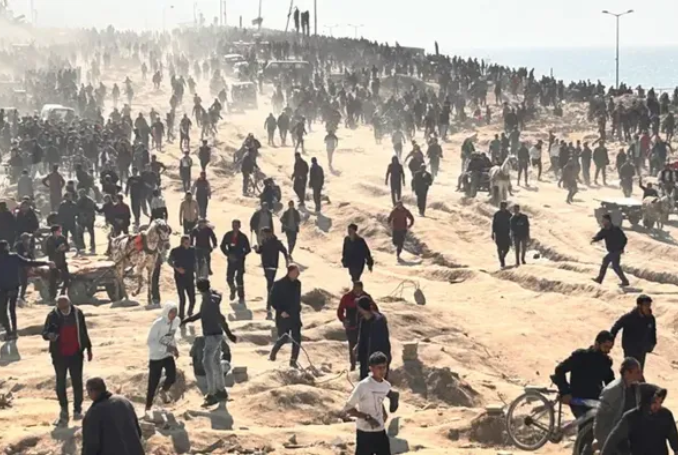

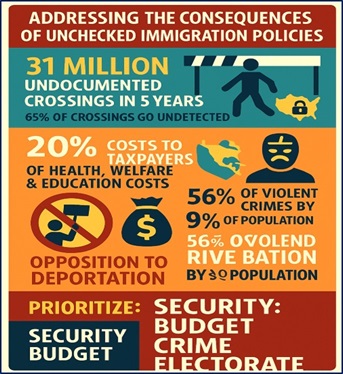
 Startling revelations have come to the fore as to how the present administration of the Ceylon Electricity Board (CEB) is attempting to promote thermal and coal power by curtailing renewable power generation.