As the Friedrich Naumann Foundation says strategic planning is a key competence for political parties and their leadership personnel while in government or in Opposition. Strategy development cannot be delegated or outsourced. Nor can single strategy elements be copied from other successful political players. Own competences in strategic planning are needed, and political leaders will have to come up with the processes, tools and concepts to develop their own unique strategies.When in government, political parties are often forced to focus on short-term crises to the disadvantage of the medium- and long-term development of their strategies. However, good governance will not sacrifice long term objectives for short term gain”.
The absence of strategic plans contributes to this situation as specific medium to longer term plans lose their focus within the government and within the public domain.It is felt by many that the current government in Sri Lanka could do with more clear and precise strategy development and incorporating them in strategic plans, as what appears to be happening are ad hoc activities directed towards short term crises.
Elections are hopefully over for the rest of 2025. The 6-month-old NPP government can and should now present a comprehensive strategic plan for the rest of their term and give the public a clear pathway as to what they will strive to achieve in the next five years. Ideally, it should be based on their political vision contained in the election manifesto presented for the Presidential election and any subsequently identified priorities. Such a plan would help to avoid feeding a gathering public momentum about unkept promises and help the government to work and deliver according to its own strategic plan. It needs to be noted that presenting a well-crafted and delivered long-term vision in a speech alone is insufficient and such a vision has to be reflected in a strategic plan incorporating all its components as noted later in this document.
The seeming absence of a strategy to deal with the vexed issue of accidents due to reckless bus and lorry driving that very likely led to the very recent incident in Gerandiella that killed 22 people, and the latest news on bus accidents reported today with 20 persons injured and hospitalised after a bus crash at Aladeniya after a bus veered off the road and crashed at Yatiyanagala, Aladeniya. These arecases in point where much has been said but not much has been done so far. Stricter enforcement of existing traffic laws, along with efforts to improve drivers’ attitudes and awareness, can significantly reduce the frequency of these tragedies is stating the obvious. In this regard, the links to two articles written by this writer in the past are noted here.
The inaction or mediocrity of the action taken is indicative of talk over action. There will be more Gerandiella and Aladeniya fiascos unless the recklessness of bus drivers is arrested. The public will eagerly await the dedicated programme being planned under the ‘Clean Sri Lanka’ initiative by the government as announced by the President after the Gerandiella accident, although such a program should have been done and implementation begun long ago. The lack of action so far to address this situation does appear that the seriousness of the unsafe situation on roads both for passengers and the public at large has not been regarded as a priority.
What is Strategic Planning?
Today, governments, including the current government, face numerous challenges in decision-making processes and some of the common challenges include the difficulties faced regarding transparency and openness of governments to accept and appreciate the plurality of voices of the people.
Besides political reasons, the required expertise and the openness to listen to other views unfortunately has become a contributory stumbling block to the much talked about system change. The second challenge relates to the lack of institutional strength, meaning expertise required for decision-making. While the political establishment is responsible for policy development, at least on paper, the bureaucracy has the responsibility to implement policy decisions. If both institutions do not have the expertise and the capacity to carry out their responsibilities, the result naturally would be a focus on short term measures where improvised and reactive actions based on various political imperatives are taken for short term gain. It is perhaps time that the government developed their own strategic plan and a guideline on methodologies needed for strategic action plan development at different levels and to be more inclusive in decision-making so that they strengthen and display their effectiveness and efficiency to all citizens.
As the National Democratic Institute (https://www.ndi.org/about) says, In the broadest sense, planning means intentionally tracing a path from the present to the future to reach a goal. Planning implies defining options for the future and identifying the necessary means to achieve them and strategic planning has the exact nature of planning.”However, its strategic” nature involves an increased demand in terms of analytical work to view different options and allocate sufficient means so that the achievement of said scenarios is as optimal and rational as possible. In practice, strategic planning is defined as a management tool for the decision-making of organizations based on their current activity and the path they must follow in the future to adapt to the environment changes and demands and achieve the best efficiency, effectiveness, and quality of all goods and services provided”. (https://www.ndi.org/sites/default/files/ Strategic%20Planning%20in% 20Political%20Parties% 20%28c%29%20%286%29%20%281%29.pdf)
Strategic plans are comprehensive documents that outline key long-term goals, key priorities, and the specific actions needed to achieve them, by entities including governments. They act as a roadmap, guiding an entity toward its desired future state and ensuring its resources are effectively allocated. The current government, which has continuously stated their intention to affect a system” change, could make a start by developing and introducing strategic plans for the government itself and its ministries and making them available for online viewing by the public. The progress being made could then be tracked by the public and this would better facilitate accountability to the people. Through such an effort, it is possible that the short-term mindset that seems to be the factor that influences governance, will change, and planning, incorporating both short-, medium- and long-term measures and working towards a long-term goal with specific deliverables will become the norm rather than the exception. A SWOT analysis, an analysis of the governments or the relevant entity’s strengths, weaknesses, opportunities, and threats is critical in order to develop a strategic plan as planning should happen based on the status quo identified through a SWOT analysis.
Key elements of a strategic plan include:
Vision: A clear picture of where the government or a government entity wants to be say in five years.
Mission: A concise statement of the purpose and how it will achieve its vision.
Goals: Broad, measurable objectives that are aimed to be achieved.
Objectives: Specific, measurable, achievable, relevant, and time-bound targets that support the overall goals.
Strategies: The overarching approaches or plans of action used to achieve the objectives.
Action plans: Detailed, step-by-step procedures for implementing the strategies.
Allocating estimated budgets for items in the strategic action plan.
Identifying the key person or entity responsible for implementing each strategy and identifying who is responsible for each activity identified in the plan
Existing strategic plans
Some Sri Lankan government agencies do have strategic plans, but most appear to have reached their end dates and not current any longer. A few plans that are up to date and well-constructed are the DIGITAL SRI LANKA 2030 NATIONAL DIGITAL ECONOMY STRATEGY 2030 Ministry of Technology and the SRI LANKA CUSTOMS STRATEGIC PLAN 2024-2028. The Strategic Plan 2018-2022 of the URBAN DEVELOPMENT AUTHORITY OF SRI LANKA has been well constructed but needs updating now.
The department of agriculture does have a Strategic Plan for 2022-2030, but it appears incomplete. Sri Lanka Export Development Board (EDB) has a strategic plan, and it is currently developing a 5-year strategic plan for 2023-2027, aiming to increase Sri Lanka’s exports to US$31.3 billion by 2027. The Sri Lanka Tourism Development Authority (SLTDA) strategic plan is due to end in 2025 and unless steps have already been taken to develop a fresh plan, one of the most critical economic pillars of the country and the government, will function without appropriate strategies to achieve the stated goal of having 5 million tourists by 2029.
Besides tourism, the country needs to increase exports, reduce imports of food items and industrial goods through an import substitution strategy, and consider other out of the box thinking like health tourism, tourism linked to golf, and more information technology industry expansion. All these are medium to long term projects, and they need to be in the relevant ministry’s strategic plans.
While many of the existing strategic plans appear to have been developed prior to the formation of the current government, it does not indicate that there had been a consistent and compulsory requirement for ministries and key entities within ministries to undertake such planning and develop strategic plans at least of 5-year duration. One of the key strategies that could be included in the government’s own strategic plan is for each ministry to develop their own plans say within a period of 3 months from now, as 6 months have already passed since the government was formed. Another strategy would be for all existing but dated and incomplete plans to be updated and completed and fresh plans developed for the period 2025 -2030 again within a period of 3 months.
Governance utilizing strategic plans is a professional and accountable process and it will assist in changing the political culture of the country through a mindset change amongst all stakeholders including the public. Consequently, political promises made from political platforms will be made more carefully and in a more responsible manner. The country is still financially very unstable and enjoying a honeymoon period till 2028 when debt repayments commence. It has a relatively short period of 3 years to earn more and/or spend less if it’s to meet its debt repayments. Specific strategies to achieve this objective are needed although strategies alone do not amount to much unless they are included in strategic action plans with measurable outcomes.
Changing the management culture and management methodology is an important element of system change. Business as usual will not produce a system change. Besides the government, even other political parties will have to fall in line with more planned alternate governance models as the government’s methods begin to show results and acceptance of them by the public.
The quotation attributed to Albert Einstein, viz, Insanity is doing the same thing over and over and expecting different results” may also be presented as repeating unsuccessful strategies without modification is a form of unproductive behaviour”. The quote highlights the importance of adapting and trying new approaches when the current ones have not yielded the desired outcomes.
Sri Lanka’s bankruptcy is an indication that it had been repeating unsuccessful strategies without suitable modifications. Unless the country recognises the need for true system change and modifies its governance methodology, it’s bound to continue its insanity.
W.T. Whitney Jr. is a retired pediatrician and political journalist living in Maine.
In South Asia, a Regional Cold War is ramping up with India’s Beggar thy Neighborhood First” policies, including war on Pakistan
Image by Getty and Unsplash+.
Movement toward war with China accelerates. Trump has raised America’s military budget to a Trillion dollars although claiming to be a peace maker. The public, focused on troubles currently upending U.S. politics, does not pay much attention to a war on the way for decades. The watershed moment came in 1949 with the victory of China’s socialist revolution. Amid resurgent anticommunism in the United States, accusations flourished of Who lost” China.”
Loss in U.S. eyes was in China the dawning of national independence and promise of social change. In 1946, a year after the Japanese war ended, U.S. Marines, allied with Chinese Nationalist forces, the Kuomintang, were fighting the People’s Liberation Army in Northeast China.
The U.S. government that year was delaying the return home of troops who fought against Japan. Soldier Erwin Marquit, participant in mutinies” opposing the delay, explained that the U.S. wanted to keep open the option of intervention by U.S. troops … [to support] the determination of imperialist powers to hold on to their colonies and neocolonies,” China being one of these.
These modest intrusions previewed a long era of not-always muted hostility and, eventually, trade relations based on mutual advantage. The defeated Kuomintang and their leader, the opportunistic General Chiang Kai-shek, had decamped to Taiwan, an island China’s government views as a breakaway province.”
Armed conflict in 1954 and 1958 over small Nationalist-held islands in the Taiwan Strait prompted U.S. military backing for the Nationalist government that in 1958 included the threat of nuclear weapons.
Preparations
U.S. allies in the Western Pacific – Japan and South Korea in the North, Australia and Indonesia in the South, and The Philippines and various islands in between – have long hosted U.S. military installations and/or troop deployments. Nuclear-capable planes and vessels are at the ready. U.S. naval and air force units regularly carry out joint training exercises with the militaries of other nations.
The late journalist and documentarian John Pilger in 2016 commented on evolving U.S. strategies:
When the United States, the world’s biggest military power, decided that China, the second largest economic power, was a threat to its imperial dominance, two-thirds of US naval forces were transferred to Asia and the Pacific. This was the ‘pivot to Asia’, announced by President Barack Obama in 2011. China, which in the space of a generation had risen from the chaos of Mao Zedong’s ‘Cultural Revolution’ to an economic prosperity that has seen more than 500 million people lifted out of poverty, was suddenly the United States’s new enemy…. [Presently] 400 American bases surround China with ships, missiles and troops.”
Analyst Ben Norton pointed out recently that, the U.S. military is setting the stage for war on China. … The Pentagon is concentrating its resources in the Asia-Pacific region as it anticipates fighting China in an attempt to exert U.S. control over Taiwan.” Norton was reacting to a leaked Pentagon memo indicating, according to Washington Post, that potential invasion of Taiwan” would be the exclusive animating scenario” taking precedence over other potential threats elsewhere, including in Europe.
New reality
Norton suggests that the aggressive trade war launched against China by the two Trump administrations, and backed by President Biden during his tenure in office, represents a major U.S. provocation. According to Jake Werner, director of the East Asia Program at the Quincy Institute, Trump’s top military and economic advisers are almost without exception committed to confrontation with China.”
He adds that, In a context of mounting economic pain on both sides, with surging nationalism in both countries becoming a binding force on leaders, both governments are likely to choose more destructive responses to what they regard as provocations from the other side. A single misstep around Taiwan or in the South China Sea could end in catastrophe.
Economic confrontation is only one sign of drift to a war situation. Spending on weapons accelerates. U.S. attitudes shift toward normalization of war. Ideological wanderings produce old and new takes on anticommunism.
Money for weapons
The annual report of the Stockholm International Peace Research Institute, released in April, says that in 2024 the world’s military spending increased by 9.4% in one year to a $2718 billion; it increased 37% between 2015 and 2024.
U.S. military spending in 2024 was $997 billion, up 5.9% in a year and 19% since 2015. For China, the comparable figures are $314 billion, 7.0%, and 59%, respectively; for Russia, $149 billion, 38%, and 100%; for Germany, $88.5 billion, 29% and 89%. The U.S. accounts for 37% of the world’s total military spending; China,12 %; Russia, 5.5%; and Germany, 3.3%. They are the world’s top spenders on arms.
In the United States, competition from new weapons manufacturers threatens the monopoly long enjoyed by five major defense contractors. These receive most of the $311 billion provided in the last U.S. defense budget for research, development, and production of weapons. That amount exceeds all the defense spending of all other countries in the world.
A new species of weapons manufacturer appears with origins in the high-tech industry. Important products are unmanned aircraft and surveillance equipment, each enabled by artificial intelligence.
Professor Michael Klare highlights one of them, California’s Anduril Industries, as providing the advanced technologies … needed to overpower China and Russia in some future conflict.” Venture capital firms are investing massively. The valuation of Anduril, formed in 2017, now approaches $4.5 billion.
Palmer Luckey, the Anduril head, claims the older defense contractors lack the software expertise or business model to build the technology we need.” Multi-billionaire Peter Thiel, investor in Anduril and other companies, funded the political campaigns of Vice President J.D. Vance and other MAGA politicians. Klare implies that Theil and his kind exert sufficient influence over government decision-making as to ensure happy times for the new breed of weapon-producers.
Giving up
Waging war looks like a fixture within U.S. politics. Support for war and the military comes easily. Criticism that wars do harm is turned aside. Broadening tolerance of war is now a blight on prospects for meaningful resistance to war against China.
Recent history is not encouraging. After the trauma of the Vietnam War subsided, anti-war resistance in the United States has been unsuccessful in curtailing wars in Yugoslavia, Iraq, Afghanistan, and Libya – and proxy wars in Ukraine and Gaza –despite massive destruction in all of them and more dead and wounded than can be accounted for.
Official language testifies to routinization of U.S. military aggression. Defense Secretary Hegseth, visiting at the Army War College in Pennsylvania, started with, Well, good morning warriors. …We’re doing the work of the American people and the American warfighter. [And] the president said to me, I want you to restore the warrior ethos of our military.”
Hegseth traveled recently in the Pacific region, presumably with war against China on his mind. In the Philippines, he remarked, I defer to Admiral Paparo and his war plans. Real war plans.” In Guam, he insists, We are not here to debate or talk about climate change, we are here to prepare for war.” In Tokyo, he spoke of reorganizing U.S. Forces Japan into a war-fighting headquarters.”
Ben Norton writes that, In his 2020 book American Crusade: Our Fight to Stay Free, Hegseth vowed that, if Trump could return to the White House and Republicans could take power, Communist China will fall—and lick its wounds for another two hundred years.”
Ideas as weapons
Proponents and publicists of off-beat ideas have long disturbed U.S. politics. Brandishing fantasies and myths, the Trump administrations have fashioned a new brand of resentment-inspired politics. Even so, familiar ideas continue as motivators, notably anticommunism.
Writing in Monthly Review, John Bellamy Foster recently explored ideology contributing to Donald Trump’s hold on to power. Much of it, he reports, derives from California’s Claremont Institute, its office in Washington, and Hillsdale College in Michigan. A leading feature is a kind of anticommunism that targets so-called cultural Marxism. But China and its Communist Party are not immune from condemnation.
Michael Anton is a senior researcher” at the Claremont Institute and director of policy planning at the State Department. According to Foster, Anton suggested that China was the primary enemy, while peace should be made with Russia [which] belonged to the same ‘civilizational sect’ as the United States and Europe, ‘in ways that China would never be.’”
Former Claremont Institute president Brian Kennedy, quoted by Foster, notes that, We are at risk of losing a war today because too few of us know that we are engaged with an enemy, the Chinese Communist Party … that means to destroy us.”
The matter of no ideas comes to the fore. Recognized international law authority Richard Falk, writing on May 6, states that, I am appalled that the Democratic establishment continues to adopt a posture of total silence with regard to US foreign policy.” Viewing the Democrats as crudely reducing electoral politics to matters of raising money for electoral campaigns,” he adds that, I find this turn from ideas to money deeply distressing.”
The Democrats’ posture recalls a 1948 message from Michigan Senator Arthur Vandenburg, a Republican. During congressional debate on President Truman’s Marshall Plan, Vandenburg stated that, Politics stops at the water’s edge.” This U.S. tradition lapses only occasionally.
Will resistance to war against China end up stronger and more effective than earlier anti-war mobilizations in the post-Vietnam War era? A first step toward resisting would be to build awareness of the reality that war with China may come soon. General knowledge of relevant history would be broadened, with emphasis on how U.S. imperialism works and on its capitalist origins. Anyone standing up for peace and no war ought to be reaching out in solidarity with socialist China.
John Pilger, moralist and exemplary documentarian and reporter, died on December 23, 2023. His 60th documentary film, The Coming War on China, first appeared in 2016. Pilger’s website states that, the film investigates the manufacture of a ‘threat’ and the beckoning of a nuclear confrontation.” Please view the film on his website.
W.T. Whitney Jr. is a retired pediatrician and political journalist living in Maine.
Colombo, May 2025 — The Sri Lankan land market is gaining renewed strength, with Colombo and the broader Western Province leading the way in price growth, according to the latest Land Price Index (LPI) published by LankaPropertyWeb (LPW).
The 2025 index reveals that land prices in Colombo city (Colombo 1-15) have risen by 7% year-on-year, while the overall Western Province recorded an 12% increase — a notable jump from the 8% rise observed the previous year. The report highlights a sustained upward trend in land values, particularly in Colombo’s suburbs and key districts like Gampaha and Kalutara.
Within the Colombo district (excluding the Colombo 1-15 area), average land prices surged by 20%, underscoring a shift in investor focus toward suburban locales offering better affordability and development potential. Gampaha district saw an impressive 14% rise, while Kalutara posted a more modest but steady 6% increase over the past year.
According to LPW, demand has been especially robust for lands priced below Rs. 500,000 per perch. This segment saw a remarkable 107% price increase between the first quarter of 2020 and 2025. In contrast, high-end plots priced above Rs. 9.5 million per perch experienced limited growth, suggesting a tilt in buyer preference toward more affordable and mid-range properties.
Per Perch Price Increase as a % (2024 Q1 – 2025 Q1)
(Main Cities of Colombo District excluding Colombo 1-15)
Colombo’s real estate landscape continues to evolve. The central Colombo 1-15 area registered a 7% uptick in land values this year, building on consistent gains over the last five years. However, it is the emerging suburbs that are showing the most dynamism. Kolonnawa led the district with a 21% price increase, driven by its proximity to the city, improved transport links, and ongoing urban development projects. Piliyandala, Athurugiriya, and Homagama also recorded healthy gains, reflecting sustained investor interest.
In Gampaha district, Yakkala emerged as a standout performer, with land prices soaring by 55%, while the Gampaha city area itself recorded a 42% hike. The district’s enhanced connectivity, expanding infrastructure, and growing appeal as a suburban hub have fueled this surge.
Kalutara district showed moderate but consistent growth, with Ingiriya was the city with the highest land price 20% increase in Kalutara district and Horana posting a significant 16% increase. Panadura reflecting a positive 7% rise, signaling renewed confidence among investors and developers.
Per Perch Price Increase as a Percentage (2020 Q1 – 2025Q1)
(Main Cities of Colombo District Excluding Colombo 1-15)
LPW’s index data suggests that price appreciation has been strongest in areas tied to infrastructure upgrades and suburban development agendas. “It is evident that demand has steadily shifted from district capitals to well-connected suburbs with promising growth prospects,” the report noted.
The market’s recovery follows a challenging period marked by economic headwinds, including high interest rates and constrained lending from commercial banks. However, with the Central Bank’s recent easing of monetary policy and stabilization of interest rates, LPW expects the land market’s resurgence to continue through the remainder of 2025.
This index captures annual changes in land prices in the most populated province in Sri Lanka; Western Province. Publicly available asking prices for bare lands published in LPW, and in other online media were used in the analysis. The Land Price Index considers the base prices of 2018 equal to 100 when determining the price fluctuation in the years after. The Q1 2025 update reflects a comparison with the average of Q1 2024.
Prices within the area will have their own variances, such as land close to main roads or junctions being expensive and above average. If you wish to obtain more accurate prices for your land or neighborhood prices, then you should view ‘land for sale’ listings for that area, and check with an estate agent or a registered valuer in your area.
Beyond the index, LankaPropertyWeb offers a suite of tools and resources for investors and homebuyers, including property listings, valuation reports, price meters, and market insights, reinforcing its position as Sri Lanka’s leading online real estate platform.
A great country, with a history going back into Before Christ, a country with unparalleled industrial engineering strength, and after years of Self-Rule, the only credit to Sri Lanka is a growing debt!
Corruption, Greed of the Ruling Class, has stepped on and used the working class and the poor to achieve their own wealth!.
What has a group of tiny sinking islands Maldives got better or more than the Pearl of Asia?
Maldives has unveiled a $9 billion plan to become a global finance hub!
What lacks in Sri Lanka is the Spirit of Einstein!
And professional leadership who are able to “Think-Out-of-the-Box”!
Hopefully the President AKD might be able to see the light at End-of-the-Tunnel!
-ENDS-
Express Your Opinion – Read What Others Say! The Independent Interactive Voice of Sri Lanka on the Internet.
Pope Leo XIV making his first public appearance from the balcony of St. Peter’s Basilica | Screenshot from NBC News
The Conclave acted quite swiftly ending the weeks-long speculations about the next pope – only on the second day of the cardinals’ meeting.
The announcement of Robert Prevost being the new Pope sent waves of excitement in not only the crowds gathered in and around St Peter’s Square in the Vatican, and also not only in the Catholic population in all parts of the world, but to the general global population of the world too. Why the general population? Because the world stands at the brink of disaster and world religions can play a major role in saving it from the catastrophe that looms the global horizon.
Also of general interest and intrigue is always the country of origin of the Pope, which this time happens to be the USA – Chicago to be precise. So far known as a city of skyscrapers, deep-pan pizzas, and as Carl Sandburg called it, city of the big shoulders, Chicago will now be known for being the birth place of Pope Leo XIV – the name that Bishop Robert Prevost has chosen for himself.
Quite interestingly, Chicago is also known as the birthplace of modern Islam in the USA. Hazrat Mufti Muhammad Sadiqra, the pioneer of Muslim missionary activity in America landed on the US shores in 1921, and settled in Chicago in the same year, laying foundations of the headquarters of Islam Ahmadiyya.
Hazrat Mufti Muhammad Sadiq (ra)
A missionary sent by the Ahmadiyya Caliph, Hazrat Mirza Bashir-ud-Din Mahmud Ahmadra, Mufti Sadiq is credited, by esteemed historians to be the dawn of Islamic identity for America. (The Cambridge to American Islam, pp. 141 & 208)
Mufti Sadiq had taken the Ahmadiyya message of Islam to a land that was in pursuit of a fulfilling faith, and managed to attract huge numbers from the American population to the message of Prophet Muhammad, and as revived by Hazrat Mirza Ghulam Ahmadas of Qadian – the founder of the Ahmadiyya Islam. Mufti Sadiq and the Americans that rallied around him to accept Ahmadiyya were, as Yvonne Haddad and Jane Smith declare, unquestionably the most influential group in African American Islam.” (The Oxford Handbook of American Islam, p. 146)
An expert on Islam in America, Richard Turner sees the Ahmadiyya community as the most significant movements in the history of Islam in the United States in the twentieth century, providing as it did the first multi-racial model for American Islam”. (Islam in the African-American Experience, pp. 109-110)
Nabil Echchaibi applauded Mufti Sadiq for emphasising a Muslim identity in America by initiating the publication of The Moslem Sunrise (later, and to date, spelt The Muslim Sunrise) – the first English-language Muslim newspaper to be published in America and still in publication. (The Cambridge Companion to American Islam, p. 125)
Sylviane A Diouf credits the Ahmadiyya community for providing, for the first time, Qurans and other Islamic literature in English.” (The Oxford Handbook of American Islam, p. 23)
The Ahmadiyya community was the first to establish the first, and in some cases, the only, centres for Islamic gatherings.” (The Cambridge Companion to American Islam, p. 52)
The American Mission
What was it that worked so well in favour of the Ahmadiyya mission? Haddad and Smith give a thoroughly researched answer: The approach that attracted the Americans, especially the African Americans, was the Ahmadiyya openness to people of all ethnic origins.
So here we have a new Pope, born and raised in the birthplace of Islam in the US. In his first public address from the balcony of St Peter’s Basilica, Pope Leo XIV emphasised on building bridges and that humanity was the strongest bridge that connected the entire humanity.
These words resonate the teachings of the Ahmadiyya community that, a hundred years since establishing its mission in Chicago, continues to promote interfaith harmony. Peace, building bridges and respecting humanity has been the core message of the Ahmadiyya leadership all along, and is today being upheld by Hazrat Mirza Masroor Ahmad, the current head of the Ahmadiyya community.
Hazrat Mirza Masroor Ahmad, addressing the American people during one of his visits to the USA (when gifted with a key to Los Angeles), said:
The key to peace is to stop cruelty and oppression wherever it occurs with justice and equality. Only when this principle is followed will global peace develop. This will only happen when the people of the world come to recognise their Creator. It is my ardent hope and prayer that the entire world urgently comes to understand the needs of the time before it is too late.” (Head of Ahmadiyya Muslim Jamaat delivers Historic Address in Southern California”, www.pressahmadiyya.com, 12 May 2013)
These words are a clear testimony to the fact that the Ahmadiyya Muslim community strives for global peace building and believes in religion to be the only way forward.
Every religion has come from God and every religion should stand for building bridges and strive in the way of establishing global peace. We all live in the hope of walls coming down and bridges built to unite humanity under the banner the one and true God.
Natalie Ecanow Senior Research Analyst Courtesy Foundation for Defense of Democracies
White House Correspondents’ season just wrapped in Washington. Last weekend, celebrities, journalists, and politicians descended on Washington to celebrate the free press. Traditionally, the weekend is also an occasion to take jabs at the administration. Among this year’s events was a soiree hosted by the Embassy of Qatar.
Wining and dining the press has become somewhat of an annual ritual for Qatar. Doha hosted parties at the Four Seasons in 2023 and 2024 and co-sponsored another swanky event in 2019.
How Qatar became a regular headliner during a weekend celebrating First Amendment freedoms is baffling. Qatar is an autocratic petrostate that prohibits criticism of the emir” and limits freedom of expression, including for members of the press.” Qatar is no champion of the values espoused by the White House Correspondents Association. Yet Doha is charming pundits and politicians into believing otherwise. This is a textbook example of Qatar buying prestige in the West. It’s not just happening in America. And it’s not inconsequential. Right now, a similar story is making waves in Israel that should serve as a cautionary tale for American policymakers.
In February, Israel’s Shin Bet security agency opened an investigation into alleged ties between Qatar and Israeli Prime Minister Benjamin Netanyahu’s office. An Israeli court placed a gag order on the case, but then overturned the order — one day after Israeli authorities arrested two of Netanyahu’s aides.
We’ve since learned that the aides — Yonatan Urich and Eli Feldstein — allegedly worked to polish Qatar’s image in the Israeli press. Court documents allege that an American lobbying firm on Qatar’s payroll directed the operation, which involved promoting Qatar’s role in Gaza ceasefire talks at Egypt’s expense. The lobbying firm is headed by former aide to President Bill Clinton, Jay Footlik.
An Israeli police investigator told the court that Urich relayed messages to the media” that he received from an entity that maintains ties to and is funded by the state of Qatar.” Except Urich presented” the messages as if they came from a political or security source,” the investigator said.
Things got messier when authorities summoned the editor-in-chief of the Jerusalem Post, Zvika Klein, for questioning and placed him under house arrest. Klein travelled to Qatar last year to interview Qatari Prime Minister Mohammed bin Abdulrahman al-Thani. Klein said Footlik was his babysitter” during the trip and that Feldstein helped arrange interviews for him on Israel’s Channel 12 and Channel 13 when he returned.
Israeli authorities released Klein from house arrest on April 3. But Israel’s Qatargate” affair is far from over. Urich and Feldstein’s remain under house arrest. Another former advisor to Netanyahu is abroad in Serbia and wanted for questioning. And a majority of Israelis now believe that Netanyahu knew about his aides’ connections to Qatar. Israelis are losing faith in the integrity of their government.
Unfortunately, this tale isn’t uniquely Israeli. Qatargate hit Europe and made a pitstop in Washington before heading to the Middle East.
In 2022, European authorities uncovered a Qatari cash-for-influence scheme at the European Parliament involving over 1.5 million euros and a half-dozen suspects, including European Parliament Vice President Eva Kaili and her partner, parliamentary aide Francesco Giorgi. Authorities reportedly even caught Kaili’s father leaving a hotel with a suitcase full of cash.
Kaili and her colleagues allegedly accepted the money as bribes to sway the European Parliament in Qatar’s favor. Police found a cache of documents on Giorgi’s laptop describing hundreds of influence activities conducted on Doha’s behalf, such as neutralizing” resolutions condemning Qatar’s human rights record and ensuring that all copies of a book critical of Qatar that could be found inside Parliament were destroyed.”
Qatar is operating by the same playbook in the United States. Last summer, former Senator Robert Menendez resigned after a jury found him guilty of accepting bribes from a real estate developer who expected Menendez to induce” a Qatari investment firm to finance a multimillion-dollar project, including by taking action favorable to the Government of Qatar.” The Qataris allegedly offered Menendez Formula One Grand Prix racing tickets after the deal was closed.
Menendez received an 11-year prison sentence in January. But as one Qatari corruption scandal closes, another one opens. Local news recently reported that the mayor of Washington, D.C. and four staff members travelled to the Gulf on Qatar’s dime. The mayor’s office failed to disclose the source of the funds, if not outright lied about it.
The Qatari influence machine is in high gear. The question is, how deep is Qatar’s reach in the United States? American policymakers need to start asking questions or risk the fallout that’s shaking Israel.
Natalie Ecanow is a senior research analyst at the Foundation for Defense of Democracies (FDD), a nonpartisan think tank in Washington, D.C. Follow Natalie on X @NatalieEcanow and FDD @FDD.
President Trump is looking after the interests of the USA and mind you within months many industries will open up making what the USA did import. Once I owned a Roadtrek-Chevrolet campervan in the USA and clocked over 50,000 miles travel over hill and dale. It was a marvel, far better that the Benz 200 I drive today. Earlier, When I was a doctoral student at Michigan State I ran in a Delta 99 Oldsmobile, a great car and I am certain that the car giants in the USA will soon make better cars than the Benz.
Our new President Anura Kumara Dissanayake is kindly requested to get going with opening up new ventures to make everything we import.
In the Fifth Century we built the Yodha Ela at a gradient of six inches in a mile- so miniscule a gradient that defies the irrigation engineers of today. In 1963, as the Assistant Commissioner of Agrarian Services in Anuradhapura I presided over the Irrigation water allocation meeting for over a hundred tanks from Kalaweva and to satisfy the farmers who never got water in time I suggested to put a concrete base for the seventy mile long Yodha Ela. The District Irrigation Engineer admitted that they cannot lay such a base as the gradient was so miniscule- six inches in a mile, a gradient that the most sophisticated equipment today cannot lay.
That was the achievements of out ancient forefathers.
Get to today. We administrators were once charged with the task of creating production, alleviating poverty and we have real stories of what we did to tell-not fiction.
In the late Fifties the Department of Rural Development provided for small construction work everywhere. Every village had a Rural Development Society. These were manned by Rural Development Officers who know not what to do now.
Under the Paddy Lands Act we organized farmers into Cultivation Committees and did wonders in organizing paddy cultivation with certified seed, and fertlizer use.Farmers were organized into cultivation committees and paddy cultivation was done in an organized manner cooperatives providing fertlizer etc. We never gave farmers money to buy fertlizer as we now do. Instead the cooperatives were active and provided fertiliser.
Prime Minister Dudley Senanayake took charge of paddy production in 1965 and got the Government Agents in the Districts to be in charge and Sri Lanka produced all the rice it needed. He was not satisfied with the Department of Agriculture reporting the yield of paddy. He ordered plots to be decided by random sampling and crop cuttings done by staff officers of other departments to be certain of the yield. I organized this in the Kegalla District in 1967 and 1968. Then, As the Additional Government Agent of the Kegalla District it was my task every Saturday and Sunday to to greet him at nine in the morning every Saturday and Sunday and accommpany him to a host of meetings and inspections in his electorate. There was no poverty and no one who had to live on two meals a day. On the other five days in the week I toured the other electorates and Yatiyantota was Dr NM’s electorate. All development programmes were concentrated on even in the electorates of the opposition- Yatiyantota and Dehiovita. We had definitely avoided poverty and deprivation then. Otherwise Dr NM would have raised the matter in Parliament and I would not know where to run.
Unfortunately things changed. With the abolition of the Pady Lands Act the Department of Agrarian Services was completely slashed. Cultivation committees ceased to exist. In 1980 the Secretary to the Ministry of Agriculture boasted about paddy production and I asked for the crop cuttings done by staff officers of other departments. Out came the answer that it was costly and done away with. In about 1992 President Premadasa promoted all Agricultural Overseers- 2300 of them as Grama Niladharis and till today there are no agricultural overseers. Cultivators plough and cultivate as they like and the Governments have to import rice every year. All tanks in NuwaraKalaviya are ruined almost beyond repair.
Then, till 1978, Sri Lanka was not a country in debt to anyone. Our forte was to fund what we can. We had development programmes that effectively alleviated poverty. But in 1978 at the instance of the IMF President Jayawardena abolished all those development programmes, confined the administrators to the barracks and today we are begging for dollars in the streets of the World. As a member of the Administrative Service, I was privy to play a role with Premier Dudley and also in the DDCP of Sirimavo, thus I speak of what we actually did, not learned surmises and projections on a chalk board.
In the days of Sirimavo we had the Divisional Development Councils Programme, directed by professor HAdeS Gunasekera, the most qualified economist of the day. It was really Dr NM Perera’s Programme. As he said in his 1970 Budget Speech it was to fullfill the aspirations of young men and women for whom life will loose all meaning unless they can find a useful place in our society”. Passing by his statue in Borella last year, I was sad that my driver did not know Dr N,M,I was myself neck deep involved with Dr N.M.implementing his great programme as the Government Agent at Matara
The Divisional Secretary at Kotmale, charged with creating employment and also making something useful , collected all the waste paper he could find, rolled up his sleeves and worked with the youth to wet and churn the waste paper, spread it out to dry and out came saleable paper and cardboard. President Jayawardena in 1978 put a stop to Kotmale Paper to please the IMF.
In the Youth Self Employment Programme I established in Bangladesh in the two years I worked there-1983-1984 we had to address hundreds of youths on training workshops and we provided the youths with lunch packets. The lunch came in cardboard packs and there were some youth entrepreneurs collecting the discarded cardboard covers and packing them– back at home their sustenance came from churning it to cardboard. Our Divisional Secretary at Kotmale was a great man to make paper out of waste paper. Let us find him and get going instead of wasting money for the imports of paper. I hope he is kicking and alive. I am sorry I do not know his name.
In the DDCP of the Sirimavo days as the GA at Matara I established the Matara Mechanized Boatyard that made seagoing fishery boats- some forty a year. That was a great industry fixed by me in some two months. My giants, the DivSec Ran Ariyadasa and his Development Assistant did that task within two months and our youths made 40 seaworthy boats a year, a feather in the DDCP cap. The boats were sold to fishery cooperatives and ran on the high seas bringing a catch of fish. Ran is no more but his work stands out as something that can be done fast. However President Jayawardena to please the IMF closed that Boatyard in 1978. Imagine what the trained youths thought when they were thrown into the heap of the unemployed. Mind you they were fully trained entrepreneurs.
I got sick of the Ministry of Plan Implementation that ran the DDCP as they failed to allow more industries for me to establish-and I took charge without their knowledge. I had a Planning Officer , Vetus Fernando a raw chemistry grad from the University of Colombo. One day I persuaded him to find the method of making crayons. Once I had worked as Deputy Director of Small Industries and had a background in running powerlooms, handlooms, ceramic and all sorts of industries. Then I authorized the purchase of a few items that were required and started experiments in the night at my Residency at Matara. We never got anywhere due to the lack of equipment. A science lab was needed and we sought the assistance of the Principal of Rahula College the leading secondary school. Mr Ariyawamsa readily agreed for our use of the science lab after school hours. Vetus aided by me- the GA, the AGA and Development Assistant Paliakkara, and the science teachers at Rahula were at it experimenting every night from six to midnight. It went on for two months and the crayons made were really useless. Then Vetus sought the help of his professors at the University of Colombo, beseeching help on three days on bended knees and was chased away. We were not going to take that lying down and again undertook the daily experiments every night with vehement force. I was there every night. In around a month we did make a real crayon and I sat with Vitus experimenting again and again till the quality of our crayon was as good as Reeves, the best of the day.
We had won but how could we start an industry without money. Though I had money at the katcheri they were all tied up with rules that I could not vary. I was gazetted a Deputy Director of Cooperatives for the purpose of agriculture development. The Coops had money and it so happened that Sumanapala Dahanayake, the member of parliament was the President of the Morawaka Cooperatives. I summoned Sumane and showed him the crayon and he was ready to make it using cooperative funds if only I approved it. I was certain of his sincerity and ability. Though I had no authority I did approve it and Sumane got cracking. He and the Divisional Secretary at Morawaka found twenty unemployed youths, Sumane purchased the utensils and equipment and cleared two rooms at the Morawaka Cooperatives and Vetus and five or six of us moved in to train the youths to make crayons. It had to be a dare devil job endless working 24 hours a day non stop as we had to be successful and all of us broke rest for two weeks making crayons. It was hand made and thus every crayon had to be handcrafted. In the second week labels were printed and packets of crayons filled two large rooms. All this was done with unauthorized cooperative funds and I had no business to set up an industry without Ministry approval.
We got over that in a smart manner by tying in other Ministers. Sumane and I took the crayons we made and showed them to Mr Subasinghe the Minister for Industries. He was taken aback at the quality and agreed to open sales and with that we came into legitimacy. We faced the problem of having to purchase dyes in the open market at high cost and the Ministry of Industries said that their funds were not for cooperatives. We got to know when the Ministry for Imports was about to authorize the import of crayons and both of us moved in. We showed the crayons we made to the Controller of Imports Harry Guneratne and he was satisfied with the quality but he wanted us to obtain the approval of his master the Minister for Imports, Mr Illangaratne as such a cross allocation had never been done earlier. . Sumane and I met the Minister and the moment we showed him the crayons he started scribbling them on paper and testing the quality and shouted for the Controller of Imports to stop all imports and gave us a fat allocation of foreign exchange to import dyes. He had a hard look at me and said, I want you to set up a branch in Kolonnawa my electorate.” I gave him that assurance.
Coop Crayon, made crayons equal to the Crayola crayons of today. Sumane developed the sales to become islandwide. Coop crayon was very successful. It was easily the best industry that the DDCP ever made. Sumanapala excelled and developed the venture to have islandwide sales. But not for long- the Government changed and President Jayawardena won the elections. Coop Crayon was the best industry established in the DDCP and it had to get discredited. Sumane had to be sent to the gallows to discredit the industry so President Jayawardena hatched a masterplan . He summoned the Deputy Director of Cooperatives, N.T.Ariyaratne and entrusted to him the task of taking a posse of auditors to do a forensic audit of Coop Crayon. Ariyaratne when I met him in 1982 told me of this and that he had subjected all the books to an audit for four full days and found everything in order. Ariyaratne was not an officer to fabricate facts to put Sumane in the soup. Sumane was saved a stint in the gallows. But the IMF stepped in 1978 and decided that if Sri Lanka was to be given loans the government has to accept that the private sector was the engine of growth and all development work had to be stopped and the administrators who had manned all development departments had to be sent to the barracks. The IMF effectively ensured that all development activities were closed down
Since 1978, not a single industry was approved and all development activities were stopped and this stoppage continues to today- that is the barrier we have to surmount to create production and alleviate poverty within us.
I got sick of doing little work and decided to proceed to the UK to do further studies and sent in papers for retirement. I was entitled to retire but Minister Felix Dias decided that circular 28 should have retrospective effect. I lost my pension and resigned.
That ended my development tasks in Sri Lanka. I bagged the M Ed in Community Development from the University of Manchester and the Ph.D. from Michigan State in Non Formal Education & Agricultural Economics. I moved to the UK and the Bahamas and to Edinburgh, when Bangladesh somehow wanted me for Youth Development and the Military Government that took over the country when I was there was determined to close youth development altogether. Identifying me as a foreigner, Minister Aminul Islam, the Air Vice Marshal ordered me: What can you do for Bangladesh.”
I replied: ‘You should approve a new programme to create employment for the youth, the unemployed who have to scrape the barrel for life.”
The Secretary to the Treasury, the highest officer in the land, objected: The ILO tried hard to create employment on a special programme for three long years at Tangail, Bangladesh, bringing experts from all over the World, but miserably failed. The Treasury had to face a huge loss. We cannot face a loss again.”
I do not need funds. All I need is the approval to start and approval to divert approved funds for training workshops”
“The ILO are the experts and they did fail. You are talking nonsense. ”
The battle between me and the Secretary to the Treasury took over two long hours and the Minister Aminul Islam who was patiently listening got sick of our arguments and stopped our battle. He ordered: I approve a new Self Employment Programme for the Youth”.
We got cracking the very next day-training officers in economics and guiding youths in a manner where they became self reliant. That was economics and non formal education in action . I worked pell mell for seventeen months- over fifteen hours everyday including Saturdays, Sundays and holidays and trained the staff including members of the elite BCS-( Bangladesh Civil Service). In 2023 the Ministry of Youth Development reported that total self employment created since inception was 2,782,000 youths.(Activities of the Department of Youth Development, 2023)
It is an ongoing programme that can be seen by anyone interested.
Even our High Commissioner Milinda Moragoda when he came forward as a candidate for the mayorship of Colombo in 2011 in his Manifesto stated that if elected he would seek to implement the Youth Self Employment Programme of Bangladesh which incidentally was an amazingly successful scheme introduced to that country by a distinguished son of Sri Lanka, Dr Garvin Karunaratne who served in Bangladesh as an international consultant.”(The Nation 11/9/2011)
Since 1978, the biggest industry one can find in Colombo is the collection of waste cardboard- we ship some 8000 tonnes to India every month and collect a few coppers and buy the cardboard that India makes out of it paying fat dollars. Mind you we have been doing it for the past four decades. We do deserve to be called lunatics for doing this for forty five long years from 1978 to today. I saw a lorry being loaded with used cardboard in February 2025. That is the prosperity that President Jayawardena brought to us and mind you we should call it a day even now.
It is sad that today, we do not have even a Central Bank of our own- the IMF hijacked our Central Bank and now we are on bended knees begging for dollars. Till 1977 we managed with our finances. Since 1978 we closed all development tasks and allowed the rich to spend foreign currency travelling to the galore and educating their children abroad and borrowed dollars- which we do even till today. Now our foreign debt is well over $ 100 billion.
It is upto us to change, develop employment creation programmes once again to make everything we import. We did it once and it can be done again.
Garvin Karunaratne, Ph.D. Michigan State University
This article is dedicated to the memory of Sri Lankan patriot, humanitarian, and friend of fellow global Buddhists, Hon. Lakshman Kadirgamar, who was instrumental in winning official recognition for Vesak as an international holiday at the United Nations in September 1999, on the eve of the 3rd Millennium
Jairam Ramesh quotes the following short quatrain from Sir Edwin Arnold, the author of The Light of Asia, writing in 1893:
Praise me or asperse,
Deck me or deride,
In my veil of verse,
Safe from you I hide.
Edwin Arnold addressed these words to his hypothetical biographer. His denial of his overt presence in the poem amounts to more than stating an obvious fact, which is that he is assuming a persona for the purpose of his artistic expression of his central theme. It is also a gentle invitation to the reader to catch, if possible, a whiff of his own authentic spiritual discovery, as reflected in the quality of his absorption in his subject: presenting the life and teachings of Buddha Gautama in the form of fictionalised fact for easy understanding at a time when little or nothing was known in the West about the great Indian sage. In his book about Edwin Arnold’s poem Jairam Ramesh offers a brief description of the life and times of the poet, and narrates the story of how the poem came to be composed and how it was received at home and abroad, and how it later evolved to be a global phenomenon in the last quarter of the 19th century and beyond.
Before proceeding, I would like to introduce Jairam Ramesh to the reader. Seventy-one year old Jairam Ramesh (b. 1954) is an Indian economist and politician with a diverse academic background. He can also be described as a dabbler in literary matters who adopts a maverick approach. At present, he is a Member of Parliament elected from the Indian National Congress Party (INCP), representing the Karnataka State in the Rajya Sabha, the Indian parliament. Jairam obtained a B.Tech degree from the Indian Institute of Technology in Bombay (now Mumbai) in 1975, and a Master of Science degree in Public Policy and Public Management from the Carnegie Mellon University’s Heinz College of Information Systems and Public Policy, Pittsburgh, Pennsylvania, USA. Although he enrolled for a doctoral program with the Massachusetts Institute of Technology, USA in 1977, he quit it after some initial preparation.
Jairam served as the Union Minister of Rural Development under Prime Minister Manmohan Singh from July 2011 to May 2014, and has been active in various official capacities in the public sphere during INCP governments, sometimes receiving controversial attention. He has been dispensing his varied expertise as university lecturer, international scholar, economic consultant, and journalist, among other things. He has authored a number of books dealing with subjects related to economics and policy management. ‘THE LIGHT OF ASIA: the poem that defined the Buddha’ reveals an exception to his normal secular academic interests. But it doesn’t surprise us, considering the fact that he shows a deep commitment to spiritual values. According to the Wikipedia that quotes from a 2012 feature in Hindustan Times, Jairam Ramesh considers himself a practising Hindu ‘ingrained with Buddhism’, and calls himself ‘Hind-Budh’.
(This article is based on an Amazon Kindle version of Jairam’s work (as a Penguin book), which I acquired in 2021, in which year it was first published in India. Though I wanted to find the printed edition, I failed to get a copy here in Australia at that time. The Kindle form has the look of an uncorrected manuscript, but I was able to grasp its main points. It being the Covid-19 lockdown time then, I found this Kindle edition of Jairam’s thesis a helpful companion for me to revisit the print version of Edwin Arnold’s The Light of Asia that I already had with me.)
His Holiness the Dalai Lama in his Foreword (dated 3 October 2020) to Jairam’s book writes:
‘I believe what Sir Edwin’s poems showed was that the message of the Buddha is timeless, eternal and relevant. I am sure the readers will find this reflected in Mr Ramesh’s book, too’.
Jairam divides the text into four Sections. Section I is devoted to an account of ‘the man (Arnold the poet), the milieu and the moment (that) would come together in 1879 and The Light of Asia would blaze forth….’, as he writes at the end of that part of the book.
But to begin at the beginning, in his introduction to the book (‘A First Word’), Jairam remarks how The Light of Asia led to ‘an epidemic of exuberance’ as he calls it, when it was originally published in London in July 1879. The book created great enthusiasm in England, which soon spread to America and Europe and to other parts of the world, and the trend would continue for a few decades.
Jairam goes on to mention the names of five persons in subcontinental India, and Sri Lanka who were fascinated and inspired by Arnold’s epic poem. They later reached iconic stature through their contributions to the multifaceted (political, social, cultural, and economic) upliftment of their peoples: The young Indian Hindu monk Swami Vivekananda (b. 1863), and the Buddhist renunciate and missionary Anagarika Dharmapala (b. 1864) from Colombo, Sri Lanka, were deeply motivated by the poem. The aspiring lawyer of Indian origin in London who was later to become Mahatma Gandhi (b. 1869), and his teenage followers Jawaharlal Nehru (b,1889) who would become India’s first prime minister in 1947, and Bhimrao Ramji Ambedkar (b. 1891), later to become the chief architect of the Indian Constitution and the first Minister of Law and Justice of Independent India, similarly found Edwin Arnold’s epic to be a source of profound inspiration and succumbed to its strong positive impact.
Apart from this, The Light of Asia had a marked influence on at least eleven famous literary figures from across the world according to Jairam. Five of them were to become Nobel Laureates, namely, Rudyard Kipling (1907), Rabindranath Tagore (1913), W.B. Yeats (1923), Ivan Bunin (1933), and T.S. Eliot (1948). The other six were to become equally famous in the world of literature: Herman Melville, Leo Tolstoy, Lafcadio Hearn, D.H. Lawrence, John Masefield, and Jorge Luis Borges.
The Arnold classic’s influence spread into other fields of human intellectual engagement, including the world of science and industry. Around the beginning of the 20th century, it exercised its charm on the life of C.V. Raman, the young student of science in Madras, who would be honoured in 1930 with the Nobel Prize for Physics, becoming the first Indian Nobel Laureate in that subject area. The Russian chemist and the formulator of the periodic law and the creator of one version of the periodic table of elements Dmitri Mendeleyeev, and the Scottish-American industrialist-philanthropist Andrew Carnegie felt a special attraction towards Edwin Arnold’s poem about the Buddha. Despite his extremely controversial reputation in the military, colonial administrator Field Marshal Herbert KItchener (1850-1916) was regarded as a hero of his time. He used to carry a copy of The Light of Asia in his pocket wherever he went.
Jairam shows how, in the decades that followed its publication, the Arnoldian magnum opus was translated into many foreign languages including thirteen European, eight North and South-East Asian, and fourteen South Asian, languages; it was adapted in a number of plays, dance dramas, and operas. In the last half a century, it has continued to engage academic interest. It has formed the subject of scholarly publications and even doctoral dissertations in the UK, Canada, USA and Germany. Jairam found that the latest example of this trend was a February 2020 study of the influence of The Light of Asia on James Joyce (b.1882), a pioneer of the modernist avant garde movement in literature and the famed author of such monumental ‘stream of consciousness’ novels as Ulysses and Finnegans Wake.
The first of two events that revived his interest in the Arnold classic that he had read in his mid teens, Jairam says, was his discovery of a letter that the late Jawaharlal Nehru had received from his British counterpart Winston Churchill bearing the date February 21, 1955. Churchill wrote:
I hope you will think of the phrase ‘The Light of Asia’. It seems to me that you might be able to do what no other human being could in giving India the lead, at least in the realm of thought, throughout Asia, with the freedom and dignity of the individual as the ideal rather than the Communist Party drill book.’
Another letter from Churchill to Nehru ended thus: ‘….Yours is indeed a heavy burden and responsibility, shaping the destiny of your many millions of countrymen and playing your outstanding part in world affairs. I wish you well in your task. Remember The Light of Asia.’
(Jairam’s italics)
Nehru was going through his first, and Churchill his second, term as prime minister. They were facing life and sharing individual burdens as kindred spirits, while giving leadership to two nations which were opposed to each other as the coloniser and the colonised. Between 1921 and 1945 Nehru had spent a total of ten years in prison during the oppressive British colonial rule, three of which (1942-45) were when Churchill was prime minister for the first time, during which he led his country to victory over the NAZI (National Socialist German Workers’ Party) forces under Adolf Hitler. The friendship that Nehru and Churchill mutually sustained between them defied external circumstances. Both shared morale boosting memories associated with their having been engaged with the meaning of The Light of Asia in their youth. Churchill’s friendly admonition to Nehru to provide leadership to India with ‘the freedom and dignity of the individual as the ideal’ at heart was prompted by the British leader’s memory of the particular Buddhist insight he had gained by reading The Light of Asia in the formative years of his youth.
I must confess that I am only a professionally qualified Civil & Structural Engineer with some computer programming experience plus some knowledge about Structured Computer Organization, I have no training on teaching methods. However, throughout my carrier I have been associated with teaching at primary and secondary education in several parts of the world. This is because I am married to a teacher from a teacher family that has also done a significant amount of community work in that field. By trying to help her in photocopying the question papers on mathematics for distribution to her students and at times trying to help solve questions at higher level like GCSE- A-Levels, I have come to appreciate the type of hard work our teachers put in. In this connection I thought of giving a new insight on teaching methods by a scientist, the creator of veritasium, whose valuable videos I previously presented in this forum:
It is quite clear that most of the time the students only use the top-level portion of the brain and use the same in answering the questions. If the teacher had managed to put similar questions to the deeper section, then the students become successful in answering the question on which his or her mind has been ‘trained’ (as in AI). So, the success of the tutor depends on how the student selects the questions that will come at the exam and train them on method to be used. To be able to do that the teacher should have the ability to ‘connect’ with each student. Perhaps this is why some teachers become successful and become very popular while others fail. I have seen that tutors try various strategies by coming out with stories related to current affairs and get their confidence and attention first. I my view, giving the confidence to the students take time unless of course he is well known already as an achiever. I remember when my wife was teaching in a secondary school overseas, the tendency was to take students in one particular school as very weak as good grades for maths had been very rare. But her first batch of students when they reached the O-level had developed confidence and became serious. So, every weekend the whole class of 26 or so students would be at our house getting drilled on the questions that would come. When the results came the whole class had scored credit passes or above (the A* at GCSE). From there onward our residence became a favourite tuition centre for A* results in both O-Levels and A-Levels. In her assessment Sri Lankan students are a lot better than all others she had taught. Perhaps this is due to special place our country is situated as given in the following report. This report has been published by an Indian research organisation very recently:
We all knew that according to a NASA observation our country is situated at a low point on the earth’s geoid. It was said to be about 80m below the average level. But now it turns out that it is about 120m below and that the closest point in our land to the actual gravity hole is in the deep south of the country. I now give a picture of that area in Bundala National Bird Park taken six years ago when a group of us went there (after spending a night in a hotel close to the place):
This was our get together 55 years after graduation from University of Peradeniya. All except one guy (wearing the hat) were working in different parts of the world and are citizens of those countries (except one dear friend who has passed away about a year ago) . Apparently one brilliant guy in this picture had earned their president’s (United States of America) award for his invention of an alloy used in aircraft industry. I am sure the emeritus professor will be recognised by his colleagues and PhD students of his Uni. Yours truly is in the extreme right (sporting a British product by the name Tensar).
This is a historic area. Somewhere close to this place excavations had been carried out by a prominent archaeologist of the country recently. He had done excavations on an area of 10X10km and found an ancient settlement belonging to 1100 BCE with a population of about 35000. It had been an ancient port. Also, nearby he had found a burial ground of a settlement of ‘Hulavali’ or gypsy people carbon dated to be 12000 years old. It seems the artifacts found suggests that they practiced ‘linga vandana’ (or veneration of genitals). In another nearby site he had found a rock inscription dating back to first century BC, based on Buddha era, with the date written in decimal format at the top of the inscription. This seem to suggest that decimal maths had been in existence in Sri Lanka. The notion that decimal math system and written form in Proto Indo European (or PIE) originated in India may not be correct. Perhaps same language was used in some parts of India as well as in Sri Lanka (or Taprobana according to Ptolemy).
Knowledge Passing down from one generation to the next:
In my view, each generation sits on the shoulders of the previous one, gets a better view and figure out the situation before moving forward. History is like a weaved cloth, each bringing a new colour or an abrupt end of a nice picture. We have seen how Elon Musk’s favourite child, X, trying to sit on the shoulders of his father to see the proceedings clearly for himself and even the US president Trump didn’t want to stop it. This is the same way my father who was an engine driver of a mill would show me how he would tackle a problem of his huge Ruston & Hornsby engine when the bearings would cease. And also, how to make ‘biththtara wee’ (or selecting rice seed paddy). Perhaps even the present day Rajarata farmers would not know the real meaning of ‘biththara wee’ as the agricultural officers would like to promote seeds from multinationals. The seeds he selected by using and egg and a salt solution would withstand the onset of saline water from a nearby tidal river to give a reasonable yield. This was my father’s hobby while working at the mill, and I could not understand why he got me involved. At times he would ask me to skip school, I didn’t mind though. I was about ten years old, but this distraction did not affect me as I was first in the class throughout.
We know Einstein is the greatest scientist so far. What does Einstein name means: it is stone worker or quarry worker which perhaps was a traditional work in a feudal society. He was considered a dull person and was sent to school only at the age of 14 or so, according to the book I read on him. During his childhood he used to go to the field, sit under a tree and watch reeds swaying in the wind with the backdrop of moving trains. His education in the school had been just enough to earn him a job as a clerk in a patent office. Those patents of other people had been a treasure trove for him. He had found how others would carry out inventions and register them under their name. May be the time he spent as a boy watching nature must have given ‘energy’ to the deeper section his brain and it remained active. The inspiration he got may have helped him to move forward with confidence. During the world- war two, they had to run away and escape the persecution. I remember my grandmother saying that a lot of Jewish people came to our village and lived under tents. The people of the area gave them food and treated them well. When the war ended, they all went back. It seems Einstein also visited Negombo area after he became famous and retired. People of that area are known for generosity.
Elon Musk named his electric cars as Tesla as he may have considered him as a genius. At his time the use of electrical power was just getting started. The understanding at the time was that electrons travel from one end of line or the source to the device its being used and then return like a stream. Even the famous IT persons (like the Anastasi lady whose videos on new chip design I have presented in this forum) thinks electrons flow along wires). However, there is a video from Derek Muller, whose video on Teaching Methods, I have presented above explains clearly that it isn’t the case. He thinks it is an electro-magnetic wave that travels along the wires. But new inventions on quantum field seem to suggest that it isn’t case either. So, Tesla’s incredible solution for the transmission of electricity using cables over long distances worked even though there was no clear understanding on the principles. It appears to be a much more simple thing, and had been figured out by our easterners. Perhaps main part may be the quanta of energy from electrons moving from one level in the atom to next one above and then releasing it plus the other part of energies due to spin being transmitted. The latter may be the part that travels as photons connecting living objects and register in their brains as memory. This may even be a thing that can be represented by a polynomial that can be broken to an infinite series similar to Fourier series. The people of our country believes that there are things called ‘as waha’ and ‘kata waha’ (or powers of certain people have to cast spell using light from their eyes and sound from mouth). It is well known that rats can generate light from their brain with which they see in the dark. Similarly, there can be so-called dark photons that people cannot see, but connect people.
We know that the ancient people who built huge structures with bricks and mortar to securely place relicts of religious leaders like Buddha had a good knowledge how lightening strike on them and to safely let it pass to the ground. When some one explained how it was achieved in a stupa in the ancient city of Anuradhapura a guy in Iran came to the place, got additional info and used them to register a patent. Also, when Sri Lankans explained the use of a local yam type called ‘Kothala Himbutu’ for treatment of diabetics, a guy in Japan where this plant is never seen patented it and now we cannot even talk about it. So, let us be careful in revealing our ideas that are gaining grounds in the ‘High Tech’ sector.
As usual, let me wind up with some lovely songs that our readers would like to enjoy.
The first is from the duo in the group ‘Fantasy’ (Martin and Freddy) singing with a backdrop of an area similar to the scene in the picture given above (paradise):
I give a song by Olaf der Flipper on ‘Stern von Jamaika’ (the Star of Jamaika)
The scenario is very much like the beach font of Negombo, the most economically active part of the country:
Next one from a French lady singing in their beautiful language (like Sinhalese without rough edges) a popular song about her gold fish which has a smooth skin etc. (a sort of ‘jarre marre’ or stress of the gold fish, as we call it).
And finally, one from the attractive guy Hemanta Kumar singing in sync to the voice of Dev Anand ‘Hai Apna dil To aawara’:
Doesn’t this give an idea how people connect via photons and sound?. I tend to believe that at one time in history, people in the region spoke the same language like the English of today.
The National People’s Power (NPP) has released a series of Tamil-language campaign songs for the upcoming local government elections, embracing rhetoric and imagery closely associated with Tamil nationalism and the Liberation Tigers of Tamil Eelam (LTTE).
The campaign, aimed at boosting electoral performance in the Tamil North-East, has raised questions over the sincerity of the party’s political stance.
One of the songs, circulated by NPP’s Jaffna Member of Parliament Ilankumaran on Facebook, pledges the construction of a bronze statue in Valvettithurai to honour LTTE leader Velupillai Prabhakaran.
The lyrics the song are as below:
O land that yearned for valour, O soil where Tamil pride has flourished, The land where History was born And gave the nation its noble leader (Prabhakaran)— In the name of Veluppillai Parvathy Ammal, A new harbour shall rise, And it shall echo our history for a hundred years. The principles of the national peoples power and those of the Tamil national leader are one and the same. A bronze statue of the Tamil national leader Shall stand in the land of his birth. We shall build a memorial hall, And install the bronze effigy, And move the first resolution in the city’s urban council. Across all regions, The Maveerar thuyilumillam shall be rebuilt and preserved— A duty to be borne by the councils.
No matter how many years may pass, The identity of the Tamil people shall endure; And the national party shall uphold it.
The song also promises to rename Nallur’s Sankiliyan Park as ‘Kittu Park’ – a reference to senior LTTE commander Sathasivam Krishnakumar – and to build a memorial hall and landing pad dedicated to Prabhakaran’s parents, Velupillai and Parvathyamma.
Another song, reportedly created for the Karaithuraipattu Pradeshiya Sabha in Mullaitivu, compares the left-wing ideology of the NPP with that of Prabhakaran, vowing that each Pradeshiya Sabha will support the reconstruction and upkeep of LTTE cemeteries.
The song’s lyrics state:
The ideology of the Tamil national leader is communism. The ideology of the National People’s Party is also communism. Let us unite under one shared vision.
A total of 28 such songs have been produced and shared across NPP-affiliated social media platforms, including official district-level pages.
Critics have lambasted the NPP, traditionally a southern-based leftist party with no historical alignment to Tamil nationalism, for what they describe as opportunistic mimicry.
These songs reveal the extent to which Tamil nationalist sentiments have taken root,” noted one activist in Jaffna. Southern parties cannot remain electorally relevant in the North-East without adopting this language.”
Indeed, despite its vocal opposition in the past to Tamil self-determination and its alignment with Sinhala-Buddhist majoritarian narratives, the NPP now appears to be leveraging the imagery of LTTE leaders and invoking the memory of the Tamil armed struggle to win support. Photographs of Prabhakaran’s former residence, footage of Maaveerar Naal commemorations, and emotionally charged references to the LTTE’s martyrs” feature prominently in the music videos.
The strategy has drawn criticism from Tamils who accuse the NPP of hypocrisy. This is a party that has remained silent on the continued occupation of Tamil lands and the denial of justice for genocide,” said one campaigner. Now they’re trying to use our martyrs and our history as campaign material?”
Observers have noted that the NPP’s sudden turn to Tamil nationalist rhetoric is not isolated, but part of a broader political pattern in which southern parties attempt to rebrand themselves during elections in the North-East. However, critics warn that such performative gestures, have been made without concrete commitments to accountability, demilitarisation, or self-determination.
Sri Lanka’s public road transport has long been a menace on the roads. For decades, citizens have endured the daily trauma of riding in filthy, overcrowded, and dangerously maintained buses, often driven by men who appear to treat roads like racetracks. Public transport, instead of being a symbol of convenience and safety, has mutated into a moving hazard. What’s worse is the widespread sense of impunity that emboldens such behaviour.
Passengers are neither treated with dignity nor transported with care. Many are forced to cling to handrails for dear life, endure ear-splitting music, and inhale noxious exhaust fumes. Add to that the daily reports of reckless overtaking, red-light jumping, and frequent collisions, and it becomes painfully clear: the system is broken.
The Sri Lanka Police, tasked with upholding road safety, appears more interested in extracting bribes than enforcing the law. Traffic violations go unchecked, and in the rare event that a serious accident draws media attention, the response is disturbingly performative. Politicians visit the site, make teary-eyed statements, and promise inquiries that fade with the next news cycle. But systemic change? Nowhere in sight.
The reason for this inaction lies, in part, in political cowardice. Public transport unions—particularly those tied to the state-run Sri Lanka Transport Board (SLTB)—wield disproportionate influence. Governments fear their backlash, especially in election years, and as a result, accountability is postponed indefinitely.
It doesn’t have to be this way.
Imagine a policy where a driver’s license is directly tied to vehicle insurance premiums. If you’re a repeat offender, your insurance cost skyrockets—not just for you, but also for the employer who hired you. This economic disincentive could force bus owners and transport companies to think twice before hiring reckless drivers. After all, a high-risk driver becomes a financial liability.
But for this to work, the government must enforce it across the board, especially within its fleet. If the SLTB refuses to comply, it will render the initiative toothless. Without parity between the private and public sectors, there can be no sustainable reform.
The challenge before us is not technical but political and cultural. We must create a system where safety is incentivized and recklessness is punished. People, too, have a role to play. Civic activism, consumer pressure, and consistent media coverage can shame authorities into action. Riders must be encouraged to report misconduct, and technology can assist: GPS tracking, speed governors, and public dashboards for complaints could usher in transparency.
So, what can people do to enter this sector and be part of the change?
Young entrepreneurs with a vision for safe, efficient travel should be supported to start model transport services. With government grants or low-interest loans, they could introduce a new class of commuter services—clean, punctual, and professionally managed. Technology platforms can help connect these services with the public, bypassing the chaos of bus stands and rogue operators.
In the end, this isn’t just a battle for better buses—it’s a battle for our collective dignity and safety. It’s time we stopped normalizing death and disorder on our roads. Until someone dares to tame the beasts, we will all remain at their mercy.
Colombo, May 11 (Daily Mirror) – The Media Division of the Ministry of Energy has rejected reports circulating in the media regarding the resignation of CEB Chairman Dr. Tilak Siyambalapitiya.
A senior official from the Ministry said that the Chairman had submitted a letter to the President informing him of his leave, as he plans to travel abroad for personal reasons.
“There is no truth in the media reports suggesting the resignation of the CEB Chairman,” the official added.
Dr. Siyambalapitiya was appointed as the CEB Chairman on September 26 last year under the NPP government led by President Anura Kumara Dissanayake.
The Chairman of the Ceylon Electricity Board (CEB) Dr. Tilak Siyambalapitiya has handed in his letter of resignation.
It is reported that he submitted his resignation letter to Minister of Energy Kumara Jayakody last Friday, and accordingly, it has been accepted by the Subject Minister.
Dr. Siyambalapitiya was appointed to the post on September 26, 2024.
Before you study the economics, study the economists!”
e-Con e-News 04-10 May 2025
The French warship Beautemps-Beaupré has just barged into Colombo – so far from gay Paree and le port de Marseille. And while India (using French & US weaponry) and Pakistan (using US, Chinese & Swedish materiel) indulge in target practice on live civilians and others, Sri Lanka’s government has bravely declared it shall not allow the country to be used as a base in regional or global wars. Yet, as noble declarations go, the JVP-led NPP government’s recent dramatic pivot towards India, contradicts the JVP leader’s previous pronouncements, that such military pacts (as newly signed with India) would cripple our ‘freedom to freely move our hands & legs’!
This is Sri Lanka’s first such agreement with a foreign powersince the Anglo-Ceylonese Defence Agreement signed with England, due to post-1947 fears of Indian invasion, with the English clinging on to Trincomalee and Katunayake. The JVP has always viewed India as a ‘sub-imperialist’ power. With the threat of such a pact dragging us into the USA-led Quad’s warmongering against China, Rathindra Kuruwita suggests it would have been far wiser for Sri Lanka to push for a regional security agreement ‘instead of signing a security pact that makes the country seem likea satrapy of India‘. Also, a trilateral MoU with India, Sri Lanka & United Arab Emirates (UAE) to ‘develop’ Trincomalee into an ‘Energy Hub’, involves the English-built oil tank farm, now partially run by state-owned Indian Oil Corporation (IOC). ‘The English Raj considered a foothold in Trincomalee harbor vital for Indian defence, a doctrine that the Indian republic has inherited.’
The JVP ‘risks becoming the very thing it once rose up against; a facilitator of foreign entrenchment on Sri Lankan soil’ (see ee Focus), Meanwhile, the recent local elections saw the People’s Struggle Alliance, which includes JVP-breakaway Frontline Socialist Party (FSP) which vehemently opposes the Indian pact, secure 16 seats for the first time: Kegalle, Baddegama, Karandeniya, Kalutara, Karuwalagaswewa, Seruwila, Uva-Paranagama, Nuwara Eliya, Hingurakgoda, Ibbagamuwa, Matugama, Walallawita, Ukuwela, Raththota, Kegalle, and Aranayaka Pradeshiya Sabhas.
*
• The untimely demise of a young University professor, and an outpouring of grief in social media & news columns, provides an opening for an intriguing investigation into the birthing and nurturing of an anti-jathikathva (anti-national) gang of scholars. The US Embassy’s troll farms and message-multiplier bots had started to ‘trend’ these so-called ‘intellectuals’ during the 2nd term of President Mahinda Rajapakse, 2010-15, soon after the terrorist war ended in 2009. Visakha Dharmahewa & Aravi Hettiarachchi (D&H) in ‘The Anti-National Deliberation Front’ (see ee Focus), call it a concerted coup by the imperialist countries ‘to co-opt emerging Sinhala thinkers against Sinhala nationalists’, to ridicule the role of Anagarika Dharmapala (exiled), Kumaratunga Munidasa (defamed), and SWRD Bandaranaike (assassinated), and also Gunadasa Amarasekara, Nalin de Silva, Susantha Goonetilleke, etc.
D&H also name the latest batch of young recruits funded by the US State Department. D&H however fail to note the corollary funding of anti-Marxist-Leninist ideologies among certain Sinhala-Buddhist nationalist organizations that stretches back to the 1950s and even before. Though D&H perceptively link, how US Colonel Henry Olcott & his theosophist gang, sought to mystify rather than enhance the science ofSinhala Buddhism. Olcott set the foundation for Dharmapala’s eventual isolation, hounding and exile. Latter-day Olcottians have sought to deny any link between scientific socialism and Buddhism. Yet there are connexions aplenty. Nonetheless D&H’s efforts are pathbreaking for they not only name the poseurs & fake scholars, but also go on to describe the role played by foreign funders, such as Germany, of NGOs that have led to the proliferation of IMF-linked economists, and such centres for so-called poverty alleviation and not poverty elimination – alternatives that oppose any alteration by the ‘natives’, and only promote colonial has-beens and further splintering prescriptions.
*
• ee recalls those who opposed the English slicing up of India and the carving out of Pakistan. & recall those prophesies that ‘Partition’ would simply continue the warmongering for the next 100 years. ee would also like to footnote that it was Canada that so helpfully provided uranium to both India and Pakistan to enable their nuclear weapons programs. And now all of them, Canada & the US included, salivate to slice & quarter & dismember, if not annihilate, Sri Lanka as well. Meanwhile, US President Trump kindly reminds us that India and Pakistan (created in 14 August 1947) have been fighting ‘for centuries’. He resounds a good old colonial scripture that our purported differences are primordial and unending, needing the great white father in London or Washington to gather us tendentious natives into his folds…
*
• A deadly threat, is how Development Banks (DBs) have always been seen, by the World Bank, IMF and their imperialist sponsors. Any attempt at a real DB has always inspired equally deadly countermeasures: expulsions of cabinet ministers, assassination of a PM, coups, terrorism, etc, subverting the Development Finance Corporation of Ceylon (DFCC) & National Development Bank (NDB), that are now just money lenders to merchants. The prolix Ahilan Kadirigamar, who is now a director of the People’s Bank, suggests the NPP Government ‘is working towards setting up a development bank’, through the National Credit Guarantee Institution (NCGI).
The International Monetary Fund (IMF)-led Structural Adjustment Program, post-1977, ‘drastically changed the structure of our economy with increasing privatisation‘. Kadirgamar grew ‘fascinated by the history of the Japan Development Bank (JDB), and its role in ‘the post-war economic development of Japan’. It inspired his leadership in developing the Northern Co-operative Development Bank (NCDB), a federation of about 1,200 co-operative societies in the Northern Province. Yet there is no mention of any investment in modern machine-making industrialization (the real definition of Karl Marx’s modern capitalism) nor of the role of Jaffna’s dollar (as opposed to the South’s rupee) diaspora, but he provides interesting insight into the history of such banks (see ee Focus).
*
• No bodies embody the ‘expatriate’ joie de vivre more than the airs of white denizens at English literary festivals in Galle or Colombo, and the Sri Lankan ‘fliterati’ who seek to mimic them, led by the Borah business memsahib. Such gravitas and profundity they perform. You can see them in their shorts or see-through flimsy cottons, harem pants or salwar khameez, if they have any pale skin or parts half-decent to flaunt – tho most times not – lounging, with AC on at its most comforting adjustments, or fans lazily awhirl, white porcelain cups of steaming tea or coffee sitting untouched before them, apparently squandering money, as the Sinhala saying goes, ‘spending like a white man’. However, SBD de Silva concludes that it is actually a stereotype of the white man (who was more parsimonious than the browner leftovers who now front for them) who have actually dominated Sri Lanka’s economy, and are yet very much different from the white settler-colonials & the genocidal settlers who dominated in other parts of the world, and invested in the modern industrialization of their ‘responsible’ dominions (ee Focus).
ee therefore continues SBD de Silva‘s brilliant exposition of the growth of Sri Lanka’s Import-Export Mafia, excerpting Chapter 4 of his classic, The Political Economy of Underdevelopment. De Silva shows how England has actively prevented industrialization in our countries to this day, while promoting industrialization in other countries. What is amazing is de Silva rarely mentions Sri Lanka in this chapter but looks for antecedents in Africa (both ‘Sub-Sahara’ & ‘Mahgreb’) and the different roles played by white ‘expatriates’ & ‘settlers’ and darker ‘natives’ in the economy, especially in the mixed ‘Settler-Colonies’ of Zimbabwe, Kenya, Congo, and South Africa, as well as Algeria, etc.
The white settlers not only tried to manage the economy ‘independently’ from London & Paris, etc, but they even militarily fought them, whereas the English preferred to hand over our countries to ‘elite’ but totally idiotic native satraps who would continue the import-export plantation fakery. Whereas our pampered economists claim that the divide is between free trade & protection, SBD details the strategic application & removal of tariffs to protect industries, depending on their maturity. Settler governments deployed customs tariffs to ‘promote domestic production rather than as a source of public revenue’. England also chose ‘free trade’ only after it ‘ruled the waves’ and its economy had been advanced beyond agriculture, to industry.
De Silva details how ‘settler agriculture’ which involved ‘prolonged experimentation and research… generated both a European bourgeoisie and a proletariat’, whereas in Sri Lanka the English sought to impoverish peasant production, and promote outdated social relations, which we would have moulted along the way if left to ourselves. ‘The production structures which emerged in the settler colonies had elements of a development policy‘, whereas ‘development‘ in Sri Lanka became a synonym for continued colonial depredation. Imported technologies, roads & railways, etc, then deliberately undermined peasant production. SBD’s fascinating glimpse into the sabotaging of industrialization in Sri Lanka and other nonsettler colonies, exposes a deeply damaging historical process of divide&rule – which prevails to this day, with our policy makers & policy implementers, policy executors & policy enforcers, policy operators or policy administrators, all deaf, dumb, blind & disabled to the real meaning of the need for modern machine-making industrialization.
*
• With local elections finally over, after a 7-year hiatus, and the usual whining about ‘election spending’, ee continues the raucous peek into the antics of the early-1800s New York’s Tammany Society – a secret body, that operated the more open Tammany Hall political vote machine. This adaptation from Gustave Myers’ 1917 History of Tammany Hall, suggests that much of the chicanery involved in elections was not just an inheritance from England but involved ‘creative’ innovations. Decisions were made not just by verbal resolutions but by fist & boot. While setting up organizations to oppose banks, they actively promoted their own banks that defrauded people. He shows how candidates were first decided by bankers on Wall Street, with politicians bribed by shares in bank stock, just as opponents were made bankrupt and jailed, and how bankers were taxed less than workers. Any attempts by workers to organize unions were punished and jailed, while enabling ‘the countless combinations of aristocracy; boards of bank & other chartered directories; boards of brokers; boards of trade& commerce; combinations of landlords; coal & wood dealers; monopolists and all those who grasp at everything & produce nothing‘. However, Myers makes no reference to their views on the ‘peculiar’ institution of chattel slavery, or of the genocidal wars on the original people taking place during those decades.
Welcome then to another edition of ee and a glorious Vesak to you, dear readers. May the light of the new moon and our historical & collective intelligence, resistance & resolve, shine brighter, and show us the way forward…
A 15-year-old girl named Amshi—brilliant, talented, and full of promise—is dead. She took her own life after being sexually abused three times by her teacher at Ramanathan Hindu Ladies College in Colombo. Instead of being protected, she was forced to be removed from school by the very principal who should have defended her. Forced into a new school in Kotahena, she then endured repeated public humiliation at a tuition class run by a friend of her abuser. On April 29, 2025, the trauma became unbearable—Amshi ended her life. Her death is not an isolated tragedy but a damning reflection of systemic rot: a school that expelled the victim, an education ministry that acted only after protests, a tuition teacher who abused power, and a society that failed to protect its children. There can be no more Amshi’s. Its time society acted & demanded justice & system changes that punish the abusers & prevents sexual abuse of children.
The incident in brief:
A 15-year-old school girl had been sexually abused by her Maths teacher at her school Ramanathan Hindu Ladies College in October-November 2025.
The school principal had forced her parents to remove her from school
She had been put to a school in Kotahena where she lived.
She was a talented student (academically & extracurricular) from certificates shown by parents.
She attended a popular tuition class. Her teacher was a friend of the teacher who abused her & infront of the tuition class she had been humiliated repeatedly.
The sexual abuse & the humiliation was too much to bear so she took her life on 29 April 2025.
Let’s go through the timeline:
Amshi sexually abused by male teacher in Ramanathan Hindu Ladies School Bambalapitiya in Oct-Nov 2024 (3 times)
8 January 2025 – Bambalapitiya Police arrests teacher, produces him before Magistrate & remands him for 3 days & released him (10 January 2025) on bail with travel ban.
18 January 2025 – Amshi joins Rajeshwari tuition class. It turns out that this tuition class is run by Sivanandarajah a JVP organizer & friend of the teacher who sexually abused Amshi.
29 April 2025 – Amshi takes her life
29-30 April 2025 – Amshi’s parents give statement to Kotahena police
4 May 2025 – Amshi’s parents make a press statement
8 May 2025 – 4 Public Protests a) outside Education Ministry b) outside Bambapalitiya School c) outside tuition class d) outside the home of Amshi demanding justice for Amshi
8 May 2025 – Education Ministry letter calls for explanation from Principal of Bambalapitiya School & transfers the teacher to a school in Puttalam
9 May 2025 – Statement from Police Media Division (very important)
The police statement claims that based on a complaint filed on 8 December 2024 to the Bambalapitiya Police, the alleged teacher had been arrested on 8 January 2025 and produced to the Aluth Kade Court 3 Magistrates Court & had been kept in remand till 10 January 2025 (3 days) & was released on bail with a travel ban. This case is to be taken on 19 May 2025.
Note: the statement does not state who filed complaint to the Bambalapitiya Police. As per MP Mujabur Rahaman, it was the Kotahena Police.
After the child’s death, on 6 May 2025 the Child and Women Abuse Prevention and Investigation Bureau had received a call to their 109 emergency number by a third party informing that the owner of the tuition class the girl attended, had humiliated the girl infront of the class and that together with the sexual abuse was the reason to take her life. Thus the bureau had presented these facts to the Court. The Bureau & the Bambalapitiya police are continuing investigations.
19 May 2025 – teacher accused of sexually abusing Amshi to appear in Court 3 Magistrates Court Aluth Kade
Unanswered questions:
How did the parents come to know about the sexual abuse of their daughter – did Amshi tell them, did a friend tell them & was this told immediately after the abuse? – reports claim she had been sexually abused Oct-Nov 2024, the Opposition Leader mentions 23 October 2024 as first incident.
Did Amshi inform the Principal of the school or a teacher?
When did Amshi’s mother inform the Principal of Bambalapitiya Ramanathan Hindu Ladies School?
What did Principal do after being informed by Amshi’s mother? Why did the Principal not take proper action against the teacher?
When did Principal force Amshi’s parents to remove her from school? Was it after the teacher had been arrested? As per the statement by the Police Media Division dated 9 May 2025, the Bambalapitiya Police had arrested the teacher on 8 January 2025 after a complaint filed on 8 December 2024.
Sivanandarajah who runs the Rajeshwari tuition class in a statement outside CID is a JVP organizer & friend of the teacher who sexually abused Amshi. He is accused of verbally humiliating her in front of other students. An anonymous call made to the Child and Women Abuse Prevention and Investigation Bureau 109 emergency number on 6 May 2025 disclosed these details as another reason for Amshi to take her life. Amshi’s parents in their statements on 29th & 30thApril to the Kotahena police following the death of Amshi on 29th April had also mentioned the Rajeshwari tuition class & the tuition owner.
Sivanandarajah claimed that Amshi joined the tuition class on 18 January 2025 – this was 10 days after the arrest of his friend, the teacher who had abused Amshi. Was this a key reason for him to humiliate Amshi in class?
MP Mujabur Rahman on 9 May in Parliament claims that the tuition teacher’s house has been given 8man police protection – how true is this & on what grounds is he been given protection by the Govt?
MP Mujabur Rahman also states that the girl was examined by the GMOA who confirmed sexual abuse & informed the Kotahena police who had informed the Bambalapitiya police to take necessary action. The MP does not mention dates. But for GMOA to examine Amshi, for the Kotahena police to be informed & Kotahena police to file complaint on 8 December 2024 & ask Bambalapitiya Police to inquire – the GMOA checkup has to have taken place in December 2024, which resulted in the eventual arrest of the teacher on 8 January 2025.
MP Mujabur also stated in Parliament that it was only AFTER the joint protests that the Education Ministry took action against the teacher by transferring him.
The Education Ministry is calling for explanation from the Principal 9 days after the death of Amshi.
The Education Ministry is transferring the teacher who sexually abused Amshi to another school in Puttalam fully aware of the sexual crime he is accused of by sending him to another school where innocent children may be likely prey. Additionally, the Education Ministry was transferring him fully aware that the Bambapalitiya Police had arrested him on 8 January 2025, kept him in remand for 3 days & his case was to be taken up at Court 3 Magistrates Court, Aluth Kade on 19 May 2025.
The PM says an investigation has been launched – when, by whom, with what mandate?
The PM says no one knows what has happened” the police statement is very clear about the crime & GMOA has confirmed it.
The PM even gives the wrong age for Amshi – claiming her to be 13 when she was 15.
The PM has to admit that action against the Principal & the teacher took place by her & his Ministry ONLY 9 days after Amshi’s death.
There is little that needs to be said about the Women’s Minister Paulraj who has absolutely no empathy for a child who took her life because of sexual abuse & public bullying, even demanding that Amshi’s parents need to come to her feet to meet her.
Several crimes have been committed. The guilty must be legally punished & socially shunned.
Criminal Prosecution for Sexual Abuse – Penal Code
Abetment of suicide – as teachers / tuition teachers actions led to her suicide
Investigation & arrest & judicial proceedings – case is ongoing
Crucial role of NCPA – to protect the child’s rights even though she is no more.
Civil suit – family can file civil suit for damages against teacher (legal fraternity must come forward to offer free service for this & consider this as a civic duty)
Institutional accountability – hold the Principal to account & anyone else involved who knew & did nothing. Legal action for negligence & dereliction of duty, failure to protect a child, failure to act on knowledge of abuse which has jail term & fine. If evidence shows the principal covered up or discouraged reporting the principal should be charged as an accessory.
Action against tuition teacher (friend of abuser) – committing psychological cruelty to the child, humiliating a minor especially a sexual abuse survivor is a crime (penal code) & has jail term & fine. If the humiliation contributed to the suicide he can be further charged.
If any others are found guilty of aiding & abetting the teacher abuser of tuition teacher, police must investigate & arrest & prosecute all involved. The Women & Children’s Bureau, the NCPA must take a lead in using Amshi’s case to severely punish the guilty so that it serves as a future deterrent to sexual predators of what is going to be in store for them if they can’t keep their sexual organs in place without harming a child.
Recent legal proceedings – Kalutara, tuition teacher arrested for sexually abusing multiple school girls, wife discovered videos on laptop & reported to police.
It is reported that a number of leading countries including the USA and India want to wrest control of our graphite. I have read somewhere that our graphite is of superb quality- something like the best in the World.. Because we are buried in the quagmire of debt and hold a failed economy it is likely that we sell our family silver for a song. Our treacherous leaders are selling everything for a song. I hope they do realize what they are doing to Mother Lanka. Anyone in power should know to be patriots.
It is perhaps unfortunate that I was the Government Agent at Matara and not the GA at Kegalla when we implemented the Divisional Development Councils Programme because had I been in Kegalla we would today be producing all our pencils.
The DDCP gave us administrators a framework to establish industries and in Matara I did establish a Crayon Factory that within the small space of a year did make crayons and sold it islandwide,
We actually did not know how to make a crayon. But I had a chemistry graduate as my Planning Officer and I decided to convince Vetus Fernando that he should put his knowledge of chemistry to the test and find the art of making a crayon. We also roped in the science teachers at Rahula College Matara and my wife was one of them. I convinced Vetus that he should have a try. Once he agreed I authorized the purchase of some ingredients from some Rural Development funds- I had no authority to do this but for the sake of Mother Lanka we administrators had got used to the art of bending rules. We decided that we start experiments at my Residency and we met and made a few experiments but realized that we had to get more equipment to conduct experiments. I approached the Principal of Rahula College Mr Ariyawansa and he readily approved.
From that day, Vetus helped by the science teachers was conducting experiments at the science lab from six to midnight every day. We really got nowhere even after a full two months.
Then Vetus got a brainwave to contact his Professors who had graduated him a year earlier. I approved the mission and Vetus went to the Chemistry Department at the University of Colombo. Vetus said that the science lab at the University had some special machinery that could help. On the fourth day Vetus came back, a broken down man with a tale of woe- that he had begged help from all the lecturers and professors who had taught him but that had said that they had no time- they were busy in lectures and making answer scripts.
It was a bolt from the blue and we were dumbstruck. But my team of katcheri officers and I were not going to take it lying down. We recommenced experiments at the Rahula College science lab again at six in the evening to midnight and in a month Vetus found the art of making a good crayon. That month, on most nights I too was there and we even sang songs to keep going when every night we did fail. Finally one night we did succeed and I sat with Vetus and did final experiments to make the crayon as fine as Reeves Crayons- the best of the day.
The next question was how to make crayons. I could have easily summoned Harischandra the business magnate and given him the recipe and he would have jumped at the idea. But that would not be us. It had to be us and racking our brains I decided that it should be a cooperative. Sumanapala Dahanayake, the member of parliament for Deniyaya was the President of the Morawak Korale Cooperative Union and I had been struck with the fact that Sumanapala was a go getter who was dependable- a man from the South who could even take fire under the water, as the saving goes. I summoned Sunapala and asked him whether he would like to undertake to set up a crayon factory and he readily agreed. As the GA I controlled vast funds but every fund had a specification that it had to be used for a specific purpose and I could face censure. However Sumanapala too held funds in the Cooperative Union but he had no authority to use any of it for some experiments. Prime Minister Dudley Senanayake had gazetted all, Government Agents as Deputy Directors of Cooperatives for the purpose of the paddy production programme,
I usurped the right to authorize Sumanapala to use cooperative funds for the purpose of establishing a crayon factory.
The very next day Vetus and I accompanied by half a dozen officers moved to Morawaka where we started training youths to make crayons. It was a 24 hour operation a few of us snatching a few hours sleep on a chair while others worked. Sumanapala was everywhere. In the second week we got printed labels, pasted them and packets of ten filled two large rooms. It was a great success.
Then to acquire legitimacy Sumane and I took samples to the Minister of Industries who was so taken up with the quality that he agreed to open sales in three days. We rushed back and made arrangement and Coop Crayon was sold in Matara Colombo and over the entire island.
We were purchasing dyes in the open market at high prices as the Small Industries Department refused to give us an allocation of forex to import dyes. We heard that the Controller of Imports was about to authorize the import of crayons and we moved in. We showed Coop crayon to Harry Guneratne who wanted us to obtain the approval of Minister Illangaratne. The Minister was highly taken up with the product that he approved us a fat allocation and even got me to agree that I will open a crayon factory at Kolonnawa. He ordered the stop of all imports.
That was all in 1973 and Coop Crayon held till 1978 when imports were fully allowed and Coop Crayon a well establish industry was closed down to satisfy IMF conditions.
This is not a fable but something we did in 1973.
Over to our new leader President Dissanayake: We did it once and can do it again.
Bhiksuni Dr. Bich Lien also known as Ven Bhikkhuni Elizabeth Sujata
The American Vietnamese Bhiksuni Dr. Bich Lien also known as Ven Bhikkhuni Elizabeth Sujata is seen greeting President Anura Kumara Dissanayake at the Conference Hall in Ho Chi Minh City (formerly Saigon) where President Anura Kumara Dissanayake delivered the key note address reaffirming longstanding Buddhist ties between the two countries. He was the Chief Guest honouring a joint invitation extended by the Viet Nam Buddhist Sangha and the Government of Vietnam on the occasion of the celebrations of UN Day of Vesak 2025 in Vietnam on May 06, 2025.
Biographical sketch Bhiksuni Dr. Bich Lien is a dedicated and entrepreneurial Buddhist . She was born in Phu Quoc Island, Vietnam and entered the USA with her parents as a child. She succeeded in life with dignity and beauty. She commenced demonstrating her cultural pride in 1986 in Kansas and won the Traditional Vietnamese Dress Award. In 2012 she won the USA Miss Asia International Competition honoring the beauty, talent, wisdom and traditional cultural values of thousands of competitors from 58 countries.
Furthermore, during this period, she displayed her amazing creativity and enterprise by founding international cosmetics companies like EV Princess, BL Miracle, and Herbs EV, that distributed products to 15 nations, as well as, beauty salons. Her success as a Woman Entrepreneur earned her the respect of American Presidents namely George W. Bush and Barack Obama who both invited her to events at the White House.
Additionally, she established the Bich Lien Charity Foundation to empower the Vietnamese people in both the USA and Vietnam who are facing a multitude of problems such as hunger, poverty, and other difficulties.
in the midst of her glittering success it dawned on her to see the wisdom of the Buddha’s teachings and the three characteristics (ti-lakkhaṇa) that apply to all existence in Samsāra.
In February of 2015 Bhikkhuni Elizabeth Sujata made a bold and courageous decision in the tradition of the great Buddhist Nuns beginning with Mahapajapati Gotami (foster mother and aunt of the Buddha), to go forth (Pabajja ) as a Buddhist Bhikkhuni. She made a profound statement that day:
“All the glories of the world cannot compare to the wonderful Dharma which uniquely brings true happiness to our lives.”
Bhiksuni Bich Lien visited Sri Lanka to pursue her education in the Dhamma and after 4 years of persevering research and writing she obtained her Ph. D. in Buddhist Studies from the University of Kelaniya, and thus becoming first Vietnamese-American and the first Bhikkhuni on the island of Sri Lanka to do so.
She has served Buddhism notably by founding the Lotus International Meditation Center in southern California and acting as the Senior Advisor and Director of International Affairs at Minh Dang Quang Temple in Los Angeles, California.
She established and serves as the President and Director of the International Buddhist Bhikkhuni Congregation. Irrespective of consideration of race or nationality, she promoted connectivity using the digital option to connect young nuns around the world with each other, so that they may speak to each other and share their knowledge and experience about monastic life. It held its first meeting in 2020.
Her resolve is to have the proceeds of the continued business success applied’ to non-profit community events. Bhiksuni Dr. Bich Lien walks with vision and determination on the path to enlightenment – along the Bodhisattva Path.
Supporter of the Berlin Vihara Bhikkhuni Elizabeth Sujata ( also known by her Vietnamese name Bhiksuni Dr. Bich Lien) is a strong supporter of the Berlin Vihara in Germany. She financed the publication of the Book ‘ 100 years – Das Buddhistiche Haus ‘ published by the German Dharmaduta Society ( Vijitha Yapa bookshop) and which was launched at the ‘ Temple Trees’ on August 3rd, 2024 under the patronage of Prime Minister Hon. Dinesh Gunawardena and in the presence of the German Ambassador Dr. Felix Neumann and a large gathering of 600 invited guests. She also attended the 100 anniversary celebrations held in Berlin ( Das Buddhistische Haus and Zehlendorf Community Centre in Berlin) on August 3 – 4, 2024.
Recently Ven. Elizabeth Sujata Bhikkhuni donated a sum of US Dollars 5, 000 to the fund organized by the Europe based Sri Lanka Bhikshu Sangamaya for the purpose of rehabilitation and reconstruction of Myanmar devastated by the recent earthquake.
Here is the full report of the event
A sum of Rs. 3.1 million collected by the Sri Lanka Bhikkshu Sangamaya in Europe for the rehabilitation of the victims of the recent Earthquake in Myanmar was handed over on behalf of the Sri Lanka Bhikkshu Sangamaya in Europe by Ven. Pelane Dhamma Kusala Thero, Resident Monk of the Berlin Buddhist Vihara ( Das Buddhistiche Haus in Berlin – Frohnau), to Ven. Kumarasiddhi Thero (Burmese monk) representing the Myanmar ( Burmese) Bhikkshu fraternity living in Sri Lanka, at a new Buddhist Temple (in formation) in Madapatha under the watch of Ven Dhamma Kusala. This money will be utilized for the rehabilitation and reconstruction activities in Myanmar, which is one of the oldest Theravada Buddhist countries in the world alongside Sri Lanka, Thailand, Cambodia and Laos. Members of the Myanmar Embassy in Sri Lanka and Representatives of the German Dharmaduta Society were present on this occasion to witness this meritorious deed.
Two young lives lost—one a university student, the other a schoolgirl in Kotahena. These are not isolated tragedies. They are searing warnings that Sri Lankan society is spiraling into a moral crisis. A breakdown is underway—of values, of accountability, of conscience. Behind every funeral lies a failing: in our families, our schools, our media, and our government.
This is a call to all Sri Lankans. Not tomorrow. Now.
Children today are raised in a digital jungle where morality is mocked, innocence is monetized, and decency is dismissed as outdated. Global platforms like TikTok, YouTube, Instagram, and Facebook operate with one goal: profit. Their algorithms are built not for protection, but for addiction. And our children are the casualties.
Sexualized content, gender confusion, disrespect for elders and teachers, distorted ideas of love and identity—this is the daily digital dose of Sri Lankan children. With just a click, they are pulled into a world that devalues their innocence and glorifies chaos.
The media, both local and global, are guilty, without a doubt. They glorify rebellion and sell immorality as freedom. They sensationalize trauma, often revictimizing girls already crushed by abuse. They ignore responsibility, forsake ethical journalism, and leave society to bleed & then relay this to viewers as sensational breaking” news. Shameful.
We demand
Strict legal action against media houses and platforms that expose children to inappropriate content.
A regulatory framework that forces online platforms to implement mandatory filtering and restrict age-inappropriate content.
Penalties for broadcasters and internet providers that fail to protect minors, including those offering free data during late-night hours—when children are most vulnerable.
Collapse of Family and Educational Authority
The family was once the moral nucleus of Sri Lankan society. Today, it’s mocked as old-fashioned,” dismantled by foreign ideologies that encourage children to question even their own biological reality.
When discipline disappears from the home, when schools focus only on grades but ignore values, children grow up emotionally vacant, mentally fragile, and morally adrift. They become easy prey—trapped in a world of digital deception, identity confusion, and emotional exploitation.
We must
Reclaim traditional family values rooted in respect, modesty, and discipline.
Equip parents to understand the threats of the digital world and teach them to safeguard their children.
Empower schools to become sanctuaries of learning and character-building, not just exam factories.
Institutional Abuse and Systemic Failure
No Government. No Minister can be allowed to shrug the issue aside.
They are elected by the people to solve the problems of the people not to provide security for the abusers.
What is more tragic than a predator in a place of trust?
Schools and universities, once bastions of learning and protection, now house teachers and lecturers accused of demanding sexual favors, ignoring bullying, and punishing victims instead of perpetrators.
In the Kotahena case, instead of being suspended, the accused teacher was simply transferred. Why should grieving parents have to beg for justice? Why does accountability require a public outcry before action is taken?
Do people need to protest for action to be taken & justice to happen?
We demand
Immediate suspension of any educator or authority figure accused of abuse, pending investigation
Swift, transparent disciplinary inquiries and criminal prosecutions when necessary.
Nationwide training for teachers on ethical conduct, student mental health, and child protection laws. The child & parent must know the law but they must also be taught there are duties to uphold too.
Strengthen and Enforce Child Protection Laws
Sri Lanka’s child protection laws are outdated and dangerously out of step with the digital world. Children are being exploited while laws remain paralyzed. The nation has failed its most vulnerable.
We demand:
Updated legislation that criminalizes the distribution of sexual content to minors and severely penalizes violators.
Cybercrime and Child Protection Units, capable of monitoring and responding in real time.
A national child-safety surveillance mechanism involving government, civil society, and trained parents.
A private member’s bill that attempted to remove vital protective sections of the Penal Code (365 and 365A) was supported by individuals and organizations who should have defended children, not endangered them. This betrayal cannot go unanswered.
Those that supported the petition to repeal the clauses on homosexuality & sex with children under 16 included:
Founder & Executive Director – Child Protection Force & 3 key officers / President of Stop Child Cruelty Trust, member of Child Protection Alliance, member of Family Planning Association & advisor Save the Children, a Child health expert, Executive Director of Women in Need who was also Chairman Police Commission, 16 lawyers, 4 medical practitioners, 4 LGBTQIA activists, 10 from the media industry, 9 from the banking & financial industry, 18 from the business community, 9 so-called professionals, 9 youths, 6 NGO activists, 3 retired government servants.
Is there really hope for the children of Sri Lanka when so-called educated” want to remove the safety measures in place to protect children?
Education Reform Rooted in Morality and Mental Health
Sex education in Sri Lanka must protect, not confuse. It must not be hijacked by ideologies that promote identity experimentation in children. Instead, it should teach self-respect, boundaries, and protection against abuse.
Schools lack trained counselors, moral education, and leadership rooted in values. A generation is growing up emotionally broken—burdened by cyberbullying, peer pressure, exposure to adult content, and an identity crisis. Depression, anxiety, and suicide are the symptoms of a system in decay.
We demand
Mandatory inclusion of ethics, emotional intelligence, and respect-based education across all schools.
Compulsory training for teachers on child psychology and social media manipulation.
A trained school counselor in every institution—someone who advocates for the child, not just occupies a position.
Religious and Community Leadership Must Rise
Religious institutions cannot remain silent. They must reclaim their historical role in moral leadership, become watchdogs for societal degradation, and speak with wisdom, urgency, and compassion.
We call on all religious and cultural leaders to:
Raise their voice against harmful media content and moral erosion.
Lead community outreach and education on parenting, digital dangers, and child protection.
National Call to Action
Let the deaths of the campus student and Kotahena schoolgirl not be just another breaking news. No mother carries a child for nine months to bury them in a coffin. These tragedies must shake us to our core and spur immediate, collective action.
We demand a 24/7 national child protection hotline, monitored, resourced, and publicized.
We demand that perpetrators—whether in homes, schools, or online—be held legally accountable without delay.
We demand that this government, all political parties, civil institutions, religious leaders, media professionals, and educators rise together to protect Sri Lanka’s future—our children.
Suicide is a psychiatric emergency and needs immediate intervention. It has been recognized as a major health problem and a leading cause of death worldwide. Suicide does not occur in a vacuum; it’s a fatal outcry and a highly complex and multifaceted phenomenon.
Suicide is the most severe and final manifestation of psychological pain (Rahman et al., 2010). Suicide is a social malady with far-reaching impact. Suicide is defined as an act of intentionally terminating one’s own life (Nock et al., 2008). The National Institute of Mental Health defines suicide as a death caused by self-directed injurious behavior with intent to die as a result of the behavior. Suicides result from the complex interaction of many factors (O’Connor et al., 2014).
Suicidal behavior has a unique trajectory and the behavior pattern is clearly in the medical domain. Suicidal behavior encompasses a spectrum of behavior from suicide attempt and preparatory behaviors to completed suicide. Suicide behavior disorder (SBD) was introduced in DSM-5 as a disorder for further consideration and potential acceptance into the diagnostic system. Many mental health clinicians recognize suicidal behavior as an independent construct.
According to the French sociologist Emile Durkheim, the term suicide is applied to all cases of death resulting directly or indirectly from a positive or negative act of the victim himself, which he knows will produce this result. For Emile Durkheim suicide is not a personal act. He believed that the more socially integrated and connected a person is, the less likely he or she is to commit suicide. Durkheim identifies four different types of suicide which are egoistic suicide, altruistic suicide, anomic suicide and fatalistic suicide.
Psychodynamics of the pathway to suicide is complex. According to Menninger (1938) suicide is caused by unconscious drives. Depression, psychic pain, impulsiveness, anger, anxiety, despair, loneliness, panic, violence, revenge, and a host of other factors are acting in a complex and almost infinite combination to produce the catastrophic behavior and it leads to suicide (Gibbons, 2024). Some experts propose the relationship between attachment styles and suicide ideation. Silva Filho and team (2023) highlight that disruptive attachments are related to emotional dysregulation and mental disorders throughout life.
Suicide and suicidal behavior have become a public health concern in Sri Lanka. The suicide rate in Sri Lanka in 2022 was 27 per 100 000 and 5 per 100 000, in males and females, respectively, with an overall suicide rate of 15 per 100 000 populations. However, incidence of suicide is underreported in Sri Lanka due to legal and stigma-associated factors. According to the World Health Organization-based statistics, suicide occurs in approximately 16.7 per 100,000 persons per year and is the 14th-leading cause of death worldwide.
For the development of suicide risk, biological, psychological, social, and environmental factors have been identified (Turecki, et al., 2019). The link between suicide and mental disorders is well established. There is a correlation between suicidality and psychopathology (Gvion &Apter, 2011). Psychopathology, biological vulnerability, family characteristics, and stressful life events play a key role in suicidal behaviors. The most common psychiatric conditions associated with suicide or serious suicide attempts are mood disorders, but personality disorders, alcohol and substance abuse, anxiety disorders, and schizophrenia are also frequently associated with suicidal behavior. (Sher,2004). Other risk factors such as unemployment, marital disruptions and financial crises also play a crucial role.
Suicides have a rippling effect. As described by Pirkis and Nordentoft (2011), media reporting of suicide can influence suicide rates. According to the social learning theory one person’s suicide can influence another’s suicidal behavior. The aftermath of suicide touches the lives of family and friends of the victim. The ripple effect can impact individuals and their families and friends. The ripple effect can extend to something known as “vicarious suicidality”. The evidence suggests that suicidal behavior is contagious” (Gould & Lake 2013).
Suicide is preventable and preventing requires strategies at all levels of society with a comprehensive public health approach. Promoting mental health education and de-stigmatisation efforts are highly essential. Suicide prevention is an emotive, complex goal for clinicians and health systems (Larkin et al., 2023).
Clinical suicidology” emphasizing suicide risk assessment, treatment, training, and the management of suicide-related liability. For there to be suicidal behavior there needs to be an established intent to die and a measurable medical lethality associated with the behavior (Silverman,2006). Clinical suicidology identifies suicide an act with a fatal outcome which the deceased, knowing or expecting a potentially fatal outcome, has initiated and carried out with the purpose of bringing about wanted changes (DeLeo et al., 2004).
Psychotherapeutic, pharmacological, or neuromodulatory treatments of mental disorders can often prevent suicidal behavior (Turecki et al., 2016). antidepressants are widely used in suicide prevention pharmacotherapy. For psychotherapeutic methods mental health clinicians recommend dialectical behavior therapy, cognitive therapy prolonged grief therapy and attachment based family therapy.
Implementing effective public health programs, promote wellness and removing stigma around suicide related behaviors can reduce the risk of suicide contagion. Furthermore, identifying risk factors and recognizing the warning signs for suicide can help prevent suicide. Media reporting on suicide can affect suicidal behavior and responsible reporting help prevent the suicide contagion effect. There should be a comprehensive national strategy to prevent suicide.
(Dr. Neil Fernando is a consultant Psychiatrist and Dr. Ruwan M Jayatunge is a Clinical Psychologist)
References
De Leo, D., & Spathonis, K. (2004). Suicide and Suicidal Behaviour in Late Life. Suicidal Behaviour: Theories and Research Findings.
Gibbons, R. (2024). Understanding the psychodynamics of the pathway to suicide. International Review of Psychiatry, 36(4-5), 508–516.
Gould, M., & Lake, A. M. (2013). The contagion of suicide behavior: Impact of media reporting on suicide. Forum on Global Violence Prevention: Based on Global Health Institute of Medicine, National Research Council: Washington DC: ational Academics Press.
Gvion Y, Apter A. Aggression, impulsivity and suicide behavior: a review of the literature. Suicide Life Threat Behav. 2011;15:93-112.
Larkin C, Arensman E, Boudreaux ED. Preventing Suicide in Health Systems: How Can Implementation Science Help? Arch Suicide Res. 2023 Oct-Dec;27(4):1147-1162. doi: 10.1080/13811118.2022.2131490. Epub 2022 Oct 20. PMID: 36267036
Nock MK, Borges G, Bromet EJ, Alonso J, Angermeyer M, Beautrais A, et al. Cross-national prevalence and risk factors for suicidal ideation, plans and attempts. Br J Psychiatry. 2008;192:98-105.
O’Connor RC, Nock MK. The psychology of suicidal behaviour. Lancet Psychiatry. 2014 Jun;1(1):73-85. doi: 10.1016/S2215-0366(14)70222-6. Epub 2014 Jun 4. PMID: 26360404.
Pirkis J, Nordentoft M. Media influences on suicide and attempted suicide. In: O’Connor RC, Platt S, Gordon J, editors. International handbook of suicide prevention: research, policy and practice. Chichester; Malden, MA: John Wiley & Sons; 2011. pp. 531–44.
Rahman B., Shirin V ., Mitra. N (2010). The relationship between attachment styles and suicide ideation: the study of Turkmen students, Iran, Procedia – Social and Behavioral Sciences, Volume 5, Pages 1190-1194, ISSN 1877-0428,
Sher,L.(2004). Preventing suicide, QJM: An International Journal of Medicine, Volume 97, Issue 10 Pages 677–680, https://doi.org/10.1093/qjmed/hch106
Silva Filho OCD, Avanci JQ, Pires TO, de Vasconcellos Carvalhaes Oliveira R, Assis SG. Attachment, suicidal behavior, and self-harm in childhood and adolescence: a study of a cohort of Brazilian schoolchildren. BMC Pediatr. 2023 Aug 17;23(1):403. doi: 10.1186/s12887-023-04215-7. PMID: 37592202; PMCID: PMC10433545.
Silverman. M.M. (2006). The Language of Suicidology.Suicide Life Threat Behav. 2006 Oct;36(5):519-32.
The UK and the US have reached a deal over tariffs on some goods traded between the countries.
President Donald Trump’s blanket 10% tariffs on imports from countries around the world still applies to most UK goods entering the US.
But the deal has reduced or removed tariffs on some of the UK’s exports, including cars, steel and aluminium.
Here’s an at-a-glance look at what’s in the deal.
This isn’t a trade deal
Trump declared on social media this announcement would be a “major trade deal” – it’s not.
He does not have the authority to sign the type of free-trade agreement India and the UK finalised earlier this week – this lies with Congress.
Congress would need to approve a trade agreement, which would take longer than the 90-day pause in place on some of Trump’s tariffs.
This is an agreement which has reversed or cut some of those tariffs on specific goods.
It is only the bare bones of a narrow agreement, there will be months of negotiations and legal paperwork to follow.
Car tariffs cut to 10%
Trump had placed import taxes of 25% on cars and car parts coming into the US on top of the existing 2.5%.
This has been cut to 10% for a maximum of 100,000 UK cars, which matches the number of cars the UK exported last year.
But any cars exported above that quota will be subject to a 27.5% import tax.
Cars are the UK’s biggest export to the US – worth about £9bn last year.
Jaguar Land Rover, which exports almost a quarter of its cars to the US, said the deal “secures greater certainty for our sector”.
But car industry leaders have told the BBC the quota could effectively put a ceiling on the number they can export competitively.
The UK currently imposes a 10% levy on US car imports, but it is not clear if there is any change to this.
The US has previously demanded the tax be cut to 2.5%, and Chancellor Rachel Reeves had indicated she is open to such a cut.
Trump also announced that Rolls-Royce engines and plane parts will be able to be exported from the UK to the US tariff-free.
No tariffs on steel and aluminium
A 25% tariff on steel and aluminium imports into the US that came into effect in March has been scrapped.
This is good news for firms such as British Steel which was brought under government control as it struggled to stay operational.
However, the White House said it would impose a quota on the “most favoured nation rates for UK steel and aluminium and certain derivative steel and aluminium products.”
It is currently unclear how much of these products the UK will be able to export to the US under this quota system without paying more.
It is also unclear whether the scrapping of tariffs will apply to steel derivative products and whether only steel melted and poured in the UK will benefit.
The UK exports a relatively small amount of steel and aluminium to the US, about £700m in total.
However, the tariffs also cover products made with steel and aluminium, including things such as gym equipment, furniture and machinery.
These are worth much more, about £2.2bn, or about 5% of UK exports to the US last year.
Industry body Steel UK said there were “a number hoops to jump through before the UK steel sector can see the benefits of this deal”.
It said firms needed to know what supply chain conditions need to be met, what the quotas are and when they take effect.
Pharmaceuticals still the big unknown
What will be agreed on pharmaceuticals is still unknown with the UK saying work would continue on this and the remaining reciprocal tariffs.
The US said both countries would “promptly negotiate significantly preferential treatment outcomes on pharmaceuticals”.
Pharmaceuticals are a major export for the UK when it comes to US trade – last year sales of these products were worth £6.6bn making it the UK’s second-biggest export to the US.
It’s also America’s fourth biggest export to the UK, valued at £4bn last year.
Most countries, including the US, imposed few or no tariffs on finished drugs, as part of an agreement aimed at keeping medicines affordable.
The president has not announced any trade restrictions on medicines yet.
There was no change to the UK’s 2% digital services tax in this deal and it appears to be a sticking point.
Businesses that run social media, search engines or online marketplaces have to pay it if they receive more than £500m in global revenues and £25m from UK users annually.
But this threshold is easily met by US tech giants like Meta, Google, Apple.
The UK reportedly netted nearly £360m from American tech firms via the tax in its first year.
The UK government said it had “agreed to work on a digital trade deal”.
But the US government said it was “disappointed that the UK was unwilling to agree to fully address the tax.
“It is discriminatory, unjustified, and should be removed promptly,” it said.
No drop to food standards
US beef exports to the UK had been subject to a 20% tariff within a quota of 1,000 metric tons. The UK has scrapped this tariff and raised the quota to 13,000 metric tonnes, according to the White House document.
In return, the UK has been given the same quota at a lower rate in line with other countries.
Many American farmers use growth hormones as a standard part of their beef production, something that was banned in the UK and the European Union in the 1980s.
The US has previously pushed for a relaxation of rules for its agricultural products, including beef from cattle that have been given growth hormones.
This is an area where the UK has chosen alignment with EU – and the forthcoming “Brexit reset” with the EU – over the US.
The tariff on ethanol coming into the UK from the US has also been scrapped.
The National Farmers Union said the inclusion of “a significant volume of bioethanol [a renewable fuel made from crops] in the deal raises concerns for British arable farmers”.
The quotation “Missing the wood for the trees” means being unable to see the whole picture or larger context because one is fixated on minor details or individual components. It suggests a lack of perspective and an inability to understand the bigger picture due to being too focused on the small parts. This catchy phrase originated as part of the works of John Heywood, an English writer known for his plays, poems, and collection of proverbs, circa 1546. It is an idiom used of someone who is too involved in the details of a problem to look at the situation as a whole. (https://www.cmfgroup.com/blog/ healthcare-professionals/sometimes-we-cannot-see-the-forest-for-the-trees/#:~:text=This%20catchy%20phrase%20 originated%20as,the%20situation%20as%20a%20whole)
However, local government elections in fact must be about the small parts that constitute the whole. It must be about local issues and which party or individual at grass roots level is close to the people and can work with the people to attend to matters at local level. It is a misplaced assumption and a misguided promotion that local government elections are about national issues, and they are a like a referendum on a party in power at national level. As much as a wood would be barren if there are no trees in it, a country would be similarly barren if it does not have a strong, participative local government that represents the people at grass roots level. A strong local government system should be the backbone of a country’s political system, but not necessarily constituted as a partisan political system as would be mentioned later in this article.
Perhaps the staging of local government elections should precede a national general election if a bottom-up approach is to replace the bottom down approach that the country has experienced for many decades. While there are some issues that are essentially national in nature like defence and foreign policy, taxation and major infra structure developments, policies pertaining to many other areas need to consider local situations, wider consultations with people, and national policy formulation linked to such grassroots participation on local issues.
While a governing party, in this instance the NPP, would have strived to bask in the glory of their presidential and general election successes and win the local government election on the strength of those successes, such a line of thought would not have been necessarily the best outcome for the local government bodies and the people at grassroots level. At such a level what matters is the record of efficiency and the effectiveness of those who have been members of local government bodies and those who are aspiring to be members and who have their ears to the ground their eyes on the people in towns and villages in local government areas. In this context, people would be the best judges as to who should represent them at local government level on matters that are essentially local in nature. Success at presidential or general elections should not automatically translate into success at local government level, unless those contesting could demonstrate they are well across local issues and are able to offer solutions for such local issues.
Many analysts, and of course opposition politicians have seized on the drop in votes for the NPP at the May 6th local government election. Reportedly only about 60 percent of the 17.14 million electorate turned out to vote on Tuesday, down from nearly 70 percent in the November general election and 80 percent in the September presidential vote. While voter fatigue after two major elections could well be one reason for the drop in vote, as far as the governing party is concerned, which more or less campaigned on the strength and success of the two preceding national elections, their own supporters may have been lulled into thinking that local government elections do not count for much since presidential and general election powers were with them. Some may have opined that promises made have not been delivered and decided not to vote although the NPP government has been in power for less than 6 months and the national budget passed only in April this year.
The line of thought that a government at national level should have control over local government entities simply because of such power, without a focus on local issues and how to address them, is a line of thought that does not produce optimum democratic outcomes for the people at grass roots level. In fact, the results of the May 6th election, with many local bodies requiring coalitions of some sort, either multi-party, or with independents, to be able to govern the local body has restored a welcome degree of democracy that is a good for the country.
However, this gain will be negated if the Opposition political parties desire to group together is only to cause embarrassment to the NPP national government and thwart their programs and activities at Presidential and National Parliament level using local bodies as platforms for their political and personal gain and not for the sake of the people at local government level.
Ideally, elections at local government level should be nonpartisan to the extent possible, as at this level, governance is more about operational issues that impact on people at this level than about policy formulation on national issues. Avenues to make local government entity elections based on electing independents of proven capability rather than electing representatives of national political parties to local government entities should be seriously considered by the people. Political divisions at this level further alienate people from each other based on the political labels they carry. Minimising such divisions and taking the path of aggregation rather than segregation is a system change that needs to be considered by all political parties.
One can only hope that all political parties will grasp the opportunity now to govern with a difference and govern for the well-being of the people belonging to their local government entities rather than using the entities as platforms to further their political ambitions.
If people at grass root level, as constituents of local government entities are independent minded, they will be better able to view national policy formulation from a more constructive point of view and consider policies offered by political parties at national level with much less bias and more from the perspective of what policies are best for the country rather than for any political party. Outcomes for the country will decidedly be better if partisan political divisions begin and end at national level and divisions even at this level are based on policy differences, not personal or other pseudo differences, and their ability to plan and incorporate their policy action plans, as strategic plans in their manifestos. Hopefully this would create a pathway to end the NATO syndrome of No Action, Talk Only, as manifestos would then become part of the accountability process at national level should a particular political party win a general election.
Irrespective of which party or political grouping is running local government entities, they all must subscribe to accountability policies legislated by the National Parliament to ensure uniformity of accountability policies across all local government entities. While programs and priorities of local government entities may vary, accountability policies pertaining to programs should not vary as fundamentally, all programs of entities are financed by the people and therefore accountability to the people via national legislation considered as a moral and legal necessity.
Several local government entities have been accused of waste, bribery and corruption from time to time and there appears to be a need to review existing accountability policies and processes and fill any voids with the appropriate legislation to strengthen them and hold all local government entity expenditure accountable to the people. Legislation should provide for enforcing strict punishment for those found guilty of violation of the law and misappropriation of funds.
The wood
As noted earlier, the wood” in the context of this article is the political structure at national level comprising of an Executive Presidency, a Parliament, a government which enjoys the majority support in Parliament, and an Opposition, or as one might say, an alternate government in waiting, all of whom are responsible for national policy development. Ideally, each of these entities should be elected by the people based on the policies they offered to the people at an election. In this context, the Opposition has a role and a responsibility to make sure the government complies with their manifesto that was offered as a policy composite to the people but has even a more important role in offering their alternate policy options as per their own manifesto and any new ideas and proposals as constructive alternate options to government actions. This might be asking for too much from Sri Lankan Opposition parties who have habitually just criticised governments rather than offering alternate constructive options for consideration by governments.
The role and responsibilities of provincial authorities who in a way are neither the wood or the trees, will have to be reviewed and their form, substance and responsibilities clarified.
The provincial councils were established consequent to the provincial council’s act of 1987 at the behest of India as a means of appeasement to wean the LTTE from their separatist agenda. The LTTE rejected the provincial council system, and so did the Tamil political parties. The act provides for activities that are to be managed by provincial councils, activities that are within the province of the national government, and activities that are to be jointly administered. Overall, provincial councils have functioned more as administrative centres rather than as political centres. It appears that a significant amount of duplication of administrative activities occur due to the lack of clarity and direction on the national government’s role and that of provincial councils Their future and their future role needs to be reviewed, and a decision taken whether they belong to the wood or are part of the trees. On the face of it, it does appear that they have a role in a devolved administrative system but not in a devolved political system
The NPP government included the introduction of a new Constitution in their manifesto, and it is hoped that wide consultations and reviews will occur of all political institutions at all levels and findings and suggestions will be considered when drafting a new Constitution.

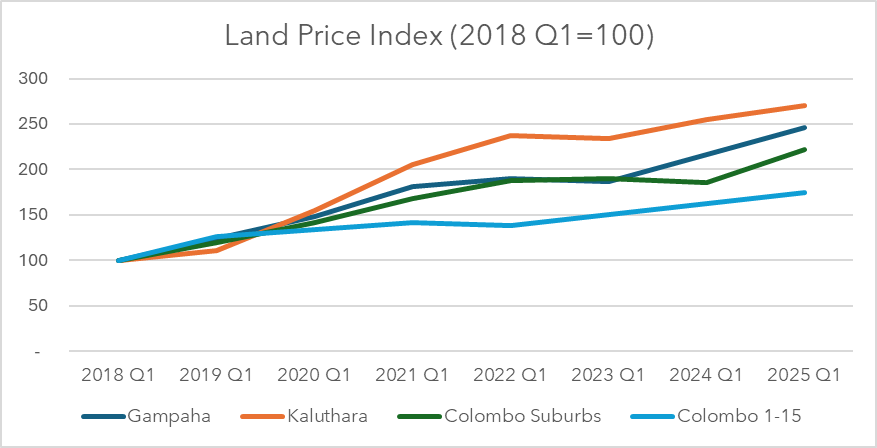

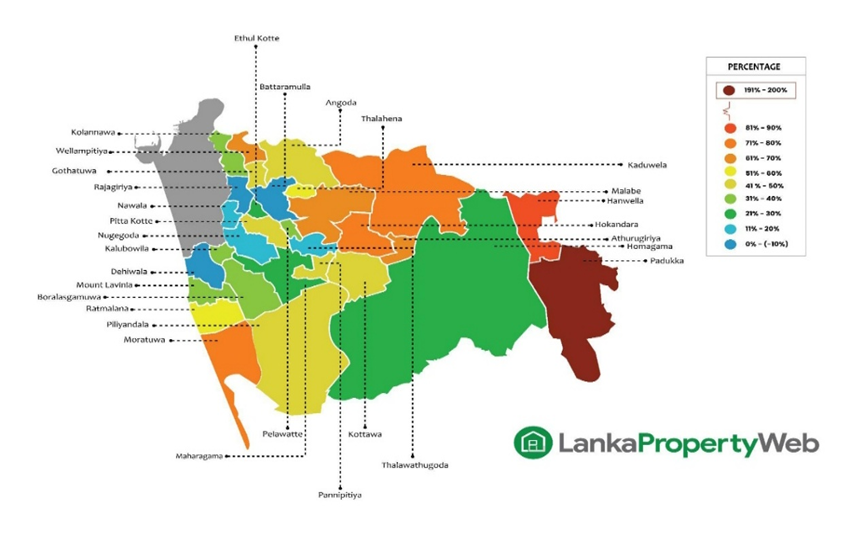

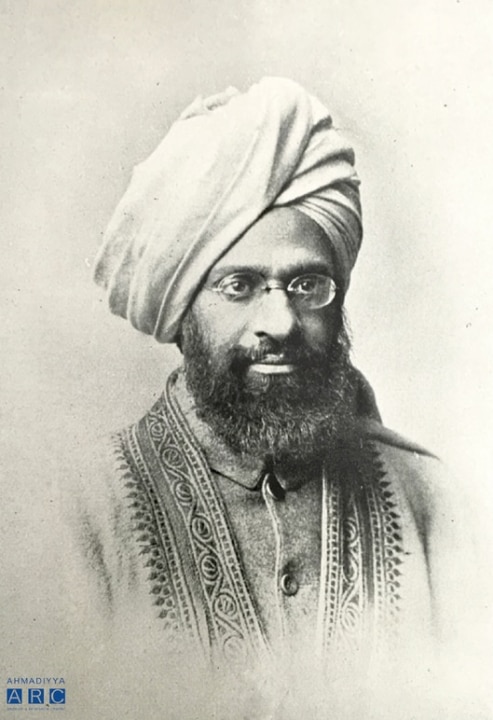
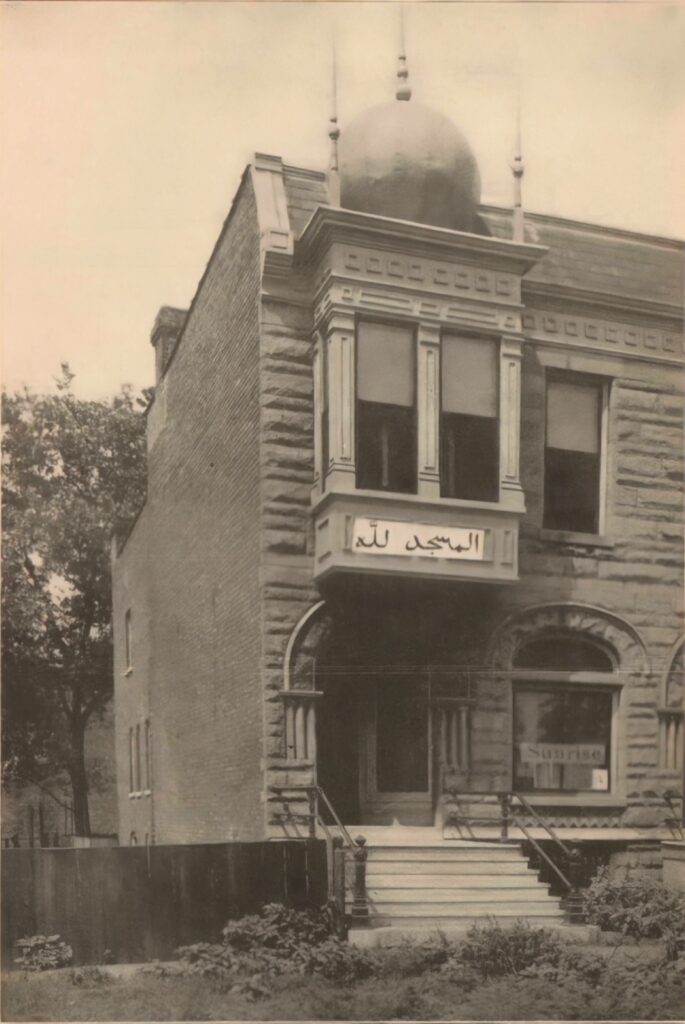
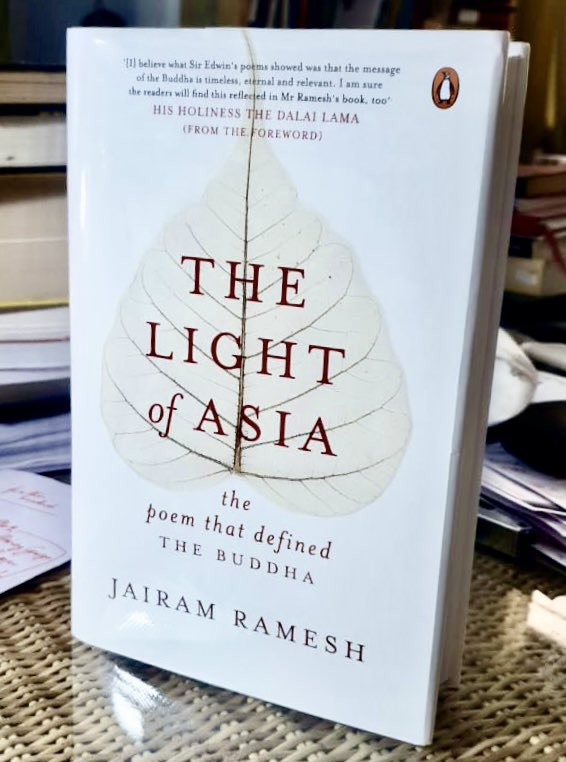
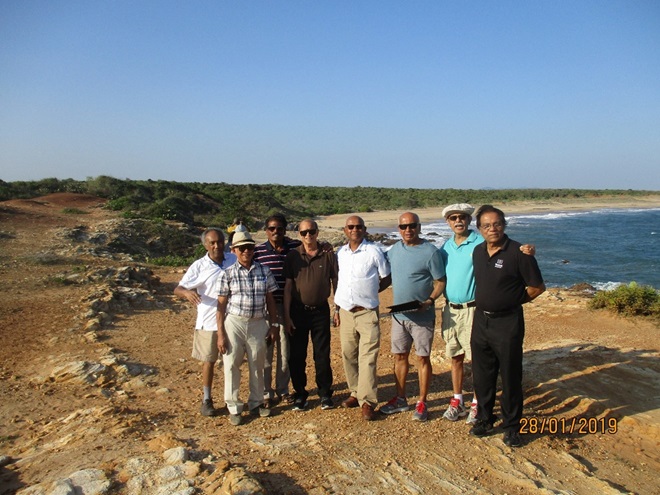
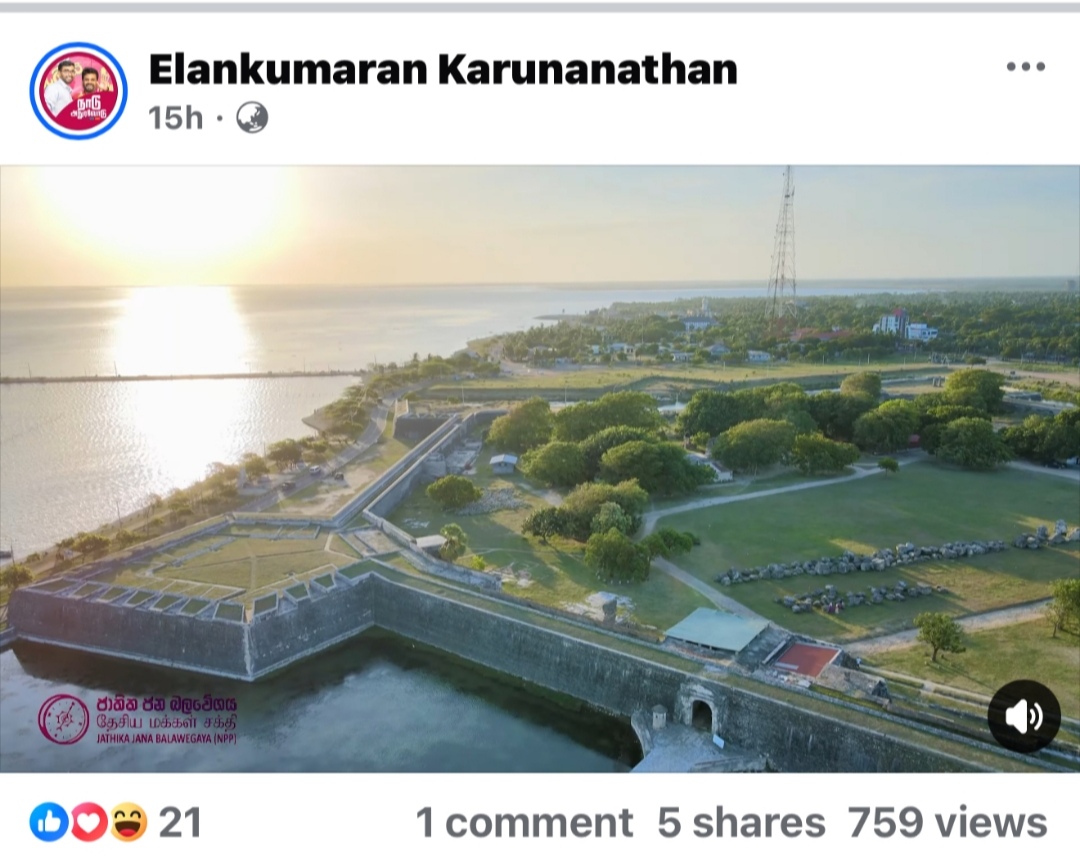









 මනුකා විජේසිංහ ශ්රී ලංකාවේ උපත ලද අතර රංගශිල්පිනියක ලෙස සිය වෘත්තිය ජීවිතය ඇරඹු ඇය ඇමෙරිකාවේ මායින් සරසවියේ දී නාට්යකලාව වැඩිදුරටත් හදාරා ඇත. දැනට ජර්මනියේ පදිංචිව සිටින ඇය Mad Cow, Flight 582 to Zurich, Marital Disadventure,The Affair, My Way, Karma වැනි නාට්ය කෘතින් ගණනාවක් නිර්මාණය කර තිබේ. මනුකා 1994 දී Silhouettes for Justice නමින් කාව්ය සංග්රහයක් පළ කළාය. ඇය විසින් රචිත නවකථා වන්නේ Monsoons and Potholes, Theravada Man, Sinhala Only,Like Moths To A Flame යන කෘතින්ය. හෝමියෝපති වෛද්යවරියකද ලෙස කටයුතු කරන ඇය පසුගිය කොවිඩ්-19 ආඛ්යානය සහ සෞඛ්ය බලධාරින් විසින් අනුගමනය කළ ක්රියාමාර්ග විවේචනයට ලක් කර ඇත.