How long are the Sinhala people going to tolerate this nonsense of the tyranny of minority politics and sleep before these Tamil and Muslim threats?

July 18th, 2019

Dr. Sudath Gunasekara 

Immediate action is needed to arrest this arrogant minority terrorism on this Sinhala motherland to save the country, the 2500 year old Sinhala nation and the Buddha Sasana.

The onerous of arresting this blatant minority terrorism falls squarely on the two main Sinhala political Parties, the UNP and the SLPP. No Sinhala political party or leader should dream to come to power in this country if it continues to ignores these threats and remain deaf, blind and dumb as usual fearing losing minority votes. The whole Sinhala nation is seriously watching how these major Sinhala Political parties will react to these open and arrogant minority threats. Will they keep their eyes, ears and mouths shut as usual and betray the Sinhala nation and the motherland at the expense of the complete extinction of the Sinhala nation. The fate of these two parties decisively hangs on how they react and behave at this most critical juncture in the history of Mother Lanka.

I am posing this question to all Sinhala Political Parties and all Sinhala people in the country in the light of the following two public and arrogant declarations by ITAK and SLMC. The ITAK threat is nothing new as it had been the same old demand of all Tamils from State Council days. Chelvanayagam a Singapore born Catholic Tamil started it in 1947 with the founding of ITAK.  Prabhakaran took to guns and fought for 30 years to establish his dream EELAM and died in 2009.What the ITAK is asking now is the same thing,  Prabha failed to get through the bulle, which Mahinda Rajapaksa, the modern Dutu Gamunu, decisively defeated. Now the Western countries led by USA, who failed to submit MR to their vicious plans are conspiring to rekindle this disaster with the assistance of their local spy and proxy Ranil Wickramasinha, the sworn enemy of the Sinhala Buddhist nation, who is popularly dubbed as the modern Don Juwan Dharmapala. Looking at the way how this country had been run for the past 4 ½ years by Ranil with his band of anti-Sinhala and anti –Buddhist band of Ministers like Mangala, John Samaratunga, Rajitha Senaratna, Kiriella, Malik Samarawickrama and Ravi and the way he has betrayed the country and the Sinhala people jointly with the TNA and Muslim politicians with secret deals leave no room to have any hope on this man for realizing our national goals. Both Tamil and Muslim politicians have openly said and displayed in Parliament that they always stand with Ranil against the Sinhala Buddhists leadership in this country.

The SLMC is conspiring and planning to get their demands fulfilled through a dual approaches namely a) by presenting their own man to contest the forthcoming Presidential election   to polarize Muslim votes and show the world their fake political strength while at the same time shrewdly scheming to get their communal dreams fulfilled by asking the Muslims to cast their second preference to the candidate who wins the elections so that they can highjack him after the elections to get their exact pound of flesh. Whichever the way you look at it the objectives of both communities are identical. That is both minorities want to preserve and consolidate their communal and racial identities until the day comes for them to throw the Sinhala Buddhist nation  in to the Indian  Ocean and form their own Kingdoms, the Tamil EELAM and the Muslim Khalisthan, on this land of the Sinhala people. None of them are prepared to accept this as the land of a Sinhala Buddhist imprint that was founded and developed by their ancestors from the dawn of history.

The sad tragedy of a nation doomed

I put the whole blame for this tragedy of a nation squarely and directly on all unpatriotic, self- seeking and visionless Sinhala politicians who misgoverned this country from 1948 after the British left. It is a classic tragedy in world history that those who took over the country from the British in 1948 never had a national vision or a plan to take this country forward as a free, independent, sovereign, vibrant and prosperous nation. They never bothered, and never had the brain, to draw from the lessons of India or Burma who got Independence in 1947, both of whom rejected the colonial recipe and asserted as Independent and sovereign nations. Our leaders blindly accepted a made in England Constitution that was designed by Jennings to perpetuate the colonial rule and continue exploitation under a Westminster system of Government forever The whole system of government was British, except the people who manned it at home and who carried out its day to day operations as her Majesties obedient servants; a set of black–whites. In fact what happened thereafter up to 1972 until the country was declared an independent Republic, our politician only ran the show for the queen of England as her obedient and servile slaves?

They should have demanded at least to restore basic things like the name of the country handed over in 1815 (Sinhale instead of its Anglicized form of Ceylon). To repatriate the over 1 million Indians who were not there when British took over the country, deceptively in 1815, to allow them to form their own system of government based on native system of governance and restoring their native language and religion. If these things were done right at that time only, freedom over the motherland would have been made meaningful. Most of the communal problems we are faced with today also would never have been there.

What did they do instead? They embraced the British model hook, barrel and sinker, as if we were a barbarian set of people who never had a history or a civilization and civilized only by the British for the first time.

Above all this they embraced the political party system and the name UNP proposed by  Governor Henry Monk Mason Moor in 1947 by which they conceded that there are more than one nation in this country where as in 1815 we had only one nation in this Island, that was Sinhala. This crafty decision of Moor laid the foundation for communal and divisive politics that has ruined the country thereafter. The split in the UNP in 1951 with Bandaranayaka forming the SLFP divided the Sinhala nation in to two opposing political camps. Today they behave just like Jews and Muslims. This division of the Sinhala nation had been the bane and the curse of the nation ever since as it had provided room for minorities to be the critical factor in forming all governments. This has completely eroded the power of the Sinhala majority that forms 75% of the total population of the country even today.  As a result this country has become the only country in the world that is ruled by minority communities at the peril of it native majority.  

It is in this background that I call upon all Sinhala people to give up and discard all political and religious differences (Buddhist and Catholics) and form in to one strong group under the Lion Banner as Sihalese, to save this glorious Island nation of the Sinhala nation and its millennia old civilization from the imminent dangers arising from the serious threats by the Tamils and Muslims as given below. If you don’t do it right now, I can vouch that it will definitely put the curtain down the Sinhala nation,that once marveled the world as one of the greatest civilization on this planet.

As the first step towards this historic turning point in the history of this Island nation, I propose the following cause of action. Immediately forming

  1. First a Clergy Front comprising,

All Mahasangha of this country led by the four Mahanayaka Theras of the three Nikayas and other peripheral sects as one group under the Buddha’s sacred yellow robe and the sacred Buddhist flag, giving up their Nikaya differences and political affiliations. Thereafter form in to an alliance with the Catholic and Christian priests led by Cardinal Malcom Ranjith. This will lay the foundation for the all Sinahla power nucleus around which the great future Sinhala nation will be built

  • Laymen Front

 As the second step all Sinhala people should immediately discard all their blind and naïve political party affiliations and form one Strong national front to save the nation and the country. The English political parties have only helped politicians to prosper over the past 7 decades while pushing the country down the Gadarine slope to poverty, destitution and destruction without any hope for a tomorrow for posterity. I suggest the laymen should organize around the Temples and Churches under the guidance of Mahasanga and Reverend Priests

  • Thereafter together these two groups should select a strong Patriotic leader  supported by patriotic janataahitawadii set of educated and honest men and women of high moral character who are prepared to serve the country and the people by swearing in front of the Sacred Tooth Relicts  at the  Sri Dalda Maligawa as the tradition stands in this country to implement the national programme prepared by  a group of national experts under the guidance and advice of a Supreme Advisory Council of clergy and selected lay experts
  •  There after they should also renounce all political and religious differences, discard and totally reject the unpatriotic, anti- Sinhala and anti- Buddhist UNP under Ranil  and his Royal band of thieves and traitors at least until a pro-Sinhala patriotic leadership take over its leadership one day and canvas for one Strong, Patriotic Sinhala Buddhist leader and get him elected as the President.

This in my opinion is the only way to defeat the Tamil and Muslim minority tyranny and terrorism for good and save this great nation and its Sinhala Buddhist culture. It is also the only way to bring back true democracy under which the native majority will get back its legitimate place in this country restored. This however does not mean any discrimination to Tamils and Muslims as minority communities as traditionally it had never been in this country throughout history.  United as Sinhalese we stand, divided we fall and doomed to extinction as the lesson of history has proved over and over again.

A warning to all politicians who intend to capture political power in future

Those politicians who intend to run for power in the forthcoming elections must now respond immediately to the following two statements by the TNA and Muslim politicians in order to qualify to be elected in future. They must publicly denounce these minority attempts without any reservations and agree to abide by the National election manifesto prepared by nation and openly swear and agree to include the following 15 conditions in their manifesto in order to be considered by the people at any forthcoming election.

Among other things we expect them to declare that they stand by the following 15  Commandments and fully committed  to fulfill them if they need our votes.

1Protect the Territorial integrity, Sovereignty, freedom and Independence of this Island nation from all foreign invasions and interferences as it had been done by our ancient Kings.

2 One country, Sinhale and one Official State language as it had been in 1815 at the time of ceding to British and also from the inception of history

3 One Nation Sinhala / Sri Lanka (No Tamil and Muslim nations on this soil after that)

4 One Law for all the citizens and one judicial system (no Muslim Law and tribal Carthy courts and no Thesavalamei)

5 Island wide Law and Order will be restored and everyone will be treated equal before law, by restoring the Rule of Law

6 Lean Parliament and small Cabinet (150 and MPP and 15 Cabinet Minister)

7 People centered Independent and impartial Public Service and Judiciary (with a lean public service where meritocracy, independence and service to people should be the hallmark of public Service.

8 Ban all communal, religious and political parties like TNA,SLMS etc and have only national political parties.

9 Scrap 13 A and Rajiv/JR Accord 1987 immediately and declare all laws, administrative decisions and institutions set up under them like Provincial Councils, grant of Citizenship to Indian estate labour outside the Nehru/Kotalawala Agreement, recognition of the Northern and Eastern Provinces as traditional homelands of Tamils and recognition of Tamil as an Official Language as null and void.

10 Set up an Uttariitara Advisory Council of clergy and top citizens of 25 to advice the Government

11 A national Planning Council to be in charge of overall National Planning whose approval will be made mandatory for all projects in the country both local and foreign.

12A New Constitution within six months based on Home based traditions, true history of the Island and customs to govern the country according to the time tested Buddhist principles of Statecraft Dasaraaja Dharma.

13 Laydown minimum qualifications for politicians and a strict code of Conduct for politicians and   Public Servants.

14 An executive President elected by all people for six years

15 Limit the number of Ministries to 15 and set up fifteen Executive Committees with 15 chairmen to handle governance in the country from among whom, one Chairman will be elected by them as the Chairman of the Cabinet of Ministries, who will be the Prime Minister appointed by the President.

( Details of these 10 will be made available  before the policy statement is presented)

The two provocative Statements referred to in this article are given below.

(1) Illankai Tamil Arasu K adchi to present series of proposals to govt.

July 1, 2019   11:55 am

Illankai Tamil Arasu Kadchi (ITAK) has decided to present a series of proposals with 11 demands including

.The decision was taken at the general meeting of the party held under the patronage of party leader Mavai Senathirajah in Jaffna yesterday (30).

1 a political solution through a self-governing system to

2combine the Northern and Eastern provinces

3 to provide solutions for the issue of the disappeared persons in the north and the east

4 to remove security forces from the land plots belonging to the civilians in the north, ensuring the people’s land rights as well as

5 to halt the establishment of Buddhist religious shrines in the areas where Hindu people reside.

The ITAK seeks the government to provide solutions to these issues within 3 months.

They have also decided to support any political party, who would support these demands, in the upcoming elections

(2) Sri Lanka Muslims to field first separate Muslim candidate in coming Presidential Sri Lanka Muslims to field first separate Muslim candidate in coming Presidential elections

Fri, 2019-07-12 14:00 — editor

Colombo, 12 July, (Asiantribune.com):

For the first time in Sri Lankan Presidential elections history, a Muslim candidate who will not represent any mainstream political party but will only represent the Muslims of the country, is set to come forward as a candidate.

Well informed Muslim political sources said that all Muslim political parties will back a separate Muslim Presidential candidate who would likely be nominated by the Sri Lanka Muslim Congress (SLMC) on behalf of all Muslim parties.

The Muslim parties are likely to form a loose coalition at Presidential elections so that the Muslim voter-base would not split and would rally around only one nominated Muslim candidate, the sources added.

According to these sources, it was this consensus that also led to the sudden mass resignation of Muslim Ministers on June 3, who said they were all stepping down in protest against the targeting of a single Muslim politician, leader of ACMC (and former Minister) Rishad Bathiudeen.

“Even Muslim Ministers of UNP who were voted-in by the Sinhalese voters resigned unexpectedly on June 3 with Muslim Ministers who were voted in by Muslim votes. The undisclosed political development of a forthcoming separate Muslim candidate was the reason for their resignation, which was not known to the public at that time. Everyone was led to believe that all Muslim Ministers were standing in unity with Minister Bathiudeen when they resigned” sources added.

When it was asked that “Since a Muslim candidate separately contesting will not be able to secure sufficient votes to become the President of the country, what is the purpose of nominating such a separate Muslim candidate?”

The reliable source within SLMC said “It is well known that such a separate Muslim candidate cannot win the Presidential election alone. We clearly understand this. The expectation of the Muslim candidate is that he/she will show that he/she has the majority Muslim votes of the country, and he/she, representing the Muslims in the country, will start to bargain with the mainstream candidate who is most likely to be the winner in the Presidential election. He/she will therefore be able to do this negotiation for Lankan Muslims in a bigger capacity than a standard Muslim Cabinet Minister or a usual Muslim party leader.”

Sources further told that,

1Once the mainstream candidate who is likely to be the winner agrees to the demands of our Muslim Presidential candidate, then our Muslim candidate would either withdraw from his candidacy and

2 pledge his and his Muslim voters’ support to this mainstream candidate or, call all Muslim voters to mark “the mainstream candidate who is likely to be the winner” as their “second preference” in their ballot papers.”

– Asian Tribune -elections Asian Tribune 12.7.2019

MILLENNIUM CHALLENGES, ECONOMIC ISSUES AND INTERNATIONAL POLITICS IN SR LANKA PART 1

July 18th, 2019

BY EDWARD THEOPHILUS

Recent political analysis of Mr. C.A Chandraprema in Sunday Island on 14.07.2019 allowed understanding the truth about the achievement of millennium goals in Sri Lanka as it has been quite closed information that most of the population in the country including politicians have no idea about this test performance.  I associated with university students in Pacific countries to discuss UN millennium goals after the year 2000, however, I didn’t know that Sri Lanka also was a country covered by UN Millennium goals as the official statistics published by the Central Bank of Sri Lanka showed that it should not include achieving millennium goals as the economic status of the country was in above level than the targeted level of the united nation.  I critically discussed economic issues and related social cultural and education issues with students and understood that skills development was a key factor in achieving millennium goals in developing countries of the Pacific region.  I believed that Sri Lanka was a country with reasonably economic achievements and a country where was not expecting economic supports from developed nations to get out of poverty. The analysis of Mr. Chandraprema changed my assumption and encouraged to rethink about the original discussion as UN focus on the Millennium Goals and the views of Millennium Corporation seem to be contradicting or different from the original UN goals.  The UN discussions on the millennium goals strongly focused on debt reduction in third world countries and did Millennium Challenge Corporation support to debt reduction or to write off Sri Lanka’s debt to International Financial Organizations is not clear.

Inflation in Sri Lanka

Theoretically, inflation is defined and explained as cost-push or demand-pull, and in early 1950s Prof Milton Freedman added monetarists view on inflation that the increase in money supply (M1+M2) would impact on the increase in inflation. The traditional instruments of the monetary regulator and the authority, the Central Bank of Sri Lanka is to use interest rate as a controlling measure of inflation  with other controls such as open market operations and reserve ratio, however, they are not effective in Sri Lanka as they are working well in developed countries where have a higher level of access to formal financial markets. Sri Lanka is not such a developed financial market with information and information management. Other credit control measures such as selective controls used in Sri Lanka, but deregulation of financial markets had to put them away. Since the late 1980s printing money for fiscal purposes badly affected on inflation because treasury bonds issued to find funds for budget purposes were invested by the Central Bank of Sri Lanka printing money.  I don’t really know whether Sri Lanka had passed the test for inflation, but ordinary people especially rural poor states that they are facing economic predicaments because prices of goods and services are increasing day by day.  It is seen that the government has failed to control inflation and the general price level going up and up every day.

Inflation is a highly argumentative economic issue in developed countries as well as in developing countries. When we were learning macroeconomics in universities, it said that one person’s spending today would be a revenue of another in tomorrow and spending would be supported to increase in aggregate demand and Inflation is good for a certain extent.  Theoretically, it may be true or false, but need to ask poor people as they are practically suffered day by day and engage in never-ending hard work to cope with inflation. In this situation, it is quite difficult to believe that the Millennium Challenge Corporation’s view that Sri Lanka has passed the test for inflation.

In developed countries also produce prices have gone up and the prices of many electronic items have gone down when consider the average situation economists conclude that inflation is lower and successful in the management of the economy.  About to Sri Lanka also it is a truth that from the point of views of economists’ Sri Lanka may have passed the test of inflation, however, practically ordinary people cannot enjoy the pass of the test they cannot see any benefit.

When talking about inflation it needs keep in mind that declining the exchange value of the monetary unit in Sri Lanka has been contributed to increase in price level of Sri Lanka. The government has failed to control the declining Rupee value.  It is an internationally concerned issue and Sri Lanka has no economic power to control it.

Regulatory Quality

Deregulation was the popular idea since late 1980s and the idea has been accepted by Sri Lanka since the beginning of market economic system in 1978, however, it is questionable whether Sri Lanka has been maintaining a purely deregulated economy or an economic environment with regulatory quality.  The assessment of the quality of regulation management is a difficult task and the way of regulation management is also not acceptable to everybody.  Sri Lanka has appointed authorities for regulation management in various market areas such as health, education, finance, agriculture, technology and many others. The current problem is whether the regulatory authorities discharge the functions prudently and independently without political influences.

There is clear weakness in many areas and it seems that regulators have become market operators in Sri Lanka.  For example, Central Bank of Sri Lanka is the regulatory authority of the financial markets, but it is performing market operations about to superannuation and rural credit management.  I informed the president of Sri Lanka this late 1990s, the president acknowledged my points, so far nothing has been done.  The Central Bank allowed to market economic system and operations without quality regulations in various markets and it was the major reason for people to make negative criticism on the market economic system, which created many problems in the economic system of the country as well as benefits to poor people finding a right price for their produce. 

The main purpose of the regulator is to protect consumers in the trade or market operations.  I have a reasonable question, has regulatory authorities in various trade areas in Sri Lanka are successful in protecting consumers?  When I talk with ordinary people in the country the answer of them was that regulatory authorities have been unable to protect consumers and market operators have taken the power to their hand and consumers became slavers of market operators.  In this situation how can say Sri Lanka has a regulatory quality in market operations

This is a macro style issue and the response of public is that regulatory quality is not up to the expected level.

Trade Policy

Trade policy concerns with domestic trade policy and international trade policy.  Sri Lanka has no power to successfully make policies for international trade consistent to trends but it can make or adapt to trade trends developing responsive trade policies.  When developing trade policies Sri Lanka has not totalitarian style power like America or China has and it should act within the authoritative framework.  Many people and politicians in the country have no idea about this and they think that the country can change trade policy overnight. Domestic trade policies are also not open and the country needs a concrete domestic trade policy which means that what should do.  I haven’t seen a trade policy manuals and procedures manuals to pass a test for trade policy in Sri Lanka. What should be the trade policy for the country should be determined by practical outcomes and for this purpose, it needs continuous research on trade policy matters.

Business Start-Up

This is also a quite complicated area as an investor has many loop holes to go through to investment decision and corruptions are main constraints to business start-up. From the side of Sri Lanka allowing for investments should be made after careful consideration of investment projects, especially after 9/11 and the Easter Sunday attacks Sri Lanka must consider allowing for investment either domestic or foreign investments should be after intelligence analysis and sometimes, consultation with several countries.  Investments in modern era concern with many issues not just the returns   Honestly speaking I have no personal experience in business start-up, but I heard various complaints from potential investors. A significant constraint is investors or business people must go from one place to other compile to regulation and they must face with crooks.

It is indicated that Sri Lanka has failed the test on fiscal policy, land right and access to credit. These are highly complicated issues as they are involved in politics. The confabulation on three items is vital for policy makers in the country and they are broader area cannot discuss in a short paper. There may be thousands of papers written on these matters including thesis of university students.

MILLENNIUM CHALLENGES, ECONOMIC ISSUES AND INTERNATIONAL POLITICS IN SR LANKA PART 2

July 18th, 2019

BY EDWARD THEOPHILUS

Fiscal Policy

Fiscal policy became a vital issue after the conditions created Korean War in early 1950s and Sri Lanka was unable to design and develop a good fiscal policy to the country.  It seemed that the economic authority treated fiscal policy and monetary as alternatives despites in our university classrooms education in which we were educated that fiscal and monetary policies are not alternatives but complimentary to fix weakness in one by others.  Fiscal policy has been continued without a proper solution and all governments ruled in the country used borrowing as the way to cover budget deficit and it was inflationary and pushing the country to a debt trap. After 1995, many countries used different techniques to solve fiscal problems but Sri Lanka hasn’t opened a creative debate on this matter and stuck in a mud puddle.  Still Sri Lanka has good solutions to fiscal issues, however, politics in the country doesn’t allow to use right policies.  During the last several years of the Rajapaksa regime, there was a systematic strategy to gradually solve the problem and the yahapalanaya disturbed the strategies and fiscal policy entirely forced to house of yahapalana rouge and complicated the fiscal policy. 

Land Rights

This is highly complicated issue involved in legal, politics, ethnic and religious issues.  Land right is essential for business investments and how to decide the allowing land right for various business purposes and how to decide the value of lands for business purposes.  Sri Lanka has intense competition to gain land rights for business purposes and there are legal barriers for foreigners gain and access and local people to sell lands to foreigners for business purposes. The government has submitted the State Land (Special Provisions) Bill to the Parliament on 28.06.2019 and Mr Neville Ladduwahetty expressed legal opinion on that bill that it affects the sovereignty of people and with approval by people at a referendum it cannot be passed (Island: 17.07.2019).

The issue in relation to land rights need to be discussed in an open forum like making new constitution at least 2 to 3 years with the participation of all sort of people in the country and it should not be a decision like Don Juwan Dharmapala style decision in the past.

Access to Credit

Access to credit also a complicated issue and many people in the country has no clear idea about it without practically association with problems. As I had been involved in credit management and credit policy making in a government bank and doing practical research on this area, I understand practical, theoretical, policy issues as well as corruption issues about access to credits in Sri Lanka.  There are fundamental issues such as capital shortage of bank and financial system of the country and to solve this problem, politics in the country has become an impediment and this issue needs to be openly talked by relevant people and politicians. There are effective solutions to the problem but bureaucrats involved in credit management have no idea how to solve the problem.

Credit administration also a complicated problem in the country as it is involved in gigantic corruption of credit administrations of banks and non-bank financial intermediaries and politician’s involvement with it. I have seen that credit administration blames to politicians in many occasions they made decision because politicians influenced to them but it not truth. Credit administration made decision as a part of corrupt practices and they attempt blame politicians when the credit decision goes bad.  In this situation, credit administration must be able to educate credit policy and procedures to politicians and prevent bad credit decisions.

The other important thing is that Sri Lanka must allow good market player with strong capital base to play with strong controls.  Most probably Chinese banks can play a better role to increase access to credits.

International Politics in Sri Lanka

Sri Lanka has been involved in international politics since 1990s and it appears that the country has difficulties to manage international politics with one voice of political parties.  In Western countries and many other Asian, African and Latin American countries have one voice on international relations but in Sri Lanka, policy on international relations is not clear and especially political parties have no clear ideas on what to do in this arena.

Why do we go along with a policy view of an international bloc need clearly understand considering the possible benefits to the country?  Many politicians have no knowledge, experience and skills to assess.  In this situation, many politicians can be brought by international powers with a small sum of money or benefits.  Recently I watched a TV program in Sri Lanka, which was a talk show with a lawyer.  I had difficulty to judge whether the layer is knowledgeable, skilful or experience person as he was talking bullshit to mislead people of Sri Lanka without knowing international politics.

I had a feeling that the person was a bait of international politics to mislead Sri Lankans. However, he was highly unsuccessful as he could not present the idea people to believe or accept.

International politics change quickly and friends become enemies and enemies become friends.  This is the dynamism and if this dynamism understands by political parties and come to uniform policies it can easily handle international politics.

වසර 115කට පසුව මහව ඕමන්තේ දුම්රිය මාර්ගය සම්පූර්ණයෙන්ම අලුත් කෙරේ…

July 18th, 2019

ප්‍රවාහන හා සිවිල් ගුවන්සේවා අමාත්‍යාංශය.

වසර 115කට වඩා පැරණි මහව – ඕමන්තේ දුම්රිය මාර්ගය සම්පූර්ණයෙන්ම අලුත් කිරීම හෙවත් දැනට භාවිත වන පැරණි දුම්රිය මාර්ගය ඉවත් කර ඒ වෙනුවට නව දුම්රිය මාර්ගය සෑදීමේ  ව්‍යාපෘතිය අද නිල වශයෙන් ආරම්භ විය. ඒ එම ව්‍යාපෘතියේ ඉදිකිරීම් ගිවිසුම ප්‍ර‍වාහන සහ සිවිල් ගුවන්සේවා අමාත්‍ය අර්ජුන රණතුංග මහතාගේ ප්‍ර‍ධානත්වයෙන් අත්සන් කිරීමෙනි. ගිවිසුම් අත්සන් කිරීමේ නිල උත්වය අද (18) කොළඹදී පැවැත්විණ. ගිවිසුම අත්සන් කළේ ප්‍රවාහන සහ සිවිල් ගුවන්සේවා අමාත්‍යාංශය සහ ඉදිකිරීම් කොන්ත්‍රාත්තුව හිමි IRCON Intonational Limited  සමාගම අතර වේ.

උතුරු දුම්රිය මාර්ගයේ මහව – ඕමන්තේ දුම්රිය මාර්ගයට අයත් සම්පූර්ණ දිග කිලෝමීටර් 133කි. එහි මහව සිට අනුරාධපුර දක්වා කොටස ඉදිකරන ලද්දේ 1904 වර්ෂයේ වෙයි. අනුරාධපුරයේ සිට ඕමන්ත දක්වා කොටස 1905 වර්ෂයේදී ඉදි කෙරිණ. එතැන් සිට මේ දක්වා මෙම දුම්රිය මාර්ගයේ කිසිදු මහාපරිමාණ සංවර්ධනයක් සිදු නොවිණ. සිදු කෙරුණේ අතවශ්‍ය අලුත්වැඩියා පමණි. මේ හේතුවෙන් මහව ඕමන්ත දක්වා කොටසේදී දුම්රිය ධාවනය වන්නේ අතැම් විට පැයට කිලෝමීටර් 40කටත් වඩා අඩු වේගයෙන් වේ. එනිසාම එම කොටසෙහි දුම්රිය ධාවනයට පැය තුනක් පමණ ගත වෙයි. මෙම තත්ත්වය සැලකිල්ලට ගනිමින් මහව – ඕමන්ත දුම්රිය මාර්ගය සම්පූර්ණයෙන්ම සකස් කිරීම මෙම ව්‍යාපෘතිය යටතේ සිදු කෙරේ.

මහව – ඕමන්තේ දුම්රිය මාර්ගය අලුතින් සකස් කිරීමට වැය කෙරෙන මුදල ඩොලර් මිලියන 91.2කි. ඉන්දීය ණය ආධාර ක්‍ර‍මය යටතේ එම ප්‍ර‍තිපාදන සැපයේ. ව්‍යාපෘතියෙන් දුම්රිය මාර්ගයට අමතරව හරස් දුම්රිය ස්ථාන 12ක් සහ දුම්රිය නැවතුම් පොළවල් 7ක් සහ කාණු පද්ධතියද සංවර්ධනය කෙරේ. නව සංඥා පද්ධතියක්ද ස්ථාපිත කෙරේ. මැදවච්චිය සහ වව්නියාව අතර මහනුවර යාපනය -මාර්ගය ආසන්නව නව දුම්රිය ස්ථානයක්ද ස්ථාපිත කෙරෙනු ඇත. නව දුම්රිය මාර්ගයේ වේගය පැයට කිලෝමීටර් 120ක් වීමද විශේෂත්වයකි.

වසර තුනකින් නිම කිරීමට අපේක්ෂිත මෙම ව්‍යාපෘතිය දියත් වන්නේ අදියර දෙකකට වේ. එහි පළමු අදියරේදී මහව සිට අනුරාධපුරය දක්වා කොටස සකස් කරයි. දෙවැනි අදියරේදී සකස් කරන්නේ අනුරාධපුරයේ සිට  ඕමන්තේ දක්වා වෙයි. එම ඉදිකිරීම් ක්‍රියාත්මක අවස්ථාවලදී මහව – අනුරාධ දක්වා කොටස මාස 6කටද අනුරාධපුර ඕමන්තේ දක්වා කොටස මාස 5කටද වසා තබයි. එම අවස්ථාවවලදී දුම්රිය ධාවනය අඛණ්ඩව පවත්වාගෙන යාමට වසා දැමෙන කොටස ආවරණය වන පරිදි බස් රථ යෙදවේ. ගිවිසුම් අත්සන් කිරීමේ උත්සවයට එක් වෙමින් ප්‍ර‍වාහන සහ සිවිල් ගුවන්සේවා අමාත්‍ය අර්ජුන රණතුංග මහතා පැවසුවේ පසුගිය මාස කිහිපයේදී ප්‍ර‍වාහන ක්ෂේත්‍රයේ දැවැන්ත සංවර්ධනයක් ඇති කිරීමට වත්මන් ආණ්ඩුවට හැකි වූ බවයි. මුළු දිවයිනම ආවරණය පරිදි එම සංවර්ධන ව්‍යාපෘති දියත් කෙරෙන බවත් ඒ යටතේ ඉදිරියේදී බෙලිඅත්ත කතරගම දුම්රිය මාර්ගය ඉදි කිරීමේ ටෙන්ඩරය කැදවන බවද අමාත්‍ය අර්ජුන රණතුංග මහතා පැවසීය. පලාලි ගුවන්තොටුපොළද සිවිල් කටයුතු සදහා නුදුරේම භාවිත කළ හැකි වනු ඇතැයිද අමාත්‍ය අර්ජුන රණතුංග මහතා විශ්වාසය පළ කළේය. එම ගිවිසුම් අත්සන් කිරීම සදහා ප්‍ර‍වාහන සහ සිවිල් ගුවන්සේවා අමාත්‍යාංශයේ ලේකම් එල්. පී. ජයම්පති මහතා සහ IRCON Intonational Limited  සමාගමේ සභාපති එස්. කේ. චව්ද්‍රි (S.K. Chaudhary) යන මහත්වරුන් සහභාගි විය. සම්භාවනීය අමුත්න් ලෙසට ශ්‍රී ලංකාවේ ඉන්දීය මහකොමසාරිස් කාර්යාලයේ ආර්ථික සහ වානිජ්‍ය අංශයේ ප්‍ර‍ධානී සුජා කේ මෙනන් මහත්මියද සහ දුම්රිය සාමාන්‍යධිකාරී ඩිලන්ත ප්‍ර‍නාන්දු යන මහත්ම මහත්මීන් එක් වූහ.

ම.ප. තමීර මංජු,

ගරු අමාත්‍ය අර්ජුන රණතුංග මැතිතුමාගේ මාධ්‍ය ලේකම්,

ප්‍රවාහන හා සිවිල් ගුවන්සේවා අමාත්‍යාංශය.

පටු දේශපාලන වාසි වෙනුවෙන් අධ්‍යාපන ඇමති ජනතා මුදලින් ජනතාව නොමග යැවීම සම්බන්ධවයි.

July 18th, 2019

ලංකා ගුරුසේවා සංගමය

ගරු ජනාධිපති,
මෛත‍්‍රීපාල සිරිසේන මැතිතුමා,
ජනාධිපති කාර්යාලය,
කොළඹ 01.

ගරු ජනාධිපතිතුමනි,

පටු දේශපාලන වාසි වෙනුවෙන් අධ්‍යාපන ඇමති ජනතා මුදලින් ජනතාව නොමග යැවීම සම්බන්ධවයි.

අධ්‍යාපන ඇමති අකිල විරාජ් කාරියවසම් මහතාගේ උපදෙස් පරිදි අධ්‍යාපන අමාත්‍යාංශය විසින් ‘‘සක‍්‍රීය අධ්‍යාපන පද්ධතියක් වෙනුවෙන් ගුරු විදුහල්පති සේවාව ශක්තිමත් කළ වගයි.’’ යනුවෙන් ජාතික පුවත්පත්වල සම්පූර්ණ පිටුවක් පුරා ජනතා මුදල් වැයකරමින් පලකර ඇති ගුරු හා විදුහල්පති සේවාවල වැටුප් සංශෝධන දැනුවත්වම ජනතාව නොමග යැවීමක් බැවින් ඊට දැඩි විරෝධය පලකරන ලංකා ගුරුසේවා සංගමය මෙම මුදල් අවභාවිතාව සම්බන්ධව විධිමත් පරීක්‍ෂණයක් පවත්වන ලෙස ඉතා ඕනෑකමින් යුතුව ඉල්ලා සිටිමු.

  1. 2016 වර්ෂයේදී සමස්ත රාජ්‍ය සේවයේම වැටුපට එල්ලා තිබූ සියලූ දීමනා අදියර 5 කදී මූලික වැටුපට එකතු කිරීම සඳහා නිකුත් කළ 3/2016 රාජ්‍ය පරිපාලන වැටුප් චක‍්‍රලේඛය මගින් සිදුකළ වැටුප් සංශෝධන අධ්‍යාපන අමාත්‍යාංශය ගුරු හා විදුහල්පති සේවාවන්වලට පමණක් සිදු කළ එකක් බවට හුවා දක්වමින් ජනතා මුදල් ලක්‍ෂ ගණන් වැයකර මෙම පුවත්පත් දැන්වීම් පලකිරීමට කටයුතු කර ඇත.
  2. ඒ අනුව උක්ත චක‍්‍රලේඛයේ සඳහන් වැටුප් සංශෝධන හැර 2015 වර්ෂයෙන් පසු ගුරු හා විදුහල්පති සේවාවන්ට වසර 22 ක් පවතින බරපතල වැටුප් විෂමතාවය විසඳීම සඳහා ගත් කිසිදු කි‍්‍රයාමාර්ගයක් මෙම නිවේදනයෙහි සඳහන්ව නොමැති බව ඉතා වගකීමෙන් යුතුව ප‍්‍රකාශ කරමු.
  3. ඒ අනුව උක්ත චක‍්‍රලේඛය නිකුත් කිරීමෙන් පසුව මෙම පුවත්පත් නිවේදනයේ සඳහන් පරිදි ගුරු හා විදුහල්පති සේවාවන්ගේ මූලික වැටුප් වැඩිවීමෙන් අනතුරුවද පහත පරිදි වැටුප් විෂමතාවයක් නිර්මාණය වී ඇති බව පෙන්වා දීමට කැමැත්තෙමු.
    ගුරු සේවය විදුහල්පති සේවය
    1 වන පන්තියට රු. 31225/- ක් 1 වන පන්තියට රු. 29850/-
    2-1 වන ශ්‍රේණියට රු. 23420/- 2 වන පන්තියට රු. 24850/-
    2-2 වන ශ්‍රේණියට රු. 14315/- 3 වන පන්තියට රු. 22518/-
    3-1 අ. රු. 10304/-
    ආ. රු. 9696/-
    ඇ. රු. 9452/-
  4. එමෙන්ම නව සේවා ව්‍යවස්ථාව ක‍්‍රියාත්මක කිරීමේදී 2008. 07. 01 දින සිට 2010. 12. 31 දින දක්වා උසස්වීම්වලට අදාලව ගුරුවරුන් විසින් උපයාගත් මාස 30 ක හි`ග වැටුප් කිසිදු වග විභාගයකින් තොරව කපා හැර දැමීමට ද අධ්‍යාපන අමාත්‍යාංශය කටයුතු කර ඇත.
  5. එමෙන්ම 2016. 01. 01 දින සිට රාජ්‍ය සේවයේ පත්වීම් ලැබූ බහුතරයක් ගුරුවරුන් ඇතුලූ රාජ්‍ය සේවකයාගේ විශ‍්‍රාම වැටුප් මුලූමනින්ම අහෝසි කර දැමීමටද කටයුතු කළ ආණ්ඩුවක අධ්‍යාපන අමාත්‍යවරයා තවදුරටත් ජනතා මුදල් නාස්ති කරමින් ජනතාව නොමග යවන පුවත්පත් දැන්වීම් පලකිරීම සම්බන්ධව දැඩි පිළිකුලෙන් යුතුව හෙළාදකින ලංකා ගුරුසේවා සංගමය ජනාධිපතිවරයා ලෙස මේ සම්බන්ධව ඔබට ඇති වගකීමද අවධාරණය කරනු කැමැත්තෙමු.

විධායක සභාව වෙනුවෙන්,

මහින්ද ජයසිංහ,
ප‍්‍රධාන ලේකම්,
ලංකා ගුරුසේවා සංගමය

සම්බන්ධීකරණය – 0718297022/

පිටපත්

  1. අග‍්‍රාමාත්‍ය රනිල් වික‍්‍රමසිංහ මහතා – අග‍්‍රාමාත්‍ය කාර්යාලය
  2. අධ්‍යාපන අමාත්‍ය – අකිල විරාජ් කාරියවසම් මහතා
  3. අධ්‍යාපන ලේකම් – අධ්‍යාපන අමාත්‍යාංශය

ශ්‍රේෂ්ඨාධිකරණ, අභියාචනාධිකරණ නඩු තීන්දු සිංහල භාෂාවෙන් ලබා ගැනීමේ අත්සන් ලක්ෂයේ වැඩසටහන….සමාරම්භක අවස්ථාව……2019 ජූලි 18 කොළඹ මහජන පුස්තකාලයේ දී පවත්වන ලදී…..

July 18th, 2019

අරුන උණවටුන

ශ්‍රේෂ්ඨාධිකරණ සහ අභියාචනාධිකරණ නඩු තීන්දු ලබා දිය යුතු භාෂාව සිංහල භාෂාව විය යුතුද? මැයෙන් ජනමතවිචාරණයක් පවත්වන ලෙස ඉල්ලා ගරු ජනාධිපතිතුමා වෙත ඉදිරිපත් කිරීම සදහා පුරවැසියන් ලක්ෂයකගේ අත්සන් එකතු කිරීමේ සමාරම්භක නිල උත්සවය 2019 ජූලි මස 18 වන දින සවස කොළඹ 07 මහජන පුස්තකාලයේ ප්‍රවේශාගාරයේ දී නීතිඥවරු ඇතුලු විද්වත් පිරිසගේ සහභාගීත්වයෙන් පවත්වන ලදී. එම අවස්ථාවට වැඩම කළ කැළණිය විශ්ව විද්‍යාලයේ සංස්කෘතික අධ්‍යයන අංශයේ මහාචාර්ය පූජ්‍ය ඉදුරගාරේ ධම්මරතන හිමියන් සිය අත්සන ලබා දෙන අවස්ථාව සහ සිංහල භාෂාවෙන් ශ්‍රේෂ්ඨාධිකරණයේ සහ අභියාචනාධිකරණයේ නඩු තීන්දු ලබා ගැනීම රටේ බලය පිළිබද ප්‍රශ්නය තීරණය කිරීමක් බවට දේශනය පවත්වන අවස්ථාවත්, අත්සන් ලක්ෂය සදහා පුරවැසියන් සිය සහාය ලබා දෙන අකාරයත් භාෂා පරමාධිපත්‍යය පිළිබද ආණ්ඩුක්‍රම ව්‍යවස්ථාවේ යෙදීම් පිළිබද දේශනය නීතිඥ අරුණ ලක්සිරි උණවටුන සහ බුද්ධ ශාසනය සහ රටේ අනන්‍යතාවය පිළිබදව නීතිඥ ක්‍රිසන්ත නිස්සංක දේශන පවත්වන ආකරයත් මෙහි දැක්වේ…

SOFA ,ACSA හා MCC ගිවිසුම් සරල සිංහල බසින්

July 18th, 2019

පියන්ත රොහාන් මොරපිටිය.

( Status of Forces, Acquisition and Cross Service Agreements, and Millennium Challenge Corporation Compact )

https://www.facebook.com/savingmotherland/videos/10218094305083578/UzpfSTEwNjYwMTIwMTk6Vks6MjE0NTk0MjUzNTcwMzM2Ng/?comment_id=2146816318949321&notif_id=1562924132652876&notif_t=group_highlights

Lankan wedding exhibitions give brides and grooms the very best

July 18th, 2019

by Tang Lu Courtesy NewsIn.Asia

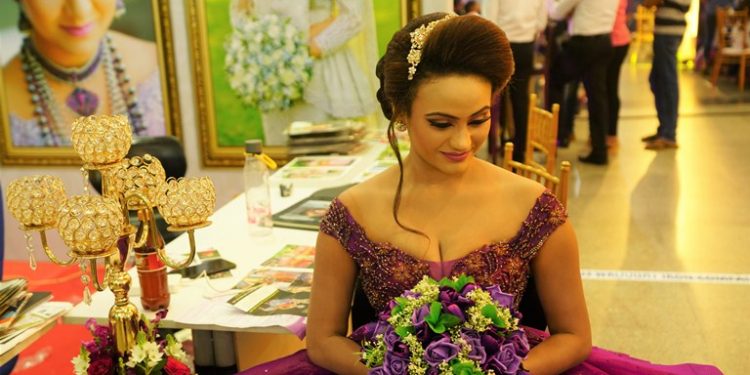
COLOMBO, July 17 (Xinhua) — Sri Lankan bride-to-be Aniya Perera was keenly enquiring about the glitzy exhibits at the Wedding Show-2019” held at the Bandaranaike Memorial International Conference Hall (BMICH) in Colombo last weekend.

Lankan wedding exhibitions give brides and grooms the very best

My wedding is in February 2020, but I have been visiting a number of wedding exhibitions to get the best of what is available. I started going to wedding exhibitions in Colombo last year. I am very clear about my needs and choices,” she told Xinhua.

Weddings in Sri Lanka, particularly among the majority Sinhalese community, are colourful, glamorous, artistically innovative and, of course, expensive.

Much thought, planning and money go into a Sinhalese wedding because weddings give opportunities to the families of brides and bridegrooms to showcase their social status and also their taste for the finer aspects of life.

A model bride

No wonder that wedding shows” are so popular in cities like Colombo, both among the rich and the ambitious middle class.

In a typical wedding show held at posh hotels and convention centers, there are numerous stalls displaying bridal wears, jewelries, foods, sweetmeats, flowers and other decorative materials. Professional wedding organizers explain to visitors how they can make a wedding a painless and hassle-free affair.

Over 250 wedding industry professionals displayed their wares and services to thousands of visitors.

Holding a decent wedding is a top priority for any family,” a stall manager told Xinhua.

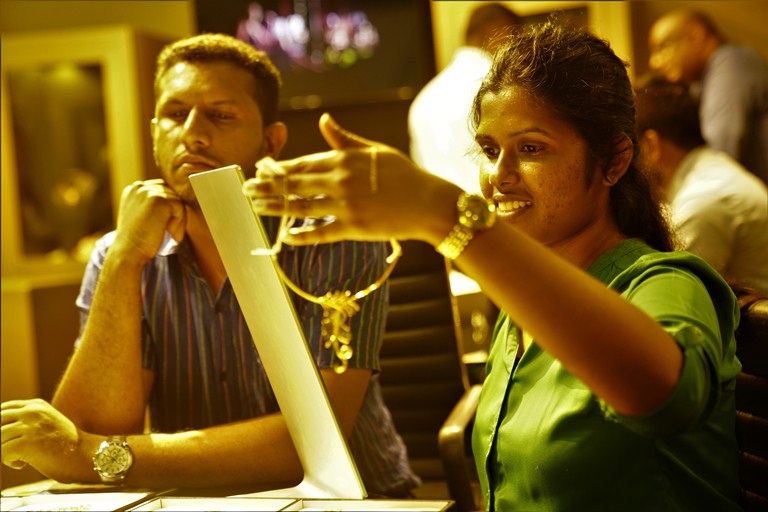
Examining jewelry

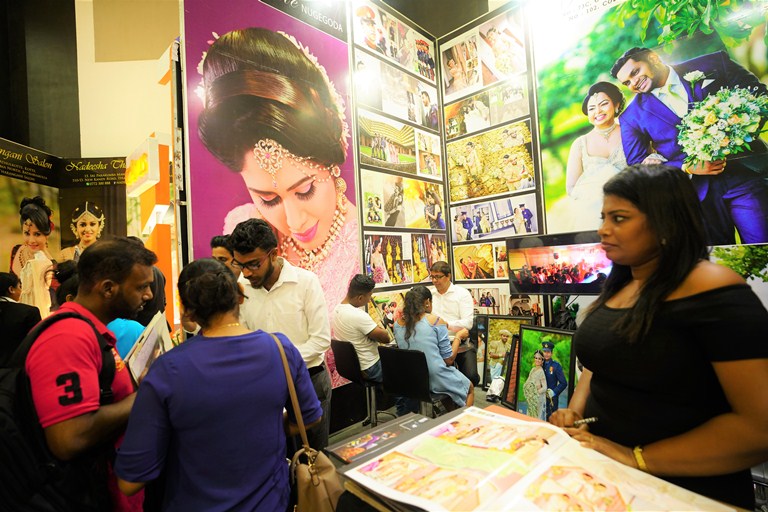
On display at the BMICH fair were retro or modern style wedding cars. There were high tables with different flower arrangements. Photographers and videographers displayed their productions as the wedding portrait and photographs of the bride and the bridegroom in various poses and in various locales are a must.

The range of jewelries, each one more gorgeous than the other, was amazing. They become part of the family heirloom to be inherited by successive generations of brides in the family.

Sunil Fernando is from a family of confectioners who had a stall at the BMICH exhibition. My family attends at least three or four wedding exhibitions a year,” he said.

At a photographer’s stall

No wedding is complete without music and wild dancing in Sri Lanka. Therefore DJs and dance bands also participated in the wedding show.

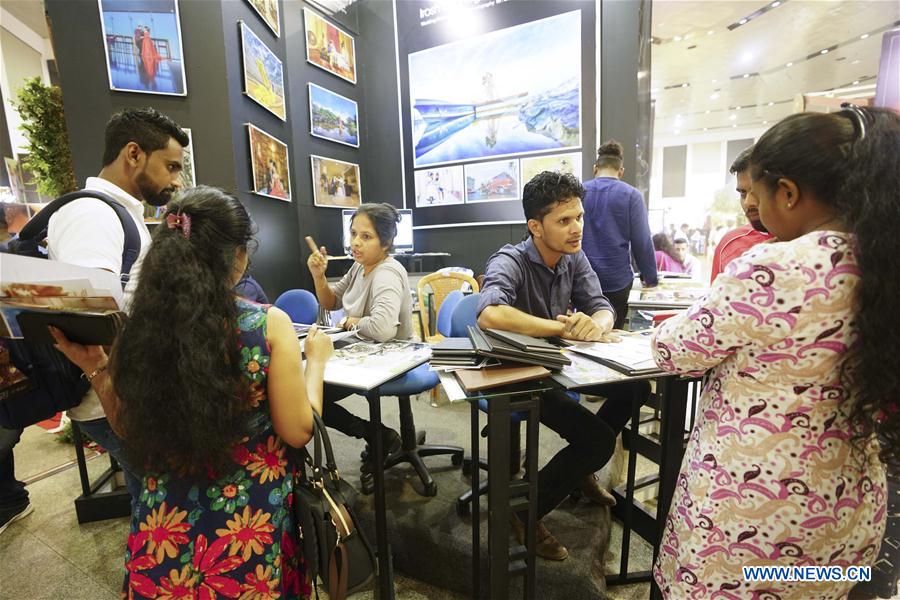
Some of the customers have already done a lot of research. They directly go to particular service providers to sign up. But most people just come to window shop, to observe and gather information. Sri Lankan people do not make decisions in a hurry,” a wedding supplier told Xinhua.

Leading five-star hotels in Colombo also participated in the wedding exhibition. Posh hotels are a preferred venue for weddings among the Sri Lankan elite. In fact, hosting weddings is a major part of the hotel trade in Sri Lanka.

Intense consultations at the wedding exhibition

The Cinnamon Grand and Galle Face hotels in Colombo said that they hold more than 300 weddings a year, which means almost one wedding a day.

The hotels also hold their own wedding shows every year. But we participate in other wedding exhibitions to broaden our customer base,” a hotel official said.

(Text, video and photos by Tang Lu)

India and Lanka sign US$ 91.26 million contract to upgrade Maho-Omanthai rail track

July 18th, 2019

Courtesy NewsIn.Asia

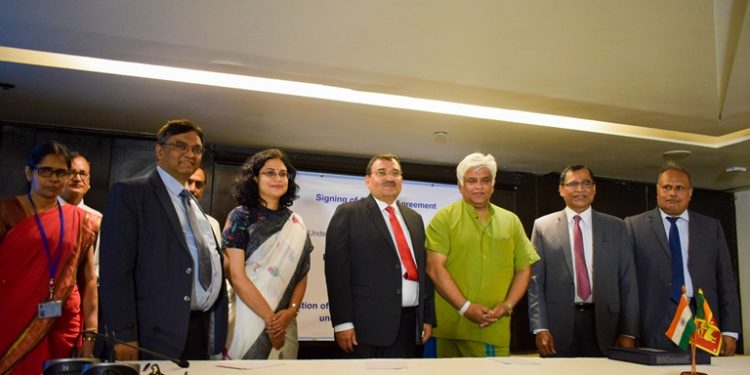
Colombo, July 18 (newsin.asia): A contract agreement for around US$ 91.26 million to upgrade the railway track from Maho to Omanthai under Indian concessional financing was signed by IRCON International Limited of India and the Government of Sri Lanka here on Thursday.

India and Lanka sign US$ 91.26 million contract to upgrade Maho-Omanthai rail track

The contract agreement was signed by Sunil Kumar Choudhury, Chairman & Managing Director, IRCON International Limited and L.P.Jayampathy, Secretary, Ministry of Transport and Civil Aviation of Sri Lanka, in the presence of Hon. Arjuna Ranatunga, Minister of Transport and Civil Aviation of Sri Lanka. Mr. M.J. D. Fernando, General Manager, Sri Lanka Railways; S. L. Gupta, ED, IRCON, International Limited; and Suja K. Menon, Head of Economic & Commercial Wing, High Commission of India.

The total length of the track that will be upgraded under Indian concessional financing between Maho to Omanthai would be around 130 km. This includes 12 crossing stations, 7 halt stations and 78 level crossings. This is the first time the track is being upgraded in 100 years. This project would double the speed potential of railway track from the current around 60 km to 120 km per hour, as well as reduce the maintenance costs. It will also improve the travel comfort of passengers, and further contribute to the modernization Sri Lanka Railways.

India has so far committed Lines of Credit worth around US$ 1.3 billion for development of railway sector in Sri Lanka. The restoration of arterial railway lines, connecting the North and the South after decades of conflict, was undertaken under Indian concessional financing. The tsunami-affected Southern Railway line was also upgraded under Indian Line of Credit. India has so far upgraded around 300 km of railway track and provided modern signalling & telecommunication system for around 330 km in Sri Lanka.

In June 2017, India signed a fresh Line of Credit Agreement for US $ 318 million for the development of railway sector in Sri Lanka. Under this Line of Credit, other projects that are underway include procurement of 160 passenger coaches; upgrading of signal & telecommunication system from Maho to Anuradhapura; and setting up of a Railway Workshop in Ratmalana etc. Procurements of rolling stock from India are also underway including 6 DMUs, 10 locomotives, 20 container carrier wagons, 30 fuel tank wagons, 160 passenger coaches, and 500 buses. India has also contributed substantially to capacity building of Sri Lankan railway personnel.

This project is in continuation of India’s efforts to partner with Sri Lanka in people-oriented connectivity projects in Sri Lanka.

ACSA, SOFA & MCC SAGA

July 18th, 2019

JANAKI CHANDRARATNA Courtesy The Island

July 18, 2019, 9:02 pm 

article_image

There is a considerable degree of anxiety and concern relating to the American ACSA (Acquisition and Cross Servicing Agreement), SOFA (Status of Forces Agreement) and the MCC (Millennium Challenge Corporation) projects currently being considered or probably have already been signed off by the govt. in recent times. The trepidation is mainly due to the lack of information on these developments, which supposedly have a detrimental impact on the sovereignty of our nation.

Sri Lankan media needs to be commended for their part in exposing parts of these arrangements for the benefit of the public. The deafening silence of the govt. on the underpinning reasons for these projects and their impacts have left the electorate in a state of shock and confusion. Government platitudes have only aggravated people’s fears, judging from their experience with other government sponsored controversial issues such as bond scams, UNHRC betrayal and lack of elections.

The opposition concerns too have had not much traction, as they appear to have difficulty in obtaining the required information. Some of the TV programs, in particular, the program Balaya, launched by Hiru TV on 13 July 2019, however, presented some credible evidence for concern as the program panel consisted of a well known political analyst and representatives from the Sri Lankan Bar Association, including a legal consultant to the Govt. on MCC projects. Although the Govt. had claimed there was no difference between the 2007 and 2017 ACSA agreements, the panel agreed that a significant difference is the deletion of the 2007 agreement’s clause of the need to have prior approval for American troops to enter Sri Lanka. They maintained that SOFA, supposedly is not ratified yet by the Sri Lankan Govt., is designed to provide facilities, including diplomatic immunity, to all American personnel that would enter Sri Lanka through the ACSA agreement.

The lack of control as to who enters the country for military purposes is indeed a serious security threat to a small country like Sri Lanka to endure, whether the entrants are Americans or any other foreign power. Even Australia that has a defense agreement with America has no open entry stipulation for American or any other army in the world.

The alleged lease of 1.2 million acres of land for 200 years for an ‘Economic Corridor’ extending from Colombo to Trincomalee, for which the Govt. has supposedly already obtained a paltry sum of USD 400 million; and the proposed increase of land market activity for the benefit of multi-national companies are some of the other issues that have driven fear and distress within the community. Their fears are understandable because of the detrimental impact these assertions can have on the future economy and security of the Island.

In an election year, it is for the benefit to the Govt. to publish the agreements in the public domain, so that the electors will not be embroiled in the current rumor mill. Also by publicizing the agreements it would provide an opportunity to all political and civil society leaders to agree on an arrangement that would be of benefit to future generations, as well as safeguard the sovereignty of the country. People and governments can make mistakes, as no one is infallible, but it is prudent to make amendments when it is still possible, irrespective of party affiliations, to put the country first even at this late stage before implementing the controversial agreements.

From granary to waste-yard?

July 18th, 2019

Editorial Courtesy The Island

Time was when this country was known as the Granary of the East. Today, it is apparently on its way to becoming what may be called the Dumpsite of the East. Consignments of foreign garbage are said to be imported. The Customs trade unions have said that as many as 122 containers of waste, brought from the UK, are currently sitting in the Colombo Port. These big boxes are said to contain hospital waste, plant and animal parts, restaurant trash and old mattresses. A lot of waste has been imported since 2013 and dumped in the Katunayake Free Trade Zone area, we are told. The government remains silent.

We are already stuck neck deep in garbage, so to speak. Successive governments have failed to find a lasting solution to the problem of municipal waste, which is being dumped haphazardly in various parts of the country, amidst howls of protest from the public. Mountains of garbage have appeared in some areas, as a result, and the one at Meethotamulla collapsed, burying more than 30 people alive, in 2017. Waste imports are sure to worsen the situation.

One of the main reasons why there has been so much of resistance to the Sri Lanka-Singapore Free Trade Agreement (SLSFTA) is that it provides for dumping garbage here. The government has sought to allay the fears of environmentalists and concerned citizens, but the controversial provision is there and the possibility of foreign garbage being brought here cannot be ruled out. Some of the bitterest critics of the SLSFTA are members of the Joint Opposition/the Sri Lanka Podujana Peramuna. They warn that the SLSFTA may lead to an environmental disaster with shiploads of waste coming from and/or through Singapore. Ironically, it has now been revealed that the door to foreign waste imports was opened while they were in power. They have got badly exposed for their hypocrisy.

The Customs unions have said that in 2013, the then President Mahinda Rajapaksa issued a gazette notification to facilitate imports for BOI companies, and a loophole therein has been used by some persons to import garbage sans Customs checks. Fear has been expressed that even nuclear waste can be brought in at this rate—absit omen!

Rajapaksa should explain why he issued that gazette, effecting an amendment to the import regulatory system, and left the loophole at issue unattended until the end of his presidential term.

The grandees of the previous dispensation put through some crooked deals at the expense of the country while wrapping themselves in the flag. But most of what they did could have been undone following the 2015 regime change. If garbage importers have benefited from the aforesaid gazette notification, it must be done away with or amended urgently. Why the present government has not done so defies comprehension. Here is something that it can achieve at the stroke of a pen.

President Maithripala Sirisena, who is also the Minister of Environment, never misses an opportunity to make a public display of his environmental concerns and love for the country. He should have cancelled his predecessor’s gazette notification, years ago, putting an end to waste imports. The Ministry of Finance should have brought it to his notice or initiated action, on its own, to scrap the garbage-friendly import regulation.

After all, President Sirisena and Prime Minister Ranil Wickremesinghe have even changed the Constitution to achieve their political objectives. The 19th Amendment is a case in point. Scrapping a rotten import regulation, which helps some racketeers with their efforts to turn the country into an international landfill, should be child’s play for them. Why don’t they get cracking?

Making the Political Alternative meaningful and Relevant to Masses

July 18th, 2019

By Siri Hettige, Emeritus Professor of Sociology, University of Colombo – Courtesy The Island

There has been considerable public discussion in recent months about the need to find a meaningful and real alternative to the existing two mainstream political formations in Sri Lanka. But, the people in the country are yet to see a clear vision and a cohesive programme of the proposed political alternative. In this brief article, an attempt is made to articulate a possible vision and a programme to be discussed and considered by relevant parties in the next weeks and months.

Against the backdrop of persisting political turmoil, chronic uncertainties and a deep sense of insecurity felt by the vast majority of people, what is urgently needed is to identify a clear path along which the country should move forward to meet the legitimate aspirations of diverse segments of society. Given the serious economic, social, cultural, political and environmental issues that have evolved over a period of time, the country needs to find alternative ways to address various issues that have remained largely unresolved due to past policy failures. In the remainder of this article, I outline some alternative strategies that can be adopted to have a clear break from the past in the five areas mentioned above.

Economy:

As is well known, Sri Lanka’s economy today is highly distorted, tilting heavily towards services. Productive sectors like agriculture, urban and rural industry and artisan production have either stagnated or declined. Many rural people have migrated to cities or overseas for casual employment. Continuous exodus of labour, the decline of productive sectors, a continually widening trade gap and mounting public debts have generated inflationary pressures that make life miserable for an increasing proportion of the population. While income distribution has become highly unequal, rural urban disparities have widened. Meanwhile, the informal sector of the economy has expanded and living and working conditions of people, dependent on the informal sector, remain precarious. The above state of the economy demands a major effort to restructure it in order to diversity all sectors, create productive employment in all parts of the country and reduce inflationary pressures. Both domestic and foreign capital should also be diverted into production oriented ventures outside the major urban centres. The development of social infrastructure such as quality health and education facilities outside major cities is critically important to facilitate decentralised development in the country. What should be noted here is that the concentration of wealth and people in and around urban centres is not socially and environmentally sustainable.

Social System:

Increasing economic and social pressures, arising out of the above economic conditions, have created precarious working and living conditions for a majority of people in the country. Growing spatial mobility of people of all walks of life has weakened family and community life leading to vulnerabilities among children, youth, the poor, the differently abled and the elderly. Increasing significance of privately funded education, transport and health services have given rise to a sense of relative deprivation among low income people. While formal systems of social protection such as pensions and Employees Provident Funds, cover only a minority of economically active people, others are exposed to economic and social risks and vulnerabilities. Many elderly people continue to engage in employment way beyond retirement age due to the lack of old age pensions or productive assets. Many such people also suffer due to the deficient publicly provided health, education and transport facilities.

The conditions outlined above shows that the social system is increasingly polarised and unjust. Emergent social conditions are at variance with the widely held egalitarian values in the country. A range of social policies are needed to address the issues involved and create a sense of social justice and equity among socially marginalised people in the country.

Culture:

By the time the British rulers left Sri Lanka following nearly 150 years of colonial rule, the country had already become a centralised parliamentary democracy. Yet, the social and cultural policies adopted by the colonial rulers had prevented the emergence of a unified citizenry. Ethnic, linguistic and religious divisions were already part of the social, cultural and political landscape. The highly unequal education system during the colonial period continued to reproduce social and cultural divisions in the country. Poor and basic educational facilities in rural areas did not help transform the largely marginalised rural population into a citizenry with a modern social and cultural outlook. Such people remained wedded to a traditional way of life connected to a largely subsistence oriented rural economic pursuits, and their world views and lifestyles were very much shaped by traditional beliefs and archaic religious and ritual practices. Given the lack of access to modern educational facilities and mass media in rural areas, most rural inhabitants remained cut off from the influence of modern urban industrial cultures. Though a tiny anglicised, privileged post -colonial elite had emerged in urban areas, thanks to the emerging colonial economy dominated by plantation production, import and export trade, service industries, etc. , the vast majority of people remained wedded to parochial, traditional rural cultures of several ethno-religious communities.

This cultural pattern continued after independence due to post- independence cultural policies that prevented the formation of an overarching mainstream national culture suited to a modern, secular democratic society.

Political Structure:

Though Sri Lanka became a centralised parliamentary democracy, under the British rule, vast, remote rural hinterland remained weakly integrated with the Centre due to poor transportation and communication infrastructure. This situation was also conducive for the perpetuation of strong regional, ethnic and religious identities. Following independence, such identities became even stronger due to cultural, language and educational policies adopted by post-independence regimes. It is this situation that paved the way for competition among ethno-religious groups for political power and public resources such as land, employment and business opportunities. Such competition eventually led to anti-state, violent political campaigns including the armed struggle in the north and east for a separate State that ended in 2009 with the defeat of the LTTE.

Though there have been some efforts over the last few decades to institutionalise a more decentralised political structure in the country, mostly centralised nature of the State remains. Provincial and local government institutions remain weak and poorly resourced. Many functions that can be easily and more fruitfully carried out at local and provincial levels remain with the government. The result is a top heavy administration that controls much of the country’s public finances and other resources, often leading to wastage, corruption and inefficiency. The distribution of public resources through political party based networks of patron-client relationships has made the situation worse as this has given rise to political favouritism and discrimination, preventing the emergence of a unified citizenry with equal rights and life chances.

Environmental Resources:

Economic, social and political conditions outlined above have not been conducive for the sustainable management and use of natural resources of the country. Fragmentation of land, unplanned human settlements, implementation of development projects in a haphazard manner, over-exploitation of natural resources, pollution and degradation of the environment, etc. have been the result. Natural and human induced hazards such as flooding, landslides, soil erosion, pollution of water resources, human-animal conflict, droughts, etc., pose serious threats to livelihoods and well-being of people in almost all parts of the country. Successive governments that ruled the country, over the last several decades, are largely responsible for the above state of affairs. Their failure or refusal to adopt evidence-based policies to deal with issues in the five areas mentioned above, namely, the economy, social system, culture, political system and the environment, has been the main reason for the deterioration of economic, social, cultural, political and environmental conditions. These governments were led by the mainstream political parties that have not shown any readiness to change their policies and governance styles. Given this situation, people in the country have to opt for a viable political alternative outside the political mainstream. There are already growing signs of a clear readiness on the part of a majority of people to look for such an alternative. Such an alternative path has become critically important today as the economic, social, cultural, political and environmental challenges facing the country demands a holistic and rational approach to development, public welfare and peace in the country. Such an approach is already outlined in the sustainable development vision 2030 policy document prepared by an independent expert committee.

Fully qualified cutthroats

July 18th, 2019

OLD SOLDIER

The JVP, who in 1989-90 attempted genocide of the Sinhalese, share similarities with the Nazi’s who actually committed genocide of six million Jews in Germany and occupied Europe in 5 years. In SL there were over 60,000 deaths in a year before the JVP was neutralized. Had they gone on it would have been half a million in five years.

Amazingly, they and not the military, now show sudden and great concern in non GMOA registered doctors working in the Forces hospitals (Island 12 July 19). After all it was not too long ago that the JVP threatened ‘fully’ baked GMOA doctors with death. What do they want with ‘half baked’ ones now? They have asked parliament to look into the question of ‘half baked doctors’. Weird. It is moot whether the GMOA is pulling the strings as it has not publicly stated its position.

The JVP believes that by continuously swamping the people with countless issues, the people will forget its gory year of murdering that dehumanized a peaceful SL. After their first abortive attempt in 1971, they brought the country to a virtual halt in 1989-90 by placing ‘death notice’ chits in work places and murdering innocents all over the South. They attempted to destroy the state by attacking the armed forces and police, the state administrative structure and staff, including the judiciary, health services, education, transport and national infrastructure amongst other things. Apparently this was their way of showing their opposition to the invading IPKF and the LTTE’s campaign of terror. They did not however threaten or attack either of those two organizations ever but turned on the Sinhalese people, exclusively.

SL must never forget how the JVP ordered the closing down of hospitals and made death threats to the doctors and staff if they attempted to work. They threw the entire health system into disarray. It caused the deaths of hundreds if not thousands of seriously ill patients adding to the 60,000 deaths they were responsible for by murder. Their sudden concern now for soldier patients and ‘half baked doctors’, is typical of their proclivity to stir up things for publicity in the guise of showing concern. It is baffling and at odds with its earlier methods of striking terror. Could they be working as usual as a proxy for a shadow organization?

The JVP top leaders then as now from that monster Wijeweera, hid while their cadres, trained and indoctrinated to be murderous hit men, roamed far and wide, killing all and sundry. The JVP paid the price eventually and dearly. The turning point in their battle came when having failed to infiltrate and suborn, they threatened to kill the families of the troops whose doctors ironically are now their supposed concern. While Wijeweera and thousands of JVP finally died in that one terrible year of ceaseless murder, arson and vandalism, some leaders escaped. They and their class progeny got back into society. They pretend to follow democratic politics fooling many but not all, and biding their time. They have survived by cunningly playing one political party against the other in a national culture that nurtures political betrayal.

Curiously and ironically it cuddled up to the UNP and its present leader after 2015, ingeniously overlooking the 60,000 deaths the two together were mutually responsible for in 1989/90. It included the murder of the JVP leader and many innocents while in captivity. They also accused the UNP leaders of running torture chambers. Amazingly, craftily and hazardously for SL the two are now almost conjoined. The JVP often make the difference between victory and defeat and survival for the UNP government in parliament, together with the starkly communal parties.

The JVP brutalized a generation or more, twice. Once in 1971 and then in 1989-90.Their favourite method of murder was by slitting the throat. Their preferred way was not with a knife but with a blade, slowly, enjoying the agony of the victim. They then hanged the head of the murdered on a pole, gate, and fence or placed it on a wall. Those cut throats were JVP, fully baked. It is their unapologetic heirs that now invent ‘half baked doctors’ in the Forces.

Those doctors have qualified in foreign countries whose exams are not recognized by the envious and lucre hunting members of the GMOA who are for this ‘certification’ alone, unashamedly western and colonially oriented. But those foreign qualified doctors are as competent as GMOA certified doctors and far more caring than many. Moreover the Forces have welcomed them. Ask any soldier. They take care of the very troops the JVP tried twice to exterminate: So much for JVP love.

The JVP has a blood soaked, murderous and genocidal history. They are also outrageous hypocrites. They may mystify some with their verbosity and apparent monastic life style, simply as they are without power. But who and what do they represent? One look at their clones protesting and blocking roads and government offices almost daily and making it almost impossible for universities to function, should give more than a glimpse of what will follow if they have even an ounce of power. With their anarchical and brutal history, they are hardly in any position to question anything in this land, including the recruitment of doctors to the forces. Hitler too played the moral card to justify his evil.

US govt. will not buy, sell, or own actual land in Sri Lanka – Teplitz

July 18th, 2019

Courtesy The Island

article_image

Teplitz

The United States Government will not buy, sell, or own any actual land under Millennium Challenge Corporation (MCC) Compact, says the US Ambassador to Sri Lanka, Alaina B. Teplitz.

Ambassador Teplitz conducted a Facebook live chat on Thursday to counter misinformation and disinformation that has been propagated about US-Sri Lanka cooperation.

The Ambassador responded to public questions on the US-Sri Lanka partnership agreements, Visiting Forces Agreement (VFA), Acquisition and Cross Servicing Agreement (ACSA) and the Millennium Challenge Corporation (MCC) Compact.

The VFA addresses the status of US military and civilian employees of the US Department of Defense, who may be temporarily present in Sri Lanka for exercises or official duty at the invitation of the Government of Sri Lanka, clarified the Ambassador. However, the draft VFA is still under negotiation and has not been concluded as of yet, she stated.

According to the Ambassador, the VFA reflects the fact that the US has no plans for a permanent military presence in Sri Lanka and that the US Forces would only come to Sri Lanka at the invitation of the Sri Lankan government and would then depart.

Ambassador Teplitz further assured that no troops – even under a VFA – would enter Sri Lanka without proper documentation and prior approval. Sri Lanka would retain all sovereign rights to approve or deny entry or exit of U.S. personnel, vessels, and aircraft into Sri Lanka’s territory and territorial waters/airspace, she elaborated. 

Responding to a concern about the terms of the SOFA (or VFA) on possible immunity US defense personnel seek from the local jurisdiction, the Ambassador said that the two countries would come to an advance agreement on how to deal with such incidents should they arise.

The second agreement between the two countries, Acquisition and Cross Servicing Agreement (ACSA), was signed in 2007 and renewed in 2017, and aim to facilitate military cooperation, particularly joint exercises and disaster relief, informed the Ambassador.

The ACSA agreement is designed to provide a legal framework for logistical support between the US and Sri Lankan militaries and to exchange supplies and services, as well as payment for those supplies and services, she stated.

According to the Ambassador, the Millennium Challenge Corporation (MCC) Compact is a $480 million development assistance gift designed to promote economic growth in Sri Lanka and is not contingent on the VFA and ACSA. 

The MCC is neither a loan nor a military agreement, she added.

The US has no intention to build a military base or establish a permanent military presence in Sri Lanka; similarly, the United States gains no land ownership or control through MCC, she said.

She further stated the MCC Compact would not be establishing an ‘economic corridor’ between Colombo and Trincomalee.

Instead, under the MCC, two projects – a transportation project and a land project – have been proposed to address constraints to economic growth in Sri Lanka.

The $350 million transportation project will upgrade physical roadway networks, modernize traffic systems, and introduce policy and regulatory reforms. With an estimated economic rate of return of 19%, the project will focus on the Western, Central, Sabaragamuwa and Uva Provinces.

The $67 million land administration project has an estimated economic rate of return of 30% and aims to expand and improve the existing initiatives of the Sri Lankan government to increase the availability of spatial data and land rights information. The project will initially focus on districts in the Central, North-Western, North-Central and Eastern Provinces.

The US Government will not buy, sell, or own any actual land – or take control of any actual land – under this agreement, affirmed Teplitz.

Responding to a query on US’ involvement in Sri Lankan judiciary and protocol, the Ambassador said that the US has not and will not interfere or become directly involved in Sri Lanka’s judiciary.

However, the US has sponsored training for Sri Lankan judges and lawyers at the request of the Sri Lankan government, she stated.

The American Bar Association has no intention to establish a branch in Sri Lanka, said Teplitz.

The Ambassador reiterated that when the US extends support and assistance to the people of Sri Lanka it is only at the invitation of the Sri Lankan government.

NPC wants CID withdrawn and SIU to probe

July 18th, 2019

Darshana Sanjeewa Balasuriya Courtesy The Daily Mirror

The National Police Commission (NPC) has called for a report from the Acting IGP over the possibility of removing the CID from investigating Dr. Mohammed Shafi’s case and hand it over to the Police Special Investigation Unit (SIU).

Police Spokesman SP Ruwan Gunasekera said an attorney had lodged a complaint with the NPC stating that investigations carried out by the CID against Dr. Shafi should be withdrawn.

The lawyer had requested in the complaint that the investigations should be handed over to a Special Investigation Unit which should be comprised of police teams from the CID, the Kurunegala Police and the Colombo Crimes Division (CCD),” SP Gunasekera said.

Accordingly, he said the NPC had inquired from the Acting IGP about the possibility of handing over the investigations to the SIU.

The Acting IGP in return had called for a report from the SIU to inform him about the possibility.

The spokesman said the police will inform the NPC about their decision tomorrow (19).

The 42-year-old doctor attached to the Kurunegala Teaching Hospital was arrested on May 24 and was later handed over to the CID to conduct an investigation into illegal sterilisation surgeries allegedly performed by him. He had been remanded till July 25.

Adverse weather conditions in Sri Lanka

July 18th, 2019

Courtesy Ceylon Today

Power outages due to the adverse weather conditions have been reported from several areas in the island including Matara, Galle and Ratnapura today (18).

Deputy Director of theDisaster Management Centre (DMC), Pradeep Kodippili advised the public not to proceed to the sea and to avoid travelling to the mountain areas due to the current adverse weather. 

Also, as a result of the torrential rains in the mountain areas, the water levels of the Laxapana, Maussakelle and Castlereagh reservoirs have been risen and due to this situation two spill gates of the Laxapana reservoir have been opened today (18) morning. 

The DMC has issued a red notice to all the residents living down-stream close to the Kelani River to evacuate from the area.

FCID probing Ven. Rathana Thera’s complaint USD 100M Saudi funding to Batti Campus Pvt Ltd

July 18th, 2019

By Hansi Nanayakkara Courtesy Ceylon Today

The Financial Crimes Investigation Division (FCID) yesterday (18), informed Colombo Chief Magistrate Lanka Jayaratna that they were currently probing how a sum of over US$ 100 million had been sent from Saudi Arabia to the Batticaloa Campus Private Limited and the Bank accounts from which that sum had been withdrawn, to construct a University in the Poonani area of Batticaloa.

 They said, Parliamentarian Ven. Athuraliye Rathana Thera had lodged a complaint in this connection at the IGP’s office on 12 July, after which the complaint had been handed over to them by the Acting IGP.

They added that after receiving the complaint, they had summoned the monk to record a statement from him.

 The FCID informed the Court that in the complaint, the monk had claimed that the land which had been provided for the construction of the University had belonged to the Maheweli Development Authority (MDA).

They added, the monk had stated that the MDA had given the land to the Hira Foundation for the construction of a technical college and the Hira Foundation had been registered with the Social Services Department.

The FCID told Magistrate Jayaratna, the monk had further mentioned in his statement that after obtaining the land, the Foundation had used it for other activities.

They added that the monk had stated in his complaint that a sum of over US$ 100 million had been sent from overseas to this University and that the sending of such a staggering amount of money had been suspicious.


They also told the Magistrate that Ven. Rathana Thera had stated that 24 hours after the 21 April Easter Sunday terror attack, former Eastern Province Governor Hizbullah had gone to meet three Muslims residing at the Karmy Hotel situated in Passikuda, despite a curfew being imposed throughout the country.


The FCID informed the Court that the monk, in his complaint, had stated that it was suspicious as to why Hizbullah had gone to meet the three Muslims who were residing in the country sans visas and such incidents have to be probed for the safety of the public here.


The FCID said that they had also recorded a statement from Nagaraja Kanthan, a resident of Valachchanai connected to the same incident.


They added that in his statement to them Nagaraja has stated that development work was being carried out on a land owned by the State in this area and upon further inquiries it had come to light that a 35-acre block, owned by the MDA, had been provided to the Sri Lanka Hira Foundation.

 CT Web 02:00 AM Jul 19 2019

Retrospective View on 8 January 2015

July 18th, 2019

By Sumanasiri Liyanage Courtesy Ceylon Today

In spite of the ambiguities embedded in the Constitution over the next date of the Presidential Poll, there is no doubt that it should be held prior to May 2020, the latest. From the perspective of the people in the country, it is pertinent to rethink about the decision that they made on 8 January 2015.

As 6.2 million people voted on 8 January 2015 to oust the existing regime and to elect a new Government, it is not unfair to assume that these voters might have done although unconsciously some kind of scenario development for next five years on the performance of the new regime. 

Scenario development and planning is a scientific exercise deployed by actors such as business firms, environmental organisations. However, we laymen also engage in the same exercise in our day-to-day lives. It is neither a prediction nor a projection, but a more flexible reading of the future that is unvaryingly uncertain.


The 6.2 million people who voted on 8 January 2015 to oust the existing regime might have had compared two scenarios prior to casting their vote. The first would have been the envisioned situation that would be created in case the incumbent Mahinda Rajapaksa got elected. 

The second would have been Sri Lanka in 2020 under Wickremesinghe-Sirisena regime. The 6.2 million people would have thought that the second was the better option even though it was not one hundred per cent perfect.

 Nonetheless, now it is clear that the scenario that had been developed with regard to the second option is incorrect and the Wickremesinghe-Sirisena regime has finally ended up being the worst regime in the seventy years since Independence. Let us first see how this mental exercise is performed.


Scenario Development


What is meant by scenario development? Philip van Notten defines scenarios” 

as: consistent and coherent descriptions of alternative hypothetical futures that reflect different perspectives on past, present, and future developments, which can serve as a basis for action.” Hence, the method of scenario development and planning combines known facts about the present and the future with key driving forces identified by considering social, technical, economic, environmental, and political (STEEP) trends. As adequate information is available with regard to the present situation, it is much easier to develop scenarios because the drivers that would determine the future may easily be recognised.


By 2015, Mahinda Rajapaksa had been in power for ten years. Under his leadership, the internal armed conflict came to an end when security forces were able to defeat the LTTE comprehensively, decimating its principal leadership. 

This helped him to come to power for the second time in 2010. The steps taken after the election were hard to be defended. The 18th Amendment was added to the Constitution repealing the constitutional limit of presidential tenure to two terms and placing the independent commissions set up by the 17th Amendment under virtual presidential control. 

There were allegations about the regime’s involvement in killing and harassing its opponents and corruption associated with huge infra-structure projects. There appeared to be multiple drivers working towards more and more authoritarian rule. In spite of some positive results in the economic front, for a citizen who preferred more democratic and corruption free country the argument that the existing regime should go was a convincing one.


What Went Wrong?


The academics, professionals and the Colombo civil society who led the campaign against the Mahinda Rajapaksa regime prior to the 2015 Presidential Poll had presented a convincing argument over the necessity of regime change. Of course, some of these groups did not base their action on situational analysis but based on their own political agenda. 

Many Colombo civil society organisations are heavily depended on the contributions by Western nations. 

In a context when the USA and its allies and India, badly, wanted to oust Mahinda Rajapaksa, for its close links with China, they used Colombo civil society organisations to lead the campaign not specifically on the issue of Chinese involvement but on the issue of democracy and human rights. In the present world context both democracy and human rights are being used as what Michael Foucault said, the technology of governance by the imperialist powers.


In my view, the Government that came to power in January 2015 may be described as the worst Government in the last 70 years whatever the measure being used. In other words, Sri Lanka is experiencing today its first generalised crisis since independence. A generalised crisis is a crisis that occurrs simultaneously in every field, economic, political, social, and cultural. Both the Ministry of Finance and the Ministry of Foreign Affairs are being steered by visible and invisible foreign hands. Human security is at its lowest. This has extended even to the field of sports.  

Let us confine ourselves to people who were really concerned about democracy, human rights and all those goodies and followed wittingly or unwittingly the Western plan of regime change in 2015. I must emphasise I do not put all those people into one basket. What went wrong as far as they were concerned? If they make a retrospective assessment of the 2015 decision, what would be their verdict?


Scenario Development, Test 2


As I argued above, these multifarious groups had correctly understood the prevailing situation and the drivers that would be in operation under a future Rajapaksa regime, namely Test 1. Nonetheless, they have failed in scenario development Test 2. Their situation analysis was incomplete and inadequate, and they failed totally to understand the drivers that would be at work after the election. A critical point they missed in the situation analysis is the developing tension in the Indian Ocean region. Secondly, the coalition that was formed was not more than a hotchpotch with opposing intentions and conflicting policies. 

When the honeymoon is over, and the issue of succession of power comes to the fore, such a coalition may not be maintained. The neoliberalist economic policies and the Western leanings of the main partners of the coalition drove the country eventually for an economic collapse on the one hand and the security collapse on the other. Hence, scenarios” as consistent and coherent descriptions of alternative hypothetical futures that reflect different perspectives on past, present, and future developments, which can serve as a basis for action” were developed with wrong assessment of the situation and the failure to identify the drivers and their directionality. The outcome is the first generalised crisis in the country since its Independence.


(The writer is a retired teacher of political economy at the University of Peradeniya.


E-mail: sumane_l@yahoo.com)

 CT Web 02:00 AM Jul 19 2019

රන්ජන් රාමනායකගේ කතාව හා සමාජ ප්‍රවණතා

July 18th, 2019

කතු වැකිය ලංකාදීප

යහපාලන ආණ්ඩුවේ රාජ්‍ය අමාත්‍ය පදවියක් හොබවන රන්ජන් රාමනායක භික්ෂු සමාජය ගැන කරන ලදැයි කියන ප්‍රකාශයක් පිළිබඳව ලොකු කලබගෑනියක් හටගෙන තිබේ. ඔහු එම ප්‍රකාශය මගින් මෙරට භික්ෂු සමාජය දැඩි විවේචනයට ලක්කර ඇත. යූ ටියුබ්” මාධ්‍ය ඔස්සේ සාකච්ඡාවකට සහභාගී වෙමින් රන්ජන් රාමනායක විසින් කරන ලද ප්‍රකාශය වැරැදීමක් හෝ වැරදි අර්ථ දැක්වීමක් නොව ඔහු විසින්  පුවත් මැවීමට හෝ පොරක් වීම” සඳහා කරන ලද්දක් සේ සමාජයේ කතාබහට ලක්ව ඇත.

ඔහු මහජන  නියෝජිතයෙකි. මහජන නියෝජිතයකු වන්නට පෙර හෙතෙම ශ්‍රී ලාංකික සමාජයේ සාමාජිකයෙකි. නළුවෙකි. ප්‍රකට චරිතයකි. මෙවන් අයට සමහරුන් කියන්නේ ජනමත ප්‍රධානීන් කියාය. ජනමත ප්‍රධානියකු මහජන නියෝජිතයකු වනවිට ඔහු හැසිරිය යුත්තේ සංයමයෙනි. එහෙත් රන්ජන් රාමනායක තවත් වරක් හැසිරී ඇත්තේ සමාජයේ විවේචනයට ලක්වන ආකාරයටය.

මෙවන් සංඝයාවහන්සේලාගෙන් ආණ්ඩුව කරන හැටි ගැන දේශපාලන ලොක්කන් උපදෙස් ගන්නේ ඇයිදැයි ඔහු ප්‍රශ්න කර ඇත. මේ කතාවට මාධ්‍ය ප්‍රචාරයක් ලැබීමෙන් රන්ජන් තෙමේගේ ප්‍රචාරක අරමුණ නම් ඉටු වී ඇත. එහෙත් දේශපාලනඥයකු වශයෙන් මෙන්ම මෙරට සමාජයේ සාමාජිකයකු ලෙස රන්ජන් මෙරට බහුතර දේශපාලනඥයන්ගේත් බෞද්ධ අබෞද්ධ යහපත් සමාජයේත් විවේචනයට පාත්‍රවී තිබේ. ඔහුට ඒ ගැන සතුටක් තිබෙන්නට පිළිවන. මෙම ප්‍රකාශයෙන් අපහසුතාවට පත් රන්ජන් නියෝජනය කරන එ.ජා.පයේ නායක රනිල් වික්‍රමසිංහ මහතා ඔහුගෙන් කරුණු විමසූ විට සහ අමාත්‍යවරුන් ගණනාවක්ම ඔහුට භික්ෂූන්වහන්සේලාගෙන් සමාව ගන්නා ලෙස දැන්වූ විට ලබාදුන් පිළිතුරෙන් පෙනී යන්නේ රන්ජන් තමාගේ ප්‍රකාශය ගැන එතරම් තැකීමක් නොකරන බවයි.

භික්ෂූන්වහන්සේගෙන් සමාව ගන්නැයි කී අයට රන්ජන් දුන් පිළිතුර අනුව ඔහු කළ දේ ගැන සමාව නොගත යුතු බව පවසමින් කියා ඇත්තේ තමන් ගරුතර මහා සංඝරත්නය අපහාසයටත් නින්දාවටත් ලක්කර නොමැති බවයි. ඒ නිසා සමාව ගැනීමක් අවශ්‍ය නොවන බවද හෙතෙම ප්‍රකාශ කර ඇත. එහෙත් ඔහුගේ පක්ෂයේ නායක හා අගමැති රනිල් වික්‍රමසිංහ මහතා රන්ජන් රාමනායකගේ අදහස තරයේම ප්‍රතික්ෂේප කරන බවට විශේෂ ප්‍රකාශයක් කර තිබේ. මහා සංඝරත්නය ගැන සැමවිටම ගෞරව සම්ප්‍රයුක්තව ක්‍රියා කරන තමන්ගේත් තම පක්ෂයේත් මතය එය නොවන බවට අග්‍රාමාත්‍යවරයා කර ඇති ප්‍රකාශයෙන් ද එය ඉතා පැහැදිලිය. මේ අතර තමන් එවැනි ප්‍රකාශයක් නොකළ බවත් එම වෙබ් අඩවියට විරුද්ධව නඩු මගට යන බවත් රන්ජන් රාමනායක කියයි.

දේශපාලනඥයෝ පුවත් මවති. අතීතයේ ගාල්ලේ ඩබ්. දහනායක, පිලිප් ගුණවර්ධන, සෝමවීර චන්ද්‍රසිරි, ඒ. ජේ. රණසිංහ ආදීහු විවිධාකාරයේ පුවත් මවා ප්‍රසිද්ධියට පත් වූහ. එහෙත් ඒ කිසිවෙක් අපේ සංස්කෘතික උරුමයට හා සමාජ සම්මතයට විකෘති ලෙස අභියෝග කළේ නැත. කට තිබෙන ඕනෑම කෙනකුට නිෂ්ඵල වචන කතා කරන්නත් අවශ්‍යනම් කුණුහරුප කියන්නටත් පිළිවන. එහෙත් ජනමත ප්‍රධානියකු වනවිට පුවත් මවන්නට ගොස් හත්පොළේ ගාගත යුතු නැත. අතීතයේ එක් වතාවක අගමැති ධුරය දැරූ සර් ජෝන් කොතලාවල මහතා භික්ෂූන්වහන්සේගේ තට්ටයේ තාර ගාන්නට ඕනෑ යැයි කියා කරගත් හරිය දන්නෝ දනිති. ඔහු තනිවම එහි ප්‍රතිඵල භුක්ති වින්දා නම් කමක් නැත. රටට මහත් සේවාවක් කළ එක්සත් ජාතික පක්ෂය ද ආසන අටට බස්සවා ආණ්ඩුව ද නැතිකර ගත්තේය. සර් ජෝන් සමඟ සසඳන විට රන්ජන් යනු දේශපාලන පැංචෙකි. එහෙත් මෙවන් දේශපාලන පැංචන්ගේ කතා නිසා බහුතර සංඝ සමාජය එ.ජා.පය ගැන ද වපර ඇසින් බලන්නට ඉඩ තිබේ. අගමැති රනිල් වික්‍රමසිංහ මහතා ද ඔහුගෙන් මේ ගැන පැහැදිලි කිරීමක් ඉල්ලා තිබේ. ඔහු මේ සම්බන්ධයෙන් අගමැතිවරයා හමුවී සාකච්ඡා කිරීමට නියමිත බව ද වාර්තා විය.

රන්ජන් මේ ආකාරයට අධිකරණය ගැන ද පණ්ඩිත කතා කියන්නට ගොස් ප්‍රශ්න මතුකරගෙන තිබේ. නීතිය හමුවේ දැන් ඔහු පරීක්ෂාවට ලක්වෙමින් සිටී. එසේ නීතිය හමුවේ පරීක්ෂාවට ලක්වෙද්දීත් ඔහු එයින් පාඩමක් ඉගෙන ගන්නේ නැතුව සමාජය ඉදිරියේ පරීක්ෂාවට භාජන වන තැනට කරුණු සලසාගෙන ඇත. ඔහු හැප්පුණේ සමාජයේ වැරැදි පිරිසක් සමඟය. හොඳ බෞද්ධයකුවත් හොඳ කතෝලිකයකුවත් හොඳ ඉස්ලාම් භක්තිකයකුවත් අන්‍යාගමිකයකුවත් තමන්ගේ ආගමික නායකයන්ට අපහාස උපහාස කරනවා දකින්නට අසන්නට කැමති නැත. ඒ අයට සමාජ සම්මත ගෞරවයක් තිබේ. ඒ ගෞරවය හා භක්තිය ප්‍රශ්න කරන්නට යායුතු නැත.
තමන් මහජන සේවකයකු යැයි ද කියන රන්ජන් රාමනායක තෙමේ නළුවකු ලෙස කිසියම් නමක් දිනා සිටින්නෙකි. එහෙත් අන්‍යයන්ට අපහාස උපහාස කර රටේ ගෞරවපූර්වක සංස්ථාවක් සමච්චලයට ලක්කොට කැපී පෙනෙන්නට ගියහොත් රන්ජන්ට ඇඩ්‍රස් නැතිවන බව කියනුම වටී. දැනටමත් ඒ සීමාවට ඔහු පැමිණ තිබේ. එක් පැත්තකින් ඔහු අධිකරණය හමුවේද ගැටලුකාරී තත්ත්වයකට මුහුණ දී සිටී. අනෙක් පසින් මහා සංඝරත්නය ගැන කළැයි කියන ප්‍රකාශයකින් අවැඩක් කරගෙන තිබේ.

රන්ජන් රාමනායක දේශපාලකයකු වශයෙන් කරන කියන කතාවලදී පරිස්සම් විය යුතුය. ඔහු දේශපාලන වශයෙන් අමාරුවේ වැටුණාට කාටවත් කම් නැත. එහෙත් ඔහු නියෝජනය කරන පක්ෂයට ද ඔහුගේ මේ කතා වාතයක් වී ඇති බව අගමැතිතුමාටම රන්ජන්ගේ කතාව ප්‍රතික්ෂේප කරන්නට සිදුවීමෙන් පෙනේ. ඒ ගැන රන්ජන්ට දැන් කළ හැකි කාරණා කිහිපයක් සිහිපත් කර දෙනු කැමැත්තෙමු. ඉන් පළමුවැන්න දැන්වත් කට පරිස්සම් කර ගැනීමයි. දෙවැන්න ඔහු අදහන ආගමේ හැටියට පව් සමාකර ගැනීමයි. යමෙකු අතින් වරදක් සිදු වූ විට එයට සමාව භජනය කරන්නේ නම් සමාව දීම බෞද්ධයන්ගේ උතුම් ගතියකි. ඒ නිසා රන්ජන් රාජ්‍ය අමාත්‍ය තෙමේ නිහතමානීවී දැන්වත් ඔහු අතින් සිදු වූ වරදට සමාව භජනය කළ යුතුය. නොඑසේව ඔහු කියන ලද කතාව තහවුරු කරන්නට තව තවත් උත්සාහ කළහොත් සිදුවන්නේ සමාජ අගෞරවයට පාත්‍රව දේශපාලනයේ අවලංගු කාසියක් වීමටයි. ඒ සඳහා ඉඩහසර ලැබෙන ලබන වසර මහා මැතිවරණ වසර බව ද සිහිකටයුතුය.

Two conspiracy charges in indictment against Gotabaya, court told

July 18th, 2019

Courtesy Adaderana

It is apt to revise the indictments filed against former Defence Secretary Gotabaya Rajapaksa if they are in a state of being revised, the Supreme Court told the Attorney General.

The Attorney General had filed indictments with the Permanent High Court-at-Bar against Gotabaya Rajapaksa, accusing him of misusing state funds when constructing the D.A. Rajapakse museum in Hambantota.

Rajapaksa’s attorneys had submitted an appeal to Permanent High Court-At-Bar seeking to amend the indictments against their client, however, it was rejected by the court.

Meanwhile, the former Defence Secretary’s attorneys once again filed an appeal with the Supreme Court against it.

The appeal was taken up before the Supreme Court judge bench consisting of Justices Sisira de Abrew, Priyantha Jayawardene, Prasanna Jayawardene, Vijith Malalgoda and L.T.B. Dehideniya today (18).

Speaking on behalf of the former Defence Secretary, President’s Counsel Ali Sabry told the court that two of conspiracy charges are in the indictment filed against his client and that it is against the law.

Hence, Justice Sisira de Abrew told Additional Solicitor General Priyantha Nawana, who appeared on behalf of the Attorney General, that it is apt to revise the indictment filed with the Special High Court, if necessary.

Justice Sisira de Abrew pointed out that the defendant of a case should have a comprehensive understanding of the charges laid against him.

The five-judge bench subsequently moved considering the appeal to November 9th and ordered the prosecution and the defence to present submissions in this regard on that day.

The case was filed by the Attorney General alleging that former Defence Secretary Gotabaya Rajapaksa and six others for misappropriating state funds accumulating to Rs 33.9 million during the construction of D.A. Rajapaksa Museum at Medamulana area in Hambantota.

AG files revision against granting bail to Pujith and Hemasiri

July 18th, 2019

Courtesy Adaderana

The Attorney General today filed a revision application before the Colombo High Court against the Colombo chief magistrate’s order granting bail to IGP Pujith Jayasundara and former Defence Secretary Hemasiri Fernando.

The appeal requests the Colombo High Court to issue an interim order against the granting of bail by the Colombo Magistrate’s Court to the suspects, who were arrested for their failure to prevent the Easter Sunday attacks.

Jayasundara and Fernando were informed to appear before the Criminal Investigation Department (CID) on July 02. However, the IGP was admitted to the Police Hospital in Narahenpita while the former Defence Secretary was admitted to the Coronary-Care Unit (CCU) at the National Hospital Colombo that morning over sudden illnesses.

A group of CID officers visited both hospitals later and arrested the duo in the evening of the same day while they were placed in remand custody.

Jayasundara and Fernando were released on bail by the Colombo Chief Magistrate Lanka Jayaratne on July 09.

Announcing the bail order, the chief magistrate stated that the information presented at the Special Presidential Commission of Inquiry probing the terror attacks on Easter Sunday cannot be considered at the magistrate’s court proceedings.

Police Commission’s secretary arrested by CID

July 18th, 2019

Courtesy Adaderana

Secretary of the National Police Commission Saman Dissanayake has been arrested by the Criminal Investigations Department (CID) in connection with the Avant-Garde floating armoury case.

The NPC Secretary was reportedly arrested while he was at the Sri Jayawardenapura Hospital.

The Colombo Fort Magistrate yesterday rejected the anticipatory bail application filed by Dissanayake, requesting to release him on bail if he was arrested over the Avant-Garde floating armoury case.

Magistrate Ranga Dissanayake said that the court has no jurisdiction to grant bail to Dissanayake, who was named as a suspect in the Avant-Garde floating armoury case, as indictments are to be filed against him under the Firearms Ordinance.

On July 05, the Attorney General had instructed the Acting Inspector General of Police (IGP) to immediately arrest Chairman of Avant-Garde Maritime Services (Pvt) Ltd Nissanka Senadhipathi and 7 others including the secretary of the NPC. 

The Acting IGP was further instructed to file charges against them under the Firearms Ordinance and to produce them before the court.

The Acting IGP has later directed the Criminal Investigation Department (CID) to act on the instructions of the Attorney General.

On the 8th of July, the secretary of the NPC had filed an anticipatory bail order seeking the Colombo Fort Magistrate to release him on bail if the CID arrests him over the Avant-Garde floating armoury case.

World Bank assures continuous assistance to Sri Lanka

July 18th, 2019

Courtesy Adaderana

The World Bank will increase assistance to Sri Lanka under three of its new operations, the World Bank Vice President for South Asia Region, Hartwig Schafer said today (18).

The three World Bank operations include assisting the agriculture sector faced with climatic vagaries, irrigation, renewable energy, climate resilience operations and renovation of tanks in rural areas.

Mr Schafer stated this when he called on President Maithripala Sirisena at the President’s Office today. Referring to the Easter Sunday terror attack and its impact on the economy, he has said that the World Bank would provide monetary assistance to reduce the budget gap so that Sri Lanka could continue global borrowings with a sound economic footing, the President’s Media Division (PMD) reported. 

President Sirisena has expressed his gratitude to the World Bank for the long-standing financial support given to Sri Lanka. He has made a special mention about the World Bank’s support extended to Sri Lanka in the aftermath of the challenges faced due to the April 21 terrorist attack, the PMD said.

Expressing his pleasure over the quick recovery made by Sri Lanka after the terrorist attack, the WB Vice President commented that the global community stands by Sri Lanka at this moment of need.

Mr Schafer, who is in Colombo to chair the World Bank Senior Regional Managers Meeting, stated that the World Bank decided to hold its annual session in Colombo to show solidarity with Sri Lanka as the country is trying to restore normalcy after the terrible terrorist attack on Easter Sunday.

He congratulated Sri Lanka for rising to the level of Upper Middle Income Country and said it is a testimony of country’s resilience.

WB Country Director Idah Z Pswarayi-Riddihough, IFC Country Manager Amena Arif, Senior Operations Officer Anne-Kartin Arnold and Additional Secretary to the President, Esala Weerakoon also took part in the discussion.

ඉඩම් හිමිකම් ඇමරිකාවට – සිකුරිටි කම්කරු රස්සා ජනතාවට

July 17th, 2019

මතුගම සෙනෙවිරුවන්

ගෙන ඒමට යෝජිත ඉඩම් පනත් වලින්  මෙරට ජනතාවට භූමියේ හිමිකම් ලැබෙන බව අගමැති වරයා පවසයි. මෙම අයිතිය වලක්වාලන්නට මෙරට සංවිධාන දෙකක් වැඩ කරන බවද ඒවාට නොරැවටී ජනතාවගේ ඉඩම් අයිතිය ලබා ගත යුතු බවද ඔහු  වැඩිදුරටත් ප්‍රකාශයක් නිකුත් කර තිබේ.මෙතෙක් කල් බලපත්‍ර හිමිව සිටි ස්වර්ණ භූමි සහ ජයභූමි ඔප්පු හිමිව සිටි ලංකාවාසී ජනතාවට සින්නක්කරවම ඔප්පු ලැබෙන්නේ යැයි කියන මේ ප්‍රකාශයෙහි සත්‍යතාවයක් තිබේද. දැනට පාර්ලිමේන්තුවට ඉදිරිපත් කර තිබෙන ඉඩම් විශේෂ විධි විධාන පනත යනුවෙන් හඳුන්වන පනත ට කැබිනට් අනුමැති හිමිව නැතිබවද දයාසිරි ජයසේකර මන්ත්‍රීවරයා පවසා ඇත. එසේම මෙම ඉඩම් පනත ආණ්ඩුක්‍රම ව්‍යවසථාවට පටහැනි බවට අධිකරණයට පෙත්සම් කීපයක් ද ඉදිරිපත්ව තිබේ.එසේම ඉඩම් බැංකු පනත නමින් තවත් පනතක් ඉදිරිපත් කරලීමට  ද යෝජිතව තිබේ.

        වර්ෂ 1840 දී බ්‍රිතාන්‍යයන් විසින් ගෙන ආ අනවසර ඉඩම් ආඥා පනත මගින් සිංහල ජනතාව සතුව තිබූ උඩරට සහ පහතරට සාරවත් ඉඩම් අක්කර ලක්ෂ ගණනාවක් රජයට පවරාගත් හැටි අපට මේ අවස්ථාවේ දී මතකට නැගේ . යම් අයිතිවාසිකමක් ඉදිරිපත් කිරීමට නොහැකි වූ සෑම බිම් අඟලක්ම බ්‍රිතාන්‍යයන් අතපත් කරගෙන ඒවා හෙළි පෙහෙළි කොට කෝපි තේ සහ රබර් වවන්නට කටයුතු කළහ. මේ සඳහා 1897 අංක 01 මුඩුබිම් පනත ගෙන එන ලදී.ලංකාවේ වර්තමානයේ පවතින ඉඩම් පනත් වල මූලාරම්භය සනිටුහන් වන්නේ මේ පනත් වලින් සහ 1800 සිට නිකුත් කරන ලද ඉඩම් නිවේදන මගිනි.  1903 වර්ෂයේ දී ඉඩම් නිරවුල් කිරීමේ දෙපාර්තමේන්තුව පිහිටුවා 1931 අංක 20 පනත මගින් ප්‍රථම වරට ජනතාවට ඉඩම් ලබා දීමට කටයුතු සිදු කර ඇත. වර්තමානය වන විට මේ රටේ ඉඩම් කොමසාරිස් දෙපාර්තමේන්තුව හරහා ක්‍රියාත්මක වන්නේ 1935 අංක 19 දරණ පනත සහ එහි සංශෝධන අවස්ථාවන්ය.

      එහෙත්  මෙම පනත් මගින් සැබෑ ලෙසටම එදා පැහර ගත් ඉඩම් වල අයිතිය සිංහලයන්ට ලැබී තිබෙන්නේ දැයි මොහොතක් කල්පනා කළ යුතුය. සැබෑ ලෙසටම එසේ ලැබී නොමැත. ඒ වෙනුවට ඉඩම් නිරවුල් කරලීමේ ආඥා පනත මගින් නින්දගම් ඉඩම් පරවේණී ඉඩම් ආදී සියල්ල රජයට පවරා ගැනිණ. මේ මෑත කාලයේ දී සංචාරක හෝටල් වලට අතයට විකුණා දමන්නට කටයුතු යෙදුණේ මෙලෙස පවරා ගත් ඉඩම්ය. එසේම විහාර දේවාලගම් සතුව පැවති ඉඩම් සෑහෙන ප්‍රමාණයක් මෙලෙස අන්සතු කර තිබෙන බව දකින්නට හැකිය. විශේෂයෙන්ම උතුරු පළාත උතුරු මැද සහ නැගෙනහිර පළාත් වල තිබෙන පැරණි සිද්ධස්ථාන සතු ඉඩම් ( දීඝවාපිය සෙරුවිල  මෙන්ම මුහුදු මහා විහාරය ) රාශියක් එක්කෝ පුරාවිද්‍යා දෙපාර්තමේන්තුව මගින් රක්ෂිත ලෙසට වෙන්කර ගෙන ඇත. නැතිනම් ඉංග්‍රීසීන් විසින් ප්‍රසිද්ධ වෙන්දේසියේ විකුණා ඇත. කොළඹ දිස්ත්‍රික්කය ගතහොත් පැපිලියානේ සුනේත්‍රා දේවි පිරිවෙනටත් කලුතර දිසුත්‍රික්කයේ විද්‍යාරත්න පිරිවෙනටත්  අදාල ඉඩම්  දෙකට මැද්දෙන් දෙබෑ වන ලෙසට මහපාරවල් දමා මේ ඉඩම් රජය සතු කරගෙන තිබේ.මෙවැනි අවාසානාවන්ත අසරණ තත්ත්වයකට සිංහල ජනතාව මෙන්ම බුද්ධ ශාසනයත් ඇද දමා තිබෙන්නේ ඉංග්‍රීසීන් ගේ ඉඩම් ප්‍රතිපත්තිය සහ වර්තමානයේ විශේෂයෙන්ම 1948 සිට ලංකාව පාලනය කළ දේශපාලඥයන් ගේ බටහිර ගැති ප්‍රතිපත්තිය නිසා බව නොකියා බැරිය. විවිධ සංවර්ධන ව්‍යාපාර මගින් නැවත ඉඩකඩම් ලැබුණද ඒ ලැබෙන්නේ  අක්කර පහක් වර්තමානයේ නම් හෙක්ටයාර් දෙකහමාරක වපසරියක් පමණි. මහවැලියට යටවුණු අක්කර පහ දහය ඉඩම් හිමිව තිබූ භූමිපුත්‍රයන් ගේ නව පරම්පරාව ඉඩම් නොමැතිව නගරයට සංක්‍රමණය වන්නේ එහෙයිනි.

        මෙවැනි පසුබිමක් මැද ඉඩම් විශේෂ විධි විධාන පනත නමින් නව පනතක් ගෙන ඒමට වර්තමාන රජයේ කැබිනට්ටුව පවා අවසර නොදී තිබෙන පසුබිමක  ප්‍රජාතන්ත්‍ර විරෝධීව ඒවා සම්මත කර ගන්නට උත්සාහ කරන්නේ ඇයිද යන්න විමසිය යුතුය. මෙම පනත් මගින් රජයේ ඉඩම් පදාන පත්‍ර මගින් ජනතාව සතු කර ඇති ඉඩම් වල පරම අයිතිය ප්‍රදානය කරලීමට නීති සැකසේ .  මෙම ඉඩම් ගොවි පන්තියේ ඉඩම් කියාද හඳුන්වා දී ඇත. ගොවි පන්තියේ ඉඩම් බෙදා දීමට කටයුතු කරන ලද්දේ ජනපද කරණයත් සමගිනි. ඔවුන් එම ඉඩම් අස්වැදදීමකින් තොරව විකුණා දැමීම නවත්වාලීමට දිසාපති ගේ අවසරය මත පමණක් තම පසු අයිතිය දරුවන්ට හිමිවන පැවරුමක් කරලන්නට මෙහිදී ඉඩක් ලබා දී ඇත. දැන් ජනපද වල ට දිගු අතීතයක් තිබේ. ඒවායේ දෙවනි හෝ තුන්වන පරම්පරාවන් ද  ඒවා භුක්ති විඳිති. වර්තමාන නාගරීකරණය මත ඒවායින් ඉවත් වීමටද ඉඩම් විකිණීමටද අවශ්‍යතාවය තරුණ පරම්පරාවට ඇත. එයට හේතුව මෑතකදී සිට ගොවිතැන දිගින් දිගටම අ‍ධෛර්ය කරලීමට රජය මගින් කටයුතු කරලීමයි. වී වලට නිසි මිලක් නොමැති වීම. අතර මැදියන් විසින් ගසා කෑම රසායනික වස විස මගින් ඉඩම් නිසරු වීම ජලය හිඟ වීම මෙන්ම වකුගඩු රෝග සහ වෙනත් මාරාන්තික රෝග නිසා ගොවිතැන අත් හැරීමේ ප්‍රවණතාවය සීදු වී තිබේ. බස්නාහිර පළාතේ කුරණෑගල දිසිත්‍රික්කයේ මහනුවර මාතලේ දිස්ත්‍රික්කවලද ඒ තත්ත්වය සීඝ්‍රයෙන් වර්ධනය වේ. මෙවැනි සුබිමක් තුළ ඉඩම් වල පරම අයිතිය ප්‍රදානය කරලීම පිළිබඳව විශ්ලේෂණාත්මකව සිතා බැලිය යුතුය.

        මේ අතර ඇමරිකාව විසින් වර්තමාන රජය සමග අත්සන් කලීමට යෝජිත සෝෆා සහ මිලේනියම් චැලේන්ජ් ගිවිසුම් හරහා කොළඹ සිට ත්‍රිකුණාමලයටත් කොළඹ සිට හම්බන්තොටත් විශාල ආර්ථික කොරිඩෝවක් නිර්මාණය කරලීමේ අභිප්‍රායෙන් පසු වේ. මේ  කොරිඩෝව සදහා ඉඩම් ලබා ගැනීමට සිදු වන්නේ ජනතාවගෙනි. ඉඩම් වලින් නිදහස් වී නාගරීකරණයට ලොල් වන ගමේ තරුණයාට මෙය හොඳ අවස්ථාවකි. ඔහු තම පියාට ලැබුණු  ගොවි පන්තියේ ඉඩම් විකුණා දමනු ඇත. එවිට ගොවිතැනත් ඉඩමත් දෙකම මෙම භූමිපුත්‍රයන්ට  නැති වේ. මේ උප්පපරවැට්ටිය අලුත පැමිණී දෙයක් නොවේ. විහාරගම් දේවාලගම් ආඥ පනත ගෙනවුත් රජයේ මැදිහත් වීම එයට ඇති කල  ඉංග්‍රීසි ආණ්ඩුව 1870 අංක 04 සේවා භුක්ති ආඥා පනත හඳුන්වා දුන්හ. එය ඉදිරිපත් කරනු ලැබූවේ විහාරගම් වල ඉඩම් අස්වැද්දූ ගොවියන් ඉන් නිදහස් කරලීමටයි. ඉඩමෙන් නිදහස් වීමේ ප්‍රීතිය නිසා සුද්දන්ගේ මේ පනතට කිසිවෙක් විරුද්ධ නොවූහ. නමුත් අවසානයේ දී සිදු වූයේ දහස් ගණන් ඉඩම් කැලෑවට යට වීමයි. එසේම දළදා මාළිගය නාථ දේවාලය  මල්වතු අස්ගිරි මහා විහාරය සතු ඉඩකඩම් රාශියක් මුස්ලිම් ජනතාව විසින් බදු වශයෙන් ලබා ගෙන පසුව සින්නක්කරවම අයිති කර ගැනීමයි.සේවා භුක්තිකයන් ගේ මේ තත්ත්වය නිදහස් අධ්‍යාපන පනතින් පසු නිවරදි කිරීමට ඉඩ තිබුණු නමුත් එලෙස සිදු නොවුණි.

        ඉඩම් විශේෂ පනතේ මුල් කොටුම්පත් බිහි වන්නේ අද ඊයේ නොවේ 1996 වැනි ඈත කාලයකදී බව මතක් කළ යුතුය .1996 මාර්තු මාසයේ දී ලෝක බැංකුව විසින් ලංකා ආණ්ඩුව වෙත වැවිලි නොවන භෝග ක්ෂේත්‍රය සඳහා ප්‍රතිපත්ති විකල්ප නමින් නිර්දේශ වාර්තාවක් ඉදරිපත් කර තිබුණි.එම වාර්තාවේ අර්ථය වූයේ ලංකාවේ ගොවීන් කුඩා ඉඩම් කැබලි වල වී වගාව වැනි මිල අඩු භෝග වගා කරමින් සිටින අතර මිල වැඩි අපනයන භෝග කරා වහා මාරු විය යුතු බවත්ය. එයට සුදුසු පියවර වන්නේ ඉඩම් වෙළෙද පළ නිදහස් කිරීම යනුවෙන් එහි දක්වා තිබුණි.නිදහස් ඉඩම් වෙළෙඳ පළක් බිහි කරලනු වස් දැනට මෙම ඉඩම් විකිණීමට ඇති සියලු බාධක ඉවත් කළ යුතු බවට එහි කියා තිබුණී.ඉන්පසු පැවති කාල වකවානුවේ දී ලෝක බැංකුවේ විශේෂඥ කණ්ඩායමක් ජෙසිකා මොට් නම් කාන්තාවගේ නායකත්වය යටතේ ලංකාව තුළ සිටිමින් සැලසුම් සකස් කළහ. චන්ද්‍රිකා බණ්ඩාරනායක ජනාපතිනිය අවදියේ දී  රනිල් වික්‍රමසිංහ මහතා අගමැති වූ කාල වකවානුවේ දී ලෝක බැංකුව විසින් තම ණය කෙන්දේසි පිට මේ පනත් ගෙන ආ යුතු යැයි රජයට බලපෑම කළහ. එම කාලයේ දී පැවති සංවර්ධන සමුලුවෙන් පසුව  එම රජය යලි පුබුදමු ශ්‍රී ලංකා නමින් සැලැස්මක් සකස් කළහ. ශ්‍රී ලංකාවේ දිළිඳු භාවය අඩු කිරීම සඳහා උපාය මාර්ගයන් වර්ධනය කිරීම සමග සම්බන්ධ කිරීමව මෙහි අරමුණ බව එහි සඳහන් වෙයි. ඉඩම් හිමිකම් පනත මතුව ආයේ එලෙසිනි.කෙසේ වතත් එම අවදියේ දී එවැනි පනත් සම්මත කර ලීමට ආණ්ඩුවට නොහැකි විය.

     ඇමරිකානු ආධාර යටතේ කොටි ත්‍රස්ත ව්‍යාපාර ශක්තිමත් වූයේ මෙවැනි යටත් විජිත ප්‍රවණතාවයන් හි මූල බීජ වැපිරීමටයි. 2009 දී කොටි ව්‍යාපාරය අවසන් වූවායනි පසුව  ඇමරිකාවේ යටත් විජිත න්‍යාය පත්‍රය ඉදිරියට ගෙන යෑම ප්‍රශ්ණයක්  විය. රට තුල දෙමළ ජාතිවාදය වැපිරීමට අවස්ථාව නැති වය. මහින්ද රජපක්ෂ රජය තුළ කෙතරම් අඩුපාඩු තිබුණද මේ දෙමළ ජාතිවාදය  විශේෂයෙන්ම දෙමළ දෙශපාලඥයන්ගේ ජාතිවාදය ඉස්මතු කරලීමට අවස්ථාව හීන විය. ඒ නිසා තමන්ගේ ඒජන්තයා වන රනිල් වික්‍රමසිංහ ලවා කළ කුමන්ත්‍රණයකින් පසු ඇමරිකා ඔත්තු සේවාවන් විසින් එම රජය පෙරළා දැමිණි. එසේම ජිනීවා වලදී බොරු යුධ අපරාධ චෝදනා ඉදිරිපත් කරන ලද්දේ ද ඇමරිකාවයි.ඒ මගින් ලක් රජයේ අත කරකවා ඇමරිකන් අවශ්‍යතාව ඉෂ්ට සිද්ධ කරගැනීමට මාන බැලීය නමුත් දිනෙන් දින වර්ධනය වූ මහජන විරෝධය මත යහපාලන රජය අසාර්ථක අඩියට පත් වී තිබේ. ජනතාව වෙනසක් බලාපොරෙත්තු වෙමින් සිටී. සහරාන් වැනි මුස්ලිම් අන්තවාදීන් ලවා පාස්කු ප්‍රහාරය ඇමරිකාව විසින් සැලසුම් කරන්නට ඇත්තේ මේ නිසාය. එය සුලු සිද්දියකින් නිමා කරන්නට සැලසුම් කළද විශාල සිද්දියක් බවට පත් විය. වර්තමාන ඇමරිකන් තානාපතිනිය මේවාට සෘජුව සම්බන්ධ බවට තිබෙන කටකතා බොරුවක් වන්නට බැරිය.ඉතා සුලු සිද්දියක් බලාපොරොත්තු වූ බව හිටපු ආරක්ෂක ලේකම් ගේ කටින් පිටවූයේ මේ පසුබිම මත්තේය.මේ සියල්ලගේ ම අරමුණ වූයේ ඇමරිකන් නව යටත් විජිත කරණයට අවශ්‍ය පනත් කීපයක් පාර්ලිමේන්තුව මගින් සම්මත කර ගැනීමයි.ඒ සඳහා අද රජයේ භෞතික සැලසුම් දෙපාර්තමේන්තුව වක්‍ර ආකාරයෙන් සම්බන්ධ කර ගෙන තිබේ. එම ආයතනය හරහා ආර්ථික කොරිඩෝ න්‍යාය ගැසට් කරගන්නට සූදානම් වෙමින් පවතී.

      මේ අතර ඇමරිකන් හමුදාවලට ලක් පොලවේ රිසි ලෙස හැදිරීමට හැකි ඇක්සා නමින් ගිවිසුමත් පිලිබඳ අපට අසන්නට ලැබේ. එසේම ලංකාවේ විශ්‍රාමික හමුදා නිළධාරින්ට මෙන්ම ශක්තිමත් හොඳ තරුණයන්ට මේ ඇමරිකන් හමුදා මගින් කරන ඉඳි කිරීම් ව්‍යපෘති වල සිකුරිට සහ කම්කරු කම් ලබාදෙන්නටද අන්තර් ජාලය හරහා ඇප් එකක් විවෘත කර තිබේ.ඇමරිකන් ගාඩ් නමින් ඒ සඳහා සමාගමක්ද හෝර්ටන් පෙදෙසේ පිහිටුවා තිබෙන බව අන්තර්ජාලයේ දක්වා තිබේ. මෙයින් අපට පොනී යන්නේ මේ රට බියකුරු අගාධයකට ඇදගෙන යෑමට වර්තමාන පාලකයන් අවශ්‍ය සෑම දෙයක්ම කිරීමට පසුබට නොවන බවයි. මෙරට භූමිපුත්‍රයන්ට සැබෑ ලෙසටම ඉඩම් හිමිකම් තහවුරු කරලිය හැක්කේ වර්ෂ 1800 පමණ සිට පැවතගෙන පැමිණි යටත් විජිත පනත් විමර්ශනාත්මකව වෙනස් කරලීමෙන් පසුවයි. එසේ නොමැතිව ඇමරිකන් න්‍යාය පත්‍ර වලට මෙරට ඉඩම් වෙළෙඳ පළ සක්‍රීය කරලීමට ඉඩ හැරීම භයානක ප්‍රතිඵල ලබා දෙන්නකි.

මතුගම සෙනෙවිරුවන්

The state land (Special Provisions) bill

July 17th, 2019

By Neville Ladduwahetty Courtesy The Island

It has been reported that the State Land (Special Provisions) Bill, tabled in Parliament on 28 June, sought approval for passing necessary provisions for awarding the sole right to state land held by citizens.

The government is reported to have said that the Bill will benefit the people who have only been residing in lands with a permit and unable to submit it as collateral in obtaining a bank loan. The Bill also aims at allowing the people have been living on permit lands since the 1920s to obtain the absolute right to their lands and also to pass them to their children”. 

Changes to Sri Lanka’s land laws introduced through the State Land (Special Provisions) Bill is one of the key programms conducted by the grant of $480 million given through the Millenium Challenge Corporation (MCC)”.

THE BILL

The Bill is “AN ACT TO GRANT ABSOLUTE TITLE TO STATE LAND HELD BY CITIZENS WHO ARE HOLDERS OF GRANTS OR INSTRUMENTS OF DISPOSITION; AND TO PROVIDE FOR MATTERS CONNECTED THEREWITH OR INCIDENTAL THERETO”.

The Act is to be in operation for seven years.

According Part I Section 3, the provisions of the Act shall apply to persons who are holders of (i) a grant under the Land Development Ordinance; (ii) an instrument of disposition under Land Grants (Special Provisions) Act; (iii) an instrument of disposition under Crown Lands Ordinance for agricultural purposes provided that they have held the Land “for more than ten years immediately prior to the appointed date of this Act.

However, according to Section 4, the Act shall not apply to Land (i) over one thousand five hundred and twenty-four meters above mean sea level; (ii) declared as development areas; (iii) within reservations or protected areas; (iv) vested in any Local Authority; (v) declared by the Minister; (vi) any settlement programme.

According to Part II, applications for eligibility would be reviewed by a Committee made up of fifteen Secretaries of related Ministries and five ex-officio Members such as the Land Commissioner who shall be the Chairman of the Committee, the Surveyor General, the Registrar General of Lands and nominees of the President and the Prime Minister. The Committee would be assisted by administrative arrangements such as Sub-Committees and Boards to review objections that are normal to finalizing the report of the Committee for submission to the Minister for Lands who in turn is expected to forward it to the President for issuance of the Absolute Land Grants.

IMPACT of the BILL

The procedure outlined above enables the identification of persons who are entitled to receive Absolute Land Grants. Since it applies only to recipients of Lands already granted under existing provisions of Land Development Ordinance, Land Grants (Special Provisions) Act and Crown Lands Ordinance, records as to how many would be eligible to apply for Absolute Land Grants are available to the government.

Of this total, a certain proportion would have benefitted from existing schemes, while others could find the asset a burden due to personal reasons. Therefore, while the proposed Bill would benefit both groups, the latter group would likely be inclined to sell the asset and be relieved of the burden. Since such an opportunity does not exist under existing provisions, the Bill would prove to be a pleasant windfall to the latter group because an Absolute Land Grant would now entitle them to use the Land Grant as collateral to raise a loan or sell it outright.

Of the two groups, if the group that finds the asset a burden is proportionately larger than the group that benefitted from the asset, there is a strong possibility for investors to exploit the situation. The argument advanced in favour of the Bill is that access to Land by investors would enable hitherto unproductive Land to be made productive. However, a counter argument that is compelling is that since State Land belongs to the Republic and therefore to the People, the Bill would privilege those that are granted Absolute Title at the expense of others and therefore would be discriminatory (Article 12). However, the most compelling counter argument is that it would violate the sovereignty of the People (Article 3; an entrenched Article whose amendment requires a special majority) because ALL LAND and ALL its RESOURCES BELONG to ALL the PEOPLE of SRI LANKA as part of their sovereignty that is inalienable, and that governments hold Land in TRUST as determined by the Supreme Court in several instances.

Therefore, Land cannot be granted to anyone outright without a two-third approval of Parliament and approval by the People at a Referendum. Until such approvals are secured it is imperative that unproductive Land is leased to investors on the same basis that currently exists.

SUPREME COURT JUDGMENTS RELATING to LAND

S.C. 884/99 BULANKULAMA AND OTHERS v. SECRETARY, MINISTRY OFINDUSTRIAL DEVELOPMENT AND OTHERS (EPPAWELA CASE

AMERASINGHE. J.

Jurisdiction

“The Constitution declares that sovereignty is in the People and is inalienable. (Article 3). Being a representative democracy, the powers of the People are exercised through persons who are for the time being entrusted with certain functions. The Constitution states that the legislative power of the People shall be exercised by Parliament, the executive power of the People shall be exercised by the P resident of Sri Lanka, and the judicial power of the People shall be exercised, inter alia, through the Courts created and established by the Constitution (Article 4)”.

“The organs of State are guardians to whom the people have committed the care and preservation of the resources of the people. This accords not only with the scheme of government set out in the Constitution but also with the high and enlightened conceptions of the duties of our rulers, in the efficient management of resources in the process of development, which the Mahavamsa, 68.8-13, set forth”.

S.C. Appeal No. 21/13 S.C. Spl. LA 203/12 CA/PHC/Appeal No. 37/2001 HC/CP Certi. 42/97

SRIPAVAN. J.

“Paragraph 1.3 above, deals with alienation or disposition of “State Land” within a province upon an advice made by such Provincial Council. It cannot be construed that the advice tendered by the Provincial Council binds the President. However, it must be emphasized that if the President after an opinion or advice given, decides to dispose of the State Land, such disposal has to be in compliance with the laws enacted by Parliament” (p. 10).

“Shirani A. Bandaranayake, J. too in the Determination of the Bill titled “Land Ownership” [S.D. No. 26/2003 – 36/2003 Determination dated10th December 2003] noted as follows: “With the passing of the Thirteenth Amendment to the Constitution, such Constitutional power vested with the President was qualified by virtue of paragraph 1:3 of Appendix II to the Ninth Schedule to the Constitution. By such provision the authority for alienation or disposition of the State land within a province to any citizen or to any organization was yet vested with the President…….. In effect, even after the establishment of Provincial Councils in 1987, State land continued to be vested in the Republic and disposition could be carried out only in accordance with Article 33(d) of the Constitution read with 1:3 of Appendix II to the Ninth Schedule to the Constitution” (p. 11).

CONCLUSION

If, as stated by Amerasinghe. J. “The organs of State are guardians to whom the people have committed the care and preservation of the resources of the people…” and State Land is vested in the Republic as determined by other Justices cited above, it is crystal clear that State Land is an inalienable right of the sovereignty of the People. In view of this undeniable and uncontestable fact, it is a violation of the inalienable rights of all the People for any government to legislate granting Absolute Land Grants to some of the People, an asset that belongs to all without due process of two-third approval of Parliament and approval of the People at a Referendum.

Whether the need to initiate a Bill for approval by Parliament was motivated by the agenda of the Millennium Challenge Corporation Compact or not, is not the issue. The issue is that an Act that affects an asset that is an integral part of the sovereignty of ALL the People and held in trust by elected representatives of governments should not be passed by a simple majority but ONLY by a special majority of two-third approval of Parliament and approval by the People at a Referendum.

Neville Ladduwahetty

July 16, 2019.

2019 ජුලි 18-19 කැඳවා ඇති ගුරු-විදුහල්පති වෘත්තීය කි‍්‍රයාමාර්ගයට සම්බන්ධ නොවීම

July 17th, 2019

මාධ්‍ය නිවේදනයයි

ගුරු-විදුහල්පති වෘත්තීය සමිති සන්ධානය නමින් සමාජ ජාලවල හා දිවයිනේ පාසල් කිහිපයක අත් පති‍්‍රකා බෙදාහරිමින් 2019 ජුලි 18/19 දෙදින ගුරු-විදුහල්පතිවරුන්ගේ අසනීප නිවාඩු වාර්තා කිරීමේ කි‍්‍රයාමාර්ගයක් පිළිබඳව ප‍්‍රචාරය කරමින් සිටී. එම වෘත්තීය කි‍්‍රයාමාර්ගයට පහත සඳහන් වෘත්තීය සමිති කිසිවක් සම්බන්ධ නොවන බව දැනුම් දෙමු.

මාර්තු 13 දින අප සියලූ සංගම් එක්ව සාර්ථක එක්දින වැඩ වර්ජනයක් කි‍්‍රයාත්මක කළ අතර, එහි ඊ ළඟ පියවර ලෙස මැයි 9, 10 දෙදින වැඩ වර්ජනයක් ප‍්‍රකාශ කළ ද රටේ පැවති අර්බුදකාරී තත්වය තුළ එය අත්හිටුවීමට සිදු විය. එහෙත් ගුරු-විදුහල්පති වැටුප් විෂමතා ඉවත් කර ගැනීම ඇතුළු ඉල්ලීම් මුල්කරගත් අපගේ අරගලය ඉදිරියට ගෙනයාම සම්බන්ධයෙන් කටයුතු කරමින් තිබියදී එය කඩාකප්පල් කිරීමට මෙලෙස කිසියම් කණ්ඩායමක් හිටිහැටියේ වෘත්තීය කි‍්‍රයාමාර්ගයක් ප‍්‍රකාශ කර තිබීම කනගාටුදායක තත්වයකි.

ගුරු-විදුහල්පති වැටුප් විෂමතා ඉවත් කර ගැනීම ඇතුළු ඉල්ලීම් දිනා ගැනීම වෙනුවෙන් වූ අරගලයේ ඉදිරි කි‍්‍රයාමාර්ග ජුලි 21 දින අප සියලූ සංගම් ඒකාබද්ධව ප‍්‍රකාශයට පත් කරන බව වැඩදුරටත් ප‍්‍රකාශ කරමු.

* මහින්ද ජයසිංහලංකා ගුරුසේවා සංගමය
*
වසන්ත ධර්මසිරිඅධ්යාපන වෘත්තිකයින්ගේ සංගමය
*
එස්. ජී. එම්. සමරකෝන්සමස්ත ලංකා ගුරු උපදේශකවරුන්ගේ සංගමය
*
දයාරත්න පටබැදිපොදු ගුරු වෘත්තිකයන්ගේ සංගමය
*
පියසිරි රනාන්දුලංකා විදුහල්පති සංගමය
*
සුනිල් පේරමතිලකවිදුහල්පති සේවා සංගමය  
*
සරත් කහගල්ලස්වාධින ලංකා ගුරු සංගමය
*
ඩබ්. ඩබ්. ජේ. එල්. එච්. රොවෙල්පුහුණු විද්යාපීඨ හා උපාධිධාරි ගුරු සංධානය
*
නිර්මලා ගමගේකතෝලික ගුරු සංගමය
*
. ඩී. කමල්ඩීන්රී ලංකා රජාතරන්තවාදී ගුරු සංගමය
*
මීගහජඳුරේ සීලානන් හිමිපිරිවෙන් ගුරුසේවා සංගමය
*
එස්. ජේයරාජ්නැගෙනහිර පළාත් දෙමළ ගුරු සංගමය
*
ජෝෂප් ස්ටාලින්ලංකා ගුරු සංගමය
*
යල්වෙල පක්ඤ්ඤාසේකර හිමිසමස්ථ ලංකා එක්සත් ගුරුසංගමය
*
මයුර සේනානායකලංකා රගති ගුරු සංගමය
*
චන්දිමාල් විජේරත්නලංකා ස්වාධීන ගුරු සේවා සංගමය
*
මොහාන් පී. වීරසිංහරී ලංකා ජාතික විදුහල්පති සංගමය
*
ජගත් ආනන්ද සිල්වාස්වාධින අධ්යාපන සේවක සංගමය
*
වසන්ත වීරක්කොඩිවිදුහල්පති වෘත්තිකයන්ගේ සංගමය  
*
එන්. ටී. එස්. නාදන්ගුරු විමුක්ති පෙරමුණ  
*
එස්. රවින්ද්රන්කදුරට ගුරු පෙරමුණ
*
ආර්. සංකර් මණිවන්නන්රී ලංකා අධ්යාපන සමාජ සම්මේලනය  
*
ජී. අයි. එන්. බණ්ඩාරජාතික ගුරු සභාව
*
ඩී. එන්.  ඕපාතශ්රේණිධාරි විදුහල්පති සේවා සංගමය
*
ආර්. එම්. චුලරත්නකෘෂි විද්යා, ගෘහ විද්යා, ඩිප්ලෝමාධාරි සංගමය
*
ආර්. නෙල්සන් මෝහන්රාජ්ජනතා ගුරු සංගමය

සම්බන්ධීකරණයමහින්ද ජයසිංහ 071 8297022 – 0777 685038
ජෝශප් ස්ටාලින් – 071 8148868
Contact – Mahinda Jayasinghe +9471 8297022 – +94777 685038
Joseph Stalin – +9471 8148868

SRI LANKA: මරණ දඩුවම අහෝසි කිිරීම පිළිබඳ නීති කෙටුම්පත

July 17th, 2019

බැසිල් රනාන්දු the Asian Human Rights Commission

මරණීය දණ්ඩනය අහෝසි කිරීම පිළිබඳව නීති කෙටුම්පතක් ගැසට් කරන බවට ඇති අනාවරණය සතුටට කරුණකි. එය ලෝකයේ බොහෝ රටවල් අශිෂ්ඨ යැයි පිළිගන්නා කරටි මවේදයක් ලංකාව තුළද පිළිගැනෙන බවට පරරී කාශයකි. ඒ නිසා මෙය ලංකාවේ නීති කරි් මය සම්බන්ධයෙන් තීරණාත්මක වෙනසක් ඇති කළ හැකි අවස්ථාවකි.

එහෙත් මෙම අවස්ථාවේදී සලකා බලා පිළියම් යෙදිය යුතු තවත් බරපතල පරලී ශ්නයක් ඇත. එනම් අපරාධ කිරීම පිළිබඳව සමාජය තුළ බියක් හා අකමැත්තක් වර්ධනය කරන්නේ කෙසේද යන පරරා ශ්නයයි. මරණීය දණ්ඩනයට පක්ෂව ගෙන ගිය වංක සිතිවිලි ධාරාව පදනම් වී තිබුනේ එය බරපතල අපරාධ සම්බන්ධයෙන් බියක් ඇති කළ හැකිය යන මතයයි. එහෙත් එම මතය පදනම් විරහිත බව දැන් ලෝකයේ බොහෝ රටවල පිළිගෙන හමාරය. එහෙත් මේ රටවල් හා ලංකාව අතර ඇති පර්බ ධාන වෙනස නම් අපරාධය පිළිබඳව බයක් ඇති කරන හා අකමැත්තක් ඇති කරන නෛතික විධිකර්න මයක් රටතුළ තවම පැළපදියම් කර නොමැති බවය. මේ නිසා මහා අපරාධ කිරීම කෙරෙහි පවා බොහෝ දෙනා යොමු වන්නේ ඒවායින් අනිසි පරයය තිපලයක් නොලැබෙන්නේය යන පූර්ව නිගමනය මතය. මෙසේ මහා අපරාධ ගණයට ඉතා පළල්ව පැතුරුනු කුඩු වෙළදාම ද, දරුණු තරර් ස්තවාදය ද, එම තරාි ස්තවාදයන් මර්දනය කිරීමේදී ඊටත් වඩා දරුණු ආකාරයෙන් හැසිරීම ද, රාජ්යස නිළධාරීන්ගේ සිරිත් විරිත් ද, වංචාව සහ දූෂණය යන දෙකේදී දේශපාලනඥයන් පවා කිසිදු පැකිලීමකින් තොරව කිරීමද ආදී සියල්ල බැඳී පවතී.

අපරාධ නීතිය මගින් අපරාධ කිරීම පිළිබඳව බියක් හා අකමැත්තක් ඇති කිරීම මූලික සමාජ පරරා තිපත්තියකි. අපරාධ නීතියත් එය කිරට රයාත්මක කරන විධිකරනඥ මයත් යන සියල්ල සැලසුම් කර ඇත්තේ මෙම අවසාන අරමුණ ඉටු කර ගැනීම සඳහාය. මේ නිසා මෙම අවසාන අරමුණ වෙනුවට එයට හාත්පසින්ම වෙනස් තත්වයක් නිර්මාණය වී තිබේ නම් ඒ පිළිබඳව වහාම සොයා බලා එය නැති කර දැමීමට කිරාතතයා කිරීම සමාජයේ පැවැත්ම පිළිබඳව බලපාන පරළ් ධාන කරුණකි. අපරාධය පිළිබඳව බිය හා අකමැත්ත නැති සමාජය තුළ ඕනෑම වර්ගයක කුරිරු හා දූෂිත කරි් යාමාර්ගයක් ඇති වීමට පමනක් නොව ඒ මගින් සකල සමාජයම විශාල විනාශයකට භාජනය කළ හැකිය. බොහෝ දුරට දැනටමත් එය සිදු වී හමාරය. මේ නිසා අපරාධ නීතියේ දී හා එය කරිා යාත්මක කිරීමේදී වෙනස් කර ගත යුත්තේ කුමක්ද යන්න පිළිබඳව සමාජ කතිකාවක්ද පාලකයන් අතර එකඟත්වයක් ද අත්යාරවශ්යම වේ. එම වෙනස ඇති ගතහොත් එය සමාජයේ ආරක්ෂාව, සුභසාධනය පමනක් නොව ආර්ථික දියුණුව කෙරෙහිද විශාල වශයෙන් බලපාන සාධකයක් වනු ඇත.

අපරාධය පිළිබඳව බියක් හා අකමැත්තක් ඇති කිරීම පිළිබඳව සාකච්ඡුාව අතිශයින්ම දීර්ඝ වුවකි. ඒ පිළිබඳව සාකච්ඡුා කළ යුතු කරුණු විශාල පරබේ මානයක් පවතී. නීති කරකි මය තුළම පැතිරී පවතින විශාල අඩුපාඩුකම් පිළිබඳ සාකච්ඡුාවක් මේ සඳහා අවශ්යි වේ.

එවැනි ගමනක මූලාරම්භය සඳහා පූර්වෝපාය දර්ශනයක් ඉදිරිපත් කිරීම මෙම ලිපියේ අරමුණ වේ. මෙම මූලෝපායාත්මක කරිි යාමාර්ගයේ පර්ශ ධානම කටයුත්ත විය යුතු වන්නේ ඉතා බරපතල සමාජ විනාශයක් ඇති කරන නඩු පමාව පිළිබඳ පරහා ශ්නය නිරාකරණය කර ගැනීමය. මේ පරමත ශ්නය නිරාකරණය වුවහොත් නීතිය කඩන්නන්ට අනිවාර්යෙන්ම ද`ඩුවම් පැමිණවීම ඉතා කෙටි කාලයක් තුළ කෙරෙන බව පිළිබඳ විශ්වාසය සමාජය තුළ ධාරණය වනු ඇත.

මේ පිළිබඳව විශාල දාර්ශනික සාකච්ඡුාවක් යුරෝපය පුරා 18 වන ශත වර්ෂයේ පැතිර ගොස් තිබුණි. එයට පදනම සැලසුනේ විද්යා්වේ දියුණුවත්, විද්යාමවේ දියුණුව මත සමාජයේ බොහෝ කරුණු නැවත සලකා බලා ඒවා වෙනස් කර ගැනීමට තිබුණු වාතාවරණයකදීය. මෙහිදී විචාරකයන් පෙන්වා දුන්නේ සමාජය පුරාම බුද්ධිය පදනම් වී හා විද්යායව පදනම් වී සියලූ කටයුතු සිදු වන නමුත් අධිකරණ කිර් ායාවලිය තුළ ඒ වනවිටත් පැවතියේ ඉතා පසුගාමී වූ දර්ශනවාදයක් හා කිරුරකයාකාරිත්වයක් බවය. 

එම සාකච්ඡුා වූ කරුණු අතර පර්ි බලව පැන නැගුණු මතයක් නම් අපරාධ මර්දනයට හේතු වන්නේ දඩුවම් වල බරපතලකම නොව අනිවාර්යයෙන්ම කරන සෑම වැරැුද්දකටම, අනිවාර්ය දඩුවමක් කෙටි කාලයක් තුළ ලැබෙන බව පිළිබඳව මහජන මතයක් ඇති වීම මගින් බවය. මහජන මත හුදු කතා වලින් ඇති නොවේ. එය ඇති වන්නේ පරාම යෝගිකව සමාජය තුළ කෙරෙන දේවල් බලා එම අත්දැකීම් තුළ කොපමන සාර්ථකව අපරාධ කරුවන් හඳුනාගැනීම හා ඔවුන්ට ද`ඩුවම් දීම කාර්්යීක්ෂම ආකාරයකින් කෙරෙනවාද යන්න පිළිබඳව ඇති අත්දැකීම් මතය. අත්දැකීම් තුළින් ඇති වන මානසික තත්ත්වය තුළින් අපරාධය පිළිබඳව බයක් හා අකමැත්තක් ඇති වුවහොත් එය පරම්පරාවෙන් පරම්පරාවට එම සමාජය තුළ වඩ වඩාත් මුල් බැස ගනී.

දැනට සිදු වන්නේ අපරාධයට දඩුවම් දීම සිදු නොවන්නට බොහෝ දුරට ඉඩ ඇති බව, එසේ දඩුවම් දෙන අවස්ථාවක් ඇති වුවත් එසේ සිදු වන්නේ අපරාධය සිදු වී දශකයන් දෙකකට ආසන්න කාලයක් තුළ බවත්ය යන අත්දැකීමෙනි. නඩුවක් නඩුවක් පාසා මෙම පණිවිඩය සමාජ ගත වෙයි. හෙට අනිද්දාට වරදට ද`ඩුවමක් බලාපොරොත්තු නොවිය යුතුය යන අදහස වඩාත් ජනතාවගේ සිත් වලට කිඳා බසී. යම් අපරාධයක් පිළිබඳව අධිකරණයට යාම ඔහු දන්නා අය අතර ඉතා ඉක්මනින් පතලව යයි. එසේ ඔවුන් දන්නා අය අතර ඇති වන දැනගැනීම තව විශාල කණ්ඩායම් අතරට යයි. මේ ආකාරයෙන් සමස්ථ සමාජය පුරාම පැතිර පවතින මූලික අදහස වී ඇත්තේ අපරාධයට දඩුවම අනිවාර්යයෙන්ම සිදු නොවිය හැකි බවත් හා එසේ දඩුවමක් පැමිණ වෙන්නේ නම් එය කලකට පසුව පමනක් සිදුවන බවත්ය. ඒ වන විට එසේ අපරාධය පිළිබඳව පවතින මතය පවා බොහෝ අවස්ථා වලදී අමතක වී ගොස්ය. මේ නිසා අපරාධයට දෙන ද`ඩුවම මගින් ඇතිකළ හැකි මානසික බලපෑම අතිශයින් අල්පය.

මෙයම දැනට පරස් කාශයට පත් කර ඇති තවත් නීති කෙටුම්පතක් නම් නඩු ඉක්මන් කිරීමට පනතක් යැයි රජයේ පරස් කාශකයන් පර්ප කාශ කර ඇතත් එම පනතේ අඩංගු වී ඇත්තේ මොනවාද , මෙසේ නඩු ඉක්මනින් අසා අවසන් කිරීමට ගෙන ඇති පියවරයන් මොනවාද යන්න මහජනතාව විසින් ඉතා ඕනෑකමින් අසා දැන ගත යුතුව ඇත. එසේ අසා දැන ගැනීම තුළින් යෝජිත කිරතේකයාමාර්ගයන් යෝජිත අරමුණු සමඟ ගැලපෙනවාද නැද්ද යන්න පිළිබඳව මහජන මතය පරතේ කාශයට පත් කිරීමට මෙය අවස්ථාවක් කර ගත හැකිය. නඩු පමාව නැති කිරීම විසඳන්නට යන්නේ හුදෙක්ම පරිපාලන බලපෑම් ඔස්සේ නම් එය සාර්ථක කිරන. යාමාර්ගයක් නොවනු ඇත. පනතක් නැති වුවත් මේ ආකාරයෙන් නඩු ඉක්මන් කිරීම පිළිබඳ විශාල බලපෑම් දැන් කාලයක් පුරාම පවතී. එහෙත් ඒවායින් ලැබී ඇති පරලප තිඵල තිබුණු තත්ත්වයටත් වඩා නරක ඒවා මිස ඇති සැබෑ ගැටලූ විසඳීම කරා යොමු වී නැත. උදාහරණයක් වශයෙන් පරිපාලන බලපෑම් ඔස්සේ නඩු ඉක්මන් කිරීම පිළිබඳ පරාය ශ්නය නිසා බොහෝ විට අපරාධයකට දිය යුතු ද`ඩුවම වෙනුවට ඊට වඩා අඩු දඩුවමක් හෝ දඩුවමක් නැති ආකාරයකින් නඩුවක් අවසාන කිරීම සම්බන්ධව පළපුරුදු ගණනාවක් දැන් නීති පද්ධතියට ඇතුල් වී ඇත. බරපතල මිනිමැරීම් නඩු වලදී පවා වරද පිළිගැනීම යන පර්ධ ශ්නය සලකා අතිශයින් අඩු දඩුවම් පැමිණවීමේ පොරොන්දු දීම සිදුවන්නේ් අල්ප වශයෙන් නොවේ. මෙහි පරිශ තිඵලය වන්නේ වංචාකාරයාට එයින් ගැලවීමට මාවතක් සාදා දීම මතය.

තමන් කරන ලද අපරාධයේ බරපතලකම අනුව උපරිම දඩුවමක් ලැබේය යන බයෙන් අධිකරණයට පැමිණෙන අපරාධ කරුවෙක් එම තත්වයෙන් ගැලවීම සඳහා ඔහුට අත්හිටවූ ද`ඩුවමක් හෝ ඔහුට සුළු දඩුවමක් දීමේ පොරොන්දුව මත නඩුවට වැරදි කරුවෙකු වීමට හෝ වෙනත් ආකාරයකින් සමථයකට පත් වීමට යෝජනා කළ විට ඔහු එය දකින්නේ තමුන්ට ලැබුනු මහඟු තෑග්ගක් ලෙසය. ඉන්පසු අවස්ථාවකදී ඔහු එවැනිම අපරාධයක් කිරීමට පෙළඹීම නතර වන්නේ නැත. මන්දයත් එසේ කිරීමෙන් පසු ඒවායෙන් ගැලවීම සඳහා ඇති මාවත් ඔහු හොඳින් හඳුනාගන්නා නිසාය.

මේ නිසා හුදු පරිපාලනමය බලපෑම් කිරීමේ කරාය මය වෙනුවට නඩු පමාවට හේතු වන පරඟු ධාන කරුණු රාශියක් විසඳිය යුතුව ඇත. මේ අතර ඉතා පර්ත ධානම තැනක් ගත යුතු වන්නේ සෑම අධිකරණයක් තුළම අද පවතින තාක්ෂණික පහසුකම් උපරිම මට්ටමින් පවත්වා ගෙන යාමට දැරිය යුතු වියදම් දරා ඒ තුළ ඇති කරන කර්ී මයකිනි. එවැනි කරුා මයක් පිළිගැනීම මුලින් පරඳි තික්ෂේප විය හැකි නමුත් නීතියක් මගින් එය කිරකකරයාත්මක කරවන්නේ නම් එම අලූත් අත්දැකීමට ඊට අදාළ සියල්ලෝම පුරුදු වනු ඇත. මෙම කරුණට අතනොගසා වෙනත් ආකාර වලින් නඩු පමාව නැති කරන්නේය යන මතයක් ඇති කළහොත් එය බොරුවකි.

අලූත් පනත් මගින් ඒ පනතේ ඇති තේමාව වෙනුවට ඊට හාත්පසින්ම වෙනස් තේමාවන් ඉදිරිපත් කිරීමද ලංකාවේ පුරුද්දක් බවට පත් වී ඇත. ජාත්යඩන්තර සිවිල් හා දේශපාලන අයිතිවාසිකම් පිළිබඳ පනත එනම් ICCPR යනුවෙන් හඳුන්වනු ලබන පනත මෙයට ඉතා කදිම උදාහරණයකි. එම පනත මගින් ICCPR ජාත්යනන්තර සම්මුතියේ අදාළ පරවි ධානම කරුණු අපරාධ වශයෙන් පරළි කාශයට පත් කොට ලංකාවේ නීතියට ඇතුල් කිරීමක් සිදු නොවේ. ඒ වෙනුවට කර ඇත්තේ හුදෙක්ම යම් පරම් කාශන ආගමකට හෝ ජාතියකට විරුද්ධව කෙරුනා යැයි නිගමනය කොට මිනිසුන් අත්අඩංගුවට ගෙන බොහෝ කාලයක් රඳවා තැබීම සඳහා මාවත සකස් කර ගැනීම පමණි.

අපරාධය ඔප්පු කිරීමෙන් පසු දඩුවම් කිරීම වෙනුවට දැන් ලංකාවේ බොහෝ දුරට සිදුවන්නේ අපරාධයට සැක කළ පමනින් මිනිස්සුන්ට දඩුවම් කිරීමය. මෙය සිදුවන්නේ දීර්ඝ කාලීනව ඇප දීම පමා කිරීම තුළය. එසේ ඇප දීම පමා වූ විට මෙම සැක කරුවන්ට දීර්ඝ කාලීනව රිමාන්ඞ් භාරයේ සිටීමට සිදුවේ. ඔවුන්ගේ ජීවන රටාව මුලූමනින්ම නැති කරනවා පමනක් නොව ඔවුන්ගේ පවුල් සම්බන්ධකම් ආදී සියල්ල නැති කරනු ලබන්නේ අපරාධයකට ඔවුන් වැරදිකරුවන් වෙන්නට පර්බ ථමය. මේ ආකාරයෙන් අපරාධ වැළැක්විය නොහැකි බව අතීත කාලය පුරාම දීර්ඝ කාලීනව ඇප නැතිව පුද්ගලයන් රඳවා ගැනීම තුළින් එවැනි පරින තිඵලයක් ඇති නොවීමෙන්ම ඔප්පු වේ.

ඇමති මංගල ඩොලර් කෝටි 600ක් (රුපියල් කෝටි ලක්‍ෂයක්) කොමිස් ගහලා.. ලන්ඩනයේ සුපිරි නිවාස 06ක් අරන්.. සාක්‍ෂි සහිත හෙලිදරවුව මෙන්න…

July 17th, 2019

lanka C news

ඇමති මංගල ඩොලර් කෝටි 600ක් (රුපියල් කෝටි ලක්‍ෂයක්) කොමිස් ගහලා.. ලන්ඩනයේ සුපිරි නිවාස 06ක් අරන්.. සාක්‍ෂි සහිත හෙලිදරවුව මෙන්න…

මුදල් ඇමති මංගල සමරවීර මහතා මෙරට මහ ජනතාවගේ දේපල සුවිශාල වශයෙන් ගසා කෑ දරුණුතම අපරාධකරුවෙක් බව ජාතික සමගියෙන් බලවේගය කැඳවුම්කරු පූජ්‍ය තීනියාවල පාලිත හිමියෝ සඳහන් කරති.

කොළඹදී පැවති මාධ්‍ය හමුවක් අමතමින් උන් වහන්සේ මේ බව සඳහන් කළහ.

මංගල සමරවීර ඇමතිවරයා විසින් සිදුකරන ලද අයථා කොමිස් ගනුදෙනුවලින් පමණක් ලන්ඩනයේ නිවාස 06ක් මිලට ගෙන ඇති බවද සඳහන් කළ උන්වහන්සේ ඉන් එකෙක වටිනාකම පවුම් මිලියන 03 සිට පවුම් මිලියන 18 දක්වා ඉතා ඉහල අගයන් වන බවද කියා සිටියහ.

සමහර දේපල ඇමති මංගල නමින් නොතිබුණද ඒවා ඔහුගේ යැයි ඔප්පු කිරීමට සාධක තමන් සතුව ඇතැයි ද උන්වහන්සේ පැවසූහ.

මීට අමතරව මංගල සමරවීර ඇමතිවරයාගේ සමීපතම ගෝලයන් දෙදෙනකු වන තුසිත හල්ඔලුව සහ සමීර මනහර සියළු හොරකම්වලට සම්බන්ධ නීල මදන හොරුන් බවද උන්වහන්සේ පැවසූහ.

කරුංකා කන්ටේනර් සිය ගානක් හා ගම්ස්මිරිස් කන්ටේනර් සිය ගණනක් ගෙනවිත් ප්‍රතිඅපනය කිරීම් හරහා ඇමති මංගප අයථා මුදල් ඉපයූ බව ද උන්වහන්සේ චෝදනා කළහ.

එතනෝල් කන්ටේනර හයක් කිසිදු බද්දක් නොගෙවා වරායෙන් නිදහස් කරගත් බවද උවන් වහන්සේ කීහ.

මංගල සමරවීර ඇමැතිවරයා විසින් මෙසේ වංචනික ලෙස උපයන ලද මුදල ඩොලර් කෝටි 600ට වඩා වැඩි බවත් කී උන්වහන්සේ තමන් අද පහර දුන්නේ සිල්ලර කාසි වලින් පමණක් බවත් ඉදරියේදී 1000, 5000 කොලවලින් පහර දෙන බවද සදහන් කලහ.

මහජන දේපල මේතරම් ගසා කෑ ලංකා ඉතිහාසයේ දරුණුතම අපරාධකාරයා ඇමැති මංගල සමරවීර බවද උන්වහන්සේ දැඩිව චෝදනා කළහ.

Contradictions

July 17th, 2019

Editorial Courtesy The Island

The yahapalana government is a contradiction in terms in that it consists of politicians who have a history of practising the very antithesis of good governance. Some of the recent utterances of its leaders and their soul mates show how fraught it is with internal contradictions.

Prime Minister Ranil Wickremesinghe has gone on record as saying that the armed forces and the police, acting on his instructions, in the immediate aftermath of the Easter Sunday disaster, eliminated the local agents of the ISIS root and branch, in record time, much to the astonishment of the entire world. All the National Thowheed Jamaath (NTJ) cadres have been either killed or taken into custody, he says. He would have us believe that the credit for the jaw-dropping performance of the police and the military should accrue to him, for President Maithripala Sirisena was not in the country, at that time.

Not to be outdone, President Sirisena insists that he ordered the anti-terror operations, from Singapore, where he was holidaying, at the time of the carnage, the implication of his claim being that he alone deserves the credit for the success of the blitzkrieg, as it were, which brought the situation under control. Both these yahapalana leaders, however, deny the responsibility for the government’s failure to act on an intelligence warning of impending terror strikes. Success has two fathers and failure is an orphan!

Former war-winning Army Commander Field Marshal Sarath Fonseka has struck a discordant note. He insists that the new form of terror is far from over. The ongoing operations to prevent further terror strikes will take at least two to three years, and a campaign to wipe out the entire terror network will last about eight years, he says. His statement runs counter to the claims made by the President and the PM. His detractors accuse him of raising a bogey in a bid to secure the Law and Order Ministry, but the fact remains that he is au fait with anti-terror operations and national security.

The Prime Minister has declared that the State Intelligence has cleared former Minister Rishard Bathiudeen of any wrongdoing as regards the Easter Sunday terror attacks. He is flaunting a police investigation report in support of contention. But the UNP backbenchers have opposed moves to reappoint Bathiudeen a minister. They seem to have doubts about their leader’s claim of Bathiudeen’s innocence. Has the government failed to sell the police reports concerned to its ginger group? It wants police investigations and reports taken seriously lest the people should lose faith in the long arm of the law, but its leaders challenged the results of police investigations into Thajudeen’s death, under the previous government, and subsequent probes proved that it was a murder. So much for the accuracy and credibility of police investigations!

TNA Leader R. Sampanthan, explaining why his party had leapt to the defence of the government when a no-confidence motion was moved against it, the other day, has said that if the UNF administration had fallen, a dictatorship, led by those who committed war crimes, would have emerged. This statement may be considered a damning indictment of the JVP, which moved the no-faith motion. It may be recalled that the JVP joined the TNA in thwarting an attempt to dislodge the present dispensation, last year. The TNA’s latest claim implies that the JVP sought to pave the way for a dictatorship by moving a no-confidence motion against the government, albeit in vain.

The JVP says it will never allow the SLPP to capture power. If its no-confidence motion had been passed, the government would have collapsed or a situation favourable to the SLPP would have arisen much to the detriment of the yahapalana camp. Are the critics of the JVP justified in claiming that it moved that no-faith motion as it wanted to provide the government, divided on the issue of the Easter attacks, with a rallying point?

Meanwhile, the TNA has contradicted itself on the question of war crimes. It says that it is all out to prevent those who are alleged to have committed war crimes from capturing power. But while accusing the army of having harmed civilians intentionally during the closing stages of the Vanni war in 2009, it threw in its lot with wartime Army Commander Fonseka in the presidential fray, in 2010. It had no qualms about trying to make him the President while calling for action against the perpetrators of war crimes! It either acted out of expediency and not principle or did not believe in its own allegation that the army had committed war crimes under Fonseka’s command.

Betraying our Visionary leader DS Senanayake.

July 16th, 2019

Garvin Karunaratne Former Government Agent

The vast colonization schemes of the Dry Zone, the peasantry, in thousands  that enjoyed the land,  earning bountiful crops were all due to the great achievement of our Leader, DS Senanayake, all achieved during his days as the Minister for Agriculture and Lands. It was his dream to uplift the life of the rural masses and for that purpose  he initiated a policy of granting land to the landless poor, making them partners in production and national development. His avowed aim was “not only to see that they are free from hunger an starvation but to see that they are established on land and  become self reliant and selfdependant”(Hansard: 26/2/1932:State Council of Ceylon)

His plan was not the haphazard alienation of Crown land.  He went to the extent of appointing a Select Committee of the State Council, to make any recommendations which they consider expedient and practical  for the establishment of a Scheme whereby land may be settled  on villagers and small holders and Crown land alienation or leased to villagers or small holders can be prevented  from passing into the hands of persons  other than villagers or small holders”(Hansard: 14/03/1933:Land Development Ordinance).  A Committee was duly appointed . The Committee had sittings for two years  and made submissions to the Council which were accepted. Referring to the Land Development ordinance provisions  he said that in this Ordinance we have made provision for  the protection of holdings  that is we have considered it necessary.. that when   land is alienated to a class of people to see that the land is possessed and it is very necessary that  protection should be continued for all time. It was necessary to see  that not only in the first instance  the person who got  the land  belonged to the class  to which we want the lands to go , but that the successors too belonged to that class. We felt that if we gave out right transfers  it will not be possible to protect such lands.”(Hansard: 14/3/1933” State Council of Ceylon)

He said that it was necessary to avoid what happened when freehold land was given out under British rule:”

But what happened to the jungle land up country  under the British Government  with its unfortunate laws and practices. Today  owing to the freehold given by the Government … all that land has  passed out of the possession of the people of this country.”(Statement in the State Council of Ceylon:(19/10/1933: Hansard)

He not only provided them with land, but also created the development infrastructure to enable the peasants to sell their produce by creating the Department for Development of Agricultural Marketing, which implemented  the Vegetable and Fruit Marketing Scheme and the Guaranteed Price Scheme which offered  a premium price for paddy and other cereals in short supply. The aim was to make Sri Lanka self sufficient.

It is sad that our present leaders have due to the influence of the IMF and other foreign advisors have abolished the Department for Development of Agricultural Marketing, thus depriving the peasant farmers the chance to obtain a premium price for the vegetables produced. The Guaranteed Price Scheme run first by the Marketing Department was later enlarged to the Paddy Marketing Board. The Government today purchases paddy from anyone- mainly traders, while in its heyday till 1977 purchases were made only from genuine producers. Today, the premium price offered go to the traders and not to the genuine producers.  The entire purpose of offering a premium price is lost.

Today we are seeing in progress the death knell of the colonization schemes and the bold peasantry that was built up by our leader DS Senanayake.

Our Prime Minister has come up with a programme to give freehold  on State lands that will enable the holders of the land to sell as they wish.

This is an area that was carefully looked into by Leader DS Senanayake. as quoted above.

I hope that the ideas of our founding father DS Senanayake will be kindly considered by our current leaders.  His intention was to build up a bold prosperous peasantry and having worked in the agriculture sector from 1955 to 1973 I can assure anyone that a bold peasantry was born, mainly on State colonization schemes.

Let us not destroy what we have achieved. Let not  the dreams of our founding father DS Senanayake, which brought about prosperity to the peasantry and to our country be sacrificed. This involves  the vast extents in the colonization schemes as well as allotments alienated to the landless in every district..

The problem of today is that with the abolition of the Marketing Department producers cannot get a good price for their produce. In the paddy producing areas it is the traders who collect paddy that hand over to the State under the Paddy Purchasing Scheme. Farmers have to face heavy costs for tractor ploughing and for harvesting machinery. Due to these constraints paddy producers hardly make a profit. Further there are very few avenues open for employment to the young and if freeholds are granted the holders will opt to sell their allotments. Then they will move to the shanties in the cities and become daily wage employees. There will inevitably be large scale displacement of people and ultimately a tremendous increase in poverty.

Instead  our leaders should consider the copious reasons why our founding father DS did not give freeholds on crown land. Our leaders will gain great credit if they can re establish the Marketing Department(MD) with its vegetable and fruit purchasing scheme and its Cannery. This will be a boon to the producers as well as the city dwellers because the MD had small retail shops in the cities where the vegetables were sold at rock bottom prices and thus inflation was stopped effectively. The MD Cannery even built up a trade exporting pineapple.The author was in charge of the Vegetable & Fruit Marketing Scheme for a full year based at the Tripoli Market.  In addition using the existing staff in the Land & Agricultural Deparments and the katcheris a production aimed programme can easily be implemented to produce and make what is being imported. This is something that can easily be done and this will bring great credit to the Government.

It is in the interests of the Developed Countries specially the USA to destroy our agriculture so that we will be caught in the bread trap and have to buy wheat from them. The land issue- giving freehold so that ultimately international multinationals may get hold of our productive land is another similar  trap. .Let our leaders not fall into this trap. This trap will create immense poverty in Sri Lanka. Our country is caught in a debt trap created by the IMF  which advised us to import freely, spend foreign exchange freely and fill the gap with loaned money. My publication: How the IMF Sabotahged Third World Development  details what happened. We were unknowingly led to become indebted.  If we give out freeholds on State alienated land we will be inevitably caught in a poverty trap. . 

It is reported that the freehold system has had the vision of foreign specialists. I have quoted ideas from our founding father DS Senanayake, the personage who created the United National Party. Reading through the speeches in the Hansard I find that he had done painstaking work to care for the poor. If further details are required the Government can call on the services of Government Agents who earlier worked as District Land Officers and they hold a wealth of expertise.

Let our leaders kindly think again  before it is too late.

Garvin Karunaratne
Former Government Agent
Ph.D. Michigan State University

13/07/2019

Author of:How the IMF Ruined Sri Lanka(Godagfes:2006)  & How the IMF Sabotaged Third World Development (2017: Godages/Kindle)


Copyright © 2026 LankaWeb.com. All Rights Reserved. Powered by Wordpress