The number of complaints filed against Dr Mohamed Shafi over alleged illegal sterilizations has amounted to 1,003.
The Kurunegala Police had arrested Dr Shafi on May 25th over alleged illegal accumulation of assets. He was later handed over to the Criminal Investigations Department for further investigations.
However, accusations started piling up against Dr Shafi alleging that he had performed illegal sterilizations on mothers during their Caesarean-section deliveries.
Subsequently, the public was asked to come forward with complaints against Dr Shafi, if there are any.
A large number of mothers had claimed that they had conceiving complications following their C-section surgery performed by Dr Shafi.
It is reported that the Kurunegala Teaching Hospital had received 839 complaints in total while Dambulla Hospital received 164 complaints against Dr Shafi.
Sources added that Ushama was picked up after it was found that he was part of a social media group consisting Hashim and the trio held from Coimbatore.
By Express News Service
MADURAI: Sleuths from the National Investigation Agency’s Kochi office conducted an inquiry with a youngster from Madurai on Saturday night for his alleged links with three suspected supporters of ISIS held from Coimbatore and with Zahran Hashim, the alleged mastermind of Sri Lankan Easter Day blasts.
Just a day back, Coimbatore police arrested persons — Y Sheik Shafi Ullah (35), A Mohammed Hussain (25) and A Shajhakhan (25) — over suspicions that they were ISIS supporters and were planning suicide attacks. Coimbatore police’s FIR says the trio, during their meeting, had praised Hashim and had shared war videos from Iraq and Syria among themselves.
Ushama Murshid, the youngster picked up for questioning from Madurai, is a native of TNHB Colony in Villapuram. He is pursuing an Islamic course from an institution in Uttar Pradesh. He was freed after an interrogation, which lasted for a few hours, said sources.
Sources added that Ushama was picked up after it was found that he was part of a social media group consisting Hashim and the trio held from Coimbatore. Ushama, sources claimed, was an active member and made many enquiries with fellow members in the group.
We suspect he could be a member of the banned outfit SIMI, but we have no proof to establish it,” said the source. Police sources have said that there was no pending cases against Murshid in Madurai city.
Nepal’s Deputy Prime Minister and Defense Minister Ishwar Pokhrel said on Sunday that the bombing attacks in Sri Lanka in April had sent a clear and strong message that a new type of terrorism threat has arrived in South Asia.
The defence minister made the remarks while addressing a seminar titled “Dialogues on Public Security: Countering Terrorism” organized by the Nepali Army in the capital on Sunday.
On April 21, multiple terror attacks struck churches and luxury hotels in Sri Lanka on the Easter holiday, killing more than 200 people and wounding hundreds.
Pokhrel said the Nepali government thinks it is very important to understand the complex phenomenon of terrorism in regional and national contexts. “We also think that we need to learn from the lessons and experiences of our friends around the world, on counter-terrorism,” he said.
The minister stressed the need for domestic, regional, and international efforts to address the problem of terrorism.
“In this century, many security threats are cross-cutting and unconventional in nature. They are neither limited by national boundaries nor dealt with by conventional warfare. The worst of these threats to challenge humanity and global security is terrorism,” the minister said.
The minister also said that the government of Nepal recently unveiled the National Security Policy to reflect the changed security environment.
“We are in the process of formulating necessary instruments and architecture to implement the National Security Policy. It will be useful for us to learn how developed countries have created institutional arrangements to counter these emerging threats. These will help us develop our own policy, plans and capacity building,” he said.
I wish to respond as follows to Prof.
A.N.I. Ekanayake to his letter to the Editor titled: What people say and what
they really mean” that appeared in ‘The Island’ of May 24, 2019.
Prof. E appears to have approached his
subject from an existential perspective. I propose to address the issue he has
raised, from a historical perspective.
Let me first deal with the problem he had
raised about the Sinhalese. Who are the Sinhalese?
My son recently took a DNA test, for the
fun of it, to trace his genealogy, he mocked! It took his ancestry to North
western India, to modern Afghanistan and finally to Europe. It incidentally
coincided with theory of, possible Indo-Aryan Migration from somewhere modern
Southern Germany through modern Iran (then Persia), modern Afghanistan and
through Hindu Kush into Northern India.
Some historians surmise that some of these
Aryan tribes from North Western and N. Eastern India migrated in ancient times
to different parts of this country. Hence I presume that such a tribe may have
landed in the Southern coast and moved inland. My known ancestry comes from a
village named Karagoda viyangoda in Kimburupitiya electorate and another
village called Nakulugamuwa in Beliattha electorate.
It appears that those original Aryan
tribes that migrated to this country mixed with the four tribes that lived
here, Yakshas- the irrigation experts, Nagas- the sea farers, Rakshas-the arts
and craft people and Devas. These people together, over the years had developed
a unique civilization based on a unique hydro engineering system, agriculture,
Art and architecture, a rich literature, health service, an education system
and also an administration system together with international trade and foreign
relationships etc. These people also evolved into a new identity adopting the
lion symbol which probably one of the tribes brought in. They also developed a
language to communicate called Sinhala, the lexicon of which is phonetic based
that is considered quite advanced even in modern times and a scientific grammar
that is easy to use.
Most older nations in the world are named
by the language they use and their countries too are known by that name. Thus,
the land of people who speak French is called France. So with China, Japan,
Vietnam, Italy, Germany, Poland and England. Similarly in the ancient times land
of the people whose language was Sinhala was known as Seehala Deepa, meaning,
island of the Sinhalese. This language also was referred to as Deepa Bhaasa in
some old texts, meaning the language of the island. The Madras University Dictionary
refers to this country as Eelaam, in Tamil is explained as Seehalaam. Thus,
Westerners called it Z/ceylan, Zeylao, Ceylon, Serendib etc. etc. It has been
known in the world from time immemorial, at least for 2600 years by these names
until it became by some quirk of fate, Sri Lanka in 1972! Is there a language
called Sri Lankan?!
The Sinhalese also have a recorded history
covering the 2600 years of existence on this earth according to a chronicle
called the Mahvansa, dated 5th century A.D. which is used in other
Buddhist Countries such as Myanmar, Laos and Cambodia as authentic history. In
later times it helped to determine the times of Emperor Asoka Indian history.
According to this chronicle, the Sinhalese
have fought many wars to fight invaders, throughout their long history, to keep
possession of their country which was finally ceded to the British Colonial
power owing to an unresolvable internal political crisis in 1815. The Sinhalese
perhaps are the people who held against the Western invaders the longest in
this region Again it regained its sovereignty initially in
1948 and finally in 1972.
The last fight to keep possession of their
land was fought for 30 years against a Terrorist group who tried to grab a
portion of the country. After prolonged bitter fighting, they managed to
vanquish the terrorists, to retain possession. They sacrificed many thousands
of life and limb in this effort. The story of Hasalaka Gamini is just one
instance of their fighting spirit among many others in their long history.
Considering this glittering history, is it
unfair if the present day Sinhala people legitimately claim that this country
belongs to them, however repugnant and unpalatable it may be to some?
Prof. E mentions the ‘Sinhala Only’
question ushered in 1956, by Prime Minister S.W.R. D. Bandaranayake. Mr.
Bandaranayake was asked by the people who voted for him to make Sinhala the
language of Administration of this country, which ceased to be so after 1815
for a period of 156 years during the British Colonial rule. Before that, this
country was administered in the Sinhala language, the language of the
Sinhalese. Was it wrong for the Sinhala people to have demanded after
Independence, to resume their language of administration as done over 2400
years in this country? Isn’t it a prescriptive right even according to the
present Roman-Dutch law?
Now the question of Sinhala Buddhists. The
Sinhalese became Buddhists 2300 years ago in the 3rd century B.C.
Since then they acquired a sapling of the Bodhi tree under shade of which their
teacher the Buddha attained Buddhahood. Many centuries later they had the
privilege of receiving the Tooth Relic of the Buddha which became the symbol of
kingship that became synonymous with Royal Power to govern the Sinhala people.
In the last war with the Terrorists, they mounted attacks on both these
institutions to destroy in vain, the ethos and the morale of the Sinhalese.
Even today the political authorities pay their formal respects at the temple of
the Tooth and their Chief monks at Kandy the last Capital of the Sinhalese.
They also make it a point to pay homage at the Sri Maha Bodhi at Anuradhapura,
their original political and religious capital. Most Sinhala Buddhist too do
this visit time to time, to re-charge their ethos, morale and religious fervor.
They are really stirred into great emotional pride when they hear the song
Danno Budunge” that speaks of the glory of Anurdhapura.
Really there were no Sinhala Buddhists in
this country for over 1500 years until the western colonial powers landed here.
For, all people here were Buddhists then other than perhaps the veddhas. The
term came into usage only because a section of the Sinhalese converted to Christianity.
Thus, there came into existence Sinhala Christians. The national leaders then
addressed the Buddhists with that name to wake them up from a deep slumber
after being reduced to politically powerlessness by the colonial administration
and Christian Missionaries empowered by the colonials. Anagarika Dharmapala
published a newspaper called ‘Sinhala Bauddhayaa’ and Piydasa Sirisena set up
another called ‘Sinhala Jathiya’ in an effort to evoke the ethos of a down
trodden community who was then rendered powerless after their rebellions of
1817/18 and 1848 which were ruthlessly crushed by the British Colonials. It was
only in 1956, nearly 150 years afterwards that the Sinhala Buddhists again
asserted their lost status.
Under the Colonial and Christian
Missionary influence the Sinhala Buddhists had become a degenerate nation, weak
Buddhists with lukewarm national pride. They had been enticed into consumption
of liquor and beef which was looked down upon in earlier times. The Eurocentric orientation given to the
middle class under Missionary education resulted in creating an inferiority
complex in themselves where they were trained to look down upon their own
culture and values and their own political thinking. Situation has become so
bad now that there are ques to pick up
their liquor quota on the day before Wesak and other Poya days!
Therefore the nationalist movement in
early 20th century had to begin primarily as a temperance movement
and debates with Christian Missionaries. They had to design a Buddhist flag and
create English schools for Buddhists in an attempt to re-orient the degenerated
Buddhists to retrieve their lost national and religious fervor. It has been
quite a gigantic task because lot of damage had been done to the national
psyche where a class of new intellectuals among the Sinhalese who are unable to
see beyond new Eurocentric ideologies like Human Rights, equality, secular
state, neo-liberal thinking etc. which have been designed by the West to ensure
continuation of their intellectual domination over their former colonies.
Prof. Ekanayake has highlighted the
‘problem’ of article 9 of the Constitution giving the place of prominence to
Buddhism. This is nothing but an extension of the condition imposed by the
Buddhist leaders in the Kandyan Convention agreed to by the British Colonials.
Quite apart from that, how has the other
religions in this country been disadvantaged owing to this ‘obnoxious’
provision or, have Buddhists gained any unfair advantage over the other
religionists? No such claims had been made to the Supreme Courts that they have
been disadvantaged owing to this provision. Despite this provision, the Sinhala
Buddhists have suffered many disadvantages like the ancient Kuragala Buddhist
monastery taken over by other religionists, land grab at Deeghavapi which had
to be retrieved only after a court order, difficulties encountered by Buddhists
at places like Mihindu Maha Viharaya and Nayaru in the Eastern province,
damages caused to Buddha images at Mavanella recently etc. etc. where no
prosecution by state have been instituted.
Sinhala Buddhists have also experienced
right to worship, live and do business in the Northern Province and denied
access to Muslim enclaves in different parts of the country whereas none of the
other religionists have suffered any obstacles to settle down, do business, run
religious and educational institutions in any part of the country. Thus, it
would appear that article 9 in the Constitution has in effect given no
advantage to the Buddhists, rather they have been subjected to bullying by
other religionists and communities. Hence we need an interpretation of the real
meaning of Buddhism being declared here as premus interpares”.
True, as pointed out by Prof. Ekanayake
that Buddhists today are degenerate, corrupt, indisciplined, dishonest etc.
etc. This is the effect of over 500 years of foreign domination and degradation
they had suffered as a result as explained above. In addition to that, they
have contend with social and new problems created by the notion of Open Economy, competition, consumerism,
information technology and other modern changes that have further confounded
their attempt to recover their lost ethos. For instance, the notion of
sallahuka wutthi” –simple livelihood mentioned in the Karaneeya Mettha Suttha,
is almost impossible except in abject poverty forced by capitalist society. It
is indeed a mind boggling challenge, to overcome overnight. It takes time. It
is only 71 years since we formally retrieved some form of independence. It
might take a long time for us to recover. However, for nation that is 2600 old
500 years is a short time. Given the time and intellectual independence the
Sinhala Buddhists may recover their greatness. They need to be helped.
Incidentally some poitican as mentioned by prof. E, is reported to have touched a raw nerve of the Sinhalese saying that this country does not belong to the Sinhalese. It is worthwhile thinking what motivated this man to say that over and over, just at this juncture. What is the outcome he wants? And why?
While the country remains mesmerized and paralysed by revelations of incredible security lapses, the failure to implement long-term plans for energy production, updating of agriculture and industry to keep pace with climate change, population growth etc.,will cause irrevocable systemic collapse causing more prolonged misery than any sudden Jihadist shocks. Many of us have written articles pointing the way forward, since many decades, but wonder if it is all futile, or if there is still room for optimism.
Surely, the biggest single expenditure faced by most nations is in meeting energy costs. The availability of cheap energy is the determining factor essential to all types of development. So the strongest effort of the government and the entrepreneur should focus on energy. When clean energies like solar and wind power were not competitive, it made sense for Sri Lanka to include coal power in its energy-mix. So the plans of the 1990s, if executed would have ensured that Sri Lanka today would not be facing a power crisis. Today Lanka would have been ready to mothball the old technologies and move to new sustainable technologies.
Instead, the government has again commissioned new coal plants. This is a keen-jerk long-term commitment to highly polluting fossil energy already undercut by cheaper, cleaner alternatives. To compound the folly, the government continues in expensive oil and gas explorations in the Palk Straits. It should note how weak but oil-rich countries have become enslaved by powerful nations who rob their oil using compliant puppet regimes to keep the people under the jack boot. Off-shore oil sources are environmentally far more damaging than land-based oil exploitation.
Apparently, Sri Lanka’s ‘Surya Bala Sangraamaya’ program, launched in 2016 is set to collapse. This is despite its great success with some 17,000 installations and a combined output of nearly 200-250 MW added to the grid. This solar energy saves emissions of noxious nitric oxides, acid rain, toxic metal residues, and some 200,000 metric tonnes of CO2 per Annum. And yet, new legislation terminates the purchase of solar power from small rooftop producers, claiming that the CEB will end up subsidizing” consumers of 60 units/month or less at Rs. 4.68 a unit. Surely, these consumers will necessarily consume more than 60 units before long. While failing to encourage solar energy, coal power and thermal stations that burn oil at great cost to the consumer and the environment are embraced.
Sri Lanka does NOT NEED fossil fuels of ANY SORT. In a previous article (Island, 6th May) I explained how, since 2009, I had advocated the installation of floating solar panel arrays on hydro-electric reservoirs; the power generated is fed to the grid or used to pump up water back to the reservoir. That is, solar power is stored as reservoir water, and no batteries are needed. Even pumping up the water can be avoided, by simply RETAINING the equivalent quantity of water instead of sending it into the hydro-turbines. The solar panels on the water saves some 30% of the evaporation by wind and sun. That is, merely floating solar arrays on ten hydro-power reservoirs adds three new hydro-power reservoirs at negligible comparative cost!
Wind power, installed around reservoirs can also be stored as water power using the same concepts.
The average life-cycle cost of solar in Sri Lanka is some 15-20 rupees/unit. Bio-energy is cheaper, and provide more employment. While hydro-energy is cleaner, biomass offsets climate change, safeguards biodiversity, pollinating insect species etc., by maintaining habitat. As Dr. Weeraratne, an agricultural scientist, had documented (Island, June 15th ) the agriculture sector and the economy are down. Tea, Rubber, coconut or even a staple like paddy are not prospering.
In my second article on the energy crisis (Island, May 23) I showed how the coconut plantation sector can be revived into an energy giant using the husk biomass for energy production. There is enough energy in the currently produced coconut husks to supply Sri Lanka’s energy needs inexpensively and healthily. At present, these husks feed a polluting fibre industry with little or no future. Its future is in the energy sector.
However, it is not just the coconut plantation sector that can re-vamped. Sri Lanka’s Rubber Industry Master Plan needs to include its bio-energy potential to further improve its prospects. It is imperative that the rubber plantations move towards greater profitability. If not, these prime lands, often with road-and-bungalow infrastructure will be rapidly converted to housing or tourist chalets, asphalt roads, concrete buildings, night clubs, casinos and bars. The enormous loss of green habitat is catastrophic to the biosphere. Although having plantations is not as good as having virgin forests, they are the next best defense against continued habitat encroachment by humans. Making rubber plantations more profitable by moving them towards bio-energy production, we are resolving the energy crisis, and also safeguarding the environment.
Seeds produced by rubber trees go waste in most plantations.
How do we convert the rubber plantations to energy-producing power-plants? Rubber does not constitute a rapid-growth biomass, but we exploit the currently wasted rubber seeds. New hybrids or bio-engineered plants with a high SEED YIELD should be planted. Existing trees will be tapped as usual for the latex since the annual world consumption of natural rubber is increasing at about 3-4% . Seeds of any kind of tree are packets of energy stored for the seed to grow. In all cases, seeds make better fuel than other biomass. That is, if the seeds are burnt, shell and all, the heat produced can be very profitably converted to electricity using high-efficiency burners which are now a standard part of bio-electricity technology.
Malaysian researchers Satyanarayana et. al. [Int. J Green Energy, vol. 7 pp. 84-90, (2010) ] found that rubber seed is a viable option for bio-diesel, and has low CO2 and nitrogen oxide outputs among potential biofuels. Here we do not examine bio-diesel production, but simply the burning of seeds in high-efficiency generators to produce electricity.
Elementary calculations show that using rubber seed to make energy is profitable and sustainable. A yield of 100-400 kg of nuts per hectare per year is typical for the south-Asian region including Sri Lanka, while China has clones which produce 1500-2000 kg/ha/year [Wei-Wei et al. China Oils Fats, vol.30, pp. 63-66, (2005)]. According to Selle et al (1983), Rubber seed has a total energy value of about 7000 kcal/kg.
Sri Lanka has some 130,000 hectares of rubber plantations. Hence assuming a yield of 300 kg of nuts/ha and a collection efficiency of 66%, the annual rubbernut output can produce some 200-250 GWh of electricity by burning the seeds, using a Carnot-Rankin efficiency of 25-30%. The use of Chinese clones with high seed yields boosts outputs to 400 GWh. In addition, rubber other biomass from the plantation can be used. Effective, safe herbicides like glypohsate have been restored to the rubber industry. Hence crops like castor can be economically inter-cropped in plantations to provide additional high-energy biomass, and hence a target of 400-500 GWh of electricity is realistic.
Since the infra-structure, raw materials, etc., are already in place, the main cost is the installation of the burner-generators which can be amortized over 10-15 years, making it cheap compared to the cheapest coal. The additional profits from a hitherto wasted resource, namely, rubber seeds should be considered in Lanka’s Master plan of the rubber industry.
The expression of oil-synthesis genes in seeds is controlled by known transcription factors like LEC1, LEC2, and WRI-1. Genetically modifying plants by including a mutation in the cgi58 gene results in the accumulation of lipid droplets even in the leaves. Converting the energy in the rubber nuts using fuel-cell technology instead of directly burning them is a method of beating the Carnot-Rankin energy loss. Then near 95% efficiency can be achieved. But such technologies are still a matter for the research labs.
What has been said here about rubber or coconut industries can also be adapted for cinnamon and other Industries. So there is no excuse for our planners to opt for fossil-fuel energies. Solar- Wind and bio-energy are unequivocally available as cheap, non-polluting, firm power implementable within a shorter time scale compared to the commissioning of coal power stations.
Our
Team must be encouraged by the quality of cricket played by them against World
Champion Australia. We did not succumb to mighty Aussies. We did not
fear their bowling attack. All commentators Mark Nicholson,
Michael Clark, Mathew Heyden agreed on the signs of reincarnation of
Sanath and Kalu days of Sri Lanka. The World best Cricketing Analyst our own
best product Kumar Sangakkara injected his articulated vocabulary to
bring his motherland to the hilt.
There
are clear signs of emergence of fighting spirit of Sri Lankan cricket once
again. Isuru Udana turned the tables. Relatively unknown ODI batsman
known as Dimuth Karunaratne flew high Sri Lankan Flag. Kusal Janith once
again rejuvenated skills of batting sending deliveries of Mitchell Starc,
Pat Cummins, Richardson to the boundary and over the boundary.
Commentator
Mark Nicolson was virtually nervous in his commentaries when Dimuth and Kusal
were batting. He indirectly hinted that a victory for Sri Lanka would
be a foregone conclusion.
Dimuth
has provided Leadership. He need to provide Motivation to bring the
taste of victory.
Dimuth
can do it and he will do it with the Team to bring back the glory of Sri Lankan
cricket to the forefront.
To all media institutions and All political leaders of Sri Lanka Freedom Party, United National Party, Sri Lanka People’s Alliance, Janatha Vimukthi Peramuna, Sri Lanka Muslim Congress, Tamil National Alliance, Sri Lanka Communist Party, Lanka Samasamaja Party
Statement Against hounding journalist Kusal Perera
We are reliably informed that the Organised Crime Division has petitioned the Colombo Magistrate Courts against journalist Kusal Perera who has written a political column in the Daily Mirror every Friday for many years. We also came to know that police officers had visited the Daily Mirror yesterday (Friday) in this regard. It is allegedthat his article on 17 May 2019 on developments after the Easter Sunday tragedy is being interpreted by a complainant as inflaming religious rivalry, therefore making him liable to be arrested under the ICCPR Act No.57 of 2007.
This is a very grave situation. Throughout his adult life, Kusal Perera has stood against all forms of racism and has written extensively against extremism and terrorism openly and fearlessly. He is internationally known for his very strong anti-racist stand. He is accepted by all as an independent political critic too. As far as we know, he is the only journalist who contributes to both mainstream Sinhala and English newspapers. He was a regular political writer for the Sunday Lakbima and was invited often by Lankadeepa to write their Thursday political analysis. International media too seek comments from him as an independent political commentator.
Therefore, it is clear that this is an attempt by someone or some group to silence Kusal Pererato serve their petty interests. Permitting this travesty would not only violate Kusal Perera’s freedom of expression but it would also curb independent views and dialogue within the broader society too. This is an extremely dangerous precedent in the making.
We therefore urge all those concerned to immediately intervene in stopping all action initiated against Kusal Perera.
We request your kind cooperation to publish this news.
Thank you. Submitted by,
Parakrama Niriella, Dramatist (0773175638) Wijayananda Jayaweera, Former Director Communication UNESCO (0773625701) Dr.Sunil Wijesiriwardena, Lecturer and Researcher (0718580074) Prof.Arjuna Parakrama, Senior Professor, Centre for study of Human rights, University, Peradeniya (0777712264) Dr.Nirmal Ranjith Devasiri, Senior Lecturer (0718016200) Prof.Liyanage Amarakeerthi, Professor, Dept of Sinhala, University of Peradeniya (0774141544) Victor Ivan, Senior Journalist (0777394959) Asoka Handagama, Film Director (0777229500) Prasanna Vithanage, Film Director (0777288984) Sudath Mahadivulwewa. Lecturer and Film Director (0767372779) Vimukthi Jayasundara, Film Director (0777578432) Ravindra Guruge, Film and TV Producer, Editor (0777728821) M.Safeer, Dramatist (0773129749) Anton Marcus, Trade Union Leader (0777281477) Kumari Welagedara, Researcher and Social Activist (0773242105) Selvaraj Leelawathy, Performing Artist (0711116658) Rasaiah Logananthan, Performing Artist (0719373542) Jeevanie Kariyawasam: Attorney-at-Law (0772181878) Rathnasiri Paranavithana, Dramatist & Writer (0723308649) Prof. Sasanka Perera – South Asian University, New Delhi (0711654476) Thiyagaraja Waradas – Senior Lecturer, University of Colombo (0715153144) Omar Rajarathnam – Communication Specialist Vishnu Vasu – Musician (0772262267) Philip Shantha – Journalist (0714419157) Damith Chandimal – Social Activist (0712341311) Dr. Chamindra Weerawardhana Aadhil Ali Sabry – Journalist (0719842732) Kalpana Ambrose – Writer (0773441810) Chameera Dewantha – Activist Anushka Indrasiri – Foreign University Student Pujika Rathnayake – Concerned Citizen (0717609136) Chamal Polwattage – Writer Ishan Jalil – Human Rights Activist (0777532381 ) Kaushalya Kumarasinghe – Writer Asela Ekanayake – Banker (0766707970) Sharni jayawardhana – Media Activist (0777393462) Kelum Shivantha, Editor – Sri Lanka Mirror (0771446533) Ashra Wickramathilaka – Researcher (0717889768) Dr. Harini amarasiriya – Lecturer – Open University Vidura Prabath Munasinghe (Attorney-at- Law) – Senior Researcher, Law & Society Sumudu Guruge – Freelance researcher / Writer / Composer / Documentary film maker (0776140599) Vinyya Ariyarathna – Medical Doctor (0773413724) Ajith Perakum Jayasinghe – Editor, Praja.lk ( 0771229191) Athula Pathirana – Director and Actor Kanishka Guluwita – Urban Planner (Australia) Maala Gabriel – Retired State Servant at UDA (0773456600) Janaka Bandara – Fashion Designer (0772632477) Dinushi Samarasekara – Architect Deva Sanjeev – Digital Marketer (0776146295) Anuradhi Perera – Independent Researcher (0716650231) Paba Deshapriya – Social Activist Priyanjan Suresh de Silva – Journalist Malith Hegoda – Film Director Rathnasiri Paranavithana, Dramatist & Writer (0723308649 ) Malaka Dewapriya – Film Maker and Artist ( 0770778008) Anusha Sivalingam – Writer Kaushalya Herath – PhD Student (0769402993) Saman Kariyakarawana – University Lecturer (0777151542) Kavindya Tennakoon, Educator / MA Candidate, Stanford (0766693562) Deanne Uyangoda – Attorney-at-Law (0773546624) Subha Wijesiriwardena (0771708704) Mohammed Infaz – Free Media Movement Suchith Abeyewickreme – Concerned Citizen (0770859676) Shanika Jayasekara -Journalist (18612978913) Viduranga Tennakoon – Concerned Citizen (0775736926) Sanjani Liyanage – Undergraduate, University of Moratuwa (0773311218) Krishan Siriwardane – Media Researcher (0779968797) Nirmani Liyanage – Senior Project Manager and Social Researcher (0778808887) Asanka Senadeera – Researcher (0715168166) Professor Sasanka Perera – South Asian University, New Delhi (0711654476) Thiagarajah handouts – Senior Lecturer , University of Colombo (0715153144) Omar Rajaratnam – Communications Specialist Vishnu Vasu – musician (0772262267) St. Philip – tsilanruoJ (0714419157) Damith Chandimal – laicoS Actives (0712341311) Lawyers life Kariyawasam (0715168166) Dr. Chamindra Weerawardhana Ādil Ali Sabri – tsilanruoJ (0719842732) Ambrose thought – writer (0773441810) Chameera Second trial – Social active Anushka Indrasara – lanretxE Foreign University Students Renowned Ratnayake trelA The Citizen (0717609136) Chamal polvattagē – Writer Jalil backside – Human Rights Action (0777532381) Kumarasingha ingenuity – Writer Asela Ekanayake – Bank Officer (0766707970) Sharni Jayawardena – media activist Kelum Shivantha – Editor , Sri Lanka Mirror (0771446533) Allied Wickramatilake – Researcher (0717889768) Dr. Harini Amarasuriya – Lecturer, Open University of Sri Lanka Counsel Vidura Prabath Munasinghe – Senior Researcher The waL and Society Trust Smooth Guruge – Independent Researcher , Writer , Musician, documentary film director (0776140599) Dr. Wing Ariyarathne (0773413724) Parakum Ajith Jayasinghe – Editor , Praja.lk (0771229191) Athula Pathirana – Director and actor Kanishka guluviṭa nabrU Designer (Australia) Gabriel series – former state employees nabrU Development Authority (0773456600) Janaka Bandara – Clothing designers (0772632477) Dinūṣi Samarasekera – Architect Let Sanjeev – latigiD Partner (0776146295) Anuradhi Perera – tnednepednI Independent research (0716650231) Paba Deshappriya – Social activist Priyanjan Suresh de Silva – Journalist (0771959076) Malith Hegoda – Film Director (0770593266) Rathnasiri Paranavithana – actor and writer (0723308649) Malaka Dewapriya – Film director and actor (0770778008) Anusha Sivalingam – Writer Kaushalya Herath – doctoral candidate (0769402993) Saman DFKariyakarawana – University Lecturer (0777151542) Kavindya Tennekone – Educator / Masters degree candidate, Stanford (0766693562) Attorney Diana nominated (0773546624) ELT Wijesiriwardane (0771708704) Mohamed Infaaz – FMM Index Abeywickreme – Citizens are concerned (0770859676) Shanika Jayasekara – Journalist (18612978913) Viduranga Tennekone – Citizens are concerned (0775736926) Saṁjāni Liyanage – Undergraduate, University of Moratuwa (0773311218) ngiseD Liyanage – Senior Project Manager and Social Researcher (0778808887) Krishan Siriwardena – noitacinummoC Researcher (0779968797) Asanka Senadeera – rehcraeseR (0715168166)
My family of 8 lived in a 40×12 feet house – it was small, but enough for us. Our days began early, around 5 AM when my mother would provide traditional forms of curing and healing to newborns and small children. Through the night my brother and I would take turns to keep the ‘chula’ going for her to use. She didn’t have the fortune of getting an education, but God was kind and she had a special way of curing ailments. Mothers would line up outside our house every morning because she was known for her healing touch.
Then, I would open my father’s tea stall at the railway station, clean up and head off to school. As soon as school ended, I would rush back to help him, but what I really looked forward to was meeting people from all over the country. I would serve them tea and listen to their stories – that’s how I learnt to speak Hindi. I would hear some traders speak about ‘Bambai’ and wonder, ‘Will I ever get to see the city of dreams?’
I was always curious – I would go to the library and read everything I could get my hands on. I was 8 when I attended my first RSS meeting, and 9 when I was a part of an effort for the betterment of the lives of others – I set up a food stall with my friends to help the victims of the floods in parts of Gujarat. I wanted to do more, but I was aware that we had little means.
Still, even at that age, I strongly believed that God has made us all alike. It didn’t matter what circumstances I was born into, I could be something more. So when you ask me, what my struggles were, I’ll tell you that I had none. I came from nothing, I knew no luxury and hadn’t seen a ‘better’ life, so in my small world…I was happy.
If the way was ever difficult, I made my own way. I had a great need to look sharp and groomed. So, even though we couldn’t afford an iron, I would heat some coal, use an old ‘lota’, wrap a cloth around it and press my clothes – the effect was the same, then why complain?
This was the beginning of everything that I am today and I didn’t even know it at the time. So if you ask the 8 year old Narendra Modi, running around serving chai and cleaning his father’s tea stall, whether he even dared to dream about becoming the Prime Minister of India, his answer would be no. Never. It was too far to even think about.
While growing up, I had a lot of curiosity but very little clarity. I would see army men in their uniforms and think that this was the the only way to serve the country. But as my conversations with the saints and sadhus at the railway station grew deeper, I realised that this too was a world worth discovering.
I was undecided, unguided and unclear — I didn’t know where I wanted to go, what I wanted to do and why I wanted to do it. But all I knew, was that I wanted to do something. So I surrendered myself to God and left for the Himalayas at the age of 17. I bid goodbye to my parents as my mother gave me a sweet dish before I left and put a tilak on my forehead to bless my journey.
I went wherever God wanted to take me — it was an undecided period of my life but still, gave me so many answers. I sought to understand the world, to understand myself. I travelled far and wide, spent time at the Ramkrishna Mission, met sadhus and saints, stayed with them and began a discovery, inwards. I moved from place to place — I had no roof above my head, but still never felt more at home.
I would wake up during Brahma Mahurat, between 3 and 3:45 am, and take a bath in the freezing waters of the Himalayas, but still feel the warmth. I learnt that peace, oneness and Dhyan can be found, even in the simple sound of a waterfall. The sadhus I lived with taught me to align myself with the rhythm of the Universe.
So that’s what I did — I aligned and experienced revelations that help me till today. I realised that we’re all tied down by our thoughts and limitations. When you surrender and stand in front of the vastness — you know that you’re a small part of a large universe. When you understand that, any trace of arrogance you have in you melts and then life truly begins.
That’s when it all changed. After two years, I returned home with clarity and a guiding force to lead the way.
After coming back from the Himalayas, I knew that I wanted my life to be one that is lived in the service of others. Within a short span of returning, I left for Ahmedabad. It was my first brush with living in a big city – the pace of life was very different. I began my time there by occasionally helping my uncle at his canteen.
Eventually, I became a full time Pracharak of the Rashtriya Swayamsevak Sangh. There, I got the opportunity to interact with people from different walks of life and do a wide range of work. We all took turns to clean the RSS office, prepare tea and food for colleagues and clean utensils.
Life was rigorous and busy. But amidst all of my duties, I was determined to not let go of my learnings from the Himalayas. To ensure that this new phase of life didn’t take over the sense of peace that I achieved there, I decided to take out some time every year and introspect. It was my way of maintaining a balanced life.
Not many people know this, but I would go away for the 5 days of Diwali. Somewhere in a jungle – a place with only clean water and no people. I would pack enough food to last for those 5 days. There would be no radio’s or newspapers, and during that time, there was no TV or internet anyway. I would reflect – and the strength that this alone time gave me still helps me to handle life and its various experiences. People often asked me, ‘Who are you going to meet?’ And I would say, ‘मैं मुझसे मिलने जा रहा हूं।’
Which is why, I always urge everyone, especially my young friends, in the midst of your fast paced life and busy schedules, take some time off…think and introspect. It will change your perception – you will understand your inner self better. You will start living in the true sense of the word. It will also make you more confident and undeterred by what others say about you. All of these things will help you in times to come. So I just want each and every one of you to remember that you are special and that you don’t have to look outside for the light…it’s already within you.
Dr. P. G. Punchihewa’s essay on Sinhala Buddhagama comes at the end of his account of Arahant Mahinda’s legacy to the people of this country, – an island named Sinhale or Lanka. It was from here that the Buddha dhamma, as explained by the Arahant and his associate bhikkus, Ishtiya, Uttiya, Shamkhala and Bhadrashaala, spread eastward to Myanmar, Lao, Thailand, Cambodia and Vietnam.
The Arahanth’s sister, the Theri Sanghamitta was entrusted with the responsibility for conveying a sapling of the Bo tree under which Gautama attained Buddhahood to the King in Anuradhapura. It was planted within the Mahameuna Uyana that he had donated to the Sangha. Known the world over as the Sri Maha Bodhiya in Anuradhapura, devotees gather there all the year round for meditation and prayer. It was such a group of devotees, mostly women, whom the terrorists of the LTTE attacked in May, 1985, killing 120 and injuring 85.
Punchihewa records, too, the role played by Therini Sanghamitta in ‘empowering’ women – to use a term in frequent use today especially in the western media that determine who should rule the world as they see it and how that should be done.
What instruction we children received on the pathways of life included the weekly Daham Paasela at or close by the village temple. Besides guidance at home, generally from their mother, the daham paasela provided pointers towards a life marked by compassion towards all living beings. One of the ‘texts’ used there was the lovaeda sangarava the 15th Century AC instructional poem by the Vidagama Mahathera. (Incidentally, afresh annotation of the poem together with a translation into English by Jinasoma Weerasuriya, the whole edited by Dr. Punchihewa, has been published recently and would serve as a companion to the book under review here, “Anubudu Mihindu Mahimi”).
In our childhood we had other ‘teachers’ as well, depending. I do not know how it was with Punchi but I was taught Pali at our village temple in Mattumagala before I was four years old. Things did not proceed as hoped, the oldest of us cousins thought to befit for the sangha taking to medicine, the next to the civil law and I – well, to public administration, coming round through those excursions to the humanities and the social sciences that, together and with much else, seem to straddle ‘religion’.
How close or far those disciplines were/are to Sinhala Buddhism I leave it to you to judge. Reference to matters somewhat close to me are made here also as demonstration that in its history Buddhism has not been treated by the Sinhalese as some exotic kind of worship.
At the daham paasela, usually on the temple premises, occasionally at the village school nearby, we learnt compassion and quietude. At Royal College, a “secular” school (to adopt the much misused current parlance that is value-loaded to obfuscate superstitions put about by the ‘western world’}, we had a reading from a text (the dhammapada, bhagavat gita, bible, koran) twice a week at senior assembly and, at General Assembly each Friday, a talk on one of them by an old boy who could relate those beliefs / injunctions in clear language and hold the attention of10 to 18 year olds for little short of an hour. Such was the “religious instruction” we received at Royal and it served us well. (The school prize for Comparative Religion – which btw I won – was named in memory of S H Mackeen: there was a question on each of the religions mentioned above with three out of four requiring an essay – I wrote on Christianity, Islam and on the Upanishads).
In later years, in the Third Form at Royal, I returned to Pali to escape from “Pol-Thel” Baptist and his lessons in the Geography of Ceylon. And I continued with Pali, taught by a later, senior colleague in the CCS, D M P B Dassanayake, in a failed attempt to dodge K C (Penguin) Fernando, who taught Sinhala Literature – though he was the compiler of an English-Pali Dictionary then in use in schools and pirivenas. (Mr. Fernando had been a classmate of my father at Ananda and felt obliged to be extra-stern in assessing such work as I managed to do: ‘corporal punishment’ was not unusual at that time and, at a rough guess, I received five times the share that, maybe, was due to me). Such were some of the circumstances under which Sinhala buddhagama came to be lodged in our consciousness. Dr. Punchihewa’s is an erudite essay in recounting the history of the Chandragupta – Asoka heritage in the spread of the doctrine developed by Prince Siddhartha Gautama over twenty-five centuries ago. It is informed by a quality of study that has become rare. I myself lack the tools of scholarship needed to evaluate the particularities in his exposition. Dr. Punchihewa has drawn on documentation that range from Lanka / Sinhale to the Asokan rock inscriptions. As for Asokahimself, Punchi quotes H G Wells (whose “Outline of History” paved the way for A J Toynbee’s 12 volume “Study of History”): Wells held that “among the thousands of kings, emperors and savants in human history the name of Asoka glitters like a lone star”.
Punchi also recounts the close association that Asoka had with the king of Lanka, Devanampiyatissa. That led to the emperor sending his son, the Arahanth Mahinda, to introduce the Buddha vacana and their import to Lanka’s king. That event and its sequel in being placed within the literary record, over 2000 years ago at Aluvihare, laid the foundation for the unique place of Sinhala Buddhist culture in the history of human society.
The notion (which Punchi quotes) that the stability of buddhagama is somehow related to the country producing a native arahanth is not one that Gautama would have seen any logic in. Be that as it may we did have the Maliyadeva rahathan vahanse, resident initially at Dimbulagala and later at Arankele, not many centuries ago. In the late 1970’s a scholar from northern Europe who was engaged in doctoral studies on mahayana Buddhism was sent to me for assistance in obtaining an extension of his resident visa here. I remarked that Mahayana is practiced mostly in and above the upper reaches of what is referred to as ‘India’ and he should perhaps conduct his researches there. He said he had spent three years in Bhutan, Sikkim, Nepal and Tibet and had been told that in Lanka there was a Theravada bhikku who had reached arahathood: he had come here in the hope of meeting him. The bhikku was named Katukele Seevali and was known to reside in the forest hermitage of Arankele. He was indeed a savant and possessed of a presence that gave support but did not overawe: he died young.
The name of this country has been distorted through the centuries, as often happens to other, much larger, spaces as well, innocently by travelers and not innocently by covetous intruders. Hence, it would seem appropriate in these times of ‘fakery’ on a global scale to provide a word or two on the genesis of the name of this sacred island and, by extension, what “Sinhala buddhagama” behooves. Following the name associated with Prince Vijaya (6thcentury B.C.), this island was known as Tambapanni in the time of Asoka (3rd Century B C) or, in the corrupt version adopted by the Greeks, as Taprobane.
By the 2nd century B C it was known as Heladiva (in old or Elu Sinhala), Sinhaladvipa in Sanskrit and Sihalamin Pali. It was known as Siar-xa-diep in China (2ndcentury A C) and by the 4th century A C as Serendiviin the Roman Empire. Wang-te-Yuan who visited Adam’s Peak in 1330 A C refers to the island as Seng-ka-la. Marco Polo, late 13th century, refers to it as Zeilan. The editor of Polo’s ‘Travels’, Thomas Wright, observes, “The name of this important island is pronounced Selan by the Persians and the people of Hindoostan (who also call it Serendib)”. Mahdi Hussain (in his edition of The Rehlat of Ibn Battuta) has it that “Siylan appears to have been connected with Sihalam the Pali name of Sarandip” Nearer in distance and time South Indian records have consistently maintained the identity of the island as Sinhala (e. g., the Ariyur Plates of Virupaksha, 1390 A C), and the Telegu composition Simhala dvipa Kathava (16th century).
The processes by which Buddhism in this island came to acquire its Sinhala-specific character could be traced by observation or in conversation with bhikkus at most viharas and at pirivenas. Pirivenas are centres of learning and also serve as repositories of large collections of palm leaf manuscripts as well as of printed documents of more recent vintage. Am slightly acquainted with the Vidyalankara pirivena, (our maternal great grandfather L Weerasinghe and his senior nephew, D B Jayatilaka, were among its dayakayas), and I had the privilege, when I served as a visiting lecturer there, of guiding its senior academic, the Venerable Kotahena Pannakitti, through Nehru’s “The Discovery of India”.
Half a century ago, besides the famous pot gula at Hanguranketha, the Mahamantinda pirivena in Matara and the Ridigama pirivena were home to invaluable libraries mostly of religious texts. I have since learnt that following the LTTE’s terrorist attack on the Dalada Maligawa, officers of the National Archives in Kandy had catalogued the holdings of the Maligawa library – a most praiseworthy action. The Government Archivist, as that office was originally designated, continues to have responsibility for preserving such palm leaf and other manuscripts for the use of scholars –bhikkus as well as ly persons.
Reports of the population of Buddhists in the world suggest that there are over 500 million worldwide. Percentage-wise Myanmar and other East Asian countries have high numbers (in Sri Lanka Buddhists have been put at 2/3rds of the total population). One supposes that Australia showing the highest ‘growth rate’ of Buddhists would excite interest in some quarters.
Persons who have been in one way or another exposed to the practice of Buddhism would have acquired some form of sympathetic understanding of it. At a kind of memorial gathering in honour of Professor S J Tambiah a couple of years ago, his colleague Professor Gananath Obeyesekere said that after his work in Thailand that resulted in his major work, World Conqueror and World Renouncer: A Study of Buddhism and Polity in Thailand against a Historical Background’, Tambi had become a crypto-Buddhist. Such a development is not unusual in social anthropology as also among those whose personal experience of a culture has provided insights that go beyond their specialist interests.
The research engineer (he designed the first air balloon that could carry passengers across continents) and novelist, Nevil Shute, went that way. Among anthropologists, I believe the Anglican Gehan Wijewardena too may have been a crypto Buddhist. Gehan carried out his field work in Thailand. He also translated a novel that explicated Thai life into English.
Closer here was Martin Southwold whose studies were in a village off Kurunegala. As he wrote to me some years later, his book ‘Buddhismin Life: The Anthropological Study of Religion and the Sinhalese Practice of Buddhism’ had drawn the ire of some colleagues at his University in Manchester. They had castigated him for becoming ‘a Sinhalese Buddhist’ – a reading he was happy to accept.
So, it would appear that Sinhala Buddhagama has had a way of spreading from here beyond the lands of eastern Asia.
Speaker of the Parliament Karu Jayasuriya says that he is willing to consider taking up presidential candidacy if he is invited by the United National Party (UNP).
However, he is will not grab the candidacy from someone else, he said.
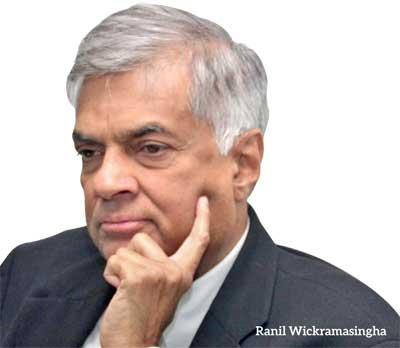
He added that he has not discussed this with the Leader of UNP Prime Minister Ranil Wickremesinghe.
Sating that there had been instances where he had cried over the country from his heart, Jayasuriya said that there needs to be an agreement between the national policies.
He says that Sri Lanka is invaluable in terms of location, yet, it has not been properly understood.
It is not difficult to develop the country if we can gain investors’ trust through the port city, he further said.
Meanwhile, police are taking measures to file court cases against 6 parliamentarians over the incident of violent behavior within the parliament and assaulting police officers, the Speaker added.
Eyebrows have been raised as to why the five-member Ministerial Committee headed by Prime Minister Ranil Wickremasinghe, that was appointed by the Cabinet of Ministers to propose urgent remedial measure to avoid power cuts, took a decision on April 10, 2019 to announce an emergency situation in the country and gave permission to the Ceylon Electricity Board to procure emergency power, when the country was not facing an emergency situation.
All three bidders agreed to provide supplementary power at their selected sites for six months
This Ministry will take action to obtain covering approval of the cabinet to award the contracts
It’s learned that the CEB report had been submitted to the subject Minister
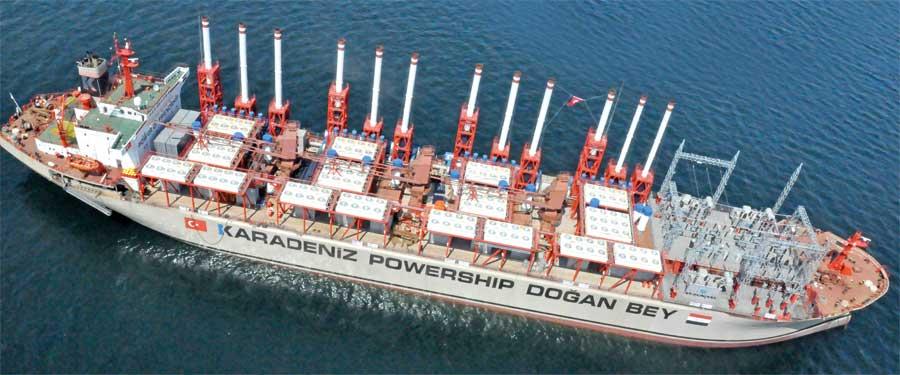
According to Sri Lanka Electricity Act, when the Cabinet determines that there is an emergency situation it warrants procuring of emergency power, at least cost, and allows the Ceylon Electricity Board (CEB) with the approval of the Public Utilities Commission of Sri Lanka to procure emergency power bypassing Government procurement guidelines. It is alleged that the sole reason to go for procuring emergency power is a direct consequence of the CEB and the line ministry’s failure to implement the Least Cost Long Term Generation Expansion Plan (LCLTGEP) 2015-2034. It is alleged that this decision had been taken to procure 200MW from Turkey without calling tenders at a much higher price than that of the prices the CEB is now in the process to procure 100MW from three selected companies after competitive bidding. These three companies are from the UK, Dubai and Hong Kong. According to the documents this newspaper is in possession of, these three companies have agreed to supply electricity for six months within the price range of Rs.28.43 to Rs.30.63 per kW, although the proposed plan by the good governance administration to procure 200MW from M/s Karadeniz Holdings from Turkey under an emergency situation is approximately Rs.35 per kW including government taxes.
Considering a Cabinet memo no: 19/1263/113/040-1 dated April 20, 2019, presented to the cabinet by the Ministry of Power and Energy, the Cabinet of Ministers had granted approval ( No: 19/1283/102/024-1 dated April 26, 2019), to purchase emergency power from the Turkish ship mounted power plant (Powership). Although it was decided that the maximum price that could be paid was Rs.26 per kW, the Turkish supplier has agreed to supply at a rate of Rs.24.984/kW considering the exchange rate as Rs.180/ 1 US$. However, subsequently to this decision, Minister Ravi Karunanayake has presented yet another cabinet memo, seeking cabinet’s consideration to amend paragraph 2 of the earlier cabinet decision as, the maximum net price (inclusive of taxes) per unit of electricity to Rs.26.20 provided that the taxes applicable for the import of Heavy Fuel Oil (HFO) should not be increased from the present prices and the exchange rate should not increase more than Rs.180 per 1 US$. In the said memo, a request has been made to direct the Ministry of Finance to grant exemptions of payment of applicable taxes to import HFO for the above project or authorize the CEB to pay any applicable taxes. Initially the Government wanted to show that they are procuring power at a lesser price than the prices the maximum rate the cabinet has decided on. Then it was increased to Rs.26.20 inclusive of taxes. A request had also been made to exempt other applicable taxes to import HFO or to instruct the CEB to pay the applicable taxes. If these taxes are added to the unit cost of Rs.26.20, the rate would be more than Rs.35/kW. The Cabinet of ministers would give the concession to the Turkish company but the burden of these applicable taxes has to be borne by the taxpayers,” a Senior CEB official told the Daily Mirror.
It was in 2016 the CEB for the first time purchased a capacity of 155MW emergency power also known as supplementary power to meet the then demand. As emergency power procurement in 2015 was costly, a plan was introduced to implement low –cost power plants to meet this ever-increasing power demand to which the PUCSL had given its permission. But however, Neither the CEB nor the Ministry of Power and Energy took initiatives to implement these low-cost plants and since 2016, emergency power procurement at a high cost has grown from 155MW to 720MW by 2019. According to the statistics available, 155MW had been purchased in 2016 while 180MW had been purchased in 2017, 320MW in 2018 and the latest plan is to purchase 720MW for 2019. The failure to implement the low-cost power plants under the Least Cost Long Term Generation Expansion Plan (LCLTGEP) 2015-2034 has seen a drastic increase in emergency power purchase since 2016. Had the CEB implemented this plan, we could have purchased low-cost electricity by now without burdening the power crashed national coffers,” a former Senior CEB Engineer said.
“PUCSL is facing greater difficulty to analyse and determine the gap between the exact demand and the supply”
The prices of the three bidders from the UK, Dubai and Hong Kong are -lowest bid submitted for 24MW for Pallekele Grit Sub-station for six months was M/s Aggereko International Project Ltd; of Glasgow, Scotland, the UK for Rs.30.20 per kW. 10MW for Galle Grid Substation was M/s Aggereko International Project Ltd; of Glasgow, Scotland, the UK for Rs.30.20 per kW, 10MW for Mahiyangana Grid Substation was M/s Altaaqa Alternative Solutions; of Dubai, UAE for Rs.30.58 per kW, 08 MW for Polonnaruwa Grid Substation was M/s Altaaqa Alternative Solutions; of Dubai, UAE for Rs.30.63 per kW, 24MW for Hambantota Grid Substation was M/s V Power Holdings Ltd; of Hong Kong for Rs.28.43 per kW and 24MW for Horana Grid Substation was M/s V Power Holdings Ltd; of Hong Kong for Rs.28.70 per kW It is in this backdrop, the cabinet of ministers has given the approval to procure 200MW emergency power based on an emergency situation without following procurement guidelines from Turkish ship mounted power plant (Powership) from M/s Karadeniz Holdings for six months, which will cost the country approximately a staggering Rs.15 billion. On 11 April 2019 Karadeniz Holdings has submitted a proposal for the immediate supply of 200MW power ship. On the same day, Prime Minister Wickremasinghe in a confidential note to the Cabinet requested its approval to announce a calamity situation in the country to make way for the CEB to purchase power from the Turkish Company on an emergency basis without calling tenders.
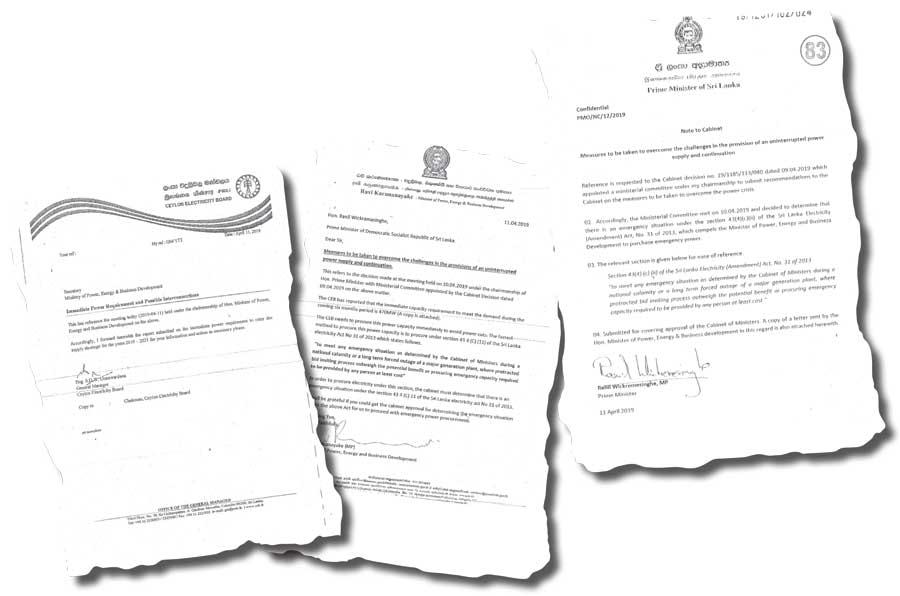
The confidential note dated April 11, 2019, to the Cabinet (Ref: PMO/NC/12/2019) under the heading- Measures to be taken to overcome the challenges in the provisions of an uninterrupted power supply and continuation, Premier Wickremesinghe states that under his chairmanship, the Ministerial Committee has decided to determine that there is an emergency situation and there is a need to procure emergency power for an uninterrupted power supply. The letter further states, ‘Reference is requested to the cabinet decision no: 19/1185/113/040 dated April 9, 2019, which appointed a Ministerial Committee under my Chairmanship to submit recommendations to the cabinet on the measures to be taken to overcome the power crisis. ‘Accordingly, the Ministerial Committee met on April 10, 2019 and decided to determine that there is an emergency situation under Section 43(4)(c)(ii) of the Sri Lanka Electricity (Amendment) Act No: 31 of 2013 which compels the Minister of Power, Energy, and Business Development to purchase emergency power. ‘The relevant Section of the Sri Lanka Electricity (Amendment) Act No: 31 of 2013 states, ‘to meet any emergency situation as determined by the cabinet of ministers during a national calamity or a long term forced outage of a major generation plant where protracted bid inviting process outweighs the potential benefit or procuring emergency capacity required to be provided by any person at least cost’.
“In 2016, the PUCSL had forecast a possible power shortage in 2018/2019, as none of the major power plants identified in the LCLTGEP except for the Norochcholai, Colombo Barge and few other hydropower plants have not even started commencing the construction work”
‘Submitting for covering approval of the Cabinet of Ministers. A copy of a letter sent by the Hon. Minister of Power and Energy and Business Development in this regard is also attached herewith. Ranil Wickremesinghe, MP, Prime Minister’. On January 11, 2019, Ministry of Power, Energy and Business Development through a Cabinet Memorandum (No: 05/2019/PB), has sought cabinet approval to procure 100MW emergency power. By cabinet decision No: 19/0173/113/001 dated January 14, 2019 approval had been granted to procure the said supplementary electric power following procurement procedure. However, Minister Ravi Karunanayake on March 6, 2019 had informed the Cabinet of Ministers that the Ministry does not intend to procure additional power although cabinet approval has been received as they were expecting to manage the country’s power situation, but had later sought permission to reactivate the tender that was called for in January in order to procure electricity due to the then prevailing power situation.
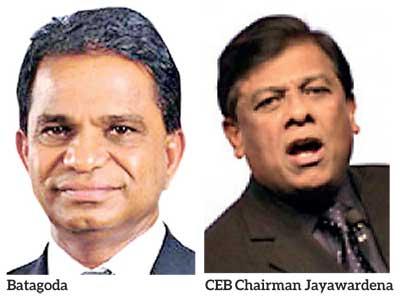
Subsequent to this move, by letter dated March 29, 2019, to the Chairman and General Manager CEB by Secretary Ministry of Power, Energy and Business Development Dr. B.M.S. Batagoda states that the Cabinet has authorised him to grant approval to award the contract to the selected bidders subject to the covering approval for the Cabinet of Ministers. The letter states: ‘Supply of 100MW of Supplementary Electrical Power to CEB on a short term basis for 6 months to mitigate the power shortage envisaged due to insufficient power generation to the system ‘This has reference to the Cabinet Memorandum No: 05/ 2019/ PE dated January 11, 2019, and the Cabinet decision No: 19/0173/113/001 dated January 14, 2019, on the above procurement.
‘The Cabinet has authorized the Secretary to the Ministry to grant approval to award the contract to the selected bidders subject to the covering approval for the cabinet of Ministers. On March 6, 2019, Hon. Minister has informed the Cabinet that the Ministry does not intend to procure additional power on short term basis as decided by the cabinet at its meeting held on January 22, 2019, expecting to manage the power situation without procuring supplementary power. ‘However, with the experience, we had during these two weeks power situation further aggravated which resulted in power cuts. The Government policy is not to allow power cuts at any cost. The people are very unhappy about the power cuts situation and criticizing the government, Ministry and the CEB. This is very bad for the power sector. Already the impact of the economy during the last few days of load shedding is very severe, particularly the loss of confidence in investors. Therefore on March 26, 2019, it was decided at the Cabinet Meeting to take all measures to avoid power cuts. The cabinet also appointed following committee- Ministers Ravi Karunanayake, Kabir Hashim, Daya Gamage and Dr. Harsha De Silva to propose urgent remedial measures to avoid power cuts. ‘Based on these decisions the Prime Minister convene a meeting with the committee on March 27, 2019, at the parliament complex with the participation of officials of the ministry and CEB.
“It is in this backdrop, the cabinet of ministers has given the approval to procure 200MW emergency power based on an emergency situation without following procurement guidelines from Turkish ship mounted power plant”
‘At this meeting, it was decided to take all possible measures as decided by the Cabinet including the reactivation of the suspended procurement of 100MW supplementary power. The Minister instructed to procure this 100MW for six months even though tenders called for one year. Since this is national importance to avoid power cuts this ministry convened a meeting on March 28, 2019, with recommended bidders to supply 100MW supplementary power. ‘All three bidders agreed to provide supplementary power at their selected sites for six months. Accordingly, you are hereby authorized to issue letters of intent and sign the power purchase agreements with the following investors for a six month period at the terms and conditions which they have agreed. ‘Since cabinet has originally authorized this ministry to award the contracts subject to the covering approvals of the Cabinet. This Ministry will take action to obtain covering approval of the cabinet to award the contracts.
‘the cabinet has approved to undertake this procurement under Section 43.4 (C)(ii) of Sri Lanka Electricity (Amended) Act No: 31 of 2013 so that there is no necessity for calling tenders. However please inform the PUCSL on this procurement which is made as an emergency power procurement. Dr. B.M.S. Batagoda. Meanwhile the CEB issuing a report dated April 11, 2019, sent it to the subject Minister on immediate power requirement and possible interconnections, for necessary actions to cater the supply shortage for the years 2019- 2021. It further states: ‘The approved Least Cost Long Term Generation Expansion Plan (LCLTGEP) 2015-2034 has identified 1x300MW natural gas operated combined cycle power plant to be commissioned by 2019. Also, the approved LCLTGEP 2018-2037 has identified the requirement of having 1x300MW natural gas operated combined cycle power plant to be commissioned by 2019 and 2021 respectively.
‘The approved LCLTGEP 2018-2037 consist of 320MW reciprocating engines in the power system. In the same plan, contingency analysis was carried out considering the simultaneous occurrence of risk events such as implementation delays, very dry hydro conditions, long outage of major power plants and high demand. The results of this analysis show that an additional capacity of 150MW is required for the year 2019. ‘However, due to the delays of implementation of 300MW LNG power plant in Kerawalapitiya by 2019 has created the requirement of 470MW in 2019 as an immediate capacity shortage. ‘Assuming that 2x300MW LNG plants commissioned by 2022, a separate contingency analysis has been conducted and following capacity requirements are identified to enable stable supply in the year 2020 and 2021. The requirement for 2019 is 470MW out of which 170MW already existing while 100MW supplementary power under procurement and balance 200MW is required. The year 2020 and 2021 requirements are 195MW and 105MW respectively’.
It’s learned that the CEB report had been submitted to the subject Minister and the Ministerial Committee’s decision to declare an emergency situation in the country had been taken following a proposal presented to the Ministry of Power and Energy by M/s Karadeniz Holdings of Turkey to supply 200MW by Turkish ship mounted power plant (Powership) with a letter of endorsement by the Turkish Ambassador to Sri Lanka in the first week of April. Meanwhile by letter dated April 22, 2019, Chairman CEB, R. Jayawardena to General Manager CEB says that after a detailed discussion at the Board Meeting, held on same date, approval had been granted to commence negotiations with M/s Karadeniz Holdings with the objective of entering into a power purchase agreement enabling CEB to procure 200MW of capacity offered by the said company in its proposal dated April 11, 2019. According to CEB Board Paper dated April 12, 2019 (Ref: AGM/TR/2/2), the tariff proposed by the Turkish company is US$ 0.1388 per kWh or LKR 24.984 per kW at which rate the estimated cost of power purchase for a period of six months will be approximately Rs.15 billion.
Forecasting a power shortage
Although the Public Utilities Commission of Sri Lanka (PUCSL), which is the regulator for the electricity industry in the country has advised the CEB since 2016 to implement the approved Least Cost Long Term Generation Expansion Plan (LCLTGEP) 2015-2034, the official documents this newspaper is in possession shows as to how the CEB has systematically delayed implementation the said plan. In 2016, the PUCSL had forecast a possible power shortage in 2018/2019, as none of the major power plants identified in the LCLTGEP except for the Norochcholai, Colombo Barge and few other hydropower plants have not even started commencing the construction work. CEB’s failure to abide by the PUCSL directives, made its Chairman Saliya Mathew to send a letter on November 18, 2016, to General Manager CEB, Y.M. Samarasinghe, to submit the reasons for the non-compliance with the least cost long term generation expansion plan 2015-2034 and that this delay would result in failure to meet the electricity demand during the 2017-2020 period.
As there was no proper response from the CEB, the PUCSL has brought this to the notice of the Sectoral Oversight Committee of the Parliament. When the PUCSL informed this to the Cabinet Committee on Economic Management by letter dated November 18, 2016, it had been referred to the Sectoral Oversight Committee. As a result, line Ministry Secretary by letter dated June 15, 2017, has requested the CEB to appoint project managers in order to carry out the stalled work but nothing happened thereafter. A Member of Parliament who is one of the members of the Sectoral Oversight Committee of the Parliament told this newspaper that the reason for the non-compliance of the LCLTGEP is solely because of a particular union in the CEB. There is a mafia in this sector. This union is powerful and work hand in glove with many companies in the power sector and they want these companies to get the power plant contracts. If these companies do not get the tenders, this union takes every possible step to hinder the projects. In this particular low-cost power plan project, the Parliament Oversight Committee has unearthed the exact reasons for non-implementation of this plan. It is high time that the Government calls explanation from these officers rather than allowing them to ‘flourish’ by granting the necessary approvals to go ahead with their goal- to procure emergency power,” the MP said. Meanwhile, questions have been raised as to why the CEB Engineers Union is accusing the PUCSL of sabotaging their plans to build new power plants and that was the reason for them to restrict power supply before the Sinhala New Year.
Highly reliable CEB official under the strict condition of anonymity told the Daily Mirror that they are not surprised as to why the Ministerial Committee on April 11, 2019, after granting permission to purchase 100MW following tender procedure decided to determine that the country is in a calamity and needs to purchase more emergency power. We are neither facing a national calamity nor a long-term forced outage of a major generation plant. The CEB in one of its reports had informed the Minister that the immediate capacity required to meet the country’s demand for the coming six month period is 470MW and need to procure this immediately to avoid power cuts. Why couldn’t the Government in January take a decision to purchase a higher capacity emergency power rather than going only for 100MW and a few months later 200MW without following a tender procedure? It is a known fact that a certain high profile group in the CEB and the Ministry do not want to implement the low-cost power plants though it is beneficial to the country’s economy and the electricity consumers, but not benefit them ‘personally’. Even the politicians know this well. In such a background, why cannot this ministerial committee call explanation from these officers who have failed to implement low-cost power plants since 2016,” sources said.
Meanwhile DGM Eng. N.S. Wettasinghe has sent an e-mail to the President CEB Engineers Union on May 3, 2019 asking what their stance is in procuring emergency power from Turkish ship on short term basis whether the union is withdrawing their TU Action with PUCSL of this procurement or accepting a procurement carried out without a proper competitive tendering procedure to which there was no response from the EU.
High cost of emergency power
Ceylon Electricity Board’s (CEB) power purchase data shows clearly how costly emergency power is, compared to the prices they could have purchased it from least-cost power generation plants. Chairman PUCSL Saliya Mathew’s letter to General Manager CEB, Y.M. Samarasinghe further states, ‘The PUCSL approved the LCLTGEP on September 15, 2016, and it is the sole responsibility of the transmission licensee to adhere to approved LCLTGEP and take immediate steps to implement it, given the criticality of the power supply during 2017-2020. ‘The Commission observes, that the transmission licensee has deviated from the approved LCLTGEP according to the letter dated November 11, 2016. Delay in implementation of the power plants from the approved LCLTGEP will result in failure to meet the electricity demand during the 2017-2020 period.
‘The Commission wishes to draw your attention to Section 24 of Sri Lanka Electricity Act No: 20 of 2009 (as amended) and condition 30 of Electricity Transmission and Bulk Supply Licence no: EL/T/09-002 issued by the Commission, in fulfilling the duties as the Transmission Licensee. ‘Therefore the Commission directs Transmission and Bulk Supply Licensee No: EL/T/09-002 to- (i) Provide reasons for the deviation from the approved LCLTGEP for each and every power plant (ii) Provide a report on the impact of the power situation during 2017-2020 due to deviation from the approved LCLTGEP (iii) Provide solutions/ proposals in meeting the electricity demand, in the event if there is an impact on continued power supply due to the deviation from the approved LCLTGEP during 2017-2020 period
(iv) Provide evidence to the Commission that Transmission Licensee is not likely to contravene Section 24 of Sri Lanka Electricity Act No: 20 of 2009 (as amended) and Condition 30 Electricity Transmission and Bulk Supply License No: EL/ T/09-002 You are hereby requested to submit the requested information on or before November 29, 2016’. According to the PUCSL data, the delay in implementation of each power plant by the CEB is as follows- The LCLTGEP 2015-2034 (Ref: PUC/LI/TL/2016/38) has been approved on September 15, 2016, and the major power plants given below were to be commissioned onthe given dates. According to CEB letter dated November 11, 2016 (Ref: AGM (CS)/ DGM (CSRA)/GEN/4) these plants were expected to be completed on the given dates.
“It is high time that the Government calls explanation from these officers rather than allowing them to ‘flourish’ by granting the necessary approvals to go ahead with their goal- to procure emergency power”
(i) 100MW furnace oil-fired power plant 1, was to be commissioned on January 2017 and expected to be completed by December 2018 (yet to implement the work). (ii) 70MW Furnace oil-fired power plant 1, was to be commissioned on January 1, 2017, and was expected to be complete by December 2018 (yet to implement the construction work). (iii) 35 MW Broadlands Hydropower plant was to be commissioned on January 1, 2018, and expected to be complete by June 2019 (yet to start the work) (v) 100MW Mannar Wind Park Phase 1 power plant, was to be commissioned on January 1, 2018, and expected to be completed by July 2019 (not yet commenced the construction) (vi) 2 x 35 MW gas turbine power plant was to be commissioned on January 1, 2018, and expected to be completed by June 2018 (yet to start the construction work). (vii) 1 x35MW gas turbine power plant, was to be commissioned on January 1, 2019, and expected to be completed by June 2019 ( yet to start the work) and (viii) 1 x 300 MW natural gas-fired combined cycle power plant, was to be commissioned on January 1, 2019, and expected to be completed by June 2020 (yet to commence the construction work).
It was at this stage, Director General PUCSL, Damitha Kumarasinghe by letter dated March 31, 2016 to Secretary Ministry of Power and Energy, Dr. B.M.S. Batagoda, states that although the CEB forecasts that the power generation is expected to grow at 5.5% per annum during 2015-2022, in addition, to expect the peak demand to grow at 4.4% per annum, as per the PUCSL’s analysis considering the low reliability of the Norochcholai coal power plant, the country could face energy and capacity shortages during 2018/2019 and beyond under drought conditions even with the planned plant additions.
National Demand Side Management Programme
It further states, ‘CEB has indicated delays in commissioning Sampur coal power plant in 2021. Hence the Commission wishes to emphasise the need for rigorous implementation of the National Demand Side Management Programme, development of planned conventional power plants on time and expedite grid integration of planned renewable energy based plants in order to evade the possible shortages in 2018/2019’. President CEB Engineers Union, Saumya Kumarawadu refuting allegations levelled against the Engineers Union on its involvement in the delay in implementing the low-cost power plants, accused the PUCSL of not granting the necessary approvals on time. PUCSL granted their approvals for the LCLTGEP 2015-2034 in 2018 although the CEB made several requests from 2016. That is the reason for the delay in implementing these power plants,” Kumarawadu told the Daily Mirror.
When brought to his notice that this paper is in possession of letters exchanged by the PUCSL and the CEB over the delay in implementing the projects, and that there was no reference by the CEB that the delay was due to PUCSL’s failure to grant the necessary approvals, but had pledged to commission the operations within a stipulated time frame, Kumarawadu said that the General Manager’s stand cannot be considered as the CEB’s stance. The GM is under pressure as he has to abide by what the politicians want him to do. Hence what the GM writes is not the CEB’s stance. When the politicians, the Power and Energy Ministry and the PUCSL is disrupting the CEB, we cannot achieve our targets. It was only after we instigated trade union action, that the PUCSL granted their approvals in 2018,” Kumarawadu said. When told that the member of the Sectoral Oversight Committee of the Parliament alleged that the EU is a mafia and does not allow any project to come up if its interested parties are not offered the tenders, Kumarawadu refuting the allegations queried as to who was behind the awarding the tender that was called to supply 50 diesel generator units, 25 step-up transformer/switchgear units and 25 diesel fuel tanks to a company that did not comply tender clauses. Was it the EU involved in it?” Kumarawadu queried.
He further said as to how members of two or three cabinet appointed tender boards had to resign when tenders were called for the Kerawalapitiya power plant as a result of political influence. These politicians wanted to offer the tender to a certain party. As a result, a few members of these tender boards that were appointed by the cabinet had to resign. It was the same with the Sampur Coal plant as well. It was to be commissioned in 2020/2021 but the Power and Energy Ministry and the PUCSL got an Environmental NGO to file legal action against the project and we had to stop it on a court order,” Kumarawadu alleged. Meanwhile, CEB Media Spokesman Sulakshana Jayawardena said that the reason for the non-implementation of the LCLTGEP 2015-2034 which is being reviewed once in two years is because of political, social and environmental issues but not the CEB’s fault. For the Sampur project, we were to float tenders in 2016 but it had to be called off due to the reasons I have given. It was the same with the LNG power plant as well. For the Moragolla Plant, the environmental organizations said that there are endangered fish species and the project had to put on hold. The Mannar wind power project had to be held due to some protests by environmental organizations. We are under tremendous pressure and that was why we could not implement the LCLTGEP 2015-2034 plan,” he added.
When asked as to why the CEB is planning to procure emergency power without calling tenders from a Turkish company under the pretext of an emergency situation when there is no such a crisis as of now, Jayawardena said that it was based on a cabinet decision. If the country faces a power crisis we have to purchase emergency power,” he said. The proposed plan to procure 200MW emergency power from Turkey for a higher rate comparing to the 100MW that is to be procured from UK, Dubai and Hong Kong, Jayawardena said that Turkey’s prices are much lesser than the prices submitted by the UK, Dubai and Hong Kong rates. The Turkey prices are Rs.26.20 per unit inclusive of taxes but the rates quoted by the other three companies are much higher than the former,” Jayawardena said. When asked whether the prices, the UK, Dubai and Hong Kong companies have quoted are including the applicable taxes, Jayawardena confirmed that the quoted rates include the applicable taxes, but he could not answer whether the given Turkish prices are including or excluding the government taxes.
“This union is powerful and work hand in glove with many companies in the power sector”
Meanwhile, Director PUCSL, Jayant Herath said that the CEB as the transmission licensee is responsible for procurement of generation plants and added that although approvals have been granted for several long-term generation plans, to date they have not been implemented for no reasons. After 2014, we have not seen a single mega plant that has been added to the national grid. Some plants have been tendered. But selections are not being finalized yet. Since 2016, CEB purchases power on a short term basis which is costly. Delay in construction of low-cost plant pave the way for high-cost short term energy purchases. CEB has to expedite the construction of plants in a timely manner,” Herath added. When asked as to whether the PUCSL will grant approval to procure emergency power from Turkish ship, Herath said that the PUCSL need to analyze the data such as current available capacity, demand, etc; to assess the requirement of the additional power
Since May 2018, the Ceylon Electricity Board has not provided any data to PUCSL. Therefore, PUCSL is facing greater difficulty to analyse and determine the gap between the exact demand and the supply. There were instances where we rejected the emergency power requirement due to non-availability of electricity shortage as such. One classic example is the emergency request in 2016. When the CEB requested to purchase 60 MW in 2016 on a short term basis, this Commission analyzed the data and sought for clarification to identify the real need. In that process, CEB accepted that the proposed short-term power purchase is not required. So, if we had required data to analyse the current situation we could have assessed and verified the said shortage without any delay and the process also will be very transparent for anyone. CEB’s power plant procurement is guided through a transparent process stipulated in the Sri Lanka Electricity Act. PUCSL, being the regulator for the industry, is responsible for ensuring that the CEB purchases power at the least cost because the cost of power purchases is borne by the poor tariff consumer at the end of the day. According to Section 43 (2) and section 43 (4) of the Electricity Act, CEB should obtain prior approval from the regulator in order to procure any power plant. As of today, we have not received a request to purchase emergency power from Turkey,” Herath stated. All attempts to contact Secretary Power, Energy and Business Development Dr. B.M. S. Batagoda for a comment failed. Although a text message was sent seeking a comment the Ministry Secretary till the paper went for publication.
Another important step that has to be taken is to introduce legislation to restrict the number of children in a family to a maximum of three
The need of the hour to tackle this growing threat is a single law for all Sri Lankans, dismantle religious or language based schools, create mixed schools and not allow political parties to be formed on ethnicity.
The SLFP has proposed to enact a ‘Harmony Act’ to bring all ethnic and religious groups under one umbrella or one nation like in Australia and Singapore.
Our Muslim brethren must not act like Arab Muslims. Sri Lankan Muslims have integrated well into the Sri Lankan society.
The SLFP led UPFA coalition would secure a minimum of 30 seats at the next general elections. Therefore, we will decide who would be the next ruler of the country.
The Dailymirrordiscussed the current political and economic situation of the country in the aftermath of the Easter Sunday bombings with the General Secretary of the SLFP, former Minister Dayasiri Jayasekara.Excerpts:
Q President and SLFP Leader Maithripala Sirisena, who is also the Minister of both Defence and Law and Order has been blamed for failing to take timely action to prevent the Easter Sunday carnage. What is your response?
President Maithripala Sirisena has pointed out that he wasn’t ready to accept responsibility with regard to the Easter Sunday carnage though he is in charge of the Defence and Law and Order Ministries because there has been a major communication gap in disseminating information on National Thawheed Jamaath (NTJ) and other religious extremist groups among the law enforcement agencies. After the NTJ accomplished its dastardly mission on April 21, it was revealed that DIG Nilantha Jayawardana had appraised the IGP Pujith Jayasundara and senior DIG Sisira Mendis on the impending threat. But it seems this information had not reached President Sirisena for necessary action to be taken. The IG or Secretary of Defence Hemasiri Fernando should have informed the President on this important intelligence report and instructed him to call a meeting of the National Security Council (NSC) as a follow-up action, but sadly this didn’t happen.
However, I admit that the collective responsibility remains with the Government and the Opposition because the intelligence that had been gathered about Muslim fundamentalism and the acts of terrorism, stocks of explosives and the weapons detected were circulating within the security establishments and law enforcement agencies not for months, but for years. Also, don’t forget our past mistakes. If I am to give you a few examples, we did experience similar disasters during the ethnic conflict. No one knew until the LTTE attacked Bandaranaike International Airport at Katunayake in July 2001, when attempts were made on the lives of Sarath Fonseka in April 2006 and of Gotabaya Rajapaksa in December 2006 or the life of Chandrika Kumaratunga in December 1999. In addition to these barbaric acts of terrorism, the LTTE carried out a series of killings maiming thousands of innocent people and destroyed property worth billions of rupees. You also must keep in mind that the Cabinet isn’t under the command of the President. But President Sirisena has taken all measures possible to prevent a repetition. The raids, surveillance and detection carried out by the armed forces, the Police, the STF and the intelligence units have by now broken the backbone of Muslim fundamentalist terrorism under the leadership of President Sirisena.
Further, based on the recommendations of the interim report of the Presidential Commission that probed the Easter Sunday massacre, the Attorney General has launched a criminal probe against Pujith, Hemasiri, Sisira, DIGs Nandana and Latheef. Therefore, it is unfair to blame President Sirisena for any of the lapses related to the Easter Sunday massacre.
But what is most important is that no party would be in a position to form a Government without our support after the next general elections
QAntagonism between President Sirisena and Prime Minister Ranil Wickremesinghe has affected the country very badly. How do you see this?
I mustn’t hide the fact that the mutual trust and political ideological understanding that existed between the SLFP and the UNP suffered a big blow after the Central Bank bond scam. There are other misconceptions, policy issues and disagreements between the two. That’s why President Sirisena removed Prime Minister Wickremesinghe and dissolved Parliament late last year; a decision which was annulled by the Supreme Court. But, the SLFP or President Sirisena doesn’t want to abdicate the responsibility for the sins and merits of the Yahapalana Government. Therefore, my belief is that the two leaders must come to an understanding to get together and offer leadership to this regime during the remaining few months. The situation has been further complicated because the SLFP doesn’t have a Cabinet or a Government under its command. At the same time UNP members as well as the SLFP must refrain from criticizing each other and aggravating the conflict. However, I believe that the UNP must take a more passive stance regarding President Sirisena because he is the Head of State.
QIs there a possibility to unite the two for the sake of the country?
I hope so and pray for such unity between the two leaders because furthering this antipathy would affect the country badly. The two leaders must unite at any cost for the sake of the country. There’s no argument on that.
QThe exports, Direct Foreign Investments (FDI), Tourism and the overall Economy have suffered a big blow as a result of the Easter Sunday disaster. What does the SLFP propose to pull the country out of this mess?
First and foremost national security and law and order have to be restored fully, with a new vigour. Without stability and normalcy returning to the country no investor would visit Sri Lanka. Peace and security and law and order are prime requisites for the industry and exports to prosper.
Egypt, India, Indonesia, Thailand, England, Germany, France, Belgium and many other European Union countries have come under attacks carried out by jihads or ISIS during the recent past. But with the quick restoration of law and order in these countries, they have been able to minimise the ill effects on their economies. Tourists have started to revisit those countries in numbers. Sri Lanka has no option, but to follow suit. Besides, many of our friendly countries like India, China, UK, EU, Australia, Pakistan and many others have pledged the fullest support for Sri Lanka to recover from this tragedy. On the directive of President Sirisena our intelligence agencies are in touch with these countries to exchange data regarding the movements and actions of terrorists. I am glad to hear that India and Switzerland have already lifted travel advisories on Sri Lanka.
I mustn’t hide the fact that the mutual trust and political ideological understanding that existed between the SLFP and the UNP suffered a big blow after the Central Bank bond scam
Q What is the SLFP’s strategy to prevent the rising of religious extremism and terrorism in the country?
The SLFP has given forewarnings during many instances in the past regarding the radicalization of Muslim youths and their possible repercussions. I feel, radicalization has been viewed as a fashion by certain groups that contributed to its free proliferation. The need of the hour to tackle this growing threat is have a single law for all Sri Lankans, dismantle religious or language based schools, establish mixed schools and make sure that no political parties are formed based on ethnicity. Marriage must be banned before adulthood. The marriageable age is 18 years for both sexes.
The SLFP has also proposed to enact a ‘Harmony Act’ to bring all ethnic and religious groups under one umbrella as one nation like in Australia and Singapore.
Face veils like the burqa, niqab, hijab and chador or whatever garment that makes it difficult to easily identify a person must be banned after consultations with Muslim leaders. Another important step that has to be taken is to introduce a legislation to restrict the number of children in a family to a maximum of three. Sri Lanka is a small country. As such our economy, culture, society and per capita income cannot support big families. Large countries like China and a smaller country like Singapore have introduced laws to prevent sharp and sudden increases in population. Our Muslim brethren must not act like Arab Muslims. Sri Lankan Muslims are well integrated into the Sri Lankan society.
QHow are SLFP’s preparations for the Presidential poll?
We are ready for any election. Though not declared openly by President Sirisena himself that he would contest, the SLFP’s presidential candidate would be President Sirisena for sure. The SLFP is in the process of forming a strong political alliance under the UPFA and the discussions so far with other constituent partners have been extremely successful. The SLFP has always come to power in the past after contesting elections as an alliance. This time too there cannot be any change in this stance.
But what is most important is that no party would be in a position to form a Government without our support after the next general elections. The SLFP led UPFA coalition would secure a minimum of 30 seats at the next general elections. Therefore, we will decide who is the next ruler of the country.
I feel, the radicalization has been viewed as a fashion by certain groups that contributed to its free proliferation. Marriage must be banned before adulthood
QYou have always stood for reconciliation, interfaith harmony and peace. But don’t you think certain elements are attempting to use this barbaric attack to their political advantage and delay the process of the country returning to normalcy?
I have never been a racist. In fact, I cannot be a racist as the General Secretary of the SLFP because the SLFP is a multi-religion, multi-ethnic and multi-social party that offers a safe heaven for voters of all faiths, languages and social status. Yes, as you said, I believe there were certain anti national elements who have been active in creating ethnic unrest in many parts of the country after calm prevailed for more than two weeks following the Easter Sunday carnage. The April 21 attack was carried out with assistance from a foreign terrorist outfit, ISIS, but the attacks on Muslim trade establishments in Kurunegala, Chillaw and Gampaha had been instigated by local goons supported by local politicians who wanted to exploit the situation to their advantage by creating another blood bath. We must not forget the fact that terrorism is promoted and spread through terrorism.
QHow and why were Muslim trade establishments attacked after there was peace for nearly three weeks at Gampaha, Kurunegala, Kuliyapitiya, Hettipola, Minuwangoda, Nattandiya and elsewhere and also who were behind this violence?
During the search operations carried out by the Police, STF and armed forces, a large cache of arms, ammunition and explosives were found in various parts of the country. As a result, frightened Sinhalese urged the Police and armed forces to expand search operation in these areas including Muslim villages. These search operations should have been done discreetly and with extreme care, convincing the peaceful Muslims that searches are being done for their own safety and to identify the handful of those who support terrorism among a large majority of law abiding Muslim community.
Muslims in Sri Lanka are a God fearing, law abiding community who first arrived in the 7th century as Arab traders. They married Sinhala women and well integrated into the Sinhala community and started to profess the Islamic faith. Later on, Muslims served Sinhala kings in various professions like medicine, security, trade and imports and exports. The Kandyan Sinhala King Senarath protected Muslims from the Portuguese attacks and gave them refuge in Kandy.
The Muslim community in Sri Lanka was further strengthened with the arrival of Muslims from India in the 19th and 20th centuries. I don’t understand as to why there are no Sinhala Muslims when we have among us Sinhala and Tamil Catholics. There are also a fair number of Tamil youth who have become Buddhist monks.
QWhat happened at Hettipola and Bingiriya on the 13th?
In fact, what happened on the 12th and 13th this month at Bingiriya, Gampaha, Kurunegala, Kuliyapitiya, Hettipola, Minuwangoda and Nattandiya was unfortunate and could have been prevented if all those involved acted responsibly. At the same time I would like to tell you that I was able to prevent a blood bath at Bingiriya and Hettipola due to timely action. However, I have no doubt that there were political opportunists behind the attacks on Muslim trade establishments.
On the 12th afternoon, four Sinhala youth unleashed an unprovoked attack on two Muslim boutiques in Kuliyapitiya. The Kuliyapitiya Police arrested them and there was a gathering of people near the Police station demanding their release. The police under pressure granted the four youth Police bail. But on the same night there were attacks on Muslim trade establishments at Kiniya in the Bingiriya electorate and Police arrested 12 Sinhalese. As there were no sufficient manpower and space in the Police cell, the Bingiriya Police transferred 6 out of 12 detainees to Hettipola Police Station. The people who had been gathered in numbers started to protest for the transfer of arrested men and staged a big scene in front of the Bingiriya Police Station demanding the release of all 12 men immediately. They also questioned the transfer of 6 detainees to Hettipola. I must remind you that there are no Sinhala or Muslim trade stalls near Bingiriya Police station, but there are a few near the Hettipola Police. The situation was extremely tense and hotting up.
The Muslim community in Sri Lanka was further strengthened with the arrival of Muslims from India in the 19th and 20th centuries
The people who had assembled near the Bingiriya Police were visibly intoxicated as liquor shops had been opened. Muslims were frightened and helpless. Some of them rang me up at home – a few hundred metres away from the Bingiriya Police – and I rushed to the scene around 12.30 in the afternoon. When I went there I saw Namal Kumara giving a lecture to the agitated crowd and I chased him away. In the meantime I spoke to the Army commander of the area, DIG, District Secretary, Divisional Secretary, OICs of Bingiriya and Hetipola Police to calm and disperse the crowd. Before the Army, STF and the police acted there were attacks at Kottampitiya and Hettipola and a few other places on Muslim trade stalls and mosques. I asked the DIG whether he could release the 12 people under police bail if I brought the six men from Hettipola to Bingiriya and he said ‘yes’. The Police jeep of the Hettipola Police did not have space to accommodate all six men and I took four of them in my vehicle still managed to drive to Bingiriya Police under an armed police guard thus preventing a disaster. There were only about 75 policemen at the Hettipola station and 60 out them had been deployed on routine duties. At the Police station there were only about 15 personnel to deal with the station, detainees and the armoury. If attacked by hundreds of people, the detainees were taken out and the armoury was broken into, the situation would have led to a major bloodbath. I prevented it by bringing the six youth, arrested, to Bingiriiya from Hettipola and assisted the police, the armed forces and the STF to bring the situation under control and disperse the agitated crowd, thus preventing a disaster.
Payment anomalies of over half a million pensioners would be removed from July 1, the Finance Ministry said today.
The revised pension would be implemented effective from next month under a proposal made by Finance Minister Mangala Samaraweera in his Budget 2019, the Ministry said.
Accordingly, over 500,000 public servants who retired before December 31, 2015, will be benefited by the removal of this anomaly.
The monthly salary of the public servants who retired before 31.12.2015 would be increased by minimum of Rs.2, 800 and the maximum of Rs.20,000,” the Ministry said in the statement.
This salary anomaly was created as a result of those who retired before December 31, 2015 and others who retired thereafter, were considered under two different circulars.
Pensions were paid to the public servants who retired before December 31, 2015 under circular 05/2015 and their counterparts who retired thereafter were paid pensions under circular 03/2016. Accordingly, the salary of a retired KKS grade I who retired before 31.12.2015 has been increased by Rs.2,800.
The salary of a retired management assistant grade I has been increased by Rs.5,200 under the proposed new pension scheme. Pension of teacher in grade one service I, would be increased by Rs.9,200 and the salary of a retired a nursing officer would be increased by Rs.9,200.
The salary of a retired police sergeant would be increased by Rs.4,200. A retired senior executive officer will get an increase by Rs.16,000 and the salary of a ministry secretary, who retired before 31.12.2015, would be increased by Rs.20,000.
An interim allowance of Rs.3,500, paid to the pensioners who retired under the circular 05/2015 until this new salary anomaly was removed, will be included to the new salary structure. Further, the cost of living allowance of Rs.3,525 paid at present would be continued to be paid to all pensioners, the Finance Ministry said.
The proposed Status of Forces Agreement (SOFA) with the US that had seen opposition from some Sri Lankan political parties, would also come up for discussion to plug the contentious clauses, during the upcoming visit of US Secretary of State Mike Pompeo to Colombo, senior government sources said yesterday.
Pompeo is scheduled to visit India, Sri Lanka, Japan and Korea from June 24 to 30, officials said.
Secretary Pompeo expressed his desire to visit Sri Lanka when he spoke to Prime Minister Ranil Wickremesinghe over the telephone, shortly after the National Thowheed Jamath (NTJ) carried out suicide bomb explosions at three churches and three luxury hotels in Colombo, Negombo and Batticaloa, on Easter Sunday, which killed a total of 258 people and injured around 500.
Public Enterprise Minister Lakshman Kiriella said that SOFA was first discussed during the Mahinda Rajapaksa presidency and it was ironic that it was the Podujana Peramuna that was now leading opposition protests.
This was not the first time that Rajapaksa had opposed the very agreements or proposals that his government had introduced, now that he was in the opposition, Kiriella added.
Sri Lanka conducting investigations to find out wherther some Saudi nationals were involved in the Easter Sunday attacks may need Saudi Arabian help to verify the identities of three persons who were here at the time of the April 21 blasts but left the country the following day.
Authoritative sources acknowledged that foreign assistance was required in that regard.
The police investigating the alleged involvement of former Eastern Province Governor M. L. A. M. Hizbullah with those responsible for Easter Sunday attacks have recorded a statement from the UPFA politician regarding his meeting with a group of Saudi nationals the day after six coordinated attacks which claimed the lives of 260 persons.
Police headquarters sources said that the Terrorist Investigation Division (TID), on Saturday, (15) questioned Hizbullah in this connection.
According to Police headquarters Hizbullah met two Saudi nationals at a luxury hotel at Pasikudah during countrywide night curfew and a CCTV footage showed him leaving the hotel with three foreigners. Police headquarters said that though reference was made to two foreigners subsequent inquiries revealed the presence of a third one.
Hizbullah, who arrived at the TID on Saturday at 9.45 am, left the office close to 6 pm.
With the help of the CCTV footage, the police have identified the three Saudi nationals. In addition to Hizbullah, several other persons were questioned. Employees of the hotel where the Saudis stayed are believed to be among them.
Having tendered his letter of resignation to President Maithripala Sirisena on June 03 at the Presidential Secretariat, Hizbullah told the media that the foreigners were investors and there was absolutely nothing clandestine about his meeting with them. Hizbullah claimed that he had explained to President Sirisena the circumstances under which the meeting had taken place at the Pasikudah hotel.
The TID questioned Hizbullah two days after a Parliamentary Select Committee (PSC) inquiring into Easter Sunday attacks questioned the politician, who served as a UPFA National List member of parliament till January this year.
However, many an eyebrow has been raised over the failure on the part of the PSC to question Hizbullah on his meeting with the Saudi nationals. The PSC proceedings are open to the media.
The PSC consists of Deputy Speaker Ananda Kumarasiri, Chairman (UNP/Moneragala District), Field Marshal Sarath Fonseka (Democratic Party/UNP National List), Ravi Karunanayake (UNP/Colombo District), Dr. Rajitha Senaratne (UNP/Kalutara District), Dr. Jayampathy Wickremaratne (LSSP/UNP National List), Prof. Ashu Marasinghe (UNP National List), Rauff Hakeem (SLMC/UNP Kandy District), M.A. Sumanthiran (TNA/Jaffna District) and Dr. Nalinda Jayatissa (JVP/Kalutara District).
Asked why Hizbullah had not been questioned regarding the alleged Saudi connection, a spokesperson for the PSC asserted that the then Eastern Province Governor meeting foreigners was not considered relevant to their mandate. When it was pointed out that the allegedly secret meeting, revealed by the media couldn’t be ignored, the spokesman said that Hizbullah’s meeting with foreigners had not crossed his mind.
Officials said that Sri Lanka really appreciated the support extended by Saudi Arabia since the inquiry into April 21 attacks commenced. They pointed out the swift extradition of five hardcore National Thowheed Jamaat (NTJ) activists, including Mohamed Milhan, believed to be the right hand man of suicide bomber Zahran Hashim on Friday underscored the Saudi cooperation.
Time was when the European Union (EU) was known for treading cautiously with measured steps anent sensitive issues. Its responses used to be balanced and buttressed with solid facts and figures. But the EU seems to have departed from tradition if the recent statement issued by the EU mission in Colombo on the Sri Lankan media, among other things, is any indication.
The EU has accused the local media of repeatedly publishing ‘prejudiced and unsubstantiated allegations’. Here is the relevant excerpt: “We are deeply concerned by political and religious pressure being directed at Sri Lanka’s Muslim community which is undermining peace and reconciliation in the country. Prejudiced and unsubstantiated allegations repeatedly published by media serve only to fuel intolerance.” (Emphasis added.)
The EU mission is being hauled over the coals, in some quarters, for its swipe at the Sri Lankan media. But we believe its right to express its opinion should be defended. The media is not infallible the world over. The ongoing controversy over a newspaper cartoon, in the US, is a case in point. A New York Times cartoon depicting Israeli Prime Minister Benjamin Netanyahu as a guide dog leading US President Donald Trump has come to be considered anti-Semitic and evocative of Nazi propaganda. Heavy flak it drew has caused NYT to stop publishing political cartoons in its international edition as well. (The reference to Nazi propaganda reminds us of the World War II era, when many Swedish media outfits capitulated to Hitler.)
There are various allegations against the Sri Lankan media. But an organisation like the EU, which pontificates on international best practices, should be specific when it levels allegations instead of tarring all the Sri Lankan media with the same brush. It stands accused of having sought to give a turbo boost to the government’s alleged plans to muzzle the media through the new anti-terror laws which Prime Minister Ranil Wickremesinghe is all out to bring in, on the pretext of helping tackle terrorism more effectively. Whether the EU is guilty as charged, one may not know, but the government will definitely use its statement against the media. The proposed anti-terror laws have perturbed even some allies of the government such as the JVP, which has said the Counter Terrorism Bill is far worse than a time bomb. The EU is among those pressuring Sri Lanka to scrap the existing Prevention of Terrorism Act and adopt new anti-terror laws, and, therefore, it is thought to be promoting the government’s Counter Terrorism Bill.
The European human rights gods, as it were, have feet of clay. The issuance of the aforesaid EU statement almost coincided with a massive protest in Switzerland, where tens of thousands of women took to the streets against persistent inequalities affecting them. Equality has been enshrined in the Swiss Constitution, but women continue to be discriminated against. The protesters demanded equal pay. A similar situation is said to prevail in some other western countries as well.
It is puzzling why the EU delegation, at its meetings with government leaders, did not take up the issue of the deplorable polls postponements, which are antithetical to good governance and pose a grave danger to democracy. There have been no elections to eight Provincial Councils which stand dissolved. They are without elected representatives, as a result, and have been placed under Governors in contravention of the UNHRC Resolution (No: 30/1 of 01 October 2015), which ‘encourages the Government to ensure that all Provincial Councils are able to operate effectively, in accordance with the thirteenth amendment to the Constitution of Sri Lanka’. So much for the EU’s concern for democracy, people’s franchise and devolution!
Meanwhile, we find a section of the EU statement confusing. In the italicised sentence in the above-mentioned excerpt, the subordinate clause introduced by a relative pronoun—‘which is undermining peace and reconciliation in the country’—is seen to describe the antecedent, ‘Muslim community’. A grammarian may accuse the EU of having levelled a very serious allegation against the ‘Muslim community’! Is it a Freudian slip on the part of the EU, some of whose members are prejudiced against Muslims?
This note is in reference to the evidence given by JJ Ratnasiri, Secretary, Public Administration (S/PA), before the Parliamentary Select Committee (PSC), a few days ago.
JJ Ratnasiri stood out there in a class by himself in the PSC proceedings. Ratnasiri’s clear answers to the questions posed to him by the PSC were in sharp contrast to the dilatory questions by the PSC. Ratnasiri’s intelligence, his clarity of expression in his answers, and the clinically correct demeanour displayed by him at the interview in that room were of a high order. These qualities of Ratnasiri stood out, possibly against the lesser background of the parallel traits displayed by the PSC.
The PSC were even in want of suitable articulation due perhaps to convoluted ideas, when framing dilatory questions perhaps due to the same reason ; all possibly due to the confused clarity of their purpose. S/PA, by contrast, was clearly untrammelled by such vagaries. This difference noted may perhaps be due to the possible difference in agenda between the PSC and S/PA.
Whatever the difference, whatever the reasons, S/PA stood out in exemplary manner in the public service as against the PSC. If serving the people was the intent, S/PA did so better than the others in the room.
JVP MP Sunil
Handunnett quite correctly has said it was not sufficient only to indict
officials but the political authorities behind the scam should also be brought
to book
He also has said the Presidential Commission into the
bond scam and the COPE report had both clearly indicated that Prime Minister
Ranil Wickremesinghe was responsible for this illegal transaction. Adding more he also has said the Prime Minister mediated to
appoint Arjuna Mahendran as CB Governor and the Central Bank was taken over by
the Economic Affairs Ministry under him during the same period and he had given
also given an assurance to Parliament that Mahendran would return to Sri Lanka
in accordance with his wishes. So he
should be named as the first respondent in the case,” he further said.
I attaché here part
of an article I posted on February 27th 2019 in the Lankaweb with a
copy to the Secretary to the President in this regard to substantiates what is
said above by MP Handunhetti. In my opinion Ranil should have been named as the
first accused in this case for the reasons I have clearly explained in this
article. I hope both MP Handunhetti and all those who are concerned on this
mega political gamble will take up this issue in the interest of the general
public.
How the conspiracy of the CB scam was hatched and
carried out and who actually did it.
The whole
country knows it was Ranil Wickramasinha who brought Arjuna Mahendran to Sri
Lanka and got him appointed as the Governor of the Central Bank in spite of
strong objections raised by the President, as the Head of the State
It was he who
went to Singapore and invited him to come, offering the Governorship of the CB
long before the Presidential election
It was he who
got the CB under him as pre-planned from the Finance Ministry.
It was he who took
full responsibility for Arjunas selection and insisted that Mahendran should be
appointed, when the President objected for his request to appoint his buddy
Taking the
Central Bank under him from the Finance Ministry was the first step in this
mega conspiracy and crime committed by Ranil to ensure that this mega robbery
will be carried out to its perfection with impunity.
I have no doubt
Ranil did all this knowing that Mahendaran was not even a citizen of this
country and therefore he cannot be taken to task by the Government of this
country once he send him out after the
job is over. This clearly proves beyond all reasonable doubts that Ranil was
the master mind behind the CB scam and he is the man who planned and got it
implemented immaculately from the beginning to the end.
Therefore he is definitely the Accused no 1 in this
mega robbery.
When the matter
was raised in Parliament it was Ranil who defended him in the House on 17th
March 2015
It was also
Ranil who introduced the new system of Bond auctions as revealed by Arjuna
Mahendran before the commission in his evidence
It was also
Ranil who got the President to dissolve Parliament in August 2015 a day before
the Dew Gunasekara COPE Report was to be presented to Parliament and thereby
criminally avoided the Report being debated in Parliament which would have
exposed the CB scam/
(This lapse led
to the second Bond Scam the subject of the present debate)
He also
appointed his own commission of Party lawyers and got Mahendran exonerated
before the President appointed his own Commission
Then he also
wanted Mahendran appointed for a Second term which the President refused and
got Coomaraswamy appointed (Even that I
don’t think has made a
difference as he is the brother
of Radhika Comaraswamy another front line international agitator against the
Sinhahala Buddhists)
After that Ranil
appointed Mahendran to another high post under his Ministry disregarding and
ignoring his highly questionable role in the CB scam and also ignoring the
President, probably thinking that it was his party that got Mr Sirisena elected
as the President, which is partly true.
When he was
asked to give evidence before the Commission he got the Commissioners to send
him a list of questions to be asked AT THE INQUIRY in advance carefully
prepared, so that he can come prepared to answer them, perhaps designed to
exonerate him. (This is like the
Commissioner of Examinations sending the Question papers to a candidate and
accepting his answer scripts at the examiners home and pass him with
distinction).
He also got Ravi
Karunanayaka the Finance Minister his confidante and Deputy Leader of the UNP
to instruct all State Banks to bid at the auction at lower interest rate (
9.5%) so that Ajun Aloysius, who was perhaps advised in advance either by
Mahendran his father-in-law who was living with him in his home or jointly by Ranil and Mahendran asked him to quote 12.5 % interest as pre-planned.
He was also
responsible for increasing the 10 Billion to 40 Billion, as Mahendran has
revealed in his evidence before the Commission
It was also he
who got Sujiiva Serasinha, the Author of the famous Book on CB SCAM, appointed
to the COPE as a member.
It was RW who spear headed the 19th Amendment
that reduced the powers of the President including the most crucial one, the
power the Presdent had to dissolve Parliament
It was also he
who sent Mahendran to Singapore when dark clouds were gathering over the sky.
(It is beyond
comprehension how and why a suspect of such a crime was allowed to leave the
country, unless there was some powerful intervention behind it). Ranil should
know better than anybody else as to how he left Katunayaka Airport without any
problem. Ranil knows better than any if Mahendran is arrested and grilled by
the CID and by people like Dappula Livera and Kodagoda he will spill out all
the beans and the entire gang of Alibaba and 40 thieves and all others who have
jointly conspired, aided and abetted in different ways assigned to them by the
leader, like writing books, adding foot notes and those benefitted directly or
indirectly will be exposed.
He also has
taken full responsibility in Parliament and before the President as well for
all actions of Mahendraran which makes him responsible before the law for all
crimes Mahendaran has committed.
In this backdrop
I opine RW was the Golden brain behind this whole episode.
Why can’t the
President or law enforcing authorities take action against Ranil taking these
actions as serious crimes he has committed against the State and take action
accordingly?
Of cause one
could argue that he cannot be treated under the law as he has not duly singed a
bond in court to that effect. Can’t it be accepted as a verbal bond under
common law interpreting all what he has done as commissions and omissions
against public interest? I am sure what
I have said here could be converted to legal jargon to frame the charges by the
AG.
Therefore the
citizens of this country who are the owners of the Central Bank should demand
the President to at least now arrest the Golden brain, whoever it is, that
conspired, planned and executed this crime with a gang of thieves and who is
also doing everything he could, under the sun to protect Mahendran his
erstwhile friend for nothing but shear political and personal gain. I don’t
think anybody needs to name him. The President should know it better than
anybody else. So I leave it to him to decide. I do not know whether he will
take the correct decision. But as responsible citizens it is our duty by the
country and its people to raise these issues for public debate. If he takes the
correct decision on this issue at least now I have no doubt that he will at
least partially emerge out of the abysmal political mire in to which he has
fallen, not because of anybody else’s fault, but only of his own fault and
lapses and lack of far sight. It will
also open the doors for an entirely a new political culture in this country,
free from corruption and misgovernment, which the people of this country have
been desperately dreaming for decades.
As I rate it under these circumstances
The First
accused is Ranil Wickramasinha
Second Arjun
Mahendran and
Third Ravi
Karunanayaka
I leave it to
the AG to list the others in order.
The President
has to take the lead in this matter more
than any other as the Head of the State,
in time as he is also definitely
a partly responsible for most of these crimes committed by RW. RW should be
knowing it better than anybody else that it is he who will get appointed as the
President of the country if Maitri is eliminated. So it hangs on as to who will
be the first. It is as simple as that. The President should realize this
precarious situation at least now and arrest RW immediately and institute legal
action against him for the crimes he has already committed against the nation.
The parliamentary select committee
(PSC) is an evil election gimmick by UNP and its partners to turn victims of
the 21/4 terrorist attack into terrorists and turn Muslim terrorists who
carried out the attack into victims. This is despicable at best and downright
barbaric at worst. It is total disregard for the victims of the heinous acts of
Muslim terrorists and other war criminals. PSC whitewashes them which should
make them offenders too, if the nation has a law.
This is done in view of the upcoming
presidential election. UNP stands absolutely no chance of winning even 40%
without substantial Muslim votes. Executive presidency has made them
kingmakers. Premadasa, Chandrika, Mahinda and Sirisena dance to their tune in
desperation.
Far too many Muslim MPs are in
parliament and they use this disproportionate number of MPs to hold the nation
to ransom. Although they resigned from ministries (while parasiting on perks)
strangely one of them is still in the PSC whitewashing terrorists!
While this circus is going on, the
army and the police have stopped searching for weapons in mosques, etc.
allowing terrorists to regroup and launch another attack.
The government and the Ministry of
Health is trying to push under the carpet war crimes and genocide allegedly
committed by a Muslim doctor in Kurunegala. Forced sterilization is an act of
genocide if it targeted specific ethnic groups. He must be investigated for the
crime of genocide. Public interest groups must file genocide charges against
the Ministry of Health unless they co-operate with the authorities to frame
these war criminals.
If
the government pushes the matter under the carpet the international community
and the nation will rise up against terrorists in commensurate brutality. PSC
must be dismantled before they add more insult to the injury. All PSC members
must be punished under a people’s government for the heinous acts they engage
in.
In these, Sri Lanka needs to think carefully of what is best for Sri Lanka, it’s sovereignty, economy, it’s culture.
US is still our biggest trading partner. Now it is
courting a favour from us to enhance it’s global political ambitions ( as
China did when we went to them for economic and developmental assistance)
This time US is courting us as a country headed by it’s
majority population .
It is not coming to teach us human rights like the awful
Dems did and favored the minority against the majority led by their
misconceptions formed succumbing to decades of minority misinformation.
The challenge now is to get the best bang for the buck that
US seeks . Strike a hard bargain as President Mahinda did with China.
This should not be anathema to any , least of all to a
former US citizens nor to the majority of the population that would run to live
in the US given half a chance, provided SL’s interests are not compromised .
The Bang” SL would need for Uncle Sam’s Buck” should
include :
Withdrawal of crooked Hilary ‘ s UNHCR resolution.
BSP provisions, improved to BSP +
Active marketing of SL or support to do so in US for
tourism, investments from US companies especially in the Knowledge economy
highlighting the very high literacy in language and IT among SL’s.
Supporting the transformation of SL into the financial and
IT hub for South Asia with theColombo Port City project
Sharing security information with SL especially when it’s
interests are compromised.
Reciprocal visa free travel to US like with many western
nations
Respecting and safeguarding SL sovereignit, it’s religion
and culture and not doing anything against these interests.
Fascilitating the presentation of the nation’s religion
Buddhism that is likely to have strong appeal among majority of educated
Americans disillusioned with the vision provided by contemporary western
religions whose fundamentals are inconsistent with modern scientific findings. Not
so for Buddhism.
Buddhism is not science but it,s philosophy is consistent
with Science. Not so for most other religions, which is not to say that they do
not provide good guidance to a moral and peaceful life , which is still to be
recommended as a simple philosophy to a not so questioning mind.
Boots on ground” provisions be restricted and
includes local approval and be reciprocal.
SL for a long was a country that no one looked at. President
JR tried his best to get US interested in SL but the best he got was
visit to the Regan White House as a state guest .
Now the two greatest powers, US and China are falling over
each other to court SL .
The Hambantota port which everybody denounced especially the
Y Palanaya”,
Is now where both of these are vying to get a foot in. So
also for the new developments in the Colombo Port, all President Mahinda’s
work.
Soon they will also realize the vlue of the much castigated
Mattala Airport” .
The trade war between US and China has exposed China’s still
reliance on US rather than the reverse . This will be so till China’s
technology becomes fully independent . That is some years ahead . Till then US
will have the edge.
In that scenario Trumps US offers much more potential for SL
than a Dems US
The challenge for SL leaders is for them to strike the best
bargain on the above terms .The important thing is for SL leaders to keep SL’ s
interests uppermost in their minds.
I would have more confidence in the one who won the
unwinnable war , kept SL ‘s security impeccably intact there after and
transformed Colombo into the best travel destination in the world, (lonely
planet twice and CNN once ) with his insights into how US ticks having once been
it’s subject, to do so,
over
the other who miserably failed to maintain SL’s
security , ran down it ‘s economy, growth rate, per capita income , ran
down Hambantota and port city and then capitulated into falling back again to
these very same under worse terms and is now singing their praises to the high
heavens .
However, he did get the BSP + from EU and that is not to be
scorned .
My only plea and hope is that in his remaining tenure he at
least keeps SL’s interest uppermost in his heart , along the lines mentioned
during the negotiations in the coming weeks.
Former Eastern Province Governor M.L.A.M. Hizbullah has left the Terrorism Investigations Division (TID) after giving a statement for over 8 hours, Ada Derana reporter said.
The Police Spokesman’s Office confirmed that he left the TID at around 5.45 p.m. after recording a statement.
Hizbullah arrived at the Terrorism Investigation Division (TID) this morning to give a statement pertaining to ongoing investigations related to him.
The former Governor was summoned to record a statement over an investigation launched into a suspicious meeting and discussion he had with two Saudis late in the night on April 22, 2019 during police curfew.
Hizbullah had arrived at the TID premises at around 9.45 a.m. today (15) to give his statement.
Minister of Public Administration and Disaster Management Ranjith Madduma Bandara says the Circular on the dress code for public servants was issued under his knowledge.
He stated this addressing the media on the comments made at the Special Parliament Select Committee during Secretary to the Ministry of Public Administration J.J. Rathnasiri’s testimony.
The committee inquired Mr Rathnasiri on the Circular issued by the Ministry of Public Administration regarding the dress code for public servants.
Minister Ravi Karunanayake had stated that the subject minister had not been aware of the issuance of the relevant Circular. However, Minister Madduma Bandara said otherwise speaking to the media.
Colombo, June 15 (newsin.asia): In a unique experiment in bridge-building between the armed forces of India and Sri Lanka, a 159-member group of Indian military officers with their spouses arrived here on Saturday for a holiday even as a batch of 162 Sri Lankan military officer and their spouses left for India on a similar trip.
The arrival of Indian military personnel and their spouses so soon after the April 21 multiple suicide attacks on a tour of this kind sends out a strong message to the world that normalcy has returned to Sri Lanka
The two groups, which had drawn officers from the army, navy and the air force, were received and seen off by the Indian High Commissioner Taranjit Singh Sandhu and the Commander of the Sri Lankan army Lt.Gen.Mahesh Senanayake.
It was Gen.Senanayake who initiated this unique project opening up a new vista in Indo-Lankan military ties. Last year, Sri Lankan tri-services personnel had gone with their spouses to India. This year, the India reciprocated the gesture, even providing the aircraft for it.
The Indian delegation comprised of 95 Army, 32 Navy and 32 Air Force persons. They will visit places of tourist interest in the hill capital and the South before they return to India on Tuesday, June 18.
Similarly, the Sri Lankan delegation is expected to pay homage to the Buddha at Bodhgaya on Sunday June 16 Poson Poya day. The Sri Lankan delegation will also visit several other places of Buddhist and tourist interest.
This is the biggest-ever tri services Indian delegation with their family members undertaking a visit of this nature expressing their solidarity with Sri Lanka, particularly in the aftermath of Indian Prime Minister Narendra Modi’s goodwill visit to Sri Lanka on June 9.
Indian High Commissioner Taranjit Singh Sandhu, Indian Defense Advisor, Capt. Ashol Rao and Lankan army commander, Lt,Gen.Mahesh Senanayake
A special flight of the Indian Air Force has been made available for this reciprocal mission of goodwill, thanks to the prevailing sound bilateral relations between the Sri Lanka Army and the Indian Army.
Last year, a smaller group of Sri Lanka army personnel went on a similar pilgrimage to India following facilitation made by the Indian Army, a novel initiative launched by the Sri Lanka Army.
At the Colombo airport, both Indian High Commissioner and the Commander of the Army shared their thoughts on the reciprocal project and its contribution to the promotion of friendly ties among members of tri services in both countries.
The Defense Advisor in India High Commission to Sri Lanka, Capt. Ashok Koteswara Rao, Senior Officers including Major General Jayantha Seneviratna, Adjutant General, Brigadier Jayanath Jayweera, Director Personnel Administration and Brigadier A.I Marasinghe, Director Movement were at the airport to welcome and see off the officers and their families.
(The featured image at the top shows Indian High Commissioner Taranjit Singh Sandhu and Sri Lankan Army chief, Lt.Gen.Senanayake with the Indian delegation)
İslam ve göçmen karşıtı PEGIDA hareketi Hollanda’nın Rotterdam kentinde ikinci gösterisini düzenledi. İslam karşıtı sloganların yazılı olduğu pankartlar taşıyan PEGIDA taraftarları, yaptıkları konuşmalarda sığınmacıların ülkeye girmesine izin verilmemesini istedi.
(Yasin Yağcı – Anadolu Ajansı)MEMBERS OF THE BELGIAN BRANCH OF GERMANY’S ANTI-ISLAM GROUP, PEGIDA (PATRIOTIC EUROPEANS AGAINST THE ISLAMISATION OF THE WEST), TAKE PART IN A DEMONSTRATION IN ANTWERP, MARCH 2, 2015. GERMANY HAS EXPERIENCED AN UPSURGE OF ANTI-ISLAM SENTIMENT IN THE FORM OF WEEKLY PEGIDA PROTESTS IN DRESDEN.
How
come EU representatives did not make representations to the PM when 21/4
happened but are now meeting the PM claiming that Muslims are targeted? On what
basis are they substantiating these comments? Is it following biased media and
NGOs run by entities that the Western Govts fund? Is there a bigger motive to
all this? When the country has united against extremism that caused 21/4 and to
which even many Muslims are now openly showing displeasure is the entry of
these global troublemakers pretending to be global police trying to pressurize
government not to completely curb the extremisms as these entities need
extremism around for them to interfere and push their agendas through? This is
what we all need to now wonder.
Easter
Sunday massacre was not only well planned it was well executed despite the fact
that the entire government was aware of the attacks since 8 April 2019. While
they either strengthened their security or did not attend church, none of them
thought fit to even call the Cardinal or the 3 hotels that were named to be
targets. Indian intelligence had been so precise and the names and numbers of
the killers had been divulged to their counterparts in Sri Lanka. We really are
not concerned to ask why they took no action because listening to the public
hearings we can only cry at the level of incompetency, lack of concern or
interest in other people’s lives those in power have. Watching them laugh at
press conference and then to hear that after 150 people were killed in Mali
resulting in the entire Mali Government resigning concludes that even Mali
Government has more integrity than the Sri Lankan Government. Sri Lanka’s
Government forces others to resign to save their face. The Mali Government
stands on a higher moral ground than Sri Lanka’s Government.
The
country and world stood in shock when we heard of the 1st attack, then another
attack and then several more attacks and it was nothing we could connect to,
even after weathering 30 years of LTTE terror because even LTTE had never
carried out 8 simultaneous attacks on the same day in different places as these
suicide bombers had.
The
other shock came to discover that these suicide bombers were all devout
Muslims, most were very rich, from affluent business families, 3 of the suicide
bombers were related – 2 brothers and a wife. These were all shocks to every
citizen of Sri Lanka even though they had suffered 30 years of terror. It is
not that these terror cells were not known. They had been under the
intelligence radar since 2011. There is little point now in asking why or who
closed the 2 units tasked to monitor these Islamic terror cells in 2016 but the
immediate arrests showed that the authorities knew where they were operating.
Then
came the next shock as island-wide discoveries of swords, ammunition,
detonators, sophisticated communication systems, jihadi videos etc were found
in mosques, Muslim homes & Muslim shops. Can everyone stop for a minute and
imagine the fear that the people began to next experience post-21/4 with these
discoveries. Was it not why the Government was quick to ban media relaying
these discoveries and probably stop the army & police raids.
Then
came another shock that Muslim ministers were linked to these suicide bombers
& their families and had even been working in the ministries. Another fact
not given due attention was Zaharan’s brother who was experimenting with the
bombs had got injured before 21/4 and lost an eye and had been taken to Colombo
and treated by a Muslim doctor for two months before Easter Sunday attack. Why
has this doctor not been taken into custody or in the least questioned? Then
came the news of mass sterilization by a Muslim doctors and whatever stories
being attempted to cover the incident over 800 women have lodged complaints.
Then
we saw a quest to regain popularity between two Buddhist theros interpreted in
various ways but at least the death fast resulted in the resignation of the 2
Governors but also puzzled all as to why all Muslim Ministers should resign to
show solidarity with 3 Muslims allegedly linked to the 21/4 suicide bombers.
Puzzling matters further was that while these Muslim ministers resigned
claiming to show solidarity with the 3 Muslims linked to 21/4 the President
appoints a Muslim Governor who accepts the position happily! Ironically the
leader of the main Muslim party is now sitting on the committee probing the
21/4 !
The
other factor obviously justifying foreign interference is a synchronized attack
3 weeks after 21/4 which just didn’t make sense at all and clearly showed that
it was an organized attack simply to divert people’s attention from the growing
anger of the citizens pointing at the Government for intentionally ignoring the
intel warnings given by India about the attacks. It was probably well planned
to place blame at Sinhala Buddhists as the media was quick to write the story
completely ignoring that it was Churches that were attacked and not Buddhist
temples which was a give away as to what the real plan was all about. Unreported
was that Sinhala shops were also attacked and destroyed as well as how
Sinhalese kept Muslims in their homes when the attackers arrived in bus loads.
All spelling government involvement.
So
the media, the NGOs and the usual culprits issuing statements that pleased the
western audience was quick to turn the entire narrative upside down and completely
ignore covering the stories of the victims of 21/4 – the living injured some of
whom included children who have had brain operations and paralyzed for life and
instead the whole show was about a feigned anti-Muslim narrative. There was a
lot of anger, for many the thought of Muslim homes, mosques and businesses
having swords and other weapons was something they could not comprehend…
obviously they transferred these thoughts on social media and Muslims did not
remain silent either. There are many instances of Muslims asking each other not
to buy from non-Muslim shops and so one party cannot be blamed.
We
have one of the 3 accused claiming that Muslims should not be arrested during
their fasting – how about killing people who were inside a church praying? Is
that alright?
But
we all know what goody-two-shoes EU-UK and US are good at – pointing fingers at
others forgetting there are more fingers pointing back at them.
So
what do these nosy parkers do – they go visit their man in Temple Trees and
show ‘deep concern’ about the religious & political pressure directed at
the Sri Lankan Muslim community – perhaps they should ponder as to how many
Muslim countries they have all bombed since 2001, how many Muslim civilians
they have killed but passed that off as ‘collateral damage’.
Who
are the countries visiting our PM – France, Germany, Italy, Netherlands,
Romania, Norway, Switzerland & of course the UK and they have proposed a
‘Religious Reconciliation Council’ whatever that means!
Let’s
see the how UK and EU treats Muslims
The
European Court of Justice interprets law for the EU and decisions are binding
of member states. ECJ allows employers to ban hijab. European Islamaphobia
Report states an increase in Islamaphobia in education, employment, media,
politics, justice system & internet in Europe.
Foundation
for Political, Economic & Social Research says ‘Muslims are seen as the
enemy within Europe’.
In
2016 – 137 mosques were attacked – 60 in France, 54 in Germany, 21 in Sweden
& 2 in Switzerland.
France was the first EU country to ban burka & niqab wearing
in 2011. France has shut down 20 mosques and prayer halls for preaching radical
ideology since 2016. After Paris bombs pigs head were thrown at mosques.
Austria has banned foreign sources of financing and Imams must
speak German. 156 assaults against Muslims in 2015. Austria’s new ‘integration
law’ banned full face veil in 2018.
Belgium has banned halal animal slaughter. Belgium is the 2nd
country after France to ban burka in public in 2011.
In Denmark TV2 survey revealed that a third of respondents
believed Denmark was at war with Islam – 5 Muslim hate speakers were banned and
6 radical Islamic preachers were banned from entering Denmark. Halal animal
slaughter was banned in Denmark in 2014.
Germany – 91 mosques were attacked in 2016. Chancellor Merkel
declared in 2016 that face veils should be prohibited. Two-thirds of Germans
say ‘Islam has no place in German culture’
Italy – In Lombardy burka ban was approved in local government
buildings and hospitals.
Netherlands – bans full face veil in government buildings,
schools, hospitals and public transport. Party for Freedom declares to ban all
mosques in Netherlands.
Norway – Norway’s integration minister told Muslims ‘we eat port
and drink alcohol’!
Switzerland – burka is banned in Ticino and a 2008 referendum
decided to ban minarets on mosques.
Romania – a lawsuit stopped the Bucharest mega-mosque.
And then we come to UK – 1700 mosques exist in UK and half of
this were attacked since 9/11. 57% of British public support burka ban in UK
(YouGov poll) in 2016. After the Manchester attack a mosque was torched in Oldham.
Since the death of Lee Rigby there have been 100 hate attacks on
mosques.
In 2008 leaders of 15 European cities met in Belgium and called
for a ban on new mosques and halt to ‘Islamization’ of European cities.
What is the righteousness EU is pretending to boast about.
US/EU/NATO lied & invaded & destroyed Iraq
US/EU/NATO
lied and destroyed Afghanistan
US/EU/NATO
lied and divided Yugoslavia into pieces
US/EU/NATO
lied and destroyed Libya
US/EU/NATO
lied and is out to destroy and divide Syria.
Just
look at what these human rights angels have done to Yemen.
If
these EU ambassadors want to help Muslims – please stop bombing the Muslim
countries, dropping chemicals that are causing birth defects and millions and
millions of refugees and displaced people while nicely taking over their
natural resources and pretending to give these people democracy and human
rights and freedoms.
None of
what these EU nations have done to Muslims have happened to Muslims in Sri
Lanka. It is totally wrong to put aside the real victims who are those that
were killed on 21/4 the one’s who are injured and the families who are mourning
the dead that must get world attention first. They were going to Church on
Easter Sunday while others were going to enjoy a hearty Easter Sunday breakfast
in the hotels. But their lives were cut short by a group of extremists who
wanted to end life of people and we still do not know why, who tasked them to
kill and what was the bigger motive in the attack and who were directly &
indirectly complicit in the attacks and who by their inactions were also
complicit.
These answers matter more than sitting with the PM and issuing dumb statements with this empty words when EU nations are themselves not treating Muslims properly but allowing Muslim extremisms to prevail and now the chickens have come home to roost in EU itself.
There is deep hostility between Wahhabi
movements and the traditional (Sufi) groups, reported Faslan and Vanniasinkam. They
fight over who is the better Muslim and who are the real followers of Prophet
Mohamed. They each consider themselves as the only real Muslims, the rest are
non- Muslims.
Families, including children were also trained
to think on those lines. In
Kattankudy, for instance, Wahhabis
publicly ridiculed the practices of traditional groups and in their homes,
families gathered around the television to watch CDs of these public statements
and laugh at the non-Muslim groups, reported Faslan and Vanniasinkam.
The Wahhabi were insulting towards the traditional
groups and their saints, said Faslan and Vanniasinkam. Wahhabi groups were openly critical of
traditional Muslim practices. Wahhabis object to Kanduri (celebrating feasts),
Kodiyetram (hoisting of the mosque flag) and Maulid celebrations (singing songs
in praise of Prophet Mohamed). Wahhabi say these are not part of orthodox
Islam, but borrowings from Hindu culture.
The Wahhabi (Thowheed) groups tried to disrupt
Muslim worship. Thowheed adherents started coming into our
mosques, said Azath Sally. They became a nuisance to us. They have a practice
of rotating their fingers disturbing all other worshippers. The way traditional
Muslims pray is different. Fights have broken out as a result of this, he said.
The sighting of the new moon for Ramazan is an
important matter for Muslims. It was
turned into a major cause of conflict between Muslim groups. Usually the ACJU
decides when the moon was sighted. The ACJU decision was opposed by the Wahhabi
(Thawheed) groups, said Faslan and Vanniasinkam.
This issue was given publicity in the
newspapers. I recall reading that Muslim
leaders had come to sight the new moon, could not see it and gone home, or some
such thing. I also recall a request, in the papers, that Muslims should look
out for the new moon and inform the Muslim leaders, or something like that. I
cannot remember when this happened.
The hostility between Wahhabi and traditional
Muslims has led to violent conflict. The two rival groups have clashed physically.A Sufi cleric was killed at Valachchenai
in July 2009. In
some instances, the conflict was instigated by the Thawheed Jamaat but
perpetrated by traditional Sufi groups, said Faslan and Vanniasinkam.
Wahhabi and
traditional Muslims have destroyed each other’s mosques. The Wahhabis
destroyed a mosque at Ukuwela in Feb 2006 and a mosque in Thihariya in May
2009. A Sufi shrine at Anuradhapura was
destroyed in 2013. There were also plans to destroy the Daftar Jailany shrine
in Balangoda.
The traditional
Muslims hit back. There was a clash at Madampitiya between Wahhabi and Jamaate
Islami in 2014 resulting in stones being thrown at a Thawheed centre in
Madampitiya for two hours. A Wahhabi
mosque in Beruwala,
Masjidur Rahman, was burned in 2008, leading to two deaths, 40
people injured, and 132 arrests. The traditional Muslims (Quadri Sufi)
complained that the Wahhabi mosque had accused their Bukhari Thakkiya mosque of
being disbelievers” and concealers of the truth” (qafirun) continuously
in the eight years since the Wahhabi mosque was inaugurated.
Kattankudy in
Batticaloa district, is home to a
variety of Muslim groups. All Islamic
groups and movements are represented in Kattankudy. Wahhabi hostility, violence and desire to kill was clearly
demonstrated in Kattankudy. Kattankudy
has been a centre of continuing violence, and all agree that the violence was
caused by National Thawheed Jamat, (NTJ) led by Zaharan.
The Wahhabi specifically targeted two
movements, Thareekathul Mufliheen and the Rauf group. NTJ has been very confrontational in its
attack of the Abdur Rauf group,
criticizing their practices and teachings at public platforms, conducting
public debates and distributing slanderous DVDs, reported the media NTJ
are considered to be responsible for the violent evacuation of members of the
Abdur Rauf group from Kattankudy in 2000 and 2006.
All Island
Tharikathul Mufliheen, a Sufi sect founded by K. S. M. Abdulla,
called (Rah) and also
known as Pahilvan from Maruthamunai. (Rah) and the members of his order were
subject to gun and grenade attacks, and other physical aggression, as well as
threats.
Thareekathul
Mufliheen opened a Meditation Centre at Kattankudy in 1996. Wahhabis promptly
tried to burn it down. In October, 2004,
500 Wahhabis, organized
as Jihadis again set the Meditation Centre ablaze, destroying its library,
along with homes and businesses owned by Sufis. Financial loss to the injured
parties was considerable, and one Sufi was shot and killed while another was
wounded by gunfire, reported the media. Police arrested eight suspects, but
released them later. No charges were framed.
The Meditation Centre and headquarters were
rebuilt and a birthday celebration for the founder of the order was held on
July 25, 2006, with 15,000 people provided free food. On or around this time, a group of Wahhabi indoctrinated
youngsters went rampaging in public
attacking members of the All Island Tharikathul Mufliheen, reported the media.
(Rah) died on December 6, 2006. The Jihadis,
armed with lethal weapons, rioted after the death of Abdullah (Rah), bringing
life in Kattankudy to a halt by a general work stoppage (hartal).
Schools, government and private offices, banks and businesses shut down and
some banks and shops were looted and burned, reported the media.
Wahhabi preachers from the Thawheed network
and the armed Jihad” incited the local politicians and local clerics, (
Jamiathul Ulama Kattankudy, Muslim
Federation of Mosques, and Urban Council
of Kattankudy) to oppose (Rah’s) burial according to Islamic rites, in the
Meditation Centre, as he was a supposed apostate.
Another member of the Sufi order died on December 1, 2006, was buried that
day, and on December 2 was exhumed by Wahhabis on the same pretext and laid out
on the soil. According to the Wahhabis and their accomplices, apostates” could
not be buried in Kattankudy.
On December 13, 2006 Urban Council, Kattankudy
ordered the dismantling of the minaret at the Meditation Centre, as an
unauthorized structure”. Police
prevented commencement of the demolition, but Wahhabi fanatics interfered with
the officers. Three rioters were shot and killed. A police post and police
vehicle were assaulted.
On December 15, 2006, members of the Urban
Council joined a Wahhabi mob that invaded the Meditation Centre and knocked
down the minaret, removing the body of Abdullah (Rah), either burning or
reburying it in a location yet unknown. The houses of 117 Sufis were leveled by
fire. Many were threatened and fled the district. Two were injured, and one
lost an arm.
Sri
Lanka Supreme Court gave an order in
2008, that 200 members of Thareekathul Mufliheen be allowed to return to their
homes in Kattankudy and practice their beliefs in freedom. This was obstructed
by armed Jihad members, reported the media.
There were
other NTJ attacks in Kattankudy. On December 17, 2006, over 100 houses of Sufi followers
were destroyed by fire and Wahhabis were blamed. In July 2009 there were clashes between
Sufis and Wahhabis and two people were killed and 40 injured. In 2017, several
people were severely injured in a clash
between Thawheed Jamat and the Sufis. The groups attacked each other with
swords and knives on a Friday during a
lecture. Those attacked lodeged a complaint with the police.
By 2017, the
residents of Kattankudy had had enough. A large number of Muslims took to the
streets in March 2017, to protest the recent clash while demanding that the
groups with the radical mindset leave and let the residents live in peace. Both
old and young, including men and women holding placards demanded that ‘Wahabi
terrorism’ stop, reported the media. We want peace, we do not
want Wahabi terrorism,” the demonstrators said.
There is evidence
to show that Muslims had been concerned about these matters for some time.In 2014 a group called the
“Peace Loving Moderate Muslims in Sri Lanka” made a public protest on
the matter. They sent a letter dated 14.3.14 addressed to Secretary General of the
United Nations, UN Human Rights Council and to the President of Sri Lanka. They
also released the text to the media.
Peace-Loving
Moderate Muslims” said “This
movement [NTJ] has fast become a cancer within the Muslim community in Sri
Lanka. Preaching and practicing religious intolerance, exerting pressure on
other Islamic movements, making it compulsory to attend mosques, making it
compulsory to learn the Arabic language, making the implementation of Sharia
law above the civil laws of Sri Lanka, forcing females to wear the burka and
the construction of mosques and madrasas in many parts of the country are some
of these activities. This movement which started in the Eastern Province has
now spread to many different parts of Sri Lanka.
“We fear that
these activities, if left unchecked by the authorities, would create a
situation in which the majority of Muslims in Sri Lanka, already under threat
and harassment from this extremist minority, may have to face the wrath of
other religions, It is tragic that the majority of Muslims who are essentially
peace-loving are to pay for the actions of this minority,” the statement
concluded.
Another
group, the Ex Muslims of Sri Lanka”
(sic) issued a statement in March 2017.
Sri Lankan Muslims are being indoctrinated with a fundamentalist,
hateful and terrorist ideology by groups, organizations and individuals who are
receiving foreign funds. They are doing
so under the excuse of Islamic Missionary”, said the Ex Muslims of Sri Lanka
(EMSL)
EMSL said
that one of the groups involved in violence is a pro ISIS – Islamic State
organization, with members and supporters all around the Island. The
activities and preaching of such organizations have become a threat to the
existence of ex Muslims around Kattankudy area,”. The government and the
defense authorities should pay strict attention and take serious actions
against the activities of the foreign-funded Islamic groups, organizations,
individuals and other elements in Sri Lanka, which directly and indirectly preach
and support terrorism, fundamentalism and hatred among Sri Lankan Muslims.
The incident that
took place between two Muslim factions on March 10 in Kattankudy indicates that
extremist groups are ready to spread their terror continued EMSL. They are causing a crisis of faith for
Muslims. Some of them have started teaching their doctrine of fundamentalism,”
an EMSL member said. They have become a
threat to the existence of ex-Muslims in Kattankudy. The general public including the peace
loving Muslims should give their fullest support and cooperation to the
government and the defense authorities by providing all the information and
details known to them regarding the above matter.”
Ex Muslims of
Sri Lanka” called on the government and the defense authorities to take firm
measures to free the nation completely from radical Islamic terrorist elements. They said they wanted the government to
bring to an end all activities carried out by foreign-funded Islamic groups,
organizations, individuals and related elements in Sri Lanka. (Continued)
Did Japan contribute to Sri Lanka and
India gaining independence from British colonial rule?”
by
Senaka Weeraratna
On
Monday
24th June 2019 at 5.00 p.m.
at
the
Gamini
Dissanayake Auditorium
No.
96, Ananda Coomaraswamy Mawatha, Colombo 07
ALL
ARE WELCOME
Abstract
The time has come to
challenge the hype that Sri Lanka won independence from Britain in 1948
exclusively by our own local efforts through an exchange of correspondence and
political negotiations without any supportive foreign factor. This British
centric – friendly narrative is increasingly unsustainable in the light of new
evidence.
Moreover, it is political
correctness and tendency to please our former colonial rulers that has
prevented an objective appraisal being undertaken taking into account the external
factors that contributed substantially towards the gaining of freedom from
colonial rule.
It is indisputable that
Japan struck the greatest decisive blow ever by any non – white country or non
– white people to European power in Asia with the attack on Pearl
Harbour. In about 90 days beginning on December 8, 1941, Japan overran
the possessions of Britain, the US and the Netherlands in east and south-east
Asia, taking the Philippines, Singapore, Malaya, Hong Kong, the Dutch East
Indies; much of Siam and French Indochina and Burma with bewildering swiftness
to stand poised at the borders of India by early 1942.
Within less than a decade
of the Japanese attack on Pearl Harbour on Dec. 7, 1941, India, Burma and
Ceylon were granted independence. At the commencement of the Second World War
on Sept. 03, 1939, there was not even an empty promise or hint on the part of
Britain to give freedom to its colonies. We were lucky. Freedom
came to Ceylon on a platter. How?
What are the factors that
pushed Britain to withdraw hastily from India and in turn discard its control
over Burma and Ceylon having lost the Jewel in the British crown?