Need for a new direction in foreign policy

June 6th, 2019

Dharshan Weerasekera

It is time for Sri Lanka to form a strategic alliance with China

What is at stake for SL is nothing less than complete subjugation to the Americans and the resulting loss of the sovereignty
For nearly 70 years since independence, the principles of ‘neutralism’ and ‘non-alignment’ have guided Sri Lankan foreign policy. However, four geopolitical changes, to wit: many ‘non-aligned’ countries are now close allies and ‘partners’ of the US; the ‘Pivot to Asia’ by the Americans; China’s Belt and Road initiative; the new threat of Islamic terrorism in this country and the danger that interested parties might try to set up a permanent military presence here under the pretext of helping Sri Lankans ‘fight terror’ raise questions about the continuing utility of those principles for this country. 


I argue that it is time for Sri Lanka to form a strategic alliance with China. As long as the ‘Pivot to Asia’ is a major part of the US policy, and there is no indication this will change in the foreseeable future, the US will try to gain maximum indirect control over Sri Lanka owing to the importance of this country to the overall purposes of the pivot. The only question is whether Sri Lankans choose to face this onslaught alone or ally themselves with a powerful nation in order to balance the scales of power. 


An obvious choice for such an alliance is India. However, India is now working hand in glove with the US. That leaves China as the only viable candidate for an alliance. I shall briefly discuss: 1) The ‘Pivot to Asia’ and its impact on Sri Lanka; 2) China’s Belt and Road initiative and the economic opportunities it opens for Sri Lanka; and 3) The proposed foreign policy and its advantages, and meet objections. 


‘Pivot to Asia’ and its impact on Sri  Lanka
‘Pivot to Asia’ is a formal decision by the Obama administration in 2011 that the future prosperity of the US depends on developments in the Indo-Pacific region, and to devote American resources into gaining control over that territory. The pivot continues to be a major part of US policy under the Trump administration. 


The pivot puts the Americans on a collision course with China. As well-known Australian journalist John Pilger says: 
The United States is encircling China with a network of bases, with ballistic missiles, battle groups and  nuclear-armed bombers. This lethal arc extends from Australia to the islands in the Pacific, the Marianas and the Marshals and Guam, to the Philippines, Thailand, Okinawa, Korea and across Eurasia to Afghanistan and India. America has hung a noose around the neck of China.” 


Sri Lanka’s location in the middle of the Indian Ocean makes it a vital asset to both the Americans as well as the Chinese: the former to help complete the aforementioned encirclement and the latter to break out of it and in general frustrate the US’ designs in this region. 


To advance the goals of the pivot, the Americans have modified the ‘rules-based order’ which relied on the US’ traditional allies in the region by adding ‘partners.Admiral Harry B. Harris, former head of the US Pacific Command, has described the new system in a speech to the Senate Armed Forces Committee in 2017 as follows: 


This security order has been reinforced by America’s five bilateral security alliances with Australia, Japan, the Republic of Korea(RoK), the Philippines and Thailand. This order is further bolstered by our growing partnerships with India, Indonesia, Malaysia, New Zealand, Singapore, Sri Lanka, Mongolia and Vietnam.” 


It is in this context that one must consider the things that the Americans have been doing in Sri Lanka over the past 3-4 years. The US has pursued four tactics: 
a) Action at the UNHRC to compel Sri  Lanka to undertake internal reforms  
b) Constitutional reforms: To bring about a solution to the ‘ethnic problem.’USAID organised seminars and workshops to promote the new Constitution. If the new Constitution had been enacted, it would have turned Sri  Lanka into an ‘orumittha nadu’ (i.e. a confederation of the 9 provinces which by definition would have given each of them a unilateral right to secession). 
c) Economic reforms: These include a complete overhaul of monetary laws including the tax law 
d) Military reforms: These include the creation of a battalion of Marines capable of being deployed with the US Marines and the proposed new Status of Forces Agreement. 


Economic Opportunities 
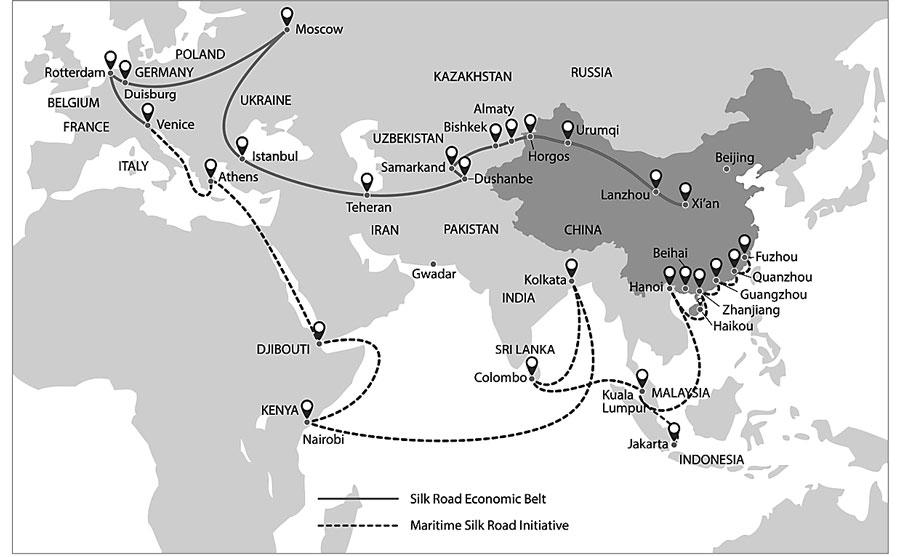
The Belt and Road initiative launched in 2013 will connect China with the Middle East and Europe by a system of roads, railroads and sea ports. In recent years, China has extended the BRI to Africa. Sri  Lanka is undoubtedly primed to play a key role in the sea route. The opportunities that the Belt and Road opens for Sri Lanka go far beyond providing docking facilities for the ships plying the route. Ultimately, the Belt and Road could stimulate domestic technologies and industries – something that has not happened on a large-scale under the system that has prevailed since independence. 


After nearly 70 years of economic dependence on the West including foreign aid, all that Sri Lanka has to show for it is to have the West make a mockery of this country’s sovereignty, as for instance when the EU demanded that Sri Lanka fulfilled 58 conditions — those that had nothing to do with economics but rather with amending criminal statutes — if the GSP-Plus facility were to be reinstated. 


Meanwhile, Sri Lanka is reduced to competing with Afghanistan for the dubious honour of having the worst economy in South  Asia. Reason and common sense suggest that if there is a way out of this situation Sri Lankans ought to take it, and the Belt and Road at least on the face of it appears to offer such a way out. 


Proposed Foreign Policy 
If the ultimate goal of US strategy in Asia is to defeat China and Sri Lanka is a ‘partner’ in the US’ strategic network, this country – whether it likes it or not – will have to support the efforts designed to harm Chinese interests. So, either Sri Lankans must publicly accept the premises of the Americans in respect of China or reject them. 


If they choose the Americans, it might stop the Americans from undermining the sovereignty of the country as they have been doing in the last 4 years. On the other hand, if they choose the Chinese, the Chinese will be free to expand their investments in Sri  Lanka and commit fully to helping develop this country. 


An alliance with China will also: a) Permit Sri Lankans to call on Russia in combatting the machinations of the Americans and their allies; and b) Provide economic security in the event the US and its allies wage ‘economic war’ against Sri  Lanka. So, Sri Lankans should adopt a new foreign policy based on the following three ideas: 


a) A commitment that Sri Lanka shall not support activities that directly or indirectly harm or have the potential to harm the interests of China. However, this will be balanced by a commitment that, in the event of a war between China and another country, the territory including territorial waters of Sri  Lanka shall not be available to either of those parties to engage in any activity related to the prosecution of such war. 


b) An economic policy focused on the Belt and Road


c) A strong dependence on international law and actions at the International Court of Justice (ICJ) — rather than the US’ ‘Rules-based Order’ and related bilateral treaties — to protect Sri Lanka’s sovereignty and territorial integrity in the event of undue interference by international actors. 


To turn to objections, the main objection that a critic might make is that an attempt by Sri Lanka to form an alliance with China will bring down the full wrath of the Americans and their allies on the heads of the Sri Lankans. I concede that the danger is very real. However, what is at stake for Sri Lanka is nothing less than complete subjugation to the Americans and the resulting loss of the sovereignty and independence of this country forever. Under the circumstances, the reward is worth the risk. 


Furthermore, the following two factors might also help mitigate the risk involved: First, the qualification that Sri  Lanka will be neutral in the event of a war. This can address one of the chief security concerns of the Americans, namely, that in the event of a war the Chinese will use Sri  Lankato gain a military advantage in the Indian Ocean. Second, the emphasis on the Belt and Road rather than on Beijing per se. The alliance with China is primarily a commercial alliance. The Americans and their allies can do as much business as they want in Sri Lanka. This will be particularly attractive to American companies, since, as is well-known, the ‘Business of America is business.’ These companies can lobby the US Government to leave Sri Lanka to its own devises. 

ඇමති බෝම්බය බඩ බැඳගත් යහපාලනය

June 6th, 2019

මතුගම සෙනෙවිරුවන්

ගිණිකෙළි සංදර්ශන පැවැත්වීම පිණිස පැරණියන් දොඩම් ගෙඩි බොම්බ ගස්ලබු බෝම්බ හෙරලි ගෙඩි බෝම්බ ආදිය සකස්කර ගත්හ. මේ බෝම්බ වල තැන්පත් කරන ලද වෙඩි බෙහෙත් මගින් ගෙඩිය පිපිරීමක් නැතිව ගිණිකෙළි මල්දමක් විසිරී ගියහ.වර්තමාන සමාජයට මෙවැනි බෝම්බ ගැන අත්දැකීමක් නැත. නමුත් මරාගෙන මැරෙන බෝම්බ ගැන නම් ඇස් පනාපිට අත්දැකීම් තිබේ. දේශපාලන කේෂ්ත්‍ර යේ අළුත්ම අත්දැකීම නම් ඇමති බෝම්බයයි. පාස්කු ප්‍රහාරයට සම්බන්ධ පුද්ගලයන් නඩත්තු කළ බව කියැවෙන ඇමති සහ ආණ්ඩුකාර ඇත්තන් තිදෙනෙක් ඇමති බෝම්බ ලෙසට සමාජය ඉදිරියේ දැඩි විවේචනයට ලක්ව  තිබේ.

       ලංකාවේ මුස්ලිම් සහ දෙමළ චන්ද ප්‍රතිශතය රජයක් පිහිටුවීම පිණිස තීරණාත්මක සාධකයක් බවට පත් කරන ලද්දේ 1987 වසරින් පසුවයි. හිටපු ජනපති ආර්. ප්‍රෙමදාස මහතා ගේ නියමයෙන් දිස්ත්‍රික් චන්ද අනුපාතය සියයට 12.5 සිට සියයට පහ දක්වා අඩු කිරීම නිසා මේ තත්ත්වය උදාවිය. අද යහපාලන රජය තුළ මුස්ලිම් මන්ත්‍රී වරු දාහත් දෙනෙකු සිටී.මොවුහු 2004 පාර්ලිමේන්තු මැතිවරණයේ දී සමස්ත ලංකා මුස්ලිම් කොන්ග්‍රසය වශයෙන් මැතිවරණයට ඉදිරිපත් විය. එහිදී චන්ද 186876 ක් ලබා මන්ත්‍රී ධූර පහක් හිමිකර ගත්හ.ආර් ප්‍රේමදාස චන්ද අනුපාතය වෙනස් නොකලානම් මේ මන්ත්‍රී ධූර ඔවුන් ලැබ ගන්නේ නැත. මෙම චන්ද බලය මහින්ද රාජපක්ෂ රජය ඉදිරියේ කොවල් කරගත් ඔවුහු එම රජයේ ප්‍රබල ඇමතිවරුන් බවට පත් වූහ.පොලිතින් මල්ලක තමන්ගේ ඇඳුම් පොදි රැගෙන අනාථ කඳවුරට පැමිණි රිෂාඩ් බද්යුදීන් කොටිපතියෙකු වූයේ  ඒ කාලයේ ක්‍රියාත්මක වූ උතුරුවසන්තය නිසාවෙනි.  නීති විරෝධී ජාවාරම් රාශියකට එවක ඔහු සම්බන්ධව සිටි බවට තොරතුරු ලැබෙයි.මහින්ද ගේ රජයෙන් පෝෂණය වූ මස්ලිම් මන්ත්‍රී වරු යහපාලනය පිහිටුවීම පිණීස එක්සත් ජාතික පක්ෂයට කරණමක් ගැසූහ. 2015 වසරේ මේ පිරිස මුස්ලිම් කොන්ග්‍රසයෙන් පමණක්ම චන්ද ඉල්ලුවේ නැත.ඒ වෙනුවට එක්සත් ජාතික පෙරමුණට හේත්තු වී මන්ත්‍රී ධූර දාහතක්ම ලබාගත්හ.මුස්ලිම් කොන්ග්‍රසය වශයෙන් ඉදිරිපත්ව ලබාගත් චන්ද 44193 වෙනුවෙන්ද එක් මන්ත්‍රී වරමක් ලබා ගෙන තිබේ.

     පාස්කු බෝම්බ නිසා මුස්ලිම් සමාජයේ මූලධර්මවාදී ක්‍රියාකාරිත්වය තහවුරු විය. ජනතාවගේ ඇස් ඇරුණි.පොලිස් මාධ්‍ය ප්‍රකාශක සඳහන් කරන පරිදි මේ සිදුවීම සම්බන්ධයෙන් පුද්ගලයන්  2289 දෙනෙකු අත් අඩංගුවට පත්ව ඇත. ඒ අතර සිංහල 330 ක් දෙමල 139ක් සහ මුස්ලිම් 1820 ක් පෙන්නුම් කරයි.මේ අතරින් සිංහල169 දෙනෙකු දෙමල 125 දෙනෙකු සහ මුස්ලිම් 1261 දෙනෙකු ඇප මත නිදහස් කරතිබේ. ත්‍රස්තවාදය වැලැක්වීමේ පණත හදිසි නීතිය සහ සිවිල් සහ දේශපාලන අයිතිවාසිකම් පනත යටතේ සහ සාමාන්‍ය අපරාධ නීතිය යටතේ මේ අය අත්අඩංගුවට පත්වී ඇතැයි වැඩිදුරටත් ඔහු පවසයි.ඒ අනුව දැනට බන්ධනාගාර ගතව සහ පොලිස් අපරාධ විමර්ශන කොට්ඨාශය යටතේ සිටින්නේ සිංහල නව දෙනෙකු දෙමල එක් පුද්ගලයෙකු සහ මුස්ලිම් 201 දෙනෙකු පමණි.පාස්කු බෝම්බ සිද්දිය මෙන්ම ඉන් පසු වුවමනාවෙන්ම  අවුලණ ලද මිනුවන්ගොඩ කෝලාහලය යන සිද්දි දෙකම ත්‍රස්වාදයට සම්බන්ධ වෙති. එසේ වූ විට එක් නීතියක් යටතේ අත්අඩංගුවට පත් කර නොගැනීම ප්‍රශ්ණයට තුඩු දෙන්නකි. සිවිල් හා දේශපාන අයිතිවාසිකම් පනත මෙතැනට අදාල නොවන්නේ ත්‍රස්තවාදය සහ ප්‍රඩන්ඩ ක්‍රියා පිළිබඳ නිර්වචනයක් එහි නොමැති බැවිනි.පොලිසියේ නීති ජාතීන් අනුව යොදන බවට තව උදාහරණ තිබේ. නයාරු ගුරුකන්ද රජමහවිහාර පරිශ්‍රය තුළ දෙමළ ජාතික සන්ධානයේ රවිහරන් මන්ත්‍රී වරයා කළ වෛරී හැසිරීමට එරෙහිව පොලිසිය විසින් මේ පනත අදාල කර ගත්තේ නැත.සාපි දොස්තර පිළිබඳ හෙළිදරව්ව කළ හෙමන්ත රන්දුනු ගෙන ප්‍රශ්ණ කළ පොලිසිය තව වෙනතුරු මෙම මුස්ලිම් මන්ත්‍රීවරුන් ගෙන් සහ ආණ්ඩුකාර වරුන්ගෙන් ප්‍රශණ කරනොමැත.විශේෂයෙන්ම සිංහලයන්ට විරුද්ධව වෛරී ප්‍රකශ කළ අසාද් සාලි ගෙන් ප්‍රශ්ණ කර නොමැත. වර්තමාන පොලිසියේ නිවට ක්‍රියාකාරම් දෙස බලන කල්හි මේවා පුදුමයට කරුණක් නොවේ.

        රිෂාඩි බද්යුදීන් හිස්බුල්ලා සහ අසාද් සාලි යන තිදෙනාට සමාජයෙන් විශාල ප්‍රතිවිරෝධයක් මතුව පැමිණෙන්නට වූයේ මේ සියලු හැසිරීම් මධ්‍යයේය. පාස්කු බෝම්බ කරුවන් නඩත්තු කිරීම පහසුකම් සැලසීම ආදී කරුණු සහ නැගෙනහිර පලාතේ මුස්ලිම් අන්තවාදී ක්‍රියා වලට අනුබල දීම යන කරුණු මත මොවුනට චෝදනා එල්ල වීඇත. මේ නිසාම රිෂාඩ් බද්යුදීන්ට විරුද්ධව විශ්වාස භංගයක් ගෙන ඒමට පවා සිදු විය. නමුත් මුස්ලිම් චන්ද වල කේවල් කිරීම් මධ්‍ය යේ රනිල් වික්‍රසසිංහ දැමූ අප්පරවැට්ටිය මේ වන විට හෙළිදරව් වී අවසන්ය. පූජ්‍ය අතුරලියේ රතන හිමියන් දළදා මාළිග භූමියේ උපවාසයක් අරඹනුයේ මේ වාතාවරණය දඩමීමා කරගෙනයි. නොසිතූ පරිදි ඒ වටා ජන රැල්ලක් එකුතු වීමද ආණ්ඩු විරොධී රැල්ලක් ලෙසට එය වර්ධනය වීමද නිසා සිරිසෙන ජනපතිවරායා සිය නියෝජතයන් හට ඉල්ලා අස්කවීඹට ඉඩ දුන්හ. ඒ අතර චෝදනා ලැබූ සිටි මුස්ලිම් ප්‍රබලයන් තිදෙන ඇරණු කොට දේශපාලනයේ සිටින මුස්ලිම් නායකයන් දහනව දෙනෙම ඉල්ලා අස්විය.එයින් ඔවුන් බලාපොරොත්තු වන්නට ඇත්තේ අසූව දශකයේ සිටම ලංකා දේශපාලනයේ කේවල් කළ හැකි මුස්ලිම් චන්ද ප්‍රතිශකය බලයක් ලෙස පෙන්වීමයි.මේ අස්වීම තාවකාලික බව ද මේ අතර පැහැදිලි වී තිබේ. විශ්වාස භංගය න්‍යාය පුස්තකයෙන් ඉවත් කර තේරීම් කාරක සභාවෙන් ඔවුන් නිදොස් කිරීමෙන් ආණ්ඩුබලය රැක ගත හැකි බව රජය සිතනවා විය හැකිය.ඒ අතර අත්අඩංගුවට ගත් පුද්ගයන් හැකි ඉක්මනට නිදහස් කරලීමට උත්සාහ දරන බව සිරිසේන ජනාධිපතිවරයා පවසා ඇත.චෝදනා නොමැති මුස්ලිම් මන්ත්‍රීවරුන් නැවත සිය තනතුරු භාරගැනීම සුදුසු බව මල්වතු අනුනායක හිමියන් පවසයි. මුස්ලිම් චන්ද නොමැතිව දේශපාලනය කළ නොහැකි බවට මන්ද මානසිකත්වයෙන් පසුවන විපක්ෂ නායක තුමා ගේ පෙළඹවීමක් මේ ප්‍රකාශය පිටිපස්සේ ඇත්දැයි සොයා බැලිය යුතුය.

        බල දෙශපාලන විගඩම් පාවා දීම් මෙන්ම ඇස්බැන්දුම්  පවත්වාගෙන යමින් ජන වර්ග අතර බෙදීම් ඇති කර රට අනතුරේ හෙළමින් බලය රැක ගැනීමට යොදන ලද අවසන් තුරුම්පු ද දැන් ජනතාව ඉදිරියේ හෑල්ලු වෙමන් ඇත. තීරණාත්මක අවස්ථාවන්හිදී පෙරළියක් ඇති කරලීමට සමත් චරිතයක් වූ රතන හිමියන් ගේ භූමිකාව මගින් දේශපාලන සුනාමියක් නිර්මාණය වෙමින් පැවතීම අප තේරුම්ගත යුතුය.සිරිසේන ජනපතිවරයාගේ හැසිරීම මුස්ලිම් චන්ද ලොබින් අන්තවාදීන් සමග කරන දෙශපාලන ගනුදෙනු ජනතාව පිළිකුලෙන් ඉවසා සිටියද අවශ්‍ය තැනදී පිටකර හැරීමටද නොපැකිලෙන්නේ නොවේ. අසාද් සාලි කලුතර දිසිත්‍රික් සංවර්ධන කමිටුවට පැමිණී අවස්ථාවේදී හූ කියා පන්නා දැමුවේ එහෙයිනි. ඒ තත්ත්වය මුසම්මිල්ටත් අත් විදින්නට වුවහොත් පුදුමයක් නොවේ. මුසම්මිල් මෙන්ම රවුෆ් හකීම් ද අන්තවාදයට අනුබල දෙන්නන් මෙන්ම මුස්ලිම් ජන වර්ගය වෙනුවෙන් නීති විරෝධී කටයුතු මෙහෙයවන පුද්ගලයන්ය. අධිකරණ ඇමති වරයාව සිටි අවදියේ මුස්ලිම් නීති සිසුන් හට වැඩි අවස්ථාවක් ලබා දෙන්නට ඔහු කටයුතු කළ ආකාරය අපට මතකය. එම නිසා ඉල්ලා අස්වී යහපාලනය ආරක්ෂා කරන්නට හීන් නූලෙන් කටයුතු කරන මුස්ලිම් නායකයන් ගැන අප කරදර විය යුතු නොවේ. මේ ඇමති බෝම්බය යහපාලනය විසින් බඩේ බැඳි ගන තිබෙන්නේ සිංහල සමාජය පුපුරුවා හරින්නටයි. එහෙත් කළ කම් පල දෙන්නට තව වැඩි කලක් යන්නේ නැත. මේ රටේ සිංහලයන්ට හිමි තැන බෞද්ධ යන්ට හිමි තැන ලබා දෙන්නට කටයුතු නොකරන  කිසිම දේශපාලනඥයෙකුට ඉදිරියේදී ජනතාව විසින් අවස්ථාවක් සලසා නොදෙනු නියතය. වසර දෙදහස් පන්සීයක් තිස්සේ රටත් ජාතියත් සම්බුද්ධ ශාසනයත් සුරක්ෂිත ව පැවත ආයේ මෙලස සිංහල බෞද්ධයන් ගේ ඉදිරිපත් වීමෙනි..සමයාරක්ෂක දෙවියන් නිසිකලට මැදිහත් වූ විට මේ ප්‍රශ්ණයන්ට නිසි විසඳුම් දැක ගන්නට හැකි වනවා ඇත .

මතුගම සෙනෙවිරුවන්

ඉදිරි මැතිවරණය සදහා පුලුල් සන්ධානයක් ගොඩනැගීමට ශ්‍රී ලංකා පොදුජන පෙරමුණ මුලපුරයි

June 6th, 2019

ශ්‍රී ලංකා පොදුජන පෙරමුණ

ඉදිරි මැතිවරණ ඉලක්ක කරගනිමින් පුලුල් දේශපාලන සන්ධානයක් ගොඩනැගීමේ කටයුතු මේ වන විට ශ්‍රී ලංකා පොදුජන පෙරමුණ විසින් ආරම්භ කර තිබේ.
එහි එක් පියවරක් වශයෙන් ශ්‍රී ලංකා පොදුජන පෙරමුණ  හා ලංකා සමසමාජ පක්ෂයේ නියෝජිතයින් අතර විශේෂ සාකච්ඡාවක් අද (06) බත්තරමුල්ලේ පිහිටි ශ්‍රී ලංකා පොදුජන පෙරමුන පක්ෂ මුලස්ථානයේදි පැවැත්විනි.
අපි ගොඩනගන අනාගත රජයක් මගින් අධිරාජ්‍යවාදී බලපැම්වලින් ශ්‍රී ලංකාව බේරා ගෙන ජනතා හිතවාදී පාලනයක් මගින් රට සංවර්ධනය කිරීම සදහා යෝජිත අපේ වැඩපිළීවෙල මැයෙන් ලංකා සමසමාජ පක්ෂය විසින් සකස් කර ඇති පක්ෂයේ වැඩපිළිවෙල බැසිල් රාජපක්ෂ මහතාට භාරදීමද මෙහිදි සිදුවිය.
ඉදිරියේ බලයට පත්වන ශ්‍රී ලංකා පොදුජන පෙරමුණ ප්‍රමුඛ රජයක් මගින් ක්‍රියාත්මක කිරීමේ අරමුණින් සකස් කෙරෙන ප්‍රතිපත්ති මාලාවට මෙම යෝජනාවලියේ සදහන් කරුණුද ඇතුළත් කිරීමට ඇති හැකියාව පිළිබදව සොයා බලන බව එහිදි බැසිල් රාජපක්ෂ මහතා සදහන් කලේය.
එකි ජාතික ප්‍රතිපත්ති මාලාව සකස් කිරීමට පත්කර ඇති කමිටු සදහා ලංකා සමසමාජ පක්ෂයේ නියෝජිතවරයෙක් සහභාගි කරවීමටද එහිදී එකගතාවයට පැමිණියේය.
එහිදි අදහස් දැක්වූ බැසිල් රාජපක්ෂ මහතා
අද ලංකා සමසමාජ පක්ෂයට විශේෂ දවසක්. ආචාර්ය එන්.එම් පෙරේරා මහතාගේ උපන් දිනය යෙදී තිබෙන්නේ අදයි. එවැනි දිනක අපේ පක්ෂ කාර්යාලයට පැමිණ අනාගත ශ්‍රී ලංකාවේ සුභසිද්ධිය වෙනුවෙන් දියත් කෙරෙන අපේ වැඩපිළීවෙලට සහාය දැක්වීම අගය කරනවා. ලංකා සමසමාජ පක්ෂය 2005 සිටම මහින්ද රාජපක්ෂ මහතාගේ ජනතා හිතවාදි වැඩපිළිවෙලට සහාය දෙමින් ඒ රජයේ ප්‍රභල පාර්ශ්වයක් විදියට කටයුතු කළා.
රටේ සියලු ජාතීන් එකතු කරමින් ශ්‍රී ලාංකික ජාතියක් හදන්න කැපවුනු පක්ෂයක් විදියට ලංකා සමසමාජය පක්ෂය සලකන්න පුලුවන්. පසුගිය පලාත් පාලන මැතිවරණයේදී අපි එකමුතුවෙන් පළාත් පාලන මැතිවරණයට ඉදිරිපත් වෙලා ජයක් ලැබුවත් සමහර ප්‍රදේශවල ජාතිවාදී වශයෙන් බෙදිම් තිබීම නිසා අපේ ඡන්ද ප්‍රතිශතයේ අඩුවීමක් සිද්ධ වුනා.
මහින්ද රාජපක්ෂ මහතාගේ අනුදැනුම ඇතිව පසුගිය මහින්ද චින්තනය වැනි ජනමුල ප්‍රතිපත්තියක් සැකසීම මේ දිනවල අපි ආරම්භ කර තිබෙනවා. ගමින්ගමට ගිහින් තොරතුරු ගන්නවා වගේම වැඩකරන ජනතාවගේ සහ ව්‍යාපාරිකයින් ආදි සෑම ක්ෂේත්‍රයකම ප්‍රජාවගෙන් ඒ සදහා අදහස් ගනිමින් පවතිනවා. අපේ මේ වැඩපිළීවෙලට ලංකා සමසමාජ පක්ෂයේ සහාය හිමිවීම ගැන සතුටුයි.
ලංකා සමසමාජ පක්ෂයේ ප්‍රධාන ලේකම් මහාචාර්ය තිස්ස විතාරණ මහතා
වත්මන් දේශපාලන තත්ත්වය සම්බන්ධයෙන් අපි ඇඟයිමක් කළා. ඇමරිකාව මෙහෙයවන ජාත්‍යන්තර නව ලිබරල්වාදයේම වැඩපිළිවෙලක් විදියටයි අපි මෙය දකින්නේ. අධිරාජ්‍යවාදය මුල්කරගෙන මෙහෙයවන නව ලිබරල්වාදි වැඩපිළීවෙල ආපස්සට හැරවිම අවශ්‍යයි. බි්‍රතාන්‍ය සූරාකෑමෙන් මිදිලා දේශීය ආර්ථික බලයක් ස්ථාපනය කරලා දේශීය වැඩපිළිවෙලක් ඉදිරියට ගෙන යාම සිදුවෙමින් තිබියදී කුමන්ත්‍රණකාරී විදියට පැවැති මහින්ද රාජපක්ෂ රජය පෙරලන්න ඔවුන් පියවර ගත්තා. පසුගියදා සිදුවුනු ත්‍රස්තවාදී ප්‍රහාරයත් එහි දිගුවක්. ජනතා පදනම හිනවීම සහ මැතිවරණ පරාජය වළක්වාගන්න ආණ්ඩුවට අවශ්‍ය වෙලා තියෙනවා. ඒ නිසා රටේ අවුලක් හදලා ඔවුන්ගේ පාලනයක් පවත්වා ගෙන යන්න නිතිරිති පවා වෙනස් කරන්න මේ පාලකයෝ සූදානම්. මේ කුමන්ත්‍රණවලට යට නොවී ප්‍රගතිශීලී ආන්ඩුවක් පිහිටුවීම අවශ්‍යයි. ඒ සදහා ජනතාව තුළ අප කෙරෙහි විශ්වාසයක් ඇති වෙන වැඩපිළීවෙලක් ඉදිරිපත් කළ යුතුයි.
මෙම අවස්ථාවට ශ්‍රී ලංකා පොදුජන පෙරමුණ නියෝජනය කරමින් පක්ෂයේ නිර්මාතෘ බැසිල් රාජපක්ෂ මහතා, පක්ෂයේ ලේකම් සාගර කාරියවසම් මහතා, පාර්ලිමේන්තු මන්ත්‍රී අනුර ප්‍රියදර්ශන යාපා මහතා, පක්ෂයේ පාලක ලේකම් රේණුක පෙරේරා, පළාත් සභා මන්ත්‍රී සංසදයේ සභාපති කංචන ජයරත්න මහතා සහභාගි වු අතර ලංකා සමසමාජ පක්ෂය නියෝජනය කරමින් පක්ෂයේ ප්‍රධාන ලේකම් මහාචාර්ය තිස්ස විතාරණ මහතා,  ජාතික සංවිධායක බද්දේගම සමිත හිමියන්,  නියෝජ්‍ය ලේකම් අනිල් ද සොයිසා, පාලක ලේකම් එස්. හපුආරච්චි යන මහත්වරුන් සහභාගි වූහ

අපි ත්‍රස්තවාදින්ට සම්බන්ධකම් තියෙනවා කියලා එක ඇමැතිවරයෙකුට චෝදනා කරද්දි සියලු ඇමැතිවරු ඉල්ලා අස්විම රනිල් වික්‍රමසිංහ අගමැතිවරයාගේ සැලසුම් සහගත වැඩපිළීවෙලක්.

June 6th, 2019

මාධ්‍සාකච්ඡාව  ශ්‍රී ලංකා පොදුජන පෙරමුණ

අද (06) දින මාධ්‍ය සාකච්ඡාවට සහභාගි වූ නියෝජිතයින්
■ පාර්ලිමේන්තු මන්ත්‍රී කනක හේරත් මහතා
■ පාර්ලිමේන්තු මන්ත්‍රී තාරක බාලසූරිය මහතා

පාර්ලිමේන්තු මන්ත්‍රී කනක හේරත් මහතා
අගමැතිවරයාගේ අලුත්ම අපාය මාර්ගයයි මේ දිනවල ක්‍රියාත්මක වෙන්නේ. අපි ත්‍රස්තවාදින්ට සම්බන්ධකම් තියෙනවා කියලා එක ඇමැතිවරයෙකුට චෝදනා කරද්දි සියලු ඇමැතිවරු ඉල්ලා අස්විම රනිල් වික්‍රමසිංහ අගමැතිවරයාගේ සැලසුම් සහගත වැඩපිළීවෙලක්. අමාත්‍යවරු ඉල්ලා අස්වුනේ මාධ්‍ය ඉස්සරහා ප්‍රදර්ශනයකට පමණයි. වරප්‍රසාද සියල්ල තියෙනවා. පාර්ලිමේන්තුවේ ලේකම්තුමාත් ජනාධිපති ලේකම්තුමාත් මේ වෙනකල් ලිඛිතව අස්විම දැනුම්දීලා නැහැ කියලා ප්‍රකාශ කරලා තියෙනවා. මේක ඉදිරි මාසය නාට්‍යයයි. අන්තවාදීන්ට විරුද්ධ වුනු අපේ මුස්ලිම් ජනතාව මේ සිද්ධිය නිසා බියවෙලා. අමාත්‍යවරු සියලු දෙනා ඉල්ලා අස්වුනේ ඇයි කියලා ඔවුන් හිතනවා.ත්‍රස්තවාදයට සහාය නොදුන් මුස්ලිම් ජනතාව පවා ත්‍රස්තවාදින් විදියට දකින තත්ත්වයකටයි රට පත්වුනේ. මේක රනිල් වික්‍රමසිංහගේ සැලැස්ම. රිෂාඞ් බදියුදින් ඇතුලු එජාපයට සම්බන්ධ නොවන ඇමැතිවරු ස්වාධිනව කටයුතු කරන්න සූදානමින් සිටින අවස්ථාවක කබිර් හසිම් ඇමැතිවරයාත් එක්කම එකට ගොනු කලේ එජාපය වෙනුවෙන් මුස්ලිම් ඡන්ද ටික රැකගන්නයි.
මේක තාවකාලිකයි. තාවකාලිකව එළියට දැමිමක් විතරයි. මුස්ලිම් ජනතාවගේ ඡන්ද ගැනීමේ දුෂ්ට අරමුනින් මේක කලේ. කබිර් හසිම් හිටපු ඇමැතිවරයා කියනවා ස්වාධීන පරික්ෂණයක් පවත්වන්නලු ඔවුන් ඉල්ලා අස්වුනේ. අපි කබිර් හසිම් ඇමැතිවරයාට චෝදනා කලේ නැහැ. එදා මැවනැල්ලේ බුදුපිළීම කඩන සිද්ධියේදී තොරතුරු දුන්න පුද්ගලයාට වෙඩි තියලා යනකල් ඔහුව ආරක්ෂා රකගන්න කබිර් හසිම් ඇමැතිවරයාට බැරිවුනා. ත්‍රස්තවාදීන්ටය විරෝධී සාමාන්‍ය මුස්ලිම් ජනතාව ආරක්ෂා කරගන්න මේ අයට පුලුවන් වෙයි කියලා අපි හිතන්නේ නැහැ. ත්‍රස්තවාදින්ට සම්බන්ධ එක අමාත්‍යවරයෙක් ආරක්ෂා කරන්න පාර්ලිමේන්තුවේ අපි සියලු දෙනා එකමුතුව කටයුතු කරනවා වගේම මුස්ලිම් ජනතාවත් ත්‍රස්තවාදින්ගේ පැත්තට තල්ලු කරන පණිවිඩයක් මේ තුළ ගැබ්වෙලා තියෙනවා.
මේක භයානක පණිවිඩයක්. අහිසංක මුස්ලිම් ජනතාව ත්‍රස්තවාදින් තැනට තල්ලු කලේ එජාප ආන්ඩුවයි.  මැතිවරණය ඉලක්ක කරගෙන ත්‍රස්තවාදින්ගේ සල්ලිවලට යටත් වෙලයි මේ දේවල් කලේ. මොන පරික්ෂණය තිබුණත් නැතත් මාසයක් ඇතුළත රිසාඩි බදියුදින් නිදොස් කොට නිදහස් කරනවා. මේ වගේ පරික්ෂණ මොන තරම් තිබුණද? බැදුම්කර සිද්ධියේ හොරු අදවෙන කල් අල්ල ගත්තේ නැහැ. කුඩු ගහන අය හොයන්න පත්කරපු කමිටුවට සිද්ධ වුනු දේකුත් නැහැ. මුස්ලිම් ජනතාවගෙන් අපි ඉල්ලා සිටින්නේ මේ තත්ත්වය තේරුම් ගෙන සියලු ජනතාවට එකට ජීවත් විය හැකි රටක් නිර්මාණයකරන්න එකතු වෙන්න.
වෛද්‍ය සාෆිට එරෙහිව පැමිණිලි 800ට වැඩියි. තවම විද්‍යාත්මක පරීක්ෂණයක් ආරම්භ කරලා නැහැ. පසුගිය වසර ගණනාවේ වුනා වගේ සාෆි එලියට ඇවිත් ඩි. අයි. ජි ඇතුළට යන එකයි වෙන්නේ.
අපේ ප්‍රදේශයේ දැවෙන ප්‍රශ්නයක් වෙලා තියෙන්නේ සීතාවක ගග හරස් කරලා ජලාශයක් ඉදිකිරීමයි.  දැන් පාරිසරික වාර්තාව ඉදිරිපත් වෙලා තියෙන්නේ. මේ ගැන අපි ඇහුවට කිසිම තොරතුරක් දෙන්නේ නැහැ.අපේ පැත්තේ සමාජමය ප්‍රශ්නයක් බවට මේ සිද්ධිය පත්වෙලා තියෙන්නේ.

පාර්ලිමේන්තු මන්ත්‍රී තාරක බාලසූරිය මහතා
මේ දවස්වල ආන්දොලනයට පත්වෙලා තියෙන්නේ මංගල සමරවිර මහතා මැතකදි කරපු ප්‍රකාශයයි. මොහු කියන දේවලින් කුපිත වෙන්න එපා කියලා අපි බෞද්ධයින්ගෙන් ඉල්ලා සිටිනවා. හිතාමතා බෞද්ධයින් කුපිත කරන්නයි එතුමා උත්සාහ කරන්නේ. රතන හිමියන්ට විරුද්ධව ට්විටර් පණිඩිවටක් දැමිම පවා පෙන්නුම් කරන්නේ කණ්ඩායම් කල්ලි ගැසිමක් කරන්නයි. දෙමළසන්ධානය වගේම මුස්ලිම් මන්ත්‍රීවරුනුත් එකම කණ්ඩායමක් විදියට කටයුතු කරන්න ගනියි. මෙවැනි නිර්මාණ මගින් එක්සත් ජාතීන්ගේ සංවිධානයේ අවශ්‍යතාවය ඉටු වෙනවා. ලංකාවේ මුහුදු සිමාවෙන් නැව් 30000ක් පමණ වසරකට යනවා. වානිජ කටයුතු වලින ්90% වෙන්නේ නැව් වලින්. බටහිර රටවල්වලට අවශ්‍ය මේ නැව්වල ආරක්ෂාව සකසා ගන්නයි. අපේ අවධානය සිංගප්පූරු ගිවිසුම කෙරෙහි යොමු විය යුතුයි. අපේ මුහුදු සීමාවන් ගුවන් සීමාවනක් ඒ රටට විවෘත කරන්න එකල වෙලා තියෙනවා. අලුත් ගිවිසුම් අලුත් පනත් එලියට ආවත් අපි ඒ කිසිවක් ගැන කතා නොකර මංගල සමරවිරගේ ප්‍රකාශ ගැන කතා කරනවා. බිලියන 5.1 ක වංචාවක් රාජිත සේනාරත්න අමැතිගේ අමාත්‍යංශයෙන් වෙලා තියෙනවාලු. තුරුකි නැවෙන් විදුලිය ගන්නවා.ප්‍රචාරණය සදහා විශාල මුදල් ප්‍රමාණයක් සජිත් ප්‍රේමදාසගේ අමාත්‍යංශයෙන් වැය කරලා. අඩුම තරමේ මධූෂ් ගැනවත් අද වෙද්දි කතා කරන්නේ නැහැ. ඒවා යට ගිහින්. බැදුම්කරය යට ගිහින්. ජනාධීපති මැතිවරණයක් හෝ පාර්ලිමේන්තු මැතිවරණයක් එන්න නියමිතයි. මේ හොරුන් කරපුවා ජනතාව දන්නේ නැති නිසා හොරු ටිකම නැවතත් පත්වෙනවා. අපි ඇගිල්ල දික්කලේ ත්‍රස්තවාදයට සම්බන්ධ අයට විතරයි. කබිර් හසිම් ඇමැතිතුමා කියනවා පරික්ෂණය කරන්න ඉඩ දෙන්න අයින් වුනු බව. එතුමාට බහුතරයක් ලැබුනේ සිංහල ඡන්ද. එතුමා මුස්ලිම් කියලා ජනතාව හිතුවේ නැහැ. දැන් එතුමා සිංහලයින්ට දිලා තියෙන පණිවිඩය වෙලා තියෙන්නේ අන්තවාදින් ආරක්ෂා කරන බවයි. එතුමා මහානායක හිමිවරුන් කියපු විදියට ඇමැතිකම නැවත භාර ගන්න. සැම මැතිවරණයදිම අපේ රටේ ප්‍රශ්න ඇති වෙනවා. ඉතිහාසය දිහා බැලුවාමහ එය හොදින්ම පැහැදිලියි. මෙවර මැතිවරණයේදි දරාගන්න බැරිතරම් ප්‍රශ්න ඇති කරලා. මේ මංගල වැනි අය ඉදිරියේදි තවත් ප්‍රශ්න වැඩි කරයි. ජනතාව ඉවසිමෙන් කටයුතු කිරිමයි වඩා වැදගත් වෙන්නේ.

2019 වසරට අදාලව සමෘද්ධි සේවකයින් හට ගෙවිය යුතු ගමන් වියදම් හා කාර්යාල දීමනා නොගෙවන ආණ්ඩුව සමෘද්ධි සහනාධාර පත්‍ර බෙදා දීමේ උත්සවයෙහි 125000 ටී ෂර්ට් වල රු.මි 65 ක නාස්තිකාර වියදම් ගෙවීම කඩිනම් කිරීම සැකයක්

June 6th, 2019

ජනමාධ්‍ය නිවේදනයයි සමෘද්ධි සංවර්ධන නිළධාරීන්ගේ සංගමය

සමෘද්ධි සංවර්ධන දෙපාර්තමේන්තුවට අනුයුක්තව දිවයින පුරා සේවය කරන සමෘද්ධි සංවර්ධන නිලධාරීන් හට 2019 වසරට අදාලව ගෙවිය යුතු ගමන් වියදම් දීමනා හා කාර්යාල දීමනා නොගෙවා නව සමෘද්ධි සහනාධාර හිමිකම් පත්‍ර බෙදා දීමේ උත්සව වෙනුවෙන් ටී ෂර්ට් 125000 මිලදී ගැනීම වෙනුවෙන් ගෙවිය යුතු මුදල් ගෙවීම කඩිනම් කිරීම පිළිබදව බරපතල සැකයක් අප සංගමය වෙත මතුව ඇත.

සමෘද්ධි සංවර්ධන දොපාර්තමේන්තුවේ අධ්‍යක්ෂ ජනරාල් එස්. ටී. ආර්. ටී. එම්. එස්. පී. බණ්ඩාර මහතාගේ අත්සනින් දිවයිනේ සියළුම දිස්ත්‍රික් ලේකම්වරු අමතා එවන ලද 2019. 06. 04 දිනැති DSD/HO/SW/18/04/19/1  ලිපිය මගීන් එක් දිස්ත්‍රික්කයකින් ටී ෂර්ට් වෙනුවෙන් බදු ඇතුලත්ව රු.2.837,193.75 මුදලක් කඩිනමින් දෙපාර්තමේන්තුව වෙත එවීමට කටයුතු කරන ලෙස දැනුම් දී ඇත.

125000 මෙම ටී ෂර්ට් ඇණවුම සම්බන්දව මහත් මතභේදාත්මක ගැටළුකාරී තත්වයක් මතුව ඇති බවට විවිධ පාර්ෂවයන් විසින් චෝදනා කරන අතර දෙපාර්තමේන්තුවෙහි ටෙන්ඩර් කමිටුවද මෙම ගෙවීම අනුමත කිරීම ප්‍රතික්ෂේප කර ඇති බව අප වෙත වාර්ථා වේ.

ඇගළුම් කර්මාන්තයෙහි නිරතව ඇති අමාත්‍යවරයෙකු මෙම දෙපාර්තමේන්තුවේ අමාත්‍යධුරය දරණ අවස්ථාවක මෙම 125000 ටී ෂර්ට් ඇනවුමෙහි මුදල් ගෙවීම අධ්‍යක්ෂ ජනරාල් විසින් හදිසි කිරීම අප සංගමයට සාධාරණ සැකයක් මතුව ඇති බව අප මෙයින් පෙන්නා දෙන්නෙමු.

සමෘද්ධි සේවකයින් හට 2019 වසරට අදාලව මාස 05 ට හිමි ගමන් වියදම් දීමනාව හා කාර්යාල දීමනාව ගෙවීම් කර නොමැති ආණුඩුව සිය දේශපාලන ප්‍රතිරූපය වර්ධනය කර ගැනීම සදහා රුගමිග300 ආසන්න විශාල මුදලක් නාස්ති කිරීම කණගාටුවට කරුණක් බව අප මෙයින් අවධාරණය කරන්නෙමු.

ස්තූතියි.

මෙයට,
චාමර මද්දුම කළුගේ,
ප‍්‍රධාන ලේකම්.

ජවිපෙන් අධ්‍යාපන සමුපකාර සමිතියේ සංගමය බේරාගෙන දක්ෂයින් පිරිසකට භාර දෙන්න කියලා අපි ඉල්ලා සිටිනවා.

June 6th, 2019

ශ්‍රී ලංකා පොදුජන පෙරමුණ මාධ්‍ය සාකච්ඡාව

අද (04) දින මාධ්‍ය සාකච්ඡාවට සහභාගි වූ නියෝජිතයින්
■ පාර්ලිමේන්තු මන්ත්‍රී ගාමිනී ලොකුගේ මහතා
■ පාර්ලිමේන්තු මන්ත්‍රී රමේෂ් පතිරණ මහතා

පාර්ලිමේන්තු මන්ත්‍රී ගාමිනී ලොකුගේ මහතා
එළැඹෙන 8 වැනිදා අධ්‍යාපන සමුපකාර සමිතියේ, ඒ කියන්නේ ගුරු ගෙදර නිලවරණය පැවැත්වෙනවා. ගුරුවරුන්ගේ සුභසිද්ධිය සදහා ඉතා කුඩාවට ඇරඹුන මේ ආයතනය අද විශාල අරමුදලක් සහිත ආයතනයක්. මේ ආයතනය ඇරඹු අයට අපි ස්තූතිවන්ත විය යුතුයි. අද වෙද්දි මේ ආයතනය දේශපාලනයට ලක්වෙලා.පහුගිය නිලවරණ දෙකක්ම ජවිපේ තමන්ගේ නියා්ජිතයින් යෙදවලා මෙහි බලය ගත්තා. ගුරුවරුන් වෙනුවෙන් අලුත් වැඩපිළීවෙලක් හදනවා. සහන සලස්වනවා. ගුරුවරුන්ගේ සුබසාධනය සදහා අවශ්‍ය පියවර ගන්නවා කියලා දෙවරක්ම ජවිපේ නියෝජතයින් මෙහි බලයට පැමිණිය. ගියවර සමුපකාර දෙපාර්තමේන්තුව මොවුන් සම්බන්ධයෙන් පරික්ෂණයක් පවත්වලා කම්කරු කොමසාරිස්තුමා අධ්‍යක්ෂ මණ්ඩලයක් පවත්වලා තමයි ඊළග නිලවරණය තිබ්බේ. නමුත් ඔවුන් සංවිධානය වෙලා පක්ෂයක් විදියට නැවතත් බලය ලබා ගත්තා. දූෂණ හෙයලා සමිතිය නැවත නගා සිටුවනවා කිව්වට පහුගිය අවුරුදු තුනේම කිසිම පරීක්ෂණයක් කලේ නැහැ. සාමාජික ගුරුමහත්ම මහත්මීන්ට වැරදි අවබෝධ දෙනවා. අපේ ගුරු සංගමය හා අනෙකුත් අධ්‍යාපනයට සම්බන්ධ සංගම් එකතු කරගෙන මේ මැතිවරණයට අපෙක්ෂකයෝ ඉදිරිපත් කරන්න තිරණය කරලා තියෙනවා.  
නව දේශපාලන පක්ෂයක් විදියට ලංකාවේ සැම අධ්‍යාපන කොට්ඨාශයකම පවත්වන නිලවරණයට අපෙක්ෂකයින් යොදවන්න තිරණය කරලා තියෙනවා. සියලු බුද්ධිමත් ගුරුමහත්වරු මේ සංගමයේ වටිනාකම දන්නවා. ජවිපෙන්  මේ සංගමය බේරාගෙන දක්ෂයින් පිරිසකට භාර දෙන්න කියලා අපි ඉල්ලා සිටිනවා. පසුගිය වසරේ ඡන්දය පාවිච්ඡි කරලා තිබුනේ 19000ක් පමණයි. සාමාජිකයෝ එක්ලක්ෂ දහනමදායහක් ඉන්නවා. මේ වසරේදිත් සාමාජිකයෝ එක්ලක්ෂ 20000ක් විතර ඡන්දය දෙන්න සුදුසුකම් ලබලා තියෙනවා. අට වෙනිදා 10 සිට 4 වෙනතුරුමැතිවරණය පවත්වනවා. මේ සංගමය ආරම්භයේදි සංගමයට සේවකයෝ ගන්න විට සේවකයින්ගේ දරුවන් ගන්න තීරණය කරලා තිබුණත් අද වෙද්දි සේවකයෝ 300ක් විතර අරන් තියෙන්නේ දේශපාලන ශාඛා සමිතිවල නියෝජිතයින්ගෙන්. ඒ අවස්ථාව සේවකයින්ගේ දරුවන්ට අහිමි වෙලා. ගුරුවරුන් හා සේවය කරන අයගේ යහපතට අරඹපු ආයතනයක් මිස දේශපාලනකයින්ගේ දෙයක් නෙවෙයි. ඒ වුනාට සංගමයේ ප්‍රධාන කාර්යාලයට ගියාම දකින්න ලැබෙන්නේ පක්ෂ කාර්යාලයක් විදියටයි අපිට අවහ්‍ය වෙලා තියෙන්නේ ගුරුවරුන්ගේ පාලනයට මේ සංගමය යටත් කරන්නයි. ඒ නිසා අපි සියලු දෙනාගෙන් ඉල්ලා සිටිනවා අට වැනිදා තමන්ගේ යුතුකම ඉටුකරලා තමන්ගේම පාලනයකට සංගමය ගන්න කියලා අපි ඉල්ලා සිටිනවා.

පාර්ලිමේන්තු මන්ත්‍රී රමේෂ් පතිරණ මහතා
අට වැනිදා පැවැත්විමට යෝජිත මේ නිලවරණයට ශ්‍රී ලංකා පොදුජන පෙරමුණ ප්‍රමුඛ ගුරු සංගම් විසින් ශක්තිමත් කණ්ඩායමක් ඉදිරිපත් කරලා තියෙනවා. අධ්‍යාපන සේවා නියුක්තිකයින් විසින් පාලනය කරන්න යෙදුනු මේ සමිතියේ කටයුතු සම්බන්ධයෙන් සාමාජිකයින්  ඉන්නේපැහැදිමකින් නෙවෙයි. සමාජමය වශයෙන් ආර්ථික වශයෙන් ගුරුවරු හා අනධ්‍යයන සේවකයින්ගේ සුබසාධනය වෙනුවෙන් අවුරුදු 80ට වඩා වැඩි කාලයක් තිස්සේ පවත්වා ගෙන යන ශක්තිමත් සමිත්යක් පහුගිය වසර තුනේ ජවිපේ අත්තනෝමතික පාලනය යටතේ දුර්වල වුනා. සාමාජිකත්වය ප්‍රතිලාභ ලබාදෙනවා වෙනුවට දේශපාලන වශයෙන් තමන්ට හිතවත් පිරිසකගේ සුභසාධනයට පමණක් කටයුතු කරමින් සුලු අතලොස්සකගේ ඕනෑ එපා කම් වෙනුවෙන් පෙනි සිටිම නිසා මේ විශිෂ්ඨ ආයතනය කඩා වැටිමකට ලක්වුනා. ඒ ආයතනය යථා තත්ත්වයට පත්කර සාමාජිකත්වයේ සුභ සිද්ධිය ඇති කිරීම සදහායි ශ්‍රී ලංකා පොදුජන පෙරමුනේ අනුග්‍රාහකත්වය ලබන කණ්ඩායමක් මැතිවරණයට ඉදිරිපත්කරලා තියෙන්නේ.
පසුගිය වතාවේ බලයට පැමිණි ජවිපේ සහාය ලබන කණ්ඩායම ගොඩනැගිලි ඇතුලු සමිතියේ භෞතික සම්පත් දේශපාලන අරමුණු වෙනුවෙන් භාවිතා කළා. සමිතියේ අරමුදල් සමිතියේ සාමාජික ජවිපේ හිතවතුන්ගේ අවශ්‍යතා අනුවයි. මානව සම්පත පැත්තෙනුත් සමිතියේ සාමාජිකත්වයට හිමි රැකියා අවස්ථා ජවිපේ සාමාජිකත්වයට හිමිවුනා. ලියාපදිංචි ඡන්ද සංඛ්‍යාවෙන් සුලු ඡන්ද ප්‍රමාණයක් භාවිතා විම නිසා මේ අය ජය ගත්තා. අද වෙද්දි ආන්ඩුවට ව්‍යාංගයෙන් සහාය දැක්වීම නිසා ජවිපේ ප්‍රතික්ෂේප වෙලා. සාමාජිකයින්ට ලබා දුන්න පොරොන්දු ඉෂ්ට කරලා නැහැ. ක්ෂණික ණය ලබා දීම කඩිනම් කිරීම, 8% පොලියට  ගත් ණයවල පොලි ප්‍රතිශතය 4% දක්වා අඩු කරන බව කිව්වත් ඒක වෙලා නැහැ. සාමාජිකත්වයේ සුබ සාධානය වෙනුවෙන් දෙනවා කිව් කිසිවක් දීලා නැහැ.සාමාජිකත්වයේ දරුවන් විශ්ව විද්‍යාලයට යන විට දෙනවා කියපු ශිෂ්‍යත්ව හො ්පරිගණක උපකරණ ඔවුනුට ලැබුනේ නැහැ. සුබසාධන කටයුතු විධිමතව විමධ්‍යගත ක්‍රමයකට කරනවා කිව්වත් ඒ කිසිවක් වුනේ නැහැ. ලක්ෂ ගණන් පොලී ගෙවමින් කාර්යාල පවත්වා ගෙන  යනවා. මේ අත්තනොමතික පාලනයෙන් ශක්තිමත් මූල්‍ය ආයතනයගලවා ගත යුතුව තියෙනවා. මේ ඉල්ලිම ඇවිත් තියෙන්නේ සාමාජිකයින් අතරින්මයි. ඒ අනුවයි අපි කණ්ඩායමක් මෙවර මැතිවරණයට ඉදිරිපත් කරන්නේ. මේ වන විටත් ලංකාවේ ලක්ෂ දෙකහමාරක් පමණ වන අධ්‍යාපන සේවා නියුක්තිකයින් අතට අපේ වැඩපිීලවෙල පත් කරලා තියෙන්නේ. සමිතියේ අරමුදල් කළමණාකරණය කර  සමිතියේ කටයුතු කළාප මට්ටමට විමධ්‍යගත කරමින් ප්‍රතිලාභ රැසක් සාමාජිකයින්ට ලබාදීමේ වැඩපිීලවෙලක් අපි සකස් කරලා තියෙනවා. දැනටමත් විශාල ණය ප්‍රමාණයක් අරන් සමිතිය ණය අර්බුදයකට හිර කරලයි තියෙන්නේ. ලෝක සමුපකාර ආයතන සමග එක්ව ශක්තිමත් ආයතනයක් ගොඩ නැගීමේ මූලික අරමුණත් අපේ කණ්ඩායම තුළ තිබෙනවා.  අපේ දරුවන්ගේ නෙත් පාදන, අධ්‍යාපන සේවයට ශක්තියක් සපයන සියලු දෙනාට ශක්තිමත්ව නැගී සිටීමේ පසුතලය සකසන්න පුලුවන් වෙයි කියලා අපි විශ්වාස කරනවා.

ශ්‍රී ලංකා පොදුජන අධ්‍යාපන සේවා සංගමයේ සභාපති,  වසන්තා හදපාන්ගොඩ මහත්මිය
අධ්‍යාපන සේවා නියුක්තිකයින්ගේ සමුපකාර සකසුරුවම් හා ණය දෙන සමිතිය විදියටයි මේ සමිතිය හදුන්වන්නේ. නමුත් මුල්‍ය කළමණාකරණයක් වුනේ නැහැ.දැනට දකුණු ආසියාවේ තියෙන විශාලම සමුපකාර සමිතිය. ජවිපේ ලංකා ගුරු සේවා සංගමය බලයට පැමිණි ගමන් තමන්ගේ මහසභා නියෝජතියින්ට හා පාක්ෂිකයින්ට ණය ලබා දිම නිසා සමිතියේ මුල්‍ය අර්බුදයක් ඇති වුනා. මෙම්නිසා මහජන බැංකුවෙන් රුපියල් මිලියන 1000ක ණයක් වත්මන් පාලකයින් අරන් තියෙන්නේ 13.2% පොලියට. ගුරුවරුන්ට ණය දෙන්නේ 14% පොලියට. බලයට ආවේ ගුරුවරුන්ට 4% පොලියට ණය දෙනවා කියලයි. පරිගණක 27ක් මිලදි ගන්න රුපියල් පනස් හතර ලක්ෂ හැට අටදහස් හයසිය තිස් පහක් වැය කරලා. එක  පරිගණකයක් කීයක් වෙනවාද බලන්න. මේ මුදල් සාමාජිකයින්ගේ මුදල්. අහිංසක ගුරුවරු කටේ කෙළරහ වෙනකල් කතා කරලා උගන්නලා හමුබකරපු මුදල් වලින් රුපියල් 435 ගානේ කපලා හදපු අරමුදලේ මුදල් මේ විදියට අවභාවිතා කරලා.මහ සභාව මගින් මිලදි ගත්ත ඉඩම් වලින් කිසිදු ප්‍රයෝජනයක් අරන් නැහැ.පරිපාලනය විමධ්‍යගත කරන්න කියලා දිසිත්‍රික්ක 20 විතර අධික කුලි පදනම මමත කාර්යාල පිහිටුවලා තියෙනවා. මේවාට විතරක් මාසිකව ලක්ෂ 100ක් විතර ගෙවන්න සිද්ධ වෙලා තියෙනවා. ජවිපේ දේශපාලන ක්‍රියාවලිය සදහාත් ගුරුවරුන්ගේ මුදල් වැය කරනවා. තමන්ගේ ක්‍රියාකාරිකයින්ට රැකියා දෙන රැකියා මධ්‍යස්ථානයක් බවටත් ගුරු ගෙදර පත්කරලා තියෙනවා.අපිට අවශ්‍ය වෙලා තියෙන්නේ සැබැ ගුරුවරුන්ගේ සුභසාධන මධ්‍යස්තානයක් බවට පත්කිරිමයි. අපේ සංගමය හොරු කියලා හදුන්වන්න මේ කණ්ඩායම අත්සාහ කරන නිසා අපිට රතු හොරු කවුද කියලා රටට කියන්න වෙනවා. මෙහි සභාපති මහින්ද ජයසිංහ. ඔහු මුල්‍ය චෝදනා 11ට වැරදිකරුවෙක් වෙලා සේවයෙන් පහ කරපු කෙනෙක්.අතුරු මැද පළාතේ අධ්‍යාපන ලේකම් සේවයෙන් පහ කරලා තියෙන්නේ මොහු මුල්‍ය චෝදනා පිලිගැනීමෙන් පස්සේ. රජයේ මුදල් අයථා විදියට ගනුදෙනු කිරිම නිසා සේවයෙන් පහකරපු කෙනෙක්. අතුරු පාලක මණ්ඩලයේ අපේ කිසිවෙක් සාමාජික වෙලා නැහැ. අපි ගුරු ගෙදරින් තේ කහට එකක්වත් බීලා නැහැ.
සේවයෙන් පහ කරපු කෙනෙක් නිසා සමුපකාර කොමසාරිස් විසින් මොහුව සමිතියේ සභාපති ධූරයෙන් ඉවත් කළා. මේ නිසයි අතුරු පාලක මණ්ඩල දාන්න සිද්ධ වුනේ.මේ අතුරු පාලක මණ්ඩලත් ජවිපේ වැරදි සහගත නිර්දේශම ඉදිරියට ගෙන යාම නිසා අපි අවස්ථා තුනක්ම නඩු දැම්මා. මේ මහින්ද ජයසිංහ එදා අධිකරණයට ගිහින් අතුරු පාලක මණ්ඩලයට එරෙහිව නිතිමය ක්‍රියාමාර්ග ගන්නේ නැතිව කට වහන් හිටියා. අද ඇවිත් හොරුකියලා ඒ නම අපිට ගාවලා වාසි ගන්න හැදුවට අපි සාමාජිකයෝ විදියට එදා අතුරු පාලක මණ්ඩලයට නඩු දැම්මේ. මේ වෙද්දි විවිධ කුමන්ත්‍රණ සිද්ධ වෙනවා. සමුපකාර කොමසාරිස්ගෙන් අපි ඉල්ලා සිටිනවා ජාතික හැදුනුම්පත මේකට අනිවාර්ය කරන්න කියලා. මැතිවරණය සාදාරණව තියන්න.ශ්‍රී ලංකා පොදුජන අධ්‍යාපන සේවා සංගමය ආරම්භ කරලා වසර තුනයි. අපි මේ වෙද්දි දිවයින පුරාම අපේ නියෝජිතයින්පත්කරලා තියෙන්නේ. ජවිපේ සම්පුර්ණයෙන්ම පෝෂණය වෙන්නේ ගුරුගෙදරින්. අනුරාධපරයේ ගුරුගෙදර යන්ත්‍ර රාත්‍රී කාලයේ පවා පාවිච්චි කරන්නේ කවුද කියලා අපි දන්නවා. ගුරුවරුන්ගේ සැබ සුබසාධනය වෙනුවෙන් පොහොට්ටුව ලකුණින් ඉදිරිපත් වෙන අපේ අපේක්ෂකයින්ට දෙන්න.

Carnosine, Cataracts, and Visual Clarity – Life Extension

June 6th, 2019

LIFE EXTENSION MAGAZINE

By Linda Oppenheimer

Cataracts cause about half of all cases of blindness worldwide.1,2

By age 80, more than half of all Americans will have cataracts, or will have undergone surgery to remove them.3

Researchers have been investigating two different but related forms of the nutrient carnosine to help slow the development of cataracts as well as improve visual performance of cataract-affected eyes.

A new study illustrates the ability of oral carnosine in capsule form to preserve normal structure of proteins in the lens of the eye—an action that may slow or prevent the development of vision-impairing cataracts.4

The study shows that carnosine works through several interrelated mechanisms that help protect against the underlying changes caused by aging that lead to cataracts.4

In addition, human studies have found that a derivative of carnosine, N-acetylcarnosine, when used as an eye drop, can induce improvements in visual performance of cataract-affected eyes.5,6

Many readers of this magazine have been using a high-potency carnosine supplement (500-1,000 mg/day) since we introduced it in 2000.

A number of others also use eye drops that deliver N-acetylcarnosine directly to the eye lens where cataracts occur.

Based on both established and recent science, there is now a two-part strategy of using both carnosine and N-acetylcarnosine to help reduce the risk of cataracts.

https://www.lifeextension.com/Magazine/2018/1/Carnosine-Cataracts-And-Visual-Clarity/Page-01

Japanese Ingenuity

June 6th, 2019

Small Scale plastic to oil conversion

“මෝඩ වහන්සේලා නිදුක් වෙත්වා” – Mangala’s harsh response

June 6th, 2019

Dr Sarath OBEYSEKERA

I am of the opinion that quite a few voters who had some good opinion about the minister who held and now hold a responsible ministry in the current government should guard his lashing tongue are now little confused.

Such irresponsible statements were made by Sir John Kothalawala who uttered words like Bituman tar may have to applied on monks bold heads .

UNP ended up with only seven seats in the subsequent elections.

There may be monks who are almost behaving like laymen,but generalise many chief monks as  .”මෝඩ වහන්සේලා is surely not called for.

I am quite confident that UNP needs rebranding and change of guards if they want to face the people at any future election.

Antogonising buddhist as well as Christians by critisizing the HE cardinal and ven Ratana will be a disaster for the party.

We all voted for Yahapalanaya ,but that does not mean politicians can behave like this.

After seeing  some pictures in the press where minister gives the impression that he is a canine fan,does not mean that he can bark at any tree.

Dr Sarath OBEYSEKERA

Reply from the Prime Minister to the NJC letter

June 6th, 2019

The National Joint Committee 

The reply from the office of the Prime Minister that the National Joint Committee received to the letter sent to the Prime Minister regarding the MCC agreement

Compact Development Unit, Policy Development Office, 2nd FIoor, New Building, North Wing – Temple Trees, Colombo 03. Tel: 0l I 7124402, Fax: 01 1 7124404

To Lt Col. Anil Amarasekera (Retd,) Co-President National Joint Committee 231, Kirula Road Colombo 5

Dear Sir,

The Millennium Challenge Corporation Agreement

3 i”‘ May, 2019

This has reference to your letter of 22″d instant addressed to Hon. Ranil Wickremesinghe, the Prime Minister of Sri Lanka on the above.

Whilst thanking you for requesting information on a socially and politically important matter as the misinformation and fabricated fake news spreads on the matter so quickly and easily without being vetted, investigated, or confirmed.

In order to provide you the complete and accurate information on the matter in the proposed agreement with the Millennium Challenge Corporation, USA (MCC), we write to inform the following:

1. The Government of Sri Lanka, with the help of the Center for Intemational Development (CID) at Harvard University, conducted a constraints analysis (CA) to identif, constrains which hampered the economic growth in the country and identified three binding constraints; i.e. 1. access to land; 2. weakness in transport and logistics infrastructure and planning; and 3. policy instability. 2. Having considered the in-depth economic analysis, the GoSL prioritized and focused on the two binding constrains namely, access to land and improve in transport which GoSL and MCC recognize as critical constraints to economic $owh. The copy of report can be accesseci through: https://assets.mcc. gov/contenVuploads/constraints-anal)zsis-sri-lanka.pdf

3. MCC’s Board of Directors selected Sri Lanka for a threshold program in December 2015 and elevated Sri Lanka to eligibility for a compact in December 2016 after continued improvements in performance as measured by the MCC scorecard. Since early 2077, }lCC has worked collaboratively and closely with the Government of Sri Lanka, through the Office of Policy Development under the Prime Minister’s Office, to develop a dual-sector compact program in grant funding. Tkoughout the compact development process, the Government of Sri Lanka and MCC consulted with hundreds of individuals from government, the private sector, and civil society in small group discussions and one-on-one meetings to understand the root causes ofthe transport and land binding constraints and potential activities that would address those root causes. The Government of Sri Lanka and MCC also launched multiple rounds of due diligence to identifu potential projects that could meet MCC’s investment criteria. On the basis of such engagements and analyses, the Govemment of Sri Lanka submitted project proposals to MCC for consideration in November 2017.

4. Projects are identified under the grant funding after completing a rigorous due diligence process done through a period over 1.5 years. The activities will assist Sri Lanka to achieve its objective of strengthening transpofi infrastructure and land administration. The total grant amount is US$ 48t) million, which would disburse over a five-year implementation time frame.

5. Under the land administration project, the following activities will be done: (i) Preparation of Parcel Fabric map and inventory of state land. (ii) Improvement of Deeds Registry. (iii)Improvements of the land valuation system. (iv) Land Grants Registration and Deed Conversion Activity. (v) Land Policy and Legal Govemance Improvement Activity,

The above activities will be implemented in the following 7 districts with the limited funds available for the land sector. (Kegall4 Kandy, Matale, Kurunegala, Anuradhapura, Polonnaruwa and Trincomalee) Further we requested to include Gampaha district as rvell. 6. It is quite surprising that the transport component of the MCC has not been given the importance as given to the land administration project. The following activities are proposed under the Transport Development project:

(i) Establishing an Advanced Traffic Management System (ATMS) covering the Colombo Metropolitan area to improve the efficiency, capacity and safety of the CMR road network to improve flow rate, reduce travel time and congestion, reduce traffic emission and reduce accidents.

(ii) Bus Transport Sector Modernization (BTSM) programme will make a significant improvement to the speed and quality of the public bus system combining state owned and private buses.

(iii)Developing and improvement of 137 k.m. road sections in the Central Ring Road (CRR) covering and connecting Sabaragamuwa, Uv4 Norlh Central and Central Provinces to markets in the Westem Province. Connected to this Road development, is a study to locate and finance, locations for rvholesale storage of Agro produce in collaboration with private investors at locations on the CRR Road network to be developed to improve post-harvest management of produce.

We assume that the above information would clear your doubts and all misinformation regarding the MCC grant. Please also be informed that the Agreement between the MCC and the GoSL is yet to be signed and we are unaware of any agreement signed on or about 27’h April2019. More information on the MCC grant for Sri Lanka could be obtained from the following link please. https ://www. mcc. gov/where-we-work/program/sri-lanka-compact

Please note that there is no provision for leasing of 1.2 million acres of land under this Compact to any one which is totally baseless and untrue.

R. Siriwardhane Coordinator/Consultant MCC Sri Lanka Project

c.c.to. Mr. E.M,S.B.Ekanayake, Secretary to the Prime Minister, (This refers to your minute dated29l5l19).

Ten complaints against Rishad − SB

June 6th, 2019

By Upatissa Perera Courtesy Ceylon Today

Parliamentarian S.B. Dissanayake told a Media briefing yesterday that 10 complaints against former Minister Rishad Bathiudeen will be handed over to the three-member committee at Police Headquarters today (7).

Dissanayake said there were complaints related to Bathiudeen’s alleged links with extremists, scams carried out by him, information about two alleged murders in Mannar and forcible takeover of lands.

Wijedasa writes to Speaker on jeopardizing national security

June 6th, 2019

Courtesy Adaderana

Parliamentarian Wijeyadasa Rajapakshe has sent a letter to the Speaker of the Parliament Karu Jayasuriya to gain his attention towards acts of jeopardizing national security.

The letter containing 12 pointers has been copied to 11 persons including the President, Prime Minister, Opposition Leader, and all media institutions.

Referring to the Official Secrets Act No 32 of 1955, the letter points out that the Easter Sunday attacks cannot be discussed at the parliament or any of its committees under the Sub-Judice rule as there are 5 ongoing cases on the incident at the Supreme Court.

Rajapakshe further points out that there is also an ongoing investigation carried out by a committee appointed by the President.

An unsafe and a grave situation would arise as a result of information of state intelligence being publicized through a parliamentary committee appointed foregoing the Official Secrets Act, states Rajapakshe. The complete responsibility of this should be borne, firstly, by the Speaker of the Parliament and secondly, by the government, he said.

The letter further says, the President, as the Commander in Chief and the Defense Minister, by allowing state intelligence to be shared at the parliament or at any other place, has purposefully violated the provisions 33 (1) a and 38 (2) (i) of the Constitution of the Republic of Sri Lanka.

Contempt of Court case filed against Hizbullah

June 6th, 2019

Courtesy Adaderana

A case has been filed with the Supreme Court against former Governor of Eastern Province M.L.A.M. Hizbullah over Contempt of Court, says Ada Derana reporter.

The case was filed by Attorney-at-Law Indrasiri Senaratne from Marawila area.

The plaintiff has said that the former governor has commented regarding the transfer of a judge during Derana ‘Talk with Chatura’ programme on May 13th.

He further says the relevant comment is in contempt of the court and seeks legal action against the former governor.

I was informed of an ‘imminent threat’ the day before – IGP

June 6th, 2019

Courtesy Adaderana

IGP Pujith Jayasundara, testifying before the Special Parliament Select Committee, stated that, on 20th of April, he had received a telephone call that ‘something’ could happen on the 21st.

Former Defence Secretary Hemasiri Fernando had given the said telephone call between 6.30 p.m. to 8.00 p.m., the IGP said.

According to the IGP, he was only told that there is an imminent threat and that something could take place the following day.

The IGP added that he subsequently informed the senior DIGs of the Northern, Eastern and Southern provinces in this regard and asked them to notify others as well.

More information regarding the conversations could be obtained by inspecting his telephone calls.

The IGP further emphasized that he had notified every responsible person regarding the possible attacks

Taslim shot in head by Zahran’s group speaks to Ada Derana

June 6th, 2019

Courtesy Adaderana

Mohamed Razik Mohamed Taslim, who was shot in the head by Zahran Hashim’s group, spoke to Ada Derana via a video call.

Taslim was the first person to reveal information on the suspects, who vandalized Buddhist statues in Mawanella area on 26th December 2018, is speaking to the media for the first time on how he tried to take action against religious extremism.

https://youtu.be/sEkhC9Ayy64

Investigations into the vandalism of Buddhist statues in Mawanella had led to the arrest of one of the suspects disclosed by Taslim.

As Taslim, father of three, became a target of the extremists as he went ahead to unveil more information on them.

On March 29th this year, Taslim was shot in the head while he was asleep at his home located in Danagama area, Mawanella.

Speaking to Ada Derana, Taslim said the Easter attacks could have been prevented had the authorities acted on the information disclosed by him.

Taslim is the coordinating secretary to Kabir Hashim, who recently stepped down from his ministerial post along with other Muslim ministers. He said the minister was notified regarding the suspects, however, the minister had responded it was the security forces that should be informed on the matter, not him.

Day by day, one by one was taken into custody and their testimonies revealed the duo Saddik and Shahid had led the incident,” Taslim said during the video conversation. 

Taslim says he subsequently uncovered that Zahran Hashim is also behind the said incident.

Responding to the questions, Taslim said he first learned of Zahran Hashim in late February.

Taslim says, several individuals, who were arrested over the Mawanella incident, are his acquaintances and when queries as to why they carried out an act as such, Saddik had asked him to join them.

The tip-off on the Shahid-Saddik duo was first given in February, says Taslim.

I was shot in the head at my home. At first, I didn’t know what happened. But later, when I gained consciousness, I got to know that I was shot,” Taslim continued.

Even after the tip-off was given, the police had not acted on it properly, but the attacks could have been prevented had they taken necessary measures, Taslim told Ada Derana.

Total complaints against Dr Shafi amount to 795

June 6th, 2019

Courtesy Adaderana

The Teaching Hospital in Kurunegala Teaching Hospital has received 31 complaints against Dr. Mohamed Shafi, who is accused of allegedly performing illegal sterilization, during the course of yesterday (06).

Accordingly, the hospital has received 681 complaints in total.

In addition, Dambulla Hospital has received 11 complaints yesterday, and the total number of complaints lodged at the hospital amount to 114.

Meanwhile, the Police Media Spokesperson SP Ruwan Gunasekara said a committee of experts would be appointed to examine the females who have filed complaints against Dr. Shafi.

The Criminal Investigation Department has recorded statements from 421 females, 26 doctors including 6 VOGs over the illegal sterilizations allegedly carried out by Dr. Mohamed Shafi, he added.

Sixty-nine nurses and 18 other hospital staff have also recorded statements with the CID over the incident, the spokesperson further said.

President asked if I’d rather go home without pension or take blame of attacks – IGP

June 6th, 2019

Courtesy Adaderana

Inspector General of Police (IGP) Pujith Jayasundara testifying before the Special Parliamentary Select Committee that the president had asked him to take the responsibility of the Easter Attacks and resign from his post.

IGP Pujith Jayasundara, who is currently sent on compulsory leave, testified before the Special Parliamentary Select Committee appointed to look into the terrorist attacks on Easter Sunday, earlier today (06).

IGP Jayasundara stated the President had phoned the IGP at around 6.30 pm on 23rd April to schedule a meeting for 8 pm that night.

According to the IGP, President had stated that he will be appointing a committee to investigate the Easter attacks and that the Jayasundara should take the responsibility of the attacks as the IGP.

IGP said that the President told him that he would be convicted no matter what team investigates the matter.

President asked me whether I would go home without a pension or take responsibility and resign”, said Jayasundara.

President asked me this in a very polite manner. He asked me of this about four times”, he said.

IGP says that he showed the documents he had and that the President inspected them very carefully.

Jayasundara also said that he has not once tarnished the name of the Police in the 35 years of service. Stating that he is neither a thief nor a robber, he said that he didn’t earn from the Police. He further said that although he has property inherited from his parents, he doesn’t even have a place for his name.

The meeting with the President lasted until 8.45 pm, according to the IGP.

IGP further testified that the President phoned him once again on the 25th April and angrily inquired of not submitting the resignation letter. He was then sent on compulsory leave on the 29th April, said IGP.

Stating that he didn’t resign as he could not betray the Police, the IGP said that the President promised him of a high ranking title in the government or an ambassador post if he resigned.

Govt. to ban ‘Wadu Madu’ and chainsaws

June 6th, 2019

Sandun A. Jayasekera Courtesy The Daily Mirror

Legal and administrative steps would be taken by the government shortly to prohibit the import of tree cutting machines, chainsaws, mechanical saws and the carpenter sheds popularly known as ‘wadu maduwa’, in a bid to protect the environment – in particular, the forest density of the country, President Maithripala Sirisena declared today.

He added that people would have to import furniture as deforestation and tree cutting would be banned fully. 

Delivering the keynote address at a ceremony held to mark ‘World Environment Day 2019’ under the theme, ‘Minimising of air pollution through sustainable forest management’ at the BMICH last morning, President Sirisena went on to say that if these measures were taken and implemented for ten years, the forest density of Sri Lanka could be increased to an environment friendly 32% from the current not so satisfactory 28%. A few months ago, I went to a funeral house at Kurunegala. A poor looking old person approached me and asked, ‘Sir you are the Environment Minister?’ and I said ‘yes’. He again said you work hard to protect the environment and forests, don’t you? Yes, no one can cut trees without my permission, I said. 

Then he said cutting of hundreds of trees using chainsaws in many parts of the country around the year was a common sight everywhere. If you want to stop cutting of trees in a haphazard manner, you must do something for this. It was after this poor citizen drew my attention to the harm done to our forests using chainsaws that I decided to register chainsaws at Divisional Secretariats and obtain permits to use them to restrict the use of chainsaws. As a further measure to put an end to this destruction, I will also prohibit the import of chainsaws, tree cutting machines and maintaining of carpenter shops,” President Sirisena stressed. He said no official, even from the Environment Ministry, Forest Department or Central Environment Authority (CEA) had educated him on the damage done to Sri Lanka’s forests by chain saws until this person did it. When laws to register chainsaws were made effective, 82000 chainsaws had been registered island wide in three weeks. I have been using a chopper to travel to distant places in Sri Lanka as a minister for about 25 years. 

After becoming the president, I use the helicopter at least twice a week. I enjoy the beauty of our country when I fly within Sri Lanka. The greenery of vast forests, the blue waters of rivers and the blue sky make Sri Lanka a paradise,” he added. When he visited India last week, he said he had to travel with Prime Minister Narendra Modi from Delhi in a chopper. What he saw all the way was barren and yellowish lands. When I checked the temperature in New Delhi, it was at 47 centigrade while the temperature in Colombo was at 30 centigrade. 

The air quality index in New Delhi was 113 particle matters, in Lahore, it was 114, in Washington DC it was 8 and in Colombo 32. We must try our best to bring Colombo to the level of Washington DC. The welcome address was made by Director General of the CEA, Hemantha Jayasinghe. President Sirisena launched the ‘Water Quality Monitoring’ website of the CEA. (

Eight Muslim ministers handover letters of resignation

June 6th, 2019

Ajantha Kumara Agalakada Courtesy The Daily Mirror

Except for Minister Kabir Hashim, all other eight Muslim ministers have handed over their letters of resignation to the Presidential Secretariat by this evening, sources said.

It was reported that Highways & Road Development and Petroleum Resources Development Minister Kabir Hashim has not tendered the letter of resignation since he has undertaken a foreign visit.

Accordingly, Ministers Rauff Hakeem, M.H.A. Haleem, Rishad Bathiudeen, State Ministers Faizal Cassim, H. M. M. Harees, Ameer Ali Shihabdeen, Seyed Ali Zahir Moulana and Deputy Minister Abdullah Mahrooff have tendered their letters of resignations.

The nine Muslim cabinet, state and deputy ministers declared on Monday that they have decided to resign in the wake of the allegations levelled against Minister Bathiudeen. (

Dharisha Bastians joins Asif Hussein in a long list of media unashamedly denigrating Buddhism & Buddhists

June 6th, 2019

Dharisha Bastians calling a Buddhist Thero as ‘Mr. Ratana’ is not the first derogatory term used against Buddhists in Sri Lanka and she is definitely not going to be the last. But, their slander is institutionally supported by the media who employs them and pays them to write as they do and no editor feels even a pang of ethics when approving their writings for publications. Dharisha Bastians article referring to ‘Mr. Ratana’ was published by New York Times, she was appointed by the present government as editor-in-chief of Sunday Observer another state paper where in 2002 Asif Hussein & others attempted to humiliate the Buddhists by claiming they were worshipping a fake tooth & requested a DNA test. Asif Hussein who was interdicted by Sunday Observer is now a regular columnist in the Daily Mirror while then editor Lakshman Gunasekera who was also sacked in 2002 was appointed editor of Sunday Observer in 2016 by the Ranil Wickremasinghe Government. Two-thirds of Sri Lankans are Buddhists and their sensitivities matters too!


On 20 January 2002 a delegation of Bhikkus, laymen went to lodge an official complaint with the Acting Chairman of Lake House Newspapers.
This meeting was as a result of an article that was to be published on 6 January 2002 claiming the Sacred Tooth Relic at the Dalada Maligawa was fake and requested DNA testing. Though Lake House management claimed the article was not published, distribution had been done in Ratnapura & Moneragala & on the internet.


The Buddhist delegation demanded the Editor & all those responsible for the publication of the article be removed from their posts. Eventually the writer Asif Hussein was interdicted so was the 2002 Sunday Observer Editor Lakshman Gunasekera. No surprise that this same editor was returned to head Sunday Observer by the Ranil Wickremasinghe government in 2016. We all know the extent of anti-Buddhist campaign carried out since 2015.
Denigration of Buddhism has been happening since colonial occupation of Sinhale. There is a pattern to the denigration. The colonial administration ensured missionary English education isolated Sinhalese & non-Sinhalese from Buddhist teachings. The English newspapers in missionary control & later handed over to sepoy local kalu suddas ensured the campaign to ridicule & mock Buddhism continued unabated. This vilification campaign against Buddhists using the media was documented with facts by the K D de Silva Press Commission Report in 1964 which wrote newspapers of the Lake House & the Times Group were guilty of anti-national & anti-Buddhist conduct’. A content analysis of the Buddhist bashers will clearly reveal the pattern. The more the Buddhists are bashed the bashers are regular recipients of awards and scholarships too!


Buddhist bashing sepoy press”
The newspapers are regularly carrying anti-Buddhist articles without any shame.
In October 2001 while Lakshman Gunasekera was editor, a letter by B F Perera was published questioning the authenticity of the Tooth relic and requested a public debate. He claimed only ‘fanatical Buddhists’ worship the Tooth Relic. A content analysis of Sunday Observer by this same editor will show how he is using his position to denigrate Buddhists.
The papers rarely will allow a right of reply by any Buddhists.
Poya Day supplements are generally written by non-Buddhists questioning Buddhism or its festivals, traditions & rituals (K K S Perera is one such regular writer!


While the Buddhist bashers have a field day – anything said by a Buddhist questioning the bashers immediately becomes branded ‘hate speech’ ‘racism’.
26 April 2014 – Saving Sri Lanka from the Monkish Terror’ (www.island.lk/ by Political Watch)
03 May 2014 – Why Gnanasara has to be dealt with’ (www.island.lk/ by Political Watch)


Buddhist monks were called ‘mob of monks’ ‘marauding monks’ ‘monkish terror’ ‘thug monks’ ‘these are the modern day Devadattas and Buddharakkithas’ The Malwatte Mahanayake was accused of turning himself into a ‘cipher’.


Aug 2012 – then Justice Minister & leader of SL Muslim Congress Rauf Hakeem demanded President Rajapakse defeat ‘yellow-robed terrorism’
Jul 2014 – D B S Jeyraj’s article ‘Fascists in saffron robes? The rise of Sri Lanka’s Buddhist ultra nationalists
Jul 2014 – Confronting Extremist Thugs In Buddhist Religious Robes” Siritunga Jayasuriya
Jun 2014 – Sri Lanka Guardian publishes article Buddhist extremists attack innocent Muslims in Sri Lanka” by one Refai
Jun 2014 – Barbarism of Sinhala Buddhist extremist forces against Muslims” – Latheef Farook
May 2014 – Bodu Bala Sena’s thug leader Gnanasara thero should be flogged publicly and chased on the road with full exposure on tv” writes D B S Jeyraj
May 2014 Why Gnanasara has to be dealt with” Island newspaper by Political Watch pseudonym
April 2014 Expose thugs in robes and isolate them” – Sunday Leader author unknown
April 2014 an unholy alliance of Buddhists” by Tariq A. Al-Maeena
Jan 2014 Summon Lord Buddha to Geneva” Sharmini Serasinghe writing to Colombo Telegraph
Aug 2013 Buddhist extremists hope to attain ‘nibbana’ by attacking Muslims, mosques and Muslim owned businesses’ writes D B S Jeyraj
Jun 2013 Buddhist fanatics on the streets’ Island newspaper by Political Watch
Aug 2012 Mad men of Dambulla” by TisaraneeG writing to Sunday Leader
Is this not inciting hate speech or is the newspaper owners, the editor & the journalists given free rein to denigrate Buddhists/Buddhism?

What about the Government, what is its position when it is constitutionally bound to protect & foster Buddhism by virtue of Article 9.
2/3 population is Sinhale Buddhists but how many editors are Sinhala Buddhists?


How many of Sri Lanka’s media publications belong to Buddhists/non-Buddhists
Who are the regular columnists and what ethno-religious group do they belong to?
How many articles are featured by newspapers & does this correspond with the ethnic ratio?


The Buddhist bashing press regular columnists are Dharisha, DusheyR, HarimP, KishaliP, KumarD, LatheefF, NotebookofShanie, TisaraneeG, UvinduK, R.Phillips, SonaliS, FredrikaJ, SharminiS, RM Senanayake, IzethH and they are complimented by another set of civil society leaders whose regular vituperative are also against Sinhala Buddhists – NimalkaF, PakiasothyS, JehanP, DayanJ, BasilF, KumarR, SurendraA.


All of them are not writing personal opinions. They are paid and working for organizations and given daily columns therefore what they write though claiming to be personal opinion heavily influences their work given that they are directly or indirectly linked to programs their organizations are involved in Sri Lanka.


A good look at their articles will reveal their lavish usage of terms ‘Buddhist extremists’ ‘Sinhala supremacists’, ‘Racist Sinhala Buddhists’ ‘Fascist Buddhists’. Are these the ‘ethical’ writers who are regular recipients of awards and guest speakers?


And these are the very personalities championing campaigns against Hate Speech Racism Discrimination etc. What hypocrites!


When media carries these denigrations does this look as if there is no media freedom in Sri Lanka, if minorities were being discriminated by the majority would they be able to freely and with such venom refer to Buddhists as they do in print?


No minority religion has been called by the names that Buddhist Sangha have been called in print not even the Catholic priests linked to LTTE terror.
The moment Buddhists write to question these denigrations there’s a team kept ready to divert public opinion from the issue and kill the messenger with a harangue of name calling.


What must Buddhists do
· Demand a future government to hold a Commission of Inquiry into denigration of Buddhism by Sri Lanka’s mass media & enforce strict regulations for their conduct
· Republish the 1964 Press Commission Report – which will prove that Sri Lanka’s media has taken no steps to self-regulate itself & its anti-Buddhist bias. Media cannot be allowed to play politics using communication platforms.
· Buddhist organizations must carry out a content analysis of all Buddhist bashing writers/newspapers and publish for the world to see
· Demand Sri Lanka’s press enforce strict regulations on people writing under pseudonyms (Vishwamitra/Notebook of Shani (author is now dead)/ Don Manu / Political Watch etc – no one can hide behind a false name and publish derogatory terms & address people in the most unethical & disrespectful manner.
· Buddhist organizations must set up media review/monitoring committees to review publications/broadcasts/tv programs that attempt to undermine Buddhism
· Call for a National Convention of Buddhist Sangha and Buddhist laymen (not multicultural Buddhists) to openly discuss the challenges facing Buddhists/Buddhism in Sri Lanka & rest of Asia.
· Demand a future government to gazette all Sacred Buddhist sites/archaeology sites in order to legally prevent incursions or dubious take overs.
· Buddhist organizations must compile List of Grievances of Buddhists in Sri Lanka

Shenali D Waduge

Crimes Unpardonable

June 5th, 2019

By Rohana R. Wasala

Many opinion writers, particularly in the English medium newspapers, expressed more consternation at the release from prison of the Bodu Bala Sena leader Ven. Galaboda-aththe Gnanasara Thera on May 23, 2019 than they did at the National Thawheed Jamat’s terrorist suicide bombings on the Easter Sunday a month before (i.e., on April 21), that claimed the lives of more than 300 innocent men, women and children, and grievously hurt more than 500 others, most of the victims being Catholics at prayer in churches.

When it was announced that the monk was granted a presidential pardon, one writer described it as a ‘Pardon, Unpardonable’ (Sarath de Alwis/Colombo Telegraph/May 29); another lamented that it was the end of ‘good governance’.

There is a strong element of tragic irony in this hostile reception, among an anti-national minority of Sri Lankan citizens and the mercenary NGOs-led Sri Lanka-bashers abroad (both in the literal sense of the phrase ‘tragic irony’ and in the sense it is used in classical Greek tragedy), of an event that should be warmly welcomed by everyone as a case of natural justice served, though belatedly. The reason is because the vast majority of ordinary Sri Lankans know the irrefutable truth that those ISIS inspired and sponsored terrorists were able to carry out their attack, the worst ever such attack on civilian targets in South Asia as a senior journalist points out, so easily without anyone trying to stop them, primarily due to the authorities’ refusal to heed this monk’s evidence-based warnings repeatedly and passionately sounded over many years past about growing Islamic and Christian fundamentalist activity in Sri Lanka and their resultant failure to adopt necessary security precautions to prevent untoward incidents of that sort. Instead of listening to the monk, who even felt compelled to resort to a threatening voice and a belligerent posture uncharacteristic of a bhikkhu in an attempt to be heard where those in power turned a deaf ear to his peaceful pleas (the only fault he committed to earn his demonic image among his detractors), successive governments (particularly the present one in a decidedly brazen manner) ill-treated Ven. Gnanasara Thera as a racist Sinhalese Buddhist monk and a violent anti-minority rabble rouser.

But in reality, he exemplifies the exact opposite of these qualities. He hasn’t committed any crime, except perhaps the alleged contempt of court for which he was handed down a lengthy prison term of nineteen years (subsequently reduced to six years) hard labour.

Naturally, one may guess, the monk did not ask for a presidential pardon because he believes that he had done no wrong according to his conscience . However, self-motivated individuals and groups, registering the massive swing of public opinion in favour of the imprisoned thera were seen to plead with the president for his release.

It is not known whether the president responded to these favourably. What is clear is that, whether he did or not, it was nothing compared to the pressure he must have felt exerted on him by public opinion. But instinctively exploiting it, in the despicable way of an opportunistic politician that is ingrained in him whose cautious pragmatism has no nobler aim than self promotion, the president made the ‘pardoning’ of the monk an excuse to try to recoup his irretrievably lost credibility. In this, he is second only to the PM.

Many acts of commission and omission have been performed under the present government that are not in the best interest of the Sri Lankan people in recent years in the name of promotion of ‘reconciliation’, protection of ‘human rights’, introduction of ‘good governance’, generation of economic development, and efficient management of foreign relations. These have brought the country to a state of sheer anarchy through the worst form of misrule ever experienced by Sri Lankans since independence, where economic development has come to a standstill, national security has been abysmally neglected, external affairs foolishly messed up, the human rights of 99% of the population including the right to live and the right to the freedom of expression threatened to the point of near extinction (it is doubtful whether the mainstream media are able to adequately freely report on the growing public disaffection and anger against the government), with the captive citizenry resigned to a life fraught with mortal fear, unnerving uncertainty, deep despair, ruptured communal harmony and serious material deprivation. These are the direct result of the choices made by the so-called ‘good governance’ masqueraders who came to power through a partially externally engineered regime change in 2015.

Some of these undesirable choices are: The dilution, through the 19th Amendment, of the powers of the executive presidency without adequate safeguards to protect its positive features that saved the nation at critical junctures in the recent past (This was done at the individual whims of the two persons elected to the two highest posts in the land, who happen to be of incompatible personal temperaments and incongruous social and educational backgrounds, a mismatch that is spelling disaster to the whole country); a deplorable omission was the apparently willful negligence of national security including the demoralizing of a once excellently performing intelligence service (the most recent, unimaginably treacherous, act in this regard being the serving intelligence chief being grilled by a parliamentary select committee consisting mostly of MPs of questionable credibility (all of discredited Yahapalana origin) whose undeclared brief appears to be to protect the politician widely suspected to have some connection with the recent Islamic terror attacks, in an attempt to save the careering current administration from certain collapse, one of them being a national list MP, one of the principal drafters of a proposed new constitution, who, intentionally or unintentionally, casually admitted before the media, that the clause that makes it impossible for the president to dissolve parliament until it has completed the first four and a half years of its mandated five year term was surreptitiously included in the 19th Amendment at the committee stage, because they wanted to circumvent the constitutional requirement to pass that provision with a two thirds majority in parliament and to get it confirmed at a people’s referendum (in terms of the existing constitution).

The loss to the country caused by the repeated central bank bond scams of 2015 and 2016 runs into trillions of rupees; the main suspect in this regard is the PM’s close friend Singaporean Arjuna Mahendran who is absconding, and he remains safe from arrest and prosecution because apparently there is no extradition agreement between Sri Lanka and Singapore. This was most probably a case of planned robbery that involved something larger than a couple of daylight bank-robbers. The selling out of the various national assets of inestimable value built up by the previous government at great cost soon after the conclusion of a costly thirty year civil war is another great crime. The despicable truth is that this amounts to an intentional betrayal of the national interest solely due to the present government’s abject submission to the dictates of the three competing external powers active in the region – imperialist America, its opportunistic local ally India and their formidable common challenger China.

In contrast, the activism of Ven. Gnanasara is focused entirely on the promotion of the national interest. He has been for years demonized as a trouble-maker, a Sinhalese racist, a chauvinist, a xenophobic, a fanatical monk, and so on and so forth. In reality, though, his critics are the demons, and he himself is an angel. The absolute demonization and nonstop persecution of the innocent but inspired Buddhist monk activist Ven. Galaboda-Aththe Gnanasara Thera is a great mistake whose unpardonable consequences are now clear for all to see. He is championing a non-political cause, which, unfortunately is being more or less distorted or misrepresented as a political one by both the government and its supporters, and the opposition and its allies, with a very few honourable exceptions.

Politicians in power today who believe that the monk’s activism is directly against their interests, though they understand the legitimacy of his concerns and complaints, oppose him openly and try to harass him in order to keep him in check. Those in the opposition who similarly understand what he is actually saying and doing, and are sympathetic and sensitive to his revelations and goals have to date played shy of having any truck with him in public. Both groups of politicians adopt their respective attitudes towards Ven. Gnanasara Thera because of one common reason: that is, their anxious fear of losing the block votes that a few communalist minority politicians have become accustomed to commanding among their own people.

Of course, not all those who criticize the monk for ideological or political reasons can be decried as evil-minded. I have come across the writings of some well meaning respectable commentators who do not approve of his ideas. The Island political columnist C.A. Chandraprema, for example, describes Ven. Gnanasara as a ‘volatile’ monk (i.e., one who changes his opinion frequently), probably for the reason that, in my opinion, he tried to co-opt various individuals, and groups of differing political ideologies and allegiances into his strictly non-political ‘crusade’, and abandoned them as readily as he approached them when he found that he was not getting anywhere with such relationships. (As far as I can judge, he is not a volatile character, but an unreasonably impetuous one.This is amply evident in his speech and behaviour and it has cost him and the country a great deal.) The only persons whose supportive involvement he doesn’t tire of beseeching are the Venerable Mahnayakes, especially the two in Kandy.

Their relative inaction in this regard has also contributed to the present vulnerability of Sri Lankans of all faiths to fundamentalist religious terrorism. The leaders of the present government and the president as the executive head of state are directly responsible for bringing the country to this tragic situation in which the majority Sinhalese community are alleged to be facing threats of genocidal proportions. May the Venerable Mahanayakes fulfill their historic duty at least now without pandering to the whims of errant politicians, while enlisting the support of the other religious leaders including particularly His Eminence the Cardinal.

From Third World to Nowhere: A Pathetic Journey 1960’s- 2019

June 5th, 2019

Dr D.Chandraratna

The one and only aspiration of all Third world nations is to fast track their nations to the First world status but it is realized only by a few. In our lifetime that dream-objective was realized by Singapore, Malaysia and South Korea in the Asian region. Talking of Singapore in particular it was not the Western template of democracy that brought that nation to the fore and if not for Lee Kuan Yew who was a democratic dictator that country also would probably be in the hopeless situation that we are in today. The Singaporean Prime Minster, in his memoirs referred to the fact that he took that country forward by a process that he described as ‘guided democracy’ relevant to the culture of its civilization. I would describe that process very briefly in a few terms: visionary, scientific-rational, policy driven, unwavering and corruption free. These principles were adhered to, with an iron fist. He tolerated little opposition and in fairness to the man, it was in the face of good scientific rational argument. Used the jails and deportation frequently. The western press ridiculed him relentlessly, and he fought them ‘legally’ in the courts a number of times. The lesson is abundantly clear to us. Had he pandered and kow-towed to the pea-brained petty politicians, like the ones we have in abundance about 8000, Singapore will never have marched from $ 400 per capita in 1960 to $39,000 today.   

Two weeks ago we had the elections in Australia and the spirit of a holiday hovered over us. I thought for myself that Sri Lankans in the mid nineteenth century were also in that kind of mood. The country ready for the privileges and perks of a robust democracy that Australia is enjoying today. Compulsory voting in Australia creates this voting day a public holiday where many voting adults come with their children to the booth on the way to the beach. Having voted, duty fulfilled as discerning citizens, they leave. At the booth are various political people handing out how to vote cards and though it would have been interesting if they argued but they don’t. Disappointed, that they seemed to be on such friendly terms, gently smiling all round, the momentous day becomes one of stillness and observation. Most people took cards from different sides as if they were voting for all parties.

On the sidelines were fundraisers for many whose objectives are to celebrate democracy, encourage participation and offer support for community groups. These fund raising sausages are called democracy sausages. The cake stalls added to the carnival atmosphere and playful spirit. The cake stalls sell Malcolm (Turnbull) Turnovers, Bill (Shorten) shortbreads and Jacqui (Lamby) Lambingtons named after celeb politicians. This Saturday festival of democracy has brought the unity of a motley crew of many tongues united by one common language, English.  Was it the common language that brought them together? I firmly believe so: over hundred dialects and ethnicities, united by a common language to rejoice equally the spirit of the nation. What liberating potential!

Come 1960’s Sri Lanka. Our university life started on a similar positive note. Our entry into the university in the early sixties was the beginning era of a turbulent period in the political history of the nation. Much has been written on the emergence of developing countries from the yoke of colonialism in the Asian African continent but there were a myriad of other domestic issues that were handled badly, which divided us. The turbulence was a temporary set back we thought. There was so much untapped potential in the nation that will ultimately rise up to the task. We were convinced that young people with self-belief surrounded by leaders with indomitable will could make it happen. The heroic deeds that thrill humanity through generations, as Prime Minister Lloyd George said, were the work of small nations. The birth of a modern nation was imminent we hoped. Sadly our hopes were dashed. Divisiveness, ugliness, paucity of vision enveloped us.

Sri Lanka was a country with many different languages and English was still the language of the work place in the 60’s. English had the potential to bring together the diversity of our nation together in national matters to move forward to modernity. As an international trading post and even better than Singapore’s geographical location, it was the language of an international hub, if not we would not make a living. Lee Kwan Yew had the vision to see the future and introduced teaching of the mother tongue plus English to all schools in Singapore. He warned the Chinese not to play politics with the futures of the next generation and deported a few of the Malay rabble elements. But our politicians made language a political issue. In a multiracial, multilingual society English was the only acceptable neutral language. Any serious dialogue on national matters need a neutral language. Besides, English language would make us relevant to the world.  Lee Kuan Yew says that if he had made Singapore monolingual in their mother tongue they would not make a living. More importantly he says that; ‘becoming monolingual in English would have been a setback. We would have lost our cultural identity, that quiet confidence about ourselves and our place in the world’. He knew that in any case you couldn’t make people give up their mother tongue. How visionary? There would be unending chaos as happened in our country. He did face a formidable protest about bilingualism. The very vocal Chinese rebelled that the children would not master either of the languages but the results proved otherwise. Unlike Singapore our educational policies did not move with the times. Sri Lankans lost the opportunity to move from the Third World to the first much earlier than Singapore. Today we are in a right royal mess.

Lankan Prez Sirisena to support UNP if Sajith Premadasa is named as its Presidential candidate

June 5th, 2019

Courtesy NewsIn.Asia

Colombo, June 5 (newsin.asia): Sri Lankan President Maithripala Sirisena has told Mano Ganeshan, cabinet minister for Official Languages, that he will be ready to support the United National Party (UNP) led United National Front (UNF) in the coming Presidential election if it fields Sajith Premadasa as its candidate.

Lankan Prez Sirisena to support UNP if Sajith Premadasa is named as its Presidential candidate

The President had earlier told UNF ministers that he will not contest the Presidential election which, he said, would be held on December 7, this year.

He also made it clear that he will not support any candidate put up by former President and Opposition Leader Mahinda Rajapaksa.

By saying so, Sirisena hinted that the talks between his Sri Lanka Freedom Party (SLFP) and Rajapaksa’s Sri Lankan Podujana Peramuna (SLPP) for an electoral alliance were going nowhere.

The SLFP had proposed that Sirisena be the Presidential candidate and Rajapaksa be the Prime Minister. But the SLPP has unofficially decided that Gotabaya Rajapaksa, the former Defense Secretary and Mahinda Rajapaksa’s brother, is to the candidate.

It is perhaps this which made Sirisena tell the UNF ministers that he will support the UNP-UNF if it adopts the right policies”, by which he meant a nationalist, Sinhala-Buddhist and anti-West policy.

Later, he told minister Mano Ganeshan that if Sajith Premadasa, (son of the pro-poor and nationalist former President Ranasinghe Premadasa) is put up as the UNP-UNF candidate, he will offer his support.

Sirisena believes that the policies of the UNP-UNF will be nationalist and pro-poor under the stewardship of Sajith Premadasa.

Sajith is portrayed as a rural-based, pro-poor and nationalist man because of his work in the rural areas in Hambantota District, though, in actuality, he is a Colombo-based, foreign-educated and urbane person.

පාස්කු බෝම්බකරුවන් ප‍්‍රවාහනය කර ඇත්තේ සතොස වාහනවලින්.. බදියුදීන්ට සාක්‍ෂි සහිතව චෝදනා ගොනු කෙරේ..

June 5th, 2019

lanka C news

පාස්කු ඉරිදා මෙරට ස්ථාන ගණනාවකට එල්ල කරන ලද මරාගෙන මැරෙන බෝම්බ ප‍්‍රහාරයන්ට නායකත්ව දුන් මොහොමඩ් සහරාන් සහ ඇමති රිෂාඩ් බදියුදීන් අතර ඇති සම්බන්ධය සාක්‍ෂි සහිතව ඔප්පු කිරීමට තමන් සූදානම් බව ජාතික නිදහ්ස පෙරමුණු නායක පාර්ලිමේන්තු මන්ත්‍රී විමල් වීරවංශ මහතා පවසයි.

https://youtu.be/Ua33k3xdWoM

කඩුවෙලදී පැවති ජනහමුවක් අමතමින් ඔහු කියා සිටියේ පාස්කු ඉරිදා දිනයේ බෝම්බ ප‍්‍රහාරය එල්ල කරන්නට කලින් දා සතොස වාහනවලින් අදාල බෝම්බකරුවන් ප‍්‍රවාහනය කර ඇති බවයි.

කල්මුණේ සයින්දමරුදු ප‍්‍රදේශයේ මරාගෙන මැරුණ නිවසට සතොස වාහනවලින් ගමන් ගෙන ඇති බවටද මන්ත‍්‍රිවරයා කියා සිටියේය.

හැකිනම් මෙම චෝදනා නෑ කියන්නැයි බදියුදීන් ඇමතිට අභියෝග කරන බවත් එසේ කලහොත් ඊලග දිනයේ සාක්‍ෂි සහිතව තමන් ඔප්පු කර පෙන්වන බවත් මන්ත‍්‍රීවරයා තව දුරටත් කියා සිටියේය.

මුස්ලිම් ඇමතිලා ඉල්ලා අස්වීම පාස්කු බෝම්බ ප‍්‍රහාරයටත් වඩා දරුණු තත්වයක්..- ජනාධිපති

June 5th, 2019

මුස්ලිම් ඇමැතිවරුන් සියල්ලන් ධූරවලින් ඉල්ලා අස්වීම භයානක තත්වයක් යයි ජනාධිපති මෛත්‍රීපාල සිරිසේන මහතා පවසා ඇත.

ජනාධිපතිවරයා මෙම අදහස් පල කර ඇත්තේ ඊයේ දින පැවති කැබිනට් මණ්ඩල හමුව අමතමිනි.

පාස්කු ඉරිදාවේ ඉල්ල වූ බෝම්බ ප‍්‍රහාරයටත් වඩා මෙම ඉල්ලා අස්වීම දරුණු යයිද ජනාධිපතිවරයා පවසා තිබේ.

මුස්ලිම් ඇමතිවරුන් ඉල්ලා අස්වීම ගැන කැබිනට් මණ්ඩලයේදී දීර්ඝ ලෙස සාකච්ඡා කර ඇති බවද වාර්තා වෙයි.

Christchurch to Colombo: The unseen arc?

June 5th, 2019

Courtesy MiddleEast Online

The fact a Christchurch-Colombo connection was made by a Sri Lankan government minister raises a terrible prospect.

Sri Lankan Christian devotees light candles as they pray for victims of horrific Easter bombings

After the Easter Sunday bombings in Sri Lanka, former CIA Director Michael Morell offered a dismal assessment of the state of the world.

There are, he said, at least triple the number of Islamist extremists today than there were on 9/11. It’s not clear how an accurate headcount could ever be done but the Islamic State’s possibly opportunistic claim of responsibility for the Sri Lanka attacks underlines a grim reality.

The Islamic State (ISIS), now without territory and with its dream of a thriving caliphate smashed, remains influential.

Not long ago, US President Donald Trump declared ISIS 100%” defeated in Syria but that was not mission accomplished” by any means. Whatever the depth and scale of ISIS’s logistical support to Sri Lanka’s bombers, it has an ideological hold that transcends borders. Anne Speckhard, director of the US think-tank International Centre for the Study of Violent Extremism, called ISIS’s baleful influence across the world the wave of the future.”

This sombre picture is further shaded by Sri Lankan defence minister’s assertion the bombings were carried out in retaliation for the mosque shootings in Christchurch, New Zealand.

Doubt has been cast on any direct cause-and-effect sequence. Complex, coordinated, multisite attacks, such as in Sri Lanka, can take months to organise and the Christchurch attacks occurred six weeks ago. Even so, the fact a Christchurch-Colombo connection was made by a Sri Lankan government minister raises a terrible prospect.

Terrorism is increasingly focused on religious rather than secular political targets. There is the possibility of an endless spiral of revenge and counter-revenge attacks by extremists claiming to serve as armed protection groups, flag-bearers really, for their respective communities. For terrorism itself is metastasising. It is drawing in white nationalists who attack Muslims and visually distinct people in Western countries.

In reference to the Sri Lanka bombings, Morell said the world needs to be prepared to deal with this type of terrorism for generations. But how?

The choice of targets is increasingly diffuse, making it harder to know what to police and where. Sri Lanka, an island-nation attractive to tourists from around the world, has minuscule Christian and Muslim populations. Christchurch, a New Zealand backwater, with a tiny community of Muslims, doesn’t readily present itself as a terrorist target.

Add to that data gathered by Simon Cottee, a lecturer in criminology at Kent University in the United Kingdom, on the so-called calypso caliphate.

Cottee offered a conservative” estimate of 130 Trinidad and Tobago nationals who journeyed to Syria and Iraq to join ISIS from 2013-16. Though that might seem a trifling number,” Cottee said, it’s big for a Caribbean nation with a population of 1.3 million and places Trinidad and Tobago top of the list of Western countries for foreign-fighter radicalisation.”

Calypso jihadis” sound rather jolly until one considers the importance of the group’s existence. As Cottee wrote, it illustrates the genuinely global reach of ISIS… (and its ability to frame) its grievances and ambitions in a way that was understood across many different countries and cultures.”

So, is this Terrorism 3.0,” the snappy term coined by James Stavridis, a retired US Navy admiral and former NATO supreme allied commander for the evolution of global terrorism”? Stavridis uses his technologically adept label only for ISIS’s new clicks-only strategy and the enforced move away from the costly, time-consuming business of operating retail bricks-and-mortar” outlets.

There are also new complications caused by rising white nationalist extremism. It is given ballast by politicians such as Trump, who appeals to racial and religious animus to cater to working-class white American voters. Taken together with long-running jihadism, white nationalism feeds the sense of a spreading, religiously and racially focused conflict.

It’s been nearly 30 years since American political scientist Samuel Huntington argued that future wars would be fought between cultures rather than countries. Huntington’s clash of civilisations” theory has become a cliché, one to be ignored. It’s regarded as an alarmist academic attempt to construct an omnibus narrative that enfolds and explains communal frictions but extremists of various stripes seem to be committed to making it a reality.

Hopefully, we won’t get there but there is a very real risk we might.

Rashmee Roshan Lall is a regular columnist for The Arab Weekly. She blogs at www.rashmee.com and is on Twitter @rashmeerl

After Sri Lanka, Asia should brace itself for more IS terrorist attacks

June 5th, 2019

Faiz Sobhan Courtesy Nikkei Asian Review

States must counter youth radicalization with educational, social and economic plans

The world appears to be witnessing a new phase in Islamic State’s global war which began in Sri Lanka on Easter Sunday.

Shortly after the deadly coordinated terrorist attacks by an IS-claimed cell, an IS media outlet released a video of the group’s elusive leader, Abu Bakr al-Baghdadi.

His message, which referred to the Sri Lanka outrage, was bad news for most of the world including for Asia. With the destruction of the last IS enclave in Syria earlier this year by the U.S. and its allies, Baghdadi sought to rally his followers for a new fight — direct attacks in countries beyond its former territorial strongholds in Syria and Iraq. Governments, including in Asia, must respond to the threat, as the Sri Lanka attack showed.

The release of Baghdadi’s first video message since he was shown delivering a sermon in 2014 at the famous Grand al-Nuri mosque in Mosul, Iraq, put paid to speculation that the IS chief was either in poor health or had died.

With the recent onset of Ramadan, or Islamic fasting month, Baghdadi felt it was the right moment to put out a rallying call to his supporters, aimed at boosting flagging morale and a demonstration of IS’s worldwide ambitions.

Baghdadi suggested that the so-called “caliphate” that his group had established in Syria and Iraq five years ago was always destined to crumble and that he had long ago made plans to continue the global struggles through franchises and affiliates around the world.

That strategy appears to have succeeded, not least in Asia. Baghdadi’s video could be taken as a green light for a recent upsurge of terrorist incidents during the holy month of Ramadan. After the Sri Lanka assault on April 21, the group in May claimed attacks in Afghanistan, Pakistan, Iraq, Syria, Libya, Nigeria, and the Central African Republic as well as in my country, Bangladesh.

Bangladesh, a 90%-Muslim land of 165 million, has become a focal point of concern because on April 30, the same day as the release of the Baghdadi video, an image of the five terrorists who staged the deadly Holey Artisan Bakery attack in Dhaka in July 2016 appeared on an IS media outlet. A message in Bengali, English and Hindi threatened more attacks from Abu Muhammad al-Bengali, who is regarded by followers as the “emir” of IS in Bangladesh.

On April 29, a small bomb blast in the Dhaka district of Gulistan injured three policemen. The attack was claimed by IS, which referred to it as an “operation in Bengal.” Some analysts suggest that the bombing signaled the start of more attacks in Bangladesh and possibly in India, especially since the May 10 announcement by IS of an Indian “province” that it calls “Wilayah of Hind,” within India’s northern state of Jammu and Kashmir. On May 27 another explosion took place in Dhaka’s Malibagh area which left three people injured, including a police officer. This attack was also claimed by IS and said by Dhaka police to be more lethal than the April 29 attack.

The release of Abu Bakr Baghdadi’s first video message since 2014 put paid to speculation that the IS chief was either in poor health or had died.   © Reuters

Since the Holey Artisan Bakery attack, which killed 24 people besides the five terrorists, Bangladesh’s security forces have taken a sledgehammer approach in cracking down on suspected militants. They have killed scores and jailed hundreds over the last three years. But extremist groups tend not to remain quiet for long as they continue to radicalize, recruit and resurface at a time of their choosing.

The Bangladesh government has learned some important lessons since the Holey Artisan Bakery incident. It believes that the cafe attack was one of a series linked to Neo-Jamatul Mujahedeen Bangladesh (JMB), a local terrorist group with possible ties to IS, since 2014.

The Bangladesh government and civil society groups have tried to respond by launching measures under programs known as PVE, or Preventing Violent Extremism, across the country, which engage youth groups, local communities, schools and religious leaders.

While some of the measures are considered innovative and helpful, overall, such programs have not been particularly effective due to lack of expertise, resources and their short-term nature.

For Bangladesh and other countries, the best way to counter extremism and terrorism is through effective, long-term and sustainable programs that address grievances at both the individual and community level.

Ultimately, young people must be imbued with a sense of purpose. Governments and non-government organizations should undertake initiatives to strengthen ties among different ethnic and religious communities, including interfaith programs that emphasize the importance of the different groups in the history and cultural heritage of the nation.

Economic development is vital for creating jobs and opportunities that young people seek. Young men and women who have persevered at school and college only to be frustrated later by poor employment prospects can become vulnerable to radicalization. Through employment, young people not only have a source of income but also feel empowered and confident about their lives and future.

Bangladesh has recorded remarkable economic growth of over 6-7% annually in the last decade and has exceeded over 8% this year. However, according to the government’s latest Household Income and Expenditure Survey, inequality is still rising. The government therefore needs to ensure that the benefits of growth reach the bulk of the population by promoting more pro-growth policies, strengthening education, investing in skills development and human capital, improving infrastructure and fighting corruption.

A significant area of focus, often absent from government efforts, is mental health. Many youngsters grapple with issues of isolation, depression, identity and an inability to fit into their respective communities.

This includes not just poorer people but a growing number of young men and women from the upper echelons of society who are struggling to find their place in the wider world. They are driven into joining terrorist organizations less for the ideology than for a sense of belonging, which groups such as IS have been effective in providing.

It can be argued that the new phase for IS represents a rebirth which could represent a more virulent threat. “IS 2.0” is high-tech terrorism aided and abetted by social media and operating without much centralized organization. The group’s propaganda targets young people via their mobile phones, tablets and computers, urging them to battle anyone deemed their enemy. Inevitably this will lead to “lone wolf” and “wolf pack” terrorist attacks, carried out by independent individuals or groups.

It will be a protracted and bitter fight. But a more coordinated, sustained and thoughtful approach by government and civil society can help prevent and counter extremism — including in Bangladesh.

Faiz Sobhan is senior research director at the Dhaka-based Bangladesh Enterprise Institute.

How to Fight ISIS in Sri Lanka

June 5th, 2019

SHAMILA CHAUDHARY Courtesy The American Prospect

After the Easter attacks in Colombo, the U.S. must address the growing terrorism threat in South Asia.

Eranga Jayawardena/AP Photo

Sri Lankan army soldiers patrol a muslim neighborhood during a cordon and search operation in Colombo, Sri Lanka. Security measures have been increased in the country after more than 250 people were killed in coordinated suicide bomb attacks at three churches and three tourist hotels on Easter Sunday that were claimed by the Islamic State group and carried out by a local radicalized Muslim group

Arab traders in the seventh century A.D. traveled by sea to present-day Sri Lanka seeking spices and goods to sell along the oceanic Silk Road. Like other South Asian countries engaged in commerce with the Arab world, Sri Lanka over time became home to a small Muslim community tracing its ethnic and religious roots back to the Middle East. Throughout the country’s history, this community, though religiously distinct, kept cordial relations with other faith groups and avoided the sectarianism plaguing South Asia’s other Muslim communities—until now.

Today, ISIS stands ready to take advantage of growing fissures in Sri Lankan Muslim identity—and as the aftermath of the Easter attacks in Sri Lanka shows, neither the country’s leaders nor the international community is prepared to do something about it. Meanwhile, communal backlash against the Muslim community grows amid worsening political tensions. This week, all nine of the country’s Muslim ministers and two Muslim provincial governors resigned under pressure from Athuraliye Rathana, a prominent Buddhist monk and presidential adviser, who accused them of having links to the Easter attack militants.

After the September 11 attacks, the United States created new policies and tools of warfare to fight Islamic fundamentalism around the world. But Sri Lanka didn’t fall into that new theater of war, limiting the extent to which it could benefit and learn from American efforts to dismantle the public and private support networks for terrorism. For example, post-9/11 U.S. counterterrorism policies shaped important new global financial-tracking systems at the United Nations; supported critical revisions to counterterrorism laws and judicial reforms in Pakistan; and implemented de-radicalization initiatives across Europe that empowered governments to take a closer look at how terrorism could take root in countries. And while certain policies, such as the use of drones and the rendition program, proved limited in their long-term utility in fighting terrorism, the overall American effort to engage the international community on terrorism made everyone a lot smarter about real and potential threats.

Sri Lanka remained largely an afterthought in the U.S. war on terrorism, perhaps because American policymakers did not believe the country to have a serious Islamic radicalization problem. Outside of a small Department of Defense–administered program providing counterterrorism training for Sri Lankan defense and security officials since 2001, American investments in Sri Lankan stability have been dominated by a singular focus on the ethnic conflict between Sinhalese and Tamil citizens and the aftermath of a 27-year-long civil war between the two groups.

Rightly, the United States prioritized its foreign assistance to support the integration of Tamils marginalized by the civil war into the economic and political mainstream. But new communal tensions involving Sri Lankan Muslims and hard-line Sinhalese Buddhist groups portend serious consequences for the country’s already fragile ethnic relations, as a key strategy of ISIS is to exploit and manipulate such divisions.

While we know that ISIS inspired the Easter Day attackers, we don’t know the exact political demands or grievances that compelled them to violence. We do know that the attacks occur in parallel to a growing sense of isolation among Sri Lankan Muslims. Simultaneously, Sri Lankan leaders worry that religious identity now supersedes the ethnic cohesion they once observed in Sri Lanka’s faith communities. ISIS is ready to take advantage of such dynamics, and experiencing losses in Syria and Iraq, it has already expanded its strategy and reach outside of the Middle East into new theaters of war like Afghanistan, the United States, and now Sri Lanka. The return of South Asians who traveled to the Middle East to fight alongside ISIS has also triggered concern among regional governments that returnees will attempt to further the ISIS cause at home, a concern amplified by access to online networks promoting radical Islamic content.

Sri Lanka lacks the legal basis to confront the growing ISIS threat. The country’s counterterrorism law, currently known as the Prevention of Terrorism Act, is designed to prosecute internal threats rather than foreign ones. And, as some advocacy groups state, the law exists to silence political opponents of the government. No doubt a by-product of the government’s civil war against the Liberation Tigers of Tamil Eelam, the act does not address what happens to Sri Lankans who join foreign terrorist groups or advance foreign militant causes. As Sri Lankan Prime Minister Ranil Wickremesinghe said after the Easter attacks, We have no laws which enable us to take into custody people who join foreign terrorist groups. We can take those who are, who belong to terrorist groups operating in Sri Lanka.” A new version of the law titled the Counterterrorism Act has been introduced to address the bias against Tamils, but it has yet to pass and does not respond to threats posed by ISIS or other foreign groups.

Ironically, political infighting between Prime Minister Wickremesinghe and President Maithripala Sirisena prevented the government from taking action on intelligence shared by the Indians that alluded to the Easter attacks. The country’s domestic politics, moored to repeated bouts of constitutional crises and competition between inept leaders, are designed to deal with threats from within—not from the outside. Furthermore, there are other internal risks involved with pursuing stronger counterterrorism policies, especially in partnership with Sri Lankan military and law enforcement. Doing so could aggravate open wounds related to civil war and unresolved post-conflict questions, such as the role of the military in Sri Lankan society.

Fighting ISIS in Sri Lanka will be determined by how effectively the country’s political factions and institutions can find common ground on the issue of terrorism, but the international community also has a role to play. For the United States in particular, the Easter attacks present an opportunity to rethink the levels and focus of its foreign assistance to the country. Even though Sri Lanka is the third-largest recipient of U.S. assistance in South Asia, its levels are dwarfed by those of Pakistan and Afghanistan, which have received the lion’s share of U.S. funding since 2001.

Finally, the reach and appeal of ISIS in Sri Lanka point to a parallel need to expand focus of U.S. strategy in Sri Lanka, which largely remains centered on stabilizing communities affected by the civil war. Instead, Sri Lanka’s internal security environment should be viewed within the broader context of U.S. national security interests in South Asia, which have to do with ensuring the region is not used as a staging ground for foreign terrorist organizations.

To be clear, the ways the United States has pursued those interests need adjustment. The use of drones, electronic surveillance, and financial assets control may have succeeded in tactical accomplishments, such as taking out leadership targets for al-Qaeda and affiliates. But they failed to sufficiently address the root problems of terrorism, and threats persist. If left untethered to a broader national-security strategy, any American efforts to fight ISIS in Sri Lanka may simply repeat the missteps and failures of the global war on terrorism.

Mangala tweets in response to Gampaha Chief Prelates’ decision

June 5th, 2019

Courtesy Adaderana

Chief Prelates of temples in Gampaha have jointly decided not to engage Ministers Mangala Samaraweera and Rajitha Senaratne and MP Chathura Senaratne in any religious activities held at temples in Gampaha.

This decision was taken yesterday (04) at the meeting of the Gampaha District Shasanarakshaka Bala Mandalaya.

However, the Minister of Finance Mangala Samaraweera responded to this decision by posting a message in Sinhala on Twitter.

He stated that Lord Buddha was a great man who didn’t close the doors to his temple to even persons like ‘Devadatta’.

742 complaints submitted against Dr. Shafi within 12 days

June 5th, 2019

Courtesy Adaderana

Twelve days have passed since the public were requested to submit their complaints against Dr. Mohamed Shafi Mohamed of the Kurunegala Teaching Hospital if any.

Since then, 742 mothers have lodged complaints that they had either suffered complications of failed to conceive again after undergoing a Caesarian surgery under Dr. Shafi.

Fifteen complaints were received by the Kurunegala Teaching Hospital today (05), raising the total number of complaints received by the hospital to 628.

Four mothers lodged their complaints against Dr. Shafi to the Dambulla Hospital today; thereby making the total number of complaints received by the said hospital 114.

Accordingly, 742 complaints against Dr. Shafi have been received in total through both hospitals.


Copyright © 2026 LankaWeb.com. All Rights Reserved. Powered by Wordpress