
Former US envoy in Lanka Robert Blake lists some of America’s wrong decisions
May 8th, 2019Courtesy NewsIn.Asia
Colombo, May 8 (newsin.asia): In a frank talk at the Pathfinder Foundation here on Tuesday, Robert Blake, who was US Ambassador to Sri Lanka and Assistant Secretary of State for South and Central Asia, listed some key mistakes made by the present and past US Administrations which landed the world’s pre-eminent power in trouble.
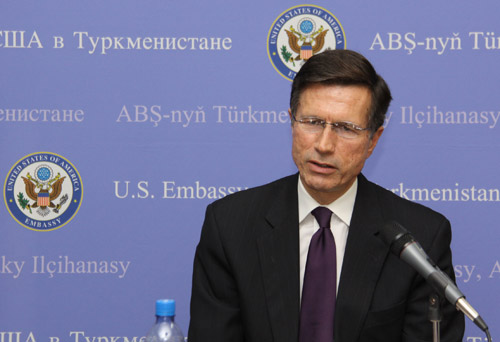
Blake was speaking in his current capacity as Senior Director (India and South Asia) McLarty Associates a firm of strategic consultants.
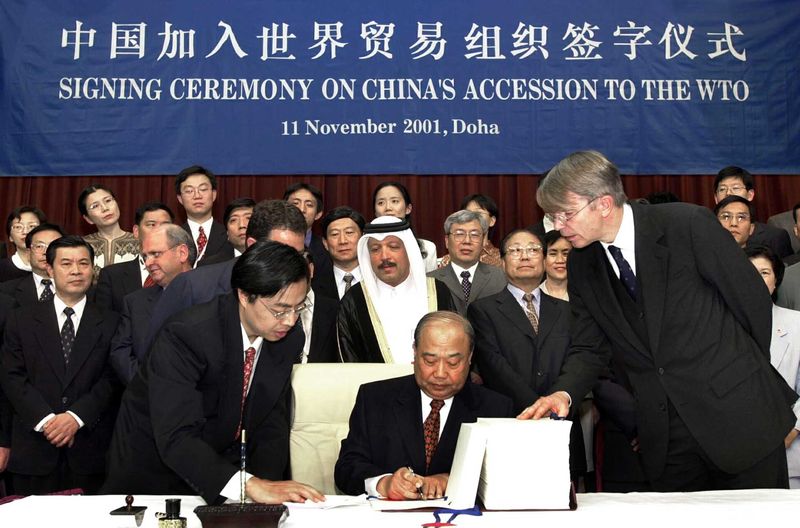
According to Blake, the first mistake the US made was President Clinton’s decision to back China’s entry into the World Trade Organization (WTO) based on incorrect assumptions.
The second was the Obama Administration’s decision to stop all US-Sri Lanka military training programs after Eelam War IV on the grounds that the Sri Lankan armed forces had allegedly committed human rights violations in the last phase of the war against the Liberation Tigers of Tamil Eelam (LTTE).
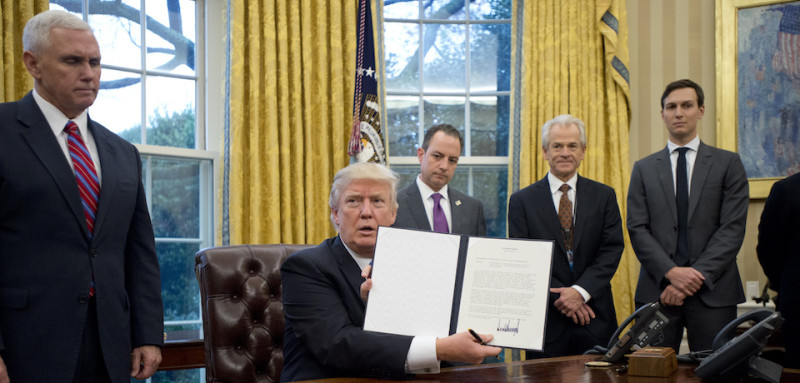
The third was President Trump’s withdrawal from the Trans-Pacific Partnership (TPP).
China’s Admission To WTO
Blake recalled that President Clinton supported China’s entry into the WTO even though China was not yet a market economy. Clinton, like most Americans, believed that as China prospered, as its middle class grew, as more and more Chinese traveled and studied abroad, China would become more of a market economy and become more democratic.
But today, most Americans see that this strategic calculation was wrong. Under Xi-Jinping, we have seen a strengthening of the role of the Communist Party, a doubling down on the role of the State and State Owned Enterprises (SOEs) in China’s economy, and the strengthening of China’s surveillance state.”
Not only is China not a more liberal market economy, it is often seeking to promote its illiberal governance model overseas,” Blake charged.
The veteran American diplomat acknowledged that most Asian countries acknowledge and even share many of these concerns, but they also do not want to be asked to make a choice between the United States and China.
They want to benefit from the massive resources China is extending under its ambitious Belt and Road Initiative (BRI) Blake noted.
China’s Ambassador to the US published an OpEd in Forbes two weeks ago in which he summarized the vast scope of BRI. According to the Ambassador,126 Countries and29 international organizationshaving signed BRI cooperation documents with China. Total trade between China and other Belt and Road countries has exceededUS$6 trillion, and China’s investment in these countries hassurpassed US$ 80 billion.”
To put these figures into context,China committed US$ 113 billion in BRI financing in 2017, which substantially exceeded the commitments of the World Bank and ADB combined,” Blake pointed out.
However, the BRI has created some undesirable trends and Blake listed the following among:-
Debt diplomacy
The case of Sri Lanka’s own Port of Hanbantota has become a watchword for the rest of the world that countries must make sure they choose projects that have solid internal rates of return that will enable them to service the debt owed to China, or they will face Chinese pressures to convert that debt to equity,” Blake recommended.
Labour issues
Every recipient country also grapples with Chinese pressure to use Chinese labour on these BRI projects, when almost every country has surplus labour of their own for whom they want to provide opportunities for work, the former envoy pointed out.
Lack of transparency
Most BRI projects also face criticism for the lack of transparency about the financial terms of the loans, the extent of Chinese labor and other such sensitive issues.
Environmental Concerns
Blake referred to a recent World Research Institute (WRI) analysis of BRI lending from 2014 to 2017 and said that Chinese energy and transport projects in BRI countries did not align with the low carbon priorities recipient countries outlined in their Paris pledges.
Blake then asked: What are recipient countries to do?”. And his answer was as follows: First, the countries involved in BRI must be more forceful and clearer in negotiating with the Chinese. This is already happening. The Wall Street Journal recently reported that last year Myanmar renegotiated terms for a US$ 7.3 billion Chinese-funded deep-water port and industrial zone,shrinking the scope of the projectand slashing the country’s future debt burden to its economic powerhouse neighbour. Pakistan,Malaysia,Myanmar,Bangladeshand Sierra Leone also have backed away from BRI projects.”
Likewise, the Maldives has announced its own review of BRI contracts undertaken by the previous government to ensure it is servicing only the debt for the true value of the projects undertaken, not for the inflated cost of what the new government alleges were large corrupt kickbacks on both sides.”
In Indonesia where I served as Ambassador from 2013-16, the signature BRI program is Jakarta-Bandung High Speed Rail. Many questioned the need for a US$ 6 billion rail line given so many other infrastructure needs. Indonesian Ministers have criticized the high-speed rail project for being opaque and non-transparent, complaining that even cabinet members are having trouble getting data and information.”
China Is Rethinking
Blake pointed out that these criticisms have made China re-think and respond to them.
In a speech on April 26 to mark the latest BRI conference, President Xi Jinping told the conference that everything should be done in a transparent way. China should have zero tolerance for corruption, and ensure the commercial and fiscal sustainability of all projects so that they will achieve the intended goals as planned.”
In another sign of greater transparancy Xi said China would welcome the participation of multilateral and international financial institutions in Belt and Road investment and financing. The Chinese also pledged to defuse tensions with Belt and Road recipients expressing willingness in principle to renegotiate debts. Beijing decided to forgive Ethiopia’s interest payments owed through the end of 2018,” Blake said.
There are other signs China is sensitive to the criticism it has received, the former envoy said.
China itself and UN Environment Program have formed International Coalition for Green Development on the Belt and Road to make BRI greener and more sustainable: the coalition includes all the major environmental groups, BRI countries and key Chinese businesses who are major BRI contractors.”
So China is listening. The test will come whether we see concrete changes implemented,” Blake added.
Trump’s Response to China’s Challenge
Blake said that the Trump Administration has responded well to China’s increased diplomatic and infrastructure promotion efforts.
First, recognizing that it is not enough to simply criticize BRI from the sidelines, the Administration and Congress understood that the US and other partners must provide alternatives, so partner countries have choices. Last October the BUILD Act was signed into law. It created a new U.S. International Development Finance Corporation, which will incorporate the OPIC and make available financing totalling US$ 60 billion, more than double what OPIC had provided in the past.”
This in turn will unlock over US$ 30 billion in additional funding to facilitate private sector investments in the region. The IDFC will offer loans, loan guarantees, and risk insurance to support new investments. They will also make equity investments and fund feasibility studies or potential investments making it even easier to collaborate with partner finance institutions.”
Now of course the IDFC’s US$ 60 billion does not come close to the trillion dollars in BRI financing, but it does provide countries alternatives and, in that way, will oblige China to be more transparent and responsive to the needs of recipient countries.”
The US also has signaled its readiness to cooperate with partners such as Japan and India in co-financing projects, further expanding the scope and scale of alternatives,” Blake said.
These resources complement the significant US private sector investment in the Asia Pacific. The value of U.S. foreign direct investment in the region is nearly US$ 1 trillion, far outstripping what China or any other country has invested. Moreover, it is not widely known that our investment in Asia has more than doubled over the last decade and made the US the largest source of the region’s foreign investment.”
Meeting China’s Security Challenge
Blake noted that the Trump administration has maintained US security commitment to the region.
One of Secretary of Defense Jams Mattis’ first acts was to rename the US Pacific Command to be the new Indo-Pacific Command, showing US understanding that we must have one vision for the Indian and Pacific oceans, and recognize India’s growing power and influence across the Asia Pacific, and the importance the US attaches to our partnership with India.”
The Administration also has sustained America’s high-level military to military engagement in the region. In most countries in Asia where we have military partnerships, the US is the largest military exercise partner and the largest provider of military training.”
And the Administration has shown a steadfast commitment to continuing the longstanding commitment of the US to ensuring freedom of navigation throughout the Indo-Pacific, but particularly in sensitive areas such as the South China Sea. This security commitment has underpinned Asia’s extraordinary economic rise for the last 50 years,” Blake said.
Mistake To Have Quit Trans-Pacific Partnership
Blake pointed out that Trump had made a mistake by quitting the Trans-Pacific Partnership (TPP).
The current Administration has damaged US interests in the Asia Pacific. The first is on the trade front: Fulfilling a misguided campaign promise, one of President Trump’s first acts was to withdraw the United States from the Trans Pacific Partnership, which the Obama Administration had played such a pivotal role in helping to negotiate. Since Sri Lanka is not a TPP member I will not belabor this point, except to say that almost every American business person working in Asia regrets this act of unilateral disarmament, particularly since the Trump Administration has not moved to negotiate bilateral or multilateral agreements to fill the gap.
Second, there is a general perception across most of the Asia Pacific that the US places less of a priority on Asia than under President Obama. Unlike Obama, Trump has attended only one of the East Asia and APEC summits, one of the few leaders to do so.”
The President’s absence is magnified by the Trump Administration’s painfully slow progress in filling sub-Cabinet and Ambassadorial positions. Just to take two examples of relevance to all of you, more than two and a half years into Trump’s four-year term, we still do not have Assistant Secretaries of State for either East Asia or South and Central Asia. These are the point persons who are responsible for developing and executing our policy in these regions and who supervise the work of our Ambassadors and their interagency teams in these regions.”
You all recall I was Assistant Secretary of South and Central Asia under Obama. Obama took office in January. Congress approved my nomination in June of the same year,” Blake recalled.
Wrong To Have Withdrawn Military Training
Ambassador Blake regretted that after the Sri Lanka-LTTE war ended in May 2009, the US had stopped its military aid and training programs in the island on the plea that there had been human rights violations by the Lankan military.
In the last years of the war in 2008 and 2009, human rights concern almost completely circumscribed our military exercises, training and assistance with the Sri Lankan Army and Air Force. I had to fight hard to maintain even small areas of Navy-to-Navy cooperation, in part by arguing that it was in our interest to help Sri Lanka interdict LTTE arms shipments. Today, I am happy those restrictions are behind us,” he said.
Blake referred to the stoppage of military training to the Pakistani army and said that this resulted in the US losing contact with a whole generation of Pakistani military officers”.
The result was that this generation grew up on a diet of anti-American sentiment hampering inter-operability which is key to military-military cooperation, the former envoy said.
US-Lanka Cooperation Restored
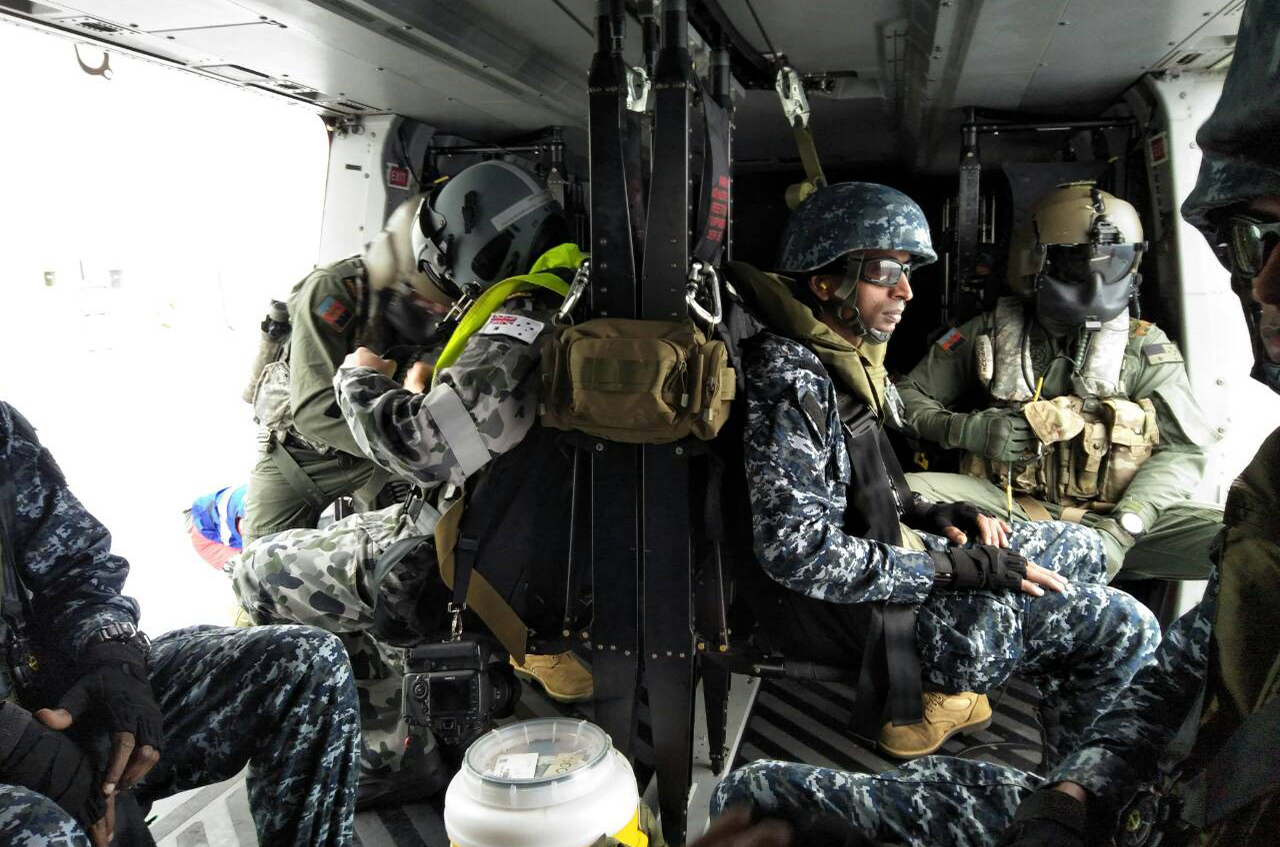
Blake noted that the US and Lankan militaries are now training together in areas ranging from maritime security to humanitarian assistance and disaster relief.
The US has announced plans for new security assistance of $39 million to Sri Lanka to support maritime security, freedom of navigation, and maritime domain awareness.”
In 2018 the U.S. transferred a U.S. Coast Guard cutter to the Sri Lankan Navy. And we have regular joint training and exercises with all the services All these are signs of a healthy and growing military partnership.”
Likewise, our law enforcement cooperation has strengthened. There is no better sign of that than the quick and substantial FBI response to Sri Lanka’s request for assistance in its investigation of the Easter Sunday bombings.”
Lessons From Easter Bombings
Tuning to the April 21 Easter Sunday bombings in Sri Lanka, Blake said:
The Easter attacks were not just personal tragedies for the families of those killed and wounded. They opened old wounds still fresh from Sri Lanka’s 26-year civil conflict, and they raised new questions in the minds of potential business partners about the wisdom of doing business in Sri Lanka.”
What steps should Sri Lanka take to successfully manage these new challenges and sustain its progress of the last ten years? Job one of course must be to pursue with vigor the investigation into who was responsible, what links they had to outside terrorist groups, how the bombers were able to mount such a sophisticated and well-coordinated series of attacks in multiple cities without detection from your intelligence and security services, and what networks may remain so the Sri Lankan people can be sure the threat has abated.”
One priority during this phase of investigating and hopefully wrapping up any remaining terrorist elements must be for the government and security services to conduct investigations in a professional and impartial manner that respects the rights of all Sri Lankans and does not inadvertently add to the problem.”
The Government should also make every effort to limit scope and duration of Emergency Rregulations.”
What US Experience Can Teach
Blake said that Sri Lanka can learn from mistakes America made after 9/11.
Most civil liberties experts believe the US over-reacted by expanding government surveillance without appropriate constitutional checks; by extended detentions at Guantánamo Bay that circumscribed the legal rights of detainees, by extraordinary renditions and interrogations, all of which gave rise to questions of what the limits of government power should be in times of crisis.”
Our system of checks and balances ultimately righted most of these wrongs, and the press had a powerful role to play in exposing excesses and wrong-doing.”
Sri Lanka can also benefit from another US lesson learned after 9/11. One of our mistakes was that there was poor communication and intelligence sharing between the CIA, FBI and other agencies. To improve inter-agency communication and cooperation, the Bush White House established a working group of senior technocrats from all the intelligence and law enforcement agencies.”
This group met regularly to evaluate all intelligence from all sources and agree on responsibility for follow-up on specific threats. The group was headed by Deputy National Security Advisor John Brennan who reported directly to the President. Sri Lanka could benefit from a similar high-level group.”
Gotabaya Rajapaksa Praised
In this context, Blake recalled how when Gotabaya Rajapaksa was Lankan Defense Secretary during the last Eelam War he set up a committee of experts to advice him an called for a strong and unified national leadership to take decisions and implement them.
Continued Threat From Islamic State
Sri Lanka must also be careful not to allow ISIS or other extreme Islamic groups to take root, Blake warned.
Although the precise role of ISIS in the attacks remains to be investigated, one must ask why Sri Lanka proved a tempting target of opportunity. First, they may have calculated that since Muslim-Christian relations have historically been good, and extreme Islamic thought has never gained wide favor on the island, they and NTJ could organize with undue scrutiny.”
Secondly, they probably calculated that the security forces have relaxed their efforts since 2009 and to the extent they were still concerned, that concern was more likely on preventing a revival of the LTTE.”
Having suffered the loss of their self-proclaimed caliphate and territory in Iraq and Syria, ISIS must show its followers it is still relevant and strong. Without a central caliphate, ISIS is metastasizing into smaller units wherever opportunities present themselves. One is in the southern Philippines where they are seeking a beach-head in SE Asia.”
But they also looking to use bombings such as those in Sri Lanka to sow discord between Muslim, Christian and other communities that they can then exploit for their evil ends. Sri Lanka cannot allow that to happen.”
Which brings me to my third recommendation, which is that Sri Lanka needs to give new focus and priority to reconciliation and good governance.”
The Easter Sunday bombings opened a potential new divide in Sri Lanka’s already complex ethnic amalgam. Sri Lanka continues to debate the pace and scope of reforms aimed at reconciliation between Sinhalese and Tamils. Some tensions remain as important priorities such as a Truth and Reconciliation Commission, reparations and accountability, remain on the drawing board.”
Even as Sinhalese-Tamil reconciliation remains a work in progress, the Easter bombings threaten to open new wounds and cleavages in Sri Lankan society and raise new questions.”
New Questions
According to Blake the new questions are: Will the attack on St. Anthony’s church in Batticaloa rekindle memories of the Tamil-Muslim violence in the East during the country’s civil war? Will extremist Sinhalese Buddhist groups seek to exploit popular anger about the attacks to renew their attacks on Muslims as we saw most recently in Kandy in May of last year?”
Will Christians, themselves the victims of Muslim and Sinhalese Buddhist violence, seek their own retribution?”
This complex and combustible mix requires the country to come together for a national dialogue. Given the political chasm and open antipathy between the President and Prime Minister, careful thought must be given as to who might lead such efforts.’
Two good places to start would be Sri Lanka’s religious leaders and its youth groups. Cardinal Ranjith has managed the aftermath of the attacks with considerable aplomb and grace. And there is a long history interfaith dialogue that can help bring these disparate communities together and reduce tensions.”
Need For Early Warning System
Blake said that with tensions high and the possibility that social media can be misused to spread false rumors, the communities would be wise to set up an early warning system to monitor rumors and then have senior religious figures quickly deny these.
This system has worked well in Eastern Indonesia,” he added.
The Lankan government itself has a crucial role to play to heal old and fresh wounds, Blake said and added: Every Sri Lankan citizen should be able to count on equal justice and no group that breaks the law or violates the rights of other citizens should be above the law.”
Renewed thought should be given to increasing Tamil and Muslim recruits in the country’s security services so they more accurately reflect Sri Lankan society as a whole. The same should be done with the civil service.
Islamophobia, already on the rise in India and my own country, should not be allowed to take root in Sri Lanka.”
Need For Non-Partisan, United Leadership
Calling for a truly national and united leadership, Blake said: In the end, any country’s response must depend not on its political leaders who too often succumb to the temptation to defend narrow party and personal interests, but rather on the strength of its institutions.”
The recent constitutional crisis underlined the critical role of independent institutions like the Constitutional Council and the judiciary. Their continued independence will be an important part of restoring faith in Sri Lanka’s ability to recover and prosper.”


/cdn.vox-cdn.com/uploads/chorus_image/image/63754049/SH_headshot.0.jpg)




.jpg)