
The Shattered Sovereign: A Psychological Analysis of King Seethawaka Rajasinha and His PTSD Related Symptoms
Posted on July 4th, 2026
Dr. Ruwan M Jayatunge, M.D. PhD
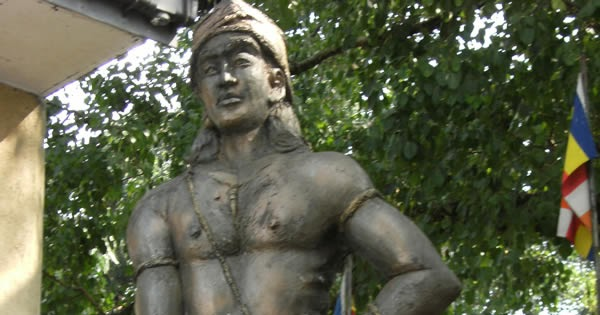
King Seethawaka Rajasinghe, also known as Tikiri Bandara, was a warrior king of Sri Lanka during the 16th century, renowned for his exceptional prowess as a battle-hardened hero. He earned the title “Rajasinha” (meaning Lion King) for his bravery and military tactics. Ascending to the battlefield at the tender age of 16, he demonstrated remarkable courage and resilience in the face of adversity, particularly against the formidable Portuguese invaders who sought to dominate the island. Throughout his reign, which spanned from 1554 to 1593 AD, he witnessed the tormenting consequences of war, including widespread death and destruction, yet he remained undeterred. His fearless nature was complemented by his adeptness at military strategy, enabling him to employ innovative tactics that effectively countered the well-equipped, highly trained Portuguese forces. As a result, King Seethawaka Rajasinghe not only established himself as a military genius but also left an indelible mark on Sri Lanka’s history through his unwavering commitment to defending his kingdom.
The Battle of Mulleriyawa (1562)
In the year 1562, the Battle of Mulleriyawa emerged as a significant confrontation between Tikiri Bandara and the formidable Portuguese forces, which were recognized as a dominant military power of the 16th century. The Portuguese contingent was commanded by Captain Major Afonso Pereira de Lacerda and Captain Major Jorge de Meneses Baroche, who led their troops into battle just outside Colombo, strategically positioned on the southern bank of the Kelani River. Tikiri Bandara, displaying remarkable valor and tactical prowess, launched a fierce assault on the Portuguese army, striking with the ferocity of a thunderbolt. This unexpected onslaught placed the once-invincible Portuguese forces on the brink of defeat, as they struggled to withstand the relentless attacks from young Tikiri Bandara and his warriors. Historical accounts, particularly from the Rajavaliya, a 17th-century chronicle documenting Sri Lankan history, reveal that the battle resulted in the loss of over 1,600 Portuguese soldiers and their auxiliary troops, known as Lascarins, underscoring the significant impact of this conflict on the power dynamics of the region.
The Siege of Kotte
The Siege of Kotte, which took place between 1560 and 1565, marked a significant turning point in the power dynamics of the region. During this period, the strategic maneuvering of the besieging forces involved the deliberate diversion of the Diyawanna River, effectively undermining the natural defenses that had previously protected the Kotte Kingdom. This tactical decision compelled King Dharmapala, who was seen as a puppet ruler under the influence of the Portuguese, along with his allies, to relinquish their hold on the capital. As a result, they were forced to retreat to Colombo, thereby signalling a critical shift in control and influence within the area. The implications of this siege were profound, as it not only altered the political landscape but also highlighted the vulnerabilities of alliances formed under colonial pressures.
The Sieges of Colombo
The sieges of Colombo marked a significant chapter in the military history of the region, characterized by the ambitious efforts of King Seethawaka Rajasinghe, who mobilized an impressive force exceeding 50,000 troops, complemented by a contingent of war elephants, to besiege the Portuguese stronghold in Colombo. Despite his strategic maneuvers that brought the Portuguese forces to the brink of starvation, the absence of a formidable naval presence ultimately hindered his campaign, allowing Portuguese reinforcements to breach the blockades and resupply their beleaguered garrison. The siege created a sense of desperation among the Portuguese defenders, who were gripped by fear and famine. However, the tide of battle shifted when external naval support from Goa arrived, leading to a disastrous outcome for the king’s forces. In the aftermath of this military debacle, King Rajasinghe’s frustration escalated into paranoia, prompting him to suspect treachery among his generals. In a series of ruthless purges, he executed several of his trusted commanders, including Wicramasinghe Maha Senevi and Weerasundara Bandara, both of whom had previously played pivotal roles in his military campaigns, thus illustrating the volatile nature of power and loyalty in the tumultuous landscape of warfare.
The Combat Fatigue
After enduring numerous years of relentless warfare, Tikiri Bandara, known as King Seethawaka Rajasinghe, found himself in a state of profound exhaustion, both physically and mentally. The toll of continuous combat began to manifest in his deteriorating mental health, leading to a noticeable decline in his overall well-being. As time progressed, the king exhibited increasingly erratic behavior characterized by heightened suspicion, frequent outbursts of anger, and pervasive irritability. His deep-seated mistrust of those around him fostered a sense of alienation, while emotional numbing and a range of symptoms associated with post-traumatic stress disorder (PTSD) became evident. These significant personality shifts not only transformed the once-great warrior into a figure of fear but also instigated a reign of terror against his own subjects, leaving a profound and lasting void in the hearts and minds of the people he once valiantly defended.
Drastic Personality Changes
The King became increasingly engulfed by an overwhelming sense of suspicion, interpreting even the most trivial disagreements as acts of betrayal. This pervasive mistrust extended to his closest allies, prompting him to take drastic measures against anyone he deemed a potential threat to his reign. Years of witnessing relentless bloodshed on the battlefield left him emotionally numb, resulting in unpredictable and violent outbursts of anger. King Rajasinha’s detachment from the suffering of his subjects grew more pronounced, as he morphed from a once-protective ruler into a merciless tyrant who employed horrifying and unprecedented methods of punishment, devoid of any semblance of remorse or compassion. His paranoia particularly targeted the Buddhist clergy whom he irrationally suspected of colluding with his political adversaries. Ultimately, by the end of his life, King Rajasinha’s erratic behavior and baseless accusations alienated his last remaining allies, including aristocrats and military leaders. The once-revered “Lion of Seethawaka” was reduced to a shattered, isolated, and profoundly lonely figure, stripped of the respect and companionship he once commanded.
Patricide
The historical narrative surrounding King Seethawaka Rajasinghe and the alleged patricide of his father, King Mayadunne, remains a contentious topic among scholars. Some historians assert that King Seethawaka Rajasinghe was responsible for his father’s death, while others argue that this claim may have been a fabrication propagated by the Portuguese, aimed at undermining the king’s legitimacy and authority. This divergence in perspectives highlights the complexities of historical interpretation, particularly in the context of colonial influences.
In the aftermath of these events, it is noted that King Seethawaka Rajasinghe experienced profound guilt, prompting him to seek redemption through the teachings of Buddhism. However, the Buddhist doctrine offered him no solace regarding the weight of his actions, leading to a pivotal moment when a Hindu priest named Aritta Kivendu Perumal seized the opportunity to convert the king to Hinduism. This conversion raises intriguing questions about King Rajasinghe’s motivations: was he genuinely seeking atonement for his alleged crime, or was he drawn to a faith that, paradoxically, glorifies warfare and valour?
Turning Against Religion
King Seethawaka Rajasinghe renounced his original faith, opting instead to adopt Hinduism, and in a brutal campaign, he executed thousands of his subjects who resisted this forced conversion. He took drastic measures against Buddhism, systematically demolishing temples and perpetrating heinous acts against Buddhist monks, including drowning them as a means of instilling fear and consolidating his power. This reign of terror not only decimated the religious fabric of the society but also left a lasting scar on the cultural heritage of the region.
King Seethawaka Rajasinha through Portuguese Eyes
In his significant 17th-century work, The Temporal and Spiritual Conquest of Ceylon, Jesuit Father Fernão de Queyroz offers a multifaceted and nuanced portrayal of King Seethawaka Rajasinghe I, blending admiration with sharp criticism. Queyroz expresses profound respect for Rajasinghe’s military acumen, drawing a parallel between the king and the renowned Carthaginian general Hannibal Barca, highlighting his exceptional strategic capabilities on the battlefield. However, this admiration is tempered by Queyroz’s condemnation of the king’s extreme brutality and erratic temperament. He characterizes Rajasinghe as a tyrant whose insatiable thirst for blood instilled fear not only in his adversaries but also among his own people. The chronicler meticulously documents the king’s descent into paranoia, illustrating how he resorted to the ruthless execution of anyone he suspected of disloyalty, which ultimately led to his isolation from his inner circle. As Rajasinghe’s mistrust deepened, he became increasingly suspicious of his closest allies, generals, and aristocrats, leading him to eliminate even his most trusted advisors and military leaders one by one. Queyroz interprets the king’s eventual military defeats and demise not merely as a triumph for Portugal but as a form of divine retribution for his unyielding cruelty and antagonism towards the Catholic faith.
PTSD Symptoms
The historical narratives of the 16th century, such as the Mahavamsa and various Portuguese accounts, often interpret the later cruelty exhibited by King Seethawaka Rajasinghe as either a manifestation of spiritual malediction or a straightforward expression of tyranny. However, contemporary historical psychology offers a more nuanced understanding, suggesting that the King’s behaviour may be attributed to severe, untreated Post-Traumatic Stress Disorder (PTSD) compounded by paranoia stemming from his experiences in combat. When analyzed through the lens of psychological trauma, his transformation from a celebrated liberator to a despotic ruler can be seen as a classic example of a psyche fractured by prolonged exposure to extreme violence.
King Seethawaka Rajasinghe, who began his military career as a young teenager known as Prince Tikiri, was immersed in brutal warfare during his formative years, where he not only engaged in combat against heavily armored Portuguese soldiers but also witnessed the gruesome mutilation of his own troops. The psychological burden of being accused—whether justly or unjustly—of orchestrating the assassination of his father, King Mayadunne, added an unbearable layer of emotional turmoil and guilt, creating a persistent state of distress.
A hallmark of PTSD is hypervigilance, a condition characterized by an incessant “fight or flight” response that leads individuals to perceive threats in every environment, even among those they consider allies. In King Rajasinha’s case, this hypervigilance manifested in a drastic and tragic decision to eliminate perceived threats, including the execution of his most trusted general, Weerasundara Bandara.
The individuals suffering from severe PTSD often find themselves alienating long-term friends while becoming overly reliant on manipulative outsiders who exploit their vulnerabilities, as seen in King Rajasinha’s relationship with Aritta Ki Vendu, who exacerbated his anxieties while providing a deceptive sense of security. The emotional landscape of King Seethawaka Rajasinghe ‘s reign was marked by profound alienation, as noted by Queyroz, who observed that he became increasingly estranged from his inner circle. His growing mistrust led him to suspect conspiracies against his rule, prompting him to execute many of his closest advisors and military leaders, including the poisoning of his right-hand man, Wicramasinghe Maha Senevi. This pattern of behavior illustrates not only the intense paranoia that gripped Rajasinha but also the sudden outbursts of rage and emotional instability that characterized his later years, painting a complex portrait of a ruler whose mind was deeply affected by the traumas of his past.
The narrative illustrates the king’s descent into a state of emotional turmoil characterized by sudden and violent outbursts of rage, which became increasingly unpredictable over time. His responses to relatively minor political challenges or military stalemates were often disproportionate, leading to immediate and harsh repercussions for those in his vicinity. This pattern of behavior not only instilled fear among his subjects but also created an atmosphere of tension and anxiety within his court. Furthermore, Queyroz emphasized a disturbing trend of emotional numbing and a complete absence of remorse in the king’s actions, which manifested in a reign of terror against his own people. This chilling lack of empathy, coupled with a willingness to execute thousands, has been interpreted by contemporary psychologists as a form of “emotional anesthesia,” a psychological defense mechanism developed after enduring years of gruesome warfare. As the king’s mental health deteriorated, he became increasingly isolated, effectively exiling himself from the very society he ruled. Queyroz portrayed him as a profoundly lonely figure, abandoned by loyal friends and court nobles because of his erratic behaviour and unfounded accusations. Ultimately, the relentless demands of warfare took a significant toll on his physical and mental well-being, leading to what can be described as “battle fatigue.” Having been engaged in continuous, brutal combat since the tender age of sixteen, the cumulative effects of this relentless violence contributed to his later erratic conduct, underscoring the profound impact of prolonged exposure to the horrors of war on his psyche.
The Final Battle and Death
King Seethawaka Rajasinghe’s final battle took place in Kandy, where he faced off against Konappu Bandara, also known as King Wimaladharmasurya, the son of the once-loyal Weerasundara Bandara. Weerasundara Bandara had previously been a staunch ally of King Seethawaka Rajasinghe, assisting him in the struggle against the Portuguese invaders. However, a tragic turn of events led King Seethawaka Rajasinghe to harbour unfounded suspicions about Weerasundara Bandara, culminating in the latter’s untimely death at the hands of the king he had once served faithfully. This betrayal ignited a fierce desire for vengeance in King Wimaladharmasurya, who vowed to avenge his father’s death.
The ensuing battle was marked by brutality and chaos, ultimately resulting in King Seethawaka Rajasinghe’s defeat. In the midst of his retreat, he suffered a grave injury after falling from his horse, with a bamboo splinter piercing his leg. This injury would prove fatal, as he succumbed to complications, possibly due to tetanus or septicemia, just days later. (Some historians suggest that after King Seethawaka Rajasinghe suffered a severe injury, the royal physician, harbouring a profound animosity towards the king, exacerbated the situation by introducing poison into the wound, thereby worsening the infection). Thus, the saga of a formidable warrior came to a close.
Revered as the Lion of Seethawaka, he instilled fear in the hearts of Portuguese colonizers, earning a reputation as a liberator. Yet, as time passed, he became an enigmatic figure, with the psychological scars of war potentially altering his aspirations and character. Had he not experienced such profound changes, he might have been celebrated as one of the great heroes in the annals of Sri Lankan history.
The Historical Significance of the Diagnosis
The historical analysis of King Seethawaka Rajasinghe through the lens of Post-Traumatic Stress Disorder (PTSD) significantly reshapes the traditional view of his rule. Instead of being seen solely as a tyrant or a straightforward villain, he is revealed as a multifaceted leader and skilled military strategist whose mental state was severely affected by the continuous violence he enacted to protect his kingdom. This interpretation fosters a more nuanced understanding of his tragic psychological decline, demonstrating that the very warfare meant to defend his territory also led to his mental disintegration. His narrative serves as a powerful reminder of the often-ignored psychological consequences of conflict, emphasizing the profound and invisible wounds that war inflicts on those who participate in it. Additionally, the writings of Jesuit Father Fernão de Queyroz from the 17th century are significant in this context, as they document a prominent figure who lived from 1532 to 1593 and displayed symptoms of PTSD. Notably, while Western literature attributes the first comprehensive accounts of PTSD to Samuel Pepys’ diaries in 1666, following the Great Fire of London, Queyroz’s observations predate these records, highlighting the historical depth of this psychological condition.