Please M.President, sack  your Prime Minister, before he sacks you.

July 28th, 2018

By Charles.S. Perera

Mr President Maithreepala Sirisena, time has come to stop your rein of political  terror of anger, hatred and vengeance in Sri Lanka. The 19th Amendment which was perhaps prepared under the direction of  the foreign advisors of the Prime Minister, provides the means to terminate the service of the President, but not that of the Prime Minister.

You really do not know Mr. President what your Prime Minister  is doing behind your back  with the advice of his American and Western backers. Mr. President since you became the President of Sri Lanka on the 8th January, 2015, Sri Lanka began its descent into a political hell hole. Today  it has descended into an unfathomable  depth from which we may not be able to recuperate it to be what it had been before you took over the presidency of this noble land of our ancient Sinhala ancestors.

Therefore, it is time that you stop your pilgrimages” to foreign countries and settle down in what remains of  Sri Lanka before the advent of the disastrous  Yahaplanaya,  and straighten your back bone if you have one, and act quickly to disperse malignant political nitwits who put you on the Presidential seat to profit from your naiveté to ransack the country, steal the Central Bank and destroy the Sinhala as a majority, divide the country, and sell as much of it as possible before they retire to settle down as multi millionaires in their luxury provincial residences..

Mr. President Sirisena you do not have any political vision for Sri Lanka, like your predecessor  the President Mahinda Rajapakse, who with his Mahinda Chintanya developed  Sri Lanka after eliminating the cancer of terrorism, as it had never been done before by any of the previous Prime Ministers or Presidents before him since independence.

Mr. President  while you get entangled in the tangled threads of an undone ball of a troubled political thread,  America is paying billions to NGOs to create trouble in the country by their  CIA interposed American  brain wave of inciting Yahapalanaya to take up further measures of reconciliation to seal the division of the country having instigated the TNA political lunatic Sampandan by the out going US Ambasador Athul Keshup to  demand the writing of the planned Sri Lanka’s new Constitution.

Withdrawal of the Army Camps from the North and East, and release of land  to the supposed to be original owners are some of the projects for the destruction of Sri Lanka  that was before President Sirisena’s advent into Yahpalanaya.

Mr. President your involvement in the insistence of passing a law to hang the drug dealers, is only taking your attention away from  more important political issues that are being hatched behind your back by your Prime Minister  prompted by USA and the West, to sell off the
valuable commercial and industrial  sectors to foreigners.

The hanging of drug dealers or other criminals would serve no purpose to deter the underworld mafia and criminal gangs from exercising their brutality.  It is more appropriate to  have an efficient police system, with a trained security force to survey the criminal
activities of the underworld mafia, the drug dealers and criminals. As it is the Sri Lanka police force seems to be playing politics with the  approval of he Prim Minister and the UNP.

Nothing can stop the downward sliding of Sri Lanka unless and until President Sirisena  wakes up, from his  deep sleep he has been lulled into since he occupied the high Office of the President of Sri Lanka, with an  open ticket to voyage first class to all the capitals of the world , to stop the Prime Minister Ranil W, taking his place to ruin Sri Lanka before long. The poor people have lost their voice and find  no way to act on their own to  kick out Yahapalanaya lock Stock and barrel and replace it with a more wise , patriotic, and  a visionary leadership.

It has been reported that there is already a four star  Commanding General of the United States Army Pacific Command  General Robert B Brown praising Sri Lanka for its reconciliation effort. For Sirisena and Ranil that would be a feather in their USA and the West subservient Cap.

USA and the West will  not help the development of Sri Lanka. They only want the Yahapalanaya  to go ahead with the reconciliation process  which would eventually make Sri Lanka poor, communally  divided,   undeveloped and subservient to USA and the West.  Mr. President are you really blind to these USA and Western pattern of destroying our country ?.

The defected American economic hit man John Perkins who admits to have put developing countries into economic peril making them indebted to American Companies, says that the American political strategists used to drop bags of food to people  living in  inaccessible  areas of  these poor countries, and in the bags were hidden electronic devices that could provide information about the geographical features and  valuable metal under ground.  They also introduced viruses.

Therefore Sri Lanka should investigate various USAID  projects in different parts of Sri Lanka to see that the USA was in way responsible for the kidney disease in the North Central Province..

The UNP  group within the Yahapalanaya Government does not stop saying that what they inherited on the 8th January,2015 was a country in debt and that it is because of  that they are burdened with the debts of the  Mahinda Rajapakse Government, that they were  unable  to develop the country. But they do not speak of their mismanagement and utter  corruption and their pilfering of the  Central Bank that has  put Sri Lanka into a perilous debt trap.

President Mahinda Rajapakse when he became the President in 2005, inherited a troubled Sri Lanka, with a ruthless terrorism gaining ground over the Sri Lanka Armed Forces with the terrorists  about to wrench away a large chunk of the Country to form a Tamil Eelam State.

It was thanks to the President Mahinda Rajapakse that the 30 years of terrorism was eliminated and the country was developed . The IMF itself praised the Rajapakse Government  for its  economic management?  It was said that Sri Lanka was then developing even faster than China.

The Mahinda Chintanaya the formidable visionary plan for Sri Lanka’s development had planned out ways to put into profitable use the Mattala Air Port and the Hambantota Harbour, with the development of an Industrial Zone in the surrounding  environment.. If President Mahinda Rajapakse had won the Presidential election of 2015 he would have certainly avoided all the problems the stupid Yahapalanaya is faced with today.

Neither President Sirisena nor the Prime Minister RanilW are capable of ruling Sri Lanka as it should be. They mismanaged the country in all its aspects from the very beginning and today Sri Lanka is facing bankruptcy.

President Sirisena talks big of making Sri Lanka a corruption free country with the remaining two year he  would be in power, while he had  ruined the country during the  last four years.  He will surely not be able to do any thing positive to Sri Lanka during the remaining two year of Yahpalanaya rule, though his Prime Minister will be able within that time to do more damage to Sri Lanka, selling  it to China, India, Bangladesh , Singapore etc. and perhaps he will also abolish the election of a future President of Sri Lanka by the people making a President elected by the Parliament. That procedure will be helpful to Ranil W,  as he cannot face a Presidential election and win it.

The West as well as Ranil, knows that even if they remove the name of Mahinda Rajapakse from sign posts, bill boards,  and buildings, they will not be able to remove the memory of Mahinda Rajapakse and the great love and affection of the people have for him, from the hearts of the people.

If Mahinda Rajapakse were to contest a Presidential election today he will win it hands down.  Election of Maithripala Sirisena was a mistake by the people and the people will definitely  not repeat it again.

Now the UNP is planning to remove certain areas reminiscent of Mahinda Rajapakse  on the ground that UNESCO has made a demand for its removal . But that is a lie as the World Heritage list  specifies, that the World Heritage Site in Galle is  the, Old town of Galle and its fortifications”,  which does not include buildings and sites out side the  Old Town of Galle and its fortification.

Why don’t you speak up Mr. President and stop this continued fooling of the people by the Prime Minister and the UNP Ministers ?

The stupid UNP MPs and Ministers participating in TV debates are unable to answer intelligently any question or explain any criticism levelled at them without comparing  what they say are wrongs  committed by the President Mahinda Rajapakse’s Government. Most stupid  is their  repeated  quoting of why Mahinda Rajapakse called for presidential elections two years before time.

They say it was because the President Rajapakse  had incurred so much of debt that he was frightened not being able to  pay back that debt, which  prompted him to call for elections two years before time. The inference is that the election was called by  President  Mahinda Rajapakse to lose the elections, so that the debt burden will fall on the government of the new President that would  be elected by the people.  What a foolish  idea that Mahinda Rajapakse called for elections to loose it !!

UNP thinks that they could fool the people with that kind of absurdity.

Mr. President, both you and your Prime Minister Ranil W, do not stop fooling the people. The people are not naïve to believe any one of you any further.

Next Mr. President, is about writing a new Constitution. Before you go down the history as the most un patriotic and clueless  man to have become the President of Sri Lanka, you can at least to a certain extent reverse that opinion, by stopping your Prime Minister go ahead with writing a new Constitution to Sri Lanka.

It is Lal Wichramaratne, and the anti Buddhist  Christian Tamil Sumanthiran who are taking the lead in preparing a Constitution, which they will make it a Federal Constitution at the committee stage if they are ever allowed to do it. We do not want a new Constitution now, we can still do with the 1978 Constitution.

 The Constitution if ever written should be written by the Sinhala Buddhist Majority and the minority Communities should have nothing to do with it. It is only the Sinhala Buddhist who are capable of writing an honourable  Constitution without discriminating any community or any religion.

Even the ordinary Tamils who are not politicians will agree that the Sinhala Buddhists will give them a better chance than being under the TNA and other Tamil politicians.

A Constitution written by any Committee, including the minority communities in the process will not make it an acceptable Constitution as minority Communities of Sri Lanka are prejudiced anti Buddhist, and anti Sinhala. They cannot therefore take a balanced view necessary to write an acceptable  Constitution to whole of Sri Lanka respecting Sri Lanka’s ancient history, its religious heritage, and the culture that has made the Sinhala people-its majority Community  a tolerant, friendly, and a peaceful community.
 

Towards a Government without Political Parties; Key to a new home grown political culture in Sri Lanka (Outline Draft for discussion:) -Part 1

July 28th, 2018

Dr Sudath Gunasekara  (SLAS Class 1) Retired Permanent  Secretary to Prime  Minister Mrs Sirimavo Bandaranaike

28.7.2018

 Introduction

There is unanimous agreement that the political party system, introduced by the British is one of the major impediments that has ruined good governance in all countries under colonial rule. A review of British colonialism all over shows that when they left the colonies they also left behind a legacy of their own political, administrative and legal mechanism and cultural remnants, replacing the original native systems, to continue the colonial grip in order to perpetuate their hegemony and exploitation. Westminster political party system that was alien to the natives was the main instrument through which they manipulated and controlled these countries with the assistance of a new generation of rulers they have nursed over the years, subservient and servile to them who acted as their accredited local agents even after the so-called Independence given to them. Therefore no country that was subjected to their depredations can ever be free, either politically economically, culturally or otherwise until and unless these alien elements are completely eradicated by a resurgent native social upheaval. The validity of this conclusion holds true to this country as well.

Although the removal of the whole colonial package and its replacement with a new system of government based on our own civilization called ”Civilization’ State as Martin Jaques has described in his book ‘When China Rules the world’’ is the best remedy to this malady as Gunadasa Amarasekara suggests it is not that easy in a context of over 5oo years of virtual destruction of the native systems. Nevertheless removal of the alien system is a must if these countries are going to be free, independent and developed nations. In this exercise therefore one has to make a start with the removal of the worst colonial legacy, that is the political party system introduced by them to keep the nation eternally divided, confused and leaderless. In this exercise the first curse we need to discard is the Political party system. Therefore the need to abolish all existing political parties should be the priority number one as none of them are formed on the principle of national integration and development.  In this country they were formed on narrow ethnic, linguistic, religious bases to keep the colony eternally divided. Those formed by foreign educated, though opposed to the Western model, still completely alien and incongruent to the local socio-political and cultural milieu.

The Tamil and Muslim Parties on the other hand are found purely on ethnic and religious bases, looking for self-assertion, not accepting the status quo of the Sri Lankan society. Even the notion United National Party, the name of the first political party hat was found in 1947 was directly contrary to the concept of one nation as it is based on the notion that this country has many nations as its name clearly implies. Though the SLFP on the other hand is not tainted with this weakness, in practice it also has to fall in line with the same principle to compete to attract minority communities in competition with the UN , that is committed to the hilt to this in principle. As such none of the existing parties can bring all Sri Lankan people together to form one united nation for nation building as long as this notion of many nations is not removed from the minds of the people of this country.  Minorities have made maximum capital alternatively and while getting their things done they use it as a clout to make and unmake Governments. The competition and the struggle between the two major national parties to woo the minority vote and the never ending communal and religious woos has converted this Island in to a veritable battle field of ethnic and religious conflicts, fuelled by both local and foreign elements, have led to the present political, economic and social instability in this country while making the majority weaker and weaker.

Therefore the need to invent a system of government, sans political parties, to keep the people together, as one nation as it had been always the case for 2600 years in this country and to maintain the  status quo of the majority. In this mission the native Sinhala people have to take the lead first by giving up all their blind party affiliations such as UNP SLFP, JVP etc, and form in to one group under one strong patriotic national leadership. Thereafter that national leadership has to make a clear declaration as to what Sri Lanka is, what its nation is and where the minorities stand. Once that is done the minorities have no alternative but to fall in line with the majority and give up their dreams of separation and integrate with the natives or migrate to their original motherlands

The best option I propose to resolve this for Sinhalese is to form one strong national Front as suggested above to rule the country for 10 years under 15 or 17 Executive Committees like in the days of the Donoughmore system where all MPP elected will together form the Committees and the Government.

The political agenda given in the Mahanuwara Charter 2018 and elaborated in the Siya Panata given as Part two of the people’s Mahanuwra Charter 2018 that could be used as the basis of this leap forward. Everyone has been talking for years about the need for a new system. But no one has so far found or seriously thought about any practical solution for this vexed national problem. Conventional political parties have been fighting with each other for power and wooing the minority vote for survival without giving any serious thought to the national conundrum. The minorities on the other hand had never voted the UNP or the SLFP. What happen is they are driven like cattle by their communal leaders to vote only members of their respective communities and thereafter they auction their demands and join the party that agrees for the highest bidding or join the party that forms the government on the other hand This is how they have been changing governments for the past 70 years and got the maximum at the expense of the majority rights.  Meanwhile the main national parties had been groping in the dark without realizing the realizing the tragedy they are committing.

What I have put down here is a straight and solid proposal, though appears to be impracticable by the cynics, which I consider the only way to rescue this nation. What I outline here is the result of my search for a workable solution to that all important puzzle. I am fully conscious of the difficulties ensued. But I have an inner feeling that if we implement this proposal it will be a turning point in the country’s political history and it will offer a permanent solution in our search for a satisfactory answer for this vexed problem. It is a new idea that came to my mind, capable of generating a live debate on this subject. Two people have inspired me in this mission. The first is my good friend and colleague the late UB Wijekoon, an uncommon politician who presented me a copy of a book called Paksha Desapalanaya Ratata Sapaya written by him in (2010) highlighting the need to change this curse; making a request appealing to me to think about a solution for this cancerous social disaster. Dr Gunadasa Amarasekara who wrote a book recently (2016) titled Sabbyatva Rajya” calling for a new system of government based on our own civilization, inspired by the Civilization State concept of Martin Jaques in his When China rules the world” is the other person who accelerated my search for a suitable answer. I thank both of them sincerely for their inspirations.

I must confess with humility that this is not the result of an in depth research, on this subject. It is only a hurriedly prepared note prepared based on my thirty five years of experience and understanding of our political system, past and present and the future needs of the country, to be presented at a discussion organized by my colleague and friend late Dr Nath Amarakoon at Navinna, Nugegoda on 15th October 2015.

I wish and hope this note will inspire all patriots to search for the answer we all need very badly to rescue the motherland and the nation from complete disintegrations and imminent threats, both internal and external.

The Philosophy and Mission on the purpose of the State

1 Balachackram hi nisrāya Dharmachakram Pravartatē” (The Wheel of Power Revolves on the Wheel of Dhamma)

2 Bahujana Hitāya Bahujana Sukhāya” Lord Buddha. (For the Good of the many; For the Happiness of the    many)

And definitely not of the politicians only, as it has come to stay today, in this country.

Objective

To replace

The disastrous system of Government we have in this country today, what I call a Government by the Politicians, for the Politicians and of the Politicians”

With,

A Home grown system of Government of A Government by the People, for the People and of the People,” based on the age old Dasaraja Damma, the Dharmasokian model, Pansil and the Mahasammatha concept of state craft that had made this country a Proud Land of plenty, prosperity, peace, justice and righteous governance for 2500 years.

and

To set up a new form of Government similar to what Martin Jacques calls the ‘Civilization State,” based on our own political philosophy, institutions and systems, traditions and social values that formed the  foundation of that heritage, to liberate this country from the shackles and clutches of Western colonial hegemony and exploitation. It is also an attempt to fully free our people from their mental servility to Western forms of Government, alien and utterly inappropriate to the East; to inspire people of this country to understand the value and relevance of their age old and time tested native system as the golden key to the portals of our future prosperity and pride.

My final aim here is to call upon all patriotic citizens to ‘wake up’ from hibernation and to rise up to rally round a mass national movement to save the Motherland and lift it up once again to lofty heights as a strong, vibrant and a prosperous nation.

Political parties the curse of the Nation

Of all legacies left behind by the British, political party system, has been identified as the most disastrous and baneful factor that has divided and ruined this country and the Sinhala nation ever since 1948, though the seeds of such division was sown by the British right from the beginning of their rule in 1815. The name of the first political party the UNP (United National Party) suggested by Governor Mason Moor in 1947 advanced the idea of the presence of many nations in this country and it was given legal recognition by incorporating it to the constitution under Sec 29 of the Soulbury Constitution. It planted the first virus of the concept of many nations in place of one nation concept that existed from the dawn of history of this country up to 1815. It is now widely accepted that the British colonial policy was the foundation of the conspiracy of divide and rule they adopted to destroy the Sinhala nation. It has now come to stay as the most fatal cancer that has killed the one nation and one country concept in this Island nation and destroyed the political stability and unity beyond all conceivable limits. What is even worse is that the colonial powers still continue to do so by promoting the divide and rule policy of the British. Therefore the crying need for an immediate solution to put back this great nation once again on its own feet.

The proposed Model envisages replacing the existing so-called Western democratic model of government imposed on us by force and intrigue by them, with a homemade system, sans political parties, administrative and legal systems and social values imposed on us by them, but incorporating some of the good aspects therein. Going back to our roots in search of a permanent remedy for these ugly legacies of political, social, economic and psycological maladies handed down to us by the West, to disrupt, disorganize and destroy our country to achieve their diabolical strategic, military and economic goals, is the aim of this effort.

I begin on the assumption that we have not got any independence in 1948. I challenge any one who says we have got any independence other than a British made Parliament to make legislation and a made in Britain Constitution to run the affairs of the State for them by a bunch of black whites they left behind when they left. The way how the West runs this country even today with the assistance of their stooges is sufficient proof of this pathetic situation. Have we won independence over our motherland, our language, religion, political institution, legal freedom our social the heritage and values as India or Miyanma did in 1947?  Do we have at least a homemade Constitution? Isn’t this country not run by the West orchestrated by the UN and the so-called International Community and India to suit their agendas? So in this backdrop how can one say we are an independent nation?

The following homemade model is proposed to make this country once again a free and Independent country.

(This is a revised version of an article first posted on September 28th, 2016 Lankaweb)

Part two on the proposed model of Government will follow.

Sri Lanka-born dentist honoured by the British Dental Association

July 28th, 2018

Sri Lankan expat news

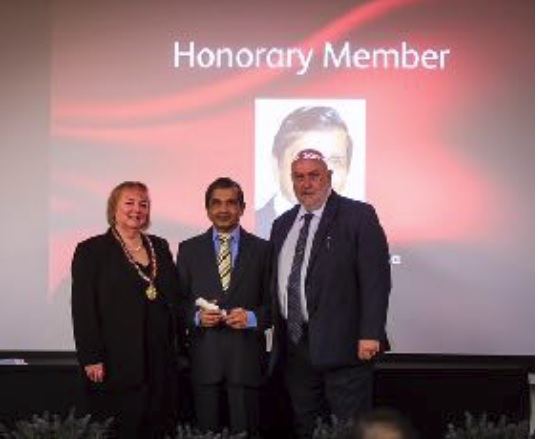
Professor DYD Samarawickrema, Emeritus Professor of Conservative Dentistry at Queen Mary Hospital, London and the president elect of the Commonwealth Dental Association was the recipient of honorary life membership with the British Dental Association at its AGM held recently.

Life membership is a rare accolade awarded in recognition of outstanding national & international contribution to the field of dentistry.

Prof Samarawickrema received the honours in a packed auditorium attended by his peers & several dignitaries.

The picture shows Professor Samarawickrama with Dr. Susie Sanderson, the President, BDA and Dr. Mick Armstrong, Chair, Principal Executive Committee, after receiving the Award.

This is one of many ‘feathers in the cap’ of DYD as he is popularly known among friends & colleagues. Last year he received an award from the CDA in appreciation for his longstanding services.

Prof Samarawickrema received the DDU Educational Award for the best dental teacher in the UK & Ireland in 2008. In 2012 he was felicitated by Queen Mary University , London with the award of the Geoffrey Slack Medal for outstanding services to Dental Education!

An alumnus of the University of Ceylon at Peradeniya and Mahinda College, Galle, Professor Samarawickrama is married to Padma, a retired General Medical Practitioner and a former lecturer in Pharmacology at the Medical Faculty, Peradeniya.

Info Sati Ariyanayagam

Where the flight ends and the plight begins

July 28th, 2018

Laksiri Warnakula

The recent photo of a group of female Sri Lankan to-be-domestic aides on their way to the arid Middle East made me very sad and even brought tears to my eyes. Dressed in kind of a uniform, they were walking in single file towards the exit and then onwards to the great unknown that lies beyond.

The uniforms were supposedly for the benefit of the agent at the other end, making the identification easy for him. So that he can be sure that these veritable ‘lambs to the slaughter’ are indeed his flock and no one else’s.

There were quite a few posts on virtually all forms of media condemning the uniform as a silent whisper, yet roaring in public to say that here are the daughters of Lanka on their way to meet their foreign masters and that all under the sun could hear it and see them too, very well!

We all know that the Sri Lankans working overseas play a leading role in bringing hard currency to the country and amongst them, those, who are working in the Middle East as domestic helpers constitute an appreciable fraction. That’s what all those figures in statistical tables say.

So far so good as far as those figures go, which they often do anyway, whilst hiding the hideous and the horror that lay behind them. Have we ever cared as to what lies behind those numbers? Have our authorities ever noticed or wondered?

We all know how male-dominant these countries are and the nature of the mindset that they have acquired as a result, towards their own women. I don’t think anyone needs to be told as to how they would look at and treat these hapless foreign women.

Sometimes getting battered and bruised, often sweared-at by their masters, our mothers, sisters and daughters spend years slaving away in those homes, breaking their backs whilst, constantly at the risk and under the threat of getting abused, both physically and mentally.

Some of them pay the price in the form of irreparable trauma done to their dignity, sanity, and soul. Few of them have paid the ultimate price, for listening to and believing in the grandiose sermons of their agents, a grotesque, macabre reward to the innocent and the gullible for doing so.

In Saudi Arabia, one of the prime locations of our female domestic-aid workforce, Sri Lanka is said to be called the ‘country of housemaids’. Can any country be proud of this, let alone one with a civilization dating back to or even further than two and a half millennia?

We are still not even halfway as far as this bitter tale goes. Back at home and in some families (no statistics available as far as I know, yet numbers wouldn’t be insignificant or small) of those working mothers, another drama unfolds.

Some unscrupulous husbands now feeling freer and lighter than kites floating in the skies above our Galle Face greens, relieved of work to meet their families’ needs and looking after the responsibilities, suddenly become adventurous and curious going well past the average. They begin to dance, gallop and gallivant in ecstasy, immerse themselves in pleasures of intoxication, forbidden flesh and gambling.

And the children are often left to their own devices, mostly being looked after by the grandparents or other siblings of the mother.

There are a few other; the dirty, the obscene and the ugly, which many a concerned writer has pointed out before me and I don’t think they need any further mention or reference.

I am sure we keep records of relevant data relating to all juvenile delinquents/young offenders spending their time in rehabilitation centres and open prison camps. Has any authority tried to delve into those data and made attempts to establish whether there is any relationship between the ‘instances of a mother-working overseas in this particular capacity or one related to it, and the incidents of juvenile delinquency’? And how many incidents are left unreported, anyway? I am sure that there is a lot more of them, which do not come in the limelight.

Now where is the solution? We cannot stop people from going overseas to work. But we can make them pause, think and stop. What if?

And the authorities, the biggest villain in this tragic drama should take immediate steps to investigate, study and begin necessary actions to establish a benchmark income level, which is on par with the current standard of living in the country and ensure that the relevant stratum of the populace is lifted above that mark.

In short, this is poverty alleviation. In fact it is ‘accelerated poverty alleviation’, which is not impossible, if the will is there.

‘Stop being spendthrift by dipping into our starving coffers. Stop playing with the country’s well-being and welfare. Get off your high horse. Cut off your excesses and pleasures, which are obscene, wicked demonstrations that smack of abuse of power.

Stop your name-building and spreading your fame at any cost or aiming for self-glorification while, pouring monies into bottomless pits (with highly disproportionate returns in comparison) that one day will be asking you in no uncertain terms to return the favours granted that cannot be met unless we sell more and more of the country while, caught in a vicious cycle of debt.

Instead, concentrate on efficacy, efficiency and productivity. Give a thunderous lion’s roar as one, so that we all could hear it; no to corruption, no matter how big or small it is and leave aside your petty, party, paltry politics, for the greater good of the nation’.

We should start doing something about it from right now with the top leading the way by example.

If we do this, the day won’t be too far away, when the end of that ‘flight would not become the beginning of a plight for some, any more’.

Laksiri Warnakula

Sri Lanka a key component of Maritime Silk Road: China

July 28th, 2018

Courtesy The Daily Mirror

Sri Lanka is a key component of the 21st Century Maritime Silk Road with Hambantota Port and Colombo Port City as the two flagship projects of the pragmatic cooperation between China and Sri Lanka under the Belt and Road Initiative (BRI), Chinese Ambassador Cheng Xueyuan said yesterday.

In a statement, he said that they believed that China-Sri Lanka economic and trade cooperation would inject new vigor to Sri Lanka’s economic and social development, enable development achievements to better benefit our two peoples, and let ordinary people get more sense of gain.

He said Sri Lanka also attaches great importance to the China International Import Expo (CIIE) and will send a high-level delegation to China.

Sri Lanka’s black tea, rubber, gems, textiles and other featured products will come to Shanghai, exhibiting the charm of Sri Lanka to the huge Chinese market. We believe that China-Sri Lanka traditional friendship will continue to deepen on this new platform,” he said.

In November this year, China will hold the first China International Import Expo (CIIE) in Shanghai.

This is the world’s first expo themed on import and is a major policy measure of China to further open its market to the world. In the coming 15 years, China is expected to import 24 trillion USD worth of goods. CIIE will provide new opportunities for export, build new platforms for countries to share dividends of China’s development and inject new vitality to world economic growth,” Ambassador Cheng said.

Meanwhile, he said according to the statistics released by China’s National Bureau of Statistics, China’s GDP growth rate in the first half of 2018 reached 6.8 per cent.

The national economy sustained the momentum of steady and sound development with its inner stability and coordination strengthened, outstanding achievements in transformation and upgrading, new growth drivers thriving and the quality and performance improving steadily. This is good news for the whole world,” he said

MR asks envoys appointed by him to plan for future

July 28th, 2018

Courtesy The Daily Mirror

Former President Mahinda Rajapaksa had held talks with envoys appointed during his Presidency to serve in Sri Lankan missions abroad and requested them to come up with suggestions on Sri Lankan’s foreign policy to be adopted under a future government.

Former External Affairs Minister G.L. Peiris told the Daily Mirror that all envoys appointed by Mr. Rajapaksa had attended the meeting.

We had a fruitful discussion. We talked about what we were trying to accomplish during our time in office and where we might have gone wrong. We contrasted it with the present situation in the country,” he said.

He said the former president had asked them for their thoughts on a future foreign policy.

The former envoys formed themselves into various committees on the basis of geographical regions where they served. Those who served in Asia were in one group. I will be meeting them every month as they formulate their thoughts,” Prof. Peiris said.

Far reaching impact of July 1983 anti-Tamil riots on Sri Lanka

July 28th, 2018

By P.K.Balachandran/Daily Express

The anti-Tamil riots in Colombo and several other towns in Sri Lanka which raged for nearly a week in July 1983, were unprecedented in the annals of ethno-communal rioting in the island. But the most disturbing aspect is that the riots’ impact is still being felt. The issues which triggered them are still unresolved and the country continues to pay for the folly of unleashing  unbridled violence on a seemingly powerless minority.

For the first time in the history of civil commotions in Sri Lanka, 371 Tamils lay dead (unofficial estimates put the number at over 1000). More than 100,000 were rendered homeless; and 130,000 were turned into refugees forced to seek shelter elsewhere both in the island and abroad. An overwhelming majority of the 162,000 Tamils then living in Colombo, were in unlivable refugee camps.

Far reaching impact of July 1983 anti-Tamil riots on Sri Lanka

More than 100,000 fled to Tamil Nadu in South India by every possible means of transport including country boats. There  they were accommodated in scores of camps under appalling conditions.

According to Eleanor Pavey (https://www.sciencespo.fr/mass-violence-war-massacre-resistance/en/document/massacres-sri-lanka-during-black-july-riots-1983) the total damage caused to commercial and residential property in Colombo was officially estimated at U$140-180 million or 4% of the country’s Gross National Product at that time.

Planned Massacre

Even though the Black July” riots were triggered by overwhelming anger among the majority Sinhalese over the killing of 12 army men by Tamil militants in the North, their scale and intensity betrayed meticulous planning and  organization with the active (though clandestine) assistance of the then regime.

The J.R.Jayewardene government feigned innocence initially. But later, Information Minister Ananda Tissa de Alwis said that a pattern of organization and planning has been noticed in the rioting and looting that took place. Some organized force set this violence in motion. We have to find out who it was. It was not a haphazard hit-and-run operation.”

But government involvement in this mass uprising” was there for all to see. To quote from the Broken Palmyra: The General Secretary of the government union the Jathika Sevaka Sangamaya (JSS) was identified as the leader of gangs which wrought destruction and death all over Colombo and especially in Wellawatte, where as many as ten houses a street were destroyed. A particular UNP municipal Councilor of the Dehiwela-Mount Lavinia Municipality led gangs in Mount Lavinia. In the Pettah (the bazaar area, where 442 shops were destroyed and murders were committed) the commander was the son of Aloysius Mudalali, the Prime Minister’s right-hand man.”

In some cases, uniformed military personnel and police were seen leading the attack. They used vehicles of the Sri Lanka Transport Board and other government departments and state corporations. Trucks of the Ceylon Petroleum Corporation’s Oil Refinery came from many miles away.”

Later, President Jayawardene himself admitted that there was a big anti-Tamil feeling among the forces, and they felt that shooting the Sinhalese who were rioting would have been anti-Sinhalese; and actually in some cases we saw them  encouraging the rioters.”

Prison Massacres

On July 25, in Colombo’s Welikade prison, angry Sinhalese inmates wielding spikes, clubs and iron rods broke into the ward housing Tamil prisoners including convicted separatist guerillas and massacred them. Prison guards had provided the Sinhalese inmates with tools to break in to the Tamil ward. Thirty-five Tamil prisoners were massacred,” Eleanor Pavey writes in her detailed paper. Among the dead was Dr. S. Rajasundaram, the secretary general of the Gandhiyam Movement. On July 27, a further 17 Tamil prisoners were killed by Sinhalese inmates in the same jail.

Jayewardene’s Address

It took five days for President Jayawardene to address the nation on the carnage. He expressed no sympathy for the Tamils, nor did he mourn the dead. On the other hand he promised to ban all Tamil separatist movements in the country and stated that all persons advocating the division of the country would be stripped of their civil rights, be banned from holding office and prevented from practicing a profession.

He said that the riots were not a product of urban mobs but a mass movement of the generality of the Sinhalese people.”  For the President, the time had come to appease the natural desires and requests of the Sinhalese people to prevent the country from being divided.”

On July 29, panic spread across Colombo following rumors (that were later proved to be false) that Tigers had infiltrated the capital. The ensuing violence left 100 Tamils dead and made another 30,000 flee to refugee camps, Pavey recalls.

1983 riots took a heavy toll of Tamil properties

International Odium

During and after the riots, Sri Lanka was condemned in the harshest possible terms in the international media. Western nations threw their borders open to Lankan Tamil refugees. But the Sinhalese could not say good riddance” and relax. The refugees were to come back as the dreaded Diaspora” to torment the Sri Lankan State to this day with the unabashed backing of Western governments and international human rights organizations.

The massive influx into Tamil Nadu created a stir in the South Indian state adjacent to North Sri Lanka. Pan-Tamil nationalism was whipped up in India to an unprecedented crescendo. Tamil Nadu tormented Sri Lanka by giving shelter and money to Tamil militant groups, especially the dreaded Liberation Tigers of Tamil Eelam (LTTE).

The humongous pressure applied by Tamil Nadu politicians on New Delhi led to Prime Minister Indira Gandhi’s sponsoring Tamil militant groups and using them to pressurize the Sri Lankan government to yield to the Tamils’ demand for autonomy, if not an independent Tamil Eelam.

To Sri Lanka’s discomfiture, its  bid to resist India’s interference found no support elsewhere in the world, including India’s adversary at that time, the United States.

With armed militancy gaining ground and the Western and Eastern powers looking the other way, President Jayewardene had no option but to sign the humiliating India-Sri Lanka Accord of July 1987. Parliament was forced to pass the 13 th.Constitutional Amendment, which gave a newly united Tamil majority North-Eastern Province a modicum of autonomy. And Sri Lanka also had to accommodate India troops on its soil from 1987 to 1990 for the first time since independence.

However, India failed in its well-meaning efforts to bring the Sinhalese and Tamils together and make them agree to a constitution  which will give a modicum of rights and powers to the provinces in a united Sri Lanka.

Brazen Indian intervention had whipped up strong nationalistic sentiments among the majority Sinhalese, who became more rigid in their stance. As for the Tamils, they were emboldened by the support they were getting from Tamil Nadu, India, and the West to pitch for the highest, an independent Tamil Eelam.

Search for a middle ground had to be abandoned because the LTTE decided to fight for independence without outside support and use talks only to gain time. The fact that it had gained ascendency by its ruthless intolerance of opposition ruled out any other option. It fought a full scale war with the Indian army from 1987 to 1990 until the Indians were asked to withdrew.

While the Tamils fell in line with the LTTE, the Sinhalese rallied round the military, ethnically dividing Sri Lanka like never before. A  full scale war with the use of artillery, air and naval power ensued in the north as the LTTE took civilian lives indiscriminately in the South. By the time war ended in 2009, thousands had lost their lives and 290,000 Tamils were displaced.

The government won the war, but political troubles ensuing from the Tamil question continued. The UN charged government troops of committing war crimes” and passed resolutions calling for remedial measures, which Sri Lanka has been reluctant to implement. And the Tamils’ demand for autonomy within Sri Lanka is nowhere near being conceded as is the demand for a probe into alleged war crimes. Colombo’s hegemony over the Tamil areas continues with no sign of a let up.

In fact, attitudes of both the Sinhalese and Tamils have hardened. The riots consolidated the Tamil identity and gave it a broader meaning over-riding traditional, caste and class divisions which had historically made the Sri Lankan Tamil community a very hierarchical and divisive one.

The shared experiences of a common event served to strengthen an already strong ethnic identity. In many ways, the common memory of Black July has become the focal point of modern Tamil identity,” writes Eleanor Pavey.

Dr.Sasanka Perera, Sri Lankan sociologist and Vice President of the South Asian University in New Delhi says:  The 1983 July violence against Tamil in Sri Lanka (as much as 1984 violence against Sikhs in India) had established very clearly that when orchestrated violence targeting ethnic or religious minorities takes place with the sponsorship of the State or powerful political entities, justice will never be served.”

In so far as July 1983 violence is concerned, it had established precedence for similar acts followed by a similar travesty of justice.  Worse, it has immunized most of us from feeling the pains of others.”

Chief of Sri Lanka’s largest business chamber says China’s Belt and Road Initiative an opportunity, not a threat

July 28th, 2018

Courtesy NewsIn.Asia

Colombo, July 28 – China’s Belt and Road Initiative (BRI), trade and infrastructure initiatives and investments in Sri Lanka’s ports could be seen as an opportunity and not a threat, the EconomyNext quoting head of Sri Lanka’s biggest business chamber said.

Rajendra Theagarajah, Chairman of the Ceylon Chamber of Commerce said Sri Lankan businesses could not afford to ignore the evolving international trade patterns and the most visible of the two or three which are currently happening around Sri Lanka is the Maritime Silk Road initiative of China.

Chief of Sri Lanka’s largest business chamber says China’s BRI an opportunity, not a threat

Commenting on the Belt and Road Initiative, Theagarajah said, It is actually a necklace which the Chinese Government is intending to embrace, one in terms of the road connecting the eastern part of China with Western Europe. They will complete the necklace which they intend to cover through Sri Lanka.”

He further explained that Pakistan was already making use of China’s Maritime Silk Road, despite the internal conflicts they are currently facing, like what Sri Lanka faced for 30 years.

Pakistan has allowed the Belt and Road Initiative to go through their country and have managed to get two bids for key infrastructure for the benefit of their country, Theagarajah said.

The Chinese are to invest in something like 4200 megawatts of renewable energy in Pakistan, which is effectively taking care of their entire energy requirements,” he said.

The second thing is that, last year, based on public Google-able data, as a result of this road, cross border trade between Pakistan and the countries which embrace the Belt and Road Initiative increased by 15 percent to USD1.1 trillion,” Theagarajah added.

It just gives you some idea of the opportunity regardless of politics, if you embrace something just happening around you.”

For the first time, three Hindus win from unreserved constituencies in Pakistan elections

July 28th, 2018

Courtesy NewsIn.Asia

Karachi, July 28 (Geo TV): For the first time in Pakistan’s history, three minority candidates (all Hindus) were elected on general seats in the National Assembly and the Sindh Assembly. Interestingly, all three candidates were contesting on the ticket of Pakistan Peoples Party.

People voting in favor of these candidates shows that the people of Sindh have rejected the politics of hate, and elected people regardless of their religion.

For the first time, three Hindus win from unreserved constituencies in Pakistan elections

It is pertinent to note that majority of the Hindu voters reside in Sindh, of which 40% live in two districts; Umerkot and Tharparkar.

Here’s a list of the three candidates who have been voted by the people of Sindh:

Mahesh Kumar Malani

Mahesh Kumar Malani with PPP co-chairman Bilawal Bhutto

Pakistan Peoples Party’s Mahesh Kumar Malani clinched victory in the NA-222 constituency of Tharparkar after securing 106,630 votes.

On the other hand, his main competitor Arbab Zakaullah managed to secure only 87,261 votes.

Hari Ram

Hari Ram

PPP’s Hari Ram was proven to be victorious in Sindh Provincial Assembly constituency PS-147 Mirpurkhas 1 after securing 33,201 votes.

His competitor from Muttahida Qaumi Movement-Pakistan, Mujeeb Ul Haque, secured 23,506 votes.

Giyanoo Mal

Giyanoo Mal

PPP’s Giyanoo Mal secured victory in Sindh Provincial Assembly constituency PS-81 of Jamshoro after getting a total of 34,927.

Independent candidate Malik Changez Khan was the runner-up after securing 26,975 in the said constituency.

(The featured image at that top shows from left to right Giyanoo Mal, Hari Ram and Mahesh Kumar Malani)

Quarreling over white elephants

July 28th, 2018

Editorial Courtesy The Island


We believe that the majority of the people of this country regard the Provincial Councils to be no less than massive white elephants burdening the long-suffering taxpayers of Sri Lanka. The long-standing Tamil demand for regional autonomy resulted in the creation of this monster that has only benefitted the political class with very little evidence of the devolution that was the raison d’etre for setting them up to be seen. Instead we have seen the multiplication of elected, paid political offices, replete with lavish perquisites, providing a new avenue for politicians to do very nicely for themselves and also aspire for Parliament as the next step up the ladder.

After the bloodbath of 1983 and the escalation of LTTE terror that followed, Operation Vadamarachchi was the first major military operation mounted by Sri Lanka’s armed forces to finish off the Tigers that had all the signs of being a sure winner. India’s barely concealed intention of launching what was called Operation Poomalai (Flower Garland) or Eagle Mission 4 of a food drop over the Jaffna peninsula on June 4, 1987 was to give Colombo a clear signal that she would intervene militarily if Sri Lanka’s ongoing effort to crush the LTTE was not abandoned. The message, delivered against a bullying backdrop of Indian air power with a squadron of Mirage jetfighters escorting the five AN 32 military transporters carrying 25 m.t. of mostly parippu dropped over Jaffna, was clearly received. The so-called Indo-Lanka Peace Accord under which the Indian Peace Keeping Force (IPKF) was deployed here followed soon after. But there was no LTTE surrender as envisaged by the Accord. Instead the Tigers fought the IPKF and the Indians took more fatalities than they had in three wars with Pakistan and lost Rajiv Gandhi to a Tiger suicide bomber.

The 13th Amendment to the Constitution, thrust down our throats by India, was the genesis of the Provincial Councils that this country has since been saddled with was the result. There has never been a demand for regional autonomy outside the north and the east of Sri Lanka. But as then Minister of National Security, the late Lalith Athulathmudali, was to famously say, “You can’t give to Jaffna what you won’t give to Hambantota.” So we had Provincial Councils countrywide with the north and the east ‘temporarily’ merged to form a single unit. Whether the people of the east wished that merger to continue was to be tested by a referendum that was never held. Eventually, it was ended by a decision of the Supreme Court.

Having completed their five-year terms of office, the North Central, Eastern and Sabaragamuwa Provincial Councils stood dissolved from September last year. The affairs of those provinces have since been run by their Governors who are appointed by the President. In September this year – just a few weeks from now – the terms of the Central, Northern and North Western PCs will also end. That is why newspaper front pages are filled these days with reports of the delays in holdings the PC elections, the demand that they be held with due dispatch and accusations that the incumbent regime with its sorry performance at the local elections last February is in a state of abject funk about facing the electors again.

Just as in the case of the local elections, we are now hearing all kinds of dates of when the PC elections will be held. Elections Commission Chairman Mahinda Deshapriya is on firm record saying that he is ready to have the elections whenever Parliament enacts the necessary legislation. Prime Minister Ranil Wickremesinghe was reported yesterday saying that these elections will be held before the presidential and parliamentary elections. This implies that they’ll be held next year. We report Professor G.L. Peiris, the Chairman of the Sri Lanka Podu Jana Pakshaya, saying he will go to court in the short term if the elections are not quickly scheduled. December and January dates are frequently tossed around. It stands to reason that the UNP and SLFP which were drubbed at the February 10 local elections, which were eventually held only after much foot dragging, will not be enthusiastic about another electoral contest before the big races down the road.

But there is no way in which they can avoid these elections. If they fear being routed once again, it is best for them that it happens sooner rather than later and there is more time for them to get their acts together before the national elections. At least this time round, we would have all if not most of the PC elections together. That is much better than having them on a staggered basis as former President Mahinda Rajapaksa did when he called the shots to extract maximum advantage for himself. The politicians burdened the country in February with twice as many local councilors as we did before; at what cost and to what purpose? Now the debate is whether the PC elections will be under the new law or the old one. The people do not care just as much as they don’t care whether we have PCs or not.

VAT charge at nursing homes-Letter to the editor:

July 28th, 2018

Dr. Mareena Thaha Reffai, Dehiwela

VAT charge  at nursing homes

There was suddenly a news saying vat will be charged  from patients and doctors in nursing homes. Some nursing homes started charging immediately and others started late.  Then there was another news item saying it will not be charged from the first of this month. Some nursing homes stopped altogether but some are still charging form doctors’ fees. When inquired they say they have not received the circular. How come other nursing homes have received it? And when they do receive it, will they refund it to the doctors and patients? How would they do it?

As usual in our country there are always mishaps due to the red tape and it is the common man who suffers, silently.

Sent by:

Dr. Mareena Thaha Reffai, Dehiwela

Sri Lanka represented at Conference to Advance Religious Freedom convened by the US Secretary of State

July 28th, 2018

Embassy of Sri Lanka Washington D.C.

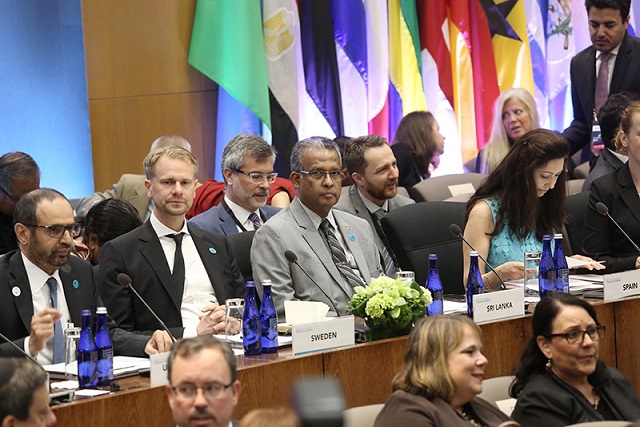
Representing Sri Lanka at the Conference to Advance Religious Freedom, Secretary to the Ministry of Foreign Affairs Prasad Kariyawasam remarked that Sri Lanka remains committed to advance and uphold the right to freedom of thought, conscience and religion; including freedom to change ones religion or belief, and freedom, either alone or in community with others and in public or private, to manifest ones religion or belief in teaching, practice, worship and observance. Stating that Sri Lankans believe in the ability of religions to contribute to building peace and stability around the world, he acknowledged challenges to inter-religious understanding and harmony in Sri Lanka, and outlined steps being taken to overcome challenges and advance religious freedom. He also stressed that Sri Lanka will join the international community to foster what the world needs most today to progress – peace, compassion, mindfulness, and justice, and recognition of our common humanity.

These remarks were a part of the Secretary’s opening statement to the first Conference to Advance Religious Freedom hosted by the US Secretary of State Michael R. Pompeo from July 24-26 in Washington D.C.

Government representatives of over 80 countries, as well as religious leaders, civil society representatives, representatives of non-governmental and international organizations participated in this Conference to discuss challenges facing religious freedom globally and to develop responses and solutions to address religious persecution and discrimination.

Inaugurating the Conference, U.S. Secretary of State Michael R. Pompeo remarked that the United States advances religious freedom in its foreign policy, as it is a universal right of all mankind. The keynote address at the event was delivered by Vice President of the United States Michael Pence, who observed that religious freedom is in the interest of peace and security of the world, as the denial of religious liberty imperils other fundamental freedoms and democratic institutions.

Sri Lanka was among a number of countries that endorsed thematic statements issued at the Conference focusing on Blasphemy/Apostasy Laws, Religious Freedom Repression by Non-State Actors, including Terrorist Groups, and on Counterterrorism as a False Pretext for Religious Freedom Repression.

Read Sri Lanka’s opening statement.

Embassy of Sri Lanka
Washington D.C.

Dr. Krishan Ramasundaram says “What the Sri Lanka Army is doing for the Tamils the TNA is not doing”

July 27th, 2018


Dr. Krishan Ramasundaram from the Arunalu People’s Alliance should shock many people in particular those who are holding supposed to be unbiased & non-partisan positions for their lies too are exposed by the statements made by this doctor who says the Tamil people in the North are happy with the Army, they treat the Army as Gods & that if the Army are removed from the North, it would be the end of the North. This is not the version that the supposed to be unbiased NGO heads are projecting? Why are they lying & for what reasons? The International Community & the UN are believing these lies & helping create further chaos by doing so going so far as to even change the constitution. From what this doctor says there is absolutely no need for a new constitution & there is no need for any special programs on reconciliation because there is nothing to reconcile as the people have no issues. Only the politicians, NGOs, international community & their agendas are dividing us.

The Sri Lanka Army are helping Tamils in many ways – helping them find jobs, put up tube wells, help start farming, giving bicycles, supplying drinking water, helping their education, helping kovils. In short, he says that every aspect that the Tamil politicians should be doing the Sri Lanka Armed Forces are doing.

Dr. Ramasundaram says that when people are asked about the Sri Lankan Army, they say that the army are good, that they help them in many ways. The TNA however, doesn’t like the Tamils giving the army a good character certificate! The TNA is demanding the Army to be removed because they don’t want the Tamil people & the Sri Lankan Army to get close because then the shortcomings of the TNA get highlighted. That is why the TNA is continuously demanding the removal of the army using the excuse of giving back lands etc. The army are even giving coconut plants for people to plant.

Dr. Ramasundaram especially thanked the military citing that the Tamil people did not have any freedoms or rights before the conflict concluded in 2009. He confirms that over 5000 Tamils have been recruited to the civil defense forces and are employed in various technical areas earning over Rs.50,000 per month.

Dr. Ramasundaram makes a very poignant & clear statement that if the Armed Forces are removed from the North, it means the end of the North.

What the people of the North need are basic needs – education, health, economy are declining. In former times the North produced doctors & engineers, now that is not happening. Before anything people need to have food to eat. Refugees were asked to return promising to give them homes, employment etc but nothing of the sort has happened and these people have to go begging to their relations homes.

For the role that the Sri Lankan Army are doing that the TNA & other politicians are not doing, we have to be grateful to them. It is because of this yeomen service that they cannot be removed from the North.

Dr. Ramasundaram says that he has asked the Tamil people what their personal views are about the army & they have all said that the Sri Lankan Armed Forces are like Gods to them! There are some Tamil families who keep photos of the Army & daily thank them for helping their lives. This is the truth that everyone has to accept.

If Tamils can build kovils & buy property in the South then the Sinhalese should be able to build Buddhist temples & buy property in the North. Sinhalese are even helping build these kovils in the South, so why is it wrong for Sinhalese to build Buddhist temples in the North. What is the logic of it is ok to build kovils in the South but no Buddhist temples in the North?

Not one Sinhala leader has emerged from the North but there are plenty of Tamil politicians emerging from the South. Even Moneragala has produced a Tamil politician with just a handful of votes. The Mayor was a Tamil doctor. If the Sinhalese were racist the Tamils wont be holding high positions!

Not one Sinhalese doctor has been produced from Jaffna university but there are enough of Tamil doctors passing out from the Southern universities. All the leading businessmen in Sri Lanka are also Tamil. The past & present Governors of the Central Bank are Tamil. The Opposition Leader is Tamil (Sambanthan), Sri Pavan became the Chief Justice, Chief Minister Wigneswaran is shouting for no reason when his own son is married to MP Vasudeva Nanayakkara’s daughter. Wigneswaran is enjoying Sinhalese meals with them & then shouting racism against Sinhalese when he comes to the North.

The TNA says only the Tamils & minorities have problems but in reality the Sinhalese also have problems. Tamils can live & work anywhere but Sinhalese can’t.

In short, we have no Tamil leaders who care about the welfare of the Tamils. After TNA came into the political scene they have ruined relations & have not provided for Tamils. TNA is losing popularity. People are watching & with more alternative groups emerging the TNA vote base is slowly reducing.

Dr. Ramasundaran repeatedly reiterated that the Sri Lankan Armed Forces must remain in the North for true peace to prevail. He also reiterated the need for everyone to be resettled implying the need for the Sinhalese to be resettled in the North as well & said that only then the two communities will learn to live in harmony otherwise the Tamils will not know who the Sinhalese are. If Sinhalese are settled in the North, then a Sinhala leader should also emerge from the North. This is a unitary state. Dr. Ramasundaran opposed the manner TNA was asking the army to be removed from the North & the opposition to the Sinhalese resettling in the North.

Dr. Ramasundaran gave the example of Malaysia to say that if a person could not speak Malay language, he could not even wash the toilets. However, we do not have that problem in Sri Lanka.

Dr. Ramasundaram clearly stated that the TNA does not wish to bring harmony & is eternally drumming the racist card to remain in politics & that there are some Sinhalese parties also helping them the same that supported Vijayakala.

Speaking in English Dr. Ramasundaram highlighted that Rs.800m had been allocated to the Northern Provincial Council & TNA had done nothing for the welfare of the Tamil people. He goes on to say that though the Indian Government has built 50,000 houses these have yet to be handed over but it is not being handed over because there is no water facility, no toilet facility & no water.
He says that Buddhism has been in the North for a very long time & that the Sinhalese have every right to live in the North if Tamils are buying land, building homes & kovils & living in the South.

https://www.facebook.com/tharu.mithuru/videos/1811509152264198/ (Sinhala)
https://www.youtube.com/watch?v=4SqU57gcJoU (English)

From these shocking truths the government must take a step back & realize that they cannot take the country into another era of turmoil by bringing drastic changes when obviously the reasons given to make those changes are completely false.

The allegations against the army are false – demanding their removal, the Tamil people want the army
That the TNA is representative of the Tamils is false – the election results & decreasing popularity of the TNA is proof.
That the Tamils are discriminated is also false – Dr. Ramasundaram clearly points out these facts

These are the very arguments that are being thrown to justify changing the constitution but to see these excuses are all lies & falsehoods – so who have been spreading them? The politicians, the local NGO heads, segments of the international community for their own agendas… in short external & anti-national factors. Therefore the Tamils & Sinhalese must now join to say – WE DO NOT WANT ANY NEW CONSTITUTION. WE DON’T NEED ANY NEW EFFORTS AT RECONCILIATION BECAUSE WE HAVE NEVER BEEN IN CONFLICT. Sri Lanka suffered a terrorist conflict not an ethnic conflict. Deal with the terrorists & remove them from disturbing the peace. If any reconciliation is needed take all these mischief makers who have been spreading lies & teach them compassion & help them disassociate themselves from their evil ways


Shenali D Waduge

POLITICS OF GABAGE IN SRI LANKA

July 27th, 2018

BY EDWARD THEOPHILUS

Sri Lanka is appeared to be a strange country where we can see that everything in the human life are using as points to debate, comments or argue in political platforms, whether people of the country feel it is right or wrong.  Life issues are used to gain political advantages misleading voters. The reality of the country is the majority of people irrespective of political differences, are not happy with the invasion of politics for every matters in human life.  Many irrelevant matters of the country are used by politicians for surviving in the political life.  Politicians very often mislead general public with a view to cheating them for gaining advantages such as popularity, coverup of corruptions or gaining votes in the next election.

If we critically review the behaviour of political parties since independence in 1948, we clearly find that politics of Sri Lanka has been entirely diverted to the issues that have not significantly deliberated to be a part of politics. The international political forces understand the weakness of political arena in Sri Lanka and they use the situation for power play or damaging the progress of the country.  Although Sri Lanka was comparatively in front of economic development before Korean war, now it has lost to many countries in Asia, one of the visible reason for this backwardness could be regarded as misunderstanding and neglecting of the role of politics.

As a citizen of a country anyone contemplates that the most significant aspect of the role of politicians is to developing of vital policies for economic, social and cultural improvements.  In other word, the development of successful policies for the benefits of citizens should be the prime and essential role of politicians when they are discharging own duties. People of Sri Lanka are of opinion that politicians are paid comparatively higher salaries and fringe benefits in return for the duties that they are supposed to perform. Therefore, the prime role of politicians, if they honestly and impartially discharge, would be supporting to have a comfortable life for citizens.  The economic development would bring jobs and revenue for people and they could happily live in the society with less problems and also without creating problems to the government. The role of politicians in all over the world seems that there is no specific difference and they attempt to work consistent with public needs but the politicians in Sri Lanka have considerably departed from the expected role and they use the positions, which were given by the votes of the public, misuse involving in irrelevant issues as a tactical strategy.

The behaviour of politicians or political parties in Sri Lanka exhibits that they have departed from the fundamental role of politics. The engagement in destructive roles using irrelevant matters in politics would lead to a human tragedy or coverup corruptions of politicians.  I visited Sri Lanka some years ago and saw a mountain in the North Colombo area near Kelani river.  It was really a surprising point to me as I never noticed a mountain in Colombo except Rasamuna Kanda.  I have been living in Kotahena for a considerable period and it was a point to surprise me as how quickly emerged a mountain without a massive geological occurrence such as earth quake or any other.  I asked a person walking on the road what is that mountain directing the hand to the mountain, there were no mountains in Colombo when I was living for a long time in that area.  He replied it is accumulated garbage in Colombo without effectively disposing them, later they became a mountain”.  According to my professional background I thought it was a serious health hazard to people in the area whether they had an affinity to any religion, political party or any ethnic group. Thank to Rajapaksa government, the garbage mountain has converted to a housing complex now.

Sri Lanka used excellent techniques for garbage disposal in the past.  Before the British rule, rural people disposed rubbish using a variety of techniques.  One of the popular technique was, household dumped garbage into a hole dug in living land and when it fills up, the hole was closed with removed soil and planted yam or banana plants on the top.  The other technique was collected garbage used to make compost fertilizer for paddy fields and other farm activities.  In that sense, they used garbage as an asset, which enhanced the productivity of farms.  During the British era, there were two major private companies, A Bour Co Ltd and Colombo Commercial Company Ltd, which used garbage to produce fertilizer to use in the plantation industry and subsistence agriculture.  Later those two companies were nationalized by a socialist government and appointed political henchmen as competent authority, who had no management knowledge and skills than a membership of the political party. The activities of the companies were paralysed and the productivity of the agriculture and plantation sectors rapidly declined creating a garbage problem to the country with a view to playing politics.

The garbage disposal in urban areas is a priority in all over the world as it affects health of the general public and other services such as tourism industry and economic services.  In India garbage use to produce bio gas for domestic use.  According to reported information, bio gas is a cheaper energy for household in rural areas and it could be used to produce gas for electricity generation.  The garbage disposal has been a more complex activity during the past several decades because population has increased in many countries and more garbage   produced in rapidly urbanizing areas.  The nature of garbage also changed as hard rubbish and soft rubbish.  Therefore, rubbish requires to classify before dispose them as some of them could be recycled to produce other products.  For example, some countries use plastics bags to produce toilet papers with a view to naturally destroying them.

In Sri Lanka, it seems that the country is lacking engineering knowledge and technical skills to use right strategies or inventing methods for the garbage disposal, despite the rhetoric of the country that has a higher literacy and numeracy skills.   It is regret to note that Sri Lanka is a country where exports skilled labour to various countries in the world but they cannot develop a methodology to dispose own garbage. it reminds us an ancient saying in Sri Lanka that there is not a chair in the house of a furniture maker.

In late 1960s and early 1970s, Sri Lanka was highly concerned on garbage disposal as a strategy for the tourism promotion, Keep the major city of Sri Lanka is tidy and attractive to people.  However, after 1970 many administrative councils were subject to a rapid politicization and the members of all local government bodies became members of political parties.  After the 13th amendment to the constitution, new administration bodies also called provincial and district councils originated.  They also became politicized institutions, which means that a huge volume of government expenditure from the budget should have allocated to administration services and the administrators have engaged in playing politics and corrupt practices rather than providing essential services to the community using the allocated funds.

After ending the civil war in 2009, Mr Gotabaya Rajapaksa took responsibility to managing the Colombo city and did a good service to keep the country tidy and beautiful, but since the presidential election in 2015 he was removed by the new government and the services provided by Mr Gotabaya Rajapaksa was stopped without reasons for it.  This is how politics is damaging the country and destroy ordinary human life. The stupid politicians in the country have no knowledge and skills to determine what is right or wrong to the country.  They are so selfish and self-centred.

The major health issue of the country at this moment is dengue fever and it kills poor people at a higher rate. Dengue fever is a common disease in the tropical region of the world, most countries have adapted to the disease using human friendly techniques.  I saw in Pacific countries the governments provide treated mosquito nets to people and advices to sleep under the nets. The technique has successful and able to control mosquito born disease at a lesser cost.  Sri Lanka is regarded as a country with an educated population.  Why it cannot use a simple and lower cost technique to control this garbage and related issues. I watched in Sri Lanka TV that Prime Minister admitted that the country cannot adapt a successful strategy to control dengue fever, when there is a serious problem related to garbage disposal.  The common question people are silently asking from the Prime Minister is if you know the reason, why can’t you to take actions to control it.

The recent information in Sri Lanka provides evidence that number of dengue patients have increased to more than 100000 and 260 people have already died in 2017.  The increasing trend imply that hospitals in the country would not be sufficed to accommodate for dengue patients in the future. Some politicians attempted to blame to Rajapaksa regime on account of anembryonic mosquito eggs and others say that when he was in power dengue was not so serious problem.  This type of childish talks only could be made by these politicians in Sri Lanka.    I also noticed that Sri Lanka advises people to prevent smoking, alcoholism and illicit drug as such substances would cause to increase the cost of medical expenses. The garbage is also costlier than smoking, alcohol and illicit drugs.

The major issue involved in Sri Lanka appears that when politicians attempt to use everything for politics the country cannot successfully implement any plan, which is originally expected.  Why are people of Sri Lanka allowing these politicians to take everything in their life to politics and why don’t they refuse politicians behaviour with a view to teaching them a lesson. I feel that Sri Lanka has no independent media to educate people on the right side of issues. All media devices including TV, Print Media and Internet provision too are in the hand of politicians or indirectly they link to politicians.  As a result of bias ownership of media, people have no opportunity to get accurate information in relation to all matters of the life.

Hang Your Head In Shame, Instead Of Hanging Convicts!

July 27th, 2018

Rohana R. Wasala 

TO WHOM IT MAY CONCERN:

The cabinet spokesman told the media on July 25, 2018, as reported on Hiru News, that the cabinet has unanimously approved the (presidential) decision to implement the death penalty even if the EU withdraws the GSP+ facility in response as warned. Though I personally do not attach much credibility to the particular person’s statement, I thought as a patriotic Sri Lankan that it would be in the national interest to sound a warning before it is too late. (Caveat: It is hoped that no one will get upset by this personal opinion of a non-politician which is being described here for what it is worth.)

Beware! The forfeiture of the GSP+ concessions is not the real issue. The real issue is the impact of bringing back the death penalty on the amelioration of the law and order situation in the country. Those who are determined to impose a ‘final solution’ on Sri Lanka have cynically manipulated for a noose to be slung around her neck in the form of this controversial proposal for implementing the death penalty at this particular juncture after a suspension of over forty years. They are trying to give a dog a bad name and hang it. To elaborate: these very same people who have now begun loudly criticizing the proposed re-implementation of the capital punishment and threaten Sri Lanka with a suspension or total withdrawal of the GSP (The previous government did very well without it, though, and without the death penalty either) were suspected to be behind the 2015 regime change, which was a geopolitics centred exercise; the change, by now, has proved disastrous for the country. Their protégés are in the process of fulfilling their promises against the popular will, but the economic help (investments, financial grants, etc) that they were made to expect) appears to be not forthcoming, understandably because their own economies are in bad shape. Now it is convenient for them to find an excuse for washing their hands of their obligations to their potentially useful third world ‘protectorate’.

They know, as the saner citizens among us do, that hanging the convicts currently in the death row is no solution for the problem of drugs trafficking. It would be unfair for us to expect outsiders such as Americans, Europeans and Indians, though no doubt they are our friends as they have already demonstrated, to be so deeply worried about this problem as we are, who are the people directly affected by it. They are not worried about whether convicted drug traffickers hang or not, either. The people who are the most worried about the ever growing drug addiction menace among the young are their parents. But these friends in disguise are not worried about that. Neither should we expect them to be. However, the anarchic situation prevailing in all spheres of governance including particularly law and order (whose handiwork that is, let us forget for the moment) seems to have suddenly thrown up this apparent demand for the immediate resumption of executions as a deterrent against serious crime (particularly, narcotics traffic, murder and rape). Desperate but innocent ordinary citizens unaware of the far-reaching implications of  the president acting like a reckless autocrat bent on a vindictive crusade on this occasion dealing death to the convicted drug traffickers might hail him as a hero. But he himself is unlikely to resort to such a foolhardy course of action even though he might find it an easy way to try to restore at least some of his lost credibility. His two immediate predecessors also came under pressure for re-implementing the death penalty, but they somehow managed to wiggle out of it. It must be admitted, whether we like it or not, that under the previous government, the better maintenance of law and order minimized underworld criminal activity including drugs trafficking, without the help of the judicial executioner.

Buddhist monks have already expressed their disapproval. However, many ordinary citizens, in their desperation, appear to be in favour of the convicts being hanged. An old woman of 71 has offered to do the job of executioner for free! Some well meaning civil leaders including a few religious dignitaries seem to endorse the idea as a last resort for controlling serious crime. An outspoken politician of the nationalist camp stated recently that the Buddhist teaching was that the monks and the laity should obey the law of the country, which, of course, is true. However, this politician apparently endorses the bringing back of the capital punishment, considering it as an essential part of the country’s law enforcement machinery. My opinion, though, is that even judicial killing is contrary to the Buddhist teaching. The Buddhist stand (i.e., no death penalty) is compatible with the modern secular view of morality that is gaining ground across the world.

Out of the 195 countries in the world, according to Amnesty International, 101 countries have abolished the institution of capital punishment; in 39 countries it is in abeyance; so, judicial killing as punishment is not practiced in 140 countries. This means that nearly 72% of the countries do not have the death penalty. I think a Sri Lanka without the death penalty should be in good company.

I, for one, am against the re-implementation of the death penalty, which has been suspended since 1976. The capital punishment is an uncivilized, inhuman way of ‘exacting’ justice. It is not restorative justice; it is retaliatory justice (the savage medieval an eye for an eye, a tooth for a tooth” system of justice). When the resumption of executions was proposed within a few months of the inauguration of the present regime, as it is being done now even more menacingly, I participated in the general exchange of views regarding the subject at the time by contributing an article to this newspaper. It was under the title Abolition of capital punishment: an acceptable absurdity” (The Island/June 10, 2015). The concluding paragraph of that particular write-up was as follows:

“There are those who think that death by hanging or other method is ‘just deserts’ for someone who has been found guilty of murder, rape, or drug dealing. They would argue that it is absurd to worry about the human rights of criminals who have deprived innocents of their human rights. But I feel that our concern for a person convicted of a crime does not actually exceed that for their victim. It is that we tend to extend the same degree of fellow feeling towards both in spite of the stark differences in their circumstances. We share the general unsatisfactory nature of human existence with both. The resultant feeling of compassion for another human being is the essence of humanity. Therefore the abolition of the death penalty should be seen as an acceptable absurdity.”

So, my position is that not only should the suspension continue, but eventually the death penalty must be totally abolished. Of course, judicial punishment is indispensable in administering the law in any society. But it needs to be applied for the reform of the offender, and in a broader context for the deterrence of crime. Proper administration of the law is the inescapable duty of any government. No excuses can be allowed for a government’s remissness in executing this responsibility.

To me it appears that the president has been bamboozled (i.e., fraudulently persuaded or bewildered) by someone to take this questionable decision, ignoring the obvious. The immediate circumstance that triggered his seemingly ironclad resolve to hang the condemned for drug trafficking (18 of them as reported) who have been languishing in jail for years now is the alleged discovery that some of them have directed murders and other crimes from their prison cells. There is a problem here. Can executing all of them including those who are suspected of having masterminded crimes from within the prison walls be a good solution?  Of course not.

A vital question is ‘Who is to blame for making it possible for the convicts to do this sort of crime?’ Has the minister in charge of prisons resigned over this unspeakable lapse or at least done something about the prison authorities whose failure to prevent such heinous breaches of inmate supervision? Shouldn’t that real problem be solved first and remedial action taken to prevent any repetition of similar criminal negligence of duty on the part of prison officials? Of course, this is not the first time such a thing happened. It must have happened in the past too. There is also a perception that there is a longstanding link between criminals and politicoes, a deplorable situation for which politicians present and past share direct responsibility. Though that is true, it should not be cited as an excuse for the incumbent administration to perpetuate the pernicious tradition and exploit it for their own ends. Bad politics is largely  responsible for the recrudescence of drug related and other types of criminal violence in our society.

The question that naturally arises where the death penalty is abolished or not practiced is ‘What is the alternative?’ Strict enforcement of the law is the answer. If the existing laws are inadequate, let’s make new laws. Judicial killing is revenge killing by the society or retaliatory justice. Is there any reformative value in it? None, because the person to be reformed is dead. It could be of some limited deterrence value, though, because it could discourage potential murderers, rapists, etc. But hardened criminals are usually suicidal. Fear of losing the right to live – of risking the death penalty – is nothing for them. In place of the death penalty, appropriately extended  life imprisonment can be made so grueling for unrepentant murderers, unpardonable rapists and drug traffickers as to make them rue the day they were born. That will prove a more severe punishment for them than instant death through hanging or other form of execution. But even that kind of extreme punishment in lieu of capital punishment need not be inhuman. Human beings change. Convicted criminals are also human. After serving a prescribed maximum period of time, they should be able to qualify for being considered for parole (temporary or permanent) when they have reformed and when their release from prison is certified to be 100% safe to the society  by qualified official psychiatrists. The primary responsibility for this must be shouldered by politicians, but they must be careful not to politicize crime and prison management.


කැරකි කැරකි එන  නව ව්‍යවස්ථාව හෙවත් ගොන් විස්ස පරාජය කරමු

July 27th, 2018

පාලිත ආරියරත්න

වත්මන් ආණ්ඩුව හෝ ඉදිරියේදී ඇතිවන කිනම් ආණ්ඩුවක් විසින් හෝ රටේ සිටින මහජනතාවගේ හා ඔවුන්ගේ බුද්ධිමතුන්ගෙන් නොවිසා නව ව්‍යවස්ථාවක් ගෙන එම හා මෙම රට අනාගමික රටක් කිරීමට මාන  බලන කුඨ කෙෙරාටික සටකපට එන්.ජි.ඕ හා සමහර වාමන්සික බඩගෝස්තරවාදීන්ද , ප්‍රසිද්ධයැයි කියන අමන දේශපාලන පක්ෂ හා නොරටුන්ගේ දෙශපාලකනයන් (මේ අද දිනද) ඒකතුවී ඉදිරියේදී කරන්න යන්නාවූ ඒ මහා ජාතියට හේන පහරක් එක්කිරීමට මේ රට ඉදිරියේදී භයානක අනතුරු රාශියකට මුහුණ දීමටද  තුඩු දෙන මේ මාර විස්ස අපි සියලන්ම එකතුවී පරාජය නොකලොහොත් අප සිහල ජාතියේ අවසානයද භෞමික අඛණ්ඩතාවය අවසානයද  රටේ ගංගා සම්පත් සියල්ද (ඉදිරියේදී) ක්‍රමානුකුල නොරටුන් විසින් ඞැහැ ගැනීමේ කුමන්ත්‍රණයකට ඉඩදීමක් වසයෙන් ගත හැක .

පක්ෂ පාට නොබලා ක්රියා කල යුතු අතර මෙහී භයානකම අනතුර වන්නේ සිවුරු පොරවාගත් කිහිප දෙනෙකුද මුදල් හා දේශපාලන හෙන්චයින් හරහා මිතරු කොටගෙන පක්ෂ කොටගෙන මේ හොරෙන් නයි නැටවීමේ කාර්යට බත් බැලයන් කොටගෙන සිටීමයි.

මෙම බරපතළ සහ අවදානම් සහිත ව්‍යවස්ථාව පරාජය කිරීම සඳහා පාර්ලිමේන්තුවේ 2/3 බලය ලබා ගැනීමට අවශ්‍ය කටයුතු සිදු කරන බව විවිධ  මන්ත්‍රිවරයන ප්‍රකාශ කර තිබුනත් ඔවුන්ගේ පක්ෂ වාදී දේසපාලනය නිසා අනිකුත් පක්ෂවල සිටින සාමාජිකයන්ගේ අවධාරණය මෙම විනාශයට එරෙහිව යොදාගැනීමට නිසියාකාරව තාම බැරිවී තිබේ මෙය ඉතා කනගාටු දායක තත්වයකි.

විද්වතුන් අතරම මෙම කෙටුම්පත පිළිබඳව විශාල මතයක් දැනට ඇතිවී තිබෙන බවත් දේශපාලකයා නොදනී බුද්ධිමතුන් වල්බුත දොඩවන්නන් ලෙසත් කාලකන්නි දේශපාලන මත දරන්නන් වීරයන් ලෙස හුවා දක්වමින් උන්ගේම ගෙවල් වල දරදිය අදින දේශපාලන පක්ෂ කාලකන්නි ක්රියා කරගෙන යයි.

මහාජනතාවගෙන් බහුතරයක් ඉල්ලුවේ ඇති ව්යවස්ථාව නැති අතර සමහර වාමන්සික හා පුද්ගලික තරහා පිරිමාහිමට ඉදිරියේදී හෝ අනාගතයේදී පත්වීමට නියමිත නායකයන් ගේ අයිතීන් අගරු කිරීමට හෝ රට වැඩිමනක් වශයෙන් විනාශය කරා රැගෙන යන නායකයන් ගේ බලය පවත්වාගැනීමට ආණ්ඩුක්රම  ව්යවස්ථා සංශෝධන වැඩපිළිවෙලවල් අනුග්රහා කොටගැනිමම ඉතා නින්ධිත ක්රියාවකි එය භයානක සතුරු උපද්‍රවයකට වඩා බරපතල කාරණයකි.

දැන් අපි මෙම අනතුරේ තවත් නොපෙනන පැත්තක් දෙස හැරී බලමු: පුද්ගලිකව හෝ සංවිධාන මගින් කියනාවූ ප්‍රකාශ කිහිපයක්:

ආගම සහ දේශපාලනය :

1. ශ්‍රී ලංකාවට හඳුන්වා දෙනු ලබන අභිනව ආණ්ඩුක්රම ව්යවස්ථාව අනාගමික එකක් වීම සිය පෞද්ගලික අභිමතය වෙන බව නව ආණ්ඩුක්‍රම ව්‍යවස්ථා කෙටුම්පත් කමිටුවේ සාමාජික පාර්ලිමේන්තු මන්ත්‍රී ආචාර්ය ජයම්පති වික්‍රමරත්න පවසයි.

-2016 ඔක්තෝබර් 10 BBC පුවත් සිංහල

2. කෙසේ වුවද නව ආණ්ඩුක්‍රම ව්‍යවස්ථාව සැකසීමේ දී පවතින ප්‍රායෝගික තත්වයන් තේරුම් ගත යුතු අතරම ආගමික සංස්ථාවන්ට සමාජ ප්‍රතිසංස්කරණ සඳහා බාධා කළ හැකි දොරටු ආවරණය කළ යුතු බවයි.ශ්‍රී ලංකාවේ සමාජ ප්‍රතිසංස්කරණ සඳහා කටයුතු කරන්නන් ආණ්ඩුක්රම ව්යවස්ථාව නිර්ආගමික එකක් විය යුතු බව විශ්වාස කරනවා. විශේෂයෙන්ම ශ්‍රී ලංකාව තුළ සංහිඳියාව ගොඩ නැගීමේ දී ජාතිවාදය පරාජය කිරීම ප්‍රමුඛස්ථානය ගත යුතුව තිබෙනවා. එහිදී අන්තවාදී කොටස් රාජ්‍යතන්ත්‍රයට කරන බලපෑම අවම කිරීමේ යාන්ත්‍රණයක් අවශ්‍ය කරනවා’ -යාපනය විශ්ව විද්‍යාලයේ වාග්විද්‍යා අංශයේ ජ්‍යෙෂ්ඨ කථිකාචාර්ය සාමිනාදන් වාග්විද්‍යාව පිළිබඳ ජ්‍යෙෂ්ඨ කථිකාචාර්යවරයා

-2016 ඔක්තෝබර් 10 BBC පුවත් සිංහල

3. වත්මන් ආණ්ඩුව නව ව්යවස්ථාව හරහා වංචාව නීතිගත කිරීමට උත්සාහ කරන බවත් මෙම ව්‍යවස්ථාව සම්මත වුවහොත් අගමැති රනිල් වික්‍රමසිංහට 2020 ජනාධිපතිවරණයේ සිහිනය සැබෑ කර ගැනීමට නැවතත් පසුබිම සකස් වන බව පාර්ලිමේන්තු මන්ත්‍රි මහින්දානන්ද අලුත්ගමගේ පැවැසීය.

– 25-7-2018, බොරැල්ල ආචාර්ය එන්.එම්. පෙරේරා කේන්ද්‍රයේ පැවැති ඒකාබද්ධ විපක්‍ෂයේ මාධ්‍ය හමුවෙදී

4. මහින්ද රාජපක්‍ෂ මහතාට 19 වැනි ව්‍යවස්ථා සංශෝධනය ගෙනැල්ලා මැතිවරණයට ඉදිරිපත් වීම වැළැක්වුවා. ගෝඨාභය රාජපක්‍ෂ මහතා හෝ කවුරුන් හෝ කෙනෙක් ජනතාව ඉදිරියට පැමිණීමට කටයුතු කරන්නේ නම් එය වැළැක්වීමට මෙම කෙටුම්පතෙන් පාර හදලා තිබෙනවා. පළාත් බද පොලිසිය හැදීම ගැනත් මෙහි සඳහන් වෙනවා. පැහැදිලිව ප්‍රකාශ කළොත් මෙහි කොමිෂන් 02ක් තිබෙනවා. ජාතික පොලිස් කොමිසම සහ පළාත් පොලිස් කොමිසම. උතුරු පළාත් සභාව විසුරුවන්න ඔන්න මෙන්න තිබෙන්නේ. මැතිවරණයකට යන්න කලින් ඊව්ඒ එක පැහැදිලිවම කියනවා නම් ආණ්ඩුක්‍රම ව්‍යවස්ථාව සම්මත කළ යුතුබව
-25-7-2018, බොරැල්ල ආචාර්ය එන්.එම්. පෙරේරා කේන්ද්‍රයේ පැවැති ඒකාබද්ධ විපක්‍ෂයේ මාධ්‍ය හමුවෙදී


  1. මේ ආණ්ඩුව එක්තරා බලවේගයන් කිහිපයකගේ එකතුවක් අධිරජවදින්ගේ බලය ,ඩයස්පෝරාවේ බලය ,දෙමල ජාතික වි බලය හා වෙනත් වෙනත් කුඩා කණ්ඩයම් වල බලයෙන්.

    -මන්ත්‍රී වාසුදේව නනයකර රටට තුරු විස්ස එපා සමන්ත්‍රණය මහනුවර 29-06-2018


  1. දින 100 ජනාධිපති ක්‍රමය වෙනස් කරනවා කියලා ආපු මෛත්‍රිපාල සිරිසේන මහත්තයාට අවරුදු 3 ක් ගියාට පස්සේ ජනතා විමුක්ති පෙරමුණ අතට ආණ්ඩුක්‍රම කෙටුම්පතක් අවේ ඇයි ?  ඕක හැදුවේ ජයම්පති වික්රමරත්න. අනුර දිසානායක කියනවා විජිත හේරත් තමා මේ යෝජනාවේ අයිති කරය කියල, විජිත හේරත් මහත්තයා කියනවා තව කෙනෙක් යෝජනාවේ අයිතිකාරයා කියලා. විසිවෙනි සංශෝධනය අවජාතකයි

    -මන්ත්‍රී විමල් වීරවංශ මහතා රටට තුරු විස්ස එපා සමන්ත්‍රණය මහනුවර 29-06-2018


  1. පාර්ලිමේන්තුවේ හමුවෙලා රහස් සාකච්ඡා පවත්වමින් කලින් සකස් කළ ලියවිල්ලක් ලෙස ගෙන ඒමට සුදානම් වන ආණ්ඩුක්රම වයවස්ථාව සංශෝධනයෙන් ඒකීය සංකල්පය කුඩු පට්ටම්කර දමා ඇතැයි ඒකාබද්ධ විපක්ෂයේ පාර්ලිමේන්තු මන්ත්‍රී විදුර වික්‍රමනායක මහතා ඉකුත්දා (20) පැවසීය.
    කාගේ හෝ වුවමනාවකට රටේ කොටසක් එක් කණ්ඩායමකට දීමට කරන මෙම දේශද්‍රෝහික්‍රියාදාමය තුළුන් මේ රටේ තවත් ඊශ්‍රායලයක් හෝ ලෙබනනයක් විම කිසිවකුටත් නතර කළ නොහැකියි. අපේ 1978 ආණ්ඩුක්රම වයවස්ථාව මේ වනවිට 19 වතාවක් සංශෝධනය කර තිබෙනවා.ව්යවස්ථාවක් කියන්නේ පරම්පරාගත ලියවිල්ලක් පිළිගත් න්යාය වන්නේ ව්යවස්ථාවක් වසර 5 කට වරක් සංශෝධනය විය යුතු බවය. එසේ තිබියදී දැනට පවතින මෙම ව්‍යවස්ථාව අක්‍රීයකර දියාරු කර දැමීම සඳහායි අලුතින් ව්‍යවස්ථාවක් සම්පාදනය කරන්නේ.

– මන්ත්‍රී විදුර වික්‍රමනායක මහතා බත්තරමුල්ල නෙළුම් මාවත හිටපු ජනාධිපති මහින්ද රාජපක්ෂ සම්බන්ධීකරණ කාර්යාලයේ පැවති ප්‍රවෘත්ති සාකච්ඡාවකදී 20-02-2017


  1. නව ආණ්ඩුක්රම ව්යවස්ථාව බුද්ධාගමට හිමි තැන නැති කරන, රට බෙදන එකක් වන හෙයින් මේ අවස්ථාවෙහි රටට එය අනවශ් බවත් විධායක ක්රමය රටට ගැළපෙන බවත් අස්ගිරි පාර්ශ්වයේ නායක හිමිවරු ද ඒකාබද්ධ විපක්ෂයේ ඇතැම් නායකයෝ ද කියති.

    9. නොයෙකුත් පාර්ශවයන් විසින් ගෙනෙන අලුත් ව්‍යවස්ථාවට විරුද්ධව මා නාහිමිපාණන් ඒකමතිකව පෙරමුණ ගත්තා මේක ඉතා හොද ප්‍රවනතාවයක්. මේ රට බේරාගන්න මා නා හිමියන් ඉදිරියට පැමිණිය යුතුය. මම ඉදිරියේදී දේශපාලන වේදිකාවට එනවා. අපි මේ පාලනය වෙනස් කරන්න ඕන. NGO නඩ වගේම එක්තරා අම්මන්ඩි කෙනෙක් මේ රට විනාශ කරන්න ලැහැස්ති වෙනවා

    –  පූජ්‍ය ඇල්ලෙ ගුණවංශ හිමියන් වෙනස සැපද” යන මාතෘකාවක් ඔස්සේ පැවති රැස්වීමකදි


  1. බුද්ධාගම උතුරෙන් අහෝසි වී ඇති බවත් එවැනි අහෝසි වූ ආගමකට සහාය දැක්වීමෙන් ද්රවිඩ සන්ධානය වැරැද්දක්කර ඇති බවත් උතුරු මහ ඇමැති සී. වී විග්නේෂ්වරන් ප්රකාශ කර ඇත.යාපනයේ කයිලාසපති ශාලාවේ පැවැති ද්‍රවිඩ ජනතා කවුන්සිලයේ සමුළුව අමතමින් ඔහු මේ බව කියා සිටියේය.
    යෝජිත ආණ්‌ඩුක්‍රම ව්‍යවස්‌ථාව සම්බන්ධ අතුරු වාර්තාවට සහාය දැක්‌වීමෙන්ද ද්‍රවිඩ සන්ධානය තවදුරටත් වැරැද්දක්‌ කර ඇතැයි හෙතෙම තවදුරටත් පවසයි.
    යුද අපරාධ චෝදනා ගැන විමර්ශනය කිරීමත් බලය විමධ්‍යගත කිරීමත් ද්‍රවිඩ ජනතාවට අවශ්‍යම දෙයක්‌ බවද විග්නේෂ්වරන් මහතා එම සමුළුව අමතමින් කීවේය.

    -උතුරු මහ ඇමැති සී. වී විග්නේෂ්වරන්


  1. නව ආණ්ඩුක්‍රම ව්‍යවස්ථා යෝජනාව ගෙන එන්නේ ඉතා විවෘතව සහ විනිවිද බවින් යැයි ද එය ජී. එල්. පීරිස්ලාගේ ජුන්ටා ව්‍යවස්ථාවක් නොවන බව ද අගමැති රනිල් වික්‍රමසිංහ මහතා ප්‍රකාශ කළේය.ත්රස්තවාදීන් රඳවා ගැනීමේ නීතිය යල්පැන ගිය එකක් බැවින් එක්සත් ජාතීන්ගේ සංශෝධන යටතේ සඳහා නව නීති සැකසිය යුතු බව අගමැතිවරයා කීවේය.

    මෙම උත්සවයට මහා සංඝරත්නය, සෙසු ආගමික නායකයන්, චන්ද්රිකා කුමාරතුංග හිටපු ජනාධිපතිනිය, අගමැති බිරිඳ මෛත්රී වික්රමසිංහ, බන්ධනාගාර නැවත පදිංචි කිරීම් සහ හින්දු කටයුතු ඇමැති එස්. ස්වාමිනාදන්, ළමා කටයුතු රාජ් ඇමැති විජයකලා මහේශ්වරම් යන මහත්ම මහත්මීන් ඇතුළු විශාල පිරිසක් මේ අවස්ථාවට එක්ව සිටියහ

– අගමැති රනිල් වික්‍රමසිංහ මහතා යාපනය වීරසිංහම් ශාලාවේ දී ඊයේ (151-2016) පැවැති ජාතික තෛපොංගල් උත්සවය


  1. විධායක ජනාධිපති ක්රමය පීඩාකාරි නම් එයින් වැඩිම පීඩාවට පත් විය යුත්තේ වසර 229ක් පුරාවට එය ක්රියාත්මක වන ඇමෙරිකා එක්සත් ජනපදයේ.  ඒ රටේ විධායක ජනාධිපති ක්‍රමය අහෝසි කරනු කියා ඉතිහාසයේ කිසිම දවසක උද්ඝෝෂණයක් තබා මැසිවිල්ලක් වත් මතු නොවන්නේ ඇයි?


ලෝකයේ රටවල් 95ක් විධායක ජනාධිපති ක්‍රමය ක්‍රියාත්මක කරද්දී වෙස්ට්මින්ස්ටර් ක්‍රමය ක්‍රියාත්මක වන්නේ රටවල් 44ක පමණයි.  විධායක ජනාධිපති ක්‍රමය ඒකාධිපති ක්‍රමයක් නම් ලොව බහුතරයක් රටවල් ආදරයෙන් වැළඳ ගත් ජනප්‍රියම ක්‍රමය බවට පත් වුණේ කොහොමද?

-පිවිතුරු හෙල උරුමයේ නායක පාර්ලිමේන්තු මන්ත‍්‍රී උදය ගම්මන්පිල මහතා


  1. ජනවාර්ගික ප්රශ්නය විසඳීමට නම් අලුත් ව්යවස්ථාවක් අවශ් බව ජාතික ඒකාබද්ධතා හා ප්‍රතිසන්ධාන රාජ්‍ය අමාත්‍ය ශ්‍රී ලාංකේය ජාතියක් ලෙස ලෝකය ඉදිරියට යෑමට නම් අලුත් ව්‍යවස්ථාවක් මේ රටට අවශ්‍ය වන බවත් ඒ හරහා මෙරට ආර්ථිකය ශක්තිමත් කරගැනීමට හැකි වන බවත් රාජ්‍ය අමාත්‍යවරයා පවසයි.

    -බේරේ වැව හා වොක්ෂෝල් වීදියේ ජීවත් වූ පැල්පත්වාසීන් 218කට නව නිවාස ලබාදීමේ උත්සවයේදී ,ජාතික ඒකාබද්ධතා හා ප්‍රතිසන්ධාන රාජ්‍ය අමාත්‍ය ඒ.එච්.එම්. ෆවුසි මහතා

    කාලයක් තුල විවිධ පුද්ගලයන් විවිධ ප්‍රකාශ තුලින් ජනතාව වන අපහට පෙනී යන්නේ ඉතා සියුම්ව දියත්වන අලුත් ව්‍යවස්ථාවක කෝණයකින් අප හට නොපෙනෙන කාගේ හෝ අදිසි බලපෑමකින් අපරට හා සම්බුද්ධ ශාසනයේ චිරස්තින භාවයට එරිහිව කුමක් හෝ නොපැහැදිලි දෙයක් උඩු දුවන බවයි.

    රට සංවර්ධනය කිරීම පසෙකලා (මේ උඩුදුවන), දැනට පවතින ව්‍යවස්ථාවේ පවතින සියලුම සුද්ධ කාරණා ද පසෙකලා රටේ ඒකීය භාවය, භාෂාවන්, ජාතින් අතර එකමුතුව, ජනවාර්ගික ප්‍රශ්නය,අන්තර් ජාතික සමුළු හා බලපෑම් , එන ජි ඕ ප්‍රශ්ණ , කල කෝහෝලාල , තම ජාතියේ අයිතින් හා මානව හිමිකම් කියා හෝ උඩු දිවීමට යන මේ මාර විස්ස (අලුතින් හදන ව්‍යවස්ථා මර උගුල )අප විසින් පරාජය කලයුතුය.

    මේ අවස්ථාවේ අප සියලන්ම සිටගත යුත්තේ රට පැත්තේ මිසක් කිනම් හෝ පක්ෂයක් පැත්තේ නොව. තාමත් හොර පදිංචිකරුවන් ,බ්‍රිතාන්‍ය කුලී හමුදා  වසයෙන් විදේශයන් සිට මෙහි පැමිනවුවන් ,අරාබි සම්තය ඔස්සේම ජිවිත ගත කරමින් රට රාජ්‍යන් පැහැර ගන්න

වුවන්ගේ කුමන්ත්‍රණ අඩුවී නොමැත අපේ ජාතිය සතු මීහරක් වැනි නායකින්ද මෙවන් භයානක උපක්රම දියත් කිරීමට උදවු දෙති. අහෝ ඒ සිහල අපට ගහපු කරුමයකි !

අපේ මාතෘ භුමියට ඇති  නිතියනුකුල උරුමකම  සිංහල බෞද්ධ වන අපගේන් නිතරගයෙන් උදුරාගැනීමට ඉඩනොතබමු.

සංවිධානාත්මක තොරතරු ජාලයන් තුලින් බෙදන ,හදන, වඩන ,එකමතුකමේ හෝ  දියුණුවේ හෝ ආරක්ෂාවේ  මංපෙත් හෙළිකරන මුවාවෙන් එන මේ මාරාන්තික විෂ සහිත විස්සේ පෙත්ත, නව ආණ්ඩු ක්‍රම ව්‍යවස්ථා අපි සැවොම එක්වී පරාජය කරමු.

ඔබ සැමට තෙරුවන් සරණයි !

පාලිත ආරියරත්න

Amarasekera’s  Search for Civilisational Politics – A review of “Sabyathva Rajya Kara”

July 27th, 2018

Book review by Prof. N. A.de S. Amaratunga

Author- Gunadasa Amarasekera

Publisher- Visadunu Prakashakayo

Dr. Gunadasa Amarasekera,  poet laureate, who has nothing but contempt for the politics and politicians of this country and who has been exploring our past civilization in an attempt to dig out a suitable remedy for our ills, as revealed in his many political analyses such as Ganadura Mediyama…”,  has authored another book on the subject titled Sabyathva Rajya Kara” which means Towards Civilisation State”. He has in his previous works attempted to show that Sri Lanka cannot continue to have an alien political system. He has argued in his works that only a political system based on our civilizational consciousness would succeed in governing this country and bring dignity and freedom to its people. The present system has the pretense of freedom, equality, independence and human dignity but in practice the people are denied of all this basic human rights. Instead they are blind folded by a façade of democracy, franchise, human rights, constitutions, judicial independence, freedom of expression etc. Moreover, it has produced a set of politicians who are corrupt to the core with involvement in crime and vice. The divisive nature of party politics and the ensuing violence has destroyed the unity in the village. What is worse is the failure of intellectual discourse to bring forth any meaningful and effective solution. Nobody has seriously challenged this fraud and attempted to see whether there is any plausible alternative.

Amarasekera’s contention had always been that if Sri Lanka is to find a home grown arrangement of government it has to be rooted in our civilization. Amarasekera is not without likeminded intellectuals of international repute. For instance, Martin Jacques a scholar on modern China who in 2009 has published the book titled When China Rules the World” in which he has put forward the concept of Civilisation State as against the Nation State. Then there was Samuel Huntington who published his book titled Clash of Civilisations” in 1996 where he dwelt on the lasting strength of civilization consciousness and its impact on politics. Before all this Amarasekera had put forward his theory of Jathika Chinthanaya” in his Ganadura Mediyama…” published in 1989 where he describes the characteristic features of the Bauddha Rajya” that existed in this country from the time of King Devanampiyatissa until 1815. He clearly shows that those features were rooted in our civilization. Unfortunately neither Huntington nor Jacques had realized that apart from China there had been civilisation states in other countries like Burma,Cambodia and Sri Lanka. Martin Jacques’ conceptualization of the state in China as a Civilisation State has prompted Amarasekera to take his arguments further and show us that his ideas are not farfetched and are in fact already in practice and most successfully at that in China. He does this eminently well in his little book Sabyathwa Rajyak Kara”.

What is the nature of a Civilisation State as against a Nation State?  The former, says Jacques, is well integrated with the people while the latter by its very nature is not, as it advocates less government control over affairs that eventually impact on everyday life. He distinguishes between civilization and civilization state. He says there have been  many civilisations but what is remarkable about the Chinese case is that civilization” and state” largely coincide not just over a relatively brief period but over an extraordinarily long one. And he says it is difficult to think of another similar example. This is where Jacques is wrong says Amarasekera. He shows that Sri Lanka has a longer history of a Civilisation State than China.  Further Sri Lanka’s system under the kings were more democratic than in China in the sense that the king did not have unlimited power. Perhaps ironically that ancient system may have been more democratic than the present presidential system! Trevor Ling had identified three pillars which supported that ancient state; the King, the people and the Sangha. If the king was not suitable to rule the country the people can get together with the Sangha and get rid of the king.

Definitions apart we could glean an idea about this matter by looking at the spectacular advances China has made in a comparatively short period in its history. In comparison India which had a similar history in relation to culture, science and technology has badly faltered.    In the nineteen forties China was an under developed isolated country and today it is the second most powerful country in the world. India, on the other hand, which was ahead of China in the nineteen forties is still struggling with its poverty. Different systems account for the extraordinary contrast between China and India. China’s economic transformation is said to be the best in human history. Jacques says those who look at China through the Western prism may say that China’s state is its Achilles’ heel but in fact it is its strongest asset.  There is wide spread belief that modernization implies Westernization which is not the case as seen in China.

It was Joseph Needham, scientist and historian, who first opened our eyes to the wonderful achievements of China. He spent several years in China in the nineteen forties studying its science and civilization. He published the first volume of his monumental work Science and Civilisation in China” in 1954 which catalogued the scientists and their work from early times. He has clearly shown that China was several centuries ahead of Europe in science and technology until the 15th Century. He asked the pertinent question; how did the West overtake China and India which were ahead of them in science and technology. This so called Great Needham Question” has been answered by several Sinologists and the reasons given by them varied from too much state control to flawed scientific method. Needham’s own answer had been that Buddhism and Taoism had a restraining effect on scientific advancement. This point of view may not be correct particularly in relation to India where Buddhism was the catalyst for scientific enquiry and where the golden era of science coincided with the golden era of Buddhism. Leaving all this aside the fact of the matter is that China from the twentieth century onwards has risen out of the ashes like a Phoenix and advanced in leaps and bounds and may soon be the most powerful country in the world. According to Martin Jacques the reason for this stupendous transformation is the effectiveness of the Civilisation State. And failure of India to keep pace is due to the lack of such a state.

India from about the 5th Century BC till about the 6th Century AD was leading the world in science and technology. This was the Indian Buddhist era. The decline of Buddhism and the resurgence of Brahmanism heralded the end of science. Brahmanism was based on Vedic texts which exalted the virtues of sacrificial ritual, yaga homa”, super natural power and discouraged scientific enquiry. There was no scientism in the men who practiced Brahmanism. Whereas most of the scientists in India during this period were Buddhists. Indian science made radical, significant and lasting contributions to world science mainly in the fields of mathematics, medicine and astronomy. Kings who supported science and education were Buddhists. Indian mathematics is considered as the mother of all mathematics and its greatest mathematician, astronomer and philosopher Aryabhatha born in 476 AD was a Buddhist who lived in the centre of Buddhist heartland, capital of Magadha Empire, Pataliputhra. According to leading Indian scientist Dr.Neelantha Dhar progress of science in India was obstructed by the decline of Buddhism and nothing significant happened in science after the 6th Century AD. Thus India perhaps had a Civilisation State during the Buddhist era from 5th Century BC until 6th Century AD and lost it thereafter. Kings of this period were enamoured by Buddhism and based their policies on the principles of Buddhism. Civilisation and State coincided. Brahmanism and later foreign invasions caused the collapse of this State. If one were to compare the present India with China one could understand what has happened for the two countries had a similar past. Today China exports six times more than India and is the number one exporter in the world. Its GDP is 3rd in the world and is five times larger than that of India. There are only 13.4% below poverty line in China whereas the figure for India is 29.8%. Martin Jacques says comparing the economies of China and India is chalk and cheese and he says India must learn from China. With regard to poverty alleviation and employment China is doing better than USA.

In Sri Lanka too during the period of Buddhist influence science, medicine, agriculture, building of tanks, stupas and irrigation canals, architecture, metalogy etc.  developed in pace with India. The first hospital in the world was built in Mihinthala in the 4th Century BCE. Buddhism which encouraged scientific enquiry was the life blood of this civilization. Thus developed the civilizational consciousness which is entrenched in the minds of people, which attaches them to their language, religion and country and make them strive for its advancement and protection. The Civilasation State, if it is to survive and succeed, must have this binding consciousness. It had been the case in China which enabled it to bounce back after every fall. And it was not so in India which seems to have lost its civilization consciousness and not found it yet.  Thus as Amarasekera cogently points out in his book Sri Lanka has the potential to find its consciousness and develop its Civilisation State.

In Amarasekera’s opinion Sri Lanka is caught up in the trap of democracy” designed by our colonial masters whose aim was to continue their hegemonic grip on the country. The slavish attitude of our leaders towards the Western powers and their life style no doubt had helped the imperialists to keep hold of that grip. This was evident soon after independence which made national leaders like Anagarika Dharmapala leave the country in disgust. It is evident at present also when our leaders seem to collude with the Western powers to subvert the independence and sovereignty of the country. The colonialists have left behind their legacy and their servants to ensure their hold on the country and pursue their agenda. It is a sad commentary on the intelligentsia of the country that we have failed to escape from this colonial yoke. Amarasekera attempts to address the intelligent people of this country and to make them understand the damage that has been done to the country due to the divisive nature of party politics which is an inherent feature of the Westminister system of parliamentary democracy. This system of democracy is divisive by design and a divided nation is an open field for the marauding imperialist.

Amarasekera asserts that we must find our own political system based on our civilization consciousness. Prof.Weiwei Zhang of Fudan University, China in his book titled The China Wave – Rise of a Civilisation State” says the story of China is not about the rise of an ordinary country but a different type of country. Therefore, we cannot emulate China just as much as we should not ape the West. But we could adopt the concept of Civilisation State. Our aspirations, believes, values, religion, morals, desires and attitudes are different. These are the factors that had moulded our consciousness over thousands of years. These factors provide the basis for the civilization the Sinhalese built in their history of more than 2500 years. The consciousness we harbour of these factors is our civilization consciousness. It is the guiding light and the driving force of our lives without which we are lost. Amarasekera shows us why the ruins in Anuradhapura are not ruins for us as they are etched in our consciousness. Amarasekera describes how we have lost our way and how we have arrived at our pathetic state and the peril the country faces today.

A governing State which is closely integrated with the civilization consciousness of its people and is designed to function on the basis of those factors and deliver on them could be termed a Civilisation State. Therefore, we have to develop our own system. According to Amarasekera we had ventured into such a project in 1956 when we elected the SLFP Government, not by accident but because we were driven by the civilization consciousness. That phenomenon was a political manifestation of that consciousness.  Mr.S.W.R.D.Bandaranayaka succeeded in tapping this consciousness so to speak but he could not develop a civilization state. Mrs. Sirimavo Bandaranayaka perhaps did better in that regard. In this respect the most successful leader was Mr. Mahinda Rajapaksa. Hence Amarasekera at the end of his monograph suggests that Mahinda Rajapaksa must jettison the SLFP which has seized to be the political arm of the civilization consciousness of the people and find a new party to fill this void and continue the effort to build a Civilisation State. The task of course is not easy given the complexities both inside and outside the country but to remain silent is to court disaster.

එදා රට කරපු රජවරු භික්ෂූන්ට නීති දාන්න ආවේ නෑ

July 27th, 2018

කැලණිය – කුසුම් එස්. හැන්නදි උපුටාගැණීම  මව්බිම

අපේ පෞරාණික ශාසනික දායාද පාලනය කිරීමේ වක්‍ර වෑයමකට සූදානම් වෙන වත්මන් ආණ්ඩුව භික්ෂුන් වහන්සේ වෙනුවෙන් යෝජනා කර ඇති නීති රීති මාලා ගෙන ඒමට කිසිම විටෙක මහා සංඝ රත්නයෙන් ඉඩක් ලැබෙන්නේ නැහැ. ආණ්ඩුව විසින් ගෙන එන ලද යෝජනාවකට අනුව භික්ෂුන් වහන්සේ වෙනුවෙන් රාජ්‍ය අනුමැතිය සහිත නීති මාලාවක් පාර්ලිමේන්තුවට යොමු කරමින් එය සම්මත කර ගැනීමට උත්සාහ දරමින් සිටිනවා. පාර්ලිමේන්තුවේ නියෝජිතයන් හැම දෙනාගේම එකඟතාවත් මෙයට ලැබී නැහැ.

හිටපු ජනාධිපති මහින්ද රාජපක්‍ෂ මහතා සඳහන් කළේද එය නොගැළපෙන මෙන්ම නොගෙනා යුතු නුසුදුසු යෝජනාවක් බවයි. මේ රටේ ජීවත් වන පුරවැසියන් ලෙස ඔබ අපි දන්නවා මේ රටේ ක්‍රියාත්මක වන නීති පද්ධතියක් තිබෙනවා. අපරාධ නීති සංග්‍රහය, සිවිල් සංග්‍රහය වගේම රාජකාරි මට්ටමට අදාළ නීති පද්ධතියක් රටේ තිබෙනවා. ඒ නීති භික්ෂුවටත් පොදුවේ එක ලෙස බලපානවා නම් භික්ෂුන් වහන්සේට වෙනම නීති මාලාවක් මොකටද කියා අද අපිට ඇසීමට සිදුවී තිබෙනවා යැයි සියම් මහ නිකායේ මල්වතු පාර්ශ්වයේ අනුනායක අග්ගමහා පණ්ඩිත නියංගොඩ විජිතසිරි අනුනායක හිමි පැවැසූහ.

උන්වහන්සේ රාගම තුඩුවේගෙදර ශ්‍රී ඉසිපතනාරාම මහ විහාරාධිපති රාසිංගොල්ලේ පඤ්ඤානන්ද හිමියන්ට අක්තපත්‍ර ප්‍රදානය කිරීමේ පින්කමට එක් වෙමින් රැස්ව සිටි මහ සංඝරත්නය හා දායකයන් හමුවේ එසේ පැවැසූහ. රාගම තුඩුවේගෙදර ඉසිපතනාරාම මහ විහාරස්ථානයේදී පැවැති මෙම අක්තපත්‍ර ප්‍රදානය කිරීමේ පින්කමට හිටපු ජනාධිපති මහින්ද රාජපක්‍ෂ මහතා විශේෂ ආරාධිතයකු ලෙස සහභාගි විය.

නියංගොඩ විජිතසිරි අනුනායක හිමි මෙසේද පැවැසූහ.

ශ්‍රී ලංකා ප්‍රජාතාන්ත්‍රික ජනරජය විසින් බලපවත්වන නීතියට භික්ෂුන් වහන්සේත් යටත් නම් භික්ෂුන් වහන්සේ ඇති කර ගන්නා සම්මුතිය පාර්ලිමේන්තුව විසින් අනුමත කළ යුතු වන්නේ ඇයි. පාර්ලිමේන්තුවට එයට සුදුසුකමක් නැහැ. අපිට පැහැදිලිවම කීමට ඇත්තේ භික්ෂු විනයට අත නොතබන ලෙසත් රාජ්‍ය නීතිය එයට අෑ¼දා ගැනීම නොකරන ලෙසත් පමණයි.

අපි මේ ක්‍රියාදාමයන්ට මුල්වී ඇති හේතුව නොදන්නවා නොවෙයි. මේ ඉස්මතු වන්නේ බලයට ඇති තණ්හාවයි. ශ්‍රී දළදා මාලිගාවේ දියවඩන නිලමේ තනතුර පිළිබඳ උපන් බල තණ්හාවෙන් තමයි මේවා සිදු කරන්නේ. හිත ඇතුළත එකක් තියා ගනිමින් වෙනත් කරුණක් ගෙනැවිත් එය ඉදිරිපත් කර තියෙනවා කියා අපි දන්නවා. දියවඩන නිලමේ තනතුර පිරිනමන්නේ ඡන්දයෙන් පත්වන සුදුස්සාටයි. බි්‍රතාන්‍ය රජ සමයේ පනවන ලද නීතිරීතින් අනුවයි සුදුස්සා තෝරා ගන්නේ. කිසිදු වරදක් නැති කිසිවිටෙක පොලිසියේ පැමිණිල්ලක් නැති, හිරේ ගිහින් නැති, නිවැරැදි ශ්‍රී ලාංකික බෞද්ධයකුට මෙයට ඉල්ලුම් කළ හැකියි. ඒ සඳහා වක්‍රව ඇණ ගැසීම් කළ යුතු නැහැ.

යම් යම් අර්බුද කාලවලදී රාජ්‍ය අනුග්‍රහය ලැබුණත් එදා රට කරවූ රජවරුවත් භික්ෂුන් වහන්සේට නීතිරීති දමමින් පාලනය කිරීමට ඉදිරිපත් වුණේ නැහැ. පියවර ගත්තේ නෑ. මහ පරාක්‍රමබාහු, පළමුවන විජයබාහු, කීර්ති ශ්‍රී රාජසිංහ වැනි රජවරුන් ගැන හිතන්න. ඒ පාලකයන්ගේ පාලන කාලය ගැන විමසා බැලීමක් කරොත් ඔබට එය වැටහෙනවා ඇති. භික්ෂුන් වහන්සේ වෙනුවෙන් වෙන් වූ විනය නීති සංග්‍රහයක් අදටත් තිබෙනවා. යුගයෙන් යුගය ඒවා භික්ෂුන් විසින් නිර්මාණය කර ගන්නවා.

මනුෂ්‍ය ඝාතනයක්, දරුණු නීති විරෝධී වැඩක් කළොත් භික්ෂුන් වහන්සේ නමක් වුණත් රටේ පොදු නීතියට යටත්. විහාරාධිපතීත්වය ස්වාධීන විය යුතුයි. අනවශ්‍ය නීති ශාසනයට දැමීම තුළින් සිදු වන්නේ විපතක්. වරද පෙන්වා දීම අපේ වගකීමක්.

කැලණිය – කුසුම් එස්. හැන්නදි

ජනාධිපතිතුමා දැන් සිංහයකු වෙලා

July 27th, 2018

උපුටාගැණීම  මව්බිම

මරණ දඬුවම ක්‍රියාත්මක කිරීම සම්බන්ධයෙන් ජනාධිපතිවරයා දරන අදහස ජනතා ප්‍රසාදය අතින් අන්තයටම පිරිහී ගොස් තිබෙන අවස්ථාවක එල්ලුම් ගහේ එල්ලී හෝ ගොඩ යෑමට දැරූ උත්සාහයක් පමණක් බව ඒකාබද්ධ විපක්‍ෂයේ කැඳවුම්කරු, ගම්පහ දිස්ත්‍රික් පාර්ලිමේන්තු මන්ත්‍රි ප්‍රසන්න රණතුංග පැවැසීය.

මන්ත්‍රිවරයා මේ අදහස් පළ කළේ උඩුගම්පොළදී පැවැති රැස්වීමකදීය.

මන්ත්‍රිවරයා වැඩිදුරටත් මෙසේද ප්‍රකාශ කළේය.

”තමන්ගේ ජනාධිපති ධුර කාලසීමාවේ අන්තිම හරියට ළංවීගෙන එනකොට දැන් ජනාධිපති සිරිසේන මැතිතුමා සිංහයෙක් වෙලා. අවුරුදු තුනකට පස්සේ තමයි එතුමාට මතක් වෙලා තියෙන්නේ මේ රටේ විධායක ජනාධිපති තමන් කියලා. හිටිහැටියේ ඒක මතක් වෙච්ච ජනාධිපතිවරයා මත්ද්‍රව්‍ය ජාවාරම්කරුවන් එල්ලලා මරන්න ඕනේ කියලා බෙරිහන් දෙනවා.

හරියට හොයලා බැලුවොත් එතුමට පෙනෙයි පසුගිය අවුරුදු තුනේ තමයි මේ රටේ මත්ද්‍රව්‍ය ජාවාරම වැඩි වුණේ කියලා. මහින්ද ජනාධිපතිතුමාගේ කාලේ මරණ බියෙන් රට පැනලා හිටපු පාතාලයෝ ටික ආපහු ලංකාවට ආවේ සිරිසේන මහත්තයා බලයට පත් වුණාට පස්සෙයි.

මේ රට අරාජික, පාතාල රාජ්‍යයක් බවට පත්වීමේ ප්‍රධාන වග උත්තරකරුවා සිරිසේන මහත්තයා තමයි. කුඩු ජාවාරමට කියලා ඔය මරන්න යන එක හිරකාරයෙක්වත් කුඩු ජාවාරමේ ලොකු ලොකු මොළකාරයෝ නෙවෙයි. ඒ මොළකාරයෝ ඉන්නේ කැබිනට්ටුව තුළයි.

හම්බන්තොට විකුණුවා. දැන් මත්තල විකුණන්න යනවා. අඩු ගාණේ එතුමා ඒ ගැන වචනයක්වත් කියලා නැහැ. හැබැයි මත්තල ගුවන් යානා එන්නේ නෑ කියලා විකුණන ආණ්ඩුව ජනාධිපතිවරයාගේ ගම වන පොළොන්නරුවේ හිඟුරක්ගොඩ අලුත් ගුවන්තොටුපළක් හදන්න යනවා.

මේවා තමයි ලොකුම විහිළු. ගුවන් යානා එන්නේ නැත්නම් මත්තල තවදුරටත් දියුණු කරලා ගන්න එකට වඩා අලුත් ගුවන්තොටුපළක් හදන එක රටකට වාසිදායකද වෙන්නේ කොහොමද කියලා අපි අහනවා. මේ හදන්නේ මත්තල විකුණලා කොමිස් ගහන ගමන් හිඟුරක්ගොඩ අලුතෙන් හදලා තවත් කොමිස් මුදලක් සාක්කුවේ දාගන්නයි.

රනිල් වික්‍රමසිංහයි එයා වටේ ඉන්න මලික්, කබීර් වගේ ආර්ථික උපදේශකයෝ ටිකයි තව අවුරුද්දක් බලයේ හිටියොත් මේ රටම විකුණලා දායි. මහ බැංකුව මහ දවාලේ කොල්ලකාපු හොරු රැළට රටම කොල්ලකන එක ලොකු දෙයක් නෙවෙයි. එල්ලුම් ගස් දාහක් හරි ක්‍රියාත්මක කරලා එල්ලලා මරන්න ඕනේ මේ වගේ හොරුයි කියන එකත් අපි ජනාධිපතිවරයාට මතක් කරනවා.

FAILED COUP D’ETAT ATTEMPT OF 1962

July 27th, 2018

By Dr. Tilak S. Fernando Courtesy Ceylon Today

In 1956, S.W.R.D. Bandaranaike, as promised during the election campaign, commenced on a rapid ‘Sinhalization’ of all parts of the Government, once he came to power and accomplished the ‘Sinhala Only Act’. Simultaneously, he ordered all the remaining British Military centres in the country to move out of Ceylon.

 Three-fifths of the Army’s officer corps, at the time, was made up of Christians, one-fifth out of Tamils and with Burghers. With the view of striking a balance in the security forces, Bandaranaike increased the number of Sinhala Buddhist officers in the forces, and appointed a Buddhist Inspector General of Police, thus by-passing three more senior Christian officers.

S.W.R.D. Bandaranaike, the fourth Prime Minister of Ceylon (Sri Lanka) was assassinated by a Buddhist monk – Talduwe Somarama Thera – on 25 September, 1959 while meeting the public at his private residence down Rosmead Place in Colombo 7.
On 22 July 1960, the Sri Lanka Freedom Party (SLFP) appointed, unanimously, Mrs. Sirimavo Bandaranaike, his widow, after SWRD’s demise, as the Leader of the SLFP, thus making history by becoming the world’s first woman Prime Minister and the sixth Prime Minister of Ceylon since independence in 1948.

By 1961, Christians felt superficially to what extent they were being methodically discriminated, thus giving rise to a subtle antipathy. During this period many of the Christians abandoned the country and ended up, mainly, in the UK.  Overnight the country’s economy started to dwindle with the sharp rise in cost of living and dragging the staggering unemployment figures along with it.

Coincidently, during that period of time, a Military coup in Pakistan by General Ayub Khan helped the Sri Lankan security forces to emulate what Pakistan did to squash an uprising attempted by a group of embittered officers, attached to Sri Lankan security forces, which ultimately ended up as the notorious 1962 Ceylonese coup d’éta’t” attempt (also known as the Colonels’ coup). Several Christian elite and senior Military and Police officers pre-meditated in toppling of the democratically elected Government of Prime Minister Mrs. Sirimavo Bandaranaike. Their planned operation was to take place on 27 January, 1962.

Plan

Mrs. Sirimavo Bandaranaike had planned to visit Kataragama on the evening of 26 January, 1962, but the providence made her to change her mind.  Neither the Air Force nor the Army Commander Major General H. Winston G. Wijeyekoon, the Inspector General of Police M.W.F. Abeykoon nor the Captain of the Navy Commodore Rajan Kadiragamar were connected to the coup; it had in fact been planned mostly by the ‘reserve and retired Military and Police officers’.

The operation that was code named as ‘Operation Holdfast’ aimed at arresting the Prime Minister, Cabinet Ministers, Parliamentary Secretary for Defence and External Affairs (Felix R. Dias Bandaranaike), Permanent Secretary to the Ministry of Defence, and External Affairs (N.Q. Dias), Army Commander, Acting Captain of the Navy, Inspector General of Police, DIG (CID) S.A. Dissanayake, Superintendent of Police (CID), John Attygalle, and escorting them to the Army Headquarters and to be held in the ‘Ammunition Magazine’, which was an underground bunker. The prisoners were to hold there until further instructions. Other service commanders were to be restrained and prevented from leaving their houses that night after a certain hour.

Modus Operandi

The strategy of the conspirators had been to deploy Police cars equipped with raucous hailers soon after midnight to announce an immediate curfew in Colombo city limits; the Colombo CTO (Central Telegraph Office) and other city telephone exchanges were to be jammed and to take control of newspaper office buildings, Police Headquarters, the CID office and other key points. Armoured cars had been planned to be stationed at certain spots to ensure the success of the operation. Troops from the Military garrison from Panagoda were to be prevented from reaching Colombo that night, at any cost.

Armoured cars and Army vehicles fitted with radio equipment were to be stationed at the two bridges in Kelaniya, Kirulapona, and other places. Fully armed ‘Signals Corps Despatch Riders’ on motorcycles were to stand by from about 11 p.m. in Torrington (Independence) Square to storm the Radio Ceylon building, once the password ‘Holdfast’ was released. The leaders were to meet up at the Queen’s House and force the Governor General, Sir Oliver Goonatillake, to dissolve the Parliament and take direct control of the State once the coup operation was complete.

Giveaway

Failure of the coup d’état was due to the fact that the collaborators had taken the Head of Colombo Police, Stanley Senanayake, into the confidence. Once Stanley Senanayake came to know about the details of the plot, he immediately rushed to Temple Trees with two senior Police officers and informed Mrs. Bandaranaike about the attempted coup to topple the Government with the help of certain Army, Navy and Police personnel. Simultaneously Senanayake informed his father-in-law, SLFP Member of Parliament and Party Secretary, P. De S. Kularatne, about it, who in turn notified the CID.

The startling news naturally jerked the Prime Minister, Mrs. Bandaranaike. However, under the directions of Felix R. Dias Bandaranaike all Service Commanders, Major General Gerard Wijekoon, Commodore Rajan Kadiragamar, Air Commodore John Barker  and the IGP M.F.W. Abeykoon were called to Temple Trees for an emergency meeting.

Felix R. Dias Bandaranaike beckoned all junior Police and Army officers who were known to be acting under the orders of the coup leaders to Temple Trees immediately where he personally, with the help of the CID, interrogated them. It was revealed that the coup’s Military element was led by Colonel Fredrick C. de Saram of the Ceylon Artillery (cousin of S.W.R.D. Bandaranaike), and Colonel Maurice de Mel – Commandant of the Volunteer Force (Second-in-Command of the Army). The Police element led by DIG ‘Jungle’Dissanayake – Senior Deputy Inspector General of Police in Change of Range I (brother of DIG S.A. Dissanayake), and DIG Sydney de Zoysa were responsible for the coordination between the services’.

Further investigations revealed that the Deputy Director of Land Development, Douglas Liyanage attached to the Ceylon Civil Service, had planned the coup supported by Rear Admiral Royce de Mel. The coup was to be carried out by troops from the 3rd Field Regiment, 2nd Volunteer Antiaircraft Regiment of the Ceylon Artillery (with almost the entire officer corps of these regiment to be involved), 2nd (V) Field/ Plant Regiment, Ceylon Engineers – 2nd Volunteer Signals Regiment, Ceylon Signals Corps and armoured cars of the Sabre troop of the Ceylon Armoured Corps. Captain Nimal Jayakody and Captain Tony Anghie of 3rd Field Artillery Regiment and Ceylon Artillery were members of the first batch of officer cadets of the Ceylon Army, who had been trained at Royal Military Academy, Sandhurst, UK.

Neal de Alwis, MP for Baddegama, was taken into custody, from his residence, as the first arrest of the coup. A known conspirator had replaced Navy’s internal security personnel who were mobilized to guard Temple Trees. No one was still certain how deep the conspiracy had penetrated the ranks of the Army and Police. ‘Jungle Dissanayake’ at this point received a call to say the leaders had decided to call off the coup.

On the orders of Prime Minister, Mrs. Bandaranaike, Dissanayake and J.F. Bede John Pillai (ASP Traffic) were arrested. On the following day Colonel F.C. de Saram, Colonel Maurice de Mel and Rear Admiral Royce de Mel were taken into custody along with many others. All in all, thirty-one Conspirators, Commissioned Officers from the Army and the Navy, Gazetted Officers from the Police and a Civil Servant were arrested just in time prior to the execution of coup.

Felix Dias Bandaranaike, however, did not make any allegation against Sir Oliver Goonatillake, but according to news reports at the time, Mrs. Bandaranaike had never lost an opportunity to link Sir Oliver with the attempted coup.

Sir Oliver Goonatillake, being the Governor General of Ceylon, who represented Her Majesty Queen Elizabeth the II, could not be arrested due to his British Royal affinities. In other words, to arrest the Queen’s representative in Ceylon would have been akin to sending the Queen to jail! For this very reason the Government of Ceylon could not do any harm to Sir Oliver Goonatillake legally, but the only thing Felix Dias R. Bandaranaike could do was to expel the Queen’s representative from the country. He did this by making certain that Sir Oliver was escorted up to aeroplane under strict security to ensure that the ex-Governor General of Ceylon was extradited after being declared persona non grata.

Sir Oliver Goonatillake, who was once the Governor General of Ceylon, was not allowed to take any personal belongings with him except the clothes he was wearing at the time. Finally, Sir Oliver in France where one of his friends in Paris, Baroness De Waldner, came to his rescue.

මෝඩිගේ මෝඩ වැසිකිලි ව්‍යාපෘති සහ ශ්‍රී ලාංකික පරිණත බුද්ධියේ සීමාව

July 27th, 2018

පේෂලා ගම්හේවා Lanka Lead News

අපිට බණ කියන වැඩිමල් සොයුරා මෙන් පෙනී සිටින ඉන්දියාවේ, දුශ්කර පලත් වල පවුල් 70%ක ප්‍රමාණයකට වැසිකිලි පහසුකම් නැත. මෙසේ හෙයින් ඉන්දියාවේ 1.2 කෝටියක් පමන වන ඉන්දියන් ජනගහනයෙන් 60%ක් වැසිකිලි වෙනුවට භාවිතා කරනුයේ එලිමහන් ස්ථානය.

මෙමගින් අපවිත්‍ර වන ඔවුන්ගේ ජල ප්‍රවාහණ පද්ධතිය නොයෙකුත් බෝවෙන රෝග අක්මා සහ වකුගඩු රෝග ඇතුලු නිමක් නොමැති රෝග වල මූලාශ්‍රය වේ. මෙවන් තත්වයන් යටතේ දරු ප්‍රසූතියේදී මරණයට පත්වන මව් වරුන් පමණක් නොව, උපන්ගෙයිහිදීම මියයන බිලිඳු මරණ සංඛ්‍යාවද අති මහත්ය.

මේ අවාසනාවන්ත තත්වයේ දිගුවක් ලෙස ඇතිවන ළමා අපචාර සහ ස්ත්‍රී දූශන සංඛ්‍යාවද නිමක් නොමැත. මේ හේතුව නිසා,
මෑතකදී තරුණ ගැහැණු ලමුන් දෙදෙනෙකු සමූහ දූශණයට ලක්වීමක් ගැන, මුලු ඉන්දියාවම සසල කරවමින් උතුරු ඉන්දියාවෙන් වාර්තා විය.

මේ වැසිකිලි ප්‍රශ්ණය නිසා, සමහර පවුල් වල ගැහැණු දරුවන් පාසල් යාමෙන් පවා වැලකී සිටීමෙන් අධ්‍යාපනය පවා කඩාකප්පල් කරගන්නා අතර, මේ තත්වය ඉන්දියානු සමාජයේ අභිවෘද්ධියට තදින් බලපාන කරුණක් වී ඇත.

ඉන්දියාවේ මේ වැසිකිලි ප්‍රශ්ණය නිරාකරණය කිරීම අගමැති මෝඩිගේ මැතිවරණ ප්‍රතිඥා වලින් එකක් විය. එදා මෙදාතුර ඔහු දුශ්කර පලාත් වලට වැසිකිලි මිලියනයක් සාදා දී ඇති මුත්, කරුණු කීපයක් නිසා එම ව්‍යාපෘතිය ඉතාම අසාර්ථක එකක් බවට පත්විය.

එය ඉන්දියාවේ ඉතාම දුගී ජන කොටස් වසන දුශ්කර පලාත් සඳහා වෙන්වුවක් වූවද එම ජනතාවට වැසිකිලි භාවිතා කිරීමේ පුරුද්දක් නැති කම නිසාත්, ඒවා පිරිසිදු ජල පද්ධතියකට සම්බන්ධ කර නොතිබූ නිසාත්, හරිහමන් අපද්‍රව්‍ය ප්‍රවාහන පද්ධතියකට සම්බන්ධ කර නොමැතිවූ නිසාත් මෝඩිගේ වැසිකිලි ව්‍යාපෘතිය ඉතාම අසාර්ථක එකක් බවට පත්විය.

මෙවන් ව්‍යාපෘතියක් පටන් ගැනීමට පෙර දුශ්කර පලාත් වල සිටින ඉන්දියානු සමාජයට රෝග වලක්වාගැනීම සහ වැසිකිලි භාවිතය වැනි කරුණු සම්බන්ධයෙන් දැනුමක් ලබාදීම කල යුතුව තිබින.

මෙවන් ප්‍රශ්ණ කිසිත් නොමැති, දුශ්කර පලාත් වල පවා සෞඛ්‍යය සම්බන්ධයෙන් ඉතාමත් සැලකිල්ලක් දක්වන අපේ රට, ඉන්දියාව සමග සසඳන විට සුරපුරයක් නොවේද? කරුණු එසේ තිබියදී තමන්ගේ වැසිකිලි ප්‍රශ්ණය නිරාකරණය කරගැනීම පසෙකලා, ඉන්දියාවෙන් අපේ රටට වැසිකිලි 3400ක් ලබා දීම විහිලුවක් නොවේද? ඒ මදිවාට ඉන්දියාව අපට වැසිකිලි ත්‍යාගයක් ලබා දෙන්නේ අපේ ගුවන් තොටුපොලක් ඔවුන්ට බදු දීමට සන්තෝශමක් ලෙස වීමම අපේ රට ජාතියට සහ මුලු මහත් ශ්‍රී ලාංකික සමාජයේම පරිණත බුද්ධියට කරන සමච්චලයක් සහ නිග්‍රහයක් නොවේද?


ඩිලාන්ද ඕනේ? මාවද ඕනේ? සරත් වීරසේකර මහින්දගෙන් අහයි (Video)

July 27th, 2018

උපුටා ගැන්ම Lankalead

රණවිරුවන් සහ රටේ ඒකීයභාවය වෙනුවෙන් අන්තර්ජාතික වශයෙන් පෙනී සිටින හමුදා නිලධාරියෙක් වන තමාව ළඟ තියා ගන්නවාද නැතහොත් පාර්ලිමේන්තු මන්ත්‍රී ඩිලාන් පෙරේරා ළඟ තියා ගන්නවාද යන්න හිටපු ජනාධිපති මහින්ද රාජපක්ෂ මහතා තීරණය කළ යුතු බව රියර් අද්මිරාල් සරත් වීරසේකර පවසයි.

පාර්ලිමේන්තු මන්ත්‍රී ඩිලාන් පෙරේරා මහතා විසින් සිදුකළ ප්‍රකාශයකට පිළිතුරු දෙමින් රියර් අද්මිරාල් සරත් වීරසේකර මහතා අද(27) මාධ්‍ය වෙත නිවේදනක් නිකුත් කර තිබුණි.

එම සම්පුර්ණ නිවේදනය පහතින් දැක්වෙයි

ඊයේ දින දෙරණ ප්‍රවෘත්ති විකාශය තුළින් පාර්ලිමේන්තු මන්ත්‍රී ඩිලාන් පෙරේරා මහතා මගේ නම සඳහන් කර කළ ප්‍රකාශයක් සම්බන්ධයෙන් මා සහ මේජර් ජනරාල් කමල් ගුණරත්න ප්‍රතිවාදීන්ය.

අප නිසා දෙමළ මුස්ලිම් ජනතාව ගෝඨාභයගෙන් සහ හිටපු ජනාධිපති මහින්ද රාජපක්ෂ මහතා ගෙන් ඈත් වන නිසා අපව ඉවත් කළ යුතු යැයි පවසන ඩිලාන් පෙරේරා මහතා ඊයේ දින පැවසුවේ මා එක්සත් ජාතික පක්ෂයේ කොන්ත්‍රාත්තුවක් බාරගෙන වෛරය පතුරවමින් මහින්ද රාජපක්ෂ බලවේගය විනාශ කිරීමට වැයම් කරන බව සහ එක්සත් ජාතික පක්ෂයේ වුවමනාවන් ඉටුකරන බවය.

ඩිලාන් පෙරේරා, මෛත්‍රීපාල සිරිසේන ජනාධිපති විසින් වාර්තමාන ජාතික ආණ්ඩුවේ ජාතික ලැයිස්තුවෙන් පත්කරන ලද මන්ත්‍රීවරයෙකි. ඔහු මහින්ද රාජපක්ෂ රජයේ කැබිනට් ඇමතිවරයෙක්ව සිට මහින්ද රාජපක්ෂ මහතා පරාජයවු විගස ඔහුට විරුද්ධව ගොස් එක්සත් ජාතික පකෂයේ රනිල් වික්‍රමසිංහ අගමැති කිරීමට ශ්‍රී ලංකා නිදහස් පක්ෂයේ මධ්‍යම කාරත සභාවේදී එක හෙලා සහය දුන්නෙකි.

මහින්ද රාජපක්ෂ මහතාගේ ප්‍රජා අයිතිය අහෝසි කළ 19වන ව්‍යවස්ථා සංශෝධනයට පාර්ලිමේන්තුවේ විරුද්ධ වුයේ මා පමණි. ඒකාබද්ධ විපක්ෂයේ අනිත් මන්ත්‍රීවරු 19 සේ බරපතළ සංශෝධන ඉවත් කිරීමට වෑයම් කළද එයට මුළු මනින්ම සහය දුන් අයගෙන් ප්‍රධානතම කෙනෙකි ඩිලාන්.

අද 19 සංශෝධනය නිසා මෛත්‍රීපාල සිරිසේන මහතාට පවා වර්තමාන රජය විසුරුවා හැරීමට නොහැක. ඩිලාන් පෙරේරා විවේචනය කරන රනිල් වික්‍රමසිංහ අගමැති ධූරයන් පහ කිරීමට නොහැක. එසේනම් වර්ථමාන දේශපාලන ව්‍යකූළ භාවයට වගකිව යුතු ප්‍රධානම පුද්ගලයිනගෙන් කෙනෙකි ඩිලාන් පෙරේරා.


ඩිලාන් පෙරේරා මට ජාතිවාදියෙක් යැයි කියයි. මම ජාතිවාදියා යැයි කියු කොටිහිතවාදී මුනිවන්තයින් ජිනීවා මානවහිමිකම් කවුන්සිලයේදී නිරුත්තර කළ මා ඩිලාන් වැනි අවස්ථාවදී දේශපාලඥයෙකුට පිළිතුරු දීමට නොයෙමි.

ජාතිවාදියෙක් යනු තමාගේ ජාතිය ගැන උතුම් යැයි සිතමින් අන්‍ය ජාතින් හෙලා දකිමින් ක්‍රියා කරන්නෙකි. අප සැමවිටම දෙමළ, මුස්ලිම් සහෝදර තාවයට සහය දී ක්‍රීයා කළා පමණක් නොව ඔවුන්ගේ ප්‍රශ්නවලදී ස්වේච්ඡාවෙන් ඉදිරිපත්වී උපරිම වශයෙන් උදව් කර ඇතිතෙමු.

ඩිලාන් පවසන පරිදි ගොඨාභය වටා ජාතිවාදීන් සිටී නම් ඒන්න එන්න ඔහුවටා දෙමළ, මුස්ලිම් ජනතාව ඒක්රොක් වන්නේ කෙසේද යන්න සලකා බැලිව යුතුය. අද වනතුරු කිසිම සාමාන්‍ය දෙමළ,මුස්ලිම් පුද්ගලයෙක් අපට විරුද්ධව එකඳු වදනක් හෝ පවසා නැති අතර අපට ප්‍රශංසා කොට ස්තූති කොට කථා කර ඇති අවස්ථා බොහෝය.

අප එරෙහිවුයේ කොටි ත්‍රස්ථයින්ට පමණි. අප ක්‍රියා කරන්නේ කොටි ත්‍රස්ථයින් විනාශ කළ රණවිරුවන්ව ජාතික සහ ජාත්‍යන්තර වශයෙන් පවා දීමට එරෙහිවය එසේම රණවිරුවන් දිවිහිමියෙන් ආක්ෂා කළ රට ව්‍යවස්ථාවකින් බෙදා වෙන් කිරීම වැලැක්වීම පිනිසය.

විශේෂයෙන්ම ඩිලාන් පෙරේරා අද මහින්ද රාජපක්ෂ මැතිතුමා ළඟට සමීපව ඉන්නේ ඒකාබද්ධ විපක්ෂ තුළ අසමඟිය, ප්‍රශ්න ඇති කොට රට බෙදන ව්‍යවස්ථාව පරාජය කිරීමට අවශ්‍ය තුනෙන් එකක ඡන්ද ප්‍රමාණය අමහිමි කොට දෙමළ බෙඳුම්වාදීන් සහ එක්සත් ජාතික පක්ෂය තමන්ට දී ඇති කොන්ත්‍රාත්තුව ඉටු කිරීමටය.

මා රටේ ඒකීයභාවය වෙනුවෙන් වසර 39ක් සක්‍රීය සේයාවේ යෙදී සිටී, යුද්ධය ජයග්‍රනය කළ හමුදාවන්ට අණ දුන් සෙම්පතියන් පස් දෙනාගෙන් කෙනෙතු ලෙස ජතියේ ප්‍රණාමය ලැබු, අදටත් රණවිරුවන් සහ රටේ ඒකීයභාවය වෙනුවෙන් ජාතික වශයෙන් සහ අන්තර්ජාතික වශයෙන් පෙනී සිටින හමුදා නිලධාරීයෙකි. එසේ තමා ළඟ තබා ගත යුත්තේ මාද නැතිනම් ඩිලාන් පෙරේරා යන්න තීරණය කිරීම මහින්ද රාජපක්ෂ මහතාට බාර කරමි.

බැදුම්කර නීතිවිරෝධීව විකිණීමෙන් කෝටි 900ක පාඩුවක්

July 27th, 2018

තිළිණි ද සිල්වා සහ රංජන් කටුගම්පොළ උපුටා ගැන්ම Janabala

2015 වසරේ ජුනි මාසයේ සිට 2016 වසරේ සැප්තැම්බර් දක්වා කාලය තුළ සිදු කළ මහ බැංකු බැදුම්කර නිකුතුව යටතේ එහි ප්‍රාථමික අලෙවිකරුවෙකු වූ පර්පචුවල් ට්‍රෙෂරීස් සමාගම එම බැදුම්කර නීතිවිරෝධී හා වංචනික ලෙස අලෙවි කිරීමෙන් රුපියල් බිලයන 9 කට අධික මූල්‍යමය පාඩුවක් රජයට සිදුකර ඇත.

එම පාඩුව එම සමාගමෙන් නැවත අය කර දෙන තීන්දුවක් ප්‍රකාශයට පත්කරන්නැයි  ඉල්ලා රාජ්‍ය ආයතන පහක් වෙනම වෙනම ගොනු කළ නඩු පහ ලබන ඔක්තෝබර් 30 , නොවැම්බර් 9 සහ 16 , හා දෙසැමබර් 11 වැනිදා යන දිනයන්හිදී විභාගයට ගැනීමට කොළඹ දිසා අධිකරණය විසින් අද (26) නියම කළේය.

ශ්‍රී ලංකා මහ බැංකුව , ශ්‍රී ලංකා රක්ෂණ සංස්ථාව , සේවක අර්ථසාධක අරමුදල , සේවා නියුක්තිකයන්ගේ භාරකාර අරමුදල හා විශ්ව විද්‍යාල ප්‍රතිපාදන කොමිෂන් සභාව ගොනු පැමිණිලි පහක් සලකා බලමින් මෙසේ විභාගයට දින නියම කරන ලදී.

මෙම පැමිණිලි පහේ වගඋත්තරකරු වශයෙන් පර්පචුවල් ට්‍රෙෂරීස් සමාගම නම් කරනු ලැබ ඇත.

ගොනු කර ඇති පැමිණිලි වල මෙසේද සඳහන් වේ.

2015 වසරේ ජුනි 03 වැනිදා සිට 2016 සැප්තැම්බර් 20 කාලය දක්වා තුළ ශ්‍රී ලංකා මහ බැංකුව විසින් නිකුත් කර බැදුම්කර නිකුතුව සිදු කළ බව පැමිණිලිකරුවන් කියා සිටී.

එහි ප්‍රාථමික අලෙවිකරුවෙකු ලෙසින් වගඋත්තරකාර පර්පචුවල් ට්‍රෙෂරීස් සමාගම කටයුතු කළ බවද පැමිණිලි වල සඳහන් වේ.

එම බැදුම්කර නිකුතුව මගින් අදාල වගඋත්තරකාර සමාගම එහි බැදුම්කර නීතිවිරෝධී හා වංචනික ලෙස අලෙවි කර ඇති බවත් ,එමගින් එම සමාගම බිලයන 9 කට අධික පාඩුවක් එම රාජ්‍ය ආයතනයන්ට සිදු කර ඇති බව පැමිණිලි වල සඳහන් වෙති.

එබැවින් මෙම පාඩුව නැවත අය කරගැනීම සඳහා වන තීන්දුවක් ප්‍රකාශ කරන්නැයි පැමිණිලිකරුවෝ සිය පැමිණිලි මගින් අධිකරණයෙන් ඉල්ලා සිටිති.

නීතිපති දෙපාර්තමේන්තුව මගින් මෙම රාජ්‍ය ආයතනය දිසා අධිකරණය හමුවේ නඩු පවරා ඇත

Mattala deal will embroil Sri Lanka in India-China ‘regional power games’ – Former President Mahinda Rajapaksa

July 27th, 2018

Source: PTI

Sri Lanka’s proposed deal with India over the Mattala Rajapaksa International Airport will unnecessarily” embroil the island national in India-China regional power games”, former President Mahinda Rajapaksa said.

The Sri Lankan government earlier this month had announced that it would go ahead with the deal with India to jointly operate the airport in the southern Hambantota district.

The country has also entered a 99-year lease with China to develop an industrial park and an oil bunkering facility at the Hambantota port.

We are opposed to the selling of national assets,” Rajapaksa said while in Tangalle.

Our country will be unnecessarily caught in regional power games due to this,” he added. Rajapaksa was underlining the concerns that the current government in a bid to balance India in Sri Lanka’s over dependence” on China is to handover the Mattala airport to serve New Delhi’s interests.

The USD 210 million facility, 241-km south-east of Colombo, is dubbed the world’s emptiest airport”. The Airports Authority of India (AAI) is to enter a deal with the Sri Lanka Civil Aviation Authority to run the Mattala airport.

The airport was built with high interest commercial loans from China. The AAI is to have a 70 per cent stake while Sri Lanka’s CAA will invest 30 per cent.

The private public partnership will see AAI entering a 40-year lease agreement to take up the management control of the airport.

However, India’s Minister of State for Civil Aviation Jayant Sinha yesterday told Parliament that there was no proposal under consideration for the AAI to buy a controlling stake in the airport. Sinha also clarified that there were no plans for the AAI to build a flying school and a maintenance, repair and overhaul unit at the airport.

On July 19, Sri Lanka’s Civil Aviation Minister Nimal Siripala de Silva had told the country’s Parliament that the AAI has been asked to submit its business plan for operating the loss-making Mattala airport. The airport was officially opened in March 2013. The only international flight operating from there was halted in May due to recurrent losses and flight safety issues.


India denies Airports Authority of India proposes to buy controlling stake in Lanka’s Mattala airport

July 26th, 2018

The Ministry’s comments come less than a week after the Sri Lankan Government said that it has asked the AAI to submit its business plan for operating the Mattala airport.

In the Lok Sabha, BJP member Poonam Mahajan asked whether the AAI is considering purchasing a controlling stake in the Mattala airport, thereby gaining ownership of the airport.

India denies Airports Authority of India proposes to buy controlling stake in Lanka’s Mattala airport

No madam. No such proposal is under consideration at present,” Minister of State for Civil Aviation Jayant Sinha said in a written reply.

To the query on whether the AAI would build a flying school and a maintenance, repair and overhaul unit at the Mattala airport, Sinha replied in the negative.

On July 19, Sri Lanka’s Civil Aviation Minister Nimal Siripala de Silva had told the country’s Parliament that the AAI has been asked to submit its business plan for operating the loss-making Mattala airport.

The USD 210 million facility, 241-km south-east of Colombo, is dubbed the world’s emptiest airport”.

The airport was officially opened in March 2013. The only international flight operating from there was halted in May due to recurrent losses and flight safety issues.

The Mattala airport was built with high interest commercial loans from China. 

(The featured image at the top shows the Indian Minister of State for Civil Aviation Jayant Sinha)

US-China combine getting Yahapalanists to cough up sovereignty

July 26th, 2018

By Malinda Seneviratne Courtesy The Daily Mirror

Sovereignty is about authority. In usage, it is about a people or a nation or a state being able to control affairs independent of outside influence. In this globalized world, there are no sovereign states, if you really think about it.

What we have is the appearance of sovereignty even in the best of cases; if you think for example that the USA has it, then delve into the history of the US Federal Reserve and of course its present-day operation.

The truth is that if one digs deep enough ‘people’ as a collective have little say. It’s ‘some people’ who have the authority or who exercise it on behalf of other people not necessarily identifiable as being part of those whose sovereignty is being discussed. So what we have are degrees of sovereignty or states of sovereignty compromised in various ways.

It’s a word that gets quite a bit of carry from time to time. We had the usurpation of sovereignty and the usurpers returning it without really letting go, putting in place a system, grooming loyal agents of sovereignty-retention and creating a culture of servility. They gave us democracy, a neat anaesthetic that moreover had all the trappings of sovereignty without much substance. And they fixed us well and good with the Bretton Woods institutions.

Would Hashim or anyone else in the Yahapalana Government care to detail the contents of the draft ‘Colombo International Financial City Law’?

We had alignment, non-alignment and re-alignment. We had JR Jayewardene opening doors ‘to the robber barons’ and later genuflecting before Indian hegemony, agreeing to (in Rajiv Gandhi’swords) ‘the beginning of the Bhutanization of Sri Lanka.’ The sovereignty-usurpers were invited and kept by successive governments.

The words are fine. For example, three years ago, commenting on the US-authored UNHRC resolution which Sri Lanka co-sponsored, Rajitha Senaratne said ‘The US-initiated resolution clearly recognizes sovereignty, independence, unity and territorial integrity of Sri Lanka.’ In effect, it was a shameless agreement to force Sri Lankans to inhabit the so-called international community’s version of Sri Lanka’s reality.

Just the other day, we had Kabir Hashim using the word. He claimed that Mahinda Rajapaksa had not only accepted a bribe from China Harbour Engineering Company but had violated the country’s sovereignty ‘by getting into a framework agreement with the Chinese company’ which by the way is owned by the Chinese state. The problem he says is that the framework ‘had clauses which denied Sri Lankan Navy the access to Hambantota Port.’ He adds that after Rajapaksa was defeated ‘Prime Minister Ranil Wickremesinghe was able to change the agreement and see to it that Sri Lankan Navy had access to the Hambantota Port.’

When a country funds politicians of another country it is a problem, especially if there are benefits to the funding nation. China is not the first. We have it from John Kerry, former US Secretary of State, that the United States gave money to campaigns that sought to overthrow the government. That’s not a first for the United States of course, but let’s not get into all that. It’s wrong.

Here’s the key question: is access of the Navy to Hambantota the only issue pertaining to sovereignty-loss? Would Hashim or anyone else in the Yahapalana Government care to detail the contents of the draft ‘Colombo International Financial City Law’?

We are talking about 239 hectares leased for almost 200 years (99+99). PM Ranil Wickremasinghe who is also the Minister of National Policies and Economic Affairs is to be in charge of regulating the ‘financial hub’ that the government envisages the Colombo Port City to become. We are told that there’s an ‘Operations Office’ regulating the legal framework and the operations methodology to be pursued in bringing about the International Financial City.

Nothing of the legal framework has been made public so far. Now, what if the entire agreement will come under British law with disputes to be resolved in British courts, outside the purview of Sri Lanka’s judicial system? What if there are clauses that require relevant lawyers, judges and professionals to be British qualified?

Let’s ask some more questions. Is it true that the US-based multinational law firm Baker & McKenzie was hired to draft the laws, quite in contradiction of accepted procedure and indeed in violation of the constitution? Let us note here that Baker & McKenzie works lockstep with the US State Department and has been working with China to forge partnership agreements in Europe.

Is it true that the Chinese company paid them US $ 2.3 million for their services? Did this company operate in violation of the Rules of Supreme Court and in contravention of Article 169 (foreign lawyers cannot be employed)? Is it true that a local company, funded by Chinese and US interests, is advising the Cabinet Committee on Economic Development on these matters and that among the directors are, a former Attorney General, former Chairman of BoI and a former Secretary to the Treasury? What would that tell us about the levels at which treachery is being perpetrated? What would that tell us about the nature of the threat at hand?

Perhaps those in the know would share with the general public all relevant details so that we can come to informed conclusions regarding the true state of our sovereignty. We do need to know because if, for example, this Law sanctions the annexing of any territory in Sri Lanka in a context where the same terms and laws referred to above are applicable, then Rajapaksa ‘coughing up a port’ is a mere tickle in comparison.

Hypothetically, China could under this law annex the Trincomalee Harbor and trade operating right to India in return for, say, concessions in the South China seas, for example, India’s drilling operations off the coast of Vietnam. Of course, the President would have to ratify such a move, but then again since Independence, we’ve had many leaders who were weak, corrupt, unimaginative and happily servile. We can reasonably expect that in the next 200 years there will be many leaders who through purchase or arm-twisting will sign a relevant document to facilitate such annexing.

For those who are puzzled by the China-US connection in all this, let’s offer some ‘bullet points’. Barrack Obama touching on foreign policy in his inauguration speech clearly stated that the USA and China will not be on a collision course any longer. A top level team headed by Hillary Clinton hammered out the details of what was called ‘The pivot to China’ with Chinese counterparts. Part of the agreement was that China would control of the region and along with the USA would ‘globalize the world’ which is another way of saying ‘ensure that the super-rich will continue to call the shots and become richer’. It was about burying all vestiges of sovereignty and not just that of Sri Lanka.

As we said, our leaders have coughed up bits and pieces of sovereignty for decades, either for reasons of personal gain or because of ignorance, timidity and a marked reluctance to trust the people. We’ve had outright invasion by the Europeans, retention through proxy post-1948, India playing schoolyard bully, the slick manoeuvring through the Bretton Woods institutions and we’ve had democracy, that cost-effective anaesthetic that lulls into complacency through the inducing of myopia. The Colombo International Financial City Law may not facilitate guns-in-booty-out operations, but it could be a coughing up of sovereignty that’s unique in character and possibly of unprecedented proportion.

Let’s see the document.  Kabir Hashim, sir, will you oblige? Prime Minister Ranil Wickremesinghe, sir, can we see the draft?

Malinda Seneviratne is a freelance writer. malindasenevi@gmail.com. Twitter: malindasene. www.malindawords.blogspot.com


Sri Lanka Should Think Twice Before Copying Duterte’s Vicious Drug War

July 26th, 2018

  Giada Girelli Courtesy Open Society Foundations

This summer, Sri Lanka’s president, Maithripala Sirisena, defiantly announced that he could end the country’s 42-year moratorium on the death penalty and sign off on the execution of convicted drug traffickers alleged to be running illegal operations from their prison cells.

More disturbing, a government spokesperson added that the country will try and replicate the success” of the Philippines government’s drug war, a bloody crackdown that is estimated to have claimed over 12,000 lives since President Rodrigo Duterte took office in 2016. Many of these deaths are extrajudicial killings.

The degradation of human rights under Duterte hardly deserves replication, and the Human Rights Commission of Sri Lanka has expressed its dismay that any cruel and inhumane” punishment is being considered. The EU and other diplomatic missions have also warned against imposing the death penalty due to its [incompatibility] with human dignity.”

A line of men on a bridge

Unfortunately, Sirisena dismissed these concerns and stated he will convene the judiciary, law enforcement, and prison officials this week to decide which people will be executed first.

If Sirisena is successful in breaking Sri Lanka’s four-decade hold on executing people, he will drag Sri Lanka to the extreme fringe of the international community, aligning it with countries that violate international human rights law by implementing the death penalty for drug offenses, such as China and Saudi Arabia.

Sri Lanka is sadly not alone in its willingness to join this group. The Bangladesh government is moving to expand application of the death penalty for drug offenses, as is India’s Punjab state government, and Duterte continues to push for reinstatement of the death penalty in the Philippines. Even the president of the United States came out in favor of this draconian policy earlier this year.

All of these governments have trotted out the familiar fallacy that there’s a need to get tough” in response to drug-related crime. Not only is such justification based on inflated or unreliable data, but there is no proof that imposing the death penalty has any effect on drug use or trafficking.

So what are the consequences of the death penalty, if not a hindrance to the drug trade? Beyond being barbaric in practice, the death penalty is disproportionately imposed on the poor and most vulnerable; most of those sentenced to death are not kingpins but rather low-level drug couriers. Further, the death penalty demonizes people who use drugs and enables an environment of discrimination and abuse toward this group.

Perhaps most disheartening is the fact that Sri Lanka’s move is going against the global trend away from using the death penalty for drugs offenses.

As detailed in Harm Reduction International’s most recent research on this topic, only a minority of the 33 countries that have the death penalty for drug-related crimes actively execute people. As more countries continue to restrict use of the death penalty, executions have more than halved since 2015, falling from 718 in 2015 to 280 in 2017.

For example, Malaysia and Thailand—both of whom were once among the worst offenders in this respect— recently passed legislation which in practice restricts the application of capital punishment. Even the hard-line government of Iran, which until last year executed hundreds of people, recently passed a legislative amendment raising the minimum quantity of drugs required to incur capital punishment. Executions have since dropped 99 percent, and a judicial review into the death and life sentences of thousands of people is underway.

This move away from the death penalty could be seen as an acknowledgement that it is completely ineffective in curbing the drug trade. The UN Office on Drugs and Crime admitted, in its 2018 World Drug Report, that the global drug trade continues to flourish, stating that both the range of drugs and drug markets are expanding and diversifying as never before,” with production of opium and manufacture of cocaine at the highest levels ever recorded.”

If Sri Lanka is serious about protecting the health of its population from drugs—and not tarnishing its international reputation—its government must abandon any plan to resort to executions.

Royal Asiatic Society of Sri Lanka Monthly Public Lecture

July 26th, 2018

Royal Asiatic Society of Sri Lanka (RASSL)

Public Lecture

Sinhala Theravada Buddhism in China’

by

 Dr. Hema Goonatilake

on

 Monday 30thJuly 2018 at 5.00 p.m.

at the

 Gamini Dissanayake Auditorium

No. 96, Ananda Coomaraswamy Mawatha, Colombo 07


ALL ARE WELCOME

World Bank Bans Iconic Australian Firm Over ‘Inappropriate Payments’

July 26th, 2018

Richard Baker Nick McKenzie

Iconic Australian engineering company, SMEC, has had five of its subsidiaries banned by the World Bank after its anti-corruption taskforce discovered evidence linking SMEC to suspected inappropriate payments” in Sri Lanka and Bangladesh.

The World Bank action is a bitter blow for the company which started out as the Snowy Mountains Engineering Corporation

The scandal adds SMEC to the list of well-known Australian companies to have been mired in foreign bribery allegations including BHP Billiton, Tabcorp, Tenix and CIMIC, formerly known as Leighton Holdings.

A long-running investigation by the World Bank implicated SMEC International Pty Ltd and four other subsidiaries based in India, Bangladesh and Sri Lanka in a scandal involving suspected improper payments or other inappropriate practices connected to World Bank-funded projects.

The investigation also found SMEC subsidiaries had made mis-representations to the World Bank when bidding for contracts for projects in Sri Lanka and Bangladesh.

Under a negotiated settlement, the SMEC subsidiaries or business units will be barred from participating in World Bank projects for between six and 30 months. Several of the SMEC units will also be denied work with the Asian Development Bank, the European Bank for Reconstruction and Development, the Inter-American Development Bank and the African Development Bank.

SMEC has been Australia’s biggest beneficiary of World Bank contracts, winning more than $250 million worth of work over the past 10 years.

Fairfax Media last year revealed explosive details of SMEC’s overseas staff’s alleged bribery of officials in Sri Lanka to secure a $2.3 million aid-funded sewerage project in 2003 and a $2.2 million power plant project in Bangladesh in 2007. The Bangladesh project was in partnership with a Canadian company.

Company emails reveal Sri Lankan President Maithripala Sirisena and his adviser allegedly sought a political donation” to be paid by SMEC when Mr Sirisena was a cabinet minister.

The emails show a plan to siphon off money from a World Bank-funded dam project in 2009 which was to involve Mr Sirisena awarding the $1.82 million contract to SMEC.

A damaging series of correspondence involved a SMEC Sri Lanka manager writing to his Australian colleagues to tell them that he wanted to inform the minister/co-ordinating secretary” of the size of an alleged kickback to be paid. The manager also wrote that he needed to prioritise” certain payments to unnamed parties since the signing of the contract would depend” on it.

In a statement to Fairfax Media last year, Mr Sirisena said he had no knowledge of the incident” and requested further information to ascertain the involvement of any of his office staff”.

The President said he would co-operate with any investigation in Australia and ask his local authorities to do their own inquiry.

Foreign bribery has been a criminal offence in Australia since 1999. But the Australian Federal Police has found many cases difficult to investigate, with overseas officials and governments often unwilling to co-operate.

The AFP continues to investigate SMEC over its Sri Lankan and Bangladesh contracts.

This week, Sydney’s Elomar brothers and an associate were the first Australian businessmen to be jailed for foreign bribery offences.

NSW Supreme Court Justice Christine Adamson jailed Mamdouh Elomar, 63, his brother Ibrahim Elomar, 62 and John Jousif, 48, for four years with a non-parole period of two years.

Intercepted phone calls and emails captured the men in a plot to bribe an Iraqi minister with more than $1 million in return for their construction firm winning major contracts.

Mamdouh Elomar’s late son, ISIS fighter Mohamed Elomar, received global notoriety in 2014 after photographs emerged of him holding the severed heads of Syrian soldiers.

Correction: The original version of this article stated that five of SMEC’s subsidiaries had been subject to debarment by the World Bank and other international development banks. The cross-debarment involves only three of SMEC’s subsidiaries. SMEC International and SMEC India are only subject to World Bank debarment.

https://www.canberratimes.com.au/business/world-bank-bans-iconic-australian-firm-over-inappropriate-payments-20170929-gyraf8.html  

SLPA, China and India to invest $700m to develop Sri Lankan ports

July 26th, 2018

ship-technology

Sri Lanka Ports Authority (SLPA), China and India are investing over $700m for the development of three key ports in Sri Lanka over the next three years.

India will invest $40m to upgrade the Kankesanthurai Port, which is currently in process and expected to be completed early next year.

Sri Lankan Treasury has received a total lease payment of $974m for the Hambantota port project from China, which has already invested $146m for the development work in the port.

SLPA has decided to invest $100m for the construction of the East Container Terminal (ECT), following detailed planning and negotiations.

SLPA recorded Rs13.3bn ($193m) profit last year and plans to invest in the development of ECT, as delaying this project further is expected to cost more for the authority.

We will also add more infrastructure facilities to the Colombo Port to offer better facilities to cruise liners.”

SLPA will also redevelop the West Container Terminal in Colombo and plans to conduct a feasibility study soon.

As per internationally recognised global ranking indices, the Port of Colombo is claimed to be the 23rd-best container port and the 13th-best connectivity port in the world.

Minister of Ports and Shipping Mahinda Samarasinghe said: We will also add more infrastructure facilities to the Colombo Port to offer better facilities to cruise liners and work with the travel sector to promote Sri Lanka’s cruise liner business.”

Plans are underway for the conversion of Galle Harbour to a tourism port and expression of interest (EOI) for this purpose would be called soon.

According to the minister, they are also working with the Asian Development Bank to formulate a long-term maritime master plan for Sri Lanka.


Copyright © 2026 LankaWeb.com. All Rights Reserved. Powered by Wordpress