Gota shifts from defence and urban development to economics Viyath Maga at the Shangri-La Colombo:

May 14th, 2018

At five o’clock in the afternoon on Sunday, long lines of vehicles two abreast were seen on both sides of Galle face, to enter the driveway to the Shangri- La hotel. Alighting from a taxi this writer walked to the hotel. That was quicker. Months after opening, the Shangri-La is the most sought-after hotel in Colombo with its restaurants still fully booked days or weeks in advance. Inside the rugby field sized ballroom was probably the largest gathering of professionals ever seen in this country in one place. Former President Mahinda Rajapaksa arrived at around 5.20 pm and the proceedings began soon afterwards. The first to speak was Gotabhaya Rajapaksa. He spoke not a word about his previous subjects, national defence and urban development, but solely on economics, spelling out a vision for Sri Lanka for the year 2030 with economic growth being the primary focus.

article_image

In the run up to this event, the government and their allies provided it with a great deal of publicity saying this was really the commencement of Gota’s presidential election campaign. They had said the same thing about last year’s Viyath Maga annual general meeting and about the inaugural meeting of the Eliya organization as well. However for those looking for clues relating to intent, this event was replete with what looked like tell tale signs of what was on the cards. The most obvious sign was Gota’s complete shift to economics, and the focus of the entire proceedings being on development and economic affairs alone. Today, it’s the economy that most worries the constituency that was in attendance at that meeting – the business and professional elite. Indeed it’s a major source or worry for the ordinary man on the street as well and in that sense the pitch was timely and relevant.

But to those trying to look for clues, Gota’s concentration on the economy could be seen as a move to prove that he was a one dimensional military man but someone who could shift from fighting a war, to urban development and to economic policy with ease. He said that by 2030, the prognosis was that the Chinese economy was projected to become twice the size of the American economy. India was to come third, Japan fourth and Indonesia will become the fifth. He posed the question whether Sri Lanka was ready for this transformation of the global economy and said that Viyath Maga was engaged in studying how Sri Lanka should be positioned by 2030. Economic growth was posited as the top priority for Sri Lanka. He said that other Asian countries had demonstrated that it is possible to achieve our economic goals and open the country to the world while yet safeguarding our culture and our sovereignty.

He said that structural and policy change would have to be carried out in today’s economy and that if we hesitate in this or delay, we may lose the window of opportunity that is before us. Most of our exports are traditional and low tech and we are lacking in high value added products. As Sri Lanka’s per capita income reaches 4000 USD, the advantage we had in labour intensive industries, no longer exists and we have to make the transition to the use of skilled labour and knowledge based products. At the same time, this is an agricultural country and agriculture cannot be neglected. Therefore agriculture has to be modernized. Scientific and technological research and innovation should be encouraged. The significant fact was that some of the speakers at this event were individuals like Dr. Bandula Wijeratne and Mano Sekaram who had actually achieved in their private lives what was being discussed at this seminar.

The meeting was attended by the cream de la cream of the private sector including the top business magnates and no doubt what they heard from all the speakers, would have been music to their ears. If the private sector was looking for a way out of the morass the country finds itself in today, the Viyath Maga AGM seminar seemed to show the way.

This writer was seated on the last row of the furthest from the entrance and from that distance everything on the stage appeared to be in miniature but when the proceedings were shown on the large screen it could be clearly seen that the usual floral arrangement on the lectern was made up entirely of the ‘Nelum pohottuwa’ the symbol of the Sri Lanka Podujana Peramuna. The symbolism spoke a thousand words. Speaker after speaker addressed the audience on an economic vision for the future. All the correct chords were struck at this event. Mano Sekaram, an IT expert who addressed the audience said that the fact that he was invited to speak indicates an appreciation of diversity and inclusiveness and he thanked the organisers for that.

The panel of speakers included members of all communities and the highlight of the evening was a rehabilitated LTTE cadre turned musician singing two songs in Tamil and Sinhala. If anyone was looking for clues that this was Gota’s pitch for the presidency, the whole event seemed replete with evidence that it may indeed be that.

Executive Presidency: What the 13A SC Determination really said – Part II

May 14th, 2018

By C. A. Chandraprema Courtesy The Island

(Continued from yesterday)

Of the five separate determinations given by the nine judges of the Supreme Court, the lengthiest was Justice R. S. Wanasundera’s dissenting determination. This is also the determination most often referred to by nationalists who claim that the executive presidency is a sine qua non to preserve the unitary character of the state in the face of the devolution of power and the provincial councils system that was forced upon us by India. However, in wading through Justice Wanasundera’s lengthy arguments, it becomes clear that he never said that the unitary state would cease to exist without the executive presidency. In fact, he spoke much less about the executive presidency than Justices Sharvananda, Colin-Thome, Atukorale and Tambiah did in their joint determination.

article_image

President J.R. Jayawardene and Prime Minister Rajiv Gandhi signing the Indo-Lanka Peace Accord which paved the way for the 13th Amendment

The first concern that Justice Wanasundera had was about the legislative power of Parliament. He pointed out that under Article 76(1) of the Constitution, Parliament shall not abdicate or in any manner alienate its legislative power and shall not set up any authority with any legislative powers. His contention was that even though the propounders of the 13th Amendment argue that the Statutes made by the Provincial Councils are in fact subordinate legislation, no less than 37 subjects with their sub-divisions have been allocated to Provincial Councils on which they can legislate without any guidelines of policy being imposed by the centre. Furthermore, Justice Wanasundera stated that the 13th Amendment had sought to place the legislative powers of Provincial Councils as far beyond the reach of Parliament as possible. While a Provincial Council with a simple majority can legislate on matters coming under the provincial councils list, Parliament which originally had this power of legislation and which it could have done with a bare majority, now needs a two-thirds majority and a Referendum as well under the provisions of clause 154G(3)(b). Justice Wanasundera saw this as a renunciation and alienation of Parliament’s plenary powers over legislation. Therefore he argued that what is sought to be granted to a Provincial Council is not the type of subordinate legislation mentioned in Article 76(3) but full- blooded legislative power. (It will be recalled that for any change to be made in the Provincial Councils Chapter or the Ninth Schedule of the Constitution, a two thirds majority in Parliament plus approval at a referendum was required under clause 154G(2)(b). This too had the effect of placing the legislative powers of the Provincial Councils as far beyond the reach of Parliament as possible.)

Consistency with existing provisions questioned

Justice Wanasundera also made some observations on the President and the provincial Governors which were quite different to the views held by the other judges. He pointed out that under Article 154B, the provincial Governors are to be be appointed by the President and to hold office during the pleasure of the President. Justice Wanasundera regarded this not as an appointment but an ‘illegal’ de-routing or relinquishing of the Executive power committed to the President. The Governor has the usual powers of summoning, proroguing and dissolving the Provincial Council as in a Westminster type of Constitution. He argued that this delegation of the President’s power has by-passed the existing Cabinet machinery.

He argued that if the Cabinet system is fundamental to our system of government, then this delegation and relationship between the President and the Governor both ways is wholly illegal. It violates a basic feature of our Constitution, namely, government with the aid of the Cabinet and Parliament. Justice Wanasundera argued that such a fundamental change can only be effected by a Bill passed with a two thirds majority in Parliament and approved by the people at a Referendum. Furthermore he stated that clause 154H (4) which vests the President with discretion in deciding whether or not to refer a question of the validity of a Provincial Council Statute to the Supreme Court relates to the exercise of judicial power by an executive officer and contended that this also makes the Bill inconsistent with the Constitution, requiring that it be passed with a two thirds majority in Parliament and approved by the people at a Referendum in terms of Article 83 of the Constitution. Justice Wanasudera opined that the President exercises the executive powers of the State as an agent or trustee of the people. Although the President is permitted to delegate it to the Cabinet and subordinate public officers, he ‘did not think’ the President is authorised to alienate or abandon or renounce it. The Governor to whom the executive power in the province is delegated is an appointee of the President and can really exercise on his own behalf or on behalf of the President only the discretionary powers vested in him. The governor, is bound in law to accept and sanction decisions of the Board of Ministers and is given no discretion in the matter. Even in appointing the Chief Minister and the other Ministers clause 154F(4) shows that where the party system operates and a party obtains a majority in the Provincial Council elections, the Governor has no option but to appoint the leader of that political party as the Chief Minister and his nominees as the other Ministers.

The Governor merely sanctions what the law has provided for. So in reality, the substantive executive power exercised in a Provincial Council emanates from below and does not in fact constitute a devolution of power coming from above from the President. The executive, power relating to a Provincial Council is therefore broken at a dividing point, one purporting to devolve from the President and the other arising from the elected members of the Provincial Council. The effect of this is that such executive power vested in the President is relinquished and a complex arrangement devised to cover up and cloud, the real nature of the transaction. If the Executive power of the People can be renounced in this manner,” serious questions regarding the proper administration of the country could arise. Justice Wanasundera stated that at the bare minimum, legislation permitting such a renunciation must have the approval of the People at a Referendum.

From what Justice Wanasundera said above about the executive and the powers of the President and the Governors, we see that he was only raising a legalistic argument about the President appointing Governors bypassing the cabinet, and the Governors having to exercise their executive powers in a kind of Constitutional strait jacket.

He was questioning only the strict legality of these provisions and he himself stated that the way to make these provisions legal would be to pass the amendments with a two thirds majority in Parliament and get them approved by the people at a refendum. He never said that rectifying what in his view were legal snags in the provisions relating to the President and the Governors would mean the end of the unitary state.

As in the case of the other judges, the main concern of Justice Wanasundera was the legislative power of Parliament vis a vis that of the Provincial Councils. He observed that the Provincial Councils are empowered to enact statutes applicable to the province with respect to the Provincial Council List and the Concurrent List set out in the Ninth Schedule. Clause 154G(5)(a) states that Parliament can make laws with respect to matters in this list after such consultation with all Provincial Councils as Parliament may such consider appropriate in the circumstances of each case. Similarly, clause 154G (5)(6) states that a Provincial Council can make law in respect of such matters after such consultation with Parliament as it may consider appropriate in the circumstances of each case. Justice Wanasundera stated that what is meant by ‘consultation’ with Parliament can only mean a resolution of Parliament by a majority vote. Thus the powers of Parliament can be eroded and such powers given to, a Provincial Council on a mere majority vote. The wording of the two Article’s is identical and gives a parity to the two authorities as regards law-making power and places a fetter on Parliament’s plenary power.

Clause 154G(3)(b) contains a similar provision essentially prohibiting Parliament from passing any Bill in respect of any matter set out in the Provincial Council’s list by requiring a two thirds majority in Parliament and a referendum to enable Parliament to do so if one or more Provincial Councils does not approve of the proposed amendment. These Provisions give an insight into the nature and quality of the legislation made by Provincial Councils and that there was no doubt that statutes made by Provincial Councils have the dignity and quality of primary legislation. That in a nutshell was what Justice Wanasundera had to say about the 13th Amendment.

Main consideration was legislative power

A perusal of his dissenting determination will reveal that he never said that the executive presidency was what kept the unitary state together. Like all the other judges, Justice Wanasundera was also more concerned about the legislative power than the executive power. In retirement, Justice Wanasundera worked closely with the nationalist movement and it is vital to understand what he said and did not say in this most important determination.

Justice O.S.M.Seneviratne in his dissenting determination focused like everyone else on the legislative powers of Parliament. He observed that the intention of the 13th Amendment is to create a new body a Legislature, the Provincial Councils as a separate administration unit with its own Provincial Council and Governor, Chief Minister and Board of Ministers. This Amendment is silent on the executive functions of the Chief Minister and the Board of Ministers. Like Justice Wanasudera, he too raised the legalistic argument that the Governor is sharing executive power with the President which is contrary to Article 4(b) of the Constitution and that the powers of the Governor in respect of Finance, the Provincial Public Service, and Law and Order are vast.

Justice Seneviratne stated that one of the pillars of our Constitution is that the executive power of the People “shall be exercised by the President”. Article 4(b) and that there is no room for the sharing of the executive power with the President. (It should be noted that he was not saying here that the unitary character of the state would be endangered even if the executive power of the President was to be ‘shared’ as he characterized it. All that he was saying was that a sharing of executive power was not consistent with the existing provisions of the Constitution.) Like all the other judges, Justice Seneviratne also too took up the question of the limitations imposed upon the powers of parliament by the clause 154G(3)(b). While every Provincial Council may make statutes with respect to any matter set out in the Provincial Council List with a simple majority, Parliament which originally had this power of legislation and which it could have done so with a bare majority now needs a two-thirds majority and a Referendum as well to pass an Act on a subject coming under the provincial councils. Justice Seneviratne stated that he does not agree with the view put forward that the legislation passed by the provincial Councils should be classed as subordinate legislation in terms of Article 76(3) of the Constitution.

He explained that the legislative power granted to the Provinces is a kind of power that erodes the supremacy of Parliament and the People and he drew attention to the two clauses that featured prominently in all the determinations on the 13th Amendment – clauses 154G(2)(b) and 154G(3)(b). These provisions restrict, curtail and abrogate the powers of the Parliament and the People to pass laws by positing a requirement that it must be passed by two- thirds of the members of Parliament and approved by the people at a Referendum. Therefore he held that the 13th Amendment should be approved by the people at a referendum if it is to become law. Justices L.H.De Alwis and H.A.G.De Silva based their argument on Article 75 of the Constitution which provides that Parliament shall have power to make laws including laws having retrospective effect and repealing or amending any provision of the Constitution or adding any provision to the Constitution.

They pointed out however, that clauses 154G(2)(b) and 154G(3) which stipulate that no Bill for the amendment or repeal of the chapter on Provincial Councils or to pass a law on a subject coming under the Provincial Councils list shall become law if one or more provincial councils oppose them unless the Bill is passed with a two thirds majority in Parliament and approved by the people at a referendum restricted the law making powers of Parliament. They further observed that the provisions in clauses 154G(2)(b) and 154G(3)(b) constituted an addition to entrenched Article 83 of the Constitution and will therefore need to be passed by the two thirds majority referred to in Article 83 and approved by the People at a Referendum.

We see from this analysis that it was not the executive presidency that was central to the determinations on the 13th Amendment but the legislative powers of the Parliament. Clauses 154G(2)(b) and 154G(3)(b) which imposed restrictions on the legislative power of Parliament have featured in all five determinations made on the 13th Amendment and it was by amending these two clauses and dropping the requirement for a referendum that the 13th Amendment could be passed into law with only a two thirds majority in parliament. According to Articles 154G(2)(b) and 154G(3)(b) of our Constition as they are now, even if one or more provincial councils are not in agreement, Parliament can legislate on any subject coming under the provincial counsils or even repeal the entire Provincial Councils Chapter (Chapter XVIIA) in the Constitution with just a two thirds majority in Parliament. The executive presidency has been mentioned only in passing, if at all in the 1987 Supreme Court determinations on the 13th Amendment.

Concluded

Where is this government taking the country ?

May 14th, 2018

By Ranga Jayasuriya Courtesy The Daily Mirror

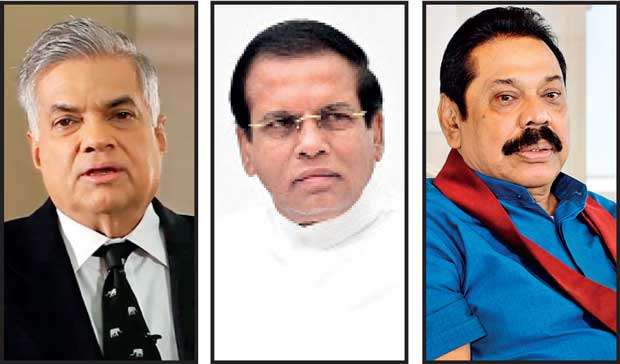
Sri Lankan politics is becoming increasingly acrimonious, yet again. There is a deepening polarization among the UNP and President Maithripala Sirisena on the one hand and the Yahapalanaya Government as a whole and the emboldened Rajapaksa acolytes of the joint opposition on the other hand. The President is openly undermining the Prime Minister. Now that he has implied his plans to run for the presidential election in 2020, this tenuous relationship would get worse. Mr. Wickremesinghe has his fair share of inner party troubles. Within the Tamil politics, the Tamil National Alliance is facing a fratricidal war — one if unchecked could produce another Prabhakaran sometime in the future. Northern Chief Minister C.V. Wigneswaran has resorted to the time tested strategy of the Tamil leadership of the past, who used Tamil nationalism and trumped up grievances with a devastating efficiency to undermine each other, and to drive a wedge between the Northern electorate and the mainstream national politics. Sometimes, one tragedy is not enough for people to learn lessons. Southern youth were duped twice by the same megalomaniac to wage war against the states under similarly trumped up grievances.


With a bit of nudging by the Northern political leaders and perhaps a helping hand from the RAW, it would not be hard for another charlatan to drive some quarters of Tamil youth back to Nandikadal. Extensive military presence would obviously have a deterrent. But, it took 15 years of a gap between the first insurgency and the second in the South. Till the time is rife, messrs Wigneswaran, Gajendrakumar, Ponnambalam and so forth can keep the pot boiling.

Within the Tamil politics, the TNA is facing a fratricidal war — one if unchecked could produce another Prabhakaran sometime in the future. Northern Chief Minister C.V. Wigneswaran has resorted to the time tested strategy of the Tamil leadership of the past

The only political group that seems to be cohesive at the moment is the joint opposition of Mr. Rajapaksa. That unity itself portends a danger to the country, but it has thrived because all other people, who ought to have untied against this common threat are at each other’s throats.

Mr. Rajapaksa should now be thinking if 92-year-old Mahathir Mohamad can make a political comeback, why not he. At the rate of deterioration of public trust in this government, he is not being overly ambitious. This government has failed seminally, perhaps with the exception of restoring a semblance of democracy. But democracy in the absence of economic prosperity and order is void. In both counts, the country is worse off than under the Rajapaksas, and much hyped remedies to economic malfunctions that the government claims to have inherited from the Rajapaksas have not made a dent. They have not worked because there is no political courage and determination to take political decisions that should go along with mandated micro and macro-economic reforms. Countries such as ours have a sense of urgency and policies and political actions should be aimed at achieving set goals, and should not be overly obsessed with rule following. Those latter kind of governments are good on NGO books, but are generally losers in the eyes of their own people.

The economy is getting the worst hit. The plan for a second terminal of the Katunayake Airport has reportedly been shelved because our engineers think they could build it at a two-third of the cost of JAICA estimates (though our experience in complex engineering is as extensive as cricketing experience of our new ODI team). A new tender will be called and the project will take another five years and then it would be a miracle if there is no price appreciation commensurate to delay.
And, the government is sitting on the blueprint of the Hambantota Economic Zone. That is one singular opportunity that can create wealth and change the face of the deep down South. But political vacillation is killing it. In this culture of procrastination, those who know how to milk the system like the former Chief of Staff of the President’s office Dr. Mahanama is making a quick buck.

Mr. Rajapaksa should now be thinking if 92-year-old Mahathir Mohamad can make a political comeback, why not he. At the rate of deterioration of public trust in this government, he is not being overly ambitious. This government has failed seminally, perhaps with the exception of restoring a semblance of democracy

The government has even failed to resolve the seemingly peripheral issue of SAITM. Whether that is because its spinelessness is exploited by the interested parties, or the individuals within the government are reneging on the previous agreement is open to question. Elsewhere, the GMOA has threatened to launch a 24-hour strike this week to protest against the proposed free trade agreement with Singaporeand the Economic and Technical Cooperation Agreement with India. If the government outsources its policy decisions to trade unions, the country does not need to have a government in the first place. A weak government that vacillates over key national decisions does more harm to the nation in the long run than a proactive tyranny that has eyes on the long-term national objectives.

This indecisiveness wouldn’t be confined to economy alone. A government that cannot enforce its will on SAITM is unlikely to be able to champion the new Constitution that the TNA and the Tamil political leaders have placed faith on. It will be checkmated by a few hundred rabble-rousing fanatics. On the other hand, if Mr. Rajapaksa can get a two-third of Parliament vote for his dynastic project, and remove presidential term limits, anything is possible for a strong government in this country. Unfortunately, this government is not that one.

China approves loan of US 1 billion for mega Central Expressway

May 14th, 2018

Courtesy NewsIn.Asia

Colombo, May 14 (newsin.asia) – China, on Monday approved a loan of US 1 billion dollars to construct the phase one of the Central Expressway in Sri Lanka, the Prime Minister’s office said in a statement here.

China’s Ambassador to Sri Lanka, Cheng Xueyuan met Prime Minister Ranil  Wickeremesinghe in capital Colombo and said instructions had been given to China’s EXIM Bank to process the loan.

The Ambassador requested the Sri Lankan side to expedite administrative and legal formalities.

China approves loan of US 1 billion for mega Central Expressway

During discussions, Ambassador Cheng and Prime Minister Wickremesinghe also discussed the Hambantota port project, in southern Sri Lanka and the Colombo Port City project.

With regard to Hambantota Port, the Chinese Ambassador mentioned that they encourage investors to set up factories for producing high end products. The Ambassador said once started the two projects will become the engine of growth for Sri Lanka,” the statement said.

The Chinese Ambassador also requested to expedite the negotiations for signing of the China, Sri Lanka free trade agreement and the progress of Chinese funded water projects were also discussed, the statement added.

8000 affected by flash floods in southern Sri Lanka

May 14th, 2018

Courtesy NewsIn.Asia

Colombo May 14 (newsin.asia) – 8000 people were affected as heavy rains caused flash floods in Sri Lanka’s southern districts of Galle and Kalutara on Sunday, the Disaster Management Center said in a statement Monday.

A Spokesperson for the Center, Pradeep Kodippilli said that several people had been evacuated from their homes due to the heavy down pour, but as the rains had ceased by Monday morning, the situation was normalizing.

8000 affected by flash floods in southern Sri Lanka

He said no casualties or damages had been reported but those living in low lying areas were asked to to be vigilant.

He said further rains were expected on Monday night, but there had been no warning issued thus far.

Sri Lanka’s meteorological department, in its latest weather report said showers or thundershowers would occur over most provinces of the island country by Monday evening due to the result of the south west monsoons.

Heavy falls, could also be expected at some places, particularly in Central, Sabaragamuwa, Southern, Uva and Western provinces and in Polonnaruwa and Vauniya districts, the meteorological department said.

In 2017, the southwest monsoons which hit Sri Lanka in the mid week of May caused heavy flooding and landslides in several districts across the country resulting in over 200 deaths while thousands were displaced.

‘නාගානන්ද කොඩිතුවක්කු හා සුගන්ධිකා ප්‍රනාන්දු ගේ ආන්දෝලනාත්මක ප්‍රකාශ මගින් එන කුමන්ත්‍රණයේ අරමුණ ගෝඨාභය රටේ නායකයා වීම වැළැක්වීමයි

May 14th, 2018

හර්ෂනී අර්සකුලරත්න උපුටාගැණීම  මව්බිම

ගෝඨාභය රාජපක්‍ෂ මහතා 2020 ජනාධිපතිවරණයට ඉදිරිපත් වීම වැළැක්වීම සඳහා බොහෝ දෙනකු උත්සාහ දරන බව මවුබිම වෙනුවෙන් රණවිරුවෝ සංවිධානයේ කැඳවුම්කරු නීතිඥ මේජර් අජිත් ප්‍රසන්න මහතා පැවැසීය.
ඔහු මේ බව කියා සිටියේ ඉකුත් 10දා සමාජය හා සාමයික කේන්ද්‍රයේ පැවැති මාධ්‍ය හමුවක් අමතමිනි.
එහිදී ඔහු මෙසේද කියා සිටියේය.

‘නාගානන්ද කොඩිතුවක්කු නීතිඥවරයා හා සුගන්ධිකා ප්‍රනාන්දු නීතිඥවරිය ආන්දෝලනාත්මක ප්‍රකාශ කිහිපයක් මෑතකදී කර තිබුණා. ඊළඟට නාමල් රාජපක්‍ෂ සහ ගෝඨාභය රාජපක්‍ෂ ගැන සොයන බව කියනවා.
මේ නීතිඥවරුන්ගේ කුමන්ත්‍රණය පියවර තුනකින් එළියට එන්නේ. ගෝඨාභය මහත්තයාව කෙසේ හෝ හිරකොට 2020දී ජනාධිපතිවරණයට ඒම නතර කිරීමට යන කුමන්ත්‍රණයේ ඔවුන් හවුල්කාරයෝ.

නාමල් රාජපක්‍ෂට රාජ්‍ය දේපොළ අවභාවිත කළා කියලා කිසිදු චෝදනාවක් නෑ. ගෝඨාභය රාජපක්‍ෂට මිග් යානා ගනුදෙනුවක් ගැන චෝදනා කරනවා. ඒ ගනුදෙනුව හෙළි කරන්න හදපු ලසන්ත වික්‍රමතුංග ඝාතනය කළා කියලත් ගෝඨාභයට චෝදනා කරනවා.

පිටරටක ඉන්න උදයංග වීරතුංග එක්ක ගෝඨාභය රාජපක්‍ෂ සම්බන්ධ කරලා මුදල් ගසා කෑමේ චෝදනාවක් එල්ල කරනවා. මේ ගනුදෙනුවලදී ප්‍රසම්පාදන කමිටු තිබුණු බවවත් කාර්යපටිපාටීන්වල හිටපු නිලධාරීන් ගැනවත් මෙහිද කතා කරන්නේ නැහැ.

දූෂණ, වංචා කරන්න ඕනනම් ගෝඨාභය මහත්තයාට ඒ සඳහා ඕන තරම් ව්‍යාපෘති තිබුණා. නාගරික සංවර්ධන අධිකාරිය ඔහු යටතේයි තිබුණේ. දියත උයන, වැලි පාර්ක්, ඉන්ඩිපෙන්ඩන් ආර්කේඩ්, රේස්කොස්, කෝට්ටේ, බෙල්ලන්විල ව්‍යාපෘති, කොම්පඤ්ඤවීදියේ අවට මුඩුක්කු ඉවත් කොට ඒ නිවැසියන්ට මහල් නිවාස ලබාදීම ඇතුළු බොහෝ ව්‍යාපෘති තිබුණා ගසා කන්න.

මේ කිසිම ව්‍යාපෘතියකට දේශපාලනඥයෝ ගාව ගත්තේ නැහැ. ඒක තමයි මා දන්නා තරමින් දේශපාලනඥයෝ ගෑවිච්ච නැතිව කරපු සංවර්ධන ව්‍යාපෘති.
දූෂණ, චෝදනා තියෙන්නේ ඇවන්ගාර්ඩ් එකට. මෙය මා දන්න තරමින් රුපියල් බිලියන 5.4ක් වසරකට රටට ලැබුණා. අද එය රුපියල් බිලියන 1.4කට බැහැලා රුපියල් බිලියන 4ක් පාඩුයි.

අනික තමයි ගෝඨාභය මහත්තයාගේ මවුපියන්ගේ ස්මාරකය හදන්න රජයේ මුදල් යොදා ගත්තා. ගසා කනවා නම් ගසා කන්න ඕන තරම් ව්‍යාපෘති තියෙද්දී මවුපියන්ගේ ස්මාරකයෙන් ගසා කයිද?
පසුගියදා අධිකරණ සංවිධාන සංශෝධන පනත සම්මත වුණා. මේ පනතින් ආවරණය වෙන්නේ වංචා, දූෂණ සම්බන්ධව පමණයි. මේ රටේ ප්‍රධාන ප්‍රශ්නය වංචා, දූෂණද? හිටපු ජනාධිපති ලේකම් ලලිත් වීරතුංග මහත්තයාගේ සුදු රෙදි නඩුවට මාස 6ක්වත් ගියාද? ඔය අහලා නඩු තීන්දු දුන්නේ. මේ රටේ වැඩිපුර පමා වෙන්නේ මිනීමැරුම්, ඉඩම් ආදී නඩුයි.

ඔය නීතිඥ නාගානන්දලා මේ දේවල් ගැන කතා කරන්නේ නැහැ. නීතිඥයෝ විනිසුරුවන් හෑල්ලුවට ලක් කරමින් කතා කරන්නේ ඔවුන් කෙරේ අවධානයක් දිනා ගන්න. පොලිසිය සහ අධිකරණය දූෂිතයි කියන ඔවුන් එය එසේ නම් ඊට පිළියම් මොනවාද යන්න ඉදිරිපත් කරන්නේ නෑ.

ගෝඨාභය රාජපක්‍ෂ, බැසිල් රාජපක්‍ෂ, ටිරාන් අලස් ඇතුළු පිරිසකට එල්ල කර ඇති චෝදනා ගැන නඩු අහනවාද නැද්ද කියා තීරණයක් ඉල්ලා තිබියදී එෆ්.සී.අයි.ඩී.ය කරන්නේ පුද්ගලයන්ව අත්අඩංගුවට ගැනීම හා රඳවා තබා ගැනීම පමණයි.

මීට වඩා වංචාවක් තියෙනවාද? මීට වඩා මානව හිමිකම් උල්ලංඝනයක් තියෙනවාද? මේ වෙලා තියෙන්නේ අධිකරණ පද්ධතිය මේ ආණ්ඩුවේ බලපෑමට නතු වෙලා තිබීමයි. ජනතාවගේ කිරිපල්ල අතගාමින් මේ කට්ටිය කුමන්ත්‍රණය කරන්නේ ගෝඨාභය රාජපක්‍ෂ මේ රටේ නායකයා වීම වැළැක්වීමට බව ඉතා පැහැදිලියි.’

හර්ෂනී අර්සකුලරත්න
ඡායාරූප – වෙනුර චන්ද්‍රමාලිත

Hypocrisy Sri Lanka: Denying Celebrating Victory over LTTE but Mourning LTTE dead!

May 14th, 2018

The Allies continue to celebrate Victory Day & end of World War 1 even enacting some of the famous battles & they are not bothered that Germany’s or Japan’s feelings are hurt. So what is this reconciliation nonsense that the present Sri Lankan government is promoting. Denying Victory Day celebrations & honoring the Army is one thing but allowing the Declaration of Mourning for LTTE & allowing the state-funded Jaffna University to erect a monument for LTTE terrorist leader & LTTE dead cadres places this government on a pedestal of lunacy & hypocrisy.

Everyone seems to forget the horrid past that is no more. How many can remember how life was when LTTE was bombing buses, trains, sending suicide missions? Do parents remember the agony of watching their children leave home not knowing whether they would return. How many mothers remember how they ran to schools every time a bomb went off? How many remember the ambulances heard 24×7 taking the injured both military personnel & civilians. How many of you are now silent totally forgetting what went in to ending that terror & ungrateful to those that brought peace to your lives? If you cannot be grateful & show appreciation at least annually what good a citizen are you? Does some commercial initiative need to be brought in like Valentines Day, Mother’s Day for the citizens of this country to remember & pay honor to those that delivered freedom? Have any of you looked at the manner the Victory Day is celebrated in the countries of the Allies where plush celebrations are held by the State, attended by every important person & guest & the manner the people too proudly honor their forces. Leave aside the Victory Day, when we are all aware of the illegal military interventions happening presently yet the citizens of these countries honor their soldiers, but what do our citizens in Sri Lanka do, they are completely silent as this government is banning every event that is being organizing to honor the men who sacrificed their lives to give every citizen of Sri Lanka peace and the very President who took upon his shoulder the responsibility to answer the diplomatic community is even denied invitation to functions! We are such an ungrateful and shameful nation.

When we are well aware of the TNA’s links to the LTTE that very party is today the Opposition & its head the Opposition Leader, how many of the government supporters have even raised objection to this or to the manner that these TNA leaders are demanding removal of Buddhist sites, getting their secretaries to bulldoze sacred areas to eliminate evidence of Buddhist & Sinhala heritage in the North & East making it easier for them to claim only Tamils lived there. Why are people silent?

Why is no one asking whom the TNA is mourning – is it the Tamils killed by LTTE or the LTTE dead? Why erect a monument for LTTE leader if it is for Tamils killed and how many know the number of Tamils that the LTTE killed? Let us reiterate that everyone has a right to mourn the dead but we are not daft when that mourning is with red & yellow flags of LTTE, with Eelam map, with pictures of LTTE leader and cadres to realize the mourning is not for civilian dead but the LTTE, so these yahapalana politicians and their supporters are day dreaming if they try to present the approval of mourning as a part of reconciliation when the paraphernalia surrounding that mourning has nothing to do with mourning of civilians but everything to do with the mourning of LTTE cadres.

We will not be surprised if the President, the PM & the entire yahapalana government attends to light a candle at the Jaffna University premises … it has reached such lunacy.

We must reiterate again LTTE had its own civilian armed force, trained to kill. How many of these trained & armed ‘civilians’ died in battle. They do not qualify as a civilian if they died engaged in hostilities.

How many LTTE cadres fought wearing civilian clothing & died – they too don’t qualify as a civilian according to international law books. Let’s also not forget that the 12,000 LTTE cadres that surrendered were all in civilian clothing. Can the UN or all those pundits claiming that the Armed Forces committed war crimes give a break-down of how many LTTE cadres were killed, how many LTTE in uniform, how many LTTE in civilian clothing, how many civilians who were part of LTTE civilian force got killed, how many civilians died from LTTE firing, how many civilians died of fatigue & age related illnesses? No one to this day and its been 9 years since end of LTTE has given a breakdown of the people killed though they continue to pluck numbers from the sky and claim every killing was done by the Armed Forces. This is ridiculous & should not be entertained.

If a government is allowing the mourning of LTTE cadres then such a government does not deserve the respect of the citizens & certainly showcases they are unsuited to lead a nation – what kind of government supports terrorists?

Shenali D Waduge

IS THE MAHANUWARA DECLARATION (2017) NOW NO MORE THAN A WHITE ELEPHANT?

May 13th, 2018

By Senaka Weeraratna

IS THE MAHANUWARA DECLARATION MADE AT THE CONCLUSION OF THE UN VESAK DAY CONFERENCE IN SRI LANKA (2017) NOW BEING SEEN ONLY AS A WHITE ELEPHANT?

Senkadagalapura of Kande Uda Rata later called Kandy by foreigners (Mahanuwara by locals) who failed to pronounce Sinhala words correctly is the hub of glittering Peraheras with majestic elephants parading the streets draped in full regalia.

Kandy was the site chosen at the conclusion of 14th UN Day of Vesak Celebrations and Conference to read out the nine point  Mahanuwara Declaration by His Excellency the President Maithripala Sirisena on the 14th of May 2017. 

Great pomp and ceremony surrounded this event with hundreds of VIP Buddhists from within and outside the country in attendance.

Unfortunately, the nine point Mahanuwara Declaration was basically an empty vacuous and vague document not worth a second look but for three distinctive commitments which saved this document from being cast into oblivion.

They are as follows:

  1. 1.    In realizing the long felt need to have an aligned organization among Buddhist Communities underpinned by solidarity, solemn initiatives shall be taken to form such an organization with minimum delay in furtherance of our objectives and aspirations based on values and principles of the teachings of the Buddha.
  2. 2.    In consideration of the challenges faced by Buddhist communities all over the world plausible methodology shall be evolved to address and encounter them as one community.
  3. 3. (Point numbered 8).    In view of the alarming decline of morals and spirituality, steps shall be taken to set-up a media network to disseminate the message of Dhamma leading towards a virtuous life based on Buddhist principles.

The rest of the points totaling altogether six are so commonplace and hackneyed that no one could be blamed for thinking that so much of money was spent unnecessarily for this UNDV event to reach these wayside insignificant conclusions.

The saving grace of the Mahanuwara Declaration were the points numbered 1, 2 and 8.

The outline of them is as follows:

  • Formation of an International Buddhist Organisation underpinned by solidarity e.g. League of Buddhist Nations
  • Methodology shall be evolved to address the challenges faced by Buddhist communities all over the world and encounter them as one community.

3) Setting – up of a Buddhist media network

Since the conclusion of this Conference on the 14th May 2017, there has not been a single communication issued by the organizers of this International Buddhist Conference on the steps being taken to implement the points made in the Declaration.

Neither has there been any interest shown by the various Buddhist Organisations that sent representatives to this Conference in overseeing the implementation of matters mentioned in the Declaration.

If Buddhists suffer from collective amnesia in respect to discussions and conclusions reached at high profile International Buddhist Conferences aimed at protection and safeguarding Buddhism and Buddhist space, rapidly shrinking in Buddhist Asia, who should take responsibility for the future of Buddhism in traditional Buddhist heritage countries?

Senaka Weeraratna

See also

THE KANDY (MAHANUWARA) DECLARATION

https://www.news.lk/fetures/item/16727-the-kandy-mahanuwara-declaration?tmpl=component&print=1

Three commitments save UN Vesak Day Mahanuwara (Kandy) Declaration 2017

Three commitments save UN Vesak Day Mahanuwara (Kandy) Declaration 2017


A government of traitors

May 13th, 2018

P. S. MAHAWATTE Courtesy The Island


In The Island of 5th May Minister Dr. Rajitha Senaratne has confessed that “some of those within the government have forgotten that it was the Tamil and Muslim minorities who cast a block vote to elect the yahapalana government. The Eastern Province voted for the common candidate and so did the North”. What he did not elaborate is the electoral promises made by the common candidate to the minority communities in the North and East.

When Sri Lanka co-sponsored the Geneva Resolution against Sri Lanka, the people realized to their horror the kind of promises the yahapalana leaders had given in return for votes. Reading through the well-researched article in the Midweek Review of The Island of 9th May, by Shamindra Ferdinando, this government could go down in history as the most treacherous government of traitors! The people in Sri Lanka and the people of other democratic countries will pay tribute to Lord Naseby of the UK for the courageous efforts he made to obtain ‘suppressed information that could have cleared Sri Lanka’.

article_image

The people, however, at the first available opportunity, painted the country RED with the PHOTTUWA at the LG elections, scaring the government to affect several shuffles of ministers, which was like a game of musical chairs and it is still continuing!

Now the talk is of a promised new constitution! The answer to this is the article in The Island of 19th December 2016 by Fr. J.C. Pieris, captioned “Do we need a new Constitution”,

All actions and plans of this government appear to be motivated by anger and hatred. But “Anger is an acid that can do more harm to the vessel in which it is stored, than anything on which it is poured” – Mark Twain.

P. S. MAHAWATTE

Colombo 5

වියත්මග වේදිකාවේ ගෝටාභය කල විදග්ග දේශණය

May 13th, 2018

හිටපු ආරක්‍ෂක ලේකම් ගෝටාභය රාජපක්‍ෂ මහතාගේ සභාපතීත්වයෙන් යුතු වියත්මග සංවිධානයේ වාර්ෂික සම්මේලනය කොළඹ ෂැංග‍්‍රිලා හෝටලයේදී පැවැත්වින.

හිටපු ජනාධිපති මහින්ද රාජපක්‍ෂ මහතාගේ ප‍්‍රධානත්වයෙන් පැවැති මෙම සමුළුව සදහා දෙදහසකට ආසන්න පිරිසකට ආරාධනා කර තිබින.

සරසවි ආචාර්ය මහාචාර්යවරුන්, ප‍්‍රධාන පෙලේ ව්‍යාපාරිකයන්, ආර්ථික විශේෂඥයන්, කලාකරුවන් ඇතුළු පිරිසක් මේ සදහා සහභාගී වූහ.

ගෝටාභය රාජපක්‍ෂ මහතා විසින් සමුළුම අමතමින් සිදු කරන ලද පැය භාගයක දේශණයට වැඩි දෙනාගේ අවධානය යොමු විය.

නෙළුම් පොහොට්ටුවලින් සරසන ලද වේදිකාවක් සිට රාජපක්‍ෂ මහතා විසින් සිය දේශණය සිදු කිරීමද විශේෂත්වයක් උසුලයි.

සම්පූර්ණ දේශණය මෙතනින්

Non-starter new constitution,backdoor federalism

May 13th, 2018

BY Dr. DAYAN JAYATILLEKA Courtesy The Island

So the Northern Provincial Council and some civil society activists are reportedly gearing up to mourn May 18-19th and the week leading up to it as Genocide Week. May 18/19th marks the days the Long War ended, and Tamils, Sinhalese and Muslims stopped dying in large numbers. It is the moment that ushered in peace, however flawed, after thirty years. Far from being ‘genocidal’, it is also the week that the world saw on TV, hundreds of thousands of Tamil civilians being rescued from the LTTE’s clutches by the Sri Lankan military at considerable cost to itself, and treated humanely (as noted by Thamilini).

What then is the Northern Provincial Council really mourning? The death of the man—Prabhakaran– and the leadership, and the crushing defeat of the militia that suicide-bombed the father of the Northern Provincial Council, namely Rajiv Gandhi, and waged war on the Indian Peace-Keeping Force. Furthermore, the NPC is mourning the death and defeat of the entity that killed the greatest number of educated Tamil political personalities, including leaders of the TNA and activists of liberation organizations (there should be free public screenings of Jude Ratnam’s ‘Demons in Paradise’ on May 18th).

It is unthinkable for Germans to mourn the day that World War II ended with the death of Hitler, the defeat of Nazi Germany, many cities fire-bombed by the Allies, and the red flag flying over the Reichstag building courtesy of the Soviet Red Army. If any group of Germans were to do so they would be considered neo-Nazis and would be arrested. Similarly, the mood in the North to publicly mourn the day the war ended and was lost by the “almost classically fascist” LTTE (The Economist, UK) resulting in the death of its Hitlerian leader Prabhakaran, tells us about the political tradition, political behavior, political culture and collective psychological make-up of Tamil nationalism and the Tamil nationalists.

Which brings us to the new Constitution. The TNA should have got the point by now. The Government had two choices this past week, as concerns the Judicature bill i.e. the one about setting up Special courts. It could have sought to pass it by a two-thirds majority or it could have made significant amendments. It chose the latter option, thereby diluting to some degree the suspicious legislation. The government still retains a two-thirds majority by six seats, and yet it chose not to exercise that option. This meant that the Government decided not to take the risk, because a serious risk there was. The government knows that dissent is rife in its ranks, in both constituent parties, the UNP and the SLFP and at any time, on any issue, those six votes could be lost.

Can anyone with an iota of rationality, assume that the Government would risk losing the last shreds of its two-thirds majority and perhaps be gutted by defections, by moving ahead with a controversial new Constitution? Why then does the suggestion continue to be urged by the TNA leadership?

With a loud chorus of denunciation arising from the ranks of the Buddhist clergy against a new Constitution, and a mere eighteen months from a winner-takes-all nationwide election, how many MPs of the SLFP and even the UNP would not be tempted to defect to the Opposition?

Even if, by some miracle, a new Constitution were to be passed by a two-thirds majority in Parliament, what are the chances that in a current global context in which no government wins a referendum, a new Constitution will win a ‘Yes’ vote at a referendum, in the wake of the mounting economic pain imposed callously upon the people by this government?

So, in effect the new Constitution project is dead in the water. What the TNA doesn’t see is that it never had a chance. The issue was never intentionality, so the TNA’s narrative of broken promises and lost opportunities is irrelevant. It is also hypocritical, because the TNA, under pressure from the LTTE, didn’t endorse any of those proposals. Certainly Premadasa tried at the All-Parties Conference of 1990 and the subsequent Mangala Moonesinghe Select Committee (both of which I was engaged with), as did Chandrika, but didn’t succeed, because they could not.

If Chandrika who won a sweeping victory at the Presidential election of 1994, could not push through her political package for a Union of Regions in 1995 and 1997, and failed to secure the required parliamentary support for a milder draft Constitution in 2000, months after she won the Presidential election of 1999, it meant that she had aimed higher than even her impressive popularity had allowed. It is true that the LTTE and the TNA had not supported her, but she could have pushed the reforms through had the UNP supported her. It did not do so, because the ground was shifting and the UNP spotted an opportunity to gain support while outflanking the government.

Chandrika thought later that a bipartisan coalition could solve the problem. But the problem was not the lack of bipartisanship. The problem was that there was a red line around the changes to the Sri Lankan state that the overwhelming majority of our citizens, who are Sinhalese, would allow. This is why, even though there is a ‘national unity’ government, the vote bases of the constituent parties have dissipated while a new, populist formation has rocketed ahead of them.

The basic fact is that the ‘national unity’ government formula could not carry the Sinhala people when it came to a new Constitution which entailed devolution that goes qualitatively beyond the status quo—which was a bitter pill to swallow in the first place, as it was externally imposed.

Federal proposals were made in this country from 1925 but were not accepted. How can any logical person expect that a project that did not succeed for over 80 years, could succeed now?

How can any reasonable person or persons think that the nation which did not agree to go beyond the 13th amendment (i.e. limited provincial devolution within a unitary state) when an intense war was on and the Sri Lankan state had not won; a nation which was under coercive pressure from India, would be willing or could be pushed into going beyond the 13th amendment, after the war had been won?

Did the TNA think the 2015 Geneva resolution, the specter of the US-UK-India or the persuasive charms of the Ranil-Chandrika-Mangala-Jayampathy quartet could swing the Sinhala majority?

The bottom line is this: several wars or one long war waged by the North couldn’t get a degree of federalization or autonomy beyond 13A, while one short, intense insurrectional war by the South couldn’t wipe 13A off the map. 13A cannot be reversed insofar as it is undergirded by a bilateral agreement which Sri Lanka doesn’t have the capacity to unilaterally abrogate given the enormous asymmetries of power. So 13 A is here to stay. The flip side is that its parameters cannot be transcended through Constitutional change. The Sinhalese are pragmatic enough to retain 13A but not pusillanimous enough to go beyond it.

There is only one deal on the table but even that deal isn’t there all the time. That deal is to make the existing semi-autonomous provincial councils work better. Any other effort—either to replace it with quasi-federalism or dilute and dissolve it– is a sad waste of time, because it does not conform to local and regional reality. It would require a self –sacrificial leap in the collective Sinhala consciousness that would border on suicidal, given the geopolitical vulnerability of the Sinhalese.

If the TNA or any competitor or successor formation is to make itself useful to its people, it must engage in ‘domestic diplomacy’ and do the hard work of dialogue with all parties, mapping a broad consensual agreement on rectifying structural problems in the Provincial Council system and thereby improving the delivery capacity and efficacy of devolution.

The war and the political struggles waged by the Tamils or decades have failed, at great cost to the Tamil community, because the goals have been wrong. The goal of the war was ‘exit’ by secession. The goal of the political struggle was and is a change of system as codified in a new, non-unitary/post-unitary Constitution. Given the geopolitical realities and existential stakes on the island for the Sinhala majority, neither goal (‘exit’ or ‘system change’) was achievable. The Sinhalese be willing to kill and die to prevent them. Given these geopolitical and existential factors, there is only one feasible goal: neither exit nor system change, but pragmatic structural reform. There is also only one feasible path to that feasible goal: gradualist, incremental and consensual improvements to those existing, rooted structural reforms (the PCs).

Furthermore, the TNA must note that the global context has changed. It is not only Mahathir’s victory that is a signal, but also the results of the Lebanese election. There the pro-Western bloc has been defeated by the pro-Hezbollah bloc. The pro-Western bloc had been hoisted to political dominance thanks to some astute work by US Ambassador Michelle Sison who got the Syrians out of Lebanon. She was then sent to Colombo to do the same things here—get the Chinese out by getting the Rajapaksas out. She successfully accomplished one of the two goals. Even that project has now unraveled.

In whichever direction one looks in Sri Lanka, the tide of pro-western neoliberalism is in retreat and patriotic populism is on the rise. Whether it is the Rajapaksas– who will almost certainly dominate the next government– or Sajith Premadasa, who would have won a vote for party leadership hands-down had it been held at the Sugathadasa Indoor Stadium on May 7th, or the new variable, the SLFP’s Group of 16 (G-16), it is a Sinhala populist surge that one can see. Such a surge is also nationalist in character.

Ranil-Chandrika-Mangala, the neoliberal partners of the TNA, are well past their electoral sell-by date. None of the players on the rise i.e. the Rajapaksas, Sajith and the SLFP rebels, are likely to make a qualitative leap beyond the 13th amendment. Tamil politics cannot continue to hitch its wagon to a declining pro-Western, center-right liberalism in Sri Lankan politics. It must accommodate and adjust to the reality of the revival of Sinhala populism, which means hitting the ejector button on the new Constitution project and shifting to the only thing that was possible all along: a broadly consensual readjustment of the 13th amendment.

A reopening of 13A at a time when Southern populism is on the rise can only lead to the unraveling of what exists and a downshift in devolution. But perhaps that is the Diaspora-driven Tamil nationalist game plan after all, because it would remove the only real obstacle to the renewal of the separatist political project—the system of Provincial Councils and the commitment of neighboring India to the preservation of the status quo as created by the Indo-Lanka Accord and codified by the 13th amendment?

Marx, Nietzsche and Freud were rightly regarded by Foucault as the “masters of suspicion”. As a lowly follower of that tradition, may I raise the question as to whether the 20th amendment which the JVP hopes to bring to Parliament this month is some Embassy or High Commission’s smart idea of circumventing the perennial block to federalization? Since there has been zero success of efforts to go beyond the 13th amendment towards federalism, perhaps someone had the diabolically clever idea of achieving the same result, not by the old attempt of replacing or enhancing the 13th amendment but by removing the only fetter to its growth, namely the steel cage that is the directly elected Executive Presidency!

Perhaps that is not the JVP’s intention, but it will certainly be the result. It will also be well within the JVP’s behavioral tradition. In the 1980s it thought it was making a revolution but only succeeded in creating anarchy. Today it may think it is engaging in progressive reform by means of the 20th amendment, but its plan of abolishing the executive presidency and redistributing executive power to multiple focal points throughout the system will only result in economic and political anarchy.

Executive Presidency: What the 13A SC Determination really said – part I

May 13th, 2018

By C. A. Chandraprema Courtesy The Island

Nationalistic groups in this country believe that the institution of the executive presidency is a sine qua non for the preservation of Sri Lanka’s unitary character in the face of the provincial councils system. This idea largely stems from what is believed to have been stated in the Supreme Court determination of 1987 on the 13th Amendment Bill. Some appear to believe that Justice R. S. Wanasundera’s dissenting determination had said that after the introduction of the provincial councils system, the only thing that now preserves the unitary state is the executive presidency. For the past thirty years, this view has held sway among nationalists and continues to do so, today.

article_image

It was recently stated at a political gathering that when the 13th Amendment was taken up by the Supreme Court back in 1987, four judges said that it undermines the unitary character of the state and four other judges said that the unitary character of the state will remain unimpaired. It was said that one of the main arguments put forward by the latter group of judges was that since the executive president is elected by all the voters in the country and since the executive power of the President holds sway throughout the country via the cabinet, and the governors, Sri Lanka remains a unitary state and that it is the executive presidency that holds everything together.

This has now solidified into an article of faith among nationalists. However, what exactly did the 1987 Supreme Court determination on the 13th Amendment say? Did any judge really say that it was the executive presidency that ensured the unitary character of the Sri Lankan state after the introduction of the provincial councils system? In 1987, the petitions against the 13th Amendment were heard before a full bench of the Supreme Court comprising of Chief Justice S. Sharvananda and Justices R. S. Wanasundera, P. Colin-Thome, K. A. P. Ranasinghe, E. A. D. Atukorale, H. D. Tambiah, L. H. DE Alwis, O. S. M. Seneviratne, and H. A. G. DE Silva.

The nine judges delivered five determinations with Chief Justice Sharvananda and Justices Colin-Thome, Atukorale and Tambiah delivering one determination and Justices Wanasundera, Ranasinghe and Seneviratne each delivering separate determinations and Justices Alwis and Silva delivering a joint determination. What enabled the passage of the 13th Amendment with only a two thirds majority in Parliament and without a referendum was Justice Ranasinghe’s determination coming into line with the joint determination delivered by Chief Justice Sharvananda and Justices Colin-Thome, Atukorale and Tambiah with the amendment of one clause which the former had held requires a referendum. Thus the determination of the full bench of the Supreme Court on the 13th Amendment was divided 5 to 4.

Legislative power was fundamental

However in carefully reading through the five separate determinations given on the 13th Amendment, we see that none of the Judges had said that the executive presidency was the factor that safeguarded the unitary character of the country in the face of the provincial councils system. In delivering their determination Chief Justice Sharvananda and Justices Colin-Thome, Atukorale and Tambiah considered the question whether the introduction of a provincial councils system undermined the unitary character of the Sri Lankan state enshrined in Article 2 of the Constitution. They concluded that the essence of a unitary state is that sovereignty should remain undivided and the powers of the central government should be unrestricted.

They identified the two essential qualities of a unitary state to be firstly, the supremacy of the central Parliament and secondly the absence of subsidiary sovereign bodies. Subsidiary law-making bodies may exist but it should be possible to abolish them at the discretion of the central authority. In a federal state on the other hand, the field of government is divided between the federal and state governments which are not subordinate one to another, but are co-ordinate and independent within the spheres allotted to them. The federal government is sovereign in some matters and the state governments are sovereign in others. It was observed that in the exercise of legislative as well as executive powers no exclusive or independent power is invested in the Provincial Councils and the Parliament and President have ultimate control over them.

The most contentious provision in the 13th Amendment Bill which was discussed in all five determinations were clauses 153G (2)(b) and 153G (3)(b). What clause 154G(2)(b) stipulated is that a Bill for the amendment or repeal of the provincial councils Chapter or the Ninth Schedule in the Constitution shall become law only if such Bill has been referred by the President to every Provincial Council for the expression of its views. If every Council agrees to the Bill, it can be passed by a majority of the members of Parliament present and voting. However where one or more Councils do not agree to the Bill it has to passed with a two thirds majority of the whole number of Members in Parliament (including those not present) and also approved by the people at a referendum.

Clause 154G(3)(b) stipulated that no Bill on any matter in the Provincial Councils list can be passed by Parliament unless it has been referred by the President to every Provincial Council for the expression of its views and if every provincial Council agrees to the passing of the Bill, it can be passed by a majority of the members of Parliament present and voting. But if one or more Councils do not agree to the Bill, it has to be passed with a two thirds majorityof the whole number of Members (including those not present) and also approved by the people at a referendum.

The conclusion that Chief Justice Sharvananda and Justices Colin-Thome, Atukorale and Tambiah came to with regard to these two contentious clauses was that the central parliament can, by following the procedure set out in Articles 154G(2)(b) and 154G(3)(b) override the provincial councils. They opined that these two clauses do not limit the sovereign power of parliament but only impose procedural restraints.

Furthermore they saw the requirement of a referendum in these two clauses not as an impediment to the power of parliament but as an acknowledgement and affirmation of the sovereignty of the people.

President and Governor in India and SL

To buttress their argument that the provincial councils are subordinate to the central government under the proposed 13th Amendment, Chief Justice Sharvananda and others pointed out that the provincial Governor is appointed by the President and holds office during the pleasure of the President and that the President remains supreme or sovereign in the executive field. They drew reference to Clauses 154C and 154F of the 13th Amendment Bill which provided that the executive power pertaining to matters coming under the Provincial Councils shall be exercised by the Governor of the Province either directly or through the Board of Ministers or through officers subordinate to him.The board of four Ministers with the Chief Minister at the head were to aid and advise the Governor in the exercise of his functions. The Governor was obliged to act in accordance with such advice, except in so far as he is required by the Constitution to exercise his discretion.

If any question arises as to whether the Governor is required by the Constitution to act at his discretion, the decision of the Governor shall be final and the validity of anything done by the Governor shall not be called into question in any Court. The exercise of the Governor’s discretion shall be on the President’s directions. The question whether any, and if so what, advice was tendered by the Ministers to the Governor could not be inquired into by any court. This was by far, the most extensive reference to the presidency in the five determinations on the 13th Amendment. It will be noted that all the powers of the President and the Governors mentioned by Chief Justice Sharvananda and the others are to be found word for word in the Indian Constitution as well. However India does not have an executive president. What they have is a ceremonial President with certain discretionary powers. Justice Wanasundera in his determination in fact observed that some of the discretionary powers available to the Indian ceremonial President vis a vis the States such as the power to veto statutes passed by the States (Articles 200 and 201 of the Indian constitution) have not been made available to the executive President in Sri Lanka through the 13th Amendment.

Articles 52, 53(1), 153, 154(1), 155, 156 and 163 of the Indian Constitution outlines the powers of the Indian President and the State Governors. Viz. There shall be a President of India.The executive power of the Union shall be vested in the President and shall be exercised by him either directly or through officers subordinate to him in accordance with this Constitution. There shall be a Governor for each State. The executive power of the State shall be vested in the Governor and shall be exercised by him either directly or through officers subordinate to him in accordance with this Constitution. The Governor of a State shall be appointed by the President and shall hold office during his pleasure.

There shall be a Council of Ministers with the Chief Minister at the head to aid and advice the Governor in the exercise of his functions, except in so far as he is by or under this Constitution required to exercise his discretion. Anything done at the Governor’s discretion shall be final, and shall not be called into question. The question whether any, and if so what, advice was tendered by the Ministers to the Governor shall not be inquired into in any court – Thus we see that the provisions relating to the President and the Governors in the Indian Constitution are identical with the provisons relating to the President and the provincial Governors that were introduced to our Constitution through the 13th Amendment. The point to note is that it is not necessary to have an executive presidency to maintain control over the provinces and that a ceremonial president vested with the same discretionary powers as the Indian President is all that is needed.

Chief Justice Sharvananda and the others to further establish their claim that the 13th Amendment Bill does not affect the unitary character of the state pointed out that the Supreme Court and the Court of Appeal continue to exercise unimpaired jurisdiction over the whole country unlike in a Federal State. The power of appointment of Judges of the superior courts remains with the President. (As is also the case in India under Article 124(2) of the Indian Constitution.) The appointment, transfer, dismissal of judges of the lower courts continue to be vested in the Judicial Service Commission. Thus, the centre continues to be supreme in the judicial area as well.

The 13th amendment provides for Provincial Councils to have legislative power in respect of matters enumerated in the Provincial Council list and concurrent list in the Ninth Schedule. With regard to this, Chief Justice Sharvananda and the others contended that Article 76(3) of the Constitution specifically allowed Parliament to empower any person or body to make subordinate legislation for prescribed purposes and that delegated legislation is legal and does not involve any abandonment or abdication of the legislative power of Parliament. On the basis of the foregoing, Chief Justice Sharvananda and Justices Colin-Thome, Atukorale and Tambiah determined that no division of sovereignty or of legislative, executive or judicial power has been effected by the 13th Amendment and that the national government continues to be legally supreme over all other levels or bodies and that the Provincial Councils are merely subordinate bodies.

Justice Ranasinghe’s determination

Even though Chief Justice Sharvananda and the others who accepted the 13th Amendment Bill without any changes and did not consider a referendum to be necessary to have it passed into law were outnumbered by the other five judges who gave dissenting determinations, the determination of Justice K. A. P. Ranasinghe was such that with an adjustment, it could be brought into alignment with the determination delivered by the Chief Justice and others. Justice Ranasinghe determined that the supremacy of Parliament is retained in that it has the power to legislate, albeit in a special manner and form, to render ineffective any statute passed by a Provincial Council and even to repeal the provisions of the Provincial Councils Chapter in the Constitution in its entirety. Furthermore he observed that the executive power of the people entrusted to the President of the Republic is not whittled down in the 13th Amendment.

The issue that Justice Ranasinghe had was with Clauses 154G(2)(b) and 154G(3)(b) whereby a Bill for the amendment of the Provincial Councils Chapter in the Constitution or a Bill in respect of any matter set out in the Provincial Councils List can become law, in the event of one or more Provincial Councils not agreeing to the amendment only if it is passed with a 2/3 majority in Parliament and also approved by the people at a referendum. Justice Ranasinghe observed that Article 83 which specifies the entrenched Articles in the Constitution has been made alterable only by the process of a 2/3 majority and a Referendum and that therefore any steps taken thereafter to entrench another Article, would amount to an ‘addition’ to the existing provisions laid down in Article 83 of the Constitution and that would require a two thirds majority in Parliament plus a referendum.

It was by dropping the requirement for a referendum from Clauses 154G(2)(b), and 154G(3)(b) that Justice Ranasinghe’s determination was brought into alignment with that of Chief Justice Sharvananda and Justices Colin-Thome, Atukorale and Tambiah, thus enabling the 13th Amendment to be passed with a two thirds majority in Parliament without a referendum. It will be noted that one of the reasons stated by Justice Ranasinghe in coming to the conclusion that the 13th Amendment did not affect the unitary character of the Sri Lankan state was because ‘the executive power of the people entrusted to the President of the Republic’ has not been ‘whittled down’ in the 13th Amendment. In India too, the executive power of the union which is vested in the President has not been whittled down in any way.

The only difference between the Sri Lankan and Indian Presidents is that the former is a politician elected directly by the people and exercising power at his own discretion and the latter is a head of state elected by the Indian Parliament and carrying out his functions on the advice of the Prime Minister and the Cabinet of Ministers and having discretionary powers in certain matters. What matters is the executive power of the central government. Whether it is exercised by a ceremonial President acting on the advice of the Prime Minister or an elected President acting on his own, is of no relevance to the preservation of the power of the central government and the unitary character of the state. This can be seen from the incongruous fact that the supposedly ceremonial president of India has much greater discretionary powers in relation to statutes passed by the Indian states than the executive president in Sri Lanka has in relation to statutes passed by the provincial councils.

(To be continued tomorrow)

ගල් අගුරු කප්පම් දේපල ඕස්ට්‍රේලියාවේ දේශපාලනඥයින්-නිලධාරීන් නැවත ගල් අගුරු මාෆියාවට පණ දෙන්න හදනවා 

May 13th, 2018

පුවත්පත් නිවේදනය  මාධ්‍ය ඒකකය ශ්‍රී ලංකා මානව හිමිකම් කේන්ද්‍රය

ලංකාවේ දුෂිතම ව්‍යාපාරික මාෆියාව බවට පත්ව ඇති ‘විදුලිබල හා බලශක්ති කේෂ්ත්‍ර‍ය ‘2020 ජනාධිපතිවරණ ප්‍ර‍චාරක ව්‍යාපාරයට සිතු පැතු සම්පත් දෙන ධන ආකාරයක් කර ගැනීමට මේ රටේ ප්‍ර‍ධාන දේශපාලන පක්ෂ දෙක උත්සහ කරන බව කැෆේ සංවිධානයේ විධායක අධ්‍යක්ෂ කීර්ති තෙන්නකෝන් මහතා පවසයි.

අද, (මැයි 13) රාජගිරියේ දී පැවැති ශ්‍රී ලංකා මානව හිමිකම් කේන්ද්‍ර‍ය සංවිධානය කළ පුවත්පත් සාකච්ඡාවේ දී තෙන්නකෝන් මහතා පැවසූයේ, විදුලි මාෆියාව සමග ශ්‍රී ලංකා ආයෝජන මණ්ඩලය අත්වැල් බැදගෙන ඇත්තේ ලංකා රජයේ අභිලාශයන් සදහා නොව ‘දේශපාලනඥයින්ගේ හා රාජ්‍ය නිලධාරීන්ගේ සාක්කු පිරවීමට බවයි.

පසුගිය සතියේ ආමාත්‍ය රංජිත් සියඹලාපිටිය සහ පිරිසක් යොමු කළ සාමුහික කැබිනට් පත්‍රිකාවක් යොමු කරමින් ලංකාවේ බලශක්ති අවශ්‍යතාවයෙන් 1/3ක් ගල්අගුරු මගින් සපයා ගැනීමට යෝජනා කර ඇත.  ලෝකයේ ඇති දුෂිතම විදුලි උත්පාදන ප්‍ර‍භවයෙන් ඉවත්වීමට තව දුරටත් ගල් අගුරු බලාගාර ඉදි නොකරන්නට ලෝකයේ සැම රටක්ම කටයුතු කරන විට ලංකාව නැවත ගල් අගුරු බදා ගන්නට හදනවා.  චීනය, ඉන්දියාව, සමස්ථ යුරෝපය, ඇමරිකාව ගල් අගුරු බලාගාර වසා දමමින් සිටිනවා.  ලංකාව චීනයේ ගලවන පරණ යකඩ ගොඩකට නැවත වරක් කර ගසන්නට සුදානම් වෙනවා.

සාම්පූර් ගල්අගුරු බලගාරය නැවැත්වීම සදහා ජනාධිපති මෛත්‍රීපාල සිරිසේන මහතා නරේන්ද්‍ර මෝදි, ඉන්දියානු ජනපතිවරයාට 2015 පැවසුවේ ප්‍ර‍තිපත්තියක් ලෙස ලංකාව ගල්අගුරු බලාගාර ඉදිකිරීම නවතා දැමූ බවයි.  2006 වසරේ දී ආරම්භවුණ, 2011 සැප්තැම්බර් 11 අක්කර 505 ක් පවරා දී ඇරඹුණු මාගාවෝට් 500 ක සම්පූර් බලගාරය නවතා දමන්නේ ප්‍රදේශවාසීන්, පරිසරවේදීන්ගේ විරෝධතාව නිසයි.  ලංකාව දිගටම පුද්ගලික අංශයෙන් වැඩි මිලට ඩීසල් විදුලිය හදිසි අවශ්‍යතා මත යැයි කියමින් මිලදී ගත්තා. පුණර්ජනනීය බලශක්තිය ගැන පෝස්ටර් ගැහුවාට, ඇඩ් දැම්මාට ඒ සදහා රජය පහසුකම් සපයන්නේ නෑ.

දැන් ජනාධිපතිවරයා කියන්නේ තමන් ගල් අගුරු තහසම් නොකළ බව ද?

නව කැබිනට් පත්‍රිකාවට ජනාධිපතිවරයාගේ අනුග්‍ර‍හය ලැබෙනවා.  ගල් අගුරු අගුරු ලාබම විදුලි ජනන ක්‍ර‍මය යැයි පහුගිය අවුරුදු 8 ක් මේ අය කිව්වා.  දැන්, ලංකාව දන්නවා ලාබම විදුලිය ලැබෙන්නේ    LNG            කියලා.  මෙච්චර කල් ගල්අගුරු ගැන කථා කළ උදවිය දැන් අගු අගුරු 30% යි,  LNG  30% කියනවා. ඇත්තටම, විදුලිබල අමාත්‍යාංශයේ ප්‍ර‍තිපත්තිය, ‘තමන්ගේ සාක්කුව පෙරට‘ බව පසුගිය වසර 30 පුරාම ඔප්පු කරලා තියෙනවා. මේ අය කාලයකට ගල් අගුරු, තවත් කාලයකට LNG, නමට විතරක් පුර්ණජනණීය බලශක්තිය.  2016 ගල් අගුරු හොරකම කරන්න, නැවකින් කෝටි 12 ක් හොරකං කරන්න, අර ශේෂ්ඨාධිකරණය කිව්ව ‘හර්ද සාක්ෂිය කම්පා කරපු‘ කාරණයේ දී ගල් අගුරු තමයි ලාබ වුණේ. හදිසි විදුලිය ගන්න 2017 මැද හරියේ, පුණර්ජනනීය බලශක්ති සංග්‍රාමයක් ගැන කථා කළා. දැන් ආය 30% ක් ගල් අගුරු කියනවා.

පුණර්ජනනීය බලශක්තිය ගැන කථාව විතරයි වැඩ නෑ. රටේ ස්ථාන 17ක බලාගාර හදන්න ටෙන්ඩර් කැදෙව්වා.  ඒවාගෙන් කීයක් හදන්න පටන් අරගෙන තියෙනවාද කියලා ඇමති සියඹලාපිටියගෙන්, අජිත් පී.පෙරේරාගෙන් අහන්න.  මින්නේරිය වැවේ පාවෙන සුර්ය විදුලි නිශ්පාදනයක් ගැන යෝජනාවක් ආවා.  අමාත්‍යාංශයේ දැන්වීමේ තියෙනවා ඒකකයක් රු. 18 ගානේ ගන්නවා කියලා. ආයෝජකයාට කිව්වා රු. 16 ගානේ දෙන්න කියලා.  ආයෝජකයා ගියා.  දැන් විදුලිබල මණ්ඩලය ලෝක නැතිව රු. 24 ගානේ ඩීසල් විදුලිය ගන්නවා. ඒයා  ‘සිරිකොත බිල් ගෙවනවා.  ඇමතිවරුන්ගේ තේ කම්හල් හදලා දෙනවා. එජාපයට පත්තර අච්චු ගහනවා.  2020 එජාප මැතිවරණයේ කැම්පේන් ෆයිනෑන්ස් කරනවා. ඩීසල් මාෆියා ඇමතිවරු ප්‍ර‍සිද්ධයි. ගල් අගුරු මාෆියා ඇමතිවරු මේ දවස්වල හයියෙන් කථා කරනවා.  උම්බෑ කියනවා. ගල් අගුරු මාෆියාවේ ඉන්නේ ඩාලි පාරේ ඇමතිවරු.  නොරච්චෝල් හදන්කොට එංගලන්තේ, ඕස්ට්‍රේලියාවේ ගෙවල් මතුවුණා. රොකට් ගියා. පත්තර ගැහුවා. කොළඹ ගොඩනැගිලි අහස උසට ගියා.   මැනික් හා ස්වර්ණාභරණ අධිකාරිය, භු විද්‍යා පතල් කාර්යාංශය, ආයෝජන මණ්ඩලය, දැව සංස්ථාව, ගැන දවසෙන් තීරණ ගන්න ජනාධිපතිතුමා එතුමාගේ පක්ෂයේ කැබිනට් ඇමතිවරයෙකුගේ අමාත්‍යාංශ්‍ය යටතේ සිදුවන ගල්අගුරු නැවකින් කෝටි 12 ක හොරකං කිරීම ගැන වචනයක් කියන්නේ නෑ.

නොරච්චෝලේ ගල් අගුරු බලගාරය හා පරිසර හානිය

නිරිත දිග මෝසම් සමයට තවත් ඇත්තේ සතියකට අඩු කාලයකි. නොරච්චෝල බලාගාරයට 2017 ජුනි 30 සිට අද දක්වාම පරිසර බලපත්‍ර‍යක් නෑ. රටේ පරිසර ඇමති ජනාධිපතිතුමා.  මධ්‍යම පරිසර අධිකාරිය කියනවා, තමන්ට වයඹ  පරිසරය ගැන තියෙන්නේ පුංචි බලයක් විතරයි කියලා. මිනිහෙකුට තමන්ගේ ගෙදර හදාගන්න ගඩොල් ටික කපාගන්න ඉඩ නොදෙන පරිසර බලධාරීන්  නොරච්චෝලේ ගැන වචනයක් කථා කරන්නේ නැතිව දැන් මාස 10 යි. 

පසුගිය සතියේ හිරු සළකුණ වැඩසටහනේ දී අජිත් පී. පෙරේරා ඇමතිතුමා බලශක්ති අර්බුදය ගැන අඩුවා. කෙදිරිගෑවා. හැබැයි ඒ දුක නොරච්චෝලේ මිනිස්සු ගැන නෑ. සාම්පූර් මිනිස්සු ගැන නෑ. විදුලිබල මණ්ඩලය  ‘දැනට තිබෙන බලාගාරයේ පරිසරය සුරැකීමේ නිර්දේශ ක්‍රියාත්මක කරන්නේ නෑ.  ඇමතිතුමා දුෂණ වංචා ගැන කාලයක් හයියෙන් කථා කළා.  එයාගේ අමාත්‍යාංශය තමයි ලංකාවේ දුෂිතම අමාත්‍යාංශය. එදා හොරු ගැන වත්, මෙදා හොරු ගැන වත් එයා කථා නෑ.  ඇමතිතුමා, අන්න හිටපු ලේකම් ගේ දේපල ඕස්ට්‍රේලියාවෙන් මතුවෙනවා.  අර විශේෂ අධිකරණයේ හරි මේ අවනඩුව අහන්න.  ඊට ඉස්සර නොරොච්චෝලේ මිනිස්සු වෙනුවෙන් පරිසර ආරක්ෂණ නියෝග පිළිපදින්න විදුලිබල මණ්ඩලයට උපදෙස් දෙන්න.    පාරිසරක වාර්තා අනුව, රසදිය, නිකල් හා සින්ක් වැනි රසායන හේතුවෙන් දරුවන් හා සේවකයින්ට සෞඛ්‍ය ප්‍ර‍ශ්න විශාලය.  පසුගිය මාස 2 ට සේවකයින් 7 දෙනෙකු ලේ වමනය නිසා රෝහල් ගත කළා. 2018 අප්‍රේල් මස බලගාරය අසල මුහුදේ කි.මි. 4 ක් දුරට කහ පැහැති රසායන ද්‍ර‍ව්‍ය තට්ටුවක් තිබුණා.

විදුලි මාෆියාව දේශපාලඥයින් හා රාජ්‍ය නිලධාරීන් හා එක්ව උත්සහ දරන්නේ ‘දැවැන්ත තනි විදුලි ජනන ප්‍ර‍භවයක් හරහා සිය අධිපත්‍ය විදුලි ජනන කේෂ්ත්‍ර‍ය පුරා පැතිරවීමටය.  වසර 6 ක් නව විදුලි බලගාර ගැන ප්‍ර‍තිපත්තියක් සදහා ගැනීමට විදුලි මාෆියාව ඉඩ දෙන්නේ නැත.

කෙරවලපිටිය මෙ.වෝ. 300 ක LNG බලාගාරයක් හදන්න ටෙන්ඩර් කැදෙව්වා.  ටෙන්ඩර් ආපු සමාගම් 7 න් 5 කට සුදුසුකම් නෑ කියලා තාක්ෂණික කමිටුව කිව්වා.  අගමැතිතුමා කැබිනට් පත්‍රිකාවක් දාලා මේ ටෙන්ඩර් විවෘත කළා. මේ බලාගාරය හදන්නේ නෑ.  එජාපයට අවශ්‍යයි තමන්ගේ කැම්පේන් ෆයිනෑන්ස් කරන අයට මේ බලගාරය දෙන්න.  නැත්තම් හදන්නේ නැතිව ඉන්න. මොකද, හදිසි විදුලිය කියලා රු. 24 ගානේ ඩීසල් විදුලිය ගන්නේ මේ අයගෙන්ම නිසා. කෙරවලපිටිය ටෙන්ඩරයේ දී මැර බලය යෙදෙව්වා. දැන් අභියාචනා මණ්ඩලය රැස්කරන්නේ නෑ.  දුෂණ විරෝධී රණ හඩක් වෙච්ච ඇමතිවරුගේ අමාත්‍යාංශවල වැඩ කෙරෙන්නේ මෙහෙමයි. කෙරවලපිටිය ටෙන්ඩරයේ ‘අභියාචනා කමිටුවේ සාමාජිකයෝ කවුරුන්ද?  ඔවුන් අතර ‘සබැදියාවන් අතර ගැටුම් නැති ද?‘ කියලා ඉදිරියේ දී බලාගන්න පුළුවන්.  කන්තලේ සීනි ගනුදෙනුව වගේම අභියාචනය අහන්න, කප්පම්කරුවා පත් කරන්න විදුලි අමාත්‍යාංශය කටයුතු කළොත් අපි පුදුම වෙන්නේ නෑ.

දැන් හම්බන්තොට LNG බලාගාරයක් සදහා කිසිදු ටෙන්ඩර් කැදවීමකින් තොරව අවසරය දී ඇත.  වසනාවන්ත ආයෝජකයා නොරච්චෝලේ හදපු     CMEC  ආයතනයයි.  මේ සමාගම ලංකාවේ දේශපාලනඥයින්ට, නිලධාරීන්ට අල්ලස් දුන්න බව ලෝකයම දන්නවා.  සමාගමේ ලංකාව බාර උප සභාපති MR LI CHOYANG පගාව ගැන දුෂණ චෝදනා නිසා 2014 හිරේ ගියා.  මේ වෙලාවේ චීන EXIM BANK  මේ සමාගමට ණයදීම පවා නැවත්වුණා.  දැන් ඒ සමාගමට ටෙන්ඩර් නැතිව, හම්බන්තොට විදුලි ජනනයට අවස්ථාව දීලා තියෙනවා.  ආයෝජන මණ්ඩලය ගෙනාපු ආයෝජකයෝ 7 දෙනා ගෙදර ගිහින් තියෙනවා.

උපුල් ජයසූරිය, මෛත්‍රී ගුණරත්න ගේ පාරේ යවන්න හදන මහජන උපයෝගිතා කොමිෂන් සභාවේ අධ්‍යක්ෂ ජෙනරාල් දමිත කුමාරසිංහ ද? 

උපුල් ජයසූරිය මහතා ශ්‍රී ලංකා ආයෝජන මණ්ඩල සභාපතිවරයා ලෙස කටයුතු කරද්දී එල්එන්ජී කේෂ්ත්‍රයේ ආයෝජකයින් 5 ක් ලංකාවේ ආයෝජනය කිරීමට ඉදිරිපත් විය.  ඒ සියල්ල විදුලි මාෆියාව විසින් ප්‍ර‍තිකේෂ්ප කරන ලදී.  උපුල් ජයසූරියට රස්සාව නැතිවුණේ විදුලි මාෆියාවයි, කන්තලේ සීනි කප්පම් කල්ලිය නිසයි.

ගල් අගුරු සමාගමේ මෛත්‍රී ගුණරත්නට රස්සාව නැති කරලා, නැවකින් කෝටි 12 ගානේ හම්බකළා. ගල් අගුරු විගණන වාර්තාවට මොකද වුනේ?  අර ‘හෘර්ද සාක්ෂිය කම්පනය කළ නඩු තීන්දුවට මොකද වුනේ?  යැයි ද කීර්ති තෙන්නකෝන් මහතා ප්‍ර‍ශ්න කළේය.

දැන් ඔවුන්ගේ ඉල්ක්කය විදුලි මාෆියාවට විරුද්ධ  ‘මහජන උපයෝගිතා කොමිෂන් සභාවේ‘ අධ්‍යක්ෂ ජෙනරාල් දමිත කුමාරසිංහ බව ඉතා පැහැදිලියි. 

 අජිත් පී.පෙරේරා අමාත්‍යවරයා පවසන්නේ හිරු සලකුණේ පැවසුවේ ‘මහජන උපයෝගිතා කොමිෂන් සභාව ‘විචක්ෂණභාවය, විනිවිදභාවය සහ පරිනතභාවයක් නොමැතිව කටයුතු කරන බව‘ යි.  ‘තමන්ට නීතියෙන් පැවරී ඇති බලයෙන් පිට කටයුතු කරන බව‘ යි. විදුලිබල මාෆියාවේ ලේඛනවලට කන අත්සන ගහන්නේ නැති කම තමයි අද විදුලිබල අමාත්‍යාංශයට තියෙන ලොකුම ප්‍ර‍ශ්නය. දමිත් කුමාරසිංහ ඉවත් කරන්නට කියන්නේ විදුලිබලයේ වෘත්තීය සමිති මාෆියාව යි.  ඒ සදහා කස කරුවන් වී ඇත්තේ සියඹලාපිටියට, අජිත් පෙරේරා ට බටගොඩ ට නැතිනම් පසුගිය සිකුරාදා (මැයි 11) දක්වා විෂය භාර සාගල රත්නායක අමාත්‍යවරුන්ට මහජන උපයෝගිතා කොමිෂන් සභාවට අත ගැසිය නොහැකිය.  නමුත්, ඔවුන් එකාවන්ව මේ සදහා එයට පෙළ ගැසී සිටියේ ‘විදුලි මාෆියාවේ අවශ්‍යතාව නිසාය. දැන් නැවත මහජන උපයෝගීතා කොමිෂන් සභාව‘ අගමැතිවරයා යටතට පත්වී තිබේ.  

විද්‍යාත්මක කැබිනට් මණ්ඩලයේ මහජන උපයෝගිතාව ලැබෙන්නේ සාගල රත්නායක අමාත්‍යවරයාට.  හැබැයි එයා දක්ෂිණ සංවර්ධන ඇමති විතරයි.  මහජන උපයෝගිතාව හා දක්ෂිණ සංවර්ධනය අතර තියෙන සම්බ්න්ධයේ විද්‍යාත්මක බව ‘ඩීසල් මාෆියාව ද?‘ ගල් අගුරු මාෆියාව ද කියා දන්නේ ජනාධිපතිතුමා ම විතරයි. 

බැදුම්කර වංචාව විසින් රටට අහිමි කළ මුදල රු. බිලියන 33 ක් පමණ වේ.  විදුලිබල මාෆියාවේ වාර්ෂික බිල රු. බිලියන 600 කි.  මේ ධන ඉල්ලම තමන්ගේ සාක්කුවට දා ගත් උදවියට විශේෂ අධිකරණයේ නඩු පවරන්නේ කවද්දැයි අජිත් පී.පෙරේරා පැවසිය යුතුයි.  නැතිනම්, තව මාස 18 කින් අද නඩුව, ඔය විශේෂ අධිකරණයේ වෙනත් කට්ටියක් අහන්න පුළුවන් බව නම් සියඹලාපිටිය – අජිත් පෙරේරා – බටගොඩ ලා දැනගත යුතුයි.

රට බංකොළොත් කරමින්, දේශපාලනඥයින්ටද, නිලධාරීන්ට ද, රට රටවල ධන නිධාන මතු කරන්නට විදුලි මාෆියාව ඉල්ලමක් වී ඇත. 2020 ජනාධීපතිවරණයට ඉදිරිපත්වන අපේක්ෂකයින් සිය වියදම හොයා ගන්නට ඔට්ටු දමා ඇත්තේ, ‘ඩීසල් මාෆියාව‘ හා ‘ගල් අගුරු මාෆියාව‘ හරහා ය.  මේ මාෆියා දෙක එකතු කරන්නට එජාපය – ශ්‍රීලනිප එකතුවෙලා තියෙනවා.  මෙතැන තියෙන්නේ මහජන උපයෝගිතාව නොවෙයි, 2020 ජනාධිපතිවරණ උපයෝගිතාව යැයි ද, කීර්ති තෙන්නකෝන් මහතා පැවසීය.

මාධ්‍ය ඒකකය

ශ්‍රී ලංකා මානව හිමිකම් කේන්ද්‍රය

ලෝක යුද්ධයෙන් පරාජිත ජර්මානුවන්ට බුදු දහම ඉගැන්වූ අසෝක වීරරත්න

May 13th, 2018

ශි්රයානි අජන්තා විතාන උපුටාගැණීම  මව්බිම

අපරදිග රටවල බුදු දහම ප්‍රචාරය කිරීම උදෙසා විශිෂ්ට මෙහෙවරක් සිදු කළ අසෝක වීරරත්න මහතා පිළිබඳ වත්මන් පරපුර නොදන්නවා විය හැකිය. අසෝක වීරරත්නයන්ගේ මෙහෙවර අනගාරික ධර්මපාලතුමන්ට නොදෙවැනි වේ. අසෝක වීරරත්න 1918දී උපන්නේ දකුණේ ව්‍යාපාරික පවුලක දරුවකු වශයෙනි. ඔහුගේ පියාවූ පී.ජේ. වීරරත්නට එවකට ලංකාවේ ප්‍රමුඛ මැණික් හා ස්වර්ණාභරණ වෙළෙඳ ව්‍යාපාර හිමිව තිබිණි. පී.ජේ. වීරරත්න සහ පුත්‍රයෝ වෙළෙඳ ව්‍යාපාරය සතුව පැවැති රන් බඩු කර්මාන්තයේ සේවකයන් 60කට වැඩි ප්‍රමාණයක් සේවය කළහ. 1960දී ඔවුහු ස්විට්සර්ලන්තය හා සම්බන්ධ වෙමින් මෙරට පළමු පෙළ ඔර්ලෝසු වෙළෙන්දෝ බවටද පත්වූහ. ලංකාවට දියමන්ති ආනයනය කළේද ඔවුන් විසිනි. ගාල්ලේ වක්වැල්ල පාරේ සහ දෙවෙනි මරදානේ ඔවුන්ගේ ස්වර්ණාභරණ සාප්පු තිබිණි. 1948 සැප්තැම්බර් 9 වැනි දින මරදානේ ස්වර්ණාභරණ මාලිගය විවෘත කරද්දී ප්‍රධාන අමුත්තා වශයෙන් සහභාගි වූයේ අගමැති ඩී.ඇස්. සේනානායක මහතාය. සර් ජෝන් කොතලාවල, සී.ඩබ්ලිව්.ඩබ්ලිව්. කන්නන්ගර සහ දෙණියාය මන්ත්‍රි වික්ටර් රත්නායකද ඊට එක්වූහ.

අසෝක වීරරත්න වැඩි අවධානය යොමු කළේ අපරදිග රටවල බුදු දහම ප්‍රචලිත කිරීමේ ධර්මදූත කටයුතු පිළිබඳ උනන්දුවෙනි. දෙවන ලෝක යුද්ධය නිමා වන අවධියේ සකල ලෝකවාසීන්ගේ අවධානය ජර්මනිය කෙරෙහි යොමුවී පැවැතියේය.

ජර්මනියට තිබුණේ ඉතාමත් අඳුරු ප්‍රතිරූපයකි. ජර්මන්කාරයින් හීලෑ නොවන ගොරෝසු මිනිසුන්ය යන හංවඩුව ගැසූ හිට්ලර්ද මරණයට පත්ව සිටියේය. අසෝකගේ මැදිහත් වීමෙන් 1952 සැප්. 21 දින ලංකා බෞද්ධ ධර්මදූත සංගමය ආරම්භ කෙරිණි. අසෝක වීරරත්න කල්පනා කළේ අවස්ථාවේ හැටියට ජර්මානු ජනතාවට බිඳ වැටුණු මානසිකත්වයෙන් යළි ගොඩ ඒමටත් ඇවිළුණු සිත් සුවපත් වීමටත් එකම පිටිවහල බුදු දහම බවය. ඔහු ජර්මන් ධර්ම දූත සංගමය ආරම්භ කළේය. ඒ වන විටත් වීරරත්නයන් සමඟ සබඳතා පැවැත්වූ ජර්මානු විද්වතුන් රැසක් සිටියහ. ඔවුන් මහාවංසය ජර්මන් භාෂාවට පරිවර්තනය කිරීමටත් පෙරදිග බෞද්ධ දර්ශනය පිළිබඳ පෙරදිග ලෝකයේ ලියැවුණු බොහෝ ග්‍රන්ථ සඳහා ජර්මන් පරිවර්තන සකස් කරන්නටත් කටයුතු ආරම්භ කර තිබිණි. යුරෝපයේ ථෙරවාදී බෞද්ධයන් වැඩිම පිරිස සිටියේ ජර්මනියේ යැයි පැවැසීම නිවැරැදිය. ධර්මපාලතුමන්ගේ සමීපතම ආචාර්ය පොල්ඩැල්කේද ජර්මනියේ බෞද්ධ පුනර්ජීවනයට දායකත්වය සපයා තිබිණි.

ඩැල්කේගේ මරණින් පසු ඔහුගේ දේපළ ඥාතීන් අතට පත්ව තිබූ අතර අසෝක වීරරත්න මහතා එම බූදලය ජර්මන් ධර්මදූත සංගමයට පවරා ගන්නට කටයුතු කළේය. එහි ප්‍රතිඵලය වූයේ බර්ලින් නගරයේ අක්කර 6ක භූමිභාගයක රැස්වීම්ශාලා, පුස්තකාල, භාවනා මධ්‍යස්ථාන, නේවාසිකාගාර සහිත ‘බෞද්ධ නිවෙස’ පිහිටුවීමය. බර්ලින් විහාරය එය වූයේය.

ශ්‍රී ලංකාවේ වෙසෙන යෝගාවචර භික්ෂුන් වහන්සේට භාවනා කිරීමට සුදුසු ආරණ්‍ය සේනාසනයක් ආරම්භ කිරීම කෙරෙහි වීරරත්න මහතාගේ සිත යොමුව තිබිණි. බස්නාහිර පළාතේ ‍ෙදාම්පේ මීතිරිගල පිහිටි අක්කර 500කින් යුත් නිවර්තන වනාන්තරය හෙතෙම මිලදී ගත්තේය. එහි වෘක්ෂලතාවන්ට හානි නොවන අන්දමින් 1967දී මීතිරිගල නිස්සරණ ආරණ්‍ය සේනාසන ආරම්භ කරන ලදී.

භාවනානුයෝගී ජීවිතයකට අවැසි සියලු පහසුකම් සපයනු ලැබූ අතර ප්‍රවීණ භාවනා ගුරුවරයකු වූ මාතර සිරි ඥානරාම හිමියන්ට ආරණ්‍යයේ මූලිකත්වය පැවැරිණි. අසෝක වීරරත්නයෝ තමන් වෙත පැවැරී තිබූ සියලු ජාත්‍යන්තර බෞද්ධ කටයුතුවල වගකීම අත් හරිමින් ඒවා සුදුස්සන්ට පැවැරූහ. ඉනික්බිතිව 1972 වසරේදී මීතිරිගල ධම්ම සන්ති හිමි නමින් අසෝක වීරරත්නයෝ පැවිදි දිවියට පත්වූහ. එතැන් පටන් ආරණ්‍ය සේනාසනයේ හුදෙකලා කුටියක භාවනානුයෝගීව විසූ ධම්ම සන්ති හිමියෝ 1999 ජූලි 2 දා 80 හැවිරිදි වියේදී අපවත් වූහ. අදද කැනඩාව, ඇමෙරිකාව, ගී්‍රසිය, කොරියාව, ජපානය ආදී ලොව නන් දෙසින් පැමිණි යෝගාවචර භික්ෂුහු මීතිරිගල නිස්සරණ වනයේ බවුන් වඩති.

http://mawbima.lk/columns20170401MB20180430.php?id=1445

ජාතියේ විජයග්‍රහණය උඩින් ඩෝසර් යයි…විජිතපුරයත් විනාශයි!

May 13th, 2018

කැකිරාව සුදත් ඒකනායක  උපුටා ගැන්ම දිවයින

සිංහල ජාතියේ හදවත පණ ගැසුණේ මෙතැනදීය. ජාතියේ වීර කාව්‍ය සඳහා උච්ඡ ස්‌ථානය වන්නේ මෙයය. ආක්‍රමණික එළාර පරදා දුටුගැමුණු මහ රජතුමා ජයගත් ජය භූමිය මෙයය. තෙමේ මාගේ මේ ව්‍යායාමය රජ සැප පිණිස නොවේය. ‘සම්බුද්ධ ශාසනයේ චිරස්‌චිතිය සඳහාම වන්නේය’ යනුවෙන් ජාතියේ වීරයා, ද්වන්ද සටනක යෙදුණු ස්‌ථානය, ඩෝසර් දමා සුණු විසුණු කර දැමීමේ ශෝකජනක කතාව, වෙසක්‌ පුන් පොහෝ දිනකම ලිවීමට සිදුවීම ජාතියේ අවසනාවකට වඩා, මේ රට කරවන අයගේ ජාතිය කුමක්‌ද යන්න පහදා දෙනු ඇතිය. 

අනුරාධපුර රාජධානිය යටත් කරගෙන වසර 44 ක්‌ තිස්‌සේ රජකම් කළ එළාර ආක්‍රමණිකයාට එරෙහිව දුටුගැමුණු රජතුමා විසින් කළ යුද්ධයේ වැදගත්ම අවස්‌ථාවක්‌ වූයේ විජිතපුර සටනයි. ක්‍රි.පූ. 161 වර්ෂයේ සිදුවූ මෙම සටන නොවන්නට සිංහල ජාතියක්‌ හෝ ලක්‌දිව තුළ බුද්ධාගමක්‌, ඉතුරු නොවන්නට ඉඩ තිබුණි. 

එළාර, ක්‍රි.පූ. 205 දී ශ්‍රී ලංකාවේ එවකට රජකළ අසේල රජු පරදා අනුරාධපුරය අගනුවර කරගෙන එළාර නමින් රජ වී වසර 44 ක්‌ ලක්‌දිව පාලනය කළේය. 

සිංහල හා බෞද්ධ රාජ්‍ය ස්‌ථාපිත කිරීමේ ඓතිහාසික අවශ්‍යතාවය මත, එළාර පරාජය කොට රට එක්‌සේසත් කිරීමේ වගකීම, කාවන්තිස්‌ස රජුගේ පුත් දුටුගැමුණු කුමාරයා සිය කර මත පටවා ගත්තේය. ලක්‌දිව වැඩිම ප්‍රදේශයක්‌ සිය බලයට නතු කර ගත්තද, අඩසිය වසකට ආසන්න කාලය මුළුල්ලේම කාවන්තිස්‌ස රජු විසින් පාලනය කළ රුහුණ තම ග්‍රහනයට යටත් කර ගැනීමට එළාරට නොහැකි විය.

එසේම කාවන්තිස්‌ස රජුගෙන් එළාරට අභියෝගයක්‌ද නොවීය. එහෙත් කාවන්තිස්‌ස රජුගේ අභාවයෙන් පසුව රුහුණේ රජ වන දුටුගැමුණු කුමාරයා සිය අත්නොහළ හැකි වගකීම බවට පවරා ගන්නේ, එළාරට අභියෝග කිරීමය. එම අභියෝගය ප්‍රකාරව දසමහා යෝධයන් හා දහස්‌ ගණනක සෙබළ මුළුවක්‌ සමඟ මහා සංඝරත්නය පෙරටු කර ගනිමින් රුහුණු මාගම් පුරයෙන් පිටත්ව එළාරගේ සුළු හා ප්‍රබලම බලකොටු විනාශ කරමින් හා එළාරගේ සේනාවල ඉහළ නායකයන් මරා දමමින් ද, ගම් නගර පුරා තම අණසක පතුරුවමින් ද, මහවැලි ගඟ පසුකර අනුරාධපුරය කරා ඇදෙන දුටුගැමුණු රජුට විශාලම අභියෝගයක්‌ එල්ල වූයේ විජිතපුර දීය.

ඉන් අවුරුදු 300 කට පමණ පෙර පඩුවස්‌දේව රජුගේ මස්‌සිනා හෙවත් භද්දකච්චායනා බිසවගේ සොහොයුරකු වන විජිත විසින්, විජිතග්‍රාමය හෙවත් මහාවංශයේ සඳහන් වන පරිදි විජිත නගර ගොඩනගන ලදී. මෙම ප්‍රදේශයේ පණ්‌ඩුකාභය රජුගේද යුධ සටන් පැවති බවට, ඉතිහාසය පෙන්වා දෙයි. ඉදිරි ප්‍රදේශයන්හි ඇතිවූ දරුණු සටන් වලින් පරාජයවූ එළාරගේ සේනාව ජීවිත ආරක්‌ෂාව සහ නැවතත් ශක්‌තිමත් වීමේ අරමුණින් විජිතපුරය කරා පසු බැස ආහ. බිඳවැටුණූ බලකොටු වල සිට, සිංහල සේනාවේ ප්‍රහාර දරාගත නොහැකිව හා ප්‍රතිප්‍රහාර දී ගත නොහැකිව පලා ආ එළාරගේ සෙනෙවියන් හා සෙබළුමෙන්ම අනෙකුත් ප්‍රබලම බලඇණි වලින් ද තරකොට, ඉදිරියට ඇදෙන දුටුගැමුණු රජුට තීරණාත්මක ප්‍රහාරයක්‌ එල්ල කිරීමට එළාර සැලසුම් කළේය. ආරක්‌ෂක උපක්‍රම හා උගුල් වලින් සමන්විත විජිතපුර බලකොටුව, එළාරගේ ශක්‌තිමත්ම බලකොටුවක්‌ විය. එය, දිය මඩ අගල්වලට අමතරව ප්‍රාකාර බිත්ති තුනකින් වටවී තිබී ඇති අතර, එම එක්‌ ප්‍රාකාර බිත්තියක උස රියන් 18 බැගින් විය. බලකොටුවේ උතුරු, දකුණු, නැඟෙනහිර සහ බස්‌නාහිර යන දිසා හතරෙහි යකඩ වලින් නිමවන ලද ශක්‌තිමත් ගේට්‌ටු හතරකි. බලකොටුව තුළ ආරෝහ සන්නාහයෙන් සැරසුණු යුද භටයන් දහස්‌ ගණනකි. රාජාවලියේ විස්‌තර ඇති පරිදි විජිතපුරය දෙවැනි වන්නේ අනුරාධපුරයට පමණි.

විජිතපුරය අල්ලා ගැනීම සඳහා, සිංහල හමුදාවට මාස 4 ක කාලයක්‌ ගතවූ අතර, මාස 4 ක්‌ ගතවීමෙන්ම, විජිත පුරය කෙතරම් ශක්‌තිමත් බලකොටුවක්‌ වී දැයි සිතා ගත හැකිය. මෙහිදී දසමහා යෝධයන් මෙන්ම දුටුගැමුණු රජුගේ කණ්‌ඩුල ඇතා ද සුවිශේෂී කාර්ය භාරයක්‌ ඉටු කරන ලදී. මේ සියලු දේ අවසානයේ දුටුගැමුණු රජතුමා යුද බෙර නාදය හා ධජ ඉහළට එසවීමෙන් අනතුරුව විජිතපුරයට අවසන් පහරදීම ආරම්භ කළේය. ඒ අනුව සිංහල සේනාව එකවරම නගරයේ ගේට්‌ටු හතරම අක්‍රමණය කළේය. ඔහු නන්දමිත්‍ර, සුරනිමල සහ කණ්‌ඩුල ඇතා සමඟ ප්‍රධාන පහරදීම දකුණු ගේට්‌ටුව දෙසට දියත් කරන අතරතුර භරණ, කච්චදේව, ඵුස්‌සදේව සහ ලාභියවසභ පෙරටුකරගත් සේනාව උතුරු සහ බටහිර ගේට්‌ටු දෙසට ප්‍රහාර දියත් කළේය. මහසෝන, ගෝඨයිම්බර, ථේරපුත්තාභය සහ වේළුසුමන එක්‌ව නැඟෙනහිර ගේට්‌ටු වෙත පහරදුනි. වේළුසුමනගේ අශ්වාරෝහක සටන දැක සහ සේනාව නැඟෙනහිර ගේට්‌ටුව දෙසට දියත් කළ මෙහෙයුමෙන් ගේට්‌ටුවේ ආරක්‌ෂකයෝ බියවී ගේට්‌ටුව අත්හැර පලා ගියෝය.

එළාරගේ සේනාව පවුරේ උඩ සිට පවුරු බිත්තිය බිඳීමට දරණ සෑම ප්‍රයත්නයකදීම උණු කරන ලද යකඩ හා තෙල් පහළ සිටින සේනාව වෙත විසිකරන අතරතුර ඔහුගේ දුනු හේවායින් පවුරේ සිට ඊතල විඳිමින් ඔවුන් දෙසට එන ආක්‍රමණය වැළැක්‌වීමට දැඩි ප්‍රයත්නයක්‌ දැරුවෝය. දකුණු ගේට්‌ටුව බිඳ දැමීමට කණ්‌ඩුල ඇතා ප්‍රයත්න දරන අතරතුර එවන් ප්‍රහාරයකට ඇතා ලක්‌වීමෙන්, දැඩි ලෙස තුවාල ලැබීය. එහෙත් වහා තුවාලවලට ප්‍රතිකාර කිරීමෙන් හා ඝන සමකින් ඇතාගේ සම ආවරණය කරමින් පසු දුටුගැමුණු රජතුමා නැවත පවුර බිඳ දමන ලෙස ඇතාට විදානය කළේය. ඇතා එය බිඳ දැමීමත් සමඟ නගරයට ඇතුළු වූ දුටුගැමුණුගේ හමුදාව විජිතපුර බලකොටුව අල්ලා ගත්තේය. දසමහා යෝධයන් ද පවුරු බිත්තිය තැන් කිහිපයකින් බිඳ දමා නගරයට අතුල්වී එළාරගේ හමුදාවට දැඩි ප්‍රහාරයක්‌ දියත් කළේය.

බලකොටුව තුළට වන් සිංහල හමුදාව සතුරන්ට එරෙහිව විනාශකාරී යුද්ධයක නිරත විය. කණ්‌ඩුල ඇතු රථ රෝදයක්‌ හොඬ වැලෙන් ගෙන සොලීන්ට පහර දුන්නේය. නන්දිමිත්‍ර ගැල් තට්‌ටුවක්‌ ගෙන සතුරන් තැළුවේය. ගෝඨයිම්බර පොල් ගසක්‌ ගලවා ගෙන එයින් පහර දෙන්නේය. මහාසෝණ සතුරන් තැලීමට තල් කඳක්‌ ගත්තේය. සුරනිමල අත දැවැන්ත කඩුවකි. ථේරපුත්තාභය අති මහත් වූ යකඩ පොල්ලකි. වේළුසුමන අසුපිට නැග සතුරන් ලෙත් ගැසුවේය. යක්‌ෂ ගෝත්‍රික අංගම් සටන්කරුවෝ සොලීන්ගේ බෙලි කපා දැමුවහ.

එළාරගේ විසි මහා යෝධයන්ගෙන් ඉතිරි වූ පිරිසත් සමඟ, දිවි ගලවා ගැනීමට හැකිවූ එළාරගේ සෙබළු, අනුරාධපුරය බලා දුවමින් පලා ගියහ. විජිතපුර නගරයේ බලය අල්ලා ගැනීම යනු සිංහල සේනාවට අනුරාධපුරය අල්ලා ගැනීම වේගවත් කිරීමකි. අවසානයේදී දුටුගැමුණු රජු යුද්ධයේ සිය කොටස නිම කරමින් එළාර පරදා ක්‍රි.පූ. 161 දී රට එක්‌සේසත් කළේය.

පසුගිය දිනක ඩෝසර් යොදමින් විනාශ කර දමන්නේ ජාතියේ මහා වංශ කතාවේ සඳහන් එම ජයග්‍රාහී භූමියය. 

දුටුගැමුණු රජතුමන් එළාර බළකොටුව සුනු විසුණු කිරීමට පෙර එහි වටා තිබුණ ගල්වැටියේ ඔත්තු බැලූ ස්‌ථාන අද ද දක්‌නට ලැබේ. එම ස්‌ථාන උස්‌ගල සහ බැලුම්ගල නමින් හැඳින්වේ. විජිතපුර බළකොටුව වටා තිබෙන පාහිවල දිගන්වල දඹුලු ඔය, නබඩවල දිය අගල් ලෙස යොදාගෙන ඇත. ධාතුසේන රජතුමා විසින් කලාවැව පසුව ඉදිකිරීමේදී විජිතපුර බළකොටුවේ විශාල භූමි ප්‍රමාණයක්‌ කලාවැවේ දියට යටවී ඇත.

එළාර දුටුගැමුණු යුගයෙන් අනතුරුව මහනාම ධාතුසේන රජතුමන් මහසෙන් යටතේ විවිධ වකවානුවල විජිතපුර කඳු වැටියේ සිට මානෑව කන්ද දක්‌වා ඉදිකළ වෙහෙර විහාරවල නටබුqන් අද ද අභිමානනීයව පවතී.

කලාවැව, විජිතපුර, උස්‌ගල, පූගොල්ලාගම, ගල්ළිඳයාය, නඛාවෙහෙර, සිට මානෑව කන්ද අසල ඇති අතිවිශාල පොකුණ දක්‌වා අනුරාධපුර යුගයට නෑකම් කියන මෙම ප්‍රදේශයේ තැනින් තැන මුරගල්, මල්ආසන, කොරවක්‌ගල්, ගල්දොරටු, ශ්‍රී පතුල් බහිරව රූප සඳකඩපහණ, විශාල ගල්කණු, කැසිකිළි ගල් ප්‍රදේශය පුරාවට පැතිර තිබේ.

පරණ යෝධ ඇළට සහ ජයගඟට මැදිව පූගොල්ලාගම පිහිටා ඇත. අලුත් පුලියන්කුලම, පූගොල්ලාගම එගොඩ, පූගොල්ලාගම මෙගොඩ ගල්ළිඳයාය, ප්‍රදේශයේ වනයට වැසී ඇති නටබුන් විශාල ප්‍රමාණයකි. ඇතැම් නටබුන් ස්‌ථාන අද ජනාවාසය. 

පූගොල්ලාගම පිහිටි බැලුම්ගල අවට රජ සමයේ විහාරස්‌ථානයක නටබුqන් විශාල ප්‍රමාණයක්‌ වනගතව තිබේ. මේ සා විශාල ජාතික වශයෙන් වැදගත් වටිනා පුරාවස්‌තු ප්‍රදේශය පුරා පැතිර තිබුණත් ඒ පිළිබඳව ගවේෂණය කර සොයා බැලීමට පුරාවිද්‍යා දෙපාර්තමේන්තුව කටයුතු නොකිරීම ජාතියේ අවාසනාවකි. බැලුම්ගල යට ගබඩාවක්‌ ඇති බව ප්‍රදේශවාසීන් පෙන්වා දෙන අතර එම ගබඩාව විශාල ගලකින් වසා තිබීම නිසා එය විවෘත කළ නොහැක. බැලුගම්ගල අසල ඇති වෙහෙර ගරා වැටී කැලයෙන් වැසීගොස්‌ තිබේ. එහි නටබුqන් ස්‌ථාන කිහිපයක්‌ම නිධන් හොරුන් විසින් හාරා විනාශ කර ඇති බව දක්‌නට ඇත. ගම්මාන ඉදිකරන මුවාවෙන් පූගොල්ලාගම බැලුම්ගල අවට පුරාවස්‌තු ඩෝසර් කිරීම හදකම්පා කරවන දසුනකි. මෙම ස්‌ථානයේ අක්‌කර තිහක්‌ පමණ ඩෝසර් කිරීම නිසා පුරා වස්‌තු විශාල ප්‍රමාණයක්‌ ගැලවී තල්ලුකිරීම නිසා පස්‌වලට යට කර ඇත. නිධන් වස්‌තු සෙවීමේ අරමුණෙන්ම ප්‍රදේශවාසීන්ගේ විරෝධය මැද මෙය සිදු කර තිබේ.

ඉපලෝගම රණවිරු ගම්මානය ඉදිකිරීමේදී මෙවැනිම ඉරණමක්‌ අත්විය. එදා එහි කළ විනාශය පස්‌යට වළලා ඇති අතර තිබුණ නිධන් වස්‌තුවලට සිදුවූ දෙයක්‌ නැති බව ප්‍රදේශයේ ජනතාව අදටත් කතා කරති.

මේ පිළිබඳව අදහස්‌ දැක්‌වූ කරුණාරත්න බණ්‌ඩාර මහතා – ගම් උදාව වැඩසටහන යටතේ මෙම ස්‌ථානයේ ඉඩම් දෙන්න ඉල්ලුම්පත් කැඳවා තිබෙනවා. ගමක්‌ හදන්න බැලුම්ගලම තෝරා ගත්තේ නිධන් ලබා ගැනීමේ උපායක්‌ ලෙසයි. බැලුම්ගල පැත්තේ හේන් කොටපු ගමේ අයට නඩු දැම්මා හිරේ දැම්මා දැන් ඩෝසර් දාලා වටිනා කැලෑව කපලා පරිසර විනාශ කරලා පුරාවස්‌තු ගලවා දැමීම බලධාරීන්ට නොපෙනීම පුදුම දෙයක්‌ නේද……?”

රංජිත් තිලකසිරි මහතා – මේ ඩෝසර් කරලා තිබෙන්නේ ජාතියේ උරුමයන්. මම එදා ගමේ හිටියේ නැහැ. මම හිටියානම් ඩෝසරයට පැනලා මේ විනාශය නවත්වනවා. අපේ මී මුත්තෝ හදපු මේ පුරා වස්‌තු අපි රකින්න ඕනේ. මේ දක්‌වා ගමේ කෙනෙක්‌ ගලක්‌ ගැලෙව්වේ නැහැ. නමුත් ආණ්‌ඩුවේ බලධාරින්ට ඕනේ විදිහට පුරාවස්‌තු විනාශ කරනවා……”

නිමල් මහින්ද මහතා – මිනිස්‌සු පදිංචි කරන්න ගම්මාන හැදිය යුතුයි. ඒත් වටිනා පුරා වස්‌තු විනාශ නොකර. බැලුම්ගල අපිට පන්සලක්‌ හදලා දෙන්න කියලා බලධාරීන්ගෙන් ඉල්ලා සිටිනවා. 

බැලුම්ගල අවට තිබුණ මල් ආසන සඳකඩ පහණ දැවැන්ත ගල් කණු දැතින් ඉවත් කිරීමට නොහැකි නිසා ගම්මාන හැදීමේ මුවාවෙන් ඩෝසර් යොදා මේ විනාශ කර ඇත්තේ ජාතික උරුමයන්ය. මේ විනාශයන් පිළිබඳව කතා කරන්නට කෙනෙක්‌ නැත. රටේ උරුමය හිමි ජාතිය වෙනුවෙන් වචනයක්‌ හෝ කතා කළහොත් ළගින්න වෙන්නේ හිරේ විලංගුවේය. ඒ වෙනුවෙන් ඕනෑ තරම් මාංචු කුට්‌ටම්, වෙඩි උණ්‌ඩ සූදානම්ය. මේ ඉරණම, අන් ජනවර්ගයක හෝ ආගමික ස්‌ථානයකට වූවා නම් පාලකයෝ එක පොරයට එහි දුවති. ඒවා යළි තිබුණු ලෙස සකසන්නට නිසැක ලෙසම උපදෙස්‌ දෙනු ඇති. ඒ උනන්දුව ඇති පාලකයන් පිරිසක්‌ දැනට ජාතියට නැත. ජාතියේ මේ ජයග්‍රාහී බිමට හෙට දවසේ කුමක්‌ සිදුවන්නේ ද යන්න විමසිලිමත් නොවුවහොත්, විජිතපුර සටන ඉතුරු වනු ඇත්තේ චිත්‍රයක පමණය. 

රුපියල බාල්දු වීම හා තෙල් මිල

May 13th, 2018

ආචාර්ය නාලක ගොඩහේවා යුතුකම සංවාද කවය

පසුගිය වසර 3 පුරාවට රජයට ජනතාවට දුන් සහනයක් ගැන කතා කරන්නට තිබුනානම් ඒ 2015 දී වත්මන් ආණ්ඩුව විසින් තෙල් මිල පහත හෙලීමය. එසේ කරන්නට හැකි වූයේ ලෝක වෙළඳ පොලේ තෙල් මිල විශාල වශයෙන් අඩුවූ නිසාය.

නමුත් අද සිට යලිත් ලංකාව තුල තෙල් මිල ඉහල ගොස් ඇත. රජය පවසන්නේ ලෝක වෙළඳ පොලේ තෙල් මිල ඉහල ගිය නිසා ලංකාව තුලද තෙල් මිල ඉහල දැමීමට සිදුව ඇති බවයි.

නමුත් මේ තර්කය සම්පූර්ණයෙන්ම නිවැරදි නැත. මන්ද තවමත් ලංකාව තුල තෙල් මිල ඉහල දැමීමට අවශ්‍ය වන තරමට ලෝක වෙළඳ පොලේ තෙල් මිල ඉහල ගොස් නැති නිසාය.

පසුගිය කාලයේ ලෝක වෙළඳ පොලේ තෙල් මිල විශාල වශයෙන් අඩුවූ විට ලංකා තුල තෙල් මිල අඩුකිරීමද රජය කලේ මහජනතාවට දිය යුතු වාසියෙන් කොටසක් රජය තබාගෙන බව බොහෝ දෙනෙකු නොදන්නවා විය හැක.

2009 -2014 කාලය පසුගිය අඩ සියවස තුල ලෝකයේ තෙල් මිල ඉහලම අගයක තිබූ කාලයයි. මේ කාලයේ බොර තෙල් බැරලයක් ලෝක වෙළඳ පොලේ අලවි වූයේ ඇමෙරිකානු ඩොලර් 110ක පමන අගයකටය.

නමුත් 2014 අගෝස්තු සිට තෙල් මිල ක්‍රමයෙන් පහලට එන්නට පටන් ගත් අතර එවකට පැවති රජය ඒ අනුව ලංකාව තුල තෙල් මිල පහත දැමීමට කටයුතු කලේය.

උදාහරණයක් ලෙස ලෝක වෙළඳ පොලේ බොර තෙල් බැරලය ඩොලර් 110 සිට 90 ට අඩුවූ විට පසුගිය රජය ලංකාව තුල පෙට්‍රල් ලීටරය රුපියල් 167 සිට 157 ට අඩු කලේය

බොර තෙල් බැරලය ඩොලර් 90 සිට ඩොලර් 70 ට අඩුවූ විට පසුගිය රජය පෙට්‍රල් ලීටරය රුපියල් 157 සිට 150 ට අඩු කලේය

2015 ජනවාරී මාසයේ ලෝක වෙළඳපොලේ බොර තෙල් මිලා ඉතා විශාල ප්‍රමාණයකින් පහත වැටුනි. ඒ බැරලය ඩොලර් 70 සිට ඩොලර් 46 දක්වාය. ඒ වන විට පත්ව සිටි නව රජය පෙට්‍රල් ලීටරය රුපියල් 150 සිට 117 ට අඩු කලේය

කොටින්ම කියනවා නම ලෝක වෙළඳපොලේ මිල 35% පමන අඩුවන විට රජය ජනතාවගේ තෙල් මිල අඩුකලේ 22% කින් පමනි.

පසුගිය රජය සමයේ ලෝක වෙලඳ පොලේ තෙල් මිල වත්මන් අගයට සමීපව පැවති සෑම අවස්ථාවකම පසුගිය රජය ජනතාවට තෙල් දුන්නේ වත්මන් රජයට වඩා අඩු මිලකටය.

උදාහරණයක් ලෙස අපි පෙට්‍රල් මිළ ගනිමු

  • 2004 ඔක්තොබර් තෙල් බැරලයක් $ 50 විට පෙට්‍රල් ලීටරය රුපියල් 70 
  • 2005 ජූනි තෙල් බැරලයක් $ 55 විට පෙට්‍රල් ලීටරය රුපියල් 80 
  • 2006 දෙසැම්බර් තෙල් බැරලයක් $ 65 විට පෙට්‍රල් ලීටරය රුපියල් 92 
  • 2009 දෙසැම්බර් තෙල් බැරලයක් $ 85 විට පෙට්‍රල් ලීටරය රුපියල් 115
එසේ නම් 2015 දෙසැම්බර් තෙල් බැරලයක් $ 46 වූ විට පෙට්‍රල් ලීටරය රුපියල් 70 ට අඩුවෙන් දිය යුතුව තිබුනි. නමුත් වත්මන් රජය රුපියල් 117 ක් පාරිභෝගිකයින්ගෙන් අය කලේය.

වර්ථ්මානයේ ලෝක වෙලඳපොලේ තෙල් මිලේ උච්ඡාවචනය $ 70-$ 80 අතර වේ. ඒ නිසා පසුගිය රජයේ පූර්වාදර්ශය අනුව ලංකාවේ පෙට්‍රල් ලීටරය රුපියල් 110 ට වඩා වැඩි විය නොහැක.

එසේ නම් පෙට්‍රල් ලීටරය රුපියල් 117 සිට 137 ට ඉහල දම්මේ ඇයි ?

“රුපියල බාල්දු වීමේ ප්‍රතිවිපාක දැන් ඔබට පෙනෙනවාද?” කියා ජනතාව අර මඩ වගුරක් සිට තප්පුලන අහවල් ආර්ථික ඔස්තාර් ගොය්යාගෙන් ඇසිය යුතුය.

Govt. in secret agreement with ADB: ICEU

May 13th, 2018

Yohan Perera Courtesy The Daily Mirror

Government has got into a secret agreement with the Asian Development Bank (ADB ) and with a US company to prepare a white paper to expand investment of the Employees Provident Fund (EPF) on the Colombo Stock Exchange and on corporate Bonds by the year 2025, Inter Company Employees Union (ICEU) charged today.

President of the Union Wasantha Samarasinghe told a media briefing that increase of EPF investment on capital market instruments is a condition that has been laid down by the ADB for a $300 million loan it had pledged to the government of Sri Lanka.

Mr. Samarasinghe charged that government had already got $ 125 million out of the $300 million loan that has been pledged by the ADB.

The condition that has been laid down by the ADB and for which the government of Sri Lanka had agreed is to use EPF for the planned expansion of capital markets by the year 2025,” Mr. Samarasinghe said.

It has also been planned to increase the EPF investments on the Colombo Stock Exchange,” he added.

Mr. Samarasinghe said investing EPF funds on the Colombo Stock Exchange is not a healthy move in the wake of market manipulation that is taking place at the moment. EPF had lost Rs 2.8 billion as a result of investing in Colombo Stock Exchange in 2008 and therefore the investing more on the Stock Exchange and other capital market instruments will put the fund in jeopardy,” Mr Samarasinghe said.

He also charged that the initial discussions on this agreement had taken place during the last regime and the present regime had continued it and had even stuck a deal with ADB in 2016.

China expresses interest in investing in Sri Lanka’s agricultural sector

May 13th, 2018

Courtesy NewsIn.Asia

Colombo, May 13 (www.news.lk): Investors form China have expressed interest in expanding investments in Sri Lanka’s agriculture sector, according to Minister of Agriculture Mahinda Amaraweera.

A special discussion headed by Minister Mahinda Amaraweera was held at the Ministry of Agriculture on Friday (10) with a delegation of the Agility Group in Guangdong province of China on exploring expansion of investment opportunities in Sri Lanka’s agriculture sector, the government news portal www.news.lk reported.

Preservation of fruits, vegetables and other products produced by farmers in Sri Lanka, prevention of post-harvest wastage, Provision of cold storage facilities using modern technology for preserving vegetables and fruits, production of small and medium size agricultural machineries and creating opportunities for the production of organic fertilizers were discussed at the meeting.

China expresses interest in investing in Sri Lanka’s agricultural sector

The Chinese delegation agreed to focus their attention on these matters and expand investment opportunities in the agriculture sector in Sri Lanka. Minister Mahinda Amaraweera said considering the importance of the suggestions of the group to the country, steps will be taken to implement the recommendations made by them.

Speaking further, Minister said there is a high demand in the local market for organically grown rice. This is because traditional rice varieties of the country are cultivated in organic farming and there is a belief that consuming the traditionally grown rice could help prevent certain non-infectious diseases such as diabetes and cancer, which is currently a growing problem.

The Minister further said the local fruits are high in nutrition and his attention has been focused on pushing the people to consume local fruits as well as on making opportunities in the international market for the local fruits.Minister Amaraweera said the objective of the government is to inculcate farmers in the country to cultivate agricultural commodities targeting to increase export earnings as well as to provide for local consumption and he hopes to obtain the support of countries with high technology such as China for the agriculture sector.

“දිවයින ඉරිදා සංග්‍රහය” යේ පලවූ “ඇවන්ගාඩ්ගෙන් ජරාව කෑ පොලිසියේ 300කගේ නම් එළියට” නමින් වූ පුවත බොරුවක්- ඇවන්ගාඩ් සමූහ ව්‍යාපාරයේ සභාපති, නිශ්ශංක සේනාධිපති

May 13th, 2018

මාධ්‍ය නිවේදනය-සභාපති, ඇවන්ගාඩ් සමූහ ව්‍යාපාරය

2018 මැයි මස 13 වැනි දින “දිවයින ඉරිදා සංග්‍රහය” ජාතික පුවත්පතේ මුල් පිටුවේ ප්‍රධාන සිරස්තලය ලෙස ” ඇවන්ගාඩ්ගෙන් ජරාව කෑ පොලිසියේ 300කගේ නම් එළියට” ශීර්ෂපාඨය යටතේ ලිපියක් පළකර ඇත.

මෙම ලිපියෙහි පළවී ඇති සියලුම කරුණු ඇවන්ගාඩ් ආයතනය වෙනුවෙන් එහි සභාපති විශ්‍රාමික මේජර් නිශ්ශංක සේනාධිපති වන මා දැඩි පිළිකුලෙන් යුතුව තරයේ ප්‍රතික්ෂේප කරන බව ප්‍රකාශ කර සිටී.

ඇවන්ගාඩ් ආයතනය කිසිදු අවස්ථාවකදී කිසිදු පොලිස් නිලධාරියෙක් වෙත කිසිදු ආකාරයක අල්ලස් ලබාදීමක් සිදුකර නොමැති බවත්, කිසිදු පොලිස් නිලධාරියෙකු අප ආයතනය වෙතින් අල්ලස් ඉල්ලා නොමැති බවත් තරයේ ප්‍රකාශ කරන අතර, අප ආයතනය සියලු කටයුතු නීත්‍යානුකූලව සිදුකර ඇති බැවින් සහ ඉදිරියට ද සිදු කරන බැවින් අල්ලස් ලබාදීමට කිසිදු අවශ්‍යතාවයක් නොමැති බවත් මෙමඟින් ප්‍රකාශ කරමි.

ත්‍රිවිධ හමුදාවේ සහ පොලීසියේ රගර්, පැසිපන්දු වැනි ක්‍රීඩා සඳහා අප ආයතනය උදව් උපකාර ලබා දී ඇති අතර ඒ සඳහා අදාළ අංශ විසින් අප ආයතනය වෙතින් සිදු කර ඇති ලිඛිත ඉල්ලීම් අප සතුව ඇත. 

මෙවන් පසුබිමක් යටතේදී ප්‍රධාන මාධ්‍ය ආයතනයක් මගින් පල කරන ජාතික පුවත්පතක මුල් පිටුවේ ප්‍රධාන පුවත ලෙස මෙවැනි අතිශය සාවද්‍ය කරුණු පලකිරීම පිළිබඳව අප ආයතනය මහත් කළකිරීමටත් විශ්මයටත් පත්ව ඇති අතර මේ පිළිබඳව එම පුවත්පතෙන් කරුණු විමසා ඇති බවටත් මෙමගින් දැනුම් දෙමි.

මීට

නිශ්ශංක සේනාධිපති 
සභාපති, 
ඇවන්ගාඩ් සමූහ ව්‍යාපාරය

Dr. Jayasinghe’s “No poison in my plate” syndrome and his “need to ban glyphosate”.

May 12th, 2018

By Chandre Dharmawardana

Dr. Lal Jayasinghe (LJ) writing in the Island (11-05-2018)  gives three reasons that he says are put out  in opposing the ban. He is of course for the ban.

The glyphosate debate in Sri Lanka is an intellectual and scientific scandal. Seemingly, Sri Lankan scientists are remaining silent about it? No, in fact, what seems to be the case is that newspaper Editors  do not publish the letters submitted to them by scientists – unless they are against agrochemicals!   Most editors, journalists and the reading public do not have a scientific background. Editors themselves  are also infected by the  I don’t want poison in my plate” syndrome. Capitalizing on it, Ven. Ratana has pushed a Toxin-free Nation” program to give himself  political mileage.

All those who write against the ban are claimed to be in the pay of the multi-national companies. However,  at least to his credit, LJ does not make that unsubstantiated accusation. Instead he  lists his arguments. LJ’s  article reveals the thinking behind this no poison in my plate” syndrome. Let us look at his arguments.  LJ lists the three reasons that he thinks are given to lift the ban:

  1. Firstly, it has not been proved that Glyphosate caused Chronic Kidney Disease of Unknown Origin (CKDu)”.

Let alone kidney disease, it has in fact BEEN PROVED  that intense regular  use of glyphosate for 23 years is NOT correlated with ANY  disease. The heath data of some 90,000 members of farming families in Iowa and Minnesota were followed for 23 years where data on blood, urine, and other bio-samples were followed by researchers funded by the US Departments  of Agriculture, and Health. No correlations what so ever with any diseases, and in particular with 200 different cancers were detected.

Read (https://www.dailykos.com/stories/2017/11/12/1715037/-Glyphosate-causes-cancer-large-scientific-study-says-no)

Thus GLYPHOSATE FORMULATIONS HAVE BEEN SHOWN TO CAUSE NO ILLNESSES.

So why ban it?

In dealing with glyphosate, why do newspaper graphics artists always depict a person wearing a goggled hood? Why are file photos showing lethal  danger pulled out to illustrate the article? They reveal the unjustified common mistrust of  this herbicide.  Glyphosate formulations often are applied WITHOUT protective clothing or goggles as they are very safe and hardly need such precautions.

  1. Secondly, that other countries have not banned it.

Sri Lanka does not have the funds to run a massive health test on thousands of people. So we have to rely on others, just as for pharmaceuticals used in Sri Lanka.

  1. thirdly, the tea industry (and even paddy cultivation or maize cultivation) cannot survive without glyphosate”.

Tea cannot survive in the competitive international market if it has to pay for manual labour while other countries use a cheap effective herbicide. Maize cultivation is completely wiped out and Victor Ivan’s  Ravaya” article documents the tragedy. Tea industry  suffers  a loss of some 15 billion rupees per annum, making a total loss of 45 billion since the ban. Paddy industry uses very little glyphosate and can do without it by keeping the field flooded to kill weeds. Manual weeding, and  flooding to control weeds increase soil erosion. An inch of eroded soil takes thousands of years  to be replaced.

LJ  then give his own arguments. He says:

It is different in the case of Glyphosate. We can do without it. It is very difficult to prove that one particular chemical that is in wide use is the cause of a particular disease or group of diseases”.

It is indeed very difficult to prove that a substance causes a given disease. But one CAN prove that it does NOT cause the disease, by showing its anti-correlation with diseases. That is what was done in the 23 year-long US study. Furthermore, countries like New Zealand and Malaysia which use many dozens of times more glyphosate per annum per hectare have no higher incidence of chronic diseases.

LJ  says:

We must not make the common mistake of thinking “absence of evidence is evidence of absence“.

It is NOT absence of evidence. We in fact HAVE evidence that it does NOT cause chronic toxicity. Chronic toxicity caused by ingestion of very small amounts over a long period.

LJ  says:

Therefore, as the group of eminent doctors have written in The Island, we should use the precautionary principle”.

These eminent doctors did  not even mention the massive US study. Neither did the GMOA. Instead they mentioned the WHO-IARC classification of glyphosate as a class-2 hazard, and also failed to mention that it was NOT listed as a health risk. The precautionary principle (PP)  was also misunderstood by these doctors. When there is a hazard, we navigate with caution. That is, the PP requires using controls and constraints (CC) ” and not ban and banish (BB)”. Guns, pharmaceuticals, gasoline, radioactive substances,  etc., are dangerous but they are not banned. They are available through the police, trained pharmacists and trained operators. To apply PP by banning something is a no-brainier not practiced anywhere in the world any more.

LJ  asks questions ignoring the distinction between ACUTE Toxicity and CHRONIC Toxicity.

Supporters of glyphosate cannot deny that Glyphosate is a poison, at least for plants. That is the reason it is used to kill weeds. The manufacturers will say that it does not harm humans, but advises people to protect themselves from unnecessary exposure. Why? Because if exposed to large amounts it undoubtedly causes harm. Will the supporters of Glyphosate drink a pint of the stuff? Of course not.

Neem oil is recommended by organic farmers as a pesticide. Will they

drink a cup of Neem oil (which is far more poisonous than glyphosate)?

Will they drink a cup of organic fertilizer made into a slurry?

If you drink 250 grams (a cup) of glyphosate, it will surely cause acute toxicity. But what if it is diluted many many times, as used in farm applications? LJ knows well that if you take 250 g of the daily vitamin it can kill you (acute toxicity). However we don’t ban vitamins. A dose of 25 g of the vitamin is not toxic, and it is in fact good for you. That is, there is no chronic toxicity even if the vitamin is acutely toxic. The massive, 23-YEAR long US study on 90,000 farmers PROVED  THAT  GYLPHOSATE FORMULATIONS HAVE NO DISCERNIBLE CHRONIC TOXICITY.

Then LJ  says:

What about the worms and little creatures that live in the soil? Do they have a choice? Considering their size, they are forced to drink not a pint but gallons of the stuff”.

In fact earthworms thrive BETTER  in soils treated with glyphosate. This is because glyphosate binds to metal toxins like cadmium and make them insoluble. So, earthworms and other creatures which fail to live in soils containing cadmium (a naturally occurring soil mineral) begin to thrive BETTER  with glyphosate application, as  shown by many researchers. A recent reference (2014) is, Environmental Toxicology and Chemistry”, volume 33, pages 2351-2357 by Dr. Chui-Fan Zhou and collaborators.

Without searching the facts, LJ voices the usual motherhood statements:

Why is it important that we should not destroy the very small and microscopic life that live in the soil? There are two important reasons, apart from the fact that they also have a right to live. One reason is that plants grow with the help of these creatures” …..   The second reason why we should not destroy the little creatures is that because even the smallest insect has a place in the ecosystem”.

Exactly, and  GLYPHOSATE HELPS SOIL ORGANISMS as proven by many research papers.

It is also not true that worms and soil bugs  get gallons of glyphosate on them. A gallon may be sprayed over a hectare and distributed over a soil depth of 10-20 cm, and you might get a fraction of a micro-gram in a kilogram of soil! The bugs get a thousand times more petroleum and oil residues dumped onto them than glyphosate.  How much petrol did Sri Lanka  import? The whole country imported only 6000 metric tons of glyphosate in 2012, and that was used on a vast acreage of tea, coconut, maize, sugarcane, paddy, vegetables, horticultural industries etc.  LJ  is using his imagination that has run riot because he, and the two eminent doctors with their ban and banish”  precautionary principle ignore the difference between acute and chronic toxicities.

If glyphosate and other agrochemicals have killed off  the bugs in the soil, why would egrets (kokku”)

flock around the tractor of a farmer who is tilling his field? And yet, it is an ubiquitous sight in most parts of Sri Lanka.

LJ  claims that glyphosate is appropriate only for countries with large-scale farming with low human density. Far from it. High-human density countries like  UK,  Europe, or NewZealand, Malasyia or even tiny Singapore use large amounts of glyphosate. Roundup” is approved for use in School yards, golf clubs and home gardens. Glyphosate allows humans to break away from the drudgery and slavery of manual labour in hot farmlands and engage in more humane and meaningful  life styles.

LJ says I am eagerly waiting for the day when anything grown in Sri Lanka is automatically organic and there is no longer any need for ‘organic certification’.  Banning glyphosate is the first step”.

What a naive hope! The first step, according to the Swiss Research Institute in Organic agriculture is reducing the world population. By how much?  To 4 or 5 billion? The Swiss researchers also point out the need for the world to go vegetarian, increase the amount of land under agriculture, and make more water available to feed the world using organic farming. It is an open secret that many White-supremacist Eugenics” groups feel that the populations of Africa and South Asia should be sacrificed to reduce the population of the world and gain the land and water needed for this organic food” program of the elite supremacist (and healthy”) minority that hopes to rule a toxin-free” world !

Some 40% of Sri Lankan children come to school hungry – they don’t dream of organic food. They do not belong to the (less-than 5%)  Sri-Lankan elite class who can afford to make  a choice between organic” and usual” food. Fortunately, the organic” food (which makes up to no more than about 2% of the worlds food production) is nutritionally no better than the usual supermarket food. Neither the usual foods, nor the conventional foods, exceed the maximum allowed limits of toxins (as set by the WHO) and hence both types of food are perfectly safe to eat.

But today, whole-foods, natural foods” and such-named grocery chains are making a strong bid for a bigger share of the food market, and using fear-mongering tactics and epithets like Frankenfoods” to achieve their ends. There have been individuals who have come up on Sri Lanka TV channels claiming that Sri Lankan rice is laced with  with cadmium,  arsenic etc., and with pesticides, and that the country is heading towards a massive epidemic of kidney disease. Even Natha Deyyo has been invoked! Fortunately, the dire economic circumstances of the day will ensure that people will ignore  such false, hysterical claims.

A person with a Sri Lankan name, claiming to be an Associate Professor of Psychiatry, Georgia Med. School wrote to the Island Newspaper claiming that Ms. Stefanie Seneff had proved that glyphosate is one of the causes of Autism.  The person is not listed in the faculty directory, and the Secretarial Assistant to the Department of Psychiatry of the Georgia Med School, Ms. Karen Lafontaine has no knowledge of such an individual!   There are many people coming forward to talk about glyphosate on the media, while pretending to be “Researchers and Professors” affiliated to various institutions and hospitals, when they are in fact not so affiliated.

The massive US study would have revealed any such correlations of glyphosate with Autism if such a correlation existed.  Furthermore, no informed medical scientist would mention Ms. Seneff as she has reached a high level of notoriety in claiming that glyphosate causes not just autism, but virtually ALL  non-communicable diseases. Simply googling her name is enough to check her out. She  is a retired computer engineer (with no knowledge of environmental science or medicine). She has a program for selling a healthy way of life that enables you to live to 110 if you enroll in her program.

Areas now under agriculture in Sri Lanka are already being abandoned due to lack of an effective herbicide, and they are being converted to human habitations which are concrete and asphalt jungles that destroy the natural habitat.  Farmland is not forest, but better than asphalt and concrete. Gylphosate is necessary to protect the environment,  prevent erosion AND feed the world.

Revise fuel price increases and rescind taxes on fuel.

May 12th, 2018

By : A.A.M.NIZAM – MATARA

It is true that there is an upright increase in fuel prices due to a conflict situation between Iran and the United States and Israel’s indiscriminate barrage of rocket attscks on certain areas of Syria. The website CNBC.com which focuses on global commodity market situations reported on Thursday that crude oil hasn’t seen these kinds of highs in more than three years and queried whether will it stay there?” Boris Schlossberg, Managing Director of BK Asset Management, in response to this question has said that the answer lias in the Middle East.  Schlossberg has said that obviously geopolitics is what’s driving oil prices up at this point.

Crude oil has spiked 3 percent on Wednesday to settle at its highest level since November 2014. Crude’s rally, as per the CNBC, was in response to U.S.President Donald Trump‘s decision to abandon the Iran nuclear accord and an exit from that deal would reimpose sanctions on the oil-rich country Iran. Trump has promised to enact the “highest level of economic sanctions” against Iran, which would cut off the U.S. market from Iran’s oil exports. Iran exported more than 2.6 million barrels of oil per day in April, the third-largest crude exporter in the OPEC (The Organization of Prtroleum Exporting Countries). . Analysts say that U.S.sanctions could impact about one-eighth of total exports.

As per the Investing.com website crude oil price which was U.S.Dollars 67.25 on May 1st has increased to U.S.Dollars 70.52 by May 11th and it is likely to increase further in the coming days.

Now in Sri Lanka the government of dullards and dumbos who get much pleasure in marauding the people by whatever means possible has taken the global oil price situation as a pretext to oblige the IMF imposed conditions.  In a continuing chain of recemt price increases beginning with gas, potatoes, onions, powdered milk it has exorbitantly increased the fuel prices without any sympathy for the vehicle users and industriaists. The impact of this fuel price hike may have been felt more by the rural population and the poor ubran population if the previous government under the Mahinda Chintana goal of putting an end to the bottle lamp era intensified household electrification and increased electricity supply to 90% households in the country as they were using kerosene oil for lighting their houses and for studies of their children.

This bullshit government (equivalent categorization of Trump’s Shithole governments) adopted a despicable method to increase the price of fuel.  First it made its Indian stooge oil company LIOC to increase the prices and then the CEYPETCO followed with its suit.

Thhis fuel price increase has resulted in increase of fares by three wheels which is the cheapest mode of transport of the poor people to go on long journeys, to make family visits and to take patients to hospitals including pregrant mothers. The private bus fares are also to be increased in the next few days and the Raiways which totally depend on imported fuel have also urged the governnent to increase its fares.  As a consequence of this fuel price increase there will be an increase in transport chsrges, charges being levied by lorries and trucks resulting in an increase in the prices of rice, coconut, vegetables and also other goods and even in the cost of transport for export and import materials.  Alrrady container charges have been increased by 15%. All these changes will be a further burden for the masses and it would dilute the value of their earnings as already the gas price increase has shot the prices of meal packets and cups of tea.  Latest reports said that rates of electricity and water supply will aso be increased because of the fuel price hike

The designer turned Finance Minister Mangala Samaraweera who does not comprehend the ABC of economics and admittedly said that the FinanceMinistry portfolio were shoes too big for him, commenting on the fuel price ncrease has said that the prices of fuel will be revised every two months according to the new price formula, and they can increase or decrease and the price revision will be announced on the fifth day after the lapse of every two months.  But it is naïve to expect that there will be a decrease in the world market price based on the volatile situation prevailing in the Middle East and we Sri Lankans will be subjected to fuel price increases every two months. The ignoramus Mnister told a media conference, displaying his lack of knowledge on the subject, that he was informed that a barrel of crude oil price has been increased up to USD 77 soon before he addressed the press conference and therefore he believes that it could increase up to USD 80 due to the situation of crude oil manufacturers such as Iran. This in fact was an exaggerated figure compared to the actual world market prices.  He also stated that the government will be able to save Rs 55.89 billion with the new price revision.

The loquacious Rajitha Senaratne justifying the fuel price increase has told the media that the hike is meant to discourage motorists who were mixing subsidised kerosene with diesel to lower costs. He has said that CEYPETCO lost $63 million in the first two months of this year alone, and was unable to recover the cost of production. Even with the new increase in prices he has said that the government will only get its losses reduced and will not make a profit.  Similarly stupid statements have been made by several other Ministers as well.

The state Minister of Finance Eran Wickremaratne has said that the fuel price increase was good for the country and it would minimize environmental pollution, and the people will focus attention on using alternate energy resources. The joker among the Ministers John Ameratunga has said that the roads are full of vehicles ad people are going on excursions and the people does not feel about imposing taxes which only help the government to collect revenue.

However all these arguments and justifications by the government have been negated by credible reports appearing in websites and reported by the Island editorial dated 11th May, 2018 saying that the government has imposed taxes amounting to Rs, 45.47 per litre of petrol and Rs. 23.25 per litre of diesel.  This factor shows that this shameless government has no concern to alleviate the sufferings of the people. What thr government should do to cushion the sufferings of the people is to revise the fuel prices anf get that amount by reducing the taxes being imposed on fuel but that cannot be envisaged from this heartless, pitiless, horrendous and ghoulish reactionary government. Therefore, the time has come for the people to come out to the streets, rise up against te government and hold unceasing protest demonstrations to demand for the immediare resignation of the government and hold fresh elections.

“Lanka’s Yahapalanaya government has passed its shelf life”

May 12th, 2018

By Veeragathy Thanabalasingham/Daily Express

Sri Lanka’ Good Governance regime headed by President Maithripala Sirisena came in 2015 with a promise to end  partisan politics and the abolish the Executive Presidency. But its record in the past three years shows that it is going the way previous regimes went, sacrificing ideals at the alter of political expediency. With just 18 months to go for the next elections, the regime may already have passed its shelf life.

President Maithripala Sirisena in his speeches on two separate occasions early this week made two politically important pronouncements.

Addressing the May Day rally of his Sri Lanka Freedom Party (SLFP) and its ally United People’s Freedom Alliance (UPFA) in the Eastern town of Chengalady near Batticaloa last Monday  (May 7) he declared that he would not retire from politics in 2020 when his current term of office ends; that he has a mission and a vision for the people and the country beyond 2020, and that would retire only after accomplishing them.

The next day, while  delivering his policy statement at the ceremonial inauguration of the second session of the Eighth Parliament, the President said that the National Unity Government (NUG) has failed to attain political maturity since it was appointed three years ago, resulting in discord being sowed between parties in the ruling coalition.

He further said that the two main political  parties in the government are yet to reach a consensus on sustaining the  national government and that a consensual political culture has provided the base for many successful states in modern times. But it seems that it is still very much alien to Sri Lankans.

“Lanka’s Yahapalanaya government has passed its shelf life”

It is important to note that the President’s pronouncements came at a time when his National Unity government is at the tail end of its five year term. We cannot find fault with anybody who interprets his speeches as a confession of failure to deliver on his promise of good governance in the past three years of his administration.

The people of this country won’t have forgotten the declaration made by Maithripala Sirisena immediately after being sworn in as the new President of Sri Lanka on January 9, 2015 at the Colombo Independence Square, that he would not contest another Presidential election.

That was viewed as an honest demonstration of his determination to abolish the Executive Presidency, the main pledge made during the campaign.  But, his approach and actions thereafter, have been contrary to the promise and the expectations of the people who voted for him.

After more than three years in office, Sirisena is leading a party that has become an ardent advocate of the retention of the Executive Presidency.

During the deliberations of the constitution making process, the SLFP took up the position that the abolition of the Executive Presidency is not prudent. At the same time a President who came to power having the abolition of the Executive Presidency as his main pledge, has been maintaining a stoic silence on this important issue.

Again Sirisena continued to keep silent when several ministers and senior politicians from the SLFP came out with statements  that he will be the party’s Presidential candidate in the 2020 Presidential election.

in the fluid political situation that emerged after the local government polls three months ago, it would be unrealistic to hope that the stalled constitutional reform process would be revived and a consensus reached regarding the future of the Executive Presidency.

All signs confirm that Executive Presidency, post 19 th amendment to the constitution, will continue for the time being.

It is in this context one must see the declaration of  President Sirisena that he is not going to retire in 2020 and will continue to be in politics until he accomplishes his mission and  vision for the people and the country.

One may wonder whether the people of this country will find any meaning in the President’s claim that he has a vision for the country, if the last three years of his administration is anything to go by. Surely, at the end of his political career he will be remembered as one of the Presidents who did not make good his promises to the people.

By reneging on the pledge that the Executive Presidency would be abolished, Sirisena is now going to join the list of Presidents who came to power after promising to abolish the Executive Presidency and later forgetting about it.

One is reminded of a saying by Machiavelli that the promises given were a necessity of the past; and the breaking of that promise is a necessity of the present.

When it comes to the Presidential lament that the National Unity Government has failed to attain political maturity and the failure of the Sri Lankan society to grasp the importance of consensual political culture in this modern times; surely we have a pertinent question to ask him: Is he of the opinion that it is because of the failure to attain political maturity, that discord has been sowed between the parties in the ruling coalition ?. And if so, what has been his contribution to nurturing a consensual political culture?”

Like many of the ministers and leaders of his party, Sirisena is also contributing tremendously to strengthening partisan politics. This process went to the extreme during the recent local polls campaign where President Sirisena’s speeches were unbecoming of a Head of State leading to an unprecedented crisis in the coalition government.

This writer wishes to remind readers of Sirisena’s comment in this column a few months ago that the unprecedented coming together of the two main parties to form a government, for the first time in the country’s post independence history, was initially a good opportunity to explore ways and means to find solutions to the  country’s problems including the ethnic problem. But all too soon, it began to appear as though the leaders of the two parties were trying a bizarre experiment on how best to  push party politics to the fore, while being partners in a government.

After all this, in his statement made in the House, President Sirisena called upon partners in the national government to give up their struggle for power and  the ruling coalition and the Opposition should end competing for supremacy, in a joint effort contribute to overcoming the challenges which the country is facing today.

While all the main parties, including his terribly weakened SLFP, are preparing to face the next Presidential election due in less than 18 months, and are in the process of selecting their prospective Presidential candidate, President Siriena is talking about parties giving up the power struggle.

Further the main parties are also talking of forming a government on their own in the future. In the background of the intensifying political and economic crises, it is doubtful if  the National Unity Government will be able to continue till 2020.

To put it succinctly the ‘yahapalanaya’ arrangement is now past its shelf life.

(The featured image at the top shows Sri Lankan President Maithripala Sirisena at the right and  Prime Minister Ranil Wickremesinghe) 

Ulterior motive of the 20th Amendment

May 12th, 2018

By Udaya P. Gammanpila Courtesy Ceylon Today

We posed five questions to the campaigners for abolition of the Executive Presidency.  Nobody came forward to reply those.  We, ourselves, replied to the question, Why does anti-Executive Presidency campaign exist only in Sri Lanka?”  It was pointed out with evidence that there was a misjudgement in Sri Lanka by identifying weaknesses of 1978 Constitution as weaknesses of the Executive Presidency.  Although the Executive Presidency is the most popular and modern governing method in the world, the JVP is attempting to abolish it with an ulterior motive.  That is to continue this government until 2025 without holding any major elections.  Let us dig deep to understand this grand strategy.

First hundred days of any government is considered as its honeymoon period with the people.  This government’s decline commenced during the honeymoon.  Realizing the deteriorating popularity, the Government was in fear of facing people.  Hence, the Local Authority elections which were scheduled for March 2015 were postponed for an intolerable period and finally held in February 2018.

The excuse for the postponement was delimitation of wards as the election law had been amended to introduce the ward-based election method.  Although the chairman of the Delimitation Committee announced that the Government was deliberately postponing the finalizing of the delimitation report, it was not a compelling factor for the government to hold the election.

No-Confidence Motion

The Joint Opposition (JO) held protests, rallies and marches demanding the election.  In the end, the JO petitioned the Supreme Court as there was no legal basis for the postponement.  All these actions resulted in holding the election which was a disaster for the government as expected by its leaders.  When the former President’s party obtained 42% of the votes, the President’s and Prime Minister’s parties were able to obtain only 12% and 30%, respectively.  This is the only Local Authority election in the history in which government failed to secure victory.

Losing the election was not the only loss for the governing parties, and for the SLFP and UNP, too.  Their leaders were at loggerheads on the election platform to attract the pro-government vote.  The after effects of the battle prevailed in the post-election governance.  As a result, the President publicly urged the Prime Minister to step down.  The No-Confidence motion against the PM, rebelling of UNP backbenchers against the party leadership and sitting of 16 SLFP ministers in the Opposition were triggered by the election defeat.

In the light of above, the Government leaders are now suffering from election phobia.  They have already postponed Provincial Council Elections with the same excuse, namely delimitation of provincial electorates.  In order to generate this excuse, the Government amended the Provincial Council Election Act to introduce electorate-based elections.

According to this Amendment, the delimitation report should be approved by Parliament with a two-thirds majority.  If Parliament fails to approve the report, a committee chaired by the Prime Minister will be appointed to suitably amend the report to obtain the required majority. Since there is no deadline for this near impossible task, the elections can be postponed indefinitely.  This undemocratic Amendment was passed when the elections for three provincial councils were due, with the ulterior motive of postponing elections.  This amendment was fully supported by the JVP.  It is noteworthy that the JVP did not actively campaign for holding the Local Authority election as well.

When the Local Authority elections were postponed, we challenged it in the Supreme Court.  However, we cannot do the same for the Provincial Councils, because there is a legal basis for the postponement.  Hence, there is no pressure at all for the Government to hold Provincial Council elections.

Presidential elections

In a similar manner, the Government can introduce a electorate-based method to Parliamentary elections and appoint a delimitation commission with a view to postpone the election indefinitely.  The Government can justify the decision since President Sirisena promised to introduce an electorate-based election method for Parliamentary elections. The necessity for holding all elections under one method is another justification that can be used by the Government.

Despite the above strategy, the Government must face an unavoidable election in October 2019.  That is the presidential election.  It cannot be postponed, making the delimitation of electorates as the excuse since the entire country is considered as one electorate in a presidential election.  There is no other logical justification for postponing the presidential election.  Hence, if the Government is in need of postponing all major elections until 2025, it will have no choice but to abolish the Executive Presidency.

The UNP is not the solitary beneficiary of the 20A.  The mover, the JVP will also be benefited.  The presidential election is the biggest political headache of the JVP.  The JVP candidates can secure victory at any election but the Presidential. Potential winners of the Presidential election are always from the two major parties.  Being the fourth political force in the country, the JVP candidate has never been considered as a potential winner.

Hence, no JVP candidate has secured more than 4% of votes at Presidential Elections.  That is why the JVP opted for supporting the candidates of major parties at the last three presidential elections instead of fielding party candidates.  For the JVP, abolition of the Executive Presidency means getting rid of its biggest headache for ever

Discovery of retrospective wisdom

May 12th, 2018

By Narada Courtesy Ceylon Today

There is a parable that has a message for President Sirisena and Premier Wickremesinghe. The two have an unenviable task – matching dismal performance with exaggerated promise. The parable offers a glimmer of light to the two leaders presently groping in the darkness of demonstrated failure.

A grandfather tells his grandchild: There is a battle between two wolves inside all of us humans. One is evil; he is arrogance, ego, lies and despair. The other is good; he is peace, compassion, truth and hope. This battle is inside us all.”
The grandchild asks: Which wolf wins?” The grandfather replies: The one you feed.” The length of the litany of scandals, broken promises, reversal of policy has trapped this government in a state of abysmal self-doubt. That is my take home on the President’s Policy Statement.

Prime Minister Ranil Wickremesinghe has one great attribute – his ability to ignore his failures. President Sirisena is in possession of a greater attribute – his simple belief often misplaced, that it is not too late to put things right.
Most mistakenly we greeted the election of a new President on 8 January 2015 as a bright reawakening of our collective soul. Apparently, that is not what it seemed to be then or what it has become.

The policy statement by the President at the ceremonial sitting of Parliament last week told us in no uncertain terms that we are in deep slumber in a dark night of our collective soul.

The policy statement by the President was anything but his predicament is the predicament of the UNP-SLFP coalition. The achievements are not noticeable. The failures are glaringly obvious. Their errors are pathetic. Worst of them all, their infantile politics is disgustingly distressing.

An objective assessment of the policy statement of President Sirisena can arrive only at one conclusion. Flat out failure proffered in profound platitudes.
The policy statement failed. It failed to hide, shroud or rationalize failure, which is what politicians are good at and insist on doing.

The President and the Prime Minister are two oddballs different by type, identical in purpose. Their idea of ‘REFORMS’ – the primary purpose for which they were chosen, seems to be remarkably alike, parallel and interchangeable.

Their reforms are focused more on the party and less on the people. The two have agreed to introduce reforms while not conceding their political ambitions or their respective prerogatives in competitive party politics.
The problem with this government is simple. It is compared with the government it replaced. That government did not permit dissent on the streets. This government does.

It is all about perception. The government claims that the predecessor regime has left a mountain of debt. It says that structural changes are necessary to repay the debt and deliver prosperity. All that is well and good. The people do not trust this government. The people are sceptical of the promises made. Worse, they are contemptuous of and question the integrity of the premises on which those promises are based.
The Bond Business crippled the gladiator and toppled the chariot of reforms. This government convinced a majority of electors that they could trust then with the responsibility of governing better than the one it replaced.

What happened? Three months into governance, people discovered the dishonesty of the Prime Minister’s attempt to cover up the Bond scandal with the ‘PANAYANA’ joke of the Pitipana committee. Leaders distrusted cannot lead. They cannot unify and mobilize people to implement policy.

The Prime Minister’s economic policies to date have been driven by his advisers and consultants. The involvement of the parliamentary group of the governing party has been marginal. A leader distrusted by the party ranks is now clinging on through the party machine.

The people are treated to many versions of the truth. Baseless claims such as millions of jobs, Volkswagen assembly plants, and economic upturns round the corner have turned out to be false. Repudiating false claims has placed an undeserved halo on the heads of equally duplicitous opposition politicians. Lying by distortion is a part of conventional party politics.

The Prime Minister does not distort. He affirms hypothetical claims as true and forgets to provide supportive evidence. His current seniority as having entered Parliament in 1977, at the genesis of the Executive Presidency, lifts him to a height that spares him the trouble of deciphering his own riddle.
The robustness of a democracy depends on the ability of leaders to muster popular support for their policies. That calls for trust in those leaders.
The trust of constituents is the political leader’s only asset. Squandering it diminishes the leader’s capacity to lead.


The World of
Mr. Ajith Perera

‘Ajith Perera urges President not to delay’ was the caption of a news report that appeared in this paper last week.
When a State Minister calls the Head of the Government to expedite action at a public forum, it can mean many things. The President needs to be reminded. The President is not mindful of the urgency of the issue. The President is lukewarm on the matter. Such conjecture cannot be avoided in this climate of open debate, accountability and transparency.
Mr. Ajith Perera has said, The Government is alleged to be not punishing criminals and is delaying Court cases. The delay in the judicial procedures has benefited the criminals and wrongdoers.”

In the context of mutual accusations and recriminations of not punishing wrongdoers and soft-pedlling of investigations, Mr. Perera’s public appeal acquires some significant political nuances, shades and subtleties.  The people are confused. They do not know when and where partisan animosity ends, and true process of justice begins.
We live in times of great confusion. The barriers that separate those in governance and those who wish to govern are of such strength and resilience that it has bifurcated society. Both sides are wedded to worldviews that are irretrievably incompatible. Mutual toleration has disappeared.

Mr. Ajith Perera inhabits this world. Then there is another world. That world is the world of bonhomie where the bosses agree to disagree and keep Mr. Perera and his type from gaining Cabinet rank.

People who mean something

The people I love the best
jump into work head first
without dallying in the shallows
and swim off with sure strokes
almost out of sight.
They seem to become natives
of that element,
the black sleek heads of seals
bouncing like half-submerged balls.

I love people who harness themselves, an ox to a heavy cart,
who pull like water buffalo,
with massive patience,
who strain in the mud and the muck
to move things forward,
who do what has to be done,
again and again.

I want to be with people who submerge
in the task, who go into the fields
to harvest
and work in a row and pass
the bags along,
who are not parlor generals
and field deserters
but move in a common rhythm
when the food must come in or the fire be put out.

The work of the world is common as mud.
Botched, it smears the hands,
crumbles to dust.
But the thing worth doing well done
has a shape that satisfies,
clean and evident.
Greek amphoras for wine or oil,
Hopi vases that held corn,
are put in museums
but you know they were made to be used.
The pitcher cries for water to carry
and a person for work that is real.

– Marge Piercy

‘Novichok’ brand now a rapidly-growing trademark for Russian products

May 12th, 2018

Courtesy RT

Many Russian companies are now registering products under the ‘Novichok’ trademark – the chemical the UK says poisoned ex-spy Sergei Skripal and his daughter Yulia. From sunflower oil to detergents, ‘Novichok’ is the new black.

‘Novichok’ brand now a rapidly-growing trademark for Russian products

The Russian Federal Service for Intellectual Property (Rospatent) has confirmed that it received several applications for the Novichok name. “The applications concern alcohol and non-alcoholic products, pharmaceutical products,” the service told RIA Novosti.

© Shamil Zhumatov

The hype around ‘Novichok’ first appeared on Russian Twitter and Instagram accounts, where users uploaded photos of sunflower oil under the name – with a KGB logo on the bottle. The mayor of Shikhany – a closed town in the Saratov region – has said his administration plans to copyright a ‘Novichok’ brand of household detergents. The town is famous for being the location of the Shikhansky chemical testing ground of the Soviet Army.

Various British media outlets have claimed the chemical, which poisoned the Skripals in Salisbury, England back in March, was developed in Shikhany. In an interview with RIA Novosti, Shikhany Mayor Andrey Tatarinov thanked the British media for promoting the small town. No-one knew about us before they started this promotion campaign.”

London has accused the Russian state of involvement in the poisoning of Skripals but Moscow categorically denies this.

Presidential blues Winning elections and staying in power

May 12th, 2018

by arjuna ranawana Courtesy Ceylon Today

The presidential and parliamentary elections are 18 months away, and one person has already declared himself a candidate for the presidency. President Maithripala Sirisena speaking at the SLFP May Day Rally in Batticaloa on Monday said that he will not retire in 2020 as ‘he has more work to do for the nation.’ That Sirisena would take another shot at the presidency was not unexpected. The post of Executive President of Sri Lanka, designed for the personality of its first incumbent J.R. Jayewardene, has seen some powers delegated to the Prime Minister by the 19th Amendment to the Constitution, but it is still a very powerful position.

Once a politician wields that kind of power, it is hard to let go. New Presidents are quickly surrounded by all kinds of deal-makers who then wouldn’t want the incumbent to step down as they would lose the opportunities to make money. In Sirisena’s case, all of them have urged him to stay and if possible run and win again.

Unpredictability

Most observers would say he does not have a chance of making it, but politics is a strange thing and given the unpredictability of the Sri Lankan electorate anything could happen.

Former President Mahinda Rajapaksa did not take Sirisena’s apparent declaration of intent to contest seriously. Speaking at the May Day Rally of the Joint Opposition in Galle, he said all Sirisena wanted by making this statement was to retain whatever Members of Parliament that were with him from the SLFP.
But, Party MPs supporting Sirisena have said that he will be their Presidential candidate come 2020.

Sirisena was elected in 2015 as a common candidate by an electorate which wanted to defeat the Rajapaksa Oligarchy. He was backed by the UNP as well as minority groups who voted in large numbers for him. The charge was led by social activists who wanted an end to what they felt was a kleptocracy and indeed Sirisena beat Rajapaksa against all odds.

It is unlikely that he will get that coalition behind him in a 2020 bid for power. Most of the promises he made to the electorate have not been met. Importantly, he has failed to punish the wrongdoers of the former regime. Other pledges such as setting up of the Office of Missing Persons has taken very long and is yet to be able to get its act together.

Sirisena also unsuccessfully tried to remove Prime Minister Ranil Wickremesinghe from his post. This soured relations between the UNP and the President. The No-Confidence Motion against the Premier which was brought by the so-called Joint Opposition was defeated soundly and ended up with a group of SLFP Members of Parliament who supported him, splitting.

Now the SLFP/UPFA appears to have three factions, those who are in Government, those who are in Opposition but back Sirisena and those who are with the Rajapaksa-led JO. Thus the number of MPs now supporting him has dwindled, further weakening him.

Until now, there have not been many accusations of corruption against Sirisena or his family except for some murmurings about the business activities of his daughter and son-in-law. But recently, his Chief of staff Dr. I.H.K. Mahanama and close associate Timber Corporation Chairman P. Dissanayake were arrested by Bribery Commission officers while they were allegedly accepting a bribe of Rs 20 million from an Indian businessman.

Sirisena promptly sacked them and ordered a full investigation. However since then, Social Media has been awash with pictures of Dissanayake’s son and some members of the President’s family holidaying together.
But Sirisena’s real chances hang on who his opponents will be.

Political discourse

For now, it appears that Wickremesinghe will be the UNP candidate. Battered and bruised by recent events, he has however shown that he maintains an iron grip on the party machinery. He was also supported in the NCM by the minority parties in Parliament.

But, revelations about the Bonds Scam which involved people close to him, particularly former Central Bank Governor Arjuna Mahendran, have dented his reputation as ‘Mr Clean’. He has also been hampered in implementing a neo-Liberal agenda which he would have liked to do because of the compromises he has had to make with the pro-Sirisena faction in the Unity Government.

Wickremesinghe has also led his party since 1994 and has served three short terms as Prime Minister but has not won a presidential election.
UNP insiders admit that under Wickremesinghe the party has ‘lost the village’. In the last Local Government elections held just months ago, the UNP managed to hold on to some urban strongholds but was wiped out in the rural Sinhala-dominated South by the Rajapaksa-led Podujana Peramuna.

For some time, he has faced rebellions from within the Party from MPs who feel he lacks the common touch and that he is surrounded by his cronies. The cry for Party reforms have now reached a crescendo as the last round of changes done after the NCM did little to dispel the notion that the key positions are still held by the PM’s close buddies. As the election nears, these rebels are likely to gather steam as the younger MPs will be reluctant to back a ‘losing captain’ and be relegated to the Opposition once again.

For the Third Force, the SLPP led by Rajapaksa there is a conundrum – Mahinda is the most popular politician in the country, but he cannot contest the 2020 election as the Constitution has re-imposed term limits on the Presidency. There is some consensus that it should be a member of the Rajapaksa family. Who that person will be, is a question that the party will have to sort out closer to the election.

The strongest bid for SLPP candidacy is being made by the ex-President’s younger brother Gotabaya Rajapaksa, the former Defence Secretary. He has been building a coalition of support from like-minded right wing thinkers and is due to unveil his vision for the country later this month.
Gotabaya comes with a fearsome reputation and is accused by Human Rights activists and other parties of being responsible for violence unleashed on dissenting journalists and others. He has also been accused of corruption, but is yet to be formally indicted on any of these charges.

A few senior supporters of the party have said they prefer the elder brother Chamal Rajapaksa. He is a former Police Officer and much respected Speaker of Parliament and seen as a moderate individual. In all this, we Sri Lankans may lose out in the long run. The people who are likely candidates are either from powerful families or party-men with tired platforms.

What the country needs at an election is a robust discussion on political theories, but as Philosophy Professor Desmond Mallikarachchi points out, we Sri Lankans are called to vote more on tribal lines and not on proper manifestos or political visions. These leaders have no political theories, so we are forced to choose personalities and we learn nothing and don’t take the political discourse any further.”

That is how matters stand, but there is another 18 months or so to go, so let’s hope for the best.

Head of the Financial Crimes Investigations Division (FCID) Ravi Waidyalankara retires ending FCID leadership crisis

May 12th, 2018

Courtesy The Island

The head of the Financial Crimes Investigations Division (FCID) Ravi Waidyalankara will leave the police department on Monday ending a controversy over the leadership of the premier white-collar crime busting arm of the police, official sources said.

Waidyalankara will on Monday reach the age of 60, the mandatory retirement age,  the sources said adding that Central Range  DIG Mahinda Ekanayake was tipped to be the acting head of the FCID.

Senior Deputy Inspector-General Waidyalankara submitted his retirement papers last month, but there were moves to grant him an extension despite legal obstacles.

Inspector-General Pujith Jayasundara  wrote to the Police Commission last month recommending that Waidyalankara’s retirement be accepted as there was no provision to grant him an extension. The senior DIG was under investigation by the Special Investigation Unit and the Bribery Commission (CIABOC).

However, there was speculation yesterday that the authorities may still attempt to bring back Waidyalankara on a contract basis in a few weeks’ time.

Army unit to fight civil war abuse claims

May 12th, 2018

Courtesy The Island

AFP: The Sri Lankan army has formed a special unit to defend itself against allegations of grave human rights abuses at the end of the island’s decades-long ethnic war.

Army chief Lieutenant General Mahesh Senanayake said the group would collate local and international reports, and establish the truth to clear the military’s name.

International rights groups accuse the military of killing 40,000 Tamil civilians in the final months of the war which ended in May 2009. The government of the time said not one civilian was killed.

article_image

Mahesh

“Different people have been saying different things, but our voice has not been heard,” Senanayake told Colombo-based foreign correspondents.

“That is why I set up the special directorate of overseas operations to prepare our position.”

Senanayake distanced the military from the previous claims that no civilians died, and acknowledged there may have been individual excesses.

“If someone says they know of specific instances (of rights violations) we are ready to investigate,” Senanayake said. “I am not going to look the other way. I want to clear the name of the army.”He said there were conflicting claims of casualties from the 37-year-old Tamil separatist war.

“Different units of the army involved in the final offensive maintained figures of casualties. I want to collate all that.

“I know the (then) government said no civilian was killed, but it was not our voice. We never said that. This time, we want to come back with our story.”

He said the 236,000-strong army wanted to clear its name and play a bigger role in UN international peacekeeping.

The government has said it lost at least 26,000 soldiers in the war with another 37,000 wounded. About 20,000 of the injured ended up with a permanent disability.

The Tamil Tiger rebels also lost heavily and the entire guerrilla leadership was wiped out in the military onslaught.

The government under then president Mahinda Rajapakse, who ordered the offensive, faced international censure for refusing to acknowledge what the UN called credible allegations.

The administration which came to power in January 2015 said it was willing to investigate and pay reparations to victims, but progress has been extremely slow.

HOW NOT TO SEND  DR GOTABAYA RAJAPAKSE INTO J..?

May 11th, 2018

By M D P DISSANAYAKE

It  is now realized  that most of us have created difficult situations to Dr Gotabaya.  We loved him, but we did not protect him.  We only thought of ourselves of what further we can extract from the Great. We did the same to Prez. MR and continue to do so.

Consequently, we have made Dr Gota a target for our enemies. We are moving with the demands of public.  We are not allowing a visionary public servant due credit he deserves.  We are pushing his image, unintentionally to the forums of UNHRC, Imprerialist Alliance,  LTTE Diaspora, Ranil Wickremasinghe, My3,  Sarath Fonseka and Co. Ltd.

Dr Gotabaya Rajapakse has no political party.  He has never been earmarked for Executive Presidency by any political party .  He has never been a member of Parliament.  The remuneration he drew as Defence Secretary was PEANUTS, compared to what he could have earned as a Consultant in USA. He spent a frugal life even as Defence Secretary.

When asked during his role as Defence Secretary,   what you would like to do in retirement”,  Dr Gota replied in Sinhala:  I like to go to village, wear a Sarong as usual and be with the people”.  අහිංසක සිනහවක් පාමින් එතුමා පැවසුවේ මම කැමතියි සරමක් ඇඳගෙන සරල ජීවිතයක් ගතකරන්න ගමට ගිහින් ගමේ මිනිසුන් එක්ක” යනුවෙනි.

So, why we do things to put an unambitious person in difficulty?  Dr Gota is a Worker.  Dr Gota is a Supervisor. Dr Gota is a Manager.  Dr Gota is a Leader.  But Dr Gota should never ever be a Prisoner!

Therefore, those who love him and wish to see him live in basic comforts, not in a Prison Cell, should allow his wish, unless he decide otherwise on his own.

Public has already applied too much pressure on Prez. Mahinda Rajapakse, pulling him out of political retirement.  But those very same people let him down on August 15, 2015.

Can we trust our People 100%?


පුරාවිද්‍යා උරුමයන් විනාශ කිරීමට හින්දු සම්මේලනයේ විරෝධය

May 11th, 2018

එන් අරුන්කාන්ත් – සභාපති, ශ්‍රී ලංකා හිංදු සම්මේලනය.

වසර දහස් ගණනක් පැරණි,වටිනා පුරාවිද්‍යා උරුමයන් පසුගිය වසර කිහිපය තුල සැලසුම් සහගත ලෙස මහා පරිමාණයෙන් විනාශ කරමින් පවතින බවක් දක්නට ලැබෙනවා. එහි ආසන්නතම සිදුවීම වශයෙන් විජිතපුර – බැලුම්ගල පුරාවිද්‍යා උරුමයන්, ප්‍රාදේශීය ලේකම් සජිතා භානු මහත්මියගේ අවසරය පරිදි නිවාස සංවර්ධන අධිකාරිය විසින් ඩෝසර් කර විනාශ කිරීම පිළිබඳව හින්දු සම්මේලනය දැඩි අප්‍රසාදය සහ විරෝධය ප්‍රකාශ කර සිටිනවා.

මේ බැලුම්ගල එළාර රජුගේ කාලයේදී ඔත්තු බැලීමට යොදාගත් බව දැනගන්නට ලැබෙනවා. එම ප්‍රදේශයේ විසිරී ඇති නටබුන් තුලින් ඉතිහාසයේ බෞද්ධ විහාරස්ථානයක් මෙහි තිබු බවට බැලු බැල්මට පෙනෙන්නට තිබෙනවා.

මේ පුරාවිද්‍යා වස්තුව අපේ ඉතිහාසයයි. මේ රටේ ඉතිහාසය විකුර්ති කරන්නට සහ විනාශ කරන්නට බොහෝ පිරිසකට උවමනා වී තිබෙනවා. ඒ සඳහා විවිධ බලවේග, විවිද සංවිධාන හරහා ක්‍රියාත්මක වෙනවා. ඒ වගේම විවිධ NGO මේවා පිටුපස ඉන්නවා.

මඩකලපුවේත් මෙහෙම උනා.

මේ වගේම සිද්ධි කිහිපයක් මඩකලපුවේත් සිදුවුනා. මඩකලපුවේ ස්ථාපිත කර තිබූ…. පලවෙනි දමිල බෞද්ධ රැජිනියක් වූ උලගනාච්චියාර් රැජිනගේ පිළිරුව සහ එම රැජින හිංදු ජනතාවට පරිත්‍යාග කර තිබූ හිංදු කෝවිල ඇමති හිස්බුල්ලාගේ අදාරකරුවන් විසින් විනාශ කර සුන්බුන් සහ පුරාවිද්‍යා කාර්යාලය මඩකලපුවෙන් ඉවත්කර කාන්තන්කුඩි නගරයේ ස්ථාන ගත කිරීමට උත්සහ කළා. නමුත් ජනතාවගේ විරෝධය හේතුවෙන් ඇමති හිස්බුල්ලාගේ එම උත්සාහය අසාර්ථක වුනා.

පුරාවස්තු රැක ගැනීම මේ රටේ උපදින සෑම පුද්ගලයෙකුගේම වගකීමක්

පුරාවස්තු බෞද්ධයන්ට හෝ වෙනත් ජාතියකට පමණක් අයිති භුදලයක් නොවෙයි. ඒවා ආරක්ෂා කිරීමත් බෞද්ධයන්ට  පමණක් අයිති වගකීමකුත් නොවෙයි. පුරාවස්තු කියන්නේ මේ රටේ ඉතිහාසයට සාක්ෂි දරන අප සතුව පවතින වටිනා උරුමයන්. මේ පුරාවස්තු රැක ගැනීම මේ රටේ උපදින සෑම පුද්ගලයෙකුගේම වගකීමක්.

මේ පිලිබදව රජය ඉතා වගකීමෙන් යුතුව කටයුතු කර අනාගතයේ මේ රටේ උපදින සියලු දෙනා වෙනුවෙන් අතීත මුතුන් මිත්තන්ගෙන් අප ලද දායාද සුරක්ෂිත කිරීමට කටයුතු කල යුතු බව හිංදු සම්මේලනය වෙනුවෙන් මා අවධාරණය කර සිටිනවා.

එන් අරුන්කාන්ත් – සභාපති, ශ්‍රී ලංකා හිංදු සම්මේලනය.


Copyright © 2026 LankaWeb.com. All Rights Reserved. Powered by Wordpress