Sri Lanka has no shortage of strategic advantages. Our location, skilled workforce, natural harbours, fertile land, and maritime heritage make us an attractive destination for foreign direct investment (FDI). Yet, time and again, promising investment opportunities have slipped through our fingers.
Several years ago, a Saudi investor expressed serious interest in establishing a modern shipyard in Galle Harbour.
The project had progressed through the required approvals, including Cabinet approval. However, with changes in political leadership and a lack of consistent government support, the investment gradually lost momentum. The investors eventually abandoned the project and left Sri Lanka.
Around the same period, a state-backed foreign agency explored opportunities to develop large-scale vegetable farming and goat farming in Sri Lanka. They were so impressed with the country’s potential that they undertook aerial surveys of the Eastern Province by helicopter and expressed willingness to establish farming villages while guaranteeing purchases of the produce. They viewed Sri Lanka as a safe and reliable investment destination.
Unfortunately, the project too was abandoned after allegations that an influential individual had sought an improper financial benefit. Whether every allegation can be substantiated or not, the perception of corruption alone is enough to discourage serious investors. These are not isolated stories. Similar experiences have been shared by many investors over the years. International investors seek transparency, policy consistency, speed of approvals, and protection from political interference. They are prepared to take commercial risks, but not governance risks
Countries such as Singapore transformed themselves into global investment hubs not merely through infrastructure, but by building trust. Investors knew that agreements would be honoured, approvals would be predictable, and corruption would not be tolerated.
If Sri Lanka genuinely wishes to become a developed nation, attracting quality FDI must become a national priority rather than a political opportunity. Investment approvals should be handled through transparent, professional institutions insulated from political influence. Every investor, whether large or small, should receive equal treatment under the law.
The cost of losing a major investment extends far beyond the immediate project. It means lost employment, lost exports, lost technology transfer, and lost confidence. Worse still, disappointed investors rarely return, and they share their experiences with others across the global investment community. Sri Lanka cannot afford to lose another generation of investment opportunities. The question is no longer whether we can attract investors. It is whether we can create an environment where they have the confidence to stay. Good governance is not merely an ethical principle—it is one of the nation’s most valuable economic assets.
Devendra Moolachari the celebrated Architect of the last three Kandyan Kings and designer of the Pathirippuwa, the Octagonal Pavilion in Kandy’s Sri Dalada Maligawa, Maha Maduwa (Audience Hall) and Kiri Muhuda (Kandyan Lake) deserves long overdue recognition and State Honours for Beautifying Kandy with remarkable architectural feats in the last phase of the Kandyan Kingdom.
Devendra Moolachari (also known as Devendra Mulachariya or Dingittha Appu) is universally recognized by historians as the mastermind who shaped the visual identity of the Kingdom of Kandy. Serving under the final three Kandyan monarchs—King Kirthi Sri Rajasinghe, King Rajadhi Rajasinghe, and King Sri Wickrema Rajasinghe—he elevated traditional craftsmanship into monumental engineering marvels. His lack of widespread modern state honors remains a poignant gap in Sri Lanka’s cultural heritage recognition given the profound impact of his surviving legacy.
Iconic Architectural Contributions
Pathirippuwa (The Octagon): Built in 1802 under King Sri Wickrema Rajasinghe, it serves as the ultimate symbol of the Sri Dalada Maligawa. Derived from Tamil words meaning “to sit and see all around,” its unique shape projected royal and spiritual authority. [1, 2, 3]
Maha Maduwa / Magul Maduwa (Audience Hall): Begun in 1783, this grand wooden pavilion features two parallel rows of intricately carved timber pillars. It functions as a historic landmark where the Kandyan Convention was eventually signed in 1815. [1, 2, 4, 5]
Kiri Muhuda (Kandy Lake): Moolacharya transformed the local landscape by designing this expansive artificial lake, adding a scenic focus to the sacred city center.
Decorative Structural Walls: He engineered the iconic Walakulu Bamma (Cloud Wall) and the Diyarella Bemma (Wave Wall) that line the lake and temple premises, defining the iconic perimeter of Kandy. [1, 2]
The Tragedy of a Master Artificer
Despite his genius, historical accounts highlight a tragic end driven by court intrigue. Slandered by jealous rivals, Moolacharya faced severe punishment or humiliation on the orders of the king. Overwhelmed by shame, he ultimately took his own life by drowning in the very lake he created. In remorse, King Sri Wickrema Rajasinghe ordered a funeral with royal honors and reportedly placed a commemorative plaque on the lake’s small island, though it has since disappeared. [1, 2, 3]
Modern Recognition and Legacy
While Moolacharya’s structures are globally celebrated as UNESCO World Heritage sites, public memory of the architect himself has faded over time. However, efforts to restore his memory are growing:
Exhibitions: An intricate scale model of his masterpiece, the Pathirippuwa, is displayed at the restored Ehelepola Walawwa in Kandy to educate visitors on his precision craftsmanship.
Artifacts: His personal riyandanda (the traditional cubit measuring stick used for his architecture) is preserved for public viewing inside the Kandy National Museum. [1]
If you are researching his work or advocating for formal state honors, would you like to explore specific architectural details of his wooden carvings, or look into historical records regarding his descendants in Embekke?
https://share.google/aimode/qMusCZln6Wyx7I44T
Courtesy: AI Overview
…………………….
see also
Devendra Moolachari, the legendary master artificer who served under three Kandyan kings , undeniably shaped the architectural identity of Kandy . His remarkable vision—including the Paththirippuwa, Magul Maduwa, and Kandy Lake—deserves formal state honours and enduring national recognition for his unparalleled legacy. [1, 2, 3, 4, 5]
Masterpieces of Devendra Moolachari
Moolachari (also known as Dingittha Appu) elevated the hill capital’s aesthetic, seamlessly blending utility, spirituality, and royal authority: [1, 2]
Paththirippuwa (The Octagonal Pavilion): Built in 1802 , this iconic structure at the Sri Dalada Maligawa is celebrated for its steep, tiered roof and octagonal geometry . It was originally designed to allow the king to address his subjects and remains the defining symbol of the Temple of the Tooth .
Magul Maduwa (Audience Hall): An architectural marvel of Kandyan timber engineering , characterized by its intricately carved wooden pillars that supported the royal court. [1, 2, 3]
Kandy Lake (Kiri Muhuda): Constructed in 1807 , this man-made marvel visually and environmentally transformed the heart of the city into a scenic, tranquil landscape .
Walakulu Bamma (Cloud Wall): The beautifully designed protective wall that famously surrounds the Maligawa and its moat.
The Need for State Recognition
While millions of visitors admire his work each year , the man behind these UNESCO World Heritage Site monuments has largely faded from public consciousness . Celebrating Moolachari with a national monument, formal historical inclusion, or state accolades would rectify a long-overdue gap in Sri Lankan cultural history, ensuring traditional artists receive the respect they are owed. [1]
Further Exploration: Architectural Masterpieces
Learn about the historical significance of the landmark from the Wikipedia Paththirippuwa Page.
Would you like to discuss Moolachari’s specific design techniques, or perhaps learn more about the locations in Kandy where his descendants can still be found today?
On the advice of Rev. Weliwita Sangaraja Saranankara, King Keerthi Sri Rajasinghe rebuilt and renovated hundreds of Buddhist temples which were destroyed by invaders or abandoned. For the restoration works, the King employed traditional Sinhala artists who were scattered throughout the country. These artists belonged to the artist caste called “Hiththaru”. This caste is also known as ‘Acharis’, ‘Nawandanna’, ‘Galladdo’, or ‘Gurunnanses’. In the Kandyan region they are regarded as high caste people, second only to the Govi caste.
Members of this caste use surnames “Naide” for males and “Nachchire” for females. Most of the names are of Indian origin as some craftsmen and artists migrated to Sri Lanka recently. “Naide” is similar to the Telengu word ‘Naidu’ used in ‘Andra Pradesh’ in Southern India. Females of this caste are allowed to wear Kandyan ‘Osariya’ as a special priviledge.
There were different schools of artists or generations, called “Paramparawa”. “Nilagama paramparawa” (school) is one of the most famous tradition. The well-known Dambulla rock temple was built by the “Acharis” of Nilagama tradition. The Head Craftsman or the Artist is called “Mulachari”. Under a Mulachari several assistants were employed.
Rev. Dewaragampola Silwaththena was a Buddhist Bhikku turned artist who painted the murals at “Ridivihara” and “Degaldoruwa”. Rev. Wettewe and Rev. Katuwana were the other monks who painted temple murals in this period. Dingiran Appu of Ahangama and Welitara Heenappu were famous artists in the Matara area. One still finds traditional artists in this area with family names of Devendra and Devasurendra.
Deldeniye Siththara Naide, Bodhinarayana Chithracharige Kapuru Naide, Wijayapala Muhandiram Neththa Naide and Hiriyale Naide were also famous traditional artists at that time.
Devendra Mulachari was the Head Craftsman of the King Sri Wickrema Rajasinghe, the last King of Sinhale. He was the creator of Paththiruppuwa of Sri Dalada Maligawa and the beautiful Kandy Lake. The descendents of this Mulachari are still found in the Kandy area and they are using the family name “Rankoth Vibhushana Gedera”.
After the completion of a Temple or a Devale the artists were given titles and gifts including lands. Some artists were given “Nalal Pata” (Jewelled ornament worn on the forehead) with a special title in appreciation of their skill. Some were elevated to the high caste by a proclamation made by the King.
It is mentioned in the “Dambulla Gal Sannasa” (Rockedict) that King Wimaldharmasuriya II, upon the occasion of fixing a bell on the rock in front of Raja Mahawihara at Dambulla, the craftsmen were rewarded with one amuna of paddy land (approx. 2 acres) and 200 fanams.
After the advent of western art, the Kandiyan art tradition was ignored and neglected. Descendents of the Kandyan artists are no more interested in preserving this unique style of painting.
When money goes missing from a wardrobe at home, the person in charge knows about it, so when money goes missing from a bank, don’t the bank officers assigned to it know, Colombo Chief Magistrate Asanga S Bodaragama questioned in court.
The Magistrate made these remarks when the case regarding the fraud of over 13 billion rupees through a general ledger account of a private bank was called.
The four suspects relevant to this incident were ordered to be remanded further until the 10th of next month by the Magistrate.
The fifth suspect in the incident was released on bail.
The Criminal Investigation Department, presenting further facts to the court regarding the incident, stated that the suspects should be remanded as investigations into this money racket are ongoing.
The lawyer appearing for the private bank stated that the bank suffered a loss of 13.9 billion rupees due to this money fraud.
At that moment, the Magistrate questioned the lawyer appearing for the bank.
“Didn’t the audit reports conducted in the bank during the 2023/2024 period reveal such an outflow of money from the bank? Has it been revealed that money in the general ledger account of the bank was taken by a certain party, used for another investment, and deposited back into the general ledger of the bank by someone inside the bank?”
The lawyer then stated that no such revelation occurred.
The Magistrate stated:
“It is mentioned that the 380 million rupees said to have been transferred lastly, was transferred on the exact same day. So, did such a large amount of money not transfer like this before? Wasn’t there an audit cycle system regarding that? Because when money drops in a home wardrobe, the person in charge at home knows it. When money increases in the bank’s general ledger account, don’t the officers coming for that know? When money goes missing, the owner must know. That process exists, but it did not operate in the bank.”
The Criminal Investigation Department presented facts to the court stating that investigations are being conducted regarding another 19 accounts related to the incident. Furthermore, investigations are underway regarding money that went abroad through suspense accounts, and the officers involved in it are also being investigated.
The Computer Crimes Investigation Unit of the Criminal Investigation Department informed the Colombo Chief Magistrate during the previous court session that there are no audit reports related to the sector in question within the internal and external audit reports conducted at the bank.
The Computer Crimes Investigation Unit informed the court on the previous trial date that no audits of the relevant payment and settlement sector were included in the internal and external audits conducted by the bank, or even in the audit reports conducted by the Central Bank of Sri Lanka.
The Magistrate ordered the progress of the investigations related to the incident to be presented to the court on the next trial date.
The case related to the incident is scheduled to be called on the 10th of next month.
‘Before you study the economics, study the economists!’
e-Con e-News 21-27 June 2026
The European Union (EU) has been operating a giant human trafficking network, buying & selling workers around the world, including from Sri Lanka. Not only is the EU involved, but the governments of Anglo North America (the USA & Canada) thrive & revel in these practices as well. For instance, during the 30-year war on Sri Lanka, these governments used their diplomatic – as well as NGO – channels to cherry-pick skilled workers & ‘professionals’ from refugee camps. Local politicians, north & south, also indulged in such lucrative ‘refugee’ games. Many of their major ‘recruiters’ in the camps ended up as ‘ethnic leaders’, involved in ‘settlement & adaptation’, becoming lawyers & even MPs representing ‘Diaspora’ communities, promoting war to generate even more refugees. Most workers suffered more mundane fates.
This ee glances at the EU’s migration trade. It’s hard not to recall that the largest commerce before England’s opium ‘triangle’ trade from India to China, was the widespread European trading of the enslaved, ‘graduating’ from chattel to indentured to wage labor. The silencing echoes in thunder. The international trade in human labor, midst the domestic human resource biz, is even more pernicious & lucrative than the drug trade & weapons business, even as they are all intimately linked. There is very little analysis of this trade, even in so-called ‘liberal’ publications, perhaps due to their constituencies (social workers, teachers, lawyers, etc.) benefiting from this traffic. Limited exposure of this desperate world is then left to sensationalist tabloids & fascists.
This ee Focus adapts an interview about the lives of Sri Lankans in Romania. Many Sri Lankans are, legally & illegally squirreled to Romania, many with the promise of eventual settlement in Western Europe. Insight News’ Shihar Aneez notes:
‘Romania has become one of the fastest-growing destinations
for Sri Lankan migrant workers seeking opportunities in Europe.
But behind the promise of better jobs & higher wages,
some workers report a very different reality.’
*
Aneez interviews Romanian researcher Iulia Hau who points to what she claims is a ‘cultural blind spot’ which assumes Europeans do no harm. Media instead blame Sri Lankan ‘agents’ for the horrors migrant workers end up enduring in Europe and elsewhere. She describes how ‘Romania has become a gateway to Europe, how migration networks operate.’ Aneez’s extensive interview covers ‘recruitment practices, migration costs, labor exploitation, human trafficking investigations, unpaid wages, workplace safety concerns, legal challenges, and the difficulties many workers face when seeking justice… and what prospective workers should know before making the journey.’
What is excluded however is the ‘larger picture’. This week, we heard that Israel is blocking remittances by over 5,000 Sri Lankan workers amounting to almost $7million. The Israeli government has frozen the funds of the money transfer business, Global Remit Currency Services, which is accused of money laundering. But there is very little news about what they did & the larger banking interests behind them. There was also ‘headline’ news that the Sri Lanka government haslaunched an ‘app to draw Lankan migrant workers’ complaints.’ When companies & government departments don’t even answer landlines let alone mobile phones, these proclamations about such ‘digitalization’ & other modern conveniences, AI, etc, are another sick joke. Even crazier is the threat by the National Chamber of Exporters (NCE)’s call ‘for a framework to recruit foreign workers’ (see ee Workers).
Hau’s tale is important because the laws are inscribed in a Kafkaesque manner to create innumerable intermediaries – middlemen (& middlewomen!) both here and abroad. The European traders and bureaucrats who leverage this system are kept invisible. The process of Sri Lankan workers being recruited and trafficked appears haphazard and cruel, replete with tales of sexual abuse and fraud, despite the formal Bureau of Foreign Employment (SLBFE), and the 900 member agencies of the Association of Licensed Foreign Employment Agencies. Such tales are not only reserved for going to work in other countries, as in West Asia, but stories abound of the humiliation, sexual harassment & bribery practised by European & US & Canadian visa officials. So, whereas the migration process appears informal here, there is an overall method to the madness. While Sri Lankans are being hired to work in Romania, the rest of Europe is formally recruiting workers, through Romania (though, as with Sri Lanka, they’re taking advantage of both countries’ education & skills imparted by their now-derided socialist policies). And not just skilled workers.
ee (18 April 2020) noted how England was importing Romanian workers to pluck fruit, through their Country Land & Business Association (CLBA), which represents rural landowners in England & Wales. The CLBA funds 100s of MPs in their ‘democratic’ parliament. Romanian workers were flown in by an unnamed food produce company, which chartered a plane booked by Air Charter Service (ACS). We even then wondered why the BBC story did not name the food company involved: ABF, Booker, Sainsbury, Tesco? Or mention the banks involved? ee (25 April 2020) reported how Germany was planning to fly in 10,000s of eastern Europeans for harvesting – keeping the system of seasonal work alive despite Covid 19. Incoming Romanians were welcomed with ‘chocolate Easter bunnies’ by the German agricultural minister. In Austria, carers and agricultural workers were flown in from Bulgaria, Croatia & Romania. Yet 2 years before that the Austrian government had reduced family allowance of Eastern European workers. By 2020 even bonus payments were given to care-workers to make them stay longer!
The blocking of Sri Lankans’ remittances is not as unorganized as it was made out to be in 2022. What is lacking in the scholarship of our well-funded social scientists is the linking of this trade to the labor policies of the humongous multinational corporations (MNCs), confederations of industries and federations of ‘small business’, chambers of commerce, employers’ federations etc, and major recruitment organizations that specialize in sourcing and relocating workers. It is no surprise that while there are ‘world governing bodies such as the World Trade Organization (WTO) to oversee trade, there is no such body to monitor migration. In the USA & Canada, priority is given to temporary migrants, siphoned to farm work & ‘care’. Such workers are prevented from joining unions, and lack their own health and social benefits. All the blather about ‘building walls’ & ’deportation’ only take place after harvests in the autumn, and seasonal wages come due to be paid. All blather of human rights excludes the right to decent work, and to develop our countries.
In Sri Lanka, workers’ remittances are the largest source of foreign exchange, even if such value is not appreciated at points of entry & exit. Migrant labor is also used for ‘integrating’ our economies with other countries, creating further dependencies, like market access for import-heavy exports.
The Philippines is supposed to be the largest labour exporting country in Asia. Yet, despite the Organization for Economic Cooperation & Development (OECD) shilling about such labor movements enabling technology transfer & upskilling, it has not developed their country, only creating greater dependency. During the Covid pandemic more Filipina nurses died inside the USA than inside the Philippines.
*
• This week also saw the entry into Sri Lanka, of more US war-makers & related officials, bearing explosive gifts, demanding Sri Lanka become a base for them to harass our neighbors, monitoring ‘sanctioned vessels’, etc (see ee Quotes, Kapur, Schneider). It is no coincidence that they were followed by the IMF, World Bank, etc, offering yet-to-be-seen billions in aid etc, which might follow if only we fulfil their demands. The World Bank tell us (or warns) that 1 million young Sri Lankans are about to enter the labour force, and their ‘repayable’ dollars are to assist the private sector to employ workers.
This week also saw another revelation of millions & billions defrauded from the country, involving mis-invoicing, under- & over -invoicing, etc. It is no surprise that the merchant media fails to even hint that the larger defalcations are legally committed by multinational corporations. Some media do point out that it was the JVP-supported Foreign Exchange Act of 2017 that removed the Exchange Control Act of 1953, that ‘under the pretext of liberalising the foreign currency flow, converted non-bailable criminal offences into civil offences’ (see Random Notes).
Meanwhile, the Business news is full of the philanthropy – private corporations donating this medical item & building this or that part of a school, etc – without mentioning who is going to sustain such largesse. These do-good acts often act as preludes to the privatization of health & education.
*
‘It is wrong to blame governments alone for poor economic growth, as many do.
Most economic activity in this country is run by the private sector
& leaders there have made poor use of opportunities.’ – Usvatte-Aratchi
• One economist lamented this week, that despite Sri Lanka apparently following all the rules demanded by the IMF etc, nothing seems to protect us. They also note that the USA & EU’s perpetual resort to war is not a part of these analysts’ ‘planning scenarios’ & growth projections. Our policymakers seem to close their eyes & ears & noses to such first & last resorts. Some speak of our primary need for ensuring energy security, but do not recall the story of DJ Wimalasurendra, let alone the long trail of sabotage of progressive industrial policies:
‘For quite some time, there has been no agency of government
dealing with long-term economic & social policy questions.
Nor have universities been of any help.’ – Usvatte-Aratchi
*
This ee Focus reproduces Usvatte-Aratchi’s survey of the, perhaps-feeble, attempts to plan the economy, as well as the eminent personages who have sought since 1948 to steer Sri Lanka’s economy. He even mentions SBD de Silva! He deems ‘mysterious’, why the present government has seen no need for specialist advisors. He even lists famed Indian economists. Though he too ‘mysteriously’ misses out on naming the Indian statistician Prasanta Chandra Mahalanobis whose first two 5-year plans inspired many countries after WW2. Despite relentless attacks, led by US-paid economic hitmen, Mahalanobis’ plans laid the foundation for India’s heavy industry and set up the Indian Institute of Technology (IIT).
Usvatte-Aratchi also feels a Central Bank can only resolve short-term problems. He praises Sri Lanka’s outstanding successes in mortality, in health & education (carried out by political leaders). He then points to the petty nature of our merchants, and asks: ‘Where are the large-scale manufacturing & service companies, selling the world over, where economies of scale abound in the 21st century?’ And he wonders why:
‘No multinational companies have
established here any large factories or offices.
Is the air we breathe deathly to enterprise?’
*
• The nature of the US-led white & honorary-white coalition may be gauged by this week’s announcement by the US government of the resignation of England’s Prime Minister, even before the English leader (their 6th PM to quit in 10 years) himself declared his exit. Brexit indeed!
‘Politics is a concentrated expression of economics…
The military function is the essential
expression of this political concentration…
– Hyper-Imperialism: A Dangerous Decadent New Stage
Their news is full of headlines about ceasefires & prayers, for peace to be prolonged. Many podcasts are exaggerating tactical battlefield victories, rather than soberly assessing the imperialist penchant for strategic permanent war. The media is full of awe for the white settler states, alternating between awe and revulsion. Yet anyone who knows US & white settler history, knows full well their genocidal practices, and what has actually defeated them. Having now been ‘tactically’ thwarted in parts of West Asia, does not mean the US & EU have suddenly been seized by an attack of peaceability. We fear the US-led European (& Japanese) war machine will next turn their guns on Cuba, as well as China. The current nature of the ‘hyperimperialism’ endangering the world is fully detailed in this ee Focus’ 6th excerpt of the (TI) Tricontinental Institute’s pathbreaking investigation:
‘During its history England’s forces (or forces
with an English mandate) have invaded, had
some control over, or fought conflicts in 171
of the world’s 193 countries that are currently
UN member states, or 9 out of 10 of all countries.’
*
TI describes the organization of the Global North (GN) arrayed against the world, their umbilical links to the USA & its intelligence services, and tabulates the numbers & types of wars they have waged. Most important is its analysis of the special relationship between the USA & Israel. The USA itself ‘was established by white, religious extremists who, in 1690, conceived and established their colonial settlements as ‘plantations of religion’. It is also clear that: ‘Israel was the creation of English & US imperialism’. (see ee Focus)
*
The production of and trade in plantation crops
were determined by trading monopolies
consisting of agency houses, brokers, shippers &
the marketing combines in the metropolitan countries.
*
• How these monopoly interests extended their power over plantation economies have been a vital component of SBD de Silva’s classic The Political Economy of Underdevelopment. This ee Focus continues Chapter 11 where he shows the influence of these monopolies on the technological & marketing strategies of plantations. He shows they preferred to ‘maximize gross revenue instead of minimizing production costs’. He focuses on why this method of producing tea in plantations saw no need to modernize technology or advance workers’ skills. This has had a deadly stranglehold on the upgrading of ‘human resources’ in Sri Lanka.
The resort to any innovative technology was usually due to great external pressures such as wartime shortages and competition, for example, the resort to synthetic over natural rubber, beet sugar over cane. SBD gives numerous examples from around the world, why colonial policy favored higher prices over more efficient production. Another dampener to innovation was the relationship between the managing agency firms and the plantations, and its impact on technology. Since payments to the agency were usually paid on a profits basis, plantations kept wage rates as low as possible, therefore preferring labour intensity, so technological changes were of no interest to the agency.
It is worth recalling once again SBD de Silva’s insight into the differences between industrial producer capital, and merchant capital, which depends on privileged access to the state and physical violence. It is time to expose the corruption of the constant cry about corruption by a media that is the epitome of merchant corruption. We are a country ruled by importers of other countries’ industrial goods, and ruled by importers disguised as exporters. We have to endure the sermons of economists who import their ideas from our imperialist masters, always crying about the need for more exports which are actually made of even more imports. Such is the comedy that turns us into exporters of our greatest resource: the fruit of our land and labor.
Trincomalee Must Become Sri Lanka’s Offshore Industry Capital – Not Just Another Commercial Port The current debate on Trincomalee Port development has largely centred on logistics, container handling, oil storage, industrial zones, and real estate. While these sectors are important, they alone will not maximise the strategic and economic value of one of the world’s finest natural harbours. Sri Lanka should adopt a broader vision by developing Trincomalee as a regional offshore engineering, ship repair, and floating energy infrastructure hub. A Multi-Billion Dollar Global Industry Across the world, hundreds of offshore assets require periodic maintenance, conversion, and upgrading. These include: ● Floating Production Storage and Offloading (FPSO) vessels ● Floating Storage and Regasification Units (FSRU) ● Offshore drilling rigs ● Production platforms ● Offshore support vessels ● Large crude oil tankers requiring life extension ● Wind farm installation vessels Many ageing Very Large Crude Carriers (VLCCs) and Ultra Large Crude Carriers can be economically converted into FPSOs instead of being scrapped. Such conversions generate contract values ranging from several hundred million to over a billion US dollars depending on the scope. Why Trincomalee? Unlike constructing an entirely new shipyard, many offshore repair and conversion activities can initially be undertaken using: ● Deep natural anchorage ● Floating docks ● Heavy lift barges ● Modular fabrication yards ● Existing oil tank facilities ● Temporary construction berths This significantly reduces capital investment while allowing operations to commence much earlier. Skilled Employment One FPSO conversion project employs thousands of personnel, including: ● Naval architects ● Marine engineers ● Welders ● Pipe fabricators ● Electricians ● Instrument technicians ● NDT inspectors ● Coating specialists ● Crane operators ● Divers ● Offshore safety personnel ● Project managers These are exactly the high-income technical jobs Sri Lanka should be creating for its youth. Integrating Education with Industry Trincomalee should not merely host industrial facilities; it should become Sri Lanka’s centre for offshore engineering education. Vocational institutes, universities, and engineering faculties should establish specialised programmes in: ● Offshore welding ● Subsea engineering ● Dynamic positioning systems ● Marine electrical systems ● Offshore safety (OPITO standards) ● Rope access ● NDT inspection ● Offshore fabrication ● Renewable offshore energy Students should graduate with internationally recognised certifications, making Sri Lanka an exporter of skilled manpower. Synergy with the Energy Hub The proposed oil storage facilities, bunkering operations, pipelines, and future refinery should be integrated with: ● FPSO maintenance ● Offshore logistics ● Rig lay-up and preservation ● Marine fuel services ● Offshore supply bases ● Wind farm component fabrication Rather than functioning as isolated projects, these facilities should support an integrated offshore industrial ecosystem. A Neutral Indian Ocean Service Centre Sri Lanka occupies a politically neutral and geographically strategic location between the Middle East, Africa, India, and Southeast Asia. Offshore operators frequently seek alternative repair locations when existing yards are congested or affected by geopolitical tensions. Trincomalee could become a preferred destination for repair, retrofitting, and offshore engineering services. The Way Forward The Government should immediately invite Expressions of Interest from internationally recognised offshore engineering companies, FPSO operators, ship repair firms, classification societies, and heavy engineering investors. Public-private partnerships can minimise Government expenditure while attracting technology, management expertise, and global clients. The objective should not merely be to develop another port, but to establish South Asia’s premier offshore engineering and floating energy infrastructure hub. If this opportunity is missed, neighbouring countries will continue to capture these high-value industries while Sri Lanka remains dependent on traditional port services and low-value logistics. Trincomalee has all the natural advantages. What is required now is the vision to transform those advantages into a globally competitive offshore industrial economy.
Sri Lankan Buddhist Societies, in particular Ceylon (Sri Lanka), saved the flame of the Buddha Dhamma in Germany from being blown out by the storm of historical events. This was the explicit conclusion of Dr. Hans Wolfgang Schumann (often referred to in documents as Dr. Wolfgang Schumann), a leading German scholar, author, and diplomat. Writing in the Maha Bodhi Journal (Feb–Mar 1971), Dr. Schumann highlighted the critical role played by Asoka Weeraratna and the German Dharmaduta Society (GDS) in rescuing German Buddhism from total collapse after World War II.
Dr. Hans Wolfgang Schumann
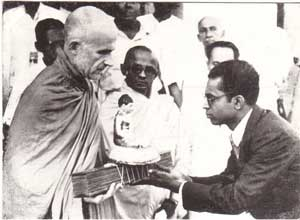
Ven. Nyanaponika Thero and Asoka Weeraratna at the Ratmalana Airport on February 20, 1953 before departing for Germany on a fact finding mission with the aim of establishing the Buddha Sasana in Germany
The Context of Post-WW2 Germany
The aftermath of World War II profoundly altered Germany’s intellectual, cultural, and spiritual landscape. The collapse of the Nazi regime prompted deep introspection, leading many Germans to question traditional institutions and explore alternative philosophies.
Following the devastation of World War II and the fall of the Nazi regime—which had aggressively suppressed Buddhist activities—German Buddhism was left fractured and without resources. When Sri Lankan (Sinhala Buddhist) philanthropist Asoka Weeraratna visited Germany in 1951, he witnessed a nation in a severe moral predicament and a civilization in crisis. He observed a deep “spiritual hunger” among war-weary Germans who were disillusioned with traditional Western religious-political systems and were searching for alternative philosophies based on peace and non-violence. [1, 2, 3, 4]
The Rescue of Das Buddhistische Haus
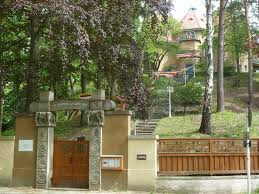
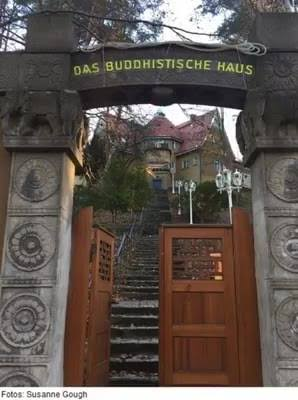
The pinnacle of the GDS’s intervention, as praised by Dr. Schumann, was the salvation of Das Buddhistische Haus (The Buddhist House) in Berlin-Frohnau. Founded originally in 1924 by Dr. Paul Dahlke, the landmark property had fallen into extreme disrepair during the war and faced imminent destruction. [1, 2]
According to Dr. Schumann’s writings:
Preventing Liquidation: The historic center “probably would have been auctioned and dismantled” had the GDS not stepped in. [1]
The Financial Rescue: Under Weeraratna’s leadership, the GDS utilized a large inheritance from a German Buddhist (Walther Schmits) to purchase the property in 1957–1958. [1, 2]
Institutional Renewal: The GDS thoroughly renovated the property, added new living quarters, built a well-stocked library, and established it as the Berlin Buddhist Vihara—the first permanent Theravada Buddhist temple in continental Europe.
Dr. Schumann’s Call for Gratitude
Dr. Schumann emphasized that the mission’s success went beyond physical brick and mortar. By sending qualified Bhikkhus (monks) from Ceylon to reside permanently at the Vihara to lead meditation courses and lectures, the GDS established a reliable institutional foundation for the Dhamma. [1, 2]
Reflecting on this pivotal turning point, Dr. Schumann posited a final, enduring question to his country:
“The organizational help which Asian Buddhist Societies, in particular Ceylon, in several critical periods had extended saved the flame of the Dhamma in Germany. Isn’t this reason enough for the Germans to be grateful?“
If you want to explore this historical period further, let me know if you would like me to:
Detail the journey of the first permanent monk mission sent from Sri Lanka to Berlin in 1957.
Explain how Asoka Weeraratna raised the necessary capital via the “Million Rupee Fund”.
Provide more context on the suppression of Buddhism under the Nazi regime prior to this revival. [1, 2, 3, 4, 5]
The legacy of Das Buddhistische Haus (The Buddhist House) in Berlin-Frohnau, Germany, represents the oldest and most enduring cultural and spiritual bridge between Europe and Sri Lanka. Founded as a monument to pure Theravada Buddhism, its survival and evolution are defined by two monumental figures: its pioneer creator, Dr. Paul Dahlke, and its savior, Asoka Weeraratna. [1, 2, 3]
🏛️ The Visionary Founder: Dr. Paul Dahlke (1924–1928)
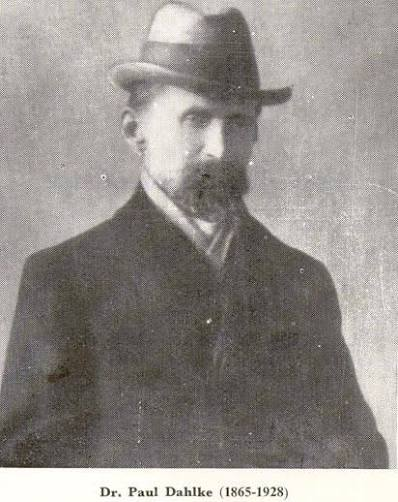
Dr. Paul Dahlke (1865–1928), a prominent German physician and intellectual, is widely recognized as a foundational pillar of Buddhism in Western Europe. [1, 2]
The Sri Lankan Connection: Dr. Dahlke traveled to Sri Lanka (then Ceylon) eight times. He mastered the Pali language under legendary Sri Lankan scholars like Ven. Hikkaduwe Sri Sumangala Nayake Thera.
Literary Contributions: He translated extensive portions of the Pali Canon into German with immaculate clarity. He also published influential journals like Neu Buddhist and Brockensammlung.
The Founding: In 1924, Dr. Dahlke utilized his own funds to construct Das Buddhistische Haus on a scenic six-acre hill in Berlin-Frohnau. He designed it to be a place of quiet reflection, ethical living, and authentic Theravada practice for Western seekers. [1, 2, 3, 4, 5]
The Interregnum: Following Dr. Dahlke’s death in 1928, the property fell out of Buddhist hands and into the possession of his non-Buddhist relatives. Decades of economic depression, World War II, and the post-war partition left the historic compound severely dilapidated and facing imminent destruction or public auction. [1, 2, 3]
🇱🇰 The Savior: Asoka Weeraratna & The German Dharmaduta Society (1952–1957)
Asoka Weeraratna (1918–1999) was a passionate Sri Lankan Buddhist philanthropist who established the German Dharmaduta Society (GDS) (originally the Lanka Dhammaduta Society) in Colombo on September 21, 1952. Driven by a post-colonial desire to share the Dhamma globally, Weeraratna set his sights on Germany. [1, 2, 3, 4, 5]
The Discovery: During a rigorous survey tour of Germany in 1953, Weeraratna discovered the deteriorating remains of Dr. Dahlke’s historic Buddhist House. [1, 2]
The Rescue: In December 1957, Weeraratna and the GDS officially purchased the property from Dr. Dahlke’s heirs. The purchase was fueled by fundraising in Sri Lanka and a critical financial grant from a German Buddhist benefactor, Walther Schmits.
The Transformation: Weeraratna completely renovated the compound, built additional living quarters, and established the Hemamala Wickramasinghe Library, which became one of Europe’s premier public Buddhist libraries.
The First Vihara: By stationing resident Sri Lankan monks (Bhikkhus) at the premises, Weeraratna transformed the private compound into the Berlin Buddhist Vihara—the very first permanent, functional Theravada Buddhist temple in continental Europe. [1, 2]
🌟 A Unified Intertwined Legacy
The combined efforts of Dahlke and Weeraratna created an institutional lineage that has thrived for over a century, celebrating its historic 100th Anniversary. [1, 2]
Feature
Dr. Paul Dahlke’s Era (1924–1928)
Asoka Weeraratna & GDS Era (1957–Present)
Primary Focus
Intellectual translation, personal practice, and publishing.
Active missionary work, international exchange, and monastic training.
Structure
Private residence, temple sanctuary, and scholarly retreat.
Fully functioning Buddhist Vihara with an established Sangha (monks).
Governance
Individually run by Dr. Dahlke and later his sister, Bertha.
Managed by Trustees of the Sri Lanka-based German Dharmaduta Society.
Today, Das Buddhistische Haus stands as a protected National Heritage site in Germany. It regularly hosts meditation retreats, public Dhamma discussions, and multi-national Vesak celebrations. Asoka Weeraratna’s legacy came full circle in 1972 when he renounced lay life to ordain as a monk, taking the name Ven. Mitirigala Dhammanisanthi Thera, leaving behind an unshakeable bridge between Sri Lanka and the heart of Europe. [1, 2, 3, 4, 5]
If you are researching this historical lineage, let me know if you would like to explore specific biographies of the first resident monks sent from Sri Lanka, details on the architectural fusion of German and Buddhist design at the house, or how the 100th-anniversary celebrations unfolded. [1, 2]
Christianity is losing its grip on the West. Once the dominant belief system, it’s now facing rapid decline as more people embrace secularism, science, and humanism. In this video, we’ll explore why churches are emptying, why younger generations are turning away from religion, and how cultural shifts, access to information, and scandals within religious institutions have accelerated the collapse. Is Christianity dying in the West? Let’s break it down.
Moral injury refers to the deep psychological, behavioral, and spiritual turmoil that arises when an individual either engages in, witnesses, or fails to avert actions that contradict their core moral convictions (Litz, Brett et al., 2009). The term moral injury was coined by Dr. Jonathan Shay, a clinical psychiatrist, in the 1990s, while working with Vietnam War veterans, and he connected their deep psychological trauma not to fear, but to a profound sense of institutional betrayal. However, moral injury is fundamentally an age-old phenomenon that has persisted throughout human history, rooted in the existence of moral and ethical beliefs that can be violated (Koenig et al., 2021). Čartolovni and team (2021) argue that, in some cases, moral distress may become moral residue and, over time, culminate in moral injury. According to Griffin and associates (2019), such traumatic experiences can create a clash with one’s ethical beliefs, resulting in considerable distress and impairments in functioning.
Moral injury is an increasingly recognized phenomenon in mental health research, particularly relevant to current and former military personnel (Phelps et al., 2024). The trauma associated with warfare can inflict damage on various aspects of health, including physical, psychological, social, and spiritual well-being, thereby contributing to moral injury (Richardson et al., 2020). Moral injury arises when individuals in the military breach their fundamental moral convictions and values during combat situations (Koenig et al., 2021). This violation can lead to profound emotional distress, manifesting as shame, grief, a sense of meaninglessness, and remorse for transgressing core ethical beliefs (Brock & Lettini, 2012).
Moral injury, as outlined by Jones (2020), is defined by feelings of guilt, shame, and self-condemnation, which are often evident in combatants who have undergone traumatic experiences in battle. Williamson et al. (2025) characterize moral injury as a significant occupational risk, particularly prevalent among combatants, stemming from guilt and shame. In a soldier, moral injury develops through a specific cognitive transition in which the raw survival behaviours of combat collide with their peacetime moral upbringing. (Farnsworth,2022).
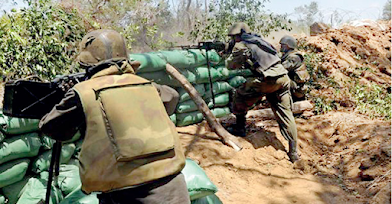
Mental health professionals have recognized the phenomenon of moral injury in Sri Lankan soldiers who were
from 1976 until its defeat in 2009, which is often regarded as one of the most advanced insurgent groups globally.
The prolonged armed conflict in Sri Lanka has significantly contributed to the prevalence of moral injury among combatants (Jayatunge, 2013). Sri Lankan combatants often faced extended deployment periods, frequently spending up to a decade in active combat zones, which intensified the cognitive dissonance between their military actions and their cultural or religious values. Many soldiers grappled with deep psychological and ethical dilemmas during and after their service, sometimes being forced to undertake actions that conflicted with their personal moral convictions. Such experiences can evoke feelings of guilt, shame, and betrayal, especially as they reflect on their involvement in the conflict and the consequences of their actions.
The majority of combatants from Sri Lanka identify as Buddhists, a faith that emphasizes the principles of karma and the cycle of rebirth. This belief system inherently instills a profound sense of moral responsibility and ethical conduct, which can lead to significant psychological distress when individuals engage in acts of violence or warfare that contradict their spiritual values. As a result, these combatants often experience moral injury, a condition characterized by the internal conflict arising from actions that violate their deeply held beliefs.
During the Eelam war in Sri Lanka, psychological support services were severely lacking and not prioritized, resulting in inadequate treatment for the psychological scars left by the conflict. The insufficient availability of mental health resources, combined with the societal stigma associated with mental health issues, exacerbated the moral injuries experienced by individuals affected by the war. Many former combatants continue to experience PTSD, depression, adjustment disorders, and moral injuries. These conditions manifest not only as psychological issues but also pose substantial barriers to their reintegration into civilian life, resulting in numerous soldiers facing difficulties in adapting after their service.
Numerous case studies highlight the moral injuries experienced by Sri Lankan combatants. One notable incident involves Major SE, who was ambushed by LTTE militants in a northern village, leading to a fierce firefight. Surrounded by the enemy, Major SE desperately returned fire when an elderly civilian woman inadvertently opened a window to observe the chaos. Mistaking her for an adversary, he shot at the window, tragically wounding the old woman fatally. Despite successfully repelling the enemy and returning to camp, the psychological toll of this traumatic event lingered with Major SE for an extended period. Major SE later recounted that his bullet shattered the old woman’s jaw, resulting in significant blood loss. Tragically, she succumbed to her injuries within hours due to the severe bleeding. Major SE endured the profound effects of moral injury, grappling with a range of distressing symptoms that persisted for many years following his wartime experiences.
Another soldier reported experiencing moral injury as a result of exposure to traumatic combat situations. In April 2000, during the Elephant Pass debacle, troops were compelled to retreat to the Soranpattu-Palai defense line, enduring a gruelling 16-kilometre march under the scorching sun, without water, and while facing enemy mortar and sniper fire. Among the retreating soldiers was Corporal K, who witnessed many of his comrades fall victim to enemy attacks and heat strokes. In the midst of this chaos, a wounded soldier implored Corporal K for assistance, but the dire circumstances left little room for altruism, forcing him to decline. The wounded soldier, however, shared his name and address, requesting that Corporal K convey his final words to his family. Although Corporal K promised to honour this request, a few kilometres near the Sorampattu- Palali defense line, Corporal K succumbed to heat stroke and lost consciousness. Fortunately, he was rescued by fellow soldiers and transported to a hospital. Upon regaining consciousness days later, Corporal K had forgotten the dying soldier’s name and address. This incident ignited deep shame and guilt in him, which she suffered for many years.
Soldiers can experience moral injury from killing enemy combatants, even when the killing is entirely legal, justified, and necessary for survival (Maguen et al., 2010). The subsequent case study illustrates such an incident.
Sergeant Sx78 dedicated nearly a decade to service in combat zones, notably enduring intense battles while defending the Jaffna Fort, which was besieged and subjected to heavy enemy fire. During the critical operation known as “Midnight Express,” he played a pivotal role in rescuing trapped troops, resulting in the death of five enemy combatants. However, in the years that followed, he became increasingly troubled by the moral implications of these actions, reflecting on the humanity of those he had killed. He expressed a deep understanding of their backgrounds, recognizing that they were often impoverished youths, manipulated by hatred and left with few choices. This realization weighed heavily on him, as he grappled with the harsh realities of war, where survival often necessitated lethal force. Acknowledging the conflict between his actions and his Buddhist beliefs, he felt a profound sense of guilt, believing that he would ultimately face karmic consequences for his deeds. This inner turmoil has led him to seek solace in spirituality, aspiring to become a monk upon his retirement from military service.
The prolonged exposure to the tumultuous realities of war and chaos can significantly alter an individual’s psychological framework, leading to profound changes in their mental and emotional state. In the aftermath of such distressing experiences, many individuals may encounter moral injury. Research indicates that cumulative war trauma can lead to moral injury among soldiers (Wisco et al.,2017).
Lt. Colonel LX is a seasoned field officer whose extensive involvement in numerous military operations spanned the entirety of the war, concluding in 2009. Throughout this tumultuous period, he was frequently confronted with the harrowing realities of combat, witnessing the tragic deaths and injuries of fellow soldiers, often in scenarios that left them vulnerable and defenseless. Moreover, his experiences extended beyond the battlefield, as he observed the profound effects of warfare on civilians in the northern regions, who bore the brunt of collateral damage and suffered immensely due to the conflict. The psychological toll of these experiences was significant, as he encountered the deep-seated human suffering that often accompanies war trauma. In the aftermath of the conflict, Lt. Colonel LX retreated into seclusion, grappling with the weight of his memories and developing a more cynical perspective on life, shaped by the stark realities he had witnessed. He is experiencing a range of psychological and emotional symptoms that are significantly impacting his overall well-being, characterized by a profound sense of loss of meaning in his life.
Following the Eelam war in Sri Lanka, numerous combatants were found to be suffering from post-traumatic stress disorder (Jayatunge, 2004). It is essential to distinguish between combat-related PTSD and moral injury, as they stem from different sources. There are many differences between combat-related PTSD and moral injury. While PTSD is driven by fear and threat, moral injury is driven by a collapse of a person’s ethical framework (Farnsworth et al.,2017). When a soldier experiences moral injury, it profoundly impacts their personality, identity, and behaviour (Litz et al., 2009). Unlike PTSD, which is primarily a fear-based response, moral injury represents a wound to the conscience, leading to significant psychological, relational, and behavioural challenges (Barnes et al.,2019).
Moral injury often results in a collapse of identity and self-worth, characterized by aggressive self-loathing and an overwhelming sense of chronic shame and guilt (Farnsworth et al., 2014). Furthermore, deep cynicism and a loss of trust emerge, eroding the soldier’s faith in the military hierarchy, political leaders, and the institution as a whole, which can extend into their civilian life (Shay, 2014). The consequences may include a loss of faith and a descent into existential nihilism, relational destructiveness, and isolation. Additionally, self-sabotage and self-punishment frequently occur, often accompanied by engagement in high-risk behaviors (Griffin et al., 2019).
Specialized treatment for moral injury in soldiers is essential, as neglecting this issue can result in severe consequences, including a total collapse of identity, increased social isolation, and a heightened risk of suicide (Bryan et al.,2014). Once moral injury occurs, evidence-based clinical therapies become essential to address the profound shame and guilt experienced by these individuals.
Adaptive Disclosure (AD) is one of the premier, evidence-based treatments developed specifically for moral injury in military personnel (Litz et al., 2016). Adaptive Disclosure (AD) integrates focused imaginal exposure with organized, real-time dialogues to assist military personnel in addressing and processing the unique emotional traumas associated with combat experiences.
Another effective intervention is Trauma-Informed Guilt Reduction (TiGR) Therapy, which evaluates the realities of a crisis, enabling soldiers to discern what they could control versus what was beyond their influence during chaotic situations (Norman et al.,2019). Additionally, spiritual therapy plays a crucial role in addressing moral injury. Spiritual therapy heals moral injury by directly addressing the existential and metaphysical wounds (Carey et al.,2026).
Group therapy sessions and Peer support groups enable veterans to share their experiences with others who have faced similar combat situations, fostering a sense of normalcy in their reactions to trauma. Creating safe spaces for open discussions about deeply held shame is vital for bringing these hidden memories to light (Allbaugh, Placeres & Toor, 2023). Furthermore, mindfulness breath meditation and loving-kindness meditation (LKM) are highly effective tools for healing moral injury (Kelley et al., 2025).
Moral injury among Sri Lankan combatants who took part in the Eelam War represents a significant yet under-explored area of research that warrants immediate attention. It is crucial to accurately diagnose the presence of moral injury in these veterans, as it can manifest in various ways, including feelings of guilt, shame, and a diminished sense of self-worth. Furthermore, providing appropriate psychological support tailored to the unique experiences of these combatants is essential for their recovery and reintegration into society. By addressing this critical issue, we can not only aid those who have suffered in silence but also contribute to a broader understanding of the psychological ramifications of war, ultimately fostering a more compassionate approach to veteran care in Sri Lanka.
References
Allbaugh, L. J., Placeres, V., & Toor, R. (2023). Core components of moral injury groups co-facilitated by mental health clinicians and chaplains. Journal of Military and Veterans’ Health, 31(2), 42–49. https://doi.org
Barnes, H. A., Hurley, R. A., & Taber, K. H. (2019). Moral injury and PTSD: Often co-occurring yet mechanistically different. The Journal of Neuropsychiatry and Clinical Geosciences, 31(2), A4–103.
Bryan, C. J., Bryan, A. O., Anestis, M. D., Anestis, J. C., Green, B. A., Etienne, N., Morrow, C. E., & Ray-Sannerud, B. (2014). Measuring moral injury and examining its relationship to suicidal behavior among military personnel. Psychological Trauma: Theory, Research, Practice, and Policy, 6(1), 17–24. doi.org.
Brock RN, Lettini G. Soul repair: Recovering from moral injury after war. Beacon Press; 2012.
Carey, L. B., Hodgson, T. J., Krikorian, A., & Koenig, H. G. (2026). Moral injury as a wound of meaning and conscience. Journal of Religion and Health, 65(3), 1422–1439. https://doi.org.
Čartolovni A, Stolt M, Scott PA, Suhonen R. Moral injury in healthcare professionals: A scoping review and discussion. Nurs Ethics. 2021 Aug;28(5):590-602. doi: 10.1177/0969733020966776. Epub 2021 Jan 11. PMID: 33427020; PMCID: PMC8366182.
Farnsworth, J. K., Drescher, K. D., Nieuwsma, J. A., Walser, R. B., & Currier, J. M. (2014). The role of moral injury in the return from war. Journal of Humanistic Psychology, 54(3), 295–314. doi.org.
Farnsworth, J. K., Drescher, K. D., Evans, W. R., Walser, R. D., & Cooke, J. M. (2017). A functional approach to understanding and treating moral injury in military veterans. Journal of Contextual Behavioral Science, 6(4), 391–397. doi.org.
Farnsworth, J. K. (2022). Toward a dual process model of moral injury and traumatic illness. Frontiers in Psychiatry, 13, Article 944888. doi.org.
Griffin BJ, Purcell N, Burkman K, Litz BT, Bryan CJ, Schmitz M, Villierme C, Walsh J, Maguen S. Moral Injury: An Integrative Review. J Trauma Stress. 2019 Jun;32(3):350-362. doi: 10.1002/jts.22362. Epub 2019 Jan 28. PMID: 30688367.
Jayatunge, R. M. (2004). PTSD: Sri Lankan experience. ANL Publishers. Sri Lanka.
Jayatunge, R.M. (2013). Shell Shock to Palali Syndrome: PTSD Sri Lankan Experience. Sarasavi Publishers.
Jones E. Moral injury in a context of trauma. Br J Psychiatry. 2020 Mar;216(3):127-128. doi: 10.1192/bjp.2020.46. PMID: 32345414.
Kelley, M. L., Bravo, A. J., Burgin, E. E., Gaylord, S. A., Vinci, C., Strowger, M., Gabelmann, J. M., & Currier, J. M. (2025). Using mindfulness to manage moral injury in veterans: Feasibility and satisfaction of a pilot randomized controlled trial. Journal of Clinical Psychology, 81(6), 425–433. https://doi.org/10.1002/jclp.23778.
Koenig HG, Al Zaben F. Moral Injury: An Increasingly Recognized and Widespread Syndrome. J Relig Health. 2021 Oct;60(5):2989-3011. doi: 10.1007/s10943-021-01328-0. Epub 2021 Jul 10. PMID: 34245433; PMCID: PMC8270769.
Litz, Brett T., et al. “Moral Injury and Moral Repair in War Veterans: A Preliminary Model and Intervention Strategy.” Clinical Psychology Review, vol. 29, no. 8, 2009, pp. 695-706.
Litz, B. T., Stein, N., Delaney, E., Lebowitz, L., Nash, W. P., Silva, C., & Maguen, S. (2009). Moral injury and moral repair in war veterans: A preliminary model and intervention strategy. Clinical Psychology Review, 29(8), 695–706. https://doi.org/10.1016/j.cpr.2009.07.003.
Litz, B. T., Plouffe, P. P., Carper, T. L. M., & Gray, M. J. (2016). Adaptive disclosure for military trauma, loss, and moral injury: A randomized controlled trial. Journal of Consulting and Clinical Psychology, 84(12), 1023–1034. doi.org.
Maguen, S., Lucenko, B. A., Reger, M. A., Gahm, G. A., Litz, B. T., Seal, K. H., Knight, S. J., & Marmar, C. R. (2010). The impact of reported direct and indirect killing on mental health symptoms in Iraq War veterans. Journal of Traumatic Stress, 23(1), 86–90. doi.org.
Norman, S. B., Allard, C. B., Browne, K., Capone, C., & Haller, M. (2019). Trauma informed guilt reduction therapy: Treating guilt and shame resulting from trauma and moral injury. Academic Press.
Phelps AJ, Adler AB, Belanger SAH, Bennett C, Cramm H, Dell L, Fikretoglu D, Forbes D, Heber A, Hosseiny F, Morganstein JC, Murphy D, Nazarov A, Pedlar D, Richardson JD, Sadler N, Williamson V, Greenberg N, Jetly R; Members of the Five Eyes Mental Health Research and Innovation Collaborative. Addressing moral injury in the military. BMJ Mil Health. 2024 Jan 25;170(1):51-55. doi: 10.1136/bmjmilitary-2022-002128. PMID: 35705259.
Richardson NM, Lamson AL, Smith M, Eagan SM, Zvonkovic AM, Jensen J. Defining Moral Injury Among Military Populations: A Systematic Review. J Trauma Stress. 2020 Aug;33(4):575-586. doi: 10.1002/jts.22553. Epub 2020 Jun 22. PMID: 32567119.
Williamson V, Kothari R, Bonson A, Campbell G, Greenberg N, Murphy D, Lamb D. Moral injury prevention and intervention. Eur J Psychotraumatol. 2025 Dec;16(1):2567721. doi: 10.1080/20008066.2025.2567721. Epub 2025 Oct 21. PMID: 41118287; PMCID: PMC12541919.
Wisco, B. E., Marx, B. P., May, C. L., Martini, B., Krystal, J. H., Southwick, S. M., & Pietrzak, R. H. (2017). Moral injury in U.S. combat veterans: Results from the National Health and Resilience in Veterans’ Study. Depression and Anxiety, 34(4), 340–347. doi.org.
Use of loudspeakers at mosques has long been a bone of contention across the world. Now, Denmark has announced plans to ban the Islamic call to prayer. Denmark’s Immigration Minister Morten Bodskov claimed that growing Islamisation in the country was taking up too much of the public space.
Use of loudspeakers at mosques has long been a bone of contention across the world. Now, Denmark has announced plans to ban the Islamic call to prayer. Denmark’s Immigration Minister Morten Bodskov claimed that growing Islamisation in the country was taking up too much of the public space.
The phrase “Buddhism’s Master stroke – Conquest of the Mind of the Western Man” stems from an essay by Sri Lankan Buddhist scholar Senaka Weeraratna. The caption is a new innovative phrase. The article describes a peaceful, intellectual transformation where Eastern spiritual wisdom reshapes Western thought. [1, 2]
Buddhism’s Bloodless Counter Offensive has swept the Western World with a remarkable paradigm shift of seeking salvation through self – help rather than divine intervention. The Buddha denied the existence of a God as serving any useful purpose for human advancement. The West increasingly subscribes to this Buddha’s fundamental belief.
This phenomenon fulfills a prediction by the celebrated British historian Dr. Arnold Toynbee, who conceptualized the peaceful export of Eastern philosophy as a historic “counter-offensive”. It serves as a philosophical response to centuries of Western material and religious expansion. [1]
🕊️ The Nature of the “Counter-Offensive”
Conquest without a sword: Unlike historic expansions driven by military conquest, Buddhism’s spread relies entirely on the symbolic “Sword of Wisdom” to sever ignorance and delusion. [1]
Decamping of the traditional Church: The migration of Westerners toward Buddhist practices is heavily tied to its status as the only world religion that mandates a rigorous system of ethics and high morals without requiring a belief in a creator God.
Alternative path: It addresses the secularization of the West by offering psychological frameworks like meditation, mindfulness, and compassion to all living beings, bypassing traditional prayer. [1, 2]
🌐 Modern Vehicles of Spread
Digital landscape: The primary battleground for this “conquest of minds” is modern technology, accelerating through YouTube, podcasts, and online Dharma communities.
Scientific alignment: Western intellectuals, echoing sentiments famously attributed to thinkers like Albert Einstein, find a natural harmony between Buddhist philosophy and modern scientific inquiry.
The “Challenge and Response” framework: Viewed through Toynbee’s historical lens, the West provided the “challenge” of industrialization, materialism, and colonial expansion. The East’s “response” is the quiet, internal mastery of the mind—proving that the greatest victory is not over others, but over oneself.
Would you like to explore Dr. Arnold Toynbee’s specific writings on the meeting of East and West, or examine how modern scientific research validates Buddhist mindfulness techniques?
Denmark was once the world’s most liberal, high-trust country. Today, it’s Europe’s toughest fortress against parallel societies. From tearing down immigrant neighborhoods to banning face veils and prayer rooms, Denmark is rewriting the rules of Western integration. What forced this dramatic shift, and why is the political left leading the charge?
As other European nations quietly copy the “Danish model,” is this the future of the West or the death of multiculturalism?
The phrase “Triumph of Buddhism – Collapse of Western Monotheism” describes a speculative, historical, or philosophical scenario where Eastern dharmic traditions supplant Abrahamic religions (Christianity, Judaism, Islam) as the dominant global spiritual framework.
Here is an analysis of the core dynamics, drivers, and implications of such a paradigm shift.
🏛️ Core Philosophical Differences
God vs. Mind: Western monotheism relies on a singular, external Creator God. Buddhism focuses on internal mind training and cosmic cause-and-effect (Karma).
Linear vs. Cyclical: Monotheism views history as linear (Creation to Judgment Day). Buddhism views existence as cyclical (Samsara).
Dogma vs. Experience: Monotheism emphasizes faith in divine revelation. Buddhism encourages personal verification of truth (Ehipassiko).
📉 Drivers of Western Monotheistic Decline
Secularization: Rapidly dropping church attendance and religious affiliation in Europe and North America.
The Problem of Evil: Modern education makes it harder for many to reconcile an all-powerful, loving God with global suffering.
Scientific Friction: Historic clashes between literal scriptural interpretation and proven science (evolution, cosmology).
📈 Factors Fueling the Rise of Buddhism
Psychological Alignment: Buddhist mindfulness and meditation integrate seamlessly with modern neuroscience and cognitive behavioral therapy (CBT).
Agnostic Compatibility: Secular Buddhism allows individuals to practice its core ethics and mental training without believing in supernatural entities.
Environmental Ethics: The Buddhist concept of interconnectedness aligns closely with modern ecological and climate movements.
🌍 Global Implications of the Shift
Decentralized Authority: A shift away from rigid religious hierarchies toward localized, practice-based communities.
Reduced Holy War Narratives: Monotheistic “us vs. them” (believer vs. infidel) dynamics would decrease, though Buddhist-majority regions still face ethnic conflicts.
Existential Reframing: Society would view human existence not as a test for the afterlife, but as an opportunity to reduce suffering in the present world.
To explore this concept further, let me know if you want to focus on:
The historical accuracy of these religious trends today
How this shift would impact global politics and laws
A comparison of Buddhist ethics vs. Christian ethics
https://share.google/aimode/7p9ClC9av57jP9YqR
AI overview
[ ]
No CRUSADES, No JIHAD | How BUDDHISM Conquered Without Violence
THE RELIGION THAT NEVER FOUGHT HOLY WARS – HOW BUDDHISM SPREAD WITHOUT BLOODSHED
Why did Christianity, Islam, and Hinduism all spark violent conflicts in their spread—while Buddhism expanded across half the world without raising a sword?
In this deep dive, we explore how Buddhism’s radical approach to truth, non-violence, and cultural adaptation reshaped empires… without a single holy war.
From Ashoka’s transformation to modern-day Buddhist nationalism, this video uncovers the hidden forces behind the world’s most peaceful revolution—and the shocking moments when it turned violent.
DISCOVER: How Buddhism spread without conquest or forced conversions Why Ashoka the Cruel became history’s most peaceful emperor The real reason Buddhist monks didn’t wage holy wars How Buddhism’s unique approach to truth made holy wars unnecessary
Why some Buddhist monks today have embraced violence (and what went wrong) Why Buddhism’s nonviolent model still matters in modern global conflicts ✨
If this video made you think differently, hit like, subscribe, and share it with someone who needs to hear this perspective.
The Ministry of Youth Development where I was working as the Commonwealth Fund Advisor in Youth Development was attending to traditional youth work and providing skills training to 40,000 youths annually. The Military Government that took over in 1982 expressed dissatisfaction with the programmes and at an evaluation, presided over by Air Vice Marshall Aminul Islam, the Minister for Labour and Manpower, I was questioned as to what contribution I could make for Bangladesh. It was delivered in the form of a military command
I replied that it would be ideal to have a Self Employment Program which will guide and train the annual intake of 40,000 youths undertaking skills programs to become self employed. Bereft of any such programme to guide them to venture into employment most of the trained youths remained unemployed. I was told blankly that this was something that can never be achieved because The ILO had miserably failed to establish a self employment program in Tangail in the earlier three years. The Secretaries of the Finance and other Ministries strongly objected, stating that it would end up in a waste of funds and also that the Youth Ministry should not be entrusted with the task of creating employment opportunities. I argued that though the ILO failed, I had the ability to succeed because I had established many employment projects in my work in Sri Lanka. I also argued that youth work should concentrate on skills training and guiding the trained to establish enterprises. The Hon Minister listened carefully to an easy two hours’ arguments between me and the Secretaries of some Line Ministries. Finally he ordered all of us to shut up and asked the Secretaries for the number of drop outs of the education system in any one year, those who would be searching for employment without any qualification. The answer was in the millions. Then he asked for the number of youths who would be guided to become self-employed through Government Programs. The answer was none. He immediately ruled that I should be allowed to establish a youth self employment program. The Secretary to the Treasury immediately vetoed it by stating that there were no funds. I immediately said that I needed no funds, but authority should be granted for the Ministry to re deploy officers, redraft their work remits and to find savings within the skills training budgets for expenses on holding workshops to train and guide youths to become self employed. The Hon Minister granted that request.
The Youth Development Department under my direction got cracking the very next day, identifying key areas where the work will commence, drafting training schedules to train the staff who attended to skills training on how to guide the youths to make their own assessment of how they can be self employed in their habitat. The Ministry took over elements of national planning, in identifying areas where there was a potential for youths to become self employed. I with a core of officials addressed the 40,000 youths in training on identifying areas where they could generate incomes, and how they should draft plans to be self employed. It was to be a family basis where the parents and elders of the youths were also consulted. All skills training institutes were activated till late at night to enable youths to utilize the machinery to make something that could be sold. What they made was evaluated at the next days training and this took on a process of training to make marketable products. The three Livestock and Poultry Training Institutes of the Ministry established an extension service to help youths who commence farms in their homes. The Deputy Directors of Youth Development in charge of Districts took on the mantle of guiding the youths to establish income generation activities and guiding them on a day to day basis. In short the Ministry of Youth Development became in facto a Ministry creating employment.
In 1982 I commenced training the staff in economics and techniques of community development and non formal education where the thrust was to enable youths to make their own decisions and develop their abilities to make them become successful entrepreneurs. I was training 2000 youths and also training the staff to continue the program when I leave.
The design of the program and what was achieved in eighteen months is recorded by the two Secretaries with whom I worked.
Mr Ayubur Rahaman, The Secretary to the Ministry wrote on 5/10/1983:
His contribution towards successful launching of a number of skills development training programs to promote employment of youths deserves special appreciation. His role as formulator of the self employment project has been particularly commendable. Dr Karunaratne applied his initiative, skills, expertise and energy on training of youth officers, preparation of business profiles for encouraging self employment and guding youths to formulate small projects. It was mainly through his dedication and hard work that the pilot program for self employment has now been formally accepted as one of the most important development projects to be implemented by the Youth Development Department.”
Mr Md. Asafuddowlah, Joint Secretary on 28/8/1983:
Dr Karunaratne’s significant contribution has been in the field of self employment to the drop out youths. This Programme was not only designed by him but also guided by him. This activity which was initially launched as a pilot experimental project has been a great success and has now been adopted as a full fledged programme of the Youth Development Department. This is a non subsidy programme in which the youths are subjected to non formal education inputs while they are engaged in viable bur small scale commercial ventures. The Government has been successful in providing meaningful employment to a large number of youths on this programme.
Mr Md Asafuddowlah, Secretary to the Ministry, on 20/2005, again wrote to me:
You will be happy to learn that the Self Employment Program of the Youth Development Department has expanded across the country and attained great success. I have not forgotten your valuable contribution to the success of this programme.”
The Programme has been expanded apace, run by the administrators trained by me. . On 19/2/2011, the Government of Bangladesh, in its Report to the 34 th Session of the IFAD(FAO) stated that two million youths have found self employment on this Programme.
Today this is the largest employment creation program the world has known. The Programme currently guides 160,000 youths to become self employed. The Ministry has taken over the task of national planning to create employment. Ninety five percent of the work of the Youth Development is to create employment for the youth. In the first four years this Programme was not provided any funds. It was entirely worked on savings found in other approved training budgets. Later it was provided ample funds. The Fifth Five Year Plan of the Planning Commission of Bangladesh details an eight page assessment of this great programme.
The Youth Self Employment Programme of Bangladesh, now in its third decade, having guided as much as three million youths to become viably self employed stands out as a success that can be repeated in many a Third World country. I can give the assurance that it can be done.
The announcement that Colombo Port City has secured over US$600 million in new investments through 71 strategically approved businesses is encouraging and reflects improving investor confidence in Sri Lanka’s economy. However, the composition of those investments deserves closer attention. Much of the current focus appears to be on real estate, hospitality, logistics, and commercial developments.
Unquote
Port City Must Become Sri Lanka’s Blue Economy and Heavy Industry Command Centre The announcement that Colombo Port City has attracted over US$600 million in new investments through 71 Businesses of Strategic Importance is a positive milestone for Sri Lanka. It demonstrates growing confidence in the country’s economic reforms and investment climate. However, Sri Lanka must now ask a more fundamental question: What kind of investment will transform our economy over the next fifty years?
While luxury apartments, hotels, office towers, and logistics companies have their place, they alone will not create the industrial strength required to generate large-scale exports, high-income employment, advanced technology transfer, and foreign exchange earnings.
Sri Lanka is an island nation strategically located in the centre of the Indian Ocean. Our greatest untapped resource is not land—it is the Blue Economy.
Port City should therefore evolve beyond being primarily a real estate destination. It should become the regional headquarters for global marine, offshore, and energy industries.
Priority sectors should include: ● Offshore oil and natural gas exploration management. ● Marine engineering and offshore construction companies. ● Floating production systems and subsea engineering. ● Ship management and vessel-owning companies. ● Green hydrogen and green ammonia project developers. ● Offshore wind energy management. ● Maritime technology and digital navigation companies. ● Marine insurance, arbitration and finance. ● Ocean research and marine biotechnology. ● Regional headquarters for international energy service companies.
Instead of focusing mainly on selling luxury apartments overlooking the marina, Sri Lanka should attract the management and engineering headquarters of multinational companies operating throughout the Indian Ocean, Middle East, East Africa and South Asia. These headquarters would employ Sri Lankan engineers, naval architects, geologists, data scientists, marine lawyers, accountants and project managers while creating thousands of high-value professional jobs.
At the same time, the Government should accelerate heavy industrial development outside Port City through special industrial zones dedicated to:
● Petroleum refining and petrochemicals. ● LNG import, storage and distribution. ● Steel fabrication and heavy engineering. ● Offshore fabrication yards. ● Shipbuilding and ship repair. ● Renewable energy equipment manufacturing.
Countries such as Singapore, the UAE and the Suez Canal Economic Zone in Egypt demonstrate that world-class financial centres thrive alongside advanced industrial and maritime ecosystems—not instead of them. Sri Lanka has the geographical advantage, skilled workforce and maritime heritage to become the Indian Ocean’s premier Blue Economy hub.
Port City should not merely become another waterfront skyline. It should become the command centre for the industries that will power Sri Lanka’s economy for generations to come.
India’s Oil and Natural Gas Corporation (ONGC), supported by energy and marine consultancy ABL, has completed the relocation of 44 jack-up rigs ahead of the monsoon season. The pre-monsoon rig moves were carried out between March 15 and May 31, with the rigs travelling a combined distance of more than 5,500 nautical miles before the onset of seasonal adverse weather conditions. ABL, part of Oslo-listed consultancy group Aqualis, also supported an additional 75 rig moves within ONGC’s offshore fields on India’s west coast between September 2025 and May 2026, acting as tow master and marine warranty surveyor throughout the campaign.
Were those rigs moved for lay up Any brought to Trincomalee ?
The movement of the 44 jack-up rigs was not primarily for lay-up.
Every year, before the southwest monsoon, offshore drilling contractors working for Oil and Natural Gas Corporation (ONGC) reposition jack-up rigs from exposed drilling locations to safer designated locations. This is a routine seasonal marine operation known as a pre-monsoon rig move. Once the monsoon ends, many of these rigs are moved back to drilling locations or to their next contracts.
The reasons include:
Avoiding severe monsoon weather.
Moving between drilling campaigns.
Going to shipyards or anchorages for inspection and maintenance.
Positioning for the next drilling programme.
These are operational relocations, not necessarily long-term lay-up.
Were any brought to Trincomalee?
As of now, there is no public evidence that any of these 44 ONGC rigs were towed to Trincomalee as part of this pre-monsoon campaign.
However, Trincomalee has hosted offshore rigs before. Its deep, sheltered natural harbour is well suited for:
Temporary anchorage,
Repairs and maintenance,
Crew changes,
Heavy logistics,
Waiting between contracts.
For example, the semi-submersible rig Olinda Star was handled at Trincomalee anchorage several years ago, and maritime companies are actively promoting Trincomalee as a regional offshore support hub.
Given your long-standing interest in developing Trincomalee as an offshore industrial hub, this is an important point: there is a genuine opportunity for Sri Lanka to attract idle or between-contract drilling rigs by providing:
Rig repair and dry-docking services,
Steel fabrication,
Marine engineering,
Supply base operations,
Crew logistics,
Waste management,
Bunkering and fuel services.
These are high-value maritime services that could complement the planned development of the Trincomalee oil tank farm and the port as an energy hub.
In fact, Trincomalee could aspire to become for the Bay of Bengal what places like Singapore or Batam are for Southeast Asia—an offshore support and maintenance centre serving rigs operating in India, Bangladesh, Myanmar, and potentially Sri Lanka’s own offshore fields.
Many leading educational thinkers and industrialists have argued that education should develop creativity, problem-solving, adaptability, and character rather than only memorization. Here are some of the best-known quotes and how they can inspire modern educational reforms.
1.
Albert Einstein
Education is not the learning of facts, but the training of the mind to think.”
Modern adaptation:
Education should teach students how to think critically, solve problems, and innovate, rather than simply memorize information.”
Reform implication:
Greater emphasis on critical thinking.
AI-assisted learning.
Project-based and inquiry-based education.
2.
John Dewey
Education is not preparation for life; education is life itself.”
Modern adaptation:
Schools should reflect real life by integrating entrepreneurship, community service, digital skills, and practical experiences.”
Reform implication:
Internships.
Community projects.
Financial literacy.
Environmental education.
3.
Nelson Mandela
Education is the most powerful weapon which you can use to change the world.”
Modern adaptation:
Education should empower every student to improve society through knowledge, ethics, and innovation.”
4.
Peter Drucker
The best way to predict the future is to create it.”
Modern adaptation:
Education should produce creators, entrepreneurs, scientists, and innovators who build the future.”
5.
Steve Jobs
Innovation distinguishes between a leader and a follower.”
Modern adaptation:
Schools should encourage creativity, experimentation, and calculated risk-taking.”
6.
Henry Ford
Anyone who stops learning is old, whether at twenty or eighty.”
Modern adaptation:
Learning should continue throughout life through continuous reskilling and lifelong education.”
7.
Jack Ma
We have to teach our children something unique so machines can never catch up.”
Modern adaptation:
Since AI can process information, schools must focus on creativity, ethics, teamwork, emotional intelligence, and leadership.”
8.
Yuval Noah Harari
The most important skill in life is the ability to reinvent yourself again and again.”
Modern adaptation:
Education should prepare students for careers that do not yet exist by building adaptability and resilience.”
9.
Rabindranath Tagore
The highest education is that which does not merely give us information but makes our life in harmony with all existence.”
Modern adaptation:
Education should balance academic excellence with emotional well-being, sustainability, culture, and social responsibility.”
10.
Lee Kuan Yew
The wealth of a nation lies in its people.”
Modern adaptation:
A country’s greatest investment is developing skilled, disciplined, innovative, and ethical citizens.”
A Vision for Modern Educational Reform
Drawing on these ideas, a reform agenda could include:
Teach students how to think, not what to think.
Integrate AI literacy and digital technologies across subjects.
Make English proficiency and the mother tongue complementary.
Strengthen science, technology, engineering, arts, and mathematics (STEAM).
Expand technical and vocational education alongside university pathways.
Foster entrepreneurship and innovation from school age.
Build ethical leadership, environmental responsibility, and civic values.
Promote lifelong learning, allowing people to reskill throughout their careers.
Align curricula with future industries such as artificial intelligence, robotics, renewable energy, biotechnology, advanced manufacturing, and the blue economy.
A concise guiding principle for educational reform could be:
The purpose of education in the 21st century is not merely to prepare students for existing jobs, but to equip them with the knowledge, character, creativity, and adaptability to create the industries, technologies, and societies of tomorrow.”
This principle reflects the common thread running through the work of many influential educators, business leaders, and policymakers while addressing the challenges of an AI-driven and rapidly changing world.
The Easter Sunday terror attacks of 2019 remain one of the most devastating tragedies in Sri Lanka’s recent history. It claimed the lives not only of Sri Lankans, but also of foreign nationals. Therefore, countries such as the United States also have a responsibility to determine the real culprits.
The US Federal Bureau of Investigation (FBI) conducted an investigation and identified Zahran Hashim as the mastermind.
The FBI reports, along with inputs from other foreign agencies that assisted post-blast investigations, have reinforced the conclusion that Zahran played a central role in planning and directing the coordinated strikes carried out by local radicalised cells affiliated with the Islamic State (ISIS).
Similarly, investigative assistance provided by Australian authorities, including forensic and intelligence cooperation, has contributed to mapping networks, confirming the identities of perpetrators, and strengthening the evidentiary base linking the attackers to transnational extremist structures. These external inputs, taken together, broadly support the view that the bombings were locally executed, but internationally inspired and ideologically linked.
However, differences have emerged within Sri Lanka over the question of the mastermind. The current government and the Catholic Church portray a different narrative, and investigations are now underway.
These perspectives have often pointed to alleged intelligence failures, lapses in prevention, and questions around possible higher-level facilitation or negligence. All in all, the narrative suggests that the attack may have been orchestrated to gain political mileage, allegedly to influence the election of Mr. Gotabaya Rajapaksa to office by capitalising on the national security sentiment triggered by the attacks.
It is difficult to dismiss the FBI report, given that the United States has a legitimate interest in investigating the incident. A number of US nationals were killed in the bombings. Similarly, other countries such as the United Kingdom and China also have a stake, as their citizens were victims.
A key concern arising from this situation is the way foreign investigative contributions are being publicly understood. References to FBI findings, for instance, have been cited in public discourse as affirming Zahran Hashim’s central role. However, there has been limited effort by the Sri Lankan state to systematically present these international findings alongside domestic investigative conclusions in a consolidated format. As a result, the public is often left to interpret fragmented references.
This gap has broader implications. In this case, where national trauma intersects with international terrorism investigations, clarity isn’t merely a procedural requirement, but a matter of public trust. The victims include Sri Lankans of multiple faiths as well as foreign nationals, underscoring the global relevance of the tragedy. In such a context, consistency in communicating investigative outcomes is essential to prevent misunderstanding and speculation.
Sri Lanka’s Catholic Church, which has been at the forefront of calls for justice for victims, has repeatedly emphasised the need for full disclosure and accountability.
It’s incumbent upon the government, once again, to state its position on the FBI findings. The country deserves an answer to this question.
The United States, in its Country Reports on Terrorism 2019: Sri Lanka, also referred to the ISIS-inspired attackers as the perpetrators.
ISIS-inspired terrorists conducted a series of suicide attacks against churches and hotels across Sri Lanka on Easter Sunday, resulting in hundreds of casualties. Then ISIS leader Abu Bakr al-Baghdadi publicly praised the attacks, illustrating that ISIS remained determined, following its defeat in Syria and Iraq, to continue its global campaign through affiliated branches and inspired attacks. The attacks also led to isolated outbreaks of anti-Muslim violence, the report stated.
The National People’s Power (NPP) came to power with the promise of identifying the mastermind, or mahamolakaru”, of this attack. The question therefore remains: who is correct—the FBI, the Catholic Church, or the NPP government?
The government must clearly state its position; otherwise, attention will be diverted by a narrative that is yet to be conclusively established. Alternatively, the matter should be referred to the judiciary after the conclusion of ongoing investigations for determination.
The Easter Sunday bombings are not only a domestic concern but also an international one, as a number of foreign nationals, including five Americans and six Chinese ocean scientists, were among those killed. Sanity should prevail in the end.
The Prevention of Terrorism (Temporary Provisions) Act (PTA) will be repealed within this year, President Anura Kumara Dissanayake stated in Parliament today (25).
The President said the law, introduced in 1979 as a temporary measure for one year, had remained active for approximately 46 years despite longstanding demands for its abolition.
President Dissanayake noted that successive campaigns had been conducted calling for the removal of the act, citing concerns over civil liberties and its continued use over an extended period.
The President said therefore the government will repeal the PTA within the year.
President Dissanayake made this assertion while joining the adjournment debate on combating the drug menace, which was moved by the government.
The President said corruption, organized criminal networks, drug trafficking and the links between crime and politics must be decisively addressed.
President Dissanayake noted that the country already possesses the necessary legal framework and state institutions to combat such activities, and alleged that the opposition has become a principal obstacle to these efforts.
The President highlighted the work of the Director of the Criminal Investigation Department (CID) Deputy Inspector General Shani Abeysekara, describing him as a key figure in efforts to combat crime.
President Dissanayake claimed that DIG Abeysekara has become a target of criticism from opposition forces.
He also referred to several public officials, including the Director General of the Commission to Investigate Allegations of Bribery or Corruption, Ranga Dissanayake, the Minister of Public Security Ananda Wijepala, officials of the Attorney General’s Department and the judiciary, stating that they too have faced opposition for carrying out their responsibilities.
During his speech, the President said that exposing crimes allegedly committed with state backing should not be viewed as an act of betrayal, but rather as part of a broader effort to establish a more accountable and civilized state. He emphasized the government’s commitment to strengthening the rule of law and democratic governance.
The President also expressed support for the armed forces and intelligence services, praising their contributions to national security. However, he maintained that individuals within those institutions who may have misused their positions for political purposes should be held accountable under the law.
Referring to several high-profile cases, including the murder of rugby player Wasim Thajudeen and the 2019 Easter Sunday Bombings, the President alleged that elements within the state apparatus had been involved and argued that the truth behind such incidents must be fully revealed.
He further stated that the government would continue to support law enforcement and investigative officers carrying out criminal investigations and warned against attempts to intimidate or threaten officials engaged in such work. The President also called on the public to support efforts aimed at combating organized crime and ensuring accountability.
Addressing Parliament, President Dissanayake also said that relevant red notices would be issued to facilitate the extradition of individuals involved in fraudulent and criminal activities who are currently residing overseas.
The President claimed that laws would be amended to enable overseas witnesses who fear appearing in Sri Lanka to testify remotely.
Furthermore, President Dissanayake said under the present administration, a total of 3,390kg of heroin, 304kg of cocaine, 5,543kg of Crystal Methamphetamine (‘Ice’), 1,521kg of Kush cannabis, 5,110,735 narcotic pills and 2,454,267 drug capsules were seized.
Around 58 organised crime suspects have also been arrested abroad and extradited, according to the President.
What kind of education system best serves Sri Lanka’s long-term development?
The issue is not whether Sri Lanka should have schools similar to prestigious British schools such as Harrow School, Merchant Taylors’ School, or The John Lyon School. The real question is whether our education system produces citizens who can create value in Sri Lanka rather than simply preparing students to leave.
The Current Situation
Sri Lanka has several excellent international schools that prepare students for British, Australian, or International Baccalaureate qualifications. Many graduates proceed to universities abroad and often settle overseas.
At the same time, leading national schools prepare students for GCE O/L and A/L examinations, with the objective of entering Sri Lankan universities and obtaining professional or public-sector employment.
Both systems have strengths, but both can be criticized for focusing heavily on examinations rather than innovation, entrepreneurship, technology, and industrial development.
Why Singapore and South Korea Are Different
Singapore and South Korea invested heavily in:
Science and technology education
Technical and vocational training
Research and development
Export-oriented industries
Merit-based public administration
Strong links between universities and industry
Students remain because opportunities exist at home. Patriotism helps, but economic opportunity is usually the decisive factor.
The Real Problem Is Not Emigration
Many Sri Lankan students leave because:
Higher salaries abroad
More advanced industries
Better research facilities
Larger technology ecosystems
More merit-based career progression
If Sri Lanka offered similar opportunities, many would stay or return after gaining experience overseas.
Some Ideas for Sri Lanka
1. Create Technology-Focused Secondary Schools
Establish specialized public schools focusing on:
Artificial Intelligence
Robotics
Renewable energy
Maritime technology
Aerospace engineering
Advanced manufacturing
Students should learn practical innovation, not only examination techniques.
2. Strengthen Vocational Education
Countries such as Germany have elevated technical education to a prestigious level.
Sri Lanka could expand institutions such as technical colleges and vocational academies to produce:
Welders
Mechatronics technicians
Marine engineers
Renewable-energy specialists
Industrial automation experts
This aligns closely with your long-standing interest in vocational and marine industry development.
3. Develop AI and Digital Export Zones
Create technology parks in:
Colombo
Galle
Jaffna
Trincomalee
Offer incentives for companies developing:
AI software
Fintech
Cybersecurity
Data analytics
Digital services
These sectors require little physical infrastructure but generate significant foreign exchange.
4. Link Universities with Industry
Engineering and science students should spend substantial time in industry placements.
Research projects should solve practical national problems:
Ports
Fisheries
Water management
Energy
Agriculture
Logistics
5. Encourage Return of Overseas Talent
Many Sri Lankan professionals abroad possess valuable expertise.
A structured Return and Invest” program could attract them to:
Start companies
Teach at universities
Mentor entrepreneurs
Invest in technology ventures
A Balanced View
Sri Lanka should not discourage international schools or overseas education. Exposure to global standards is valuable.
The objective should be:
Study globally, create value locally.”
If Sri Lanka develops high-value industries, advanced manufacturing, AI, maritime services, renewable energy, and technology-based exports, many talented young people will choose to remain or return because attractive careers will exist here.
Education policy alone cannot stop brain drain. The most effective solution is to build an economy that gives talented Sri Lankans a compelling reason to stay and contribute to the country’s growth.
In many Buddhist schools, especially in the Theravāda tradition practiced in Sri Lanka, the state of mind at the moment of death (maranasanna citta or death-proximate consciousness”) is considered important because it can influence the next rebirth.
For example:
A mind filled with loving-kindness (mettā), compassion, generosity, and calm may support a favorable rebirth.
A mind overwhelmed by hatred, fear, anger, or greed may contribute to an unfavorable rebirth.
However, Buddhism does not generally teach that the final thought alone determines everything. The accumulated force of one’s actions (kamma/karma) throughout life is also very important.
A traditional analogy is that the last thought is like the rudder of a ship, but the ship’s size, direction, and momentum were built over an entire lifetime.
Does Dementia Help Because It Removes Hatred?
This is where the matter becomes more complex.
At first glance, one might think:
If I forget my enemies and grievances because of dementia, then I will die without hatred.”
There is some logic in that observation. Many people with dementia do lose memories of old conflicts and resentments.
However, Buddhism would not necessarily regard dementia as spiritually advantageous.
Why?
Because dementia also often brings:
Confusion
Fear
Agitation
Delusion
Difficulty maintaining mindfulness
The Buddhist ideal is not forgetfulness but wisdom.
The Buddhist Ideal: Letting Go While Remaining Aware
The Buddha encouraged people to gradually abandon hatred while their minds are still clear.
A person who consciously cultivates:
Loving-kindness (mettā)
Compassion (karuṇā)
Forgiveness
Equanimity (upekkhā)
can approach death with peace and awareness.
This is considered more spiritually beneficial than merely losing memories through illness.
An Example
Imagine two elderly people:
Person A
Has dementia.
Has forgotten many past conflicts.
Is often confused and frightened.
Person B
Has a clear mind.
Deliberately forgave old enemies.
Practices meditation and loving-kindness.
Accepts death calmly.
Most Buddhist teachers would say Person B is in a stronger spiritual position because peace arose through understanding rather than through loss of memory.
A Further Buddhist Perspective
Buddhism distinguishes between:
Suppressing or forgetting hatred
Uprooting hatred
If hatred is forgotten because memory fails, the underlying tendencies may still exist.
If hatred is removed through wisdom and compassion, the root itself is weakened.
That is why the Buddha repeatedly emphasized mental cultivation throughout life rather than relying on conditions at the end.
For Someone in Old Age
At age 75, a practical Buddhist approach might be:
Reflect on gratitude rather than grievances.
Reconcile with people where possible.
Practice loving-kindness meditation daily.
Read or listen to Dhamma teachings.
Develop acceptance of aging, illness, and death.
Keep the mind occupied with wholesome thoughts rather than old resentments.
In Buddhist terms, a peaceful, forgiving, and mindful old age is generally considered more valuable than dementia, because it allows one to consciously cultivate the qualities that lead to a serene death.
The Buddha summarized this principle in many discourses: the mind that has been trained throughout life is more likely to remain peaceful when the final moment arrives.
Being the only World religion without a belief in God and yet able to have a perfect system of Ethics and high Morals Buddhism can be held as largely responsible for the decamping of the Church in their millions. Belief in a creator God is dead or dying in the Christian West because Buddhism has shown an alternate path through meditation, compassion to all beings and development of the mind without prayer to God, enmity towards others and peace to all forms of lives including Nature.
Buddhism never used a sword for its spread, not in the sense of the conquest of the world by Columbus and his followers, and Abrahamic religions down the centuries. There is no Sword of Buddhism. Instead it has the Sword of Wisdom of the Buddha.. In Buddhist teachings, this flaming sword is entirely symbolic. It is never used to harm others, but rather to cut through the veils of ignorance, attachment, and conceptual delusion.
The spread of Buddhism through the conquest of the Minds of Billions of people all over the world especially in European lands, through the Internet, YouTube programs and and other paths, online and offline, is what Dr. Arnold Toynbee, the celebrated British Historian, once referred to as the ‘ counter offensive of Buddhism’.
Dr. Arnold Toynbee, used the concept of a “counter-offensive of Buddhism” (or Eastern spirituality) to describe how Eastern religions—particularly Buddhism—would peacefully spread to the West and reshape global civilization. [1, 2, 3]
Toynbee, famous for his 12-volume magnum opus A Study of History, analyzed human history through a framework of “challenge and response”. He believed that Western civilization had become overly materialistic and spiritually bankrupt. To survive its internal crisis, he argued that the West needed the spiritual and ethical insights of the East. [1, 2, 3, 4]
Key Dimensions of Toynbee’s Concept
The Famous Prediction: Toynbee famously remarked that “The coming of Buddhism to the West may well prove to be the most important event of the twentieth century.”
Challenge and Response: He viewed Western technology, science, and materialism as an initial “offensive” that impacted Asia. The “counter-offensive” was Asia’s peaceful export of spiritual wisdom back to the West to restore global balance.
Mahayana Buddhism and Confucianism: In his later years, during deep dialogues with East Asian thinkers like Soka Gakkai leader Daisaku Ikeda, Toynbee predicted that the Mahayana Buddhist emphasis on compassion and the Confucian emphasis on social harmony would be crucial to saving 21st-century human civilization from self-destruction. [1, 2, 3]
Core Tenets of His Historical Theory
Toynbee’s view of Buddhism aligned with his broader theories on how societies evolve: [1]
Civilizations die from internal spiritual decay, not outside conquest.
Higher Religions
The ultimate purpose of a civilization’s peak is to give birth to major universal religions.
Global Unity
True human advancement requires learning from dominant cultures and non-Western civilizations alike.
The statement that Buddhism offers a profound alternative to traditional Western theism highlights a significant shift in modern global spirituality. Buddhism provides a complete framework for ethics, personal growth, and mental cultivation without requiring belief in a creator God. [1, 2, 3, 4]
While historians and sociologists debate whether Buddhism is the primary reason for declining church attendance in the West, its philosophy has undoubtedly filled a spiritual void for millions seeking secular, evidence-based, and introspective paths. [1]
🌟 Core Frameworks of Non-Theistic Religion
Buddhism demonstrates that a religion can maintain high moral standards without divine command. [1, 2]
Self-Reliance: Spiritual progress depends entirely on individual effort and mental training, not divine grace.
Natural Law: Ethical consequences are governed by Karma (the natural law of cause and effect), not divine judgment.
The Middle Way: It avoids the extremes of strict materialism and dogmatic theism.
Empirical Testing: The Buddha encouraged followers to question teachings and test them against personal experience (Ehipassiko). [1, 2, 3, 4, 5]
🧠 Why Buddhism Appeals to the Modern West
The intersection of Buddhist philosophy with Western secular trends has created a unique cultural synthesis.
Psychological Alignment: Western mind sciences frequently integrate Buddhist practices like mindfulness to treat anxiety and depression.
Scientific Compatibility: The absence of a creation myth makes Buddhism highly compatible with evolutionary biology and modern cosmology.
Universal Compassion: The focus on Ahimsa (non-harming) aligns closely with modern movements for animal rights and environmentalism.
Experiential Spirituality: Meditation offers immediate, verifiable states of peace, shifting the religious focus from “believing” to “experiencing.” [1, 2, 3, 4, 5]
Sinhala Buddhist Missionaries in the West
Sinhala Buddhist missionaries pioneered the introduction and establishment of Theravada Buddhism in the West. This movement was spearheaded by trail-blazing figures like Anagarika Dharmapala, who founded the London Buddhist Vihara in 1926, and Asoka Weeraratna, who established the Berlin Buddhist Vihara in 1957. [1, 2, 3, 4, 5]
The footprint of Sinhala Buddhist missionary work has grown significantly in North America and Europe. Key aspects include: [1, 2]
Pioneering Missions: Anagarika Dharmapala (born Don David Hewavitharana) introduced Theravada Buddhism to Western audiences after his famous address at the 1893 World’s Parliament of Religions in Chicago.
European Missions: Asoka Weeraratna founded the German Dharmaduta Society in 1952, paving the way for resident scholar monks to spread the Dhamma in Germany and continental Europe.
North American Centers: Sinhala monks and lay organizations have established several prominent monasteries and temples, such as the Mahamevnawa Buddhist Monastery system, which has numerous branches in the USA and Canada. [1, 2, 3, 4, 5, 6, 7, 8]
Today, these missions continue to offer structured meditation retreats, Dhamma sermons, and community support globally. [1, 2, 3]
While Buddhism’s influence is profound, sociologists note that the decline of traditional church attendance in the West is multi-causal.
The Enlightenment: Centuries of scientific, philosophical, and political evolution weakened institutional religious authority.
Rise of the “Nones”: Many Westerners leaving churches do not adopt a new religion; they identify as atheists, agnostics, or “spiritual but not religious.”
Cultural Adaptation: In the West, Buddhism is often practiced secularly, stripped of its traditional Asian cultural, cosmological, and monastic elements. [1, 2, 3, 4, 5]
If you would like to explore this topic further, I can provide more details. Let me know if you want to look into:
How modern neuroscience validates Buddhist meditation practices.
The specific differences between Secular Buddhism in the West and Traditional Buddhism in Asia.
The historical timeline of how Buddhism first arrived and spread in Western academia and culture. [1, 2]
How Buddhism stands apart — not as a belief system, but as a way of understanding life 1️⃣ It’s not centered on worship, but awakening. Buddhism doesn’t ask you to surrender your power to a creator. Instead, it invites you to look within. The focus is not on pleasing a higher authority, but on understanding your own mind, your suffering, and your patterns. It shifts the question from Who will save me?” to How can I understand myself?” 2️⃣ It begins with truth, not belief — the Four Noble Truths. At its core, Buddhism starts with a simple observation: life includes suffering. Not as a punishment, but as a reality. It then shows why suffering exists (attachment, desire, ignorance) and more importantly—how to end it. It’s less about believing something… and more about seeing clearly. 3️⃣ It emphasizes self-effort over divine intervention. No one else can walk the path for you. Through mindfulness, meditation, and ethical living, you slowly transform your inner world. Buddhism teaches responsibility—not dependency. Your peace is not granted… It is cultivated. 4️⃣ Enlightenment is inner realization, not a reward. It’s not something given to