Scandal, Emil Savundra. The Prince of Con Men

January 10th, 2018

Courtesy ITV

“Scandal” was a series of five episodes broadcast weekly on ITV at 10:30pm in July & August 1989.

The episodes were 1. Tasaday: The Lost Tribe. 2. Bhagwhan Shree Rajneesh: The Man Who Was God. 3. Delorean: The Fast Lane 4. Emil Savundra: The Prince of Con Men. 5. Hollywood Confidential.

Here we have Episode 4 about the notorious con man “Dr Emil Savundra” Michael Marion Emil Anacletus Pierre Savundranayagam, usually known as Emil Savundra (6 July 1923 – 21 December 1976), was a Ceylonese swindler, most notable for the collapse of his Fire, Auto and Marine Insurance Company, which left about 400,000 UK motorists without cover. As a post-war black marketer, Savundra conducted bribery and fraud on an international scale, before settling in the UK, to sell low-cost insurance to the fast-growing car market. By defaulting on mandatory securities, he was able to fund a lavish lifestyle, mixing in fashionable circles. But this drew the attention of the press, who uncovered evidence of major fraud. In a dramatic TV interview with David Frost, he showed contempt for his defrauded customers, some of whom were in the studio audience, and shocked the nation by denying any moral responsibility. As the police had also been investigating him, he was soon arrested and sentenced to eight years’ imprisonment, but released after six, and died two years later, in an advanced state of drug addiction.

Citizens must oppose Political solutions: They do not solve People’s Problems – They solve Politicians Problems

January 9th, 2018

Shenali D Waduge

We can all agree that democracy has become a farce in practice. Political parties will go down on their knees and beg for people’s vote promising to deliver the sun & the moon but after elections voters will see only a convoy of cars, bodyguards, advisors & be greeted with ‘Minister is too busy, come later’. The same can be said of the UN that was formed to stop another world war but only 10 countries in the world don’t suffer a conflict. However, every official is globetrotting, holding peace talks, ceasefires but conflicts continue, arms manufacture and sales continue & citizens end up having to foot every bill. Political solutions in reality are designed to share and distribute powers among politicians & other stake holders so that they can remain in power with a subtle understanding that they do not mind taking turns to be in power!

When the first JVP insurrection started in the 1970s the ‘solution’ was to kill and many thousands of Sinhala Buddhist youth perished. The same insurrection was planned to kill another set of Sinhala Buddhist youth plus people who were earmarked as future leaders. The ‘solution’ was to put to eternal rest these talented people and curb nationalist tendencies against the warped system of governance. Do you see the larger picture?

When with foreign assisted training and funding armed Tamil militancy was hijacked and turned into a mega global project with multiple agendas which began another wave of murders again wiped out not only promising Sinhalese leaders, armed forces personnel, civilians but also Tamil moderate leaders leaving only the remaining racist lot. The choice of targets, provide clues to the one’s kept alive to carry out the next phase of a larger plan in a scheme of logic that equates ‘you can remain in power so long as you politically agree to our conditions’. Do you now see the larger picture of things?

What good was the Indo-Lanka Accord when India did not fulfill the obligations of the clauses that held the mutual contract together? LTTE was never disarmed & India never closed its territory to LTTE cadres. So this agreement served no purpose to the citizens who were subject to LTTE terror.

However, the Indo-Lanka Accord did pave way to legitimize falsehoods & myths of a ‘traditional homeland’ combining both North & East, it even gave official language status to Tamil without the consent of the people. Clearly it was inserted for India’s advantage as Trincomalee Harbour was located in the East however other vultures were using India to advance their own designs. Why did the then UNP Government agree to sign and accept falsehoods? Who was the supposed Tamil king that ruled an ‘independent’ East Sri Lanka if such an independent state existed? The then Government & officials did not think of the damage caused by agreeing to sign against lies simply because they wanted to remain in power.

Every political solution has been arrived to address not the citizens wants or needs but to satisfy the political goals & objectives of politicians & their henchmen. None of these political proposals are what citizens have demanded. All of the political proposals are demands that cater to what politicians want and not what ordinary citizens want or need.

Therefore, the international community & the UN the supposed guardians of world peace are making a major error in thinking that political proposals are designed for the benefit of the People and are clauses demanded by the People.

These political proposals are most certainly not what the ordinary Sinhalese, Tamils, Muslims want & these people comprise over 95% of the total population of a country.

By agreeing to sign the Indo-Lanka Accord, the then government made another faux pas by introducing the 13th amendment and with it the provincial council system dividing Sri Lanka into 9 provinces. The tax payer ends up footing Rs.600billion to run these 9 provinces – how have they benefitted except helping create political clans with PCs functioning as grooming schools to recruit favorites and families of politicians.

There were other agreements that brewed more trouble. Bandaranaike-Chelvanayagam pact, Dudley-Chelvanayagam pact were to address the whims and fancies of the politicians making & advancing the deals to advance their racism and agendas. Devolution and similar proposals have no value to the citizens in practice. They are just fancy words thrown into proposals and quoted by political pundits and promoted by entities who need proposals for their job survival.

Thimpu demands by LTTE, Oslo Declaration, Regional Council proposals, Draft 2000 constitution were all framed not to fulfill what the people wanted but what a handful wanted falsely claiming it was what the people wanted.

No citizen would ever ask to cut a country to pieces when it would mean they would have to take permission to enter each newly created state. No citizen would want to divide an island. Clearly all these divisions and devolutions and decentralizing proposals were not what people wanted or asked for but what a handful of people devised so that they could redistribute power among themselves and turn citizens into modern day slaves.

Notice how these politicians are tweaking laws & regulations to curtail our freedoms but give themselves immunity & impunity.

The people didn’t ask for a ceasefire fire agreement in 2002 and the people certainly did not ask to include detrimental clauses that included placing a terrorist organization on par with the national army and giving legitimacy to a terrorist movement. No citizen asked that the army be kept in barracks but allow LTTE to roam all over the country armed! Ranil’s Govt gave LTTE 95% of their Eelaam and the rest the LTTE planned to secure through the ISGA/PTOMS with the former President playing Santa with Sri Lanka.

The ISGA proposals forwarded by LTTE in 2003 came with a USD5billion aid package. Elements of these ISGA proposals are now inserted into the new constitution. This is what R. Sampanthan, leader of the TNA and present Opposition Leader, said then “The ISGA proposal bears historical importance in the political history of Tamils in the island. The ISGA provides a base to find a permanent political solution to the Tamil national question”. This is what NGO maestro Jehan Perera commented “With its proposals for an Interim Self Governing Authority, the LTTE has given concrete form to its expectations in a manner that is essentially compatible with peaceful coexistence in a united Sri Lanka.” (2003)

https://www.lankaweb.com/news/items/2013/04/06/agreements-that-betrayed-sri-lanka-interim-self-governing-authority-isga/

Main elements of the present constitution were initially drafted by British solicitors in 1994 tasked Sri Lanka Peace Support Group formed within the Centre for Policy Alternatives. The names of those who sought the proposal and their current positions in the present government should shock all.

https://www.lankaweb.com/news/items/2017/11/05/main-elements-of-new-constitution-drafted-by-british-solicitors-in-1994/

The PTOMs was promoted by the Sri Lankan leaders at the time because it came with a USD3billion carrot. Both agreements were advanced when Chandrika Bandaranaike & Ranil Wickremasinghe held powers in the period 2002-2004. Nationalist organizations protested vehemently against the signing of the PTOMS “”…all warnings were ignored.

https://www.lankaweb.com/news/items/2013/04/08/agreements-that-betrayed-sri-lankapost-tsunami-operational-management-structure-p-toms/comment-page-1/

Leaving aside the political solutions/agreements the trade agreements have been no better. The officials and advisors seem to be as clueless as the subject Minister and prepared to sign against any dotted line if commissions and personal perks are promised.

Some of the trade agreements have reaped no advantage to Sri Lanka and have left Sri Lanka giving tax holidays, concessions, opening the country to foreign labor without restrictions & regulations etc simply for a one-time investment cheque and monthly profits going to the foreigners with nothing much remaining for the country-Indo-Lanka FTA (ILFTA), CEPA, ETCA to name a few.

Leaders and officials have no qualms about compromising national assets, environmental impact, issues resulting from approving ventures in close proximity to sacred and heritage sites so long as some figures with lots of zeroes are shown to them!

How many of our national assets have we privatized and given to foreign or private hands with no checks and balances or controls by the government! A small island such as ours we are now even allowing foreigners to purchase land and even own condominiums from ground level & above.

As a result the ordinary people are facing adverse effects from being pushed into rural undeveloped areas, increase in taxes and hike in essential commodities, spirally gas and other essential items which should have been kept in government hands and turned into profitable ventures. Had transport not been privatized all benefits would have come to the government. The Colombo Municipality has given parking fees to an Indian company which charges Rs.50 even for 2minute parking – why couldn’t the municipality have done this and taken the profits directly without opting for a commission and giving all profits to the private company? Many more ventures wherein the state should have turned into profitable ventures the easy option of getting a lump sum and passing the entity to foreign hands was opted. These are detrimental and leading the country to rely on an import-economy with zero manufacturing income.

How many pacts have politicians signed over the years? How many of these have proved beneficial to the general public & the nation? We have nothing much to quote. It’s a tragedy that people who come as our representatives, enjoying luxurious living from our money end up wasting the country’s revenue, destroying the little island that has an over 2600year history & heritage and ruining the lives of the people as well while inviting all the enemies to set up shop and hasten and worsen the chaos brewing in Sri Lanka.

When will sanity prevail?

Shenali D Waduge

Debacles suffered by our forces under Chandrika’s reign – Part I

January 9th, 2018

By: A.A.M.NIZAM – MATARA.

Victor Ivan’s notorious Bandit Queen Chandrika in her dementia keeps on telling the blatant lie that it is she who completed ¾ of the 30 year’ of war.  Although this claim is not even believed by her trusted friends and acolytes this article is to disprove her malicious claim with some detailed accounts of facts outlining the misery and setbacks suffered by our armed forces during her reign.

Ron Gluckman an American reporter who has been covering Asian Affairs since 1990 in a cover feature for Asiaweek in  August 1996 said that Chandrika Kumaratunga has survived as a politician, scraping by with a series of risky maneuvers, but piece continues to elude Sri Lanka as the killings continue. He says that several people interviewed for this article have, in fact, been assassinated, including Lakshman Kadiragamer.  The writer says that at the time of his writing the army was advancing toward the northern Tiger-held town of Kilinochchi and fighting has left over 200 people dead and forced out some 155,000 from their homes

Ron Gluckman says although Kumaratunga returned the favour, making her mother prime minister for an unprecedented, but largely ceremonial, third term in 1994, it is an uneven alliance. Mother and daughter are polar opposites. Kumaratunga speaks her mind in spontaneous outbursts. Her lively, mischievous manner contrasts starkly with her quiet, calculating mother. A shrewd strategist, Bandaranaike, 80, is a fervent nationalist.  In contrast no matter how many saris Kumaratunga wraps around her stocky frame, and despite her public expression of the Buddhist faith, few see her as anything but a Western outsider next to Mrs. B., as her mother is known. The current rumour sweeping Colombo, in fact, is that Kumaratunga is a wild swinger who parties late.

The article states that Kumaratunga was criticized recently for being overseas when the LTTE set off bombs in a Colombo train station and wiped out the entire northeastern army base of Mullaittivu, leaving at least 1,200 dead. Though the president was supposedly on an official trip to London, she was later reported in Egypt with her children and had to cut short her holiday. Ron Gluckman says that Mrs. Bandaranaike herself has disagreed often with her daughter, conveying the opinion that Kumaratunga is sometimes reckless in her presidential judgment.

The writer says that her tendency to tardiness has become a national complaint and on a state visit to India last year, she kept President Shankar Dayal Sharma waiting for 40 minutes — even though she had no appointments beforehand and this subject is a topic in the presidential palace too. “She’ll be coming soon,” a member of her 700-man security team advised him one day. An hour later, all he can offer was, “Soon.” Still later, he strolled by chuckling: “Very soon, I think. He comments that some say her tardiness is a sign of inexperience and inefficiency.

The writer points out with the power and water problems, the war has come home to everyone and the country’s infrastructure is falling apart, and critics contend that the president has no viable plan to rebuild the economy and her regime is gripped by a terrible inertia, quoting a veteran journalist in Colombo he says that no decisions are being made, no motion is going on and the country is actually found to be moving backward.

The writer Ron Gluckman says that this is the mood on the street too, where residents have watched Sri Lanka’s annual economic growth of 10% to 15% dwindle to official rates of about 5% while independent analysts say the real figure will likely be under 4% in that year, prices are rising faster than wages, and the war in the north rages on with mounting casualties and no end in sight. Quoting a government worker he says that Kumaratunga has promised to end the war and hold elections within a year but she has not fulfilled both promises.

The writer points out that even her ambitious plan to grant greater autonomy to the Tamils may fail to yield much goodwill as Kumaratunga has not even secured the backing of moderate Tamil leaders and members of the influential Buddhist clergy continue to stir simmering racial tension with complaints about the erosion of the island’s territorial integrity.

He states that he got a glimpse of how much this regime’s appeal was slipping at the president’s own home. Kumaratunga hosted a party for 150 of Sri Lanka’s most influential lawyers — and one visiting reporter. The lawyers were among her biggest supporters in elections two years ago, yet I was soon surrounded by a hissing mob. “The lady has lost her grip,” says one visitor. Adds his friend: “The president is ineffective. She has become our biggest problem.”

Surely this was not what the president had in mind earlier in the day, when she told me: “These are my most loyal supporters. It will be good for you to hear what they say.”

The writer explains that it is just one more case of bad judgment for Sri Lanka’s bad-luck president. For all her energy, idealism and dedication to human rights, Kumaratunga comes off most like Asia’s version of former U.S. president Jimmy Carter. Her goals are impeccable, but her execution, thus far, seems faulty.

Kumaratunga is stubbornly self-righteous like Carter and, to her immense credit, just as high-minded about human rights and justice. But unless she learns to be a better politician, she seems set to follow Carter’s lead and be remembered not as the crisis-solver that Sri Lanka cries out for but as one of the finest leaders Asia never had.

To see the full article pls. visit https://www.gluckman.com/ChandrikaKumaratunga.html

A report published in the Frontline weekly magazine of the Indian  newspaper The Hindu said that under the second phase of Operation Oyatha Alaigal (Unceasing Waves) of the LTTE  in September 1998, the LTTE captured Kilinochchi, thereafter creeped into Paranthan, south of Elephant Pass, in a series of short, swift campaigns that went unreported in the Colombo media, the camps at Karadipokku, Paranthan Junction, the Paranthan Chemical Corporation complex and the camp that was at Umaialpuram, between Paranthan and Elephant Pass, were taken. Umaialpuram and Iyakachchi were the two points where the troops at Elephant Pass could get drinking water as the water within the Elephant Pass base was too brackish for consumption.)

The first stage of the LTTE campaign to take control of the peninsula had been launched on December 11, 1999 .The camps at Vettilaikerny and Kattaikadu on the east coast and Pullaveli to the north of E lephant Pass were taken in a land-sea joint campaign. With the fall of Vettilaikerny, Kattaikadu and Pullaveli, the land-sea supply routes to Elephant Pass were cut off, and the only way through was along the A-9 Highway from Chavakachcheri. Under these conditions the Army brought in the elite 53rd Division trained by the United States and Pakistan to relieve the pressure on the 54th Division deployed in the Elephant Pass sector; it was stationed at the Pachilaippalli and Vadamaratchy East Pradeshiya division camps.

Under the second stage of the LTTE campaign, a multi-pronged assault, unfolded on March 26, 2000 . A joint operation led by Vasanthan of the Charles Anthony Infantry division and Veerendran of the Sea Tigers took control of the Chembiyanpattru-Maruthankerny-Thalaiady complex that housed the 3rd operational headquarters on the Vadamaratchy east coast.

These were on the land strip between the Bay of Bengal and the Jaffna Lagoon. The army then vacated the camps at Maamunai and Amban; the soldiers relocated to positions to the west of the lagoon.

Simultaneously, a squad from the LTTE Siruthai” (Leopard) Commando brigade raided Pallai, the largest junction to the north of Iyakachchi on the A-9 Highway, and decommissioned at least 11 pieces of artillery.

A contingent led by the LTTE’s deputy military chief Balraj then took a swathe of the Jaffna-Kandy road between Pallai and Eluthumattuvaal. These included the areas around Arasakerni, Ithavil, Indrapuram. Muhamaalai and Kovil Kadu. With this, the LTTE effectively cut off the main road link between the Elephant Pass/Iyakachchi camps and Jaffna.

Among Brigadier” Balraj’s many military feats the crowning achievement was the fight he put up in 2000 at Ithaavil on the A-9 Highway that interdicted transport between the Elephant Pass garrison and the supply lines along the Kilaly – Ezhuthumadduvaal-Nagar Kovil axis for 24 days at a stretch. It was this manoeuvre that contributed crucially in the subsequent fall of Elephant pass on April 22nd 2000

On March 26, 2000 the LTTE’s Kilinochchi commander Theepan led a team of men across the dried-up Chundikulam lagoon on the southeast of the peninsula and established positions in the Mullian and Vannankulam region. But the team ran into the Forward Defence Lines and was prevented from advancing towards Elephant Pass in the Vathirayan area.

The third and decisive stage of the LTTE campaign was played out around noon on Tuesday, April 18, 2000. A Leopard commando raid saw the LTTE take control of the Maruthankerny causeway, which enabled it to proceed westwards on the Maruthankerny-Puthukadu Junction road, which links the east coast and the A-9 Highway. The Puthukadu Junction is between Iyakachchi and Pallai. The LTTE proceeded along the southern areas of Muhavil, Soranpattru and Maasaar, after demolishing a 40-foot bund put up by the army as a d efence measure. The Tigers headed south on the A-9 Highway and reached the northern sector of the Iyakachchi camp. In effect, Elephant Pass and Iyakachchi were marooned.

Thereafter, the LTTE mounted a fierce attack on the Iyakachchi camp from Kovil Vayal and Sangathaar Vayal. As the fighting intensified, the Tiger cadres to the southeast of Elephant Pass broke through and began assailing the camp. The armoured and artillery units led by Bhanu pounded the base and moveded forward. The telecommunication tower in the Elephant Pass base was damaged severing all telephone lines to the north.

At a critical juncture the bulk of LTTE cadres led by Balraj abandoned the A-9 Highway and joined the fighting around Iyakachchi after setting up two cut out” posts to the north of Pallai and south of Eluthumattuvaal to prevent an army advancement. Heavy fighting in and around Iyakachchi began on April 20,2000. The Tigers positioned themselves to the south of the camp and cut it off from Elephant Pass.

Iyakachchi cap fell on April 21 2000. The LTTE entered the camp and destroyed ammunition dumps and buildings. Thereafter, the theatre of war shifted to Elephant Pass. The LTTE advanced on Elephant Pass from the north, northeast and southeast. There was heavy exchange of fire all through that long night, and even as the fighting was on, the army began to move out. By 11-30 a.m. on April 22, the large garrison at Elephant Pass vacated” it. The LTTE marched in at 2-30 p.m. the same day. The flag was hoisted on Apr il 23 2000.

The security forces vacated Elephant Pass only after they received orders to that effect from the defence establishment. Army commander Srilal Weerasooriya instructed Chief of Staff Lionel Balagalle to issue the order, which was sent by personal courier to Elephant Pass. Commanding Officer Brigadier Egodawela received it at 10 p.m. on April 21 2000.

Just see the humiliation underwent by our troops forced from Elephant Pass.  The retreating troops initially started moving out to Pallai, 14 km away, along the A-9 Highway, but when the LTTE thwarted them, they took to a disused rail track and a sandtrack to its west. From Pallai, the soldiers headed west for the relative safety of Kilali. But when Tiger mortars pounded this route, the army used another circuitous route – a dirt track going northwest from Elephant Pass to Kilali through Kurinchatheevu, Oorvanikanpattru and Thanmankerny. On this longer route, however, many soldiers succumbed to heat and dehydration, apart from the unceasing LTTE shells.

Nevertheless a good number of the troops moved out from Elephant Pass, mostly on foot. Before leaving, they spiked some artillery pieces, but even so the LTTE seized some powerful guns, including 152-mm artillery guns, and a number of tanks and armoured cars, besides other arms and ammunition. A preliminary list released by the LTTE revealed a mind-boggling armoury. Elephant Pass was in many ways a military debacle for Colombo then.

Although there were more than 15,000 troops in the Elephant Pass base and there were fewer than 5,000 LTTE cadres in the peninsula, the army was defeated because it was a demoralised force at that time. The defence establishment’s decision to move the troops out of the Elephant Pass base was, however, forced on it primarily by a shortage of drinking water. The camp was equipped with machinery for desalination of water, but it had broken down and not bee n repaired.

The Elephant Base base also had ample quantities of canned food and dry rations; and after taking over the camp, the LTTE distributed these to civilians in the Wanni area.

Defence Ministry sources estimated that over 1,000 LTTE cadres were killed in the three phases of fighting from December 11, 1999. The LTTE claimed that only 303 of its cadres were killed during the campaign, including 35 casualties in the final battle for Elephant Pass. The Tigers further claimed that over 1,000 soldiers were killed; the Army, however, said that only 80 of its men were killed and over 100 were missing in action. Subsequently the Tigers returned through the Red Cross the bodies of 126 soldiers, of which 28 were identified. Among the top Army officers who were killed were Brig. Percy Fernando, Col. Bhatiya Jayatilleke, Col. Neil Akmeemana and Lt. Col. Hewage Hewawasam. All of them were promoted posthumously.On the Tigers’ side, the women’s brigade chief, ‘Lt. Col.’ Lakshiya, was reported killed.

The Elephant Pass debacle shocked people across the country. And the government sought to put a brave face on the defeat saying that the setback” at Elephant Pass ought to be seen as a natural phenomenon in wars of this nature and we have to accept both victories and setbacks in the same manner.

Although the LTTE victory at elephant pass was hailed as a turning point in the war at that time the situation changed gradually with the passage of time. All areas under LTTE control were wrested back in stages by the Sri Lankan Armed forces during the 2006 -2009 period under the reign of Mr. Mahinda Raujapqksa.  Elephant Pass itself was re-taken in the first week of January 2009. The war itself ended in May 2009 with the LTTE military debacle at Mullivaaikkaal.

Thus the LTTE’s famous victories, Elephant Pass, Pooneryin.Kilinochchi, Mullaitivu, Pallai ans Paranthan etc and the euphoria surrounding it proved to be ephemeral, ultimately.

(To be continued)

President seeking to circumvent 19A? … asks SC if he can complete six-year term

January 9th, 2018

by Chitra Weerarathne Courtesy The Island

President Maithripala Sirisena, who publicly proclaimed several times, that he had voluntarily agreed to get his term of office reduced from six years to five through the 19th Amendment passed in April 2015, making it a world record by a sitting leader, has now asked the Supreme Court whether he can complete the original six year term.

A source close to the President yesterday confirmed that the Head of State had, in fact, asked the highest court for its opinion on the matter.

President Sirisena has asked the Supreme Court “Whether, in terms of Provisions of the Constitution, I, as the person elected and succeeding to the office of President and having assumed such office in terms of Article 32(1) of the Constitution on 9th January 2015, have any impediment to continue in the office of President for a period of six years from 9th

January 2015, the date on which the result of my election to the office of President was declared”.

Consequently, Supreme Court Registrar Mrs M.M. Jayasekera has written to the President/Secretary of the Bar Association yesterday stating “I have been directed by His Lordship the Hon Chief Justice to inform you that His Excellency the President, in terms of Article 129(1) of the Constitution, has referred to this court (regarding the above) for its consideration and for an opinion to be submitted to His Excellency on or before 14th January 2018.

“I shall be pleased, if you could inform to the membership that the above mentioned reference will be listed on 11th January 2016 at 11:00 am in the Supreme Court.”

The Bar Association Secretary in turn yesterday sent notices to its membership to make their observations to the court tomorrow as requested by it as per ‘Supreme Court Reference 01/2018’.

The Island learns that the SC Registrar has made a similar request to the Attorney General.

President seeks Supreme Court’s opinion for six-year term

January 9th, 2018

Courtesy adaderana

President Maithripala Sirisena has sought the Supreme Court’s opinion if he could be the president for six years, a request which contradicts the amendment he introduced to reduce the presidential term to five years.

He spearheaded the 19th amendment (19A) to the Constitution in 2015 to prune the presidential term from six to five years.

The president’s term should end in 2020, but has sought the Supreme Court’s opinion if he could continue until 2021.

The Registrar of the Supreme Court yesterday informed the members of legal fraternity that the consideration by the apex Court has been listed for January 11, officials said.

It said the President had requested an opinion which read, whether in terms of provisions of the Constitution, I as the person elected and succeeding to the office of President and having assumed such office in terms of Article 32 (1) of the Constitution on January 9, 2015, have any impediment to continue in the office of President for a period of 6 years from January 9, 2015”.

The request stands in direct contrast to President Sirisena’s action of backing the civil society’s demand to abolish the presidency when he offered to be the Opposition’s common candidate in 2015.

Instead of abolishing it, Sirisena introduced the 19A amendment which reduced the presidential term to five years while taking away the absolute control over the dissolution of parliament.

-PTI

-Agencies

Rajagiriya flyover, Moragahakanda planned by my Govt: MR

January 9th, 2018

Courtesy The Daily Mirror

In a statement on the third anniversary of the yahapalana government, former president Mahinda Rajapaksa said the Moragahakanda project was planned, funds allocated and construction work launched under his government in 2007 under the 2005 Mahinda Chintana programme.

He said even the Rajagiriya flyover was planned and money allocated for its construction by his government and pointed out that Cabinet approval was granted to select contractors for the construction of the flyovers in Rajagiriya, Polgahawela and Ganemulla at the cabinet meeting held on December 4, 2014.

Mr. Rajapaksa also held the yahapalana government responsible for the current debt crisis.

In his statement he said, “During the short period of 36 months that this government has been in power, they have borrowed over USD14.6 billion in foreign currency loans alone, the breakdown of which would be as follows – USD7.2 billion through the issue of Sri Lanka Development Bonds from January 2015 onward, USD3.6 billion from sovereign bonds issued in 2015 and 2017, USD2.2 billion through currency swap arrangements with India in 2015 and 2016, USD 1.7 billion through syndicated loans arranged through several international banks in 2016 and 2017 and USD1.5 billion from the IMF Extended Fund Facility in 2016. No previous government has borrowed so much money by way of foreign currency loans in such a short time.

https://youtu.be/q1xgGvNNgiw

I will gladly go before a bond commission: Cabraal

January 9th, 2018

Courtesy The Daily Mirror

Central Bank’s former governor Ajith Nivard Cabraal said yesterday he would gladly go before a presidential commission if such a commission was set up to probe alleged bond irregularities from 2008 to 2014.

If there is commission that the Prime Minister wants to set up, please tell me I will go before it. I will be at my home, the address of which is known. I’m not from Singapore but from Colombo,” he said.

Mr. Cabraal said he hoped there would be commissions to probe the ‘Australian issue’, the alleged central expressway frauds and the fertilizer crisis.

He told a news briefing said if there was a single fraud during the time he was the CB governor, the Prime Minister would have taken action.

If there were such issues during my time, I should have been in jail now. The issue is who should take responsibility for this bond scam? Can anyone find Arjuna Mahendran today? Is he even in Sri Lanka,” he asked.

Mr. Cabraal rejected allegations that large scale frauds relating to Bond transactions had taken place during his tenure saying the allegations were baseless.

On August 19, 2016 the then finance minister Ravi Karunanayake requested the President for a report of Bond transactions from 2008 to 2014. The report was given on January 16, 2017. The report clearly states there was nothing wrong. I request the President to go through this document,” he said.

Remove PM for a fair bond trial: JO

January 9th, 2018

Lahiru Pothmulla Courtesy Adaderana

The joint opposition (JO) today requested President Maithripala Sirisena to remove Prime Minister Ranil Wikcremesinghe so as to ensure a free and fair trial on the Central Bank bond scam.

Sri Lanka Podujana Peramuna (SLPP) Chairman G.L. Peiris told a media conference that the President was unable to take any practical measures as long as Mr. Wickremesinghe continued to function as Premier.

The Prime Minister’s name was also mentioned in the bond report. He said he will take the responsibility for appointing Arjuna Mahendran as the Central Bank Governor. It is the Premier who is behind this. President Sirisena says he will use the ‘sword’ irrespective of the status of the wrongdoers. He should first use it against the Prime Minister,” Prof. Peiris said.

He said the ‘sword’ should be next used on the COPE members who are alleged to have had links with PTL owner Arjun Aloysius.

Meanwhile, he said the convening of Parliament without publishing the Bond report was a useless exercise.

If it is published at the last minute, there will be no time for anyone to study the report. There is no point in talking about something unknown,” he said.  ()

ඉසුරුමත් නිවහනක් නිවාස ආධාර මුදල අයකර ගැනීම

January 9th, 2018

ජනමාධ්‍ය නිවේදනයයි. Samurdhi Development Officers Union

ඉසුරුමත් නිවහනක් නිවාස ආධාර මුදල අයකර ගැනීම වහා අත්හිටුවන බව ජනාධිපති විසින් ගත් තීරණය මැතිවරණ වාසි ගැනීම සදහා කරන ලද ජනතාව රවටන හුදු ප‍්‍රකාශයට අපගේ විරෝධය.
2015 ජනාධිපතිවරණයේ මැතිවරණ වාසි ලබා ගැනීම වෙනුවෙන් හිටපු ජනාධිපති මහින්ද රාජපක්ෂ මහතා විසින් ඉසුරුමත් නිවහනක් යටතේ නිවාස අලූත් වැඩියා කර ගැනීම සදහා සෑම සමෘද්ධිලාභී පවුලක් වෙත ලබා දුන් රු. 2500.00 බැගින් වු සමෘද්ධිලාභීන්ගෙන් නැවත අය කර ගත් නිවාස ආධාර මුදල අය කර ගැනීම අත්හිටුවන බව ජනාධිපතිවරයා විසින් දෙන ලද නියෝගය හුදෙක් පළාත් පාලන මැතිවරණයේ දේශපාලන වාසි ලබා ගැනීම සදහා සිදු කරන ලද හුදු ප‍්‍රකාශයක් පමණක් බව අප මෙයින් අවධාරණය කරන්නෙමු.
2014.11.30 දිනැති සමෘද්ධි අධ්‍යක්ෂ ජනරාල්ගේ හදිසි තීරණයකට අනුව සමෘද්ධි සහනාධාර ලබන පවුල් 1,197,111 දෙනෙකු වෙත නැවත ප‍්‍රතිපුරණය කිරීමේ පදනම මත සමෘද්ධි බැංකුව සතු මුදලින් රු.2,992,777,500.00 මුදලක් ගෙවීම් කර තිබුනි. එහෙත් මෙම මුදල් වත්මන් ආණ්ඩුව විසින් ප‍්‍රතිපුර්ණය කර ලබා දෙනවා වෙනුවට සමෘද්ධි ලාභීන් හට ලබා දෙන සමෘද්ධි සහනාධාරයෙන් අය කර ගන්නා මෙන් සමෘද්ධි අධ්‍යක්ෂ ජනරාල් නීල් හපුහින්න මහතාගේ අත්සනින් යුතු 2016.11.30 දිනැති ලිපිය මගීන් සියලූම සමෘද්ධි කළමණාකරුවන් වෙත උපදෙස් ලබා දී තිබුනි.
සමෘද්ධිලාභීන් හට ලබා දෙන සමෘද්ධි සහනාධාරයෙන් කිසිදු මුදලක් කිසිදු කාරණයකට හිලව් කිරීමට අනුමැතියක් නොමැති බව පැහැදිලිව චක‍්‍රලේඛ උපදෙස් තිබියදී රු.500.00 බැගින් වාරික 05 කින් මේ වන විටත් අයකර ගෙන අවසන් වී ඇත. ඒසේ තිබියදී 2018 ජනවාරි මස 07 වන දින ජනාධිපතිවරයාගෙන් ලද නියෝගයක් මත මෙම මුදල් අය කර ගැනීම අත්හිටවු බවට නිවේදනයක් ජනමාධ්‍ය ඔස්සේ දැකීම අප පුදුමයට පත් කරවන පුවතක් මෙන්ම ජනතාව නොමග යවන දේශපාලන වාසි ලබා ගැනීම වෙනුවෙන් සිදු කරන ලද හුදු ප‍්‍රකාශයක් බව මෙයින් පෙන්නා දෙන්නෙමු.
මෙම මුදල් අයකර ගැනීම අත්හිටුවන ලෙස අප සංගමය විෂයභාර අමාත්‍යවරයාගෙන් ඇතුලූ බලධාරීන්ගෙන් ලිඛිත ඉල්ලීම සිදු කර ඇති අතර මෙම මුදල් අයකර ගැනීමට වාරණයක් ඉල්ලා අප සංගමය විසින් මානව හිමිකම් කොමිෂන් සභාවේ ගොණු කරන ලද පැමිණිල්ලක් පවා මේ වන විටත් විභාග වෙමින් පවතින බව මෙයින් දැනුම් දෙන්නෙමු.
තවද සමෘද්ධිලාභීන්ගෙන් මෙම අය කර ගැනීම තුල සමෘද්ධි සහනාධාරලාභීන් මහත් පීඩාවට පත්ව සිටි අතර ජනාධිපතිවරයාට සැබෑ උවමනාවක් අත්නම් අයකරගත් මුදල් නැවත සමෘද්ධිලාභීන් හට ලබා දෙන මෙන් නියෝගය ලබා දිය යුතු බවත් එම නියෝගය කඩිනමින් නිකුත් කිරීමට පියවර ගන්නා මෙන් අප සංගමය මෙයින් ඉල්ලා සිටින්නෙමු.
ස්තූතියි. 
 
චාමර මද්දුම කලූගේ.
ප‍්‍ර‍්‍රධාන ලේකම්,Samurdhi Development Officers Union

ජනපති සිරිසේන මොරගහකන්ද ගැන කියපු පට්ට පල් බොරු මාට්ටු වෙයි. මෙන්න සාක්ෂි!

January 9th, 2018

 www.mahinda.info

මොරගහකන්ද ජලාශයේ නිදන් වස්තු තැන්පත් කිරීමේ උත්සවයේදී විධායක ජනාධිපති මෛත්‍රීපාල සිරිසේන මහතා පැවැත්වූ කථාව පහත දැක්වේ.

එම කථාවේදී හිටපු විධායක ජනාධිපති මහින්ද රාජපක්ෂ මැතිතුමන් ගැනද සඳහන් කරමින් වත්මන් විධායක ජනාධිපතිවරයා විසින් බොරු ගණනාවක් ප්‍රකාශ කර තිබේ. එනිසා ජනතාව නොමග යැවීම වැළැක්වීමට ඒ ගැන අන්තර්ජාලය භාවිතා කරන ජනතාව වෙත මූලාශ්‍ර සහිතව පැහැදිළි කිරීමක් ඉදිරිපත් කරන්නෙමු. ඔහු දැක්වූ බොරු සහ ඒ ගැන ඇත්ත මූලාශ්‍ර සහිතව පහතින්.

[1]. බොරුව: 2005 දී අපි අලුත් ආණ්ඩුවක් හදලා ඒ ආණ්ඩුව තුළ මම අවුරුදු 2 ක් බලාගෙන හිටිය මේ කාර්යය ඉෂ්ට වෙනකම්, ඉටු වුණේ නැහැ.”

ඇත්ත: ඉහත බොරුවේ තරම පහත කරුණු වලින් පැහැදිළි වෙයි.

(i). මහින්ද රාජපක්ෂ මැතිතුමන් 2005 දී බලයට ඒමේදී ජනතාවට දුන් මූලිකම පොරොන්දුව වන්නේ රට කොටියාගෙන් බේරා ගැනීමයි. එනිසා බලයට ආ සැනින් වැව් අමුණු හැදීමට වඩා ප්‍රමුඛස්ථානයක් රට බේරාගැනීමට දීමට සිදුවිය.

(ii). 2005 සිට 2007 දක්වා තිබුණේ අපායේ ඉන්ටවල් එක” වැනි තත්ත්වයකි. යුද්දය ඇරඹුනොත් රටට අත්වෙන ඉරණම ගැන කිසිවෙකුට අදහසක් තිබුණේ නැත. එනිසා රජයේ බහුතර ප්‍රාග්ධන වියදම් වෙන් කෙරුණේ ජාතික ආරක්ෂාව වෙනුවෙනි.

(iii). අනික් අතට රජරට ප්‍රදේශය ආරක්ෂාව අතින් තිබුණේ දැඩි අවදානමක යි. එවැනි අවිනිශ්චිත තත්ත්වයකදී කිසිදු ආයෝජකයෙක් එම ප්‍රදේශ වල ආයෝජනය කිරීමට නොපැමිණෙනු ඇත.

(iv). මෛත්‍රීපාල සිරිසේන මහතාගේ කථාවේ මුල් භාගය තුළදී ඔහු මෙසේ පැවසුවේය. 1930 කාලෙ ඉඳන් මොරගහකන්ද ගැන කතා කළේ… 1973 දී පළවෙන සක්‍යතා අධ්‍යයනය… චන්ද්‍රිකාගේ කාලෙදි කරන්නත් බැරි වුණා…. එතකොට කෘෂිකර්ම අමාත්‍ය මෛත්‍රීපාලයි… පහුගිය අවුරුදු 50 ක කාලයේම දේශපාලන වේදිකාවල මොරගහකන්ද කළුගඟ ගැන කතා කළා.” එසේ අවුරුදු 50 ක් කල් ගත වූ මොරගහකන්ද ව්‍යාපෘතිය මහින්ද රාජපක්ෂ මැතිතුමා බලයට පැමිණ මහා යුද්දයක් තිබියදීත් වසරකින් ඇරඹීම ගැන කෘතවේදී විය යුතුය. ඒ වෙනුවට මොහු කරන්නේ මහින්ද රාජපක්ෂ මැතිතුමාට අපහාස කිරීමයි.

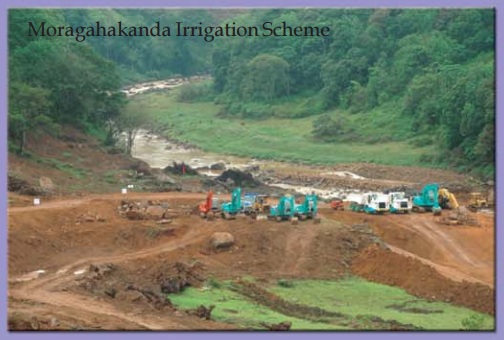
(v). මහින්ද ආණ්ඩුව පැමිණ අවුරුදු 2 ක් යනකම් මේ කාර්යය ඉටු වුනේ නැහැ කීම පට්ට පල් බොරුවකි. ඇත්තනම් මොරගහකන්ද ව්‍යාපෘතිය සඳහා ඉඩම් අත් පත් කරගැනීම ඇරඹෙන්නේ 2006 දීය. (2007 දී පැවැතුණේ නිල වශයෙන් මුල් ගල් තැබීමයි). එනම් මහින්ද රාජපක්ෂ මැතිතුමා බලයට පැමිණ හරියටම අවුරුද්දෙන් මොරගහකන්ද ව්‍යාපෘතිය ඇරඹීය. මූලාශ්‍රය: 2006 වර්ෂයේ මුදල් අමත්‍යාංශයේ වාර්ෂික වාර්තාව , 65 පිටුව

පහත දැක්වෙන්නේ 2006 වර්ෂයේ මුදල් අමාත්‍යංශයේ වාර්ෂික වාර්තාවේ මුල් පිටුවේ මොරගහකන්ද ඉදිකිරීම් ගැන පළවූ පින්තූරයයි.


[2]. බොරුව: අවසානයේදී මගේ බේරිල්ලට මහින්ද රාජපක්ෂ මහත්තයා කිව්වා එහෙනම් පටන් ගන්න වෙන්නේ සල්ලි නැතිවයි” කියලා. මම කිව්වා කමක් නැහැ සර් සල්ලි නැතිව පටන් ගමු, පටන් ගත්තට පස්සෙ සල්ලි හොයාගමු” කියලා.

ඇත්ත: 2006 දී ලබාගත් ඉහත පින්තූරය බලන්න. මෛත්‍රීපාල සිරිසේන මහතා පවසන පරිදි සල්ලි නැතිව මොරගහකන්ද ඇරඹුනානම්, ඉහත දැක්වෙන ආකාරයට මොරගහකන්ද වේල්ල ගොඩ නගන්නේ පිනට විය යුතුය. ඩෝඩර් කරුවන්, බැකෝ කරුවන්, ඉංජිනේරුවන්, කම්කරු සහෝදරවරුන්, ඇතුළු කාර්ය මණ්ඩලය අතින් වියදම් කරගෙන ඉහත ඉදිකිරීම් ඇරඹුවා විය යුතුය. මුදල් නැතිව ව්‍යාපෘතිය ඇරඹුවා කියපු බොරුවේ තරම පැහැදිළියි නේද?


[3]. බොරුව: අවුරුදු 5 ක් යනකම් සල්ලි දුන්නෙ නෑ මේ ව්‍යාපෘතිය කරන්න.

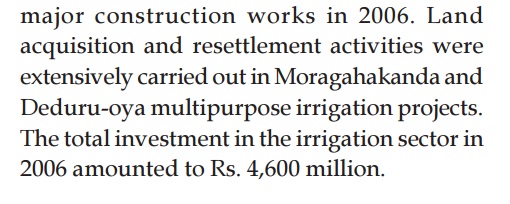
ඇත්ත: 2006 වර්ෂයේ මුදල් අමාත්‍යාංශ වාර්ෂික වාර්තාවේ 169 පිටුවේ මෙසේ දැක්වෙයි.

ඉහත දැක්වෙන අයුරින් මොරගහකන්ද ජලාශය සඳහා ඉඩම් අත් පත් කරගෙන ජනතාව නැවත පදිංචි කිරීම සිදුකළේ 2006 දී ය. එම ව්‍යාපෘතීන් සඳහා මහින්ද රාජපක්ෂ මැතිතුමා රු මිලියන 4600 ක් වෙන් කරන්නේ යුද්දයක් ඇරඹෙන්න ඔන්න මෙන්න තිබියදී ය. එතනින්ම සල්ලි දුන්නේ නැහැ කියන බොරුව මාට්ටු වෙයි.


[4]. බොරුව: 2007 ජනවාරි 25 වැට පටන් ගත්ත මේ ව්‍යාපෘතියේ වැඩ අවසන් වෙන්න තිබුණේ 2012 අවුරුද්දෙයි කියන එක මම මතක් කරන්න ඕන.

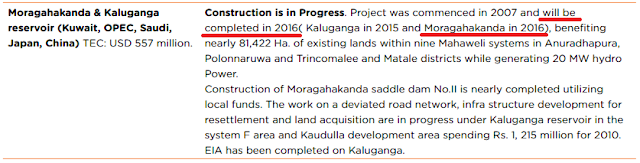
ඇත්ත: එම බොරුවට පිළිතුරු 2010 වර්ෂයේ මුදල් අමාත්‍යාංශ වාර්ෂික වාර්තාවේ 75 පිටුවේ දැක්වෙයි.

ඒ අනුව මොරගහකන්ද ව්‍යාපෘතිය අවසන් වී එය විවෘත කරමින් රජරට ගොවීන්ට ජලය ලබා දීමට තිබුණේ 2016 වර්ෂයේදී ය. (පසුගිය දා සිදුවූයේ විවෘත කිරීම නොව නිදන් වස්තු තැන්පත් කිරීමයි).


[5]. බොරුව: 2012 අවසන් කරන්න තිබුණ වැඩේ දැන් 2018 ට කල් ගියේ අවුරුදු 5 කට වැඩි කාලයක් මේ ව්‍යාපෘතිය කරන්න මුදල් නොලැබිච්ච හින්දයි, මුදල් නොදුන්න හින්දයි.

ඇත්ත:  මුදල් ලැබුණේ නෑ කීම බොරුවක් බවට අප මීට පෙර පෙන්වා දුන්නෙමු. එසේම 2010 වර්ෂයේ මුදල් අමාත්‍යාංශ වාර්ෂික වාර්තාවේ 75 පිටුවේ දැක්වෙන පරිදි මොරගහකන්ද ව්‍යාපෘතිය අවසන් වීමට තිබුණේ 2016 වර්ෂයේ දී ය. 2015 දී බලයට පැමිණි යහපාලන ආණ්ඩුව මහින්ද රාජපක්ෂ මැතිතුමාගෙන් පළි ගැනීම සඳහා එතුමා සිදුකරගෙන ගිය සියලුම සංවර්ධන ව්‍යාපෘතීන් නවතා දැමීය. මොරගහකන්ද ව්‍යාපෘතිය 2018 ට කල් යන්නේ එහි ප්‍රතිඵලයක් වශයෙනි. මොරගහකන්ද 2018 ට කල් යාමට යහපාලන ආණ්ඩුව වග කිව යුතු වෙයි.


[7]. ගල් පැලෙන බොරු” යන වැකිය ඔබ අසා තිබෙනවා ඇත. පැරැන්නන් එය පැවසූයේ කට කහනවාට නොවේ. මොරගහකන්ද වේල්ලේ නිදන් ගලේ නිදන් වස්තු තැන්පත් කිරීමේ උත්සවයේදී ඉහත පට්ට පල් බොරු සියල්ල මෛත්‍රීපාල සිරිසේන මහතා පැවසූ අතර, පසුව බැකෝවක් වැදී නිදන් ගල ඉරි තලා ගොස් ඇත. මූලාශ්‍රය: දිවයින පුවත්පත /2016/08/07


[7]. මහින්ද රාජපක්ෂ මැතිතුමාට එරෙහිව මෛත්‍රීපාල සිරිසේන මහතා 2016 දී එසේ පැවසුවත්, 2014 දී පැවසුවේ මෙලෙසයි.

ඔබතුමා ආරම්භ කරපු මහා යෝධ සංවර්ධනය තුළ තව වසර 100 කට අවශ්‍ය වරායන් 5 ක් ඔබතුමා ඉදිකරලා තියෙනවා. ඒ වගේම නොරොච්චෝලේ කොත්මලේ කෙරවලපිටිය වැනි විදුලි බලාගාර ඉදි කරල තියෙනවා. ඔබතුමා මහා ජාතික වාරි පද්ධතියක් ඇති කරලා තියෙනවා. මොරගහකන්ද කළු ගඟ වැනි මහා යෝජනා, ඒ වගේම උමා ඔය දැදුරු ඔය වැනි යෝජනා ඔබතුමා ක්‍රියාත්මක කරලා තියෙනවා….” – සෞඛ්‍ය අමාත්‍ය මෛත්‍රීපාල සිරිසේන පවසයි

මහින්ද රාජපක්ෂ ජනාධිපතිතුමා ගැන තාමත් හරියට නොදන්නා අයට ඉහත වීඩියෝව නැරඹීමෙන් සෞඛ්‍ය අමාත්‍ය සිරිසේනගේ හඬින්ම අසාගැනීමට හැකියාව ලැබේ.

තවත් අයටත් බලන්නට SHARE කරන්න.
  • 695

රාජගිරිය ගුවන් පාලම බොරුවත් මාට්‍ටු. මුදල් වෙන් කළේ මහින්දගේ කාලයේදී බව රජයේ වෙබ් අඩවි වල දැක්වෙයි.

January 9th, 2018

www.mahinda.info

[1]. රාජගිරිය ගුවන් පාලම හැදුවේ වත්මන් ආණ්ඩුවෙන් බවට ආණ්ඩුවේම දේශපාලඥයින් සහ ආණ්ඩුවට සහය දෙන ජනමාධ්‍ය වලින් නිතර පවසන්නකි. එහෙත් රජයේ නිල වෙබ් අඩවි වලින් රාජගිරිය ගුවන් පාලම ආරම්භ කළේ සහ ඊට මුදල් වෙන් කළේ කුමන වකවානුවේදීදැයි නිශ්චිතව සොයා ගැනීමට මහින්ද ඉන්ෆො මාධ්‍ය අංශයට හැකි විය.

සැයු: පහත දැක්වෙන රජයේ වෙබ් අඩවි කිසිදු දේශපාලන පක්ෂයක වෙබ් අඩවි නොව මේ රටේ මහජනතාවට අයත් පොදු දේපලකි. රජයේ දේශපාලඥයින්ගෙන් කොතෙක් බලපෑම් ආවත්, මැතිවරණ කාලය තුලදී ජනතාවට දෙන තොරතුරු විකෘති කිරීම හෝ වසං කිරීම බරපතල වරදක් වන බැවින් ඒවායේ සිටින අපක්ෂපාතී නිලධාරීන් අදාල ලිපි ඉවත් නොකරන බව අප විශ්වාස කරමු. මේ වන විටත් එම ලිපි අන්තර්ජාලයේ ආකයිව් වෙබ් අඩවි ගණනාවක සංරක්ෂණය කර ඇත. එසේම රාජගිරිය ගුවන් පාලමේ ආරම්භය ගැන වාර්තා කරන සහෝදර ජනමාධ්‍ය ආයතන වලින් ආණ්ඩුවේ දේශපාලඥයින් කියන දේවල් වලට අමතරව පහත මූලාශ්‍ර වලින් පෙන්වා ඇති සත්‍යය ජනතාවට හෙළි කරනු ඇතැයි අප බලාපොරොත්තු වෙමු.

[2]. පහත දැක්වෙන්නේ ශ්‍රී ලංකා රජයේ අමාත්‍ය මණ්ඩල කාර්යාල නිල වෙබ් අඩවියේ 2014-12-04 දින පළ වූ වාර්තාවකි. මෙම රජයේ වෙබ් අඩවියේ දැක්වෙන පරිදි අදාල රාජගිරිය ගුවන් පාලම සෑදීමට මහින්ද රාජපක්ෂ ජනාධිපති තුමා විසින්ම කැබිනට් යෝජනාවක් ඉදිරිපත් කර කැබිනට් අනුමතිය ලබාගෙන ඇත. [ආකයිව් කළ මූලාශ්‍රය]

[3].පහත දැක්වෙන්නේ ශ්‍රී ලංකා රජයේ විදේශ සම්පත් දෙපාර්තමේන්තුවේ නිල වෙබ් අඩවියේ 2014 වර්ෂාවසාන කාර්යඵල වාර්තාවේ 42 පි‍ටුවේ උදෘතයකි. මෙහි දැක්වෙන පරිදි ස්පාඤ්ඤ රජය සහ ස්පාඤ්ඤයේ BBVA බැංකුව සංවර්ධන හවුල්කරුවන් වශයෙන් ගෙන රාජගිරිය ගුවන් පාලම සෑදීමට යන සමස්ත පිරිවැය වන ඩොලර් මිලියන 49 ක් වෙන් කර ඇත.  [ආකයිව් කළ මූලාශ්‍රය]

ඒ අනුව වත්මන් යමපාලන ආණ්ඩුවේ තවත් මෙගා බොරුවක් ඌරාගේ මාලු ඌරාගේ පිටේම තියලා කපන” න්‍යාය අනුව රජයේම නිල වෙබ් අඩවි වලින් මහින්ද ඉන්ෆො වෙතින් හෙළි කර තිබේ.

[4]. මුල් ගල් ගලවා දමා මහ මුහුදේ ගිල්ලුවද, අන්තර්ජාලයේ ඇති මහින්ද රාජපක්ෂ” නම සඳහන් සියලුම වාර්තා පීරමින් ඒවා ඉවත් කිරීමට කටයුතු කළද, මහින්ද රාජපක්ෂ ජනාධිපති තුමා ශ්‍රී ලංකාව වෙනුවෙන් කළ සේවය ජනතාවගේ හදවත් තුළින් වසන් කිරීමට ආණ්ඩුවට නොහැකි වී ඇත.

[5].මාවිල් ආරු වලින් පටන් ගත් මානුෂික මෙහෙයුම මගින් ලොව බිහිසුනුම ත්‍රස්තවාදය පරාජය කිරීමට මහින්ද රාජපක්ෂ රජයට ගතවූයේ දවස් 1027 පමණි. බලයට එනවිටත් සල්ලිත් වෙන් කර තිබූ රාජගිරිය ගුවන් පාලම ඉවර කරන්න යහපාලනයට දින 1095 ක් ගත වීමත්, එහි මුල් ගල් ගලවා දමා උප්පැන්නය වෙනස් කිරීමත් ගැන තීරණය කිරීම ඔබට බාරයි.

තවත් අයටත් බලන්නට SHARE කරන්න.

මහින්ද නිසා රට ණය වුණා ද? මෙන්න ආණ්ඩුවේම වාර්තා වලින් ඇත්ත.

January 9th, 2018

[1]. මහින්ද රාජපක්ෂ ජනාධිපතිතුමාගේ කාලයේ රට ණය වුණ බවත් එනිසා එජාපයට සිදුවුණේ ණය ගෙවීම බවත් ආණ්ඩුවෙන් නිතර පවසන දෙයකි. මෙහි ඇත්ත නැත්ත පිළිබඳව ආණ්ඩුවේම මූලාශ්‍ර වලින් එනම් ශ්‍රී ලංකා මහ බැංකු වාර්තාව ඇසුරෙන් සහ එජාප අමාත්‍ය රුවන් විජයවර්ධන පවුලට අයත් Financial Times” වෙතින් බලමු.


[මූලාශ්‍රය: Central Bank Annual Report – Special Statistical Appendix – 3.Fiscal Sector – Government Debt]


[මූලාශ්‍රය: Daily FT – 2017/10/11]

(i). ඉහත දැක්වෙන ආණ්ඩුවේම දත්ත අනුව,
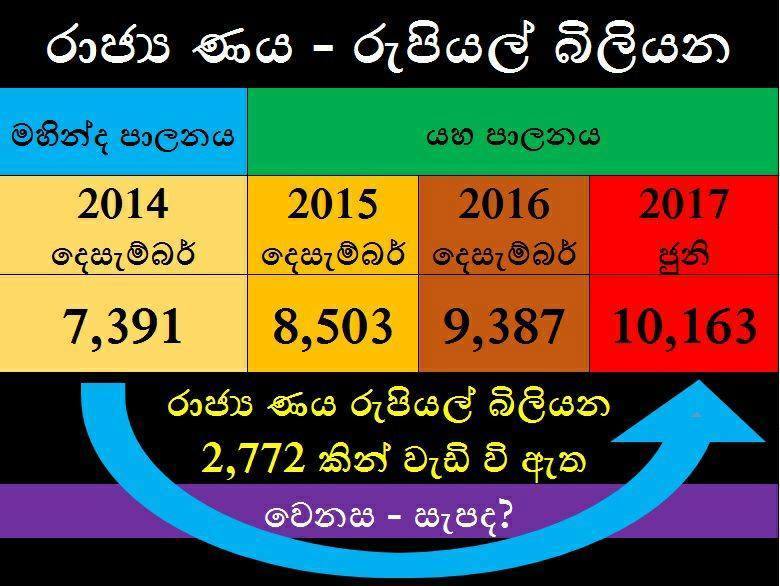
2014 දෙසැම්බර් වෙද්දී ශ්‍රී ලංකා රජයේ සම්පූර්ණ රාජ්‍ය ණය ප්‍රමාණය රුපියල් බිලියන 7391 කි.
2015 දෙසැම්බර් වෙද්දී ශ්‍රී ලංකා රජයේ සම්පූර්ණ රාජ්‍ය ණය ප්‍රමාණය රුපියල් බිලියන 8503 කි.
2016 දෙසැම්බර් වෙද්දී ශ්‍රී ලංකා රජයේ සම්පූර්ණ රාජ්‍ය ණය ප්‍රමාණය රුපියල් බිලියන 9387 කි.
2017 ජූලි වෙද්දී ශ්‍රී ලංකා රජයේ සම්පූර්ණ රාජ්‍ය ණය ප්‍රමාණය රුපියල් බිලියන 10163 කි.

(ii). එනම් 2014 සිට 2017 ජූලි දක්වා එජාප ආණ්ඩු කාලයේදී රාජ්‍ය ණය රුපියල් බිලියන 2772 කින් වැඩි වී තිබේ.

(iii). මහින්ද රාජපක්ෂ ජනාධිපති තුමාගේ කාලයේදී ගත්ත ණය වත්මන් එජාප ආණ්ඩුවෙන් බේරුවානම් රටේ රාජ්‍ය ණය ප්‍රමාණය අඩු විය යුතුය. නමුත් සිදුවී ඇත්තේ වැඩි වීමකි. ඒ අනුව ආණ්ඩුවේ ණය බේරීම ගැන තීරණය කිරීම ඔබට බාරයි.

[2]. ආණ්ඩුවට තාමත් සහය දෙන අයෙකුගේ හෘද සාක්ෂිය දැන් මෙසේ කියනු ඇත. හරි අපි පිළිගන්නවා අපේ ඡන්ද ගන්න යහපාලකයින් පොරොන්දු වුණ විදිහට මේ ආණ්ඩුවෙන් ණය බේරලා නෑ. තව තවත් ණය ගත්ත එකයි වුණේ. ඒත් මහින්දගෙ කාලෙදිත් ණය වැඩි වුණා නේද? ඒ ගැන මොකද කියන්නේ?”

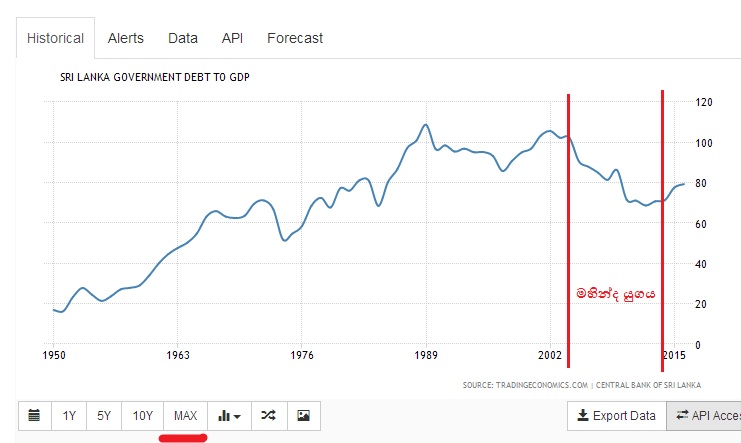
(i). ඕනෑම රජයකින් ලබා ගන්නා ණය වලින් රටට මොකද වුණේ කියල බැලීමේ ලොව පිළිගත් අන්තර්ජාතික ක්‍රමය වන්නේ රටේ ණය ප්‍රමාණය එරට දළ දේශීය නිශ්පාදිතයේ ප්‍රතිශතයක් ලෙස බැලීමයි. (debt-to-GDP ratio). එය උදාහරණයකින් කිවහොත් මිනිහෙක් රුපියල් 30,000ක් පඩි ගන්න කාලෙ ලක්ෂ 5 ක ණයක් ගැනීම සහ රුපියල් ලක්ෂ 2 ක් පඩි ගන්න කාලෙ ලක්ෂ 6 ක ණයක් ගැනීම වගේ. බැලූ බැල්මට ලක්ෂ 6 වැඩි උනාට ඒක ආපසු ගෙවීමේ හැකියාව වැඩියි තිස්දාහෙ පඩි ගන්න කාලෙ ගත්ත ලක්ෂ 5 වඩා. ඒ නිසා රටක් විදිහට ගත්තමත් ණය ආපසු ගෙවීමේ හැකියාවට සංසන්දනය වෙන්නෙ දළ දේශීය නිෂ්පාදිතට.

(ii). මේ ගැන ඔබට මහ බැංකු වාර්තාවෙන් ගණනය කළ හැකි වුවත් ඊටත් වඩා පහසුවෙන් ලොව පිළිගත් අන්තර්ජාතික ආර්ථික ප්‍රකාශන වෙබ් අඩවියක් වන tradingeconomics.com හි ඇති Sri Lanka Government Debt to GDP” වගුව බලමු.

(iii). එහි 2009 වසරේ රාජ්‍ය ණය දළ දේශීය නිෂ්පාදිතයේ ප්‍රතිශතයක් ලෙස ඉහළ ගොස් ඇත්තේ විදේශ වලින් ලබා ගන්නා ණය වැඩි ප්‍රමාණයක් වැය වූයේ යුද්ධයට නිසයි. එනමුත් මානුෂික මෙහෙයුමෙන් පසුව මහින්ද යුගයේදී ණය ගත්ත ද රාජ්‍ය ණය දළ දේශීය නිෂ්පාදිතයේ ප්‍රතිශතයක් ලෙස අඩු වූ ආකාරය ඔබට දැක ගත හැකි ය. එය වඩාත් හොඳින් බැලීමට එහි සම්පූර්ණ දත්ත අඩංගු වගුව බලමු.

(iv). හොඳින් බලන්න, එජාප සාම ගිවිසුම තිබුණ කාලයටත් වඩා මහින්ද රාජපක්ෂ මැතිතුමා ලොව දරුණුතම ත්‍රස්තවාදී සංවිධානය සමග සටන් කරමින් රටේ ණය බර අඩු කර ගත්ත ආකාරය. එහෙත් 2015 සිට රටේ ණය බර නැවතත් ඉහළ යයි.

(v). මහින්ද රාජපක්ෂ ජනාධිපති තුමාගේ රජයෙන් ලබා ගත් ණය වලින් අධිවේගී මාර්ග, පරිගණක විද්‍යාගාර, වරාය, ගුවන්තො‍ටුපොළ, ජලාශ, විදුලි බලාගාර, නිවාස ආදිය ඉදි කරමින් ශ්‍රී ලංකාවට ආර්ථික වටිනාකමක් එකතු විය. නමුත් වත්මන් ආණ්ඩුව මහ බැංකු නිකුත් කරමින් ගිණි පොළියට ගන්නා ණය වලින් ඔවුන්ට මිස රටට කරන දෙයක් නොමැත. ඉතින් ණය ප්‍රමාණය ඉහළ යනවාටත් අමතරව, රටේ දළ දේශීය නිෂ්පාදිතයේ ප්‍රතිශතයක් ලෙසත් ණය ඉහළ යයි.

මහින්ද නිසා රට ණය වුණා කියන අයට ඇත්තටම රට ණය වුණේ කුමන කාලවලදීදැයි මේ ලිපියේ අති මූලාශ්‍ර පෙන්වා පැහැදිළි කර දෙන්න.

Third anniversary of the incompetent government responsible for the worst debt crisis in Sri Lankan history

January 9th, 2018

Mahinda Rajapaksa Former President of Sri Lanka

On 9 January 2018, the so-called yahapalana government completes three years in office. During this short period they have created numerous crises running through virtually every sector in Sri Lanka. The main subject of public discussion today is the bond scam and the attempts being made by the yahapalana leaders to sweep it under the carpet. We are awaiting the release of the full report of the Bond Commission. The bond scam is only one of the many disasters brought upon this country by the yahapalana government. As this government marks its third anniversary, I wish to draw the attention of the public to another danger they have brought upon this country.

During the short period of 36 months that this government has been in power, they have borrowed over USD 14.6 billion in foreign currency loans alone, the breakdown of which would be as follows – USD 7.2 billion through the issue of Sri Lanka Development Bonds from January 2015 onwards, USD 3.6 billion from sovereign bonds issued in 2015 and 2017, USD 2.2 billion through currency swap arrangements with India in 2015 and 2016, USD 1.7 billion through syndicated loans arranged through several international banks in 2016 and 2017 and USD 1.5 billion from the IMF Extended Fund Facility in 2016. No previous government has borrowed so much money through foreign currency loans in such a short period of time.

Even though 14.6 billion USD would suffice to build five Norochcholai power plants, five Hambantota harbours with enough money being left over to build two more Southern Expressways, the yahapalana government has not built even a culvert with that money. I have made reference so far only to foreign currency loans. From January 2015 to date, the yahapalana government has borrowed well over Rs. 5.7 trillion in Rupee loans as well, through the issue of treasury bills and treasury bonds. The government commissioned the Moragahakanda project and opened the Rajagriya flyover to coincide with its third anniversary so as to answer the critics who say that the yahapalana government has not built anything tangible despite massive foreign borrowings. However, the Moragahakanda project was planned, financial allocations were made and construction commended under my government way back in 2007 in accordance with the 2005 Mahinda Chintana programme.  Likewise the Rajagiriya flyover was planned and money was allocated for its construction by my government. Cabinet approval was granted to call for bids to select contractors for the construction of the flyovers in Rajagiriya, Polgahawela and Ganemulla at the cabinet meeting held on 4 December 2014.

The yahapalana government has marked its third anniversary by claiming credit for projects for which money was allocated and started by the previous government. They came into power in 2015 claiming that there was a debt crisis in the country due to the loans taken by my government to build power plants, harbours, airports, expressways etcetera.  However the total cost of these major development projects were as follows: USD 1,350 million for all three phases of the Norochcholai power plant; USD 740 million for the Southern Expressway from Kottawa to Matara; USD 1,300 for phases I and II of the Hambantota harbour and its bunkering facility; USD 292 million for the Colombo-Katunayake expressway and USD 209 for the Mattala airport.

All these development projects put together cost less than USD 3.9 billion. The claim that the present government has been forced to borrow heavily to repay the project loans taken by my government is a complete lie. With the 14.6 billion USD in foreign currency loans that this government has borrowed up to now, the loans taken for all the above mentioned development projects could have been repaid four times over. The debt now being incurred is used to meet the day to day expenses of the yahapalana government and not to repay the project loans taken by my government. From January 2015, there was a massive and unplanned increase in government expenditure as a result of state funds being utilized to meet political objectives. The present debt crisis came about due to the yahapalana government borrowing heavily in Rupees and in foreign currency in order to meet this increased expenditure.

Foreign currency loans should always be taken with the utmost care. Since it is necessary to purchase foreign currency to repay such loans, even a slight change in the exchange rate can give rise to a massive increase in a country’s indebtedness. According to the 2015 and 2016 Central Bank reports, due to the depreciation in the value of the Rupee as a result of the economic downturn that took place after the yahapalana government took office, an extra Rs. 478 billion has been added to the national debt. It should be noted that the increase in the interest rate by about 50% due to the bond scam, has also added to the debt burden.

My government was always very careful in taking foreign currency loans. According to the Finance Ministry, the repayment of foreign loan installments plus interest during the period 2008-2014 was as follows:

2008 – USD 881 million

2009 – USD 1,041 million

2010 – USD 826 million

2011 – USD 971 million

2012 – USD 1,620 million

2013 – USD 1,160 million

2014 – USD 1,306 million

Since these are not unmanageable amounts, my government never had a problem with foreign loan repayments. The present crisis is entirely a creation of the yahapalana government. The foreign loan instalments and interest thereon that have to be paid after 2015 is as follows:

2015 –  USD 1,828 million

2016 – USD 1,604 million

2017 –  USD 2,132 million

2018 –  USD 2,891 million

2019 –  USD 4,217 million

2020 –  USD 3,699 million

2021 –  USD 3,344 million

2022 –  USD 3,743 million

2023 –  USD 2,120 million

2024 –  USD 2,067 million

2025 – USD 4,155 million

2026 – USD 2,758 million

2027 – USD 3,448 million

These figures amply explain the difference before and after the change of government in 2015. The immediate increase in repayments from 2015 onwards is due to the huge short term commercial loans taken by the yahapalana government to be repaid in a few months or one or two years. What Sri Lanka experienced in 2015 was a borrowing frenzy. Central Bank records indicate that before the yahapalana government came into power, Sri Lanka Development Bonds were issued only twice a year with the amount borrowed per year not averaging even USD 350 million between 2010 and 2014. It should be borne in mind that this was at the height of the biggest infrastructure building programme in recent history. But in the year 2015 without a single new infrastructure project being initiated, the yahapalana government issued Sri Lanka Development Bonds on no less than nine occasions. The number of SLDB issues made in 2016 were six, with four being made in 2017.

The government has now obtained cabinet approval to borrow a further USD 5 billion in foreign currency commercial loans in 2018 as well. In order to repay these loans taken for consumption purposes, the government has increased the tax burden on the people to an unbearable level by increasing the VAT, vehicle import duties, commodity import taxes, various levies and fines and stamp duties etcetera. From April 2018 onwards, the government will commence a programme to bring virtually every adult in the country into the income tax net.

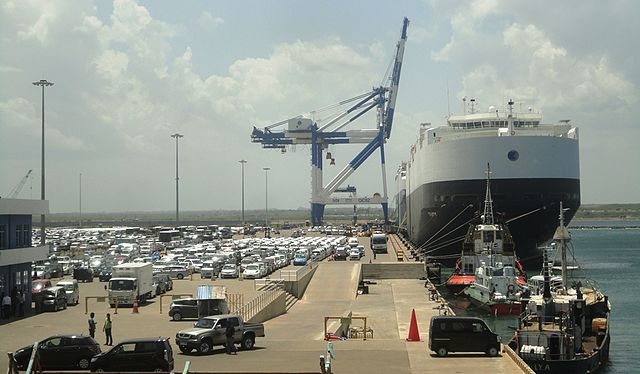
Since the massive loans taken by the yahapalana government cannot be repaid simply by increasing taxes, they have now started selling off all available national assets ranging from government owned hotels to harbours, expressways to power plants. Though the government claims that the Hambantota port was sold off because the loan taken to build it could not be repaid, the proceeds of the sale have not been used to repay the project loan but is to be sent instead to the Treasury to be spent on consumption – which reveals the actual motive in selling off these assets. Since the Hambantota harbour was built with long term loans at concessionary rates of interest, the government is in no hurry to repay the loan taken to build it.

However there is an urgent need to repay the short term foreign currency commercial loans taken by this government for consumption purposes even if the payment has to be made with the money realised through the sale of national assets. If such commitments are not met on time, Sri Lanka will get locked out of the international financial markets. I request all voters to use the opportunity that will come their way on 10 February to register their protest at the disaster brought upon the financial system of this country by this corrupt, incompetent government.

Mahinda Rajapaksa

Former President of Sri Lanka

ලංකා ඉතිහාසයේ දරුණුම ණය අර්බුදය ඇතිකළ වැඩබැරි  ආණ්ඩුවේ තුන්වෙනි සංවත්සරය

January 9th, 2018

මාධ්‍ය නිවේදනය මහින්ද රාජපක්‍ෂ ශ්‍රී ලංකාවේ හිටපු ජනාධිපති

2018 ජනවාරි 9 වෙනිදා, ඊනියා යහපාලන ආණ්ඩුව බලයට පත්වී අවුරුදු තුනක් සම්පූර්ණ වේ. මේ කෙටි කාලය තුළ මොවුන් ලංකාවේ සෑම ක්‍ෂේත්‍රයක් පුරාම දිවයන දැවැන්ත අර්බුද ගණනාවක්ම නිර්මාණය කර ඇත. මේ මොහොතේ සාකච්ඡා වෙන ප්‍රධානම මාතෘකාව වන්නේ මහ බැංකු මංකොල්ලය හා එය යට ගැසීමට ආණ්ඩුවේ නායකයන් ගන්නා උත්සාහයයි. බැඳුම්කර කොමිසමේ සම්පූර්ණ වාර්තාව එළි දක්වන තුරු අපි බලා සිටිමු. මහ බැංකු මංකොල්ලය මේ ආණ්ඩුව විසින් කරන ලද එක් විනාශයක් පමණි. යහපාලන ආණ්ඩුවේ තුන්වෙනි සංවත්සරය නිමිත්තෙන් ඔවුන් මේ රටට කර ඇති තවත්  භයානක වින්නැහියක් ගැන ජනතාවගේ අවධානය යොමු කිරීමට කැමැත්තෙමි.

මේ ආණ්ඩුව බලය හොබවා ඇති මාස 36 ක කෙටි කාලය  ඇතුළත ඔවුන් ඇමරිකානු ඩොලර් බිලියන 14.6 ක් විදෙස් විනිමය ණය වලින් පමණක් ලබාගෙන ඇත. මෙය, ගත වූ අවුරුදු තුන පුරාම නිකුත් කරන ලද ශ්‍රී ලංකා සංවර්ධන බැඳුම්කර වලින් ලබාගත් ඇ.ඩො.බිලියන 7.2 ක මුදල,  2015 හා 2017 නිකුත් කරන ලද සවරින් බොන්ඩ් වලින් ලබාගත්  ඇ.ඩො.බිලියන 3.6 ක මුදල, 2016 හා 2017 ජාත්‍යන්තර බැංකු ගණනාවක මැදිහත් වීමෙන් ලබාගත් ඇ.ඩො. බිලියන 1.7 ක සින්ඩිකේටඩ් ලෝන් මුදල, 2015 හා 2016 ඉන්දියාවෙන් ලබාගත් ඇ.ඩො.බිලියන 2.2 ක කරන්සි ස්වප් ණය, හා ජාත්‍යන්තර මූල්‍ය අරමුදලෙන් 2016 දී ලබාගත් ඇ.ඩො.බිලියන 1.5 ක ණය වශයෙන් වෙන්කොට පෙන්විය හැක. මෙවැනි කෙටි කාලයක් තුළ වෙනත් කිසිම ආණ්ඩුවක් මේ තරම් විශාල විදෙස් විනිමය ණය ප්‍රමාණයක් ලබාගෙන නැත.

ඇමරිකානු ඩොලර් බිලියන 14.6 ක් වැනි මුදල් කණ්දරාවකින් නොරොච්චෝලේ ගල් අඟුරු බලාගාර පහක් හා හම්බන්තොට වරායවල් පහක් ඉදිකොට තවත් දක්‍ෂිණ අධිවේගී මාර්ග දෙකක් ඉදි කිරීමට මුදල් ඉතුරු කරගත හැකි වුවත්, යහපාලකයන් එම මුදලෙන් බෝක්කුවක්වත් ඉදිකර නැත. මා ඉහත සඳහන් කලේ, විදෙස් විනිමයෙන් ලබාගත් ණය පමණි. 2015 ජනවාරියේ සිට මේ දක්වා ආණ්ඩුව භාණ්ඩාගාර බිල්පත් හා භාණ්ඩාගාර බැඳුම්කර නිකුත් කිරීමෙන් රුපියල් ණය බිලියන 5,706 ක්ද  ලබාගෙන ඇත.

මහා පරිමානයෙන් විදෙස් ණය ලබාගත්තද එයින් බෝක්කුවක්වත් ඉදිකර නැතැයි යන චෝදනාවෙන් බේරීමට, යහපාලන ආණ්ඩුවේ තුන්වෙනි සංවත්සරයට සමගාමීව  මොරගහකන්ද ජලාශයත්, රාජගිරියේ ගුවන් පාලමත් විවෘත කිරීමට යොදාගත්තද, 2005 මහින්ද චින්තන වැඩ පිළිවෙලට අනුව යමින් මොරගහකන්ද ජලාශය ඉදිකිරීමට පටන්ගත්තේ මගේ ආණ්ඩුව සමයේය. එහි සැලසුම්, මුදල් වෙන් කිරීම, යනාදිය නිමකොට ඉදිකිරීම් ආරම්භ කරනු ලැබුවේ 2007 වසර සිටය. රාජගිරියේ ගුවන් පාලම සඳහාද සැලසුම් හා මුදල් වෙන් කිරීම සිදුකරනු ලැබුවේ මගේ ආණ්ඩුව කාලයේය. රාජගිරියේ ගුවන් පාලමත්, පොල්ගහවෙල හා ගනේමුල්ල ගුවන් පාලම් දෙකත්, ඉඳිකිරීමට ලන්සු කැඳවා කොන්ත්‍රාත්කරුවන් තේරීම ආරම්භ කිරීමට කැබිනට් අනුමැතිය ලැබුණේ 2014 දෙසැම්බර් 4 වෙනිදා කැබිනට් රැස්වීමේදීය. මේ ආණ්ඩුව තම තුන්වෙනි සංවත්සරය සමරන්නේද අනුන්ගේ ව්‍යාපෘති වලට තමන්ගේ නම දාගැනීමෙන් බව මෙහිදී කිව යුතුය.

යහපාලකයන් බලයට පැමිණියේ, මගේ ආණ්ඩුව විසින් ඉඳි කරන ලද විදුලි බලාගාර, වරායවල්, ගුවන් තොටුපොලවල්, අධිවේගී මාර්ග යනාදිය සඳහා ගන්නා ලද ණය නිසා රටේ ණය අර්බුදයක් පවතින බව කියමිනි. නමුත් මේ විශාල ව්‍යාපෘති සඳහා සැබවින්ම වැය වූ මුලු මුදල වූයේ නොරොච්චෝලේ විදුලි බලාගාරයේ සියලුම අදියර සඳහා – ඇමරිකානු ඩොලර් මිලියන 1,350; කොට්ටාව සිට මාතර දක්වා දක්‍ෂිණ අධිවේගී මාර්ගය සඳහා – ඇ.ඩො. මිලියන 740; හම්බන්තොට වරායේ අදියර දෙක හා තෙල් ටැංකි සංකීර්ණයද සඳහා – ඇ.ඩො. මිලියන 1,300; කොළඹ – කටුණායක අධිවේගී මාර්ගය සඳහා – ඇ.ඩො. මිලියන 292; හා මත්තල ගුවන් තොටුපොල සඳහා – ඇ.ඩො මිලියන 209 වශයෙනි.

ඉහත සඳහන් සියලුම මහාපරිමාන ව්‍යාපෘති සදහා වැයවූ සමස්ත වියදම ඇමරිකානු ඩොලර් මිලියන 3,900 කටත් අඩුය. මගේ ආණ්ඩුව විසින් ලබාගත් ව්‍යාපෘති ණය ගෙවීම සඳහා යහපාලන ආණ්ඩුව ණය ගනිමින් සිටින බව කීම අමූලික බොරුවකි. යහපාලන ආණ්ඩුව මෙතෙක් ලබාගෙන ඇති ඩොලර් බිලියන 14.6 න්, මම ඉහත නම් කරන ලද සියලුම ව්‍යාපෘති සඳහා ගිය මුලු වියදම සිවු වතාවක් ගෙවා නිම කල හැක. යහපාලන ආණ්ඩුව ගන්නා ණය වලින් කරන්නේ මගේ ආණ්ඩුවේ ව්‍යාපෘති ණය ගෙවීම නොව ආණ්ඩුවේ එදිනෙදා වියදම් පියවා ගැනීමයි. 2015 ජනවාරියේ සිට, රජයේ මුදල් දේශපාලන අරමුණු ඉටු කර ගැනීමට පාවිච්චි කිරීම නිසා  කිසිඳු සැලසුම් කිරීමකින් තොරව එක්වරම රජයේ වියදම් විශාල වශයෙන් වැඩිවිය. මේ අමතර වියදම පියවා ගැනීම සඳහා යහපාලන ආණ්ඩුව රුපියල් වලින් මෙන්ම විදෙස් විනිමයෙන්ද දිගට හරහට වානිජ ණය ලබාගැනීම නිසා වර්තමාන ණය අර්බුදය නිර්මාණය විය.

විදෙස් ණය ලබාගත යුත්තේ ඉතාමත්ම ප්‍රවේසමෙනි. මේ ණය ගෙවීම සඳහා විදෙස් විනිමය මිලදී ගැනීමට සිදුවන නිසා විනිමය අනුපාතයේ සුලු වෙනසකින්වුවද ණය බර විශාල වශයෙන් වෙනස් විය හැක. 2015 හා 2016 මහබැංකු වාර්තාවලට අනුව යහපාලන ආණ්ඩුව බලය ගැනීමෙන් පසු ඇති වූ ආර්ථික බිඳවැටීම නිසා රුපියල බාල්දු වීම හේතුවෙන් පමණක් ලංකාවේ ණය බරට තවත් රුපියල් බිලියන 478 ක් එකතු  වී ඇත. බැඳුම්කර මඟඩිය හේතුවෙන් 2015 මුල සිට ලංකාවේ පොළී අනුපාතය 50% කින් පමණ වැඩිවීම නිසාද ආණ්ඩුවේ ණයබර තවත් වැඩි වූ බවද මෙහිදී අප මතක තබාගත යුතුය. මගේ ආණ්ඩුව විදෙස්  ණය ලබා ගත්තේ ඉතාමත්ම ප්‍රවේසමෙනි. මුදල් අමාත්‍යංශයේ වාර්ථා වලට අනුව 2008 සිට 2014 දක්වා විදෙස් ණය වාරික හා පොලී ආපසු ගෙවීම් පහත සඳහන් ආකාරයට විය.

2008 – ඇ.ඩො. මිලියන  881

2009 – ඇ.ඩො. මිලියන 1,041

2010 – ඇ.ඩො. මිලියන 826

2011 – ඇ.ඩො. මිලියන 971

2012 – ඇ.ඩො. මිලියන 1,620

2013 – ඇ.ඩො. මිලියන 1,160

2014 – ඇ.ඩො. මිලියන 1,306

මේවා ගෙවා ගැනීමට නොහැකි තරම් විශාල ගණන් නොවන නිසා ආපසු ගෙවීම් පිළිබඳ කිසිඳු ප්‍රශ්ණයක් මගේ ආණ්ඩුවට තිබුණේ නැත. වර්ථමාන ණය අර්බුදය සහමුලින්ම යහපාලන ආණ්ඩුවේ නිර්මාණයකි. 2015 සිට ඉදිරියට අපට ගෙවීමට සිදුවන විදෙස් ණය හා පොළිය පහත දැක්වෙන ආකාරයට වෙයි.

2015 –  ඇ.ඩො. මිලියන 1,828

2016 – ඇ.ඩො.මිලියන 1,604

2017 –  ඇ.ඩො.මිලියන 2,132

2018 –  ඇ.ඩො.මිලියන 2,891

2019 –  ඇ.ඩො.මිලියන 4,217

2020 –  ඇ.ඩො.මිලියන 3,699

2021 –  ඇ.ඩො.මිලියන 3,344

2022 –  ඇ.ඩො.මිලියන 3,743

2023 –  ඇ.ඩො.මිලියන 2,120

2024 –  ඇ.ඩො.මිලියන 2,067

2025 – ඇ.ඩො.මිලියන 4,155

2026 – ඇ.ඩො.මිලියන 2,758

2027 – ඇ.ඩො.මිලියන 3,448

ආණ්ඩු වෙනසට පෙර තිබූ තත්වයත් ඊට පසුව ඇති වූ තත්වයත් ඉහත දක්වන ලද සංඛ්‍යා දත්ත වලින් පැහැදිලි වනු ඇත. 2015 සිටම ණය ගෙවීම් වැඩිවන්නේ මාස කිහිපයකින් මෙන්ම අවුරුද්දකින් දෙකකින් ආපසු ගෙවීමට සිදුවෙන කෙටි කාලීන විදෙස් විනිමය වානිජ ණය විශාල වශයෙන් ලබාගැනීම නිසාය.

2015 දී ශ්‍රී ලංකාව අත්දුටුවේ ණය ගැනීමේ වියරුවකි. මහ බැංකුවේ නිල වාර්තා වලින් පෙන්වා දෙන පිරිදි යහපාලන ආණ්ඩුව බලයට පැමිණීමට පෙර ශ්‍රී ලංකා සංවර්ධන බැඳුම්කර නිකුත් කරනු ලැබුවේ වසරකට දෙවතාවක් පමණි. එලෙස සිදුකරන ලද නිකුත් කිරීම් වලින්ද 2010 – 2014 යන කාලපරිච්ඡේදය ඇතුලත වසරකට ඩොලර් මිලියන 350 ක් වත් මගේ ආණ්ඩුව ලබාගෙන නැත. ඒ මෑත ඉතිහාසයේ ආණ්ඩුවක් විසින් සිදුකරන ලද දැවැන්තම ඉදිකිරීම් වැඩසටහනක් ක්‍රියාත්මකව  තිබියදී බවත් මතක තබා ගත යුතුය.

නමුත් 2015 වසරේදී කිසිඳු නව ඉදිකිරීම් ව්‍යාපෘතියක් ආරම්භ නොකර වුවද යහපාලන ආණ්ඩුව අවස්ථා 9 කදී ශ්‍රී ලංකා සංවර්ධන බැඳුම්කර නිකුත්කොට ඇත. 2016 දී 6 වතාවකදීද 2017 දී සිව් වතාවකදී ද ශ්‍රී ලංකා සංවර්ධන බැඳුම්කර නිකුත්කොට ඇත.   තත්වය මෙසේ තිබියදී 2018 වසර සඳහාද වත්මන් ආණ්ඩුව තවත් ඩොලර් මිලියන 5,000 ක විදෙස් විනිමය වානිජ ණය ගැනීමට කැබිනට් අනුමැතිය ලබාගෙන  ඇත. පරිභෝජනයට පමණක් ලබාගෙන තිබෙන මේ ණය ගෙවීමට ආණ්ඩුව  ජනතාවට දරාගත නොහැකි ආකාරයට වැට් බදු, වාහන බදු, භාණ්ඩ ආනයන බදු, දඩ මුදල්, රජයේ මුද්දර ගාස්තු යනාදිය වැඩි කර තිබෙන අතර, 2018 අප්‍රේල් මාසයේ සිට, මුලු ජනගහනයම ආදායම් බදු දැළ තුළට ගැනීමටද සැලසුම් කර ඇත.    

රටේ ජනතාව මත බදු අය කිරීමෙන් පමණක් යහපාලන ආණ්ඩුව ලබාගෙන තිබෙන ණය කන්දරාව ගෙවීමට නොහැකි නිසා ඔවුන් රජයට අයත් හෝටල් ව්‍යාපෘති වල සිට, වරායවල්, අධිවේගී මාර්ග, විදුලි බලාගාර ඇතුලු සියලුම ජාතික සම්පත් විකුණා දැමීමේ ක්‍රියාමාර්ගයකට අවතීර්ණ වී ඇත. හම්බන්තොට වරාය විකුණා දැමුවේ එය තැනීමට ගත් ණය ගෙවීමට නොහැකි නිසා යැයි ආණ්ඩුව කීවද, වරාය විකිණීමෙන් ලැබුණු මුදල් අදාල ණය ගෙවීමට නොව පරිභෝජනය සඳහා වැය කිරීමට මහා භාණ්ඩාගාරයට යොමු කර තිබීමෙන් ආණ්ඩුවේ සැබෑ අරමුණ පැහැදිලි වේ. හම්බන්තොට වරාය ඉදිකිරීමට ගනු ලැබුවේ සහනදායි පොළියට දිගුකාලීන ණය නිසා එය ගෙවා දැමීමට ආණ්ඩුවට කිසිදු හදිස්සියක් නැත.

නමුත් වත්මන් ආණ්ඩුව ගිනි පොළියට ගත් කෙටි කාලීන වානිජ  ණය ජනතා දේපොල විකුණා ලබාගන්නා මුදල් වලින් හෝ ගෙවීමට පැහැදිලි හදිසියක් ඇත. ඒවා නොගෙව්වොත් සිදුවන්නේ ලංකාවට ලෝක මූල්‍ය වෙළඳපොලේ දොර වැසී යාමයි.   අන්ත දූෂිත, වැඩබැරි ආණ්ඩුව රටේ මූල්‍ය කළමණාකරනයට කළ මේ විනාශයට විරෝධය පෑමට පෙබරවාරි 10 වෙනිදා ලැබෙන අවස්ථාව උපයෝගී කර ගන්නා මෙන් මම සියලුම ඡන්ද දායකයන්ගෙන් ඉල්ලා සිටිමි.

මහින්ද රාජපක්‍ෂ

ශ්‍රී ලංකාවේ හිටපු ජනාධිපති

Bond scams: Central Bank, Public Debt Department and EPF

January 9th, 2018

By Dr. G. Usvatte-aratchi, Economist Courtesy The Island

Now that the committee he appointed to report on the events identified as the bond scams has been given to President Maithripala Srisiena, and in the reasonable belief that it will suffer the same fate as the report on the egregious Welikade Jail Murders, I venture to comment on the series of events collectively called the bond scams. (As I have not read the Report, the reader more familiar with events will pardon me if I get something more wrong than the authors of the Report.) The promises that the President made on New Year’s day are as good as the breath he wasted when making promises to the nation at the funeral of bhikkhu Maduluvave Sobhita.

Corrupt Deals Ltd. (CDL) was a primary dealer in the market for government debt instruments. As a primary dealer, it had the legitimate privilege of bidding for government paper that was issued by the Department of Public Debt. At the auction held in February 27, 2017 CDL tendered to buy a huge cachet of 30-year bonds. He bought them very cheap, enforcing capital losses and high rates of interest on the government and markets. As any bond dealer would, he sold these bonds he bought very cheap, very dear and inevitably made huge profits exceeding 11 billion rupees within the ensuing five- months. This is very simple and seemingly entirely legitimate. It is a run of the mill transaction in the bond market, provided there was no market manipulation.

There were market manipulations. There are distinctive features that mark out these transactions. The value of debt instruments that was on offer that morning was far in excess of what had been announced and from what the market had expected. No Primary Dealer except CDL was ready with funds to bid for that volume of debt. In the absence of competitive bids, CDL went laughing all the way to the bank. How was CDL able to be ready with funds to bid so huge a volume of debt? Why did not EPF, flush with cash, bid in competition and waited to buy the same bonds at higher prices?

Anyone familiar with capital markets would suspect insider trading, not very different from what Raj Rajaratnam, fittingly a man of Sri Lanka origin, perpetrated in the NewYork Stock Exchange. Insider trading (a case of asymmetric information)occurs when one party to a transaction in assets possesses information acquired by illegal or improper methods to bid for or offer to sell at prices and in volumes, which information others could not have obtained in fair manner. And under the laws of the United States and the State of New York, insider trading is a punishable offence.

Rajaratnam was tried in Federal Courts and was sentenced to 11-years in jail and fined some $60 million. On the face of it, there was the high probability of insider trading in Colombo and law enforcement officers only had to trace the trail of the flow of information. Things were made very easy for sleuths because there was a high official of the debt issuing office who happened to be close kin of a person who stood to benefit from the fortunes of the afore mentioned CDL. The slogging was in taking down depositions from witnesses, who themselves had transgressed the law, examining incriminating documents and reading transcripts of conversations over telephones on the deals. To an outsider, the lawyers and policemen had done a brilliant job (as reported in the media) collecting and presenting the evidence before the Committee. The other matters raised in the proceedings before the Committee and played upon by the media are matters related but different from the main consideration which I have shown in outline. (Ravi Karunanayake saga is one of them.)

Under clause 12(1) of the Monetary Law Act, ‘the Governor of the Central Bank shall be a person appointed…. by the Governor General (President),on the recommendation of the Prime Minister.’ Was the Prime Minister wise in selecting Mr. Jagmohan to the post of Chairman of the Monetary Board and Governor of the Central Bank? We can all be very clever after the event, but was there enough evidence to say that the appointee was unsuited for the job because of his competence and unquestioned integrity? What is the responsibility of the President who actually appointed Mr. Jagmohan to the office according to law? Why has he been held above criticism, when the Prime Minister has been roasted over coals? In my understanding of the law, the President is more culpable than the Prime Minister. (X can recommend Z to Y but Y must exercise due diligence in appointing Z to post P.) We need constantly to remind ourselves of Dr. Thomas Fuller’s dictum, ‘Be you never so high, the law is above you’. That Mr. Jagmohan was a national of another country cannot be a bar to his appointment. After all, the first governor of the Bank was an American and there was a Director of Economic Research in the 1960s who was a citizen of Canada. Recently, the Governor of the Central Bank in New Zealand and in England were not nationals of those two countries. I am not sure whether Rahguram Rajan, until recently Governor of the Reserve Bank of India, was a citizen of India or of US or both. Anand Panagariya, who was Economic Adviser to Prime Minister Modi for two years, is regularly a Professor of Economics at Columbia University. Several bright officers of the Central Bank of Ceylon (Sri Lanka) have been on invitation, de facto, governors of Central Banks in several other counties.

The Prime Minister was ill advised to appoint three lawyers to advise him on the financial irregularities that were then suspected. The Committee did a commendable job within their competence. But their competence was wholly inadequate to the task at hand. There should have been someone who understood financial markets and someone who was not allergic to numbers. Had he done so he would have come to possess information adequate to trigger him to act under clause 16 (e) of MLA: ‘The Governor-General may, on the recommendation of the Prime Minister, remove the Governor….from office- if he has done any act or thing, which in the opinion of the Prime Minister, is of a fraudulent or illegal character or is manifestly opposed to the objects and interests of the Central Bank’. Although again we are speaking with information that came out much later, someone with a sharp mind and knowledge of capital markets would have been offended by a smelly rat. The Prime Minister’s judgment is severely in question and his advisers seem to have been dumb.

Astonishingly, the Monetary Board similarly seems to have been absolved of blame in flagrant disregard for the law. Clause 8 of MLA reads: ‘The Monetary Board of the Central Bank, in addition to determining the policies or measures authorized to be adopted or taken under this Act, be vested with the powers, duties, and functions of the Central Bank under this Act, and be generally responsible for the management, operations and administration of the bank.’ If there were improprieties, and worse, committed by the Central Bank including its Governor, the members of the Monetary Board are responsible for them in every way. Ignorant TV journalists have left them off the hook. I hope the Committee has not done the same mistake.

Who stole money from the Central Bank? The Editor of this newspaper on 6th January, wrote of ‘… those who robbed the Central Bank not once but twice….’. I can find no robbery at the Bank and obviously no robbers. There is no entry for such losses in the accounts of the Central Bank for 2015 and for 2016, Audited by AG H.M. Gamini Wijesinghe. The Central Bank was not a party to the transactions and it could not have either gained or lost money. These losses are figments of fevered imaginations. The Central Bank, though, lost all its capital of a name for eminent competence and high integrity, accumulated over a long years before 2005.

The Public Debt Department, as agent of government acting under the supervision of the Monetary Board, sold government bonds at ruinously low prices, which were well below the par value of the bonds. That was the first mighty loss. Thirty years later, tax payers will pay to bond holders the par value of each bond (say, rupees 10,000). DCL paid (say) Rs. 9,400 because it was the sole bidder at the auction. Then government sold Rs. 10 billion worth of bonds to receive Rs. 9.4 billion as sales proceeds. Tax payers (aka government) lost 600 million in that sale. Tax payers of this country may during the 30-year tenure of the bond annually transfer a part of their income to owners of these bonds. When bonds mature tax payers (aka government) will pay the par value of bonds to bond holders. Had the bonds been sold at prices closer to par value,the loss to tax payers over that long periodwould have been far less. (Cannot the government save the public from this fate by retiring this debt with a fresh issue to pay for it,committing the government to much lower rates of interest?). This fiasco creates a good opportunity for the Public Debt Department to return to its legitimate home, the Ministry of Finance. Its management by the Monetary Board often compels the Board to act ‘in manifest opposition to the objects and interests of the Central Bank’, the common cliché, conflict of interests.

The Employees’ Provident Fund (EPF) receives money which is expected to stay with it for long periods of time, on average, perhaps,20-years. As such it is eager to buy long term government paper, in a capital market which has few long term assets worth buying. It was, at least, strange that EPF did not bid for a 30-year government bond to raise 10 billion rupees with a reasonable rate of interest. Now it is evident that they were kept blind to the auction with machinations to limit the supply to one primary dealer. As could have been predicted easily, EPF later came to the market to buy these bonds at prices higher than they may have paid had they been able to bid at first issue. The loss that EPF is purported to have suffered probably rises from the difference between the price of the bond that EPF actually paid to DCL and what EPFMAY HAVE PAID had they and other primary dealers had the opportunity to bid competitively at the primary auction. (Many bidders for the same quantity must cause the prices to rise and in this instance for interest rates to fall.) This process was not allowed to take place because of theillegal supply of information only to one primary dealer and to none other. These remarks apply, mutatis mutandis, to purported losses of the Mahapola Scholarship Fund and others.

The Employees’ Provident Fund Act (15 of1958), in clause 5, stipulated that the Monetary Board shall manage the Fund under terms elaborated in that clause. Neither in the main body of the Act nor in clause 47 on interpretation do the words ‘central bank’ appear ever. It seems reasonable to assume that Parliament did not want to mess up the activities of the Monetary Board in managing EPF with its other activities in managing the Central Bank. Parliament probably was well aware of the dangers of such messing up. But that is what the Monetary Board precisely did when they established a Department in the Central Bank to manage EPF. We do not have audits of the management of the Fund for the last fifty yearsbut this one casual test makes one suspect that EPF may not have been well managed by the Monetary Board. One must commend EPF bureaucrats though, for keeping costs of managing no higher than one percent of funds managed in contrast to ratios as high as 6 percent in some privately managed funds in other countries. Managing a large fund requires attitudes and skills very different from those of Central Bankers, business school types in contrast to university types. Isn’t it time we separated the two and allowed members of the Fund to manage its own funds?

To sum up. The losses of the Public Debt Department and EPF Department are not losses of the Central Bank. In making appointments to the post of Governor of the Central Bank the President and the Prime Minister must make thorough background checks and examine candidates for their knowledge of and familiarity with central banking and monetary theory and policy. R.S.Sayers and J.G. Crowther will do no more. (Instead, try reading the Journal of Monetary Economics.) During the forty years or so from 1980, the disciplines have changed sharply. A few years in one’s youth spent at the Central Bank is no recommendation for appointment to that position. The members of the Monetary Board must be held accountable for the management of the Central Bank as laid down in theAct. The Public Debt Department must be relocated to the Ministry of Finance. EPF can be managed by the Monetary Board as in the 1958 Act but not as a department in the Central Bank. The preferred solution is for EPF to cut its links to the Monetary Board to be managed by its own Board.

The case against DCL is essentially one of trading with the wrongful advantage of insider information. As I understand it, all profits so wrongfully earned is forfeit to the State. Besides, DCL must be punished to demonstrate to all that that practice always will be fraught with the high risk of fines, imprisonment and ignominy. If those connected with the scams have broken laws in their functioning in connection with matters that constitute the felony in question, they must be punished according to law.

The courts must punish according to law, all working for the Central Bank or DCL for breach of the relevant laws. All wealth accumulated illegally must forfeit to the State. It is up to the organizations that employ them to punish them separately according to accepted rules and regulations. At the end of it, the courts and the bar must ensure that they deliver a land mark judgement for everyone bent on mischief to see tall and fearsome, as in the Raj Rajaratnam case in US.

Sri Lanka to raise $500mln through bonds, divesting hotels amid debt

January 9th, 2018

www.thenews.com.pk

COLOMBO: Sri Lanka aims to raise $500 million this month via development bonds and is in the process of divesting two state-owned hotels, the central bank and a ministry said on Monday, as the government faces unprecedented debt repayment this year.

President Maithripala Sirisenea´s administration must repay an estimated 1.97 trillion rupees ($12.85 billion) in 2018 – a record high – including $2.9 billion of foreign loans, and a total of $5.36 billion of interest.

The central bank announced plans to raise $500 million in 2-year, 3-year, 4-year, and 5-year Sri Lanka Development Bonds (SLDB) out of planned $3 billion for this year at both fixed and floating rate arrangement, the central bank said in a posting on its website.

The cabinet last week approved plans to borrow some $5 billion in 2018, including $2 billion of sovereign bond sales and $3 billion of development bonds to refinance big debts that fall due this year.

A total of about $2.5 billion worth of Sri Lanka Development Bondss mature this year.

The government has also called for a request for proposal (RFP) to find investors for 45 billion rupees ($293 million) worth of Grand Hyatt Colombo property that includes a 458-room,

5-star hotel and 100 apartments.

The government has offered 100 percent shares in Grand Hyatt Colombo property and said an investor would be selected through a competitive process, the Ministry of Public Enterprise Development said in a posting on its website.

The government has entered into a 20-year management contract with the Hyatt Group to run the hotel, which is due to be completed and to begin operations this year.

The government also said it was seeking investors for a 51 percent controlling

stake in a 350-room 5-star hotel in the heart of the capital, Colombo, which Hilton Internationalruns under a management contract.

The ministry said Hilton International had indicated its desire to renew the contract after the current one ends in 2019 The divestment of state-owned hotels comes

as the repayment of expensive infrastructure foreign loans starts this year, which has left the island nation facing a debt crisis.

අගමැති නිල නිවස අරලියගහ මන්දිරය ‘දේශපාලන කටයුතු සදහා යොදා ගැනීම’ ට අධ්‍යාපන අමාත්‍යාංශය මැතිවරණ නීතීයේ කණෙන් රිංගීමට උත්සහ කරනවා.

January 8th, 2018

පුවත්පත් නිවේදනය  මාධ්‍ය ඒකකය කැෆේ සංවිධානය

පසුගිය රජය සමයේ කුප්‍ර‍කට ‘අරලියගහ දන්සල’ සිදු කළ ලෙසම, පළාත් පාලන ඡන්ද විමසීම සමයේ ද, අගමැති නිල නිවස දේශපාලන කටයුතු සදහා යොදා ගැනීම ආරම්භ වී ඇත.

2018 ජනවාරි 4 දින (බ්‍ර‍හස්පතින්දා) දින පාසල් සදහා ජංගම විද්‍යාගාර බෙදාදීම’ නම් උත්සවයක් සදහා යැයි කියමින් අධ්‍යාපන අමාත්‍යාංශයේ විද්‍යා අංශය විසින් දුරකතන ඇමතුම් ලබාදී දේශපාලන රැස්වීමක් සදහා 3000 ක පිරිසක් කැදවා තිබුණි.  ඒ සදහා කිසිදු ලිඛිත දැනුම්දීමක් සිදු නොකිරීමට අධ්‍යාපන අමාත්‍යාංශය උපක්‍ර‍මශීලී වී තිබුණි.

අධ්‍යාපන අධ්‍යක්ෂ එම්.පී.විපුලසේන මහතා විසින් සංවිධානය සිදුකළ එම උත්සවය සදහා 2018 ජනවාරි 2 දාතමින් කැදවීමේ ලිපිය ද, ජනවාරි 4 දාතමින් සහභාගිවීම සහතික කිරීමේ ලිපියක් ද නිකුත් කර ඇත.  ඒ අනුව, මෙම දේශපාලන රැස්වීම සදහා සහභාගි වූ රාජ්‍ය නිලධාරීන්ට රාජකාරි නිවාඩු ලබාගැනීමේ අවස්ථාව හිමිවේ.

මැතිවරණ දෙපාර්තමේන්තුව විසින් නිකුත් කර ඇති සියලු චක්‍රලේඛ, උපදේශ, නිර්දේශ හා උපමාන උල්ලංඝනය කිරීමේ භාවිතයක් පසුගිය රජය සමයේ අරලියගහ මැදුර ආශ්‍රිතව ක්‍රියාත්මක විය.  ‘අරලියගහ දන්සල’ රටේ ඉහලම දේශපාලන නායකත්වය මැතිවරණ නීතියට විවෘත අභියෝගයක් ලෙස ක්‍රියාත්මක විය.

අධ්‍යාපන අමාත්‍යාංශයේ ‘ජංගම විද්‍යාගාර දැනුවත් කිරීම’ නාමයෙන් පැවති දේශපාලන රැස්වීම හා දන්සල වත්මන් මැතිවරණ කොමිෂන් සභාවේ කනෙන් රිංගා, මැතිවරණ නීතිය උල්ලංඝනය කර අවමන් සහගත ලෙස සීනාසීමකි.  කීචොක් දැමීමකි! රැස්වීම් පැවැත්වෙන තෙක් ලිඛිත සාක්ෂි සැගවීම සිදු කළ හැකි නමුත්, ව්‍යවහාරික භාවිතය එදා ‘අරලියගහ දන්සල’ ලෙසම බැවිනි.

2010 සිට 2015 දක්වා පැවති සෑම මැතිවරණයක දීම එවකට පැවති රජයේ රාජ්‍ය දේපල අයාථා පරිහරණය සම්බන්ධයෙන් එවකට පැවති රජයට චෝදනා කළ, මැතිවරණ නීරීක්ෂයකයින්ට පැමිණිලි කළ එම සංස්කෘතිය වෙනස් කිරීමට පොරොන්දු වූ අකිල විරාජ් කාරියවසම් මහතා ගේ අමාත්‍යාංශය යටතේ මෙවැනි තත්වයක් මතුවීම අවසනාවන්ත තත්වයකි. අනෙක් අතට, මෙවැනි උත්සව සංවිධානය කරන රාජ්‍ය නිලධාරීන් ලලිත් වීරතුංග – අනූෂ පැල්පිට සිදුවීමෙන් පාඩම් ඉගෙන නොගැනීම කණගාටුවට කරුණකි.   

අරලියගහ මන්දිරය දේශපාලන කටයුතු සදහා යොදා ගැනීම නවතා දමන ලෙස කැෆේ සංවිධානය ගරු අග්‍රාමාත්‍යවරයාට, අග්‍රාමාත්‍ය ලේකම්වරයාගෙන් විවෘත ඉල්ලීමක් සිදු කරයි.

මාධ්‍ය ඒකකය

කැෆේ සංවිධානය

2018 ජනවාරි 8  

Cabraal denies claim of weak CBSL safeguards

January 8th, 2018

By Shamindra Ferdinando Courtesy The Island

Former Central Bank Governor Ajith Nivard Cabraal yesterday denied the allegation that the auditing process as well as other safeguards in place at the Central Bank of Sri Lanka (CBSL) at the time of 2015 February treasury bond scam were extremely weak and there is a need for new ones.

Cabraal said so in response to a query by The Island at a media conference called by the Patriotic Professionals Forum at Ramada in Colombo.

Cabraal was the CBSL Governor from July 1, 2006 to January 9, 2015.

Asked whether he accepted the assertion made by the Presidential Commission of Inquiry recommendations as regards the CBSL Cabraal insisted that there was absolutely no basis for that. He pointed out that he was responding to President Sirisena’s comments in respect of shortcomings at the CBSL. His response shouldn’t under any circumstances be construed as rebuttal of the commission report that hadn’t been released to the public, the former CBSL chief said.

Cabraal was flanked by Dr. Nalaka Godahewa, former Chairman of the CSE, who analysed the disastrous outcome of the treasury bond scams and posed specific questions the Sirisena-Wickremesinghe administration should answer without further delay.

President Sirisena, in a recorded address to the nation on January 3 quoted the commission report as having stated that there should be utmost supervision over the Public Debt Department of the CBSL. “As auditing at the Central Bank has not been conducted in a proper manner, the Commission recommended that the Audit Department must be reconstituted completely. A Legal Department must be established in the Central Bank and ensure that the Legal Department functions efficiently. The confidentiality, astuteness and auditing methods of the Central Bank of Sri Lanka were extremely weak. There were no tele-recording systems, electronic monitoring or even CCTVs. The current Governor of the Central bank has already taken steps to remove weaknesses and rectify these errors.”

Cabraal asked how the February 2015 bond scam had come to light within minutes of the closure of transactions of that day if the CBSL systems hadn’t worked. Within weeks, the first scam had become public knowledge, Cabraal said, adding that Singaporean Arjuna Mahendran, who was CBSL Governor from 2015 January 26 to June 2, 2016, for 578 days from the first scam and his political masters were answerable for the unprecedented crisis caused by those scams.

Asked for a clarification in respect of measures adopted by the CBSL to ensure transparency and accountability, Cabraal said that the institution was subjected to multiple auditing and examination processes. The CBSL Governor under the Rajapaksa government said in addition to internal audit, the Auditor General, an international audit firm, Compliance Officer, IMF ‘imposed’ safeguards and COPE (Committee on Public Enterprises) were involved in the process.

Dr. Godahewa underscored the pivotal importance of examining the assertion pertaining to shortcomings in auditing process in the proper context the allegations directed at the institution.

Asked by The Island whether the Patriotic Professionals Forum found fault with the Joint Opposition (JO) for not being focused on post-commission strategy thereby calling for a special meeting of Parliament to discuss the report instead of demanding the immediate release of the findings and recommendations of the report, Cabraal said that as a democracy Sri Lanka couldn’t sideline Parliament.

When asked again whether he believed a special session of Parliament would make a difference now, when the requirement was to demand immediate release of the commission’s findings and recommendations, Cabraal said that in addition to the parliament other relevant parties should take action. Cabraal named the Attorney General and the police as other relevant parties when The Island asked him to identify those responsible for pursuing investigations.

Dr. Godahewa alleged that so far absolutely nothing had happened since President Sirisena acknowledged that massive frauds took place in 2015 and 2016. The government certainly owed an explanation to the people as to how it intended to recover massive losses that had been caused to the national economy. Dr. Godahewa said that it would be a grave mistake to estimate the losses that had been caused by treasury bond scams at Rs 11 bn. The actual losses could be much higher, Dr. Godahewa said, demanding tangible measures to recover losses.

D. Godahewa said that explanations were needed as to why the CBSL had been brought under the PM with a Singaporean named as its Governor, the appointment of three-member committee comprising UNP lawyers to inquire into allegations and other controversial efforts to derail the bond investigations.

Cabraal denied that his sister had been on the directorate Perpetual Treasuries Limited (PTL) during the previous administration. When the media questioned Cabraal on his sister’s role in PTL, Cabraal said that had his sister done anything wrong at that time with his knowledge, the UNP would have surely thrown him behind bars. “My sister was with Perpetual Holdings for a year,” Cabraal said, challenging the government to prove impropriety on his sister’s part. He said those who wanted to investigate CBSL transactions during his tenure had conveniently forgotten Auditor General Gamini Wijesinghe’s report that dealt with that period. The AG prepared that report on the then Finance Minister Ravi Karunanayake’s request on Aug 19, 2016 and submitted it on January 16, 2017 Cabraal said, adding that the report posted on AG’s website was easily accessible.

A smiling Cabraal likened the government to a pickpocket running away after a botched attempt, shouting, ‘Pickpocket, Pickpocket’ to mislead the public.

Cabraal acknowledged that the Opposition needed a clear strategy to tackle the issue now that frauds of unprecedented magnitude were committed and the entire world knew about it.

CB bond scam and scams of another kind

January 8th, 2018

By Neville Ladduwahetty

President Maithripala Sirisena, while outlining the highpoints in the final report of the Presidential Commission of Inquiry (PCoI) into to the issue of Treasury Bonds of the Central Bank of Sri Lanka, also referred to the final report of the Presidential Commission of Inquiry to investigate and inquire into serious acts of Fraud, Corruption and Abuse of Power, State Resources and Privileges (PRECIFAC). Both reports have been handed over to the Attorney General for necessary action.

Judging from the history of previous Commission reports, getting to this point is indeed historic and the President has to be commended for the actions taken by him and all those associated with this unique achievement. However, it has to be acknowledged that Sri Lanka was able to get to this point because it was possible for the President as the Head of the Executive under provisions of separation of powers, permitted to act independent of the government despite the curtailment of executive powers under the 19th Amendment. On the other hand, if it was a Parliamentary system with a Prime Minister who nominates a person of his choice to be the Governor of the Central Bank, the whole issue would have died on the vine.

The curtailment of executive powers under the 19th Amendment was possible because of the belief that Article 4 of the Constitution is not an entrenched article as reflected in the judgment that stated: “It has to be borne in mind that the Sovereign people have chosen not to entrench Article 4. Therefore, it is clear that not all violations of Article 4 will necessarily result in a violation of Article 3”. This is a serious misreading of facts. According to the Hansard (p. 1958) the 3rd Reading of the Bill on the “Constitution of the Democratic Socialist Republic of Sri Lanka” commenced on August 16, 1978. At its conclusion, Mr. R. Premadasa responded in Sinhala and stated: (translated version) “pages 52, line 21, Articles 1,2,3,4 9, 10,11 numbers and words to leave out and instead Articles 1,2,3,4,6,7,8, 9,10,11 numbers should be included (in Sinhala “athul viya yuthui”)”.

Although the Court to its credit declared that Article 4 should be read with Article 3, had the Court been aware that during the 3rd Reading, Parliament had determined that Article 4 should be included in the list of entrenched Articles, it would not have been possible to curtail the powers of the President and the Presidency without a referendum. Had this been the case it is highly unlikely that the Prime Minister’s nominee would have been the Governor of the Central Bank.

SCAM OF ANOTHER KIND

Although the President is free of any involvement with Treasury Bond issues, he is not free of the formation of the National Government since he is a vital component of it, and it is under the watch of this National Government that the Bond Scams occurred. Furthermore, it is under the guise of a self proclaimed “National Government” that this government increased the Executive Branch from the constitutional limit of 70 to 93 through the means of a Parliamentary Resolution.

The resolution that enabled this government to increase the Executive Branch to 93 was tabled in Parliament by the Prime Minister on 3rd September 2015. This resolution states:

“Whereas the United National Party which obtained the highest number of seats in Parliament has formed a National Government, Parliament determines in terms of Article 46 (4) of the Constitution of the Democratic Socialist Republic of Sri Lanka the number of Ministers in the Cabinet of Ministers shall not exceed 48 and the number of Ministers who are not Cabinet Ministers and the number of Deputy Ministers shall not exceed 45” (Hansard p. 98).

Article 46(4) referred to above reads as follows:

“Notwithstanding anything contained in paragraph (1) of this Article, where the recognized political party or independent group which obtains the highest number of seats in Parliament forms a National Government, the number of Ministers in the Cabinet of Ministers, the number of Ministers who are not Cabinet of Ministers and the number of Deputy Ministers shall be determined by Parliament”.

While the above Article gives Parliament the authority to determine the size of the Executive Branch upon the formation of a National Government it is incumbent on the Parliament to meet the criteria of a National Government as stated in Article 46 (5) of the Constitution given below.

Article 46(5) states: “For the purpose of paragraph (4), National Government means, a Government formed by the recognized political party or the independent group which obtains the highest number of seats in Parliament together with the other recognized political parties or the independent groups”.

The issue to be resolved is whether the formation of the present government meets the criterion of a National Government stated above.

FORMATION of the PRESENT GOVERNMENT

According to the Gazette Extraordinary of August 19, 2015 there were a total of six (6) recognized political parties elected to Parliament at the election of August 15, 2015. Of these six political parties the United National Party (UNP) with 106 seats received the highest number of seats in Parliament. The second highest was the United People’s Freedom Alliance (UPFA) with 95 seats. Since no political party received a majority to form a government the formation of a coalition or an understanding between political parties was inevitable for the formation of a government.

However, for such a coalition or understanding between recognized political parties to be legitimate, it is absolutely vital that the formation is between recognized political parties that contested the August 2015 election and not between constituents of the UNP or the UPFA, if the franchise of the people is not to be violated. Furthermore, since franchise is part of the sovereignty of the people under Article 3, a coalition or an understanding between constituent parties of the UNP or the UPFA is a violation of the sovereignty of the people as well. Article 46(5): For the purpose of paragraph (4), National Government means, a Government formed by the recognized political party or the independent group which obtains the highest number of seats in Parliament together with the other recognized political PARTIES or the independent GROUPS” (emphasis added).

What is reported is that there was a Memorandum of Understanding between the UNP and the SLFP, signed by the respective secretaries of the SLFP and the UNP on August 21 2015 for a period of two years which is supposed to have been extended up to December 31, 2017. This means that at this point in time there is no understanding whatsoever between the UNP and the SLFP other than a media report to the effect that any future understandings would be after the Local Government elections. Since the SLFP is only a constituent political party of the UPFA, this understanding should be not be treated as a coalition but only as a temporary pact for the SLFP to support the UNP in the formation of a working government without any constitutionally recognized status.

Under the circumstances cited above, what was the basis for the Parliamentary resolution of September 3, 2015 to state “the United National Party which obtained the highest number of seats in Parliament has formed a National Government …”? The obvious question that arises is, with which recognized political party or parties did the UNP form the National Government, which it claims as justification to increase the Executive Branch to 93? Furthermore, since the entirety of neither the SLFP nor the UPFA is with the Government, it cannot be claimed that the current formation is even a “coalition” government, leave alone a National Government. Therefore, the current formation of the government is in violation of the Constitution, the Franchise of the people, the people’s Fundamental Rights and consequently the Sovereignty of the People.

CHALLENGING the CURRENT FORMATION

A Fundamental Rights Petition was filed in the Supreme Court (SC. FR. No. 116/2016 challenging the legitimacy of the claim that the current formation of the government is that of a National Government as defined in Article 46 (5) of the Constitution. The determination of the Supreme Court on October 3, 2016 was:

“Having heard the submissions of all Counsel, we find that the matters referred to in the amended petition dated 11th May 2016 have been taken up before the Parliament on 3rd September 2015”.

“The Court further observes that the said matters have been debated in Parliament as evidenced by the Parliamentary Hansard dated 03rd September 2015 marked R1. In terms of Article 67 of the Constitution read with Section 03 of the Parliament (Powers and Privileges) Act No 21 of 1953as amended, the speech, debate and proceedings in the House shall not be liable to be impeached or questioned in any Court or place out of the House””.

Based on this determination the Petitioner’s right to proceed was denied despite the existence of an earlier case, Fernandopulle v. Premachandra de Silva [1996] 1 Sri L.R., wherein a panel of five judges of the Supreme Court headed by the Chief Justice upheld the decision of an earlier Court of three judges that using extracts from the Hansard was acceptable when it comes to issues of general and public importance. Furthermore, the House of Lords, UK, had unanimously determined in Pepper v. Hart 1993 that “One of the uses the courts now make of parliamentary proceedings is as an aid when interpreting Acts of Parliament”.

Thus it is crystal clear that the determination of the Supreme Court needs to be revisited since the judgment was given per incuriam. Furthermore, had the Court used the debates in Parliament as guide, it would have been apparent to the Court from the variety of interpretations given by Members of Parliament during the September 2015 debate, of the need for the Court to interpret the meaning of a “National Government”.

CONCLUSION

From the material presented above it should be clear that the current formation of the Government cannot by any stretch of imagination be claimed as a National Government. Therefore, expanding the Executive Branch beyond the 70 called for by Article 46 (1) of the Constitution is a violation. Interpreting what a National Government is, should NOT be left to Parliament. Instead it is the “sole and exclusive” responsibility of the Supreme Court as per Article 125 of the Constitution.

There are two approaches to get to this point. One approach is for the President to seek an opinion from the Supreme Court as to whether the current formation of the government is that of a National Government as per Article 129 of the Constitution. The other approach is to petition the Supreme Court for the violation of the Constitution, Fundamental Rights, Franchise and the Sovereignty of the people, thus giving the Court an opportunity to revisit its earlier judgments made per incuriam and fulfill its responsibilities as the sole and exclusive authority to interpret the Constitution in respect of the claim stated in Resolution of September 3, 2015 that the UNP has formed a National Government.

If neither takes place, expanding the Executive Branch to 93 on the basis that the formation of the government is that of a National Government would remain a scam of another kind.

Bonds scam report boomerangs on Sirisena, too?

January 8th, 2018

By N Sathiya Moorthy Courtesy The Island

Chennai, 5 January 2018

Same-side goal, yes, considering he is heading a coalition government, but did President Maithripala Sirisena hit a ‘self-destructive’ goal with his early publication of the Central Bank bonds scam probe report? Going by media reports post-publication, the latter too seems truer. In possibly seeking to refurbish his self-styled ‘Mr Clean’ brand-image from Elections-2015, first by ordering the probe when it became unavoidable and releasing the report before it might have ‘leaked’ to the press during the run-up to the nation-wide local government polls, Sirisena might have also shot his own feet, rather than shooting at his political adversaries, standing in front of him and also by the side of him – by his side, may be the apt phrase.

There is no denying the visible advantage for Sirisena, first when he ordered the probe, and now when he did not lose much time in going to the nation with the contents of the commission report. Any other in his place would have taken time for his team to read, comprehend and advise the President, before he could publicise it for the whole nation to know. This way, Sirisena has escaped possible criticism that he was trying to shield the guilty, or delay action at least until the nation-wide local government (LG) polls were over in a month’s time.

Tactically, his action is the better option available to Sirisena the politician than Sirisena the President, who is heading a nervous coalition government, whose major UNP partner is at the receiving end of the bonds scam, probe and the findings. This way, he can tell the nation, when his visible weak ministerial faction of the SLFP is caught in a three-cornered LG poll contest (and four-cornered when you include the JVP), that he still stands by his pre-report commitment of using the sword against those found guilty.

Sirisena needs an electoral victory much more than Prime Minister Ranil and the UNP, and even predecessor Mahinda Rajapaksa and his JO. It is unclear if acts such as releasing the probe report would set Kelani Ganga on fire, and let Sirisena and the SLFP sweep the polls. If such was the mood of the public – and as a veteran politician, Sirisena would have known – then, his initiatives on la affaire Avant Garde, Hambantota swap-deal review and a host of other governmental initiatives (read: UNP & Ranil) should have made him many times popular over the past three years in office. That is not necessarily the case.

No shock-value

Truth be acknowledged, the probe report has not said anything that the nation did not know already. Whatever shock was there, the nation has absorbed it all since the scam hit the roof. Whatever after-shocks were there, they were felt when the pent-house problem of then Finance Minister Ravi Karunanayake came up before the probe panel.

Otherwise, the exit of Ravi K and the earlier sacking of then CB Governor, Arjun Mahendran, all came only when Ranil & Co could not delay it, and Sirisena could not but force the issue and hope to collect some brownie-points, if at all any. For the nation, the question is now not even about if the wrong-doers would actually be arraigned before law, and if a fast-track mechanism would at all be found, to dispense justice in this case at the very least.

If anything, the nation would be keen, and would trust all those needed trusting, starting with Sirisena, and even Ranil, if and only if all the public moneys re-routed through the scam, and by the scamsters, came back to the Exchequer. Even if it were to happen, it would be even more interesting to learn more about the money-track and where all it, or part of it, got parked and where it ultimately landed, and in what proportion.

No marks for guessing, but the government, which from almost day one has been claiming to have got overseas governmental assistance, say from the US and India, at different points in time, to bring back the billions ‘looted by the Rajapaksa regime’, can add the bonds scam money to the list. Maybe, the ‘Rajapaksa looters’ may have created layers after layers of smoke-screen to misdirect investigators, over the past 13 years, since Mahinda R became President in 2005 and exited in 2015. In comparison, the bonds scam is still young and the layers might not have been covered by as much dust as the dirt, rather the covering of the dirt, demands.

Real source of dirt

If there are no new shocks, surprises or expose, and the probe report is still in the news, not just the political Opposition and media critics, but even the common man on the street would look elsewhere for both the real source of the dirt and some shock accompanying any discovery of the same.

No one is just now pointing any finger at Sirisena, not certainly in anyway denoting that he might have been a point of the scam, and a beneficiary, too. No not at all. But his supporters cannot satisfactorily explain to another probe commission, or a parliamentary committee, as to some of his omissions and commissions that might have facilitated the scam, wily-nily, and possible cover-up, too.

Fair enough, the government is led by the Prime Minister’s party, but then, Sirisena as President has continued to interfere in the daily affairs of governance, and for right reasons on most occasions. The question thus remains how and why the President with his vast and varied experience in government and politics did not ask the obvious question: Why nominate a Singaporean as the Central Bank Governor when equally, if not better qualified, men and women may be available inside the country?

As may be recalled, whoever raised eyebrows at the time of appointment was reminded of Mahendran’s Tamil ethnic background, and how the new government was reaching out to the community so soon after replacing Sinhala ‘hard-liner’ Mahinda R at the helm. If further proof was needed, it came in the form of later-day elevation of Justice K Sripavan, another Tamil, as the Chief Justice of the Supreme Court – abiding by the seniority roll-call and not ‘importing’ a non-judicial, legal person to the post.

What is even more jarring is the fast-tracked dissolution of Parliament, when the House was due to vote on a no-confidence motion against Ravi K, who was already Finance Minister under the ‘interim government’, if the period between Sirisena’s election and the parliamentary polls could be terms thus. If anyone thought that it was at best to help the Government avoid embarrassment deriving from the minister’s possible exit at the vote (given the mood of the existing SLFP members at the time), the Opposition now recalls how the second instalment of the bonds scam happened after the dissolution of the House.

Thus, Sirisena, rather than claiming credit for exposing the scamsters and seeking to hold individuals accountable, may have some explanations to offer, himself – be it on his approving Mahendran’s appointment with or without a background check to his satisfaction as President, two allowing the bonds scam to be legitimised on all occasions through approvals by the Cabinet that he heads and at meetings chaired by him.

If it is collective responsibility of the Cabinet, not only PM Ranil, but President Sirisena too has a lot more to explain, rather than explain away. If it is the overbearing supervisory role of the President, which Sirisena is entitled and accountable to do, both as President and as Head of the Cabinet, he will have even more to explain.

Is the Jury hearing it all? Is it asking the right questions, to the right persons, now that the bonds commission has stopped asking all the questions to all the people, and has satisfied itself with asking some questions to some people – though hitting the bull’s eye without fail, all the same!

(The writer is Director, Chennai Chapter of the Observer Research Foundation, the multi-disciplinary public-policy think-tank, headquartered in New Delhi. email: sathiyam54@gmail.com)

Needed: A robust Opposition

January 8th, 2018

Editorial Courtesy The Island


President Maithripala Sirisena did not make any revelations as such in his recent statement on the bond probe commission report. But, he has stirred up a real hornets’ nest. He should have respected the people’s right to information by releasing the whole report instead of selectively disclosing parts thereof. He has left much to the imagination of the public, as usual.

The knee-jerk reaction of beleaguered former Minister Ravi Karunanayake has been to dismiss the bond commission findings, made known by the President as false, according to a report in this newspaper yesterday. He has also denied any wrongdoing on his part. He is entitled to his opinion, nay has a right to challenge the report which is inimical to his interests. But, his boss, Prime Minister Ranil Wickremesinghe, seems convinced otherwise; the PM is reported to have directed Central Bank Governor to make arrangements for a forensic audit to be conducted in keeping with the bond commission recommendations. If one is to go by Karunanayake’s claim then the commission recommendations cannot be acceptable to the UNP as they are based on what he calls erroneous findings and the Green faction of the government shouldn’t undertake to have them implemented. Curiouser and curiouser!

Karunanayake has cleverly bracketed himself with the PM, thereby, throwing in his lot with the party leadership vis-à-vis the adverse political fallout of the bond scams. He never uses the first person singular when he talks of the bond controversy. He makes it a point to use ‘the PM and I’ repeatedly while claiming that both of them are clean. It is being argued in some quarters that he fears that he might end up being an expendable if push comes to shove for the government. His fear doesn’t seem totally unfounded! Finding scapegoats is the name of the game in politics. Look at the way the holier-than-thou SLFP members of the yahapalana government are condemning their erstwhile partners in the Rajapaksa government. They are also said to be baying for Karunanayake’s blood. A separate presidential probe is called for into the damning allegations against those corrupt elements pretending to be saints.

Meanwhile, the Joint Opposition (JO) has said it is planning to move a no-confidence motion against the PM over the bond scams. The SLFP dissidents have chosen to play it safe once again. They float like bees and sting like butterflies, so to speak, when they confront the UNP. It looks as if they weren’t so keen as to take on the green party. It has mastered the art of being seen to be active while doing nothing. It seems to have adopted the same ruse as private bus drivers who wait at halts while making gears scream from time to time so as to give passengers the impression that their boneshakers are not stationary. Any Opposition worth its salt would have been on streets by now, demanding that the bond racketeers be hauled up before courts. But, with so many corrupt elements within its ranks, the JO is apparently wary of doing so lest the government should dig into its heavyweights’ past sins afresh. Politicians usually have skeletons in their cupboards. But, as for the JO big guns, their cupboards are catacombs!

It is also possible that, the SLFP dissidents’ strategy being to weaken President Sirisena’s position in the SLFP as well as the government so as to take over the party leadership, the JO doesn’t want take on the UNP with might and main. For, the President, faced with moves to undermine his position in the government, stands to gain from a campaign which debilitates the UNP. Former President Rajapaksa has said there is a cold war between the President and the Prime Minister. The JO seems to be operating on the basis that its enemy’s enemy is its friend.

A prerequisite for ensuring that bond racketeers are made to pay for their crimes is to bring adequate pressure to bear on the government to have the presidential commission recommendations implemented. The media have done their part and the political opposition has to take it from there. Sadly, we are left with a useless Opposition. The TNA has reduced itself to a mere appendage of the government. The JVP’s bark is worse than its bite. The JO is waiting till the government collapses and power falls into its lap just like the proverbial jackal which trailed behind a goat expecting the pendulous organ of the latter to fall. The country desperately needs a robust Opposition.

Govt. borrowed USD 14.6 bn foreign currency loans: MR

January 8th, 2018

Courtesy The Daily Mirror

The government has borrowed over USD 14.6 billion in foreign currency loans alone during the short period of 36 months that this government has been in power, former President Mahinda Rajapaksa said today.

He said even though 14.6 billion USD would suffice to build five Norochcholai power plants, five Hambantota harbours with enough money being left over to build two more Southern Expressways, the yahapalana government had not built even a culvert with that money.

I have made reference so far only to foreign currency loans. From January 2015 to date, the yahapalana government has borrowed well over Rs. 5.7 trillion in Rupee loans as well, through the issue of treasury bills and treasury bonds,” he said.

The yahapalana government has marked its third anniversary by claiming credit for projects for which money was allocated and started by the previous government, he said.

The full statement:

Third anniversary of the incompetent government responsible for the worst debt crisis in Sri Lankan history

On 9 January 2018, the so-called yahapalana government completes three years in office. During this short period they have created numerous crises running through virtually every sector in Sri Lanka. The main subject of public discussion today is the bond scam and the attempts being made by the yahapalana leaders to sweep it under the carpet. We are awaiting the release of the full report of the Bond Commission. The bond scam is only one of the many disasters brought upon this country by the yahapalana government. As this government marks its third anniversary, I wish to draw the attention of the public to another danger they have brought upon this country.

During the short period of 36 months that this government has been in power, they have borrowed over USD 14.6 billion in foreign currency loans alone, the breakdown of which would be as follows – USD 7.2 billion through the issue of Sri Lanka Development Bonds from January 2015 onwards, USD 3.6 billion from sovereign bonds issued in 2015 and 2017, USD 2.2 billion through currency swap arrangements with India in 2015 and 2016, USD 1.7 billionthrough syndicated loans arranged through several international banks in 2016 and 2017 and USD 1.5 billion from the IMF Extended Fund Facility in 2016. No previous government has borrowed so much money through foreign currency loans in such a short period of time.

Even though 14.6 billion USD would suffice to build five Norochcholai power plants, five Hambantotaharbours with enough money being left over to build two more Southern Expressways, the yahapalana government has not built even a culvert with that money. I have made reference so far only to foreign currency loans. From January 2015 to date, the yahapalana government has borrowed well over Rs. 5.7 trillion in Rupee loans as well, through the issue of treasury bills and treasury bonds.The government commissionedthe Moragahakanda project and opened the Rajagriya flyover to coincide with its third anniversary so as to answer the critics who say that the yahapalana government has not built anything tangible despite massive foreign borrowings. However, the Moragahakanda project was planned, financial allocations were made and construction commended under my government way back in 2007 in accordance with the 2005 MahindaChintanaprogramme.  Likewise the Rajagiriya flyover was planned and money was allocated for its construction by my government. Cabinet approval was granted to call for bids to select contractors for the construction of the flyovers in Rajagiriya, Polgahawela and Ganemullaat the cabinet meeting held on 4 December 2014.

The yahapalana government has marked its third anniversary by claiming credit for projects for which money was allocated and started by the previous government. They came into power in 2015 claiming that there was a debt crisis in the country due to the loans taken by my government to build power plants, harbours, airports, expressways etcetera.  However the total cost of these major development projects were as follows: USD 1,350 million for all three phases of the Norochcholai power plant; USD 740 million for the Southern Expressway from Kottawa to Matara; USD 1,300 for phases I and II of the Hambantotaharbour and its bunkering facility; USD 292 million for the Colombo-Katunayake expressway and USD 209 for the Mattala airport.

All these development projects put together cost less than USD 3.9 billion. The claim that the present government has been forced to borrow heavily to repay the project loans taken by my government is a complete lie. With the 14.6 billion USD in foreign currency loans that this government has borrowed up to now, the loans taken for all the above mentioned development projects could have been repaid four times over.The debtnow being incurred is used to meet the day to day expenses of the yahapalana government and not to repay the project loans taken by my government. From January 2015, there was a massive and unplanned increase in government expenditure as a result of state funds being utilized to meet political objectives. The present debt crisis came about due to the yahapalana government borrowing heavily in Rupees and in foreign currency in order to meet this increased expenditure.

Foreign currency loans should always be taken with the utmost care. Since it is necessary to purchase foreign currency to repay such loans, even a slight change in the exchange rate can give rise to a massive increase in a country’s indebtedness. According to the 2015 and 2016 Central Bank reports, due to the depreciation in the value of the Rupee as a result of the economic downturn that took place after the yahapalana government took office, an extra Rs. 478 billion has been added to the national debt. It should be noted that the increase in the interest rate by about 50% due to the bond scam, has also added to the debt burden.
My government was always very careful in taking foreign currency loans. According to the Finance Ministry, the repayment of foreign loan installments plus interest during the period 2008-2014 was as follows:

2008 – USD 881 million
2009 – USD 1,041 million
2010 – USD 826 million
2011 – USD 971 million
2012 – USD 1,620 million
2013 – USD 1,160 million
2014 – USD 1,306 million

Since these are not unmanageable amounts, my government never had a problem with foreign loan repayments. The present crisis is entirely a creation of the yahapalana government. The foreign loan instalments and interest thereon that have to be paid after 2015 is as follows:

2015 –  USD 1,828 million
2016 – USD 1,604 million
2017 –  USD 2,132 million
2018 –  USD 2,891 million
2019 –  USD 4,217 million
2020 –  USD 3,699 million
2021 –  USD 3,344 million
2022 –  USD 3,743 million
2023 –  USD 2,120 million
2024 –  USD 2,067 million
2025 – USD 4,155 million
2026 – USD 2,758 million
2027 – USD 3,448 million

These figures amply explain the difference before and after the change of government in 2015. The immediate increase in repayments from 2015 onwards is due to the huge short term commercial loans taken by the yahapalana government to be repaid in a few months or one or two years. What Sri Lanka experienced in 2015 was a borrowing frenzy. Central Bank records indicate that before the yahapalana government came into power, Sri Lanka Development Bonds were issued only twice a year with the amount borrowed per year not averaging even USD 350 million between 2010 and 2014. It should be borne in mind that this was at the height of the biggest infrastructure building programme in recent history. But in the year 2015 without a single new infrastructure project being initiated, the yahapalana government issued Sri Lanka Development Bonds on no less than nine occasions. The number of SLDB issues made in 2016 were six, with four being made in 2017.
The government has now obtained cabinet approval to borrow a further USD 5 billion in foreign currency commercial loans in2018 as well. In order to repay these loans taken for consumption purposes, the government has increased the tax burden on the people to an unbearable level by increasing the VAT, vehicle import duties, commodity import taxes, various levies and fines and stamp duties etcetera. From April 2018 onwards, the government will commence a programme to bring virtually every adult in the country into the income tax net.

Since the massive loans taken by the yahapalana government cannot be repaid simply by increasing taxes, they have now started selling off all available national assets ranging from government owned hotels to harbours, expressways to power plants. Though the government claims that the Hambantota port was sold off because the loan taken to build it could not be repaid, the proceeds of the sale have not been used to repay the project loan but is to be sent instead to the Treasury to be spent on consumption – which reveals the actual motive in selling off these assets. Since the Hambantotaharbour was built with long term loans at concessionary rates of interest, the government is in no hurry to repay the loan taken to build it.

However there is an urgent need to repay the short term foreign currency commercial loans taken by this government for consumption purposes even if the payment has to be made with the money realised through the sale ofnational assets. If such commitments are not met on time, Sri Lanka will get locked out of the international financial markets. I request all voters to use the opportunity that will come their way on 10 February to register their protest at the disaster brought upon the financial system of this country by this corrupt, incompetent government.

Mahinda Rajapaksa
Former President of Sri Lanka

බැඳුම්කර කොමිසමට අපහාස කළ රවිට නඩු දාන්න

January 8th, 2018

ඩබ්ලිව්. කේ. ප්‍රසාද් මංජු උපුටාගැණීම  මව්බිම

ශ්‍රී ලංකා මහ බැංකුවේ බැඳුම්කර නිකුතුව ගැන සොයා බැලූ විශේෂ ජනාධිපති කොමිසමට ප්‍රසිද්ධියේ අපහාස කිරීම සම්බන්ධයෙන් හිටපු මුදල් ඇමැති…රවි කරුණානායක මහතාට එරෙහිව අපහාස නඩුවක් පවරන ලෙස ජනාධිපති කොමිසමෙන් ඉල්ලීමක් කිරීමට ශ්‍රී ලංකා නිදහස් පක්ෂයේ අමාත්‍යවරුන් පිරිසක් තීරණය කර තිබේ.
පසුගිය 6 වැනිදා උතුරු කොළඹ ප්‍රදේශයේ පැවැති රැස්වීමකින් අනතුරුව මාධ්‍යවේදීන් ඇසූ ප්‍රශ්නවලට පිළිතුරු දෙමින් රවි කරුණානායක මහතා කොමිසම් වාර්තාවේ තිබෙන්නේ ව්‍යාජ කරුණු බව සඳහන් කරමින් ජනාධිපති කොමිසමට ප්‍රසිද්ධියේ අපහාස සිදු කළ බව ශ්‍රී ලංකා නිදහස් පක්ෂයේ ජේ‍යෂ්ඨ කැබිනට් අමාත්‍යවරයෙක් ‘මව්බිම’ට ප්‍රකාශ කළේය.
තමා හා අග්‍රාමාත්‍ය රනිල් වික්‍රමසිංහ මහතා සම්බන්ධයෙන් ජනාධිපති කොමිසම විසින් නිර්දේශිත කරුණු ව්‍යාජ ඒවා බව ප්‍රසිද්ධියේ ප්‍රකාශ කරමින් රවි කරුණානායක මන්ත්‍රිවරයා සිදු කර තිබෙන්නේ ස්වාධීන ජනාධිපති කොමිසමකට අපහාස කිරීමක් බවත් එම කැබිනට් අමාත්‍යවරයා පෙන්වා දෙයි.

මෙම අපහාස කිරීම ගැන ශ්‍රී ලංකා නිදහස් පක්ෂයේ අමාත්‍යවරුන් පිරිසක් ජනාධිපති මෛත්‍රිපාල සිරිසේන මහතා සමඟ සාකච්ඡා කිරීමට බලාපොරොත්තු වන බවද එම අමාත්‍යවරයා සඳහන් කෙළේය.

මීට පෙර කොබ්බෑකඩුව මහතාගේ ඝාතනය ගැන සොයා බැලූ කොමිසම හමුවේ අසත්‍ය සාක්ෂි ලබාදෙමින් කොමිසම නොමඟ යැවූ කාන්තාවකට සිරදඬුවම් ලැබුණු බවත් එම සිද්ධිය සිහිපත් කරගන්නා ලෙසට රවි කරුණානායක මහතාගෙන් ඉල්ලා සිටීමට කැමැති බවත් ශ්‍රී ලංකා නිදහස් පක්ෂයේ එම ජේ‍යෂ්ඨ කැබිනට් අමාත්‍යවරයා වැඩිදුරටත් ප්‍රකාශ කළේය.

අගමැති නිල නිවස අරලියගහ මන්දිරය ‘දේශපාලන කටයුතු සදහා යොදා ගැනීම’ ට අධ්‍යාපන අමාත්‍යාංශය මැතිවරණ නීතීයේ කණෙන් රිංගීමට උත්සහ කරනවා.

January 8th, 2018

පුවත්පත් නිවේදනය මාධ්‍ය ඒකකය කැෆේ සංවිධානය

පසුගිය රජය සමයේ කුප්‍ර‍කට ‘අරලියගහ දන්සල’ සිදු කළ ලෙසම, පළාත් පාලන ඡන්ද විමසීම සමයේ ද, අගමැති නිල නිවස දේශපාලන කටයුතු සදහා යොදා ගැනීම ආරම්භ වී ඇත.

2018 ජනවාරි 4 දින (බ්‍ර‍හස්පතින්දා) දින පාසල් සදහා ජංගම විද්‍යාගාර බෙදාදීම’ නම් උත්සවයක් සදහා යැයි කියමින් අධ්‍යාපන අමාත්‍යාංශයේ විද්‍යා අංශය විසින් දුරකතන ඇමතුම් ලබාදී දේශපාලන රැස්වීමක් සදහා 3000 ක පිරිසක් කැදවා තිබුණි.  ඒ සදහා කිසිදු ලිඛිත දැනුම්දීමක් සිදු නොකිරීමට අධ්‍යාපන අමාත්‍යාංශය උපක්‍ර‍මශීලී වී තිබුණි.

අධ්‍යාපන අධ්‍යක්ෂ එම්.පී.විපුලසේන මහතා විසින් සංවිධානය සිදුකළ එම උත්සවය සදහා 2018 ජනවාරි 2 දාතමින් කැදවීමේ ලිපිය ද, ජනවාරි 4 දාතමින් සහභාගිවීම සහතික කිරීමේ ලිපියක් ද නිකුත් කර ඇත.  ඒ අනුව, මෙම දේශපාලන රැස්වීම සදහා සහභාගි වූ රාජ්‍ය නිලධාරීන්ට රාජකාරි නිවාඩු ලබාගැනීමේ අවස්ථාව හිමිවේ.

මැතිවරණ දෙපාර්තමේන්තුව විසින් නිකුත් කර ඇති සියලු චක්‍රලේඛ, උපදේශ, නිර්දේශ හා උපමාන උල්ලංඝනය කිරීමේ භාවිතයක් පසුගිය රජය සමයේ අරලියගහ මැදුර ආශ්‍රිතව ක්‍රියාත්මක විය.  ‘අරලියගහ දන්සල’ රටේ ඉහලම දේශපාලන නායකත්වය මැතිවරණ නීතියට විවෘත අභියෝගයක් ලෙස ක්‍රියාත්මක විය.

අධ්‍යාපන අමාත්‍යාංශයේ ‘ජංගම විද්‍යාගාර දැනුවත් කිරීම’ නාමයෙන් පැවති දේශපාලන රැස්වීම හා දන්සල වත්මන් මැතිවරණ කොමිෂන් සභාවේ කනෙන් රිංගා, මැතිවරණ නීතිය උල්ලංඝනය කර අවමන් සහගත ලෙස සීනාසීමකි.  කීචොක් දැමීමකි! රැස්වීම් පැවැත්වෙන තෙක් ලිඛිත සාක්ෂි සැගවීම සිදු කළ හැකි නමුත්, ව්‍යවහාරික භාවිතය එදා ‘අරලියගහ දන්සල’ ලෙසම බැවිනි.

2010 සිට 2015 දක්වා පැවති සෑම මැතිවරණයක දීම එවකට පැවති රජයේ රාජ්‍ය දේපල අයාථා පරිහරණය සම්බන්ධයෙන් එවකට පැවති රජයට චෝදනා කළ, මැතිවරණ නීරීක්ෂයකයින්ට පැමිණිලි කළ එම සංස්කෘතිය වෙනස් කිරීමට පොරොන්දු වූ අකිල විරාජ් කාරියවසම් මහතා ගේ අමාත්‍යාංශය යටතේ මෙවැනි තත්වයක් මතුවීම අවසනාවන්ත තත්වයකි. අනෙක් අතට, මෙවැනි උත්සව සංවිධානය කරන රාජ්‍ය නිලධාරීන් ලලිත් වීරතුංග – අනූෂ පැල්පිට සිදුවීමෙන් පාඩම් ඉගෙන නොගැනීම කණගාටුවට කරුණකි.   

අරලියගහ මන්දිරය දේශපාලන කටයුතු සදහා යොදා ගැනීම නවතා දමන ලෙස කැෆේ සංවිධානය ගරු අග්‍රාමාත්‍යවරයාට, අග්‍රාමාත්‍ය ලේකම්වරයාගෙන් විවෘත ඉල්ලීමක් සිදු කරයි.

මාධ්‍ය ඒකකය

කැෆේ සංවිධානය

2018 ජනවාරි 8  

Education Ministry violated election laws Uses Temple Trees for political purposes

January 8th, 2018

Media Unit – CaFFE 

 It seems like the ‘good governance’ administration has started using the Prime Minister’s official residence, the Temple Trees, for election propaganda purposes just like during the Mahinda Rajapaksa administration.

 Last Thursday (04) the Science Department of the Ministry of Education has convened around 3000 people from across the country to Temple Trees to ‘distribute mobile laboratories to schools.’ However this was essentially a political function.

The event which was organized by Education Director, MP Vipulasena and a letter of invitation was sent to participants on January 02 and a letter of confirmation was sent on January 04. Thus state officials which participated for this event have the ability to obtain official leave.

 During the Rajapaksa Administration, Temple Trees was used to host events which were a blatant violation of election laws and directives issued by the Commissioner of Elections. It seems that the Ministry of Education has decided to follow the example set by the previous administration and has openly and blatantly violated the directive of the Elections Commission.

 CaFFE finds it unfortunate that the Minister of Education, Akila Viraj Kariyawasam who promised to change the culture of impunity, where state resources were openly abuses, has now decided that abusing state resources is necessary to conduct an election. Moreover we are further saddened to see that state officials have not learned a lesson from the plight of Lalith Weeratunga and Anusha Palpita.

 CaFFE requests the Secretary to the Prime Minister not to allow anyone to use Temple Trees for election campaigning in the future.

Media Unit – CaFFE

An Indic Antidote To China’s Buddhist Diplomacy: How India Can Regain The Lost Ground In Sri Lanka

January 8th, 2018

by Shridhar Prabhu  Courtesy Swarajyamag.com

Snapshot
  • It would do well for India to strengthen ties with Sri Lanka by not confronting China’s diplomatic overture, but by complementing it.
  • India-Sri Lanka ties must be cemented in the larger interests of forging an Indic unity initiative worldwide.

According to official estimates, Sri Lanka owes around $64 billion to its financiers across the world. Out of this, the debt obligation to Chinese state-owned firms alone accounts for around $1billion. Engulfed in this hapless situation, Sri Lanka had to officially hand over its strategic Hambantota port to China. And on the New Year day, the Chinese flag was officially hoisted at the port.

On 30 June 2017, a three-judge bench of the Sri Lankan Supreme Court has already dismissed a fundamental rights petition filed by a Sri Lankan Member of Parliament inter alia challenging the framework agreement executed between two Chinese companies and the Sri Lankan government. Thus, there is no legal impediment for China to enjoy 15,000 acres of land and associated facilities at the Sri Lankan port for the next 99 years.

With this grand advance, China has firmed up its plans for the grand ‘Silk Road Economic Belt and the 21st-century Maritime Silk Road’ initiative, popularly known as ‘One Belt and One Road Initiative’ (OBOR).

Hambantota harbour. (Wikimedia Commons)

There is much more to OBOR than an economic or military angularity. China, with all its multidimensional clout at its command, is aggressively propelling its cultural globalisation initiative by employing Buddhism. In October 2014, Baoji, the Chinese city where the Buddha’s finger relic is enshrined, hosted the 27th General Conference of the World Federation of Buddhists. It was first time in modern history that China had taken the initiative to host a religious conference of this magnitude. Juxtapose this with the fact that during the zenith of the cultural revolution, Beijing city alone saw the razing of around 4,922 registered cultural relics. It is also estimated that about 50,000 Buddhist antiques were destroyed. Then, the story of the Tibetan exodus is too well known to merit a detailed narration.

Despite its rigid inhouse regimentation on the places of worship in general and Buddhist temples in particular, China has been far too tactical in using Buddhism for its globalisation designs. Sri Lanka will be the destination next for China in building its Buddhist bond. It would be a great surprise if in the coming years China will not undertake revival of Buddhist sites in Sri Lanka, particularly in the Northern and Eastern provinces. In fact, Sri Lanka was one of the first 13 nations to establish trade relations with China (1952), even before which the Sri Lanka-China Friendship Association (SLCFA) was formed in the year 1950. The SLCFA has been in the forefront to push China-Sri Lanka ties within and beyond the Asian region.

India has a long way to go in recovering the lost ground by building ties with Sri Lanka. Having said this, it would do well for India to not adopt a confrontationist stance with China when it comes to Buddhist diplomacy. It should approach the issue with a complementation approach. Prime Minister Narendra Modi’s Vesak Day visit as chief guest to Sri Lanka harbingers this positive trend. What is remarkable is the humane approach – what is rightly termed as radically positive engagement by the Prime Minister is addressing the Tamil community. India’s engagement now should be focussed on what the Prime Minister termed as the ‘syncretic elements in Buddhist and Tamil Hindu spiritual traditions’. This syncretic approach or Indic unity approach is the key for the long-term sustainability of the India-Sri Lanka ties.

One of the prominent aspects that India has not pressed into service is the unforgettable contributions of Dr Syama Prasad Mukherjee to the Indic unity and India-Sri Lanka relations. It was Dr Mukherjee, India’s first industry and supply minister, who helped Anagarika Dhammapala to build a glorious temple in Buddha Gaya. It remains one of the neglected chapters of history that Mukherjee served as president of Mahabodhi Society from 1942 to 1953.

Venerable Bhante Galgedar Pragyanand, a monk who came to India at the age of 13 from Sri Lanka was one among the seven monks who initiated Dr Baba Saheb Ambedkar into Buddhism. In fact, when this grand old monk died on 30 November 2017 in Lucknow at 90, hardly any of the mainstream media carried the news, leave apart an obituary. Dr Ambedkar had attended the inaugural conference of the World Federation of Buddhists (WFB) in Dalada Maligawa (Temple of the Tooth) in Maha Nuwara (Kandy) on 25 May 1950. All this remains blissfully forgotten today. What is also forgotten is the fact that Maha Bodhi Society was established in Bengaluru by Acharya Buddharakkhita in 1956 on a piece of land offered by the niece of Anagarika Dhammapala, Maha Upasika, Bianca Moonasinghe, a Sri Lankan, which was offered to her in turn by Krishna Raja Wadiyar, the then Maharaja of Mysore.

India and Sri Lanka are the two eyes of the Indic and dharmic tradition today. And this Indic tie has to be cemented not only in the mutual interest but also in the interest of forging an Indic unity initiative worldwide. This alone remains the lasting antidote if not a panacea to Chinese opportunistic deployment of dhamma as a globalisation armour.

Rohingiya Muslims in Myanmar  and West’s misinterpretation of problems of developing countries.

January 7th, 2018

By Charles.S. Perera.

The Problem of Rohingya in Myanmar is more political than  religious.  These are new  problems taking  place in the developing countries which are more often deliberately exaggerated by the West  to blame the  ruling governments , and get the victim of the conflict organised as rebels to enable the West to intervene by arming the rebels” to fight against the ruling governments for a regime change.

This happened in Libya exactly as the USA and the West wanted it to happen,  which was the assassination of the  Libyan leader Colonel Mauammar Gaddafi by his own people. What is the result ?

Libya is completely destroyed and once organised  rich country is today poverty stricken and in utter disorder. The West that organised  the rebels against the government of Colonel Gaddafi has left Libya and its people to themselves without any assistance to help them rebuild Libya  the towns of which were turned to rubble by incessant bombing by the NATO forces.

The West wanted to do the same thing in Syria but thanks to Russia there is still  a government to take the blame or to reorganise the destabilised country. Syria’s problems are the makings of USA and the West, they were trying to create a Bengazi” in Syria

The whole problem is with the United Nations Organisation which has been taken over by the West and made to act according to their dictates. If the UNO is made independent of the dictates of the rich countries of the West and allowed to be on its own to plan out their strategies  to settle between  countries and the peoples their problems  most of the problems in the developing countries could be Solved.

The former Secretary General of the UNO Ban Ki Moon was wholely  manipulated by the USA led West, turning UN into an Agent of the USA and the West. Hopefully there is still a balance of power in the  UN Security Council with China and Russia as its members . Even then they manipulated the Security Council to allow the NATO bomb Libya.

The West only divides countries and separate people without making any  effort to bring the communities together. Most of the problems in developing countries like Sri Lanka and now in Myanmar is the result of unnecessary false humanitarian interventions by USA and the West more in their own political interest than in the interest of the  people of the countries.

The West interferes into every thing in developing countries, making Human Rights a new Religion of the West. The USA and the West  blame governments without understanding the cultures and the problems created by the emigrants or minority Communities.

The West names the Buddhist Priests in Myanmar standing up to protect their religion from disrespectful immigrants as revolutionary Bikkhus or hate Mongers. That shows the complete ignorance of the West about the real problem in Myanmar.

Burma has a Muslim population that were there before the Rohingiya Muslims  came in droves to Myanmar from Bangladesh. Those ancient Muslim Communities lived amicably with the Myanmar Buddhists respecting each others religion . The invading Rohingiyas was a new phenomena to the people and the government of Myanmar.

This migrant invasion into Mynamar  had been planned by fundamentalist Muslims. There are many of them now by different names Jehadists, Wahabis, Muslim Brotherhood , ISIS , they are all out to spread the Muslim population into foreign countries with a view to spread Islamism. They invade into countries and clear forests  and destroy ancient religious ruins and monuments to make settlements for themselves.

They have no love for the invaded country and destroy every thing held sacred and considered  of  cultural  and religious importance. It is happening even in Sri Lanka. The Muslims in Sri Lanka are clearing forest reservations and bulldoze ancient Buddhist ruins to set up Muslim settlements.

The Buddhist Priests in Burma are struggling hard to save their Theravada Buddhism and preserve their ancient Buddhist ruins, which are their historic heritage.  The  Buddhist Priests are the guardians of Buddhism . When ever Buddhism was in danger they rose to protect it. The religious  philosophy is different from the political issue of immigration. The West does not want to understand this. For them even the terrorists who terrorise and massacre the innocent people are freedom fighters.

The West which pretends to be more civilized and just do not bother to understand  what is considered civilised and just by others. The USA and West hunt for terrorists outside their own countries and kill innocent people who are not theirs with complete impunity.

This happened in Sri Lanka where the West did not raise a finger to help the successive Governments of Sri Lanka to end terrorism. But finally when one government finally eliminated terrorism the West walked in with numerous human rights activists  and the now UN as an Agent of the West to accuse the Armed Forces of Sri Lanka for war crimes,  because that government of Sri Lanka  ended a terrorism that destroyed the country and massacred its people for 30 long years.

USA and the West were so assured of their righteousness they passed a resolution against Sri Lanka for violation  of human rights and war crimes for nothing but for eliminating a ruthless terrorism well settled and financed  by an enriched Tamil Community settled in the West and  helped by USA and the West.

The USA and the West ,  which disliked the government then in power, which was helped by China, Russia, Iran and  others,  was determined to change the regime seeking to impose their detrimental right to protect was adamant to pass their anti Sri Lanka resolution.

The UN Commissioner of Human Rights a Prince at that called Zeid Ra’ad Al Hussein, did not use his common sense to rule out the resolution as unfair and inappropriate as they had in preparing the resolution, depended on hearsay evidence and witnesses of doubtful honesty whose evidence, against all civilised norms of justice were refused to be challenged and their names required to be  kept confidential for twenty years. The sid Zeid Ra’ad Al Hussein  had even endorsed the appointment of a hybrid court  to try the Armed Forces for war crimes.

In the mean time when there was to be a presidential election in Sri Lanka USA, the West and India carried out a massive undercover activity to  defeat the sitting President and replace him with a puppet of the West. They succeeded in this and the new Government that was formed  was so determined to win the goodwill and the friendship of the West,  they went to the Geneva Human Rights Council and sponsored USA Resolution that was against the Armed Forces of their own country, a thing that no other country in the world would have done.

If the UNO is able to fulfil its role of bringing the countries together for a dialogue as it was expected to do before,  most of the problems arising in the developing countries could have been solved. But  USA and the West which as members of the UN contribute larger percentages to  the Budget of the Organisation , have taken over and  control the legitimate activities  of the UN according to its Charter , to make UN act to  suit their own political strategies.

It is now up to the new Secretary General of UNO Antonio Guterres to break this vicious destructive USA and Wests debilitating activities against developing countries using slogans of human rights .

Mynamar should be allowed to settle their problem with the Rohingya Muslims in consultation with Bangladesh. It is not correct that a historical country with a different culture is made to be assailed by another. The west it appears encourage  Rohingya Muslims to be terrorists.  The USA and West have not learnt from terrorism penetrating into their own countries by their encouragement of rebels else where in the world to be terrorists against those countries.

ලේබල් කරන ජනවර්ග

January 7th, 2018

තේජා ගොඩකන්දෙආරච්චි

ඇමරිකානු රූපවාහිනී නාලිකාවක් විකාශය කල වැඩ සටහනක් නැරඹීමි. එහි, සුදු ජාතික යුවලක් තම දියණියගේ පෙම්වතා තමන්ට හඳුන්වා දෙනතුරු භෝජන ශාලාවක පෙරෙත්ත වෙති. පෙම්වතා එතැනට පැමිනෙනු පෙනේ. ඒ දුටු දෙමව්පියෝ බෙහෙවින් කලබල වෙති. ඊලඟට තම දියණිය සහ බිරිඳ සමග යම් වචන කිහිපයක් හුවමාරු කරගත් පියා එතැනින් පිටව යයි. තුෂ්නිම්භූතව සිටින තරුණයා ලඟට පැමිනෙන මව, සාමකාමීව තම සැමියාගේ හැසිරීම සම්බන්ධයෙන් හේතු පවසමින් සමාව අයැද සිටියද, ඇගේ අරමුණද එතැනින් ඉවත්ව යාමය. ඒ අනුව එම තරුණයා සමග ඇගේ පුද්ගලික ආරවුලක් නැතද ඇයද එම විවාහය අනුමත නොකරන බව පෙනී යයි. (මෙය සැබෑ සිද්ධියක් නොව, විවිධ වර්ගයේ ජනතාව එක්රැස්වන ස්ථානයක, එම ජනතාව මෙවන් සිදුවීමකට ප්‍රතිචාර දක්වන අන්දම ගැන නිරීක්ෂණය කිරීමට සැලසුම්කල රංගනයකි) මවගේ හේතු දැක්වීම තුල අන්තර්ගතවූ දේ නම්, ‘මට සමාවෙන්න, ඔබ නිවැරදි වෙන්න පුලුවන්. නමුත් මුස්ලිම්වරුන් සම්බන්ධවන ත්‍රස්තවාදී ක්‍රියාවන් නිසා ඒ අයට තියන පිලිගැනීම කණගාටුදායකයි. ඒ හේතුවෙන් මගේ සැමියා කිසිවෙකු විශ්වාස කරන්නේ නැහැ’ වැනි වචන කියැවේ. ඒ අනුව මෑත භාගයේ ‘මුස්ලිම්’ යන වචනය තුල ඇති ස්ථිකයන්ගේ වෙනස්වීම සමාජයට බලපාන අන්දම එහි පිලිබිඹුවිය.

මේ නාට්‍යයේ හොඳම කොටස වූයේ, මෙය රඟපෑමක් බව නොදත්, යාබද මේසයක තම පුතුන් දෙදෙනා සමග හිඳගෙන සිටි මුස්ලිම් කාන්තාවක් තම ප්‍රතිචාරය දැක්වූ අයුරුය. ඇමෙරිකානු උච්ඡාරණය සහිතව චතුර ලෙස ඉංග්‍රීසි කතාකරන ඇය සම්ප්‍රදායික පර්දාවෙන් හිස ආවරණය කරගෙන සිටි අයෙකි. ”කරුණාකරල ඇහුම්කන් දෙනවද? ඔයාලට පේනවනේ. මමත් මුස්ලිම් කෙනෙක්. මගේ ආගමේ කියල නැති දේවල් කරගෙන යන පිරිසකගෙ වැඩ නිසා ඔයාල සමස්ත මුස්ලිම් ජනතාව ගැන එහෙම කතාකරන එක වැරදී. මම හරිම ආඩම්බර වෙනවා මගේ ජාතිය ගැන. මගේ දරුවො දෙන්නටත් මම කියන්නෙ ඔයාල මුස්ලිම්වරුන් වීම ගැන ආඩම්බර වෙන්න ඕන කියලයි’

මට මේ කතාව මතක් වුනේ 2018 නව වසරට පිවිසීම නිමිත්තෙන් එක්තරා පුද්ගලයෙකු විසින් මුහුණු පොතට එක්කර තිබූ ප්‍රකාශයක් නිසාය. ‘ඉතින් සිංහල බෞද්ධයිනි, ඔබේ මීලඟ පියවර කුමක්ද?’ වැනි අදහසක් සහිතව පටන් එය, ඊනියා සිංහල බෞද්ධයන් යනු ලේ පිපාසයෙන් පෙලෙන පිරිසක් බවත්, ඔවුන් මිනිසුන් බෙදා වෙන්කල ඉතිහාසයක් ගැන පම්පෝරි ගසමින් යලිත් ලේ වැගිරවීමකට සූදානම් වන බවත්, ඒ පිටුපස සිටින්නේ අන්තවාදී බෞද්ධ භික්ෂූන් බවත්, සත්වයින් රැකීමට මෙය හරිගියා වුනත්, මේ තුල තවත් මිනිස් සංහාරයක් සිදුවීම පමනක් වනු ඇති බවත් පවසා තිබිනි. සිංහල බෞද්ධයන්ට පොදුවේ ආමන්ත්‍රණයකල මේ කතාව කියවූවිට මට මහත් සිත් වේදනාවක් දැනුනේ මාද සිංහල බෞද්ධයෙකු වන බැවිනි.

මවිසින් පලමුව කී කතාව සහ දෙවනුව කී කතාව සසඳා බැලීමේදී මට සිතුනේ, නිව්යෝක් නගරයේ ජීවත්වන කාන්තාවකට එසේ තම ජාතිය ගැන ආඩම්බර වෙමින්, තම දරුවන්ටද තමන් පිලිබඳව ආඩම්බර වීමට කියාදීමේ සහ එය හිතට එකඟව ප්‍රකාශ කිරීමේ හැකියාව ඒ රටවල තිබෙද්දී (ඇය මුස්ලිම් වීම මිස ඇය විසින් කල වරදක් එතැන නැත) අප, අපේ ඉපදුන භූමිය තුල, සිංහල බෞද්ධයන් වීම පිලිබඳව ලැජ්ජාවෙන් හිස පහත්කර ගතයුතු යයි අපේම කොටසක් සිතන බවයි. මා ‘අපේම කොටසක්’ ය පවසන්නේ මවිසින් මගේ අනන්‍යතාවය යොදන්නේ ‘ශ්‍රී ලාංකික’ යනුවෙන් වන අතර, අර ලිපිය ලියූ පුද්ගලයාද ශ්‍රී ලාංකිකයෙකු වන බැවිනි.

දැන් දැන් පෙනෙන අන්දමට ‘සිංහල -බෞද්ධ’ යන වචනය සමාජයට වහකදුරු බවට පත් කරවීමේ වෑයමක් ක්‍රියාත්මක වන ව මා දුටුවේ එම ලිපිය තුල පමනක් නොවේ. නමුත් ඒ සමගම සිංහල බෞද්ධයාට එරෙහිව පොදුවේ නැගෙන මෙම චෝදනාව සනාථ වන පරිදි ක්‍රියාත්මක වන පිරිස්ද හිඟ නැත. නමුත් අවාසනාවට මෙවන් චෝදනාවනට පසුබිම සපයන ක්‍රියාකාරකම් වෙනත් ජනවර්ගයන් අතින් සිදුවන අවස්ථාවල එ්වා සිදුවනුයේ කුමන උප කුලකයක් වෙතින්ද යන්න ගණනට, නූලට ප්‍රකාශකරන මොවුන්, සිංහල බෞද්ධ ජනතාවට පොදුවේ චෝදනා කරන ආකාරය කණගාටුදායකය. ඒ අනුව අප සිංහල බෞද්ධ ලෙස හඳුන්වා දෙන්නට අපටම ලැජ්ජා විය යුතු ආකාරයේ පසුබිමක්මේ දෙවර්ගයේම ලිපි තුලින් සපයයි. කෙසේ වුවද ඉතිහාසය ඇදගෙන ජනවර්ග වෙන් කරන්නට ගියේ සිංහල බෞද්ධයන් පමනක් නොවේ.

මට නම් සිතෙන්නේ මේ සියලු අකටයුතුකම් සිදුවන්නේ සිංහල, දෙමළ හෝ මුස්ලිමුන් අතින් නොව ‘නොමිනිසුන්’ අතින් කියාය. සිංහලයන්ට එරෙහිව නැගෙන මේ චෝදනාවන් සාධාරණීකරනය කිරීමට මෙම සංහිඳියා නඩය යොදා ගන්නේ 1956 දී සිංහලය, රාජ්‍ය භාෂාව බවට පත් කිරීමත්, 1983 දී සිදුවූ වර්ගවාදී කලබලත්ය. සැබැවින්ම දෙමළ ජාතික නායකයන් තමන්ට වෙනම බලප්‍රදේශයක් අවශ්‍ය බව ප්‍රකාශකර ඇත්තේ 1947 දී ය. ඒ අනුව ‘ඉලංගෙයි තමිල් අරසු කච්චි’ නම් පක්ෂය, එනම් ශ්‍රී ලංකාවේ ප්‍රථම වරට ජනවර්ගයක නමක් යොදාගෙන බිහිකල පක්ෂය අරඹුනේ 1951 දී ය. ඊටත් පෙර 1923 දී, ශ්‍රී ලංකාවට සර්වජන ඡන්ද බලය ලබා දීමට වෙස්ට්මිනිස්ටර් සභාව තුල සාකච්ඡා පවතිනවිට, එසේ ලබා දුන්නොත් සිංහල බහුතරය චන්දය ප්‍රකාශකරන ආකාරය අනුව තමන්ට අවාසි වනු ඇතැයි පවසමින්, ශ්‍රී ලංකාවට සර්වජන ඡන්ද බලය ලබා නොදෙන ලෙස ඉල්ලීම් කරන්නට එංගලන්තය බලා ගියේ සර් පොන්නම්බලම් රාමනාදන් ඇතුලු පිරිසකි. 1920 දශකයේදී චන්ද බලය හිමිව තිබුනේ වාර්ෂික ආදායම රු.600 ට වැඩි පුද්ගලයන්ටයි. මෙම පන්තියට අයත් බහුතරය ඉහල පෙලේ සිවිල් සේවාවෙහි නියැලුනු හෝ ඉඩම් හිමි වැවිලිකරුවන් මෙන්ම ඉහල පෙලැන්තියේ ව්‍යාපාරිකයන් වූහ. මේ අය අතර බහුතරය දෙමළ සහ මුස්ලිම් ජාතිකයන්ය. ඒ අනුව එකල මන්ත්‍රණ සභාවේ වැඩි බලය හිමිවූයේ එම ජනවර්ගයන් නියෝජනයකල අයට වූ අතර මෙසේ එංගලන්තයට ගිය පිරිස රටට සේවය කිරීම උදෙසා තමන් ලද නායකත්වය තමන්ගේ ජනවර්ගය හා ගලපා ගත් අය බව පෙනේ. එමෙන්ම චන්දය ප්‍රකාශ වීමේදීද ජනවර්ගය පිලිබඳ ප්‍රමුඛතාව සලකා ඇත.

මේ අනුව බලන කල්හි මේ ජනවර්ග වෙන්වීමට පසුබිම සකසන්නේ සිංහල බෞද්ධයන් පමනය යන්න පිලිගත නොහැක. එම බෙදී, වෙන්ව යාමේ අවශ්‍යතාවය බණ්ඩාරනායක – චෙල්වනායගම් ගිවිසුමේ වගන්තිවලද දැකිය හැක. උතුරු නැගෙනහිර ජනපද ඉඩම් ලබාදීමේදී ප්‍රමුඛත්වය, ඒ ප්‍රදේශවල වෙසෙන දෙමළ ජනතාවට ලබාදිය යුතුය, (එහි වරදක් නැතත් එකල එම ප්‍රදේශවල සිංහල ජනතාවද ජීවත් වූහ) ඊලඟ අවස්ථාව රටේ වෙනත් ප්‍රදේශවල සිටින දෙමළ ජනතාවට ලබාදිය යුතුය යන වගන්ති ඊට සාක්ෂි දරයි. රටේ අනිත් ප්‍රදේශවල ඉඩම් අඟලක හිමිකමක් නැති සිංහල ජනතාවද ඕනෑ පදම් සිටියෝය. ඒ අනුව මෙම දේශපාලකයින්ගේ අදහස වූයේ රටේ විවිධ පලාත්වල සිටින දෙමළ ජනතාව සීමිත ප්‍රදේශයකට ගාල් කරගෙන ඔවුන්ගේ වෙනම රාජ්‍යයක් ගොඩනැංවීම මිස වෙන කුමක්ද? ඉතින් මෙවන් තත්වයක් තිබුන ඒ කාලයේ මෙම ජනවාර්ගික ප්‍රශ්නය නිර්මාණය කලේය කියා බණ්ඩාරනායක රජයට පමනක් දොස් පැවරිය හැකිද? 1956 දී සිදුවුනේ අඬන්නට බලාසිටි එකාගේ ඇසට ඇඟිල්ලෙන් ඇනීමේ වරදය. එම වරද නිවැරදි කරන්නට ඔවුන් තැත්කරනවිට ඊට එරෙහිව එදා පාරට බැස්සේ ජේ. ආර්. ජයවර්ධන ප්‍රමුඛ එක්සත් ජාතික පක්ෂයයි.

1983 දී සිදුවූ සිද්ධීන්ට සියලුම සිංහල ජනතාව දංගෙඩියට ගෙනයාම සාධාරණ නොවේ. එම කුරිරු ඝාතන සිදුකල කණ්ඩායම් මෙහෙයවූයේ කවුද යන්න මේ සංහිඳියාකාරයන්ට අමතක වීම කණගාටුදායකය. එමෙන්ම එවකට අංකුර අවධියේ පැවති එල්ටීටීඊ සංවිධානයේ සහ දෙමළ ජනතාවගේ ජීවිතවල අාතතිය වැඩිකර, දරුණු පිපිරීමක් නිර්මාණය කරමින් එම අරගලයට හේතු සැපයූ, 1981 යාපනය සංවර්ධන සභා මැතිවරණ මංකොල්ලය හා බැඳුනු අමිහිරි සිදුවීම් මෙහෙයවූයේ කවුද කියා නැවත නැවතත් මතක්කල යුතුද? මේ සියලු නොපනත්කම්වලට වගකිව යුත්තේ බලය සඳහා අසීමිත ආශාවෙන් පෙලෙන පටු දේශපාලන බලවේග මිසෙක බහුතර සිංහල බෞද්ධයන් නොවේ. වාර්ගික යුද්ධයේ පසු අවධියේ එතැන තිබුනේ ත්‍රස්තවාදය මිස දේශපාලනයක් නොවේ. ඉන් බැටකෑවෝ එක ජනවර්ගයකට අයත් නොවෙති. දැන් අවසන් වූ ත්‍රස්තවාදයට පණ දෙන්නට සැරසෙන්නේද තවත් පටු ජාතිවාදී දේශපාලකයන් පිරිසක්මය. මෙයටද ජාති භේදයක් නැත.

එසේ නොවේ නම් වර්ගවාදී යුද්ධය සිදුවූ දශක තුන තිස්සේම උතුරු, නැගෙනහිර ගම් බිම් සහ මායිම් ගම්මානවල දිවි ගෙවූ නිරායුධ සිංහල සහ මුස්ලිම් වැසියන් ම්ලේච්ඡ අන්දමින් ඝාතනයකල සිද්ධීන් මෙන්ම දිවයිනේ අනිකුත් ප්‍රදේශවල සිදුවූ බෝම්බ පිපිරීම් නිසා මියගිය සහ අංගවිකල වූ ජනතාවකගේ ඛේදවාචකයනටද සියලුම දෙමළ ජනතාව වගකිව යුතුයයි කියන්නටද ඉඩකඩ තිබිය යුතුය. නමුත් අපි එසේ නොකියමු.

වර්ගවාදී යුද්ධය පවතිද්දී ඝාතනය වූ සහ අතුරුදහන් වූ දෙමල ජනතාවගේ මානව හිමිකම් ගැන වැලපෙන ජාත්‍යන්තරය, 80 දශකය අගභාගයේදී ඝාතනය වූ, වධ බන්ධනයට ලක්වූ සහ අතුරුදහන් වූ දහස් සංඛ්‍යාත තරුණ ජීවිත පිලිබඳව නෑසූ කන්ව සිටියේ ඔවුන් බහුතරය සිංහල ජාතියට අයත්වූ නිසා විය යුතුය. එයද පක්ෂග්‍රාහී වීමක් නොවේද?

තලෙබාන් සංවිධානය විසින් ඇෆ්ගනිස්ථානයේ බාමියන් බුදු පිළිම පුපුරවාලූ අවස්ථාවේ ශ්‍රී ලාංකික මුස්ලිම් සහෝදර ජනතාව එකාවනව පෙරට විත් ඒ ගැන විරෝධය සහ කණගාටුව ප්‍රකාශ කලහැටි අපට අමතක නැත. අද සාම්පූර්හි බෞද්ධ නටඹුන් ඩෝසර් කරද්දී, වෙනත් ප්‍රදේශවල සිටින සිංහල බෞද්ධ ජනතාව, තම ප්‍රදේශවල තිබෙන හින්දු කෝවිල් සමතලා කරන්නට ගිය බවක් දැනගන්නට නැත. 1960 දශකය මුලදී රන්මුතුදූව චිත්‍රපටියේ මුහුද යට දර්ශන රූ ගතකලේ ත්‍රිකුණාමලයේ වත්මන් කෝනේශ්වරම් දේවාලය අසල මුහුදේය. එහිදී කඩා බිඳදමන ලද, එතැන පෙරදී තිබූ ගෝකණ්න විහාරයේ බුදු පිළිම, මල් ආසනවල කොටස් හමුවූ බව බොහෝ දෙනෙකු දන්නා (නොදන්නා සේ සිටින) කාරණාවකි.

2008 දී, එක්තරා ජාත්‍යන්තර ආයතනයක් මගින් මෙහෙයවූ ‘ගැටුම් විපරිවර්තනය සහ සාමය ගොඩනැංවීම’ නම් පාඨමාලාවේ මොඩියුලයකට සහභාගි වෙමින් ත්‍රිකුණාමලයේ සිටියදී, අපගේ ඔස්ට්‍රියානු ජාතික සම්පත්දායිකාව ලබාදුන් පැවරුමක් සිහිවෙයි. එතැනදී ඈ කීවේ ඉතිහාසයේ සිදුවූ සිදුවීම් නැවත නැවතත් සිදුවන බවට උදාහරණ අප විසින් සොයා සවිස්තරව ඉදිරිපත්කල යුතු වගයි. ඊට නිමිත්ත වූයේ ත්‍රිකුණාමලය ත්‍රිරෝද රථ නැවතුම්පලේ බුදු පිළිමයක් ස්ථාපිත කිරීමේ සිද්ධියකි. ඒ වනවිට නැගෙනහිර පලාත එල්ටීටීඊ ග්‍රහණයෙන් ගිලිහී තිබිනි. මගේ වැටහීමේ හැටියට එම සම්පත්දායිකාවට අවශ්‍යව තිබුනේ සිංහල ජනතාව විසින් දෙමළ ජනතාවගෙ අයිතීන් නැවත නැවතත් ආක්‍රමණය කරන බව අප ලවා ඔප්පුකර ගැනීමටයි. මේ අභ්‍යාසයේදී මා, අර රන්මුතුදූව පිලිබඳ සිද්ධිය පැවසුවේ මෙවන් වැඩසටහන් තුලදී පවා සිංහල ජාතිය ම්ලේච්ඡ ජනකොටසක් ලෙස හංවඩු ගසනු පැහැදිලිව දැක තිබූ නිසාය. මා ඒ ගැන සඳහන්කලවිට මේ ගැන ප්‍රසිද්ධියේ සම්පත්දායිකාවට කියන්නට ඉදිරිපත් වූයේ මගේ දයාබර මිතුරා ඉම්දාත්ය. භක්තිමත් මුස්ලිම් ජාතිකයෙකු වන ඔහු සැමවිටම තම අදහස් අපක්ෂපාතීව පැවසීමට මැලි නොවීය.  ඔහුට වැදගත් වූයේ සිද්ධියයි. ඒ මිස ඔහු ජාතීන් හෙලා දුටුවේ නැත. මේ ගැන විවාදාත්මකව කරුණු පැවසූ ඔහු තම අදහස මගින් සම්පත්දායිකාව වෙත බලපෑමක් ඇති කරන්නට සමත් විය.

පසුගිය කාලයේ ශ්‍රී ලංකාවේ සිංහල සහ මුස්ලිම් ජාතීන් අතර  වැඩෙමින් යන ආතතීන් නිසා මට, ඔහුට ඇමතුමක් ගන්නට මඳ චකිතයක් දැනී තිබිනි. මේ සමහර මිනිසුන්ගේ වැඩ නිසා ඔහු සිංහලයෙකු ලෙස මා ගැන කෙසේ සිතාවිද වැනි වූ වරදකාරී හැඟීමකි ඒ. නමුත් අප අතර පැවති මිත්‍රත්වයේ දයාබර මතක සිහිපත් වූ කල්හි මවිසින් ඔහුට කතාකල යුතු බව මම තීරණය කලෙමි. ඇමතුම සම්බන්ධ වූ වහාම ඔහු පැවසුවේ, තමාගේ පැත්තෙන් ඔහුට දැනී තිබුනේද මට දැනුන වර්ගයේම හැඟීමක් බවයි. අප දෙදෙන මඳක් ගොලුවී සිටියාක් බඳුය. ඒ අපේ මිත්‍රත්වයයි. එය පදනම්ව ඇත්තේ මනුෂ්‍යයන් ලෙස අපට පොදුවූ අදහස් තුල එකිනෙකා වෙත ඇති අන්‍යොන්‍ය ගෞරවය මත විනා ජාතිය මත නොවේ. මොන්ලාර් ආයතනයේ සේවය කල සමයේ, ප්‍රධාන ගොඩනැගිල්ලෙන් වෙන්වූ ශාලාවක හිඳ රැකියාව කල මමත්, එමානුවෙල් සහ රාසුක්ද හොඳම මිතුරෝ වීමු. අප සැම දිනකම පාහේ දිවා ආහාරය ගන්නේ එකටය. අප ජාතීන් තුනකට අයත් බව මතක් වන්නේ අපේ අනිත් මිතුරන් අප තිදෙනාට ‘ජාතික සමගිය’ කියමින් විහිලු කරන විටම පමනකි. මෙවන් අත්දැකීම් ඇති ඕනෑ තරම් ජනතාව ශ්‍රී ලංකාවේ සිටිනු ඇත. අපේ ජනවර්ගය තුලම උප කුලකයකට අයත් කොටසක් නෝලිමිට් හෝ ෆැෂන්බග් යන්න එපා කියමින් ප්‍රචාරයක් ගෙන ගියද සියලුම සිංහලයන්ට එය පිලිපදින්නට අවශ්‍යතාවක් නැත. බහුතර ජනතාවක් අතර රිෂාඩ් බදුර්දීන් අප්‍රසාදයට පත්ව ඇත්තේ විල්පත්තුව වනසන නිසාය. හේතුව එසේ දකින ජනතාවට සිංහලයෙකු වන පාලිත රංගේ බණ්ඩාර සමග ඇත්තේද ඒ හා සමාන කෝන්තරයකි. මොවුන් දේශපාලකයන් වන අතර සනසන්නට තැත් කරන්නේ තම තමන්ගේ චන්දදායකයන්ය.

ඒත් දැන් දැන් නිතරම මේ සිංහල බෞද්ධ ලේ පිපාසය ගැන මතුරන කල්හි, එමගින් මෙවන් මිත්‍රකම්වලටද බලපෑම් ඇති වන්නට ඉඩ ඇත. එබැවින් ඒකපාර්ශ්විකව මත ප්‍රකාශ කරමින්, හිතුමතේ වචන යෙදමින් සිංහල ජාතිය සමස්තයක් ලෙස ජාතිවාදය කරා තල්ලුකර නොදමන මෙන් මෙම හංවඩුකරුවන්ගෙන් ඉල්ලා සිටිමු. එවන් ප්‍රවනතාවක් සිංහල ජනතාව තුල ඇති කරන්නට තැත් කරනවා නම්, ගලබඩඅත්තේ ඥානසාර හිමියන් දංගෙඩිය හමුවේ තබමින්, මහනායක හිමිවරුන් දෙපල නෑසූ කන්ව සිටින බවට චෝදනාකරන ඔවුන්ද එම පාපයට සම සමව වගකියනු ඇත.

ඉතිහාසය විකෘති කිරීම පිලිබඳව සිංහල අපේ පැත්තෙන්ද කතාවක් තිබේ. මිනින්දෝරු දෙපාර්තමේන්තුවේ ශ්‍රී ලංකා සිතියම බලන්න. එහි, උතුරු නැගෙනහිර පලාත්වල ඇති නගර, ගම් බොහොමයකගේ නම් දෙමළ හුරුවට වෙනස්කර ඇත. අම්පාර, ‘අම්පාරෛ’ ය. පොතුවිල ‘පොතුවිල්’ ය. අරූගම, මුහුදු බොක්කත් සම්බන්ධකර,’අරුගම්බේ’ බවට පත්කර ඇත. ඔබ කුඩුම්බිගල ආරණ්‍ය සේනාසනයේ අධිපතිව වැඩ විසූ, 1985 දී ත්‍රස්තවාදීන් විසින් ඝාතනය කරන ලද තාඹුගල ආනන්ද හිමියන් විසින් ලියන ලද ‘විසිපස් වසරක වන දිවි තොරතුරු’ (දයාවංශ ජයකොඩි ප්‍රකාශනයකි) නම් ග්‍රන්ථය කියවයි නම් මෙ ගම්මානවල පැරණි නම් ඔබට බලාගත හැකිවනු ඇත. 50 දශකය අගභාගයේදී කුඩුම්බිගලට පැමිනි උන්වහන්සේ තම පැරණි මතක ඇසුරෙන් සටහන්කල ඒ පොත, තුල ජාති කුල භේදයෙන් තොරව ප්‍රදේශවාසීන් හා පවත්වාගෙන ගිය සරළ සහ සාමකාමී සබැඳියාව පිලිබඳ හොඳ නිදසුනකි.

මා ලන්ඩන් නුවර සිටි කාලයේ වරක් මට හමුවූ දකුණු කොරියානු ජාතික කාන්තාවක් මගෙන් තොරතුරු විමසුවාය. මා, ශ්‍රී ලංකාවෙන් බව කී විට, ඈ වටපිට බලා රහසින් ඇසුවේ, ‘ඔයා මොනවත් හිතන්නෙ නැත්නම් දෙයක් අහන්නද?’ කියායි. මම එකඟ වීමි. ‘ඔයා සිංහලද? දෙමළද?’ පිටරැටියෙකු ඉදිරියේ මම සිංහල යයි පවසන්නට මට එදා මදිකමක් නොදැනුනි. ඈ පැවසූයේ ‘මම හිතුව ඔයාගෙ හිනාවෙ ලස්සන දැක්කම. එයාල එහෙම හිනාවෙන්නෙ නැහැ. හරි රලුයි’. ඒ ඈ දුටු හැටිය. මම ඇයට යුද්ධය ගැනත්, ඒ තුල දෙමළ ජනතාව විඳි පීඩනය ගැනත් විස්තරකර, ඔවුන් විඳවූ ප්‍රමාණය නිසා ඔවුන් වෙතින් සිනාව පලාගොස් ඇතැයි කීවෙමි. එ් මගේ අවංක අදහසයි. මා සිතුවාට වඩා ඇය ශ්‍රී ලංකාවේ වර්ගවාදී යුද්ධය ගැන දැන සිටියාය. ‘ඉතින් කොළඹ එහෙම බෝම්බ පිපිරුව තරමට ඔයාලත් විඳෙව්ව නේදැ’යි ඇගේ ඊලඟ පැනය විය.

සැබෑය. එම යුද්ධ සමයේ අපිද විඳෙව්වෙමු. අපද ජීවත් වූයේ කොයි මොහොතක හෝ අප වෙත එළඹිය හැකි මරණයේ බර කරපින්නාගෙනය. කොළඹ පාසල්වලට යන දරුවන්, අර්ධ නාගරික පෙදෙසක තිබෙන නිවස කරා, වාහන තදබදය මැද ලඟා වන්නට පැය දෙකක් පමන ගතවෙයි. ඔවුන්ව ඇසට දකිනතුරු සිත ගින්දර නොනිමේ. එකල කොල්ලුපිටියේ ප්‍රධාන කාර්යාලයේ රාජකාරි වැඩවලට යන්නේ නම් මගේ සොයුරිය මට කතාකර තමන් යන පාරද, හැඳ සිටින ඇඳුමේ විස්තරද කියන්නට පුරුදුව සිටියේ, ඒ අවට බෝම්බයක් පිපුරූ ආරංචියක් ලැබුනොත් හඳුනාගනු සඳහාය. නංගී කී මේ කතාව කියූ විට ලකී, මගේ යෙහෙලිය කියූ කතාව හාස්‍යය දැනෙව්වද  ඒ යටින් ශෝකී යතාර්ථයක් විය. ‘මොන ඇඳුම්ද තේජා, මම ඔක්කොම අන්ඩර් ගාමන්ට්ස් අලුතින් ගත්ත. හදිසියක් වුනොත් සරත්ට ලැජ්ජාවක් නැතිව මිනිය භාර ගන්න පුලුවන් වෙන්න එපැයි’. මා රැකියාව සඳහා බොහෝවිට කොළඹින් පිටත සිටියද කොළඹ සිටින පවුලේ අනිත් අය ගැන පසුවනුයේ දැඩි බියකිනි. මෙය ප්‍රත්‍යක්ෂවම මට පමනක් පෞද්ගලික අත්දැකීමක් නොවේ. එකල බොහෝ දෙමව්පියන් එකමග නොගියේ දරුවන්ට එකෙකු හරි ඉතිරිවිය යුතු නිසාවෙනි. මේ සිංහල බෞද්ධ පමනක් නොව සියල්ලන්ටම තිබුන දැවෙන ගැටලුවකි. මේ බව සමහර උදවියට එතරම්ම පහසුවෙන් අමතක වූයේ කෙසේද? නමුත් බරපතලම වරද වූයේ යුද්ධය නිමවූ වහාම උතුරුකරයේ දහස් සංඛ්‍යාත ජනතාව දැවෙමින් සිටි ගින්දර නොතකා, වීදි බැස සැණකෙළි නැටීම තුල සිංහල බෞද්ධයින් යලිත් වතාවක් තමන්ට හානි කරගත් ආකාරයෙනි.

මේ ආත්මාර්ථකාමය නම් ඔවුන් එතැනට තල්ලුකලෝ කවුරුන්ද? මෙයට දේශපාලකයන් පමනක් නොව තම තමන්ගේ පැවැත්ම උදෙසා ක්‍රියාත්මකවන න්‍යායපත්‍ර අතට යටින් තබාගෙන බලලෝභී දේශපාලකයන්ට උඩගෙඩි දෙන සෑම පාර්ශ්වයක්ම වගකිව යුතුය. සිංහල බෞද්ධයන් පමනක්නෙව ඔවුන්ද අනිවාර්යයෙන්ම පක්ෂග්‍රාහීය.

ජාතියේ, ආගමේ නාමයෙන් වෛරය වපුරන ‘සියල්ලන්ටම’ මමද විරුද්ධ වෙමි. මෙම වරද කරන්නේ සිංහල බෞද්ධයන් පමනකිය යන අදහසේ එල්ලී සිටින අයට ‘සියල්ලන්ටම’ යන වචනය ඇඟිල්ල දිගුකර පෙන්වා සිටිමි.

Will the government take legal action against fugitive Bond Scammer Mahendran? 

January 7th, 2018

By : A.A.M.NIZAM – MATARA

The Bond Scam Commission Report has created a strong whirlwind which has made everyone curious and wonder what the final outcome of it would be, whether it will be hushed up until at least the end of local government election and also it has made the UNP much worried forcing some UNP MPs including Ravi Karunanayake to seek an appointment with the Chairman of the Election Commission to halt the release of the report until the end of elections.

Nevertheless, there is allegation that what was revealed by President Sirisena on 3rd January in his 21 minute pre-recorded well rehearsed address was a carefully crafted delivery pregnant with nuances to help him gain some prestige in the election period. So far the report has not been seen by anyone and a copy has not even been delivered to his main coalition partner in the government the Prime Minster Mr. Ranil Wickremasinghe despite he made a request for the copy and came all the way from Nuwara Elya cutting short his year end holiday there and he has not even been allowed to see a copy of the report or have a discussion about the report.  So there remains a suspicion whether the report will be submitted to Parliament as it had been promised.

Political analysts point out that Sirisena has firstly vented his anger on the UNP, using a credible account that has emanated from the report and secondly the political missiles Sirisena fired are sure to hurt the UNP’s local polls campaign with the exception of the party’s strongholds. They say that it will also affect the UNP’s slow preparations, with the help of even foreign communication experts, for the next presidential and parliamentary elections.

A UNP Cabinet Minister is reported to have told the Sunday Times that there is only one Government in Sri Lanka formed together by the SLFP and the UNP and despite that this is a situation where there is a publicly demonstrated assumption that there are two different Governments, one by the SLFP and another by the UNP. He has said that this may be the first time a President has not taken into confidence his own Prime Minister in sharing a document that is going to be placed before the public. The Minister has raised the question whether President Sirisena has lost the trust and confidence of Premier Wickremesinghe? More so, he chose not to share a copy of the Commission report with him and brief him only on the contents of his address just hours before he delivered it.

The Sunday Times said that the Commission has also raised issue on the placement of the Central Bank of Sri Lanka (CBSL) under the Prime Minister on grounds of the legality of that exercise. The Commission is of the view that in terms of the law, the subject should have remained with the Ministry of Finance.

The Attorney General’s Department has opined that since two Judges of the Supreme Court, who were members of the Commission, had held that Karunanayake had given false evidence, there is already a strong case against him.  However, Karunanayake has remained defiant and has said that he had been in politics for 25 years and this was the first time his ‘integrity’ is being challenged.

As per the address delivered by Sirisena the Commission report refers to the allegation against former Finance Minister Mr Ravi Karunanayake regarding the payment of rent for the penthouse apartment belonging to the Aloysius Family and their Walt and Rowe Company and stated that Mr Karunanayake was responsible for that and recommended that the government should to take necessary action against him. Further legal action under the Penal Code for giving false evidence at the Commission has also been recommended.

The main culprit in the scam Arjun Mahendran meanwhile has fled the country unhindered and the joint opposition has alleged that his exit could have been engineered by some interested parties in the government.  The former Minister Prof. G.L.Peiris has charged that it was the gross inaction on the part of President Maithripala Sirisena and Prime Minister Ranil Wickremesinghe that paved the way for Mahendran to flee and he could have been arrested in Sri Lanka had Sirisena and Ranil heeded the advice of the Joint Opposition, given at the right time, well ahead of Mahendran getting away scot free. He has further stated tht the joint opposition repeatedly requested the government to impound Mahendran’s Singapore passport but the government ignored these requests.

While quoting that Mahendran has said that he had given sufficient evidence to the Commission and he has no reason to be in Sri Lanka and he has absolutely no intention of returning the Professor points out that this is an absurd situation where members of the Joint Opposition have been arrested and remanded and their passports impounded for reasons of far lesser magnitude and much more flimsy such as being unable to account for GI pipes.

Responding to a question as to whether there is a possibility of the Government getting an international agency, such as Interpol, to arrest Mahendran, he has said then the Government will have to resort to extradition procedures, where it will have to request the Government of Singapore to extradite him, which will be a complex, and cumbersome procedure. He has said the irony of it was that the Government was trying to lock the stable door after the horse has bolted. There were enough grounds for the Government to put him in remand prison, Prof. Peiris has said in veritable disgust.

Disputing the claim made by Sirisena’s statement that the loss to the government was Rs. 11,145 Million the Colombo District JO MP Mr. Bandula Gunawardene has said that it was only the profits made by Perpetual Treasuries, but the real loss to the Central Bank and the Government amounted to well over a whopping Rs 2 Trillion.

The writer of the Sunday Times’ 5th Column which is normally used to sling mud at non-UNP politicians has commented this week as follows:  The public are not interested in excuses, Maithri, they elected you to do a job and after three years, that job is not even half done.

PS: Do you recall the pledge you gave three years ago, promising you will never run for office again. Some ministers say you will be their candidate. Your silence on the issue is deafening. Has another of our Presidents been seduced by the power that JR’s Constitution gives them? Tell us, Maithri, we want to know”.

The former Chairman of the Sri Lanka Human Rights Commission Attorney at Law Prathiba Mahanamahewa says that a case could be filed against the Bond Scam accused Mahendran and his assets in Singapore could also be confiscated.  He said that for this purpose Sri Lanka should seek the assistance of Singapore.  He stated that the case can be heard by our Courts in absentia of the accused and upon communicating the verdict to the Singapore judiciary his properties and asset in Singapore can be confiscated to redeem the losses caused to the country by him.  Mr. Mahanamahewa has further stated that this action should now be immediately initiated by the Attorney General.

The veteran political columnist C.A.Chabdraprema says that the tepid statement made by Sirisena on the Bond Commission report has dissapponted his SLFP Ministers who expected that Sirisena will go all out against the UNP once the report is out and thereby win a large slice of the pro-government votes.   He says for months, members of the JO, SLFP and JVP had been vying with one another to portray all those even remotely involved in the bond matter as rogues and the bond issues themselves as the biggest frauds ever perpetrated in this country or even the South Asia, Asia and even the whole world. He reminds that the SLFP State Minister Lakshman Yapa Abeywardene went on record saying that the loss from the bond scam was over one trillion rupees and when he was questioned about this figure he told reporters, “Trust me, I was in the banking sector once, the loss is over one trillion rupees.” He says that one of the most outspoken SLFP figures in this regard was Minister Susil Premajayantha who explained all the cloak and dagger stuff that went into the bond transactions in dramatic detail in parliament.

Chandraprema points out that after months of such posturing, the President’s special statement on the final report of the bond commission was a damp squib to say the least. One thing that this showed was that there is an obvious mismatch between what the President is prepared to do to improve the SLFP’s prospects and what the SLFP ministers and MPs in the government thinks should be done to improve the prospects of the party. This mismatch largely stems from the fact that the SLFP President was voted in by a largely UNP voter base while all his followers in the SLFP government group were elected on the SLFP vote – a vote base that was opposed to everything that the yahapalana government stood for. So the SLFP ministers always sought to pander to their base by attacking the UNP at every opportunity they got and the President too allowed this to happen probably because he was trying to build a party base apart from the UNP.

But now, he says all that has come a cropper with the President’s statement which had the effect of sweeping the bond commission under the carpet. All that has happened is that the President has sent the bond commission report to the Attorney General for further action. The Prime Minister pointed out in a subsequent statement that he too had sent parliamentarian Sunil Handunneththi’s COPE committee report on the bond commission to the AG back in 2016. The columnist reminds that the people expected to see bond scammers be brought to hand cuffed to courts as it had been done to opposition politicians including former Minister Basil Rajapaksa.

He points out the allegations against members of the previous government were just allegations whereas the bond commission carried out a thorough investigation with clear evidence of wrongdoing emerging. He states that in these circumstances, the Podujana Peramuna should thank its lucky stars that the negotiations for the Joint Opposition and the SLFP to field a joint list at the forthcoming local government elections fell through Had that move succeeded and the Joint Opposition was in a partnership with the SLFP, he adds that the JO too would have ended up with egg on their faces following the President’s anticlimactic statement on the bond scam. The Podujana Peramuna would not be able to go before the people and claim that they were against the UNP being let off so lightly when they were in an alliance with the SLFP.

The situation that has arisen after President Sirisena’s special statement once again highlights why the government should be the government and the opposition should be the opposition and the twain should never meet – not in an electoral alliance anyway.  What this shows is that the SLFP finally has no control over the decisions made by its leader and the SLFP campaign is in tatters and any hope they had of being able to masquerade as a part of the opposition while being a partner in the government ended last Wednesday. To make things worse, the veteran journalist says that the members of the SLFP were forced to defend the UNP Prime Minister at the SLFP press conferences that followed the President’s statement saying that the Commission has not found fault with the Prime Minister.

The former Securities and Exchange Commission Chairman Dr. Nalaka Godahewa has challenged the commission’s calculations stating that this is no ordinary scam but one that has affected the whole country and the cost of living of every citizen. Similar to MP Bandula Gunawardene he has asserted that Rs. 11 billion is just the profit made by Perpetual Treasuries in one year through the bond scam and that there are other factors to be taken into account such as the increase in the interest rates by about three percentage points, and the loss to the government resulting from the interest rate increase alone is in the range of Rs. 126 billion. Further, he has pointed out that as a result of the flight of foreign money from the bond market following this scam and other reasons, the value of the rupee depreciated by about 16% which resulted in the increase of the government foreign debt by about Rs 512 billion. As a result of the increase in the interest rates, the debt of companies and individuals had increased by about Rs. 280 billion. Thus the actual direct and indirect loss to the government and the people of Sri Lanka from the bond scam is over one trillion rupees.

Dr. Godahewa has accused the government of trying to cover up the bond scam and he has drawn the attention of the public to the manner in which the President dissolved parliament when D.E.W.Gunasekera was about to present the first COPE Committee report on the bond scam to the last Parliament and the manner in which the Auditor General had been summoned by the Prime Minister to be told that the AG was calculating the loss from the bond scam in the wrong manner. He also has reminded the public of the manner in which the UNP tried to move court to prevent the release of the first COPE committee report and the manner in which UNP State Minister Sujeewa Senasinghe wrote a book stating that no fraud had taken place at the bond auctions, and the manner in which a group of parliamentarians added footnotes to the second COPE report to make the same assertion.

The Sunday Island Editorial of 7th January has also criticized Sirisena for releasing a part version of the much awaited Central Bank Bond Commission report with selected excerpts and says that the people with whose taxes paid the cost of such inquiries continue to remain in the dark about their results while those found culpable remain unpunished and un-shamed by their reprobate conduct. It points out that there have been second (and even third) thoughts on what parts would be made public and what will be held back and the later version had taken the sting out removing references to faulting the Prime Minister for not taking action against the then Central Bank governor Arjuna Mahendran and also blindly believing in him and reference to   former finance minister Ravi Karunanayake. Thereafter Karunanayake’s name had been restored but Wickremesinghe’s removed. In the public mind former Governor Arjuna Mahendran is damned and the prime minister stands culpable at least of bad judgment in making the appointment in the first place.

Commenting on the forthcoming LG Electind the editorial points out that president Sirisena does not appear to want to break with Wickremesinghe and the UNP but he also seems to be looking for advantages he can gain from the Bond Report in the forthcoming election where his SLFP, Rajapaksa’s JO and the UNP are the three main contenders. The February local elections are not the big bang; they lead up to first the provincial council, then presidential and parliamentary elections. But the results of Feb. 10 it says will certainly indicate how the papadam will crumble in the short term.


Is it an organized mafia?

January 7th, 2018

By Dr. Tilak S. Fernando Courtesy Ceylon Today   

2018-01-06

When clouds gather in high skies, they are usually accompanied by rain, lightning, and thunder. In the same manner, education too should be accompanied by wisdom, knowledge, and intelligence. Children of today are going to be the future citizens of this nation.

The responsibility rests entirely on the Government to have an effective education policy to shape the young minds into a moral society. Therefore, the foundation has to be laid from the kindergarten to establish progressive learning skills in schools.

No childhood

Present-day children haven’t got ‘a childhood’ as such in Sri Lanka! Children come on to streets at the crack of dawn, and return home pretty late in the afternoon, utterly fatigued. In such a scenario, how can anyone call children having a childhood? This is because parents want their children to progress in life. So, the child who wakes up early in the morning has to go through an exhaustive day, before returning home dog-tired in the evening.

In the bygone era, dedicated teachers did not believe in ruining childhood by overloading children with exhaustive homework. Today, not only the innocent children, but their parents too have to assist them in spending hours on end to complete such tasks and, thereby ending themselves completely stressed out! This, in a way, does not help to develop the bond between child and parent, as it tends to override parents’ responsibility too, in observing children’s activities closely, according to modern psychologists.

In the past, children were made to believe in the maxim, “Work while you work, play while you play, that is the only way to be happy and gay“. Such theories have flown through the window today, but even the word ‘gay‘, has changed its centuries-old meaning (‘carefree’), to a new identity to classify homosexuals! In the meanwhile, both tuition masters and parents alike have adopted the aphorism ‘after school straight into private tuition classes’.

Modern day children are faced not only with academic competition, as every parent’s dream is to transform his child into a professional in the Sri Lankan society. This very fact restricts the opportunity for children to enter universities due to Sri Lanka’s present education policy. In the meanwhile, certain sections of the society are totally against the establishment of private medical universities yet, they prefer to send their children abroad for higher studies spending fortunes, even after selling their lands, or mortgaging their properties! This not only makes such children, who qualify overseas, finding jobs in the world market, when not only parents’ dreams get shattered but Sri Lanka having to bear thousands of foreign exchange drain. Such brain drain makes Sri Lanka’s loss, a gain for foreign counties.

Commercialisation

The government has been in slumber all this while failing to take remedial action in monitoring and to adopt stern action against mushrooming ‘money making’ private tuition masters, who have successfully managed to create a tax-free industry. The lack of monitoring and curbing of such private tuition classes by the Department of Education has paved the way for any Tom, Dick and Harry (or Harriet) to advertise with colourful advertisements and TV propaganda (akin to politicians), and start earning money, while taking even the brightest children, as well as their parents, for a ride. Despite such Commercialisation, it’s a pity that the Inland Revenue Department is groping in the dark still, with only making preparations and designing of complex tax return forms to raise government income across the board.

It is apparent that a system of charging exists calling it the ‘Super Grade’, where grouping is done up to 20 students and charged at the rate of Rs 1,000 per student. Normal Grades are charged at the rate of Rs 500-Rs 750, with a maximum class limiting to 50-60 students. Despite these fees, it appears that an enrolment fee is also levied additionally. What is incorrect is when some tuition masters use a microphone and loudspeakers at times to deliver their lectures! How could a child, for instance, learn to pronounce English properly, when such lectures are amplified through a microphone? After all, it depends on the accent of the tuition master itself!

Tuition classes

Many parents are of the opinion that if teachers in school discharge their legal and moral obligation to dispense with their knowledge to the young, there is no need for any child (unless he/she is an idiot) to attend tuition classes. What is more bewildering is to hear, from parents, how some tuition masters make it compulsory for children to attend tuition classes even during school holidays (with the exception of students who sit exams!). Such procedures make parents pawns by unscrupulous tuition masters, as parents become tongue tight, to speak out, thinking it would have an adverse effect on their child. Personally known to the writer, such arrangements made some parents to take their children for tuition classes even during the recent Christmas holiday break in Matara.

Some parents claims that certain tuition masters (who are normal class teachers during the day) blackmail parents, when the teacher identifies a bright student in his class, but not attending his private tuition class after school. Then the ‘school teacher cum tuition master’ diplomatically approaches the child’s parents to enquire whether there are any family problems at home, pointing out that this ‘bright child is lacking concentration’! Even after parents responding negatively, the tuition master proposes the child to have some extra tuition classes. Innocent parents naturally get worried and send the child to his tuition class to give the best for the child. Teacher cum tuition master meets  with the parents, after a week or so, and informs the parents how the child is progressing remarkably! Parents like to expose this type of outrageous behaviour, by some tuition masters, as daylight robbery.

tilakfernando@gmail.com


Copyright © 2026 LankaWeb.com. All Rights Reserved. Powered by Wordpress