Jerome Fernando back to his game-මානසික රෝගියෙක්ට සිවුරු අන්දවා බුදුදහමට නිගා කෙරූ ජෙරම්ට නැවතත් වැඩ වරදී | Jeram fanandu
December 21st, 2024Bro – බ්රෝ
US Double Standards: Only our enemies commit war crimes
December 21st, 2024By Connor Echols
A half-baked report highlights the double standard US officials use for Israel
May 13, 2024
On NBC’s Meet the Press Sunday, Secretary of State Antony Blinken struck back at claims that U.S. officials let Israel dodge American laws regarding weapons transfers.
We don’t have double standards,” Blinken said. We treat Israel, one of our closest allies and partners, just as we would treat any other country, including in assessing something like international humanitarian law and its compliance with that law.”
Luckily for observers, Blinken has left a substantial public record against which one can test this claim. His own department’s statements and actions undercut this supposed impartiality. Indeed, all available evidence indicates that U.S. officials hold Israel to a lower standard than just about any other country.
Take the State Department’s long-awaited report on Israel’s compliance with international law in Gaza, which came out late last week. The administration found that Israel had likely used U.S. weapons to commit war crimes but said there wasn’t enough evidence to draw clear conclusions about specific incidents. The upshot is that, from the Biden administration’s perspective, there is no legal reason to cut off U.S. arms transfers to Israel at this time.
In Blinken’s telling, any more forceful conclusions would have been impossible given the incredibly complex military environment” in Gaza. It’s very, very difficult in the heat of war to make a definitive assessment about any individual incident,” he said Sunday.
But that very, very difficult” operating environment didn’t stop the State Department from drawing strong conclusions about Hamas’ actions in the very same report. In a three-page defense of Israel’s campaign — a feature not present in similar reports on other states — U.S. officials found with great clarity that Hamas uses human shields, intentionally targets civilians, and consistently violates” the laws of war.
Observers are left to conclude that the U.S. has somehow attained more definitive inside information about Hamas than Israel, one of America’s closest military partners. This is in part why an independent panel of legal experts and former officials said the report was at best incomplete, and at worst intentionally misleading in defense of acts and behaviors that likely violate international humanitarian law.”
Once again, the Biden Administration has stared the facts in the face — and then pulled the curtains shut,” the panel, which includes two former senior officials at the State Department, wrote in a statement.
Notably, Blinken’s ‘fog-of-war’ standard only appears to apply to Israel. In other contexts, the U.S. does not find it difficult at all to assess violations of international law,” Sarah Yager, the Washington director at Human Rights Watch, told reporters Monday.
Yager pointed to the case of Russia’s full-scale invasion of Ukraine, about which it took Blinken less than a month to announce that war crimes had been committed by Putin’s forces.” Based on information currently available, the U.S. government assesses that members of Russia’s forces have committed war crimes in Ukraine,” he said.
Indeed, Blinken has even accused Russia of ongoing war crimes in Ukraine, suggesting that he’s capable of making such determinations on the fly. Russian forces and officials have committed – and continue to commit – war crimes and crimes against humanity in Ukraine,” he said in early 2023.
The standard also doesn’t seem to apply to the warring factions in Sudan. Seven months after the start of a brutal civil war in that country, Blinken declared that both sides have committed war crimes” in the latest conflict, a conclusion he based on the State Department’s careful analysis of the law and available facts.”
In the cases of Sudan and Russia, the State Department leaned heavily on reports from NGOs and human rights advocates, who conducted key investigations of alleged crimes. As it happens, those very same organizations have repeatedly found that Israel is violating international law in its campaign in Gaza, but Blinken has apparently chosen to ignore their conclusions.
What the [report] says is that it’s very difficult in these circumstances where security partners are engaged in armed conflict for the United States to assess violations of international law,” Yager said. We know it’s difficult because we did that work, and we presented the evidence to the U.S. government.”
* Connor Echols is the managing editor of the Nonzero Newsletter and a former reporter for Responsible Statecraft. Echols received his bachelor’s degree from Northwestern University, where he studied journalism and Middle East and North African Studies.
We remind our readers that publication of articles on our site does not mean that we agree with what is written. Our policy is to publish anything which we consider of interest, so as to assist our readers in forming their opinions. Sometimes we even publish articles with which we totally disagree, since we believe it is important for our readers to be informed on as wide a spectrum of views as possible.
From ‘Terrorist’ to ‘Freedom Fighter’: How the West Rebranded Al-Qaeda’s Jolani as Syria’s ‘Woke’ New Leader
December 21st, 2024By Alan Macleod
Dec 12, 2024
Corporate media is heralding the fall of Bashar al-Assad and the emergence of Abu Mohammed al-Jolani as the new leader of Syria, despite his deep ties to both al-Qaeda and ISIS.
How Syria’s ‘diversity-friendly’ jihadists plan on building a state,” runs the headline from an article in Britain’s Daily Telegraph that suggests that Jolani will construct a new Syria, respectful of minority rights. The same newspaper also labeled him a moderate Jihadist.” The Washington Post described him as a pragmatic and charismatic leader, while CNN portrayed him as a blazer-wearing revolutionary.”
Meanwhile, an in-depth portrait from Rolling Stone describes him as a ruthlessly pragmatic, astute politician who has renounced ‘global jihad’” and intends to unite Syria.” His strategic acumen is apparent,” writes Rolling Stone, between paragraphs praising Jolani for leading a successful movement against a dictator.
CNN even scored an exclusive, sit-down interview with Jolani, even as his movement was storming Damascus. When asked by host Jomana Karadsheh about his past actions, he responded by saying, I believe that everyone in life goes through phases and experiences…As you grow, you learn, and you continue to learn until the very last day of your life,” as if he were discussing embarrassing teenage mistakes, not establishing and leading the Al-Nusra Front, Al-Qaeda’s franchise in Syria.
This is a far cry from the first time CNN covered Jolani. In 2013, the network labeled him one of the world’s 10 most dangerous terrorists,” known for abducting, torturing and slaughtering racial and religious minorities.
Still on the U.S. terrorist list today, the FBI is offering a $10 million reward for information about his whereabouts. Washington and other Western governments consider Jolani’s new organization, Hayʼat Tahrir al-Sham (HTS), as one and the same as Al-Qaeda/Al-Nusra.
This poses a serious public relations dilemma for Western nations, who supported the HTS-led overthrow of President Bashar al-Assad. And thus, Politico and others report there is a huge scramble” in Washington to remove HTS and Jolani from the terrorist list as quickly as possible.
The Making of a Radical
Jolani has sought to distance himself from his past and present himself as a moderating force that can attempt to unite an intensely divided Syria. While he has, in recent years, displayed a willingness to compromise with other forces and factions, it is far from clear whether the tens of thousands of soldiers he commands – units made up primarily of former fighters from al-Qaeda/al-Nusra and ISIS – will be in a charitable mood once they cement their power.
Syria is being purified,” he told a crowd in Damascus on Sunday. This victory is born from the people who have languished in prison, and the fighters broke their chains,” he added.
Jolani – whose real name is Ahmed Hussein al-Shar’a – was born in 1982 in Saudi Arabia to parents who fled the Golan Heights area of Syria after the 1967 Israeli invasion. In 2003, he went to Iraq to fight against American forces. After three years of war, he was captured by the U.S. military and spent over five years in prison, including a stint at the notorious Abu Ghraib torture center.
While in Iraq, Jolani fought with ISIS and was even a deputy to its founder. Immediately upon release in 2011, ISIS sent him to Syria with a rumored $1 billion to found the Syrian wing of al-Qaeda and participate in the armed protest movement against Assad that arose out of the Arab Spring.
Realizing the extremely poor reputation al-Qaeda had in the region and across the world, Jolani attempted to rebrand his forces, officially shuttering the al-Nusra Front in January 2017 and, on the same day, founding HTS. He claimed that HTS preaches a very different ideology and that it will respect Syrian diversity. Not everyone is convinced of this, least of all the British government, who immediately proscribed HTS, describing it as merely an alias of Al-Qaeda.
Al-Qaeda/ISIS man didn’t ‘reinvent himself.’ He had the whole propaganda and intelligence apparatus of the ‘West,’ including the BBC, doing it for him,” remarked co-founder of The Electronic Intifada, Ali Abunimah.
The New Government: Likes Israel, Hates Hezbollah
The name al-Jolani” translates to From the Golan Heights.” And yet, the leader appears distinctly unconcerned with the Israeli invasion of his homeland. The IDF has taken much of southern Syria, including the strategic Mount Hermon, overlooking Damascus. Prime Minister Benjamin Netanyahu has stated that this is part of a permanent operation. The Golan Heights…will forever be an inseparable part of the State of Israel,” he proclaimed.
Jolani has already said that he has no intention of confronting Israel. Syria is not ready for war and does not intend to go into another war. The source of concern was the Iranian militias, and Hezbollah, and the danger has passed,” he said – a strange thing to say while Israel is carrying out the largest Air Force operation in its history, pounding military targets all over Syria. Other HTS spokespersons have also categorically refused to comment on Israel’s attack on the country, even when pressed by incredulous Western journalists.
Jolani’s comments, singling out two Shia forces rather than Israel as enemies of the state, will have many concerned that this could signal a return to the process of Shia slaughter ISIS waged over much of Syria and Iraq. In 2016, the U.S. House of Representatives voted 383-0 to classify this process as a genocide.
Fortunately, the new government will likely be a coalition of disparate and moderating forces. However, these groups seem to share a common thread: they all appear to be pro-Israel. A commander of the secular Free Syrian Army, for example, recently gave an interview to The Times of Israel, where he looked forward to a new era of friendship” and harmony” with its neighbor to the south. We will go for full peace with Israel… Since the outbreak of the Syrian civil war, we have never made any critical comments against Israel, unlike Hezbollah, who stated they aim to liberate Jerusalem and the Golan Heights,” he said.
The commander added that Israel will plant a rose in the Syrian garden” and asked for the country’s financial support in forming a new government.
Other anti-Assad forces have gone even further, with one individual stating that Israel Isn’t hostile to those who are not hostile toward it. We don’t hate you, we love you very much…we were quite happy when you attacked Hezbollah, really happy, and we’re glad that you won.”
Statements like these might surprise a casual observer. But the reality is that Israel has been funding, training and arming much of the Syrian opposition since its inception. This includes Al-Qaeda, whose wounded fighters are treated by Israel.
And while radical Islamist forces appeared to be enemies with everyone, the one group they fastidiously avoided any confrontation with was Israel. Indeed, in 2016, ISIS fighters accidentally fired upon an Israeli position in the Golan Heights, thinking they were Syrian government forces, then quickly issued an apology for doing so.
From the Golan Heights, the year-long Israeli campaign against Hezbollah and Syrian Army positions also seriously weakened both forces, aiding the opposition in their victory.
Al-Qaeda and the U.S.: A Complicated Relationship
While both journalists and politicians in the U.S. are scrambling to change their opinions on Jolani and HTS, the reality is that, for much of its existence, Washington has enjoyed a very close relationship with al-Qaeda. The organization was born in Afghanistan in the 1980s, thanks in no small part to the CIA. Between 1979 and 1992, the CIA spent billions of dollars funding, arming, and training Afghan Mujahideen militiamen (like Osama bin Laden) in an attempt to bleed the Soviet occupation dry. It was from the ranks of the Mujahideen that bin Laden built his organization.
During the 1990s, bin Laden’s relationship with the U.S. soured, and it eventually became a principal target for al-Qaeda, culminating in the infamous September 11, 2001, attacks on New York City and Washington, D.C.
The Bush administration would use these attacks as a pretext to invade both Afghanistan and Iraq, claiming that America could never be safe if al-Qaeda were not thoroughly destroyed. Bin Laden became perhaps the most notorious individual in the world, and American society was turned upside down in a self-described effort to rout Islamic extremism.
And yet, by the 2010s, even as the U.S. was ostensibly at war with al-Qaeda in Iraq and Afghanistan, it was secretly working with it in Syria on a plan to overthrow Assad. The CIA spent around $1 billion per year training and arming a wide network of rebel groups to this end. As National Security Advisor Jake Sullivan told Secretary of State Hillary Clinton in a leaked 2012 email, AQ [al-Qaeda] is on our side in Syria.”
Thus, while many casual observers may be shocked to see the media and political class embrace the leader of al-Qaeda in Syria as a modern, progressive champion, the reality is that the U.S. relationship with the group is merely reverting to a position it has previously held. Consequently, it appears that the War on Terror will come to an end with the terrorists” being redesignated as moderate rebels” and freedom fighters.”
Who Gets to Define Terrorist”?
Of course, many have argued that the U.S. Terrorist List is entirely arbitrary to begin with and is merely a barometer of who is in Washington’s good books at any given time. In 2020, the Trump administration removed Sudan from its state sponsors of terror list in exchange for the country normalizing relations with Israel, proving how transactional the list was.
A few months later, it removed the East Turkestan Islamic Movement (a Uyghur militia currently active in Syria) from its list because of its hardening attitude towards China, seeing ETIM as a useful pawn to play against Beijing.
Washington also continues to keep Cuba on its terror list despite there being no evidence of the island supporting terror groups.
And the U.S. refused to remove Nelson Mandela from its list of the world’s most notorious terrorists until 2008 – 14 years after he became President of South Africa. In comparison, Jolani’s redesignation might take fewer than fourteen days.
A giant rebranding operation is taking place. Both corporate media and the U.S. government have attempted to transform the founder and head of an al-Qaeda affiliate organization into a woke, progressive actor. It remains to be seen how exactly Jolani will govern and whether he can maintain support from a wide range of Syrian groups. Given what we have seen in the past week, however, he can be confident of enjoying strong support from the Western press.
Feature photo | Illustration by MintPress News
* Alan MacLeod is Senior Staff Writer for MintPress News. After completing his PhD in 2017 he published two books: Bad News From Venezuela: Twenty Years of Fake News and Misreporting and Propaganda in the Information Age: Still Manufacturing Consent, as well as a number of academic articles. He has also contributed to FAIR.org, The Guardian, Salon, The Grayzone, Jacobin Magazine, and Common Dreams.
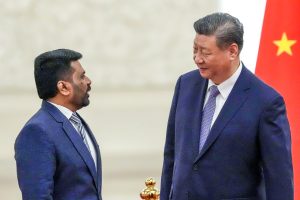
President Dissanayake to visit China mid-January: Report
December 21st, 2024Courtesy Adaderana
Sri Lankan President Anura Kumara Dissanayake will travel to the island’s largest bilateral lender China for talks in January, he said on Saturday, days after completing a long-delayed foreign debt restructure.
China accounted for more than half of Sri Lanka’s bilateral debt at the time of the 2022 economic crash, when Colombo ran out of foreign exchange to pay for essential imports such as food, fuel and medicines.
Its economy is recovering after receiving an International Monetary Fund rescue package and imposing austerity reforms aimed at repairing the government’s ruined finances.
Leftist Dissanayake came to power in September on a pledge to fight corruption and tightened his grip after his party won a landslide in snap parliamentary polls.
I will be going to China mid next month”, he told reporters, without setting an exact date.
Dissanayake’s first overseas visit as head of state was to neighbouring India, where he was given a red-carpet welcome by Prime Minister Narendra Modi on December 16.
Regional powerhouse India is competing fiercely with China for influence in the Indian Ocean region.
Sri Lanka sits astride the world’s busiest shipping route, which links the Middle East and East Asia, giving its maritime assets strategic importance.
New Delhi has been concerned about Beijing’s growing toehold in Sri Lanka, which it sees as being within its sphere of geopolitical influence.
Fitch Ratings upgraded Sri Lanka’s long-term foreign currency issuer default rating to CCC+ on Friday.
Fitch said that while debt restructuring had reduced the government’s debt service burden and liquidity risks”, it noted that the general government debt/GDP and the interest/revenue ratio are likely to stay high in the medium term”.
Source: AFP
–Agencies
Fitch upgrades Sri Lanka to ‘CCC+’
December 21st, 2024Courtesy Adaderana
Fitch Ratings has upgraded Sri Lanka’s Long-Term Foreign-Currency Issuer Default Rating (IDR) to ‘CCC+’ from ‘RD’ (Restricted Default), citing the completion of the international sovereign bond restructuring and an improved outlook for macroeconomic indicators.
Fitch typically does not assign an Outlook to sovereigns with a rating of ‘CCC+’ or below.
Fitch has also upgraded the Local-Currency IDR to ‘CCC+’, from ‘CCC-’, to align with the Long-Term Foreign-Currency IDR, as the risk of another default on local-currency debt has been reduced by the completion of the international sovereign bond restructuring and an improved outlook for macroeconomic indicators.
Sri Lanka completed the local-currency portion of its domestic debt optimisation in September 2023, following the exchange of treasury bills and provisional advances held by Central Bank of Sri Lanka’s into new treasury bonds and bills.
The upgrade of the Long-Term Foreign-Currency IDR reflects Fitch’s assessment that Sri Lanka has normalised relations with a majority of creditors, after the announcement of final results of the invitation to exchange the outstanding stock of international sovereign bonds with a 98% participation rate.
One bond series with non-aggregated collective action clauses did not meet the required 75% level. Without this bond series, the acceptance results imply a restructuring of 96% of total commercial external debt, it said.
The debt exchange will convert 11 international sovereign bonds and accumulated past due interest (PDI) into a mix of four macro-linked bonds, one governance-linked bond and one PDI bond.
Bondholders can choose the local alternative governed by domestic law, with rupee-denominated bonds and a US dollar bond with step-up coupon payments.
People have complete right to lie: Kottahachchi
December 21st, 2024AJITH SIRIWARDANA Courtesy The Daily Mirror
Colombo, December 21 (Daily Mirror)- People have the complete right to convince others that something true is false or something false is true, as it is a democratic right, NPP MP Nilanthi Kottahachchi said today.
Speaking at an event in Kalutara, she said people also have the right to see the negative side of good things the government is doing and that the government will never block that democratic right.
“You have the complete right to convince any truth as a lie and any lie as a truth. That is your democratic right. You have the right to see the negative side when the government is doing something good. And also, you have the right to praise when a leader, government, institution or an individual is doing something harmful to society,” she said.
The MP said it takes time to see the results of something and said it is better to wait till the results come before criticising something.
She said the NPP members never lied during the election campaign to bring Anura Kumara Dissanayake to presidency and that they did not want to do so either.
“Some people claim that NPP members lied on political stages to bring Anura Kumara to presidency. Any NPP member including me did not want to tell lies and mislead the people to bring Anura Kumara to presidency because we are not a bankrupt political force to do so. It is the others who were bankrupt. Because of their bankruptcy, people trusted Anura Kumara Dissanayake and the NPP. We will not foul that confidence,” she said.
Govt. defends Ex-Ambassador Arunatilaka
December 21st, 2024Courtesy The Daily Mirror
While standing by former Deputy High Commissioner of Sri Lanka in Canberra Himalee Arunatilaka, who faced a lawsuit over a salary issue of a domestic aide, Foreign Minister Vijitha Herath said Arunatilaka had not committed any financial fraud and that it was due to an issue with Sri Lankan salary scale.
The Minister said as a standard practice, the diplomats are facilitated by the Foreign Ministry to take domestic assistants, and they are paid by the Foreign Ministry according to the Sri Lankan salary scale.
He said in this incident, a case had been filed because the salary paid to the domestic aide according to the Sri Lankan salary scale is less than the standard salary scale in Australia.
The Minister said not only Sri Lanka some other countries like India have similar issues as their salary scale is less than European countries and Australia.
He said the government regrets the inconvenience caused to Arunatilaka and added that a policy decision must be taken regarding the matter.
The Minister said the government will take a policy decision on the salary scale of domestic aides working in foreign missions.
Government hoping to update FTA with India: Vijitha
December 21st, 2024AJITH SIRIWARDANA

The government is hoping to initiate discussions with India to update the Free Trade Agreement between India and Sri Lanka, which was signed several decades ago, Foreign Minister Vijitha Herath said.
He told a news conference that the FTA with India needs to be updated and continue as the market has expanded now.
The Minister said Sri Lanka brought to the notice of the Indian government the need to discuss the matter during President Anura Kumara Dissanayake’s recent state visit to India.
Referring to the Economic and Technology Cooperation Agreement (ETCA), the Minister said the government did not sign the ETCA as claimed by some opposition politicians and that the government only agreed to continue discussions on the matter further.
“No final decision was made or set dates for discussions on ETCA. We will not sign any agreement detrimental to our economy,” he said.
Minister Herath said Sri Lanka signed only two MoUs with India during the recent visit, which included an MoU for training and capacity-building of 1,500 civil servants of Sri Lanka and a Protocol for amending the Agreement of Avoidance of Double Taxation.
He refuted claims that Sri Lanka agreed to implement a multi-product pipeline from India to Sri Lanka and added that Sri Lanka only agreed to continue the discussion initiated by the previous government on the matter.
Understanding Sri Lanka’s seasonal rice shortage: An analytical perspective
December 21st, 2024By Dr. Sunil Jayantha Nawaratne Courtesy The Daily Mirror
Sri Lanka’s recurring rice shortage during December and January has become a predictable yet pressing issue. This challenge is rooted in the country’s reliance on its two main paddy cultivation seasons, Maha and Yala, alongside structural inefficiencies in production, distribution, and storage systems. Understanding the statistical trends and underlying causes provides clarity on the situation and highlights actionable solutions.
Sri Lanka’s Paddy Production: Yala vs. Maha
Sri Lanka’s annual paddy production revolves around two seasons:
1. Maha Season (Major Crop):
- Contributes ~65-70% of total annual paddy output.
- Cultivated during the north-east monsoon (October to March).
- Harvested in February-March, making it the country’s largest source of rice supply.
2. Yala Season (Minor Crop):
- Accounts for ~30-35% of total output.
- Grown during the south-west monsoon (April to August).
- Harvested in July-August, with stocks typically depleting by late November.
The disparity between the seasons leaves a supply gap during December and January, exacerbating shortages when Yala harvests underperform or Maha cultivation faces delays.
Statistical Evidence (2020–2023)
Year Total Paddy Production (Metric Tons) Maha Contribution (% of Total) Yala Contribution (% of Total) Key Challenges
2020 ~4.1 million 2.7 million (66%) 1.4 million (34%) Balanced production ensured stable rice availability.
2021 ~3.8 million 2.6 million (68%) 1.2 million (32%) Fertilizer shortages impacted yields, increasing dependency on imports.
2022 ~3.3 million 2.2 million (67%) 1.1 million (33%) Severe drought during Yala worsened seasonal shortages.
2023 ~2.6 million 1.7 million (65%) 0.9 million (35%) Fertilizer bans and weather disruptions led to Sri Lanka’s worst rice shortage.
Core Reasons Behind the Shortages
1. Demand-Supply Imbalance:
- Annual rice consumption averages 2.4–2.6 million metric tons, with demand remaining constant throughout the year.
- The Yala harvest, contributing only one-third of total production, is insufficient to cover consumption needs until the Maha harvest in February-March.
2. Climate Vulnerabilities:
- Irregular rainfall, droughts, and floods during critical growing periods disrupt yields, especially in the Yala season.
3. Fertilizer and Input Challenges:
- The 2021 fertilizer ban and subsequent shortages significantly reduced productivity during both the Yala and Maha seasons.
4. Storage and Buffer Failures:
- Lack of adequate buffer stock policies and modern storage facilities leads to post-harvest losses and price volatility during shortages.
5. Market Speculation and Hoarding:
- Traders often hoard rice during the shortage months, artificially inflating prices and reducing market availability.
Proposed Solutions
To mitigate these seasonal shortages, a multifaceted approach is essential:
1. Enhancing Yala Season Productivity:
- Introduce drought-resistant paddy varieties and expand irrigation systems to stabilise Yala output.
- Provide incentives for farmers to increase Yala cultivation through targeted subsidies and improved seed distribution.
2. Buffer Stock Management:
- Establish strategic rice reserves using surplus Maha production, ensuring controlled releases during shortages.
- Invest in modern storage infrastructure to minimize post-harvest losses.
3. Policy Reforms:
- Develop a timely import strategy to fill supply gaps during critical months without destabilizing local markets.
- Strengthen the Paddy Marketing Board to regulate distribution and pricing.
4. Diversification and Sustainability:
- Encourage alternative cropping systems during off-seasons, including fast-growing rice varieties.
- Promote consumption of other staples, such as millet and maize, to reduce pressure on rice.
5. Improved Risk Management:
- Implement climate-resilient farming practices and crop insurance schemes to safeguard farmers against losses.
Conclusion
Sri Lanka’s rice shortages during December and January are a direct result of its reliance on the seasonal Maha harvest and the insufficient output of the Yala season. By adopting a combination of enhanced agricultural practices, strategic policy interventions, and robust infrastructure investments, the country can bridge the seasonal production gap and achieve year-round rice security.
As we move forward, prioritizing sustainable agriculture and ensuring equitable market systems will be vital to addressing this perennial challenge.
2024 Elections: Is It the Defeat of Elite Politics, Power Transferred to a Non-elite Group or The Beginning of a Rule of “Lumpen Elites”? “A Grotesque Mediocrity” Playing “A Hero’s Part”?
December 20th, 2024By Sena Thoradeniya
1. Lumpen Elites”
Another myth propagated by the capitalist press, NGO coterie and deplorably by some activists in the nationalistic movement who have not severed their umbilical cord with the old JVP womb yet, is that the voters have rejected elite politics and transferred power to a non-elite political camp at the 2024 General Election. Is this true or false? The latter group has descended into a lower level[U1] calling all former rulers as Paadada Praboon” (my translation as Lumpen Elites”), some propelled by themselves from time to time. They have lived in conjugal relations” as Marx said, but allowed the bride to be prostituted”! Nothing more than that!
In our previousessay posted on December 1, we have stated that we know only about lumpen proletariat (in Sinhala Paadada Nirdhana Panthiya”) because ofthree reasons. Firstly, in Sri Lanka the term lumpen proletariat is being used for a very long time, from the days Marxist discourse began in this country.Secondly, there is no evidence that the terms Lumpen Bourgeoisie” or Lumpen Elites” has been used in our political discourse. Thirdly, we were unaware that thewriters who used the term Paadada Praboon” in their analysis of the 2024 election, used it knowing the theoretical undertones of what is meant by Lumpen Elites” or Lumpen Bourgeoisie” or they have a definition of their own to what Paadada Praboon” does mean.
They have not given either a theoretical definition to Lumpen Elites”, or identified attributes of Lumpen Elites” through a class lens. In general, they do not seem to understand what Lumpen means to bring it into their analyses. It was sheer anger and bewilderment playing with words.
2. Lumpen Proletariat
A detailed explanation of what is meant by lumpen proletariat is needless, as itis well known. But some definition about it, is justified to move ahead to explain what are meant by Lumpen Bourgeoisie” and Lumpen Elites”.
Marx and Engels in Manifesto of the Communist Party” (1848) described the lumpen proletariat as the dangerous class”, the social scum”. This term was coined by Marx and used by him in many of his writings. In The Eighteenth Brumaire of Louis Bonaparte” (1852), Marx identifies nearly two dozen categories with dubious means of subsistence and of dubious origin”, such as vagabonds, discharged soldiers, discharged jailbirds, swindlers, gamblers, pickpockets, brothel keepers, pimps, prostitutes and beggars, in short the whole indefinite, disintegrated mass”. A class of outcasts, all declassed, degraded and degenerated elements, refuse of all classes”.
Mao in his Analysis of the Classes in Chinese Society” (1926) said that the lumpen proletariat was made up of peasants who lost their land and handicraftsmen who cannot get work.They lead the most precarious existence of all”. One of China’s difficult problems is how to handle these people”.
3. Politics of the Lumpen Proletariat
Marx said that from the above categories Louis Bonaparte formed the core of the Society of December 10, which helped his coup d’état. Hefurther described that Bonaparte himself was the Chief of the Paris lumpen proletariat, a princely lumpen proletariat”, that the political power base of Louis Bonapartewas lumpen and theSociety of December 10 remained the private army of Bonaparte. In Paris the lumpen proletariat organized as the Mobile Guard were with the side of bourgeois republic, along with the aristocrats of finance,industrial bourgeoisie, middle class,high dignitaries of the army, the university, the Church,the bar, the academy and the press, those who have impounded the Republic. Thus, Marx considered forms of aristocratic power to be lumpen.
In China lumpen proletariat had secret societies bearing esoteric names, in every part of the country. Some possessed arms. They were destructive and controlled and used by landlords and local tyrants. Chiang Kai-shek used them to disrupt the unity of the people.
4. Lumpen Proletariat of Sri Lanka
With the above analysis we can easily identify the Lumpen Proletariat of Sri Lanka. We may add elements of underworld, bootleggers, drug dealers, drug peddlers, illicit gun makers, dealers in illicit firearms, contract killers, goons employed by politicians and members of private armies of politicians etc. to the above lists.
In earlier days underworld elements were used by politicians and industrialists to disrupt strikes. UNP was notorious for this. In earlier days roads were blocked preventing voters of depressed castes (as all of them were supporters of Left parties) coming to polling booths. General elections and bye-elections in certain electorates were like turf wars”, fought with using intimidation and thuggery; shooting and killing were parts of this game. General election in Kandy in 1947, Agalawattabye-election in 1967,Maharabye-election in 1983, Northern District Development Council elections, Southern Provincial Council elections, Referendum were marred with violence; the so-called universal suffrage was abused by the ruling party using their paid lumpen elements. Election victorieswere celebrated with arson, destruction of property, intimidation, use of strong-arm tactics, mass scale transfer of public servants to difficult areas” and discontinuing the services of hundreds of public servants. We witnessed the peak of this in 1977.
The members of this underclass were used for thuggery and intimidation of supporters of opposing parties; preventing them from coming to polling booths; destruction of private property and burning private residences after election victories; election rigging, voter impersonation, stuffing ballot boxes at the Referendum and presidential elections; to stone Supreme Court judges private residences; to attack 1980 strikers; for arson and looting in 1983 communal strife; to burn Jaffna library etc.
It is an undisclosed fact that many members of the Lumpen Proletariat joined the ranks of JVP/DJV in 1988/89 and engaged in a killing spree carrying out inhuman punishment to their adversaries. Parliamentarians belonging to the ruling party and the opposition had their own private armies, body guards were detailed and firearms issued to them by the government. Some parliamentarians acted as patrons of paramilitary forces such as PRRA (Peoples’ Revolutionary Red Army). People like Gonawela Sunil, Soththi Upali, Baddegana Sanjeewa, Wambotta and Julampitiye Amare became household names. Some Ministers were notorious for organized terror, crime and assassinations.
Drug barons having cryptic names who held sway after the introduction of free economy are an integral part of this segment who rose to the ranks of Lumpen Bourgeoisie” within a very short period.
5. Lumpen Bourgeoisie”
Lumpen Bourgeoisie” is a term used to describe members of the middle class, upper class merchants, industrialists and lawyers who support colonial masters. This term was popularized by Andre Gunder Frank in his book, Lumpen Bourgeoisie and Lumpen Development, Dependency, Class and Politics in Latin America” (1972), although many writers have used it some decades ago. This neologism was created coining lumpen proletariat and bourgeoisie.
Mao in his class analysis in Chinese society (1926), described Comprador Bourgeois class as a wholly appendage of the international bourgeoisie, depending upon imperialism for their survival and growth, who represent the most backward and most reactionary relations of production in China and hinder the development of China’s productive forces. A Comprador was the Chinese Manager or the Senior Chinese Employee in a foreign commercial establishment, who served foreign economic interests and had close connections with imperialism and foreign capital.
Gunder Frank described Lumpen Bourgeoisie” as colonial and neocolonial elites in Latin America, like European Bourgeoisie. But their mentality is akin to lumpen proletariat, often supporting capitalism, resorting to crime. He termed this as lumpen development and countries affected by it as lumpen states.
6. Lumpen Bourgeoisie” of Sri Lanka
This leads us for a detailed analysis of the Lumpen Bourgeoisie” of Sri Lanka, its class characteristics, class interests, class relationships, economic and power bases, political affiliations and culture it represents and advocates. Main players of this class are the industrialists and exporters who park theirexport earningsabroad, racketeers, swindlers, drug barons, those engaged in illicit money earning activities and trade, rice mafia, destructors of natural resources, money launderers, media moguls who are behind Eurocentric cultural aggression, lawyers and doctors who fleece their clients and patients and many more.
A new set of people who joined this rank are the so-called think tanks, somegroomed by the Catholic Action, some funded by the US agencies; they invariably represent the interests of the US and play a pivotal role as agents of economic, political and cultural slavery.
Private sectorbusiness conglomerates and oligopolies who are engaged in bribery, corruption, frauds, scams, price wars, under invoicing, accounting irregularities, tax avoidance, market manipulations, insider trading and causing artificial behviours in the stock market, criminality and sexual abuse, easily qualify to be members of this class. They give kickbacks to politicians and government mandarins to get approvals and licenses, government contracts and are famous for political lobbying. They are powerful enough to manipulate activities of professionals – doctors, engineers, lawyers and academics, professional bodies by sponsoring their events, celebrations and anniversaries, providing foreign trips and educational facilities in foreign universities to their children.
As stated above the Lumpen Bourgeoisie” is closely linked with politicians and the bureaucracy.They fund various political parties and politicians; some control the activities of politicians. They in return are being benefitted by grant of multi-million contracts, diplomatic appointments, top positions in corporations and banks etc. This class was expanded and thrived after 1977; many of its members entered politics, appointed as MPs and powerful Ministers. Executive presidency became the manifestation of all conquering power.
In this manner politics in Sri Lanka became a handmaiden of Lumpen bourgeoisie. They made laws to protect themselves and engage in corruption; constitutional amendments were made to be in power.
Religionwas prostituted by them; establishing a Buddha Sasana Ministry, Ministries for Hindu, Muslim and Christian Affairs, providing Benz cars to Mahanayakes and official residences for them in Colombo were merely deceptive; rogue politicians, murderers, charlatans visiting Dalada Maligawa, Asgiriya and Malwatta chapters and now Anuradhapura with television crews, baskets of imported fruits and atapirikara, Mahanayakes listening to the homilies of these rogues(and now to JulieChung)without querying anything, Mahanayakas tying pirith nool (and now to JulieChung),donating Buddha statues and other religious emblems to rogues, bestowing esoteric titles (honorifics) to politicians, resemble an African masquerade, actors wearing different types ofmasks, costumes with elaborate headpieces decorated with animal hair, horns, teeth, sea shells, feathers, straw and grass.
In many of the so-called Third World countries,political clientelism, paternalism, providing opportunities to the cronies to plunder national wealth and resources, such as illegal sand mining, rape offorestlands, mining quarries and other minerals,in the shadow of legality,with tax privileges as in Sri Lanka, have turned states into Lumpen States”, keeping states underdeveloped.
Political parties have become private, family or corporate enterprises. Registering political parties with the Elections Commission has become a lucrative business leading to horse trading. From the very inception the oldest political party in Sri Lanka was known as Unge Nedayinige Pakshaya” (party of their relatives).
7. Lumpen Elites”
To make this more complex we would add that there is a class called Lumpen Elites” who bastardized politics and governance. Who are Lumpen Elites”? In Sri Lanka we have had many politicians whose power base was lumpen. But they were not described as Lumpen Elites”. This segment shares all what we havedescribed underLumpen Bourgeoisie”.
Who are real” elites or enlightened elites”?
Many dictionaries give several definitions and synonyms to the term elite. Upper crust or the highest social class, socially superior segment of a society, members of a ruling class, a group of persons by virtue of position or education who exercise much power or influence, superior in quality, rank and skill, the richest, most powerful, best-educated or best-trained group in a society and super-achievers are some definitions we have selected for this purpose.
Sociologically an elite may be defined as a person belonging to a social category having any one of the following attributes and functions, many interrelated and overlapping: high” castes, land, wealth; comprador bourgeoisie, land owners, office holders, professionals; access to commerce and trading and political power; having unique life styles, Western consumption patterns, proficiency in English, access to higher education; intellectual pursuits and cultural achievements; social status, rank and marriage ties. There can be traditional and village level elites and urban elites as in Sri Lanka. In the colonial setting colonial agents were regarded as the top most above the local elites.
Status and rank of a person within a group or organization or society are closely associated with elitism. Status and rank give recognition, acceptance and honour. Status and responsibilityare bound together.People attempt to protect and enhance their status and rank. These are visible and detectable externally attached to a person. Loss of status bring stress and trauma.
Then who are Lumpen Elites” (Paadada Praboon”)? Or the people who use Paadada Praboon” have a definition of their own to this? We do not think that this concept has been widely discussed by our political theorists although the concept has a long history. They may have used this neologism, Paadada Praboon” just to show their anger and frustration.
In Sinhala many including this writer have used Paadada Desapalanaya” (Lumpen Politics), Paadada Samskruthiya” (Lumpen Culture”) to describe the decadent, moribund politics and culture of the capitalists,that took firm rootsafter 1977, vulgarization and bastardization of art, literature and culture. The year 1977 marked the rise of a new super-rich Lumpen Elites”,isolated from the society, not dependent on the society.
At the 1956, 1960 and 1970 General Elections, verti clad, betel chewing, Sinhala speaking, non-elite (nirpraboon), politicians, Sinhala school teachers, clerks and middle level officers, trade unionists, Sinhala poets and literary figures, local level leaders such as Village Committee (VC) members or Chairmen, farmers,entered the Parliament. They used public transport and resided at Sravasthi” during parliamentary sessions. It was a common sight several MPs travelling to Kandy in the Friday evening train. But some of them reached heights that they have never imagined or dreamt of during the last stages of their political careers. One MP of lumpen origins, who later became a Junior Minister was fortunateto become the Basnayake Nilame of one of the Sathara Maha Devalayas” (four ancient devalayas) in Kandy. This is a case of men of lumpen origins embellishing themselves witharistocratic trappings.Big businessmen of depressed castes who bought old walauwas continued to call their abodes walauwas. A postal peon who was elected from Colombo Central multi-member constituency (as its third MP) in 1956 (SWRD’s MEP) became a big businessman in no time, later switched allegiance to UNP and was defeated.
This was totally changed in 1977, opening the floodgates allowing the lumpen elements to enter the Parliament. In 1977 UNP fielded some members of the Lumpen Proletariatas its candidates and they were elected to the Parliament.We refrain from naming them and the constituencies they represented.
Drug lords, some operating from abroad, lawyers, politicians and rogues in the police are in league with Lumpen Elites”.They havedealings with the underworld, some controlled by the underworld, or controlling the underworld. Several prominent members of this coterie who held powerful portfolios come to mind.
8. Lumpen Elites” of Sri Lanka, its Characteristics and the NPP
Lumpen Elites” are a set ofPretenders; false pretense for recognition is a characteristic of Lumpen Elite of Sri Lanka.
People by birth who belonged to so-called depressed castes changed their family names to show that they belong to top Walauwa clan; this enhancedtheirchances to move up the social ladder, to associate big people”, to marry from elite families;their children were admitted to elite schools like Ladies, Royal,
St.Thomas’, Trinity, Girls’ High School and Hillwood; this gave the opportunity for them to move with upper class/caste peers; among this category are retired revolutionaries, academics and bureaucrats.
Many pretend that they have studied in elite schools and prestigious universities, holders of fake degrees, that they are kith and kin of famous people in the top rung of the society; that they have connections to well-known people in the society.
The newest characteristic of this class is having an army of self-proclaimed intellectuals”, pretending that they have higher degrees and posing as Ph.D. s, Professors, Advocates (defunct after Felix Dias’s 1973 reforms and all known as Attorneys-at -Law), and engineers; this has grown into an epidemic level with the formation of the NPP as it wanted to purify” the parliament of illiterate” politicians.Tuition masters engaged in shadow education who fleece parents and children and challenge the educational system of the country joined this charade.
They were beneficiaries of free and Swabhasha education up to university level, proliferation of Maha Vidyalayas in the villages by Sirimavo governments, and Mahapola scholarships. Schools were upgraded as Madya Maha Vidyalayas (in addition to the original Kannagara era Central Schools) and Jathika Pasal (National Schools) by successive governments, providing more and more opportunities to rural students to study in science and math streams. Science education was the preserve of elite schools in urban areas and some Central Schools. Tambuttegama school is one such school upgraded, the alma mater of Anura Kumara. Opening of more and more universities led to an unprecedented upsurge in education, providing hitherto unknown opportunities to the underprivileged. Many of these were able to become academics obtaining higher degrees. Some of these academics became the nucleus of the NPP.
So, it is a blatant and unpardonable lie to say that nothing had happened in the last 74 years; they cannot deny the upsurge in education, the key factor which propelledthem into power even if they fail to observe the development in health care, social services, agriculture, irrigation and communication, changes in peoples’ livelihood, housing and even dress.
If not for the above facilities and massive changes that took place in the political, social and cultural landscape, most of them would have ended as coconut pluckers in the villages; they suffer from an inferiority complex, because of their backgrounds, parents, Sinhala education, cursing everything and the past; there is little information that these academicscontributing anything to the existing knowledge; all have failed to raise the standards and university rankings, solve student problems; unknown in the island, with no international recognition or publications in prestigious peer-reviewed academic journals.
As educated middle-class academics they are a set of declassed intellectuals cautious not to join either the UNP, SJB or the SLPP. They all found that the NPP as the haven for them to further their ambitions. As non-elite actors” they with a band of lawyers, other professionals and technicians and teachers began to challenge traditional power structures. Most of them were able to get elected to the parliament, some getting appointed as Ministers and Deputy Ministers, Speaker and Deputy Speaker. Anti-incumbency and popular discontent with mainstream politicians were the key factor that propelled these Lumpen Elites” to power, with the catchwords end patronage, corruption, public sector waste, bring back stolen money and punish the culprits. Thus, the lumpenized class has become the elite and the ruling class has been lumpenized.
Men and women who spent most of their time in the streets, paddy fields and village bazars inciting workers, teachers, university students and farmers to protest, agitate and other provocative activities suddenly appeared in TV and parliament wearing lounge suits, signifying the metamorphism of the lumpens as Lumpen Elites”.
All the people mentioned under Lumpen Bourgeoisie”, includinghoarders, rice mafia, corporate enterpriseshave supported and funded the NPP. NPP benefited from slush funds from Western Embassies, Diaspora, business conglomerates and rice millers.
NPP has become the party of corporate enterprise.A careful look at the appointments made to top positions by the NPP government, their connections to MNCs (Aitken Spence, CTC, Dialog Axiata, MTV Networks) and international capital, logistics giants, business conglomerates (Hayleys, Browns), Chambers, foreign banks (Citibank N.A.) and internationalaccounting firms (Ernst & Young, PricewaterHouseCoopers), provide ample clues to this bizarre phenomenon.
It is interesting to note that Anura Kumara did not appoint bumpkins, rusticyokels of Lal Kantha, Vijitha Herath, Wasantha Samarasinghe, Sunil Handunnetti, Bimal Ratnayaka (son of MR’s buddy), Nalinda Jayatissa, Samantha Vidyaratna, Namal Karunaratna, Mahinda Jayasinghe, Nalin Hewage or Ranjan Jayalal types or NPP Youtubers to top positions (Please see my article posted on 9 November 2024).
We have a strong suspicion that almost all the appointments made by Anura Kumara to top posts, are nominees of hidden hands of the NPP, corporate enterprises, diaspora and Western Embassies. It is extraordinary that Julie Chung, the self-proclaimed Viceroy of Sri Lanka meeting all these appointees and discussing her agenda with them. It is our contention that Anura Kumara, a village boy from Tambuttegama with no strong links to the upper echelons of the society cannot make these appointments on his own.
Thus, lumpenization of politics and culture began under different matriceswithin a new milieu. With this analysis we will be able to identify the lumpen ideology of them. The signal flares were seen at the run-up for the presidential and parliamentary elections. NPP Ministers, Deputy Ministers and certain MPS are now behaving as intoxicated with power. After a landslide victory we witness it raising its ugly head. Making of another Ranasinghe Premadasa could be witnessed at Anura Kumara’s meetings with top bureaucrats.
When Shehu Shagari won the Presidential election in Nigeria in 1983 this writerwas working in Nigeria. Newspapers supporting Shagari described his victory as alandslide, seaslide” and an airslide”. Very soonShagarigovernment was toppled by the military headed by Muhammad Buhari, which paved the way for a string of coups and counter coups thereafter staged by Buhari’s co – conspirators. So, the people who live in the glory of landslides should beware that there is an enemy within! JVP-NPP now hidden, now open” confrontation will come into the surface very soon. Bourgeois writers who described NPP victory as a Political Tsunami, a Political Earthquake are not aware that both Tsunamis and Earthquakes are disastrous to people and the environment.
Some bourgeois writers who write in English say that it is the responsibility of Anura Kumara to see that the elite class will not raise its head again as all these Anglophiles have become proletarian! It is only a daydream, empty talk made without understanding how parliamentary politics behave. They completely ignore or fail to comprehend which class is in power now. They are shy to think that lumpens have turned into elites overnight.
We do not want to comment on the disgraced Speaker, Deputy Speaker elected by the NPP, and many other Ministers and MPs pretending that they have Ph.D.s, that they are specialist doctors, professors, engineers, graduates etc. for the simple reason that as explained above, pretending is a major attribute of the Lumpen Elites”.
Anura Kumara at an election meeting said that they are no paupers; he said that Vijitha Herath’s wife owns a row of buildings at Narahenpita, Lal Kantha’s father was a big landlord in Mihintale (in Rajarata land was owned by families of Nuwarawewa, Thamarawewa, Thalgahapotane, Hurulle, Kiralawa, Palugaswewa families and aristocratic chieftains who held positions of Wanni Unnahe; Kuragamage Don Lalkantha’s father who migrated from elsewhere to Anuradhapura cannot be a big landlord.) and Wasantha Samarasinghe’s father was a Gambharaya,(there were no Gambharayas in the NCP; Gambharaya System was an agrarian system which was in existence in Giruwa Pattuwa in Hambantota District). So, the greenlight for the NPPers to lie about their credentials was given by Anura Kumara himself to his fold. Falsification is an attribute of Lumpen Elites” we said.
Sunil Handunnetti addressing the Parliament on the other day said that the Minister of Justice and Social Integration is a Presidents’ Counsel, which is a total fabrication. But the irony of this whole episode is this Minister going to the CID to complain that some mischief-maker had added the prefix Dr. to his profile!
9. Tilvyn Silva’s Re-emergence as an Apostate
In a press interview published on 29 November 2024 Tilvyn Silva, the General Secretary of the JVP has stated that, ours is not a leftist government; it is a government of leftist, democratic and progressive forces”. We should thank Silva for telling the whole world the truth, shedding its ‘‘Marxist”, ‘‘Revolutionary” costume loaned to them by the capitalist dressmakers (press) here and abroad. Silva renouncing Marxism-Leninism suits NPP core group and its Lumpen Elites”. This again shows us JVP-NPP divide, that Silva or the Loku Ayya” was pressurized by the NPP to make such a statement!
10. ABBA Tribute Band ARRIVAL
Tilvyn Silva, Harini Amarasuriya, Vijitha Herath, Harini’s female friend and many other NPP socialites (some cuddling old Tilvyn Silva who was in his virile make-up), attended ABBATribute Band ARRIVAL from Sweden at Mt. Lavinia Hotel on 23November 2024. Rustic Tilvyn was in high spirits when the singing went as, With a bit of rock music everything is fine”. Harini and her female friend in a hijab were seated next to Tilvyn. Who’s the Dancing Queen/ Young and sweet, only seventeen” when the Night is young and the music’s high”! Vijitha Herath made a speech in English bringing amusement to the crush” generation!
Tilvyn Silva in a newspaper interview said afterwards that, if there is an invitation from an organization for an event, we are duty bound to attend it”. We attended it. We enjoyed it. We are people with a palate for enjoyment”. He admitted that the tickets had been priced at Rs. 50,000, 30,000, and 15,000.
According to this logic Ranasinghe Premadasa attending a birthday party of a daughter of a drug baron is correct, what they have vehemently criticized when they were a two-pence party.
What they have criticized earlier – what other politicians enjoying, was because they were deprived of those opportunities, envious of those enjoying; what they have suppressed are now erupting out as molten lava from a volcano which was dormant for years; now is the time for them to feast, killing the fattest calf when the prodigal son” returned home.
When the prodigal son returned home, his father said to his servants: Bring forth the best robe and put it on him; and get a ring on his hand and shoes on his feet”. And bring hither the fatted calf and kill it and let us eat and be merry”. For this my son was dead and is alive again; he was lost and is found”. And they began to be merry” (Luke: 15:11-32).
The people who criticized Tylvin and his entourage were like the prodigal son’s elder brother who was angry. The father answered: It was meet that we should make merry and be glad; for this thy brother was dead and is alive again; and was lost and is found”.
Maxim Gorky described Europe’s bourgeois writers as apostates, the prodigal sons of their class” (1934).
Gone are the days the JVP mobilized its killer gangs with Nanda Malini’s Pavana” and Sathyayaye Geethaya” and later with Gunadasa Kapuge’s Kampana”. But Vijitha Herath answering his critics said that they were fans of Abba and Boney M from their school days and they listen to Abba hits while travelling in their cars!
Are we to believe thatHerath at the height of the insurrection appreciating ABBA music when all of them preparing thousands of youth ascannon fodder, pushing Pavana” and Sathyayaye Geethaya” down their throats?
ABBA and Boney M were active in the years between 1972-1982 and 1974-1986 respectively. During this period ABBA and Boney M were not popular in Sri Lanka, having only Sri Lanka Broadcasting Corporation (SLBC) to air music. So Herath cannot be an ABBA and Boney M fan during his school days; there was not a remotest possibility ABBA and Boney M reaching a remote area in Uva Province (Herath’s birthplace before migrating to Gampaha after the 1988/89 insurrection, as a cover), considered as one of the least developed areas of Sri Lanka. Boththe lyricist and the nightingale of Pavana” and Sathyayaye Geethaya”,fled to India when thousands of Pavana” and Sathyayaye Geethaya” fans were massacred!
Now Herath says that music is a universal language. If it is so why did they kill songstressSagarika Gomes, lyricist Premakeerthi Alwis and actor/ singer Vijaya Kumaratunga?
We should not forget thataddressing a meeting of ordinary village folk at Uda Dumbara, Anura Kumara lamented that there are no Sinhala films in Netflix!
If Herath was a real connoisseur and a shrewd politician, he would have evaded the journalists firing questions at him cutting short that ABBA’ s hit Fernando” was his favourite song because of its political overtones!
Can you hear the drums Fernando”/ We were young and full of life and none of us prepared to die”/ There was something in the air that night”/ The stars were bright Fernando”/ They were shining there for you and me”/ For liberty Fernando”/ I can see it in your eyes”/ How proud you were to fight for freedom in this land”.
How can he do that, without listening to Fernando” and understanding the lyrics of Fernando” as a kid in Uva Province?
11.Vijitha Herath Wearing a Lounge Suit and a Bow Tie Attending US Marines Ball
On November 2, 2024 Vijitha Herath to match the Americans – wearing a custom-tailored lounge suit and a bow tie attended the 249th Birthday Marines to celebrate the legacy of US Marines at the USMC Ball. This was a case of Lumpen Elite embracing all what they have rejected sometime back.
12. Anura Kumara’s Address to the Parliament
Anura Kumara in his Address to the Parliamentquoting Martin Luther Kingcannot be considered as an accident or he loves quotes from Martin Luther King. No quotes from Marx, Engels, Lenin or theirformer mentor Che Guevara!This was a case of Lumpen Elite rejecting all what they have embraced sometime back.
This was the person who discarded chanting traditional Jayamangala Gathas as a manifestation of pomp and pageantry and extravagance and racial and religious prejudices. But Jayamangala Gathas are chanted with the aim of ending negativity and generating auspiciousness, promoting happiness and prosperity in an important event.
13.Rise of a Parvenu Class
This writer argues that although people like Anura Kumara have proletarian origins with upward mobility they have risen to the upper class. A parvenu class.All NPPers except Harini Amarasuriya belong to this group of upstarts, nouveau riche, social climbers.Look at how the NPP academics, lawyers, doctors and other professionals behave after entering the parliament. Not even Casanovas in SWRD’s and Sirimavo’s cabinets, mavericks in Sirimavo’s, JR’s and CBK’s cabinets did wear braces likeAnura Kumara’s Minister of Justice, son of a third-grade commercial film producer and CBK’s London benefactor.
Former goni billas, all Ministers, Deputy Ministers and MPs, including street agitators and paddy field fighters, except a few rustics wearing full suit are signs of upward mobility.
Anura Kumara said that he sold fruits and cigarettes in the trains, an academic elected from Anuradhapura electoral district said that his father was a bothal paththarakaraya, (collector of old bottles and newspapers),new Cultural Minister academic said that his father was a carpenter at Hiniduma Calvary Church, another Peradeniya academic, an NPP Central Committee member said that he mixed concrete at building sites, all for propaganda purposes. All have climbed up to the highest layer of the pyramid. The best yardsticks to measure their upward mobility are the types of mansions they live, motor cars they use, elite schools, international schools and private universities their children attend. Unashamedly they utter that nothing has happened during the past 75 years!
14.History Repeating: A Grotesque Mediocrity” Playing A Hero’s Part”?
Opening remark of Marx’s The Eighteenth Brumaire of Louis Bonaparte” is quoted widely by all and sundry knowingly or unknowingly. The historical entities appear two times, the first as tragedy, then as farce”. Here Marx refers to Napoleon I and his nephew Loise Napoleon (Napoleon III). On December 2, 1851 a counter-revolutionary coup d’état was carried out by Loise Bonaparte (Napoleon’s nephew) and his followers, broke up the Legislative Assembly and established a dictatorship, and a year later proclaimed himself as Emperor Napoleon III. Marx in his Preface to the second edition (1869) says that Napoleon III demonstrates, how the class struggle in France created circumstances and relationships, that made it possible for a grotesque mediocrity to play a hero’s part”.
Similarly, are we witnessing in our own country, a grotesque mediocrity” playing a hero’s part”?
Marx wrote: Historical tradition gave rise to the French peasants’ belief in the miracle that a man named Napoleon would bring all glory back to them.” We change this to voters’ belief in the miracle that a man named” Anura Kumara and his outfit Malimawa catching thieves, bringing back money horded abroad, reducing prices of rice and other foodstuffs, petroleum, electricity and would bring all glory back to them”.
Marx explains the divisions and alliances among the bourgeoisie and the lack of dominance of any one led to the re-emergence of monarchy in France despite the Revolution of 1848. Same thing happened in Sri Lanka. Electoral victory of the NPP in the Northern and Eastern Provinces (excluding Batticaloa) was due to divisions among Tamil political parties.
Marx said, the change concerned the table of contents, not the contents, the name, not the subject matter”. Heroes without heroic deeds” have taken the center stage; history without events” is unfolding. Victory to the Struggle of the Orators of the Platform”!
Planes Designed by Clowns and Supervised by Monkeys
December 20th, 2024By Nalliah Thayabharan
Boeing currently maintains a 40% market share, while Airbus dominates the other 60% of the industry. Both of these firms hold incredible leverage over the entire airline industry, allowing them to maintain a somewhat relaxed relationship with oversight bodies like the FAA.
The first ever Boeing 737 entered service 56 years ago in 1968.
Ending the production of the 737 with the NG or Next Generation family – 737NG, Boeing 737 would have still been in production for over 50 to 52 years, making it a true aviation icon with more than 10,000 aircraft built.
But instead, in August of 2011, Boeing decided to launch yet another re-engined version – 737 MAX.
Why did Boeing stop making the 757, but not the 737?
Why Boeing chose to launch Boeing 737 MAX 9 which was involved in two tragic crashes in 2018 and 2019 ?
Boeing didn’t pick the 737 over the 757. In the mid 2000s, Boeing actually intended to replace both of those aircraft with new ones.
The Boeing 737 just stayed in production for a little bit longer, because Boeing still had orders for it and kept getting more, whilst that wasn’t the case for the Boeing 757.
During that time, the nemesis of the Boeing 737 was the Airbus A320 family, and in the 1990s, Boeing had actually designed the Boeing 737NG just to make sure that they could compete with the Airbus A320 family successfully, which the Boeing NG also did.
But both Boeing and Airbus knew that newer, better engine technologies were just around the corner by then, with both CFM and Pratt & Whitney working on designs that would be able to achieve double-digit percentages of efficiency gains.
For Airbus, the choice was relatively simple, at least on the technical side. In 2010, the Airbus A320 had only been in service for around 22 years, meaning that there was still plenty of life left in it, so a re-engined version seemed like the obvious way to go.
Also, besides being younger, the Airbus A320 family has a taller landing gear, meaning that it sits much higher off the ground than the Boeing 737 family does, giving it much more room under its wings for larger diameter Turbofan engines. Now that’s super important, because newer, more efficient turbofan engines all have a bigger diameter for a larger fan, which is needed to achieve higher bypass ratios and those double-digit efficiency gains.
For the Boeing 737 however, the re-engined option was much less attractive as it sat low close to the ground like its ancestor, the Boeing 727, had done, and it had been constructed in that way in order to make boarding and disembarking with air stairs easier and also to facilitate manual ground handling.
In the years since though, manual ground handling had just basically stopped being a factor, because basically all smaller airports eventually got the baggage handling equipment that they needed.
Anyway, this low stance meant that fitting larger turbo fan engines to the Boeing 737 wasn’t going to be easy. Boeing had actually already struggled to fit the first CFM56 Turbofan engines to the Boeing 737 Classic back in the 1980s, where it had required fitting the engines further forward of the wing instead of under it, like on the original 737s.
And even after doing that, those CFM56 Turbofan engines engines themselves had to be changed in order to fit the Boeing 737. That’s the reason why they have that noticeably flat bottom, which gives them another few inches of ground clearance, and because of that redesign, several other systems also had to be relocated inside of the engine.
But even after that, the fan diameter of those engines still had to be made smaller than on other versions of the same CFM56 engines.
In the 1990s, the Boeing 737NG family then got a further improved CFM56 with a slightly larger diameter, which required even more modifications of the engine, the pylons, and some other systems.
Now, the engines on the Airbus A320 still had a larger diameter and a higher bypass ratio than those on the 737NG, but Boeing still managed to make the 737NG competitive with the Airbus, but only just.
Now, obviously, any further re-engine attempt would involve using even larger engines on an aircraft that simply wasn’t made for them.
So why would Boeing even consider that?
Well, the answer is that another 737 re-engine would allow the aircraft manufacturer to avoid something that Boeing’s CEO at the time, Jim McNerney, called a moonshot.
Most explanations around why Boeing developed the MAX instead of an all-new aircraft concentrate on a large aircraft order made by American Airlines, who surprised Boeing by selecting the Airbus A320 over the 737 back in 2011.
This happened after Airbus had announced its decision to re-engine the Airbus A320 family and at that time, Boeing had basically decided
on designing an all-new aircraft instead.
But that surprise order by one of the largest and most loyal customers forced them to instead abandon those plans and quickly refocus on developing another 737.
Now to be clear, that explanation isn’t completely wrong. Before hearing about the American Airlines deal, Boeing’s engineers and a lot of the company’s management really had been favoring an all-new airplane, which would borrow a lot of fresh technologies and features from their brand new Boeing 787.
In February of 2011, over four months before that American Airlines contract, Boeing’s CEO, McNerney, told analysts, “We’re going to do a new airplane instead of a re-engined 737,” although he then clarified that the final decision about that hadn’t really been made yet.
Then American Airlines forced Boeing’s hand, except there are a couple of really important details missing from that explanation. Airbus had pursued that deal with American Airlines specifically to force Boeing to re-engine the 737NG.
In 2010, when Airbus decided to re-engine their A320s, the 2008 financial crisis had just happened, a few years before and it was less than a decade after 9/11.
So with the financial reality that existed at the time, Airbus weren’t sure if they could even afford to develop an all-new airliner. But if Boeing decided to go ahead with an all-new plane, Airbus would have no choice but to do the same.
Airbus believed that an Airbus A320neo would be much more efficient than a 737 with newer engines, which as it turns out wasn’t quite true, but there was no question that an all-new Boeing aircraft would be even more efficient, making the Airbus A320neo obsolete.
This strategy was a gamble for Airbus, because if Boeing hadn’t taken the bait and instead gone ahead and designed a new plane, then they would be caught between a rock and a hard place literally.
But this is where the idea that the American Airlines order was the decisive factor in Boeing’s decision-making starts to make a little bit less sense.
Losing an order for 200 planes from a loyal airline customer was a big deal, but we’re talking about aircraft designs for the very heart of the market, with potential production runs of over 10,000 jets.
Those types of aircraft pay back for their investment over many decades, not by a single order, so would it really be worth risking such a long-term strategy only on this?
Well, this is where we get back to the then Boeing CEO, Jim McNerney, and his aversion to moonshots. A moonshot is what McNerney called the design of a new aircraft.
Boeing’s decision to make what we now call the 737 MAX came just after the 787 was about to enter service after what had been a very problematic development, full of delays and cost overruns.
The 787 had been supposed to enter service faster and cheaper than Boeing’s previous all-new widebody, the 777, but that hadn’t happened, and McNerney wasn’t in the mood for a repeat of that process.
McNerney’s motto for Boeing at the time was More for Less, which applied to his view towards suppliers and workers, but as it turns out, also towards aircraft development.
Every 25 years a big moonshot, and then produce a 707 or a 787 is the wrong way to pursue this business.
The more-for-less world will not let anyone pursue moonshots.
The thought of just squeezing the last bit of water out of every rock instead of boldly looking forward and solving new problems is almost always the penny-pinching beginning of the end for the leader of any industry.
When you stop innovating and start relying on only defending old wins, you basically start dying.
But as for the 737 MAX, it looks like that American Airlines order came at just the right time, or wrong time, to sway Boeing’s board back towards a re-engined 737.
The way that decision came has led some to assume that Boeing rushed the development of the MAX in order to beat Airbus, because when Boeing learned of the imminent Airbus contract, their sales teams scrambled to come up with this new plane’s key details, contract terms and conditions in just one day.
When all of this was happening, Boeing had been studying and comparing the performance of a 737 re-engine versus a new plane for many years. Boeing’s efforts to squeeze bigger engines under the 737’s wings had not started with the MAX. So they probably thought that they knew what they were doing when that decision was taken.
Another important detail in Boeing’s choice was the fact that many airlines really wanted a re-engined 737 instead of an all new aircraft.
American Airlines, Southwest and many others were keen to get a newer and more efficient version of the aircraft that they already knew, but there was a catch to that.
Those airlines would only really want another 737 if Boeing could promise to make it really easy for their pilots to transition over to it. That had actually been a key point for Airbus and its A320neo family.
For their pilots, the new version would basically fly exactly like the existing A320s.
Sure, the new engines came with some new procedures, but those could be taught without the pilots spending any time in a simulator, which was super key. So that’s what the airlines wanted to hear from Boeing too.
All 737s apart from the very first 737-100 and 200 models can be operated on the same pilot type rating, so that’s what the airlines now also demanded from the MAX.
But even for aircraft variants within the same type rating, there is often a requirement for what we call difference training, which often also can involve some simulator training.
The airlines really wanted to avoid that if at all possible.
So in other words, they wanted pilots to have been trained to fly on the 737NG to be able to transition directly over to the 737 MAX with only some computer-based training or CBT, basically a training session that the pilots could complete at home with an iPad.
If Boeing could pull this off, airlines would be able to immediately use their existing pool of 737 pilots for this brand new variant, and these pilots would then be able to switch back and forth between all the new 737 variants as well, which is a super big deal, since it would take many years for an airline with 737NGs to fully transition over to a whole MAX fleet.
Again, Airbus already offered this to their airline customers who were ordering A320neos, but the A320 is a fly-by-wire aircraft which can be programmed to mimic the flight characteristics of another variant using just some code.
That’s very handy, since another requirement that aircraft have to satisfy in order to keep the same type rating is that they share almost exactly the same handling characteristics.
Now again, this is obviously something that Boeing had had to deal with before,since the 737 has changed and grown a lot over the decades, but in the case of the MAX, this is where we get to the part in this story that many people think they understand, but most really don’t, the Maneuvering Characteristics Augmentation System, or MCAS.
The CFM LEAP-1B engines of the 737 MAX are bigger than the previous CFM56s are, and this meant that they, again, had to be moved slightly more forward and further up in front of the wing than the previous engines.
But contrary to what you might have heard, the engine position of the 737 MAX does not make the aircraft unstable. Actually, aside from some military jets, all aircraft have their center of gravity in front of the center of pressure of the wing.
So having more weight further forward actually makes the plane more stable, not less.
However, it is true that under certain conditions,like when the aircraft was flown at high angles of attack, those large, flat-bottomed engine nacelles actually started producing a certain amount of lift.
And while that lift was not enough to make the aircraft unstable, it did change the feel of the aircraft’s control slightly. In technical terms, it changed something known as the stick force gradient.
The aircraft would still fly fine, it wouldn’t be any more prone to stalls or anything, but in these very specific circumstances, when the aircraft was flown manually at high angles of attack and with flaps up, its yoke would feel slightly lighter than the yoke of a 737NG. So that just needed to be sorted out.
But what if something could trim the aircraft’s nose forward a bit under these circumstances, trim it to effectively cancel out that lightness in the controls and make the airplane behave more like any other 737?
As it happened, Boeing had recently developed another aircraft that needed exactly this kind of system.
And this was the KC-46A Tanker, which was basically a military 767 freighter.
Now, thanks to its use as both a tanker and a freighter, the KC-46 was created to be able to fly with a wider center of gravity envelope than a regular 767 and it, therefore, required this MCAS system as well.
After Boeing’s engineers decided to include this system in the MAX, it was originally only supposed to be available at higher speeds and with a very small trim input, which is what the original specifications given to the FAA also said.
But Boeing’s test pilots soon found that it probably was needed at slower speeds as well, so the scope of the system kept growing.
This meant that MCAS went through a number of evolutions as Boeing’s engineers and test pilots tested the aircraft’s handling during development, and that meant that while the FAA knew of the existence of MCAS in its original version, they didn’t know what it eventually became.
And what it eventually became was quite disturbing. The idea was that if the aircraft was placed under the conditions that would activate MCAS, then the system would operate just once to simulate that stick force and it would then reset itself when the pilots trim the aircraft manually.
But in practice, the fact that the system reset itself also meant that it would be able to repeat its input again and again and again, if the underlying activation criteria was still sensed.
And not only that, but in low-speed situations, Boeing had allowed each trim input from MCAS to be a staggering 2.5 degrees, which is a very substantial input and more than what a pilot would trim in one go under most circumstances.
On top of this, when a risk assessment was made, the risk that MCAS was deemed to have after failure was initially deemed as major on a scale including minor, major, hazardous and catastrophic.
And since major was on the bottom half of that scale, MCAS was deemed safe to form part of the normal speed trim system, which was already fitted to the 737, and that was a system that relied on only one single angle-of-attack sensor at the time.
So what ended up happening with the version of the MCAS that first entered service was that an erroneous activation would not only trim the plane’s nose down again and again, but each activation could also be bigger than the opposite trim that the pilots would be comfortable with inputting, leading to a successively higher and higher nose down trim.
And this could all be triggered by a single fault in one single sensor.
The way that the system was supposed to work with a small single activation would have represented a risk akin to a cat in a cage in a room. But with these potentially repeated large activations, it added up to something akin to a loose tiger in a room instead.
Boeing believed that this system would be activated very rarely. It would only come on during manual flight, with the flaps retracted and at high angles of attack, which almost never happened, so functionally, as a system, Boeing didn’t think that it was a really big deal.
Even if something did go wrong, they thought that the pilots would quickly recognize the problem and react in time to fix it by first inputting the opposite elevator, then stopping the movement with their trim switch and finally, if needed, disabling the whole system with the stabilizer trim cutout switches.
And that was already part of something known as a runaway stabilizer non-normal checklist, used if the stabilizer trim would start misbehaving.
But in order to react on time, the pilots would have needed to know that this system existed, and initially, at least, pilots didn’t, because Boeing left the details of MCAS out of the MAX manuals.
Why did Boeing do all of these things? Why did they cobble together a system like this and why did they keep it secret from the plane’s pilots?The FAA has come under a lot of scrutiny for allowing Boeing to do this and rightly so, but why did Boeing and its employees go along with it in the first place?
Obviously, the motivation behind all of these decisions was to make sure that no SIM training would be required for existing 737 pilots in order to fly on the MAX, but the company’s culture, at this point, meant that they prioritized meeting deadlines and commercial commitments like no SIM training over basically everything else.
And a series of emails between Boeing test pilots and other employees who were released in the aftermath of the crashes made this clear to everyone.
Now, initially, a lot of people placed the blame for the MAX crashes with the airlines as well as with the pilot training in Indonesia, Ethiopia and elsewhere.
Lion Air had actually been uneasy about letting their pilots fly on the MAX without simulator training. So in 2017, over a year before the first MAX crash, they had asked Boeing for an option to do so.
And Boeing’s employees found this request alarming. They quickly rushed to shut down this idea so that it wouldn’t create a precedent for others to follow and actually, a few weeks earlier, Boeing’s chief technical pilot had indicated in another internal memo that the company expected requests for SIM training to come from regulators, not from the airlines.
He said that the company will not allow that to happen, and will go face to face with any regulator who tries to make that a requirement.
After the first MAX crash, a lot of airlines reached out to Boeing for information about MCAS, since remember they didn’t previously even know that this system existed.
One of those airlines was Ethiopian, whose chief pilot emailed Boeing’s chief pilot, asking specifically what to do when confronted with multiple faults and how to prioritize them.
Now after receiving that, multiple Boeing employees had an email discussion on how to respond to this very direct technical series of questions
and basically, their approach reads like an effort to reply to the Ethiopian Airlines chief pilot in the most vague way possible, citing the ongoing investigation of the first crash.
And, of course, Ethiopian Airlines was then going to be the next airline to suffer a devastating crash. Boeing had a very different attitude towards pilots from the US-based airlines, which made comparisons between pilots around the world even less meaningful and just added to the resentment towards Boeing.
The released emails are full of insulting comments towards Boeing, towards the FAA and the airlines, quite extreme even considering that they were never meant for publication.
But more importantly here, these emails revealed just how little faith Boeing’s own people had in the way that the company was operating.
Perhaps the most famous line was that the newest 737 was designed by clowns who, in turn, are supervised by monkeys.
But it’s quite clear that a lot of Boeing workers understood where the basis of the problem was.
Someone else had written,
“I don’t know how to fix these things. It’s systemic. It’s culture. It’s the fact that we have a senior leadership team that understand very little about the business and yet are driving us to certain objectives.”
Anyway, going down the rabbit hole of all Boeing’s decisions which led to the design of MCAS and everything else around it is something that the FAA and other regulators have been trying to do for over five years, because we do need to know that this cannot happen again.
But it is equally important to understand that Boeing did fix MCAS. It’s now connected to two angle-of-attack sensors which will kill MCAS if they feel that they disagree, and the system is now only able to activate once per flight, never more.
So it now really is that cat in a cage that we talked about before and that it was always supposed to be.
Boeing 737 pilots today do simulator training to learn how to fly the MAX and how to deal with problems that they might encounter, including more detailed training around the speed trim system, how the aircraft will react and feel with and without MCAS, and how to deal with any anomalies.
The 737 Max is so much more efficient than the NG, but it does take so much time to start the engines, but that’s a different story.
But these disasters was also the reason why the industry reacted so strongly in January of 2024 when the door plug blowout happened to an Alaska Airlines Boeing MAX 9, because that showed that Boeing still had some potential problems to fix in their culture, which is why they have undergone so many management changes since then.
On May 5, 2007 Kenya Airways flight 507- a Boeing 737-800 carrying 108 passengers and crew members tragically vanished from radar and crashed leaving no survivors – the shock of this disaster echoed around the world shaking confidence in Boeing. In the wake of this tragedy China saw an opportunity to rethink its approach to Aviation while Boeing’s 737 series continued to soar alongside Airbus China quietly began plotting a new course determined to reduce its Reliance on foreign manufacturers and motivated by the need for safer, more reliable alternatives.
The Comac C919 is a narrow-body airliner developed by Chinese aircraft manufacturer Comac. The development program was launched in 2008 to break the Boeing and Airbus duopoly by introducing a narrow body jet that could stand shoulder to shoulder with Boeing 737 MAX and Airbus A320neo family. Production began in December 2011, with the first prototype being rolled out on Nov 02, 2015; the maiden flight took place on May 05, 2017. On Sept 29, 2022 the C919 received its CAAC type certificate. The first production airframe was delivered to China Eastern Airlines on Dec 09, 2022 and was put into commercial passenger service on May 28, 2023.
The aircraft, primarily constructed with aluminium alloys, is powered by CFM International LEAP turbofan engines and carries 156 to 168 passengers in a normal operating configuration up to 5,555 km. In 2023, COMAC announced that it would develop both a shortened and a stretched version of the passenger jet – similar to the sub-variants offered for the competing Boeing 737 MAX and Airbus A320neo family.
The COMAC CJ-1000A engine is a new jet engine that has been developed by the Commercial Aircraft Corporation of China (COMAC) for use on its C919 narrow-body airliner. This advanced engine is a game-changer in the industry, featuring cutting-edge technology and superior performance.
The COMAC C919 is China’s homegrown airliner which is hoped to offer an alternative to the Boeing/Airbus duopoly in this section of the market. The CJ-1000A engine is pivotal to making this an all-Chinese product.
One of the key features of the CJ-1000A is its high-bypass ratio. This means that a larger percentage of the air passing through the engine is used to generate thrust, rather than being used to cool the engine or provide other ancillary functions. This makes the engine more efficient and reduces fuel consumption, which is a major benefit for airlines looking to save money on operating costs.
In addition to its high-bypass ratio, the CJ-1000A also utilizes advanced materials and manufacturing techniques. The engine’s fan blades, for example, are made from a composite material that is both lighter and stronger than traditional materials. This allows the engine to be more efficient and reliable, while also reducing maintenance costs over the life of the engine.
The CJ-1000A also features a state-of-the-art digital control system, which constantly monitors and adjusts its performance. This system ensures optimal efficiency and reliability at all times, making it easier for maintenance crews to diagnose and repair any issues that may arise with the engine.
The modular design of the CJ-1000A allows for sections of the engine to be replaced rather than the whole engine having to be removed for maintenance or repair.
The CJ-1000A is being developed for the Comac C919 narrow-body airliner with a thrust of 98 to 196 kN. It has a diameter of 1.95 m and a length of 3.29 m. It uses a similar two-spool configuration to the General Electric LEAP-1C, with a one-stage fan, three-stage booster, 10-stage high-pressure compressor, two-stage high-pressure turbine and six-stage low pressure turbine. Its 18 wide-chord fan-blades are made of hollow titanium like those of Rolls-Royce engines and its single annular combustor uses 3D printed fuel nozzles.
The COMAC CJ-1000A engine is a cutting-edge piece of technology that offers superior performance and efficiency, and is poised to be used on the C919 airliner, which is set to make waves in the aviation industry. As the first aircraft designed and built entirely in China, the C919 represents a major milestone for COMAC and the Chinese aviation industry as a whole.
Killing of Brian Thompson by Luigi Mangione in USA
December 20th, 2024Prof. Hudson McLean
Killing of Brian Thompson CEO of UnitedHealthCare Insurance by Luigi Mangione a young affluent highly educated American.
I present this to the readers of LankaWeb due to the fact, Sri Lanka has had first hand experience of Assassination of Leaders, SWRD Bandaranike, Ranasinghe Premadasa, and many others.
In your opinion.
Do you consider the Assassination of Brian Thompson CEO of UnitedHealth Insurance by Luigi Mangione Justified or Not?
9/11 terrorists didn’t get death penalty for 2997 lives murdered but this 1 death of a CEO warrants the death penalty? I guess only the financially elite get a proper police investigation AND imposition of death penalty if someone offs them. Outrageous.
Prof. Hudson McLean
Good valid point! WrenchFactSocks
Bogota, Colombia
Jury NULLIFICATION … they will never get a conviction. No juror is obligated to vote against his or her conscience … even if the law says otherwise. A judge cannot force a juror to follow the law if it goes against his or her conscience.
Prof. Hudson McLean
3 minutes ago
We live in Hope!
How can this young man get the Death Penalty, while certain school shooters, with a lot more victims, got life? With or without parole… Up untill now LM did nothing wrong, good citizen, no record, highly intelligent, so…
USA is a country where anyone with a same mind may purchase a gun legally and the National Rifle Association (NRA) has a huge influence in politics!
Express Your Opinion – Read What Others Say!
The Independent Interactive Voice of Sri Lanka on the Internet.
Please visit -: http://www.lankaweb.com/
MMBL-Pathfinder partners with HCLTech to accelerate technology talent development in Sri Lanka
December 20th, 2024MMBL-Pathfinder Group
MMBL-Pathfinder Group has entered into a strategic partnership with HCLTech, a leading global technology company, to introduce innovative IT training programs in Sri Lanka. This collaboration is set to be a game-changer, with the newly established Pathfinder EdTech Institute at its core, aimed at creating a skilled workforce ready for the digital age.
At the Launching ceremony held in Colombo Taj on Friday (19) evening Mr K Balasundaram CEO MMBL Pathfinder Group and Ms Srimathi Shivashankar, Corporate Vice President and Global Head of EdTech, exchanged the agreement of establishment of the Pathfinder HCLTech Institute. Ms Devika Lal, Fist Sec. of the Indian High Commissioner of India to Sri Lanka was the Chief Guest. Waruna Sri Dhanapala act. Secretary to the Ministry of Digital Economy the guest of honor of the Event. Special discussion held on IT development opportunities in Sri Lanka and, Mr.Oshada Senanayake ( Brandix ) , Mr.Nishan Sembacuttiaratchy ( ESOFT ) , Mr.Hasitha Karunarathne ( KPMG ) , Mr.Bimal Gunapala ( SLASSCOM ) represented the Dialog.
Central to this partnership is the HCLTech Career Shaper platform, designed to seamlessly connect academic learning with industry requirements. By incorporating HCLTech’s acclaimed training methods, expertly curated curriculum and state-of-the-art tech tools, this initiative promises to equip individuals with practical, job-ready skills.
The program will debut with two training centers in Colombo and Jaffna, with plans to expand across the country. The first courses will cover essential topics such as Artificial Intelligence and Cybersecurity, with more subjects to follow. The blended learning approach will combine tech-driven coursework, hands-on projects and internship opportunities, offering participants a comprehensive and immersive educational experience.
Our collaboration with MMBL-Pathfinder Group reinforces HCLTech’s commitment to empowering communities through transformative education. By bringing Career Shaper™ to Sri Lanka, we aim to nurture a generation of IT professionals ready to lead in the global digital economy,” said Srimathi Shivashankar, CVP and Global Head of EdTech, HCLTech.
Pathfinder EdTech Institute’s launch underscores Sri Lanka’s potential as a future hub for IT innovation. This partnership is poised to address the growing demand for skilled professionals in the country, contributing to its aspirations of becoming a regional leader in digital excellence.
pics
4. Participants of the event of the launching of the Pathfinder HCLTech Institute.
5. Mr K Balasundaram CEO MMBL Pathfinder Group and Ms Srimathi Shivashankar, Corporate Vice President and Global Head of EdTech, had exchanged the agreement of establishment of the Pathfinder HCLTech Institute.
මගේ මල්ලී ඝාතනය කිරීමට වගකිව යුත්තා රනිල් – SI රෝහිත ප්රියදර්ශනගේ අයියා කියයි
December 20th, 2024Kaarige Channel Eka | Dharmasri Kariyawasam
මගේ මල්ලී ඝාතනය කිරීමට වගකිව යුත්තා රනිල් – SI රෝහිත ප්රියදර්ශනගේ අයියා කියයි 1987 – 90 භීෂණ සමයේ දී රාජකාරියේ නිරත ව සිටිය දී අතුරුදන් වූ සපුගස්කන්ද පොලිසියේ අපරාධ විමර්ශන අංශයේ ස්ථානාධිපති උප පොලිස් පරීක්ෂක රෝහිත ප්රියදර්ශන අබිරහස් ලෙස ඝාතනයට ලක් විය. ඔහුගේ ඝාතනයත් ඉන් පසු ව පොලිසිය ක්රියාත්මක වූ ආකාරයත් ඝාතනයට වගක්ව යුත්තන් නීතිය ඉදිරියේ අනාවරණය වූ ආකාරයත් මේ වීඩියෝවෙන් විස්තර කෙරෙයි
රනිල්ගේ සිත රිදවූ SI රෝහිත ප්රියදර්ශන අමු අමුවේ ඝාතනය කළ හැටි
December 20th, 2024Kaarige Channel Eka | Dharmasri Kariyawasam
Reaffirming Continuity, the Anura Way
December 20th, 2024N.Sathiya Moorthy Ceylon Today 20 December 2025
Shorn of the frills, President Anura Kumara Dissanayake’s India visit this week has demonstrated continuity in Sri Lanka’s foreign policy independent of the expectations and anticipation that followed twin elections in three months. Earlier, by accepting the IMF agreement, as negotiated by the predecessor Ranil Wickremesinghe regime, the current NPP dispensation had clearly indicated that it was not a ‘disruptor’ who would put the nation’s medium and long-term interests in jeopardy.
In many ways, the Joint Statement issued at the end of President Dissanayake’s talks with Indian Prime Minister Narendra Modi and his ministerial colleagues was a rather a reiteration of what all was said in the bilateral ‘Vision Document’ brought out at the end of Wickremesinghe’s Delhi visit in July last year. Together, the two documents may provide the blueprint for future relations between the two South Asian neighbours. As a stand-alone, the visit and the Joint Statement were reassuring, full and proper.
The Joint Statement goes beyond the Vision Document’s commitment to pursue cooperation on the economic and development fronts, including aid, assistance and energy security, in both conventional and non-conventional sectors, connectivity, digitalisation and people-to-people contacts. Yes, some specifics from the previous document, like a land bridge, have not been specified in the Joint Statement now, but that does not have to mean that it is not on.
On specifics, suffice, is to point out that President Dissanayake told an Indian media interviewer how his government would approach an otherwise controversial Indian conglomerate Adani Group as a stand-alone Sri Lankan issue. He recalled how the group had brought in their own money for work on the Colombo Port’s Western Container Terminal after withdrawing an application for funding from an American international agency. In particular, he clarified that on the Adanis’ green energy project in the North, environmental concerns were as important as investments, which was required after all.
The Adani group’s dealings in other countries were of no concern to Sri Lanka, the President said. In particular, he claimed that no commitment had been made at Delhi and they would only be reviewing past decisions inherited from the predecessor. Naturally, specific issues and projects like those of the Adanis did not find a place in the Joint Statement.
Where the Joint Statement adds significantly to what was not mentioned in the Vision Document but iterated on earlier occasions is what PM Modi mentioned as a ‘defence cooperation agreement’, which he said the two nations should conclude early on. For the uninitiated, such an effort found early mention in Track 1.5 consultations in the week after the conclusion of the ethnic war in Sri Lanka or a little before that.
It is possible that the two sides moved very cautiously in the matter, given the domestic dynamics, especially in Sri Lanka. Today, with a JVP-NPP regime in power, Sri Lanka could not have hoped for a better environment to carry the local constituency with it.
When taken forward, such an agreement can provide a framework for regional security and keep extra-territorial powers out of the picture, though not out of the reckoning. In context, it remains to be seen how far such an agreement would go beyond India’s continued supply of security platforms and training more defence personnel of Sri Lanka, and how it would coalesce with the existing Colombo Security Conclave (CSC), in which other regional nations are also partners.
Putting the past behind
India rolled out the red carpet for Dissanayake in the form of a State visit – which is how it should have been and which is what it was. In line with the precedent set by his predecessors, the President chose India as his first overseas destination when some supporters expected it to be anything but India, even if not China. New Delhi too was ready to wait as it understood his compulsions and priorities, in the form of the impending parliamentary election, which conferred greater legitimacy on his presidency and government.
Especially from an Indian and more so Indian strategic community’s perspective now, President Dissanayake’s reiteration of his pre-poll commitment, that they (too) were concerned about India’s security and would not allow Sri Lankan territory to be used for anti-India activities, adds value. As a prospective presidential candidate, he had said as much during a February visit to India, on a rare invitation by New Delhi.
In context, his reiteration of the earlier view as President reaffirms that his JVP-NPP had put their blinkered perceptions from the past, both as an insurgent group and a democratic party, behind, with a promise to look at the future with realistic responsibilities of a ruling party sans ideologies that had been rendered irrelevant both in the country and elsewhere, too. In more ways than one, the JVP and in continuation, the NPP, needed ‘closure’ and they initiated the same after full realisation that they might have been wrong all along.
First, it was the economy, where the Dissanayake government went back on its pre
-poll commitment to ‘renegotiate’ the IMF deal originally negotiated by the Wickremesinghe government, and signed the inherited piece of document. Now, it’s the nation’s foreign and security policy that hinged on the Indian neighbour, where they had made no such illogical commitment.
They might have felt too shy to acknowledge it until their moment arrived, but over the past two years, they too have been witness to what India did and did not do to Sri Lanka, and not just in matters of sovereignty and security, once their perceived prime concern. Haltingly, the process had started two decades ago to the month, when India rushed military assistance for post-tsunami rescue, relief and rehabilitation operations at the shortest possible notice, and the troops that landed here defied the JVP campaign and returned home as fast as they came.
It was also proof that India would not demand a military base hereabouts for all times to come, unlike the likes of China, which, for instance, used decoy developmental projects, to drive the nation into debt and at the same time come in possession of Sri Lankan territory – first in Hambantota, and now in the Colombo Port City (CPC) project. Instead, India’s commercial projects are commercial projects, good and proper, where in the case of the promised refurbishment of the Trincomalee oil tank farms, New Delhi would end up pledging its own energy security in the face of Sri Lankan sovereignty.
Today, as President, Dissanayake would have had the occasion to reminisce about the recent past and recall how India was the only nation or institution to rush economic and financial assistance when Sri Lanka needed them the most in the midst of the multiple crises of 2022. With aragalaya (protests) at times threatening not only political stability but also nationhood at one stage, there was no guarantee that Sri Lanka would at all be able to repay the debt to India any time soon, if at all. Yet, India was the only nation to put its money and more so faith in the country as none other, including many Sri Lankans to date, were ready to bet on.
Of greater significance, though in theoretical terms and hence not acknowledged enough, was the way India’s Finance Minister Nirmala Sitharaman took time off during her Washington visit at the time, to argue Sri Lanka’s case for a ‘bail-out package’ with the IMF. It is possibly only one of its kind in the history of IMF that any one nation was kind of standing guarantee, even if oral guarantee, for another nation, which was already down in the dumps with no hopes of an early and full recovery.
De-hyphenating ties
Briefing newsmen after the summit talks, India’s Foreign Secretary Vikram Misri indicated that President Dissanayake’s declaration that Sri Lanka would not allow its territory (including Ocean territory) for anti-India activities would have a bearing on granting permission for foreign ‘research vessels’, starting with Chinese ships. Considering that the year-long moratorium on foreign research vessels, imposed by the previous government, comes up for revocation or review in the New Year, the Dissanayake dispensation’s decision in the matter will be keenly watched, and not just in New Delhi and Colombo, and not necessarily in that order.
Yet, it is time for the Indian strategic community to de-hyphenate neighbour’s relations (Sri Lanka or whoever) with China or other nations. They should learn from their nation’s experience vis a vis the US, whose de-hyphenation of India-Pakistan relations, contributed much to the fast-tracking of bilateral ties with New Delhi. Yes, the argument that the US also snapped its strategic ties with Pakistan too, helped, but bilateral, regional and geo-strategic priorities were the guiding matters.
It does not mean that there were/aren’t any differences. The Joint Statement mentioned the fishers’ issue in some detail, but at the end of the day, it did not come out with any solution. It did not mention the ethnic issue. PM Modi made a brief reference to the same and expected the new government in Colombo to address their ‘aspirations’ without using the term ‘Tamil’. President Dissanayake, whose JVP-NPP had won substantial votes and parliamentary seats in the Tamil areas of the North especially, skipped the topic altogether.
However, that does not mean that the President does not intend to offer a solution acceptable to all stakeholders, if not now but when his government starts work on a promised new Constitution. He is on record that he does not intend to kick-start the process any time soon, before addressing the current issues (on the economic front), two of his three predecessors in a row, starting with one of their own and not completing it in their time!
(N.Sathiya Moorthy is a Chennai-based Policy Analyst and Political Commentator. Email: sathiyam54@nsathiyamoorthy.com)
‘UN fudged Lankan casualty figures’ – Lord Naseby
December 20th, 2024by Palitha Senanayake Courtesy The Island

The United Nations Human Rights Council at its 57th session adopted a resolution extending the mandate of the Office of the High Commissioner for Human Rights (OHCHR) Project on Sri Lanka Accountability by one year. Babu Ram Pant, Deputy Regional Director for South Asia at Amnesty International, has commented extensively on this resolution.
International perversion
The source of these allegations of human rights violations against Sri Lanka is the controversial report called the ‘Dharusman (UNPOE pr United Nations Panel of Experts.) report,’ which the UN Secretary-General commissioned in 2010 after Sri Lankan forces defeated LTTE terrorism. The Secretary-General justified the commissioning of this report, stating that ‘the report is for his personal knowledge.’ This is a strange move to start with because in the UN, HR violation investigations are commissioned by resolutions of the UN Security Council and never by the UN Secretary-General ‘for his knowledge’ in his personal capacity. However, since the report was published, it received authenticity and UN and international blessings to make a case against Sri Lanka.
This ‘international perversion’, however, does not end there. In its mandate, the report further maintained that its task was to look into the ‘accountability to the International Humanitarian and Human Rights law, on the final stages of the Sri Lankan conflict’. This, again, is twisted advocacy to suit one’s agenda as what logically applies to the situation is only international humanitarian law and certainly not Human Rights law.
Expert Opinion
Confronted by these allegations of the UNSG and his ‘experts’, the Sri Lankan government in 2012 hired a team of independent experts, whose expertise in international conflicts and international law was beyond question. This team comprised
Professor DM Crane
Sir Desmond De Silva QC
Rodney Dixon QC
Professor Michael Newton -Professor of the Practice of law, Vanderbilt University School of Law.
Major General Sir John Holmes DSO OBE MC- UN Under-Secretary for Humanitarian Affairs 2007-2010
These eminent persons had served on various international investigation panels. After studying the issues in detail, they submitted their reports to the government of Sri Lanka. They were all in agreement that the Sri Lankan case should be viewed under International Humanitarian Law and not under International Human Rights law.
The applicability of IHRL and its relevance can be explained as follows. It is an accepted fact that the LTTE was the most organized terrorist unit in the world. This fact signifies that the conflict in Sri Lanka was an armed conflict between two sets of forces, namely the SL security forces and the LTTE.
In such a context, international law, as spelt out by the ICRC statute, is very clear in stating that the law that applies to an armed conflict is international humanitarian law, and not International Human Rights law.
Further, as the above experts on international law have pointed out, International law provides civilian protection while simultaneously allowing for military objectives to be fulfilled, which is the central goal of International Humanitarian Law (IHL). The death of civilians during a conflict, no matter how grave or regrettable, does not in itself constitute a war crime. In particular, the three principals
1. Distinction
2. Military necessity and
3. Proportionality
should guide the legality of action under IHL.
Distinction means that no civilians should be targeted intentionally, Military necessity means that targeting of the particular object should be necessary for the advancement of the troops, and Proportionality is that, the collateral damage (civilian and property) should be justifiable to the military advantage anticipated to be achieved’ – Sir Desmond de Silva QC Page 23.
Therefore, if Sri Lankan forces are to be made guilty of war crimes, charges may have to be brought either on the grounds of intentionally targeting civilians, attacking with no military necessity or for disproportionate killings, over and above the military advantage.
Tendentious allegation
In addition to the above, the Darusman report, makes another tendentious allegation against the Sri Lankan forces. It says in paragraph 137:
137. In the limited surveys that have been carried out in the aftermath of the conflict, the percentage of people reporting dead relatives is high. The number of credible sources has estimated that there could have been as many as 40,000 civilian deaths. Two years after the end of the war, there is still no reliable figure for civilian deaths, but multiple sources of information indicate that a range of up to 40,000 civilian deaths cannot be ruled out at this stage. Only a proper investigation can lead to the identification of all of the victims and the formulation of an accurate figure for the total number of civilian deaths.
Now, this is the figure that is widely quoted to discredit Sri Lanka’s armed forces. Further a figure of 40,000 appears somewhat ‘disproportionate’ in a conflict of this nature and therefore it can be used to make the Sri Lankan forces out to be guilty under international law although the claims made by the UNPOE have not been substantiated.
The Darusman report contradicts the number of ‘dead persons during the conflict’ furnished by the UN country team stationed in the conflict zone for that specific purpose. The US State Department report says the number of deaths is 6,710 from January 2009 to April 2009. The UN’s Country team report prepared by Gordon Weise, the country team leader, states that the figure of casualties is 7,714 from January 2nd to 13th May 2009. The two reports have a basis on daily counts, and they were prepared on the current basis while the conflict was raging, whereas this Darusman report, having come after two years since the end of the battle, presents a figure of 40,000 casualties without a basis or naming a source for the same.
Here is how the Panel justifies its reasons for questioning the first COG (UN Country team) figure:
135.
The number calculated by the United Nations Country Team provides a starting point but is likely to be too low for several reasons. First, it only accounts for the casualties that were observed by the networks of observers who were operational in LTTE-controlled areas. Many victims may not have been observed at all. Second, after the United Nations stopped counting on May 13th, the number of civilian casualties likely proliferated. Due to the intensity of the shelling, many civilians were left where they died and were never registered, brought to a hospital, or even buried. This means that, in reality, the total number could easily be several times that of the United Nations figures.
The country team was stationed in the war zone to prevent and record violations of the international laws of conflict, and the most crucial part of that operation was recording the number of dead in the fighting.The members of this panel, before casting aspersions on the quality of the information found on the Country-Team report, should do well to re-examine the authenticity of their own information sources because their sources, such as the Tamil Diaspora and the ‘Peace’ NGOs, could be highly partisan since they have lost their relevance (and also contributions) since this conflict came to an end.
Lord Naseby
On 01 November 2017, Lord Naseby, a member of the British House of Lords, moved a resolution in the British Parliament to the effect that the number of civilians killed in the final stage of the Sri Lankan conflict was around 7,000 and not 40,000. Accordingly, he suggested to the Parliament that Britain should change its perspective towards the Sri Lankan issue at the UN Human Rights Commission.
Even though Lord Naseby’s assertion is based on the reports of the Defense Attaché of the British Embassy in Colombo at the time of the war, it needs loads of optimism to expect that the British Government will accept these statistics and change its official position towards Sri Lanka at international forums, especially at the UN Human Rights Council where they have co-sponsored the US resolution against Sri Lanka.
Lord Naseby, subsequently airing his views to Mandy Clerk of the British media, stated, I went into the civilian factor of this war because the figures I had did not add up to the official figures. So, I applied under the freedom of information, requesting the reports of the Defense Attaché of our embassy in Colombo at the time of the war. I received 26 reports, but that did not include the final few days of the war situation. So, I made another appeal, and there I received a further 12 reports. These reports had enough evidence to prove that nobody in the Sri Lankan government ordered to kill people and that was not the intention. The reports said that the casualty figure is around 7,200 civilians and the report further mentioned that a quarter of those casualties could be the LTTE cadres because they did not wear a uniform towards the last stages of the conflict. Then I went to the University Teachers of Jaffna, which is a professional organization of Tamil University teachers, and they said, ‘ it is about 7000’.
Verified Official Statistics
The Department of Census and Statistics performs its customary population survey for the whole of Sri Lanka every 10 years, but due to the LTTE activity, it has not been able to collect data in the North and East since the 1981 survey. Thus, during these years, the officers of respective kachcheries have been issuing population estimates when required for official purposes. However, since the conflict ended in 2009, and given the conflicting claims made by interested parties, including the Catholic Church, the Department commenced an exclusive survey for the northern province in June 2011. This survey was specially designed to ascertain, with verification, the number of people living as well as those who have died, especially during 2009 so that death certificates could be issued on account of them to their next of kin.
This survey was spearheaded by the following officers for each of the regions as follows,
Jaffna – S Udayakumaran (Head of the District Statistics office)
Mannar – M. Vithiyananthaneshan (Head of the District Statistics offic)
Kilinochchi – K.Velupillai (Head of the District Statistics office)
Vavuniya – M. Thyagalingam (Head of the District Statistics office)
Mullaitivu – N. Gangatharan (Head of the District Statistics office)
Following are the results of this survey
Thus, the above schedule gives the death toll as 8,998 during the period, including 1,067 who died due to old age/sickness, and the numbers are enumerated on the house-to-house survey regarding the cause of death. Death certificates were issued to all persons in this schedule and even those that did not explain their cause of death and stated as ‘not stated.’ People do not disclose the cause of death for various reasons, and most of such undisclosed deaths fall into the category ‘other’, meaning deaths due to terrorism. Therefore, it is possible that the number of deaths due to conflict situation was 7,442 (6,858+ 584).
Now, these death counts are reported of persons who were born and lived in the five districts where the conflict raged and also in the districts from where the LTTE used human shields. Therefore, when the Darusman report claims 40,000 deaths, such additional deaths have to be of people who were not born or did not live in these districts.
In modern times, dominant nations do not have to use weapons to subjugate others. They could just as well ‘Weaponize human rights’ to achieve the same end. That way, they could wear the cloak as the Champions of Human rights,” hiding their authentic characters as killers, decimators and dominators.
Right to Reply: Implement Indo-Lanka agreement as soon as possible, says Moragoda
December 20th, 2024Shenali D Waduge
Sri Lanka’s former High Commissioner to India, Milinda Moragoda is pushing for the full implementation of the Indo-Lanka Agreement, an agreement that was signed under virtual duress in 1987 after India secretly trained & armed Tamil militants & they began unleashing terror after hijacking the elite Tamil politician’s quest to create a separate Tamil state. It is no secret that the threat of Tamil Nadu seeking self-determination was what prompted India to transfer that quest to Sri Lanka, while the Agreement cleverly merged several districts into 2 provinces namely North & East as the much-eyed Trincomalee harbor was in the East. Sri Lanka had only a district system till the 13th amendment created 9 provinces in 1987. The most important take away from the Indo-Lanka Accord is that it does not mention the creation of a Provincial Council System, amending Sri Lanka’s Constitution with 13th amendment or even Devolution. The Agreement only refers to North East Provinces & merging them & holding an election & referendum in them. The 13th amendment is separate to the Indo-Lanka Accord. Both were forced on Sri Lanka by India. Why should Moragoda promote its full implementation?
Whose side is Moragoda on?
http://island.lk/implement-indo-lanka-agreement-as-soon-as-possible-says-moragoda/
Anyone with a knowledge of the background to the Indo-Lanka Accord would realize the intervention that took place going so far as to even violate Sri Lanka’s sovereignty while also threatening Sri Lanka, not to take action.
This is a violation of Article 2(4) of the UN Charter refrain …. from the threat or use of force against the territorial integrity or political independence of any state”.
India prevented the capture of Prabakaran in May 1987 by forcibly halting the Vadamarachchi military operation, this was followed by the infamous parippu drop in June 1987 violating Sri Lanka’s sovereignty, Sri Lanka’s Tamil militants were freely using India as a logistics hub. India even airlifted Prabakaran & family to Delhi in special aircrafts & kept him there till the Accord was signed. Prabakaran was flown back only on 2 August 1987. Rajiv Gandhi even gifted Prabakaran his bullet proof vest. However, Rajiv Gandhi was assassinated on Indian soil under orders of Prabakaran on 21 May 1991 & since, the LTTE has asked India to forgive & forget what LTTE did. India banned LTTE in 1991 & has continued the ban even after defeat of LTTE showcasing India continues to regard the threat of separatism impacting India via Tamil Nadu.
It was in the background of above actions that the Indo-Lanka Accord was signed on 29 July 1987 forcing Sri Lanka to even tweak its constitution & create the 13thamendment & dividing Sri Lanka into 9 provinces based on a bogus history and making Tamil the official language as well. Indian army arrived on 30 July 1987 & went on to commit grave crimes that included raping of Tamil women.
The primary reason for the signing of the Accord was to defeat LTTE in 48 hours which India assured Sri Lanka but failed to do.
It is important for readers to refer the Indo-Lanka Accord as well as the exchange of letters between Indian PM Rajiv Gandhi & Sri Lankan President J R Jayawardena. A country of 1.4billion laid out strict demands to the nation of 20million. Where is the respect for Sri Lanka’s sovereignty?
6 point annexures make up the Indo-Lanka Accord.
The letter drafted by PM Rajiv is not part of the Accord though signed on the same day.
The letter does not even mention Indo-Lanka Accord”. Therefore, contents of this letter cannot claim to be part of the Accord.
Trinco Port / Trinco Oil Tanks/reference to foreign broadcasting (Voice of America) is not mentioned in the Accord but only in Indian PM’s letter.
Accord does not mention letters being part of the Accord. Thus, Sri Lanka is not bound by these letters signed between 2 former heads of State who are no more.
India did not establish peace & normalcy” in Sri Lanka as assured while India only raises concern for one community (Tamils) though India assured safety, well-being & prosperity of people belonging to all communities in Sri Lanka”.
The objectives of the Agreement are broken down
- says India only desires” to preserve unity, sovereignty & territorial integrity of Sri Lanka. There is no firm commitment.
- / 1.3 / 1.4 refers to Sri Lanka as a multi-ethnic, multi-lingual plural society, recognizes that each ethnic group has a distinct cultural & linguistic identity / recognizes North & Eastern provinces as areas of historical habitation of Sri Lankan Tamil speaking people. The then Govt & advisors should have presented facts on colonial settler colonization” that resulted in South Indians being brought & colonized in these areas while displacing the Sinhalese who lived originally. If Muslims are included as Tamil speaking, they were chased out of the North in 1980s/1990s.
1.5 Reference to plural society” has always been to sheepishly remove the Buddhist civilizational identity of Sri Lanka. The draft uses aspiration” which connects to different people possessing different dreams. Everyone’s dreams cannot be fulfilled by any document.
2. Thereafter 1.1 to 1.5 objectives are turned into Resolutions, thus
2.1 The Agreement claims the GOSL agreed to joining two provinces into one administrative unit till 31 December 1988 & thereafter holding a referendum to separate from each other. No such referendum was held. In fact, in 1990, President Premadasa had to annul the merger after Varatharaja Perumal Chief Minister of the merged NE declared unilateral independence. Democracy for the North prevailed only after 2009 & PC elections was held in 2013 (a gap of almost 25 years).
2.2 Until Dec 1988 the merged NE would function as 1 Provincial Council with 1 Governor & 1 Chief Minister & 1 board of Ministers.
What was the reason to merge 2 provinces / hold elections & a referendum when the Accord was signed to preserve the sovereignty of Sri Lanka by defeating LTTE?
2.3 This clause of the Indo-Lanka Agreement gave discretion to the Sri Lankan President to indefinitely postpone the referendum in the East. Only in 2006 that the merged NE was de-merged. Indian army failed to defeat LTTE in 48 hours. Sri Lankan Army defeated LTTE in May 2009.
2.4 India assured necessary conditions” to enable the displaced to return to areas from where they were displaced. Muslims & Sinhalese were chased out from the North but no measures were taken to rehouse them.
2.5 of Agreement says the Referendum when held was to be monitored by a Committee headed by Chief Justice, Presidential nominee, nominee of GOSL & a member representing the Tamil speaking people of the East.
2.6 of Agreement claimed a simple majority sufficient to declare results
2.7 of Agreement was regarding meetings & propaganda ahead of the referendum
2.8 of Agreement stated that the referendum was to be held 3 months prior to 31 Dec 1987 with Indian observers present.
Clauses 2.1 to 2.8 & 2.17 of the Indo-Lanka Accord was only about merging NE provinces, holding PC elections before Dec 1987 & a referendum before 31 Dec 1988 which Sri Lankan President could postpone.
Why should only 2 provinces of Sri Lanka continue to get prominence & preference over the other 7 provinces?
2.9
- Declared emergency will be lifted only in the N E by 15 Aug 1987 but not the other provinces.
- Declared cessation of hostilities within 48 hours of signing Agreement & militants had to surrender arms
- Sri Lankan Army were to be confined to barracks from 25 May 1987
2.10
Allows the GoSL to use the same law enforcement & security mechanisms in the NE as used in the rest of the island.
2.11
Allows President of Sri Lanka to grant a general amnesty to political & other prisoners in custody under the PTA & other emergency laws as well as to combatants. GoSL agrees to rehabilitate militant youth & India is to co-operate”.
2.12
Commits the GoSL to accept & abide by the provisions
2.13
If framework for resolutions is accepted, GoSL will implement relevant proposals immediately. This offers a window of opportunity for GoSl to object to clauses of the Agreement & it is the failure of GoSL not to have removed the detrimental clauses that continue to haunt Sri Lanka.
2.14
India guarantees by the resolutions & to cooperate in the implementation of the proposals. guarantees” holds India accountable for its commitments.
2.15
An important clause as the proposals are conditional to proposals negotiated between 4 May 1986 & 19 Dec 1986. Residual matters were to be finalized within 6 weeks of signing the Accord & proposals are condition to India cooperating DIRECTLY with Sri Lanka in the implementation of the Accord.
2.16
This clause claims proposals are conditional to India taking following actions if militant groups in Sri Lanka do not accept the framework” of proposals.
a) India to ‘take all necessary’ steps to ensure Indian territory is not used for activities prejudicial to the unity, integrity, security of Sri Lanka. (India failed)
b) Indian Navy/Coastguard to cooperate with Sri Lanka Navy in preventing Tamil militant activities from affecting Sri Lanka (India failed)
c) If Sri Lanka requests India for military assistance to implement the proposals, India would provide if & when requested (India failed)
d) India will expedite repatriation of Indian citizens in Sri Lanka alongside the repatriation of Sri Lankan Tamils living in Tamil Nadu (India failed)
e) Both Sri Lanka & India will cooperate to ensure physical security & safety of all communities inhabiting North & East provinces (Sri Lanka & India failed)
Clause 2.16 sets further actions by the Government of India if Militant Groups do not accept the outlined framework of proposals (NE merger/NE Elections/Referendum)
Condition A:
India assures Indian territory is not used for activities prejudicial to the unitary, integrity & security of Sri Lanka.
India did not keep assurance.
LTTE used Tamil Nadu as its logistics hub with even support of the TN govt.
Condition B:
Indian Navy/Coastguards did not cooperate with Sri Lanka Navy to prevent Tamil militant activities against Sri Lanka
India did not keep assurance
Condition C:
Indian Govt committed to providing military assistance to implement proposals upon request by Sri Lanka.
President Jayawardena used 2.16 (C ) to request Indian Peace Keepers to disarm LTTE.
Condition D:
Indian Govt commits to expediting repatriation of Indian Citizens living in Sri Lanka while repatriating Sri Lankan refugees to Sri Lanka from Tamil Nadu.
India did not keep assurance.
Condition E:
Both Govts to cooperate to ensure physical security & safety of all communities living in N E provinces.
Both India & Sri Lankan Govts failed as the Sinhalese & Muslims who were living in the North were chased out by militants.
India failed because the Indian army began arbitrarily killing & raping people of all communities as they could not identity who was who & IPKF soldiers did not speak Tamil.
IPKF rapes & killings have never been investigated.
2.17 Sri Lanka assures a free, full & fair election with cooperation of India.
2.18 Note this clause.
The clause says official language of Sri Lanka shall be Sinhala” while a COMMA separates Tamil & English will also be official languages”. What is the legal implication of writing Clause 2.18 in this manner & how has it been written in Sinhala?
The Agreement & Annexures were to come into force upon signature.
Clause 3 stipulates that the above clauses plus annexures will come into effect with the signing of the Agreement on 29 July 1987.
There were 6 Annexures to the Indo-Lanka Agreement
- Both leaders agreed that the referendum mentioned in para 2 & subparagraphs will be observed by a representative of the Election Commission of India. Para 2 was dedicated to merging NE & holding referendum observed by Election Commission of India – is this not undermining Sri Lanka’s Election Commission?
- Both leaders agreed that elections to Provincial Council mentioned in para 2.8 will be observed, and all para military will be withdrawn from N E. How was all para military to be withdrawn from NE when the Sri Lanka Army was confined to barracks?
- President of Sri Lanka was given discretion to absorb para military into the regular security forces of Sri Lanka. What was the purpose of this insertion?
- Both leaders agree that Tamil militants shall” surrender their arms to authorities designated by Sri Lankan President & shall take place in the presence of a representative from SL Red Cross & Indian Red Cross. There was no clause that addressed the question of Tamil militants not surrendering arms & what to do thereafter.
- Both leaders agreed that a joint Indo-Lanka Observer Group consisting of qualified representatives of both Govts would monitor the cessation of hostilities from 31 July 1987. Who comprised this Group & how were they selected and where is there report?
- Both leaders agreed that terms of para 2.14 & para 2.16(c) regarding Indian Army is on invitation by the Sri Lankan President to guarantee cessation of hostilities.
Noteworthy is that annexure 6 aligning to 2.16C of Agreement was with intent to deploy Indian soldiers in Sri Lanka.
Now that we have gone through the Accord & the 6 Annexures, we come to the most controversial part – the exchange of letters between the two heads of State.
The letter from PM Rajiv to President Jayawardena dated 29 July 1987
- Did not mention that the letter was part of the Indo-Lanka Agreement.
Areas highlighted in the letter:
Joint agreement:
- Not allow territories of both nations to be used for anything that impacts the unity, territorial integrity & security of either country
Sri Lanka makes 4 commitments (addressing India’s concerns) subject to Sri Lankan President confirming commitment via response to PM Rajiv’s letter which is not available.
- Foreign military & intelligence personnel to not prejudice Indo-Lanka relations
- Trinco or any other port in Sri Lanka to be given for military use by any country against India’s interest
- Restore & operate Trinco Oil Tank as a joint operation between India & Sri Lanka
- Sri Lanka’s agreement with foreign broadcasting organizations reviewed are only used for public broadcasting & not military or intelligence purposes.
India’s commitment
- Deport all Sri Lankans in India who are engaging in terrorist activities or advocating separatism or secessionism (India did not fulfil this)
- Provide training & military supplies for Sri Lanka security services
India & Sri Lanka to set up a joint consultative mechanism to review matters & monitor implementation.
If the letter is not part of the Accord, Sri Lanka is not bound to abide by them.
- Eternal use of India’s security concern”
- Giving Trinco Port to any party & not requiring to seek ‘permission’ of India
- Not bound to operate Trinco Oil Tank as a Joint venture (an error that successive Sri Lankan govts continue to make – SL first leased 99 oil tanks to India for 35 years in 2003)
The most important take away from the Indo-Lanka Accord is that it does not mention the creation of a Provincial Council System, amending Sri Lanka’s Constitution with 13th amendment or Devolution.
The Agreement only refers to North East Provinces & merging them & holding an election & referendum in them.
India forcing Sri Lanka to sign Indo-Lanka Accord is a violation of Article 51 of the Vienna Convention of the Law of Treaties:
expression of a state’s consent to be bound by [a] treaty which has been procured by coercion of its representative through acts or threats directed against him shall be without legal effect.
India has also violated Article 52 of the same Convention
a treaty is void if its conclusion has been procured by the threat or use of force in violation of the principles of international law embodied in the Charter of the United Nations.”
India committed to 5 clauses under the Indo-Lanka Accord. India did not honor any of them. This is a violation of Pacta Sunt Servanda’ (pacts are meant to be honored for agreements to be valid) If India did not honor the pact, that pact is no longer valid under this legal maxim.
The political dynamics of the 1980s/1990s do not exist presently.
Both leaders are no more.
LTTE leader is dead
LTTE terror outfit was defeated in May 2009.
Only the Tamil political/LTTE Diaspora secessionist/political separatist quest exists.
India was a closed economy at the time of the signing
India was not pro-US during this period which is why clauses referred were directly applicable to US.
Fast forward to 2020s … India is now a key ally of the US. India has no issue with US using Trinco harbor which it opposed in 1987. India has no issue to US military planes landing in SL. India did not object to Sri Lanka’s signing of SOFA, ACSA or even MCC. Yet, what if this honeymoon between US & India collapses? Many of the clauses in the Indo-Lanka Accord were written directly targeting the US. Does Sri Lanka have to dance to double standards & diplomatic hypocrisies?
There is absolutely no requirement to continue with the Indo-Lanka Agreement leave alone honor it as the clauses were only relevant to the North East. It is a violation of the Constitution to treat one community above the rest of the communities and some provinces given prominence over the others. There is no mention of any other provinces in the Accord. The Accord does not mention a word about 13th amendment or devolution or even provincial councils in other parts of the island. Take the Accord & read it to see for yourself.
The Accord or Annexures do not mention Trinco Port, Trinco oil tanks – these are only appearing in the letter from Rajiv Gandhi to President JR. Read the letters for yourselves.
Why would diplomats push for the implementation of an Accord that is defunct and legally non-binding in view of India not honoring any of its commitments?
Shenali D Waduge
කුමාරයාගේ ඉන්දියන් සන්චාරය
December 19th, 2024ජයන්ත හේරත්
කුමාරයා
ආසනේ ඉඳ ගත්ත ගමන්
හා හා පුරා ආරාධනාව
ආවේ
ඉන්දියාවෙන්ය
මේ ඉන්දියානු ගමන
විජේය මහප්පා
අවුරුදු 60 කට පෙර
දෙසූ
පංචාර්ය සත්යයේ
ඉන්දියානු ව්යප්තවාද සත්යයට
ඉඳුරා පටහැණිය
මහප්පාට තිබූ නුවණෙන්
අරික්කාලක්
කුමාරයා
ආසනේ ඉඳ ගන්නට පෙර තිබුනා සේ පෙනුනේය
දැන් ඒ කාලත් කොහේ ගියාද නැත
කුමාරයා ට
ආසනය වෙන් කර දෙන්නට
ඉන්දියානු ව්යාප්තවාදය
බලපෑවේ නැතැයි කියා
කියන්නට බැරිය
මෙතැන්
පටන් මේ ලැබෙන්නට යන්නේ
මහප්පා දුටු
ඉන්දියානු ව්යාප්තවාදය
තහවුරු කර ගන්නා තෙක්,
හාල්
බිත්තර
එළකිරි ආධාරය
ගුරුහරුකම්ය
හිතවත්කම්ය
කරේ අත දා ගත් සහයෝගයන්ය
මට හිතෙනෙව්වා,
අම්මප!
මෝඩ නැති මෝඩි සමඟ ගණුදෙනුවේදී අනුර කුමාරට නැතුවම බැරි වීරයෙක්! (Milinda Moragoda to the rescue!)
December 19th, 2024චන්ද්රසිරි විජයවික්රම, LL.B., Ph.D.
පාත් ෆයින්ඩර් මිලින්ද මොරගොඩ ට්රෝජන් අශ්වයෙක්ද?
Lanka Web, April 19th, 2020
Implement Indo-Lanka agreement as soon as possible, says Moragoda
Island Newspaper, 2024/12/19
Sri Lanka’s former High Commissioner to India Milinda Moragoda has emphasised the pivotal importance of Colombo and Delhi quickly moving to the implementation phase of the agreement on ‘fostering partnership for a shared future.’ The former Minister said that the implementation should begin as fast as possible.
He said so in response to The Island queries regarding the Indo-Lanka relations in the wake of President Anura Kumara Dissanayake’s meet with Indian Premier Narendra Modi. Referring to the joint statement that had been issued on 16 Dec., Moragoda said: It is a comprehensive statement that covers a number of areas that are important to the Indo-Lanka relationship and Sri Lanka’s own economic development.
The statement has a significant number of action points, the execution of which can now be monitored by the two leaders during their future summits to ensure timely implementation.
The statement blends the positive foundations and trajectory set by previous joint-statements with aspects that are important components of President Dissanayake’s own policy agenda. One such example is the focus on people-centric digitization.
Speedy economic integration and connectivity with India while safeguarding our sovereignty and territorial integrity is the only way in which Sri Lanka can become a fast growth economy and come out of the present crisis. Sri Lanka needs to grow at 6% -7% pa to deliver a better life for our people. This understanding between the two leaders is a good beginning.
It is now important that the two sides move to the implementation phase as fast as possible.
The financial resources required to achieve these objectives are available and can be mobilized and harnessed.
The joint statement indicates that the UAE has expressed interest in investing in the multi-product pipeline. This is an important development towards trilateral cooperation in investment between India, Sri Lanka and third countries.
Trilateral cooperation of this nature could be explored with other countries, including Japan, the US, etc., as well.” (SF)
======
පාත් ෆයින්ඩර් මිලින්ද මොරගොඩ ට්රෝජන් අශ්වයෙක්ද?
Posted on April 19th, 2020
චන්ද්රසිරි විජයවික්රම, LL.B., Ph.D.
මෙහි පහතින් දැක්වෙන්නේ මිලින්ද මොරගොඩ ගැන අන්තර්ජාල විකිපීඩියාවේ සඳහන් වාර්තාවකි. මෙහි ඇත්ත-නැත්ත මම නොදනිමි. එහෙත් ගින්නක් නැතුව දුමක් නඟින්නේද නැත. ඒ කාලයේ තමන්ට එල්ලවූ අල්ලස්-දූෂණ චෝදනා වෙනුවට අද රටේ විශාල ඩොලර් බලයක් සහිතව මහ ඉහළින් වැජඹෙන මිලින්ද ගෙන් ප්රවේශම් වන ලෙස හාමුදුරුවරු වත්මන් ආණ්ඩුවට ප්රසිද්ධියේම අනතුරු ඇඟවීමක් කලේය. නිදහස් සංවාද වැඩබිමේ චපා බණ්ඩාර විසින් මිලින්දව සළකන්නේ මිලේනියම් උගුලේ ඔත්තුකරුවෙකු ලෙසය. මෙහි පහතින් ඇති ඇමෙරිකන් තානාපති කාර්යාලයේ රහස් කේබල් පණිවුඩය අනුව මිලින්ද නියමම, කදිම ඇමෙරිකන් ඒජන්ත කෙනෙක් බවට විවාදයක් නැත. මිලින්ද ගැන තොරතුරු රට වැසියාට පෙන්වාදීමට වගකීමක්, යුතුකමක් ඒ ගැන යමක් දන්නා අයට ඇත. මිලින්දට කරුණු පැහැදිලි කිරීමට අචස්ථාවක් ලැබෙන්නේද මෙසේ ඔහු ගැන ලිව්වොත් පමණය.
ඇමෙරිකාව ඒජන්තලා සොයා ගන්නා ආකාරය විෂ්මය දණවයි. එය ඔවුන්ගේ දක්ෂතාවයයි. උදාහරණයක් වශයෙන් 2010 රොබට් බ්ලේක් ගෙනා සරත් ෆොන්සේකා වෙනුවට 2019 දී හදිසියේම කඩාවැටුන මහේෂ් සේනානායක, ඇමෙරිකන් තානාපතිනියගේ ඉත්තෙක් බව දැනගන්නට ලැබුණේ චන්දයෙන් පසු මහේෂ් ඇමෙරිකා යුද කඳවුරක පරණ රක්ෂාවට පලාගිය පසුවය. සර්වෝදයේ වින්ද්යා ආරියරත්න හා තවත් ඉංජිනේරුවෙක් සමඟ මහේෂ් තානාපතිනිය මුණ ගැසී තුන්වන බලවේගයක් වශයෙන් නොමිනේෂන් දුන්නේය. සිදුවූයේ ඒ නිසා ගොඨාභයගේ චන්ද කැඩීයාම නොව තව තවත් වැඩිවීමය!
මිලින්ද උපන්නේ ඇමෙරිකාවේය. මිලින්ද විවාහ වුනේ ඇමෙරිකන් කාන්තාවක් සමඟය. ඒ කාලයේ කතාව වුනේ ඇය ජනාධිපති බුෂ් පවුලටද දුරින් සම්බන්ධ කෙකෙන් යනුය. මිලින්ද සුරතලෙක්වූයේ ඇමෙරිකන් රිපබ්ලිකන් පක්ෂයේ සෙනේට් සභිකයින් අතරය. ඔහු ප්රසිද්ධකල, විත් අ වෝම් හාර්ට්, අ කූල් හෙඩ් ඇන්ඩ් අ ඩීප් බ්රෙත්, (With a warm hart, cool head and a deep breath) නම් ලිපි එකතුවට (2003) පෙරවදනක් ලිව්වේ 2008 ජනාධිපති අපේක්ෂකවූ ජෝන් මැකේන්ය. සරත් ෆොන්සේකාට, රොබට් බ්ලේක් හෝ මාදුළුවාවේ සෝභිත හිමියන්ට මිචෙල් සෙසන් හෝ රංජන් රාමනායකට ඇලිනා ටෙප්ලිස් හෝ මෙන් නොව මෙවැනි මිලින්දගේ සම්බන්ධකම් හොඳින් අක් මුල් සහිතය. උදාහරණයක් වශයෙන් සමන්තා පවර්ස්ගේ මුද්ද ඉම්බ මංගල සමරවීරව, ඇමෙරිකන් රහස් සංදේශයේ සඳහන් කර තිබෙන්නේ ජෝකර් කෙනෙක් කියාය.
බිම් බෝම්බ ඉවත් කිරීමේ, පාත් ෆයින්ඩර් ක්රියාවෙන්, ලංකාව හැදීමේ පාත් ෆයින්ඩර් කමට මිලින්ද ඉබේම පාත් විය. මිලින්ද හා කෙළින්ම සම්බන්ධ දෙන්නෙක්ම (ජෙනරාල් දයා රත්නායක හා අද්මිරාල් මහාචාර්ය ජයන්ත් කොළඹගේ) ගෝඨාභය පාලනයේ ඉහළම තනතුරු දෙකක් දරණ බව චාපා බණ්ඩාර එලිකලේය. හාමුදුරුවරු එකනමක් වත් (ඔහුගේ සංවිධානයේ පඩි ලබන?) මිලින්දට ස්ත්රොත්ර ගායනා කලත් (ලිට්රෝ ගෑස් සල්ලි ලබාගෙන දඹරාවේ අමිල හිමි යහපාලන වේදිකාවේ සිවුර ගැලවෙන තරමට යකා නැටුවා මතකද), 2019 නොවැම්බර් 18 දා ගෝඨාභය දිනවා රටේ හාමුදුරුවරුන් කල විප්ලවය බකල් කිරීමට, මිලේනියම් හුටපටය කෙසේ හෝ රටට රිංගවීමට ඇමෙරිකාව ගන්නා නොනවතින උත්සාහයට ජනාධිපති අසුවේද යන සාධාරණ බියක් රටේ සිංහල බෞද්ධයින්ට ඇත. මහින්ද රාජපක්ෂ මහතා නම් දැන් නැතත්, අතීතයේ නම් හොඳ මිලින්ද වාදියෙකි. [ගෝටාභය ජූලි චුංගේ යාඥාවට (ඇමෙරිකන් ඥායා මෑණියෝ? ) රැවටී මිලින්දට අරුම පුදුම බලයක් සහිත ඉන්දියන් තානාපතිකම ලබා දුන්නේ ලණු කෑමේ සීමාවද ඉක්මවාය. ඔහු ලංකරගත් කොළඹගේ ද ඔහුගේ විනාශයට පිටිපස්සෙන් සිට පිහියෙන් ඇන්න දුෂ්ඨයෙකි].
මිලින්දගැන ඇති බියට හේතුව නම් ඔහුගේ අතීත හා වත්මන් ක්රියා යුරෝපය උතුම්ය යන ආකෘතිය මත පදනම්ව තිබීමය. ඔහු යෝජනා කරණ පාත් එක (ප්රතිකර්ම) ලෝක බැංකු පාරය. කොරෝනාවට පෙර තිබූ දුප්පත් රටවල් සූරා කෑ කොම්පැනි ධනවාදයට, මොන අන්දමින් හෝ පැලැස්තර දමා කොරෝනාවට පසු ලෝකයේ ඒවා දිගටම ගෙන යාමේ ඇමෙරිකන් ප්ලෑනට අඩතැබීම මිලින්දගේ අළුත් ප්රොජෙක්ට් එකේ අරමුණ බව පැහැදිලි වන්නේ, දැන් ඒ අළුත් උපක්රමය සඳහා ඔහු පත් කල 20 දෙනාගේ කොමිටියේ සාමාජිකයින්ගේ වතගොත සොයා බලන විටය. ඉන් බොහෝ දෙනෙක් යහපාලන කාලයේ රනිල්-මංගල-මලික්-රවි ගැත්තන්විය. මේ අය ඇල්ලේ ගුණවංශ හාමුදුරුවන් කියන බුදු අම්මෝ අයද, ඕ මයි ගෝඩ් අයද? පැහැදිලි එකම දේ නම් රටේ සිංහල බෞද්ධයින් වෙනුවෙන් ප්රසිද්ධියේ කතාකරණ එක් අයෙක්වත් මිලින්දගේ කොමිටිවල නොසිටීමය. එවැනි සුදුස්සන් නැද්ද, එවැනි අය ආරාධනාව ප්රතික්ෂේප කලාද,එසේත් නැත්නම් එවැනි අයවළුන් මේ වැදගත් කොමිටිවලට සහභාගි කරගන්නවාට විරුද්ධ බලවේගයක් යටින් තිබෙනවාද?
උදාහරණයක් වශයෙන් සංවර්ධනය සඳහා, නාස්තිය, කුණු කසළ හා වස-විස කළමනාකරණය පිළිඹදව ධර්මපාල පරපුරේ නිර්මාතෘ ඉඳුරාගාරේ ධම්මරතන හිමිඳුන් හා, අතුරැලියේ රතන, බොදු බල සේනාවේ ඥානසාර යන හාමුදුරුවරුන් ඉදිරිපත් කරණ පාත් එකට මිලින්දගේ පාත් එකේ ඉඩක් තිබේද? ග්රාම රාජ්ය සංකල්පය ගැන මිලින්දගේ අදහස කුමක්ද? රට යායුතු මෙග ව්යාපෘති පාරේද, නැත්නම් කර්ක් පැට්රික් සේල් ගේ හියුමන් ස්කේල් නම් පරිසරවාදී තිරසර සංවර්ධන පාරේද? මේ සියල්ලටම වඩා වැදගත් වන්නේ මිලින්ද, ජනාධිපතිට දෙන සංදේශ ප්රසිද්ධ නොකරන්නේ මන්ද යන කරුණය. ඒවා රහස් ලියවිලි වන්නේ මොන ප්රජාතන්ත්රය යටතේද?
තවද මිලින්දගේ ඩී.එන්.ඒ (ජානDNA) වල මහාවංශ විරෝධී අංශු තිබිය හැකිය. ඔහුගේ සීයාගේ පියා රෙස්ට්හවුස් කීපර් කෙනෙකුගේ පුතෙකි. මේ පුතා (එන්. යූ. ජයවර්ධන) ඉගෙනගෙන අන්තිමේදී මහ බැංකුවේ අධිපති විය. ජේ. ආර්.මුදල් ඇමතිව සිටියදී නීති විරෝධි වැඩක් කරණ ලෙස ඔහුට කල ඉල්ලීම ඔහු ප්රතික්ෂේප කලේය (සර් ජෝන්ට එංගලන්තයේ වත්තක් ගන්නට විදේශ විනිමය දීමට). මේ නිසා ඔහුගේ රක්ෂාව අහිමි කලේය. ඔහු ලුනාව දේවාලයේ භාරයක් වෙමින් දේවාල මිදුල දිනපතාම අතුගෑවේය. පසුව බණ්ඩාරනායක අගමැති ඔහුව එම බොරු අල්ලස් චෝදනාවෙන් නිදොස් කලේය.
එහෙත් මේ දක්ෂ, අවංක සීයාගේ පුතා (ලාල්) හා ලේලි (විශාඛා කුමාරි සොයිසා) යුවල රට කැඩීමේ ඊළම් ව්යාපාරයට වක්රව හෝ දායක විය. තම්බයියාගේ (බොරු කරණාද ඇතුලත්) බුඩිසම් බිට්රේයිඩ් (1992) යන පොතේ පිටකවරයට තරුණ මාදුළුවාවේ සෝභිත හිමියන්ගේ යක්ෂාරූඪ වූවා වැනි පින්තූරය සැපයූවේ සුදු මවක් සමඟ එංගලන්තයේ හැදී වැඩුණු මේ විශාඛා තොමෝය. සමහරු හිතුවේ ආනන්ද තිස්ස ද අල්විස් ගේ නම මෙන් මැයද ඇගේ නම අනුව හොඳ සිංහල බෞද්ධ උපාසිකාවක් කියාය! බෞද්ධයින් කුහකයින්ය යන ලේබල් [chauvinist) එක ගෙනා ආ ඈ උග්ර මාක්ස්වාදියෙකි (ඒ පොත ලංකාවේ තහනම් කිරීමට මේ පින්තූරයද හේතුවක් විය. ගණනාත් ඔබේසේකරලා පොත තහනම් කිරීමට විරුද්ධ ලිපි ලියුවේය). ලාල්, ඊට යූ. එන්. ඕ. සරසවියේ වයිඩර් ආයතනය හරහා අරමුදල් සපයා, දිග පෙරවදනක්ද ලිව්වේය.
ඇන්.යූ. ජයවර්ධනගේ දුවගේ සැමියා, පින්තු මොරගොඩ (මිලින්දගේ පියා) ලෝක වාර්තාවක්ද තැබු අයෙකි. ගුණපාල මලලසේකර මහතා යූ.එන්.ඕ. සභාපති ධූරයට චන්දය ඉල්ලූ අවස්ථාවේදී එවකට එහි සේවය කල පින්තු, මලලසේකරට චන්දය දෙන ලෙස ඉල්ලා, ඔහුට පක්ෂ යයි සිතූ රටවලට යැවීමට පිලියෙල කල සංදේශය, මලලසේකරට විරුද්ධව චන්දය දේය සිතූ රටවලට යවා, මලලසේකරට පක්ෂව චන්දය දේයයි සිතූ රටවලට, ඔහුට විරුද්ධව චන්දය දේ යයි සිතූ රටවලට යැවීමට පිලියෙල කල අනිත්, වෙනස් සංදේශය යැව්වේය! මෙසේ පින්තු සිදුකල බරපතල අකරතැබ්බය අත්වැරදීමක්ද නැද්ද යන්න ගැන මලලසේකර මහතා සිතුවේ කුමක්දැයි අපි නොදනිමු. දිණන්නට සිටි මලලසේකර පැරදුණේය. පින්තෝ තවමත් ජීවත්ව සිටින නිසා ඔහුට අවංකව මෙය පැහැදිලි කල හැකිය. යූ.එන්.ඕ. වනාහි ලෝක හොර ගුහාවකි. යම් රහසක් කතාකරන්න ඕනෑ නම් ඒ සඳහා බිල්ඩිමෙන් ඉවත්ව මිදුලට එන්නේ චරපුරුෂ සේවය ඒතරමටම උග්ර නිසාය!
Political career of Milinda Moragoda
United National Party
During his political career of almost 10 years, Moragoda has worked in a number of key areas. He was a principal Government negotiator in the peace talks of 2002–2004. He was Minister of Economic Reform. He also gave leadership to the development and implementation of Sri Lanka’s ICT policy, E-Sri Lanka.
Moragoda was first entered to Parliament as a National List Member in 2000 with the United National Party (UNP) and was re-elected in 2001 and in 2004 from the Colombo District.[6]
Sri Lanka Freedom Party
Upon crossing over the government Moragoda was appointed as the Minister of Tourism by President Mahinda Rajapaksa. During his tenure, he was able to successfully implement the Tourism Act of 2001. In July 2009 he was appointed as Minister of Justice and Law Reform. Even though he sat and voted with the government, he remained a member of the opposition UNP until 2010 when he started the Sri Lanka National Congress (SLNC). The SLNC was disbanded in 2011 when Milinda joined the Sri Lanka Freedom Party, the main party of UPFA led by President Mahinda Rajapaksa. In the 2010 general election he lost his parliamentary seat.
In 2011 he became the UPFA’s mayoral candidate in the October 2011 municipal election in Colombo. He was elected to Colombo Municipal Council, becoming its opposition leader.
Allegations of Corruption
In 2007 Moragoda’s party was in the opposition having lost the 2005 elections to the UPFA. As the UPFA Government sought to expose corruption during the UNP regime the Parliamentary Committee on Public Enterprises (COPE) released a report accusing Moragoda of widespread corruption and abuse of power.
Mercantile Credit Ltd, a subsidiary of Mercantile Merchant Bank, founded by Moragoda was found to defaulted on loans of 4.7 Billion Rupees (which had been obtained by providing false information) while Moragoda was Minister for Economic Reform. COPE conducted three inquiries into these loans and their defaulting but on each occasion the investigations were never allowed to reach the final stages due to political pressure.
In 2002 Lanka Marine Service (Pvt) Limited owned by state-owned Ceylon Petroleum Corporation which sat on an 8.5-acre plot in the Colombo harbour was sold to the Sri Lankan conglomerate John Keells Holdings. The Supreme Court ruled that as then PERC chairman, Dr. P.B. Jayasundara and Executive Director of JKH Susantha Ratnayake had acted with dishonest intent in the sale of LMSL shares. The Bribery Commission also began investigations into criminal charges against Dr. Jayasundara, former Ministers Milinda Moragoda (PERC was under him) and Karu Jayasuriya (CPC was under him) on the charge of abusing public property in connection with this deal.
Before the investigation could reach conclude both Moragoda and Jayasuriya crossed over to the government. Reporting on the privatisation of Lanka Marine Service COPE stated that by his actions Moragoda had at the very least incurred a loss of 1.7 Bn rupees for the government.
The COPE report also alleged severe irregularities in the privatisation of Sri Lanka Insurance which happened under the tenure of Moragoda. The report stated that Moragoda created a loss of over 3 Bn Rupees for the government solely through non-compliance with the 4th term of the contract. These investigations too were not concluded before Moragoda crossed over to the government.
Links to the USA
US Embassy cables released by WikiLeaks show Moragoda to be a long-time information source of the US Embassy in Colombo. The cables also state the US Government’s interest in Moragoda as their key partner in Sri Lanka. Writing to Washington in 2003, then US Ambassador to Sri Lanka Ashley Wills says of Moragoda:
[Regarding] the U.S., the intelligent, articulate Moragoda is a perfect fit. born in Washington, D.C, he is a dual national Amcit (please protect) married to an American, with plenty of Washington connections, many from his days as a visiting fellow at the Heritage Foundation and at Harvard. A big picture” person, Moragoda is also highly aware that the U.S. is the most powerful country in the world, and he feels that it is better that Sri Lanka recognize that fact and work within it.
Other work
Moragoda has served as a member of the Commission on Legal Empowerment of the Poor, which was co-chaired by Madeleine Albright and Hernando de Soto.
He has founded a number of non-profit organisations. Among them is the Milinda Moragoda Institute for People’s Empowerment, under whose aegis operates a humanitarian de-mining programme in the North and East which has been in operation since 2002 and Apeksha, a free English Education Programme for children of low income families.
Honors….
One Response to පාත් ෆයින්ඩර් මිලින්ද මොරගොඩ ට්රෝජන් අශ්වයෙක්ද?”
- Hiranthe Says:
April 19th, 2020 at 11:07 pm
This Moragoda cannot be considered as a son of the land and a true son of Mother Lanka.
I agree 100% with Chapa of Nidahas web programme. MM is a dangerous virus you should not associate closely. I also feel very uncomfortable to see this fellow with the President because his organisation is like Corona Virus, waiting to infect and grab the land of Mother Lanka for their masters in the US.
Path Finders are very clever in recruting Kolambage and Daya Ratnayaka. Who knows how many other patriots have been recruited by them??? Traitors never rest.
Germany’s fascination with Buddhism
December 19th, 2024Senaka Weeraratna
Germany’s fascination with Buddhism
Buddhism has been growing in popularity in Germany for the past 50 years. Some reasons for this include:
Tolerance: Buddhism is a tolerant religion that is open to anyone.
Buddhism is the most animal friendly World Religion.
” Buddhism ought to be an animal rights religion par excellence. It has long held that all life forms are sacred and considers kindness and compassion the highest virtues. Moreover, Buddhism explicitly includes animals in its moral universe”.
Norm Phelps
The Great Compassion: Buddhism and Animal Rights Paperback – June 1, 2004
by Norm Phelps
Compassion
Buddhists strive to show compassion and loving-kindness to all beings, including animals.
- Non-harm
Buddhists try to do as little harm as possible to animals, and avoid killing or hurting them.
- Respect
Buddhists treat the lives of animals with equal respect to those of humans.
- Karma
Buddhists believe that cruel acts towards animals will be paid for in a future life.
Emphasis on empathy and wisdom: Buddhism’s emphasis on empathy, wisdom, and the “love your neighbor inclusive of all living beings ” credo has an enduring appeal for Germans.
Influence of early German Buddhists: The influence of early German Buddhists, such as Anton Gueth, Karl Eugen Neumann, Dr. Paul Dahlke, and Georg Grimm, are still very much alive in present-day Germany.
Buddha’s teachings: Germans have always been fascinated by the Buddha’s teachings.
The remarkable commemoration of the 100th anniversary of Das Buddhistiche Haus (based in Berlin – Frohnau), founded by Dr Paul Dahlke in 1924, in both Berlin and Colombo on August 3rd and 4th, 2024, under the patronage of the Govt of Sri Lanka and the support of the German Dharmaduta Society, led to launch of new books, issue of new commemorative postage stamps and first day covers, and the holding of an International Buddhist Conference Academic in Berlin (August 04, 2024). The resident monks of DBH led by Ven. Pelane Dhamma Kusala with the support of the Sri Lanka Embassy in Berlin led by the Ambassador Ms. Varuni Muthukumarana, Manager of DBH, Mr. Tissa Weeraratna, and the lay patrons of DBH including Mr. Lankananda Perera (who acted as the Moderator of the International Buddhist Conference) and a handsome grant from Dr. Elizabeth Bhikkhuni (USA) to finance the publication of the book ‘ 100 years Das Buddhistische Haus’ ensured the success of the event. Special mention must be made of Dr. Winfrid Liebrich (Librarian, Historian and Archivist of DBH) who conceived the idea of a Festschrift (collection of writings in honour of a person or institution) to honour the DBH. His initiative finally resulted in the publication of two books in English and German. The voluntary German organization Buddhistischen Hauses in Berlin Frohnau ( led by Herr Tobias Siesmayer also supported the organizing of this memorable event.
The growth of Buddhism in Germany is a testimony to the pioneering efforts of German nationals and latter day Buddhist Missions from the East particularly from Sri Lanka namely the German Dharmaduta Society founded by Asoka Weeraratna that rescued Das Buddhistiche Haus (then in a dilapidated condition)by buying it (assisted by a grant from a German Buddhist Walther Schmits) and helped to keep the flame of the Dhamma alive in Germany.
Buddhism has come to stay in Germany and is now poised to become the fulcrum of Buddhism in Europe.
German Dharmaduta Society
Das Buddhistische Haus (1924 – 2024)
Over 40 Buddhist Monks from all over the world but mainly from Sri Lankan Theravada Buddhist Temples
based in various European Cities attended the event. Here is the Photo of the bulk of the visiting monks
taken in the compound of the Das Buddhistische Haus in Berlin – Frohnau.
The lay person in front is Mr. Tissa Weeraratna (caretaker of the Temple and nephew of Asoka Weeraratna (founder of the German Dharmaduta Society)
Royal Thai Embassy in Berlin participated in the International Buddhist Conference Academic to commemorate the 100th Anniversary of Das Buddhistische Haus, the first Buddhist House in Europe.
https://berlin.thaiembassy.org/de/content/das-buddhistische-haus-2?cate=63e3b66399f31647f419e342
100 Jahre Buddhistisches Haus in Reinickendorf
https://x.com/DCRGunawardena/status/1819781697313079312
The 100th anniversary of Das Buddhistische Haus in Berlin, also known as the Berlin Buddhist Vihara, was commemorated at Temple Trees on August 03, 2024
The highlight of the celebration was the launch of the book titled ‘100 Years—Das Buddhistische Haus’. The publication, compiled by the German Dharmaduta Society, features a collection of articles that explore both historical and contemporary perspectives, drawing material primarily from Sri Lanka and Germany.
German Embassy Colombo
edoSnrspot68hiiaa45aa9tut6mffm thggAtftih01l5h11uut576us9t3g ·
Celebrating a Century of Cultural Harmony ![]()
![]()
It was an honor to commemorate the 100th Anniversary of Das Buddhistische Haus in Berlin-Frohnau or the Berlin Buddhist Vihara, a symbol of Germany’s multicultural and inclusive spirit.
Founded by Dr. Paul Dhalke in 1924, this historic site has served as a vital hub for Buddhist laypersons and monks from both Sri Lanka and Germany, fostering deep connections and cultural exchange. ![]()
![]()
Ambassador Dr. Felix Neumann highlighted Germany’s long-standing respect for diverse beliefs and the strong ties between Germany and Sri Lanka dating back to even 100 years, nurtured through cultural and religious exchanges. ![]()
![]()
![]()
The event was held under the patronage of Prime Minister Hon. Dinesh Gunawardena, and the German Embassy extend s its heartfelt gratitude to the German Dharmaduta Society for their unwavering dedication to promoting interfaith and cross-cultural understanding and for the launch of its book, “100 Years: Das Buddhistische Haus (1924-2024).” ![]()
https://www.facebook.com/photo/?fbid=814224084225680&set=pcb.814224650892290
German Ambassador Dr. Felix Neumann
100 Years Das Buddhistische Haus : Berlin – Frohnau ( 1924-2024 ) by
GERMAN DHARMADUTA SOCIETY
Is this How the Richest Person on the Planet Should Behave in Public or even in Private?
December 19th, 2024Prof. Hudson McLean
Is this How the Richest Person on the Planet Should Behave in Public or even in Private?
Please Read His Comments and You Decide!
For context, Musk was responding to a post about a Der Spiegel article that compared him to a media mogul who helped Hitler climb to power.
It was hardly Musk’s first, and certainly not his most offensive, statement involving the Third Reich or their White supremacist progeny. Just last month,
Musk promoted Tucker Carlson’s widely condemned interview with a Nazi apologist who said the murder of Jews in concentration camps was humane” and that Winston Churchill was the chief villain” of World War II.
Musk later deleted his X post that called the interview very interesting” and worth watching,” per the Independent.
Rich & Sick!
Express Your Opinion – Read What Others Say!
The Independent Interactive Voice of Sri Lanka on the Internet.
Please visit -: http://www.lankaweb.com/
“Puppet on a String!” – Elon Musk the Puppet Master, dangling Donald Trump!
December 19th, 2024Prof. Hudson McLean
“Puppet on a String!”
https://lnkd.in/gGvzP2-8
New York Rep. Dan Goldman As the shadow Pres-Elect, Elon Musk is now calling the shots for House Rs on government funding while Trump hides in Mar-a-Lago behind his handlers,” Goldman wrote. It increasingly seems like we’re in for 4 years of an unelected oligarch running the country by pulling on his puppet’s strings.”
Express Your Opinion – Read What Others Say!
The Independent Interactive Voice of Sri Lanka on the Internet.
Please visit -: http://www.lankaweb.com/
Addressing the Mental Health Issues of Post-War Sri Lanka
December 19th, 2024Dr. Sarath Panduwawala and Dr Ruwan M Jayatunge
The ‘Post-War Period’ can be defined as the years following a major war, characterized by significant changes in the individuals as well as in the society. The Eelam War in Sri Lanka erupted in 1983 and ended in 2009. Following these years, Sri Lankan society experienced a collective trauma. The Sri Lankan conflict caused widespread human suffering and population displacement. Many individuals were physically and mentally traumatized, and war trauma still echoes in society.
Mental health is a state of mental well-being that enables people to cope with the stresses of life, realize their abilities, learn well and work well, and contribute to their community (WHO). Optimal mental health is important to personal, community, and socio-economic development. Prolonged armed conflict can extinguish the mental well-being of people.
There is a high prevalence of mental disorders in post-conflict situations. War has a catastrophic effect on the health and well -being of nations (Murthy & Lakshminarayana, 2006). War creates acute and long-lasting mental health problems (Kastrup,2006). Combat trauma has negative social and clinical outcomes. As a result of war-related collective trauma, people experience lower levels of mental well-being. The armed conflict in Sri Lanka has caused negative consequences in the general population (Somasundaram & Sivayokan,1994). Following war trauma, social equilibrium is shattered and it affected the mental health continuum.
The Eelam War impacted both military and civilian lives and destroyed the social fabric. War-affected regions were left with weakened infrastructure, increased poverty, and dramatically under-functioning education and healthcare systems (Dissanayake et al., 2023). Armed conflicts produce a wide series of distressing consequences, including death, all of which impact negatively on the lives of survivors (Carpiniello ,2023). The Eelam War drastically and detrimentally affected the mental health of the people, and many victims still need treatment and psychosocial support. Although the war in Sri Lanka is over, the communities are still affected by the postwar consequences.
There is poverty, wrecked social capital, and mental and psychosocial disorders in conflict settings. Carpiniello (2023) highlights a series of war-related, migratory and post-migratory stressors that contribute to short- and long-term mental health issues in the internally displaced, asylum seekers and refugees. Following war trauma, social violence, child abuse, high rates of substance misuse, breakdown in relationships, and mood disorders, grief symptoms follow, and the risk of suicide increases. Furthermore, unemployment, low productivity and poor coping strategies are evident. There is a significant association between psychiatric disorders (depression and PTSD) and disability among war victims. Some of the war victims have greater engagement in risk-taking behaviors and a tendency towards re traumatization. The collective trauma in Sri Lanka can lead to a generational trauma, and it can have a ripple effect beyond the immediate victims.
The burden of mental disorders is high in conflict-affected populations (Charlson Et al., 2019). The war has disintegrated the existing protective networks in the communities. The community leaders have lost their designated positions in society. Due to poor social support, war-affected people are still struggling to build their lives. They experience high levels of psychosocial problems. The mental health consequences caused by armed conflicts are still underestimated in Sri Lanka. People are still experiencing the consequences of war, and it is essential to build resilience and establish supportive environments for mental health in war-affected areas with sustainable development goals.
Mental health can play an important role in effective post-conflict reconciliation and reconstruction (Baingana et al., 2005). Murthy and team (2006) indicate that populations in war and conflict situations should receive mental health care as part of the total relief, rehabilitation and reconstruction processes. Social support and resilience could be protective factors against mental health issues prevailing in victims (Dissanayake et al., 2023). Organizing mental health services in conflict and in post-conflict situations requires many skills and complex work across sectors (Piachaud, 2007) and it is a formidable challenge for mental health professionals. Culturally sensitive interventions have to be developed to meet the mental health needs of the population (Ghosh et al., 2004). Strengthening Coping strategies and promoting maternal psychosocial well-being in war-affected regions. Provide fruitful ways of coping with the conflict situations.
In post-conflict situations there are six levels of interventions needed: first, increasing resilience; second, making the family the focus for effective support; third, encouraging community solidarity and traditional methods of support: fourth, using the media in mental health promotion; fifth, the integration of mental health skills of caring for the population with general services; and sixth, focusing on long-rather than short-term measures. (Ghoshet al.,2004).
Improving mental health facilities and providing psychosocial support for war affected communities are important. Mental health care must be prioritized, and effective community interventions should be implemented. Psychosocial rehabilitation is important, and these programs will encourage empowerment, self-management and autonomy in daily activities. These interventions would mitigate the harms caused by the armed conflict in Sri Lanka.
(Dr Sarath Panduwawala is a retired Consultant Psychiatrist who served as a visiting psychiatrist of the Sri Lanka Army)
References
Baingana F. Fannon I. Thomas R. Mental health and conflicts – Conceptual framework and approaches. Washington: World Bank; 2005.
Carpiniello B. (2023). The Mental Health Costs of Armed Conflicts-A Review of Systematic Reviews Conducted on Refugees, Asylum-Seekers and People Living in War Zones. Int J Environ Res Public Health. 6;20(4):2840. doi: 10.3390/ijerph20042840.
Charlson F, van Ommeren M, Flaxman A, Cornett J, Whiteford H, Saxena S. (2019).New WHO prevalence estimates of mental disorders in conflict settings: a systematic review and meta-analysis. Lancet. 20;394(10194):240-248. doi: 10.1016/S0140-6736(19)30934-1.
Dissanayake L, Jabir S, Shepherd T, Helliwell T, Selvaratnam L, Jayaweera K, Abeysinghe N, Mallen C, Sumathipala A. (2023).The aftermath of war; mental health, substance use and their correlates with social support and resilience among adolescents in a post-conflict region of Sri Lanka. Child Adolesc Psychiatry Ment Health. 2023 Aug 31;17(1):101. doi: 10.1186/s13034-023-00648-1. PMID: 37653394; PMCID: PMC10472617.
Ghosh N. Mohit A. Murthy SR. Mental health promotion in post-conflict countries. J Roy Soc Promot Health. 2004;124:268–270. doi: 10.1177/146642400412400614.
Kastrup MC. Mental health consequences of war: gender specific issues. World Psychiatry. 2006 Feb;5(1):33-4. PMID: 16757990; PMCID: PMC1472268.
Murthy RS, Lakshminarayana R. (2006).Mental health consequences of war: a brief review of research findings. World Psychiatry. ;5(1):25-30. PMID: 16757987; PMCID: PMC1472271.
Piachaud J. Mass violence and mental health–training implications. Int Rev Psychiatry. 2007 Jun;19(3):303-11. doi: 10.1080/09540260701349514. PMID: 17566908.
Somasundaram DJ, Sivayokan S. War trauma in a civilian population. Br J Psychiatry. 1994 Oct;165(4):524-7. doi: 10.1192/bjp.165.4.524. PMID: 7804667.
Sri Lanka, China to jointly advance high-quality development of Belt and Road
December 19th, 2024Xinhua
COLOMBO, Dec. 19 (Xinhua) — China and Sri Lanka expressed willingness to jointly advance high-quality development of Belt and Road during meetings held here between Sri Lankan leaders and a senior Chinese political advisor.
Sri Lankan President Anura Kumara Dissanayake and Prime Minister Harini Amarasuriya met with Qin Boyong, vice chairperson of the National Committee of the Chinese People’s Political Consultative Conference, executive vice chairperson of the Central Committee of the China National Democratic Construction Association, on Wednesday and Tuesday, respectively.
Qin said China was willing to deepen the high-quality development of Belt and Road with Sri Lanka, and practical cooperation under the strategic guidance of the heads of state of the two countries, to push forward their strategic cooperative partnership featuring sincere mutual assistance and a lasting friendship.
The Sri Lankan leaders thanked China for its assistance to the economic and social development of the country, saying that the new government will firmly adhere to the one-China principle and is willing to maintain high-level exchanges with China, jointly build the Belt and Road with high quality and deepen cooperation in various fields.
Qin, whose delegation visited Sri Lanka from Monday to Thursday, also met with Sri Lanka’s parliament speaker Jagath Wickramaratne.
More Symbolism and Less Substance in President’s Visit to India
December 19th, 2024Courtesy The Daily Mirror

Courtesy France 24
New Delhi laid out a red carpet welcome for President Anura Kumara Dissanayake, who is on his first state visit outside the country. The President was ceremoniously welcomed by Indian President Droupadi Murmu and Prime Minister Narendra Modi at Rashtrapati Bhavan, where he received a 21-gun salute and inspected a guard of honour presented by the Indian armed forces.
During his visit, he also met, among others, Indian foreign finance ministers and health ministers. He also visited the Mahatma Gandhi Memorial at Rajghat, where he planted an Ashoka tree to mark the occasion.
Allaying Indian Anxieties
The symbolism of the visit is as important as its substance. For the JVP, which he hails from, this completes its transformation from runway anti-Indianism of its past, from Wijeweera’s text books on Indian expansionism to violent opposition to Indo-Sri Lanka Peace accord in 1988-89- to a party now in the state power and confronted with foreign policy realism.This is also the beginning of its socialisation in the high politics of foreign policy in the international system. Traditionally, the Sri Lankan Presidents, when elected, ,have made India the first stop of their diplomacy. President Dissanayake followed that tradition.
In Delhi, the President reassured not to allow our land to be used in any way in a manner that is detrimental to the interest of India. The cooperation with India will certainly flourish, and I want to reassure our continued support for India.”
This is a commitment that successive Sri Lankan governments have made. However, considering that the JVP/NPP are untested newcomers, such symbolic reassurance will have an added weight. More so, some Indian foreign news commentators, had been harping on JVP’s perceived Marxist bent, which they have pre supposed would be more amenable to Communist China and its historical record during the Indo-Lanka Peace Accord.
Since these pundits, and not the steller old guard, seem to be the source of foreign policy wisdom to the aspiring Indians, and also due to shared ideological predisposition may have ears of the decision-making circles, President Dissanayake’s reassurances may help alleviate certain Indian anxieties which could otherwise mothball.
Symbolism for India
For New Delhi itself, the symbolism of the visit is not missed. It is a considerable feat in India’s ‘Neighbourhood First’ Policy, which has seen strains in the political change in Bangladesh recently and in the election of the government of Mohamed Muizzu in the Maldives previously. The raptures in the latter relationship seemed to have patched up with Muizzu’s state visit to India in October, but the essential Islamist character and worldview of the ruling establishment in the Male would continue to hold reservations about India. Whereas in Sri Lanka, New Delhi now has a more amenable leader, whose amenability may be due to a realistic understanding of Sri Lanka’s economic challenges but also due to suddenly being thrust upon with the supreme political power of the state with little practical experience.
India read the Sri Lankan election better than most of us, including the SJB and UNP pundits, to predict the NPP candidate’s victory. Mr Dissanayake had visited India before the elections at the invitation of Foreign Minister S. Jaishankar.
If symbolism is the key to the President’s state visit, another element is of greater significance for the new government in Sri Lanka.
By hosting President Anura Kumara Dissanayake on a state visit, New Delhi is legitimising the new administration of Sri Lanka in the international system. One might say elections accord legitimacy. They do, indeed. However, how far and fast it transpires in the international system is a different story. The major international players, with their ideological bias, when hear of a Marxist-leaning President of a small state, are less forthcoming to embrace him.
However, one perk of being a great power, which India surely is, is the ability to grant international recognition- or rescind it- togenerally less powerful states. This is a practice the United States indulge in quite often. India, being the preeminent power in the Indian Ocean region, a key ally of the United States and seen as a bulwark against China, has the ability not only to accord recognition, but also to influence ideologically aligned major and small players to do so. One might say the recent invitation to the President by the UAE, a key Indian partner, maybe in line with these developments. In terms of the substance of the visit, it is all about the continuation.The agreed programmes and action plans look like Ranil Wickremesinghe visited New Delhi to preschedule it.
Some areas of cooperation highlighted in the joint statement are as follows:
Building Connectivity
i. While expressing satisfaction at the resumption of the passenger ferry service between Nagapattinam and Kankesanthurai, the leaders agreed that officials should work towards the early recommencement of the passenger ferry service between Rameshwaram and Talaimannar.
ii. Explore the possibility of jointly working on rehabilitation of Kankesanthurai Port in Sri Lanka, which will be implemented with grant assistance from India.
Energy Development
i. Take steps towards the implementation of the solar power project in Sampur and further augment its capacity as per the requirements of Sri Lanka.
ii. Continue consideration of the several proposals which are in different stages of discussion including:
(a) Supply of LNG from India to Sri Lanka.
(b) Establishment of a high-capacity power grid interconnection between India and Sri Lanka.
(c) Cooperation amongst India, Sri Lanka and UAE to implement a multi-product pipeline from India to Sri Lanka for supply of affordable and reliable energy.
(d) Joint development of offshore wind power potential in Palk Straits, while prioritising environmental protection, including fauna and flora.
iv. The development of Trincomalee as a regional energy and industrial hub.
Energy connectivity through pipelines and power grid connectivity has been a key area in recent Indo-Sri Lanka cooperation. The key JVP/NPP leaders at times opposed those proposed measures, citing loss of energy independence. Yet, new responsibilities seem to have mellowed the opposition.
Loss of Domestic Friction
The Indian policy of the new administration represents the continuation of the past, which is welcoming news. There is probably another reason why the new government could better harness its relations with India than its predecessors.That is the erosion of domestic friction against greater economic and security cooperation with India. One of the major actors of that friction itself of the JVP itself. The other, like Wimal Weerawansa and political opportunists in the Pohottuwa, have been discarded into the dustbin.
That would release the new administration, provided it has control over its own party members, from substantial domestic pressure that always stood on the path of greater cooperation with India.
However, the continuation of the policies of the predecessor is the least one could expect from the new administration. It should view New Delhi as a window of opportunity, more so now that India is expected to be the fastest-growing large economy in the coming decade. It should come out of the shadows of protectionism and link the Sri Lankan economy with India through networks of interdependency.It should seek Indian government assistance to woo world-beating Indian tech companies to open shops in Sri Lanka and enter into the much delayed Economic and Technology Cooperation Agreement. It should woo major Indian manufacturing companies and offer land on long-termleases to set up economic zones, similar to the practices adopted by forward-looking emerging economies like Vietnam.
Now that President Anura Kumara Dissanayake has taken the first symbolic step forward, he should follow up with more substance, leading to greater economic cooperation and enabling Sri Lanka to benefit from rising prosperity in India.
He might also have to stop listening to the usual idiots in local chattering classes, whose world view has not changed since the 1960s.
Preparations underway to welcome President during visit to China: Chinese envoy
December 19th, 2024Courtesy The Daily Mirror
Colombo, December 18 (Daily Mirror)- Preparations are underway to warmly welcome President Anura Kumara Dissanayake during his future visit to China, Vice Chairperson of the National Committee of the Chinese People’s Political Consultative Conference (CPPCC) Qin Boyong said.
She said this during a meeting held with the President at the Parliamentary Complex today, the Presidential Media Division (PMD) said.
The President expressed his gratitude to the Chinese government for its support during the debt restructuring as well as in the face of the economic crisis.
He stated that his appreciation extends to China’s assistance in the debt restructuring programme and its provision of loans to Sri Lanka during the economic challenges.
President Dissanayake made these remarks during a meeting with Ms. Qin Boyong, Vice Chairperson of the National Committee of the Chinese People’s Political Consultative Conference (CPPCC), held today (18) at the Parliamentary Complex.
Ms. Qin Boyong noted that China looks forward to continuing its work with the new government of Sri Lanka, further strengthening the longstanding relationship between the two countries.
The President also expressed his gratitude for China’s assistance during Sri Lanka’s disaster situations and the provision of school uniforms for children. He emphasised the continued need for China’s support in the future.
President Dissanayake highlighted the importance of completing the unfinished sections of the Central Expressway under Chinese management and expressed hopes to expedite the commencement of supply hubs and institutional projects centered around the Colombo Port City and Hambantota District.
Ms. Qin Boyong stated that there are plans to restart maritime research activities, which were temporarily halted for various reasons, along with initiating relevant projects.
Furthermore, she mentioned that Chinese companies intend to establish themselves in the Hambantota investment zone, aiming to provide Sri Lanka with better global access.
The media is not to blame, Prime Minister!
December 19th, 2024Courtesy The Daily Mirror
-There was no word from the Prime Minister explaining why she turned up for the event late, keeping the Ambassador and the officials waiting for an hour
Colombo, Dec 19 (Daily Mirror) – Last week, the government faced a diplomatic blunder when Prime Minister Harini Amarasuriya accepted a consignment of school uniforms from China and ended up thanking the ‘Republic of China’ which Taiwan is officially known as instead of the ‘People’s Republic of China’, in the presence of the Chinese Ambassador and other officials.
Taiwan has been China’s arch rival and Sri Lanka too has no diplomatic ties with Taiwan and in fact does not recognize the breakaway state.
To top it off, Prime Minister Amarasuriya turned up an hour late for the event, keeping the Ambassador waiting at the Colombo Port. The Ambassador eventually went back to the Embassy and returned when the Prime Minister was about to attend the event.
This matter was exposed by our sister paper The Sunday Times over the weekend. The Daily Mirror reproduced it, giving all credit to The Sunday Times.
The Daily Mirror learns that while a ‘slip of the tongue’ is possible by any individual, what was not expected was that instead of owning up to her mistake, the Prime Minister instead saw it fit to use up her Parliament time to blame the media for her mistake.
On Tuesday, in her statement in Parliament, the Prime Minister said that while the government has taken steps to provide the full school uniform requirements for 2025 with the support of the Chinese government and while unfortunately, the government was working tirelessly to resolve issues, opposition groups were trying to sabotage their efforts.
The Prime Minister further went on to criticize the coverage given to this event by “certain media groups”, alleging that it was an attempt to create issues between Sri Lanka and China.
The opposition and certain media institutions aligned with them are trying to create the impression that our government’s international relations are weak. However, all such attempts have been consistently defeated,” she said.
Well, one would have expected Prime Minister Amarasuriya to utilize her time in Parliament admitting her mistake but it was most unfortunate to see her blame the opposition and media for her slip of the tongue. In addition, there was no word from the Prime Minister explaining why she turned up for the event late, keeping the Ambassador and the officials waiting for an hour.
To err is human and while we accept it, blaming others for one’s fault is not. The Daily Mirror learns that Prime Minister Amarasuriya had no intention to cause a diplomatic blunder and even regretted her mistake and apologized to the Chinese Ambassador thereafter.
The matter should have graciously ended there. But instead, the media was always blamed for reporting the truth.
ඉන්දියාවට අවශ්ය ශ්රී ලංකාව සෑම අතින්ම ඔවුන් මත යැපෙන රාජ්යක් බවට පත් කිරීමටයි- හිටපු පාර්ලිමේන්තු මන්ත්රී විමල් වීරවංශ
December 19th, 2024උපුටා ගැන්ම ලංකා ලීඩර්
විදුලි බලය අතිරික්තයක් දැනට තිබුණත් අනාගතයේ ශ්රී ලංකාවේ ඇතිවන විදුලි බල ඉල්ලුම හමුවේ සැපිරිය නොහැකි තත්වයට පත්වෙන බවත් එවිට ඉන්දියාවෙන් විදුලිය මිලදී ගැනීමට සිදුවන තත්වයට පත් වන බවත් හිටපු පාර්ලිමේන්තු මන්ත්රී විමල් වීරවංශ මහතා පවසයි.
ඒ මහතා මේ අදහස් පල කළේ ඊයේ (18) ජාතික නිදහස් පෙරමුණේ මූලස්ථානයේදී ජනාධිපති අනුර කුමාර දිසානායක මහතාගේ ඉන්දියානු සංචාරය සම්බන්ධයෙන් අදහස් දැක්වීමට පැවැති මාධ්ය සාකච්ඡාවකට එක් වෙමිනි.
එහිදී වැඩිදුරටත් අදහස් දක්වමින් ඒ මහතා පැවසුවේ ඉන්දියාවේ අදානි සමූහ ව්යාපාරයෙන් විදුලිය ලබාගත් බංගලාදේශය විදුලි බිල ගෙවා ගත නොහැකි තත්වයට පත් වී රටම කළුවරේ වැටෙන තත්වයට පත්වූ බවයි.
එහිදී වැඩිදුරටත් අදහස් දැක්වූ ඒ මහතා ඉන්දියාවට අවශ්ය ශ්රී ලංකාව දේශපාලන වශයෙන්, සංස්කෘතිමය වශයෙන් බලශක්තිමය වශයෙන් ඉන්දියාව මත යැපෙන තත්වයට පත් කිරීමටයි යනුවෙන් පැවසූහ. විමල් වීරවංශ මහතාගේ සම්පූර්ණ මාධ්ය සාකච්ඡාව පහතින්…