Spectrum College signed a MOU with the Maldivian embassy

December 7th, 2017

Dr. Sharfraz Azad Chairman Spectrum College

Spectrum College recently signed a MOU with the Maldivian embassy to strengthen relationship between Sri Lanka and Maldives in terms of Education. Spectrum is a chain of International Schools providing International qualifications whilst preserving Asian values. Spectrum students population include Sri Lankan, Indian, Maldivian and Pakistani nationals. Spectrum College is unique in the field of education in many ways. For example, the school timetable includes 1 hour periods instead of 35 or 40 minutes traditions. The academic time table also includes sports and co-curricular where students involve in these activities during the school hours itself. Most important niche that the college has is the Dhivehi language it offers to students. Spectrum College is the only school in the world to offer Dhivehi language officially outside Maldives. Also it is the only educational institute to sign a MOU with a foreign mission.

Spectrum College and the Maldivian Education & Cultural Center – Maldivian Embassy Colombo signed a MOU on 5 December at the MECC premises in Colombo 6. The MOU was signed by His Excellency Mohamed Shareef – the Ambassador of Maldives in Sri Lanka and Dr. M.S. Fazlul Azad the Chairman of Spectrum College. Officials from Maldivian Embassy in Colombo, Principal of Spectrum College Boys’ School Mrs. Jenny Gunasekera, Miss. Amra Azad – Director and other academic staff of Spectrum College also were present at the occasion. Main agreements between the two institute includes a 75% reduction on Admission fees for a period of 3 months for new students registering through the MECC, this will be reduced to 50% in the 9 months following which. Spectrum college also agreed to provide a 100% scholarship to one Maldivian student in need. In return, the MECC will provide full support in promoting Spectrum College as a recognized center for education for Maldivians residing in Sri Lanka. The MECC will also provide fullest support in offering the Dhivehi language and Spectrum will be considered the exam center for SSC Dhivehi language offered by the Maldivian Education Ministry which is equivalent to Cambridge O level. Spectrum hopes to expand its educational services to other nationals also in the future, which will bring in more foreign students into Sri Lanka.

I would be very greatful if you could publish an article relating to this news on your website.  I have also attached a picture taken at the ceremony.


Thanks & regards

Dr. Sharfraz Azad

Chairman

Spectrum College

The Muslim Council of Sri Lanka notes with serious concern and rejects your declaration that Jerusalem should be made the capital of Israel.

December 7th, 2017

President Muslim Council of Sri Lanka

December 7,  2017

President Donald J Trump

President of the United States of America

The White House.
Office of the President.
1600 Pennsylvania Avenue, N.W.
Washington, DC 20500.

USA

 Through kind courtesy of

Ambassador Atul Keshap

United States Embassy in Sri Lanka

204, Galle Road,

Colombo 3


Dear Mr. President,


The Muslim Council of Sri Lanka notes with serious concern and rejects your declaration that Jerusalem should be made the capital of Israel.


Mr. President, your decision and announcement will have very severe repercussions in Palestine, the Arab world and the Muslims across the globe. This is a totally illegitimate and ill-advised decision, which contradicts international laws and resolutions, and violates the sanctity of the holy city of Jerusalem. This is a declaration of war against the entire global Muslim population. All Palestinians, Arabs and Muslims will resist this across the world.  We are certain the majority of people in the USA and the peoples of the free world too will not condone your unilateral illegal decision.


Both Muslims and Christians revere Bait Al-Muqaddes also known as the Al Aqsa Mosque, the third most important mosque and the sacred city of Jerusalem.  It is also in Islamic history that Muslims first turned towards its direction in prayer. It without a doubt should be the capital of free Palestine.


Your ill advised move serves as a blatant reminder to all Arabs and Muslims including all leaders of Islamic states that the United States recognizes the illegitimate Zionist occupation only and undermines the right of the Palestinian people to live in peace in their own home, Palestine.


Your unilateral decision is seen as dangerous and provocative by everyone in the Muslim world, and is seen as a declaration of war against the entire Muslim population across the world.  We kindly urge you to reconsider your decision, and lead a peace process that will give the legitimate rights of the Palestinian people and bring peace to the entire Middle East and the world.


We thank you for your consideration and look forward to your help in realizing the dreams of the Palestinian people to live in peace and dignity.


Yours sincerely,

N M Ameen

President

Muslim Council of Sri Lanka


Sajin Vass fined Rs. 1,000 by court for failure to declare assets and liabilities

December 7th, 2017

Dr Sarath Obeysekera

The Colombo Additional Magistrate today imposed a fine of Rs 1,000 on former MP Sajin Vass Gunawardena for failure to declare assets and liabilities from the year 2011 to 2012.

Sarana Gunawardena fined Rs 2,000 after pleading guilty.

The Colombo Chief Magistrate’s Court today imposed a fine of Rs 2,000 on former Deputy Minister Sarana Gunawardena for failure to declare assets during the two years he served as the Chairman of the National Lotteries Board. 

I love our judiciary system and the way law and order is maintained

I can steal .I can play out central bank,I can take kickbacks and I amass a wealth and do not declare assets and yet pay only the price of 10 numbers coconuts as a  fine !!!

Can our law makers and la.w writers who make the law can be more sensible??

I have seen Notice of Apology inserted in daily papers some pharmacies who have sold drugs which are either expired or without a prescription .Whole purpose of such advertisements is to  (self) name and  ( self) shame such irregular activities

May be Sachin and Sarana can place advertisement in the paper and apologize for not declaring assets and shame themselvesand also undertake not to do politics ever??

I have my doubts that they are ever shameful of what they do like all politicians!

What is the purpose of having such penalty schemes in our system?

Dr Sarath Obeysekera


Nalanda Mahavihara World Buddhist University in Japan – A new project

December 7th, 2017

New project in the phase of completion of external structures, in Japan, to relaunch this millennial Buddhist University.

The Atrocities Committed Against Humanity

December 7th, 2017

By Dr Ruwan M Jayatunge 

As long as people believe in absurdities, they will continue to commit atrocities – Voltaire

The human history is full violence and atrocities. Some scholars have suggested that aggression should be regarded as a basic instinct. Freud considered aggression as a dynamic factor in mental life. Psychologist Eric Fromm in his most well known work the Anatomy of Human Destructiveness expresses that the violence of the dominant culture is not biological in its origin. The aggression and destructiveness are approached, as multi-dimensional phenomenon .These may be a tragic facet of the human condition. During the past, several hundred years’ mass atrocities were committed against humanity. Most of these atrocities were committed by the technologically advanced nations. The victims suffered and the perpetrators went unnoticed. The history teaches us a lesson. If the humans unable to learn from their past mistakes the violence and atrocities will affect the modern civilization repeatedly.

Atrocities have usually involved torture, maiming, or killing of civilians and noncombatants; destruction of nonmilitary targets; maltreatment and killing of wounded and prisoners of war; and use of weapons to cause superfluous damage or injury.

Genocide

Genocide is the organized killing of a people for the express purpose of putting an end to their collective existence. Genocide requires central planning and a machinery to implement it. The United Nations Convention on the Prevention and Punishment of the Crime of Genocide describes genocide as “acts committed with intent to destroy, in whole or in part, a national, ethnical, racial or religious group.” This definition applies in the case of the atrocities committed against humanity by various superpowers in the past.

Atrocities Committed by the Spanish Invaders in South America

Francisco Pizarro went for the conquest of Peru -South America in 1524, with 80 men and 40 horses. Pizarro was not a literate man but he was a rustles soldier driven by insatiable desire to find gold. Spanish conquerors led by Francisco Pizarro wiped-out a civilization. The Spanish invaders killed the natives, looted their gold. The invaders even used biological mode of attacks introducing smallpox and measles to the indigenous people killing masses. By 1650 AD many native people had died, empty houses stood in empty villages. The flourished self-sufficient civilization of South America came to nonexistent. It was a terrifying atrocity committed by the Spanish invaders in South America.

The cruel and Iron Fist of the Portuguese Invaders

As a colonial super power, Portuguese had a fear inducing reputation. The Portuguese unleashed many cruelties against the people of Asia, Africa and South America. They committed a number of atrocities in Ceylon. They vandalized the religious buildings and looted the wealth. They tortured the natives and forced them to renounce their traditional religion. The General Azavedu is still remembered as a symbol of a bloodthirsty villain who ordered the Portuguese Army to launched heavy cruelty against the people. They killed infants, raped women and burnt books. The people were subjected to torture, massacre, and starvation.

Atrocities committed by the British Army

The British Army committed a number of atrocities in Africa, India, and Sri Lanka. The Sepoy rebellion in 1857 which was an outcry against the repression was crushed in a ruthless manner. On the 13 April 1919 General Reginald Edward Harry Dyer of the British Army ordered his men to open fire at an unarmed group of people which mostly consisted of women and children at Amritsar which later came to known as Jallianvala Baga massacre. Over 300 killed and thousands wounded. Although children were among the victims no action was taken against the General Dyer by the British Army.

A few years after the Kandyan Convention in 1818 natives stood against the British colonial rulers. Martial Law was declared and the revolt was suppressed in a vigorous manner. Major MacDonald of the British Army set fire to the houses, burnt the grain and killed the cattle as an act of retaliation. Many collaborators were shot and some were exiled. Even the family members were taken prisoners. Keppetipola Disawe- the prominent leader of the Uva rebellion of 1918 was executed and his family was deported. Keppetipola Disawe ’s little son died under the captivity.

The British Army used a cruel force to defeat the 1848 revolt led by Gongalegoda Bada and Puran Appu . Inhuman and sadistic punishments were inflicted on the villagers and the Army destroyed the fertile social fabric. Many people became the victims of hostile actions and starvation.

The Dark Face of America

The new white settlers in America considered the native tribal people as savages and they were subjected to various atrocities. Their lands were seized and the culture was destroyed. Although the Red Indians were portrayed as brutal uncivilized community even in the Hollywood movies , they had a developed and distinctive livelihood, which connected with nature. They were nature-loving people and helped to preserve the environment for thousand years.

The Native American chief Seattle expressed his surprise when the US President Franklin Pierce asked him to sell the land. In return. Seattle wrote how can you buy or sell the sky, the warmth of the land? The idea is strange to us. If we do not own the freshness of the air and the sparkle of the water, how can you buy them? Every part of this earth is sacred to my people. Every shining pine needle, every sandy shore, every mist in the dark woods, every clearing and humming insect is holy in the memory and experience of my people. The sap which courses through the trees carries the memories of the red man.

Slavery in the United States had its origins with the first English Colonization of North America in 1607. Slavery lasted in the US until 1865. The slaves treated like material property rather than humans. They had to work in plantations under rough conditions. In the slave market men were separated from their wives, and frequently children were taken from their mothers. The slaves were often punished for slightest mistakes and these punishments consisted of wiping, clubbing, and sometimes chopping off body parts.

The Americans have also been criticized for the atrocities committed in Vietnam and Iraq. In Vietnam the US forces were accused of using napalm and crop destruction as well as killing of killing of unarmed civilians, mostly women and children, at the village of My Lai in 1968.

In 2003 Human Rights Watch report said that civilian deaths in Iraq “reveal a pattern by U.S. forces of over-aggressive tactics, indiscriminate shooting in residential areas and a quick reliance on lethal forces. Some informed estimates place Iraqi civilian causalities at over 600,000.

Italian Crimes in Africa

In October 1911, during the Italo – Turkish War, Italian forces invaded North African territories (modern day Libya) slaughtering a large number of tribal men women and children. Mussolini’s soldiers committed massive atrocities in Libya and Ethiopia before and during the Second World War. They used tanks and airplanes and often poisonous mustard gas against the natives. Italian Fascists built concentration cams before the Nazi Holocaust in Colonial Libya during 1929 – 1933. In these concentration camps men were tortured and killed, women were raped, children were staved to death. The Libyan tribal leader Omar Mukhtar stood against the invaders and launched a 20 year long guerrilla war using primitive weaponry against the well equipped Italian Army. His freedom struggle came to an end in 1931. He was wounded in a battle, captured and then executed by the Italian Army.

The Italian Fascists conducted a systematic ethnic cleansing in the occupied territories in North Africa. The Italian fascist invasion in 1935 and subsequent occupation of Ethiopia were accompanied by numerous atrocities. The Italian forces used mustard gas against the civil targets, bombed hospitals and villages killing tens of thousands of people.

French in Algeria and Indochina

The French occupied Algeria for 132 years and worst atrocities were committed between 1830 and 1962. In 1840 Thomas Bugeaud, the Governor General of Algeria launched an attack on Algerian civilians killing and deporting masses. According to some reports hundreds of people were burned alive or asphyxiated in caves where they sought refuge from the advancing French troops. The French troops set fire to Algerian villages killing civilians and raping women. They destroyed property, food, and animal stocks which led to starvation among the indigenous population. During France’s occupation of Algeria a large numbers of Algerians were forced into “tent cities” and concentration camps. . It has been estimated that from 1830 to 1900, between 15 and 25% of the Algerian population died in such camps.

In 1957 the International Red Cross disclosed the widespread use of torture by the French army and police against thousands of Algerians The torture techniques used by the French included electricity applied to the most sensitive parts of the body, near drowning in water, sodomy with glass and wood objects, hanging by the feet and hands, and burning with cigarettes. (Maran, Rita (1989). Torture: The Role of Ideology in the French-Algerian War. New York: Praeger). The most outrages act was the Massacres of May 1945 in which 45,000 Algerians were killed within a few days by the French occupied forces.

French Indo-China comprised the French protectorates of Cambodia, Laos, Annam, Tongkin, and the French colony of Cochin-China. In May 1945 1400 former French POWs released by the British from Japanese internment camps in South Vietnam entered Saigon and went on a deadly rampage attacking civilians even killing innocent children. French forces violated the laws or customs of war in the Indochina conflict which lasted from 1946 – 1954. The French Foreign Legions last stand in Indo China in 1950 and they were defeated in the Battle of Dien Bien Phu .

The Horrific Face of the Japanese Imperialism

During the period of Japanese Imperialism a large number of atrocities committed in the occupied Asian countries. The Japanese Imperial Army conducted crimes against enemy civilians and enemy combatants. In the ill famous Nanking Massacre in 1937 hundreds of thousands of Chinese civilians were murdered and 20,000–80,000 women were raped by the Japanese soldiers. The Imperial Army abducted young women from China and Korea to serve as comfort women or sex slaves. An estimated one hundred thousand to four hundred thousand female sex slaves were forced to deliver sexual services to Japanese soldiers during the World War 2.

Between 1937 and 1945, the Japanese military murdered from nearly 3,000,000 to over 10,000,000 people, most likely 6,000,000 Chinese, Indonesians, Koreans, Filipinos, and Indochinese among others, including Western prisoners of war. (Professor R.J Mummel the Faculty of Political Science – University of Hawaii).

The Gloomy History of Australia

The Europeans, who established the new settlements in Australia, did not encounter any major resistance from the native population. The aboriginals sometimes helped the white settlers providing food when they faced scarcities. The Aboriginals were no match for the highly armed European settlers. Gradually the natives were attacked and driven to the desert land. In the ill famous Myall Creek massacre in 1830 even the aboriginal children were murdered.

From 1869 to the late 1960s (in some parts until 1970) the Australian governments removed part-Aboriginal children from their mothers, parents, families and communities, often by force. . Children were placed with institutions and from the 1950s began also being placed with white families. Aboriginal children were expected to become labourers or servants, Aboriginal girls in particular were sent to homes established by the Board to be trained in domestic service. These victims later came to know as the Stolen Generation. According to Dr Jane McKendrick Psychiatrist at the Melbourne University stated that ‘a large number of people from the Stolen Generations were either psychologically, physically or sexually abused while in care.

Atrocities committed by the German Army during the WW2

Under the Hitler’s regime, NAZI Germany exterminated over 6 million Jews in concentration camps. The German SS committed serious crimes in the occupied territory. Torture, deportation, execution often used against Jews, Polish, Russian and Gipsy people. Between 1939 and 1945, the SS assisted by collaborationist governments and recruits from occupied countries, systematically killed somewhere between 11 and 14 million people. Many innocent people were starved to death. The Holocaust remains as a dark patch in the human history.

Israelites against Palestine

Israel was condemned by the UN for launching systematic attacks against Palestine civilians. The resent attacks in Gaza killing of civilians and destruction of thousands of homes could be described as one of the dreadful atrocities committed by the Israel Army. According to the Palestinian Centre for Human Rights, 1,434 Palestinians were killed during the Israeli offensive, 960 of them civilians, among them 288 children. Israeli actions in Gaza created a humanitarian as well as human dignity crisis. Following massive destruction of livelihoods and the deterioration of infrastructure 80 % of Gaza population now live in humanitarian assistance.

Ending Atrocities

Crimes against humanity, as defined by the Rome Statute of the International Criminal Court Explanatory Memorandum, “are particularly odious offences in that they constitute a serious attack on human dignity or grave humiliation or a degradation of one or more human beings. They are not isolated or sporadic events, but are part either of a government policy (although the perpetrators need not identify themselves with this policy) or of a wide practice of atrocities tolerated or condoned by a government or a de facto authority. Murder; extermination; torture; rape and political, racial, or religious persecution and other inhumane acts reach the threshold of crimes against humanity only if they are part of a widespread or systematic practice. Isolated inhumane acts of this nature may constitute grave infringements of human rights, or depending on the circumstances war crimes but may fall short of falling into the category of crimes under discussion.

Gareth Evans, President, International Crisis Group, to Crimes Against Humanity Initiative expresses the views as follows

When it comes to international relations, and in particular the great issues of war and peace, violence, and catastrophic human rights violations with which we are concerned here, there is a well-established view that anyone who approaches things in this kind of generally optimistic frame of mind must be incorrigibly naïve, if not outright demented. Certainly in the case of genocide and atrocity crimes—either directly committed by a government against its own people, or allowed to happen by a government unable or unwilling to stop it—it is hard for even the incorrigibly naïve to remain optimistic. In this world we inhabit—full of cynicism, double standards, crude assertions of national interest, high-level real-politic, and low-level maneuvering for political advantage.

There are no Cruel Nations

Every nation has committed some sort of atrocity against one another. In the broad sense all were perpetrators as well as the victims. There are no cruel or atrocious nations as such. Only individuals with their prejudices can lead the people to commit atrocities. The people ought to be conscious and vigilant about such dark forces.

The words of the Indian Philosopher J. Krishnamurti ( in Freedom from the Known, pp.51-52 ) gives broader understanding how the seeds of violence and prejudices germinate in the human mind.

When you call yourself an Indian or a Muslim or a Christian or a European, or anything else, you are being violent. Do you see why it is violent? Because you are separating yourself from the rest of mankind. When you separate yourself by belief, by nationality, by tradition, it breeds violence. So a man who is seeking to understand violence does not belong to any country, to any religion, to any political party or partial system; he is concerned with the total understanding of mankind.

Michael Arthur Newdow on Atrocities and Genocide

Michael Arthur Newdow expresses his views on Atrocities and Genocide as follows…..

People don’t simply wake up one day and commit genocide. They start by setting themselves apart from others, diminishing the stature of those adhering to dissenting beliefs in small, insidious steps. They begin by saying, ‘We’re the righteous, and we’ll tolerate those others.’ And as the toleration diminishes over time, the inevitable harms are overlooked. It is for that reason that James Madison wisely wrote that ‘it is proper to take alarm at the first experiment on our liberties’.”

Non-declaration of assets: Sajin Vass fined Rs.1,000

December 7th, 2017

Yoshitha Perera Courtesy The Daily Mirror

Former MP Sajin de Vass Gunawardena was fined Rs.1,000 by the Colombo Chief Magistrate’s Court today for not declaring his assets during the years 2011 and 2012.

Additional Magistrate Aruni Attygala fined Mr. Gunawardena over the case filed by the Bribery Commission. The former MP pleaded guilty to the charges.

Never the twain shall meet

December 7th, 2017

Editorial Courtesy The Island


Talks between the Joint Opposition (JO) and the SLFP have failed and the former has decided to go it alone under the Sri Lanka Podujana Peramuna (SLPP) banner at the next local government polls, we are told. Only the naïve expected the two groups to bury the hatchet. President Maithripala Sirisena cannot satisfy the JO’s conditions, the main being the termination of the SLFP-UNP alliance. If he did as the JO says, he would fall between two stools.

The JO leaders are not prepared to play second fiddle to President Sirisena. Their political survival hinges on their ability to grab the SLFP leadership so as to be able to take on the UNP effectively at a national level election. The President led them down the garden path in style at the 2015 general election; he used the JO to secure 96 seats with the help of other constituents of the UPFA and, then, formed a joint government with the UNP. In the most unliely event of the JO contesting the LG polls on the SLFP ticket unconditionally, it would be placing its leaders at the mercy of President Sirisena again.

Sirisena will be a lame-duck President unless he manages to consolidate his power in the SLFP by getting rid of the rebel faction which is undermining his authority. If he smokes the peace pipe with the dissident leaders they will emerge stronger in the party and he will find himself in the same predicament as the proverbial Arab who shared his tent with a camel. He is likely to take on the SLFP dissidents in a far more aggressive manner if what Minister Mahinda Samarasinghe has recently told the media is any indication; he has said the SLFPers who contest the next local government polls on the SLPP’s ticket will be expelled from the party. A political version of the Night of the Long Knives may not be far off in the SLFP.

President Sirisena can’t expect the UNP to go on shoring up the SLFP indefinitely so as to hold their common enemy, the Rajapaksas, at bay. The SLFP-UNP marriage has been an uneasy one since the very inception. The UNP, on the other hand, has its political ambitions. It created the executive presidency, but a UNPer hasn’t held that post for nearly a quarter century. Its former leaders must be backflipping in their graves. Unless it contests the next presidential polls, its frustrated rank and file won’t care to vote at future elections; they will also rebel against the present party leadership. Having lost three presidential elections in a row in 1994, 1999 and 2005 and skipped another two in 2010 and 2015, the UNP may not want to commit political hara-kiri by fielding an outsider as a common presidential candidate again. It will have to start its presidential and parliamentary election campaigns before long. The fragile unity of the Sirisena-Wickremesinghe government will be the first casualty in such an eventuality.

President Sirisena may have really meant what he said immediately after his induction; he declared that he would not seek a second term. But, he has become a power centre in national politics and cannot act independently because he is now the SLFP leader. On the other hand, it is not easy for a politician to let go of power after savouring it for a few years. There are many SLFPers as well as others dependent on him for their political survival. If he calls it quits after serving the first term those who threw in their lot with him will be left high and dry. They want him to continue to be in power even beyond 2019 for their own sake. They have already declared that he is the most suitable SLFP candidate for the next presidential election.

The current SLFP leaders are in a dilemma. If the SLFP fails to beat its offshoot, the SLPP, let alone the UNP, at the next mini polls, there will be many more defections from their camp to the JO; President Sirisena’s position will be further weakened in the party and the government, and the SLFP dissidents will take their battle to oust him to the next level. How the SLFP will overcome this remains to be seen.

Sri Lankan Tamils as victims of global Tamil aspirations

December 7th, 2017

In the wake of the recent ‘Maaveerar Naal’ celebrations in the north, The Island staffer C.A.Chandraprema spoke to Arun Tambimuttu about the direction that Tamil politics has taken in recent times and the implications for the future.

Q. The 1.5 million or so Tamil people living in the north and east have known nothing but isolation, and turbulence over the past half century or more. During the colonial era and for about a decade thereafter, the people of that region were well integrated with the rest of Sri Lanka and they progressed and advanced in life. But after the 1950s there was this policy of isolation from the mainstream. This grew into a full blown civil war from the 1970s onwards and that led to more isolation. The war ended in 2009. But the policy of isolation continues. What is the way forward for the Tamil community living in the north and east?

article_image

Arun Tambimuttu

A. In the post-independence period the Tamil people had some genuine concerns and grievances with matters like the language policy. However even during this half century of isolation, Tamil continued to be the language of administration in the north and east. I question the wisdom of having Tamil as the language of administration in the north and east and Sinhala as the language of administration in the rest of the country. Until around 1950 no one was talking about a Tamil homeland. C.Suntharalingam may have been an early proponent of this idea of a homeland but no one took him seriously. When the Tamil people elected Tamil nationalist political parties, they ended up being outside the government and the Tamils isolated themselves. After 2009, no one will deny that there was a lot of development work done in the north and east. I would go to the extent of saying that such a development thrust reaching into all corners of the northern and eastern provinces had not been seen before in the post- independence period. However the north and east has had a separatist tendency for decades so things cannot change in a few years. My concern is also that things may have regressed in the past year or so.

Q. It’s not as if the Tamil people of the north and east have not seen better times. They prospered during the colonial era and in the ten years after independence. The partnership between G.G.Ponnambalam and the UNP worked very well. Then came this policy of isolation, war, destruction and defeat. After going through the mill in that fashion, one would think that there would be a demand from within the Tamil community of the north and east for a return to the period when they had seen better things. In most places in the world, things change after cataclysmic political events.

A. Unfortunately, you can’t regard the people living in the northern and eastern provinces in isolation. There are tremendous influences bearing upon them from the Tamil diaspora which has its own ideas and agendas, and then there is the Tamil Nadu factor. There are Tamil films, social media, the internet and you tube. The people of the northern and eastern Tamils have been and are victims of the aspirations of the wider, global Tamil community. Despite the new roads, reestablishing rail links with the rest of the country, and rehabilitation of other infrastructure, there really wasn’t enough time for a robust debate to take place within the Tamil community about its past present and future. From the 1950s onwards any Tamil who wanted to integrate with the country or who was against separatism was branded a traitor by Tamil nationalist politicians. This came back to haunt them when Prabhakaran labelled them as traitors in turn and killed many of them. Even today things have not changed much. If you are to be a good Tamil, you have to accept their prescription of what it is to be a good Tamil. Many voices were suppressed through terror. Only a handful of people are willing to come out and express alternative views. Most of those who took part in the heroes’ day celebrations this year were very young people from 18 to 25, who were too young to remember the war and terrorism and the atrocities that were perpetrated. Now martyrdom, terrorism and suicide bombers are being glorified and the state has allowed that. The direction that that things are taking gives cause for concern.

Q. The Southern Province where I come from has a population of about 2.5 million. The Tamil population of the northern and eastern provinces together is 1.5 million. The Tamils resident outside the north and east are living their own lives just like all other Sri Lankans. All this turbulence is taking place among the 1.5 million Tamils living in the north and east. If the lives of these people are being driven by an impetus coming from outside – from the 60 million Tamils in Tamil Nadu and millions more living scattered in various parts of the world – what hope can this community have of ever being able to lead normal lives like the Tamils living in other countries and indeed like the Tamils living outside the north and east in Sri Lanka itself?

A. This is an issue of the mindset. Dissent was frowned upon. This is a community that has gone through years and years of suppression. Large numbers of Tamils were killed by Tamils. There was a lot of intolerance. Post war nothing was done to change that. I have to blame the previous government also for that. Platforms should have been created for alternative voices to emerge. Post 2015, the failure of the Sirisena-Wickremesinghe government is that they try to appease Tamil nationalists. Their intentions may be well meaning, but their understanding of the issue is questionable. By their policy of appeasement they have strengthened the resolve of Tamil nationalists and they have legitimised the Tamil nationalist agenda. The three principles of the Tamils nationalists are; that the Tamils are separate nation, that the Tamils have a homeland comprising of the northern and eastern provinces and thirdly the right to self-determination. Has Mr Sampanthan renounced these three principles? In time to come, Mr Sirisena and Mr Wickremesinghe will come to realize that they have made a serious mistake in trying to appease the Tamil nationalists. This does not mean that you should not seek an honorable settlement for all Sri Lankans. But you cannot ignore the reality. Look at the statement that the Chief Minister of the Northern Province C.V. Wigneswaran made to the effect that the ministers of the government were only trying to appease Sinhala voters by making various noises and that no one would actually be arrested for celebrating Heroes Day. Even though a northern provincial minister refused to raise the national flag, Mr. Sampanthan has taken no action against him. Even though Mr Sampanthan himself came for national day celebrations, one gets the impression that these are just theatrics and the Tamil nationalists are trying to achieve the goals of the LTTE by other means. Recently Mr Sampanthan issued a statement saying that the Tamil youth should not be overly concerned about employment and opportunities for advancement because their primary goal is to secure the political objectives of the Tamils. In the 1950s and the 1970s they throve on the travails of the youth, the lack of employment and opportunities. Once again we see this attempt to isolate Tamil youth from the mainstream. The Eastern Tamils, a population of 600,000 and more, have not been represented in cabinet in the past 25 years, even though we have had jumbo cabinets of 70 or more Ministers. This is what is sought by those who seek to thrive through the isolation of the northern and eastern Tamil people.

Q. We see that Tamil leaders like Mr Sampanthan and Wigneswaran are in the 1950s to 70s mindset. They want the devolution of power and a separate state. But with this constitution making process, this whole idea of trying to divide the country into eight or nine separate units is not going to work out in practice because each province has its own minorities who don’t relish the idea of being under a different majority community in the province especially in a situation where the provincial administrations are going to be vested with powers bordering on independent states. In the Eastern Province, the Muslims are now the majority community with Tamils being just over one third of the population. If the north and east are not merged, the devolution of power will not be to the advantage of even the Tamil people of the East. It is due to the resistance of communities that will be affected when they become minorities within all powerful federal units that this constitution making process has come a cropper.

A. In 2015, the TNA promised the Tamils that the Northern and Eastern Provinces will be merged. That promise no longer seems practicable. If the Sri Lankan state allows the Northern and Eastern Provinces to be merged, they are automatically conceding this concept of a Tamil homeland. The realities in the country are however, different. We don’t have natural boundaries, this is one unified country. If you take the Mahaweli river, it starts in one province and ends in another. Devolving power on the basis of ethnicity, is a slippery slope to nowhere. I think the TNA knows that this is a futile project that will be rejected in the country. But what they want to see is an electoral map where seven provinces will vote against the constitution and the northern and eastern provinces vote for it, so that they can take that result and canvass the Western world to achieve their political objectives.

Bond scam probe commission’s term extended again

December 7th, 2017

By Shyam Nuwan Ganewatte Courtesy The Island

The tenure of the Presidential Commission of Inquiry probing the alleged bond scams has been extended by another 23-days and it was the fourth extension given.

The Commission was established on January 27, 2017, by a special gazette notification no. 2003/41 as per article two of Commissions Act.

Thereafter its tenure was extended twice by three months each and a further six months subsequently.

Hence, the duration given for the Commission was to have expired today (8) and its report was to be handed over to President Maithripala Sirisena today.

However the tenure of the Commission has been further extended by another 23-days till December 31 and it was promulgated via gazette notification 2048/29 of December 6.

The Commission was established for the express purpose of investigate and report on the treasury bond issues during the period February 1, 2015 and March 31, 2016.

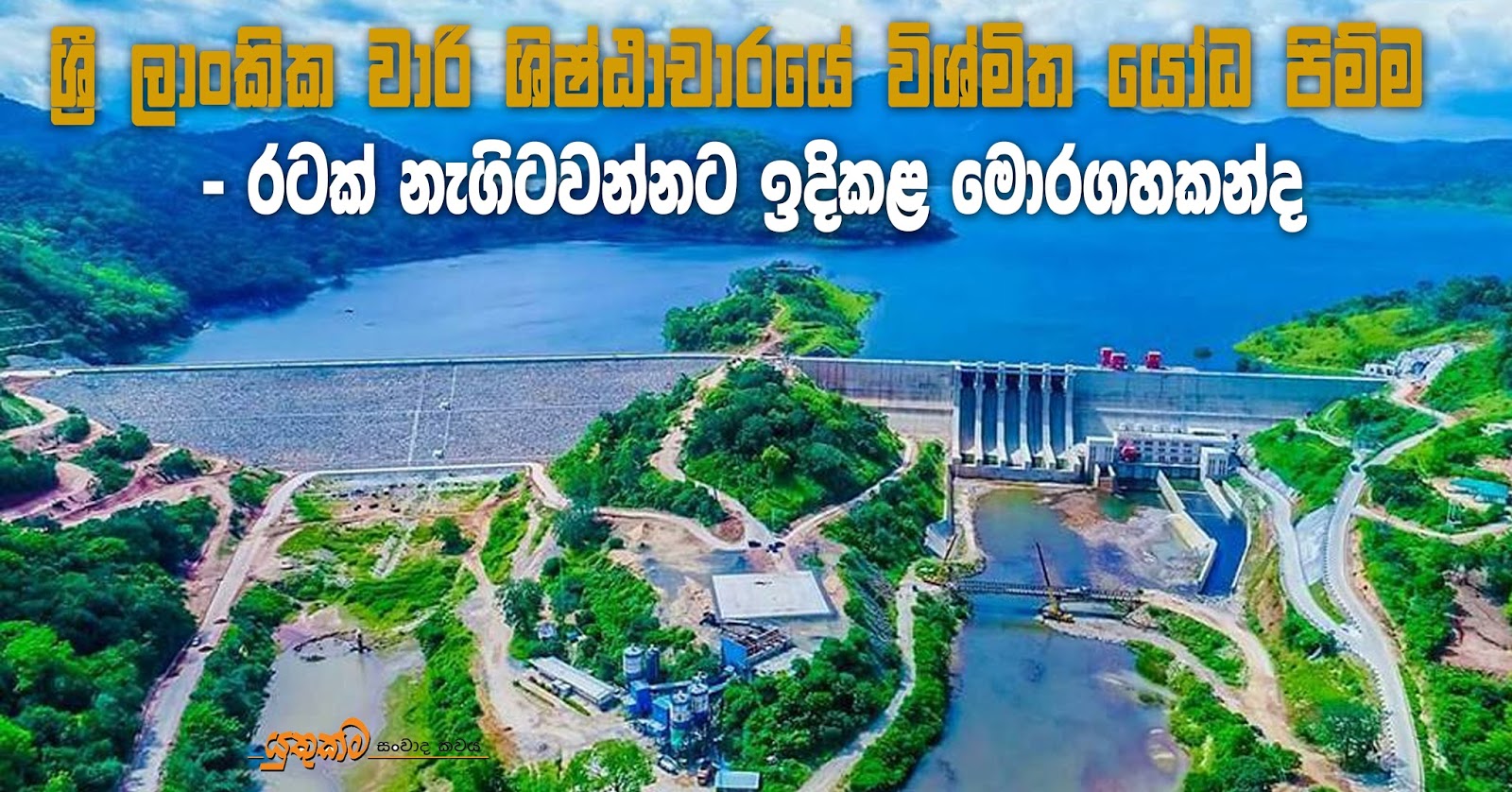
ශ්‍රී ලාංකික වාරි ශිෂ්ඨාචාරයේ විශ්මිත යෝධ පිම්ම – රටක් නැගිටවන්නට ඉදිකළ මොරගහකන්ද

December 7th, 2017

කතෘ:යුතුකම 

-විශ්ව චින්තන-
ලංකාවේ විශාලතම කෘෂි ව්‍යාපෘතිය ලෙස මොරගහකන්ද ගැන මුලින්ම කථා කරන්නේ 1955 වසරේදීය.නැවත 1977දී කඩිනම් මහවැලි ව්‍යාපෘතිය යටතේ මොරගහකන්ද නැවත කරලියට එයි.නමුත් මහින්ද යුගය එලැබෙන විටත් 60 වසරක් තිස්සේ එකඳු පස් පිඩැල්ලක් හෝ කැපීමට කිසිදු රජයකට හැකි වූයේ නැත.

රට කෘෂිකර්මයෙන් ස්වයං පෝෂිත කිරීමේ මහින්ද චින්තන දැක්ම අනුව ආරම්භ කල වෙහෙරගල, වේලි ඔය, මව්ආර, රඹකැන් ඔය, කැකිරිඕබඩ, උඩවලව වම් ඉවුර, දැදුරු ඔය, යාන් ඔය, උමා ඔය ඇතුළු යෝධ ව්‍යාපෘති අතර මොරගහකන්ද – කළුගඟ යථාර්තයක්ම වන්නේ ඒ වැඩ සටහන යටතේ ඉදිවන විශාලත ව්‍යාපෘතිය ලෙසයි. මෙහි විශේෂත්වය නම් මේ ව්‍යාපෘති සියල්ල කෙටි කාලයක් තුල සමාන්තරව ගොඩනැගීමයි.


‘මහින්ද රාජපක්ෂ සමූද්‍රය’ –  මොරගහකන්ද – 

පරාක්‍රම සමුද්‍රය මෙන් 6 ගුණයක් විශාල මහ ජලාශ දෙකක් හදන මාතලේ ඉදිකරන මොරගහකන්ද බහුකාර්ය යෝජනා ක්‍රමය මඟින් මධ්‍යම උතුරුමැද උතුරු හා නැගෙනහිර පළාත්වල මහ වැව් 20ක් පමණ හා අලුත් වැව් 51 ක් ඉදිවේ. කුඩා වැව් සිය ගණනක් පෝෂණය වෙයි.

රුපියල් කෝටි 12,500 ක් වැය කරන මේ ව්‍යාපෘතිය මඟින් උතුරුමැද මධ්‍යම පළාත්වල ජනතාවට ලබාදෙන පානීය ජල ධාරිතාව තෙගුණයකට වැඩි කෙරේ. ඊට අමතරව මධ්‍යම උතුරුමැද උතුරු හා නැගෙනහිර පළාත්වල ඉඩම් අක්කර ලක්ෂ 2.5 ක් යල මහ අස්වැද්දීමට කටයුතු කරනු ලැබේ.

නාවුල ඇළහැර පාරේ මොරගහකන්දේ දී අඹන් ගඟ හරහා මීටර් 463ක් දිග මහ වේල්ලක් ඉදිකර එමඟින් අක්කර අඩි 463000ක ජල ධාරිතාවක් සහිත මහ ජලාශයක් ඉදිකෙරේ. එය පරාක්‍රම සමුද්‍රය මෙන් හතර ගුණයක් විශාලය. ඊට අදාළව තවත් සඳැලි වේලි දෙකක් ඉදිවේ.

මෙම ව්‍යාපෘතියේ අනික් ප්‍රධාන වේල්ල ඉදිවෙන්නේ පල්ලේගම ප්‍රදේශයේය. ඒ මාතලේ කළු ගඟ හරහා මීටර් 548ක් දිග වේල්ලක් බැඳීමෙනි.මෙයට අමතරව තවත් සඳැලි වේලි දෙකක් ද ඉදිකර අක්කර අඩි 216000 ක ජල ධාරිතාවක් දැරිය හැකි යෝධ ජලාශයක් කළු ගඟ ආශ්‍රිතව ඉදිකරනු ලැබේ.මෙය පරාක්‍රම සමුද්‍රය මෙන් දෙගුණයක් විශාලය.

මෙම යෝධ ජලාශ කිලෝමීටර් 9ක් දිග උමගකින්/ඇලකින් එකට සම්බන්ධ වේ. මෙම සම්පූර්ණ ව්‍යාපෘතියම ඉදිකිරීමට අවශ්‍ය සහණ පොලී ණය මුදල චීන සංවර්ධන බැංකුව, ඔපෙක් හා සවුදි අරමුදල හා කුවේට් රජය යටතේ ලැබී ඇත. ව්‍යාපෘතිය යටතේ මෙගාවොට් 25ක ජල විදුලි බලාගාරයක් ඉදිවෙන අතර ලග්ගල වැල්ලෙවෙල ආදි ප්‍රදේශවල නව නගර ද බිහි වෙයි.

මේ මොරගහකන්ද කළු ගඟ ව්‍යාපෘතිය යටතේ ‍රජරට ගොවි ජනතාවට පමණක් ලැබෙන වාර්ෂික ප්‍රතිලාභය රුපියල් කෝටි 400 කි.මුළු ව්‍යාපෘතියෙන් ලැබෙන සමස්ත වාර්ෂික ප්‍රතිලාභය රුපියල් කෝටි 750 ක් වේ.මේ අනුව ව්‍යාපෘතියට යන සම්පූර්ණ වියදම වන රුපියල් කෝටි 12,500 අවුරුදු 18කට පෙර පියවීමට අවස්ථාව ලැබේ.

අලුත් පාලම් 80 ක් වැව් 51 ක් නව නගර 3 ක් මේ යටතේ ඉදිවෙයි.නව මාර්ග කිලෝමීටර් 200 ක් පමණ හා නව යටිතල පහසුකම් රැසක් ද මේ නව ව්‍යාපෘතිය යටතේ ජනතා අයිතියට පවරමින් තිබේ.

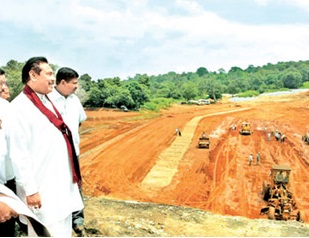
වසර 60ක් තිස්සේ සාකච්ඡා අධ්‍යයනවලට පමණක් සීමා වී තිබූ මොරගහකන්ද – කළු ගඟ ව්‍යාපෘතියට 2007 ජනවාරි 25 වැනිදා මහින්ද රාජපක්ෂ ජනාධිපතිතුමා අතින් මුල්ගල් තැබුනු අතර 2016 වසරේදී වැඩ අවසන් වන්නට නියමිතව තිබුනි.

2015 වසර එලැබෙන විට ව්‍යාපෘතියෙන් 75%ක වැඩ නිම කරන්නට ව්‍යාපෘතිය භාර නිලධාරීන්ට හැකි වී තිබුනි…!!!

නීතිය නමන්නට ගොස් කොලේ ඉරා ගැනීම

December 7th, 2017

ආචාර්ය නාලක ගොඩහේවා –

පසුගිය සතියේ කාගේත් අවධානයට ලක්වූ ප්‍රවෘතියක් වූයේ හිටපු ආරක්ෂක ලේකම් ගෝඨාභය රාජපක්ෂ මහතා අත් අඩංගුවට ගෙන ප්‍රශ්ණ කිරීමට පොලිස් මුල්‍ය අපරාධ විමර්ශණයට නීතිපති අවසරය ලැබී ඇති බවයි. මෙම ප්‍රවෘතියත් සමග බොහෝ දෙනෙකු කැලබීමට පත්වූ අතර ගෝඨාභය රාජපක්ෂ මහතා අත් අඩංගුවට ගැනීමේ ප්‍රයත්නය හෙලා දකිමින් විවිධ දේශපාලනඥයින්, වෘතිකයින් හා පූජක තුමන්ලා අදහස් දක්වනවා දකින්නට ලැබුනි.

මේ තත්වය තුල බැඳුම්කර කොමිසම හමුවේ දැඩි ලෙස මහජන අප්‍රසාදයට ලක්වෙමින් සිටි රජයේ ප්‍රධානීන්ට ජනතා අවධානය වෙනතකට යොමුවීමේ වාසිය උපරිම වශයෙන් ලැබුන බව පෙනී ගිය නිසා හදිසියෙම ගෝඨාභය රාජපක්ෂ මහතා අත් අඩංගුවට ගැනීමේ ප්‍රවණතාවක් ජනගත කලේ රජයේ මාධ්‍ය හසුරවන්නන් විසින්මද කියා සැකයක්ද මතුවිය.

ඒ කෙසේ වෙතත් සතිය අවසන් වූයේ රජයට හිතකර නොවන ප්‍රවෘතියකිනි. ඒ ගොඨාභය රාජපක්ෂ මහතා පොදු දෙපල පනත යටතේ අත් අඩංගුවට ගැනීම තාවකාලිකව වලකමින් අභියාචනාධිකරණය දුන් තීන්දුව නිසාය. මේ තීන්දුව තුලින් රටට වැදගත් පනිවිඩයක් දීමේ අවස්ථාව දැන් විපක්ෂයට උදා වී ඇත.

නීතිය රටක සියලු පුරවැසියන් විසින් ගරු කල යුතුය. නමුත් ඒ නීතිය සැමට සමාන හා සාධාරණය යන උපකල්පනය යටතේය. නීතියේ සාධාරණත්වය තහවුරු කිරීමෙ වගකීම තිබෙන්නේ අධිකරණයට පමනක් නොවේ. නීති සම්පාදනය කරන පාර්ලිමේන්තුවටත් නීති ක්‍රියාත්මක කරණ රජයටත් එහි වගකීම ඇත. රජයකින් ජනතාව බලාපොරොත්තු වන්නේ නීතිය නිසියාකාරව ක්‍රියාත්මක කිරීමයි. එහෙත් රජය නීතිය අවභාවිත කරමින් දඩ බල්ලෙකු ලෙස හැසිරෙන්නට පටන් ගත්හොත් පුරවැසියන් පතන්නේ කාගේ පිලිසරණද ?

ගෝඨාභය රාජපක්ෂමහතාගේ නීතිඥයින් අභියාචනාධිකරණයට යාම හෙලාදකින්නට රජයේ හිත්වතුන් මතුකලේ “වරදක් කර නැත්නම් නීතියට බය ඇයි ? ” යන ඔවුන්ගේ සුපුරුදු තර්කයයි. මෙය වත්මන් දේශපාලන වාතාවරණය ගැන ගැඹුරු අවබෝධයක් නැති පුද්ගලයෙකුට පමනක් ඉදිරිපත් කල හැකි තර්කයකි. මන්ද පසුගිය කාලයේ රජය ක්‍රියාකල ආකාරය දෙස බලන විට නීතිය නිවැරදිව හසුරවනු ලබනවාද යන්න පිලිබඳ විශාල සැකයක් මතුන බැවිනි.

තමුන්ගේ නීත්‍යානුකූල භාවය දැනට වසර 3 කට ආසන්න කාලයක් පුරා උසාවියේ අභියෝගයට ලක්ව ඇති පොලිස් මුල්‍ය අපරාධ විමර්ෂණ අංශය (FCID ) නීතිපති උපදෙස් පතා තිබුනේ ඩී ඒ රාජපක්ෂ අනුස්මාරකය ඉදිකිරීම සඳහා පහත් බිම් සංවර්ධන අධිකාරියට කොන්ත්‍රාත් ලබාදීමේදී පොදු දෙපල අපහරණය කලාය යන චෝදනාව යටතේ ගෝඨාභය රාජපක්ෂ මහතා ඇතුලු 7 දෙනෙකු අත් අඩංගුවට ගෙන ප්‍රශ්ණ කිරීමටය. ඒ සඳහා නීතිපති දෙපාර්තුමේන්තුව අනුමැතිය දී තිබුනි. ගෝඨාභය රාජපක්ෂ මහතා උසාවි ගියේ මෙම කාරණය පොදු දේපල පනතට අදාල නොවන බව කියමින් එම සැලසුම්සහගත අත් අඩංගුවට ගැනීම වලක්වන ලෙස ඉල්ලමිනි.

උසාවිය මෙම ඉල්ලීමට අනුමැතිය දුන්න පමනක් නොව බැලූ බැල්මට මෙම සිද්ධියේ චූදිතයන්ගේ පැත්තෙන් කිසිදු වංක චේතනාවක් හෝ අපහරණයක් අධිකරණයට නොපෙනෙන බවද පවසා ඇත.

මින් ගම්‍ය වන්නේ කුමක්ද. කුමන්ත්‍රණය ඇත්තෙන්ම සිදු කොට ඇත්තේ ( නීත්‍යානුකූල භාවය උසාවියේ අභියෝගයට ලක්ව ඇති ) පොලිස් මුල්‍ය අපරාධ විමර්ෂණ අංශය (FCID )බවයි.

පසුගිය කාලය පුරාවටම රජයට දේශපාලන පලිගැනීම් කිරීමට අවශ්‍ය පුද්ගලයින් රැසක් අත් අඩංගුවට ගෙන ඇප නොදී මාස ගනන් රඳවා ගැනීම සඳහා රජය අවභාවිතා කලේ මේ පොදු දේපල පනතයි. ඔවුන් පොදු දේපල පනත යටතේ පුද්ගලයින් අත් අඩංගුවට ගන්නේ මහෙස්ත්‍රාත් උසාවිය පොදු දේපල පනත යටතේ අත් අඩංගුවට පත්වූවෙකුට විශේෂ හේතුවක් මත මිස ඇප දීමට නොහැකි බව හොඳින්ම දන්නා නිසාය. අත්ඩංගුවට පත්වූ තැනැත්තා මහාධිකරණයට ගොස් ඇප ලබා ගැනීමට මාසයකට පමන කල් ගතවෙයි. මේ කාලය තුල තම දේශපාලන ප්‍රතිවාදියා සිරගත කිරීමේ ප්‍රීතිය බුක්ති විඳීමටත් මාධ්‍ය සංදර්ශන පවත්මින් ඔහුගේ චරිතය ඝාතනය කිරීමටත් රජයේ දේශපාලනඥයින්ට අවස්ථාව සකසා දීම පොලීසියේ අදාල මහත්වරුන්ගේ කාර්ය භාරයයි.

දේශපාලන ප්‍රතිවාදීන් දඩයමට පොදු දේපල පනත යොදාගැනීම සම්බන්ධයෙන් අද ලැබුන තීන්දුවෙන් යලිත් හෙලිවන්නේ ආන්ඩුවේ නිරුවතයි. නීතිය නැමීමටත් යම් සීමාවන් ඇති බව ඉන් ඔප්පු විය..

වත්මන් රජය වෙනස් වූ පසු පොදු දේපල පනත යටතේ දැමූ බොරු නඩු පිලිබඳව විශේෂ විමර්ෂණයක් කෙරෙනු ඇතැයි අපි බලාපොරොත්තු වෙමු. ඒවා පිටුපස සිටි සියලු දෙනා ගැනම සොයාබලා ඔවුන්ට විරුද්ධවද නීතිමය කටයුතු ආරම්බ කෙරෙන දවසක් මතු උදා වනු නිසැකය. දේශපාලනඥයින් පිනවීමට අයථා වැඩ කරන නෝනා මහත්වරුන් ගැන නම් වශයෙන් වාර්ථා ඇති අතර අනාගතයේ ඔවුන්ට උත්තර බඳින්නට සිදුවනු ඇති බව පසුගියදා ජී එල් පීරිස් මැතිතුමා ප්‍රවෘතී සාකච්ඡාවකදී ඉඟිකලේය.

පොලිස් මුල්‍ය අපරාධ විමර්ෂණ අංශයේ නීත්‍යානුකල භාවය අභියෝගයට පත්කරමින් පූජ්‍ය ඇල්ලේ ගුනවංස හිමියන් පැවරූ නඩුව ඇතුලු නඩු කිහිපයක් දැනට වසර 3 කට ආසන්න කාලයක් සාධාරණ හේතුවකින් තොරව දිගින් දිගටම ප්‍රමාද කෙරෙමින් තිබේ. දේශපාලන ප්‍රතිවාදීන්ගේ නඩු ඉක්මන් කරන්නට අලුතින් අධිකරන පිහිටුවන්නට පවා සැරසෙන රජය තමන්ගේ දඩයම් මන්දිරයේ නීත්‍යානුකූලබව අභියෝග කරමින් පුරවසියන් විසින් පවරා ඇති නඩු ඉක්මන් කොට එවා හැකිනම් සධාරණීකරණය නොකරන්නේ මන්ද යන්න ප්‍රශ්ණය ජනතාවට මතක් කොට දීම ස්වාධීන මාධ්‍යවේදීන්ගේද යුතුකමකි.

එක්සත් ජාතික පක්ෂය විසින් 2017 පාර්ලිමේන්තු මැතිවරණයට ඉදිරිපත් කල ‘ මාස 60කින් අලුත් රටක් හදන පංචවිධ ක්‍රියාවලිය” යන ප්‍රතිපත්ථි ප්‍රකාශණයේ( දැන් මාස 30 ක් ඉවරයි ) 12 වන පිටුවේ මෙසේ කියා ඇත

‘ මුල්‍ය අපරාධ විමර්ෂන අංශය පනතකින් නීතිගත කර එය වඩාත් ශක්තිමත් කරමු ‘

ඒ අනුව මුල්‍ය අපරාධ විමර්ෂන අංශය (FCID) නීත්‍යානුකූල නොවන බව එක්සත් ජාතික පක්ෂයේ ප්‍රතිපත්ථි ප්‍රකාශනයම පිලිගෙන ඇත. කට බොරු කීවත් දිව බොරු නොකියයි කියන්නේ මෙයටය.

ගෝටාභය රාජපක්ෂට එරෙහි පොලිස් මුල්‍ය අපරාධ විමර්ෂණ අංශයෙන් , කෙරෙන පරීක්ෂණයට සම්බන්ධව පොදුවේ දන්නා කරුණු කිහිපයක් විමසා බලමු. පාට කන්නාඩි දමාගෙන මෙය කියවීමෙන් පලක් නැත. විවෘත මනසකින් කරුණු විමසීමෙන් පමනක් සත්‍යය අවබෝධ කරගත හැක.

මහාධිකරණයේ ඉදිරිපත් වූ කරුණු අනුව ඩී ඒ රාජපක්ෂ පදනම පහත්බිම් සංවර්ධන මන්ඩලය සමග 2014 පෙබරවාරි වල ස්මාරකයක් ඉදිකිරීම සඳහා කොන්ත්‍රාත්තුවකට එළබ ඇත. පහත්බිම් සංවර්ධන මන්ඩලයේ 2014 පෙබරවාරි 26දා පැවති අධ්‍යක්ෂක මන්ඩල වර්ථාව අනුව ඒ සඳහා ඇස්තමේන්තු කල මුදල රුපියල් මිලියන 33 කි.

2015 අගෝස්තු 25දා පහත්බිම් සංවර්ධන මන්ඩලය ඩී ඒ රාජපක්ෂ පදනමට ලිපියක් යවමින් අවසන් ඇස්තමේන්තුව එවන තෙක් රුපියල් මිලියන 25 ක් ගෙවන ලෙස දන්වා ඇත. ආයතන දෙක අතර කොන්ත්‍රාත් එකඟතාවක් තුබුන බව මින් තහවුරුවේ.

ඉන් සතියක් ඇතුලත 2015 අගෝස්තු 31 ඩී ඒ රාජපක්ෂ පදනම මෙම මුදල පහත්බිම් සංවර්ධන මන්ඩලයට ගෙවා ඇත.

මීට අමතරව තවත් රුපියල් 8,944,741.60 ක් ඩී ඒ රාජපක්ෂ පදනම මෙම මුදල පහත්බිම් සංවර්ධන මන්ඩලයට ගෙවූ බවට වාර්ථා ඇති නිසා මෙ වන විට ඇස්තමේන්තු කල රුපියල් මිලියන 33ටත් වඩා රුපියල් මිලියන 3.94 ක් පදනම විසින් පහත්බිම් සංවර්ධන මන්ඩලයට ගෙවා තිබුනි.

අප කවුරුත් දන්නා පරිදි 2015 අගෝස්තු මස පාර්ලිමේන්තු මැතිවරණය පැවැත්වුනු අතර ඉන්පසු පහත්බිම් සංවර්ධන මන්ඩලය අලුත් ඇමතිවරයෙකු යටතට පත්වෙයි.

කතාව වෙනතකට යන්නට පටන් ගන්නේ ඉන් පසුවය.

නව පාලනය යටතේ පහත්බිම් සංවර්ධන මන්ඩලය මෙම කොන්ත්‍රාත්තුව සඳහා වැයවූ මුදල රුපියල් 81, 313,374 ක් බව ඩී ඒ රාජපක්ෂ පදනමට දන්වා ඇත.

මෙය ඩී ඒ රාජපක්ෂ පදනම කිසිසේත්ම බලාපරොත්තු නොවූ ඉහල මිලකි. ඉදිකිරීම් කරයුත්තකට කොන්ත්‍රාතුවක් බාරදුන් විට වැඩ අවසන් වන විට අවසන් මිල ඇස්තමේන්තුවට වඩා 10% ක් පමන ඉහලයාම අපෙක්ෂාකල හැකි වුවද ඇස්තමේන්තු කල අගය මෙන් තුන් ගුණයක් වියදම් වූවායයි පිලිගන්නට සූදානම් කවුද ? ඒ අනුව ඩී ඒ රාජපක්ෂ පදනම මෙම බිල්පත අභියෝගයට ලක් කර ඇත. මෙයද සාමාන්‍යයෙන් ඉදිකිරීම් ක්ශෙස්ත්‍රයේ සුලබව සිදුවන්නකි.

පහත්බිම් සංවර්ධන මන්ඩලය කරන්නේ 2016 ජූනි මස රුපියල් 56,313,374.14 නොගෙව්වොත් නඩු පවරන බව කියා ඩී ඒ රාජපක්ෂ පදනමට ලිපියක් යැවීමයි. ඔවුන්ට ඉහත කී රුපියල් 8,944,741.60 ගෙවීම සම්පූරණයෙන්ම අමතක වී ඇති බව පෙනේ. රුපියල් මිලියන 25 ගෙවීම පමනක් සලකා තිබුනි.

මේ අනුව මේ ඇත්තේ පැහැදිවම කොන්ත්‍රාත්කරුවෙකු හා සේවාදායකයා අතර ඇති සිවිල් ආරාවුලකි. සිවිල් නඩුවකි. කවුරු හරිද වැරදිද යන්න තීරණය කිරීම සිවිල් නඩුවක් පැවරුවහොත් අධිකරණය විසින් කරනු ඇත.

සිවිල් නඩුවකදී චූදිතයින් ඇප නැතුව සිරගත කරනු නොලැබේ.

නමුත් ඒ වෙනුවට කාගේ හෝ උවමනාවට ( කවුද කියා ඔබට සැක කල හැක ) මෙයට පොලිස් මුල්‍ය අපරාධ විමර්ෂණ අංශය පැටලවුනි. ඔවුන් එවකට නාගරික සංවර්ධන අමාත්‍යාංශ ලේකම්ව සිටි ගෝටාභය රාජපක්ෂ මහතා මෙයට පටලවා ගත්හ. ඒ සුපුරුදු පරිදි මහේස්ත්‍රාත් උසාවියට ඇප දිය නොහැකි පොදු දේපල පනත යටතේය. ඒ අතර රජයේ දේශපාලනඥ්ඥයෝ සහ ඔවුන්ට සහායවන වෙබ් අඩවි , මුහුනුපොත් ක්‍රියාකාරිකයෝ ගෝඨාභය රාජපක්ෂ මහජන මුදලින් තම පියාට ස්මාරකයක් සෑදවීය කියා මතයක් ජනගත කල අතර තවමත් ඉතුරුවී සිටින ලැම්බොගිනිකාර්/රත්තරන් අශ්වයන්/රොකට්/ඩුබයි ගිනුම් රසිකයෝ මෙම පුවත රසකොට වැළඳූහ

පොලිස් මුල්‍ය අපරාධ විමර්ෂණ අංශය විසින් සුපුරුදු පරිදි මහේස්ත්‍රාත් උසාවියේ ගොනුකල බී වාර්තාවකට අනුව ගෝඨබය රාජපක්ෂ අත් අඩංගුවට ගෙන වැඩිදුර විමර්ෂන කරන්නට නීතිපති අවසරද ලැබුනි.

නමුත් රජයේ කරුමයට ගෝඨාභය රාජපක්ෂ අත් අඩංගුවට ගන්නට පෙර ඔහුගේ නීතිඥයෝ අභියාචනාධිකරණයට ගොස් කරුණු ඉදිරිපත් කලහ. පොදු දේපල අපහරණයක් මෙහි සිදුවී නැති නිසා පොදු දේපල පනත යටතේගෝඨාභය රාජපක්ෂ අත් අඩංගුවට ගැනීම වලකන ලෙස ඔවුහු ඉල්ලා සිටියහ. මෙය පොදු දේපල ගනයට වැටෙන අපරාධ නඩුවක් නොව සිවිල් නඩුවක් බවට විත්තියේ නීතීඥ්ඥයින් ඉදිරිපත් කල මතයට එකඟ වූ අභියාචනාධිකරණය බැලූ බැල්මට මෙහි වංක චේතනාවක් හෝ අපහරණයක් ඇති බවක් නොපෙනෙනෙන බවද ප්‍රකාශ කලේය.

නමුත් පසුගිය වසර 3 ක කාලය තුල අභියාචනාධිකරණයට නිසි වෙලාවට යාමට නොහැකිවූ නිසා පොදු දේපල පනත යටතේ අත් අඩංගුවට පත්ව ඇප නැතිව සිරගතව සිටි විශාල පිරිස මතක් කර බලන්න. ඔවුන්ට වූ අපහාසයට , මානසික වේදනාවන්ට, නඩු වියදම් වලට වන්දි ගෙවන්නේ කවුද ? ඔවුන්ගෙන් සමහරකුට දේශපාලනිකව ඔබ අකමැති වන්නට පුලුවන. එහෙත් නීතිය සැමට සාධාරණ විය යුතු නොවේද ?

රටට ආදරය කරණ , අවංකවම ප්‍රජාතන්ත්‍රවාදය ගරුකරණ, සැබෑ යහපාලනය අපේක්ෂා කරනා , පාට කන්නාඩි නොපලඳින අය කල්පනා කල යුත්තේ රජයක් විසින් මෙසේ නීතිය අවනීතිය කිරීමින් දේශපාලන ප්‍රතිවාදීන් දඩයම් කිරීම තවදුරටත් ප්‍රජාතන්ත්‍රවාදී රටක පුරවැසියන් ලෙස ඔබ අනුමත කරනවාද යන්නයි. එසේ නොකරන්නේ නම් රජයේ මෙම මර්ධනකාරී ක්‍රියාපිලිවෙතට දේශපාලන පක්ෂ බෙදයකින් තොරව විරෝදය පලකිරීමට අවස්ථාවක් නුදුරේ එළබෙන ප්‍රාදෙශීය සබා චන්දයේදි ලැබෙනු ඇත. චන්ද මග හරින ආන්ඩුවක් යටතේ කලාතුරකින් ලැබෙන මේ අවස්ථාවෙන් උපරිම ප්‍රයෝජන ගැනීම දූරදර්ශී පුරවැසියෙකුගේ වගකීමයි.

( මව්බිම )
යුතුකම සංවාද කවය

පුංචි ඡන්දය පවත්වන දිනයේ තීරණය රනිල්ගේද? දේශප්‍රියගේද?

December 7th, 2017

සිදත් මෙන්ඩිස් උපුටාගැණීම  මව්බිම

මැතිවරණ කොමිසමේ රාජකාරි කටයුතුද පවරාගැනීම හරහා අග්‍රාමාත්‍ය රනිල් වික්‍රමසිංහ මහතා සෘජුවම එම කොමිසමට බලපෑම් සිදුකරන බවට පිවිතුරු හෙළ උරුමය චෝදනා කරයි.

කොළඹ පැවැති මාධ්‍ය හමුවකට එක්වෙමින් එම පක්ෂයේ නායක පාර්ලිමේන්තු මන්ත්‍රි උදය ගම්මන්පිල මේ බව පැවැසූ අතර එහිදී හෙතෙම මෙසේද සඳහන් කළේය.

අපි දැක්කා ඊයේ අගමැතිතුමා ප්‍රසිද්ධියේ ප්‍රකාශයක් කළ පුංචි ඡන්දය පවත්වන්නේ පෙබරවාරි මාසයේ 10 වැනිදාය කියලා. අගමැතිතුමා එහෙම උපදෙසක් මැතිවරණ කොමිසමට දෙන්න ඇති. අගමැතිතුමා තව පොඩ්ඩක් ඉවසාගෙන හිටියා නම් මැතිවරණය පවත්වන දිනය මැතිවරණ කොමිසමෙන්ම ප්‍රකාශ කරන තුරු මැතිවරණ කොමිසම ස්වාධීනයි කියලා රටේ ජනතාවට පෙන්නුම් කරගෙන රඟපාමින් ඉන්න තිබුණා. මැතිවරණ කොමිසමේ රාජකාරිය අගමැතිවරයා පවරා ගැනීම හරහා මැතිවරණ කොමිසමට සෘජුවම ඇඟිලි ගැසීමක් අගමැතිතුමා කරලා තියෙනවා.

රාජ්‍ය සේවය, අධිකරණය, මැතිවරණ ක්‍රියාවලිය, විගණන ක්‍රියාවලිය ස්වාධීන කරන්න ඕනේ කියලා මේ ආණ්ඩුවමයි මහා හඬක් නඟලා 19 වැනි සංශෝධනය ගෙනාවේ යහපාලනයේ කූටප්‍රාප්තිය විදිහටයි. ජනාධිපතිතුමන් විනිසුරුවන් පත්කිරීමට ඇඟිලි ගහනවා නම් කෝ අධිකරණ සේවා කොමිසමේ ස්වාධීනත්වය. අගමැතිතුමන් මැතිවරණවලට දින නියම කරනවා නම් කෝ මැතිවරණ කොමිසමේ ස්වාධීනත්වය.

පළාත් පාලන ඡන්ද විමසීම් ආඥාපනතේ 2012 වසරේ ගෙනාව සංශෝධනයෙන් සංශෝධිත 38 (අෑ) වගන්තිය අනුව නාම යෝජනා අවසන් වීමෙන් පසු සති පහකට නොඅඩු සති හතකට නොවැඩි දිනයක මැතිවරණය පැවැත්විය යුතුය. එය ප්‍රසිද්ධ නිවාඩු දිනයක් නොවිය යුතුයි.

පෝය දිනයක් නොවිය යුතුයි. හැකිතාක් දුරට සෙනසුරාදා දිනයක් විය යුතුයි. දැන් දෙසැම්බර් 14 වැනිදා නාමයෝජනා අවසන් වෙනවා. එදින තමයි මැතිවරණය පවත්වන දිනය සාමාන්‍යයෙන් ප්‍රකාශයට පත් කරන්නේ. දෙසැම්බර් 14 වැනිදා සිට සති 5ක් කියන්නේ ජනවාරි මාසයේ 18 වැනිදා. දෙසැම්බර් 14 වැනිදා සිට සති 7ක් කියන්නේ පෙබරවාරි මාසයේ 01 වැනිදා.

එහෙම නම් මැතිවරණ කොමිසම පනත අනුව ඡන්දය පැවැත්විය යුත්තේ ජනවාරි 18ත් පෙබරවාරි 01ත් අතර කාලයේදී. එහෙම නම් අගමැතිතුමා කොහොමද කියන්නේ ඡන්දය තියන්නේ පෙබරවාරි 10 කියලා. පනතේ කියන්නේ නෑ නාම යෝජනා අවසන් වූ දිනයේම මැතිවරණය දිනය ප්‍රකාශ කළ යුතුයි කියලා. පනතේ කියන්නේ නාම යෝජනා අවසන් වූ පසු මැතිවරණ දිනය ප්‍රකාශ කරන්න කියලා.

ඒ අනුව ප්‍රකාශ කරන දිනයේ සිට සති 5ක් හා සති 7ක් අතර මෙතෙක් කල් කළේ නාමයෝජනා අවසන් වුණු දිනයේම මැතිවරණ දිනය ප්‍රකාශයට පත් කිරීම. නමුත් මේ පාර මැතිවරණ දිනය ප්‍රකාශ කරන දිනය දින 9 කල් දා ගත්තොත් පෙබරවාරි 01 වැනිදා තියෙන ඉහළ සීමාව පෙබරවාරි 10 වැනිදා දක්වා ඇද ගන්න පුළුවන් වෙනවා.

නීතිය පොළවටම නවලා මිසක් පෙබරවාරි 01 වැනිදාට ප්‍රථම පවත්වන්න තිබෙන පළාත් පාලන මැතිවරණ පෙබරවාරි 10 වැනිදා දක්වා ඉස්සරහට අදින්න බෑ. ඇයි මේක කරන්නේ මැතිවරණ කොමිසම. මේක කරන්නේ සෘජුවම ආණ්ඩුවේ වුවමනාවට. මේ 93යි ඉතිරි පළාත් පාලන ආයතනත් එකම දවසේ ඡන්දය පවත්වා ගැනීම සඳහා. 93කට නාම යෝජනා ලබාගැනීම 14 වැනිදායින් අවසන් වෙනවා. අනිත් පළාත් පාලන ආයතනවල නාමයෝජනා භාරගැනීම ආරම්භ වෙන්නේ 3 වැනිදායින්.

මේ සියල්ල එකම දිනයක පවත්වන්නේ නැතුව 93ක් කලින් තිබ්බොත් ඒකාබද්ධ විපක්ෂය නැතිනම් පොදුජන පෙරමුණ ලබන විශිෂ්ට ජයග්‍රහණයේ බලපෑමක් ඇති වෙනවා අනිත් ඒවට. ඒ නීතිය පොළවටම නවලා පොදුජන පෙරමුණ ලබන ජයග්‍රහණයේ බලපෑම ඊළඟ මැතිවරණවලට ඇති කරන බලපෑම වළක්වා ගැනීමේ අරමුණින් තමයි මැතිවරණය පෙබරවාරි 10 වැනිදා පවත්වන්නේ.

මැතිවරණ කොමිසම සැබැවින්ම ස්වාධීන නම් මාධ්‍ය හමුවක් පවත්වා මැතිවරණ කොමිසම කිව යුතුයි. අගමැතිවරයාට බලයක් නැත මැතිවරණවලට දින නියම කරන්න. ඒක නියම කරන්නේ අපියි. අගමැතිවරයාට නීතිය නමා පෙබරවාරි 10 වැනිදා වනතුරු අදින්න වුවමනා වුණාට දෙසැම්බර් 14 දින නාම යෝජනා භාරගෙන අවසන් වන පළාත් පාලන ආයතන 93ක මැතිවරණය අපි පෙබරවාරි 01 වැනිදා හෝ ඊට ප්‍රථම පවත්වනවා කියන සිංහ නාදය මැතිවරණ කොමිසමෙන් ඇසේවා කියා අපි කන් යොමා අසා සිටිනවා.

සිදත් මෙන්ඩිස්

Media Freedom under UNP

December 6th, 2017

Shenali D Waduge

The Prime Minister loves to take pot shots at opponent’s every time he lands himself in a quandary. It is his tactic to divert attention from his misdemeanors. The Bond Scam being a prime example has seriously damaged his clean record that has been his saving grace among UNP voters to argue in favor of his leadership. Now UNP support base finds themselves in a soup given that the vision has delivered nothing but a sell-out of or privatization of national assets to foreign countries & foreign firms with nothing delivered to the general masses. A favored subject of the UNP election campaigns has been to claim itself the beacon of media freedom & democracy. Actions speak volumes and to highlight and leave it for readers to judge, the speech made by Information & Media Minister Mangala Samaraweera made on the adjournment Debate on the demise of late journalist Sivaram Dharmaratnam (Taraki) on 6 May 2005 is extensively quoted.

No Government brought pressure to bear upon the media in this country prior to 1977, as a matter of principle. The UNP regimes since coming in to power in 1977 considered influencing the media as a matter of state policy.”

As soon as the UNP gained power in 1977, state owned media institutions, Lake House and the Sri Lanka Broadcasting Corporation were brought under the control of the Sirikotha”

The staunch UNP member Ranapala Bodhinagoda was appointed as the Chairman of the Lake House. Ranjan Wijeratne, who subsequently became a strong Minister was appointed as a Working Director.”

They started their control over the Lake House by harassing the SLFP and other leftist employees in various ways. Senior journalists such as Silumina Chief Editor Wimalasiri Perera, Dinamina Chief Editor Peramunethileka, Daily News Chief Editor S. Pathiravithana, Silumina Deputy Editor Nimal Horana, Dinamina Deputy Editor Poojitha Wijetunga, Dinamina News Editor Dayananda Kumaradasa, Dinamina Sub-editor Wimalaweera Perera, Daily News News Editor Nihal Ratnayaka and Dinamina Staff Reporters Upali Rupasinghe, Yapa Karunaratne and Kulatunga Somaratne were dismissed by way of political victimization.”

SLBC leading media person, Sinhala services Director H. M. Gunasekera, Amarabandu Rupasinghe, Premakeerthi de Alwis, and Newton Gunaratne were interdicted.”

The “Times” Company which published the leading newspaper “Lankadeepa” continuously over decades was taken over by the Government and was closed down.”

When Lankadeepa reappeared in circulation under the Vijaya newspaper group, President Premadasa pressurised it at length and at a certain stage, being annoyed by a news item appeared in the Lankadeepa, went to the extent of threatening its owner Ranjith Wijewardena in public saying “Ranjith, be aware of what is going to happen to you”.”

He (Premadasa) held out threats of murder in Parliament against Upali Group newspaper owner Upali Wijayawardena who defied UNP commands.”

By and large the private media were totally denied the media right of criticising the Government.” (UNDER UNP)

The newspapers “Attha”, “Janadina”, and “Sirilaka” were sealed over and over again.”

They were subjected to many harassments and the transport of their newspapers by bus was prohibited. Government advertisements were denied to them.”

Private institutions which gave advertisements to these papers were influenced. Such influence was exerted not only to political papers but also to independent newspapers.”

The raid of “Attha” press and taking its editor to the 4th floor became a daily routine.”

As far as the Lake House papers were concerned, not only the lead news, but also the headlines, pictures, captions and even page settings were the decisions taken by the Presidential Secretariat.”

Taking the pages of the Lake House papers to the President or their approval by the Information Officer was the general order of the day during that period.”

There was a habit of the President’s Information Officer visiting the News Unit of the SLBC at 3.30 a.m. everyday during that time. Ignoring all other important information, the News Broadcast had to begin with some news to bolster the President’s image. Each media institution had a Special Presidential Unit.”

The UNP, soon after coming into power in 1977 completely prohibited publication of Cabinet secrets in violation of the people’s right to be aware of information.”

The first action was filed in court under the State Secrets Act by former Minister Ronie de Mel against journalist Prasad Gunawardena of the “Island” newspaper.”

For the first time in history, newspaper editors were summoned to Parliament and tried under Parliamentary Privileges Act and were punished.”

On one occasion the “Observer” editor was summoned to Parliament for inadvertently inter-changing captions of two pictures.”

The Parliamentary Powers and Privileges Act was passed in Parliament within three days on January 30, 1978 as an act of urgent national importance.”

On February 02 (1978), the two media men Philip Cooray and Herald Peiris were summoned to Parliament functioning as a Court of Law and they were punished.”

On that occasion Prime Minister J. R. Jayewardene in his address threatened that “In future offenders will not escape this place with a punishment of this leniency”.”

Journalistic activities of veteran journalist Dayasena Gunasinghe were subjected to injunctions for the sin of writing an editorial in the “Divaina” criticising President J. R. Jayawardene’s public announcement that “each person must look after his own security”.”

The then Justice Minister Nissanka Wijeratne misused the law in an attempt to control the media. An attempt was made in 1984 to amend the Press Council Act to prohibit writing articles in newspapers under pseudonyms.”

The UNP influenced not only the media institutions. They harassed media men endlessly.”

Richard de Soyza, the mediaman of international repute was abducted in the night of February 18, 1990, and was brutally killed and his body was thrown into the sea.”

All media personalities and civil organizations clamoured in chorus demanding a fair inquiry into this murder. UNP regime only lingered on a mild form of investigation while ignoring our cry as the Opposition in Parliament for a parliamentary debate on this murder.”

Following Richard de Soyza’s assassination, his contemporary colleagues Amal Jayasinghe, Arjuna Ranawana, Varuna Karunatilleke and Aruna Kulatunga fled away from the country to save their lives.”

The “Divaina” newspaper photographer Wimal S. Surendra who took a photograph of a powerful UNP female activist in 1983 was mysteriously murdered on the road right opposite the house of former Minister John Amaratunga.”

That was a death that remains a mystery to date.

H. E. Dayananda who serialized “Wame Kathawa” in the Wednesday supplement of “Divaina” newspaper was murdered.”

The script writer of “Kavuda Me, Monawada Karanne” drama, Dehiwala MMC of the UNP itself disappeared mysteriously.”

Kithsiri Samaranayaka, the Lankadeepa journalist who at times criticised the Government severely, was stabbed to death at the bus halt opposite the mosque of eye hospital junction.”

The Dickwella area correspondent Gunasena Kasturiarachchi was murdered mysteriously.

Apart from this, the Government never bothered to hold a formal inquiry in respect of the murders of veteran journalists of high esteem like Premakeerthi de Alwis, Thevis Guruge and Kulasiri Amaratunga.”

The Bomiriya residence of the “Divaina” newspaper was attacked with bombs.”

“Attha” cartoonist Yoonus’ mouth was cut by employing thugs.”

The doors of the SLBC were closed to artistes of the highest national fame like Premasiri Khemadasa, Pandit W. D. Amaradeva, Nanda Malani, Vijaya Kumaranatunga, Sugathapala de Silva, Professor Ediriweera Sarachchandra and R. R. Samarakone because they demanded the withdrawal of a proposal to abolish former Prime Minister Sirimavo Bandaranaike’s civil rights.”

Piyadasa Malalgoda who wrote and published the poem “Devadattha of the modern era” was taken to the dubious 4th floor on 12 occasions for interrogation and he was prosecuted.”

…private electronic media had no chance to announce news”

Announcement of news was a Government monopoly.”

The resignation of Lalith Athulathmudali and Gamini Dissanayaka from their portfolios over the impeachment issue was prohibited to be published.

The UNP which did not tolerate workers’ agitations over their 17 year rule completely banned publication of news relating to workers’ strikes through the State media.”

The State radio and television left no room for publication of news pertaining to the opposition and completely banned showing opposition members on the television.”

The UNP who toppled the Freedom Alliance and regained power in 2001 resumed their usual media policy which they pursued throughout their 17 year rule since 1977.”

They dissolved the Information Department. A separate media unit was established under the Prime Minister’s Office.”

All the State media institutions were brought under the control of UNP henchmen within that unit.”

The decisive posts of private media institutions were filled by appointing their henchmen. It was these henchmen who were necessarily participated in the foreign tours and discussions abroad attended by the Prime Minister.”

The international sojourns by these groups at the expense of public funds became the order of the day. The selected crowd of journalists obedient to Government received highest perks. An invisible mechanism of horror was in motion against independent journalists.”

The victims of this mechanism included not only the local journalists but also the foreign journalists. The deportation of the internationally renowned journalist Paul Harris is the best example in this regard.”

While Ranil Wickremesinghe was the Prime Minister, the doors of State media institutions were completely closed to the opposition.”

The journalists who were deemed not loyal to the Government were deprived of their employment. Some were transferred.

Some were intimidated. Opponents were tortured mentally and physically.”

Live political debates participated by politicians of the opposition were completely barred from telecast.”

Even in case of dialogues among the ruling party members, if a listener were to express opinion, it had to be approved in advance before the programme is telecast.”

The State media was used perennially to slander and unease organisations and individuals not supportive of the Government.”

‘A number of North East journalists came to be brutally murdered even while a ceasefire was in force. “Dinamurusu” newspaper Editor Ramesh Nadarajah belonging to the EPDP was murdered. Aiyadurei Nadesan, the “Weerakesari” reporter was killed on May 31, 2004.

Kandasamy Aiyar Balanadarajah (Sinnabala), another journalist was murdered on August 16, 2004. On July 26, 2004, “Dinamurusu” newspaper free lance reporter S. Kamaladasan was shot at on his legs. On March 06,2005, “Dinamurusu” reporter Sathasivam Kamalanathan was shot at causing him fatal injuries. This murder was clearly a result of the power struggle among armed groups in the North East. We have to severely condemn these killings, whoever the perpetrators were.”

What is poignant about the above quotes is that it is being said by the same minister now holding the post of Media & Finance under a UNP government that he alleged.

In all the number of deaths attributed against UNP is over 10

The number of persons killed or intimidated is no less than 40.

Since 1977, this is the third stint of UNP rule – have policies towards media changed? 

Shenali D Waduge

http://archives.dailynews.lk/2005/05/17/fea01.htm

INAUGUARATION OF COMMERCIAL BROADCASTING IN SRI LANKA

December 6th, 2017

By late Mr. Livy Wijemanna-,Director of Commercial Broadcasting-Chairman-Patron Adaptation by Dr.Sripali Vaiamon-Vice President of the Sri Lanka Veteran Broadcasters Association

THE VETERAN BROADCASTERS IN SRI LANKA FORMED AN ASSOCIATION SOMETIMES BACK AND RELEASED A COMMEMORATIVE ISSUE on 16th of December  2000 WHERE the Patron of the Association, late Mr. LIVY WIJEMANNA CONTRIBUTED AN ARTICLE ELABORATING THE COMMENCEMENT OF COMMERCIAL BROADCASTING  IN SRI LANKA.WAR OFFICE IN BRITAIN INVOLVED FOR THIS FROM THE VERY INCEPTION.

WAR OFFICE IN BRITAIN.IN 1941 PURCHASED OUTRIGHT A 78 ACRE ESTATE AT EKALA, J a-ela , CLOSER TO COLOMBO FOR THE ERACTION OF A TRANSMITTING STATION FOR -ONE 100 KW,TWO, 35 KW AND 2 KW SHORT WAVE TRANSMITTERS TOGETHER WITH THE  ANCILLARY ANTENNA FIELD AND A TRANSMITTER HALL FOR THE ABOVE PURPOSE..

With the entry of JAPAN INTO WORLD WAR 11,consequent on the aerial attack on AMERICAN BASE OF PEARL HARBOUR IN HONOLULU ON DEC.8TH1941 and the successful operation of General Tojo’s forces , THE SOUTH EAST ASIA region became part of the  EASTERN THEATRE of war in which a large number of ALLIED TROOPS were deployed.in order to maintain their morale, keep them posted with the latest news of war situation, and establish a link with their folks at home; SUPREMO LORD LOUIS MOUNTBATTEN ,INITIATED THE MOVE TO SET UP -RADIO SEAC- (South East Asia Command) which came under the direct control of the WAR OFFICE IN LONDON.  With the fall of SINGAPORE, THE   SUPREMO moved his headquarters to CEYLON, to Phoenix Gardens at Peradeniya KANDY. The War Office then made an outright purchase, in 1941.

The STUDIO CENTER was set up at Calverly House at Turret Road, Colombo 7. An additional  one kw transmitter was also installed on the premises to facilitate transmissions. RADIO SEAC COMMISSIONED IN 1943.

Colombo Broadcasting Station, which was then in its war time home at Cotta Road, Borella, was given the privilege of originating a special evening transmission on 325 meters from one of the studios at Turret Road.  Our local staff were thus, the recipients of a sort of a professional training under the benign supervision of the experts of the staff of RADIO SEAC.

WHEN HOSTILITIES CEASED IN 1945, (When the war was over) and the Services personnel of RADIO SEAC began getting their demobilisation orders.  Then the BBC took over the management of the station, which had still to cater to the large number of troops who were awaiting transfer back home.

The studio centre at Turret Road RADIO SEAC was disbanded, and the BBC unit moved to Torrington where transmissions were operated from the studios which were later to be occupied by the English Service of the SLBC. The programme material was stored in the library of the Colombo Broadcasting Station at Cotta Road and was under Bill Fletcher the their Chief Engineer who also served as the Chief Engineer for Colombo Broadcasting Station until Mr.Norman Wickremasinghe ( He became the Chief Engineer of RADIO CEYLON, Residence was at HUNUPITIYA, 4 miles away from Torrington Square)of the Telecommunication who took over.

Shortly after Dominion Status was granted to Ceylon on Feb.4th 1948, the Govt. made a bid to enter the UNITED NATIONS ORGANISATION, but the USSR raised objections on the grounds that Ceylon was not really independent, as we had not only BRITISH NAVAL AND AIR BASES ON THE ISLAND, BUT HAD ALSO ALLOWED A FOREIGN RADIO STATION TO OPERATE ON OUR SOIL.

The unexpected setback, prompted the government to send a HIGH-POWERED DELEGATION TO LONDON TO NEGOTIATE THE CLOSURE THE BBC UNIT IN COLOMBO.WHICH HAD TAKEN OVER COMPLETELY from   RADIO SEAC. THE DELEGATION COMPRISED SIR JOHN KOTALAWALA, who was then in charge of the portfolio of broadcasting in addition to the MINISTERIES OF COMMUNICATIONS AND WORKS ,SIR OLIVER GOONATILLEKE,MINISTER OF HOME AFFAIRS,SIR CLAUDE COREA, our High Commissioner in London ,and two senior executives-Ananda Tissa de Alwis (who later became the Minister of Broadcasting) and Mr.Tissa Chandrasoma

The British delegation, which was led by Sir Patrick Gordon Walker, then made an offer of the entire complex to Ceylon at Rs.3 million. Sir Oliver, intervened at this stage saying that Ceylon was in no position to invest in such powerful and valuable equipment as we were a small country with limited resources and the complex would turn out to be a white elephant to us. When Sir Patrick said that the unit will have to continue operations till all the troops in the region have been dispersed. Sir Oliver countered this by saying that Ceylon would then have to take over the set up and allow the BBC to use the facilities on an agreed basis of payment. Sir Patrick was taken completely aback by this proposal, and said that the Treasury would not agree to such an arrangement as it would be totally unexpectable to the British taxpayer. Sir Oliver then turned round to Sir John, and requested him to convey to the Government of Ceylon his apologies for letting it down during the war years, when he, as Civil Defence Commissioner, failed to take into consideration the Ceylon taxpayer, when he convinced the government at the time to go all out to

support the war effort. SAYING THIS HE BOWED TO ALL PRESENT AND STARTED TO MOVE OUT OF HIS SEAT. Sir John and Sir Claude prevailed him to resume his seat. At this point Sir Patrick requested a short adjournment.to consult his government.

On his return to the conference room, Sir Patrick announced that, in view of the cordial relations that existed between the two countries, his government has agreed to hand over the entire

complex to the government of Ceylon as an outright gift. and that till the troops are moved out of the region, the British Government would agree to pay for the use of the facilities for a maximum of 8 and half hour per day. The conference ended on that exhilarating note for Ceylon. Thanks to the wizardry of Sir Oliver!

With the acquisition of this valuable assets from Britain, question arose as to what could be done with the transmitters as they were too powerful for use on the domestic services. Govt. then decided to utilize these transmitters and open up a Commercial Service, and arrangement made through Colombo Plan to get down a commercial broadcasting expert from Australia.

Mr.Clifford R.Dodd a dynamic personality, from 2GB  Sydney a Macquarie Organisation ,in Australia was appointed as  the Director on a 10 year contract to open up a Commercial Service. Mr.John N, Lampson,the Director General of Broadcasting, gave him the full freedom to organize his venture according to his experience and knowledge of the subject.

It was not an easy task for him to lay the foundation, collect material, introduce a Code of Ethics, select personnel and build programmes to suit the country. AT THAT TIME THERE WAS A HUGE CALAMITY IN INDIA WITH THE FILM PRODUCERS AND HIGHLY CULTURAL ALL INDIA RADIO.  Dr.Kesker,The Minister of Broadcasting was not in favour of Hindi film music. Mr.Dodd earmarked this but did not come out with anything. Keeping that in mind he went ahead with other arrangement to give a good start to the new venture.

He studied how American set up of Commercial broadcasting where Mr.H.P.Davids ,Vice President of the Westinghouse in America who was very enthusiastically proposed at the Executive meeting on the 30TH SEPTEMBER to start Commercial Broadcasting at the new station KDKA- So Mr.Dodd also planned to start a new transmission on the 30th September  which he named as the ALL ASIA SERVICE. IT WAS ENGLISH OF COURSE. HE PREPARED THE CONTINUITY SHEET-HE PREPARED THE TRAILERS-HE MADE OTHER REQUIRED ANNOUNCEMENTS-selected records from the library-With the help of assistants and placed everything at the allocated Continuity studio and present himself with an engineer 15 mts. early. One minute prior to the correct time played the theme music of the opening of the beam  with frequencies and segue into opening theme .Iimmediately after made his opening announcement, introduced the joyful song by NAT KING COLE- YOU ARE MY SUN SHINE MY ONLY SUNSHINE  –and played THE DISC, iT CAME OUT really WELL!–  He was extremely

delighted .Then he keptup to the scheduled programme. Engineer shook hands and went out from the CUBICLE. DIRECTOR—Mr.DODD inaugurated the Commercial transmission! Ha  ! ha! without any pomposity or auspicious time! And he was sure, it will BECOME a success!!!

Flowing day morning when  he stepped into the office, telephone was ringing. He raised the receiver ”Hallo! It was a great pleasure! Good Morning! It went on very well, extremely well, I am Hamid, Good

morning to you!” O my dear Hamid, Morning to you. How was the reception?” Dodd was delighted and questioned in high tone.

Extremely good! People will listen to AIR for news only! Everything is in our hands now. I am getting  ready with all necessary requirements for the envisage HINDI TRANSMISSION. Binaca is very eager to start a Hit Parade. I have just prepared a format for a sample programme! SANGEETHKI SITHARON KEY MEHEFIL-I’ll do a lot. Let us meet this week itself. We must meet our Film Producers Association. I ‘ll get an appointment without delay. You must come over here;”

I will do that! no problem.”

So, they decided! planned to meet! It was Hamid Sayani. Head of the RADIO ADVERTISING SERVICES. BOMBAY. Which he handles at the moment with his brother, AMEEN SAYANI.

AS DISCUSSD THEY MET and finalised everything: rates, channels, material and programmes! And to commence after the SILVER JUBILEE of Colombo Radio which falls on 16—December —1925.

After the commencement of the HINDI SERVICE, Mr.Dodd worked 0ut gradually other channels.

For the western listeners in the country –he opened up-from 7.15 am to 1.00pm and 5.00 to 10.15 pm. Two hrs for Hindi music from 5.00 to 7.00 .pm. These were started on 12th Feb.1951.

On 12th March started the South East Asia Beam.

Sinhala channel was started on 9th of April.1951 from 11.00 11.55 am.-Mr.Prosper Fernando was the Giant behind the mike! If you can still remember his baritone voice with the commercial announcements You can figure him out! ( Sad that he died in Canada sometime back!)Mr.Dubey who was sent from RAS in addition to Ganjwar sisters handles the Hindi Transmission very well. RAS deal with all the commercials and recorded progs. And freight hundreds of Hindi film musical records free from copyright restrictions.

Mr.Livy Wijemanna  who joined on 01.12.1955 as the Asst. Director  lay his hand into all the areas. He summoned me and instructed that I should extend my transmission and start a women only prpg.1.00 to 2.00p.m. on week days and have other programmes till 7.00 pm. You may have to get an efficient lady announcer and a male voice soon, Perhaps from the National service as there is no time to advertise and recruit. As the head of the Sinhala Service I had to do it. I asked one of the kids in my QUIZ KIDS panel, Gunatunga K liyanage to go and talk to Mr.Welikala. Drama Producer of the National Service and convey my requirements and I too telephoned him. He sends a chit with a name of a member of the drama panel, Miss Chandra Ilangaratna with the telephone number. I telephoned and asked whether she is in a position to  come  for an interview and I elaborated what it is. She came with her mother. .Mr.Wijemanna and myself interviewed her and on the request  of Gunatunga we had a chat with him too.. Both were selected. I were asked to go ahead with training. Following day my friend Morris Dhahanayake came with his friend Millawithanattchi and request me to get him as a relief announcer and that he is a relative of Wijemanna.

Now Illangaratna and Gunathunga do the channels quite well. Mr.Wijemanna is very enthusiastic and advertised for some relief Announcers. From the Interview he selected and appointed Lalith Maithripala ,Gemunu Wijesuriya, Sumana Nellampitiya, Elmo Fernando and Dewid Athukorala, They were  entrusted to Vernon Corea for training. English service is doing very well with Jimmy Barucha, Mill Sansoni, Greg Roszkowaski, Norton Pereira, Bob Harvei, Dan Doreiraj,Blacker,Jeff,Sujatha Jayawardana and

Few others. One of the typists, Raj Kumar is handling the Tamil Services, local and India. One Myilvaganam has been interviewed. Ariyadasa Pieris who was a contract officer attached to Sinhala Commercial has left and established an advertising Service by the name ARYANS. There was a big demand for announcers at the Commercial Service. Minister Marikkar too have sent two girls to appoint as announcers if they are good. One was selected  Srima,Rajakaruna,who was trained by Chandra and undertook her duties when she was employed at the National Service.

Commercial Service at the very early stage, emerged as the third  most popular short wave station in an international popularity poll carried out.  It was reported that Sir Edmund Hillary picked up the voice of Greg Roszkowaski one of the announcers in the commercial service, at the Peak of Mt.Everast.

One evening when myself and our Administrative Director,Mr.Weerasekara were chatting at the foyer ,   our DG., Mr.S.B.Senanayake returned from the Ministry and got down and comment, ”I got an idea.” He came out with a suggestion,” We broadcast day and night Maithri Chinta, Bana, Pirith and several Buddhist progs. don’t you think it is ideal to put up a Statue of the BUDDHA in front of the station?”

Ideal Sir”Mr.Weerasekara said.

I will summon a Committee meeting tomorrow morning, so that we can find out how we are going to collect funds.”

Yes, Sripali, You summon a committee meeting.” (I am the General Secretary of the Radio Ceylon Buddhist Association) Come to my office will discuss further” DG moved we went behind.

That is how the idea to put up the BUDDHA statue and canopy was built up after conducting a show at the Vihara Mahadevi Park. As it was not the practice to get Govt. money at that time for religious purposes. Chandra Illangaratna’s performances were extremely good and I was prompt to get married to her. Mr.Wijemanna commented wife cannot work under the husband .I approached DG,He agreed to appoint her at the National Service.

When I went to invite our Minister Hon.Mr.J.R Jayawardana to officially open the sanctified place, he preached me for about 5 mts. And asked IF CHRISTIANS ALSO WANTED TO PUT UP THE STATUE OF THE CHRIST, YOU ALL WILL AGREE TO THAT TOO?

I said, we are the majority, Sir”.

He asked me to go an invite Rev.Kalukondayawe Pannasekara,!What a silly utterance that I have made. I was repenting badly later.!  Well, our Director Mr.Dodd was on contract and he left 30th Dec 1960. When

he left,  Mr.Wijemanna became the Director. These days there was a nasty petitions against me that I am relaying too much of Hindi songs and no place is given for Sinhalese music. Director General was Mr.Neville Jayaweera. He was a very strict Administrator, he is the man who made RADIO CEYLON A CORPORATION-SLBC. Wijemanna said that he wanted to see me. on a petition from a society! I went to his office with three letters. Before he talks to me I gave him my letters, He asked me what are these?” I said I need your approval 1/.To engage Fr.Jayakody, Sunil Santha and Douglas Wickramasinha for a light music Audition and pay each hundred and fifty per day. 2/ Obtain permission to borrow light song from National Service library and get them dubbed on to c/s ascetate discs and to do the dubbing/recording from 6.00 to 10.00 p.m. on week days and permission to engage the technician , Mr.Mervin Rodrigu for this assignment. For this I don’t required any emolument or O.T. and 3./ Approved the following auditioned artists to record four songs from each and pay an enhanced payment of additional Rs.20/- and does not matter even Hindi movie style but not to substitute Sinhala words for Hindi melodies and to engage two extra musicians to the orchestra for Rs,30/-each per day. This is because I do not have sufficient Sinhala songs in our Library. Well I summoned you to discuss this subject. I don’t think a discussion is necessary now I have approved your memos. I Thanked him and went to see Mr.Guruge. for his personal opinion.

DG  later appointed me as the EDITOR PUBLICATION to be in charge of all the publications of the Corporation and he released me three veterans  as Editor Sinhala,(Pundit ) Wimal Abeyasundara, Editor Tamil Mrs. Gnam Rathinam and English Mr.Mervin Jayasuriya. I also had been selected for a Scholarship to West Germany for one and half years, at the same time got an invitation to go to Britain for two weeks for a familiarization  trip at BBC and visit historical places. After my return I was appointed as DIRECTOR ,RUHUNU SEVAYA,MATARA, Subsequently had to go to Indonesia for a Media  Seminar, when returned APPOINTED AS DIRECTOR RAJARATA SEVAYA Thera after went for a Seminar in Malaysia. After returned I had to undertake MAHANUWARA SEVAYA  and in a short time  I had to undertake Listener Research Division to release Nandana Karunanayake to go to Cornell University in America to follow his DOCTORATE. I retired at 60 and migrated to CANADA.A country where there are more than 100 communities living together in harmony. Giving prominent to this concept I wrote a novel went over little more than 500 pps.I named it THE THERAPY”2ND EDITION ready to print in SRILANKA. Medical facilities for all in CANADA are getting with a big concession and for those over 65 free of charge. ”Pre historic Lanka to End of Terrorism” another publication I did where I advocated every citizen to live in  UNITY UNDER ONE BANNER and further published a novel BLESSING IN DISGUISE”,   .high-lighting RAVANA’s period to have a high regard to the history of the country.

Commercial Service I presume must be now well improved and as Prof.KNO advocated in the Foreword of my book on Sociology Pre-historic Lanka…., the  standard of the language must have been  uplifted  to an approvable level.  Bravo.!

sripaliv@gmail.com
Dr.Sripali Vaiamon
55, Quail Feather Cres.
Brampton ON
L 6 R 1 S 7

CANADA

The Pros and Cons of Over-reliance on Lord Naseby’s Revelations

December 6th, 2017

Dharshan Weerasekera, Attorney-at-Law

One can hardly open a newspaper these days without seeing something on Lord Naseby’s revelations about the number of civilians that may have been killed during the last phase of the war, and their significance to countering UNHRC Resolution 30/1 of October 2015.[1]  I am informed on good authority that a group of enthusiasts have even undertaken a campaign to push the Government to renegotiate Resolution 30/1.

At first glance one tends to think that a campaign to persuade the Government to renegotiate the Resolution will have absolutely no chance of success.  For instance, why would the Government want to renegotiate Resolution 30/1 when at the most recent UPR review the Government pledged to do its utmost to implement all the recommendations of that Resolution?

However, the Government is now in desperate straits.  It has to survive the upcoming Local Government elections, but more importantly ensure that the new Constitution is passed.  Otherwise it will have no pretext to postpone the 2020 General Elections and avoid the inevitable drubbing it will receive at those polls.  In this article I shall briefly explain why the Government may be amenable to ‘renegotiating’ Resolution 30/1 and the inherent dangers to the long-term interests of the Sinhalas if this happens.

Why the Government may be amenable to renegotiating Resolution 30/1

The following three matters are not in dispute.  First, if the LG polls are held, Sirisena and his SLFP’ers will be completely discredited and the whole world will see that they have no mandate to carry on a ‘National Government’ with the UNP including to bring a new Constitution.  Second, without a new Constitution, the UNP cannot postpone the 2020 Elections and thereby continue in power at least until 2025.

Third, the United States and India (India is actually piggybacking on the U.S.’s initiatives on Sri Lanka at the moment) need Sri Lanka to have a new Constitution in order to facilitate turning this country into a true ‘Client State.’    The key element they need in order to accomplish this purpose is to dilute the power of the Central Government and thereby the power of the majority Sinhalas to have an effective voice in determining the overall policies of the State.

To turn to a possible renegotiation of Resolution 30/1, the U.S. and India have very little to lose if Paragraph 6 of the Resolution (Paragraph 6 calls for a ‘special court’ including a Special Prosecutor to try Sri Lanka’s war-time leaders for war crimes) is deleted but all the other provisions of the Resolution are retained, especially Paragraph 16.  Paragraph 16 is really the crucial paragraph in the entire Resolution.

Paragraph 16 calls for a ‘Political Settlement’ to the ethnic problem and specifically recommends constitutional reforms involving the 13th Amendment.  It says:

‘Welcomes the commitment of the Government of Sri Lanka to a political settlement  by taking the necessary constitutional measures, encourages the Government’s efforts to fulfill its commitments on the devolution of political authority, which is integral to reconciliation and the full enjoyment of human rights by all members of its population; and also encouragers the Government to ensure that all provincial Councils are able to operate effectively, in accordance with the thirteenth amendment to the Constitution of Sri Lanka.’[2]

A moment’s reflection is enough to realize that, the formulation above covers, or can be interpreted to cover, all of the recommendations made in the Interim Report of the Constitutional Steering Committee with respect to Center – Periphery relations including especially the recommendation to turn Sri Lanka into an ‘Urumittu Nadu,’ i.e. a Confederation of Provinces.

To repeat, the Americans and the Indians will be quite happy to permit a renegotiation of Resolution 30/1 to delete paragraph 6 while retaining everything else, if they can get a renewed commitment by the Government to bring a new Constitution including to fully implement the 13th Amendment as soon as possible.

Under the circumstances, an enterprising spirit might dangle the following type of bait in front of Sirisena’s nose:

‘If you get Paragraph 6 deleted, you’ll be a hero,  and this might just be enough to help your SLFP’ers make a good showing at the LG polls, perhaps even to draw with the JO.  More important, you will gain enough credibility with the Sinhala masses to prevent a general uprising when you and your SLFP’ers (and a section of the JO) approve the new Constitution in Parliament.  Your new-found credibility will also be helpful in neutralizing the opposition of the Buddhist priests to the new Constitution.  Once the Constitution is enacted, you (and friend Ranil) are home free, because you’ll never have to face your ‘Day of Judgment’ in 2020.’

Sirisena’s political position is so precarious at present that he just might swallow an argument such as the above, and it is important for the Sinhalas to be aware of this.

The Inherent dangers of over-reliance on Lord Naseby’s revelations

The General Picture

To the best of my knowledge, Lord Naseby’s revelations are contained in his speech to the UK House of Lords on 12th October 2017.[3]  They are most directly relevant to countering, one, the allegation that 40,000 or more civilians were killed during the last phase of the war, and two, the allegation that civilians were also denied humanitarian assistance during that last phase.  These were first made in the Report of the Secretary General’s Panel of Experts on Sri Lanka, also known as the Darusman Report, in 2011.

The contention of the enthusiasts is that one can use Lord Naseby’s revelations to rebut the Darusman Report and thereby to discredit resolution 30/1, because according to them the Darusman Report is the basis, or at any rate one such basis, for Resolution 30/1.  In my view, the aforesaid contention of the enthusiasts is wrong, because of the following reasons.

The Darusman Report was indeed the basis for a number of UNHRC Resolutions against Sri Lanka – for instance in 2012 and 2013 – but not after 2014.  The Darusman Report was commissioned by the U.N. Secretary General for his personal use and was not a document produced at the behest of the General assembly, the UNHRC or any such organ, but subsequently indirectly submitted to the UNHRC.

The UNHRC was aware of the legal problems involved in continuing to rely on the Darusman Report as a basis to recommend actions against Sri Lanka, and gradually reduced such reliance.  Then, in March 2014, the Council by Resolution 25/1 authorized the U.N. High Commissioner for Human Rights (OHCHR) to conduct a war crimes investigation on Sri Lanka.

The final report of the aforesaid investigation is called the OISL Report (OHCHR Investigation on Sri Lanka) and was released on 16th September 2015.  This is the one and only official report of the Human Rights Council to level charges of war crimes against Sri Lanka – i.e. the State as opposed to individuals.  Resolution 30/1 was adopted on or about 29th September 2015.  So, it is the OISL Report that is the basis for Resolution 30/1.

The proof of the above is inter alia that, a) Paragraph 1 of the Resolution explicitly endorses the conclusions and recommendations of the OISL Report; b) there are only two footnotes in the entire Resolution, the first refers to the OISL Report and the second to the synopsis of the OISL Report that the High Commissioner submitted to the Council along with the longer report; and c) all the substantive provisions of the Resolution exactly mirror the recommendations made in the OISL Report.

The OISL Report levels seven charges against the State: three having to do with alleged violations of international humanitarian law, and four having to do with alleged violations of international human rights law.  It also levels four charges against the LTTE but we need not worry about them here.  The 3 humanitarian law charges are: indiscriminate shelling, denial of humanitarian assistance to civilians, and unlawful killings (i.e. incidents such as the purported ‘White Flag’ incident, etc.)  The 4 charges under human rights law are:  arbitrary arrests, enforced disappearances, torture and sexual violence.

The point is this.  Even if we take Lord Naseby’s revelations at their strongest, they can only help rebut the charges with respect to indiscriminate shelling and denial of humanitarian assistance.  They do nothing to rebut the charges with respect to unlawful killings, i.e. purported incidents such as the ‘White Flag’ killings, etc.

Meanwhile, it is a fact that, with respect to purported violations of humanitarian law, the UNHRC along with other critics of Sri Lanka have since about 2015 been focusing on allegations of unlawful or deliberate killings, i.e. White Flag’ incident, purported killing of Balachandran Prabakaran, etc.  It is also not insignificant that, the OISL Report never cites the figure of 40,000 dead, no doubt because of the difficulty in proving that number.

In short, taken by themselves, Lord Naseby’s revelations do not help one take down Resolution 30/1.  So, that is the general picture.  I discuss below two more specific dangers in over-reliance on Lord Naseby’s revelations.

Specific Dangers

  1. Let’s suppose we base our entire defence on Lord Naseby’s revelations and ask the UNHRC to revisit Resolution 30/1, and the Council agrees. Recall that, Lord Naseby’s revelations are based on diplomatic dispatches – that is, documents we must accept or reject at face value, we cannot interrogate those documents, including the persons who prepared them.

Suppose that, a few days before the ‘dabate’ on Resolution 30/1, the British Government suddenly ‘discovers’ another batch of dispatches, some of which say that there is evidence of unlawful killings, torture, and so on.  What then?  Since we had put our entire defence on Lord Naseby’s revelations, which is to say we had completely accepted the credibility of the British dispatches, how can we now reject or even question those very dispatches when they reveal things unfavorable to us?  In short, we are trapped.

To digress a moment, the reader will recall that, since about August 2017 the Tamil Diaspora has been pursuing a novel tactic to try and bring Sri Lanka’s war-time leaders before international tribunals under universal jurisdiction.  They fired the first salvo with regard to this by filing a case in Brazil against General Jagath Jayasuriya.

A key point to note is that, U.N. High Commissioner for Human Rights Zeid Al Hussein has endorsed this new tactic, which ironically is an admission on his part of the failure of his own report – the OISL Report – to establish the relevant charges, since the Tamils will not have had to go to countries such as Brazil and file cases if the OISL Report had done its job properly in the first place.

The point is this.  The threshold of proof to initiate proceedings under universal jurisdiction is very low – usually ‘reasonable grounds to believe’ – but the Tamils have not been able thus far to reach even that low standard.  But, diplomatic dispatches, if their credibility has been conceded by the Sri Lankans themselves, might just be enough to meet the ‘reasonable grounds to believe’ standard.

In short, over-reliance on Lord Naseby’s revelations might legitimize the reliance on diplomatic dispatches, which in turn will have the inadvertent consequence of helping the Tamils circumvent the OISL Report in pursuing war crimes charges against our leaders in international tribunals.

  1. The Island of 4th December 2017 has an article titled, ‘Truth, Justice, Reconciliation and Non-Recurrence Commission the answer – Dr. Saravanamuttu.’ According to the article, The Island had asked Pakiasotty Saravanamuttu to comment on the repercussions of Lord Naseby’s revelations, and he had written back saying inter alia the following:

‘The Task Force or CTF was mandated to ascertain the views of the Sri Lankan public in respect of the four mechanisms outlined by the Sri Lankan Foreign Minister to the UN Human Rights Council in 2015 and incorporated in the resolution 30/1 of the Council thereafter….One of the mechanisms consulted on was the Truth, Justice and Reconciliation Commission.  In response to your query re Lord Naseby’s claims, may I direct you to the CTF report and its recommendations – all contained in the report – reiterating the importance of such a Commission.’[4]

The ‘CTF Report to which Saravanamuttu refers is the once much-touted but now defunct ‘Muttettuwegama Report.’  It should be recalled that, Saravanamuttu was also a key member of that Commission.  In any event, Saravanamuttu forgets to mention a few important details in his effusions above.

First, the four mechanisms that the ‘Foreign Minister outlined to the Human Rights Council in 2015’ came from the OISL Report.  In other words, those four mechanisms were the four recommendations of the OISL report, which recommendations were endorsed by the Council in Resolution 30/1.

The fatal flaw in the CTF report (or ‘Muttetuwegama report’) is that it never subjects the OISL to an assessment in order to verify whether the conclusions of that report follow from its evidence.  Instead, the CTF simply ‘rubber stamps’ the OISL Report’s recommendations.

When independent researchers began to show that the OISL Report was unreliable, the con that the CTF tried to pull off – i.e. to legitimize the OISL’s conclusions by claiming that the Sri Lankan people had been consulted about those conclusions and the related recommendations – was exposed.

Once the problems with the OISL report’s evidence began to surface, the UNHRC also realized that the CTF was a liability – because every time one mentioned the CTF the spotlight naturally fell on the OISL Report also.  Hence, we have not heard anything about the CTF since about March 2017.  The point is this.  What Saravanamuttu is trying to do, under the pretext of addressing the concerns raised by Lord Naseby’s revelations, is to call for the launch of yet another investigation into purported war crimes.

In short, he wants to go on another ‘fishing expedition.’  And if that expedition fails (as indeed it is bound to, because everyone except diehards such as Saravanammutu now understands that only about 3000 civilians died during the last phases of the war) he’ll find a different excuse to call for yet another investigation, and so on, ad infinitum!   These scoundrels never give up.  Suffice it to say that, the Sinhalas don’t have to indulge the whims and fancies not to mention obsessions of the Saravanamuttu’s of this world.

Recommendations 

  1. Lord Naseby’s revelations are valuable as corroborative evidence. They can support the conclusions one can draw from primary evidentiary sources such as contemporary reports, satellite imagery, eye-witness testimony and so on, and should be used only for such purpose.
  2. The Sinhalas must not permit themselves to be lulled into complacency thinking that the Government is now no longer interested in a new Constitution. A new Constitution is the only way for Government bigwigs to ensure their political survival beyond 2020, so they will do everything in their power to try and push one through.  Therefore, any ‘deals’ that are struck with respect to Resolution 30/1 should not provide an opening for the Government to advance its plans with respect to the new Constitution.
  3. Resolution 30/1 must be rejected in toto and rendered null and void. The Sinhalas can hope to achieve such an outcome only if they negotiate from a position of strength and not from weakness, and they will be in a position of strength only when they have their own Government.  So, the Sinhalas should wait until 2020 before they begin to renegotiate Resolution 30/1.

[1] See for instance, ‘UNSG Spokesman:  Decision to revisit Resolution in the hands of the UNHRC members,’ Shamindra Ferdinando, The Island, 1st December 2017; and also, ‘Renegotiating resolution 30/1,’ Rajeewa Jayaweera, The Island, 3rd November 2017

[2] Paragraph 16, A/HRC/30/L.29

[3] Hansard, Volume 785, 12th October 2017, www.parliament.uk

[4] ‘Truth, Justice, Reconciliation and Non-recurrence Commission the answer – Dr. Saravanamuttu,’ The Island, 4th December 2017

Accusers, co-sponsor struggling to cope up with Naseby revelations

December 6th, 2017


Five years after the release of the Report of the Secretary General’s Panel of Experts (PoE) on Accountability in Sri Lanka, in March 2011, South African Yasmin Sooka, a member of that questionable outfit, proudly claimed to possess unhindered access to those who had fled Sri Lanka during the Eelam War, and post-war period, as well as the largest collection of witness testimony and other evidence, outside Sri Lanka, pertaining to the final phase of the conflict and post-war torture and sexual violence.

Sri Lanka brought the war to a successful conclusion, in May, 2009, on the banks of the Nanthikadal lagoon.

Sooka made her claim in her capacity as the executive director of the Foundation for Human Rights in South Africa, and the International Truth and Justice Project (ITJP).

The claim was made in June 2016 in an expensive report ‘Forgotten Sri Lanka’s exiled victims.’ released by the ITJP, affiliated to the Foundation of Human Rights in South Africa.

article_imageSooka’s claim, as regards having the largest collection of witness testimony and other evidence outside Sri Lanka, should be closely examined against the backdrop of UNSG Panel of Experts declaration that it had received 4,000 submissions from 2,300 persons.

The mainly Western backed NGO community often working according to their agenda consider Sooka as a leading human rights lawyer, activist and an international expert in the fields of transitional justice, gender equality and international war crimes.

The release of the report ‘Forgotten Sri Lanka’s exiled victims’ coincided with the commencement of the 32 sessions of the Geneva-based United Nations Human Rights Council (UNHRC).

The report made an obvious bid to deceive those who fund her as well as the public. The writer sought a clarification from the UNSG’s Office in the wake of Sooka claim that she was a legal adviser to the then UNSG Ban Ki-moon.

The report: “She is a former member of the South African & the Sierra Leon Truth and Reconciliation Commissions and was a legal adviser to Ban Ki-moon on Sri Lanka. She was the Soros inaugural Chair at the School of Public Policy and recently sat on the Panel investigating sexual violence by French peacekeeping troops in the Central African Republic.”

The writer received the following response from UNSG’s Deputy spokesperson Farhan Haq: “Yasmin Sooka has been on high level panels, including on Sri Lanka, but she has not been the legal adviser to the Secretary-General.”

Will Sooka take up Lord Naseby’s challenge?

Now that former Royal Air Force (RAF) pilot Michael Wolfgang Laurence Morris, aka Lord Naseby, has challenged the PoE report, pertaining to the Vanni death toll, as well as the then Rajapaksa government’s military strategy, on the basis of wartime dispatches from Colombo, it would be the responsibility of the PoE, comprising Sooka, Steven R. Ratner and its chairman Marzuki Darsusman, to set the record straight. None of them had so far responded to Lord Naseby’s two primary claims (a) maximum Vanni death roll 7,000 to 8,000 not 40,000 as claimed in PoE report (paragraph 137) (b) deliberate killing of civilians by indiscriminate shelling of three no fire zones, attacks on hospitals and makeshift medical facilities and denial of humanitarian assistance (paragraph 176).

Lord Naseby secured wartime heavily censored dispatches from the Foreign and Commonwealth Office (FCO) with the intervention of the Information Commissioner’s Office and used what was made available with devastating success.

Sooka shouldn’t have any problem in humiliating Lord Naseby in public by using the so called largest collection of witness testimony and other evidence outside Sri Lanka. In fact, the UN cannot afford to remain silent in the wake of Lord Naseby’s claims, made on Oct 12, 2017. The Conservative politician has challenged the very basis of the PoE report as well as the subsequent OHCHR Investigation on Sri Lanka (OISL). The bottom line is that Lord Naseby’s assertions, made during a debate on Sri Lanka, in the House of Lords, were based on diplomatic dispatches from Colombo from the then British military attache Lt. Colonel Anton Gash whereas PoE and OISL ‘sources’ remains confidential!

Sooka recently targeted Gen. Jagath Jayasuriya as well as Maj. Gen. Shavendra Silva, the wartime General Officer Commanding (GoC) of the celebrated 58 Division. Let us see whether the INGO guru can challenge Lord Naseby.

According to PoE, those who had provided information to the inquiring body wouldn’t be subjected to scrutiny for a 20-year period, from the date of the release of the report. As the report has been released in March 2011, those ‘sources’ can not be verified until 2031 but the UN can easily seek British approval to ‘interview’ Gash as regards his reports from Colombo. Although, the FCO has withheld crucial sections of the Gash reports, the sections released effectively contradicted the PoE claims.

It would be interesting to know whether the PoE and OISL had received the Gash reports from the FCO. The FCO’s refusal to release Gash reports, sought by Lord Naseby, in accordance with the Freedom of Information Act 2000, is evidence that they were certainly inimical to the despicable British political project to bring the Rajapaksa rule to an end. Had the Gash reports in anyway strengthened unsubstantiated war crimes allegations propagated by various interested parties, the UK based Global Tamil Forum (GTF) or some other Tamil Diaspora would have sought the Gash reports.

It would be pertinent to mention that an expensive international study, funded by Norway, in the aftermath of Sri Lanka’s triumph over terrorism, took into consideration leaked US diplomatic cables.

Chr. Michelsen Institute (CMI) and School of Oriental and African Studies, University of London, produced Pawns of Peace: Evaluation of Norwegian peace efforts in Sri Lanka, with the focus on the disastrous 2002 Feb bid. The team comprised Gunnar Sorbo, Prof. Jonathan Goodhand, Bart Klem, Ada Elisabeth Nissen and Hilde Selbervik. The report released in Nov. 2011 acknowledged the examination of US diplomatic cables pertaining to Sri Lanka. Therefore, there cannot be any issue over the studying of British diplomatic cables. Having repeatedly pledged to find out the truth, the UK shouldn’t block access to its records.

The PoE and OISL had never sought, nor offered, wartime dispatches from Western missions in Colombo though they received information provided by various interested parties. There couldn’t have been any issue in UN investigators receiving unhindered access to diplomatic cables originating from Colombo. The Rajapaksas’ NEVER realized ground realities. Instead of addressing accountability issues promptly, the war-winning administration like the proverbial ostrich burying its head in the sand, ignored its responsibility to disprove the damaging allegations, leading to the US forming a grand coalition, at the 2010 January and 2015 January presidential elections. The 2015 January project succeeded. Over two years, after the change of government, the Rajapaksa Camp, now called the Joint Opposition, is still struggling to comprehend the Geneva issue. Although MP Dinesh Gunawardena, on behalf of the JO, raised the Naseby issue in parliament twice, the group never really succeeded in exploiting the situation.

UN et al respond to Naseby claims

Farhan Aziz Haq, Deputy Spokesperson for UNSG António Guterres told the writer last week that the Geneva-based UNHRC could revisit resolution 30/1 titled ‘Promoting reconciliation, accountability and human rights in Sri Lanka’

The US resolution, co-sponsored by Sri Lanka was adopted on Oct 1, 2015 without a vote. Sri Lanka accepted the US led resolution days after Sri Lanka’s Permanent Representative in Geneva, Ravinatha Arysinha, rejected the draft at an informal session.

Haq said that decisions regarding actions taken by the UNHRC were solely in the hands of the members of the Human Rights Council. He added that it would be up to the member states of the Human Rights Council to decide whether to revisit Sri Lanka’s case.

The UNHRC comprises 47 countries, divided into five zones.

The UN spokesperson said so when the writer asked him whether there was a possibility in the UN revisiting Geneva Resolution in the wake of Lord Naseby assertion during a debate that the Vanni death toll was, maximum, 7,000 to 8,000, and not 40,000 as reported by the PoE in March 2011 and that the GoSL never targeted civilians purposely.

“Decisions about the actions taken by the Human Rights Council are solely in the hands of the member of the Human Rights Council. It would be up to the member states of the Human Rights Council to decide whether to revisit this case.”

Charge d’Affaires, Delegation of the European Union to Sri Lanka and the Maldives Paul Godfrey told the writer that the EU had no reason to question the PoE estimate in respect of the Vanni death toll.

The Geneva Resolution has recommended a hybrid court, inclusive of foreign judges, and other experts.

Godfrey said: “Of course, we would support the establishment of a credible truth-seeking process, in line with the UNHRC resolution, to better document the fate of the thousands of people killed. Establishing the truth about their fate has the potential to limit any distortion for political reasons and can be the basis for the much needed process of national reconciliation.”

International Committee of the Red Cross (ICRC) spokesperson Sarasi Wijeratne told the writer that the ICRC wouldn’t inquire into Lord Naseby’s claims. “We are a humanitarian organization not an investigative agency.”

Top Norwegian negotiator, Erik Solheim, who had been deeply involved in deliberations during the tenures of Chandrika Kumaratunga and Mahinda Rajapaksa regimes, told the writer that it wouldn’t be appropriate for him to respond to Naseby issue as long as he headed the UN Environment.

The author of ‘To End a Civil War: Norway’s Peace Engagement in Sri Lanka’ as well as an international expert on Sri Lanka, Mark Salter told the writer that at this stage he had no comment to make on Naseby allegations.

“It may become easier to do so if and when the evidence on which he bases his allegations becomes publicly available.”

Perhaps, the UK should release uncensored Gash reports, at least to the UN, and other experts, and diplomats, such as Salter and Solheim, to review the situation.

Lord Naseby, in an exclusive interview with India headquartered WION global television network, explained how the FCO tried to deprive him of confidential dispatches from Gash. In its second interview with Naseby, WION sought Naseby’s views on accusations that the Sri Lanka Army, and the CID personnel had raped 50 Tamil men, now seeking political asylum in Europe, mostly in the UK.

UK based Global Tamil Forum (GTF) spokesperson, Suren Surendiran, dismissed Lord Naseby’s statements. Surendiran said: “Lord Naseby is one of over 800 Lords in the House of Lords. He is not a representative of the Foreign Affairs Select Committee or the FCO. His views do not represent the FCO or the British Government’s policy on Sri Lanka. Britain was one of the main sponsors of the Geneva Resolutions and Britain still insists that the resolutions must be fully implemented.”

A spokesperson for TNA leader R. Sampanthan told the writer that the party would comment on this matter once the Opposition Leader had studied Lord Naseby’s statement.

UK based Channel 4 News presenter Jon Snow, who had repeatedly accused Sri Lanka of massacring 40,000 civilians during the Vanni offensive didn’t get in touch with The Island, though the Channel acknowledged receiving The Island request.

The National Peace Council (NPC) spokesperson Jehan Perera, who had accompanied the government delegation, headed by then Foreign Minister Mangala Samaraweera, told the writer that the numbers mentioned by Lord Naseby had been cited much earlier by others. Declaring that Naseby hadn’t given anything new, Perera issued the following statement in response to the writer’s query: “Respected civil society organizations, such as the Marga Institute, have consulted with other civil society groups, done their own research and come up with conclusions. This issue has been the subject of exhaustive debate in the past and different opinions continue to exist. The National Peace Council would see the need for an impartial investigation into claims and counter claims about these figures. A truth-seeking commission, appointed by the government, as promised in the co-sponsored UNHRC resolution of 2015, and with all-party support, would be an appropriate way forward”

Jehan Perera should now name those who had cited figures mentioned by Naseby in his address to the House of Lords on Oct 12, 2017.

Anti-Sri Lanka project exposed

Interestingly, none of those who had been propagating war crimes allegations didn’t take on Naseby. Sooka, in spite of claiming to have possessed unhindered access to those who had fled Sri Lanka during Eelam War and post-war period as well as the largest collection of witness testimony and other evidence, outside Sri Lanka, pertaining to the final phase of the conflict and post-war torture and sexual violence, remains silent.

Colombian Pablo de Greiff, UN Special Rapporteur on the promotion of truth, justice, reparation and guarantees of non-recurrence, who had been here last month, declined to comment on matters raised by Lord Naseby. In a pathetic bid to side-step the issue, de Greiff claimed that all his meetings in Colombo, over a two-week period, were private, hence his inability to respond to The Island queries sent to his office: Greiff has had a series of meetings with political and military leaders in Sri Lanka during his two-week official visit. We asked him (a) Did Sri Lankan political and military leaders or civil society representatives make representations to him regarding a statement made by Lord Naseby in respect of accountability issues in Sri Lanka and the responsibility on the part of the UN/Geneva to revisit unsubstantiated war crimes allegations? (b) Did he discuss Lord Naseby’s claims with Sri Lankan officials and civil society?

The Sirisena-Wickremesinghe government committed the cardinal sin when it treacherously refrained from referring to Naseby revelations at Universal Periodic Review (UPR) in Geneva, mid last month. In fact, the government sought to play down the issue even after the JO raised it twice in parliament. Both Foreign Minister Tilak Marapana, PC and his deputy Wasantha Senanayake, struggled to explain the delay/failure on the part of the government to take up the Naseby revelations at the right time.

Now the UNSG’s Office, in response to the writer’s query, has stated that it would be up to members of the UNHRC to decide whether to revisit Sri Lanka’s case, Sri Lanka should act now. Therefore, the government, should, without further delay, bring the issue to the notice of Geneva. Lord Naseby, too, has requested Theresa May’s government to officially request Geneva to drop war crimes charges levelled against Sri Lanka.

TNA chief R. Sampanthan, who has been in the forefront of the war crimes campaign remained silent claiming that he was in the process of studying the Oct 12, 2017 debate on Sri Lanka. The bottom line is UK High Commission dispatches are unchallengeable. The UK’s dilemma is obvious. The Theresa May government cannot deny dispatches of its own from Colombo. There cannot be any sharp difference between the US and the UK wartime dispatches from Colombo and, therefore, Western powers will certainly suppress them.

Remember, how the US State Department had to distance itself from US Defence Advisor Lt. Col Lawrence Smith’s defence of the Sri Lanka Army at an international seminar held in Colombo in June 2011. The then government ignored the US official’s statement made over two years after the conclusion of the war. Had the government acted on the US statement, the country could have been better defended and lies countered. Unfortunately, the Rajapaksa government missed that opportunity.

Now Lord Naseby has given us another opportunity. With the UNP, and the sharply divided SLFP, struggling with the forthcoming local government polls, countering Western lies is unlikely to be high on anyone’s agenda.

(To be continued on Dec. 13)

JANATHA ESTATE DEVELPOMENT BOARD SELLS A SECTION OF THE LITTLE VAELLEY ESTATE TO SITTHI JAMIYA UMMA .

December 6th, 2017

-TRANSLATION OF AN ARTICLE PUBLISHED IN IRIDA DIVAINA OF 26TH NOV-

BY SAMANTHI WEERASEKERA

  1. The country ‘s major export crop , the tea is undergoing a difficult time under the State Enterprise Minister Kabir Hasim who controls Stare Planation Corporation, JEDB etc. He has categorized tea estates into A, B and C groups and at present the lands coming under the C group are being leased or sold to the private enterprises. According to reliable information many of these leases etc are being handed over to the known parties of the high officials without a proper valuation of these lands

2    We are about to expose a fraud in connection with one such deal how 8 acres of Little Valley section of Great Valley Eatate, Deltota had been sold to one Sitthi Jamiya Umma. This land is located in one of the most important tea lands of Sri Lanka. The land had been sold in exchange of another land belonging to Jamiya Ummma under the deed no 7648. The land of 8 acres had been sold at Rs 4.82.The JEDB has been receiving very high prices for tea produced in this estate and no recognition had been given to its productivity. The sale had been conducted by the Land Reforms Commission without going through the normally accepted procedure. One wonders obviously how an invisible hand had interfered to complete this transaction.

3 The land sold is not only economically important, but it is vital to the expansion and service facilities to Deltota town and to meet the needs of the 113 families of the estate,

4 The most interesting piece of the story is Jmaiya who received the land for Rs 4.82 million is now in the market to sell the land for over Rs 8 million!

5 We question the procedure followed in selling this 8 acres and somebody must investigate the reliable information that the LRC is handing over lands of the country to the kith and kin of the decision makers

(Translated by Ranjith Soysa)

‘Sivaram’s killers will be brought to justice’

December 6th, 2017

The speech of Information and Media Minister Mangala Samaraweera on the demise of the late journalist Sivaram Dharmaratnam, made on the occasion of Adjournment Debate on May 06, 2005. (Courtesy The Daily News)

Honourable Mr. Speaker, We strongly believe that the people’s right of access to information, free from any hindrance, must be secured by any Government. The basic foundation of building up good governance is the media freedom.

That is the sustainable democratic fundamentality of our Government. History testifies that the People’s Alliance or the present Freedom Alliance Government is sincerely dedicated to that cause. Our Government which inherits such a prestigious history has an inalienable moral right to react whenever there is a threat or an influence against the media freedom.

Under this political backdrop, we unreservedly condemn the assassination of Sivaram Dharmaratnam, a senior member of the “TamilNet” editorial staff. Sivaram was abducted away by a gang of thugs on April 28 and was brutally killed.

As soon as this information reached the President, the Police initiated a far-flung investigation on the orders of the President. Investigations are proceeding at the moment. We will not hide any evidence that the investigations will reveal. We are active to bring the culprits to books and deal with them according to the law, irrespective of their positions. I make this announcement on the floor of this august assembly with profound sense of responsibility as the Media Minister.

Sivaram Dharmaratnam was not only the editorial staffer of the “TamilNet” web site but he was also a veteran war analyst and a political critic who wrote to the “Sunday Times” and the “Daily Mirror” newspapers under the pseudonym “Tharaki”. He contributed controversial political columns in favour of the LTTE organization in large numbers.

Do not forget that Sivaram also criticised certain LTTE activities in his articles some time back. Facts pertaining to the cause of assassination of Sivaram have not been ascertained fully yet. If he was killed because of his journalistic involvement, that has to be condemned by everybody with utmost aversion.

Honourable Mr. Speaker, The Freedom Alliance Government, which upholds the people’s inalienable right of access to information will not condone acts of this nature at any cost. Such acts will not be sponsored or encouraged by any means.

We have, in the past, dealt with individuals who have pressurised journalists ignoring their positions. When there were threats to Iqbal Athas because of his engagement as a journalist, we took steps to investigate and punish the offenders. We did so because of our appreciation of media freedom as a sustainable political principle.

At this moment of dialogue on the assassination of a media personnel, I think it appropriate to recall in brief the way the Media and Media personnel were pressurised during the previous regimes. Both the United National Party and the Sri Lanka Freedom Party held the reins of Government from time to time in this country. No Government brought pressure to bear upon the media in this country prior to 1977, as a matter of principle. The UNP regimes since coming in to power in 1977 considered influencing the media as a matter of state policy.

As soon as the UNP gained power in 1977, state owned media institutions, Lake House and the Sri Lanka Broadcasting Corporation were brought under the control of the Sirikotha. The staunch UNP member Ranapala Bodhinagoda was appointed as the Chairman of the Lake House. Ranjan Wijeratne, who subsequently became a strong Minister was appointed as a Working Director.

They started their control over the Lake House by harassing the SLFP and other leftist employees in various ways. Senior journalists such as Silumina Chief Editor Wimalasiri Perera, Dinamina Chief Editor Peramunethileka, Daily News Chief Editor S. Pathiravithana, Silumina Deputy Editor Nimal Horana, Dinamina Deputy Editor Poojitha Wijetunga, Dinamina News Editor Dayananda Kumaradasa, Dinamina Sub-editor Wimalaweera Perera, Daily News News Editor Nihal Ratnayaka and Dinamina Staff Reporters Upali Rupasinghe, Yapa Karunaratne and Kulatunga Somaratne were dismissed by way of political victimization.

SLBC leading media person, Sinhala services Director H. M. Gunasekera, Amarabandu Rupasinghe, Premakeerthi de Alwis, and Newton Gunaratne were interdicted. The “Times”Company which published the leading newspaper “Lankadeepa” continuously over decades was taken over by the Government and was closed down.

When Lankadeepa reappeared in circulation under the Vijaya newspaper group, President Premadasa pressurised it at length and at a certain stage, being annoyed by a news item appeared in the Lankadeepa, went to the extent of threatening its owner Ranjith Wijewardena in public saying “Ranjith, be aware of what is going to happen to you”.

He held out threats of murder in Parliament against Upali Group newspaper owner Upali Wijayawardena who defied UNP commands. By and large the private media were totally denied the media right of criticising the Government. Competent authorities were appointed to control the media that worked independently without holding a brief by the UNP.

The newspapers “Attha”, “Janadina”, and “Sirilaka” were sealed over and over again. They were subjected to many harassments and the transport of their newspapers by bus was prohibited. Government advertisements were denied to them.

Private institutions which gave advertisements to these papers were influenced. Such influence was exerted not only to political papers but also to independent newspapers. The raid of “Attha” press and taking its editor to the 4th floor became a daily routine.

As far as the Lake House papers were concerned, not only the lead news, but also the headlines, pictures, captions and even page settings were the decisions taken by the Presidential Secretariat. Taking the pages of the Lake House papers to the President or their approval by the Information Officer was the general order of the day during that period.

There was a habit of the President’s Information Officer visiting the News Unit of the SLBC at 3.30 a.m. everyday during that time. Ignoring all other important information, the News Broadcast had to begin with some news to bolster the President’s image. Each media institution had a Special Presidential Unit.

The UNP, soon after coming into power in 1977 completely prohibited publication of Cabinet secrets in violation of the people’s right to be aware of information. The first action was filed in court under the State Secrets Act by former Minister Ronie de Mel against journalist Prasad Gunawardena of the “Island” newspaper. For the first time in history, newspaper editors were summoned to Parliament and tried under Parliamentary Privileges Act and were punished.

On one occasion the “Observer” editor was summoned to Parliament for inadvertently inter-changing captions of two pictures.

The Parliamentary Powers and Privileges Act was passed in Parliament within three days on January 30, 1978 as an act of urgent national importance.

On February 02,the two medieman Philip Cooray and Herald Peiris were summoned to Parliament functioning as a Court of Law and they were punished. On that occasion Prime Minister J. R. Jayewardene in his address threatened that “In future offenders will not escape this place with a punishment of this leniency”.

Honourable Mr. Speaker, The then Justice Minister Nissanka Wijeratne misused the law in an attempt to control the media. An attempt was made in 1984 to amend the Press Council Act to prohibit writing articles in newspapers under pseudonyms.

The UNP influenced not only the media institutions. They harassed mediamen endlessly. Richard de Soyza, the mediaman of international repute was abducted in the night of February 18, 1990, and was brutally killed and his body was thrown into the sea.

All media personalities and civil organizations clamoured in chorus demanding a fair inquiry into this murder. UNP regime only lingered on a mild form of investigation while ignoring our cry as the Opposition in Parliament for a parliamentary debate on this murder. Following Richard de Soyza’s assassination, his contemporary colleagues Amal Jayasinghe, Arjuna Ranawana, Varuna Karunatilleke and Aruna Kulatunga fled away from the country to save their lives.

The “Divaina” newspaper photographer Wimal S. Surendra who took a photograph of a powerful UNP female activist in 1983 was mysteriously murdered on the road right opposite the house of former Minister John Amaratunga.

That was a death that remains a mystery to date. H. E. Dayananda who serialized “Wame Kathawa” in the Wednesday supplement of “Divaina” newspaper was murdered.

The script writer of “Kavuda Me, Monawada Karanne” drama, Dehiwala MMC of the UNP itself disappeared mysteriously. Kithsiri Samaranayaka, the Lankadeepa journalist who at times criticised the Government severely, was stabbed to death at the bus halt opposite the mosque of eye hospital junction.

The Dickwella area correspondent Gunasena Kasturiarachchi was murdered mysteriously.Apart from this, the Government never bothered to hold a formal inquiry in respect of the murders of veteran journalists of high esteem like Premakeerthi de Alwis, Thevis Guruge and Kulasiri Amaratunga.

The Bomiriya residence of the “Divaina” newspaper was attacked with bombs. Journalistic activities of veteran journalist Dayasena Gunasinghe were subjected to injunctions for the sin of writing an editorial in the “Divaina”criticising President J. R. Jayawardene’s public announcement that “each person must look after his own security”.

“Attha” cartoonist Yoonus’ mouth was cut by employing thugs. The doors of the SLBC were closed to artistes of the highest national fame like Premasiri Khemadasa, Pandit W. D. Amaradeva, Nanda Malani, Vijaya Kumaranatunga, Sugathapala de Silva, Professor Ediriweera Sarachchandra and R. R. Samarakone because they demanded the withdrawal of a proposal to abolish former Prime Minister Sirimavo Bandaranaike’s civil rights.

Piyadasa Malalgoda who wrote and published the poem “Devadattha of the modern era” was taken to the dubious 4th floor on 12 occasions for interrogation and he was prosecuted.

That was an era, the private electronic media had no chance to announce news. Unlike today, political dialogues were not known over the electronic media those days. Announcement of news was a Government monopoly.

The resignation of Lalith Athulathmudali and Gamini Dissanayaka from their portfolios over the impeachment issue was prohibited to be published. This prohibition on the SLBC and the Rupavahini applied even to the news of impeachment against Russian President Yeltsin. The expulsion of the President of Argentina following an impeachment was banned to be announced over the radio and the television.

The UNP which did not tolerate workers’ agitations over their 17 year rule completely banned publication of news relating to workers’ strikes through the State media. The State radio and television left no room for publication of news pertaining to the opposition and completely banned showing opposition members on the television.

Under such circumstances a mass cry developed among the public to re-establish the lost media freedom. The People’s Alliance took over the reins of Government under this back drop. The People’s Alliance Government under the leadership of President Kumaratunga acknowledged the people’s right of access to information as a matter of Government Policy.

Soon after the People’s Alliance formed the Government, steps were taken to implement a media procedure ensuring the independence of the media. A Parliamentary Select Committee was established to formulate a State Media Policy.

A surrounding was brought about for the media institutions and media personnel to act freely. The Act empowering Parliament to summon journalists before Parliament for the purpose of trial and punishment was removed from the legal system.

Publication of News was freed from State influence. Private Sector media institutions were allowed to publish news. Opposition members too were accommodated in political dialogues in State media institutions. The Government gave approval to open a number of private television channels to compete with State media.

There were some media institutions and personnel who misused the freedom afforded by us. Often they produced news insulting the President. Yet, in contrast with the previous regime, no threats of murder was held out against such people. Even under unfortunate circumstances at times, the Government applied the law impartially. The people behind such incidents are no more a secret today.

The media freedom and the freedom of the individual media personnel are intertwined. We are aware that no journalist can act independently in the absence of a sustainable economic strength of his own.

In view of this situation, the People’s Alliance Government implemented a number of welfare projects to uplift the standard of living and dignity of journalists. An insurance scheme was introduced for them. A housing scheme was inaugurated for them. A training programme was initiated. Their salaries were increased. Journalists who were politically victimised were relieved.

4 committees were appointed to ascertain and report on welfare amenities to journalists. Provision of computer, e-mail and various modern facilities were ensured through the Department of Government Information.

Honourable Mr. Speaker, The UNP who toppled the Freedom Alliance and regained power in 2001 resumed their usual media policy which they pursued throughout their 17 year rule since 1977.

They dissolved the Information Department. A separate media unit was established under the Prime Minister’s Office. All the State media institutions were brought under the control of UNP henchmen within that unit.

The decisive posts of private media institutions were filled by appointing their henchmen. It was these henchmen who were necessarily participated in the foreign tours and discussions abroad attended by the Prime Minister.

The international sojourns by these groups at the expense of public funds became the order of the day. The selected crowd of journalists obedient to Government received highest perks. An invisible mechanism of horror was in motion against independent journalists. The victims of this mechanism included not only the local journalists but also the foreign journalists. The deportation of the internationally renowned journalist Paul Harris is the best example in this regard.

While Ranil Wickremesinghe was the Prime Minister, the doors of State media institutions were completely closed to the opposition. The journalists who were deemed not loyal to the Government were deprived of their employment. Some were transferred.

Some were intimidated. Opponents were tortured mentally and physically. Live political debates participated by politicians of the opposition were completely barred from telecast.

Even in case of dialogues among the ruling party members, if a listener were to express opinion, it had to be approved in advance before the programme is telecast. The State media was used perennially to slander and unease organisations and individuals not supportive of the Government.

It was on such a background that the Freedom Alliance Government came into power. In our election manifesto we assured the people that the mentality of imposing Government official opinion on the people will be eliminated and that the media will be made open institutions to debate open views freely.

We have fulfilled that pledge even by now. We were pledged to expose the Government to open criticism, irrespective of the status or position of the individual concerned, if the criticisms were in the common interest of the people. Today, a journalist is at liberty to criticise any member of the Freedom Alliance Government without any hindrance.

We assured the people to protect their right of access to information without any barriers under whatever the circumstances. That promise has been fulfilled to the very letter by now.

It is imperative to establish within our society an environment where a journalist could practice his profession free from occupational hazards whatever the political ideologies he held. The Freedom Alliance Government guarantee the people that it will take every step towards this end fearlessly.

Honourable Mr. Speaker, The torments coming on the way of a journalist cannot be checked by Government action alone. Everybody who respects democracy should cooperate in this regard.

There must exist a consensus among all for that purpose. A number of North East journalists came to be brutally murdered even while a ceasefire was in force. “Dinamurusu” newspaper Editor Ramesh Nadarajah belonging to the EPDP was murdered. Aiyadurei Nadesan, the “Weerakesari” reporter was killed on May 31, 2004.

Kandasamy Aiyar Balanadarajah (Sinnabala), another journalist was murdered on August 16, 2004. On July 26, 2004, “Dinamurusu” newspaper free lance reporter S. Kamaladasan was shot at on his legs. On March 06,2005, “Dinamurusu” reporter Sathasivam Kamalanathan was shot at causing him fatal injuries. This murder was clearly a result of the power struggle among armed groups in the North East. We have to severely condemn these killings, whoever the perpetrators were.

So far, we are not in a position to conclude definitely that the assassination of Sivaram is a result of the conflict among armed groups in the North East. Nevertheless, certain political parties, indiscriminately point the accusing finger at their opponents in respect of this murder, make announcements in order to gain petty political mileage.

Certain political parties attempt to take advantage of this situation in order to build up animosity between the LTTE organisation and the Government in order to demolish the growing good-will between the two parties.

We vehemently condemn such attempts of self-motivated political propaganda made in the name of media freedom. Announcements of this nature may preclude the possibility of eliciting the reality behind the assassination of Sivaram.

Honourable Mr. Speaker, All of us, ignoring our party affiliations should join hands to build up a political environment that will leave no room for this kind of brutal murders in the future. We believe that we will be able to ascertain the motive of this murder and discover the people responsible for this crime before long. We will leave no loopholes to suppress evidence pertaining to this crime. I give that assurance to this House in my capacity as the Media Minister.

In conclusion I reiterate that we unreservedly condemn this brutal murder. We extend our deep sympathies and sorrow to Sivaram’s wife and children.

http://archives.dailynews.lk/2005/05/17/fea01.htm

Scribes drowning in crocodile tears

December 6th, 2017

Editorial Courtesy The Island


No sooner had Prime Minister Ranil Wickremesinghe raked newspaper editors over the coals, the other day, for their absence at a UN-organised press freedom event than Finance and Media Minister Mangala Samaraweera followed suit. Echoing the PM, who asked whether editors were not interested in media freedom, Samaraweera said, at a different event, that invitations had been sent to all editors and he was disappointed that the front-row seats at the UN-sponsored function had been left empty by no-shows.

It looks as if politicians were more interested in media freedom than journalists.

Let the Media Minister be told that it is wrong for a bad preacher to condemn parishioners as nonbelievers when he finds pews empty during one of his sermons. President Maithripala Sirisena did not attend court on Monday in spite of being noticed; he went to Parliament instead. His absence in court did not mean he did not believe in the judicial process. He had his priorities. The same goes for newspaper editors and their counterparts in the electronic media.

Minister Samaraweera said something to the effect that democracy gained when the media and politicians clashed. That may be true, but, in this country, journalists who take on governments place themselves in harm’s way. One may recall that it was under the Chandrika Bandaranaike Kumaratunga government, of which Samaraweera was the Media Minister, Sunday Leader editor Lasantha Wickrematunge and his first wife were roughed up by goons and their house was sprayed with bullets. Editor of the Satana tabloid Rohana Kumara was gunned down.

Journalists were attacked and killed under UNP governments as well. The Premadasa government stooped so low as to vilify Richard de Zoysa posthumously in Parliament having had him abducted and killed. In 1992, a high ranking police officer declared that the Fort Police Station had been closed for the day when journalists went there to lodge a complaint against a goon attack on them near the Fort Railway Station. Pro-UNP goons beat legendary Atta cartoonist Yunus and cut his mouth with a knife. (Prime Minister Wickremesinghe, who is campaigning for media freedom at present, was a minister of the Premadasa regime.) Under the UNP-led UNF government (2001-2004) two of our journalists had to go into hiding owing to a witch hunt against them over an article they had written.

The less said about the Rajapaksa government the better. The Rajapaksa rule saw a spate of brutal attacks on journalists and media institutions. Printing facilities of news papers and television studios were burnt down. Current (President Maithripala Sirisena was in the Rajapaksa Cabinet then!) Several prominent journalists including Lasantha were brutally murdered. Adding insult to injury President Rajapaksa appointed Mervyn Silva, responsible for many incidents of violence against media institutions and journalists, his Media Minister! Thankfully, that decision was reversed owing to media pressure. Now, Rajapaksa is weeping buckets for journalists!

While the media were being attacked under the Rajapaksa government, the then Chief Opposition Whip and UNP MP Joseph Michael Perera, making a special statement on behalf of the UNP, in Parliament in July 2008, held the then Army Commander Lt. Gen. Sarath Fonseka responsible for attacks on journalists. A BBC report said on July 28, 2008:

“Opposition MP Joseph Michael Perera, told parliament that the attacks were carried out by a ‘special team’ controlled by Lt. Gen. Sarath Fonseka.

Mr. Perera said the government should arrest the offenders and ‘immediately bring them to justice’…

“We are told by those in the army itself that journalists are abducted and subjected to grievous injury by none other than a special unit under the army commander,” Mr. Perera, a former parliamentary speaker, said.’

Lasantha was assassinated a few months later in January 2009.

Having levelled that serious allegations against Fonseka, the UNP threw its weight behind him in the 2010 presidential race! In 2015, the UNP brought him to Parliament via the National List, following his defeat at the last general election, and made him a Cabinet Minister after elevating him to the rank of Field Marshal.

All UNP leaders who shed copious tears for journalists have chosen to remain silent on the very serious allegation they made against Fonseka and his team. They must explain why arrests have not been made in keeping with their call in Parliament in 2008.

Under the present yahapalana government, a Navy Commander who manhandled a journalist at the Hambantota Port went scot free. Worse, he was given an extension in service, promoted to the rank of Admiral and made the Chief of Defence Staff! Later, a high ranking police officer slapped a journalist who was being held by two constables. He should have been arrested, but nothing of the sort happened. He, too, may get a service extention and a promotion.

The foregoing may explain why we don’t want to be lectured by politicians on media freedom. We rest our case.

In defence of the mass media : a reply to PM

December 6th, 2017

The Prime Minister wants to know why the media is criticizing the present government and why it isn’t criticizing the Rajapaksas on whose watch journalists were killed. Perhaps that is because the media recalls that two prominent journalist were killed when the Rajapaksas weren’t anywhere near the room at the top, but two pillars of Yahapalana were.

The first such journalist was Richard de Zoysa and the second was DP Sivaram (‘Taraki’). The first was killed when the present PM was a powerful Minister and the second when Chandrika was President.

article_image

Now this is not to imply that either politician had anything to do with these murders. It is doubtless entirely coincidental that HR Piyasiri, the Minister of Labor of the UNP government of the day, read out extracts from Richard’s diary in Parliament, in the debate on his murder. One wonders how that diary came into his possession; who gave it to him and suggested that he reads it out. One also wonders who gave the diary to the person who gave it to HR Piyasiri, and where the diary came from.

It is also perfectly possible, indeed probable that neither Richard de Zoysa nor DP Sivaram were killed because of their journalism i.e. because they were journalists. It is likely that they were targeted because of their perceived affiliations during the times of intense civil wars, South and North.

But all that would be true of the journalists killed on the Rajapaksas watch too. If Ranil Wickremesinghe and Chandrika Kumaratunga can be given the benefit of the doubt about the deaths of Richard de Zoysa and DP Sivaram, then so too should the Rajapaksas about the deaths of journalists.

And if Richard and Sivaram were killed not in their capacity as journalists but for their affiliations and perceived roles, then the same can be said of the journalists who were killed during the Rajapaksa tenure.

All these deaths took place in the decades-long context (during and in the immediate aftermath) of Sri Lanka’s civil wars on two fronts, and civil wars within civil wars. To reiterate: if Ranil and Chandrika, those Yahapalana stalwarts, can be exculpated for Richard and Sivaram, why not the Rajapaksas for the others? What’s sauce for the goose is surely sauce for the gander?

Dayan Jayatilleka, PhD

CEB irks Sri Lanka cricket legend and lights up twitter

December 6th, 2017

Dr Sarath Obeysekera

 Sri Lanka cricket legend Kumar Sangakkara publicly grouching about the Ceylon Electricity Board (CEB) not answering his calls has sparked a social media storm with both helpful tips and barbs thrown at him.

IS this how aN important government agency responds .I myself had the same problem and tried to contact CEB for action during a long power failure .Few weeks back I had similar encounter with  the Water Board also .Water supply was cut off for our New Shipyard by the Kotehena water board office in the evening .Next day at 7 am over 100 workers were to report to work .They have cut the water without properly checking bill payments .We have paid all the bills as per their invoices .

I was desperate to get it connected and called the are Additional General Manager whom I personally knew ,As soon as he took the phone at 8 pm on the same day ,he was asking me why are calling me this time of the Day and he was rude and told me that I may  not have paid bills .I confirmed that we are up to date and wanted him to call Kotahena office and as them to reconnect immediately .He ignored my request and asked me to send a SMS !!!

I wonder whether he was intoxicated at that time ( later I found that he as that habit) .He knew who  I was and yet he said I cannot help

These top officers in CEB ,Water Board Telecom enjoy so many perks and spend comfortable life .They do not bother about the citizens who pay bills to maintain them

I fully endorse what Sanga did and I hope everyone can write twitter complain so that top managers in these organization heed to complains and take action.

Dr Sarath Obeysekera

Solution must be acceptable to Tamils Separate State is not a reasonable request – Former Army Commander, General Gerry De Silva RWP, VSV, USP

December 6th, 2017

BY Ruwan Laknath Jayakody Courtesy Ceylon Today

Much decorated soldier, one time Commander of the Sri Lanka Army, Diplomat and now author, General Gerry H. de Silva is a man of many parts. His memoir ‘A Most Noble Profession – Memories That Linger’ (2012) and more recently ‘War Heroes Killed-In-Action’ have been launched and is currently working on the biography of Lieutenant General Denis Perera titled ‘The General of all Generals’.

In a wide ranging interview he expressed his frank opinions on a variety of subjects.

Here are excerpts of the interview:

What were the main challenges the military faced during the war, when you were at the helm of the Army?

A : Former President Mahinda Rajapaksa and former Defence Secretary Gotabaya Rajapaksa were the persons behind the military victory. They gave the Army all the facilities including the increase in manpower strength (approximately 300,000 in the Army alone and the Navy and the Air Force had corresponding increases), state of the art weaponry ammunition and communications, even ships and aircraft respectively for the Navy and the Air Force, to fight the war.

Having insufficient strength was always an issue. When I commanded the Army, it was 120,000 and it was not possible to fight in the North and the East simultaneously. This is probably why the campaign and the war went on for so long.

This is because politicians are never happy with a large Army as they fear the Army will take power. When I mentioned this to then Minister of National Security Lalith Athulathmudali, he said “Look, I am convinced, but please come and try and convince my Cabinet colleagues that you need this amount of manpower.” Actually, right throughout we were telling them that we needed at least twice the number of troops we had. This was to fight and to hold. When one goes forward and brings areas under the Government’s control, one has to place troops on the ground. This denudes one’s fighting strength as the troops are reduced. We could not do both. We could not convince the Governments at the time. We asked for the troops but never got.

We got the strength and the combat supplies was during the Mahinda Rajapaksa Government because Gotabaya Rajapaksa had operational experience (part of the Vadamarachchi campaign). He had knowledge of what was required to finish the war (and what we lacked) and also about the measly treatment given to us.

We could have finished the war during the Vadamarachchi operation. Deceased LTTE Leader, Velupillai Prabhakaran and his troops were beaten in Vadamarachchi and were packing their bags to go to India.

Unfortunately, the Indians intervened then and we had to stop the war at a time when we were moving towards Jaffna, following Vadamarachchi. I as the overall operations commander was summoned from the field when Lieutenant General Denzil Kobbekaduwa was leading from the West axis from Keerimalai to Jaffna (and had come up to Chunnakam) and Major General Vijaya Wimalaratne was leading the second brigade group with the axis from Achchuveli to Jaffna, and we were asked to stop. I was called to the operations room and General S. Cyril Ranatunga told me, “Stop, and consolidate where you are. Otherwise, the Indians will come.”

Indians had ideas of invading Sri Lanka, because the Tamil politicians of then, who were in India at the time, had influenced the Union Government (the Tamil Nadu factor was important as they formed part of the then Indian Government) to in turn influence the Indian Government to get us to stop the operations in Jaffna.

What did you make of the proposed political solution to the issue?

A: Successive governments tried to bring about a political solution. Just before Kumaratunga came in, we discussed with the Prime Minister of the then UNP Government, Ranil Wickremesinghe from 1 January, 1994 till the election took place. He approved of our plan to take Jaffna but when it went to the President, he said that there would be too many civilian casualties. Two weeks later, he dissolved the Parliament and called for an election.

When Chandrika Kumaratunga became President, we briefed her. Then she told the BBC that we were warmongers and that as she had come on a platform for peace, let us negotiate. The LTTE had the same organization operating in Kilinochchi. I said if you do not allow us to go to Jaffna, at least allow us to take Kilinochchi because our troops were in Elephant Pass and also even if one wanted to negotiate with the LTTE, having Kilinochchi would leave one in a better bargaining position. She said “I will let you know next week,”, and came back and said ‘sorry’. This is how the negotiations started.

What was the role of the then General and current Field Marshal, Sarath Fonseka?

A : Actually, even the Government recognized that Fonseka was the only Commander who could deliver. Mahinda Rajapaksa, Gotabaya Rajapaksa and Fonseka got together and worked out a strategy, which was the success of the entire final operation where we destroyed the LTTE. He must be given a lot of credit for all that.

He was a very strong willed commander. He could motivate his troops, enhance the morale of the troops to fight the war and win it, especially the senior officers and get them to see his way of thinking.

The biggest drawback for the LTTE was the Deep Penetration Patrol (DPP) Units, which they called Long Range Reconnaissance Patrols, which is a misnomer because reconnaissance personnel do not fight. These guys secretly went behind enemy lines and knocked off a lot of the LTTE leaders. So much so that they were so scared to come out, they said “We are not going to come out.”

Then the Ceasefire Agreement (CFA) signed by Wickremesinghe came in 2002. Wickremesinghe never referred the matter to the Army or didn’t let us know. Even Kumaratunga did not know. We were kept in the dark about the CFA.

In the CFA, one of the clauses was that we had to stop all these DPPs. Fonseka, when he took over, got four-man and eight-man small teams of DPPs, who went behind enemy lines, breaking into enemy territory, got information, called on enemy fire, and bumped off a lot of their leaders. This was most effective. When the campaign started in 2005, there were only 1,500 DPP personnel. By 2009, he had approximately 35,000. They were given special commando training on how to call down artillery fire and fire from aircrafts. This was one of the biggest factors in the victory.

There was controversy surrounding the procurement of weapons during this period. What do you know of this?

A : I do not think that intimate details of the purchase of MiGs were ever given. There was a lot of controversy over that.

What do you make of the war crimes allegations?

A: It is totally unfair to label a soldier, a war criminal. The thing is that we were fighting a war. The allegations are concerning the last stages.

All civilians in the area, over 250,000, were captured by the LTTE and were used as human shields in their last, sort of hasty form of defence, around Nandikadal and Vellamullivaikkal. They fired mortars and guns from within the no-fire zones (NFZs). One has to react. In any war, there are casualties including civilians.

Parties to the conflict must agree to abide by NFZs. If the other side does not agree, there is no point in having NFZs. The LTTE did not abide by these rules. When one returns fire, there are bound to be casualties. When a bomb falls killing two of one’s fellow soldiers, what is the reaction of the soldier whose comrades are dying? He has been taught to fight a war. He goes to their rescue, and naturally he has to take action and react to the situation.

The people who are propagating this theory of war crimes, like the Western powers such as the United States of America (USA), are the ones involved in the most number of war crimes.

What happens if a soldier is taken to Courts? What will be the morale of the troops? If there is a situation like this in the future, they will hesitate to react. They reacted to save the unity, integrity and sovereignty of the country and to bring back peace, where all ethnic communities can live together in harmony and in justice. That is the purpose of the soldier.

Does this mean that a blanket immunity should be provided to soldiers for criminal offences?

A: A blanket immunity should not be given. If they exceed, as in cases where soldiers at roadblocks had stopped women, and raped and murdered, they should certainly be taken to Court. These are acts of indiscipline which bring a bad image to the military and the country.

Why have you all not raised a voice against this?

A : It is a good idea to appeal to and get civil society groups to stand up to this.

The only thing is that military men do not like to get involved in politics. This requires a lot of discussion and thinking. The Citizens’ Movement for Good Governance and the Organization of Professional Associations can take it up and must be encouraged to do so.

How should the military face this transition following the war?

A : Actually, this is peacetime. The number one priority must be given to training, where one preparesfor war and peacekeeping operations.

The rehabilitation of the troops and their families must take place. A lot of these people need counselling. In fighting the war at the front, they have gone through so much of tension and trauma, also their families. Other countries found that if the soldiers are not counselled and put on the correct path (mentally), and given some sort of occupation, he goes haywire. He is a misfit in society who creates a lot of problems as a result.

I do not think that enough is being done in this regard. There must be civil society organizations that cater to these and organize counselling programmes. It has to reach out to the families. In my own experience, my wife and children would be found kneeling, hoping and praying for my safe passage when I would sometimes come home from the operational area.

Building houses alone is not enough.

What is the role of the military now?

A : The military is being used to help out in national development tasks. This is a very good idea, where they can improve the conditions of the country for the poor and the marginalized.

It is in peacetime that control and discipline must be at the highest.

Did the LTTE have a legitimate cause?

A : They just wanted power. To quote politician Douglas Devananda, “It is not Tamil nationalism now. It is obvious that Prabhakaran wants power to rule with the power of the gun.”

Indian Tamils all over the world saw him as the champion of the Tamils.

They did not want peace. Four times they came for negotiations and they pulled out on some flimsy excuse. Their entire thing was power.

What is the role of reconciliation?

A : If we do not reconcile with all, the Tamils, all of this will go by the boards, if they still do not get a package for the people. It is true that they were discriminated against and they have to be looked after. How the problem started must be analyzed and that problem must be approached and one must attempt to solve it. The Governments, although they have said that they would bring about a package of devolution two years after the end of the war, now almost eight years after the end of the war, there is still nothing.

We have to accept them. They are part of our country and people. We have to live with them. Whatever said and done, in the future we have to live with all communities. We have to accede to their requests. Of course, they should be reasonable requests and we should not accept the fact that they want a separate State.

Some sort of package of devolution where we will keep them happy and they have some sort of autonomy must be given, so something must be worked out. We have still not done that. Till then we will have a lot of disgruntled people. Every day is a day too late.

Nalaka Godahewa accuses govt of bending the law

December 6th, 2017

Nalaka Godahewa accuses govt of bending the law නීතිය නමන්න පටන් අරන්

The real policies of SLFP are with us – former President (English)

December 6th, 2017


දිනේෂ්ගේ වෙන්ව යන යෝජනාව සම්මතයි

December 6th, 2017

දිනේෂ්ගේ වෙන්ව යන යෝජනාව සම්මතයි

කොඳු ඇති සහ නැති නායකයෝ

December 5th, 2017

BY MALINDA SENEVIRATNE

හිටපු ජනපති චන්ද්‍රිකා කුමාරතුංග පහුගිය දා වේයන්ගොඩ උත්සවයකට සහභාගී වෙමින් මේ රටට කොන්ද පණ ඇති නායකයින් අවශ්‍යයි යැයි පැවසුවා.  

ඔව්.  අවශ්‍යයි.  හිතන දේ කියන, කියන දේ කරන, කරන දේ කියන, වංගු ගහන්නේ නැතුව, ඇල වෙන්නේ නැතුව, ඇඹරෙන්නේ නැතුව කෙලින් කතා කරන, කෙලින් වැඩ කරන අය අවශ්‍යයි. කොන්ද පණ ඇති නායකයෝ වගේ ම කොන්ද පණ ඇති වෘතිකයින්,  කොන්ද පණ ඇති රජයේ සේවකයින්, මාධ්‍යවේදීන්, ගුරුවරු, ආචාර්ය මහාචාර්යවරු අවශ්‍යයි.  

ඒ වගේ ම කොන්ද පණ ඇති පුරවැසියෝ අවශ්‍යයි.  

කොන්ද කෙලින් වුනාට මදි.  

චන්ද්‍රිකා ට කොන්ද පණ ඇති නායකයෙක් අවශ්‍ය වෙන්නේ රට හදන්න වත් දූෂණය වංචාව ට තිත තියන්න වත් ප්‍රජාතන්ත්‍රවාදය ස්ථාපිත කරන්න වත් නෙවෙයි.  එයාට ඒවා වැඩක් නැති බව 1994 සිට 2005 දක්වා හොඳට පැහැදිලි කෙරුව.  එයාට අවශ්‍ය වන්නේ (හැමදාම වගේ) සිංහලයා වගේම බෞද්ධයත් දුර්වල කරන්න. ඒ සුළු ජාතින් ගැන ඇතිවුන මහා කරුණාවක් නැත්නම් අනුකම්පාවක් නිසා නෙවෙයි, එයාගේ පන්තිය නැත්තම් පැලැන්තිය ආරක්ෂා කිරීම ට එය අනිවාර්යය කොන්දේසියක් නිසා.  

හොඳටම කෙලින් කොඳු තියෙන අය හොඳ වැඩ ම කරන්නේ නැහැ.  ඍජු කොඳු තියෙන අයට ජඩ වැඩ අකැපත් නැහැ. ජඩ වැඩ  නොකරන්නේත් නැහැ.  අවශ්‍ය කොඳු තියෙන හොඳ මිනිස්සු.  හොඳ මිනිස්සු (මම දකින විදිහට) තමන් ගැන නිවැරදි තක්සේරුවකින් ඉන්නේ.  තමන් ගැන මෙන්ම සමූහය ගැනද අවබෝධයක් තියෙනවා හොඳ මිනිස්සුන් ට.  වෛරය, ඊර්ෂ්‍යාව එයාලට නැහැ. සමූහයක් වෙනුවෙන් කැප වෙද්දී පුද්ගලික න්‍යායපත්‍ර නැහැ.  දන්න නොදන්නා දේ වගේම කල හැකි නොහැකි දේ ද දන්නවා.  බැරි දේවල් බාර ගන්නෙත් නැහැ කරන්න යන්නෙත් නැහැ — එත් පුළුවන් දේ අවංකව හැකි උපරිමයෙන් කරනවා.  මිනිසුන් අතර ඇති වෙනස් කම් දකින පිළිගන්න අතර සමානකම් පොදුකම් වලට වැඩි වටිනාකමක් දෙනවා. ඒ හැම ගුණාංගයක් ම ප්‍රගුණ කරන්න නම් කොන්දක් තියෙන්න ඕන.  මේ කිසි දෙයක් නැති  ඒත් කොන්දක් තියෙන නායකයින්ගෙන් රටට වැඩක් නැහැ.   අපට ඇත්තේ කොන්ද ඇද වෙලා තියෙන තක්කඩි නායකයෝ. 

තේරුම් ගත යුතු යමක් තියෙනවා.  අපට අවශ්‍ය විදිහෙ නායකයෝ උඩින් පාත්වෙන්නේ නැහැ. අවශ්‍ය විදිහේ නායකයෙක් ලැබෙන්නේ එවන් නායකයෙක් අවශ්‍ය රටකට, ජනතාවකට.  තක්කඩි ජනතාවකට, කොන්ද පණ නැති ජනතාවකට සුපිරි ගණයේ නායකයින් ලැබෙන්නේ නැහැ.  තක්කඩි නායකයින් ම ලැබෙනවා.  

ලැබී ඇති නායකයින් දිහා බලන කොට අපිට අපි මොන ජාතියේ ජනතාවක් ද කියල හිතා ගන්න පුළුවන් වෙනවා.  

එහෙනම් අපි වෙනත් ආකාරයක රටක්, ජනතාවක් බවට පත් විය යුතුයි.  ඇද වුනු කොඳු කෙලින් කර ගත යුතුයි.  නායකත්වය ගැන කතා කල යුත්තේ පසුව යි.

කියවන්න:
ශ්‍රේෂ්ඨාධිකරණය මහජන උවමනාව සහ දේශපාලන උවමනාව පටලවා ගෙන ද?
කොලේ ඉරාගෙන ඇඟේ හලාගන්නේ නැතුව ඉන්න නම්….
මැච්-ෆික්ස් කරල ඇප නැති කර ගැනීම

State and govt. not interchangeable: Same goes for revenue and income hoax of free education and free health services

December 5th, 2017

By Usvatte-aratchi Courtesy The Island

On 11 November in the evening news, President Maithripala Sirisena claimed that his state (mage rajaya) would not permit anyone who fought in the war against LTTE to be brought to court for his conduct in battle. Leave aside the legality and morality of that statement, no President can claim ownership of this state. Nor can Xi Jining claim that Chong Guo is his state. Sri Lanka is not the President’s state.

A few years ago, there was a President who acted as if this state was his estate and paid dearly for his folly. Four centuries ago, there was an unwise king dubbed Sun King who claimed ‘L’ etat c’est moi’ (The state, am I) and his successors paid for that folly with their heads on the guillotine. In contrast, this government is the President’s. He created it, at least in law, he preserves it and may destroy it, a sort of three in one, a tihai, of which the President is very fond. He would have been perfectly lawful had he said, ‘My government will not permit …’, although whether that statement is right or wrong is another matter. In Britain there is no government but Her Majesty’s. That is because for everything that the queen does, there is one of her ministers legally responsible, beginning with the First Minister.

In the US, there is the President’s Administration, with ‘government’ rarely used in that context. This practice, where a President appoints his Cabinet of Secretaries (as they are called, derived from 18th century English usage) subject to approval by Congress (Parliament), is a practically useful one. It is a part of the principle of separation of powers in practice. It answers, in part, to the murmur here that professionals take part in government. (I do not have that faith that professionals are men and women of high integrity implicit in this argument. There are too many instances of corruption and dishonesty among them for me to accept that. In Cabinets we have had professionals, who have displayed the most deplorable traits of character!) What is significant is that given pervasive jealousy in this society (no matter, the recitation several times a day ‘suvaco ch’assa mudu anatimani), members of Parliament, who will have lost opportunities to make money hand in fist, will swell to go after ministers to get them by the throat. We may be able to set thieves to catch thieves.

Perhaps, we may be able to reduce abuse of power in including corruption – a double perhaps – because corruption seems to be something well entrenched. (Do we say well enshrined?) in Sri Lanka culture. Abuse and misuse of terms, either out of ignorance or with malice forethought, is quite common here and it is a good beginning to start correction with an instance from the President of the Republic.

Governments, the most stable of them, are short-lived. In some states, it is written in to the basic law of the state that government shall not live beyond a short specified period of time, for instance four years in US. In others, governments end when those who created a government indirectly, tell it that they do not support it to last anymore. That happens when a majority of members in Parliament pass a vote of no confidence in a government. In some, a government may end when the army or the people rebel against the continuance of that government. The most recent instance is the revolt against Robert Mugabe of Zimbabwe. We have seen many times over governments in Asia change in similar processes, Thailand most frequently. The state of Lanka has existed for a very long time, although with interruptions. The state of the United States of America has existed continuously since 1776. The Republic of India is a young state. Some states have disintegrated as did USSR in1989 and Yugoslavia a few years later. Others have merged with another, e.g. GDR with West Germany. State and government are separate and distinct entities and to confuse one with the other misleads the reader. The terms in Sinhala are rajaya (state) and anduva (government) and are used entirely without care.

Government revenue and income

That same day in Parliament, Minister Pathali Ranawaka, one of the most intelligent and well instructed men in the House, spoke of income of government from taxation. A highly reputed tuition master in economics made the same remark at a press conference. Surely, both these men knew, better than most, that revenue of government was not its income. Anyone who runs a kade (chaiwala) knows that revenue is different from income. Income comprises wages, profits, interest and rent. Tax receipts of government are none of these and are a part of the income of taxpayers. A government collects profits when an enterprise it owns, earns them. It collects interest on the money it lends to its employees. It collects rent when it leases its buildings or land. It does not earn wages though it pays out a lot. Total annual income of government in our country does not exceed 4% of its annual revenue. All students in Year 12 in school and university men and women who study Economics or Commerce know that. Why confuse everybody when with a little bit of sense (a little bit of sense, as Alfred Doolittle, the dustman, might have sung, with a step, after a beer, which the good minister has made cheaper) in the use of common terms, that confusion can be avoided?

All taxes are paid by people. Neither commodities (commodity taxes or goods and services taxes) nor corporations pay taxes. Taxes on imports as well as income taxes are paid by people. All taxes on corporations are paid by its owners. All taxes, however collected, transfer a part of people’s income to government. So, all taxes, no matter direct or indirect or inflation, call forth the same reactions from taxpayers. Consequently, the claim by government that they imposed taxes without burdening the people is baloney. If a government increases the ratio (note well, ratio not proportion) of tax revenue to GDP, there is no way it can do so without increasing the burden of taxation on the people. That verse in budu guna alankaraya, ‘ron aragena semin-yana bingu lesin kusumin- satata duk no demin- ganiti puda panduru pera niyamin’, which some in Parliament sometimes quote, is written out of poetic licence and has no practical relevance. The idea that government earns income may lie behind the common clamour for larger layout for education, health or for higher wages to government servants, without making it explicit that that demand requires that either less is spent on other functions and more commonly that the burden of taxation on the people increase. I am perplexed every time that the President, who is the Head of Government, offers to spend large sums of money without reference to the Ministry of Finance. How can the head of government put his own government in jeopardy with such cavalier commitments? Every demand by the public for increased expenditure by government is by itself (ipso facto) a demand for raising the burden of taxation. When present day citizens pay increased taxes they bear the burden of taxation. People who will live in future will pay out of their earnings when a government borrows now and spends now and pays back the lenders from future tax revenue. Some might find this immoral and unfair. How dare we compel future generations who cannot vote now to pay for our expenses now? One answer could be that we borrow now for repayment later to create irrigation works, power plants, universities and factories all of which will raise incomes of people in the future. That is why it is doubly criminal, when borrowed money goes to add to the private wealth of those now in government and that that money which is black is held overseas providing investible resources in those countries or held in secret domestically, producing no capital. Government may raise expenditure by printing money. That expenditure will permit government to take away real resources from the public. This competition for resources between government and the rest of the economy will raise prices. Resources pass on to government in the same way as taxation does. But unlike taxes which are designed by government to distribute the burden of taxation in some manner, the burden of taxation with price inflation will be distributed haphazardly and probably most unfairly. Inflation is the most unfair tax of all!

Direct and indirect taxes

Most people, both inside and outside Parliament, ask that the proportion of revenue collected from direct taxes be increased because indirect taxes allegedly distribute the burden of taxation unfairly. A friend of mine, last month, bought a small Japanese car, paying $57,000.00. (These prices are crazy, as Crazy Eddy might have said.). His daughter in the US, three months earlier, bought a slightly better car paying only $22,000.00. The father paid $35,000 (= Lkr. 5.2million), more as taxes to government. If he takes a meal at a restaurant, he pays some 12 percent of the bill as taxes to government. His utility bills include high taxes to government. Now my friend is not among the high income earners in this country; nor does ne derive any income from property but lives on savings from earlier employment. High income earners probably pay much more, all as indirect taxes, than low income earners. Those that pay taxes on their income also pay taxes on their expenditure because they like all others pay indirect taxes as well. Taken together high income earners probably pay a greater portion of their income than taxpayers in lower income brackets. Consequently, you cannot say simply that this scheme of taxation is equitable because it relies heavily on direct taxes and that is not equitable because it relies heavily on indirect taxes. It all depends on who pays how much and that you would not know, even approximately, until you have the results of a reliable survey. There is no necessary consequence that all indirect schemes are iniquitous. Even if you have information on which income groups pay what proportion of their income in taxes you cannot conclude that that scheme of taxation is iniquitous. (That income in this country is distributed unequally is a different matter altogether.) Tax revenue is spent to pay for goods and services, provided by government and, of course, for bribes to politicians and bureaucrats. We have to know the benefits that accrue to each income group from government expenditure to know whether fiscal operations increased inequality or reduced inequality.

One of the wise men at a recent seminar sagaciously observed that in our country government expenditure benefited mostly the higher income groups. Where is the information? My casual observation does not support that contention. If you walk past the National Hospital in the morning on a working day you would see mostly poor people waiting in queue to see medical personnel. When the GMOA called out doctors in government hospitals on strike, the men and women who complained before television cameras were mostly poor people. There were no masses of people with capacity to pay who flocked to private sector hospitals, because those people had suffered from the strike of doctors. The rapid fall in average infant, child and maternal mortality rates could not have come about without widespread availability of public health and medical care services. (The rationale for taxing people to provide them with certain services is that some services must be provided collectively. You cannot live free of dengue fever by keeping your own compound free of mosquitoes without our neighbour and his neighbour and so on keeping their compounds dengue mosquito free.) It is at best careless to assume simplistically that any indirect tax is iniquitous. A whole lot more work needs to be done to pronounce on the re-distributional effects of government fiscal operations.

There is no way that the wide variety of services provided by government in this country can be paid for without the large mass of people paying for it. It is a matter of administrative feasibility how you collect those payments. When a large part of the economy runs without its transactions in written form, there is no way that income taxes can be administered effectively. Hence, indirect taxes! Yet, there is much tax evasion and avoidance.

‘Attack on free education’ hoax

A hoax, when used to deceive people, is in a category somewhat but not entirely, different from the earlier concerns. The foundation of Free Education laid by Kannangara was that education was available free of payment of tuition fees from kindergarten to university. Sirimavo Bandaranaike buttressed that edifice when her government took over many schools in the private sector. It follows that major attacks on this massive structure must consist of a denial of that foundation and the weakening of those buttresses that strengthened the edifice. Facilities for education at the primary level became universally available as is evident with the universal enrolment in school of children aged 5-10. From age 11 years, opportunities are not available evenly over the country.

Educationally disadvantaged districts in the country are evidence of the uneven distribution of educational facilities at higher levels. This problem was to be resolved partly by providing scholarships, enabling bright children from poor families to seek education in higher quality schools. That process ran into problems as children of better off families grabbed opportunities to study in better schools using various subterfuges and by performing better at scholarship examinations. That opening was enough for Panzer Division attacks on the lightly fortified structure that was free education. Expensive private tuition as a determinant of how well a student performs at examinations dug in with mighty guns, with spies and weapons both light and heavy. It was teachers (spies and fifth columnists) in government schools who neglected to teach students well in schools and opened the gates to the citadel and dropped the bridge to permit the invasion. Teachers themselves put up shop to provide the market for private tuition. So died the scheme for free education that Kannangara had set up! It was then necessary to set up camps from where what was left of the free education system could be weakened. Those camps came disguised in the form of ‘international schools’, a misnomer if there ever were one.

Almost every member of the Government Medical Officers Association (GMOA) came into medical schools because their parents spent their private funds to pay to enter good schools and spent lavishly on private tuition classes. What more direct assault on Free Education? It is true that those who enter a medical faculty have scored the highest marks at the relevant examinations. It does not follow that they were the most intelligent students in their age cohort. They were the most intelligent and tenacious students1} in their age cohort whose parents could afford to get them into good schools and pay the high fees charged by tuition masters, precisely the situation that prevailed before 1944 and which the Free Education Scheme was designed to end. (It is necessary to bear in mind that before severe competition to enter medical faculties emerged, a few schools in Colombo and Jaffna sent whole broods of students to medical faculties. [The information is in the Annual Reports of the Director of Education for those years.] They did not have to cross a high bar of a Z score. The great advances in health conditions in our country were made under the care of these men and women and now we speak of them with the highest adoration. These graduates have done exceedingly well whether at home or abroad. The levels of intelligence and education were no bar to high performance in the profession.)The fundamental principle of Kannangara’s FREE EDUCATION scheme buttressed by Sirimavo Bandaranaike’s takeover of private schools was that education was free, free from the payment of tuition fees from kindergarten to university. The irony of it all lies in GMOA and university students parading streets in support of GMOA and in defence of ‘free education’, when every member of GMOA had entered the medical faculty by joining forces that brazenly attacked the free education scheme! The participation of the Inter-university Students’ Federation is an exhibition of the poverty of cognitive skills that they have developed at school and university. The irony of ironies is that the most successful tuition master was the Minister of (Free) Education in the country with the most successful entrepreneur with fee levying schools was a Deputy Minister of (Free) Education! That minister, faithful to his profession, now supports the claims of GMOA! SAITM was a logical extension of the market for higher secondary education that had developed to satisfy the demand by parents with sufficient resources (not necessarily rich) to buy the services offered. All kinds of shops with fanciful names have come up to teach other disciplines. If one conducted a survey to find the social and economic characteristics of parents of students who entered government medical faculties and SAITM medical school, say in 2016, he/she would find no statistically significant differences between the two groups. Members of the GMOA stopped paying for education when they entered medical schools and now want to prevent their erstwhile colleagues from continuing the practice in which they were colleagues. These doctors are perpetrators of a mighty hoax that has brazenly attacked the scheme of free education and now stand as a phalanx to guard their monopoly to earn rent on the scarcity that they were heir to.

Look at the business model that most medical practitioners follow. The exceptions are medical practitioners entirely in the public sector (of whom there are many) or entirely in the private sector (of whom there are a few). Most practitioners work in both sectors. They are in the nature of independent contract workers who work for a multiplicity of employers with different employment contracts with each. Take someone who teaches in a Faculty of Medicine. She has an employment contract with the university in which she undertakes to teach in the university and to participate in other functions of a university teacher. She might function as a Dean of the Faculty, Head of a Department and in many other roles. A part of that contract may be that she receives a monthly salary and a pension on retirement at a stipulated age. She might also work in a number of hospitals, not necessarily teaching hospitals, and enter into a different contract with each employer. She would work at a private for-profit hospital for an entirely different pay structure. She would earn as much as she would like depending on the demand for her services. She would earn depending on the quality of services she sells in contrast to the contract with the university where she has permanent tenure of employment and it is very rarely that her employment contract would be terminated for incompetence.

A medical practitioner working in a government hospital and a private sector hospital has a very busy schedule. How much more busy would be a person teaching in a university, working in a teaching hospital and working in several private hospitals, all within the twenty four hours of the day? It is not rare, though perhaps uncommon, for a patient to see a consultant at 11.45 in the night after that doctor had taught in the university and worked in a private hospital, since morning. He surely must need time to renew his lecture notes, which he began writing some15 years ago. The cost to the medical practitioner is his health, his leisure and any social life. (Try inviting them to an evening meal!) The costs to society are the services of an experienced doctor working with a relaxed and lively mind and time to spend more than three minutes seeing a patient, a university teacher abreast of writings in the advanced medical journals and someone who has the time to contribute to growing knowledge in his own field. Not even a common practitioner of medicine can effectively function now without acquiring new knowledge emanating from universities and labs and disseminated faster and wider than we have ever earlier. (The tendency to prescribe antibiotics in large quantities to patients is partly an outcome of this practice of not keeping up with developments in their field of work.) Yet, the best minds in the country can find hardly eight hours to sleep because of pre-occupation with concerns other than the pursuit of knowledge. Some scientists in the Faculty in Colombo are reputed to write good papers in micro-biology. It is common to speak with derogation about the lack of research by university teachers in the humanities and social studies. With the business models that teachers in the Medical Faculty follow, I cannot see how they can even keep abreast of writings in their fields, far from undertaking any research. The GMOA was vociferous in their denunciation of private sector medical education lest people’s lives should be in danger. Did they ever examine the ever present danger to patients consequent upon the business model that their members follow?

Robber barons, robber knaves and robber knave-barons

I am aware that robber barons inhabit the private sector of the economy. (This genus first appeared in the late 19th century in the Eastern sea border of US.) I am also aware that robber knaves grow and thrive in the public sector of the economy. Both politicians and bureaucrats are members of this Contemptible Order of Robber Knaves (CORK/with sash). Haven’t we learnt that lesson when a mansion appeared with no owner or when an expensive pent house changed hands with a third party paying some Rs.175 million for it? Haven’t we learnt that lesson when a court convicted two senior bureaucrats of malfeasance in the use of public funds, of course to shorten to their journey in sansara? (Can’t we draw a new map that shows a shorter and less arduous route subject to the proviso that one used one’s own resources?) A robber knave-baron is born when e. g. a primary dealer in government bonds in the private sector is in miscegenation with bureaucrats in the government sector (even with the danger of incest) to do precisely what Raj Rajaratnam did in the New York stock market to enjoy the privileges of a long prison term. We, in Sri Lanka, are reputed for greater hospitality and it would displease many, especially those from the deep south if our courts did not uphold that reputation.

Conclusion

The abuse of terms when it is not due to unfamiliarity with them is a clever but contemptible way to confuse and mislead the public to get them to believe that what the perpetrators say is true. This is ‘1984’, déjà vu, all over again! To betray one’s state as Velupillai Piripaharan did is a heinous crime with grave consequences. But to betray a government and switch to the opposition to bring down that government is not. It is noble to defend one’s state but to defend a government may be to serve selfish ends. For a private sector organisation to sell medical education under any conditions is anathema. It is fine for private sector establishments to sell medical care services for a fee and run at a profit. There is the same irresoluble conflict in objectives when providing medical care in private sector hospitals or under other arrangements or when providing medical education under parallel arrangements. The public has been massively confused and grossly misled by GMOA and university students simply for the benefit of agents who send students to second rate medical schools overseas to collect fees from such schools as well as from students and for the GMOA to perpetuate the monopoly of medical practice to maximise earnings for its members. Their pretence that they protect free education and free health services has been a clever hoax. If the objective of GMOA were to ensure high quality medical education, there would be far less stupid ways to achieve that. These men shout themselves hoarse that government expenditure on education and health must increase and, unbelievably, at the same time, castigate government for raising tax revenue to pay for that increased expenditure. Keep your eyes peeled lest these hypocrites, robber barons, robber knave-barons and robber knaves should steal everything that you value.

My cooking challenge is still open

December 5th, 2017

Dr Hector Perera          London

There are far too many cooking programmes in British TV but the only thing is I didn’t figure out any technique of energy saving in cooking. The contestants or even the famous chef’s just cook without due care for any wastage of energy, may be because they do not have to meet the energy bill.

Poisonous gases given out while cooking

Researchers now understand that the process of cooking food and even simply operating stoves particularly gas appliances can emit a cocktail of potentially hazardous chemicals and compounds. Within our homes, these pollutants are less diluted than they are outdoors, and in the absence of proper ventilation, they often get trapped inside. In cold weather countries they hardly open the windows to let these gases escape may be because they are unaware of these poisonous gases. Most of the times, the houses have double glazed doors and windows to prevent any heat loss and that is quite natural but what about the poisonous gases that emit while cooking? Most of the times they have extractor fans to get rid of these gases but there must be some ventilation in the kitchen while cooking. I think these little points must be pointed out but the TV chefs hardly care about the safety. The cooker rings are at full blast while they cook and they are do not care about the energy wastage.

In Sri Lanka they never close doors while cooking

Back in Sri Lanka they never close the doors and windows while cooking because it is a hot weather country and they are not worried about heat lost as the country is gifted with hot sun. In cold weather countries like England and Canada they need to warm the air inside the houses by spending gas and electricity. Even when cooking is done in the kitchen, the doors and windows are not open to get rid of the poisonous gases given out while cooking.

How these poisonous gases are formed

When we cook in gas or with electric cookers, there are a numbers of gases emit from the reaction. In high temperature, nitrogen burns with oxygen to form oxides of nitrogen that react with more oxygen to form nitrogen dioxide which reacts with water vapour to form nitrous and nitric acid. That means even if we inhale these gases they can react with our breath. That is one of the reasons I pointed out one must not cook in high temperature or with gas on full blast.

British TV cooking discourages to home cook

You might have noticed in some British TV cooking programmes those chefs pay no attention to the cooker flame and cook or toss the food on a cooking pan. The food and oil in contact with very hot cooking pan gives out loads of fumes but they ignore and just cook and say something totally irrelevant while cooking.  They do not know any science in cooking, they just add this and that to the pan and sometimes they catch fire because those cooking aroma chemicals are volatile. In my opinion that kind of cooking do not teach the children or the adults but some children get discouraged to cook.

Anybody can cook with no qualifications

Don’t forget anybody can cook that is not a problem. In Sri Lanka they used to employ some servants to cook but now they are gold dust as some of them have gone abroad for better paid jobs in countries such as in Middle East. When I studied for my Advanced Level in Sri Lanka, I had to eat takeaways for some time but soon I started to cook at the boarding house. There were three of my friends as well but they all left the place when they got selected to Medicine. We hardly applied any science in cooking, no energy saving, we just cooked like any other ordinary people that means showering with cooking aroma.

I discovered the scientific method of cooking in England

When I came to England for further studies, at the start I had to study, sleep and cook in a single. I realised this cooking aroma deposited on me and on the clothes and for a while I had to walk to the University like a Tandoori Chicken. Soon I found an abended storage room next to my room then I moved my cooker to that room for cooking. That helped me to avoid any cooking aroma getting inside the bedroom. Then thinking in the right direction, soon I realised how to cook without too much cooking aroma getting out while cooking. Then thinking more scientifically about the molecules and their speed, I discovered how to cook by saving energy as well.

Contacted the Sustainable Energy Authority

After a long a time, I thought to show my work to The Sustainable Energy Authority in Sri Lanka for their approval. A whole team visited our apartment to witness my work. I realised that they are visiting me to witness how to save energy in cooking but not to see how I added the ingredients in cooking. When they arrived I showed the pot of chicken that was already left to marinate with the ingredients then it was ready to cook. I let it start to cook and placed a measured quantity of water on the cooker while I washed a measured quantity of rice. By the time I washed some rice water was just getting to boil. Then added the washed rice and explained to them that I was waiting for the thermodynamic equilibrium condition before I could reduce the flame and the same explanation about the chicken curry. Unlike any other chef, I didn’t open the chicken curry to stir and shower any cooking aroma like most of the British TV chefs do while cooking. Once it reached the thermodynamic equilibrium condition then I reduced the flame to as low as 30% of the original flame. By long experience I knew how long it would take the rice to cook and also how long chicken curry to cook. After about 45 minutes I shut the flame in the chicken curry but didn’t open to sir it. The reason I didn’t open the lid is because all the volatile molecules are in a state of very unrest or at high entropy state. The same explanation was done to rice as well. I explained to convince the team of authorities who were watching my cooking. They might have expected me to open the chicken curry and stir it up or to mix them up but I gave a proper explanation for my method of cooking. I didn’t check for any water at the bottom of the pot just like most Sri Lankan ladies do while cooking. I asked the team about the amount of gas I used at the start of thermodynamic equilibrium condition. They admitted that I used about 30 or 35% of the original flame that means I didn’t use nearly 70 or 65% of the original flame that means I have saved that much of the gas while cooking. This explanation must be accompanied with a cooking demonstration then only anybody can understand it properly. My work is based on science and I used gas laws that are more than 200 years old. If those laws are valid for the last 200 years or more and still valid and if I used those laws in cooking and if it worked then my work should be right. A whole team of Sustainable Energy Authority witnessed the method of cooking and they admitted that I used around 30 or 35% of the original flame.

I didn’t kept on stirring the boiling chicken curry and shower with cooking aroma like most of the British TV chefs love to do while cooking. I waited for the unsettled molecules to settle down before I started stir the curry then served it so that it was ready to eat. When the molecules are settle there was not enough vapour to deposit on anyone serving or eating.

I am prepared to help the nation

Now this is the technique that I would like to share with others so that they also can cook and save that much of energy. I contacted Sirasa TV a few days ago then on the same day afternoon I demonstrated my work to The Sustainable Energy Authority, I received a call from the TV people on the same evening so that I had to appear in the TV on the following morning. I was really surprised to receive a call to show my work to the nation on a live TV programme on the following morning. I prepared some chicken curry and left them to get marinated so that I could cook them in the following morning. I took a measured amount of rice but didn’t wash them until it was ready to cook. These are my own ideas I used in energy saving and smell avoiding cooking. If my idea was disproved by any energy saving expert or even a British TV chef, still there is a huge sum of money to give away. Again let me remind, my work is based on science and according to that every action has an equal and opposite reaction.  If my work is good enough to any Sri Lanka TV why not it is good enough to any British TV to show my work to the whole nation? Your comments are welcomed perera6@hotmail.co.uk

Naseby’s call doesn’t reflect UK’s stand – HC

December 5th, 2017

by Shamindra Ferdinando

The British High Commission has declared that Lord Naseby’s recent statement in the House of Lords pertaining to accountability issues in Sri Lanka doesn’t reflect UK’s stand.

The British HC said so in response to The Island query whether the BHC had discussions with the Foreign Ministry here or the Tamil National Alliance (TNA) as regards Lord Naseby’s call for reviewing Geneva Resolution 30/1. The following is the text of the BHC statement: “Lord Naseby was not speaking for the British Government when speaking recently in a debate in the House of Lords.  As a Member of Parliament he is entitled to express his own views.”

“A point that has not been in dispute in all that has been written and said since Lord Naseby spoke is that many thousands of civilians died during the conflict.   We continue to encourage the Sri Lankan Government to implement the commitments it gave and which are set out in UNHRC resolution 30/1 and reaffirmed in UNHRC resolution 34/1, including the undertaking to establish a truth-seeking commission.  Resolution 30/1 emphasises the importance of a comprehensive approach to dealing with the past, incorporating the full range of judicial and non-judicial measures, including truth-seeking. The resolution affirms that the commitments given, if implemented fully and credibly, will help to achieve reconciliation.  Achieving reconciliation is in the clear interests of every community in Sri Lanka.”

Lord Naseby urged UK to take up Sri Lanka’s issue with Geneva-based United Nations Human Rights Council (UNHRC). The Conservative member called for amending the Resolution on the basis that 40,000 hadn’t been killed in the Vanni offensive and of the 7,000-8,000 killed, one fourth were LTTE cadres. Naseby also declared that the then government hadn’t deliberately targeted civilians

Burning issues on GAS tenders

December 5th, 2017

 By Nirmala Kannangara Courtesy The Daily Mirror

Questions have been raised as to why the Ministry of Public Enterprise Development is silent over Litro Gas Lanka’s alleged failure to follow government procurement guidelines in the Liquid Petroleum Gas (LPG) purchase.  The Technical Evaluation Committee [TEC] appointed by the Department of Public Finance and Treasury to evaluate the LPG purchase is now being questioned on how vital requirements seeking from the prospective bidders have been ignored in order to award the tender only to a selected bidder.

Tenders were called from international bidders in May this year for the supply of 300, 000 MT of LPG to Litro Gas Lanka Limited for 2017/2018. The lowest bidder was M/s. Oman Trading International Ltd., which is a fully-owned subsidiary of the Government of Oman, and the second lowest bidder was M/s. Shell International Eastern Trading Company and the other selected bidders were M/s. Vitol Asia (Pvt) Ltd., M/s. BB Energy (Asia) Pvt Ltd., and M/s Maruti Energy DMCC.

The methodology the TEC followed from the time the bids were opened has raised several questions on the sequence of events that took place.

On what basis the TEC rank the bidders and brought Shell International as number one. We do not see any faults with the SCAPC members or with the Cabinet of Ministers but solely with the TEC

The Oman-based company’s price quote to supply LPG was US$ 48 per MT while Shell quoted US$ 49. In order to offer the tender to Shell International Eastern Trading – without informing the lowest bidder – the TEC had given Shell International another opportunity to negotiate their price which had led them to bring down by US $ 1.50 to US$ 47.50 per MT. However, the Oman Trading had never been asked to negotiate their price.
Although Oman Trading complied with all the requirements Litro Gas has sought in their tender document, by letter dated July 31, 2017 Secretary Ministry of Public Enterprise Development Ravindra Hewavitharana had informed Oman Trading, Vitol Asia, BB Energy and Maruti Energy that the Standing Cabinet Appointed Procurement Committee (SCAPC) has recommended the award of the above tender to the (technically responsive bidder) Shell International Eastern Trading.

The letter further states as thus, ‘If there are any representations/ appeals to be made against the above determination, you are kindly advised to make them in writing to the Chairman Procurement Appeal Board, the Presidential Secretariat Colombo 1, with a copy to the Secretary, Ministry of Public Enterprise Development along with all the materials required to support your appeal. This intimation is issued to you in terms of Sections 8.3 of the Government Procurement Guidelines 2006’.

According to Oman Trading, they were surprised when they received the letter as they were never informed that their application was rejected though they were the lowest bidder,” sources said.
According to the sources, had Oman Trading been given an opportunity to negotiate the prices, they were willing to give a further lower price to supply LPG.

If Shell International could bring down the price by US $ 1.50 per MT, we were told that Oman Trading too would have given a better price than Shell,” sources alleged.

The question arises as to why the Ministry of Public Enterprise Development is silent over this matter. The subject minister Kabir Hashim promised at a press conference that he will take action against the members of the TEC, if found guilty of violating government procurement guidelines and if there’s any wrongdoing involved in offering the tender.

The reason given by the TEC to SCAPC to select the second lowest bidder disqualifying the lowest bidder was due to shortcomings and non-compliance in vital aspects during their tenure of LPG supply to Litro Gas. According to the sources who wished to remain anonymous, Shell International Trading too had to pay a penalty for having shortcomings and non-compliance in vital aspects during their tenure of LPG supply.

According to the TEC selection criteria, Oman Trading International’s efficiency is not satisfactory and the number of vessels they have to supply LPG is very much lower than that of Shell International whose efficiency is satisfactory and have supplied LPG to Litro with no records of stock out situations. Although their claim is as such, in the event the government to government negotiations succeeded between Sri Lanka and Oman, Litro would have purchased from Oman Trading leaving aside all their past records and even the number of vessels they have taken up as an issue. Earlier Oman Trading was managed by another company and now it is a company owned by the Government of Oman,” sources added.

We wanted them to know their prices to supply gas, their price was US $ 65 per MT which was higher than the price we quoted at that time. Therefore, we requested them to take part in the tender and their bidding price was US$ 48

Speaking on conditions of anonymity, a senior officer at Litro Gas levelled allegations for disqualifying the lowest bidder claiming that past records cannot be considered after lifting the one year ban on Oman Trading. If Oman Trading was blacklisted, it was due to their faults. What was the reason to lift the ban? Once the ban was lifted, they have to forget the past records and take them back to the system. Having lifted the ban and once again talking about their earlier mistakes cannot be justified. On what basis the TEC rank the bidders and brought Shell International as number one. We do not see any faults with the SCAPC members or with the Cabinet of Ministers but solely with the TEC,” sources said.
Meanwhile, according to Litro Gas Board Minutes (of August 17, 2017), this paper is in possession, former Director Litro Gas Aruna Siriwardena had raised many questions from the Board in regard to the tender procedure.

Refuting allegations, Ministry Secretary Ravindra Hewavitharana said that there was no scam involved in the tender and added that the entire procurement process followed by Litro Gas and the recommendations made by the SCAPC was transparent.

Although the Ministry Secretary said that Litro Gas Lanka was not happy for the Ministry decision to lift the ban imposed on Oman Trading, this newspaper is in possession of a letter dated May 16, 2017 sent by Executive Chairman Litro Gas, N.M.S. Moonasinghe to the Sultan of Oman Talal bin Salim Al Jabri allowing them to participate in the tender. The letter further states as thus, ‘Dear Sir, With reference to your e-mail dated May 15, 2017 at 22.20 (GMT+05.30), you will be able to participate at the tender (Ref: LGLL/ LPG/082-IMP/2017) as per the decision taken by the Board. Please send your representative to collect the tender documents as per the published advertisement’.

When asked whether TEC informed the SCAPC how Shell too had to pay a penalty in the guise of an additional duty, Hewawitharana said that he was not aware of it and added that the TEC would have done it purposely.

Under this ministry we are dealing with about 90 institutions. We are busy and have no time to go through each and every detail. Proper recommendations should come from the TEC as we have to trust them. In the event if wrong details are provided it is their fault,” Hewawitharana said.

When contacted the CEO of Union Development and Investment [Pvt] Ltd., Murugesh Devanayagam, the Local Agent for Oman Trading, said that he did not want to make any comment.

Managing Director Litro Gas Muditha Peiris and Finance Director Lakmali Hapuarachchi told this newspaper that the allegations that have been levelled against awarding the tender were baseless and added that every step carried out before and after the tender had been done transparently.

Since there are allegations against the TEC members representing Litro Gas Lanka for violating the government procurement guidelines, when asked who nominated the three Litro Gas officers, Peiris said that they were chosen by the Department of Public Finance and Treasury. Although specifically asked whether Litro Gas Lanka had sent the names to the Ministry of Public Enterprise Development to be forwarded to the Department of Public Finance, Peiris said it was the Ministry that had sent out the list of names they have.

Peiris further said as to why tenders were called to purchase despite letters exchanged by Oil and Gas Minister of Oman to Minister Kabir Hashim to supply LPG on a long term basis under a sovereign agreement between the two countries.

According to the TEC selection criteria, Oman Trading International’s efficiency is not satisfactory and the number of vessels they have to supply LPG is very much lower than that of Shell International, whose efficiency is satisfactory

We wanted them to know their prices to supply gas, their price was US $ 65 per MT which was higher than the price we quoted at that time. Therefore, we requested them to take part in the tender and their bidding price was US$ 48. All decisions were taken by the SCAPC after the TEC reports were submitted to them,” Peiris added.

When asked whether former Board Member Aruna Siriwardena raised questions regarding the tender procedure followed by the TEC at the Board Meeting held on August 17, and that allegations were levelled for not providing the necessary documents to the Board Members, Peiris said that although certain matters were raised at the board meeting once all the necessary documents were given, Siriwardena’s concurrence was given not only to extend the gas supply to the country to the existing supplier but also to award the tender to supply LPG for 2017/2018 to Shell International as well.

Rejecting Peiris’ claim of giving his concurrence to award the tender to Shell International, former Director Aruna Siriwardena told the Daily Mirror that he never signed any document to give his consent to the said tender.

I categorically reject the statement made by Muditha Peris that I gave my concurrence to offer the tender to Shell International. In order to extend the period by one month to supply LPG to the country, I gave my consent only after I spoke to Dr. B. M. S. Batagoda (Chairman SCAPC) on his mobile in front of the Board Members at the board meeting when I was told that he agreed to the one month extension,” Siriwardena added.

However, he declined to make any comment in regard to the tender procedure and wanted to go through the Board minutes if more information are needed.


Ban lifted on blacklisted supplier after this govt. came to power – Hewawitharana

Public Enterprise Development Ministry Secretary Ravindra Hewawitharana when contacted said that it was due to the failure to supply gas on time by the lowest bidder during their tenure of supply on earlier occasions that made the TEC to reject Oman Trading application.

Ministry Secretary Hewavitharana said the reason why Oman Trading was not given an opportunity to negotiate their price was due to their earlier track record. Oman Trading was blacklisted earlier but when the Oman Minister made a request to Minister Kabir Hashim that they would like to supply LPG to Sri Lanka on a government to government basis, our Minister had asked them to offer a price at which they could supply gas.

The price given at that stage was above the market price. However at the tender they gave a lower rate. Since the Oman price was above the market price, the SCAPC did not ask them to negotiate the prices and made a request only to Shell which they reduced by US $1.50 which was less than Oman Trading,” Hewavitharana said.

According to Hewavitharana, the main reason to reject Oman Trading was their failure to supply gas consistently due to lack of enough vessels and added had the tender was awarded to them, it takes 10 to 13 days to supply the gas whereas Shell International takes only three days since they bring the gas from Maldives.

When asked what would have happened if the Government to Government negotiations were successful and if so whether Oman Trading would have  rejected this time too, Hewavitharana did not comment.

Litro Gas Lanka was not happy for lifting the ban. Considering the past records, the TEC said that they will not recommend Oman Trading

In regard to non-offering the tender to the lowest bidder, he said that the TEC was seriously considered about Oman Trading’s failure to supply LPG on several occasions earlier and added the SCAPC decided not to award the tender to an irresponsible party. Once they were blacklisted but later once this government came into power it was lifted. Government of Oman made a special request to the Minister that they are ready to supply LPG to Sri Lanka. Litro Gas Lanka was not happy for lifting the ban. Considering the past records, the TEC said that they would not recommend Oman Trading,” Hewavitharana said


Copyright © 2026 LankaWeb.com. All Rights Reserved. Powered by Wordpress