Air University of the US Air Force, AF 2025 Final Report
World Meteorological Organization, Executive Summary of the WMO Statement on Weather Modification,” WMO Documents on Weather Modification Approved by the Commission for Atmospheric Sciences Management Group, Second Session, Oslo, Norway, 24-26 September 2007. CAS-MG2/Doc 4.4.1, Appendix C.
The arrival of the above group of people in Sri Lanka presents a big challenge to the Navy and our border protection services as any positive signal emanating from the Government in accepting them as refugees will open Sri Lanka to the influx of boat people which will be extremely difficult to control.
At present, there are over 1 million Rohingyas mainly in the Cox Bazar region of Bangladesh which is considered as the world’s largest refugee camp. There are thousands of Rohingyas who fled Myanmar and are now living as refugees in Malaysia and Indonesia too.
The organized arrival of refugees in search of greener pastures is a common problem in many parts of the world. The people smugglers who are well organized await the favourable signals such as the recognition of refugees and acceptance of illegal arrivals by the governments and NGOs in the receiving countries and will contribute to swell the arrival numbers creating an unenviable situation both for the country’s economic and social structures and to the illegal refugees by way of accidental deaths. The tragic stories of deaths and disappearance of hundreds of ‘refugees’ in the Mexican/ US border and European border areas make anyone open his eyes.
Australia planned well in countering the manoeuvres of human smugglers by adopting a firm policy of establishing offshore refugee camps and joint action in arresting possible sources of illegal migrants and establishing strong border operations. They also took action to deport the illegal travellers to their original arrival points, Sri Lanka, perhaps should plan such steps before becoming a greener pasture for possible influx of illegal arrivals.
The multitudes who trekked the tricky path for the Alaska Gold Rush mostly came a cropper. What fate awaits the punters who have made a beeline for the Syrian casino will become a wee bit clearer when President Trump ascends the Washington gaddi on January 20. The US, Israel, Tukey, HTS, a stream of European countries have their hats in the ring. Iran, Iraq, Lebanon are relatively passive.
Some unexpected names are in circulation again – Eric Prince, the founder of Blackwater, the world’s biggest contractor for mercenary armies. In 2017, during Trump’s first term, Prince had submitted a lengthy project report to privatize” the military management of Afghanistan.
At the very outset, the project should have been turfed out of hand as moronic, but the lamentable fact is that the document did find traction upto the White House, through the agency of Trump’s close adviser Steve Bannon before he was shown the door. The Pentagon ultimately put the project through the shredders.
The Afghanistan project may not have taken off. This does not mean that Prince has been grounded. He now lives in the UAE, has been active in disturbed places like Libya. How could Syria not be a magnet for a businessman filled with the Spirit of adventure and faith in American capitalism?
We have the testimony of the Wall Street journal that the Trump team is already in touch with Prince on a matter concerning Ukraine. Prince is being nudged to buy Motor Sich, a Ukrainian aircraft engine manufacturer to prevent a group of Chinese companies from acquiring all the sensitive goodies that go with Motor Sich.
American adventurers being asked to buy up Ukrainian assets? Is the loot on? The incoming President has already gone public: he wants to own the Panama Canal, Greenland and Canada. Why not add Syria to the list?
Who sired Hayat Tehrir al Sham?
Defence Secretary Lloyd Austin and Eric Prince may have known Abu Mohammad al Julani who mutated into Ahmed al Sharaa and is now the leader of Hayat Tehrir al Sham. HTS itself an amalgamation of various Sunni, Takfiri groups once Jabhat al Nusra which was in guerrilla combat with the official Syrian Army eversince the civil war broke out in 2011 just when the Arab Spring gathered pace in the Arab world.
The late King Abdullah of Saudi Arabia, coming out of convalescence from a German clinic, was stunned to find his friends Hosni Mubarak of Egypt and Zine El Abidine Ben Ali of Tunisia ousted by their people. To stave off popular resentment against his regime, he showered $136 billion on his people in cash payments and welfare schemes.
He then went about lobbying for a coalition for dismantling the Shia arc – Iran, Syria, Hezbollah (Southern Lebanon) and Hamas in Gaza, all under US auspices. Israel, the spider in all West Asian webs, is by western custom, never mentioned when plots are revealed.
There was a difficulty in the Shia arc from the beginning. It was a misnomer. Yes, Iran is Shia, but Syria is predominantly Sunni with a variant of Shias, the Alawis, a minority elite group who control military power. Islam in Syria and Iraq was tempered by Baath socialism founded in 1947 by Michel Aflaq (a Christian), Salah al-Din al-Bitar (Sunni) and Zaki al Arsuzi (Alawi/Shia). It was at core Arab nationalism, tied to socialism and anti Imperialism.
In 1952, Gamal Abdel Nasser’s Egypt was similarly structured. This concert of Arab nationalism and socialism with an anti imperialist slant was always going to be hugely inconvenient to a theocratic, Zionist state plus America.
The Israel national security state required a solid enemy, not socialism and nationalism but something more like rampaging Islamism, potential of terrorism built into it. 9/11 should be made out to be a credible possibility, the stuff that makes propaganda copy writers salivate.
Nasser with his secularism made way for Anwar Sadat, with his Muslim Brotherhood background. That became the perfect counterpoint – one theocracy in conversation with another. Sadat’s visit to Jerusalem was the seed from which sprouted the idea of Abrahamic accords.
From Sadat’s Islam, reared in the ranks of the Akhwan, to Ahmed al Sharaa who mutated from Abu Mohammad Ali Julani and who was a true blue terrorist until the other day, Israel is now surrounded by every possible variety of Islam.
The world opens up for Mercenaries.
Yes, to revert to mercenary supremo, Eric Prince who may well have monitored the career of a star mercenary like Sharaa. When Ashton Carter was the Secretary of Defence, he had assigned Lloyd Austin to train and equip Syrian militants to strengthen the opposition to Bashar al Assad. Could Sharaa be one of the youth he trained? The $500 million project flopped so badly that Lloyd Austin was severely grilled by a Senate Committee on Foreign Affairs. How many of those you trained are still fighting in Syria?” a Senator asked him. Austin was tongue tied. On persistence questioning, he opened up. Four or five may still be fighting.”
During the chaotic American involvement in the Syrian civil war, troops trained by the US walked away with military hardware and joined Jabhat al Nusra, the brutal terrorist group. The clip of the Senate hearing was on e-span as was Defence Secretary Carter’s Press Conference.
Another chapter with Afghanistan?
Foreign Secretary Vikram Misri broke his duck with Afghanistan at the right moment by meeting Amir Khan Muttaqi Afghanistan’s Foreign Minister in the neutral turf of Dubai. Indians did not quite clamber onto the same helicopter which ferried ousted President Ashraf Ghani to Dubai but the Indian embassy staff fled in double quick time. Without the US and Ghani crutches, Indians felt unsafe among Afghans.
When President Obama announced phasing out of troops, the argument against the move offered by General Stanley McCrystal says something of our standing among Afghans. India’s socio economic development creates problems. It detracts Pakistan from helping our war on terror.” That was a decade ago. But New Delhi was not convinced even then.
Milinda Moragoda, founder of the Pathfinder Foundation, met with Chinese Ambassador Qi Zhenghong to discuss bilateral relations between the People’s Republic of China and Sri Lanka.
The luncheon discussion covered various subjects on relations between the two countries in the context of the Pathfinder China-Sri Lanka Cooperation Studies Centre (CSLCSC), inaugurated in 2015, which saw numerous Chinese Think Tanks and academic institutions focusing on the South Asian region. One of the areas of interest was to host Chinese academics and subject specialists focusing on China-Sri Lanka relations at the CSLCSC for extended periods as it had done before the COVID-19 pandemic. Another area was to examine the possibilities of translating historical Chinese books covering China–Sri Lanka relations in all aspects. The Foundation made a significant contribution in 2020 by translating a Chinese publication on ‘Prevention and Control of Covid-19’, authored by Professor Wenhong Zhang, into Sinhala and Tamil languages for distribution among the public free of charge.
The visit to the Chinese Embassy was part of the Pathfinder Foundation’s ongoing engagement with China. Both countries have enjoyed an uninterrupted close relationship since historical times, particularly in the modern period. The Chinese Ambassador visited ‘River Point’ in October 2024, where the Foundation functions. Since then, several Chinese delegations have visited the Pathfinder Foundation to exchange views on the bilateral relationship between the two countries, the last being a delegation from the Academy of Military Sciences (AMS) representing the Institute of Military Legal Systems Studies (IMLSS) based in Beijing.
Bernard Goonetilleke, Chairman of the Pathfinder Foundation and Jin Enze from the Embassy participated in the discussion.
Western state and corporate media have become propaganda outlets, trying to keep us in the dark
Monitoring corporate media performance for 25 years – week after week, war after war – has done little to diminish our dismay at the robotic automaticity of ‘mainstream’ enthusiasm for US-authored regime change.
Each time, without fail, thousands of media commentators function, not as critical-thinking individuals, but as cookie-cutter cogs in a propaganda printing machine stamping the word ‘GOOD’ on the public mind.
It is not that we are told what to think – they know we mostly just skim the headlines – we are told what to feel. The result is a thin veneer of symbolic headline ‘news’ painting a positive picture followed by ‘in-depth’ content that hides as much as it reveals. This ‘coverage’ is not comprehensible and is not intended to be because it serves the needs of power rather than truth.
The latest propaganda blitz is particularly remarkable given that the Hay’at Tahrir al-Sham (HTS) group led by Mohammed al-Jolani that overthrew Syria’s Assad dictatorship in December is a proscribed terrorist group under UK law. The UK government website currently reads:
‘Hay’at Tahrir al-Sham” should be treated as alternative names for the organisation which is already proscribed under the name Al Qa’ida.’
‘Remember, all these freedom fighters” in Syria want to fly planes into our buildings.’
A 2016 Amnesty report described abuses carried out by Jabhat al Nusra and associated groups, now known as HTS, in Syria:
‘The cases of abduction, torture and summary killings documented by Amnesty International offer a glimpse into the reality of life under armed opposition groups in Aleppo and Idleb governorates. Civilians who live under constant threat of indiscriminate attack by government forces simply for living in areas controlled by armed groups have suffered abuse at the hands of these groups as they assert their authority through rough justice” and cruel punishments. Media activists, journalists, lawyers, humanitarian workers and others have been subjected to abduction and torture and other ill-treatment at the hands of armed groups that form part of the Army of Conquest and Aleppo Conquest coalitions.’
None of this has deterred the ‘mainstream’ cheerleaders using endless pictures of smiling Syrians, with women notably to the fore in a brazen attempt to exploit #MeToo kudos. See here and here for examples. One typically cheerful BBC home page reported ‘relief’ at HTS’s violent regime change.
After years spent propagandising for this result, a Guardian home page was similarly full of celebration. US journalist Glenn Greenwald commented:
‘The U.S. lists Mohammed al-Jolani as a wanted terrorist, yet he is now being reframed as a polished, blazer-wearing rebel willing to partner with the West.’
‘It previously publicly broke ranks with al-Qaeda, although it remains proscribed as a terrorist group by the UK, as well as the UN, the US, Turkey and other countries.
‘Questions remain over whether it has completely renounced those links, but its message in the run-up to Assad’s deposition has been one of inclusiveness and a rejection of violence.’
Words are what matter, it seems, even if the claimed ‘rejection of violence’ is challenged somewhat by HTS having just conquered Syria using methods that owe more to Hitler’s blitzkrieg than Gandhi’s satyāgraha.
‘So far, Hayat Tahrir al-Sham (HTS), the formerly al-Qaida-linked Islamist militia that led the charge against Assad, has belied its extremist roots with moderately reassuring words.’
Former head of MI6 Sir John Sawers went so far as to say:
‘It would be rather ridiculous, actually, if we’re unable to engage with the new leadership in Syria because of a proscription dating back 12 years.’
‘UK could consider removing proscription of Syria’s HTS, says minister’
The US having already led the way in that regard.
Economist and former politician Yanis Varoufakis captured it perfectly:
‘The Western media’s duplicity has broken all records. When jihadists entered Kabul, ousting the US regime, it was the end of the world. Now that jihadists have entered Damascus to overthrow a secular enemy of the West, it is a triumph of the human spirit.’
Indeed, this is an eerily exact re-run of supposedly independent and impartial media performance celebrating US-UK regime change in Iraq. On 9 April 2003, as US tanks stormed Baghdad, the BBC’s Nicholas Witchell beamed:
‘It is absolutely, without a doubt, a vindication of the strategy.’
ITN’s Tom Bradby declared: ‘This war has been a major success’ (ITN Evening News, 10 April 2003). According to ITN’s John Irvine, the outlook was rosy:
‘A war of three weeks has brought an end to decades of Iraqi misery.’ (ITN Evening News, 9 April 2003)
At least one million Iraqis died in the hell that was being unleashed. In 2016, the BBC reported of Iraq:
‘Grinding poverty has made the trafficking of kidneys and other organs a phenomenon in Baghdad.
‘About 22.5% of Iraq’s population of nearly 30 million people live in abject poverty, according to World Bank statistics from 2014.’
The same media cookie-cutter cogs greeted the overthrow of the Libyan government – different ‘rebels’, same Western bombers. As the Libyan state collapsed, the BBC’s Nick Robinson observed that Downing Street ‘will see this, I’m sure, as a triumphant end’ (BBC News at Six, 20 October 2011). In Washington, the BBC’s Ian Pannell surmised that Obama ‘is feeling that his foreign policy strategy has been vindicated – that his critics have been proven wrong’. (BBC News online, 21 October 2011)
On and on, this was an exact repetition of Iraq with little or no reflection on the results of that earlier ‘intervention’. A 2016 report into the Libya war by the UK House of Commons Foreign Affairs Committee summarised the consequences:
‘The result was political and economic collapse, inter-militia and inter-tribal warfare, humanitarian and migrant crises, widespread human rights violations, the spread of Gaddafi regime weapons across the region and the growth of ISIL in North Africa.’
That NATO-led ‘intervention’ killed an estimated 40,000 people. Once one of Africa’s most advanced countries for health care and education, Libya became a failed state, with the collapse of essential services, the re-emergence of slave markets and a raging civil war with murderous ethnic cleansing. The West’s alleged motive or casus belli was not the commission, but the supposed hypothetical threat of a massacre of civilians, dismissed by the Foreign Affairs Committee as baseless. The real interest in Libya, as Iraq, was oil.
‘An Extraordinary Amount Of Arms’
Because corporate ‘journalism’ is a propaganda machine, the message must always be clear, with no room for doubt. The public forehead is not to be branded with messages of: ‘GOOD, but…’ Naturally, then, it is deemed beyond the remit of responsible journalism to ask how the smartly dressed Syrian ‘rebels’ with high-tech weapons became powerful enough to overthrow a national government supported by Russia and Iran. How did that happen? Who gave them the weapons, funded them, trained them, organised them? Economist Jeffrey Sachs of Columbia University and Sybil Fares of Sustainable Development Solutions Network explain:
‘Operation Timber Sycamore was a billion-dollar CIA covert program launched by Obama to overthrow Bashar al-Assad. The CIA funded, trained, and provided intelligence to radical and extreme Islamist groups. The CIA effort also involved a rat line” to run weapons from Libya (attacked by NATO in 2011) to the jihadists in Syria. In 2014, Seymour Hersh described the operation in his piece The Red Line and the Rat Line”:
‘A highly classified annex to the report, not made public, described a secret agreement reached in early 2012 between the Obama and Erdoğan administrations. It pertained to the rat line. By the terms of the agreement, funding came from Turkey, as well as Saudi Arabia and Qatar; the CIA, with the support of MI6, was responsible for getting arms from Gaddafi’s arsenals into Syria.”’
Sachs and Fares continue:
‘Soon after the launch of Timber Sycamore, in March 2013, at a joint conference by President Obama and Prime Minister Netanyahu at the White House, Obama said: With respect to Syria, the United States continues to work with allies and friends and the Syrian opposition to hasten the end of Assad’s rule.”’
Our search of the ProQuest newspaper database finds no mention of ‘Timber Sycamore’ in any UK newspaper in the last three months. Mentions did appear in The Pioneer, New Delhi; Haaretz in Israel; in the Sri Lanka Guardian and the Tehran Times. That simple finding gives an idea of the current state of UK press freedom. See Sachs’ excellent interview here for further discussion.
WikiLeaks notes that in a September 2016 leaked audio US Secretary of State John Kerry said of anti-Assad forces: ‘we’ve been putting an extraordinary amount of arms in… Qatar, Turkey, Saudi Arabia, huge amount of weapons coming in, huge amount of money…’. In June 2015, the Washington Post reported of the US:
‘At $1 billion, Syria-related operations account for about $1 of every $15 in the CIA’s overall budget… US officials said the CIA has trained and equipped nearly 10,000 fighters sent into Syria over the past several years — meaning that the agency is spending roughly $100,000 per year for every anti-Assad rebel who has gone through the program.’
In 2017, The New York Times reported that the US had been embroiled in a dirty war in Syria that constituted ‘one of the costliest covert action programs in the history of the C.I.A’, running to ‘more than $1 billion over the life of the program’. The aim was to support a vast ‘rebel’ army created and armed by the US, Saudi Arabia, Qatar and Turkey to overthrow the Syrian government.
It is difficult to suppress so much naked ‘intervention’. Ignoring the broader context reviewed above, the Daily Mail reported:
‘US special forces warned Syrian rebel fighters to be ready” weeks before Hayat Tahrir al-Sham (HTS) fighters launched the large-scale coup that toppled former President Bashar al-Assad’s regime, it has emerged.’
Blithely ignoring the role of the West, the Observer concluded its leading article with what was presumably not an attempt at humour:
‘But the west must not attempt to dictate events.’
The Guardian’s Simon Tisdall did a magnificent job of reversing the truth by pretending not to be aware of a mountain of evidence, saying of the West:
‘It largely looked on as the most terrible suffering, mass displacement, war crimes, illegal use of chemical weapons and other horrors unfolded. Its occasional interventions – such as Donald Trump’s one-off 2017 bombing of regime military facilities after a chemical weapons attack in Khan Sheikhun in Idlib – were undertaken more to ease collective consciences than to effect real change.’
Other invasions supported by the West are being casually soft-soaped by Western media in a way that would be unthinkable for Official Enemies. On December 9, Associated Press reported:
‘As Israel advances on a Syrian buffer zone, it sees peril and opportunity’
Israel, then, merely ‘advances’ into ‘a buffer zone’; it’s not invading, much less illegally invading. Associated Press previously reported:
‘Russia presses invasion to outskirts of Ukrainian capital’
‘Israel Enters Demilitarized Buffer Zone In the Golan Heights’
The BBC reported that Israeli settlements in the Golan Heights ‘are considered illegal under international law, which Israel disputes’. Imagine the BBC saying: ‘The invasion of Ukraine is considered illegal under international law, which Russia disputes.’ Unthinkable, of course – why would anyone care what the Russians think?
The BBC also provided a darkly amusing map of Syria reflecting its power-friendly worldview. Highlights included a completely undiscussed, preposterously named ‘US outpost’ inside Syria. Who is in there, we wondered; the US cavalry? What are they up to? Is there any oil there? There is also no mention in the BBC’s annotation that the blank space marking the Golan Heights is under illegal Israeli occupation.
By contrast, independent member of parliament Zarah Sultana commented on X:
‘Israel is invading Syria.
‘While committing genocide in Gaza, settler terror in the West Bank & bombing raids on Lebanon, Israeli tanks roll into Damascus.
‘This is a system of oppression that knows no borders — yet the UK government parrots lines about Israeli self-defence”.’
Sachs is less positive than our reflexively joyous media:
‘Most likely Syria will now succumb to continued war among the many armed protagonists, as has happened in the previous U.S.-Israeli regime-change operations.’
That terrible outcome would be the natural assumption for anyone with any knowledge of Iraq and Libya.
The BBC’s Jeremy Bowen managed to wave vaguely in the direction of the ugly truth:
‘Colonel Gaddafi of Libya and Saddam Hussein of Iraq were removed without a ready-made replacement waiting in the wings. Ill-considered foreign intervention did much to create two catastrophes.’
‘Foreign intervention’? By whom? Bowen would be out of a job if he told us those ‘catastrophes’ were committed by the same people driving the latest events in Syria. Was the main problem with those ‘interventions’ that there was not ‘a ready-made replacement waiting in the wings’? Was there a problem with the idea that the US and UK had any business imposing replacements on anyone? Especially given their nihilistic moral track record.
The truth is that violent regime almost always has catastrophic consequences for the civilian population. However violent or corrupt a state may be, if and when it collapses, so do many of the support systems needed to keep people alive and healthy.
A short BBC report discussed the fate of Iraq and Libya in three sentences, none of which mentioned that the US-UK alliance was behind those disasters. That omission allowed the BBC to tragicomically reflect on ‘the UK’s and US’s potential roles in preventing a similar situation from emerging in Syria’.
Truth is reversed, history is buried and the propaganda thunders on…
BRAVE NEW EUROPE is one of the very few Resistance Media in Europe. We publish expert analyses and reports by some of the leading thinkers from across the world who you will not find in state and corporate mainstream media. Support us in our work.
The President’s Media Division had released a video, through social media, titled ‘A 100 days for a 100 years’. This video commemorates the first 100 days since President Anura Kumara Dissanayake assumed Office. It highlights key appointments and discussions held during this period. How these events translate into a long-term foundation is not however included in this video.
Indeed, the first 100 days have passed without any of the pessimistic predictions drawn by the Opposition. A cursory glance would tell that the country continues to function as always. Though the consumer faces a number of shortages and a spike in the price of certain commodities, the dreaded queues had not yet realised.
Is the economy recovering?
Furthermore, the economic crisis continues to be mitigated. The IMF Extended Fund Facility (EFF) programme is intact. This is alleviating the symptoms of bankruptcy.
A sign of the economic recovery might be considered to be the lifting of the temporary suspension on motor vehicle imports. This is to be effective from 01.10.2024 and would be done in stages. By February 2025, it is planned to allow even SUVs to be imported. New vehicle owners will have to comply with seven stringent conditions.
The temporary ban on vehicle imports was one of the first measures taken by the then government of Gotabaya Rajapaksa to protect the weakening economy. In March 2020, when the global pandemic descended on an already ailing economy, a ban on vehicle imports was imposed. This was in an effort to curb the outflow of foreign exchange. However, our country’s economic woes deepened and the ban continued for the next four years.
The incumbent President came to power on 21.09.2024. The present Government with an overwhelming majority was elected on 14.11.2024. The ban began to be incrementally lifted in-between President Anura Kumara Dissanayake assuming Office and NPP forming a new government.
IMF is the watchdog on our finances and is very categorical that State revenue must increase. Presently, IMF’s opinion of how we manage our finances carries a lot of weight. One could thus deduce that Sri Lanka is again able to import vehicles with IMF’s nod of approval. This could lead to the conclusion that our economy is well on its way to recovery.
This Government would like to take credit for this perception. In fact, the current Leader of the House and Cabinet Minister Bimal Rathnayaka is on record for taking credit for the improving ratings from international credit rating agencies.
It is true that the Sri Lankan Rupee (LKR) is strengthening against the USD. By January 1, 2025, the buying rate of the USD was LKR 289.08. Compared to the rate in 2023 during the same period, which was LKR 360.40, this improvement is significant. However, the LKR was recovering even in 2024 and the rate at 01.01.2024 was LKR 319.23.
Unfortunately, this improvement is not because Sri Lanka is doing anything new or different to what we were doing before the economic crisis. The main factors that are contributing to the strengthening LKR is the revenue earned from improvements seen in tourism and remittances from the Sri Lankan expatriates.
Both of these were severely affected by the global pandemic. Worldwide the economy contracted as boarders closed. This costed jobs and in turn a fall in the remittances. As expatriates returned home, the Sri Lankan Government had the additional responsibility of quarantining and vaccinating them. The tourism industry that collapsed with the Easter Sunday attack in 2019 could not recover under these circumstances.
COVID-19 is now receding in our memories and the world is returning from the new normalcy” to the old normalcy”. This has been especially good news for the tourism sector and recently we celebrated the two million-visitor mark. However, the features and facilities we offer our tourists or efforts to reach new segments have not seen a significant change from the days before the crisis.
Both the Gotabaya Rajapaksa and the Ranil Wickremesinghe governments worked hard to create overseas employment opportunities. As the Island’s economy contracted, more people left for these overseas jobs.
The import restrictions that were in place since 2020 further eased the pressure that was on the LKR. The demand for the USD thus reduced and this also helped strengthen the LKR against the USD.
It is in this backdrop that the import restrictions on vehicles are easing. Yet the IMF has not blinked. This is because the vehicle Imports will help bolster government revenues through taxation. The IMF mantra is that the government must increase its revenue to reduce its deficit.
By allowing vehicles to be imported the Government can increase its revenue. This will be especially helpful to meet the 24-50 per cent hike in State sector salaries that will come into effect from January 2025.
Increasing salaries without corresponding increases in productivity will only result in purchasing power losing its value. The Government had stated that through a scientific study services will be restructured and a performance-based system will determine future salary increments. The Government should have undertaken the reforms before increasing the salaries.
Instead, the Government opts to spend the hard earned/saved USD on a depreciating asset and thereby earn the funds needed to meet the salary hike. This is not a progress. Any benefit we may enjoy now either in the form of a new vehicle or a bigger paycheck will be temporary.
100 Days passed, but…
This Government is young. Many of the Government MPs and officials are political novices. Though the President’s Media Division would like to portray that concrete steps have been taken by the incumbent Government, the sad truth is that it has not.
Sri Lanka entered the IMF EFF program under the stewardship of President Wickremesinghe. He took a number of unpopular decisions, which reduced the burden on the Treasury. The increased taxes are squeezing the ordinary citizens dry. While this may have improved State revenues, he did not do much to improve productivity or explore new avenues to improve our forex.
It is this half-baked pie this Government taking credit for and celebrating its outcome as their achievements. Despite the number of discussions this Government held with the IMF officials, we have not seen any relief from the EFF program. Instead, the Government seems to be very happy to agree with everything the IMF proposes.
Even as this Government takes credit for the economic recovery”, this Government has been unable to resolve relatively simpler issues such as the shortages we are currently experiencing in essentials. During these 100 days, the Government was compelled to import rice, eggs and salt and failed to contain the rising prices of coconuts.
A hundred days may have passed. However, we are still floundering without a proper foundation to see a prosperous tomorrow. Perhaps it would be best if the Government could educate us on their specific targets for the next five years and their plans to achieve it than talk of a future where none of us would be alive.
Hey, why not buy (or just take) Greenland? After all, we already have a military base there, once known as Thule Air Base and, in 2023, renamed Pituffik Space Base in honor of the settlement of local people who were — yes! — displaced in 1951 when it was first built. And since there are still only about 22,000 Greenlanders on that giant landscape distinctly linked to North America, why shouldn’t Donald Trump, in his second term in office, pick it up for a song from the Danes, whether they or the Greenlanders want to sell it or not? I’m sure it’s crossed your mind, too, that, as our next president put it recently, the ownership and control of Greenland is an absolute necessity” for our country’s national security.
If we don’t take possession of those two million square kilometers of rock and ice, don’t be surprised if that near-Arctic power” China sends its military in. Why, back in 2016, Denmark turned down an offer from a Chinese mining company to buy an abandoned naval base there! And if they were to take Greenland, the obvious next step would be the Panama Canal, right? After all, isn’t the Chinese military already operating that waterway? Otherwise, why would our next president have wished a Merry Christmas on Truth Social to the wonderful soldiers of China, who are lovingly, but illegally, operating the Panama canal.” (No matter that the Panamanian president has sworn there are no Chinese soldiers in the canal, for the love of God.”)
Worse yet, if Greenland and that canal fall to the enemy, can Canada, also known (at least to our next president and, according to him, so many Canadians) as the 51st state,” be far behind, especially with Prime Minister Justin Trudeau resigning after almost a decade in office? And after all of that territory has been tucked away (at least in the dreams of one Donald J. Trump), who knows what might come next? Of course, if we don’t get too carried away ahead of time, all we have to do is wait less than two weeks until he’s once again president and perhaps we’ll find out.
In the meantime, let retired Air Force Lieutenant Colonel and TomDispatch regular William Astore, who runs the must-read Bracing Views Substack, fill you in on how Trump and his buddy, future trillionaire Elon Musk, are likely to make what’s already the world’s most distinctly over-endowed military great” again just in time to take any place on Earth. Tom
End Warness, Not Wokeness
Ten Thoughts on Curbing the Worst Excesses of U.S. Militarism
As President-elect Donald Trump prepares to take America back (again!) to greatness, there’s been much talk of Elon Musk’s new DOGE, or Department of Government Efficiency, and whether it will dare tackle Pentagon spending in useful ways. Could it curb rampant fraud, waste, and abuse within military contracting? Will the Pentagon finally pass a financial audit after seven consecutive failed attempts? Might the war in Ukraine finally sputter to an end, along with U.S. taxpayer support for that country of roughly $175 billion over the last three years?
Efficiency” may be the word of the hour, but a more efficient” imperial military, with a looser leash to attack Iran, bottle up China, and threaten Russia would likely bring yet more unrest to a world that’s already experiencing war-making chaos. When military lethality” becomes the byword of even the Democrats, as was true with Kamala Harris’s campaign — her vice-presidential running mate’s main criticism of the Trump record on Iran was that his leadership was too fickle” when it came to that country’s possible acquisition of a nuclear weapon — one wonders if any move toward restraint, let alone sanity and peace, is possible within the Washington beltway.
If Elon Musk and Vivek Ramaswamy want to lead a useful DOGE when it comes to the U.S. military, they should focus on effectiveness, not efficiency. Remind me, after all, of the last major war America effectively won. Yes, of course, it was World War II, 80 years ago, with a lot of help from allies like Joseph Stalin’s Soviet Union.
On the other hand, remind me of just how effective” the U.S. military was in replacing the Taliban with… yes, the Taliban in Afghanistan after 20 years of effort and roughly $2 trillion in expenditures; or how effective” it was in finding Saddam Hussein’s (nonexistent) weapons of mass destruction while bringing democracy to Iraq; or how effective” it’s been in decreasing the risk of a world-altering nuclear war (while building a whole new generation of nuclear weaponry), as the Doomsday Clock of the Bulletin of the Atomic Scientists creeps ever closer to a thermonuclear midnight.
Color this retired Air Force officer red, as in angry and scared. Still, a new administration should represent somewhat of a fresh start, another opportunity for this country to alter its militaristic course. Perhaps you’ll indulge me for a moment as I dream of 10 ways the Trump administration could (but, of course, won’t) bring a form of greatness” back to America. (An aside: Explain to me Donald Trump’s eternal focus on making America great again” when any president should instead be focused on making America good, as in morally just and decent, again.)
1. It’s said that Trump’s nominee for secretary of defense, Pete Hegseth, will end wokeness” in the military. No more DEI (diversity, equity, inclusion) generals, whatever that may mean. Apparently, the next administration wants to return to a military world of white men wearing stars (and losing wars) — the twenty-first-century equivalent of the heroes who triumphed” in places like Korea and Vietnam in the previous century. Perhaps the new Trump administration should reanimate former Air Force Strategic Air Commander General Curtis LeMay to win” a nuclear war against China or Russia. Whatever else you can say about LeMay, he wasn’t woke.” Nor were generals like Douglas MacArthur in Korea and William Westmoreland in Vietnam. Nor, of course, were they victorious or even that effective, as was no less true of more recent savior” generals like David Petraeus in Iraq and Stanley McChrystal in Afghanistan.
America, we don’t need a secretary of defense to end wokeness” in the military. What we need is one to end warness, the pursuit of perpetual conflict across the globe. Instead of channeling his inner Darth Vader and choking the careers of the woke,” Hegseth — assuming he makes it to the Pentagon — should act to rein in all its warriors” and civilian neocons who keep boasting of putting on their big-boy pants as they clamor for yet more war.
2. Speaking of Darth Vader and Star Wars (and recalling its planet-destroying weaponry), the $2 trillion or so planned for the modernization” of this country’s nuclear arsenal, including new Sentinel Intercontinental Ballistic Missiles, a new stealth bomber (the B-21 Raider), and new Columbia-class nuclear submarines, could easily be curtailed, even cut completely, without faintly impacting national security. Instead, the U.S. could pursue nuclear reduction talks with Russia and China that would enhance world security so much more than building a whole new genocidal set of nukes and their delivery systems. If the Trump administration wants to show greatness,” it should do what President Ronald Reagan once did: work to put an end to nuclear madness through diplomacy.
3. Speaking of diplomacy and disarmament, isn’t it time for this country to stop being the world’s foremost merchant of death? The United States is, in fact, an uncontested number one in international arms sales, accounting for 40% of the marketplace. For a start, Trump and his minions could regain a smidgen of moral authority by halting the endless flow of (nearly) free bombs, missiles, and shells to Israel, thereby slowing its genocidal efforts to murder yet more Palestinians in Gaza. (Good luck on that one, of course.)
4. If Trump is so keen to put America First,” shouldn’t that mean sending money to Main Street, USA, rather than to Wall Street, K Street arms lobbyists in Washington, D.C., and giant military contractors in Crystal City, Virginia, and elsewhere? Euphemistically called the defense” budget, the money that flows into the U.S. military is now officially set at nearly $900 billion, but its future ceiling seems unlimited and the total national security budget” is already closer to an astounding $1.4 trillion. Why are Americans letting the Pentagon and the National (In)Security State gobble up roughly 60% of the federal discretionary budget, year in, year out, no matter which political party gains the presidency? In truth, America’s real political party is a warbird with two right wings.
5. Given those two right wings, perhaps it shouldn’t be surprising how often it spins, flails, and fails. Only recently, for example, the Pentagon failed its seventh audit in a row. Had it been a Trump casino, it would have declared bankruptcy and gone belly up 30 years ago. Even then, you couldn’t have dissolved and distributed its assets, since roughly $2 trillion of them are missing.” (America, your money is MIA, or missing in action, while the American dream has been KIA, or killed in action, by wanton, wasteful, and wrongheaded Pentagon spending.) Want that institution to pass an audit? Cut its budget in half until it produces a credible and accurate accounting. Something tells me that the bureaucracy would finally win” its war on the numbers if faced with the equivalent of a budgetary guillotine.
6. Isn’t it finally time for the Pentagon to abandon its global fever dream of full-spectrum dominance”? An American military deployed everywhere is also one that is vulnerable everywhere. What sense is there in having U.S. Special Forces in 80+ countries? What sense is there in having roughly 800 military bases around the globe? Harkening back to my sci-fi youth, America today most closely resembles the power-driven empire in Star Wars (with the belligerence of the Klingons in Star Trek thrown in for good measure). If Elon Musk truly believes that less can be more (as in more efficient), why not start with far fewer bases and foreign entanglements?
7. Speaking of Star Trek, this country could use a new prime directive” where we don’t go in search of monsters to destroy everywhere. Isn’t it high time we turned inward and focused on healing ourselves? As presidential candidate and Senator George McGovern, a decorated World War II bomber pilot, said so powerfully in 1972, Come home, America.” Leave the world to settle its own affairs.
8. Speaking of new approaches, why not try rapprochement? Stop attempting to dominate Russia and China, countries that could conceivably destroy the U.S. (as we could destroy them), and start finding smart ways to cooperate. Echoing the business-speak that might appeal to Musk and Trump, isn’t it time to seek win-win scenarios rather than war-war ones?
9. They say fascism will come to America only if it’s wrapped in the flag and carrying the cross, but maybe some version of that is, in fact, the only way to neutralize future fascism — with critical patriotism (rather than jingoistic nationalism) that stresses fidelity to America’s highest ideals. Stop hugging the flag and start living up to the vision of a United (rather than increasingly dis-united) States, a true land of the free and home of the brave that refuses to be frightened by drones in the sky or an expanding China. Stop promoting a vision of a crusading America and start living a vision of a country in which peacemakers are honored, even revered.
10. The names of American drones — Predator” and Reaper” — reveal much about this country’s direction over the last half-century. What this country needs to be great again” are military and government establishments that are far less predatory and reap far fewer bodies overseas or, even better, none. (Keep in mind the millions of people killed, wounded, or displaced in countries ranging from Korea, Vietnam, Laos, and Cambodia to Afghanistan, Iraq, and all too many other lands across this planet in this century.)
There you have it, Donald Trump and Elon Musk, my 10 thoughts on your all too dodgy (rather than DOGE) quest for efficiency” and greatness” (again). In a nutshell, efficiency, as in doing things right, is far less important than effectiveness, or doing the right things, as management guru Peter Drucker put it. So, for example, a more efficient military might have fought in a somewhat smarter fashion in Iraq, but an effective military (and government) would have recognized that such a war should never have been pursued to begin with. Let me be clear: I don’t want an efficient” war with Iran or China or any other country. I want an effective American foreign (and military) policy where, to cite Abraham Lincoln, right makes might.
Put bluntly, you can’t do a wrong thing the right way, a simple maxim I fear will be lost on that potential future trillionaire Musk and his DOGE. Therefore, the U.S. military and government will continue to do all too many wrong things, perhaps in a few cases slightly more efficiently, only making U.S. defense” policy ever more predatory and so reaping yet more innocent lives across this globe of ours.
When it comes to Donald Trump and Elon Musk, let me say the obvious: the U.S. needs a smaller military establishment capable of defending this country by upholding the ideals and freedoms delineated in the Constitution. Fighting endless wars in distant lands is not the solution here, it’s the problem. As a result, America has an ineffective military (inefficient as hell to boot) that essentially launders trillions in taxpayer dollars to merchants of death like Lockheed Martin and Boeing while filling far too many body bags with dead foreigners. Your DOGE, Mr. Musk, won’t change this, nor will your predilection for spoiling the Pentagon with ever-higher budgets, President Trump.
So, what is to be done, America? As the prophet Michael Jackson once sang, we must start with the man in the mirror. Collectively, we need to ask ourselves and by extension our” government to change its ways. Or, more effectively, we need to demand radical and extensive changes, since power of the sort wielded by this country’s national security state will concede nothing without a demand.
The forms those demands take are up to you, America.
In my darker hours, I wonder if, in our latest Trumpian moment, this country will be the national equivalent of the Titanic, post-iceberg — meaning that our fate is sealed. If that’s the case, maybe we can play sweeter music and be kinder to each other as we slip toward an ice-cold watery grave. But there are other moments when I imagine the iceberg still looming before the ship of state and a course correction still possible.
I hope that’s the case, even if our ship’s captain (Donald Trump) and his senior officers appear asleep at the wheel, while a few nutcases seem to be seeking that iceberg as a national death wish of sorts or, if you prefer, as an end times” quest. As Howard Zinn once said, you can’t be neutral on a moving train — or for that matter on a ship of state already deep in perilous waters.
To use a different nautical reference, a more hopeful (if fictional) one, before the USS Caine goes down with all hands in high winds and heavy seas under the blundering and blustering Commander Queeg, maybe it’s time for us, the crew, to take matters into our own hands, as difficult as that may be to contemplate.
Come hard about, America! Seek the fair winds and following seas of peace. If we have the courage to do that, we will truly save our ship, ourselves, and much of the rest of the world from looming disaster.
Public Security Minister Ananda Wijepala told Parliament yesterday that there is a risk of 100,000 illegal immigrants entering the country in the next few weeks.
The Minister further stated that Intelligence agencies have already reported on the arrival of those illegal immigrants.
He stated this while participating in a debate in Parliament yesterday in response to the issue raised by MP Rauff Hakeem regarding this matter during the debate.
It has been reported that 116 illegal migrants from Myanmar have entered the country. An investigation is underway into this matter. They were caught up in this racket and have even paid money. In addition, they have paid about 50 million in their local currency. Apart from that about 80 million have been paid to the organisers in their country for transport. The Police are currently investigating this matter.
The recent circular PS/BS/Circular/1/2025 issued by the President’s Secretariat on interactions between State agencies and foreign missions in Colombo has raised concerns in both the diplomatic quarter and within the community of senior public officials about the Government’s intentions behind the move. The circular came from left field, and was neither a requirement raised on the political stage in the lead up to both key elections last year which brought the National People’s Power (NPP) Government into office, nor was there a public demand for such.
The move, which many elements of the Foreign Ministry was not aware of themselves, is a baffling development as to who exactly ‘wanted’ such guidelines to be strictly enforced. While the Ministry of Foreign Affairs (MFA) is the principal State organ which should manage all diplomatic relations, the new limitations laid out by the new circular places unrealistic expectations on the MFA to ‘clear’ requests on a timely basis to ensure ongoing ‘business’ which require diplomatic input or consultation. Firstly, the MFA, which has been short staffed, and under-resourced in the past, is not known for speed of action or efficiency in responding to requests for linkage and to organised meetings between State actors and foreign missions. As such, the new guidelines which are in effect from 1 January, may come as a tilde wave of responsibility which the MFA, already stretched thin, will have to deal with. This, given that 2025 is still a year where Sri Lanka is in recovery mode, and with the dire need to attract investors and sustain sound bilateral and multilateral ties, will likely be a counterproductive measure by the Government.
However, given that the MFA and the Central Government hold control over diplomatic engagements, the decision to bar local government bodies from establishing direct contact with foreign missions, seems like a reasonable proposition. Nevertheless, some foreign missions who have focused areas in the North, East and increasingly in the hill country may find these new regulations a bitter pill to swallow. According to the circular: Provincial Councils and Local Government bodies including Municipal Councils should not establish direct contact or correspond directly with foreign governments/ missions accredited to Sri Lanka and other international organisations.” However, some space has been given for the Ministry of Finance and the Ministry of Defence in the new circular, which states: Direct interaction on specialised areas such as defence and foreign funding, between the line Ministries/institutions and foreign diplomatic missions accredited to Sri Lanka and related entities, and also with Sri Lanka Missions abroad may be desirable on following instances, taking into account special imperatives and circumstances. It is nevertheless essential that the ministry in charge of the subject of Foreign Affairs be kept informed of all such interactions, especially those relating to Agreements/MoUs: (a) The ministry in charge of the subject of finance may deal directly with the concerned foreign governments/international organisations on the following aspects, with the stipulation that major policy issues bearing political/strategic repercussions would be pursued in consultation with the ministry in charge of the subject of Foreign Affairs: Negotiating loans from multilateral/regional financial institutions such as the World Bank, IMF, IDA, ADB and AFBD”
The introduction of the new regulations builds on an unwritten ‘gag order’ which most government ministers and senior public officials seem to follow since the new Government came into office. And as such is a concern as it creates a straitjacket environment in the public sector. It adds to the already restrictive State apparatus which has a weak history of being transparent and whistleblowing. As such, not only foreign missions, journalists and public interest investigators are also today essentially ‘locked out of’ the State apparatus, due to the new Government’s policy on using only one channel for information – the Cabinet Press briefing, which is often a limited engagement. Some observers have been of the view that the reduction in access to information enacted by this Government, and now the new regulations on engaging the diplomatic community is part of a trend, by the new political force, which has limited experience in governance, and finds any criticism unpalatable. If such a trend continues, Sri Lanka would find itself with a less informed public, and weak checks and balances, as the Government would not be able to be held accountable. It would also mean, Sri Lanka’s partners in the international community will not get a good read on ground realities, and will be left to work without clarity on important matters, of bilateral and multilateral nature. Which inturn may deter foreign investors. A worrying trend indeed.
Colombo, Jan 09 (Daily Mirror) – The UNHCR or the UN Refugee Agency, which commended the life-saving actions taken by the Sri Lankan authorities and people to rescue and safely disembark Rohingya people who were distressed at sea, asked for continued compassion and hospitality from the Sri Lankan authorities.
“We advocate for continued compassion and hospitality for these new arrivals. Many of them are vulnerable women and children who have risked their lives in desperation, often sailing for weeks on unseaworthy boats, in search of protection and safety,” a UNHCR spokesperson said.
The spokesperson said the UNHCR’s priority is to ensure the new arrivals are safely disembarked and receive life-saving assistance.
The Government authorities have identified temporary accommodation for them where they receive emergency assistance, according to the spokesperson.
The UNHCR is coordinating with the government, UN and NGO partners for the protection and assistance of the new arrivals.
While Opposition MP Dayasiri Jayasekera alleged that the President’s Secretary had issued a circular prohibiting Ministers from meeting heads of foreign missions without the permission of Foreign Affairs Minister, Leader of the House Bimal Ratnayake denied the claim and said he had met a diplomat yesterday.
The President’s Secretary has issued a circular prohibiting Ministers, secretaries and Governors from meeting heads of foreign missions without the permission of the Foreign Affairs Minister. We wonder why these restrictions are imposed on the Ministers. This is a North Korean type move,” MP Jayasekara said.
This is not correct at all as I met the Australian High Commissioner a while ago. He is still in the Parliament premises. I can introduce him to you,” Leader of the House Ratnayake said.
People of Sri Lanka have a fundamental duty to be pro – Sri Lanka rather than being pro this and pro that in relation to conflicts all over the world that have no relevance or gain to Sri Lanka.
If a member of parliament identifies himself as a voice of a particular community that has co -religionists fighting elsewhere in battle zones far removed from Sri Lanka then that MP must realise that he has no mandate from the other numerically larger communities of Sri Lanka to speak on their behalf. His concern for the rights of his co religionists in other parts of the world is not shared by the rest of the people of Sri Lanka. He has no right to endanger the security or the lives of people of other religions living in Sri Lanka with his hate speech directed at one of the belligerents in a war taking place outside Sri Lanka.
We all know who blew themselves up in places of worship i.e., Churches, and 5 star hotels on Easter Sunday morning 2019 and what community and what religion they belonged to as their suicide blasts were all captured on the camera. Their moral authority to pontificate on religion related public issues evaporated with the sound of the blasts themselves. Instead of being sorry or saying sorry to the victims or the descendants of the victims they are again trying to ride the high horse of lecturing to people of other religions and communities.
Easter Sunday Bloodbath in 2019 was a watershed in the history of this country. It will take generations to heal the wounds that were created in the relationships between various communities as the result of this huge crime against humanity committed by the suicide bombers of a fanatical religio – ethnic group.
‘ Red Herring’ type of excuses using the pretext of ‘Mahamolakaru’ will not deter the true investigator from finding out who did it and the deadly ideology that drives believers to slay disbelievers.
The moral courage of Ven. Kassapa Thera for exposing the dangerous game underlying the political appeasement of certain religious communities for no reason other than ‘ vote catching’, deserves a standing ovation.
Enough is enough of minority appeasement. Sri Lanka is a pre – dominant Buddhist country. If religion is the sole criterion that pushes people to support and show loyalties to their fellow people of the same religion engulfed in territorial disputes elsewhere then as Buddhists we must do likewise. Support threatened Buddhists in other parts of the world such as Myanmar, Bangladesh, South Korea, among others as a matter of religious loyalty and duty to our religion, Buddhism.
It all happened in the Bangladesh Secretariat, three days after General Ershard took over the country in a bloodless coup on the 24 th of March 1982. The Minister for Youth Development was clamped in prison and the work of the Ministry was in jeopardy. The third in command, Air Vice Marshall Aminul Islam, the Minister for Labour and Manpower evaluated the work done in the Ministry. Suddenly at the close, he realized that I was an outsider and inquired who I was and I was then introduced as the Commonwealth Fund Advisor to the Ministry of Youth Development.
What can you contribute for Bangladesh”. It was more a military command. I could have spoken in support of the youth training programmes done by the Ministry but decided otherwise. I replied.
I would like you to consider approving a new programme aimed at making the 40,000 youths who are being trained every year to be guided to become self employed.”
The Secretary to the Treasury, the highest officer in Bangladesh, objected.
The Creation of self employment can never be done. The ILO of the United Nations has just folded up a self employment programme which they have been trying to establish in Tangail, Bangladesh over the past three years with a massive loss. They brought experts from all parts of the world to guide the programme but it was a total failure. The Bangladesh Treasury has no more funds to waste. The ILO are the experts. They hold the last word on employment creation.
I replied that though the ILO failed I had the experience as well as the academic qualifications, which was contested by the Secretary to the Treasury. He was adamant that I would fail. I argued with the Secretary to the Treasury explaining how I had successfully established employment projections in Sri Lanka and how I held the academic qualifications at doctoral level. The heated battle went on for over two hours. The Minister allowed the two of us to argue; he was making notes and finally commanded us to stop.
Are there any development programmes in Bangladesh that train people to become self employed?”
The Secretary to the Treasury replied: None”
How many youths are trained in vocations every year.” The Minister inquired.
The Secretary to the Treasury rattled out the number that were being trained by all Government Departments and it totalled to some two hundred thousand. This included the 40,000 the Ministry of Youth trained a year.
Tell me the number of youths that pass out every year and fail to find either employment or a place for further study and continue being unemployed and destitute, living scraping the barrel for life.”
The Secretary to the Treasury replied. It is in the millions.”
The Minister without battling an eyelid ordered, staring at me, in my face.
I approve you establishing a self employment programme. Go ahead and show what you can do, which the ILO. failed to do.”
Before I could thank him the Secretary to the Treasury replied;
I will not provide any funds from the Bangladesh Treasury. The failure of the ILO attempt was a massive waste of funds and the Treasury has no more funds to waste.”
I replied even without consulting the two Secretaries of the Ministry who were present.
I need no new funds. I will find savings within approved youth training programme budgets to hold training sessions. I need approval to divert savings from approved training budgets to create this new programme and approval to alter the remits of officers to include training for self employment.”
The Minister approved my request.
I got cracking with training youth directors and lecturers of training institutes in economics. It included detailed studies on the economy of Bangladesh to identify areas where there was a propensity to create employment in a manner that also helped the economy in terms of production.
We had no funds to offer subsidies of any sort.
Youth Directors were all veteran workers who knew the art of relating to the youth. They moved with the youth and introduced ideas of how the youth could find incomes by rearing chicks and live with the chicks and see them grow. Some youths persuaded their brothers and sisters- even those who had migrated to the UK to help them. Till then they had not known what to with what they had studied in their three months training.
Yousoof Ali, a youth who had been trained did not know what to do with what he had learned and he became a nuisance to his brothers and sisters at home. His elder brother who could not tolerate him even went to the office of the Deputy Director of Youth at Jamalpur and accused the Department of indoctrinating his brother with ideas they could not follow. He even threatened to burn the office down. Instead of reporting to the Police who would have arrested him for public disorder the Deputy Director for Youth Development got in touch with us. I instructed the Deputy Director to somehow placate him and request him to attend our training sessions on self employment with his belligerent brother This was in a weeks’ time. When I marched into the training sessions I was shown his brother who was really breathing fire at us and the Department. Our sessions ran into hours of activity where we inspired the youths to save and commence any enterprises on their own. Some were motivated to even save the small daily stipend we paid for attendance to buy chicks which they could rear and see how the value increased. Our sessions were more inspiring the youth to save and take action to grow something, buy a chick and see it grow. The belligerent brother too joined us in our sessions because we related to them as brothers and sisters, as equals and the brother was so convinced that he immediately coffed up funds for his belligerent brother to buy a cow, ducklings and chicks and rear them. His brother got down to work under our supervision. Ten months later, I met the belligerent lad- he had , 190 layer ducks, one milk cow, 2 goats, earning a net income of Taka 1496 in December1982, all achieved in eight months. Our aim was to make them earn Taka 500 the then salary of a Clerical Officer in the Government Service.
We built up the momentum not by offering money and subsidies, but by relating to them day in and day out. One word of a problem- it could be small farm of a dozen chicks two hundred miles away in an inaccessible village but we were there within hours to share the burden with the youth. We were inspiring the youth to becoeme entrepreneurs and it was never instructing, but in youth work language participating with the youth, make the youth think and act -to educate them informally.
We were building up the abilities and capacities of the youth to become entrepreneurs.
It was non formal education in action where officials were never instructors but providers of ideas for the youth to think and become motivated. The staff was totally trained in non formal education methods of inspiring the youths to think and act on their own and become productive.
By the time my service period of two years was over, I had trained officials to continue the employment programme as a youth movement. It really paid high dividends. I last met the Minister Air Vice Marshall Aminul Islam just before I left Bangladesh. My request to him was to make an order that youths on our Youth Development Programme who had within months created incomes and earned more than the tax level should be given a reprieve to be exempt from taxes for a few years. The Minister said he will get that done.
These were the beginings of a youth self employment programme that begining in 1982 has created over three million youth entrepreneurs within four decades. 1982 to 2024, the only such programme of development the world has known. In a letter to me on June 20, 2005, a full twenty two years after I had established the Self Employment Programme, the Secretary to the Ministry of Youth Development wrote:
You will be happy to learn that the Self Employment Programme of the Youth Department has expanded across the country and attained great success. I have not forgotten your valuable contribution to the success of this great programme.”(Muhammed Asafuddowlah: June 20, 2005)
The Fourth Five Year Plan of the Planning Commission of Bangladesh, makes glorious references to this Programme and devotes eight pages to detail its success. It is a Programme that has achieved accolades in all the Five Year Plans of the Planning Commission.
It is important to note that for the first four years we had no funds from the Bangladesh Treasury. We found funds through savings in approved training budgets . But once we proved ourselves though hard work in training youths and inspiring them to become productive it paid huge dividends.
The youth self employment programme became a national programme and many helped. Way back after my work in Bangladesh I was working in Edinburgh. Whenever I went to London I took bulky and heavy dress pattern books which I handed over to Bangladesh Biman to be taken to the poor youth entrepreneurs in dress making at Jamalpur. That was the contribution made by Bangladesh Biman.
By now over three nmillion youths have become entrepreneurs on this programme. Many thanks are due to the officers of the Bangladesh Civil Service and officers of the Ministry , trained by me, who carried on the programme initiated by me to achieve the world stature of today. Today the Youth Self Employment Programme of Bangladesh is a world class programme that has found a definite place within the sands of time.
It is time that the Government of Sri Lanka seeks to establish a similar programme to create employment for our youth and also create the production that will allay the economic meltdown of today.
In 2011,when His Excellency Milinda Moragoda, our former Ambassador at Delhi made a bid for the Mayorship of Colombo in his Manifesto stated that if elected, he would seek to implement the Youth Self Employment Programme of Bangladesh which incidentally was am amazingly successful scheme introduced to that country by a distinguished son of Sri Lanka, Dr Garvin Karunaratne, who served in Bangladesh as an international consultant.”(The Nation: 11/9/2011)
Garvin Karunaratne, Ph D Michigan State University, formerly SLAS, GA Matara 1971-1973. garvin_karunaratne@hotmail.com 070125
They are known as defenders of the Nation for a reason. They are known as sons & daughters of the soil for a reason. They are one of the 2 key pillars of the Nation for a reason (the other pillar being the Buddha Sasana). They are the first to come forward when the Nation is in trouble when others betray the Nation or cowardly hide in fear. They are the Armed Forces of Sri Lanka & the Nation owes much to them for bravely sacrificing their lives & limb to safeguard & defend the Nation 24×7 whatever the weather & whatever the condition. Who wants to make the Nation vulnerable & prone to enemy attacks by reducing the strength of the armed forces?
It is not a coincidence that the very players that helped terrorists & terrorism over the years are the one’s now launching campaigns to reduce the military, using media to instill public sentiment to support their goal.
Tamil militancy was initially birthed in & by India, later adopted by Western geopolitical interests but defeated by Sri Lanka’s military in May 2009. Sri Lanka’s Armed Forces are the World’s ONLY National Army to defeat a terrorist movement.
It was India who prevented the capture of Prabakaran in May 1987. Had he been captured all the people, Prabakaran & LTTE killed since May 1987 would have been saved & living, including Rajiv Gandhi!
Uniltaral declaration of independence was declared in the India-merged NorthEast province in 1990, resulting in the annulment of the merger, LTTE assassinated leaders of the other Tamil militant groups India trained & thereafter LTTE carried out a contract killing on Indian PM Rajiv Gandhi in 1991 & Sri Lankan President R Premadasa in 1993. During this period the Western stooge Anton B referring himself as ideologue” of LTTE, with his wife training kidnapped Tamil kids as child soldiers. Norways Eric Solheim even shed some tears at his funeral.
After the opening of LTTE’s international head quarters in London, numerous LTTE fronts started operating from Western capitals, it was clear LTTE had got adopted to fulfill western interests.
Noteworthy is that the majority of LTTE fronts existing today are all located in Western countries, happily collecting funds, making profit selling Eelam souvenirs, holding Eelam events inspite of LTTE being banned in these nations. Also noteworthy is that the Wests 3 footsoldiers – the Church, NGOs were all freely operating in the LTTE ruled areas without any issue while Western media made sure every crime of the LTTE was downplayed while taking pains to project the Sinhala Buddhists as some kind of cruel & wicked people.
The conflict was falsely presented as civil” ignoring that LTTE killed the best of Tamils. It is despicable that some kalu suddas are happy to join these lies for personal perks & privileges.
When LTTE denied water to farmers in 2006, committing a war crime & when the Sri Lankan military was ordered to re-open the sluice gates, it was the LTTE that attacked & asked for its Waterloo. It was the LTTE that kept Tamils as hostages & human shields while the West’s footsoldiers teamed up to demean the humanitarian-military offensive throughout the 3 years in which liberated the East of LTTE in 2008 & thereafter North Sri Lanka in May 2009. The only way the West could respond & take revenge was by using UN/UNHRC to slap Sri Lanka with legally-questionable resolutions while funding LTTE comrades to doctor reports making wild claims.
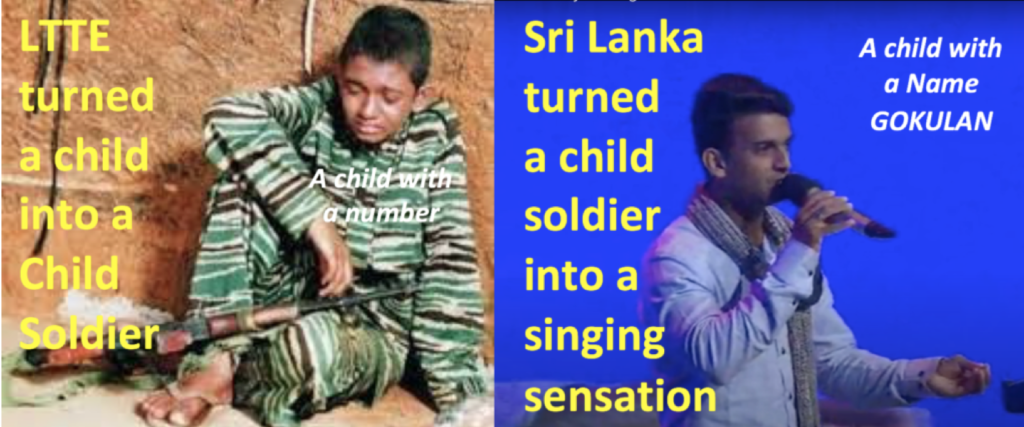
Be that as it may, inspite of all the bricks hurled at Sri Lanka’s military by these lobbies (western media, Church, western NGOs, civil society, UN, UNHRC, western diplomats etc) the Armed Forces brought to safety 297,853 Tamils while 12,000 LTTE wearing civilian clothing surrendered amongst whom were 594 child soldiers.
The Armed Forces drew up their own rehabilitation & resettlement program returning Tamil child soldiers back to studies, helping them with employment & even encouraging them to pursue their talents. We all fondly recall Gokulan the LTTE child soldier turned singer & the reception he receives by all Sri Lankans.
Sri Lanka is an island. We may not have border issues like other countries. But Sri Lanka being strategically located in between global trade, logistics & defense lanes has made Sri Lanka face no shortage of troubles.
Historically, we faced 17 invasions from South India & 3 Western colonial invasions. Today, invasions have taken a newer form as we see how displaced” & immigrants” human smuggling” asylum/refugee seekers” are a global trade. This is also complimented with illegal smuggling & illegal narcotics & the newest threat coming from illegal fishing & destruction of Sri Lanka’s marine bed & eco system using internationally banned bottom trawlers. We may need to even add sea pirates to their scope. The defense & security agreements signed in secret has further undermined Sri Lanka’s internal & external security.
Therefore, Sri Lanka’s shores are not safe. Sri Lanka’s Navy must play a pivotal role in keeping Sri Lanka’s territorial seas safe. Not only must Sri Lanka have a strong Naval presence around Sri Lanka, Sri Lanka’s Navy must be continuously trained to be prepared for any eventuality. A Navy cut short cannot be gathered like civilians to address an emergency situation. Same applies to the Army & the Air Force. They undergo training to be prepared for any emergency which do not come announced or given prior notice!
Then we have the quest for separatism & the ideology of separatism still alive & kicking inspite of the defeat of LTTE. The armed forces defeated the terrorists & thereafter it was left for the politicians, the policy advisors, the diplomats etc to defeat the political quest for separatism which they failed to do. In playing footsie with the issue, the separatist promoters aligned with the same footsoldiers that backed LTTE to continue the quest that LTTE hijacked & borrowed to justify their existence internationally.
Thus, the demands to remove military camps from the North, close down military camps, reduce military was & is part of the quest for separatism as is the newest call to bring a new constitution. All these calls are connected & peddled by the same players that promoted terrorism, separatism & now promoting the complete destruction & annihilation of the Sinhale Nation after targeting the cultural historical heritage, archaeological heritage & erasing the Sinhala culture that the majority & minorities were nurtured in to be replaced with destructive cultures & lifestyles that are breaking society apart in the West.
The bogus claims about returning our lands” without even a deed is backed by western-funded NGOs & civil society locals & drummed by western media.
Presenting dead LTTE” as civilians, or runaway LTTE living in western shores as missing” is another well choregraphed bogey.
This has now materialized further into another bogey with hired theros backing banned LTTE fronts to promote a Himalayan Declaration.
The same team of footsoldiers are cheering this on too.
When we thought we only had Tamil LTTE threat, then came Islamic terror in 2019. This didn’t come as a surprise. The intel units shadowing radical Islamic groups were shut down, radicals were freely allowed to go anywhere they pleased. Warnings were ignored & 260 plus lives were sacrificed for no reason. Now suddenly no one is looking for the maha molakaru!
However, the above should make us understand the need to have a strong intel in the Tri-Forces & Police for the safety of everyone in Sri Lanka. The threat hasn’t disappeared simply because 6 suicide bombers died. Let us not forget LTTE killed virtually every day over 30 years.
Sri Lanka in its 76 years of independence has experienced, 2 insurgencies, 30-year terror, Islamic suicide mission & an economic crisis.
All of these had the involvement of the same players.
These same players are now marshalling together to call for the reduction of the military, closure of military camps in areas where they are demarcating to create the separate state.
It is probably this same team that got the former Army Commander to initiate Way Forward” proposal to make Sri Lanka’s Armed Forces just 100,000 by 2030. Only those who do not understand the exact nature of the threats Sri Lanka faces, the geopolitical challenges Sri Lanka is a victim of, the neighboring political coups will agree to pruning of Sri Lanka’s military instead of having Sri Lanka’s Armed Forces prepared for any eventuality, including humanitarian.
How many are aware that planes are spraying some substance over Sri Lanka’s skies & this could well be the reason for the unusual rains, flooda, landslide situation & intentional destruction of agri-crops to enable import? In such a humanitarian crisis, who is called in to bring to safety people in danger? Is it not the Armed Forces? Will any of those calling to reduce the Armed Forces come forward to even give a packet of lunch for a victim of landslide, floods or humanitarian disaster?
Was it not the Armed Forces who carried out a superb covid-safety drive? Do people have such short memories or are they naturally ungrateful?
Why do people not realize that a strong-Armed Forces protects Sri Lanka & its citizens at any time? Or do the people who want to prune the armed forces expect foreign troops to land & save them? Perhaps they have forgotten the 3000 rapes committed by the 100,000 plus Indian Army who arrived in Sri Lanka to a garland welcome in July 1987?
It is shameful that some international presenters are also pointing fingers at Sri Lanka’s Army for being involved in agriculture, construction, helping covid etc…
Who is aware that US Army has Agriculture Development Teams that are even deployed overseas, that U.S. Army Corps of Engineers partner with Agricultural Research Service, or ARS, a sub-agency of the U.S. Department of Agriculture, or USDA?
Are you also aware that the U.S. Department of Defense’s manufacturing innovation institute, BioMADE, has released a call for proposals to develop sustainable food and material solutions for military operations through its Sustainable Logistics for Advanced Manufacturing (SLAM) Project.
Is it wrong only when the Sri Lanka Army is involved in humanitarian missions, agriculture or construction?
Do not allow the same forces that has throughout worked or was hired to destroy or make Sri Lanka vulnerable influence your thinking.
Sri Lanka needs to be kept safe. If Sri Lanka has to cut down costs, there are loopholes that need to be addressed where the money is going out. First on that list is the need to amend the Foreign Exchange Act that was amended in 2017 to allow top businessmen to park their profits overseas without bringing into Sri Lanka. This loss is costing dearly to Sri Lanka’s foreign reserves & ranging into millions. There is no advantage to Sri Lanka or by allowing elite businessmen to park profits overseas. The Armed Forces for the salary they are given at least safeguards the Nation & all of us.
Sri Lanka’s Armed Forces MUST NOT BE DEMORALIZED by the efforts of the same mischief makers against them.
We are PROUD of you & YOU MUST BE PROUD OF YOURSELVES & YOUR SERVICE TO THE NATION.
It was reported that over one hundred Rohingyas are in a military-run camp in the north of the island. However, there may be others who have already made it to Sri Lanka and have become citizens. They must be sent back to their homeland – Burma or Bangladesh.
Sri Lanka has a very high population density, a severe scarcity of resources and opportunities, and religious tensions that boil over from time to time. Allowing Rohingya people into Sri Lanka only worsens all these crises. First of all, Sri Lanka must resolve the problems faced by its citizenry before allowing foreigners into the island.
Allowing even one is dangerous as it can attract plenty more. Misplaced sympathy should not be the guiding principle of sorting out national issues. If any individual wants to help them, they can do so by donating to Rohingya welfare funds in Burma and Bangladesh.
Another issue is allowing Rohingyas into the island may disrupt Sri Lanka’s relations with Myanmar which is a friendly nation. All Rohingyas in the island must be respectfully repatriated out of Sri Lanka.
Being submissive in a foreign land is the worst quality that a nation’s leader could have.
In the Group Photos of the 1949 and 1951 Commonwealth Heads of Government Meetings held in the UK, Sri Lanka’s (then Ceylon) Prime Minister DS Senanayake was afforded a front row seat. Along with the Queen, he sat with the UK, Australian and Indian Prime Ministers. South African, New Zealand, Rhodesian (Zimbabwe) and the few other leaders were in the back row.
In the Bandung Conference held in West Java, Indonesia in 1955, Sri Lanka’s (then Ceylon) Prime Minister Sir John Kothalawala made a fiery speech and returned to his seat. Seated next to him was Pandit Jawaharlal Nehru (the Indian Prime Minister). He asked from Sir John, it was a strong speech; why did you not show me your speech beforehand”. Nehru had made his speech by then. Sri John quipped Jawaharlal, why did you not show me your speech beforehand”.
The moment one shows subservience, the other knows they can take advantage of him/her. Then, the parties are no longer equal.
(It is stated, nowadays our Presidents call the Indian Prime Minister ‘Sir’. Why being submissive?).
(The writer accompanied two leading Sri Lankan cabinet ministers to meet several Australian ministers to discuss Australian aid to Sri Lanka and other matters. The Australians addressed them in their first names; our ministers continuously called them Your Excellency or Sir).
There are stories that the then Australian Prime Minister Robert Menzies and Singapore’s Lee Kuan Yew used to make quick private trips to Sri Lanka (then Ceylon) to play golf with Dudley Senanayake. This writer is unaware of the authenticity of these stories.
In 1990 R Premadasa had the guts to demand the Indian Army (IPKF) to leave Sri Lanka within a matter of days. India obliged with no questions asked (it was a slap in their face). When R Premadasa died the Indian Parliament held a special session to offer its condolence. Prime Minister Narasimha Rao gave a moving speech.
So were the leaders we had.
We had leaders who could stand tall with any world leader, rubbing shoulders with them.
This is a very important quality especially for a 3rd world leader to have.
We need leaders who are accepted as equal by world leaders especially the western.
Then, among other things, we will not be bombarded with unfair allegations like human rights violations.
Israel always have strong, assertive leaders; thanks to same that country always gets away with impunity.
The fact that a leader could not communicate in English is immaterial. Chinese, Russian, French, Japanese leaders are weak in English.
What is important is the personality.
Our leaders may be ‘lions’ in Sri Lanka, it is great if they are also ‘lions’ overseas.
But, artificial shows are not necessary.
Any weakness one has, they could be reformed. Practice is important.
When overseas, our leaders should get rid of their shyness, any complexes that they may have. This is very important.
If a country’s leader demonstrates poor communication skills when overseas, it is the country that suffers.
When the Yahapalanaya President attended the G7 meeting and the UN summits, we saw how uncomfortable he was in the middle of leading world leaders. It was a sad scene; he seemed friendless – sitting alone.
Lalith Athulathmudali, Kadiragamar, Gamini Dissanayake, Ronnie De Mel, Tyrone Fernando, GL Peiris, Mangala Samaraweera (all were senior cabinet ministers) had great diplomatic skills. They flew the Sri Lankan flag high in international fora.
A leader when visiting a foreign land must always say and do things in the best interests of his/her home country.
A leader is not required to give security assurances for another country.
Security is a very delicate issue. What we do in Sri Lanka is our own prerogative.
Of course, we will not do things to harm anyone (ie, a friendly country) – that goes without saying. But, we must not outline our security policy publicly.
Experienced leaders know this.
Our leaders must bear in mind – irrespective of size and other differences, all countries are equal.
True foreign governments may throw pittance at us, but our self-respect, dignity, sovereignty and territorial integrity are very important. They must never be compromised.
We are a proud nation; we had proud leaders.
We have a civilization that is greater than others. This is important when we – ourselves and others evaluate us.
It is reported that illegal Indian poaching in our Northern waters has escalated tremendously recently. It seems the government has no solution to this? What did we achieve in India?
Sirimavo resolved the Kachchetivu crisis so well, in our favour. The then Indian and Sri Lankan media dubbed Sirimavo and Indira Gandhi as two sisters. Their relationship was that so close.
(At the moment, there is no requirement for us to go into Kachchetivu talks; it is a well settled matter. The fact that some Tamilnadu politicians are raising it for political purposes, it is their problem).
My dear friend Gary Noesner—the former FBI agent and the key negotiator during the Waco siege—agreed to conduct a 40-min educational Zoom program for Sri Lankan professionals who are interested in positive communication and hostage negotiations. This is a free session, and we are inviting members from the security forces and educators. Those who like to take part in this program should send their request to transyl2014@gmail.com with their full name and current profession. We are planning to have this program in mid-February 2025.
Dr. Ruwan M Jayatunge M.D. PhD
About Gary Noesner
Gary Noesner was an FBI hostage negotiator. He was heavily involved in numerous crisis incidents covering prison riots, right-wing militia standoffs, religious zealot sieges, terrorist embassy takeovers, airplane hijackings, and over 120 overseas kidnapping cases involving American citizens. Gary Noesner retired from the FBI in 2003 following a 30-year career as an investigator, instructor, and negotiator.
Gary Noesner conducted effective communication with David Koresh—a cult leader and Gary was able to save some hostages held by him. David Koresh (Vernon Howell), a religious fanatic in Texas had illegal weapons and also had an alleged practice of having sex with girls as young as twelve. There were ongoing child physical and sexual abuse inside the compound. David Koresh taught that he was a messiah and brainwashed his followers to prepare for Armageddon.
On Feb. 28, 1993, Noesner flew to Waco, Texas, to serve as a negotiator in a crisis that would change the FBI forever. During an attempt to make an arrest at an isolated compound in Mount Carmel, Texas, 80 armed ATF federal agents were embroiled in a shootout with members of the Branch Davidians, a religious group led by David Koresh. Four agents and five Branch Davidians were killed, Koresh was injured and an armed standoff began that would last until mid-April.
The day after the gun battle, when FBI agents arrived on the scene, Noesner spoke with Koresh on the phone, Hi, David. This is Gary,” he said. I just got down here, and I want to make sure that you and your family get out of this situation safe and sound.”
Noesner led a team of 24 negotiators who secured the release of 35 people, mostly children, from the compound. At one point, Koresh agreed to surrender to authorities, but later reneged, saying that God had told him to wait. This led some FBI agents impatient.
The FBI made a full 60 hours of negotiation with Koresh. Gary Noesner was gaining a considerable success. Despite Gary Noesner’s recommendations, some of the FBI officers planned a full-scale military operation. Noesner left Waco and, after his departure, no further Davidians were freed.
On April 19 the FBI raided the compound, using military-grade weaponry such as armored tanks, as well as tear gas. A fire broke out—the source of which remains disputed—and 76 of the 85 Branch Davidians, including Koresh and a number of children, were killed.
The Waco siege is similar to the mass suicide at Jonestown that was orchestrated by Jim Jones. It was the 51-day siege between FBI agents and members of the Branch Davidian religious group in Waco, Texas. The siege took place between February 28 and April 19, 1993.
The story of Waco is also the story of disagreements over religious freedom, the rights, and the boundaries of the federal government. Moreover, it was about underestimating the power of communication.
Waco did not end with David Koresh’s death. Right-wing anti-government bomber Timothy McVeigh carried out his 1995 Oklahoma City bombings in part as a direct response to Waco, where he had been an eyewitness at the siege.

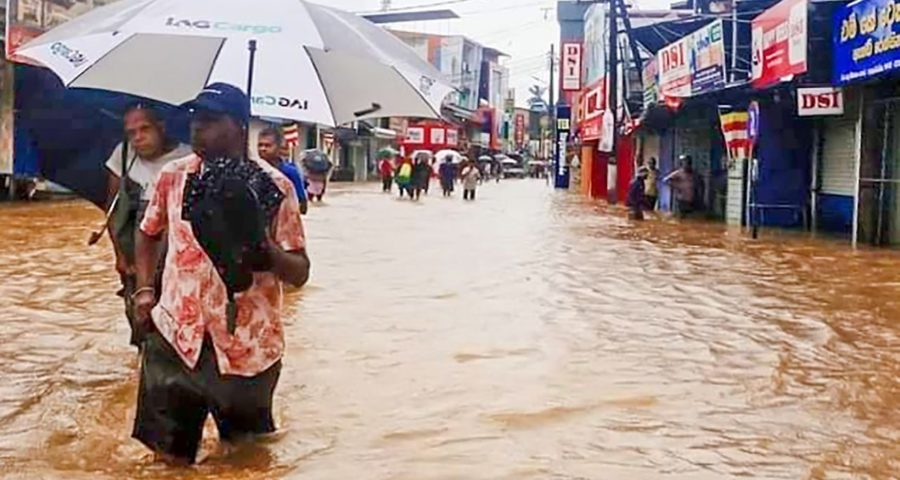

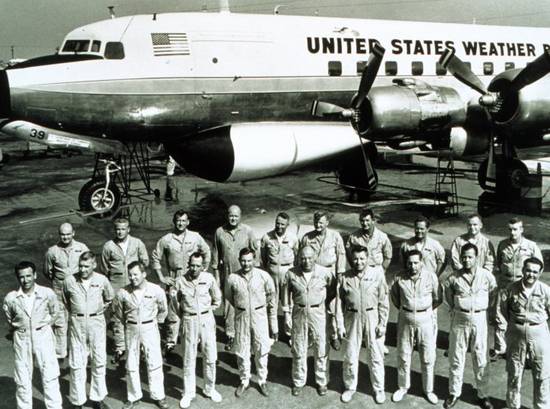
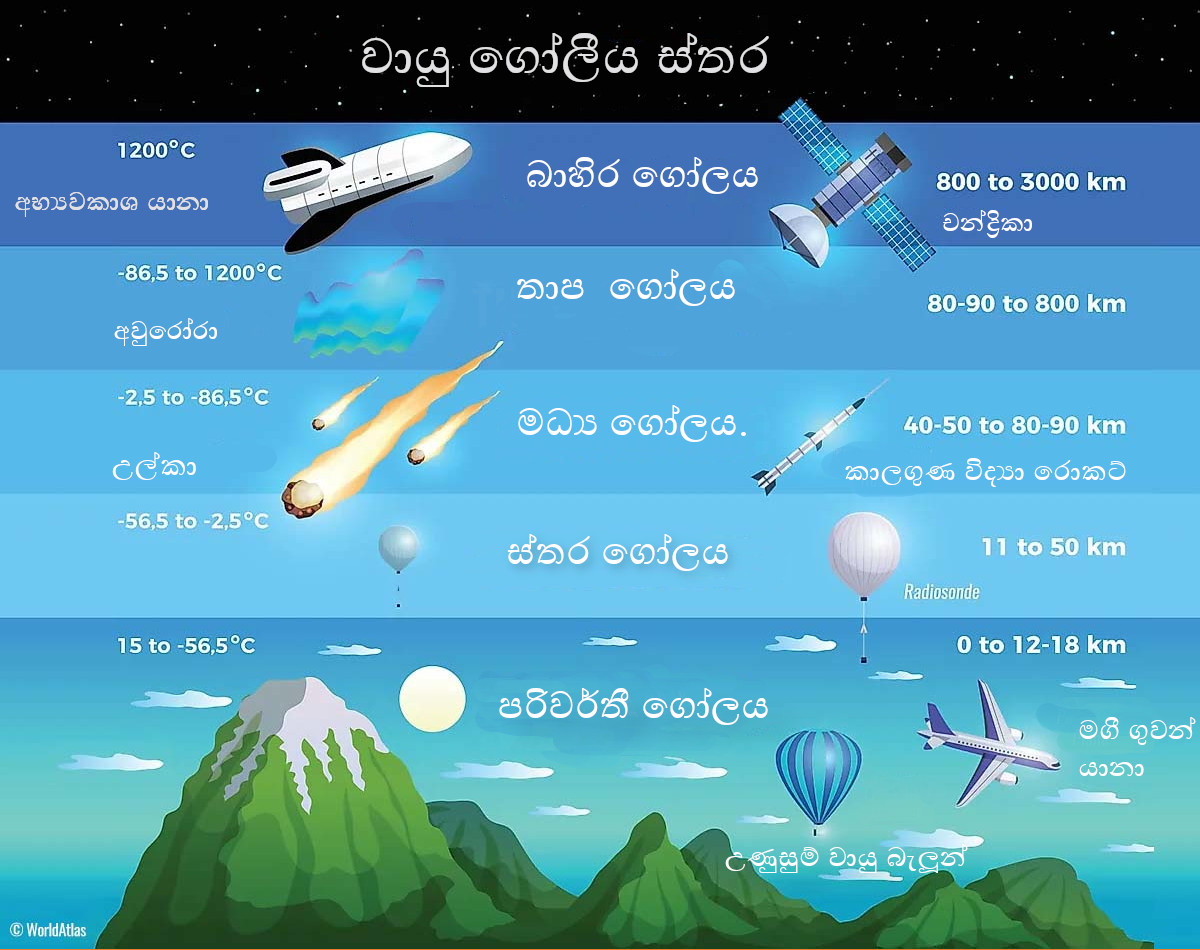
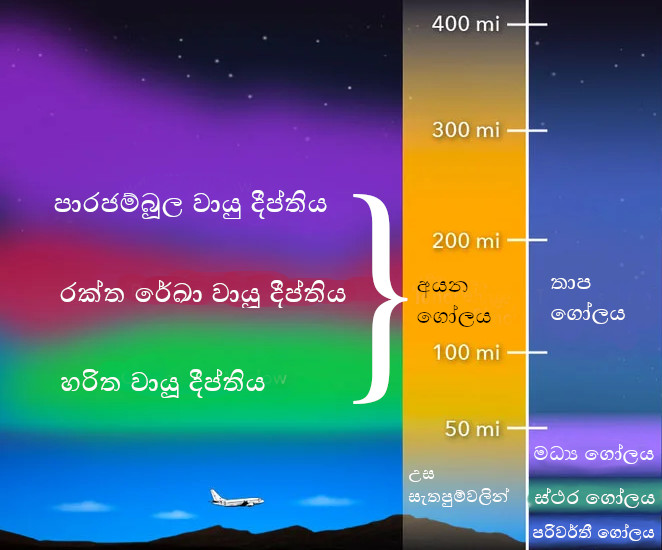
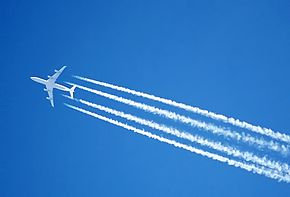

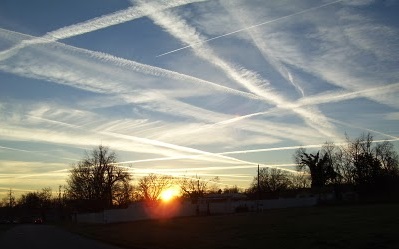
 රේඩි අනන්ඩා (Rady Ananda) ඔහායෝ රාජ්ය විශ්වවිද්යාලයේ ආහාර, කෘෂිකර්මය සහ පරිසර විද්යාව පිළිබඳ උපාධිධාරිනියකි. ඇය විවිධ පර්යේෂණ සහ අන්තර්ජාල ලිපි ගණනාවක් පළ කර තිබේ. ඇගේ විවිධ විෂයයන් අළලා ලියැවුණ ඇගේ ලිපි විවිධ කතුවරුන් විසින් උපුටා දක්වා තිබේ. ඇමෙරිකන් මැතිවරණ ක්රමයේ සිදුවන් දූෂණ වංචාවන්, භූ ඉංජිනේරුකරණය, කාලගුණය සහ දේශගුණය යුද අවියක් බවට කිරීම ආදිය ඇය විසින් බහුලව අවධානය යොමුකර ඇති තේමාවන්ය.