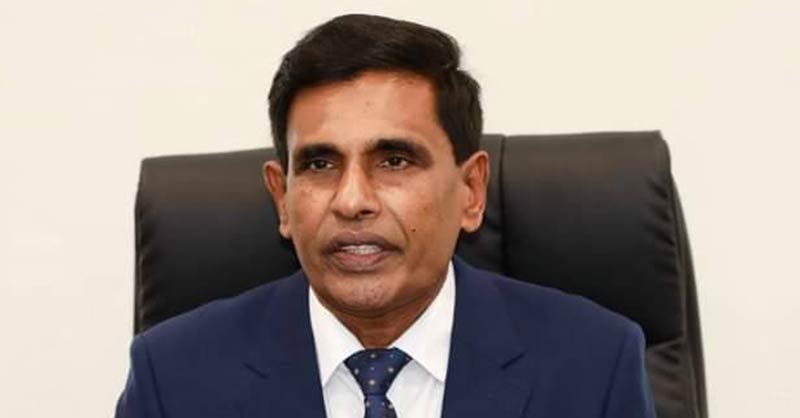
අවුරුදු 5ක් ඉන්න බෑ… කඩිනමින් ව්‍යවස්ථාව ගේන්න… කාදිනල්තුමන් ඉල්ලයි

January 6th, 2025

උපුටා ගැන්ම  ලංකා ලීඩර්


වසර 5ක් නොසිට හැකි ඉක්මනින් නව ආණ්ඩුක්‍රම ව්‍යවස්ථව ගෙන ඒන ලෙස කාදිනල් තුමන් විසින් ආණ්ඩුවට යෝජනා කර ඇත. නව කතානායක වෛද්‍ය ජගත් වික්‍රමරත්න මහතා කාදිනල්තුමන් බැහැ දැකීමට ගිය අවස්ථාවේදී මේ බව පවසා ඇත. 

මේ සම්බන්ධයෙන් අදහස් දක්වන පිරිස් පවසන්නේ මේ ඉල්ලා සිටින්නේ නිරාගමික රාජ්‍යයක් නිර්මාණය කිරීමට අවශ්‍ය ව්‍යවස්ථාවක් දැයි සැක සිතෙන බවයි. එයට හේතුව විය හැක්කේ අගමැතිතුමියද  මීට පෙර පවසා සිටියේ මෙරට නිරාගමික රාජ්‍යයක් බව වීමය. 

නලින්ද ජයතිස්ස ආගම් සරදමට ලක් කිරීම ගැලපෙන්නේ නෑ… නිරාගමික ව්‍යවස්ථාවක් ඕනෑ කියන අගමැතිවරියක් ඉන්න ආණ්ඩුවකින් මීට වැඩි දෙයක් බලාපොරොත්තු වෙන්නත් බෑ – ගම්මන්පිල කියයි

January 6th, 2025

උපුටා ගැන්ම  ලංකා ලීඩර්


නලින්ද ජයතිස්ස සෞඛ්‍ය අමාත්‍යවරයා පසුගිය දා පිලිකා රෝහලේ දී සිදු කරණු ලැබූ ප්‍රකාශ හරහා සිදු කරණු ලැබූවේ මෙරට පරිත්‍යාගශීලින් අධෛර්මත් කිරීමත් බෞද්ධ සංස්කෘතියට සහ අනිකුත් ආගම්වලටද පහර ගැසීමත් බව පිවිතුරු හෙළ උරුමය නායක නීතිඥ උදය ගම්මන්පිල මහතා පවසයි.

ඒ මහතා මේ බව සදහන් කර සිටියේ අද දින (06) එම පක්ෂ මූලස්ථානයේ පැවති මාධ්‍ය හමුවකට එක්වෙමිනි.

පිවිතුරු හෙළ උරුමය නායකයා එහිදී වැඩිදුරටත් මෙසේ අදහස් දැක්වීය.

“නලින්ද ජයතිස්ස ඇමතිතුමා පිලිකා රෝහලේ දී සිදු කළ කතාව ගැන අදහස් දක්වන්න කලින් සම්පූර්ණ කතාවට සවන් දෙන්න කියලා ආණ්ඩුවේ අය කියන නිසා මම සම්පූර්ණයෙන්ම ඒ කතාව ඇහුව්වා. එතුමා නොදැන සිටියාට කිසිම දානපතියෙකුට රෝහලකට ඇවිත් බලහත්කාරයෙන් කිසිම ගොඩනැගිල්ලක් හදන්න බෑ. බලහත්කාරයෙන් කිසිම පරිත්‍යාගයක් භාර ගන්න බෑ. රෝහල් ප්‍රධානියාගෙන් ඒ සඳහා අවසරය ඕනි. ඉදි කිරීමක් නම් පලාත් සෞඛ්‍ය අධ්‍යක්ෂවරයාගෙන් අවසරය ලබා ගන්න ඕනි. ඒ නිසා කාටවත් තමන්ට ඕනි ඕනි ආකාරයට රෝහල් වලට පරිත්‍යාග දෙන්න බෑ. රෝහලේ අවශ්‍යතා අනුව තමයි පරිත්‍යාග ලබා දෙන්නේ. ඒ නිසා ඒ ක්‍රමවේදය අමුතුවෙන් නලින්ද ඇමතිතුමා හඳුන්වා දෙන්න අවශ්‍ය නෑ.

පිලිකා රෝහලට ළමා ඇටමිදුළු බද්ධ කිරීමේ ඒකකයක් රෝහල් බලධාරින් විසින් දිගු කාලයක් තිස්සේ ආණ්ඩුවෙන් ඉල්ලුවත් ආර්ථික අර්බූදය නිසා දිගින් දිගටම පස්සට තල්ලු වුණු ව්‍යාපෘතියක්. රෝහල් බලධාරින් ජාතික සැලැස්මෙන් පිටත මේ ඉදිකිරීම කලා කියමු. ඒක රෝහල් බලධාරින් සමග තිබෙන අභ්‍යන්තර සාකච්ඡාවක දී මතු කළ යුතු දෙයක් මිස මිලියන දෙසීයකට ආසන්න පරිත්‍යාගයක් කළ අවස්ථාවක පරිත්‍යාගශීලින් ඉදිරිපිට සඳහන් කළ යුතු දෙයක් නොවේ.

සෞඛ්‍ය ඇමතිවරයාගේ කතාවෙන් අර්බූද ගණනාවක් එලියට එනවා. අපේ රටේ ආගමික ආයතන වලට විශාල පරිත්‍යාග ලැබෙනවා. සමහර ආයතන රෝහල් වලට සැලකිය යුතු මුදලක් පරිත්‍යාග කරනවා. සමහරු එහෙම කරන්නේ නෑ. එහෙම නම් පරිත්‍යාගය කළ පුද්ගලයා අගය කරලා ඇමතිතුමා කතා කලා නම් අනෙකුත් ආගමික ආයතන වලට මෙවැනි පරිත්‍යාග කරන්න අදහස පහල වෙනවා. කතරගම දේවාලේ බස්නායක නිලමේතුමාට වුණත් තව තවත් පරිත්‍යාග කරන්න චේතනාව පහල වෙනවා. තිස්තුන් කෝටියක් දෙවිවරුන්ට වඩා භාණ්ඩාගාරය වැය කරනවා කියලා කිව්වේ. ඔව් අපි බදු මුදල් දුන්නේ එකට තමයි. එක ආණ්ඩුවේ වගකීම මේක ස්වේච්ඡාවෙන් කරන දෙයක් මේකයි එකයි අතර දැවැන්ත වෙනසක් තියෙනවා කියන එක වෛද්‍යවරයෙක් වෙච්ච නලින්ද ඇමතිතුමා නොදැන සිටිම සිදුවන්නේ එතුමා රෝහලක ප්‍රතිකාර කිරිමට රෝහලක සේවය කිරිමට අවස්ථාව නොලැබුන නිසාදෝ කියලා අපිට හිතෙනවා.

මේ වන විට බස්නායක නිළමේතුමාට ප්‍රසිද්ධියේ සරදම් කලාට අමතරව සමාජමාධ්‍යවල එතුමා දැවැන්ත හොරෙක් ලෙස හන්වඩු ගසමින් මඩ ප්‍රහාරයක් ‍එල්ල වෙනවා ඒ විතරක් නෙමෙයි. එතුමට එරෙහිව සීඅයිඩී එකට පැමිණිල්ලකුත් කරලා. මේ සියල්ලට හේතුව පිලිකා රෝහලට ඒකකයක් පරිත්‍යාග කිරීම. එතුමාත් අනිත් බස්නායක නිළමේලා ‍වගේ මෙ‍වැනි පරිත්‍යාගයක් නොකර හිටියා නම් මේ කිසි කරදරයක් නෑ. මේ පරිත්‍යාගය හෑල්ලු කලාම කාටද පරිත්‍යාගයක් කරන්න හිතෙන්නේ?

අපේ රටේ සෞඛ්‍ය සේවාවට දැවැන්ත පරිත්‍යාග තොගයක් දානපතියන්ගෙන් ලැබෙනවා. ඒ නිසා සමස්ත සෞඛ්‍ය සේවාවට වැය වන මුදල ජනතාව මත බදු පටවමින් සොයා ගන්න ආණ්ඩුවට සිදු වෙන්නේ නෑ. ඒක ජනතාවට විශාල සහනයක්. සෞඛ්‍ය ඇමතිවරයා මේ කතාව හරහා ඒ දානපතියන්ට ලබා දෙන පණිවිඩය මොකක්ද? උඹලාට සල්ලි වැඩිපුර තිබෙනවා නම් රෝහල් වලට පරිත්‍යාග නොකර ලෝක වටේ ඇවිදලා ඒ සල්ලි වලින් සතුටු වෙයල්ලා. අපි දුප්පත් ජනතාව මත තව තවත් බදු ගහලා උන්ගේ රීරි මාංශයම හූරගෙන කාලා සෞඛ්‍ය වියදම සොයා ගන්නම් කියන එක නේද? මේක සමාජවාදි ජවිපෙ ප්‍රතිපත්තිය නම් නොවේ. මාලිමාවේ නව ලිබරල්වාදය නලින්ද සහෝදරයත් වැළඳ ගෙන ද කියන සාධාරණ සැකය අපට ඇති වෙනවා.

ඒ වගේම තිස්තුන් කෝටියක් දෙවියන් සිටින බව විශ්වාස කරන්නේ හින්දු ආගම තුලයි. කතරගම දෙවියන් කියන්නෙත් හින්දු බෞද්ධ දෙපාර්ශවයම අදහන දෙවි කෙනෙක්. මේ දේව සංකල්පයන් සරදමට ලක් කිරීම නිරාගමික නලින්ද සහෝදරයාට ගැලපෙන්න පුළුවන්. නමුත් අපේ ව්‍යවස්ථාවෙන් සියළුම ආගම් වල අයිතිවාසිකම් ආරක්ෂා කරමින් බුද්ධ ශාසනය සුරක්ෂිත කිරීමේ වගකීම රාජ්‍යයට පවරා තිබෙනවා. ඒ නිසා ඇමති ධූරය භාර ගන්නා අවස්ථාවේ ව්‍යස්ථාව රකින්න ප්‍රතිඥා දුන්නු නලින්ද ඇමතිතුමාට ආගම් සරදමට ලක් කිරීම ගැලපෙන්නේ නෑ කියන එක එතුමාට ඉතාම ගෞරවයෙන් සිහිපත් කරන්න කැමැතියි.

දානය කියන්නේ බුදු දහමේ එන දස පුන්‍ය ක්‍රියාවන්ගෙන් පළමු පුන්‍ය ක්‍රියාව. ඒ දානය අදිරිමත් කරනවා කියන්නේ බෞද්ධ සංස්කෘතියට පහර ගහනවා කියන එකයි. නිරාගමික ව්‍යවස්ථාවක් ඕනෑ කියන අගමැතිවරියක් සිටින ආණ්ඩුවකින් අපට මීට වැඩි දෙයක් බලාපොරොත්තු වෙන්නත් බෑ.”

– Midea unit

Discussion between the President and Attorney General on controversial legal proceedings

January 6th, 2025

Courtesy Hiru News

President Anura Kumara Disanayake held a discussion with the Attorney General and officials from the Attorney General’s Department at the Presidential Secretariat today (06).

During the discussion, the President emphasized the importance of coordinated efforts among all institutions working towards the effective enforcement of the law.

President Dissanayake highlighted the critical responsibility of the Attorney General’s Department to restore public confidence in the judicial system. He further stressed that public perception regarding political interference must be transformed to ensure trust in the legal process.

The President reiterated the government’s commitment to avoiding any actions that could erode public expectations. He assured that efforts are being made to re-establish confidence in the justice system and restore the principles of fairness and equity in the eyes of the people.

The meeting was attended by Minister of Justice and National Integration Harshana Nanayakkara, Secretary to the Ministry of Public Security Ravi Seneviratne, Attorney General Parinda Ranasinghe PC, along with several officials from the Attorney General’s Department.

Insider Trading by Central Bank Officials Exposed

January 5th, 2025

e-Con e-News

blog: eesrilanka.wordpress.com

Before you study the economics, study the economists!

e-Con e-News 29 December – 04 January 2025

The so-called newly ‘independent’ Central Bank’s exclusive Employees Provident Fund (EPF) is ‘a blatant act of self-serving privilege’: so says the United Federation of Labour (UFL).This ‘exclusive’ EPF – sanctioned by the Monetary Law Act – is ‘a breeding ground’ for (you guessed it!) ‘corruption’. For ‘unlike other institutions, the Central Bank possesses ‘privileged access to confidential economic data & policy decisions before they are made public’ – so declares the UFL (a gathering of 9 trade unions). Meanwhile, ‘informal sector workers’ are ‘gravely’and unjustly excluded from ‘essential social safety nets like the EPF & ETF’. And then there are also other more lowly EPFs….

*

The Central Bank has the highest number of registered PhDs per square foot in the country! And. It is no wonder. These PhDs are led by an eminence who the ‘LMD, a leading business magazine in the country, has named ‘Sri Lankan of the Year for 2024’:

     So say hello and goodbye then to CB Governor Dr Nandalal Weerasinghe, for we are now rushing headlong through Gregorian 2025. LMD we can assure you is or was Lanka Monthly Digest, though the M could more appropriately stand for Merchant or Moneylender or iMporter or Marketing Digest or all 4 Ms if you are generous– as they also do these fake surveys and polls with Ceylon Tobacco’s Co (BAT)’s money, number and word spinner PepperCube. We usually encounter this glossed-out magazine, largely untouched like a heavily made-up virgin, at private dentists’ or chiropractors’ offices – midst a lot of pain. So these are the forces – a rentier carnival of non-smoking environmentally and health conscious virtue-signalling shills and clowns really – who celebrate now and shall later sacrifice the governor. As the economy is set to tank again. They call it dynamic disruption. Effervescence, even.

     And worse: the IMF was allowed to make, or enabled – under the governor’s imprimatur, with the former Government’s acquiescence – a ‘predatory raid’ on the (not-just-the-CBSL’s) EPF, ‘disguised as domestic debt restructuring’. The UFL makes more startling allegations midst presenting 24 proposals for a more just and equitable economy via the 2025 Budget. The ULF statement in English seems to have been only carried ‘mass-media-wise’’ by the Wijeya Group’s Financial Times (see ee Focus, For a Working People’s Budget in 2025).

     The ULF, perhaps unfortunately too-inconvenient or too-obvious to larger media – point to the ‘Government’s insatiable appetite for tax breaks for large corporations – a staggering Rs 978 billion in 2022 (4.1% of GDP) according to the Ministry of Finance & the IMF’. ‘Instead of squeezing the poor with regressive taxes on essential food in the guise of protecting local farmers’, they – noting ‘nearly 30% of paddy cultivation costs [are] tied to machine rent’ – call for investment ‘in a rental program to drastically lower these exorbitant fees benefiting a machine-owning upper middle class in the rural economy’.

     But what about making these agricultural machines? ‘Renters’ of rural machinery like ‘celebrated’ NGO Sarvodaya and finance companies like LOLC, etc, – importers of multinational products – have minted billions. Yet the UFL proposals fail to even broach such a crying necessity for investment in modern industrial production, even as medium-to-long-term goals. Perhaps the UFL is merely making ‘annual budget’ proposals for ‘trade unions.’ But as Shiran Illanperuma highlights (see ee Focus, NPP Needs to Get Serious about Industrialization to Avoid Another Crisis):

Uplifting our large rural population requires industrialization.

*

A strong focus on value-added manufacturing has been the

only way for countries to sustain rapid growth levels, develop

indigenous technology, & uplift the living standards of the majority of people.

He also pinpoints: With a population of 22 million – comparable to Syria, Burkina Faso, or Chile – Sri Lanka is hardly a ‘small country’. And he could of course have added that industrial & agricultural powerhouses like Holland & Spain, etc., have even smaller populations than Sri Lanka.

*

On 18 December, new President Anura Kumara Dissanayake pledged that under the leadership of his party, ‘we will never allow a situation like 2022-23 to reoccur in our country’. But as Illanperuma points out:

If AKD & the NPP intend to keep this promise, they will have to get a lot more serious

about industrializing an economy dependent on services & remittances.

*

Meanwhile, as the new government is finding out – much to the pique of a merchant-run media who are protesting political ‘interference’ in the sacred bureaucracy – an entrenched ‘mafia’, with their powerful sponsors, still rule the roost and run circles around them! (Who still run the ports? If not the multinationals like Unilever, etc?) A merchant media gives much more prominence to the safety of monkeys, elephants & leopards than they do to the occupational health, let alone upskilling, of farmers & workers.

     While there is much talk about ‘transparency’ and demands for declarations of politicians’ private assets and funders, similar demands could be made from bureaucrats & media personnel (owners, editors & columnists): to declare their ‘sponsors’? As we often note, the media is packed with corporate & embassy & NGO press releases parading as ‘news’, no doubt given repetitive publicity with much ‘greasing’ of palms and other organs. And then there is the revolving door between public & private offices (this week, media reported how US Supreme Court judges & their children openly take bribes! see ee Random Notes, Scalia), ee has noted before, how formerly sacred Chief Justices of Sri Lanka’s Supreme Court have joined the worldly boards of banks like the Commercial Bank of Ceylon, etc. So see how they run:

     ‘Vallibel One’s Dhammika Perera has appointed 4 new directors: Perera is supposed to be interested in the further privatization of Sri Lankan Airlines or the air space. One of the new directors is Anura Fernando, another Accountant, who cites breast-slapping Nestle Beverages and US aerial warmaker Pratt & Whitney Space Propulsion among his credentials. Next comes another immaculate:

JKH Board & University of Kelaniya & Monetary Policy Board

of the Central Bank’s Manil Jayesinghe, who is also a member of

several Chartered Institutes – of Public Finance & Accountancy etc., – has served

Ernst & Young, SL & Maldives… As a resource person for Central Bank

Training Centre, he has conducted many training sessions on Accounting,

International Financial Reporting Standards & Basel, and was the lead engagement

partner on Audits subcontracted to EY by the Auditor General of SL.

Jayesinghe is an ‘Independent’ Director of Diesel & Motor Engineering (DIMO),

Ceylon Hospitals, CW Mackie, Lanka Milk Foods (CWE), JKH…

(see ee Random Notes)

*

Kelaniya University Professor Ajantha Samarakoon, new Chairman at

People’s Leasing & Finance PLC has been the Chief Examiner for the GCE A/L examination

 since 2006 & is a member of Curriculum Development Committees in government &

private universities… coordinator of the Master of Business Administration (MBA) program

& Quality Control Reviewer for the University Grants Commission.’

(see ee Finance)

*

Now you know why we cannot read or count. Or are functionally innumerate and illiterate. Indeed, as Illanperuma wonders in another essay in this ee Focus (Sri Lanka’s New Government, Indo-Pacific Debt Trap, & Struggle for the 21st C), can the JVP, which has survived (but how?) 2 annihilations, and at much human sacrifice of successive generations, overcome the antics of these multinational agents who have leg-break-ed and bowled out many-a-previous popular government? The JVP apparently bravely and vociferously opposed many attempts to subjugate the country, like the Indo-Lanka Accord of 1987, and the USA’s MCCSOFAACSA & other military encroachments.

     A former foreign official, maybe wrongly seen as a diehard senior yankee doodle and anglomaniac, revealed this week that the 1978 Indo-Lanka Accord allows our beloved neighbor to take over the country’s ports & habours at its will (see ee Random Notes)….So what about commodity prices?

*

 While there may be a new President & a slew of new faces in Parliament,

officials in charge of the Treasury & Central Bank remain the same.

*

     Illanperuma points out, ‘in contrast to his fiery pre-election speeches, which lashed out at the corruption of establishment politicians’, AKD has had to strike ‘a measured tone’, acknowledging ‘the significant challenges that his government inherits, declaring ‘I am not a magician. I am simply an ordinary citizen.’ He notes, ‘The risk of lapsing into neoliberal immobility remains ever present’. Or perhaps, they, like the Russian Communist Party of Comrade Lenin in 1921, or Comrade Stalin in 1939, are simply mixing messages, buying time to gird their forces, learning about and gauging the enemy, before launching the final battles.

     Contrary to the massive US & English propaganda in the media that China dominates Sri Lanka’s economy – the supposedly nationalist Derana and Island’s ‘Foreign News’ ‘Category’ is almost totally & unashamedly dominated by Unilever’s English state media outlet BBC – the ULF unequivocally declares, ‘The NPP inherits a state that is deeply in debt to Western finance capital.’

     Meanwhile, the UFL’s proposes: the immediate nationalization of ‘all large-scale paddy mills’, which are profiting off the country. They then point to the Sri Lankan tea market being ‘exploited by an oligopoly of estates, franchised export companies, tea brokers and the few conglomerates who own the entire apparatus. These oligarchs ‘suppress prices by an average of 50% below the actual export price’. They add, ‘after packaging, the same kilo of tea fetches exorbitant prices in the domestic market, often exceeding Rs3,000. This reveals the enormous profits raked in by tea traders, profits that are not reinvested in the sector or shared with the impoverished workers.’ By controlling the auction process, these interconnected conglomerates – encompassing regional plantation companies, franchised export firms, & tea brokers – have effectively suppressed wages.’

     The UFL does not state, how to appropriate, and where and in whom and what exactly the profits should be invested inside the country. Meanwhile, the national sweat and other liquids flow into the sea (or more precisely, the ports) uselessly:

     ‘Sri Lanka holds the distinction of paying the highest percentage of government revenue as domestic interest in the world – a staggering 80% in 2023, according to World Bank data.’ This tax burden has ‘plunged a quarter of our population into poverty, is squandered on enriching a counterproductive financial elite’.

*

Indeed, as Nalliah Thayabaran details (see ee Focus, As a US Vassal, Japan Can’t Challenge China as a Superpower),such financial forces in the US & EU combined to bring down the mightier Japanese economy. Japan ‘was the biggest economic miracle in the 20th century after the USA’ and this occurred after these forces signed what became known as the Plaza Accord – signed at ‘a pivotal moment that led many to believe Japan was going to surpass the USA’. These financial forces ‘played a very significant role in Japan’s slowdown’ after ‘Japan had established itself as a global manufacturing powerhouse, dominating industries such as automobiles, electronics, and machinery, conquering a huge portion of the semiconductor industry. So can the US & EU do what they accomplished against Japan, to China? Thayabaran believes not – though he does not provide much detail…

*

We, however, believe the greatest economic miracles of the 20th century, despite the inevitable steps back, have been the industrialization of the USSR and the People’s Republic of China. Russia’s Foreign Minister Sergei Lavrov pointed out this week (ee Random Notes) the US & English recipes ‘to create wars and other forms of chaos to keep Russia and China from developing their potential’ have their origins at ‘the beginning of the 20th Century based on Alfred Thayer Mahan’s theory of maritime power’ which ‘was married to Halford Mackinder’s Heartland/Rimland Geopolitical theory’.

     Sri Lanka, at the centre of the Lakdiva Sea (now known as the Indian Ocean), and at the base, holding up all of Asia, is indeed central to this planned chaos…. Channelling and harnessing and expelling this chaos as another energy resource to serve the country may be a better plan.

*

____________

Contents:

https://eesrilanka.wordpress.com/2025/01/05/insider-trading-by-central-bank-officials-exposed/

IODINE – THE CONDUCTOR OF THE HUMAN HORMONAL ORCHESTRA

January 5th, 2025

Priyantha Hettige

Our health

Keeping healthy should be at the top of our list of personal concerns. But who can we turn to for help and information?  That job is left to a few medically trained doctors and food specialists!

Our lack of sufficient Iodine

The experts tell us iodine is needed in every cell of the human body.

It is on the World Health Organizations list of essential vitamins.

But there is a big problem: there are falling levels of iodine in our food but unfortunately, rising levels of bromide in our environment. Bromide is absorbed but not used by the body. It acts more like a toxin. But iodine in sufficient quantities is vital for us to remain healthy. We cannot live without iodine and chloride. Note that because bromide and iodine molecules are of similar size they can competitively inhibit one another. One can displace the other. It seems that unhelpful bromide is displacing much needed iodine.

Any lack of sufficient iodine has serious consequences. All the hormone glands need it: the thyroid hormones T3 and T4, the ovaries, the uterus, the breasts, the prostate, the pancreas, etc. We must get it in our diet for these glands to work properly. You can’t make thyroid, ovarian hormones, and testosterone, pituitary and hypothalamus hormones without iodine. Also, the main job of iodine in the glandular tissue is to maintain its normal structure, otherwise cysts form and enlarge.. and worse .. cancer.

The lack of iodine

USA Medical Dr David Brownstein has tested, over the years about 8,000 patients for iodine levels and found 97% of them deficient in iodine. Other medics find the same results themselves.

Dr Brownstein has lectured in the UK, Australia and Israel and says this deficiency of iodine problem is world-wide. He has written seventeen books on iodine and related subjects. He says iodine levels have fallen by 50% over the last 40 years. He talks about seeing younger and younger people getting cysts which develop into cancer and raise the risks of death. Something big is happening. Is it additives to our water supply? Or exhaustion of the soil? Or something in our environment? What could it be? It seems that most of us are deficient in iodine, and it is affecting us!

Experts say women, before and during pregnancy, should definitely stock up on their iodine levels. It is needed in fairly large doses for themselves and for the coming baby. It is suggested that congenital shortcomings such as cretinism, Attention Deficit Syndrome and children’s low intelligence are caused by lack of iodine in the mother.

Please note that Dr David Brownstein says the thyroid primarily uses the reduced form of iodine – iodide. The breasts need iodine and other tissues different forms of iodine. The key to success in curing diseases caused by iodine deficiency is to know which form of iodine is needed. Applying iodine to solve all problems was not successful for him. He recommended Lugol’s liquid.

Lugol’s liquid has a solution of 2% iodine and potassium iodine of 4%. But regrettably, this is not available in Sri Lanka.

Crucially, iodized salt may not be as effective as it is claimed. Iodization may be effective for only a short period after a packet of salt is opened and used for the first time – says Dr. Barbera O’Neill. This seems like another confidence trick. But the truth is not easily come by.

Consume Water with Salt and Iodine

Dr. Ken Berry advises us to consume salt with water, with a drop or two of iodine. Salt is not harmful in moderate quantities and it helps to flush out bromide and also some toxic metals we may have absorbed. Health in a glass of water! Iodine is not harmful as long as your kidneys are working well!

The Aging Factor

In addition, as we age, our bodies become less efficient in absorbing minerals and vitamins from our food. Supplementation of these is needed, but exactly what supplements and in what amounts is where these specialists demonstrate their valuable expertise..

World Agriculture Deficient!

Iodine is found in the oceans. Most if not all agricultural farm land, far from the coast, is likely to be deficient in iodine: That is, the food we consume may not have all the required amounts of nutrients our bodies need to function well. The land is re-fertilized but iodine and other vital nutrients are unlikely to be included in that process. Cattle grazing such farmland will only pass on to us whatever iodine and other essential vitamins and minerals they have consumed by us drinking their milk and eating the meat.

Research into the food we consume

Now, medical practitioners, doctors and food specialists in the United States are diving deep into the root causes of human illness.                     The list of such public-spirited American medics is ever increasing as people realise the short comings in our environments, lifestyles and our ill-advised eating habits.

These are doing us much harm and when left to develop, the correction of these ailments at the last minute becomes very expensive.  

One such public-spirited medical practitioner is Dr Brownstein. He has become a widely known expert on Iodine. He has written books on iodine, the thyroid, and so on. Another such noble researcher is

Dr Stan Ekberg who has looked at the wide range of our complaints and ailments and has investigated their causes and cures, too. There are many others also investigating, studying research papers and publicizing their findings on food, nutrition or lack thereof, our need for trace minerals, vitamins and so on. The USA is a hive of activity searching for a cure for our human illnesses. We can live longer!

All these US medics have a common theme. They say: short comings in our diet – unwise eating, is what is making us ill. However, luckily such illnesses can often be prevented and/or reversed by the application of new knowledge recently learned from research papers and intelligent study of the human body, its needs and the way it works.

Unavailability of Suitable Supplements of Iodine

The supplementing of iodine in Sri Lanka is made doubly difficult: only iodine for use as an antiseptic is available. The well tried and tested ‘Lugol” fluid contains two chemical variants of iodine needed for the human body. This vital mineral supplement is not available in Sri Lanka.

Confirmation Please search these medical doctors’ names on YouTube to verify the information presented here. This article is written for information purposes only. You are advised to consult with your doctor in case of illness.               

ACTIVIST PETITION SC OVER LONDON BASED LYCA GRP’S DEVIOUS OWNERSHIP OF MASS COMMUNICATION COMPANIES IN SRI LANKA

January 5th, 2025

By Namini Wijedasa SUNDAY TIMES

The London-headquartered Lyca Group has been actively expanding its operations in Sri Lanka with Chairman and Founder Subaskaran Allirajah indirectly, deviously and circuitously, undertaking acquisitions in the local media sector”, states a petition filed before the Supreme Court.
These transactions have been carried out through proxies to circumvent Sri Lankan regulations prohibiting foreign ownership of media entities, and this also raises concerns about potential violations of Sri Lankan laws and serious threats to national security and the sovereignty of Sri Lanka,” maintains the petition, filed in the public interest by civil rights activist Jamuni Kamantha Thushar
Sixty respondents are named, including the Telecommunications Regulatory Commission of Sri Lanka (TRCSL), Secretary to the Ministry of Digital Economy, Secretary to the Ministry of Defence, all the Members of Cabinet, ten companies including several holders of Sri Lankan television and radio broadcasting frequency licences, company directors as well as Mr. Allirajah and his wife.
The petition lists eight companies directly or indirectly owned and controlled by or belonging to the Lyca Group. Many hold television and radio broadcasting permits issued by Sri Lanka’s then Ministry of Mass Media and TV and radio broadcasting frequency licences granted by the TRCSL.
Through illegal, unlawful, wrongful, devious, and circuitous schemes, structures, and proxies, the Lyca Group currently owns and/or controls 11 TV and radio channels and broadcasting licences,” it states.
VIS Broadcasting (Pvt) Ltd operates and broadcasts Monara TV, Sitha FM, Red FM and Tamil FM while GMR Networks (Pvt) Ltd operates and broadcasts Athavan TV and Athavan Radio. Colombo Communications (Pvt) Ltd operates and broadcasts Shree FM, Ran FM and EFM while EAP Broadcasting Company (Pvt) Ltd operates and broadcasts Swarnavahini and ETV.
Sixty percent of shares in EAP Broadcasting are owned by another respondent, the Sri Lanka-registered Ben Holdings (Pvt) Ltd, while the remaining 40% is held by the Singapore-registered Blue Summit Capital Management Pte Ltd.
Blue Summit is owned by a Portugal-incorporated company named Pettigo Comercio Internacional Lda, of which the majority and controlling shareholder is Prematharshini Subaskaran, the wife of Mr. Allirajah. Pettigo Comercio also owns several intellectual properties of the Lyca Group, the petition states.
Other winding ownerships, directorships and connections are described in the petition. For instance, Sri Lanka-incorporated Zentel Holdings (Pvt) Ltd fully owns yet another entity named Sky Media Network (Pvt) Ltd which, in turn, owns VIS Broadcasting. And Asia Infotech Services (Pvt) Ltd, also formed in Sri Lanka, owns 80 percent of shares of MGMR Networks.
Several individuals, too, are cited as respondents. Among them is Govindasamy Thuraiappah Jeyaseelan, a group director of Ben Holdings and former Chief Operating Officer of Lyca Mobile UK; and Niruthan Rajasundaram, a shareholder in several of the named companies.
Both are described as specifically declared by the Ministry of Defence as a person with impermissible security clearance (i.e. a person to whom the Ministry of Defence has refused to grant security clearance)”. Despite this, Mr. Jeyaseelan and Mr. Rajasundaram now controlled several media channels and broadcasting licences through devious and circuitous corporate structuring, design, and scheme”, the petition asserts.
In the said cirucmstances, permitting the operation of 11+ media channels, and broadcasting institutions, which owns, inter alia, significant transmission infrastructure in the country, including transmission towers in the Pidurutalagala, poses serious threats to the national security and sovereignty of the country,” it states.
Using flowcharts, the petition sketches out how each of these companies and persons is interconnected. The direct and/or ownership of the Lyca Group in Sri Lanka’s mass communication companies, therefore, exceeds 40 percent which it stresses is a devious circumvention of the Exchange Control Regulations of Sri Lanka”.

බස් හා ත්‍රීවීල්වල ගැලවෙන සැරසිලිවලට එල්ලවන චෝදනා… “අනවශ්‍ය කෑලි දාගෙන හයර් දුවන්න එපා”

January 5th, 2025

විශ්‍රාම ගත් ශවේන්ද්‍ර ලියපු ලියුමෙන් හෙළි වෙච්ච රහස් ටික | ශවේන්ද්‍රට දේශද්‍රෝහී චෝදනාවකුත් එයි?

January 5th, 2025

විශ්‍රාම ගත් ශවේන්ද්‍ර ලියපු ලියුමෙන් හෙළි වෙච්ච රහස් ටික මෙන්න, | ශවේන්ද්‍රට දේශද්‍රෝහී චෝදනාවකුත් එයි? රටම නොදන්න ඇත්ත

ඕමල්පේ හිමි ආණ්ඩුවට හොඳම එකෙන් කියයි – මේ සහෝදරවරු දෙන්නා වහාම දණගස්වන්න

January 5th, 2025

දෙවියොත් උදහස් කරවන ඇමති නලින්දගේ කතාවට හතරවටින් විරෝධය

January 5th, 2025

මධුරගේ කතාවට මාලිමා මන්ත්‍රීගේ කට වැහෙයි

January 5th, 2025

Dasatha News

Solving Ethnic Issues without the financial burden of PCs

January 4th, 2025

Prof. N.A.de S. Amaratunga DSc

Tamils and also Muslims to a degree in the North, East, Centre and Colombo voted for this government rejecting their own ethnic political parties which helped the government to get more than two thirds majority. The significance of this change of heart, if it is that, should be understood by the government as well as all political leaders of the country. It could mean that what they want is apart from solving of the problems common to all communities such as the economic, education, employement, health issues etc., a different approach to the ethnic problem which had been all these years exploited by their politicians for their own political survival. Moreover they may have realized the inadequacy of benefits of  Provincial Councils when the huge expenditure they entail is considered. They may have experienced the ills of PCs when the Northern PC was run by their own politicians.

The Provincial Councils do not serve any useful purpose. One cannot see a single project or beneficial outcome that has resulted from PC activity anywhere in the country. Instead it is another bureaucratic barrier to the people that increase the red tape, inconvenience, waste of time, money and energy of the people. Further it has increased the number of corrupt politicians that people have to bribe to get any official work done. The devolution of power via these PCs is totally redundant as shown by the inability of the Northern PC, which was formed for the very purpose of solving the Tamil problem, to make use of the opportunity to serve the people. The work done by these PCs could easily be carried out by the GA and the kachcheri system we had previously without the involvement of politicians. Similarly administrative power could be devolved to the North through the local government institutions.

Total revenue from PCs in 2020 was Rs.331 billion and the expenditure was a similar amount. Thus financially there was no gain for the country and there is nothing to show as benefits. This revenue could have anyway accrued via other existing institutions like the katcheri system, local government etc. By this means the expenditure would have been cut down to a minimum while retaining the revenue. These PCs have functioned under the Govenor and the seceretary without the politicians for the  last three to four years showing that this tier of political rulers are redundent and a burden to the poor people.

Further, several authoritative world wide surveys have shown that power-sharing measures as a solution to ethnic conflict have not been successful. There had been 78 countries in Asia, Africa,  Middle East, Eastern Europe, former USSR and the Caribbean which were in intense ethnic conflict during 1980 to 2010. Of these only 20 managed to conclude inter-ethnic power sharing arrangements, many failed, some experienced genocide eg. Rwanda in 1993 and others ended with secession eg. Sudan in 2005. Only 4 to 6 achieved stable arrangements but even these have serious political instability (Horowitz D, 2014).

Following are few extracts from these research works; The core reason why power-sharing cannot resolve ethnic conflict is that it is voluntaristic; it requires conscious decisions by elites to cooperate to avoid ethnic strife. Under conditions of hypernationalist mobilisation and real security threats, group leaders are unlikely to be receptive to compromise and even if they are they cannot act without being discredited and replaced by harder-line rivals” (Kaufmann, 1997). Proposals for devolution abound, but more often than not devolution agreements are difficult to reach and once reached soon abort” (Horowitz, 1985).

That Sri Lanka provides ample evidence in support of the above research findings could easily be seen in its experience with its own Provincial Councils. Of the nine PCs the worst failure was seen in relation to the previous Northern PC where it was supposed to be essential for the solution of the ethnic conflict. Its Chief Minister after willingly contesting for the post, made use of the opportunity to loudly engage in secessionist rhetoric and propaganda. He did not make use of the government grants for the development of the North.

In consideration of the above what would be more suitable for Sri Lanka is a power-sharing mechanism at the centre which would suit its geography of ethnicity where in most areas there is a mixture of ethnic groups and 50% of minorities live outside the North and the East. If all possibility of discrimination of majority or minority communities is avoided and people are allowed to learn to respect each other’s different cultures there would develop common feelings and thinking about national issues which would be the national integration that has eluded us all these years.

The Tamils who voted for this government and a majority of them did so, may prefer such a system of power sharing at the centre which may  make them feel integrated and belonging to their country more than the PC system which make them more separate and parochial in their own country. A new group of Tamil politicians may emerge who would like to be responsible for the whole country rather than an enclave in the far North.

The government has a two thirds majority and could bring in the necessary constitutional changes without a hassle to eleminate the presidential system, get rid of the 13th Amendment and extablish an institution for power sharing at the centre. If the minorities agree India will not mind the removal of the 13th A which they forced on us as they see no need for it in the present geo-political context. It is significant that no mention of the full implementation of the 13th A was made in the joint statement issued by the Indian and Sri lankan leaders during the latter’s recent visit to India, an issue which was always taken up by the Indian side whenever the leaders of the two countries met in the past. Now may be the opportunity to solve the ethnic problem to the satisfaction of everybody and bring about lasting peace and national integration.

If India continues to demand Katchchativu, Sri Lanka must seek ICJ opinion & Third-Party legal solution

January 4th, 2025

Shenali D Waduge

Sri Lanka cannot continue to endure rantings every time there is an Indian election or allow continuous illegal fishing & raping of Sri Lanka’s marine eco-system. Sri Lanka cannot ignore the livelihoods of Sri Lankan fisher community & allow illegal fishing as humanitarian” & more importantly allow the usage of internationally banned bottom trawlers which is killing & destroying marine life. Diplomatic niceties & political pressures aside, if Sri Lanka’s leaders pre-1978 & astute civil servants could stand up to protect Sri Lanka’s sovereignty & territorial integrity, what is stopping Sri Lanka’s present political leaders & public officials from continuing to do so?

Exactly who wants Katchatheevu & why?

Indian Central Govt?

Tamil Nadu politicians? Or

Tamil Nadu fishermen?

The main reasons include

  • Diplomatic topic against Sri Lanka by Indian Central Govt.
  • Political slogan by Tamil Nadu politicians building hate campaigns against Sri Lanka with Ravana to add color
  • Allow illegal fishing by Indian fishermen using internationally banned bottom trawlers mostly belonging to Tamil Nadu politicians on Sri Lanka’s territorial waters
  • Oil exploration to claim all of the waters on Palk Strait

The issue of Katchchitivu is actually a non-issue. It’s only a topic emerging during elections & as a strategy for illegal fishing using internationally banned bottom trawlers & trespassing on the territorial waters of Sri Lanka. Usage of bottom trawlers mostly owned by Tamil Nadu politicians, has severely impacted the marine bed & eco-sustainability.

Instead of rectifying these wrongs, the issue has been turned into a political dispute.

If India had accepted the island is under Sri Lanka’s jurisdiction why is it bullying Sri Lanka for no reason?

Even India’s Foreign Ministry in a reply to a RTI on 5 Jan 2015 confirmed that Katchchativu was on Sri Lanka’s maritime boundary following the delineation Agreement on Boundary in Historica Waters signed on 26 June 1974 in Colombo & on 28 June 1974 in New Delhi. That 1974 agreement only allowed Indian fishermen to dry their nets & Indian Catholic fishermen to attend the annual St. Anthony’s festival.

In fact, after Indian Foreign Ministry officials explainted matters to Tamil Nadu Chief Minister Karunanidhi, he agreed to play down the rhetoric.

Let India not forget that when the boundary line dividing the waters of the Palk Strait was drawn in 1974, India got a larger share than what was allocated in 1921.

Refer MOEAF/R/E/24/00328 dated 5 March 2024 includes details of Katchativu & the March 1968 meeting between Kewal Singh & Karunanidhi which was issued by Under Secretary Ajay Jain of CNV&1 Division issued it on 12 March 2024.

https://www.mea.gov.in/Images/CPV/RTI-31-03-2024.pdf

There is little point in presenting colonial evidence or evidence pre-colonial, as there was no nation called India before 1947. Therefore, present Indian govt cannot claim that Katchathivu island belonged to India” because there was no India” before 1947.

The pre-colonial claim is based on Raja of Ramnad & the Zamindari system. However, there is no title ownership to claim Raja of Ramnad’s claim to the island while the Zamindari system only includes grants to 21,057 villages & there is no mention of Katchchativu.

Confounding matters for the Indian claim was a survey party (for Trigonometrical survey station) from India 1874-1876 (exactly 100 years before the signing of the agreement) who had referred to the island belonging to Ceylon. Ceylon had refused such survey stations at that time. If the island belonged to India during this period, there was no reason for Ceylon to refuse! Another example of Sri Lanka exerting its jurisdiction.

While India has no evidence even in the form of maps. Sri Lanka has maps that belonged to the 3 colonial invaders – Portuguese, Dutch & Britain all placing Katchchativu under Sri Lanka. The Portuguese called the island Chagodina.

There is also the 1658 order issued by the then Governor of Ceylon to the Commander of the Jaffnapatnam that Caathchiadive” (Katchchativu) was among the 5 uninhabited islands within its jurisdiction.

Ceylon asserted claim to the island in 1921 when demarcating the fishery line in the Palk Bay & the Indians agreed to determine the land 3 miles West of Katchchativu which automatically placed Katchchativu on the Sri Lankan side.

The most damning rebuttal came when India in June 1924 recommended to the Secretary of State in London that they recognized Katchchative as belonging to Ceylon.

Taking this further, Ceylon enacted legislation in 1944 as a naval bombardment range – the legislation was renewed in 1950-1951 after independence.

Ceylon even challenged India in 1949 when India sought to use the island for naval exercise. In 1955 Ceylon used the island for the Ceylon Air Force.

Ceylon had fine civil service officials pre-1978 for they had even presented time tables to bilaterally resolve the issue. During Mrs. Bandaranaike’s visit to India in January 1974 the officials wanted the matter of Katchchativu resolved on her directive. Had present day officials & leaders existed then, Sri Lanka may have ceded all of its territorial waters to India!

Sri Lankan government & environmentalists together with the legal fraternity need to look at the issue beyond political or diplomatic pressures. Usage of bottom trawlers along India’s coastal belt has destroyed its marine bed. These same trawlers cannot be allowed to do the same to Sri Lanka’s marine bed which is presently happening. The fact that Tamil Nadu politicians are demanding access to Katchchativu is primarily because they own the bottom trawlers that destroyed TN marine bed & they want to generate income from Sri Lanka’s waters while long term destroying Sri Lanka’s marine bed.

If there are no fish in India’s southern coast – it is due to Indian fishermen ruining their sea bed. That same damage cannot be done to Sri Lanka’s marine bed & deprive Sri Lankan fishermen a livelihood. Sri Lanka’s Government need to take the side of Sri Lanka’s fisher community & their livelihoods as a priority.

If India continues to use political pressures unfairly during election times & arouse animosity of Tamil Nadu against Sri Lanka, Sri Lanka must respond by referring the issue to the International Court of Justice for their expert opinion. The use of illegal bottom trawlers by Indian politicians will also be a concern for ICJ fully aware of the environmental damage being intentionally done to the marine bed & marine eco system surrounding Sri Lanka’s territorial waters.

India is not in favor of international arbitration as it would impact its national interest. Therefore, the issue of claiming Katchchativu for political advantage at elections & to facilitate illegal fishing by India must stop. Another untold reason for India’s interest” in Katchchativu is the oil structure which India wanted to acquire under its territory.

If Sri Lanka does pursue third party arbitration there are more interferences by India that should be tabled including the signing of the Indo-Lanka Accord under duress, the violation of Sri Lanka’s aerial sovereignty with the infamous parippu drop, the arming & training of Tamil militants to name a few.

Shenali D Waduge

යා දෙක නොරත රත..

January 4th, 2025

ප්‍ර සමරසිංහ

 බුද්ධ දේශනයට අනුව අවිද්‍යාව ඇති කල්හි සංඛාර ඇතිවේ (අවිජ්ජා පච්චයා සංඛාරා); විද්‍යාව පහළවීම (විජ්ජා උදපාදී) දම්සක් පැවතුම් සූත්‍රයේ සඳහන්ය. මේ විද්‍යාව ඇරෙන්නට වෙනත් විද්‍යාවක් හෝ වෙනත් අවිද්‍යාවක් අපට නැත. 

සිරිලක්බිම එකල විසූ ඉංග්‍රීසි බස උගත් බටහිර සංස්කෘතික ආධිපත්‍යට ලැදි සිංහල-උගතුන්, ඉංග්‍රීසි බසේ ‘සයන්ස්’ (science) යන පදයට සිංහල පරිවර්තනය, විද්‍යාව ලෙස හඳුන්වා දීම කිසිසේත්ම නිවැරදි නොවේය. ඔවුනට තිබෙන්නට ඇත්තේ බුදුදහමේ විද්‍යාව, සයන්ස් බවට පත් කර, ඒ තුලින් බුදුදහම තේරුම් කර දීමේ නිවට නියාළු ආශාවක් පමණක් විය නොහැකිය. බොහෝ විට ඔවුනට බටහිර සයන්ස්, බුදුදහම ඉක්මවා ගිය මහා දැනුම් සම්භාරයක් සේ පෙනුනා විය හැකිය. එසේත් නැතිනම්, දැනුවත්ව හෝ නොදැනුවත්ව, ක්‍රමක්‍රමයෙන් ලංකාවේ ථෙරවාද බුදුදහම ව්‍යාකුල කරලීමට දැමු මුල් අඩිතාලමද මෙය වූවා විය හැකිය.

බටහිර වෙදකමේ දියුණුව හුදෙක් තාක්ෂණ-දියුණුවක් බවත්, විශ්වයේ නිරීක්ෂණය කරන්නා වූ සංසිද්ධීන් පැහැදිලි කිරීම සඳහා නිව්ටන් සහ අයින්ස්ටයින් ගෙතූ, තරමක් දුරට වැඩකරන නමුත් මනසින් හිතාගත නොහැකි, එකිනෙකට වෙනස් වූ වියුක්ත කතන්දර ගෙතීම ‘බටහිර විද්‍යාව’ බවත් පෙන්වා දුන්නේ ආචාර්ය නලින් ද සිල්වා මහතාය. නිවන සම්මාබෝධ වන තෙක් මැරී මැරී ඉපදෙන මුලක් අගක් නොපෙනෙන සසර චක්‍රයට අනුව, බෞද්ධ අප පිළිගත යුත්තේ අග්ගඥ්ඥ සුත්‍රයද ඩාවින්ගේ පරිණාම වාදය ද කියා තම තම නැණ පමණින් විමසුව යුතු බවත් එතුමා අවධාරණය කලේය.

පාලි ත්‍රිපිටකය, අටුවා ටීකා වල සඳහන් බුදුදහම අවබෝධ කරගැනීමේ හා පිළිපැදීමේ ක්‍රමවේදයන් සමඟ 19 වන සියවස අගභාගයේ බටහිරෙන් කරළියට ආ බටහිර මනෝ විද්‍යාවේ දක්වන අධ්‍යයන ක්‍රමවේදයන් කිසිසේත්ම සමපාත වෙන්නේ නැත. තමා විසින් තමාම නිරීක්ෂණය කර සිතෙහි ඇති ගුණාංග වටහා ගැනීමත්, තවෙකකු විසින් පිළියෙල කල ප්‍රශ්න මාලාවකට (questionnaire) යටත්ව දෙන්නා වූ පිළිතුරු ආශ්‍රයෙන් තව කෙනෙකුගේ සිතෙහි පවත්නා ගුණාංග නිගමනය කිරීමත් එකිනෙකට කිසි ලෙස පෑහෙන්නේ නැත. මේ නොපෑහීම යන්තමට හෝ වැටහෙන යමෙක් වේ නම්, කිසි කලෙක බටහිර මනෝවිද්‍යාව සරසන්නට බෞද්ධ යන විශේෂණ පදය යොදා විෂයයක් ගොඩ නගන්නට හීනෙන්වත් හිතන්නෙ නැත. 

බුදුදහම, බුදුදහම තුලින් අවබෝධ කර ගතයුතුය. උසස්‌ අධ්‍යාපනය ලබාදෙන රජයේ සහ පුද්ගලික ආයතනවල බුදුදහම ඉගැන්විය යුත්තේ පාලි බසින් බුදුදහම පරතෙරට හැදෑරු ආචාර්යවරුන්ය. එම ආයතනවල මනෝවිද්‍යාව ඉගැන්විය යුත්තේ මනෝවිද්‍යාව හොඳින් හැදෑරු ආචාර්යවරුන්ය. මනා වැටහීමකට පහත දැක්වෙන විඩියෝව බලන්න.

බටහිර විශේෂඥ මනෝ වෛද්‍යවරයකු වන ඩී ජේ වී හරිස්චන්ද්‍ර මහතා ඉංග්‍රීසි බසින් ලියන ලද ‘Psychiatric aspects of Jataka Stories’ (1998 මුද්‍රණය) පොතේ අන්ධභූත, චුල්ල පලෝභන සහ බාහිය යන ජාතක කතා තුනට බටහිර මනෝ විද්‍යාවේ දැක්වෙන ලෙඩ පාස්සවමින් විකෘති අර්ථකථන දෙන්නට ඇත්තේ ඒ මහතා පාලි බස මැනවින් හදාරා නොතිබුන නිසාය.  

ථෙරවාද බුදු දහම විකෘති කිරීමට බුද්ධ ජයන්ති ත්‍රිපිටකයේ නැති කරුණු හුවා දක්වන සහ පාලි පද වලට හිතුමතේ සාවද්‍ය නිරුක්ති දෙන, NGO ආධාර මත නොයැපෙනවය කියා විශ්වාස කිරීමට අපහසු, ගිහි පැවිදි පිරිසක් දැනට අවුරුදු කීපයක සිට ලංකාවේ ක්‍රියාත්මක වන බව පැහැදිලිය. මෙවන් පිරිසක් මැද, ථෙරවාද බුදුදහමේ දහම් කරුණු විකෘති නොකොට, Chat GPT, AI තුලට යොමු කරනු ඇතැයි බලාපොරොත්තු තියා ගන්නට හැකි වගකීමක් ඇති පිරිසකගේ වගවීමක් ගැන මෙතෙක් ඇහෙන්නට නොලැබීම අපේ අවාසනාවය.

USA CAN’T WIN TRADE WAR WITH CHINA

January 4th, 2025

By Nalliah Thayabharan

The US is going isolationist while China is going the opposite way, what an exceptional  phenomenon. China was happy to buy instead of making their own chips, but the US cut them off. So China has to develop chips by themselves. Once they do, the US chip industry will suffer greatly. Chinese think long term, the US thinks quarter to quarter. China is actually adapting with realities and pragmatism, they’ve incorporated/embraced the best essence of democracy, socialism, capitalism, Communism, meritocracy, and confucianism.

The more the U.S., EU and their allies push China closer to the edge of a cliff, the more innovative and more global China would be, and even be more self-reliant in economic development and defense. China was not born 248 years ago.

The US expected China to fold like Japan did just after the Plaza Accords. The US is now in uncharted waters and doesn’t know what to do except double and triple down on failed policies. People in the west still think they are the “world”.

Americans are only 340 million people in a world of 8 billion people. China does not need the USA as more than Americans think China needs the USA. Do Americans have a replacement for the Chinese Market?

China is not interested in a trade war. The focus of China is not on the US. China has a new trading system and a new globalization network.

The USA can only shut off one channel, but China will reshuffle the other pieces and they will realign. In fact thanks to the blockade internal drive has never been as high in China and you have an entire nation going after the cutting edge technology. The objectives of the US trade War were to reduce Chinese exports to the US and thereby reduce the bilateral deficit or to mitigate China’s Global position in manufacturing. In that sense the US has totally failed since trade wars really accomplish very little except to hurt the countries involved. Going beyond that there are also unexpected consequences which is that it’s really been a long march since the first trade war where Chinese companies have already been braced for this new uncertainty and it has set off a globalization frenzy among Chinese companies.

If we look at the data in many major sectors, the majority of these Chinese companies have either already considered or already implemented going Global plans and that would not have taken place as rapidly had there not been the first time trade or tariff war.

Moreover if we look at the data, Chinese exports really seamlessly flowed away from the US to other countries and that is why currently Chinese exports are back at pre trade war levels. Chinese exports as a share of Global exports have actually even climbed up meanwhile the US share is declining which means that China is even more integrated in the global economy than in the past.  It’s not just the US that is the only country which China can export. China has a huge Market in the developing countries. China is selling to Europe and especially with Trump’s incoming presidency the potential to weaken the ties with the US allies in Europe means that there’s an opportunity for China to embrace to strengthen and to reinforce these relationships and create new ones – that’s what US-China trade war has accomplished.

This is a new trading system, a new globalization network which is not static; it’s dynamic. We are seeing a lot of countries around the world against this background of US-China competition, signing up new trade agreements; building new trade partners; reinforcing regional trade ties; and so on and so forth as a reaction and this is also what China is doing.

There’s a reshuffling dynamic optimization in  trading networks, financial networks or Technology networks because in the end it is no longer just uUS and China in this world; it is really a global economy. For all of these tactics or strategies or restrictions, there are always unintended consequences to consider and China is not a place where they would voluntarily just submit to these aggressions like Japan and Germany but would actually react to it.

If we look at historical cases at either sanctions or restrictions or export controls or all kinds of barriers to another country’s progress has ever worked. In fact most of the time they have backfired in so many historical episodes including the Spanish blockade of Portugal, where Portugal built an entire navy thanks to the blockade.  

In China there is a massive reaction to the technological restrictions. China used to comfortably import semiconductors from the USA.  Now all that demand is given to domestic companies which are seeing more profitability, more capability and more scope to invest in research and development and it’s really just pushing them; forcing them to accomplish something that they didn’t need to achieve before.

Internal drive has never been as high in China and you have an entire nation going after the cutting edge technology – this is coming from central to bottom but also bottom up where the local governments work with private sectors and entrepreneurs and forcing the private entrepreneurs who are actually the driving force of innovation to do more and give them more opportunities.

The world is much better where technology can be to a certain extent shared for the advancement of the entire global economy but in this context it is not as easy to just stop a very rapidly developing big nation with lots of engineers and hardworking people with big market access. It’s not possible to stall it – in fact you can spur them to achieve more.

First of all, the Chinese government’s response is first let the companies decide right; if it’s a mutually beneficial thing; they will go ahead with it. That’s up to them; shouldn’t be imposed from the government. This is capitalism – you’re trading one thing for another which is trading technology for market access and Chinese companies understand that very well.

If you look at the EV sector or the batteries, Chinese companies are heavily investing in Europe-  they’re setting up factories and joining ventures; shifting some of the production or research centers – not into the US but in Europe and that is good for both the Chinese companies and for Europe.

China is not interested in a trade War; China is not interested in engaging in more economic financial confrontations with the United States because it’s not going to be good for China and it’s not going to be good for the US either.

The majority of China’s economic challenges remain within the country – it’s internal. It’s not external –  the focus of China is not on the US contrary to the dangerous obsession with China in Washington DC.

China is going to be the world’s opportunity meaning China is going to open up widely, deeply broadly and even unilaterally if needed. China is going to impose zero tariffs on the least developed countries. That is a symbolic gesture of a big country trying to be part of a global story trying to lift up other countries in the network as well. This is a shifting paradigm, both geopolitically, and economically speaking, China’s approach make as many friends as possible – a very different approach from the US with President Trump pursuing a more anti-globalist anti-multilateralist Global strategy.

China is embracing the opportunities to create more alliances, forge more partners, new trading partners, and new economic collaborative possibilities around the world and it’s trying to come up with new paradigms. There is scope to create this new paradigm among developing countries because China is being more sensitive to the needs of developing countries. It is a learning curve of how to pursue strategies that really is a win-win situation for everyone but China is still very much embracing that win-win possibility rather than the Zero Sum concept.

The sooner Europeans stop being Washington’s lapdog, the better off Europeans are. China only has one country to compete, and that is China itself.

When the US could just as easily cooperate and prosper together, why does Washington keep talking about going to war with China?  How many countries has the USA been in wars with in the last forty years, and how many has China been involved in? The biggest employers in the US are military industries. The USA will have to find a different soul if it is to choose cooperation over confrontation. Even though the US was so much more powerful as compared to Vietnam and Afghanistan, the US lost both wars because the Vietnamese and the Talibans were fighting to unite their country whereas the US military were there to fight somebody’s war. So when it comes to Taiwan, which is part of China, the US will not win for sure for the same reason plus the fact that the country is as strong, if not stronger, than the US right now economically and military-wise.

If we look at the amount of investments that China has put in the world class infrastructure, ports, airports, roads, rail and so on and so forth that China has built, that kind of world class infrastructure reaps dividends, plus the Chinese Communist Party in many ways one of the most meritocratic organization in the world and the quality of mind of key Chinese policymakers has never been as good as it it today. If you have a government which have a remarkably good minds taking advantage of a world class infrastructure, we all will see the possibility of China maintaining good growth there.

If anybody has any doubts about the capacity of the Chinese mind to do well, look at the exam results of the Chinese students in any leading American university. Look at the list of PhDs that the Chinese come to collect. You see the success of the Chinese intellectual. Western education was developed for the Western mind, but one thing many people haven’t noticed is that in the last 15 years when you take western education and combine it with an Asian mind including the Chinese mind, it has an explosive effect. So the Asian are thriving with Western education and inevitably this is gonna fuel the rise of China in a big way.

The probability is very clear that if you have a country with a 1.4 billion human population which is China and a country of 335 million which is the United States, if the average Chinese can perform at 25% the level of the average American, China will have a bigger economy. And I’m confident that the average Chinese person can perform more than 25% the level of the average American.

Why is Washington worrying about the rise of China? The western countries have dominated the world in a quite unfair manner for decades. Asian and African countries prefer working with Chinese companies due to more reliability and fairness. The West should rethink themselves, and should step back from Washington’s militarism, which developed away from securing economic development to securing exploitation. Taiwan reunification with Motherland China is inevitable. No one should interfere in their family affairs. The One China Policy is very clear.

US hegemony in Asia has been TERRIBLE for Asia. Let’s look at the record.

The Korean War – around 5 million Koreans killed in a tiny country and most of the buildings destroyed by saturation fire-bombing, only to return to the status quo, with no clear winner.

The American War in Vietnam – up to 4 million Vietnamese killed, again with massive bombing and defoliant use against crops with long-lasting effects (‘Agent Orange’). The war was started by the US after they thwarted the 1954 Geneva Agreements, which would have reunited the country by 1956 following the Viet Minh defeat of the French colonialists aided by Washington at the 1954 Battle of Dien Bien Phu. The US lost the war in 1975, but applied swingeing economic sanctions to Vietnam for many years afterwards – what a country! As is widely known, the neighbouring countries of Laos and Cambodia also suffered from devastating bombing and other war crimes committed by the US.

The US government and its allies, particularly Britain, acted to undermine and remove the government of President Sukarno, seen as too close to the USSR, leading to the ascension of President Suharto  in the 1960s and his thirty years of authoritarian rule. In the convoluted process, a massive genocide of suspected leftists and communists occurred, with around a million people killed. Vast numbers were also imprisoned and tortured without trial. These events have been largely covered up in western discourse.

China has never been a warmonger like the US. The people of Taiwan aside from the indigenous Ainu have full Chinese heritage – mainly from Fujian province, and each person/family have their ancestral home on the mainland.  It’s a deep-rooted cultural identity thing. War with Taiwan and spilling Chinese blood on both sides of the strait – NEVER GOING TO HAPPEN.

Also while China has been grumbling about Taiwan for the last 75 years, nothing happened and commerce just carries on, however the US and its acolytes would have you believe that China is about to invade Taiwan today and simultaneously go to war with Australia.  

The intended effect of this misinformation is threefold:  
1. to surround China with US military bases already in place to blockade China’s trade shipping routes in the South China sea,  a real threat. Look at what the US did to Iran….UN sanctions…
2. launch attacks on China from those bases,
3. keep selling enormous amounts of arms to the nearby countries because if they don’t buy and ‘China attacks them tomorrow’, the US won’t assist.  Sounds familiar?  It’s called extortion.

Australia then gets suckered into the AUKUS contract to pay billions for nuclear subs that will never be delivered, or if delivered, they’ll be defective and have decades-old technology.    Australia really needs to have a close look at its inept, short-sighted marriage to the US which is entirely capable of divorcing us at any time convenient to it and develop a wise inclusive foreign policy but of course it won’t.  

The US has adopted the one China policy, so why does the US want to defend Taiwan? Taiwan is a breakaway province of China, unification of Taiwan is unstoppable. China does not need to unify Taiwan by force. China could simply stop all trades (water, foods and essentials) with Taiwan and blockade Taiwan coast; that may achieve unification. The US has been waging wars all over the world because it is protected by a big body of ocean. With todays’ military might and capability, China’s supersonic missiles could reach the US. If the US decides to hit China mainland, China will retaliate by hitting the US mainland. It is a bloody no win situation for either party! The US Administration knows full well, but maintains the propaganda because US politicians want to make as much money as they can. They have basically lost faith with the US broken system! BTW, the US could not win over China in the Vietnam and Korean Wars some 50 years ago; How would the US win now?  The United States cannot win a war with China over Taiwan because the Chinese have very effectively developed the air and Maritime capabilities to deny the United States the capacity to project power to the waters around Taiwan which they used to take for granted now.

The US has relied on being the reserve currency but now the US itself is forcing countries away from its reserves by poor management and abuse of that status.

Western countries and the US Empire wouldn’t think in terms of win/lose.  China won’t “win” – China will thrive. To aim to “win” is entirely different from aiming to “thrive”.  To thrive isn’t about competition – the Western fixation. Thriving is about self-fulfilment.  To “win” is to stop when the opposition is bested.

It is much harder for the United States to preserve its primacy in East Asia. We’ve all been living with the rise of China for so long that we’ve stopped focusing on what a remarkable thing it is. Today China’s economy is 19% of global GDP whereas USA’s economy is 16% of global GDP. In 2035 China’s economy will be 24% of global GDP while USA’s economy is 14% of global GDP.

China’s economy is changing in composition as it matures and that really matters because throughout history strategic weight power does derive essentially from economic scale. Why was Britain the world’s strongest economy and the strongest power all through the 19th century because it had the biggest economy; why was America the world’s strongest power all through the 20th century because it had the biggest economy. So China is going to be the most powerful country in the world in the decades ahead. It’s the change in the distribution of wealth and power in the decades since the end of the Cold War which has been the biggest and fastest and most significant shift in distribution of wealth and power probably in human history.

Yemen’s Hypersonic Strike Stuns Israel as Iran Regroups | Col. Larry Wilkerson & Larry C. Johnson

January 4th, 2025

Why it is easier to get into Harvard than in an IIT | Shashi Tharoor | IIT vs MIT | IIT vs Harvard

January 4th, 2025

Centre Stage

Sashi Tharoor – a political priority for India..
.. relevant for Sri Lanka as much as it is for India..
…policy our past dynastic political leaders chose to do otherwise…

PEC condemns murder of scribe in India, 1st victim in 2025

January 4th, 2025

NJ THAKURIA

Geneva: New Year has brought sad news for the Indian media fraternity as a young scribe was found murdered in Bijapur locality of Chhattisgarh State on Friday. Local media persons informed that the body of journalist Mukesh Chandrakar was recovered from a newly constructed septic tank belonging to an influential contractor based in Chattanpara area.  Mukesh (30), who made daring media reports on corruption and insurgency in central India, went missing on 1 January 2025 and his family members lodged a police complaint. A seasoned journalist, Mukesh used to run a YouTube channel named Bastar Junction and enjoyed millions of views.

It’s unfortunate that a young media person is seemingly targeted for his string reporting on powerful corrupt people.  Incidentally,  Mukesh Chandrakar becomes the first journalist to be killed this year across the world. We demand a fair probe to identify the culprits behind his killing and subsequent punishment under the law. PEC urges Chhattisgarh chief minister Vishnu Deo Sai to take personal interest to deliver justice to the bereaved scribe’s family as early as possible,” commented PEC president Blaise Lempen.

PEC’s south Asia representative Nava Thakuria informed that  Mukesh worked in several media outlets including a satellite news channel. He made a mark in investigative journalism while reporting on misappropriation of funds in various government projects in his locality. The courageous journalist also faced wrath from the ultra left insurgents, who remained active in Bastar district, and finally Mukesh established himself as a strong voice for the deprived section in the society.

The  global casualty of media workers reached 179 in 2024 across 25 countries. India maintained the number of journo-murders within 4 which is one more than the casualty reported in 2023. All the media victims reported last year from the central Indian region, where  Uttar Pradesh witnessed the killing of two journalists (Ashutosh Srivastava and Dilip Saini), followed by Bihar (Shivshankar Jha) and Madhya Pradesh (Salman Ali Khan).

‘Clean Sri Lanka’ – a brilliant idea. But, the way the government is doing it raises eyebrows

January 4th, 2025

Chanaka Bandarage

If the intention of the program is to make Sri Lanka clean it is a fantastic idea. Sri Lanka is perhaps the cleanest country in South Asia, but it is one of the dirtiest in South East Asia (Sri Lanka can also be categorised as part of South East Asia).

The problem is that through this program the government seems trying to achieve all or most of its policy objectives – social, environmental, economic, ethical etc.

The 3 main elements of the program are: ‘Socially, Environmentally and Ethically’.

According to the Ministry of Mass Media Communique, the Program’s objectives are –

The programme is designed to foster the social, environmental, and ethical awakening of the country while strengthening environmental, economic and social sustainability. It also aims to enhance the efficiency of state machinery to ensure the successful realisation of its objectives.”

This raises the doubt whether or not the program is messy/complicated.

Is the government trying to kill many birds with one stone? Then, sadly, the program would fail.

Through ‘Clean Sri Lanka’, the government ought to concentrate on  cleaning the environment (‘Clean Sri Lanka’ literally means cleaning of Sri Lanka).

If the government wants to ‘clean’ the Society, Ethics (they are not part of the government’s ambit anyway), there are other ways to achieve them. The same applies to achieving economic sustainability.  

During the recent parliamentary election campaign, the NPP asked people to elect a maximum number of members for them, so that the parliament can be ‘cleaned up’. People reciprocated by electing 159 MPs. How well it is doing this cleaning, we have seen in the ‘Qualifications Gate’ and various other rorts that emerge frequently.  

In the past 76 years, the governments have introduced various National Programs – from Dudley Senanayake to Gotabhaya Rajapakse.  The readers are well aware of them.

All of them started off with big bangs, but ended in flops.

On 1 January 2025 this government initiated ‘Clean Sri Lanka’ with a bash where the county’s ‘top most luminaries’ attending. If anything important of the government happens, there are ‘elite’ individuals who turn up. It is nice if the grassroots level fathers and mothers were invited; they are the people who are going to do the hard yards.

Again, the government’s initiative – ‘Clean Sri Lanka’ is very good, but its focus must be solely on cleaning the environment. It is ludicrous to expect it to clean everything (all) in one program – society, economy, ethics etc.

An earlier government document mentioned that the program will only be for a limited time. We note that part is now withdrawn. This is good.

‘Clean Sri Lanka’ must be an ongoing one. There is so much to clean; cleaning never ends.

It is not sure how exactly the government is going to do the program. The government has not well articulated its action plan. We note that a Presidential Task Force has been appointed (another White Elephant?)

How much will be the total budget? Must be running into many millions. Will there be a sufficient return for the money spent?

The government is going to utilise its Development Officers to run the scheme. Those officers will be attached to the President’s Office and stationed at the Presidential Secretariat, Fort. According to the job advertisement, they must possess a Post Graduate degree. Why?

Like how the previous governments have done in similar clean-up campaigns, this government is also gearing up to use the Army, Navy, Air Force, Police, Civil Defence force etc to do the leg work (ie, the clean-up). This is a sham.

It must be a massive people’s movement. That momentum is still not there.

If prominence is given to ‘elites’, the public may not participate. After the ‘Aragalaya’ we all are one now.

When Gotabhaya won, thousands of young people turned up to draw  graffiti on public walls. The public cheered for them. That was  spontaneous action.

There is so much affection for AKD in the country; surely people will come in droves.

The President and his cabinet must practically participate in the works.

For the program to succeed, the President must declare that every first  Saturday of the month is the ‘Clean Sri Lanka Community Clean Up Day’, from 8 am to 11 am. All vehicular traffic must be stopped for those 3 hours.

All Sri Lankans aged 18 to 65 must participate. Those who are medically unfit must be excused.

As people are clever at dodging, the participation of each adult must be  made compulsory. Those who abscond must be subject to a severe fine.

But, if the government wants to do it purely on voluntary basis, then the mass involvement of people through ‘Shramadana’ is the best way. The late Dr A.T. Ariyarathne’s Shramadana movement of the 60s and 70s come to mind. It was so successful. This 2nd method is not good and effective as the 1st.

The government has given an English title to the program. This is bizarre. We are no longer a British colony. The government must know that there are millions of Sri Lankans who do not understand any English. Some cannot even read and write in their own native language – Sinhala or Tamil. Appropriately, the title should be in all 3 languages – ‘ පිරිසිඳු ශ්‍රී ලංකා, Clean Sri Lanka and சுத்தமான இலங்கை. Even in the Sinhala Development Officers job advertisement, it states the English ‘Clean Sri Lanka’.

We are a sovereign country.

The Writer is an International Lawyer, for a number of years he was the Principal Barrister-  at Law in a prominent Australian law practice.

INDIA CAN’T CHALLENGE CHINA !!

January 4th, 2025

By Nalliah Thayabharan

In the 1980s, India and China’s GDPs were relatively close, but the countries have since diverged significantly:
GDP: In 1980, China’s GDP was $302.9 billion, while India’s was $189.4 billion.
Per capita GDP: In 1980, China’s per capita GDP was $306.9, while India’s was $276.3.
Growth rate: China’s average growth rate was typically 100% higher than India’s.
International trade: In 1980, China’s exports represented 1% of the world’s exports, while India’s represented 0.5%.

The gap between the two countries has widened over the past three decades.  In 2022, China’s per capita GDP was $12,720, while India’s was $2,388. Not to mention the total length of Chinese high-speed rail is more than the total sum of Japan and the whole EU. China has been built on infrastructure, investment and manufacturing; India has barely scratched the surface on all three. China has better nation building engineers than India. Even Europe doesn’t look as cool as China anymore.

There are many companies who moved from China to India. All of them ended up biting the dust and moved back to China. Because India has very poor quality control, people are careless in manufacturing and produce less. Indians talk, whereas the Chinese work hard and produce excellent-quality products. Indians just chase the big money and don’t worry about the company’s reputation.

Though we are yet to see an Indian CEO manage a struggling company and turn it into a star company, so far all Indian CEOs only managed already big monopoly corporations like Starbucks,IBM and even Microsoft and Google. When the CEO is Indian, the whole room is filled up with Indians. Indian CEOs are good at cost cutting, replacing highly paid employees with cheap Indian labour throughout the entire organization. This results in huge savings in salary cost thereby boosting profits during the initial years for the greedy shareholders. Over time, the entrepreneurial nature of the Company is being compromised by mediocre performance up failing to cope with changes; fault lines creeps in to destroy the Company credibility and critical assurances; Microsoft, Google and Boeing are good example of sad victims but the blame lies with their top greedy management who have soft ears to sweet words of Indian sleek oratory.  Indians really can talk their way to a solution” but when it comes to delivery it’s always not even half baked due their gross incompetence. To be fair not all of them are like that but most of them are. Most of the Indians can’t think on their own. Most Indian students resort to malpractices in examinations.


Boeing hired a large number of Indian engineers including software and hardware engineers at the same time they also cooperated with a large number of Indian companies to determine that they are Boeing suppliers some of which are startups with no Aerospace experience and some are large Indian groups such as Tata. Boeing’s Starliner spacecraft experienced problems after an Indian manufacturer replaced titanium alloy valves with aluminum alloy. This led to propulsion failures and helium leaks, which affected the spacecraft’s performance. Boeing uses titanium and aluminum alloys from India in many of its civilian and military products, including the 737 and the F15. Boeing sources vertical fin structures for 737 airplanes from India. TBAL manufactures the vertical fin structure for the Boeing 737 aircraft, with over 90% of the parts manufactured in India. Boeing sources fuselages for Apache helicopters from more than 300 local companies in India. Boeing has also partnered with the Indian firm AIESL to support the navy’s P-8I fleet. Boeing mentioned in a previous investigation that Indian companies use aluminum alloys to replace titanium alloy parts from China which makes Boeing’s aircraft unable to withstand pressure in extreme environments resulting in frequent safety accidents. They also pointed out that the code quality of Indian Engineers is very poor resulting in a surgent bugs which seriously threatens flight safety. Boeing then made a decision to lay off Indian management and employees on a large scale. In fact it is not only Boeing, Twitter has also fired Indian CEO and executives.

It remains the mystery at the heart of Boeing company’s 737 Max crisis, how Boeing made basic software mistakes leading to a pair of deadly crashes. Longtime Boeing engineers said the effort was complicated by a push to outsource work to lower paid contractors. The 737 Max software plagued was developed at a time Boeing was laying off experienced engineers and pressing suppliers to cut costs. Boeing and its subcontractors have relied on temporary workers making as little as $9 an hour to develop and test software often from countries lacking a deep background in Aerospace notably India. In offices across from Seattle’s Boeing field, recent college graduates employed by the Indian software developer HCL Technologies limited occupied several rows of desks, said Mark Rabin, a former Boeing software engineer who worked in a flight test group that supported the 737 Max. The coders from HCL were typically designing to specifications set by Boeing, still it was controversial because it was far less efficient than Boeing engineers just writing the code.

Mark Rabin  said frequently he recalled it took many rounds going back and forth because the code was not done correctly. Boeing’s cultivation of Indian companies appeared to pay other dividends in recent years. It has won several orders for Indian military and commercial aircraft such as a 22 billion dollar order to supply SpiceJet an Indian low-cost airline that order included ten 737 Max 8 Jets and represented Boeing’s largest order ever from an India where airlines are dominated by Airbus.

HCL Engineers helped develop and test the Boeing 737 Max’s flight display software while employees from another Indian Company Cyient(formerly Infotech Enterprises Limited) handled software for flight testing equipment.  Sales are another reason to send the work overseas in exchange for an $1 billion order from Air India, Boeing promised to invest 1.7 billion in Indian companies that was a boon for HCL and other software developers from India such as Cyient whose Engineers were widely used in Computer Services Industries but not yet prominent in air space space.

Boeing Engineers were saying they had to keep fixing the work of the Indian Engineers. Boeing was celebrating the fact that Air India made a big order of the 737-Max and the 787-Dreamliner both planes that whistleblowers have said are dangerous and poorly designed. Boeing outsourced Engineers to India for $9 an hour as an effort to save money. Now Boeing is losing panels, wheels and even getting people stuck in space.

If India is a source of vast technical talent, why does India look like India? Boeing was literally destroyed by Indian software developers. The incentives of capitalism destroyed Boeing because in the end a company that was run for decades with a philosophy of just build the best plane eventually merged with McDonald Douglas which had a culture of chasing the stock market and that culture wound up eating the company because the incentives of making the best plane aren’t really compatible with the incentive of driving the stock price higher for the next quarter that involves cost cutting and showing how much money you saved and how much the labour costs are coming down and it is inherently in conflict with a company that is known for engineering the best plane no matter what the costs are to do that.

They brought in a bunch of college kids to design software that millions of lives are going to be dependent on. Hiring people for less money; paying someone $9 an hour to design a plane you’re going to get a poorly designed plane.

Elon Musk is wrong about the H-1B visa, which is designed to bring foreign workers to work in the United States to exploit foreign workers while enriching corporations. The main function of the H-1B visa program is not to hire the best and the brightest, but rather to replace good-paying American jobs with low-wage indentured foreign workers. The cheaper the labour they hire, the more money the billionaires make.

The Indian Institute of Technology has trained a large number of elites and it is no less difficult for these people to get admission in the fierce competition than to be admitted to MIT. All handed in beautiful transcripts.

Once a company hires an Indian executive, it will soon be filled with a large number of Indians and then quickly become Indianized, entering a terrible strange disease: the company’s efficiency rapidly declines, the product quality rapidly declines and reliability becomes unknown.  
Rather than looking at Boeing and IBM which are already on the verge of crisis or Twitter which has been hit hard, let’s look at Microsoft which is still quite successful. The probability of Windows crashing is much higher than Apple. In the past my MacBook has only crashed three times in its more than four years of operation, which is the same number of crashes that happened to my Windows laptop last week. I was even forced to turn off Windows automatic updates because this stupid update program always caused my laptop to not work properly and I had to reinstall drivers.   Microsoft’s stock price is high but has Microsoft developed any revolutionary products after Steven Anthony Ballmer stepped down?

Let’s look at Google again – it also has a high stock price and beautiful data but Google has also lost its ability to innovate. Google used to be a leader in AI and the DeepMind team can be said to be far ahead of other AI teams.  However when open AI became popular and launched ChatGPT, Google’s various AI assistants from Bard to Gemini couldn’t challenge ChatGPT. ChatGPT is the more powerful option for doing tasks like decoding a cipher text, solving a crossword, and correctly answering math and English questions. ChatGPT’s memory functionality is turned on by default for all ChatGPT Plus accounts and automatically picks up on the details and preferences shared in your chat to tailor its responses. With Google Gemini, you need to manually add memories in your settings, making it operate more like ChatGPT’s custom instructions. ChatGPT can convert files from one format to another—for example, you can turn an article into a presentation and vice versa. Google’s Gemini doesn’t offer this functionality. You can extend ChatGPT even further by using Zapier’s ChatGPT integration to send data across thousands of other apps and incorporate AI into your other workflows. Google was once the world’s first large-scale IT company to carry out driverless research and development and its driverless experimental model made other companies out of reach. However when the driverless business in many large cities in China has been commercialized Google seems to have fallen behind big time.

A very simple question  – has India created any popular apps like WeChat, TikTok, Temu? Has there ever been even one Indian hardware company like Huawei, DJI, or BYD?

Greedy Americans believe that Indian Engineers will make their products well. In fact when the Indian team poured into Blizzard Entertainment, they ruined favorite classic games such as Diablo and World of Warcraft making Blizzard Entertainment-a company with no ambition and only relying on past glory to make money Blizzard’s Warcraft and World of Warcraft used to dominate the desktop games. But now the overlords of desktop games are League of Legends and Dota 2 – the former is a subsidiary of China’s 10 cent and the latter is a substitute developed by a group of gamers who are dissatisfied with Blizzard and joined VALVE. On the mobile side, top games such as Honor of Kings and Genshin Impact are basically developed by Chinese companies. It is difficult for Indian Engineers at Blizzard Entertainment to keep up with the pace of competition.

Indians moreover are very good at talking and their words make leaders and shareholders feel comfortable and fulfilled. Chinese can do nothing except bury their heads in work. The United States is shorting India on a large scale. Western capital is also withdrawing from India on a large scale and American companies have to clean up Indian executives and employees. The elusory glory will quickly fade in the face of reality. Bragging is not necessarily a crime but it is really harmful.

India has grown oblivious to the realities of its neighbours: this is the principal driver of the anti-Indian sentiment currently sweeping its neighbours — a warning that New Delhi may pay a price if it fails to recalibrate its diplomatic toolkit toward regional wellbeing. At the same time, at the political level, a de facto shift toward closer ties with China is unfolding in the region. Public sentiment perceives Beijing as less intrusive in domestic political affairs than New Delhi.

India has failed to promote robust people-to-people relations that could establish it as the organically embraced, legitimate moral leader of its neighbours, capable of voicing the collective interests of the neighbourhood on the global stage. Having less historical baggage, with fewer past grievances and a cleaner slate with India’s neighbours, Beijing has leveraged India’s missteps in these areas to strengthen its position in the region.

Modi’s Neighbourhood First policy, which in reality relies on behind-the-scenes head-of-government interpersonal ties, has fueled anti-Indian sentiment among citizens of neighbouring countries. The outcome is bad for New Delhi: India is seen as an antagonistic, aspiring hegemon.

In Sri Lanka, during the 2018 constitutional crisis, India’s lack of a clear stance and delayed response were perceived as signs of diplomatic indecisiveness. Although India provided a $1 billion credit line and other financial assistance packages during Sri Lanka’s economic crisis in 2022, these efforts were overshadowed by China’s strategic long-term investments, such as the 99-year lease of the Hambantota port and funding for the Colombo Port City project.

In the Maldives, India’s influence has been waning. The election of President Mohamed Muizzu, who ran on a strong anti-Indian platform, marked an unprecedented shift in Maldivian foreign policy. Muizzu’s India Out campaign, calling for the withdrawal of Indian military personnel, echoed nationwide discontent with Indian military presence in the islands and gained traction across the region, including and most forcefully in Bangladesh.

India’s dream of being the next Global Superpower is like people house-hunting for mansions after buying a few lottery tickets.

Problems with price controls

January 4th, 2025

By Maneesha Dullewe Courtesy The Morning

Problems with price controls

Despite Government attempts at imposing price controls on the market with the ostensible goal of providing relief to consumers, it has often led to supply and demand issues, with consumers bearing the brunt of the impact.  

According to economists, when price controls are imposed, price signals are distorted and no longer valid for that good or service, causing the market to imbalance as excess demand or supply occurs.  

For instance, when it comes to the rice market in Sri Lanka, price controls have proven contentious. The market is currently facing widespread shortages of certain varieties of rice, with many stores no longer selling red rice after price controls were imposed by the Consumer Affairs Authority (CAA) while import controls reduced the supply of other varieties. 

Meanwhile, President Anura Kumara Dissanayake in early December 2024 directed rice traders to sell rice at a fixed price. Accordingly, the maximum wholesale price of 1 kg of local white rice is Rs. 215, with a maximum retail price of Rs. 220. 

The wholesale price of 1 kg of local nadu rice is Rs. 225, while its maximum retail price is Rs. 230. Furthermore, the wholesale price of 1 kg of keeri samba is Rs. 255 and the maximum retail price is Rs. 260. 

Need for long-term policies 

Speaking to The Sunday Morning, former President of the All-Island Small- and Medium-scale Rice Mill Owners’ Association and Marandagahamula Rice Traders’ Association President B.K. Ranjith said that the distorted pricing in the market had been an issue they had raised with every government for the past 30 years. 

He noted: Each time, they make plans when there is a crisis. Once the crisis passes, it is forgotten.”

Ranjith further pointed out that small-scale mills currently possessed no paddy, with his mill having been closed for two months, a situation he described as being unprecedented. Even if there is paddy, they will be unable to provide it at the control price. 

For small- and medium-scale producers especially, in order to provide rice at Government-imposed control prices, there needs to be a mechanism where paddy is received at appropriate prices, with mill owners also being able to keep a profit margin and supply the stock to the market. However, in order to carry this out there needs to be Government policies. 

We have been saying this for a long time, and we have also informed the incumbent President that suitable price controls need to be implemented appropriately for the Yala and Maha seasons. A control price should not last a full 12 months; it must vary depending on the factors influencing the two cultivation seasons.”

According to Ranjith, a month-and-a-half or two months before harvesting, the Ministry of Agriculture can estimate how much will be harvested, allowing the authorities to set a control price for farmers by taking into account the cost of all the agricultural inputs. 

However, he expressed that rice prices should ideally be decided by the competitive market instead of a control price being imposed. Given the centrality of rice in Sri Lanka, he stressed that what was needed was a long-term Government policy to address the situation.

An issue of supply and demand 

Meanwhile, speaking to The Sunday Morning, University of Peradeniya (UOP) Department of Economics and Statistics Professor Wasantha Athukorala outlined market behaviour in cases of Government intervention through price controls. 

In a competitive market, prices are determined by demand and supply. Whenever the Government tries to control the price, it affects the market price since it is an attempt at artificially creating a price. This affects market equilibrium, leading to changes in consumer and producer behaviour. 

If the Government price is higher than the equilibrium price, there will be a greater influx of commodities to the market, leading to a supply increase but lower demand. This creates a mismatch between demand and supply. 

If the Government price is less than the market price, there will be greater demand in the market while supply will be less. While this will lower prices, suppliers will be reluctant to supply, although more people will demand the commodity because it is cheaper.”

Outlining how price controls could be feasible, he explained: When the Government sets an artificial price, it should have the capacity to purchase the excess supply or provide the additional demand. If the Government price is higher than the market price, this creates an extra supply in the market because more people are supplying given the higher price. The Government should then be able to purchase that extra supply. 

Similarly, if the Government price is less than the equilibrium price, additional demand is created in the economy and the Government should be able to supply that demand. Otherwise, it will create black market prices because there is a higher demand but supply is less.”

Potential solutions 

However, given Sri Lanka’s long history of imposing price controls, which have often led to unintended economic consequences, the Government’s continued reliance on such a mechanism requires explanation. 

Prof. Athukorala attributed this continued failure to a lack of comprehensive market-related information on the country’s requirements. 

We don’t know how much the country requires. We don’t know where the stocks of commodities are available because this information is missing.”

This had led to a few people trying to control the market, he noted, pointing to the egg, coconut, and rice markets as examples, where such individuals attempted to artificially create prices. 

According to him, the solution to this situation lies in opening the economy to the world market in the short term and developing a competitive market in the long term. 

Noting that the short-term measure would be to liberalise the market, he said: When there is excess supply, we should be able to export. When there is extra demand, we should be able to import those commodities.” 

Meanwhile, the long-term solution of developing a competitive market entails having a larger number of producers, ensuring that a single producer cannot change prices since their market share is smaller. 

However, the issue in implementing price controls is that the Government is unable to monitor every sales outlet to ensure that such controls are in place. Accordingly, if the Government wishes to impose price controls, it should also be able to implement these controls, which is not impractical. 

Therefore, Prof. Athukorala noted that while the Government should intervene when there were large price fluctuations, it should not be a permanent or long-term intervention. 

While the lower prices resulting from price controls are popular among consumers, Prof. Athukorala explained that implementing a maximum price rather than a minimum price was what would actually help the consumer.

The Government implements the maximum price to help the consumer, which is always lower than the equilibrium price. But in the Sri Lankan context, the Government often sets a minimum price, which is higher than the equilibrium price,” he stated.

In the paddy market, for instance, if producers claim that the market price is insufficient, the Government will agree to purchase at a price higher than the market price, thus helping producers rather than consumers. 

Nevertheless, traders often object to selling at prices set by the Government. Traders wish to distort the market as they dislike Government intervention, since they prefer to reap the maximum possible benefit,” Prof. Athukorala noted. 

Consumer protection

Meanwhile, National Consumer Front (NCF) President Asela Sampath told The Sunday Morning that while control prices were useful, the issue was that there was no means of implementing them. 

What needs to be done is to identify the wholesale and retail price through an economic committee. The Government needs to intervene in the process by supplying goods at the village level through Sathosa. Otherwise, wholesale traders who obtain goods from Colombo will sell those goods elsewhere at a profit, which will lead to higher prices,” he commented. 

Sampath stressed that there needed to be a programme to identify the quantity of goods needed for consumption each quarter, whether sufficient stocks were available, etc. 

There needs to be a national plan for the entire consumer process without which there will be issues in terms of quality of goods, exploitation of consumers, and service,” he noted, adding that black market operators with undue political influence needed to be eliminated to ensure that consumers were protected in the market. 

Given the long-standing nature of this dilemma, addressing both supply- and demand-side issues is essential for Sri Lanka to achieve food security and price stability.

High-profile cases: AG to brief President

January 4th, 2025

Courtesy The Morning

A special meeting is scheduled for tomorrow (6) between President Anura Kumara Dissanayake and Attorney General (AG) Parinda Ranasinghe, PC at the Presidential Secretariat, The Sunday Morning learns.

This meeting comes amid ongoing speculation that the President’s Office has requested AG Ranasinghe to resign from his post. 

However, sources within the AG’s Department have confirmed that no official communication has been made in this regard.

Despite the speculation, it is understood that the AG plans to brief the President on the progress of high-profile cases, including the contentious MiG deal, during their meeting. 

It has been alleged that the relaunch of investigations into high-profile cases has been delayed under the current AG.

A senior official from the AG’s Department clarified that the department could not interfere in ongoing legal matters and any delays in these cases were due to mandatory legal processes. 

The official further stressed that none of the major cases currently in court had been initiated during the tenure of the current AG.

Since President Dissanayake assumed office, his administration announced the re-launching of investigations into all past crimes in order to hold those responsible accountable.

As part of this effort, the Ministry of Public Security has been directed to expedite investigations into seven high-profile cases: the Central Bank bond scam, Easter Sunday terror attacks, kidnapping and murder of journalist D.P. Sivaram, disappearances of Lalith Kumar and Kugan Muruganandan, murder of Dinesh Schaffter, and shooting incident in Weligama.

අගමැති හරිණි දන්නේ උත්සව වලට යන්න විතරයි මෙලෝ වැඩක් කරන්නේ නෑ

January 4th, 2025

Madyawediya

ත්‍රී විල් රියදුරන් කුපිත වෙයි අනුරගේ ජාතිය අමතයි අපි ඡන්දෙ දුන්නේ ත්‍රී විල් වල කැලි ගලවන්න නෙවේ

January 4th, 2025

Madyawediya

” දේශපාලන බලයෙන් උමතු වුණු මාලිමා සෞඛ්‍ය ඇමති…”

January 4th, 2025

3 Minutes – SEPAL AMARASINGHE

REVISITING EDIRIWEERA SARACHCHANDRA’S ‘MANAME’ Part 8

January 3rd, 2025

KAMALIKA PIERIS

If Maname was  Sarachchandra’s  first experimental drama, then his next play Sinhabahu with its rich dramatic text, the powerfully complex tragic characters he created around the popular yet simple folk legend, their singing of his poignant poetry was,  I think the high point in his dramatic career, said Ranjini Obeyesekera.  Sarachchandra remained a dramatist to the end of his life and continued to write poetic drama yet none has remained as popular or as powerful as Sinhabahu.[1]

Most of Sarachchandra’s best work is a kind of private drama played out in the minds of men and women. He favored a kind of individualistic drama which does not touch political or social horizons, observed Ajit Samaranayake.[2]  ‘Maname’ centers on the ambiguity in the Princess’ mind, the conflicting pulls of loyalty between the Prince and the Veddah King.

Sarachchandra had a challenging approach to modern Sinhala culture long before he did Maname. He published Modern Sinhalese Fiction in 1943. But he wrote it in English, not Sinhala.  Sarachchandra told me (Kamalika Pieris) personally that he wrote it in English deliberately as he wanted the English speaking literati to know about contemporary Sinhala literature.

 He had probably seen a latent desire in this group for something indigenous. Otherwise he would not have written this book. Sarachchandra was, I think, trying to give this unfortunate group    a way out of the half baked, received   western culture they were trapped in.

Sarachchandra together with Martin Wickremasinghe tried to introduce the Sinhala reader to literary criticism of the west. I also listened to these lectures by Sarachchandra   as a student at Peradeniya. I was not impressed. I was simultaneously getting a dose of in the English Department as well. These western theories had no connection whatsoever to Sinhala writing.  They were devised for a different literature, different setting, different readership. Sarath Amunugama, in an interview with Nirmal Dewasiri, stated that this venture was criticized on all sides.

Sarachchandra s contribution did not end with Maname and Sinhabahu. After Maname and Sinhabahu, Sarachchandra wrote and directed several naturalistic dialogue plays. In these plays too, he experimented with different styles.  [3]

Sarachchandra is unique, said Amunugama. Other dramatists could not match the stylized drama h e created. [4]  The poetic language he created was not easy to reproduce. The appeal of this poetic language and its intrinsic power came from the incredible wealth of linguistic resources that Sarachchandra was able to draw on.

Sarachchandra’s unassuming personality, his knowledge which spanned the Indian and western philosophy and literary traditions, his wit and playful humour, his critical sensibility and his creative genius draw round him a host of multitalented people, colleagues and students said Ranjini Obeyesekere reviewing Sarath Amunugama’s book “Maname matak vee”.

Sarachchandra has received some international recognition. This has not got the publicity it deserves in Sri Lanka. How many know of this. The first recognition was from Sweden. In 1972, the Swedish Academy appointed him to nominate writers for the Nobel Prize for literature in 1974. He nominated Martin Wickremasinghe.[5]

 In 1983 the State of Kerala  India awarded Sarachchandra the Kumaran Asan World Prize.   In 1988 he received the Ramon Magsaysay award   from the Philippines for creating modern theater from traditional Sinhalese folk dramas and awakening Sri Lankans to their rich cultural and spiritual heritage.”  In 1996 Japan awarded him The order of the Sacred Treasure, Gold and Silver Star”.

The 100th birth anniversary was commemorated at UNESCO Headquarters   in Paris on 10th June 2014. Sarachchandra is the first and only Sri Lankan artist to be recognized in this manner by UNESCO. There was a symposium on Sarachchandra in Paris where Ranjini Obeyesekera gave the oration. J. B. Disanayaka, K. N. O. Dharmadasa  and Tadashi Noguchi, a renowned Japanese national on Sinhala language were also present.

. There was a  Book and Photographic Exhibition  on Sarachchandra. A  documentary on the life and works of Professor Sarachchandra was  screened. The play, Maname, performed by the Sarachchandra Theatre Troupe was staged in the main hall of UNESCO, before a large  audience of diplomats and members of the Sri Lankan community.

Back home, as far as I am aware, the state has not honored Sarachchandra, with a stamp or statue  or plaque or any such thing. Instead they assaulted him. In 1979  Sarachchandra  wrote a book against the JR government,  Dharmishta Samajaya”. It was launched at the All Ceylon Buddhist Congress Hall.  Sarachchandra was given a sound beating by thugs  at this launch.   Then the mood changed. University of  Peradeniya named the Wala after Sarachchandra in the late  1980s . When Sarachchandra died in 1996, University of Colombo permitted the cremation to be held on University grounds. They do not usually allow that.

Sri Lanka National Commission  for UNESCO published  Ediriweera Sarachchandra : festschrift.  IN 1988 University of Colombo launched Ediriweera Sarachchandra Birth Century Volume  in September 2018 . The Department of Cultural affairs  set up the Ediriweera Sarachchandra Drama Research & Training Centre    on  11th March 2015 at Battaramulla and  University of Peradeniya named its   Meewatura students hall of  Residence as  Ediriweera Sarachchandra Hall many years later.

There is no definitive biography of Ediriweera Sarachchandra (1914-1996). I have  inquired from book publishers and book sellers and they have not been able to come up with anything. There are  lots of writings on Sarachchandra which include biographical  information, and of course,  there is Sarachchandra’s  Pin ati Sarasavi, but  they do not amount to a comprehensive critical biography. There is no authoritative list of his writings, his plays, novels either

To end this series on Maname and as a salute to Sarachchandra, whom we all liked so much as a  person  and are so grateful  to, for Maname and Sinhabahu,  I present extracts from Ranjini Obeysekere’s speech at the UNESCO commemoration of the Sarachchandra centenary in 2014 in Paris. It is a lovely speech and should be read in is entirety. I have already quoted from Ranjini’s speech in the earlier essays. Those extracts are not repeated here.

Born at the cusp of the 20th century, at a moment when the cross influences of colonialism, nationalism, and Buddhist revivalism had a powerful impact on the psyche of Sri Lankan intellectuals, the life and work of Ediriweera Sarachchandra, represents a transformation of these forces into works of path breaking scholarship and brilliant creativity. His erudition was legendary, and his influence on generations of students as well as the public has made him a household word in the country, said Ranjini Obeyesekere.

Born to a Christian mother and a Buddhist father, and named Eustace Reginald de Silva, he transformed himself, his name, and his world, to become Ediriweera Sarachchandra ,perhaps the foremost intellectual, scholar, teacher, and creative artist of 20th century Sri Lanka. 

As a young intellectual caught in the ferment of anti-colonial nationalism and Buddhist revivalism he fiercely rejected his early Christian cum western identity, studied Pali, Sanskrit and Sinhala, at the University of Ceylon, and with his sharp intellect and amazing memory became very proficient in those languages and their literature.

 After graduation he chose to go to Shantiniketan and spent two years there as a full time student of music. Tagore’s world with its openness to a range of influences, its fusion of native cultural, and artistic modes of expression in creative experiments in art, music, and performance, had a deep impact on the young Sarachchandra and strengthened his innate critical and creative instincts.

Sarachchandra joined the University of London for graduate work.  He combined his Pali and Sanskrit background with his interest in philosophy and psychology and wrote his PhD dissertation on ‘Buddhist Psychology on Perception.

Sarachchandra was not merely a good teacher, scholar and critic he was also a novelist and a writer. But it was in the field of drama, the explosive new direction he gave to the Sinhala theatre with his experimental works such as Maname and Sinhabahu that were the high point of his creative career. In drama  he stands a colossus and has remained so, the sheer poetry of Sarachchandra’s  language and music still enthrall his audiences.

the intellectual range of his erudition, his sensitivity to the cultural and social demands of his time and his innate creativity that enabled him to fuse the many influences and exposures of his life into magnificent literary and dramatic works, continued Ranjini.He had a sensitivity to language, literature and music  which was special  and an uncanny ability to communicate it to others.

Ediriweera Sarachchandra was a renaissance man. His brilliant, wide ranging intellect, could compare, absorb and integrate the multifaceted influences he was exposed to and transform them into powerful works of critical scholarship, fiction, biography, poignant poetry and magnificent dramas.   It was done effortlessly, with ironic wit and often a slight note of self deprecation that endeared him to his friends and subtly destabilized his critics.  His boyish laughter was always directed at all forms of intellectual or ideological pomposity. Over his long life he touched the minds and lives of many, but to the very end he was a man on whom years of fame and popularity sat lightly, concluded Ranjini Obeyesekere in her oration on Sarachchandra. ( CONCLUDED)


[1] Ranjini Obeysekera https://thuppahis.com/2014/06/10/ediriweera-sarachchandra-a-renaisance-man/

[2] Ajith samaranayake https://archives.sundayobserver.lk/2003/11/02/fea03.html

[3]  Michael Fernando https://www.colombotelegraph.com/index.php/sarachchandra-of-sri-lanka-among-20th-century-experimental-dramatists/#google_vignette

[4] Sarath Amunugama  Maname matak vee p 177

[5] https://www.nobelprize.org/nomination/archive/show.php?id=23048

The Test of Effective Bribery and Corruption Control Investigations

January 3rd, 2025

Asian Human Rights Commission

Asian Human Rights Commission writes the second letter to the Honorable President of the Democratic Socialist Republic of Sri Lanka on needed bribery and corruption control investigations

Honorable Anura Kumara Dissanayake

President Democratic Socialist Republic of Sri Lanka

Presidential Secretariat, Galle Face, Colombo 01, Sri Lanka.

+94(0) 11 2 354 354

+94(0) 11 2 340 340

ps@presidentsoffice.lk

January 03, 2025


Your Excellency,

The Test of Effective Bribery and Corruption Control Investigations

Preliminary Remarks

Encouraged by the Presidential address delivered as a Christmas message to the people of Sri Lanka by the Hon. Anura Kumara Dissanayake, the President of Sri Lanka, the Asian Human Rights Commission (AHRC) wishes to reiterate its earlier appeal regarding the urgent need for fundamental reforms in Sri Lanka’s justice system. The AHRC appreciates the clarity with which the Hon. President has understood and expressed the gravity of the situation, particularly the complete collapse of the justice system in recent decades. If left unaddressed, this collapse could render many of the current efforts futile, despite the clear mandate given by the people through the recent Presidential and Parliamentary elections.

The AHRC has consistently maintained the view that the changes made after 1978 led to the collapse of Sri Lanka’s entire justice system. As early as 1990, the AHRC described the situation in Sri Lanka as a severe breakdown of the rule of law. Today, a few decades later, the situation has worsened. As the Hon. President rightly noted, the people are fully aware of these issues, and thus, merely reiterating the problem is no longer sufficient. What is needed now are concrete strategies to address the issue, involving both short-term, medium-term, and long-term measures.

In our first letter to the Hon. President, we emphasized three key issues. The first was the restoration of the hearing of trials in High Courts, particularly for serious crimes. The practice of postponing each case indefinitely after an indictment has been filed has become entrenched over the years. As long as this delay continues, the trial process will remain a mockery. When a trial drags on for a decade—often the minimum duration—the process of criminal justice loses its value. What should be a fair trial becomes an empty exercise, a mere façade of justice. As the Hon. President has repeatedly stated, delayed justice is denied justice. However, in Sri Lanka, the denial of justice through delay has become a strategic tactic to maintain the illusion of a functioning criminal justice system, while in reality, it serves the exact opposite function. This undermines the very idea of a criminal trial, particularly for serious crimes.

Addressing crime is not merely about crime prevention; it is a fundamental aspect of ensuring a functioning state. The erosion of the criminal justice system in Sri Lanka has directly contributed to the weakening of the state itself, a position strategically adopted after 1978 to allow the executive and the presidency to wield arbitrary power, free from the constraints of law. Abuse of power became the norm, not an exception. The executive no longer needed to worry about the law when making decisions—whether about matters of life and death, enforced disappearances, or the misuse of national resources. This disregard for law and justice became a hallmark of governance.

The present economic crisis—characterized by default, foreign exchange issues, and the paralysis of the economy—is deeply intertwined with the collapse of the justice system. These issues are not separate; they are interconnected. Resolving one without addressing the other is impossible.

We reiterate these preliminary remarks, which were also addressed in our first letter, to express our appreciation for the government’s stance that these matters cannot be delayed any longer.

Bribery and Corruption Control

In this letter, we wish to focus more specifically on the role of investigating offenses related to bribery and corruption, which is crucial for bringing about meaningful change in Sri Lanka. Addressing corruption will not only help eliminate it but also restore stability to the country, creating an environment conducive to investments, economic development (such as improving tourism), and, most importantly, rebuilding public trust and security. We cannot ignore the widespread theft, robbery, and other serious crimes faced by the people—issues that are symptomatic of the hopelessness created by the economic crisis and a state apparatus that fails to address the basic security needs of the people. For small local investors, law and order are the most important considerations. Livelihoods depend on the ability to conduct business in a stable, secure environment.

In any country, the best test of the effectiveness of bribery and corruption control through a proper system of investigation is the capacity to investigate the highest-ranking police officers if allegations of corruption or bribery arise against them. If bribery and corruption can be controlled among  senior officers, it signals that there will be very little room for such activities within the rest of the system.

Why is this so? The entire law enforcement system depends on the policing system, which is hierarchical, running from top to bottom. It is a command structure, and if this structure operates within the framework of the rule of law, many problems related to crime and similar offenses are likely to be brought under the overall control of the legal mechanisms within the country. The top-to-bottom structure relies on the leadership of a hierarchy of police officers, all under the control of the Inspector General of Police (IGP).

Theoretically, the top commander of the policing system is the IGP. His deputies, and those in higher positions, function like the nervous system, carrying out the requisite functions of the rule of law. Therefore, this top layer must operate solely within the framework of the law, without any suspicion that they are acting according to principles outside the legal system. This is an essential precondition for the functioning of the rule of law.

For this reason, the elimination of bribery and corruption at the top of the police force becomes the test of whether bribery and corruption can be controlled elsewhere in society. The mechanism through which bribery and corruption are brought under control is through investigations of allegations relating to these offenses. It is crucial that these investigations are conducted without any suspicion, ensuring that genuine inquiries are being made. If there is a belief that interference can occur during investigations into bribery and corruption, it undermines the very possibility of controlling these crimes.

This brings us to the need for and the role of independent investigators from outside the police force. If police officers are to investigate their fellow officers, it is natural that information leaks will occur. Those being investigated may become aware of the inquiry and take steps to sabotage it, such as fleeing the country to escape responsibility, destroying key documents, or harassing witnesses and complainants. In some cases, officers may use their influence to manufacture evidence in their favor or prevent the investigation from progressing. These practices are not new and have been observed in many countries, which shows that such risks are inherent in allowing police officers to investigate their own.

Merely instructing officers to treat everyone equally does not work, especially when investigating fellow officers. Even in the medical profession, it is difficult for colleagues to gather evidence against another doctor when misconduct is involved. This is a natural consequence of shared experiences, friendships, family ties, and the close-knit nature of the professional community. Bribery and corruption are closely linked to human nature. If someone seeks assistance, they are more likely to turn to someone they know well, rather than a stranger. The bond between colleagues working in dangerous jobs, who share similar experiences and often socialize together, is not unlike that of family members. Therefore, allowing “brother officers” to investigate their fellow police officers is akin to having family members investigate each other.  Expecting them not to assist each other or not interfere is unrealistic. While exceptions exist, the rule is that people tend to help those they know well, particularly when they have long-standing relationships.

For this reason, bribery and corruption investigators should be entirely separate from the police force. They must not be under the control of the IGP, as the IGP may be influenced by other officers and could remove or transfer investigators at will. This would undermine the independence of the investigation, as such actions are normal within the policing department for other investigations. However, investigations into bribery and corruption are a unique set of crimes that require special procedures, criteria, and independent capacities to ensure impartiality.

Thus, maintaining a clear social distance between those investigating bribery and corruption cases and those involved in other types of criminal investigations is essential for the system’s integrity. In fact, the necessary first step to control corruption is to ensure the independence of the investigators. In Sri Lanka, this will require not only changes in laws related to bribery and corruption, but also reforms in the organizational structure of the Bribery Commission. The commission must have the resources to recruit, train, transfer, and promote its own investigators. In countries with effective anti-corruption systems, internal controls ensure that investigators are supervised to prevent them from becoming involved in corruption. With the right principles, values, and organizational structures in place, a bribery commission is more likely to succeed in eliminating corruption, starting from the top of the police force.

If the police force officers realize that they are not exempt from undergoing proper investigations, it is likely that other branches of the bureaucracy, such as customs or foreign exchange departments, will also realize that they too are not exempt from being subjected to investigations.

Sri Lanka requires a dynamic approach to the functioning of state mechanisms:  proper functioning has been hindered by the very nature of the current policing system, which allows for the spread of bribery and corruption. This issue is not just about individuals or the politicization of the police, although those factors are also important. It is about an organizational defect that needs to be addressed if the country is to achieve its promise of eliminating corruption.

Where independent investigation agencies, such as the Independent Commission Against Corruption (ICAC) in Hong Kong, have been established, they have proven effective in bringing bribery and corruption under control, not only within the police force, but throughout the system.  However, when the ICAC was first created, the Hong Kong Police revolted against it, even going on strike, demanding its closure. It was only after tough negotiations, involving the then British Governor, that the police agreed to cooperate. Since then, the Hong Kong Police have earned a reputation for being corruption free and efficient. This has contributed to the overall security of the region, where even a young girl can travel at midnight without fear, knowing that an efficient police system is in place to protect her. This efficiency was achieved not only by improving police practices, but especially by taking the investigation of allegations of bribery and corruption outside the police force and placing investigations under a separate commission.

Several Important Steps

To address the separation of investigative functions and shift them entirely to independent experts under the control of the Bribery and Corruption Commission, several important considerations must be taken into account.

  1. First, the change from relying on police investigators to using independent experts does not require any constitutional amendments. The power to investigate bribery and corruption lies within the purview of the Commission, and the way in which this function is carried out is a matter for the Commission to decide, in accordance with existing statutes. With the passage of certain regulations, this change could be implemented without requiring a constitutional amendment. At worst, the government has the necessary parliamentary majority to address this issue administratively.
  2. The next challenge is to address the practical issues involved in ensuring this change takes place. This would include developing regulations and administrative measures for receiving complaints of bribery and corruption. In today’s digital age, the entire process could be digitized, which would enable more efficient management. Complaints should be reviewed within a few days by a group of competent individuals authorized by the Commission, who would assess whether the complaint meets the necessary legal criteria. These criteria should be objective, law-based, and free from extraneous considerations. Once a decision is made to proceed, the next steps should include assigning competent individuals or teams to investigate the case and determining the timeline for reporting. Technology and expert input could be used to support these investigations.

Once all evidence is collected and reviewed, ensuring that all legal requirements for a valid indictment are met, the process of indictment can begin. Whether an independent prosecutorial branch should handle this process is a separate issue, but the current practice of leaving it entirely to the Attorney General’s Department should be reconsidered if it continues to result in ineffective outcomes.

  • Another important consideration is the development of the necessary resources to support this independent expert team working under the control of the Commission. This issue should be studied separately by a suitable mechanism appointed by the Cabinet to identify the resources needed for effective implementation. This will also require the recruitment of independent experts from various fields within the country, along with basic training and the establishment of an efficient working system. Experienced state bureaucrats could assist in ensuring the efficiency of this process. If necessary, external expertise could be sought from countries with successful models of such systems.

Given the gravity of the matter, as indicated by the President, we suggest that a Cabinet subcommittee of senior officials be appointed to study these issues in detail. Within three months, they could report on the measures needed to bring about this change. If necessary, statutory changes could be proposed and passed through Parliament.

This letter is not intended to be exhaustive. Rather, it is meant to outline the direction we believe should be taken. As the President has invited input and support for this initiative, we offer our support for the sentiments expressed by the Hon. President in his Christmas address.

Thank you very much.

Basil Fernando

Director of Policy and Programmes

Asian Human Rights Commission

CC:

1. Hon. (Dr.) (Mrs.) Harini Amarasuriya

Prime Minister

Prime Minister’s Office

58, Sir Ernest De Silva Mawatha, Colombo 07

Tel: (+94) 112 575317 / 18, (+94) 112 370737 / 38

Fax: (+94) 112 575310, (+94) 112 574713

Email: info@pmoffice.gov.lk

2. Hon. Harshana Nanayakkara (Attorney-at-law)

Ministry of Justice – Sri Lanka

No 19, Sri Sangaraja Mawatha,

Colombo 10.

Tel: +94 112 433 192

Fax: +94 112 445 446

Email: minister@moj.gov.lk

3. Hon. Minister Ananda Wijepala

 Ministry of Public Security and Parliamentary Affairs,

18th Floor, ‘Suhurupaya’, Battaramulla, Sri Lanka

Tel : +94 11 288 7307

Fax : +94 11 288 77 56

Email: info@pubsec.gov.lk


4. Hon. Murdu Nirupa Bidushinie Fernando

Chief Justice – Sri Lanka

Tel: +94 011 243 7507

Registrar – registrar@supremecourt.lk 

Read this Open Letter online

“King of the World” Calls King Charles to Call a General Election!

January 3rd, 2025

Prof. Hudson McLean

Elon Musk calls on King Charles of Great Britain of the United Kingdom to order a new General Election!

Elon Musk says the KING should order a new general election

 
Text Box: 	

Elon Musk says the KING should order a new general election David Wilcock The billionaire X owner and Donald Trump adviser shared a post demanding the monarch step in, as he clashed with…

        Will King Charles listen to King” Musk? 

          When will USA Tell Musk It is Time? 

Who is Elon Musk?

Now Musk has become the un-elected default President of USA, sitting-on-top of the President-elect Donald Trump, calling the shots over & above the Elected Law Makers of USA.

Educated” Elon Musk dropped the Fbomb as MAGA Republicans continue to oppose the H-1B visa scheme.

Donald Trump is known to love the rich, and now he has the richest man on the planet as his Shooting-Stick!

Trump is using the panache of Musk to cause regime-change in Germany, France, UK and any other Sovereign State, to have Vladimir Putin of Russia as his Poodle!

Although Musk is the Richest-on-the-Planet, Trump is still the President of the USA, the most powerful country on this Planet, and can dispose of Musk, despite his SpaceX, TESLA, Tunnelling expertise!

Bigger Men have Fallen off the Perch!    Time will tell!

Express Your Opinion – Read What Others Say!
The Independent Interactive Voice of Sri Lanka on the Internet.

Please visit -: http://www.lankaweb.com/

A Comprehensive Examination of Environmental, Economic, Social, and Legal Implications

January 3rd, 2025

By Palitha Ariyarathna Former Beachfield and Life Safety Officer and Deep Sea Diver

Synopsis:
The Sethusamudram Ship Canal Project (SSCP), aimed at creating a direct shipping route between India’s east and west coasts, poses serious environmental, economic, social, and legal risks. The project threatens the ecologically sensitive Gulf of Mannar and Palk Strait, home to endangered species and vital marine resources. Economically, the canal offers minimal benefits while incurring high maintenance costs, and it risks displacing local fishing communities. Culturally, it threatens the sacred Rama Sethu” site, sparking religious opposition. The project also raises international concerns, especially with Sri Lanka, over potential environmental damage.

Minister Nitin Gadkari inspects the Sethusamudram project site by Hovercraft, accompanied by key officials including Shri A. Subbiah, IAS, Chairman of Tuticorin Port Trust and Sethusamudram Corporation Limited. The project, established in 2005, serves the Tamil Nadu region and aims to create a navigational canal between India’s east and west coasts.

The proposed Sethusamudram Ship Canal Project (SSCP), which seeks to carve a navigational route through the Gulf of Mannar and the Palk Strait, aims to connect India’s east and west coasts.
While touted as an economic boon that would reduce travel time for ships, the project raises profound environmental, economic, social, and legal concerns that could have devastating and irreversible consequences for the region. Given its scope and potential impact, this project warrants critical scrutiny and reconsideration, particularly in light of its ecological, cultural, and geopolitical ramifications.

The Gulf of Mannar and the Palk Strait are among the most ecologically sensitive areas in the world, home to over 3,600 species of plants and animals. These include endangered species like sea turtles, whales, dolphins, and the dugong (sea cow), all of which play crucial roles in maintaining the region’s delicate ecosystems. The construction of an 83 km deep-water channel through this biologically rich marine area would pose a significant threat to this unique biodiversity.

Dredging the sea bed to create the channel could stir up sediments and potentially release harmful toxins that have been trapped in the sea floor for years, thus adversely affecting marine life. The proposed dredging could also lead to the destruction of coral reefs, which are already suffering from the effects of ocean acidification. Moreover, alterations in water temperature, salinity, and nutrient flows could destabilize the entire ecosystem, leading to coastal erosion and a potential collapse of vital marine habitats. Such disruption could result in the loss of numerous species that depend on these ecosystems for survival.

The Gulf of Mannar and the Palk Strait also support important marine resources, such as fish, crustaceans, mollusks, and seagrasses, which are vital for both the marine ecosystem and local livelihoods. The region’s mangrove forests and seagrass beds serve as important breeding and feeding grounds for a variety of marine species, including juvenile fish. For many local fishing communities, these resources are not only part of the region’s biodiversity but also essential to their way of life. The potential disruption of these ecosystems due to the canal’s construction would threaten the region’s biological wealth and the sustainability of local economies that depend on these natural resources.

The economic arguments supporting the SSCP fall short when closely examined. While proponents suggest that the canal would save significant time for ships by offering a shortcut between India’s east and west coasts, shipping experts argue that the benefits are minimal. The narrow, shallow nature of the proposed waterway would require ships to slow down drastically, negating any time savings. Furthermore, the canal would require continuous dredging to keep it navigable, imposing substantial ongoing costs that would likely outweigh the marginal economic benefits.

A study by the National Environmental Engineering Research Institute (NEERI) in 1988 highlighted the technical challenges and environmental risks associated with the project. Dredging and maintaining the canal would be a financial burden on the Indian government, with no guarantee of positive returns. Moreover, local fishing communities that rely on the region’s marine resources for their livelihood would be disproportionately affected. The displacement of these communities and the degradation of local ecosystems could result in severe socio-economic consequences, exacerbating existing regional inequalities.

The SSCP poses significant social and cultural challenges, particularly for local communities. The canal’s proposed route would disrupt the Rama Sethu,” a structure of limestone shoals that holds immense cultural and religious significance for Hindus. Believed to be the remnants of the bridge constructed by Lord Rama in the epic Ramayana, the Rama Sethu is a sacred site for millions of Hindus. The potential destruction of this landmark has sparked widespread opposition from religious groups, including petitions to halt the project on religious grounds.

Beyond the cultural implications, the project threatens the livelihoods and traditional ways of life of local fishing communities. Displacement and the disruption of fishing resources would affect these communities’ ability to sustain themselves, pushing them further into poverty and social instability. As noted by S.C. Withana and C.V. Liyanawatte of the Sir John Kotelawala Defence University, the construction of the SSCP would create significant social upheaval in a region already grappling with socio-economic challenges.

The SSCP has wider geopolitical implications, particularly for India’s relationship with Sri Lanka. While the canal is proposed to be built within India’s territorial waters, Sri Lanka has raised serious concerns about its environmental impact. Given the proximity of the canal to Sri Lanka’s coast, the project’s environmental consequences do not respect national borders. In 2005, Sri Lanka called for the establishment of a joint Indo-Sri Lankan mechanism to monitor the project’s impact, but these concerns have largely been ignored by the Indian authorities.

Sri Lankan experts, such as Withana and Liyanawatte, have criticized the Environmental Impact Assessment (EIA) conducted by India for neglecting to incorporate the latest scientific studies on sediment dynamics and marine resource depletion in the Palk Bay. The absence of a collaborative, cross-border environmental and social impact assessment undermines the principles of international cooperation outlined in the United Nations Convention on the Law of the Sea (UNCLOS), which mandates that states should ensure their activities do not cause harm to neighboring countries’ marine environments.

Map of the Sri Lankan Exclusive Economic Zone (EEZ). Source: Maritime Boundaries. ResearchGate – https://www.researchgate.net

The project’s impact extends far beyond the immediate vicinity of the canal, especially with regard to the high tide line, which could have significant consequences for both Sri Lanka and India.
Rising sea levels, coupled with changes in salinity and the release of toxins from disturbed sediments, can drastically affect rivers in both nations. Sri Lanka has an estimated 103 rivers, and these river systems, such as the Mahaweli, Kelani, and Walawe Rivers, could experience a rise in salinity, leading to disruptions in freshwater availability and negatively impacting agriculture, fisheries, and local populations. In India, rivers like the Godavari, Krishna, and Cauvery may also face the threat of saline intrusion, compromising their ecological balance and sustainability for agriculture.

Moreover, the canal’s construction could damage nearby rivers, bays, and coastal areas by altering sediment flows and water currents. The total length of Sri Lanka’s coastline is 1,340 km, and its territorial waters extend up to 22 km from that shore to cover a total area of about 21,500 km². The Exclusive Economic Zone (EEZ) extends outward 370 km from the shore, covering an area of about 510,000 km² of the Indian Ocean. These delicate coastal ecosystems could be severely impacted by the changes in water flow and sediment deposition caused by the canal’s construction. The disruption of sediment transport could damage bays, beaches, and the coastal environment, leading to long-term ecological degradation.

Additionally, increased salinity and the release of toxic sediments could cause significant social and economic changes. The livelihoods of thousands of people in coastal regions, particularly those dependent on fishing and agriculture, would be endangered. Communities along these rivers may suffer from a lack of freshwater resources, resulting in intensified poverty, displacement, and migration. The social unrest caused by these changes could destabilize local economies, leading to long-term socio-economic upheaval.

The canal’s underwater current system could have unpredictable consequences on the global marine environment. Alterations in sea flow patterns could affect marine currents that regulate weather systems, fish migration, and global climate. Such shifts could disrupt marine ecosystems around the world, impacting fishing industries and biodiversity in far-flung areas. The full scope of the canal’s impact on the world’s oceans cannot be overstated, and its potential for cascading negative effects across multiple ecosystems is profound.

Sri Lanka could invoke UNCLOS to seek redress for the environmental degradation caused by the canal. As per Article 194(2) of UNCLOS, India is obligated to take measures that do not result in pollution or damage to Sri Lanka’s marine environment. Failure to address these concerns could lead to legal disputes, as seen in the 2003 case between Malaysia and Singapore over land reclamation. Sri Lanka could, if necessary, take the matter to the International Tribunal for the Law of the Sea (ITLOS) for binding decisions.

The Sethusamudram Ship Canal Project is fraught with significant environmental, economic, social, and legal challenges that cannot be overlooked. The project poses an existential threat to one of the world’s most biodiverse marine ecosystems, risks exacerbating socio-economic inequalities, and threatens to destabilize India’s geopolitical relations with Sri Lanka. The financial cost of the project, coupled with the marginal benefits it would provide, makes it an unwise and unsustainable investment.

In light of these considerations, the implementation of the SSCP should be reconsidered. Authorities must explore alternative solutions that prioritize the preservation of the region’s natural resources, the protection of local communities, and the safeguarding of international relations. The future of the Gulf of Mannar, the Palk Strait, and the surrounding regions depends on a balanced approach that recognizes the interconnectedness of environmental, economic, social, and geopolitical factors. Only by fostering dialogue, collaboration, and long-term sustainability can India and Sri Lanka ensure that their shared natural heritage is protected for future generations.

Sustainability and Marine Life Impact (Photo Date: August 10, 2013): Large-scale construction projects like the Dubai Eye raise concerns about long-term environmental sustainability. Without proper mitigation, such projects can disrupt local ecosystems. Noise from construction and plumes from dredging can force marine animals, such as fish, to avoid affected areas. Dredging vessels, using equipment like backhoe or suction tools, disturb seabeds, potentially harming marine habitats and species, especially in biologically sensitive regions.

As a deep-sea diver and beach field supervisor with over 25 years of experience in beach and marine environments, I have spent countless hours underwater, observing the beauty and fragility of marine ecosystems. During this time, I’ve witnessed firsthand the environmental damage caused by human activities such as dredging and construction projects. I’ve seen coral reefs, once teeming with life, now reduced to barren, bleached structures. I’ve encountered seagrass beds destroyed by dredging, leaving behind lifeless patches of sand where marine species once thrived.

These personal experiences have shaped my understanding of the delicate balance that exists beneath the surface and the profound impact such projects can have on our oceans. The potential damage from the Sethusamudram Ship Canal Project is a matter of great concern. The dredging and disruption of these ecosystems could have far-reaching consequences, not only for marine life but also for the livelihoods of local communities who rely on these resources. My firsthand knowledge compels me to speak out and oppose this project before irreversible damage occurs.

The British envisioned a navigational canal through the Gulf of Mannar to strengthen their control over Indian waters, enhance trade efficiency, and secure their maritime dominance in the region.”

By Palitha Ariyarathna
Former Beachfield and Life Safety Officer and Deep Sea Diver

Note:
Geopolitical – This Article is Based on Research Writing

References:

·  S.C. Withana & C.V. Liyanawatte (2005) – Highlight environmental and social concerns of SSCP, focusing on sediment dynamics and marine biodiversity.

·  NEERI Report (1988) – Discusses technical challenges and environmental risks of SSCP, especially from dredging and canal maintenance.

·  UNCLOS Article 194(2) – Emphasizes states’ obligations to prevent transboundary pollution, relevant to Sri Lanka’s concerns over SSCP.

·  Sri Lanka Ministry of Environment (2005) – Addresses risks to coastal waters, including coral reefs and marine habitats.

·  Sri Lanka Coast Conservation Department (2011) – Highlights risks to Sri Lanka’s coastline and Exclusive Economic Zone (EEZ) from the SSCP.

·  Sri Lanka Geological Survey & Mines Bureau – Provides insights into sediment transport and coastal dynamics in the Gulf of Mannar.

·  WWF India (2005) – Discusses environmental impacts on the Gulf of Mannar, highlighting risks to endangered species.

·  NIO Report (2010) – Assesses the effects of dredging on salinity and marine ecosystems in the Palk Strait.

·  ITLOS – Legal perspectives on cross-border environmental disputes under UNCLOS.

·  Sri Lanka Department of Fisheries (2010) – Discusses potential damage to fisheries from SSCP-related changes in marine environments.

·  EFL Sri Lanka (2010) – Assesses the irreversible ecological damage to the Gulf of Mannar from large infrastructure projects.

https://www.researchgate.net/figure/Map-of-the-Sri-Lankan-Exclusive-Economic-Zone-EEZ-Source-Maritime-Boundaries_fig1_313525677

’PROPOSALS FOR A NEW CAA ACT ‘’   

January 3rd, 2025

Sarath Wijesinghe President’s counsel, former Ambassador to UAE and Israel former Chairman Consumer Affairs Authority and President Ambassador’s Forum UK/SL and Solicitor in United Kingdom and Wales

Current Legislation

Current legislation on consumer law and practice is inadequate, insufficient and ineffective and as a result the citizen suffers from all corners and the life is day bey day become harder due to the inadequacies on law and procedure. No changes have been made on the law and procedure since the inception of the enactment in the year 2003 in setting up the act no 9 of 2003 which is a mixture of USA, Canadian, Australian and English expected to be effective on competition law and based on the network of consumer organization. To the utter disappointment neither the competition law principles nor the network of the consumer organization’s net work has not been materialized and effect and effectiveness of the law and procedure based on regularization has a failure and a nonstarter. If one is critical of the current legal basis it is the duty of the critic to suggest better alternatives to the citizen aggrieved and pressed by the trader, industrialist, regulator and the rest of the population.

Proper trade policy and new consumer act

 it is a necessity for a country to possess a proper trade policy and an effective implementation of a protective measure for consumer which is considered to be the citizen of any country not properly organized in Sri Lanka. The current system is to be completely changed to meet the challenges of the current trends due to changes of trade and economic structure ever changing. Naturally the trader and industrialist is always prune to work for maximum profits and it is the duty of the regulator (governance) to adopt measures to protect the citizen which is effectively done in other aorta sf the world. In the United Kingdom the legal system of protecting the consumer is effective and advance followed by India adopting same or similar principles and guidelines which is an ideal system for Sri Lanka too to follow.

Way forward

Though the CAA act envisages formation the network of the consumer organization it is not implemented properly due to the inefficiency of the CAA which needs drastic changes and compete overhead of the system. The \minister of trade is a go getter and entotic but lacks knowledge and proper advice and guidance. He is an in ‘’Ivory tower’’ assuming that he knows the subject and depends on the officials surrounded the mistake generally committed by his predecessors.  Way out for success and so simple and Strater forward. Take a step back words and with his education the university stud the subject carefllly and seek advice of experts and professionals generally yes men in any governances. and not necessarily the government officials around any Minister, and start the programmer with the professionals and academic’s at OPA and other local and international organizations. There is a classic opportunity on 15th March 2025, which is the world Consumer Day to start with harnessing and getting assistance of the OPA, BASL, and Consumer Organizations.

Suggest to incorporate consumer ombudsman and consumer courts in the new act

These two principles are successfully implemented in India with the help of the judiciary and governance promoting judicial activism and public interest litigation linked to consumerism, with advanced competitive law system and trade policy and active trade ministry unfortunately lacking and ineffective in Sri Lanka.

Author could be contacted on Sarath dw28@gmail.com and for references read price control 10th June 1916/consumer courts  Hyde Park interview by Indeevari on U Tube/Consumer Ombudsman Ceylon Today 25.10.24/12.12.24 main challenge  on consumerism Lanka Web/ How to protect consumer12.4.2018 Lanka web/ 2.1.23 price control telegraph/ and many other that could be browsed from the internet on published articles by the author in various journals and papers.


Copyright © 2026 LankaWeb.com. All Rights Reserved. Powered by Wordpress