Norway preaching religious freedom and human rights having committed genocide against Jews during Auschwitz Holocaust

June 12th, 2016

Shenali D Waduge

Quite a number of countries are talking as paragons of virtue. Norway is one such nation. It is known as the West’s hitman and the word Quisling has become synonymous with ‘collaboration’ when Vidkum Quisling founded the fascist organization in 1933 modelling it after Germany’s Nazi party. The killings of Jews in Norway amounts to both genocide and war crimes against humanity. Virtually all Jews living in Norway were targeted. The War ended in 1945. A Commission to investigate crimes that took place in 1945 was undertaken 51 years later in 1996. The Holocaust Remembrance Day was declared only in 2012. All these apologies came 67 years after the war ended. Why are these same countries demanding Sri Lanka’s government and military to apologize when what happened in Sri Lanka cannot be compared to the situations they are apologizing for? Sri Lanka’s war was against LTTE terrorists who were killing all the communities of Sri Lanka.

Some history

Norway was ruled by Denmark between end of 13th century and 1814. The 1814 constitution held that Lutheran Protestantism was to be the state religion of Norway and Jews and Jesuits were forbidden from entering Norway. This ban on Jews was operational and lifted only in 1851.

No person of the Jewish creed may enter Norway, far less settle down there”.

Perhaps C V Wigneswaran has picked up these lines from the Norwegians in his wrath against the Sinhalese, that too after living all his years among the Sinhalese and then going to live in the North from 2012 onwards only!

When Germany invaded Norway in 1940 there were approximately 1700 Jews in Norway. The Norwegian police and paramilitaries who were supporting the Germans began arresting Jews. The Quisling government helping the Germans declared the wrath against the Jews.

The Jews were singled out. Norwegian Ministries of Justice and Foreign Affairs made it difficult for Jews to settle in Norway. Restrictions were justified on an economic basis.

  • Germans invaded Norway on 9 April 1940. By 1942, there were 2,173 Jews in Norway. Of these, it is estimated that 1,643 were Norwegian citizens, 240 were foreign citizens, and 290 were stateless.
  • The first Jewish Norwegian to be deported was Benjamin Bild, a labor union activist and mechanic, who was sent to Sachsenhausen concentration camp where he was beaten to death on 27 December 1942.
  • 500 prison camps had been set up in Norway during the war
  • Norwegians had different types of camps – extermination camps, killing sites, euthanasia centres, concentration camps, slave labor camps, transit camps, And this is the country that shamelessly operated these camps. Apologizing only in 1996 and ridiculed Sri Lanka’s camps that were put up to keep the close to 300,000 Tamils that had been rescued by the Sri Lankan Armed Forces. http://www.jewishvirtuallibrary.org/jsource/Holocaust/norwaymap.html
  • May 1940 radios of Jews were confiscated
  • October 1941 registration of Jewish property started – Jewish businesses were confiscated. Commercial property such as retail stores, factories, workshops, etc.; and also personal property such as residences, bank accounts, automobiles, securities, furniture, and other fixtures they could find. Jewelry and other personal valuables were usually taken by German officials as “voluntary contributions to the German war effort.” In addition, Jewish professionals were typically deprived of any legal right to practice their profession: attorneys were disbarred, physicians and dentists lost their licenses, and craftsmen were locked out of their trade associations. Employers were pressured to fire all Jewish employees. In many cases, Jewish proprietors were forced to continue to work at their confiscated businesses for the benefit of the “new owners.”[
  • By February 1942 all remaining Jewish property in Trondheim was seized by Nazi authorities
  • the synagogues in Oslo and Trondheim were ordered to produce full rosters of their members, including their names, date of birth, profession, and address
  • the Falstad concentration camp was established near Levanger, north of Trondheim.
  • January 1942 a decree issued – Jews were given new identity cards with ‘J’ stamped in red. Advertisements in the mainstream press ordered all Norwegian Jews to immediately present themselves at the local police stations to have their identification papers stamped
  • a Jew was identified as anyone who had at least three “full-Jewish” grandparents; anyone who had two “full-Jewish” grandparents and was married to a Jew; or was a member of a Jewish congregation. This registration showed that about 1,400 Jewish adults lived in Norway.
  • October 1942 – male Jews arrested in Trondheim (northern Norwegian port city)
  • October 1942 – 260 male Jews arrested in Oslo. Any male over 15 years was arrested
  • November 1942 – all remaining Jews in Oslo including women, children, the sick and handicapped arrested and interned. 530 Jews were put into a ship and taken to Germany, from where they were deported to Auschwitz-Birkenau killing centre.
  • February 1943 -Another set of Jews were deported to Auschwitz – women, the elderly and children were sent to gas chambers and killed. Only 25 out of the 795 deported Jews survived.
  • About 900 Jews managed to escape to Sweden while others went into hiding
  • Between 1940 and 1945 more than 760 Jews were deported from Norway
  • Over 700 Jews were eventually killed
  • Even after World War 2 ended Jews were not permitted to come along because they were no longer Norwegian citizens, and the government after 8 May [1945] din not want to finance the homeward transportation”, according to historian Kjersti Dybvig
  • On May 8, 1945 German forces in Norway surrendered to the Allies. Quisling was arrested, found guilty of treason and executed on 24 October 1945.
  • On 27 May 1995, Bjørn Westlie published an article in the daily, Dagens Næringsliv, that highlighted the uncompensated financial loss incurred by the Norwegian Jewish community as a result of Nazi persecution during the war.

The War ended in 1945. A Commission to investigate crimes that took place in 1945 was undertaken only in 1996. The Holocaust Remembrance Day was declared only in 2012 with the Norwegian PM stating “that Norwegian citizens aided in the arrests and deportations of Norwegian Jews”. It was only in 2015 the Norwegian State Railways offered a public apology “The transportation of Jews that were to be deported and the use of POWs on the Nordland Line is a dark chapter of NSB’s history”. All these apologies came 67 years after the war ended. Why are these same countries demanding Sri Lanka’s government and military to apologize when no one is going after LTTE for 30 years of crimes against all the communities?

According to Reuters, in 1998 Norway paid about $60 million to Norwegian Jews and Jewish organizations in an acknowledgment of Oslo’s complicity in Nazi war crimes and to compensate Jewish-owned property that was confiscated by the state.

Paul Levine, a history professor at Uppsala University in Sweden says Norwegians did not take full blame but opted to shift blame to the Germans for the deportation of Norway’s Jews.

It is shameful how Norway that only investigated its criminal past after 51 years is showcasing itself as some virtuous nation coming forward to act as third party. We all know how biased Norwegians have been. Yet, how many of us are aware of Norway’s shameful past? Killers of Jews have no right to be coming forward as peace doves. Norway has no business to appear as third party for any nation.

Shenali D Waduge

WHO PLANNED THE EELAM WAR?

June 12th, 2016

KAMALIKA PIERIS

After World War II ended in 1949, several countries got together to debate the issue of war. This gave them the opportunity to outlaw war and create agencies to settle future conflicts peacefully through negotiation. Instead of doing this, they ‘legalized’ warfare through the ‘Geneva conventions.’ Armies could shoot and kill each other These countries then enlarged the scope of lawful war to include wars within states (civil wars). They announced that ‘national-liberation-movements-fighting-against-alien-occupation-and-racist-regimes-in-the-exercise-of-their-right-of-self-determination’ were entitled to take arms and use force. This gave the green light to both genuine and bogus liberation movements.

The western powers saw civil war as a useful political tool for intervening in sovereign states, partitioning them and controlling the segment useful to them, such as the   east of Sri Lanka with access to the Bay of Bengal. These internal wars were therefore labeled ‘conflicts between sovereign states’, making the existing government an aggressor instead of the legitimate ruler. The ‘liberation movement’ was permitted to engage in terrorism.  Terrorists were ‘lawful combatants’. International law said terrorism was outside its scope and wriggled out of the issue.  Thanks to all this, rogue secessionist groups could now seize territory by force and get it recognized as a separate state in the UN, using ‘friendly countries’

It is now suspected that the Eelam war was not a home grown war. It was masterminded by outside forces. A group of Jaffna boys who had never left Jaffna and who did not know English styled themselves ‘Liberation Tigers’ and said they were seeking ‘self determination’ for their ‘nation’. They went to war with little training but somehow managed to get territory and hold it. How did they do it?

The LTTE did receive some sporadic training. India trained them in the 1980s. Norway had provided training at the Special Forces training camp in Rena on weapons tactics and military strategy (2003).  Norwegian ex -Special Forces had trained Sea tigers in underwater demolition in Thailand. Instruction on conducting the war could have come from abroad. The VSAT high frequency equipment acquired by the LTTE in 2002   could transmit voice, pictures, video without any interception from anybody.

But the main reason LTTE was able to defeat the army was because they had superior weapons and explosives. They had a continuous supply . of highly sophisticated weapons sent by a weapons procurement network operating from a foreign country.  They were able to procure armaments from all over the world and transfer them across borders without any difficulty.

LTTE had a formidable array of weapons, far superior to those owned by the Sri Lanka army. They had at least 30   pieces of heavy artillery. Also assault rifles, self loading rifles, light machine guns, sub- machine guns  rocket propelled grenades,  anti aircraft weapons, such as surface to air missiles and peddle guns. A four barreled air defense gun with a range of 2000 meters was found by the Sri Lanka army. This was a formidable acquisition and the army wanted to know where it came from.

LTTE was not a lawful army, therefore they smuggled in the weapons, including heavy items, by carrying out mid sea transfers, 200 nautical miles off Sri Lanka. They used special semi submersible submarines, capable of carrying 10 tons of equipment.  Other items such as power generators also came in.  LTTE had a fleet of 50 ships, and was managing two dozen ships at any given time. Sri Lanka wanted the International Maritime Organization to investigate how the LTTE managed to operate this fleet when it was a proscribed organization.  They also wanted the countries which provided flags of convenience investigated.

Large hauls of arms was   recovered from Mullaitivu, Vakarai, Vishvamadu, Wellamulliwaikal beach, Panichchankerni jungle and Alanchipotha. Arms were also found in Kumana National Park. Troops found six boats laden with 996 kilos of explosives at Puthukkudiyiruppu,  1004 kilograms of C4 plastic explosives   at Mollikulam,  over 80 varieties of bombs at Iranamadu and two other stocks of explosives, elsewhere, weighing 2500 kilos and   3900 kilos. ‘The amount of weapons found is unbelievable,’ said the army ‘and much still remains to be recovered.  These could not have been only for Sri Lanka.’

There was a ‘navy’ containing fast attack craft   fitted with powerful outboard motors, radar and communication equipment. These had been smuggled in.  ‘Indumathi’, a 16 metre long wave rider class boat, had a mounted twin-barrel anti-aircraft weapon and multi purpose machine guns. LTTE also had pedal type suicide boats  and stealth craft laden with explosives. They had also tried to mine the sea,  using limpet mines,  pressure mines  and closed circuit diving equipment,

Certain findings indicate that LTTE was preparing for a massive sea battle. Two huge torpedoes with launchers were recovered from Puthukudiyiruppu, ready to attack a ship. The navy wanted to know who purchased these and how were they brought into Sri Lanka? Under international law only governments can purchase torpedoes. Four submarines were found in an ultra secret factory there. Interpol was asked to find out how advanced equipment from Switzerland and Norway came to be fitted into these submarines.

LTTE started an ‘air force’ of small, fixed wing aircraft.  ‘Air Tigers’ were added to ‘Sea Tigers ‘and ‘Sea Pigeons’. Three Czech built Zlin 143 planes came secretly from South Africa  These arrived by ship in knocked down condition and were brought ashore in   large trawlers. Of the seven airstrips built by the LTTE, Mullativu   could accommodate large aircraft. The military wanted to know where the heavy machinery needed for its construction had come from

The Army Commander was asked on ‘Thulawa’ how did the LTTE acquire the knowledge to run this war? Were they helped by foreign countries and NGOs? This was a frequently asked question. His answer was ‘yes.’ Sri Lanka army said fforeign military experts had come in and provided training and advice on weapons. The heavily fortified defenses of deep ditches and strong bunds behind which the LTTE hid in Eelam war IV, could never have been constructed without external help, Ukrainian specialists came and trained LTTE in sea warfare. Japanese experts came, developed submersibles   and built a camouflaged tunnel for launching these in a high security zone in Puthukkudiyiruppu area. Sri Lanka Air force stated that foreigners came and trained the LTTE in using planes.  South African pilots are expert in night air raids  and its mercenaries could be easily hired as trainers..

It is suspected that NGOs, who had worked with LTTE, had helped in the war. Equipment belonged to Oxfam and Save the Children were found in a high tech satellite communication facility at Puthumathalan.  Troops found 20,000 litres of petrol in Iranamadu and Puthumathalan area   also a massive stock of diesel and kerosene oil in Dharmapuram, in plastic barrels which could hold 225 liters of fuel each. Only NGOs had the authority to transport fuel to LTTE areas.

Western countries had refused to help the government win the war. Britain had    refused to provide spare parts for army’s aging Saladin and Daimler armoured cars. US and NATO also refused. Army then bought Cadillac armored cars from USA. But USA did not provide the number agreed and only gave six, without the turret and gun,  ‘though we had paid for them.’  Britain provided ten 30 mm guns with 6000 rounds of ammunition but refused to deliver 2000 more rounds which had been agreed. Certain countries had not allowed aircraft carrying war items to fly over their airspace. The government had to search for a country which would ship the Bushmaster guns bought from Russia. Finally Poland agreed to allow the use of its port.

When it became clear that the government was going to win the war and the LTTE was going to lose, President Rajapakse came under heavy pressure from western powers, to suspend the offensive and resume ‘peace talks’ with the LTTE. When Kilinochchi was taken, (January, 2009) US, Norway, UK and France exerted pressure. India, UK, France wanted the war stopped in April 2009. There was also an appeal from Japan. These countries were trying to save the badly cornered LTTE.

USA has also worked behind the scenes to get the LTTE leadership to surrender to a third party. About two months before the final battle US had offered to evacuate the top LTTE leaders and their families. There were secret negotiations to take away Prabhakaran, Sea Tiger wing leader, Soosai, intelligence wing leader Pottu Amman and their families, numbering over 100. The US Pacific command sent a team of experts to look into this.  USA feared that if Prabhakaran was arrested by the government he would tell them how the west helped him in the war.

LTTE committed serious war crimes throughout out the Eelam wars. USA, UK, European Union, Japan   India and the UN did nothing to stop them and never censured their actions. However, according to a report filed by Times Online, the US military has used satellites to spy on Sri Lanka during the final stages of its battle against the LTTE. India too deployed air craft fitted with sophisticated equipment to monitor the war. US sought to justify its action on the ground that it was looking for evidence of war crimes. http://www.island.lk/index.php?page_cat=article-details&page=article- details&code_title=87556

අරාලි තුඩුව

June 12th, 2016

වෛද් රුවන් එම් ජයතුංග

අරාලි තුඩුවට මා ගියේ 2005 වසරේදී වෛද්‍ය බළකායේ කපිතන්වරයෙකු සමගය​.  අරාලි තුඩුව ප්‍රකට ස්ථානයකි. කයිට්‌ස්‌හි අරාලි තුඩුවේදී ලුතිනන් ජෙනරාල් ඩෙන්සිල් කොබ්බෑකඩුව මහතා ඇතුළු හමුදා නිලධාරීහු නව දෙනකු (මේජර් ජෙනරාල් විජය විමලරත්න, රියාර් අද්මිරාල් මොහාන් ජයමහ, කර්නල් ආරියරත්න, ඒ. පළිපහන, එම්. ආර්. ස්‌ටීවන්, අසංග ලංකාතිලක, සී. බී. විඡේපුර, එන්. එස්‌. අල්විස්‌ )  1992 අගෝස්‌තු 8 වැනිදා  ඔවුන් ගමන් කළ ලෑන්ඩ් රෝවර් රිය බිම් බෝම්බයකට ගොදුරු වීමෙන් මරුමුවට පත් වූහ.මේ නිලධාරීන් අරාලිපොයින්ට්‌ වෙත ගියේ මීලඟට ඇරඹීමට නියමිතව තිබූ ජයකීර්ති” මෙහෙයුමට සහභාගි වන හමුදා සේනාංක අරාලිපොයින්ට්‌ සිට කලපුව ඔස්‌සේ යාපනය අර්ධද්වීපයට යවන අන්දම පිළිබඳව සැලසුම් කිරීමටය. 

arali

අරාලි තුඩුවේදී බිම් බෝම්බයකට අසුවූ ජෙනරාල් කොබ්බෑකඩුව ඇතුළු නිලධාරීන් ගමන් ගත් ලෑන්ඩ් රෝවර් රියට සමාන ආදේශක  මම දුටුවෙමි. ලෑන්ඩ් රෝවර්  රථය බෝම්බය නිසා ඇඹරී ගොසිනි. එම නිසා එදා සිදුවූ ස්ඵෝටනය ගැන මා අනුමාන කර ගත්තෙමි. එය බිම් බෝම්බයක් ද නැතහොත් ලෑන්ඩ් රෝවර්  රථයට ඇටවූ බෝම්බයක්ද කියා තවමත් කිසිවෙකු නොදනී. සත්‍ය අප කෙරෙන් බොහෝ ඈතය​. බ්‍රිතාන්‍ය බෝම්බ නාශක විශේෂඥයකු වූ ඡේ. ආර්. වයිට්‌ නිගමනය කල පරිදි  මෙය බිම් බෝම්බයක්‌ නොව බවත් ජීප් රියේ අටවා තිබූ බෝම්බයකි 

මට ලලී කොබ්බෑකඩුව මහත්මිය හමු වූ අවස්ථාව මතක් වේ. මට ඇය හමු වූයේ ඇයගේ නිවසේදීය​. ජෙනරාල් කොබ්බෑකඩුව ගේ මරණය ගැන කථා කල ඇය අවසානයේදී ” ඔවුන්ට ඩෙන්සිල් ගේ නැග එන ජනප්‍රියතාව දරා ගැනීමට නොහැකිව ඔහුව ඝාතනය කලා කීවාය​. ලලී කොබ්බෑකඩුව මහත්මිය ඔවුන් කියා හැඳින්වූයේ ප්‍රභාකරන් ඇතුළු කොටි සංවිධානය නොවේ.ඔවුන් යනු කවරහුද ?  

මේ භූමියේදී මාගේ පාසල් මිතුරෙකු වූ ලුතිනන් කමාන්ඩර් අසංග ලංකාතිලකද මිය ගියේය​. අසංග ලංකාතිලක මා සමග නවය සහ දහය යන ශ්‍රේනි වල   එකම පන්තියේ ඉගෙන ගත්තේය​. අප  අසංගට මාමා සහ මුචලින් ද කියා නම් පටබැඳ තිබුනි. ඔහු දක්‍ෂ ක්‍රීඩකයෙකි. පාසල් අධ්‍යාපනයෙන් පසු ඔහු නාවික හමුදාවට බැඳුනේය​. ඔහුගේ මරණයට වසරකට දෙකකට පමණ උඩදී මා නිවාඩුවට ලංකාවට ආවිට අප දෙදෙනා හමුවී ගන්ස් ඔෆ් නැව්‍ රෝන් චිත්‍රපටය නැරඹූවෙමු. එය අපගේ අවසන් හමු වීමයි. ඉන් වසර බොහෝ ගනනකට පසු කොලඹ කනත්තේදී මම ඔහුගේ සොහොන දුටිමි.

වෛද් රුවන් එම් ජයතුංග

CORRUPTION IN SRI LANKA AFTER 1977  AND RUSSIA BEFORE PRESTROIKA

June 12th, 2016

Dr Sarath Obeysekera

I had my education in  Moscow State University affiliated Institute of Petroleum with specialization in Exploration of Oil and Gas Fields and the exposure to Russian way of life has given me an insight of the Russian culture and thinking .

There was corruption among the police ,but I do not call it a corruption as the reason for  a policeman to earn a few bucks is to buy some luxury clothes or better pound of meat in supermarket ( Those days they had groceries) .

When We go out in the evening and return home late ,we used to hail a private car to take us to our hostel  .Once we get home an amount of 10 roubles was paid to the owner of the private car as the fee.

Once I hailed a car and found that the driver was a policeman in his uniform who had his cap between the seats of the driver and the passenger.

Though I thought that this policeman has given  a free lift ,I had the courtesy of telling him I usually pay  10 roubles for this trip and he looked at me with a smile and said Dorogoi ( means my loving friend) do you think I did it for free ?

I did not consider it as a bribe and willingly dropped 10 roubles into his opened cap and said Spacibo Bolshoi Thawarish Militioneer in a light vein  and walked back !!

After perestroika Russia has become part of the capitalist world and the few rouble deal has become mega deals .Today it is highly corrupted despite Mr Putin’s much hyped talk of eradication of corruption.

Before I left for Russia, only mode of corruption in Sri Lanka was within the Police service and may be a few rupee santhosam to a pion in an office .Corruption became more and more rampant after 1977 ,when J R came to power and the development of Mahaweli was the center of purported corruption deal .

You may have  heard about a corruption involving minister importing dry fish and many did not believe it .That was before J R came to power .

This is the extent of corruption we have heard of in Sri Lanka

Since then corruption has become the order of the day and people talk about mega deals and Mr 10% , , Mr Bond etc yet they walk around and boast that government has not caught any culprit .

My honest opinion is corruption makes development moving fast despite the fact that few people have a higher benefit than the rest .

God save corruption which essential is for development ,


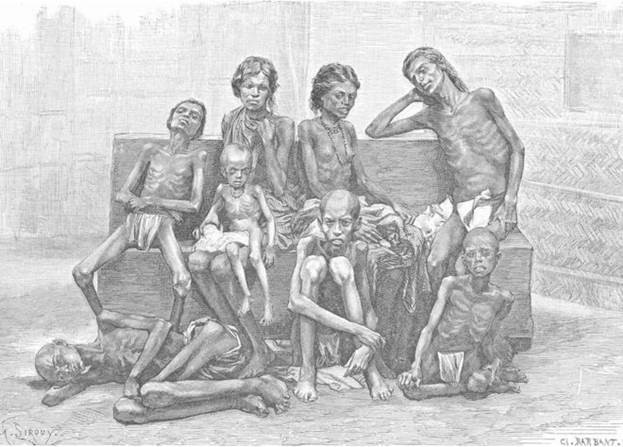
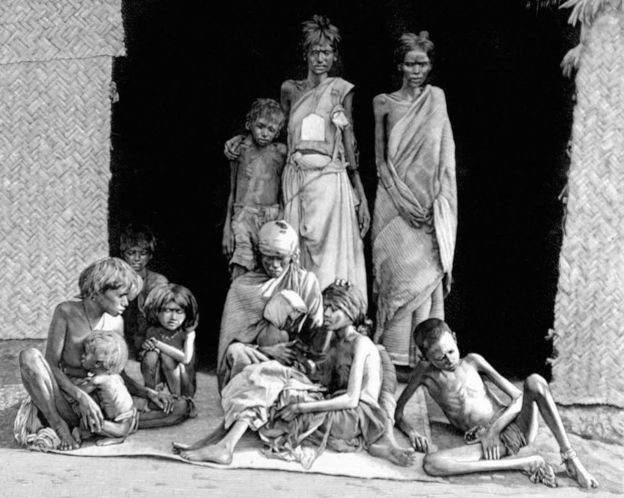
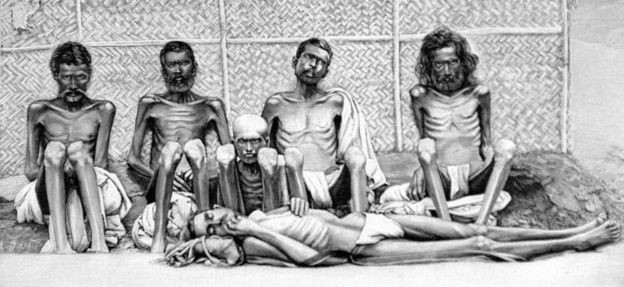
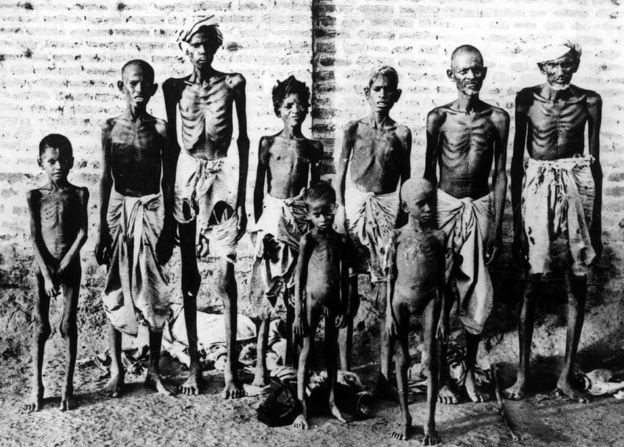
The British Raj let over a million Indians die of starvation in a little recalled incident

June 12th, 2016

By Dinyar Patel Historian, Courtesy BBC News, 11 June 2016

It has been a difficult summer for India this year. Drought and a searing heat wave have affected an astonishing 330 million people across the country.

But this summer also marks the 150th anniversary of a far more terrible and catastrophic climatic event: the Orissa famine of 1866.

Hardly anyone today knows about this famine, and the very few who may have knowledge of it, have little interest in recalling it. It elicits little mention in even the densest tomes on Indian history.

indianfemine01

Antique print of Indian famine victims, 1885

There will be few, if any, solemn commemorations. Yet the Orissa famine killed over a million people in eastern India.


indianfemine02

India’s famine in 1900

In Orissa state, one out of every three people perished in the 1886 famine, a mortality rate far more staggering than that caused by the Irish Potato Famine.

The Orissa famine also became an important turning point in India’s political development, stimulating nationalist discussions on Indian poverty. Faint echoes of these debates still resonate today amid drought-relief efforts.

‘No relief was the best relief’

Famine, while no stranger to the subcontinent, increased in frequency and deadliness with the advent of British colonial rule.

The East India Company helped kill off India’s once-robust textile industries, pushing more and more people into agriculture. This, in turn, made the Indian economy much more dependent on the whims of seasonal monsoons.

One hundred and fifty years ago, as is the case with today’s drought, a weak monsoon appeared as the first ill omen.

“It can, we fear, no longer be concealed that we are on the eve of a period of general scarcity,” announced the Englishman, a Calcutta newspaper, in late 1865.

The Indian and British press carried reports of rising prices, dwindling grain reserves, and the desperation of peasants no longer able to afford rice.

All of this did little to stir the colonial administration into action. In the mid-19th Century, it was the perceived economic wisdom that government intervention in famines was unnecessary and even harmful. The market would restore a proper balance. Any excess deaths, according to Malthusian principles, were nature’s way of responding to overpopulation.

indianfemine03

Photograph of the 1900 famine in India

This logic had been used with devastating effect two decades beforehand in Ireland, where the government in Britain had, for the most part, decided that no relief was the best relief.

On a flying visit to Orissa in February 1866, Cecil Beadon, the colonial governor of Bengal (which then included Orissa), staked out a similar position. “Such visitations of providence as these, no government can do much either to prevent or alleviate,” he pronounced.

‘Too late, too rotten’

Regulating the skyrocketing grain prices would risk tampering with the natural laws of economics. “If I were to attempt to do this,” the governor said, “I should consider myself no better than a dacoit or thief.” With that, Mr Beadon deserted his emaciated subjects in Orissa and returned to Kolkata (Calcutta) and busied himself with quashing privately funded relief efforts.

In May 1866, it was no longer easy to ignore the mounting catastrophe in Orissa. British administrators in Cuttack found their troops and police officers starving. The remaining inhabitants of Puri were carving out trenches in which to pile the dead. “For miles round you heard their yell for food,” commented one observer.

As more chilling accounts trickled into Calcutta and London, Mr Beadon made a belated attempt, one year after the famine began, to import rice into Orissa. It was, with cruel irony, hindered by an overabundant monsoon and flooding. Relief was too little, too late, too rotten. Orissans paid with their lives for bureaucratic foot-dragging.

For years, a rising generation of western-educated Indians had alleged that British rule was grossly impoverishing India. The Orissa famine served as eye-popping proof of this thesis. It prompted one early nationalist, Dadabhai Naoroji, to begin his lifelong investigations into Indian poverty.

indianfemine04

Undated picture of Indian famine victims

As the famine abated in early 1867, Mr Naoroji sketched out the earliest version of his “drain theory”—the idea that Britain was enriching itself by literally sucking the lifeblood out of India.

“Security of life and property we have better in these times, no doubt,” he conceded. “But the destruction of a million and a half lives in one famine is a strange illustration of the worth of the life and property thus secured.”

Indifferent response

His point was simple. India had enough food supplies to feed the starving – why had the government instead let them die? While Orissans perished in droves in 1866, Mr Naoroji noted that India had actually exported over 200m pounds of rice to Britain. He discovered a similar pattern of mass exportation during other famine years. “Good God,” Mr Naoroji declared, “when will this end?”

It did not end anytime soon. Famines recurred in 1869 and 1874. Between 1876 and 1878, during the Madras famine, anywhere from four to five million people perished after the viceroy, Lord Lytton, adopted a hands-off approach similar to that employed in Ireland and Orissa.

By 1901, Romesh Chunder Dutt, another leading nationalist, enumerated 10 mass famines since the 1860s, setting the total death toll at a whopping 15 million. Indians were now so poor – and the government so indifferent in its response – that, he stated, “every year of drought was a year of famine.”

A wealthier, less agriculturally dependent India is now able to ensure that this does not happen. Significant problems remain: the Indian Supreme Court recently upbraided some state governments for their “ostrich-like attitude” towards the current drought.

For such reasons, it is all the more important to remember the Orissa Famine today. This humanitarian disaster, and the others that followed, galvanized Indians into fighting against British colonial rule.

Framing and implementing a robust national drought policy, as the Supreme Court has ordered, will be a fitting way to commemorate the million Indians who perished 150 years ago.

Public Petition NOT to Re-Appoint Central Bank Governor Arjun Mahendran

June 11th, 2016

GLOBAL SRI LANKAN FORUM

Global Sri Lankan Forum, GSLF has commenced an On-line Petition” requesting Sri Lankan Government not to re-appoint the current Central Bank Governor, Mr. Arjun Mahendran due to his various malpractices and his alleged links with the LTTE Tamil terrorists in Sri Lanka and Globally.

To read the Petition and sign it, open the link below;

https://www.change.org/p/sri-lankan-goverment-central-bank-governor-of-sri-lanka-mr-arjuna-mahendran-not-to-be-re-appointed

The Full text of the Petition is as follows;

WHEREAS THE GOVERNOR OF THE CENTRAL BANK Of SRI LANKA ARJUNA MAHENDRAN HAS…

  1. Caused a massive direct loss of approximately Rs. 2 billion to the Government, by arbitrarily and suddenly changing the process of issuing Treasury Bonds issued by the government on 27/02/2015 claiming to have done so on the instructions of Prime Minister Ranil Wickremesinghe, while also causing a further loss of around Rs. 145 billion as a result of higher interest payments over the next 30 years,
  1. Caused further direct losses of more than Rs. 4 billion to the government through the fraudulent increase in interest rates as a result of the Treasury Bond issues on 27th March 2016 and 29th March 2016, in order to provide an undue advantage to connected primary dealers by indulging in further pre-meditated bond scams,
  1. Caused the Employees Provident Fund (EPF) which is under the supervision of the Monetary Board to stay away from the primary auctions for Treasury bonds on selected dates, while directing the EPF to acquire Treasury bonds in the secondary market within 3 or 4 days thereafter, thus enabling certain parties connected to the Governor, to pump-up” selected Treasury Bonds and to provided then with an opportunity to dump” the bonds upon the 2.5 million EPF members and other state institutions, and earn huge profits,
  1. Caused an increase in the interest payable on Treasury Bonds and Sri Lanka Development Bonds in the year 2015, by a massive amount of Rs. 66.4 billion, (as per the Central Bank Annual Report of 2015), through his arbitrary and fraudulent decision to change the method of issuing bonds, to auction-only”, thereby allowing the money market to be manipulated by persons and firms closely connected to him,
  2. Caused the Sri Lankan Rupee to depreciate by an unprecedented rate of 9% during the year 2015, even while recklessly dissipating USD 3,250 million out of Sri Lanka’s reserves, to secure the political objective of maintaining the value of the Rupee in the run-up to the August 2015 general election, by supplying massive amounts of forex from the country’s vital forex reserves,
  1. Caused the increase in the country’s public debt by a staggering Rs. 285 billion through the depreciation of the currency as a result of his gross mismanagement of the economy, thereby pushing the country towards a serious debt trap where the country’s debt to GDP ratio which was at a reasonable 70.7% as at end 2014, jumping to a massive 76.0% by the end of 2015,
  1. Caused the Central Bank to become the laughing stock in the global investing community by regularly making bogus and false statements to the markets about the state of the economy and in particular claiming that various forex inflows were imminent, including a blatantly false statement that an inflow of USD 1 billion was expected very shortly” from investors in Saudi Arabia,
  1. Utilized his official credit card for Rs. 14.5 million within a ten months in a reckless, wasteful and dishonest manner to pay for items of expenditure covering accommodation, food, entertainment, and other expenses at a scale and magnitude, unprecedented in the history in the Central Bank,
  1. Paid a sum of over Rs. 2.1 million said to be for the purpose of purchasing personal clothing from abroad through his official credit card, thereby claiming such personal expenditure from the Central Bank,
  1. Caused serious administrative issues within the Central Bank by providing special travel and other benefits to certain highly favoured employees, thereby causing serious dissension, distrust and disunity among the staff of the Central Bank, while also embarking on a repressive witch-hunt to punish members of the staff who he has suspected as being the whistle-blowers” of the waste, fraud and corruption perpetrated by him,
  1. Withheld the basic information pertaining to the fraudulent Treasury bond issues from the Monetary Board members as well as certain Good Governance Activists, who have requested such information, upon learning of the massive bond scams perpetrated and master-minded by him,
  1. Carried on duties stubbornly as the Governor of the Central Bank of Sri Lanka, even while being fully aware that President Sirisena (who is his appointing authority) had already requested Prime Minister Wickremesinghe to persuade him to resign from his office many months ago.
  1. The removed Chairman of the Lankaputhra Development Bank Limited (LDBL) by the Department of Bank Supervision is being protected by the Central Bank Governor. The Department of Bank Supervision of the Central Bank informed that the Chairman of the LDBL should no longer continue to serve in the said post due to that (i) he did not possess the professional qualifications required as per Section 3 (5) (IX) of the Banking Act, Direction No. 12, of 2007 and (ii) despite of previous warnings, the Chairman had unheeded them and failed to protect the Bank’s confidentiality and thereby failed to fulfill the duties and responsibilities of the post of the Chairman.   
  1. Alleged connections and dealing with LTTE Tamil terrorist organization and convicted financial fraudulent individuals’ detriment to the national security of Sri Lanka.
  2. Appointment of Arjun Mahendran as the Central bank governor is gross violation of the constitution as he is not a Sri Lankan citizen.
  1. Arjun Mahendra is a signatory of a leading bank in a middle East country where he was working prior to his appointment as the Central Bank Governor hence not eligible to hold such high profile post on the basis of conflict of interest”.
  1. He has not given oaths to protect the unitary status of Sri Lanka etc. that all government heads/ employees must do. This also a violation of the Article No 61 of the Chapter 1X of the constitution of Sri Lanka.

CONSIDERING THE ABOVE-STATED ACTS OF CORRUPTION, WASTE, FRAUD, AND POLITICALLY-BIAS OF GOVERNOR MAHENDRAN, WE, THE PEOPLE OF SRI LANKA OR ORIGIN FROM SRI LANKA DEMAND FROM PRESIDENT SIRISENA THAT

  • Arjuna Mahendran’s term of office as Governor NOT be extended beyond 30th June 2016 under any circumstances, thereby ensuring that the said Arjuna Mahendran is NOT permitted to continue with his unacceptable behaviour any longer, as well as NOT place the country’s economy in further danger.
  • Arjuna Mahendran’s actions and conduct be probed by an independent, bi-partisan and knowledgeable Commission of Inquiry, with wide powers.
  • Arjuna Mahendran’s direct accomplices and others who assisted, connived, acted-in-concert, aided, abetted, and co-operated with him in the commission and cover-up of all these fraudulent activities, be also probed and exposed.

WE, THE PEOPLE, FURTHER DEMAND THAT THE STATE RECOVERS THE PUBLIC PROPERTY SO DEFRAUDED AND MISAPPROPRIATED ARJUNA MAHENDRAN AND ALL OTHER PERPETRATORS OF THESE MISDEEDS AND ACTS OF COVER-UP, AS WELL AS SEVERELY PUNISH WITH THE FULL FORCE OF THE LAW, ALL SUCH PERSONS SO THAT THEY WILL NOT BE ABLE TO HEREINAFTER EMBARK ON ANY FRAUDULENT ACTIVITIES IN SRI LANKA OR ELSEWHERE IN THE WORLD.   

Thank You,

GLOBAL SRI LANKAN FORUM

“SALAWA – WISALAWA AND MAN MADE DISASTERS TO BE AVOIDED”

June 11th, 2016

Sarath Wijesinghe Solicitor and Attorney- at –law- A former Secretary of the Bar Association

 Salawa/ Kosgama Tragedy

Slawa” is in a suburb with a mixture of a township and village in the famous and traditional Seethawaka” Kingdom in Sri Lanka on High Level Road not too far from Colombo the Capital. It is one of the most fertile areas in Sri Lanka famous for fruits, vegetables, industries, greenery water falls river/canals and cultivation of small and commercial crops such as tea rubber and coconut. It is called KOSGAMA” a village of jack fruit- the fruit only second to rice for Sri Lankans. People living there were happy and contended fortunate to possess natural beauty and the resources for agriculture with abundance of water and smooth climatic conditions. Plywood factory thriving in one era was closed for mismanagement and the premises were utilized by the army for storage of ammunitions. We propose to discuss the human tragedy and wanton destruction to the property and livelihoods of citizen to explore possibilities of remedial and preventive measure rather than ponder on security aspects or on the blame game. Salawa” is destroyed beyond recognition /repairs as it is and the blast has destroyed the entire township suburbs livelihood of the community and the residences which is a common knowledge to the citizen today. Today Salawa” in Kosgama” is a ghost town/area with ruins and full of mud and soil with ruminants of destroyed houses and business premises. It is synonymous to Visala” a township in Jambudeepa” – India completely destroyed and The Roman Empire destroyed due to struggles with the Barbarians in 117 CE with large scale loss in 376 all due to man-made disasters. Court of inquiry and many other inquiry panels and personalities are appointed by the government to find the cause and source of the tragedy. But the fact remains whoever is to be blamed whatever is the cause it is a man-made disaster that should and could have been averted if proper precautionary and safety matters have been enforced and carried out. We are worried and concerned and there is lot to say and make remarks on the issue- yet patiently waiting for the outcome of the inquires.

National Security / Priority

National Security is the main area to be considered as this incident will lead to many other unforeseen incidents and trouble makers can make use of the situation for their agenda to destabilise the country. USA, Israel, USSR, India, China and many countries in the global community give priority to security over any other consideration. We hear of accusing each other on the origin and magnitude of the disaster, but less on preventive measures and future strategies to control future incidents on similar magnitude. It is unhappy to discuss trends of distress and destruction of a nation or citizen, but it is necessary to discuss trends to make it right and come out with solutions for man-made disasters. Destruction ends are most destructive and continuous. It takes place after the one another and fears to think of what comes next. Most disasters are manmade and few are natural. We live against nature with wilful destruction of the Mother Nature protecting us and living beings and the entire living beings paying for the sins of few selfish individuals.We went through Tsunami years ago which is a natural disaster affected mainly the sea cost of many countries with wanton destruction and deaths of hundreds of thousands of animal kingdom. Recent disasters are wanton and continuous, one after the other. Floods, landslides and then the Salawa” disaster, all of which are fully or partially man made.

Major Flood ever in the history after 24 years

Floods have affected 301,602 with 21,484 displaced in 25 districts with an impact on 300,000 Sri Lankans. Deforestation, sand mining, excavations for historical monuments for sale, Clarence of jungles including the sanctuaries by politicians, blocking of the water flow to rivers and the sea by construction blocking paths, filling of lands with no proper plan for sale are some of the contributory factors the Ministry of Environment and the government is unable to control mainly due to political interference and favouritism. In the west the ministry of environment is as powerful as the portfolios of the leader of the state. In England and Europe it is extremely powerful ministry that any project will have to be vetted by the Ministry of environment. This is the worst flood after 24 years and the worst in the history and the worst to come due to continuous destructions of environment in large scale. Classic but a sad example is that some powerful persons close to the temple of tooth are said to excavate the land with Baco-heavy machinery machines for gem mining indication how political and financial power overpowers governance. Rivers have turned into lakes due to sand mining in the river preventing for  water flow to the sea thereby the sea water is flown back to rivers catalysing floods and landslides. Waste is dumped creating mountains of garbage with a threat to the citizens with no proper plan or a strategy Water falls are drying due to deforestation and constructing unplanned Hydro power. Water is contaminated by multinational companies with their wish and will with the power of money and international politics powered by Fat Cat NGOs powerful in  Kelani” River being the most polluted. Ministries of Health, Environment and other line Ministers and Ministries are wither unconcerned, busy or not interested. Citizen is keen interested and worried but helpless in this most politically polarized society with the blame game on the opposition and the previous rulers governors lecturing like saints. Ground work is now set and progress for a future major Floods by continuing the same process in living against the environment and wanton destruction of Mother Nature by ourselves. We lost 1.6 billion on tea due to floods which is  fraction of the loss incurred. It is not foreigners or any unforeseen power that destroys us. We are responsible for our own destruction by ruining our environment, culture and unplanned strategies’ for the future of the children and the Nation we love so much.

Land Slides

Sri Lanka has not experienced major disasters of this magnitude until the unplanned developments and destruction of the environment took place in the name of development and using our natural resources and heritage for money. Money has changed our values. Our children are no longer our precious valuable treasures we protect as eyes. They are misused by close friends or relatives and transform for money with the influence of pounds and dollars or the drugs and other unlawful addictions. Recent landslide which is also is the largest a most dangerous ever in the history has buried hundreds of citizens alive with the destruction of a large area leaving potential landmine areas. Main causes of the land mines also due to deforestation, unplanned constructions, clearance of the jungle, planting and removing plants with no planning and checks on mountains, excavations, Chena Cultivations” with clearance of the forest for timber and houses. Threat of landmines continues with the continuous destruction and it appears that there is non control over the origins of this manmade disasters leading to floods and landslides. Wild life is diminishing fast due to perching. We will no longer be the country of elephants, gems and wild with wild animals and forests like Sinharaja” with rare animals and plants.

Way Forward

We are in a main cross road in our history on the existence of the planet and our nation in danger of being gradually destroyed by actions by our own self-destruction on environment and way of life. Our forest area is reduced drastically, wild life is diminishing, water all over is contaminated, landslides and floods are rampant, water flow is blocked and low lying ares are being filled for unplanned development, citizen consumes unhealthy poisonous food and water including junk food sold by multinational companies powerfully settled in Sri Lanka with political and power of dollars and pounds, sand mines and soil excavation is uncontrolled, water falls streams and rivers are drying, weather pattern is changing for worse and unfortunately governance is either inefficient, incompetent or not interested. If immediate steps are not taken all will sink together whatever the race or party they belong to. Minister of environment, Health and other line Ministers and Ministries will have to work hard with a strategy and a plane considering this is a national issue, with the corporation of all parties and races. NGOs will have to divert the attention to nation building instead of clamouring for human rights and other political rights leaving it the politicians to handle. The culprits of all three major man-made disasters are the rulers who were responsible for the protection of the environment and the selfish citizens and companies continuously and mischievously destroying the environment and culture of the country they live in. The governance should be firm steady and plan out with a vision for the future to meet the challenges. It is too late now for Long lectures, petting, and mild requests as the mischief makers have got the taste of money due to the ignorance and inefficiency of the Governance. It is time for the rulers to shed shame, differences and get together to rid this tragedy which is imminent unless immediate drastic steps are taken.

Writer could be reached on  – Sarath7@hotmail.co,uk

DEDICATION  IN EELAM WAR IV.

June 11th, 2016

KAMALIKA  PIERIS

Eelam War IV was won due to the dedication of those who participated in it. The commanders of the armed forces were confident of victory and, for the first time, the forces experienced a firm political commitment to win.  Their morale went up and they fought with great dedication.  Unlike in previous years, there were no large scale desertions and disobeying of orders.

Gotabhaya Rajapakse said, the soldiers realised their responsibility to the nation and fought without complaint.  They fought day and night, under continuous fire.  They did not ask for anything extra as a reward for their sacrifices.  They knew their country depended on them. .  Their perseverance and sense of national duty won us the war”.   This came at a price. 6000 troops died, 5000 were disabled and 20,000 were injured. Some soldiers are shell shocked and out of their minds.

There were numerous acts of heroism which the public do not know. A monk who worked with injured soldiers said that soldiers, even when disabled declared that they wished to return to the front. They were ready to sacrifice their lives in the final battle.  There was a high standard of discipline. There was not a single instance where the army was found wanting in its conduct towards women. Soldiers have never been accused of rape.  The LTTE had raped many of its women.

Troops suffered untold hardships in the battlefield. There was thirst and exhaustion. The Malaysian army faced insurgents armed only with rifles.   The Sri Lanka soldier faced an enemy equipped with sophisticated weapons. Army got its new ammunition only in 2008,    even then they never had all the ammunition necessary. Soldiers fought in heavily mined territory and .many lost their limbs.  There were no mine plucking machines   and the engineers had to de-mine the area.working ‘blind’, while LTTE fired at them.  Touching slowly with their hands, they detonated the mines using   S-Lon tubes.   This was done under fire almost every day.  Many engineers sustained injuries, most lost eyes, arms and legs.

Air Force declared that it had been stretched to the limit and   that what it had had achieved with available resources was tremendous. The Indian Air Chief had admired the way they had used its limited resources.    The Air Force fought the war by itself. Pakistani pilots were not involved. Pilots performed under trying conditions. They carried out 1000 missions in the Vanni, amidst civilians. They had to airlift 500 army personnel using helicopters meant for 30 persons.

They underwent much hardship. When they were short of pilots, available pilots went up 3 and 4 times a day. ‘This is very tiring for a pilot.’ Surveillance pilots risked safety to obtain real time imagery. They burnt the midnight oil peering into the screen to catch enemy moves on the grounds.  They were on surveillance for 6-7 hours at a stretch.  Pilots bravely went as low as 7000 feet to attack targets.  Around 38 pilots and 430 other officers and rankers died, about 350 were wounded.

The engineers and technicians also responded magnificently.They forgot about 24 hours notice. In an emergency, the time available for the technician was counted in seconds.  Aircraft were returned to the flight lines in record time. If a plane was to fly at 6 am the technicians started loading bombs around midnight.  For each jet they had to load eight bombs each weighing 500 kg Technicians worked round the clock to patch up damaged aircraft.  They sometimes worked continuously for 3-4 days. They innovated when spare parts were delayed. Battle damage and unserviceability did not deter them.  They once took a badly damaged helicopter which was going to be destroyed and repaired it within a few hours.They coaxed tired engines back into fighting mode. They took a life expired engine, stripped it, and put it together again.The electronics specialists kept the electronic systems going despite logistical and maintenance problems.

The navy also showed considerable dedication.  During the final blockade off Mullaitivu, Navy staff did not want to go on leave till they had finished off the LTTE.  The sailors had to stay in great discomfort on the seas, in small boats filled with equipment, with hardly any room to move. They had to swim to get there and stay in their wet clothes all night. They endured all this discomfort willingly.

Military personnel injured in the war were treated at the government hospitals of Colombo, Anuradhapura, Sri Jayawardenapura, Kalubowila and Kandy. Anuradhapura hospital had the biggest load. Anuradhapura staff nursed thousands of injured soldiers with great dedication. The army gave them a special upahara award. Anuradhapura sent its difficult surgical cases to Kandy.  They were looked after by the Kandy hospital staff with no additional assistance. Routine operations were cancelled   and surgeons worked round the clock.   All worked willingly, no one grumbled, though their security was also under threat. The minor staff had their leave cancelled but did not complain. The injuries were gruesome and required complicated surgery. In the orthopedic wards,   no one had to have a higher amputation, no one died and there were no serious infections in spite of the severely contaminated wounds.  At times there were over 100 seriously injured soldiers. Five beds in each ward were set aside for them and none of them were ever put on the ground.

The dedication of the Home Guards, now known as Civil Defence Force should not be forgotten.  This   was a force made up   of youngsters from remote areas, who were given a single barrel shot gun and asked to provide security for their villages, which had become soft targets for the LTTE. Though poorly armed and outmanned the home guards refused to budge and paid with their lives while trying to protect others from the LTTE .615 home guards both male and females were been killed.. http://archives.dailynews.lk/2010/06/18/fea09.asp

ඇවිලුන ගිණි මැද වැයෙන වීණා !!

June 11th, 2016

තේජා ගොඩකන්දෙආරච්චි

සමස්ත ශ්රී ලාංකික ජනතාවම යලිත් වරක් තිගැස්මට පත්කල මහා විනාශයක් යලිදු සිදුවිය. කොස්ගම සාලාව යුද හමුදා කඳවුරේ ආයුධ ගබඩාව පුපුරා ගිය අතර, එම ස්ථානය වටා කිලෝමීටරයක පමන දුරකින් පිහිටි භූමියම සුන්බුන් බවට පත්විය. එමෙන්ම එහි බලපෑම ඊටත් වඩා බොහෝ දුරට යනතුරු දක්නට ලැබිනි. මේ සම්බන්ධව මාධ් තුලින් විවිධ අදහස් ගලා ගියේය.


රජයට විරුද්ධ පිරිස් මේ සිද්ධියේ වගකීම රජය පිට පටවන්නට පියවර ගත් අතර සුපුරුදු පරිදිම රජයට පක්ෂපාතී පිරිස් මේ සිදුවීමත් රාජපක්ෂවරුන්ගේ ගිණුමටම බැර කරන්නට උත්සාහ ගනු පෙනුනි. මේ සියලු කතාබහ මැද සේනාධිනායකයා වූ ජනාධිපති සහ ආරක්ෂක ලේකම්වරයා දින 2 ක් පමන ගතවන තුරු දකින්නටවත් සිටියේ නැත. ජනාධිපතිට නම් පුවත්පතකින්වත් මෙය දැන ගන්නට නොලැබුනා වන්නට පිලිවන. අවසන දින දෙකකට පසු ආරක්ෂක ලේකම්වරයා කට ඇරියේය. ඔහු පැවසුවේ හමුදාවේ ගිනි නිවන අභ්යාසයකදී මෙය සිදු වූ බවයි. කඳවුරේ තිබුනේ මුලින් තිබූ ආයුධ ප්රමාණයෙන් සියයට දහයක් පමනක් බවත්, හානි වූ නිවෙස් ගණන 75 ක් පමන බවත්,මේ තුල ජීවිත හානි එකකට වඩා වාර්තා නොවී ජනතාව ගලවා ගත හැකි වීම වාසනාවක් බවත් ඔහුගෙන් කියැවිනි. නමුත් මේ දිවි ගලවාගත්වාසනාවන්තයින්බලන්නට යාමට ඔහුට අවශ්යතාවයක් නොවීය.


මෙය නම් ජීවිත කාලයටම ඇසූ අපූරු අභ්යාසයකි ! මේ අඳබාල ප්රකාශය ගැන මාධ්යවේදීන් විසින් රජයෙන් විමසූ විට මාධ් සාකච්ඡාවට සහභාගි වී සිටි ඇමතිවරුන්ගේ දිව පැටලුනු, ගොලුවුනු බව දක්නට තිබිනි. ඔවුන් වැටුන අමාරුවෙන් ගොඩ ගන්නට වහාම ඉදිරිපත් වූ ජනමාධ් නියෝජ් ඇමති කරු පරණවිතානඔබ තුමන්ලා අහන ප්රශ්ණවලට මොනව හරි කියන්න ඕනනේ. නිසා කියන්න ඇතියනුවෙන් පැවසීය. මෙම පිලිතුර ඇමති රාජිත සේනාරත්න තහවුරු කලේය. දින 2 ක් ගතවීත් මේ ගැන කැබිනට් මණ්ඩලය තුල සාකච්ඡා වුන බවක් හෝ ආරක්ෂක ලේකම්වරයා කුමක් කියන්නට යන්නේද හෝ ඔවුන් කිසිවකු නොදැන සිටි බව මෙයින් තහවුරු විය. සම්මුතියක් ගැන කියූවත් රජයේ බෙදී වෙන්වී ඇති හුදෙකලාමය ස්භාවය මෙයින් පැහැදිලි වේ. මෙවන් ප්රකාශ සහ පිලිතුරුවලින් පිළිබිඹු වන්නේ රජයේ වගකිවයුත්තන්ගේ ඇති මන්දබුද්ධික බවද එසේත් නැත්නම් ජනතාව සහ මාධ්යවේදීන් සම්බන්ධව ඔවුන් තුල ඇති සෝපාහාසී ආකල්පයද යන්න සිතාගත නොහැක. මෙය පමණක් නොවේ. ශ්රී ලංකාවට එකපිට බල පෑ මහා විපත්වලින් ජනතාව දහස් ගණන් අනාථව සිටියදී ඇමතිවරුන් විසින් මිල දී ගන්නට සැරසෙන සුඛෝපභෝගී වාහන පිලිබඳවද රාජිත සේනාරත්න පිලිතුරු දුන්නේ ඉතාම ලැජ්ජා නැති, දරදඬු පිලිවෙතකිනි.


අතර උතුරු පලාතේ දේශපාලකයින් මේ සිදුවීම පිට දමා ලහි ලහියේ උතුරේ හමුදා කඳවුරු ඉවත් කරවා ගැන්මට කැස කවති.


කෙසේ වුවද මෙවන් විපතකදී මූලික වගකීම පැවරෙනුයේ රජයටය. එබැවින් ආරක්ෂක ඇමතිවරයා සහ ලේකම්වරයා ජනතාව වෙත විවෘත විය යුතුය.


මේ අතට චෝදනා එල්ල වන පරිදි යහපාලනකාරයින් සමග තරහට ගෝඨාභය රාජපක්ෂ මෙය කෙරෙව්වත්, රජයේ සැඟවුන න්යාය පත්රය අනුව රජය විසින්ම මෙම අපරාධය කෙරෙව්වත් මෙහි ඵල විපාක භුක්ති විඳින්නේ සාමාන් ජනතාවම පමනි. අනික ඔය කියන ආකාරයට රාජපක්ෂවරුන් මීට සම්බන්ධනම් ඉන් පිළිබිඹු වන්නේත් රජයේ ආරක්ෂක විදි විධානවල ඇති දුර්වල බවයි. ජනතාවට සිදු වූ ව්යසනයේ බර සැහැල්ලු කරන්නට එය නිදහසට කරුණක් නොවේ.


කරුණාසේන හෙට්ටිආරච්චි කියන පරිදි පණ බේරුන ජනතාව වාසනාවන්තය. එසේ නැතිනම් සිදුව ඇති විනාශයේ හැටියට මිනිසුන්ගේ පණනල ඉතිරි වීම ලොකු දෙයකි.


විනාශයට හසුව සුන්බුන්ව ගිය, හානි වුන නිවෙස්වල දර්ශන රූපවාහිනී නාලිකා තුලින් දක්නට ලැබින. එම දසුන් ඕනෑම කෙනෙකුගේ හද කම්පා කරවයි. කෙනෙකු හැදී වැඩී, අධ්යාපනයක් ලබා, රැකියාවක් ලබාගෙන, විවාහ වී දරුමල්ලන් හදාගෙන නිවසක් සදාගෙන තැම්පත් වීම අප සමාජයේ සාමාන් පිලිවෙතයි. මැති ඇමතිලාට මෙන් මේ මිනිසුන්ට ධන උල්පත් ගලා එන්නේ නැත. නිවාස ණයක් ගෙන නිවසක් සාදාගෙන, වාරික ක්රමයට ගෙවීමට ගෘහ භාණ්ඩ, විදුලි උපකරණ ටිකක් ගන්නේ යම් ප්රමිතියකින් යුතු ජීවිතයක් ගෙවීමටය. අතර තම දරුවන්ට අධ්යාපනය ලබා දෙන්නටද ඔවුහු මහත් කැපවීම් කරති. තම ණය වාරික ගෙවාගෙන, දිනෙන් දින වැඩිවන ජීවන වියදමත් දරාගෙන, තම දරුවන්වත් මේ ණය චක්රයෙන් එගොඩ කිරීමේ අදිටනින් කටයුතු කරන මේ ජනතවට, තම ජීවිත මුල සිට ඇරඹීම තබා, අර රූප රාමුවල දුටු පරිදි සුන්බුන් වලට යටව, මිරිකී දුහුවිලි වැකුන ඒවා වෙනුවට අලුත් පාසල් පාවහන් යුගලක්වත් මිල දී ගැනීම පවා පහසු කාර්යයක් නොවේ. මේ ජීවිත පිලිබඳ අපේ දේශපාලකයින්ට වැටහෙනවාදැයි සැක සහිතය. කෙනෙකුගේ පණනල ඉතිරි වූ විටඉතිරි ටික කොහොම හරි කර ගන්න බැරිදැ යිකියා ගැලවෙන්නට ඔවුන්ට හැකිද? ඉතා අසීරුම කොටස ඉතිරි ටික කර ගැන්මය.


මැයි මස මැද දී ඇති වූ ජල ගැලීම් හා නාය යාම්වලින් විපතට පත් වූ ජනතාව ගැන කතා කල ජෝන් අමරතුංග ඇමතිවරයාගං වතුරට කැඩිච්ච ගෙයක් හදාගන්න අපි රු. 10,000/- ක් දෙනවායි ආඩම්බරයෙන් පැවසීය. නිසැකවම වයස නිසා ඔහුට මතක තිබෙනු ඇත්තේ තමා තරුණ කාලයේ තිබූ ගණන් හිලව් වන්නට ඇත.නැතිනම් ඉතින් රු. 10,000/-  කින් අද කාලයේ ගඩොල් පේලි 2 ක් වත් බැඳගන්නට හැකිද යන්න ගැන ඔහුට වැටහීමක් තිබිය යුතුය. කල යුතු හොඳම දේ මෙවන් මතකය පිලිබඳ ආබාධ වලින් පෙලෙන දේශපාලකයන් විශ්රාම ගැන්වීමය. එය ඔවුන්ගේ ත්, රජයේ ත් සෞඛ්යයට හිතකර වන්නේ සැබැවින්ම මෙවන් පුද්ගලයින්ට ඇමතිකමේ වැටුප්, ආරක්ෂාව, නිල නිවාස, යාන වාහන ආදී වරප්රසාද සපයමින් ඔවුන්ව නඩත්තු කිරීම නිකම්ම මුදල් අපතේ හැරීමක්  මෙන්ම රාජ් මුදල් අවභාවිතාවක් වන හෙයිනි. මන්ද මේ නාස්ති වන මුදල් වලට ඍජුව හෝ වක්රාකාරව දායක වන්නේ රටේ මහජනතාවයි. ආපදාවලට ලක්ව අසරණවන ජනතාවද ඊට අයත්ය.


රජය මගින් අනිවාර්යයෙන්ම මේ අගතියට පත් පිරිස්වලට වන්දි ගෙවනු ඇත. නමුත් මෙම අලාභ තක්සේරු කරන්නේ කෙසේද? එබැවින් සාමාන්යයෙන් මෙවන් අවස්ථාවකදී වන්දි මුදලක් හිමි වන්නේ යම් පොදු ගණනය කිරීමක් ඔස්සේය. මේ මුදලින් තමන් ගෙවූ මුල් ජීවිතයට යලි පිවිසෙන්නට හැකි අය මෙන්ම නොහැකි පරිදි ප්රමාණවත් නොවන අයත් සිටිති. මන්ද යමෙකු තම නිවෙස ඉදිකරන්නේ, යම් භාණ්ඩයක් මිල දී ගන්නේ තමාට හැකි ඉහලම ප්රමිතියෙනි. නමුත් පොදු මිණුම් දඬු අනුව එම ප්රමිතිය පවත්වාගෙන යාම අසීරු කරුණක් බව පැහැදිලිය


නමුත් මේ සම්බන්ධව නම් රජය පාර්ශ්වයෙන් කරන්නට දෙයකුත් නැත.


එබැවින් පණ බේරුන අයවාසනාවන්තයැයි නිකම්ම කටට ආවාට කීම හොඳ දෙයක් නොවේ. භෟෙතිකමය වටිනාකම්වලට හුරුවුන සමාජයක හුස්ම පොදක වටිනාකම දෙවන තැනට වැටෙන්නේ නිතැතින්මය. විපත සිදුවන ඇසිල්ලේ තම පණ බේරා ගැන්මට පලායන මිනිසුන්ගේ නිවාස කොල්ල කෑමට තවත් පිරිසක් පෙලඹෙන්නේ එහෙයිනි. තමන්ට සිදු වූ විපතේ ප්රමාණයත්, තම ජීවිත යලිත් මුල සිට ඇරඹීමේදී මුහුණ දෙන්නට සිදුවන අසීරුතාත් ඔවුන්ට වැටහෙන්නේ සිද්ධියේ කම්පනය පහව ගිය ඉනික්බිතිය


ඊලඟට මෙවන් ජනතාව සම්බන්ධව ආපදා අධාර සැපයීමේ ක්රමවේදය අපි මාධ් තුලින් දකිමු. මෙසේ ආධාර සපයන බොහෝ දෙනෙකු තුලඅනුකම්පාවමිසසහානුකම්පාවඇති බවක් නොපෙනේ. දැන් දැන් මාධ් තුලින් දේශපාලකයන් මුල්වවිපතට පත් ජනතාවට ආධාර බෙදා දෙන උත්සවපවත්වනු පෙනෙයි. විශේෂයෙන් කුඩා දරුවන් පෝලිමේ පැමිණ තම සපත්තු කූට්ටම හෝ  පොත්පත් රැගෙන එය තම අතට පත් කරන දේශපාලකයාට වැඳ නමස්කාරකරමින් යන අයුරු මාධ් ඔස්සේ අප නෙත ගැටේ.


මෙසේ ආපදාවලට ලක්වන ජනතාවට ආධාර ලබාදීම මාධ් හෝ දේශපාලන සංදර්ශනයක් බවට පත් කරන්නේ ඇයි? මේ ආපදා, විපත්වලට මුහුණ දීමට ඔවුන්ට සිදුවුනේ තම වරදක් නිසා නොවේ. ඊට ඔවුන් වගකිවයුතු නැත. මෙවන් වින්දිත පිරිස්වලට අවශ් සහය සැපයීම මහජන නියෝජිතයින්ගේ වගකීමක් විනා එය දුක්බර මූණක් ආයාසයෙන් මවාගෙන, තම ආනුභාවයෙන් මහා විශාල දෙයක් කරන පරිදි උත්සව පවත්වමින් කල යුත්තක් නොවේ. මෙවන් සිදුවීමක් නිසා කෙනෙකුගේ පණ බේරීම වාසනාවක් යයි කෙනෙකු සිතනවානම්, වාසනාව පණ බේරුනු පුද්ගලයාට ප්රායෝගිකව හැඟෙන පරිදි ඔවුන් හා එක්ව යලි ජීවිත පෙර සිටි තත්වයට ගෙන ඒමට කටයුතු කරනවා මිස තම ප්රසිද්ධිය තකා ආධාර මලු බෙදමින් මල්ල සඳහා ඔවුන්ගේ කොන්ද පාත් කරවීම එතරම් සුදුසු නැත.


මැයි මස සිදු වූ ජල ගැලීම් සහ නාය යාම් , ජුනි මස කොස්ගම සිදු දූ පිපිරීමද යන දෙකම ආපදාවන්ය. එකක් ස්වභාවික ආපදාවක් වන අතර අනෙක මිනිස් ක්රියාකාරකම් නිසා සිදු වූ ආපදාවකි. නමුත් ආකාරයේ ස්වභාවික ආදාවලට මුල් වූ හේතු විශ්ලේෂණය කලහොත් ඊට මුල් වී ඇත්නේද නොසුදුසු මනුෂ් ක්රියාකාරකම් බව වටහා ගත හැක. අනවසර ඉදිකිරීම්, වන විනාශයන්, වැලි ගොඩ දැමීම් වැනි වේලේ ලාභය බලමින් හා ප්රතිවිපාක පිලිබඳ නොතකමින් ආත්මාර්ථකාමී සහ අනර්ථකාරී ලෙස සිදු කරන මනුෂ් ක්රියාකාරකම් බොහෝවිට මෙවන් විපත්වලට මුල් වෙයි. මෙම තත්වයට වගකිව යුතු අප රටේ දේශපාලකයින් බව මහජනතාවට රහසක් නොවේ. අවසන මේ සියල්ලේ විපාකවල ගොදුරු වන්නේ සාමාන් ජනතාවයි.


දැන් ඉතින් මේ සියලුම වින්දිතයන්ට සාධාරණ වන පරිදි වන්දි ගෙවීමට රජයට සිදුවනු ඇත. නමුත් සියල්ල තිබියදී ඇමති මණ්ඩලයේ 30 දෙනෙකුට රු. කෝටි 117.5 වාහන ගෙන්වීමට රජය විසින් පරිපූරක ඇස්තමේන්තුවක් මගින් අනුමත කරගෙන ඇත. මේ සම්බන්ධව මහජනතාව තුලින් නැගී විරෝධය හමුවේ එම ක්රියාව, ආපදාවන්ට ලක් වූ ජනතාවට වන්දි ගෙවා අවසන් වන තුරු අත්හිටුවීමට අගමැතිවරයා නියෝග කල බව දැන ගන්නට ලැබිනි. නමුත් මේ ඇමතිවරුන්ට වාහන නොමැති බවත්, ඔවුන් ගමන් කරන වාහන සමහරක් කුලී පදනම මත ලබාගත් ඒවා බවත් පෙරදින පැවති මාධ් හමුවේදී අකිල විරාජ් ඇමතිවරයා පැවසීය. එමෙන්ම රාජිත සේනාරත්න ඇමතිවරයාද මෙය සාධාරණීකරනය කලේය. ‘ඇමතිවරුන්ට ගමන් බිමන් තිබෙනවා. ඔවුන්ට මේ නිකම් අබලන් වන වාහන වල යන්න බැහැ.’ ඔහුගේ හේතු දැක්වීමයි. එසේ නම් ක්ෂේත් වැඩ වල යෙදෙන රජයේ නිලධාරීන් ගමන් යන්නේ කෙලෙසද?  මේ ඇමතිලා ෆෝ වීල් ඩ්රයිව් ඇතුලු අනිකුත් නවීන අංගෝපාංග සහිත වාහන ඉල්ලන්නේ සාමාන් වාහනයක යාමට නොහැකි අබලන් මාර්ග තිබෙන නිසාය. ඊට පිලිතුර, මාර්ග පද්ධතිය සංවර්ධනය කරනු වෙනුවට එහි යා හැකි වාහන ගෙන්වීමයි. රාජිත ඇතුලු ඇමතිලාගේ ප්රශ්ණ විසඳන ක්රමවේදය මෙය විය හැකියමේ මේ අමාත්යංශ සහ මේ මේ ඇමතිවරු සිටිනවා යයි අපට මතක් වූයේ වාහන අනුමත වූ ඇමතිවරුන්ගේ ලැයිස්තුව දුටු විටය. සමහරවිට ඔවුන් මෙතෙක් වැඩ නොකලේ වාහන නැති නිසාද යන සැකයක් මතුවේ.


අනුව සිතාගත හැක්කේ මේ තාවකාලික අත්හිටුවීම වැඩි දුරකට නොයන බවය. මන්ද එයත් සමහරවිට ජනතාගේ ඇවිලුනු කෝපාවේගය හමුවේ ලබාදුන්මොකක් හෝ විසඳුමක්විය හැකි බැවිනි


මේ අතර ජනාධිපතිවරයා මේ කිසිදු සිදුවීමක් ගැන වගේ වගක් නැතිව විශේෂයෙන් ඇනවුම්කල ටී ෂර්ට් සහ කැප් තොප්පි ඇඳගෙන ලෝක සාගර දිනයට ගොඩබිම පා ගමන් යයි. තම ජනාධිපති මන්දිරය ජනතාවට ප්රදර්ශනය කරයි


 කෙසේ වුවද මේ සියලු ආරවුල් හා වෙනත් අනවශ් ප්රමුඛතා මැද්දේ පසුපසට තල්ලු වන්නේ ආපදාවලට ලක් වූ ජනතාවගේ මූලික අවශ්යතාවන්ය. මීරියබැද්දේ මිනිසුන්ගේ ප්රශ්ණවලට තවමත් පිලිතුරු ලැබී නැත. අරණායක ජනතාව ගැන කවර කතාද? කොස්ගම ජනතාවටත් තව කොපමන කලක් දුකසේ තැන් තැන්වල සිටින්නට වේ දැයි නොදනී. සමහරවිට ඇඳිවත පමනක් ඉතිරි වූ ඔවුන් මාධ් තුලින් දකින්නේඅසරණයන වචනයත් සමගය. මෙසේ හරි හමන් වහලක් හිසට නැතිව, ආධාර මගින් යැපෙන්නට බල කරන ජීවන රටාව තුල ආත්ම ශක්තියෙන් හීන වූ පරපුරක් බිහිවීම නම් වැලැක්විය නොහැකි වනු ඇත. විපත වූ ඇසිල්ලේ රටේම ජනතාව උපකාරයේ හස්තය දිගු කලත්, තම ජීවන බරත් කර තබාගෙන අසීරු ගමනක යෙදෙන ඔවුන්ටත් එය හැමදාටම කල නොහැකිය.


ඉන්පසු හිමි හිමින් කාටත් අමතකව යන මේ මිනිසුන් වෙතට ගොස්එදා ඔබේ පණ බේරීම කොතරම් වාසනාවන්තදැයි ඇසුවොත් කුමන අන්දමේ පිලිතුරක් ලැබෙනු ඇත්දැයි ආරක්ෂක ලේකම්වරයාට සහතික විය හැකිද?


අතර සැබැවින්ම වාසනාවන්ත වූ මැති ඇමතිවරුන් ඊලඟ මැතිවරණ සමයේදී තම සැප වාහනවල නැග, ඇඟ තලා ගන්නේ නැතිව ෆෝ වීල් යොදාගෙන, කබල් පාරවල්වල සුන්බුන් උඩින් ගොස්අපි බලයට ආවම ඔබ තුමන්ලාගේ ප්රශ්ණ සියල්ල විසඳනවායි කියමින්, දෑත් එක්කර වැඳ ඡන්දය ඉල්ලනු ඇත !

ගින්නෙන් දවා, අළු නොවූ අරගලයක ලිපි මාලාවේ ශතකයක මතකය

June 11th, 2016

ධර්මන් වික්‍රමරත්න         

ශ්‍රී ලංකාවේ දේශපාලන ව්‍යාපාරය පිළිබදව සිදුකරන ඕනෑම සංවාදයකදී ජනතා විමුක්ති පෙරමුණ(ජවිපෙ) මඟහැර යා නොහැක. රෝහණ විජේවීර විසින්ම පොළොව කොටා, පස පෙරළා, බිජු වපුරා අරඹනු ලැබූ ජවිපෙ ගමන් කළේ වීජේවීරගේ දෘෂ්ටිය සහ දේශපාලනය තුළය. ජවිපෙ දේශපාලනය වන්නේ සමාජවාදී සමාජයක් ගොඩනැගීමය. ඒ වෙනුවෙන් ජවිපෙ කැරළි දෙකක් ගැසුවේය. විජේවීරගේ නායකත්වයෙන් බලය ලබාගැනීමට යෙදූ උපක්‍රම සහ එල්බගත් උපායන්ගේ ප්‍රශස්තභාවය පිළිබදව විවිධාකාර මතභේද තිබුණද විප්ලවීය ජීව ගුණයෙන් සහ ජවිපෙ දර්ශනය වෙනුවෙන් ජීවිත පරිත්‍යාග කල සහ සූදානම්ව සිටි සාමාජිකයින් දස දහස් ගණනක් ජවිපෙ වටා එදා සිටි බව පිළිගත යුතුය. ජවිපෙ 2වැනි කැරැල්ල 1986 ආරම්භවී 1990දී නිමාවට පත්විය. 2වැනි කැරැල්ලේදී ඝාතනයට ලක්වූ හෝ අතුරුදහන් වූ පිරිස 41,813කි. නිල නොවන වාර්තා කියන්නේ එය 60,000කට ආසන්න බවය.

Dharman Wickremaratne2ධර්මන් වික්‍රමරත්න විසිනි.

අසූව දශකය යනු සමස්ථ සමාජයටම අතිශය පීඩාකාරි යුගයක් විය. පාලකයෝ සිය යුතුකම් හා ජනතා අයිතිවාසිකම් ඉබිලා යතුරු දමාගත් විට අතලොස්සක් ඊට එරෙහිව සටන් වැදුනහ. ඉන්පසු උදාවූ ධවල භීෂණයෙන් සමාජය ත්‍රාසයෙන් ඇලී ගියේය. එකා පිට එකා නොව සිය දහස් ගණනක් ඝාතනය විය. මිනිසුන් දහස් ගණනක් මරා මහමඟ අළුකර දැමීය. ලක්ෂ ගණනක් හදවත් කම්පාවෙන් මුසපත් විය. පරාජයක්නම් මිනිසුන් එකතුව පරිභව කරති. අපහාස උපහාස කරති. ජයග්‍රහණයක් නම් මිනිසුන් රොත්තම ලැබූ දේ භුක්ති විදිති. එබැවින් ඉතිහාසය ලියා තබන්නේ පරාජිතයා නොව ජයග්‍රාහකයා විසිනි.  ජයග්‍රහණයට පියවරුන් සීයකි. පරාජය අවජාතක දරුවෙක් බවට කියමනක් ඇත. එහෙත් මෙම ලිපි මාලාව පරාජිත කැරැල්ලක අපරාජිත කැරළිකරුවන් පිළිබද ලියවුණු කථා මාලාවකි.  මෙය උඩුගම් බලා පිහිනු වෙනස් ආරක ලිපි පෙලකි.

මෙම ලිපි මාලාවේ 100වන කොටස එනම් ශතකය පසුකලේ ඉකුත් සතියේය. ඉරිදා රිවිර පුවත්පතේ පිටුවක විශේෂාංගයක් වශයෙන් එය ආරම්භ කළේ 2014 ජුනි 29වැනිදාය. මෙතෙක් පළවූ කොටස් 100 වෙන් වෙන්ව ගත්කල ජවිපෙ 2වැනි කැරැල්ලට අදාළ වෙන් වෙන් කථාමාලාවන් 100කි. එම පළමු කථාවේ සිට 100වැනි කථාව දක්වා පළවූ මුළු වචන සංඛ්‍යාව 266,952කි. පළවූ ඡායාරුප සංඛ්‍යාව 1,822කි. එම ඡායාරූප සඳහා යෙදූ සටහන්වල වචන සංඛ්‍යාව 23,366කි. වසර 2ක් තුළ රිවිර පාඨකයින් ගෙන් ලැබුණු  ප්‍රතිචාරද දිරිගන්වන සුළුය. විද්‍යුත් තැපැල් ලිපි 627කි. තැපෑලෙන් ලැබුණ ලිපි ගණන 181කි. දුරකථන ඇමතුම් සංඛ්‍යාව 1,000කට අධිකය. මුහුණු පොතේ පළකල එම කථාමාලාවට දැක්වූ අදහස් සංඛ්‍යාව 1,342කි. එය මුහුණු පොතෙන් ෂෙයාර් කරගත් සංඛ්‍යාව 20,000කට ආසන්නය. රිවිර පුවත්පතේ පළවීමෙන් පසු වෙඩ් අඩවි ගණනාවක්ද මෙම කථා මාලාව පළකර තිබිණි.

ජවිපෙ 71 කැරැල්ල ගැන ලියවුණු පොත්පත් දුසිම් තුනකට වඩා වැඩි වුවද ජවිපෙ 2වැනි කැරැල්ල ගැන සිංහලෙන් ලියවුණු ශ්‍රාස්තීය විචාරයන් ඉකුත් වසර 30 තුළ නැති තරම්ය. ලියවී ඇත්නම් ඒ පුවත්පත්වල පලවූ මෝස්තර ස්වරූපයෙන් ලියා තිබූ  ලිපි වේ. මෙම ලිපි මාලාව ප්‍රබන්ධයක් නොවේ. ඉතිහාස ග්‍රන්ථයක්ද නොවේ. විප්ලවවාදී සටන්පාඨ ග්‍රන්ථයක්ද නොවේ. එමෙන්ම වීර කාව්‍යයක්ද නොවේ. මව්බිම නැත්නම් මරණය කියා ඉදිරියේදී තිරයට නැගෙන චිත්‍රපටියක තිර රචනයක්ද නොවේ. කිසිවෙකුට අවලාද නැගීමක්ද නොවේ. කථා මාලාවේ ලියුම්කරු බොහෝ සිද්ධීන් සියසින් දුටු, අනතුරුව පැනනැගුණු සිද්ධි මාලාවන් ආවරණය කල 2වැනි කැරැල්ලේ දේශපාලන මණ්ඩල සභිකයින් කිහිප දෙනෙක් සහ මධ්‍යම කාරක සභිකයින් ගණනාවක් මෙන්ම ශිෂ්‍ය ව්‍යාපාරයේ ඉහළ නායකයින් සියළුදෙනාම වාගේ වෘත්තීය වශයෙන් ඇසුරුකල පුවත්පත් කලාවේදියෙකි. එබැවින් අතිශෝක්තියෙන් වර්ණනා කිරීමක්ද නැත. මවාපෑම් නැත. එකම කථාවක් දිගට ඇදගෙන යන ‘රබර් කිරීම්ද’ නැත. මෙය එදා සිදුවූ ක්‍රියාදාමය තවදුරටත් ගවේෂණාත්මකව වාර්තාකිරීමක් පමණි. බස හරවත්ය. සරලය. අනුගත රීතියද වෙනස්ය.

මෙම කථා මාලාවේ ආරම්භයේ ඉතිහාසයද වැදගත්ය. බරින් කිලෝ ගණනාවක්වූ දත්ත, පුද්ගලික සටහන්, ප්‍රකාශිත සහ අත්ප්‍රකාශිත අත් පිටපත්, දිනපොත්, ඡායාරූප සහ තොරතුරු එකතුවක් 1986 සිට 1991 දක්වා ලේඛකයා සතුව සුරක්ෂිතව තිබිණි. අවදානමද නොතකා ඒ්වා සුරක්ෂිතව තබාගැනීමට දෙදෙනෙකු එකඟ විය. වසන්තය වැළදගත් බැවින් හේමන්තයද එකල නිහඬව විඳදරා ගත්තෙමි. වසර කිහිපයකින් ලේඛන යළිත් මවෙත යොමුවිය. එම ඉතිහාසය වියැකෙන්නට නොදී ලිවීම ලේඛකයා දුටු සිහිනයක් විය. හූයෙන් හූය ගෙත්තමක් මෙන් එය කථා මාලාවක් සේ ගොඩනැගීමට හැකිවූයේ ඉරිදා රිවිර පුවත්පතේ මැදිහත්වීමෙනි.  ජවිපෙ 2වැනි කැරැල්ලේ ආරම්භයේ සිට අවසානය දක්වා කථා මාලාවේ ඔබ මෙතෙක් කියවූ කොටස් 100 එහි ප්‍රතිඵලයකි.

dharman11061602ලිපි මාලාව පිළිබඳ අදහස් දැක්වූ දහස් ගණනක් අතරින් කිහිප දෙනෙක්. වමේ සිට රාජ්‍ය සේවා එක්සත් හෙද සංගමයේ සභාපති මුරුත්තෙට්ටුවේ ආනන්ද හිමි, කැලණි සරසවියේ ජනසන්නිවේදන අංශයේ මහාචාර්ය රෝහණ ලක්ෂ්මන් පියදාස, පේරාදෙණිය සරසවියේ ඝාතනයට ලක්වූ සිසු නායක එස්.එම්. නිස්මිගේ පියාවූ සෙයින් සිරාජුඩීන්, 71 අප්‍රේල් මහ නඩුවේ 15වන සැකකරු යෝගි පියසිරි කුලරත්න, ජපානයේ ව්‍යාපාරික සමන් ප්‍රියංකර, මැදපෙරදිග කටාර් රාජ්‍යයේ ඉදිකිරීම් කළමණාකරු සහ ව්‍යාපෘති ඉංජිනේරු නිහාල් කිත්සිරි, දීප ව්‍යාප්ත සේවාවල විධායක නිලධාරින්ගේ ඒකාබද්ධ කමිටුවේ සභාපති සහ ජාතික එක්සත් වෘත්තීයවේදීන්ගේ ව්‍යාපාරයේ සම කැඳවුම්කරු වෛද්‍ය නිමල් කරුණාසිරි, ඕස්ට්‍රේලියාවේ සේවය කරන ආචාර්ය ලලිත් සීලනාථ, අන්තර් විශ්ව විද්‍යාල ශිෂ්‍ය බල මණ්ඩලයේ හිටපු කැඳවුම්කරු සහ කොළඹ වෛද්‍ය පීඨයේ සිසු නජිත් ඉන්දික, ප්‍රවීණ රූපවාහිනී නිෂ්පාදක ජනක මල්ලිමාරච්චි, ජනතා සංගමයේ සමාරම්භකයෙකුව සිටි පාලිත සොලමන්ස්, ත්‍රිකුණාමලය මාධ්‍යවේදී මංගලනාත් ලියනාරච්චි, වරලත් ගුවන්යානා ඉංජිනේරු ප්‍රියන්ත හේරත්, මහනුවර සමාජ ක්‍රියාකාරි ලලිත් අබේසිංහ, ගෘහ නිර්මාණ සහ සැලසුම් ශිල්පී මාතර රංජිත් ප්‍රියලාල් වේ.

වසර 30කට ආසන්න කාලයක් තුළ දැනුවත්ව හෝ නොදැනුවත්ව ජවිපෙ 2වැනි කැරැල්ලේ ඉතිහාසය විකෘතිවී ඇත. බොහෝ දෙනෙකුට සත්‍ය නීරසය. කර්කෂය. එහෙත් එය කිසිදා කිසිවෙකුට වැලලිය නොහැකි බව මෙම ලිපි මාලාවෙන් විද්‍යාමාන වේ. බරපතල සංවිධාන අඩුපාඩු තිබුණද ජවිපෙ 2වැනි කැරැල්ල ශ්‍රේෂ්ඨ පරාජිත අරගලයකි. එය අවතක්සේරු නොකරන හෙයින් වාර්ෂිකව ඉල් මහ සමරුද පවත්වනු ලැබේ. අතීතයේ ජවිපෙ වෙනුවෙන් පෙනීසිටි අයගේ ක්‍රියාකාරකම් වෙනුවෙන් වර්තමාන නායකයින් සමාජයෙන් සමාවගන්නා යුගයක ඒ අතීතය මෙලෙසින් අකුරු කිරීම ඉතිහාසයේම සරදමකි. කැරළිකරුවන්  විදි දුක්ගැහැට, වධවේදනා, ජනතාව වෙනුවෙන් කල අපරිමිත පරිත්‍යාග වැනි අත්දැකීම් අනාගත අරගලවලදී ජනතාව අත රැදි බර ආයුධ බවට පත්වනු ඇත

මේ පිළිබඳව විවිධ විද්වතුන් සහ රිවිර පාඨකයින් දක්වා තිබූ සිය ගණනක් අදහස් අතරින් කිහිපයක් සැකවින් මෙසේය. මේ පිළිබඳව කැලණි සරසවියේ ජනසන්නිවේදන අංශයේ මහාචාර්ය රෝහණ ලක්ෂ්මන් පියදාස පවසන්නේ,‘’ලාංකීය පුවත්පත් කලාවේ සමකාලීන යුගය ගෙවීයන්නේ වාණිජත්වය,  හැගීම්බර වාර්තාකරණය සහ ත්‍රාසය මුසුකරගත් විශේෂාංග සහ විචිත්‍රවත් සරළ ප්‍රකාශනයක් යැයි කිවහොත් වඩාත් යථාර්තවත්ය. ලාංකීය සමාජයේ ගෙවීගිය දශක කිහිපය තුළ මුහුණදුන් ව්‍යාධීන්, දුක, දොම්නසින්, මිනිසුනගේ, ගැහැණුන්ගේ සහ දරුවන්ගේ ජීවිතය සහ අනාගත පැවැත්ම තීරණයකල විවිධ සංසිද්ධීන් ජාලයක් ඔවුන් අමතක කලායැයි නැතහොත් අමතක කරනවායැයි විචාරකයෙකුට කිව හැකිය. නිදහසින් පසු ගෙවීගිය දශක 6ක කාලය තුළ ඉගෙන ගතයුතු සහ ඉගෙන ගතහැකි පාඩම් පාඨකයාට විවරණය කොට විශ්ලේෂණය කරදීම සමාජ වගකීම් දරාගත් ගවේශනාත්මක මාධ්‍යවේදීන්ගේ සහ විශේෂාංග රචකයින්ගේ වගකීම වූවද එය ලාංකීය පුවත්පත් කලාව තුළ ඉටුවූවාදැයි ප්‍රශ්නයකි.

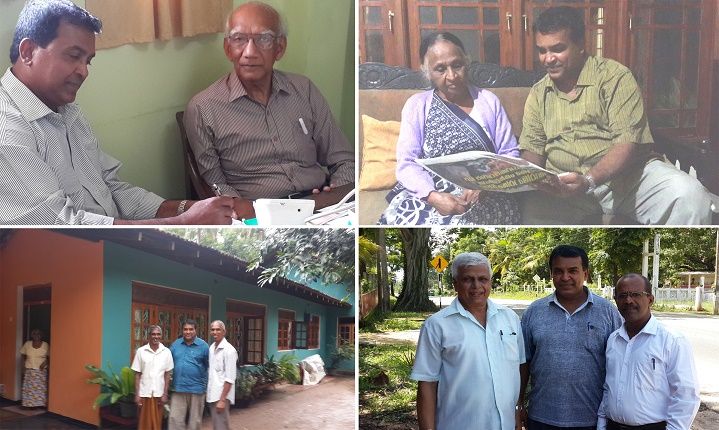
dharman11061603 ලිපි මාලාව සඳහා ලියුම්කරු මුහුණට මුහුණලා සාකච්ඡා 318ක් මේ වන විට පවත්වා ඇති අතර මේ ඉන් අවස්ථා කිහිපයකි. වසර 25කට පෙර පේරාදෙණිය සරසවියේ අතීතය ආවර්ජනය කරන එහි සිටි උපකුලපති මහාචාර්ය අර්ජුන අලුවිහාරේ සමඟින් නුවරදී (ඉහළ වම), ජවිපෙ ආනන්ද ඉඩමේගම ජීවත්වූ බදුල්ලේ කන්දේගෙදර මහගෙදරදී ඔහුගේ මව එච්.එම්. පුංචිකුමාරිහාමි සමඟ(ඉහළ දකුණ), ජවිපෙ උපාලි ජයවීර ජීවත්වූ මොණරාගල දඹගල්ලේ පිහිටි මහගෙදරදී ඔහුගේ කණිටු සොහොයුරන්වන නිහාල් සහ ලාල් සමඟින්(පහළ වම), ජවිපෙ නායකයෙකුවූ ට්‍රින්කෝ විමල් හෙවත් පී.ආර්.බී විමලරත්න ජීවත්වූ ත්‍රිකුණාමලය අභයපුර පිහිටි මහගෙදර ඉදිරිපිට මාර්ගයේදී ට්‍රින්කෝ විමල්ගේ සොහොයුරු විදුහල්පති කිත්සිරි සහ සමකාලීනව ට්‍රින්කෝ විමල් සමඟ ගුරු විද්‍යාලයේ සිටි විශ්‍රාමික පළාත් අධ්‍යාපන ලේකම් දයානන්ද ජයවීර හමුවූ අවස්ථාව(පහළ දකුණ) මෙහි වේ.

මෙම සන්දර්භය මත සිට මා අවදිකල ලිපිපෙළක් වශයෙන් ධර්මන් වික්‍රමරත්නයන් විසින් ලියනු ලබන ජවිපෙ 2වැනි කැරැල්ල ලිපි මාලාව දැක්විය හැකිය. අසූවේ දශකය වෙලාගත් භීෂණ යුගයයැයි සරල යෙදුමෙන් හදුන්වන වකවානුවේ සිද්ධීන්, අවස්ථා සහ චරිත එකිනෙකට විවරණය කොට ඉදිරිපත් කරන මෙම ලිපි මාලාව පසුකාලීනව දේශපාලන, සමාජ, ආර්ථික සහ සන්නිවේදන විද්‍යාවන් සහ ලාංකික සමාජයේ විකාශය ඇතුළතින් ගවේශනය කරන්නන්ට අතිමහත් දැනුම් සම්භාරයක් ඉදිරිපත් කිරීමකි. ලාංකීය සමාජයේ ඛේදවාචකයන්, ව්‍යයසනයන්, හඬාවැටීම් සහ කම්පාවන් ඇතිකිරීමට පමණක් පුරුදු කරන පුවත්පත් විශේෂාංග අතරින් මෙම ලිපිපෙල අපගේ මනස අවදි කරවයි. මෙම ලිපිපෙල මත තබා අපට විවිධ තල මත සිට අප සමාජය, මිනිසුන් සහ දේශපාලනය ගැන සිතන්නට පොළඹවන්නේය.’’ යන්නයි.

රාජ්‍ය සේවා එක්සත් හෙද සංගමයේ සභාපති මුරුත්තෙට්ටුවේ ආනන්ද හිමියන් ප්‍රකාශ කර තිබුණේ,‘’ගෞරවය හිමිවිය යුතු මහන්සියකි. ඉතිහාසයේ වැළලීයාමට තිබූ දත්ත ගබඩාවක් නොබියව හෙළිකරන විට එම ඉතිහාසයට සම්බන්ධවූවන් තමන්ගේ පාඩුවේ සිටීම අපූර්ව සංසිද්ධියකි. එයට මා හිතන හේතුව ඉතිහාසය තමන්ගේ වුවද එය කියවීමෙන් වර්තමානයේදී අනෙකුන් වෙලාගැනිම් වලට ඇති හැකියාව ක්ෂය වෙතැයි ඔවුන් සිතනවා විය හැකිය. ඉතිහාසය බොහෝ දේ අනාවරණය කිරීමෙන් ජනතාව ඔවුන්ට ලංවනු නොව ඈත්වනු ඇතැයිද ඔවුන් සිතනවා විය හැකිය. මෙම ලිපි මාලාව අවස්ථාවාදීන්ගේ නිෂ්ශබ්දතාවයද බිඳ දැමීමක් වන්නේය. අරගලයකදී වැදගත් වන්නේ වේගය නොව දිශාවය. ඉතිහාසය තමන්ගේ වුවද එය කියවීමෙන් වර්තමානයේ තමනට අයෙකු වසඟ කිරීමට ඇති හැකියාව වාෂ්ප විය හැකියැයි යමෙකු සිතනවා විය හැකිය. තමන්ගේ ක්‍රියාවන් ගැන වුවද ඔවුහු කැමති වන්නේ යම් යම් තෝරාගත් නියදීන් කිහිපයක් පමණක් මිනිස් මතකයේ රැදී පවතිනවාටය’’ බවකි.

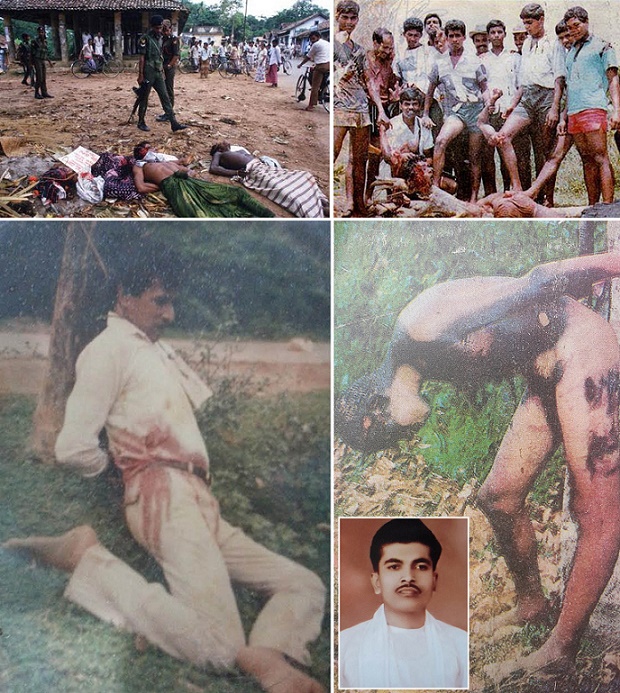
dharman11061604මෙයට වසර 27කට පෙර පැවති ජවිපෙ 2වැනි කැරළි සමයේ රටේ තිබුණේ මෙවැනි අතිශය භීෂණකාරි වටපිටාවකි. දකුණේදී ඝාතනයට ලක්වූ ජවිපෙ කැරළිකරුවන් පිරිසක්(ඉහළ වම), මැදිරිගිරිය ප්‍රාලේ කොට්ඨාශයට අයත් මීගස්වැව ගම ආශ්‍රිතව පවත්වාගෙන ගිය ඒකනායක වධකාගාරයේදී අත් පා වෙන්කරන ලද ජවිපෙ කැරලිකරුවෙකු මෙහි වේ. පල්ලියගොඩැල්ල, මැදිරිගිරිය, අඹගස්වැව, ගොඩපොත්ත, වඩිගවැව ආශ්‍රිතව ක්‍රියාත්මකවූ කඳවුරු වලට ගෙන එන ලද තරුණයින් දහස් ගණනක් අවසානයේදී විනාශකර දමන ලද්දේ කපිතාන් ඩයස් භාරකරුවූ මෙම ඒකනායක වලේ වධකාගාරයේදීය(ඉහළ දකුණ), ජවිපෙ විසින් ඝාතනය කරන ලද එජාප ක්‍රියාකාරිකයෙකුවූ මාතර ඌරුගමුවේ මුරුතගස්පිටියේ පදිංචි ස්කාගාර සංස්ථාවේ සේවයකල තිදරු පියෙකුවූ සුගත් සමරසේකර(45) දෙවිනුවර වලස්ගල හීන්දෑලිය වැව අසළදී 1988 දෙසැම්බර් 9වැනිදා ගසක ගැටගසා ඝාතනය කර තිබූ අන්දම(පහළ වම) සහ හක්මන බෙංගමුවේ වැවිලිකරු බී.ආර්. ජයසේකර 1988 අප්‍රේල් 26 ජවිපෙ විසින් ඝාතනයකර ගසක බැඳ පුළුස්සා දමා තිබූ අන්දම ඔහුගේ ඡායාරූපයක් කොටුව තුළ දිස්වේ(පහළ දකුණ).

පේරාදෙණිය සරසවියේ ඝාතනයට ලක්වූ සිසු නායක එස්.එම්. නිස්මිගේ පියාවූ සෙයින් සිරාජුඩීන් කියා සිටියේ තමාගේ පුතා වන නිස්මි පිළිබඳව පළවූ ලිපිය කෙටි චරිතාපදානයක් දිස්වු අතර එය මෙතෙක් නිස්මි පිළිබඳව පළවූ අංග සම්පූර්ණ ලිපියදවූ බවකි. ඉතා සරළ පැහැදිලි භාෂාවකින් ලියා තිබූ එය ඉතිහාසයේ සැගවී සිටි වීරයින් වර්තමාන පරපුර තුළ ජීවත් කිරීමකි.

71 අප්‍රේල් මහ නඩුවේ 15වන සැකකරුවූ යෝගි පියසිරි කුලරත්න ෆෙස්බුක් සටහනක් යොදමින් කියා සිටියේ මෙවැන්නකි. ‘’බලවත් උද්යෝගයකින් හා ගවේශනාත්මක දැක්මකින් යුක්තව ලිපිපෙළ ලියා ඇත. ජවිපෙ ඉතිහාසයට සම්බන්ධ අයෙකු ලෙස මම දිගු කලෙක සිට එම ඉතිහාසය නිදහස්ව සහ විචාරශිලිව විමසා ලියන අදීන ලේඛකයෙක් ගැන යටිසිතින් අපේක්ෂා කල අයෙකි. එම අපේක්ෂිත සිතුවිල්ල මෙම ලිිපි තුළින් ඉටුවන බවක් පෙනේ. මෙය ඉතිහාසීය වගකීමක් ඉටුකිරීමකි. මෙම ලිපි විශ්වාසි සංයුක්තතාවයකින් යුතුය. පක්ෂග්‍රාහිත්වයෙන් තොරය. අඩංගුවිය යුතු වැදගත් තොරතුරු තවත් බොහෝ ඇත. මෙහිදී ලේඛකයාගේ ගවේශනාත්මක පුවත්පත් කලාව සමඟ මම එකඟ වෙමි. දිරිදෙමි.’’

ජපානයේ ප්‍රකට ව්‍යාපාරික සමන් ප්‍රියංකර  සිය ෆේස්බුක් පිටුවේ සටහනක් යොදමින් කියා තිබුණේ මාර්තු 6 පලවූ පසුබසින ජවිපෙ කැරලිකරුවෝ තායිලන්තයේ කඳවුරු බඳිති මැයින් ඡායාරූපද සහිතව පළකල ලිපියේ ඔහු ඇතුළු පිරිස ගැන පලකල කරුණු මුළුමනින්ම වාගේ සත්‍යවන අතර ඒ කරුණු සහ ඡායාරූප සොයා ගත්තේ කෙසේදැයි ප්‍රශ්ණාථයක් බවය. විද්වත්භාවයෙන් එය විශිෂ්ඨ පර්යේෂණයක් ලෙස සකස් කල ලිපියක් සේ දිස්වන බව පවසන ඔහු වැඩිදුරටත් මෙසේද කියා තිබිණි. ‘’කැරැල්ලක් වැනි සාමූහික මානව ඝට්ටනයකදි ක්‍රියාකාරිත්වය අධ්‍යයන කිරීමට මෙම ලිපි මාලාව වනු නොඅනුමානය. පරාර්ථයේ සිට ආත්මාර්ථය දක්වාද ආත්ම පූජාවේ සිට ජීවිත බිලිගැනීම දක්වාද විශාල වපසරියක් තුළ කැරළිකරුවන්ගේ ජීවිතය දෝලනයවීම මෙම ලිපි පෙළේ සඳහන්ව ඇත. ලිපි මගින් සිදුවූ දෑ මතුපිටින් නොව ගැඹුරින් ඇස් පනාපිට ප්‍රතිදර්ශනය කර ඇත. නිදහසින් පසු ශ්‍රී ලාංකිකයින්ට මුහුණ පෑමට සිදුවූ ප්‍රශ්න පිළිබඳව අවබෝධයක්ද ලබාදී ඇත. උත්සාහය අගය කරන අතර පසුබිමේ සැඟවුණ කථාද සොයා බැලීම වටින්නේය.’’

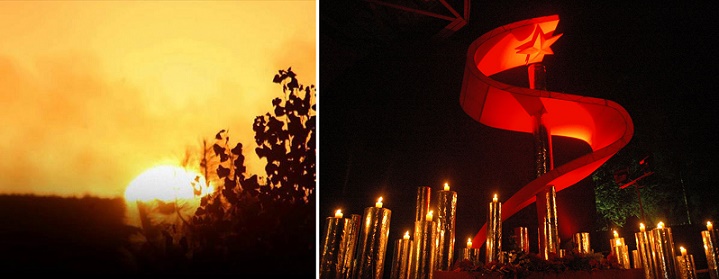
dharman11061605නව ලොවක් දැකුමට ඇරඹූ 2වැනි කැරැල්ල(වම), ඝාතනයට ලක්වූ කැරළිකරුවන් අනුස්මරණය කරන අවස්ථාවක්(දකුණ)

මැදපෙරදිග කටාර් රාජ්‍යයේ ඉදිකිරීම් කළමණාකරු සහ ව්‍යාපෘති ඉංජිනේරු නිහාල් කිත්සිරි විද්‍යුත් ලිපියක් යොමුකරමින් මෙසේ පවසා ඇත. ‘’අල් සභා ආයතනයේ වසර 16ක් සේවය කරන මා ජවිපෙ 2වැනි කැරැල්ලේ ලිපි කියවන්නේ මහත් රුචියකිනි. මෙහි 800ක් පමණවූ සේවකයින් අතරින් ශ්‍රී ලාංකිකයින් සියගණනක් අතරද මෙම ලිපිපෙළ ජනප්‍රියය. භීෂණ යුගය පිළිබඳ ලිපි ගණනාවක් ඉකුත් කාලය තුළදී කියවනු ලැබූවද ඒවාට වඩා මෙම ලිපිපෙළ ඉතා විශිෂ්ඨ ලෙස සත්‍ය කරුණු ගැඹුරින් සොයාබලා ලියනු ලබන ලිපි පෙලක් බවට පැහැදිලිය. කිසිදා දැනගත නොහැකි ඉතා වටිනා ඉතිහාසගත දත්ත සහ කරුණු මත පදනම්ව ලිපි ලියා ඇති බව පසක් වේ. පළවන දුර්ලභ ඡායාරූපවල වටිනාකම මිලකල නොහැකිය. ශ්‍රී ලංකාවේ මෑත දේශපාලන ඉතිහාසය පිළිබඳ කොතරම් පොතපත පලවූවද අසූව දශකය අවසාන භාගයේ ඇතිවූ කැරැල්ල පිළිබඳව ලියවූ හොදම කියවීම මෙය බව එම වකවානුව තුළ සිට වර්තමානය දක්වා ජීවත්වන බුද්ධිමත් පාඨකයාය සහතික වනු නොඅනුමානය. දුෂ්කර ගවේශනයක යෙදීමෙන් මෙසේ ඉටුකරන්නේ භාරදුර යුග මෙහෙවරකි.’’

දීප ව්‍යාප්ත සේවාවල විධායක නිලධාරින්ගේ ඒකාබද්ධ කමිටුවේ සභාපති සහ ජාතික එක්සත් වෘත්තීයවේදීන්ගේ ව්‍යාපාරයේ සම කැඳවුම්කරු වෛද්‍ය නිමල් කරුණාසිරි දැක්වූ අදහස මෙසේය. ‘’අසූව දශකයේ අන්තරේ නායකයෙකු වශයෙන් වසර 9ක් ශිෂ්‍ය ව්‍යාපාරයේ කටයුතු කල මා දන්නා පරිදි එයට අදාලව මෙහි පළවන ඉතිහාසය නිවැරදිය. මෙම ලිපිපෙල මගින් වසර 25කට පසුව හෝ සරසවි සිසුන් 396ක් ඝාතනය වූ බවද 227ක් අතුරුදහන්වූ බවද ප්‍රථම වරට අනාවරණය විය. එහිදී සිදුවූ සිද්ධීන් සාධනීය මෙන්ම නිශේධනීය විය හැකි නමුත් ඔවුන්ගේ කැපවීම සහ අධිෂ්ඨානය අගයකල යුත්තකි. මෙම ඉතිහාසය නිවැරදිව සටහන් කිරීම තුළින් සමාජයේ ඉදිරි දැක්ම කෙරෙහි ප්‍රතිපත්ති සම්පාදකයින්ට එය ප්‍රයෝජනයට ගත හැකිය. නව ශිෂ්‍ය ව්‍යාපාරයට වුවද තම ක්‍රියාකාරකම් සහ අයිතීන් දිනාගැනීමට මින් ආදර්ශ ගතහැකිය.’’

ඕස්ට්‍රේලියාවේ සේවය කරන ආචාර්ය ලලිත් සීලනාථ වෙබ් අඩවියක සටහනක් තබමින් කියා තිබුණේ විදේශයක සිටියත් මෙම අනගි ලිපි මාලාව නොකඩවා කියවන බව සිය ජයවර්ධනපුර සරසවියේ විද්‍යාර්ථයින්ට පවසා තිබිණි. එහි මෙසේද ආචාර්ය සීලනාථ වැඩිදුරටත් සඳහන් කර තිබිණි. ‘’1984 ජනවාරි මාසයේ පටන්ගත් අපේ සරසවි ජිවිතය භීෂණ යුගය නිසා 1990 මාර්තු දක්වා දිගුකල් ඇදී ගියා.  අසූවේ දශකය මුල් භාගයේ සිට ධර්මන්ගේ ලිපි කියවුයේ ජයවර්ධනපුර සරසවි සිසුවෙක් විදිහටයි. හඩක් නොමැති අයගේ හඬ ඉස්මතු කරන්නෙක් ලෙස හදුනාගත්තා. සරසවි සිසුන්ගේ ප්‍රශ්න බාහිර ලෝකයට ගෙන යැමට ඔහු විශාල වැඩකොටසක් සිදුකලා. ජවිපෙ 2වැනි කැරැල්ලට අදාළ සැබෑ තොරතුරු මෙසේ ගෙන ඒම අපූරුයි. භීෂණයේදී මියගිය ජයවර්ධනපුර සරසවියේ සිසුන් 107ක් නම්, ගම් සහිතව ප්‍රකාශයට පත්වීම සිදුවුනේ වසර 25කට පසුව මෙම ලිපි පෙලින්ය. වියෝවූ සිසු සොහොයුරන් ලිඛිත ඉතිහාසයට එක්කිරීම ඔවුනට කල ගෞරවයක්. කලක් අපේ නිවසක් බඳුවූ ජ’පුර සරසවියේ ලිපියෙන් අප දන්නා කරුණු බොහෝ දුරට නිවැරදියි. එමෙන්ම නොදන්නා දේශපාලන කරුණු කාරණාද බොහෝමයක් දැනගත්තා.’’

අන්තර් විශ්ව විද්‍යාල ශිෂ්‍ය බල මණ්ඩලයේ(අන්තරේ) හිටපු කැඳවුම්කරු සහ කොළඹ වෛද්‍ය පීඨයේ සිසු නජිත් ඉන්දික ෆේස්බුක් පණිවිඩයක් තබමින් මෙසේ සිය අදහස් එළි දක්වා තිබිණි. ‘’ඉතිහාසයේ මෙවැනි අවිචාරවත් අවධීන් අභිබවා මිනිසුන් විවිධාකාරයෙන් සටනට අවතීරණ විය. මෙය සැඟවුණු අතීතයක් සංගමයකින් කියා දෙන පාඩමකි.  දේශපාලනයේ ඝාතනවලට වඩා ඔබ්බට ගිය ඝාතන දේශපාලනය සිදුවූ ඛේදවාචකයකි. දෝහීන්ට මරණය, ඒක යුද්දයක් එහෙම තමයි කියලා පිළිගත හැකිද? මාක්වාදීන්ට වැරදිලාවත්, දෝහීන්ට මරණය වගේ ප්‍රාථමික, පිලිකුල් දෙයක් හිතන්නවත් පුලුවන්ද? අඩුම තරමේ තමන් විශ්වාස කරන ක්‍රමේකට යහපත් සමාජයක් වෙනුවෙන් අරගලයක් කරපු කැපකිරීමක් කරපු මිනිස්සු ගැනවත්? නිසි ඉතිහාසීය දැක්මක් ඇතිවන ලිපිපෙළ ගලපා ඇති ආකාරයද අපූරුය.’’

ප්‍රවීණ රූපවාහිනී නිෂ්පාදක ජනක මල්ලිමාරච්චි සිය ෆේස්බුක්හි සටහනක් තබමින් කියා තිබුණේ අපේ කාලයේ සාර්ථකම ගවේශනාත්මක ලිපි පෙළ මෙය බවට විවාදයක් නොමැති බවය. එම සටහනේ වැඩිදුරටත් මෙසේද විය. ‘’මගේ පියා ඇමති වීරසිංහ මල්ලිමාරච්චි ඝාතනය කළේ එල්.ටී.ටී.ඊ සංවිධානයෙන්ය. සොහොයුරාවූ ජයන්තගේ ඝාතනය ජවිපෙ වැඩකි. අපි මේ දෙපිරිසෙන්ම බැටකෑ මිනිසුන් වෙමු. ඇතමුන් මෙම අතීතය වර්තමානයේ හිතාමතාම අකාමකා දමා ඇති නිසා එය මෙනෙහි කිරීමට ධර්මන්ගේ මෙම ලිපි පෙළ කදිම කියවීමකි. ‘’

මේ පිළිබඳව ජනතා සංගමයේ සමාරම්භකයෙකුව සිටි පාලිත සොලමන්ස් දැක්වූ අදහස මෙසේය. ‘’මියගිය සහ අතුරුදහන්වූ 60,000ක අරගලය වෙනුවෙන් සියළු තොරතුරු එක්රැස්කර කියවන්නට සලස්සවන්නට කෙනෙකු වසර 25කට පසු සමාජය තුළින් මතුවීම අප දුටු සිහිනය සැබෑ කිරීමකි. ලේඛකයා මෙය ඉතා විශිෂ්ඨ ලෙස අපක්ෂපාතීව කියවිමට සලසා ඇත. මෙයට පෙර අහිමි විප්ලවය ඉංග්‍රීසි ග්‍රන්ථය 1990දී යම් සීමිත තොරතුරු ප්‍රමාණයක් පාඨකයින්ට ලබාදුන් අතර මෙය එයට වඩා පියවර දස දහසක් ඉදිරියට ගෙනගිය ප්‍රයත්නයකි. කලාව යනු ප්‍රකෘතිය මිනිස් මනසේ ප්‍රතිනිර්මාණය කර සුන්දරව ඉදිරිපත් කිරීමය. ඕනෑම කලා නිර්මාණයක ඔහු හෝ ඇය නියෝජනය කරන දේශපාලන දැක්මද ගැබ්ව ඇත.’’

ත්‍රිකුණාමලය මාධ්‍යවේදී මංගලනාත් ලියනාරච්චි සටහනක් යොදමින් මෙසේ අදහස් පළකර තිබිණි. ‘’දැනුම ගබඩාවක්වූ මෙම ලිපිපෙල පළකිරීම රිවිර කල පිනකි. ඉතිහාසය ලිවීමේදී ලියන්නාගේ උවමනාව මත මවාපෑම සහ විකෘතිය මෙහි නැත. මෙම ඉතිහාසයේ අයිතිකරුවන් ගෙන් ඇතමුන් තවමත් ජීවතුන් අතරය. එමෙන්ම ඔවුනට අවමානයක් නොවන පරිදි ඇත්ත පවසා සිටීම පැසසිය යුතුය. වෛද්‍යවරයෙකුට වැරදුනහොත් වරද මිහිදන් කරනු ඇත. නීතිඥයෙකුට වැරදුනහොත් වරද සිරගත කරනු ඇත. මාධ්‍යවේදියෙකුට වැරදුනහොත් වරද සමාජගත වනු ඇත. එබැවින් එවැනි වරදක් සිදුනොවන්නට ලේඛකයා සමත්වී ඇත.’’

මෙම ලිපිපෙල පිළිබඳව සමාජජාලා වෙඩ් අඩවිවල නිරතුරුව සටහන් තැබු වරලත් ගුවන්යානා ඉංජිනේරු ප්‍රියන්ත හේරත් කියා ඇත්තේ මෙම ලිපිපෙළ 1985ට පසු ඉපදුණු සෑම පුරවැසියෙකුම කියවිය යුතු අත්පොතක් බදුය. ඉංජිනේරු හේරත් තවදුරටත් මෙසේද සිය අදහස් දක්වා තිබිණි. ‘’රාජ්‍ය සහ දේශපාලන ත්‍රස්තවාදයට ගොදුරුව අරාජිකත්වයට පත්වුණු කාල වකවානුවක්වූ අසූව දශකයේ අවසාන භාගය පිළිබඳව සත්‍ය ගවේශනය කිරීමෙන් පසු ලියන ලද ලිපි මාලාවකි. ලේඛකයා විසින් ලියවුණු ලිපි සමාජ වෙබ් ජාලාවලද පළකිරීමට කටයුතු යෙදීමෙන් යම් ගැටලුවක් ඇත්නම් ඒවා නිරාකරණය කර ගැනීමටද අවස්ථාව ලබාදී තිබීම අගය කල යුතුය. කටුක සහ නීරස අතීතයක සත්‍ය ප්‍රකාශ කිරීමේදී ජවිපෙ 2වැනි කැරැල්ලට සම්බන්ධ බොහෝ දෙනා තවමත් ජීවමානව සිටින නිසා එය ලිවීම දුෂ්කර අභියෝගයක් වුවද වර්තමානයේ ජීවත්වන සහ මියගිය අයටද අවමානයක් නොවන පරිදි ලේඛකයා පෑන හසුරවනු පෙනේ.  මෙවැනි ලිපි පළකිරීම මගින් රිවිර පුවත්පතද අකාමකා දමා තිබූ ඉතිහාසයක් පාඨකයින්ට විවරකරදීම මිලකල නොහැක.’’

ලංකාවේ ඉතිහාසයේ එක් අඳුරු පරිච්ඡේදයක් පිළිබඳව ඉතා දුෂ්කර ඓතිහාසික තොරතුරු සහිතව පලකර ඇති මෙම ලිපිමාලාව වමේ දේශපාලනය පිළිබඳවද කියවීමක් බව මහනුවර සමාජ ක්‍රියාකාරි ලලිත් අබේසිංහගේ මතය විය. අන්තර්ජාලයේ සටහනක් තබමින් මෙසේ ඔහු කියා තිබිණි. මෙය ග්‍රන්ථයක් වන තෙක් බලා සිටිමු. කැරැල්ලේ ගොදුරු බවට පත්වූ වාම ක්‍රියාකාරකයින් පිළිබඳව එක් ලිපියක පලවු සටහන කිසිදා මතකයෙන් බැහැර නොවේ. එනම් ‘’ ඝාතනයට ලක්වූ වමේ ක්‍රියාකාරිකයින් සිය මුළු ජීවිතයම වාගේ මානව වර්ගයා වෙනුවෙන් කැපකල බවට ඇතිකරගත් තෘප්තිදායක හැගීමකින් ජීවත්වූවෝ බවට සැක නැත. සිය මරණ මංචකයේදී වුවද ඔවුන්ගේ ජීවිතයට එය පරම සංතෘෂ්ටියක්වූ බව ඉතිහාසය කියනු ඇත.’’ යන්නය.

ගෘහ නිර්මාණ සහ සැලසුම් ශිල්පී මාතර රංජිත් ප්‍රියලාල් අවධාරණය කර තිබුණේ පාඨකයින් ඉල්ලා සිටින්නේ සත්‍යය මිස සත්‍ය වශයෙන් අදහස් වන දෙය නොවන බවය. එසේම ඔවුන් ඉල්ලා සිටින්නේ මුළුමහත් මිනිස් වර්ගයාටම සත්‍ය දේ මිස පිරිසකට පමණක් සත්‍ය දේ නොවන බව වැඩිදුරටත් කියා තිබූ රංජිත් ප්‍රියලාල් වැඩිදුරටත් මෙසේද ප්‍රකාශකර තිබිණි. ‘’සත්‍ය ලිවීමේදී එරෙහි වන්නේ බොරුව තුළ ජීවත්වී බොරුව ප්‍රකාශ කරන්නවුන් පමණි. පර්යේෂකයෙකුට සිය මංපෙත් හෙළි පෙහෙළි කරගැනීමට දායකවූ මෙම ලිපිපෙළ නීති, කලාව, විද්වතුන් වැනි සෑම ක්ෂේත්‍රයකම පමණක් නොව සියලුම දේශපාලන පක්ෂවලද ඝාතනයට ලක්වූ මිනිසුනට උපහාරයක් විය. මාඕ සේතුං වරක ප්‍රකාශකල පරිදි ලෝක ඉතිහාසය නිර්මාණය කිරීමෙහිලා ක්‍රියාකාරක බලවේගය වන්නේ ජනතාවමය. ජනතාවම පමණක්ය.’’

ලිපි මාලාව සකස් කිරීමේදී එකල රැස්කර තිබූ තොරතුරුවලට අමතරව සම්මුඛ සාකච්ඡාවට ලක්කල පිරිස 318කි. සත්‍යපාල වන්නිගම නිවසට තංගල්ල දබරැල්ලට ගියවිට පිළිගත්තේ ඔහුගේ ඥාති පුතා නිරෝෂණය. වෙනුර එදිරිසිංහගේ දෙමාපියන් වන තිලකරත්න සහ ඥානවතී මාරවිල සිය නිවසේදී ආවර්ජනය කළේ වෙනුර සිටි කාලයේදී පවා හමුවී ඇති බවකි. එච්.බී. හේරත්ගේ පියාවූ පුංචිරාලළාගේ හේරත් බණ්ඩා සහ මව කදිරාතේගේ අමරාවතී සිය මැදවච්චියේ කඩවත්ගම නිවසේදී පිළිගනිමින් කියාසිටියේ එච්.බී හේරත් මියගියාට පසු වසර 27ක් ඇතුළත පැමිණි එකම මාධ්‍යවේදියා ලියුම්කරු බවකි. පේරාදෙණිය සරසවියේ නොමල මිනිසාවූ එහි වෛද්‍ය පීඨ සිසු හේරත් මුදියන්සෙලාගේ පොඩිබණ්ඩාගේ නිවස පිහිටි ඉසව්ව එකල ඔහුගේ සමකාලීනයන්ගේ මතකයෙන්ද බැහැරවී තිබිණි. දඹුල්ල තිත්තවැල්ගොල්ලේ පිහිටි පොඩිබණ්ඩාගේ නිවස සොයාගනු ලැබුවේ පොඩිබණ්ඩා ඉගෙනුම ලැබූ රංගිරි දඹුල්ල මහා විද්‍යාලයේ 1977 ඇතුළත් වීමේ ලේඛනය පිරික්සීමෙනි. මෙවැනි මතක සටහන් රැසක් කිසිදා මතකයෙන් බැහැර නොහේ.

සංරක්ෂිත ඡායාරූප හැර මෑතකදී ගත් සියළු ඡායාරූප ගනුලැබුවේද ලේඛකයාගේ ස්මාට් ෆෝන් දුරකථනයෙනි. තොරතුරු ගවේෂණයේදී රට වටේ ගිය ගමන්වලදී උදව්කල පිරිසද බොහෝය. ප්‍රදේශීය ජනමාධ්‍යවේදීන්ගේ නිවහන් බොහෝවිට නවාතැන් විය. සෑම ගමනක ආරම්භයේදීම අදාල නගරයේදී හිතවෙතෙකු මඟ පෙන්වන්නෙකු බවට පත්විය. සියළු දෙනාම වාගේ සහාය දැක්වූයේ ස්වෙච්ඡාවෙනි. එබැවින් ශතකයක ලිපි පෙළක් ලිවීමට සහාය දුන් සැමට යළි යළිත් තුති පුදකල යුතුය.  පොහොර පසක ඇටයක් සිටවූ විට පැලවී වැඩෙන ඇටය ඒ පසේ සොයා ගන්නට නැත. පොහොර පසද සොයා ගන්නට නැත. වැඩෙන දෙයවූ කලී සිටවූ ඇටයෙහිත්, පොහොර පසෙහිත්, තෙතමනයෙහිත්, හිරු කිරණේත් සංකලනයකි.

එහෙත් ඉතිහාසයක් එසේ අවසන් වන්නේ නැත. එය අතීතයට අත්දැකීම් එකතු කරමින් නොනැවතී ගමන් කරයි. ඒ නිසාම ඉතිහාසය ලියා අවසන් කිරීමද අසීරුය. ජවිපෙ 2වැනි කැරැල්ලේ ඉතිහාසය සම්බන්ධයෙන්ද සත්‍ය එයයි. එබැවින් මෙම ලිපි මාලාව 150 දක්වා නොකඩවා දිවයන්නේ 1986 සිට 1990 දක්වා ජවිපෙ 2වැනි කැරළිසමය පිළිබඳව කිසිදා ඔබ නොඇසූ මෙන්ම ඉදිරියේදී කිසිදා අසන්නට නොලැබෙන කථා පුවත් රැසක්ද සමගිනි. –    ධර්මන් වික්‍රමරත්න (ජවිපෙ 2වැනි කැරළි සමයවූ 1986 සිට 1990 දක්වා පළවන මෙම ලිපි මාලාව ලබාගැනීම පිළිබද විස්තර පහත ලිපිනයට ඔබගේ ලිපිනය යොමු කිරීමෙන් ලබාගත හැකිය. ධර්මන් වික්‍රමරත්න, තැපෙ 26, ශ්‍රී ජයවර්ධනපුර. දුරකථනය: 011-5234384 විද්‍යුත් තැපෑල: ejournalists@gmail.com)


අධාර්මික පාලනය ගැන වදාළ දෙසුම…… අධම්මික සූත්‍රය අංගුත්තර නිකාය 2 – චතුක්ක නිපාතය – පත්තකම්ම වර්ගය) අධාර්මික පාලනය ගැන වදාළ දෙසුම.

June 11th, 2016


මහණෙනි යම් කලෙක රජවරු අධාර්මික වෙත්ද,එසමයෙහි රජුට අනුව කටයුතු කරන්නෝද අධාර්මික වෙති.

රජුට අනුව කටයුතු කරන්න් අධාර්මික වූ කල්හි නිගම බ්‍රාහ්මණ ගෘහපතිවරු ද අධාර්මික වෙති.

නිගම බ්‍රාහ්මණ ගෘහපතිවරු අධාර්මික වූ කල්හි නිගම ජනපදවාසීහූ ද අධාර්මික වෙති.

නිගම ජනපදවාසීන් අධාර්මික වූ කල්හී හිරු සඳු දෙදෙන ද විෂමාකාරයෙන් පායයි.

හිරු සඳු දෙදෙන විෂමාකාරයෙන් පායන කල්හී නැකැත් තරු ආදිය ද විෂමාකාරයෙන් පායයි.

නැකැත් තරු ආදිය විෂමාකාරයෙන් පායන කල්හී දිවා රාත්‍රී කාලය ද විෂමාකාරයෙන් ගෙවෙයි.

දිවා රාත්‍රී විෂමාකාරයෙන් පවතින විට මාසය, අඩමස ආදිය විෂමාකාරයෙන් ගෙවෙයි.

මාසය, අඩමස ආදිය විෂමාකාරයෙන් පවතින විට වසරේ ඍතු භේදය ද විෂමාකාරයට පත්වෙයි.

විෂම වූ ඍතු භේදයක් වසර පුරා ඇති කල්හී විෂම අයුරින් සුළං හමයි. නොමගින් සුළං හමයි.

විෂම අයුරින් සුළං හමන කල්හීනොමගට සුළං හමන කල්හී දෙවියෝ කිපෙති.

දෙවියන් කෝප වූ කල්හි නිසි අයුරින් වැසි දහර නොවසියි.

නිසිඅයුරින් වැසි දහරාව නොවසින කල්හී ගොයම් විෂම අයුරින් පැසෙයි.

මහණෙනි විෂම අයුරින් පැසුණු ගොයමින් ලද ආහාර අනුභව කරන මිනිසුන් අල්ප ආයුෂයෙන් යුතු වෙයි.
දුර්වර්ණ වෙතිදුර්වල වෙති. බොහෝ රෝගාබාධ සහිත වෙයි.

——————————-

(ගාථා)
* ඒකාන්තයෙන්ම එතෙර වන්නාවූ ගොනුන් අතුරින් ප්‍රධාන ගවයා වක්‍රව යයි නම්,
ඒ ප්‍රධාන ගවයා වක්‍රව ගිය ගල්හී සියළු ගවයෝ වක්‍රව යති.

* එපරිද්දෙන්ම මිනිසුන් අතුරින් යමෙක් ශ්‍රේෂ්ඨ යයි සම්මත වෙයිද,
ඉදින් ඒ තැනැත්තා අධර්මයෙහි හැසිරෙයි ද, අවශේෂ ප්‍රජාව ගැන කථා කරන්නට දෙයක් නැත.රජු අධාර්මික වූ කල්හී මුළු රටම දුකට පත්වෙයි.

* ඒකාන්තයෙන්ම එතෙර වන්නාවූ ගොනුන් අතුරින් ප්‍රධාන ගවයා ඍජුව යයි නම්,
ඒ ප්‍රධාන ගවයා ඍජුව ගිය ගල්හී සියළු ගවයෝ ඍජුව යති.

* එපරිද්දෙන්ම මිනිසුන් අතුරින් යමෙක් ශ්‍රේෂ්ඨ යයි සම්මත වෙයිද, 
ඉදින් ඒ තැනැත්තා ධර්මයෙහි හැසිරෙයි ද, අවශේෂ ප්‍රජාව ගැන කථා කරන්නට දෙයක් නැත.

රජු ධාර්මික වූ කල්හී මුළු රටම සැපයට පත්වෙයි.


(අංගුත්තර නිකාය 2 – චතුක්ක නිපාතය – පත්තකම්ම වර්ගය)

අධාර්මික පාලනය ගැන වදාළ දෙසුම.
අධම්මික සූත්‍රය


Tense Situation in Barnes Place Colombo 07 ………news item Again high handed act by authorities ???මර්වින්ගේ සුදු වෑන් කප්පම් හෙලි වේ.. කොළඹ හතේ බිලියන අටක ඉඩමක් කොල්ල කාලා..

June 11th, 2016

A Neighbour

I write this snippet to clarify a newS item appeared today in Daily  Mirror today where it says that Colombo Municipal Council has taken arbitrary action to demolish 25 houses ?

This land in extent of 2 acres does not have a single house today .There were over 30 unauthorized families living in this land for many years and the real owners have sold it to a business man from Kandy with agreement that the squatters should be removed by the new owner .

New owner was negotiating with the squatters and due to the amount of compensation to be paid the agreement was never reached.

කොළඹ 07 බාන්ස් පෙදෙසේ පිහිටි රුපියල් බිලියනයක් පමණ වටිනා අක්කරයක පමණ ඉඩමක් බලහත්කාරයෙන් අල්ලා ගැනීමක් සම්බන්ධයෙන් ගැටුම්කාරී තත්වයක් ඊයේ දිනයේ ඇති විය.එම ඉඩමේ පදිංචිකරුවන් කියා සිටියේ මර්වින් සිල්වා මහතා පැමිණ බලහත්කාරයෙන් ඉඩම් සඳහා අත්සන් ගත් බවයි.

I inquired form squatters as a neighbor and found that once powerful MP of the previous government came to the site and held a meeting and offered each person about 4 million rupees to move out.

Out of 30 odd squatters only 20 participated in the meeting and the MP has warned the people who did not attend ,that they will never get a cent if they do not sign the consent sheet to leave .

On one fine day they were out and bulldozers were deployed and land was cleared ,steel sheet barrier installed with CCTV and a security company was looking after the property .

We wanted access to the land to cut a kottan tree which was a disturbance to the neighbours and the security chap tells us that the Land belongs to a once powerful secretary .

There was a rumour spreading around that the new owner is only proxy owner

When I saw the new item and the Video where CMC legal officer stating that it is acquired by CMC hence they came to take over the land is utter nonsense .

But CMC was trying to acquire that land due to nonpayment of rates  but they never acquired it .

I am quite positive that a hidden hand was behind this high handed act by CMC ,because they suspect that the land is now owned by once  elite political family.

I wonder why the rule of law cannot be applied by CMC rather than ruining the environ of the area by bulldozing the fences .

We are trying to emulate some African country where jungle law Is applied !!

I am not sure why our Muslim Mayor observing Ramazan allowed his officers to destroy peace in the area ?


2008 මානසික සෞඛ්‍යය දිනය

June 11th, 2016

වෛද් රුවන් එම් ජයතුංග 

පුත්තලම දිස්ත්‍රික්  මානසික සෞඛ්‍යය  සම්බන්ධීකරණ වෛද්‍ය නිලධාරී  ලෙස සේවය කරන කාලයේදී මම මානසික සෞඛ්‍යය දිනය සැමරීමට වැඩසටහනක් දියත් කලෙමි. මේ වැඩසටහන සඳහා පුත්තලම දිස්ත්‍රික්  පළාත් සෞඛ්‍යය සේවා අධ්‍යක්‍ෂක වෛද්‍ය ආර් එම් එස් කේ රත්නායක මහතා මනා සහයෝගයක් දුන්නේය​. මෙම වැඩසටහනට ආරාධිතයන් ලෙස ආචාර්‍ය තිලෝක සුන්දරී කාරියවසම් මිය සහ මහාචාර්‍ය නාලක මෙන්ඩිස් යන විද්වතුන්ට මම ආරාධනා කලෙමි.

පුත්තලම දිස්ත්‍රික්කයේ වෛද්‍යවරු සහ හෙදියන් රැසක් සහභාගීවූ මෙම වැඩසටහන පවත්වන ලද්දේ මාදම්පේ පළාත් සෞඛ්‍යය සේවා අධ්‍යක්‍ෂක කාර්‍යාලයේය​. මෙම කාර්‍යාලයේ ආරාධිතයන් 100 පමණ අසුන් ගත හැකි මල්ටිමීඩියා ප්‍රොජෙක්ටරයක් සහිත දේශන ශාලාවක් විය​. ආචාර්‍ය තිලෝක සුන්දරී කාරියවසම් ලංකාවේ සුප්‍රකට අධ්‍යාපන මනෝවිද්‍යාඥවරියකි. ඇයගේ දේශනය ගුරුවරුන්ටත් වැදගත් බැවින් අප පුත්තලම ,මාදම්පේ , හලාවත මහවැව යන ප්‍රදේශ වල පාසල් වල ගුරුභවතුන්ටද ආරාධනා කලෙමු. ආචාර්‍ය තිලෝක සුන්දරී කාරියවසම් ළමුන් ගේ අධ්‍යාපන ගැටළු සහ කායික මානසික සෞඛ්‍යය අතර පවතින සම්බන්ධය ගැන කථා කලාය​.

මහාචාර්‍ය නාලක මෙන්ඩිස්  කෘතහස්ත මනෝ වෛද්‍යවරයෙකි. මට එතුමා මුලින්ම මුණ ගැසුනේ ගෝතමී බාලිකා විද්‍යාලයේදී දේශනයකට පැමිනි අවස්ථාවකය​. එය 1982 වසර විය යුතුය​. මේ දේශනයට නාලන්දාවේ සිසුන්ටද ආරාධනා කොට තිබූ හෙයින් අපද යාබද ගෝතමී බාලිකා විද්‍යාලයට ගොස් මහාචාර්‍ය නාලක මෙන්ඩිස්ගේ දේශනයට සවන් දුන්නෙමු. එදින එතුමා කතා කලේ මත්ද්‍රව්‍ය වල ආදීනවය​.

2008 වසරේ මානසික සෞඛ්‍යය දිනයදා  මහාචාර්‍ය නාලක මෙන්ඩිස් ආරාධිතයෙකු ලෙස පුත්තලම දිස්ත්‍රික්  පළාත් සෞඛ්‍යය සේවා අධ්‍යක්‍ෂක කාර්‍යාලයට පැමිණි විට පිළිගැනීමේ කතාව කිරීමට නියමිතව තිබුනේ මා හටය​. මෙම කතාවේදී මම මහාචාර්‍ය නාලක මෙන්ඩිස් මුලින්ම දුටු 1982 වසරේ සිදුවීම මතක් කලෙමි. එය ඇසීමෙන් එතුමාගේ මතකය අළුත් වන්නට ඇත​.

මහාචාර්‍ය නාලක මෙන්ඩිස් පුත්තලම දිස්ත්‍රික්කයේ මානසික සෞඛ්‍යය ප්‍රවර්ධනය සඳහා අප විසින් ගෙන තිබූ ක්‍රියාමාර්ගයන් අගය කලේය​. දිස්ත්‍රික්කයේ මත්ද්‍රව්‍ය සහ දුම්වැටි භාවිතය අවම කිරීම සඳහා පුත්තලම දිස්ත්‍රික්කයේ වෛද්‍යවරු සහ හෙදියෝ ඇඩික් සහ මෙල් මැදුර යන ආයතන හරහා පුහුණු කිරීම අප විසින් කරන ලදි. මේ වැඩසටහනට වෛද්‍ය මනෝජ් ප්‍රනාන්දු සහ පුබුදු සුමනසේකර මහතා අනගි සහයක් අපට දුන්නෝය​. එසේම සර්වෝදය ආයතනයේ සහයෙන් අප උපදේශනය ලබා දෙන මධ්‍යස්ථාන අටක් පමණ දිස්ත්‍රික්කයේ ස්ථාපිත කලෙමු. මෙම මධ්‍යස්ථාන සඳහා උපදේශයන් පුහුණු කිරීමට විශේෂඥ මනෝ වෛද්‍ය නීල් ප්‍රනාන්දු මහතා උපකාර කරන ලදි. එසේම වෛද්‍ය නීල් ප්‍රනාන්දු මාදම්පේ කරුවලගස්වැව යන ප්‍රදේශ වලට පැමිණ අපගේ ප්‍රජා උපදේශකයන් හමු විය​.

එල්.ටී.ටී.ඊ සංවිධානය විසින් උතුරෙන් පළවා හරින ලද මුස්ලිම් අනාතයන් ජීවත් වූයේ පුත්තලම දිස්ත්‍රික්කයේ ආලංකුඩා ප්‍රදේශයේය​. මම මෙම ප්‍රජාව අතුරින් ප්‍රජා උපදේශකයන් ලෙස තරුණ තරුණියන් කිහිප දෙනක් තෝරාගෙන ඔවුනට පුහුණුවක් දුන්නෙමි. එසේම එම ප්‍රජාවන් සඳහා මනෝ වෛද්‍ය පහසුකම් ලබා ගැනීමට හැකි ක්‍රමවේදයන් ගැන ප්‍රජාව දැණුවත් කලෙමි. මේ හැර මුස්ලිම් ජාතික මහජන සෞඛ්‍යය පරීක්‍ෂකයෙකු යොදවා සිකුරාදා දින වල මුස්ලිම් පල්ලියේ එක් රැස් වන පිරිස වෙත සෞඛ්‍යය අධ්‍යාපනය , මත් ද්‍රව්‍ය භාවිතයේ අනිසි ප්‍රතිඑල යනාදිය ගැන දෙමල බසින් දේශන පවත්වන්නට කටයුතු කලෙමි.

මා විසින් දියත් කරන වැඩසටහන් සඳහා එකල සිටි මානසික සෞඛ්‍යය අධ්‍යක්‍ෂක හිරන්තී ද සිල්වා මිය , නීති ආධාර කොමිසමේ .එස් එස්  විජේරත්න මහතා , බන්ධනාගාර කොමසාරිස් ජෙනරාල් වජිර විජේගුනවර්ධන මහතා උපකාර කල බව කියන්නේ තුති පූර්වකවය​. නීති ආධාර කොමිසමේ එස් .එස්  විජේරත්න මහතා , බන්ධනාගාර කොමසාරිස් ජෙනරාල් වජිර විජේගුනවර්ධන මහතා සර්වෝදය සභාපති ආචාර්‍ය ඒ.ටී ආරියරත්න මැතිතුමා  අපගේ වැඩසටහන් වලට කොලඹ සිට මාදම්පේ පුත්තලම දිස්ත්‍රික්  පළාත් සෞඛ්‍යය සේවා අධ්‍යක්‍ෂක කාර්‍යාලය වෙත ආහ​. එසේම දිස්ත්‍රික්කයේ වෛද්‍යවරු මෙන්ම හෙදියන්ද මෙම වැඩසටහන් සාර්ථක කර ගැනීමට උර දුන් බව සඳහන් කරන්නේ ඔවුන් කෙරෙහි ගෞරවයෙනි.

වෛද්‍ය රුවන් එම් ජයතුංග 

https://www.youtube.com/watch?v=EkLQ3U4R7eY

Puttalam District Community Mental Health Programs


BNI appeals for BBC reporter’s release

June 11th, 2016

By NJ Thakuria

Guwahati: Burma News International (BNI), while arguing that the media always works for humanitarian interest across the globe, urges the Myanmar government at NayPieTaw to review the case related to a senior journalist working for British Broadcasting Corporation (BBC) and pardon Ko Nay Myo Lin.

In a statement issued on 9 June 2016, the umbrella forum of various Burmese media agencies, pointed out that the Myanmar based BBC reporter Nay Myo Lin unintentionally pushed a Burmese police officer in a commotion during a protest in Mandalay on 27 March last year.

Later the scribe was accused of violating a crime and charged with Section 332 of the Penal Code for assaulting a public servant and was given a three-month sentence with hard labour on 6 June last by the Chanmyathazi township court of Mandalay.

The majority of the journalists have been deeply saddened with such kind of harsh prison sentence against a reporter while the new government and media organizations have been striving with mutual understanding for press freedom in Burma,” said the BNI statement.

It also argued that it would be ‘more appropriate for officials from the judiciary department together with respective government to review reporter Ko Nay Lin’s case with the legal procedures of the News Media Law, which has been enacted in Burma, rather than the Penal Code’.

The enemy is at our door: An Appeal to World Buddhists to save Buddhist Sri Lanka

June 10th, 2016

Shenali D Waduge

The destruction of the Salawa ammunition factory is in reality a blessing in disguise. The fire struck the heart of our armed forces destroying items meant to protect the nation and its people. The armed forces are one of the key protectors of our country since ancient times. They have shed blood to defend the nation and protect Buddhism. The armed forces have now been weakened. Sri Lanka’s Buddhist heritage has also become vulnerable to and target of both institutionalized Christianity and Islam as can be seen by the incursions both groups are adopting to subtly attempt to dislodge and replace the historical place due to Sinhala Buddhists with theirs creating a new history altogether. Therefore, sites like Dalada Maligawa, Sri Maha Bodhiya (both places attacked by LTTE terrorists previously) can be subject to future attacks & annihilation. Protecting the remaining temples, Buddhist literature, artefacts etc is the national duty of all and it is timely that we collectively or individually devise ways and strategies to meet the challenges attempting to erase our past. Today it is Sri Lanka, tomorrow it could be a fellow Buddhist nation. The Buddhist world has crumbled with only a handful of Theravada Buddhist nations grappling to hold their heritage space while bizarre theories are emerging to deny this right. The nations that were once Buddhist have removed all or are removing every bit of evidence that denote their true identity.

With the exception of Buddhism all other religions have been destructive.” 

The quest is simple enough to understand. The objective is to wipe out a nation’s history, heritage, culture and values that have lasted over 2600 years and replace with imposed values, cultures of immigrants. The plot is to intrinsically remove the association the Sinhala Buddhists have to defend the nation unleashing the satanic forces to realize their historical objectives. Those proposing changes ignore that Buddhism is not even accepted as a religion in the West and thus have no rights.

We are being cornered from every angle – politically, via commerce and trade, all modes of communication, diplomatic channels, international agencies, relief/aid organizations, charities all with religious innuendos ‘Christian relief agencies’ ‘Christian aid’, ‘Christian values’ and the promotion of a one world religion, one world education is a subtle means to removing the hold and identity that the Dharmic faiths have and once that is done those in the mantle controlling all spheres of influence in the world will find it easier to spread their faith. The multicultural-multifaith exercise is simply a stop-gap until the Dharmic faiths have been removed legally, from history, from school texts and from the minds of those who follow the faith. Thus, these new proposals are with the long term intent to dislodge the history & heritage we are grappling to protect while weakening those trying to protect them.

The Armed Forces are targeted for ‘reformation’ the Sinhala Buddhist majority are hit by taxes burdening them economically leaving them defenseless. The Buddhist monks are being gagged or their weaknesses have been tapped. The media and the legal fraternity apart from a noteworthy handful who came to defend the nation, function as the sepoys and lascoreens that worked with the enemy.

The incursions on Buddhist space are never highlighted, media hardly gives print space to the view of the majority 75% and if it does it will either give preference to the Sinhala Christian/Catholic view or voice views of name-sake Buddhists, electronic media doesn’t find sensationalism in taking up the Buddhist cause, the international agencies will reluctantly release a statement when damage is done. When the damage is done, it doesn’t really matter who did it even if investigated, the objective has been achieved. The damage to historical Dambulla caves is one such example and the manner all Buddhist items in Maldives museum have been dashed to the ground and destroyed is another. The easy excuse is to brush the crime on treasure hunters. Not a single editorial was seen championing the vendetta against Buddhism (local and foreign news) though they were quick to create headlines ‘Terrorists in Robes’ whenever Buddhists reacted – the actions that cause the reactions were swept under the carpet and a media blanket entailed the other version kept out of mainstream news. The customary messages of sympathy for the Buddhist loss will come pouring in most of them with hidden glee as the objective was won!

Similarly not a single editorial raised objection to the proposal to remove Buddhism’s foremost place from the present constitution. Not a single article was allowed to go to print on the subject. Instead the news gave enough space for arguments that promoted doing away with Buddhism. Over 70% of the Sinhala Buddhist voice has been purposely drowned. This show clearly that the media is in the hands of and in control of Christian-owned parties peddling the Christianization of Asia project. The Press Commission Report of 1964 gives ample evidence to showcase this.

https://www.lankaweb.com/news/items/2012/04/24/re-visiting-the-press-commission-report-1964/

http://www.sriexpress.com/articles/item/615-decolonizing-sri-lanka%E2%EF%BF%BD%EF%BF%BDs-sepoy-press.html

We have forgotten that the Kandyan Convention of 1815 would not have been signed if the British had not agreed to Clause 5 giving Buddhism its due place. That the British did not mean to uphold its promise and the manner in which the British inspite of all their righteous talks went about subjugating Buddhism can be seen by the manner Buddhism has become diluted,

We all know what happened to the Bamiyan Buddhas in Afghanistan

https://www.youtube.com/watch?v=sotbpvQevD8

What happened to Nalanda can happen to Sri Lanka.

The greatest Crime islam committed in its whole history was the destruction of Nalanda, the world’s first University the seat of learning and wisdom, the birthplace of Wisdom and Philosophy the womb of Buddhism the fruit of culture and progressive thought and the pride of mankind east or west. http://hlaoo1980.blogspot.com/2013/07/nalanda-muslim-demolished-buddhist.html

https://www.youtube.com/watch?v=TwmJQBQP4lA

What happened to the Buddhist artefacts in Maldives’ museum can happen in Sri Lanka.

http://observer.com/2012/02/mob-destroys-buddhist-relics-at-maldives-national-museum/

What happened to the Buddhist temples in Bangladesh can happen in Sri Lanka

In 2012 Muslims in Bangladesh attacked Buddhists – 23 Buddhist temples were burnt and destroyed, over 50 Buddha Statues were destroyed, 25 Buddhist monks were beaten, over 150 Buddhist homes were burnt to the ground.

https://www.youtube.com/watch?v=Z3PMbQ1mNzE

https://www.youtube.com/watch?v=Dr9YfC-DHbA

Martin Niemoller’s poem came to mind and with apologies it has been reformatted to suit present conditions. We find only a handful of people standing up against the wrongs taking place – the country must always come first, the subversion of our sovereignty, the humiliations to our armed forces and the Buddhist monks that have been a pivotal part of our history, laws and constitutions are being changed with the calculated intent to fulfil agendas of foreign powers and just as a handful of sepoys and lascoreens sided with the enemy we see the repetition taking place. Even Buddhism has been infiltrated with non-Buddhist ideologies creeping in and being promoted as Buddhism. These incursions must all be recorded and denounced publicly.

To borrow a phrase from Attorney Senaka Weeraratna used for Sinhala Buddhists who do not wish to take a stand let them realize that functioning as ‘ostrich Buddhists’ we are only helping fulfil the historical objective taking shape since 1505 and even earlier by the Dravidian invaders.

Are we to watch Sri Lanka turn into a South Korea, Maldives or Philippines?

It is time the Buddhist associations/organizations here and abroad unite and see how best to face these challenges, bring out these challenges to the open, involve fellow Buddhist nations who will also face the same incursions with time. Unless all Buddhists join to protect Buddhism we are unlikely to even have a place in any museum! Iconoclasm cannot wipe out ancient marvels that today’s engineers cannot even dream of constructing. https://www.youtube.com/watch?v=3BOmeJyrBR8&spfreload=10

Fellow Buddhist nations and Buddhists must come to help us. Similarly, we must also help highlight the plight of fellow Buddhists and Buddhism in other parts of the world too. The envoys of Buddhist nations must take special diplomatic interest.

 First they came for Our Soldiers, and I did not speak out

Because I was not a Soldier

Then they came for the Buddhist priests, and I did not speak out

Because I was not a Buddhist priest

Then they came for the Buddhists, and I did not speak out

Because I was not a Buddhist

Then they came for me….and there was no one left to speak for me.

Shenali D Waduge

Red Alert! 2002 Ranil- Prabhakaran Ceasefire Agreement by another name is Constitutional Reform!

June 10th, 2016

Ramanie de Zoysa

Sri Lanka is back in 2002- but only worse! In 2002, Ranil Wickremesinghe put on his tie and coat and posed for photographs with Prabhakaran in a safari jacket- to shake hands and hand over the lion’s share of the country to form an ethnically cleansed Tamil Eelaam.

In 2016, the suit is back – this time the country is being carved up into one further mono-ethno religious part- a caliphate for the Muslim fundamentalists as well as a Tamil Eelaam!

The Sri Lankan government is on a crash course; re-shaping the culture and historical ‘baggage’ of Sri Lanka, beating the hell out of the ‘native’ pride of the Sinhalese, throwing claims of ‘majoritarian’ Buddhistic heritage into the history’s dustbin while strenuously promoting, protecting and even re-prioritising the rights” of the minorities turning the perceived pyramid of ‘Sinhala supremacy’ upside down, just as the installers of the present SLG demanded.

Sinhalese desperately need to wake up at this eleventh hour- lest it’s all gone. The native Sinhelas of this country always fought and defended the country when faced with physical warfare- we have always done that throughout the history. However, every time we failed to read the fine print, we have always got caught to the trickery and we have always lost out because we will not bother until it is do or die.

I urge every patriotic Sinhalese to put their pen to paper or use their mouse and keypad to voice violent opposition to the great betrayal looming before all of us- the constitutional reform. The objections can be made on line as well as in writing at http://www.yourconstitution.lk/

Lalwijenayake

Face of Sri Lanka’s future? Chairman of the Constitutional Committee Lal Wijeynayake

How urgent is this task? It is very urgent! According to the Chairman of the constitutional reform committee and Sunday Leader’s Camelia Nathaniel, it is very imminent. Camelia Nathaniel of the local Christian tattle, Sunday Leader reported on the views of Wijenayake on constitutional reform on Wednesday, June 08, 2016 in an article titled Foundation For Reconciliation Has Been Established, We Need To Solidify It –.

Q:  How long will the whole process take?

A: That is a big issue and the government wants it finished in the shortest possible period. We have been informed to submit a report within three months. There is a question that the time given would not be sufficient to check the public opinion. However there are 24 people appointed for this task. Now we can form small sub committees and send each committee to each Province. It would be better to visit each district and check people’s opinion. We are also planning to meet professionals who are in different layers in the society. We will deploy a group to meet the professionals and the trade unions then the students, next the university professors and lawyers as well. If the new constitution is created with a single party opinion it can have a short life span therefore in order to give it legitimacy it is important to inquire the opinions of all segments in the society.” (Courtesy: Sunday Leader)

Note the indecent hurry the Sri Lankan Government (SLG) is in in pushing this agenda! Just as admitted by Lal Wijenayake the Chairman above, the so-called committee had only 3 months to gather public opinion” by talking” to some provincial people”, NGOs, university professors and lawyers”, minorities and priests (any Buddhists?) and the reports have been presented.

Ranil Wickremesinghe will be soon pushing these reforms” through our parliament full of petty thieves, rogues, rapists, kidnappers, narcs, Central Bank robbers, Sathosa fraudsters, native rainforest sellers, Batalanda murderers and other beings of dubious parentage to create a more democratic, multi-ethno racial, secular Sri Lanka”.

There are three versions of the report; a Tamil, English and a Sinhala version.

There are several steps all right-thinking Sinhala people need to take:

Step 1

Who are the main beneficiaries of Ranil Wickremesinghe’s “reform”? Make a note of who is most excited about constitutional reform” in Sri Lanka.

Step 2

Look at the configuration of the committee- who are the committee members? What is the percentage of representation? Where are the committee members coming from? What views have they expressed and what political views and connections do they have?

Step 3

Read all three versions of the report”; are all three versions saying the same thing?

The so-called international community, most notably India, seems highly excited. The Diplomat, an Indian magazine covering the wider –Asian geo-political area noted in its article ‘Sri Lanka’s Circuitous Road to Reform’ that:

Sirisena’s ascension to the presidency really shook up the country’s political scene. He has the chance to do so again: by leading the way on constitutional reform; by overseeing the implementation of a comprehensive approach to transitional justice; by standing up to the military and emphasizing that a culture of impunity will no longer be tolerated; by explaining to Sinhalese why the need for accountability and a durable political solution are so important; by proving to the Sri Lankan people and the world that he’s a real democrat.(emphasis mine)

The New Indian Express in its article of 10 June 2016 titled Sri Lankan Constitutional Reform to Start on Jan 9” written by P K Balachandran:

The Srisiena-Wickremesinghe government intends to abolish the Executive Presidency and bring into being an electoral system which will do away with the politically debilitating preferential vote system and be more democratic. Among other aims of the reform process is the promotion of ethnic and religious reconciliation and the Rule of Law.” (emphasis mine).

Secondly, let us take a good look at the faces that are reshaping Sri Lanka for posterity.  Let us look at who is spearheading this marvelous democratisation, purification, equalisation of our country.

It is the President and the Prime minister of the country that is spearheading the project and no one is in denial about the credentials of the duo.

The President has no education to speak of and has shown no integrity or noble personal goals other than that of sitting on Presidential furniture by hook or crook. It did not matter who he aligned himself with in order to get himself the top job.

The Prime Minister needs no special introduction as any reference to Batalanda, 2002 Peace Accord and his affiliation to world bodies of Anglican persuasion would speak for the person who is sitting in this position.

The warriors employed by the duo in accomplishing the task of ‘creating racial harmony’ through constitutional reform are the 20 members of the committee- the committee that has been charged with the utterly critical task of wiping out the existing constitution of the country and re-writing one to replace it.

The 20 member committee consists of:

  1. Mr Lal Wijenayake (Chairman)
  2. Mr. Winston Pathiraja(Secretary)
  3. Prof Gamini Samaranayake
  4. Prof Navaratne Bandara
  5. Prof M.L.A Cader
  6. Mr N. Selvakkumaran
  7. Hon. S Thavarasa
  8. Mr Kushan de Alwis P.C.
  9. Dr Harini Amarasuriya
  10. Dr Kumudu Kusum Kumara
  11. Mr Sunil Jayarathne
  12. Dr. Upul Abeyratne
  13. Mr. Themiya Hurulle
  14. Mr Faisz Musthapha P.C.
  15. Dr. S. Vijesandiran
  16. Mr M.Y.M Faiz
  17. Mrs M.K.Nadeeka Damayanthi
  18. Ms Kanthi Ranasinghe
  19. Mr. S.C.C. Elankovan
  20. Mr Sirimasiri Hapuarachchi

There are 3 Muslims and 4 Tamils (ie 15% and 20% respectively) within the committee; the names are well known in Sri Lanka’s petty racial politics and there is absolutely no doubt that this 35% are there to take down every Sinhala Buddhist pillar out of the Sri Lankan culture and replace it with their own Tamil/ Islamic ones.

What can we expect from the Sinhala names that are thrown into the mix? Whose rights are they concerned with?

Curiously some of the names have come up in the news during the yahapalanaya election time as a group of Kandy academics” who sent an open letter to the then President Mahinda Rajapaksa to warn him that the country is on a path of destruction”. The letter was signed by Prof. A.M. Navaratne Banda, Prof. Ranjith Amarasinghe, Dr. Michael Fernando, Lal Wijenayake, Ranjit Wijekoon, Dr. G. Weerasinghe, Dr. Jayampathy Wickremaratne, and N.M. Saifdeen.

These were some of the views expressed by the group at the time.

People are beginning to believe that the government has opted for a military solution to the ethnic conflict. The main cause for this situation is the important place given to the propaganda that simplifies the democratic traditions to war against terrorism.”

Is the committee” beginning to look a bit hand-picked” for the task?

In the above Sunday Leader article, Ms Nathaniel reports on what the Chairman of this Constitutional committee has to say about why Sri Lanka needs constitutional reform- please read carefully:

Following are excerpts of the interview:-

Q:  Why do we need a new Constitution?

A:  If you look back at the last ten years we see that the rights of the people have not been upheld. State power ruled and human rights violations were wide spread. Some with political power took the law into their own hands and no action was taken against them at any point. There was a complete breakdown of democracy. Taking into consideration all the events of the past, we realised that there was no protection for the people under this constitution. Therefore we need a new constitution that will offer protection to all communities in Sri Lanka and not just a few of the affluent and influential.

The independence of the judiciary was lost and even the Chief Justice was thrown out. The public service and the police service saw corruption far beyond any level of acceptance. That was why we needed a new constitution that would guarantee the independent functioning of all these areas. What we needed was the democratisation of the state. For that we need a new constitution one that manifests the close coordination between the people and the government.

The Constitution is an agreement between the government and people on the manner on which the people will be ruled upon. In the past this has broken down and that’s why the people felt threatened. This also led to the interracial tensions which turned into a national problem. Similar to the deterioration of democracy inter racial harmony and trust was also destroyed. Although the war was won, the government could not win the confidence of the Tamil people. This led to a great deal of tension among the minority Tamil and Muslim communities.

Therefore we need a new constitution that will include equal rights for all the minority communities as well and create a better country for all to live in peace. During the elections too we did not promise the people materialistic benefits but instead what we promised them was to establish a proper legal system and democratic rule, and the people gave us their mandate. People from the North to the south gave us that mandate irrespective of race, cast or creed. This was probably the first time that all communities voted together for a Sinhala president. This is a great opportunity to create better racial harmony and co-existence between communities. Today even the president can walk freely in the North without any security or fear. For the first time a Tamil leader attended the swearing in ceremony of the president and even attended the Independence Day celebrations. Who would have thought that would be possible, but it happened because we won the trust of the Tamil people. Now we have established a foundation for reconciliation and we need to solidify that foundation through the constitution. We should not let this opportunity pass.

 Q: Adequate devolution of power to the provinces (especially the North and East) is one of the main aims of the constitutional reform. But there are conflicting views on the extent of devolution with the TNA at one end of the spectrum and the Joint Opposition Group led by MP Mahinda Rajapaksa at the other end. Do you think the differences can be reconciled?

A:  Now there is no question of the people of the North asking for a separate state. In fact the majority of the Tamil people are not in extreme positions. Therefore we need to also take a moderate stand and even the constitution should be one that accommodates the interests of the Tamils and the other minorities and should be acceptable to them. If we come up with a constitution that is not acceptable to them, it will also not get the mandate of the people and will be a failure. In a referendum if the people of the North do not support it, then without their consent, the constitution cannot be approved either. Therefore we need to come up with a consensual constitution that is accepted by all communities. Both parties might be on the extreme ends, but they must be able to come to an understanding and compromise in order to include the minority community’s interests in the constitution as well. The minority communities were deprived their rights for a long time now and they should be compensated for the injustice that was meted to them by making sure these same mistakes are not repeated.  Their safety needs to be secured and their property too. If they can be assured that their rights are protected, then they will not seek a separate state or additional powers for self-rule. They basically need to be assured that the central government is taking care of their rights too. They should be given proper representation in the central government too. Even in the past there were Tamil politicians but not necessarily did they represent the Tamil people. Therefore now the Tamils should be included in the governing process of the country as well. This is what we are trying to do with the new constitution. This is the only solution to the ethnic conflict.

The Tamils have now extended their hand in support of the current leadership and want to be part of the governing process. Therefore we must not push them away but we must encourage them to be part of the decision making process of the country.

In the past the constitution was drafted and thrust upon the people, yet this time the views of the people will also be sought and included accordingly. All ethnic and social groups will be part of the process of formulating the new constitution and this will be one that will be endorsed by the people.”

So far, what we are lacking is any one speaking for the Sinhala Buddhist majority. What do they want?

What are is being changed by this process:

It is time to look at what recommendations are on the table under each item.

Continued…..

Ramanie de Zoysa

Missing persons: Sharp difference in numbers quoted by govt and Presidential Commission-Govt claim even higher than NGO’s

June 10th, 2016

by Shamindra Ferdinando Courtesy The Island

Retired High Court Judge Maxwell Paranagama, Chairman, Presidential Commission to Investigate Complaints Regarding Missing Persons yesterday told The Island that the Commission had received approximately 19,000 complaints in respect of disappeared civilians during sittings held in various parts of the country.

The Commission dealt with missing persons cases since 1983.

Paranagama declined to comment on the sharp discrepancy in data available with his Commission and recent government declaration that various presidential commissions had received over 65,000 complaints regarding missing persons. According to the Foreign Ministry, over 65,000 missing persons cases had been received since 1994. The government acknowledged: “Sri Lanka has one of the largest case-loads of missing persons in the world.” The cabinet has been recently told of 65,000 cases of disappearances during 23 years commencing 1994.

article_image
Paranagama

Paranagama said that he couldn’t comment on complaints received by other presidential commissions under any circumstances. However, as the Chairman of the last Commission appointed by the previous government over two years after the conclusion of the war in May, 2009. In addition to the missing civilian, the Paranagama Commission has received approximately 5,000 complaints regarding missing military and police personnel.

Commenting on allegations that over 40,000 Tamils civilians had perished during the last phase of Eelam War IV (Aug 2006-May 2009), Paranagama emphasized that there was absolutely no basis for such accusations.

The cabinet on June 7 approved draft legislation to pave the way for the issuance of Certificates of Absence to the families of all those categorized as missing. Authoritative sources told The Island that the Registration of Deaths (Temporary Provisions) Act No 19 of 2010 would have to be amended to enable the implementation of the project.

Paranagama said that he was in the process of finalizing an interim report to be handed over to President Maithripala Sirisena next month. The Commission will cease to function on July 15, 2016.

According to ICRC mission in Colombo, its offices, since 1990 had received over 16,000 tracing requests, including approximately 5,200 from families of missing military and police personnel. In addition to presidential commissions and the ICRC report, Norway led Sri Lanka Monitoring Mission (SLMM), too, recorded many cases of abductions/disappearances during the implementation of the Ceasefire Agreement (CFA).

The Office of Missing Persons (OMP) will spearhead investigations into cases of disappearances.

Government sources told The Island that the proposed OMP needed international cooperation to meet challenging task.

Close on the heels of the government announcing plans to establish, the National Peace Council (NPC) stressed the need for a credible transitional justice mechanism to inquire into as many as 20,000 cases of disappearances.

Paranagama said that his Commission’s efforts to locate those who had been categorized as missing was seriously hampered due to foreign governments denying cooperation. Asked whether Canada would share information with OMP set up in accordance with a Geneva Resolution adopted in Oct. 2015 to establish the whereabouts of the missing, a spokesperson for the Canadian High Commission told The Island: “Canada welcomes the approval by Cabinet of the establishment of the OMP which is a key component of reconciliation and a commitment made by the Government of Sri Lanka We look forward to its full and effective implementation. All personal information created, held or collected by the Government of Canada, including requests for asylum and applications for immigration or citizenship, is protected under the federal Privacy Act. Any  information or official requests for assistance and cooperation between governments should be transmitted officially via appropriate channels”

A Japanese embassy official told The Island that the government of Japan welcomed the establishment of an OMP. If the new Office would need cooperation from the Government of Japan in carrying out its mandate, we would sincerely consider it upon receiving such request.”

Authoritative sources said that those who had perished in international waters over the past several years while trying to reach Australia, too, could be among those listed as missing. The missing included those who been categorized as disappeared during the LTTE’s war against the Indian military (Oct 1987-March 1990) as well as those disappeared during the time Sri Lankan Tamils received military training in India in 80s.

The Island last week reported the readiness on the part of the US, Australia, UK and ICRC to assist the latest Sri Lankan initiative subject to their rules and regulations.

Indian High Commission didn’t respond to The Island query.

අපි රැවටුනා නමුත් යහපාලන මායාව නිරුවත් කොට- යථාර්තය දකින්න එක්වන්න.

June 10th, 2016

https://youtu.be/Wow08HRZO18

Dialogue with Muslims – a one-way conversation

June 10th, 2016

Ratanapala

10 Jun 2016

Muslim encroachment on land is going on a pace. Good example is the conversation,  two monks were having with a Muslim delegation over building of a mosque in front of the Dalada Maligawa. One is supposed to be the Mahanayake of the Malwatte Chapter of the Siyam Nikaya – one of the guardians of the Dalada Maligawa. The other is a Anunayake. Do these people have any knowledge how they are letting down the Buddhists in Sri Lanka in general and the entire Buddhist Establishment in particular. When a cry to open up the the road in front of the Dalada Maligawa came up, these monks were silent. Now it is for the enlargement of a mosque rivalling the world revered Buddhist Sacred site. Would these Muslims allow similar Buddhist constructions in Muslim countries let alone carry a Buddha Statue to one of their countries – even Maldives!

https://youtu.be/VvIZvh6IT30

https://youtu.be/VvIZvh6IT30

The above conversation shows that the priests finally escaped the argument putting the blame on the ordinary Sinhala Buddhists. They simply did not have the guts to say they themselves will not stand for such abomination of Buddhist sacred territory. One could easily see how the Mahanayake was squirming tamely.

Mere boasting that there still are Buddhists priests of the Famous Wariayapola generation monks is just hot air empty of any substance. On the ground the Buddhists are loosing big time for this type of empty rhetoric only good for the gallery. They are occupying valuable positions while allowing Buddhist possessions to be bartered away for their day to day pleasures and convenience. It is time that the Buddhist public take a look at all Buddhist possessions and come out with a plan to safeguard them for future generations.

Muslims got the right to own land only after the British conquered Sri Lanka. Before that they were not allowed to own land. Now they are busy buying into land in a way that is unprecedented in history.  Real estate in Sri Lanka is being bartered away for worthless Rupees of a transitory value.

It is obvious from the conversation that the two monks were not prepared for the subtleties of the Muslims bargaining. It is simple horse trade knowing their weaknesses and timidness –  a scene very much similar to how Muslims hoodwink and buy gems off poor villagers.

The dialogue between the two parties is over increasing of the height of a mosque, which started off as single story house and now standing 3 stories high. Not satisfied with the situation they now want to increase its height to rival the Pattirippuwa of the Dalada Maligawa. What transpires in the conversation is that it is built on leased Temple land which can never be temple land again!

It is obvious from the conversation the two monks one purported to be a Mahanayaka only managed to stammer a few words and the other was not prepared for the wily Muslim strategy. Their strategy was to ask for more and walk away with what they targeted to get. Little now and more later strategy!

In the first place the ignorant two monks did not have the nerve to question the logic of Muslims having to have a mosque right in front of the most revered Buddhist shrine in Sri Lanka the Dalada Maligawa, while having so many mosques in Kandy, much more than their comparative population demands. A common strategy is to congregate in one mosque at one time sometimes blocking roads and later to come and complain that there is no space for them to worship. This happens at other mosques too in turn on different days producing the same effect – basically a show of strength.

Would muslims allow a similar situation in any one of their Muslim countries? These ignorant monks should  have gone into this discussion with proper legal advice, rock solid arguments and the weight of the Buddhist Establishment on their side. Every time they do this type of let down the Buddhist establishment looses out. It was a show for the public though a very poor one. The Muslim delegation walked away with exactly what they came out to get – to wait out the public protest and get on with exactly what they have in mind working the through the corrupt city administration. The rest of the mosque will go up just the same way it got bigger and bigger from a single storey building to what it is now.

Kandy will eventually become a Muslim city just like Colombo and her environs, if the Guardians of the Dalada Maligawa remain like these two ignorant monks.

War Trauma in the military, their families and Communities

June 10th, 2016

Dr. Ruwan M Jayatunge M.D.

Combatants Affected by the Prolonged War

The 30 year armed conflict in Sri Lanka has produced a new generation of veterans at risk for the chronic mental health problems that resulted following prolonged exposure to the war. Over 200,000 members of the Sri Lanka armed forces and police had been directly or indirectly exposed to combat situations during these years. There had been nearly 20 major military operations conducted by the Armed Forces from 1987 to 2009. A large number of combatants from the Sri Lanka armed forces were exposed to hostile battle conditions and many soldiers underwent traumatic battle events outside the range of usual human experience. These experiences include seeing fellow soldiers being killed or wounded and sight of unburied decomposing bodies, of hearing screams for help from the wounded, and of helplessly watching the wounded die without the possibility of being rescued. Following the combat trauma in Sri Lanka, a significant number of combatants were diagnosed with Post Traumatic Stress Disorder (PTSD).

The combat operations in the North and East had involved military personnel in major ground combat and hazardous security duty. A significant number of combatants had posttraumatic reactions soon after the traumatic combat events. Majority of these reactions were undetected and untreated.

The deaths include 27,639 LTTE carders, 23,327 Sri Lankan soldiers and police officers, 1,155 Indian soldiers, and tens of thousands of civilians. The last phase of the war resulted 280,000 internally displaced persons.

Combat Trauma Experienced by the Soldiers

War is particularly traumatic for soldiers because it often involves close violence, including witnessing death through direct combat, viewing the enemy before or after killing them, and watching friends and comrades die (Hendin & Haas, 1984). After exposing to combat trauma soldiers are more likely to have psychological ailments predominantly stress related symptoms, problems with social relationships and various other problems.

The wounds that they received from war are not confined to the battlefield it frequently transformed to their domestic environment as well. Although studies are needed to systematically assess the mental health of members of the armed services, a very few studies were conducted during the last 30 years.

The most common mental health issue for soldiers is post-traumatic stress disorder and related symptoms of depression, anxiety, inattention, sleeping difficulties, nightmares, and survival guilt.

The dedication and the courage of the armed forces cannot be underestimated and the Sri Lankan combatants fought one of the longest and deadliest armed conflicts in the world and they were able to gain a clear victory. Sri Lanka paid an immense price for the victory. As a result of the three-decade war, many soldiers became physical and psychological casualties. Unfortunately the society is gradually forgetting the scarifies made by these people.

Although many see war as a heroic effort, there are thousands of untold traumatic stories in the Eelam War.  Some soldiers shared their traumatic stories with us and these stories reveal the magnitude of their suffering. These stories represent the true nature of combat trauma in Sri Lanka.

The psychological casualty of the operation liberation

The Operation Liberation or Wadamarachi Operation was conducted in 1987. It was the first major military operation in Sri Lanka. Nearly 8,000 soldiers participated in this campaign.  The most popular and the famous officer of the Sri Lanka Army the late Gen DenzylKobekaduwa commanded this military offensive against the LTTE.

Corporal Ax36 is one of the psychological casualties of Operation Liberation. During this battle, he faced many battle stresses. He was physically and mentally exhausted. After serving, a number of years in the Army Cpl Ax36 witnessed many traumatic events.  He suffered nightmares, intrusions, hyperarousal, and flashbacks. He was avoiding people and places related to his traumatic experiences and became emotionally numbed. In 2003, Cpl Ax36 was diagnosed with PTSD.

Corporal Ax36 describes his present emotional and physical ailments as follows.

 I was one of the soldiers who took part in the Wadamarachi Operation in 1987. Our main aim was to liberate Jaffna Peninsula and destroy the LTTE positions. When we came near the Thondamanaru Bridge, the LTTE destroyed the bridge using explosives. We had to advance slowly. One of our soldiers died in front of my eyes as a result of a booby trap. I can still recall his face filled with blood. It was a horrific incident.

Needless to say that I was terrified by this event.Because I am a human although I wore a military uniform. I was shaken by the death and demolition. Even after many years, I still see these events in my dreams. To evade the nightmares I used to take alcohol and go to sleep. I cannot stand any loud noises, I become frightened and my heart started pounding. Often I try not to think about past events. When I see the TV if I see any combat related story or a pictures I disconnect myself with it. I hate to talk about past events especially those related to the war.

I have no strength in my body now. My joints are aching. I cannot even walk a mile.  Prematurely I have grown old. My mind is full of melancholic feelings. I am unable to feel happiness. For many years, I never experienced cheerfulness.

I am unable to concentrate and I am very forgetful. I have forgotten the names of my fellow soldiers who served with me in the same unit. Sometimes I feel that I have no reason to live. My family members avoid me because of my hot temper. Unlike early days, I cannot control my anger. I have been turned in to an irritable cold person. Several times, I thought of disappearing from this world. But according to my religion it is a sin. Therefore, I have resisted the idea of committing suicide.

Private K and Survival Guilt

There is a higher incidence of depression in veterans who had been in combat and lost a friend. Survival guilt is an especially guilt invoking symptom.

“Survivor guilt” is the term used to describe the feelings of those who, fortunately, emerge from a disaster, which mortally engulfs others. On an irrational level, these individuals wince at their privileged escape from death’s clutches(Harvery, 2007).

Private K is a soldier who was severely troubled by the survival guilt. He joined the Army in 1992 and served in the North. While serving in the combat his buddy was shot in front of his eyes near the Punani station. He fell down and lost his consciousness. Although Private K wanted to help his friend, he could not reach the friend due to heavy fire. Along with the other soldiers, he attacked the enemy and eventually went near his friend. But he was dead. This incident made him so upset. He felt guilty that he could not help the buddy.

By 1997, he often experienced headaches, intrusions about his dead friend and showed a marked depression. He became irritable and gave a startling reaction to any slightest sound. Private K felt uneasy with the military duties and wanted to avoid military situations. In 2003, he was referred to the Military Hospital Colombo and diagnosed as having PTSD.   Private K’s condition improved following drug therapy (SSRI) and psychotherapy (CBT and EMDR). By 2005, he was free of most of the PTSD symptoms. After cognitive restructuring, he got the insight and now Private K knows that he was not responsible for the death of his friend.

Did I bury him alive?

Private Lx26 became pitiful when he witnessed the death of his fellow soldier who got killed by a sniper shot. The troops had no means to bring the body back. After confirmation of death, Private Lx26 was ordered to bury the body. When he touched his friend’s body, he could feel the body warmth may be due to the hot Northern climate. Private Lx26 dug a pit and buried his friend’s body in the mist of sorrow. Then they advanced towards Omanthai. After a several days, Private Lx26 had an irrational and guilty feeling that he had buried his friend alive. He suppressed this painful feeling for a long time. Gradually it became a distressing thought, which he could not bear anymore. In 2003, he experienced a severe depressive reaction following survival guilt. He had full-blown symptoms of clinical depression. He was treated with Rational Emotive Therapy in which his irrational and illogical ideas were confronted via a friendly and therapeutic mediation. After the therapeutic intervention, Private Lx26 was free from devastating psychological burden that he had carried for long years.

My Sergeant died in my arms: says Private RS

I was born in a small village in Pollonarwa and often our village became the LTTE target. Several times the LTTE attacked our village slaughtering men women and little children. We had mass funerals after these attacks and most of the villagers felt utterly sad and insecure.  As a child, I saw these horrendous things around me. At night, we did not sleep in houses, for security we slept in the jungle. I did not see a way out for these tremendous problems except joining the military. So I was determined to join the Army.

Our family had to face many financial hardships and that affected my education. I could not study further and I joined the Army. After my basic training, I served in Welioya and Vavunia.

In 1997, I participated in Jayasikuru (Victory Assured) operation and we were given a task to capture the Mankulam highway. We fought the enemy face to face. The gunfire lasted for nearly 3 hours. A commando unit came for our support and we were able to advance further. Sergeant L who was my senor NCO and my mentor was behind me. He taught me many combat skills. We always fought the enemy together. He used to cover me and I used to cover him. Both were lucky for many years. However in Mankulam he was hit by a bullet. Sergeant L was bleeding profusely. I helped to evacuate him. I carried him while praying for his life. His breathing became shallow. I could not reach the medics, half way he died in my arms.

After his death, my conscience blamed me for not saving him. I felt guilty. I wish I could have taken him to the Medical Point on time. If I had done that, it could have saved his life. But I was late and Sergeant L died. I was troubled by this guilty feeling and combat related nightmares and various intrusions. My life became to a standstill. I was filled with sorrow and repulsion of combat events. I was disgusted with all these issues and once I wanted to shoot myself and end the suffering. Somebody or some power saved me from self-harm and showed the way towards life. Again, I saw light.

(Private RS was found with PTSD comorbid with depression.  Following intensive treatment, he was able to recover. He became free of survival guilt that had troubled him for a long time. Now he is serving in his unit without firearms and doing light duty. )

Rifleman Sn34 and Baptism of Fire

I became a psychological casualty at the Yal Devi operation says Rifleman Sn34 revealing his story thus.

Operation Yal Devi was my first combat experience. We faced the enemy with courage. I witnessed a lot of traumatic incidents there. Our fellow soldiers died in front of my eyes leaving us in sorrow. On one occasion, the enemy gave us a surprised attack and we were scattered. I jumped in to a pit and waited all night long. It was a dark night. I saw the enemy collecting weapons from our bunkers. I was alone and feared for my life because I knew, the enemy had no mercy. I had seen dead bodies mutilated by the enemy. I thought they would do the same thing to me if they could capture me. It was an awful idea. I had vivid mental pictures of my funeral and I saw my parents were crying. I did not want to be captured by the enemy and let them mutilate my body.

The entire night I was praying for my life and by dawn the reinforcements came and they rescued me. I was taken to the hospital. Although I had no physical injuries, my mind was deeply wounded. Nevertheless, doctors said I was ok. I felt something was wrong with me. I was sent to the battlefield again. I had fear feelings and every night I saw the same horrible dream. I saw myself trapped in a pit and the enemies were all over. Despite the fear and resentment, I did the duty that was requested from a soldier. My mental health was deteriorating and I had no salvage. Finally, I decided to become AWOL.

I went home as a completely changed person. The innocence of youth and affection towards the family members had gone away. They saw me as a frightened cold soul. My parents thought that some evil spirit had got in to my body and they did Thovilaya, the ancient ritual to chase dark spirits to heal me. But it did not help. My memory was fading and I couldn’t sleep. Nightmares ruined me to the end.

My family arranged a marriage for me thinking that it would help me to get away from alienation. After my marriage, again I went back for duty. But I was a lost soldier. I was anxious performing military duties. I had intense fear of enemy attacks. The noise of the gunfire made me startle.

I went home after several months serving in the North. I had no happy feelings that I got a vacation after so many months fighting in the jungle. My emotions became numbed and I was no longer interested in marital life. I became more and more hostile and physically abused my wife. Since I couldn’t have a sound sleep, I started indulging in alcohol.  Practically day and night, I was drinking secretly. But it made me worse. It made me a monster. My wife was afraid of me. When I came home, she was shivering in fear. When I was angry, I destroyed the house property. Nothing gave me relief.

Eventually I decided to talk to one of my senior officers whom we trusted. The officer listened to my grief and helped me to get psychological therapies. I was treated at the Psychotherapeutic unit at the Military Hospital Colombo for nearly 3 weeks as an inward patient. Then they got down me to the clinic and treated me. Counseling and medication helped me to get away from the trauma that I experienced for a long time. Today I am a new man who is not abusing alcohol and I love my family. I enjoy life and do not live in past memories.

 The soldier who did not like to attend military funerals

I hate to participate in Military Funerals says Lance Corporal S who described his military life in the following account.

In 1987, I was posted to Kurumbasevadi camp near the Palali Base Camp. There I faced the baptism of fire. In that camp, I served nearly one and half years and was then sent to Welioya camp. I was at the forward defense line. At the Welioya camp, I witnessed many horrendous combat events. The enemy attacked us with heavy weapons killing my fellow soldiers. I saw how they were lying on the ground with bullet or shrapnel wounds. I collected the dead bodies and put them in to body bags. I was utterly devastated when collecting human remains. 

In 1991, I served in a non-operational area but my official duty was to participate in funerals of our soldiers who died in action. When I was at these military funerals, I had various intrusions about the battlefield and my dead buddies. My heart was broken when I heard the mourning and wailing of the relatives. At one funeral, I saw a mother was crying for her dead son. He was a good soldier whom I knew. Her weeping reverberated in my ear. I recalled the dead soldiers at Welioya, how they were lying on the sand. Some with opened eyes.  Many weeks I could not sleep.

I hated to participate in these depressing military funerals. However, my duty required such participations. In each funeral, I had flashbacks and deep sensation of sadness.

By 1998, I got a transfer to Mannar District. There while I was traveling by bus I met with a land mine explosion. I was wounded and treated at the hospital. Although my physical wounds healed, the fear I experienced at that event was re-occurring. My mind was full of various battle events, military funerals and the land mine explosion, which I met in Mannar. I had nightmares and fear feelings. I became more irritable and sexually inactive.

My body became a source of pain. Every joint in my body started aching. When I experienced an unbearable headache, I could not stand noises.  After the land mine explosion, I was again posted to the former camp in the non-operational area to fulfill funeral duties, which I hated. Regrettably, the senior officers gave no ear to my grievances. I was there for another one and a half years. During that time my illness progressed rapidly and once I decided to commit suicide inside the camp. My unsuccessful   suicide attempt alarmed the platoon officer and I was sent to the hospital. At the hospital, I was treated and given medication and psychological support. After months of treatment, my condition improved. Today I am doing light military duty in a non-operational area. But still I cannot see the dead and war memorials.  

(Lance Corporal S was diagnosed with PTSD treated with SSRI and EMDR. After intense therapy, his anxiety based symptoms were reduced to a significant level)

In my dreams I see the enemy is attacking my bunker says Private Rx68 (A known PTSD patient)

….My memories are still filled with the events that took place on the 24th of August 1993. Now for many years I still live with these horrendous memories. Practically every day I recall these events and it gives me pain and anguish.

On that doomsday at 12 o’clock midnight I was at the bunker. Two of my buddies who were with me had a rest while I was on guard. Suddenly I heard gunshots and one of our corporals shouted that the enemy is attacking the Janakapura North Camp. I awakened two of my buddies and asked them to be on alert. Within a few moments, a group of LTTE attacked our bunker.

I heard the scream at the adjacent bunker. The enemy attacked them with a hand grenade and I presumed that they had captured that bunker. So we were on our own and fighting the enemy. Three of us fired at the enemy from three different directions and we never wanted to surrender.

The enemy came towards us like an unceasing wave.  I attacked the enemy with my LMG killing a dozen of them. One of my buddies near me sustained a gun shot and fell down. Hence, two of us had to face them.

We fired at them without giving any break. Suddenly they attacked my bunker with a RPG and the bunker collapsed. A large Palmyra log fell on to my head and I was semi-conscious.  My ears became blocked and I felt bleeding from my head. I knew if we stayed there, we would be killed. Therefore, we came out from the wreck and crawled towards the center of the camp. While we were moving several LTTE carders came to capture us alive and I threw a grenade to escape.

When two of us went further, we met a group of our soldiers. We regrouped and attacked the enemy.  The assault went for a long time, by dawn the enemy withdrew from the camp leaving many casualties. Although I was injured and tired, I fought with my guys without dropping my weapon.  In the morning, I was sent to the hospital for treatment.

I still recall how my friend at the bunker fell like a log after being hit by a bullet to the head.  We fought while he was gasping and we had no time to pay attention to him. He must have died within a few minutes. These memories hound me at nights. When I am half a sleep I see shadows, and I become vigilant. I always get a feeling that the enemy is crawling towards me. I fear that the enemy would attack with a RPG. Then I open my eyes and my heart starts to beat like an accelerated machine. Afterward for several hours, I am unable to sleep. Awake at night I am thinking about my friends who died in the battle. Then I feel that it was so unfair that I am alive and they are no more.

Sometimes I see battle events in my dreams. Often when the enemy attacks I am unable to return fire, my gun is jammed. Since I am unable to shoot the enemies, they are approaching me little by little. I can hear their voices scolding us in Tamil Punde Army, Punde Army.  I become helpless. I hear someone throw a grenade. My fear increases and I shout. Then I realize that it was another nightmare.

My family members are now used to my screenings at night. My great fear is when I am sleeping I might harm someone who is near me. Therefore, I often tell my wife and children not to be near me when I am sleeping. My life has changed dramatically and I am not the same person anymore. My emotions are numbed and I cannot cry for my dead friends.

 The Story of Private UG

Private UG met with a blast injury in 1997 near the Thaladi camp. He was wounded and psychologically shattered by the blast. After several months of the injury he complained of severe headache, insomnia and fear feelings. Gradually he developed PTSD symptoms. Private UG found it difficult to sleep and experienced nightmares related to the blast injury. He had fright feelings and always wanted to avoid the places and conversations related to the blast injury. Any slightest sound made him jumpy. He became irritated and could not control his anger. Often he experienced sexual dysfunctions and as a result of family turmoil, his wife left him. Following family problems and overwhelming anxiety, he tried to commit suicide.

When Private UG was referred for psychological therapies, he was treated with CBT and EMDR which minimized his PTSD symptoms. Today he is able to sleep without nightmares and intrusions hardly bother him. He does not get excessively angry as early. He has learnt to manage his anger without destructive behavior. The final follow up revealed that his wife had returned and Private UG is leading a productive life.

I was hiding in a hole in the ground: Rifleman Mx38

The night of the 27th of September 1998 was the most terrible hours of darkness of my life.  I was at the FDL in the Paranthan area. The LTTE attacked my bunker and they managed to come very close. My friends had thought that I was dead and the enemy had captured my bunker. Then they too attacked the bunker with their weapons. I was trapped facing enemy fire as well as friendly fire. Without many options, I decided to abandon the bunker. I crawled and moved away from the FDL.  Then I found a pit and I was hiding in there. I heard the enemy’s movements and lot of gunfire. I thought this would be the end. Within a few moments, they would discover me and they would not think twice to kill me. I saw child soldiers moving towards the FDL with heavy weapons, then the LTTE female carders with AK 47 in their hands. Luckily, no one saw me or not expected me to be in a hole in the ground.  I could hear heavy fighting and I decided to stay inside the pit. I was trapped there for several days. I had no food   and my water bottle finished by the second day.  On the third day, I was thirsty and I was compelled to dink my urine. By the fourth day, I had no alternative. I decided to move towards the FDL. I noticed the defeated enemy retreating group by group. I took cover and avoided them. It was a dark night and I made no noise. I was without food and water with severe exhaustion. I moved slowly.

When I came near the FDL I had to be vigilant not to attract friendly fire. I shouted at our soldiers. I told them my name, unit and my serial number. Then they recognized me with a surprise. They had thought that I was killed or captured by the enemy. I was taken to the C/O and he admired my courage. I evaded death like a miracle. I was lucky to come alive. But this happiness lasted for few days. Often the fear and isolation that I experienced inside the ditch bothered me. I could not rest, every time I had to be on guard anticipating an invisible enemy.   Days went by, I was still feeling fear. When I went to an ambush I became restless, I was looking at the front, then my inner feeling said the enemy is behind you, I looked back, and no one was there. I could not concentrate my mind. It was a terrible mess and became an obsessive ritual to watch every direction for the enemy.

My head started aching and often I forgot things. Several times, I was warned by senior NCOs and Officers for leaving my weapon elsewhere. I could not concentrate or remember things. At nights, I was practically awake. A slightest sound made my heart ooze with fear. My heart started pounding giving me aches and pains. I had terrible nightmares. In my dreams, I saw I was trapped in a hole in the ground and surrounded by the enemy. I hated to go to sleep.

(Rifleman Mx38 was diagnosed with PTSD treated with SSRI and Psychotherapy –CBT& EMDR. According to the 12th April 2005 follow up he experienced no major PTSD symptoms. His sleep became normal and the startle reactions became minimal. No intrusions or flashbacks troubled him)

The story of Lance Corporal AS – The soldier who was living in isolation 

I was happily married but things changed when I became wounded. In 1990, I was at the Thaladi Camp, Mannar. There I saw fierce battles.  The LTTE attacked us with heavy weapons killing nearly 40 soldiers. With utmost difficulty, we were able to defeat the enemy. My heart cried when I saw the dead bodies of our fellow soldiers. We were like one large family. Prior to the attack we had meals together and made jokes about odd things. They have gone forever. When I put their bloodstained bodies in to the body bags, I cursed the enemy.

After this event I became more isolated and had intrusive memories. There was no one to speak about my anguish. I became alienated.  When I came home, my wife often asked what was wrong with me. However, I did not tell anything to her. Because it was a pointless effort to tell my sorrow to her and she would never understand what happened in the battlefield. Therefore, I silently lived with my grief. But I became more and more irritable.

In 1996 we went to Kodikamam and ambushed the enemy. There was no proper camp for us. We lived in abandon houses, which were ruined by the shellfire. It was a hostile ground. The enemy was everywhere. If you do a stupid mistake, you would sleep in a body bag. I was uncertain of my life. We lived day-by-day avoiding enemy fire and booby traps.

One day we accidentally walked to an ambush and the enemy fired at us in close range. Eight of our men died in this attack and they died in front of my eyes. We too attacked the enemy and eventually managed to escape. But we had to leave the bodies due to the advancing hostile forces. I still feel guilty for leaving their bodies. Indeed it was a terrible time. During these years, I saw many dead soldiers as well as the members of the LTTE. Some bodies were decomposed or mutilated. I saw large monsters eating dead bodies. The things I have seen confirmed me that there is no glory in death for sure.  Once I saw a dead body of a staff sergeant (he was known to me), the enemy had shot his eyes. It was a horrible image to see, a dead body without eyes and instead of the eyeballs, I could see the deep bullet wounds. For many years, that image was deposited in my mind. I even had bad dreams.

When I came home these battle events started roaming around my mind. I wanted to be left alone. But my wife wanted to know what’s wrong with me. I was not interested in sex life. I was avoiding my wife. She thought I was having an illegal affair. I could not stand her accusations. I became depressed and could not tolerate noise. When my children played and shouted I became extremely angry. I punished them severely. When my wife protested, I used to beat her too. One day I smashed the TV and chased everybody out of the house.

My family was suffering with me. When I came home, I used to physically abuse my wife for a slightest argument. She felt uneasy during my presence. Even the children feared me as if I am a monster. Little by little, I was losing my family. When the physical abuse escalated, my wife went to her parent’s house with the children.  I was all alone and I started abusing alcohol. 

My nights became more and more disturbed. I experienced battle events in my dreams and relived painful moments. Sometimes I could hear gunshots, artillery fire and helicopter sounds. I was trapped in reality and illusion. I had a deep loathe when I saw military vehicles and uniforms. I was afraid of going back to the battlefield. I never knew what fear was but now my body shivers even for a slightest sound like a firecracker.

My wife refused to come back then I became more depressed. I wanted to end suffering by shooting myself. Once when I was on duty at the Army camp, I took a weapon to take my life. A senior NCO jumped and grabbed the weapon. Then I was produced before my Officer in Command. I thought I had to face charges violating military discipline. Instead of punishing me, they sent me to the Military Hospital. There I was treated and the doctors were kind enough to arrange an open interview with my family. The doctors convinced my wife to come back and finally she agreed.

With   treatment, I was able to control my anger. My intrusions and nightmares diminished and gradually I became a productive person. Now for over two years, I live with my family and I do not abuse them. 

I lost my voice in the height of the battle – Lance Corporal W   

Psychogenic dysphonia refers to loss of voice where there is insufficient structural or neurological pathology to account for the nature and severity of the dysphonia, and where loss of volitional control over phonation seems to be related to psychological processes such as anxiety, depression, or dissociative reaction. Psychogenic aphonia is a conversion symptom, which arises following an unconscious psychological conflict.  There were many soldiers who lost their voices without any organic factors in the Eelam War. These soldiers mainly had overwhelming combat stress factors, which led to their aphonic condition. Lance Corporal W who is a known PTSD patient described how he lost his voice in the midst of the war.

I joined the military in 1995 and faced many battle events. In 2000, I went to serve in the Pallai camp where the LTTE attacked us with mortars. I was shattered by the sound of this mortar fire. I felt a profound breakdown inside my body. Every time I took cover to incoming mortars. I could feel the shockwave.  I saw how our soldiers sustained injuries. I still recall one event in which a soldier succumbed to a mortar blast. His bowels came out and blood splashed  all over. It was a cruel and painful death. I was always on guard for incoming mortars. When that ‘zooooo’…..noise comes I always took cover. I knew what was going to happen in the next moment.  Mortar come with that sound and gives a terrible blast. If you don’t go down you would be hit by shrapnels. Although I was extra careful, I was not lucky. Once I sustained minor injuries as a result of a mortar attack. Shrapnelpierced my thigh.   I was hospitalized and treated for a few days.

Pallai experience was a horrendous experience for me. I was not sure of my life and often lived in uncertain situations. However, I was lucky to be alive and returned from Pallai. Then I served in a relatively favorable environment. In 2003, I re-experienced Pallai events and I frequently had nightmares. My fellow soldiers did not like me because I used to scream at midnight with fear. Some thought that I was smoking ganga. One night when I was sleeping, I saw an incoming mortar. I cried for help but there was no sound. I became speechless. . Ever since, I could not speak and I lost my voice.

(Lance Corporal W was aphonic for several weeks and underwent psychotherapy. He was treated with hypnotherapy and was able to regain his voice. His PTSD condition lasted for a long time. Medication and CBT helped him to minimize the condition) 

I had walked to the enemy lines: Private SK

“I was confused and did not know what I was doing. I had walked to the enemy lines. Luckily, a team of Special Forces saved me. When they found me, I had dropped my weapon and was wondering towards the enemy lines. I don’t remember how I left my defense point or where I dropped my T56. I was taken to the camp and produced before Col ….. I was heavily questioned.  Later they blamed me for abandoning my post and losing the weapon. I was severely punished for that offence”.

(Private SK had gone into a psychogenic fugue state following overwhelming battle stress. He could not recall what really took place on that day. He served at Nedunkurni and witnessed the death of four soldiers as a result of an artillery fire. He saw how their bodies had been blown into pieces and instantly he was shocked. After this incident, he gradually became a victim of combat related PTSD which was undiagnosed and untreated. He had dissociative features as well. Several times, he went into fugue states and in the final event, he had walked to the enemy lines.   After he was rescued Private SK was referred to the Psychological Treatment Center at the Military Hospital, Colombo. At the center, he underwent a series of psychological assessments and cyber testing method to elicit autonomic arousal. He was diagnosed as having PTSD. Private SK was treated with SSRI and SPDT (Short Term Psychodynamic Therapy). With the treatment, his mental state improved)

POW s with PTSD

There are a number of POWs of the Eelam War who still carry the psychological scars. Most of them suffer from DDD Syndrome which was delineated by Farber Harlow in 1956. The DDD Syndrome consists of Debility, Dependency and Dread.  POWs often show depression, apathy, suspicion and fear. Some have large memory gaps and still feel guilty about their POW days.

Lance Corporal U has served 17 years in the Sri Lanka Army. During the Balawegaya operation, he sustained a gun short injury to his leg and became immobile. When the enemy advanced, he could not move and hence he became a prisoner. When he was captured, he was severely beaten and threatened with death. But one of the LTTE regional leaders stopped the beatings and sent him for medical treatment.

When the medical treatment was over, he had to undergo vigorous interrogations. He was tortured to get information about his Camp and its inner structure and guard points. He was handcuffed and kept in painful positions for long time. Frequently his guards physically assaulted and humiliated him. However, Lance Corporal U admits that there were some members who were kind to him and brought food sometimes.

From July 1991 to March 1995 L/Cpl U spent his life as a POW facing torture, humiliations and uncertainty. He was kept in a very small cell with forty other prisoners. They had no space to move. The prisoners were allowed to take a bath once in two weeks or sometimes longer than that. Many suffered skin infections. Their meals were not served regularly. Following the intolerable conditions, the prisoners launched a hunger strike and eventually he was released in March 1995 after the interference by the ICRC.

Although Lance Corporal U became a free man, he often suffered from an unexplainable fear. The POW days memories hounded him severely. Some nights he used to wake up with fear thinking that he is still in the LTTE prison cell. He was depressed and surrounded by guilty feelings. In order to avoid nightmares, he was indulging in alcohol. More he used alcohol more he became depressed. He often physically abused his spouse. Lance Corporal U began to avoid everything related to his traumatic experiences.

He was suspicious about the surroundings. He lost the ability to trust and feel intimate. He was affected by emotional anesthesia. He had flashbacks and sometimes he could not distinguish reality from fantasy. His physical strength was weakening and slightest exertion gave him an immense body pain. In 2003, he was diagnosed as having PTSD.

The Cook of the Poonari Camp

Mr. N -a civilian worked as a cook in the Poonareen Camp. When the LTTE attacked the Poonari camp in 1993, many lost their lives. To evade the enemy he was hiding inside the building complex and was later found by LTTE carders. He was beaten and threatened to be killed on the spot. He was mistakenly identified as an officer in disguise. He was subjected to numerous physical and mental tortures. Eventually the Red Cross intervened and established his correct identity.

For nearly nine and half years, he lived his life as a prisoner under the LTTE. He was homesick and practically every day prayed for his freedom. For long time he lived with uncertainty without knowing what his future would be. When the Air Force attacked the LTTE camps, their guards used to ill-treat them severely. His condition significantly improved when he met another POW – CaptBoyagoda from the Sri Lanka Navy. Captain AjithBoyagoda became a POW when his naval ship   “Sagarawardene,” was attacked by the Sea Tigers in 1994. CaptBoyagoda gave him courage and strength to face the callous conditions. Along with the other POWs, he spent the time discussing their release and writing letters home via ICRC.

He was released on the 30th of September 2002. After his release, he gradually developed stress related physical symptoms like headaches, backaches which did not subside to painkillers. He was unable to sleep. At nights, he was awake and thinking of the past. He often felt melancholic feelings, and troubled by emotional anesthesia. He could not feel the happiness of becoming a free man. His emotions were dead. Mr. N was losing the will to live. Several times, he planned to commit suicide.

He was referred for psychological therapies and in the assessment, many somatoform features were found in him. Despite the traumatic symptoms, he positively responded to psychological and drug therapies. Gradually he was able to get away from his melancholic feelings, intrusions and psychosomatic troubles. He was lucky to receive a lot of psychosocial support, even a house donated by the Ceylinco Group. Today Mr. N is very much symptoms free and living a productive life.

Combatants with Partial PTSD

According to Kulka partial PTSD is a sub diagnostic constellation of symptoms that was associated with significant impairment. They have sufficient features of re-experiencing and hyperarousal with insufficient features of avoidance and numbing and comorbid alcohol abuse or dependence.

Cpl Tx3 was a member of the Army Special Forces engaged in a number of military operations. He often worked with the long-range reconnaissance patrols (LRPP). Cpl Tx3 met with numerous hostile enemy conditions, which affected him psychologically. On one occasion, they had deeply penetrated the enemy area. He was with a five-man team and they operated silently. Suddenly he met with two LTTE female carders face to face and none of them fired. Cpl Tx3 was in a dilemma situation, if he had fired at the two LTTE female carders his team would have been in a great danger. Unbelievably, the two women disppeared into the jungle. He was confused and dazed for a while but was able to return safely.

For many years, this incident stuck in his mind. He always questioned himself “why didn’t they shoot? With these intrusive thoughts, he re-experienced combat events that occurred in the North. He would have a startle reaction to any loud noise and became vigilant all the time. Despite the posttraumatic features, he was not avoiding combat situations. Therefore, the avoidance feature was not seen in Cpl Tx3.

Lance Corporal Ax4

Lance Corporal Ax4 who was diagnosed as having partial PTSD, expresses his combat experience thus.

“In 1992 I was posted to Kaytes Island. My own brother served with me in the same unit and I was not comfortable with it. Therefore I requested for a transfer and I was asked to serve in Kajuwatta, Mannar. While I was serving in Kajuwatta camp, one day I got a message saying that my brother was killed in action at Keerimalei. Although I was given leave to attend my brother’s funeral, when I went home the funeral was over. But I attended  the religious ceremonies after his funeral.

When my leave was over, I had to report back to the camp. My mother was devastated over my brother’s death. When I went to say goodbye to her she asked me to stay with her. But I had to report to duty. So I left home. While I was traveling to the camp, again I got a message near Puttalam stating that I should report home immediately. My inner mind told me that some bad thing had occurred. When I went home, I met with another disaster. My mother had committed suicide. I was relentlessly shattered. I lost my brother and now my mother. This time after her funeral, I did not report to work and became AWOL. After several months,   I decided to report for duty and this time I was posted to a rescue mission at Poonary. In this mission I sustained a mortar blast injury and was taken to the hospital.

 “After I was discharged from the hospital I participated in Rivirasa operation. We walked up to Killinochchi facing hostile enemy attacks. A lot of buddies died in front of my eyes. At Killinochchi the enemy attacked us with mortars. I sustained injuries and I was bleeding. I asked others to help me. No one came to help me and I felt fear. Then I saw a sergeant passing near me and I asked him to help me. But he left me just giving a glance. I was helpless and in pain. I gathered my entire energy and strolled   towards Elephant Pass. Half way, a group of soldiers helped me. They put me in a cab and took me to the nearest Med Aid Point. There I lost my consciousness and when I opened my eyes, I was at Anuradapura hospital.”

“I was treated several weeks at the Anuradapura hospital and then discharged. I realized that I was experiencing some distressing past events and these intrusive memories troubled me. I could not tolerate sudden noises. My mind was full of traumatic events that I had experienced in the recent past. Some nights I could not sleep and I was having a severe headache. When I am with physical and emotional pain, I become restless. I am not afraid of the battle. As a soldier, I can go to the warfront at any time. The war does not scare me anymore”

 My commanding officer was hit in front of my eyes: Private SN

Private SN who was shattered by war stress expresses his past experience in the following manner……

 At Mallakam (1995) the LTTE attacked us with RPG. I stood near my commanding officer. I fired at the enemy with my T56, killing two of them, then a mortar exploded near us. I saw my commanding officer wounded and bleeding heavily. His uniform was soaked with blood. I expected help form our buddies. When I looked at the right flank, I saw no one. I shouted for help. Then another mortar exploded near me. I too sustained injuries. Blood came from my left ear.  I had no strength to help my commanding officer. While he was lying on the ground I crawled towards the rear side. I had severe guilty feelings for abandoning him on a hostile ground. But I had no option. When I was crawling,    I met some of our soldiers. Then I shouted at them “the CO is wounded get him soon” .

So they went to rescue him. I went further. I could not crawl anymore. I lost my energy. The world was trembling in front of my eyes. I could hear the gunfire, artillery explosions and the incoming mortar sounds. My eyes were covered with a dark strip. I lost consciousness. When I opened my eyes, I was at the Palali Hospital.

I was treated at the hospital for nearly one and half months. When I was discharged from the hospital, I went back to my unit. I realized that my personality was changing   little by little. I was a daring soldier. But the events at Mallakam changed my life. Day and night, my mind was full of these events. Gunfire, black smoke, incoming mortars, images of the enemies and the wounded commanding officer were vivid mental pictures that were ruminating inside my mind. I became more vigilant. I could not sleep at nights.  I used to wake up for a slightest sound. These sounds gave me fear. When I was disturbed by a slightest sound, I felt a burning sensation in my chest.  I used to get up in the middle of the night with fear and sweat. Gradually I became depressed and felt that my life was wasted. I wanted to commit suicide. One day when I was at the bunker alone, I tried to release the pin of a hand grenade. Then I saw the eyes of my wife. I put the grenade aside.

My world was upside down.  I did not like to stay in the operational areas. I felt uneasy when I saw military uniforms and vehicles. I disliked participating in ground operations. But I had no option. I was compelled to fulfill military duties. I went with my platoon secretly suppressing my fear and avoidance. My symptoms were aggravating.  I was about to explode.

 Finally, I told my fears to one of my unit leaders. He listened to me for a long time and said “you need medical treatment”. So I went to the military hospital seeking salvage. I was referred to the psychiatric unit and treated for nearly three months. I received drug therapy and psychotherapy. My symptoms reduced little by little. Then I felt much easier. Today I am doing light duty. But I have not been completely freed from the Malakam events. Occasionally I see the face of my commanding officer.

The JohnyBatta that changed a young life

Private Hx26 became a victim of an anti-personnel mine in the North and underwent B/K[1] amputation. He became shocked when his foot had blown off from the ankle and for a long period, he relived this traumatic incident. After he met with the injury, his life fell apart. The girl who promised to marry Private Hx26 left him.  He could not adjust to the life with a prosthetic foot. He became more and more alienated and stopped associating with people. His life was limited to a wheel chair.

Although he was recommended rehab therapy, Private Hx26 did not actively participate in the rehabilitation program. Once he made an unsuccessful attempt to jump into the pool at the rehab center with his wheel chair. After his attempted suicide, Private Hx26 was referred for psychological therapies and he was diagnosed with PTSD.

Private Hx26 ’s therapeutic schedule consisted of drug therapy as well as counseling. After 6 weeks of inward treatment, his suicidal ideation changed and he was gradually came to terms with his disabled condition. Private Hx26 underwent further psychotherapy and finally he gave his consent to undergo the rehabilitation program with the Psychiatrist’s supervision. He selected a handicraft profession- shoemaking and successfully completed it. Two year follow-up revealed that Private Hx26 is free of PTSD symptoms.

The EPS debacle was my worst experience

 The Elephant Pass debacle that occurred in 2000 due to poor leadership and inefficient strategic evacuation plan led to loss of many lives. It was a tactical withdrawal of the Elephant Pass camp but it was carried out in the hot sunny afternoon. Many soldiers died of dehydration and heat stroke. During the EPS debacle, 359 military personnel were killed, 349 were listed as Missing in Action and some 2500 were injured. Corporal K described the events that took place between the 21st and 22nd  of April 2000.

On the 21 of April 2000, I was at the FDL of the Elephant Pass Camp. We were told that the evacuation order would be given at any moment. The following day at about 10.30 am, the enemy attacked the Elephant Pass camp with heavy artillery. While the enemy was attacking, our soldiers withdrew towards Kilalli lagoon. There we met Brigadier Percy Fernando who was a brave officer. He tried to reorganize and launch an attack’ then to go for a safe withdrawal. We assaulted the enemy and moved toward Pallai. The LTTE attacked us with mortars and their snipers targeted our officers and signalmen. I saw Brigadier Percy Fernando sustain a gunshot injury. It was a disastrous moment. Brigadier Percy did not abandon us. Some cowardly senior officers saved their skin and got away leaving us to the enemy. But Brigadier Percy Fernando stayed with us and gave us leadership until the end. When he fell down, I knew that we were doomed.

We were tired and exhausted. Many of our soldiers could not walk. Hot sun and dry wind sapped our energy. I felt thirsty but my water bottle was empty. Many of us did not have sufficient water. We were walking like zombies in the hot sand. Some drank salty water from the lagoon. Some began to sing songs as they lost their minds.  Many fell down with exhaustion and never got up.

While we were moving enemy attacked us with mortars. Many soldiers were dying without water and facing enemy attacks. We had to walk fast to avoid the enemy fire. There was no air cover for us. Some fainted in front of my eyes. I knew they would never return home. One solder became insane. He was singing and dancing asking for a cup of tea. Wounded soldiers asked us to carry them. But we all were worn out and had no energy to carry a fellow soldier. We were on our own and every man for himself. It was an egoistic moment that I cannot forget until my last day.

My energy was ending. I could not carry the ammunition pack. I had to throw my belongings.  Finally, I threw my weapon which was my savior for a long time. I walked in the hot son with other soldiers. All I needed was water. My head was dizzy and I fell down. I saw the hot sun. There were no clouds in the sky.  Many soldiers passed me by but no one helped me. I knew if I stayed there, I would be dead soon.  I gathered my energy and again started to crawl avoiding enemy attacks. Panicked solders trampled me and ran towards Pallai. On my way, I saw many dead bodies.   

One soldier grasped my boots. He was wounded and bleeding. He pleaded with me and those very words still echoes in my mind. He said I am dying and I don’t want you to carry me, then he gave his name and address and asked me to convey his death to his parents. I still cannot forget this incident. I didn’t know who he was and by the time I came to Pallai I was unconscious. I too suffered a heat stroke and later recovered. I have forgotten his name and the address. I could not convey the message to his relatives up-to-date. But I still remember his face filled with utter despair. “

The acute PTSD victim of 2005 ceasefire

Signalman Px54 met with a claymore mine explosion in Jaffna in December 2005. He sustained minor injuries to the left hand as a result of this explosion. But 13 other soldiers died in this incident. Signalman Px54 witnessed the terrible deaths of two privates and a sergeant. These events changed the psychological equilibrium in Signalman Px54 and he was diagnosed with acute PTSD. This is how he describes the event that drastically changed his psyche.

That was a horrible event indeed. We went to Jaffna town by a truck.  I was in the middle holding my weapon. Suddenly I heard a large noise. The soldiers in front of me fell down. Then I realized that, it was an enemy attack. Despite the ceasefireagreement they attacked us with claymore mines and then with small arms. When the enemy attacked, our driver sustained injuries.  But he was able to keep the vehicle stable and we kept on going further. There was a large tyre inside the truck beside which I took cover. While I was lying down two wounded soldiers asked for water from me. But there was no water. We had to travel a few more kilometers to the nearest camp. Another wounded sergeant crawled near me and said something. His mouth was full of blood.  Within a minute or two, he became motionless. His eyes were open and he was dead. When the truck entered the nearest camp, I rushed to help the wounded men. Most of them were dead, including the two soldiers who had asked for water. I felt really sorry for them. I could not help these soldiers even to give a cup of water.

The soldier who became overwhelmed after killing the enemy

Sergeant Sx78 served nearly ten years in the operational areas exposed to heavy combat. He faced fierce battle events defending the Jaffna Fort. The Jaffna Fort was under siege and the enemy attacked them with heavy weapons. The operation “Midnight Express” was launched to rescue troops that were trapped inside the Fort. During the confrontation, he killed five of the enemy carders. After some years, he became preoccupied with the thoughts that were related to these killings. Although they came to kill us, they too human beings says Sergeant Sx78.

They were poor village boys like uswho had no many options in life. They were indoctrinated, poisoned with hatred and directed to attack us. We had no alternative except firing at them. In a war things are intense, either you or the enemy. If you don’t kill him, he will kill you. Anyhow, these Tamil youths had parents like us, they too had expectations. All ended sadly. Someone, somewhere may be still missing them. I know killing is bad. It is a violation of the first Buddhist precept. I was compelled to do that act”.

Sergeant Sx78 feels that one day he has to face the Karmic repercussions. His conscience was shattered and he became more religious. Sergeant Sx78 wishes to be a monk after his retirement from the Army.

The final days of the War

Lt Col ……… is an experienced field officer who participated in many operations.  Heshared his experiences on the final days of the Eelam War.  

 ……….When we liberated Thoppigala I knew we were invincible. Others may have felt that. So we advanced further. The last days of Eelam War were hectic. The LTTE built a large sand walls and it was difficult to penetrate it following heavy fire. They were among the civilians creating a human shield. We had to be extra cautious not to harm civilians.

 However, in a war civilian casualties are inevitable. For instance, how many civilians died in Iraq and in Afghanistan when the US forces retaliated? But I remember several events, when the enemy attacked, our soldiers did not attack back due to the civilian factor. The outside world would never know about these facts. 

I remember when the enemy fired from a bunker, one of our soldiers tried to attack the bunker with a Tomba gun. Another soldier stopped him saying that there were civilians near the bunker. They had to find other means to destroy the bunker without causing civilian casualties.

In another event, I saw soldiers carrying little Tamil children when the civilians broke the sand wall and came towards us. These humane stories were never told and only negative points were highlighted.

I agree, in a war atrocities are often committed and in every army you see people like William Calley who did the My Lai Massacre. I personally think that the media should comment on atrocities as well as humane stories of the war. Otherwise, there will be no reconciliation at any point. After all, man is not pure evil.

 I have been living with the war for many years. I have seen perished soldiers, and dead LTTE carders. All these people were the children of this land. The final days of the war were traumatic. I saw human suffering. I have seen enough blood. Those who cry for war and glorify the war from Colombo should have been there. Then they would know what the war is really like.

I felt sorry for the Tamil civilians who followed a mirage. When I first came to the North as a schoolboy at the age of 16, I was touched by the kindness of the Tamil people. The Jaffna people were cultured and educated. They had a great civilization that cherished non-violence. When the conflict erupted in early seventies, things changed drastically. Then I had to come to the North in a combat fatigue.

Tamil people in the North paid an immense price for the war. Their property were destroyed, children were forcibly recruited. They faced deaths and destruction. They lived under poverty. What happened to the millions of dollars that was pumped by the NGOs and by the Tamil Diaspora to the North? The people of Wanni had no infrastructure, people were malnourished. If this money was used to develop the North, they could have built a little Singapore.

I am glad that the war is over. We must rebuild the North and work for the ethnic harmony. We must forget our petty racial differences and work for peace with our Tamil brothers. Otherwise, within 20 years there will be another bloody war…………

Functional Impairment Following Combat Trauma

Warfare has placed great stress on combatants. Death, grief and social disorganization have been inevitable accompaniments of war. Violent conflict is part of social experience and memory (Davis, 1992).  Combat can produce distant reactions involving

Affective (anxiety, depression, irritability), Motivational (low productivity), Cognitive (confusions, poor attention and memory), Interpersonal (conflicts and withdrawal), and Biological (associated with somatic complaints) dimensions causing maladaptive behavior.

Difficulties in parenting

Many of the skills children acquire are fundamentally dependent on their interactions with their parents. Parent-child interactions are crucial in child development especially self-esteem, academic achievement, cognitive development and behavior.  PTSD patients find difficulties in parenting. Many PTSD patients are unable to express love since there are troubled by emotional anesthesia.

Sergeant KP8 a known PTSD patient described his inability to enjoy his role as a father in following manner…..

Since I became ill, my 8-year-old daughter is detached from me. She is highly frightened when I went in to tantrums and had quarrels with my wife.   Once I got very angry and dashed plates and cups, which were on the table. She started crying and hid under the bed. In the past years, she used to sleep with us, but I wake up for a slightest sound with terror and overwhelming reaction. I have fears that I might harm her when I experience flashbacks of the battlefield. I am unable to express my love for her and my feelings may be dead. I have become a cold father.   

Domestic Violence

Family violence is a widespread problem that occurs among the combatants with PTSD. They use force to inflict injury, either emotional or physical, upon their spouses. Many combatants sublimate their rage. Domestic violence is a form of sublimation and transformation of anger. Based on our study, out of 56 Sri Lankan soldiers with PTSD, 13 of them frequently physically abused their spouses. Beatings and house property damage were common among them. Their anger and rage were focused towards their wives. They were irritable and hostile in family affairs.

There are many types of abuse that take place as part of domestic violence. These are emotional abuse, physical abuse and verbal abuse. They have gradual withdrawal from day to day activities. There are marked personality changes which affect their function as an active member in society as well as in family circles. Often they break family commitments, both major and minor. They become impulsive, numbed and inhibited. These features destroy a successful family life and positive parenting.

Men with PTSD commonly have sexual dysfunctions. This may be due to the anxiety and depression that they suffer. Long term use of antidepressants for their PTSD and Depression also can cause erectile dysfunctions. Some males become suspicious and have sexual jealousies. This factor too escalates family violence.

Many combatants with PTSD admit that when they go in to tantrums they over punish their children. Children often live in fear and despair. The physical abuse takes place inside the family system and rarely mothers admit that the beatings were done by their husbands. When the children are hospitalized for physical abuse, mothers always conceal the physical beatings in order to evade child protection laws.

Once a soldier with PTSD went in to flashbacks and strangulated his little daughter. The girl was choking and luckily neighbours came and rescued her. In another incident, a PTSD father became annoyed when his eight year old son could not solve mathematical sums and he beat his son with a cricket bat. Later the child was admitted to the hospital and treated for three weeks.

Lance Corporal P has served seven years in the combat zone. He sustained a gunshot injury to the right leg. After he came home he could not get a sound sleep. He had nightmares with startle reactions. To avoid his sleep difficulties and intrusions, he consumed alcohol practically every night. He became depressed and aggressive. Lance Corporal P used to physically abuse his children and the spouse. Several times he became AWOL. For nearly 3 years he went undiagnosed and untreated. Subsequently, he was referred to the Psychological Unit Military Hospital Colombo and diagnosed with combat related PTSD.  After 6 months of successful medication and psychotherapy program, Lance Corporal P was free of his PTSD symptoms. Today he is having a productive family life.

Occupational Problems

Soldiers who suffer from PTSD have occupational problems. Their productivity is weakened. They are detached from co-workers. Soldiers with combat stress have dysfunctional interactions at work places. Traumatized soldiers develop their own peculiar defenses to cope with intrusions and increased psychological arousal. One officer who was diagnosed with PTSD felt uneasy and often manifested startle reactions when soldiers come and halted with a salute. The noise made him frightened. Therefore, he used to stay away from others. Another soldier who had trepidation of uniforms felt uneasy when he comes to the camp. The irritability and spontaneous rage make them more socially isolated. They deliberately keep away from people in order to avoid confrontations. They easily get provoked. Some have homicidal tendencies.

Private WX6, who sustained a gun short injury to the face in  OperationRanagosa in 1999, became more and more dysfunctional. He had intense rage, suspicion and homicidal ideas. He frequently had conflicts with the soldiers and officers in his unit. In 2002, following a work related dispute, Private WX6 planned to kill six of his platoon members including the platoon sergeant. His movements became suspicious and he was not issued firearms. Later, Private WX6 was referred for psychological counseling and work related disputes were resolved avoiding a major disaster.

Compulsive Exposure

Some traumatized individuals have a compulsive urge to expose to situations reminiscent of trauma. Professor Bessel Van der Kolk(1996) gives numerous examples. This is a common feature among the Sri Lankan combatants too. Many combatants believed to be suffering from combat trauma have joined the private security firms, working with politicians and engage in violence during election periods, or working with the mob. Repetition cause further suffering for the victim and for the people around them (Kolk, et al., 1996).

Cpl FC8 was psychologically devastated when he witnessed the deaths of three of his platoon members in Silavathura and later developed PTSD symptoms. He left the military prematurely and joined with a local politician. During the 1999 infamous Wayamba PC election, Cpl FC8 engaged in many election related violence that was instigated by his political master.

Private AX4 experienced numerous traumatic combat events from 1996 to 2001. He became AWOL and joined with an underground criminal gang that committed several bank robberies. For several years he was evading the police and the CCMP. In 2005 when the criminal gang attempt to rob a bank in Mathara district, they were arrested by the Police. Today Private AX4 is serving a prison term.

Capt KF9 lost his leg in the Northern territory as a result of an anti-personal land mine which was called Johnny Batta. He underwent below knee amputation and was transferred to a non-combat unit. After serving several years in a non-combat environment, he became distressed and wanted to go to the war front. He had marked posttraumatic features with intense rage. He was affected by severe hyper arousal and traumatic reminiscences. After leaving the Army, he joined a private security firm and worked for several years. His occupational difficulties were intensifying. Once he had a severe conflict with the Police and was arrested for assaulting a Police Officer.

Suicide and Deliberate Self-Harm

Studies estimate that patients suffering from PTSD have up to a seven-fold increased incidence of suicide, and four-fold increased risk of death from all external sources (Bullman & Kang, 1994). A significant number of soldiers have committed suicide in the battlefield during the Eelam War. In addition, considerable number of attempted suicides has been recorded. Suicide is a complex event. There are biological, psychological and sociological causes of suicide and suicidal behavior. Among the 824 combatants referred to the Psychiatric Unit, Military Hospital Colombo during 2002 Aug – 2005 March, 22 of them had suicidal attempts. These combatants had used various methods such as self-poisoning, shooting, hanging and in one case a planned road traffic accident.

Private HX67 was deployed in Kokkuthuduwai in the height of the Eelam war and he felt that his life was in danger. His platoon was in the jungle, they had minimal facilities and continuous heavy rain made things worse. Private HX67 shot his leg with his weapon and forced an evacuation. He was immediately taken to the hospital and treated. After his recovery Private HX67 had to face disciplinary charges.

Sergeant LX54 witnessed a number of traumatic events in the North. He witnessed the death of his platoon members and handled human remains. By 2002, Sergeant LX54 had no life interests. He had an intense death wish. Once he went to the armory, took a T-56, and placed it under his chin. The soldiers who were on duty grabbed the weapon. Subsequently he was referred for psychological therapies. Sergeant LX54 was treated with SSRI and CBT. After the treatment, he became free of suicidal ideas.

Alcohol and Substance Abuse

Alcohol and substance abuse is an observable condition among the combatants especially those who suffer from combat stress. These negative stress coping methods are often used to displace the intrusions and negative thoughts. Alcohol and other substances give a temporary sedation but in long term, it causes an enormous damage to the soldier both in physically and psychologically.

Alcohol abuse, as described in the DSM-IV, is a psychiatric diagnosis describing the recurring use of alcoholic beverages despite negative consequences. It is differentiated from alcohol dependence by the lack of symptoms such as tolerance and withdrawal. Traditionally alcohol has become a part of the military culture. Alcoholic beverages are offered in the Officers Mess and sometimes the officers are indirectly encouraged to have alcohol.

Rise in alcohol and Substance Abuse among the Sri Lankan combat veterans suffering from PTSD have been observed. The veterans consume alcohol and other substances to suppress traumatic war-related memories, escape flashbacks and to achieve a combat nightmareless sleep.

A number of reports indicate that individuals meeting diagnostic criteria for Post Traumatic Stress Disorder (PTSD) are likely to also meet DSM-3 R criteria for alcoholism and /or drug abuse. Among Vietnam Veterans seeking treatment for PTSD 60-80% exhibit concurrent diagnoses of drug or alcohol abuse or dependence (Kofoed, Friedman, & Peck, 1993).

Alcohol dependence, as described in the DSM -4, is a psychiatric diagnosis describing an entity in which an individual uses alcohol despite significant areas of dysfunction, evidence of physical dependence, and/or related hardship. Chronic Alcoholism has serious consequences on a person’s health and personal life, on family and friends, and on society.

Combatants suffering from combat stress easily go into negative stress coping methods like alcohol abuse. Alcohol and substance abuse is evident among the combatants suffering from war trauma. Those veterans who experienced prolonged exposure to heavy combat are especially vulnerable. Soldiers abuse substances such as drugs, alcohol, and tobacco for varied and complicated reasons. When we interviewed 56 Sri Lankan combatants with full blown symptoms of PTSD we found 8.9% of them were severely addicted to alcohol. They were found to have alcohol related symptoms and their liver function were seriously affected following the misuse of alcohol. They consumed a large amount of alcohol in order to avoid sleep disturbances and eliminate scary nightmares. The heavy drinking may also seem to relieve anxiety and block out intrusive memories associated with combat events. But the truth is excessive drinking can disturb the natural sleep process, interrupting REM dream patterns; the veteran may become more vulnerable to the symptoms of PTSD.

Capt NX453 served in the Army for over 16 years and exposed to heavy combat situations. In an incident near Paranthan, his team was ambushed by the enemy. He saw the death of fellow soldiers and their final outcry. Another member was shot in the abdomen and his bowels came out. After they made an unsuccessful attempt to resuscitate him, the soldier died in Capt N’s arms. For number of years he blamed himself for taking his men to the enemy’s jaws.

He was disturbed over the incident and he increased his alcohol intake in order to get a better sleep and disassociate from the horrific combat event. Hence, he could not sleep without alcohol. Gradually Capt NX453 had   long periods of being drunk, he started drinking alone. He was neglecting his official duties and the senior officers could not trust his capabilities anymore. Several times, he was reprimanded for being drunk on working hours. In 2004, he was diagnosed with Harmful Use of Alcohol.

Tobacco addiction is another unseen factor, which has serious health related consequences.  Nicotine dependence is an addiction to tobacco products caused by the drug nicotine.  Nicotine can produces physical and mood-altering effects and frequent usage can increase risk of numerous health problems. The common symptoms of nicotine dependence are inability to stop smoking, experiencing strong withdrawal symptoms such as anxiety, irritability, restlessness, difficulty concentrating and sometimes headaches.

Veld and  colleagues (2002)found that cigarette smoking was more prevalent in those with current PTSD. The researchers hypothesized that, in trauma survivors, current substance use is associated with peri-traumatic patterns of psychological tension–reduction modes.

Lance Cpl RXC143 met with traumatic combat events at Mandathivu. He was troubled by the war trauma that he experienced there. He became more and more isolated and took to smoking. He became a chain smoker and couldn’t be without a cigarette. According to his wife, Lance Cpl RXC143 smokes 30 -40 cigarettes per day.

Warrant Officer AXE86 joined the Military in 1973 and participated in all the combat operations until 1999. During these times, he witnessed numerous traumatic events especially in 1988 -89. He was diagnosed with Adjustment Disorder and Nicotine Addiction. Warrant Officer AXE86 smoked over 30 cigarettes per day which caused serious vascular obstruction in his lower extremities. In 2003, he underwent below knee amputation.

Substance abuse is another issue that has to be dealt effectively. Substance abuse refers to the overindulgence in and dependence on a stimulant, depressant, chemical substance, or herb leading to effects that are detrimental to the individual’s physical health or mental health, or the welfare of others.

Our 2005 study revealed that cannabis was the most frequent substance that was often used by the Sri Lankan combatants.

Cpl  WXC45 who was an experienced combatant diagnosed with Cannabis intoxication described how he became addicted to cannabis. The narration below is based on his testimonial.

I was first posted to Nadenkerni. Our team consisted of young fearless soldiers. We knew our days were numbered; death was several inches ahead of us. To evade the nostalgic feelings and homesickness we smoked ganga. When you take the puff inside, you feel that you are disconnected with the reality. No enemy, no bullets, no mortar attacks make you frightened. In an attack, you can advance like a wind. You don’t feel the heaviness of your backpack, you don’t  feel pain even when you sustain a gunshot injury.

 The supply was a problem. We used to buy the stuff in Colombo. There were many joints where you could buy it. There were a number of places in Boralla, Maradana, Slave Island etc.  Only problem was to bring it to the Northern war front. If we travel by air through Ratmalana, the Air force guys used to search us. If you get caught you are in a real trouble. We used several methods to traffic it. The popular method was to put the stuff in to a condom and then insert it inside the anal cavity.

 Although there were many restrictions, our guys used to bring it and we smoked it. When we did bunker duties ganga cigars kept us awake. Thus, we were on guard all night long.

 We often used MadanaModaka (Aurvedic cannabinoid product) as well. It’s like a toffee. When some of our group mates went for the operations, they kept it in the wallet. MadanaModaka gave a sensational feeling. You can run, jump and move your body like a rubber when the effect comes. We feel no pain even we sustain injuries. Some said it prolongs your ejaculation and we used to take it home when we got duty leave.    

After long usage of cannabis, Cpl WXC45 had low motivation, aimlessness, apathy and sluggishness in mental and physical responses. He presented with poor self-care and transient disorientation, as well as impaired memory. Today he knows the negative effects of cannabis.

Heroin usage was not in abundance among the Sri Lankan combatants according to our experience. From 2002 to 2005, we systematically interviewed 824 soldiers and we found only three heroin users. Heroin is a highly addictive opiate, which is processed from morphine. Although it’s illegal in Sri Lanka, the addicts know the places where it can be bought. Sri Lankan heroin addicts usually sniffed or smoke it and intravenous injection of heroin is not popular among them. Why we had very minimal number of heroin addicts among the soldiers that we interviewed? When strict rules and regulations are applied to the soldiers in the Army camps, heroin uses find it extremely difficult to obtain and use it. Often they become AWOL and continue their addiction with heroin.

The effective measures have to be taken to prevent alcohol and substance abuse among the combatants. In the post war era, there is a possible risk that is prevailing and we have to take urgent measures.There are many examples from other countries that indicate the excessive use of alcohol and other substances among the combatants. According to the 2000 and 2001 NHSDUH reports[2] on illicit drug use among the US Veterans, an estimated 6 percent of all veterans living in the United States used an illicit drug in the past year. Of the 256,000 veterans in need of treatment for illicit drug use in the past year, 20 % had received treatment during the past year. These studies show that we too are at risk.

Untreated and undiagnosed PTSD

As pointed out by Lipkin, Blank, Parson and Smith (1982) many cases of PTSD go underreported because many Psychiatrists and Psychologists fail to ask about military experience or what happened to the person while in the military. We have found a number of combatants who had manifested dissociative reactions; symptoms of acute PTSD in the height of the battle who were not treated or referred to psychological therapies. When the symptoms aggravated with malignant PTSD they were referred to the Psychiatric Unit, Military Hospital Colombo.

Hence we can give a case example. Corporal T had nightmares, intrusions and disorientation during the operation Jayasikuru or the Victory Assured in 1997. He became distressed and asked for medical attention. He was taken to the nearest MSD and treated with analgesics. With the difficulty that he experienced he was sent back to the battle front. After two weeks he lost his voice or in other words he had a dissociative reaction of psychogenic aphonia. Still he was not sent for any kind of treatment. After many months, he became depressed and threatened to commit suicide. Then he was posted to Anuradhapura where there was no active combat, but had to handle dead bodies and human remains. Only in 2002, he was referred to the Psychological therapies. By this time, Corporal T had developed chronic PTSD with severe functional impairments.

Kessler’s Phenomena

According to Kessler 16% of PTSD patients can have psychotic features. When the PTSD sufferers are affected by the psychosis, they seem to loose of contact with reality. They are affected by hallucinations, delusions and thought disorders.

Private SK67 was actively involved in combat and on one occasion, he and a small team of soldiers were trapped behind enemy lines for over 3 days. By 2003, his mental condition was failing and he experienced passivity feelings, ideas of reference, thought broadcasting, thought insertion and disorganized thinking pattern. He was diagnosed with Schizophrenia at the North Colombo Teaching Hospital, but on re-assessment he was found to have key symptoms of PTSD such as hypervigilance , avoidance,  nightmare etc in  Private SK67.

Recruit SD45 developed an abnormal reaction after being wounded by a MBI (Mortar Blast Injury) to the left shoulder. His flashbacks were wrongly interpreted as visual hallucinations and distress reaction was misinterpreted as manic features. After a detail assessment, this soldier was diagnosed as having PTSD.

Delayed Reactions of PTSD

Currently the definition of delayed-onset PTSD encompasses symptoms that surface only up to 6 months following an event. Sometimes PTSD can emerge many years after the original trauma. According to Robertson and colleagues (Ruzich, Looi, & Robertson, 2005), large numbers of older veterans are present with nightmares and intrusive memories of the war. Some are experiencing these features for the first time in their lives. For some World War II veterans, memories of the war can still be upsetting more than 50 years later.  

Late onset trauma plagues war veterans in a devastating manner. Those who are in their old age are now troubled by disturbing war memories. The delayed reaction, could be triggered by a subsequent stressful event

In a study of 147 Dutch veterans who had fought in the Resistance against the Nazis in WW2, it was found that forty years after the end of the war over half of these people are still suffering from PTSD and  only 4% showed no symptoms at all (Hovens et al., 1992).

A new study (Boscarino & Adams, 2009) that assessed New Yorkers exposed to the events of September 11, 2001 provides additional evidence that posttraumatic stress disorder (PTSD) can surface up to 2 years after the event in individuals with preexisting emotional or social problems.

Some of the Sri Lankan veterans too have shown delayed-onset PTSD reactions. They have manifested posttraumatic features many years after original trauma.  Combat trauma experienced by them may result in long-term sequelae.

Sergeant TH7 was an experienced combatant who participated in numerous combat operations in the North. During 1988 / 89 insurgency period, his platoon was deployed in the Southern part of Sri Lanka to fight the left wing Sinhala rebels who launched attacks against the Government. In the height of the conflict, the rebels attacked the Army killing several soldiers. This incident escalated to fathomless atrocities.

In 1989, Sergeant TX7 and his group arrested some of the suspects and eliminated them.  Sergeant TX7 tortured one of the suspects who was believed to have masterminded the attack on soldiers. He shot the suspect, poured petrol while the victim was alive. Then set fire. When the victim was on fire, he made an unsuccessful attempt to grab Sergeant TX7.  Sergeant TX7 narrowly escaped the fire and he became shocked and utterly frightened. Then he aimed his firearm towards the blazing man and fired several shots. Then the suspect died instantly. After a few weeks, he completely forgot the incident.

In 2002, thirteen years after this incident one night Sergeant TX7 s wife tried to light the Kerosene lamp while they were having dinner. Then she accidentally dropped it and the lamp exploded. His wife s clothes caught the fire. She was on flames. Immediately Sergeant TX7 poured water onto his wife and extinguished the fire. She went unharmed. But Sergeant TX7 was utterly devastated.

When his wife was on fire, the 1989 incident came into his mind immediately. Instead of his wife, he saw the JVP suspect who tried to grab him a moment before death. From that night, he had nightmares of the original incident and continuous intrusive memories. Sergeant TX7 startled easily and he was gradually turned in to different person. He became depressed and started abusing alcohol. He lost his life interests. Once he planned to commit suicide. He went to the railway station and walked along the railway tract. When the train was a few meters away, he changed his mind and jumped off.

Sergeant TX7 was diagnosed with PTSD in late 2002 and treated with medication and psychotherapy. (EMDR and CBT). By 2003, he was free of most of the PTSD symptoms.

Lt Col XXD participated in the Operation Balawegaya in 1991 and faced heavy fire by the enemy. In front of his eyes, several soldiers died following sniper fire. He took a key effort to prevent the enemy advance and sustained a gun short injury to the leg. He thought that he would be dead as his fallen soldiers. While lying on the battlefield his thoughts, were about his home, parents, wife and the children.

He was bleeding profusely and the other combatants took a great effort to evacuate him immediately. He was transferred to Palaly hospital and then air lifted to Colombo.

The doctors took massive effort to save his leg and eventually the operation became successful. He recovered his physical injuries soon and went back to his unit. His physical and mental health was stable.

In 2003, he suffered DVT or Deep Vein thrombosis and experienced unbearable pain. While he was in physical pain he had flashbacks of the 1991 Operation Balawegaya events, how he sustained a gunshot injury, how he was lying on the ground etc. he even saw the late General Denzel Kobbekaduwa in his flashbacks. He became restless and had a PTSD attack.

After he was treated for the Deep Vein Thrombosis his pain subsided, but he was hounded by the battle events. He experienced intrusive memories, flashbacks and startling reactions. His sleeping pattern changed and in order to avoid nightmares he started to work until late nights. Lt Col XXD adopted a workaholic attitude to evade disturbing ruminations. After sometime, he was physically and mentally exhausted. His system could not cope any more. Then he had a second attack, which manifested as an aggressive fearful reaction.  Lt Col XXD was treated with SSRI and relaxation therapies for a long time and gradually his posttraumatic symptoms subsided.

Eelam War and the War Widows

One harsh reality of the war is that the every soldier killed in war leaves behind grieving family and relatives. It has been a reality since the Trojan War.

The women who were left widows as a result of the Sri Lankan conflict are facing radically altered circumstances. There are estimated thousands of war widows and war-affected family members from the Tri Forces who still experience grief reactions. Many widows are in the 22 to 35 age group; and with the death of their husbands these women have become a psychologically and socially vulnerable group. Most of the women who underwent severe emotional pain still have not completely recovered. Many have become the victims of pathological grief. They are unable to work through their grief despite the passage of time. With the widowhood, they experience identity change, role adjustment and change in social status.

Many researches concur that the mental trauma of the war widows can last for long years. Depressive reactions are common among the Sri Lanka war widows. In 2005, 86 Sri Lankan war widows were clinically interviewed based on Beck’s depression scale and depression was diagnosed in 23 (27%). Ten war widows said that they had contemplated suicide after they lost their husbands (12%). (Jayatunge, 2005)

The war widows of the other conflictive areas in the globe are facing similar consequences. The conflict in Iraq had recorded high numbers of war widows.  According to Olga Ghazaryan, Oxfam’s regional director for the Middle East, the Iraqi war has made widows of an estimated 740,000 women and left many others fatherless (Rubin, 2009).  After 1991, many Iraqi war widows became sole wage earners, often going hungry to feed their children; possibly 60% suffered from psychological problems, with physical manifestations such as weight loss and difficulty breast-feeding (Hoskins, 1997 quoted in (Salvage, 2002).

In the conservative Asian societies, widows face social, economic and legal handicaps. Widow as its name denotes is associated with some form of socio-cultural stigma and humiliation. They are considered as bad omen in many Sri Lankan rural areas. They are marginalized by their own communities. These factors affect their self-esteem. In some events, the accusations were made by the in laws stating that the husband’s death occurred because of the unluckiness of the wife and they are partially answerable for the husband’s death. They experience lack of social support and loss of their social possession in their own family circles.

The war widows face a number of mental health problems. They have suffered bereavement as a result of the violent deaths of their husbands and these traumatic memories hound them for long years. They are often subjected to extreme forms of discrimination and physical, sexual, and mental abuse. Therefore, widowhood represents a form of “social death” for these women.  Their plight and vulnerability lead to numerous psychological ailments.

Many of the widows carry the memories of their late husbands. They are emotionally troubled by the loss and grief.  In the overall view the large percentage of women are having following psychological features.

Common symptoms included intrusive memories about their dead husbands, fear and uncertainty about the future, self-pity, low self-esteem, sleep disturbances, irritability, displacement of anger, emotional numbing, feelings of guilt, and psychosomatic complaints like persistent headaches and backaches which do not have any medical basis and do not respond to painkillers.

Many Sri Lankan widows have a tendency to experience and communicate psychological distress in the form of physical symptoms. Some have multiple unexplained somatic symptoms. Most often, the complaints involve chronic pain and problems with the digestive system, nervous system, and reproductive system. These young war widows, who have suppressed their biological needs following the cultural pressure and family honor, often manifest conversion reactions.

In a study by Gabriel Silverman and colleagues (2000), traumatic grief, PTSD, and major depressive episode were found to overlap with each other to similar degrees. Of those with traumatic grief, 47 percent also received a diagnosis of major depressive episode, 33 percent met criteria for PTSD, and 40 percent had traumatic grief.

Individuals who meet the diagnostic criteria for prolonged grief disorder have been shown to be at an increased risk of developing clinically distinct posttraumatic stress disorder, generalized anxiety disorder, major depressive disorder as well as suicidal ideation (Grey, Prigerson, & Litz, 2004). The violence of war does not end with the return to peace for those living closest to former combatants. Following is the experience of a war widow whose husband died in the operation Jayasikuru in 1997.

When I heard of the death of my husband, my entire world collapsed. He was a Lance Cpl in the Army and we were living in his house with his mother and two unmarried sisters. I still have a fragmented memory of the funeral. Some events I cannot remember. My three-year daughter who had no clue about father’s death asked various questions. I did not know what would happen to my daughter and me after my husband’s death.    

After several months, my mother in law and husband’s two sisters started passing negative comments. They blamed me for his death. They implied that I was unlucky and since I came to their house, the things changed negatively. Even the neighbors avoided me.

I had to go to Panagoda Army pension branch to get my dead husbands’ pension. They said he was a volunteer and it would take some time and gave me papers to fill up. I had no idea how to do the paper work. I asked my cousin brother to help me. The day I went to his house with the daughter to get the paper work done my mother in law came up with false accusations and blamed me for seeing men soon after the husband’s death. She humiliated me and demanded the full pension of my husband saying that I have no financial rights.


I had no place to go and my parents died when I was small. My relative had no financial ability to look after me and my daughter. Therefore, I had no other option but to live with the husband’s relatives, facing humiliations every day. When I received my husband’s pension, my mother in law took it. We were given only food.

Every month I had to go to the GramaNiladari to confirm that I am still a widow and not remarried. When I went to get his signature on the document he used to pass inappropriate jokes and once tried to touch my hand. I scolded him and left the office. Ever since, he delayed signing my papers.

I became depressed and when my daughter goes to sleep, I cry alone. If not for her, I would have committed suicide, ending this suffering. My mind is preoccupied with the events of my husband’s funeral. I had the mental pictures of the coffin, his dead body, ceremonial uniform, and many more things. I had mental pictures of these miserable events. Constantly I had feelings of fear and uncertainty about the future. My memory started fading and I could not concentrate. Gradually I have become a living dead…………. 

Mrs AT87 had been married only for seven months when her husband became MIA (missing in action). This is her story.

……..When my husband went missing in action, I was 30 years old. We had been married for seven months. As a young wife, I had to face the challenges of life. I waited for him many years but he did not return. Every day was a painful anticipatory day for me.I went to many army camps, to the ICRC and even went to the North during the ceasefire era in search of my husband. There was no news about him. My relatives urged me to marry again but I refused.  I still cannot believe that he is dead. I hope one day he would come back…..

Mrs. HK34 faced severe hardships with the death of her husband who was a full corporal in the Army. She was driven out from the husband’s family which accused her of being unlucky. She was living in a small house with her four years old son. Her neighbor – a middle-aged man tried to help her with different motives in his mind.  When his intentions were revealed, Mrs. HK34 did not speak to him and avoided him. Then he started spreading malicious rumors about her in the village. The villagers, especially the women, humiliated her publicly.  Some nights, stones were thrown to her house. As Mrs. HK34 believed, her neighbor was behind all these mock incidents. When the troubles intensified, she decided to leave the village but she had no place to go.

The conflict in Sri Lanka has generated a large number of war widows in the North and East.  Widows in the North and East province totaled some 89,000 in 2010 (Mohamed Hizbullah, 2010). Many women are living in abject poverty and despair.

Many women in war are faced with the main responsibility for care giving in the family, with the destiny of their husbands unknown and new and unfamiliar duties placed on them. If the household is facing hardships, this may overload women’s capacity to cope; as preoccupation with the needs of the family may lead to neglecting their own needs, especially if they become widows.

The late Air Chief Marshall Harry Goonetilleke conducted a valuable psychosocial assisting project for the war widows of Sri Lanka under the Ranaviru Family Counselling Association. This project helped the war widows to reconstruct their lives and gain confidence. He believed that there should be a permanent rehabilitation policy for the war widows at the national-level. Until his death in 2008, Air Chief Marshall Harry Goonetilleke actively engaged in the rehabilitation work of the Sri Lankan war widows.

Mrs. KL342 was able to face her destiny with courage and determination after her husband’s premature death that occurred in the Eelam war.

…………. When I heard the terrible news of my husband’s death in the war front, I was utterly devastated. For many months, I was in a denial stage and could not believe that he would never come back.  Somehow, I had to gather strength for the sake of my two little children. I knew that being a widow in a deeply conservative society is not easy. But I had no alternative and with courage I faced the consequences.

Ranaviru Family Counselling Association offered me strength and guidance. At the meetings, I saw women like me who were struggling to survive. I learned new skills and started to work in an income-generating project. While working and attending to my children’s needs, my emotional trauma was reduced. But the deep sorrow was always with me. I had to be the sole breadwinner of the family; I had to be responsible for my children.  I was determined to live a life with dignity.

During the cease-firein 2002, a group of war widows from the North visited us. Their husbands were LTTE carders who died in the battle. When I saw them, I had angry feelings. I thought for a while probably one of the husbands of these women had killed my husband. My heart stated beating rapidly. I saw they were looking at us. Simultaneously I thought they would be having the same feelings about us. That moment I realized that anger and hatred offer nothing but destruction. My anger dropped to the zero level. We welcomed them, the women from the opposite side but who share the same grief as us. We all are victims of the war no matter the racial differences. After all our tears and suffering had no ethnic difference. We spoke with these women and exchanged ideas. Soon we became friends. We cried together for the memories of our dead husbands who left us so unexpectedly. At the end of the day, we parted like sisters. Some of these women still write to me and we are good friends…….

Mrs. GF54 lost her sense of purpose in life when she underwent a pathological grief reaction following her husband’s death in 2001 during the Operation ‘Agni Kheela’. She was extremely focused on the loss and reminders of her husband. She had problems accepting the death, preoccupied with sorrow, inability to enjoy and move on with life, trouble carrying out normal routines and was withdrawn from social activities. She was treated with medication and EMDR, which gave optimum results. Today Mrs. GF54 is rationally facing her life. She is self-employed and building a house for herself and her children.

Rachel Tribe and Padmal De Silva(1999) highlightthe importance of integrating coping strategies, self-help principles changing perceptions, attitudes and stereotyped beliefs when improving mental health issues of the Sri Lankan women who were widowed following extreme traumatic events. As they recommend the cultural and socio-political issues should be taken in to consideration.

As a matter of fact, very few governments and non-government organizations view widows as a special category with individual problems and special status. Therefore, war widows are marginalized in many communities around the world. The higher levels of stress and mental illness among women, common in many post conflict societies, are even higher in Sri Lanka due to the prolonged war(Somasundaram, 1998). The war widows carry extra burden than the average women in the Sri Lankan society. Apart from their traumatic experience, daily stressors such as poverty, family conflict, health problems, unemployment, social isolation and harassments exert a significant effect on their stress levels. Some widows take care not only of their children but often of their extended family as well.

The mental health interventions of the war widows should be followed with the specific cultural contexts and not contradicting religious beliefs of the victims. The war widows need strength-based psychosocial interventions. Welfare and rehabilitation of widows are essential with teaching of coping strategies, facilitating education and job training for the socially shunned widows. The measures are needed to help women transform their new skills into financial independence and sustainability. At the same time as strengthening women’s existing skills, new skills should be introduced in traditional and non-traditional fields.

There must be a permanent rehabilitation policy for the war widows at the national-level that helps widows to build a new life, regain confidence and gently adjust to a new life. The children of these war widows should have a secure and dignified future as their fathers always expected.  It is the duty of the nation to repay their dues to these families who have become the invisible victims of the Eelam war.

Children Affected by the Eelam War

UNICEF recently estimated that over 90% of the victims of today’s warfare is women and children. Children who are a vulnerable group have suffered severe traumatic events during the Eelam War.

Worldwide studies indicate children of the war zones undergo severe psychological trauma. The research in Gaza, Rwanda, Mozambique and Cambodia reveal children who were exposed to war and atrocities are at a high risk of developing PTSD. Thabet(2000) did a study to estimate the rate of Posttraumatic stress reactions in Palestinian children who experienced war traumas. The sample consisted of 239 children of 6 to 11 years of age. 174 children (72.8%) reported PTSD reactions of at least mild intensity, while 98 (41%) reported moderate/severe PTSD reactions.

Organized and institutionalized violence like war can affect children in many ways. The effects of traumatic events on children are even greater when that trauma is due to modern warfare. In Sri Lanka a large number of children have been exposed to war trauma.

Little K was nine years old when she became a victim of a cross fire between the armed forces and Tamil militants in the North. She sustained a gunshot injury to her left arm. She underwent a traumatic amputation of the left hand. The doctors were compelled to perform this operation in order to save her life. After the operation she was taken to an orphanage in Mulangavil in the Killinochi district. She has feelings of fear, night terror, bed wetting, hyperarousal and alienation. Traumatized war- zone children like little K carry the psychological scars throughout their lives.

Children who have experienced or been exposed to war trauma often have anxieties and insecurities that can cause them to perceive every aspect of the world as being unsafe and frightening. They grow up with a generalized fear and hostility which affects their future lives. Trauma is often associated with intense feelings of humiliation, self-blame, shame and guilt, which result from the sense of powerlessness and may lead to a sense of alienation and avoidance. Therefore the initial trauma could become a vicious cycle.

The following case study gives the longitudinal effects of psychological trauma on children, which can affect their later lives.

Master S was 12 years old when the 1983 communal riots erupted. His family was hiding in a neighbour’s house to evade the mob attack. The attackers burnt their house while Master S and his kid sister were hiding under a bed in their Sinhalese neighbour’s house. He could hear the shouting of the mob and the screaming of the victims. Master S had feelings of fear and he thought that the mob would kill him. These fears lasted for many years as he grew older.

The following day, their kind neighbour with the help of the Police took them to the refugee camp at BambalapitiyaKadirashanKovil. Before going to the camp Master S had a quick glance at their house which was completely destroyed by the fire. He felt sorry for losing his books and toys.

After spending several months in the refugee camp, his father was managed to get asylum in West Germany. For many years S had nostalgic feelings for his lost books and toys and also feared that a group of people would come and attack him unexpectedly.

After coming to West Germany S underwent a prolonged cultural shock and frequently felt a misfit in Western society. He became more isolated and neglected his studies. As a teenager he became more and more hostile and frequently had conflicts with his parents. After spending 12 years in West Germany S moved to Canada and got married. But he always felt the empty space and became emotionally numbed. On some occasions, he could not control his temper and engaged in domestic violence. His violent outburst resulted in an injury to his wife and S was charged by the Canadian authorities. Today he is serving a prison term.

Children who had witnessed the war trauma and atrocities can have diminished cognitive abilities. They frequently have learning difficulties at school. Some have behavioral disorders. Most of them do not receive proper psychological therapies and rehabilitation. As Osofsky(1995) indicates the differential response to trauma depends, in part, on the child’s age and level of psychological maturity. Children vary in their reactions to traumatic events. Some suffer from fears and terrifying memories immediately after the event, which dissolve with time and emotional support. Other children are more severely affected by trauma and experience long-term problems. Children of the war zone may exhibit regressive behaviors such as bed-wetting, thumb-sucking or fear of the dark. They may have increased difficulties separating from their parents. Also they can have attention problems and learning difficulties at school. Many of these affected children can have somatic complaints, irrational fears, sleep problems, nightmares, irritability and angry outbursts. They may appear to be depressed and more withdrawn.

Adolescent (ages 12 to 18) responses are more similar to adults and they are at increased risk for problems with substance abuse, peer problems and depression.

Child soldiers have been exposed to events beyond the normal boundaries of human experiences. This is a story of a child solder whose pseudonym is SE .

SE was 11 years old when he was forcefully recruited as a child soldier by the LTTE. During the training period he was beaten and threatened to be killed if he did not obey the orders. Once he saw a killing of a rival member by the LTTE. Along with other children he had to take part in a number of attacks against the Sri Lankan Army. They were called the members of the Baby Brigade. The Baby Brigade was a support team for the adult fighters. They never had the opportunity of going to school after they became child soldiers. Instead of books they carried AK 47 and grenades. Their childhood had been stolen.

Little SE witnessed a number of horrific events which changed his psychological makeup drastically. He was forced to observe torture, then forced to induce it on victims. Today SE is in a rehabilitation center but his horrendous psychological scars have not left him completely. He has intense rage, suicidal urge and alienation. Once a bright and innocent student has now become a victim of the Eelam War.

Exposure to war situations cause children to lose predictability in their lives. They become withdrawn from daily routines and daily habits which provide security for them. It affects their psychosocial development negatively.

Master P was terrified when air attacks took place in Jaffna. During this attack his neighbor’s house was destroyed and some were critically injured. They were taken to the Jaffna hospital. Master P becomes anxious when he hears aircraft sounds. He has startle reactions, intrusive memories of the air attacks and sometimes nightmares.

Children’s well-being and development depend very much on the security of family relationships and a predictable environment. Miss L was 13 when the LTTE attacked their village in the North Central Province of Sri Lanka. The attackers shot the adults and killed the children and women with knives. She was lucky to be alive. When the village was attacked she managed to escape with her uncle. But her parents and the younger brother got killed. Miss L couldn’t continue her education after the tragedy. She became more depressed and had constant feelings of being threatened, nightmares of the attack, and psycho somatic ailments.

During the Eelam war some of the Sinhalese and Tamil children witnessed the deaths of their parents or other family members. They have experienced loss of loved ones and loss of property. These children have undergone severe grief and some have developed pathological grief reactions. These children carry the psychological scars of these past traumatic events. Obviously the majority of them have not received adequate treatment and rehabilitation; they will become adults with the unhealed trauma. Their anger will be sublimated to the society and this is going to be a vicious cycle.

Master D (10 Y) was a bright student who suddenly showed learning difficulties and behavioral problems when his father died in the Rivirasa operation. He became aggressive and started bed wetting. He lost interest in social activities and showed positive features of Paternal Deprivation Syndrome. He was not a happy child after his father’s death.

Living with a father who is affected by the combat trauma is another predicament faced by some children. Little B was an eight year old boy who was beaten by his PTSD father an ex-combatant with sudden rage. The boy was hospitalized and received treatment for his physical injuries.

Miss M (15Y) and master L (12Y) are sister and brother of the same family. Many days they had to spend the nights at neighbor’s house when their father became aggressive and went into tantrums. He is a combatant suffering from PTSD. When he experienced combat related flashbacks, he became extremely violent. Their mother left the house following continuous physical aggression by the father.

In recent years, since 1990, nearly 49 wars have been waged, and 46 have been fought with small weapons. Over 40 million men, women, and children have been forced into refugee status due to war violence. A situation of war, frequently experienced by refugees, has a disorganizing and traumatizing effect on the entire family. The Eelam war caused displacements of civilians at large. Many are still living in refugee camps.

Master M (9Y) and his family had to flee from his village with the other neighbors when the LTTE ordered the Muslim people to leave the North. Their family came to Puttalam and lived in a small hut without basic facilities in Alankuda, Kalpitiya. Master M became more isolated and showed positive features of anxiety and depression. He was nostalgic for his native village in Mannar. His education was disrupted and today M works as a three wheel driver in Puttalam town. M feels himself as an alien in Kalpitiya .He is addicted to cannabis and has no long term life plans.

During the Eelam War, the LTTE launched a number of suicide bombings sometimes targeting civilians. Master N (15Y) was a psychological victim of the dreaded Central Bank Bombing by the LTTE. When the blast occurred they were in a motor car. They sustained minor injuries, but master L was psychologically shattered. He had feelings of fear, startle reactions, intrusive memories and nightmares for nearly a year.

How to heal the wounds that occurred due to the armed conflict ? These children need medication, psychotherapy, psychosocial rehabilitation and long term monitoring. In Sri Lanka there is a big scarcity of experts in this area. Very often traumatized children grow up without psychosocial support. Unhealed traumas affect their cognitive and personality development.

Time does not heal the trauma. Therefore active measures are needed. Social support should be given to the children who were exposed to war trauma. Children’s resiliency to traumatic events is influenced by the degree of social support and positive community influences (Garbarino & Kostelny, 1996).

To minimize the psychological damage the children need effective care. Parental support is highly essential to heal the emotional scars experienced by the war-zone children. As the experts point out children with adequate family cohesion manifest less stress in reaction to trauma and are better able to recover from the initial impact of the trauma.

Cultural factors and traditional healing systems play a vital role. Community ideology, beliefs and value systems contribute to resiliency by giving meaning to traumatic events, allowing children to identify with cultural values, and enabling children and adults to function under extreme conditions (Melville and Lykes, 1992). In treating war zone children family therapy, group therapy, Cognitive-behavioral therapy (CBT) , art therapy, music therapy, EMDR and school and community interventions have been used. Also they are helped with coping skills.

War trauma in Sri Lanka has created a critical situation. A large number of children have been affected by the prolonged armed conflict in Sri Lanka. This has become one of the crucial problems that would affect our future. Consider that a significant numbers of our next generation are traumatized and unhealed.

References

American Psychiatric Association (APA) (1994). Diagnostic and statistical manual of mental disorders: DSM-IV. Washington, DC: American Psychiatric Association
Boscarino, J., & Adams, R. (2009). PTSD onset and course following the World Trade Center disaster: findings and implications for future research. Social Psychiatry and Psychiatric Epidemiology 44(10), 887-898.

Bullman, T. A., & Kang, H. K. (1994). Posttraumatic Stress Disorder and the Risk of Traumatic Deaths Among Vietnam Veterans. Journal of Nervous & Mental Disease, 182(1), 604-610.

Davis, J. (1992). The Anthropology of Suffering. Journal of Refugee Studies, 5, 149-161.

Garbarino, J., & Kostelny, K. (1996). The Effects of Political Violence on Palestinian Children’s Behavior Problems: A Risk Accumulation Model. Child Development, 67(1), 33-45. doi: 10.1111/j.1467-8624.1996.tb01717.x

Grey, M., Prigerson, H., & Litz, B. (2004). Conceptual and Definitial Issues in Complicated Grief. In B. Litz (Ed.), Early Intervention forTrauma and Traumatic Loss (pp. 65-111). New York: The Guilford Press.

Harvery, D. (2007). Intergenerational Transmission of Trauma from Holocaust Survivors to their Children. Baycrest, 7. Retrieved from http://www.baycrest.org/If_Not_Now/Volume7/default_11222.asp

Hendin, H., & Haas, A. (1984). Posttraumatic Stress Disorders in veterans of early American wars. Psychohistory Review, 12(4), 25–30.

Hovens, J., Op den Velde, W., Falger, P., Schouten, E., De Groen, J., & Van Duijn, H. (1992). Anxiety, depression and anger in Dutch Resistance veterans from World War II. Psychotherapy and Psychosomatics, 57(4), 172-179.

Jayatunge R (2004) PTSD Sri Lankan Experience , ANL Publishers Colombo

Kofoed, L., Friedman, M. J., & Peck, R. (1993). Alcoholism and Drug Abuse in patients with PTSD. PSYCHIATRIC QUARTERLY, 64(2), 151-171. doi: 10.1007/BF01065867

Kolk, B. v. d., McFarlane, A., & Weisaeth, L. (Eds.). (1996). Traumatic Stress: the effects of overwhelming experience on mind, body, and society. New York: Guilford Press.

Lipkin, J., Blank A. Parson E, and Smith .J (1982) Vietnam Veterans and Posttraumatic Stress

Disorder (retrieved from

http://psychservices.psychiatryonline.org/cgi/content/abstract/33/11/908

Mohamed Hizbullah, D. M. f. C. D. a. W. s. A. (2010). Sri Lanka: Conflict over, but not for widows. Alertnet, 26 Oct 2010. Retrieved from http://www.trust.org/alertnet/news/sri-lanka-conflict-over-but-not-for-widows/

Osofsky, J. D. (1995). The Effects of Exposure to Violence in Young Children. Amercian Psychologist, 50, 782-788.

Rubin, A. (2009). Iraqi Surveys Start to Unveil the Mental Scars of War, Especially Among Women. New York Times. Retrieved from http://www.nytimes.com/2009/03/08/world/middleeast/08iraq.html

Ruzich, M., Looi, J., & Robertson, M. (2005). Delayed onset of posttraumatic stress disorder among male combat veterans. American Journal of  Geriatric Psychiatry, 13, 13:424-427.

Salvage, J. (2002). collateral damage- the health and environmental costs of war on Iraq. London: Medact.

Silverman, G. K., Jacobs, S. C., Kasl, S. V., Shear, M. K., Maciejewski, P. K., Noaghiul, F. S., & G., P. H. (2000). Quality of life impairments associated with diagnostic criteria for traumatic grief. Psychological Medicine, 30, 857-862.

Somasundaram, D. (1998). Scarred Minds. New Delhi: Sage Publications.

Thabet, A. A., & Vostanis P. (2000). POST TRAUMATIC STRESS DISORDER REACTIONS IN CHILDREN OF WAR: A LONGITUDINAL STUDY. Child Abuse & Neglect, 24(2), 291–298.

Tribe, R., & Silva, P. D. (1999). Psychological intervention with displaced widows in Sri Lanka. International Review of Psychiatry, 11, 184-190. doi: 10.1080/09540269974366

Velde, W. o. d., Aarts, P. G. H., Falger, P. R. J., Hovens, J. E., Duijn, H. v., Groen, J. H. M. d., & Duijn, M. A. J. v. (2002). ALCOHOL USE, CIGARETTE CONSUMPTION AND CHRONIC POST-TRAUMATIC STRESS DISORDER. Alcohol and Alcoholism, 37(4), 355-336. doi: 10.1093/alcalc/37.4.355

[1] Below Knee

[2] http://www.oas.samhsa.gov/factsNSDUH.htm

No-faith motion against all MPs

June 10th, 2016

Editorial Courtesy The Island

The government is cock-a-hoop about defeating Thursday’s no-faith motion against Finance Minister Ravi Karunanayake. It mustered 145 votes against the motion while the proponents thereof had to settle for only 51. Twenty eight MPs were absent including former President Mahinda Rajapaksa.

The government’s jubilation is understandable. It has succeeded in not only foiling a determined bid to unsettle it but also putting up a united front against the Joint Opposition in spite of debilitating differences within its ranks. However, if it thinks people will believe that its parliamentary majority has invalidated the allegations contained in the motion at issue it is mistaken.

The previous government used its two-thirds majority to pass and defeat motions and resolutions and steamroller bills in Parliament according to its whims and fancies. It impeached Chief Justice Dr. Shirani Bandaranayake with the help of its majority. But, later the impeachment was reversed by President Maithripala Sirisena, who himself had voted for it as a member of the Rajapaksa government! The same is true of the now defunct 18th Amendment which even passed muster with the Supreme Court headed by Dr. Bandaranayake and was ratified with a two-thirds majority!

Most of all, the JRJ government adopted the present Constitution with a five-sixths majority in 1978. But, it has not been acceptable to the people and even those who voted for it like the UNP big guns in the incumbent administration.

It is not being argued that Minister Karunanayake is guilty as charged, so to speak. Nor can he be considered innocent. The case against him, as it were, is still pending in the people’s court. He will have to face a different judge and a different jury. The popular verdict will be given at the next parliamentary election.

The incumbent administration ought to learn from the experience of its predecessor. People did not take into consideration the fact that parliamentary majorities had been mustered in support of the previous administration’s actions in giving their verdicts at the last parliamentary and presidential elections.

What the JVP’s support for the no-faith motion signifies is that the government is losing the backing of some of its unofficial allies. This certainly is not a healthy trend.

Interestingly, while the motion of no-faith vote against the Finance Minister was being debated in Parliament on Thursday, people passed a no-confidence motion against both the government and the Opposition! Irate Kosgama residents who had lost their properties due to Sunday’s camp blasts took to the streets cursing all MPs—all 225 of them—without exception for having done precious little to ameliorate their suffering.

When the Kosgama disaster happened all politicians should have declared a moratorium on their political battles and joined forces to help the victims. Instead, they were busy with other issues. The government thought it fit to submit a supplementary estimate seeking funds for buying a fleet of luxury vehicles for its ministers, some of whom are defeated candidates catapulted to Parliament via the National List. The Joint Opposition remained maniacally focused on the no-faith motion aimed at settling political scores. It is only natural that they have incurred the wrath of the public.

The government is reported to have decided against purchasing new vehicles for ministers until the situation improves in Kosgama. It wouldn’t have changed its mind but for the heavy flak it received from the media and the concerned public for its callous disregard for the woes of the disaster-stricken people. That, however, is not enough.

Now that the government has demonstrated that it is in a position to spare Rs. 1,175 million for vehicles and the money is available, let parliamentary approval be obtained to utilise those funds for rebuilding the houses and shops destroyed by the armoury blast. Will the Joint Opposition which weeps buckets for the public take the initiative?

Tributes paid to  journalist Nand Kishor before cremation

June 10th, 2016

Issued by Nava Thakuria, secretary, Guwahati Press Club

Guwahati, 10 June: Journalist Nand Kishor Gupta, who died yesterday in Mumbai, was flown to the city today and paid last respect by the members of Guwahati Press Club before his creation.

Gupta, 46, breathed his last at Mumbai airport around 3.10 pm on Thursday on his return journey to Guwahati. He went to Mumbai on 3 June to get admitted at Tata Memorial Hospital for his treatment on gallbladder cancer.

Journalist dead (3)

On his arrival today morning from Mumbai, mortal remains of Gupta were brought to press club where the media fraternity paid tributes to him on his way to his residence in the city. His cremation was done in the evening after family rituals. Gupta left behind his mother, wife, daughter & son besides a host of relatives and well wishers. Gupta was associated with Purvanchal Prahari as a senior sub editor till his demise. He also worked for Hindi dailies namely Hindi Sentinel and Pratah Khabar.

It may be mentioned that the press club had earlier appealed for financial aids to Gupta’s treatment, which was promptly responded by various individuals. Now the press club urges the State chief minister  Sarbananda Sonowal to sanction an ex-gratia amount for the bereaved family.


COPE cries foul CBSL uncooperative

June 10th, 2016

Ruwan Laknath Jayakody  Courtesy The Nation

The Committee on Public Enterprises (COPE) has charged that the Central Bank of Sri Lanka (CBSL) and its Governor, Arjuna Mahendran were refusing to provide information pertaining to all Treasury Bond issues from 2015, concerning which a special investigation is being conducted.

Chairman of the COPE, Janatha Vimukthi Peramuna (JVP) MP Sunil Handunnetti said that subsequent to the issue coming up, Governor of the CBSL, Arjuna Mahendran, Secretary to the Treasury Ministry of Finance, Dr. R.H.S. Samarathunga and Secretary – Ministry of National Policies and Economic Affairs, M.I.M. Rafeek had been summoned and been directed to provide all the complete details relating to such on or before June 15.
They cannot withhold information from the COPE and refuse to cooperate with the investigation, he added.

The Auditor General was ordered to conduct a special investigation into the bond issues during the said period, which included all the details. We will submit the report to the Parliament by the end of this month,” he remarked.

Meanwhile, it must be noted that civil society organizations like the Anti-Corruption Front had previously noted that an official high up in the CBSL had ordered the erasure of data (including data on computers) related to recent Treasury bond issues, which may contain evidence of financial crimes being committed. Mahendran was not available for a comment.

Academia rejects Mahendran

June 10th, 2016

Courtesy The Nation

The economic academia explained that the individual holding the post of the Governor of the Central Bank of Sri Lanka (CBSL) should not hold dual citizenship status and should not have conflicts of interest.

Senior Lecturer at the Department of Economics of the Faculty of Art of the University of Colombo, Dr. Lalithasiri Gunaruwan said that once the aforementioned criterion was fulfilled, the said person’s track record, capability, knowledge and qualifications should be considered.

He added that he did not know whether there existed a set of criterion to be considered when appointing the Governor of the CBSL.

Top State and Government positions of bureaucracy such as the Office of the Chief Justice, the Speaker, the Secretary of the Ministry of Finance, the President’s Secretary, the Governor of the CBSL, the Attorney General and the Auditor General are to be considered as sacred as they are venerated by the people, he opined.

In the private sector, one is requested to declare any conflicts of interest one has, he noted.

S/he should not have dual citizenship. S/he should be patriotic to the hilt. S/he should not be bought over by money and the influence of local and international politics. S/he should possess integrity and act straight. S/he should be intelligent. If s/he has conflicts of interest, one cannot expect justice from such persons. Such is against principles of good governance. S/he or his/her family should not have dealings with the CBSL as if this is the case people will always doubt decisions made by the said individual as ones which were coloured by conflicts of interest. If a person with conflicts of interest is appointed, it is unfair to those who appointed him/her, it is unfair to the said individual and also unfair to the parties with whom s/he has a conflict of interest with as they too will be coloured by the association, not to mention the fact that such would be unfair to the people, the State and the Government,” Dr. Gunaruwan remarked. (RLJ)

Luxury cars and need for frugality to begin at the top

June 10th, 2016

Editorial By The Nation

Supplementary estimates presented in parliament to buy expensive duty free vehicles for ministers and state ministers amidst hardships caused to people by floods and the explosion in the Army’s central armoury sparked a lot of public antipathy and generated much public discussion on the subject. Despite public criticism most parliamentarians, irrespective of their political philosophies seem to be united when it comes to their own salaries and perks.

There seem to be a point in what critics are saying. Simply, should we spend so much for the comfort of our elected representatives who have come to serve us, when people themselves are going through untold hardships? On the other hand, the argument by the parliamentarians who justify their claim for better vehicles is that given the amount of travelling and the terrains they have to pass through such vehicles are not luxuries but essential facilities for performance of their duties.

However, the question that baffles most right thinking people is whether such expensive brands of vehicles with option to change for new ones within relatively a short period are absolutely necessary when country and people are going through hard times and when its economy is not doing well. Aren’t these well maintained high quality vehicles suitable to be used for longer periods?

The matter becomes even worse when such high spending on luxury vehicles for parliamentarians is proposed soon after jacking up the tax on motor vehicle imports making it more difficult for ordinary people to purchase cars.

What is happening in our country is quite different when compared to the situation in India where politicians including the country’s President and Prime Minister are seen using homemade Indian cars. Perhaps India being a larger country their parliamentarians need to travel longer distances in order to serve their constituents. Despite all that we have seen Indian leaders using Ambassador cars made in their own country. Isn’t this quite in contrast to the extravagant lifestyles of our parliamentarians?

We really do not know whether the public criticism of the expenditure of parliamentarians will make any real impact on what is going on. However, the public attention received through the media should encourage the politicians to rethink on the need to cut down whatever the expenses that can be cut down. Unless it is done, we can never cut down the public sector expenditure or influence the public servants to spend less. The example should be set by the politicians and the leaders at the upper level.

UNP has given guarantees to corrupt SLFP ministers ­– Prof. Sarath Wijesuriya

June 10th, 2016

Courtesy The Island

Professor Sarath Wijesuriya took over the mantle of Ven. Maduluwawe Sobitha Thera as the head of the Movement for a Just Society after the latter’s demise. In this interview, he speaks to C. A. Chandraprema about their campaign to have the corruption allegations against members of the previous government investigated.

Q. You had asked for the expediting of corruption probes against members of the previous government. Why do you think the probes are not being carried out expeditiously?

A. We have doubts about certain matters. The first is that due to this scramble to build up the SLFP, certain people are being protected. One example of this is getting Sajin Vaas Gunawardene involved in the SLFP again. We are not happy about that. Furthermore we got to know that no action is being taken on allegations against those members of the previous government who are now serving in the cabinet. We have got to know from a reliable source that Minister Malik Samarawickrema has given them guarantees in this regard. We are dead against that as well. If someone is corrupt and state property has been misused you can’t let someone off on the grounds that he belongs to a certain political party. If political deals are being made for the sake of political power, there is no good governance there. We have doubts about certain things that are happening within the judiciary as well. We can see that the judiciary is being interfered with to get certain things done. One example is the case of the Magistrate who was accused of owning an elephant without legal sanction. It appears that sections of the judiciary are trying to protect him. Then there was the example of Ven. Uduwe Dhammaloka coming out of remand prison and claiming that he got bail without even applying for it, through a special team who had been tasked with obtaining bail for him. The reason why we asked for the expediting of corruption probes is because there is no justification for the delays.

Q. When I spoke to the spokesman of the Movement for a Just Society Nirmal Ranjith Dewasiri before the last presidential election, what he said was that Ven. Maduluwawe Sobitha thera should be the common candidate because a politician cannot be relied on. Ultimately however the common candidate was an individual who had been in the political system. What guarantee do the people have about how clean the people in the yahapalana government are?

A. The Movement for a Just Society began with a statement made by Ven. Maduluwawe Sobitha thera at a gathering at the BMICH that he will dedicate the rest of his life to abolishing the executive presidency. As our movement gradually took shape, the general opinion among us was that we cannot place our trust in people in the main political parties. We were thinking mainly on the lines of an apolitical candidate. We never thought the presidential election would come so soon. We were expecting to carry our campaign countrywide over four or five years. But when a snap election was called, we needed a common candidate. However it was not possible to build up an apolitical candidate in the short time available. We had to settle for someone who could face the election. It was in this background that Maithripala Sirisena’s name was suggested. But all of us had doubts whether we can achieve our aims with a politician who had been in the system for a long time. In the end we had to make do with what we had.

Q. None of the previous governments were really clean. There were allegations of corruption against the UNP government of 1977-94, the Chandrika Kumaratunga government of 1994-2001, against the UNP government of 2001-2004 and also against the Mahinda Rajapaksa government of 2005-2015. Those who make up this so called ‘good governance’ government were members of the corrupt governments of yesteryear. So why is it surprising that they investigate allegations of corruption against their political enemies but not against those in their own camp?

A. Those of us who represent civil society find it difficult to tolerate such a situation. It is difficult for us to say whether there are any clean politicians at all. However powerful civil society is, it’s not easy to turn things around.

But we are trying. It is because of protests by civil society that Tilak Marapone had to resign. People are disturbed by the conduct of Vajira Abeywardene as well. Professionals associated with the Movement for a Just Society are very upset and the Prime Minister will have to make a decision about this individual. We are of course aware that even if he is removed from the cabinet, the cabinet is not going to become clean. If the corrupt are not going to be punished, the least we can do is to prevent corruption emerging in this government as well. If those who promised good governance are engaging in corruption in this manner, we have to build a social force to prevent that.

Q. After the new government was elected to power in January 2015, the Central Bank bond scandal came just weeks later in February the same year.

A. We have requested both the President and the Prime Minister not to give this individual (the Central Bank Governor) an extension of his term. We are patiently waiting to see what happens. That the country has had to suffer losses as a result of that transaction is no secret. If this person continues to hold that position, that’s a very dangerous situation. It has been pointed out by some who have studied the last parliamentary election that the conduct of Arjuna Mahendran deprived the UNP of at least five seats. When I asked members of the UNP about this, they say that according to their assessment they had lost about eight seats because of that scandal. This can’t be made light of and swept under the carpet.

Q. When you pressurise the President and Prime Minister to hold expeditious inquiries into corruption allegations, one problem that emerges is that many of the corruption allegations made from the platform during the presidential election were not true. For example you can’t investigate allegations like the importation of ‘golden horses’ from ‘Buckingham Palace in America’ and the purchase of three helicopters for the use of Mahinda Rajapaksas’s sons. Though these were allegations made by Maithripala Sirisena himself, they cannot be investigated because they were fabrications to begin with.

A. Those allegations were made by politicians on the public stage. The truth or otherwise of these statements are known only to those who were political comrades at one time.

As civil society, what we wanted to protect was our freedom. There were restrictions on expressing our ideas freely. The freedoms guaranteed in the constitution were endangered. We concentrated on issues like the independence of the judiciary, the corruption of the foreign service and the administrative service. The politicians did not have much understanding of such issues and they concentrated instead on making sensational allegations. We also hold the position that they should be held responsible for the statements they made. If they said such things existed why are they keeping quiet now? That is a serious question. Of course it does not follow that all those things they said were pure fabrications. For example, with regard to SriLankan Airlines, I too have seen documents relating to the serious issues there. But even though it was said that the previous chairman drew a huge salary, the present chairman also draws a similar salary. We do see serious contradictions of that nature.

Q. When some allegations were figments of the imagination, I suppose they have no option but to do nothing. For example even though Maithripala Sirisena said that a special plane for the use of Mahinda Rajapaksa had been ordered from Airbus Industries through Sri Lankan Airlines, that was not true. This was not a plane but a conversion kit to set up a luxury cubicle after removing several seats from a commercial airliner which is given as a free gift with the purchase of the aircraft. . Airbus Industries had mentioned a notional value of 16 million USD for this kit not because it cost that much – it was a figure arrived at by calculating the cost of the kit plus the money that can be earned by selling tickets to travel in it over its projected lifetime. They have no option but to remain silent about such allegations.

A. It is clear that there are contradictions in the allegations made.

Q. You had mentioned in one of your speeches some allegations which did have substance such as Wimal Weerawansa’s passport issue and the ID card number of the Siriliya Saviya bank account. But such issues don’t match up to the mega allegations made on the public platform. There may be an issue with Wimal’s passport but it is Wimal’s passport and only he has been using it. Likewise with regard to the Siriliya Saviya bank account, that is the official bank account of that organisation, the names are correct, the addresses are correct the signatures are correct, the persons who sign cheques are real persons, and the only issue is with the ID card number. What was discussed on the public platform were not minor issues like this, but mega deals running into billions of rupees and billions of dollars.

A. A report on 38 investigations that had been concluded has been compiled and I too have seen that report. If you add up the amounts mentioned there, it’s huge. We also realise that politicians in the past decade have engaged in corruption with a great deal of knowledge and expertise and that is one reason why the law cannot be implemented easily. Professionals have abused their knowledge and conventional legal mechanisms cannot be applied to probe corruption charges.

Q. There was a change in the political culture of the country since the early 1990s when false allegations, character assassination and the like became the mainstay of politics. This unsavoury trend reached its apogee at the presidential election of 2015.

A. I agree. It started as a small rivulet and has now developed into a torrent.

Q. If the President is asked today about that special plane for Mahinda Rajapaksa, what will he say? What will he have to say about the golden horses and helicopters for the sons? I don’t remember R.Premadasa, Ranil Wickremesinghe or Chandrika Kumaratunga uttering falsehoods of that magnitude at presidential elections they fought. Because Maithripala Sirisena was with Mahinda Rajapaksa until the last moment, the falsehoods he uttered gained traction among the public.

A. That is correct.

Q. There is also a question as to how careful anti-corruption activists are in sifting through these allegations. Recently a chauffer was shown on TV claiming that he had cashed cheques amounting to Rs. 1.2 billion within five weeks during the presidential election campaign. He was introduced to the public as an important ‘witness’ to Rajapaksa corruption. Yet this was obvious nonsense. How can a blue collar worker cashing cheques amounting to Rs. 12.5 billion over a period of five weeks ever go unnoticed for one year? If he was not noticed by the law enforcement agencies he would have been noticed at least by thieves. This would have been the largest amount of cash withdrawn from the banking system by one individual in such a short time in the history of the country.

A. People are concerned about various deals that have been arrived at to protect prominent individuals from both sides. It is true that there are questions over the manner that some people have conducted themselves in the midst of such frustrations. Complaints are handed over to the Bribery Commission and nobody knows what happens to these complaints thereafter. Now everything is completely confused. Recently at the wedding of a son of prominent politico, almost everyone accused of being corrupt had been invited as guests.

Q. You had mentioned in one of your speeches about the sale of 40 tonnes of gold and that there are documents relating to this transaction. What do those documents say?

A. A lot of these documents were published in the Ravaya.

Q. Last year immediately after the presidential election, it was said that it was Shiranthi Rajapaksa who had sold gold belonging to the treasury.

A. The story about this gold came out of the military. It was said that the military had collected a lot of gold. By that time none of those documents had been uncovered. The documents came out because something went wrong in the transaction. If the transaction had gone ahead smoothly those documents would never have come out. That is why I said that they have engaged in corruption with a great deal of expertise. The story about Basil Rajapaksa’s house in Malwana came out because the contractor could not get his payment. Before that he had been dealing with them without any tender procedures. Revelations are made by people who were involved in the deals.

Q. No party in Sri Lanka whether it be the LTTE or the government could possibly have 40 tonnes of gold reserves. The LTTE was buying all their arms for cash and they would never have been able stockpile gold in that manner.

A. I was informed by the Central Bank that the ‘tonnes’ mentioned in relation to gold is not the same measurement unit as a tonne of sugar. I was told that this was the Sinhala name of the unit of measurement used for gold.

Q. What was the value placed on these 40 ‘tonnes’ of gold?

A. I don’t remember at what price it was valued, but the amount was very large.

Q. Wouldn’t it be useful for the organisations looking into these matters to compile a document outlining all the allegations against the previous government and to release it to the public?

A. I understand that a document like that has in fact been compiled and it is now being proof read. I agree this should have been done earlier.

Q. The Anti-Corruption Front run by CAFFE placed advertisements in the newspapers asking for details about corruption only after the election. They had no real details or facts about the corrupt deals they spoke of before the election.

A. Before the election the situation in the country was not conducive to looking for details and evidence of corruption. People would never give details due to fear. Before the presidential election there were only suspicions and in some cases, information that had been leaked. It was only after the election that the space opened up to collect information on corruption.

සතුරාගේ දඩයම් සෙල්ලම හමුවේ විපක්‍ෂයේ කෝම්පිට්‌ටු සෙල්ලම 

June 10th, 2016

වෛද්‍ය කේ.එම්. වසන්ත බණ්‌ඩාර උපුටා ගැන්ම දිවයින

10/06/2016
මහින්ද රාජපක්‍ෂ ජනාධිපතිවරයා බලයෙන් පහ කිරීමට මුල් වූ ඉන්දියානු සහ ඇමෙරිකානු ඔත්තු සේවා ඒකාබද්ධව සකස්‌ කළ ඉදිරි මාර්ග සිතියම ඔස්‌සේ වර්තමාන යහපාලන ආණ්‌ඩුව කිසිදු ඇද කුදයකින් තොරව ඉදිරියට ගමන් කරමින් සිටින බව දැන් ඉතා පැහැදිලිව පෙනේ. එක්‌සත් ජාතින්ගේ මානව හිමිකම් කවුන්සිලයේදී ශ්‍රී ලංකාව විසින් අත් ඔසවා පිළිගත් යෝජනාවට අදාළ භයානක පොරොන්දු දැන් එකින් එක ඉටුකිරීමට පටන්ගෙන ඇත. එහෙත් රටේ පොදු මහජනතාව මෙන්ම විපක්‍ෂ කණ්‌ඩායම්ද ඒ පිළිබඳව සංවේදී බවක්‌ පෙන්වන්නේ නැත. 

යුද්ධය අවසන්වී දින තුනක්‌ ඇතුළත මානව හිමිකම් කෙවිට රැගෙන එක්‌සත් ජාතින්ගේ මහ ලේකම් බැන්කි මූන් ශ්‍රී ලංකාවට කඩා වදින්නේ යුද ජයග්‍රහණයෙන් පසුව අනිවාර්යයෙන්ම ආරම්භ විය යුතුව තිබූ නව දේශපාලන ක්‍රියාදාමය අත්හිටුවා සමස්‌ථය කනපිට හැරවීම සඳහාය. වෙනත් වචනවලින් කියන්නේනම් ඔවුන්ගේ කුලී හමුදාව දිවිපුදා උඩට ඔසවා තැබූ බෙදුම්වාදී න්‍යාය පත්‍රය කඩා වැටීමට ඉඩ නොදී අඛණ්‌ඩව ඉදිරියට ගෙනයාම සඳහාය. එකම වෙනස ආයුධ වෙනුවට මානව හිමිකම් කෙවිට භාවිතා කිරීම සහ ත්‍රස්‌තවාදීන් වෙනුවට ජාත්‍යන්තර රාජතාන්ත්‍රික නිලධාරීන් ඒ සඳහා යොදාගැනීමය. යුද ජයග්‍රහණයෙන් පසුව ඉටුවිය යුතුව තිබූ පළමු කොන්දේසිය ම්ලේච්ඡ අපරාධවලට Rජුව දායක වූ සහ දේශපාලන වශයෙන් ඊට අනුග්‍රහය දැක්‌වූ නායකයින්ට විරුද්ධව නීතිය ක්‍රියාත්මක කිරීමයි. විශේෂයෙන්ම බල්ලන් බළලුන්සේ ඇදගෙන ගොස්‌ ප්‍රාණ ඇපයට ගෙන දස වද බන්ධනයට ලක්‌කළ ලක්‍ෂ 3 කට ආසන්න අහිංසක ජනතාවට සාධාරණය ඉටුවන්නේ ඊට දායක වූ සියල්ලන් නීතිය ඉදිරියට ගෙන ආවානම් පමණි. 

කෙසේවෙතත් ත්‍රස්‌තවාදීන්ගේ සහ බෙදුම්වාදී දේශපාලන නායකයින්ගේ නියෝග මත එම ම්ලේච්ඡ ක්‍රියාවලට සහය දැක්‌වූ හෝ සහභාගී වූ පහළ සාමාජිකයන්ට පොදු සමාවක්‌ දීම සහ ඔවුන් පුනරුත්ථාපනය කිරීම ද්විතීක කොන්දේසියකි. ඉන්පසුව ඉටුකළ යුතුව තිබූ තුන්වන කොන්දේසිය වන්නේ මහා ජාතික ව්‍යාපාරයක්‌ ලෙස සිංහල, දෙමළ, මුස්‌ලිම් සියලු ජනතාවගේ සහභාගීත්වයෙන් යුද්ධයෙන් විපතට පත් ජනතාවට සහන සැලසීමය. සැබෑ ප්‍රතිසන්ධානයට ම`ග විවෘතවන්නේ එම තුන්වන ක්‍රියාවලිය තුලින් ජනතාව අතර ගොඩනැගෙන මානසික පාලම මතිනි. නමුත් එය වැළැක්‌වීම ඉදිරි බෙඳුම්වාදී න්‍යායාපත්‍රයට අත්‍යවශ්‍ය පූර්ව කොන්දේසියක්‌ විය. ඒ වෙනුවට ප්‍රතිසන්ධානයේ නාමයෙන් සියල්ල කණපිට හැරවීමට අධිරාජ්‍යවාදී බෙදුම්වාදී බලවේග සමත්විය. ඒ අනුව ප්‍රාණ ඇපකරුවන් ලක්‍ෂ 3 ක්‌ ඇපකරුවන් බේරාගත්, සිවිල් ජනතාවගේ හිසට එල්ල කළ තුවක්‌කු නිහ`ඩ කළ සහ ළමා සොල්දාදුවන් බදවා ගැනීම නැවැත් වූ ආරක්‌ෂක හමුදා සාමාජිකයින් යුද අපරාධකරුවන් බවට නම් කෙරිණි. ඉන්පසුව හිරගෙවල් යායුතුවූ බෙදුම්වාදී යුද අපරාධකරුවන් ජාත්‍යන්තර ඔත්තු සේවා සම`ග එක්‌ව දියත් කළ මොහෙයුමක්‌ මගින් යුද්ධය අවසන් කළ නායකයා පරාජයට පත් කළේය. දැන් ඔවුන් තමා විසින් පත්කරගත් ආණ්‌ඩුව යොදාගනිමින් වසර 5 ක්‌ තිස්‌සේ ඉටුකරගත නොහැකි වූ ක්‍රියාවලිය නැවත ආරම්භකොට ඇත. 

බෙදුම්වාදී අධිරාජ්‍යවාදී බලවේග මානව හිමිකම් කෙවිට වනා යහපාලන ආණ්‌ඩුව දක්‌කාගෙන යන්නේ හමුදාවට දඬුවම් කිරීමේ අරමුණ හෙවත් පළිගැනීමේ අරමුණ ඉටුකර ගැනීමට පමණක්‌ නොවේ. එය හුදු අතුරු අරමුණක්‌ පමණි. හමුදාව දුර්වල කොට දුර්මුඛ කිරීම මෙන්ම දේශප්‍රේමී නිලධාරීන් හමුදාවෙන් ඉවත්කොට සහ ඉවත්වී යන තැනට පසුබිම සකස්‌ කොට අධිරාජ්‍ය ගැති නිලධාරී පන්තියක්‌ හමුදාව තුළ ගොඩනගා ගැනීම ඔවුන්ගේ දීර්ඝකාලීන අරමුණ බවට කිසිදු සැකයක්‌ නැත. පසුගිය කාලයේදී නාවික හමුදාවෙන් ඉවත්ව ගොස්‌ ඇමෙරිකානු තානාපති කාර්යලයේදී ආරක්‍ෂක වගකීමක්‌ දැරූ නිලධාරියෙක්‌ උසස්‌වීම් සහිතව නැවත බඳවා ගන්නේ ජ්‍යෙෂ්ඨත්වය අනුව ඔහුට අනාගතයේදී නාවික හමුදාපති වීමේ ඉඩ තිබෙන නිසාය. එසේ ඉවත් වූ අය නැවත බඳවා ගන්නා අතර යුද්ධයට නායකත්වය දුන් විශිෂ්ඨයන් හැකි ඉක්‌මනින් ගෙදර යෑවීම දැන් ප්‍රතිපත්තිය බවට පත්වී ඇත.

කෙසේ වෙතත් ඊනියා මානව හිමිකම් ක්‍රියාවලියේ ප්‍රධාන සහ මූලික අරමුණ බෙදුම්වාදී න්‍යායපත්‍රයේ මූලික කොන්දේසි ඉටුවන ආකාරයට බලය බෙදීමේ ක්‍රියාවලිය කඩිනමින් ඉදිරියට තල්ලු කිරීම බවට විවාදයක්‌ නැත. අනාගතයේදී ගැටුම් ඇතිවීම වැළැක්‌වීමේ අවශ්‍යතාවය මතුකරමින් බලය බෙදීමෙ කොන්දේසි මානව හිමිකම් කවුන්සිලයේ ඇමෙරිකානු යෝජනාවට ඇතුල්වන්නේ ඒ අනුවය, එසේ වුවත් ඒ ආකාරයට මානව හිමිකම් කෙවිට වනන්නේ බලය බෙදීමේ ක්‍රියාවලිය ඉදිරියට ගැනීම සඳහා බලපෑම් කිරීමේ උපක්‍රමයක්‌ ලෙස බව පිළිගැනීමට අප රටේ විපක්‍ෂ දේශපාලන බලවේග පවා මැලිකමක්‌ දක්‌වති. දැන් යුද අපරාධ අධිකරණය පත්කිරීමේ කොන්දේසි යම් පමණකට ලිහිල් කරන බවක්‌ මතුපිටින් පෙන්වන්නේ ආණ්‌ඩුව විසින් බෙඳුම්වාදී ව්‍යවස්‌ථා සම්පාදන ක්‍රියාවලියට අඩියක්‌ පෙරට තබා පහසුකම් සැලසීමට ඉදිරිපත්වීම තුළය. විග්නේෂ්වරන් සහ සම්බන්ධන් යුගලය විසින් ඉදිරිපත් කරන ෙµඩරල් නාඩගම සඳහා ආණ්‌ඩුව විසින් ව්‍යවස්‌ථා සම්පාදක මණ්‌ඩලය නැමති වේදිකාව සකස්‌කර දීම යනු එම නාඩගමේ පිටපත රචනා කර අධ්‍යක්‍ෂණය කරන ජාත්‍යන්තර බෙඳුම්වාදී බලවේග වලට ලබාදුන් ප්‍රබල ධනාත්මක සංඥාවකි. 

ප්‍රජාතන්ත්‍රවාදී සළුපිළිවලින් ආවරණය කොට ඉදිරිපත් කරන්නට නියමිත බෙඳුම්වාදී හිතවාදී ව්‍යවස්‌ථාවට ඒකාබද්ධ විපක්‍ෂයේ දායකත්වය ලබාදීම මගින් එම කූඨ ක්‍රියාවලියට සුජාත භාවයක්‌ අරෝපණය වේ. එය බරපතළ උපයාමාර්ගික වරදක්‌ බව මේ වන තුරු විපක්‍ෂයේ බලවේග තේරුම්ගෙන නොමැත. දැන් එම තත්වය තුළ බලය බෙදීමේ න්‍යාය පත්‍රය සම්පූර්ණයෙන්ම තම පාලනයට යටත්ව මෙහෙයවීමේ හැකියාව බෙඳුම්වාදී බලවේග විසින් අත්පත්කොට ගෙන ඇත. ඒ අනුව බෙඳුම්වාදී ව්‍යවස්‌ථාව පාර්ලිමේන්තුවේ තුනෙන් දෙකේ ඡන්දයෙන් සම්මත වුවත්, එසේ නොවුවත්, ජනමත විචාරණයකට ඉදිරිපත් කළත්. එසේ නැතත් බෙඳුම්වාදී මාර්ග සිතියම බාධාවකින් තොරව ඉදිරියට දිගහැරීමට ඉඩ විවර වී ඇත. ආණ්‌ඩුව විසින් තුනෙන් දෙකේ බලයෙන් සම්මත කළ හැකි බලතල පමණක්‌ හෝ ජනමත විචාරණයකින් සම්මත කළ යුතු බලතලද ඇතුළත් සියල්ල බන්දේසියක තබා බෙඳුම්වාදීන්ට ලබාදුනහොත් ඔවුන් ඒවා ඉතා සතුටින් බාරගනු ඇත. 

එසේ නොමැතිව දැනටමත් රහසිගතව සකස්‌කොට ඇති බවට කිසිදු සැකයක්‌ නැති එම බෙඳුම්වාදී ව්‍යවස්‌ථාව ව්‍යාජ වාද විවාදවලට ලක්‌කොට ව්‍යවස්‌ථා සම්පාදක මණ්‌ඩලයේ සාමාන්‍ය බහුතර ඡන්දයෙන් සම්මත කොට එය පාර්ලිමේන=ව ඉදිරිපත් නොකර සිටියද බෙඳුම්වාදීන්ට ජාත්‍යන්තරව බරපතළ සුජාත භාවයක්‌ ලැබේ. ඊට අමතරව පාර්ලිමේන්තුවේ තුනේන් දෙකේ අනුමැතිය ලැබී එය ජනමත විචාරනයකදී පරාජය වුවත් උතුරු නැගෙනහිර ප්‍රතිඵලය වෙන්කොට පෙන්වා ඒ සුජාත භාවයට තවදුරටත් දේශපාලන වටිනාකමක්‌ ද ලබාදිය හැක. ජාත්‍යන්තර බෙදුම්වාදී සම්මුතීන් ක්‍රියාත්මක කිරීමේ ඉතිහාසය දෙස බැලීමේදී උතුරු නැගෙනහිර ජනමතය වෙන්කොට ඉදිරිපත් කිරීම මගින් ඊට ජාත්‍යන්තරව පිළිගැනීමක්‌ ලබාගැනීමේ ඉඩක්‌ ඇත. ඒ සියල්ලටම වඩා ආණ්‌ඩුව දකුණේ ජනමතය තුට්‌ටුවකට නොසලකා ක්‍රියාකරන ස්‌ථාවරයකට තල්ලු කිරීමට ජාත්‍යන්තර බෙදුම්වාදී බලවේග සමත් වුවහොත් ව්‍යවස්‌ථා සම්පාදක මණ්‌ඩලයේදී සාමාන්‍ය බහුතරයෙන් සම්මත වූ ව්‍යවස්‌ථාව පාර්ලිමේන්තුවට ඉදිරිපත් නොකර Rජුව ක්‍රියාත්මක කිරීමේ අනතුරක්‌ද ඇත. ඒ සියල්ල සලකා බැලීමේදී විපක්‍ෂ බලවේග මෙම කූට සහ භයානක බෙඳුම්වාදී හිතවාදී ව්‍යවස්‌ථා සම්පාදක ක්‍රියාවලියට දායකවීම යනු බරපතල පාවාදීමක්‌ ලෙස ඉතිහාසය විසින් සටහන් තැබීමේ වැඩි ඉඩක්‌ ඇති බව පෙනේ. එම බෙදුම්වාදී ව්‍යවස්‌ථා සම්පාදක ක්‍රියාවලිය පරාජය කිරීමට ජනතාව සමත් වුවත් ඊට මුවාවී 13 වැනි සංශෝධනයේ පොලිස්‌, ඉඩම් සහ මහ ඇමති බලතල ලබාගැනීම සාධාරණිකරණය කිරීමේ බරපතළ ඉඩක්‌ ද ඇත. ඒ අවම කොන්දේසිය ඉටු වුවද බෙදුම්වාදී න්‍යායාපත්‍රයට ගැටලුවකින් තොරව ඉදිරියට යා හැක. 

දැන් ආණ්‌ඩුව සහ විපක්‍ෂයේ බලවේග එක්‌ව බෙදුම්වාදී බලය බෙදීමේ ක්‍රියාවලිය ව්‍යවස්‌ථා සම්පාදක මණ්‌ඩලය නැමති පීල්ල මතට ඔසවා තබා ඇත. දැන් වැඩි ප්‍රතිරෝධයකින් තොරව එම ක්‍රියාවලිය ඉදිරියට ගමන් කරනු ඇත. ඊට සැලකීමක්‌ ලෙස සහ එය අගය කිරීම සඳහා ආණ්‌ඩුවට යම් සහනයක්‌ ලබාදීමට මානව හිමිකම් කෙවිට වනන බටහිර බලවේග තීන්දු කොට ඇත. ඒ අනුව ආණ්‌ඩුව බරපතළ දේශපාලන අර්බුදයකට තල්ලු කරන ඊනියා යුද අපරාධ අධිකරණය තුළ විදේශ විනිසුරන්ගේ සහභාගීත්වය දැන් මහජන ඇසට වැලි ගැසීම සඳහා අවශ්‍ය ප්‍රමාණයට පමණක්‌ ලිහිල්කොට ඇති බව පෙනේ. එනම්, විදේශිය විනිසුරුවරුන් දේශීය විනිසුරු මඩුල්ල සම`ග එකට වාඩිවෙනවා වෙනුවට ඔවුන් විනිසුරු මඬුල්ලට උඩින් උපදේශකයින් ලෙසත් ඊට පහළින් නිරීක්‍ෂකයින් ලෙසත් සහභාගී කිරීමට ආණ්‌ඩුවට දැන් ඊනියා සහනයක්‌ ලැබී ඇත. එය හුදු රූපලාවන්‍ය ප්‍රතිකාරයක්‌ පමණක්‌ බවට කිසිදු සැකයක්‌ නැත. ඊට අමතරව විදේශිකයින් විසින් අභිචෝදක කාර්ය මෙහෙයවීම මගින් තාක්‌ෂණිකව විදේශ විනිසුරන්ගේ අඩුව පිරවීමේ ඉඩ කඩක්‌ ඇත. ඒ අනුව බොහෝ විට විදේශීය විනිසුරුවරුන් විනිසුරු මඬුල්ලේ වාඩි නොවීම මගින් එම ක්‍රියාවලියේ මූලික අරමුණට තිබුණු තත්වයටත් වඩා යහපතක්‌ විය හැකි බව පෙනේ. 

කෙසේ වෙතත් ආණ්‌ඩුව දැන් ඊනියා අන්තර්කාලීන යුක්‌තිය ඉටු කිරීමේ ක්‍රියාවලියට අදාළව ඇමෙරිකානු යෝජනාවේ අඩංගු වූ තවත් ප්‍රබල පියවරක්‌ කඩිනමින් අවසන් කිරීමට කටයුතු කරමින් ඇත. ඒ අනුව මානව හිමිකම් සැසිය පටන්ගන්නා ජුනි 14 වැනිදාට පෙර අතුරුදහන් වුවන් පිළිබඳ සොයා බැලීමේ කාර්යාලය පිහිටුවීම සඳහා අවශ්‍ය නීතිමය රාමුව සකස්‌ කෙරෙනු ඇත. ඒ මගින් මානව හිමිකම් සැසියේදී ඇමෙරිකානු යෝජනාව මගින් පැනවූ කොන්දේසි මැනවින් ඉටුකිරීම පිළිබඳව ශ්‍රී ලංකාවට ප්‍රසාදය පළවනු ඇත. එම අතුරුදහන් වූවන්ගේ කාර්යාලයට විමර්ශන කොමිසමක බලය ලැබෙන අතර අතුරුදහන් වුවන් පිළිබඳ සෙයා බැලීමේ ජනාධිපති කොමිසමට ලැබුණු 20,000 කට ආසන්න පැමිණිලි සියල්ල එම කාර්යාලයට යොමුවනු ඇත. මහේස්‌ත්‍රාත්වරයකුගෙන් අවසර ලබාගෙන හමුදා කඳවුරු පරීක්‍ෂා කිරීමේ සහ මිනී වලවල් ගොඩ දැමීමේ බලය පවා එම ආයතනයට හිමිවේ. එම ආයතනය විසින් Rජුව නඩු පැවරීමක්‌ සිදු නොකලද අදාළ වාර්තා නීතිපති දෙපාර්තමේන්තුවට සහ හමුදා අංශ වලට ඉදිරිපත් කෙරනු ඇත. ඊට අනුව ඇමෙරිකානු යෝජනාවේ 8 වැනි වගන්තිය ප්‍රකාරව නඩු ඇසීමෙන් තොරව හමුදා නිලධාරීන්ට පරිපාලන වශයෙන් දඬුවම් කිරීමේ ක්‍රියාවලිය ආරම්භවනු ඇත. එම තත්වය තුළ මෙම කාර්යාලය හමුදාවට විරුද්ධව චෝදනා නිෂ්පාදනය කරන චෝදනා කර්මාන්ත ශාලාවක්‌ බවට පත්වනු ඇත. 

ඒ සියල්ල අනුව දැන් ඉතා පැහැදිලිව පෙනෙන ආකාරයට බලය බෙදීමේ ක්‍රියාවලියට අමතරව ආරක්‍ෂක හමුදා දුර්වල කිරීමේ සහ දුර්මුඛ කිරීමේ ක්‍රියාවලිය ඊට බද්ධ කරමින් බෙදුම්වාදී න්‍යාය පත්‍රය ජයග්‍රහණයෙන් කෙළවර කිරීමට අවශ්‍ය තත්වයන් කඩිනමින් නිර්මාණය කෙරෙමින් ඇත. මෙම සමස්‌ත ක්‍රියාවලිය ඉදිරියට ගෙන යා හැක්‌කේ ජනතාව සහ විපක්‍ෂය පමණක්‌ නොව ආණ්‌ඩුව ද බිත්තියට හේත්තු කොට අතකරකැවීම මගින් පමණි. ආණ්‌ඩුව කැමැත්තෙන් යම් කොන්දේසි ප්‍රමාණයක්‌ ඉටු කළත් ඔවුන්ට අකමැත්තෙන් ඉටු කිරීමට සිදුවන කොටසක්‌ද ඉතිරිවනු ඇත. ඒ තුළ බොහෝ පිරිස්‌ විශ්වාස කරන ආකාරයට මෛත්‍රී – රනිල් ආණ්‌ඩුවට ජනතාව සතුටු කරමින් ඉතා පහසුවෙන් ආණ්‌ඩු කිරීමේ ඉඩක්‌ බටහිර අධිරාජ්‍යවාදීන්ගෙන් ලැබෙන්නේ නැත. ඔවුන්ගෙන් ලැබෙන්නේ ආණ්‌ඩුවේ පණනල ගැටගසා තබා ගැනීම සඳහා අවශ්‍ය ඔක්‌සිජන් ප්‍රමාණය පමණි. 

රට බරපතළ අනතුරකට ලක්‌කෙරෙන තීරණාත්මක අවස්‌ථාවක මහජනයා සිහි බුද්ධියෙන් කටයුතු කිරීම වැලැක්‌විය හැක්‌කේ රට තුළ අතුරු ප්‍රශ්න රාශියක්‌ වර්ධනය වීමට ඉඩ සැලසීම මගිනි. එවිට ජනතා විමුක්‌ති පෙරමුණ වැනි බලවේග පවා පළාත්සභාවලට පොලිස්‌, ඉඩම් සහ මහ ඇමති අරමුදල් බලය ලබාගන්නා අවස්‌ථාවක ඊට එරෙහිව බෙදුම්වාදී විරෝධී සටනට පණ පොවනවා වෙනුවට වැට්‌ බදු ප්‍රශ්නයට එරෙහිව විථි බැසීම සාධාරණිකරණය කෙරෙනු ඇත. එසේම ආර්ථික වශයෙන් හෙම්බත්වන ජනතාව රට වෙනුවෙන් මරාගෙන මැරෙන්නට ඉදිරිපත් වන්නේ නැත. ඔවුන් බඩ වෙනුවෙන් හ`ඩ නගන විට රට බෙදීමේ සහ හමුදාව පාවිදීමේ ඝෝෂාව යටපත්වනු ඇත. එම න්‍යායාත්මක පදනමේ ඉතා භයානක යොදාගැනීමක්‌ විය හැක්‌කේ 1915 සහ 1983 දී සිදුකළ ආකාරයට ඉන්දියානු සහ බටහිර ඔත්තු සේවා මැදිහත්වීමෙන් ජාතිවාදී ගිනිදැල් නැවත ඇවිලවීමය. සිංහල බෞද්ධ අන්තවාදයක්‌ අප රටේ නැතත් විදේශීය ඔත්තු සේවා විසින් මෙහෙයවනු ලබන අන්තවාදීන් පිරිසක්‌ එක්‌ පැත්තකින් සහ රහසිගතව ක්‍රියාත්මක වන ඉතා සුළු පිරිසක්‌ වූ මුස්‌ලිම් අන්තවාදීන් පිරිසක්‌ අනෙක්‌ පැත්තෙන් රටපුරා පෙට්‍රල් විසිකරමින් ඇත. ඔත්තු සේවාවලට ඇත්තේ ගිනිකූර ගැසීම පමණි. රට බෙදීමේ න්‍යාය පත්‍රයේ අවසන් අධියර ජයග්‍රහණයෙන් අවසන් කිරීම සඳහා නැවත යුද්ධය අවශ්‍ය නොවුවත් සමාජය හිරිවට්‌ටන ආකාරයේ බරපතල කම්පනයක්‌ අවශ්‍ය වනු ඇත. රටට සතුරු ජාත්‍යන්තර බලවේග ඉතා සූක්‍ෂමව රට ඉතා අනතුරු දායක ඉසව්වකට තල්ලු කරමින් දඩයම් ක්‍රීඩාවක නියෑළී සිටියත් ඊට ප්‍රතිචාර ලෙස විපක්‍ෂය කෝම්පිට්‌ටු සෙල්ලම් කරමින් සිටින තත්වයකට පත්වීම නූතන ඉතිහාසයේ බරපතළ ෙ€දවාචකයකි.

කොපර කොපර පිපිඤ්ඤා -මුරගල තීරු ලිපිය – 153

June 10th, 2016

ධර්මන් වික්‍රමරත්න

කොළඹ සිට කිලෝමීටර් 46ක දුරින් කොස්ගම පිහිටා ඇත. එදා කොස්ගම ජනප්‍රිය වූයේ සිබිල් වෙත්තසිංහ නැන්දාගේ කුඩ හොරා කථාවේ කිරිමාමා චරිතය නිසාය. පසු කලෙක ආසියාවේ විශාලතම තුනී ලෑලි සංස්ථාව කොස්ගම සාලාවේදී පිහිටුවිය. සිංහරාජය වනයෙන් 1970 සිට 1975 දක්වා කපන ලද ගස් ඉරීම සඳහා ගෙන ආවේද සාලාවේ එම කම්හලටය. පරිසරවේදීන්ගේ දැවැන්ත විරෝධයෙන් සිංහරාජ ගස් කැපීම නතරවු පසු සාලාව කම්හල රජයේ විවිධ කටයුතු සඳහාද පරිහරණයට ගැණිනි. එජාප ආණ්ඩුව 1977 පත්වීමෙන් පසු වේයන්ගොඩ, පූගොඩ සහ වැල්ලවත්ත පෙහෙකම්හල් මෙන් තුනී ලෑලි සංස්ථාවද වසා දැමීමට පියවර ගනු ලැබීය.  ජවිපෙ 2වැනි කැරළි සමයේදී තුනී ලෑලි සංස්ථාවේ කොටසක් වධකඳවුරක් ලෙසද ප්‍රචලිත විය. ඊයේ පෙරේදා ආන්දෝලනකට ලක්වූ අවි ගබඩාව ඇතුළත් හමුදා කඳවුර  ස්ථාපිත වූයේද එහිය.

ශ්‍රී ලංකාව යුධ හමුදාව සතුවූ විශාලතම ආයුධ ගබඩාව සාලාවේ පිහිටා තිබූ අතර එය ජුනි 5වැනිදා පුුපුරා ගියේය. වසර 30ක් දෙමළ බෙදුම්වාදී යුද්ධය පැවති අවස්ථාවේදී සාලාවට ප්‍රහාරයක් එල්ල කිරීමට කොටි සංවිධානයට පවා නොහැකිවිය. ඉකුත්දා සිදුවූ හානියෙන් අළුවී ගියේ රටේ ආරක්ෂාවට තිබූ අවි ආයුධය. එපමණක් නොව සාලාව, බොරළුගොඩ, රණවිරුගම, මරුතගම, ආනන්දගම නිවෙස් පමණක් නොව මිනිසුන්ගේ ජනජීවිතය මුළුමනින්ම වාගේ විනාශ විය. විනාශයෙන් පසු අදාළ බලධාරින් විවිධ චරිත රඟ දක්වති. ජනතාව සියල්ල හොදින් නරඹති. නිවැරදි ලෙස විනිශ්චයකටද එනු ඇත. කෙසේ වෙතත් ‘ෆයර් ඩිරිල්’ එක අපූරුය.

dharman10061601

පසුදා ප්‍රංශ පුවත් සේවය කියාසිටියේ ජාත්‍යන්තර මූල්‍ය අරමුදල මගින් ආර්ථිකය වර්ධනය කරගැනීමට ‘යහපාලන’ ආණ්ඩුවට දෙන ඩොලර් බිලියන 1.5ක විස්තීර්ණ ණය පහසුකම් යටතේ ප්‍රථම කොටසවන ඇමරිකන් ඩොලර් දශලක්ෂ 168ක් අනුමත කල බවකි. ඉතිරි මුදල් ප්‍රමාණය වසර 3ක කාලයක් පුරා කොටස් 6කින් මුදා හැරණුයේ ශ්‍රී ලංකාවේ ආර්ථික කාර්යසාධනය වරින්වර විමර්ශනය කිරීමෙනි. එනම් එකඟවූ පරිදි වෙළෙඳපොල විශ්වාසය ශක්තිමත් කිරීම, භූගෝලීය වට පිටාව තුළ බාහිර අංශයේ ඔරොත්තු දීමේ හැකියාව ශක්තිමත් කිරීම වැනි හේතු ගණනාවක් මතය.

කොස්ගම හමුදා අවි ගබඩාවේ ටොන් 25,000ක උණ්ඩ තිබූ බව කියති. මෙවන් වැදගත් ස්ථානයක් නිසිලෙස ආරක්ෂා කරගැනීමට නොහැකිවීමේ වගකීම සහ වරද ඉහළට හෝ පහළට පැවරීමෙන් දැන් පලක් නැත.  ජෝන් බාස්ගෙන් ඇසුවානම් යුද්ධය අහවර නිසා ආයුධ අනවශ්‍ය බැවින් එය ගිනි තිබූ බව කියන්නට ඉඩ තිබිණි. දුක යනු එවැනි මාත්‍රාවක් නොගෙනම දෙමළ ජාතිවාදයට කත්අදින එන්.ජී.ඕ වලින් යැපෙන සිංහලයින්ද එයට හූමිටි තැබීමය. යහපාලනය යටතේ ඉකුත් වසර එකහමාර තුළ මෙවැනි දුර්ලභ සහ විශ්මිත දේවල් රැසක් දැකගත් අතර බලාපොරොත්තුවූ ‘යහපාලන’ අටපට්ටම දැන් කුඩුපට්ටම් වෙමින් පවතී. අවුරුදු එකහමාරක ආයු කාලය මෙසේනම් ඉදිරි වසර  තුනහමාර ගැන කවර කථාද? කන කොකාගේ සුද පේන්නේ ඉගිලෙනකොටලු.

යුධ ශක්තිය අතින් අතිශයින් ප්‍රබලව ලොව පිළිගත් දෙමළ බෙදුම්වාදී එල්.ටී.ටී.ඊ සංවිධානය පරාජය කිරීමට මහින්ද රාජපක්ෂ ආණ්ඩුව 2009 මැයි 18වැනිදා සමත්වීමත් සමඟම ශ්‍රි ලංකාව ගැන ලෝකයේ විශේෂ අවධානයක් යොමුවිය.  ඉන්දියාව අන්දමන්ද වූවාට සැක නැත. ජගත් ත්‍රස්තවාදයට සෘජුව සහ වක්‍රව සහාය දක්වන  ඇමරිකාව සහ යුරෝපයේ රටවල් තුෂ්නිම්භූත වන්නටද ඇත. රාජපක්ෂ පාලනයට එරෙහිව ‘රෙජීම් චේන්ජ්’ මෙහෙයුම දේශපාලන පක්ෂ සහ කණ්ඩායම්ද, රාජ්‍ය නොවන සංවිධානවල සහායෙන්ද දියත් වනුයේ එහි ප්‍රතිඵලයක් ලෙසිනි. ජයග්‍රහණයෙන් පසු එහි දෙවනි අදියර රාජ්‍ය බලය හෙවත් ත්‍රිවිධ හමුදා බලය දුර්වල කිරීම සහ හෑල්ලු කිරිමය. නැගෙනහිර මහ ඇමති නාවික ප්‍රධානියාට ශ්‍රි ලංකාවේ ඇමරිකානු තානාපති ඉදිරියේ ප්‍රසිද්ධියේ බැණ වදින්නේද, හමුදාවේ ප්‍රධාන අවි ගබඩාවද හදිසියේ පුපුරායන්නේද මෙවැනි සන්දර්භයන් තුළය. ආණ්ඩුවට සිදුවී ඇත්තේ එක අතකින්  ඉන්දීය සහ බටහිර හාම්පුතුන්ට දුන් පොරොන්දු සපථ කිරීමය. අනෙක් පසින්  පළාත් පාලන ඇතුළු ඉදිරි මැතිවරණවලදී ජනතාවට මුහුණදීමට සිදුවීමය. ගෙදර ගියොත් අඹු නසීය, මඟ සිටියොත් තෝ නසීය කියන්නේ මේවාටය.

බ්‍රිතාන්‍යයේ එම්. 50 හිටපු නියෝජිතයෙකුවූ ඇනී මැෂොං විසින් ආර්.ටී නම් රුසියානු රූපවාහිනියක් සමඟ ඉකුත්දා කල සාකච්ඡාකදී කියා සිටියේ නැටෝ බෝම්බ ප්‍රහාර මගින් සැලකිය යුතු ඉහළ ජීවන තත්ත්වයක් ලබා තිබූ ලිබියාව අද ගල්යුගයක් දක්වා ආපසු තල්ලුකර ඇති බවය. නැටෝ හමුදාව සහ නැටෝ කැරලිකරුවන් ලිබියාව ‘මුදාගෙන’ අවසන් බව කීවද ලිබියාව අද ද්‍රරිද්‍රතාවයෙන් සහ සංවර්ධනය ඇණ හිටීමෙන් ගව් ගණනක් පසුපසට ගොස් ඇති බවය. ‘රෙජීම් චේන්ජ්’ නැමති ඉන්දීය සහ බටහිර රටවල ව්‍යාපෘතියෙන් ශ්‍රී ලංකාවේද සිදුවුයේ සහ සිදුවන්නේද එම කියවීමය.

සති කිහිපයකට පෙර ඇතිවූ ගංවතුරෙන් ලක්ෂ 4ක් පමණ මිනිසුන් අවතැන්ය. සාලාව හමුදා අවි ගබඩාව  පිපිරීමෙන් කොස්ගම සහ ඒඅවට මිනිසුන් දහස් ගණනක් අනාථය. අවතැන් සහ අනාථවූවෝ මහමඟ දැන් උද්ඝෝෂණය කරති. ගෙවල් දහස් ගණනක් ආපදාවන්ට ලක්වී ඇත. නිවාස සිය ගණනක් මුළුමනින් විනාශ වී ඇත. ලිං ජලය අපවිත්‍රවි  බොන්න පිරිසිදු වතුර නැත. කැලිකසල අර්බුදය එමටය. සරළව කිවහොත් මිනිසුන්ට හතේ හත වැදී ඇත.  මේවාට තිබෙන මුදල් යොදා විසදුම් දෙනවා වෙනුවට ආණ්ඩුවේ ඇමතිවරුන් 30කට ඉගිලෙන්නට කෝටි 118ක් වැයකරමින් වාහන පියාපත් ලබාදීමට තීරණය කර ඇත. ආණ්ඩුවේම වරදින් සිදුවූ කොස්ගම පිපිරිමෙන් විනාශ වූ නිවෙස් හිමියාට මසකට රුපියල් 50,000 බැගින් මාස 3ක් ලබාදීමට ආණ්ඩුව ඊයේ තීරණය කළේය. මෙය පැලැස්තර විසදුමකි. සිදුවිය යුත්තේ එම මාස 3 ඇතුළත ආණ්ඩුවේ වියදමින් හමුදාවේ මැදිහත්වීමෙන් එම නිවෙස් යළි තිබූ තත්ත්වයට සකස්කර දීමය. තුවාලකරුවන්ට සරිලන පරිදි වන්දි ක්‍රමයක් ඇතිකිරීමය. ගමරාලගේ වංගෙඩිය වාගේ විසදුම් වලින් ඵලක් නැත.

අසරණ පිළිකා රෝගීන්ගේ ජීවිත දහස් ගණනක් බේරාගැනීමට මහරගම පිළිකා රෝහලට පෙට් ස්කෑන් යන්ත්‍රයක් ගන්නට රටේ මහජනතාව මාස කිහිපයක් තිස්සේ පුලන්නෝ සේ යමින් කෝටි 20ක් එකතු කිරීමට දසතේ හඬා වැලපෙති. තවමත් එකතු වි ඇත්තේ රුපියල් කෝටි 16කට ආසන්න මුදලකි. මිනිසුන් මනුසත් බවෙන් පින් අතේ මෙවැනි ක්‍රියාවන් කලද  ඇත්තටම මේවා ආණ්ඩුවෙන් කල යුතු වැඩය. මිනිසුන් පෙට් ස්කැන් යන්ත්‍රයක් ගැනීමට මෙසේ ආධාර එකතු කරන්නේ ආණ්ඩුවට මේවා ලබාදීමට සල්ලි නැතැයි කියන නිසාය. ඒත් තියෙන වාහන සැප මදිවී අති සුඛෝපභෝගී වාහන ඇමතිවරුන් 30 දෙනෙකුට ගන්නට රුපියල් කෝටි 118ක් වෙන්කරන ආණ්ඩුවකි මේ. මෙවැනි ඇමතිවරුන් පිරිසක් සිටීම ගැන රටක් ලෙස සැවොම ලැජ්ජාවිය යුතුය.

පාර්ලිමේන්තුවට මන්ත්‍රී කෙනෙක් ලෙස පත්වූ පසු කෝටි 6ක ආසන්න වටිනාකමක් ඇති තීරු බදු රහිත ඩොලර් 62,500ක සැප වාහන බලපත්‍රයක් ලැබේ. ඒ වෙනුවෙන් ගෙවිය යුතු රේගු ගාස්තුව වන්නේද රුපියල් 1,050කි. ඉන්පසු ඇමතිවරයෙකු වූයේ නම් ඇමතිවරයා සහ ඇමතිවරයා වෙනුවෙන් අමාත්‍යාංශයට අයත් සුඛෝපභෝගී වාහන 4ක්ද හිමිවේ. අහිංසක මිනිසුන්ගේ බත්පතටද බදු ගසා සොයාගනු ලැබූ මුදලින් ‘යහපාලන’ ආණ්ඩුවේ මැති ඇමතිවරු 30 දෙනෙකු රුපියල් කෝටි 118ක් සැප වාහන ගැනීමට වෙන්කරවා ගැනීම මහපොලව නුහුළන ක්‍රියාවකි. එම 30 දෙනා අතරින් 10 දෙනෙකු එක්සත් ජාතික පක්ෂයේය. තිදෙනෙකු එජාපය සමඟ හවුලේ තරඟකල සුළු පක්ෂවල නායකයින්ය. ඉවසන්නට බැරි ශ්‍රී ලංකා නිදහස් පක්ෂයේ ඩාර්ලි පාරේ නෛතික පිල නියෝජනය කරන ඇමතිවරුන් වී සිටින ශ්‍රිලනිප මන්ත්‍රීවරුන් 17 දෙනෙකුද මෙසේ සැප වාහන ගැනීමට එක්වී ඇති බැවිනි. ලිදෙන් වතුර බී මුහුදට ආවඩන මෙවැනි ශ්‍රිලනිප මන්ත්‍රීවරුන්ට මීලඟ මැතිවරණයේදී ඡන්දදායකයින් විසින් මඩු වලිගයෙන් තැලීම කිසිවෙකුට වැලකිය නොහේ.

අන්ධයෝත් අලියාගේ හැඩ කිව්වා වගේ සැප වාහන ගැනීමට පොලීමේ සිටින ලැයිස්තුවේ එජාප හවුල් ආණ්ඩුවේ ඇමතිවරුන්වූ ශ්‍රිලනිප මන්ත්‍රීවරුන් 17දෙනා අතර ආචාර්ය සරත් අමුණුගම, මහින්ද සමරසිංහ, විජිතමුණි සොයිසා, රංජිත් සියඹලාපිටිය, සුමේධා ජයසේන, ටී.බී. ඒකනායක, ප්‍රියංකර ජයරත්න, ලසන්ත අලගියවන්න, දුෂ්මන්ත මිත්‍රපාල, තාරනාත් බස්නායක ඇතුළු කිහිප දෙනෙක්ම වෙති. එම ලැයිස්තුවේ එජාප ඇමතිවරයෙකුවූ නියෝජ්‍ය සංස්කෘතික ඇමති පාලිත තෙවරප්පෙරුම ලිඛිතව ඊයේ ප්‍රකාශයට පත්කළේ තමාට ලබාදීමට තීරණය කල ඩිස්කවරි 4 නිල රථයට වෙන්කල රුපියල් ලක්ෂ 280ක මුළු මුදලම කලාකරුවන්ගේ අභිවෘද්ධිය සඳහා වන වැඩසටහනකට යොදවන ලෙසය. අවම වශයෙන් පාලිත තෙවරප්පෙරුමගේ කශේරුකාවවත් එජාප හවුල් ආණ්ඩුවට එක්වී වරදාන භුක්ති විදින ශ්‍රිලනිප ඇමතිවරුන්ට නොතිබීම කණගාටුවකි. නැව ගිලුනත් බැන් චූන් දමන මෙවැනි ඇමතිවරුන් පිරිසක් ලොවෙත් නැත. ලොවි ගහෙත් නැත.

ඇතැම් දේශපාලඥයන්ගේ ලැජ්ජා නැතිකම දැන් ප්‍රදර්ශය වෙමින් පවතී. ඔවුන්ට ජීවත්වීමට හෘද සාක්ෂියක් අවශ්‍ය නොවේ. බොරු මායාවක ජීවත් වන ඔවුහු එය හරියැයි පෙන්වීමට කෙස් පැලෙන තර්ක ගොනුකරමින් අවසානයේදී මීලඟ මහා මැතිවරණයෙන් සිය දේශපාලන දිවිය හමාර කරගැනීමට(පූරුවේ පිනක් හේතුවෙන් ජාතික ලැයිස්තුවෙන් පත් නොවූවොත් හැර) කටයුතු කරමින් සිටිති. ජනතාව බොහෝ විට දකින්නේ ඉදිරියට ඇවිද යනවුන් නොව ඉදිරියට ගසාගෙන යනවුන්ය. කීම සහ කෙරීම අතර බොහෝ වෙනස්කම් ඇත. එය මහ මුුහුද තරම්ය.

පොදු විපතකදි හැමවිටම ආණ්ඩුව අසාර්ථකය. ජනතාව සංවේදිය. එමෙන්ම මානුෂිකය. නායයෑම, ගංවතුර ගැලීම්, වෙඩි බෙහෙත් ගබඩා පිපිරිමේ විනාශයට වඩා වැට් බද්ද මාරාන්තිකය. කබලෙන් ලිපට වැටුණා සේ නව වැට් බද්ද ව්‍යසනයෙන් සමස්ථ ජනතාවම පීඩා විදින බව සිහිතබා ගතයුතුය.  භාරත ලක්ෂ්මන් ප්‍රේමචන්ද්‍ර 88 පළාත් සභා මන්ත්‍රීවරයෙකු සේ පත්වී ජනතාව අතරට ගියේ 1989 කොළොන්නාව ගංවතුර හරහාය. එදා කොළොන්නාවේ ගැලවුම්කාරිය ලෙස පෙනී සිටි හිරුණිකා දේශපාලන දැරිවිය මෙදා ගංවතුරේදී දුටුවේ නැත. කැඩුණු පවුල් එක්තැන් කරන්නට දඟලන අය ලෝකෙට පරකාසේය. ගෙදරට මරගාතේය. ඇතැම් දෙමාපියන්  තම දූ දරුවෝ රටයවා ඉගැන්නුවේය. ලංකාවට ගෙනාවේය. ඡන්දෙට දැම්මේය. මන්ත්‍රීවරුන් කළේය. අපේ දූ පුතුන් ඔවුන් වෙනුවෙන් කොඩිවැල් දමයි. හුරේ දමා රතිඤ්ඤා පත්තුකර කැන්වසින් යයි. දැන් ඔවුන්ට යන එන මං නැත.

ඉකුත් සති කිහිපය තුළ රටේ අසන්නට දකින්නට ලැබුණු ප්‍රවෘත්තීන් ඇත්තෙන්ම හාස්‍යජනකය. ඒ අනුව ක්‍රිකට් ක්‍රීඩාවේ වැදගත් වන්නේ ජය පරාජය නොව සහභාගිවිමය. රටේ පුරවැසියන් ගෙන් අති බහුතරයම වාහන අනවශ්‍ය පුද්ගලයින් බවය. ලොකුම වරද මිනීමැරීම නොව අලි පැටියෙකු තියාගැනීමය, මහ ඇමතිකෙනෙකුට ප්‍රසිද්ධීයේ ඕනෑම කෙනෙකුට බැනිය හැකි බවය. සියල්ල දැන ගත්තේ උදෑසන පත්තරයෙන්ය. කිසිම දෙයක් අදාළ නැති බවය. රටට විපතක්වූ විගස බයියන් අසනුයේ වෙනස සැපද කියාය. ටොයියෝ කියනුයේ ඔය පොල් ගහපුවා තමයි කියාය. ආරක්ෂා අනතුරේය. ගංවතුරෙන් පසු කොළඹ අපායකි. සංවර්ධනය නැවතිලාය. නඩත්තුව කොටඋඩය. රුපියල බාල්දුය. බඩු ගිනි ගණන්ය. දියවන්නාවේ පවා කාර්මික දෝෂයන්ය.  ද්‍රවිඩ සහ මුස්ලීම් අන්තවාදය යළි හිස ඔසවමින් පවතී. පතාලය රජ කරමින් සිටී තලංගම කොස්වත්තේ ඊයේද බෝම්බ ප්‍රහාරයකින් දෙදෙනෙකු මිය ගොසිනි. ආණ්ඩුව දැන් හරියට මලගෙදරක අටවැනි දවස වගේය. කන්නත් නැත. බොන්නත් නැත. සෙනගත් නැත. කැරම් ගහන්නේද නැත. පලාතම පාළුවට ගිහිල්ලාය. තහඩු පුටු සහ ටකරන් හට් එක පමණක් ඉතිරිව ඇත. වෙනස මාරය.

ආර්ථිකය ගොඩගන්නට මොළයක් ගෙන ආවේ සිංගප්පූරුවෙන්ය. පැමිණ මාස 11කි. කෑමට වියදම රුපියල් ලක්ෂ 36කි. නවාතැන් වියදම රුපියල් ලක්ෂ 47කි. විනෝද සංග්‍රහ වියදම ලක්ෂ 17කි. ඒ අනුව සාමාන්‍ය දෛනික වියදම රුපියල් 45,000කි. රටේ පුරවැසියන් ගෙන් පොඩ්ඩක් කැපකරන ලෙස ඉල්ලා සිටින ආණ්ඩුවක් මේ යන්නේ කොයි පාරේදැයි අමුතුවෙන් කිව යුතු නොවේ. එදා රාජ්‍ය ආදායම සියයට 23කි. මෙදා රාජ්‍ය ආදායම සියයට 11කි. රට ආපස්සට ගොස් තිබේ. තව වසරක් ඔහුගේ සේවය දීර්ඝ කලහොත් කිව හැක්කේ දී කිරට බළලුත් සාක්කි බව පමණි. මුදල් ඇමති රවී කරුණානායක විශ්වාසභංගයෙන් වැඩි ඡන්ද 94කින් ඊයේ ජයගනු ලැබූවද ඔහු පුටුවේ ඉන්න ඉන්න ‘යහපාලන’ ආණ්ඩුවේ ආයුෂ කාලය අඩුවෙනවාය.

පැණි මොර මල් වෙනුවට රාත්‍රී අහස් කුසට නඟින්නේ ගිනිදළුය. කජු පුහුලන් වෙනුවට ඉදී ඇත්තේ දේශපාලඥයින්ගේ සැප කාර් සිහිනයන්ය. ගුණ්ඩු පැනලා නටන්නේද ඔවුන්ය. වච්චි තියලා දිනුම් කණුව කරායන්නේද ඔවුන්ය. පුංචි සිත්තුල පමණක් නොව වැඩිහිටියන් තුළද සතුටක් මතුවීමට ඉඩක් නැත. දසතින් කොපර කොපර පිපිඤ්ඤාය. පස්ස බැලුවොත් ‘යහපාලන’ දෙසඤ්ඤංය. අපරැක්කේ අමරසේන කංකානම්ගේ පද රචනයක් අනුව එඩිවඩ් ජයකොඩි ගැයූ කොපර කොපර පිපිඤ්ඤා ගීතයටද දැන් නව අර්ථකථනයක් ලැබී ඇත.


ධර්මන් වික්‍රමරත්න

ejournalists@gmail.com


Whither Sri Lanka: Calculated witch-hunt against Sri Lanka’s Armed Forces

June 9th, 2016

Shenali D Waduge

Some events cannot be taken as coincidental especially when it comes from party’s and individuals that previously sneered at the military. Coming into power are people who laughed at the military advances (going to Pamankade and not Alimankade), diminished victories (Thoppigala is just a jungle) and ridiculed the army commander as being not even good enough for the Salvation Army. Be that as it may, Sri Lanka’s Army holds the record for being the only military to defeat an internationally proscribed terrorist movement and the manner that the pride and prestige of the military is being diluted while the sovereignty of the country appears to be also at stake can be seen in rounding up events following January 2015 ‘revolution’.

February 2015

  • Mankulam police division removed
  • 148kg of explosives found in Chavakachcheri area
  • SSP B.R.S.R. Nagahamulla (formerly Direct of Building Division) appointed CID head – former CID Director SSP D L R Ranaweera appointed Director of Research and Planning

March 2015

  • FCID questions ex-chief defence chief staff (Roshan Goonetilleke)

April 2015

  • Ex-senior Sea Tiger cadre Jeyaganesh Murugesu Pakeerathy (41), has French connection
  • President Maithripala Sirisena and the government are seeking British support for the post-war national reconciliation process to woo influential Tamil groups based in the UK.
  • 23 senior police officers transferred

May 2015

June 2015

  • People want army out” – Wigneswaran http://www.dailymirror.lk/75491/remove-army-from
  • Mangala goes for talks with UNSC Resolution 1373 proscribed Global Tamil Forum
  • former President Mahinda Rajapaksa’s alleges that the government had removed 59 camps in the North and was in the process of releasing LTTE cadres in custody.
  • US State Dept Country Report on Terrorism 2015 – detailing LTTE’s use of its extensive international contacts and the large Tamil diaspora in North America, Europe, and Asia to procure weapons, communications, funding, and other needed supplies.
  • Staff Sergent R.M Sunil Rathnayake,a member of Army is sentenced to death

July 2015

  • Indian police arrest former militant of the proscribed LTTE and seized 75 cyanide capsules, 300 gm of cyanide, four Global Positioning System sets and seven mobile phones – K Krishnakumar (39), who had served in the LTTE in the 1990s and came to Tamil Nadu in 2009 (Is he one of the 40,000 ‘dead’)
  • 3 Army personnel travelling in a white van arrested – police later claimed they had no political connections
  • Army says its role limited in North – ‘only to demining, construction works and infrastructure development in connection with the resettlement of people.’
  • August 2015
  • C4 revelation that UN plans to make government of Sri Lanka and the Tamil National Alliance (TNA) run Northern Provincial Council (NPC) named as ‘implementing partners.’ for domestic mechanism
  • Colonel of the Commando Regiment Major General Prasanna Silva has been removed
  • 6 LTTErs arrested in India
  • The Defence Ministry issued a detention order today to detain and interrogate the four army personnel arrested in connection with the disappearance of journalist Prageeth Ekneligoda. They were arrested and remain in custody under the Prevention of Terrorism Act (PTA). (PTA is used to arrest terrorists – why have intelligence officers been arrested using PTA? – there is no evidence or even body and nothing to prove Ekneligoda was even a journalist)
  • military checkpoint at the Omanthai in Vavuniya
  • Immediately after being made Opposition Leader, LTTE created TNA leader Sambanthan proposes ‘three to five regions’ with maximum power devolved to them taking a good example from India (Sambanthan may have got the sizes of the two countries mixed up?)

September 2015

  • The government has proposed the setting up of a commission for truth, justice, reconciliation and non-recurrence of conflict a la the South African model as one of the two mechanisms to be established as a solution to the national problem. (South Africa had an apartheid problem – whites taking over black lands, Sri Lanka had a terrorist problem, the LTTE terrorists were enemies of all the communities – how can we model our problem on the South African model when even that model has been a proven failure). The other mechanism is establishing an “Office on Missing Persons based on the principle of the families’ right to know, to be set up by Statute with expertise from the ICRC (lets see if even after 7 years the 40,000 dead names can be registered.. so far not even 100 names)
  • Tamil diaspora group calls for ‘internationalised Special Court  for criminal prosecution’
  • Sri Lanka goes and co-sponsors the UNHRC Resolution which names the battle commanders and task force leaders in what is clearly a biased report with just brushing mention of LTTE crimes. The document that contains 20 Operative paragraphs and 23 preambular paragraphs which recommends international judges, defence lawyers, and authorized prosecutors and investigators’. The report says LTTE never used hospitals for military purposes, The recommendations bizarre proposals against a national army (absolutely nothing against LTTE or the LTTE fronts the GOSL banned as LTTE fronts) while the Foreign Minister of SL says that the New US resolution a path breaking success”

October 2015

  • CID to inspect Giritale Army Intelligence Corps Camp re the ‘journalist’ Ekneligoda case (he is neither a journalist and there is no dead body either)
  • PM says government planning to create a new judicial structure to inquire into human rights violations.
  • Hitherto unknown ‘war crimes witnesses’ likely to testify before proposed court – Weliamuna (what kind of joke is this? Weliamuna says some of those who complained regarding accountability issues here to UNSG Ban Ki-moon’s Panel of Experts (PoE) on the condition of anonymity are likely to give evidence before the proposed domestic mechanism with foreign participation.)
  • Four former security forces’ commanders and a retired Major General who were appointed to Sri Lankan missions overseas were questioned by The Financial Crimes Investigation Division (FCID) over their involvement in politics – General (retd) Shantha Kottegoda,  Air Chief Marshal (retd) Jayalath Weerakkody Admiral (retd) Wasantha Karannagoda Admiral (retd) Thisara Samarasingha Major General (retd) Jagath Kumara Wijesiri (please note they are not the first former defence chiefs to get diplomatic appointments – in fact just weeks later yahapalan appoints Major General Ubaya Medawela as the Military Adviser at the Office of the Permanent Mission of Sri Lanka to the United Nations in New York)
  • Paranagama Commission rejects Darusman findings – Commission says LTTE which killed majority of Tamil civilians during the last 12 hours of the final stage of the war. The report “rejects the suggestion that civilians were either targeted directly or indiscriminately by the SLA as a part of an alleged genocide plan.” “The Commission finds that the Darusman Report, as well as other reports, have taken a particularly narrow and restricted view of the obligation upon the GOSL to prosecute international crimes.” The report says, “The LTTE was principally responsible for the loss of civilian life during the final phase of the armed conflict through their actions which included taking 300,000 to 330,000 civilian hostage, implementing a strategy of killing Tamil civilians to suit their military aims, using civilians as a strategic human buffer leading to considerable loss of civilian life, using hostages to dig trenches and build fortifications thereby exposing them to harm, sacrificing countless civilian hostages to keep the LTTE leadership in power, arming hostages and forcing them into the front line leading to the deaths of large numbers, forcing a great number of children to man the frontlines; deliberately preventing civilians, under their effective control, from fleeting to areas away from the fighting and executing civilian hostages for attempting to escape their captivity; shelling civilian hostages in order that the LTTE might assign those deaths to the SLA for media purposes to provoke international humanitarian intervention; placing their heavy weaponry amid civilians making it inevitable that there would be civilian casualties; killing civilians through the use of suicide bombers; placing mines and other explosive devices that resulted in civilian deaths; causing the deaths of civilians who drowned in an attempt to flee their LTTE captors; and adopting a practice whereby a significant number of its cadres fought in civilian clothes, thus blurring the distinction between combatants and civilians inevitably leading to civilian deaths.” “Commission is of the view that the principal reason for the loss of civilian life during the final phase of the war was the hostage taking and use of human shields by the LTTE.” http://www.island.lk/index.php?page_cat=article-details&page=article-details&code_title=133868 / http://www.island.lk/index.php?page_cat=article-details&page=article-details&code_title=134038
  • TNA MP Mavai Senathirajah said today that his party would be compelled to form a separate Tamil State with the help of the international community if any party resolved to form a Sinhala dominated state

November 2015

  • A pro-Sri Lankan Tamil activist who hurled a slipper at former National Security Advisor M. K. Narayanan in Chennai. Incidentally his name too is Prabakaran
  • navy commander Jayantha Perera questioned by the PRECIFAC on the floating armoury belonging to Rakna Arakshaka Lanka Ltd.
  • 31 ex-LTTE detainees were released by Colombo Chief Magistrate Gihan Pilapitiya (11 Nov)
  • hartal campaign organized by the TNA in several towns in the Northern Province, launched by shop owners and other service providers demanding that all Tamil political prisoners be released (can someone please tell TNA that LTTE are not political prisoners)
  • The Dead and Missing Persons Parents Front (DMPPF) handed over a report to the visiting members of the United Nations Working Group on Enforced or Involuntary Disappearances (WGEID)
  • Plans to abolish the Prevention of Terrorism Act with one modelled on the Patriot Act of the United States (must we copy everything the West does?). EU is also demanding GOSL to repeal PTA (do we demand EU to remove their laws?)
  • Extraordinary gazette notification issued lifting ban on several outfits and individuals who had been banned under UNSC Resolution 1373 as LTTE fronts. The de-listed organizations are: Global Tamil Forum (GTF); British Tamil Forum (BTF); National Council of Canadian Tamils (NCCT); Tamil Youth Organization (TYO); World Tamil Coordinating Committee (WTCC); Canadian Tamil Congress (CTC); Australian Tamil Congress (ATC); Tamil National Council (TNC). http://www.island.lk/index.php?page_cat=article-details&page=article-details&code_title=136394
  • Former Navy Commanders Admirals Jayanath Colombage and Jayantha Perera have been summoned by PRECIFIC for the purpose of recording their statements over allegations of fraud and corruption at the Rakna Arakshaka Lanka Ltd.
  • Posters put up in Jaffna university premises requesting everyone to celebrate LTTE s Mahaviru day that falls on November 27
  • The Madras High Court on Thursday had permitted the Dravidar Viduthalai Kazhagam (DVK) to hold a meeting to commemorate ‘Heroes Day’ in remembrance of slain LTTE cadres

December 2015

  • Former President Chandrika says the Special Court will examine actions of main line of command and not soldiers who were only carrying out orders.
  • Government considering a general amnesty for LTTE cadres in custody
  • Former Defense Secretary Gotabaya Rajapakse warns against releasing remaining hardcore LTTE cadres http://www.island.lk/index.php?page_cat=article-details&page=article-details&code_title=136681
  • Government forcing new constitution ignoring mandatory steps spelt out in Chapter 12 of the Constitution(article 83) which requires 11 provisions plus a two-thirds majority and a referendum.
  • Family members of Army intelligence officers who were arrested and detained under the PTA in connection with the disappearance of journalist” Prageeth Ekneligoda today requested the government to release their loved ones similar to the way in which ex-LTTE detainees were released.  http://www.dailymirror.lk/99645/army-intelligence-officers-as-done-t

January 2016

  • TNA and the SLMC are seeking consensus on proposed new Constitution and electoral reforms
  • GLPieris gives why the new constitution is flawed – http://www.island.lk/index.php?page_cat=article-details&page=article-details&code_title=138870
  • Recently deproscribed LTTE front Global Tamil Forum urge UN to ensure foreign judges’ participation in war crimes investigation
  • Who exactly is heading the country? The President says investigation should be internal and indigenous while the Prime Minister says war crimes probe will have foreign component. Then a few days later he denies saying so.
  • Prime Minister gets tough with media accusing them of promoting racism “You don’t talk big because your hands are not clean. What are all doing with regard to racism? I mean all newspapers. I am asking the electronic and print media. What do you have to say about the incident at the Homagama Court? Write an editorial, if possible, on the Homagama incident.”

February 2016

March 2016

  • Fonseka says Rajapaksas had no say in making battlefield decisions” http://www.island.lk/index.php?page_cat=article-details&page=article-details&code_title=142174 (and Fonseka is now in Government)
  • Sampoor navy base vacated
  • 32-year-old Edward Julian alias Ramesh arrested under PTA as he was fleeing the Jaffna peninsula after Chavakachcheri police found a suicide jacket, four claymore mines, three parcels containing about 12 kilos of TNT, two battery packs as well as 100 rounds of 9mm ammunition in his house in the Meesalai area. (why are Sri Lanka’s intelligence officers arrested under the same PTA?

April 2016

May 2016

June 2016

  • The government has rescinded a directive issued by the previous government in March, 2011 meant to deprive those who had obtained/sought political asylum overseas from visiting the country
  • Office of Missing Persons to receive US, NGO support
  • The bizarre drama starting out with the Muslim Chief Minister of the Eastern Province publicly degrading a naval officer in uniform which led to the military taking a bold stand as a result of which the Eastern Commander was transferred and replaced with a former Naval officer who had been a US embassy employee and had returned to Sri Lanka before the elections and had been reinstated above all other rear admirals and now placed as Eastern Naval Commander. The drama obviously was pre-planned and an infamous false flag. http://www.island.lk/index.php?page_cat=article-details&page=article-details&code_title=146423
  • Orders from higher powers force Eastern Naval base to invite the Eastern Province Chief Minister to a meal thus humiliating the Navy further.
  • The arrest of intelligence officers for ‘allegedly’ killing some man who is projected as a journalist but even people who had been in the journalist field has not known, heard or seen at any press conference. These officers are being kept without any evidence being presented and has crippled the country’s intelligence network which greatly helped neutralize the LTTE.
  • A ‘sudden’ fire at the Sri Lanka ammunition factory in Kosgama, Avissawella which even the LTTE could not destroy. A crime is solved by listing the beneficiaries. Ammunition destroyed means, new ammunition is needed. Who will Sri Lanka have to go to purchase these ammunition? US or India, probably we will end up getting sub-standard weaponry as has been supplied by UNP governments in the past!

The Foreign Interference (January 2015- June2016)

  • New war crimes campaign backed by some British MPs gets underway
  • UK govt. urged to take up ban on Diaspora groups with SL
  • Modi tells Sri Lanka – Modi: ‘Go beyond 13A’
  • US calls for the release of ‘political prisoners’ – in other words the release of hardcore LTTE cadres (200) LTTE cadres are not POWs and cannot be referred to as political prisoners.
  • Senior U.S. Senator Patrick Leahy, ranking member, Senate Judiciary Committee on June 9, 2015 had called for  international bodies, such as the Office of the U.N. High Commissioner for Human Rights in war crimes investigation process, to provide technical assistance as well as substantive input and help with ‘prosecutorial’ work, evidence-gathering, and judicial decision-making
  • UN calls for hybrid court in Sri Lanka (firstly UN has still not answered how a personally commissioned UNSG report became the foundation of UNHRC Resolutions and extensively used by the UNHRC head in oral/written reports, moreover what prima facie evidence is in the report to claim war crimes … when witnesses can be kept hidden for 20 years there is no limit to allegations that can be built against a targeted country… moreover all of UN’s hybrid courts have been proven failures – colossal waste of money, time and only a means for those involved to get rich)
  • Motoo Noguchi – a top international prosecutor from Japan to visit Sri Lanka.
  • UN Human Rights Chief Zeid Ra’ad Al Hussein justifying the OISL report recommendation for a hybrid special court to address accountability issues in Sri Lanka, said the domestic judicial system is not equipped to conduct an investigation into the crimes listed in the findings (this was a slap on a sovereign nation for which the yahapalan govt just kept mum as usual) UNHRC head had no grounds to make such a statement and should have been taken to task for it http://www.dailymirror.lk/89441/sl-judicial-system-isn-t-equipped-to-probe-war-crimes-zeid
  • A team from the UN Working Group on Enforced or Involuntary Disappearances (WGEID) headed by its Vice President, Bernard Duhaime arrive for a 10-day-visit to facilitate investigations into issues related to disappearances. The WGEID only visits countries following invitations by their governments. Its representatives had visited Sri Lanka thrice previously, in 1991, 1992 and 1999. It had, so far, submitted 12,341 cases on enforced or involuntary disappearances to the government and the government had clarified and solved 6,590 of them. Most of the unresolved cases, about 4057, had taken place in the 1980s and 1990s,” (so where is this 40,000 name list???)
  • United States Permanent Representative to the UN Ambassador Samantha Power arrives for 3 day visit to Sri Lanka
  • UK govt that refused to give military support to end LTTE says that UK will provide sterling pounds 6.6milion over 3 years to support reconciliation, military reforms (very fishy) and displaced persons. UK voted against Sri Lanka at the UNHRC and has been calling for not only hybrid courts but UK’s Opposition leader is saying he would help create self-determination for Tamils
  • British Defence Adviser in New Delhi will concurrently function as non-resident military representative for Sri Lanka
  • international coalition led by Britain to help new government. UK commits Rs. 15 million to support Sri Lanka’s anti-corruption project. (UK ranked most corrupt country in the world J)
  • 6 US envoys had visited Sri Lanka during the past four months – US Assistant Secretary for South and Central Asian Affairs Nisha Biswal, US Ambassador to the UN Samantha Power, United States Secretary of State John Kerry, US Under Secretary Thomas Shannon and US Assistant Secretary for Democracy and Human Rights and Labour Tom Malinowski were among those arrived in Sri Lanka
  • US Deputy Assistant Secretary of Defence (DASD) for South and Sout Eeast Asia Dr. Amy Searight arrives to examine the future role of Sri Lankan security forces
  • Indian interference in internal affairs – One-time Indian High Commissioner to Colombo Gopalkrishna Gandhi yesterday accused the previous government of having executed LTTE leader Velupillai Prabhakaran’s son during the final phase of the Vanni offensive in May 2009.
  • Indian interference – SL drops plan to buy Chinese fighter aircraft assembled in Pakistan due to Indian pressure
  • Britain wants Lanka to implement Geneva Resolution before June Minister of State for Asia Hugo Swire
  • Regular arrivals of Indian military vessels to Sri Lanka (by air & sea)
  • Norway the nation that openly sided with the tigers returns to do reconciliation
  • Return lands US tells Sri Lanka
  • EU denies hand in National Security Act replacing PTA (when they deny there’s always some truth)
  • Canada publicly called for an immediate end to military celebrations – Canada welcomed the current Administration’s efforts last year to shift from a celebration of Victory Day to a Day of Remembrance (Canada is party to illegal military interventions of US/NATO)
  • United States government has eased military trade restrictions imposed on Sri Lanka for over eight years

Don’t you have questions?

  • Why is a government releasing hardcore LTTE cadres while using Prevention of Terrorism Act to arrest and keep imprisoned the country’s intelligence officers accusing them of killing a man who is not even a journalist and there is no body even to claim crime?
  • Why has the government removed the security of the 2 main players responsible for ending terrorism when caches of arms, ammunition, suicide vests and re-arrest of LTTE cadres signal their lives will be at stake
  • Why has the government diluted a war victory when West and Allies continue to celebrate World War 2. The former President and Defense Secretary had not even been invited for the official war heroes ceremonies.
  • Why are officials of foreign organizations given unfettered access to military establishments (nowhere in the world does this happen)
  • Will US allow anyone to commemorate Osama bin Laden or Al Qaeda? Why is Sri Lanka allowing such even inside Jaffna university
  • Why has the govt simply deproscribed LTTE fronts just to please a handful of people these fronts are closely associated with?
  • Why are so many foreign envoys visiting Sri Lanka and issuing demarches on items which strictly come under the purview of the internal affairs of the sovereign country
  • Why is the government taking the stand that only Tamils are victims – why is the govt not speaking for the victims of the rest of the country who are over 85% of the population?
  • Why is this government ready to crucify the war heroes who sacrificed their lives to liberate this country – not a word has come from the government calling for accountability of LTTE crimes from all living supporters including LTTE diaspora groups that provided material, money, procurement and campaigned amongst foreign nations to support LTTE.
  • Why is the government not questioning the legality of the UNHRC/UNSG reports and resolutions – these have no mandate of the UNGA or the UNSC
  • Can we trust nations with forked tongues? Have we forgotten the damage colonial Britain committed against Sri Lanka and now they are returning to dangle 6 million pounds to reform the military and turn our war heroes into wimps.
  • Creating of wimps in the military subservient to the West and puppet local leaders is the ‘reformation’ taking place both in the armed forces and police – all war heroes have been denied service extensions so that they will lose institutional backing and the government is being asked to change the country’s laws so that these gallant war heroes will become easy prey.
  • The manner foreign nations are interfering is blatantly clear – they want to play a role in all of the new offices being created so that they can plug their people and run the country like a colony. All laws are being changed so that these too would fall in line to their agenda. The constitution is being made by treacherous citizens who will agree to put their name to any change that would end up with Sri Lanka virtually becoming another Philippines.

Is this where people want Sri Lanka to end up? Do we as a nation have no national pride? While other nations are trying their best to maintain their country’s sovereignty and territorial integrity we have a bunch of politicians and others on foreign payroll lining up to hand over every inch of Sri Lanka to foreigners including our sovereign rights too… this hand over turning us to virtual slaves is the real crime against humanity.

Shenali D Waduge

https://www.youtube.com/watch?v=GfNE-gWVB9U

https://www.youtube.com/watch?v=amFKXPN3R3k

https://www.youtube.com/watch?v=7fkBT1pBPyU

https://www.youtube.com/watch?v=1_U8QR8BcYw

https://www.youtube.com/watch?v=0JTHgVat1n0


ASSESSMENT OF PEACE  ATOP  A BUILDING

June 9th, 2016

By Dr. Tilak S. Fernando

Full many a gem of purest ray serene

The dark unfathomed caves of ocean bear:

 Full many a flower is born to blush unseen

And waste its sweetness on the desert air

When Thomas Grey penned the above mentioned four lines, perhaps he would never have imagined in his wildest dream that in a tiny island called Sri Lanka, in a far away distance across the Indian Ocean, a rare & tranquil gem will be unearthed from a tender age in the future from an international school at Ratnapura, an equally renowned zone for the real gemming industry.

This ‘screne gem, Hashini Gayanga Wijesekera, a grade 12 young school girl currently studying at Lyceum International School at Ratnapura was exposed to the public appropriately after becoming the winner of the Poem of the Year Award at the Annasi & Kadalagotu Literary Festival held on 14th and 15th of May 2016 at the Western Province Aesthetic Centre Colombo 7.

thilak090616

Literary Festivals are generally regarded as a rendezvous for both readers and authors, particularly to authors, to feature and demonstrate a variety of their stimulating and inspiring work in a specific environment pertaining the destination where it is held, ideally to promote authors’ prose and verse in cultivating and fostering admiration towards writing and literature.

The AK Literary Festival in their 2nd year anniversary came up with a novel concept to expose talented 6-12 grade school children out of an English language poetry competition. The organisers received 60 entries from schools around the country out of which ten competitors were short listed and afforded the opportunity to each one to read out their own poem on stage prior to the panellists decided on the winner. Finally, Hashini Gayanga Wijesekera received the Poem of the Year Award for her mastery titled Unconscious in Peace” which reads as follows:

Unconscious in Peace

The buzz on the roads

The ever present honk of vehicles, and

I looked out the window,

From the top of the building,

I could see one lasting chain of vehicles and lights

The ordinary sight of one exhausted nation

Heading home…hopefully for a goodnight’s sleep.

Watching from above, I couldn’t help, but think

‘Isn’t this one small world….?’

The vehicles and their occupants all waiting, waiting

For the light to turn green.


They just wait, with hope,

Feeling safe within the vehicles.

The light would eventually turn green,

There was nothing that could stop it.

That conviction was strong enough

To keep them all waiting

Without fear, without doubt

They were unaware, yet

The routine of daily life had

Unified them in a simply oblivious act,

Of waiting, together;

And I too, waiting, watching them,

With a spontaneous smile on my face.


Being the omniscient observer

At the top of the building,

I noticed a calm blowing through

The chain of vehicles, a peace of mind

Surpassing the noisy honks of buses.

An unshaken faith of waiting

For the same reasons.

The satisfaction that safety overrules the traffic,

The pleasure in mutual exhaustion….

The moment’s worth was indefinite.

 It was not at the top of a mountain,

Enjoying the peace and beauty of nature

That I realised the worth of peace.

It was indeed, at the top of a building,

In the heart of the city,

It dawned upon me, that peace comes

At the most exhausted moment of the day,

When you know, for sure,

That you’ll get home safe”.

Hashini is currently concentrating on her GCE (A.L) examination in August this year, opting Accounting, Economics and English Language & Literature. She embarked on creative writing while she was in Grade 3 in school.

Her initial poem presented to the ‘Fulbright International Natural Awareness Programme on Natural Disasters in 2006 on the theme ‘Tsunami’ was chosen as the first in the Junior Poetry Competition. She always gives credit to her parents, teachers and her school for the incessant courage extended to her at every turn.

Such moral support and encouragement motivated her to pursue on more and more inscription that ended up by one of her poems getting selected for publication in the UK for Young Writers Anthology.

More practice made her writing ability to sharpen and spread her tentacles towards short story writing that ended up participating in a short story competition held by the Ministry of Justice and Law Reforms on Tsunami Rebuilding Efforts in 2008, which was funded by the Asian Development Bank

With the continuance of her unearthed refractive talents she won the 1st place in the island wide essay competition conducted by the Centre of the Study of Human Rights, University of Colombo, in collaboration with the Swedish International Development Agency held to commemorate the 60th anniversary of the UDHR.

In 2009 she was acclaimed under Class D at the 2009 Commonwealth Essay Competition. In  2011 and 2012 her essays were recognized as insightful composition in the International Essay Contest for Young People organized by The Goi Peace Foundation and UNESCO respectively.

GCE A.L Examination Board makes it compulsory for candidates sitting for the ‘A.L’ examination to submit a creative project as a pre-requisite.  Hashini has chosen her creative work encompassing poetry, short stories, a drama and essays on a myriad of themes.

Her versatility extends further by actively engaged in many extra curricular activities. She had been the Head Girl of her school for the academic year 2014/15, and won the best Sinhala and English debater (2014/15), learnt music and speech and drama.

She has a methodical plan for the future after sitting her A.L. Examination in August this year that includes compiling of all her prose and verse into book form and get those published whilst continuing to write. Hashini Gayanga Wijesekera believes that writing is akin to sharpening a pencil all the time to prevent its pointed end getting blunt!

tilakfernando@gmail.com


Copyright © 2026 LankaWeb.com. All Rights Reserved. Powered by Wordpress