
Govt. to issue birth, marriage, and death certificates for overseas Sri Lankans through embassies
November 13th, 2024Courtesy AdaDerana
The government has announced a new initiative to issue copies of birth, marriage, and death certificates to Sri Lankans living abroad through Sri Lankan embassies, aimed at providing greater convenience to the expatriate community.
The program will be launched as a pilot project across seven selected foreign missions, including the embassies in Kuwait, Japan, and Qatar, and the consulates in Melbourne (Australia), Toronto (Canada), Milan (Italy), and Dubai (UAE), according to the President’s Media Division (PMD).
In Sri Lanka, efforts are underway to enhance the e-BMD (electronic Birth, Marriage, and Death) database system, which is jointly managed by the Registrar General’s Department and the Ministry of Foreign Affairs. This will allow birth, marriage, and death certificates to be issued through foreign embassies, following a model already in place for obtaining certificates at Divisional Secretariat offices across Sri Lanka.
In the initial phase, only the approximately 45 million birth, marriage, and death certificates that have already been scanned and stored in the e-BMD system will be issued, the PMD added.
These will include records for births, marriages, and deaths that have been registered since January 1, 1960. While the majority of these records will be available, there may be occasional delays in updating certificates that have been revised after their initial entry into the database.
–PMD–
It is time for action,
November 12th, 2024by Garvin Karunaratne
E-Con-E-News 3-9 th November in Lanka Web writes:
“• ‘Garvin Karunaratne writes again today. I have read his Dahanayaka & red-onion affair several times in the Island. His telephone handling at the Marketing Department’s Tripoli HQ resembles Mountbatten’s war operations room.’”
We did use phones in a remarkable way to move veg and fruit from far away to Colombo.
It was always a hive of activity from the time I parked my Hillman Minx at eight or nine and walked in. The attempt was to see that all the produce available at the Producer fairs were purchased at a higher price. The telephones rang again and again and our lorries did move fast to bring the produce. We got so many oranges at Tripoli that we even built a makeshift grader to grade them by size.
In the outstations we had to be in the good books of the Government Agent, so that we could walk in to his office and use his special phone to get to Tripoli. He too had a few phones and one phone was special as we could dial Tripoli Market to get approval to purchase everything the producers brought to the Fairs.
Economic theory that we learned from books tell that a number of traders would compete and offer higher prices. But I had known that this never happens at the Fairs. The traders are in a group and offer low prices. As dusk sets in the producers are at their mercy as they must sell. It was the Marketing Department that did give good prices and I hope to see a Marketing Department being formed soon after the election.
It is sad that we being blessed with rain and shine cannot produce all our food. Once we did produce all the rice we needed- that was in 1956-1970, when we gave a ration of rice free to everyone. I have never heard of that being done in any other country . Mind you the MD Cannery did make Sri Lanka self sufficient in all fruit products within three years 1956 to 1958, We even exported pine apple rings and pieces- eight percent of what we made went abroad earning dollars. Tomatoe Juice was the drink that Professor Sarathchandra liked most.
Once in Matara I set up a Crayon Factory. It took three months of nocturnal experiments locked up in the science lab at Rahula College Matara for my Planning Officer to find the recipe to make crayons. Then I summoned Sumanapala Dahanayake the Member of parliament for Deniya who happened to be the President of the Moraka Cooperatives to set it up with the cooperative funds he held, I had no authority to use coop funds for that but I did authorize. Sumane purchased all the ingredients, pot and pans and burners in a day, twenty youths were found in the next day and we- myself and Vetus Fernando my Plnning Officer moved in with some six officers and working pell mell for two weeks on a 24 hour basis we trained the youths and filled two large rooms with Crayons. We showed the crayons to Minister Subasinghe and he came down to open sales the very next day and lo we did sell Coop Crayon islandwide all done at the end of the third week. In about the fifth week we approached the Controller of Imports Harry Guneratne as we got wind that he was about to authorize imports of crayons. We did convince him that he should give our Crayon Factory a small allocation of forex to import dyes. He wanted the Ministers approval. Sumane and I went to meet Minister Illangaratne who not only approved a cross allocation, never done earlier but also happily shouted to the Import Controller to ban the import of |Crayons.
Over to our new President . Dear Excellency we did work fast once and allayed poverty. I am certain that you can do it better. I was only a GA. Excellency you are the President of Sri Lanka. You can do it.
Garvin Karunaratne former GA Matara, 12 11 2024 garvin_karunaratne@hotmail.com
ජංගම දුරකතන වෙත අපේක්ෂක ප්රවර්ධන කෙටි පණිවුඩ යොමු කිරීම
November 12th, 2024රජිත් කීර්ති තෙන්නකෝන්
රජිත් කීර්ති තෙන්නකෝන්
482/4 රාජගිරිය පාර,
රාජගිරිය.
2024 නොවැම්බර් 12
ජාතික මැතිවරණ පැමිණිලි අංශය,
මැතිවරණ කොමිෂන් සභාව,
රාජගිරිය.
මහත්මාණෙනි,
ජංගම දුරකතන වෙත අපේක්ෂක ප්රවර්ධන කෙටි පණිවුඩ යොමු කිරීම
නිහඩ කාල සීමාව තුල ලංකාව පුර සෑම දිස්ත්රික්කයම ඡන්දදාකයින් වෙත ඡන්දය ආයාචනා කරමින් ජංගම දුරකත වෙත කෙටි පණිවුඩ ලැබෙමින් පවතී.
මෙම කෙටි පණිවුඩ මැතිවරණ ප්රචාරය සම්බන්ධයෙන් වන මැතිවරණ කොමිසමේ උපදෙස්, නියෝග උල්ලංඝනය කිරීමකි. ශ්රී ලංකා ආණ්ඩුක්රම ව්යවස්ථාවේ ප්රතිපාදන අනුව රාජ්ය නිලධාරීන් (විදුලි සංදේශ නියාමන කොමිෂන් සභාව) මැතිවරණ කොමිෂන් සභාව විසින් ලබා දෙන නියෝග පිළිපැඳීමට බැදී සිටී.
මෙම කෙටි පණිවුඩ යැවීම මැතිවරණ කොමිෂන් සභාව විසින් විදුලි සංදේශ කොමිෂන් සභාව වෙත ලබා දෙන නියෝගයකින් නැවැත්විය හැකිය. තව ද, විදුලි සංදේශන නියාමන කොමිසම එක් ඊමේල් පණිවුඩයකින් මෙම ක්රියාව නැවැත්වීම සඳහා ව නෛතික බලය ඇත. මෙයට පෙර එවැනි නැවැත්වීම් පිළිබඳ පූර්වාදර්ශනයන් ද පවතී.
අපේක්ෂකයින් හා පක්ෂ ප්රවර්ධනය කරමින් ජංගම දුරකතන කෙටි පණිවුඩ සේවාව භාවිත කිරීම වැලැක්වීම සඳහා ඔබගේ අවධානය යොමු කරන මෙන් ඉල්ලමි.
පසුගිය 2019 මහා මැතිවරණයේ දී මේ කෙටි පණිවුඩ සේවාවන් වැලැක්වීමේ අවශ්යතාව විවිධ පාර්ශව විසින් අවධාරණය කර තිබූ බව ද, මැතිවරණ කොමිසමේ උගත් පාඩම් /නිර්දේශ ලැයිස්තුවට ඇතුලත්ව තිබූ බව ද මාගේ මතකයයි.
තව ද, යම් හෙයකින් නිහඩ කාල සීමාව තුල කෙටි පණිවුඩ SMS යැවීම මැතිවරණ නීතියට අනුකුල වන්නේ නම්, ඒ බව මැතිවරණයට තරඟවදින අනෙකුත් අපේක්ෂකයින් වෙත ද දැනුම්දීමටත්, එමගින් සම තරඟ බිමක් නිර්මාණය කිරීමට පියවර ගන්නා මෙන් ද කාරුණිව ඉල්ලමි.
මෙයට,
රජිත් කීර්ති තෙන්නකෝන්
පිටපත – කොමසාරිස් ජනරාල් – මැතිවරණ කොමිසම
ලේකම් – මැතිවරණ කොමිෂන් සභාව – මේ පිළිබඳ කොමිෂන් සභාවේ කාරුණික අවධානය යොමු කිරීම සඳහා
සියළුම මැතිවරණ නිරීක්ෂණ සංවිධානය – කාරුණික මැදිහත්වීම සඳහා
Next SJB Parliamentary Group Will Look More Like the SLMC
November 12th, 2024Dilrook Kannangara
The electorate is fractionalized as never before. SJB shares a disproportionately large chunk of the Muslim vote. It is so large comparatively that a large portion of SJB’s elected MPs will be Muslims. It is also supported by strong Muslim support for the SJB at the presidential election where Sajith won all Muslim majority electorates in both 2019 and 2024.
SJB voters may be disappointed as their choice may not be elected to parliament due to this reality. Their votes will only boost the total SJB vote helping those who vote as a bloc to their community candidates but will be insufficient to send most of their very own choices to parliament.
This development will have significant implications in both Sri Lankan politics and policy. The ruling party is not likely to have many elected MPs from minority communities which will drive them to appease minorities with the false hope of winning their vote the next time. While it is a self-defeating and suicidal political strategy, it will guide Sri Lanka’s political outlook for the next few years.
However, the nation must carefully avoid local and international pitfalls this situation presents. The government must not be directed by the main Opposition. It has been voted into power to deliver certain national priorities, not sectarian ones. Relations with India, USA and Israel must follow what benefits Sri Lanka, not an individual community.
The SJB must also ensure that it’s party values and policies are not overly aligned to one community but remain focused on national issues instead. Otherwise, it will be taken over by one section at the expense of others.
On the other hand, this fractionalization of the SJB allows the other national parties – SLPP, UNP (contesting under a new name), Sarvajana Balaya and another party led by a former MP – to gain seats at the expense of the SJB. All these other parties can produce only Sinhala MPs as they have no minority support today. This also makes it difficult to take a joint stand on issues in parliament. The large Muslim contingent within the SJB will be willing to work with the ruling party than others in the Opposition. It will be the task of the SJB leadership to keep all that under control.
Erase the Budget Deficit First Before Trying to Tame Putin!
November 12th, 2024Prof. Hudson McLean
Actions Speaks Louder than Words”
MAGA To Make America Great Again!
The Current Budget Deficit is- USD 1.83 Trillion!
Trump says he can end the Russia-Ukraine war in
one day. Russia’s UN ambassador says he can’t.
What is the current budget deficit in the US?
In FY 2024 total government spending was $6.75
trillion and total revenue was $4.92 trillion, resulting in
a deficit of $1.83 trillion, an increase of $138 billion
from the previous fiscal year.
The Current Budget Deficit is- USD 1.83 Trillion!
If the Top Billionaires who supported Trump donate
a few billions, which will not harm their dinner, and
receive Tax Benefits, in One Day, Trump will Erase
the Total Current Deficit!
-Elon Musk
-Jeff Bezos
-Dr. Miriam Adelson
-Steve Schwarzman
-Bill Gates
plus 26 below…….
https://www.forbes.com/sites/leokamin/2024/08/14/
here-are-trumps-top-billionaire-donors/
https://www.businessinsider.com/which-billionaires-
support-donald-trump-campaign#bernard-marcus-7
1The Budget Deficit will be easier to overcome than
Stopping the Russian-Ukraine War in One Day!
Trump says he can end the Russia-Ukraine war in
one day. Russia’s UN ambassador says he can’t.
https://apnews.com/article/trump-russia-ukraine-war-
un-election-a78ecb843af452b8dda1d52d137ca893
In my opinion, President Vladimir Putin will not be
a subservient minion to allow The Federation of
Russia becoming the 51st State of the USA!
——ENDS——-
Express Your Opinion – Read What Others Say!
The Independent Interactive Voice of Sri Lanka on the Internet.
Please visit -: http://www.lankaweb.com/
නිහඬ කාලය සහ සමාජ මාධ්ය පිළිබඳ නීතිය
November 12th, 2024රජිත් කීර්ති තෙන්නකෝන්
මහා මැතිවරණ පනත සම්මත වන අවදියේ සමාජ මාධ්ය තිබුණේ නැත. මෙරට ක්රියාත්මක මැතිවරණ නීති එනම් ඡන්ද වැරදි (පනතේ 66 සිට 76දක්වා), දුෂණ ක්රියා (පනතේ 77 සිට 82 දක්වා) සහ නීති විරෝධී ක්රියා (පනතේ 83 සිට 90දක්වා) යටතට ද සමාජ මාධ්ය ගැනෙන්නේ නැත. සමාජ මාධ්ය නිදහස් ය.
මෙටා අද දින දැන්වීම් සඳහා මුදල් බාර ගන්නේ නැත. නමුත්, කලින් මුදල් ගෙවා ගිවිසුම් ගත කිසිදු දැන්වීමක් ඉවත් කිරීමේ බලයක් ද මෙටා – පාරිභෝගික ගිවිසුම නිසා නැත. කලින් මුදල් ගෙවූ දැන්වීම් මේ වන විට ක්රියාත්මක ය.
2019 මැතිවරණ කොමිසම ‘ඒ්ෂියන් ඉන්ටටෙන් කෝලිෂන්’ සමඟ මැතිවරණ සමයේ සමාජ මාධ්ය නියාමනය සම්බන්ධයේ අවබෝධතා ගිවිසුමකට පැමිණියේය. 2019 දී නම්, නිහඩ කාල සීමාවේ දී සමාජ මාධ්ය දැන්වීම් ඉවත් කිරීමේ වගන්තියක් මැතිවරණ කොමිසම හා ඉහත ආයතනය සමඟ පැවතුණි. එය සිදු කරනු ලැබූවේ මහින්ද දේශප්රිය, සුරංග රණසිංහ විසිනි. ඔවුන් දැන්වීම් ඉවත් කළේය. (කොමිසමට වඩා වේගයෙන් ඡන්ද ප්රතිඑල සන්නිවේදනය කළ නිසා පැය කිහිපයකට මාගේ පොෆයිල් ඒක බ්ලෝක් කළේය) මැතිවරණ සමයේ සමාජ මාධ්ය පිළිබඳ නීති සකස් කිරීමට, නියෝග නිකුත් කිරීම සංවාදයකින් පසු සිදු කළ යුතු කටයුත්තකි.
සංකල්පීයව, ලංකාවේ ක්රියාත්මක නීතිය/රෙගුලාසි බලපැවැත්වීමට ‘ඒෂියන් ඉන්ටර්නෙට් කෝලිෂන්’ ආයතන බැදී ඇත. පාලනයට අවශ්ය නම්, උපකරණ නැතුවා නොවේ.
මැතිවරණ කොමිසමට මාධ්ය උපමාන පැනවිය හැක්කේ ගුවන් විදුලි නාලිකා, රූපවාහිනි නාලිකා, පුවත්පත් කතුවරන්ට පමනී. සමාජ මාධ්ය ඒ අතරට ගැනෙන්නේ නැත. එබැවින් නිකුත් කර ඇති මාධ්ය උපමාන මගින් ද, සමාජ මාධ්ය ප්රචාරය තහනම් නැත.
නමුත්, ප්රචාරක සීමා පැනවීම සම්බන්ධයෙන් වන ගැසට් නිවේදනයේ සමාජ මාධ්ය ප්රචාරය ගැන සඳහන් ය. එවිට මැතිවරණ කොමිසමට, ඒෂියන් ඉන්ටර්නෙට් කෝලිෂන් වෙත කරුණු වාර්තා කළ හැකිය. මේ වන විට මුදල් ගෙවූ දැන්වීම් 110 ක් පමණ සමාජ මාධ්යයේ පවතී. ඒක්කෝ මේ සියල්ල එක විට ඉවත් විය යුතුය. නැතිනම්, බදුල්ලේ මෙසී ගේ අංක 10 ටී ෂර්ට් ගැලවීම වැනි තත්වයක් සමාජ මාධ්ය තුල ඇතිවන්නේය.
නිහඬ සමයේ සමාජ මාධ්ය භාවිතය හරියටම පුද්ගලයෙකු පන්සිල් ගැනීම හා සමානය. පන්සිල් රකිනවා නම් හොඳය. රැක්කේ නැතැයි කියා නඩු දැමිය නොහැකිය. (උපමා උපමේය – නීතිඥ ජගත් ලියනාරච්චිගේ ය)
ඒ අනුව, නිහඬ කාල සීමාව තුල සමාජ මාධ්ය ප්රචාරණය නීතියෙන් තහනම් නැත. කැමති අපේක්ෂකයින්ට, ආධාරකරුවන්ට, දැන් සමාජ මාධ්ය ප්රචාරය නවතා දමා නිහඬවිය හැකිය.
මගේ පුද්ගලික මතය ඡන්දය අවසානයේ ලියමි.
රජිත් කීර්ති තෙන්නකෝන්
Pathfinder Foundation Hosts Fifth Dialogue with Diplomats on Great Power Competition in the Indo-Pacific
November 12th, 2024Pathfinder Foundation
Pathfinder Foundation hosted its fifth Dialogue with Diplomats, focused on “The Great Power Competition in the Indo-Pacific and its impact on Small States in South Asia, with a special reference to Sri Lanka” held Cinnamon Grand Colombo recently. The Dialogue provided a platform for Colombo-based diplomats and subject experts to explore the complex geopolitical dynamics of the Indo-Pacific region and their implications for small states such as Sri Lanka. The event attracted diverse participation from the diplomatic community and local experts and generated a rich debate, exchanging constructive ideas and perspectives.
The panel of speakers included key figures with expertise in Sri Lanka’s strategic issues and foreign policy. The presentations focused on the growing rivalry between major powers, and its impact on regional security and maritime stability while reflecting on challenges faced by the new administration in Sri Lanka following the General Election later this month. Lead Presenter, Dr. Harinda Vidanage, Director of the Centre for Strategic Assessment at the General Sir John Kotelawala Defence University, presented the latest insights on evolving power struggles in the Indo-Pacific. Ambassador (Retd.) H.M.G.S. Palihakkara, former Foreign Secretary of Sri Lanka, provided valuable perspectives on the country’s foreign policy strategies in navigating the delicate balance between competing powers. Commodore Rohan Joseph, Commandant of the Naval & Maritime Academy of Sri Lanka, elaborated on maritime challenges facing small island nations in the Indian Ocean, including the rise of non-traditional security threats.
A key policy imperative discussed at length was the need for Sri Lanka, as a small state, to strike a delicate balance in its relations with major global powers while maintaining its sovereignty and independence. The panel highlighted Sri Lanka’s historical non-alignment stance and discussed how the country is recalibrating its foreign policy to address evolving Indo-Pacific dynamics. The need for a flexible and pragmatic approach to diplomacy was stressed, ensuring Sri Lanka’s strategic autonomy amidst increasing pressure from competing superpowers. The fact that the ‘rules-based’ has become a doctrine grounded on rivalry and containment rather than rules-based cooperation was flagged as a concern. Furthermore, it was emphasized that the country should have greater freedom in making domestic policy decisions as long as such decisions do not threaten countries in the neighbourhood.
Focusing on Sri Lanka, an important point highlighted was linking government institutions, think tanks, and academia to the decision-making process and encouraging a think tank culture. Furthermore, it was stressed that rather than a policy on non-alignment, small states could adopt a policy of ‘right alignment’, which would empower them whilst ensuring autonomy.
The event was moderated by Bernard Goonetilleke, Chairman of Pathfinder Foundation. The interactive Q&A session allowed diplomats and experts to share their views on how Sri Lanka can safeguard its sovereignty while engaging constructively with regional powers. The Dialogue underscored the importance of strategic autonomy for Sri Lanka, highlighting the need for a nuanced approach to foreign relations that prioritizes national security and regional stability.
In his concluding remarks, Dr. Dayaratna Silva, Executive Director of Pathfinder Foundation, emphasized the Foundation’s commitment to fostering discussions on critical geopolitical issues impacting Sri Lanka and the Indian Ocean Region. The event was a success, with participants expressing appreciation for the insights shared and the depth of the discussions.
pictures
1. The event was moderated by Bernard Goonetilleke, Chairman of Pathfinder Foundation, Dr. Harinda Vidanage, Director of the Centre for Strategic Assessment at the General Sir John Kotelawala Defence University, Ambassador (Retd.) H.M.G.S. Palihakkara, former Foreign Secretary of Sri Lanka also in the Picture
2. Lead Presenter, Dr. Harinda Vidanage, Director of the Centre for Strategic Assessment at the General Sir John Kotelawala Defence University, presented his views. Commodore Rohan Joseph, Commandant of the Naval & Maritime Academy of Sri Lanka, Bernard Goonetilleke, Chairman of Pathfinder Foundation, Ambassador (Retd.) H.M.G.S. Palihakkara, former Foreign Secretary of Sri Lanka also in the Picture
3. Commodore Rohan Joseph, Commandant of the Naval & Maritime Academy of Sri Lanka, presented his views. Dr. Harinda Vidanage, Director of the Centre for Strategic Assessment at the General Sir John Kotelawala Defence University, Bernard Goonetilleke, Chairman of Pathfinder Foundation, Ambassador (Retd.) H.M.G.S. Palihakkara, former Foreign Secretary of Sri Lanka and Dr. Dayaratna Silva, Executive Director of Pathfinder Foundation also in the Picture
4. Participants of the Pathfinder Foundation hosted its fifth Dialogue with Diplomats
Premadasa urges government to retract gazette on Thriposha Company
November 12th, 2024Courtesy Hiru News
Samagi Jana Balawegaya (SJB) leader Sajith Premadasa has called on the government to retract the gazette notification on the Thriposha Company if it does not intend to liquidate it, instead of issuing conflicting statements.
Premadasa made these remarks while addressing the Ratnapura District People’s Rally organized by the SJB in Balangoda, ahead of the upcoming general election. The rally was held under his patronage, drawing attention to his stance on safeguarding the future of the Thriposha Company amidst concerns over its potential liquidation.
Wickremesinghe urges government to present economic policy, criticizes lack of experience
November 12th, 2024Courtesy Hiru News
Former President Ranil Wickremesinghe has called on the current government, led by President Anura Kumara Dissanayake, to put forward its economic policy, emphasizing the need for a solution to the ongoing economic crisis. Wickremesinghe made these remarks at a public meeting organized by the New Democratic Front in Maradana for the upcoming general election.
Addressing the crowd, Wickremesinghe criticized the government’s lack of experience, holding up an “L-board” and describing the administration as an “L-board government,” implying it is akin to a novice driver’s designation. He remarked that inexperience at all levels of leadership has contributed to the nation’s growing economic challenges, making them increasingly difficult to resolve.
Gammanpila accuses government of politicizing school education
November 12th, 2024Courtesy Hiru News
Pivithuru Hela Urumaya leader Udaya Gammanpila has accused the current government of attempting to politicize the school system similarly to its alleged politicization of university education. Gammanpila made these comments during a press conference held in Colombo today (11).
He cited an example from a recent Advanced Level Second Semester Examination at a school in the Kalutara district, where he claimed the first five questions in the general public test paper were related to the National People’s Power, suggesting a political bias in the education system.
අනුර උතුරේ සිරකරුවන් නිදහස් කිරීමට තීරණයක්..සරත්ගෙන් ආන්දෝලනාත්මක හෙළිදරව්වක්
November 12th, 2024Madyawediya
අනුරගේ කතාවක් අල්ලගෙන දයාසිරි ආණ්ඩුවට රිදෙන්නම දෙයි | දයාසිරිගෙන් ආණ්ඩුවට දරුණු ප්රහාරයක්
November 12th, 2024අවසන් ජන රැළියේ දී නාමල් ආණ්ඩුවට රිදෙන්නම දෙයි
November 12th, 2024කාඩ්බෝඩ් අනුර දිසානායක කෙනෙක් වැඩක් නෑ – රනිල්ගෙන් විශේෂ හෙළිදරව්වක්
November 12th, 2024Reality will dawn on the 15th of November. Election promises should become legally enforceable
November 11th, 2024By Raj Gonsalkorale
Government has no wealth, and when a politician promises to give you something for nothing, he must first confiscate that wealth from you — either by direct taxes, or by the cruelly indirect tax of inflation. –John Wayne
Politicians are the same all over. They promise to build bridges even when there are no rivers – Nikita Khrushchev
These two quotations, one by a famous US actor John Wayne and the other by former USSR Premier Nikita Khrushchev symbolizes the reality of election promises. There are many more quotes on election promises that are appropriate to describe the fallacy of many promises made during election time, which has aptly been named the silly season”.
Whoever who wins the election and forms the next government in Sri Lanka will have plenty of promises to keep, if they were serious about them. The NPP manifesto released during the Presidential election was some 290 pages and that’s a lot of promises. It is an extensive document, and it presents the overall theme and program of President Dissanayake’s presidency, and it will be the guiding governance document should the NPP win the general election.
Whether the NPP forms the government or an Opposition party or alliance forms the next government, one hopes that as a first step they will reflect their manifesto promises in strategic action plans, spread over 5 years indicating what they will be doing, how they will be done, who (which ministry) will be doing them, by when over the 5 year period, and how funds will be obtained for implementation of their plans. If such a plan is not presented, their promises will not be worth the paper the manifestos were printed on.
Ideally, such plans should have preceded the elections and should have been integral to their manifestos so that the voters could have made a more informed decision when they voted. This not being the case, one should now look towards the future and discuss what perhaps should happen in the future.
Two factors are relevant to the subject of election promises. Firstly, it’s not about making promises, as its part and parcel of a silly season, but why voters make decisions without questioning the promises, and secondly, about the lack of a methodology to hold those making promises accountable to the promises made during the silly season.
In a society that has inequality and inequity, with many having no recourse to hold politicians responsible for the promises made, except believing promises by another set of politicians at the next election and believing them, and many ending up without opportunities for their advancement due to the failings of politicians, life does not change for them except going further downhill.
The country does not have a political mechanism for people participation in governance except every five years at an election, although that participation is limited to going for or being ferried to political campaign rallies to listen to criticism of a governing party and promises about what contending parties would do, if elected. The art and mastery of public speaking rather than the substance of what is said matters at most rallies and rallies are generally extravaganza’s for entertaining people and giving them imaginary hope.
A general opinion does exist today that voters are more circumspect today than they were some years back although without a mechanism in place for participation in governance, it is difficult to assess this circumspectness on the part of voters. Voters of today are probably more informed thanks to a wider TV audience and the proliferation of social media. However, this information, readily circulated by voters, is a mix of fact and fiction without any questioning of whether it is one or the other.
A change to the governance structure, a system change, therefore, should be a priority for whoever wins government on the 15th of November. The centrality of the national Parliament for governance must be questioned as its not the building on Diyawanna Oya that is important but who is inside it that matters.
It’s a much-hackneyed phrase, but very relevant to this day, is that every five years, voters become masters for a day and servants for the next five years. If governance is to improve and people are to participate in governance, this conundrum, if one could call it as such, must change.
This participation mechanism has many key elements. Firstly, it must be there to tell the truth to the people. Truth about the economy, truth about the country’s financial position. Whether it is at election time or during the interim five years, governance must be based on truth and people attuned to what is possible and what is not possible based on truth. People’s expectations should not be based on untruth.
Secondly, participation in governance should be decentralized and broad based as too much centralization, with just a majority of the 225 parliamentarians making decisions on behalf of the entire country is not only unjust, unwise and even foolish, and recent events have shown that it has not worked for the country as well. Submitting a parliamentary bill and having them passed by a majority in parliament does not give an assurance that such bills have been passed after discussion, amendments made based on such discussions, and the implications of the bill has been considered with careful thought as to its immediate and longer-term effects and benefits to the people.
In regard to a methodology to hold those making promises at election time accountable to the people, any promise that has a direct dependency on funding should provide information on how such funding will be found to implement the promise. In this regard it is suggested that such promises, made by any political party, at a general election or at a Presidential election, should compulsorily be submitted to an independent financial body whose task should be to check the costings of the promise as well as the veracity of the estimated expenditure and the source of funding.
Admittedly, manifestos contain promises that are directed towards changes to political and social culture, as well as changes or new proposals that have a direct financial implication. An overall change to the design and content of manifestos may have to be considered to differentiate promises that have a direct and immediate financial implication and others that do not have such an implication or they are very long term implications.
Manifestos are necessary and a serious part of an election as they represent the essence of a social contract with the people who vote in a President or a government. It is therefore or should be, a legally enforceable document which should provide an opportunity for a voter to take legal recourse should an elected President or a government fails to make good on their promises to the people unless it can provide good reasons for not doing so. If the governance mechanism is based on a methodology of governance based on truth, and it is decentralized to allow greater, effective participation by the people, manifestos and the earlier mentioned strategic plans based on manifestos, could be used as resources for discussions with the people.
Finally, the question is about the mechanism political parties are willing to introduce to bring in greater accountability to their part of the social contract they have with the people via the manifestos, and are they willing to make their manifestos legally enforceable documents so that election promises are based on the truth, they are realistic, they are widely discussed and their financial implications are assessed by an independent entity accountability to the people.
A system change will be meaningless unless governance participation is taken to the people in an effective, practical way not just during elections but in between them as well.
Comrade Austin Fernando’s belly is black and flat – part 2
November 11th, 2024C. Wijeyawickrema
Appended below is a copy of the (email) essay I sent to comrade Austin via, editor of the Island newspaper in December 2020. He or the Christian Marxist Dayan Jayatilleka, now in the doldrum, are not fools to know that the 13-A is only one step below the target called a separate Eelam state in the country known as Sinhale (English man pronounced as Ceylon). With Tamil migrants pouring in via the land bridge that Milinda Moragoda is now busily working on as a (new) Path Finder for peace, the island will be engulfed with border wars from Mannar to Kataragama, with Malayanadu in the center with a bonus of all Tamil plantation housing estates, another brainchild of Ranil W. RW got his hand burnt on the Indian Land Bridge plan, but MM is working with can you believe with an Australian ex-PM and Bernard Goonatileka & Co.
It was Dayan Jayatilleka, who fooled MahindaR to hold the Northern provincial council elections with his favorite candidate Vigneswaran, a Tamil moderate. In my view there are no moderate Tamils. They are like R. Paskaralingam who tricked R. Premadasa and left immediately to join the Eelam crowd in Australia when his puppet master was bombed by a tiger cell operated within RP’s house itself. Dayan served as a member of the Vartharaja Perumal cabinet and escaped to India when he got the signal that RP was going to arrest VP.
Later this chameleon-like, DJ received a pardon from RP and served him as an advisor. To DJ, RP was a marvelous president! DJ was an invitee for the Wigneswaran oath taking ceremony and he, MR and the entire cabal saw stars when Wigneswaran started his non-moderate game of accusing the MR govt of Tamil genocide etc. Even though Arun Siddharth points out how these Vellala caste Tamils use the PC setup to discriminates against the lower caste” Tamils (subjugated Sinhala people?), no comrade not even the new comrade Austin writes not a single word about that issue.
Comrade Austin is fully aware of all these, but in his recent Island writeup Austin sing the same song of praising India’s Jaishankar and the devolution panacea. He must be trying to creep into AKD administration, because JVP-NPP 2024 election manifesto had direct reference to continuing the 2017/18 Orumitthanadu draft of Ranil-Sumanthiran and the core Marxist JayapathyW. That draft is related to Mrs. Chandrika’s 1995-2000 package deal and the APRC majority report of Tissa Vitharana (2006-7) which was a sell out of Sri Lanka to Eelam agents. TV was stupid enough to think that he could cure cancer by feeding it!
In comments to the Island on April 15, APRC chairman Vitharana, who is also an LSSP parliamentarian, blurted out the committee’s real purpose. In an appeal to the Sinhala extremist parties, he declared: I would like to emphasise that the best way to defeat the LTTE is to isolate them by winning the Tamil people to the side of the government through the APRC proposals.” In other words, the APRC was part of the government’s propaganda effort to win the war.
We have a duty to remind our readers a little bit of this past record. As Prabakaran once said Sinhala peoples’ memory span is only 2 weeks!
================
Attempts to exhume the provincial council cadaver: a reply to Mr. Austin Fernando
Posted on December 30th, 2020
C. Wijeyawickrema
To:Members and secretary of the expert committee to draft a new constitution
Minister of Justice
Secretary, Ministry of Justice
Secretary, Ministry of Defence
Rear Admiral Sarath Weerasekara, Minister, Public Security
Editor, Island Newspaper
Sagara Kariyawasam, (List-MP), Secretary, SLPP
Ladies and Gentlemen,
Attempts to exhume the provincial council cadaver: a reply to Mr. Austin Fernando
Introduction
This letter has two purposes:
1. Bring to your attention, a reply that I sent to Mr. Austin Fernando on the topic of 13-A (Part-A); and
2. To present an alternative path on how to handle the political hot potato called the provincial councils for consideration by the Romesh de Silva committee (Part -B).
Part – A
Austin and Orumittanadu
The reply that I sent to Mr. Austin Fernando, regarding his promotion of the, 1996-2000 Package Deal authored by Chandrika-GL-Neelan, and Jayampathy W, who is now hiding in Geneva, is attached as a pdf file. In his Island newspaper essay, on Dec.25, 2020, Austin suggests indirectly that the scheme proposed in the Orumittanadu draft constitution (2015-19), prepared by Sumanthiran-Ranil and Jayampathy, the Marxist, could be copied as a guiding framework by the new Romesh de Silva Committee.
Secret map of the Package Deal
The disastrous Package Deal was an attempt to divide the island into a union of regions, 7 to 11. Main objective of it was to satisfy the desire of Neelan Thiruchelvam to have a mono-ethnic Tamil region, with loopholes to expand and legally link it with the Indian Tamil electorates in Malayanadu. On the other hand, he did not even want to consider the Pondicherry model of allowing Sinhala or Muslim islands within a Northeastern new Tamil region, because it creates a moth-eaten like Tamil map! Thus, Chandrika’s intention was to implement an idea, germinated in 1921/24, fertilized by her father and Stanley de Zoysa in 1957 (B-C Pact), secretly improving it further by Dudley and JRJ in 1965 (D-C Pact), and finally, forced down the throat of JRJ by a car-racing Indian boy in 1987, so that the Eelam dream becomes a reality during her own lifetime. While this plan was progressing, following R. Premadasa, she even offered the NP on a 20-year lease to Prabhakaran. Additionally, there was the P-Tom and ISGA along the path of the infamous 2002 CFA of Ranil.
Why it is necessary to remind all of you of a few salient points of this history, is that in 2015 Chandrika boasted that the Orumittanadu plan was exactly her plan prepared in 2000! Now imagine, the gravity of the innocent-looking advice offered by Austin who was also a behind-the-curtain administrative supporter of the Orumittanadu drama and the Ranil-Mangala 30/1 Geneva betrayal.
‘You cannot legislate against geography’
13-A is a death-trap that will make the Island of Sinhale, a Palestine in South Asia, balkanizing it into warring pieces, thus ending the 2,600-years old Sinhala Buddhist civilization, a world heritage. So many fact-based essays are available on the Internet demonstrating the dangers of this illegally passed, immoral law. The physical geography of the island, its hydrology, ethnic population distribution map, historical, economic, and political geography, and geopolitics, are all against this plan, which is based on what Colebrooke designed in 1832 as a colonial strategy to administer a rebellious Kandyan mindset. Still in 1848, there was another uprising with a dozen or more minor skirmishes between 1818-48.
Even in 2021, black-white politicians have not yet digested the truth that in Ceylon (Sinhale) there is no ethnic problem, but a mismanagement issue of spatial inequity and lack of equal access of opportunity. Thus, I did not have the opportunities that Vigneswaran in Colombo or Michael Roberts in Galle had when all of us were in school. From a poor semi-urban village in Panadura, I had to swim against the current. In Buddhism, no two persons are the same. It is the social and physical environment that makes the difference, by providing equal access to them to realize their different potential via political decision-making.
Non-majoritarian devolution trap
13-A, is a devolution-trap” along the lines of how to solve minority problems, nurtured under the divide-and-rule strategy of colonialism to manage ethnic groups, for the purpose of exploiting the resources of the colony. Now, with remote-controlled new colonialism, they come back not with the bible and sword (and bottle)-arrack), but a new strain of non-majoritarian solutions to protect minorities from the majority. Donald Horowitz, who did field work in Ceylon as a Fulbright scholar, was the key promoter of this idea. But his concept (linked with Joseph Nye’s soft power idea) failed in all the countries it was applied, and Sri Lanka is no exception. For us, it erupted with vengeance. Vigneswaran used the opportunity as the CM of NP to pass two dozen resolutions against the Sri Lankan government accusing it of a policy genocide against Tamils since 1948! Even a simple ‘devolution’ gift by Maithripala to allow the national anthem in Tamil ended up as one more victory for an eternal Eelam fight. Now, it is sung in both languages in the South, but only in Tamil in the North. So much for the fake conciliatory bribes by the Yahapalana crowd. In this regard, I feel that the research paper authored by Dr. G. H. Peiris, on the subject of the failure of federalism as a remedy to ethnic conflicts, and the impractical nature of it as a solution to the Sri Lankan situation, reprinted in the Island Newspaper (September 8-15, 2005) deserves to be translated into Sinhala and Tamil as reading material for high school and university students.
Meaningful devolution-empowerment of people
Robert Blake, Hilary Clinton, Manmohan Singh, Banki Moon, all these R2P saints fought for meaningful devolution under 13-A or for police and land powers to NPC, according to the father of 13-A plus in Sri Lanka, Dayan Jayatilake. Under this scheme, the demand by Sumanthiran and Sambandan, is for a transfer of legislative power from Colombo in such a manner that it cannot be taken back (forever). Under 13-A, Sri Lanka is already a federal state according to a supreme court decision, and any tinkering by a new set of lawyers would be a case of feeding a cancer to cure it. The devolution path to a mythical Tamil homeland has now to adjust to an expanding lebensraum of Vigneswaran from a thesis of Devanam Piyatheesan, say in 2014 to one of blessings bestowed to the Island by way of five Siva lingams brought during pre-historic times in 2020. Present day actors, politicians as well as constitution-making lawyers will not be available to accommodate such dreams.
Decentralization or empowerment of people
Meaningful devolution should be empowerment of people at the lowest spatial level possible, represented by our Gam Sabha system, based on the socio-economic Trinity of -village- water tank – and the temple. This or the Indian Panchayathi concept was completely missed by Horowitz and other western professors; they simply provide feedback or fodder to the R2P saints lurking in the dark (for example, if Muslim corona body-burning issue becomes another July 1983, American war ships are ready to land marines; one large school building with hostel facilities was declared open recently by the American ambassador in Kattankudy, and a second such school cum camp is on its way. Presumably, such fortresses like building is needed to handle any future tsunami threat; this is the ghost of MCC, denied). Sri Lanka’s forced marriage with PCs has proven that it did not save people from politicians’ grip. Instead, local politicians’ class in the South, and a handful of Tamil Eelamists in the North used it as a gold mine gifted by Rajiv Gandhi to thrive at the expense of suffering masses.
Montesquieu standing on his head
Capitalist representative democracy has been a failed experiment in Ceylon. It was mismanagement, pure and simple. For 73 years it was a classic case of the tragedy of the commons. Politicians abused everything and anything they could touch for short-term selfish gain, destroying long-term survival of the country. Party politics is not suitable for Sri Lanka.
What Montesquieu meant was the distribution of the sum-total of governmental powers to as many spatial units as possible, and not a strict separation of powers at the center as in the USA, which has now reached a laughable stage of a constitutional crisis. The sovereignty of units at the small is beautiful level is demonstrated by the system of independence of the chief monk of a village temple. As the Ven. Prof. Induragare Dhammaratana points out the surname of a monk is a name of his village.
The majority report of the APRC in 2006, went on to the extent of making a lunatic suggestion of stationing a Tamil policeman in Sinhala villages to protect Tamils in the South! The ethnic distribution map of Sri Lanka is like a scrambled egg. Thus, if what we need is village -level empowerment of people with sufficient self-governing powers to handle their day-to-day affairs, guided by a central government. This egg comparison has now reached an unexpected critical level due to the revelation, that Arab funded Sharia agents are creating Muslim population pockets (with a war of wombs) within or near the Sinhala villages, in a systematic fashion, with a village mosque to be used to store swords, to cut grass on the premises.
Part – B
Coming out of the well from the mouth of the well
Any new constitutional plan will be dead on arrival, if it is a case of applying lipstick to a pig. The learned lawyers need to come out of their 13-A prison or tunnel and do justice to all based on the Buddhist foundation of the Middle Path. What is the simple solution?
1. Re-demarcate the GSN (grama seva niladharee) boundaries using natural geographic criteria. Was this what King Pandukabhaya did covering the entire island or the populated portion of it? Do you believe that Prabhakaran used GSN unit as his spatial planning unit? I saw his land-use maps on the Internet at that time. In New Zealand, local government units are identified using river basin boundaries. This is a constitutionally mandated requirement.
R. Premadasa arbitrarily increased the number of GSN units from 4,000 to 14,000. When river basins (and groundwater basins and irrigation water tanks) are used as boundaries, the number of GSN units would get drastically reduced to a reasonable number of Natural Units (this would send the delimitation commission out of the business of partisan politics; Having 14,000 GSN spatial units is different from having several GSNs in a larger Natural GSN unit). The retired geography professor C. M. Maddumabandara, who possesses a lifetime of knowledge and experience on this subject, would be able to handle this task ASAP, if assigned.
With the lowest civil administration unit demarcated as a natural spatial unit (that means language/religion/race-blind), the identification of political/administrative units needed for all other functions/purposes becomes a simple enterprise. For example, in the case of healthcare, now there are 354 MOH units on the island. What if their boundaries are aligned with Natural GSN boundaries? Thus, by aggregating Natural GSN unit as required, educational, police, postal, disaster management etc. could follow the sustainable development model. On the civil administration side, a collection of Natural GSN units would become a divisional secretariate and they in turn form the district secretariate.
On the front of representative democracy one or several Natural GSN units could be a Jana Sabha, where a set of representatives are selected on a non-party political basis. Even otherwise, the 346 Pradesheeya Sabhas and their wards could be based on the basic building block of Natural GSN units. Parliamentary electorates would also have natural boundaries. MCs and Urban/Town councils have wards identified on this basis.
Private needs/wants and public aspirations
Meaningful empowerment of people at the Natural GSN (Jana Sabha) level is the answer to Modi or anybody or Dayasiri Jayasekara, SLFP MP, who thinks that we should hold PC election because of the power of India. This has been the favorite tune of Dayan Jayatilaka for decades. Such shallow fears are unwarranted. If Modi wants Hindi as the Indian mouth to the world, if Tamilnad is forced to learn Hindi by administrative fiat, if the Indian water development plan is reaching Tamilnad with a nuclear power plant already located in the southern tip of Tamilnad, and if he takes Jammu and Kashmir back to an Indian Union, how could he tell us to pave way for an Eelam in this island? Yes, India forced Nepal and Bhutan to dance on the Indian tune, because of their land-locked location, Mody cannot interfere if we follow the Buddhist principles of governance.
Once, Kumar Ponnamabalam was asked to list any problems that Tamils are facing, which are not faced by other communities in general, he was hesitant and said, we Tamils have aspirations! Private needs and wants of an individual (Maslow’s hierarchy of needs) are different from aspirations, which are public or politician-created dreams or myths. The trouble with aspirations is that different aspirations of different communities are always in conflict with each other. For example, why does a small town like Kattankudy need over 60 (?) mosques? The fear of Tamils from Tamilnad pouring into a self-governing federal unit called NPC and pushing southward at the borders, is a life and death issue for the Sinhalese. Bill Clinton once said if each ethnic group is given a country there will be 5,000 states in the world. Local and global Eelam supporters believe Sri Lanka with its black-white politics is an easy target to achieve their aspiration of a Tamil state with the Prabhakaran flag and a UN seat.
But, the Sinhalese, Sinhala Buddhists, who did not invade or harm any other ethnic group (1983 clash was a results of JRJ’s Just Society junk, while the IGP, DIGs and even the Chief Justice were Tamils) would not object allowing Tamil politicians to achieve their cultural, social, and economic aspirations, so long as it is not a cover-up for an Eelam dream. The use of language-blind, religion-blind, and race-blind, civil boundary demarcation system spatially, is the guarantee needed to erase the fear of balkanization the island. Similarly, an Eelam-bound mindset of a person, politician or a group wearing a Thesawalamai dress, could only be erased, if he or she begins to see the ground reality that there are no spatial units anymore, based on language or religion. This plus compulsory Tamil and Sinhala language exams from grades 4 to10 would end this game started during 1921-4.
2 Responses to Attempts to exhume the provincial council cadaver: a reply to Mr. Austin Fernando”
What is the point in making constitutions if thing do not happen according to current constitution( to be put into effect by the executive and the judiciary)?. This is what Hon. Ranjan has been saying in the house day in and day out.
The former Prez himself said in public that so and so CJ asked him to continue with him as CJ, and he will bend the law as he wished; and he did not do so. After a lapse five years we have now sent him to the highest body in the world, the UN, without any shame (hirikithayak nethuwa) after getting approval of all commissions and committees. Nobody said a meek.
We are a shameless set of people in the eyes of the civilized world. Under these conditions who will even come and invest here unless they have some other design?.
So, please do not waste people money and time by asking a muslim to make laws for a Buddhist country like SL.
This what C.Wije should say, to my mind.
- Ratanapala Says:
January 1st, 2021 at 3:11 pm
Austin Fernando the Catholic has a propensity to creep into any land issue in Sri Lanka. His infamous history of working against Sinhala Buddhists is not an unknown. We still remember how he along with Paul Perera the Catholic chased away Sinhala Mahaweli settlers in the eighties. Since then he has incessantly worked for devolution in Sri Lanka and in doing so for the Provincial Councils.
The empowerment of the Provincial Councils while bringing power to the Tamils and Muslims in the North and East respectively also will make way for the making of a separate province for the Catholics in the North Western Province – Kristhu Raajya!
Although the Cardinal and ordinary Catholics are at peace with Buddhists and Hindus even outwardly, Austin Fernando is the now dormant Catholic Action in motion! It still has enough venom and the propensity to harm the future make up of Sri Lanka! A viper in the grass to watchout!
Whose side is India on?
November 11th, 2024Shenali D Waduge
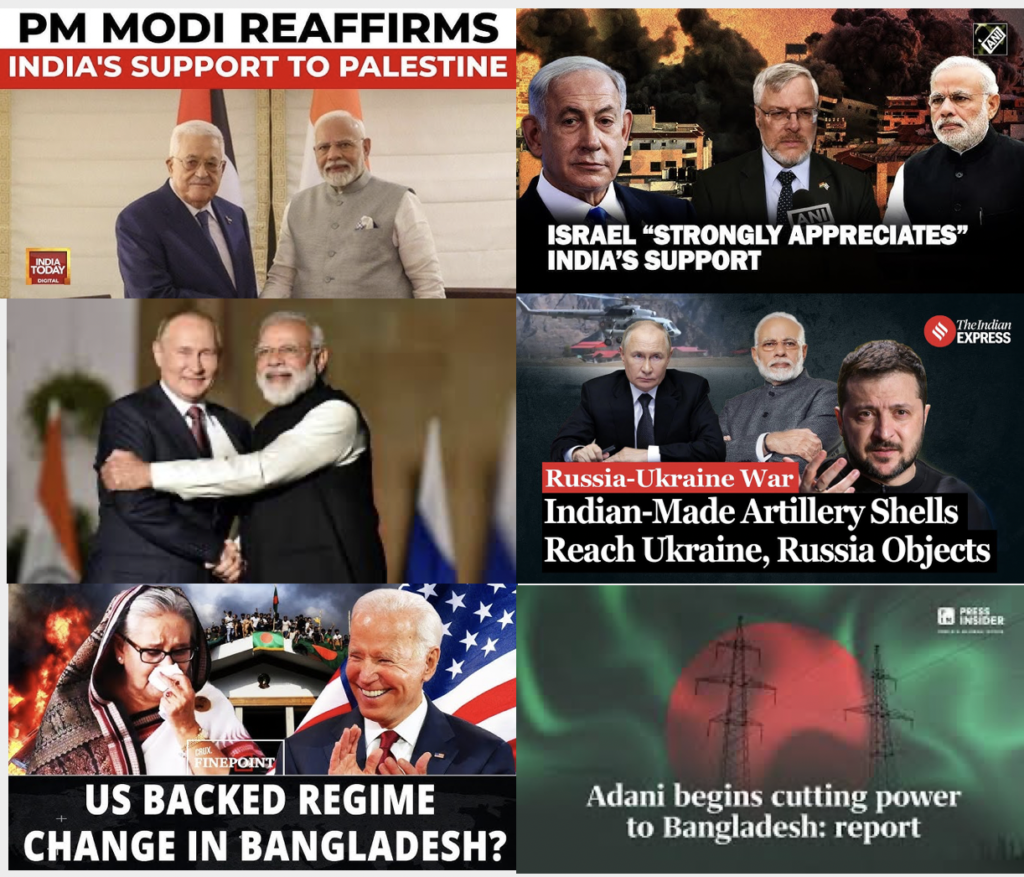
How far has India realistically played role of mediator other than acting out of self-interest, making the best for India out of relations with both US & Russia? In ordinary terms this would be referred to as double-dealing. If China & Turkey could come up with peace proposals why hasn’t India? Does India see bigger advantage for itself in this chaos? But India cannot afford to lose Russia as noticeably Russia & China are increasing engagement. Its inevitably a case of self-serving interest –India gaining from purchase of discounted Russian crude oil & controlling global energy prices. How long can India sustain its relations when nations begin to wonder whose side India is actually on!
While India & China’s stand on Russia in Ukraine is a case in point, what is Russia’s stand vis a vis India-China rivalry? What if Russia sides with China? What if Russia-China-Pakistan relations increase as we can see happening after the sudden ouster of PM Imran Khan immediately after his visit to Russia while Pakistani army chief went to US & assured unhindered continuance of IMF policies. Russia is also supporting Pakistan’s entry to BRICS which India will have mixed reactions to. Though all are made to believe tensions prevail between India & China, both have been cozing up and any animosity projected by western media is to fulfil Western interests only. Thus, everytime the Indian leader visits Russia or China, the Western capitals get flustered.


Yet, inspite of India’s friendship with Russia, India was recently accused of selling weapons to Ukraine which means Ukraine is using arms sent by India to fight Russian troops! Is Russia agreeable to such?
Similarly, India is also being questioned again on loyalty. India’s support for Palestine was a part of its foreign policy of 1974 becoming the first Non-Arab State to recognize PLO. However, it appears the situation has now changed. India was among the 1st to condemn Hamas ttack on Israel on 7 October 2023 & Modi even named Hamas as terrorist” in his tweet. India even abstained from UNGA vote calling for an Israeli ceasefire but voted for resolution to release Israeli hostages in Gaza. It was Indian intel that informed Sri Lanka of a likely Islamic extremist attack on Israeli tourists in Arugam Bay.
On another front, the world’s oceans are now being ruled by hired pirates. The Houthis are making $180 a month by illegal safe-transit fees – a bribe shipping agents have to secure to cross the Red Sea as per UN Security Council intelligence. Yemen Houthis are aligned it seems to Al Qaeda, al-Shabaab, Iran’s Revolutionary Guard, Hezbollah & Hamas. It is also claimed that Houthi-controlled companies are importing oil & liquefield petroleum gas using false country of origin certificates even bypassing UN Verification & Inspection Mechanisms. Many shippers are rerouting away from Res Sea in view of Houthi threats though Red Sea is the shortest & most efficient trade route for ships passing from Asia to Europe. The longer routes taken means price increases. On 19 Nov, Houthi rebels hijacked an Israeli cargo ship to express solidarity with Palestine.US formed a defensive coalition” to counter Houthi attacks with 20 nations joining as partners. Though India maintained a neutral stand on Israel-Palestine, Indian ship Pipavav was hijacked by Houthis & another was also attacked.
Lets now look at how India is acquiring strategic ports. In January 2022, Adani took over Israels Haifa port (Israels 2nd largest port) for $1.8billion with local partner Gadot Group with Adani holding two-thirds shares. India outbid China to secure the Port. Adani runs 13 sea terminals in India which manages 23% of India’s maritime trade. Haifa Port is important for it is at the crossroads for trade & commerce between Europe, Middle East & Asia, the port offers quick access to Israels major cities & industrial hubs, it is a crucial naval base for Israeli defense forces enabling warships & support vessels to dock & Haifa Port produces, distributes petroleum products. India will gain acces to Israeli technology & expertise to modernize India’s port infrastructure. India’s control of Haifa port will give India a strategic edge. Haifa Port is frequently used by US Sixth Fleet. The strategic & political importance of the Port can be further seen in India appointing Ron Malka, Israels former envoy to India as the Executive Chairman of the India-controlled Haifa Port Company. Does this diplomat have any knowledge in managing a Port & Special Economic Zone?
Haifa is not the only Port, India has invested in. Oman gave India access to its Duom Port in 2018 which gives access to the Indian Ocean & Arabian Sea. India also controls & operates Iran’s Chabahar Port since 2018, this is Iran’s only deep-sea port with direct access to the ocean. Adani teaming up with US to build Colombo West Port Terminal in 2021 together with John Keells whose lease on the SAGT is expiring in a few years. India also constructed the Sittwe Port in Myanmar in 2016 & provides a strategic connection to the north east relieving pressure off the Siliguru Corridor. India & Bangladesh signed agreement to promote transshipment in 2018 via the Chattogram & Mongla Ports to reduce distance between Kolkota & major cities in North East states. Another deal secured by Adani who has also proposed to set up 2 LPG terminals in the 2 ports to handle 1m tonnes of LPG.Be that as it may, Adani just cut 60% of Bangladesh’s electricity for non-payment of $800m. Adani Power supplies 1600 megawatt to Dhaka. Bangladesh is getting reduced supply even though it has commenced payment. This certainly questions giving foreign powers to supply electricity to another nation. We can recall the oil-for-food scandal wherein Natwar Singh used the 2001 Iraq invasion & his Iraq visit to secure deals for his relatives by misusing the animosity between two nations for own advantage.
Striking a balance to maintain cordial relations with nations is one thing but misusing the animosity between two nations for one’s own advantage is not what either friendly nations expect, unless they would do the same if they had been in India’s shoes. However, those studying the trajectory will do doubt have reservations of actual sincerity. Of course, the trajectory is aware of another shadow, the presence of China. India does not like Russia’s closeness to China, while US will be apprehensive of India’s closeness to either Russia & China. The links India is formulating separately with France & Israel are clues to India not depending solely on Russian partnership. Likewise, India is using QUAD to make bigger ties with Australia, Japan & even South Korea, all allies of US.
The ballgame has changed with the recent re-election of Donald Trump to the White House. It is most likely Trump will give bigger emphasis on re-securing American economy, a factor that virtually all Presidents except Trump paid interest to.
Be that as it may just days before Trump became President US slapped sanctions on 19 Indian companies & 2 individuals for supporting Russia. These are also signs of mounting difference between India & US. India will also be concerned about the US regime change in Bangladesh & appointment of a pro-US member backed by US trained youth. These are all signs of dangers lurking & likely to happen inside India as well. The diplomatic tie-ups has seen increasing youth engagement programs and local NGOs pumped with funds by US to do their bidding. These will be the footsoldiers for any future balkanization agendas and colored revolutions unless action is taken. The tool of social media is being used to completely erase traditional cultural heritage across Asia – all these have insidious agendas though presented as freedoms” human rights” and the usual terms dished out by western-backed agencies & their mouthpieces.
With de-dollarization programs rolled out, with BRICS proposing their own currency & creating its own development bank the future of the dollar, IMF & World Bank will be brought to the table. If the dollar hegemony ends, the US empire will collapse. Thus, the West will no doubt also be doing a balancing act with India. To collapse and empire, a new empire & allies need to rise, this is where emerging economies will be given more attention & the new development bank will play a key role. With India doing much to break China’s BRI project, India’s role in BRICS too will be questioned. However, the pulse is pushing India towards resetting relations with China & statements from various quarters in India will ring alarm bells in Wasthington. India’s stand vis a vis its ties with Iran & Israel is also now under the radar. India is again benefitting from all of the world rivalries. Then again the high-level visits between Australia-China, EU engagements with China & revival of China-Japan-South Korea talks will no doubt be worrying the Indians too. It all looks a Tom & Jerry situation!
No doubt policy makers in US, Russia & China will be watching India’s movements aware that India places its own interest first in dealing with any of their partners. This is no ingredient for solid ties, therefore all will be in agreement that the weaker India is, the greater chances that India cannot gain undue advantage over diplomatic rivalries that prevail. India is certainly walking a tight-rope. Having angered all of its neighboring nations with its Big Brother attitude & policies, India has no friends in the region. Many are blaming India for bringing the US monster to Asian shores as an Indo-Pacific partner & thus allowing US to penetrate its objective directly in South Asia. We can see this in the manner the US envoy to Sri Lanka is regularly visiting the Tamil minorities in the Central Province, Eastern & Northern Province far more than the Indian envoy. These trips are not without agendas helpful to India. Soon India will have to directly face the monster India brought to Asia as QUAD partner. US regime change in Bangladesh took even India unawares! What more surprises will US spring on India.
Who is worried about growin cooperation between China, Iran, North Korea, and Russia. China & Russia’s stand on Israel-Iran-Palestine & Ukraine & how India is manoevering itself within this tense terrain.
Who will checkmate whom & how reliable is India’s friendship is now on the table.
Shenali D Waduge
Delayed action on NGO funding
November 11th, 2024Sugath Kulatunga
Thursday, November 7, 2024, ECONOMYNEXT reports that – Sri Lanka’s Central Bank signed an agreement to obtain and exchange information on investigations and prosecutions of Money Laundering (ML), Terrorist Financing (TF) and related crimes in Non-Governmental Organizations (NGO) and of any persons connected with such bodies.
The Central Bank’s Financial Intelligence Unit (FIU) and the National Secretariat for NGOs entered into the Memorandum of Understanding (MOU) on Monday (04) with this regard, the Central Bank said.
Non-Governmental Organizations (NGOs) could be misused for Money Laundering/Terrorism Financing and related crimes, and thereby could threaten the stability of the national and global economic and financial systems,” the Central Bank said in a statement.”
This is too late as usual and too limited in scope. Why did not Sri Lanka follow the Foreign Contribution (Regulation) Act of India and ensure that foreign donations are used in a way that is consistent with national interests and the values of a democratic republic” Was it because political parties and pro-west NGOs were dependent on foreign funding?
Indian law has existed since 1976 and was revised in 2010 to meet new developments. The government and the CBSL should be ashamed of their inaction. A summary of the Indian law is given below.
The Foreign Contribution (Regulation) Act (FCRA) is a law in India that regulates the flow of foreign funding into the country. The FCRA was originally enacted in 1976 and significantly revised in 2010. The FCRA’s purpose is to ensure that foreign donations are used in a way that is consistent with national interests and the values of a democratic republic.
The FCRA requires that:
- All NGOs register with the Ministry of Home Affairs (MHA)
- Individuals or NGOs seeking to receive foreign donations must be registered with the MHA
- Individuals or NGOs seeking to receive foreign donations must be structured as a Trust, Society, or Section 8 Company
- Entities must obtain prior approval or registration from the MHA to receive foreign contributions
- Entities must adhere to various reporting requirements
The FCRA also prohibits the acceptance of foreign contributions for activities that are detrimental to the national interest.”
Replace Provincial Councils with District Councils
November 11th, 2024Sugath Kulatunga
The former President, RW, placed four-time bombs on the political battlefield before he left. These are the Rs 25,000 salary increase to the public service, the connectivity with India, to commence repayment of foreign debts by 2028, and the full implementation of the 13th Amendment to the Constitution. The salary bomb with a short fuse has been defused by President AKD. The Indian connectivity bomb with a long fuse remains but is under close watch. The 13A bomb, which is also associated with Indian connectivity, is ticking slowly but steadily. The IMF will have to agree with the new government to revert to the 2033 date, which they had proposed. RW has a cynical propensity to throw a spanner in government machinery. His MOU with Prabhakaran was a typical RW sophistry, which an International Journalist Paul Harris declared as the greatest giveaway in history’’.
With the forthcoming Parliamentary election, the obnoxious 13th A has surfaced again as a vote-bargaining strategy. All Presidents of Sri Lanka since the amendment to the Constitution have declined to implement the !3A in full. India has been repeating this condition for over many years as a routine. It is opportune that policymakers visit not only the devolution of Police and Land powers but the vexed issue of the 13A as a whole.
History
Sri Lanka was divided into 9 Provinces on the recommendation of the Colebrook Commission of 1833 with the evil objective of dismantling the Kandyan Kingdom. But with experience in the administration of the country, and increase of population, and the demand for additional services at the periphery the Provinces were subdivided in stages into Districts. The British abandoned the Provinces because the Provincial administration was unwieldy and inefficient. The Present Provincial Council System hastily enforced by India has the same and more disadvantages. The previous Provincial Administration under the British was ably supervised by the Center. But the new animal is both a wild ass and a white elephant.
Up to the time of the enforcement of the 13th Amendment, the District was the first level of decentralized administration. At present, there are 25 Districts responsible for administrative and development activities at a local level”. Most of the major departments of the government were represented at the District level and the Government Agent as head of the District public service coordinated the functions of the Departments through the District Coordinating Committee (DCC). The important task of agriculture was supervised by the District Agricultural Committee (DAC). The decentralized District Administration functioned smoothly and effectively through many natural disasters and civil turmoil.
13th Amendment to the Constitution of Sri Lanka was forced on the political leadership of the country as a consequence of the Indo-Sri Lanka Accord of 1987. The bonafides of the Indian Government in the naked intervention in the domestic politics of Sri Lanka have been widely questioned. A solution to the issue of power-sharing in Sri Lanka was not the primary objective of the Indian intervention. The subterfuge of the Exchange of Letters demonstrated the unwarranted intrusion aimed at imposing Indian hegemony in South Asia. Most of the conditions, which were to prevent US influence in Sri Lanka, have no relevance today. India is now the most favored nation of the USA and a conniving member of the QUAD. The Accord itself became a dead letter when India failed to make the LTTE accept it. Most importantly, it was also not an agreement between the Tamil community and the government of Sri Lanka.
13A was not a demand of any community in Sri Lanka. It was rejected outright by the Cabinet. It was hatched by two ministers of the Rajiv Gandhi government without discussion with a broader sample of the Sri Lankan polity. The most recent progressive Constitution that of South Africa, which is considered a model, took two years of discussion and deliberation. Even Prabhakaran saw the duplicity of the proposal when he said on August 4, 1987, This agreement did not concern only the problems of the Tamils. This is primarily concerned with Indo-Sri Lankan relations. It also contains within itself the principles; the requirements for making Sri Lanka accede to India’s strategic sphere of influence. It works out a way for preventing the disruptionist and hostile foreign forces from gaining footholds in Sri Lanka. This is why the Indian government showed such an extraordinary keenness in concluding this agreement.”
A subsequent statement of former CJ, Sarath N Silva confirmed the problems of hastily grafting certain provisions in an alien Constitution into a totally different local situation. The 13th amendment is not a document that was formulated with much thought. It is one that was put together in haste to go with the Indo-Lanka accord. This amendment compiled by taking parts of the Indian constitution doesn’t suit Sri Lanka at all. As India is a large county they have to decentralize power. However, practically, it is not possible in our country. Especially, devolving police and land powers is not practical at all.”
On the statement of the former CJ on the size of India, It must be noted that the average population and the average geographical area of the State of India are more than 18 times the population and the physical area of a Province in Sri Lanka. 13 A has assigned more powers to the Provincial Councils than the powers enjoyed by the States of India. Vide:
https://vicharasl.wordpress.com/2023/01/26/13th-amendment-goes-beyond-the-indian-constitution/
Advantages of The District as the focal point of decentralized administration.
Sri Lanka has had a tradition of local government from the days of King Pandukabhaya 2000 years ago. Most of the activities devolved in the Provinces were efficiently carried out at the District level prior to the 13th Amendment. Imposing an intermediate level between the District and the Center is a violation of the principle of Subsidiarity and has led to a proliferation of political and bureaucratic positions.
A distinct advantage of District-level decentralization is that issues typical to individual Districts in a Province can be addressed with special emphasis. For example, in the Eastern Province, the ethnic composition, level of development, and resources in the Batticaloa, Ampara, and Trincomalee Districts are different. Even in the Western Province where Colombo has a plethora of issues in urbanization the problems of the Kalutara District are very much more of rural nature. In the Northern Province, the distinction in economic, social, and cultural milieu between the Jaffna District and other Districts are striking.
Even from a power-sharing between communities is concerned a District system provides a marked advantage to minorities to participate in governance in Ampare, Trincomalee, Batticaloa, Nuwara Eliya and the 5 Districts of the Northern Province, which is in nine out of 25 Districts of the country or in 36% of the Districts.
The imposition of an echelon above the District is a gross violation of the principles of subsidiarity and proximity. The shift of administration from the Province to the District was a milestone in the progressive decentralization of power from the Center closer to the citizen. The Districts were well endowed with the required technical capacity. There was no economic efficiency gained from reverting to the Province.
Sri Lanka had made several attempts to establish District Councils. In 1968 White Paper presented by Minister for Local Government, Mr.M.Thiruchelvam was withdrawn due to the violent protest by the opposition. In 1979 a commission with the participation of Tamil intellectuals like A. J. Wilson and Neelan Tiruchelvam made proposals for District Development Councils. It was the only set of proposals accepted by the Tamil political parties. Tragically, at the DDC elections in the Jaffna District in 1980 the election process was deliberately disrupted by the UNP, the governing party, which made the Tamil parties disillusioned on the DDC process.
Subsidiarity principle
In the devolution/decentralization of power the universally accepted principle is that of subsidiarity. This is effectively practiced in the European Union and clearly spelled out in the UNITED NATIONS CENTRE FOR HUMAN SETTLEMENTS (Habitat) in its Policy Statement titled TOWARDS A WORLD CHARTER OF LOCAL SELF-GOVERNMENT as the basis of the Charter should reside in the principles of subsidiarity and proximity, whereby decisions should be taken at the level closest to the citizens (municipality or town) and that only those tasks which the local level cannot effectively carry out alone should be referred to higher levels. Under the principle of subsidiarity, public responsibilities shall generally be exercised by those authorities which are closest to the citizen. In the same spirit, any allocation of responsibility to another authority must be based only on the requirements of superior technical or economic efficiency.”
Governance structures should be citizen-centered and the commonality of interest of a community should be a prime consideration in deciding on the territory of a unit of governance. The District is the more homogenous unit with a higher commonality of interest of the inhabitants. Agro-climatic factors, resource endowments, and ethnic compositions are generally less varied within a District than in a larger unit of the Province. Even in the Western Province, in the Districts of Gampaha and Kalutara, the ethnic composition, level of industrialization, agricultural patterns and the overall level of infrastructure development are different. Gampaha is in the coconut triangle and is a fast-industrializing District with a good road network and fast developing infrastructure with an Investment Promotion Zone and an international airport. The economy of the Kalutara District is based mainly on agriculture with smallholder rubber making a substantial contribution to income and employment generation.
The smaller unit also favors direct democracy, higher participation of citizens in decision making, and good governance. Economic activities and social relationships bind the inhabitants of the District. Their problems are similar. The District center is the hub of road networks and communication facilities. In many cases, Districts have had a closer relationship with adjoining districts of different Provinces. Batticaloa and Polonnaruwa and Trincomalee and Anuradhapura are good examples. It does not make sense for a citizen in Ampara to be governed from a provincial capital in Trincomalee, or a Hambantota farmer to be governed by an authority located in Galle when the task could be performed better in the same District with less cost and inconvenience to the citizen.
Although the country has achieved reasonable targets in most millennium development goals, widespread disparities exist at District levels. It is only by a District-based strategy that such disparities can be addressed effectively and without delay. There is more scope for the development of harmonious relationships and the integration of the different communities within a District than in a larger space of a Province.
At present, there are two indeterminate positions held by India and Sri Lanka on the Provincial Councils. The Indian position articulated by the Indian Minister Jaishankar and the Indian representative in the UNHRC is that the 13th Amendment to the constitution should be implemented fully. This means that in addition to the Police and Land Powers given in full to the Provincial Councils, the Northern and Eastern provinces should be amalgamated. This condition of India is to create a land area and a population that could demand self-rule and also has the strategic port of Trincomalee under its control. Ironically, India is calling for more power to the Provinces while withdrawing the application of Article 370 of the Constitution of India to Kashmir which allowed the state a certain amount of autonomy. If India does not have ulterior motives and is concerned about the Tamil people enjoying greater opportunities for them to participate effectively in the decision-making process relating to administrative and development activities at a local level” India should ensure that the proposal for District Councils are accepted. This will be going much beyond the 13th Amendment in power sharing.
Sri Lanka has a mixed population and that is its greatest strength. The character and priorities of districts varied and when clumped together in one Province the weaker districts get submerged. There is a marked difference between Galle and Hambantota or between Jaffna and Mannar. Certainly, there is no commonality between Jaffna and Amparai or Trincomalee. With district self-government, each district will get parity with the others. The units being small will also make them manageable for efficient administration. Management is one of the major deficits in our present system. Communication, mobility and decision-making would be considerably faster than in the framework of cumbersome provincial bureaucracies.
The smaller units would additionally enable linguistic, cultural and economic uniformity within their jurisdiction. Development and progress too could be monitored, evaluated and implemented much faster. The commitment and self-reliance of people within the unit would tend to be greater than within a large provincial unit.
Failure of Provincial Councils
The Provincial Councils have been a costly failure. Only the Western Province is financially viable. Others have to depend on Central Government handouts. When over 50 percent of the Sri Lankan Tamil community is living outside the so-called Tamil homeland, the demand for power-sharing by devolution does not meet their aspirations.
National Security
In any arrangement for power-sharing, which disregards the overarching concerns of sovereignty and territorial integrity of the country is an invitation to disaster. Devolution of powers to the District rather than to a Province is less likely to become a threat to the territorial integrity and national security of Sri Lanka. It is relevant to mention that even India has expressed fears of the notion of Eelam as a threat to the sovereignty and territorial integrity of India. A relevant excerpt of the Gazette Notice of the Indian Government declaring the LTTE as an unlawful association is produced as follows:
MINISTRY OF HOME AFFAIRS NOTIFICATION New Delhi, the 14th of May 2019 S.O. 1730(E).
WHEREAS the Liberation Tigers of Tamil Eelam (hereinafter referred to as the LTTE), is an association based in Sri Lanka but having its supporters, sympathizers and agents in the territory of India.
AND WHEREAS the LTTE’s objective for a separate homeland (Tamil Eelam) for all Tamils threatens the sovereignty and territorial integrity of India and amounts to cession and secession of a part of the territory of India from the Union and thus falls within the ambit of unlawful activities.
AND WHEREAS the LTTE, even after its military defeat in May 2009 in Sri Lanka, has not abandoned the concept of ‘Eelam’ and has been clandestinely working towards the ‘Eelam’ cause by undertaking fund raising and propaganda activities and the remnant LTTE leaders or cadres have also initiated efforts to regroup the scattered activists and resurrect the outfit locally and internationally”.
It is appalling that when India which nurtured the LTTE considers the LTTE to be a secessionist threat, Sri Lanka is attempting to give the separatist a base to continue their subversive activities. In the current context of an ISIS threat, a separate Eastern Province could become a cradle of Islamic extremism.In this context Presidents proposal to give Police and Land powers to the Provincial Councils would be like letting the fox into the hen house. In countries with histories of communal tensions, the center retains such key powers in the national interest.
In South Africa there is only one National Commissioner of Police. The Constitution stipulates at Article 207. (1) The President as head of the national executive must appoint a woman or a man as the National Commissioner of the police service, to control and manage the police service.
(2) The National Commissioner must exercise control over and manage the police service in accordance with the national policing policy and the directions of the Cabinet member responsible for policing.
(3) The National Commissioner, with the concurrence of the provincial executive, must appoint a woman or a man as the provincial commissioner for that province, but if the National Commissioner and the provincial executive are unable to agree on the appointment, the Cabinet member responsible for policing must mediate between the parties.
(4) The provincial commissioners are responsible for policing in their respective provinces 1) as prescribed by national legislation; and subject to the power of the National Commissioner to exercise control over and manage the police service in terms of subsection (2) above.
The transfer of Police powers to the Provinces would end up in Chief Ministers making the police force their private armies. Even today the nexus between provincial politicians and the drug, kasippu and organized crime mafia is well known. Police functions should never be politicized.
The transfer of land powers to provinces is as disastrous. Even without land powers the subterfuges employed to abuse land alienation rules by interested parties in Districts like Trincomalee, including illegal encroachment and even setting fire to the land office are on record. In the Northern Province where Thesawalami law prevails the poor sections Of the community and the underprivileged castes would be discriminated.
Malay majority in Malaysia is 69% and Malay Reserve Land can only be owned and controlled by Malays and it is impossible to be legally released to non-Malays. All Malays are Muslims.
It is high time that, in the national interest, the government and the opposition revisit this alien-enforced 13A and establish District Councils with increased decentralized power, with the restriction that districts cannot merge with other districts.
Sugath Kulatunga
War Trauma in Sri Lanka Presentation by Dr Ruwan M Jayatunge M.D. PhD Organized by Professor Judith Herman – Harvard University
November 11th, 2024Dr Ruwan M Jayatunge M.D.
Odysee Video Link alternative to YouTube : https://player.odycdn.com/v6/streams/90eac9df9ddf5fbd9a76399cd6fa420aa1a74cff/98b48a.mp4
Derana 360 | ව්යවසායක නීතිඥ දිලිත් ජයවීර | With Dilith Jayaweera
November 11th, 2024The Strategic Threat of Extremist Narratives: ‘It’s Our Time’ and ‘It’s Our Future
November 11th, 2024Palitha Ariyarathna
Synopsis:
This article examines how extremist groups exploit demographic shifts, including population growth, migration, and cultural change, to fuel radicalization and violence. It highlights global trends in Europe, the Middle East, and Other County, showing how fears of cultural and identity loss are used to recruit followers and destabilize societies. The article calls for international cooperation and counter-narratives to combat the rising threat of extremist ideologies.
The global demographic landscape is undergoing rapid transformation, with the world’s population projected to surpass 8.5 billion by 2030. This monumental shift, driven by factors such as fertility rates, migration, and improved healthcare, offers both opportunities and challenges. While population growth can fuel economic dynamism, cultural exchange, and innovation, it also presents risks, particularly when radical ideologies seek to exploit these demographic changes for political, religious, or ideological gain. This article examines the strategic implications of extremist groups leveraging demographic shifts and offers recommendations for global cooperation to mitigate these risks, ensuring a peaceful and inclusive future for all.
Population growth, driven by diverse cultural, economic, and social forces, is expected to place significant pressure on resources, infrastructure, and governance systems in both developed and developing nations. By 2030, the majority of global population increases will occur in regions already grappling with social and political instability. This demographic shift provides fertile ground for extremist groups to exploit perceived vulnerabilities, framing these shifts as existential threats to cultural, religious, or national identity. Such exploitation can undermine social cohesion, escalate conflict, and destabilize regions already fragile due to economic inequality, poor governance, or historical grievances. As populations in certain regions grow rapidly, extremist movements may seek to capitalize on these changes through propaganda, recruitment, and the dissemination of divisive ideologies. The potential for these movements to spread globally, using the narratives of “It’s our time” or “It’s our future,” poses a direct challenge to the international community’s efforts to foster peace and sustainable development.
Extremist groups—whether motivated by religious, ethnic, or political ideologies—often view demographic change as an opportunity to galvanize their base and challenge existing power structures. Narratives such as It’s our time” or It’s our future” serve to foster a sense of urgency, superiority, and entitlement among followers, encouraging violence, radicalization, and extremism. For example, right-wing populist movements in Europe have weaponized fears of demographic change, particularly around migration, by invoking notions of cultural “replacement” and national decline. This rhetoric is epitomized by the “Great Replacement” theory, popularized by French writer Renaud Camus, which posits that the indigenous European population is being “replaced” by migrants, particularly from Muslim-majority countries. This theory has been linked to violent extremist actions. For instance, the Christchurch mosque shooting in New Zealand in 2019 was directly motivated by this theory, as the shooter cited the demographic “threat” posed by Muslims in his manifesto. Similarly, Islamist extremists in the Middle East and North Africa have used demographic shifts as a justification for violence. Groups like ISIS have framed population changes, migration, and the collapse of state control as an opportunity to establish a caliphate” and restore Islamic rule. ISIS leaders, such as Abu Bakr al-Baghdadi, invoked the idea of demographic and sectarian shifts to further radicalize individuals, using the growth of Sunni populations and the destabilization caused by the Iraq War and the Syrian Civil War as pretexts for violence and territorial expansion.
Extremist ideologies often operate through the manipulation of fear, identity, and belonging. The perception of demographic shifts as a threat to cultural, religious, or national identity is deeply psychological. Individuals or groups who feel marginalized, threatened, or disempowered may be more susceptible to extremist ideologies that promise a return to power or a restoration of cultural or religious dominance. These ideologies exploit a sense of victimhood, presenting a dichotomy between “us” (the righteous or true believers) and “them” (the foreign or impure), thus justifying violence as a defensive or preemptive act. By framing demographic changes as a zero-sum game—where the growth of one group must necessarily mean the decline of another—extremist groups can incite violence, create societal division, and dismantle social trust. These narratives are powerful because they speak to the most primal fears of communities facing rapid change. In a world where global migration and demographic shifts are inevitable, countering these narratives requires an international commitment to education, empathy, and cross-cultural dialogue.
The exploitation of demographic changes by extremist groups represents a significant threat to global security. The rise of transnational extremist movements has demonstrated the ability of these ideologies to spread across borders, destabilizing governments and undermining international peace efforts. This exploitation is not limited to isolated regions but has global repercussions. The Rwandan Genocide of 1994 provides a horrific example of how demographic shifts and ethnic divisions can be manipulated for political gain. In the lead-up to the genocide, extremist factions within the Hutu government capitalized on fears that the Tutsi population posed a threat to Hutu control. This propaganda, which framed the Tutsi as a demographic and political threat, led to the systematic slaughter of nearly 800,000 Tutsis. Similarly, the Holocaust in Nazi Germany exploited fears of racial purity and the perceived threat of Jewish migration, leading to the genocide of six million Jews. These examples underscore how extremist ideologies can manipulate demographic fears and exploit them to justify mass violence. Another example can be seen in the Partition of India in 1947, which was influenced by demographic shifts and religious divisions. Leaders like Muhammad Ali Jinnah and Jawaharlal Nehru used the growing tensions between Hindus and Muslims as a justification for dividing the Indian subcontinent, creating Pakistan. The partition led to mass violence, displacement, and the deaths of hundreds of thousands, showing how demographic shifts—when manipulated—can lead to violent and lasting consequences.
Extremist movements are increasingly adept at infiltrating key sectors of society, including politics, law enforcement, education, and the military. Such infiltration can have far-reaching consequences, as extremist ideologies are spread within institutions that are critical to maintaining the stability of the state. Extremist ideologies targeting military and law enforcement personnel represent a particularly dangerous form of radicalization. These groups seek to exploit individuals within the armed forces to carry out attacks or destabilize national security. Radicalized military personnel can access weapons, technology, and strategic knowledge that could be used to further the extremist cause. Extremist groups also seek to infiltrate political systems to influence policy decisions, promote their ideology, and establish power. This has been evident in some populist movements, where extremist parties have gained political power by framing demographic shifts as an existential threat and using fear as a political tool. When extremists gain influence in government, they can enact policies that exacerbate social divisions, undermine human rights, and lead to authoritarianism. Education is a primary target for extremist groups looking to radicalize the next generation. Universities, schools, and even community centers may become incubators for extremist thought if unchecked. Radical groups infiltrate educational institutions to recruit young people, spreading divisive ideologies under the guise of cultural or religious revival. While less commonly discussed, the healthcare sector is also a potential vulnerability. Extremists may attempt to infiltrate health services to gain access to resources, recruit health professionals, or spread radical ideologies within vulnerable populations.
The role of technology in the spread of extremist ideologies cannot be overstated. The proliferation of social media platforms, encrypted communication tools, and digital networks has given extremist groups unprecedented access to global audiences. These platforms enable radical groups to recruit followers, disseminate propaganda, and coordinate activities on a transnational scale. The ability of these groups to create echo chambers—where like-minded individuals are exposed only to reinforcing messages—further accelerates radicalization. Governments and technology companies must cooperate to ensure that digital spaces are not exploited by extremist groups. This includes both monitoring online activities and ensuring that counter-narratives promoting tolerance, inclusivity, and peace are amplified. The international community must adopt a collective approach to regulating online spaces, ensuring that digital platforms are used for constructive, rather than destructive, purposes.
Over the past two centuries, Sri Lanka has witnessed significant demographic and political changes that have shaped its national landscape. One of the most contentious issues has been the rise of aggressive proselytization activities by various religious groups, often carried out under the guise of missionary work. In Sri Lanka, many churches, particularly those of Western denominations, have been accused of engaging in illegal proselytizing efforts that undermine the island’s rich Buddhist heritage. Religious leaders, including some pastors, have exploited vulnerable communities, using promises of financial support or social benefits as a means to convert individuals to Christianity, often in contravention of Sri Lanka’s laws governing religious activities. This increasing trend of religious conversion, combined with demographic shifts, has created political tensions. Some groups have started to see these activities as a direct threat to the Sinhala Buddhist identity, which has been the cornerstone of Sri Lankan society for centuries. The fears surrounding these changes have sparked broader concerns about the preservation of cultural and religious traditions in the face of external influences and the threat posed to the unique identity of the Sinhala Buddhist community. At the same time, extremist factions continue to exploit these tensions, propagating narratives that portray religious conversion and demographic shifts as part of a larger, orchestrated effort to alter the social fabric of the nation. These ideologies, which are often linked to broader political and religious movements, play a critical role in the polarization of Sri Lankan society, exacerbating divisions along religious and ethnic lines. The rise of such narratives has created an increasingly volatile atmosphere, contributing to the ongoing unrest.
It is deeply upsetting to see parts of our society, once hopeful for the new millennium and a future centered on Buddhist values and unity, now divided. One segment is drawn toward the promise of wealth and prosperity in distant lands, while another looks to nearby Arab countries, embracing the narrative that 2030 is their time.” Meanwhile, others seek refuge in neighboring countries, clinging to the idea of separate lands. In doing so, they forget that they are standing on the foundation of support built by the Sinhala Buddhist nation that has existed for over 2000 years, “Now, another group is saying that they have been in Sri Lanka for over two hundred years, and they are calling it ‘Nam 200’. This growing sense of disillusionment is painful to witness. Our neighbors, who once believed that peace and prosperity could bring our land and culture forward, have now fallen into the trap of exploiting these divisive narratives, too often based on false promises and political manipulation. This mindset weakens the very strength of our Buddhist civilization. Even more troubling is the fact that our political leaders and religious figures—those who should be guiding the nation—remain blind to these forces at play. They fail to protect the core values that have preserved our culture throughout the centuries. The lack of a clear political and educational understanding of these dynamics only makes us more vulnerable to radicalization, further jeopardizing the future of Sri Lanka as a unified and peaceful nation.
Peace comes from within. Do not seek it without.”-Buddha
Palitha Ariyarathna
Sociopolitical Analyst & Writer
Specializing in Regional Security and Radicalization in South Asia: Focus on Demographics, Migration, and Radicalization
References:
- United Nations Population Division (UNPD) – World Population Prospects
- International Crisis Group – The Global Impact of Radicalization and Violent Extremism
- Brookings Institution – The Geography of Extremism: Global Trends and Responses
- Pew Research Center – The Demographic and Political Landscape of Global Migration
- RAND Corporation – Understanding the Role of Ideology in Radicalization
- Global Terrorism Database (GTD) – START – Global Terrorism Trends and Data
- Buddha Sasana Law – Buddha Sasana Law of Sri Lanka
- Sri Lanka’s Sixth Constitution – The Constitution of Sri Lanka
- Suspect who tried to kill Trump also planned Arugam Bay attack
Finland – A Great Country with Super Citizens in a Dilemma or a Predicament, but with a Solution! Minister of Labor Satose’s surprising opening about the need for foreign workers and students!
November 11th, 2024Prof. Hudson McLean
Finland – A Great Country with Super Citizens in a
Dilemma or a Predicament, but with a Solution!
Minister of Labor Satose’s surprising opening about
the need for foreign workers and students!
Express Your Opinion – Read What Others Say!
The Independent Interactive Voice of Sri Lanka on the Internet.
Please visit -: http://www.lankaweb.com/
The International Reaction to Donald Trump President Elect!
November 11th, 2024Prof. Hudson McLean
Donald Trump President-Elect Won the Presidency of USA on6th November 2024.
But Did He Actually Win?
Starting with his own wife Melania Trump Body Language indicates a different story!
7 Nov 2024 #DonaldTrump #MelaniaTrump #CelebrityRelationships
An infamous eye roll, rare instances of PDA, and quiet displays of support. A body language expert breaks down how Donald and Melania Trump really feel about each other.
‘He will call Putin ASAP: Donald Trump’s plan to end the war in Ukraine ‘revealed’
Will Trump End the War in One Month?
A peace deal in Ukraine could strengthen Russia.
Will Vladimir Putin play a subservient role to Donald Trump to be seen Russia as the 51st State of USA?
Answers will show the BullDog of Donald Trump Attitude very soon!
Express Your Opinion – Read What Others Say!
The Independent Interactive Voice of Sri Lanka on the Internet.
Please visit -: http://www.lankaweb.com/
Ex-Justice Minister challenges AKD’s ‘political prisoners’ claim
November 11th, 2024By Shamindra Ferdinando Courtesy The Island
Wijeyadasa
Former Justice Minister Dr. Wijeyadasa Rajapakshe, PC, yesterday (11) said Sri Lanka had no political prisoners.
The ex-parliamentarian was responding to President Anura Kumara Dissanayake’s declaration in Vavuniya and Jaffna that Tamil political prisoners would be released in consultation with the Attorney General. This assurance was given during the NPP’s election campaign.
Rajapakshe, who resigned from the Justice portfolio to contest the last presidential election, said that the Geneva-based United Nations Human Rights Commission (UNHRC) and those who couldn’t stomach Sri Lanka’s triumph over terrorism could exploit such declarations.
Those who had surrendered to the military at the end of the war in May 2009 had been rehabilitated and subsequently released, the ex-MP said, adding that no legal action has been taken against them.
According to records available with the Defence Ministry over 12,000 LTTE cadres, both men and women, had been released over the years after rehabilitation.
Rajapakshe said that at the time he relinquished ministerial duties there were only 11 convicted hardcore terrorists. Responding to another query, the PC said that among them were those convicted over the Central Bank bombing in January 1996, the Dehiwala train bomb in July 1996 and the Piliyandala bus bomb in April 2008.
According to Rajapakshe, the AG couldn’t make decisions in respect of them as all of them had been sentenced by the Supreme Court. In addition, there were 13 other terrorist suspects held in terms of the Prevention of Terrorism Act (PTA).
The ex-MP said that the President should ask for a report from the AG’s Department regarding those serving long jail sentences after being found guilty by the SC of heinous crimes. The President, however, could pardon them if he desired to do so, the ex-MP said, adding that ex-terrorists, even hardcore cadres, had received presidential pardon over the years. Both the late President Ranasinghe Premadasa and former President Maithripala Sirisena had pardoned ex-terrorists, he said.
Commenting on the NPP leader’s assurance that northern land held by the state, too, would be released, Rajapakshe said that the Defence Ministry would be able to set the record straight. In fact, the government had started releasing land, both private and public, held by the military less than a year after the conclusion of the war.
Former Minister Rajapakshe said that the Defence Ministry would have the latest information pertaining to the releasing of land as the process that started one year after the end of the war continued even during the Wickremesinghe-Rajapaksa administration (July 2022-Sept 2024).
The former Justice Minister expressed surprise that none of the political parties in the fray at the general election had responded to President Dissanayake’s declaration.
There are some ex-LTTE cadres contesting the upcoming general election from different political parties, including DTNA (Democratic Tamil National Alliance), breakaway faction of the once ITAK (Illankai Thamil Arasu Kadchi)-led Tamil National Alliance, according to sources.
The former Minister said that though political parties had the right to woo the electorate they shouldn’t resort to strategies that may undermine Sri Lanka’s defence in Geneva. Accountability is too serious an issue to play politics with,” the ex-lawmaker said, adding that post-war national reconciliation depends on both sides accepting responsibility for whatever the violations perpetrated during the war.
Responding to another query, the one-time President of the Bar Association said that in addition to those who had been convicted and held under terms of the PTA, there weren’t any secret detention facilities as alleged by various interested parties.
Several political parties are fighting for the lion’s share of 29 seats available in the Jaffna, Vanni, Batticaloa, Digamadulla and Trincomalee electoral districts with the DTNA and ITAK fielding a joint nominations list for Trincomalee.
Dilith offers president a practical plan to solve Sri Lanka’s debt crisis
November 11th, 2024Courtesy Adaderana
Gampaha District parliamentary candidate and leader of the ‘Sarvajana Balaya’ alliance, Dilith Jayaweera, stated that he has a practical plan to address Sri Lanka’s ongoing debt crisis and is ready to assist the President in repaying the debt through this plan.
Jayaweera made these remarks while addressing a public rally in Maharagama today (11).
We want to bring this country to a positive state. That is why ‘Sarvajana Balaya’ is here. We are the political force of the developing people. Our goal is to inspire the nation to rise up and move forward, not to fill their minds with fantasies, hate, and anger. This is not the politics we need,” Jayaweera said.
He emphasized that eliminating corruption and prosecuting wrongdoers is the first step toward national development. He criticized other political groups for focusing on social media campaigns, contrasting their approach with the ‘Sarvajana Balaya’ movement’s focus on real change.
We will not drag the President down. Instead, we offer a strategic plan to deal with the debt crisis. If the President genuinely wants to fulfill his promises, we are ready to work together to implement a plan that addresses the financial challenges the country faces,” Jayaweera added.
He further stressed the importance of boosting entrepreneurship, exports, and production, and strategically managing the nation’s wealth to address the looming economic issues. According to Jayaweera, achieving a target of $150 billion by 2029 will require cooperation and the involvement of those in Parliament who truly love the country.
Only through such efforts can we save Sri Lanka,” he added.
ලබන වසරේ ජනතාවට සහන දෙන හැටි ජනපති කියයි
November 11th, 2024උපුටා ගැන්ම හිරු පුවත්
ලබන වසරේ අයවැයෙන් ආහාර පාන කිහිපයක වැට් සහ උපයන විට බද්ද සාධාරණ ප්රමාණයකින් අඩු කරන බව, ජනාධිපති අනුර කුමාර දිසානායක පවසනවා.
ඔහු මේ බව සඳහන් කළේ, මෙවර මහ මැතිවරණය වෙනුවෙන් ජාතික ජන බලවේගය ගම්පහදී පැවැත්වූ ප්රචාරක රැලියකට එක්වෙමින්.
මෙවර මහ මැතිවරණය වෙනුවෙන් ජාතික ජන බලවේගය සංවිධාන කරන ජන රැලි මාලාවේ අවසන් ජන රැලිය ගම්පහ නගර සභා ක්රීඩාංගණයේදී පැවැත්වුණා.
දෙසැම්බර් මාසයේ මාස 04ක කාලයකට පරිපූරක ඇස්තමේන්තුවක් ඉදිරිපත් කරන බවත්, පෙබරවාරි අගවනවිට අලුත් අයවැයක් සම්මත කරගන්නා බවත් ජනාධිපතිවරයා එහිදී සඳහන් කළා.
එම අයවැය ලේඛණයෙන් රටේ ආර්ථිකය නව දිශාවකට ගෙනයන බවද ඔහු පවසා සිටියා.
එමෙන්ම, ජනතාවට අවශ්ය සහන ලබාදීමටත් එමගින් කටයුතු කරන බවත්, ආහාර පාන කිහිපයක වැට් බද්ද සම්පූර්ණයෙන්ම ඉවත් කරන බවත් ජනාධිපතිවරයා වැඩිදුරටත් සඳහන් කළා.
අවසන් රැළියෙදි රනිල්ගෙන් මිත්ර – අනුරට බැණුම් වරුසාවක්
November 11th, 2024The English Press and Comrade AKD
November 10th, 2024C. Wijeyawickrema, B.A. (Hons.), LL.B., M.A., Ph.D.
Sena Thoradeniya’s eye-opening essay (Lankaweb, Nov 9th), regarding how the English press in Colombo, and English-speaking black-white businessmen etc. are kissing the foot of AKD and giving him dead-ropes is of historical importance due to its political implications. From 1956-58 SWRD had a SLFP-LSSP (V) [PhilipG and William S) partnership, and from 1964-1975 Mrs. B had a partnership with LSSP. Both arrangements ended with venom and hatred destroying all. The latest JVP-NPP partnership on July 13th, 2019, enabled JVP to bury its past behavior and rise from 3% to 47% of popular votes. Of course, it was also a revenge vote against SJB and the Lotus Bud-RanilW blunders. In between Gotabhaya had to give up his 6.9 million votes!
What Thoradeniya highlights is how the American embassy crept into the NPP brains and planted Harin Amarasuriya to dilute JVP plans. It is not just HA, but hordes of black tie-denim souls influencing hardcore 1988/9 JVP cadre to wear three-piece suits and ties. This was like Karuna Amman gave up his Eelam struggle after he saw foreign hotels when he went abroad as an LTTE agent. It is our sincere hope that AKD’s mind would not get adulterated by these NPP anti-Sinhala Buddhist element and drive him to become a one-party dictator, thus destroying himself and the country.
Among a list of examples that Thoradeniya provides, one name stands out. It is Austin Fernando, who started calling AKD, Comrade Anura! I felt it is my duty to let the readers know what this Eelam supporter is now up to, in his role of misleading politicians who came under his evil influence. The original essay sent to him on December 31.2020, a friendly explanation of why the13A is a deathtrap will follow.
================
Sri Lanka’s Evil Triangle- Is it possible to ‘Educate’ Austin Fernando?
Posted on January 10th, 2021
C. Wijeyawickrema, B.A. (Hons.), LL.B., M.A., Ph.D.
Dear Mr. Austin Fernando:
Thank you very much for your response (Jan. 2) to my previous essay titled, Attempts to exhume the provincial council cadaver: a reply to Mr. Austin Fernando,” (Lankaweb, Dec. 31). However, I am not happy with your decision to stop our exchange, because it appears to me that you did miss my message. The attachment to my message in Sinhala is simple and clear, and it identified you as a devolution” thief. You are a cool disciple of the boisterous Dayan Jayatilleke, in a different panchakanda. What I expected from you was a rational justification for the Devolution Nirvana of yours, because on this same topic, DJ never answered several lists of questions sent to him by me over the past decade.
DJ cannot see the devolution danger because his panchaskanda is wrapped in a Christian-Marxist skin. A comment on my essay in English in the Lankaweb, states that you are a man of Catholic Action, now dormant. He connects you with one Paul Perera (who was this man?) to a Mahaveli land settlement incident in the 1980s. Cardinal Malcolm Ranjith most probably blocked the prevailing ideological struggle against the Buddhist civilizational roots in the Island, raised recently by Mrs. Chandrika, Rossie the Mayor and Mangala, the self-appointed redeemer of pristine Buddhism for the world. Incidentally, these fit perfectly with Vigneswaran’s theory of the five Shiva Lingams brought in pre-historic times to bless the island.
The joining of words by you in your reply, – unexplainable, compounded, confusion”- reminds me the strategy Dayan Jayatilleke used to escape, when he got cornered by a challenger. He even told those who opposed his ideas to go and learn English. Once I sent him an educational reply titled, English with a smile!”
I expected that you offer us a reasoned/seasoned justification explaining why you selected the devolution path. I drew your attention to 7 selected essays demolishing this devolution panacea such as giving police powers ladder to separatist monkeys. The late H. L. de Silva, P.C. (Island, 9/6/2007) and Dr. G. H. Pieris (Island, Sept. 8-15, 2005) provided more than enough facts as to why the federal option is suicidal. Hence, you have a duty to let us know they were wrong, and you are correct. In other words, why do you think that the 13-A is not a death-trap, and it helps the poor, innocent Tamil villager, not the Eelam-bound Tamil politicians.
In a way Dayan is direct in his blind commitment. See what Dayan, the unofficial father of 13-A plus project, says on this subject (Colombo Telegraph Jan. 7, 2021):
…As for my appointment [as SajithP’s foreign affairs consultant] being a slap in the face of the Tamil constituency”, that’s a laugh. I would like my critics to point out a single Sinhalese or even Tamil or Muslim in the public sphere who has been a more consistent advocate and defender of the principle of devolution, the 13th amendment and the Provincial Council system and opponent of those who wish to abolish or truncate that system. No Sinhalese in the public domain has been attacked more by the Sinhala racist Right over decades, on precisely this issue, than I have. It is this stand of mine, including in Geneva, that caused Minister Weerasekara to suggest in the pages of the Daily FT that in the good old days I would have been spiked to death”.
…. I have, of course, also critiqued the utterly unrealistic Tamil effort to push beyond the 13th amendment towards a post-unitary new Constitution, an effort which sank the UNP government. As the Press statement of the remarks of visiting Indian External affairs Minister, Dr Jaishankar shows, his specific and concrete ‘marker’ reference was to the 13th amendment.”
Dayan’s delusion is no different from the delusion that SWRD found in SJVC in 1958. How could a sane person say that devolution within the framework of 13-A plus is the end of any Eelam dream, despite a ton of hard evidence available against his theory? What we Sinhala Buddhists have been trying to prove with ground truths is that 13-A plus arrangement is the beginning of the end of Sinhaleas a Palestine in South Asia, the balkanization path. I think the Eelam strategy has not changed from the one SJVC used before 1976, little now, and more later, except that American- Indian new love affair against China has given, Eelam-bound Tamil politicians a new hope of inching towards the point of no return. This is the hidden meaning of Sumanthiran’s words, devolve us powers that the center cannot take back, once given.”
Austin, it is as if you and Dayan have two identical brains! Why is that Lakshman Kiriella, who once said, any idiot can win wars if there is money,” who is now suggesting in the parliament that the Romesh de Silva committee could follow the Orumittanadu blueprint without trying to reinvent the wheel, also elicit a brain function just like the two of you? On the topic of center-periphery relations Siddharthan’s committee had no recognized Sinhala Buddhist member, and Kiriella suggests shamelessly to resurrect Siddharthan’s report. He has already forgotten the election verdict. The hard-learned experience is that the devolution path is a disaster with absolute certainty of a breakaway sooner than later. Just think about Vigneshwaran’s five Shiva Lingams, mentioned in my previous essay. Any person genuinely concerned about peace and harmony ought to think about decentralization of power to empower people at village level, instead of providing ladders to jumping separatist monkeys.
We learn until our death. The data we receive is converted to information, which in turn provides knowledge. Yes, if we get garbage in, we get garbage out. But even gossip plays an important social role. For example, I cannot remember whether the gifting of a pistol as a birthday present to a tiger boss by a defence secretary, reported in a newspaper was gossip or not. Most probably you know if it was true or not. For example, if you are a Christian, which I did not know when I replied to your essay, I could have more easily understood your for stand on the Orumittanadu drama. Please note the word, Orumittanadu, symbolically connects Chandrika’s package deals, Tissa Vitharana’s APRC majority report, 17 and 19, and the 2015-19 Yahapalana game of Ranil-Sumanthiran and Jayamapthy, all in one knot.
I was not interested in knowing whether you knew Chandrika or any x, y and z. It is about how your ideas match so well with her ideas, and further, I did not send you a court document for you to generate your own questions and exonerate yourself. And then you say < unexplainable-compounded-confusion>! Please read the 7 essays listed.
Educating Austin
For example, if you read one of the essays numbered 2, 3, and 5 of my attachment dealing with Chandrika’s secret 1997 balkanization plan (which Siddharthan copied for the Orumittanadu thing), what I very clearly pointed out was the fact that Chandrika was using the spatial unit called an electorate (electoral map used prior to 1978) for the purpose of carving out ethnic enclaves. This I called the Dangerous Ampare Path,” because Ampare district happened to be the first victim of her political dismemberment surgery. Her formula was, if an electorate has 50% or more voters of a particular ethnic group that electorate becomes qualified to be part of that ethnic Region. Thus, the new S-E region (Oluville region) is a collection of 3 such electorates, Potuvil, Samanture & Kalmune.
Thus, my point, Austin, that you did not fathom was that, if the Malayanadu Indian Tamil electorates (or Hill country combined Indian Tamil-Muslim electorates) so request they cannot be denied a region or a Pondicherry unit within a region. This means, electorates with Christian/Tamil majorities in the South are also qualified to make similar demands, if necessary, via appealing to Geneva.
Austin, now tell me which sentence/s in my essay in Sinhala confused your brain.
I do not know why you are so excited about my email being copied to the secretary of defence. I copied it to so many others also as blind copies. I copied it to SD as my way of appreciating the sacrifice he and the Hasalaka Heroes did, because of which you are now a happy camper in Colombo. I have been doing it on a regular basis, not limited to the one email you have received. As for the American security matter that you are worried, there is no need for me to come to Colombo to meet him to give what you consider as a big security tip. Just listen to the Talk with Sudaththa (Sudaa Creation) interview with Wijedasa Rajapaksha, MP on Jan 5, 2021. Something which is commonsense is apparently a big spy story for you!
Evil Triangle (ET)
All what you wrote in your Dec 15 essay could be understood easily and succinctly, if you consider the existence of an ET. It consists of the trio – politician-officer-NGO. This is a model to explain what has happened to Sinhale since 1931 or 1948. The NGO here means all private entities, individuals, and non-governmental agencies. For example, when the army captured Kilinochchi etc. it was found that NGOs had not done any development work for which they received heavy foreign funding. In India, these NGOs are under strict control, but in Sri Lanka black-white politicians thrive sharing NGO dollars. Are you going to disagree with me if I say that officers, from office janitor to ministry secretary, are all corrupt, except for a small percentage of duty-bound souls?
Politicians. Marxists and officers are responsible for the Mismanagement and for the phenomenon known as the Tragedy of the Commons. Have you been to the place where you train SLAS officers from new recruits to senior officers such as district secretaries? The entire premises stink with toilet smell. Same with the health ministry building. Please go to the link below to understand the Ronie de Mel syndrome of public servants. It was the white civil servants who had sympathy toward poor villagers and performed such dedicated service. Think of H. R. Freeman who became a State Council member in 1931 and 36. How many CCS/SLAS guys could you count for doing any creative work or service to the nations? I worked under two prominent CCS officers, and I know how the game had been played.
I could guess why you wrote an irresponsible reply to my essay. President Sirisena must be still addressing you the same way he addressed you when you were the GA, and he was a lowly GS. I wonder whether you address him now calling him Sir, just like M.J. Perera and Maithripala Senanayake called each other Sir. This looks like such a trivial matter, but I wrote an essay on this topic, long before President Sirisena sacked Ranil. Sirisena was either so humble or so low in self-esteem to seek prior permission from Ranil to continue to call him Sir. My question was whether Ranil and CBK in turn addressed Sirisena calling Sir. I was so surprised to see on YouTube that at the SWRD statue at Galle Face on Jan. 8th CBK revealing that Sirisena went to Sirikotha to obtain permission from Ranil to continue to call him Sir.
I must be honest with you in this final paragraph. You exhibited a kind of superiority complex when you tried to underestimate the value of the services rendered by Sarath Weerasekara and Nalin de Silva, in their respective spheres of influence. SLAS officers like you are robots on a train track in a tunnel, with self-respect damaged by (mostly) stupid politicians. See what Anuradha Yahampath is doing as Governor of EP and how she handles obstructive politicians there (compare this with how you behaved like a puppet in public before that stupid Muslim CM). With this wounded and suppressed pride, sometimes unknowingly, you people float toward arrogance as an outlet to vent your frustration. This must be why you treated my essay shabbily thinking to dismiss it with nonsensical sentences. For your information, I spent my working life doing teaching and research in 11 universities and colleges, in three countries. As a director institutional research/assessment/effectiveness, I have gained an ability to penetrate one’s thinking mechanism via his/her writing. My post graduate research in a new interdisciplinary field of applied law and applied geography, gave me training to test the efficacy of laws, and how to make them more effective. It is with this insight that I see objectively, 13-A path as a disaster to our motherland. So please read my essays on Lankaweb and learn, learning is what we do until our death.
Good health and good luck!
C. Wijeyawickrema, B.A. (Hons.), LL.B., M.A., Ph.D.
I am requesting Prabath, editor, Island newspaper to forward this reply to you as I do not know your email address.
One Response to Sri Lanka’s Evil Triangle- Is it possible to ‘Educate’ Austin Fernando?”