——— Some members of the Sri Lankan team were university dons. Surely they must be highly educated. But, do they have the skill, talent and the ticker to conduct international negotiations?————
The most recent award for the Nobel Chemistry price was for decoding the structure of proteins and creating new ones, yielding advances in areas such as drug development to US scientists, namely David Baker and John Jumper and Briton Demis Hassabis, last week. But is it really necessary. Will it not only make the Big Pharma a more lucrative business and making our natural ability to withstand the challenges coming from environment, very weak. Perhaps the following video will explain it better:
Isn’t our DNA already programmed to face the challenges over several hundreds of thousands of years overlaying layer upon layer for our survival. If we look around even the smallest plant ‘nidikumba’ (Mimosa or Sleeper Grass) would react in a way to protect itself from predators. Each plant would produce whatever the chemical needed to fight with others for its survival and to challenge others who try to encroach their domain. A sea turtle would grow a shell covering its whole body to protect the organs from particles coming down from heaven (like minute but powerful particles, such as neutrinos emanating from the sun and showering upon us). Perhaps this makes it possible for turtles to live hundreds of years.
Neutrinos carry energy. This has been proven to be correct by placing a bucket with certain chemical solution that lights up several kilometres underground. Perhaps they vanish after discharging the energy (that makes the solution to glow as all matter is energy).
How Rome was built:
I give bellow the link to Lex Fridman’s podcast with historian Prof. Gregory Aldrete, that I presented in my previous write up. That discussion involves Lex Fridman who had interviewed celebrities such as Elon Musk, Jeff Bezos and our Chamath Palihapitiya. Chamath perhaps is the most sought-after investor guru in the US these days. He gave seed money to a guy who might become the next trillionaire with a computer hardware chip design company by the name Groq:
In effect what the historian says is that ‘Rome was not built in a day’. The task ahead of us in Sri Lanka today is to take time and do just that; slowly, but surely. By the way Chamath believes that energy is the key to next industrial revolution, bypassing all known forms of energy and the challenge now is how to harness that free energy. I, too, share his view. Maybe we are already experiencing it in Sri Lanka with bumper harvests in green gram, vegetables etc. Perhaps organisms in the soil started fixing nitrogen with that energy, hence less use of chemical fertiliser.
Tourism and Foreign Direct Investments:
According to the cabinet decision announcement by Hon. Vigitha Herath, we are being represented in Rome by a team with respect to tourism at a fair. Hope they will do justice by attracting large crowds, bringing attention to our connections to outside world and highlighting the potential for investments. We have a large expatriate work force in Italy; they are like our ambassadors. There is a saying that ‘when in Rome do as Romans do’. The seniors should correct errant juniors who have the tendency to go astray.
We have something in common with Italians: the empathy towards others. I remember when I worked in West-Africa I was supervising one of their road projects and had to live in their camp temporarily as arranged by the government. They are good roadbuilders; perhaps that is due to their understanding of soils that support heavy loads. I remember one advice their project manager gave me: always look for soils with a good CBR value, a property known as California Bearing Ratio, which is a measure of soil’s ability to withstand loads. All their road building works were handled by surveyors called ‘Geomatras’ (Surveyor+ Engineer). That knowledge helped me to impart the same to other later in other projects. Now I know it is a measure how much energy that we can transfer to a uniformly graded soil by the roller used for compaction.
By the way, it was Italians who built our only refinery that still chugs along even after 65 years. Another good quality is that they have not interfered with politics of the country they carry out their projects. So, why not invite them for the second refinery if they are still active in that field.
This popular song titled ‘Tornero’ which became a hit in the US by an Italian group called ‘I Santo California’ in 1974 is still a craze in German speaking countries in their own. Here is the link to it:
This explains the trauma a couple had to undergo due to separation necessitated by engaging in factory work as machinists (Tornero) etc. That hard work put their countries during the industrial revolution at the forefront and brought them good results. Better develop a taste for this kind of music that they love.
We too have our version, but a happy one to reminisce (or Tornare) over the past. They recollect how they played in the village water ways, tanks, and went for free tuition to the village teacher’s house. This is my experience as well when I was a kid. I remember I was rescued by one of the friends when I was about to get drowned and got beaten. All those are still there unspoiled in Sri Lanka except the tuition which is not free. I came across the video only recently and fell in love with it. I find that the guys playing are the same as those in Api Kawruda (who are we), but several years earlier in ‘WAYO-Api Sanasille’:
Finally, I will explain pictorially why we should have a ‘Watch dog’ to prevent our state craft actors (and actresses) falling prey to predators, with a popular hit of Elton Jone’s ‘Nikita’.
Professor Jeffrey Sachs, currently a Professor at Columbia University, has held positions around the world as an economist, and has become one of the most outspoken peace advocates in the United States. This interview was conducted on May 15 by EIR’s co-editor Mike Billington.
Mike Billington: I listened to your interview with Jill Stein, the presidential candidate for the Green Party. I noticed that she ran through your various hats, which took her a long time to do! Rather than running through all of that, I thought I would start with your original profession, which was an economist. I want to read to you a quote from Russia’s Executive Director at the IMF, Aleksei Mozhin. Do you know him personally?
In a world where negative experiences often dominate social media feeds, it’s refreshing to come across a positive encounter. My visit to the Kottawa post office this morning was one such pleasant surprise. The gentleman I encountered there not only provided excellent service but also offered a valuable suggestion that saved me money.
Typically, I avoid the Kottawa post office due to previous bad encounters with staff who lacked basic customer care. However, on this occasion, I decided to give it another try. To my delight, I was greeted by a helpful gentleman who was a stark contrast to the usual experience.
When I handed him my parcel, he efficiently checked the weight and quoted the registered mail fee. But then, he did something unexpected. He suggested that sending it as Speed Post would be cheaper. This was a win-win situation for me as it would not only expedite the delivery but also save me a few rupees.
The gentleman’s helpfulness and customer-oriented approach were truly commendable. It’s a reminder that even in seemingly mundane interactions, a little extra effort can go a long way in making a positive impression. I hope that others in the post office can learn from his example and provide similar levels of service to their customers.
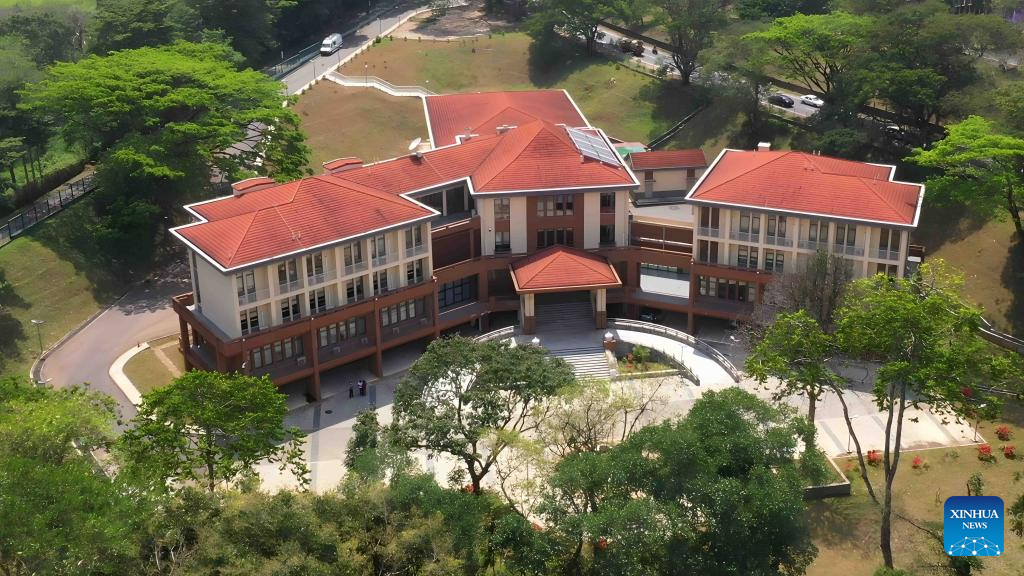
A drone photo taken on Sept. 26, 2024 shows the China-Sri Lanka Joint Research and Demonstration Center for Water Technology (JRDC) in the central city of Kandy, Sri Lanka. (Photo by Gayan Sameera/Xinhua)
COLOMBO, Oct. 10 (Xinhua) — In an office drawer of Chinese scientist Wei Yuansong lies a thank-you letter written in Sinhalese and signed off by an entire Sri Lankan village.
The letter, having passed through many hands and franked in various locations, tells shared memories of a decade-long fight against a killer kidney disease that had plagued the locals for years due to a lack of safe drinking water.
“We express our heartfelt gratitude to Professor Wei for providing us with safe and tasty drinking water,” folks from the Nildiya village wrote.
Now serving as the director of the Laboratory of Water Pollution Control Technology at the Chinese Academy of Sciences, Wei told Xinhua that his connection with Sri Lanka began in August 2013, when an email from Doctor S.K.Weragoda asked about water treatment collaboration to address the Chronic Kidney Disease of Unknown Etiology (CKDu) in that country.
At that time, CKDu was a major public health issue in Sri Lanka, with over 40,000 people suffering from it since the mid-1990s, statistics showed. In 2016, then Sri Lankan President Maithripala Sirisena called the disease a “national disaster” that affected 20,828 patients and caused 5,000 deaths per year.
Preliminary research by the World Health Organization indicated a strong correlation between the disease and local groundwater pumped for drinking, and correspondence with Sri Lankan scientists made the issue come into the view of their Chinese counterparts.
In August 2014, Wei made his first travel to Sri Lanka, initiating an arduous research journey together with Weragoda. Each day, they took hours of bumpy road trips deep into the heavily affected areas and paid home visits to villagers for epidemic inquiries.
However, the duo encountered many cold shoulders and doubts. “Many locals thought that the Chinese, like other (foreign researchers), were here to write papers, not to genuinely help them,” Wei recalled. The two scientists had to wade through difficult conversations to win their trust and were eventually welcomed to take samples crucial for their analysis.
Following preliminary research and extensive coordination between Chinese and Sri Lankan partners, a deal was inked in March 2015, enabling joint research on the causes of CKDu and drinking water safety. Since then, Wei frequented Sri Lanka along with more Chinese scientists to conduct thorough research into water treatment solutions that fit local conditions.
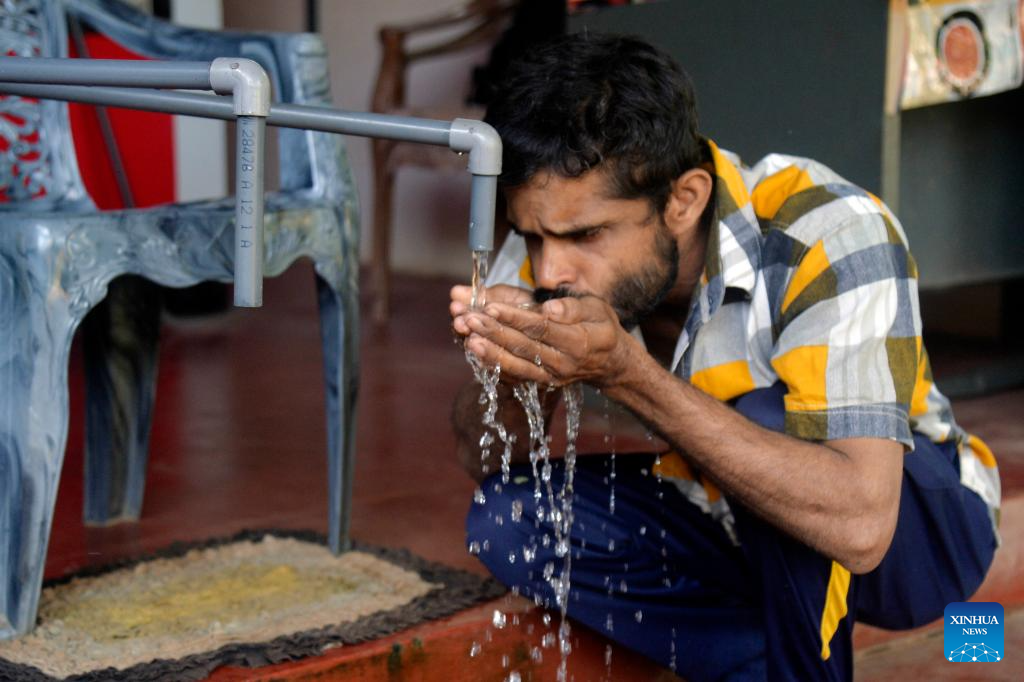
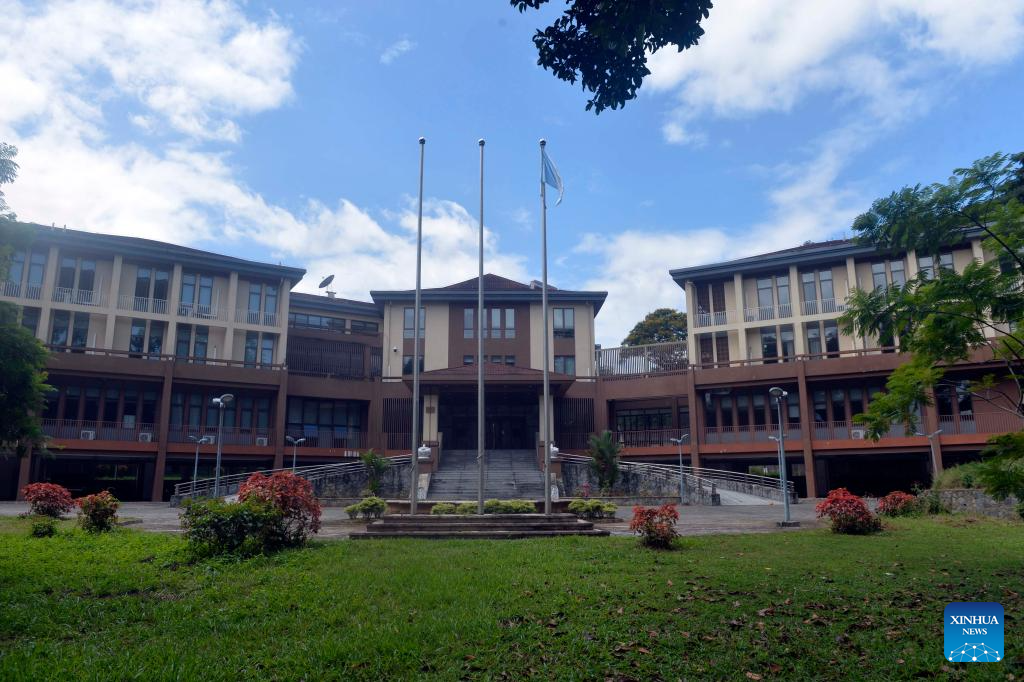
Over the following years, the Chinese academy and its partner built four drinking water facilities in Sri Lanka, providing safe drinking water to over 5,000 villagers and more than 1,300 students, followed by a China-Sri Lanka Joint Research and Demonstration Center for Water Technology (JRDC) founded in the central city of Kandy.
The center has since trained more than 30 local medical workers, 20 kidney disease investigators, 20 water professionals, and 30 graduate students. Two joint CKDu-related research papers by Wei’s team won the Sri Lankan President’s Awards for Scientific Research in 2023 and 2024.
“The local people now trust Chinese scientists wholeheartedly … villagers with kidney disease said they no longer go to the hospital for years thanks to the help of Chinese scientists,” said Titus Cooray, a Ph.D. student at the JRDC.
This July, Wei came and attended a China-Sri Lanka joint research workshop at the JRDC themed on climate change, marine sustainability and other topics, with participants from nearly ten countries, including the United States, Canada and the Maldives.
“This is my 31st trip to Sri Lanka. We have laid the foundation from zero to one, and future collaboration will undoubtedly progress from one to infinity,” Wei told Xinhua at the event.
“China has transitioned from being a participant to a leader in global environmental governance, and we aim to bring more benefits to the Sri Lankan people through scientific cooperation and to make this project a model of the ‘Belt and Road’ international cooperation,” he noted. ■
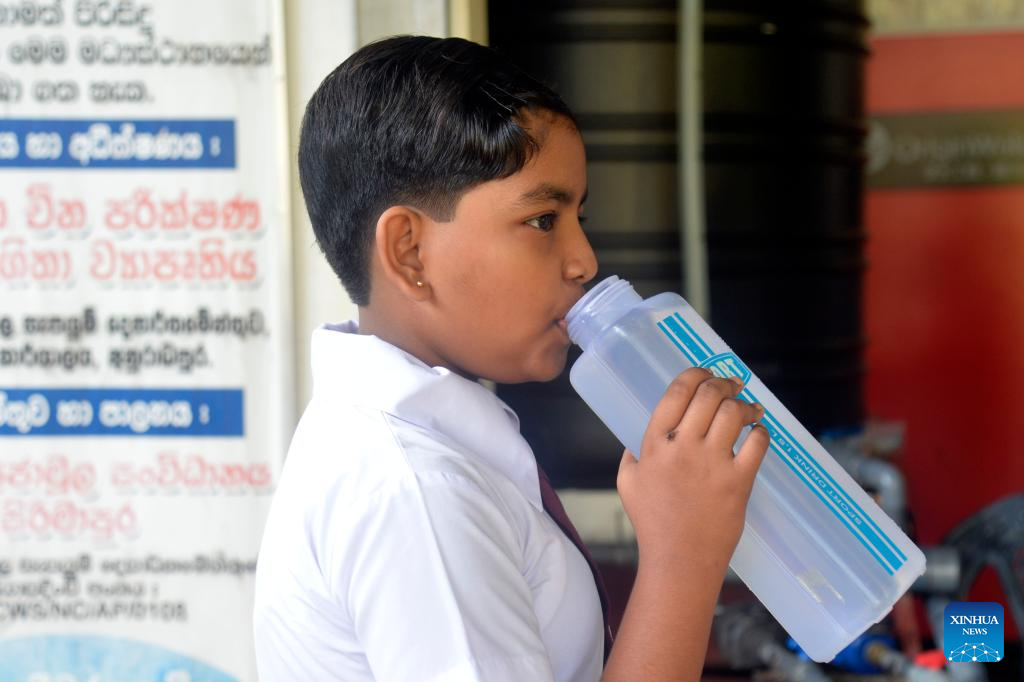
A villager drinks filtered water from a drinking water facility aided by China in Nildiya Village, Sri Lanka, Oct. 2, 2024. (Photo by Gayan Sameera/Xinhua)
This photo taken on Sept. 26, 2024 shows the China-Sri Lanka Joint Research and Demonstration Center for Water Technology (JRDC) in the central city of Kandy, Sri Lanka. (Photo by Gayan Sameera/Xinhua)
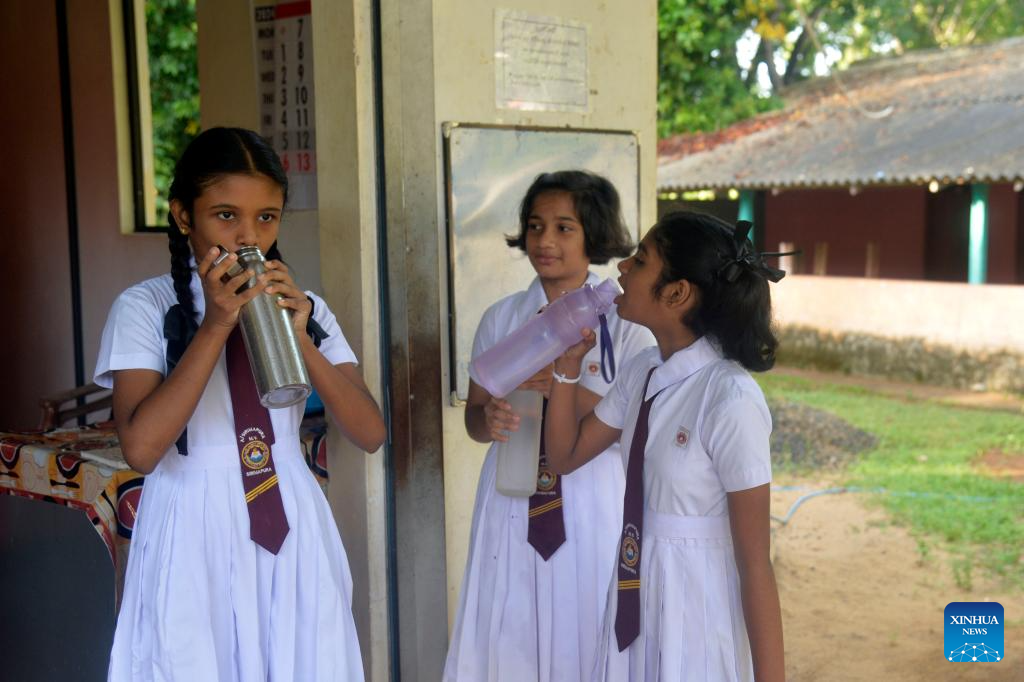
Students drink filtered water from a drinking water facility aided by China in Nildiya Village, Sri Lanka, Oct. 2, 2024. (Photo by Gayan Sameera/Xinhua)
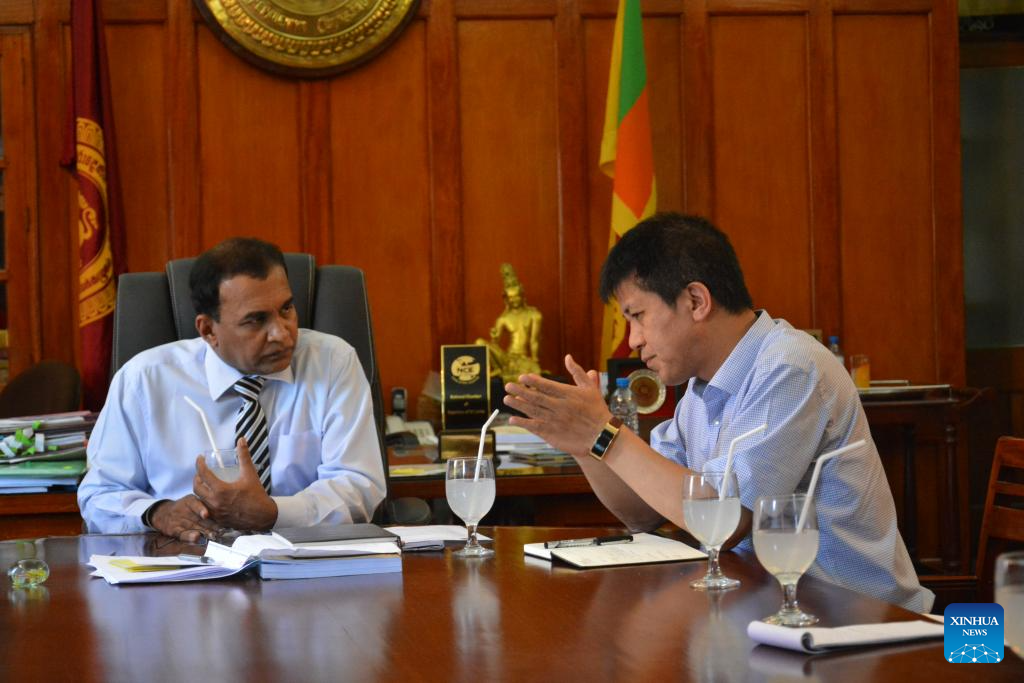
This file photo taken on March 22, 2017 shows Wei Yuansong (R), director of the Laboratory of Water Pollution Control Technology at the Chinese Academy of Sciences, visiting Upul B. Dissanayake, then vice chancellor of University of Peradeniya, in Kandy, Sri Lanka. (Xinhua)
A student drinks filtered water from a drinking water facility aided by China in Nildiya Village, Sri Lanka, Oct. 2, 2024. (Photo by Gayan Sameera/Xinhua)
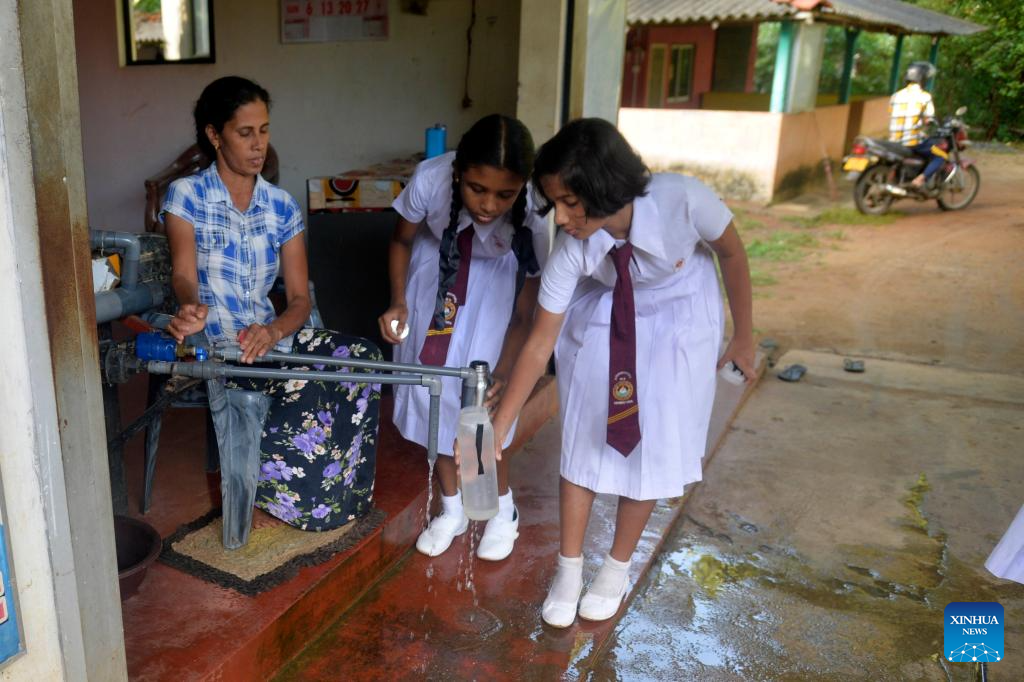
Students fetch filtered water from a drinking water facility aided by China in Nildiya Village, Sri Lanka, Oct. 2, 2024. (Photo by Gayan Sameera/Xinhua)
Anura Kumara Dissanayake is well aware that his handling of Sri Lanka’s vulnerable economy will determine his political future.
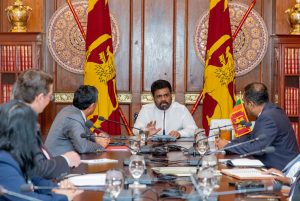
Sri Lankan President Anura Kumara Dissanayake (center) holds talks with a delegation from the International Monetary Fund in Colombo, Sri Lanka, Oct. 4, 2024.Credit: President’s Media Division (PMD), Sri Lanka
On September 21, National People’s Power (NPP) leader Anura Kumara Dissanayake won Sri Lanka’s eighth presidential election. Two days after being sworn in as the president, Dissanayake dissolved the Parliament and declared that a parliamentary election would be held in November 2024.
It is no secret that Dissanayake’s victory comes amidst the worst economic crisis Sri Lanka has encountered since independence, as well as the significant decline in popularity of other leaders alongside the crisis. The resignation of Gotabaya Rajapaksa from the presidency and the appointment of Ranil Wickremesinghe to that post in 2022 broke the Rajapaksa-led Sri Lanka Podujana Peramuna (SLPP) into two major factions. One faction continued supporting the Rajapaksas, and the other sided with Wickremesinghe. Another major political party, Samagi Jana Balawegaya (SJB), also experienced a decline in popularity as the public was frustrated with establishment politics.
Against that backdrop, Dissanayake and his NPP coalition gained support as a viable alternative to rule the country and eliminate corruption. As a result, Dissanayake secured 42 percent of the valid votes cast in 2024, compared to the 3 percent he obtained in the presidential election in 2019. Although 42 percent support was not sufficient for him to secure the presidency in the first round, his lead of 1.2 million votes over major contender Sajith Premadasa ensured his victory in the second round.
Of all the major candidates, Dissanayake was often seen as the one with the least corruption allegations and his party, the NPP, played very well into the narratives of eradicating bribery and corruption. They insist that their party will make governance much more transparent and take steps toward eradicating corruption. The NPP has pledged to establish a new political culture in which they will attempt to eliminate rent-seeking behavior. While similar promises were made by other candidates, those were not very appealing largely because they were made by politicians, who were allegedly involved in corruption, bribery, and rent-seeking.
Economic Crisis and Economic Challenges
Dissanayake has been a popular leader for more than a decade, but it was Sri Lanka’s sovereign default, economic crisis, and austerity measures that allowed him to rise to the top political post in the country. The same economic crisis that brought him to power now poses his major challenge.
Although Sri Lanka is in the stage of economic recovery, the country has yet to finalize external debt restructuring and is still in a sovereign default. While significant progress was made in debt restructuring during the previous Wickremesinghe administration, external debt restructuring is not formally concluded yet.
A day before the election, the London Stock Exchange announced that an Agreement In Principle (AIP) was reached between Sri Lanka’s International bondholders and the Sri Lankan government to restructure International Sovereign Bonds (ISBs) issued by Sri Lanka. Parallel to this, the China Development Bank (CDB), which is in the category of commercial creditors alongside bondholders, had also agreed to restructure Sri Lankan debt. Previously, bilateral creditors had already agreed with Sri Lanka to restructure their debt in line with the parameters of the International Monetary Fund (IMF). That includes China Exim Bank, the bilateral lender of China.
After Dissanayake’s election, there were doubts as to whether the new president would proceed with the debt restructuring terms agreed under his predecessor’s administration, particularly given the criticism from the NPP on the amount of debt relief secured. Despite the campaign rhetoric, Dissanayake moved ahead with the previously agreed debt restructuring terms.
While the IMF does not conduct debt restructuring negotiations, the IMF program and debt restructuring go hand in hand. Continuation of the IMF program is contingent upon the finalization of debt restructuring negotiations, as it is the debt restructuring that determines the amount of debt relief Sri Lanka receives from creditors. Failure to conclude debt restructuring negotiations would therefore create uncertainties about receiving debt relief and the amount of relief, which in turn becomes a stumbling block for Sri Lanka to make the country’s public debt sustainable.
Therefore, as of now, the biggest challenge for Dissanayake and his team is to ensure the continuation of the IMF program and the conclusion of debt restructuring. Failure to continue either of those would result in serious repercussions to the economy, which in turn would have significant adverse impact on his popularity and the potential of forming a government in November. Dissanayake’s actions thus far imply an acknowledgment of the need to be politically pragmatic.
Domestic Politics and the IMF
Although this is the economic and operational reality, politics operates differently. During their election campaign, the NPP had proposed changes to the IMF program. In fact, their manifesto pledged to carry out an alternative Debt Sustainability Analysis (DSA) that would provide more debt relief to Sri Lanka.
However, the NPP has also been cautious in terms of its remarks and promises pertaining to the IMF program. Throughout their campaign, even among criticisms of the IMF-backed austerity policies, Dissanayake and his team insisted that they would not derail from the IMF program. This assertion was more visible when the NPP had meetings and summits with Sri Lanka’s business community and professional groups. The NPP also pledged that they will continue debt restructuring negotiations with different governments and private creditors (bondholders), and attempt to secure more debt relief than what was secured by the government led by Wickremesinghe. Although this sounds great, it isn’t an easy task.
Dissanayake comes from a very left-leaning party that used to oppose the policies of the IMF. For him, embracing an IMF program and categorically promising to work with the IMF shows a solid dose of pragmatism. To put it in Dissanayake’s words, deviating from the current path would be irresponsible: We [Sri Lanka] had already gone to IMF. We cannot seek options outside the IMF basket. That would be too risky for the economy. So whatever the alterations and the amendments that we seek to implement will be within the IMF basket.”
When one reads between the lines, it implies that Dissanayake and the NPP are being very cautious not to deviate from an IMF program – and thus not to replicate the mistake that the Gotabaya Rajapaksa government made in 2020. When Rajapaksa was elected to the presidency in 2019, Sri Lanka was in an IMF program. However, in order to implement the anti-austerity measures and import substitution measures that Rajapaksa had promised during the election campaign, his government opted to stay out of the IMF program. Abandoning the IMF program was one of the key reasons for the collapse of the Sri Lankan economy in 2022.
It seems that NPP understands the price they would have to pay as a political party by getting out of an IMF program merely for the sake of ideology or short-term political gains.
Pragmatism vs Ideology
Pragmatically, the IMF program is not well-loved by many members of the Janatha Vimukthi Peramuna (JVP), the core leftist party of the NPP. However, the practical reality is that deviating from the IMF program would create huge economic instability within a very short span of time, potentially leading to another economic crisis.
The constant reassurance provided by Dissanayake in various forums about the continuation of the IMF program indicated that his administration is willing to be pragmatic more than ideological in its approach to governing. This pragmatism was very much visible through initial actions taken by Dissanayake upon his inauguration, including the continuation of the debt restructuring negotiations. In his inaugural address to the nation, Dissanayake insisted that he would continue with the IMF program and debt restructuring negotiations.
The change we seek involves many steps that will take time. However, achieving stability and confidence in the current economy is crucial,” Dissanayake said in his inaugural address. We plan to begin negotiations with the International Monetary Fund immediately and proceed with activities related to the Extended Fund Facility. Additionally, to advance our debt restructuring program, we are negotiating with relevant creditors to expedite the process and secure necessary debt relief.”
He also retained Secretary to the Treasury Mahinda Siriwardana, who has been one of the leading officials in implementing the IMF program although Siriwardana received some criticism during the NPP’s election campaign. Also, despite not voting in favor of the Central Bank Act, which made Sri Lanka’s Central Bank independent, Dissanayake did not attempt to change the bank’s governor. These actions resulted in positive sentiments in financial markets as the Sri Lankan rupee gradually appreciated against the U.S. dollar and treasury bill rates came down slightly.
The Way Forward
The immediate challenge for Dissanayake is to help his party secure a majority in Parliament. The parliamentary election is scheduled to take place on November 14, and it is essential for the NPP to secure a majority as policy decisions, including public finance decisions, are taken by the Parliament. From a political perspective, Dissanayake will have to sustain his popularity to ensure a formidable victory in the parliamentary election. That also means that he has to ensure economic stability till the election – likely ruling out any policy experiments.
The medium- and long-term challenges, however, are different. The Dissanayake administration will have to stay within the IMF program while providing some relief to the various segments of society and conclude the debt restructuring negotiation in a way that it is in line with the NPP’s mandate while also aligning with the interests of the creditors – all without significant delay. The success of these plans heavily depends on the government’s future ability to significantly increase government capacity, which is a prerequisite for the growth, stability, and efficient fiscal policy management of the government. These tasks are of course not easy and this also means that economic growth will be relatively moderate and slow in the short term.
Slow economic growth that addresses the structural weaknesses of the economy would provide macroeconomic stability in the medium term. The question is whether such slow growth would be popular among the public – and the answer is likely no.
The Dissanayake government is likely to seek to maintain public support through actions pertaining to transparency, accountability, and the actions against corruption. However, retaining popularity through these means is a big challenge. A significant chunk of the votes for the NPP seem to have come from Sri Lanka’s middle class. That middle class has a lot of aspirations that cannot be fulfilled in the short term merely by having macroeconomic stability. Meeting middle-class expectations would require substantial economic growth. Thus, cautious and somewhat contractionary fiscal policies would make the Dissanayake government unpopular among many voters hoping for upward social mobility. The biggest medium-term challenge is how to manage voter expectations amid fiscal constraints.
On the other hand, there are expectations from those who strongly oppose neoliberal ideologies and practices that Dissanayake should renegotiate the IMF program and debt relief. The NPP had in fact pledged to do so during their campaign.
An IMF delegation visited Colombo in early October to discuss the future of the IMF program. During these discussions, Dissanayake reaffirmed his commitments to the IMF while highlighting the need for alternative solutions that relieve the burden borne by the people, including some amendments to the Value Added Tax (VAT) and income tax. Sri Lanka had performed well in terms of achieving revenue targets; during the first half of 2024, government revenue was 13.6 percent of GDP. This means the government has some room for changes within IMF targets, and indeed previous President Wickremesinghe said that his government had discussed some potential changes to income taxes and salary revisions with the IMF.
However, restarting debt restructuring negotiations will be more complex. While there are concerns pertaining to the proposed debt restructuring, such as the inclusion of Macro Linked Bonds (MLBs), renegotiating the deal is not easy. The structure of the MLBs was subject to much criticism at the global level as it is designed to repay bondholders at higher rates if Sri Lanka maintains relatively modest economic growth between 2025-27. But, renegotiating it would be associated with substantial risks, including the risks of facing litigation. It seems that Dissanayake had decided to take the risk-averse approach and proceed with the debt restructuring deal agreed with the bondholders, although the current arrangement is likely not the debt deal he and some of his supporters would ideally prefer.
In Sri Lankan politics, as in all things, realities and ideals are two separate things. While ideals are nicer, those who are in power have to deal with reality, which can be bitter. The existing IMF program and debt restructuring, with small leeway for change, is Sri Lanka’s reality. Embracing that reality is political pragmatism, and that’s what Dissanayake has done thus far.
Sri Lanka had received debt relief from its creditors to bring down the public debt-to-GDP ratio to 95 percent by 2032. That is the public debt stock target specified by the IMF to make Sri Lanka’s public debt sustainable. Given Sri Lanka’s long-lasting economic vulnerabilities, a 95 percent public debt ratio is still high. The IMF assessment is based on a Market Access Country (MAC) Debt Sustainability Analysis (DSA), but 95 percent isn’t a comfortable debt ratio for a country like Sri Lanka, with low exports and low government revenue. This was highlighted by Brad Sester and Theo Maret in their analysis.
Ideally, Sri Lanka’s public debt sustainability should have been assessed under a novel DSA framework instead of MAC DSA or Low Income Country (LIC) DSA. While that sounds nice in theory, the chances of such a unique approach happening between 2022 and now were very slim, but it is certainty a matter to be considered in the future.
In addition to its domestic realities, Sri Lankan governments must face a harsh global-level reality: Sri Lanka operates in an international financial system that’s not very beneficial to the Global South. In this financial system, Sri Lanka is a price taker. Thus, whatever battles Sri Lanka chooses to wage against this system should also be pragmatic. Public debt sustainability is a very time-sensitive matter and the repercussions of any experiment could be quite drastic for the population.
Dissanayake’s action implies that he is not going to do any economic experiments soon, and will allow the IMF program to continue with the already set parameters. He still has a long way to go, with many cautious steps to take the country out of the woods.
Former Minister of State for Finance Shehan Semasinghe has announced that he will not be contesting in the upcoming parliamentary elections.
Issuing a statement, Semasinghe reflected on the country’s economic challenges over the past year and his dedication to rebuilding the economy alongside former President Ranil Wickremesinghe, following the economic collapse.
Semasinghe expressed his belief that once the country and its economy stabilize, the public would begin to appreciate the efforts and sacrifices made during the recovery process. He stated that the benefits of these efforts would ultimately reach the people, allowing them to better understand the trajectory of the country’s economic recovery.
However, the former state minister acknowledged his disappointment in the public’s apparent lack of recognition of these efforts, which he believes was reflected in the outcome of 2024 presidential election. He noted that the people’s rejection of the previous government’s principled approach, which was built through considerable effort, played a pivotal role in his decision to withdraw from the upcoming election.
Semasinghe was elected to the Parliament from the Anuradhapura District representing the Sri Lanka Podujana Peramuna (SLPP) in the 2020 General Election, where he garnered 119,878 votes, ranking fourth in the district.
Former Member of Parliament Patali Champika Ranawaka says that his party – the United Republic Front (URF) will not contest the 2024 Parliamentary Election.
He communicated this during a media briefing held today (10).
We decided to withdraw from this election campaign.We were hoping to contest the election representing Samagi Jana Sandhanaya from 11 districts. During the nomination process, we realized that there has been a violation of the agreement that we cannot justify, so that we decided to withdraw”, he added.
President Anura Kumara Dissanayake has advised relevant Ministry officials to allocate 11,000 acres of land belonging to the Kantale Sugar Company to farmers for the cultivation of short-term crops, the President’s Media Division (PMD) said.
The National Police Commission has approved the reappointment of former Senior Superintendent of Police (SSP) Shani Abeysekera in the Police Service on a contract basis for one year, with effect from today (10).
Speculation has been rife that Abeysekara, who retired from the service 3 years ago, is expected to lead a new assets recovery unit of the police department.
Sri Lanka’s economy has stabilized, with growth expected to reach 4.4 percent in 2024, surpassing earlier forecasts. This positive outlook follows four consecutive quarters of growth driven by the industrial and tourism sectors and supported by critical structural and policy reforms, says the World Bank.
Released today, the World Bank’s bi-annual Sri Lanka Development Update, titled Opening Up to the Future, cautions that the recovery remains fragile and hinges on maintaining macroeconomic stability, successfully restructuring debt, and continuing structural reforms to increase medium-term growth and reduce poverty. Key reforms aimed at boosting exports, attracting foreign investment, enhancing female labor force participation, improving productivity, and addressing challenges such as poverty, food insecurity, and vulnerabilities in the financial sector are crucial for achieving more inclusive and sustainable growth.
The report underscores the country’s potential for achieving higher and sustainable growth through trade. Sri Lanka has an untapped export potential estimated at $10 billion annually, which could create approximately 142,500 new jobs. There is significant opportunity for diversifying and expanding exports in manufacturing, services and agriculture, provided the necessary reforms are implemented.
Sri Lanka’s recent economic stabilization, marked by four quarters of growth and a current account surplus in 2023, is a significant milestone,” said David Sislen, World Bank Regional Country Director for Maldives, Nepal, and Sri Lanka. At this moment, Sri Lanka has a real opportunity to realize its export potential, which we estimate at $10 billion annually. There is an opening for Sri Lanka to deepen its participation in global value chains and take advantage of its geography and an evolving global landscape to generate jobs and sustain growth. The continued implementation of important economic and governance-related reforms will allow Sri Lanka to fully benefit from this moment.”
Looking ahead, the report projects a modest growth of 3.5 percent in 2025. Growth is then expected to follow a modest path over the medium term due to the scarring effects of the economic crisis. Poverty is expected to gradually decline but remain above 20 percent until 2026. Inflation is likely to stay below the central bank’s target of 5 percent in 2024, gradually increasing as demand picks up. The current account is projected to remain in surplus in 2024, driven by tourism and remittances.
The Sri Lanka Development Update is a companion piece to the South Asia Development Update, a twice-a-year World Bank report that examines economic developments and prospects in the South Asia region and analyzes policy challenges faced by countries in this region. The October 2024 edition, Women, Jobs, and Growth, projects growth of 6.4 percent in South Asia this year, making it the fastest- growing EMDE region in the world. Increasing women’s participation in the labor force and opening further to global trade and investment could help the region grow even faster and achieve its development goals, says the World Bank’s regional outlook.
This month the IMF came and left. Though much anticipated, we did not receive any benefit from them. Prior to the Presidential election, the NPP boasted that they will renegotiate better terms and conditions for the country with the IMF.
Did the government field its best team to negotiate with the IMF? No.
Some members of the Sri Lankan team were university dons. Surely they must be highly educated. But, do they have the skill, talent and the ticker to conduct international negotiations? Have they learnt about mediation skills and have practised them professionally?
Comments posted in Social media suggested that the Sri Lankan delegates were keener on taking them on selfies. Let’s hope this is untrue.
The fact remains the same – Sri Lanka failed at the talks. Prior to the Presidential election there was much hype that the NPP’s IMF team will come out with best results. But, it is clear after the talks – the status quo has not changed.
Basically, the government proved that what the former President had stated is true – IMF terms and conditions cannot be altered.
Some say that at the recently concluded talks the IMF imposed further harsh conditions on us. Eg. they increased the loan interest rate. The writer does not believe this.
The government now states that there will be more future talks with the IMF and benefits will eventually flow. This is good. The government must maintain positivity.
Both the government and the SJB are right – the current IMF terms and conditions are very harsh and oppressive. People, especially the lower and middle classes are suffering tremendously due to the various new taxes introduced.
To increase state revenue, IMF prescribes austerity measures.
The best for the country is to increase exports and attract foreign investments/remittances.
The fact that the US government has offered to assist us in increasing exports is much commendable. During President Premadasa’s time it was the US that helped him to establish 200 garment factories. Before she departs, will Julie Chung do something that Teresita Schaffer did in 1992?
The writer states that if correctly approaches, it is possible to get the IMF to amend the harsh terms and conditions. To achieve this, we must have an excellent team that can sit on equal footing with the IMF.
About the ‘haircuts’ – the government must not give up the idea to renegotiate with foreign creditors (foreign governments and banks). Where applicable, they must do this collectively and individually.
If we do this properly, for some loans, we may be able to obtain up to 60% debt reductions; some loans may be totally written off. Brilliant negotiators can surely achieve things that seem unbelievable to many.
In debt restructuring talks, the last government did a very bad job. It basically stated ‘Yes’ to everything that the foreign lenders stated. They failed to obtain any significant ‘haircuts’.
Again, to achieve benefits to the country, we must formulate a top-level team. The team members must be highly experienced, top level achievers in their respective fields. It is not a requirement that they are all economic pundits. People from various occupations can be members of our team. Among them, competent lawyers are the best.
Apart from high academic qualifications obtained in their respective fields, our IMF team members must be of utmost self-confident, well-disciplined and well committed individuals. In the conference, they must be able to speak fluently, logically, effectively and up to the point (must be of excellent communicators); give direct eye contact with their IMF counterparts. Even how they handshake matters; they must be firm, confident handshakes.
It is not a must that our delegates are fluent in English (of course, having English fluency is extremely helpful). English weak members can use translators.
The most important criteria is that our representatives must be fully conversant with the matter at hand. They must have done their homework 100%. They must have fully perused all the main and associated documents. These preparations can take several days. Thus, only people who can make a full, wholehearted commitment must participate.
They must have studied how the IMF operates in these matters and how other countries (like Ghana, Latvia, Poland, Colombia etc) have achieved much success from such talks – what strategies did they use, why Sri Lanka failed in October 2024 etc.
Our delegates must be 100% patriotic and must have the determination to win. They must set goals – what minimum and maximum to achieve.
It is vitally important for the delegates to know the norms and behavior of conducting international negotiations. They must not demonstrate any personal animosity/bitterness towards their IMF counterparts.
Our President has the skills and talent that I have outlined herein. He is a real charmer and a communication grandmaster.
So does Mr Sajith Premadasa, the former Leader of the Opposition.
It is ideal if both of them can be in our future IMF team (after the 14 November 2024 election). The SJB has a superb Economic Affairs team, some of them can also be included like Eran and Kabir.
It is important to bear in mind that this is an exercise done in the best interests of the country. If the opposition parliamentarians are included in the delegation (eg. SJB), they must come with the mindset of doing the right thing by the country. They must not try political point scoring.
Again, everyone must realise that they are doing this for the country. We are a very small population (Indigenous, Sinhala, Tamil, Muslim, Burgher, Malay), and all of us live peacefully in this tiny, beautiful land.
In the LTTE days and now in UNHRC Geneva, we have constantly failed because we have fielded ambassadors/high commissioners who have diplomatically failed this country. In the past, majority of the country’s diplomats have been family, friends and cronies of the ruling class. That was a clear recipe for disaster. Hopefully the NPP will change this.
The country is aware of several Mafiosi like the diesel mafia, rice mill mafia, and the drugs mafia which are a curse on the country. But it is very rare that people mention about the Pettah mafia which is the mother of all mafiosi. They have existed since colonial times and have grown in strength. They have non-national roots but have captured the native bureaucracy and politicians. Today they lead a cabal consisting of Customs, Banks, Import Control and Consumer Affairs. The strength and influence of the Pettah Mafia was demonstrated during the Black of July 1983 when Pettah was not touched by rioters although the neighboring Fort area was devastated. The secret is that Pettah was under the protection of the highest-level political powers.
No government has done a study of the control on wholesale trade of commodities, particularly the trade with India held by Pettah traders. This is in addition to their control of the gold and jewelry trade in Sea Street.
During the foreign exchange crisis, it was believed that they operated and controlled the ‘Undial’ system with impunity. They are suspected to be the major culprits of mis-invoicing at customs with the connivance of customs and commercial bank personnel.
The sugar scam was one of the recent maneuvers of the Pettah Mafia. It was evident that they had prior information of the substantial reduction of customs duty. Consumer Affairs Authority could have entered into a binding agreement in terms of CA Act Section 14 with the traders on the sale price. But they did not and allowed the traders to make exorbitant profits. The Finance Ministry is splitting hairs that there was no loss to the government and does not consider the imposition of a windfall tax as done in other countries.
The Pettah mafia has no competition. D.S. Senanayake established the Cooperative Wholesale Establishment (CWE) to cater to the cooperative sector. During the time Philip Gunawardena CWE was linked with the Multi-Purpose Cooperative scheme. It was the CWE and the cooperatives that served the nation during the 1983 riots when the private trade hardly functioned. But surprisingly during the Yahapalana regime, the wholesale function of the CWE was banned. This unwise and irrational move gave the Pettah a free run in the import trade particularly with India. It has become a profitable haven
Politicians and civil society organizations are concerned about the growing Indian influence with proposed Indian investment like that of Adani and Amul and their impact on the economy and security of the country. But no mention is made of the Indian enclave in Pettah.
It is deplorable that while India has made inroads or in the process of making inroads into strategic economic spheres of the country, they are griping over a barren piece of land in the Kacchativu. Sri Lanka may have to consider ceding Kacchativu Island to India regardless of the goodwill agreement with PM Indira Gandhi and invite China to take over Trincomalee on our terms.
It is proposed that the government appoint a Commission with clear terms of reference to investigate and report on the structure, role, and impact on the economy of this non-national (acquired national) enclave.
The original role of the CWE should be restored and given the funds to engage in wholesale import, storage, and distribution of essential commodities. One of the advantages that Pettah has is the well-established network of trade contacts in India. CWE should establish a unit in India to create such an effective network.
Australian High Commissioner to Sri Lanka, H.E. Paul Stephens, met Defence Secretary Air Vice Marshal Sampath Thuyacontha (Retd) at the Defence Headquarters Complex in Sri Jayewardenepura, Kotte, today (Oct 09).
The Australian envoy was accompanied by the Defence Adviser (DA) at the Australian High Commission in Sri Lanka, Colonel Amanda Johnston. AVM Thuyacontha (Retd) warmly received the Australian delegation and had a cordial discussion.
Discussions were centred on reinforcing the strategic partnership between the two nations and enhancing bilateral ties and defence cooperation. The meeting also underscored the longstanding ties between Australia and Sri Lanka.
At the end of the meeting, souvenirs were exchanged to mark the event. The Military Liaison Officer of the Ministry of Defence, Air Vice Marshal Padman De Costa, was also present at the occasion.
The Deputy Head of Mission at the Embassy of Japan in Colombo, Mr. Naoki Kamoshida, paid a courtesy call on Defence Secretary Air Vice Marshal Sampath Thuyacontha (Retd), at the Defence Headquarters Complex in Sri Jayewardenepura, Kotte, today (Oct 09).
Mr. Kamoshida was accompanied by the Defence Attaché of the Japanese Embassy, Captain Yuki Yokohari. Defence Secretary AVM Thuyacontha (Retrd) warmly received the Japanese delegation and had a cordial discussion.
During their discussions, both officials explored avenues to enhance defence cooperation and bilateral relations. The meeting also highlighted the historical ties and shared values between the two countries.
Subsequently, the Defence Secretary and Mr. Kamoshida exchanged souvenirs to mark the occasion. Military Liaison Officer of the Ministry of Defence, Air Vice Marshal Padman De Costa was also present at the occasion.
I’ve learned that false rumours are circulating in the media about a government intention to curtail entitlements accorded to Tri Forces personnel. However, I duly proclaim that the current government has no intention of ever curtailing entitlements accorded to Tri Forces personnel at any time.”
Defence Secretary Air Vice Marshal Sampath Thuyacontha (Retd) said so while addressing Air Force personnel during his maiden visit to the Sri Lanka Air Force (SLAF) Headquarters at the Defence Headquarters Complex in Sri Jayewardenepura, Kotte on Monday (Oct 07).
The Defence Secretary visited several divisions of Air Force HQ accompanied by the Air Force Commander Air Marshal Udeni Rajapaksa and other senior officers.
Military Liaison Officer of the Ministry of Defence, Air Vice Marshal Padman De Costa also joined the Defence Secretary on his visit to the Air Force HQ.
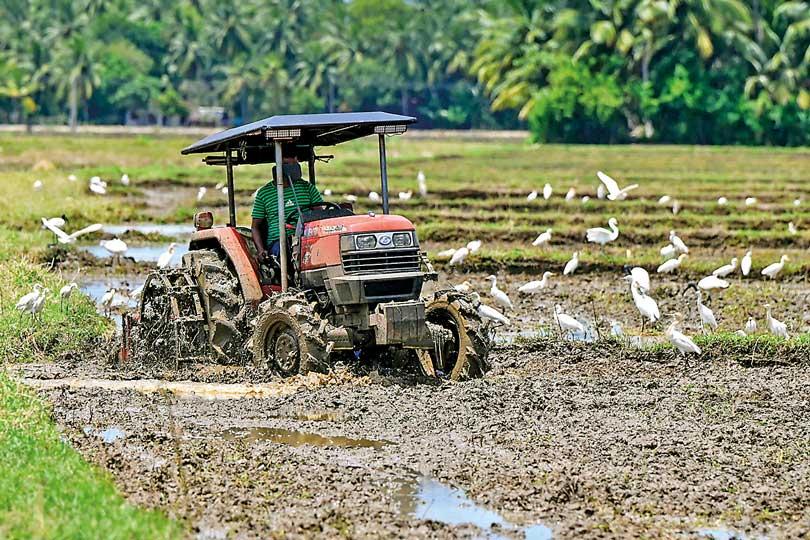
There is an old Sinhala saying ‘when the farmer washes off the mud splattered on his body after working on the field, he is fit to be king’ (FILE PHOTO)
Both China and the present Sri Lankan lawmakers cannot do away with socialist thinking; but Sri Lanka can learn from ‘socialist’ China the art of transforming both the lives of the citizens and human consciousness
Being in power for just over two weeks, this government has given some hope by checking on corruption and waste and driving fear into the corrupt forces in the country with the message that the law will not spare anybody
There is hope in the horizon after the 2024 Presidential Elections that the new regime would do all it could to ensure that people could, again, afford nutritional food in their diets. There was a time (2022) when at least 50% of the households were forced to cut the children’s food intake due to the country’s crumbling economy. Sri Lanka has recovered somewhat from that shaky past, but there are concerns still; concerns fuelled by the thought that Sri Lanka is now in the hands of a new government that has a Marxist label on it. The government’s leader or the President of the country has the label ‘Marxist’ pinned on him, and he has not made any attempt to remove it or acknowledge its relevance to him. We all know that Marxists were never known to be eating, drinking and merrymaking people. Socialists, Marxist and Leninist theories were at least partially practised in Sri Lanka during the rule of Mrs. Bandaranaike, and people suffered much because essential goods were in shortage. The bright citizens of this country believe that President Anura Kumara Dissanayake (AKD) would not be foolish to implement socialist features and deny the people of this country opportunities to grow and engage in business. He must remember that some businesses are still reeling from the double blows that they received in the recent past; the first from the Easter Bombings and then the Covid pandemic. People of this country are demanding opportunities to reach their full potential and earn a decent living. Living in Sri Lanka shouldn’t be restricted to surviving the 30 days of the month with a paltry salary in hand!
AKD’s method of governance needs an identity. Being in power for just over two weeks, this government has given some hope by checking on corruption and waste and driving fear into the corrupt forces in the country with the message that the law will not spare anybody. But still there is not enough food on the table at home and we all know that a worker on an empty stomach is not geared to even listen to a religious sermon; leave alone stepping onto the field and engaging in ploughing it. Just for the record, our well-dressed President is a believer that Sri Lanka must increase its food production within the island. This is good news for a country where there is a history of the former regime trying out giving Fridays off for the state worker to stay at home and grow essential ‘food’ to brace a looming food crisis. This was about two years ago; when the man who had a litre of fuel in a can and was willing to sell it was considered a ‘local king’. AKD hails from a farmer’s family, so he probably knows what he is talking about when it comes to production and planning Sri Lanka’s future. There is an old Sinhala saying, ‘When the farmer washes off the mud splattered on his body after working on the field, he is fit to be king’. This ambitious politician has shown lasting patience to go through the mill in politics and work his way to the presidency. AKD in his speeches has often promised better days ahead for the labourer or workman. A university professor who appeared on Rupavahini’s Nuga Sewana programme emphasised on the fact that a farmer must work eight hours and nothing more during a day. He emphasised that like in the good old days, a farmer who puts in decent hours at his field and returns home at a reasonable time will have time to read books, write poems and become a person who loves and appreciates arts and culture. This is a feature lacking in the present-day worker or labourer who is a daily wage earner. All signs point to the fact that AKD is opting for educated lawmakers to form the full Cabinet soon. He must wisely fill in the slots in the Cabinet to rope in even educated people representing the minorities. This is because Tamils and Christians in this country are somewhat sceptical and reluctant to throw their weight behind any government. This is because these Tamils and Christians are demanding justice for lives lost during a civil war and a carnage that took place inside three churches respectively. For most of these people carrying mental scars, justice served for their grievances would be more satisfying than a nutritious meal of rice put on the table after the first harvest of the season. AKD’s regime has reduced the cost of some essentials and promised more price reductions on more items on the list of essentials. He is likely to tax the rich and give more benefits to the less affluent. This is a President who was quick to say ‘Sri Lanka needs international support’. Should anyone teach him that he needs the support of both his loyal voters and also those who didn’t vote for him? China wouldn’t certainly send us food in the form of help. It would instead work closely with Sri Lanka and make sure the island’s government relies on Chinese technology and their prowess on building and construction. AKD’s government has shown an inclination towards looking at China for inspiration and support for obvious reasons. Both China and the present Sri Lankan lawmakers cannot do away with socialist thinking. But Sri Lanka can learn from ‘socialist’ China the art of transforming both the lives of the citizens and human consciousness. The Chinese worker on the agricultural fields has moved from being a peasant to a working professional. The mindsets of these workers have been changed over the years to embrace professionalism and be part of an advanced society. Sri Lanka can borrow from China on this change of mindset. But Sri Lanka certainly doesn’t have to borrow one aspect from the mindset of the Chinese people which makes them mere ‘subjects’ and not citizens enjoying better human rights; like the citizens of Sri Lanka. Mr. President, please make note of this as you shape the country’s future!
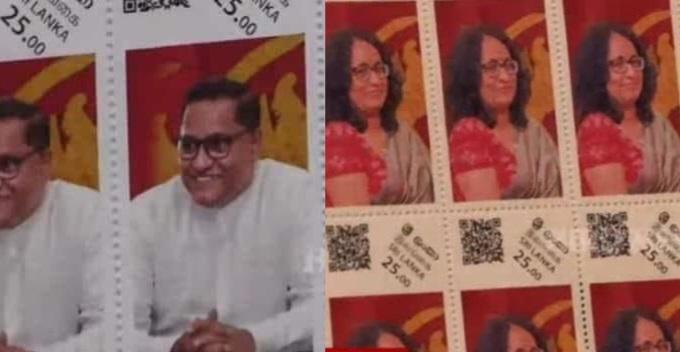
Colombo, Oct 09, (Daily) – In a move seen more as hysterical than having any purpose, two new stamps were released as souvenirs by the Sri Lanka Postal Department today with the faces of Prime Minister Harini Amarasuriya and Minister Vijitha Herath.
These stamps were released by the Department to celebrate the 150th World Postal Day.
While Sri Lanka state departments have always idolized politicians, it would have been more suitable if the souvenirs released carried more meaningful messages such as a tribute to the postal workers instead of the newly elected ministers.
Sri Lanka today rejected the draft resolution which was tabled before the United Nations Human Rights Council (UNHRC) seeking to extend the mandate of Resolution 51/1 on promoting reconciliation, accountability and human rights in Sri Lanka.
Earlier today (09), the draft resolution A/HRC/57/L.1 on promoting reconciliation, accountability and human rights in Sri Lanka was adopted without a vote during the ongoing 57th Regular Session of the UNHRC in Geneva.
However, delivering the government’s statement prior to the adoption of the draft proposal, Sri Lanka’s Permanent Representative to the UN Himalee Arunatilaka said the draft resolution 57/L.1 extends the mandates contained in Human Rights Council resolution 51/1.
She said Sri Lanka has opposed HRC resolution 51/1 and the preceding HRC resolution 46/1 under which an external evidence gathering mechanism has been established within the OHCHR.
She said Sri Lanka also disassociates from the Report of the UN High Commissioner for Human Rights, and that Resolution 51/1 was tabled without Sri Lanka’s consent as the country concerned, and was adopted by a divided vote.
As such, any subsequent decision extending mandates established by this resolution lack consensus in the Council, the Ambassador said.
As we have repeatedly reminded this Council, setting up of this external evidence gathering mechanism within the OHCHR is an unprecedented and ad hoc expansion of the Council’s mandate, and contradicts its founding principles of impartiality, objectivity and non-selectivity.”
No sovereign state can accept the superimposition of an external mechanism that runs contrary to its Constitution and which pre-judges the commitment of its domestic legal processes, the statement said.
Furthermore, Sri Lanka pointed out that many countries have already raised serious concerns on the budgetary implications of this mechanism given its ever-expanding mandate.
For the above reasons, we are obliged to reject the draft resolution which is tabled before this Council today seeking to extend the mandate of Resolution 51/1.”
Notwithstanding its rejection of the Resolution, Sri Lanka said it will continue its longstanding constructive engagement with the Council including with regular human rights bodies, and all core Human Rights treaties to which it is party, as well as the country’s commitments under the UPR process.
Sri Lanka also expressed appreciation for the principled positions taken by many countries in the UNHRC in support of Sri Lanka as it enters a new chapter in the country.
At a time of intense cynicism and polarization within the multilateral arena on human rights and humanitarian situations in the context of the on-going travesties of these norms, we urge the co- sponsors of this politicized draft resolution which we oppose, to support and encourage the Government’s clear intention to address human rights and reconciliation through domestic processes and in line with our international obligations.”
A prominent business leader, Mr Ganegoda currently serves as the Group Executive Director of Sri Lankan multinational Hayleys PLC and Deputy Chairman of Alumex PLC.
He joined the Hayleys Group in 2007 and was appointed to the Group Management Committee in July 2007.
He was appointed to the Board of Hayleys PLC in September 2009 and to the Board of Alumex PLC in November 2010.
He is a Fellow Member of CA Sri Lanka and a Member of the Institute of Chartered Management Accountants of Australia. He holds an MBA from the Post Graduate Institute of Management, University of Sri Jayewardenepura.
He held several senior management positions in large private entities in Sri Lanka and overseas.
Sri Lanka’s current Prime Minister, who holds a PhD in Anthropology, has sparked conversations on social media, where many are hailing her as the most academically qualified leader in the nation’s history. Indeed, the fact is irrefutable, but it raises a broader, more nuanced question: Is there a direct correlation between academic qualifications and political success?
The debate over what makes a politician successful is as old as politics itself, but education is often brought into the discussion. Does possessing a prestigious degree guarantee good governance? Does academic prowess naturally translate into political effectiveness?
Looking back at our history, the answer seems to be far from straightforward.
Sri Lanka gave the world its first female Prime Minister, Mrs. Sirimavo Bandaranaike, who held only a Junior School Certificate (JSC). Her supporters, especially those aligned with leftist ideologies, argue that she was one of the most successful leaders the country has seen. Known for her policies of nationalization and her firm stance on non-alignment, Bandaranaike shaped Sri Lankan politics during tumultuous times with a vision that resonated deeply with many.
On the other hand, supporters of J. R. Jayewardene, who was educated at the University of Ceylon, championed his economic reforms and the introduction of the executive presidency. He led Sri Lanka through a period of significant economic and political transformation. Many of his advocates believe he ranks as the country’s most accomplished leader, with his educational background lending him a certain intellectual rigour that translated into his governance style.
Both Bandaranaike and Jayewardene achieved tremendous success in their own rights, despite their vastly different educational backgrounds. Their contrasting stories underline an important point: academic qualifications alone do not dictate political success. Politics, after all, is a different beast.
A PhD in Anthropology may provide insight into human behaviour and social systems, but does it prepare one to navigate the choppy waters of political power, diplomacy, and governance? Conversely, does the absence of an academic degree mean one lacks the vision or leadership required to inspire a nation?
The world stage offers numerous examples. Winston Churchill, who led Britain through World War II, was famously disinterested in his formal studies, yet his leadership remains legendary. Nelson Mandela, with his legal education, used his knowledge to dismantle apartheid, but it was his resilience, not just his education, that made him an icon. At the same time, countless highly educated leaders have failed miserably, unable to translate academic success into political acumen.
So, does a PhD make someone a better Prime Minister? The truth is, it’s too early to say. Our new leader has only been on the job for a few weeks, and it will take time for us to measure her success—not by her qualifications, but by her ability to connect with the people, make tough decisions, and lead the country forward.
Ultimately, politics is about people. Success in politics requires the ability to understand human needs, articulate a vision, and, most importantly, inspire trust. While education provides a toolkit, it is no substitute for the complex, deeply human qualities that define political leadership. Whether one’s path to power is paved with academic accolades or life experience, history suggests there is no one formula for success.
What matters most is how effectively a leader can navigate the intricacies of governance, steer the country through crises, and leave a legacy that resonates with the people—not the letters after their name.
Brotherless Night (2023) by Vasugi.V. Ganeshananthan won UK’s 30,000 pound sterling Women’s Prize for Fiction in 2024. The book was also a New York Times Editors’ Choice. It was shortlisted for the Carol Shields Prize and was a finalist for Minnesota Book Award and the Asian Prize for Fiction.
Ganeshananthan is a journalist, essayist and novelist. She has degrees from Harvard and Columbia. She teaches in the MFA program at the University of Minnesota, where she is a McKnight Presidential Fellow and associate professor of English. She has served as visiting faculty at the Helen Zell Writers’ Program at the University of Michigan and the Iowa Writers’ Workshop. The National Endowment for the Arts, the Radcliffe Institute for Advanced Study at Harvard, Yaddo, MacDowell, and the American Academy in Berlin have awarded her fellowships.
Ganeshananthan was a vice president of the South Asian Journalists Association and served on the board of the Asian American Writers’ Workshop. She is presently on the Board of the American Institute for Sri Lankan Studies. For other positions held by Ganeshananthan see https://nineteenquestions.com/2017/05/25/v-v-ganeshananthan/
Her first book, LoveMarriage, (2008) which I have not read, was on the Tamil conflict in Sri Lanka. It was long listed for the Orange Prize and the Women’s Prize for Fiction and named one of the best books of the year by Washington Post.
Love Marriage is the story of a young American woman of Ceylon Tamil descent who travels to Toronto with her family to meet her estranged uncle when he resurfaces after many years. A founding member of the Tamil Tigers, he is now dying of cancer. As she asks him questions about their family, a rich and complex past emerges, along with challenging truths about the long consequences of Sri Lanka’s civil war, said a review.
I wrote Love Marriage partly to think through the connections between the present realities of our Diaspora communities and the histories of Sri Lanka that younger generations do not always know, Ganeshananthan said.
Ganeshananthan grew up in Bethesda, Maryland, outside Washington, D.C. her father was a doctor there. My friends and I talked about politics all the time. We read the newspaper voraciously and liked to dissect things going in the White House and on Capitol Hill.
She was exposed to Diaspora thinking from a very young age. I knew many people who were sympathetic to the Tigers and were strong supporters of them. Certain strands of Tamil nationalism have a stronger hold outside the country, she observed.
To the question, what inspired you to write Brotherless Night, Ganeshananthan replied, I grew up listening to the stories of friends and family who had lived through this period in Jaffna. She heard her parents, relatives, and family friends tell many stories of that period. Her cousin who emigrated from the Eastern Province in the 1990s also told of her experiences there.
In January 2004, I was returning home from Sri Lanka. On my way back to the US, I stopped in London, where a relative who was a librarian gave me a copy of a rare book titled The Broken Palmyra, by University Teachers for Human Rights, which records atrocities committed not only by the Sri Lankan state and its security forces, but also by the Tamil Tigers and Indian peacekeepers.
Four Tamil professors at the University of Jaffna taught themselves how to document human rights violations during the war. They were critical of the state, but also critical of the Tigers, Indian peacekeepers, and the international community. They were secretly distributed. I remember the UTHR reports that were smuggled into the HR Library in Colombo where I worked, recalled Nan in her column.
Reading The Broken Palmyra was the beginning of understanding how much I did not know. I followed the arrows of The Broken Palmyra into multiple university libraries. I held books up against each other, comparing one account to another. As I worked, I learned to admire the meticulousness of their work. Brotherless Night is a fictionalized version of their story. The character Anjali is thinly veiled Rajini Tiranagama. The book also reported in detail, under a fictional name, Thileepan’s fast and death.
Ganeshananthan took 20 years to write Brotherless Night. She worked on the book from 2004- 2022. It necessitated much research and interviews. She conducted numerous interviews with people who had lived through Sri Lanka’s civil war and with people who were in Sri Lanka during Black July 23, 1983. People took time to speak to her. They held her to a high standard, she said. She compared the different versions given to her. She constantly checked her draft with her informants.
People I spoke to who had lived through this era offered me versions I never saw in any book. I was especially moved by the stories of women who worked to keep their families safe in this difficult time. She said that the women who had lived through it were angry as well as sad. The author also felt anger when she thought of the events. She also found that people had informed on each other. Surveillance also happened in the Diaspora, she noted.
As a quarter-century of fighting drew to a grim close, in 2009, Diaspora Tamils were, like me, thinking of the unknown number of Tamil civilians trapped between the security forces and the Tigers, said Ganeshananthan. My novel,Brotherless Night, is an attempt to contend with the war’s end by returning to its beginning, said Ganeshananthan. The Diaspora had watched, in disbelief, the defeat of the LTTE. They found it difficult to stomach.
I wrote Brotherless Night because I wanted to read a book set in Jaffna during the 1980s period, one focused on civilian lives, particularly those of Tamil women, students, teachers, and political dissidents. I wanted to record their stories, [which would otherwise be] erased and marginalized. The book aims to portray characters at the margins of the conflict, especially individuals who were not officially in militant groups, but were near enough to them.
The narrator in Brotherless Night is Sashikala Kulenthiran, 16 when the story starts, daughter of a government surveyor, often out of home. She had four brothers. The elder brother is killed in anti-Tamil riots in Colombo, another is sent abroad, two join the Tamil Tigers rebel army, and one of them is killed by army shelling.
The book deals with the period 1981-1989. The author manages the plot and structure of the story so that her protagonist Sashikala is present at all the significant occurrences. Sashi is taken to Colombo by Niranjan to do her ALs to enter medical college.
While living with her grandmother whose late husband was a doctor, the July 83 riots occur. Thus the author, through Sashi, is able to give an authentic, first hand sounding description of what occurs. She and her grandmother are rescued by Sinhalese neighbors as the mob torches their home. ‘One escaped girl, one escaped child, one escaped grandmother.’ . They are taken to a refugee camp and then to Jaffna by boat. (CONTINUED)
Brotherless Night is well written, with nice turns of phrase. ‘I wanted the four clean walls of my Jaffna childhood, the courtyard with its cup of sunlight, the small and dear lane where I had grown up. A home full of people who considered me precious,’ wished Sashi.
For authenticity and context, there is mention of well selected, utterly Tamil elements. What village are you from, Sashi was asked in Medical College. That is the first question asked when a Tamil meets Tamil. It is to find out the caste.
The Pillaiyar kovil where the family worships is mentioned beautifully. Villagers went to the temple to see people, watch each other, and to gossip. Shashi like the rituals, the sounds, the fragrances, the familiar gods, the familiar faces of the worshippers. Priest came around with kungumum, the vibhuthi, the prasatham.”
There is mention of food. The book speaks of maampasham, mangoes and vaaz hai pasam the special small sweet bananas . Oodiyal kool, a rich soup which was a treat. Vadai, murukku, pittu and fish curry. Egg plant poriyal, murungakkai curry, bitter gourd.
The book described the vegetables in the market, sinuous heaps of yellow green snake gourds, burnished eggplants , long green beans, hot chillies, toasted cashews, betel leaf, king coconut halved and ready with spoons carved from their shells, neat rows of uncracked eggs, gingelly and coconut oil, various kinds of rice, lentils, curry powder, flour.
Tamils were known for their resourcefulness. They stretched the rationed kerosene. Use salt in the lamp, keep the wick short and use less oil but still have light to make it last. They studied under street lamps. Weaknesses are also mentioned. Sashi failed her first try at University . She was told ‘ no one will admit it, but failing is a Jaffna tradition. I sat my exam three times to go to Peradeniya .
Sashi’s Tamil relatives in Colombo lived well. Sashi’s grandfather has been a gynecologist in Colombo. The house had two large brass lamps at the entrance, a piano, a carved mahogany desk and a carved bone and ivory chess set.
The link with Tamilnadu is emphasized. The short distance between Jaffna and Tamilnadu is shown. A practiced man can swim from the northern tip of Jaffna to the southern tip of Tamilnadu, 25 miles across said the book. When Sri Lanka government tried to starve us, India fed us.
The usual propaganda items are mentioned. Government runs Sinhala colonization schemes in traditionally Tamil areas. Tamils were told learn Sinhalese or leave your job. Schools in Jaffna had stopped teaching Sinhala in protest . As a result Tamils in the north did not know Sinhala and did not want to learn it. No more second class status for our language, said Sashi.
There are references to Jaffna Public Library. The burning is described, also the DDC elections where the UNP government had send Sinhalese police to Jaffna. Atmosphere tense in Jaffna. During the DDC election time, the police went on the rampage in Jaffna, said this novel. Targets had been chosen carefully, office of a Tamil newspaper, a Hindu temple, the Jaffna market, they beat up a young boy. There are people in our country who would burn what we love and laugh at the flames.
The anti Tamil riots are reported. Her grandmother told Sashi about the Tamil riots of 1958 and 1977. The 1983 riots were described in first person as Sashi experienced it in Colombo where she and her brother went to visit grandmother. They had burnt Tamil shops, restaurants, hotels, factories. They had set on fire a car with three Tamils inside. The Sinhalese men who had done the rioting in 1983 had voter rolls, it was organized.
Sashi and grandmother escaped to a neighbor’s house, the Jayasinghes. But it was the Waduges who had told the rioters that the two were Tamil. The refugee camp was described, they were all strangers, not enough toilets.
The book then discusses the rise of the LTTE .After 1983 there was open talk of recruitment to the LTTE. The young Tamil boys craved action and had many liberation groups to choose from. By early 1984 several month so after Black July, the ranks of boys in Jaffna town began to thin. All round me, boys I had known were vanishing, said Sashi.
LTTE was recruiting persons from tuition classes . There were robberies at this time. The book records the defeat of TELO in the hands of the LTTE. They shot them in the head. Those who critiqued LTTE disappeared. Men were tied to lampposts and killed. LTTE behaved with unabashed cruelty. The book speaks of torture and the pits in which the LTTE held their prisoners.
Who thought the war will go on in this way for this long said Sashi. Around 1986 or so they started to build bunkers in their gardens. Sometimes there were cobras in the bunker, the deeper you went the darker it got. Continued)
The book ‘Brotherless Night’ is the ‘inside’ story of the Eelam war, written by an author who did not live through it and extravagantly praised by others who had no firsthand experience of it, either.
This book is yet another novel on the Tamil conflict in Sri Lanka, written by second generation immigrant Tamils, born and bred in the west, brainwashed by their elders and totally unaware of any view other than their own.
One purpose of this book is to provide the reader with the other side of the story, the effect the Eelam war had on the civilians in Jaffna. They are portrayed as innocent victims, not as persons complicit in high treason. Sri Lanka Tamils were a nation with a homeland and had a right to self determination, said the book.
The author says the book is specifically for Tamil people with ties to Jaffna. However, it is unlikely that those who lived thorugh this will want to relive it again in print. They will read it only to check for accuracy and impact. The book supports the Tamil separatist cause and is intended for the general reader. It is propaganda for Eelam.
The book shows how, in the book at least, Jaffna got politicized. Niranjan had gone to an international conference on Tamil language, literature and culture in Jaffna. Policemen had fired into the audience. This had affected him. He started to read Emergency 58, which his father had, from which he learnt all about the government of Sri Lanka.
According to this book, the Tamil took arms because of the actions of the government. After what they did to us in Colombo, [in 1983] how did they expect us to react? The young people in Jaffna said that there was no other choice than to fight. I had some sympathy for the Tamil nationalism taking hold in Jaffna, said the main character, Sasha. There was a call for a separate state fortified by generations of inherited anger and our own new fueled rage, she said.
The civil war arose due to discrimination and violence from successive Sri Lankan governments, said the book. We could no longer bear the discrimination of a government dominated by the majority Sinhalese.
Sri Lanka is viewed with contempt. Long before I was born, Sri Lanka stumbled into lazy self indulgent independence, discovered ways to promote their Buddha, their language, and their histories, said Sashi. There is anti-government propaganda. We thought the government was bad, said Sashi. We all knew the cruelty of the state.
A very negative image of the Sri Lanka army is presented. In 1984, Jaffna was occupied by the army. There were soldiers in Jaffna. They came to Tamil houses and kicked down Tamil doors.
Soldiers walked menacingly thorugh the villages of Jaffna. Why should an unarmed civilian in their own village ever walk past a solider with a gun. We did not consider army protection, and never had. We wished to be protected from them, said Sashi.
I heard of military detaining brothers, cousins, son on suspicions of being militants. Army began to cordon off villages with heavy weaponry and did house to house searches for suspected militants. In some places they detained all the Tamil men and boys over 14. One boy was stopped and searched. They beat him just because they wanted to. They took him to camp but denied that they had him there at all. .
After weeks of round ups the army asked Tamil mothers to bring their sons for voluntary checking. They detained all of them and took them away in trucks. There is a long description of the Mothers Front, formed in July 1984, which met the GA to ask their sons back. The sons were returned.
Shashi was told of the army stopping a bus of Tamil passengers on a break at a tea kiosk near Vavuniya. They directed the bus to a remote location and shot a third of them. Some survived to tell the tale. Also the women in the bus were raped. Buses were set on fire with people in them. We did not read about that, she was told. You won’t but that does not mean it did not happen, said the book.
Jaffna was bombed. We could see the planes, take off and dive and the lift again, the second ascent they would drop the explosives. When the bombs fell we could hear the little children screaming.
At first I could not understand why the army would attack Jaffna with planes. Then I was told that Army could no longer use the roads as LTTE had mined them. The government had bombed Jaffna with human shit, said the book, quoting reports. Military bombed Hindu temples in 1987. Many died in the shelling.
No Fire Zone is mentioned. Tell the UN, tell the Red Cross, tell the newspaper that we are dying, we die on the beach, we die in the sea, said the fictional hostages. In the Mullavaikkal rescue the army shot them from front and the LTTE shot them from behind. As they died they called overseas on borrowed phones , announced the book. (Concluded)


 There is hope in the horizon after the 2024 Presidential Elections that the new regime would do all it could to ensure that people could, again, afford nutritional food in their diets.
  Colombo, Oct 09, (Daily) – In a move seen more as hysterical than having any purpose, two new stamps were released as souvenirs by the Sri Lanka Postal Department today with the faces of Prime Minister Harini Amarasuriya and Minister Vijitha Herath.