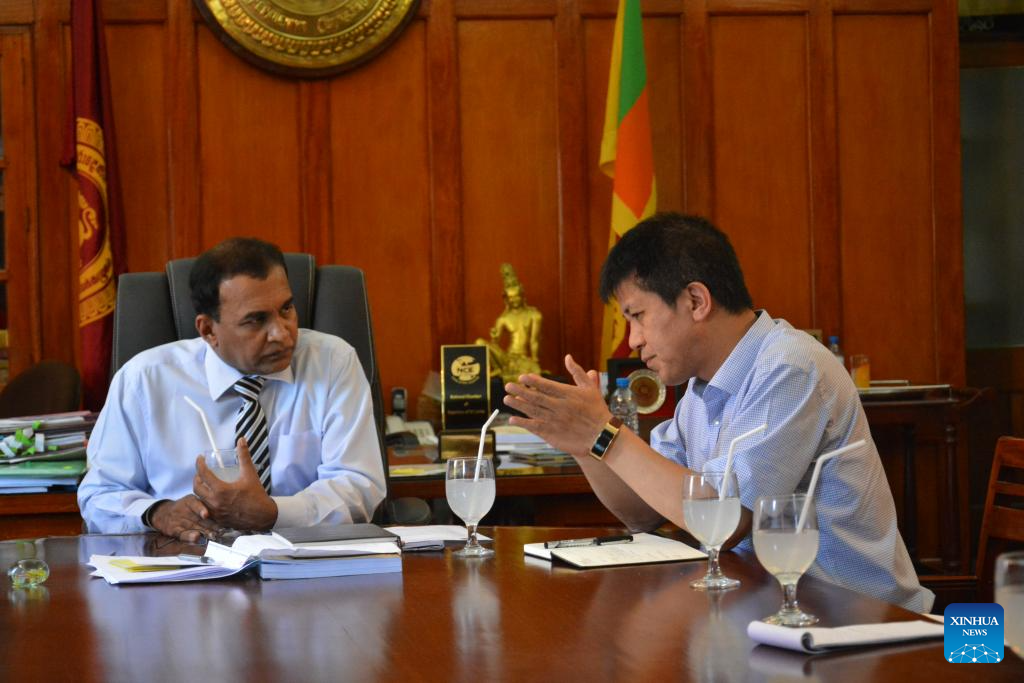
The Bali Process meeting focused on return and reintegration services for stranded migrants was conducted on October 10 and 11 at the Kingsbury Hotel, Colombo. This collaborative effort involves the International Organization for Migration (IOM) and the National Anti-Human Trafficking Task Force (NAHTTF), coordinated under the Bali Process Return and Reintegration Services (BP AVRR) and supported by the Australian Department of Home Affairs.
The Chief of National Intelligence and the Head of the Officials Committee of the NAHTTF, representing the Ministry of Defence as the Chair of the NAHTTF, delivered opening remarks, emphasizing the importance of collaborative efforts in tackling human trafficking and supporting affected individuals.
The meeting addressed recent trafficking trends in the region, particularly the alarming rise in trafficking for forced criminality, including scams and other illegal activities. This surge has highlighted the urgent need for effective responses to the growing number of stranded migrants and identified trafficking victims.
The key objectives of the meeting included enhancing coordination mechanisms for victim rescue, screening, and immediate assistance, as well as providing essential services for survivors. Participants also discussed referral pathways and return and reintegration support, with a particular focus on combating trafficking for forced criminality throughout Southeast Asia.
Government representatives from Cambodia, Myanmar, and Thailand, members of the NAHTTF, which included various member institutions such as the Ministry of Defence, the Ministry of Foreign Affairs, the Ministry of Justice, the Ministry of Public Administration, Home Affairs, Provincial Councils, Local Government and Labour, the Attorney General’s Department, the Criminal Investigation Department and the Department of Immigration and Emigration participated in the event.
Leader of the ‘Sarvajana Balaya’ alliance, entrepreneur Dilith Jayaweera says that if a noble opposition is created, it can do more work than a government.
He further points out that a courageous opposition will not have to remain in the opposition forever.
He made these comments during a special meeting held today (12) in Waskaduwa with the candidates contesting this year’s parliamentary elections from the ‘Sarvajana Balaya’ under the symbol of the ‘medal’.
Speaking during the event, Mr. Dilith Jayaweera said:
We are talking about nationalism, not racism. Many people are afraid to say that Sri Lanka’s nationalism is based on Sinhala Buddhist civilization. They think that people will get angry if they say this.”
He stated that the issue is that politicians choose the racist part of nationalism and engage in politics. It’s done in the south… even in the north. We are against that.”
Jayaweera stated that this country can be guided towards economic development if everyone in the country is brought to an entrepreneurial mindset.
There needs to be a strategic plan. That is how countries have developed,” he said.
Now we have to go to the opposition. We came to change politics. If we form a noble opposition, we can do more work than a government. If we have a good opposition, we don’t have to stay in the opposition all the time. We are a courageous opposition.”
If there are cases… if there are things hidden under the bed… If there are secret accounts, it will become a cowardly opposition,” he added.
The Ministry of Public Security has instructed the Acting IGP to expedite the police investigations into seven high-profile cases including the Easter Sunday bombings and the controversial Treasury Bond auction in 2015.
Instructions have also been given to expedite investigations into the death of businessman Dinesh Schaffter death and the death of a police officer during the shooting incident near the W15” Hotel in Weligama in 2023, according to the Police Spokesman.
Police Spokesman DIG Nihal Thalduwa said the Ministry of Public Security has instructed the Acting IGP to direct special attention and to expedite several special investigations being carried out by the Criminal Investigations Department (CID) and other agencies as the progress of these investigations have been observed to be somewhat insufficient.
He stated that specially the investigations being handled by the CID were recently subjected to a review and that instructions were given with regard to several cases identified including the bond scandal and the Easter attacks, to assign more officers and expedite investigations.
DIG Thanduwa said instructions were also given to further investigate the suspicious death of businessman Dinesh Schaffter in 2022 and the disappearance of the former Eastern University Vice Chancellor Prof. S. Raveendranath in 2006.
With regard to the latter, he said that it was observed that investigations have not been sufficient and that the ministry instructed to expedite investigations and report on the progress.
He said instruction were given to expedite investigations into the incident where a Police Constable was killed in a shooting carried out by officers of the Weligama Police Station near the W15” Hotel in Weligama on December 31, 2023.
The police spokesman added that instructions were issued to launch investigations into the abduction and murder of Tamil journalist Taraki Shivaram, also known as Dharmaratnam Shivaram, on April 28, 2005 as well as to expedite probing the disappearance of activists Lalith Kumar Weeraraj and Kugan Muruganathan in Jaffna on December 9, 2011.
In most cases, from what I have seen of Sri Lankan Officials and Businessmen, Lack Both.
The failure of getting IMF support is a Case-in-Point!
Keeping Sinhala as the Official Language is important, BUT English should be taught like it was done in the 1950s, 1960s.
Learn a lesson from Singapore.
Whilst most Chinese speak Mandarin, the majority of Singaporeans speak excellent English!
In business negotiations, the First Impression is Critical.
Whether one dons a business suit or the National Costume, the body language plays a great role in creating the First Impression.
Next the Presentation Skills.
Good visual presentation should be Short, Brief with Bullet Points.
The best in Powerpoint Presentations are the Americans & the British.
The Presentation to IMF or to EU officials demand Professional Presentation made by a proficient agency.
The IMF Officials have a great international experience in seeing some of the best skills.
How much is the IMF debt in Sri Lanka?
Sri Lanka’s debt-to-GDP (gross domestic product) ratio is expected to fall from 128 percent of GDP in 2022 to just above 100 percent by 2028, according to IMF forecasts. Debt servicing costs – the percentage of tax revenues needed to pay creditors – will also remain elevated.20 Sept 2024
National debt of Sri Lanka 2022
In 2022, the national debt in Sri Lanka increased by 32.5 billion U.S. dollars (+54.25 percent) since 2021. With 92.43 billion U.S. dollars, the national debt thereby reached its highest value in the observed period. Notably, the national debt continuously increased over the last few years. 4 Jul 2024
Who owns the debt of Sri Lanka?
These creditor groups are the Official Creditor Committee of official bilateral lenders (co-chaired by France, India, and Japan), who hold $5.8 billion of Lankan debt; the China Exim Bank ($4.2 billion); other Official Creditors (Kuwait, Saudi Arabia, Iran, Pakistan – $0.3 billion); ISB holders ($14.2 billion); China …9 Jul 2024
Sri Lanka has a New Broom!
Will it Sweep Better than the Old Brooms?
Time will Tell!
It Cannot Get Any Worse! Can it?
Credit: Google
Express Your Opinion – Read What Others Say! The Independent Interactive Voice of Sri Lanka on the Internet.
You won’t have to go far to find an English speaking country in Europe as there are over 370 million English speakers out of about 450 million EU residents!
How Many Speak English Globally?
Out of the world’s approximately 7.8 billion inhabitants, 1.35 billion speak English.
What are the 5 European languages?
Five languages have more than 50 million native speakers in Europe: Russian, German, French, Italian, and English.
Russian is the most-spoken native language in Europe, and English has the largest number of speakers in total, including some 200 million speakers of English as a second or foreign language.
What languages are in the EU Parliament?
The accession of Croatia on 1 July 2013 brought the total number of official languages to 24: Bulgarian, Czech, Croatian, Danish, Dutch, English, Estonian, Finnish, French, German, Greek, Hungarian, Italian, Irish, Latvian, Lithuanian, Maltese, Polish, Portuguese, Romanian, Slovak, Slovene, Spanish and Swedish.
Express Your Opinion – Read What Others Say! The Independent Interactive Voice of Sri Lanka on the Internet.
This story was published as part of Outlook’s 21 October 2024 magazine issue titled ‘Raavan Leela’. To read more stories from the issue,click here
The question arises: how did Indian mythology merge to turn an actual Sinhala hero-king into a villain? You don’t have to go far to find the answer. It was the Tamil Nadu settlers who projected Raavan as a treacherous villain, but have suddenly changed their tune to now claim that he was Tamil in order to use that as a ploy to substantiate a separate Eelam homeland quest.
If the Ramayana is a myth, an epic created in India revolving around Sita, Ram and Raavan the king of Lanka”, promoting the Ramayana Trail in Sri Lanka purely for political and commercial purposes is a bogus tourist pilgrimage. How many Indian tourists are aware of this? Justin W. Henry who wrote Ravana’s Kingdom: The Ramayana and Sri Lankan History from Below to ascertain a Sinhalese version of the Ramayana existed, declared that there was no such mythological version in Sri Lanka.
There are four aspects to consider in approaching this topic together with the need to set facts and fiction in their proper perspective: to what extent is Valmiki’s Ramayana factual or a myth; the actual existence of King Raavan from which the Sinhalese race descends; two foreign-funded projects using Raavan as a cult” to encourage worship of Raavan instead of the Buddha (the goal being to cunningly use Raavan to destroy people’s reverence for the Buddha and stop them from visiting Buddhist temples); and lastly, another bogus attempt to link the Ramayana Trail to replace Buddhism with Hinduism across Sri Lanka as a long-term goal. The last two projects aim to break the Sinhala Buddhist nationalism in Sri Lanka, which remains the strongest point of defence and the pillar of Sri Lanka’s sovereignty. What the Ramayana Trail and the Raavan cult project aim to do is to take Sri Lanka to a pre-Sinhala pre-Buddhist era, deviously erasing the place of Sinhala Buddhists.
There are some important facts we must consider while trying to comprehend various aspects of history—fact or fiction. According to Deborah de Koning’s The Many Faces of Ravana, Sri Lanka was the centrepiece of the world and the cradle of civilisation and his kingdom was larger than the island of Sri Lanka. It was an extremely prosperous place as per the Lankavatara Sutra discovered in Japan. The Sutraconfirms Raavan was a Buddhist who lived during Dipankara Buddha’s time and invited the Buddha to visit Sri Lanka.
It was Raavan who owned and used the first aircraft over 5,000 years ago in which he brought Dipankara Buddha in the pushpak (floral chariot) to Sri Lanka. Thus, Raavan’s world was far more than a Ramayanamyth. This is probably why the United States tasked Justin Henry, a Cornell University student, to conduct research on it. His findings would erase the falsely-hyped notion that the Sinhala race descended from Vijaya to a version that the race descended from the Yaksha tribe of Raavan that was far older. The villagers of Meemure (Lakegala) are believed to be descendants of Raavan’s Yaksha tribe. Interestingly, Talaimannar and Koneswaram can be viewed from atop Lakegala, which was used for Raavan’s Dandumonara (chariot). Ranamure villagers continue to observe an annual ritual called the Raavan yakkama. H.C.P Bell in 1896 noted that the period before Vijaya’s arrival was known as the Raavan period as per the Ravana Rajavaliya.
The existence of Raavan and the Yaksha tribe, of which Kuveni was a member, became part of the Sivu Hela (four tribes comprising Raksha, Yaksha, Naga and Deva). Sivu Hela became Sinhale. This existence would automatically negate the Eelam claim as well and expose their bogus historical narrative, which includes the false claim that Raavan was a Tamil king just as they falsely claim that they were Buddhists to negate the fact that the Sinhalese lived in the North before their arrival from Tamil Nadu initially via numerous invasions (18 in all), and thereafter as colonial indentured labour. In addition, the many Buddhist archaeological sites and Buddhist stupas are proof of Sinhala Buddhists living in North Sri Lanka. Interestingly, in August 2023, MP Buddhika Pathirana presented a private member’s bill in Sri Lanka’sParliament requesting research be done on King Raavan.
The Hela nation that Raavan ruled was technologically advanced, and he was the progenitor of the Sinhalese. Indian political analyst P.K. Balachandran confirms in his ‘Ravana cult energises Sri Lankan nationalism’, how King Raavan who excelled in medicine, martial arts, music and aircrafts wrote several books in Sinhala, which were translated into Sanskrit. Deborah de Koning’s book also states that the Buddha prophesied that Raavan would return in 5,000 years as the future Maitreya Buddha.
In the backdrop of this, the mythological Ramayana continues to encourage Hindu India to hold Raavan in contempt. Annually, scores of people gather around a large effigy of Raavan, shout contemptuously at it, and then burn it. It is amazing how a myth can evoke such hatred and animosity against the King of Lanka. Interestingly, the Dussehra festival (Raavan Dahan) is not celebrated in the same format in Tamil Nadu as it is in North India.
Given that the Ramayana is mythology, it is to be naturally deduced that the Ramayana Trail is part of that fiction. This reaffirms the Trail is a politically motivated agenda that is being promoted even by the Tourism Authority of Sri Lanka simply as a marketing tool to lure tourists. It raises questions about the long-term side-effects of such initiatives. While Sri Lanka’s archaeology department has statutes to protect archaeological sites, there are no laws to prevent creation of bogus sites, bogus artefacts and the promotion of myths and fiction as factual.
The sites of this Ramayana Trail have no historical basis. Even the Seetha Amman Kovil was built by Tamil estate workers who were brought to the country by colonial Britain in the 19th century. While many Indian academics, courts and authorities deny any factual basis for the Ramayana, it is baffling how a myth is being promoted as reality by some people in Sri Lanka. Ironically, while India promotes Buddhist tourism in India—the cradle of Theravada Buddhism and the land where many Buddha statues and artefacts exist—instead of marketing Theravada Buddhist heritage, Sri Lankan authorities are marketing a myth! When India annually burns effigies of Raavan after spewing venom, it is baffling how Sri Lankan authorities can officially agree to be part of a myth solely for political and commercial purposes and do immense damage by presenting disinformation to the younger generation of both nations. Recorded history is getting distorted as a result. Sigiriya has been falsely described as Chitrakoota, the palace of Raavan’s half-brother Kuber. Isurumuniya is now claimed to be the temple of Raavan’s parent. These need to be immediately corrected.
At the Royal Asiatic Society symposium, Danesh Wisumperuma claimed there was no historical evidence that Rumassala, Ritigala and Dalukanda are remnants of rocks brought by Hanuman since geologically they were formed some 542-4,500 million years ago while the flora are Sri Lankan and not from the Himalayas. The supposed Sita flower” is actually a commonly grown Ashoka flower. There were also attempts to project the bovitiya as a Sita flower”. It is clear that organised groups and well-funded experts” are writing distorted histories for a larger politicised agenda aligned to the Akhand Bharatobjective. Sri Lankan authorities thinking of only commercial gain by falsifying history to draw Indian tourists are paving the path for greater historical damage with future political ramifications. Once bogus sites and histories are established and revered, presenting these as distortions and falsified history becomes a tedious task especially when there are likely to be more objections against rectifying false history.
Therefore, the Sri Lankan authorities must be legally challenged and reverse the damage they have already committed. It is unfair to Indian tourists who set off to Sri Lanka believing in a falsified historical trail, unless they are informed beforehand that they are paying to tour a fictitious trail.
(Views expressed are personal)
Shenali D. Waduge is a writer and political analyst
(This appeared in the print as ‘Beyond the Border, History Stakes Its Claim Over Myth’)
The recent appointment of a former Sri Lanka Air Force chief as the Chairman of Airport and Aviation Services (Sri Lanka) (Private) Limited, the state-run airport management company, has been the subject of much debate.
While it may seem like a newsworthy event, in reality, it follows a long-established pattern of selecting top military personnel for civilian roles.
This practice, however, raises several questions.
First, the company is registered as a “Private” entity, yet government influence over decision-making appears as strong as ever.
How private can it truly be when the government retains control over its leadership appointments?
More troubling is the broader implication of bringing in an outsider, someone who, while distinguished in his chosen field, is unfamiliar with the intricacies of managing a specialized organization like Airport and Aviation Services.
Why isn’t there a system in place to groom leaders from within the company?
Many successful private sector companies invest in the training and professional development of their employees, ensuring that when a top position becomes vacant, there are capable candidates ready to step in.
This not only maintains continuity but boosts morale and productivity by demonstrating a clear path to career progression.
When employees know that their hard work and commitment can lead to leadership roles, it creates a sense of motivation and loyalty.
On the other hand, if the top positions are seen as reserved for outsiders, often with political connections, any sense of fairness and meritocracy within the organization is lost, and morale inevitably suffers.
So, why hasn’t such a career development program been implemented in these state-linked enterprises?
One possibility is that these leadership roles are intentionally kept available for political appointees, ensuring a means of rewarding loyalists and back-scratchers.”
Another possibility is that even within the organization, political influence has played a role in staffing, leading to a workforce that may not have the skills or merit to rise through the ranks.
Regardless of the reason, the end result is the same: inefficiency and frustration among capable individuals within the organization.
If the goal is to truly manage this company like a private enterprise, it’s time to abandon the old patterns of political patronage and establish a genuine system of career development and progression.
This would not only empower employees but also help the organization thrive in a competitive, global aviation industry.
If there is a constitutional provision claiming no dual citizens / foreign citizens can sit in Parliament, how is this provision to be honored or checked? The best & only way is for the Election Commission/Commissioner to ensure that they do not accept any nominations of those who are dual citizens. Such nominations must be rejected by the Election Commission & the Election Commission is dutybound to the People to ensure they have not accepted nominations of dual citizens/foreign citizens. This was a major lapse in the 2020 elections. The Election Commission or Commissioner cannot slide from upholding this provision in the Constitution this election.
We cannot expect candidates to be honest enough to write in their nomination papers that they are dual citizens knowing they will get rejected. That mistake was made by MP Geetha Kumarasinghe who had to forfeit her seat in Parliament as a result of declaring she was a dual citizen. However, it was believed that many inside Parliament who were dual citizens kept quiet & ended up getting a state pension at the end of 5 years.
How does the Election Commission check whether nominees are dual citizens/foreign citizens? There are several ways they can do so. The immigration & emigration is the best place to start. Candidates can be asked to give affidavits that they are not dual citizens which would hold them accountable if they are. Either way, if there is a constitutional provision, the Election Commission has to find a way to ascertain that the Legislature does not have dual citizens. The Election Commission cannot escape this duty. The Legislature is the key place that laws are made, if a law has been passed that no dual citizens or foreign citizens can hold Public Office, then the gate that such people can enter needs to be stopped, this is gate of handing nominations to contest elections to enter Parliament.
Thus, the Election Commission that failed to do its duty in the 2019/2020/2024 elections must do so at least now.
Have they even inserted this requirement in the recent nomination forms? If no, the Election Commission is not fulfilling a key duty.
It is baffling that those who are eternally chanting anti-corruption” do not take issue regarding dual citizens entering parliament because the Election Commission is not taking provisions to stop such candidates handing nominations. In fact, the general public & all good governance promoters must demand that the Election Commission reject all dual citizen nominations. Otherwise, this constitutional provision becomes a ridiculous inclusion which is not taken seriously even by the so-called independent Election Commission.
With today being the last day to hand over nominations, the Election Commission must issue a statement regarding the status of Dual Citizens & Foreign Citizens & ensure they do not accept nominations of dual citizens/foreign citizens. The legal fraternity must come forward to ensure the Election Commission does not relegate on their duty to uphold the Constitution of Sri Lanka.
In every functioning democracy, Parliament plays a central role in shaping the nation’s future. It is the institution that represents the will of the people, legislates on their behalf, and holds the government accountable for its actions. In countries like Sri Lanka, Parliament is the heartbeat of the democratic process, where laws are debated, decisions are made, and national priorities are set. However, as much as the institution itself is critical, the quality of its members is equally significant in ensuring that Parliament fulfills its role effectively.
The Role of Parliament in a Nutshell
Parliament’s primary responsibility is lawmaking. Every significant policy, regulation, or public initiative in the country must pass through its rigorous debate and approval processes. By legislating, Parliament ensures that laws reflect the evolving needs of the people while safeguarding national values and constitutional principles. Another essential function of Parliament is oversight. Members of Parliament (MPs) hold the government accountable by scrutinizing its actions, budget allocations, and policy implementation. Parliamentary debates, questions, and committee reports all serve as mechanisms to prevent abuse of power and ensure that the government operates transparently and in the public interest. Additionally, Parliament serves as the voice of the people. MPs, as elected representatives, bring the concerns of their constituents into the national discourse. By voicing these issues, they help align national policies with the day-to-day realities of citizens, ensuring that the needs of the diverse population are met.
The Quality Expected of Members of Parliament
While the structural role of Parliament is well-defined, the effectiveness of the institution is contingent upon the caliber of the individuals who serve within it. The quality of MPs is fundamental to the credibility, efficiency, and integrity of the entire legislative process. First and foremost, MPs must possess a strong ethical foundation. They should be individuals of integrity who prioritize the welfare of their constituents and the nation over personal gain. Corruption, conflicts of interest, and unethical behavior can severely undermine the trust the public places in Parliament, eroding democratic institutions over time. Knowledge and Competence is the next in line. The complex issues discussed in Parliament—from national security to economic policy—demand that MPs have a deep understanding of both the subject matter and legislative processes. While no one MP is expected to be an expert in every field, a basic level of competence, combined with a willingness to learn and engage in informed debate, is crucial. On the other hand, MPs are not merely figureheads; they are public servants entrusted with significant responsibility. This requires dedication and a genuine commitment to serving the interests of their constituents. Parliamentarians must prioritize the public good, even when it conflicts with personal interests or the pressures of political life. In a diverse society, MPs must be able to bridge divides, representing not only their immediate constituency but also the broader interests of the nation. This requires empathy, open-mindedness, and the ability to engage with individuals from various backgrounds and viewpoints. Further, the Parliamentarians must be effective communicators. They need to articulate the concerns of their constituents clearly, argue for policy changes persuasively, and engage in debates constructively. This includes being transparent about their decisions and positions on key issues, allowing the public to hold them accountable. Ultimately, the quality of MPs is not only determined by their personal virtues but also by the systems in place to hold them accountable. Political parties, the media, and civil society all have roles to play in ensuring that those who serve in Parliament meet the highest standards of public service. Electoral systems must promote the selection of competent, ethical candidates, and voters must be vigilant in assessing the qualities of those they elect. Continuous public scrutiny, through an active and free press, helps ensure that MPs are held accountable for their actions, reinforcing the importance of integrity and competence. As citizens, we must recognize the significance of this institution and demand that those we elect embody the highest standards of public life. Only then can Parliament fulfill its true role in society and ensure a prosperous and just future for all.
People’s Role in Selecting Members in a Parliamentary Election
In a democracy, the most powerful tool in the hands of the people is the right to vote. In Sri Lanka, parliamentary elections represent the culmination of the people’s role in determining who will legislate, lead, and hold the government accountable on their behalf. Every voter, regardless of social status or background, is entrusted with the power to shape the country’s future by selecting members of Parliament who will represent their interests. However, with great power comes great responsibility. It is critical for the electorate to understand and fulfill this role conscientiously. The buzz word here is the Power of the Vote. Parliamentary elections are the cornerstone of representative democracy. In Sri Lanka, where Parliament is the supreme legislative body, the members elected through the vote directly influence the country’s policies, governance, and development. The process allows citizens to choose candidates who reflect their values, concerns, and vision for the future. Each vote contributes to determining who will be responsible for making laws, managing public finances, and ensuring the overall wellbeing of the nation. Therefore, it is not just a right but a civic duty to vote with careful consideration. A single vote may seem insignificant, but collectively, the votes of millions decide who will hold the reins of power.
Voters need to be discerning about the qualities they expect from their representatives. Elections are not merely about party loyalty or charismatic personalities but about choosing individuals who can deliver on promises and address the nation’s pressing issues. The first quality voters should demand in their elected officials is integrity. Politicians should be transparent, ethical, and committed to serving the people rather than personal or party interests. Voters must be wary of candidates who have a track record of corruption, dishonesty, or criminal behavior. Holding MPs accountable for their actions is crucial, and voters have the power to reject those who fail to uphold public trust. Parliamentary representatives must be capable of steering the country toward progress. They should have a clear vision for development, economic growth, and social harmony. Voters should scrutinize their proposed policies and ask critical questions about how these ideas will be implemented. Visionary leaders go beyond slogans and rhetoric; they present concrete plans that benefit all citizens, not just a select few. In a complex and fast-changing world, MPs need to possess the competence and knowledge required to address key issues like economic stability, healthcare, education, and foreign policy. Voters must elect individuals who understand both local and global dynamics and are capable of making informed decisions in Parliament. Inclusivity and Representation are also not forgettable. Sri Lanka is a diverse nation with people of different ethnicities, religions, and socioeconomic backgrounds. The members of Parliament must be able to represent this diversity and work for the common good. Voters should prioritize candidates who demonstrate empathy, inclusiveness, and a commitment to equality. A representative who can unite rather than divide the nation is essential for long-term peace and prosperity.
The Importance of Informed Voting
One of the key responsibilities of voters is to make informed decisions. This requires paying attention to the manifestos, track records, and debates surrounding the candidates and their parties. The media plays an important role in disseminating information, but voters must critically evaluate the reliability of the sources they consult. In an era of misinformation and disinformation, relying on verified facts rather than propaganda is essential to making sound electoral choices. Voters should also attend or watch political debates, follow campaign promises, and examine the personal histories of candidates. The democratic process thrives when voters are well-informed and vote based on substance rather than superficial impressions. However, in every election cycle, there are candidates who attempt to buy votes through favors, promises of government jobs, or outright financial incentives. While such offers might seem tempting, especially in economically challenging times, accepting these short-term gains can have long-term negative consequences. Electing individuals based on temporary personal benefits rather than their capacity to govern effectively undermines democracy and contributes to poor governance, corruption, and inefficiency. The people of Sri Lanka must resist such offers and remember that their vote is a contribution to the country’s future. The choices made today will impact future generations, shaping the opportunities available to children and grandchildren.
Sri Lanka has a relatively high voter turnout compared to many other democracies. However, ensuring that every eligible citizen exercises their right to vote is still vital. Voter apathy, especially among young people, can lead to an imbalanced representation where only certain segments of society dictate the nation’s course. Every voice matters and it is the collective responsibility of citizens to encourage participation in the electoral process. Additionally, voters must hold elected officials accountable after elections. Engaging in community discussions, staying informed about the performance of MPs, and participating in civil society efforts are important ways to ensure that elected representatives continue to work for the people. In the end, the quality of governance depends largely on the wisdom of the electorate. A well-informed, vigilant, and engaged populace is the foundation of a thriving democracy—one that holds its leaders accountable and works for the betterment of all citizens.
Sunday Times of October 06, 2024 reports that the Govt. will carry on with Ranil’s Urumaya project. The report adds that the Land Commissioner has said President Anura Kumara Dissanayake, has instructed that land distribution should continue. I only hope that this report is not correct.
In November last year, I wrote on Lanka Web that the Urumaya program was the Return of the Millennium Corporation Compact (MMC) which was outright rejected by the then Govt. despite a promise of a financial package associated with it. This political scheme of Ranil appears on the surface to be farmer-friendly as it gives the farmer the legal right to the land and allow him to use it as a disposable asset with the right to dispossess the property which was restricted by the Land Development Ordinance of 1933.
in the present context, there is the grave danger of Rice Mill Owners, and money lenders, who would convert a mortgage to an outright sale. It is well known that most LDO Permit holders are in eternal debt. Today there will be more desperate landowners who are drug and alcohol addicts or plagued with health problems who would readily sell their lands for a pittance. With the LKR at 300 to a dollar, it would be a bonanza for foreign buyers to buy cheap land in Sri Lanka. What happened in Palestine when the Jews backed by financial institutions dispossessed the land of Palestinians and the aftermath that followed is not a flight of imagination. https://en.wikipedia.org/wiki/Sursock_Purchases
In addition, the outright sale of landholdings resulting in the fragmenting of farmland among dependents would be a serious disadvantage to mechanization and modernization of the already stamp-size farmlands. Fragmentation even among relatives is bound to increased litigation. In the rural areas, disharmony among neighbors and crime has its root mainly in land disputes.
It is misinformation that a Permit holder under the Land Development Ordinance could not raise essential funds on the security of the land. The Ordinance allowed landowners to mortgage the land to the Peoples Bank.
It is regretted that professionals in Agriculture and Sociology have not commented on this vexed issue.
References
*Land Use Policy 22 (2005) 358–372
Impacts and causes of land fragmentation and lessons learned from land consolidation in South Asia
Gajendra S. Niroula, Gopal B. Thapa
School of Environment, Resources and Development, Asian Institute of Technology, Bangkok, Thailand
*Land fragmentation in rural Sri Lanka: A Sociological analysis of a Southern Sri Lankan village
*Sustainability of Agriculture Haniza Khalid1 and Muhammad Dayyan2
The inevitable implications of fragmenting farmland ownership are (i) uneconomic land sizes and farm operations, (ii) greater tendency to convert the farmland to other uses (and hence, the subsequent decline of food production capabilities of the country.
Colombo, Oct 11 (Daily Mirror) -Former Director CID, SSP Shani Abeysekera has been appointed Director of Crimes of Sri Lanka Police.
On the recommendation of the Acting IGP, the National Police Commission and the Election Commission have approved SSP Abeysekera’s appointment.
According to police sources, with the change of government, it is the responsibility of the new Director Crimes to look into all previous criminal matters in the country and to bring the culprits to book sooner than later.
SSP Abeysekara when contacted confirmed his new appointment with Daily Mirror but did not specify as to when he is going to take up the post.
The Commissioner General of Elections, Saman Sri Ratnayake, announced that a total of 764 nomination papers were submitted by political parties and independent groups for the 2024 General Election, from the 22 electoral districts across the island.
However, he stated that only 690 nomination papers were accepted from political parties and independent groups for the election and that 74 nomination papers were rejected.
Speaking to reporters this evening (11) after the nomination period ended, he stated that the highest number of nominations were received for the Digamadulla electoral district with 72.
He said that 64 of these were accepted as 08 nomination papers were rejected.
The Commissioner General added that the lowest number of nominations were received jointly from the Polonnaruwa and Monaragala districts with 15 each.
He revealed that preference numbers will be announced in the near future.
The accepting of nominations for the General Election commenced on October 4 and ended at 12.00 noon today (October 11). Time was allocated until 1.30 p.m. to file any objections related to the nominations.
President Anura Kumara Dissanayake has instructed officials of the Ministry of Finance to take necessary action to provide a monthly interim allowance of Rs. 3000 to all pensioners, from next week.
After reviewing the delay in adding the Rs. 3000 allowance to the October pension, the President directed that this amount be credited to the pensioners’ accounts within the next week.
These instructions were given during a meeting held yesterday (10) afternoon at the Presidential Secretariat with senior officials of the Ministry of Finance, chaired by President Anura Kumara Dissanayake.
Despite the circular No. 02/2024 dated 2024/08/24 issued by the Public Administration Department to grant a monthly interim allowance of Rs. 3000 to all pensioners, funds were not allocated for this purpose.
Upon reviewing the matter, President Anura Kumara Dissanayake informed the officials of the Ministry of Finance to ensure that the required funds are provided.
Considering the hardships faced by pensioners due to the non-payment of the Rs. 3000 allowance with the October pension, and their subsequent requests, the President decided to proceed with the payment from this month, despite the prevailing financial difficulties of the government.
Since the October pension has already been credited to the pensioners’ accounts, the President instructed officials to ensure that the Rs. 3000 allowance is credited to their accounts within the next week, and from next month, this allowance will be added to the monthly pension.
Secretary to the President Dr. Nandika Sanath Kumanayake, Secretary to the Ministry of Finance Mahinda Siriwardena and several senior officials from the Ministry of Finance were present at this meeting
——— Some members of the Sri Lankan team were university dons. Surely they must be highly educated. But, do they have the skill, talent and the ticker to conduct international negotiations?————
The most recent award for the Nobel Chemistry price was for decoding the structure of proteins and creating new ones, yielding advances in areas such as drug development to US scientists, namely David Baker and John Jumper and Briton Demis Hassabis, last week. But is it really necessary. Will it not only make the Big Pharma a more lucrative business and making our natural ability to withstand the challenges coming from environment, very weak. Perhaps the following video will explain it better:
Isn’t our DNA already programmed to face the challenges over several hundreds of thousands of years overlaying layer upon layer for our survival. If we look around even the smallest plant ‘nidikumba’ (Mimosa or Sleeper Grass) would react in a way to protect itself from predators. Each plant would produce whatever the chemical needed to fight with others for its survival and to challenge others who try to encroach their domain. A sea turtle would grow a shell covering its whole body to protect the organs from particles coming down from heaven (like minute but powerful particles, such as neutrinos emanating from the sun and showering upon us). Perhaps this makes it possible for turtles to live hundreds of years.
Neutrinos carry energy. This has been proven to be correct by placing a bucket with certain chemical solution that lights up several kilometres underground. Perhaps they vanish after discharging the energy (that makes the solution to glow as all matter is energy).
How Rome was built:
I give bellow the link to Lex Fridman’s podcast with historian Prof. Gregory Aldrete, that I presented in my previous write up. That discussion involves Lex Fridman who had interviewed celebrities such as Elon Musk, Jeff Bezos and our Chamath Palihapitiya. Chamath perhaps is the most sought-after investor guru in the US these days. He gave seed money to a guy who might become the next trillionaire with a computer hardware chip design company by the name Groq:
In effect what the historian says is that ‘Rome was not built in a day’. The task ahead of us in Sri Lanka today is to take time and do just that; slowly, but surely. By the way Chamath believes that energy is the key to next industrial revolution, bypassing all known forms of energy and the challenge now is how to harness that free energy. I, too, share his view. Maybe we are already experiencing it in Sri Lanka with bumper harvests in green gram, vegetables etc. Perhaps organisms in the soil started fixing nitrogen with that energy, hence less use of chemical fertiliser.
Tourism and Foreign Direct Investments:
According to the cabinet decision announcement by Hon. Vigitha Herath, we are being represented in Rome by a team with respect to tourism at a fair. Hope they will do justice by attracting large crowds, bringing attention to our connections to outside world and highlighting the potential for investments. We have a large expatriate work force in Italy; they are like our ambassadors. There is a saying that ‘when in Rome do as Romans do’. The seniors should correct errant juniors who have the tendency to go astray.
We have something in common with Italians: the empathy towards others. I remember when I worked in West-Africa I was supervising one of their road projects and had to live in their camp temporarily as arranged by the government. They are good roadbuilders; perhaps that is due to their understanding of soils that support heavy loads. I remember one advice their project manager gave me: always look for soils with a good CBR value, a property known as California Bearing Ratio, which is a measure of soil’s ability to withstand loads. All their road building works were handled by surveyors called ‘Geomatras’ (Surveyor+ Engineer). That knowledge helped me to impart the same to other later in other projects. Now I know it is a measure how much energy that we can transfer to a uniformly graded soil by the roller used for compaction.
By the way, it was Italians who built our only refinery that still chugs along even after 65 years. Another good quality is that they have not interfered with politics of the country they carry out their projects. So, why not invite them for the second refinery if they are still active in that field.
This popular song titled ‘Tornero’ which became a hit in the US by an Italian group called ‘I Santo California’ in 1974 is still a craze in German speaking countries in their own. Here is the link to it:
This explains the trauma a couple had to undergo due to separation necessitated by engaging in factory work as machinists (Tornero) etc. That hard work put their countries during the industrial revolution at the forefront and brought them good results. Better develop a taste for this kind of music that they love.
We too have our version, but a happy one to reminisce (or Tornare) over the past. They recollect how they played in the village water ways, tanks, and went for free tuition to the village teacher’s house. This is my experience as well when I was a kid. I remember I was rescued by one of the friends when I was about to get drowned and got beaten. All those are still there unspoiled in Sri Lanka except the tuition which is not free. I came across the video only recently and fell in love with it. I find that the guys playing are the same as those in Api Kawruda (who are we), but several years earlier in ‘WAYO-Api Sanasille’:
Finally, I will explain pictorially why we should have a ‘Watch dog’ to prevent our state craft actors (and actresses) falling prey to predators, with a popular hit of Elton Jone’s ‘Nikita’.
Professor Jeffrey Sachs, currently a Professor at Columbia University, has held positions around the world as an economist, and has become one of the most outspoken peace advocates in the United States. This interview was conducted on May 15 by EIR’s co-editor Mike Billington.
Mike Billington: I listened to your interview with Jill Stein, the presidential candidate for the Green Party. I noticed that she ran through your various hats, which took her a long time to do! Rather than running through all of that, I thought I would start with your original profession, which was an economist. I want to read to you a quote from Russia’s Executive Director at the IMF, Aleksei Mozhin. Do you know him personally?
In a world where negative experiences often dominate social media feeds, it’s refreshing to come across a positive encounter. My visit to the Kottawa post office this morning was one such pleasant surprise. The gentleman I encountered there not only provided excellent service but also offered a valuable suggestion that saved me money.
Typically, I avoid the Kottawa post office due to previous bad encounters with staff who lacked basic customer care. However, on this occasion, I decided to give it another try. To my delight, I was greeted by a helpful gentleman who was a stark contrast to the usual experience.
When I handed him my parcel, he efficiently checked the weight and quoted the registered mail fee. But then, he did something unexpected. He suggested that sending it as Speed Post would be cheaper. This was a win-win situation for me as it would not only expedite the delivery but also save me a few rupees.
The gentleman’s helpfulness and customer-oriented approach were truly commendable. It’s a reminder that even in seemingly mundane interactions, a little extra effort can go a long way in making a positive impression. I hope that others in the post office can learn from his example and provide similar levels of service to their customers.
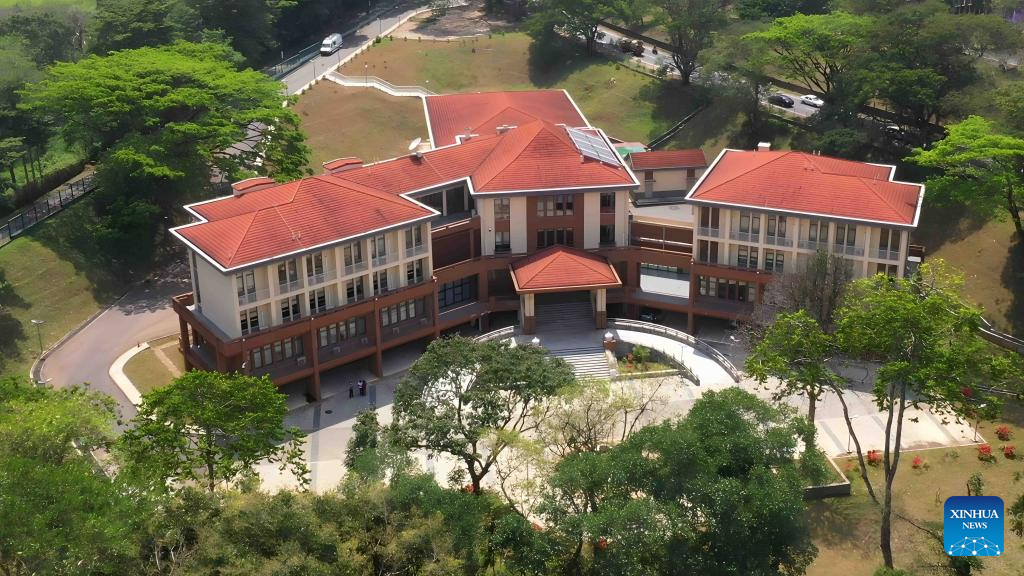
A drone photo taken on Sept. 26, 2024 shows the China-Sri Lanka Joint Research and Demonstration Center for Water Technology (JRDC) in the central city of Kandy, Sri Lanka. (Photo by Gayan Sameera/Xinhua)
COLOMBO, Oct. 10 (Xinhua) — In an office drawer of Chinese scientist Wei Yuansong lies a thank-you letter written in Sinhalese and signed off by an entire Sri Lankan village.
The letter, having passed through many hands and franked in various locations, tells shared memories of a decade-long fight against a killer kidney disease that had plagued the locals for years due to a lack of safe drinking water.
“We express our heartfelt gratitude to Professor Wei for providing us with safe and tasty drinking water,” folks from the Nildiya village wrote.
Now serving as the director of the Laboratory of Water Pollution Control Technology at the Chinese Academy of Sciences, Wei told Xinhua that his connection with Sri Lanka began in August 2013, when an email from Doctor S.K.Weragoda asked about water treatment collaboration to address the Chronic Kidney Disease of Unknown Etiology (CKDu) in that country.
At that time, CKDu was a major public health issue in Sri Lanka, with over 40,000 people suffering from it since the mid-1990s, statistics showed. In 2016, then Sri Lankan President Maithripala Sirisena called the disease a “national disaster” that affected 20,828 patients and caused 5,000 deaths per year.
Preliminary research by the World Health Organization indicated a strong correlation between the disease and local groundwater pumped for drinking, and correspondence with Sri Lankan scientists made the issue come into the view of their Chinese counterparts.
In August 2014, Wei made his first travel to Sri Lanka, initiating an arduous research journey together with Weragoda. Each day, they took hours of bumpy road trips deep into the heavily affected areas and paid home visits to villagers for epidemic inquiries.
However, the duo encountered many cold shoulders and doubts. “Many locals thought that the Chinese, like other (foreign researchers), were here to write papers, not to genuinely help them,” Wei recalled. The two scientists had to wade through difficult conversations to win their trust and were eventually welcomed to take samples crucial for their analysis.
Following preliminary research and extensive coordination between Chinese and Sri Lankan partners, a deal was inked in March 2015, enabling joint research on the causes of CKDu and drinking water safety. Since then, Wei frequented Sri Lanka along with more Chinese scientists to conduct thorough research into water treatment solutions that fit local conditions.
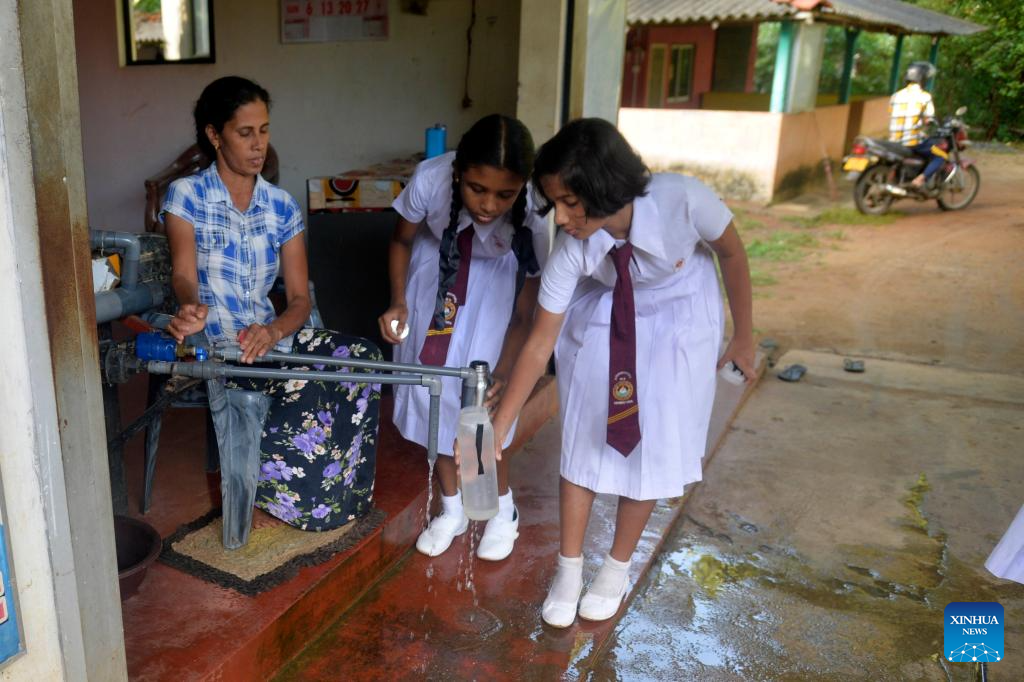
Over the following years, the Chinese academy and its partner built four drinking water facilities in Sri Lanka, providing safe drinking water to over 5,000 villagers and more than 1,300 students, followed by a China-Sri Lanka Joint Research and Demonstration Center for Water Technology (JRDC) founded in the central city of Kandy.
The center has since trained more than 30 local medical workers, 20 kidney disease investigators, 20 water professionals, and 30 graduate students. Two joint CKDu-related research papers by Wei’s team won the Sri Lankan President’s Awards for Scientific Research in 2023 and 2024.
“The local people now trust Chinese scientists wholeheartedly … villagers with kidney disease said they no longer go to the hospital for years thanks to the help of Chinese scientists,” said Titus Cooray, a Ph.D. student at the JRDC.
This July, Wei came and attended a China-Sri Lanka joint research workshop at the JRDC themed on climate change, marine sustainability and other topics, with participants from nearly ten countries, including the United States, Canada and the Maldives.
“This is my 31st trip to Sri Lanka. We have laid the foundation from zero to one, and future collaboration will undoubtedly progress from one to infinity,” Wei told Xinhua at the event.
“China has transitioned from being a participant to a leader in global environmental governance, and we aim to bring more benefits to the Sri Lankan people through scientific cooperation and to make this project a model of the ‘Belt and Road’ international cooperation,” he noted. ■
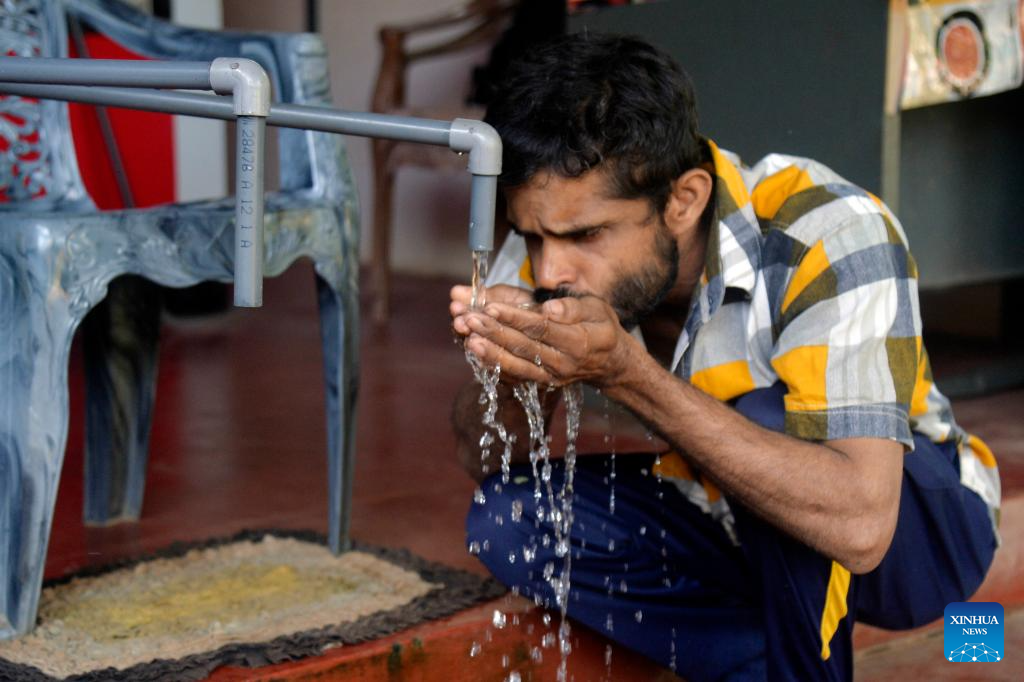
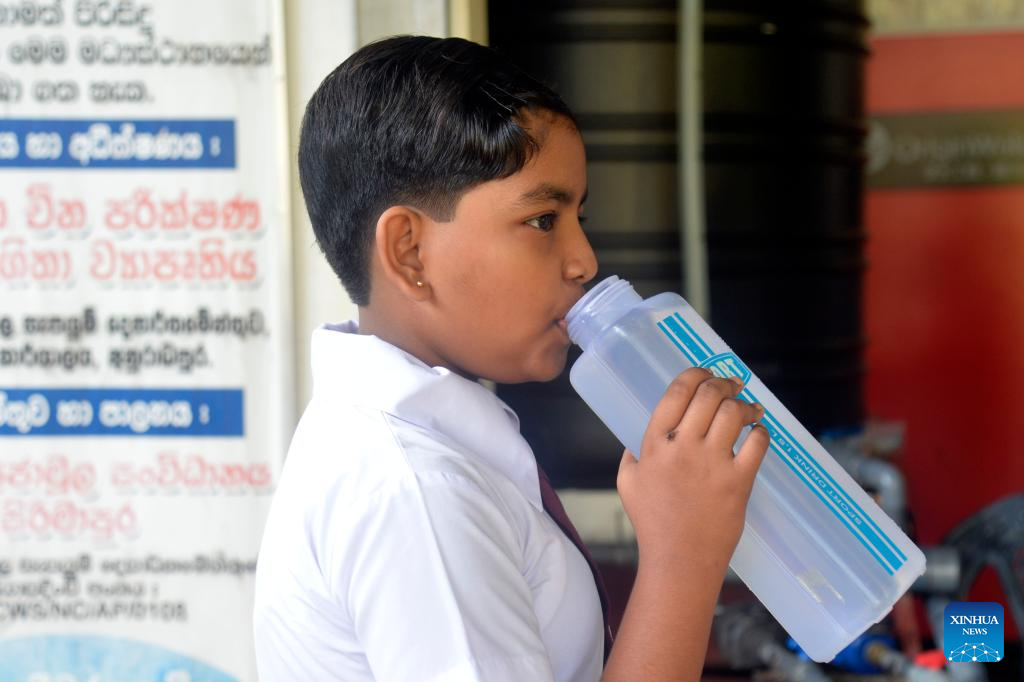
A villager drinks filtered water from a drinking water facility aided by China in Nildiya Village, Sri Lanka, Oct. 2, 2024. (Photo by Gayan Sameera/Xinhua)
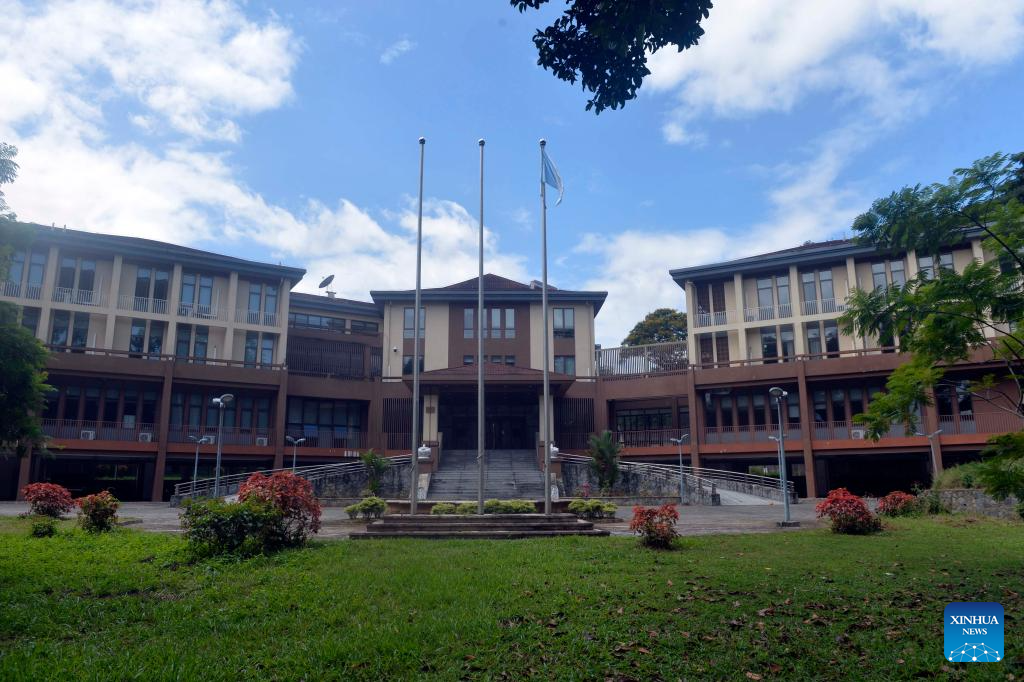
This photo taken on Sept. 26, 2024 shows the China-Sri Lanka Joint Research and Demonstration Center for Water Technology (JRDC) in the central city of Kandy, Sri Lanka. (Photo by Gayan Sameera/Xinhua)
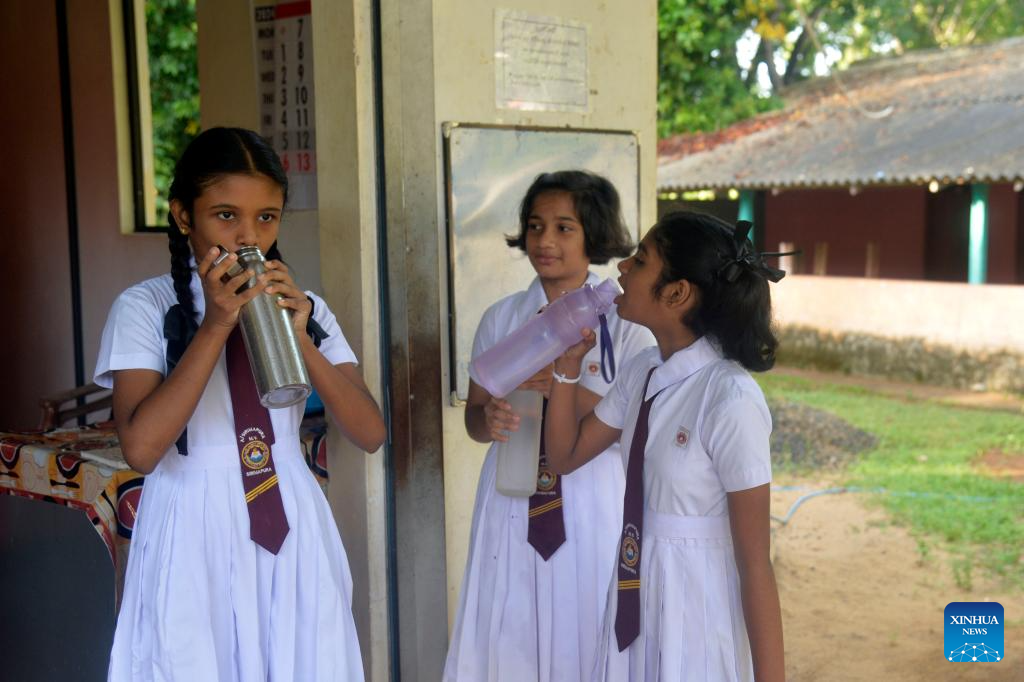
Students drink filtered water from a drinking water facility aided by China in Nildiya Village, Sri Lanka, Oct. 2, 2024. (Photo by Gayan Sameera/Xinhua)
This file photo taken on March 22, 2017 shows Wei Yuansong (R), director of the Laboratory of Water Pollution Control Technology at the Chinese Academy of Sciences, visiting Upul B. Dissanayake, then vice chancellor of University of Peradeniya, in Kandy, Sri Lanka. (Xinhua)
A student drinks filtered water from a drinking water facility aided by China in Nildiya Village, Sri Lanka, Oct. 2, 2024. (Photo by Gayan Sameera/Xinhua)
Students fetch filtered water from a drinking water facility aided by China in Nildiya Village, Sri Lanka, Oct. 2, 2024. (Photo by Gayan Sameera/Xinhua)
Anura Kumara Dissanayake is well aware that his handling of Sri Lanka’s vulnerable economy will determine his political future.
Sri Lankan President Anura Kumara Dissanayake (center) holds talks with a delegation from the International Monetary Fund in Colombo, Sri Lanka, Oct. 4, 2024.Credit: President’s Media Division (PMD), Sri Lanka
On September 21, National People’s Power (NPP) leader Anura Kumara Dissanayake won Sri Lanka’s eighth presidential election. Two days after being sworn in as the president, Dissanayake dissolved the Parliament and declared that a parliamentary election would be held in November 2024.
It is no secret that Dissanayake’s victory comes amidst the worst economic crisis Sri Lanka has encountered since independence, as well as the significant decline in popularity of other leaders alongside the crisis. The resignation of Gotabaya Rajapaksa from the presidency and the appointment of Ranil Wickremesinghe to that post in 2022 broke the Rajapaksa-led Sri Lanka Podujana Peramuna (SLPP) into two major factions. One faction continued supporting the Rajapaksas, and the other sided with Wickremesinghe. Another major political party, Samagi Jana Balawegaya (SJB), also experienced a decline in popularity as the public was frustrated with establishment politics.
Against that backdrop, Dissanayake and his NPP coalition gained support as a viable alternative to rule the country and eliminate corruption. As a result, Dissanayake secured 42 percent of the valid votes cast in 2024, compared to the 3 percent he obtained in the presidential election in 2019. Although 42 percent support was not sufficient for him to secure the presidency in the first round, his lead of 1.2 million votes over major contender Sajith Premadasa ensured his victory in the second round.
Of all the major candidates, Dissanayake was often seen as the one with the least corruption allegations and his party, the NPP, played very well into the narratives of eradicating bribery and corruption. They insist that their party will make governance much more transparent and take steps toward eradicating corruption. The NPP has pledged to establish a new political culture in which they will attempt to eliminate rent-seeking behavior. While similar promises were made by other candidates, those were not very appealing largely because they were made by politicians, who were allegedly involved in corruption, bribery, and rent-seeking.
Economic Crisis and Economic Challenges
Dissanayake has been a popular leader for more than a decade, but it was Sri Lanka’s sovereign default, economic crisis, and austerity measures that allowed him to rise to the top political post in the country. The same economic crisis that brought him to power now poses his major challenge.
Although Sri Lanka is in the stage of economic recovery, the country has yet to finalize external debt restructuring and is still in a sovereign default. While significant progress was made in debt restructuring during the previous Wickremesinghe administration, external debt restructuring is not formally concluded yet.
A day before the election, the London Stock Exchange announced that an Agreement In Principle (AIP) was reached between Sri Lanka’s International bondholders and the Sri Lankan government to restructure International Sovereign Bonds (ISBs) issued by Sri Lanka. Parallel to this, the China Development Bank (CDB), which is in the category of commercial creditors alongside bondholders, had also agreed to restructure Sri Lankan debt. Previously, bilateral creditors had already agreed with Sri Lanka to restructure their debt in line with the parameters of the International Monetary Fund (IMF). That includes China Exim Bank, the bilateral lender of China.
After Dissanayake’s election, there were doubts as to whether the new president would proceed with the debt restructuring terms agreed under his predecessor’s administration, particularly given the criticism from the NPP on the amount of debt relief secured. Despite the campaign rhetoric, Dissanayake moved ahead with the previously agreed debt restructuring terms.
While the IMF does not conduct debt restructuring negotiations, the IMF program and debt restructuring go hand in hand. Continuation of the IMF program is contingent upon the finalization of debt restructuring negotiations, as it is the debt restructuring that determines the amount of debt relief Sri Lanka receives from creditors. Failure to conclude debt restructuring negotiations would therefore create uncertainties about receiving debt relief and the amount of relief, which in turn becomes a stumbling block for Sri Lanka to make the country’s public debt sustainable.
Therefore, as of now, the biggest challenge for Dissanayake and his team is to ensure the continuation of the IMF program and the conclusion of debt restructuring. Failure to continue either of those would result in serious repercussions to the economy, which in turn would have significant adverse impact on his popularity and the potential of forming a government in November. Dissanayake’s actions thus far imply an acknowledgment of the need to be politically pragmatic.
Domestic Politics and the IMF
Although this is the economic and operational reality, politics operates differently. During their election campaign, the NPP had proposed changes to the IMF program. In fact, their manifesto pledged to carry out an alternative Debt Sustainability Analysis (DSA) that would provide more debt relief to Sri Lanka.
However, the NPP has also been cautious in terms of its remarks and promises pertaining to the IMF program. Throughout their campaign, even among criticisms of the IMF-backed austerity policies, Dissanayake and his team insisted that they would not derail from the IMF program. This assertion was more visible when the NPP had meetings and summits with Sri Lanka’s business community and professional groups. The NPP also pledged that they will continue debt restructuring negotiations with different governments and private creditors (bondholders), and attempt to secure more debt relief than what was secured by the government led by Wickremesinghe. Although this sounds great, it isn’t an easy task.
Dissanayake comes from a very left-leaning party that used to oppose the policies of the IMF. For him, embracing an IMF program and categorically promising to work with the IMF shows a solid dose of pragmatism. To put it in Dissanayake’s words, deviating from the current path would be irresponsible: We [Sri Lanka] had already gone to IMF. We cannot seek options outside the IMF basket. That would be too risky for the economy. So whatever the alterations and the amendments that we seek to implement will be within the IMF basket.”
When one reads between the lines, it implies that Dissanayake and the NPP are being very cautious not to deviate from an IMF program – and thus not to replicate the mistake that the Gotabaya Rajapaksa government made in 2020. When Rajapaksa was elected to the presidency in 2019, Sri Lanka was in an IMF program. However, in order to implement the anti-austerity measures and import substitution measures that Rajapaksa had promised during the election campaign, his government opted to stay out of the IMF program. Abandoning the IMF program was one of the key reasons for the collapse of the Sri Lankan economy in 2022.
It seems that NPP understands the price they would have to pay as a political party by getting out of an IMF program merely for the sake of ideology or short-term political gains.
Pragmatism vs Ideology
Pragmatically, the IMF program is not well-loved by many members of the Janatha Vimukthi Peramuna (JVP), the core leftist party of the NPP. However, the practical reality is that deviating from the IMF program would create huge economic instability within a very short span of time, potentially leading to another economic crisis.
The constant reassurance provided by Dissanayake in various forums about the continuation of the IMF program indicated that his administration is willing to be pragmatic more than ideological in its approach to governing. This pragmatism was very much visible through initial actions taken by Dissanayake upon his inauguration, including the continuation of the debt restructuring negotiations. In his inaugural address to the nation, Dissanayake insisted that he would continue with the IMF program and debt restructuring negotiations.
The change we seek involves many steps that will take time. However, achieving stability and confidence in the current economy is crucial,” Dissanayake said in his inaugural address. We plan to begin negotiations with the International Monetary Fund immediately and proceed with activities related to the Extended Fund Facility. Additionally, to advance our debt restructuring program, we are negotiating with relevant creditors to expedite the process and secure necessary debt relief.”
He also retained Secretary to the Treasury Mahinda Siriwardana, who has been one of the leading officials in implementing the IMF program although Siriwardana received some criticism during the NPP’s election campaign. Also, despite not voting in favor of the Central Bank Act, which made Sri Lanka’s Central Bank independent, Dissanayake did not attempt to change the bank’s governor. These actions resulted in positive sentiments in financial markets as the Sri Lankan rupee gradually appreciated against the U.S. dollar and treasury bill rates came down slightly.
The Way Forward
The immediate challenge for Dissanayake is to help his party secure a majority in Parliament. The parliamentary election is scheduled to take place on November 14, and it is essential for the NPP to secure a majority as policy decisions, including public finance decisions, are taken by the Parliament. From a political perspective, Dissanayake will have to sustain his popularity to ensure a formidable victory in the parliamentary election. That also means that he has to ensure economic stability till the election – likely ruling out any policy experiments.
The medium- and long-term challenges, however, are different. The Dissanayake administration will have to stay within the IMF program while providing some relief to the various segments of society and conclude the debt restructuring negotiation in a way that it is in line with the NPP’s mandate while also aligning with the interests of the creditors – all without significant delay. The success of these plans heavily depends on the government’s future ability to significantly increase government capacity, which is a prerequisite for the growth, stability, and efficient fiscal policy management of the government. These tasks are of course not easy and this also means that economic growth will be relatively moderate and slow in the short term.
Slow economic growth that addresses the structural weaknesses of the economy would provide macroeconomic stability in the medium term. The question is whether such slow growth would be popular among the public – and the answer is likely no.
The Dissanayake government is likely to seek to maintain public support through actions pertaining to transparency, accountability, and the actions against corruption. However, retaining popularity through these means is a big challenge. A significant chunk of the votes for the NPP seem to have come from Sri Lanka’s middle class. That middle class has a lot of aspirations that cannot be fulfilled in the short term merely by having macroeconomic stability. Meeting middle-class expectations would require substantial economic growth. Thus, cautious and somewhat contractionary fiscal policies would make the Dissanayake government unpopular among many voters hoping for upward social mobility. The biggest medium-term challenge is how to manage voter expectations amid fiscal constraints.
On the other hand, there are expectations from those who strongly oppose neoliberal ideologies and practices that Dissanayake should renegotiate the IMF program and debt relief. The NPP had in fact pledged to do so during their campaign.
An IMF delegation visited Colombo in early October to discuss the future of the IMF program. During these discussions, Dissanayake reaffirmed his commitments to the IMF while highlighting the need for alternative solutions that relieve the burden borne by the people, including some amendments to the Value Added Tax (VAT) and income tax. Sri Lanka had performed well in terms of achieving revenue targets; during the first half of 2024, government revenue was 13.6 percent of GDP. This means the government has some room for changes within IMF targets, and indeed previous President Wickremesinghe said that his government had discussed some potential changes to income taxes and salary revisions with the IMF.
However, restarting debt restructuring negotiations will be more complex. While there are concerns pertaining to the proposed debt restructuring, such as the inclusion of Macro Linked Bonds (MLBs), renegotiating the deal is not easy. The structure of the MLBs was subject to much criticism at the global level as it is designed to repay bondholders at higher rates if Sri Lanka maintains relatively modest economic growth between 2025-27. But, renegotiating it would be associated with substantial risks, including the risks of facing litigation. It seems that Dissanayake had decided to take the risk-averse approach and proceed with the debt restructuring deal agreed with the bondholders, although the current arrangement is likely not the debt deal he and some of his supporters would ideally prefer.
In Sri Lankan politics, as in all things, realities and ideals are two separate things. While ideals are nicer, those who are in power have to deal with reality, which can be bitter. The existing IMF program and debt restructuring, with small leeway for change, is Sri Lanka’s reality. Embracing that reality is political pragmatism, and that’s what Dissanayake has done thus far.
Sri Lanka had received debt relief from its creditors to bring down the public debt-to-GDP ratio to 95 percent by 2032. That is the public debt stock target specified by the IMF to make Sri Lanka’s public debt sustainable. Given Sri Lanka’s long-lasting economic vulnerabilities, a 95 percent public debt ratio is still high. The IMF assessment is based on a Market Access Country (MAC) Debt Sustainability Analysis (DSA), but 95 percent isn’t a comfortable debt ratio for a country like Sri Lanka, with low exports and low government revenue. This was highlighted by Brad Sester and Theo Maret in their analysis.
Ideally, Sri Lanka’s public debt sustainability should have been assessed under a novel DSA framework instead of MAC DSA or Low Income Country (LIC) DSA. While that sounds nice in theory, the chances of such a unique approach happening between 2022 and now were very slim, but it is certainty a matter to be considered in the future.
In addition to its domestic realities, Sri Lankan governments must face a harsh global-level reality: Sri Lanka operates in an international financial system that’s not very beneficial to the Global South. In this financial system, Sri Lanka is a price taker. Thus, whatever battles Sri Lanka chooses to wage against this system should also be pragmatic. Public debt sustainability is a very time-sensitive matter and the repercussions of any experiment could be quite drastic for the population.
Dissanayake’s action implies that he is not going to do any economic experiments soon, and will allow the IMF program to continue with the already set parameters. He still has a long way to go, with many cautious steps to take the country out of the woods.
Former Minister of State for Finance Shehan Semasinghe has announced that he will not be contesting in the upcoming parliamentary elections.
Issuing a statement, Semasinghe reflected on the country’s economic challenges over the past year and his dedication to rebuilding the economy alongside former President Ranil Wickremesinghe, following the economic collapse.
Semasinghe expressed his belief that once the country and its economy stabilize, the public would begin to appreciate the efforts and sacrifices made during the recovery process. He stated that the benefits of these efforts would ultimately reach the people, allowing them to better understand the trajectory of the country’s economic recovery.
However, the former state minister acknowledged his disappointment in the public’s apparent lack of recognition of these efforts, which he believes was reflected in the outcome of 2024 presidential election. He noted that the people’s rejection of the previous government’s principled approach, which was built through considerable effort, played a pivotal role in his decision to withdraw from the upcoming election.
Semasinghe was elected to the Parliament from the Anuradhapura District representing the Sri Lanka Podujana Peramuna (SLPP) in the 2020 General Election, where he garnered 119,878 votes, ranking fourth in the district.
Former Member of Parliament Patali Champika Ranawaka says that his party – the United Republic Front (URF) will not contest the 2024 Parliamentary Election.
He communicated this during a media briefing held today (10).
We decided to withdraw from this election campaign.We were hoping to contest the election representing Samagi Jana Sandhanaya from 11 districts. During the nomination process, we realized that there has been a violation of the agreement that we cannot justify, so that we decided to withdraw”, he added.
President Anura Kumara Dissanayake has advised relevant Ministry officials to allocate 11,000 acres of land belonging to the Kantale Sugar Company to farmers for the cultivation of short-term crops, the President’s Media Division (PMD) said.
The National Police Commission has approved the reappointment of former Senior Superintendent of Police (SSP) Shani Abeysekera in the Police Service on a contract basis for one year, with effect from today (10).
Speculation has been rife that Abeysekara, who retired from the service 3 years ago, is expected to lead a new assets recovery unit of the police department.
Sri Lanka’s economy has stabilized, with growth expected to reach 4.4 percent in 2024, surpassing earlier forecasts. This positive outlook follows four consecutive quarters of growth driven by the industrial and tourism sectors and supported by critical structural and policy reforms, says the World Bank.
Released today, the World Bank’s bi-annual Sri Lanka Development Update, titled Opening Up to the Future, cautions that the recovery remains fragile and hinges on maintaining macroeconomic stability, successfully restructuring debt, and continuing structural reforms to increase medium-term growth and reduce poverty. Key reforms aimed at boosting exports, attracting foreign investment, enhancing female labor force participation, improving productivity, and addressing challenges such as poverty, food insecurity, and vulnerabilities in the financial sector are crucial for achieving more inclusive and sustainable growth.
The report underscores the country’s potential for achieving higher and sustainable growth through trade. Sri Lanka has an untapped export potential estimated at $10 billion annually, which could create approximately 142,500 new jobs. There is significant opportunity for diversifying and expanding exports in manufacturing, services and agriculture, provided the necessary reforms are implemented.
Sri Lanka’s recent economic stabilization, marked by four quarters of growth and a current account surplus in 2023, is a significant milestone,” said David Sislen, World Bank Regional Country Director for Maldives, Nepal, and Sri Lanka. At this moment, Sri Lanka has a real opportunity to realize its export potential, which we estimate at $10 billion annually. There is an opening for Sri Lanka to deepen its participation in global value chains and take advantage of its geography and an evolving global landscape to generate jobs and sustain growth. The continued implementation of important economic and governance-related reforms will allow Sri Lanka to fully benefit from this moment.”
Looking ahead, the report projects a modest growth of 3.5 percent in 2025. Growth is then expected to follow a modest path over the medium term due to the scarring effects of the economic crisis. Poverty is expected to gradually decline but remain above 20 percent until 2026. Inflation is likely to stay below the central bank’s target of 5 percent in 2024, gradually increasing as demand picks up. The current account is projected to remain in surplus in 2024, driven by tourism and remittances.
The Sri Lanka Development Update is a companion piece to the South Asia Development Update, a twice-a-year World Bank report that examines economic developments and prospects in the South Asia region and analyzes policy challenges faced by countries in this region. The October 2024 edition, Women, Jobs, and Growth, projects growth of 6.4 percent in South Asia this year, making it the fastest- growing EMDE region in the world. Increasing women’s participation in the labor force and opening further to global trade and investment could help the region grow even faster and achieve its development goals, says the World Bank’s regional outlook.

 Colombo, Oct 11 (Daily Mirror) -Former Director CID, SSP Shani Abeysekera has been appointed Director of Crimes of Sri Lanka Police.