ධම්ම කරුනු 7 (part 2) – ඇයි අපි භාහිරයෙ පවතින සියල්ලම ආශ්වාදයකින් ගන්නේ?

September 25th, 2024

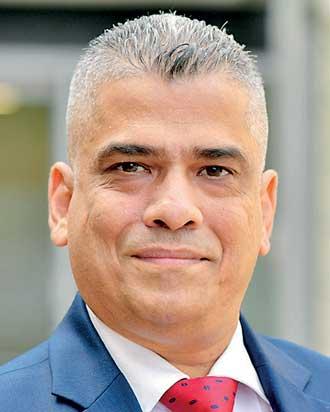
තිස්ස ගුණතිලක

අපිට ධර්මය තේරූම්ගන්න තියෙන්නෙ බුද්ධ වචනය තුලින්ම පමනයි, එක එක දේශකයින්ගේ හිතළුතුලින්‍ නොවෙයි.

බුද්ධ දේශනාව නම් අවිද්‍යාව හා තන්හාව නිසා දුක ඇතිවන බවයි. භාහිරයේ සියල්ලම පවතින්නේ ආශ්වාදයක් හෝ වෛරයක් නොමැති ආතතියක් ඇති නොකරන ස්වභාවයකිනි: සබ්බේ සංකාරා අනිච්චාති. නමුත් උපන්නාට පසුව අප සංකාර කිරීමට පටන්ගත්‍ දා සිට අප කලේ භාහිරයේ ඇති සියළුම දේ එක්කෝ සංතෝෂයකින් හෝ අසංතෝෂයකින් එනම් ආශාවකින් හෝ වෛරයකින් ග්‍රහනය කිරීමයි. අපි වෙනත් ආකාරයකින් භාහිරය ග්‍රහනය කිරීමට දැන සිටියේ නැත. ඉතා කුඩා අවදියේදී මෙම ක්‍රියාව නොදැන කිරීමට පටන්ගත් අතර අපි පසුකලකදී දැන දැනම භාහිරයට ආශාවක් හෝ ආශාවක් නැති වෛරී ස්වභාවයෙන්‍ ග්‍රහනය කලේය. අවසානයේදී සිඳුවුනේ භාහිරයේ ඇති සියල්ලම ආශාවකින් හෝ වෛරී ස්වභාවයකින් ග්‍රහනය කිරීම පුරුද්දක් බවට පත්වීමයි. අද අපි මෙම පුරුද්දට අනුව භාහිරය අරමුනු කර භාහිරයේ ඇති සියල්ලම තන්හාවකින් අල්ලා ගනී.

මෙසේ තන්හාවකින් අරමුනු කරගත් භාහිරයේ පවතින කිසිම දෙයක එවැනි තන්හාව උපදවන ගුණයක් නොපවතියි. ඉහත පරිදි භාහිරය තන්හාවකින් ගැනීම අවිද්‍යාවයි. 

බුදුන්වහන්සේ ධම්මචක්කපවත්වන සූත්‍රයේ මුලම ජේදයේ දේශනාකලේ ‘කාමසුඛල්ලිකානු’ දිවිපෙවෙතිනුත් ‘අත්තකිලමතානු’ දිවිපෙවෙතත් යන දෙකෙන්‍ම මීදිය යුතු බවයි. මෙම දෙකම ‘හීනො ගම්මො පොථුජ්ජනිකො අනරියො අනත්ථසංහිතො’ නීච හීන, ග්‍රාම්‍ය, පෘතග්ජනයින්ට අයත්, අනාර්ය,  අනර්ථය, අවැඩ, විපත්ගෙන දෙන දිවිපෙවතක්‍ බව බුදුන්වහන්සේ දේශනාකල සේක. 

මේ අන්තදෙක ඇතුළුව එම අන්ත දෙක අතර පවතින සියළුම දිවිපෙවෙත් (whole spectrum) නිසා අපගේ සිහිය පමා කරනාබව (උභො අන්තෙ අනුපගම්ම මජ්ඣි) ධම්මචක්කපවත්වන සූත්‍ර දේශනාවේ පටන් ගැනීමේදීම බුදුන්වහන්සේ පෙන්වා දෙයි.

සිහිය පමාවීම යනු අපගේ මොලයේ ඇති යමක් හඳුනාගැනීමේ අංශ cognitive faculties – the modules where inherent cognitive (ප්‍රජානන පීඨ) or perceptual powers of the mind exists, 100% කාර්යක්ෂමතාවයකින් ක්‍රියා නොකිරීමයි. 

සංජානති, විජානාති (understand, perceive, recognize) හා පජානාති (knows clearly, distinguish විශේෂයෙන් දැනගැනීම, ටක්කෙටම දැනගැනීම) – නැතහොත් හඳුනාගැනීමේ හැකියාව (cognitive) හා යමක් ප්‍රත්‍යක්ෂයෙන් දැනගන්නා (perceptual) මොලයේ ඇති අංශ.

අපගතකරනා සියළුම දිවිපෙවෙත් තුල සිඳුවන්නේ භාහිරය තන්හාවකින් (ආශ්වාදයකින් හෝ වෛරයකින්) ග්‍රහනය වීමයි. ඒනිසා සිඳුවන උපාදානය හේතුකොට ගෙන ශරීරය තුල සමතුලිතතාවයක තිබූ රසායනික සංයුතිය උද්දීපනයකට නැතහොත් ආරෝපනයකට ලක්වෙයි. මෙම රසායනික උද්දීපනය නිසා ආතතියක් ඇතිවන බවක් දැනෙයි. ‘මම’ නැතහොත් ඉන්නවා සේ දැනෙන්නේ (ඉත්ථභාවය, සක්කාය) මෙම රසායනික ක්‍රියාවලිය නිසා දැනෙන ආතතියයි. ආතතිය යනු දුකයි. දුක නැති කිරීම යනු ආතතිය ඇති නොවන ස්වභාවයයි. එනම් රසායනික ක්‍රියාවලියේ ඇතිවන උද්දීපනය/ආරෝපනය උදාසීන/මධ්‍යස්ථ (neutral) තත්වයට ගෙන ඒමයි. විපස්සනාව මගින් අත්කරගන්නේ මෙම රසායනික උදාසිනත්වයයි (neutrality).

මෙම ලිපියේ අඩංගු කරුනු හා එම කරුනුවල දිගුවකට ඔබට ‘විපස්සනාව රසායනිකව, සෘද්ධිපාද, ඕභාශය සහ රූප දර්ශනය’ යන මැයෙන් ඇති YouTube ධර්ම සාකච්ඡාව තුලින් සවන්දිය හැකිය. එයට පිවිසීමට පහත සඳහන් link එක භාවිතා කරන්න.

විපස්සනාව රසායනිකව, සෘද්ධිපාද, ඕභාශය සහ රූප දර්ශනය ධර්ම සාකච්ඡාව 6A 15 සැප් 2024 youtu.be

ඔබට තෙරුවන් සරණයි

තිස්ස ගුණතිලක

tgunite@tpg.com.au

2024 සැප් මස 26 වනදා

Sent from Tissa’s Phone

If the historic AKD win does not become yet another regret…

September 25th, 2024

Courtesy The Daily Mirror

During the last couple of days, Sri Lanka elected a left-leaning outsider as its 9th Executive President and then went on to win a test match in Galle.

No one challenged the election results; Protesters did not storm Parliament, arsonists did not torch the houses and shops, and the army did not try to usurp power. 

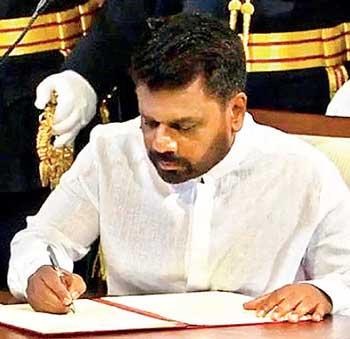
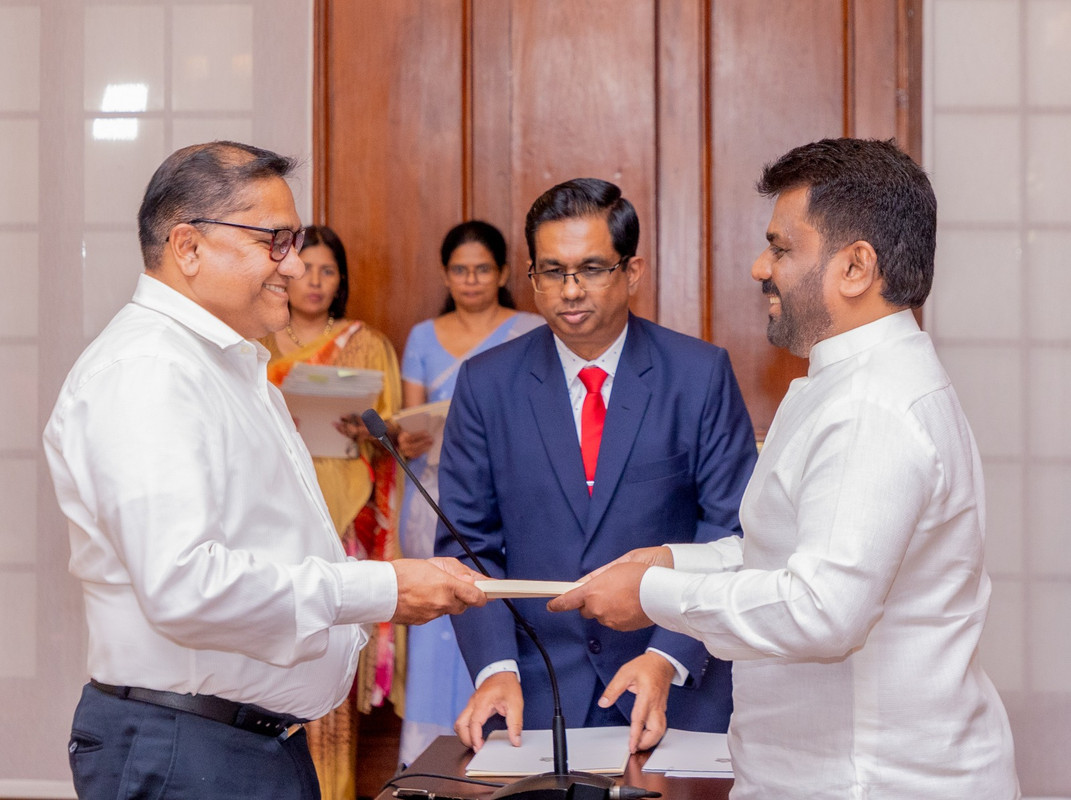
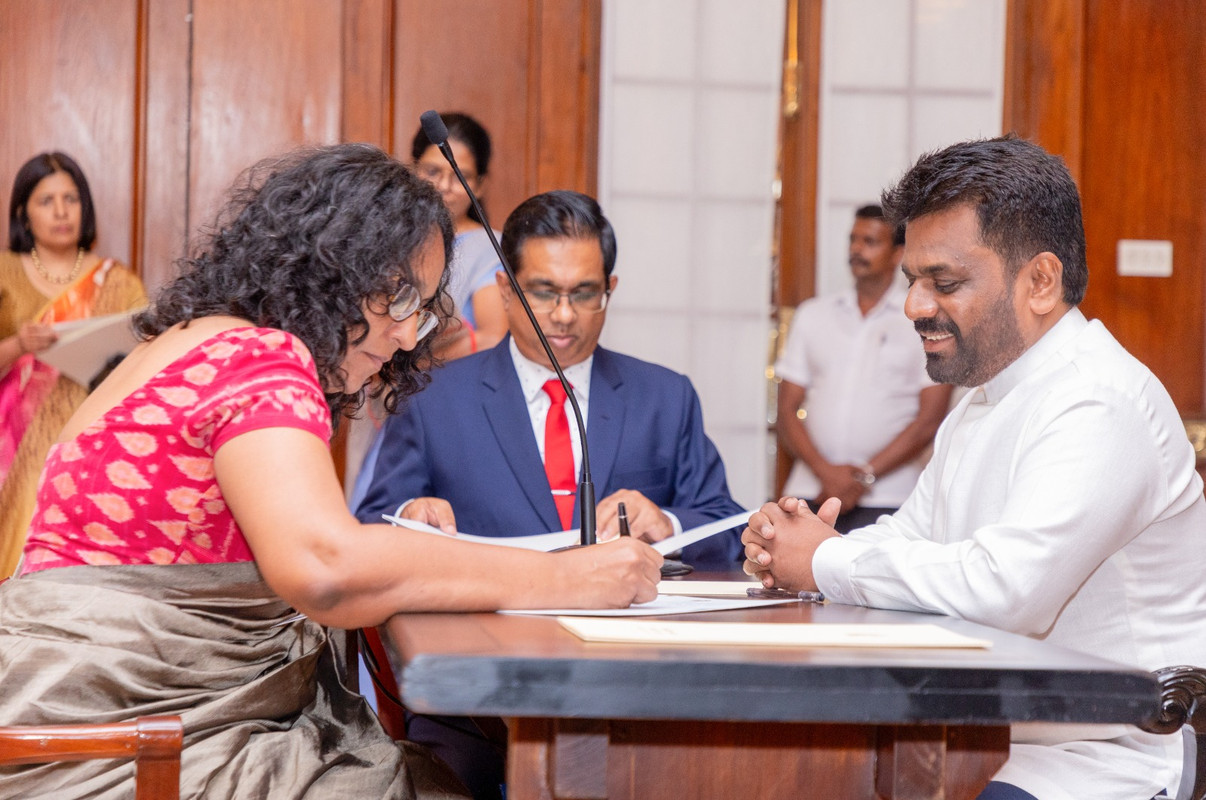
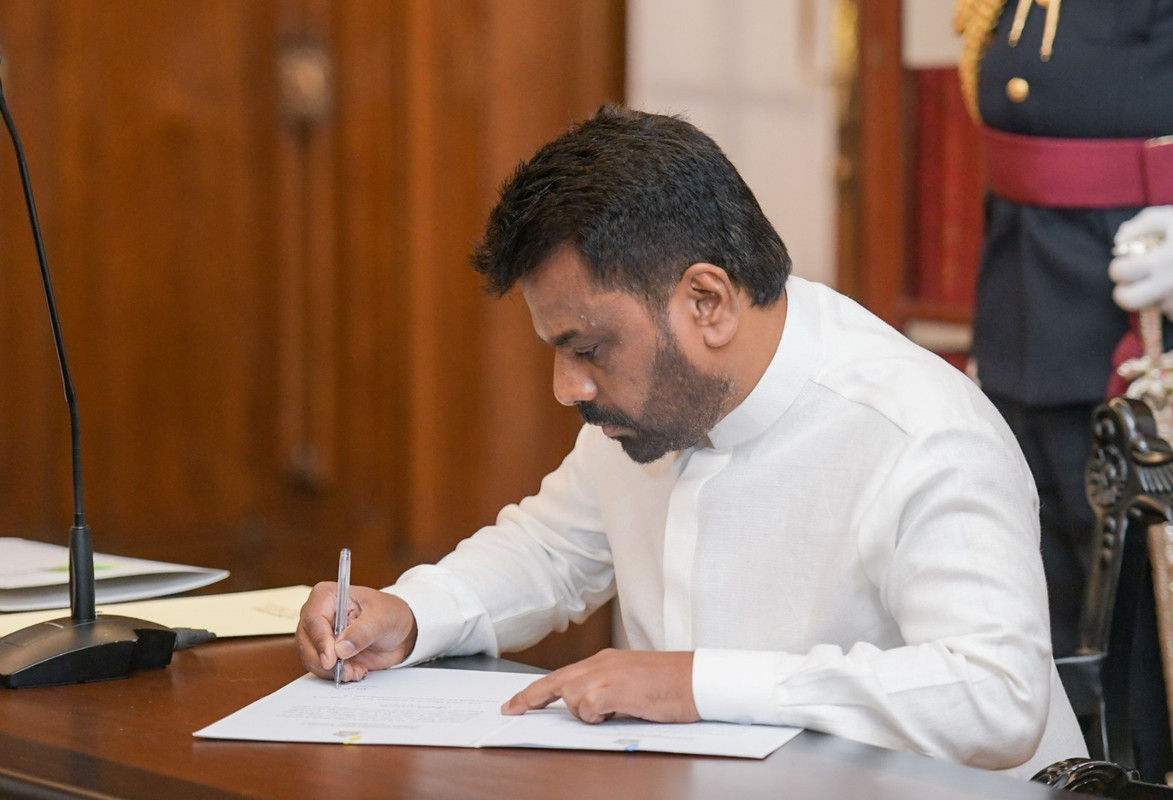
President Anura Kumara Dissanayake assumes duties

Whether you voted for him or not, this is a victory for democracy. This extent of peaceful power transfer from the traditional establishment to its polar opposite would not have been possible in more than half of the countries in the world. One can safely bet on Polymarket that the upcoming presidential election in America would be much less peaceful than ours. 

President Dissanayake took a swipe at the salary hike in the public sector just before the postal voting, which is a fair criticism of the political culture. But, these concerns pale in comparison to the resistance his election would have faced in most places. Leave aside leftist autocracies in Latin America and the Middle Eastern authoritarian states. Even the progressive Thailand – which is way ahead of Sri Lanka in progressive legislation and became the second Asian country to legalise gay marriage- annulled an overwhelming election victory of an anti-establishment party and then proceeded to ban it.

Funny enough, there is a vocal minority of self-proclaimed activists often associated with the left and N.G.O. captains who make a living trash-talking Sri Lanka and the perceived dearth of democracy.

A good starting point would probably be to agree that there is a lot of good in this country, including its democracy. 
I hold strong reservations about President Dissanayake’s economic policies and the JVP’s political culture, which I have aired in these columns. 

However, differences should not lead to a desire for collective nihilism, a very common ailment in South Asian politics, which has thrived in undermining each other. 

I extend all my best wishes to the new president and his party in their endeavour to uplift the living standard of the people of this country. After all, as China’s grand reformer, Deng Xiaoping, famously said, it does not matter whether the cat is black or white as long as it catches mice.

As long as President Dissanayake and his party deliver economic growth on par with high-growth emerging market economies, the rest of the differences are immaterial. 

A free and fair general election- first test in democracy

The starting point for the new president would probably be to defend the democratic culture he was bestowed with. If the monopolistic and violent subculture in the Sri Lankan universities comes to replace the country at large, we will be back to the dreaded days of the 80s in no time. President Dissanayake has said all the right things and promised to govern to build trust with the people, those who voted and those who did not and eschewed usual antics such as traffic-inducing sycophantic celebrations. However, he will have to rein in the potential excesses of his party cadres, which should not be difficult, given the top-down party structure. 

His first test in democracy would be how free the upcoming general election would be. One would expect it would be as free and democratic as the one he got elected to the office of presidency. 

The second major concern would be the economy. He faces both immediate and medium-term economic challenges.

The immediate concerns are associated with the IMF programme, which he said he would not scrap but would renegotiate.

Any decision to walk back on the IMF commitments unilaterally will unleash a chain of events that would lead to the repetition of the hapless days of Gotabaya’s last throes. It is known that some of the economic advisors of the new president think they could reinvent the wheel without the IMF. He should not give in to that temptation. Gotabaya did, and the result was a complete economic collapse. It would always help to listen to people with real experience at the competitive level in international financial institutions rather than vernacularly educated pedagogic pundits at home. 

Here again, the starting point would be to agree with the obvious—that the IMF-mandated measures have greatly stabilised the economy, curbed inflation from 70% to lower single digits, and the economy has grown at 5 per cent during the first half of this year.

Mr. Dissanayake should build on these gains. He should not let ideology or sound bites of economic populism to blind himself.

The medium-term economic challenges are wide-ranging, but one stands out of all. That is Sri Lanka’s continuous failure to provide quality jobs and a matching professional education for its dwindling workforce. Every year, 300,000 students sit for the G.C.E. Advanced Level examination, and nearly two-thirds qualify for university. However, only 40,000 students get admitted to public universities, another 20-25,000 economically better off students go to private universities, and equal numbers go to various forms of vocational training institutes. What about two-thirds of students left ashtrays by the system? Sri Lanka’s sub-par economic performance broadly correlates with the missed opportunities of its youth. Sri Lanka should build a network of universities and vocational training institutions that could provide all its children with a tertiary, university and professional education and retrain a vast majority of its unskilled workforce, which we now send overseas as migrant workers.

Even with the best intentions, that cannot be achieved with the government alone. Nor can it be done through a purely market forces-dominated initiative. 

Private-public partnership 

Any future government should allocate a substantial portion of its funds to a private-public partnership to create a skilled workforce. The outgoing Ranil Wickremesinghe administration introduced a pilot programme to provide funding for vocational training opportunities for 50,000 youths a year, which should be the starting point for a future initiative with a greater scale.

Aspiring states emulate and improvise from the successful strategies of the lead states. Taiwan, which largely relied on low-end manufacturing until the 1980s, set up industrial parks and technical colleges to feed them. These institutions may not rank high in international tables today, but they are a far more important pillar in global supply chains than probably better-positioned Singaporean universities. Sri Lanka does not need to reinvent the wheel; it should improvise and emulate the already established successful practices of the other states. 

A new political culture

President Dissanayake promises to usher in a new political culture. Probably, that is what he and NPP could do, considering that they are much less rent-seeking than the traditional political establishment. However, what is termed a political culture is a civilisational process which is often tied firmly to prosperity. Richer liberal democracies are also more peaceful, tolerant, less corrupt and law-abiding. Therefore, no social engineering process should be undertaken in isolation from economic progress. Emphasis on good governance without clear economic policies of Yahapalanya ended in a colossal failure, leading to the election of an alleged war criminal as the president in the following election.  

One would hope the new president would prevail in his challenges and usher in an era of prosperity and freedom -because his failure would inevitably translate into the failure of the country and its people.

Follow @RangaJayasuriya on X

President Dissanayake sets economic stability and IMF talks as top priorities

September 25th, 2024

By Shabiya Ali Ahlam Courtesy The Daily Mirror

  • Asserts achieving confidence in current economy crucial
  •  Says to advance debt restructuring programme, negotiations are underway with relevant creditors to expedite process and secure necessary debt relief
  •  Fitch in its commentary notes uncertainty to country’s policy direction
  •  Rating agency says there could be a delay in completion of foreign currency debt restructuring and renegotiation of IMF programme
  •  Global rating agency Moody’s says it does not expect any significant shifts in Sri Lanka’s reform trajectory or policies, although some reprioritisation is likely
  •  IMF MD Georgieva says IMF looks forward to working together with new president

President Anura Kumara Dissanayake in his inaugural address to the nation last evening pledged to prioritise economic stability and restore confidence in the country’s recovery.
Dissanayake announced that his government would immediately initiate negotiations with the International Monetary Fund (IMF) to proceed with the activities under the extended credit facility programme. As the island nation continues to recover from the severe economic crisis that triggered widespread hardships, the president emphasised that regaining stability is crucial.
Additionally, to advance our debt restructuring programme, we are negotiating with the relevant creditors to expedite the process and secure the necessary debt relief. We are confident that we can gain the support of both the people of this country and international community and we believe that through this collective support, we can achieve success,” he said.
Earlier yesterday, Fitch Ratings, in its latest commentary, noted that one of the opposition leaders winning the September 2024 presidential election adds uncertainty to the country’s policy direction.


According to Fitch, the change in leadership could lead to a delay in the completion of the foreign currency debt restructuring and renegotiation of the IMF programme. 
The upcoming 2025 budget, to be adopted by November 2024, could offer clarity on the new government’s policies, it said.
The rating agency yesterday affirmed Sri Lanka’s Long-Term Foreign Currency Issuer Default Rating (IDR) at ‘RD’ (Restricted Default) and Long-Term Local Currency IDR at ‘CCC-’.
The Long-Term Foreign Currency IDR has been on ‘RD’ since May 2022, once the grace period expired.
The sovereign remains in default on its foreign currency obligations, while restructuring negotiations are ongoing with Sri Lanka’s private external creditors. 
The authorities’ recent announcement that a preliminary debt restructuring agreement has been reached, in principle, with the members of the steering committee of the Ad Hoc Group of Bondholders (representing foreign holders of Sri Lanka’s international sovereign bonds) and China Development Bank (A+/Negative) suggests progress is being made,” the rating agency said in its latest commentary.
The agreement comes after the April 12, 2022 announcement suspending debt servicing on several categories of external debt, including bonds issued in international capital markets, foreign currency-denominated loans and credit facilities with commercial banks and institutional lenders. 
Sri Lanka completed the local currency portion of its domestic debt optimisation in September 2023. This followed the exchange of the Central Bank of Sri Lanka’s Treasury bills and provisional advance into new Treasury bonds and bills. 
This led us to upgrade the Local Currency IDR to ‘CCC-’. The rating is being affirmed at this level,” Fitch said.
Earlier this week, global rating agency Moody’s said it does not expect any significant shifts in Sri Lanka’s reform trajectory or policies, although some reprioritisation is likely. 
Crucially, former president Ranil Wickremesinghe had pushed through an economic transformation act in Parliament in May. The act – in the absence of a new act or changes approved by Parliament – will oblige future governments to the current set of economic and fiscal reforms, including adhering to fiscal and debt targets set under the IMF programme,” it said.
Moody’s acknowledged that the act also requires any government to present to Parliament the steps and measures being taken to achieve specific targets stipulated in the act by March 31 each year, to maintain the reform momentum.
The commentary highlighted that the new president has not opposed Sri Lanka’s debt restructuring deals and has said any changes to policy and reform measures would be in consultation with the IMF. However, he has opposed the privatisation of state-owned enterprises in important sectors.
As any negotiation of potentially revised targets or changes in specific measures will take time, there could be delays in disbursements or finalisation of external debt restructuring with private sector creditors,” the agency said.
It went on to note that the possibility of early parliamentary elections could also add to the delay.
We expect some period of political uncertainty until a new Parliament is formed,” Moody’s said.
Meanwhile, IMF Managing Director Kristalina Georgieva, in a letter to President Dissanayake congratulating his win, gave assurance that the IMF remains a steadfast partner and stands ready to assist Sri Lanka to achieve its development and reform goals, including under the ongoing IMF-supported programme.
She stated that the IMF looks forward to working together with the new Sri Lankan president and his team towards building on the hard-won gains that have helped put Sri Lanka on a path to recovery” since entering one of its worst economic crises.

President holds discussion with CBSL Governor and Finance Secretary

September 25th, 2024

Courtesy Adaderana

A discussion has taken place between President Anura Kumara Dissanayake and the Governor of the Central Bank of Sri Lanka (CBSL), Dr. Nandalal Weerasinghe.

The Department of Government Information reported that the Secretary to the Ministry of Finance, Mahinda Siriwardene, also participated in the discussion.

The current economic situation of the country was discussed at length during the meeting, which was held last evening (24) at the Presidential Secretariat, the statement said.

The Department of Government Information also stated that measures to stabilize the economy and several issues affecting the country’s economy were discussed.

Fitch affirms Sri Lanka at ‘Restricted Default’

September 25th, 2024

Courtesy Adaderana

Fitch Ratings has affirmed Sri Lanka’s Long-Term Foreign-Currency Issuer Default Rating (IDR) at ‘RD’ (Restricted Default) and Long-Term Local-Currency IDR at ‘CCC-’. 

Fitch typically does not assign Outlooks to issuers with a rating of ‘CCC+’ or below.

The rating agency said sovereign remains in default on Sri Lanka’s foreign-currency obligations, while restructuring negotiations are ongoing with Sri Lanka’s private external creditors. 

The authorities’ recent announcement that a preliminary debt restructuring agreement has been reached, in principle, with members of the steering committee of the Ad Hoc Group of Bondholders (representing foreign holders of Sri Lanka’s international sovereign bonds) and China Development Bank (A+/Negative) suggests progress is being made.”

The agreement comes after the 12 April 2022 announcement suspending debt servicing on several categories of external debt, including bonds issued in international capital markets, foreign currency-denominated loans and credit facilities with commercial banks and institutional lenders. 

Sri Lanka’s Long-Term Foreign-Currency IDR has been on ‘RD’ since May 2022, once the grace period expired.

Fitch said it believes the result of Sri Lanka’s 2024 Presidential election add uncertainty to the country’s policy direction and could lead to a delay in the completion of the foreign-currency debt restructuring or renegotiation of the IMF programme.”

The upcoming 2025 budget, to be adopted by November 2024, could offer clarity on the new government’s policies, the statement said.


The statement by Fitch Ratings further stated:

Policy Uncertainty Following Elections: Sri Lanka’s September 2024 Presidential election was won by one of the opposition leaders. Fitch believes the result add uncertainty to the country’s policy direction and could lead to a delay in the completion of the foreign-currency debt restructuring or renegotiation of the IMF programme. The upcoming 2025 budget, to be adopted by November 2024, could offer clarity on the new government’s policies.

Local-Currency Debt Exchange Complete: Sri Lanka completed the local-currency portion of its domestic debt optimisation in September 2023. This followed the exchange of the Central Bank of Sri Lanka’s treasury bills and provisional advance into new treasury bonds and bills. This led us to upgrade the Local-Currency IDR to ‘CCC-’. The rating is being affirmed at this level.

Government Debt to Stay High: The IMF forecasts Sri Lanka’s gross general government debt/GDP ratio to decline only gradually to about 103% of GDP by 2028, from about 116% in 2022. This forecast incorporates a local- and foreign-currency debt restructuring scenario. However, this level of debt would still be elevated, even after the restructuring.

External Metrics Improving: Foreign-currency (FX) reserves have been improving, with gross FX reserves reaching around USD6.0 billion in August 2024, against USD4.4 billion at end-2023, partly due to the suspension of external debt service. Other supporting factors include an uptick in tourism and overseas worker remittances. The current account was in a surplus in 2023 and we expect a surplus in 2024. The sovereign, however, remains dependent on official financing sources without access to international capital markets.

Stronger Revenue Generation: Weak IMF program implementation, in particular of fiscal measures, remains a risk to achieving debt sustainability. Sri Lanka has a weak longer-term revenue raising record, but the authorities have implemented several major tax measures since May 2022 to boost revenue collection and achieve debt sustainability. These included raising the corporate income tax rate, hikes to the value-added tax rate and raising fuel excise taxes. This saw revenue collection improve by 42% yoy in 1H24.

Additional fiscal measures in the pipeline include an increase in the corporate income tax to 45%, from 40%, for certain types of economic activity, an additional value-added tax rate on the supply of digital services, further tax administration reforms as well as limiting tax exemptions and making them more transparent.

Economy on a Recovering Trend: We expect economic growth to recover to 3.9% in 2024 and average at 3.6% over 2025-2026. Real GDP growth, in seasonally adjusted terms, recovered to about 5.0% yoy in 1H24 after contracting by 7.0% during 1H23, driven by a pick-up in industrial growth to 11.3% after a contraction of about 18.0% in 1H23. Services also recovered by about 2.7% during the same period after a contraction in 1H23.

Inflation in Check: We expect further easing of monetary policy over 2024-2026, after the Central Bank of Sri Lanka reduced the standing deposit facility rate by a cumulative 725bp since June 2023, as underlying inflationary pressure remains muted. Inflation was about 0.6% in August 2024, in seasonally adjusted terms, and has been in the single digits for over a year. A surge in inflation, peaking in September 2022 at around 67%, was successfully curtailed by the central bank.

Banking Sector Stabilising: The banking sector’s non-performing loans remain high, partly owing to the economic stress associated with the sovereign default. However, the domestic bank operating environment continues to show signs of stabilisation, in line with improved economic indicators. This supports the recovery in banks’ operational flexibility. The completion of the local-currency portion of Sri Lanka’s domestic debt optimisation was a major step towards reducing the impact of the sovereign’s debt restructuring on the banking sector.

ESG – Governance: Sri Lanka has an ESG Relevance Score of ‘5’ for Political Stability and Rights as well as for the Rule of Law, Institutional and Regulatory Quality and Control of Corruption. These scores reflect the high weight that the World Bank Governance Indicators (WBGI) have in our proprietary Sovereign Rating Model (SRM). Sri Lanka has a medium WBGI ranking in the 36th percentile, reflecting a recent record of peaceful political transitions, a moderate level of rights for participation in the political process, moderate institutional capacity, established rule of law and a moderate level of corruption.

ESG – Creditor Rights: Sri Lanka has an ESG Relevance Score of ‘5’ for Creditor Rights, as willingness to service and repay debt is highly relevant to the rating and is a key rating driver with a high weight. The affirmation of Sri Lanka’s Long-Term Foreign-Currency IDR at ‘RD’ reflects a default event.”

2024 General Election: Number of MPs elected from each district revealed

September 25th, 2024

Courtesy Adaderana

The Election Commission of Sri Lanka has issued a statement mentioning the number of Members of Parliament (MPs) to be elected from each electoral district and the number of candidates in a nomination paper in the 2024 General Election. 

The highest number of MPs will be elected from the Gampaha District with a total of 19 members to be elected.

In a statement issued in relation to the 2024 parliamentary elections, the Election Commission has also announced information regarding the deposits required to be placed by independent groups and the number of candidates to be nominated by political parties or independent groups for each district.

It also includes information about the number of members to be elected for the respective electoral district, the number of candidates to be nominated by a nomination paper and the security deposit to be deposited by an independent group.

General Election 2024 – Election Commission Statement by Adaderana Online on

Sri Lanka’s credit risks could stay ‘elevated’ for some time – Moody’s

September 25th, 2024

Courtesy Adaderana

Pledges by Sri Lanka’s new President Anura Kumara Dissanayake to cut taxes and make changes to the country’s International Monetary Fund bailout could keep the country’s credit risks elevated for some time, rating agency Moody’s has said.

We do not expect significant disruption to the country’s reform agenda or macroeconomic policies, which include the ongoing debt restructuring and structural adjustments under its programme with the International Monetary Fund (IMF),” Moody’s said,

However, some policies are likely to be reprioritised amid challenges in maintaining fiscal consolidation that could keep credit risks elevated for some time.”

Since its default in 2022, Sri Lanka has implemented various steps to restore fiscal sustainability, such as raising VAT and corporate tax rates and lowering personal tax-free allowances.

Moody’s, which rates Sri Lanka just above default at Ca, said the measures helped lift government revenues to just over 11% of GDP in 2023 from 8.3% in 2021 and narrowed its fiscal deficit to 8.3% of GDP from 11.7%.

That is still an gaping deficit and debt affordability is expected to remain weak” too with its interest payments alone likely to soak up 40%-50% of revenues over the next two to three years.

That is still among the weakest across sovereigns we rate, albeit an improvement from more than 70% in 2021”, Moody’s said.

Source: Reuters

–Agencies

President says IMF discussions will resume, debt restructuring to continue

September 25th, 2024

Courtesy Adaderana

President Anura Kumara Dissanayake says that his government firmly believes that Sri Lanka’s economy needs to be stabilized before making structural changes to all sectors.

Before implementing long-term and medium-term plans for that purpose, we will work to create a short-term stability through the immediate economic measures that are required,” he said, delivering his inaugural address to the nation on Wednesday (25). 

President Dissanayake says all steps needed for the expected change depend on building stability and trust in the economy. Therefore, discussions with the International Monetary Fund (IMF) will resume soon and the process of the Extended Fund Facility (EFF) will be advanced, he said.

The change we seek involves many steps that will take time. However, achieving stability and confidence in the current economy is crucial.” 

We plan to begin negotiations with the International Monetary Fund immediately and proceed with activities related to the extended credit facility,” Dissanayake said. 

He further said that the debt restructuring process will continue, and steps will be taken to bring about debt relief as soon as possible through discussions with relevant parties.

Additionally, to advance our debt restructuring program, we are negotiating with relevant creditors to expedite the process and secure necessary debt relief.” 

We are confident that we can gain the support of both the people of this country and the international community, and we believe that through this collective support, we can achieve success.”

He stated that they have already taken significant steps to appoint efficient and honest officials to oversee these initiatives. We are advancing steadily toward the desired changes, ensuring that public service remains intact and citizens are not adversely affected.”

The President said their goal is to improve the standard of living for the people of this country. We are implementing practical programs to alleviate the heavy burdens faced by our citizens.

Read the full speech below…

President Anura Kumara Dissanayake’s inaugural address to the nation

Esteemed Maha Sangha and Religious Leaders, Parents, Brothers, Sisters and Children;

I extend my heartfelt gratitude to all the people of this country who have listened to our voices over the decades and breathed life into the programs we proposed.

We believe that the victory you have given us will be even more strengthened if it brings joy to those who may not have agreed with our vision. Therefore, I want to dedicate this victory to all citizens of our nation.

We honour and remember the courageous men and women of previous generations who made sacrifices, some with their lives, for this victory. I see this victory and the prosperous nation we aim to build as a tribute to their legacy.

We believe that all people, including those who trusted us despite slander, falsehoods, and misinformation, and elected our political movement with great determination have the strength to shoulder the responsibility of building this nation together.

We are capable of fulfilling this role as a united team, and we have a talented team dedicated to this mission. Our determination is unwavering.

The change we seek involves many steps that will take time. However, achieving stability and confidence in the current economy is crucial. We plan to begin negotiations with the International Monetary Fund immediately and proceed with activities related to the extended credit facility. Additionally, to advance our debt restructuring program, we are negotiating with relevant creditors to expedite the process and secure necessary debt relief. We are confident that we can gain the support of both the people of this country and the international community, and we believe that through this collective support, we can achieve success.

A key concept that resonates with the public is our commitment to making a difference.” One of the primary changes citizens expect is to eliminate the negative traits in our political culture. Our track record thus far supports this commitment. Notably, we succeeded in making the presidential election the only one in Sri Lanka without reports of post-election violence, which reflects the trust the people have placed in us. Our aim is to confirm and stabilize this positive situation.

At this moment, I want to highlight the importance of engaging in politics with a collective focus on building our country. We are committed to providing that leadership.

Regardless of whether one identifies as Sinhalese, Tamil, Muslim, Burgher, or Malay, our nation will not thrive until we create a practical environment where everyone can proudly say, We are Sri Lankan citizens.” We will not hesitate to implement the necessary constitutional, economic, and political reforms.

We are launching a permanent program to build a unified Sri Lankan nation that respects diversity, fully ending the era of division based on race, religion, class, and caste.

We have already taken significant steps to appoint efficient and honest officials to oversee these initiatives. We are advancing steadily toward the desired changes, ensuring that public service remains intact and citizens are not adversely affected.

We are committed to creating a law-abiding nation and fostering a disciplined society while ensuring the social security of all citizens. This revives the principle that everyone is equal before the law.

We believe that public service plays a crucial role in nation-building. To that end, we will establish a public service that instills pride in the community and aligns with the government’s goals. Our commitment is to create an efficient, honest, and people-focused public service.

Our goal is to improve the standard of living for the people of this country. We are implementing practical programs to alleviate the heavy burdens faced by our citizens.

No parent in this country should have to worry about their child’s future. Every parent deserves the right to provide their child with access to quality schools and education. We are fully committed to securing the future of the next generation by ensuring excellent education for all children. By fostering knowledge, attitudes, and skills, we are building a promising future for the young generation of our country.

When we visit a country, the airport often offers a first impression, reflecting its order, the behaviour of its people, their work ethic, and cultural practices. 

It also reveals the country’s cleanliness, how vehicles are driven, how the elderly are treated, the hospitality shown, and even how animals are cared for. We have developed clear plans to enhance Sri Lanka’s image in these areas, with short-term, medium-term, and long-term initiatives already underway.

Our goal is to create a nation where the world respects our passport, and where every citizen can proudly say, I am a Sri Lankan.” We aim to build a country where citizenship is a source of pride for all. Achieving this vision will require the collective effort of every citizen.

We are committed to creating a system that upholds social justice for all, and we will do so with the highest sense of responsibility.

We are building a secure future for our children and youth through a program that promotes knowledge, skills, education, and entrepreneurship.

The women in our community, who make up over 52% of our population, play a vital role in both the economy and the social fabric of our country. We are actively working to enhance women’s representation across all institutions. As a testament to our commitment, we have already appointed a woman as Prime Minister.

A significant portion of our population consists of individuals with disabilities who require special social protection. To support this group, we have proposed a robust social safety net and are implementing short-term measures to address their needs.

We ensure that no group within our society is overlooked on our journey forward. By respecting each other’s identities and harnessing them positively for the country’s progress, we make our collective contribution.

We hold a strong belief in the sovereignty of the people and are committed to safeguarding their democratic rights.

I understand that some may feel uncertain due to doubts about us, but I am determined to earn your trust through my actions. I welcome your constructive criticism and encourage you to join us in building the future together. If we can set aside our differences, I believe you will see that we share the same goals. Together, we can confront the challenges facing our country and develop the necessary strategies to move forward. Our doors are open to all who are genuinely and positively committed to the progress of our nation.

We require a Parliament that accurately reflects the will of the people. The existing Parliament does not represent that will. Therefore, I took the step yesterday to dissolve it. A cabinet was appointed in line with our parliamentary representation to guide the country in accordance with the constitution.
There is one dream our people see every new day the sun rises.

That is tomorrow will be better than today!”

However, You and I both learn for many years, this has remained merely a dream.

Opportunism, the greed of power, and authoritarianism has hindered our country’s progress.

But now we have our final opportunity which cannot be missed. Let us unite to create a thriving and beautiful country that embraces diversity.”

Related News

මෙරට ආර්ථිකය ගැන ෆිච් රේටින් දෙගිඩියාවෙන්

September 25th, 2024

උපුටා ගැන්ම  හිරු පුවත්

ෆිච් රේටින්ස් ආයතනය නිකුත් කළ, ශ්‍රේණිගත කිරීම් දැක්වුණේ ජනපතිවරණයේ ප්‍රතිඵලය ශ්‍රී ලංකාවේ ප්‍රතිපත්තිමය දිශානතියට අවිනිශ්චිතතාවයක් එක් කරන අතර ණය ප්‍රතිව්‍යුහගතකීරීම හෝ ජාත්‍යන්තර මූල්‍ය අරමුදලේ වැඩසටහන් නැවත සාකච්ඡා කිරීම ප්‍රමාද කිරීමටද හේතුවිය හැකි බවයි.

මේ අතර, කොළඹ කොටස් වෙළෙඳපොළ මිල දර්ශකවල අද දිනයේත් කැපී පෙනෙන ඉහළ යෑමක් දක්නට ලැබෙනවා.

සියලු‍ කොටස් මිල දර්ශකය ඒකක 325.59 කින් ඉහළ ගොස් දිනය නිමාවන විට සටහන් වූයේ ඒකක 11,659.71 ක් ලෙසයි.

එස් ඇන්ඩ් පී ටුවෙන්ටි මිල දර්ශකය ඒකක 132.23 කින් ඉහළ ගොස් ඒකක 3,367.45 ක් ලෙස සටහන් වුණා. සමස්ත පිරිවැටුම රුපියල් බිලියන 3.9ක්.

Why NPP Cannot Save Sri Lanka (A Dispassionate and Realistic Analysis)

September 24th, 2024

Dilrook Kannangara

When a new government is elected, doomsayers and losers say nothing will succeed. That is to vent their very own personal defeatist thoughts. That is not where I’m coming from. While wishing every success to the AKD government I wish to bring to the attention the challenges that are too steep for any regime to overcome. Superhuman effort is needed to salvage Sri Lanka as we know it.

Impossible to do Structural Changes

After 1977 the Sri Lankan legal framework has been crafted to allow corruption, waste and save wrongdoers from their obligation to accountability. This is well understood and many have promised to change it. However, in order to do it, the Constitution must be changed. NPP will not win even 110 seats whereas a constitutional change requires 150 seats. In other words, the NPP regime will be stuck in the same Constitution that is responsible for the present mess.

No Discretionary Funds Available

With a massive debt portfolio of $102 billion (including local rupee loans), debt servicing costs (repayment of interest, loans and loan administration fees) are huge. Once they are paid, and after paying ongoing expenses, mainly salaries, there’d be nothing left. In fact, it’s a deficit after paying these. Funds are needed to do the education and healthcare revolution the NPP promised. It cannot be done without funds.

NPP is unable to take bold decisions to default on loans as it will lack a clear parliamentary majority.

CEPA and Other Indian Challenges

CEPA agreement with India goes well beyond the existing FTA (Free Trade Agreement). It can wipe out local businesses and make local professional unemployed. NPP, UNP, SJB or SLPP, it has to be accepted in some shape or form to maintain a good relationship with India. A JVP-led regime may be the easiest regime in Sri Lanka for India to push this agenda. This is because the NPP is not made up of businessmen whose businesses will be directly affected by CEPA. In fact, if CEPA is signed that will weaken the UNP, SJB and SLPP further as their sponsors’ businesses will be wiped out by the flood of Indian businesses. However, CEPA will ruin the Lankan economy.

If the NPP regime decides not to go ahead with CEPA, India will destabilize the island nation.

Honesty, integrity and good intentions are pathetically insufficient to fix Sri Lanka. Large amounts of dollars are needed to salvage Sri Lanka. Fairy tales about bringing down stolen wealth stored in foreign countries will not materialize simply because they are not true. At least not at a tangible level.

All regimes in Sri Lanka since 2010 failed and could not last their full term with stability due to economic crises and resultant political discord. They included the Mahinda regime, Sirisena, Gotabaya and Ranil. The fate of the AKD regime will not be any different for the same reasons. Hopefully it will not be the case and Sri Lankans will get some respite after long suffering and this projection will prove false.

FINALLY THE PEOPLE’S CHOICE

September 24th, 2024

Insight By Sunil Kumar for Lankaweb

In a sudden and overwhelming sweep the recent past of turmoil and anguish seems to have been overcome as the JVP under Anura Kumara Dissanayaka from humble beginnings albeit a resolute campaigner who seems to have swayed the minds of an overwhelming majority has taken office as the new Executive President and his powerful language full of promise and hope for a struggling Nation has been responded to where many past demons appear to have been overcome  in the minds of many and a possible new dawn beckons the recently ailing Nation.

The results were tense and of a teetering nature as it shifted from Sajith Premadasa to Anura Kumara but never in doubt as who would be the winner and today a calming wind seems to have swept Sri Lanka with perhaps a sigh of relief for many whose former dashed hopes of a contented and normal existence had all but vanished now has a kind of respite where they can hope again.

Curiously the former President Gotabhaya Rajapaksa has taken off on a “pilgrimage” to Nepal and many of the alleged perpetrators of Sri Lanka’s woes have all but quietened down, perhaps beaten into figurative submission through the enormity of the JVP win as the Nation to all intents and purposes begins rebuilding again with Dissanayake’s task an unenviable one albeit a possible one provided he charters the right course and receives the proper responses from all concerned  both internally and Globally where the forthcoming parliamentary elections will be a key and  decisive factor as the salutations and felicitations continue.

 Dissanayake’s foreign policy relations with world super powers, negotiations with the IMF and the implementation of strong local key issues which have been long neglected and outstanding towards the well being of the country, finances, security, interracial peace and harmony, availability of consumer goods at a reasonable price, a manageable cost of living and the appeasement of the ordinary man would be of prime importance towards his personal popularity as well as the keeping of many pledges made throughout his campaign which would test his mettle and increase his national popularity as well as the confidence the people have shown towards the huge mandate he has received as the old guard has changed like never before where confidence in a Marxist leader has never been the order of the day yet the circumstances within the Nation has so demanded it in a very unexpected and unprecedented manner. 

There has to be gratitude also to the outgoing President Ranil Wickremasinghe who weathered the worst economic storm in Sri Lanka’s history through his political, legal  and other expertise albeit his effort  perhaps not being recognized as sufficient for a second term which has its own interpretations towards the well being of the country which now rests firmly on the shoulders of the new President to whom many blessings and good wishes are extended towards the country’s future as the new beginning awaits her wearied people.

De-dollarize to De-colonize: Sri Lanka must Pivot to the BRICS After Elections won by Post-Marxists

September 24th, 2024

Darini Rajasingham-Senanayake

September 23, 2024

Update by Gospa News Editorial Staff

The leader of the opposition alliance National People’s Power, Anura Kumara Dissanayake, won Sri Lanka’s presidential election, the Lankan news portal Newsfirst reported. Dissanayake was supported by 5,740,179 voters after second ballot count. His closest rival, Sajith Premadasa, leader of United People’s Power, scored 4,530,902 votes. The presidential election in Sri Lanka was held on September 21. The president is elected in a direct general vote for the term of five years. The country held previous direct presidential election in 2019. Gotabaya Rajapaksa won the vote but had to resign in July 2022 amid protests. Sri Lanka has 17 million eligible voters. The voter turnout was around 80%.

In the run up to elections the post-Marxist National People’s Party (NPP), ran a high-gloss, election campaign to market its policies as a ‘new dawn’. Remarkably, the NPP and rival political parties alike had ignored wider geopolitical developments that may contribute to such a dawn given the globally networked nature of Sri Lanka’s ‘poly crisis’.

Re-orienting the economy toward the BRICS that is challenging the ‘exorbitant privilege’ of the US dollar as global reserve currency would be one such step.

The US dollar has been long used to debt colonize the Global South. However, all major political parties did little to educate voters about Sri Lanka’s wider geopolitical challenges, or the need to pivot away from the West’s tired debt trap, neocolonialism.

BRICS emerging economies constitute a New Beginning in a ‘multipolar currency world.’ The Brazil, Russia, India, China, South Africa block also represents hope and an alternative development path for many countries caught in International Sovereign Eurobond (ISB), US dollar debt traps and the related International Monetary Fund (IMF) bailout business. There are 56 countries in Asia, Africa and South America that are in Covid-19 Lockdown induced debt traps, and Sri Lanka would need to work with them to counter the G-7 Paris Club creditor countries.

Sri Lanka in the Asian 21st Century

At this time the BRICS block have beaten the G-7 economies. Indeed, the ‘American Century’ seems done and dusted in an increasingly ‘Asian 21st Century’ although US Presidential contenders, Kamala Harris and Donald Trump have both promised to claw it back. While the American Eagle may not be dead, the train heading east, shifting wealth and power across the world and back to Asia after a couple of centuries of Euro-American dominance, appears to have left the station.

Different regional currencies have emerged to form an alternative trade, technology and de facto reserve currency network, some using Central Bank digital currencies (CBDC), and other cross-border payment systems. The BRICS inter-bank system to counter the Western dominated SWIFT international banking and financial messaging system has just been unveiled.

The global trend away from the US dollar fiat currency (Petrodollar), which is no longer backed by Saudi Arabian oil, accelerated after sanctions on Russia, including the freezing of $300 billion Russian assets over the war in Ukraine.

Necessity is the mother of invention: Countries fearful of the Weaponized dollar and US financial hegemony have been de-dollarizing. Increasingly, the Indian Rupee (INR) and Chinese Renminbi (RMB), dominate intra-Asian and Indian Ocean world trade and currency exchange. Many countries are drawing down dollar reserves and investing in gold, while others like India have repatriated their gold reserves.

South Asia countries like Sri Lanka which are in Eurobond US dollar debt traps would benefit from de-dollarizing and recalibrating trade in regional currencies, while engaging markets closer to home.

The US Dollar Debt trap, LAWFARE and the Central Bank (CBSL)

Sri Lankan’s purchasing power plummeted with rapid local currency depreciation against the exorbitantly privileged dollar amid a staged default two years ago in 2022. This was after the shadowy, off-shore Hamilton Reserve Bank of St. Kitts and Nevis filed a court case in New York against South Asia’s wealthiest country, listed as an Upper Middle Income Country (MIC), purportedly for non-payment of a small amount of interest. As the dollars in State accounts dried up, coordinated Rating Agency messaging that the country was bankrupt’ saw the crash of the rupee against the dollar– instantly beggared citizens.

Retrospectively, Sri Lanka’s first ever Sovereign Default appears to be a Full Spectrum Dominance (FSD) operation amid LAWFARE and cyber operations, with coordinated fuel and food supply chain disruptions and NED-funded, faux democracy (Aragalaya) protests– to deliver the geostrategic Indian Ocean island to the lender of last resorts – the IMF.

Since the Default staged two year ago, Sri Lanka has effectively lost economic sovereignty and policy autonomy to the IMF and Paris Club creditors, that are engaged in mission and mandate creep into Domestic Debt Restructuring (DDR) ironically, in the name of ‘Good Governance’ reforms.

IMF mission creep into DDR along with currency exchange rate manipulation had inflated the county’s purported external debt listed at $ 26 billion at the time of default to a purported whopping $100 billion in the span of two years. This is according to the Governor of the Central Bank (CBSL), Nandalal Weerasinghe, who was appointed during the US-backed regime change putsch.

At this time calls are growing for the resignation of the CBSL Governor under whose 2-year watch the US dollar denominated debt trap had trebled– or is claimed to have increased massively. USD-denominated debt increasingly appears to be a numbers game in the absence of debt Data Security of the Sri Lanka Government Cloud Storage System.

The CBSL, famous for Eurobond Scams under successive Ranil Rajapakse Government was made ‘independent’ of the Parliament and citizens of Sri Lanka as part of the IMF’s anti-corruption Governance Reforms through legislation last year, is now effectively owned and operated by the IMF and related advisors and consultants!

A Conspiracy of Silence on BRICS? A Colonial Mindset and Foreign-Funding

There are no purely economic solutions to fundamentally geopolitical problems.

Sri Lanka urgently needs a comprehensive, long-term, exit-strategy from Western –ISB-IMF-CBSL debt neocolonialism, as well as, new thinking to achieve this.

However, a cross-party consensus appears to exist among all leading political parties, as well as, local think tanks, and the corporate media, to overlook the new dawn that the BRICS represents for debt-trapped citizens.

A colonial mindset has long dominated the national education system and political discourse in the island that was a British Dominion with faux independence until 1972, when the country achieved real independence and its first Republican Constitution.

In recent times, neo-imperial UK-US-EU and Japanese, or G7, interests and funding in the form of ‘development aid’ for research in universities, think tanks and related NGOs, has shaped and contained public discourse on genuine policy alternatives. The current election season saw increased foreign funding from the so-called ‘Diaspora’ to all major political parties, particularly, the NPP, as well as, to various think tanks conducting dubious surveys and polls. The latter outfits have made dubious predictions on election outcomes seemingly to game them –fronting social media and Artificial Intelligence (AI) data mining- while spreading disinformation.

The failure of all major opposition parties to address the geopolitical dimensions of the crisis and prioritize economic alternatives to endless talks with IMF, ISBs and a gravy train of legal and financial consultants, including Lazard, Clifford and Chance, raises serious questions about their external funding networks and policy agendas. This is particularly true of the NPP’s Anura Kumara Dissanayake who had portrayed his party as a break from the past and a new beginning for the country! In lieu of educating itself and its supporters on the wider issues, the pretender to the throne, the NPP which presented itself as an alternative to the existing corrupt political culture did not lift the bar on the national economic policy debate or explore GENUINE alternatives.

The Myth of TINA to the IMF

The election manifestos of US-backed and unelected President Wickramasinghe and the post-Marist opposition National Peoples’ Power (PPP) party, alike, were remarkably silent on the need for a new government to prioritize pivoting to the BRICS to bailout ISB debt-trapped citizens.

Since coming to power amid the US National Endowment for Democracy (NED) Aragalaya protest putsch, President Ranil Wickramasinghe has portrayed his government’s Debt Sustainability Agreement (DSA) with the IMF as a panacea. His Minister of Finance, Shehan Semasinghe, meanwhile, claimed that ‘there is no alternative’ (TINA) to the lender of last resorts. Amending the agreement as called for by some opposition parties would cause heavy losses to the country and amount to ‘suicide’ he noted.

The warning that Sri Lanka must stay the course on the ‘IMF’s ‘bitter medicine’ of borrowing from predatory International Sovereign or Eurobond (ISB) creditors—come 2028, ironically, in order to pay them off– regardless of who wins the election has been echoed by a host of ambassadors from Paris Club creditor countries, including a visiting Japanese Minister.

Clearly, warnings against ditching the IMF and its DSA must be contextualized in the growing challenge that the BRICS represents to Washington’s economic hegemony. In lieu of ISB Odious Debt Cancellation that international and local academics and debt justice activists have sought, IMF ‘solutions’ entail austerity measures and privatization of public assets to shrink the economy. These IMF measures are set to deepen the Eurobond debt trap and impoverish citizens in the not too distant future.

It is now quite evident that International Sovereign Eurobond (ISB) scams at the Central Bank of Sri Lanka (CBSL), under successive Ranil Rajapakse regime were the root cause for Sri Lanka’s odious debt pile up and staged default two years ago– in 2022. At the time, China was blamed for ‘debt-trap lending’ in a concerted global and local corporate media propaganda campaign as America’s economic proxy war on the Belt and Road Initiative (BRI) escalated.

Dollarizing Mother Nature: Green and Blue Bonds and Scams

With the wisdom of hindsight, Sri Lanka must look beyond the IMF’s pseudo solution of borrowing from predatory creditors in order to pay them off –come 2028: Only this time around the bonds and scams would be flavored, multi-coloured, and sweetened to make them more palatable to the economically gaslighted natives of a tropical Paradise Lost!

Under IMF and ISB ‘advisors’ tutelage, vanilla bonds would be issued to pay off predatory private creditors and loan sharks, the largest being BlackRock that debt trapped Sri Lanka in collusion with corrupt local politicians and their business cronies.

Strawberry pink macro-linked governance bonds are being designed with a USAID and EU-funded think tank, Verite Research, to monitor local corruption sans mention of ISB corruption or the fact that the bondholders’ names are kept secret.

Meanwhile, Green and blue debt bondage (or Debt for Nature Swaps also known as ESG or Environment, Social and Governance Bonds), are being designed to save Mother Nature in the faux Anthropocene. This, by financializing and dollarizing forests, fields and marine areas and sea-bed resources which would deprive indigenous fishers and famers of traditional livelihoods and access to forests, lands and marine areas, demarcated for ‘Environmental Conservation’– in violation of core principles of both Debt Justice and Climate Justice.

Sri Lanka’s business community and financial sector in which Eurobonds scams and derivatives are a growth opportunity, has been long colonized by the American Chamber of Commerce and solely lacking in innovation to leverage and industrialize the island’s extensive mineral and marine resources.

In the midst of elections fog, for the first time a green bond was issued in Sri Lanka by the DFCC Bank and the colonial Club de Paris predatory creditors announced an in Principle agreement on debt restructuring. This is in lieu of outright ISB debt cancellation that Academics and Debt justice activists had called for.

In a nut shell, green and blue bonds are designed by financializing, dollarizing and privatizing Mother Nature; tropical forests, marine areas, ocean resources, and the air we breathe with Artificial Intelligence generated science fiction carbon credit calculations. In the name of conservation local famers and fishers would be denied access to their livelihoods–  forests, fields and marine areas and resources. The UNDP’s, Sri Lanka Diaspora member, Kanni Wignaraja has been enlisted to market green and blue bondscams in Sri Lanka amid the faux Anthropocene climate catastrophe narrative. All this of course is part of the globalists new Green Deal’ to debt colonize Global South countries, and perhaps simultaneously save the exorbitantly privileged US dollar as the world de-dollarizes, also given America’s massive $ 35 trillion debt and counting.

Green Bondage and the new Green Deal: Militarism the Real Threat

The United Nations Secretary General, Antonio Guterrez has been talking up climate boiling” and generating fear psychosis, which may help sell green and blue bonds and scams. The faux Anthropocene is of course mainly caused by environmental pollution generated by the US-led NATO war machine, its war games, 800 plus military bases around the world, endless wars, not to mention Directed Energy Weapons (DEW) and HAARP. The latter enable staging climate disasters such as earthquakes, tsunamis, heat domes, flash floods, earth slips, forest fires etc. with glossy media footage of climate disasters for green and blue washed humanitarian Disaster Capitalism.

However, there are few UN conferences calling for shutdown of environment-polluting military bases and NATO’s endless wars, that now have the world tether on the brink of nuclear annihilation. Has the UN abandoned its primary mandate to keep the global peace in preference to hot air faux Anthropocene CoP Summits?

Are ongoing attempts at US dollar-based financialization of Mother Nature in Tropical Islands in the form of Green and Blue bonds also meant to help prolong the dollar’s life as global reserve currency in an increasingly multipolar currency system—as the world de-dollarizes? Back in Sri Lanka, the IMF-ISB pseudo solution of issuing green-washed bonds to deepen the debt trap and pay off predatory ISB creditors come 2028, is set to inflate the debt numbers. Regardlss, the UNDP’s Kanni Wignaraja has been marketing blue and green bonds and scams in Sri Lanka. This, with the usual IMF’s austerity measures and privatization of national assets to shrink the economy is a recipe for double disaster– a second default in very short order!

Finally, the conspiracy of silence among major political parties and their foreign advisors and policy drafters on the need to re-orient Sri Lanka’s economic policy to leverage new developments in her Asian neighborhood, such as, applying to join BRICS, is concerning. Pivoting to the BRICS and the global south would enable transfer of technology to industrialize and access new markets to leverage Sri Lanka’s largely untapped, and valuable marine and mineral resources. This would help a growth-led escape from Paris Club creditors and the USD-Eurobond debt neocolonialism encrypted in the IMF Extended Fund Facility (EFF) agreement.

There are no IMF solutions to Sri Lanka’s fundamentally geopolitical problems. In fact, the IMF is a big part of the geostrategic island’s poly crisis and Eurobond debt neo-colonialism. It is hence that the tropical island blessed with Mother Nature’s largess must ‘de-dollarize to de-colonize’!

Published at Veterans Today https://www.vtforeignpolicy.com/2024/09/de-dollarize-to-de-colonize-sri-lanka-as-asia-must-pivot-to-the-brics-after-elections-won-by-post-marxists/

OVERVIEW OF THE 2019 AND 2024 SRI LANKAN PRESIDENTIAL ELECTIONS

September 24th, 2024

Mohan D Mendis

The 2019 and 2024 presidential elections in Sri Lanka marked significant turning points in the country’s political landscape, reflecting shifts in voter preferences and growing dissatisfaction with the traditional political elite.

2019 Presidential Election

The 2019 election saw a pivotal contest between two major figures: Gotabaya Rajapaksa from the Sri Lanka Podujana Peramuna (SLPP) and Sajith Premadasa from the Samagi Jana Balawegaya (SJB). Rajapaksa won the election with 52.25% of the vote, defeating Premadasa, who secured 41.99%.

  • Key Issues: The election was largely driven by concerns over national security and economic stability, with Rajapaksa capitalizing on these issues following the deadly Easter Sunday attacks earlier that year.
  • Outcome: Voter turnout was high, at 83.72%, reflecting strong public engagement in the political process during a period of heightened concern over the country’s security and economy.

2024 Presidential Election

The 2024 election represented a dramatic shift in the political environment. Anura Kumara Dissanayake, leader of the National People’s Power (NPP), emerged victorious with 42.31% of the vote, defeating Sajith Premadasa, who garnered 32.76%.

  • Key Issues: The election occurred in the aftermath of the 2022 economic crisis, which led to public discontent with established political figures like Rajapaksa and Premadasa. Dissanayake’s platform focused on anti-corruption and working-class representation, resonating with voters seeking change.
  • Outcome: Voter turnout fell to 76%, signaling lower public engagement, driven in part by economic hardships and voter disillusionment. Dissanayake’s victory was a notable departure from Sri Lanka’s history of being dominated by the Rajapaksa and Premadasa families.

Comparison and Political Significance

The 2019 election was a victory for the traditional political establishment, while the 2024 election marked a shift towards anti-establishment sentiment, with voters seeking new leadership amidst economic recovery efforts. These two elections highlight the evolving political dynamics in Sri Lanka, where the electorate is increasingly prioritizing governance reform and economic stability over political legacies.

1. 2019 and 2024 Election Results:

  • 2019 Presidential Election Results:
    • Winner: Gotabaya Rajapaksa (Sri Lanka Podujana Peramuna – SLPP) won with 52.25% of the vote.
    • Runner-up: Sajith Premadasa (Samagi Jana Balawegaya – SJB) garnered 41.99%.
    • Voter Turnout: 83.72%.
    • Analysis: These figures are accurate and have been verified with official election data from the 2019 election.
  • 2024 Presidential Election Results:
    • Winner: Anura Kumara Dissanayake (National People’s Power – NPP) won with 42.31% of the vote.
    • Runner-up: Sajith Premadasa (SJB) secured 32.76%.
    • Voter Turnout: 76%, indicating a decline from 2019.
  • Key Observations:
    • The shift from Gotabaya Rajapaksa to Anura Kumara Dissanayake represents a significant political change, highlighting the public’s dissatisfaction with traditional political elites.
    • The 9.23% decrease in Premadasa’s vote share from 2019 to 2024 reflects his inability to capture the growing anti-establishment sentiment.

2. Voter Turnout and Migration Impact

  • Confirmed Drop in Voter Turnout:
    • 2019: Voter turnout was 83.72% during a time of heightened political and economic concern.
    • 2024: Voter turnout dropped to 76%, reflecting decreased political engagement amidst continued economic challenges and disillusionment with traditional parties.
  • Factors Behind Turnout Decline:
    • Economic Crisis: The 2022 crisis led to widespread disillusionment with the political process, reducing enthusiasm for participation.
    • Large-Scale Migration: The confirmed emigration of 500,000 to 700,000 Sri Lankans after the 2022 crisis, particularly among professionals and middle-class voters, directly impacted voter participation. With no absentee voting system in place, many of these emigrants were excluded from the 2024 election.
  • Implications: The voter base in 2024 was influenced by both economic instability and demographic shifts due to migration, leading to reduced turnout.

3. Premadasa-Wickremesinghe Alliance: Confirmed Analysis

  • Premadasa’s Performance:
    • Sajith Premadasa’s vote share dropped to 32.76% in 2024, down from 41.99% in 2019, signaling a failure to maintain momentum against the growing appeal of anti-establishment candidates like Dissanayake.
  • Wickremesinghe’s Estimated Support:
    • Ranil Wickremesinghe’s support, though not explicitly confirmed by official data, is estimated to be 8-10% based on his long-time affiliation with the United National Party (UNP) and his recent governance.
  • Potential Combined Vote Share:
    • A theoretical combination of Premadasa’s 32.76% and Wickremesinghe’s estimated 8-10% could have reached 40-43% of the total vote. This would have potentially allowed a joint candidacy to outperform Anura Kumara Dissanayake’s 42.31%.
  • Challenges to an Alliance:
    • The document correctly identifies the difficulties in merging Wickremesinghe’s pro-market policies with Premadasa’s more populist stance. Additionally, voter behavior is complex, and not all of Wickremesinghe’s supporters would have automatically backed a Premadasa-Wickremesinghe alliance.

4. Political and Economic Context: Impact on 2024 Election

  • Economic Recovery Efforts:
    • Ranil Wickremesinghe’s IMF-driven austerity measures helped stabilize the economy post-2022, but these policies were deeply unpopular among many citizens. This contributed to his low support base in 2024, despite the technical success in controlling inflation and stabilizing foreign reserves.
  • Public Sentiment:
    • Widespread dissatisfaction with traditional political families, including the Rajapaksas and Wickremesinghe’s UNP, fueled the rise of Anura Kumara Dissanayake, who positioned himself as an anti-establishment figure, appealing particularly to younger and working-class voters.
  • Voter Apathy:
    • Many voters who remained in Sri Lanka after the 2022 crisis were more focused on economic survival than political engagement, contributing to the reduced turnout in 2024. The combination of economic hardship and disenchantment with political elites led to voter fatigue.

5. Lessons for Political Candidates: Strategic Adjustments

Each of the key political figures in the 2024 election can draw crucial lessons from the results:

  • Anura Kumara Dissanayake (NPP):
    • Success: His anti-corruption and anti-establishment platform resonated with voters frustrated by traditional elites, earning him 42.31% of the vote.
    • Challenge: To maintain his position and broaden his appeal, Dissanayake must find ways to moderate his Marxist economic policies to reassure the business community and middle-class voters.
  • Sajith Premadasa (SJB):
    • Failure: Premadasa’s inability to build on his 2019 vote share and his failure to unite opposition forces, particularly with Wickremesinghe, cost him valuable support.
    • Lesson: Premadasa needs to reposition himself as a true alternative to the establishment, focusing on consolidating opposition votes and differentiating his policies from those of his rivals.
  • Ranil Wickremesinghe (UNP):
    • Challenge: Despite stabilizing the economy, Wickremesinghe’s perceived alignment with the elite and his austerity measures left him with minimal voter support (estimated at 8-10%).
    • Lesson: Wickremesinghe must rebuild public trust by prioritizing social welfare and demonstrating empathy toward ordinary citizens. Transparency in governance and inclusivity in economic recovery efforts are key to reviving his political relevance.

6. Broader Recommendations for Sri Lanka’s Governance

The confirmed election results and current political environment highlight several critical areas for reform in Sri Lanka’s governance:

  • 1. Strengthen Rule of Law and Anti-Corruption Measures:
    • Action: Enhance the independence and authority of anti-corruption bodies like the Commission to Investigate Allegations of Bribery or Corruption (CIABOC). Transparency in public contracts and government spending should be mandatory.
  • 2. Promote Inclusive Economic Growth:
    • Action: Focus on equitable development that bridges the urban-rural divide, with particular attention to underdeveloped regions affected by the civil war. Investment in education, skills training, and support for local entrepreneurship will create more opportunities across all sectors of society.
  • 3. Address Voter Disenchantment and Civic Engagement:
    • Action: Rebuild public trust in democratic institutions by promoting civic engagement. Decentralize governance to allow for more local-level decision-making. Electoral reforms should focus on reducing the influence of political dynasties and increasing citizen participation.
  • 4. Strengthen National Unity:
    • Action: Deepen efforts to reconcile ethnic and religious tensions. Policies must focus on addressing the grievances of minority communities and promoting inclusive leadership that reflects Sri Lanka’s diversity.
  • 5. Economic Transparency and Debt Management:
    • Action: Implement transparent debt management policies, ensuring the public has access to information on foreign loans and aid programs. Tax policies should be equitable, reducing the burden on the working class while ensuring higher contributions from wealthier citizens.

Conclusion

The confirmed data from the 2024 election signals a significant shift in Sri Lankan politics, with the public increasingly rejecting traditional political elites in favor of anti-establishment figures like Anura Kumara Dissanayake. While the challenges of economic recovery and political realignment persist, the lessons learned from this election can guide future governance strategies. Political leaders must adapt by promoting transparency, inclusivity, and equitable growth to rebuild trust and ensure long-term stability.

Recommendations for Improvement:

  1. Focus on Voter Engagement: Political parties must prioritize rebuilding trust and engagement, particularly among younger and first-time voters.
  2. Address Economic Inequality: Implement policies that reduce economic disparity and promote equal access to opportunities across the country.
  3. Promote Unity and Reconciliation: Efforts to reconcile past conflicts and ensure fair representation of all ethnic groups in governance are crucial for long-term national unity.

“My expectation is to treat all as Sri Lankans without any division all those who placed their trust in me and take the country forward,” Dissanayake said Sunday after being declared the winner by the island’s independent Elections Commission.–President Anura Kumara Disanayaka

September 24th, 2024

Dr Sudath Gunasekara Mahanuwara 

Dear Mr. President,

        You are welcome and congratulations. This is something long overdue. This should have done by those who took over the country from the British in1948, by restoring the position that was there in 1815.Therefore, the whole country will welcome your bold step. However, I would like to add a proviso to what you already have said. That is, please, ensure that no one in this country, hereafter call himself or her as Tamil or Muslim.  Because, the nation in this country was known as Sinhala from 543 BC and Sinhala Buddhist ever since 307 BC, the time Buddhism was officially established on this soil. In addition, you can also call them Lankans or Sri Lankans as we have been called after 1972.  This is permissible since the country had also been known as both Lankadiipa /Sinhaladiipa and Sinhale from time immemorial.

        In fact, the country that was handed over to the British under the Kandyan Convention of March 2nd 1815 was Sinhale, even though the Kandayan Kingdom (the core Kingdom of this Island) was ruled by a South Indian Nayakkaar from 1739 onwards until its demise in 1815. The Kandyan Convention throughout has used this term Sinhale to call it. (see Kandyan Convention March 2nd 1815)) The term Sinhale, means the land of the Sinha nation, that was handed over by the Kandyan Convention in 1815, which the British has translated as Ceylon in 1815, which simply meant The Land of the Sinhala people”. The permission given by all successive governments for those Malaba inhabitant who were either brought by the British as their slave labour coolies or the Tamil speaking south Indians who came by Marakkar (a kind of sea faring boats and therefore called Marakkala) came to be known as Muslims. as they professed Islam. In the same way those who came by Hamban and landed at Hambanthota were called Hamabaye. But in this country, both these parties came to be known as a nation called Muslims.

        I must point out it here that there is no nation called Muslim anywhere in the world other than in this country. The word Muslim means a person, who profess the religion of Islam. And as such it is only a term used to designate a religious group. For example, even in India there is no nation called Muslims. All Muslims living in India are called Indians. They are Muslim only by religion. What is more is there is no country in the whole word where those who profess the religion are called as Muslim nation other than this country. In Pakistan they are Pakistanis, Iran, Iranians and Saudi Arabia Arabians and so on. Knavery or ignorance on the part of those who ran this country since 1948 had allowed to perpetuate it. With regard to Tamil, although their traditional homeland is in India, for millennia, and there are 7 million in India, not a single Tamil can his nationality is Tamil. They are all called Indians by Law. Then again in this country calling them nations, both Muslims and Tamils, is a colonial invention and conspiracy to divide this country and destroy the Sinhala Buddhist nation.

        Therefore, the government should, at least after 76 years of blind governance, make legislation disallowing both Malabars and the Muslims. They should not be allowed to call themselves Tamils and Muslims as nations in this country any longer. It should be banned by law. The nationality of all conventional countries in the world like Japan, Korea, Japan, China, Russia, Burma, Thailand India Bangladesh, Pakistan, Russi, Arabia, Iran or even European countries like England, Germany Poland, France, Italy   and have been named after the Language of the natives.  The only exceptions are the newly created countries by Western colonial invaders such as America, South Africa, Australia and New Zeeland (where the conquer has annihilated all natives and named those countries after some invaders name. The only exception is New Zealand which means the the land of the long white cloud” ( Aotearoa)  in Māori, the language of the original settlers migrated from Polynesia and settled down there as the founders of that country)

        Therefore, I call upon all the Sinhala politicians of this country, at least now to restore the original nationality of this country that existed up to 1815 and demand the intruders, both Tamils and Muslims to accept the status quo and integrate with the native Sinhalese Buddhists who are the de facto and de jure owners of this country who found this land in 543 BC, developed the civilization and protected it from all invasions from India from the  2nd century BC up to the 12th c AD the  and  the Europeans  thereafter starting from 1505 up to date. All those immigrants who are not prepared to concede with this reality, also should leave the shores of this country to their historical motherlands from where they have come, either as colonial slaves or on their own in search of greener pastures

       Anyone who does not accept this all-time reality are not fit to rule this country. All the Sinhala politician must go back to the school or the village temple and first learn the history of this country as a pre requisite qualification before he decides to enter do politics. If in fact I would suggest, there should be compulsory list of qualifications laid down for all aspirants to enter politics in this country. Besides being a citizen of a certain age, above and below, things such as education, character, economic and social standing, it should be made compulsory him/her to pass a test in Sinhala, Buddhism, geography and history of this country. Because as we have been taught in school and the University in our days, no person who does not know his country, hi people and his work should enter public service or politics.

My prediction on the Sept 2024 Presidential election results.

September 24th, 2024

Dr Sudath Gunasekara. Secretary Prime Miniter Sirimavo Bandaranayaka and President Sri Lanka State Administrative Services Association (1991-1994)

I am making this statement as the first and the only person who predicted that Gotabhaya will poll over 6.9 million + at the 2019 Presidential Election.

This was how I worded it in my personal email to him. Two days before the election day. I said Gota your victory is a forgone conclusion. You should not have any doubts about it. You should also not get surprised even if you get 7 million” But this man did not have even the courtesy to thank me. That was Gotabaya Rajapaksha.

That observation was not based on any field survey using statistical methodology. It was purely based on my personal observation based on the polling of the previous Local Government elections they had just before the Presidential elections and my common sense formed after talking to a cross section of voters representing different social strata.

This time too, I am using the same methodology to forecast the outcome of the Presidential Election. But of cause, I must apologize to my readers this time that I can’t be so specific in my conclusions as the intricacies and complications in the electorate are so confused and the electoral behavior is so unpredictable as the majority, nearly 40% are said to be undecided till the last moment.

 However, I would like to give my readers the following picture of the election results as I see it.

1.The contest for the first place is between Sajith and Anura. Sajith has a solid UNP block vote supported by the 50 odd S. J. B. V. , in spite of people like Thalatha leaving at the last moment The next + point is the Ranasingha Premadasa factor which is still prevailing among a substantial section of the not so privileged class, who form the majority in our society, who have benefitted under his regime. A third factor is the TNA support and the upcountry plantation sector led by the less sophisticated more Sri Lankanized, Digambaran and his cohorts, unlike the arrogant and Indianized young Thondamanan (who does not speak a single Sinhala word and behaves like an Indian mogul completely forgetting the fact that he was only a grandson of Samyamurthi Thondaman another south Indian slave labourer  who came with his father as an 11 year boy in 1924 and who amazed enormous wealth on the sweat of poor labourers as a trade union leader  a). I also see a fourth factor in the Muslim support lead by Badurdheen and Rauf Hakeem. Assuming that a majority of traditional UNP voters will prefer him to Ranil, I think he has better chance to garner the UNP electorate than Ranil.

2.Anura’s rise from the ashes seems to be remarkable. He will definitely get a majority of the new votes mainly because they don’t know the darker side of JVP of 1971 and 1989. But it is very unlikely that those who know the JVP pasts will ever vote him. Also, repeated public utterances made by characters like Laal Kantha and their public appearances still haunt the minds of the average village voter of their past. lack of consistency between what they have in their hand outs and contradictory statements made by the leader and some top notch like Harini Amarasuriya and their stand on the place of Buddhism and culture, their silence on the 13th A and Provincial Councils and the lack of clarity on subjects like Sri Lanka the nationality, ignorance of the identity of our past and the apparent silence on many public aspirations make his stand weaker. Though they have put on a new garb as the Jaathika Janathaa Party, that has definitely made some people blind. still the term JVP and the terror they committed haunts the minds of the majority public.  

In this backdrop the contest for the first place is definitely between these two. Nevertheless, on the overall I thin. Sajith will have an edge and he will come first at the end.

Now let us see who will come 3rd and 4th

Going by the analysis of the ground situation, the contest for these two places is definitely between Ranil and Namal.

Namal in the public eye is no leader. The Gotabhaya tragedy and the betrayal he committed definitely stand on his way. But Mahinda Rajapaksha factor is still alive in the public eye and mind. Although well-organized anti Rajapaksha campaign dethroned Mahinda, his unique achievements like the War victory, (Which all his predecessors failed to do) the completion of the all-Island carpeted road network, construction of the superhighways, Hambanthota Port and the Airport, the Uma Oya Project, the Lotus Tower and the Port City in Colombo still blazes the minds and the hearts of the grateful people as his achievements. This perhaps is the strongest factor that pushes Namal up the ladder.

Therefore, when one weighs the pros and cons of the Rajapaksha regime, that is still living in the minds of the rural masses, the Mahinda Rajapaksha factor sometimes can fix him up in the 3rd place in spite of Namal’s immaturity and weaknesses.

Ranil the incumbent President on the other hand has many advantages over Namal the baby politician. His maturity, the advantages of being the current President, appeal to the Colombian elite professionals, international image, political experience and his pleasant disposition, the unreserved support from the defiant SLPP politicians (depending on how the voters will look at their betrayal of the SLPP   as an offshoot of the SLFP, the traditional opposition of the UNP). He too has plus point. But the general mistrust the people of the country have had on his past pro-Western biases and his neoliberal economic policies inherited from his uncle JR   are all are

negative factors that push him down. The fact that he had been rejected by the UNP as it’s leader from 2005- until 2022 is a strong point in his disfavor. Hi miraculous ascendency to power suddenly in 2022 and his dubious but prominent role in the CB scam in 2015 and 2016 are still debated in political circles. 

Nevertheless, the third slot, I keep mum. But in any case, when one of the becomes the third the other automatically will become the 4th in this marathon. Thereafter obviously the other front runner, Dilith will end up as the 5th closing the door for all other 33 candidates forfeiting their deposits and thereby entering the, also ran list, making history in Sri Lanka politics.

One last point I would like to mention here. Going by the general dissatisfaction and frustration prevailing on Sri Lanka politics, firstly, this election will go down in history as the election which recorded the lowest percentage of polling. I am expecting around 13,500,000 to14,000.000. people to turn up at the polling booths, Secondly, it will also go down in history as the election with the largest number of candidates will forfeit their deposits. Fourthly none will get the 50%+ required to win in the first round. Assuming that if 14.000.000 cast their vote, one has to get 7 million at least to get the 50%. Even if Sajith gets all that 5,564,239 he got in 2019, it is very unlikely that he will get 7,000 000 this time. The situation gets even more complicated when you see that he has got only 2,771,984 at the 2020 General election. That is 2,793, 255 less than what he polled in 2019. Even if he gets the 5,564,239, he polled in2019, he has to get another 1.500.000 get the 50%. A such it looks a miracle for him to get 7,000,000.

Anura to hit this target it is still more the difficult as he has got only 445,958 in 2020 and 418,553 in 2019. But going by the extremely wonderful and effective grass root level organization all over the country he has set up, he might come up with come up with a result that nobody ever expected.  But I am confident that even then he will not get 50%.   

 If no one gets 50+ the law provides for counting the second and third preferences. The procedure here is first to eliminate all others except the first and the second. Then go for counting the preferences and add them to the first and the second. The one who gets the higher number thereafter is then declared the winner. In this exercise if the number 2 candidate overtake the total number of votes and preferences of the1st then he will be declared the President.  The chances of this scenario are higher in this election for the following two reasons.

In the first place the probability of those who vote Ranil, marking their 2nd preference to Sajith is higher as both of them belong to the same camp. On the other hand, it is very unlikely that a voter casting his vote to any other candidate will ever cast his or her preference to Aruna. Under that scenario the possibility of Sajith overtaking Anura is higher.

So let us cross our fingers and wait to see what miracle is going to happen on the 21st of Sept 2024. under this situation

.

ශ‍්‍රී ලංකාව දැඩි ආර්ථික අර්බුදයක.. දිනකට බිලියන 6.5ක් ණය ගනී..

September 24th, 2024

උපුටා ගැන්ම ලංකා සී නිව්ස්

රට මේ වන විට දැඩි ණය අර්බුදයකට පත්ව සිටින බව පේරාදෙණිය විශ්ව විද්‍යාලයේ ආර්ථික විද්‍යා හා සංඛ්‍යාන විද්‍යා අංශයේ මහාචාර්ය වසන්ත අතුකෝරල මහතා සඳහන් කරයි.

ඔහු පවසන්නේ පසුගිය මාස විසි හයක කාලයකදී ලබාගන්න ලද දේශීය ණය ප‍්‍රමාණය සැලකීමේදී දෛනිකව රුපියල් බිලියන 6.5ක පමණ මුදලකින් ජනතාව ණයකරුවන් කර ඇති බවයි.

මෙම තත්ත්වය මත නව ආර්ථික ප්‍රතිසංස්කරණ මාලාවක් කඩිනමින් සිදු කළ යුතු බවද හෙතෙම කියා සිටියි.

සෑම මාසයක් තුළම මේ රටේ ජනතාව රුපියල් බිලියන 196ක වගේ ප්‍රමාණයකින් ණයකරුවන් බවට පත්කරනවා. සෑම දිනකම ගත්තහම රුපියල් බිලියන 6.5ක වගේ අපි ණය වෙනවා. මේ වගේ ණය සම්බන්ධව දැඩි අර්බුදකාරී තත්ත්වයක තමයි ලංකාව මේ වෙද්දි පත්වෙලා තියෙන්නේ.

ඒත් එක්කම රටේ උද්ධමනය 2021ට සාපේක්ෂව භාණ්ඩ හා සේවා මිල ගණන් 106%කින් පමණ වැඩිවෙලා. අපේ ආහාර කාණ්ඩයේ භාණ්ඩ හා සේවාවන් හි මිල ගණන් 138%කින් පමණ වැඩිවෙලා. ඒ අනුව ඉතාම ඉහළ මිල තලයක තමා අපි ජීවත් වෙන්නේ.

මේ පසුබිම තුළ පවතින ආර්ථික තත්ත්වය ගැන අපිට කිසි‍සේත් සෑහීමකට පත්වෙන්න පුළුවන් කමක් නෑ. බලයට පත්වූ ජනාධිපතිවරයාට සිද්ධ වෙනවා මේ කියන තත්ත්වයන් නිවැරදිව තේරුම් ගෙන යම් ආකාරයකට ප්‍රතිසංස්කරණ මාලාවක් ක්‍රියාත්මක කරන්න ඕනේ.

ඒක සමහර විට ඉතාම කෙටි කාලයක් තුළ යම් යම් ප්‍රතිසංස්කරණ ක්‍රියාත්මක කරන්න ට ඕනේ. ඒ තුළින් ජනතාවට ආර්ථික වශයෙන් නැඟී සිටින්න අවශ්‍ය පසුතලය නිර්මාණය කරන්නට පුළුවන්කම තියෙන්නට ඕනේ.”

IMF නව ජනපතිට දුන් පණිවුඩය සහ ඔහු විසින් ‘අනිවාර්යයෙන් ම ජය ගත යුතු’ අභියෝග 7ක්

September 24th, 2024

බීබීසී සිංහල

Anura

Article information

  • Author,සම්පත් දිසානායක සහ කුමුදු ජයවර්ධන
  • Role,බීබීසී සිංහල
  • 24 සැප්තැම්බර් 2024, 07:39 GMT

ශ්‍රී ලංකාවේ නව ජනාධිපති අනුර කුමාර දිසානායක සහ ඔහුගේ කණ්ඩායම සමග කටයුතු කිරීමට අපේක්ෂාවෙන් පසු වන බව ජාත්‍යන්තර මූල්‍ය අරමුදල (IMF) පවසයි.

එහි ප්‍රකාශකයෙකු සඳහන් කළේ, ජාත්‍යන්තර මූල්‍ය අරමුදලේ අනුග්‍රහය ලබන වැඩසටහනේ තුන් වන සමාලෝචනය සඳහා කාල වේලාවන් පිළිබඳව ප්‍රායෝගිකව හැකි ඉක්මනින් නව පරිපාලනය සමග සාකච්ඡා කරන,” බව ය.

එම ප්‍රකාශයේ මෙසේ ද සඳහන් විය.

2022 දී ශ්‍රී ලංකාව එහි දරුණුතම ආර්ථික අර්බුදයකට පිවිසීමෙන් පසු ශ්‍රී ලංකාව ආර්ථික ප්‍රකෘතිමත් වීමේ මාවතකට ගෙන ඒමට ඉවහල් වූ දුෂ්කර ජයග්‍රහණ මතින් යළි ගොඩනැගීම සඳහා ජනාධිපති දිසානායක සහ ඔහුගේ කණ්ඩායම සමග එක්ව කටයුතු කිරීමට අපි බලාපොරොත්තු වෙමු.”

ශ්‍රී ලංකාවේ නිල ණය හිමියන්ගේ කමිටුවේ ප්‍රතිකාර සංසන්දනාත්මක බව තහවුරු කිරීමට යටත්ව, ශ්‍රී ලංකාව සහ ජාත්‍යන්තර බැඳුම්කර හිමියන්ගේ නියෝජිතයන් අතර ප්‍රතිපත්තිමය වශයෙන් ගිවිසුමක් ප්‍රකාශයට පත් කිරීම අපි සාදරයෙන් පිළිගනිමු. මෙය ශ්‍රී ලංකාවේ ණය ප්‍රතිව්‍යුහගත කිරීමේ ක්‍රියාවලියේ සැලකිය යුතු ප්‍රගතියක් නියෝජනය කරයි.”

ජාත්‍යන්තර මූල්‍ය අරමුදල සමග සාකච්ඡා කර ඉදිරි ක්‍රියාමාර්ග ගැනීම නව ජනපති අනුර කුමාර දිසානායක ඉදිරියේ ඇති දැවැන්ත අභියෝගයකි.

එම අභියෝගය ඇතුළු නව ජනාධිපතිවරයාට ඉදිරි පස් අවුරුදු කාල සීමාවේදී ජය ගත යුතු අභියෝග 7ක් පිළිබඳ විශ්ලේෂණයක් මෙම ලිපියෙහි අන්තර්ගත වේ.

ආර්ථික අභියෝගය

නව ජනාධිපතිවරයාට ඇති අභියෝගවලින් ප්‍රධානතම අභියෝගය ස්ථාවර ආර්ථිකයක් ගොඩනැගීමේ අභියෝගය බව බොහෝ විශ්ලේෂකයින්ගේ අදහස වී තිබේ.

ශ්‍රී ලංකා විවෘත විශ්වවිද්‍යාලයේ දේශපාලන විද්‍යාව සහ ජාත්‍යන්තර අධ්‍යයනය පිළිබඳ ජ්‍යෙෂ්ඨ කථිකාචාර්ය ආචාර්ය අතුලසිරි සමරකෝන් බීබීසී සිංහල සේවයට පැවසුවේ, රාජ්‍ය වියදම් කළමනාකරණය කර ගැනීම සහ රාජ්‍ය ආදායම් උත්පාදනය ඉහළ නංවා ගැනීම ඉදිරියේදී පත්වන ජනාධිපතිවරයා මුහුණ දෙන ප්‍රධානතම අභියෝගය වන බව ය.

“බරපතළ ම අභියෝගය තමයි, මේ ආර්ථිකය කොහොම ද යථා තත්ත්වයට පත් කරන්නෙ කියන කාරණය,” ඔහු පැවසීය.

ඔහු පෙන්වා දුන්නේ, ජනාධිපතිවරයාට ජාත්‍යන්තර මූල්‍ය අරමුදල සමග ගනුදෙනු කිරීම අභියෝගයක් වනු ඇති බව ය.

මේ අතර, වයඹ විශ්ව විද්‍යාලයේ කළමනාකරණ හා මූල්‍ය පීඨයේ මහාචාර්ය අමින්ද මෙත්සිල පෙරේරා කියා සිටියේ, බංකොලොත්භාවයෙන් මිදීම, IMF වැඩසටහන ඉදිරියට ගෙන යාම, රාජ්‍ය ආදායම වැඩි කිරීම, ජීවන වියදම අඩු කිරීම යන අභියෝග ජය ගැනීම ජනාධිපතිවරයාට මුහුණ දීමට සිදුවන ප්‍රධාන ආර්ථික අභියෝග වනු ඇති බව ය.

  • බංකොලොත්භාවයෙන් මිදීම

ලංකාව මොන තීන්දු තීරණ ගනු ලැබුවත් ජාත්‍යන්තර වශයෙන් අපිට තියෙන ශ්‍රේණිගත කිරීම්වලින් ඉහළට ගේන්න ඕනේ. ඒ සඳහා කරන්න තියෙන මැදිහත් වීම තමා මම දකින පළමු අභියෝගය. කොහොම ද ලංකාව නැවත වතාවක් බංකොලොත් නැති තැනකට ගේන්නේ කියලා.” මහාචාර්ය අමින්ද මෙත්සිල පෙරේරා පැවසීය.

  • IMF වැඩසටහන ඉදිරියට ගෙන යාම

මහාචාර්ය අමින්ද මෙත්සිල පෙරේරා පැවසුවේ, කැමැති වුණත් අකමැති වුණත් අපිට සිද්ධ වෙනවා ජාත්‍යන්තර මුල්‍ය අරමුදලත් එක්ක යන්න. ඔවුන් 2027 දක්වා ගිවිසුම දික්වෙනවා. ඒක තුළ එකඟතාවන් කොන්දේසි එවාට කොහොම ද අනුගත වෙන්නේ. මේ තියෙන විවේචනත් එක්ක ඉදිරියට අරගෙන යන්නේ කොහොමද කියන එක තමා දෙවන අභියෝගය,” බව ය.

  • රජයේ ආදායම් වැඩි කර ගැනීම

මේවන විට රජයේ ආදයම වැඩිවී ඇත්තේ 23% – 24%කි. දළ දේශීය නිෂ්පාදිතයෙන් 11% විතර තමා දැනට බදු ආදයම තියන්නේ. තව 4%කින් වැඩි විය යුතු යි. IMF කොන්දේසි අපි ඉටු කරපු එක ගැන ගැටලුවක් අපිට තියෙනවා,” මහාචාර්යවරයා පෙන්වා දුන්නේ ය.

ඔවුන් කිව්වේ ආදායම් වැඩි කරගන්න. ආදායම වැඩි කර ගන්නවා කියන්නේ ඉන්න මිනිස්සුන්ට බදු ගහන එක නෙමේ. ඉන්න මිනිස්සුන්ට බදු ගහලා අපි බිලියන 100ක් බලාපොරොත්තු වුණා. එකෙන් බිලියන 144ක් හම්බ කළා. ඉලක්කයට වඩා අපි ගිහිල්ලා තියෙනවා. එැබැයි ඒක නෙමේ අපි කරන්න තියෙන්නේ, මේ බදු පදනම පුළුල් කරන්න ඕනේ. ලංකාවේ තාම ලක්ෂ 4ක්වත් ටැක්ස් ගෙවන්නේ නැහැ.”

දේශීය ආදායම් දෙපාර්තෙම්න්තුවේ පැහැර හැරපු බදු ප්‍රමාණය බිලියන 934ක් විතර. අපි ඉලක්ක කරන්නේ බිලියන 100. රේගු වේ තියෙනවා බිලියන 60 ක විතර පැහැර හැරපු බදු.

අලුතින් බදු ගහනව ද? බදු පදනම පුළුල් කරනවා ද කොහොම ද රාජ්‍ය අදායම වැඩි කර ගන්නේ මේක තමා මම දකින අභියෝගය.” මහාචාර්යවරයා පැවසීය.

  • ජීවන වියදම අඩු කිරීම

ජනතාව විශාල පීඩාවක ඉන්නේ. ජීවන වියදම ගොඩක් වැඩියි. ජීවන වියදම වැඩි නිසා සෑම පක්ෂයක් ම යෝජනා කරනවා ජීවන වියදම් දීමනාව වැඩි කරන්න. හැබැයි ඒ රාජ්‍ය සේවයට. හැබැයි පෞද්ගලික අංශයේ විශාල ප්‍රමාණයක් ඉන්නවා සහ සමාන්‍ය ජනතාව විශාල ප්‍රමාණයක් ඉන්නවා. 2019 පස්සේ ගත්තොත් අපේ බඩු මිල 90%කින් විතර වැඩි වෙලා තියනවා. ඒකට දෙන පිළියම මොකද්ද? අපි කොහොමද අපේ ජීවන වියදම අඩු කරන්නේ.” මහාචාර්ය අමින්ද මෙත්සිල පෙරේරා සඳහන් කළේය.

දේශපාලන අස්ථාවරභාවය පිළිබඳ අභියෝගය

“රටේ මේ වෙනකොට තියෙන ප්‍රධාන ම ප්‍රශ්නය තමයි, දේශපාලනික අවිනිශ්චිතභාවය පිළිබඳ ගැටලුව. ආර්ථික ගැටලුව ගැන ගොඩක් අය කතා කළාට ඒක විසඳන්නත් දේශපාලනික ස්ථාවරභාවයක් අවශ්‍ය වෙනවා,” මහාචාර්ය නිර්මාල් රංජිත් දේවසිරි පවසයි.

ඔහු පෙන්වා දුන්නේ, මේ වන විට පක්ෂවල බලය මත පදනම් වී පැවති දේශපාලන ක්‍රමය වෙනස් වී ඇති අතර, ඒ හේතුවෙන්, රාජ්‍යය සහ ජනතාව අතර සම්මුතියක් ඇති කර ගැනීමට අභියෝගයක් එල්ල වී ඇති බව ය.

“දේශපාලන පක්ෂවලට සමාජයේ තිබුණ ආධිපත්‍යය ගොඩක් දුර්වල වෙලා තියෙනවා. 2022 මහජන නැගිටීමත් එක්ක ඒ තත්ත්වය තවත් තීව්‍ර වෙලා තියෙනවා. දැන් සාම්ප්‍රදායික පක්ෂ නෙවෙයි, ගොඩක් වෙලාවට ජනප්‍රිය වෙලා තියෙන්නේ. පක්ෂ කිහිපයක් එක් වෙලා හදපු සන්ධාන තමයි තියෙන්නේ.”

සමාජ අතෘප්තිකරභාවය

සමාජයේ පවත්නා අතෘප්තිකරභාවයට මුහුණ දීම ජනාධිපතිවරයා හමුවේ ඇති තවත් අභියෝගයක් බව ආචාර්ය අතුලසිරි සමරකෝන් පවසයි.

ඔහු පෙන්වා දෙන්නේ, ආර්ථිකය ශක්තිමත් කිරීම සඳහා රනිල් වික්‍රමසිහගේ ආණ්ඩුව ගත් ඇතැම් ක්‍රියාමාර්ග හේතුවෙන් සමාජයේ බොහෝ දෙනෙකු අතෘප්තියකින් පසු වන බව ය.

“සමාජයේ පවතින අතෘප්තිකරභාවයත් දැන් තියෙන ලොකු ප්‍රශ්නයක්. ආර්ථික යුක්තිය හිමි නොවුණ ජනතාව අතර පවතින අතෘප්තිකරභාවයට විසඳුම් දෙන බවක් පේන්නෙ නෑ. ආණ්ඩුව කරන්නෙ ජාත්‍යන්ත මූල්‍ය අරමුදලේ දැඩි ප්‍රතිපත්ති අනුගමනය කිරීම විතර යි. එහෙම නැතුව සමාජ සාධාරණත්වය ගැන ගැඹුරින් සොයා බලා විසඳුම් ලබා දීම දැවැන්ත අභියෝගයක්.”

දරිද්‍රතා රේඛාව තුන් ගුණයකට ආසන්න අගයකින් ඉහළ යාම හේතුවෙන් රට තුළ වෙසෙන සෑම තරාතිරමක ම ජනතාව දැඩි අතෘප්තිකරභාවයකින් පසු වන බව ද ඔහු පෙන්වා දුන්නේ ය.

විදේශ ප්‍රතිපත්තිය

නව ජනාධිපතිවරයා ශ්‍රී ලංකාවේ ආර්ථික සහ දේශපාලනික තත්ත්වය වර්ධනය කර ගැනීමේ අදහස පෙරදැරිව සිය විදේශ ප්‍රතිපත්තිය හසුරුවා ගත යුතු බව ආචාර්ය අතුලසිරි සමරකෝන් පවසයි.

“ඉන්දියාව, චීනය සහ ඇමෙරිකාව යන බලවතුන් තුන් දෙනා ඉදිරියේ හැසිරෙන්න ඕන කොහොම ද කියන එක අලුත් ජනාධිපතිවරයා තීරණය කළ යුතු යි. ඔහුට සිද්ධ වෙනවා, අනිවාර්යයෙන් ම ඉන්දියාව සමග සමීපව කටයුතු කරන්න. ඒ අතරේ, චීනය අමනාප කර ගන්නත් බැහැ. ඇමෙරිකාවත් වැදගත්. මධ්‍යස්ථභාවයකින් යුතුව රටවල් ඇසුරු කිරීමේදී සමදුර පවත්වා ගන්න එක අභියෝගයක්.”

මේ අතර, මහාචාර්ය නලින් අබේසේකර ප්‍රකාශ කළේ, ශ්‍රී ලංකාවේ අපනයන ආදායම් වැඩි වන ආකාරයට විදෙස් රටවල් සමග ගනුදෙනු කළ යුතු බව ය.

අධ්‍යාපනය

නව ජනාධිපතිවරයාගේ පාලනය යටතේ ශ්‍රී ලංකාවේ අධ්‍යාපනය දැවැන්ත පරිවර්තනයකට ලක් විය යුතු බව මෙහිදී අප කරුණු විමසූ විද්වතුන් සියල්ලගේම අදහස විය.

පවත්නා අධ්‍යාපන ක්‍රමය මුළුමනින් ම වෙනස් විය යුතු බව මහාචාර්ය නලින් ද අබේසේකර පැවසීය.

ව්‍යවසායකත්වය කේන්ද්‍ර කර ගත් ආර්ථිකයක් වෙනුවෙන් අධ්‍යාපනය සකස් විය යුතු බව ඔහුගේ අදහස යි.

“අපේ රටේ අධ්‍යාපන ක්‍රමය නිර්මාණශීලී නැහැ. ඒ නිසා අධ්‍යාපනය ලබපු ජනතාව ගොඩක් රටේ හිටියට රටේ ප්‍රගමනයට ඒකෙන් ප්‍රයෝජනයක් ලැබෙන්නෙ නෑ. ඒ නිසා කටපාඩම් ක්‍රමය වෙනුවට නිර්මාණශීලී අධ්‍යාපන ක්‍රමයක් හඳුන්වා දිය යුතුයි.”

එමෙන් ම, රාජ්‍ය සේවකයින්ගේ කාර්යක්ෂමතාව ඉහළ නැංවීමටත්, දූෂණ අවම කිරීමටත් පියවර ගත යුතු බව මහාචාර්යවරයා ප්‍රකාශ කළේ ය.

“මේ ගැටලු ටික විසඳ ගත්තොත් අපට පුළුවන් ලෝකයේ හොඳ ම පාස්පෝට් එක තියෙන රටවල් 10 අතරට යන්න.”

ජාත්‍යන්තර ව්‍යවසායකත්වය

ශ්‍රී ලංකාව ආර්ථික අර්බුදයෙන් ගොඩගැනීමට සාම්ප්‍රදායික අපනයන භාණ්ඩ වෙළෙඳාම පමණක් ප්‍රමාණවත් නොවන බව මහාචාර්ය නලින් අබේසේකර පවසයි.

“දැන් ඉස්සර වගේ තේ, පොල්, රබර් අපනයනය කරලා ආර්ථිකය ගොඩ ගන්න අමාරු යි. ඒ වෙනුවට අපි කළ යුත්තේ, සිනමාව, ගේමිං, සංගීතය ආදිය ජාත්‍යන්තර තත්ත්වයකට ඔසවා තැබීම යි.”

දැන් ලෝකයේ රටවල් මුදල් උපයන්නේ, ඉහත කී ක්‍රම ඔස්සේ බව මහාචාර්යවරයා පැවසීය.

“ව්‍යවසායකත්වය ගැන පාසල් අධ්‍යාපනයේ සිට ම ඉගැන්විය යුතුයි. මේ රට ගොඩගන්න නම් ව්‍යවසායකයන් අවශය යි. මේකත් අලුත් ජනපති ජය ගත යුතු අභියෝගයක්.”

මානව හිමිකම් අභියෝගය

අනුර කුමාර දිසානායක මුහුණ දෙන තවත් ප්‍රධාන අභියෝගයක් වන්නේ, මානව හිමිකම් සම්බන්ධයෙන් ශ්‍රී ලංකාව ජාත්‍යන්තර වශයෙන් විශ්වාසයක් ඇති කර ගැනීම ය.

කොළඹ විශ්වවිද්‍යාලයේ නීති පීඨයේ ජ්‍යෙෂ්ඨ කථිකාචාර්ය ආචාර්ය ප්‍රතිභා මහානාමහේවා පෙන්වා දෙන්නේ, මානව හිමිකම් ගැටලුව ජය ගැනීම ඉදිරි ජනාධිපතිවරයා ඉදිරියේ ඇති බරපතළ ම අභියෝගයක් බව ය.

ඔහු එම අභියෝග ජාත්‍යන්තර සහ දේශීය වශයෙන් කොටස් දෙකකට බෙදා දක්වයි.

ආචාර්ය ප්‍රතිභා මහානාම පැවසූ පරිදි ජාත්‍යන්තර මානව හිමිකම් අභියෝග මෙසේ ය.

  • 51/5 යෝජනාවලිය යටතේ ශ්‍රී ලංකාව තුළ සංහිඳියාව, ප්‍රතිසන්ධානය සහ නැවත ගොඩනැගීම යන කරුණු සම්බන්ධයෙන් ශ්‍රී ලංකාවේ මානව හිමිකම් සැලැස්ම ඉදිරිපත් කිරීම.
  • ආර්ථික අපරාධ චෝදනා සම්බන්ධයෙන් ක්‍රියාත්මක වීම.
  • ළමා හා කාන්තා අපයෝජන වැළැක්වීමේ ආයතනවල ක්‍රියාකාරීත්වය සක්‍රීය කිරීම.
  • සිවිල් යුද්ධයේ අවසන් අවධියේදී සිදුවූ බව කියන මානව හිමිකම් කඩවීම් සම්බන්ධයෙන් දෙමුහුන් අධිකරණයක් හරහා විමර්ශනය කිරීම.
  • පාස්කු ප්‍රහාරය සම්බන්ධයෙන් නිසි විමර්ශනයක් සිදු කිරීම.
  • ඉහත කී සියලු කරුණු සම්බන්ධයෙන් ගන්නා ක්‍රියාමාර්ග පිළිබඳව වසර 4කට වරක් ඉදිරිපත් කරන මානව හිමිකම් පිළිබඳ විශ්ව ප්‍රකාශනයට ඇතුළත් කිරීම.

ඊට අමතරව, මානව හිමිකම් උල්ලංඝණය වීම අවම කිරීම සඳහා දේශීය වශයෙන් ගත යුතු පියවර රැසක් ද ඇතැයි ආචාර්ය ප්‍රතිභා මහානාමහේවා පැවසීය.

  • 1978 වසරෙන් පසු සංශෝධනය නොවූ ආණ්ඩුක්‍රම ව්‍යවස්ථාවේ මානව හිමිකම් පිළිබඳ පරිච්ඡේදය සංශෝධනය කිරීම.
  • මානව හිමිකම් සම්බන්ධයෙන් පනතක් සම්මත කර ගැනීම.
  • මානව හිමිකම් වෙනුවෙන් අමාත්‍යංශයක් පිහිටුවීම.
  • සෑම රාජ්‍ය ආයතනයකට ම මානව හිමිකම් නිලධාරියෙකු පත් කිරීම.

“ජනාධිපතිවරයාට මේ සියලු අභියෝග ජය ගන්න සිද්ධ වෙනවා. එහෙම නැති වුණොත් අනාගතයේදී ශ්‍රී ලංකාවට ආර්ථික සම්බාධක වගේ බරපතළ ප්‍රශ්න රැසකට මුහුණ දෙන්න සිද්ධ වෙන්න පුළුවන්,” ආචාර්ය ප්‍රතිභා මහානාමහේවා වැඩිදුරටත් පැවසීය.

සබැඳි විෂයයන්

IMF වෙතින් නව ජනපතිට පණිවුඩයක්.. ජය ගත යුතුම අභියෝග හතක්..

September 24th, 2024

උපුටා ගැන්ම ලංකා සී නිව්ස්

ශ්‍රී ලංකාවේ නව ජනාධිපති අනුර කුමාර දිසානායක සහ ඔහුගේ කණ්ඩායම සමග කටයුතු කිරීමට අපේක්ෂාවෙන් පසු වන බව ජාත්‍යන්තර මූල්‍ය අරමුදල (IMF) පවසයි.

එහි ප්‍රකාශකයෙකු සඳහන් කළේ, ජාත්‍යන්තර මූල්‍ය අරමුදලේ අනුග්‍රහය ලබන වැඩසටහනේ තුන් වන සමාලෝචනය සඳහා කාල වේලාවන් පිළිබඳව ප්‍රායෝගිකව හැකි ඉක්මනින් නව පරිපාලනය සමග සාකච්ඡා කරන,” බව ය.

එම ප්‍රකාශයේ මෙසේ ද සඳහන් විය.

2022 දී ශ්‍රී ලංකාව එහි දරුණුතම ආර්ථික අර්බුදයකට පිවිසීමෙන් පසු ශ්‍රී ලංකාව ආර්ථික ප්‍රකෘතිමත් වීමේ මාවතකට ගෙන ඒමට ඉවහල් වූ දුෂ්කර ජයග්‍රහණ මතින් යළි ගොඩනැගීම සඳහා ජනාධිපති දිසානායක සහ ඔහුගේ කණ්ඩායම සමග එක්ව කටයුතු කිරීමට අපි බලාපොරොත්තු වෙමු.”

ශ්‍රී ලංකාවේ නිල ණය හිමියන්ගේ කමිටුවේ ප්‍රතිකාර සංසන්දනාත්මක බව තහවුරු කිරීමට යටත්ව, ශ්‍රී ලංකාව සහ ජාත්‍යන්තර බැඳුම්කර හිමියන්ගේ නියෝජිතයන් අතර ප්‍රතිපත්තිමය වශයෙන් ගිවිසුමක් ප්‍රකාශයට පත් කිරීම අපි සාදරයෙන් පිළිගනිමු. මෙය ශ්‍රී ලංකාවේ ණය ප්‍රතිව්‍යුහගත කිරීමේ ක්‍රියාවලියේ සැලකිය යුතු ප්‍රගතියක් නියෝජනය කරයි.”

ජාත්‍යන්තර මූල්‍ය අරමුදල සමග සාකච්ඡා කර ඉදිරි ක්‍රියාමාර්ග ගැනීම නව ජනපති අනුර කුමාර දිසානායක ඉදිරියේ ඇති දැවැන්ත අභියෝගයකි.

එම අභියෝගය ඇතුළු නව ජනාධිපතිවරයාට ඉදිරි පස් අවුරුදු කාල සීමාවේදී ජය ගත යුතු අභියෝග 7ක් පිළිබඳ විශ්ලේෂණයක් මෙම ලිපියෙහි අන්තර්ගත වේ.

ආර්ථික අභියෝගය

නව ජනාධිපතිවරයාට ඇති අභියෝගවලින් ප්‍රධානතම අභියෝගය ස්ථාවර ආර්ථිකයක් ගොඩනැගීමේ අභියෝගය බව බොහෝ විශ්ලේෂකයින්ගේ අදහස වී තිබේ.

ශ්‍රී ලංකා විවෘත විශ්වවිද්‍යාලයේ දේශපාලන විද්‍යාව සහ ජාත්‍යන්තර අධ්‍යයනය පිළිබඳ ජ්‍යෙෂ්ඨ කථිකාචාර්ය ආචාර්ය අතුලසිරි සමරකෝන් බීබීසී සිංහල සේවයට පැවසුවේ, රාජ්‍ය වියදම් කළමනාකරණය කර ගැනීම සහ රාජ්‍ය ආදායම් උත්පාදනය ඉහළ නංවා ගැනීම ඉදිරියේදී පත්වන ජනාධිපතිවරයා මුහුණ දෙන ප්‍රධානතම අභියෝගය වන බව ය.

බරපතළ ම අභියෝගය තමයි, මේ ආර්ථිකය කොහොම ද යථා තත්ත්වයට පත් කරන්නෙ කියන කාරණය,” ඔහු පැවසීය.

ඔහු පෙන්වා දුන්නේ, ජනාධිපතිවරයාට ජාත්‍යන්තර මූල්‍ය අරමුදල සමග ගනුදෙනු කිරීම අභියෝගයක් වනු ඇති බව ය.

මේ අතර, වයඹ විශ්ව විද්‍යාලයේ කළමනාකරණ හා මූල්‍ය පීඨයේ මහාචාර්ය අමින්ද මෙත්සිල පෙරේරා කියා සිටියේ, බංකොලොත්භාවයෙන් මිදීම, IMF වැඩසටහන ඉදිරියට ගෙන යාම, රාජ්‍ය ආදායම වැඩි කිරීම, ජීවන වියදම අඩු කිරීම යන අභියෝග ජය ගැනීම ජනාධිපතිවරයාට මුහුණ දීමට සිදුවන ප්‍රධාන ආර්ථික අභියෝග වනු ඇති බව ය.

  • බංකොලොත්භාවයෙන් මිදීම

ලංකාව මොන තීන්දු තීරණ ගනු ලැබුවත් ජාත්‍යන්තර වශයෙන් අපිට තියෙන ශ්‍රේණිගත කිරීම්වලින් ඉහළට ගේන්න ඕනේ. ඒ සඳහා කරන්න තියෙන මැදිහත් වීම තමා මම දකින පළමු අභියෝගය. කොහොම ද ලංකාව නැවත වතාවක් බංකොලොත් නැති තැනකට ගේන්නේ කියලා.” මහාචාර්ය අමින්ද මෙත්සිල පෙරේරා පැවසීය.

  • IMF වැඩසටහන ඉදිරියට ගෙන යාම

මහාචාර්ය අමින්ද මෙත්සිල පෙරේරා පැවසුවේ, කැමැති වුණත් අකමැති වුණත් අපිට සිද්ධ වෙනවා ජාත්‍යන්තර මුල්‍ය අරමුදලත් එක්ක යන්න. ඔවුන් 2027 දක්වා ගිවිසුම දික්වෙනවා. ඒක තුළ එකඟතාවන් කොන්දේසි එවාට කොහොම ද අනුගත වෙන්නේ. මේ තියෙන විවේචනත් එක්ක ඉදිරියට අරගෙන යන්නේ කොහොමද කියන එක තමා දෙවන අභියෝගය,” බව ය.

  • රජයේ ආදායම් වැඩි කර ගැනීම

මේවන විට රජයේ ආදයම වැඩිවී ඇත්තේ 23% – 24%කි. දළ දේශීය නිෂ්පාදිතයෙන් 11% විතර තමා දැනට බදු ආදයම තියන්නේ. තව 4%කින් වැඩි විය යුතු යි. IMF කොන්දේසි අපි ඉටු කරපු එක ගැන ගැටලුවක් අපිට තියෙනවා,” මහාචාර්යවරයා පෙන්වා දුන්නේ ය.

ඔවුන් කිව්වේ ආදායම් වැඩි කරගන්න. ආදායම වැඩි කර ගන්නවා කියන්නේ ඉන්න මිනිස්සුන්ට බදු ගහන එක නෙමේ. ඉන්න මිනිස්සුන්ට බදු ගහලා අපි බිලියන 100ක් බලාපොරොත්තු වුණා. එකෙන් බිලියන 144ක් හම්බ කළා. ඉලක්කයට වඩා අපි ගිහිල්ලා තියෙනවා. එැබැයි ඒක නෙමේ අපි කරන්න තියෙන්නේ, මේ බදු පදනම පුළුල් කරන්න ඕනේ. ලංකාවේ තාම ලක්ෂ 4ක්වත් ටැක්ස් ගෙවන්නේ නැහැ.”

දේශීය ආදායම් දෙපාර්තෙම්න්තුවේ පැහැර හැරපු බදු ප්‍රමාණය බිලියන 934ක් විතර. අපි ඉලක්ක කරන්නේ බිලියන 100. රේගු වේ තියෙනවා බිලියන 60 ක විතර පැහැර හැරපු බදු.

අලුතින් බදු ගහනව ද? බදු පදනම පුළුල් කරනවා ද කොහොම ද රාජ්‍ය අදායම වැඩි කර ගන්නේ මේක තමා මම දකින අභියෝගය.” මහාචාර්යවරයා පැවසීය.

  • ජීවන වියදම අඩු කිරීම

ජනතාව විශාල පීඩාවක ඉන්නේ. ජීවන වියදම ගොඩක් වැඩියි. ජීවන වියදම වැඩි නිසා සෑම පක්ෂයක් ම යෝජනා කරනවා ජීවන වියදම් දීමනාව වැඩි කරන්න. හැබැයි ඒ රාජ්‍ය සේවයට. හැබැයි පෞද්ගලික අංශයේ විශාල ප්‍රමාණයක් ඉන්නවා සහ සමාන්‍ය ජනතාව විශාල ප්‍රමාණයක් ඉන්නවා. 2019 පස්සේ ගත්තොත් අපේ බඩු මිල 90%කින් විතර වැඩි වෙලා තියනවා. ඒකට දෙන පිළියම මොකද්ද? අපි කොහොමද අපේ ජීවන වියදම අඩු කරන්නේ.” මහාචාර්ය අමින්ද මෙත්සිල පෙරේරා සඳහන් කළේය.

දේශපාලන අස්ථාවරභාවය පිළිබඳ අභියෝගය

රටේ මේ වෙනකොට තියෙන ප්‍රධාන ම ප්‍රශ්නය තමයි, දේශපාලනික අවිනිශ්චිතභාවය පිළිබඳ ගැටලුව. ආර්ථික ගැටලුව ගැන ගොඩක් අය කතා කළාට ඒක විසඳන්නත් දේශපාලනික ස්ථාවරභාවයක් අවශ්‍ය වෙනවා,” මහාචාර්ය නිර්මාල් රංජිත් දේවසිරි පවසයි.

ඔහු පෙන්වා දුන්නේ, මේ වන විට පක්ෂවල බලය මත පදනම් වී පැවති දේශපාලන ක්‍රමය වෙනස් වී ඇති අතර, ඒ හේතුවෙන්, රාජ්‍යය සහ ජනතාව අතර සම්මුතියක් ඇති කර ගැනීමට අභියෝගයක් එල්ල වී ඇති බව ය.

දේශපාලන පක්ෂවලට සමාජයේ තිබුණ ආධිපත්‍යය ගොඩක් දුර්වල වෙලා තියෙනවා. 2022 මහජන නැගිටීමත් එක්ක ඒ තත්ත්වය තවත් තීව්‍ර වෙලා තියෙනවා. දැන් සාම්ප්‍රදායික පක්ෂ නෙවෙයි, ගොඩක් වෙලාවට ජනප්‍රිය වෙලා තියෙන්නේ. පක්ෂ කිහිපයක් එක් වෙලා හදපු සන්ධාන තමයි තියෙන්නේ.”

සමාජ අතෘප්තිකරභාවය

සමාජයේ පවත්නා අතෘප්තිකරභාවයට මුහුණ දීම ජනාධිපතිවරයා හමුවේ ඇති තවත් අභියෝගයක් බව ආචාර්ය අතුලසිරි සමරකෝන් පවසයි.

ඔහු පෙන්වා දෙන්නේ, ආර්ථිකය ශක්තිමත් කිරීම සඳහා රනිල් වික්‍රමසිහගේ ආණ්ඩුව ගත් ඇතැම් ක්‍රියාමාර්ග හේතුවෙන් සමාජයේ බොහෝ දෙනෙකු අතෘප්තියකින් පසු වන බව ය.

සමාජයේ පවතින අතෘප්තිකරභාවයත් දැන් තියෙන ලොකු ප්‍රශ්නයක්. ආර්ථික යුක්තිය හිමි නොවුණ ජනතාව අතර පවතින අතෘප්තිකරභාවයට විසඳුම් දෙන බවක් පේන්නෙ නෑ. ආණ්ඩුව කරන්නෙ ජාත්‍යන්ත මූල්‍ය අරමුදලේ දැඩි ප්‍රතිපත්ති අනුගමනය කිරීම විතර යි. එහෙම නැතුව සමාජ සාධාරණත්වය ගැන ගැඹුරින් සොයා බලා විසඳුම් ලබා දීම දැවැන්ත අභියෝගයක්.”

දරිද්‍රතා රේඛාව තුන් ගුණයකට ආසන්න අගයකින් ඉහළ යාම හේතුවෙන් රට තුළ වෙසෙන සෑම තරාතිරමක ම ජනතාව දැඩි අතෘප්තිකරභාවයකින් පසු වන බව ද ඔහු පෙන්වා දුන්නේ ය.

විදේශ ප්‍රතිපත්තිය

නව ජනාධිපතිවරයා ශ්‍රී ලංකාවේ ආර්ථික සහ දේශපාලනික තත්ත්වය වර්ධනය කර ගැනීමේ අදහස පෙරදැරිව සිය විදේශ ප්‍රතිපත්තිය හසුරුවා ගත යුතු බව ආචාර්ය අතුලසිරි සමරකෝන් පවසයි.

ඉන්දියාව, චීනය සහ ඇමෙරිකාව යන බලවතුන් තුන් දෙනා ඉදිරියේ හැසිරෙන්න ඕන කොහොම ද කියන එක අලුත් ජනාධිපතිවරයා තීරණය කළ යුතු යි. ඔහුට සිද්ධ වෙනවා, අනිවාර්යයෙන් ම ඉන්දියාව සමග සමීපව කටයුතු කරන්න. ඒ අතරේ, චීනය අමනාප කර ගන්නත් බැහැ. ඇමෙරිකාවත් වැදගත්. මධ්‍යස්ථභාවයකින් යුතුව රටවල් ඇසුරු කිරීමේදී සමදුර පවත්වා ගන්න එක අභියෝගයක්.”

මේ අතර, මහාචාර්ය නලින් අබේසේකර ප්‍රකාශ කළේ, ශ්‍රී ලංකාවේ අපනයන ආදායම් වැඩි වන ආකාරයට විදෙස් රටවල් සමග ගනුදෙනු කළ යුතු බව ය.

අධ්‍යාපනය

නව ජනාධිපතිවරයාගේ පාලනය යටතේ ශ්‍රී ලංකාවේ අධ්‍යාපනය දැවැන්ත පරිවර්තනයකට ලක් විය යුතු බව මෙහිදී අප කරුණු විමසූ විද්වතුන් සියල්ලගේම අදහස විය.

පවත්නා අධ්‍යාපන ක්‍රමය මුළුමනින් ම වෙනස් විය යුතු බව මහාචාර්ය නලින් ද අබේසේකර පැවසීය.

ව්‍යවසායකත්වය කේන්ද්‍ර කර ගත් ආර්ථිකයක් වෙනුවෙන් අධ්‍යාපනය සකස් විය යුතු බව ඔහුගේ අදහස යි.

අපේ රටේ අධ්‍යාපන ක්‍රමය නිර්මාණශීලී නැහැ. ඒ නිසා අධ්‍යාපනය ලබපු ජනතාව ගොඩක් රටේ හිටියට රටේ ප්‍රගමනයට ඒකෙන් ප්‍රයෝජනයක් ලැබෙන්නෙ නෑ. ඒ නිසා කටපාඩම් ක්‍රමය වෙනුවට නිර්මාණශීලී අධ්‍යාපන ක්‍රමයක් හඳුන්වා දිය යුතුයි.”

එමෙන් ම, රාජ්‍ය සේවකයින්ගේ කාර්යක්ෂමතාව ඉහළ නැංවීමටත්, දූෂණ අවම කිරීමටත් පියවර ගත යුතු බව මහාචාර්යවරයා ප්‍රකාශ කළේ ය.

මේ ගැටලු ටික විසඳ ගත්තොත් අපට පුළුවන් ලෝකයේ හොඳ ම පාස්පෝට් එක තියෙන රටවල් 10 අතරට යන්න.”

ජාත්‍යන්තර ව්‍යවසායකත්වය

ශ්‍රී ලංකාව ආර්ථික අර්බුදයෙන් ගොඩගැනීමට සාම්ප්‍රදායික අපනයන භාණ්ඩ වෙළෙඳාම පමණක් ප්‍රමාණවත් නොවන බව මහාචාර්ය නලින් අබේසේකර පවසයි.

දැන් ඉස්සර වගේ තේ, පොල්, රබර් අපනයනය කරලා ආර්ථිකය ගොඩ ගන්න අමාරු යි. ඒ වෙනුවට අපි කළ යුත්තේ, සිනමාව, ගේමිං, සංගීතය ආදිය ජාත්‍යන්තර තත්ත්වයකට ඔසවා තැබීම යි.”

දැන් ලෝකයේ රටවල් මුදල් උපයන්නේ, ඉහත කී ක්‍රම ඔස්සේ බව මහාචාර්යවරයා පැවසීය.

ව්‍යවසායකත්වය ගැන පාසල් අධ්‍යාපනයේ සිට ම ඉගැන්විය යුතුයි. මේ රට ගොඩගන්න නම් ව්‍යවසායකයන් අවශය යි. මේකත් අලුත් ජනපති ජය ගත යුතු අභියෝගයක්.”

මානව හිමිකම් අභියෝගය

අනුර කුමාර දිසානායක මුහුණ දෙන තවත් ප්‍රධාන අභියෝගයක් වන්නේ, මානව හිමිකම් සම්බන්ධයෙන් ශ්‍රී ලංකාව ජාත්‍යන්තර වශයෙන් විශ්වාසයක් ඇති කර ගැනීම ය.

කොළඹ විශ්වවිද්‍යාලයේ නීති පීඨයේ ජ්‍යෙෂ්ඨ කථිකාචාර්ය ආචාර්ය ප්‍රතිභා මහානාමහේවා පෙන්වා දෙන්නේ, මානව හිමිකම් ගැටලුව ජය ගැනීම ඉදිරි ජනාධිපතිවරයා ඉදිරියේ ඇති බරපතළ ම අභියෝගයක් බව ය.

ඔහු එම අභියෝග ජාත්‍යන්තර සහ දේශීය වශයෙන් කොටස් දෙකකට බෙදා දක්වයි.

ආචාර්ය ප්‍රතිභා මහානාම පැවසූ පරිදි ජාත්‍යන්තර මානව හිමිකම් අභියෝග මෙසේ ය.

  • 51/5 යෝජනාවලිය යටතේ ශ්‍රී ලංකාව තුළ සංහිඳියාව, ප්‍රතිසන්ධානය සහ නැවත ගොඩනැගීම යන කරුණු සම්බන්ධයෙන් ශ්‍රී ලංකාවේ මානව හිමිකම් සැලැස්ම ඉදිරිපත් කිරීම.
  • ආර්ථික අපරාධ චෝදනා සම්බන්ධයෙන් ක්‍රියාත්මක වීම.
  • ළමා හා කාන්තා අපයෝජන වැළැක්වීමේ ආයතනවල ක්‍රියාකාරීත්වය සක්‍රීය කිරීම.
  • සිවිල් යුද්ධයේ අවසන් අවධියේදී සිදුවූ බව කියන මානව හිමිකම් කඩවීම් සම්බන්ධයෙන් දෙමුහුන් අධිකරණයක් හරහා විමර්ශනය කිරීම.
  • පාස්කු ප්‍රහාරය සම්බන්ධයෙන් නිසි විමර්ශනයක් සිදු කිරීම.
  • ඉහත කී සියලු කරුණු සම්බන්ධයෙන් ගන්නා ක්‍රියාමාර්ග පිළිබඳව වසර 4කට වරක් ඉදිරිපත් කරන මානව හිමිකම් පිළිබඳ විශ්ව ප්‍රකාශනයට ඇතුළත් කිරීම.

ඊට අමතරව, මානව හිමිකම් උල්ලංඝණය වීම අවම කිරීම සඳහා දේශීය වශයෙන් ගත යුතු පියවර රැසක් ද ඇතැයි ආචාර්ය ප්‍රතිභා මහානාමහේවා පැවසීය.

  • 1978 වසරෙන් පසු සංශෝධනය නොවූ ආණ්ඩුක්‍රම ව්‍යවස්ථාවේ මානව හිමිකම් පිළිබඳ පරිච්ඡේදය සංශෝධනය කිරීම.
  • මානව හිමිකම් සම්බන්ධයෙන් පනතක් සම්මත කර ගැනීම.
  • මානව හිමිකම් වෙනුවෙන් අමාත්‍යංශයක් පිහිටුවීම.
  • සෑම රාජ්‍ය ආයතනයකට ම මානව හිමිකම් නිලධාරියෙකු පත් කිරීම.

ජනාධිපතිවරයාට මේ සියලු අභියෝග ජය ගන්න සිද්ධ වෙනවා. එහෙම නැති වුණොත් අනාගතයේදී ශ්‍රී ලංකාවට ආර්ථික සම්බාධක වගේ බරපතළ ප්‍රශ්න රැසකට මුහුණ දෙන්න සිද්ධ වෙන්න පුළුවන්,” ආචාර්ය ප්‍රතිභා මහානාමහේවා වැඩිදුරටත් පැවසීය.

සම්පත් දිසානායක / කුමුදු ජයවර්ධන
– BBC

මහ මැතිවරණයකට මුදල් වෙන් කර නෑ..- මැතිවරණ කොමිසම

September 24th, 2024

උපුටා ගැන්ම ලංකා සී නිව්ස්

2024 වසරේදී පාර්ලිමේන්තු මැතිවරණයට කිසිදු මුදලක් වෙන් කිරීමක් සිදුකර නැති මැතිවරණ කොමිසම සඳහන් කරයි.

මැතිවරණ කොමිසමේ අධ්‍යක්ෂ ජනරාල් සමන් ශ්‍රී රත්නායක මහතා පෙන්වා දෙන්නේ නමුත් ජනාධිපතිවරයා පාර්ලිමේන්තුව විසුරුවා හැරියහොත් මැතිවරණයට අවශ්‍ය මුදල් භාණ්ඩාගාරයෙන් නිදහස් කිරීමටත් ඔහු බැඳී සිටින බවය.

පාර්ලිමේන්තුව විසුරුවා හැරින ඕනෑම අවස්ථාවකදී එම දිනයේ සිට දින 52ත් 66ත් අතර කාලය තුළදී මැතිවරණයක් පැවැත්වීමට මැතිවරණ කොමිසම බැඳී සිටිනවා. පාර්ලිමේන්තුව විසුරුවාහැරීමේ නිවේදනය ජනපති ලේකම්ගේ අත්සනින් නිවේදනය කරාට පසුව ඒ අනුව එම ගැසට් නිවේදනයේ සඳහන් වෙනවා නාමයෝජනා භාරගන්නා දින කවදා ද?, මැතිවරණය පැවත්වීමේ දිනය කවදා ද ? සහ පාර්ලිමේන්තුව නැවත රැස්වන දිනය කවදා ද ? කියලා.

මේ කරුණු තුන ඇතුළත් ගැසට් නිවේදනයක් ජනාධිපති ලේකම්වරයාගේ අත්සනින් යුතුව නිකුත් වුණාට පසුව තමයි පාර්ලිමේන්තු මැතිවරණය ගැන නීත්‍යාණුකූලව කතා කරන්න පුළුවන් වෙන්නේ.

2024දී පාර්ලිමේන්තු මැතිවරණයකට කිසිදු ආකාරයක මුදල් වෙන්වීමක් වෙලා නෑ. 2025 වසරට තමයි නියම වශයෙන් තියෙන්නේ. නමුත් යම් ලෙසකින් ජනාධිපතිවරයා විසින් ඔහුට තිබෙන බලතල අනුව පාර්ලිමේන්තුව විසුරුවා හරින්නේනම් එම විසුරුවාහැරීමේ නිවේදනයත් සමගම ඔහු බැඳිලා ඉන්නවා මැතිවරණයට මුදල් භාණ්ඩාගාරයෙන් දෙන්න. 2025 සඳහා අයවැය පුරෝකථනය කිරීමේදී රුපියල් බිලියන 11ක් මැතිවරණයකට අවශ්‍ය බව කියා තිබෙනවා.”

JVP’s victory is a setback for India

September 24th, 2024

SANTOSH MATHEW Courtesy The Statesman

In a seismic shift that could reshape South Asia’s geopolitical landscape, the resurgence of Sri Lanka’s Janatha Vimukthi Peramuna (JVP) signals more than just a political realignment it marks the rise of a China-aligned force at India’s doorstep, threatening to push New Delhi further into a strategic corner.

JVP’s victory is a setback for India

In a seismic shift that could reshape South Asia’s geopolitical landscape, the resurgence of Sri Lanka’s Janatha Vimukthi Peramuna (JVP) signals more than just a political realignment it marks the rise of a China-aligned force at India’s doorstep, threatening to push New Delhi further into a strategic corner. The recent rise of the JVP in Sri Lankan politics has set off alarm bells across India’s strategic and diplomatic circles. Once infamous for its guerrilla tactics and far-left insurgencies, the JVP and its leadership, spearheaded by Anura Kumara Dissanayake (AKD), have resurfaced as a dominant political force.

But behind the populist rhetoric lies a complex history and a set of alliances that could tilt the region’s balance in China’s favour, undermining India’s security and geopolitical influence. The JVP’s roots are steeped in violent history, particularly its links to Sinhala nationalism and ethnic chauvinism. Under the leadership of its founder, Rohana Wijeweera, the JVP led uprisings that terrorized Sri Lanka in the 1970s and 1980s. Though initially founded as a Marxist-Leninist movement, it quickly morphed into a Sinhala nationalist party that stood in stark opposition to the Tamil cause.

In the 1980s, the JVP played a significant role in fostering anti-Tamil sentiment, eventually aligning with the Sri Lankan government during the brutal civil war that led to the massacre of thousands of Tamils. Wijeweera’s leadership saw the party transform from an idealistic revolutionary force into a paramilitary organization that, alongside the Sinhalese nationalist forces, carried out gruesome acts of violence, targeting Tamil civilians in their homes, schools, and neighborhoods. In 1989, Wijeweera was executed by the government, but the party’s legacy of Tamil oppression lives on. Today, the resurgence of the JVP, with Dissanayake at the helm, is not a mere political victory; it signals a return to the chauvinist ethos that once threatened Sri Lanka’s unity.

The most concerning aspect of JVP’s rise is its potential alignment with China’s geopolitical ambitions. Sri Lanka has long been part of China’s ‘String of Pearls’ strategy — a series of Chinese-backed infrastructure projects and political partnerships aimed at encircling India and securing its maritime dominance in the Indian Ocean. China has steadily built its influence in Sri Lanka, investing in key infrastructure projects like the Hambantota Port and Colombo Port City, which critics argue have pushed the country into a debt trap.

A JVP-led government, with its history of anti-India sentiment and dependence on external powers, could serve as a willing proxy for Chinese interests in the region. This becomes even more problematic when we consider China’s role in backing regimes and movements that are antithetical to Indian interests. Sri Lanka’s strategic location makes it a key player in the Indian Ocean, and a JVP-led government could facilitate China’s military and economic influence in ways that would directly undermine India’s security in the region. For India, the victory of the JVP under AKD’s leadership is not just a political setback but a humanitarian and cultural concern as well. India has long had an emotional and historical connection to Sri Lanka’s Tamil population, a group that suffered greatly during the civil war.

The JVP’s history of being against Tamil rights, and its collusion with Sinhalese extremists during the war, raises deep concerns about the future of ethnic harmony in Sri Lanka. As Tamil Nadu watches developments across the Palk Strait with increasing anxiety, any rollback on Tamil rights and a return to ethnic chauvinism will not sit well with Indian policymakers. Such a scenario could inflame tensions between India and Sri Lanka, especially in the southern states, and could further destabilize the region. India’s position in the region has already been weakened by China’s growing influence in neighbouring countries like the Maldives, Nepal, Pakistan and Bangladesh.

Sri Lanka has been a critical outpost for India in its attempts to counterbalance Chinese power in the Indian Ocean. The JVP’s victory, and its potential pivot towards China, would severely undermine these efforts, leaving Bhutan as one of the few remaining nations in South Asia where India still holds a strategic advantage over China. For India, the stakes are high. The JVP’s return to power could further erode India’s influence in its own neighbourhood, pushing the region deeper into China’s sphere of control. If the current political trends in Sri Lanka continue, India may find itself encircled by a growing bloc of Chinese-aligned nations. The rise of the JVP may bring hope to some within Sri Lanka, particularly those disillusioned with the ruling elite.

However, the party’s history, its ethnic chauvinism, and its potential alignment with China make its victory a serious concern for India. For China, a JVP-led Sri Lanka would be yet another gem in its ‘String of Pearls,’ tightening its grip on the region. For India, it would be yet another geopolitical setback in its backyard, with long-term consequences for regional security and stability. India must remain vigilant and reassess its strategies in the region to counterbalance this growing Chinese influence, even as it watches closely to see what form of governance and international alignment the JVP will bring to Sri Lanka. As the JVP tightens its grip on power, Sri Lanka risks falling firmly into the clutches of the Chinese dragon.

(The writer is Associate Professor, Centre For South Asian Studies, Pondicherry Central University.)

Beyond Red Tape: How Digitalization Can Save Sri Lanka’s Economy

September 24th, 2024

Courtesy The Daily Mirror

Containers stuck at customs inspection yards


The time for change is now, and all stakeholders must come together to drive this transformation

In the high-stakes world of trade and logistics, corruption at Sri Lanka’s customs, IRD, ports, and airports is not just an inconvenience—it’s a crisis that’s crippling the nation’s export sector.

Sean Van Dort, Chairman of the Sri Lanka Shippers Council 
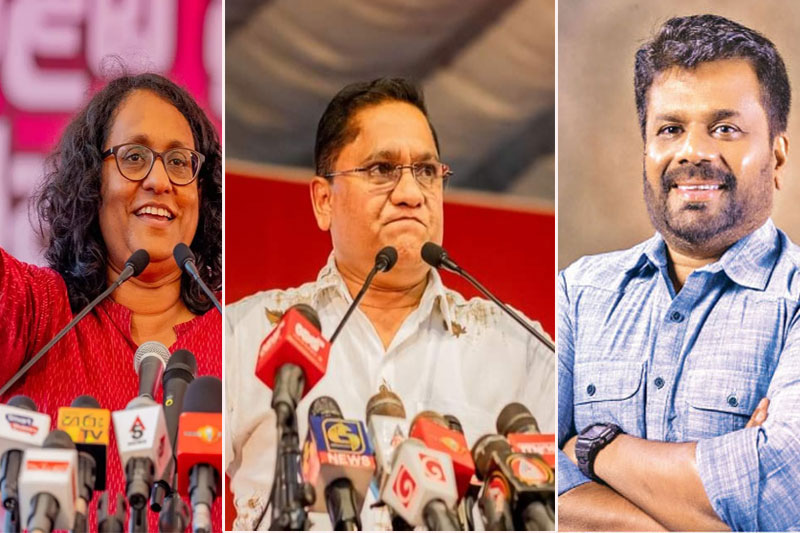
Outdated, manual systems have become breeding grounds for corruption, where bribery and inefficiency rule, bleeding exporters dry and stifling economic growth. The country stands at a critical juncture, where the only viable path forward is the digitalisation of customs and trade operations.

Paper-based customs 

These antiquated, paper-based customs and processes are no match for the demands of the modern global economy, where speed, accuracy, and transparency are paramount. Instead, they are plagued by errors, deliberate delays, and a lack of accountability, allowing corrupt practices to thrive unchecked. As global trade standards become stricter, the need for transparent, secure, and efficient customs operations has never been more urgent.

Digitising Sri Lanka’s customs operations offers a clear solution to this corruption crisis. It would drastically reduce clearance times and costs, cut off avenues for bribery, and restore governance within the customs framework. By adopting international best practices and leveraging technology, Sri Lanka can finally break free from the stranglehold of corruption and integrate more effectively into the global digital trade network.

Right now, traders are being held hostage by a system riddled with red tape and graft. Complex licensing, endless documentation, and delays at ports are not just frustrating—they’re expensive. Additional costs, like storage fees and demurrage charges, are passed down to consumers, driving up prices and eroding trust in Sri Lankan exports. Without decisive action to root out corruption and modernise these processes, Sri Lanka’s export sector will continue to suffer, jeopardising the nation’s economic future.

The recent establishment of a new Internal Customs Unit within Sri Lanka Customs, as announced by the Finance Ministry, is a step in the right direction

When customs officers go on strike or adopt a go-slow approach, the repercussions are immediate and widespread. Importers face delays, leading to storage and demurrage charges that quickly accumulate,” said Sean Van Dort, Chairman of the Sri Lanka Shippers’ Council. These additional costs inflate prices and contribute to economic strain. The lack of urgency and accountability among customs officers exacerbates these issues. Without Key Performance Indicators (KPIs) or a robust system to monitor and track performance, inefficiencies persist unchecked.

Deep-rooted issues 

The solution to these deep-rooted issues lies in digital transformation. Implementing a robust digital mechanism to track and manage customs operations can revolutionise the current system. Digital fingerprints and automated systems can ensure that customs officers are held accountable for their time and actions. Despite the potential for significant improvements, resistance to change remains. The lack of digital infrastructure allows corrupt practices to flourish. Manual documentation processes provide opportunities for bribery and corruption, as documents can be manipulated and sold to competitors.

Beyond customs, issues with ports, warehousing, airport bottlenecks, and inefficiencies at the Inland Revenue Department (IRD) highlight the need for modernisation. Old, dilapidated warehouses and inefficient destuffing processes add to the logistical nightmare. Importers often face long waits and additional fees if they do not comply with informal demands for payments. The lack of modern infrastructure and streamlined processes leads to delays and added costs that impact the end consumer.

At the airport, the situation is equally dire. Every export must be cleared for explosives by the air force, a rule dating back to the civil war. Despite the war’s end, this practice continues, creating logistical bottlenecks and increasing costs. The lack of proper inspection facilities means that cargo is often exposed to the elements, leading to damage and loss. The monopoly of Sri Lanka Airlines on ground handling further complicates matters, with reports of pilferage and inefficiencies adding to exporters’ woes.

The inefficiencies extend to the Inland Revenue Department (IRD), which, despite having visibility of customs operations, still requires physical proof for various transactions. This not only adds to the logistical burden but also opens avenues for corruption. Digitalisation can streamline these processes, reducing the need for physical documentation and minimising opportunities for bribery. Another issue that needs to be looked into is the slow issuance of SVAT credit vouchers. This is causing significant delays and cash flow problems for exporters. This sluggishness in processing essential tax credits is yet another example of how inefficiency and red tape are eroding the competitiveness of Sri Lankan exports.

Bureaucratic inertia 

The Board of Investment (BOI), which should be a beacon for attracting foreign investment, is mired in lethargy and a lack of decisive action. Investors face endless delays, and critical decisions are often postponed, leaving projects in limbo and discouraging the much-needed foreign capital. This bureaucratic inertia at the BOI is further compounding the challenges faced by exporters, who rely on a dynamic and responsive investment environment to stay competitive.

Van Dort notes that the call for reform is not new. Past efforts to digitise customs operations have faced resistance from unions and entrenched interests. The frequent transfer of IT personnel, who were crucial to driving change, disrupted continuity and progress. Additionally, creating new units within customs to monitor imports of raw materials for BOI enterprises added another layer of bureaucracy, further complicating the process.

Addressing these issues requires a concerted effort. Implementing digital solutions is crucial to streamline operations, reduce corruption, and improve efficiency. The government must take decisive action to enforce digitalisation, despite resistance. This includes revisiting and enforcing existing laws and ordinances that mandate digital processes, ensuring adherence by all stakeholders.

The recent establishment of a new Internal Customs Unit within Sri Lanka Customs, as announced by the Finance Ministry, is a step in the right direction. The Sri Lanka Shippers’ Council has welcomed this move, expressing hope that the unit will significantly improve transparency and public trust. The Council also calls for extending this system to other departments, reinforcing the need for comprehensive reform across the board.

The time for change is now, and all stakeholders must come together to drive this transformation. Embrace the future, or be left behind. Let’s commit to a digital revolution in customs and logistics, ensuring a prosperous and competitive Sri Lanka for generations to come. The call to action is clear: support digitalisation efforts, advocate for transparency, and work collaboratively to create a thriving trade ecosystem. The future of Sri Lanka’s economy depends on it.

Sri Lanka’s inflation drops in August 2024

September 24th, 2024

Courtesy Adaderana

The overall rate of inflation, as measured by the National Consumer Price Index (NCPI), has decreased to 1.1% in August 2024, compared to 2.5% in July 2024, according to the latest data released by the Department of Census and Statistics.

Meanwhile, food inflation has decreased to 2.3% in August 2024 compared to 2.9% in July 2024 and the Year-on-Year inflation of the non-food group increased to 0.2% in August 2024 from 2.2% in July 2024.

The NCPI for all items for the month of August 2024 is 204.1 and it records a decrease of 2.8 in index points compared to July 2024.

New Secretaries appointed for 15 ministries including PM’s Secretary

September 24th, 2024

Courtesy Adaderana

New Secretaries have been appointed for 15 ministries, including the positions of Prime Minister’s Secretary and Cabinet Secretary, according to the President’s Media Division (PMD). 

The full list of appointments is as follows:

1. Mr. G.P. Saputhanthri – Secretary to the Prime Minister
2. Mr. W.M.D.J. Fernando – Cabinet Secretary
3. Mr. K.D.S. Ruwanchandra – Secretary to the Ministry of Transport, Highways, Ports, and Civil Aviation
4. Mr. K.M.M. Siriwardena – Secretary to the Ministry of Finance, Economic Development, Policy Formulation, Planning, and Tourism
5. Mrs. Aruni Wijewardena – Secretary to the Ministry of Foreign Affairs
6. Ms. J.M.T. Jayasundara – Secretary to the Ministry of Education, Science and Technology
7. Mr. K. Maheson – Secretary to the Ministry of Women, Children, Youth Affairs, and Sports
8. Mr. M.M. Naimuddin – Secretary to the Ministry of Trade, Commerce, Food Security, Cooperative Development, Industry, and Entrepreneurship Development
9. Mr. A.M.P.M.B. Atapattu – Secretary to the Ministry of Rural and Urban Development, Housing, and Construction
10. Mr. Palitha Gunaratne Mahipala – Secretary to the Ministry of Health
11. Mr. W.P.P. Yasaratne – Secretary to the Ministry of Justice, Public Administration, Home Affairs, Provincial Councils, Local Government, and Labour
12. Mr. B.K. Prabhath Chandrakeerthy – Secretary to the Ministry of Environment, Wildlife, Forest Resources, Water Supply, Plantation, and Community Infrastructure
13. Mr. M.P.N.M. Wickramasinghe – Secretary to the Ministry of Agriculture, Lands, Livestock, Irrigation, Fisheries, and Aquatic Resources
14. Mr. H.S.S. Thuiyakontha – Secretary to the Ministry of Defence
15. Mr. D.W.R.B. Seneviratne – Secretary to the Ministry of Public Security
16. Mr. Ranjith Ariyaratne – Secretary to the Ministry of Buddhasasana, Religious and Cultural Affairs, National Integration, Social Security and Mass Media
17. Professor K.T.M. Udayanga Hemapala – Secretary to the Ministry of Energy

Sri Lanka’s new three-member Cabinet appointed

September 24th, 2024

Courtesy Adaderana

Sri Lanka’s new three-member Cabinet appointed

September 24, 2024   05:55 pm

Sri Lanka’s new three-member Cabinet of Ministers was sworn-in before President Anura Kumara Dissanayake at the Presidential Secretariat in Colombo, a short while ago. 

Dr. Harini Amarasuriya was sworn-in as the Minister of Justice, Education, Labour, Industries, Science and Tech, Health and Food Security, shortly after taking oath as the new Prime Minister.

President Anura Kumara Dissanayake has retained the following Ministerial portfolios:

  • Defence, Finance
  • Economic Development, Policy Formulation, Planning and Tourism
  • Energy
  • Agriculture, Land, Livestock, Irrigation, Fisheries and Aquatic Resources

Prime Minister Dr. Harini Amarasuriya has been given the following Ministerial portfolios:

  • Justice, Public Administration, Provincial Councils, Local Government and Labour
  • Education, Science and Technology
  • Women, Child and Youth Affairs and Sports
  • Trade, Commercial, Food Security, Co-operative Development, Industries and Entrepreneur Development
  • Health

Vijitha Herath will hold the following Ministerial portfolios:

  • Buddhasasana, Religious and Cultural Affairs, National Integration, Social Security and Mass Media
  • Transport, Highways, Ports and Civil Aviation
  • Public Security
  • Foreign Affairs
  • Environment, Wildlife, Forest Resources, Water Supply, Plantation and Community, Infrastructure
  • Rural and Urban development, Housing and Construction

MP Lakshman Nipunaarachchi, Former MPs Sunil Handunnetti, Bimal Ratnayake, Dr. Nalinda Jayatissa, Wasantha Samarasinghe, Secretary to the President Dr. Nandika Sanath Kumanayake, Secretary to the Ministry of Defence and H.S. Sampath Thuyacontha were also present at the event.

Sri Lanka’s General Election on November 14

September 24th, 2024

Courtesy Adaderana

The Extraordinary Gazette notification issued by President Anura Kumara Dissanayake dissolving the Parliament of Sri Lanka effective from midnight today (24), has been published by the Department of Government Printing.

The proclamation dissolves Parliament with effect from midnight today and summons the new Parliament to meet on the November 21, 2024.

It has also fixed November 14, 2024 as the date for the election of the new Members of Parliament.

The Gazette notification further specifies the period beginning on October 04 and ending at 12 noon October 11, 2024 as the nomination period, during which nomination papers shall be received by the Returning Officers. 

The President has issued the Gazette by virtue of the powers vested in him by Article 70 of the Constitution of the Democratic Socialist Republic of Sri Lanka and in pursuance of the provisions of Section 10 of the Parliamentary Elections Act, No. 1 of 1981.

Dissanayake, leader of the People’s Liberation Front (JVP) and the National People’s Power (NPP) alliance, won a landslide victory over the weekend by beating 38 other candidates and garnering over 5.6 million or 42.3 per cent of the votes. 

During the election campaign, Dissanayake vowed to dissolve Parliament if he wins and call snap elections. The present Parliament’s five-year term ends in August next year.

His party had just three lawmakers in Sri Lanka’s 225-member parliament.

Dissanayake was sworn into office on Monday while he appointed academic and first-time lawmaker Harini Amarasuriya as the new prime minister on Tuesday, making her the third woman to be appointed to the post.

On the same day, he appointed a three-member Cabinet which includes NPP’s Vijitha Herath, Amarasuriya and himself, which will serve as the caretaker government until the polls are held.  

Meanwhile, President Dissanayake is expected to make a special statement while addressing the nation at 7.30 pm tomorrow (25 September), according to the Department of Government Information.

Gazette on Dissolvement of Parliament by Adaderana Online on Scribd

Farewell Ranil

September 23rd, 2024

Senaka Weeraratna

Hon. Mr. Ranil Wickremesinghe, 

President of Sri Lanka 

Dear Ranil

It would be tantamount to an amiss if a friend from your childhood days both in the primary and secondary schools and subsequently at the Colombo Law Faculty, did not stand up and say 

‘ Thank you’ for having served as the President of Sri Lanka. 

Whatever the verdict of the people at the hustings, which change from time to time, nothing can prevent your rightful place in history books. It is a remarkable achievement. Only a very few are privileged to have access to such high positions. You are one of them. 

The Buddha identified Gratitude as an ennobling and rare quality. 

In one of his finest discourses in the Anguttara-Nikaya the Buddha speaks as follows: The sum of all that makes a bad man is ingratitude; the sum of all that makes a good man is gratitude .

” These two people are hard to find in the world. Which two? The one who is first to do an act of  kindness, and the one who is grateful and thankful for an act of  kindness done.” 

In so saying the Buddha placed a heavy emphasis on the need to treasure and value people who do kind deeds and cultivate good virtues.

It is in the spirit of gratitude that I am penning this little note as you exit from the office of President. It is free of moral Judgment.

I have no doubt that your  former classmates at school (1960 group) and former colleagues at the University and later at the Bar will endorse this unreserved note in the same spirit of sincerity that it is written in.

Keep well as you charter your unique and unparalleled life into the next phase of Sri Lanka’s unfolding saga. 

Best wishes 

Senaka Weeraratna

අභිනව ජනාධිපතිතුමා සහ ඉතිහාසයේ දඬු අඬුව

September 23rd, 2024

චන්ද්‍රසේන පණ්ඩිතගේ  

අනුර කුමාර දිසානායක මහතා ලංකාවේ ප්‍රථම සුලුතර ජනපති වීමට නියමිතය. මෙය වනේ වන හතුරෙකුටවත් නොවිය යුතු තැනකට මෙරට ජනාධිපති වරයා ඇද දැමීමෙකි. මෙවර මුලු ඡන්ද සංඛ‍්‍යාව 17,140,354 කි; එසේම ප්‍රකාශිත ඡන්ද සංඛ‍්‍යාව 13,619,916 කි. අනුර කුමාර දිසානායක මහතා ඉන් ලබා ගත්තේ ඡන්ද  එනම්, ජනාධිපතිවරයා ලබාගෙන ඇත්තේ ඡන්ද 5,634,915 කි. ප්‍රතිශතයක් ලෙස මෙය, මුලු ඡන්ද සංඛ‍්‍යාවෙන් 32.9% කි; ප්‍රකාශිත ඡන්ද සංඛ‍්‍යාවෙන් 41.37%කි. මෙය 42% ඉක්මවා යන්නේ, ප්‍රකාශිත වලංගු ඡන්ද ගැන සලකන විටය. නමුත් පුරවැසියන් කළකිරීමෙන් ඡන්ද ප්‍රතික්‍ෂේප කරන බව දන්නා අපි, ප්‍රකාශිත ඡන්ද සංඛ‍්‍යාවෙන් ප්‍රතිශතයක් ලෙස අභිනව ජනාධිපති වරයාගේ ඡන්ද ගත යුතු යැයි උදක්ම සිතමු. ඒ නයින් ඔහුට රටේ 41%ක් කැමැතිය; 59%ක් ඔහුව ප්‍රතික්‍ෂේප කර ඇත.

ඔහුට ඡන්දය දුන් සුලුතරය ඔහු කෙරෙහි අප්‍රමාණ විශ්වාසයෙන් පසු වෙයි. පසුගිය දිනවල ඉහළ ගිය ජීවන වියදම පහළ දැමීම ඉන් ප්‍රධාන බලාපොරොත්තුවකි. එසේම, ජීවන තත්වය උසස් කිරීම, වංචා සහ දූෂණ නැති කිරීම, රාජ්‍ය සේවයේ ගුණාත්මක භාවය වැඩි කිරීම වැනි තව බොහෝ අපේක්‍ෂා ඒ සමඟ වෙයි. අභිනව ජනාධිපතිවරයා බොහෝ පොරොන්දු දී ඇත. ඒ සියල්ලම ඉටු කරන අතර ඔහුට රටේ මුල්‍ය ස්ථාවරත්වය පවත්වාගෙන යා යුතුව ඇත. ජාත්‍යන්තර මූල්‍ය අරමුදල සමඟ ගිවිසුම ඊට මේ වෙලාවේ ඇති එකම ආධාරකයයි. මේ පොරොන්දු සහ ජාත්‍යන්තර මූල්‍ය අරමුදලේ ගිවිසුම අතර බොහෝ ප්‍රායෝගික පරස්පරතා ඇත. ඔහුට මේ පරස්පරතා අතර ඉදිරියට යාමට ස්ථාවර සහ බලවත් පාර්ලිමේන්තුවක් අත්‍යවශ්‍යය.

මේ ඡන්ද ප්‍රමාණයම ලැබේයයි උපකල්පනය කළහොත් ඊළඟ පාර්ලිමේන්තුවේ දී, අභිනව ජනාධිපතිවරයා ගේ පක්‍ෂයට ආසන 90-95 ලැබීමට නියමිතය. ඒ අනුව ඔහුට ලැබෙනුයේ දුර්වල පාර්ලිමේන්තු වරමෙකි; බහුතර බලයක් නැත. ඉදිරියට අනුමත කරගතයුතු ජාත්‍යන්තර මූල්‍ය අරමුදල  හා ගිවිසගත් පනත් බොහොමයක් ඇත. ඒ පනත් අනුමත නොවුනහොත්, ජාත්‍යන්තර මූල්‍ය අරමුදල අප හා ඇති ගිවිසුම අහෝසි කරනු ඇත. එවිට නැවත අපට විදේශ විනිමය හිඟයක් ඇති විය හැකිය. ගෑස් පෝලිම්, තෙල් පෝලිම්, ආනයන සම්භාදක නැවත ඇති කිරීමට සිදු වනු ඇත.

රනිල් වික්‍රමසිංහ හිටපු ජනාධිපතිවරයා සහ සජිත් ප්‍රේමදාස ලබාගත් ඡන්ද ගණන මුලු ප්‍රකාශිත වලංගු ඡන්ද ප්‍රමාණයෙන් 50.03%කි. ඔවුන් එකතු වුනා නම්, ලෙහෙසියෙන් ම අනුර කුමාර දිසානායක ජනපති පැරදවිය හැකිය තිබිණි. ඔවුන් දෙදෙනාම මීට වසර කිහිපයකට පෙර, එකම පක්‍ෂයේ අයය. ඔවුන් දෙදෙනාටම ඔවුන් ගේ පක්‍ෂ සාමාජිකත්වය, එක්වී මහා මැතිවරණයට තරඟ කළ යුතු බවට විශාල පීඩනයක් ඇති කරනු ඇත. ඔවුන් එක්වී තරඟ කළහොත්, ඔවුන්ට පාර්ලිමේන්තු බහුතරය ගත හැකිය. ඔවුන් එසේ පාර්ලිමේන්තු බහුතරය ලබා ගතහොත්, සුලු ජාතික පක්‍ෂද ඔවුන්ට සහාය දෙන බව පැහැදිලිය. ඔවුන් වෙන වෙනම තරඟ කළද, පාර්ලිමේන්තු බහුතරය ඉව වැටේ නම්, ඔවුන් පාර්ලිමේන්තුවේ දී උවද එක් විය හැකි බව පැහැදිලිය. ඒ නිසා ඔවුන් එය අනිවාර්‍යෙන් ම කරනු ඇත. එවිට ජනාධිපති වරයාට තමන් ගේ අණ පනත් මෙන්ම අය වැයක් ද සම්මත කරගත නොහැකිය.

එසේ උවහොත් අනුර කුමාර ජනාධිපති වරයා, විපක්‍ෂයේ පීඩනයට හිරවී, ඔහුගේ පොරොන්දු කිසිවක් ඉටු කරගත නොහැකි ජනාධිපති වරයෙකු වනු ඇත. ජනතා කළකිරීම් හා අපේක්‍ෂා භංගත්වය හමුවේ, ඔහුට පක්‍ෂය තුළින් ම බෙදීයාම් සහ බිඳී යාම් වලට මුහුණ දීමට සිදුවනු ඇත. ඔහුට සිය ස්ථාවරය රැක ගැනීම පවා අපහසු වනු ඇත. අප දන්නා පරිදි, අනුර කුමාර දිසානායක මහතා ඉතා ප්‍රහාරාත්මක විවේචන අනෙක් නායකයිට එල්ල කළ කෙනෙකි; තමන්ගේ කරුණු ස්ඵුට කිරීමට සත්‍යය මෙන්ම අර්ධ සත්‍යයද යොදා ගත්තෙකි. ඉතිහාසය විසින් ඔහු ඉතා අසීරු දඬු අඬුවක සිර කර ඇත. මේ තත්ත්වය සහ අභියෝග හමුවේ, ඒවාට මුහුණදී, ජනතාවට දුන් පොරොන්දු ඔහුට ඉටු කළ හැකිනම්, අනුර කුමාර දිසානායක නාමය මේ රටේ ඉතිහාසයේ රන් අකුරින් ලියවෙනු ඇත.

AKD Should Not Try to be Everything to Everyone

September 23rd, 2024

Dilrook Kannangara

Anura Kumara won the most keenly contested Sri Lankan election with a large margin. He transformed the JVP into a modern and realistic political party. As a result, he won Colombo-7 along with other affluent Colombo suburbs (3,4,5,6). Same goes for suburbs with professionals including Homagama, Moratuwa, etc. His dramatic wins in former UNP bastions some identified as the Christian Belt (Negombo, Wattala, Katana, Naththandiya, Ja-Ela) shows his reach was not confined to one creed. He performed very well in key Muslim majority suburbs outside the north and east as well.

However, he totally failed in the north, east and Nuwara Eliya district. Gotabaya won more votes there than Anura.

Election map shows the areas he must focus on – the areas he won, the areas in red. This is because he can repeat the feat by retaining them. No guarantee he can win the unwinnable areas. Invest where it mattered.

Well-meaning people recite the same mantra after an election in vain – we should all unite and make everyone’s life better. Of course, it should happen. But for it to be sustainable, it must follow a certain path and a set of priorities.

Resources and opportunities are limited. Contrary to the national anthem and fairy tales of some, Sri Lanka does not sit on a pot of gold. It is a resource-poor nation earning most of its foreign exchange by the export of cheap labor, tea, garments and EPZ exports. These are near-slavery based industries. Dramatic and overnight development is not possible. A slow but steady transformation is needed.

In that process Anura should not try to appease everyone. It is not possible. Instead, his priorities should focus on convincing his voters that they made the right choice. Areas where he won must get the lion’s share of benefits of his rule, and not other areas. Mahinda, Sirisena, Gotabaya and Ranil got this wrong and paid the price. Interestingly successful politicians in Sri Lanka got it right. They also developed the nation where it mattered. It is the norm in other democratic nations. Modi knows who his voters are and champions their cause; certainly not the rest. The same happens in the US, UK, France, Germany, Japan, etc. This is democracy at work. It does not mean total disregard of those who did not join the change. A basic level of focus is needed throughout the nation. However, trying to be everything to everyone is a sure path to bankruptcy, loss of support from the sections that support you (no use depending on those who don’t support) and ultimately an untimely and inglorious exit.

Instead, areas important to sustain support for the regime must be prioritized for development and upliftment. This ensures the government survives its full term to deliver what was promised. It also earns enough returns that can be distributed to others. For instance, almost all export income and tax revenue are earned from areas outside the north and east. Therefore, development of these areas AKD won, investments, upliftment and betterment of these areas must be prioritized over the north and east. If not, there won’t be any returns to be reinvested and bankruptcy looms ugly. A good investor would first invest in solid and proven stock that already yield a good return. Thereafter he may experiment with others. Mixing them up is a disaster.

In conclusion, while trying to become everything to everyone seems good on paper and closer to what is generally understood as socialism, it is a disaster waiting to happen because resources and opportunities are very limited. Invest where most resources and opportunities are currently being created before venturing into other areas. All the best Anura. Put your oxygen mask first, before putting it on others and you will do positive change in the island nation.

The Complex Dynamics of Sri Lankan Politics: Anura Kumara Dissanayake’s Rise and the Sinhala Buddhist Vote

September 23rd, 2024

By Palitha Ariyarathna

Synopsis

The article examines the complexities of Sri Lankan politics, particularly focusing on Anura Kumara Dissanayake and the Sinhala Buddhist vote. Despite Dissanayake garnering approximately 57,401 votes, he faced significant opposition, with nearly double that number supporting other candidates. Many voters criticized him for perceived anti-Buddhist sentiments within his party, leading to backlash against his campaign.

As Sri Lanka embarks on a new chapter under its recent presidency, the political landscape remains deeply polarized. The discourse surrounding Sinhala Buddhist identity and its implications for governance and social cohesion has intensified, particularly after the last elections that saw substantial support for Gotabaya Rajapaksa from Sinhala Buddhist voters. This support raises critical questions about nationalism, identity politics, and the future of Sri Lanka’s democracy.

Many political commentators suggest that Gotabaya’s electoral victory was influenced by accusations of manipulation and racism, resulting in devastating events in Sri Lanka. However, the specifics of these claims are still unfolding and will require further investigation.

High-profile figures like Anura Kumara Dissanayake have portrayed Sinhala Buddhist voters as inherently racist, overlooking the complex socio-political motivations behind their choices. While Dissanayake critiques Sinhala Buddhist nationalism, it is essential to recognize that many who supported Rajapaksa did so not from a place of racism, but from a desire for stability and security amid ongoing socio-economic challenges stemming from the previous Yahapana government and perceived anti-Sinhala, anti-Buddhist threats.

In a nation where Sinhala Buddhists often feel marginalized in discussions about governance and rights, acknowledging their historical and cultural significance is crucial. This community, particularly the Kandyan peasants, has a rich legacy of resistance against invasions, with their cultural identity deeply intertwined with the country’s narrative since the time of King Pandukhabaya.

Dr. Sudath Gunasekara emphasizes the significance of the Kandyan community in Sri Lanka, noting that the Kandyan matters of 1951 serve as a poignant reminder of the sacrifices made by countless individuals who dedicated their lives to building the nation. He points out that over five million Kandyan peasants, spread across at least sixteen districts, continue to face neglect and marginalization. This community, historically rich in cultural and agricultural contributions, has been betrayed by the closure of the Department of Kandyan Peasantry Rehabilitation, which once aimed to address their unique challenges and needs. Gunasekara argues that successive governments have failed to address this problem, reflecting a broader neglect of the legacy and rights of the Kandyan people, who have played a crucial role in Sri Lanka’s history.

It is vital for any government, especially one led by Dissanayake, to understand the plight of the Kandyan community, who are the true Bhumiputras of the Central Hills. Their historical connection to the land and the injustices they faced, particularly under British rule, must be addressed. Dissanayake’s past statements and actions, perceived as anti-Buddhist and anti-Sinhala, have alienated many voters.

The Aragalaya movement, aimed at challenging the status quo, attracted a diverse range of participants, including those with anti-Buddhist sentiments. While it symbolized a call for accountability and reform, the movement also showcased activities that undermined national unity, including acts against Sinhala Buddhist symbols. Such actions raise significant concerns about the movement’s impact on the national identity.

Despite Anura Kumara Dissanayake receiving approximately 57,40179 votes, nearly double that number supported other presidential candidates, highlighting his lack of broad-based appeal. Many voters expressed disapproval of Dissanayake and his party, pointing to perceived anti-Buddhist sentiments among his supporters and leaders. This issue became a significant factor in the backlash against his campaign, revealing a critical divide in public perception.

The global resurgence of nationalism serves as a cautionary tale for Sri Lanka, illustrating how identity-based politics can exacerbate societal polarization and heighten tensions among different ethnic and religious groups. Political leaders must prioritize inclusive dialogue that recognizes the contributions of all communities while also honoring the inherent rights of the indigenous peoples who have built the nation over thousands of years, sacrificing their lives in the process. Fostering unity is essential, but it must avoid deepening divisions and the power devolution.

While some may link communism with anti-religious sentiments, many communist leaders prioritize national interests and social cohesion. Figures like Fidel Castro and Mao Zedong sought to unify their nations under a nationalist agenda, balancing ideology with cultural identity.

As Sri Lanka navigates its political future, meaningful discourse about identity, rights, and governance is essential. Acknowledging the historical significance of Sinhala Buddhists while addressing the needs and aspirations of all communities can lead to a more cohesive and resilient society. The considerable number of voters opposing Dissanayake illustrates a growing awareness of the need for leadership that prioritizes unity over division. In an era of rising nationalism, Sri Lanka must balance its rich cultural heritage with the ideals of democracy and inclusivity, ensuring every voice is heard and respected.

Dissanayake must avoid bias as a political leader and strive for honesty  rather than seeking personal political gain. He should recognize the sacrifices made by Kandyan peasants and work to uplift the nearly six million Kandyan peasants. Understanding that a significant portion of his voters are Sinhala Buddhists, Dissanayake must advocate for their rights and the broader national identity, providing leadership that addresses historical injustices and seeks solutions for all native peoples in Sri Lanka.

Anura Kumara Dissanayake cannot dismiss the requests of Kandyan peasants or the fight for Sinhala Buddhist rights as mere racism any longer. It is essential to recognize these issues as legitimate concerns that deserve serious attention and solutions. Moreover, any backstabbing groups cannot ignore or covertly deny the inherent rights of the native peoples. This is a land where a Sinhala Buddhist nation exists, and their voices must not be sidelined.

Only then can he demonstrate his commitment as a true and honest leader for the nation.

By Palitha Ariyarathna

Real System Change: Shaping Sri Lanka’s Future

Air Vice Marshal Sampath Thuyacontha (Retd) assumed duty as new Defence Secretary

September 23rd, 2024

Ministry of Defence  – Media Centre

Air Vice Marshal Sampath Thuyacontha (Retd) WWV, RWP and two bars, RSP and bar, USP, MMSc (Strat Stu- China), MSc (Def Stu) in Mgt, MSc (Def & Strat Stu), fndu (China), psc has been appointed as the new Secretary to the Ministry of Defence by His Excellency the President Anura Kumara Dissanayake.

AVM Thuyacontha officially assumed duty in his new appointment at the Defence Ministry at the Defence Headquarters Complex in Akuregoda this evening (Sep 23, 2024).

Soon after assuming duties in his new appointment the Defence Secretary chaired a special discussion with defence heads including Additional Secretaries of the Defence Ministry, Chief of Defence Staff and tri forces commanders.

AVM Thuyacontha, a distinguished officer of the Sri Lanka Air Force retired in November 2021 after completing more than 33 years of dedicated service to the nation. At the time of his retirement, he held the appointment of Director Training of the Sri Lanka Air Force.

AVM Thuyacontha (Retd) was born in Colombo on 26th November 1966. He studied at the prestigious Thurstan College in Colombo. An avid rugby player, he represented the 1st XV rugby team of his school and was selected to represent Colombo Schools Rugby Team in year 1986. He received the School Rugby Colours in 1986.

Having joined the Sri Lanka Air Force in 1988 to the 19th Intake as an Officer Cadet, he was commissioned as a Pilot Officer in the General Duties Pilot Branch in 1990. During his training period, he has successfully completed the Basic Combat Training, Basic Flying Training, Basic and Advanced Helicopter Training Courses.

After completion of training in 1990, he was deployed for flying duties as an operational pilot in Bell 212/412 helicopters. In 2001, he was posted to No 9 Attack Helicopter Squadron, Sri Lanka Air Force Base at Hingurakgoda as the Second in Command and later was appointed as the Commanding Officer in 2005.

The important appointments held by the senior officer also included Base Commander, SLAF Base Anuradhapura,Commandant of SLAF Academy China Bay, Base Commander SLAF Base Katunayake and  the first  Air Commander of the   Sourthern Air   Command.

During his service, he had actively involved in all major operations including the final humanitarian operation. He had logged more than 7000 flying hours as an Operations/ VIP and Attack Helicopter Pilot of Sri Lanka Air Force.

Air Vice Marshal Thuyacontha has also served as the Defence Adviser to the High Commission of Sri Lanka in Islamabad, Pakistan for a period of two years and as the Chief Instructor of the Defence Services Command and Staff College in 2014.


Copyright © 2026 LankaWeb.com. All Rights Reserved. Powered by Wordpress