අනුර අනුගමනය කරන්නේ රනිල්ගේ ආර්ථික ප්‍රතිපත්තියමයි… මැතිවරණ පොරොන්දු දැනටමත් කඩ කර අවසන් – ආචාර්ය ප්‍රියංග දුණුසිංහ කියයි

October 17th, 2024

උපුටා ගැන්ම  ලංකා ලීඩර්

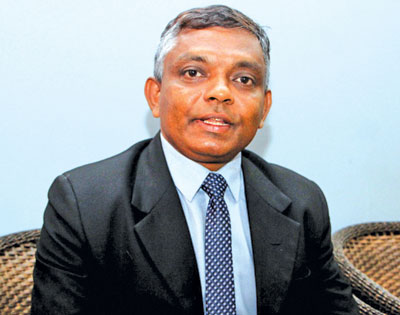
ජනාධිපතිවරණයට පෙර ජාතික ජන බලවේගය ජනතාවට මොනතරම් පොරොන්දු දුන්නත් බලයට පත් වූ පසුව ජනාධිපති අනුර කුමාර දිසානායක අනුගමනය කරන්නේත් රනිල් වික්‍රමසිංහගේ ආර්ථික ප්‍රතිපත්තියම බව කොළඹ විශ්වවිද්‍යාලයේ ආර්ථික විද්‍යා අධ්‍යයන අංශයේ ජ්‍යෙෂ්ඨ කථිකාචාර්යල ආචාර්ය ප්‍රියංග දුණුසිංහ මහතා පවසයි.

ඒ අනුව මැතිවරණ පොරොන්දු දැනටමත් කඩ කර අවසන් නමුත් එය රට පැත්තෙන් ඉතා යහපත් බවත් හෙතෙම කියා සිටී.

“ජනාධිපතිවරණයට පෙර මැතිවරණ වේදිකාවල සිට ජාතික ජන බලවේගය ජනතාවට විවිධ පොරොන්දු දුන්නා. විශේෂයෙන්ම ජාත්‍යන්තර මූල්‍ය අරමුදලට අදාළව ණය තිරසරභාවය පිළිබඳව විකල්ප විශ්ලේෂණයකට යනවා කියලා ඔවුන් කිව්වා. නමුත් මේ වනතුරු ඔවුන් එවැනි විකල්ප විශ්ලේෂණයකට යොමුවෙලා නැහැ. ඒ වගේම ණය ප්‍රතිව්‍යුහගතකරණ ක්‍රියාවලියට අදාළ වෙනස්කම් සිදුකිරීම සඳහා ඔවුන් මැදිහත් වෙන්නෙත් නෑ. ඒ බව ඉතාම පැහැදිලියි. ඒ නිසා ජාත්‍යන්තර මූල්‍ය අරමුදලේ ගිවිසුමේ සඳහන් දේවල් කිසිම වෙනසකින් තොරව ඉදිරියට ගමන් කරනවා.

ඉදිරියේදී ඇතිවිය හැකි ප්‍රධාන වෙනස්කමක් හැටියට උපයන විට ගෙවන බද්දට අදාළව වෙනස්කම් හඳුන්වා දෙන්න පුළුවන්. නමුත් මීට පෙර පැවැති රජය ඉදිරිපත් කළ කාරණා තමයි එහිදීත් මූලිකව සිද්ධවීමට නියමිතව තියෙන්නේ. ජනාධිපතිවරණය ආසන්නයේදී රනිල් වික්‍රමසිංහ මහත්මයා මීට අදාළ යෝජනා ඉදිරිපත් කළා. ජාත්‍යන්තර මූල්‍ය අරමුදලෙනුත් ඒ සඳහා එකඟතාවය හිමි වුණා. ඒ වෙනස්කම් සහ තවත් බදු සහන කිහිපයක් තමයි ඉදිරියේදී මූලික වශයෙන් ලැබීමට නියමිතව තියෙන්නේ.

ඒ අනුව ජනාධිපතිවරණයට පෙර ජාතික ජන බලවේගය ආර්ථිකය සහ ජාත්‍යන්තර මූල්‍ය අරමුදල සම්බන්ධයෙන් මොන අදහස් ඉදිරිපත් කළත්, ජනතාවට මොන පොරොන්දු දුන්නත් ඔවුන් ඒ කිසිවක් ක්‍රියාත්මක කරන්න ඉදිරිපත් වෙලා නෑ කියලා අවබෝධ වෙනවා.

දේශපාලනිකව බැලුවොත් වත්මන් ජනාධිපතිවරයා ජනාධිපතිවරණයට පෙර ජනතාවට දුන් පොරොන්දු කඩකරලා කියලා කියන්න පුළුවන්. නමුත් ආර්ථිකය පැත්තෙන් බැලුවාම ඔහු අනුගමනය කරන ක්‍රමවේදයේ වරදක් තියෙනවා කියලා මට නම් හිතෙන්නේ නෑ. ඔහුගේ ක්‍රියාකලාපය ආර්ථිකය පැත්තෙන් ඉතාමත් යහපත් ප්‍රතිඵල ගෙන දෙනවා යන්නයි මගේ අදහස. කොහොම වුණත් පවතින ආර්ථික ප්‍රතිපත්තිය, ජාත්‍යන්තර මූල්‍ය අරමුදල සමග එකඟ වී ඇති ගිවිසුම ආදිය වෙනස් කරන්න ඡන්ද දායකයින් තුළ බලාපොරොත්තුවක් තිබුණානම්, දැනට තියෙන තත්ත්වය අනුව නම් ඔවුන්ගේ ඒ බලාපොරොත්තුව ඉටුවන බවක් පේන්නේ නෑ.

වත්මන් ජනාධිපති අනුර කුමාර දිසානායක ක්‍රියාත්මක කරන්නේත් මීට පෙර රජයේ තිබූ ආර්ථික ප්‍රතිපත්තියමයි. ඒ අනුව වත්මන් ජනාධිපතිවරයාත් හිටපු ජනාධිපති රනිල් වික්‍රමසිංහගේ ආර්ථික ප්‍රතිපත්තියට එකඟ වෙනවා කියන කාරණාව පැහැදිලි වෙනවා. මේ රටේ ආර්ථිකය තිරසර කරගැනීමට නම් මින් පෙර පැවැති ආර්ථික ප්‍රතිපත්තිය තවදුරටත් ඉදිරියට ගෙන යා යුතුයි කියන මූලික පදනමේ සිටිමින් තමයි නව ජනාධිපතිවරයා කටයුතු කරන්නෙත්. මැතිවරණ වේදිකාවේදී මොන පොරොන්දු දුන්නත්, පවතින තත්ත්වය අනුව පෙර රජය කටයුතු කළ ආකාරයට ආර්ථිකය පවත්වාගෙන නොගියොත් නැවැතත් ආර්ථික අර්බුදයක් ඇතිවිය හැකි බව ජනාධිපතිවරයා ඇතුළු පිරිස වටහාගෙන තියෙනවා. ඒ වටහා ගැනීම ඉතාමත් යෝග්‍යයි.

එමෙන්ම තවදුරටත් ආර්ථික කටයුතු කරගෙන යාම සඳහා මුදල් අමාත්‍යංශයේ ලේකම්වරයාට සහ මහ බැංකු අධිපතිවරයාට අවස්ථාව ලබාදීලා තියෙනවා. ඒ නිලධාරීන් කාලාන්තරයක් තිස්සේම ඔවුන්ගේ වටිනා සේවය රටට ලබාදුන්නා. තවදුරටත් ඔවුන්ගේ සේවය මේ රටට අවශ්‍යයි. මේ නිලධාරීන් තමයි රටේ ආර්ථිකය සම්බන්ධයෙන් බොහොමයක් තීන්දු තීරණ ගත්තේ සහ සාකච්ඡාවලට සම්බන්ධ වුණේ. ඔවුන්ට ඉහළ වෘත්තීමය සුදුසුකම් සහ අත්දැකීම් තියෙනවා. ඒ නිසා ඔවුන්ගේ සේවය ලබාගැනීමට ජනාධිපතිවරයා ගත් තීරණයත් අගය කළ යුතුයි.

ඒ වගේම අදානි සමාගම සමග එකඟ වී තිබෙන සුළං විදුලි බලයට අදාළ ව්‍යාපෘතිය නවත්තනවා කියලත් ජනාධිපතිවරණයට පෙර ජාතික ජන බලවේගය කිව්වා. නමුත් ඔවුන්ගේ ඒ ස්ථාවරය දැන් වෙනස් වෙලා. ඒ පිළිබඳව පසු විපරමක් කිරීමට තීරණය කිරීමත් සාධනීය ලක්‍ෂණයක්.”

2024-10-17

Ministers cannot steal without their secretaries, chief accountants being aware: Maithri

October 17th, 2024

Courtesy The Daily Mirror

Colombo, October 17 (Daily Mirror) – While pointing out how Ministers rob government assets, former President Maithripala Sirisena noted that Ministers cannot steal without the knowledge of their secretaries and chief accountants.

Addressing the 45th National Conference of the Institute of Chartered Accountants of Sri Lanka (CA Sri Lanka), he stated that later, the secretaries and chief accountants begin to follow the Minister’s example, and this practice trickles down to lower levels as well.

Meanwhile, former President Ranil Wickremesinghe said that, except for unsolicited procurement, all other procurement processes must go through the Ministry Secretaries.

Former President Chandrika Bandaranaike Kumaratunga mentioned that an institute called the National Procurement Agency was formed during her government to oversee all procurements. The most trustworthy officials in the country were appointed to this agency.

They did not become corrupt, but unfortunately, they were removed along with the agency by the government that came to power afterward.

Ex-President Ranil urges voters to support ‘experienced candidates’ in 2024 General Election

October 17th, 2024

Courtesy Adaderana

The leader of the United National Party (UNP), former President Ranil Wickremesinghe has called on voters to elect to the Parliament candidates with proven experience in managing economic crises as the country faces ongoing challenges. 

Making a special statement ahead of the upcoming parliamentary election, Wickremesinghe emphasized that those who have worked with him over the past two years are best suited to guide the nation forward.

In these difficult times, it is vital that we have leaders in Parliament who know how to handle an economic crisis. Whether you are in the opposition or part of the government, without this experience, you will fail to meet the country’s goals,” Wickremesinghe said.

I urge the supporters of all political parties to vote for our experienced candidates,” he added.

Wickremesinghe also made a special appeal to those who did not vote in the previous election that in order to solve the country’s economic problem and move forward, the experienced people should be in the Parliament. 

He stressed that the future of the country depends on electing leaders with the right skills to solve the economic issues and ensure the nation’s recovery.

Highlighting his leadership in the previous presidential election, where he ran under the symbol of the ‘gas cylinder’ with broad support from representatives of diverse political parties including the UNP, the Sri Lanka Podujana Peramuna (SLPP), and other political groups, Wickremesinghe noted that this coalition continues to stand strong. 

A portion of those MPs and UNP officials who worked with me are now joining together in this election under the ‘New Democratic Front’. With their experience and dedication, they will ensure the success of this new parliamentary term,” he added.

Wickremesinghe concluded his statement by urging citizens to cast their valuable vote for the candidates with the expertise to lead the nation through this crucial period, stating, If we succeed in this effort, we can rebuild the country and secure a better future for all.”

Govt. increases tax on several key imported food items

October 17th, 2024

Courtesy Adaderana

The government has announced an increase in taxes on certain imported goods, effective from October 14 to December 31, 2024. 

This move comes under the directive of President Anura Kumara Dissanayake, who also serves as the Minister of Finance.

Under the new regulations, a special merchandise tax will apply to several key imports. Whole and flaked Mysore lentils, as well as yellow lentils, will now incur a tax of 25 cents per kilogram. 

Additionally, a special commodity levy of Rs. 302 per kilogram has been imposed on maldive fish and its substitutes.

Fresh or frozen fish, excluding de-boned fish and other processed fish, will subject to a tax of 10% or Rs. 400 per kilogram, whichever is higher.

Sri Lanka to receive USD 1.69 billion in loans within next 3-5 years: Report

October 17th, 2024

Courtesy Adaderana

The government has spent only 53% of the welfare budget allocated for the year within the first 8 months up to August, according to a report.

A latest report from the Ministry of Finance indicates that the welfare budget has primarily been used to fund the ‘Aswesuma’ welfare program.

Meanwhile, the report also states that Sri Lanka is expected to receive 1.69 billion US dollars in loans from multilateral agencies within the next 3 to 5 years.

In the Pre-election budgetary report by the Finance ministry, it is reported that, as of the end of August 2024, foreign development partners and lending agencies have entered into 10 agreements with the government for foreign financing totalling 398.7 million US dollars.

Of this amount, 350 million dollars has been secured in the form of loans.

Another 48.7 million dollars has been obtained through seven grant agreements with the governments of Japan and Australia under official development assistance.

Meanwhile, total foreign financing disbursements up to August 2024 amount to 1.01 billion dollars, of which 994.4 million dollars has been disbursed as loans while 11.3 million has been provided as grants.

The Asian Development Bank has disbursed 358.3 million dollars to Sri Lanka up to August 2024, slightly surpassing the International Monetary Fund, which has provided 334 million dollars in budget support loans. The World Bank has contributed 239.8 million dollars.

The ADB and World Bank have linked their budget support loans to Sri Lanka’s IMF program from last year.

A significant portion of the disbursements has been utilized in the budget support sector, accounting for 33% of the total disbursements.

The power and energy sector has utilized 13%, while the SME development sector has received 10%, and the finance sector has utilized 7%.

Additionally, the report stated that there is another 1.69 billion dollars in loans from multilateral agencies that has not yet been disbursed, and these funds are expected to be available in the next 3 to 5 years.

The report also showed that only 53% of Sri Lanka’s welfare budget has been utilized in the first eight months of 2024.

According to the report data 562.4 billion rupees out of the welfare budgeted 1,055.7 billion has been spent during this period.

The previous government increased the welfare budget by 15.3% this year compared to the actual expenditure of 915.4 billion rupees in 2023, as per the data, following the IMF recommendations.

Of the total 562.4 billion rupees spent in the first eight months, 112.7 billion went to the Aswesuma” poverty alleviation program, 9.5 billion for school nutrition, 4.4 billion for school textbooks and uniforms, and 24.2 billion for fertilizer subsidies.

Election Commission issues campaign spending limits for 2024 General Election

October 17th, 2024

Courtesy Hiru News

The Election Commission of Sri Lanka has released a circular outlining the maximum campaign spending limits for candidates, parties, independent groups, and national list candidates for the 2024 General Election. These limits are based on district allocations.

The upcoming national elections, including the 2024 General Election, will be conducted under new campaign finance laws, restricting the funding that candidates and political entities can spend. This follows the implementation of similar limits during the 2024 Presidential Election held in September.

The Election Commission had consulted with various stakeholders to establish these limits and discussed how to effectively implement the laws. All parties are required to submit their expenditure reports within 21 days of the election results being declared.

The parliamentary election is scheduled for November 14, 2024, with postal voting taking place on October 30, November 01, and 04 across all District Secretariats and election offices. Specific spending limits for each district will be shared accordingly.

https://drive.google.com/file/d/13OTs3puzuy5k1Bbg1W8lYimu4OyQ90UC/view

Easter Sunday Truth vs Conspiracy – Who are spreading conspiracy theories & why?

October 16th, 2024

Shenali D Waduge

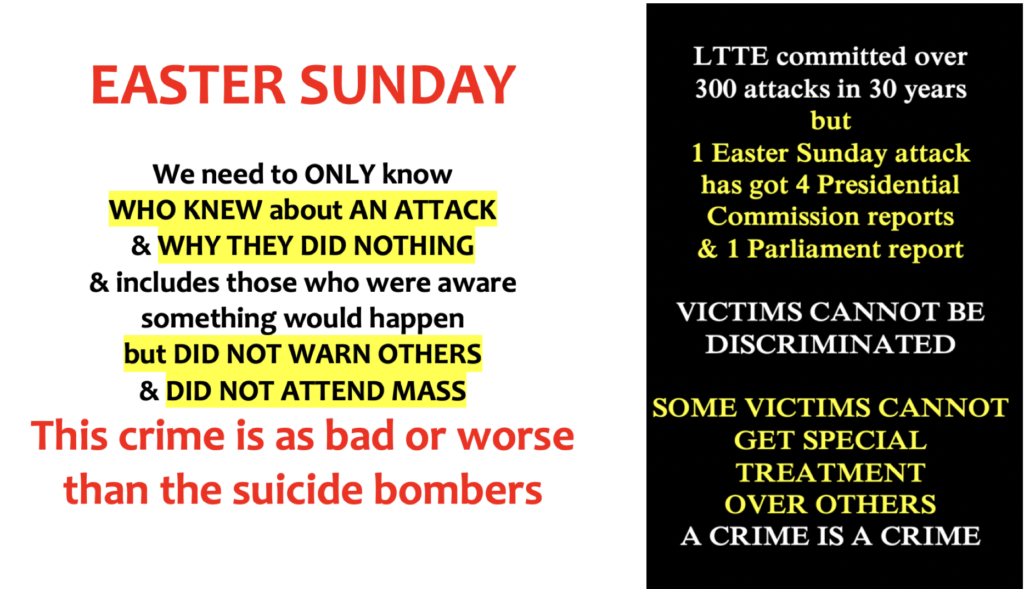
One mass murder managed to send 3 President’s home & brought one President to power based on assurance given to deliver justice to the victims. While LTTE committed over 300 gruesome terror attacks over 30 years, these victims were never lucky to have 4 Presidential Commission reports & 1 Parliamentary Report. All victims must be treated equally & justice can have no favoritism. Why is it that the 2 final reports are not been released for the public to make their own deductions given that the current JVP-NPP Government sought public mandate citing it would do things different” to all previous govts & people voted for that change”. People expect a different” President, one who would not continue to hide commission/committee reports.

It was the very same players now in power who demanded the release of the previous reports, though internally they took no disciplinary action against the father of the 2 suicide bombers who was on their national list & key sponsor.

Now as President, people expect action.

What are the 2 pending reports that have garnered public attention.

  1. President Ranil appointed former Justice S.A. Imam to investigate the allegations made by Channel 4(UK) primarily around Sri Lankan intelligence.
  2. President Ranil appointed N. J. de Alwis to investigate the conduct of the State Intelligence Service, Chief of National Intelligence & other relevant authorities. 

These reports were handed to President Ranil in July 2024.

Why President Ranil did not release the reports must be questioned from him.

Throughout this time period the JVP-NPP used this as an election slogan which is why the general public must question why the sitting President is now doing a Ranil.

The issue has now ended up a circus with the Government’s Minister of Public Security challenging a former MP to release the reports when the government should do so, especially when one of the key promises to come to power was justice for Easter Sunday victims. The newest tactic is to claim pages are missing. Such excuses negate the transparency promised to the people even before forthcoming general election.

We have to now wonder why the JVP-NPP Government has done a u-turn on releasing of the 2 Easter Sunday Commission reports.

Can the people resort to right to information & demand the release of the 2 reports?

Can the Cardinal & the Church insist on releasing the reports?

 https://www.facebook.com/share/v/QSEnjL43jWJZkFoR/ –

The President’s assurance to the victims at this Church is now put to the test but the reports are still not released.

(Cardinal & President Anura at Katuwapitiya Church)

A parent of the Katuwapitiya Church bombing directly told the President, that he holds him liable for the crime in a very emotional outburst.

There is NO NEED for another new Presidential Commission – simply release what has been investigated unless there is incriminating evidence against those close to the Government & those who supported the government. There is no other reason to shield the reports so that the Public can come to their own conclusions from the findings in the reports.

If the reports are not released, hired youtubers will only be ranting about conspiracy theories probably floated by those who do not wish to have the reports released as it would expose their role of negligence.

We can float conspiracy theories about foreign involvement, mahamolakaru, the suicide bombers etc – only if intel were not aware of an attack & a series of foreign warnings were not given that named the bombers, named the venues being targeted.

LTTE never gave prior warnings of their attacks. Even intel services were not aware of prior attacks to prevent such. These were meticulously planned with only a handful within the LTTE aware.

However, the Easter Sunday bombing was far different. Not only did the intel services pass on the info to the key officers and public servants, circulars were sent even to diplomatic missions.

The SIS head Nilantha Jayawardena’s testimony to the Commission clearly states that by 11 April at least 15,000 would have been aware of an attack. While many of those who knew there was going to be an attack did not attend the Churches named, yet none of those who knew took the pains to even warn the innocent people who perished that day.

Not only the security apparatus, public officials but even the civilians who knew of an impending attack are all equally guilty of selfishly protecting their lives but neglecting to safeguard the lives of those unknown to them.

How many of these 15,000 even have a guilty conscience? 

As former Defense Secretary said, he thought only something small” would happen.

How many thought like him and did nothing?

Why were people not prevented from entering the 3 churches? Why were hotels not asked to beef up their security. The hotels are well equipped for such measures given their experience throughout LTTE terror.

No conspiracy theory can eliminate the names of people who were in key positions on duty & who had in black & white warnings of a terror attack. Conspiracy theories & hiring foreign tv channels to accuse people who were overseas & attempting to plug them to the crime while those who held positions are not taken to task is not the transparency people expect from the government nor to give new positions to those who maybe incriminated in the reports by shelving the reports without publicizing them.

So far only President Sirisena & SIS Head Nilantha Jayawardena have been forced to pay to the State for their negligence of duty.

What about all the others who knew & had the powers to prevent but did nothing as well as the others who from word of mouth knew & did nothing too. 

They all have blood on their hands. 

However, the present government cannot spend tax payers money to commence another Easter Sunday new Commission as this is an insult to all the other victims of terror who have not even got a single Commission of justice for their deaths.

No more Commissions on Easter Sunday. Release the 2 reports, if there are recommendations for the AG’s department to take punitive action, the President must support this without shelving the reports & coming out with silly missing page” excuses.

Who are spreading conspiracy theories & why?

Why is the Govt not releasing the 2 Commission reports?

Shenali D Waduge

“SETTLER COLONIALISM” AND TAMIL EELAM Part 1.

October 16th, 2024

KAMALIKA PIERIS

The Ceylon Tamil, despite the label, is not ‘Ceylon’ at all. The Ceylon Tamil originated in Tamilnadu. The British got down Tamils to carry out Settler Colonization” in Ceylon. Settler Colonization”is the introduction of a foreign settler group, to crush the existing indigenous group and take over the country.

Settler Colonialism”   is a strategy where the colonial power   deliberately brings in outsiders to a new country, to occupy its land and push out those who were living there earlier. The original residents are   displaced and later eliminated. The settlers    then dig in and   create a permanent community there. They entrench themselves so well that they cannot be easily dislodged. They are able to do this because they are backed by the foreign country that is ruling there.

Then at independence, the government of the newly decolonized country has to deal with this settler group. There is a tussle between the two. The issue of sovereignty and central government comes up. UN helps. UN   Resolution 2625 of 1970 says, any attempt at the partial or total disruption of the national unity and territorial integrity of a state is incompatible with the UN Charter.

However, settler colonialism is also given a chance. A community of people who claim the right of self-determination based on a common ethnicity, history and culture can seek to establish  sovereignty over  their territory, said analysts But such communities are usually treated as autonomous areas, not as  sovereign, independent states,.

 Settler colonization” is different to migration.  Migrants do not organize against the state, they assimilate. Japanese laborers migrated to Peru and Hawaii. Fujimori became the President in Peru.  In Hawaii they worked in the sugar plantations.  Within two generations they had left the plantations and   risen to middle class positions. 

Settler colonialism was a specific policy of British imperial   expansion in the 18th century. Australia, New Zealand, Canada and USA are settler colonies created by Britain. They were settled by British immigrants who left Britain, looking for fresh pastures abroad. These British settlers went to these countries by ship, killed off the locals and took control of the country. Those who survived the killings were put into reservations.  Nobody called it genocide. The indigenous peoples were considered subhuman and expendable.

The British also introduced a settler community into Palestine. Britain had in 1917 promised the Jewish community that they would someday settle them in Palestine (Balfour Declaration).  In 1922, when Britain got the mandate to rule Palestine, they did so. They chased out the Palestinians from a section of Palestine and sent in the Jews.

The state of Israel was created in 1948. Israel wanted to expand and also acquire defensible borders. They wished to annex Egypt’s Sinai. They hated the Arabs and wanted them   out of Israel. Prime Minister Benjamin Netanyahu said recently   that Israel will not permit the creation of a Palestinian state after the end of the war in Gaza. Israel   ignores the Human Rights Council.

The ongoing Gaza war has induced analysts see Israel in terms of Settler Colonialism.  The Zionist project is now, perhaps for the first time,  labeled a settler-colonial project. The original Zionist idea of planting a European Jewish state at the heart of the Arab world through the dispossession of the Palestinians is inacceptable, said Ilan Pappe (Al Jazeera, October 2024).

  India was part of the British Empire and the British rulers took Indians, including Tamils as settlers to other colonies. British sent Tamil settlers to Seychelles, Mauritius, Reunion, Fiji   and South Africa. In Fiji, the Indians were able to take control of the government. Indians were expelled from Uganda in 1972 by Idi Amin. They ended up in London. Tamils integrated into local populations in Mauritius, South Africa, Guyana, and Fiji. Tamils in Malaysia became a distinct sub culture.    Tamils in these countries, unlike the Tamils in Sri Lanka, have not demanded separation or more power or complained about discrimination and oppression, said Kanthar Balanathan.

Sri Lanka underwent a period of Settler Colonialism. British brought Tamil setters in specifically to colonize Sri Lanka. They entrenched themselves in Jaffna in the North, in Batticaloa in the East and established a presence in Colombo. They were known as ‘Jaffna man’, ‘Colombo man’ and ‘Batticaloa man’. ‘Jaffna man’ and ‘Colombo man’ (who were often the same) looked down on ‘Batticaloa man’. There were also pockets of Tamils in most parts of the country except for southern districts like Galle and Matara.

At independence the Tamils declared in Sri Lanka that they were a separate nation and they were entitled to self determination. But unlike Australia, New Zealand, Canada and USA, Tamils in Sri Lanka found that it was not going to be easy to challenge the Sinhala state.

 Sri Lanka happened to be a centuries old sovereign state, with a strong historical memory. Sri Lanka remembers a time when there was no Tamil colonists and the north and east was Sinhala-Buddhist.  Also, Sri Lanka was under British rule only for 133 years (1815-1948) a very short period in a history of over 2500 years. Lastly, Sinhalese turn strongly patriotic when challenged. They firmly declare Rata bedanne denne be” .

The flat refusal of the Tamil Separatist Movement to let go of Tamil Separatism and assimilate, can be attributed to Settler Colonialism. It is Settler colonialism that is keeping the Tamil Separatist Movement going. Assertions made by the Tamil Separatist Movement which puzzle and incense the public come from Settler Colonialism.  The public wonder why the Tamil Separatists   don’t assimilate, leave or just shut  up. That is because Settler Colonialism will not allow  it.

 Here  are two landmark  Declarations of the Tamil Separatist Movement , dated 1949 and 1976. The first is the Speech delivered on December 18, 1949 at the Inaugural business meeting of Ilankai Tamil Arasu Kadchi (ITAK) by S. J. V. Chelvanayakam KC . The second is the Vaddukoddai Resolution of 1976.  THIS IS SETTLER COLONIALISM SPEAKING.

We first look at the 1949 utterance.  The Ilankai Tamil Arasu Kadchi (ITAK)  was  started in 1949   by three  parliamentarians, S. J. V. ChelvanayakamC. Vanniasingam and Senator E. M. V. Naganathan. On 18 December 1949, a group of sixty Tamils including two parliamentarians and two senators convened at the Government Clerical Service Union (GCSU) hall in Colombo, said DBS Jeyaraj.

That historic conclave resulted in the launching of a new political party with the avowed goal of establishing an autonomous State for the Tamil-speaking people of Ceylon  within a united island. The new party was named in Tamil as Illankai Thamil Arasu Katchi” meaning Ceylon Tamil State or Tamil Government Party. The word ‘State’ denoted a unit within a federal set-up and not a sovereign State as some of its detractors alleged,”  said AJ Wilson,  son in law of Chelvanayagam  .

Chelvanayakam and his party ushered in an ideological shift in Tamil politics, said  DBS Jeyaraj. Chelvanayagam  formulated Tamil nationalism on linguistic lines in  clearly demarcated territory, the  Northern and Eastern Province, which he said were the traditional homelands of the Tamil speaking people. These provinces would form an autonomous Tamil State (Thamil Arasu). This state would come into a federal arrangement with the residual Sinhala state and remain within a Ceylonese union.

Here are extracts from the Speech delivered on December 18, 1949 at the Inaugural business meeting of Ilankai Tamil Arasu Kadchi (ITAK) by S. J. V. Chelvanayakam KC, re-arranged by me.  The full text can be seen at  https://sangam.org/1949-speech-by-s-j-v-chelvanayakam/

Chelvanayagam started  his speech of 18.12.1949  by saying, we have met together with the common aim of creating an organization to work for the attainment of freedom for the Tamil speaking people of Ceylon. It is essential to form an autonomous Tamil speaking state. No other solution is possible.  Before the Portuguese came, there were two nations,  Sinhala speaking and Tamil speaking. The Tamil nation became a separate kingdom around the 9th or 10th  century, announced Chelvanayagam .

The discussions towards  Independence focused on the creation of a unitary state in Ceylon. On 20th November 1947 Tamil Congress  wrote to Secretary of State for the Colonies,  in London saying  that  this  Unitary Government  was totally unacceptable to the Tamils and in the absence of a satisfactory alternative we demand the right of self-determination for the Tamil people,”  said Chelvanayagam .

This was ignored and a unitary government  was foisted on the Tamil speaking people of Ceylon, complained Chelvanayagam  .The Tamil speaking people realized the danger of a unitary type of constitution for a heterogeneous population. They  never lost sense of their danger,  declared   Chelvanayagam

Where in 1947 and 1948 it became evident that the Singhalese people could carry on their Government ignoring the Tamil representatives and could pass legislation after legislation defying the wishes and feelings on the Tamil people, there was open one of two alternatives to the Tamil speaking people,  explained Chelvanayagam .

One was abject surrender. The other was a campaign to free the Tamil speaking people from a constitution in which they were utterly powerless. The Tamil people favored the latter as indicated in the elections.

At the general ejections of 1947 Tamil Congress which swept the polls in the Tamil areas stood for resistance against encroachments on Tamil rights. Whenever the question was referred to them, the Tamil electorates consistently decided for a policy of resistance , announced Chelvanayagam .

The Tamil people  are politically conscious of being a separate nation. This is an encouraging sign and those who want to work for the good of their people must act [now].  We should therefore get together a body of those who desire to see the Tamil-speaking people free and who have faith in the future of this people, declared  Chelvanayagam .

Chelvanayagam then went on to speak of two other matters which rankled. One was relatively unimportant, the flag and the other was definitely very important, colonization.

The National Flag showed an utter disregard of the feeling and rights of the Tamil speaking people, Chelvanayagam said.  The lion flag was the flag of the Singhalese Kings. It is  identified with Singhalese sovereignty. The flag is being used administratively as the national flag of Ceylon.

The Government’s policy on the flag issued is symbolic of its attitude towards the Tamil-speaking people. The Government ignores their existence  as a part of the  country.  I do not know of any other country with a composite population which has adopted as its national flag the flag of only one section of the people complained Chelvanayagam .

Even more dangerous to the Tamil speaking people is  the Government’s colonization policy., continued  Chelvanayagam . We have only the beginning of it in Gal-Oya. The land to be irrigated under the Gal-Oya scheme lies in the Eastern Province, a Tamil-speaking area.

 There is evidence that the Government intends planting Singhalese population in this  purely Tamil-speaking area. The Government is seeking to use its powers for the purpose of reducing the Tamil-speaking areas that now exist. If this policy is allowed to continue unchecked there will be no Tamil majority areas left in the course of a few decades. 

By many such acts of the Government it has lost the moral right to rule over the Tamil speaking people of Ceylon. It only does so now by the physical right of power. Over two years of internal self-government have reduced the Tamil-speaking people to an inferior status in their own country. They do not feel that the Government is their  government, continued Chelvanayagam .

The manly thing to do is to face the situation and find a way out. There are two ways in which this conflict between linguistic groups could be solved. One is the division of linguistic groups into separate sovereign states. The other and the less drastic remedy is the formation of a federal state making each linguistic group an autonomous state.

Experience in other parts of the world has shown the federal solution to have succeeded in many cases. Well known examples are that of Canada which consists of English-speaking and French speaking peoples and Switzerland. The India Congress and the Indian Government have accepted the creation of linguistic states in principle,  explained Chelvanayagam .

This is then the solution that we ask for. A Federal constitution for Ceylon consisting of an Autonomous Tamil speaking province and an autonomous Singhalese province with a Central Government common to both. This is the minimum provision necessary to prevent the smaller Tamil-speaking nation from extinction, or of being absorbed by the larger nation. . They must be given the right to govern their own territory,  declared Chelvanayagam .

Chelvanayagam concluded with a couple of   contradictory offerings. Our one aim is to achieve freedom for the Tamil speaking people by the creation of an autonomous state within the framework of a federal constitution in Ceylon, he said. He ignored that fact a federal state cannot  also be an autonomous state.  However, the  true objective of this talk emerged in the last sentence of Chelvanayagam’s  speech where he called fora free Tamil State.

The second Declaration to which I draw attention is the Vaddukoddai  Declaration of 1976.  Here is the full text of the Declaration  as given by TamilNet, on 08 June 1997.[1]

THE RESOLUTION

Unanimously adopted at the First National Convention of the

TAMIL UNITED LIBERATION FRONT

held at Vaddukoddai

on May 14, 1976

Chairman S.J.V. Chelvanayakam Q.C., M.P. (K.K.S)


Whereas, throughout the centuries from the dawn of history, the Sinhalese and Tamil nations have divided between themselves the possession of Ceylon, the Sinhalese inhabiting the interior of the country in its Southern and Western parts from the river Walawe to that of Chilaw and the Tamils possessing the Northern and Eastern districts; And, Whereas, the Tamil Kingdom was overthrown in war and conquered by the Portuguese in 1619, and from them by the Dutch and the British in turn, independent of the Sinhalese Kingdoms; And,

Whereas, the British Colonists, who ruled the territories of the Sinhalese and Tamil Kingdoms separately, joined under compulsion the territories of the Sinhalese and the Tamil Kingdoms for purposes of administrative convenience on the recommendation of the Colebrooke Commission in 1833; And,

Whereas, the Tamil Leaders were in the forefront of the Freedom movement to rid Ceylon of colonial bondage which ultimately led to the grant of independence to Ceylon in 1948; And,

Whereas, the foregoing facts of history were completely overlooked, and power over the entire country was transferred to the Sinhalese nation on the basis of a numerical majority, thereby reducing the Tamil nation to the position of subject people; And,

Whereas, successive Sinhalese governments since independence have always encouraged and fostered the aggressive nationalism of the Sinhalese people and have used their political power to the detriment of the Tamils by-

  1. Depriving one half of the Tamil people of their citizenship and franchise rights thereby reducing Tamil representation in Parliament,
  2. Making serious inroads into the territories of the former Tamil Kingdom by a system of planned and state-aided Sinhalese colonization and large scale regularization of recently encouraged Sinhalese encroachments, calculated to make the Tamils a minority in their own homeland,
  3. Making Sinhala the only official language throughout Ceylon thereby placing the stamp of inferiority on the Tamils and the Tamil Language,
  4. Giving the foremost place to Buddhism under the Republican constitution thereby reducing the Hindus, Christians, and Muslims to second class status in this Country,
  5. Denying to the Tamils equality of opportunity in the spheres of employment, education, land alienation and economic life in general and starving Tamil areas of large scale industries and development schemes thereby seriously endangering their very existence in Ceylon,
  6. Systematically cutting them off from the main-stream of Tamil cultures in South India while denying them opportunities of developing their language and culture in Ceylon, thereby working inexorably towards the cultural genocide of the Tamils,
  7. Permitting and unleashing communal violence and intimidation against the Tamil speaking people as happened in Amparai and Colombo in 1956; all over the country in 1958; army reign of terror in the Northern and Eastern Provinces in 1961; police violence at the International Tamil Research Conference in 1974 resulting in the death of nine persons in Jaffna; police and communal violence against Tamil speaking Muslims at Puttalam and various other parts of Ceylon in 1976 – all these calculated to instill terror in the minds of the Tamil speaking people, thereby breaking their spirit and the will to resist injustices heaped on them,
  8. By terrorizing, torturing, and imprisoning Tamil youths without trial for long periods on the flimsiest grounds,
  9. Capping it all by imposing on the Tamil Nation a constitution drafted, under conditions of emergency without opportunities for free discussion, by a Constituent Assembly elected on the basis of the Soulbury Constitution distorted by the Citizenship laws resulting in weightage in representation to the Sinhalese majority, thereby depriving the Tamils of even the remnants of safeguards they had under the earlier constitution, And,

Whereasall attempts by the various Tamil political parties to win their rights, by co-operating with the governments, by parliamentary and extra-parliamentary agitations, by entering into pacts and understandings with successive Prime Ministers, in order to achieve the bare minimum of political rights consistent with the self-respect of the Tamil people have proved to be futile; And,

Whereasthe efforts of the All Ceylon Tamil Congress to ensure non-domination of the minorities by the majority by the adoption of a scheme of balanced representation in a Unitary Constitution have failed and even the meagre safeguards provided in article 29 of the Soulbury Constitution against discriminatory legislation have been removed by the Republican Constitution; And,

Whereas, the proposals submitted to the Constituent Assembly by the Ilankai Thamil Arasu Kadchi for maintaining the unity of the country while preserving the integrity of the Tamil people by the establishment of an autonomous Tamil State within the framework of a Federal Republic of Ceylon were summarily and totally rejected without even the courtesy of a consideration of its merits; And,

Whereasthe amendments to the basic resolutions, intended to ensure the minimum of safeguards to the Tamil people moved on the basis of the nine point demands formulated at the conference of all Tamil Political parties at Valvettithurai on 7th February 1971 and by individual parties and Tamil members of Parliament including those now in the government party, were rejected in toto by the government and Constituent Assembly; And,

Whereaseven amendments to the draft proposals relating to language, religion, and fundamental-rights including one calculated to ensure that at least the provisions of the Tamil Language (Special Provisions) Regulations of 1956 be included in the Constitution, were defeated, resulting in the boycott of the Constituent Assembly by a large majority of the Tamil members of Parliament; And,

Whereasthe Tamil United Liberation Front, after rejecting the Republican Constitution adopted on the 22nd of May, 1972, presented a six point demand to the Prime Minister and the Government on 25th June, 1972, and gave three months time within which the Government was called upon to take meaningful steps to amend the Constitution so as to meet the aspirations of the Tamil Nation on the basis of the six points, and informed the Government that if it failed to do so the Tamil United Liberation Front would launch a non-violent direct action against the Government in order to win the freedom and the rights of the Tamil Nation on the basis of the right of self-determination; And,

Whereasthis last attempt by the Tamil United Liberation Front to win Constitutional recognition of the rights of the Tamil Nation without jeopardizing the unity of the country was callously ignored by the Prime Minister and the Government; And,

Whereasthe opportunity provided by the Tamil United Liberation leader to vindicate the Government’s contention that their constitution had the backing of the Tamil people, by resigning from his membership of the National State Assembly and creating a by-election was deliberately put off for over two years in utter disregard of the democratic right of the Tamil voters of Kankesanthurai, and,

Whereasin the by-election held on the 6th February 1975, the voters of Kankesanthurai by a preponderant majority not only rejected the Republican Constitution imposed on them by the Sinhalese Government, but also gave a mandate to Mr. S.J.V. Chelvanayakam, Q.C. and through him to the Tamil United Liberation Front for the restoration and reconstitution of the Free Sovereign, Secular, Socialist State of TAMIL EELAM.

The first National Convention of the Tamil United Liberation Front meeting at Pannakam (Vaddukoddai Constituency) on the 14th day of May, 1976, hereby declares that the Tamils of Ceylon by virtue of their great language, their religions, their separate culture and heritage, their history of independent existence as a separate state over a distinct territory for several centuries till they were conquered by the armed might of the European invaders and above all by their will to exist as a separate entity ruling themselves in their own territory, are a nation distinct and apart from Sinhalese and this Convention announces to the world that the Republican Constitution of 1972 has made the Tamils a slave nation ruled by the new colonial masters, the Sinhalese ,who are using the power they have wrongly usurped to deprive the Tamil Nation of its territory, language citizenship, economic life, opportunities of employment and education, thereby destroying all the attributes of nationhood of the Tamil people.

And, while taking note of the reservations in relation to its commitment to the setting up of a separated state of TAMIL EELAM expressed by the Ceylon Workers Congress as a Trade Union of the Plantation Workers, the majority of whom live and work outside the Northern and Eastern areas,

This convention resolves that restoration and reconstitution of the Free, Sovereign, Secular, Socialist State of TAMIL EELAM, based on the right of self determination inherent to every nation, has become inevitable in order to safeguard the very existence of the Tamil Nation in this Country.

This Convention further declares –

  1. that the State of TAMIL EELAM shall consist of the people of the Northern and Eastern provinces and shall also ensure full and equal rights of citizenship of the State of TAMIL EELAM to all Tamil speaking people living in any part of Ceylon and to Tamils of EELAM origin living in any part of the world who may opt for citizenship of TAMIL EELAM.
  2. that the constitution of TAMIL EELAM shall be based on the principle of democratic decentralization so as to ensure the non-domination of any religious or territorial community of TAMIL EELAM by any other section.
  3. that in the state of Tamil Eelam caste shall be abolished and the observance of the pernicious practice of untouchability or inequality of any type based on birth shall be totally eradicated and its observance in any form punished by law.
  4. that TAMIL EELAM shall be a secular state giving equal protection and assistance to all religions to which the people of the state may belong.
  5. that Tamil shall be the language of the State, but the rights of Sinhalese speaking minorities in Tamil Eelam to education and transaction of business in their language shall be protected on a reciprocal basis with the Tamil speaking minorities in the Sinhala State.
  6. that Tamil Eelam shall be a Socialist State wherein the exploitation of man by man shall be forbidden, the dignity of labor shall be recognized, the means of production and distribution shall be subject to public ownership and control while permitting private enterprise in these branches within limit prescribed by law, economic development shall be on the basis of socialist planning and there shall be a ceiling on the total wealth that any individual of family may acquire.

This Convention directs the Action Committee of the TAMIL UNITED LIBERATION FRONT to formulate a plan of action and launch without undue delay the struggle for winning the sovereignty and freedom of the Tamil Nation;

And this Convention calls upon the Tamil Nation in general and the Tamil youth in particular to come forward to throw themselves fully into the sacred fight for freedom and to flinch not till the goal of a sovereign state of TAMIL EELAM is reached. (End of resolution).

Tamilnet said, This is a translation of the Resolution Unanimously Adopted at the 1st National Convention of the Tamil United Liberation Front, held at Pannakam (Vaddukoddai Constituency) on May 15 1976, Presided over by Mr. Chelvanayakam, Q.C, M.P. The TULF went to polls in 1977 with this and received an overwhelming mandate from the Tamil electorate. This was the last time Tamils of Eelam were able to express their wish freely at a democratically conducted poll added  Tamilnet  in its entry on 8. June 1997. https://www.tamilnet.com/art.html?artid=8861&catid=74  ( continued)


[1] https://www.tamilnet.com/art.html?artid=8861&catid=74

Great Development Programmes that show us the way out of the economic meltdown:

October 16th, 2024

Garvin Karunaratne, Former SLAS, G.A Matara

The Small Industries Textile Manufacturing Programme

This began with handloom training provided in village areas. Textile Handloom Programmes were commenced all over the island from the early Fifties and the Small Industries Department imported yarn and sold them to the entrepreneurs at cost.

The Department of Small Industries employed Textile Demonstrators who trained the handloomers.

What was very special was that sarees and other textiles could be done bespoke – according to the colour and style ordered. No one ever went to Bangkok to find an attractive dress.

The Department of Small Industries opened up Laksala a series of shops to sell the items which were produced by the handloomers. Local cooperative shops too were selling the products. As the Additional Government Agent I was in charge to ensure that the production was upto the mark.

The Department also established a state of the art Research and Development Institute at Moratuwa, called Velona. As the Additional Government Agent at Kegalla I can remember making investigations re opening a Powerloom with a specialist Ramanayake, who went into great detail in planning. I will never forget the day I travelled in his car on inspections because a mice or a small rat crawled up my trouser and luckily I held it, and released it to run away when the car was abruptly brought to a halt. We worked under constraints- old cars that often broke down – my ten year old Humber Hawk held its way but all work was done to perfection.

Later as the Government Agent at Matara, I had some five powerlooms turning all sorts of textiles of superb quality. The suiting done at the Hakmana Power looms was on demand even in London. It was so fine and superbly done that when Sri Lankans who had gone to live in London came on holiday to Sri lanka they came to Hakmana to buy the suiting and some of them even came to meet me when the stocks in the shops were all sold. I had even to get my Assistant Government Agent at Hakmana Ranjith Wimalaratne to make special arrangements for producing more suiting.

That was all done by the Small Industries Department and its Assistant Directors in the Districts. Velona was a vibrant and a very active organization.

The Ministry also stepped in and established Textile Factories at many places. When I served as Additional Government Agent at Kegalla the Ministry planned and established a state of the art Textile Mill at Tulhiriya which was at that time said to be the best Textile Mill in the entire East.

Then by the Nineteen Seventies Sri lanka produced all its textiles. There were over fifty powerlooms in rural areas and a few Textile Mills , There were some 96,000 handloomers.

I must state that the handloom, powerloom and Textile Mills programme that brought self sufficiency in all textliles to our Motherland was a great success.

However President Jayawardena who won the general election at the end of 1977 embraced the Structural Adjustment Programme of the IMF opened up imports funded with money borrowed on loans and ordered the closure of all powerlooms. The Tulhiriya Mill was privatized to an entrepreneur from Kabul in Pakistan. That profitable mill was used to make profits and run to the ground- Kabul left the country even leaving unpaid loans to local banks. The handloomers were all lost . The Small industries Department that imported yarn, distributed- rather sold it to the entrepreneurs and did a yeoman task was shelved.

Now we import all our textiles. We imported with loans obtained at high interest and today we face an economic meltdown after forty years of neoliberalism. 

We have to step back to the days when we produced ourselves and found employment and incomes for the people. That is the only way ahead out of the economic meltdown that we face today

The author was a Deputy Director of Small Industry in 1970 and the Additional Government Agent at Kegalla in 1967,68 and  the Government Agent in Matara in 1971-1973, when he was in charge of the handloom and powerloom projects.

Garvin Karunaratne,

Former SLAS, G.A Matara

‘’SRI LANKA FRIENDLY FOREIGN POLICY FOR NEW SRI LANKA’’

October 16th, 2024

Sarath Wijesinghe (President’s Counsel, Senior Solicitor, former  Ambassador to UAE and Israel, President Ambassador’s Forum UK / Sri Lanka)

Foreign Policy

Foreign Policy of a state in the family of Nations is how it acts and reacts in matters of policy economics, and behaviour , with the rest of the world and international organizations led by the United Nations. Nations give special attention and priority to foreign policy due to the importance of the subject for the successful existence in the family of nations they live in. USA gives top priority to the formulation and application of foreign policy based on main four criteria towards and beneficial towards USA friendly foreign policy that entangles with the economy, international relations, aiming at prosperity and development of USA followed by major powers as well as small nations as they too are bound to maintain international relations with the rest of the world for their on benefit and survival. Foreign Policy of a nation is carefully formulated and followed for the benefit of the country promoting the image and policies of the country that benefits the respective nations that benefits all the members of the world family for their economic and all other kinds of activities promoting their countries an all areas. Small countries too must give special emphasises on foreign policy as they depend on the world for their existence as living in isolation is impossible in the modern world that are closely interconnected and interwoven in all respects, that applies Sri Lanka being a comparatively small Island in the complicated and modern world at the door steps of digital Artificial Intelligence  age.

Sri Lanka friendly foreign policy

Sri Lanka foreign policy is very broad friendly and compatible with the modern current and universal world trends to maintain and enhance friendly ties and foreign relations, that benefits Sri Lanka as a Sri Lanka friendly foreign policy that benefits the people of Sri Lanka and  Sri Lankans. In nutshell it is based on the principles friendly towards all enormity towards none practised over thousands of years in Sri Lanka  especially from 1950 with the declaration principles and application  of non alignment subsequently better practised as the leader of the non alignment movement cementing the principle of NAM active to date. At  this unstable and volatile situations in the world with signs and threats on another worldwar it is the duty of all members of the United Nations to be extremely cautious and act with restrain to avoid a calamity that will have drastic results with the modern and sophisticated weaponry and modern technology. Sri Lanka though a small nation is a senior member of the UN and has actively participated in world affairs involved and participated in peace building promoting peace and reconciliation, may play a positive role in peace and a new era on foreign relations that will benefit the world to prosper economically and and all other ways.

Collection of strategies on foreign policy and relations

Foreign Policy is a collection of strategies country uses to guide it’s relations with the rest of the world that world watches carefully before talking any steps with the respective member and it is obvious the state will have to take great care in formulating and pronouncing the policy that are bound to change with the movement of the rest of the world whose interest would be themselves and economic and political benefits at an cost in the interest of their respective nations. Diplomatically the newly elected government is bound to take over liabilities of the previous governance and bound to carry on the foreign policies with extreme caution and great care on formulation of new policies without antagonizing those who engaged with the nation based on may be on different policies and strategies.

Conduct of foreign policy

It is the head of the State or the foreign minister ( with the advice of the head of the state) who will conduct and apply foreign policy to suit the nation which is an extremely arduous task, Sri Lanka managed most of the time historically. With the economic downturn and volatile political situation in the world and bitter and unwise steps taken by the predecessors the task appear to have been difficult to the current Minister and the regime appear to be managing the situation quite successfully in the current and difficult context. When Indian ocean is important for all world powers and powerful neighbours independent Sri Lanka placed strategically on the main silk route is sandwiched with requests and demands by many, it is time for Sri Lanka to strengthened foreign policy and relations and be firm on Sri Lanka friendly policy which is strategically and arduous task. World and regional powers including India, China, USA, USSR , and even Pakistan including Indian ocean rim countries have  direct and indirect interest on Indian Ocean and obviously trying to influence small nations such an Sri Lanka and Maldives islands and to prevent the pressure the best weapon would be a stable firm and a correct foreign policy and a stable governance.

Challenges to the current regime and the foreign minister

Challenges are immense considering the high expectations of the people who has taken a bold collective decision and the family of states awaiting the conduct of the new government with not much experience and reputation. The current governance is bound by previous decisions with the other members of the world family and international originations which includes IMF taking independent and firm decisions  become still difficult, yet it appears the new Minister has managed general and specific reasonably well and obviously he needs bit more time and experience to deliver. But as economy politics and international relations are interconnected and interwoven the task f the governance and the minister is still difficult. Ambassador’s forum and 13 volumes on foreign policy with topics including Sri Lanka foreign policy is available on Google Drive to be viewed free to the public with 600 chapters on varied topics and subjects and you are invited to browse the internet and be in touch the Ambassador’s Forum for further details which is offered free to any world citizen.

No to a 2015 – 2019 type Government, and the Nomination Lists that ignore/disregard normal people

October 16th, 2024

Chanaka Bandarage

The 2015 – 2019 Maithree/Ranil Government is perhaps the most disastrous and dysfunctional government Sri Lanka has ever had. We must try everything to avoid a similar situation arising in November 2024.

Maithree, Leader of the SLFP went on one road; Ranil leader of the UNP went on another. They never went on the same road together. Two of them constantly fought with each other – like cat and dog.

None of them cared about the people. The country suffered tremendously.  

Maithree/Ranil in a race like manner appointed their ‘kith and kin’ to the government; thus the number of ministers and top public servants ‘went through the roof’.

The two of them gave us many other ‘gifts’ too  – the Central Bank fraud, 52-day illegal Government and the 2019 Easter Sunday attack are some.

A government led by the NPP (President) and SJB (Prime Minister) will no doubt be a repeat of what we experienced between 2015 – 2019.

All people must realise this and cast their vote to elect a majority NPP government.

Should they give a 2/3 majority to the NPP? Yes and No.

Yes:

NPP has promised to abolish the Executive Presidency. They wish to make the Prime Minister the head of the state. The Prime Minister will be directly answerable to the Parliament. This is excellent. This is the real  Westminster democracy that we enjoyed prior to 1978.

To make this change – amend the Constitution; the NPP will require a 2/3 majority in the parliament.

It is expected that with the change to the Constitution (22nd Amendment), the 13th Amendment will be abolished. The useless Constitutional Council, various Commissions like the Police, Public Service, Finance etc will be gone.

Once people have elected a government, it should be able to govern without hinderance. It should be able to appoint people to high offices as it wishes. The Opposition in the parliament can object/argue.

Having undemocratic Councils/Commissions etc is akin to one touching the nose from around the head  than direct.

At the moment it seems the NPP will run a fair dinkum government. They are determined to end bribery, corruption, mismanagement and maladministration. It is this type of a government that Sri Lanka well deserves. Hence the voters should give them a 2/3 majority.

No:

If the NPP would not abolish the Executive Presidency (and the Provincial Councils), they do not need a 2/3 majority. A simple majority is sufficient.

After winning the Presidential election, the NPP has been silent on abolishing the Executive Presidency.  This is a worry.

Since 1994, all Presidents gave people the promise that they will abolish the Executive Presidency. After coming to power, all of them ignored it. Simply, all of them lied to the people.

Will the NPP do the same?

Arrogance and Impracticality

Since winning the Presidency, some NPP leaders’ rhetoric seem arrogant (not of the top 3). They use language/tone that demean their opponents. They tend to threaten/intimidate opponents.

Of course, the past rogues, all of them, must be caught and subject to court action – ‘leave no stone unturned’. But, everything must be done legally, in own pace.

The NPP leaders who do not hold government positions have no right to be of the government’s spokespersons. They have to wait until they become members/officials of the NPP government. Currently, they can express opinion only within their NPP framework – not as government spokespersons.

Of course, the NPP will win resoundly on 14/11/25, but they need not be arrogant about it. Humbleness is a great quality.

High and medium rank NPP leaders who now think too high of themselves must bear in mind that ‘higher one climbs, harder will be the fall’.

They seem to have taken the voters for granted; they must understand that like how they were elected  in September 2024, they can be tossed out too. 2022 Aragalaya comes to mind. The present is a social media dominated era. Social media can build or break leaders/governments.

The story of the tortoise and the rabbit is an important one to bear in mind – ‘slow and steady wins the race; and overconfidence can bring downfall’.

Let us hope that the NPP learns from the advice given herein, in good faith.

Let us wish the new President and his government all success!

The new government

It is obvious that the new cabinet (the world’s smallest) is performing well. It is a very hardworking cabinet.

It is painful that the government seems struggling with revenue. The fact that it has issued billions of worth treasury bonds is alarming.

The government must secure new sources of revenue. New foreign investments will flow in after the parliamentary election?

The best is foreign aid. Except pledges from the US and Japan nothing much has been offered to the new government. Surely our western friends (Europe, Canada, Australia) and close neighbor China must show generosity. The writer notes the  President’s visit to India next month (his first overseas visit as the President). This is a very crucial visit.

The Nomination Lists

The NPP Nomination List is full of university professors, academics, doctors, lawyers, engineers accountants and other professionals. About 75% of the list is such people.

Can these people solve the country’s problem? Did we not have an abundance of such people in the previous governments?  Did they not prove that they were useless and failures?

It was such ‘intellectuals’ that destroyed Gota and his government. How many Professors and academics were in his government and Viyath Maga?

In the recently concluded IMF talks (October 2024) the government team comprised of top university professors. What did they achieve for the country? Nil (see our article dated 5/10/24).

Some commented that the government’s IMF team was more concerned on taking their selfies than the talks. One opposition politician stated that this delegation went to the IMF meeting without a single file in their hand. The writer is unaware of the truth of these.

The Nomination List of any political party must reflect the society that we live in. Bulk of our society comprised of small business people – people who run the corner-store, fish vendor, carpenter, tailor, beetle leaves seller, gram seller, cobbler, farmer, mason, 3-wheeler driver, sweep seller, tradesman etc. 

Then, the labourer, fisherman, garment worker, technician, bus driver, bus conductor, teacher, agriculture instructor, nurse etc – they work for wages.

It is their problems that the MPs must solve.

For this, rather than ‘big guns’, such ordinary people must be the MPs as much as possible. They are the ones who must be in the parliament. But this never happens. Political parties never include such ‘lower class’ people in their Nomination List.

The NPP had a great opportunity to break the ice this time, but they did not. The NPP filled the Nomination List largely with ‘high-end intellectuals. The ordinary masses were ignored/disregarded.

It is not a must for a nominee to have a university degree. DS Senanayake, Sir John Kothalawela, R Premadasa did not have university degrees. They are regarded as Sri Lanka’s best heads of state.

What is important is that apart from having a reasonable education and an exemplary character, the parliamentarian must have engaged in employment, income generation/small business type work.  Preferably, they must have raised own families.

Such people have the experience of going through hard life. They know what suffering means and how to survive in this harsh society (about 50% of the country’s population is categorised as poor).

Candidates must possess high people skills. This is more important than the PhDs.

Most of the MPs in our previous parliaments have come from the ‘high class’.  They have been there  owing to nepotism/cronyism/money/connections. Very few have come on own merit. Lots of them have never worked.

Is it why lots of them have been corrupt?

Basically, they live in a vastly different world than the ordinary people. The new expressways were built for them – to fly at break neck speed, in their super luxury V8s – bought from the taxpayer funds. When they crash, it is not them but the poor man who gets injured/killed. They wine and dine in 5-star hotels. They constantly travel overseas in business class flights. How can one expect them to solve the poor man’s problems?

Then, there are university educated political/aragalaya type activists. They seem good, down to earth people. Most of them come from the down trodden. They are not arrogant and are honest. The  remarkable thing is that most of them have not engaged in full-time employment and/or any sort of real work/income generation activity.  Aragalaya runs in their blood veins. They can talk well, very eloquently. Fidel Castro, Che Guevara come to mind.

As they have no solid work experience; can they solve the working Sri Lankan’s problems?

As they are very determined, let’s hope they can.

For this let’s wait, with fingers crossed.

This time, all the major political party Nomination Lists is a failure. They are full of highly professional, academic and intellectual people. These candidates seldom represent the ordinary mothers and fathers of the street.

The NPP’s nominee for Badulla District, Ambiga (a tea plucker) seems an ideal pick. She has come through the ranks. Similarly, Chamara Sampath who is contesting from the same district is a good pick. It is rumored that he has sold gram in the train. Saman Lal of Moratuwa is a good pick; a carpenter by occupation.  As Mayor, he developed Moratuwa (the writer is aware that some question the character of Chamara Sampath and Saman Lal).  Mujibur Rahman, Eran Wickramarthne, Niroshan Padukka of SJB are good candidates. Sanajaya Mahawatte seems a good person, so does Maurine Noor.

Such people deserve to be in the parliament.

Again, we must have in the parliament those who know and have experienced life struggles. This is why the western countries are so developed. In addition to top lawyers, accountants, academics they also have among their MPs former labourers, plumbers, carpenters, farmers, cleaners and small business entrepreneurs.

In those countries, masons, electricians, chefs  can be seen  chatting/drinking beer at the same pub table with specialist doctors, lawyers and top public servants. Those societies are not stratified. It is that type of a society we must try to build here.

In Sri Lanka, if intellectuals are a must for law making, let some of them be included in the National List. But, in the Nomination List, at least half (50%) must be of real grassroots level workers (male and female). How long will it take Sri Lanka to achieve this?

TOURISM AND HOSPITALIATY

October 16th, 2024

Sarath Wijesinghe (President’s Counsel Solicitor in England and Wales, former Ambassador to UAE and Israel and President Ambassador’s Forum.)

Tourism and hospitality are interconnected and interwoven to each other in many ways linking contributing and interacting with and benefiting each other. Tourism is the visits to other countries for various purposes for a short stay they say less that limited to one year and more than one day. Official definition of WTO tourism is travelling to strange places outside the usual environment more than one consecutive year for leisure, business or any other purpose used often. Presently tourists visit other destinations in large number due to the fast developments on the IT transport and communication systems fast and spread world over, and some figures on movement today are as follows. Travelling within the country and overseas are as a part of the life style anywhere in the world including Sri Lanka and tourism from and to Sri Lanka is increasing in a rapid phase. tourist influx as leading tourist destinations are  France 48.1 million, Spain 71.7 million, USA 50.9 million, Turky 50.5 million Italy 49.8, Mexico 38.3, UK 63 million, Germany 28.5, Greece 27.8 receive tourists and it continues as an industry , trade, and mode of pleasure to the citizen to rest and relax after hard work for some time. Tourism and Hospitality are largest industries and trades directly connected to each other which is a fast growing and a largest trades and industries world over. It contributes to the income and GDP in all the countries proportionately as a barometer of the development and the image of respective nations. Some companies in the West give compulsory leave to employees for holidays as a requirement to get the maximum services from the employees.  Doctors’ advice the workers to take leave for long live and health of the body short and long term relaxation as a holiday as a prerequisite of longevity. As defined by the world on tourism, it is a concept and a practice that reaches from generations from biblical times to 1800 also via Europe and Switzerland and many other destinations to  date which has transformed to be a worldwide  novel concept  with the modern developments and the fast way of life in the new generation. It  short term movement of a location for pleasure, education, sightseeing including visiting places of interest and historic or archaeological locations , explore wild life experience different climatic conditions may be some of the many reasons of the short stay of a traveller. Tourism is a necessity and a boom for economy of the countries and the world over, that will be discussing in the proceeding paragraphs in fair detail which is most resilient adoptable with dynamism with the tourism that is industry easy to spread on the planet developed in  underdeveloped or poor destinations equally. It is developed as a part of the economy at large scale which is a maim portion of the GDP which is used in the world economic calculations and interactions of the world business platforms. Tourism and hospitality are an industry/trade   adjustable innovative interchanged and technological spread easily adopted to and environment and circumstances with the touch of the modern technology. Concepts and the tourist industry is ever changing and easily approached developed and easily embraced by any group of the society in the world to benefit themselves and their economies if properly utilized. Friendly, warm, helpful, comfortable and safe environments are factors in Creating more  jobs and avenues  in the hospitality in large numbers as a worldwide largest trades benefiting  job creations that in return will boost the economy that will attract much needed foreign currency for underdeveloped and developing countries  equally in addition of many benefits that will be discussed later preceding paragraphs. These factors and requirements are equally applied to upcoming tourist nations such as Sri Lanka that needs more education , training, and facilities such as schools, training centres, ,modern equipment and more teachers in the trade. There are tourist countries generation tourism income and fame and It is expected and projected to generate 1.3 million jobs from tourism which is an ambitious aim if no unexpected drawbacks and disasters reach the world such as covid19 that has retarded the growth in all areas for a considerable period. Tourism creates  opportunities and contributing to respective economics immensely with the many more benefits and advantages to the country and the world   economy  world over, with world turnover of the industry has reached 7.6 trillion where every 10th person will  benefit from tourism in some way directly or indirectly. Tourism is a trade easy to commence, train and spread anywhere in the world which is the fastest and most productive trade with common language and technical skills that are similar worldwide via world languages and the technical knowhow which is spread world over. There are schools, training centres, and institutions dedicated to the subject and the concept all over the globe, unfortunately lacking in Sri Lanka and developing and upcoming tourist nations. Good climatic conditions, environment, places of visit, hotels ,transport, proper and train guides and translators, health care systems, proper IT and WIFI facilities all combined are main requirements in a tourist country to attract tourists of quality. All these may not be of use if the people are nor well-mannered and friendly and if the country appear to be not safe and clean to the visitor arrived incurring a substantial sum for travelling and hotels in addition to the precious time allocated for the holiday. Tourism and tourist and hotel trade in Sri Lanka is dominated by the private sector and partnership with state and private is essential for innovations, risk sharing and to introduce the modern trends as in competing tourism countries. It is essential for the tourist industry to have closer links with the international cruise , shipping and leading tourism companies for the development with modern shipping and airlines looking to have links with the tourist countries, that will enhance economic activism and image building for publicity for the prospective tourists and it is a justified aims to have a target of 1.3 million jobs in 2031 on jobs related to tourism and hospitality sector by improving the education and training facilities through the tourism machinery with the assistant of the public and private sector, where every 10th world citizen is scheduled to be an employee in the tourism/hospitality trade when the world caters to 7.6 trillion from tourism In addition to the indirect benefits to the world. German fetched 41 million dollars in2019 on tourism which is a recorded sum which is almost same in EU and west when the peaceful situation continues with so many additional benefits and advantages such as business development of all sectors due to travel and hospitality trade are directly unseen yet effective benefits to any country benefiting from tourism and hospitality trade in which 70% are females. Peace is a basic requirement in a good atmosphere for tourist and tourism with the motto on tolerance  patience and love towards the visitor expecting to be recognized and treated, benefiting the local community, creating job, opportunities, as by-products of tourism hospitality  in addition to the direct benefits on economy and the reputation and image building that are needed to the host country, requiring to safeguard the wild life and the places of worship and religious and historical significance. These are job oriented industries creating millions of jobs with skilled labour encouraging food chains, beverages, travel, communication, and all kinds of by products with the developments and enhance of the economy and the GDPof the host nation.

Bonded with Hospitality

Tourism is bonded with the hospitality trade as a trade of treating visitors with skills generated from the training of skills, customer service talent, flexibility and adaptability to any tourist the trade gives priority as a consumer and the main subject in the trade to be looked after as the person bringing funds reputation and the livelihood to many in the host country. Flexibility, the cultural awareness, team work technical skills are main ingredients to be a successful tourism regime that offers standard hospitality package to the tourists to their satisfaction. Hospitality is tourism as and tourist is attracted to a destination due to the hospital of the host  country inherently and voluntarily or for trade and business. They say Sri Lankans are inherently hospitable which is gradually fading aways due to the economic hardships and busy life due economic hardships. But any tourist in the receiving country is bound to be treated in a friendly way in addition to providing him with the necessary requirements and facilities.

World went through a different period due to Covid 19 economic hardships and political uncertainty linked to economy in the members of the world family. Today tourism is picking worldwide and look forward for 2024 expecting a leapfrog developments to surpass the difficulties undergone during Covid and economic downturns. Covid recovery is in the process and the forecast for the year 2023 is 9.5 trillion income and even WTO expects and predicts smooth run on the tourism and steady growth expecting more 41% tourist movement’s world over. The world tread is bound to spread worldwide if no unfortunate natural or manmade disasters strike the world as Covid19 where the recovery has been slow. Wishing and expecting the present and present trend to continue when the tourism hotspots are planning for a successful new year with the expected tourism boom. Now that the tourism is in an upward trend in world and Sri Lanka it is the duty of the governance, the Embassies and Sri Lankans to receive the message and the goodwill of the world inactivation the tourist industry which is connected to hospitality easy to create, adopt and practice that will bring a better lie and a future of every citizen if work together as a group having received the message of goodwill and the

Economic boom using tourism and hospitality as a vehicle towards prosperity.

Tourism flourishes in countries with requirements or reasons for the visitors to visit the host country for the purposed of travel on various factor and interests, and countries consist of such factors will begiven preference by the visitors. Sri Lanka is famous and known for the beauty, climatic conditions, and places of interest and importance in abundance. Sigiriya is famous as a historic, beautiful, religious, significance world famous in the map of tourism a safe and beautiful rock city with an interesting and historical legend, of the dispute among the father, brothers and the people fought for the kingship, where any average visitor is bound to visit the rock city full of legendary and historical stories. Israel, India and few tourist countries are known on this area tourists visit in search of religious sites and Israel is attracted by Christians  Muslims and those interested in agriculture and innovations as a leader of agriculture, innovations and a country with most visited cities and religious monuments such as the Great Wall, Tel Aviv, Jerusalem and many more. Temple of tooth and the oldest known tree attached to the ‘’Kandy Prehara’’ are world famous and a place of worship of Buddhists world over. ‘’Pollannuruwa’’ is a historic city close to’’Minneriya’’ to watch hundreds of elephants at one sight are rare in any standard a visitor can view with least effort and expenditure. Botanical Garden in Sri Lanka is full of rare species and the Zoological Gardens are full of rare collection of  animals that can be viewed in one place.

  HOSPSTIALIATY INDUSTRY – Two sides of the same Coin of tourism

Tourism and hospitality are two sides of the same coin  interconnected and interwoven as a part and parcel of each other. It is a trade providing positive experiences to the explorers that has a broader range of services of varied kinds giving positive entertainment to the guest. It is the relationship of  host  towards the explorer seeking a novel experience, which is the relationship of a host towards a guest and reception and entertainment towards the visitor, opening the door to be the biggest employer in the world, of a business providing food and other wide range of amenities  facilities and treatments of various kinds.  In the circumstances the tourism could be popularized with the Sri Lankan traditional food in different tasks and the fruits and vegetables to the world via the tourists promoting tourism and the hospitality trade. The opportunities on the hospitality trade are unlimited varies that could be expended with no borders. Hospitality is a necessary ingredient and a source of income and many other advantages to the host country where the visitor expects a hospitable people in a hospitable environment fulfilling their needs and requirements up to the expectations as planned at the journey plan on information collected. Tourism in Sri Lanka fluctuates from time to time depending the country situation on security and economic conditions. War that prolonged for 29 years retarded the improvements on tourism based on many factors in favour of Sri Lanka to be a best destination with the advantages on natural historical and geographical factors. Then came the Covid19 the world too suffered followed by the economic downtown and the crisis now  in the verge of recovery. PPP is a necessity in the development of any industry in the current economic conditions which varies from country to country with Sri Lanka not an exception, where tourism and hospitality is managed and controlled by the private sector and the governance as a regulator with powers to regulate and frame rules and regulations to the industry and the network of tourism outlets completely owned and manned by the private sector and public private partnership is the proven example world over in successful tourist nations which are successful competitors of Sri Lanka. Hospitality is a multibillion dollar industry that is so broad and easy to commence and manage anywhere in the world in any part of a country if properly studied managed and practices in a scientific way on any area of hospitality. The basis of the hospitality is providing a positive experience to the prospective guest who has come to you for various reasons of your environment. It is a lucrative industry easy to learn, initiate, manage if learnt well with commitment wherever you are. UK has computed that they have 207,000 eating houses in UK alone and in the world the eating houses may be in billions in various grades. It is an industry based on the relationship of the host towards the guest. Guest travels to he host or the host can provide the service where the guest is  depending on the circumstance showing how easy it is to operate the industry wherever you are. Sri Lanka fits into this category as a compact island  ideally suited for the travellers visitors and tourists as mentioned by Marco Polo in 13th century who said ( Ceylon then) as a compact island with all requirements for a traveller/tourist that applies to date that has not been properly and fully made use of by Sri Lanka despite the beauty, climate, natural resources, places to visit and access to the entire country so easily only lacking the need, knowledge, commitment with imagination and innovations as in other tourist nations, with an example of Maldives which is destined to go under water in 100 year that has been transformed to an expensive tourist hot spot exploiting the geographical position though vulnerable to be an industry attracting high end tourists is only an example of many beautiful women on the beach, out of whom Sri Lanka too is leading in the competition of tourism and hospitality trade which is booming and expanding daily.

Modern trends

It appears that tourism and hospitality are the modern trends for the exposure of the small tourist nations and bond with the leading tourist giants with interactions and working together on exchange of knowledge and the man power which is the most important necessity which is provided by the developing nations and the small tourist nations for the world to maintain the equilibrium with exchange of knowhow knowledge resources and the man power. The top tourist countries need the assistance of the small tourist and the developing nations for their survival, man power and some row materials which are in short supply and goodwill and also business that derives with the interactions and good will of the world community. Therefore it is time for the trade to plan out a joint programmes for the development of the trade and industry locally as well as globally. (Sarath28DW@gmail.com)

Has Sri Lanka Gone Communist? – Global News!

October 16th, 2024

Prof. Hudson McLean

Has Sri Lanka Gone Communist?

Journalistic Reaction to Landslide Electoral Victory of Janatha Vimukti Peramuna (JVP).

This is typical journalistic BS!

Time will Tell!

What is Communism

Political ideology

The Definition;

Communism is a Sociopolitical, Philosophical, and Economic Ideology within the Socialist Movement, whose goal is the Creation of a Communist Society, a Socioeconomic order Centred around Common Ownership … …. Wikipedia

When a country and the population is brought-down to its knees and beyond, by a bourgeois bunch of right wing cannibals, and the voters in a Democratic Nation vote for the other available option, call what you like!

Whatever my opinion is worth, as an observer from overseas and a Non-Communist, the Victory of JVP was not a Party Option, but an Option of Necessity!

The Right Wing UNP and the  Centre Left SLFP – SLPP, between them, ruined Sri Lanka and brought the Island in the Sun into a humiliated beggar with an empty bowl!

Translated from Sinhala saying into Singlish – Similar to the Man who fell from the Tree, to be Gored by the Bull!”

(by the way, I read Sinhala, English, Pali & Sanskrit)

Jumping away from the fire of Communism, Sri Lanka needs to recover, stay and cultivate Non-Aligned” Status.

Sri Lanka needs both India & China, without any doubt.

Furthermore, the main markets for Tourism & Tea are in Europe, USA, Japan, Australia, Russia and the Middle East.

The majority of these markets are outside Socialism or Communism.

As said, Beggars are no Choosers”….. Sorry!

However as long as Sri Lanka plays the Drums to the tunes loved by the markets, means, Play Safe & be Non Aligned, Neutral.

The Top Priority for the New Government is to bring Stability, Safety, Law & Order, No Corruption,  to Stop Sinking to get the Head Above Water of Debt, and to Bring the Smile Back”!

The Right Wing & Centrist Policies of UNP-SLFP-SLPP Failed!

AKD should be, Instead of Nationalising, be a generous Communist, and let the Market decide!

Bring the Democratic Freedom to let the Private Enterprise Grow!

Promote Innovation!  Think Outside-the-Box!

Support the Private Enterprise to create employment with cottage industry, farming, poultry, cattle for domestic consumption.

Let Tamils, Muslims, Burghers and the rest to contribute to the economy of Sri Lanka as Sri Lankans!

Be whatever you want to call yourself  President Anura Kumar Dissanayake …….  Be a Proud Sri Lankan Sinhala Patriot!

Now the  President Anura Kumar Dissanayake,…..   JVP has the Opportunity to Prove Their Worth!

The Vultures are waiting on treee tops!

This is a God given Opportunity to Prove Your Credibility!

——ENDS——

Express Your Opinion – Read What Others Say!
The Independent Interactive Voice of Sri Lanka on the Internet.

Please visit -: http://www.lankaweb.com/

Aragalaya

October 16th, 2024

Sugath Kulatunga

Many political pundits claim that Aragalaya was the genesis of the present radical political transformation. This assertion denies credit to the NPP for their crusade at the grassroots level over a long period, educating the masses about the misdemeanors and inefficiency of the past governments. NPP also established dedicated cadres with the masses to impart their political fundamentals.

The Galle Face Aragalaya was mainly an urban episode undertaken by, as a cynic said, jean-clad young men and women, which was actively supported by the Bar Association and the Catholic Church who had their own axes to grind.

I wrote on FB on 9/9/22 under the post’ Systems Change’    that Many parties try to read a systems change factor which was not there in the Gota Go home cry. Aragalaya focused only on the single objective to send Gota home. The core of Aragalaya consisted of an urban and semi-urban subculture of persons who reject conventional values. They were more the Ranil’s Bracelet-wearing and jean-clad generation of youth. The fact that the battle cry was the anglicized Gota Go Home was distinctive of this subculture rather than the youth in general. It may have been more effective if the slogan could have been Gota Gedara Pala.” Aragalaya was sustained by some business folks who supplied tents and food. A cynic said that the Argalaya vanished the day Biriyani packets were not delivered.

Three other developments triggered the profound transformation.

The major factor was the severe scarcity of essential items of foodstuff and fuel, which led to unending queues in which several people died. On top of that were long power cuts. All this resulted from the deplorable foreign exchange management, which led to a critical dollar crisis.

The ordinary citizens affected by this situation swooped ob Colombo in a mass demonstration to display their disgust and anger.

Encouraged by the widespread agitation of the public, the storm troops of the ‘Anthare” the ISUF, seized the President’s House and Presidential Secretariat.

The transformation did not happen in a day, but it was simmering for months. The psychological antagonism toward the government in power was generated by the JVP advocates.

QUESTIONS NOT ASKED OR discussed

October 16th, 2024

Orpheus Perera

Strange things happened after the end of the war. Ranil Wickremesinghe spent 3 months at Massachusetts Institute in Boston(Where there is strong support for tigers). Marshal Sarath Fonseka was nominated for the TO contest for the presidency as a UNP candidate. In 2015 SLFP leader Sirisena gave his nomination to contest against Mahinda after Hopper’s dinner with Mahinda.
Strange enough he could have stayed as president until 2020, but the Presidential election was held in 2019 followed by the general election. These incidents all, I see as alternate plans discussed with the students of the Institute of Technology in Boston. COVID was not one of them. Gota was chased out and Ranil became the President(Which was his dream). JVP came to power, without armed struggle(3rd attempt). Who spent money for the biggest relays Sri Lanka had and to do the “Aragalaya”?  Maybe the country is already deemed to be divided and the Tiger Diaspora has already given money to someone.
If it is only a regional council it is ok. Now JVP talks about missing Tamil youths and Tiger informant Eknaligoda. They don’t talk about the Batalanda torture Chamber anymore.  People should make sure that Gotabaya and General Kamal Gunarathna are not harmed.

https://cis.mit.edu/news-media/news-releases/former-sri-lankan-prime-minister-ranil-wickremesinghe-visits-mits-center?fbclid=IwY2xjawF76htleHRuA2FlbQIxMAABHSClUkV4mZf51Cls8iVThipTdt77gBoBpUR4hjlz9xBZ5qatmaPRmv_9EQ_aem_jbu0VH_rPlcPXJuW5nVpew 

Orpheus Perera

Former Sri Lankan INSS Director General Asanga Abeyagoonasekera Stresses Pragmatic Synergy Between Sri Lanka and China at Xi’an Forum

October 16th, 2024

South Asia Foresight Network (SAFN)

Abeyagoonasekera outlined how Sri Lanka’s evolving political landscape under the NPP offers an opportunity to strengthen its role within the Belt and Road Initiative (BRI). He emphasized the importance of fostering pragmatic, synergetic cooperation between Sri Lanka and China, particularly through the BRI, as a pathway to support national development and modernization in a rapidly changing global environment.

Xi’an, China (14th October 2024) – At the 2nd Belt and Road International Think Tank Cooperation and Silk Road International Communication Forum in Xi’an, China, renowned Sri Lankan geopolitical analyst and former Director General of the Institute of National Security Studies(INSS) Asanga Abeyagoonasekera delivered an address, stressing the pragmatic synergy between Sri Lanka and China within the Belt and Road Initiative (BRI). Drawing from the political theories of Antonio Gramsci, Abeyagoonasekera outlined how Sri Lanka, under the newly elected leadership of President Anura Kumara Dissanayake, can strategically partner with China to advance national development while effectively navigating the shifting complexities of the global geopolitical landscape. Following is the full speech:

Distinguished panelist, guests, ladies and gentlemen. I thank Xinhua Institute for the kind invitation. I am deeply honoured to present at this important conference on the Belt and Road International Think Tank Cooperation and the 2nd Silk Road(Xi’an) International Communication Forum in Xi’an. I had the privilege of presenting a Sri Lankan perspective at the inaugural conference in 2023 and the 2nd BRI conference today. I thank China for appreciating my research on the subject of BRI.

The world we live is facing complex challenges with two full scale wars in two geographies. More than 40,000 people have died in Palestine, a serious an alarming concern for the entire global community. Unfortunately, we are still at a zero-sum, hegemonic mentality failing to find Synergetic relations where countries can work together to enrich human lives and collaboratively finding solutions for many global challenges. I wrote my paper Sri Lanka’s Strategic Role in Belt and Road Cooperation with China: A Gramscian Analysis reflecting on Antonio Gramsci’s work and applying to find solutions to the new worldorder as Gramsci aptly observed, “The old world is dying, and the new world struggles to be born”.

In the aftermath of Sri Lanka’s 2024 presidential election, which saw Anura Kumara Dissanayake(AKD) rise to power, the nation faces pivotal questions regarding its geopolitical future—particularly its relationship with China’s Belt and Road Initiative(BRI). As the world transitions into the ‘Fourth Industrial Revolution’, marked by the convergence of technological advancements and global modernisation, high-quality Belt and Road cooperation presents an opportunity for developing nations like Sri Lanka to align with China, a global leader in economic transformation.

My paper examines Sri Lanka’s evolving role within the BRI framework through the theoretical lens of Antonio Gramsci, the renowned Marxist political thinker. Gramsci’s concepts of hegemonytransformismo, and passive revolution provide an essential framework for understanding Sri Lanka’s strategic positioning under AKD’s pragmatic leadership. In the backdrop of Sri Lanka’s ‘People’s Uprising’ in 2022, a political party, National Peoples Power(NPP), with a past Marxist ideological leaning with its foundational structure at Janatha Vimukthi Peramuna(JVP), has come to power, defeating the traditional two political parties or their coalitions. The paper explores the ideological evolution of the NPP by comparing the strength of Marxist ideology in Sri Lanka’s new political party and its reformist tendencies in political movements across a sample of countries, including China.

The new president AKD’s approach balances Sri Lanka’s national interests and the broader geopolitical dynamics influencing its development trajectory. There are many lessons that Sri Lanka could learn from China’s economic miracle from 1978 to the present leadership of President Xi Jinping, who ‘inherited and carried forward Deng’s legacy through comprehensively deepening reform’. Sri Lanka’s pivotal role as a strong BRI partner and a historic China-centric ‘Peking wing’ oriented political party, the JVP in the background, will open a window of opportunity for the new administration to position with the BRI. This analysis will explore how, under AKD’s stewardship, Sri Lanka might leverage its partnership with China to enhance national growth while navigating multiple geopolitical pressures.

Recognising Asomiya as a classical language

October 16th, 2024

Nava Thakuria

Now it’s official-Assamese (Asomiya) as a classical language. The Union Cabinet on 3 October 2024 approved to confer Classical Language  status to Marathi, Pali, Prakrit, Bengali (Bangla) and Assamese languages. The classical languages serve as a custodian of Bharat’s profound and ancient cultural heritage, embodying the essence of each community’s historical and cultural milestone.  Assamese, which is spoken by over 20 million people, gets entry to the prestigious category already comprising Tamil, Sanskrit, Telugu, Kannada, Malayalam and Odia languages.
The Union government in New Delhi decided to create a new category of languages as  Classical in October 2004 and declared  Tamil as a classical language. Some important criteria for the same were also formulated including high antiquity of its early text/ recorded history over a thousand years, a body of ancient literature/ texts, which is considered a valuable heritage by generations of speakers,  the literary tradition as  original and not borrowed from another speech  community, etc. It was followed by the constitution of a Linguistic Experts Committee under Sahitya Akademi to examine the proposal for a particular  language for the said status.
As a linguistically diverse nation, India nurtures more than 121 languages and thousands of sub-languages or dialects. Now conferring the classical status to a widely used language should help encourage  academic research,  acknowledgement to linguistic heritages and preservation with documenting and digitizing  ancient texts. The government usually supports in announcing  national & international awards, establishing chairs in reputed universities and various other initiatives to promote the classical languages. The recent declaration is expected to benefit  Maharashtra, Bihar, Uttar Pradesh, Madhya Pradesh, West Bengal and Assam. Nevertheless, Pali is widely spoken in Myanmar, Thailand, Laos, Vietnam and Sri Lanka.
Assam’s official language Asomiya is rooted in Sanskrit and it can be traced since the days of 7th century. A number of linguists argue that pre-modern Assamese scripts are found in Charyapadas (ancient Buddhist Tantric text). Various scholars believe that Assamese was enhanced by both Magadhi-Prakrit and Kamrupi-Prakrit groups. During the days of Mahabharat, the larger Brahmaputra valley was known as Pragjyotishpur and it came to exist as Kamrup kingdom in the contemporary period of Samudra Gupta (one of the greatest rulers of Bharat during  335–375 CE).
Assamese scripts are similar to Bengali and Maithili. Being a vibrant and evolving language, Asomiya is also understood in Arunachal Pradesh, Nagaland and some parts of Bangladesh and Bhutan. Pioneer Assamese poet Madhava Kandali translated  Ramayana (in Sanskrit) into Assamese in 14th century. Saptakanda Ramayana is known as one of the earliest translations into a modern regional language. Kandali projected the epic characters namey  Rama, Sita and others in a non-heroic way. As the Adikanda and Uttarakanda of Kandali’s literary work were lost, those were inserted respectively by great Vaishnavite saint Madhavdeva and his Guru Sankardeva, the greatest son of the soil in far eastern Bharat, during the 16th century.
State chief minister Himanta Biswa Sarma has already expressed his gratitude to the Union Cabinet chaired by Prime Minister Narendra Modi for the historic decision to accord Assamese the classical status. The saffron leader opined that this recognition will help the Assamese language that carries the ancient wisdom of numerous saints, philosophers, thinkers and writers, to be better preserved. Promoting the language that lasted over a thousand years with independent traditions will now be more accommodative, he added.
Meanwhile, a northeast India-based forum of nationalist citizens extended heartfelt thanks to New Delhi for paving the way to recognise Assamese as a classical language. Patriotic People’s Front Assam (PPFA), in a media statement, appreciated everyone who contributed for the momentum to achieve the honour. Now the forum insists on developing Asomiya as an internet-savvy language so that any user can cross-check the spelling & construction of sentences while using various digital media platforms. Moreover, many Assamese words are still printed differently in a number of well-known dictionaries. Some words recorded in the school books of yesteryears are now assumed as wrong. The  forum insisted on resolving these issues passionately with a scientific approach.
Moreover, the eastern Assamese dialect (primarily spoken in upper Assam) was considered as the standard (written) form Asomiya  for official uses in government communication, educational purposes and the mainstream media outlets. The western Assamese dialect  (spoken in lower Assam) was not considered for the status, seemingly to distinguish the difference with the working Bengali language. The forum argues that all those words (precisely from Kamrupiya) which survived orally for centuries now among native speakers in western Assam should also be incorporated without delay.

Secretary of Defence Reaffirms National Security as the Top Priority at KDU Convocation

October 16th, 2024

Ministry of Defence  – Media Centre

In the realm of national security, our defence apparatus is entrusted with protecting the safety and wellbeing of our people – Defence Secretary

We have seen the impact of conflict and have also experienced the healing power of peace. As you step into the next phase of your journey, I urge you to take with you the lessons of our nation’s past. Let us never forget the value of peace, stability and cooperation”, said Defence Secretary Air Vice Marshal Sampath Thuyacontha (Retd) addressing the Convocation of General Sir John Kotelawala Defence University (KDU) held at the Bandaranaike Memorial International Conference Hall (BMICH) in Colombo on 15 October.

Defence Secretary AVM Thuyacontha (Retd) graced the final session of the General Convocation as the Chief Guest. A total of 1,728 undergrads are graduating from Bachelor’s, Master’s and PhD programmes of KDU, including both internal students and student officers from the National Defence College, Defence Services Command and Staff College, Sri Lanka Military Academy, Army School of Logistics, Naval and Maritime Academy and the Sri Lanka Air Force Academy.

The Defence Secretary who is also the Chairman of the KDU Board of Management was warmly received by the Chancellor of KDU, General Shantha Kottegoda (Retd) and Vice Chancellor (VC), Rear Admiral Dammika Kumara upon his arrival at the BMICH.

The KDU was initially established to meet the educational needs of the Tri – Forces officers in 1981.  Later it was elevated to a fully-fledged University and civilian students were also granted the opportunity to study here in 2009. Presently, international students also pursue doctoral, postgraduate and postgraduate diploma courses at the KDU which is a member of the Association of Commonwealth Universities and the International Association of Universities. 

Chief of Defence Staff, Tri-Service Commanders, Inspector General of Police, Vice Chancellors of other distinguished universities, members of the diplomatic corps, members of the KDU Board of Management, senior armed forces and police officers, academic, military and administrative staff of the KDU, family members of the undergrads were also present at the occasion.

Has the new Sri Lankan Govt taken over Rs 400 billion in loans in 13 days?

October 16th, 2024

Courtesy NewsIn.Asia

Oct 16 (NewsWire) – The government has received Rs. 419 Billion in treasury bills and bond loans, in the 13 days from 02-15 October 2024, former Samagi Jana Balawegaya (SJB) Matale District MP Rohini Kavirathna said. 

Issuing a statement, former MP Kavirathna said the government is continuing to take unlimited loans, but the country is not receiving any tangible relief.

The former SJB MP gave the following breakdown of the government’s loans between 02-15 October;

ADVERTISEMENT

  • October 02 – Rs. 142.2 Billion
  • October 09 – Rs. 85 Billion
  • October 11 – Rs. 95 Billion
  • October 15 – Rs. 97 Billion 

She further said that in the last few days, the government has been spending Rs. 32.23 billion each, which means Rs. 1.34 billion per hour.

The former MP called on the government to clarify what investments were made using these funds.

Retirement is temporary, not ready to quit politics: MR

October 16th, 2024

Courtesy The Daily Mirror

Colombo, October 16 (Daily Mirror) – Former President Mahinda Rajapaksa said that he is not ready to retire from politics and that his retirement is temporary.

“I thought about not contesting the general elections, but politicians never truly retire,” he said.

Commenting on the upcoming general elections, the former President said that everything is ready and that the Sri Lanka Podujana Peramuna (SLPP) will easily secure victory.

“I did not listen to the statement made by President Anura Kumara Dissanayaka claiming that politicians are starting to retire. I do not agree that politicians are now beginning to retire for the first time. There are many politicians who did not contest the Presidential election,” he added.

He also said that the SLPP can easily secure a 113-seat majority in parliament

Injunction issued preventing any hindrance to Sri Lanka’s first cable car project

October 16th, 2024

Courtesy Adaderana

The Court of Appeal has issued an interim order against the Gampola Divisional Secretary preventing her from interfering with the activities of the first cable car project in Sri Lanka, which is being built in the Ambuluwawa area.

This order was issued by the Appeals Court after considering a petition filed by a private company alleging that their project is being unduly hindered by the said official.

The application was taken up for consideration today (16) before an Appellate Court bench comprising Judges Mohammad Lafar Tahir and P. Kumaran Ratnam.

Presenting facts before the court, President’s Counsel Ali Sabry, who appeared for the petitioning company, accused the Gampola Divisional Secretary of obstructing the construction work of the cable car project despite the fact that all the relevant government agencies had given the necessary approval.

He charged that various obstacles are being put forth while alleging that there was insufficient safety and such while several persons have also been arrested in connection with this incident and that there had been extensive media coverage regarding this.

The President’s Counsel pointed out that the area where this construction is being carried out is completely under the authority of the Urban Development Authority (UDA) and that the Gampola Divisional Secretary has no authority to interfere in its affairs.

Pointing out that due to these obstructions, a situation has arisen where it is no longer possible to complete the relevant project within the stipulated time period, he requested that an interim injunction be issued to prevent obstruction and improper interference in the said project.

After considering the facts presented, the court issued this interim order and also ordered that the petition be called again on October 29.

Gampola Divisional Secretary Dilrukshi Jayaratne, the Sri Lanka Tourism Board and the Board of Investments (BoI) have been named as respondents in the petition.

President urges education reform to align with global demands for future growth

October 16th, 2024

Courtesy Adaderana

President Anura Kumara Dissanayake emphasized the need to rebuild Sri Lanka’s education system in alignment with global demands to achieve the country’s educational goals.

He pointed out that children must be equipped with knowledge to improve the nation’s human capital for Sri Lanka’s future progress. The President further highlighted that the responsibility of creating the workforce needed by the world over the next decade falls on education officials, stressing the importance of aligning educational projects with this vision, the President’s Media Division (PMD) stated.

President Anura Kumara Dissanayake made these remarks today (16) during a progress review meeting of the Ministries of Education, Science, and Technology at the Presidential Secretariat.

During the review, chaired by President Dissanayake and Prime Minister Dr. Harini Amarasuriya, there was an extensive discussion on five key projects implemented by the Ministries of Education, Science, and Technology.

The meeting focused on areas such as modernizing school education, improving teacher training, advancing secondary education, enhancing technical education, and developing information technology education, the PMD reported.

Both the President and Prime Minister instructed officials to expedite the implementation of these projects. Attention was also drawn to reorganizing the current school system to ensure that educational reforms are more accessible and effective for all children.

Further discussions were held on expanding the number of schools offering science, mathematics, and technology curriculums for Advanced Level students, the PMD added.

The meeting was attended by the Secretary to the President Dr. Nandika Sanath Kumanayake, Secretary to the Ministry of Education Tilaka Jayasundara, and other ministry officials.

–PMD–

President emphasizes road development efficiency for rural economic growth

October 16th, 2024

Courtesy Hiru News

President Anura Kumara Dissanayake emphasized that enhancing the efficiency of road development projects is crucial for achieving rural economic development goals.<br /><br />He highlighted the need to streamline the procurement process for these projects, ensuring that local communities benefit rather than allowing contracts to concentrate in the hands of a few.<br /><br />The President made these remarks during a progress review meeting for the Ministry of Transport, Highways, Ports, and Civil Aviation held today (16) at the Presidential Secretariat. The meeting extensively covered various projects under the ministry, with a particular focus on the construction of the Kadawata-Mirigama section of the Central Expressway.<br /><br />He underscored the importance of developing ports, airports, and highways for the economic growth of the country, asserting that careful planning of these projects could significantly uplift the national economy.<br /><br />In executing ongoing road development projects, he called for attention to environmental, financial, and community impacts, urging measures to minimize adverse effects and ensure timely implementation.<br /><br />Additionally, President Dissanayake instructed officials to prioritize the safety of railway employees and the public in the execution of railway line projects.<br /><br />Secretary to the President Dr. Nandika Sanath Kumanayake, Secretary to the Ministry of Transport, Highways, Ports, and Civil Aviation K.D.S. Ruwanchandra, along with various officials from affiliated institutions of the ministry, were also present at the meeting

තවත් වෙට්ටු දැම්මොත් පාස්කු වාර්තා ප්‍රසිද්ධ කර රෙදි ගලවනවා…! – ගම්මන්පිලගෙන් ජනපතිට අභියෝගයක්…

October 15th, 2024

උපුටාගැණීම මුහුනුපොත

පාස්කු ප්‍රහාරය සම්බන්ධයෙන් වන දැනට ප්‍රසිද්ධ නොකල එස් අයි ඉමාම් වාර්තාව සහ ඒ එන් ජේ ද අල්විස් වාර්තාව ප්‍රසිද්ධියට පත්කිරීමට තමන් ආණ්ඩුවට දින 7ක කාලයක් ලබාදෙ බව පිවිතුරු හෙළ උරුමය නායක නීතිඥ උදය ගම්මන්පිල මහතා පවසයි.

එසේ නොමැති නම් තමන් විසින් එම වාර්තා ප්‍රසිද්ධියට පත්කරන බවත් එම වාර්තා ප්‍රසිද්ධ කල පසු අනුර පානයෙන් මත්ව සිටින ජනතාවකට සිහි එළවා ගත හැකි වෙනු ඇතයි තමන් විශ්වාස කරන බවත් ඒ මහතා වැඩිදුරටත් ප්‍රකාශ කර සිටියේය.

අද දින (14) පිවිතුරු හෙළ උරුමය පක්ෂ මූලස්ථානයේ පැවති මාධ්‍ය හමුවකට එක් වෙමින් පිවිතුරු හෙළ උරුමයේ නායකයා මෙම අදහස් දැක්වීය. එහිදී වැඩිදුරටත් අදහස් දැක්වූ පිවිතුරු හෙළ උරුමයේ නායකයා මෙසේද පැවසීය.

පසුගිය සඳුදා මාධ්‍ය හමුවේ දී ජනාධිපතිතුමා හිස් අතින් කටුවාපිටිය පල්ලියට ගිය එක වැරදියි, පල්ලිය හැමදාම ඉල්ලන්න පාස්කු ප්‍රහාරය පිළිබඳ ජනාධිපති විමර්ශන කමිටු දෙකේ වාර්තා දෙක අරගෙන යන්න තිබුණා කියා මම ප්‍රකාශ කලා. තවදුරටත් පමා නොකර මේ වාර්තා දෙක ප්‍රසිද්ධ කරන්න කියලා මම ආණ්ඩුවෙන් ඉල්ලීමක් කළා. මේ පිළිබඳ ආණ්ඩුවේ මාධ්‍ය ප්‍රකාශක විජිත් හේරත් ඇමතිතුමාගෙන් මාධ්‍යවේදින් ප්‍රශ්න කළා. එවිට ඇමතිතුමා කිව්වේ පාස්කු ප්‍රහාරය පිළිබඳ වාර්තා නැතිවුණේ කොහොමද ඒවායේ පිටු ගැලවුණේ කොහොමද කියලා අපි සොයා බලනවා කියලා.

ගරු ඇමතිතුමනි, කිසිම වාර්තාවක් නැති වෙලාත් නෑ. පිටු අඩු වෙලාත් නෑ. ශ්‍රේෂ්ඨාධිකරණ විනිසුරු ජනක් ද සිල්වා මහතාගේ ප්‍රධානත්වයෙන් තිබුණු ජනාධිපති කොමිසමේ වාර්තාවේ ජාතික ආරක්ෂාවට සංවේදි කොටසක් ප්‍රසිද්ධ නොකිරීමට කොමිසම නිර්දේශ කරලා තිබුණු නිසා ඒ කොටස පාර්ලිමේන්තුවට ඉදිරිපත් කරලා තිබුණේ නෑ. නමුත් ඒ කොටසේ තමයි මහ මොලකරු ගැන තිබෙන්නේ. ඒ නිසා ඒකත් ප්‍රසිද්ධ කළ යුතුයි කියලා එදා විපක්ෂයේ සිටිය මාලිමාව වගේම කතෝලික පල්ලියට සම්බන්ධ සමහරු ඉල්ලා සිටි නිසා ඒ සංවේදි කොටසත් ජනාධිපති රනිල් වික්‍රමසිංහ මැතිතුමාගේ උපදෙස් පරිදි මහජන ආරක්ෂක ඇමතිතුමා කතෝලික රදගුරු සභාවේ සභාපති හැරල්ඩ් ඇන්තනි රදගුරුතුමාට බාර දුන්නා. ඒ කොටස් වලින් මහ මොලකරු සොයා ගන්න නම් බැරි වෙලා තිබෙනවා. ඒ වාර්තාවේ ප්‍රසිද්ධ නොකළ කොටස ගැන නම් විජිත හේරත් ඇමතිතුමා කතා කරන්නේ ඒක දැන් ජනාධිපති ලේකම්ගෙන් ඉල්ලා ගන්නත් පුළුවන්. නැතිනම් හැරල්ඩ් ඇන්තනි රදගුරුතුමාගෙන් ඉල්ලා ගන්නත් පුළුවන්.

අපි වගේම කතෝලික පල්ලියත් ආණ්ඩුවට ප්‍රසිද්ධ කරන්න කියලා ඉල්ලන්නේ දැනටමත් ප්‍රසිද්ධ කරපු ජනක් ද සිල්වා වාර්තාව නොවේ. දැනට ප්‍රසිද්ධ නොකරපු එස් අයි ඉමාම් වාර්තාවයි, ඒ එන් ජේ ද අල්විස් වාර්තාවයි ප්‍රසිද්ධ කරන්න කියලා අපි කියන්නේ. විශ්‍රාමික විනිසුරු එස් අයි ඉමාම් මැතිතුමාගේ ප්‍රධානත්වයෙන් යුත් කමිටුවේ වාර්තාව 2024 ජූනි 25 දාත්, විශ්‍රාමික විනිසුරු ඒ එන් ජේ ද අල්විස් මැතිතුමාගේ ප්‍රධානත්වයෙන් යුත් කමිටුවේ වාර්තාව 2024 සැප්තැම්බර් 14ත් හිටපු ජනාධිපතිතුමාට බාර දුන්නා. මෙන්න මේ වාර්තා දෙක ප්‍රසිද්ධ කරන්න. කතෝලික පල්ලියේ මාධ්‍ය ප්‍රකාශක සිරිල් ඇන්තනී පියතුමන් පුන පුනා කියන්නේ මේ වාර්තා දෙක ප්‍රසිද්ධ කරන්න කියලයි. ඒ වාර්තා ප්‍රසිද්ධ කරන්න බැරි වෙලා තිබෙන්නේ ඔබතුමා කියන ආකාරයට පිටු වගයක් අඩුවීම නම් අඩු පිටු ටික මට කියන්න. ඒ පිටු ටික මම දෙන්නම්. මොකද ඔබතුමාලාට ජනාධිපති ලේකම් කාර්යාලයෙන් වගේම නීතිපති දෙපාර්තමේන්තුවෙන් සොයා ගන්න බැරි වුණු වාර්තා දෙක අපට ලැබිලා තිබෙනවා. අපි ඒක ප්‍රසිද්ධ නොකරන්නේ ජනාධිපතිතුමා පත් කළ කමිටුවක වාර්තාවක් තුන්වන පාර්ශවයක් විසින් ප්‍රසිද්ධ කිරීම සදාචාරාත්මක නැති නිසා.

මෙවැනි සංවේදී කරණයක් පිළිබදව අපිට තවත් බලා ඉන්න බෑ. ආණ්ඩුව හරියටම දින හතක් ඇතුලත මේ වාර්තාව ප්‍රසිද්ධ කලේ නැති නම් මම ඒ වාර්තාව ප්‍රසිද්ධ කරනවා කියන අනතුරු ඇගවීම අපි කරනවා. මේ වාර්තාව ප්‍රසිද්ධ කල පසු අනුර පානයෙන් මත් වෙලා ඉන්න ජනතාවකට සිහි එළවා ගන්න හැකි වේවි කියලා අපි හිතනවා.

වාර්තා මගේ ලගයි කියලා රෑට මගේ කාර්යාලය කඩන්න සැලැසුම් කරන්න එපා. මොකද අපි ඒ සමස්ථ වාර්තා දෙකම ස්කෑන් කරලා එහි පිටපත් රහසිගතව අන්තර්ජාලයේ තැන්පත් කරලයි තියෙන්නේ.

සර්වජන බලය කොළඹ දිසා අපේක්ෂකවරුන් වන ශිරන්ත ජයලත්, සේකන මංගල යන මහත්වරුන්ද මෙම මාධ්‍ය හමුවට සහභාගී විය.

– Media unit

Sri Lanka Is Not Bankrupt! – Countries Don’t Go Bankrupt

October 15th, 2024

Prof. Hudson McLean

Countries Don’t Go Bankrupt

Countries Do Not & Cannot Go Bankrupt!

Sri Lanka Is Not Bankrupt!

“Countries don’t go out of business….The infrastructure doesn’t go away, the productivity of the people doesn’t go away, the natural resources don’t go away. 

And so their assets always exceed their liabilities, which is the technical reason for bankruptcy. And that’s very different from a company.”

Walter Wriston

Citicorp Chairman

“The time bomb was the debt burden and grotesquely high interest rates being carried by the Third World to the profit of the Western banks.”

Les Gibbard

List of Countries by External Debt

https://en.wikipedia.org/wiki/List_of_countries_by_external_debt

10 Great Countries without Public Debt

  1. Switzerland
  2. Sweden
  3. Norway
  4. Denmark
  5. Czech Republic
  6. Estonia
  7. Singapore
  8. Taiwan
  9. South Korea
  10. Russia

https://www.clearfinances.net/countries-without-public-debt/

Next Episode;  Has Sri Lanka Gone Communist?

——-  ENDS?  ——- Not Yet!

Express Your Opinion – Read What Others Say!
The Independent Interactive Voice of Sri Lanka on the Internet.

Please visit -: http://www.lankaweb.com/

Sri Lanka to apply for BRICS membership and New Development Bank, says Foreign Minister

October 15th, 2024

Courtesy The Telegraph Online

Colombo seeks support from BRICS leaders for membership, citing multilateralism goals

Sri Lanka’s newly-appointed Foreign Minister Vijitha Herath on Monday said that Colombo will apply for membership of the BRICS (Brazil-Russia-India-China-South Africa) and the New Development Bank.

During an interaction with the Colombo-based Diplomatic Corps, Herath said Sri Lanka considers BRICS to be an effective partnership to realise aspiration for mutually beneficial cooperation, peace and development, through strengthened and inclusive multilateralism within the framework of the UN Charter, News 1st Lanka portal reported.

Herath said that he and the President will not be able to attend the Outreach BRICS Summit in Kazan, Russia from Oct 23-24 due to the upcoming elections.

The foreign secretary will represent the country and place on record Sri Lanka’s request for membership, he said.

He added that he already addressed letters to his counterparts in the BRICS member states seeking support.

Russia holds the BRICS presidency this year. BRICS is an intergovernmental organisation, comprising Brazil, Russia, India, China and South Africa. Saudi Arabia, Iran, Ethiopia, Egypt, Argentina and the United Arab Emirates have joined BRICS as new members.

Sri Lankan President Anura Kumara Dissanayake To Visit India After November

October 15th, 2024

Courtesy Outlook India

Voting for the parliamentary election is to take place on November 14, almost 10 months ahead of the schedule.

Sri Lanka Presidential election 2024_3

Sri Lanka elections result 2024: Marxist lawmaker Anura Kumara Dissanayake | Photo: AP/Rajesh Kumar Singh

President Anura Kumara Dissanayake’s visit to Delhi at the invitation of Prime Minister Narendra Modi will happen only after November this year, Foreign Minister Vijitha Herath said on Tuesday.

We will discuss dates for the visit only after we form the new government,” Herath told reporters here.

Voting for the parliamentary election is to take place on November 14, almost 10 months ahead of the schedule.

Dissanayake was elected on September 21.

External Affairs Minister S Jaishankar became the first foreign dignitary to meet Dissanayake after the presidential polls. He extended the invitation to Dissanayake from the Indian prime minister.

Earlier in February this year, Dissanayake visited Delhi, as a leader of opposition, for a formal visit, first such by any leader of the Marxist JVP (Janatha Vimukthi Peramuna (People’s Liberation Front).

The JVP, which Dissanayake heads since 2014, had run a bloody anti-India movement in Sri Lanka during 1987-90. The party had held that the 1987 Indo-Lanka Accord which came as Indian intervention to solve Sri Lanka’s Tamil minority demand for political autonomy was a sell out.

President vows to protect trust placed in him to stop corruption in public sector

October 15th, 2024

Courtesy Adaderana

Addressing the progress review meeting of the Ministry of Energy this morning (15), President Anura Kumara Dissanayake advised that the projects aimed at achieving the energy sector’s goals over the next three years must be structured and expedited.

The President pointed out that, similar to other countries where the energy sector holds a prominent position, Sri Lanka too has given the energy sector a leading role, and he also mentioned that the Ministry of Energy is one that generates revenue, and with higher earnings, there are societal discussions about possible irregularities.

Dissanayake stated that during this presidential election, the people had voted with expectations, and he is committed to fulfilling that mandate, the President’s Media Division (PMD) said.

He highlighted that the public has placed their trust in a new political tradition due to dissatisfaction with the old political culture, the economic problems they face, and their dissatisfaction with the performance of the public service.

The President mentioned that the public believes corruption, fraud, and mismanagement are behind the country’s economic collapse, and that the people have given this mandate to prevent these issues. He further stated that he would protect the trust placed in him by the people to stop corruption and fraud across the public sector, and urged public servants to fulfill their responsibilities properly.

The President further stated that public wealth must be protected like religious property, and no one has a legitimate right to subject that wealth to fraud or corruption.

President Anura Kumara Dissanayake stated that the commitment of the current public servants is essential to create an efficient and effective public service that satisfies the citizens, and he is ready to take every step necessary to achieve this.

The President emphasized that public servants must act with responsibility and accountability to fulfill the structure, goals, and expectations of this mandate, and stated that his political leadership team is prepared to provide the necessary leadership for this.

President Anura Kumara Dissanayake further noted that he stands by every public action taken in the public’s interest within the boundaries of official duty and will not hesitate to take necessary action if improper acts are committed.

A detailed and extensive review was conducted regarding the current projects in the energy sector and those scheduled for implementation over the coming years, the PMD said.

Further discussions were held on how to achieve the goals of the energy sector over the next three years, as well as the short-term and long-term relief that could be provided to the public, the statement added.

Professor Udayanga Hemapala, Secretary of the Ministry of Energy; Dr. Tilak Siyambalapitiya, Chairman of the Ceylon Electricity Board; Engineer K.G.R.F. Comester, General Manager of the Ceylon Electricity Board; and Janaka Rajakaruna, Chairman of the Ceylon Petroleum Corporation and the Ceylon Petroleum Storage Terminals Limited, along with several officials from the Ministry of Energy, participated in this event.

–PMD

Bring in the Spirit of Albert Einstein to Sri Lankans. President Anura Kumar Dissanayake must set an example!

October 14th, 2024

Prof. Hudson McLean

Imagination is more important than knowledge. 

For Knowledge is limited to all we now know and understand, while Imagination embraces the entire world, and all there ever will be to know and understand.”― Albert Einstein

Competitions & Incentives to Increase Domestic Production of Food for local consumption.

Offer Government Loans, Incentives, Technology, to Start Aqua-culture for Domestic & Export.

See how Thailand has increased its export of Coconut, Mango, Papaya, with Imagination & Spices to USA & EU.

Thais have re-innovated the packaging of Coconut without using Cans & Bottles!

Philippine & Thai have created the Mango into a new  thriving Export!

How much does Sri Lanka export?

With New Innovative Imagination, Exports Should be Tripled within three (3) years!

In 2022, Sri Lanka exported a total of $14.8B, making it the number 89 exporter in the world. During the last five reported years the exports of Sri Lanka have changed by $2.34B from $12.4B in 2017 to $14.8B in 2022. (Google)

How much money does Sri Lanka make from Tourisim?

Not Enough!

Ministry of Tourism should create new applications to increase Tourist Revenue by 30-50%/annum.

Within the existing infrastructure, Promote Tourism!

Fill the current hotel accommodation, increase employment.

Create New Innovative Applications to Promote Cultural activity.

Get the Diplomats to work and earn their salary, on increasing awareness of Sri Lankan benefits to tourists.  

Promote the rich culturaö awareness of Sri Lanka in rich European countries, by inviting the European Pensioners to spend a month in Sri Lanka.

The Embassies in EU, Russia, USA, China, Japan should be given an annual target to increase tourists into Sri Lanka!

There are other applications  to increase the earnings from Sun-Sea & Lobster Thermidor!

ECONOMYNEXT – Sri Lanka’s foreign exchange revenue from tourism rose to $2.17 billion in the first eight months of 2024 with a 66.1 percent jump from the same period last year while the arrivals also gained 50.7 percent, the central bank said, quoting tourism promotion authorities.8 Sept 2024

Tourism Revenue Hits USD 1.556 Billion from January to June 2024 — Deputy Director General of Sri Lanka Tourism Development Authority.27 Jul 2024

This Value Should be Increased by 300% – 500% duriung 2025 -2026!

Whilst AKD Kills Corruption, Let the Government Rejuvenate the Opportunities!

——-ENDS——-

Express Your Opinion – Read What Others Say!
The Independent Interactive Voice of Sri Lanka on the Internet.

Please visit -: http://www.lankaweb.com/

Human rights of children with disabilities in Sri Lanka – A challenge for the new President and an incoming government

October 14th, 2024

By Raj Gonsalkorale

The current administrative arrangements do not seem to have brought the required equality and equity to children with disabilities and addressed the challenges faced by them although some headway has been made over time.  A high-level State agency is needed for policy formulation, to coordinate implementation of policies and for  monitoring progress

Who are children with disabilities?

UNICEF states that The Convention on the Rights of the Child (CRC) recognizes the human rights of all children, including those with disabilities. Along with the CRC, the Convention on the Rights of Persons with Disabilities (CRPD) provides a powerful new impetus to promote the human rights of all children with disabilities. According to the CRPD, children with disabilities include those who have long-term physical, mental, intellectual or sensory impairments which in interaction with various barriers may hinder their full and effective participation in society on an equal basis”. Children with disabilities are a highly diverse population group. They include children who were born with a genetic condition that affects their physical, mental or social development; those who sustained a serious injury, nutritional deficiency or infection that resulted in long-term functional consequences; or those exposed to environmental toxins that resulted in developmental delays or learning disabilities. Children with disabilities also include those who developed anxiety or depression as a result of stressful life events.

Nearly 240 million children in the world today have some form of disability. This estimate is higher than previous figures and is based on a more meaningful and inclusive understanding of disability, which considers several domains of functioning, including those related to psychosocial well-being. Most children with disabilities have difficulties in just one functional domain. Psychosocial issues predominate at every age, in some cases in combination with other functional difficulties” https://data.unicef.org/topic/child-disability/overview/#:~:text =According%20to%20the%20CRPD%2C%20children,society%20on%20an%20equal%20basis%E2%80%9D.

The following extract from a report published by UNICEF Sri Lanka summarizes the situation of children with learning disabilities in Sri Lanka, although there is no comprehensive data on the overall status of children with disabilities in the country. UNICEF Sri Lanka says that too many children living with disabilities are missing out on the benefits of education. In 2016, UNICEF Sri Lanka commissioned the ‘Learning Disabilities in Sri Lanka’ report, and it found that:

  • 23.5% of children aged 5-14 with disabilities are excluded from mainstream education (DCS, Statistical Data 2012) and amongst those who do attend mainstream schools, participation in educational activity reduces with age.
  • Around 55.4% of the disabled population aged 15-19 and 86% of the disabled population aged 20-24 are not engaged in any educational activity or vocational training.
  • The main challenges for children living with disabilities in benefiting from education cited a lack of skilled teachers, a lack of appropriate infrastructure in schools, limited scope in curricula and the overall quality of education.

In Sri Lanka, the main providers of education for children with special needs are special education units attached to schools, special schools under the Ministry of Education, and a limited number of private institutions. In keeping with the Gazette proposals of 1997, the Ministry of Education has issued circulars to schools and regional offices to ensure that children with learning disabilities in each educational division have access to special schools and special education units.

At present Sri Lanka currently has:

  • 27 special schools and 704 special education units catering to students with a variety of learning disabilities.
  • 8 special schools and 450 special units catering to children with learning disabilities such as downs syndrome, cerebral palsy, and autism.
  • A government-run Autism centre in Maharagama”

The number and quality of these schools and units is insufficient and requires expansion and quality improvements, meaning that children with disabilities are missing out on avenues to achieve their inherent potential.

As stated earlier, a factor that is related to facilities for children with disabilities, whether in education or in health, is the absence of comprehensive information and statistics regarding children with different type of disabilities. The lack of more comprehensive information has a direct impact on the provision of required facilities for them. Infrastructure planning, education planning, teacher training, family support planning, and related service planning are more or less ill planned, and one could say planning has been based on limited surveys and research work.

In Sri Lanka, besides the inequalities and inequities experienced by children with disabilities, they face many other challenges such as social stigma and mental stress, in turn causing stress for their carers, mainly their mothers and families. As mentioned by UNICEF, diversity within children with disabilities include children who were born with a genetic condition that affects their physical, mental or social development; those who sustained a serious injury, nutritional deficiency or infection that resulted in long-term functional consequences; or those exposed to environmental toxins that resulted in developmental delays or learning disabilities. Children with disabilities also include those who developed anxiety or depression as a result of stressful life events.

It is therefore clear that the psychological situation of children with disabilities and of those close to them, is a major challenge that needs to be heeded and addressed through a mind healing process. It is unclear though whether the present policies and practices addresses this challenge and whether more attention has been given to addressing physical challenges rather than psychological challenges.

It is in this context that the Walpola Rahula Institute (WRI), which considers that most people, to varying degrees, have mental wounds that requires healing, recently conducted an initial awareness program on Children’s disability with the participation of experts in this area as panellists. Six sessions were broadcast on their YouTube channel Panshu. Experts who participated as panellists were in unison that awareness on children’s disability and issues associated with disability, the social stigma that accompanies disability, the intense stress placed on those affected and those caring for them where care is required, especially the mothers of children affected, the lack of educational and other opportunities for the children, infra structure shortcomings that form major challenges for them, and a host of other issues were major issues that needed to be addressed. While acknowledging advances made in this regard, the panellists opined that greater coordination of policy development, implementation and monitoring of policies was an urgent need. The need for more attention on psychological wounds and the need to address them were also observed.

A key recommendation arising from these sessions was that a high-level State institution with sufficient overarching powers and direct access to all agencies, including relevant ministries, and departments, was an urgent necessity to address human rights issues of children with disabilities. Further, for maximization of the efficiency and effectiveness of such an entity, it should report directly to the office of the President or the Prime Minister and be responsible for implementing the 10-year Strategic Plan to address relevant challenges. Such an entity should work with all relevant government agencies, NGOs, private sector entities etc, to formulate the ten year strategic plan and work with them to implement the plan.

Background to the program

The following abstract from a research study titled Sociocultural Construction of Disability in Sri Lanka: Charity to Rights-based Approach (May 2017) done by Professor Chandani Liyanage, currently the Professor of Sociology at the University of Colombo, underpins the objective of the awareness program of the WRI. (https://www.researchgate.net/publication/317104225_Sociocultural_Construction_of_Disability_in_Sri_Lanka_Charity_to_Rights-based_Approach#:~:text=lack%20of%20ability. ,A%20negative%20social%20image%20of% 20disability%20has %20been%20common%20in,%2C%201995).%20

Sociocultural Construction of Disability in Sri Lanka: Charity to Rights-based Approach – Abstract

This chapter focuses on exploring the socio-cultural construction of disability in Sri Lanka and its impact on the everyday lives of persons with disability. The analysis is based on an ethnographic study in diverse social settings.

  • As against context-specific characteristics, disability is defined merely as a physical or intellectual impairment of a person from a charity perspective where the ideology of karma plays a crucial role by providing a justification for the existence of inequality among human beings. The construction has adverse effects on all domains of the everyday lives of persons with disabilities.
  • Discrimination against persons with disability originates from family itself that reinforces by other social institutions. Thus, not only the attitudes of lay people but also of service providers suggest no signs of moving from charity to a rights-based approach toward disability.
  • Though Sri Lanka has a National Policy on Disability to promote rights of people with disability, there are huge gaps existing at the level of enforcement.
  • While acknowledging the strengths of social mode, the chapter argues that disability demands an integrated approach toward empowering persons with disabilities and to mobilize the entire society to create an environment with reasonable accommodation for an inclusive society that provides equality and equity.

The WRI also took note of the following two articles of United Nations convention on children with disabilities which are directly relevant to the objective of the WRI sponsored program. These two articles are noted below.

Article 7 – Children with disabilities

1. States Parties shall take all necessary measures to ensure the full enjoyment by children with disabilities of all human rights and fundamental freedoms on an equal basis with other children.

2. In all actions concerning children with disabilities, the best interests of the child shall be a primary consideration.

3. States Parties shall ensure that children with disabilities have the right to express their views freely on all matters affecting them, their views being given due weight in accordance with their age and maturity, on an equal basis with other children, and to be provided with disability and age-appropriate assistance to realize that right.

Article 8 – Awareness-raising

1. States Parties undertake to adopt immediate, effective and appropriate measures:

a) To raise awareness throughout society, including at the family level, regarding persons with disabilities, and to foster respect for the rights and dignity of persons with disabilities;

b) To combat stereotypes, prejudices and harmful practices relating to persons with disabilities, including those based on sex and age, in all areas of life;

c) To promote awareness of the capabilities and contributions of persons with disabilities.

2. Measures to this end include:

a) Initiating and maintaining effective public awareness campaigns designed:

i. To nurture receptiveness to the rights of persons with disabilities;

ii. To promote positive perceptions and greater social awareness towards persons with disabilities;

iii. To promote recognition of the skills, merits and abilities of persons with disabilities, and of their contributions to the workplace and the labour market;

b) Fostering at all levels of the education system, including in all children from an early age, an attitude of respect for the rights of persons with disabilities;

c) Encouraging all organs of the media to portray persons with disabilities in a manner consistent with the purpose of the present Convention;

d) Promoting awareness-training programmes regarding persons with disabilities and the rights of persons with disabilities.

At the end of the sessions conducted by the WRI, the panellists expressed consensus on a series of key observations and recommendations which are noted below for east reference.

The need for more up to date, more inclusive country wide baseline statistics to identify the prevalence of children with disabilities, infrastructure facilities available to them, their health conditions, and challenges faced by them and their families. 

Recommendation

A relevant entity to conduct an appropriate national study, with donor funding if required. The findings from it could be the basis for developing a comprehensive strategy and a ten-year action plan with yearly milestones, to address challenges faced by children with disabilities, their parents, families and teachers, availability of appropriate facilities and relevant services.

A SWOT analysis could be carried out on the findings, and it could lead to the development of the ten year plan. Such a plan should include the milestones to be achieved, identify those responsible for achieving them, and identify how the action plan and its inclusions are to be funded.

Need for a high-level State institution to coordinate the development of relevant policies and implementation of all policies pertaining to children with disabilities.

Recommendation

A high-level State institution should be established with sufficient overarching powers and direct access to all agencies, including relevant ministries, and departments. For maximization of the efficiency and effectiveness of such an entity, it is suggested that such an entity (for example a Commission for Children with disabilities) should report direct to the office of the President or the Prime Minister and be responsible for implementing the 10 year Strategic Plan. The current administrative arrangements do not seem to have brought the required equality and equity to children with disabilities and addressed the challenges faced by them although some headway has been made over time.  In this regard it is suggested that the model operative in Singapore called SG Enable

(https://www.sgenable.sg/) which is the focal agency for disability and inclusion in Singapore, enabling persons with disabilities to live, learn, work and play in an inclusive society. Set up by the Ministry of Social and Family Development in 2013, it is a registered charity and an Institution of a Public Character.

Absence of a focal point at ground level to advise and guide parents, guardians, other family members, and teachers, to the appropriate service providers who are qualified and trained in children disability.  

Recommendation

Progressive establishment of focal points every division/village in the country comprising of representatives associated with children’s disability services. It was felt that mid wives, family health workers, school principals, and suitably trained Grama Niladari’s could be the nucleus of such focal points throughout the country and given responsibility for community clusters of manageable proportions. One of their tasks should be to provide relevant information pertaining to disability and services available to those who potentially need assistance.

The need for a concerted national effort via an appropriate policy to provide counselling and financial assistance to parents, especially mothers who have the primary role of looking after children with disability was considered an important component of children’s disability services.  

Recommendation

The high-level State institution recommended under recommendation 2, assigned the responsibility to develop a policy to provide counselling and financial assistance, where necessary, to parents, especially mothers, who may be under considerable stress consequent to their responsibility in looking after children with specific, defined disabilities. The categories of such disabilities should be defined by relevant experts and assessments carried out by such relevant experts.

The need for all teachers, beginning from early education, to be made aware of and trained in children’s disability and challenges faced by them, their loved ones and fellow teachers and how this may be addressed. Besides training the current teacher cadre, the policy should ensure that any teacher joining the service should undergo a period of training on children’s disability.

Recommendation

Introducing a policy to implement a long-term plan that reflects a progressively implemented awareness and training program for all teachers on children’s disability. Such a program should include the challenges faced by the teachers and children and how these may be addressed by teachers. ALL teachers, including those currently in service and those who join the service should be compulsorily enrolled in such a program.

The absence of a single point information portal to provide up to date information on children with disabilities, the causes for disability, services that are available to support the concerned children and their parents, especially mothers who are under great stress, teachers, families, and information relating all points from 1 to 5 above was considered an important shortcoming related to children’s disability services

Recommendation

A national website associated with the high-level State institution suggested under recommendation 2 is proposed as an urgent necessity to provide relevant information as described. Such a site could provide information on support and assistance provided by government entities, NGOs, donor funded programs, philanthropic entities etc and provide links to their individual websites. The proposed web site should be trilingual.

7.   The essential role of religious institutions. Changing the mindset from sympathy to empathy and disability being a diversity factor in society

Recommendation

An appeal to be made to religious leaders to engage in a concerted effort to spread the message of empathy vs sympathy, diversity as against discrimination, destigmatisation against stigmatisation and scientific and logical reasoning as against unscientific, illogical, unsubstantiated religious and cultural reasoning and practices, through loving kindness, and equity and equality within diversity. The unequal treatment of members of groups, based on conscious or unconscious prejudice, which favours one group over others on children with disability, be it physical, mental and/or psychological, is contrary to the teachings of all religions and therefore should be desisted by present day religious leaders.

Introducing and/or revamping approaches to more innovative school curriculums

Recommendation

It was agreed that school curriculums pertaining to what is presented to and relevant to children with disabilities should be reviewed by a committee that includes children’s disability advocates along with relevant health and education authorities with a view to achieving the objective of diversity, equality and equity for children with disability

Panelists considered that schools did not include awareness programs/sessions/lessons that promote children’s disability as a diversity of society and therefore schools were not helping the destigmatisation of children with disabilities.

Recommendation

As much as all school children should be exposed to issues such as the environment, its importance to all living beings, children should be exposed to understanding the children disability is not an abnormality but a diversity. Schools should compulsorily include programs that promote this understanding and should be included as topics in school curriculums.

The panelists viewed with much concern the sexual abuse of children, especially female children, at times, by the very people who are trusted and given responsibility to look after such children.

Recommendation

The proposed high-level entity under recommendation 2 to develop a policy position in this regard and develop an implementation plan identifying the agencies that should be engaged in ensuring compliance, a long-term plan of action for implementation, and monitoring of implementation. The policy document may require Parliamentary approval as an Act of Parliament that will include legal remedies that will assist in implementation and legal recourse for the children concerned

Conclusion

The government and civil society organizations have a crucial role in moving forward from a charity perspective to a rights-based approach towards children’s disability.While the country’s laws, government services, non-governmental services, international organization services, private sector organization services, andvoluntary organization services have and still are providing varying degrees of services to children with disabilities, it does not appear that the children’s parents, guardians, families, teachers are given an adequate awareness of the condition; mental, physical and psychological, of children. Consequently, such children, in general, are looked at as children who are permanently sick, who require charitable kindness and are unequal with other children who are regarded as normal” children. Besides this, while there are sporadic instances of community support for parents and families of children with disabilities, the need for organized support, psychological, physical and importantly financial, especially for the mothers of such children who are the mainstay when it comes to caring for children with disabilities, was virtually nonexistent.

While children with disabilities do require the utmost kindness,

  • A paradigm shift is perhaps required in viewing such children as being children who are diverse and not disabled and as individuals equal to any other human being. Some research work has shown the social stigma that is associated with differently abled children, and how they are treated at home and elsewhere including in schools. There appears to be a lack of research and assessments on this aspect including the impact on families arising from such social stigma.
  • It does not appear that adequate measures have been taken to address the need to explain the nature of conditions; mental, physical and psychological and resulting behavioral patterns of children to parents, families and teachers. 
  • Besides this, it does not appear that as a consequence of the lack of such an awareness, and how children with disabilities are treated by others, an assessment of the impact on the concerned children has been studied. No doubt such studies will be hard to do, but if they are done, they could provide valuable information that would present opportunities that could be used for the benefit of children with disabilities and how their wellbeing could be better managed.
  • It is hoped that the mainstream media will join in conducting similar, ongoing awareness programs to reach the all-important audience of parents, guardians, families and teachers so that all children, abled or disabled, will be regarded as equals in homes, schools and more broadly in society.
  • It is hoped that the relevant authorities take heed of the observations and recommendations presented consequent to the conclusion of the initial awareness program conducted by the Walpola Rahula Institute and act on them to address human rights shortcomings of children with disabilities

Copyright © 2026 LankaWeb.com. All Rights Reserved. Powered by Wordpress