ඇමෙරිකාවේ සුප්‍රිම් උසාවිය හා කොසොල් රජතුමාගේ හීන දාසැය

June 30th, 2024

C. Wijeyawickrema

The US supreme court just basically legalized bribery (msn.com)

https://www.msn.com/en-us/news/opinion/the-us-supreme-court-just-basically-legalized-bribery/ar-BB1oZehQ?ocid=msedgntp&pc=HCTS&cvid=e644141d35b344bfaadc683cffc1b34a&ei=44

ලංකාවේ නම් හැම දෙයක්ම මතක් කරන්නේ කොසොල් රජතුමාවය. ජනාධිපතිගේ සිට පියුන්/ජැනිටර් දක්වාත්, යම් පවුලක දෙමව්පියන් දූදරුවන්ගේ සිට ගම/නගරය, සමිති/සමාගම් හා හැම සමාජ ඒකකයක් දක්වාත් දූෂණය, වංචාව, හොරකම පිළික මෙන් උඩු දුවා ඇත. නඩුකාරයින්. උසාවි, බාර් ඇසෝෂියේසන් ගැන ඇත්තේද බලවත් කලකිරීමකි.

ඇමෙරිකාවේ සෙනේට් සභිකයින් 100 දෙනා ලෝකයේ බලවත්ම පුද්ගලයින් 100 දෙනෙකි. මන්ත්‍රී මණ්ඩලයේ නියෝජිතයින් 435 කි. මෑතදී ඒවායේ සිදුවන කාරණා, ඔවුන්ගේ හැසිරීම් ලෝකය පුරා දේශපාලකයින්ගේ පිරිහීමටම සමානය. තම කොමිටිය ඉදිරියේ ශාක්ෂිදීමට ආ අයෙකු හා ගහගන්නට අතේ මුද්ද පවා ගලවා නැගිට්ට සෙනෙට් සභිකයෙක් සභාපති විසින් නවතා ගත්තේය.  අනිත් තැන ස්ත්‍රී නියෝජිතයින් දෙන්නෙක් හැසුරුණු ආකාරය සමාන කලේ පාසැලක චන්ඩි ගැහැණු ළමයි දෙන්නෙක් ගහගන්නවාටය.

එහෙත් ඇමෙරිකාවේ සුප්‍රිම් උසාවියේ සිදුවන පරිහානිය අදහා ගත නොහැකි තරම්ය. මේ සමඟ අමුණා ඇති ලින්ක් එකට අනුව එක් නගරාධිපති කෙනෙක් යමෙකුට ටෙන්ඩර් මඟින් යම් කොන්ත්‍රාත් එකක් දුන්නේය. එය දුන්නාට පසුව දිනක කොන්ත්‍රාත්කාරයා නගරාධිපතිට සන්තෝසමක් දුන්නේය. මෙය පගාවක් නොවේ යයි උසාවියේ වැඩිදෙනෙක් තීරණය කලේ කොන්ත්‍රාත් එක දෙන අවස්ථාවේ එය සිදුවූයේ නැති නිසා එය පගාවක්සේ සැළකිය නොහැකියයි පවසමිණ්ය.

ලෝභ-ද්වේෂ-මොහයෙන් පිරි පංචස්කන්ධ වල හැසිරීම ගැන ඇමෙරිකාවේ නඩුකාරයින්ට ධම්මපදයෙන් යමක් ඉගෙනගත හැකිය. ලංකාවේ බාර් ඇසෝෂියේෂන් එකට US-AIDආධාර දෙන්නේ මේ අන්දමට ලංකාවේ නඩුකාරයින්ටත් කබරගොයා තලගොයා  කරන හැටිඋගන්වන්නද කියා සිතේ. නගරාධිපති හා කොන්ත්‍රාත්කාරයා හොරහිත් නැති සෝවාන්වූ දෙන්නෙක් විය හැකිද?

මනෝ පුබ්බංගමා ධම්මා- මනෝ සෙට්ඨා මනෝමයා

ධම්ම්පදය-යමක වර්ගය

The public seminar organized by the All Ceylon Buddhist Congress on 28 June 2024 at 3p.m. 

June 30th, 2024

Speeches by 

* President ACBC – DIG Chandra Nimal Wakista

* Anusasanaya – Ven. Bengamuwe Nalaka Thero

Key speeches by

* Ven. Jinananda Thero

* Senior Attorney Kalyananda Thirangama

* Dr. Supun Jayasinghe 

* Attorney Kanishka Vitharana

* Attorney Dharshan Weraduwage

* Attorney Prasadini Mudunkotuwa

* Teacher Nayana Mali 

* General Secretary ACJU Mr. Noor Amith

* Father Pradeep 

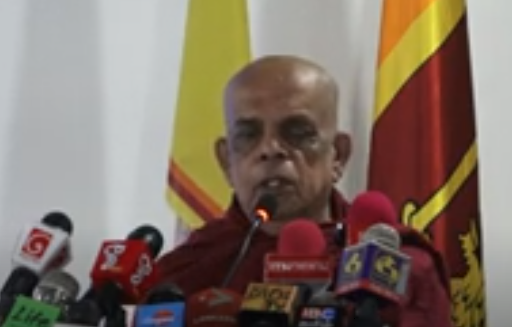
ජේ.ආර්. උන්නැහේ කිව්වේ තමන්ට බැරි ස්ත්‍රියක් පුරුෂයෙක් කිරීම විතරයි කියලා… දැන් රනිල් උන්නැහේ ඒකත් කරන්න යනවා – පූජ්‍ය බෙංගමුවේ නාලක හිමි (වීඩියෝ)

June 30th, 2024

උපුටා ගැන්ම  ලංකා ලීඩර්

ආණ්ඩුක්‍රම ව්‍යවස්ථාවට අනුව කටයුතු කිරීම මන්ත්‍රීවරුන්ගේ, ඇමැතිවරුන්ගේ, අගමැති හා ජනාධිපතිවරයාගේ මෙන්ම සියලු දෙනාගේ වගකීමක් වන බවත්, බහුතරයේ කැමැත්ත ප්‍රජාතන්ත්‍රවාදය ලෙස හැඳින්වුවද මෙරට එම ප්‍රජාතන්ත්‍රවාදය පිළිබඳව බරපතළ ගැටලුවක් ඇති වී තිබෙන බවත් පූජ්‍ය බෙංගමුවේ නාලක හිමියන් පවසති.

රටේ පක්ෂ විශාල ප්‍රමාණයක් අද ඇති බවද, ඡන්දයක් පැවැත්වූ විට එම බහුතරය සොයා ගැනීම විශාල ප්‍රශ්නයක් වී ඇති බවද උන්වහන්සේ පවසති.

පාලක පක්ෂයේ උවමනාවට විවිධ පනත් ගෙනවිත් පාර්ලිමේන්තුවේ සම්මත කරන බවත් පවසන උන්වහන්සේ, එය රටේ උවමනාවට, ජනතා පරමාධිපත්‍ය මත සිදුවන කාර්යක් නොවන බවත් පෙන්වා දෙති.

මෙවැනි පනත් ආණ්ඩුක්‍රම ව්‍යවස්ථාවට ගැලපෙනවාද යන්නට වඩා මෙරට සංස්කෘතියට ගැලපෙනවාද යන්න ගැටලුව මෙහිදී පැනනගින බවද, බටහිර තිබෙන ඕනෑම කුණුගොඩක් මෙරටට ගෙනවිත් අතහැරීම මෙරට සංස්කෘතියට සිදුවන දැඩි හානියක් බවද බෙංගමුවේ නාලක හිමියෝ පවසති.

ජේ.ආර් ජයවර්ධන එදා හයෙන් පහක බලයක් ලබා පැවසුවේ ස්ත්‍රියක් පුරුෂයකු බවට පත්කිරීමට පමණක් තමන්ට නොහැකි වූ බව යැයි පවසන උන්වහන්සේ, වර්තමානයේ රනිල් වික්‍රමසිංහ ජනාධිපතිවරයා එයත් කිරීමට පනත් ගෙනවිත් ඇති බවද සඳහන් කරති.

සවිස්තරාත්මක වීඩියෝව නරඹන්න…

Sri Lankan Justice Minister Wijeyadasa Rajapakshe offers prayers at Tirupati Balaji temple

June 30th, 2024

Ani

Sri Lankan Justice Minister Wijeyadasa Rajapakshe offers prayers at Tirupati Balaji temple
Read more At:
https://www.aninews.in/news/world/asia/sri-lankan-justice-minister-wijeyadasa-rajapakshe-offers-prayers-at-tirupati-balaji-temple20240630150338/

Sri Lanka summons Indian diplomat over naval sailor’s death

June 30th, 2024

MEERA SRINIVASAN Courtesy The Hindu

A Sri Lankan Navy sailor was killed in an operation targeting Indian fishermen and their fishing vessel off Kankesanthurai in the Jaffna peninsula, in the island’s nation’s Northern Province

The death of a Sri Lankan naval sailor has brought a long-standing fisheries conflict between India and Sri Lanka into the spotlight. File | Photo Credit: L. Balachandar

Sri Lanka’s Ministry of Foreign Affairs recently summoned an official from the Indian High Commission in Colombo and voiced concern over the death of a naval sailor, who was part of a patrol unit that seized an Indian fishing vessel.

A senior Foreign Ministry official handed over a formal note to the Indian diplomat, on the issue of persisting Illegal, unreported and unregulated (IUU) fishing, especially the bottom-trawling method, and indiscriminate poaching by Indian fishermen in Sri Lankan waters”, according to a news report published in the Colombo-based Sunday Times newspaper.

An official source told The Hindu that the Indian official was summoned to the Ministry on Friday.

It was mainly to convey concern from the Sri Lankan side,” the source said, requesting anonymity.

The issue was reportedly raised in New Delhi too, when Sri Lanka’s High Commissioner to India Kshenuka Senewiratne called on External Affairs Minister S. Jaishankar on June 25.

In the wee hours of the same day, a sailor from the Sri Lankan Navy sailor was killed in an operation targeting Indian fishermen and their fishing vessel off Kankesanthurai in the Jaffna peninsula, in the island’s nation’s Northern Province. However, neither official mentioned discussing this in their updates on the social media platform ‘X’ soon after the meeting.

In a media statement last week, the Sri Lankan Navy attributed the fatal mid-sea incident to aggressive manoeuvres of an Indian trawler” that resisted” apprehension by the patrol unit.

As many as 10 Indian fishermen, seven from Nagapattinam, one from Cuddalore in Tamil Nadu, and two others from Andhra Pradesh, were arrested on charges of illegal fishing. Their fishing trawler was confiscated.

Long-persisting conflict

The development has brought the long-persisting fisheries conflict in the Palk Strait back into the spotlight. Disregarding the relentless demand of Sri Lanka’s northern fishermen that their Indian counterparts stop using the destructive bottom-trawling method of fishing, the fishermen from India have continued with the practice for years.

Meanwhile, northern Sri Lankan fishermen have blamed the governments of Sri Lanka and India for failing to work out a durable solution to the enduring problem, which has put their livelihoods under severe pressure.

They have also been demanding the resumption of talks between representatives of fishermen’s organisations from both sides.

Both governments have a responsibility in implementing the agreement reached by both sides in 2016 when the Foreign Ministers of both countries met in Delhi. They agreed to end the practice of bottom-trawling at the earliest. Instead of taking that effort forward, some actors are trying to politicise this issue,” said Annalingam Annarasa, who leads a Jaffna-based fisheries cooperative society.

Following the 2016 bilateral meeting and agreement India and Sri Lanka set up a Joint Working Group to resolve the problem of Indian fishermen frequently facing arrest for illegal fishing in Sri Lanka’s territorial waters. The Group last met in 2022.

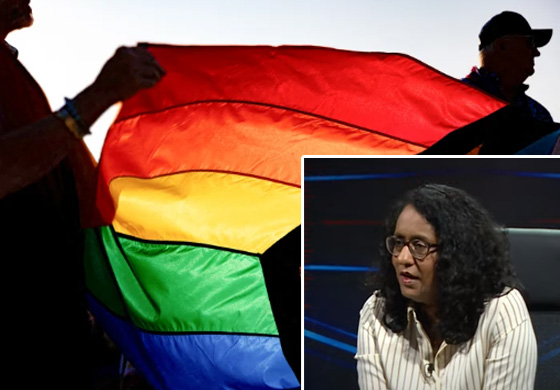
සමලිංගික සබඳතා ගැන නීති සංශෝධනයට මාළිමාව සහාය දෙනවා – හරිනි කියයි (වීඩියෝ)

June 30th, 2024

උපුටා ගැන්ම  ලංකා ලීඩර්

දණ්ඩ නීති සංග්‍රහය යටතේ සමලිංගික සබඳතා සාපරාධී වරදක් නොවන බවට සංශෝධනය කිරීමට ශ්‍රී ලංකා පොදුජන පෙරමුණේ පාර්ලිමේන්තු මන්ත්‍රී ප්‍රේම්නාත් සී. දොළවත්ත විසින් ඉදිරිපත් කරන ලද පෞද්ගලික මන්ත්‍රී පනත් කෙටුම්පතට තම පක්ෂය සහාය ලබාදෙන බව ජාතික ජන බලවේගයේ පාර්ලිමේන්තු මන්ත්‍රී ආචාර්ය හරිනි අමරසූරිය පවසයි.

‘දෙරණ 360’ වැඩසටහනට එක්වෙමින් ආචාර්ය අමරසූරිය LGBTQ+ ප්‍රජාව සම්බන්ධයෙන් සිය පක්ෂයේ ස්ථාවරය පැහැදිලි කළාය.

අපි කාලයක් තිස්සේ මේ ප්‍රජාව වෙනුවෙන් පෙනී සිටිනවා. ඔවුනුත් මේ සමාජයේම කොටසක්. සමලිංගික ප්‍රජාව ඇතුළුව ස්ත්‍රී පුරුෂ අනන්‍යතා විවිධයි. ආරම්භයේ සිටම, අපි පුද්ගලයන්ගේ ලිංගභේදය මත වෙනස් කොට සැලකීම නොකළ යුතුය යන ස්ථාවරයේ සිටිනවා” 

විශේෂයෙන්ම, මෙම සමලිංගික සබඳතා අපගේ දණ්ඩ නීති සංග්‍රහයේ අපරාධ ලෙස දක්වා තිබෙනවා. මෙය අපේ රටේ ඇති වූ නීතියක් නෙවෙයි. එය වික්ටෝරියානු යුගයේ බ්‍රිතාන්‍යයන් විසින් හඳුන්වා දෙන ලද නීතියක්. ඒ නිසා එය සංශෝධනය විය යුතුයි කියලා අපි විශ්වාස කරනවා,” 

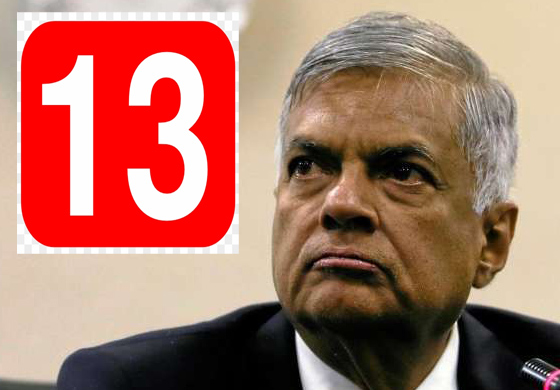
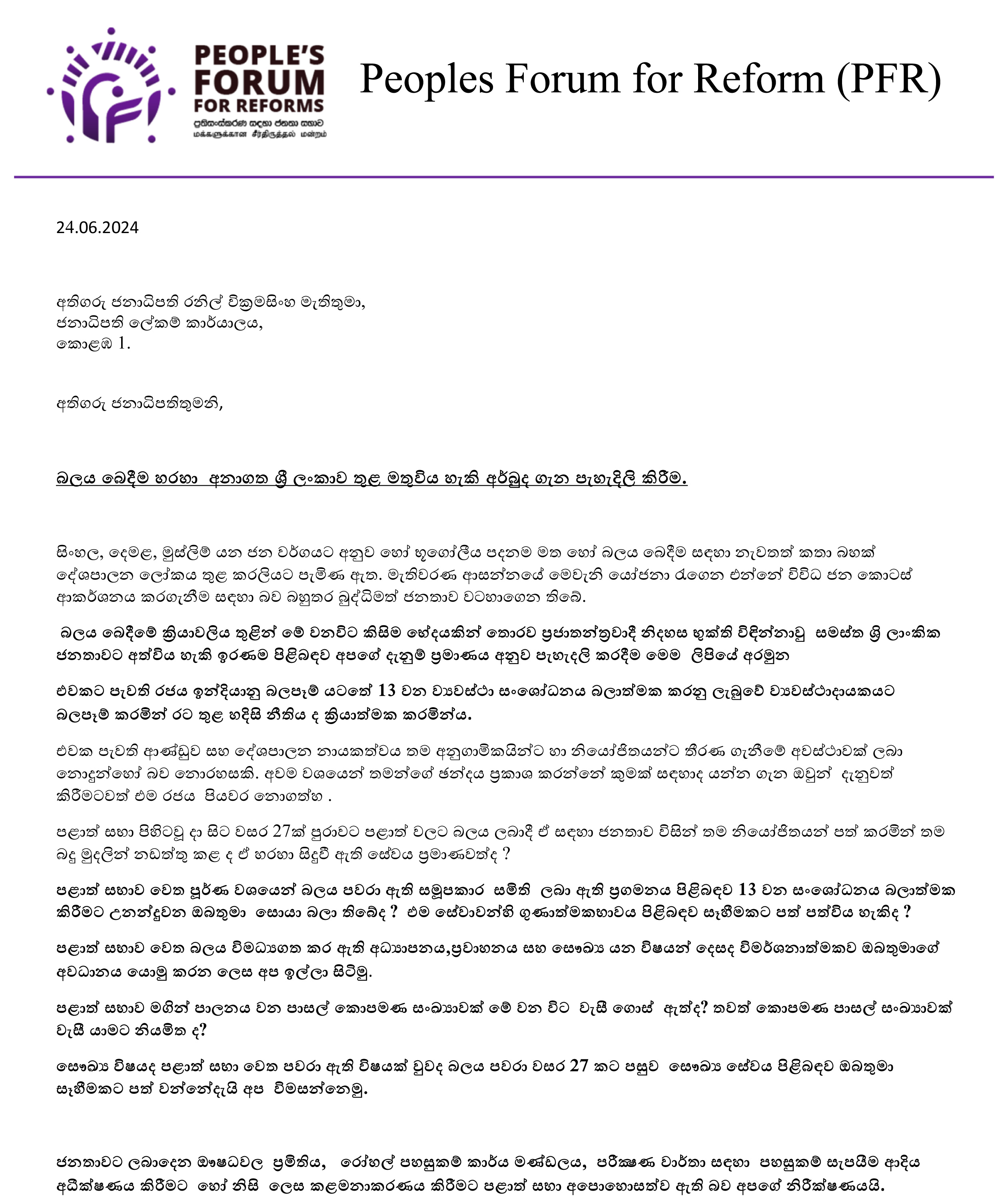
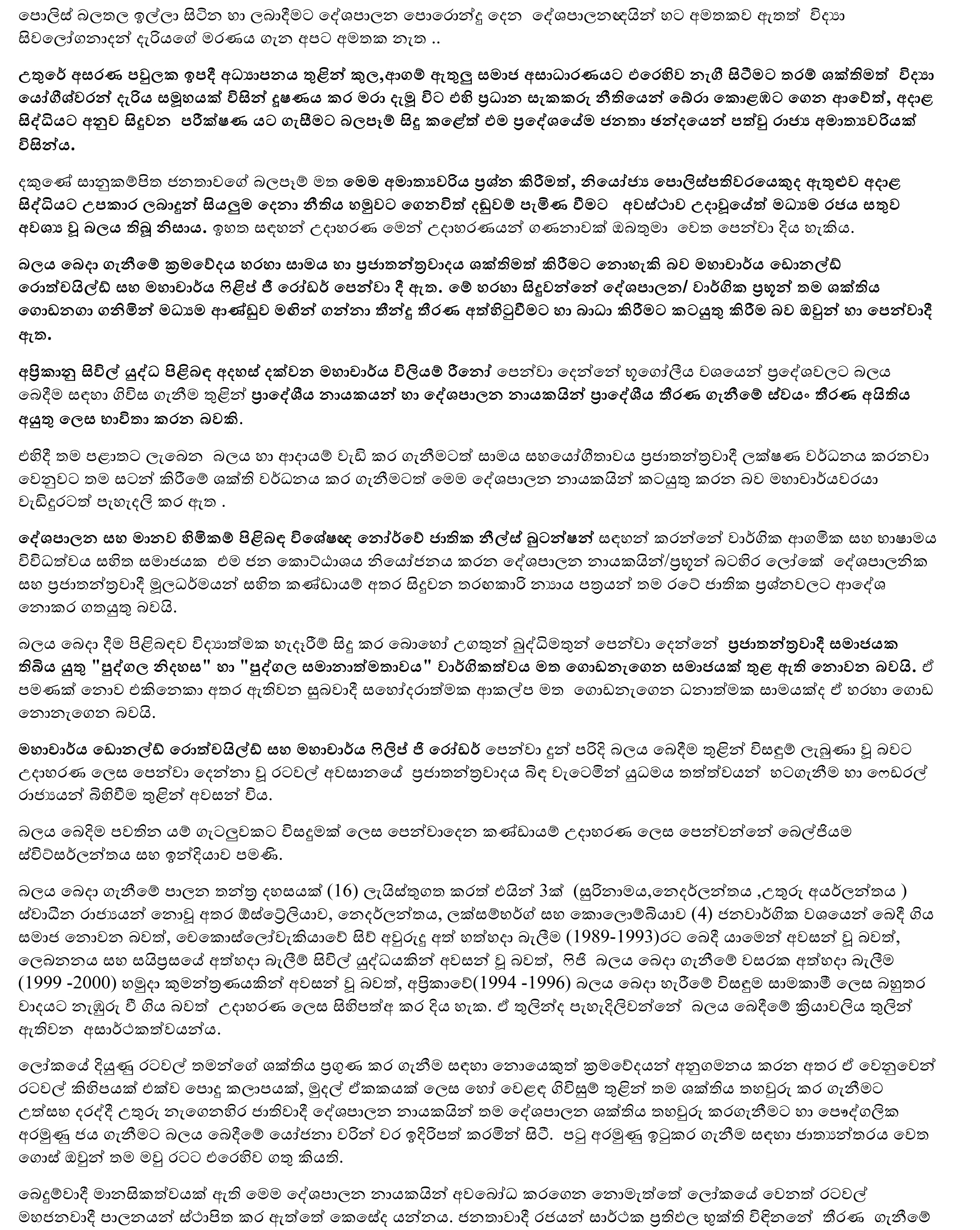
දේශපාලකයන් විසින් බංකොළොත් කළ රට තුල බලය බෙදීමේ ක්‍රියාවලිය දියත් කළහොත් අර්බුද රැසක් නිර්මාණය වේවි – ප්‍රතිසංස්කරණ සඳහා වූ ජනතා සභාවෙන් ජනපති රනිල්ට ලිපියක්

June 30th, 2024

උපුටා ගැන්ම  ලංකා ලීඩර්

බලය බෙදීම හරහා  අනාගත ශ්‍රී ලංකාව තුළ මතුවිය හැකි අර්බුද ගැන පැහැදිලි කරමින් ප්‍රතිසංස්කරණ සඳහා වූ ජනතා සභාවේ පරිපාලන ලේකම් ශර්මිලා ගෝනවෙල මහත්මිය විසින් ජනාධිපති රනිල් වික්‍රමසිංහ මහතා වෙත ලිපියක් යොමුකර තිබේ.

දේශපාලකයන් විසින් බංකොළොත් භාවයට ඇද දැමූ මේ රට තුල  බලය බෙදීමේ ක්‍රියාවලියද දියත් කළහොත් තවත් අර්බුද රැසක් නිර්මාණය වනු ඇති බවත්, එවැනි බලය බෙදීමක් හරහා  උතුරේ හෝ දකුණේ සාමාන්‍ය ජනතාව මෙතෙක් මුහුණ නොදුන් ආකාරයේ  ව්‍යාකූල තත්වයන් රාශියක් මතුවනු ඇති බවත් ඇය මෙම ලිපිය මගින් පෙන්වා දී තිබේ. 

13 වන සංශෝධනය බලාත්මක කිරීමට උනන්දුවන ජනාධිපතිවරයා විසින් පළාත් සභාව වෙත පූර්ණ වශයෙන් බලය පවරා ඇති සමූපකාර  සමිති  ලබා ඇති ප්‍රගමනය පිළිබඳව හෝ සොයා බලා ඇත්දැයි ඒ මහත්මිය මෙම ලිපිය මගින් ප්‍රශ්නකර තිබේ.

අදාළ ලිපිය පහළින්…

Former TNA leader R. Sampanthan passes away

June 30th, 2024

Courtesy Adaderana

Former TNA leader R. Sampanthan passes away

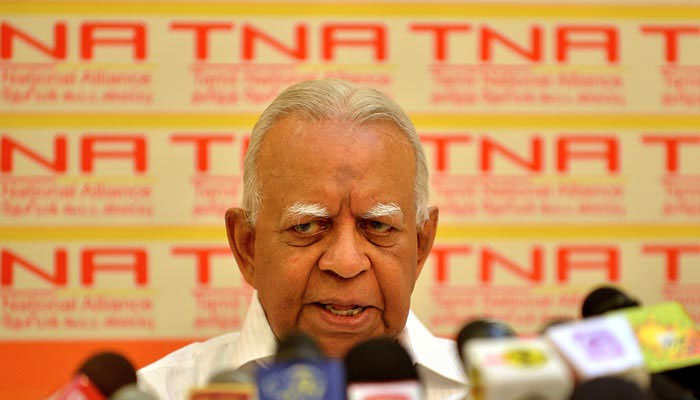
Former Tamil National Alliance (TNA) leader and former Opposition Leader MP R. Sampanthan has passed away at the age of 91.

He has reportedly passed away while receiving treatment at a private hospital in Colombo.

A veteran Tamil politician and prominent figure in country’s main Tamil alliance – Ilankai Tamil Arasu Kadchi (ITAK), his political career spanned six decades, with his first stint in the Sri Lankan parliament starting in 1977.

Sampanthan was the incumbent MP for Trincomalee District and has served in five parliaments since 1977.

A lawyer by profession, Sampanthan led the Tamil National Alliance since 2001. He was a Member of Parliament continuously from 2001 until his death in 2024, and previously served as a MP from 1977 to 1983 and from 1997 to 2000. 

He was the Leader of the Opposition from September 2015 to December 2018.

In April this year, the Parliament had granted the former TNA leader and Trincomalee District MP leave of three months from attending Parliament sessions as he was receiving medical treatment.

Former President Mahinda Rajapaksa, MP Field Marshal Sarath Fonseka and TNA MP M.A. Sumanthiran took to ‘X’ (formerly Twitter) to express their condolences on the veteran politician’s passing. 

We announce with deep regret the passing of Hon. R Sampanthan, Leader of the TNA and MP for Trincomalee a little while ago. Funeral arrangements will be notified later,” Sumanthiran said via the TNA media unit.

My deepest condolences on the passing of TNA Leader R. Sampanthan. He was an old friend and colleague and we shared many a days discussing various issues. His demise is a loss to Sri Lanka political fraternity and may his family & friends overcome this sad loss,” the SLPP leader posted on ‘X’.

Meanwhile, former army chief Fonseka said: I express my deepest condolences. Hon. R. Sampanthan was a very senior politician. His loss would be greatly felt.”

Poson celebration: The truth that fabricators of the baseless ‘Buddha-was-born-in-Sri-Lanka’ myth want to obliterate from the pages of Sri Lankan history 

June 29th, 2024

By Rohana R. Wasala

Poson was celebrated throughout the island by Sri Lankan Buddhists on the full moon poya day of June 21, 2024. Sri Lanka’s mainstream media including state media available online offered me little information about islandwide Poson observances that were held. It looks like state sponsorship of devotional activities connected with Poson was either absent or hardly publicised. However, according to what I gathered through personal communication with friends from Sri Lanka the Buddhist public’s participation in the ceremonies along with thousands of monks and nuns was the most enthusiastic and was on the grandest scale ever for the past five or six years. Facing as they are the most daunting existential threat to date in the history of their unique island civilization (I sincerely hope I am wrong in this assumption formed on the basis of what I read, hear and watch on available online media), the Sinhalese Buddhists are awakening to a renewed awareness of the incomparable legacy of Arhant Mahinda Thera. The following is a reflection, in this context, on the past history and modern significance of the annual Poson ceremony. I humbly offer it for the critical examination of my well informed readers as a personal opinion for what it is worth;

The first three months of the lunar calendar of the Sinhalese: Bak, Vesak, and Poson (roughly corresponding to the months of April, May and June in the Gregorian calendar which is in common use today) are each marked by one of their three most important annual celebrations. The month of Bak has the Sinhala Aluth Avurudda, an age-old harvest festival organized  according to traditional astrological beliefs based on the idea of the sun completing an annual circuit across the twelve signs of the zodiac from Aries to Pisces, and resuming another  (marking the end of one lunar year and the beginning a new year); hence it is also called the Surya Mangalyaya (Sun Festival); the Aluth Avurudda is a secular festival marked by feasting and recreational activities that usually go on for days in normal times. The Vesak is an entirely religious  ceremony that pays homage to the Buddha, marking the full moon day of the month as the day that his Birth, Enlightenment and Parinibbana (Passing) are traditionally believed to have taken place; this is the most important religious celebration of the year for Sri Lankan Buddhists. Colourful illuminations and the unique dansaelas (alms centres that offer free food and beverages to all who are willing to accept them). The third most important annual national ceremony is held on the Poson full moon poya day, which this year (2024) fell on June 21. It is also a completely religious event that is hardly less significant than Vesak. If Vesak is dedicated to the Buddha, Poson is held in honour of Arhant Mahinda, who is revered as the Anu Budu or Surrogate Buddha, for it was he who brought Buddhism to Lanka and established it as the country’s state religion in the 3rd century BCE as recorded in the Mahavamsa or the Great Chronicle composed in the 5th century CE, thus officially  initiating the still predominant Sinhalese Buddhist religious culture of the island nation. 

The social and religious cultural significance of these apolitical celebrations is inexhaustible, irrespective of the secular or spiritual nature of each ceremony. They are not  meaninglessly fun and frolic based. Though these events are sacred only to Buddhists, they unobtrusively inspire fellow feeling and goodwill among the multiethnic population and project the country’s image to other nations as worthy of their courteous accommodation, friendship and formal and informal recognition (i.e., a state of mutual respect and acceptance formally called the ‘comity of nations’). Apart from this, within the island, the Aluth Avurudda, Vesak, and Poson events are of inestimable historical and contemporary significance particularly for the majority Sinhala Buddhist community. For them the three festive or celebratory occasions are massive national morale-boosters, so to speak.  

The Sinhala word ‘poya’ comes from the Pali ‘uposatha’ (which means ‘to fast’); in the Sinhalese lunar calendar, the full moon day of every month is considered by the Buddhist public as their main poya day or fasting day, which they are recommended  to spend, as Buddhists, engaged in religious rituals and practices. The special  significance of the Poson poya day for Buddhists derives from the fact that  Arhant Mahinda Thera (son of Emperor Asoka Dharmasoka of Jambudipa/India) arrived at Mount Missa and stationed himself ‘on the rocky peak of the delightful and celebrated Ambastthala’ in the island of Tambapanni or Lanka along with four other bhikkhus, a samanera or novice bhikkhu named Sumana (young son of Sangamitta, Mahinda Thera’s sister), and an upasaka (a lay follower) by the name of Bhandu, who was a grandnephew of Devi of Vedisa in the Avanti country. Devi was none other than Mahinda Thera’s mother. This historic event has been dated to 247 BCE in terms of information given in ancient Chronicles such as Dipavansa and Mahavansa composed respectively in the 4th and 5th CE, the latter relatively more sophisticated than the former. 

Chapter 13 of the Mahavansa deals with the arrival of Arhant Mahinda Thera in Lanka and Chapter 14 with his meeting with the ruler of the island king Tissa/Devanampiya Tissa, and the royal reception of the missionaries and their simultaneous introduction to the populace in the capital Anuradhapura. From the various incidental scraps of information that can be gathered from the previous and following Chapters, it can be inferred that this obviously formal introduction of Theravada Buddhism to Lanka was as much an instance of peaceful political intervention as a religious-cultural event. For example, Arhant Mahinda lived for some time at Vedisa visiting his mother and other relatives just before proceeding to Lanka on his mission. In Chapter 13 of the Mahavansa (contained in the first part of the book translated by George Turnour in 1836, which Mudliyar L.C. Wijesinghe added, with notes and emendations, to his own  Government of Ceylon commissioned translation of the Mahavansa in two parts published in 1889), we have the following detail concerning this brief stay of Arhant Mahinda in the Avanti country: ‘At this period (of Mahinda’s visit) she (the queen) was residing there, in Cetiyanagara (LCW emends this as ‘Vedisa’). 

While the thera was sojourning there, he thus meditated: The period has arrived for undertaking the mission enjoined by my father. May the said Devanampiyatissa, having already solemnised his inauguration with utmost pomp, be enjoying his regal state. May he, after having ascertained from my father’s ambassador the merits of the three blessed treasures (sent by my father), acquire a right understanding of them (the doctrines of Buddha). May he on the full moon day of the month of ‘jettha’ visit Missa mountain (Mihintale), for on that very day shall I myself repair to renowned Lanka”’. 

So, Mahinda Thera’s mission was a royal command to be carried out. The Lankan ruler, Devanampiyatissa, on the other hand, was required by Emperor Asoka to ‘acquire a right understanding of the three blessed treasures’ (which LCW interprets as the ‘doctrines of Buddha’) earlier conveyed to the former through ambassadors sent to him by the latter (i.e., Asoka). The fact that Mahinda Thera was his son also means something: that is, it indicates a relationship that was valued at a personal level (enhancing the political aspect of the mission). Mahinda Thera waited till the death of the aged king Mutasiva, the revolutionary Pandukabhaya’s son. The Thera was waiting for Mutasiva’s son Devanampiyatissa to ascend the throne. This suggests that Emperor Asoka had envisaged the introduction of a lasting change of order in the country by way of converting the ruler and the people to the new spiritual way shown by the Buddha. The old Mutasiva, being his father’s son, was probably too independent minded to give up his traditional ways (which, undoubtedly, are suggestive of our own native ancestors’ resistance to foreign domination and their love of independence. Apparently two hundred and fifty years of colonial subjugation under Vijaya had failed to completely deaden this spirit!).

Chapter 11 gives hints about the nature of the relationship that had existed between Emperor Dharmashoka of Jambudipa and DevanampiyaTissa of Tambapanni or Lanka, who was thought more amenable to the friendly persuasion of the emperor. The chapter is titled ‘The Inauguration of Devanampiya Tissa’. Mutasiva dies an old man after a sixty year reign, leaving ten sons and two daughters. Devanampiya Tissa, the second son, is crowned king. He sends a delegation of ambassadors led by his chief minister Maha Arittha, his maternal nephew, accompanied by the Brahman of the Hali mountain, a minister of state by the name of Malla, and a retinue, bearing royal gifts to the court of Dharmashoka in Pataliputra (Patna, today). They are well received there, and after a five month stay, they return to Anuradhapura, along with Dharmashoka’s own ambassadors bearing valuable gifts and royal advice to the Lankan monarch, asking him to accept the treasures of the Buddha, Dhamma, and Sangha. Dharmasoka’s ambassadors also bring requisites for Devanampiya Tissa’s coronation a second time. 

What made that a necessity? It is possible, as knowledgeable historians have already suggested, that the relationship between the two monarchs was unequal. It could be that it was an empire vs vassal state relationship. Even the title ‘Devanampiya’ (Pali lit. ‘beloved of the gods’) belonged to Emperor Dharmashoka. It is found in his rock edicts. It could have been conferred on the Lankan king as a special honour or a special mark of recognition. This connection laid a firm foundation for the evolution of Sri Lanka as a celebrated centre of commerce and culture on par with the territorially much larger and more powerful nations in the east.

The fact that the Mahavansa itself refers to this highly formal  exchange of deputations of ambassadors between the two kings prior to the arrival of Arhant Mahinda suggests that the story of the monk on the mount with his sacred mission surprising the monarch on the chase in the wilderness is a dramatic fictionalisation of a real historical event found in the ‘epic poem,’ which the Mahavansa is, according to one interpretation. Probably there was no better way of recording a profound gradual process for posterity that must have spread over a long period of time marked with disputes and debates and even violence between the adherents of local animistic forms of religious belief and the ‘newfangled’ (so to say) Buddhists (the process here being the weaning of the rulers and the common people of their primitive modes of religion). The miraculous aerial passage of Mahinda Thera and group from Jambudipa to Lanka, and from Mount Missaka (Mihintale) to the capital (Anuradhapura) must be a similar piece of fiction. There is no doubt that the ambassadors travelled between the two countries by sea and land. The missionaries must have used the same modes of travel. The famous ‘intelligence test’ given by the monk to the king could be a part of the drama. The diplomatic interactions between the two monarchs made it evident that Devanampiya Tissa didn’t lack intelligence. Could we say that Bhikkhu Mahanama, the author, in this context, mythologised history to make it more memorable and popular, instead of doing the reverse (historicising myth) as normally held? 

 According to the historical account, Arhant Mahinda addressed people in the latter’s own language (the ancestor of today’s Sinhala). With apologies to expert historians, could this mean that he spoke in Pali first and then explained what he said in the local language? This implies that  the local tongue had been a sophisticated enough medium for them to communicate the new doctrine, and that the audiences were intellectually advanced enough to be receptive to its message. So, the ‘introduction’ of Buddhism by Arhant Mahinda was not the case of a hardly civilized primitive people being led from total darkness to clear light in spiritual terms, but  an inspiring example of an increasing number of people of an obviously civilised community being rationally and compassionately persuaded to embrace Buddhist teachings in place of their less rational traditional beliefs. It is significant that Arhant Mahinda Thera began his missionary preaching with the profound Cullahatthipadopama Sutta or the ‘Discourse on the Shorter Elephant Footprint Simile’ . The Mahavansa text contains similar references to other discourses of the Buddha. Reading them is essential for a fuller understanding of the book. The Cullahatthipadopama Sutta contains the story of how brahman Janussoni, while riding out of Savatthi, at the time the Buddha  was living in Jeta’s Grove near that city, sees the Wanderer Pilotika Vacchayana coming towards him after a visit to the great sage. Janussoni is greatly impressed by what he hears about the Buddha from Vacchayana, and he calls on the Buddha. The Buddha teaches him the rational way of his teaching. If an elephant hunter finds one big footprint of an elephant in the forest and concludes that it is the footprint of a big male elephant, he is not necessarily right. There are many other points to consider before arriving at the right conclusion. Janussoni is taught about the ‘footprints’ of the Tathagata (Buddha), which involves his teachings about virtue, sense restraint, mindfulness and alertness, abandoning hindrances, the Four Jhanas, and the Three Knowledges. Buddha in this discourse makes an incidental reference to ‘cosmic expansion and cosmic contraction’ (two thousand five hundred years before modern physicists came out with the theory that the universe expands and then contracts, in the second decade of the 20th century, i.e., just a century ago!). We are now in the expanding phase of the universe according to this theory).  A ruler and a race capable of responding to profound doctrinal concepts and explanations like this were certainly not an uneducated and intellectually unsophisticated people.

So, we were a civilized people even before the formal introduction of Buddhism. This is being confirmed by recent archaeological discoveries and revolutionary new methods of exploring the past. We can be truly proud of our long history that is distinguished in its various aspects, of our beautiful country, of our language and literature and our multilingual legacy of the past centuries, the democratic system of government which is getting stronger by surviving unprecedented trials, and above all, of our humanistic and humanitarian spiritual tradition that eschews violent extremism, and that finally ‘aims at creating a society where the ruinous struggle for power is renounced; where calm and peace prevail away from conquest and defeat; where the persecution of the innocent is vehemently denounced; where one who conquers oneself is more respected than those who conquer millions by military and economic warfare; where hatred is conquered by kindness, and evil by goodness; where enmity, jealousy, ill-will and greed do not infect men’s minds; where compassion is the driving force of action; where all, including the least of living things, are treated with fairness, consideration and love; where life in peace and harmony, in a world of material contentment, is directed towards the highest and noblest aim, the realization of the Ultimate Truth Nirvana’ (The words within quote marks are from Ven. Dr Walpola Rahula’s ‘What the Buddha Taught’, pp. 88-89. The apt relevance of these sentiments to the conflict-ridden world of today including our country need hardly be pointed out.)

The formal introduction of Theravada Buddhism by Arhant Mahinda from Jambudipa or modern India that the Poson ceremony commemorated on June 21 this year (2024) is the ever enduring cornerstone of our unique island civilization. The Sinhalese initiated it under the Thera’s guidance and, disciplined by the teachings of the Buddha, gradually built it up over the past twenty three centuries. The most hospitable and humane Buddhist cultural fabric of our country that offers equal protection to all Sri Lankans of diverse ethnicities and religions is the great legacy that Arhant Mahinda has left us.

BUDDHIST VIHARAS AND EELAM Part 20d

June 29th, 2024

KAMALIKA PIERIS

Tamil Separatist Movement has shown an open lack of respect for Kurundi. Tamil activists entered Kurundi twice, while conservation was going on. They successfully disrupted the ceremony for enshrining relics, and then sometime later, said they wished to conduct a Pongal on the stupa premises.

They behaved in a rowdy manner showing disrespect to Buddhism.  The building of a stupa and placing relics in it are acts of religious significance, which should not be mocked or disturbed.  The Buddhist lobby must insist that the Tamil Separatist Movement   apologize for its behavior at Kurundi.

The Antiquities Ordinance and the Forest Reserve Act clearly state that no one can enter an archaeological reserve or forest reserve without permission. Kurundi vihara is in its own reserve which lies within the larger Norochcholai forest reserve.

Tamil Separatist Movement has trespassed into the Norochcholai forest reserve and the Kurundi archaeological reserve. They have deforested Norochcholai and destroyed Kurundi artifacts. Both are punishable offences.

Tamil Separatist Movement has   entered Kurundi vihara premises during Eelam war, and damaged Buddhist ruins including inscriptions .They entered the pilimage, removed Buddha statues and substituted a trident in order to turn the pilimage into a Hindu temple. They    also added a korowak gala and yupa gala to the Hindu worship.

Tamil activists entered Norochcholai forest reserve without permission, and   cut down 5 acres of valuable forest, dug up the ground, and made it look like a paddy field. Then they  parked tractors on the land to indicate possession. They did not dare cultivate it. The area they dug up had archaeological value. It was the   site of ancient iron manufacture. The five acres of bogus paddy field should be taken back by the Forest Department and the Raviharan group should be charged in court.

Tridents have been placed in many of the Buddhist ruins. Ellawela Medhananda found many such tridents placed in the Buddhist ruins of the east. This is trespass and meddling. The Department of Archaeology should remove these tridents.

Tamil Separatist Movement showed contempt not only towards Buddhism but to the Department of Archaeology as well .They spoke rudely to the Archaeology Officer in charge when they barged in to Kurundi to   conduct a Pongal. They were allowed to conduct a Pongal some distance away from the stupa. Then they said that they wished to conduct another Pongal close to the stupa. The Archaeology Officer was at first very conciliatory to the Tamil group, saying you have   carried out one Pongal, is that not enough, to which he got a rude reply. The archaeology official then spoke back equally strongly.

At the Pongal ceremony, the Tamil group, looked as though they would love to give Santhabodhi a good beating. Santhabodhi, unaware of this, went to speak to the Tamil group waiting to do Pongal close to the stupa. The police quickly removed Santhabodhi, not the Tamils. We saw this on television news. They had a reason.

The main concern of the police and the army at this event was not the stupa, the pongal or the Tamils, it was getting Santhabodhi out of the way. They knew that if Santhabodhi was given   one good slap by the Tamil group, who were dying to do so, there would be a mighty commotion all over the island.

 When the Kurundi stupa was getting excavated and conserved, there were two earlier functions where also Santhabodhi, who had pioneered the work, was asked to stay away .He watched the proceedings from the army camp.  This was also done to prevent anything bad happening.

Far too much recognition has been given to the Tamil Separatist Movement where Kurundi is concerned. They have nothing to do with Kurundi and their objections should have been firmly crushed. Instead, the Tamil opposition to Kurundi has been recognized and even dignified.

Udaya Gammanpila strongly supported Kurundi, when Kurundi badly needed support. Then in June 2023 he went to Kurundi where he met Raviharan. Television news showed them greeting each other cordially. Gammanpila told television news that the cultivation rights of the Tamils in Kurundi should also be looked after.

Bauddhaloka Foundation held an English language   webinar on Kurundi   in October 2023. https://youtu.be/Z9bzYgdFpAI. Bauddhaloka Foundation said they had received many requests for such a webinar especially from those living abroad.   There were two very comprehensive presentations   stating everything about Kurundi. Then came question time. There were no questions about Kurundi.   All the questions were slanted towards Hindu kovils.

First question was is there any plan to   include a Hind temple at Kurundi. Answer, there is discussion, but nothing has been decided.  Next question, how old is the kovil at Kurundi, what its history is   and what is being done for it.

 Answer from Department of Archaeology, Kurundi is in the middle of a 1600 acre forest.

There was no ancient Hindu temple there. The Hindu temple at Kurundi was started in 1981 when Cyril Mathew began to take as interest in Kurundi.  In this Hindu temple, they have placed part of a korowak gala for worship.

In the Bell report there was mention of a bull figure in Kurundi village. Was that found? Reply from Department of archaeology, we could not find a Kurundi village. Our work was confined to excavations at Kurundi temple. How close as the nearest village? It is more than 7 or 8 km away.

Next query, religious ceremonies were held before they started excavation at Kurundi. Was this also done before excavation at Hindu temples in Sri Lanka? Answer, Yes, we have started conserving two Hindu temples at Pooneryn and we had Hindu prayers before starting work.

Mention was made to the Hindu temple at Vallipuram, then to Tirukeethesvaram at Mantota. It was pointed out that Mantota   has a Buddhist temple and church as well. Recent attempts to expand the buildings of the church and Buddhist temple were halted by the Department of Archaeology.

The last speaker clinched the issue. He introduced himself as   Dharmakulasingham, a retired foreign service officer. He had earlier lived in Colombo. Kurundi, he said, is a simple issue made big by interested parties. The Tamil political parties have made a big issue out of this small matter. There is sufficient archaeological evidence, so why was it allowed to become an issue.  Why the correct situation was not presented at the start, he asked.

 A very small thing has been made big and the western media have taken it up as discrimination against the Tamils. .This has happened because the proper representaiotn was not made at the correct place at the correct time, he concluded. Tamils are a small population living among a much larger Sinhala population, he added.

Hindu temples belonged to two categories, one where there was a Brahmin priest to conduct the ritual of the temple. these are less than a thousand in number. Other small temples were under rule of madaalayam where no Brahmin poosaries and pandarams officiated. My impression was that more than 70% of the Hindu temples were these, said K.C.Logesawaran.  These temples were not rich. Colombo and Jaffna temples in contrast had rich and powerful devotees.

In India courts have ruled that   Hindu temples belong to the gods, in Sri Lanka courts have ruled that the Hindu temples belong to the trustees, said K. Kanag Iswaran. In Jaffna the ownership of the Hindu temple is vested not in the priests but in the persons who built the temple and pays for the rites, observed B Pfaffenberger. The trusteeship of the kovil stays with the family throughout        generations. it was a very lucrative trusteeship.  The owner of the temple got all the donations, which came not only from worship but also requests for passing exams and other such requests.

There is no legal provision for registering Hindu temples, said K.C.Logesawaran. The Buddhist lobby should call for control over the building of Hindu kovils in Sri Lanka. The kovils should be registered and there should be a register of kovils   maintained by the Department of Hindu Religious and Cultural Affairs

Jude Lal Fernando has spoken of the need to introduce special laws to govern the construction of religious sites as there are hundreds of such constructions. Demands to remove them have led to religious disharmony in the country he said. (continued)

Sri Lanka to save USD 17 billion through debt repayment plan – Ali Sabry

June 29th, 2024

Courtesy Adaderana

Minister of Foreign Affairs and President’s Counsel Ali Sabri, has stated that the successful debt sustainability process with bilateral creditors will provide Sri Lanka with an advantage of approximately US $ 17 billion.

The minister also stated that this situation will facilitate successful negotiations regarding international sovereign debts.

Minister of Foreign Affairs Ali Sabry revealed this addressing the Media briefing yesterday (28) at the Presidential Media Centre (PMC) under the theme Collective Path to a Stable Country.”

The Minister further commented,

On April 12, 2022, Sri Lanka decided to temporarily suspend the payment of a portion of its foreign debt. At that time, some parties predicted that the value of the rupee would surge to 600, 700, or even 1000 against the dollar. However, we managed to control the situation.

Following an agreement with the International Monetary Fund (IMF), we were instructed to restructure the debt. Lazard was appointed as our financial advisor, and Clifford Chance as our legal advisor for this process.

Initially, we focused on restructuring domestic debt while continuing to meet our obligations to multilateral organizations.

We have now successfully completed debt restructuring with bilateral creditor countries. India, Japan, and France formed an Official Creditor Committee (OCC) for managing bilateral debt and we also held talks with China. As a result of these efforts, Sri Lanka has achieved a sustainable debt repayment situation, gaining an advantage of approximately US $ 17 billion and numerous other benefits.

Furthermore, this achievement is expected to facilitate successful negotiations with international sovereign bond holders. Discussions on this matter are currently on-going.

Additionally, it’s important to note that the comprehensive debt restructuring must adhere to a specific timeline set by the International Monetary Fund. The total debt burden should be reduced to 95% of the Gross Domestic Product (GDP), and the current interest payments on foreign loans should be limited to 4.5% of the GDP”.

Source: PMD

රටම හොල්ලන ආන්දෝලනයක්! විනිසුරුවන්ගේ පැටිකිරිය විජේයදාස හෙළිකරයි!

June 29th, 2024

අධිකරණයෙන් කෝටි 20ක විස්කි අතුරුදහන් – අධිකරණ ඇමති

June 29th, 2024

Dasatha News

ඇතැම් අධිකරණ විනිසුරුවන්ගේ කැත වැඩ- ලැජ්ජයි හොරෙන් ලයිට් අරන්, කුඩු අයිස් කාරයෝ නිකම්ම නිදහස් කරනවා

June 29th, 2024

දයාසිරිගෙන් ආන්දෝලනයක්! මේක බරපතල කාරණයක්! සභාවම නිහඬවෙයි… අධිකරණයට බලපෑම්?

June 29th, 2024

BIG FOCUS |ණය ප්‍රතිව්‍යුහගත කිරීමෙන් පසු |

June 28th, 2024

ජනපතිවරණය 2024 පැවැත්වීමට මැතිවරණ කොමිසමට ව්‍යවස්ථානුකුල බලයක් නැත.

June 28th, 2024

හරෂ කුමාර් සුරියආරච්චි

ශ්‍රී ලංකාවේ වර්තමාන ව්‍යවස්ථාවට අනුව ජනාධිපති ධුර කාලය වසර 6 කි. 5 ක් නොවේ. මක්නිසාද යත්, ජනාධිපති දුර කාලය වසර 6 සිට 5 දක්වා අඩු කිරීමට යෝජනා කල  ව්‍යවස්ථා සංශෝධන කෙටුම්පත වූ 2015 වසරේ පාර්ලිමේන්තුවට ඉදිරිපත් කල 19 වන ව්‍යවස්ථා සංශෝධන කෙටුම්පත ජනමතවිචරනයකින් ජනතාව අනුමත කර නැති බැවින් තවමත් ව්‍යවස්ථාව බවට හෝ නීතියක් බවට හෝ පත්වී නොතිබීමයි.. මෙම ව්‍යවස්ථා සංශෝධන කෙටුම්පතෙහි ජනමත විචාරණයකින් තොරව සම්මත කල නොහැකි යෝජනා කිහිපයක් ම අඩංගු වේ. එවන් අවස්ථාවක එවැනි කෙටුම්පතක් පාර්ලිමේන්තුව 2/3 ක ඡන්දයෙන් සහ ජනමතවිචරනයකින්ග් සම්මත කල යුතුය. නමුත් මෙම  19 වන  ව්‍යවස්ථා සංශෝධන කෙටුම්පත සදහා පාර්ලිමේන්තුව 2/3 ක ඡන්දය ලබා ගත්තද මේ වනතුරුත් අදාළ  ජනමතවිචාරණය පවත්වා නැත.  එම නිසා, ශ්‍රී ලංකා ආණ්ඩුක්‍රම ව්‍යවස්ථාවේ 78,79,80(2) යන ව්‍යවස්ථා වලට අනුව 19 වන ව්‍යවස්ථා සංශෝධන කෙටුම්පත තවමත් ව්‍යවස්ථාව බවට පත් වී නැත. එසේනම් එය ජනමතවිචරනයකින්ග් සම්මත වන තුරු ජනපති ධුර කාලය වසර 5 ක් වන්නේ නැති අතර එම ධුර කාලය තවමත් වසර 6 කි.

මේ අනුව  අවසන් වරට පැවැත්වූ 2019 ජනාධිපතිවරයෙන් ජනතාව පත් කල ජනපතිගේ ධුර කාලය වන වසර 6 කට කලින් ජනපති ධුරය සදහා ව්‍යවස්ථාව අනුව ජනපතිවරණයක් පැවැත්විය නොහැක. එමනිසා වර්තමාන ජනපති සිය ධුරයේ 2025 නොවැම්බර් වන තුරු රැදී සිටිය යුතුය. ජනපතිවරණයක් පැවැත්විය හැක්කේ ඉන් අනතුරුවයි. යම් හෙයකින් වර්තමාන ජනපති සිය කැමැත්තෙන් ධුර කාලය වසර 5 කින් අවසන් කලද ජනපතිවරණයක් පැවැත්වීමට මැතිවරණ කොමිසමට ව්‍යවස්ථානුකුල බලයක් නොමැත. එවන් අවස්ථාවක සිදු කල හැක්කේ පාර්ලිමේන්තුව් මගින් ඉදිරි වසර සදහා ජනපතිවරයෙකුව තෝරා පත් කර ගැනීමයි. ඒ අනුප්‍රාප්තික ජනපතිවරයෙකුට තම ධුර කාලය දීරඝ කර ගැනීමේ අරමුණෙන් වසර 6 පුරණ වීමට පෙර  ජනපතිවරණයක් පැවැත්වීමට කටයුතු කල නොහැකි බැවිනි.. මේ අනුව  මැතිවරණ කොමිසමට 2025 වසරෙහි මිස ඉන් පෙරාතුව ජනපතිවරණයක් පැවැත්විය නොහැකියි.

යම් හෙයකින් 2024 වසරේ ජනපතිවරණයක් පැවැත්වීමට අවශ්‍යතාවක් ඇත්නම් කලයුත්තේ පළමුව 19 වන ව්‍යවස්ථා  සංශෝධන කෙටුම්පත අරභයා ජනමතවිචාරණයක් පවත්වා එය ජනතාව අනුමත කළහොත් ඉන් පසුව 19 වන ව්‍යවස්ථා  සංශෝධන කෙටුම්පත නීතියක් ලෙස සම්මත වූ බවට ජනාධිපති අත්සන් තැබීමයි. එවිට එම නව නිතිය අනුව ජනපති ධුර කාලය වසර 5 ක් වන  බැවින් එවිට 2024 වසරේදී අවශ්‍ය පරිදි ජනපතිවරණය පැවැත්වීම කල හැකි වනු ඇත. එහෙත් එහිදීද වෙනත් ව්‍යවස්ථාපිත ගැටළුවක් පැන නැගෙන නමුත් ලිපිය කෙටි කිරීමේ අරමුණින් මෙහිදී ඒ ගැන සාකච්චා නොකරමු.

මෙම කරණය පිලිබදව අප විසින් 2018 වසරේ සිට ලිපි රාශියක් පල කර ඇති අතර මේ පිලිබදව එකල නීතිපතිට, ජනපතිට සහ මැතිවරණ කොමිසමට ද දැනුම් දී තිබුණි. ශ්‍රේෂ්ඨාධිකරනයටද පසුව ආ ව්‍යවස්ථා සංශෝධනයක් පිළිබදව විමසන අවස්ථාවේ මෙම ප්‍රශ්නය පිළිබද කරුණු දැක්වීමට ඉදිරිපත් වුවද කතානායකට ලබාදෙන පිටපතෙහි අඩුවක් තිබෙන බව පවසා නීතිපති විසින් එම අවස්ථාවට් විරුද්ධ වූ නිසා ශ්‍රී ලංකාවේ ව්‍යවස්ථාවෙහි ඇති නීති විරෝධී ස්වභාවය නිවැරදි කිරීමේ අවස්ථාවක් අපටත් පොදුවේ ශ්‍රී ලංකාවාසි ජනතාවටත් අහිමි විය..

ශ්‍රී ලංකාවේ ව්‍යවස්ථාව  අරථ  දැක්වීමේ බලය ඇත්තේ නොඑසේනම්  යම්කිසි කාරණයක් ව්‍යවස්තානුකුලද නැතිනම් ව්‍යවස්ථාවට පටහැනිද යන්න ප්‍රකසහ කල යුත්තේ ශ්‍රේෂ්ඨාධිකරණයයි. එසේම ව්‍යවස්ථාව වෙනස් කිරීමේ හෝ වෙනයම් පනතක් නීතියක් ලෙස පාර්ලිමේන්තුව තුල සම්මත කල හැක්කේ ශ්‍රේෂ්ඨාධිකරණය ලබා දී ඇති තීරණ වලට අනුකුලව පමණයි. .  ශ්‍රේෂ්ඨාධිකරණය විසින් යම් කිසි ව්‍යවස්ථා සංශෝධනයක් සදහා ජනමතවිචාරණයක් අවශ්‍යයි තීරණය කර ඇත්නම් පාර්ලිමේන්තුවට වෙනත් උපක්‍රම භාවිතයෙන් හෝ අතපසුවීම් නිසා හෝ එම සංශෝධනය ජනමතවිචරනයකින් තොරව ව්‍යවස්ථාවට ඇතුල් කර නීතියක් බවට පත් කල නොහැකියි. එවැන්නක් කිරීම ජනතා පරමධිපත්‍ය උල්ලංගනය කිරීමක්, ව්‍යවස්ථාව උල්ලංගනය කිරීමක් සහ ව්‍යවස්ථාපිත  යුතුකම පැහැර හැරීමක් ද වේ. එවන් ක්‍රියාවක් හිතාමතා යම් පාර්ලිමේන්තුවක් සිදු කරන්නේනම් එම පාර්ලිමේන්තුවේ කතානායක, කැබිනෙට් මණ්ඩලය, සහ සියලුම මන්ත්‍රී වරු  ජනතා පරමධිපත්‍ය උල්ලංගනය කිරීමක්, ව්‍යවස්ථාව උල්ලංගනය කිරීමක් සහ ව්‍යවස්ථාපිත  යුතුකම පැහැර  හැරීමක් කරන්නන් වේ. යම් කිසි පාර්ලිමේන්තුවක් එවැනි වරදක් අතපසුවීමකින් හෝ චේතාන්විතව නොවී හෝ සිදු කර ඇත්නම් එම වරද දන ගත් වහාම එය නිවැරදි නොකරන්නේනම් එම නිසාද ඔවුන් ව්‍යවස්ථාපිත  යුතුකම පැහැර හැරීමක් කරන්නන් වේ.

26.06.2024

වෛද්‍ය සිසු ත්‍රිමාවිතාන ඝාතනය කළ අළුගෝසුවන් තිදෙනෙකුට රත්නපුරේ දොරේකන්දේදී අත්වූ ඉරණම!  

June 28th, 2024

ධර්මන් වික්‍රමරත්න

පෞද්ගලික වෛද්‍ය විද්‍යාලයට එරෙහි සටන 1987 මාර්තු 18 සටන පටන් ගනී. මෙහි ලොකුම සටන ඇති වුණේ අම්බලන්ගොඩ කහව පද්මසිරි ත්‍රීමාවිතාරණ ඝාතනයයි. ඒක සිද්ධ වුණේ 1988 ඔක්තෝබර් 22 රත්නපුරේදී. එකම දින එකම මොහොතක පැහැරගැනීමට සහ ඝාතනයට ලක්වූ තිදෙනා වන වෛද්‍ය සිසු ත්‍රීමාවිතාන, ඔරුවල වානේ සංස්ථාවේ රංජිත් පෙරේරා සහ ඇඹිලිපිටිය කඩදාසි කම්හලේ ගබඩා අංශයේ බී.ඩී බන්දුවර්ධන සේවයේ යෙදී සිටියේය. අවසානයේ පෞද්ගලික වෛද්‍ය විද්‍යාල සටනට ක්‍රියාකාරීව මැදිහත් වුණු පේරාදෙණිය(22), රුහුණ(2) හා කොළඹ(9) වෛද්‍ය සිසුන් 33 ක් ඝාතනය වුණා. ත‍්‍රීමාවිතාන ඝාතනය කළේයැයි චෝදනා ලැබූ පිරිසෙන් සිව්දෙනෙකු කැරලිකරුවන් විසින් රත්නපුරේ දොරේකන්දේදී ඝාතනය කරන ලදී. රියදුරු සංඝදාස පමණක් එහිදී දිවි බේරාගැනීමට සමත් විය. මේ ඒ කතාවය…. @ මෙම youtube නාලිකාව අසුව දශකයේ ධවල භීෂණය පිළිබඳව සත්‍ය තොරතුරු ගෙන එන්නකි.

රජයේ සංවර්ධන වැඩසටහන් කඩිනම් කිරීමේ ප්‍රධාන වගකීම දිසාපතිවරුන් සතුයි.- විමධ්‍යගත අයවැය වැඩසටහනේ ප්‍රාථමිකය ක්‍රියාත්මක කර ගැනීමේ ප්‍රමාදයක් තිබෙනවා.  -අග්‍රාමාත්‍ය දිනේෂ් ගුණවර්ධන මහතා.

June 28th, 2024

අග්‍රාමාත්‍ය මාධ්‍ය අංශය

 අග්‍රාමාත්‍යවරයා මේ බව සඳහන් කළේ  දිවයින පුරා විමධ්‍යගත අයවැය වැඩසටහන,විශේෂ ව්‍යාපෘති, උරුමය වැඩසටහන සහ කඳුකර දශකය වැඩසටහනේ  ප්‍රගතිය විමසා බැලීම සඳහා 2024.06.27 දින ස්වදේශ කටයුතු අමාත්‍යාංශයේ පැවති විශේෂ සාකච්ඡාවකට එක්වෙමිනි.  
විමධ්‍යගත අයවැය වැඩසටහනේ සම්පූර්ණ ව්‍යාපෘති ගණන 33 362ක් වන අතර ඒසඳහා වෙන්කළ මුළු මුදල රුපියල් මිලියන 11250කි.  දැනටමත් දිස්ත්‍රික්ක වෙත නිදහස් කර ඇති මුළු මුදල රුපියල් මිලියන 11 022ක් වන අතර එය ප්‍රතිශතයක් ලෙස එය 97.98% කි. නිදහස් කිරීමට ඉතිරි ප්‍රතිපාදන ප්‍රමාණය රුපියල් මිලියන 227කි.
මෙහිදී අදහස් දැක් වූ අග්‍රාමාත්‍යවරයා –
මෙම වැඩසටහන ක්‍රියාත්මක කිරීමේ ප්‍රධාන වගකීම දිසාපතිවරුන් සතුයි. ඔබත් අපත් ඒ වගේම විශේෂයෙන් ජනාධිපතිතුමා පත් කළ කමිටුවත් මාස තුනක් පුරා යෙදුණු සාකච්ඡාවල ප්‍රතිඵල සමාලෝචනය කිරීමටයි අද එක්වන්නේ. අනුගමනය කළ යුතු සාම්ප්‍රදායික විමධ්‍යගත ප්‍රතිපාදන වෙන් කිරීම ක්‍රියාත්මක කිරීමේ පිළිවෙතින් සම්පූර්ණයෙන් බැහැර වී පසුගිය දවස් 45 තුළ ජනාධිපතිතුමා ඒ සඳහා අපට ගමන් කිරීමට ඉඩකඩ ලබා දුන්නා. ඒ අනුව දිස්ත්‍රික් ලේකම්වරු, දිස්ත්‍රික්  සංවර්ධන කමිටු සභාපතිවරු,  ප්‍රාදේශීය සංවර්ධන කමිටු සභාපතිවරු අන්තර්ගතව මෙම වැඩපිළිවෙළ මෙහෙයවීමට අවශ්‍ය ප්‍රතිපාදන ලබා දී තිබෙනවා.
තොරතුරු නිවැරදිද, සම්පූර්ණ වී තිබෙනවාද කියන දේ භාරවෙන්නේ ඔබ සියලු දෙනාටයි. විමධ්‍යගත   වැඩසටහනේ ප්‍රාථමිකය ක්‍රියාත්මක කර ගැනීමට ප්‍රමාදයක් තිබෙනවා. එක සාමාන්‍ය ස්වභාවය. කලින් යෝජනා කර, නිර්දේශ කොට අනුමත කිරීම කළ හැකි නම් ඒවා ක්‍රියාත්මක කරන ආයතන හැටියට එලෙසම කඩිනමින් ක්‍රියාත්මක කරවා ගත යුතුයි. මේ වෙලාවේ අපි ඉක්මනින් අපට භාණ්ඩ  ලබාගන්න පුළුවන්. ඉදිකිරීම් වල ඉංජිනේරු සහතිකය වැනි රාශියක් තිබෙනවා. මේ සියලු වැඩසටහන් ඉවර වුණාට පස්සේ තමයි ක්‍රියාත්මකද නැද්ද කියලා බලන්න වෙන්නේ. මෙම වැඩසටහන් පිළිබඳ සියලු වාර්තා ඉතා පැහැදිලිව ලබාදීමට දිසාපතිවරුන් කටයුතු කළ යුතුයි.
සංවර්ධනය කරමින් තිබී නවතා දැමූ මහා මාර්ග යළි සංවර්ධනය කිරීම ආරම්භ කළා. මේ වැඩසටහන් පිළිබඳ සහයෝගය මදි කියන එක ප්‍රකාශ කරන්න වෙනවා. සියලු බිම් මට්ටමේ තොරතුරු තියෙන්නේ දිසාපතිවරුන්ගේ අතේ. ගිය මාසෙම වැඩ කරන්න බැහැ කිව්වා වැස්ස කියලා. දැන් කියනවා දුවන වැස්සක් කියලා. සෑම දිසාපතිවරයෙක්ම පවතින යථා තත්ත්වය වාර්තා කරන්න.  
රාජ්‍ය අමාත්‍ය අශෝක ප්‍රියන්ත, අග්‍රාමාත්‍ය  ලේකම් අනුර දිසානායක, රාජ්‍ය පරිපාලන අමාත්‍යාංශයේ ලේකම් ප්‍රදීප් යසරත්න, නාගරික සංවර්ධන අමාත්‍යාංශ ලේකම් එස්. සත්‍යානන්දන්, අග්‍රාමාත්‍ය සම්බන්ධීකරණ නිලධාරී කේ.ජී විජේසිරි, මෙම අවස්ථාවට සහභාගී වූ අතර දිස්ත්‍රික්  ලේකම්වරුන් සූම්   (Zoom) තාක්ෂණය ඔස්සේ මෙම අවස්ථාවට එක්වූ අතර  භාණ්ඩාගාර නිලධාරීන්, උරුමය සහ කඳුකර ප්‍රගතිය වැඩසටහන්වල ජනාධිපති විශේෂ කමිටු සමාජිකයින්,  මෙම අවස්ථාවට සහභාගී වූහ.
අග්‍රාමාත්‍ය මාධ්‍ය අංශය

Special discussion on stipends of War Heroes retired from service on medical grounds

June 28th, 2024

Ministry of Defence  – Media Centre

A group of disabled war heroes retired on medical grounds while in active service met the State Minister of Defence Hon. Premitha Bandara Tennakoon at his office in Colombo on June 26 to discuss several issues they face.

The veterans while expressing their views requested the State Minister to make necessary arrangements to increase their disability allowance from the present 10 percent to 20 percent.

The State Minister responding to their request said that the government is incurring a huge expenditure in paying their salaries and allowances for the duration of their lives, paying the salaries and allowances of disabled war heroes after their death to their families and paying salaries and allowances to the spouses of war heroes who die after the age of 55 years. He emphasized that these payments will be continued in the future as well. He also said that he expects to look into the matter regarding any discrepancies of salaries of these war heroes after looking into the statistics and discussing them with the relevant officials.

Several officials from the Defence Ministry were also present at the discussion.

Visit of Australian Delegation to the INSS

June 28th, 2024

Ministry of Defence  – Media Centre

The Defence Advisor (DA) for the Australian High Commission in Sri Lanka Colonel Amanda Johnston and the Commanding Officer of Peace Operations Training Centre (POTC), Government of Australia, Lieutenant Colonel Mike Webbe, visited the Institute of National Security Studies on 27th June 2024. The Director of Media (Ministry of Defence) and Overlooking Director General and Acting Director Research of the Institute of National Security Studies Colonel Nalin Hearth RSP, warmly welcomed the delegation. Subsequently, a round table discussion was conducted with the participation of visiting delegation at the Institute of National Security Studies. Also, Director (Administration) of the Institute of National Security Studies Ms Nilmini Ulluwishewa and members of the Institute of National Security Studies, participated in the discussion.

Beginning of the discussion the Director Media (Ministry of Defence) and Overlooking Director General and Acting Director Research of the Institute of National Security Studies Colonel Nalin Hearth RSP, RSP explained Sri Lankan Military Force’s contribution to the UN Peacekeeping Operations since the year 1952. In particular, the discussion was more focused on topics of the Exchange of ideas on Australia and Sri Lanka’s approach to UN peacekeeping operations (UNPKO) and the exchange of ideas on Australia and Sri Lanka’s interactions with INGOs including de-mining organisations. Also, during the discussion consideration was given to the Exchange of ideas on Australia and Sri Lanka’s approach to Women’s Peace and Security issues under UNSC Resolution 1325. Indeed, during the discussion special emphasis was given to seeking strategic-level opportunities to more strengthen the Australia-Sri Lanka security relations.

On completion of the round table discussion, the Defence Advisor (DA) for the Australian High Commission in Sri Lanka Colonel Amanda Johnston appreciated the Sri Lankan Military Force’s contribution to the UN Peacekeeping Operations. In addition, the Defence Advisor elaborated Government of Australia’s continuous support for the Sri Lankan armed forces in future as well. Finally, the Director Media (Ministry of Defence) and Overlooking Director General and Acting Director Research of the Institute of National Security Studies Colonel Nalin Hearth RSP, RSP expressed sincere gratitude with thanks for the visiting delegation of the Government of Australia and highlighted the success of the bilateral initiatives for counter illegal migration and importance of strengthening the by lateral relationship in future as well. Also, the new edition of Defence Review Magazine published by the Institute of National Security Studies was presented to the delegation.    

Presidential polls: Strategic alliances, political maneuvering amid uncertainty

June 28th, 2024

Courtesy The Daily Mirror

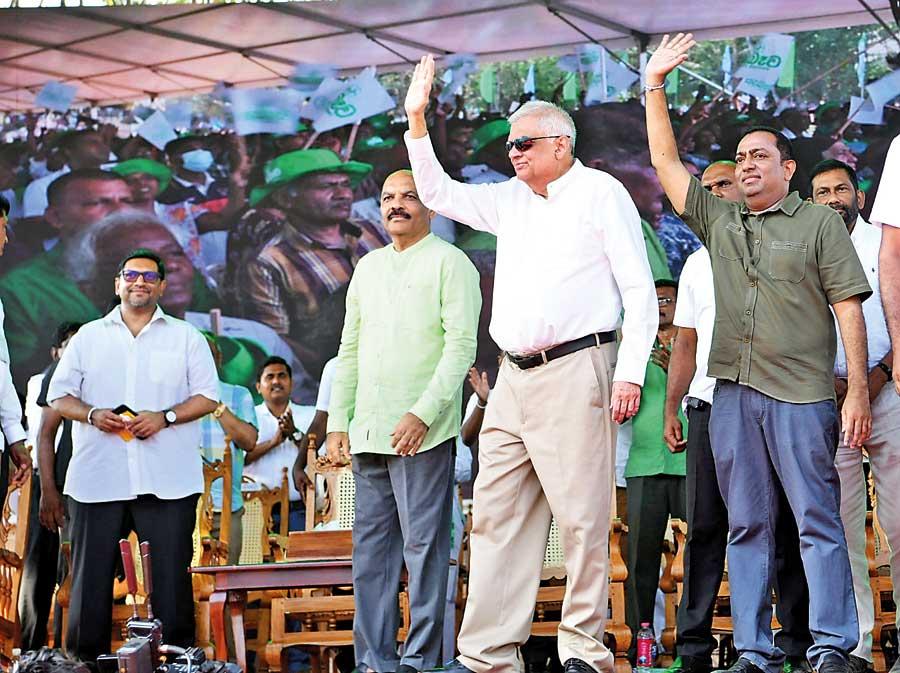
President Ranil Wickremesinghe was declared as the common candidate of the United National Party led front

As the presidential elections draw near, uncertainty still looms large over the possible contenders except for two prospective candidates- Anura Kumara Dissanayake of   National People’s Power (NPP) and Sajith Premadasa of Samagi Jana Balawegaya who have already announced their candidature.
What is currently happening is nothing but political strategising, maneuvering and groundwork preparation for the elections.President Ranil Wickremesinghe has not yet declared whether he will be a candidate or not. Still, all indications from his political camp point to his prospect of contesting as a common candidate.


The concept of a ‘common candidate’ in Sri Lankan politics refers to a political strategy where a candidate runs for office without being directly affiliated with a political party. Instead, the candidate is supported by a coalition of political groups and individuals who come together despite their different political ideologies. The goal is to present a united front, often to challenge a dominant political party or figure, and to appeal to a broader spectrum of the electorate by emphasising shared goals and values over party loyalty.

Broader consensus 

This approach can be particularly effective in a situation where no single party has overwhelming support, allowing the possibility of building a broader consensus and attracting voters who might not align strictly with one party’s platform.
Political strategists who work on the President’s election campaign are currently in the process of cobbling together an alliance. Buoyed by the success story of debt restructuring, the President will formally announce his electoral prospects soon.   Nevertheless,   in the formation of his alliance, he is currently faced with challenges in reconciling competing interests.

Already, he has secured the support of two Tamil parties – Tamil Makkal Viduthalai Pulikal (TMVP) and Ceylon Workers’ Congress (CWC). A section of the ruling Sri Lanka Podujana Peramuna (SLPP) has also thrown its weight behind him. Also, the Sri Lanka Freedom Party (SLFP) led by Nimal Siripala de Silva and directed behind the scenes by former President Chandrika Bandaranaike Kumaratunga is also on board with him.  However, his camp is now confronted with the challenge of striking a deal with the SLPP organised by its founder Basil Rajapaksa and led by former President Mahinda Rajapaksa. In the aftermath of the Aragalaya, the SLPP and the President joined forces to form the current government. It was a political marriage of convenience warranted under the circumstances rather than a reconciliation of political ideologies and interests.


At a recent meeting, Basil Rajapaksa lashed out at those who advocated the exclusion of the Rajapaksas in the formation of an alliance with the SLPP. The call for the exclusion of Rajapaksas appears to have created a tiff with the President’s camp.  
The SLPP has now begun working to field its candidate instead of supporting the President at the election. This is a new development which will further exacerbate political uncertainties involving the upcoming presidential elections. 

Double-edged sword 

The prospect of the Rajapaksas participating in the election is a double-edged sword. While their involvement could secure a strong base vote, it may also alienate Tamil and Muslim voters, crucial for any candidate’s success. The ability to attract minority parties and their supporters is pivotal. These groups can significantly influence the outcome, particularly in a fragmented electoral scenario. 


Political strategists are keenly aware of the delicate balance required. The President’s camp must weigh the potential gains from minority party support against the risks of losing the SLPP base. The SLPP’s consideration of an independent candidate might be a tactic to negotiate better terms with Wickremesinghe’s alliance. 
The influence of minority parties can be significant in a closely contested election. The ability of these parties to mobilise votes in their respective communities can tip the scales in certain electoral districts. Still, the SLPP too has a base that can matter a lot in a closely contested election.   


Ahead of the election, it is apparent that all the main parties court Tamil and Muslim constituents. The President, Premadasa and NPP leader Dissanayake toured the North and engaged with party representatives there.  Power sharing, the implementation of the 13th Amendment, the possible re-merger of the Northern and Eastern provinces and addressing human rights issues linked to wartime were among the main issues that used to swing Tamil votes in favour of any candidate in the past. The President and Premadasa are clear on the implementation of the 13th Amendment which is anyway part of the Constitution. However, Dissanayake is not clear on any of these issues making it difficult for him to convince Tamil constituents. 

Political uncertainty 

Amid such political uncertainty, Indian External Affairs Minister Dr. S. Jaishankar also visited Sri Lanka- his first in the region after assuming office for the second time- at a time when the country’s political scene is replete with a flurry of activities in view of the presidential elections. 
In the wake of the economic crisis and the subsequent declaration of Sri Lanka’s bankruptcy in April, 2022, Indo-Lanka ties reached an all-time high. The extension of US $ 4 billion financial assistance and the launch of connectivity projects are the main pillars of bilateral ties today.  His visit is mainly for the understanding of Sri Lankan politics ahead of the vital elections and to ensure that the vital projects, which are now at various stages of implementation, are carried out unhindered by any incoming government.
The upcoming presidential election is marked by strategic alliances, the balancing of minority and majority interests, and significant external influences. The interplay of these factors will shape the electoral strategies and potentially determine the next president.

Hirunika to seek bail

June 28th, 2024

Courtesy The Daily Mirror

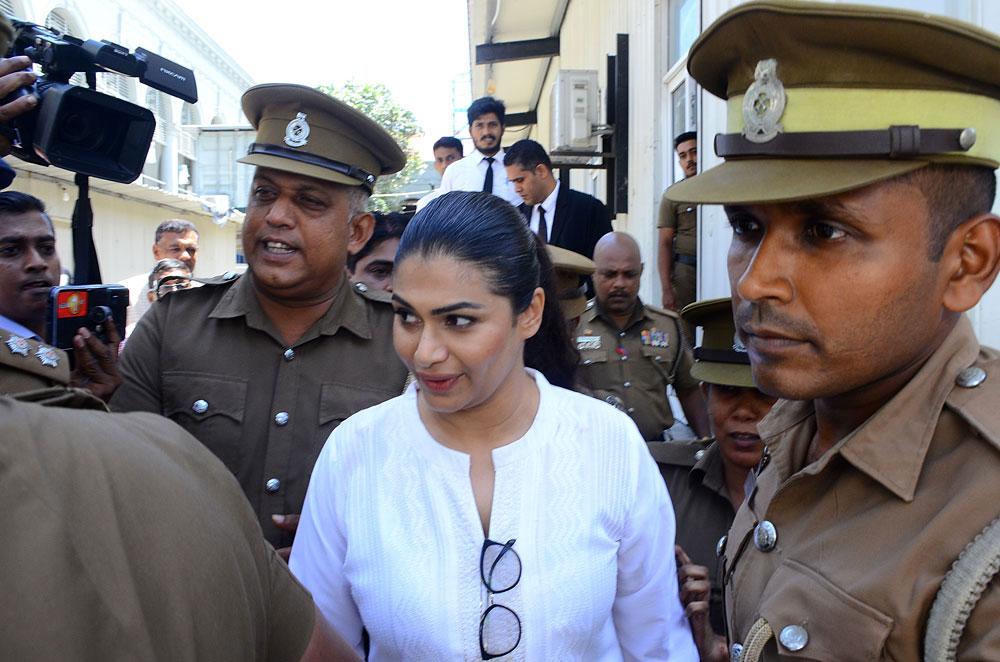
Colombo, June 28 (Daily Mirror) – Former Colombo district Parliamentarian Hirunika Premachandra, who has been jailed for 3 years by the High Court of Colombo for her involvement in the abduction of a youth using a Defender, is expected to seek bail from the Colombo High Court.

President’s Counsel Anura Meddegoda, appearing for Hirunika Premachandra, informed the Colombo High Court that the defense is expecting to file for bail pending appeal for the accused. 

The defense can seek bail in terms of Section 20(2) of the Bail Act (No. 30 of 1997), requesting the release of the accused on bail since an appeal has been filed against the conviction.

CID arrests hundreds of Indians linked to online financial scam

June 28th, 2024

Courtesy The Daily Mirror

Colombo, June 28 (Daily Mirror) – The Criminal Investigations Department (CID) has conducted a widespread operation resulting in the apprehension of 137 Indian nationals suspected of being involved in a large-scale online financial scam across multiple locations in the country.

According to Police Media Spokesman DIG Nihal Thalduwa, the arrests took place in Negombo, Kochchikade, Madiwela (Sri Jayawardenepura Kotte), and Thalangama (Battaramulla).

In Negombo, 55 suspects were detained along with 55 mobile phones and 29 computers seized. Similarly, in Kochchikade, authorities apprehended 53 individuals and confiscated 31 computers and 58 mobile phones

The operation in Madiwela led to the arrest of 13 suspects and recovery of 8 laptops and 38 mobile phones, while in Thalangama, 16 suspects were taken into custody with 8 laptops and 38 mobile phones recovered.

Accordingly, a total of 158 mobile phones, 16 laptops, and 60 computers were seized from the suspects.

All the arrested suspects are males, said the Spokesman

Govt says Rs. 11.6 billion disbursed to ‘Aswesuma’ beneficiaries for June

June 28th, 2024

Courtesy Adaderana

Under the Aswesuma” Welfare Benefit Payment Program, the Welfare Benefits Board has disbursed a total of Rs. 11.6 billion to the bank accounts of 622,495 beneficiaries in the transitional and vulnerable categories yesterday (27) for the payments of June 2024.

In the first phase of the program, eligible beneficiaries in the vulnerable category received Rs. 5,000 from July 2023 to March 31, 2024. Meanwhile, those in the transitional category received Rs. 2,500 from July 2023 to December 31, 2023.

In response to the current economic situation, President Ranil Wickremesinghe has instructed the Welfare Benefits Board to extend the payment period of special allowances for beneficiaries in the transitional and vulnerable categories under the Aswesuma” Welfare Benefit Payment Program until December this year, the President’s Media Division said.

As part of this initiative, a special allowance was disbursed to these categories for June 2024, followed by monthly payments of Rs. 5,000 each from July 2024 to December 2024.

Additionally, Mr. Jayantha Wijeratne, Chairman/Commissioner of the Welfare Benefits Board, confirmed that the existing payment system for the extremely poor and poor categories will continue without changes.

Net damage: On the fisheries dispute, India and Sri Lanka

June 27th, 2024

Courtesy The Hindu

​India’s fisherfolk must be weaned away from bottom trawling

The resumption of fishing off India’s eastern coast including the Palk Bay, after the annual 61-day ban on fishing, has led to the death of a sailor from the Sri Lanka Navy. The Sri Lankan Navy had carried out an operation on June 25 morning to chase away a cluster of Indian poaching trawlers” in Sri Lankan waters off Kankesanthurai, near Jaffna. A trawler-vessel was impounded and 10 fishermen apprehended, of whom eight were from Tamil Nadu and the rest from Andhra Pradesh. There have also been several cases of Indian (Tamil Nadu) fishermen dying too. The Tamil Nadu Chief Minister, M.K. Stalin, sought the intervention of the External Affairs Minister, S. Jaishankar, in releasing the vessel and the men. In his reply sent to the Chief Minister on Thursday, Mr. Jaishankar said the Indian High Commission had been seeking the early release of 34 fishermen in judicial remand and six others who were serving sentences.

This is an opportunity for the two countries to revive the negotiation process, exclusively to deal with the fisheries dispute, which became aggravated in the wake of the 1974 and 1976 bilateral agreements to demarcate their maritime boundary lines. Mr. Stalin has done well to remind Mr. Jaishankar to convene a meeting of the Joint Working Group, last held (virtually) over two years ago. The acts of Indian fishermen crossing the international maritime boundary line are clearly illegal; factors relating to protection of livelihood opportunities cannot be delinked from the importance of the preservation of the marine ecosystem. A gradual replacement of bottom trawlers being used by the Tamil Nadu fishermen is a must, but the fisherfolk require time to prepare for diversification — deep sea fishing, marine cage farming, seaweed cultivation and processing, and sea ranching. The experiences of the deep sea fishing project, being executed by the Union and Tamil Nadu governments, are clear enough to conclude that it is a failure. After nearly seven years of implementation, only 61 deep sea fishing vessels have been handed over to beneficiaries, with 19 more under construction. It would be thoughtful if the Union government clubs the project with an all-India programme, where the unit cost of a deep sea fishing vessel is ₹40 lakh higher, at least to get a better response even at this stage. The unit cost of a deep sea fishing vessel under the Central-State project is ₹80 lakh. New Delhi and Colombo can devise additional schemes to help the Northern Province’s fishermen even more. But what is more important is that the two countries, representatives of the fishing community and officials from Tamil Nadu and the Northern Province should meet soon to find a way out of the dispute.

Sri Lanka debt deal key to restoring debt sustainability, IMF says

June 27th, 2024

Courtesy Adaderana

Sri Lanka’s agreements with China and other creditor nations to restructure about $10 billion in bilateral debt brought it a step closer towards restoring debt sustainability, the International Monetary Fund (IMF) said on Thursday.

The island nation signed deals with China and other creditor nations to restructure about $10 billion in bilateral debt on Wednesday, helping it approach the end of a restructuring process that began in September 2022 after its reserves hit record lows and forced it to default on foreign debt for the first time.

Sri Lankan officials in Paris inked the agreement with the Official Creditor Committee (OCC) co-chaired by Japan, India and France that have lent a combined $5.8 billion.

The committee is now awaiting details of a separate agreement that was signed with China EXIM Bank to rework $4.2 billion to be shared with them to ensure comparability of treatment, OCC said in a statement.

Sri Lanka, however, still needs to convince bondholders to restructure about $12.5 billion in international bonds.

We hope that there will be swift progress on reaching agreements with external private creditors in the near future,” Peter Breuer, IMF’s senior mission chief for Sri Lanka, said in a statement.

Bilateral lenders said they hoped an agreement with bondholders would be on terms at least as favourable as the terms offered by the OCC.”

The restructuring of bilateral debt agreements was one of the key conditions set by the IMF under a $2.9 billion bailout programme that helped Sri Lanka tame inflation, stabilise its currency, and improve government finances.

The central bank estimates the economy will expand 3% in 2024 after contracting 2.3% last year.

Sri Lanka, whose total external debt is $37 billion, also has to finalise arrangements with China Development Bank to restructure debt of $2.2 billion, according to latest finance ministry data.

Under the restructuring plan, Sri Lanka can delay repaying bilateral creditors till 2028. During this period, the government and creditors can arrange new loans out to 2043.

Once the restructuring is completed, Sri Lanka aims to reduce its debt by $16.9 billion, the government said.

It will seek approval from parliament on July 2 to proceed with the deals, President Ranil Wickremesinghe said during an address to the nation late on Wednesday.

The debt restructuring will help the cash-strapped nation more than halve its foreign debt repayments to 4.5% of gross domestic product between 2027-2032, from 9.2% in 2022 at the peak of the economic crisis.

But the country has to still improve governance and stay on the path of reforms, including implementing legislation to lock in IMF-stipulated fiscal targets, impose a property tax, and limit lending by state banks to loss making state-run companies, according to analysts.

Recovery could also face headwinds from upcoming presidential elections scheduled to be held before mid-October.

There is now the chance Sri Lanka can access undisbursed loans from bilateral lenders, particularly for infrastructure projects that were stalled, or get new loans,” said Thilina Panduwawala, head of research at Frontier Research.

But it could be next year by the time they get these up and running because elections can also delay that process.”


Source: Reuters
–Agencies

The Release of Julian Assange: Plea Deals and Dark Legacies

June 27th, 2024


Image by Samuel Regan-Asante.

One of the longest sagas of political persecution is coming to its terminus. That is, if you believe in final chapters. Nothing about the fate of Julian Assange seems determinative. His accusers and inquisitors will draw some delight at the plea deal reached between the WikiLeaks founder’s legal team and the US Department of Justice. Others, such as former US Vice President, Mike Pence, thought it unjustifiably lenient.

Alleged to have committed 18 offences, 17 novelly linked to the odious Espionage Act, the June 2020 superseding indictment against Assange was a frontal assault on the freedoms of publishing and discussing classified government information. At this writing, Assange has arrived in Saipan, located in the US commonwealth territory of Northern Mariana Islands in the Western Pacific, to face a fresh indictment. It was one of Assange’s conditions that he would not present himself in any court in the United States proper, where, with understandable suspicion, he might legally vanish.

Full Report

The Release of Julian Assange: Plea Deals and Dark Legacies – CounterPunch.org

ධර්ම කරුනු – දෙවන කොටස සද්ධම්මෝ පරම දුල්ලභෝ – විපාක දෙන කර්මය

June 27th, 2024

තිස්ස ගුණතිලක

අපි සද්ධර්මය තුලම තියෙන සුළු සුළු කාරනා කිපයක් පැහැදිලි කරගනිමු. එය සද්ධර්මය තේරුම් අරගෙන ඉදිරියට යන්න පහසු වේවි.

බුදුන්වහන්සේ සද්ධම්මෝ පරම දුල්ලභෝ – ධම්මපදය’ යයි පැවසුවේ සද්ධර්මය ඇසීමට ලැබීම ඉතාමත් අසීරු නිසයි. එහෙනම් උදේ හවස අපට රේඩියෝ එකෙන් ටෙලිවිශන් එකෙන් ඇහෙන්නේ සද්ධර්මය වෙන්න බැහැ. එය ඇසීම එතරම්ම දුල්ලභ කාරනයක් බවයි බුදුන්වහන්සේ දේශනා කලේ. 

අපිට එහෙනම් උදේ සවස ඇසෙන බන මොනවාද බලමු?

  1. එක බනක ඉපදීම නිසා දුක ඇතිවෙන බවත් ඒ නිසා නැවත ඉපදීම නැවැත්විය යුතු බව කියනවා.
  2. තවත් බනක විපාක දෙන කර්මයක් ගැන කියනව.
  3. තවත් බනක අද්භූත බල විශ්වාසයක් ගැන කියනවා. ගස් ගල් වලින් යම් යම් දේවල් ඉල්ලනව. දෙවියන් ගෙන් දේවල් ඉල්ලනවා. රතන සූත්‍රය කියල අසනීප හොද කරගන්න හැකිබව කියනව. මේ කියන්නෙ අද්භූත බල ඇතිබවට විශ්වාශකරනවා කියන එකයි.
  4. තවත් බනක දෙවියන් බ්‍රහ්මයින් ඇතිබවත් සතර අපායක් ගැනත් කියවෙනව. දිව්‍ය ලෝක, බ්‍රහ්ම ලෝක ආදි තිස්එක් ලෝක ධාතුවක් ගැන කියනව. මරනෙන් මතු දෙවියන් ඉන්න තැනකට යන්න පිං කරන්න කියනව.
  5. තව කෙනෙක් සමත භාවනාව තුල ධ්‍යාණ වඩල රහත්වෙන ක්‍රමයක් ගැන කියනව.

අපට උදේ හවස ඇහෙන්නේ මෙන්න මේ වගේ බන. මේ බන සද්ධර්මය නම් බුදුන්වහන්සේ දේශනාකල පරිදි සද්ධර්මය එතරම් දුල්ලභ වෙන්න බැහැ. මේ බන වල කතංදර මිස සද්ධර්මය නැහැ.

1. බුදුන්වහන්සේ ‘දුල්ලභංච මනුස්සත්තං’ කියල කියා තියෙනවා. යමක් දුල්ලභ නම් ඒක තමයි ලෝකයේ තියෙන වටිනාම දෙය විය යුත්තේ. මැනික් දුල්ලභ නිසා එය වටිනාම පාශාණය වෙනව. රත්තරං දුල්ලභ නියා එය වටිනාම ලෝහය (metal) වෙනව. මනුස්සත්වයද දුල්ලභ නිසා මනුසත්වය ලෝකයේ වටිනාම සම්පත්තිය වෙනව. ඉපදීම වටිනාම සම්පත්තිය යයි දේශනාකල බුදුන්වහන්සේ ඉපදීම නැතහොත් මනුසත්වය දුකයි කියයිද?. ඉපදුනොත් විතරයි නිවන් දකින්න පුළුවන් වෙන්නෙ. නිවන්‍ දකින potential එක ප්‍රවනතාවය එහෙමත් නැතිනම් විභවය ඇතිවෙන්නේ ඉපදුනොත් විතරයි. එහෙනම් බුදුන්වහන්සේ ඉපදීම දුකයි කියයිද? ඉපදීමෙ වටිනාකම වටහාගත්ත විශාකාව වගේ සෝවාන් තත්වයට පත්වුන අය දරුවන් 30ක් මෙලොවට බිහිකලබව ධර්ම ග්‍රන්ථවල සඳහන් වෙනව. එහෙම කලේ ඉපදීම දුක හින්ද වෙන්න බැහැ.

ඔය බනේම අඩංගු වෙනව නැවත උපදින කතාවකුත්. මේ කතාව හරියටම පැහැදිලි කරගන්න වෙනව සද්ධර්ම මාවතේ ඉදිරියට යන්න. බුදුන්වහන්සේ නැවත ඉපදීමට සෘජුවම පිලිතුරු දීල තියෙනව කිප වතාවකම. හොදම තැන හම්බවෙන්නෙ ‘මහා තන්හා සංකය (සඬ්ඛය) සූත්‍රය තුල. මෙතනදි තමයි අපට කේවට්ටපුත්ත සාති හම්බවෙන්නෙ.

කේවට්ටපුත්ත සාති කිය කිය යනවා බුදුන්වහන්සේගේ තම ධර්මය තුල ‘විඤ්ඤාණය භවයෙන් භවයට සැරිසරනා බවත් එසේ සැරිසරනා විඤ්ඤාණය මිස වෙනත් විඤ්ඤානයක් නැති බවත්’ දේශනා කරනවා කියල. සූත්‍රය තුල පාලියෙන් මේක තියෙන්නෙ ‘විඤ‍්ඤාණං සන්‍ධාවති සංසරති  අනඤ්ඤන්ති’ කියල. එනම් ‘විඤ්ඤාණය continuosly transmigrate වන බවත්, අනඤ්ඤන්ති – ඒ හැර වෙනත් විඤ්ඤාණයක් නැත’ යයි බුදුන්වහන්සේ දේශනා කර ඇතැයි කේවට්ටපුත්ත සාති කියනවා. 

සත්වයා කියන්නේ ගත හා සිත යි. සිත කියන්නේ විඤ්ඤාණයම තමයි. එහෙමනම් සත්වයා කියන්නේ භෞතික ශරීරය සහ විඤ්ඤාණයේ එකතුවක්. සම්මත මරණයෙදි වෙන්නේ සිත (විඤ්ඤාණය) නවතිනවා. එතකොට කය නැතිනම් භෞතික ශරීරය වලලනවා. දැන් ඉතිරිවන විඤ්ඤාණය නැවත නැවත ඉපදින බවත් එය බුදුන්වහන්සේ දේශනා කල බවත් තමයි කේවට්ටපුත්ත සාති කියන්නේ. 

බුදුන්වහන්සේ මෙයාව කැදවල මේ බව විමසන කොට එයා ඒකම නැවත කියනවා. බුදුන්වහන්සේ කේවට්ටපුත්ත සාතිගෙන් අහනවා

 ‘මෝඝපුරුෂය, තෝ කවරක්හට නම් මා මෙසේ දහම් දෙසුවා දනිත්ද? මෝඝපුරුෂය, මා විසින් විඥානය ප්‍රත්‍යයසමුත්පන්න ය යි, ප්‍රත්‍යය විනා විඥානසම්භවයෙක් නැති යි වදාරන ලද්දේ නො වේ ද?’ ඇසු සේක.

මෙම දෙබසින් අදහස්වන්නේ බුදුන්වහන්සේගේ සද්ධර්මය තුල විඤ්ඤාණය අඛන්ඩව හෝ වෙනත් අයුරකින් transmigrate වන බවක් දේශනාකර නොමැති බව නේද? මෙම සූත්‍රය ඉතාමත් වැදගත් සූත්‍රයක් වනවා වගේම ප්‍රත්‍යයෙන් විඤ්ඤාණය හටගන්නා අයුරු ඉතාමත් ලස්සනට පැහැදිලි කරල තියෙනවා. විඤ්ඤාණය ප්‍රත්‍යවන්නේ ඇතිවන්නේ ‘පෙර නොතිබීම හටගත් ගර්භාෂක්‍රාන්තියකින් බව’ ලස්සනට පෙන්නලා තියෙනවා. ඉඩ ලැබෙන වෙලාවක මේ සූත්‍රයගැන දීර්ඝව පස්සෙ සාකච්ඡා කරමු.

එහෙනම් නැවත උපදිනවාද නැද්ද යන්න දැන් ඔබට පැහැදිලි වෙන්න ඕනෙ. නැවත උපදිනබව දෘශ්ඨියක්ම පමනක්බව මතක තබාගන්න. එම දෘශ්ඨිය භයානක, සත්‍ය වසනා දෘශ්ඨියක් බවද මතක තබාගමු.

2. ඊට පස්සෙ තවත් බනක විපාක දෙන කර්මයක් ගැන කියනවා. විපාක දෙන කර්මයත් අද්භූත බල වලටම වැටෙන සංසිද්ධියක්. 

අපි ගමනක් යනකොට අනතුරකට භාජනයවෙලා පන අදිමින් ඉන්න කෙනෙක් දැක්කා යයි සිතමු. අපි ඉක්මනින් මෙයාව ලඟ තියෙන ඉස්පිරිතාලකට අරගෙන යනවා. ඒ නිසා මොහුගේ පන බේරෙනවා යයිද සිතමු. කාලයකට පසුව අපිටද කරදරයකින් බේරෙන්න හැකි වෙනවා. දැන් හිතෙනවා අපි ඒ කරදරයෙන් බේරෙන්නේ කලින් දවසක අර පුද්ගලයාගේ ජීවිතය බේරාගන්න උදව්කල නිසායයි කියලා. විපාක දෙන කර්මය කියන්නෙ මෙන්න මේ වගේ සංසිද්ධියකට. මෙය අද්භූත බලයක් නෙමෙයිද? එදා අර පුද්ගලයාගේ ජීවිතය බේරුනේ ඔබ ‘හරි වෙලාවට හරි තැන’ හිටිය නිසයි. මේකත් හරියට ඔබ ‘වැරදි වෙලාවක වැරදි තැනක’ හිටියොත් ටිපර් එකක් ඇවිල්ල ඔබව යටකරගෙන ගිහිල්ල ඔබගේ ජීවිතය නැතිවෙනවා වැනි ස්වභාවික සංසිද්ධියක්. එවැනි ස්වභාවික සංසිද්ධීන් විපාක දෙන කර්මයක් ආස්‍රයෙන් පැහැදිලි කිරීමට උත්සාහ කරනකොට තමයි මේ පැටලවිල්ල සිද්දවෙන්නෙ. කෙසේ වෙතත් විපාකදෙන කර්මය නිඝංඨ දහමේ අරටුව බවත් මතක තබාගන්න.

බුදුන්වහන්සේත් එදා සමාජයේ භාවිතාවුන වචන සද්ධර්මය පැහැදිලි කිරීමට යොදාගත්තා. එදා බුදුන්වහන්සේ ධර්මය දේශනාකලේ නිඝංඨ, ජටිල, බ්‍රහ්මණ ආදීවූ පිරිසටයි. බෞද්ධයින් හිටියේ නැහැනෙ බුදුන්වහන්සේගේ මුල් කාලයෙ. ඉතින් මේ නිඝංඨයින්ට ජටිලයින්ට තේරෙන භාෂාවෙන් සද්ධර්මය පැහැදිලි කිරීමට එදා ජන සමාජයේ විශේෂයෙන් තාපස (ascetic) සමාජයේ භාවිතාවුන වචන බුදුන්වහන්සේ යොදාගත්තා. හැබැයි වෙනස් අර්ථ වලින්. උදාහරනයක් හැටියට බුදුන්වහන්සේ ‘හේතු ඵලය’ නැතිනම් ‘ප්‍රත්‍යයෙන් උපදින’ බව පැහැදිලි කරන්න ‘කර්මය හා විපාකය’ කියන වචන දෙක යොදාගත්තා. උදාහරනයක් හැටියට, කර්මය ‘උත්සාහයෙන් වන ක්‍රියාවට’ ප්‍රත්‍ය හැටියටද විපාකය ‘නූත්සාහයෙන් වන ක්‍රියාවට’ ප්‍රත්‍ය ලෙසද ‘පඨ්ඨාණප්‍රකරණයේ’ සූවිසි ප්‍රත්‍ය පැහැදිලි කරන කොට කියල තියෙනවා. එතකොට එහෙනම් සද්ධර්මය ඇතුලෙ කර්මය සහ විපාකය අරගෙන තියෙන්නෙ ප්‍රත්‍යයක් හැටියට මිස විපාක දෙන කර්මයක් හැටියට නෙමෙයි.

එසේනම් ‘විපාකදෙන කර්මයක්’ සද්ධර්මය තුල හමුනොවෙයි.

3.අද්භූත බල ගැන කියවෙන බනත් මේවගේම තමයි. දෙවියන් බ්‍රහ්මයින් ඉන්නවා නෙමේ, ඒවා අපේ සිතේ පෙර මතකයේ තැන්පත් වෙච්ච නැතිනම් කවුරුහරි දාපු දත්ත (data) ඇසුරෙන් මැවෙන දේවල්. අපි පන්සල්වල බිත්තිවල ඇදපු දේව රූප දැකල ඒවා මතකයේ store කරගෙන ඉන්නවා. ඒ රූප කලින්කලට මනො සංකාර වෙලා දෙවියන් ඉන්නවා කියලා හිතෙනවා. දෙවියන් කියන්නෙම සිතේ මැවෙන රූපයක්, සිතුවිල්ලක් පමනයි. ඉතින් තමන්ගේම මනසේ මැවෙන රූපයකින් පිහිට ආධාර ඉල්ලන එක විහිළුවක් නෙමෙයිද?

රතන සූත්‍රය කියපුවහම ලෙඩ හොද වෙනවා කියලා මතයක් තියෙනවා. කවුරුහරි කියලා තියෙනව බුදුන්වහන්සේ රතන සූත්‍රය දේශනා කලේ විශාලා මහනුවර තුන්බිය දුරුකරන්න කියලා. ඉතින් රතන සූත්‍රය පැහැදිලි කරගන්න හදනවා භූත බිය ඇතුලෙ ඉදලා.

රතන සූත්‍රය වගේ මහා ගාම්භීර දේශනාවක් භූතබිය වගේ දේකට ලඝුවීම ගැන අපි ඔක්කොමල ඇත්තටම කනගාටුවෙන්න ඕනෙ.

රතන සුත්‍රය කියන්නේ සොවාන් මාර්ගය පැහැදිලි කරන දේශනාවක්. සූත්‍රය ඇතුලෙ 1වැනි ගාථාවේ ඉදලා 8වන ගාථාව දක්වා තියෙන්නෙ ජීවිතය (අට පිලිවෙත-අශ්ඨාංගික පිලිවෙත) භවය සකස් නොවන එනම් ‘මම’ -ඉත්ථභාවය ඇතිනොවන විදිහට සකස් කරගන්නෙ කොහොමද කියලා.

එහෙම භවය සකස් නොවන විදිහට අට පිලිවෙත සකස්කර ගත්තහම;

 9 වන ගාථාවෙ කියනවා 

‘යෙ අරියසච්චානි විභාවයන්ති, ගම්භීරපඤ්ඤෙන සුදෙසිතානි;

කිඤ්චාපි තෙ හොන්ති භුසං පමත්තා, 

න තෙ භවං අට්ඨමමාදියන්ති’

ඒ අනුව යමෙක් ආර්ය දර්ශනය ප්‍රකට කරයිද

හේ 

භවය සකස් නොකරන අටමග (අශ්ඨාංගික මාර්ගය) ප්‍රගුන කරයි. ඔහුගේ සිහිය පමා නොවීමට (සෝතාපන්නයට) මෙය හේතුවෙයි.

‘න තේ භවං අට්ඨමමාදියන්ති’ කියන්නෙ අටවන භවයක් නැතිබවත් හේ හත්වන භවයේදි නිවන් දකින බවත්‍ යයි දේශනා නොකල දේශකයෙක් නැතිතරම්ය.

‘නතේ භවං අට්ඨමමදියන්ති’ යනු භවය සකස් නොවන අටපිලිවෙතයි. බුදුන්වහන්සේ සත්වයාගේ දිවි පෙවත අර්ථ දැක්වූයේ ‘අට පිලිවෙත නැතිනම් අශ්ඨාංගික මාර්ගය’ හැටියටයි. ඒක භවය සකස්කරන අට පිලිවෙතක් නම් ‘අනාර්ය අශ්ඨාංගික මාර්ගය’ හැටියටද, භවය සකස්නොකරන අට පිලිවෙත නම් ‘ආර්ය අශ්ඨාංගික මාර්ගය’ හැටියටද බුදුන්වහන්සේ අර්ථ දැක්වුවා.

රතන සූත්‍රය භූතයින් එලවීමටවත් ලෙඩ සුව කිරීමටවත් කල අද්භූත බලයක් අඩංගු දේශනාවක් නොව එය සෝතාපන්නය මාර්ගය හෙලිකරන දේශනාවකි.

4. තවත් බනක දිව්‍යලෝක දෙවියන් බ්‍රහ්මයින් වසන තිස්එක් ලෝක ධාතුවක් ගැන කියවෙනවා. දෙවියන් සිටිනවානම් ඒ අය බුදුන්වහන්සේ ගයාවේ බෝධිමූලයේදී බුද්ධත්වයට පත් වෙච්ච වෙලාවේ බුරුතු පිටින් එන්න තිබුනා. නමුත් එවෙලේ බුදුන්වහන්සේ අසල කිසිකෙනෙක්‍ සිටියේ නැත.  සත්සතිය ගතකරල කැලෑවෙන් එලියට එනවිට කිසිම සත්වයෙක් හෝ උන්වහන්සේ අසල සිටි බවක් ධර්මග්‍රන්ථවල සටහනක් වත් නැහැ.

‘බුද්ධත්වය’ තමයි ලෝකයේ මෙතෙක් ඇතිවුන උතුම්ම සංසිද්ධිය. එහෙම වෙලාවක දෙවියන් බඹුන් මේ චක්‍රාවාටයේ සිටියානම් ඔවුන් බුරුතු පිටින් රැස්වෙන්න මෙය හොඳම අවස්තාව නොවෙයිද?

තනිවම මහමග වඩිනා උන්වහන්සේට හමුවූයේ එකම එක පුද්ගලයෙක් පමනයි. උපක නම්වූ ආජීවකයා බුදුන්වහන්සේගේ ශාන්ත විලාසය දැකලා වික්ශිප්තවෙලා ‘ඔබ කවුදැයි’ විමසුවා. බුදුන්වහන්සේ  ‘ඔබ මේ දකින්නේ බුද්ධ ස්වභාවය’ බව පැවසුවා. දෙවියන් මේ උතුම් වෙලාවේ හිටියෙ කොහේද? තිස්එක් ලෝක ධාතුවම නිදිද?

5. සමතය ප්‍රකට කරගෙන බන කියන අයද ඉන්නවා. සමත භාවනාව එදා දඹදිව ප්‍රචලිත භාවනා ක්‍රමයක්. සිදුහත් තවුසාත් ආලාර කාලාම හා උද්දකාරාම පුත්‍ර එක්ක අවුරුදු හයක් වැඩුවේ මේ සමතයම තමයි. බුදුවූනාට පස්සෙ දේශනකල ‘අර්ය පර්යේෂණ සූත්‍ර’ දේශනාවේ කියනව තමන්වහන්සේ ඔවුන් ඇසුරෙන් නික්මුනේ ‘කලකිරීමෙන්’ බව. 

ඒ වගේම, එදා සමාජය තුල තිබූ කිසිම දෙයක් තමන්වහන්සේ සොයාගත්ත සද්ධර්මය තුල අන්තර්ගතව නැතිබව දොලොස් වතාවක්ම පලමු දේශනාවේදීම බුදුන්වහන්සේ සඳහන් කරනවා. ‘පුබ්බේ අනනුස්සුතේසු ධම්මේසු’ – මාගේ ධර්මය තුල ඔබ ආරංචියකින්වත් ඇසූ කිසිවක් අඩංගු නොවේ’ යයි ධම්මචක්කපවත්වන සූත්‍ර දේශනාවෙ සඳහන් වෙනවා. එසේනම් එදා දඔදිව සමාජය තුල විශේෂයෙන්ම තාපස (ascetic) සමාජය තුල පැවති සීල හා භාවනා (සමතය) තම සද්ධර්මය තුල නොපවතින බවයි බුදුන්වහන්සේ මේ පැවසුවේ.

සමතය හරහා ධ්‍යාන වඩනා අය තවමත් කරන්නේ එදා බුදුන්වහන්සේ කලකිරීමෙන් අතහැරිය භාවනාවයි. ධ්‍යාන තුලින් අත්කරගන්න හැකි නිවනක් හෝ දුක නැතිකිරීමක් සද්ධර්මය තුල හමුවන්නේ නැත.

මෙම ලිපියේ අඩංගු කරුනු හා එම කරුනුවල දිගුවකට ඔබට භවය සකස් කරන හා භවය සකස් නොකරන විඤ්ඤාණයනැමති  YouTube ධර්ම සාකච්ඡාව තුලින් සවන්දිය හැකිය. එයට පිවිසීමට පහත සඳහන් link එක භාවිතා කරන්න.

ඔබට තෙරුවන් සරණයි

තිස්ස ගුණතිලක

tgunite@tpg.com.au

2024 ජූනි මස 28 වනදා

Sent from Tissa’s Phone

පළාත් පාලන ආයතනවල ස්ථිර නැති සුළු සේවකයන් 8435 දෙනෙකුට ස්ථිර පත්වීම් ලිපි

June 27th, 2024

පාර්ලිමේන්තුවේ සභානායක කාර්යාලය

පළාත් පාලන ආයතන තුළ තාවකාලික, අනියම්, ආදේශක, කොන්ත්‍රාත් සහ සහන පදනම මත සිටින සේවකයන්ට ස්ථිර විශ්‍රාම වැටුප් සහිත පත්වීම් ලබා දීමට කැබිනට් අනුමැතිය ලැබී ඇත. ඒ, අග්‍රාමාත්‍ය සහ රාජ්‍ය පරිපාලන, ස්වදේශ කටයුතු, පළාත් සභා හා පළාත් පාලන අමාත්‍ය දිනේෂ් ගුණවර්ධන මහතා ඉදිරිපත් කළ අමාත්‍ය මණ්ඩල සංදේශයටකට අනුවය.

මෙමගින් දිවයින පුරා ප්‍රාදේශීය සභා, නගර සභා, මහ නගරසභා වල සේවය කරන තාවකාලික, අනියම්, ආදේශක, කොන්ත්‍රාත් සහ සහන පදනම මත සිටින 8435 දෙනෙකුට ස්ථිර පත්වීම් ලබෙනු ඇත.

එම පත්වීම් ලිපි කඩිනමින් ලබා දීම සඳහා විශේෂ සාකච්ඡාවක් අග්‍රාමාත්‍ය දිනේෂ් ගුණවර්ධන මහතාගේ ප්‍රධානත්වයෙන් පාර්ලිමේන්තු සංකීර්ණයේදී  පසුගියදා පැවැත්විණි. ඒ අනුව ජූලි මාසය තුළ එම සියලු පත්වීම් ලිපි ලබා දීමට තීරණය කරන ලදී.

පළාත් සභා හා පළාත් පාලන රාජ්‍ය අමාත්‍ය ජානක වක්කුඹුර, ස්වදේශ කටයුතු රාජ්‍ය අමාත්‍ය අශෝක ප්‍රියන්ත, රාජ්‍ය පරිපාලන, ස්වදේශ කටයුතු, පළාත් සභා හා පළාත් පාලන අමාත්‍යංශයේ ලේකම් ප්‍රදීප් යසරත්න,  බස්නාහිර, වයඹ, උතුර ආණ්ඩුකාරවරු සහ ලේකම්වරු මෙන්ම ඌව පළාත් ප්‍රධාන ලේකම්වරියද, පළාත් සභා හා පළාත් පාලන අමාත්‍යංශයේ අතිරේක ලේකම් මහේෂි කොඩිප්පිලිආරච්චිද මෙම සාකච්ඡාවට සහභාගී වූහ. 


Copyright © 2026 LankaWeb.com. All Rights Reserved. Powered by Wordpress