Minister of Agriculture and Plantation Industries Mahinda Amaraweera, announced that a national week for the implementation of the Youth Agri-Entrepreneurship Village Program will be held from July 01st to 07th.
He also stated that the government has decided to provide free MOP fertilizer for paddy cultivation to farmers for the next two seasons.
Minister Amaraweera made these remarks during a press briefing themed Collective Path to a Stable Country”, held at the Presidential Media Centre (PMC) yesterday (26).
Addressing the press briefing, the minister further elaborated that the Ministry of Agriculture and Plantation Industries has launched various programs to attract youth to the agriculture sector and as part of this effort, 160 villages across the 25 districts in the country have been selected to become Youth Agri-Entrepreneurship Villages.
To support this initiative, a national week for the Youth Agri-Entrepreneurship Village Program will be held from July 01 to 07. In the first phase, Rs. 10 million will be allocated for projects in each village, totalling Rs. 1,600 million, he said.
In 2022, the country faced a rice shortage and had to import 800,000 metric tons of rice and the government had to spend about USD 300 million. However, in 2023, the country was able to produce its entire rice requirement. For 2024, the national rice requirement is 4.1 million metric tons, and the total rice production in 2023 was 4.5 million metric tons, Amaraweera said.
Our goal is to double rice cultivation over the next five cropping seasons. To achieve this, we are introducing a technical package for paddy cultivation,” said the minister.
He added that in order to increase the productivity of paddy cultivation, special programs will be implemented to boost rice yield across 100,000 hectares in various areas. Recent years have seen an increase in crop damage due to climatic effects, he pointed out.
Minister Amaraweera further stated that they have not yet achieved self-sufficiency in egg and milk production. Poultry and cattle farming have been impacted by the decline in maize production used for animal feed, resulting from the fertilizer shortage in 2021.
The national maize requirement in the country is 600,000 metric tons. In the Maha” season of 2023, maize production increased to 221,249 metric tons.
He further said: We have launched a new program to boost egg production. In the next two months, 160,000 chicks will be distributed to entrepreneurs in 160 Youth Agri-Entrepreneurship Villages.
Additionally, we are addressing the rise in the price of coconut oil in the market.
Currently, the government charges Rs.150 per liter of imported coconut oil. As the Minister of Agriculture and Plantation Industries, I will propose a reduction of this amount to the Cabinet. The Coconut Development Authority states that the country’s annual coconut oil requirement is 25,868 metric tons, and currently, there are 51,457 metric tons of coconut oil available.
Furthermore, the increase in fertilizer prices has impacted other crops, including paddy.
As a result, we requested the Food and Agriculture Organization of the United Nations to obtain MOP fertilizer. The organization has agreed to supply 55,000 metric tons of MOP fertilizer. The government will distribute fertilizer free of charge to farmers for paddy cultivation for the upcoming two seasons.
Additionally, we have arranged fertilizer subsidies used in tea cultivation. Government-owned fertilizer companies are producing tea fertilizer and offering it at a 50% discount compared to market prices. The expenditure on this fertilizer subsidy amounts to Rs.12 billion”, said Minister Amaraweera.
Sri Lanka Navy says that the 10 Indian fishermen who were arrested while poaching in Sri Lankan waters off Kankesanthurai in the early hours of Tuesday (25) will also face charges for causing the death of a naval person and for causing damage to naval property.
The Sri Lanka Navy had conducted a special operation off Kankesanthurai, Jaffna in the wee hours of June 25, to seize an Indian fishing trawler poaching in Sri Lankan waters.
During this operation, a senior sailor from the Navy Special Boat Squadron sustained critical injuries due to the aggressive manoeuvres of the Indian trawler, resisting its seizure, the navy said.
Unfortunately, the senior sailor succumbed to his injuries after being admitted to the Jaffna Teaching Hospital.
The seized Indian trawler along with the 10 Indian fishermen were brought to the Kankesanthurai Harbour and they were handed over to the Kankesanthurai Police for onward legal proceedings.
The Kankesanthurai Police has filed a ‘B’ report with the Mallakam Court in Jaffna, seeking prosecution of ten Indian fishermen. They face charges for illegal fishing in Sri Lankan waters, causing the death of a naval person during the operation and for causing damage to naval property, the navy said.
On 25th June, the Jaffna Magistrate conducted a post-mortem examination of the deceased senior sailor. The examination determined that the sailor’s death was an accident, resulting from spinal code damage.
The body of the deceased senior sailor was handed over to the next of kin for last rites last morning (26) while his funeral ceremony is scheduled to be held today (27) in Ibbagamuwa with full honours of the Navy.
Following the tragic loss of this senior sailor during active duty, the Commander of the Navy posthumously promoted him to the rate of Fleet Chief Petty Officer, the navy media unit said.
Sri Lanka Navy has also ensured that all necessary arrangements have been made for his family to receive the appropriate compensations and allowances, it said.
The Magistrate of Mallakam Court on Wednesday (26) conducted an on-site inspection at Kankesanthurai Port. The inspection had focused on the Indian fishing vessel detained by the Navy and the Navy’s Fast Attack Craft, which was damaged during the operation.
Meanwhile, the initial hearing of the case over this incident is scheduled for July 22 at the Mallakam Nmagistrate’s Court, Jaffna.
President Ranil Wickremesinghe visited the Chief Prelate of the Malwatu Chapter Most Ven. Thibbatuwawe Sri Sumangala Maha Nayaka Thera and the Chief Prelate of the Asgiri Chapter Most Ven. Warakagoda Sri Gnanarathana Nayaka Thera during his visit to Kandy, a short while ago, and received their blessings.
The President engaged in progressive discussions on the country’s economic and financial progress and presented the Greater Kandy Urban Plan to the Chief Prelates, the President’s Media Division said.
President Ranil Wickremesinghe emphasized the importance of teachers being present in schools during school hours for the education of the nation’s children. He warned that if this commitment is not upheld in the future and school children are deprived of their education as a result, necessary measures will be taken to designate the teaching profession as an essential service.
President Ranil Wickremesinghe mentioned this during his visit to the Asgiri Maha Viharaya. The President received blessings from the Most Venerable Warakagoda Sri Gnanarathana Mahanayake Thero, the Maha Nayaka of the Asgiriya Chapter. President Wickremesinghe also participated in a cordial conversation with the Maha Nayaka Thera.
The President emphasized that teachers and principals should be role models for children and prioritize their future. He highlighted the need to consider the impact on children when teachers participate in protests and strikes, stressing the importance of their ability to provide guidance and advice to students.
The President clarified that this crisis does not affect the entire teaching profession. He noted that information received indicates only certain politically aligned teachers are involved, attributing the damage to the entire profession to the actions of this specific group.
Highlighting that this situation is confined to Sinhalese schools, the President commended Tamil, Muslim, and private schools for ensuring uninterrupted education for children.
President Ranil Wickremesinghe also mentioned that reports have indicated school guards are sending the children home, and he has directed the Inspector General of Police to enforce the law in response to these incidents.
This morning (27), President Ranil Wickremesinghe visited the historic Dalada Maligawa, the Temple of the Sacred Tooth Relic in Kandy. During his visit, the President paid homage to the Sacred Tooth Relic and received blessings. Upon his arrival, he was warmly welcomed by the Chief Custodian, Diyawadana Nilame Nilanga Dela.
The Maha Sangha recited Seth Pirith and blessed the President as he participated in religious ceremonies at the Dalada Maligawa. During his visit, the President inspected statues of a king and a queen crafted by artist Atula Herath using Artificial Intelligence technology at the Dalada Maligawa premises.
While at the historic Sri Dalada Maligawa premises, the President engaged in cordial conversation with the people present, inquiring about their well-being.
The President’s first stop in Kandy was at the Malwatu Maha Vihara, where he received blessings from the Chief Prelate of the Malwathu Chapter, Most Venerable Thibbatuwawe Sri Sumangala Mahanayaka Thera. The President inquired about the Chief Prelate’s well-being and held a brief discussion.
This is President Wickremesinghe’s first visit to the Chief Prelates following his special statement yesterday. During this visit, he also presented the Mahanayakas with the Greater Kandy Urban Development Plan. In response to the Most Venerable Thibbatuwawe Sri Sumangala Mahanayaka Thera’s request to address the demands of protesting groups, the President assured that a formal system will be established to increase the salaries of government officials, ensuring no salary disparities prevail, starting in 2025.
The President highlighted that the Cabinet has focused on increasing the salaries of government officials and announced that a committee has been appointed to address this matter. He further commented:
Upon assuming office as President, my priority was to visit here first. Following your guidance, we have stabilized the country and averted bankruptcy. Today, my foremost objective is to update you on these developments. We have successfully concluded two agreements and will proceed with foreign debt restructuring until 2032.
Teachers will be provided with the necessary means to increase their salaries again next year, and we have already communicated this to them. Before proceeding with the salary increments for teachers, we must also consider adjusting the salaries of other government officials. In 2022, teachers experienced salary increases ranging from LKR 3,000 to 17,000. On average, this equates to about six to seven thousand rupees. Additionally, this year they received an additional LKR 10,000 increase, resulting in total raises ranging from LKR 13,000 to 27,000 for teachers. Hence, the salaries of other government officials need to be deliberated upon accordingly.
Currently, Tamil and Muslim schools are operational, whereas only Sinhala schools engage in such trade union actions. This matter has garnered the Cabinet’s attention, leading to plans to implement a unified approach to increase government officials’ salaries starting from 2025. A committee has been tasked with studying and recommending appropriate measures in this regard.
Furthermore, under the Kandy city development plan, the administrative city is slated for relocation to Kundasale. Discussions are underway regarding the establishment of an Indian IIT University in Kandy, along with plans for a new building complex at Peradeniya University. Concurrently, initiatives such as the Aswasuma and Urumaya programs have been undertaken to provide relief to the population.&rdquo
Following this, the President proceeded to the Asgiri Maha Vihara and received blessings from the Most Venerable Warakagoda Sri Gnanarathana Mahanayaka Thera, the Chief Prelate of the Asgiriya Chapter. President Wickremesinghe also engaged in a cordial conversation with the Chief Prelate.
President Wickremesinghe further added:”The reconstruction of this nation cannot proceed solely through traditional political divisions. If we continue to operate along these lines, economic recovery within two years will remain unattainable. Various factions from all parliamentary parties have supported us in bringing the country to its current state, while segments of each party have also moved into opposition. Had the entire parliament collaborated with the government, our nation could have achieved far better outcomes.
I have extended an invitation to all parliamentarians to join the government’s economic revitalization program. Globally, political landscapes are evolving; major parties in nations like England, America, and France are fragmenting. Hence, the fragmentation of Sri Lanka’s main parties comes as no surprise.
We have successfully negotiated foreign debt restructuring agreements. Furthermore, the government has prioritized salary increases for teachers and other government officials.
Despite the presence of more than four government officials in villages, their economic impact remains limited. Despite the existence of institutions related to coconut production, Sri Lanka’s coconut yield has been declining. In contrast, Kerala has seen an increase in coconut production and is rapidly transitioning to an export-oriented economy. Despite the operation of Mahaweli zone offices and the Irrigation Department, the yield from the Mahaweli zone is only around three metric tons per hectare.
Over the past 50 years, countries like India and China have significantly benefited economically from the plantation industry. Historically, Sri Lanka had an economy based on tea, coconut, and rubber during colonial times. Following the introduction of an open economy in 1977, the garment industry became crucial in preventing further economic decline.
Efforts are underway to develop Gadaladenia, Lankatilakaya, and Ambakke into a tourism zone, with infrastructure development initiatives in progress. Plans include establishing a Buddhist cultural centre to attract a large number of tourists to the Kandy area. Tourists visiting the historic Dalada Maligawa, Udawatta Kale, and Victoria Dam will often spend several days in the Kandy area.
Under the Greater Kandy Urban Development Plan, efforts are underway to transform the Bogambara Prison area into a hotel complex. Additionally, plans include relocating the city’s administrative functions to Kundasale and establishing a technology zone in Digana to foster advanced technological development.
Discussions have been initiated to complete the Colombo-Mirigama section of the Kandy-Colombo Expressway with assistance from China, and the Kurunegala-Kandy section with assistance from Japan. We seek the support of the Mahanayaka Theras to ensure the success of our initiative to modernize agriculture in rural areas.
The Anunayake Thera of Asgiri Chapter and the Chief Incumbent of the Muthiyangana Raja Maha Viharaya, Venerable Murundeniye Dhammarathana Nayaka Thera, stated:
“We reflect on the events of the past two years. Before assuming office as President, you sought blessings from the Maha Sangha. At that time, our country faced significant challenges. Amid attempts to besiege and breach Parliament, you made decisive decisions that have led the country to its current state of stability.
Sri Lanka cannot thrive in isolation; collaboration with the international community is essential. You have a good understanding of that. Your adept negotiation with the International Monetary Fund to stabilize the country’s economy underscores this understanding. Your recent statement inspires hope for our nation’s future, and we offer our blessings. This is a pivotal moment that demands leadership, not testing.
The protests, driven by political motives ahead of upcoming elections, disregard the economic and financial realities of the country. In this context, the involvement of teachers undermines the dignity of the teaching profession and sets a negative example for children.
In a village, several government officials are present, such as those involved in coconut cultivation, where about four officers are assigned per village. However, their impact on both the village and the local economy warrants reassessment.”
Subsequently, President Wickremesinghe visited the Selvam Vinayagar Hindu Kovil in Katukele, Kandy, where Hindu Priest S. Krishnamurthy conducted religious ceremonies and blessed the President. Following this, the President proceeded to the Meera Makam Mosque, where he received blessings and held a brief discussion with Maulavi Dasheem Mohammad.
The event was attended by Minister Manusha Nanayakkara, State Ministers Lohan Ratwatte and Dilum Amunugama, Members of Parliament Vajira Abeywardena and Mahindananda Aluthgamage, as well as Senior Advisor to the President on National Security and Chief of Presidential Staff Sagala Ratnayaka, among others.
The Treasury is aware that the country is in a difficult place. But that difficulty is not visible on the surface. Fuel is available, electricity is available and public and private transportation is in place. It’s the mirage that seems to matter to most rather than reality
At the Treasury we are aware that the country is in a difficult place. But that difficulty is not visible on the surface. Fuel is available, electricity is available and public and private transportation is in place. As public servants, we got our salaries because the government didn’t impose s pay cuts like in Greece during the bailout program of the International Monetary Fund. That’s a good thing. But we still pay the salaries with difficulty -Mahinda Siriwardana, Secretary to the Treasury and the Ministry of Finance (https://island.lk/treasury-secretary-urges-public-to-have-a-pragmatic-view-of-economy-and-fiscal-discipline/)
The Secretary to the Treasury and the Ministry of Finance has, in a nutshell, given a picture of the overriding ethos in the country when it comes to its economy. While there are signs of some economic stability as noted in the two reports mentioned below (ECONOMYNEXT and the Central Bank of Sri Lanka), it’s the mirage rather than the reality that seems to be what matters for most. There is hardly any discussion about the debt level of the country at a public level although the high level of debt did not happen overnight. Besides this, there is no discussion about how this debt is to be paid and there seems to be a pervading indifference about this and an expectation that fuel has to be available, electricity has to be available and public and private transportation has to be in place irrespective of whether such provisions are funded with debt or with the country’s own funds.
To be fair by the public, their attitude has a direct connection with their lack of confidence as to how governments manage expenditure although perversely, this also has a connection with the public attitude that governments are there to provide all what they need and also want, irrespective of the cost of such provisions. This catch 22 situation is a major challenge facing the country as the means to economic growth and stability, which necessarily must be strategic and long term, are not viewed as such by the public. Political parties that promise overnight short term benefits from political platforms win elections.
Currently, there is data that shows the country has achieved some economic stability in the last 2 years under the stewardship of President Ranil Wickremasinghe. The following two reports, no doubt among many others, provides some evidence to this effect.
ECONOMYNEXT (https://economynext.com/sri-lanka-central-govt-debt-to-gdp-at-100-pct-by-march-2024-168424/) in an assessment of the economy says that Sri Lanka’s central government debt has fallen to 100.56 percent of gross domestic product by March 2024, down from 105.49 percent, amid an economic recovery and exchange rate stability. Sri Lanka’s economy grew 8.4 percent nominally in the March 2024 quarter, taking the rolling GDP up to 28,249 billion rupees from 27,629 as the central bank provided monetary stability through deflationary policy, for economic agents to work and generate value. The central bank also allowed the rupee to appreciate to 301 by March from 323 in December amid deflationary policy. It is suggested that this report by ECONOMYNEXT and also the Central Bank’s Annual Economic Review 2023 https://www.cbsl.gov.lk/en/publications/economic-and-financial-reports/annual-economic-review/annual-economic-review-2023) are examined by discerning readers as they present the economy of the country as heading towards a healthier situation.
This is important as the pessimism and doom and gloom felt by many and promoted by some for political purposes, may not all be true and as there is room for some degree of optimism. However, unless the current trajectory is maintained and long term and strategic thinking takes over from short term quick fixes, the economy is bound to run into quicksand sooner rather than later.
The following Central Bank table for Q1 2024 also supports the annual review for 2023 that a degree of economic stabilisation has indeed occurred https://www.cbsl.gov.lk/sites/default/files/cbslweb_documents/national_accounts_estimates_2024_q1.pdf
These data sets need to be recognized and given publicity, the contents discussed and debated, as it is important to provide some degree of confidence to the people of the country and possible investors who otherwise will only hear the doom and gloom political platform speeches by Opposition leaders. The fact that no alternative plans, leave alone strategic plans, but even one-year plans, are yet to be presented to the public by them, makes it all the more important to examine the long-term policies and plans of the current government.
However, despite these somewhat optimistic reports, the World Bank in its biannual update for 2024 titled Bridge to Recovery says that Sri Lanka’s economy is projected to see moderate growth of 2.2% in 2024, showing signs of stabilization, following the severe economic downturn of 2022. But, the country still faces elevated poverty levels, income inequality, and labor market concerns. The poverty rates continued to rise for the fourth year in a row, with an estimated 25.9% of Sri Lankans living below the poverty line in 2023. Labor force participation has also seen a decline, particularly among women and in urban areas, exacerbated by the closure of micro, small, and medium-sized enterprises (MSMEs). Households are grappling with multiple pressures from high prices, income losses, and under employment. This has led to households taking on debt to meet food requirements and maintain spending on health and education.” (https://www.worldbank.org/en/news/press-release/2024/04/01/sri-lanka-s-economy-shows-signs-of-stabilization-but-poverty-to-remain-elevated#:~:text=COLOMBO%2C%20April%202%2C%202024%E2%80%94,severe%20economic%20downturn%20of%202022
The World Bank update possibly shows the reality in the country and the need for serious discussions by all responsible persons as to the need for long term strategic thinking and economic planning. So far, even the Presidential aspirants from the major opposition political combines, who regularly criticise the President and the government about failures and shortcomings, are yet to offer their alternatives to the government’s trajectory.
In regard to the debt to GDP ratio, Investopedia, a leading global financial media website headquartered in New York City. Founded in 1999, and providing investment dictionaries, advice, reviews, ratings, and comparisons of financial products, such as securities accounts. says that the debt-to-GDP ratio is the metric comparing a country’s public debt to its gross domestic product (GDP). By comparing what a country owes with what it produces, the debt-to-GDP ratio reliably indicates that particular country’s ability to pay back its debts. Often expressed as a percentage, this ratio can also be interpreted as the number of years needed to pay back debt if GDP is dedicated entirely to debt repayment. The higher the debt-to-GDP ratio, the less likely the country will pay back its debt and the higher its risk of default, which could cause a financial panic in the domestic and international markets. Investopedia further states that a study by the World Bank had found that countries whose debt-to-GDP ratios exceed 77% for prolonged periods experience significant slowdowns in economic growth.
Whilst appreciating the efforts of the President, the Central Bank, the Ministry of Finance, who have no doubt made a significant effort to stabilise the economy over the last two years, sustainability and growth of the economy is still on shaky grounds as expressed by the Secretary to the Ministry of Finance.
Surmounting challenges ahead are even beyond the scope and ability of the central bank and the ministry of finance who are compelled to follow the path taken by their political masters and unfortunately, experience shows that the political masters of all hues have generally failed the country. This failure is about the lack of or absence of long-term strategic thinking and planning on the part of political leaders. The tragedy of bankruptcy that befell Sri Lanka was not the fault of bodies like the Central Bank or the Ministry of Finance but the ignorance and lack of economic knowledge and common sense on the part of politicians and the general attitude of most of the public in the country, It is customary to blame only politicians for the country’s economic woes while not admitting that the public, through their short term expectations and focus solely on short term gains, have contributed to these woes. The country has been living beyond its means, but the public, even the more economically literate individuals, have not attempted to change their own thinking, let alone the thinking of politicians. The population has shown a high degree of ignorance and selfishness and politicians have taken advantage of that, making promises to the public with the only goal of being elected to office.
The strategic thinking and planning that is badly needed, and which has eluded the country, should have focused on two key areas. Firstly, its Debt to GDP ratio. As mentioned earlier, the Debt-to-GDP ratio is the measure comparing a country’s public debt to its gross domestic product (GDP). By comparing what a country owes with what it produces, the Debt-to-GDP ratio reliably indicates that particular country’s ability to pay back its debts. A high ratio and low foreign reserves translate to a country’s inability to pay its debts, and in turn lowers investor confidence. Sri Lanka has had this unfortunate experience on both fronts as all are fully aware.
The second key economic measure is the country’s foreign reserves. Even where the debt to GDP ratio in a country is high, it could still attract investors if it has high foreign currency reserves. Unfortunately, Sri Lanka has failed to have a low debt to GDP ratio and its foreign currency reserves have been abysmally low. The table below shows the foreign reserves of some countries in the Asian region, and in comparison, how low Sri Lanka’s reserves are.
Sri Lanka will have to ensure it does not borrow more than an agreed maximum percentage of its GDP. The World Bank recommendation of 75% of the GDP as the maximum is a measure that all political leaders should agree on. Secondly, it will have to increase its foreign reserves in net terms, after deducting borrowings, and have a target to build up foreign reserves that will be able to fund imports at least for 12 months if not more. Following Singapore’s very successful management of foreign reserves by the (GIC), the Government of Singapore Investment Corporation which now boasts of a portfolio of USD 770 billion, Sri Lanka should seriously consider setting up a similar body and assign its management to GIC for an agreed period of say 10 years.
Professor Paul Krugman said in 1999 , in the short run. The World is lurching from crisis to crisis, all of them crucially involving the problem of generating sufficient demand. Japan is finding that conventional monetary and fiscal policies aren’t enough. If it can happen to Japan how sure can we be that the European economy or even the still booming economy of the USA will not find itself in the same trap?”(Krugman: The Return of Depression Economics)
In today’s context, President Biden’s National Security Advisor Jake Sullivan’s statement comes of prime importance:.
The World needs an international economic system that works for our wage earners, works for our industries, works for our climate, works for our national security and works for the world’s poorest and most vulnerable countries”
(Remarks by National Security Advisor Jake Sullivan on Renewing American Economic Leadership at the Brooking Institution:April 22, 2023
U.S. Presidential Advisor Jake Sullivan opines that the economies of both the USA as well as the Third World countries are in the doldrums.
Professor Gary Gerstle of the University of Cambridge, also opines that Neoliberalism that was pursued from the time of President Ronald Regan has failed:
I discern the fall or at least the fracturing of a political order that took shape in the 1970s and 1980s and achieved dominance in the 1990s and the first decade of the Twenty First Century. I call this political formation a neoliberal order. Ronald Regan was its ideological architect; Bill Clinton was its key facilitator……the neoliberal order that arose in the1970s and 1980s and fell in the 2010s.” (The Rise and the Fall of the Neoliberal Order:)
The United Nations Development Programmes- the FAO, UNIDO, ILO held sway for development in Third World countries for around half a century, Concepts like Community Development and Non Formal Education were tried out in certain countries and Universities like Michigan State University heralded development initiatives at Comilla in Bangladesh. This attempt too though successful, lost steam.
The total failure we confront today could be due to the fact that only fiscal and monetary policies were followed, without addressing the fundamental need of people-employment and incomes.
The IMF came up with Neoliberalism in the early Seventies. No major change took place under Neoliberalism in the Developed Countries. However, under Neoliberalism, the Third World countries were subjected to various conditions by the IMF , if they were to be provided with financial assistance. This was the Structural Adjustment Programme(SAP) that was enforced from the early Seventies. The SAP included , in my words, “devaluation, which ensures that the country gets less foreign exchange when they export and also have to pay more for imports, high interest rates, which is designed to ensure that local manufacturing is costly, governments should curtail their activities, leading to the closure of all development programmes, privatization of State Ventures, Free Trade, De-regulation , Removal of Subsidies, High Interest Rates, all of which are non developmental. (Karunaratne:The Way Out of the IMF Stranglehold)
. The countries were also opened up for foreign investment.
In the early Seventies when the Oil Sheiks increased the prices of oil four fold almost all Third World countries had to seek IMF assistance. This was the opportunity the IMF took to enforce the SAP and consequently the Third World countries gradually had their economies in flames since the IMF, the toy of the USA to pursue its economic policy offshore” (words of Professor Rudiger Dornbusch), succeeded in restructuring the economies of the Third World to depend on imports instead of producing one’s needs, relax the use of foreign exchange to enable the rich to live in luxury, and depend on loans from the IMF eventually falling into serious debt. Relaxing the use of foreign exchange, a cornerstone of this neoliberal concept, enabled the rich to live in luxury- go on foreign holidays, educate their children abroad, enjoying foreign imports, using foreign funds made available by the IMF. This process also meant that the funds obtained on loans actually went back to the Developed Countries in some form or other, with profits, leaving the Third countries saddled with massive foreign debts.
Even large countries- India in following certain provisions of the SAP has built up a foreign debt of $ 612 billion, Mexico built up a foreign debt of $ 598 billion. None of these countries were earleir in debt as they had somehow to manage with their incomes. They had developed strict methods of managing their incomes till they had to follow the IMF dictate- abolish their development programmes and also desist from any developmental activity and they were forced to accept the IMF’s motto: the private sector as the engine of growth. .
The SAP was thus actually designed to restructure the economies of the Third World countries and eventually fall into the quagmire of foreign debt..
. Foreign Investment was hailed as the mantra that was expected to bring about development in the Third World countries. However, this Investment with success eventually brought enhanced profits to multinationals. On this basis many multinationals like KFC and Mc Donalds went to the Third World countries taking initially some foreign exchange to establish business concerns, traded in the local currency but took away their profits in foreign currency. This modus operandi helped the developed countries. When the foreign investors traded in the local currency and profits were taken away it went from the hard currency reserves of the country, In fact this actually increased the debts of the countries. The Third World countries were hoodwinked to think of this as investment in their favour.
The provision that the government had to abolish all development programmes meant that industries that existed making items for local use ceased and this shortfall had to be met with imports. This process too made the countries indebted.
Another feature of Neoliberalism was the imposition of high interest rates. In Sri Lanka the existing bank interest rate around eight percent was increased to over twenty percent. Local entrepreneurs closed their enterprises and locked their assets in fixed deposits, earning without working. .
. At first the IMF provided loans to these countries, at reasonable interest. However the IMF gradually backed out and these countries being unable to service their debts have had to borrow funds from other sources and even raise funds through international sovereign bonds at high interest. Thus these countries were inevitably saddled with a massive foreign debt, a debt they could hardly service with their incomes.
Professor Jeffery Sachs states of what happened to African countries:
Western Governments enforced draconian budget policies in Africa during the 1980s and 1990s.. The IMF and the World Bank virtually ran the economic policies of the debt ridden continent recommending regimens of budgetary belt tightening known technically as Structural Adjustment Programs. These Programs had little scientific merit and produced even fewer results. By the start of the Twenty First Century, Africa was poorer than in the late 1960s when the IMF and the World Bank first arrived on the scene, with disease, population growth and environmental degradation spiralling out of control. IMF led austerity frequently led to riots, coups and the collapse of public services and led to riots.”( Sachs: The End of Poverty)
This same dubious process also happened to countries in Asia.
It is important to note that this was all wanton damage, as one of the lieutenants, John Perkins who was in charge of the preparation of projects for loans confessed: we do not want them to honour their debts since the non-payment is what gives our leverage- our pound of flesh.”( Perkins: Confessions of an Economic Hitman)
It is important to note that In providing loans to the Third World countries, the interests of the Developed Countries has always been assured, as revealed by Paul Volker,
“As Chairman of the Federal Reserve along with administrative colleagues, major foreign Central Banks and especially the IMF could arrange stopgap official financing and set out appropriate conditions for the heavily indebted borrower countries(determined) out of our common concern about threats to the American and the global banking system.(Volker:Banker to the World)
Thus this neoliberal system enforced on Third World countries contributed to making the Third World countries indebted and had no adverse effect on Developed Countries. Instead the banks of the Developed Economies benefited through financing loans.
The creation of severe poverty and deprivation among the majority of people in the Third World was an inevitable result.
This severe poverty has also caused a major unauthorized immigration movement of the poor from theThird World countries to the Developed Countries.
I recall the movement of the Aryans to india that happened in about 1800 to 1500 BC.. Similarly the move of Europeans taking over the Americas took place over three centuries- 15th to the 18 th Century.
To my mind, a similar exodus of the poor and deprived in Third World countries is happening in all Developed Countries. BBC London said, “Global migration to rich countries is at an all term high.”(BBC:26/2/24)There is a vast movement of the poor from South American countries and Mexico to the USA. The US Border Patrol reported over 1.6 million encounters with immigrants on the Mexican border in 2021. Under the Biden Administration years over 6.3 million immigrants have been detained crossing into the USA(BBC:26/2/24)
In Europe, Italy has called for a state of emergency in response to a rise in immigrant numbers. The poor from African and Asian countries cross the Mediterrean Sea to Italy, aimed at reaching the Developed countries in Europe. Most of the immigrants aim to get to the UK because the UK upholds human rights concerns more than other countries. In the year ending June 2023, 52,530 irregular immigrants entered the UK. This is the recorded number. More enter the UK illegally. As a consequence many cities in the UK are full of immigrants, mostly entereing illegally. The population of Paris is 49% immigrant and in London 37%. The UK is finding it difficult to cope.
This movement of the poor commenced in the past three decades and I opine that this is a direct result of the poverty and deprivation caused in the third World countries by the imposition of the SAP by the IMF. This move of the poor to Developed Countries cannot be stopped. The ONS(Office of National Statistics) even states that 10.3 million could migrate to the UK in the next 12 years. This reflects the magnitude of the problem.
Working in Adult Education in London in 1989, we greeted immigrants displaced from their countries like Somalia and found them education. Then it was the cream of those countries who sought refuge in London. Now it is the rif raf, the poor and deprived who brave the seas and even risk drowning to get to the solitude of the Developed Countries to find a living. The immigrants to Europe ended in Britain as it was only Britain that accepted them. Illicit immigrants in France, known to the author were even denied education, which we in the UK readily provided. .
This movement of the poor and deprived people from Third World countries seeking asylum commenced in the past two decades. This a direct result of the poverty and unemployment in Third World countries caused by the implementation of the SAP enforced the IMF on Third World countries..
It is time that the IMF and the leaders of the Developed Countries realize that it is the enforcemet of the neoliberal policies via the SAP that has caused this poverty and deprivation in the Third World countries and has also brought about the movement of people in their millions to Developed Countries and realize the necessity to change the present policies of the IMF.
What is required is to enable the Third World countries to attend to development tasks in producing their needs, develop their resources, bring about development and employment through , import substitution and self reliance and enable economic success so that the people in them can find earnings and live happily without migrating as illicit immigrants to Developed Countries.
This is also the only alternative available to the IMF and the Developing Countries like the USA to maintain their current populations and their economies intact, without being taken over by unwanted immigration.
Professor Gerstel of the University of Cambridge deserves to be commended for his writing. It will be ideal if the academic expertise in premier Universities were to attend to research aimed at finding a new paradigm for development which could replace the notorious Structural Adjustment Programme.
It is hoped that the IMF understands its mistake in pursuing the Structural Adjustment Neoliberal programme on Third World countries and make amends. Universities, holding the cream of excellence in teaching, should also play a positive role aimed at total development.
Garvin Karunaratne, Ph.D. Michigan State University,
Garvin Karunaratne is the author of the following books:
Microenterprise Development: A Strategy for Employment Creation & Poverty Alleviation in the Third World: The Way Out of the IMF Stranglehold; Sarasavi, 1997
How the IMF Ruined Sri Lanka abd Alternate Progrmmes of Success, Godages, 2006
How the IMF Sabotaged Third World Development, Godages/Kindle, 2017
How the IMF’s Structural Adjustment Destroyed Sri Lanka, Godages, 2022
The titanic sank over a hundred years ago and when it was sinking the captain ordered its orchestra to play. Ranil’s planned celebrations for June 26 is the same.
Ranil is fooling people that he rescued the country from bankruptcy. In reality, he made matters worse. Why people don’t feel the pain is because Sri Lanka is yet to begin repaying loans and interest on loans due from 2022. When repayments begin, it will be another 2022.
All unpaid loans and their interest have been added to the existing loans. New loans were taken by Ranil. All in all, the total foreign loan amount (hidden in various different categories) stands at $99 billion. Soon it will breach $100 billion mark. Ranil was in the government when Sri Lanka’s total foreign loans exceeded $10 billion in early 1990s and today he is also in the government when total foreign loans exceed $100 billion.
Knowing very well the temporary fun period is coming to an end, or the interval in hell is coming to a close, Ranil and his goons are trying to cover up impending hardships with a sham celebration on June 26.
Soon after June 26, the hardship period starts again as loans will be repaid. It will tighten gradually and by 2025 it will be far worse than 2022. Ranil is getting ready for it with draconian laws already introduced.
There are no plaster solutions. Sri Lanka needs deep structural adjustments, new industries and harsh import controls to overcome the crisis. Some foreign loans cannot be repaid and this fact must be accepted.
If Sri Lankans could not repay loans and interest when foreign loans were $71 billion, they have no chance in hell repaying loans and interest when the foreign loan payable is $99 billion.
Ranil’s planned celebrations on June 26 is similar to how an orchestra played when the Titanic was sinking.
Tamil Separatist Movement is scared that Buddhism will become popular in the north and east. That it will catch on and the Hindu population will decrease. That is one of the reasons for the strong resistance to Buddhistization.
The Hindus do not permit low castes to enter their best temples. Buddhists allow anyone to worship in any temple irrespective of caste. There is a possibility therefore that the low castes in the Hindu community may readily leave Hinduism for Buddhism in the north east, if there is a Buddhist temple nearby. Tamil Separatist Movement knows this. TNA MP Sumanthiran went to Supreme Court in August 2022, saying thatthe Hindu heritage would disappear because of Kurundi.[1]
Those engaged in archaeological work in the north and east have repeatedly stated that the Tamil population in the north and east are not against Buddhism .The Tamil villagers do not mind the conservation work on ancient temples. They seem to welcome the Buddhist temples.
The Department of Archaeology team, who went to the north in 2010 to look at the Buddhist ruins there, found that rehabilitated LTTE had also given them information on where the ruins were to be found.
and stated firmly that there was no animosity on the part of the Tamil villagers, to the Buddhist ruins in the north. He was certain of this. I know because I have spoken to them. They like these viharas”.
Medhananda said he first went to see Kurundi before the Eelam war started. That would be in the late 1970s probably. A Tamil living in a nearby village had offered to show him the way and was very helpful and friendly throughout the visit. Api atara sahodarathvayak tibuna.
After the war ended Medhananda visited Kalvilan, a town in Mullaitivu. The Tamil villagers in Kalvilan readily helped him to locate the Kalvilan ruins. They were very cordial and hospitable. He got on well with them. He showed photos taken with them in the You Tube discussion. Medhananda added that the Tamil villagers were prepared to leave if the Buddhist ruins were to be conserved, provided they were given land elsewhere.
Ven. Santhabodhi also said the same thing. He too said in several YouTube presentations that he had no trouble at all from the Tamil villagers who lived around Kurundi. Relations with them were cordial. They brought him curd .He had visited them. He helped the children of these villagers with their education. The archaeology team working at Kurundi also said that they had no difficulty with the villagers. They all said that opposition to Buddhist temples came from the Tamil politicians alone.
Tamil Separatist Movement observed that expansion of Sinhala-Buddhism in the north and east is not simply religious expansion but a political, economic and geo-strategic project. Buddhist temples were built at geo-strategic locations. The Buddhist claims to ancient sites in the Trincomalee area is of geo-strategic importance. Transformation of geo-strategic locations into a Buddhist sacred space” is another type of post-war” activity, they said. Expansion of Sinhala Buddhism in the Tamil region is a war by other means, said Jude Lal Fernando.
As a part of the geo-strategic project, the navy has acquired land in Mātakal in Jaffna’s Vallikamam division and naval cantonments have been constructed. Authorities are transforming the region into a sacred place”; claiming it as part of the Sinhala Buddhist heritage, said Jude Lal Fernando.
There is a newly built a large Buddhist stūpa on the A9 road, near Mankulam junction. The place is being designed as a Buddhist monastery with the aim of bringing in monks to reside there. A plan for expansion is visible. Mankulam is the main junction between Vavuniya and Kilinochchi towns.
A sampling of the Śrī Mahā Bodhi has been planted in Kanakārayakuḷam on the A9 road between Vavuniya and Jaffna. Three roads near the Bo tree area, have been given Sinhala names—Kōsala Perērā Māvata, Anura Perērā Māvata, and Pūjya Yaṭirāvaṇa Vimala Thera Māvata. The first two are names of soldiers who took part in the war, and the last is the name of a Buddhist monk. Roads from four directions meet at Kanakārayakuḷam. Mankulam and Kaṉakārayaṉkuḷam junctions are the key business locations in Kilinochchi district.
Koneswaram and Thiruketheeswaram are the two main Hindu temples in north east. A massive Buddha statue was erected near Koneswaram Temple in Trincomalee some years ago. In 2021, a Buddhist shrine was erected by a monk on land belonging partly to the Thiruketheeswaram temple and partly to private ownership.
A large Buddha statue has been built near the Jaffna harbor making it clearly visible to the vessels that reach the shore. On the third anniversary of the final battle a Buddhist stūpa has been constructed at Muḷḷivāikkal. It had a Sinhala name board.
Buddhists are also holding Buddhist ceremonies in public in the north and east. The Bō sapling of Śrī Mahā Bodhi donated to Buddha Gaya in India was paraded throughout Jaffna peninsula accompanied by Buddhist monks with heavy military protection before it was sent to India. A stone inscription was set up in Mātakal to mark the occasion.
They organize Buddhist rituals and festivals in the Tamil region said the Tamil Separatist Movement angrily. Pirit ceremonies are organized for poya days throughout the night with loud-speakers, in strictly Hindu, Muslim or Catholic locations like Jaffna town, Maṉṉār town, Muruṅkaṉ and Pesalai village.
The most celebrated moment of Buddhist rituals and festivals in the post-war” Tamil region was the government sponsored celebration of Vesak in May 2011 . There are no Buddhists in the North except the occupying army. But the whole of the North, from Vavuniya to Jaffna along the A-9 road, was full of colorful Vesak decorations, huge lanterns and flying Buddhist flags as if the people of the North are Buddhists. Vesak dansal had been set up in several places. All this was done by the occupying Sri Lanka armed forces and Police, as a sign of subjugation of the Tamils by the Sinhalese Buddhists, reported Jude Lal Fernando.
As part of its geo-strategic project, the Buddhist lobby is asking for more land for its strategically placed temples. There is an ongoing dispute as to the extent of land that should be given to ancient temples in the north and east. Anti-Eelamists see this as a way to take back the land and the alarmed Tamil Separatist Movement is frantically trying to get these requests squashed.
At the Eastern Province Development Committee meeting chaired by President Ranil Wickremesinghe, in May 2023 it was shown that land had been given to places of worship in the Trincomalee District without any formal procedures. .A request had been made for 100 acres for the Arisimale temple and a letter issued to the monk in charge of that temple. 27 perches of land have been requested for Boralukanda Rajamaha Vihara to develop it as a sacred area.
3,065 acres requested by the Thiriyaya Temple was later reduced to 265 acres, by the Parliamentary Select Committee. Department of Archaeology made a case for Tiriyaya. Tiriyaya is on a hillock and the whole hill has to be protected not only the top. So it was necessary to declare over 600 acres of land at Tiriyaya as a protected site. Tiriyaya will require more and more land for the pilgrims rest, modern temple and other infrastructure connected with sacred area, Said the Department of Archaeology. It was decided in May 2023 to re-survey and settle the issue.
The name of the Jaffna peninsula is Nagadipa, not Jaffna or Yalpanam. Ptolemy called the Jaffna peninsula ‘Nagadiboy’. Vallipuram manuscript (2 AD) of Vasabha called it Nakadiva. A coin dated to 2 AD found at Ututturai in Tenmarachchi division of Jaffna peninsula confirms that the north was called Nagabumi, said P.Pushparatnam of the University of Jaffna.[2]
The British rulers probably transferred Nagadipa to Nainativu to eliminate Buddhism from Jaffna. Critics have repeatedly observed that Nainativu is far too small for the clash between the Chulodara and Mahodara factions.
The Buddhist lobby must ensure, as a part of its geo-strategic approach, that Jaffna is given back its original name ‘Nagadipa’. Jaffna must replace Nainativu in the list of ‘solosmastana’. Jaffna must become part of the annual northern pilgrim route for Buddhists .Facilities must be provided for Buddhists to worship in Jaffna as part of the ‘solosmastana ‘pilgrimage. Buddhists should have asked for this long ago. (CONTINUED)
When the Eelam war ended, the Southern Sinhalese Buddhists took the opportunity to travel to
Buddhist sites in the north that had long been inaccessible. As a result, busloads of Sinhalese Buddhists flocked to the Northern parts of Sri Lanka.
The A9 highway, which connects the North and South of Sri Lanka, was reopened on December 21, 2009. 58,694 people travelled to Jaffna from December 21 to 29 of that year, said the media. At the end of December 2009, about 30,000 tourists had visited Jaffna daily. 200,000 to 300,000 people visited Jaffna during weekends in 2010. By the end of December 2011, about 3 million Sri Lankans had visited Jaffna. By 2019, visits had reduced since most people had visited Jaffna, reported Samaratunga et al.[1].
The security forces and the government encouraged Buddhist pilgrimages to come to Jaffna. This was to show Southern power in the North said Samaratunga et al. Sinhalese Buddhists visiting Jaffna gaze upon the region with a sense of ownership fueled by the triumphalism.
These tours will link the north with the rest of the island, said the deeply anxious Tamil Separatist Movement. This will break the isolation of the north and east and make it more accessible to those in the rest of the island.
Tamil Separatist Movement has looked at the Buddhist places tourists visit in the north and they have picked out Kantarodai as the place which will act as the symbol of Buddhist Jaffna to the Sinhala tourist.
Highly guarded by the Sri Lanka Army, this space is entirely detached from the Tamil neighborhood it is located in, they said. An old Tamil woman recalled the good old days when they used to collect beads from the premises and sell them to tourists. She complained that they are no longer allowed to do so.
The ancient Bhikkhu burial mounds of Kadurugoda is a must-see destination for Buddhists visiting Jaffna since it provides clear evidence of Buddhism’s presence in ancient Jaffna, said Samaratunga et al. Buddhists do not visit the ancient Kadurugoda Viharaya to worship. They visit this place to witness the ancient Buddhist Heritage in Jaffna district, they observed.
Actually, Kantarodai does not rank highly in the history of Buddhist Jaffna. Paul E Pieris made much more significant discoveries in other parts of Jaffna such as Chunnakam. These findings showed the wide spread of Buddhism in Jaffna in the ancient period. The attraction of Kantarodai is in its architecture which reminds one of Borobudur.
But Tamil Separatist Movement is thinking of the impact on the contemporary Sinhala visitor, who they imagine will be greatly impressed by Kantarodai. (They will not, they have seen much more imposing Buddhist monuments elsewhere in Sri Lanka.)
Therefore Tamil Separatist Movement has provided a history for Kantarodai which is a mirror opposite of the orthodox history. They declare that the original name was Kantarodai, now Sinhalised to Kadurugoda. Although the official name of the area is ‘Kandarodai’, the specific site of pilgrimage is named ‘Kadurugoda Viharaya’, a Sinhalised form of the Tamil term ‘Kandarodai’, said Nirmal Dewasiri.[2]
The conversion of this site into an exclusively Sinhala-Buddhist space can be seen as the emergence of a parallel ‘super space’ in the middle of the Tamil North, Nirmal said .This ‘super space’ is constructed as a part of the broader strategy to dominate the postwar North.
I visited the place in April 2010, and interviewed a number of pilgrims. Almost all of the interviewees had no prior knowledge of the place. Many came to know of the place after they visited Jaffna. All of them were unaware of the Tamil name and only knew the Sinhalised form ‘Kadurugoda’. There were several boards erected by various organizations and business firms from the South. They clearly represented the dominant Sinhala-Buddhist accounts of the place, said Nirmal.
WHMS Samarathunga, Li Cheng, and PR Weerathunga wrote on Buddhist gaze and power in a post-war destination: case study of Jaffna”. They studied how the post-war Buddhist gaze helped to strengthen Sinhala-Buddhist nationalism after the war.
They also saw these visits as Tours of Power”. The pilgrimages conducted by Sinhalese Buddhists to post-war damaged and restricted areas can also be identified as a Tour of Power,” they said. Domestic Buddhist pilgrims visit post-war destinations with a sense of triumphalism. They perform power” via Buddhist gaze” and inspecting gaze” and try to visually claim what they believe was originally theirs. This” Buddhist gaze” and inspecting gaze” could eventually impact the cultural and religious values of the Jaffna Tamil people, suggested Samaratunga et al.
Samaratunga et al looked at the Buddhist places the tourists/pilgrims visited. The authors went to Nagadipa and noted that the entrance to Nagadipa is set in such as manner that the pilgrims saw the stupa first, not the Hindu kovil. I would add that there is no need. The kovil, strategically set at the tip of the island can be seen for miles from the sea. The dagoba is not visible.
Nagadipa is now displaying itself as a temple that survived the Eelam war. Nagadipa stood up to the LTTE. It was challenge several times but Nagadipa survived due to the personality of the chief priest and the army. It was said that even the LTTE was afraid of this monk. The chief priest at Nagadipa had a gallery of photographs to bring pilgrims’’ attention to the difficulties the temple faced during the war period, reported Samaratunga et al.
Naga Vihara is the first Buddhist temple one meets on entering Jaffna. It is located approximately two kilometers away from the city center and is a popular Buddhist site among Sinhalese and Buddhist travelers. It is a popular pilgrim shelter where Sinhalese Buddhists to stay overnight even today. During the Ceasefire Agreement period, the temple expanded the small Vishrama Shala that existed before the war to cater to the influx of tourists’ demands.
In addition, since Naga Vihara is the only Buddhist Temple in Jaffna city the government wanted it to stand strong because it represents Buddhism in a non-Buddhist region. As a result, both Sri Lankan security forces and the Sri Lankan government sponsored and assisted in the construction of the Vishrama Shala, said Samaratunga et al. (Continued)
In Sri Lanka higher courts are under attack for using contempt of court as a sword making everybody fearful to comment about court decisions which appear manifestly defective. The Bar Association of Sri Lanka is getting funds from USAID to sanitize the judicial system, and its officers now face accusations of misappropriation of dollar donations received for that purpose. The system change that all are wanting must include the judicial apparatus in Sri Lanka. It cannot be a pillar of democracy unless this happens. See what is happening in the USA now with regard to its Supreme Court.
Condominium Mgmt Authority, National Gem & Jewellery Authority to share information with the Financial Intel Unit
in terms of the provisions of the Financial Transactions Reporting Act, No. 6 of 2006 (FTRA), the Financial Intelligence Unit (FIU) of Sri Lanka entered into Memoranda of Understanding (MOUs) with Condominium Management Authority (CMA) and National Gem and Jewellery Authority (NGJA) on 28 August 2019 at the Central Bank of Sri Lanka with the objectives of outlining the process for providing information and defining the nature of the support that the FIU expects from the CMA and NGJA in ensuring effective implementation of Anti-Money Laundering/Countering the Financing of Terrorism (AML/CFT) legal obligations for condominium developers and licensed gem and jewelry dealers in Sri Lanka.
Hey, electric cars? It’s obvious that they’ve come into their own now that Tesla’s Elon Musk has once again been granted his (no, this is not a misprint!) $44.9 billion pay package by that company’s shareholders after a Delaware judge all too unreasonably tossed it out last year. Admittedly, given court issues, he won’t get it immediately, but he’s still promised to continue helping make Tesla’s vehicles fully artificially intelligent and “self-driving.” And what could possibly go wrong, once AI is at the wheel instead of us humans? I still recall my dad teaching me to drive in New York City. I can remember being at a corner downtown with cars zipping by in either direction and my dad yelling, “Turn left! Turn left!” In that moment of ultimate pressure, I simply couldn’t remember which direction left was. Had I then been artificially intelligent, there would have been no problem. Now, it seems, with future AI and billions of dollars more in the hands of Musk and his like, grammar school kids or even toddlers may someday be able to “drive” their artificially intelligent family cars. (Something to look forward to, right?) And the same, it seems, may be true when it comes to making war. Thanks in large part to the new-age militarists of Silicon Valley that TomDispatch regular and Pentagon expert William Hartung describes so vividly today, sooner or later, this country’s generals and admirals, fighting soldiers, sailors, and pilots will assumedly be replaced at the wheel of war by artificial intelligence. And what could possibly go wrong? I mean, isn’t war, like driving a car, potentially a matter of child’s play? And won’t AI ensure that war-making never again falters — no more Vietnams, Afghanistans, or Iraqs, thanks to us increasingly (in)human beings. On the other hand, I can imagine a few problems (as can Hartung). I mean, when you think about it, what has war ever had to do with intelligence? Tom
Countries around the world are seeking alternatives to the US dollar. IMF economists say de-dollarization is “broad-based”. The Federal Reserve reluctantly admits that it is happening. Ben Norton analyzes the latest research.
Sri Lanka has made history by achieving Tier 2 status in the U.S. Department of State’s Trafficking in Persons (TIP) Report for the third consecutive year. This notable accomplishment underscores the country’s sustained efforts to combat human trafficking and protect its victims.
The National Anti-Human Trafficking Task Force (NAHTTF), under the leadership of the Defence Secretary General Kamal Gunaratne has been pivotal in this achievement. As the Chair of the NAHTTF, the Defence Secretary has provided essential guidance and strategic direction, ensuring continued progress in Sri Lanka’s fight against human trafficking.
The Ministry of Education states that all schools across the island will function as normal tomorrow (June 27).
This was communicated in a statement issued by the Ministry of Education this afternoon (26).
However, the General Secretary of the Ceylon Teachers’ Union (CTU) Joseph Stalin stated this afternoon that the teacher-principal trade unions will continue their strike action tomorrow as well, protesting against the firing of tear gas and water cannons to disperse their protest march in Colombo today.
The teacher-principal trade unions engaged in an island-wide trade union action by reporting sick leave today (26) based on several demands. At the same time, the members of the trade union launched a protest in Colombo which commenced from near the Colombo Fort Railway Station.
Meanwhile, the non-academic staff of the government schools are also engaged in a strike action, demanding a national policy for the non-academic service in the education sector.
President Ranil Wickremesinghe says that today marks an important day in the country’s recent history and a unique turning point, as Sri Lanka reached final restructuring agreements for its external debt owed to bilateral creditors.
Delivering a special address to the nation on Wednesday (26) evening, the Head of State said that the country is benefitting from the positive results of the hard work carried out by the government in the recent past.
He said that this morning, Sri Lanka reached a final restructuring agreement for USD 5.8 billion of debt with its bilateral lenders’ Official Creditor Committee in Paris, France.
Meanwhile, Sri Lanka today also signed debt treatment agreements with the Export-Import Bank of China (EXIM) in Beijing to restructure USD 4.2 billion of debt.
He stated that the necessary formal procedures are currently being implemented.
For those who truly love the country, this is a ‘good news’. Sri Lanka won,” he declared in the televised speech.
Wickremesinghe states that as Sri Lanka has reached agreements with the bilateral creditors, the international trust in the country will be increased.
This is an international assurance in a certain way”, Wickremesinghe expressed.
The international communities, who didn’t even accept the letters of credit from us, are now at a situation which gives us a certification of trust”, he added.
Commenting further, the Head of the State highlighted that both the agreements reached today will be tabled in the Parliament by Prime Minister Dinesh Gunawardena during the special parliamentary session to be convened on July 02.
I urge all the members representing the Parliament, who are patriotic to the country to help pass these agreements in Parliament”, said the President.
Meanwhile, Wickremesinghe emphasized that the country cannot find solutions to the economic issues through strikes or threats, but by joining hands for strengthening the economy.
In his special statement, President Wickremesinghe announced that debt restructuring agreements will postpone all bilateral loan payments to foreign countries until 2028.
Additionally, Sri Lanka will have until 2043 to repay these loans on concessional terms, he said.
The President also highlighted that in 2022, Sri Lanka allocated 9.2% of its GDP to foreign debt payments.
However, with ongoing efforts, this percentage is expected to decrease to less than 4.5% between 2027 and 2032, reflecting significant fiscal improvement, he said.
President Wickremesinghe highlighted that following Sri Lanka’s official declaration of its inability to repay loans, all transactions and foreign-funded development projects were suspended. He emphasized that the successful debt restructuring now paves the way to resume these projects and transactions.
Emphasizing that agreements with bilateral creditors bolster international trust in Sri Lanka, the President noted that the global community, which previously rejected the country’s Letters of Credit, now offers assurances regarding Sri Lanka’s credibility.
Wickremesinghe said that Prime Minister Dinesh Gunawardena will present these agreements to Parliament on July 2nd, and urged all patriotic MPs to help ratify them.
He also expressed gratitude to all parties involved, including ministers, officials and the majority of the people who patiently supported the country through challenging times.
President Wickremesinghe stated that while a few are trying to disrupt the country’s progress, they will one day have to face shame before their children for betraying their nation.”
The President noted that as the country’s economic conditions improved, relief was provided to the people. He emphasized that continuing on the correct path to strengthen the economy can further alleviate existing difficulties, adding that issues cannot be resolved through protests and threats
Wickremesinghe stated that he accepted the challenge unconditionally when some people proposed various conditions to rescue the country from its economic abyss. He expressed confidence in his ability to rebuild the economy through his experience, planned policies, commitment, and capacity to garner international support.
The proposal to extend Attorney General Sanjay Rajaratnam’s term by another 06 months has been defeated again at the Constitutional Council meeting today (26).
The proposal, which was submitted by President Ranil Wickremesinghe was defeated with 05 votes against it while 03 members voted in favour.
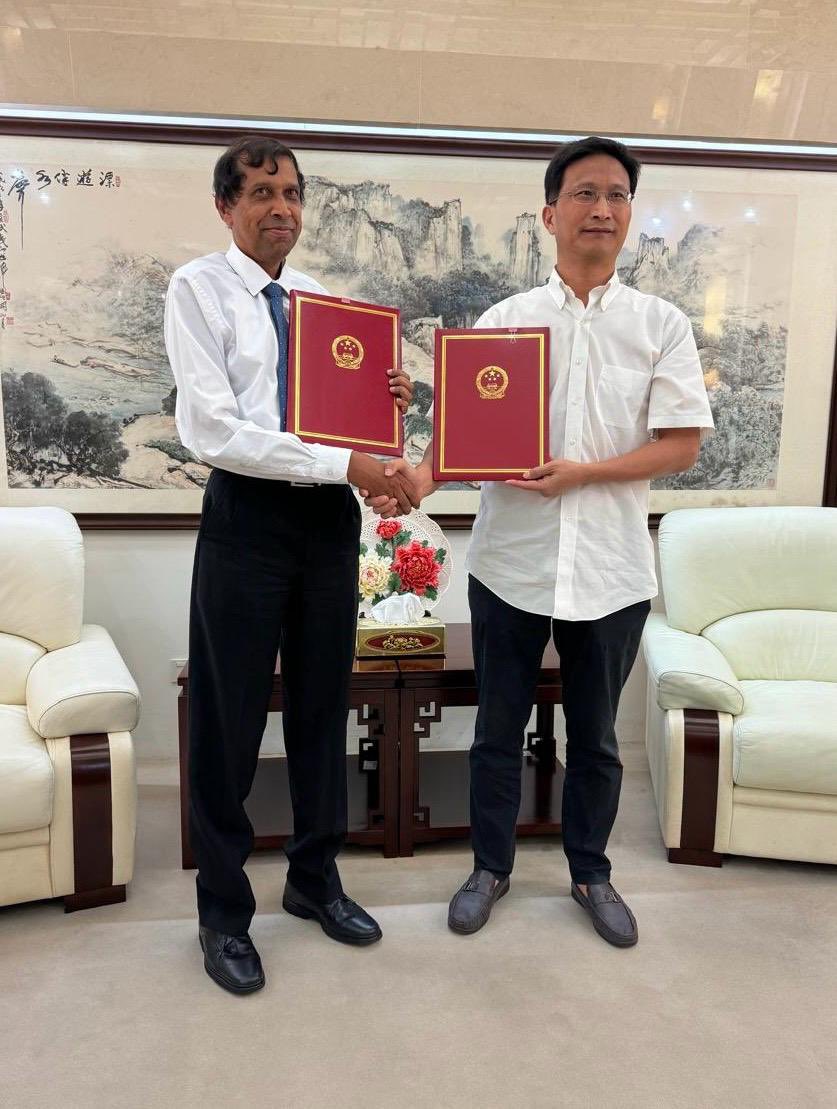
Sri Lanka signed debt treatment agreements with the Export-Import Bank of China (EXIM) in Beijing, a short while ago, to restructure USD 4.2 billion of debt, the President’s Media Division said.
The Framework Agreement related to this was signed between Sri Lanka and China in Colombo, Sri Lanka.
This restructuring provides significant debt relief, allowing Sri Lanka to allocate more funds to essential public services and resume concessional financing for critical infrastructure development, the PMD added.
State Minister of Finance Shehan Semasinghe also confirmed that Sri Lanka signed a debt treatment agreement with the Export-Import Bank of China to restructure USD 4.2 billion of its debt.
This move is part of an ongoing effort to manage the country’s financial challenges. The framework agreement for this debt treatment was signed between Sri Lanka and China in Colombo,” he posted on ‘X’.
He stated that this debt treatment agreement is a crucial step for Sri Lanka in stabilizing its economy and addressing its debt crisis.
Meanwhile, the total value of debt restructuring agreements that Sri Lanka reached today with creditor nations, including the Official Creditor Committee and with EXIM Bank of China is USD 10 billion.
They will provide up to 92% relief on debt repayments during International Monetary Fund (IMF) Extended Fund Facility (EFF) program.
I would like to draw the immediate attention of all-patriotic citizens of this country particularly living in the downhill areas of these Tea plantations and on the lowland areas below the hills that will be affected by earth slips in the hill country and flood in the downstream area that will recur as these hanging houses on these unstable and exposed hills will give way one day,( definitely in the near future) burying them en-masse leading to unprecedented natural disasters not only for the occupants of these pigeon holes but also to all those who live in the downstream areas right round the hill country up to the sea, for no fault of theirs’s.
Finally, one day it will lead to the complete extinction of all forms of life, both fauna and flora, in this Island due to lack of water and ending up all living forms on this land and finally the curtain will fall on human civilization on this land. Readers of this article should not dismiss this prediction as mere fantasy. It will definitely happen if all Sri Lankan patriotic people don’t get together as one family immediately to stop this wanton destruction done to the entire hill country, jointly by the government, Tamil politicians representing the plantation sector, the Indian government and international agencies and anti -Sri Lankan NGOO.
The loss of physical stability of the central hill country can occur due to the loss of one or a combination of the following factors.
1 Loss of the forest cover due to continuous deforestation
2 land degradation taking place thereafter due to heavy erosion and exposing land to elements of weather
3 disturbances to land due to construction of building either for residence purpose or any other either for residence or industrial or other purposes.
4 constructions of roads and railways lines or any other activity that exposes the earth to the elements of weather
5 Unexpected Tectonic movements
5 Bad land use by the millions of Indian Tamil labor settled all over the hill country on land even going up to 8ooo ft msl.
Therefore I call upon all concerned parties including the government, the patriotic masses and intellectuals who love this country to take immediate action to stop this criminal devastation and take steps to protect the physical stability of the central highland of this country above 1000 ft msl, which I have named as the HADABIMA of this country, as it functions as the heart of the body Sri Lanka that determines and dictates the survival of the entire life system of this Island by providing the main source for all the rivers in the Island, that keep the entire life system alive.
Furthermore it is also the sacred land the gods have bestowed on this island nation of the Sinhalese that was blessed thrice by the Lord Buddha as the land where his sublime Dhamma will be preserved for 5000 years to come and also as the country blessed with the sacred mountain Samanala kanda, sanctified by the Buddha’s sacred foot print on the top of which, the first ancestor of Man, Adam is also supposed to have placed his foot, as the legend has it, making it a sacred land for all the three religions in this world and further making it a sacred land for humanity the world over. As such it is the bounden duty not only of all Sri Lankas but also of all devotees of all three main religions the world over to protect it together with the whole hill country, the Geographical HEARTLAND” of this blessed land.
Therefore ,I also call upon the NBRO the main Organization responsible for all programmes to assist a disaster-free built environment in the future in this country , to take up this issue immediately with the sleeping government that does not take any action against this type of disastrous and devastative actions done by these Tamil politicians , the Indian government and some International agencies who are playing havoc, as it considers the estate Tamil vote is even more important and valuable than the destiny the country and its people whose sovereignty and welfare they have vouched to protect
Pl see the following news item issued by the (NBRO), that should act as The Guardian God of the central hill country who take care of its physical stability.
Sri Lanka’s Central Hills at risk: One-fifth of land prone to landslides
28 October 2023 06:31 am – 5 – 832 A news item Daily Mirror.
One–fifth of Sri Lanka’s total landmass, particularly the areas in the central hills- is prone to landslides according to a study by the National Building Research Organization (NBRO).
The study has found that incidences and frequency of landslides are growing, and it is common to have such disasters after every rain.
The major causes for the increase in the frequency of landslides are un-planned land use practices and unplanned intensive cultivation, ever increasing non- engineered constructions, construction blocking the waterways, construction in the reservation area of water bodies, deforestation and human intervention.
Another study done Professor in Earth Resources Engineering University of Moratuwa and President of Institute of Geology Sri Lanka Prof. Ranjith Premasiri, major landslides which occurred during the past two decades have claimed thousands of lives, about 175,000 people have been rendered homeless. Besides, damages in multi-millions have been caused to property.
He says Sri Lanka can be divided in to three main climatic zones on the basis of annual rainfall- wet zone (over 3000mm annual rainfall), intermediate zone (2000 to 3000mm), and dry zone (less than 2000mm).
Landslides are very often triggered by continuous rainfall characterized by showers of high intensity that occur for short periods of time. Central hilly area of Sri Lanka experiences rain from two monsoons, North-East and South-West,” he said.
Sudden opening and progressive widening of cracks on sloped surfaces or on the walls of building are signs of landslides. (Kelum Bandara)
My comments
Dr Sudath Gunasekara
10..12.2023
It is in this gloomy backdrop one has to take extremely serious notice of the ongoing largescale, unplanned and uncontrolled political housing construction activities, by The Ministry of Upcountry New Tamil Villages, Estate Infrastructure & Community Development, that is going on in the above-mentioned 10 districts exclusively for the estate Tamil labour force of Indian origin. It is reported that the construction of 14,000 houses all over the hill country and it’s adjoining areas is funded by the Indian government for the benefit of nearly 1. million living on the central hills (which already they call Malayaha) in the plantation sector is nearing completion. (902,000 persons in 2012).
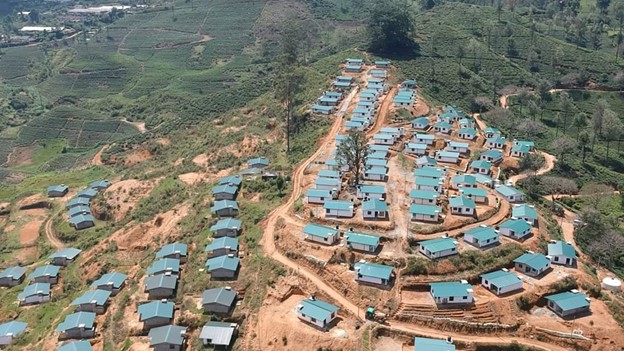
The following housing project in Bogawantalava completed under Indian funding in 2019 clearly shows the wanton destruction and irreparable damage already done to the fragile landscape in the hill country by this type of housing projects coming up all over the hill country and its neighboring hilly areas extending to 10 districts.
V.K. Vellayan Puram” Housing Scheme Bogawantalawa from www.smehci.gov.lk
State Ministry of Estate Housing and Community Infrastructure
http://www.smehci.gov.lk › Uncategorized Feb 24, 2019 — Under the Indian government funds, V.K. Vellayan Puram Housing Scheme with the 155 houses constructed at Bidwell Estate in Bogawantalawa. Elevation above sea level. It is at 1514 m =approximately 4600 ft msl.
This is only one out of hundreds of such haphazardly constructed housing schemas all over the 10 districts mentioned above covering around 13,000 square kilometers (1/5th the area of the country)
Government official like GAA have no control over these housing projects
When I made inquiries from the GA Nuwara Eliya and the Divisional secretaries they said they were never consulted and they had no say or any authority what so ever on the construction of this type of houses within their divisions. Apparently, they were invited to attend the ceremonies only. Only, later I came to know that all land powers that were formally under the GAA had been transferred to Div Sects by Act. no 58 of 1992 during the Premadasa time. But regarding the construction of these houses in the plantation areas, I am informed that it is The Ministry of Upcountry New Villages, Estate Infrastructure & Community Development and the local Tamil politicians who organize these housing projects in collaboration with the Indian Embassy in Colombo. Starting from the selection of lands, planning and constructions of buildings and roads and the selection and handing over the houses to the recipients are done under the supervision of the same Ministry.
As it is the government of the country or its administration and the Minister of Lands has no say what so ever in the whole process. Technical advice of agencies like the NBOR is never sought. It so happens that the officials like the GA and divisional Secretaries are invited only for the opening functions. As such it appears as if the government officials like the GA and the Div Secs now have no control over these unplanned and haphazard constructions which have already posed a big threat not only to the physical stability of around 13,000 square kilometers of lands spread over in Badulla, Nuwara-Eliya, Kandy, Matale, Ratnapura, Kegalle, Kalutara, Galle, Matara and Hambantota-that is almost 1/5th the area of the whole country as stated by the NBRO as landslide –prone areas. What is even more dangerous is the complete collapse of the subject of land administration by the government that covers ten administrative areas in the south, as if it has been already handed over to the Indian Government. In sum for an outside observer, it appears as if this area is already run as a legitimate part of the Indian subcontinent by the Ministry of Upcountry New Villages, Estate Infrastructure & Community Development that comes under the government of Sri Lanka on behalf of the Indian Government.
Isn’t it a shame for the Government of Sri Lanka, if there is one, and for all political parties at home, to keep deaf dumb and blind over this irreparable and irreversible devastation being done to mother Lanka by a group of British Indian labourers who were brought in the late 19th century and left behind destitute when they left the Island din 1948. for the shake of a dangling goats testicle called the vote” that will never fall in to their plate, as the parable says.
It is high time that all patriotic citizens of this country wakeup up immediately from their death slumber, as one nation to stop this all-time disaster that is going to befall on the entire life system and the civilization to this country within few decades. The devastation that will follow this hazardous and unscientific construction activities will be million times more destructive than what the British did by removing the forest which was subsequently covered with a carpet of tea bushes that protected the earth to some extent. The degree of devastation then was less as the construction were limited to few factories residential Bungalows for the management of communal line rooms on selected places. The degree e of disturbance done to the physical stability under the present system is thousand time greater. The earlier system was reversible. But not the present system. What is more is the then labourers had no permanent interest as they knew that one day they will go back to their motherland. Today the situation is very much different as they not only have permanent interest to stay but they also dream to make this their permanent homeland and finally make it a Malayanadu, a part of India. sponsored by the expansionist Indian Government.
The subject of land administration in the whole country has to be brought under the central Government Immediately
The effect on land administration in the whole country has to be assessed in this backdrop very seriously with no delay as the government has already lost land administration powers in the Northern and Eastern Provinces long time ago, especially after the implementation of Act no 58 of 1992 and the PA circular 21/92.
Beside this there is also a far more serious threat of life in the downstream area right round the hill country due to continuous floods devastating these areas as frequent earth slips and floods occurring in this area due to the collapse of the physical stability of the central hill country. There is a third danger of all the103 rivers that have their sources on the hills running dry in the long run due to the loss of the physical stability of the central hill country, which I have identified as the geographical heart land (The HADABIMA) of Sri Lanka in 1991 whose physical stability determine and dictate the survival of the entire life system in this country and therefore the civilization of this island as well. The degree of land degradation and the rate of deforestation and the drying up of river flow and the underground water deposits that keep the rivers perennial is alarming and beyond imagination.
Who gave permission and final approval for this type of pigeon hole housing complexes on the hills?
By looking at above housing complexes, the impression I got is that it is a hanging housing nursery built on highly fragile and steep land (over 60% slope) not suitable for any kind of construction. With one earth slip the whole thing will be found in the valley bottom. I wonder who gave permission and final approval for this type of pigeon hole housing complex to be built on such slopy and fragile land. This land Bogawanthalaava hosing scheme is located at 4600 ft msl if not more. This is part of the central hills of this country that provides the main water source for the whole Island. All 103 main streams of the country have their sources here. The central hill country covering roughly about 1/5 the area of the Island was under thick forest before the colonial British invaders ceded the Island by convention in 1815.
This land above 3500 ft was a strictly forbidden and conserved national reserved forest declared by royal decree. No man was allowed even to enter these forests at that time. There were no human settlements in the whole area above 3000 ft at that time with two exceptions, one at Kotmale, an ancient small village, and the other in Uva Welimanda a settlement found in medieval times as the upstream surge for new irrigable land from the northern dry one began. The ancient Kings preserved this hill country covered by forests as their heart as they knew the value of this region as the main water source for the agricultural civilization thriving in the lowlands around the central hills. The hill country also served as a hide out for royalty at times of distress due to South Indian invasions.
The destruction and the devastation of this national treasure began with the land hungry British ravaging the entire forest cover by felling and burning all the forest converting the whole hill country in to a scorched barren land to find way for their coffee and later tea plantations. When the native Sinhalese refused to labour for the invader, the British brought indentured labour from British South India as slaves who had to walk for South India to the central hill country more than 200 miles to work on these newly opened up plantations. The first batch of these very small slave labour arrived in this country around 1840. Since then, hard life in South India and lucrative job opportunities in this country with subsidies with permission to go back to India annually to deposit their savings and travelling made easy after the construction of the railway connecting Mannar with the central hill country was completed. The Mannar line was built by 1914 to connect Talaimannar on Mannar Island to the Sri Lankan mainland, and the Indian rail network was extended to Dhanush Kodi; Thus, it became an annual pilgrimage type of a joy ride for these laborer s to travel between Sri Lanka and India. Although the trade union people complain of suffering in Sri Lanka it was actually a heaven in Sri Lanka for these jobless underprivileged poor lot in India.
From the time they were herded here it is true, that they worked hard under difficult conditions and toiled from 6 am to 4 pm to earn their living. But it is not rue to say that the toiled for this country and claim to be residents here for 200 years as they claim under the banner Nam 200” and now claiming a separate administrative division now with the intention of converting it. To a separate part under the Indian Government. The stark truth about their contributing to the growth of this country is this. Considering the economic benefits, they have got from this country they have only found lucrative employment here, what they did not have in India. The subsidy on this 1.2 million had been burden for this county right from the beginning. In reality what they have done was filling the banks of the colonial empire while draining what they earned here to banks in Indi in Sterling pounds and gold. In the past even at present the process hasn’t changed he claim that Hye make a big contribution to earn safe is bushtit Today more the 65 % of income from tea comes from low grown If you subtract what they are provided by the SL government I think they are a big liability from an economic point of view, On the other hand the following negative factors also hold be noted
1 finally the main the political Now look at the number of Minister Ministries and institutions both Govt and Non Govt Othe political bribes like Governors etc
Who will pay the damages for the devastation for the occupants of these pigeon holes when one day they slip down the hills Who will take the responsibility for the huma misery that will follow.
More than that just imagine the environmental devastation that will occur to the hill country when hundreds of this type of pigeon holes constructed on such slopy fragile land over 60% slope at such higher levels in the country. What will happen to those living in villages below who will get buried under this debris for no fault of them. What they enjoy are thousand times more thaw ha the son’s pf the soil the Kandyan who owned these lands Compared to the privilege enjoyed by the what re the benefits the Kandy peasants etc have got, Nothing S They don’t have even mainstay The only dept the Kandyan Peasantry is also closed. No Ministry for Kandyan affairs No dept None in the KPC Report are attended to. But they are the sons of the soil who created the civilization here and protected against 3 colonial powers nearly for 500yeara.
Indian labour on finally other were just indentured clave laborers brought by the British I late 19th c and early 20th C whom were never here in 1815 when we handed over the land to them. As such it is incumbents on them to take them back to from where they came and hand over the vacant possession of our land to us. True no one had asked for it. But the fact remain that they are Indians. We the Native Sinhalese were the people who had been here for 2600 years as the owners of this land.
State Minister of Defence Hon. Premitha Bandara Tennakoon presided over a discussion to look into the measures to be taken to provide relief to people whose houses were damaged in the recent floods. The discussion was held today (Jun 25) at the Disaster Management Centre (DMC).
The Minister discussed the steps to be taken to provide assistance to the disaster-affected people to restore their damaged houses.
The President has approved the necessary financial allocations for compensation for fully or partially damaged houses. Required funds have already been allocated from the treasury and it is planned to distribute these funds through district secretariats and divisional secretariats, the State Minister said. It has been proposed to provide Rs. 2.5 million for each totally damaged house. Further, it is also proposed to obtain services from the armed forces for the reconstruction work which will avoid the difficulties in obtaining necessary labour, the Minister added.
It has been under discussion with the state officials the possible practical issues that may arise during this process and counter measures to be taken. Accordingly, the Minister also emphasized that the cooperation of all public service officers including Grama Niladharis, Development Officers, Agricultural Officers and Disaster Relief Officers is essential for this process.
Director General of DMC Major General Udaya Herath, Director General of the National Building Research Organization Asiri Karunawardena, Director General of the Department of Meteorology Athula Karunanayake, Additional Secretary of the DMC Gamage Dharmathilaka, officials of the Ministry of Finance, District Secretariats and Divisional Secretariats, staff officers of the DMC and senior military personnel were present for this discussion.
The TNA is the main political party of the North. S. Shritharan was recently elected its leader and M. A. Sumanthiran, who is regarded by some as being barely Tamil”, as one Eelamist resident in Canada put it, was sidelined. Sritharan’s vision, expressed in post-election speeches, demands the merger of the Northern and Eastern provinces; he rejects the 13A as being grossly inadequate to meet the aspirations of the Tamils. The political parties of Gajendra Ponnamblam, and of C. V. Wigneswaran takes an even harder public stand. All tactically reject 13A, even though they rush to India to support 13A when support for 13A weakens in the South. The positions taken by southern politicians regarding 13A are also merely tactical and opportunistic.
Ironically, 13A is already a part of Sri Lanka’s Constitution, with some parts of it implemented, and others in suspense, mainly due to a huge lack of trust across the Northern and Southern political formations. Even the Eastern Tamil leaders do not trust the Northern leaders.
While the minority leaders still seek the chimera of an Indian supervisory role, the majority-community politicians know that strong Indian interventions, even parippu dropped from air” are no longer a part of the show. President Ranil Wickremasinghe was seated next to Prime Minister Narendra Modi at the latter’s inauguration, while no TNA leader was visible. Meanwhile, the provincial councils themselves have atrophied, with provincial elections not even considered worth the cost, under the current circumstances.
The Northern political leaders rightly believe that any government in Colombo will be a government of the Majority Community and that minority rights will NOT be protected under such a set-up, judging by past history. So, they aspire to have a separate government of their own as the only effective approach”. However, this approach triggered the past history of communal politics and violence that led to terror and counter-terror. Finally, the TULF leaders, Sinhalese politicians, even the Indian Leader who fathered the 13A, and thousands of innocent civilians got wiped out.
If there is no trust, there can be NO federalism, nor an effective 13A. Even an independent Eelam, separate from a Sinhalé by a physical border is not viable, as the two neighbours will be continually at war, as is the case between India and Pakistan, or across and even within Indian states (e. g. Manipur), even though the Indian Model”, like 13A, is claimed to resolve these conflicts. Furthermore, such independent” states will be forced to join up with big powers and become mere pawns of global proxy wars. That is the end of their self-determination”.
The TNA says, We don’t trust the majority, so we want our own government; but the minorities who will be under us, i.e., Muslims of the East or any Sinhalese who live in our exclusive homeland” must trust us. Just forget attacks on Muslims or Sinhalese minorities when the TNA was an LTTE proxy”! This aspiration” for hegemony by Tamil leaders over other minorities will be rejected by the respective minorities, just as the Tamil leaders reject being ruled by the Majority that they do not trust.
Social-choice theory
How can we equitably allocate agents (or electoral seats) to represent a group of people within a unitary setup (with a total quota of 225 seats), or with subdivided setups (e. g., with provincial councils or federal states with quotas of seats reflecting minority groups)?
This question falls within a class of much studied mathematical problems in game theory, mathematical economics as well as in the theory of social choice. Intellectual giants like John von Neumann and other mathematicians pioneered these studies. However, the most important results relevant to our discussion here came from Blinski and Young as well as from Kenneth Arrow. The latter won the Nobel Prize for economics in 1972 for his theorems on social-choice theory”.
Blinski and Young proved a theorem showing that any apportionment rule (or representation and devolution rule) that stays within an assigned quota (say, of seats) suffers from what is known as the population apportionment paradox. This states that unless the populations remain absolutely static, even if the minority has a decisively large rate of population growth, the majority still gains more representation (or more power) inexorably! There is NO fair apportionment scheme!
Blinsky and Young’s result was a surprising no-go” theorem. However, Arrow’s theorem, formulated in 1951 was even more surprising and counter-intuitive. Arrow laid down five self-evident” axioms (or rules) about what may be called the Will of the People” to be represented. For instance, a key rule is that the preferences and aspirations of a group should be chosen only from the group members (and not from outsiders). Another axiom is that the will of the group” must not be that of one particular person; this is known as the no-dictator rule. The other axioms are similar harmless-looking rules about the group having specific preferences (e.g., favouring a set of religious or cultural traits against another set), or having maverick members who have changed policies in the past on a specific preference, although now in accordance with the will of the group”.
Arrow’s impossibility theorem
Kenneth Arrow proved that, in spite of the highly democratic and seemingly fair” formulation of these axioms, no such fair representation is possible. This is known as Arrow’s Impossibility Theorem. This theorem states that mandating the preferences and aspirations of the group cannot be ensured while adhering to usual democratic” principles of fair voting procedures!
The mathematical conclusion is that a selection of people making decisions for those who elected them can never be a rational or fair process, however wise or benevolent they are! Their decisions will be necessarily autocratic! Naturally, the minorities within any group, be it under the Sinhalese majority in the main government, or under the Tamil majority in the TNA government reigning over the North and the East, will discriminate against the minority in each case.
Every available constitutional representation that satisfies Arrow’s axioms (i.e., common-sense ideas of fairness) is a perverse one. There is no will of the people” or a democratic way of representing it. This very painful conclusion, reached by mathematicians in the 1950s, has stood all critical attacks on it. For over twenty-two decades, political scientists for whom the concept of the will of the people” is as sacrosanct as the geocentric universe was to the medieval church attacked it! Instead of disproving Arrow, similar impossibility theorems, no-cloning theorems, etc., have been established in quantum information theory and quantum mechanics.
Devising an electoral scheme is mathematically equivalent to an apportionment scheme. Instead of allocating seats on the basis of population (i.e., The People”), one may consider allocating seats” on the basis of votes. This leads to models based on proportional representation (PR) instead of apportionment.
Mathematicians have shown that PR leads to even more serious negative consequences than apportionment. A variety of paradoxes of the Blinsky and Young type have been established. A very serious conclusion is that even the mildest PR system will confer a disproportionate amount of power to the third largest party in parliament! The third largest party becomes the king maker and often comes into a coalition with the second-ranking party to become the government! The validity of these results from game theory in practical politics has been established by studies of the history of governments in Germany, Israel and Denmark where high levels of proportional government have been legislated.
In my opinion, a way around these problems is to abandon electoral methods and return to the method of SORTITION advocated by Aristotle and used in several Hellenic cities during the time of Pericles.
Sortition has been adopted today in various limited ways, especially for local or provincial governments, in Ireland, France, Belgium, Canada and even Mongolia. In the simplest sortition model one arbitrarily selects by lottery a group of people who constitute the parliament. While these legislators last only five or six years, it is the administrative service that persists. The sortition parliament is not claimed to represent the will of the people”. The lottery may be open to all the people, or only to a selection defined by their public service, education etc., as specified by a parliament chosen initially by simple sortition. That is, the first sortition parliament may enact more elaborate sortition models, but ensuring that the random element implied by sortition is never negated.
The sortition model ensures that the same set of corrupt politicians do not continue to get elected every time by controlling the list of candidates as well as the vote-gathering infrastructure which favours existing parties that have accumulated much wealth, by hook or crook. It also eliminates demagogues as the election is by lottery.
In other words, SORTITION ensures that a system change” occurs every time. It ensures that political crooks, their henchmen and progeny do not entrench themselves and hold onto power over decades and decades, be it in the North or the South. I had given a discussion of the sortition model in a previous article in the Island (02-01-2023). It may also be accessed via the web (
This photograph shared by the European Space Agency (ESA) shows the photo of Ram Setu, a former land bridge connecting India and Sri Lanka. (Image: ESA)
Ram Setu, aka the Adam’s Bridge is a chain of shoals stretching 48 kilometres and at one point of time connected Rameswaram Island in India to Mannar Island in Sri Lanka.
The European Space Agency (ESA) released a photo of the Ram Setu, which is also known as the Adam’s Bridge, located between India and Sri Lanka. The photos were captured by the ESA’s Copernicus Sentinel-2 satellite.
The Adam’s Bridge is a chain of shoals that link India and Sri Lanka and stretches for almost 48 kilometres from Rameswaram Island, off the southeast coast of India, to Mannar Island in Sri Lanka.
The chain of shoals also separates the Gulf of Mannar from the Palk Strait. The Gulf Of Mannar is an inlet of the Indian Ocean to the south while the Palk Strait is an inlet of the Bay of Bengal to the north.
Many theories exist about how this bridge was formed but geological evidence indicates that these limestone shoals are the remains of a landmass that formerly linked India and Sri Lanka.
According to historical records, this natural bridge could be crossed until the 15th century. After that, it slowly eroded because of storms, the ESA said. The space agency also said that some sandbanks in the Ram Setu are dry, and the sea in this area is very shallow, with depths ranging from 1 to 10 metres, as shown by the light colour of the water.
Mannar Island, which is about 130 square kilometres in size, is linked to mainland Sri Lanka by a road bridge and a railway bridge. These bridges can be seen at the southern end of the island.
On the Indian side, there is Rameswaram Island, also called Pamban Island. To reach this island from the Indian side, one must cross the 2-kilometre-long Pamban Bridge. This bridge connects the two lands and enables the transfer of people and goods.
Rameswaram Island, also known as Pamban Island, features two primary towns: Pamban, located on the western edge, and Rameswaram, situated approximately 10 kilometres east of Pamban.
Both sections of Adam’s Bridge are incorporated into protected national parks in India and Sri Lanka. The sand dunes in these parks provide essential breeding grounds for bird species like the brown noddy.
National People’s Power (NPP) Parliamentarian Dr. Harini Amarasuriya states that their party will support the private member’s bill tabled by SLPP MP Premnath C. Dolawaththa to decriminalize same-sex relationships under the penal code.
Joining the ‘Derana 360’ programme, Dr. Amarasuriya explained their party’s stance regarding the LGBTQ+ community.
We have been advocating for this community for a while. They are also a part of this society. Gender identities are diverse, including those of the same-sex community. From the beginning, we are of the stance that individuals should not be discriminated based on their gender”, she said.
Specifically, these same-sex relationships have been criminalized in our penal code. This is not a law which was originated in our country; it was introduced during the Victorian era by the British. Therefore, we believe it should be amended,” Dr. Amarasuriya expressed.
MP Premnath C. Dolawaththa, a government representative, has tabled a private member’s bill in the Parliament to amend the penal code…”
Commenting further, Dr. Harini Amarasuriya said: Our party believes that decisions regarding the relationships of two adults should be made by the individuals involved, not dictated by law. However, a law should remain in place to protect children and minimize potential harm.”
…Only the sexual relationships with animals are a crime…So, the NPP will back this during its third reading,” she assured.
The Cabinet of Ministers has approved the signing of debt restructuring agreements with Paris Club and other stakeholders, Cabinet Spokesperson, Minister Bandula Gunawardana said.
Speaking during the Cabinet press briefing held today (25), Minister Gunawardana said the relevant agreements will be signed tomorrow (26).
A Sri Lankan delegation comprising the Secretary of the Finance Ministry, State Ministers and other relevant officials have left for France for the discussions with the Paris Club group of major creditor countries.
Furthermore, the Cabinet Spokesman stated that President Ranil Wickremesinghe assured, during the Cabinet meeting, that detailed information regarding all the agreements being signed in this manner will be submitted to the Parliament.
He said that additionally, President also mentioned this ‘good news’ will be communicated to all the people of the country in the President’s address to the nation.
In response to a question raised by a journalist, Minister Gunawardena also expressed that he cannot mention the exact time frame regarding the matter, since both the negotiations with bilateral creditors and commercial creditors are still underway.
Is it because the British British don’t go to vote that all these British MPs go wooing immigrants for votes? Or is there some other reasons not made public! Hot on the heels of the Labor Leaders pro-terrorist sponsored speech is one delivered by former PM David Cameron. He has been careful to omit mullaivaikkal” tens of thousands dead” and the usual mumbo jumbo in prepared scripts given to foreign MPs. Nevertheless, Cameron who has visited Sri Lanka on personal & business visits during the past few years has unceremoniously omitted mention of the Sinhalese community in Sri Lanka who have also contributed to the British economy. This is a major affront even for a sponsored speech!
Cut the Bull on Human Rights” Song by Rukshan Perera / late Sunil Perera & Sohan (a must listen song)
00:00
02:09
Clearly the team that prepared David Cameron’s sponsored script & the team that prepared the Labor Leaders sponsored script differ in many ways. While the former showed restraint in use of words & facts, those who wrote the Labor Leaders script were like bulls in a China shop and left nothing to the imagination but openly showed empathy for LTTE dead. Cameron’s speech on the other hand was well thought out, careful marshalling of words & left arguments only in interpretation. So bravo to team Cameron’s script writers!
We certainly agree. Give the devil his due they say. But, what about the Sinhala community living in the UK, have they not qualified for these golden sentiments expressed above?
For what purpose was this speech made?
Does it mean the Sinhala community have to chip in & sponsor a speech praising them along the same lines too?
Is this all part of election campaign democracy”?
Nothing to be surprised about sponsored scripts as it targets only a particular audience. It is noteworthy that aspirations” are mentioned. Aspirations are like promises – never fulfilled and differ from person to person. Similarly, aspirations are not rights & just to reiterate separating Sri Lanka is an aspiration but not a right!
We must highlight this part of his speech. Notice no mention of genocide” war crimes” mullaivaikkal” tens of thousands of deaths” and more importantly he states ‘armed conflict”. This is a far cry from the bogus use of ethnic conflict” as the national army was fighting with a non-state armed group. By virtue of LTTE killing even Tamils, it disqualifies the use of ethnic conflict”. It is unfortunate that no post-LTTE government has thought fit to correct this simple fact. If his thoughts are also with the killed & disappeared it would and should also include the 5000 missing soldiers of the national army who have names & IDs unlike the numbers being plucked from the air as being killed. Also David Cameron may like to get the UK police to filter all the asylum seekers and refugees & investigate how many of them fled to UK from Sri Lanka to qualify as missing” or disappeared” some of these end up on international reports with new names & living in the UK & contributing no doubt to the British economy! Mr. Cameron may also like to ask Scotland Yard to investigate that nurse called Adele living in the UK & personal trainer of child soldiers from 1980s to late 1990s. She not only trained children to kill but also trained them to commit suicide. How about some accountability for these crimes too!
Oh we remember this trip very well. Maybe he also remembers refusing to sign the nation’s guest book or accept the welcome on arrival & then dashing off to Jaffna. Camerons behavior was a stark contrast to then Prince Charles now King of England. Prince Charles was happy to be greeted by the traditional ayubowan” welcome and was polite enough to speak to all present. While mourning all those killed, Cameron didn’t even remember the names of the 3 Britishers LTTE killed in 1986. Many were to say that 2013 visit was of a Prince (Charles) & a Punk (Cameron). Just to jog Camerons memory!
Britain’s moral audit doesn’t give much scope to be pointing fingers! From colonial crimes to becoming America’s poodle in illegal invasions is nothing to really brag about. Exactly what is this transitional justice, another hobby horse so a bunch of people can get jobs & go poking fingers into other nations! When these so-called human rights champions cannot even define terrorism or a terrorist and one’s terrorist becomes another freedom fighter – what transitional justice!
Speaking of diplomatic breakthroughs we can recall UK envoy Gladstone being unceremoniously packed back to London by President Premadasa for interfereing in local elections and successive UK envoys have all been interfering in the internal affairs of Sri Lanka too.
David Cameron since his departure as PM has visited Sri Lanka several times. He arrived in 2023 on a personal visit. He was also in Sri Lanka to promote the Colombo Port City – no wonder he says Sri Lanka’s extraordinary potential”, its big business for him!
It is absurd to argue that Sri Lanka has to wait for three hundred years to receive Buddhism. Buddhism would have come into Sri Lanka in the time of the Buddha (6 BC). There was close contact between the Ganges area (Gangetic plain) and Sri Lanka during this time. Buddhism was officially installed as the state religion later on, in the 3rd century BC. From 3 BC onward, up to the present day, Sri Lanka was able to show a continuous Buddhist civilization.
Sri Lanka’s Buddhist civilization was recognized in Asia as something special. In the ancient and medieval periods India, China, Burma, Thailand sent emissaries to Sri Lanka to learn more about Buddhism. In the modern period Buddhism went to the west from Sri Lanka.
Buddhism is a living religious tradition in Sri Lanka today. Buddhists flock to temples for Wesak, Poson and other poya days. Poson Zones across the country were full of devotees on Poson Full Moon day in 2023, reported the media.
In 2023 Hundreds of thousands of people came to worship Buddhist shrines across the country including Anuradhapura and ‘Dharma Rashmi’ Homagama-Pitipana Poson region on Poson full moon day. Buddhist devotees came in thousands to visit the Temple of Tooth, Kelaniya, Kataragama, Mahiyanganaya, Kalutara, Kande Viharaya, Muthianganaya, Polonnaruwa, Bellanwila, Seruvavila, Dimbulagala Buddhist shrines.
Temples in Moneragala district Buddharuvagala, Okkampitiya, Dematamal Viharaya, Maligavila, Yudaganawa, Bibile, Piyangala Rajamaha Vihara, Moneragala Bukkiriyagolla, Buddama Rajamaha Viharaya were also crowded with devotees. There were dansalas near the main roads. All age groups participate in these ceremonies. The crowds are a mix of young and old.
The Poson crowds seem to have increased in 2024. Poson festival at Anuradhapura included Anuradhapura, Mihintale and Tantrimalai. Anuradhapura was bursting with worshippers. There were more than one million. This is the highest number of people who have come to Anuradhapura during Poson in recent times said officials.
Dalada Maligawa, Hantane Sandagiri, Kelaniya, and Gangaramaya too had many worshippers in 2024. The Homagama Dharma rashmi Poson zone was conducted this year too. For the first time, a Bhakthi Gee Recital was held from a specially prepared train carriage operated from Homagama to Malapalla and Padukka Railway Stations.
But Buddhism is not confined only to temple- going”, there is also an abiding interest in the Buddhist philosophy and the benefits of meditation. The audience at Poya bana preaching shown on You Tube consists of mature adults and their children, not senior citizens, which means that the tradition will continue for another two generations at least.
Buddhism is recognized in the Constitution of Sri Lanka .It is mentioned in both 1972 and 1978 Constitutions. Clause 6 of the 1972 constitution stated The Republic of Sri Lanka shall give to Buddhism the foremost place and accordingly it shall be the duty of the State to protect and foster Buddhism , while assuring to all religions the rights granted by Articles 10 and 14(l)(e)”.
Clause 9 of the 1978 constitute stated The Republic of Sri Lanka shall give to Buddhism the foremost place and accordingly it shall be the duty of the State to protect and foster the Buddha Sasana, while assuring to all religions the rights granted by Articles 10 and 14(l)(e).”
The 1978 Constitution has retained the 1972 clause word for word but substituted the word Buddha Sasana’ for Buddhism”. This is a very significant change. It has widened the scope of the clause immensely. Clause 9 now means the total social institution of Buddhism not the religious philosophy alone, said Sunil Bastian. This clause must be respected and retained in future constitutions.
In 1994, Supreme Court gave a detailed interpretation of the term Buddha Sasana. This interpretation makes the clause on Buddhism even more relevant and important. The Supreme Court (in SC Determination 1/94 (1994) held; The expression ‘Buddha Sasana’ is wider than ‘Buddhism’ and includes the entire establishment together with objects and places of religious practices and worship of Buddhists”. Hence the term Buddha Sasana could be further extended to include Maha Sangha, archaeological sites, villages, lands and properties owned by Buddhist temples. Buddha Sasana includes both tangible and intangible feature,”
The notion of a Civilization State” is now gaining support. Civilization state” means a state that has a unique civilization , historical continuity and cultural unity, a Jathika Chintanaya. The first state to be accepted as a civlizational state is China. China is planning to lead an International Civilisational Dialogue soon.
The Buddhist civilization in Sri Lanka is also special. Sri Lanka preserved the Theravada doctrine vocally, then put it in writing, and supplied commentaries. Sri Lanka influenced Buddhism in several Asian countries, including Tibet. After some 2000 years which included 450 years of Christian rule, 70% of the population is still Buddhist. There are 1284 Buddhist temples registered with the Department of Buddhist Affairs. There is an active Sangha whose ordination is traceable to Arahant Mahinda and a growing Bhikkuni Sasana.
The local temple has always played an important role in the village. The head priest has much influence in the village even today. The temple has been a source of solace and refuge in addition to its function as a place of worship. This is well depicted in teledramas. During natural disasters or periods of social unrest, the temple becomes a shelter for those who need it, irrespective of their ethnicity or religion. During the 2004 tsunami the Sangha were the first on the scene after the tsunami ended.
Buddhism in Sri Lanka is not ‘heritage’. Heritage means something that is handed down from the past. Buddhism is part of the contemporary, living culture of Sri Lanka . Sri Lanka has many ancient sites with a long record of historical continuity. Most of the monuments of Sri Lanka belong to a living religious tradition, said Gamini Wijesuriya.
Kurundi is part of this vibrant civilization. It is the latest discovery in a continuous process of conserving our ancient Buddhist monuments. Kurundi is the largest Buddhist shrine in the Northern Province and it is in a strategic location in Mullaitivu. Kurundi vihara is about 20 kilometres from the sea coast. It was part of the Mahayana belt in the east coast.
We must insist that Kurundi be given the recognition it deserves. An extensive Kurundi reserve must be created, covering the 400 acres of ruins with an additional buffer zone. The law provides for a buffer zone to the site. We should be proud of Buddhism and proud of Kurundi.
It is outrageous that we should have to fight for the Buddhist monuments in the north and east and be asked to make out a case for Buddhism in the north and east, as though it is something new and alien.
The north and east, including Mullaitivu and Vavuniya, were part of Sri Lanka‘s Buddhist civilization. North and east were a part of the Rajarata in the ancient period. Inscriptions show that Abhayagiri Nikaya had monasteries at Kantarodai in Jaffna, Nedunkerni and Ottimalai in Vanni.[1]
The north and east were part of the Sinhala kingdom in the ancient period. The major part of the north and east continued under the Sinhala king in the medieval period. The north and east were a recognized as part of the Udarata Kingdom in the last phase of Sinhala rule. Trincomalee and Batticaloa ports were under the Sinhala king in Udarata time. The British and Danish envoys arrived at these two ports.
After independence, the public were reminded that Mannar and Vavuniya was once Sinhala. Ceylon Observer 14th October 1949 said There is ample evidence carved in stone all over the Mannar and Mullaitivu districts that the Sinhalese had occupied these districts”.
Later surveys confirmed this. A map drawn up by the Dept of Archaeology in 1980 showed 109 sites in Vanni, mostly in Mullaitivu and Vavuniya. In 2010the Department of Archaeology initiated a survey of the Buddhist sites in the north. They found 175 sites in Mullaitivu and 80 in Vavuniya.
The north and east became Tamil during British rule. The British allowed the Sinhala villages in the east to die out by depriving them of water. The British refused to renovate the small village tanks, despite the pleas of the British Government Agent who said these villagers are dying due to lack of water. All they need is a little help to renovate their tanks.
This deliberate action of the British rulers can be described as Genocide. The Genocide Convention (1948) says genocide may take place not only in war, but in a peaceful situation. Deliberately inflicting on a group conditions calculated to bring about its physical destruction is considered genocide, Genocide Convention said, but there must be a proven intent to physically destroy a group.
As the Sinhala villages in the east died out, due to genocide, so did Buddhism. After the Sinhala villages died out the British administration brought in Tamil settlers from Tamilnadu. They were Hindu, but converted to Christianity after settling here. This means that the Ceylon Tamil” is simply a 19th century settler brought in by an alien administration.
Therefore the argument that there are no Sinhalese and Buddhist in north and east today and it must stay that way cannot be accepted. The creation of an exclusive Hindu north and east cannot be accepted either. Buddhism was erased from north and east through Genocide. The return of Buddhism to the north and east is legitimate.
Further, the Northern Province and Eastern Province are artificial provinces created by the British .They have no historical validity whatsoever. But the eastern coast which faces the Bay of Bengal all along its way is very important for the Indian Ocean politics of world powers like USA.
The north and east are also important for Sri Lanka‘s economy. Much of the future economic zone of the Indian Ocean which will belong to Sri Lanka is in the Northern and eastern sea coast.
A strong Buddhist lobby should now be set up for the return of Buddhism to north and east. That lobby should also ensure the protection of Buddhist ruins in north and east. I suggest that the All Ceylon Buddhist Congress take up the matter. ( CONTINUED)
[1] TG Kulatunge Buddhist Nikayas in Sri Lanka .( author pub) p 16

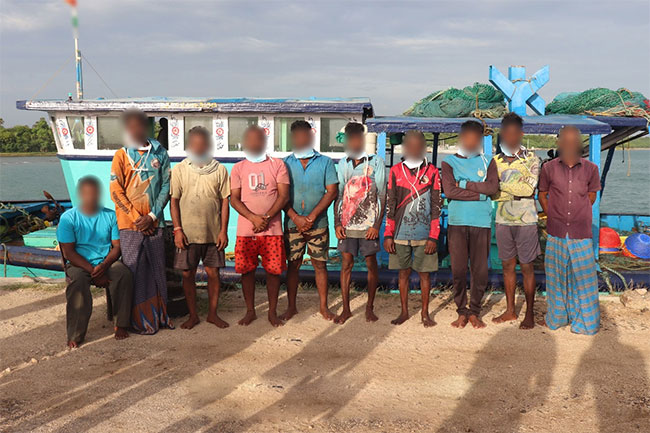

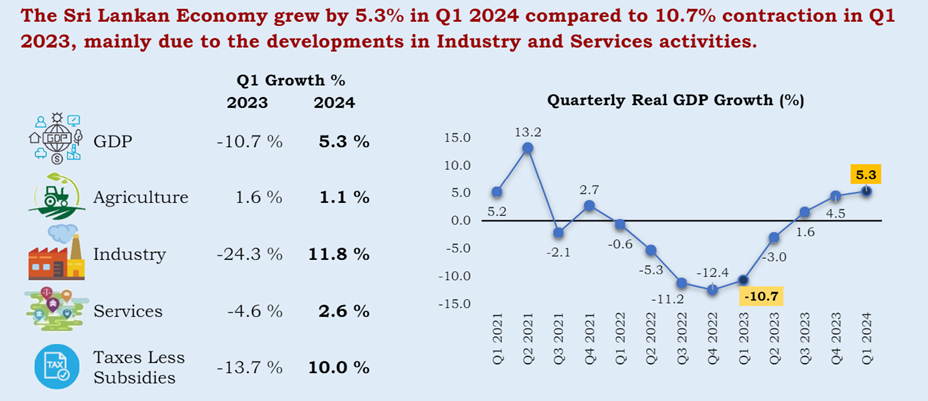
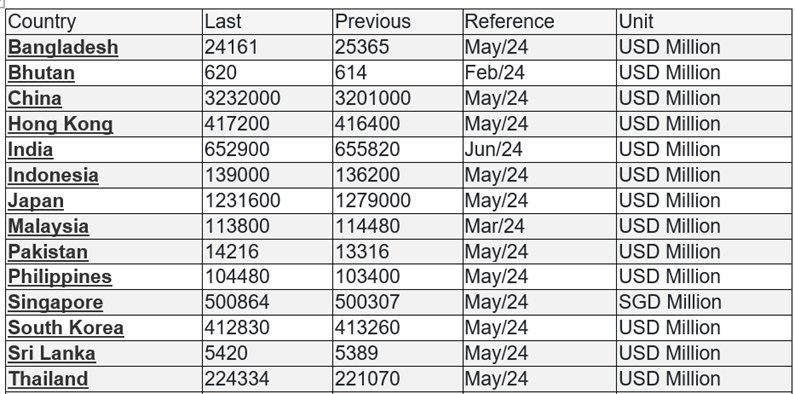
 ජාතික න්යාය පත්රයක මූලාරම්භය දෙවන පියවර ඊයේ (25) ජාතික පුස්තකාල ශ්රවණාගාරයේදී ජාතික සංවිධාන නියෝජිතයන්ගේ සහභාගීත්වයෙන් පැවැත්විණි.