Three criminal gang members arrested in special STF raids

March 20th, 2024

Courtesy Adaderana

The Police Special Task Force (STF), in a raid conducted on Tuesday night (March 19), has managed to arrest three suspects involved in organized crimes.

Accordingly, a close associate of the infamous gangster Keselwatte Dinuka”, identified as Tharindu Ruwan Kumara, was apprehended in Borella. The STF personnel found 6.5 grams of heroin on the suspect at the time of the arrest.

Meanwhile, Ahmed Jeffrey Ahmed Rizwan alias Goda Rizwan”, a member of the notorious criminal figure Kanjipani Imran’s” gang, was arrested in Maligawatta along with 6.4 grams of heroin.

Finally, a close associate of the gangster Pookudi Kanna”, identified as Munaweera Arachchilage Susantha, was arrested with 6.62g of heroin in Kajimawatta.

Govt ready to make ongoing economic reforms a law – State Minister tells IMF

March 20th, 2024

Courtesy Adaderana

Sri Lanka’s State Minister of Finance Shehan Semasinghe has assured that the economic reforms being implemented will not be disrupted by the coming elections and that the government is ready to make the ongoing reforms a law of the country.

The State Minister had stated this during a discussion with the IMF’s Executive Director for India, Sri Lanka, Bangladesh and Bhutan, Prof. Krishnamurthy V. Subramanian.

During the discussion, ensured that the reforms implemented will not be disrupted with election been announced and the government is ready to make the ongoing reforms a law of the country which demonstrates the dedication to stability and sustainable growth,” he said in a post on ‘X’. 

Semasinghe further said that wide-ranging topics were discussed around the current IMF programme and attention was also paid to the challenges in digitising the tax process.

He said it was pointed out that the government has taken steps to increase the number of tax files, which had decreased due to various policy decisions, to approximately one million at present. 

Meanwhile, the State Minister of Finance has also held a discussion with the Deputy Chief Economist at the UK’s Foreign, Commonwealth and Development Office, Dr Fergus Cumming, and the British High Commissioner to Sri Lanka, Andrew Patrick.

He said the discussion delved into various aspects of current economic trends, exploring their implications and identifying emerging challenges and opportunities, particularly in the context of post-crisis recovery efforts. 

Additionally, he said they examined the outcomes of the IMF programme and discussed reforms extending beyond the programme’s scope. The emphasis was placed on the significance of maintaining momentum with reforms,” he said in a post on ‘X’.

Furthermore, views were exchanged on enhancing tax administration practices, Semasinghe stressed.

Intermittent fasting linked to high risk of cardiovascular death, study reveals

March 20th, 2024

Courtesy Adaderana

A new study has challenged the alleged health benefits of intermittent fasting, a popular diet often praised by celebrities and health gurus alike.

Intermittent fasting is a well-known practice in which you eat all your food in an eight-hour window and fast for the remaining 16 hours of the day.

However, a study from the American Heart Association published on Monday, 18 March has found that limiting mealtimes to just eight hours a day was linked to a 91 per cent increase in risk of death from heart disease.

Researchers, led by Dr Victor Zhong of the Shanghai Jiao Tong University School of Medicine, analysed approximately 20,000 adults in the US with an average age of 49 years who had followed intermittent fasting, also known as the 16:8 plan.

According to the study – which was presented at the AHA’s Epidemiology and Prevention conference in Chicago, Illinois – those who limited their eating to eight hours a day were 91 per cent more likely to die from cardiovascular disease than those who ate across 12 or 16 hours.

Among participants with existing cardiovascular disease, an eating duration between eight and 10 hours per day was also associated with a 66 per cent higher risk of death from heart disease or stroke.

Meanwhile, people with cancer who ate for more than 16 hours a day were less likely to die from the disease. Researchers also found that time-restricted eating did not reduce the overall risk of death from any cause.

Restricting daily eating time to a short period, such as eight hours per day, has gained popularity in recent years as a way to lose weight and improve heart health,” said senior study author Dr Zhong. However, the long-term health effects of time-restricted eating, including risk of death from any cause or cardiovascular disease, are unknown.”

We were surprised to find that people who followed an eight-hour, time-restricted eating schedule were more likely to die from cardiovascular disease. Even though this type of diet has been popular due to its potential short-term benefits, our research clearly shows that, compared with a typical eating time range of 12-16 hours per day, a shorter eating duration was not associated with living longer,” he said.

The study analysed data from participants in the 2003-2018 National Health and Nutrition Examination Surveys, and compared it to the Centers for Disease Control and Prevention’s National Death Index database on people who died in the US from 2003 through December 2019.

 Researchers acknowledged that the study was limited in its findings because it relied on self-reported dietary information, as well as failed to focus on other factors that may play a role in participants’ health.

Overall, this study suggests that time-restricted eating may have short-term benefits but long-term adverse effects. When the study is presented in its entirety, it will be interesting and helpful to learn more of the details of the analysis,” said Dr Christopher D Gardner, the Rehnborg Farquhar Professor of Medicine at Stanford University.

One of those details involves the nutrient quality of the diets typical of the different subsets of participants. Without this information, it cannot be determined if nutrient density might be an alternate explanation to the findings that currently focus on the window of time for eating. Second, it needs to be emphasised that categorisation into the different windows of time-restricted eating was determined on the basis of just two days of dietary intake,” he said.

Approximately half of the participants were men and half were women. Around 73 per cent of the participants were non-Hispanic white adults, while 11 per cent were Hispanic. Eight per cent of participants were non-Hispanic Black adults, and nearly seven per cent of adults identified as another race.

It will also be critical to see a comparison of demographics and baseline characteristics across the groups that were classified into the different time-restricted eating windows,” added Gardner. For example, was the group with the shortest time-restricted eating window unique compared to people who followed other eating schedules, in terms of weight, stress, traditional cardiometabolic risk factors or other factors associated with adverse cardiovascular outcomes?

This additional information will help to better understand the potential independent contribution of the short time-restricted eating pattern reported in this interesting and provocative abstract.”

In June 2023, a similar study analysed the weight loss results for adults with obesity who participated in intermittent fasting, compared to traditional calorie counting. The results, which were published in the journal Annals of Internal Medicine, found that those who engaged in eight-hour time restricted eating had improved insulin sensitivity compared to those in the control group who ate their calories any time over 10 or more hours a day.


Source: The Independent
-Agencies

President Ranil unveils vision for rapid transformation into export economy

March 20th, 2024

Courtesy Adaderana

If Sri Lanka continues to rely on borrowing to address the imbalance between imports and exports, the nation will inevitably confront another economic crisis within a decade, says President Ranil Wickremesinghe.

He also underscored his vision to establish economic stability and expedite the transformation of Sri Lanka into an export-oriented economy.

The President said that a new law is planned to be introduced to parliament in April, alongside another legislation aimed at improving financial governance within the government. These measures are designed to propel the nation’s economy forward.

Wickremesinghe made these remarks during his attendance at the inauguration ceremony of Bodhigara and Golden Fence, constructed near the historic Mangedara Tempita Viharaya in Kegalle today (March 20).

The President also noted that negotiations concerning certifying Sri Lanka as a debt-paying country are anticipated to conclude by June and July. He further emphasized that the foreign aid lost due to the country being labelled as bankrupt will be retrieved and returned to the nation.

Additionally, the President highlighted that the country’s economy will receive a boost as the national currency strengthens with the renewed engagement of foreign banks and companies that had previously refrained from conducting business with Sri Lanka.

Reflecting on how all citizens were impacted during the previous economic crisis, the President also stressed that the benefits of the growing economy are meant for everyone, not just a select few.

The President, who visited the historic Mangedara Tempita Viharaya in Kegalle, unveiled a commemorative plaque, inaugurating the new Bodhigara and golden fence, and offered flowers at the Bodhiya.

This new Bodhigara and golden fence were erected following guidance from Ven. Sri Jananandabhidana Nayaka Thero, the Viharadhipathi of the Mangedara Tampita Viharaya and Chief Sanghanayaka of Kegalu Maha Disawa.

The President also granted commemorative gifts upon Jagath Sumitra Karunaratne and Mallika Karunaratne.


Addressing the gathering President Ranil Wickremesinghe further said:

We are looking forward to talking to the International Monetary Fund and wrapping up our work soon. In 2022, Sri Lanka was labelled as a bankrupt country. Because of this, international financial institutions and banks stopped providing us with support and loans. Our first priority is to lift this ban. Therefore, we need to reaffirm that we are a country that pays its debts.

Over the past year, we have played a crucial role in rescuing the country from economic troubles. If these challenges persist, we may endure another two or three years of hardship. However, as an initial step, we have now reached the final stage of the government’s program aimed at steering the country away from bankruptcy. Achieving this required numerous steps, but we’ve successfully executed them in a remarkably short timeframe.

The on-going discussions are reaching their last phase, and we anticipate wrapping them up by tomorrow. Following that, our objective is to proceed with negotiations involving the countries that have provided loans to us. This process is being overseen by France, Japan, and India, who are chairing the discussions involving all the countries that have officially lent money to us.

The local staff and the International Monetary Fund (IMF) are anticipated to reach a staff-level agreement this weekend after concluding their discussions. Concurrently, discussions with China are on-going, and discussions with private creditors are underway. The Secretary to the Ministry of Finance and the Governor of the Central Bank are scheduled to return to Europe to engage in discussions with these groups.

Following the declaration of our bankruptcy-free status, a joint meeting of the World Bank and the IMF is planned for April. Subsequently, the relevant agreement is expected to be signed shortly thereafter.

I aim to complete all these tasks by June and July, especially considering the upcoming presidential and parliamentary elections. It’s crucial to finish these activities before the elections. Once completed, we will demonstrate to the world that we are capable of repaying our debts, which will lead to the return of aid money that we haven’t received yet and an increase in the country’s dollar reserves.

Currently, many banks and companies are hesitant to engage in business with us, but once these activities are concluded, they will resume business with us. Consequently, our available funds are expected to increase.

We have passed a challenging period and had to make tough decisions to overcome this situation. However, we have now reached a point where we can offer some relief.

The rupee has been strengthening, and it’s expected to reach Rs.280 rupees by June, leading to a decrease in the prices of goods. We anticipate the rupee will continue to strengthen next year as well.

Moreover, salaries of the government employees have increased by Rs. 10,000 before the Sinhala Tamil New Year. Additionally, the Aswasuma” program has been introduced to provide benefits three times higher than Samurdhiya to the people, with the number of beneficiary families increasing from 800, 000 to 2,400,000.

Considering these factors, the relief provided to the people as a bankrupt country is three times greater than what was provided during a stable economy. These efforts ultimately benefit the country’s economy. Additionally, the funds that were not used for decentralized budgeting over the past two years will be released, contributing to the country’s economic growth.

Looking ahead, we have opportunities for further progress after June.

Stabilizing the country’s economy alone will not solve all our problems because we are currently reliant on imports, leading to a trade imbalance where exports are lower than imports. This gap is often bridged through foreign loans, which sets us up for another economic crisis in about a decade.

To prevent such a scenario, I plan to hold discussions with the World Bank, the Asian Development Bank, and the International Monetary Fund to initiate a program aimed at swiftly transitioning the country towards an export-oriented economy. As a fundamental step, we have introduced the agricultural modernization program, which will require another 6 to 7 years to achieve success.

It is worth mentioning that the proposed law aims to foster economic stability and transition the country into an export-based economy. I plan to present this law to Parliament by April. Additionally, another law focused on financial governance within the government will be introduced, enabling us to sustain economic activities effectively.

The previous economic challenges impacted everyone in the country. Therefore, the benefits of the developing economy should not be limited to a select few but should extend to all citizens.


–PMD

Environmental Concerns: Pollution, illegal dumping, or inadequate waste management

March 19th, 2024

By Palitha Ariyarathna

GKUP Group

As residents of Sri Lanka, we all play a role in maintaining a healthy environment for every living creature in our region. Today, I want to address several issues related to our local area, particularly focusing on poor city trash management. Having lived in Mahanuwara City (Kandy) for over four decades, I’ve witnessed and experienced the challenges of urban living. Whether we’re government employees or private citizens, it’s our collective responsibility to work together peacefully. Let’s set aside titles like ‘Governor’ or ‘Leader’ and recognize that we all share this village, city, country and this earth, and this. Trash management and environmental cleanliness go hand in hand, and it’s crucial to address these issues through collaborative efforts, awareness campaigns, and stricter waste management regulations. Additionally, safeguarding the Mahaweli River, the longest river in our country, is essential for both environmental sustainability and public health.

Let’s start from Mahanuwara-Kandy: Kandy, also known as Mahanuwara in Sinhala, is a major city in Sri Lanka, located in the Central Province. It was the last capital of the ancient kings’ era of Sri Lanka. The city is situated amidst hills in the Kandy plateau, which spans an area of tropical plantations, primarily tea. Kandy serves as both an administrative and religious city and is the capital of the Central Province. One of its most significant landmarks is the Temple of the Tooth Relic (Sri Dalada Maligawa), which is one of the most sacred places of worship in the Buddhist world. The temple houses the relic of the Buddha’s tooth and has been declared a World Heritage Site by UNESCO. Kandy attracts numerous visitors due to its rich cultural heritage, scenic beauty, and historical significance. Here are some reasons why Kandy is a popular destination: which I am not going further to explain one by one. Anyone can imagine why managing waste effectively in a city like Kandy is crucial for maintaining cleanliness, environmental health, and the well-being of its residents. We have lived for a longer period in Mahanuwara-Kandy itself as students in famous Kandy schools and colleges. We lived there, as for the Vision and Mission of the Kandy Municipal Council, we don’t know who the founder is, but it clearly reflects the needs of our own people and our commitment to enriching our heritage. Living in Mahanuwara-Kandy, we witness firsthand how attractive our city is and how kind and honest the people in the area are. The KMC’s Vision and Mission align with these values.

Vision

An attractive city that leads through good governance enriching heritage”

Mission

Our mission is to provide and manage all the public utility services, thoroughfares and other welfare activities, ensuring welfare and good health of the people living within the Municipal limits and of those visiting the city daily in protecting historical and natural beauty of the World Heritage city by using the physical, financial and human resources available to the council efficiently and effectively by virtue of the powers vested in it by the Municipal Councils’ Ordinance and other Numerous Acts with much dedication and motivation.

As the author of these articles and a former member of the Commercial Grid Team, I served as Secretary, dedicating my free time to JICA’s collaborative public team, working closely with KMC and local authorities to formulate the Greater Kandy Urban Plan (GKUP). My commitment and goals are focused on fulfilling the second line of the KMC mission. In this paper, I will address critical issues, propose practical project suggestions, outline necessary personnel, and explore international approaches to managing the trash crisis. My overarching goal is to safeguard the welfare and good health of both residents living within municipal limits and visitors to our beautiful World Heritage city. Additionally, I am dedicated to preserving the historical and natural splendor that defines our beloved city here are some strategic steps for more effective waste management:

Sincerely, waste management in Kandy, like many other cities worldwide, faces several challenges. Let’s explore some of the key issues. All findings related to the Municipality can be true, or if they have currently been fixed, the relevant officers can ignore them and focus on the most relevant and latest issues.

Image: The accumulation of trash until the next morning in some places, from approximately 6 PM to early morning, due to tight garbage handling operations can indeed have significant consequences for the atmosphere and pedestrians in Kandy City. The impact may include air pollution, which affects the health and well-being of residents.

Inadequate Infrastructure:

  1. Kandy lacks sufficient waste disposal infrastructure, including composting facilities, recycling centers, and waste treatment plants.
  2. The absence of proper facilities can leads to illegal dumping, open burning, and environmental pollution.

Poor Waste Segregation:

  1. Residents often mix different types of waste (organic, recyclables, and non-recyclables) together.
  2. Without proper segregation, recycling efforts are hindered, and valuable materials end up in landfills.

Lack of Public Awareness:

  1. Many residents are unaware of the importance of waste reduction, proper disposal, and recycling.
  2. Educational campaigns are essential to promote responsible waste management practices.

Uncontrolled Dumpsites:

  1. Kandy faces challenges related to unmonitored dumpsites.
  2. These sites contaminate soil, groundwater, and air, posing health risks to nearby communities.

Health and Environmental Impact:

  1. Improper waste management leads to vector-borne diseases (such as malaria and dengue fever).
  2. Open burning releases harmful chemicals, affecting air quality and respiratory health.

Visual and Olfactory Effects:

  1. Improperly managed waste negatively impacts the city’s aesthetics and quality of life.
  2. Littered streets and unpleasant odors affect residents and visitors.

Limited Resources and Funding:

  1. Municipal budgets may not allocate sufficient funds for waste management infrastructure and services.
  2. Kandy needs sustainable funding models to address waste-related challenges.

Population Growth and Urbanization:

  1. Rapid population increase in urban areas strains existing waste management systems.
  2. As Kandy grows, waste generation escalates, necessitating better planning and resources.

Behavioral Change:

  1. Encouraging behavioral change among residents is crucial.
  2. Promoting responsible waste disposal habits requires community engagement.

Collaboration and Governance:

  1. Effective waste management requires coordination among local authorities, Mindful NGOs, and citizens.
  2. Transparent governance and stakeholder involvement are essential.

Addressing these above challenges requires a holistic approach, involving infrastructure development, education, policy enforcement, and community participation. Kandy can work toward sustainable waste management by prioritizing these aspects.

Remember that waste management is a collective effort involving residents, local authorities, and businesses. By implementing these strategies, Kandy can improve its waste management practices and create a cleaner, healthier environment for all.

Let’s go back to JICA and GKUP. The Japan International Cooperation Agency (JICA) has played a significant role in supporting waste management and urban development in Kandy over the past years in Sri Lanka. Here are some key initiatives that have been implemented:

Kandy New Wastewater Management System:

  1. JICA provided financial assistance for the construction of the Kandy New Wastewater Management System.
  2. The project aims to address wastewater-related challenges in Kandy, benefiting over 300,000 people, including residents and daily migrants.
  3. The system improves sanitation, reduces pollution, and enhances the overall quality of life in the city1.

Greater Kandy Urban Plan (GKUP):

  1. JICA collaborated with local authorities to formulate the Greater Kandy Urban Plan (GKUP).
  2. The plan revises the urban development vision for Kandy, focusing on sustainable growth, heritage preservation, and efficient waste management.
  3. It includes strategies for waste reduction, recycling, and infrastructure development2.

Solid Waste Management Master Plan:

  1. JICA’s assistance extends to formulating a Solid Waste Management Master Plan for Kandy.
  2. The plan emphasizes strengthening governance, fostering ownership, and implementing waste management based on past experiences.
  3. It envisions a cleaner, healthier city prepared for rapid urbanization3.

These collaborative efforts between JICA and local authorities demonstrate a commitment to sustainable waste management and city development in Kandy. Frankly, further evolution on the above subject is limited due to a lack of relevant knowledge and resourceful data from authority and public papers and articles.

Let’s jump to our target area, Lewella, where I have faced challenging times while discussing and addressing the current day-to-day issues. I have lodged numerous complaints regarding the area’s trash management sector, including the frontline employees responsible for daily trash collection. My long-term efforts aim to uplift people’s quality of life and find the right solutions to safeguard our county’s natural environment.

Where we live: Lewella, a village and northeastern suburb of Kandy in the Central Province, Sri Lanka, is situated along the banks of the Mahaweli River.

Here are some key details: It appears that my concern is related to a community with nearly 5,000 residents.

Trash Dumping: Improper waste disposal poses a significant challenge to the Mahaweli River.

Image:1, Residents fear that the garbage dumping and burning will continue here for a longer period, risking healthy living.”Image by Palitha A.

A few Unorganized and Unofficially directed trash collection areas are igniting fires after manual trash segregation. These areas contain all types of trash, and the resulting burning releases smoky emissions that affect nearby main roads and the riverside. The open fires pose a threat to the riverside environment, and the residual waste left over after several days of burning eventually washes into the Mahaweli River, affecting different climate conditions such as the effect of wind and rain

Challenges Facing Mahaweli River:

Water Pollution: Solid waste dumped into the river affects water quality and ecosystems.

Environmental Impact: Open dumping sites near the river contribute to pollution and harm aquatic life.

Health Risks: Polluted water can lead to health issues for communities downstream.

Life and Traffic issues: A few very narrow junctions are used for daily trash collection and burning activities. This has an impact on the lives and nearby properties, resulting in a very smoky environment. Burning trash poses serious health risks to both people directly exposed to the smoke and the environment. It can lead to respiratory issues, air pollution, greenhouse gas emissions, and long-term health problems. Proper waste management and recycling are crucial to mitigate these harmful effects. The road adjacent to the burning activity sites is approximately fifty meters from both the beginning and ending of Wagolla Road.

The issue of waste mismanagement in the Lewella area of Kandy is a pressing concern. Here are some observations and challenges related to waste management in that locality:

Image 2:,The smell is unbearable not to mention the health hazzards, say residents .”Image by Palitha A.

Improper Collection and Disposal:

  1. The municipal authorities may not have an efficient waste collection system in place.
  2. Irregular collection schedules or inadequate coverage can lead to waste accumulation on streets and in residential areas.

Lack of Segregation at Source:

  1. Residents might not segregate waste properly at the source (homes and businesses).
  2. Without proper separation of recyclables, organic waste, and non-recyclables, effective waste management becomes difficult.

Illegal Dumping and Littering:

  1. Some individuals may resort to illegal dumping, especially in poorly monitored areas.
  2. Littering in public spaces exacerbates the waste management challenge.
The notice is of no avail but somedays trash remian up to three four days and dump grows. ”Image by Palitha A.

Insufficient Awareness Programs:

  1. Lack of awareness about responsible waste disposal practices contributes to the problem.
  2. The municipality should conduct educational campaigns to inform residents about proper waste management.

Inadequate Infrastructure:

  1. The Lewella area may lack sufficient waste bins, collection points, and recycling facilities.
  2. Insufficient infrastructure hinders effective waste management.

Environmental and Impact:

  1. Poor waste management affects the environment, soil quality, and water sources.
  2. Open burning of waste releases harmful pollutants into the air.
One of the most critical consequences of free-roaming dogs in urban areas is their magnetic attraction to landfills or garbage dumps”Image by Palitha A.

Current Health Risks:

  1. Accumulated waste attracts pests, leading to health hazards.
  2. Residents may suffer from vector-borne diseases due to improper waste disposal.
  3. Disposable diapers often referred to as nappies,” including adult and other diapers, pose significant challenges in waste management. Raising awareness about proper diaper disposal and exploring innovative solutions is essential for environmental health. In several cases, human-monkey complicity has been observed, due to the rising of many unhygienic trashes being dragged along to other houses. Additionally, unsupervised dogs in villages impact the scenario.
  4. To dispose of Pedigree dog waste from home, you must monitor and ask the owner of a large or small puppy if they are collecting the waste. It should not be dumped in the nearby area or hidden away. Instead of flush their dog poops down the toilet; it’s one of the most eco-friendly ways of disposing of dog poop. Rather than unknowingly carrying out improper disposal poses a health risk for municipality staff and finely community. Register all dogs in the area will be advantage of starting management of this crisis. Also set up designated areas with waste bins for dog owners to dispose of their pets’ waste. Encourage villagers to use these stations and provide bags for collecting dog poop.
  5. While implementing strategies to manage village dogs and their poop issues, it’s essential to acknowledge that achieving the desired goal might not always be straightforward. However, persistence and a combination of approaches can make a difference. Lack of Community Engagement:
  6. The municipality should involve residents, community leaders, and local organizations in waste management initiatives.
  7. Encouraging community participation can lead to better outcomes.

Lack Of: Staff, Equipment, Motor and Non-Motorized Equipment,  

Addressing these challenges requires a collaborative effort between municipal authorities, residents, and relevant stakeholders. By implementing better waste management practices, the Lewella area can improve its environmental conditions and overall quality of life.

Lack of Occupational health and Safety Issues:

Ensuring the safety of municipal workers is crucial for maintaining a healthy and productive community. These dedicated individuals play a vital role in keeping our cities and villages clean, safe, and functional. Municipalities should prioritize worker health and safety.

What do we have to do to reach the goal of proper trash management in the area? Here are some observations and potential solutions. It can be practical or manageable.

Door-to-Door Collection:

  1. Establish a systematic collection system where waste is collected directly from households and businesses.
  2. Regular collection schedules should be followed to prevent accumulation.

Recycling Programs:

  1. Promote recycling by setting up collection points for recyclable materials.
  2. Collaborate with recycling companies to process and reuse materials.

Composting:

  1. Encourage composting of organic waste to produce nutrient-rich soil.
  2. Educate residents on home composting techniques.
  3. Conduct awareness programs on waste reduction, proper disposal, and environmental impact.
  4. Involve schools, community centers, and local media to spread the message.

Landfill Management:

  1. Properly manage existing landfill sites to prevent pollution and health hazards.
  2. Explore alternatives to landfills, such as waste-to-energy facilities.

Public Awareness:

  1. Encourage residents, businesses, and institutions to separate waste into different categories: organic (food waste), recyclables (plastic, paper, glass), and non-recyclables (such as hazardous materials).
  2. Implement color-coded bins or bags for easy segregation.

Community Engagement:

  1. Solution: Involve local communities, schools, and civic groups.
  2. Activities:
    1. Organize clean-up drives in popular areas.
    1. Conduct workshops on waste management.
    1. Encourage reporting of illegal dumping.

Collaboration with Businesses and Tourism Industry in the area and beyond:

  1. Solution: Engage local businesses, hotels, and tourism operators.
  2. Actions:
    1. Encourage waste reduction practices.
    1. Promote responsible tourism and waste management.

Collaboration with NGOs and Civic Groups:

  1. Work with non-governmental organizations (Mindful NGOs) and community groups to organize clean-up drives, tree planting, and awareness events.

Strategic Bin Placement:

  1. Solution: Install waste bins strategically in popular streets and public spaces.
  2. Benefits:
    1. Encourage proper waste disposal.
    1. Discourage littering and open dumping.

Regular Clean-Up Drives:

  1. Solution: Organize periodic clean-up events in popular areas.
  2. Engagement:
    1. Involve schools, colleges, and community volunteers.
    1. Raise awareness during these drives.

Public Art and Beautification:

  1. Solution: Use public art installations and beautification projects.
  2. Benefits:
    1. Enhance aesthetics.
    1. Instill pride in maintaining clean spaces.

Increased Surveillance and Enforcement:

  1. Solution: Strengthen monitoring and enforcement by municipal authorities.
  2. Actions:
    1. Deploy surveillance cameras in key locations.
    1. Impose fines for illegal dumping.
    1. Collaborate with law enforcement agencies.

Enforcement and Penalties:

  1. Enforce waste management regulations and impose fines for illegal dumping.
  2. Encourage responsible behavior through penalties and incentives.

Innovative Solutions:

  1. Explore innovative technologies like waste-to-energy conversion, biogas production, and smart waste bins.
  2. Consider partnerships with private companies for sustainable waste management solutions.

Reporting Mechanism:

  1. Solution: Establish a user-friendly system for reporting waste dumping.
  2. Features:
    1. Mobile apps or hotlines for reporting incidents.
    1. Swift response from municipal teams.

Monitoring and Evaluation:

  1. Regularly assess the effectiveness of waste management programs.
  2. Collect data on waste generation, collection rates, and recycling rates.
  3. Long-Term Sustainability:
    1. Solution: Implement waste management practices that ensure long-term sustainability.
    1. Considerations:
      1. Proper landfill site selection.
      1. Recycling and composting facilities.
      1. Groundwater protection.

Conclusion:

In conclusion, tackling the challenges of waste management necessitates a joint endeavor involving municipal authorities, residents, and other stakeholders. By adopting more effective waste management practices, the Mahanuwara- Kandy City, Lewella area can enhance its environmental conditions and elevate the overall quality of life.

By Palitha Ariyarathna

Writer, Journalist, Author Publisher

Dip.HRM,CC.Dip, HMT, Marine Science ,SRM,PADI Advance Open Water Diver, Sky Diving, RLLS UK Rescue Craft and Boat Handling and Life Saving, CPR/AED/Emergency First Responder, Air Way Management RLLS UK, Fire and Water Safety, Former Beach Filed Officer and Life Safety Officer

විග්නේෂ්වරන්ට සජිතේ නම අමතක වෙයි | අනුරට තියෙන ඇත්තම බලය ගැන විග්නේෂ්වරන් කතාකරයි | ඡන්ද ලැබෙන හැටි

March 19th, 2024

නාස්තිය හා දූෂණය කපා හරිමින් 2024 වසරේදී ඉලක්කගත සංවර්ධන ක්‍රියාදාමයකට අවතීර්ණ වෙමු.  

March 19th, 2024

අග්‍රාමාත්‍ය මාධ්‍ය අංශය

·       රට ගොඩනැගෙන්නේ සහයෝගයෙන් සහ එකමුතුවෙන්. රට ගොඩනැගුනොත් එහි ප්‍රතිඵලය ඔබටයි ඔබගේ දරුවන්ටයි.   

                                                                        අග්‍රාමාත්‍ය දිනේෂ් ගුණවර්ධන මහතා

අග්‍රාමාත්‍යවරයා මේ බව සඳහන් කළේ උඩුගම මූලික රෝහලේ සිව් මහල් ගොඩනැගිල්ල සහ නියාගම ප්‍රාදේශීය රෝහලේ තෙමහල් ගොඩනැගිල්ලේ පළමු අදියර  ජනතා අයිතියට පත් කිරීමේ අවස්ථාවන්ට 2024.03.18 දින එක්වෙමිනි.

දකුණු පළාත් සභා ප්‍රතිපාදන සහ ලෝක බැංකු ආධාර යටතේ ප්‍රාථමික සෞඛ්‍ය සේවා සත්කාර පද්ධති සවි බල ගැන්වීමේ ව්‍යාපෘතිය මගින් උඩුගම මූලික රෝහලේ රුපියල් මිලියන 400ක වියදමින් මෙම නව සිව් මහල් ගොඩනැගිල්ල ඉදිකර ඇති අතර  ගොඩනැගිල්ලේ බිම් මහලේ අනතුරු හා හදිසි අනතුරු ඒකකය, අධිකරණ වෛද්‍ය ඒකකය, පළමු මහලේ ශල්‍යාගාරය A,B,C සහ දෙවන මහල වාට්ටු අංක 01, තෙවන මහල වාට්ටු අංක 05 ප්‍රදේශයේ රෝගී සත්කාර සේවාවන් අවැසි ජනතාව වෙනුවෙන් සුව සහනය සලසනු ඇත.

නියාගම ප්‍රාදේශීය රෝහලේ  තෙමහල් ගොඩනැගිල්ලේ පළමු අදියර සඳහා වැය කළ මුදල රුපියල් කෝටි නමයයි දශම පහකි. පළමු අදියර තුළ බාහිර රෝගී අංශය සායන සහ හදිසි ප්‍රතිකාර ඒකකයන්ද වන අතර එහි දෙවැනි අදියරේ ඉදිකිරීම් කටයුතු සිදු කිරීම සඳහා සෞඛ්‍ය අමාත්‍යාංශය රුපියල් මිලියන විස්සක ප්‍රතිපාදන ලබාදීමට පියවර ගෙන ඇත.

එහිදී අදහස් දැක් වූ අග්‍රාමාත්‍යවරයා – 

ලංකාවේ ඉතිහාසය පුරා සෞඛ්‍ය සහ අධ්‍යාපනයට සුවිශේෂ බරක් යොදා තිබෙනවා. මේ ආයෝජනයන් දෙක නිසා ජාත්‍යන්තර මිනුම් දඬුවල අපි ඉදිරියෙන්ම සිටියා. ඒ තුළින් බිහි වූ වෛද්‍ය පරම්පරාවන් රටවැසියාට ලබා දුන් සේවාව අගය කළ යුතුයි. අපි ගමන් කළේ බොහොම අමාරු කාලයක්. ඒ අමාරු කාලය අප අමතක කළ යුතු නැහැ. ඒ අමාරු කාලේ අපේ ජාත්‍යන්තර ගනුදෙනු නැවතුණා. ජාත්‍යන්තර බැංකු, ලංකාවේ බැංකු එක්ක ගනුදෙනු කරන්නේ නැහැ කියලා තීරණය කළා. ඒ අපේ රට වැටිලා තිබුණු මූල්‍ය ආර්ථික අර්බුදය නිසයි. ඒ අවස්ථාවේ ආණ්ඩුවට පුළුවන්කම ඇතිවුණා ඒ අමාරු දුෂ්කර කාලය ගතකරලා යලිත් වරක් මේ කපා තිබූ පෙකණි වැල සම්බන්ධ කරන්න.

අද ඒ අමාරු තත්ත්වයෙන් රට නිදහස් කරගෙන ආර්ථිකය යළි ස්ථාවර තත්ත්වයකට පරිවර්තනය කරගන්න පුළුවන් වීම නිසා මේ අවුරුද්දේ  විශාල මුදල් ප්‍රමාණයක් ග්‍රාමීය දියුණුවට යෙදවීමට 2024 අයවැය ලේඛනයෙන් මුදල් ප්‍රතිපාදන ලබා දී තිබෙනවා. විමධ්‍යගත අරමුදලට අනුව පළාත් සභා අරමුදල් සහ ව්‍යාපෘති සඳහා වූ මුදල් අලුතින්  ආර්ථිකයට එන්නත් කරනවා.

අලුත් බඳවා ගැනීමේ යම් යම් සීමාවල් තුළ ඇතැම් බඳවා ගැනීම් වලට ඉඩකඩ ඇහිරී තිබුණත් වෛද්‍ය ක්ෂේත්‍රයේ, සෞඛ්‍ය ක්ෂේත්‍රයේ සහ විවිධ ක්ෂේත්‍රයන් වල බඳවා ගැනීම් වැඩි කරන්න පියවර ගෙන තිබෙනවා. හෙද ක්ෂේත්‍රයට,  විශ්ව විද්‍යාල උපාධියක් කරා ගමන් කළ හැකි සුවිශේෂ විශ්වවිද්‍යාල ප්‍රවේශයක් සකස්කර අනුමත කර තීරණයක් ගෙන තිබෙනවා. ඒ තුළින් හෙද ක්ෂේත්‍රය තවත් පුළුල් කළ හැකි ක්ෂේත්‍රයන් සඳහා ගමන් කරවීමට අපේක්ෂා කරනවා. ඉදිරි වැඩ පිළිවෙලක් ඇතිව එලෙස ගමන් කරන මොහොතකදී නියාගමට පොදු සෞඛ්‍ය සේවය ඉටු කර ගැනීමේ ක්‍රියාවලිය වඩාත් පහසු කර ගැනීමට අද සිට අවස්ථාව හිමිවෙනවා.

සෞඛ්‍ය ඇමතිතුමා දකිනවිට රිචඩ් පතිරණ අමාත්‍යවරයාත්, ඉසුරු දොඩංගොඩ මන්ත්‍රීවරයා දකිනවිට  අමරසිරි දොඩංගොඩ ඇමතිවරයාත් සිහිපත් වෙනවා. අපි එකම දවසේ පාර්ලිමේන්තුවට පත්වුණේ. අවුරුදු හතළිහකට කලින් එකම දවසේ පාර්ලිමේන්තුවට ඇවිල්ලා අපි සහයෝගයෙන් කටයුතු කළා. පොදුජන ව්‍යාපාරයට ශක්තිය දෙන්න දායක වුණා. ඒ දෙපළගේ ආදරණීය දරුවන් ජාතික සංවර්ධන සංවාදයට හවුල් වීම අගය කරනවා. වෛද්‍ය ක්ෂේත්‍රය සම්පූර්ණයෙන් අභියෝගයට ලක්වෙලා තිබෙන ක්ෂේත්‍රයක්. සෞඛ්‍ය අංශයට ඒවායෙන් ප්‍රයෝජන හැකි අවස්ථාවන් තිබෙනවා. කරාපිටිය මහ රෝහල වගේ විශේෂ සේවාවන් රාශියක් මෙම රෝහලින් ලබාදීමට හැකිවන සේ නව දැනුම හා තොරතුරු තාක්ෂණ දියුණුව රෝහල තුළ ඇතිකරන්න අවශ්‍යයි. එය සාර්ථක කර ගැනීමට හැමදෙනාගේම සහයෝගය ලැබෙනු ඇතැයි විශ්වාස කරනවා. නිරෝගිමත් ලංකාවක් ගොඩනැගීමේ අභිප්‍රාය සඳහා නිරන්තරයෙන් කැපවෙන වෛද්‍ය ක්ෂේත්‍රයේ සියලු අංශ සහයෝගය ඒ වෙනුවෙන් රජයටත් මේ ක්‍රියාදාමයටත් එක්කර ගැනීමේ ඕනෑකම සඳහා අපි වැඩ කරනවා.  

රට ගොඩනැගෙන්නේ සහයෝගයෙන් සහ එකමුතුවෙන්. රට ගොඩනැගුනොත් එහි ප්‍රතිඵලය ඔබටයි ඔබගේ දරුවන්ටයි.

සෞඛ්‍ය අමාත්‍ය රමේෂ් පතිරණ, දකුණු පළාත් ආණ්ඩුකාර ආචාර්ය විලී.ගමගේ, ගාල්ල දිස්ත්‍රික් සම්බන්ධීකරණ කමිටු  සභාපති සම්පත් අතුකෝරළ, පාර්ලිමේන්තු මන්ත්‍රී ඉසුරු දොඩංගොඩ, යදාමිණි ගුණවර්ධන, ඇතුළු හිටපු  මන්ත්‍රීවරුන්, සෞඛ්‍ය අමාත්‍යාංශයේ ලේකම් විශේෂඥ වෛද්‍ය පාලිත මහීපාල, දකුණු පළාත් ප්‍රධාන ලේකම් නීතීඥ සුමිත් අලහකෝන්ඇතුළු පිරිස සහ මහජනතාව මෙම අවස්ථාවට සහභාගි වූහ.අග්‍රාමාත්‍ය මාධ්‍ය අංශය    

Well-Preserved Stupa Found At Bukit Choras Offers Clues About Malaysia’s Multicultural Past

March 19th, 2024

BY ADELINE LEONG courtesy The Rakyatpost


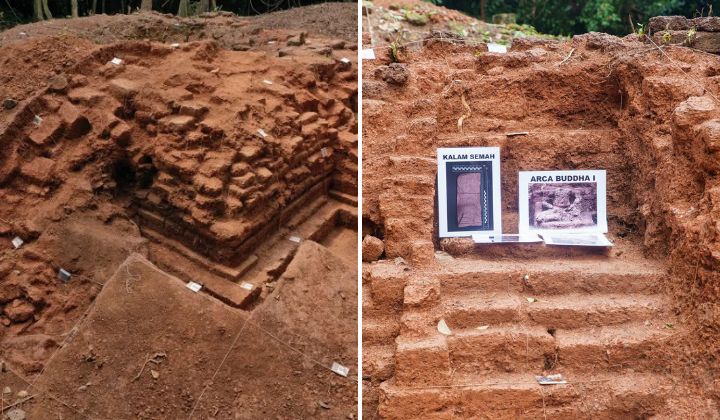
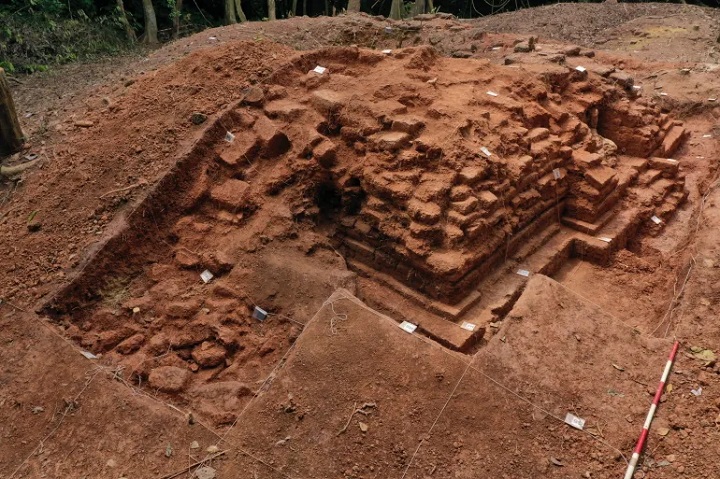
Researchers found a 1,200-year-old Buddhist stupa including two Buddha stucco statues in good condition in Malaysia’s Bujang Valley.

Subscribe to our FREE Newsletter, or Telegram and WhatsApp channels for the latest stories and updates.


If you thought everything in Bujang Valley was destroyed, you were right until now. In August 2023, a team of 11 researchers discovered a 1,200-year-old Buddhist stupa at Bukit Choras in Malaysia’s Bujang Valley in northwest Kedah.

The discovery of the stupa is exciting as it’s the best preserved in the country and experts say it could hold the key to Malaysia’s multicultural past, especially Ancient Kedah’s history.

Dr Nasha Rodziadi Khaw, the chief researcher of the team from the University of Science Malaysia’s Global Archaeology Research Centre (CGAR) in Penang, said the site is an anomaly because it stands all by itself.

After archaeologists cleared vegetation on top of Bukit Choras, they discovered a Buddhist stupa. Image: Dr Nasha Rodziadi Khaw

According to Al Jazeera, the stupa is isolated on the northern side of Mount Jerai unlike the 184 archaeological sites discovered in the Bujang Valley.

Nasha said the stupa measured about nine metres long and the most important discovery was two stucco statues of Buddha in good condition that have not been found in the area before.

According to Nasha, stucco was thought to be only found in Java and Sumatra in Indonesia, and India, at the time.

The two Buddha statues feature an inscription in Pallava, the language of the Pallava Dynasty that ruled in South India between the 3rd and 8th century CE.

The statues also have architectural features resembling the other artefacts from the Srivijaya kingdom that prospered between the 7th and 11th centuries CE, in an area from southern Thailand, through the Malay peninsula and into Java.

Currently, the statues are being studied and restored at CGAR in Penang.

Nasha said the function of Bukit Choras is not clear but it might have been a military garrison or coastal trade outpost. He shared that preliminary findings showed there are plenty of similarities with other sites found in Java and Sumatra, Indonesia.

The team plans to work at the site throughout the first half of 2024 to unearth its secrets.

Asyaari Muhamad, a senior archaeologist and the director of the Institute of the Malay World & Civilisation at the Universiti Kebangsaan Malaysia, said it was important for researchers to collaborate and reach a better understanding of the origins of civilisations in and beyond the Malay peninsula.

Any statements about new or previous findings need to be carefully examined so that […] a theory, discovery, and the results of a study do not become an issue and controversial in nature.

Asyaari Muhamad, a senior archaeologist and the director of the Institute of the Malay World & Civilisation at UKM

How did Nasha and the team discover the stupa?

Nasha said a British officer first reported about Bukit Choras in 1850 while looking for treasure. It was briefly studied by another British scholar, HG Quaritch Wales, in 1937.

Wales undertook minor excavations and found a squarish Buddhist stupa. He took note of the measurements but never provided any illustration or plate for the site.

In 1984, fifty years later, the then-director of the Bujang Valley Archaeological Museum returned to Bukit Choras to do some site cleaning and documentation. Other than that, the site remained largely undisturbed.

Nasha realised no one had done a proper investigation since then. He managed to scrounge up funding to survey the site in 2017.

They used electronic waves to physically detect what was hidden underground and found big structures below.

In 2022, Nasha received more funding from Malaysia’s Ministry of Higher Education to conduct proper excavations.

Nasha and his team were stunned to discover the well-preserved site compared to the other sites in the Bujang Valley that have deteriorated due to erosion, human activities, and accidental destruction.

Can you take a look at it?

The Department of National Heritage said the site has the potential to be a tourist attraction and it’s being preserved under Act 645 of the National Heritage Act 2005 at the moment.

Since the other sites have been damaged, it’s not a surprise if the authorities want to preserve and protect the latest site the best they can with the help of the public.

The department reminds the public to immediately report any findings that have significant historical and heritage impact to them or the relevant authorities.

What was the Ancient Kedah Kingdom” like?

The Bujang Valley sites showed that an ancient civilisation once thrived here. Referred to as the Ancient Kedah Kingdom, it prospered between the 2nd and the 14th century CE.

The kingdom predated the arrival of Islam in the region and stretches across the northwestern coast of the Malay peninsula and into Thailand.

Ancient Kedah grew on rich international trade and the production of iron and glass beads. Multiethnic and multireligious residents and foreign traders lived together.

Nasha shared that findings in the area suggested that traders from China, India, and the Middle East came to the area for centuries to do business. They often spent long spells in Kedah when the harsh monsoon seasons made sailing home impossible.

Archaeological discoveries showed that Ancient Kedah went into a decline when climate transformed the large maritime bay and accessible riverways leading to the iron smelting site of Sungai Batu into mangrove and tidal swamps that were impassable to ships.

READ MORE: Did You Know That The Oldest Civilization In Southeast Asia Is In Sungai Batu, Kedah?

Putin’s election victory explained  

March 19th, 2024

By P.K.Balachandran/Counterpoint Courtesy NewsIn.Asia

Colombo, March 19: It was no surprise that Vladimir Putin won the Russian Presidential election last Sunday. With no one of any standing to challenge him, he bagged 88% of the vote, a record till date. The nationwide turnout was 74.22%, surpassing the 2018 level of 67.5%.

Communist candidate Nikolai Kharitonov finished second with just under 4%, newcomer Vladislav Davankov was third, and ultra-nationalist Leonid Slutsky fourth.

However, in some places, the followers of the anti-Putin leader Alexei Navalny (who died in suspicious circumstances in an Arctic prison in February) protested.

As expected, the Western press dubbed the election as a massive fraud, given Putin’s reputation as an iron-fisted ruler. But what is not taken into account is that the Russians have never tasted democracy as the West knows it. They transitioned from Tsarist absolutism to communist dictatorship, and then to Putinesque authoritarianism. Perhaps democracy had a brief look-in after the breakup of the USSR.

In Russia in the ruler is judged by other yardsticks. If Lenin ended Tsarist rule and established a modern State, Stalin made it an industrial and military power that could defeat Hitler’s army. His successors made the USSR a space and nuclear power to match the US, but failed to build the economy to match the West in a globalized world.  

The West succeeded in dismembering the USSR, but Putin came and salvaged Russia. And to defeat the West’s plan to use Ukraine as a bridgehead to intimidate Russia and destroy Russia, Putin initiated military action against Ukraine in February 2022. The West imposed punishing sanctions on Russia and poured billions of dollars into Ukraine to enable it to drive out the Russians. But success has eluded it so far.

The war is now in the third year with no end in sight. But while the going has been bad for Ukraine, Russia has been able to circumvent the sanctions, keep its economy humming, and build international links principally with China. And thanks to burgeoning defence production, the Russian economy grew by 3%.

Though sections of Russians society dislike the war and many have fled the country, the bulk of the population has remained in the country, with most of them ardently supporting the war fired by the proverbial Russian nationalism.         

Putin told supporters in a victory speech in Moscow that he would prioritise Russia’s special military operation” in Ukraine. We have many tasks ahead. But when we are consolidated – no matter who wants to intimidate us, suppress us – nobody has ever succeeded in history, they have not succeeded now, and they will not succeed ever in the future,” Putin declared.

Supporters chanted Putin, Putin, Putin” when he appeared on stage and Russia, Russia, Russia” after he had delivered his acceptance speech, Reuters reported.

Putin portrays the war as part of a centuries-old battle with a declining West that he says humiliated Russia after the Cold War by encroaching on Moscow’s sphere of influence in Eastern Europe.

A new survey of Russians highlights a sentiment towards Putin’s leadership. Most Russians see the war in Ukraine as defence against threats from NATO and the West and report little personal effect from the conflict.

A recent poll of the Russian public conducted by NORC at the University of Chicago finds little material improvement in the quality of life for many Russians since the war, but also not a significant deterioration in overall economic conditions despite international sanctions.

Overall, Russians have a favourable view of Putin’s job performance. While 67% approve of how Putin is handling foreign policy, fewer, 58% approve of his management of domestic affairs. But the Russian public on the whole views their country’s actions in Ukraine as a justified response to an outside threat.

Attitudes among Russians about their nation and its place on the global stage are palpably strong. 94% have at least a moderate level of pride in their Russian identity. 62% believe Russia is unjustly treated by the world.

A notable concern for many Russians is the perceived encroachment of Western values on traditional Russian beliefs. 64% see the conflict in Ukraine as a civilizational struggle between Russia and the West.

However, 74% agree with the importance of having an opposition in the nation’s political system. But only 42% feel an immediate need for an opposition.

The above mentioned survey was funded and conducted by the University of Chicago. The poll was conducted in Russian between November 13 and November 21, 2023, with Russian mobile numbers throughout Russia, including Crimea.

The most reputable public opinion data available in Russia are from the Levada Centre, a non-governmental research organisation conducting regular surveys since 1988.

Levada surveys on from 17 to 21 February found that the majority of respondents (52%) felt negatively towards Ukraine. Most (60%) blamed the US and NATO for the escalation of tensions in Eastern Ukraine, while only 4% blamed Russia.

Levada polls suggest that the net public approval of Putin had surged by about 13 percentage points since December 2023, a rally-round-the-flag effect, with almost three-quarters (71%) expressing approval of his leadership by February 2024.

These were not isolated results; even stronger sentiments were recorded in the pre-war poll conducted on 7-15 February for CNN in Russia by a British agency, Savanta ComRes, where half (50%) agreed that it would be right for Moscow to use military force to prevent Kyiv from joining NATO”.

Two thirds of Russians (64%) in the poll said that Russians and Ukrainians are ‘one people’, a position taught in the Soviet era and a view that Vladimir Putin has been pushing, compared to just 28% of Ukrainians.

In their survey of 25-27 February, VCIOM reported strong support for the special military operation” in Ukraine, with two thirds (68%) in favour, around one quarter (22%) against, and only 10% unable to provide an answer.

The Washington Post also reported that a poll conducted a week into the assault by a consortium of researchers again confirmed that the majority of Russians (58%) approved of the invasion while only a quarter (23%) opposed it.

Western commentators point out that Russians are not exposed to as much information as Westeners, even Ukrainians, are. The main of source of information is domestic television, which gives only pro-Russian or pro-government content. It is also believed in the West, that the Russians indulge in self-censorship, which is common in countries with authoritarian regimes.

Head of the BRICS International Forum Purnima Anand: Russia is creating a new model of democratic values

March 19th, 2024

Special correspondent Pravda.Ru Daria Aslamova met in India with the President of the BRICS International Forum, Ms. Purnima Anand.

Head of the BRICS International Forum Purnima Anand: Russia is creating a new model of democratic values

Photo: Pravda.Ru by Daria Aslamova

Why are you participating as an international observer in the election campaign in Russia, including in the new Russian territories?

“Elections in Russia are very important for the whole world, because the Russian Federation is creating a new model of democratic values. In the European model, the new Russian territories are unrecognized, but it is Russia that saves the people in those regions. Russia also defends democratic values that are not recognized by the EU and the U.S., because the West exists in a post-World War II system.

Now the world is moving towards a new model that is developing in Russia, including in four of its new regions. These are very positive changes, because people themselves choose a country where they can preserve:

  • sovereignty
  • Traditions
  • Culture
  • History.

In this way, the people come first, not the authorities, and I hope that in the future it is the people who will become the levers of power.

Western leaders call Russia a dictatorship. What would you say to them?

“If some peoples or countries do not fit into the system of the West, it opposes such countries, and their interests are rejected. Russia has its own geographical and cultural features, its own traditions, which are unusual for Europe. The West is wrong to refuse to recognize other countries as democracies. Other states have the right to pursue their own interests, and this is one of the reasons why President Putin succeeds every time. People gather around such leaders.

I have visited many regions and cities of Russia and saw that people there are happy. They have jobs, they have a good education, they can communicate their needs to the authorities, and the municipalities respond to these requests. People have their own values, they hold regional events, historical festivals, cultural programmes dedicated, for example, to Afanasy Nikitin.

You were an election observer in the new Russian territories in Donbass. What are your impressions?

“I received an invitation to go to Donbass when international observers were actively discussing the crisis in Ukraine. When we had the opportunity to become observers at referendums in four new regions, I decided to take advantage of this chance. I was the only observer from India.

The journey was not easy, as we had to cover many kilometers by car. Once we stayed in a very nice and nice hotel, where we had dinner. When we left the hotel and drove to another place, our hotel was hit by a bomb. The façade of the building was destroyed. We were able to feel what it is like for people to live in such difficult conditions.

I can only admire the people of these four regions. Most of the young men serve in the army, and their women live without husbands and sons. They’re in danger all the time.

Where exactly did you work as an election observer?

“We visited several polling stations, mostly schools. The polling stations were decorated with balloons, people danced – it was a celebration of democracy and faith in the Russian Federation.

We arrived at one of the polling stations when it was already closing. A man with a young son came, voted, and gave his ballot to the child to put the form in the ballot box. After the vote, we asked the man why he had done so. He said very good words:

“I believe in the Russian Federation, I believe in the next generation. We don’t know if we will survive today, but we are giving our children the opportunity to preserve democracy here.”

In addition, I was in the Kherson region and in the Crimea. Observers from the European Union came with us: from France and Germany. They were independent media representatives, not official EU observers.

As far as I know, you were also the organizer of an international group of non-European observers in political elections.

“I had such an opportunity in March 2018, when the presidential elections were held in Russia. Even then, the West did not want Putin to become president again. The Russian government invited EU observers to the elections, but they refused. At that time, your government invited independent observers from India, Africa and other regions of the world.

This was my first experience of working as a political observer in the Russian Federation. Then we got our own observation group. We believe that the European Union has no right to interfere in the elections. We visited a number of small countries in Africa, such as Congo and Madagascar. There, we have developed our own parallel system of international election observation.

EU observers were also present. But now the European Union is not the only authority that can send its international observers to all countries of the world. There are parallel organizations: the African Union, our own groups, as well as EU groups. It’s more honest.

Are you going to go to Russia in the near future to act as an independent observer?

Yes, I will work there as a member of a civic organization that was recently founded by presidential decree. Representatives of about 50 countries were invited to the elections: from Brazil, South Africa, many African countries and the CIS. I would like to visit four new regions of Russia once again to see what changes are taking place there and how people perceive the transition to a new democracy.

It seems to me that if Western officials listened to you, they would consider you a victim of Russian propaganda.

“They’re actually listening to us. They criticize us, and this means that we are not an empty space for them. They are aware of the emergence of new blocks. This is very important for the development of democracy.

— Which region of Russia are you going to visit?

“I hope I’ll go to Crimea. I visited him three times. Once I went there for elections, then I visited Crimea on the way to the Kherson region, and then I visited an economic forum there. I have been observing the electoral process since 2014.

Crimea is indeed a very important region. It represents a new model of development. After World War II, the Yalta Palace hosted a meeting of three world leaders: Stalin, Roosevelt, and Churchill. They gathered there to develop a new model of democracy and civilization as a whole.

Today, however, government officials in the EU are convinced that any decision they make is final. They don’t think about Africa, Asia, the CIS. But everyone should be heard.

Today, the BRICS bloc has become much more important than before. The BRICS countries have a huge geographical territory and a large population. Today, countries that did not get a seat in the UN are joining the BRICS. This is another parallel system in which we are working to achieve a balance in politics and economics.

Does this mean that BRICS is a new model of democracy in the world?

“Yes, that’s right. The BRICS model is based on human-centered development. The previous model focused only on governments that control the people. The BRICS countries argue that equality and sovereignty are important first and foremost. We need to succeed in this direction for the sake of the future. We all have different models of civilization – different traditions, languages, currency, religion, laws. It’s very difficult to put everything in one basket.

But we have one goal – this is development focused on supporting people. Everyone should have their own rights, and our main rule is not to exploit people for the sake of money, the construction of infrastructure. Everyone should be a partner and a stakeholder in the development process. I believe that the BRICS economy will take care of this. We raise this issue every time we participate in BRICS conferences and seminars.

BRICS is a successful political platform, but it has economic problems. The bloc does not have a single currency, hence the difficulties with making payments. How can this problem be solved?

“If you want to make a difference, you have to see the light and move towards it. You are right when you say that the BRICS are more successful politically. Its economic development is the next stage.

BRICS is already active in the economic sphere. After the coronavirus pandemic and the Ukrainian crisis, we began to work on new trade rules. We try to make payments in local currencies. In the past, all countries had to exchange their money for dollars before paying off another country, and this led to additional costs. Today, the seller and buyer countries can skip the dollar part of this process, thanks to the BRICS economic model.

The BRICS economy is developing, and other countries are seeing it. If they don’t have a chance to join the World Trade Organization, they want to join the BRICS, because here they will have space for new technologies, innovation clusters, trade and development.

You were in Crimea at the 2014 referendum. Do you remember the feelings of the people when they voted to join Russia?

— Yes, people were very happy. They have come to this after overcoming many adversities and hardships. When the referendum finally took place, people rejoiced that they had achieved a better future for their children, safety, security and peaceful development.

I was there when President Putin inaugurated the Crimean Bridge, the “Bridge of Prosperity.” It was a historic moment and a major economic breakthrough for Crimea and all of Russia. The life of Crimeans has improved dramatically since 2014, but it must be remembered that the other four regions are still being shelled.

Do you think there will be another Yalta conference after the hot phase of the Ukrainian conflict has passed? Will there be a new agreement between Russia and the West?

“Of course. A peace agreement between Russia and Ukraine will be signed, and it will be a historic moment for Russia, because oppression will be ended and the peace mission will end.

Why does Russia occupy such an important place in your life? Why did you decide to become an international observer in Russia?

Russia has as long a history as India. After India gained independence, Russia has always provided great support to it, in all circumstances: in times of conflicts, wars, economic problems. Russia has also made a great contribution to India’s defense.

Today, we feel that everything the Russian Federation is doing is right, because your country has always been on the side of universal values. This has been the case throughout the history of the world, during the Second World War, and it continues to be so today.

The West has imposed a huge number of sanctions on Russia, only because it still believes in its monopoly on everything. Today, the Russian Federation is a strong country that can resist it. That is why so many countries support Moscow. This is not only political, but also economic support. Russia has new friends in the East, including China and India.
Читайте больше на https://www.pravda.ru/world/1975335-gospozha-anand/

‘අපේ ලිංගික දර්ශන පෙන්නා මාව බැක්මේල් කලා.. අල්ලස් කොමිසමටත් අල්ලස් දුන්නා..- ජනක රත්නායකගේ පුද්ගලික සහායිකා මාධ්‍ය හමුවේ

March 19th, 2024

උපුටා ගැන්ම ලංකා සී නිව්ස්

මහජන උපයෝගීතා කොමිසමේ හිටපු සභාපති ජනක රත්නායක මහතා විසින් අල්ලස් හෝ දුෂණ කොමිසමේ නිලධාරීන් වෙත අල්ලස් ලබා දුන් බවට චෝදනා චෝදනාවක් එල්ල වෙයි.

ජනක රත්නායක මහතාගේ හිටපු පුද්ගලික සහකාරවරිය යයි කියන ගයාත‍්‍රි බිම්බා නැමැත්තිය විසින් අන්තර්ජාල නාලිකාවකදී මේ බව හෙලිකර ඇත.

සත්‍ය වසන් කරමින් අපරාධකරුවන් ආරක්ෂා කිරීම සඳහා අල්ලස කොමිසමේ නිලධාරීන් ට මෙසේ අල්ලස් ලබා දුන් බවට ඇය චෝදනා එල්ල කරයි.

තමන්ද ජනක රත්නායක මහතාගේ බලපෑම මත අල්ලස් කොමිසමට ව්‍යාජ සාක්ෂි ලබා දුන් බවත් ඒ සඳහා පැපැවැති බිය දුරු කිරීමට සාක්ෂි ලබාදීමට පෙර එහි නිලධාරියකු ජනක රත්නායක මහතාගේ කාර්යාලයට පැමිණ ඒ සඳහා පුහුණුවක් ලබා දුන් බවද ඇය විසින්ම එහිදී හෙළිකරයි.

කෙසේ වෙතත් අදාළ සාකච්ඡාව සම්බන්ධයෙන් ජනක රත්නායක මහතා කොළඹ අපරාධ පරීක්ෂණ දෙපාර්තමේන්තුවට පැමිණිල්ලක් කරමින් ඉල්ලා සිටින්නේ මේ සම්බන්ධයෙන් කඩිනම් නීතිමය පියවර ගන්නා ලෙසයි.

‘අපේ ලිංගික දර්ශන පෙන්නලා තමන් බැක්මේල් කරන්න උත්සාහ කලා’ යයිද ඇය එහිදී බරපතළ චෝදනාවක් ලෙස කර ඇත.

https://youtu.be/gLAXPJBTPcs

ජනතාව බෙදා වෙන් කිරීමේ ඊළාම්වාදී සැලැස්ම කරළියට?… විමල් ජාතිවාදීන්ගේ රෙදි ගලවයි! (වීඩියෝ)

March 19th, 2024

උපුටා ගැන්ම  ලංකා ලීඩර්

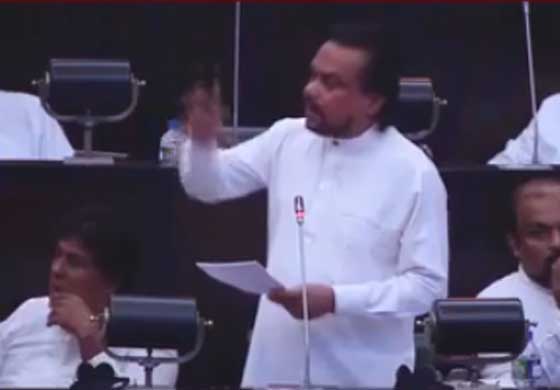
ක්‍රි.ව 2-3 තරම් ඉතිහාසයට දිවයන වව්නියාවේ වඩුනාගල ඓතිහාසික සිද්ධස්ථානය බෞද්ධ පුරාවිද්‍යාත්මක ස්ථානයක් බවත්, මෙම ස්ථානයේ ශිව පූජා පවැත්වීම සම්බන්ධයෙන් අධිකරණය විසින් නියෝගයක්ද ලබාදී ඇත්තේ සවස 6.00 දක්වා පමණක් පූජා පැවැත්විය හැකි ලෙස පමණක් බවත් පාර්ලිමේන්තු මන්ත්‍රී විමල් වීරවංශ මහතා පවසයි.

ඒ මහතා මේ බව පැවසුවේ මෙම ස්ථානයේ ශිව පූජා පැවැත්වීමට ගිය පුද්ගලයන් කිහිපදෙනෙකු අත්අඩංගුවට ගන්නා ලදැයි කියන සිද්ධියක් පදනම් කරගෙන අද දෙමළ ජාතික සන්ධානයේ මන්ත්‍රීවරු පිරිසක් පාර්ලිමේන්තු සභා ගර්භය මැදට පැමිණ උද්ඝෝෂණයක නිරත වීම පාදක කර ගිනිමිනි.

දෙමළ ජාතික සන්ධානයේ මන්ත්‍රීවරු පිරිසක් මේ උත්සාහ දරන්නේ මෙම කාරණය දඩමීමාකර ගනිමින් අනවශ්‍ය ආගමික ගැටුමක් නිර්මාණය කරමින් ළඟ එන මැතිවරණයේ දී ජාතිවාදී, ආගම්වාදී ලෙස ඡන්ද ගොඩ වැඩිකරගැනීමට බවද ඒ මහතා මෙහිදී පෙන්වා දෙන ලදී.

වීඩියෝව නරඹන්න…https://www.facebook.com/plugins/video.php?height=476&href=https%3A%2F%2Fwww.facebook.com%2FWimalWeerawansa.sl%2Fvideos%2F1094619175122964%2F&show_text=false&width=476&t=0

2024-03-19

Central Bank has no powers to increase salaries without Parliament approval: Wijeyadasa

March 19th, 2024

By AJITH SIRIWARDANA Courtesy The Daily Mirror

Parliament, March 19 (Daily Mirror)- The Central Bank has no powers to increase the salaries of its employees without the approval of Parliament in terms of the Constitution and the move to increase their salaries is wrong, Justice Minister Wijeyadasa Rajapakshe said today.

He told Parliament that Parliament has powers over Public Finance in terms of the Constitution and that the Central Bank cannot increase the salaries of its employees without Parliamentary approval.

The Minister said the claim by the Central Bank that it has the independence to take decisions in terms of the new Central Bank Act is wrong as any Act must come under the Constitution.

“The Central Bank was granted independence under the new Central Bank Act to ensure that it functions free of political intervention. We expected that the Central Bank would function according to the requirements of the country. Unfortunately, the Central Bank acted to increase its employees’ salaries as the first action,” he said, while explaining his position during the cross talk over the Central Bank employees’ salary increase.

Opposition MP Mohammed Muzammil said no action has been taken regarding the salary increase despite the matter being raised in Parliament for several days.

State Minister of Finance Shehan Semasinghe said the government will take a decision on the Central Bank salary increase after the Committee on Public Finance (COPF) submits its report to Parliament.

Opposition Leader Sajith Premadasa said the government must not wait for the report of the Committee on Public Finance (COPF) and said that the government must take a decision to withdraw the salary hike.

“The Central Bank is not under the COPF, it is under the government,” he said.

USD buying rate drops below Rs. 300 for first time since July 2023

March 19th, 2024

Courtesy Adaderana

The buying rate of the US Dollar has dropped below the Rs. 300 mark for the first time since July 05, 2023. 

According to the official exchange rates announced today by the Central Bank of Sri Lanka (CBSL), the buying rate of the USD is Rs. 299.29 and the selling rate is Rs. 308.90.

Meanwhile the indicative rate is listed as Rs. 304.63.

Govt. to provide rice to nearly 3 million low-income families

March 19th, 2024

Courtesy Adaderana

The Cabinet of Ministers has given its approval to provide 10kg of rice per month for each low-income family for a period of two months.

As per the proposal furnished by President Ranil Wickremesinghe, as many as 2.74 million low-income families will benefit from this relief program.

These low-income families will be identified through District Secretaries/Government Agents by involving small- and medium-scale mill owners, the government said in a statement.

In the first half of 2023, the government took measures to provide 10kg of Nadu rice per family for a period of two months covering 2.74 million families in the 25 districts, including Samurdhi beneficiaries.

In order to help maintain the nutritional level of the identified low-income earners, the government decided that it is only appropriate to resume the program this year as well.

Cabinet approval to draft laws to amend Sri Lanka’s electoral system

March 19th, 2024

Courtesy Adaderana

The Cabinet of Ministers have approved a proposal to draft the necessary laws to amend the electoral system to elect 160 Members of Parliament directly from the voters of the respective constituencies, also known as the First-Past-the-Post (FPTP) system, and for the remaining 65 MPs to be elected according to the proportional voting system at the national or provincial level.

The need to revise the current electoral system has been identified in order to meet the objectives of the Election Expenses Regulation Act No. 3 of 2023 and to achieve a fully democratic election, the Government Information Department said. 

Accordingly, a Cabinet sub-committee was appointed to ask the views of all party leaders and other relevant parties representing the Parliament and submit a report to the Cabinet with relevant recommendations. 

Suggestions have been presented to the committee to elect 160 Members of Parliament directly from the voters of the respective constituencies and the remaining 65 Members of Parliament to be elected at the national or provincial level according to the proportional voting system and the agreement of the majority has been received for this, the statement said. 

Accordingly, the Cabinet of Ministers approved the proposal submitted by the Minister of Justice, Prison Affairs and Constitutional Reforms to advise the Legal Draftsman to draft the necessary laws taking into account the recommendations made by the committee appointed under the chairmanship of the Prime Minister to amend the electoral system. 

Microsoft to introduce Artificial Intelligence into School Curriculum – MOU signed

March 19th, 2024

Courtesy Hiru News

A Memorandum of Understanding (MoU) was signed between the Ministry of Education and Microsoft Company at the Presidential Secretariat today (19), marking the commencement of a pilot project to integrate Artificial Intelligence (AI) into the school curriculum. This initiative will offer students above grade 8 the opportunity to delve into AI within the realm of Information Technology.

The pilot project is slated to be rolled out in 20 selected schools across 20 districts, with a commitment to provide conducive classrooms and necessary technical equipment. A dedicated team from Microsoft will extend support to facilitate online educational activities.

Prior to the signing, President Ranil Wickremesinghe engaged in discussions with Microsoft representatives at the President’s Office. The representatives assured the President of their unwavering support towards incorporating AI into the educational framework.

Addressing the gathering, Mr. Puneet Chandok, President of Microsoft’s India and South Asia region, expressed gratitude for President Ranil Wickremesinghe’s leadership in spearheading Sri Lanka’s advancement through the integration of new technologies, particularly artificial intelligence.

Education Minister Susil Premjayanth disclosed that the program aims for full implementation by 2025.

In attendance at the event was Mrs. Julie Chung, US Ambassador to Sri Lanka, who highlighted the significant opportunity this initiative presents for the Sri Lankan people, urging all to seize it to its fullest potential.

Mrs. Julie Chung also noted the forthcoming support from volunteer groups aimed at enhancing the English language skills of Sri Lankan citizens and schoolchildren.

Among the distinguished guests who attended the event were Minister of State for Technology Kanaka Herath, Senior Adviser to the President on National Security and Chief of Staff to the President Sagala Ratnayaka, Secretary of the Ministry of Education Wasantha Perera, Secretary of the Ministry of Technology Dharmasiri Kumaratunga, as well as senior officials from Microsoft. Representatives from various educational institutions including D.S. Senanayake College, Colombo, and students, teachers, and principals from Muslim Ladies College, Pussellawa Hindu National School, and Tangalle Girls’ College were also present at the event.

AACE—Eugene T. Davidson, MD, Public Service Award 2024, for Recognizing Exceptional Accomplishments

March 18th, 2024

American Association of Clinical Endocrinologists (AACE)

Dr. Sunil J. Wimalawansa, MD, PhD, MBA, DSc, Professor of Medicine, Endocrinology, and Nutrition, will be honored with the 2024 Eugene T. Davidson, MD, Public Service Award by the American Association of Clinical Endocrinologists (AACE). The award ceremony will occur during the 33rd Annual Scientific & Clinical Congress in New Orleans, Louisiana, USA, in May 2024. The Eugene T. Davidson, MD, Public Service Award, named after a founder and former president of AACE, celebrates exceptional contributions to advancing AACE’s mission of providing quality healthcare for patients with endocrine diseases and enhancing public health. This prestigious award recognizes outstanding clinical excellence, education, research, public health, medical ethics, technological innovations, medical advancements, community involvement, and individual accomplishments within the endocrinology community. It is highly esteemed and sought after in the field of endocrine medicine. AACE is the largest clinical endocrinologist association globally, representing over 8,000 endocrinologists worldwide. Most members are certified in endocrinology, diabetes, and metabolism, specializing in treating patients with a wide range of endocrine and metabolic disorders, including diabetes, thyroid disorders, osteoporosis, growth hormone deficiency, lipid disorders, hypertension, and obesity [www.aace.com]. Dr. Wimalwansa is a renowned educator, author, researcher, innovator, executive board member, administrator, and philanthropist. He is also skilled as a process consultant and Lean Six Sigma executive. Dr. Wimalwansa obtained a diploma in medical administration from Johns Hopkins University School of Business in 2000 and an Executive aster’s in Business Administration from Rutgers University Business School in 2006. He has significantly contributed to academia and research with over 300 peer-reviewed articles and numerous book chapters. He has also authored books spanning various disciplines and taught undergraduates, graduates, and postgraduate levels.

Dr. Wimalwansa’s illustrious five-decade career has been marked by groundbreaking contributions to advancing global endocrinology and public health. In 1984, his pioneering work on inventing intraoperative hormone measurements revolutionized endocrine surgical procedures. This innovation enabled surgeons to precisely locate and remove endocrine tumors, significantly reducing the need for repeat surgeries. Widely adopted by endocrine surgeons worldwide, this technique has benefited millions of patients.

Dr. Wimalwansa’s development of once-a-week bisphosphonate therapy and affordable medications for metabolic bone diseases, such as osteoporosis, has profoundly transformed patient care in this field. He and his colleagues developed animal models of microgravity, MRI-based quantitation of muscle mass and bone density in small animals, and pre-eclampsia. His diverse pursuits include serving as a retired squadron leader, outdoor activist, an avid explorer (climbing the
Himalayas in 1972), and a distinguished sportsman— among others, the recipient of the all-around sportsperson award from the university in 1974. With a legacy of scientific excellence, he continues to shape the future of global health through education and research focused on disease prevention and philanthropy.

In 1994, Dr. Wimalwansa pioneered the first live remote medical consultation clinics” (the first real telemedicine clinic) between Galveston, TX, and U.S.-Mexico border towns, covering over 250 miles. His exceptional contributions have earned him numerous prestigious awards, including the Dr. Boy Frame Award for Clinical Excellence in Metabolic Bone Diseases (1993), the Glen Foundation Awards from the American Endocrine Society, and an innovation award from the Asian Chamber of Commerce (2000). Recognizing his humanitarian endeavors, he received the Dr. Oscar Gluck International Humanitarian of the Year Award (2007) from the International Society for Clinical Densitometry (ISCD) and a Lifetime Achievement Award from the Sri Lanka Foundation, Los Angeles in honor of his remarkable contributions to science, humanity, and society.

Dr. Wimalwansa is the first trained Clinical Endocrinologist from Sri Lanka; previously served as a squadron leader in the Air Force. In addition to delivering lectures, he has significantly contributed to global endocrinology education by offering free courses worldwide. His commitment to serving society is evident through his founding of nonprofit organizations, including the International Foundation for Chronic Disabilities, the International Foundation for Revitalization, Empowerment, Education, and Development, the Hela Empowerment Foundation, the Wimalawansa Foundation, and the Preventive Health, Environmental Protection, and Research Organization. Dr. Wimalwansa’s extensive contributions extend to his service on the boards of directors for prominent organizations such as AACE, ISCD, and the Turner Foundation. Furthermore, he has played integral roles as a member or consultant for various national and international scientific committees, including NIH, VA, IAEA, DEA, and NASA. His commitment to advancing scientific knowledge is evident through his regularly reviewing manuscripts for granting organizations and national and international scientific journals. Additionally, he actively serves on editorial boards and remains deeply engaged in scientific research and publications. His visionary leadership and unwavering dedication inspire positive change and advancements in healthcare globally.

Leveraging Trade for Sustainable Growth

March 18th, 2024

By Sarath Wijesinghe President’s Counsel (LL.M (UCL)), former Ambassador to UAE and Israel, President of the Lanka Ambassador’s Forum – United Kingdom, Solicitor in England and Wales, and Suchithra Withanage (LL.M (UK) (LL.M (UK) MBA (UK | Reading) LL.B (Hons) (UK)) Diploma in Law (UK) MCIArb (UK) MBCS (UK) MCMI (UK) ACIPR (UK) ASIArb (Singapore)

Historically, Sri Lanka has been a significant player in international trade, with its strategic location making it a key hub in the ancient maritime Silk Road. The country’s history is marked by the export of spices, gems, and other valuable commodities, which have been sought after by traders from around the world for centuries.
In the contemporary era, Sri Lanka has continued to play an important role in global trade, albeit with a diversified trade portfolio. The country has focused on sectors such as apparel, tea, rubber, and information technology. As of recent data, Sri Lanka’s top exports include black tea (fermented and partly fermented), solid tires, and gloves impregnated with plastics or rubber, amongst others. The country’s trade partners are widespread, with the United States, United Kingdom, India, Germany, and Italy being the top destinations for Sri Lankan exports. Sri Lanka’s import profile is also diverse, with petroleum oils, transmission apparatus for radiotelephony, semi-finished iron or non-alloy steel products, and knitted or crocheted fabrics being among the top imports. The country primarily imports from China, India, the United Arab Emirates, Malaysia, and Singapore.
In an effort to revive its economy and facilitate growth, Sri Lanka has been actively seeking to enhance its trade relationships. A recent example is the signing of a Free Trade Agreement (FTA) with Thailand in February 2024. This agreement aims to enhance market opportunities and covers various aspects such as trade in goods, investment, customs procedures, and intellectual property rights. The bilateral trade between Sri Lanka and Thailand was worth about $460 million in 2021,
with Sri Lanka exporting mainly tea and precious stones to Thailand and importing electronic equipment, food, rubber, plastics, and pharmaceuticals.
Sri Lankan trade missions are designed to promote the country’s exports, including key sectors such as apparel and textiles, spices, essential oils, oleoresins, food, beverages, diamonds, gems, jewellery, boat and shipbuilding, ICT, wellness tourism, logistics, electrical and electronics. These missions seek to identify and penetrate new markets for Sri Lankan products and services, thereby diversifying the country’s export destinations and reducing dependency on traditional markets. Trade missions are crucial in creating stronger economic ties with other countries, facilitating mutual trade, and encouraging foreign investment. They provide a platform for Sri Lankan businesses to display their products and services to potential buyers and investors in target markets. Moreover, they enable direct interaction with potential buyers, investors, and business partners, facilitating networking and the establishment of new business relationships. Participating in them helps Sri Lankan businesses understand market trends, consumer preferences, and competitive dynamics in foreign markets.
An example of a specific trade mission is the RAK – Sri Lanka Business Forum & Trade Fair 2024, organized to strengthen economic relations between Sri Lanka and the United Arab Emirates (UAE). The objectives of this event include exploring new opportunities for Sri Lankan businesses in the UAE, Gulf, and Middle East, promoting Sri Lankan exports in these regions, and enhancing bilateral trade, investments, employment opportunities, tourism, and financial cooperation between Sri Lanka and the UAE. Furthermore, the role of Sri Lankan missions overseas extends beyond trade promotion to include investment promotion, tourism promotion, and enhancing the image of Sri Lanka. These missions work towards strengthening relations with host nations, creating employment opportunities, and facilitating aid availability.
Sri Lanka has strategically targeted key regions such as Asia, Europe, the Middle East, and North America for its trade missions. These missions aim to improve export opportunities, explore new markets, and strengthen bilateral trade relations.
In Asia, Sri Lanka has a longstanding relationship with India. The India-Sri Lanka Free Trade Agreement (ISFTA), in operation since March 2000, has facilitated trade between the two countries. Additionally, Sri Lanka and India are in discussions to further economic ties, including connecting to India’s oil and power grids, which could provide Sri Lanka with cheaper fuel and reliable electricity. There are also talks about integrating Sri Lanka into India’s emerging supply chain framework and promoting bilateral foreign direct investment flows. China is another significant partner for Sri Lanka in Asia. The two countries are negotiating a free trade agreement, which aims to provide Sri Lankan goods with greater access to the Chinese market. The discussions, which began in 2014, are focused on an “asymmetric” trade deal that considers the size difference between the two economies. This agreement could open up a market of 22 million people to Chinese exports and further strengthen China’s influence in Sri Lanka.
In Europe, the European Union (EU) is Sri Lanka’s second-largest trading partner and a major export destination, absorbing 22.4% of Sri Lankan exports in 2020. Textiles and clothing dominate Sri Lanka’s exports to the EU, accounting for over half of the total exports to the region. Since
2017, Sri Lanka has benefited from enhanced market access to the EU under the Generalised System of Preferences Plus (GSP+) scheme, which allows for the full removal of duties on a significant portion of tariff lines. In North America, the United States and Sri Lanka have a Trade and Investment Framework Agreement (TIFA) in place. The 14th U.S.-Sri Lanka TIFA Council Meeting, held in September 2023, discussed a wide range of bilateral trade and investment-related issues, including investment climate policies, labor reforms, intellectual property protection, and market access for various products. The two countries also explored collaboration and technical assistance in sectors such as the digital economy, gem and jewelry industry, and floriculture.
The expansion of export-oriented industries, driven by trade missions, has led to the creation of numerous employment opportunities in sectors such as manufacturing, services, and agriculture. This has contributed to poverty reduction and improved living standards in various regions of the country. Trade missions have thus helped position Sri Lanka as a competitive player in the global market by showcasing the country’s strengths and capabilities. For instance, the “Ceylon Tea” brand has gained international recognition, and the country is now known for its high-quality apparel, IT services, and gemstones.
They have also been effective in attracting foreign direct investment (FDI) into Sri Lanka. By presenting investment opportunities and facilitating interactions between Sri Lankan businesses and foreign investors, these missions have contributed to the inflow of capital, technology, and expertise into the country.
It must be stated that Sri Lanka has experienced periods of political instability, which can deter foreign investors and trade partners. The recent economic crisis and political turmoil in 2022 have underscored the need for stable governance to maintain investor confidence and sustain trade relationships. Inadequate infrastructure, particularly in transportation and logistics, can hinder the efficiency of trade operations. Investing in infrastructure development, such as improving port facilities, road networks, and digital connectivity, is crucial to support trade and attract investment. As a small, open economy, Sri Lanka is vulnerable to global market fluctuations, including changes in commodity prices, trade policies, and economic downturns in key markets. Diversifying export markets and products can help mitigate these risks.
Tariff and non-tariff barriers in target markets can limit market access for Sri Lankan products. Negotiating trade agreements and addressing regulatory hurdles are essential to develop market access. Limited access to finance can restrict the ability of Sri Lankan businesses as well, especially small and medium-sized enterprises (SMEs), to expand their operations and engage in international trade. Improving access to credit and financial services is vital to support business growth.
Improving the skills and capacity of local businesses to meet international standards and compete in global markets is crucial. Initiatives for workforce development, technical assistance, and knowledge transfer can support this goal. As global trade increasingly emphasizes sustainability, Sri Lanka must ensure that its trade practices align with environmental and social standards to maintain market access and appeal to conscious consumers. To address these challenges and seize the opportunities presented by trade missions, Sri Lanka needs a comprehensive approach that
includes strategic planning, policy reforms, investment in infrastructure, and capacity building. Collaborating with international partners, leveraging technology, and giving rise to an enabling environment for business can further improve Sri Lanka’s trade prospects and contribute to its economic development.
Looking ahead, Sri Lanka is poised to capitalize on its strategic location at the crossroads of major shipping routes and leverage its trade missions to tap into emerging markets. The focus is on several key areas:
Technology: The country aims to position itself as a hub for information and communication technology (ICT) in the region. The country is already known for its IT and software services, and it plans to further develop its technology sector by nurturing innovation, attracting foreign investment, and enhancing its digital infrastructure.
Renewable Energy: With an abundance of natural resources, Sri Lanka is exploring opportunities in renewable energy, particularly in wind and solar power. The government has set ambitious targets to increase the share of renewable energy in its power mix, which presents opportunities for investment and collaboration in this sector.
Sustainable Tourism: Sri Lanka’s profound cultural heritage and natural beauty make it a popular tourist destination. The country is focusing on sustainable tourism development, promoting eco-friendly practices, and developing niche tourism products such as wellness and adventure tourism to attract more diverse and high-value tourists.
Value-Added Exports: The country is also working on enhancing its export portfolio by focusing on value-added products in sectors such as apparel, gem and jewelry, and agricultural products as discussed above. The long-term aim is to move up the value chain and increase the competitiveness of Sri Lankan exports in the global market.
Facilitating Innovation: To remain competitive in the global arena, Sri Lanka is emphasizing the importance of innovation across all sectors. This includes supporting research and development, encouraging startups, and creating an ecosystem that nurtures creativity and technological advancement.
Trade Agreements: Sri Lanka is actively pursuing trade agreements with key partners to improve market access and strengthen its trade relations. Negotiations with countries such as China and India are ongoing, and new agreements are being explored to expand Sri Lanka’s trade network.
It is important to recognize that trade missions can be a double-edged sword. They are necessary but can be dangerous and controversial, especially for a strategically placed country like Sri Lanka, which is significant for major powers. Concerns arise about trade agreements with major powers, as we may not be strong enough to safeguard ourselves like countries such as Hong Kong and Singapore. Self-criticism indicates that we are not, though educated. It’s the responsibility of academics to assist policymakers and the government in drafting holistic agreements to position Sri Lanka as a hub for trade and arbitration. There is a world to look at, and this area must be strongly dealt with, along with a word to the Sri Lanka Law College and judiciary to be more concerned about international law, arbitration, and international trade. The good news is that our
youth are intellectually advanced, sophisticated, and capable of assisting in these processes, and it is time for governors to go the extra mile on this to make Sri Lanka a hub in South Asia for trade relations by taking small developed nations such as Singapore, Hong Kong, and Malaysia as examples. Overall, Sri Lanka’s future prospects in trade and economic development are promising, with a focus on leveraging its strategic location, diversifying its economy, and embracing innovation amongst other facets of development. By capitalizing on these opportunities, it aims to achieve sustainable growth and enhance its position in the global market in the forthcoming decade.

Deegawapiya Sacred Relics on Exposition in ‘Anuradhapura’ Sacred City

March 18th, 2024

Ministry of Defence  – Media Centre

•     The procession of the Sacred Omniscient Relics of Deegawapiya Stupa and the Crest-Gem on exposition at Buddhist shrines in Anuradhapura.

The island-wide public veneration of the Sacred Omniscient Relics of Deegawapiya Stupa unearthed from the Deegawapiya site during excavations and the Crest-Gem commenced from Kelaniya Raja Maha Viharaya on August 30, (2023) to provide devotees with opportunity to pay their homage is continuing further.

Accordingly, these revered articles will be on display at the Jaya Sri Maha Bodhi, Ruwanweli Maha Seya and Sandahiru Seya premises from March 18 to April 05.

Hence, devotees can worship the Sacred Omniscient Relics and Crest-Gem of the Deegawapiya Stupa and also support this worthy act by making financial contributions to the restoration project.

ETCA ගිවිසුම අත්සත් තබන දිනය ගම්මන්පිල හෙළිකරයි

March 18th, 2024

උපුටා ගැන්ම  ලංකා ලීඩර්

ඉන්දියාව සහ ශ්‍රී ලංකාව අතර අත්සන් තබන එට්කා ගිවිසුම ඉන්දියානු පාර්ලිමේන්තු මැතිවරණය අවසන් වූ පසු අත්සන් තැබීමට සූදානම් වන බවට ආණ්ඩුවේම විශ්වාසදායි ආරංචි මාර්ග වලින් දැන ගන්න ලැබී ඇතැයි පිවිතුරු හෙළ උරුමයේ නායක නීතිඥ උදය ගම්මන්පිල මහතා පවසයි.

ඒ මහතා මේ බව සදහන් කර සිටියේ පිවිතුරු හෙළ උරුමය පක්ෂ මූලස්ථානයේ පැවති මාධ්‍ය හමුවකට එක් වෙමිනි.

එහිදී පිවිතුරු හෙළ උරුමයේ නායකයා වැඩිදුරටත් මෙසේ අදහස් දැක්වීය.

එක්ටා ගිවිසුමට පූර්ව කොන්දේසි හතරක්

මාර්තු මාසයේ දී එට්කා ගිවිසුම අත්සන් කරන බවට කටකතා තිබුනත් ඇත්තටම ගිවිසුම අත්සන් කරන්නේ ඉන්දියානු පාර්ලිමේන්තු මැතිවරණය අවසන් වූ පසු බවට ආණ්ඩුවේ විශ්වාසදායි ආරංචි මාර්ග වලින් දැන ගන්න තිබෙනවා. ඉන්දියානු මැතිවරණ කොමිසමට අනුව ඉන්දියාවේ මැතිවරණය අවසන් වෙන්නේ ජූනි 4 දා. ඒ නිසා ආණ්ඩුව ගිවිසුම අත්සන් කරන්න බලාපොරොත්තු වෙන්නේ තවත් මාස තුනකින්. එට්කා ගැන හිතන්නත් කලින් මේ මාස තුන ඇතුලත ආණ්ඩුව සම්පූර්ණ කළ යුතු කොන්දේසි හතරක් තිබෙනවා. මේ කොන්දේසි ඉටු නොවුණු නිසා තමයි ද්විපාර්ශවික වෙළඳ ගිවිසුම් වලින් අපට වාසියට වඩා අවාසි සිදු වෙන්නේ.

1. ලංකාවට විදේශ වෙළඳ ගිවිසුම් ප්‍රතිපත්තියක් සැකසීම අවශ්‍යයි. 2016 දී සිංගප්පූරු වෙළඳ ගිවිසුම අත්සන් කරන අවස්ථාවේත් අපි මේ ගැන අවධාරණය කළත් ආණ්ඩුව ගණන් ගත්තේ නෑ. යම් ගිවිසුමක් අපට වාසි ද අවාසි ද කියා බලන නිර්ණායක මොනවාද? අපට එහෙම මුකුත් නෑ. එහෙම නිර්ණායක නැතිව සාකච්ඡා වලට ගියාම අනිත් පාර්ශවයට වාසියට තමයි ගිවිසුම සැකසෙන්නේ.

2. ද්විපාර්ශවික වෙළඳ ගිවිසුමක් අත්සන් කිරීමේ දී අනුගමනය කළ යුතු ක්‍රියා පටිපාටිය අඩංගු නීතියක් අපට නෑ. ඒ නිසා තමයි හොර රහසේ ගිවිසුම් අත්සන් කරන්න පුළුවන් වෙලා තිබෙන්නේ. ඒ නිසා තමයි අපෙන් සාකච්ඡාවට එන නිලධාරින්ව තමන්ගේ සාක්කුවේ දා ගන්න අනිත් රටට පුළුවන් වෙන්නේ. ඒ නිසා ද්විපාර්ශවික වගේම බහුපාර්ශවික වෙළඳ ගිවිසුම් අත්සන් කරන ක්‍රියාපාටිය දැක්වෙන පනතක් සම්මත කර ගත යුතුයි.

3. ගිවිසුම අත්සන් කරන්න මාසයකට කලින් ඒක ප්‍රසිද්ධ කළ යුතු බවත් ඒ පිළිබඳ අවම වශයෙන් දින දෙකක් පාර්ලිමේන්තුවේ විවාද කළ යුතු බවත් ගිවිසුම් ක්‍රියා පටිපාටියේ සඳහන් විය යුතුයි. දැන් තායිලන්තය එක්ක ගිවිසුමක් අත්සන් කලා. අත්සන් කරන තුරු අන්තර්ගතය අපි දන්නේ නෑ. එට්කා ගිවිසුමේ පිටපත් ඉල්ලුවාම ජනාධිපති ලේකම් කාර්යාලයෙන් ඒක ලබා දෙන්න ප්‍රතික්ෂේප කළා කියලා වෘත්තියවේදින් කියලා තිබ්බා. ඒ නිසා අත්සන් කරන්න කලින් ගිවිසුම ප්‍රසිද්ධ කිරීම නීතියෙන් අනිවාර්රය කරන්න ඕනි.

4. අපි මුලින්ම ද්විපාර්ශිවික නිදහස් වෙළඳ ගිවිසුමක් අත්සන් කලේ 1998 දී ඉන්දියාව සමග. ඒක අපේ වගේම ඉන්දියාවේත් පළමු ගිවිසුම. පසුගිය විසි හය වසර තුල පකිස්තානය, සිංගප්පූරුව, තායිලන්තය වැනි රටවල් ගණනාවක් සමග නිදහස් වෙළඳ ගිවිසුම් අත්සන් කර තිබෙනවා. මේ ගිවිසුම් වලින් ලැබුණු ප්‍රතිලාභ මොනවාද කියන එක කවදාවත් සමාලෝචනයක් කරලා නෑ. ඒ නිසා එක්ටා අත්සන් කරන්න කලින් අත්සන් කරපු ගිවිසුම් වලින් ලැබුණු ප්‍රතිලාභ මොනවාද අහිතකර ප්‍රතිඵල මොනවාද කියන එක ගැන සමාලෝචන වාර්තාවක් පාර්ලිමේන්තුවට ඉදිරිපත් කරන්න ඕනි.

මේ කොන්දේසි හතර ඉටු නොකර එට්කා නොවේ මොන ගිවිසුම අත්සන් කලත් රටට අවාසියක් මිස වාසියක් වෙන්නේ නෑ.

– Media unit

සජබය මාලිමාවට වඩා ඉදිරියෙන්… ජනපතිවරණ අලුත්ම සමීක්ෂණ වාර්තාවක් එළියට

March 18th, 2024

උපුටා ගැන්ම  ලංකා ලීඩර්

ඉදිරි ජනාධිපතිවරණය සම්බන්ධයෙන් ජාත්‍යන්තර මට්ටමේ ප්‍රකට මත විමසුම් ආයතනයක් විසින් සිදුකරන ලද සමීක්ෂණ වාර්තාවක් පසුගිය සඳුදා දිනයේදී නිකුත් වී ඇති බව වාර්තා වේ.

මෙම මත විමසුම සිදුකළ ආයතනය මෙරට ආණ්ඩු පක්ෂ – විපක්ෂ සියලුම දේශපාලන කඳවුරු මෙන්ම තානාපති කාර්යාල පවා පිළිගන්නා, ජාත්‍යන්තර කීර්තියට පත් ආයතනයක් බවත් ඔවුන් පසුගිය දශක දෙකක කාලය පුරා මෙරට දේශපාලනය සම්බන්ධයෙන් මත විමසුම් සිදුකර ඇති අතර ඒ සෑම අවස්ථාවකදීම ඉතා නිවැරදි තොරතුරු අනාවරණය කළ ආයතනයක් වශයෙන් සැලකෙන බවත් සඳහන් ය.

එම සමීක්ෂණයට අනුව මේ වනවිට ඉදිරියෙන්ම සිටින්නේ විපක්ෂ නායක සජිත් ප්‍රේමදාස මහතා ප්‍රමුඛ සමගි ජන බලවේගය යි.

සමගි ජන බලවේගය – 39%

ජාතික ජන බලවේගය – 20%

ශ්‍රී ලංකා පොදුජන පෙරමුණ – 09%

එක්සත් ජාතික පක්ෂය – 5%

ශ්‍රී ලංකා නිදහස් පක්ෂය – 5%

කෙසේවෙතත් මෙම සමීක්ෂණය උතුරු පළාත සහ නැගෙනහිර පළාත හැර අනෙකුත් පළාත් 07 පමණක් පාදක කරගනිමින් සිදුකර ඇති බවත් වාර්තා වෙයි.

The India Factor in Sri Lanka’s Renewable Energy Sector

March 18th, 2024

By Rathindra Kuruwita Courtesy The Island

A recent India-Sri Lanka agreement for constructing renewable energy systems in three islands off the Jaffna coast reaffirms India’s domination of the sector.

On March 1, the Sri Lanka Sustainable Energy Authority, the Government of Sri Lanka, and U-Solar Clean Energy Solutions from India signed an agreement for the construction of hybrid renewable energy systems on Nainativu, Delft (Neduntheevu), and Analaitivu islands situated in the Palk Bay. The three facilities which will have a combined renewable energy capacity of 2,230 kilowatts will be funded by a $11 million grant from the Indian government.

A statement issued by the Indian High Commission in Colombo said that the project which integrates solar and wind energy will address the energy requirements of the three islands, which are currently not connected to the national grid.

The energy sector has been identified as a priority in the India-Sri Lanka Economic Partnership Vision document, a commitment established during President Ranil Wickremesinghe’s visit to India in July 2023.

The hybrid energy project was initially awarded to China. In January 2021, the Sri Lankan cabinet approved a collaborative effort involving China’s Sinosoar to implement hybrid renewable energy systems” in the aforementioned three islands in Palk Bay. The joint venture deal, secured through a competitive bidding process adhered to the procurement guidelines of the Asian Development Bank (ADB), a pivotal supporter of the project.

However, India strongly objected to the deal as the three islands are located barely 50 km from the southern Indian coast.

New Delhi then proposed undertaking the same project, offering a grant instead of a loan from the ADB. Under pressure, the Sri Lankan government scrapped the agreement with the Chinese and is proceeding with the project in collaboration with India.

India has expressed heightened sensitivity toward foreign-funded development initiatives in Sri Lanka, particularly in the Northern and Eastern provinces. India has an interest in maintaining a foothold and dominating the two provinces given the proximity to India as well as Trincomalee harbor, which is located in a strategic area.

Notably, the 1987 Indo-Sri Lanka Accord, perceived by some as an agreement pushed on Sri Lanka by India, stipulates that if Sri Lanka engages in the development of Trincomalee Oil Tanks with a foreign partner, that partner must be India.

During the 1980s, when India was aligned with the Soviet Union, there existed a palpable concern that the J.R. Jayewardene administration would permit the United States to establish a foothold in Trincomalee.

Over the last couple of decades, India’s apprehensions have shifted to China, which it perceives as its primary strategic rival in Asia. It is concerned over China’s growing presence and influence in its neighborhood.

In this context, Sri Lanka’s mounting dependence on China has been a matter of grave concern to India. New Delhi has identified integrating Sri Lanka into a common energy architecture as vital to its geopolitical aims and made it clear to successive Sri Lankan governments that establishing energy projects in the north and east with other partners is out of the question.

Since Sri Lanka slipped into a severe economic crisis in 2022, India’s role in its recovery has been substantial. By extending the cash-strapped country loans and grants India has strengthened its hold over its renewable energy sector. It appears to have managed to completely sideline China in this sector, as evident from the way in which it was able to snatch the project to build hybrid renewable energy systems in three islands off the coast of Jaffna, from China.

The latest renewable energy deal is the third India-backed energy project coming up in Sri Lanka’s north and east. While the National Thermal Power Corporation is implementing a solar energy project in the eastern town of Sampur, where India had previously hoped to build a controversial coal power plant, the Adani Group is setting up renewable energy projects in Mannar and Pooneryn in the north.

Indian projects in Sri Lanka have often triggered controversy. This has been the case particularly with contracts handed to the Adani Group. The Samagi Jana Balawegaya, Sri Lanka’s main opposition party, had slammed the Rajapaksa administration for allowing the Indian company to gain entry through a backdoor” approach. The Rajapaksa administration was accused of favoring Gautam Adani, a close associate of Indian Prime Minister Narendra Modi. In June 2022, M.M.C. Ferdinando, chairman of the state-run Ceylon Electricity Board, informed Parliament’s Committee on Public Enterprises that the Sri Lankan government faced pressure from the Indian prime minister to grant tenders for renewable energy projects to the Adani Group.

Following the wind power plant’s completion, Sri Lanka is set to procure a unit of electricity from Adani at a rate of U.S. 7.55 cents per unit which is twice the rate determined through competitive tendering. Ferdinando’s revelation came shortly after Sri Lanka amended its Electricity Act, eliminating the requirement for competitive bidding for energy projects, thereby facilitating the Adani Group’s involvement in renewable energy projects within the country.

Given Adani’s close ties with Modi the average Sri Lankan is suspicious of these projects and some opposition politicians have been quick to capitalize on this. On the other hand, the government has not been transparent about any of the power and energy agreements with Indian companies, which has deepened public suspicion.

In the intricate realm of strategic agreements with foreign nations, transparency emerges as a linchpin, particularly when steering crucial developments such as renewable energy initiatives. Sri Lanka’s forays into developing sustainable energy projects in its Northern and Eastern provinces underscore the critical need for clear, open communication in such ventures.

As it navigates partnerships with influential neighbors like India, the importance of transparency becomes paramount to build trust and mitigate concerns surrounding foreign involvement.

Sri Lanka’s north and east have significant potential for renewable energy and given that we can’t harvest these resources without Indian approval, the task at hand is to determine what a win-win situation is for the two countries.

Navy arrest nearly 150 Indian fishermen in 18 trawlers within SL waters this year

March 18th, 2024

Courtesy The Daily Mirror

Jaffna, March 17 (Daily Mirror) – The Sri Lanka Navy has seized a total of 18 Indian poaching trawlers and 146 Indian fishermen within Sri Lankan waters in 2024.

In a latest incident, the Navy seized two Indian trawlers and arrested 21 Indian fishermen poaching in Sri Lankan waters off the Delft Island.

The Navy said they conducted a special operation to chase away Indian poaching trawlers from Sri Lankan waters during the dark hours of yesterday and the arrest was made during this operation.

The Sri Lanka Navy continues to conduct regular patrols and operations in Sri Lankan waters to curb illegal fishing practices of foreign trawlers, taking into account the impact of those practices on the livelihood of local fishermen.

The seized trawlers together with 21 Indian fishermen were brought to the Kankesanthurai Harbour and handed over to the Mailadi Fisheries Inspector for onward legal proceedings.

Sri Lankan ex-prez accuses Church of having role in his ouster

March 18th, 2024

By Rubatheesan Sandran

Gotabaya Rajapaksa’s memoir claims regular dinner invitations from Cardinal Ranjith until the 2019 Easter Sunday attack

A woman looks at the copies of the 'The Conspiracy' book written by toppled Sri Lankan president Gotabaya Rajapaksa displayed at a bookshop in Colombo on March 7.

A woman looks at the copies of the ‘The Conspiracy’ book written by toppled Sri Lankan president Gotabaya Rajapaksa displayed at a bookshop in Colombo on March 7. (Photo: AFP)

Sri Lanka’s former President Gotabaya Rajapaksa has alleged in a new book that the Catholic Church played a key role in mass civil protests that blamed him for the nation’s worst economic crisis since independence and unseated him from power in July 2022.

That the cardinal [Malcolm Ranjith] and sections of the Catholic Church played a major role in my ouster was obvious,” Rajapaksa wrote in his explosive memoir titled The Conspiracy to Oust Me from the Presidency,” released on March 7.

The most visible presence at the Galle Face protests was that of the Roman Catholic clergy,” he noted referring to demonstrations at Galle Face Green, a public space near the Presidential Secretariat building.

The sensational claims by the former president and member of the powerful Rajapaksa clan have made the book a bestseller in the Indian Ocean island nation, with the first edition sold out within a few days of its release.

However, the Church has yet to respond to the claims made in the book, although it’s been more than 10 days since its release.

Written in first-person narrative, the memoir claimed that there was an internationally backed conspiracy to oust him from office by various sections of Sri Lankan society, non-governmental organizations (NGOs), and Tamil diaspora outfits in Western countries.

“The Catholic clergy would ‘turn up every morning for the protests'”

The conspiracy was in the making, it claims, since he assumed duties in November 2019 through a majority of Buddhist votes.”

Talk of ‘Catholic Action’ and the clandestine political machinations of the Catholic Church was a part of the political discourse in this country some decades ago. But this time, Catholic priests and nuns came out openly onto the streets,” Rajapaksa alleged.

He further details how the Catholic clergy would turn up every morning for the protests on Galle Face.”

On 9 July 2022 when mobs took over the President’s House, Catholic priests and nuns were seen among the intruders,” he alleged.

The former president even wonders given the excellent relationship that existed earlier, why the cardinal and sections of the Catholic Church turned away from me in this manner is a mystery.”

He claims to have maintained close ties with Ranjith before he took office in 2019 while serving as defense secretary under his brother’s government which was unseated in an election in 2015.

A high point of my relationship with the Catholic Church was the invitation of His Holiness the pope to Sri Lanka towards the end of the Mahinda Rajapaksa government,” he wrote.

Rajapaksa wrote in detail on the lengthy process beginning about two years before the visit when personnel from the Vatican visited the country to conduct security assessments and other preparations.

“The Church was misled to believe in conspiracy theories”

I became so close to the cardinal during this period that when the visit of the pope took place soon after we had lost power in 2015, he obtained a special audience for former president, Mahinda Rajapaksa, and myself to meet His Holiness at the house of the Papal Nuncio in Colombo,” he claimed in the memoir.

This contact, the former president stressed, remained during the years of good governance government (2015-2019)” and I and my wife would occasionally be invited to dinner with the cardinal.”

The close rapport between them underwent a dramatic change when the Catholic Church expressed its disappointment with his government’s probe into the Easter Sunday attack that shook the nation months before Rajapaksa was elected to office.

The deadly terror bombings on April 21, 2019, claimed the lives of 279 people including 37 foreign nationals, and injured over 500 others, most of whom had flocked to churches for Easter Sunday Mass.

The Church said it would be forced to seek “international justice” through other means in the absence of justice and truth over the attacks through local mechanisms.

The former president claimed the Church was misled to believe in conspiracy theories based on selective testimonies of witnesses.

Recalling Ranjith’s allegation, made in mid-January 2022, that certain leaders used the attacks for their political advantage, Rajapaksa claimed he did seek assistance from foreign governments and investigating agencies to ensure legitimacy to the probe assigned to a Presidential Commission of Inquiry.

What was now being alleged in so many words was that eight Muslim fanatics had launched suicide attacks in order to make me president,” he claimed.

In early 2022 when the cardinal started making the accusation that I had somehow orchestrated the Easter Sunday bombings in order to create the political conditions for me to get elected to power, I instructed Sri Lankan Ambassador Mahinda Samarasinghe in Washington to explore the possibility of obtaining the US government’s Federal Investigation Bureau/ Central Intelligence Agency assistance in the investigations,” the former president explained.

He further claimed that the US Department of Justice, after a two-year-long investigation by the FBI, filed charge sheets against three Sri Lankan nationals in January 2021 for conspiring to provide materials to ISIS.

Japan provides Rs. 3.3 billion grant assistance to Sri Lanka for several projects

March 18th, 2024

Courtesy Adaderana

Sri Lanka and Japan today signed the Exchange of Notes pertaining to the grant assistance amounting to Japanese Yen 1,600 million (approximately LKR 3.3 billion) to be provided under the Japanese Economic and Social Development Programme.

The Government of Japan, as one of Sri Lanka’s main development partners, provides concessional loans and various grant aid schemes such as the Economic and Social Development Programs, Technical Cooperation, Research Partnerships, Development Studies, and non-project grant aid with a view to improving the socio-economic status by strengthening bilateral relations between the two countries.

During the present economic crisis in Sri Lanka, the government of Japan has extended its cooperation by providing required immediate humanitarian assistance for the affected community as well as by equipping the public sector, aiming to improve the socioeconomic situation in the country.

At this juncture, at the request of the Government of Sri Lanka, the Government of Japan agreed to provide grant assistance amounting to Japanese Yen one thousand and six hundred million (approximately LKR 3.3 billion) under the Japanese Economic and Social Development Programme, considering the requirements of diversified fields namely marine environment, fishing, health care, and vocational training.

Under this grant assistance four vessels for oil boom with the necessary accessories, a generator, and a cargo truck with a crane for improving oil spill response and management of the Sri Lanka coast guard; portable ultrasonic scanners, gynecological examination tables, a laparoscopic system, mammography, fetal heart raters, and infant warmers for improving the maternal and pediatric care in major hospitals in Northern Province; industrial sewing machines, zigzag (industrial) machines, overlock (5 thread) machines, and button holder (5 thread, industrial) machines for dressmaker courses at vocational training centers in Northern Province; and a petrol boat, a rigid-hull inflatable boat, lighted buoys, and HG radio Transceivers will be provided for the project of ensure the  safety of fishermen will be provided.

The Exchange of Notes pertaining to the above grant were signed by the Secretary to the Ministry of Finance, Economic Stabilization, and National Policies, Mr. K.M. Mahinda Siriwardana, on behalf of the Government of Sri Lanka on March 18, 2024, at the Ministry of Finance, Economic Stabilization, and National Policies. The Ambassador of Japan in Sri Lanka, Mr. MIZUKOSHI Hideaki signed the Exchange of Notes on behalf of the Government of Japan.

Unveiling the Beauty of Ceylon Sapphire and Gems

March 16th, 2024

Palitha Ariyarathna – GIA Alumni Member

Ceylon, now known as Sri Lanka, is renowned for producing some of the world’s most exquisite sapphires. The rich blue hue of Ceylon sapphires has captivated gem enthusiasts for centuries, with its deep and mesmerizing shades reminiscent of the ocean at dusk. These precious gemstones are valued not only for their beauty but also for their rarity and unique color variations, ranging from cornflower blue to velvety indigo.

In the world, Sri Lanka is one of the top gem-bearing countries, with over 75 varieties of precious and semi-precious gemstones that can be found in Sri Lanka. The gem retail section offers a wide range of gemstones, including Ruby, Spinel, Amethyst, Alexandrite, Zircon, Garnet, Citrine, Rose Quartz, Aquamarine, Tourmaline, Agate, Cymophane, Topaz, and Moonstone.

Ceylon Sapphires: Prized for their exceptional quality and clarity, Ceylon sapphires are highly sought after in the world of fine jewelry. Their alluring brilliance and stunning luster set them apart from other gemstones, making them the perfect choice for elegant and sophisticated pieces.Sri Lanka has a long history of ethical gemstone mining, ensuring that each Ceylon sapphire is sourced responsibly and sustainably. This commitment to ethical practices not only preserves the natural beauty of the land but also supports the local communities that rely on the gemstone industry for their livelihood.Beyond Ceylon sapphires; the world of gems is a treasure trove of beauty and wonder. Each gemstone possesses its own unique charm and significance. Diverse Colors and Symbolism: Gemstones come in a kaleidoscope of colors, shapes, and sizes, each with its own symbolism and lore. Whether it’s the passionate red of a ruby or the cool tranquility of a sapphire, each gemstone has a story to tell and a beauty to behold. From the depths of the earth to the hands of skilled artisans, gemstones are a testament to the wonders of nature and the ingenuity of humanity. Gemstone jewelry has long been cherished for its beauty and symbolism, with each piece telling a unique story and capturing a moment in time. Whether it’s a sparkling Royal Blue Sapphire ring or a vibrant other color of sapphire can range from blue to violet, green, yellow, orange, pink, purple, and intermediate hues known as fancy sapphires. Gemstone jewelry is a testament to the enduring allure of these precious stones and the artistry of the craftsmen who bring them to life.

In conclusion, Ceylon sapphires and gemstones in the world are not just beautiful adornments but also symbols of nature’s bounty and human creativity. Their timeless appeal and ethereal beauty continue to enchant and inspire generations, making them truly timeless treasures to be cherished and admired

Sri Lanka emerges a treasure trove of Ceylon gems, each one a testament to the island’s rich geological history and the skilled hands that shape them. These gemstones, born deep within the Earth’s embrace, carry stories of time immemorial of whispers of nature herself.

When we talked about Ceylon Sapphire, the royal blue gem, reigns supreme in Ceylon. Its velvety depths evoke the cerulean seas that cradle this island nation around. Sri Lankan gem deposits have been found within the Highland and, to a lesser extent, Southwest Groups. Today, large expanses of alluvial deposits have been extensively mined in the main Ratnapura and Elahera gem fields in Sri Lanka, where a majority of colored gemstones are found

In Specially in Ratnapura, and you’ll find gem markets teeming with sapphires—their hues ranging from cornflower blue to midnight indigo. In the gem workshops of Ratnapura, master craftsmen transform rough any type of gems stone into exquisite facets, their brilliance rivaling the island’s sunsets its self.

Second to Ratnapura, most of the world-class gem traders reside in Kandy Town. Well-known gem traders from around the globe have their own shops lining the streets. There are gemologists specializing in gem certification, and Nilmini Gems and Gem Laboratory Kandy CEO and Founder have received international awards recognized by the Gemological Association of Great Britain, United Kingdom, including the prestigious Christie’s Prize for the best trade candidate in 2002. Gem trading and gem testing have flourished in Kandy Town, largely due to the presence of renowned gemologists. Additionally, there are newly qualified gemologists operating a new gem testing lab in Kandy Town. If you’re seeking world-class, reputable gem certification, I recommend exploring Kandy Town itself and considering the expertise of professionals in the field. Some gem certifiers boast up to thirty to twenty years of experience in the gemological industry, ensuring reliable gem certification overall..

Palitha Ariyarathna – GIA Alumni Member

Note: Special thanks to Nilmini Gems & Gem Laboratory Kandy (Pvt) Ltd for their contributions in educating and revealing precious hidden gems for articles 1. Their expertise and dedication have enriched our understanding of these remarkable treasures.

GIA stands for the Gemological Institute of America. It’s a nonprofit organization that specializes in gemstone research and education. Since 1931, GIA has been a prominent authority on all things related to gemstones

Economists in Sri Lanka Echo White Atlantic’s War on the World

March 16th, 2024

e-Con e-News

blog: eesrilanka.wordpress.com

Before you study the economics, study the economists!

e-Con e-News 10-16 March 2024

How many think ‘liberal’ only means extending ‘freedom’ as in ‘liberate’? – yet, think again – what ‘liberal’ really means is: the right of some individuals to own private property, not just land, but humans – by enslavement – as European history amply demonstrates!

     ‘Neoliberalism’ – a misnomer widely popular among both so-called Left & Right – was coined by European economists, all funded by the Exxon-oil-tax-hideout, the Rockefeller Foundation, who sought to extend their white power. Those European economists who later formed the secretive Mont Pelerin Society (MPS) –later touted by token off-white mimics, too – warned of an imminent ‘suicide of the West’, deeply concerned about controlling the ‘hordes’ of non-white countries who could take over the United Nations. They wished to block the rise of a so-called ‘postcolonial world’, especially to maintain white power (protecting settler white South Africa & Zionist Israel was essential) anchored in the North Atlantic aka White Atlantic (buttressed by its military wing, the North Atlantic Treaty Organization – NATO), which now bleeds through US & EU warships into our ocean called Indian.

     Politicians, media & economists in Sri Lanka gaily parrot this imported ‘neoliberal’ dictat. In 2004, then-Prime-minister & now-President Ranil Wickremasinghe held a special Mont Pelerin meeting at that swanky Kandalama Hotel. In April 2015, just 3 months after his 2nd appointment as PM, Wickremesinghe appointed fellow Mont Pelerinist, Singapore-based ‘Professor’ Razeen Sally as Institute of Policy Studies (IPS) Chairman. In 2016, the US’ Advocata thinktank – funded by the Atlas Network, a fingerling of the MPS – was formed at the Lakshman Kadiragamar Centre.

     Sally, who seeks revenge since his father was jailed in Sri Lanka for foreign-exchange fraud in the 1970s, is the Mont Pelerin point-man linking US-funded thinktank Advocata & online media outlet EconomyNext, also tied to ‘1st NGO’ Exxon-Rockefeller-funded Sarvodaya. Sally ghostwrites EconomyNext’s run-on&on column Bellwether, which splatters many of the names & terms beloved & despised by these neolibbas. The Atlas Network too is funded by ExxonMobil & the US government, including John Templeton etc, who bestowed a $10,000 award on a former ‘poor Moratuwa boy’ who is grandly named CEO of Advocata, for their ‘research work’.

     However, the real power within US$thinktank Advocata, is wielded by its chairman, the regional Borah merchant Murtaza Jafferjee, appointed in May 2022 by then-PM & Minister of Finance Ranil Wickremasinghe to form an ‘Economic Stabilisation Dialogue’ between the Ministry of Finance and certain ‘independent’ economists. It is these ‘independent economists’ who demanded & got an ‘independent’ Central Bank, and pushed the Foreign Exchange Management Act (FEMA) which allows ‘investors’ to ‘take your profit away as & when you wish, without having to obtain any formal, regulatory approval from the authorities.’ Sally’s father is thus posthumously pardoned from samsaric bondage!

     Now both Sally & Jafferjee are careful not to be seen or even heard of in the media during these days of auctioning national resources to Wall Street. Sally after all blames Sinhala-Buddhist ‘majoritarianism’ for all the country’s woes. It’s no coincidence therefore that those European economists, who coined the term neoliberalism, proclaimed that ‘rich countries are rich’ because they have a certain ‘geist’ (spirit) emanating from Christianity! – the true spiritual ‘genealogy of economic organization’.

     This Christian spirit can only be found in the ‘fully developed industrial countries of the free world’. The ‘lack of punctualityreliability, the inclination to save & to create’ meant that industrialization schemes in the global South were ‘doomed to fail’.

     Indeed, what we have now come to understand as ‘independence’ is what these founders of the neoliberal movement recommended: ‘formal political sovereignty but a diminished economic autonomy’, regulated by ‘the free flow of capital and investment over borders.’ A loose world federation’ (read, UN, World Bank, IMF, WTO!) ‘would help prevent mass popular expectations from becoming reality as the ‘ever-present threat of capital flight would curb campaigns of expansionary social policy’ as embodied in such policies as the USA’s ‘New Deal’, they label as Keynesian.

     This ee reproduces an interesting exposé of these economists, even as this exposé uses such dubious terms as ‘postcolonial’ and fails to see these so-called ‘Rightist’ opponents to the so-called Leftist FD Roosevelt’s New Deal & JF Kennedy’s New Frontier as 2 sides of the same dud coin. Roosevelt, Kennedy (& his tanned grandsons B Obama & paler J Biden) escalated wars on the world. US ‘War Keynesianism’ is the father of their US Military Industrial Complex. Keynes, who still dominates the thinking of trade unions & NGOS etc (who deploy ‘gesturing’ & ‘virtue-signaling’ as their signboards), was also a boorish & vehement opponent of Karl Marx. Marx, unlike Keynes, saw that only labor creates profit, not capitalists or machines (see ee Focus).

     How then did this ambiguous trope ‘neoliberalism’ come to be so widely used by aficionados, both white & off-white, of the ‘Left & Right’? Why not use, straight & simple, ‘capitalism’? In fact, these European economists chose ‘neoliberal’ from several labels ‘of self-description’, including ‘neocapitalism’, which would have been more honest! These economists were brought together by Rockefeller to oppose not just the USSR & socialist movements elsewhere. The transatlantic alliances of Germanic neoliberalism & US conservatism make it clear that world economic issues in the mid-20th century were always also about white supremacism, fearful of any alliance between Asia, Africa & African Americans. This North Atlantic front seethed like a hidden virus beneath so-called civil rights & anti-colonial movements, during the period spanning the Non-Aligned Asian-African Conference in Bandung, Indonesia, in April 1955 & the declaration of the New International Information Order (NIIO), in 1974 (which sought to challenge the power of the imperialist news agencies) and the New International Economic Order in 1975 (which sought to challenge the power of multinational corporations) – all of which was carefully undermined by bribery, assassination & mass murder.

*

• Cuba, about to celebrate in 2025 the 50th anniversary of the declaration of the 1975 New International Economic Order (& its subsequent sabotage), this week exposed a detailed US plan to subvert their economy, which eerily mirrors what is taking place in Sri Lanka (see Random Notes).

     Former President Gotabhaya Rajapakse’s new revelations – which one analyst hysterically compares to Hitler’s Mein Kampf, threatening to provoke communal rioting – recalls the attempt to destroy longstanding relations with China & Russia – by eg, preventing Sri Lanka from obtaining inexpensive oil from Russia, and organic fertilizer from China. ee has had need to point to the endless ingenuity of our merchants (yes, predominantly, but not only, of a ‘minority’ vintage) to sabotage any attempt to actually industrialize the country. Anybody who seeks to liberate this country from its thrall, must recognize how imperialism corrupts & fattens its allies in order to control (& later destroy) them, as the US trial of a relative of the ruling Rajapaksas – former SL Ambassador to the US, Jaliya Wickramasuriya – which ran concurrently during the aragalaya, displays.

*

• Central Bank Governor Nandalal Weerasinghe, a gentleman with hallowed links to the IMF & World Bank, has interesting origins. He mirrors the Colombo oligarchy’s own rise to power, as licensed rentiers in the colonial hard liquor business. Another ‘nobody to somebody’, Weerasinghe’s family are rumored to be infamous ‘enforcers’ in Dickwella. Their origins are in the ‘herbal’ business, Nandalal’s father Hichchi Mahaththaya was a ‘herbal’ mudalali. It’s said, he used to produce a ‘herbal’ extract+ghee concoction, which they smuggled & sold everywhere. His uncle Jinadasa Weerasinghe, known as ‘Herbal’ Hutan, apparently looked like that Hollywood cowboy John Wayne, a tall fair man like Nandalal. Adding eateries & lorries etc, they later became bigger businessmen, but carefully remained importers, and not industrialists, not wishing to tread on the Colombo importer-mafia’s toes. Jinadasa was a UNP MP, who was shot & killed (by a suspected JVP assassin). They had their UNP office in Tangalle. One of their men was killed during an election. The Rajapaksas & the Weerasinghes were also arch enemies. Yet, how to explain then the same Rajapaksas inviting Nandalal to become CBSL governor during the Aragalaya?

     N Weerasinghe studied at Rahula College, Matara, got his BSc in Kelaniya, PhD in Australia. He became Deputy Governor under CBSL Governor Arjuna Mahendran during the 2015 bondscam. In April 2022, he was appointed as the 17th Governor of the Central Bank of Sri Lanka, which had declared Sri Lanka bankrupt (but not bankrupt enough to deny their officials huge golden handcuffs & golden handshakes?). This too is yukthiya.

*

• Another interesting character, whose father was a UNP MP, involved in the attempt to damage links with Russia, to prevent Sri Lanka from importing oil from Russia by seizing an Aeroflot plane at Katunayake, is Captain Themiya Abeywickrama. Abeywickrama, who worked at India’s Kingfisher Airlines, was appointed CAASL (Civil Aviation Authority Sri Lanka)’s Director General & CEO in April 2020, after his predecessor HMC Nimalsiri was retired. Abeywickrama is the son of late MP Sumandasa Abeywickrama, a landed proprietor who was Deputy Minister of Agriculture Development & Research Minister, 1977-83, a period which saw the booming of import-export fraud, and the massive applications of imported chemical fertilizers.

     In May 2020, Abeywickrama as CAASL CEO had to reject ‘false rumours’ circulated on social media accusing him of the ‘illegal transport & removal of any person or persons from Sri Lanka’. He also denied that he ‘in any manner or form threatened any licence holder/pilot by interfering in the legal performance of their flying duties’. No ‘guwan seeya’ commented on this matter.

     In September 2021, the attempt to import organic fertilizer from Qingdao Seawin Biotech Group of China was sabotaged, which former President GR in his recent book, attributes to the regime-change project, much to the chagrin of chemical importers like USA’s Exxon, and England’s Unilever & ICI-CIC.

     At that time, ee noted that a major law firm was behind an illegal act involving bribery by the US embassy to seize a Russian Aeroflot aircraft. This ‘first’ law firm is linked to the colonial robbery of lands to set up plantations, and the undermining of true independence, such as the assassination of a Prime Minister and an attempted coup d’etat against another.

     The drama involving the seizure of the Russian plane began on 2 June 2022. The operation was funded by the US embassy via one of Lanka’s most powerful & infamous old law firms, FJ&G de Saram. De Saram sent their lawyers to impose a now apparently never-given court order to seize the craft.

     The ‘junior attorney representing the plaintiff served notices on my client instructing to stop the aircraft… Can a lawyer perform the duty of a fiscal officer, while the duties of a fiscal officer are being governed by Fiscal Ordinance?’ asks an Additional Solicitor-General.

     The Aeroflot case centred around the antics at the Colombo Commercial High Court (CCHC), set up at the urging of the US to fast-track ‘justice’ for big capitalists. A CCHC ‘Court Registrar’ stands exposed as having ‘given several telephone calls to the Airport Navigation Centre requesting them to implement the Court Order in an unprecedented manner’. To make matters worse, newly appointed PM Ranil Wickremasinghe declared the game was ‘a matter between 2 private parties’, as did the Foreign Ministry… Online or offline, Sri Lankans who have made their names as writers of fictions, including ethnic historiographies, will surely fill in the blanks of how a government & a leader that won the largest majorities in our history, was laid low.

*

• Coterminous with the release of former President Gotabahya Rajapaksa’s book, Reuters news agency, this week, released an ‘Exclusive: Trump launched CIA covert influence operation against China’ story.

     This Reuters ‘exclusive’, reveals a US ‘clandestine campaign on Chinese social media aimed at turning public opinion in China against its government’. This is news? ‘A small team of operatives used bogus internet identities to spread negative narratives… leaking disparaging intelligence to overseas news outlets.’ Reuters yet adds: ‘the disparaging narratives were based in fact!’ It quotes China’s Ministry of Foreign Affairs saying ‘The CIA initiative shows the US government uses public opinion space & media platforms as weapons to spread false information and manipulate international public opinion.’ What resonates in Sri Lanka however is that: ‘Sources described the 2019 authorization uncovered by Reuters as a more ambitious operation. It enabled the CIA to take action not only in China but also in countries around the world where the USA & China are competing for influence… Covert messaging allows the USA to implant ideas in countries where censorship might prevent that information from coming to light, or in areas where audiences wouldn’t give much credence to US government statements.’

     The joke of course is that Reuters itself is a covert operation, displaying itself as a news agency, which ends each news item, proclaiming ‘Our Standards: The Thomson Reuters Trust Principles’, whatever they mean! Reuters is named after that ‘baron’ who, working in tandem with the Rothschilds bankers, monopolized the new 19th-century news services, before grabbing all of Iran’s economy in the mid-19th century. And that was just a start. 95% of Reuters news is ‘exclusive’ business data unavailable to the masses. Until Sri Lanka has its own news media (the current set promote Exxon’s oils & Unilever’s palm oils, which greases a lot of palms), there will be no independent country.

*

________

Contents:

How America Destroyed the German Economy

March 16th, 2024

The German Economy is finished. Once the economic powerhouse of Europe, Germany is now struggling for economic survival and guess which country is most responsible? The United States! Germany’s economy is crashing for three main reasons: Sky High Energy Prices, Reduced Exports to China, and Increased Military Expenditures. In today’s video I’ll break down exactly how the US is to blame for all three problems and show you why the future of the German economy has never looked this bad. 0:00 – Intro to German Economy 1:53 – 3 Major Problems with German Economy 2:25 – Why German is Reducing Exports to China 3:45 – How the US Government Forced Germany to Leave China 7:22 – How the US Controls International Chipmakers 8:40 – How the US Bombed the Nordstream Pipeline 10:00 – Germany’s High Energy Prices 13:10 – How NATO Started Germany’s Energy Crisis 16:22 – How Germany’s Military Spending is a Waste of Money ✅ Join our new Locals Community here: https://cyrusjanssen.locals.com/ ✅ Join this channel to get access to perks:    / @cyrusjanssen  

Global Muslim Leader Calls For Ceasefire In Gaza And Ukraine, Says Privileged Nations Are Wielding Their Veto ‘Like A Trump Card’

March 16th, 2024

 by A. Abdul Aziz, Press Secretary, Ahmadiyya Muslim Jama’at, Sri Lanka.

Where a veto power exists, the scales of justice can never be balanced” – Ahmadiyya Head.

According to our Press Department, U.K., on 9 March 2024, the World Head of the Ahmadiyya Muslim Community, the Fifth Khalifa (Caliph), His Holiness, Hazrat Mirza Masroor Ahmad delivered the keynote address at the 18th National Peace Symposium hosted by the Ahmadiyya Muslim Community UK.

The event was attended by more than 1,200 people including more than 550 dignitaries and guests who had gathered from 30 countries, comprising of Ambassadors of State, Members of Parliament and academics.

During the proceedings, His Holiness presented Adi Patricia Roche, founder of Chernobyl Children International (CCI), recognised for her long-lasting post-Chernobyl disaster efforts, with the 2020 Ahmadiyya Muslim Prize for the Advancement of Peace.

His Holiness also presented David Spurdle, founder of the charity Stand By Me, with the 2023 Ahmadiyya Muslim Prize for the Advancement of Peace, for his remarkable support for orphans and underprivileged children across the world.

As he began his address, His Holiness mentioned that for over two decades he has repeatedly urged policymakers to work towards peace and harmony of the world.”

Highlighting the importance of learning lessons from history, Hazrat Mirza Masroor Ahmad said:

History teaches us that internal conflicts can spiral into regional wars – often fuelled by the interference and influence of external powers who ferment instability and division in other countries to serve their interests. In recent decades, we have witnessed the devastating consequences of such interference in countries such as Kuwait, Iraq, Syria and Sudan.”

His Holiness mentioned that he has warned of how unjust policies of major powers are triggering an ever-rising tide of inequality” leading to global insecurity.

His Holiness stated that many intellectuals and policymakers had previously held the impression that His Holiness was wrong to believe that existing conflicts could escalate into a global war and even trigger the use of nuclear weapons, considering it to be unnecessarily pessimistic.”

Commenting on those who held such views, Hazrat Mirza Masroor Ahmad said:

Either due to their idealism and a desire to look at the world through rose-tinted glasses or perhaps due to an incapability to learn lessons from history, they seemingly ignored the widening cracks that have been opening up in recent decades in international relations. Perhaps, they simply did not wish to accept the reality of what was staring them in the face. As they say, ‘ignorance is bliss’.”

His Holiness stated that although many of the same people are now raising the alarm warning of a world war, in which nuclear weapons could wreak unimaginable devastation, many still seem unwilling to consider what must be done to end these conflicts and remain reluctant to hear the genuine voices for peace that exist in the world.”

Because those with the power to influence seemed unwilling to sincerely work towards lasting peace, His Holiness said he had questioned whether there was any point in reconvening for the event once again to speak of the urgent need for peace. However, he determined to proceed because Islam teaches Muslims never to waver in the pursuit of peace.”

His Holiness said that to speak truthfully and courageously before one’s leaders, especially those who are hard-hearted, unjust and cruel” is in fact the greatest form ‘Jihad’ as stated by the Holy Prophet of Islam, Muhammad (peace and blessings of Allah be upon him).

His Holiness reiterated that the Ahmadiyya Muslim Community continues to use all the means available to work towards establishing peace in the world, and will continue to do so without fear of any sanctions.

Turning towards the role of the United Nations, which he referred to as a weak and almost powerless body,” Hazrat Mirza Masroor Ahmad said:

Instead of deciding each issue based on its facts and merits, nations have formed alliances and vote according to their self-interests.  Ultimately, critical decisions are made by a few privileged nations in whose hands rest the veto power. Instead of faithfully serving the cause of peace and justice, they wield their veto like a trump card wherever their narrow interests are threatened, irrespective of whether their decision shatters the peace and prosperity of other nations and leads to the death and destruction of scores of innocent people.” 

Hazrat Mirza Masroor Ahmad continued and said:

Where a veto power exists, the scales of justice can never be balanced… Regrettably, due to its inherent lack of justice, the fate of the United Nations seems set to mirror that of its failed predecessor, the League of Nations. And, if the system of international law, weak as it may be, completely collapses, the resulting anarchy and destruction is beyond our comprehension.”

During the address, His Holiness explained how the teachings of Islam in relation to warfare and the creation of peace are extremely important today at a time when several wars are being fought where these principles are not being adhered to.

His Holiness explained that although in extreme circumstances, the founders of the major religions, including the Holy Prophet Muhammad (peace and blessings be upon him), permitted the use of limited force, it was always solely with the intention of ending warfare and oppression.”

Referring to the teachings of the Holy Quran, Hazrat Mirza Masroor Ahmad said:

In chapter 42, verse 41 of the Holy Quran, Allah the Almighty commands that where a person or nation has been wronged, they must never respond disproportionately or stray into realms of seeking revenge. Furthermore, Allah says that it is better to forgive if it can lead to reformation. Chapter 49, verse 10 of the Holy Quran, says that if two nations are at war, neutral parties should mediate between them and strive to establish peace based on the principles of justice and equity.”

Hazrat Mirza Masroor Ahmad further stated:

If having reconciled, one party violates the terms of the agreement and again resorts to warfare, other nations should forcefully unite against the aggressor until it desists from its aggressive conduct.  Once it stops, the other nations must also cease using force.  The objective should always remain to build sustainable peace underpinned by justice. It should not be that a third party takes advantage of the vulnerability of the warring parties by usurping their rights for his own benefit.”

His Holiness said if these principles were observed by the United Nations and other relevant bodies, conflicts would be resolved far more amicably and swiftly.”

Turning to the present-day conflicts, His Holiness said that just like the Russia and Ukraine war, the conflict between Israel and Palestine is also geopolitical and territorial” as opposed to being a religious war.

Hazrat Mirza Masroor Ahmad said:

I firmly believe there is only one way to end these wars – by ensuring that justice prevails and that whatever settlements are made are based on equity, as opposed to what better serves the interests of external powers.”

Commenting once again on the perils of the veto power and its role in the present conflicts, Hazrat Mirza Masroor Ahmad said:

In terms of the Ukraine war, Russia has a veto power at the UN Security Council, whilst, in effect, Ukraine also has one by virtue of its alliance with those Western nations who have permanent membership of the Security Council. How can a settlement be agreed if both sides can effectively wield a veto?”

Hazrat Mirza Masroor Ahmad further stated:

As for what is happening in Gaza, though both the Israelis and the Palestinians have their supporters, the veto power has only been used in Israel’s favour since the current war ignited several months ago. For example, in February, 13 out of 15 members of the UN Security Council voted in favour of an immediate ceasefire in Gaza but the United States utilised its veto power and the Resolution was defeated. How can peace be established where the majority view is so easily discarded? That is not justice – instead, it is a rejection of democracy and the principle of equality.”

Hazrat Mirza Masroor Ahmad spoke of protecting the sanctity of all places of worship and said:

Islam also teaches that unless one’s opponent uses a place of worship as a military base, it is not permissible to violate the sanctity of a place of worship by fighting within it or even near it.  It is strictly forbidden to knock down or desecrate the places of worship of your opponents.”

Turning to the grave humanitarian situation in Gaza, His Holiness quoted a recent interview of US Senator Bernie Sanders, who strongly condemned the actions of the Israeli government, describing them as unspeakable” and said that we in the United States, through our financial support of Israel are complicit in what’s happening.”

The Caliph of the Ahmadiyya Muslim Community stated that he took no satisfaction in the fact that politicians and commentators were now reaching the same conclusions that he had long warned the world about for over two decades. Rather, he felt only regret that necessary efforts had not been made to bring an end to inequality, injustice and warfare.

Certainly, it is my opinion that there should be a full ceasefire between Israel and Hamas and also in the war between Russia and Ukraine. Thereafter, instead of inciting their respective allies towards further warfare, all members of the international community should prioritise ensuring relief efforts are stepped up to help those in desperate need and focus on bringing about a lasting and peaceful settlement.”

Hazrat Mirza Masroor Ahmad concluded and said:

We must all come together, setting aside national, political, and other vested interests for the greater good of humanity and to ensure that we leave behind a prosperous world for our future generations. It is the need of the time that we must focus all our energies and efforts on establishing true peace so that we may live in a world of hope and prosperity, rather than a world defined by inequality, hatred and bloodshed.”

Prior to His Holiness’ address, several dignitaries addressed the audience including the winners of the Ahmadiyya Muslim Prize for the Advancement of Peace, as well as the National President of the Ahmadiyya Muslim Community in the UK, Mr Rafiq Hayat.

Representatives of several political parties also addressed the Peace Symposium.

Dame Siobhain McDonagh MP spoke and said:

The Ahmadiyya community has been at the forefront of calling for peace since the very start of the conflict. It is his holiness who urged all world powers to de-escalate and work towards a lasting peaceful solution”

Jonathan Lord MP said:

Your commitment (the community) to promoting peace, justice and tolerance across the world, is truly commendable…In the face of such uncertainties in the international situation, Your Holiness, and your Community have been true beacons of peace, reminding us of the values that should unite us all.” 


Copyright © 2026 LankaWeb.com. All Rights Reserved. Powered by Wordpress