A principal instrument of U.S. foreign policy is covert regime change, meaning a secret action by the U.S. government to bring down the government of another country. There are strong reasons to believe that U.S. actions led to the removal from power of Pakistan’s Prime Minister Imran Khan in April 2022, followed by his arrest on trumped-up charges of corruption and espionage, and sentencing this week to 10 years imprisonment on the espionage charge. The political objective is to block Pakistan’s most popular politician from returning to power in the elections on February 8.
The key to covert operations of course is that they are secret and hence deniable by the U.S. government. Even when the evidence comes to light through whistleblowers or leaks, as it very often does, the U.S. government rejects the authenticity of the evidence and the mainstream media generally ignore the story because it contradicts the official narrative. Because editors at these mainstream outlets don’t want to peddle in conspiracy theories,” or are simply happy to be the mouthpieces for officialdom, they give the U.S. government a very wide berth for actual regime-change conspiracies.
Covert regime change by the U.S. is shockingly routine. One authoritative study by Boston University professor Lindsay O’Rourke counts 64 covert regime change operations by the U.S. during the Cold War (1947 and 1989), and in fact the number was far larger because she chose to count repeated attempts within one country as a single extended episode. Since then, U.S. regime change operations have remained frequent, such as when President Barrack Obama tasked the CIA (Operation Timber Sycamore) with overthrowing Syria’s President Bashar al-Assad. That covert operation remained secret until several years after the operation, and even then, was hardly covered by the mainstream media.
All of this brings us to Pakistan, another case where evidence points strongly to U.S.-led regime change. In this case, the U.S. desired to bring down the government of Prime Minister Imran Khan, the charismatic, talented, and hugely popular leader in Pakistan, renowned both for his world-leading cricket mastery and for his common touch with the people. His popularity, independence, and enormous talents make him a prime target of the U.S., which frets about popular leaders who don’t fall into line with U.S. policy.
Imran Khan’s sin” was to be too cooperative with Russian President Vladimir Putin and Chinese President Xi Jinping, while also seeking normal relations with the United States. The great mantra of U.S. foreign policy, and the activating principle of the CIA, is that a foreign leader is either with us or against us.” Leaders who try to be neutral amongst the great powers are at dire risk of losing their positions, or even their lives, at U.S. instigation, since the U.S. does not accept neutrality. Leaders seeking neutrality dating back to Patrice Lumumba (Zaire), Norodom Sihanouk (Cambodia), Viktor Yanukovych (Ukraine), and many others, have been toppled with the not-so-hidden-hand of the U.S. government.
Like many leaders in the developing world, Khan does not want to break relations with either the U.S. or Russia over the Ukraine War. By sheer coincidence of prior scheduling, Khan happened to be in Moscow to meet Putin on the day that Russia launched the special military operation (February 24, 2022). From the start, Khan advocated that the conflict in Ukraine should be settled at the negotiating table rather than on the battlefield. The U.S. and E.U. arm-twisted foreign leaders including Khan to fall into line against Putin and to support Western sanctions against Russia, yet Khan resisted.
Khan probably sealed his fate on March 6 when he held a large rally in northern Pakistan. At the rally, he berated the West, and especially 22 EU ambassadors, for pressuring him to condemn Russia at a vote in the United Nations. He also excoriated NATO’s war against terror in next-door Afghanistan as having been utterly devastating to Pakistan, with no acknowledgment, respect, or appreciation for Pakistan’s suffering.
Khan told the cheering crowds, EU ambassadors wrote a letter to us asking us to condemn and vote against Russia… What do you think of us? Are we your slaves … that whatever you say, we will do?” He added, We are friends with Russia, and we are also friends with America; we are friends with China and with Europe; we are not in any camp. Pakistan would remain neutral and work with those trying to end the war in Ukraine.”
From the U.S. perspective, neutral” is a fighting word. The grim follow-up for Khan was revealed in August 2023 by investigative reporters at The Intercept. Just one day after Khan’s rally, Assistant Secretary of State for the Bureau of South and Central Asian Affairs Donald Lu met in Washington with Pakistan’s Ambassador to the U.S., Asad Majeed Khan. Following the meeting, Ambassador Khan sent a secret cable (a cypher”) back to Islamabad, which was then leaked to The Intercept by a Pakistani military official.
The cable recounts how Assistant Secretary Lu berated Prime Minister Khan for his neutral stance. The cable quotes Lu as saying that people here and in Europe are quite concerned about why Pakistan is taking such an aggressively neutral position (on Ukraine), if such a position is even possible. It does not seem such a neutral stand to us.”
Lu then conveyed the bottom line to Ambassador Khan. I think if the no-confidence vote against the Prime Minister succeeds, all will be forgiven in Washington because the Russia visit is being looked at as a decision by the Prime Minister. Otherwise, I think it will be tough going ahead.”
Five weeks later on April 10, with the U.S. blunt threat hanging over the powerful Pakistani military, and with the military’s hold over the Pakistani parliament, the Parliament ousted Khan in a no-confidence vote. Within weeks, the new government followed with brazenly manufactured charges of corruption against Khan, to put him under arrest and prevent his return to power. In utterly Orwellian turn, when Khan made known the existence of the diplomatic cable that revealed America’s role in his ouster, the new government charged Khan with espionage. He has now been convicted on these charges to an unconscionable 10 years, with the U.S. government remaining silent on this outrage.
When asked about Khan’s conviction, the State Department had the following to say: It’s a matter for the Pakistani courts.” Such an answer is a vivid example of how U.S.-led regime change works. The State Department supports Khan’s imprisonment over Khan’s public revelation of U.S. actions.
Pakistan will therefore hold elections on February 8 with its most popular democratic leader in prison and with Khan’s party the subject of relentless attacks, political murders, media blackouts, and other heavy-handed repression. In all of this, the U.S. government is utterly complicit. So much for America’s democratic” values. The U.S. government has gotten its way for now—and has deeply destabilized a nuclear-armed nation of 240 million people. Only Khan’s release from prison and his participation in the upcoming election could restore stability.
Recently Dr Mahinda Pathirana of the Sabaragamuwa University of Sri Lanka, made an attempt to explain reincarnation via quantum mechanics. He uses the Buddhist teachings, Milinda / Nagasena debate and some of the ideas of the 2nd Century Buddhist Philosopher Nagarjuna. He is bringing Quantum entanglement to explain the method of transferring consciousness and how the birth of a consciousness in another body.
A complex and philosophical question is why we are born into a particular body and life. Is it something random? or predetermined? According to the current understanding of quantum mechanics things happening in the universe are probabilistic rather than deterministic. We know that Brownian motion is a random motion. Is it possible for the universe to be deterministic at certain levels? Remember Albert Einstein stated, God does not play dice”. Therefore, some people say nothing is “random” in the real world.
Those who agree with reincarnation try to highlight the connections between reincarnation and quantum mechanics and quantum entanglement. Quantum entanglement explains how two subatomic particles can be intimately linked to each other even if separated by billions of light-years of space. These particles communicate faster than the speed of light. Neuro-experts point out quantum effects in neural processes. Quantum entanglement links everything in the Universe. Deepak Chopra says that quantum entanglement links everything in the Universe, and therefore it must create consciousness. But I must say that the scientific community does not regard Deepak Chopra to be a credible scientist and his theories lack empirical evidence and they are not supported by mainstream scientific research. Moreover, Art Hobson Prof of Physics, University of Arkansas specifies that quantum entanglement has nothing directly to do with consciousness.
Despite these skeptical ideas can we say consciousness operates on a quantum level? Some claim that consciousness is a manifestation of quantum processes in the brain. The British molecular biologist Francis Crick and neurophysiologist Christof Koch proposed that consciousness is generated by networks of neurons oscillating in synchrony. Crick and Koch (2005) indicated that the claustrum” which is a thin, irregular, sheet-like neuronal grey matter structure that lies beside the insular cortex, may be involved in the processing of consciousness.
Consciousness is a complex and multifaceted phenomenon. However, so far, physicists have explained that quantum entanglement is a physical reality.
Quantum Theory and Consciousness
Consciousness implies awareness: subjective, phenomenal experience of the internal and external worlds. Consciousness creates the physical world moment by moment. Consciousness emerged as a property of complex biological computation during the course of evolution. Some suggest that consciousness is a quantum phenomenon. Connections between neurons alone cannot explain consciousness. Therefore, as an alternative theory some propose the quantum mind or quantum consciousness. Does the human brain use quantum computation? Can quantum theory help us to understand consciousness?
Quantum theory is characterized by the acknowledgment of a fundamental limitation in the classical physical ideas when applied to atomic phenomena. Niels Bohr’s philosophy of quantum mechanics helps us to understand physical realities. We know that Bohr was inspired by Immanuel Kant. Kant stated that without any consciousness we would make no distinction. For Kant, consciousness results from differentiation.
Bohr believed that the discovery of quantum mechanics could and should inform philosophy about new ways of understanding human knowledge. It would replace causal-space-time description of classical physics in order to preserve objectivity. Einstein’s theory is also central to quantum mechanics.
Scientists use string theory to describe the fundamental forces and particles in the universe. Can string theory explain consciousness? String theory highlights that reality is made up of infinitesimal vibrating strings. As string theory describes everything consists of quantum strings. Some experts postulate that the idea of consciousness being directly related to the position and configuration of strings. They think that string theory and consciousness are two sides of the same coin.
Some Neurologists speculate that the functioning of the brain is quantum. Quantum fields have holographic nature (every component already contains all the information of the whole) This indicates the multidimensional nature of reality.
Consciousness is the sensory awareness of the body, the self, and the world. Human consciousness arises from quantum fields. Still, we don’t have an accurate picture of quantum dimensions of reality. We cannot focus on consciousness from the perception of the physical senses. Consciousness goes far beyond the limitations of mechanistic materialism.
Having said that, we know that neurons alone cannot explain consciousness. Can we use quantum mechanics to explain the function of consciousness? Quantum mechanics allows the calculation of properties and behavior of physical systems. Quantum physics suggests that two particles will respond simultaneously to an active agent, regardless of distance. There is a deeper connection between consciousness and quantum mechanics. The mathematics of quantum mechanics might show us how consciousness works. We as humans live in a fundamental nondeterministic world. Quantum interaction remains indeterministic. The universe operates according to deterministic laws of physics such as consciousness. Consciousness belongs to the subatomic world which is fundamentally inscrutable.
Can we conclude that consciousness is based in the brain? Neuropsychologists believe that consciousness may arise from the complex interactions of neural networks in the brain. Conceivably Brain is a quantum processor. Kodukula (2009) theorized that the conscious brain works like a projector.
Here I want to bring an illustration. Most likely you may have seen how Jimi Hendrix played his guitar. Where does that electronic melody come from? Did it come from his Fender Stratocaster guitar itself or from Jimi Hendrix’s fingers? That innovative, powerful, and expressive sound came from the combination of his fingers and Fender Stratocaster guitar. Consciousness too comes as a series of combinations.
Hiroomi Umezawa – Physicist and Distinguished Professor in the Department of Physics at the University of Wisconsin interpreted memory and other conscious phenomena as the result of the energy exchange of energy particles in the cerebral cortical field. Is there a quantum-level substance that can be transmitted between neurons, such as a neurotransmitter, which conveys consciousness-related information? Hameroff and team (2014) proposed that consciousness depends on biologically ‘orchestrated’ coherent quantum processes in collections of microtubules within brain neurons.
Javier García-Castro and Prasad Kodukula Siva state that a fundamental property of the entire universe and that conscious experience emerges by transformation from mind (‘‘jeeton’’) to matter (‘graviton’). Graviton is a postulated quantum that is thought to be the carrier of the gravitational field and jeeton is a quantum particle. Kodukula (2019) hypothesized that the interaction between ‘jeeton’ and ‘graviton’ gives rise to consciousness. This model emphasizes that ‘mind’ is a consequence of ‘jeeton’ and the ‘matter’ is a consequence of ‘graviton’. Their entanglement gives rise to consciousness. However, it’s important to mention that jeeton / graviton theory is a hypothesis and still there is no empirical evidence to prove this fact.
The Concept of Reincarnation and Quantum Physics
The concept of reincarnation cannot be explained through classical Newtonian physics. There is no empirical evidence to prove reincarnation using mathematics or cell biology. However, some experts use Quantum physics to explain the reincarnation process.
Can we use quantum physics to explain metaphysical theories of reincarnation? Quantum physics, as a branch of science, primarily deals with the behavior of matter and energy at the smallest scales. We all agree that Quantum physics opens a totally new world view and provides a new understanding of spiritual philosophy. Quantum physics gives a new cosmovision. Newtonian physics was deterministic and Quantum science is probabilistic. Quantum science is holistic, acknowledging a multi-dimensional universe. Through Newtonian physics we can understand the objective world scientifically through the senses. But Quantum physics can explain things beyond our sensors.
According to quantum theory energy is not continuous but comes in discrete units and the elementary particles behave both like particles and like waves. Quantum physics has evidenced that one particle can be in more than one place at the same time. Subatomic particles communicate instantaneously and travel faster than the speed of light. At the subatomic level, matter does not exist with certainty in definite places. Sometimes a particle acts like a particle, sometimes like a wave. Therefore, the quantum world evolves beyond the common parameters of the space-time characteristic of the macroscopic realm.
Can consciousness exist without or beyond the human brain? Can consciousness open to other dimensions? Human consciousness has multidimensional, holistic and holographic properties. Some physicists conclude that consciousness is primary and the creative basis for the material world. The entire humankind may be living in a universe of consciousness. Consciousness is a great part of the cosmic ocean. consciousness cannot be reduced to matter. Can we detect transmigration of consciousness using quantum physics? Perhaps reincarnation resides quantum definition of physical reality? Those who agree with reincarnation suggest that quantum memory remains after biological death and it transmigrate to another plains as a special type of consciousness and continues, through to another incarnation. This is universal interconnectedness. May be reincarnation is a quantum reality.
Can consciousness move to another reality after death? Jerzy Zbigniew Achimowicz of the Warsaw Medical Academy state that when a human being dies, the seat of mind, generates a quantum solitary electromagnetic wave packet and then reincarnation may happen if given seat of mind (consciousness) finds a brain of a newborn with similar genotype. (consciousness attaches to a new brain?)
Reincarnation Explained in the Buddhist Doctrine
As described by Ṭhānissaro Bhikkhu who is an American Buddhist monk and author, rebirth has always been a central teaching in the Buddhist tradition. The Buddha did not believe in a transmigration of soul and replaced the soul by the theory of mind-continuum (Thupten Tenzlng – Karma and Rebirth in Buddhism). There is a causal link between a subtle form of consciousness present at the time of death and the first moment of consciousness in the next life (Finnigan, 2023).
According to Buddhist doctrine a thought moment occurs when a person dies. It is the mind set during death in the current existence and then grasping the next life. A dying person has exit consciousness. This consciousness is a form of transitory energy. Exit consciousness transforms into another level of consciousness and it can enter another womb when a matching one becomes available. Hence rebirth occurs. Three conditions are essential for conception: the union of mother and father, the mother in season, and the presence of a transformed level of exit consciousness.
The Buddhist concept denies the existence of an eternal soul. Instead of an eternal soul, they believe in transforming consciousness which is not static. These processes are governed by the Karmic force or karmic retribution. Here the analogy is the flame of a dying candle can serve to light the flame of another. A flame is transferred from one candle to another. Hence consciousness is a continuous birth and death of mind-states. It is linking an individual to past and future existences. The person who dies here and is reborn elsewhere is neither the same person, nor another.
Milinda was the King of the Indo-Greek Kingdom who probably reigned from about 155 to 130 BCE. King Milinda had a debate with Bhikkhu Nagasena about rebirth.
In the Milinda / Nagasena debate the king asked:
“When someone is reborn, Venerable Nagasena, is he the same as the one who just died or is he another?”
Ven Nagasena replied: “He is neither the same nor another.”
“Give me an illustration!”
“Milk, once the milking is done, turns after sometimes into curds; from curds it turns into fresh butter; and from fresh butter into ghee. Would it now be correct to say that the milk is the same thing as the curds, or the fresh butter, or the ghee?
“No, it would not. But they have been produced because of it.”
All Buddhist schools agree that there is no enduring, substantial, or independently existing entity that continues from life to life. Instead, there is simply an apparent continuity of momentary consciousness from one lifetime to the next that is imbued with the impressions or traces of the actions one has done in the past. One moment gives rise to the next, in a continuity of causally connected conscious events, but nothing solid or substantial continues from one existence to the next. (Lekshe Tsomo – University of San Diego).
Ven Buddhaghosa – a 5th-century Indian Theravada Buddhist monk states that conception occurs immediately after death, that is, the continuity of consciousness enters a new state of existence without any interval in-between.
If we think consciousness is simply energy and it cannot be destroyed and it transforms. Can we say in Buddhist teaching rebirth occurs due to the transmigration of consciousness? A living being starts a new life in a different physical body form after each biological death.
The Buddhist notion of the mental continuum of an individual is difficult to explain via neuropsychology. I communicated with several world-renowned Psychologists and Psychiatrists. I spoke with Professor Judith Herman of Harvard University, Professor Mary Seeman of University of Toronto, and Professor Philip Zimbardo of Stanford University. Many of these intellectuals expressed their doubt about the said process. Professor Zimbardo was explicit and stated, This process is Not possible in reality It can only be a religious belief with no scientific evidence”. However, Professor Daya Somasundaram- a senior professor of psychiatry at the Faculty of Medicine, University of Jaffna expressed his thoughts thus.
I feel that these beliefs and descriptions are metaphysical or subtle phenomena which are beyond current neuropsychological knowledge or theories. Most scientific and neuropsychological knowledge or speculations tend to confine themselves to very basic and objective, materialistic phenomena as the hard facts of life. They even have problems with admitting subjective phenomena such as consciousness. They would consider the Buddhist descriptions as mere speculations with no objective evidence. But some psychologists and others do go beyond the hard or materialistic views and frontiers to entertain such beliefs and descriptions”.
How Did Consciousness Evolve?
According to Salama, (2008) life began as lipid molecules originating in deep space and fell into the surface of the primordial ocean and then went into numerous changes and transformed into a cell then through the evaluation multicellular beings emerged. Cells have memory and it’s called cellular memory. Based on Darwinian evolution, the scientists surmise that consciousness would have occurred initially some 200 million years ago. They think that consciousness was built upon the mammalian neocortex. The core of human consciousness appears to be associated primarily with phylogenetically ancient structures mediating arousal and activated by primitive emotions (Denton et al., 2009).
Living cells constitute a new class of matter. Cells literally construct themselves. Through consciousness we create the physical world. We cannot explain consciousness through mainstream science. Living things are Kantian wholes where the parts exist for and by means of the whole. The link between the lifeworld and the quantum world should already be broadly evident. Quantum mechanics points to the end result of what consciousness does. Is there a quantum mind, resides in the space between quantum events?
Can Consciousness Continue After Death?
Consciousness is the most important function of the organism. According to William James, consciousness is not a static thing but a process. Neuroscientists believe that consciousness is generated by the brain. They highlight that consciousness must be the product of neural activity. Substantial interconnections among the brainstem, subcortical structures, and the neocortex are essential integrating components of human consciousness.
Different levels of consciousness are distinguished: 1. hyperalertness, 2. alertness (normal state of wakefulness), 3. somnolence or lethargy, 4. obtundation with tendency to fall asleep, 5. stupor, 6. coma and its subtypes, like akinetic mutism, apallic syndrome or persistent vegative state, locked-in syndrome, delirium, and catatonia.
Following a coma, some patients may “awaken” without voluntary interaction or communication with the environment. The patients who are in “persistent vegetative state” show some degree of consciousness–a condition called “minimally conscious state”. Using neuroimaging techniques Neurologists are able to measure the fading consciousness in the human brain.
Is there an irreversible loss of consciousness? There may be consciousness in the dying brain. The brain is assumed to be hypoactive during cardiac arrest. Gang Xu and team analyzed electroencephalogram and electrocardiogram signals in four comatose dying patients before and after the withdrawal of ventilatory support. Two of the four patients exhibited a rapid and marked surge of gamma power, surge of cross-frequency coupling of gamma waves with slower oscillations and increased interhemispheric functional and directed connectivity in gamma bands.
These data demonstrate that the dying brain can still be active. Some researchers have found a surge in brain activity at the time of death. The question remains; is there a survival of consciousness after death? Dr. Sam Parnia a British associate Professor of Medicine at the NYU Langone Medical Center is of the view that human consciousness does not become annihilated after death. What happens to this consciousness? Does it enter a living fetus?
Dr. Robert Lanza is a scientist and author, and a professor at Wake Forest University coined the phrase ‘biocentrism’ which is a theory that the consciousness is released into the universe through sub-atomic particles According to this notion consciousness would not necessarily be dependent on a physical brain in order to survive. Therefore, consciousness is more than an abstract concept.
Consciousness in a Human Fetus
The emergence of consciousness or the mind can be regarded as defining human viability. Development of the embryo begins at Stage one when sperm fertilizes an oocyte and together, they form a zygote. The zygote is a large diploid cell that is the beginning, or primordium, of a human being. The fetus may be having a consciousness, and it reacts to pain and other stimulations.
The fetus reacts to nociceptive stimulations through different motor, autonomic, vegetative, hormonal, and metabolic changes relatively early in the gestation period. The fetus may be aware of the body. But the fetus is almost continuously asleep and unconscious partially due to endogenous sedation.
The newborn infant can be awake, exhibit sensory awareness, and process memorized mental representations. However, Falsaperla and team (2022) state that neuroanatomical point of view, it is rather unlikely that the infant can be seen as a conscious human before 24 weeks of gestational age. (This hypothesis assumes that consciousness is mainly localized in the cortex, consciousness cannot emerge before 24 gestational weeks when the thalamocortical connections from the sense organs are established).
Concluding Thoughts
Is there a mechanism within quantum physics that can be used to validate or explain the notion of reincarnation? Quantum physics indicates the possibility of higher-dimensional spacetimes. The quantum effects are evident in photosynthesis and during the process remarkable efficiency of energy is transferred.
Dr. Maher Abdelsamie proposed 5 dimension aka Meta-Dimension which is believed to mediate the entanglement between quantum particles regardless of their physical separation in the conventional three-dimensional space. Using Meta-Dimension, we can explain the nature of consciousness. The mind set during death or in other words exit consciousness can be redefined as a complex network of entangled quantum states. Can the exit consciousness remain after death and go to another realm?
However, reincarnation is a metaphysical concept. It falls outside the scope of quantum physics and mainstream science. There is currently no scientific evidence to support the idea that quantum mechanics can explain reincarnation.
References
Achimowicz J.Z. (2023). On the quantum theory of reincarnation as the best technology of dying.
Astore, R,A. (2016). Nagarjuna’s Idealism as a Metaphysical Justification Against Ignorance.
Crick F.C., Koch C. What is the function of the claustrum? Philosophical Transactions of the Royal Society of London. Series B: Biological Sciences. 2005;360(1458):1271–1279. doi: 10.1098/rstb.2005.1661.
Denton DA, McKinley MJ, Farrell M, Egan GF. The role of primordial emotions in the evolutionary origin of consciousness. Conscious Cogn. 2009;18(2):500–514.
Faye J, Jaksland R. What Bohr wanted Carnap to learn from quantum mechanics. Stud Hist Philos Sci. 2021 Aug;88:110-119. doi: 10.1016/j.shpsa.2021.05.010. Epub 2021 Jun 17. PMID: 34147731.
Falsaperla R, Collotta AD, Spatuzza M, Familiari M, Vitaliti G, Ruggieri M. Evidences of emerging pain consciousness during prenatal development: a narrative review. Neurol Sci. 2022 Jun;43(6):3523-3532. doi: 10.1007/s10072-022-05968-2. Epub 2022 Mar 4. PMID: 35246816; PMCID: PMC9120116.
Ferrer, A. (2015). From newtonian physics to quantum theory; From new science to spiritual philosophy and wisdom: The crucial question of consciousness.
Finnigan, B.(2023). Conventionalising Rebirth: Buddhist Agnosticism and the Doctrine of Two Truths.” In Global Dialogues in the Philosophy of Religion: From Religious Experience to the Afterlife, edited by Yujin Nagasawa and Mohammad Saleh Zarepour. Oxford University Press.
Gosseries O, Bruno MA, Chatelle C, Vanhaudenhuyse A, Schnakers C, Soddu A, Laureys S. Disorders of consciousness: what’s in a name? NeuroRehabilitation. 2011;28(1):3-14. doi: 10.3233/NRE-2011-0625. PMID: 21335671.
Hameroff S, Penrose R. Consciousness in the universe: a review of the ‘Orch OR’ theory. Phys Life Rev. 2014 Mar;11(1):39-78. doi: 10.1016/j.plrev.2013.08.002. Epub 2013 Aug 20. PMID: 24070914.
Hayen, T. Reincarnation, Quantum Physics, and Spirituality. The International Journal of Regression Therapy.
Jellinger KA. Funktionelle Pathophysiologie des Bewusstseins [Functional pathophysiology of consciousness]. Neuropsychiatr. 2009;23(2):115-33. German. PMID: 19573504.
Kauffman SA, Roli A. A third transition in science? Interface Focus. 2023 Apr 14;13(3):20220063. doi: 10.1098/rsfs.2022.0063. PMID: 37065266; PMCID: PMC10102722.
Kodukula, S. P. (2019). New Hypothesis on Consciousness-Brain as Quantum Processor-Synchronization of Quantum Mechanics and Relativity. International Journal of Physics. 7(2), 31-43. DOI: 10.12691/ijp-7-2-1.
Lagercrantz H, Changeux JP. The emergence of human consciousness: from fetal to neonatal life. Pediatr Res. 2009 Mar;65(3):255-60. doi: 10.1203/PDR.0b013e3181973b0d. PMID: 19092726.
Lagercrantz H. The emergence of consciousness: Science and ethics. Semin Fetal Neonatal Med. 2014 Oct;19(5):300-5. doi: 10.1016/j.siny.2014.08.003. Epub 2014 Aug 24. PMID: 25160864.
Li T, Tang H, Zhu J, Zhang JH. The finer scale of consciousness: quantum theory. Ann Transl Med. 2019 Oct;7(20):585. doi: 10.21037/atm.2019.09.09. PMID: 31807566; PMCID: PMC6861790.
Machado-Curbelo C. ¿Defendemos una visión encefálica de la muerte? [Do we defend a brain oriented view of death?]. Rev Neurol. 2002 Aug 16-31;35(4):387-96. Spanish. PMID: 12235573.
Machado C, Leisman G. Towards an effective definition of death and disorders of consciousness. Rev Neurosci. 2009;20(3-4):147-50. doi: 10.1515/revneuro.2009.20.3-4.147. PMID: 20157985.
Rokyta R. Fetal pain. Neuro Endocrinol Lett. 2008 Dec;29(6):807-14. PMID: 19112406.
Xu G, Mihaylova T, Li D, Tian F, Farrehi PM, Parent JM, Mashour GA, Wang MM, Borjigin J. Surge of neurophysiological coupling and connectivity of gamma oscillations in the dying human brain. Proc Natl Acad Sci U S A. 2023 May 9;120(19):e2216268120. doi: 10.1073/pnas.2216268120. Epub 2023 May 1. PMID: 37126719; PMCID: PMC10175832.
Pathfinder Foundation (PF) hosted its third ‘Dialogue with Diplomats’ in Colombo and deliberated on the topic ‘Role of the Donor Community in Promoting Good Governance and Curbing Corruption in Sri Lanka’.
The Pathfinder ‘Dialogue with Diplomats’ dialogue focused on significant contemporary issues as Sri Lanka’s position has declined considerably in the Corruption Perceptions Index (CPI), which ranks countries and territories based on how corrupt their public sector is perceived. The discussion highlighted that corruption is considered a major problem in the country at all levels of society. Corruption weakens, if not destroys, good governance by eroding the citizenry’s trust.
The eminent panel consisted of Dr. Nishan de Mel, Executive Director, Verité Research, as the Lead Presenter with Ms. Nadishani Perera, Executive Director, Transparency International – Sri Lanka; Ms. Subhashini Abeysinghe, Research Director, Verité Research, and Mr. Bernard Goonetilleke, Chairman, Pathfinder Foundation functioning as Discussants. The participants at this event ranged from representatives of the Colombo-based diplomatic community, international donor agencies, senior government officials, think tanks, NGOs, and private sector members.
A request made to the donor community was to go beyond the usual framework and to request strong anti-corruption measures and accountability as essential conditions for the disbursement of financial aid such as loans, grants, etc. While understanding that the international community represented by diplomats is challenged due to the necessity to balance geopolitics, they were requested to consider this issue from a civil society and public perspective.
Pathfinder ‘Dialogue with Diplomats’ further highlighted that the donor community, including institutions and development agencies, can significantly contribute towards combating corruption and improving governance in the disbursement of official development assistance (ODAs) to Sri Lanka by focusing support on initiatives that make information publicly available, transparency of government actions, and promoting the democratic accountability of the public sector. In this regard, it was suggested that the donor community change the approach of ODA to (a) focus on rewarding end outcomes rather than processes towards such, when directly supporting the government, (b) Support and leverage non-governmental institutions that make government actions visible, comprehensible and accountable to society (c) Use the IMF and Civil Society governance diagnostics as guides to prioritizing assistance towards improving governance. (d) Take care not to substitute (or detract from) the democratic accountability of the government by the ODA positioning itself to deliver the outcomes on behalf of the government – as has often occurred in the past.
The presentations made by the panel and ensuing discussion highlighted several concerns and suggested important areas for consideration by the donor community when providing assistance and engaging with governments. The fact that less transparent processes in procurement are part of the corrupt system as direct perpetrators or enablers have made corruption a deep-rooted problem, ultimately worsening and undermining development efforts by misusing funds. A disturbing fact highlighted was that there has been no change in widespread corruption even with successive governments, as the malady has spread across political parties and the bureaucracy.
During the discussion of the Pathfinder ‘Dialogue with Diplomats’ that followed, it was mentioned that transparent procurement processes concerning donor assistance were a requirement of the IMF. Therefore, such information is available on relevant websites. It was further highlighted that the Organization for Economic Co-operation and Development’s (OECD) set of guidelines could be used by the donor community to address disbursement and combat misuse of funds. Furthermore, it was suggested that international agencies should think strategically when dealing with their local counterparts, careful of being leveraged in a way that could facilitate corrupt systems bypassing accountability.
An area specifically highlighted was Sri Lanka’s lagging in implementing WTO Trade Facilitation commitments related to custom modernization and cross-border formalities and procedures, where there are high levels of corruption, which creates a force against proper reforms, therefore demanding accountability and conditionality when assisting or restructuring is mandatory. The Human Rights Commission of Sri Lanka, which has the competency to address economic crimes, was noted as a platform where citizens could complain about corruption if needed.
The event was the third in a Dialogue with the Diplomatic Community series organized by the Pathfinder Foundation. The first event held in 2022 focused on the Privatization of State-Owned Enterprises (SOEs) in Sri Lanka, and the second dialogue on the ‘Timing of Next Local Government/Presidential Elections and their implications on the Society and Economy’, was held in August 2023.
The PF intends to continue such dialogues, allowing the diplomatic community to discuss crucial issues faced by the country while allowing them to exchange views with individuals and representatives of local institutions that deliberate on issues confronting the country.
Institute of National Security Studies (INSS), the premier think tank on national security established and functioning under the Ministry of Defence organized a Security Salon on Changing Regional Dynamics in the Middle East: Implications from Israel-Hamas Conflict at the Red Sea for Sri Lanka” on Wednesday, the 07th February 2024, from 1000hrs to 1200hrs at the Auditorium of the Ministry of Public Security.
The INSS Security Salons are conducted under the guidance of Defence Secretary General Kamal Gunaratne. Colonel Nalin Herath, RSP, Overlooking Director General and Acting Director (Research) of the Institute of National Security Studies (INSS) moderated the session. The esteemed Guest Speaker for the event was Dr Anant Mishra, Associate Fellow, Centre for Joint Warfare Studies (CENJOWS), India and Visiting Fellow, International Centre for Policing & Security, University of South Wales, United Kingdom. The audience comprised of highly distinguished and professional personnel including former diplomats, selected ministry officials, academia, researchers, policymakers, selected retired military officers, university students and representatives from the Sri Lanka Armed Forces and Sri Lanka Police.
Subsequent to the introduction given by the moderator, the guest speaker Dr Anant Mishracommenced his presentation by outlining the current status of the clash in the Red Sea that has escalated from the conflict between Israel and Hamas. With visual comparisons of the diverse shipping routes and the negative impact posed on them, the speaker emphasized the impact on the dynamics of trade and economy and possible recommendations. In addition, he further brought into account the impact on the prices of food and energy, along with the economic impact of imports and exports caused and on anticipated disruptions to the global context. Thereafter, he emphasized his opinion on the way forward in the current situation.
Following up, several timely related questions under the discussed topic of concern were posed by the audience in the Q and A segment, which were directed to the guest speaker, which showed much enthusiasm. The speaker responded constructively along with adequate facts as well as realistic concerns of the current context. Even though Dr. Anant Mishra said that The most logical thing to do is nothing” in times of conflict, he brought light on the opportunities and threats that are posed on Sri Lanka with the country engaging in the situation while commending the decision, and also emphasized on securing your own backyard”. He further added that Sri Lanka could benefit with additional experience and understanding in engaging with international seas, with also could further connections for bilateral exercises in between allying countries. He primarily discussed and brought the attention of the gathering on the importance of ceasefire and multilateral engagement on a global context.
Notable invitees including former diplomats Hon. Bernard Gunathilake and Hon. HMGS Palihakkara, Director General of Bandaranaike International Diplomatic Training Institute Mrs. Pamela J Deen, Senior Defence Ministry officials and the members of the Diplomatic Corps were also present at the event.
By Sarath Wijesinghe President’s Counsel (LL.M (UCL London)), former Ambassador to UAE and Israel, former Chairman of the Consumer Affairs Authority, President of the Lanka Ambassador’s Forum – United Kingdom, Solicitor in England and Wales
The tertiary and vocational education sector plays an important role in shaping the socio-economic landscape of any nation, and Sri Lanka is no exception. However, it can be observed that the efficiency and effectiveness of Sri Lanka’s Tertiary and Vocational Education Commission (TVEC) have come under scrutiny due to various inefficiencies within its framework. The TVEC serves as a cornerstone in the nation’s educational endeavors, overseeing the tertiary and vocational education sector’s regulatory framework. Established to ensure the quality, relevance, and efficiency of educational programs, the TVEC is vital in in shaping the skills and competencies of Sri Lanka’s workforce. As a primary entity in the area of human capital development, TVEC’s mandate extends to accrediting institutions, updating curriculums, and facilitating partnerships between academia and industry to meet the evolving demands of the global economy. Here, we strive to highlight several critical areas where key reforms are urgently needed, emphasizing the importance of adopting a holistic approach to revamp the TVEC. In essence, the necessary transformation of Sri Lanka’s TVEC is not just about rectifying isolated inefficiencies but requires a comprehensive, multi-dimensional approach. By acknowledging and rectifying key shortcomings within the commission, embracing change and prioritizing education reform, Sri Lanka can better harness its human capital potential and enhance its competitiveness on the global stage. First, it can be observed that addressing the stagnation in updating syllabuses and curriculums is paramount to enhancing the quality of vocational training. In today’s fast-paced and dynamic job market, educational programs must remain agile and responsive to industry demands. By regularly revising and modernizing syllabuses, the TVEC can ensure that graduates are equipped with the latest skills and knowledge needed to excel in their chosen fields. This proactive approach not only enhances the employability of Sri Lankan graduates but also leads to innovation and entrepreneurship, driving economic growth and prosperity. Establishing comprehensive collaboration and partnerships between the TVEC, industry stakeholders, and educational institutions is essential. By actively engaging employers and industry experts in the curriculum development process, the commission can ensure that vocational training programs are aligned with current market trends and industry needs. This collaborative approach not only enhances the relevance and effectiveness of vocational education but also strengthens the link between education and employment, reducing skills gaps and unemployment rates. One of the critical reforms needed within the TVEC is the implementation of a probation period before immediate suspensions. Currently, the absence of such a mechanism leads to rash decisions that can have detrimental effects on educational institutions. Instituting a probationary period would allow for a fair assessment of an institution’s performance, providing an opportunity for improvement before resorting to drastic measures. This proactive approach not only fosters a culture of continuous improvement but also ensures that the commission’s actions are fair and just, ultimately bolstering the credibility and stability of the education system. Moreover, investing in technology and infrastructure is crucial to modernizing Sri Lanka’s vocational education sector. By leveraging digital tools and resources, the TVEC can enhance the delivery of educational content, facilitate remote learning opportunities, and reach a wider audience of students. Additionally, upgrading physical infrastructure, such as vocational training centers and laboratories, is essential to providing students with hands-on learning experiences and practical skills development. These investments not only improve the quality of education but also enhance the overall learning environment, fostering creativity, innovation, and collaboration among students and faculty. Furthermore, promoting lifelong learning and skills development is necessary to ensure the long-term success and resilience of Sri Lanka’s workforce. By offering continuous training and upskilling opportunities, the TVEC can empower individuals to adapt to changing job market dynamics and pursue new career pathways. Additionally, promoting a culture of lifelong learning creates a mindset of innovation and agility, positioning Sri Lanka as a hub for talent and expertise in the global economy. The critical bottleneck in the operations of Sri Lanka’s TVEC stemming from the shortage of resources and personnel is a multifaceted challenge that demands immediate attention. The inadequacy in the number of assessors and administrative staff has profound repercussions, manifesting in prolonged delays in accrediting institutions and issuing certifications. This bottleneck not only frustrates the aspirations of students eager to enter the workforce but also obstructs the seamless operation of vocational training centers, thereby impeding their capacity to contribute effectively to the nation’s economy. The shortage of resources and personnel within the TVEC can be considered to have created a domino effect in the country, amplifying the inefficiencies inherent in its operations. The backlog in accreditation processes not only undermines the trust and confidence of stakeholders but also undermines the credibility of vocational education in Sri Lanka. Both existing as well as previous students of affected institutions are left in limbo, uncertain about their educational and career prospects due to the protracted delays in obtaining necessary certifications and the reputation of the institutions from which they obtained their qualifications. Moreover, vocational training centers, deprived of accreditation, are constrained in their ability to attract students and secure funding, further exacerbating the resource crunch and perpetuating a cycle of underperformance. Addressing the resource constraints faced by the TVEC is imperative to improve its efficiency in accrediting institutions and issuing certifications as well. This involves recruiting and training more assessors and administrative staff to expedite accreditation processes and reduce delays. Investing in capacity-building initiatives and providing ongoing professional development opportunities can enhance the competency and effectiveness of TVEC personnel, enabling them to handle the increasing workload and meet the growing demands of the vocational education sector. Furthermore, streamlining registration procedures for institutions offering foreign qualifications is crucial to eliminating unnecessary bureaucratic hurdles and facilitating the integration of Sri Lankan graduates into the global workforce. Local regulatory bodies ought to take steps to recognize credentials issued by reputable international bodies without imposing localized and inefficient requirements, thereby enhancing the efficiency of the accreditation process and promoting greater mobility and recognition of qualifications on an international scale. This streamlined approach not only benefits individual students by expanding their opportunities for further education and employment abroad but also strengthens Sri Lanka’s position as a competitive player in the global knowledge economy. In addition to these reforms, taking further steps to establish greater collaboration and partnerships between the TVEC, educational institutions, industry stakeholders, and international accrediting bodies can further enhance the quality and relevance of vocational education in Sri Lanka. By harnessing the collective expertise and resources of all stakeholders, the commission can develop more innovative and industry-aligned educational programs, thereby better preparing students for success in the global workforce. As has been observed, one of the most significant hurdles facing the TVEC is the effectiveness of its staff. Insufficient training, resources, and capacity-building initiatives can undermine the competency of personnel and hinder their ability to perform their duties efficiently. Deficiencies in staff effectiveness can lead to delays in accreditation processes, errors in certification issuance, and overall inefficiencies in the functioning of the commission. To address this challenge, it is imperative to invest in ongoing professional development programs tailored to the specific needs of TVEC staff. These programs should encompass a wide range of topics, including regulatory compliance, industry trends, technological advancements, and customer service skills. Additionally, implementing performance evaluation mechanisms can help identify areas for improvement and ensure that staff members are held accountable for their performance, thereby enhancing overall efficiency and effectiveness within the commission. The requirement for institutions offering foreign qualifications to also re-register with the TVEC poses additional challenges that need to be addressed as well, as such institutions are already registered with the Ministry of Foreign Affairs and other bodies such as the British Council in order for them to have been accredited by foreign vocational qualification issuing bodies. One of the primary concerns is the rigid approach to course duration, which overlooks the importance of competency-based learning and hampers the flexibility needed to accommodate diverse student needs and abilities. Unlike in foreign countries where the length of a course may vary based on individual student progress and mastery of competencies, Sri Lankan institutions are expected to adhere strictly to their own prescribed timelines. This inflexible approach not only undermines the quality of education but also restricts the ability of institutions to tailor their programs to meet the needs of students effectively. Moreover, the outdated nature of the Tertiary and Vocational Education Act of 1990 presents a noteworthy obstacle to the commission’s effectiveness. The legislative framework governing the operations of the TVEC has not kept pace with the evolving needs of the education sector, thereby hindering its ability to adapt to changing circumstances and address emerging challenges. Revising this legislation is essential to ensure that it reflects contemporary educational standards, promotes innovation, and fosters collaboration between different stakeholders, including academia, industry, and government. This process should involve comprehensive consultations with relevant stakeholders to identify areas for improvement and develop a legislative framework that is conducive to the advancement of tertiary and vocational education in Sri Lanka. In other countries, the legislation and governance are developed constantly in order to assist the progress of its citizens. For instance, in the United Kingdom, government ministries, such as the Ministry of Health, Ministry of Trade, Ministry of Food, Ministry of Agriculture, and various state institutions, play a direct role in regulation, mirroring the functionality of bodies like the Rail Regulator and other regulatory entities in the UK and Europe. Another notable example is the Philippines, where a significant portion of the population are overseas workers who bring in substantial foreign revenue to the country as a result of their progressive regulatory bodies streamlining the process. However, the effectiveness of regulators in Sri Lanka remains a subject of doubt. In today’s digital age, the integration of technology is paramount for enhancing educational delivery, streamlining administrative processes, and fostering innovation within educational institutions. However, the TVEC’s inadequate IT infrastructure and the lack of proficiency among its staff in utilizing digital tools and methodologies hamper its ability to support the development of Sri Lankan institutions effectively. Investing in IT infrastructure and providing comprehensive training to TVEC staff in the use of digital technologies is essential to overcome this barrier. By harnessing the power of technology, the TVEC can improve communication and collaboration with educational institutions, streamline accreditation processes, and provide valuable resources and support to foster innovation and excellence in teaching and learning. Furthermore, the arbitrary suspension of institutions by the TVEC has far-reaching consequences that extend beyond administrative measures, impacting the lives and futures of students and tarnishing the reputation of affected institutions. Abrupt suspensions deprive existing students of the opportunity to complete their education and obtain certification from the awarding body, causing significant disruption and uncertainty. Moreover, the reputational damage inflicted by unofficial announcements of suspensions on social media platforms such as Facebook exacerbates the challenges faced by suspended institutions, making it difficult for them to regain trust and credibility even after addressing the issues raised by the TVEC. To address these issues, the TVEC must adopt a more transparent, fair, and collaborative approach to suspension processes. Providing written notices to institutions outlining the reasons for suspension, allowing sufficient time for them to address identified issues, and offering support and guidance throughout the remediation process are essential steps to minimize the adverse impact on students and institutions. Additionally, the TVEC should refrain from using unofficial channels such as social media to announce suspensions and instead adhere to established communication protocols to ensure fairness, accountability, and consistency in its actions. In conclusion, the key points addressed here are as follows: • Absence of Probation Period in the Tertiary and Vocational Education Act (No. 20 of 1990) The current legislation lacks adequate provisions for instituting a probationary period before immediate suspensions, leading to hasty decisions without allowing institutions time to rectify alleged issues. • Outdated Syllabuses and Curriculums Despite being crucial in generating foreign revenue through vocational training, TVEC’s failure to update syllabuses and curriculums hampers the quality and relevance of education provided. • Shortage of Resources and Personnel Insufficient staffing and resources within TVEC lead to significant delays in assessing and accrediting institutions, particularly affecting those offering National Vocational Qualifications (NVQs). • Inefficient Accreditation Process TVEC’s accreditation process for vocational training institutes lacks efficiency and adequate speed, resulting in delays and setbacks for institutions dependent on their approval. • Localized Requirements for Foreign Qualifications TVEC’s insistence on additional and localized registration for institutions offering foreign qualifications poses challenges, especially regarding the duration of courses, which should ideally be competency-based rather than strictly timed based on local standards. • Lack of IT Adequacy TVEC’s inadequate IT infrastructure impedes the development of Sri Lankan institutions, hindering their ability to keep pace with technological advancements and educational innovations in the world. • Unfair Suspension Practices Abrupt suspensions of institutions by the TVEC disadvantage existing students who are unable to obtain certifications from the external reputable awarding bodies, causing reputational damage to both current and graduated students. Ideally, the TVEC should provide written notices and allow sufficient time for institutions to rectify issues before resorting to suspension. • Lengthy Upliftment Process After Suspension Institutes suspended by TVEC face prolonged periods of upliftment due to staff shortages within the commission, preventing them from resuming courses and negatively impacting their short-term and long-term reputations. • Unofficial Announcement of Suspensions TVEC’s use of unofficial channels, such as Facebook, to publish suspensions causes irreparable damage to institutions’ reputations before they are given the opportunity to address issues, leading to prolonged consequences even after resolutions are reached. Reimagining Sri Lanka’s Tertiary and Vocational Education Commission is thus not merely a matter of addressing isolated inefficiencies but requires a comprehensive and progressive approach. By implementing reforms such as establishing probationary periods, updating syllabuses regularly, addressing resource shortages, and streamlining registration processes, the nation can unlock the full potential of its human capital and propel itself towards sustainable growth. Critical issues such as staff effectiveness, legislative framework modernization, IT adequacy, and fair suspension processes demand urgent attention. Investing in staff training, revising outdated legislation, enhancing IT infrastructure, and ensuring transparency in suspension procedures are vital steps to ensure an environment conducive to educational advancement and innovation. With concerted efforts and strategic reforms, Sri Lanka can position itself as a global leader in tertiary and vocational education in the future, empowering its citizens with the skills and knowledge needed to thrive in the 21st-century economy. The time for action and change is now, and by embracing the necessary changes rather than being constrained by shackles of outdated systems, Sri Lanka can pave the way for a brighter, more prosperous future for the generations to come.
This book provides a broad picture of Sri Lanka’s on-going political and economic crisis as the culmination of several centuries of colonial and neo-colonial developments. The book presents the Sri Lankan crisis as an exemplification of a broader global existential crisis facing more and more debt trapped countries, especially in the post-colonial Global South. The book’s in-depth case study raises important questions pertaining to sovereignty and political and economic democracy in Sri Lanka and the world at large.
The book also explores the emergence of the crisis in the context of the accelerating geopolitical conflict between China and the USA in the Indian Ocean. It ponders if the debt crisis, economic collapse and political destabilization in Sri Lanka were intentionally precipitated to the advantage of the Quadrilateral Alliance (USA, India, Australia and Japan).
Moving beyond geopolitical rivalry, the book juxtaposes Sri Lanka’s political-economic crisis with the broader ecological crisis of climate change and sea-level rise.
The book concludes with a consideration of the ethical dilemmas behind the debt and survival crisis in Sri Lanka and across the world. It points out a range of social movements and initiatives in Sri Lanka and the Global South which subscribe to collective and ecological alternatives and a Middle Path of sustainability and social justice.
Timely and well-researched
A global perspective on the Sri Lankan crisis
Offers ecological and collective alternatives as crisis resolution
Author / Editor information
Asoka Bandarage, California Institute for Integral Studies, San Francisco, CA, USA.
Reviews
“In this well-written, well-researched scholarly text, Asoka Bandarage brilliantly combines a detailed historical analysis of the political and economic crisis in Sri Lanka and a global ethical perspective pertaining to similar crises elsewhere in the world.” T. Lalithasiri Gunaruwan, Professor, Department of Economics, University of Colombo, Sri Lanka
“A very useful analysis providing depth and background to understanding the current Sri Lankan economic crisis. Bandarage goes well beyond the standard tropes of ‘policy errors’ or culture/identity-based explanations, to locate the Sri Lankan experience in the wider context of profit-, technology- and finance-driven globalization.” Jayati Ghosh, Professor of Economics, University of Massachusetts Amherst, USA
“Crisis in Sri Lanka and the World is a most timely book – and urgently needed for the world that is at a critical crossroads of extreme and accelerating possibilities. For alternatives that are just and sustainable, the crisis needs to be understood both historically as well as in the contemporary context. I cannot think of very many who can do that – both with scholarship and passion – with a fusion of global as well as local and holistic perspectives as Asoka Bandarage has been able to do here.” Sajed Kamal has taught at Boston University, Northeastern University, Antioch New England Graduate School, and Brandeis University
“A powerful, riveting and in-depth analysis of the structural and destructive legacy of colonialism on post-colonial and debt-trapped countries like Sri Lanka … Dr. Bandarage’s superb book is well-researched, expertly synthesized and presented with rigor in an engaging and accessible writing style. It is a tremendous achievement and a must-read for every scholar and student of history, colonialism, underdevelopment, hegemonic domination and ecological disasters. Its cutting-edge scholarship is of critical importance in the fields of economics, political science, environmental studies and policy coordination at the national and international level.” Filomina C. Steady, Professor Emerita, Anthropology and Africana Studies, Wellesley College, USA
“Crisis in Sri Lanka and the World is a valuable addition to any library or private collection concerned with the historical roots and future of the crisis in Sri Lanka and its global implications. In these pages Professor Bandarage writes with urgency and clarity of her nation, its situation in relationship to a history of colonialism, neoliberalism, complex global issues, and climate change. She brings to the table a deep understanding of contemporary international complexities, and the reality of climate change for the world today. Her appeal to a more compassionate understanding of human nature and consciousness itself could not be more timely.” Allan Leslie Combs, Ph.D., Professor Emeritus of Consciousness Studies and Director of the Center for Consciousness Studies, California Institute of Integral Studies
“Bandarage’s book … is a must-read for those seeking alternative methodological stances and more comprehensive perspectives on the analysis of socio-economic crises in emerging economies … . Crisis in Sri Lanka and the World stands out as a refreshing and much-needed addition to the body of literature addressing the Sri Lankan crisis of the 2020s. It provides a holistic viewpoint, highlighting the multifaceted nature of the crisis and tracing its origins back to Sri Lanka’s historical evolution from colonial times. Crisis in Sri Lanka and the World is perhaps the only comprehensive publication written from such a holistic approach so far … .” W. D. Lakshman, Professor Emeritus, University of Colombo
“In Crisis in Sri Lanka and the World, Asoka Bandarage provides a profound and compelling analysis of the contemporary dilemma that goes far beyond conventional approaches. Using an in-depth case study of Sri Lanka, the book provides an incisive analysis of the structural and ideological roots of the interrelated global political, economic and existential crisis. It traces the trajectory of colonialism and neoliberalism which has given rise to environmental and social destruction including economic inequality, debt, poverty and political instability in Sri Lanka and the Global South. While delineating the prevailing system of exploitation and destruction, the book brings clarity and direction to the urgency of change. Going beyond a mere critique of capitalism, the book questions the paradigm of domination and the underlying dualism of self versus the other and calls for a shift towards a partnership approach to life which upholds the ethic of interdependence and harmony. This is a very thorough and insightful work of great value internationally to policymakers and activists in the environmental, social justice and peace movements and to all concerned with resolving the survival crisis facing us.” Roberto Savio, Inter Press News Service, World Social Forum, Othernews, University for Peace of the United Nations
by Gomi Senadhira Former Director General of Commerce, can be contacted via senadhiragomi@gmail.com.) Courtesy The Island
Fig.01
A few years ago, a Washington-based consultancy group, Global Financial Integrity (GFI), released a shocking report on how countries lose billions of dollars through illicit financial flows. One of the main instruments through which such illicit financial flows occur is trade misinvoicing by importers and exporters who deliberately falsify the stated prices on invoices (underinvoicing exports and overinvoicing imports). That report pointed out that Sri Lanka lost on average US$1.6 billion per year during the period 2008–2017. In 2017, the loss was US$1.85 billion.
The report is largely based on the analysis of data submitted by governments each year to the United Nation’s Comtrade database. Though some differences in data are possible due to the cost of shipping and insurance, those cannot account for some of the large gaps in the data. When those large gaps are closely scrutinized, line by line, the true magnitude of misinvoicing can be identified.
The table below illustrates the significant value gap in Sri Lanka’s trade with Thailand, which signals the possibility of large-scale misinvoicing. In 2022, the value gap, most of which could result from overinvoicing imports and underinvoicing exports, was $64.5 million. This was higher than the total export value recorded by Sri Lankan Customs ($57.7 million). By addressing this problem through a customs cooperation arrangement (which does not require a comprehensive FTA) Sri Lanka may be able to gain up to $50 million. That is much higher than the projected gains from the FTA! In addition to that, a substantial amount could be collected as additional taxes. (See Fig. 1)
Interestingly, the gap in export data is mainly due to large gaps between Sri Lankan export data and Thai import data for precious stones and semi-precious stones (HS 7103). These gaps, illustrated in the table below, point to the possibility of large-scale underinvoicing by Sri Lankan and Thai gem traders. In 2022, Sri Lanka’s precious stones and semi-precious stones (HS 7103) exports were valued at $32.7 million by Sri Lankan Customs. However, during that year, Thailand imported $53.3 million worth of precious stones and semi-precious stones from Sri Lanka. The value gap was $20.6 million. (See Fig. 2)
It is widely known within the gem industry how Thai traders manipulate prices in the gem market and avoid paying taxes through false declarations. A few months ago, this was even raised at the Parliament’s Sectoral Oversight Committee on Environment, Natural Resources, & Sustainable Development, chaired by Mr. Ajith Mannapperuma. During the discussion Sri Lankan gem traders complained that they are at disadvantageous position by price manipulation and false declarations by Thai gem merchants and urged government to intervene.
Did our negotiators, or the Sri Lankan Embassy in Bangkok, address this issue during the five years of negotiations?
Colombo, Feb 8 (Daily Mirror) – The largest inscription ever in Sri Lanka, found from the Dimbulagala Monastery grounds, belongs to the beginning of the second centrury BC or earlier than that, Sri Jayawardenapura University History and Archaeology professor Karunasena Hettiarachchi said.
Addressing the media, he said 60 percent of this inscription was unreadable and 40 percent was readable.
“This inscription was written in Brahmi characters. We found that 24 Brahmi characters were used on the inscription. At least 1,000 characters were used. Moreover, there are several rare symbols, which have never been seen by officials through their previous inscriptions,” he said.
According to the signs, characters, and unique symbols, the committee had decided to announce that the inscription belonged to the beginning of the second centrum BC or earlier than that.
The Polonnaruwa Archeology Office found the largest inscription ever found in the country on July 10, 2023, at the Dimbulagala Monastery grounds.
Buddhasasana, Religious and Cultural Affairs Ministry Secretary Somaratne Vidanapathirana, said that eleven expert committee members, comprising Vice President of the Royal Asiatic Society of Sri Lanka Archaeologists, specialized in epigraphy, Ms. Malini Dias and Prof. Karunasena Hettiarachchi, were appointed on January 17, 2024, to issue a report after exploring a 45-feet-long and 18-feet-high inscription.
The inscription was recovered by the villagers of Dimbulagala. Accordingly, initial steps in exploring the inscription were completed on November 18, 2023, Vidanapathirana said.
Meanwhile, Buddhasasana, Religious and Cultural Affairs Minister Vidura Wickramanayaka, told the media that the printed copies of the inscription should be available to the public and that they must conduct more studies to reveal the history.
In his address to Parliament on Wednesday (Feb. 7), President Ranil Wickremesinghe unveiled the government’s agenda and shared that they hope to alleviate the tax burden on citizens as the economy stabilizes through the implementation of key economic reforms.
Highlighting the government’s commitment, President Wickremesinghe emphasized the potential for a revision of the Value-Added Tax (VAT) percentage, which recently rose from 15% to 18% at the beginning of 2024. Recognizing the strain this increase places on many individuals, he reassured that the government is actively addressing the issue.
Following the ceremonial opening of the Fifth Session of the Ninth Parliament, the Head of State presented the government’s policy statement to the House.
President Wickremesinghe highlighted a significant surge in tax registration, citing a rise from 437,547 in 2022 to 1,000,029 by the conclusion of 2023, marking an impressive 130% increase. He emphasized that as the tax network expands, the burden on both individuals and organizations will diminish accordingly.
Moreover, he pledged to enhance the benefits provided to the populace in tandem with the government’s increasing revenue. This commitment reflects the government’s proactive stance in addressing economic concerns and ensuring the welfare of its citizens.
“As government revenue increases, we will take measures to increase benefits for the people accordingly.
The tangible growth we are experiencing is evident in the current societal discussions. Not long ago, conversations centered around the challenges posed by power cuts, demanding uninterrupted electricity. Today, the discourse has shifted to electricity bills. Previously, concerns were raised about the exorbitant black market price of petrol, with talk of spending days in fuel queues. Now, the focus is on new oil companies investing in Sri Lanka. Issues related to the scarcity of vegetables have transformed into discussions about the prices of carrots. The prior scarcity of paper for book printing is now replaced by discussions about VAT.
Indeed, VAT poses a burden for many, and we are not oblivious to this fact. We are systematically addressing this issue. In 2022, there were 437,547 registered taxpayers, a number that surged to 1,000,029 by the end of 2023— an impressive 130 percent increase. As the tax network expands, the burden on individuals and organizations will diminish.
Continuing our economic reforms, we aim to alleviate the tax burden as the economy stabilizes. There is also room for a potential revision of the VAT percentage.” President
In a significant development, Sri Lanka’s impending debt restructuring indicates a pivotal shift towards addressing its debt obligations, despite the current absence of repayment to foreign countries and external commercial bases. The restructuring underscores the imperative need to fulfill these obligations, utilizing both rupees and dollars.<
As of September 2023, Sri Lanka’s total debt burden stood at a staggering US $91 billion, indicating a prolonged timeline for debt settlement. To navigate this challenge, the nation must source funds locally to meet its debt obligations, thereby mitigating the risk of falling into the debt trap once again.
Although debt restructuring offers potential reductions in annual payments, Sri Lanka still faces an annual repayment of approximately US $3 billion. This unsustainable payment pattern necessitates a recalibration of income and expenditure balance, particularly given the acute nature of the budget deficit. Notably, government revenue for the year amounted to Rs. 4,127 billion, with a significant portion of Rs. 2,651 billion allocated for debt repayment.
Since the 1950s, Sri Lanka’s governance model has been heavily reliant on extensive borrowing, fostering a debt-centric economy. This approach, entrenched within both leadership and the populace, facilitated various concessions, including free rice distribution, subsidized electricity, educational initiatives, and government job proliferation. Election promises were diligently fulfilled upon assuming power.
In light of these challenges, Sri Lanka faces a critical imperative to break free from the shackles of a debt-driven mentality to secure its future. The elimination of the debt economy is paramount, necessitating a concerted focus on building a robust, independent economy. Rapidly increasing export income and foreign investment serve as crucial components of this transformative journey.
The nation’s ongoing economic reforms lay the foundation for creating a competitive, digital, and green economy. Central to this process is the eradication of corruption and social modernization, acknowledging corruption as a significant impediment to progress.
While corruption remains pervasive, addressing it demands a systematic and formalized approach, underpinned by stringent legal mechanisms and scientific methodologies executed by proficient officers. The enactment of the Anti-Corruption Act represents a significant step in this direction, emphasizing the importance of impartial implementation for all to witness.
In conclusion, Sri Lanka stands at a critical juncture, poised to embark on a transformative journey towards debt repayment and economic revitalization. By prioritizing fiscal responsibility, fostering sustainable growth, and combatting corruption, the nation charts a path toward a prosperous and resilient future.
“Despite not currently repaying any loans from foreign countries and external commercial bases, the impending restructuring signals a shift towards debt repayment. To fulfill these obligations, both rupees and dollars are essential.
By September 2023 our total debt burden was US $ 91 billion. It will take a considerable period of time to settle this debt. In order to meet our debt, we need to source the funds locally. It is imperative that we generate this income; otherwise, we risk falling into the debt trap once again.
As a result of debt restructuring, we will be able to reduce the annual payment. Nevertheless, even under such a situation, we will still have to pay around US$ 03 billion per year. We cannot continue to be paying in this manner. We need to create a balance between our income and expenditure. Our budget deficit is at an acute stage. This year government revenue stood at Rs. 4,127 billion and expenditure was Rs. 6,978 billion. Out of this Rs. 2,651 billion is for debt repayment. This clearly indicates our debt burden.
Since the 1950s, our approach involved extensive borrowing, encompassing all aspects of governance. Leaders and the populace became accustomed to this debt-centric economy, with concessions provided on various fronts, including free rice distribution, subsided electricity bills, educational endeavours, and the proliferation of government jobs. Promises made during elections were diligently fulfilled upon assuming power.
We must break free from the shackles of a debt-driven mentality to secure the future of our country.
The elimination of the debt economy is paramount, and we need to focus on building a robust, independent economy.
Rapidly increasing export income and foreign investment are crucial components of this transformative journey.
Our ongoing economic reforms lay the foundation for creating a competitive, digital, and green economy.
Central to this process is the eradication of corruption and social modernization.
While corruption is widely acknowledged as a scourge in our nation, it’s crucial to recognize that a systematic and formal set of rules is essential to combat it. Shouting about catching thieves is ineffective without a strong legal system and a scientific approach, executed by trained officers.
Merely bringing corrupt individuals to justice is not a comprehensive solution; prevention is equally critical. Strict rules to deter corruption and severe punishments for offenders must work in tandem.
The enactment of the Anti-Corruption Act is a significant step in this direction, and its impartial implementation is evident for all to see.” – President
Taking into account the daily complaints reported to the police stations that children and women are being sexually abused in public transport services, a special operation was carried out across the island yesterday (07) as per the instructions of Acting Inspector General of Police Deshabandu Tennakoon.
In response to mounting concerns over the safety of passengers, law enforcement conducted a targeted operation resulting in the arrest of 42 suspects. Among them were 18 individuals implicated in cases of sexual assault within public transport services, while the remaining 24 were apprehended for related offenses, including solicitation.
The police headquarters emphasized the strategic deployment of officers, with many operating undercover in civilian attire to closely monitor public transport hubs and routes. This approach aimed to address the heightened risk faced by commuters during peak usage times.
The much-debated Online Safety Act has been placed under the purview of the Ministry of Public Security, as announced in an Extraordinary Gazette notification issued by the Presidential Secretariat.
Effective from 07 February, the Online Safety Act will fall under the purview of the Ministry of Public Security, as outlined in the gazette. This legislation, aimed at regulating online content, was passed in Parliament with amendments on 24 January. However, its implementation has been met with criticism from opposition politicians and activists who argue that it threatens freedom of speech.
The contentious nature of the Bill has drawn attention not only from local activists and organizations but also from diplomats and international bodies, who have highlighted various problematic aspects of the law.
According to the Sri Lankan government, the Online Safety Bill, initially published in the government gazette on 18 September, aims to address several issues, including the prohibition of certain statements in online communication, prevention of misuse of online accounts for illicit purposes (both authentic and inauthentic), and the suppression of financing and support for dissemination of false information.
The transfer of the Online Safety Act to the Ministry of Public Security comes amidst ongoing debates and concerns regarding its potential impact on freedom of expression and online discourse within Sri Lanka.
Pivithuru Hela Urumaya (PHU) leader Udaya Gammanpila, MP, yesterday (06) alleged that the decision to issue freehold titles to farmers could cause a catastrophic situation.
Declaring that President Ranil Wickremesinghe had launched the first phase of the Urumaya programme with an eye to the presidential polls, the former Power and Energy Minister asked whether the government was prepared to face a fresh crisis as a large number of farmers mortgaged their land because of wide scale poverty/indebtedness among them.
Addressing the media at the PHU office, at Pita Kotte, lawmaker Gammanpila emphasised that the previous government had refrained from issuing freehold titles.
MP Gammanpila said that a vast majority of politicians wouldn’t dare to criticise the incumbent government over this highly irresponsible move as they feared farmers would turn against them. The ex-Minister said that whatever the consequences he wouldn’t hesitate to warn the country and the Wickremesinghe-Rajapaksa government of the danger of issuance of freehold titles to farmers.
Gammanpila told The Island that the possibility of influential companies, both local and foreign, seeking to exploit the farmers’ situation couldn’t be ruled out.
MP Gammanpila said that a significant number of farmers could lose their land overnight and end up in towns.
President Wickremesinghe announced the plan to issue freehold titles in his Budget 2024.
Anura Kumara Dissanayake is presently in India. The head of the JVP/NPP alliance is actually on an official visit to India, at the invitation of the Indian government. Believe it or not, AKD – as he is popularly known – has in addition to holding discussions with Indian External Affairs Minister, Jaishankar, also held meetings with Indian Defence Advisor, Ajit Doval!
The JVP has come a long way from its initial foray into international analyses where in 1971 it saw Lanka’s only real proletarian worker group (the Indian Tamil estate workers) as Indian fifth columnists; it spoke of uprooting tea bushes and replanting these areas with potatoes.
In the late 1980s, the JVP warned the Sinhala electorate of Indian expansionism, and led a bloody revolt based on its opposition to the establishment of the Provincial Councils system. Today, the JVP has embraced Provincial Councils. Last October, AKD was in the American heartland speaking to JVP/NPP supporters surrounded with American and Sri Lankan flags.
Prior to his leaving for the US, in a post on X, the JVP/NPP leader said, the US Ambassador Ms Chung visited him in his office to congratulate him on his forthcoming visit to the US. At that meeting, the according to AKD’s post, the party leadership ‘drew the attention’ of the Ambassador, to the need for urgent mediation by the United Nations to prevent the ongoing humanitarian catastrophe resulting from the war between Israel and Palestine.
Not a condemnation of the genocide Israel is committing in Palestine, but drawing attention of the US to the need for urgent mediation by the United Nations to prevent the ongoing humanitarian disaster due to the continuing war between Israel and Palestine…”
Apparently, the JVP has come a long way from its earlier stance on justice worldwide. The invitation of the JVP/NPP leader to visit India, by the Indian government is an acknowledgement of ground realities in Lanka.
The party is growing in popularity. India needs to be in a position to avoid misunderstandings with a possible government-in-waiting – especially with a possible upcoming Presidential and Parliamentary election in Lanka due to be held later this year.
Meanwhile, AKD visited the US to meet party supporters last year. The US is well-known for its refusal to grant visas to radical Socialist political leaders. It even refused former President Mahinda Rajapaksa’s son Namal – a sitting Lankan MP – permission to visit the US in 2022. In March 2022, Namal Rajapaksa in an interview with Reuters said he was not allowed to enter the United States despite having a valid visa. AKD faced no such difficulties.
Even on the economic front, the vision of the NPP/JVP alliance appears to have changed, especially regarding its stance vis-à-vis the World Bank and the International Monetary Fund (IMF). Today, the alliance backs President Ranil Wickremesinghe’s efforts in seeking and implementing an IMF bailout to rescue the Lankan economy. The JVP has come a long way from its earlier die-hard Marxist line. It appears to advocate a ‘flexible Marxism’ whatever that means. Via its new thrust, AKD and his JVP/NPP alliance seem to have become the darling among the Western powers.
A number of prominent members of the alliance are visiting Western capitals. With invitations from India and visits to the US, the alliance has stolen a march over political rival, Premadasa’s Samagi Jana Balawegaya (SJB) which continues to be embroiled with internal disputes.
But has the JVP/NPP alliance really changed? In the universities, students complain of strong-armed tactics used to force them into taking particular courses of action. Senior members of the alliance like Dr. Ms Harini Amarasuriya insist they will renegotiate the IMF deal.
The alliance knows well that agreements once signed, and financial help once accepted cannot be renegotiated. A withdrawal from such agreements will drag the country back to the mayhem and chaos of the 2022 era. The question facing Lanka at the next poll is, whether we vote for a government or a President who will take us forward, or drag us back to the chaos of 2022.
Leader of the alliance National People’s Power (NPP) Anura Kumara Dissanayake (left) during a current visit to India is seen in conversation with External Affairs Minister S. Jaishankar. Dissanayake, who is also the leader of the JVP, is heading a delegation of the NPP to India on a five-day, three-city visit, covering New Delhi, Ahmedabad, and Thiruvananthapuram.
The National People’s Power (NPP), the political alliance led by the Janatha Vimukthi Peramuna (JVP), undertook a tour of India, setting the stage for political development ahead of the presidential elections slated for the last quarter of this year. Its leader, MP Anura Kumara Dissanayake, held talks with both Indian External Affairs Minister Dr. S. Jaishankar and National Security Advisor Ajit Doval on Monday and with Indian Foreign Secretary Vinay Mohan on Tuesday, further elevating the importance of the visit. The NPP Leader Dissanayake led the party delegation, which included senior legislator Vijitha Herath, NPP Secretary Nihal Abeysinghe and executive committee member Prof. Anil Jayantha.
After the meeting, Dr. Jaishankar took to ‘X’ and said Pleased to meet @anuradisanayake, Leader of NPP and JVP of Sri Lanka this morning. A good discussion on our bilateral relationship and the mutual benefits from its further deepening. Also spoke about Sri Lanka’s economic challenges and the path ahead.”
Online media platforms affiliated with the party have interpreted the visit as India’s recognition of Dissanayake’s potential to win the presidential elections
India’s invitation to the NPP leaders was not an arbitrary gesture. The party’s prominence has surged due to its popularity among people after the economic crisis and Aragalaya, which resulted in former President Gotabaya Rajapaksa relinquishing his powers. Since then, foreign envoys, including both former Indian High Commissioner Gopal Baglay and current High Commissioner Santhos Jha, have met with Dissanayake and other leaders of the party. U.S. Ambassador Julie Chung also interacted with the NPP leaders at an official level, indicating that the party has become a force to be reckoned with since polling only three percent of the votes in the 2019 Presidential Elections. Therefore, one cannot merely dismiss this visit as part of India’s regular interaction with political parties across the spectrum in the country. The invitation has been timed against the backdrop of a recent survey by the Institute for Health Policy, a local research institution, which shows that Dissanayake is the most preferred candidate to win the presidential elections.
From India’s perspective, it offers an exploratory opportunity to understand the JVP, a party that has historically advocated an anti-Indian stance. During the 1988/1989 insurrection led by the JVP, the party even referred to the Indian Peace Keeping Force (IPKF) as the ‘Monkey Force’ and advocated for its expulsion from the country. India had not made significant efforts to engage with the JVP in the past because it lacked political strength among the Sri Lankan populace. However, the political landscape has changed significantly, and the JVP’s current visibility and popularity merit international recognition.
The NPP also views the invitation as an opportunity, given its political importance and relevance. Online media platforms affiliated with the party have interpreted the visit as India’s recognition of Mr. Dissanayake’s potential to win the next presidential elections, though nothing can be ruled out in the ever-changing political and social environment.
Rather than solely for economic reasons, India cannot afford to weaken its ties with Sri Lanka, its closest maritime neighbour
India’s ties with Sri Lanka are crucial from cultural, economic, geographical, historical, political, and geostrategic perspectives. Maintaining healthy ties with India is essential for any party in power in Sri Lanka. India’s relevance is particularly prominent today due to its robust economic growth and influence in the international arena. The NPP recognises this reality and has embraced the invitation to liaise with Indian leaders.
Rather than solely for economic reasons, India cannot afford to weaken its ties with Sri Lanka, its closest maritime neighbour. Under Prime Minister Narendra Modi’s leadership, India has shown a proactive approach in the Indian Ocean Region, as reflected in the SAGAR Initiative (Security and Growth for All in the Region”) launched in Mauritius in 2015. India vigorously pursues its interests in the region and seeks access to the Indian Ocean. Sri Lanka occupies a crucial position in India’s foreign policy, particularly in pillars such as ‘Neighbourhood First’ and ‘Act East.’
Today, India has invested in connectivity projects with Sri Lanka due to its strategic location in the Indian Ocean. It has provided financial assistance, secured energy projects, and proposed infrastructure development plans, including a land bridge and undersea pipelines for fuel distribution. India’s focus on strategic connectivity projects underscores its desire for robust and stable ties with Sri Lanka.
Containment of China is another major aspect of India’s interests in Sri Lanka. India aims to ensure that no government in Sri Lanka leans towards Beijing. Better relations with Sri Lanka are even crucial for India, especially in the context of strained relations with pro-China governments in neighbouring countries like the Maldives. Like its current outreach to the NPP, the Indian leaders built similar ties with the leaders of the Rajapaksa Government well ahead of the 2019 elections. Ajit Dowal used to meet with Gotabaya Rajapaksa regularly months ahead of the 2019 presidential elections at neutral locations such as Singapore. Those meetings were not officially declared, though. For the first time, India has invited a prospective presidential candidate openly this time.
During the 1988/1989 insurrection the JVP even referred to the Indian Peace Keeping Force (IPKF) as the ‘Monkey Force’
Despite its evolving focus on Sri Lanka, India maintains its principal stance on the Tamil national question, advocating for power-sharing based on the 13th Amendment to the Constitution. The JVP, a fundamental ally of the NPP, has been opposed to India from the outset. The JVP should clarify its stance and provide insights into its approach towards ongoing connectivity projects with India, including the development of the Trincomalee Oil Tank Farm.
This year is to be an election year. If schedules are maintained, we should have a new government before the end of 2024. Whether we would continue to have the same president is hard to predict. There may be few new faces, but in the whole it will be the same faces that have dominated Sri Lankan politics for the past couple of decades. All an election does is shuffle their seats. Some of those who sat on the government side will sit on the opposition side and vice versa. There are also some who will continue to sit on the government side, no matter which government comes to power.
The only thing we can be quite certain of is that the political front may end up even more weakened than it is currently. Somehow, this possibility does not bother many. Most would like to see the present lot stripped off their power. Removing the present powers from their positions has become more important than empowering representatives on our behalf. Such is the contempt we have for our politicians.
Apolitical President is Not Feasible
As much as we would like to fantasise of a parliament without any of the present 225 faces, it is however not a realistic dream. In 2019, we voted in an apolitical president. Though a very well known face, President Gotabaya Rajapaksa was not a politician, but a retired military and a civil servant with a proven track record. The fact that he was not a politician was what attracted most of the votes.
He did not go to Parliament alone but with a team of his own. Professionals who had excelled in their own respective professions made up this team. None of them had any prior political interactions. Some in this team took their roles as Members of the Parliament (MP) while others took
up top positions in the administration. Their entry into politics answered a long-standing call for the educated to be in charge of our administration.
However, before long their political naïveté made a difficult job impossible. Eventually, President Gotabaya was forced to resign and even leave the country for a while for his own safety. Most in his team are no longer on speaking terms with him or each other.
Our takeaway from this unsavory episode is that the president of this country must be a politician. That politician must have enough experience to network and balance between different political forces. It is not enough that the candidate comes from a political background.
President Gotabaya came from a political background as solid as solid gets. His father was in close ranks with SWRD Bandaranaike since independence. Together, they saw the birth and rise of the alter ego of the then ruling party – the UNP. Since then, his elder brothers – namely Mahinda and Chamal Rajapaksa – worked as SLFP MPs and held important portfolios in SLFP dominated governments.
At the peak of their political careers, Mahinda Rajapaksa became president of Sri Lanka. Before, that he was the Prime Minister. Chamal Rajapaksa was the Speaker. Though Gotabaya Rajapaksa stayed out of politics throughout this time, he played a strong support role to his brothers. In fact, President Mahinda Rajapaksa’s unparalleled success was having an extremely loyal and capable Defense Secretary – a luxury President Gotabaya himself did not have.
Since we have written off non-politicians as worthy candidate for presidency, we are faced with quite a conundrum. We are not happy with our present politicians. At the same time, we are not confident of new faces.
New Presidential Aspirants
Interestingly, despite the general census consensus that presidency must be filled only by a politician, it has not stopped non-political actors from aspiring for the job. So far, a media conglomerate and a business tycoon had both stated their willingness for the job. One of these candidates has already started landing debilitating punches at his opponents and other entities that will win him applause.
He is particularly proud of the punch he shot at the incumbent US Ambassador Julie Chung. The fact that these verbal shots at local rallies fail to neutralise interfering foreign forces is lost on this erudite presidential aspirant.
Meanwhile, various groups are organising themselves on different platforms to forge a path towards a system change. At this point, they are confident of their ability to walk the talk. It will be interesting to see the progress of these entities. Even more interesting than their progress would be the solutions they come up with and the issues they are willing to tackle. Right now though, all we hear is the phrase, system change” that is being bandied about. We also hear catch phrases as prosperity”, security”, corruption-free” being tossed around. Yet, these end goals need to be better defined. Change could be good but it is important to understand that with any change, losing out is also part of the package.
At the risk of sounding cynical, it appears that many of the actors who are eager to get on the bandwagon seems intent on filling a vacuum. However, whether they have a clear understanding of the challenge they are asking for or solutions to meet these challenges is not very clear. Without this clarity, system change” will continue to be a myth.
Guest: Shireen Al-Adeimi is a non-resident fellow at the Quincy Institute for Responsible Statecraft and assistant professor of language and literacy at Michigan State University’s College of Education.
Sri Lanka’s foreign minister Ali Sabry (Image: Reuters file)
Sri Lanka and India resumed talks on the Economic and Technology Cooperation Agreement in Colombo at the 12th round in October last year. The original talks were stalled after several rounds of talks between 2016 and 2018 due to political and trade union opposition
Sri Lanka on Tuesday said it has plans to establish a free trade agreement with India by the end of 2024, Foreign Minister Ali Sabry said here as the cash-strapped island nation tries to spur economic growth.
Similar Free Trade Agreements (FTAs) would be worked out for Indonesia, Malaysia, Vietnam, and China too by the year’s end, Sabry told reporters here.
These agreements will open up new markets for the cash-strapped Sri Lankan businesses, contributing directly to the nation’s economic growth. The government continues to struggle to restructure its external debt on the one hand and has raised utility rates and taxes on the other.
Sri Lanka and India resumed talks on the Economic and Technology Cooperation Agreement in Colombo at the 12th round in October last year. The original talks were stalled after several rounds of talks between 2016 and 2018 due to political and trade union opposition.
Last week, Sri Lanka inked an FTA with Thailand. This has already provided Sri Lanka access to a USD 2.2 billion market, representing a significant advancement,” the foreign minister said.
In the 1990s, exports contributed a significant 30 per cent to Sri Lanka’s GDP, compared to 15 per cent today,” Sabry said adding, This decline reflects a missed opportunity to capitalise on the global market, unlike neighbouring countries that actively pursued FTAs.” The main reason behind Sri Lanka’s export struggles is its limited market access. While focusing primarily on the domestic market, countries like Vietnam and Bangladesh actively expanded into larger international markets through FTAs. This strategic move fuelled their export-driven growth, leaving Sri Lanka behind,” Sabry added.
In April 2022, after Sri Lanka declared its first-ever sovereign default since gaining independence from Britain in 1948, the then President Gotabaya Rajapaksa was thrown out through a public agitation and the incumbent President Ranil Wickremesinghe took over. He put in place unpopular economic reforms to supplement a bailout from the International Monetary Fund (IMF).
Colombo, Feb 06 (Daily Mirror) – Speaker Mahinda Yapa Abeywardana today said he has no authority to accept or reject any amendments from anyone including the Supreme Court to the Online Safety Act and that the sole authority of such exercise is vested with Parliament.
The Speaker was referring to remarks that have been made by opposition members including Leader of the Opposition Sajith Premadasa, who had accused him of violating the Constitution in endosing the Online Safety Bill.
After the said amendments were presented and considered at the committee stage the Online Safety Bill was duly passed in Parliament after the Third Reading, as is the process for any bill thus presented. At that time, the Attorney General also issued a certificate that these amendments are in accordance with the Constitution, as guided by the Supreme Court’s determination. In this whole process, the Speaker has no role or authority to propose, accept or reject any amendment/s and/or recommendation/s suggested by any party including the Supreme Court, where the sole authority of such exercise is vested with the house of Parliament, i.e. its Members, often with majority vote.,” he said in a statement.
Thus, the Speaker stated that the Online Safety Bill was passed by Parliament in accordance with the Supreme Court’s determination, as was confirmed by the Attorney General’s Department. Since the legislative process of Parliament takes place jointly with the Attorney General’s Department and the Legal Draftsman’s Department, there is no opportunity to act in a manner that is not in accordance with a Supreme Court determination regarding a Bill or in violation of the Constitution.
Though it is encouraging to see the improvement in conscience of some of the Members whose very conduct warranted the Attorney General’s Department to be present in the final committee stage to ensure compliance with Supreme Court determinations (since the Provincial Councils Elections Amendment Act of 2017), if the members concerned could specifically mention what recommendations were ignored, the respective authorities may be able to respond to such allegations, since the Speaker has no discretion on such matters as explained above. It’s regrettable that those who ought to know this process better are stating otherwise, and the insinuation that the Speaker can enact laws and make amendments to bills at his discretion is an insult to their own legal and constitutional knowledge,” he said.
Any Member of Parliament is welcome to come and peruse all the documents and the proceedings of the passing of the Online Safty ACT, No. 9 Of 2024, and consult the officials that have the knowledge of the subject to understand things better,” he added.
He reminded all Members that discrediting Parliament or undermining its credibility will not do one better, as in a democracy, the parts are judged by the whole and not the other way around
The Cabinet of Ministers has granted approval to import 15,000 tonnes of cashew nuts in shell since the country’s annual requirement of cashew nuts in shell has not been met due to the fact that the crops have not been harvested as expected in the last season.
Joining the Cabinet press conference held in Colombo today (06), Cabinet Spokesperson Minister Bandula Gunawardena said that the country’s annual requirement of cashew nuts in shell is around 25,000 Metric Tonnes.
However, currently only 12,500 tonnes of cashew nuts can be procured locally and the cashew industry in the country is facing a very unfortunate situation as the crop has not been harvested as expected in the last season, according to the Minister.
Therefore, the Cabinet of Ministers has approved the proposal presented by the Minister of Agriculture and Plantation to import a maximum of 15,000 tonnes of cashew nuts in shell for this year and then to import a quantity determined by a committee consisting of senior officials of the relevant ministries during the period from December to April when the local cashew harvest is not available in the next 4 years.
The expenditure of the upcoming Presidential Election and General Election must be managed using the Rs. 10 billion allocated in the 2024 Budget, the Cabinet of Ministers has noted.
At the Cabinet meeting on Monday (Feb.05), the ministers took into account the fact that the budgetary allocation made within the financial stamina of the government and the financial provisions have to be managed to cover the expenditures of the two elections.
Further, it was observed that the funds required for conducting Provincial Council and Local Government elections should be released from the 2025 Budget, due to the limited financial situation.
The lawmakers were of the view that, after conducting these two elections in 2025, revisions for the applicable laws should be introduced subject to amendments of the parliament, if required, based on the scheduled recommendations to be presented by the test commission to the parliament declared by the Extraordinary Gazette No.2354/06 dated 16 October 2023, as well as established under Test Commissions Act (Authority 393) No. 17 of 1948.
The Cabinet of Ministers also decided to grant their concurrence to take necessary measures based on the submissions made by the President.
SLPP MP Keheliya Rambukwella, who is currently in remand custody, has tendered his resignation as the Minister of Environment.
Accordingly, he had submitted his letter of resignation as the Minister of Environment to President Ranil Wickremesinghe, who has accepted the resignation.
The former Health Minister was remanded on 03 February, following his arrest by the Criminal Investigation Department (CID) on 02 February, in connection with the procurement of substandard human intravenous immunoglobulin (IVIG).
Later that day he was admitted to the Prison Hospital on medical recommendation.
The arrest came hot on the heels of pressure from civil society activists and health sector trade unionists, who called for the immediate apprehension of the lawmaker.
Prior to the apprehension of Rambukwella, seven arrests had been made in connection with the drug procurement scam. But the fifth accused was later released on bail.
As such, the former Health Secretary, the Director of the Health Ministry’s Medical Supplies Division (MSD) and three other officials of the same division, as well as the owner of the company, which is said to have supplied the substandard batch of immunoglobulin vials, now remain in custody on remand.
In October 2023, the NMRA revealed that forged documents were found to have been submitted for Customs clearance to procure a batch of 22,500 vials containing human immunoglobulin, an antibody produced by blood plasma cells, which later failed the quality tests.
The product, which was said to have been manufactured by Livealth Biopharma Pvt Ltd. India and imported by a local medicine supplier called Isolez Biotech Pharma AG (Pvt) Ltd. However, the India-based manufacturer has denied having a hand in this fraudulent activity and communicated to the NMRA that it has neither manufactured, supplied nor exported these products to any party.
After the human immunoglobulin scandal came to light, Rambukwella was stripped of health ministerial portfolio and was appointed as the Environment Minister in a Cabinet reshuffle in October. Dr. Ramesh Pathirana was appointed as the Health Minister in addition to his current portfolio as Minister of Industries.
Two stand out leaders of post-independence remains without a doubt Mrs. Sirimavo Bandaranaike & Mahinda Rajapakse. Mrs. B was clear in her policy of non-alignment & pivotal decisions taken against western interests resulted in the creation of the JVP & LTTE movements to be unleashed as necessary. We cannot overlook the role of the Catholic Action that sought to oust her via a military coup. It is in looking back and analysing numerous incidents of post-independence Sri Lanka as well as the manner post-independent former colonies were manipulated, that we can begin to understand the odds against Sri Lanka. Mahinda Rajapakse faced the wrath for his decision to end LTTE, thus putting to naught decades of investments put in for a movement that was attached to many other agendas. Where he erred was in believing that with the fall of the LTTE everything would be honky dory and failure to read the signals from the statements issued by the UN/UNHRC and the Western bloc of nations that were pussyfooting the LTTE, who were not too happy about rewriting their agenda & sought revenge. Their eye-for-an-eye project was either foolishly ignored or a coterie of treacherous advisors, family, friends & fellow Ministers made sure President Rajapakse overlooked the dangers at play.
The new plan came in the form of the pivot to Asia clearly outlining what was going to be in store for Sri Lanka. The enemy works from within & externally & it is a Rajapakse folly in not being able to identify friends from foes, lacking the foresight to at least keep a tab on those that were unreliable. In taking all on board, allowing all to do as they pleased, the Rajapakse’s began to distance friends & loyalists and embrace foes camouflaged as friends. In all probability even insiders of the family would have been compromised and playing crypto roles, marking time until they received instructions”. It is an enigma that a charismatic and street-smart leader as Mahinda Rajapakse could put his guard down and not read the writings on the wall. Dangers which could have been averted were made worse, diplomatic debacles and many faux pas began adding up. No efforts were made to mitigate or negate spiralling issues that were being tabulated for the final onslaught that came towards end of 2014 where media smear campaigns combined truths, half-truths & fake stories into a campaign that was virtually accepted by all simply because the Rajapakse camp was not interested to negate the lies & clear their name or were simply not bothered what the nation thought of them. The saving grace was the individual charisma that continues to keep the candle burning.
Post-yahapalana began immediately after the defeat of the LTTE – where it was probably decided that like Mrs B, Mahinda Rajapakse could not be trusted and had to go. The power of paid campaigns was such that even Northern voters who didn’t even know what the common candidate president looked like cast their vote just as they did for the former army commander in 2010. What commenced post 2009 using the UNHRC and diplomatic bullying, aggravated to create regime change in 2015 with international interference and intervention taking place with impunity. Post-2009 Sri Lanka was bombarded with successive UNHRC resolutions, scores of anti-SL/Rajapakse reports and surveys to discourage tourism and media campaigns in a multipronged bid to build a cohesive negative outlook about the Rajapakse rule across Sri Lanka & rest of the world. Totally ignored was the development taking place in the North & East, the return to normalcy for the people who did not fear suicide attacks & bombs. It must be noted that the West & India were in competition against Mahinda Rajapakse – befriending him to outsmart him or take him unawares using multiple players that surrounded him as pawns.
We are all aware of the treacherous Acts passed during this period and the manner that Sri Lanka’s sovereignty was weakened and made vulnerable. Unfortunately, the poor breed of Parliamentarians of all colors resulted in either watching meekly while ever ready to raise their hands to pass anything so long as they could enjoy the fruits of power. A trait the interventionists know very well to manipulate them.
All other leaders of post-independence Sri Lanka barring perhaps Mr SWRD & R Premadasa were easily inclined to peddle the western agenda. Ironically, both SWRD & Premadasa were assassinated and this is a clue and shows both to have also belonged to the unreliable” category of leaders, the ones that the west could not afford to place complete trust in. Mrs B & Mahinda Rajapakse were the other 2 and only Mahinda Rajapakse remains & explains why he is a target of character assassinations by all those in the payroll of the interventionists.
The West/India & its intelligence agencies, development agencies, monetary agencies, diplomatic pressure groups, faith-based organizations, NGOs, media outlets especially social media & entities revamped under the UN & associated entities and went full throttle against the Rajapakse regime. Ironically, some of these heads have been placed in important positions by the Rajapakse’s themselves. With so many anti-nationals working against the nation, it is commendable that there are still a considerable number of people who are able to read through the anti-national slurs by those playing prominent roles camouflaging their vocabulary and actions pretending to be nationalists” and patriots”. Many of these professionals, corporates, academics, actors, actresses, cricketers etc who came forward in 2022 to represent the people are nowhere to be seen now when the country’s situation is far worse than in 2022 and we are sitting on a volcano, with no loans being paid but more loans being taken, more credit lines accepted so that the upper coterie class can enjoy life at the cost of the ordinary masses whose farmlands are being subtly taken away, who are being taxed, whose ability to earn is reducing, who cannot afford to feed their families. But for the key organizers of 2022 it is a mardi-gras and none are bothered that every tranche of IMF loan is dependent on giving up Sri Lanka’s national security, weakening the military, seeking revenge on the forces that defeated LTTE (eye-for-an-eye project), taking away our land & placing it in foreign hands partnered by the corporates that sponsored the 2022 aragalaya. The aim is to bring the people to their knees to agree to accept any terms. This is why they are hitting the people’s stomachs while ensuring enough of fuel is available for the elite!
The pre-yahapalana & then yahapalana eventually ended with Easter Sunday attacks, while we know the perpetrators, we are still baffled by the context and modus operandi behind the attacks. Even without this attack, the yahapalana PM & President knew they were on their way out and explains why towards the end of rule haphazard decisions, weakening of intel & monetary laws as well as unprecedented amounts of loans were taken to intentionally dump burden on the successors. While only a handful would have been in the know about covid, that ended up a major turning point in Sri Lanka.
Next comes the question of the extent of political deals for power & the question of handing over power as part of the deal. This is certainly giving rise to questions of whether the nationalists were fooled & taken for a ride simply to gain power and create an unconventional means to use a non-electoral methodology to hand over power to their favored poster-boy to carry-through the neoliberal objectives which got delayed during yahapalana and which are going gun-ho currently, taking advantage that MPs in Parliament wishing to cling to power & enjoy power are unlikely to go against any of the anti-national treacherous acts to which they are happily raising their hands.
Mahinda Rajapakse’s silence is surprising & noteworthy. His silence though disappointing would not diminish the status he has at national level but it would dampen his eventual exit from politics. Every leader should bow down on a high note of achievement. Unfortunately all of Sri Lanka’s leaders have failed in this respect.
Nevertheless, this island nation toils to weather all kinds of storms. Within – we have a segment of elite society who have got used to a very cosmopolitan and artificial lifestyle and are easily aroused if their comforts are impacted. Most of the elite families have their roots across the shores and those that are indigenous do not wish to strengthen, protect or preserve their heritage and are happy to do cosmetic justice by sponsoring annual events & nothing must beyond that. The majority of the majority have been victims of the capitalist open economy and the middle class amongst them are caught in debt-traps from loan sharks. The education system has been intentionally designed to ensure patriotism and nationalism are confined to lip-service at protests or in parliament & to gain popularity while the DNA of the ancestors who sacrificed life and limb to protect the nation remains embedded in a handful of nationalists who can see the writings on the wall, who are well read on geopolitics and can foresee the outcome for the nation. Their warnings go unnoticed or are brushed aside as conspiracy theories. But all that they have warned have come to pass.
At present the enemy has breached all pillars and ruthlessly dismantling the nation through Acts/Bills, academic theories, media propaganda and numerous ethno-religious groups and organizations.
Amidst all this – the politicians are living in a cuckoo land, believing that they can enjoy power so long as they raise their hands in appeasement. Little do they know, it is they who will face the eventual wrath and be the first that would not be forgiven for betraying the nation.
The younger MPs espousing a political career must realize there has to be a nation with land to be a leader – with land/energy/economic/national sovereignty of Sri Lanka at stake, the younger politicians have no future once the deals get sealed as is happening.
Can Mahinda Rajapakse set things right and do justice to those who placed their trust in him or will he join the deal makers?
Many individuals want to leave Sri Lanka because of the ever-increasing cost of living, the lack of medicine available to patients, and the new tax formula. The latest is that the routine surgical operations are to be placed on hold due to hospital drug shortages. The former Minister of Health was remanded by Maligakande Magistrate until 15th Feburuary 2024, after being listed as the eighth suspect in the case in connection with the procurement of substandard human immunoglobulin. Every Deputy Solicitor Genaeral appearing for the prosecution, has been accusing the former Minister of Health of amending the locating process of the Government imports and the type of medicine, which made the Court to reject bail by terming him as a suspect under the Public Property act..
People have suddenly started to starve due to the increased prices of commodities. Parents drink tea and eat only them buns these days (media reports) as their children do not understand the situation, because parents do not want to keep children starving.
During Mrs. SirimavoD Bandaranaike era.
Some years back, during Mrs Bandaranaike’s regime, when imports were banned altogether, people used to leave the country because of the shortage of red onions and sugar; having had to stand on long queues to obtain clothes, bread etc. It was akin to lining up for hours to get petrol and gas a year ago, when the current President Ranil Wickremaasinghe took over the respsonaibibilty, when all the others in the oposition members backed out !
Despite, he lost completetly during the last election, even his Parliamentary seat! He lost all the UNP Parliamentatary seats, including his own seat. He was ultimately lucky that the UNP supported him to be the only one seat that he was selected by the UNP. Today, it is tragic that people were starving due to a lack of food or cannot purchase at high prices , especially the vegetables where everything is soring upwarads! So many children are malnourished due to the scarcity of nourishing food. It has been highlighted internationationally!
Other Countries
Unlike in the past, today, there are more opportunities in countries like the Middle East, Singapore and Malaysia. In the olden days, only professionals could migrate to the UK. There were only students from bourgeois and wealthy families in the UK. At first, the UK opened its doors to first-generation of Africans and West Indians. They were seen walking on Sunday mornings, well-dressed, to the church. The first generation of Africans were West Indians, who were peace-loving people and became the nucleus of the UK’s British Rail, London Transport, and local councils. At the same time, many females were absorbed into hospitals as nurses and auxiliaries. The generation of migrant children had a missing link in them that they appeared to be quite hostile !
Sri Lankans
During the past two decades, immigrants to London arrived from various parts of the world. The early Sri Lankan community in London consisted of a few professionals who migrated to the UK on work permits along with students. With the increase in population in the UK, especially gave birth to second-generation of immigrants, thus, it became self-important. The black July incident in July 1993 (Sri Lanka) gave easy access to refugees with all fabricated and real stories in both Sinhala and Tamil communities. Tamils gained financial and moral support from the LTTE.
Today it is a different kettle of fish. Tamil intellectuals who went to Europe, Canada and America formed a group known as the ‘Tamil Diaspora’ and worked against the Sri Lankan government at all levels, negatively influencing the country’s progress. Some have become billionaires in phone telecommuncications and others have developed into entrepreneurs, and some are involved with money markets.
The LTTE was responsible for helping refugees to become entrepreneurs. In the UK, in several towns, Tamil supermarkets and shops are visible, and they make moeny all sales, including Sri Lankan vegetables, spices and Sunday newspapers. Sinhala communities in the UK did not get support or assistance from the Tamil community at all. After being in the UK for five years, the so-calld ‘refugees’ qualified to become residents. They became nostalgic and became familiar names such as Baker Street, Charing Cross, Paddington and Wimpole Street, what they had read from text books. Immigration acts have become renewed every now and then.
Refugee Needed to sweat much more.
Refugees sweated much more than they used to in Sri Lanka. At the end of the day, they married girls from villages back home and produced children. They could drive new brand new, posh cars and detached houses similar to what they had seen in Colombo! But they felt a vacuum in their hearts. They thought of their simple living in Sri Lanka, but after being labelled ‘refugees’, they could not visit home conditionally. They did realise the resentment, being that their skin colour is different from white, but they had to live like second-class citizens.
At initial Stages
At first, refugees were confined to 8 x 6 cold rooms. It happened to everyone; black sheep, dropouts, incorrigibles and the show-offs amongst the cream of the elite from the prestigious Colombo colleges pursuing their degrees in UK Universities. For some of them, money meant nothing! They received bank drafts from their parents monthly, from foreign banks and Swiss banks, where parents had ‘ external accounts’ with numerous banks . Others , of course, saved up every penny to pay college fees, and survive and attempted to find a higher job in London or to settle down in England.
Unlike their Tamil colleagues, the Sinhala masses did not get help or any assistance or such as cooperation from the Tamil communinity. Yet, they were courageous. The whole of immigration laws were to become changed. There were victimised doctors and engineers, as well as more refugees, who turned a new life in home away from home.
For those who want to abandon Sri Lanka, there is a message from the writer that there is no country like home where one can keep one’s head up and walk in the streets, without feeling self-guilty of being a second-class citizen. The writer has lived abroad for a considerable period in London and, when advised, people tend to think it is out of jealousy the advice is he is given! But they don’t realise until they realise what a mistake one has committed!
Other Countries
In a country like Italy, one could save the total salary as one has to live in the same house looking after a senile adult. Not only that, if one is so lucky one gets a Villa written under the person’s name, where the owner has written a last Will, the very the person, who was looking after when alive! One is able to enter the Italy when there is someone who pay council tax!
first, refugees were confined to 8 x 6 cold rooms. It happened to everyone, black sheep, dropouts, incorrigibles and the show-offs amongst the cream of the elite from the prestigious Colombo colleges pursuing their degrees in UK universities.
There have been victimised doctors and engineers, as well as more refugees, who turned a new life in their home away from home..
Mental distress is the greatest of all. Although it is frustrating in the present economic ruin, the situation is hoped to ease with time. Rather than taking bold decisions to leave the motherland, one should think of the free education the professionals have reached today and think twice about abandoning the country! Once ond leaves the country, there is no coming back, and one has to do any job to survive.
At least, knowing that the Tamil diaspora is willing to invest in Jaffna and the East is encouraging. This year the seventy-sixth independence celebrations held at the Galle Face Green ceremoniously. President Ranil Wickremasinghe hopes that everyone will help Sri Lanka when the country is in a diabolical financial state.
BY Prof Manouri Senanayake, President Servants of the Buddha Courtesy The Island
The Servants of the Buddha look forward to welcoming Dr. Elizabeth J Harris who will deliver her first ever public oration. The orator is an academic attached to the Dept of Theology and Religion in University of Birmingham UK and a Senior Research Fellow in the Edward Cadbury Centre for Public Understanding of Religion. She is the President of the UK Association for Buddhist Studies and Former President of the European Network on Buddhist-Christian studies; and has for many years been committed to Inter-religious understanding. Holding a PhD from University of Kelaniya on Buddhist Studies, she is no stranger to Sri Lanka.
An academic, a researcher and an author, to name but a few of her books I will begin with those most popular, which are Buddhism for a Violent World and Religion, Space and Conflict in Sri Lanka where she points out that eradicating roots of violence by Buddhist Teachings is possible today as it was in the time of the Buddha. Another is a collection of essays titled Journey from Christianity to Buddhismwhich was featured on BBC Radio broadcasts. Dr.Harris’s voice is not infrequently heard over BBC Radio 3, reciting poems, quotations and excerpts on Buddhist thinking.
Particular mention is necessary of the book Ananda Metteyya the First British Emissary of Buddhism; a publication of the Buddhist Publication Society Kandy. (1998); which describes the life and work of Allan Bennet one of the first Englishmen to have been ordained as a Bhikkhu. This writing is relevant to the upcoming Oration. It was Ven. Ananda Metteyya who inspired a group of English-speaking Ceylonese Buddhists to initiate the Dissemination of the Buddha’s Teachings in English, while he emphasized the need to teach monks to communicate in English.
In keeping with the times, the new Hall they erected for this task resembled a church. Its opening ceremony in1903 saw Bhikkhu Ananda Metteyya (a.k.a. Ananda Maitriya) deliver a stirring inaugural speech. Subsequently the Hall was named after him. The venue of this oration is this historic Maitriya Hall.
The Oration is organised by Servants of the Buddha, a lay Buddhist Organisation which is in its 103rd year. The Society’s objectives are the study, practice and dissemination of the authentic Teachings of the Buddha. As such they engage in Discussing the Dhamma on a weekly basis, in English, every Saturday. The long, unbroken record of weekly Dhamma Talks in English continued uninterrupted during the ‘Covid Lockdown’ by changing on to the virtual platform. This brought wholesome results of attracting an enthusiastic International audience and broadening the scope of the Society. The Dhamma talks by erudite Bhikkhus and learned Lay-persons are accessible on the society’s YouTube channel.
Past Presidents over ‘a-century-long’ history include Dr Cassius Pereira (later Ven. Kassapa of Vajiraramaya). the country’s first Sri Lankan Chief Justice Hema Basnayake, Alec Robertson, Rajah Kuruppu and Anoja Wijeyesekera among others. Past Patrons are Venerables Kassapa, Narada and Piyadassi of Vajiraramaya. Links with Vajiraramaya in Bambalapitiya continue to date, The current Patron and Co-Patron are Ven Vajiraramaye Nanasiha Thero and Ven Olande Ananda Maha Thero. .
The Oration will be held on Saturday 10th February 2024 from 4.30 pm- 6.00 pm, in the Maitriya Hall Mettarama, Lauries Road Colombo 4.
Topic is : What did early western converts find attractive in Buddhism?
A Case Study on Allan Bennet / Ven. Ananda Metteyya
Servants of the Buddha are delighted Dr Elizabeth Harris accepted their invitation. Arriving at her own cost she will share her insights on the period of history when the Society was founded; and the stupendous amount of work done by the far-seeing Bhikkhu Ananda Metteyya.
Attendance at this event is by invitation. If interested please email Maitriyahall01@gmail.com
The doors of Maitriya Hall are open to the public. Life Membership is granted to locals and the diaspora who are Buddhists, on recommendation by an existing member.
ඉන්දියාවට ආ පළමු මිෂනාරි වරයා –St.Thomas, The Apostle came by sea, along with Jew-merchants and first landed at Maliyankara near Cranganur (Kodungalloor) on the Periyar estuary north of Kochi (Cochin), about the year A.D.52.
There is no fundamental right to convert another person to his religion. Born again or any other proselyting activity would affect the vary existence of Buddhism.


 ඉන්දියාව සහ ශ්රී ලංකාව අතර ‘එට්කා’ ගිවිසුම අත්සන් කිරීම සඳහා කඩිනමින් සාකච්ඡා පැවැත්වෙමින් ඇති බවත්, ජනාධිපතිවරයා අමාත්ය මණ්ඩල පත්රිකාවක් මගින් විවිධ රටවල ජාත්යන්තර ගිවිසුම් අත්සන් කිරීම සඳහා වෙනම නිලධාරියෙකු හා කාර්යාලයක් ද ස්ථාපිත කර ඇති බවත් ජානිපෙ නායක, පාර්ලිමේන්තු මන්ත්රී විමල් වීරවංශ මහතා පවසයි.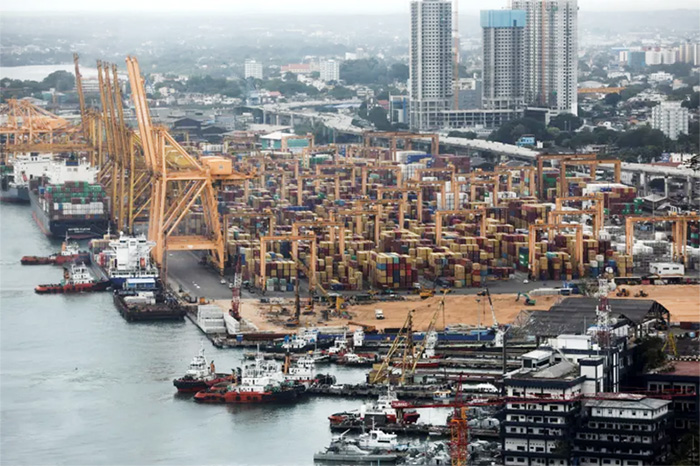

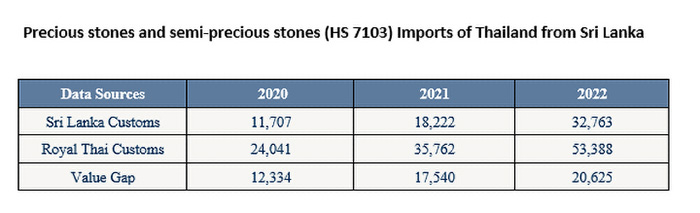

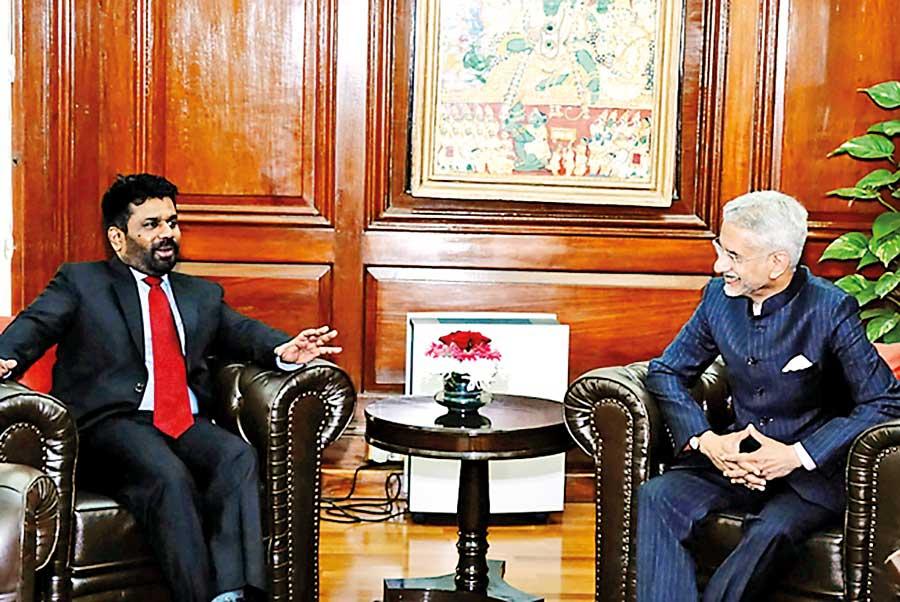
 a tour of India, setting the stage for political development ahead of the presidential elections slated for the last quarter of this year. Its leader, MP Anura Kumara Dissanayake, held talks with both Indian External Affairs Minister Dr. S. Jaishankar and National Security Advisor Ajit Doval on Monday and with Indian Foreign Secretary Vinay Mohan on Tuesday, further elevating the importance of the visit. The NPP Leader Dissanayake led the party delegation, which included senior legislator Vijitha Herath, NPP Secretary Nihal Abeysinghe and executive committee member Prof. Anil Jayantha.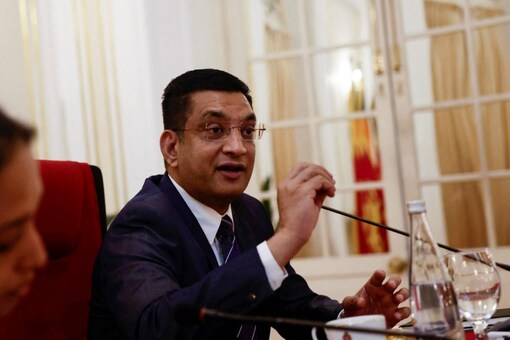
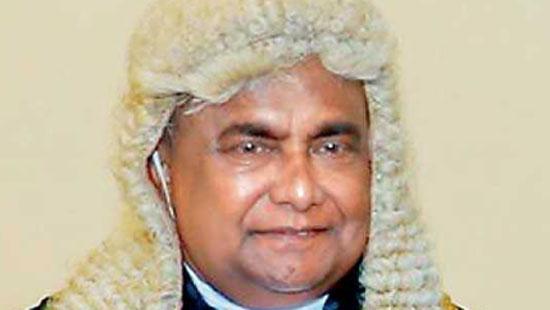 Colombo, Feb 06 (Daily Mirror) – Speaker Mahinda Yapa Abeywardana today said he has no authority to accept or reject any amendments from anyone including the Supreme Court to the Online Safety Act and that the sole authority of such exercise is vested with Parliament.