Moratuwa Police today (Dec.21) apprehended a suspect who was in possession of intoxicating pills.
The suspect was taken into custody based on intelligence information received by the Officer in Charge (OIC) of the Crimes Unit of Moratuwa Police.
The 30-year-old was tackled when he had made an attempt to flee from the backdoor as soon as the police officers entered his house located on Jubilee Road, Lakshapathiya in Moratuwa.
A total of 2,500 intoxicating pills were found inside his bag.
The suspect was identified as Dhammika Priyankara alias Lakshapathiye Dhamma” who had been wanted by the police and evaded arrest.
During interrogations, he has divulged more information about his drug peddling activities which targeted locations closer to schools.
The overall rate of inflation as measured by the National Consumer Price Index (NCPI) on Year-on-Year basis was recorded at 2.8% for the month of November 2023, the Department of Census and Statistics (DCS) revealed in its latest report.
This is an increase of 1.8% in comparison to the NCPI-based inflation of 1.0% recorded in October 2023.
Meanwhile, the Food-Inflation in November 2023 increased from -5.2 to -2.2% from October to November 2023, while the non-food inflation increased to 7.1% from 6.3% which was recorded in the month of October.
The NCPI for all items for the month of November 2023 is 206.0, which is an increase of 2.4 index points or 1.19 percentage compared to October 2023 for which the index was 203.6. This increase represents an increase in expenditure value of Rs. 1231.49 in the market basket”.
The increases in index values were reported for Vegetables (0.62%), Rice (0.14%), Sugar (0.09%), Coconuts (0.06%), Big onions (0.06% ), Green chilies (0.06%), Red onions (0.05%), Limes (0.03% ), Coconut oil (0.02%), Potatoes (0.02%), Mysore dhal (0.01%), Tea dust/leaves (0.01%) and Fresh fruits (0.01% ). However, decreases in index values were reported for Fresh fish (0.19%), Chicken (0.08% ), Dried fish (0.07%), Eggs (0.07%), Green gram (0.02%) and Chili powder (0.01%).
The increases in index values of non-food groups in November 2023 compared to the previous month was mainly due to the price increases in groups of items ‘Housing, Water, Electricity, Gas and Other fuels’ (Materials for the Maintenance and Electricity bill) (0.53%) and ‘Restaurants and Hotels’ (0.02%). However, price decreases in groups of items were reported for ‘Transport (Petrol) (0.08%), ‘Alcoholic Beverages, Tobacco and Narcotics’ (Beetle leaves) ((0.02%) and ‘Health’ (Spectacles) (0.02%). Further, very slight price decreases were reported in groups of ‘Clothing and Footwear’, Furnishing, Household equipment and Routine household maintenance’, ‘Recreation and Culture’ and ‘Miscellaneous Goods and Services’.
Meanwhile, the price indices of ‘Communication’ and ‘Education ‘groups remained unchanged during the month, the according to the report.
Mahinda Rajapaksa M.P. Leader Sri Lanka Podujana Peramuna
Around 40 professional associations and trade unions representing vital sectors of the economy and the public services have been agitating for a reduction in income taxes for many months. In the meantime, the high tax burden has precipitated an exodus of educated and highly trained professionals from the country giving rise to a new crisis. Following increases in the VAT through the budget for 2024, tax policy is set to become a major political issue in 2024.
The call to reduce taxes is based on solid economic principles. When taxes are low, both individuals and corporations have more money to spend and invest and this acts as a driver of the economy. Low taxes was a cornerstone of my government’s policy and it made a major contribution to the unbroken nine year economic boom that this country experienced between 2006 and 2014. So as not to burden the people with taxes, my government of 2006-2014 restricted the overall year on year increase in government tax revenue to around Rs. 100 billion a year. Through careful economic management, my government reduced the debt to GDP ratio from 90% at the end of 2005 to 69% at the end of 2014 thus ensuring the feasibility of the low tax regime.
However, over the past several years there have been well-funded propaganda campaigns promoting a headlong and mindless opposition to everything even remotely associated with the name ‘Rajapaksa’ including the low tax policy. In order to blacken the very concept of low taxes, some even claimed that the Rajapaksa-led governments reduced taxes to help cronies. That is an outright lie. Tax exemptions can be granted only under laws like the Board of Investment Act and the Strategic Development Projects Act in order to attract investors for specified projects.
After 2015, the low tax regime was rejected in favor of a high tax regime. Unsurprisingly, Sri Lanka’s growth rate declined precipitously after 2015 ending up at 0.2 below zero by 2019. Due to bad economic management, the period from 2015 to 2019 saw an increase taxes while at the same time experiencing a precipitous increase in foreign debt. When I was voted out in January 2015, the outstanding International Sovereign Bond debt was only USD 5,000 million. The Gotabaya Rajapaksa government of 2020-2022 paid off USD 2,500 in outstanding ISBs which means that only USD 2,500 million in ISBs now remains from my era.
Over USD 10,000 million in new International Sovereign Bonds were taken between 2015 and 2019. Hence we still have an outstanding ISB stock of USD 12,500 million. It was this USD 10,000 million in new ISBs taken between 2015 and 2019 that broke the back of our economy. When the Covid-19 pandemic struck Sri Lanka a few months after I became Prime Minister at the end of 2019, we wrote to the IMF in March 2020 asking for emergency assistance. The IMF wrote back saying that our debt levels disqualifies us from their emergency relief package.
They then proposed a raft of conditions that would qualify us for IMF assistance but those conditions would have made it impossible for us to face the Covid-19 threat in the manner that we did in 2020 and 2021. The present government is now implementing stringent conditions as part of an IMF programme. Thus one thing led to another, finally resulting in a situation where we now see top professionals holding multiple university degrees and professional qualifications agitating on the streets, demanding a reduction in taxes.
The SLPP which I lead is a part of the government. However the present Head of the Government and Head of State is the leader of a different political party with different policies. In a situation where this country was faced with complete anarchy, Parliament elected a President to serve the remainder of former President Gotabaya Rajapaksa’s term. The new President successfully restored law and order to the country. He is now directing government policy as the Executive President. At this moment, the primary duty of the SLPP is to ensure a stable government until the next national elections.
In future, every member of the public should pay special attention to the tax policy and the past economic practices of the political party they vote for. As elections draw closer, once again we see attempts to hustle people blindly and unthinkingly in various directions through ramped up propaganda and social media hysteria. Whatever decision the people make at the next elections should be based on rational thinking, proper facts and correct data. We are still living through the consequences of January 2015 and this country cannot afford another mistake like that again.
You Tube talk shows focused on the rivalry at Kurundi. Each talk show began with an account of the history of the Kurundi monastery and then went on to the Kovil story. Through these talk shows and the daily news broadcasts the public was fully informed of the history of Kurundi and the protests at Kurundi.
Many YouTube presentations show viewers the full extent of the Kurundi monastery area. In one presentation the camera took you along the road to Kurundi. It was very steep at the last part. Viewers were shown the extent of the Kurundi ruins. The camera circles the stupa, then the pilgrimage, then shows the other ruins, including the moonstone. This is an excellent coverage of the area for those who cannot go there.[1]
Several videos present the Kurundi case to the viewers. They highlight different aspects of the Kurundi issue. Ven. Medagoda Abeyaratne gave an excellent introduction to Kurundi. He urged Buddhists to visit Kurundi. [2] Bauddhaloka Foundation launched a series of talks on Kurundi. These were very factual and good, especially the presentations by the Department of Archaeology.[3]Lankadeepa Rathu Katta also carried out an excellent interview on Kurundi.[4]
Mahinda Palipane, a lecturer at Sabaragamuwa University, spoke about Kurundi on his channel Insights with Mahinda”, on June 12, 2023. This was a very instructive presentation. He started with the Jaffna peninsula. He showed that the correct name for the Jaffna peninsula was Nagadipa or Nakadiva. Jaffna was Buddhist, he said.
He drew attention to the Vallipuram manuscript found there in 1936. He gave the available historical information on Kurundi, citing Mahavamsa, Manorathapurani, and the British findings. Kurundi was deserted in the 13th century, he said. There were no Tamil Buddhists, he said, this is a new idea. Kurundi confirms that the northeast was Sinhala Buddhist [5]
News channels featured Kurundi, specially the demonstrations against Kurundi. Ada Derana 6.55 news on June 17, 2023, had a special feature on Kurundi giving the key information on Kurundi that the public wished to know. This would have helped entrench the matter in the minds of viewers as the late evening broadcast has a large audience.
This clip featured Santhabodhi explaining about the Hindu Kovil at Kurundi. In 1980 or so, the pilgrimage had been covered with soil and only the stone pillars were visible, he said. Tamil Separatist Movement has put a roof on these pillars and installed a Trisula. When the Department of Archaeology was informed, they prohibited entry as this was an archaeology and forest reserve.
When we came in 2018, continued Santhabodhi, the whole area was a dense forest. Once we started work on the stupa, the Tamil Separatist Movement decided that they too wanted to worship there and talked of a Hindu Kovil. Meke thiyenna thanikara Demela bedum vadaya,” Santhabodhi said. [6]
Madhura TV on 2022-07- 20 had a very good discussion on the subject. The panel consisted of two lawyers, Sarath Silva ( former Chief Justice}and Sudath Jayasundera with Ven. Santhabodhi. Santhabodhi gave a clear account of the work at Kurundi, how it had started, and how it was progressing. The panel noted that monuments identified by the Department of Archaeology came under the control of the Central government and not Provincial Council.
Then the discussion gathered momentum. Kurundi has now become political. How did that start, the panel asked. Santhabodhi described the different encounters with Tamil protestors, in 2018 and 2022 and the various obstructions he faced. They said we were going to create a vihara and have Sinhala settlements there. There was no need to create a vihara, it is already there”, he observed.
The Kovil story was dismissed. The panel laughed over the fact that the Tamils had said the Yupa gala was a Siva Lingam and the Korawak gala was worshipped in the ‘Kovil’. What about protection for the Sangha, asked Sarath Silva, with meaning. Santhabodhi said he thought he was safe.
Santhabodhi invited the public to support Kurundi. The Tamils are attacking Kurundi because it is isolated. It would be good if we could have two busloads of visitors regularly. He gave his mobile number and said that Kurundi had a Facebook page, and Web page and was on YouTube. [7].
YAKK production gave its You Tube clip the heading කුරුන්දි විහාරය මේ තරම් වැදගත් වෙන්නේ ඇයි? එහි සුවිශේෂි කථාව මෙන්න.The speaker referred to EW Adikaram’s reference to Kurundi attakatha, said that the trident and Kovil were set up only in 1980, and announced ‘they can slap an anti-Tamil Jativadi label on me if they wish. I hope the government will take some action on this matter.[8]
The marathon three-hour YouTube discussion presented by the IAHS, on 6.8.2022 had a mix of speakers. It featured specialists, non-specialists, and also amateurs who, in my view, should not have been allowed to join the discussion.[9]The discussion went in various directions, with a mix of correct and incorrect information, glibly trotted out, confusing the viewers, and in my view, creating a dithering audience incapable of deciding anything positive about Kurundi.
This discussion showed how ignorant the public was regarding Eelam and the politics of the Tamil Separatist Movement. This ignorance was shocking. Some speakers thought that the Tamils who opposed Kurundi did so very innocently. This was only a problem of communication, nothing more, they said. The Tamil public will cooperate once they are given the correct information. We should explain matters to them. Kurundi issue must be reported in all three languages, they said. [10].
Santhabodhi who had been listening intervened at this point. He was not scheduled to speak. Most people had left the discussion by then. However, it is on YouTube, at https://www.youtube.com/watch?v=ZiqG8CFJ6c4&t=321s the time stamp for his speech is 3.12.59.
Santhabodhi ‘s intervention is very important. It is more important than the rest of this over long discussion. Santhabodhi was clearly appalled by the naïve statements he was hearing. He cut in and stated very firmly, I have listened to this discussion. The speakers have no practical familiarity with the situation at Kurundi. Colombo thinks the Tamils are like us, very approachable, and nice. They only need to be spoken to. That is not so. Their interest in Kurundi is political. It is a part of their Eelam strategy.
It is a waste of time talking to them, Santhabodhi continued. They are not interested. They were not interested even in listening to the explanation of the Director of Archaeology, who arrived to settle a protest. They want control of the land and they want to eliminate the Buddhist presence in the north. That is all.
They say Sinhala Buddhist talk is over this is now ours.” Forget heritage management, said Santhabodhi bluntly to the IAHS audience. It is useless taking about heritage with them. This is Politics.
Santhabodhi also made two other observations which are not usually emphasized in the ethnic issues debate. He said that the Tamil MPs were not the only persons working towards Eelam. The Tamil officers working in the government and provincial offices in the district, were also working toward Eelam.
Santhabodhi also observed that the Tamil public is very scared of the Tamil officials and Tamil politicians. Both groups, politicians and officials, are directly associated with the Separatist Movement and they hold the power in the district. So the public will not oppose them.
Santhabodhi also pointed out, to whoever was listening to him, that University of Jaffna has also joined the game. An academic was sent to Kurundi to report on Kurundi. That academic had said that there was no point in denying the existence of Kurundi vihara. We should say it is Tamil Buddhist and keep the Sinhalese out. Jaffna University undergrads had gone in a mass to protest at Vadunagala, were there was another tussle going on , between temple and kovil, added Santhabodhi . ( Continued)
In our democracy the People can use the power of franchise in selecting a government only once in 5 years unless the Parliament is dissolved earlier. In between elections the voice of the People is muted. This makes them to resort to enraged demonstrations and Aragalayas. The government also takes decisions on conjecture. A typical guesstimate decision was the overnight ban on chemical fertilizer. It was done with good intentions on the advice of a small coterie of pseudo experts, not anticipating an adverse response from the farmers. What the country needs is a mechanism to consult the People and for the People to show their response at an intermediate level between the Parliament and the grassroot constituency. In the current context public opinion on the increase in VAT could be tested in an intermediate referendum.
As provided by Article 4 of the Constitution the Sovereignty of the People shall be exercised and enjoyed at every Referendum by every citizen who has attained the age of eighteen years.
The Directive Principles of State Policy given at Article 27. (4) calls for the State to strengthen and broaden the democratic structure of government and the democratic rights of the People by decentralizing the administration and by affording all possible opportunities to the People to participate at every level in national life and in government.
By Article 86, The President may, submit to the People by Referendum any matter which in the opinion of the President is of national importance and subsection (2) enables the Parliament by law to provide for a register of electors to be used at a Referendum.
Thus, it is clear that the Parliament can create a register other than the National Register of Electors of the Commissioner of elections to conduct a special Referendum. Such a limited Referendum was envisaged for the merging of the Northern and Eastern Provinces.
A national Referendum is costly and time consuming and is a burden on the economy. Sri Lanka already has a democratically elected wide base that can be used for special referenda. The Pradeshiya Sabha and Local Government bodies in the country will have a revised representative membership of around 5000 members. This grassroot group mirrors the will of the People and can be utilized as the constituency for special referenda. Such elections could be conducted at the district level within two weeks of its approval by Parliament. In order to reduce any economic and social ill effect no election meetings, demonstrations and posters should not be allowed other than publicity over print and electronic media.
It is for the constitutional lawyers to consider these facts and institutionalize a national intermediate level to gauge the will of the People. It would be democratic to provide for the Parliament to invoke a special referendum with the approval of a 50% majority of all members of the Parliament.
Excessive devotion to a person leads to irrational behavior. Doctors and ambulance staff around the world experience assault from loved ones of deceased patients for merely pronouncing the patient dead. Some people irrationally believe that the dead are still alive until pronounced dead by a doctor, so it is the fault of the doctor! This is the same mentality of some Lankan politicians and their supporters. They argue that the April 12, 2022 declaration of bankruptcy was the root cause of bankruptcy! Such irrational people cause more harm than good to the nation. They should stick to what they are skilled at and not venture into economic matters.
Sri Lanka was well and truly bankrupt by January 2022 when its foreign reserves fell dangerously low after the repayment of an ISB bond loan in the same month against expert advice. For the first time in the history of Sri Lanka, foreign reserves fell to zero useable reserves just a few months later. It didn’t happen suddenly; it was a long time coming. Sri Lanka’s foreign reserves were $8.6 billion in November 2019 and within just 2 years and 2 months fell to near zero. This is a great mystery as since 2020 the country was under severe import restrictions. What happened to that $8.6 billion within just 26 months?
Other signs of bankruptcy were also up on the horizon. Credit rating agencies kept downgrading Sri Lanka’s credit rating. That was for good reasons as the nation’s foreign reserves kept depleting. Instead of fixing the problem, responsible people for it confronted credit rating agencies! Again, totally irrational behavior. Another sign of bankruptcy before it actually materialized was the very large amount of money-printing since 2020. It was unprecedented even in Lankan standards. Someone had assumed that if money was the problem the solution was to print more money!
Severe restrictions on agrochemicals since 2021 was another sign of impending bankruptcy. Although the government concocted the organic yarn for public consumption, the decision to restrict agrochemicals was due to decreasing foreign reserves. Other factors of production including oil and gas, spare parts and electronics were also restricted to save decreasing foreign reserves. However, the government kept paying billions of dollars in loan interest and repayments leading to bankruptcy.
What is worse is when factors of production are restricted it collapses the economy and the country can never overcome bankruptcy. The only way to overcome bankruptcy was to stop repaying loans and instead paying off trade creditors (for oil, gas, vehicles, spare parts, agrochemicals, etc.).
Approaching Bangladesh and other poor countries for short term loans in 2021 was yet another sign of bankruptcy. Getting a loan from Bangladesh was unthinkable until 2021.
Economics experts who have educational qualifications in economics and experience in economics consulting warned the government to seek a debt restructure and stop repaying debt since 2020 as the nation was heading towards total bankruptcy and anarchy. However, the government paid no heed. Instead, the government listened to soothsayers, unqualified talkers of economic affairs and politicians.
Comparing Sri Lanka with Pakistan (which did not declare bankruptcy) is foolish. Pakistan’s comparable credit ratings were Caa3 (Moody’s) and CCC+ (S&P) whereas for Sri Lanka they were Ca (Moody’s) and SD (S&P). Caa3 is a better score than Ca and CCC+ is a much better score than SD. Clearly Sri Lanka was bankrupt and Pakistan was not.
By declaring bankruptcy (accepting reality), Sri Lanka recovered. Today foreign reserves are $3 billion thanks to sensible action including debt restructuring. In percentage terms that is the highest increase in foreign reserves the country has ever seen. Had it traded in bankruptcy without declaring it, no foreign seller would sell anything to Sri Lanka which would have taken the nation back to Stone Age without fuel, agrochemicals, medicines, etc.
Another unwise argument is the decision to float the Sri Lanka rupee. The decision to devalue the Sri Lanka rupee was taken in March 2022 when the country could not afford to sustain it by wasting meagre dollars. It was not a decision imposed by anyone but by necessity. It is similar to a parent telling his child that they can no longer afford a private education due to money problems. If a currency is not floated, the government has to keep selling its dollar reserves and buying rupees in the international market. The moment the government runs out of dollars, the rupee must be either floated or allowed to totally crash. Those were the only options available. Between a total crash of the local currency and a float, the latter was obviously better.
Finally, people should not trust politicians who are responsible for bankruptcy (Supreme Court decided so) and politicians who supported those politicians who caused bankruptcy. They are part of the problem. They are not the solution and can never be the solution. All they can do is to blame each other (despite the Supreme Court decision) and hide their culpability. People should learn economic matters from economics experts and from their own learning.
However, remarkably Sri Lankans seem to have known these facts deep inside them despite not knowing the names of economics concepts. People knew about gravity long before Newton though they did not name it or theorize it. Systematically people got rid of specifically those responsible for Sri Lanka’s bankruptcy and anarchy 18 months before the Supreme Court decided on exactly the same set of culprits. It is called collective conscience – a key and one of the oldest economics theories – The Division of Labour in Society”, Émile Durkheim, 1893. That is truly remarkable!
In the recent Budget, the government announced the cancellation of rent and then granting freehold title to Colombo Flat dwellers. Although the government stated that the number of beneficiaries would be around 50,000, it is unlikely that the number is that high. According to the Opposition (SJB) it is about 15,000.
There is no doubt that this is a gimmick to win voters. The UNP believes it must win in Colombo. Presently, Colombo is a SJB stronghold.
The fact of the matter is that these people were paying the megre monthly rental of Rs 3000 happily. Many of them can afford to pay same.
When the writer spoke to some of them recently they expressed reservation of becoming sudden flat owners. What they say is that once they become owners, the UDA will stop doing all the property and common areas (body corporate) maintenance work.
Because they have been guaranteed ownership of the properties upon payment of the full value by way of monthly instalments (rent), the flat dwellers are unexcited that they will soon become owners. The drawback for them is that they will henceforth have to bear the full cost of the repair and maintenance of the flats. Most of the flats have urgent repair work and some are substantial.
Unless they are much needed social welfare payments (eg. අස්වැසුම), the overall concept of the governments giving freebies to citizens is bad.
If the government is to hand houses free of charge, it can never solve the country’s housing crisis. It will be like pouring water into a bottomless bucket.
There are many thousands of homeless families in Sri Lanka. If this is the government’s policy of solving the housing crisis – giving away free houses, it will never solve the problem.
The government will exacerbate the problem.
There are people living in ramshackle sheds outside of the boundary wall of the Bambalapitiya railway station, directly facing the sea. They live in most appalling (inhuman) conditions. These slums (ever expanding) are a terrible eye sore. The safety of the Bambalapitiya Railway Station is in jeopardy.
Is the government aware of this problem and is it determine to solve it?
In the previous Gotabhaya government it reduced VAT from 15% to 8% , this action made the country poor. The present government’s this move is similar to same.
What the country needs is thousands of new houses. Given the land shortage, they should be high rise apartments (like in Singapore).
The Department of Housing and the UDA should build them en- mass and lease out to people who live in slums or those do not have a house at all. Once given on lease, they should be afforded the first opportunity to buy-back from the government, when the government is ready to sell them. Otherwise, they will become the owners after paying rent for the full stipulated period (30 years?).
It is only through this way that the government could generate revenue to build more and more new housing units.
Even in rural areas the government must consider building apartment blocks. There is a land shortage in the country even in rural areas. People (homeless) can live in such apartments and go to work in the fields (paddy, vegetable), and the sea (fishermen).
The human – elephant conflict has come to the boiling point. Many people own shot guns, air rifles now. They shoot down elephants mercilessly. There are instances where elephants’ eyes have been shot at and their trunks cut using sharp knives/axes.
Villagers have become barbaric in relation to treating elephants.
Have we even got 1,500 elephants left in the wild?
What the Yahapalana Government did in relation to solving the housing crisis was a flop. Between 2015 to 2019, they tried to exactly repeat what Ranasinghe Premadasa did in 1980s and 1990s.
The Yahapalana Government did not realise that the country had changed a lot during those 35 – 40 years.
The method that was good in 1980 was not good in 2016.
Large amount of precious land and money was wasted. It is reported that thousands were given new jobs in the then Department of Housing. For eg in Hambanthotha Housing Authority, staff had come to work just to sign in/off the attendance register. They had been used primarily for political scout work (the writer is unable to verify the actual truth of this story).
This shows the short sightedness of our rulers.
If we do not have intelligent, smart, dynamic, dedicated and patriotic politicians to lead this country, the country will forever be doomed.
The newly appointed Assistant Defence Advisor at the Indian High Commission in Sri Lanka, Lieutenant Colonel Mandeep Singh Negi made a courtesy call on the Defence Secretary General Kamal Gunaratne at the Defence Ministry in the Defence Headquarters Complex in Sri Jayewardenepura, Kotte, Today (Dec 20).
Following a warm reception, the Defence Secretary held a cordial discussion with Lt. Col. Negi and extended his wishes for his appointment at the Indian HC.
The meeting concluded with the sharing of souvenirs to mark the occasion. Military Liaison Officer of the Ministry of Defence Maj. Gen. Dhammika Welagedara was also present at the occasion.
The newly appointed Bangladesh Defence Advisor (DA), Commodore M Moniruzzaman paid a courtesy call on the Defence Secretary General Kamal Gunaratne at the Defence Ministry in the Defence Headquarters Complex, Sri Jayewardenepura, Kotte, today (Dec 20).
During the interaction, the Defence Secretary conveyed his warm wishes to Cmde. Moniruzzaman on his new appointment and expressed eagerness to foster a closer bilateral relationship and defence cooperation with Bangladesh. Discussions also centred on enhancing collaboration in areas of mutual interest, including military training, exchange and security initiatives.
The Defence Secretary also recalled the historical alliance between Bangladesh and Sri Lanka and highlighted the shared commitment to regional stability and security. They both emphasized the importance of sustained dialogue and exchange programs to further fortify defence capabilities and promote peace in the region.
The meeting concluded with the sharing of souvenirs to mark the occasion. Military Liaison Officer of the Ministry of Defence Maj. Gen. Dhammika Welagedara was also present at the occasion.
Do not touch co-operative properties to cause public frustration.- Prime Minister. Prime Minister Dinesh Gunawardena advised all the governors and district coordinating committee chairpersons to speed up all development activities across the island under the new budget provisions. The Prime Minister gave these instructions in a discussion held at the Temple Trees on 19.12.2023 with Governors, District Coordinating Committee Chairpersons and senior officials regarding the activities related to Provincial Councils and Local Government Institutions and future development activities. In the year 2024, projects proposed to be implemented under the supervision of the provincial governors and district coordination committee chairpersons and expediting the development activities implemented by the regional coordination committees and matters including food security, fisheries, renewable energy and information technology were given much attention. Issues related to transfers of officers attached to provincial councils, completion of filling existing vacancies, new recruitments and revision of approved staff of provincial councils were also brought to attention. The placement of multi-tasking workers in relevant institutions and the functioning of cooperative societies at the provincial level were further discussed and the Prime Minister mentioned that some provinces have still failed to pass the cooperative charter. The Prime Minister pointed out that there is a cabinet sub-committee on the cooperative system and a special committee of the parliament, but certain properties owned by the cooperative have been put up for auction. The Prime Minister emphasized on the imperative to refrain from touching the cooperative properties that cause public frustration. According to the cooperative procedure, a national program on milk production is expected to be implemented as a principal program in 2024 and the Prime Minister said the cooperative societies could play a major role in it. District Coordinating Committee Chairpersons presented matters to the Prime Minister regarding some disagreement between the governors and public representatives during the implementation of development activities in some provinces. In response, the Prime Minister stated that President Ranil Wickremesinghe has announced the new budget clearly on the way forward and the governors and district development committee chairmen should lead the development activities at the district level as co-chairpersons. Provincial councils and members of parliament should work on targeting the district development program under the main national development program of the government based on the budget allocations announced by the president after preparing a plan at the district level. By reducing wastage and making development budgets more effective, we can move towards rapid development goals by combining the financial provisions and income sources of the local government bodies that have been dissolved to meet the 2024 goals. The Prime Minister further emphasized that at least one development project should be implemented for each Grama Niladhari Division. Governors, District Coordinating Committee Chairmen, Secretary to the Prime Minister Anura Dissanayake, Secretary to the Ministry of Public Administration Ranjith Ashoka and all provincial secretaries and government officials participated in this event.
President chairs the launch of State-of-the-Art Disaster Early Warning System
Published on: December 19, 2023
Under the auspices of President Ranil Wickremesinghe, a sophisticated disaster early warning system was officially introduced today (19), marking a collaborative effort involving the Disaster Management Centre, Sri Lanka Telecommunication Regulatory Commission and major telephone service providers including SLT Mobitel, Hutch, Dialog and Airtel. The Memorandum of Understanding (MoU) formalizing this strategic initiative was also signed at the President’s Office today.
Director General of the Disaster Management Centre Major General S. Ranasinghe (Retired) and Director General of the Sri Lanka Telecommunication Regulatory Commission Mr. Madhushanka Dissanayake, were the signatories to the MoU. Notable stakeholders, including Group Chief Executive Officer of Dialog Axiata Mr. Supun Weerasinghe, Group Chief Executive Officer of Sri Lanka Telecom Mr. Janaka R. Abeysinghe, Chief Executive Officer of Bharti Airtel Lanka Mr. Ashish Chandra, Chief Operating Officer of Mobitel Pvt. Ltd. Mr. Sudarshan Giganage and Acting Chief Executive Officer of Hutchison Telecommunications Lanka Pvt. Ltd Mr. Samitra Gupta were actively involved in the signing ceremony.
The primary objective of this state-of-the-art disaster early warning system is to fortify the existing mechanism, ensuring the safety and well-being of Sri Lankan citizens amidst various disasters, including those caused by weather and climate changes. The system leverages cutting-edge technology to deliver more effective early warnings through telephone communication networks.
Specifically focusing on tsunami disasters, the system targets nearly sixty thousand (60,000) mobile and landline numbers in 14 districts identified as high-risk areas. It is designed to promptly issue an immediate early warning in the form of a distinctive Ring Tone” notification accompanied by a siren sound.
This will establish a more robust early warning mechanism for the public, utilizing phone notifications featuring a siren sound, particularly effective during night-time hours.
Scheduled for a public rollout on National Security Day” on December 26, 2023, the system’s scope is anticipated to expand in the future, evolving into a comprehensive multi-disaster early warning mechanism. This expansion aims to include landslides and floods, further enhancing its utility and impact.
The high-profile event was attended by key dignitaries, including State Minister for Defence Mr. Pramita Bandara Thennakoon, President’s Senior Advisor on National Security and Chief of Presidential Staff Mr. Sagala Ratnayake, Secretary to the Defence Ministry General Kamal Gunaratne (Retired) and Directors of the Disaster Management Centre, Brigadier T.C. Harasgama and Mr. Pradeep Kodippili were among others.
Letter to India’s prime minister and the minister of health
The global pandemic preparedness accord (‘pandemic treaty’) currently being put in place by the World Health Organization (WHO) will pave the way for a fascist approach to societal management.” The beneficiaries will be unscrupulous corporations and investors whom the COVID‐19 response served well. This will result in the loss of human rights and individual freedom.
So says Dr David Bell, a clinical and public health physician with a PhD in population health and former WHO scientific and medical officer. The treaty represents a terrifying power grab that, if successful, will give the WHO a central directing role and monopoly power in global health governance.
As currently drafted, the treaty will hand the WHO the authority to order measures, including significant financial contributions by individual states, lockdowns, travel restrictions, forced medical examinations and mandatory vaccinations during a public health emergency of its own declaring.
The WHO will have sole and extensive power to declare Public Health Emergencies of International Concern (PHEIC) for any potential or real threat for extended areas, whether these threats are biological, climate or environment related. And it will do so without proper proof and solely decide measures and medical substances to be imposed on the public without informed consent.
Its powers will also include the official censorship of information, including free speech — views opposing the official narrative put out by the WHO — and it will be accountable to no national parliament or be limited by any constitutional safeguards.
A group of prominent lawyers, doctors and concerned citizens have written to Indian Prime Minister Narendra Modi and Minister of Health and Family Welfare Shri Mansukh L Mandaviya urging them to reject the WHO’s global pandemic treaty. The signatories are listed at the end of this article, and the 10-page letter can be accessed in full with all relevant links and references on the Awaken India website: WHO Pandemic Treaty Ultra Vires of the Constitution).
Top of Form
TheWHO released a Zero Draft of the WHO CA+ (this ‘pandemic treaty’ is now officially known as an ‘accord’) with 38 Articles on 1 February 2023 and, subsequently, another draft with 41 Articles on 2 June 2023. The accord marks a fundamental change in how the WHO will function. It seeks secretively, behind closed doors, sweeping powers under its director general.
The signatories make clear that, under the proposed accord, the WHO can, at will, call a pandemic, declare a PHEIC and then take over the authority of national governments to detain citizens, restrict their travel, require them to have vaccine passports (forced testing and vaccination) and increase social media censorship. The accord would also operate as a ‘framework convention’ that’s on-going, year after year, indefinitely. It facilitates a dictatorship role for the WHO as it moves to acquire unfettered power.
Two instruments, the accord itself and amendments to the International Health Regulations (IHR) 2005, are designed to operate in parallel to give draconian powers to the WHO. Both texts irremediably entail the transfer to the WHO of the power to threaten health freedom, thereby representing a fundamental threat to national, medical and bodily autonomy.
In their letter, the authors state that the WHO is an external, unelected body, which may not and cannot be appointed to such a dictatorship position. During the COVID-19 event, the WHO’s role in facilitating medical tyranny was clear to see.
It advocated enforced lockdowns, which destroyed the livelihoods of millions in India and across the world and created a surge in mental health problems. It shut down schools, putting back the education of a generation. It promoted incompletely tested and unapproved vaccines under EUA (Emergency Use Authorisation) that despite the claims of ‘safe and effective’ where nothing of the sort and caused a sharp rise in spike protein-induced heart and brain disease.
If adopted at the 77th World Health Assembly in May 2024 by a simple majority vote, the ‘pandemic treaty’ will come into force within 12 months for all countries, unless a country proactively files rejections or reservations within a 10-month period.
The letter to the prime minister and the health minister states that the accord and those pushing it are:
Manifestly violative of Fundamental Rights of the citizens of India and, therefore, Ultra Vires of the Indian Constitution. In their very intent, they cancel the fundamental right to bodily autonomy and integrity, through mandating medical procedures, coercion and further grossly illegal acts.”
The letter adds:
This is a breathtaking and terrifying onslaught on fundamental civil liberties. It must be understood as fundamental, that the negation of bodily integrity of any human being means the loss of all human rights.”
In making its point, the letter refers to the Nuremberg Code (1947) by stating:
The consent of the human subject is absolutely essential. The International Covenant on Civil and Political Rights resumed this ban against unintentional experimentation in its 1966 text, which states: no one may be subjected without his consent to medical or scientific experiment.”
It also references the Geneva statement for doctors (1948):
I will respect the autonomy and dignity of my patient. I will not use my medical knowledge to infringe human rights and civil liberties, even under force. I will keep absolute respect for human life, from conception. I will consider my patient’s health as my first concern.”
The signatories note that there is little alternative but to jettison the WHO from national life and implore the prime minister and the health minister to act to uphold the sovereignty of India and the rights of every citizen.
They add that unelected, unaccountable and largely unknown delegates from 194 countries meet in Geneva during World Health Assembly meetings, as they did in 2022 when they adopted amendments to the IHR. The process is fraught with secrecy, autocracy and impending tyranny, blatantly devoid of any transparent, democratic process.
These country delegates are unelected and do not represent the people of their country. The signatories ask:
How can they negotiate on behalf of nations, let alone an international/global health regulation binding on 194 countries?”
If the ‘global pandemic treaty’ is forced through, we could see perpetual lockdowns. At the same time, corporate interests will dominate. Pandemics will become self-sustaining by creating a bureaucracy whose existence will depend on them.
People will be at the mercy of the police and bureaucrats who will be immune to any penalty for any acts carried out in ‘good faith’. These acts could take the form of mandatory medical procedures, forced entry into premises, forced isolation and quarantine.
It was bad enough in 2020 with the full force of the state lined up against the public, especially those who did not agree with COVID policies, but imagine the abuse of power that could occur if the WHO acquires the powers it seeks.
The seeds of totalitarianism were clear to see with Anthony Fauci saying that he is ‘the science’, former New Zealand PM Jacinda Arden declaring the government as the ‘single source of truth’ and social media companies working hand in glove with the deep state to censor and deplatform prominent figures and world-renowned scientists who questioned the official narrative.
We saw the suspension of fundamental civil liberties with the threat of state violence on hand, often resulting in citizens being abused by de facto paramilitary police forces for breaching ‘pandemic rules’ that had no scientific basis.
Governments declared that they were ‘following the science’, but what we saw were inflated death numbers, manipulated data and the fraudulent use of RT-PCR tests to help create the perception of a deadly pandemic in the minds of the public. Readers can consult the online article Stay Home, Save Lives: Uncovering the COVID Deception, which provides insight into the various deceptions that helped instil fear into the global population in 2020.
The WHO also provided a wrong projection of mortality. The exaggeration caused panic in the population — part of a carefully orchestrated ‘fear pandemic’ — and paved the way for lockdowns and the mass uptake of vaccines sold to the public based on false claims. The synthetic spike protein of the vaccines has resulted in clotting, bleeding, heart problems and brain blood clotting as well as neurodegenerative problems. And what we are seeing across so many countries since the vaccine rollout is significant excess mortality, which the media is silent about.
Moreover, the WHO operates within a biopharmaceutical complex, a complicated syndicate that has formed over time, which instructs world health policies. This complex involves the health agencies of national governments, including India, the US and the UK, the World Economic Forum, the Gates Foundation, the Welcome Group and major pharmaceutical companies. Revolving door arrangements between these organisations have resulted in regulatory capture.
Researcher and campaigner Yohan Tengra of the Awaken India Movement conducted a two-year investigation into how this works in India. Through his research, he exposed the billionaire cartel that controlled India’s COVID-19 Task Force. Tengra listed not just the names of those who sat on this task force, but he also detailed how they are financially connected to the pharmaceutical-vaccine industry.
The task force was responsible for the aggressive push to lockdown, mandatory mask requirements, forced testing of asymptomatic people, dropping ivermectin from the national protocol, suppressing vaccine adverse events and much more.
Tengra also exposed how India’s prominent public health personalities, who regularly appeared in the media and on TV, are connected to the Gates Foundation, Rockefeller Foundation, Welcome Trust, USAID, the World Bank and other aspects of the global deep state.
We have every right to be concerned about a ‘pandemic treaty’ shaped by powerful interests with stakes in closing down economies (see the online article Systemic Collapse and Pandemic Simulation by Fabio Vighi), mandatory vaccination programmes and digital surveillance who are all too willing to strip away our fundamental rights for their own gain.
The letter to India’s prime minister and the minister of health makes clear that the WHO’s massive conflict of interest should disqualify it from any role in world health.
Signatories:
Dr. Jacob Puliyel, Delhi, MD, MRCP, MPhil, Paediatrician and Visiting Faculty International
Prashant Bhushan, New Delhi, Senior Advocate, Supreme Court of India
Colin Gonsalves, New Delhi, Senior Advocate, Supreme Court of India
Nilesh Ojha, Mumbai, President – Indian Bar Association, Advocate Bombay High Court and Supreme Court of India, Human Rights Activist
Author Dr. Amitav Banerjee, Pune, MD, Formerly Epidemiologist, Indian Armed Forces
Dr Aseem Malhotra, London (Overseas Citizen of India), MBChB, MRCP. Consultant Cardiologist
Aruna Rodrigues, Mhow, Lead Petitioner: GMO PIL in the Supreme Court and Member Iridescent Blue Fish (IBF)
Dr. Donthi Narasimha Reddy, Hyderabad, Public Policy Expert and Campaigner
Dr. Megha Consul, Gurugram, Paediatrics, Senior Consultant, Neonatologist
Dr. Pravin Chordia, Pune, MD Surgeon
Dr. Lalitkumar Anande, Mumbai, MBBS, PG Diploma in Clinical Research
Dr. Vijay Raghava, Bangalore, MBBS Dr. Veena Raghava, Bangalore, MBBS, DA
Dr. Kuldeep Kumar, Haridwar, MBBS MS (GENERAL SURGERY) Dr. Praveen Saxena, Hyderabad, Radiologist & Clinical metal toxicologist, MBBS, DMRD Osmania
Dr. Biswaroop Roy Chowdhury, Faridabad, Ph.D (Diabetes)
Dr. Gautam Das, Kolkata, MBBS, General Physician
Saraswati Kavula, Hyderabad, Documentary Filmmaker & Freelance Journalist, Awaken India Movement
Bhaskaran Raman, Mumbai, Professor, Dept. of Computer Science & Engineering. Indian Institute of Technology Bombay Advocate
Ishwarlal S. Agarwal, Mumbai Advocate
Tanveer Nizam, Mumbai
Dr. Susan Raj, Chattisgrah, BSc Nurse, MSW(M&P), Doctorate Humanities, Behavior Specialist
Jagannath Chaterjee, Bhubhaneshwar, Social Activist
Dr. Abhay Chedda, Mumbai, BHMS, CCAH, FCAH
Dr. Gayatri Panditrao, Pune, Homeopathic Physician, BHMS, PGDEMS
Dr. G Prema, Tamil Nadu, Classical Homeopath, Aasil Health Care
Dr. S. G. Vombatkere, Mysuru, Human Rights Activist Advocate
Anand Singh Bahrawat, Indore, High Court of Indore Advocate
Vijay Kurle, Mumbai
Advocate L Shunondo Chandiramani, Indore, High Court of Indore
Colin Todhunter is a research associate of the Centre for Research on Globalization (Canada) and specialises in food, agriculture, health and development issues.
Mehjabin Bhanu – Bangladeshi columnist, security and strategic affairs analyst, and teacher.
A recent increase in remittances, touching $1.07 billion during December 1-15, 2023, underlines significant support for our foreign exchange reserves. This significant increase not only indicates promising growth but also reveals a resilient pattern in remittance flows. As Bangladesh navigates through economic transitions and global challenges, the robustness shown in remittance flows serves as a beacon of hope, promising resilience and prosperity in the times ahead.
The information provided by the Balance of Payments (BOP) Department and Statistics Department is not just a numerical update; It is a narrative of economic vitality and sustainable growth. The data from December 1 to December 15 allow a comprehensive analysis of trends and a deeper understanding of their significance, especially when compared to the earlier days of the month.
Economic resilience is a fascinating story in attracting remittances from various financial institutions. State-owned commercial banks have shown a significant positive sign, exemplified by institutions such as Janata Bank, which have significantly boosted cumulative remittances. Meanwhile, financial institutions have contributed significantly to this growth, exhibiting a commendable growth trajectory.
The dynamic is particularly noticeable in the private commercial banking sector. Remittances increased from $461.88 million to $921.69 million during December 1-15 indicating a strong financial landscape. Islami Bank Bangladesh Limited’s continued leading position, contributing $387.93 million, reinforces the significant role of banks in this growth narrative.
Note that Bangladesh received 21.6 billion dollars in remittances in the last financial year, which highlights the significant role of remittances in the country’s economy.
If remittance flows continue to rise in the latter half of December, it will reflect the confidence and reliance of foreign workers on Bangladesh’s economy. This sustained growth paves the way for increased economic stability, development initiatives and opportunities for the nation.
Not only that, Bangladesh ranks seventh in the world in terms of expatriate income and most of this income comes from the United States. By the end of 2023, formal total expatriate income in legitimate channels may reach 23 billion or 2 thousand 3 billion dollars with a growth of 7 percent.
Recently, the World Bank and Nomad’s report on Migration and Development has revealed this information.
The second highest remittances after the US comes from Saudi Arabia. In addition, a significant amount of expatriate income comes from several Gulf Co-Operation Council (GCC) countries. This includes several countries including Kuwait, Bahrain, Qatar, Oman, United Arab Emirates, and Iraq. Although there is a negative trend in Bangladesh’s remittances or expatriate income in 2022, the World Bank has predicted growth this year.
According to the data of Bangladesh Bank, the country received 193 million dollars of expatriate income in November, which is 21 percent more than the same month of the previous year. In the 11 months up to November of this year, expatriate income has reached 19.92 billion or 1,992,570,000 dollars. As a result, according to the World Bank’s forecast, expatriate income needs to increase from 23 billion to 307 billion dollars by the end of 2023, which is considered difficult.
As a result of additional incentives given to expatriate income, remittance of expatriate income through banking channels has increased from July to November of the current financial year 2023-24.
Among the South Asian countries, Bangladesh is one of the few countries that have been able to set a unique example of socio-economic development. Bangladesh is at the forefront of economic and social indicators, leaving behind neighboring countries.
Bangladesh is seen as a model for the economic development of many less developed countries in the world today. The country has managed to maintain an economic growth rate of over six percent for over a decade.
British research institute Economist Intelligence Unit (EIU) says that Bangladesh will be one of the top 20 economies in the world by 2040. Market size, economic growth, and potential in various sectors such as agriculture, industry, and service sector are significant.
According to the data of Bangladesh Bank, last September 2023, the country’s remittance flow decreased slightly, but it increased again in the following months. In September, compared to the same period last year (2022), the remittances decreased by 13.33 percent (1.54 billion dollars) to 1.34 billion dollars.
Expatriates sent about $1.6 billion in remittances in August, the lowest in six months. In February, its amount was 1.56 billion dollars. Remittance inflows fell further to $1.34 billion in September, the lowest in 40 months.
However, remittances increased to $1.98 billion in October, which was $0.64 billion higher than the previous month. In the following month, the remittance flow decreased slightly to 1.93 billion dollars, which is almost 21 percent higher than in November last year.
From this point of view, this increase in remittances indicates the trend of our economic development and will help to increase the flow of remittances in the coming days.
The current government is determined to keep the country’s socio-economic development and education rate stable. Hon’ble Prime Minister Sheikh Hasina is working towards this goal and her government’s multi-faceted steps towards expatriate income are encouraging remittance warriors to send more remittances. In the meantime, the government has increased the amount of approval to send money through legal channels.
The government is working to maintain the stability of the foreign exchange market in spite of various adversities and global crises. Also, the Hon’ble Prime Minister has been working for the last one and half decades in creating skilled manpower, providing training, providing loans, and other facilities.
We believe that Bangladesh will ensure a sustainable economy and soon achieve the status of a developed country by continuing the development of the honorable Prime Minister Sheikh Hasina in increasing the export of skilled manpower and remittances.
Lal Mia, an associate professor at the ‘Department of Political Science’ at Mashuddi Razia College in Tangail Bangladesh
Over the last several decades, one of the most important issues has been the global climate problem. Globally, climate change is having a significant impact on biodiversity, livelihoods, and human life. The frequency and severity of floods, landslides, storms, droughts, heat waves, and cold spells is increasing, resulting in severe food and water scarcity, the homelessness of millions of people, an increase in health risks and fatalities, and a grave danger to biodiversity.
Global climate change is mostly affecting coastal populations and island nations, with South Asian countries being particularly susceptible to its effects. There are several factors that make South Asian nations more susceptible to climate change, but their geographic position is what ultimately adds to their responsibilities. The increase in sea level, cyclonic activity, variations in air temperature, and altered precipitation patterns are the direct and indirect effects of the growing climate catastrophe that people in these regions are facing.
Bangladesh’s low-lying delta plain terrain makes it vulnerable to cyclones, storm surges, riverine floods, and droughts, posing a danger to people with many climate hazards even if the country’s global emissions are just 0.56%.
Bangladesh, which has been battling the consequences of climate change for decades, is listed as the sixth most disaster-prone nation in the world by the German Watches Climate Risk Index (CRI) assessment. The nation had 185 instances of severe weather between 2000 and 2019, which cost $3.72 billion in total. A 2018 USAID assessment estimates that 143 million people, or 89% of Bangladeshis, reside in “high” or “very high” climate exposure zones.
With a predicted 19.6-inch increase in sea level, it is predicted that the nation would lose 11% of its territory by 2050, forcing one in seven Bangladeshis to leave their homes. According to many statistics, by 2050, sea level rise alone would probably compel over 18 million people to relocate.
Salinization contaminates agricultural land, endangers the drinking water supplies of residents in coastal areas, and reduces the capacity of crops to absorb water, which inhibits crop development. Consuming polluted and salty water exposes residents in coastal locations to health concerns.
Wetland ecosystems and biodiversity are negatively impacted by the climate crisis, which results in habitat destruction and the loss or relocation of key carp breeding sites in the Halda River, Chittagong. It creates difficulties with water quality in wetlands, sanitises rice fields, freshwater aquaculture facilities, and aquifers, and speeds up the loss of tourist and recreational businesses as a result of biodiversity loss. It also speeds up the destruction of habitats for Royal Bengal Tigers in the Sundarbans.
Bangladesh, a nation most at danger from the climate problem, has spent the past fifteen years developing several action plans to allay worries about the changing environment. Notable action plans that support increased climate resilience include the Bangladesh Climate Change Strategy and Action Plan (BCCSAP, 2009), Bangladesh Delta Plan 2100, Mujib Climate Prosperity Plan, updated Standing Order on Disaster (2019), and updated National Environment Policy (2018). In the meanwhile, the adaptation action plans have shown several other strategies for surviving in the face of the climate disaster in addition to somewhat alleviating the suffering of the people impacted by the climate.
But in order to guarantee sustainable adaptation, quick and efficient climate adaptation strategies must be addressed together with increased climate money from committed nations and international organisations. The introduction of comprehensive climate adaptation measures, including strategies, policies, and actions to address the negative effects of climate change on economies, societies, and ecosystems, should be prioritised in order to promote sustainable development, minimise vulnerabilities, and strengthen resilience in the face of an increasingly urgent climate crisis.
Colombo, Dec 20 (Daily Mirror) – The Sri Lanka Podujana Peramuna (SLPP) is deliberating tycoon Dhammika Perera as one of its four potential candidates for the upcoming Presidential Election, said SLPP General Secretary Sagara Kariyawasam.
He told the media today that the party has not yet finalized its decision on the Presidential candidate.
However, he disclosed that Dhammika Perera is presently under consideration among the list of potential candidates.
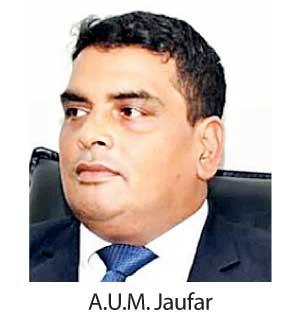
Sri Lanka is one of the most preferred and favourite destinations for Russian tourists, said Ambassador Extraordinary and Plenipotentiary of the Russian Federation to Sri Lanka, Levan S. Dzhagaryan.
Dzhagaryan indicated an estimated 200,000 Russian tourists are likely to visit Sri Lanka in 2024 and air connectivity too would be further strengthened.
He said this to Chamber of Tourism and Industries (CTISL) President A.U.M. Jaufar when he paid a courtesy call on Dzhagaryan.The CTISL representative for the Middle East and Europe, Dr. M. Inamullah and National Organiser Donald Rajapsksha also participated in the discussion.
Sr Lanka has welcomed 181,997 Russian tourists up to December 17 of this year.
Deputy Head of Mission Alexander Dyagilev and Second Secretary Galina Kuklina also took part in this discussion, which also focused on promoting Sri Lankan tourism to the Russian market.Attracting foreign direct investments to the hospitality industry was also discussed,” said Jaufar.
Responding to the proposals made by the CTISL, Dyagilev assured that the embassy would extend whatever assistance under the purview of the mission to coordinate with the relevant Federal Russian authorities.
The World Bank has disbursed the second tranche, amounting to USD 250 million, as part of the USD 500 million Sri Lanka Resilience, Stability and Economic Turnaround (RESET) Development Policy Operation (DPO). This decision comes in recognition of the ongoing satisfactory progress made by the Sri Lankan government in implementing its reform program.
Initiated on June 28, 2023, the RESET DPO, designed to provide crucial budgetary support, represents the first in a series of interventions dedicated to implementing foundational reforms. These reforms aim to reinstate macroeconomic stability, alleviate the impact on vulnerable populations, and foster an inclusive, private sector-driven recovery.
The RESET DPO is a critical initiative aimed at bolstering Sri Lanka’s resilience, stability, and overall economic recovery. The World Bank’s release of the second tranche underscores their confidence in the government’s commitment to the prescribed reforms, which are intended to address economic challenges and pave the way for sustainable development.
The funds are expected to be utilized to support key sectors and initiatives outlined in the RESET program, which includes reforms in areas such as governance, public finance management, and social protection. The financial injection is anticipated to contribute significantly to Sri Lanka’s efforts to strengthen its economic foundations and navigate through challenging global economic conditions.
The World Bank clarified that the release of this financial support is contingent upon the government meeting predefined milestones and completing specific prior actions. The global financial institution emphasized the importance of ongoing economic and structural reforms, citing their critical role not only in stabilizing the economy but also in unlocking its potential for private sector-led growth and transformation.
In a statement, Faris H. Hadad-Zervos, World Bank Country Director for Maldives, Nepal, and Sri Lanka, emphasized the significance of the RESET DPO in supporting foundational reforms. These reforms aim to propel the economy toward full recovery, enhance Sri Lanka’s competitiveness, stimulate growth potential, and facilitate private sector investment for inclusive and resilient growth and job creation.
The second tranche follows the release of the initial USD 250 million in June 2023, contingent upon the successful completion of seven reform prior actions spanning three pillars: economic governance, growth and competitiveness, and the protection of the poor and vulnerable. The World Bank has coordinated its efforts with the IMF, ADB, and other development partners to ensure a cohesive and sequenced approach in supporting Sri Lanka’s economic revitalization.
The Police Special Task Force apprehended a 23-year-old student enrolled in the Faculty of Medicine at Jaffna University, who was allegedly involved in a drug trafficking racket utilizing the courier system.
The arrest took place during a raid conducted in the Kopai police domain on the 19th, where law enforcement authorities detained the student, a resident of Rambewa – Siyambalawewa area. The suspect, currently in his third year of medical studies, is now facing charges related to drug trafficking.
In addition to the arrest, authorities discovered 11 pills in the possession of the student. The Police Special Task Force is investigating the extent of the student’s involvement in the alleged drug trafficking network.
The arrest serves as a stark reminder of the prevalence of illicit activities even within educational institutions and the importance of collaborative efforts between law enforcement and academic authorities to maintain a safe and drug-free environment for students.
Beside these 14,000 houses on the hills, India has already implemented a 60,000-housing scheme for Tamils in Sri Lanka as follows, for which the Sri Lankan government has already signed an MOU with the Indian government the conditions of which are not known to the general public of this country.
India builds 60,000 houses in Sri Lanka
In June 2010, the Government of India announced that it would construct 50,000 houses in Sri Lanka at an outlay of 33 billion LKR. A Pilot Project involving the construction of 1,000 houses was launched in November 2010 and was completed in July 2012. An MOU with the Government of Sri Lanka on the modalities of implementation of the remaining 49,000 houses under the Project was signed on 17 January 2012.
• Pilot Phase: The government of India entrusted an agency to construct 1,000 houses for beneficiaries in the Northern Province. The project was completed in July 2012.
• Second Phase: The second phase launched on the birth anniversary of Mahatma Gandhi on 2 October 2012, which envisaged the construction of 45,000 houses in the Northern and Eastern Provinces was completed in December 2018.
• An innovative owner-driven model was adopted to implement the second phase, wherein the Government of India arranged technical support and financial assistance for the owner-beneficiaries to undertake the construction/repair of their houses themselves.
• Financial assistance of LKR 550,000 per beneficiary (LKR 250,000 in case of repair cases) was released in stages and transferred directly to the bank accounts of the beneficiaries by the High Commission of India. (Where?)
• Third Phase: The third phase of the Indian Housing Project involves the construction of 4,000 houses for estate workers in the Central and Uva Provinces through an innovative community-driven approach. Letter of Exchange with the Government of Sri Lanka for this phase was signed in April 2016 and work started in October 2016.
• In the third phase considering the difficulties in the terrain and accessibility of materials and other logistics LKR 950,000 is disbursed per beneficiary.
• As on date close to 2300 houses are complete in the third phase and the construction of the remaining houses is currently underway.
• Fourth Phase: During his visit to Sri Lanka on 12 May 2017, Prime Minister of India Shri Narendra Modi announced an additional 10,000 houses for the estate workers, and the agreement was formalized in August 2018. This entails an additional commitment of LKR 11 billion. Preparatory work for these additional houses is currently underway and the construction of these houses is expected to start soon. This makes the total number of houses being built in the plantation areas 14,000.
• As of 31 December 2019, more than a total of LKR 31 billion has been?
My Comments on this serious and important news item.
I welcome the construction of such a large number of houses for any citizen of this country by any government. But I don’t agree with this selective preference given only to Tamils of this country as it is bound to create a special kind of attachment and allegiance to India of a section of citizens of a particular ethnic group, that is Tamils, an imminent threat to the independence and sovereignty of this country.
The only way to overcome this imminent disaster.
First of all, we must thank the NBOR for releasing this important information for the information of the general public so that firstly, there will be increased public awareness and secondly, they will take serious notice of this imminent danger and open their eyes to take precautionary action and thirdly, they will corporate with the authorities to mitigate these disasters first, in their own interest and second, in the broader interest of the country.
If immediate action is not taken to arrest this catastrophe, before long, the entire 13,000 square kilometers of land spread over in Badulla, Nuwara-Eliya, Kandy, Matale, Ratnapura, Kegalle, Kalutara, Galle, Matara, and Hambantota- comprising 1/5th of the area of this Island as they have estimated, will be converted to an area unsuitable for human settlements. Considering the ever-increasing population with the land extent remaining constant, the Sri Lankan society will be faced with a major problem of finding sufficient space for people, increasing in millions annually to live in the short run.
Therefore, the crying need firstly, to take short-term measures to arrest this calamity. Secondly, to find out the causes that have brought about this situation and finally to immediately find a permanent workable solution to stop this manmade disaster.
The problems one can visualize in the long run can become far more serious and can even go beyond our imagination for the following reasons resulting in the total disappearance of the 2566-year-old Sinhala Buddhist civilization from the face of this earth as Tamils can go to India and Muslim to countries from where they have come. But where are we going? We have no place on this earth other than this tiny island. The causes for what we are experiencing today in these regions of this type of landslides are a direct legacy we have inherited from 103 years of British colonial devastations from done for 133 years from1815 to 1948 and the 1.2 million Indian labour they left behind when they left for their home. The actual problem at stake is much wider and deeper than the NBOR report has indicated. What we are facing today is the result of cumulative causes that have been in operation for a long time on the hillsides and are attributed to many factors other than those mentioned in para 3 of the above report. Among them the most important reason was the large-scale deforestation for Coffee and Tea on these hills, running into about 1.3 million acres of never touched before as they were reserved crown forests.
The onslaught on this forest began with the opening up of these lands for Coffee. The first commercial coffee plantation was started by George Bird, in Singhapitiya, Gampola in 1824. The same year, Edward Barnes, who became Governor of Ceylon in 1824, established another plantation in Gannoruwa in 1825 (now a part of the Royal Botanical Gardens, Peradeniya). This was followed by Tea after the Coffee blight in 1869. The first tea plantation estate in Sri Lanka (Ceylon) was started in 1867 by Scotsman James Taylor in Loolekandura, in the Kandy district near Hanguranketha. Thereafter Tea cultivation spread all over the hill country in no time. This resulted in the deforestation of the entire hill country within a few years. With the expansion of the Tea industry nearly 1.3 million acres of prime jungle that remained as Thahanchi kele (protected forests) by Royal decree from the inception of Civilization in this country were removed to give way for Tea bushes sprawling all over the hill country.
This large-scale deforestation, followed by setting fire to the forests, uprooting and stumping the felled trees, digging for planting tea and earth cutting for drains, constructions of buildings, factories and thousands of line rooms for nearly 1.2 million indentured south Indian slave labour brought by the British to work on these newly opened up land and their discriminate cuttings and digging around the line rooms for cultivations followed by a massive network of roads and a Railway line across the country’s hilly terrain up to Badulla. These entire 1.3 million acres covered with the prime forest over the whole hill country that remained undisturbed for millennia got directly exposed to heavy rain and elements of weather got eroded and degraded and the streams dried up. The inner layers are unable to withstand this sudden weakening of the binding effect of the decaying root system and opening up of underground cleavages due to heavy exposure on the surface coupled with indiscriminate land use disturbing the underlying structural harmony of the whole hill country followed by heavy rain were the main causes of these earth slips As the prime forest was removed the earth got dried up, streams dried up underground water deposits vanished fauna and flora disappeared. In fact, it is the aftermaths of all these destructions that we see as landslides and earth slips all over the hill country,
Now it reminds me of the famous Sinhala folk ‘tale of As if the man fallen from the tree was also attacked by the Bull” adding to all damages done by the white people to this Heartland of Mother Lanka for 133 years from 1815 to 1948, today our own government elected by us has started to destroy it completely beyond recovery by aiding and abetting the Indian Government sponsored settlement and housing program followed by large scale building program that churn up the little physical stability left behind by the British on these hills by a massive housing and settlement building program including large scale infrastructure development projects with Indian and international funding all over the hill country with no regard whatsoever to the massive and irreversible damages already caused to the Physical stability of the Geographical Heartland of this country.
Way back in 199I, I declared this geographical area as HADABIMA of Sri Lanka since it functions as the Heart of the body of Sri Lanka. Thus, not only functionally but even analogically it resembles a heart when you turn the physiographic map of the central hill country 15 degrees clockwise with two outliers, the Rakwana hills on the right-hand side and the Dumbara hills on the left side with the central massif at the center resembling heart flanked by two lungs on either side. The peculiar radial drainage pattern of 103 rivers has their sources on these hills that flow in all directions providing the water to sustain all the water to keep the entire life system in the country guaranteeing the survival of the civilization of this Island nation.
Thus, its physical stability determines and dictates the survival of the entire life system and the civilization of this Island nation. Therefore, the need to protect its physical stability by protecting its forest cover, the land, and the river system without disturbing its critical physical stability is the main and the only watershed that decides the survival of life on this Island. When the heart stops the man dies. Similarly, the day physical stability of the central hills is not there the curtain will fall on the entire life system and the civilization of this Island. It is in this perspective one has to look at the need to protect the physical stability of these central hills.
Removing the forest cover on these hills will first make these rivers dry. All 103 main rivers in this Island have their sources on these hills. Continuous landslides and deforestation followed by land degradation and bad land use practices will soon lead to the drying up of all these rivers. Since these rivers form the life arteries that provide the water needed for the entire life system in the down-streams area in the lowland surrounding the central hill country, their drying up will lead to the extinction of life in the Island and inevitably thereafter human civilization in the country will vanish in the long run, in the lowlands around the entire Island together with the hill country.
The only way to avoid this disaster is the protect of the physical stability of the central highlands, the Geographical heartland, and the HADABIMA” of Sri Lanka just like you protect your own heart. Because as much as you die if your heart stops, the same way Sri Lanka’s entire life system and civilization will also come to an end if the physical stability of the central highlands is lost.
The first step in this mission is to declare all land above 5000 ft as strictly protected and banned area for any human intervention. Second to restore its original position and maintain it regularly.
Unfortunately, none of the governments that came to power after the so-called Independence has taken any step to arrest this devastation done to this country by the British for 133 years and to restore the status quo, that was there before 1815 as a heritage coming down from the inception of history. Instead, they also have continued to accelerate the destruction done by the invaders by cruelly stabbing the heart of the nation to death, for narrow political gains.
Even the Kandyan Peasantry Commission set up in 1949 did not look at this critical problem. I am asking the present-day government as to why it keeps deaf, blind, and dumb. Why don’t you understand the gravity of this disaster? Why can’t the NBRO who impose strict conditions on innocent native villagers imposing all unnecessary conditions when they make an application to put up a wattle and doab hut on their ancestral land, take action against this wanton national crime committed by the government under pressure from the Indian government by constructing 60,000 new houses on hill slope even over 60 degrees slope on land going up to almost 8000 ft MSL. In my opinion everybody including the Government and all government department are responsible for this crime of erasing a great nation in the world from the surface of this earth by keeping deaf, dumb and blind on this issue just to woo the votes of a band of Indian cooly labour left behind by the British high and dry, who have no love for this country.
As none of the post-independent government or any responsible citizen had opened their eyes on this subject and done their duty by a great nation who had defended and protected their motherland for 443 years (1505-1948) by paying with their lives. Therefore, I am making the following proposal on their behalf to arrest this death march and restore normalcy in the Central Hill country restoring its physical stability for the Sinhala nation to protect this heritage that comes down from the sacrifices of their brave forefathers.
To avoid this imminent disaster, I propose to the government that it should take the following steps
1 Declare all forests above 5000 ft above MSL as strictly reserved heritage forests of the country, as it had been done throughout history leaving Nuwara Eliya Bandarawela, Hakgala Botanical Garden, Ambewela farm, and the Horton Plain as tourist attractions. The road network all over the hill country must be maintained for tourist’ purposes.
2. Evacuate all settlements in the region between 3500 ft and 5000 ft msl and settle them at a lower contour that is between 1000-3500 leaving only the tea factories and allied offices to remain within the zone 3500 -5000. These settlements also will provide the labour required for the tea plantations between 3500-5000 ft msl.
The large-scale tea plantations between 3500-5000 should be managed by JEDB and SLPC, USAWASAMA, or big native private Companies. None should be given to foreigners.
3. Relocate all displaced plantation workers, who are willing to abide by the laws of the land in the area between 1000-35000 ft lands on 2 ½ acre farm lots together with landless Kandyan peasants in the adjoining villages. Here priority should be given to landless Kandyan Peasants, as they were the original owners of these lands. These settlements should be developed as mixed farm lots of the HADABIMMA model giving rise to a unique settlement model. Land allocation should be done by drawing lots to avoid discrimination. That will also help social integration between the native Sinhalese and estate Tamil labour. These farm lots will be HADABIMA model mixed farms with animal husbandry and these villages right around the hill country will also provide the labour for the 3500-6000 plantations in the neighboring estates. This settlement belt right around the central hills will develop a unique settlement model with a Kandyan forestry garden type adapted to suit the present-day socio-economic needs.
The present estate labour should cease calling themselves Naam 200 and they are Indiana Tamils. They all should accept the historical fact that this is the land of the Sinhala nation as it has been for the past 2600 years. They also accepted the conditions in the Nehru-Kotalawala Pact of 1953 and ceased to be called Indian Tamils any longer. No Naam 200. No Malahayaha as they do now. Those who insist they want to retain this nomenclature and the Indian identity should go back to India. If they want to be identified in those terms then they should get repatriated as we cannot have Indian citizens within our territory. But if they want to, they can observe their religion and customs in private. Those who want to integrate they can do that. Those who refuse should go back to India or ask their colonial masters to provide land and citizenship in the UK. In the event they refuse to fall in line, with this naturalization, have no alternative but to go back either to India or the other legitimate motherland Britain as the UK is legally bound to take them back as they were British citizens at the time of their leaving this country in 1948.
Herewith I propose a pragmatic action plan to see an end to all these problems mentioned in this note, once and for all,
This Action plan if implemented will find a permanent solution for the following national problems.
1 First and foremost of them, restoring the physical stability of the HADABIMA (The central hill country) of Sri Lanka will guarantee the survival of the entire life system in this country and will protect the continuity of the civilization of this country that had been there from the dawn of history until the Sun and the Moon shall last.
2 It will solve the problem of landlessness among the Kandyan peasants, highlighted by the KPC Report 1951 but not touched up to date.
3. Thereby, partly rectify the historical injustices inflicted upon the Kandyan Sinhala patriots, the sons of the soil, whose ancestors were annihilated in tens of thousands in battle and hunger in 1817-1818 Uva Rebellion and 1848 Matale rebellions/Freedom struggles against the British colonial invaders, under orders of Brownrigg and Torrington the white murderers.
4 Solve the landlessness, unemployment problems, and other socio-economic problems of the Estate labour in the present plantation sector by converting them to respectable full native citizen status of this country.
5. It will also stop the exploitation of the estate labour by the pseudo-Indian labour leaders within the estate as feudal lords did in medieval Europe.
6. This will end the 224-year-old (1799-2023) ethnic animosity created between the native Sinhalese and these Malabar Tamils, first, planted by the Cleghorn report 1799 and second, by the Wesleyan Methodist Mission that met in Jan 1819 in Galle whose most important resolution, as they said was the division of Ceylon into two districts, to be designated as the Sinhalese and Tamil districts” to destroy the native Sinhalese. They also imported Malabar Tamils, using their divide and rule policy and later used by the British as sepoys in their struggles against the native Sinhalese in the freedom Struggles of 1817-1818 Uva Wellassa and the 1848 Matale rebellion and thereafter exploited them to enrich the British and Indian Banks up to date by the British by engaging these as cheap labour working under trying conditions.
And since the British left in1948, leaving the Indian labour high and dry as a band of stateless destitute exploited by the feudal minded Estate Tamil labour leaders and communal Tamil politicians led by Thondaman and his heirs up to date and also by selfish native Sinhala political leaders who woo them for their vote at every election, (even though they never get it) and finally, using them as fodder by Indian Mandarins and politicians, partly in pursuance of their expansionist agenda and partly, to meet domestic politics exigencies of winning the 39 seats in Tamilnadu.
7.The implementation of this plan will also see the end of Tamil communal politics in the central hill country of this country.
8 With the completion of this humanitarian settlement program Sri Lanka will be relieved once and for all of the presence of the headache of an anti-Sinhala anti-Buddhist pro-Indian enclave consisting of 1.2 million band of Malabar Tamils in the Heartland of this Sinhala Buddhist Kingdom that was there for the last 2600 years and instead we will be blessed with a band of naturalized native citizens who love this as their own motherland, even better than the original Sinhalese just like the naturalized and integrated south Indians who came to this country in the medieval times, presently living in the South Western quarter of the country.
With the completion of this project, all the following institutions should be closed down.
1. Ministry of Hill Country New Villages, Infrastructure and Community Development
2. The Ministry of State Infrastructure a development
3 New Villages Development Authority for Plantation Region
and all other agencies with direct foreign intervention and funds to this sector based on ethnicity
The practice of creating separate ministries and Institutions and appointing these plantation sector Tamil politicians to high posts, such as Ministers and Governors, just to woo the estate sector Tamil votes should be stopped forthwith.
This is the type of houses built with Indian assistance on the central hills indiscriminately without any regard for the physical stability of the Central hill contrast time.
It is said that already 60,000 houses have been built and another 40 000 are to be built very soon.
Indian built Housing schemes in other parts of the country outside the hill country.
The Pathfinder Foundation has formed a Study Group of Experts to develop a blueprint and framework aimed at doubling Sri Lanka’s economic growth rate through accelerated economic integration and infrastructural connectivity with India. The framework document is expected to be formally launched in March 2024. Most economic forecasts place Sri Lanka on an average growth trajectory of 3% per annum for the next decade. Such an anaemic growth rate will not help resolve Sri Lanka’s daunting social and economic challenges by any stretch of the imagination. Sri Lanka needs to think big and shift paradigms if the country is to find a way out of a seemingly hopeless predicament. As growth in the rest of the world including China continues to slowdown, India is expected to grow at above 6% per annum and will remain one of the best-performing economies in the world for the foreseeable future.While foreign investment into many regions is falling, investors are flocking to India due to its large market and emerging middle class. Through an accelerated economic integration and physical connectivity strategy with India, Sri Lanka could take advantage of this momentum and easily double its economic growth to 6% per annum. India is already the largest source market for Sri Lankan tourism.
For example, at the end of the Second World War, the Netherlands seized the opportunity to develop its air, sea, rail, road, and energy sectors to become Europe’s distribution centre. Today, Rotterdam is the largest port in Europe, and Amsterdam is a principal global aviation hub. In fact, Singapore, too, used the Netherlands as a model for its own planning during its early stages of development. As windows of opportunity open and close quickly, it is essential for Sri Lanka to rapidly move towards becoming the principal gateway to South Asia, the Middle East, the Far East, and beyond before circumstances evolve and Sri Lanka is left behind.
Sri Lanka’s modern historical landscape has been littered with many missed opportunities. During the 1970s, in the heyday of US and European global expansion, Sri Lanka chose to nationalise Western multinationals operating in the country and as a result lost out on potential foreign investment opportunities to East Asia. Subsequently, President J.R. Jayewardene opened the economy and worked with the West and Japan to attract funding and investment for large-scale projects such as the Accelerated Mahaweli programme, port development, export-processing zones, and other infrastructure projects. Unfortunately Sri Lanka’s inability to grasp and manage the realpolitik of the Cold War period especially in terms of the Indian relationship, ultimately contributed to an intractable war that lasted nearly thirty years. In the 1980s when Japanese investors started to look abroad to relocate their industries for competitiveness, Sri Lanka was very high on the shortlist. However, despite the excellent bilateral relationship between the two countries, due to persistent civil unrest during that period, in Sri Lanka, Japanese industries chose to relocate to Malaysia, Thailand, and other East Asian countries instead. In many ways, Sri Lanka also missed the opportunities presented during the early stages of China’s economic rise. Today, China is an important investment partner for Sri Lanka, although geopolitical realities will frame how thisrelationship can be managed.
India’s dramatic transformation into a fast-growing global economic powerhouse presents Sri Lanka with yet another chance to get the country onto a fast economic growth trajectory that will integrate it with the global economy on a competitive footing. The Pathfinder Foundation Study Group blueprint and framework will conceptually present the key requirements for infrastructure connectivity between Sri Lanka and India including land, rail, ports/shipping, airports/airlines, electricity, energy/oil, telecommunications, and digital infrastructure. It will also identify other requirements that would facilitate speedy economic integration.
The Study Group will delineate an accelerated programme to achieve physical connectivity between India and Sri Lanka, while ensuring that Sri Lanka’s national security, territorial integrity, sovereignty, and unique cultural identity are safeguarded. It will also advocate an ambitious programme like the Accelerated Mahaweli programme that will seek to mobilise funding on a global level from bilateral, multilateral and international private-sector sources. There is no doubt that this is a very auspicious time for such an initiative and international support and resources will be available, Sri Lanka must have the political will to seize this rare advantage that would put Sri Lanka on track. Besides the obvious medium and long-term advantages this program will have, there will also be many short-term spin-off benefits to the local economy as well. These will help create employment and opportunities in sectors such as construction.
Once this blueprint is complete, Pathfinder will present it for discussion in Sri Lanka and internationally. Earlier this year, the Pathfinder Foundation launched a report entitled ‘Medium and Long-term Strategy for Indo-Japanese Collaboration to Support the Economic Transformation of Sri Lanka’, which was launched in both Colombo and New Delhi.
This is a PATHFINDER ECONOMIC ALERT of the Pathfinder Foundation can read www.pathfinderfoundation.org. Readers’ comments are welcome
Murugan is currently lodged in the special camp for foreigners in Tiruchy. He had applied for permission to travel abroad to be with his daughter in UK.
Published: 19th December 2023 10:28 AM | Last Updated: 19th December 2023 10:28 AM | A+A A-
By Express News Service
CHENNAI: The centre has told Madras High Court it cannot deport Murugan, one of those convicted for assassinating former Prime Minister Rajiv Gandhi, to United Kingdom, as per his request, but he can be repatriated to his home country Sri Lanka provided the island nation gives its nod.
The Foreigners Regional Registration Officer (FRRO) of the Ministry of External Affairs (MEA), on Monday, made the submission before a division bench of Justices D Krishnakumar and P Dhanapal when a petition filed by Murugan, who was released last year, came up for hearing.
Additional Solicitor General (ASG) AR L Sundaresan, representing the FRRO, said that Murugan seeks issuance of travel documents to exit India and go to UK but such a permission or exit order cannot be issued by FRRO. The FRRO has written to the MEA, which has forwarded the papers to Sri Lankan High Commission, the ASG added.
Only if the Sri Lankan High Commission issues a passport or travel documents to the petitioner, can FRRO proceed further and issue an exit order for the petitioner to leave for his home country,” the ASG said. He mentioned that the exit order cannot be given to any other country.
Murugan is currently lodged in the special camp for foreigners in Tiruchy. He had applied for permission to travel abroad to be with his daughter in UK. The bench disposed of the petition with a direction to the state government to provide security for Murugan whenever he visits Chennai to complete formalities for issuance of a passport.
Colombo, Dec 19 (Daily Mirror) – Archbishop of Colombo Cardinal Malcolm Ranjith today said he did inform former President Gotabaya Rajapaksa not to appoint Ali Sabry as the Minister of Justice in his cabinet.
I did inform former President Gotabaya Rajapaksa not to appoint Ali Sabry as the Minister of Justice in his cabinet. I did this after a Buddhist monk cautioned me about the move by the former President to appoint Sabry as the Justice Minister,” Cardinal Ranjith told a press conference.
We were disturbed about the appointment initially as we thought that the Easter Sunday attacks were done by a certain religious group which could influence Sabry. However we changed our stance when it was found out that there is another conspiracy behind the attack,” the Cardinal added.
My trust on Gotabaya Rajapaksa was lost when he appointed a subcommittee to relook at the report of the presidential commission which probed Easter Sunday attacks,” he also said.
Cardinal said the church is not prepared to meet incumbent President Ranil Wickremesinghe as the latter had told Indian journalists. We want the government to carry out a probe on the matters revealed by the Channel 4 and the presidential commission, to involve the officers who carried out the initial probe on Easter Sunday attacks on the fresh probes. We also want any future probe done under international monitors,” he also said.
Referring to celebration of Christmas, the Cardinal urged all Catholics to give a meal to the needy. I am going to request all Catholic Churches in the Archdiocese to give a meal to the poor. I am also going to give a meal to the poor and spend Christmas with them,” he said in this regard.
Being part of the diaspora does not make someone an extremist or anti-Sri Lankan, says Senior Advisor to the President on National Security and Chief of Staff, Sagala Ratnayaka.
Speaking on the negative perception associated with the term diaspora” in Sri Lanka, Ratnayake explained that any Sri Lankan living in another country, regardless of ethnicity or religion, is part of the diaspora.
Ratnayake acknowledged historical events in Sri Lanka that have created distance between the country and its people, especially those living abroad. He highlighted the challenges faced by those in the diaspora who want to contribute to the country’s development but encounter bureaucratic obstacles.
Addressing the International Migrant Day at the President’s Office on Monday (Dec.18), Ratnayake emphasized the importance of engaging the diaspora and creating an environment that encourages their return and investment.
During the event, the Chief of Presidential Staff inaugurated the official website, https://oosla.lk/ for the Office of Overseas Sri Lankan Affairs.
The keynote address was delivered by Prof. Lakshman Samaranayake. In recognition of the exemplary services rendered by the Office of Sri Lankan Affairs Abroad, the Chief of Presidential Staff, along with Minister of Foreign Affairs Ali Sabry, presented Prof. Samaranayake with a commemorative memento as a token of appreciation.
Ratnayaka further said that the establishment of the Office for Overseas Sri Lankan Affairs (OOSLA) aligns with the broader economic reform process in Sri Lanka.
While emphasizing the need for transparency, the Chief of Presidential Staff underscored the importance of offering a level playing field and attractiveness to make Sri Lanka an appealing place for investment opportunities, attracting Sri Lankans living abroad to invest in the country.
The concept behind OOSLA was to create an overarching office that engages with the entire Sri Lankan diaspora. The aim is to assist Sri Lankans living abroad with issues like dual citizenship, passport renewals and obtaining information about their relations, with the broader goal of bringing together all Sri Lankans to contribute to the country’s development.
Ratnayaka acknowledged the challenges faced by Sri Lanka, including economic difficulties, and expressed optimism about the future, anticipating rapid growth by the end of 2024 or early 2025. He emphasized the need for collective effort and clear communication to ensure citizens understand the government’s commitment to improving their lives.
Meanwhile, Minister of Foreign Affairs, Ali Sabry, addressing the gathering, emphasized the significance of International Migrants Day, highlighting the challenges and opportunities associated with migration. The Minister underscored the need for Sri Lanka to proactively engage with its diaspora, including both permanent migrants and temporary workers abroad.
The Foreign Minister acknowledged Sri Lanka’s historical ties with migration, noting the shift from inward migration to the current trend of outward migration. He emphasized the challenges faced by those who have migrated and expressed the importance of creating conditions that encourage them to return to their homeland.
Minister Sabry stressed the need to recognize the contributions of Sri Lankan migrants, both permanent residents and temporary workers. He highlighted the importance of providing them with respect, dignity, and a sense of belonging, in line with the principles outlined in the country’s constitution.
He discussed the establishment of the Office of Overseas Sri Lankans (OOSLA) as a significant step towards addressing the concerns and needs of the diaspora.
Minister Sabry announced the approval of a new law establishing a Truth and Reconciliation Commission with significant powers, including the ability to provide reparations, locate missing persons, and initiate prosecutions. He sees this as a positive step towards creating an environment conducive for fair living in the country.
The lawmaker highlighted efforts to modernize services for expatriates, mentioning the aim to make all services, including immigration-related processes, accessible online. This move is intended to reduce bureaucratic hurdles and facilitate smoother interactions for Sri Lankans living abroad.
Addressing the gathering Director General of the OOSLA, V. Krishnamurthy, highlighted that in accordance with the vision of President Ranil Wickremesinghe, the office commenced its operations in January 2023. He emphasized that December 18 holds particular significance as it marks the opportune day to introduce the institution to the global Sri Lankan community.
Krishnamurthy further noted that the diaspora, amounting to approximately 3 million in number, Sri Lankans who have relocated abroad for diverse reasons, has significantly influenced and contributed to the country’s economy. This acknowledgment underscores the profound impact and positive role played by this expatriate community during the preceding period.
The event garnered participation from a distinguished assembly, including Ambassadors, High Commissioners, and Secretaries of Ministries representing foreign countries. Additionally, a substantial number of Sri Lankans residing abroad engaged in the proceedings through online technology.
Pastor Jerome Fernando, who currently remains in remand custody over his controversial remarks on several religions, has been abusing the criminal justice system in the country by filing various cases, President’s Counsel Sanjeeva Jayawardena alleged while speaking in court while appearing on behalf of a group of religious leaders.
The President’s Counsel stated this when a petition filed by Pastor Jerome Fernando, seeking a ruling to invalidate the order issued by Colombo Fort Magistrate under the United Nations International Covenant on Civil and Political Rights (ICCPR) to remand him in custody, was taken up before the Court of Appeal today (19).
The relevant petition was called before the Appeals Court Judge D.N. Samarakoon for the presenting of written submissions.
The President’s Counsel mentioned that the Pastor had initially filed a Fundamental Rights petition before the court, seeking an order preventing his arrest while naming the Inspector-General of Police (IGP), the DIG in charge of the CID, the CID director and the Officer-in-Charge (OIC) of the cybercrimes unit of the CID as the respondents of the petition.
He alleged that Fernando, who submitted another writ petition before the Court of Appeal regarding the same matter, withdrew the petition when the court was ready to consider it, and then submitted another petition related to the same matter.
The President’s Counsel accused the petitioner of trying to circumvent the law by submitting petitions to various courts regarding the same matter, while also accused him of abusing the criminal justice process in the country.
Furthermore, he mentioned that Pastor Jerome has not been given any special privilege before the law to act this way.
The Attorney General had raised preliminary objections against Pastor Jerome’s petition yesterday (19).
However, the Court of Appeal announced that the decision pertaining to the relevant preliminary objections will be delivered on Wednesday (Dec. 20).
Nine vehicles worth Rs. 68 million owned by drug dealers have been taken into custody by the Illegal Assets Investigation Division of the Police during a 24-hour operation.
Speaking to the media, Acting Inspector-General of Police (IGP) Deshabandu Tennakoon vowed that all assets belonging to criminals, which they have acquired using ill-gotten money, would be confiscated.
Inspecting the impounded vehicles at the Illegal Assets Investigation Division in Narahenpita, the Acting Police Chief also vowed to apprehend the criminals who have fled the country to evade arrest. He emphasized that stringent measures would be taken to prevent such escape attempts.
Among the seized vehicles are two vans, three cars, one jeep, one motorcycle, and two tipper trucks.
Sri Lanka Police on Sunday (Dec.17) launched a special island-wide operation titled ‘Yukthiya’ (Justice) to crack down on drug peddling and organized crimes in the country.
Thus far, more than 4,000 arrests have been made during these special drug busts and large consignments of narcotics including heroin, ‘Ice’ and cannabis were also seized.
Under the shadow of Mahapola, new opportunities have arisen to bring together education and knowledge.- Prime Minister
The Prime Minister Dinesh Gunawardena said that the Mahapola Scholarship Scheme was able to make a revolutionary impact on education and new opportunities have arisen to bring together education and knowledge under the shade of Mahapola. He said this while marking the last day of the ‘Mahapola’ Educational and Trade Fair which was held after a decade at Ja-Ela Municipal Stadium on 17.12.2023.
Speaking on this occasion the Prime Minister stated that –
Mahapola which was revived after a decade is a special program that changed the history of Mother Lanka. This program which flows like Mahaweli River, expanded in various ways and travelled all over the country making various revolutions consequent to the initiative taken by the late Minister. Lalith Athulathmudali.
I agreed as a member of parliament who was in Parliament together with Mr. Lalith Athulathmudali. that he added something new to the history of parliament as an excellent orator at all times. That is why we respect him even today. As a noble democrat, he bequeathed to our parliamentary democracy a way to discuss together with his opposite ideologies. Moreover Mahapola he initiated creatively for the betterment of our future generation.
Every mother and father thinks about the future of a child. It was pointed out that the Mahapola scholarship given to the children of a large population in our countryside and cities can create such an effect by solving the big issues that children had to face in the future.
The Employee’s Provident Fund which is available in Sri Lanka and Asia has become one of the largest banks for employees. At the beginning, no one thought that such a strong bank would emerge from it. Even Mr. Lalith Athulathmudali did not think that it would be possible to endow such a huge revolution in education.
The children who can build this country produced from Mahapola are working in various institutions of our country and internationally even today. The implementation of the Mahapola program is for the growing generation of our country. When Mahapola was started, there were few universities as you could count on your fingers. Today, there are three to four times more state universities in the country. There are more than twenty private universities too in this country.
Mahapola is a hub that transforms new information technology and science to overcome challenges. A new message has started to be sent to the country that education and knowledge can be combined under the shadow of Mahapola. This program of Mahapola says that in order to overcome challenges, we must change the tradition and become the generation of a country which overcomes new challenges.
Minister Nalin Fernando, North West Governor Lakshman Yapa Abeywardena and others joined this event.
I do not believe that anything I say about what is happening in Gaza will affect Israeli or American policy in that conflict. But I want to be on record so that when historians look back on this moral calamity, they will see that some Americans were on the right side of history.
What Israel is doing in Gaza to the Palestinian civilian population – with the support of the Biden administration – is a crime against humanity that serves no meaningful military purpose. As J-Street, an important organization in the Israel lobby, puts it, The scope of the unfolding humanitarian disaster and civilian casualties is nearly unfathomable.”[1]
Let me elaborate.
First, Israel is purposely massacring huge number of civilians, roughly 70 percent of whom are children and women. The claim that Israel is going to great lengths to minimize civilian casualties is belied by statements from high level Israeli officials. For example, the IDF spokesman said on 10 October 2023 that the emphasis is on damage and not on accuracy.” That same day, Defense Minister Yoav Gallant announced: I have lowered all the restraints – we will kill everyone we fight against; we will use every means.”[2]
Moreover, it is clear from the results of the bombing campaign that Israel is indiscriminately killing civilians. Two detailed studies of the IDF’s bombing campaign – both published in Israeli outlets – explain in detail how Israel is murdering huge numbers of civilians. It is worth quoting the titles of the two pieces, which succinctly capture what each has to say:
‘A Mass Assassination Factory’: Inside Israel’s Calculated Bombing of Gaza”[3]
The Israeli Army Has Dropped the Restraint in Gaza, and the Data Shows Unprecedented Killing.”[4]
Similarly, the New York Times published an article in late November 2023 titled: Gaza Civilians, Under Israeli Barrage, Are Being Killed at Historic Pace.”[5] Thus, it is hardly surprising that the UN Secretary General, Antonio Guterres, said that We are witnessing a killing of civilians that is unparalleled and unprecedented in any conflict since” his appointment in January 2017.[6]
Second, Israel is purposely starving the desperate Palestinian population by greatly limiting the amount of food, fuel, cooking gas, medicine, and water that can be brought into Gaza. Moreover, medical care is extremely hard to come by for a population that now includes approximately 50,000 wounded civilians. Not only has Israel greatly limited the supply of fuel into Gaza, which hospitals need to function, but it has targeted hospitals, ambulances, and first aid stations.
Defense Minister Gallant’s comment on 9 October captures Israeli policy: I have ordered a complete siege on the Gaza Strip. There will be no electricity, no food, no fuel, everything is closed. We are fighting human animals, and we are acting accordingly.”[7] Israel has been forced to allow minimal supplies into Gaza, but the amounts are so small that a senior UN official reports that half of Gaza’s population is starving.” He goes on to report that, Nine out of 10 families in some areas are spending ‘a full day and night without any food at all’.”[8]
Third, Israeli leaders talk about Palestinians and what they would like to do in Gaza in shocking terms, especially when you consider that some of these leaders also talk incessantly about the horrors of the Holocaust. Indeed, their rhetoric has led Omar Bartov, a prominent Israeli-born scholar of the Holocaust, to conclude that Israel has genocidal intent.”[9]
Other scholars in Holocaust and genocide studies have offered a similar warning.[10]
To be more specific, it is commonplace for Israeli leaders to refer to Palestinians as human animals, ”human beasts,” and horrible inhuman animals.”[11] And as Israeli President Isaac Herzog makes clear, those leaders are referring to all Palestinians, not just Hamas: In his words, It is an entire nation out there that is responsible.”[12] Unsurprisingly, as the New York Times reports, it is part of normal Israeli discourse to call for Gaza to be flattened,” erased,” or destroyed.”[13] One retired IDF general, who proclaimed that Gaza will become a place where no human being can exist,” also makes the case that severe epidemics in the south of the Gaza Strip will bring victory closer.”[14]
Going even further, a minister in the Israeli government suggested dropping a nuclear weapon on Gaza.[15] These statements are not being made by isolated extremists, but by senior members of Israel’s government.
Of course, there is also much talk of ethnically cleansing Gaza (and the West Bank), in effect, producing another Nakba.[16] To quote Israel’s Agriculture Minister, We are now rolling out the Gaza Nakba.”[17]Perhaps the most shocking evidence of the depths to which Israeli society has sunk is a video of very young children singing a blood-curdling song celebrating Israel’s destruction of Gaza: Within a year we will annihilate everyone, and then we will return to plow our fields.”[18]
Fourth, Israel is not just killing, wounding, and starving huge numbers of Palestinians, it is also systematically destroying their homes as well as critical infrastructure – to include mosques, schools, heritage sites, libraries, key government buildings, and hospitals.[19]
As of 1 December 2023, the IDF had damaged or destroyed almost 100,000 buildings, including entire neighborhoods that have been reduced to rubble.[20] Consequently, a stunning 90 percent of Gaza’s 2.3 million Palestinians have been displaced from their homes.[21] Moreover, Israel is making a concerted effort to destroy Gaza’s cultural heritage; as NPR reports, more than 100 Gaza heritage sites have been damaged or destroyed by Israeli attacks.”[22]
Fifth, Israel is not just terrorizing and killing Palestinians, it is also publicly humiliating many of their men who have been rounded up by the IDF in routine searches. Israeli soldiers strip them down to their underwear, blindfold them, and display them in a public way in their neighborhoods – sitting them down in large groups in the middle of the street, for example, or parading them through the streets – before taking them away in trucks to detention camps. In most cases, the detainees are then released as they are not Hamas fighters.[23]
Sixth, although the Israelis are doing the slaughtering, they could not do it without the Biden administration’s support. Not only was the United States the only country to vote against a recent UN Security Council resolution demanding an immediate ceasefire in Gaza, but it has also been providing Israel with the weaponry necessary to wage this massacre.[24] As one Israeli general (Yitzhak Brick) recently made clear: All of our missiles, the ammunition, the precision-guided bombs, all the airplanes and bombs, it’s all from the U.S. The minute they turn off the tap, you can’t keep fighting. You have no capability.… Everyone understands that we can’t fight this war without the United States. Period.”[25] Remarkably, the Biden administration has sought to expedite sending Israel additional ammunition, by-passing the normal procedures of the Arms Export Control Act.[26]
Seventh, while most of the focus is now on Gaza, it is important not to lose sight of what is simultaneously going on in the West Bank. Israeli settlers, working closely with the IDF, continue to kill innocent Palestinians and steal their land. In an excellent article in the New York Review of Books describing these horrors, David Shulman relates a conversation he had with a settler, which clearly reflects the moral dimension of Israeli behavior toward the Palestinians. What we are doing to these people is actually inhuman,” the settler freely admits, But if you think about it clearly, it all follows inevitably from the fact that God promised this land to the Jews, and only to them.”[27] Along with its assault on Gaza, the Israel government has markedly increased the number of arbitrary arrests in the West Bank. According to Amnesty International, there is considerable evidence that these prisoners have been tortured and subjected to degrading treatment.[28]
As I watch this catastrophe for the Palestinians unfold, I am left with one simple question for Israel’s leaders, their American defenders, and the Biden administration: have you no decency?
Colombo, Dec 18 (Daily Mirror) – Public Security Minister Tiran Alles alleged that certain lawyers who opposed the appointment of Deshabandu Tennakoon as the Acting Inspector General of Police are now appearing on behalf of cases filed by the court against notorious drug traffickers.
The Minister disclosed that these lawyers are earning billions of rupees from such cases.
Earlier, Minister Alles said that he and the Acting IGP are committed to cracking down on narcotic drugs and the underworld, irrespective of certain objections or pressures.
Accordingly, the Police launched a special island-wide operation yesterday. As a result, over 2,000 suspects have been arrested within a 24-hour period, and a substantial quantity of narcotic drugs seized.