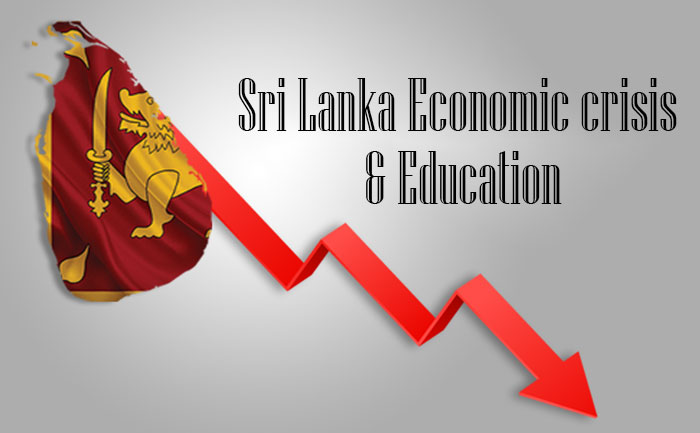
60.5% of households in Sri Lanka reported decrease in monthly income due to crisis

December 29th, 2023

Courtesy NewsIn.Asia

Dec 29 (AdaDerana) – The economic crisis has left a profound impact on household finances, influencing both income and expenditure significantly, a survey conducted by the Department of Census and Statistics (DCS) has found.

The study titled Household Survey on Impact of Economic Crisis – 2023, also found challenges have prompted households to make strategic adjustments and implement coping mechanisms to navigate these trying times. 

Accordingly, a majority, comprising 60.5% of households, have reported a decrease in their total income, while 5.6% experienced an increase, and 33.9% saw no change despite the crisis.

During the income decline, households have employed various coping strategies, with 6.6% turning to secondary jobs or additional income sources. Notably, 73.6% did not adopt specific coping strategies. The economic crisis also led to changes in household expenditure, with 3.6% reporting a decrease, 91.1% indicating an increase, and 5.3% noting no change.

The survey report mentioned that the reasons contributing to decreased monthly expenditure were diverse, with 77.0% aligning expenses with reduced income. Among those reporting increased monthly expenditure, 99.1% cited rising food expenses as a significant factor. A substantial 97.2% of households employed at least one coping strategy to manage their expenditure, showcasing the diverse approaches taken to address financial challenges.

Amid one of the most challenging economic crises in Sri Lanka since gaining independence in 1948, the nation’s struggles began with the Easter Sunday attacks in 2019 and were compounded by the COVID-19 pandemic. 

The government responded with various measures to stabilize the situation. However, the economic downturn had a tangible impact on households, revealing the true extent of the crisis. Sri Lankan families faced numerous challenges in managing daily activities, including income constraints, meeting commitments, and ensuring the well-being of family members. 

Recognizing the importance of understanding household coping mechanisms, the Department of Census and Statistics initiated a comprehensive survey which aims to offer a detailed account of the strategies households employ to navigate economic challenges.

Attached below is the full report:

https://www.scribd.com/embeds/695270051/content

Rural youth breathe fresh life into Sri Lanka

December 29th, 2023

Courtesy ifad.org

©IFAD/Ruvin de Silva

Around the world, young people are bringing their ambition for success to rural communities. Meet two young rural entrepreneurs in Sri Lanka who are making a difference. 

Magical mushrooms 

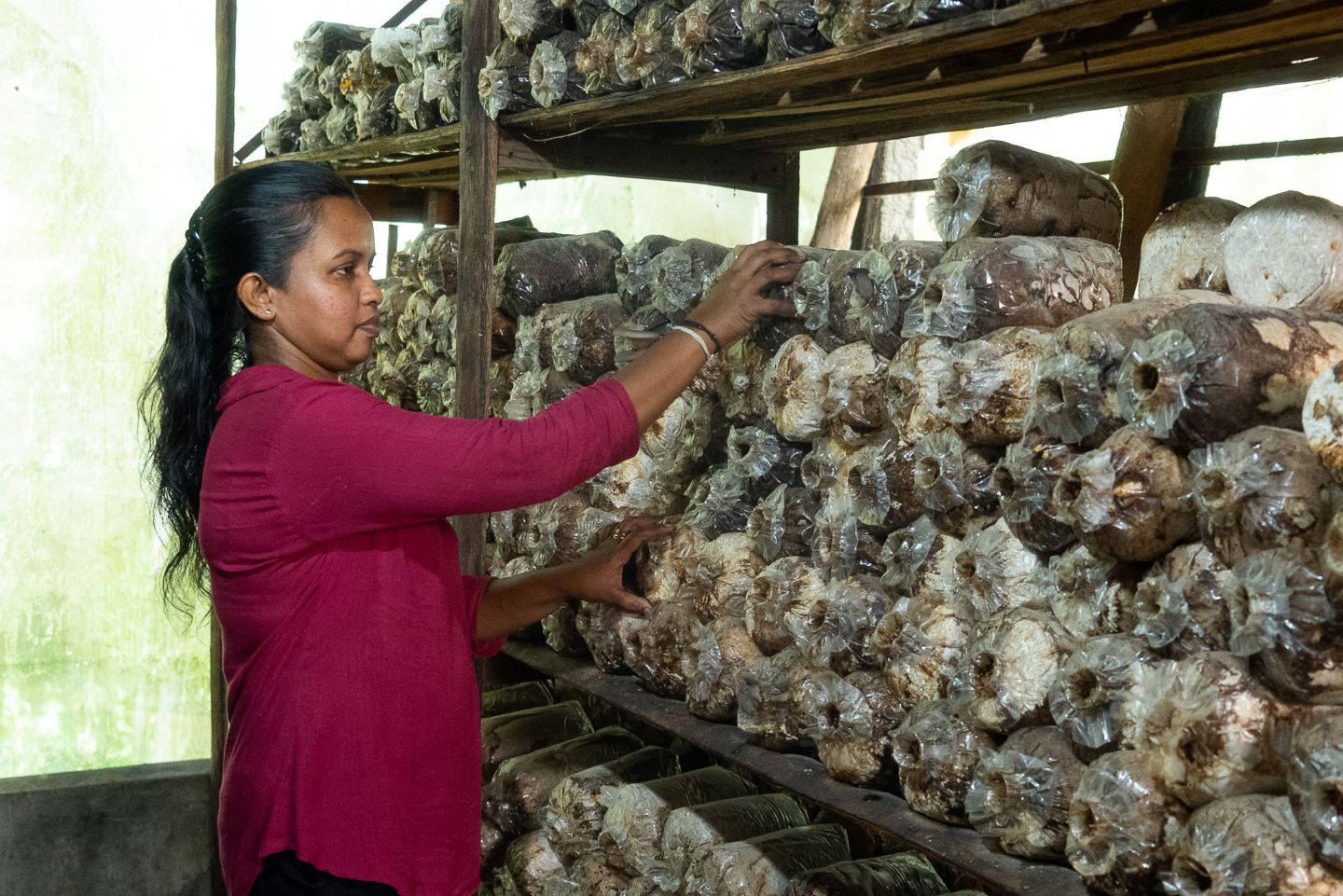
Nadeeshani took over her family business and expanded it. © IFAD/Ruvin de Silva 

When Nadeeshani was a child, she was fascinated by her parents’ mushroom farm, housed in a tiny mud hut. She dreamed of taking over from them and, after completing her schooling, she did. 

I became an entrepreneur because I didn’t want to work for anyone else,” says Nadeeshani. Thanks to a boost from the IFAD-funded STaRR project, she has kept the independence she dearly values. 

STaRR links rural entrepreneurs to training and finance. For example, Nadeeshani obtained loans from the state-owned Regional Development Bank, enabling her to double or sometimes even triple her production. She tapped into distribution chains and expanded her sales from small retail stores to national supermarkets. 

She also grew her range of products. Before, she sold four types of mushrooms, but now she prepares mushroom pickles, crisps and koki, a mushroom-flavoured biscuit. By adding value, she is bringing in higher returns and hopes to buy equipment to produce koki in larger quantities. 

Heavier rains caused by climate change have increased mushroom production, sometimes leaving Nadeeshani with more than she can sell. To prevent wastage, she has invested in a dryer to preserve the mushrooms. 

For Nadeeshani, the lesson is clear. Young women should get more involved in the agriculture business,” she says. There are always people like me around to help them become successful.” 

Her parents and sisters are helping her manage her growing business, and although their life revolves around mushrooms, they still look forward to a plate of delicious fungi, each done a different way.

Drive to succeed 

Thanks to a loan, Supun earns triple the amount he used to make. © IFAD/Ruvin de Silva 

Twenty-five-year-old Supun Gamlath lives with his parents, sisters and a grandmother on their small family farm in southern Sri Lanka. His family has long been involved in agriculture, but the young college graduate wanted to take his career in a different direction, without having to leave his rural home. 

Supun found work painting cars, but it wasn’t until he applied for a loan through STaRR that he became the proud owner of his own garage, where he paints cars and motorcycles, making them good as new.  

Thanks to the loan, he invested in equipment, like a compressor and a polishing machine, which help him provide quality services to his clients and grow his business. 

But it’s the simple things that have enabled Supun’s business to flourish. Nobody likes their vehicle getting wet in the rain,” he says. Now that I have a bigger roof, that doesn’t happen anymore! I get more work and therefore more income.” 

These days, Supun earns up to triple the amount he used to before STaRR – and he has plans to do more. Instead of outsourcing small vehicle repairs, he wants to invest in equipment to do these himself.  

He’s also busy training other young people in his garage, managing his business profile on Facebook and spending his leisure time swimming off Sri Lanka’s famous beaches. And whenever he’s needed, he’s always ready to lend a hand on his parents’ farm. 

Dynamic young people, like Nadeeshani and Supun, are crucial contributors to prosperous rural communities that can sustainably feed the world and keep their families resilient to shocks.

BJP president J.P. Nadda to release commemorative stamp in recognition of Indian-origin Tamils in Sri Lanka

December 29th, 2023

Courtesy The Hindu

The stamp is meant to recognise their contribution in establishing the island nation’s plantation industry and other infrastructure.

In possibly a first-of-its-kind initiative, BJP president J.P. Nadda will be releasing a commemorative stamp in recognition of the toil” of the Indian-origin Tamil community in Sri Lanka in establishing the plantation industry and other infrastructure in that country, 200 years after they first arrived there. The event will be held at the BJP’s headquarters in New Delhi on Saturday with the commemorative stamp to be received by Senthil Thondaman, governor of the Eastern Province of Sri Lanka.

Putting out a statement giving details of the event, BJP Tamil Nadu president K. Annamalai said that Prime Minister Narendra Modi considered Sri Lanka as a civilizational twin for India”. The commemorative postal stamp marking 200 years since the Tamil community of Indian origin arrived in Sri Lanka is a recognition of their toil in establishing the plantation industry and other infrastructure in Sri Lanka after being despatched to Sri Lanka by the British”.

He further said that Mr. Modi has earnestly undertaken several initiatives to ensure the welfare and development of the Indian Origin Tamil community in Sri Lanka” ever since he assumed office in 2014.

He added that the Modi government had sanctioned 14,000 houses in addition to setting up other facilities in areas where the Tamil population resides.

Furthermore, owing to India’s neighbour-first policy, about $4 billion worth of financial aid was extended to Sri Lanka when the country reeled from an unprecedented economic crisis,” he said.

Prime Minister Modi is untiringly delivering support to aid the wellbeing of lakhs of Indian-origin Tamils in the island country and the BJP has been striving to ensure their prosperity,” he said in his statement.

The event also assumes importance in the backdrop of the start of the second Kashi-Tamil Sangamam being held in Varanasi and Prime Minister Narendra Modi’s own trip to Tamil Nadu and Lakshadweep in the new year.

CBSL’s inability to control economy ‘main reason’ for collapse – Minister Wijeyadasa (English)

December 29th, 2023

Ada Derana

Colombo’s consumer price inflation increases to 4% in Dec.

December 29th, 2023

Courtesy Adaderana

Colombo’s consumer price inflation increases to 4% in Dec.

Sri Lanka’s overall rate of inflation measured by Colombo Consumer Price Index (CCPI) on year-on-year basis has increased to 4.0% in December from 3.4% in November.

Meanwhile, food inflation increased to 0.3% in December 2023 from -3.6% in November 2023, the Census & Statistics Department (DCS) said in its latest release.

Meanwhile, the year-on-year inflation of the non-food group dropped to 5.8% in December from 6.8% in November.

For the month of December, the contribution to inflation by food commodities was 0.10%, while the contribution of non-food items was 3.90%. The DCS said this was mainly due to the increases in value change in groups of housing, water, electricity, gas & other fuels, education, clothing & footwear, alcoholic beverages, tobacco & narcotic, recreation & culture, health and miscellaneous goods & services. 

A decrease in value change was reported for the groups of transport, furnishing household equipment and routine household maintenance, restaurants and hotels and health. Further, a very slight price increase was reported in group communication during the month.

The CCPI is an economic indicator constructed to measure inflation which is defined in percentage change in the CCPI over the year. There are two measures of inflation in general use. One measure is the year-on-year base or point-to-point inflation (the percentage change in the CPI during the last 12 months). The other measure is ‘moving average inflation’ (the percentage difference between the average price index of the last 12 months and the average price index of previous 12 months).

Colombo Consumer Price Index – December 2023 by Adaderana Online on Scribdhttps://www.scribd.com/embeds/695526158/content?start_page=1&view_mode=scroll&access_key=key-yNenhGvqTGfKpiFBysQt

IMF agreement must be continued under any government – CBSL Governor

December 29th, 2023

Courtesy Adaderana

Governor of the Central Bank of Sri Lanka (CBSL) Dr. Nandala Weerasinghe has emphasised the importance of the continuity of the Extended Fund Facility (EFF) agreement with the International Monetary Fund (IMF).

Speaking at a special briefing held this afternoon (29 Dec.), Dr. Weerasinghe explained that the EFF programme should continue for the next four years, under any government, in order to get the debt relief and international financial support required.

He warned that unilateral withdrawal from the IMF-EFF agreement will result in severe implications.

Dr. Weerasinghe was addressing a press briefing convened at the Central Bank premises on the Financial Stability Review (FSR) of 2023.

The CBSL recently released its report on FSR for 2023 which highlighted that although it is expected that the existing macro-financial vulnerabilities would dissipate in the period ahead, with the envisaged improvements in the macroeconomic front, continued advancement along the policy reforms agenda envisaged in the IMF-EFF agreement is essential to direct the economy and the financial system into stable grounds. 

In this vein, the report read: 

Any deviation from this path would bring detrimental and irreversible consequences to the financial system and the economy, though moving along this arduous and narrow path is challenging. The instigation and operationalisation of strong and appropriate frameworks that proactively address vulnerabilities and implementation of timely, well sequenced, and consistent policies is also crucial to ensure the stability of the Sri Lankan financial system.

As the economy undergoes a monetary policy easing cycle, the credit cycle is expected to enter an expansionary phase, in which macroprudential concerns could build-up. The Central Bank commits to monitoring these developments closely and implementing necessary policy actions to mitigate systemic risks and ensure financial stability through macroprudential interventions”

Thai PM to travel to Sri Lanka to sign FTA in February

December 29th, 2023

Courtesy Adaderana

Thailand’s Prime Minister Srettha Thavisin is scheduled to travel to Sri Lanka to sign a free trade agreement (FTA) in February 2024 after the successful conclusion of the latest round of negotiations between the two countries, Bangkok Post reported.

Chotima Iemsawasdikul, the Director General of Thai Commerce Department’s Department of Trade Negotiations, has told the media on Thursday (Dec.28) that Sri Lanka hosted the 9th round of trade negotiations from December 18-20. It was attended by Auramon Supthaweethum, the Director General of Thailand’s Department of Business Development and advisor to FTA negotiation team.

Negotiations for the free trade agreement between Sri Lanka and Thailand resumed in November after being put on hold for 4 years consequent to the Covid-19 pandemic and ongoing restructuring of Sri Lanka’s state-owned entities.

Iemsawasdikul stated that the latest round of talks have agreed on the rules on trade, services, investments and economic cooperation.

Citing Iemsawasdikul, Bangkok Post said the Commerce Ministry would submit the results of the negotiations to the Thai Cabinet for approval before PM Thavisin travels to Sri Lanka to ink the agreement in February, on the invitation of President Ranil Wickremesinghe.

Iemsawasdikul told media that Sri Lanka plays a significant role in maritime freight in the Indian Ocean, and it is home to abundant natural resources such as gemstones, graphite, and aquatic animals, adding that many industries in Thailand would benefit from the FTA, including those in the automotive, fashion, gems, metal, electronic items, machinery, rubber gloves, pet food, and corn.

The FTA will also benefit from service firms, including those in finance, insurance, tourism, and research and development.

From January to October 2023, the value of bilateral trade between Thailand and Sri Lanka was worth USD 320.37 million.

Thailand exported goods worth USD 213.49 million, while it imported goods worth USD 106.88 million from Sri Lanka.

‘Yukthiya’ operation: 1,400 more individuals nabbed with drugs

December 29th, 2023

Courtesy Adaderana

During the ongoing ‘Yukthiya’ operation, the security forces personnel have arrested over 1,400 more suspects on suspicion of drug peddling.

As such, a total of 1,467 more drug suspects have been placed under arrest within a 24-hour window ending at 12:30 a.m. today (Dec.29).

According to the Public Security Ministry, detention orders were secured for 56 suspects for further interrogations. Another 51 were sent to rehabilitation centres.

Meanwhile, 164 individuals who were on the list of Island Re-convicted Criminals are also among the recent arrestees.

Further, 460g of heroin, 653g of methamphetamine (‘Ice’), 3.63kg of cannabis, 562 narcotic pills and 103,793 cannabis plants were seized in the anti-drug operation.

Alarm raised as more than 87,000 dengue cases reported in 2023

December 29th, 2023

Courtesy Adaderana

Over 10,000 cases of dengue infections have been recorded in the month of December alone, bringing the total number of infections reported in 2023 to 87,078.

Accordingly, 10,600 novel dengue cases were witnessed within this month alone, with the highest number of infections being recorded from the Colombo, Gampaha and Kalutara districts, as per health officials.

From the 87,078 dengue cases, 39,543 cases were registered in the Western Province.

Accordingly, Gampaha District saw 18,401 dengue cases, while Colombo District was not too far behind, with a total of 16,020 cases. The Kalutara District followed with 5,122 cases in total. Meanwhile, several cases were also observed from the Puttalam and Kandy districts.

It was also reported that three persons, including a university student and a 11-month-old infant died of dengue fever over the past few days.

Meanwhile, a total of 62 MOH areas have been categorized as ‘high-risk’ zones.

Poet, & Astrologer Martin Jayawardena no more.

December 28th, 2023

Garvin Karunaratne, former GA Matara 

I fist met Martin when I was appointed the Government Agent at Matara in March 1971.

A Senior Clerical Officer in the Katcheri, his work was impeccable,

Martin was more a poet. He could turn a stone to gold- detail anything in an amazing manner that evoked a catharsis within seconds in a listener. It was a gift that very few have.

On may an occasion when we trio- Martin, Sumane and I together tried hitivana kavi, the crown went to Martin, followed by Sumane with me straggling far behind. .

Sumane was no other than Sumanapala Dahanayake, the member of parliament for Deniyaya, who within two and a half weeks established Coop Crayon, making crayons that were sold islandwide, the crown of the Divisional Development Councils Programmre of 1970-1977- the last real development programme we had. I remember Martin sang a verse on Coop Crayon too. Sadly that has left my memory.

Martin was gifted with the knack to turn a ordinary scene into a glorious vendetta, and one would be borne away into the clouds.

Sadly I left all of them for studies overseas. Life takes its own course, heedless, and I lost touch with Martin and other officers whom I came to love and whose association I cherished when I once adorned the desk at Matara. That was my decade stint overseas

Back in the saddle in Sri Lanka in the Eighties, I plod on whenever I heard of any of my officers who gave a gleaming touch to my administrative life- Once I heard that Martin lived somewhere in Uyanwatta, Matara and I traced him to a gleaming small abode and then I found him, now more an astrologer.

Thence whenever I came to Sri Lanka, a telephone call and I met Martin several times. He was then an acclaimed poet, an astrologer.

Life nevertheless, takes its own course and we live and depart, make friends, admire and loose touch. Martin however, was no passer bye. He did distinctly contribute to Mother Lanka, greater as a Poet.

May his path in Samsara be happy and bountiful.

Garvin Karunaratne,

former GA Matara 28/12/23

His funeral ceremony is at Jayaratnes Kanatta, 29 th. Dec. eve

ප්‍රීමා සමාගම ජනාධිපතිවරුන් තිදෙනකු අවනත කර ගෙන ලංකාවේ පිටි ඒකාධිකාරය ලබා ගත්තේ මෙහෙමයි

December 28th, 2023

Kaarige Channel Eka | Dharmasri Kariyawasam

ප්‍රීමා පිටි සමාගම සහ ශ්‍රී ලංකා ආණ්ඩුව අතර අත්සන් කරන ලද ගිවිසුම් පිළිබඳ කතාව මෙරට දේශපාලනයේ දූෂිත ස්වභාවය පෙන්වන කැටපතක් වැනි ය. ‘අනික් අතට රජය ව්‍යාපාර කිරීමෙන් ඉවත් විය යුතු ය’ යන ඊනියා මතය අඵියෝගයට ලක් කරන උත්ප්‍රාසාත්මක නාටකයක් වැනි ය. ජේ.ආර්. ජයවර්ධනගේ සිට මහින්ද රාජපක්ෂ දක්වා ආ දූෂිත දේශපාලන ගමනේ ආරම්භක අවස්ථාව පිළිබඳ නිශ්චිත උදාහරණයක් වන මේ සිද්ධිය මෙවර කාරිගෙ චැනල් එකේ වීඩියෝවට තේමා වෙයි.

ගෝටා පැන්නූ බැසිල්ගේ කුමන්ත‍්‍රණය දිලිත් හෙලි කරයි…

December 28th, 2023

උපුටා ගැන්ම ලංකා සී නිව්ස්

රට තුළ ආර්ථික අර්බුදයක් නිර්මාණය කරමින් ගෝඨාභය රාජපක්ෂ මහතා එළවා දැමූයේ බැසිල් රාජපක්ෂ මහතා විසින් ඔහු රටේ ජනාධිපතිවරයා වීමට බව බව මවුබිම ජනතා පක්‍ෂයේ නායක දිලිත් ජයවීර මහතා පවසයි.

එහි ප්‍රතිඵලය ලෙස අවසානයේ රනිල් වික්‍රමසිංහ ජනාධිපතිවී පොදු ජන පෙරමුණ සහ ජාතිකවාදී කඳවුර විනාශයට පත්වුණු බවත් හෙතෙම කියා සිටී.

බැසිල් රාජපක්ෂගේ කුමන්ත්‍රණය හේතුවෙන් අපේක්ෂා භංගත්වයට පත්වූ පොහොට්ටුවේ සාමාජික පිරිසක් අද වන විට අනුර දිසානායක ප්‍රමුඛ ජාතික බණබලවේගය සමග එක්වී සිටින බවත් ඒ මහතා  සඳහන්  කරයි.

ඔහු මෙම අදහස් පල කරන්නේ අන්තර්ජාල නාලිකාවක සාකච්චාවකට එක්වෙමිනි.

5 key takeaways on regional cooperation in South Asia in 2023

December 28th, 2023

CECILE FRUMAN Courtesy WorldBank Blogs

Trucks at the Benapole-Petrapole border between Bangladesh and India.
Trucks at the Benapole-Petrapole border between Bangladesh and India. Photo: Nusrat Nahid Babi, World Bank

Of my travels across South Asia this year, my visit to the living roots bridges in Meghalaya, India, stood out for its uniqueness. The roots of the rubber fig trees—planted on either side of the river— intertwine and are carefully crafted by the Khasi people into natural bridges. The more these bridges are used, and the more pressure applied on them, the sturdier they become. These bridges are symbolic of regional cooperation efforts in #OneSouthAsia, where despite external pressures and strains, cross-border ties are strengthening in many areas. Looking back on 2023, here are 5 key takeaways on regional cooperation in South Asia :

  1. Energy cooperation is moving ahead. This year there were small, but sure steps towards a regional electricity market. India opened doors to the neighboring countries including Bangladesh, Bhutan, and Nepal to buy and sell power in the real time energy market via the India Energy Exchange. This allows countries to trade electricity closer to real time as and when available and required. Nepal is the first South Asian country to participate, where it can sell 44 MW of power in real time. India and Nepal also agreed on a long-term plan to purchase 10,000 MW of power from Nepal in the next 10 years. The momentum of the India-Sri Lanka interconnector—which will link the national grids of India and Sri Lanka—has picked up.  In response to the Government of Sri Lanka, the World Bank will support preparatory and analytical studies for the interconnector. Once operational, the interconnector will open opportunities for market-based trading between India and Sri Lanka as well as the rest of the region. A regional electricity market will increase synergies among clean energy resources, allow the region to tap its immense hydropower potential, especially in Nepal and Bhutan, and ensure low-cost energy access in South Asia. At the World Bank, we estimate that it can lead to a 4.5% reduction of CO2 emissions by 2035, and potentially yield up to $17.4 billion in cumulative economic benefits in 2023-2035.
     
  2. There were many fresh starts in regional trade and connectivity.  The Akhaura -Agartala rail link between India’s northeastern state Tripura and Bangladesh was inaugurated this year, and Bangladesh gave India access to its Chattogram and Mongla ports for transit and cargo vessels, pushing regional connectivity in the Bay of Bengal area. India and Sri Lanka revived their ferry service after 40 years, while India and Nepal renewed the Treaty of Transit,  giving Nepal access to India’s inland waterways along with agreements for new rail links. India and Bhutan also agreed to bolster regional connectivity with a focus on the first-ever rail link between Assam and Bhutan, and on upgrading border post infrastructure. Bangladesh and Bhutan signed a transit agreement enabling Bhutan to use Bangladesh’s roads, waterways, railways, airways, and seaports for its third-country trade. Our Accelerating Transport and Trade Connectivity (ACCESS) program facilitates cross-border trade and connectivity with support to improved and modernized transport, border, and customs infrastructure, digital systems, and processes in the sub-region, with a focus on Bangladesh, Nepal and Bhutan.  During my visit to South Asia’s largest border posts between Bangladesh and India — Benapole-Petrapole post — I saw the impact that delayed border crossings have on trade and, on the upside, the potential to accelerate trade via digitization and modernization of key processes.
     
  3. In the face of crisis, the neighborhood responds. This year I traveled to Sri Lanka a few times, and the conversations about regionalism have been encouraging. Much of the credit goes to the neighborhood’s response to Sri Lanka’s economic crisis and recovery. India provided multi-pronged assistance of about $4 billion, while Bangladesh provided a loan of $200 million. The region’s role in Sri Lanka’s crisis recovery and its continued economic growth has become central as the country looks to renegotiate Free Trade Agreements with the neighborhood and beyond, improve access to regional markets, increase the volume of trade processed in its ports, and boost regional investments.  The idea of neighborhood first” resonated in many instances, and some of these examples of neighborhood collaborations have been also illustrated in our Good Neighbors Series.  
  1. Climate cooperation is imperative. South Asia’s climate vulnerability remains high and even this year, extreme climate events like floods and soaring temperatures continued to hit the region. There is a greater consensus on the need to work together on climate and environmental issues. This year, in partnership with the UK’s Foreign, Commonwealth and Development Office, we launched the Resilient Asia Program, which is a $65 million program over the next eight years to accelerate transformational and collaborative climate action in South Asia, with an initial focus on air pollution management, disaster risk management, thermal cooling, biodiversity conservation in the Sundarbans, and transboundary water cooperation. Given the spatial interdependence of air pollution, we are working with the countries of the Indo-Gangetic Plain to foster collaborative action on air quality management. Our analysis estimates that collaborative approaches cost almost 45% less and will achieve more effective air quality results.
     
  2. There are many new and exciting opportunities for cooperation.  At the World Bank, we have extended our operational approach for regional integration, cooperation and engagement, (RICE) through 2025.  Our work is venturing into new areas of cooperation including higher education and pandemic resilience and response. Among South Asian countries, cooperation in the areas of digital connectivity, digital infrastructure, and cross-border digital payments is moving fast.  We continue to support networks, platforms, and enhanced engagement with our stakeholders and development partners to find ways to synergize and scale our efforts for greater impact and results. With support from our development partners, the UK’s Foreign, Commonwealth and Development Office, and Australia’s Department of Foreign Affairs and  Trade, our portfolio of analytical work, 20 projects and close to $5 billion in financing directly contributes to the World Bank’s vision to end poverty on a livable planet.

As the year closes, there is much to celebrate on the regional cooperation front, but a lot more to accomplish ahead.  In 2024, let’s continue to build bridges that will be resilient and will stand the test of times—a lesson well learnt from nature and its fascinating living roots bridges.

Economic crisis takes its toll on education, DCS survey reveals

December 28th, 2023

Courtesy The Island

Education of about 54.9 percent of Sri Lankan students has been affected by the economic crisis since March 2022, the latest Household Survey on Impact of Economic Crisis – 2023 by the Department of Census and Statistics reveals.

Out of the respondents surveyed 93.5 percent have adopted at least one strategy to counter the impact of the economic crisis on schooling.  The primary strategy adopted by the majority of individuals affected by the economic crisis (53.2 percent) was to reduce their expenditure on new stationery. 44.0 percent of individuals have cut down on buying new uniforms or stopped purchasing them altogether. Reducing the frequency of attending private tuition classes or shifting to online classes, too, is a commonly adopted strategy with 40.6 percent and 28.1 percent of respondents opting for those measures, respectively.

60.5 percent of households have experienced a drop in their total household average monthly income. Nearly half of the employed individuals have encountered changes in their main jobs due to the economic crisis. 47.3 percent experienced work breaks or temporary absence. 48 and 45.8 percent of respondents experienced reductions in working hours or cuts in pay or allowances and income loss, respectively.

14.2 percent of individuals engaged in economic activities faced job loss due to the impact of the economic crisis. Higher percentage of males (18.4 percent) who lost either their primary or secondary jobs due to the economic crisis compared to females (8.3 percent). 60.5 percent of income earners reported a decrease in at least one income source. 36.6 percent said there was no change in income during the crisis. Income has increased only for 3.4 percent of income earners.

60.5 percent of households experienced a decrease in their total income. Only 5.4 percent of families reported an increase in income. 48.7 percent said it was due to reduced working hours, 31.7 percent put this down to decrease in customer attendance. 22.9, 19, 16.5 and 15.1 percent of households experienced a decrease in come due to job loss, had to resign / temporarily suspended; increase in prices of seeds, animal feed, fuel, fertilisers; depreciation of seeds, animal feed, fuel, fertilisers etc., and because product could not be sold as per usual, respectively. 8.4 percent of families also reported problems in hiring workers, tools, and equipment. 73.6 households have ‘done nothing’ to adopt for the impact of the economic crisis on household income, the survey found.

Meanwhile, 91.1 percent of households indicated that their expenditure had increased. 99.1 percent of respondents said this was due to the increase in food expenses. Transport (83 percent), health expenses (73.2 percent) and educational expenses (51.8 percent) too had increased.

Approximately 97.2% of households employed at least one coping strategy to manage their household expenditure. 75.2 percent reported a change in diet, while 46.4 percent reported reduced savings or spending their savings. 21.3 percent of respondents have taken loans, sold or mortgaged properties.

Measles raises its head again: Health Ministry all out to eradicate it

December 28th, 2023

Courtesy The Island

Dr. Palitha Mahipala

By Rathindra Kuruwita

Health Secretary Dr. Palitha Mahipala said on Thursday that over 700 cases of measles had been reported since May 2023, mostly from the Colombo District.Gampaha, Kalutara, Galle, Matara, Kandy, Jaffna, Kurunegala, and Ampara were among the districts affected by the spread of measles, Dr. Maheepala said.

In 2019, the World Health Organization (WHO) declared Sri Lanka had successfully eradicated measles with the help of a successful vaccination campaign.The Health Ministry has initiated an immunisation campaign in the districts where the measles cases had been reported, Dr. Maheepala said.

We have reached out to WHO experts in South Asia for advice. We also took advice from the national advisory committee on immunisation. We have decided to give an extra dose of the Measles, Mumps, and Rubella (MMR) Vaccination to infants between six and eight months in the the districts where measles cases have been reported,” he said.

Moreover, children aged between nine months to 15 years who have not received the MMR Vaccination could get vaccinated from 06 January 2024, Dr. Mahipala said.

The Health Ministry would establish 1,600 clinics across the country for vaccinating children, Dr. Mahipala said.Dr. Mahipala said due to the COVID-19 pandemic, the immunisation coverage had suffered a setback and that may have led to re-emergence of measles.

BUDDHIST VIHARAS AND EELAM Part 12B.

December 27th, 2023

KAMALIKA PIERIS

Kurundi vihara has the distinction of being Sri Lanka’s first contested Buddhist site. That is due to the kovil-temple” tug-of-war going on at the site, thanks to the Tamil Separatist Movement.  The kovil announcement got a lot of publicity, mostly negative. The skeptical   public wanted to know exactly when this ‘ancient’ kovil had been built at Kurundi. The answer was, in the 1980s.

The Kurundi Vihara Development Committee, set up by Cyril Matthew reported in 1981 that a kovil had been set up at Kurundi. They wrote to the government saying that a kovil had been erected at the pilimage site with concrete floor, roof and trident. They attached a photograph and asked that the kovil be removed. But the Eelam war intervened.  Kurundi was used as a bunker by the LTTE.

Santhabodhi said, in 1980 or so, the pilimage had been covered with soil and only the stone pillars were visible. Tamil Separatist Movement has put a roof on these pillars and installed a trisula (trident). When the Department of Archaeology was informed, they prohibited entry as this was archaeology reserve.

When we came in 2018, continued Santhabodhi, the whole area was dense forest. Once we started work on the stupa, the Tamil Separatist Movement decided that they too wanted to worship there and talked of a Hindu kovil. Meke thiyenna thanikrana demela bedum vadaya,” Santhabodhi said.

If there had been an ancient kovil at Kurundi, then there must be archaeological evidence of that kovil. There is no evidence to show an ancient kovil, but plenty of evidence to show that there was a large Buddhist monastery at Kurundi, dating from Anuradhapura times.

Further, if there was a kovil then there should be a road, or evidence of a road, leading to the kovil. There was no such road. Kurundi villagers when interviewed admitted that there was only a footpath to Kurundi.

 There was no clear access to Kurundi, when I first went there, recalled Santhabodhi. There were two footpaths and a stream to cross. The hillside was thick with trees and undergrowth.Santhabodhi and his group had to follow animal tracks up the hill. There were huge holes dug all over the place at Kurundi, said Santhabodhi. 

The difficult terrain shows that Hindus never went there. There was no road, and the place was uncleared . If  as the Tamil Separatist Movement says, there was popular kovil there, then there would at  least have been a good road.

 Santhabodhi was not the first monk to come to Kurundi in modern times. Kanakaraja Vijaya Kumar, a farmer resident near  Kurundi,  recalled that  prior to 1982, there was a Buddhist monk residing at Kurundi.  LTTE  killed him. The presence of this monk was also corroborated by other  interviewees.

 Baskaran Susila Devi also said that there was a  Buddhist monk at Kurundi.  There were two other persons to see to his needs.  This monk was about 45 years old.   He was there for about 4 months. He was given Dane regularly by the villagers. Susila had offered alms to him.   He had visited Susila’s house for Dane and was given curd and other food. She had done this regularly.

The ad hoc Hindu kovils set up in the north  and east, including Kurundi, are not well set up Hindu temples. There is no lingam, only a trident and the kovil is shoddily constructed. These ‘kovils’  are planted in the heart of a  Buddhist ruins,  in the case of Kurundi, in the pilimage. The intention is not to set up a proper kovil.  The intention is to claim the site for the Hindus, if the Buddhists  arrive. The intention was to create contested sites.

The Contested site” stunt  is part of the modus operand of the Tamil Separatist Movement. . The Tamil Separatist Movement had  planned this  long ago. They had explored the Buddhist ruins of the north and east  during the Eelam war. It was not possible to destroy all the Buddhist ruins they found, so they hit on another tactic.

Hindu symbols were introduced into Buddhist ruins located in the north and east.  This was usually    confined to a Trident , the  symbol of Siva. Ellawela Medhananda found plenty of  trisulas in his exploration of Buddhist ruins in the east.

  Then when the Buddhists arrived and   excavation began on a Buddhist ruin, the Tamil Separatist Movement would be able to  announce that  the site was     that of an ancient Kovil, not a Buddhist temple. This was a planned operation, to order to create a series of contested sites in the north and east.

At Kurundi Tamil Separatist Movement carried out its usual trick of installing a trisula in the heart of a Buddhist ruin    and then   howl that this was an ancient Hindu kovil. Kurundi became a contested site  leading to  political fears. Authorities feared that   contested sites like Kurundi could lead to an ethnic riot.

Regardless of who is   right and who is wrong, it is best to deal with Kurundi carefully. The north and east are sensitive territory,  competing interests must be  managed carefully, said analysts. Buddhists awake! – Save Kurundi!’ may become a launching pad warned Harindra B. Dassanayake  and Rajni Gamage

The columnist Cassandra wrote,  The Island of Tuesday August 22 sent warning signals, down Cassandra’s spine. It said Possibility of communal riots over temple”. It’s about the Kurundimale temple in Mullaitivu. Buddhist monks and devotees started arriving at the temple to conduct religious rituals. The worst was that the Pongal celebrations of the people in the vicinity were disturbed.

The monks who gathered religious fanatics and trouble makers deliberately chose the time at this dicey venue.  It is a place sited on a volcano of racial tension. This is another example of totally misguided Buddhist enthusiasm. Sacrilegiously using the name of the Buddha and his Dhamma, overzealous monks, knowing full well what horrendous calamities could result, go headlong into rousing religious tensions. Needless to say, such action should be stopped and such monks stymied radical Buddhism lives on, fired by monks who are anything but Buddhist clergy, concluded Cassandra.

Island  editorial   said in June 2023: the writ of the state, we believe, must run in all parts of the country, and national heritage sites must be traced and conserved or restored wherever they are located. This task should be left to heritage management experts, who alone are capable of handling such sensitive issues carefully.

The Kurundimale heritage site has given rise to a huge controversy for political and religious reasons, and only a scientific approach to the problem can help find a workable solution. Let an expert committee consisting of senior archaeologists drawn from the national universities and heritage management experts be set up to study the Kurundimale site and determine the extent of land necessary for its restoration or conservation and how that task should be carried out to the satisfaction of all stakeholders, concluded Island editorial.

There was a second site where excavation work started in the same year as Kurundi that is Rajagala in Ampara. Rajagala archaeological site is only second to the Mihintale monastery in Anuradhapura.  It spreads over 1,600 .  It consists of more than 600 prehistoric ruins, monuments and artifacts, and nearly 100 of them are ancient stupas. It contains the  ancient Ariyakara Viharaya built between 116 and 109BC.

Rajagala conservation started  in the same year as Kurundi. Work on Rajagala  started in 2018, jointly  by  Department of Archaeology  and University of Sri Jayewardenepura. However  Rajagala  conservation was never interrupted  by the Tamil Separatist Movement. The reason is that the Tamil Separatist Movement decided several decades ago,   to drop Ampara from its Eelam grab.  I was present at a talk where this was publicly  announced in the 1990s.

Many Buddhist sites, not  only Rajagala , have been restored  by the Archaeology Department  over the  years, during British rule and after,  for decades without  any  fuss. So why this sudden fuss over Kurundi.

The clash is due to the location of Kurundi. Kurundi is located at a critical point in the Eastern Province, where the north and east come together. Mullaitivu is the district that connects the north and east. The Tamil Separatist Movement has recognized the danger.

Kurundi is  a very serious  threat to Eelam, because of its strategic position in the East of Sri Lanka said the Tamil Separatist Movement .  Mullaitivu is the district that connects the north and east. Changing its  ethnic composition can forever prevent the merger of these two provinces, said the  Tamil Separatist Movement ” ( continued)

Ahmadiyya Muslim International Annual Convention (Jalasa Salana) in Qadian, India.

December 27th, 2023

Press Release by A. Abdul Aziz, Press Secretary, Ahmadiyya Muslim Jamaát – Sri Lanka.

128th Annual Convention (Jalasa Salana) of Qadian (Punjab, India) is being held on 29th, 30th and 31th, December, 2023.

Thousands of Ahmadi Muslims from all over the world attending this three day convention which will be chaired by President, Ahmadiyya Muslim Jama’at, India.

Hazrat Mirza Masroor Ahmad, Supreme Head of the world-wide Ahmadiyya Muslim Community will address the convention on 31st Dec.2023 at 5.00 P.M. Sri Lankan Time,  from London via MTA (Muslim TV Ahmadiyya International).

A delegation from Sri Lanka Ahmadiyya Muslim Jama’at is also attending the convention. Religious scholars from the Community and various faiths also delivering speeches on various topics

The main objective of the convention, inter alia,  is to promote peace in the world, to project the pristine teachings of Islam and to promote the bond between human beings and Allah. Likewise safeguarding the rights of women, guaranteeing the human rights and so on.

Qadian is the birth place of Hazrat Mirza Ghulam Ahmad – the Promised Messiah and Imam-al-Mahdi.

Buy mobile phones only if approved by TRCSL

December 27th, 2023

Courtesy The Daily Mirror

Colombo, Dec. 27 (Daily Mirror) – The Telecommunications Regulatory Commission of Sri Lanka (TRCSL) today announced that people should only buy mobile phones that have been approved by the Commission.

Addressing the media TRCSL Deputy Director of Compliance, Ms. M. Pathirana, requested consumers check the IMEI number to verify the phone they are hoping to buy has TRCSL approval.

The IMEI number is displayed on the cover of the mobile phone box. People can check the validity of the IMEI number by sending an SMS to 1909 (IMEI (space) 15-digit number and sending it to 1909). An instant reply message will be received stating whether the mobile phone is registered or not.

She requested that consumers buy only TRCSL-approved phones to prevent falling into trouble.

Anti corruption drive hindered over difference between CC and Executive

December 27th, 2023

 By KELUM BANDARA Courtesy The Daily Mirror

Colombo, Dec.27 (Daily Mirror) – The appointment of the members to the Commission to Investigate Allegations of Bribery or Corruption (CIABOC) has now been delayed for nearly one month due to difference of opinion between the Constitutional Council (CC) and the Executive on the nominees, Daily Mirror learns.

An informed source said the Executive insisted on three names to be appointed to the Commission to be established in terms of the newly enacted Anti-Corruption Act.

The CC is reported to have endorsed one time Deputy Secretary General of Parliament Neil Iddawela as the Chairman of the Commission as recommended by the Executive.

However, it has not agreed to the two other nominees proposed. Instead, the CC sent the names of two others about one month ago.

Still, the appointments have not been made resulting in the inability to operationalize the new Anti- Corruption Act in full.

Sri Lanka’s external debt in 2022 was US$ 58.7 billion: Word Bank

December 27th, 2023

By P.K.Balachandran Courtesy NewsIn.Asia

Colombo, December 27: The International Debt Report 2023 of the World Bank has put Sri Lanka’s external debt in 2022 at US$ 58.7 billion. Bondholders and private creditors accounted for 72% of the external debt.

The break-up is as follows: Bondholders (32%); Other Commercial Creditors (8%); Private Creditors (40%); Multilateral Creditors (29%); Bilateral Creditors (31%); World Bank and International Development Agency (8%); Asian Development Bank (15%); China (16%); Japan (7%); India (5%); Other Bilateral Creditors (3%).

ADVERTISEMENT

History of External Debt Stocks

I Total External Debt Stocks:

2010-US$ 21.6 billion; 2018-US$ 52.9 billion; 2019-US$ 56.1 billion; 2020-US$ 56.8 billion; 2021-US$ 58.7 billion; 2022-US$ 58.7 billion.

II Long-Term External Debt Stocks:   

2010-US$ 17.3 billion; 2018-US$ 43.1 billion; 2019-US$ 45.8 billion; 2020-US$ 46.5 billion; 2021-US$ 47.5 billion; 2022-US$ 47.7 billion.

III Short-Term External Debt Stocks:

2010-US$ 2.4 billion; 2018-US$ 8.1 billion; 2019-US$ 8.4 billion; 2020-US$ 8.3 billion; 2022-US$ 8.5 billion.

IV Principal Repayment Long Term:

2010-US$ 727 million; 2018-US$ 5.5 billion; 2019-US$ 4.4 billion; 2020-US$ 3.3 billion; 2021-US$ 3.0 billion; 2022-US$ 2.0 billion.

V Interest Payments Long Term:  

2010-US$ 616 million; 2018-US$ 1.5 billion; 2019-US$ 1.5 billion; 2020-US$ 1.5 billion; 2021-US$ 1.5 billion; 2022-US$ 780 million.

VI Use of IMF Credit and SDR Allocations:  

2010-US% 1.9 billion; 2018-US$ 1.5 billion; 2019-US$ 1.8 billion; 2020-1.9 billion; 2021-US$ 2.5 billion; 2022-US$ 2.3 billion.   

Glossary

External Debt Stocks comprise public and publicly guaranteed long-term external debt, private nonguaranteed long-term external debt, use of International Monetary Fund credit and special drawing rights allocation, and short-term external debt.

Gross National Income is the sum of value added by all resident producers, plus any prod[1]uct taxes (less subsidies) not included in the valuation of output, plus net receipts of primary income compensation of employees and property income from abroad. Yearly average exchange rates are used to convert gross national income from local currency to US dollars.

Long-Term External Debt is debt that has an original or extended maturity of more than one year and that is owed to non-residents by residents of an economy and is repayable in currency, goods, or services.

Short-Term External Debt has an original maturity of one year or less. Available data permit no distinctions among public, publicly guaranteed, and private nonguaranteed short-term external debt

SDR Allocations are reserve-related liabilities, distributed to member countries in proportion to their quota shares at the International Monetary Fund. The SDR (Special Drawing Rights) allocations are included in the gross external debt position and classified as long-term, special drawing right.

The Opposition-Democracy

December 27th, 2023

By Dr. Tilak S. Fernando

The origins of democracy go back many centuries. The UK was the first to be recognised as a democracy, and it is maintained thus far. Some say that even today, democracy in the British Parliament is so tolerant that it is a democracy that has gone beyond its limits. Other countries adopted it as a tool of society. After democracy was adopted by Britain, especially after the Second World War, many countries adopted ‘democracy’ to control their governments, especially those held by the colonies.

Democracy is not in the English vocabulary; hence, it is a word that seems to be adopted by the Greeks. In Greek, Demos means people, and cracy means Law, rule or fairness. There are two main objectives for democracy to take effect completely. In Sri Lanka, the Government and the opposition met with democracy differently. The opposition always seems to grab power by hook or crook. In Sri Lanka, many governments were made from coalitions and with other opposition party members against the Government. This tendency is not very healthy towards democracy.

In the UK, democracy was initially known as the Magna Carta, reinforcing parliamentary democracy, irrespective of the party in power. The opposition has a significant role in any government in the world. It is obliged to support a nation in settling for the interest of its national issues or finding a close tab on all activities. A typical example to quote would be cooperating with the Government and how the Labour Party in the UK supported the war with the Falkland Islands. Whatever their policy differences were, The Labour Party decided to support Margaret Thatcher’s Government on the Falklands Islands war based on the national issue.

The opposition has a significant role in any government in the world. It is obliged to support a nation in any government in settling for the interest of its national issues or finding a close tab on all activities. Whatever their policy differences were, the Labour Party decided to support the Margaret Thatcher government on the Falklands Island’s war based on the national issue.

Therefore, the opposition in Sri Lanka should always play a substantial national role while keeping a tab on the nation’s Parliament. The people who are elected are the representatives or members of Parliament! It is because there is always some form of a national issue- either the teachers’ pay or the fertiliser issue! Or the territorial integrity, putting it separately.

Recently, the opposition Leader was criticised in the Parliament for excessive blabbering in the August assembly as he kept on waffling excessively for questioning the speaker in the Parliament on relevant and irrelevant questions.

How democracy works was illustrated as mentioned above (during the Falkland Islands War, where the opposition Labour Party agreed to support the Government). When Sri Lanka was bankrupt, no one in the opposition came forward despite many urges. Only Ranil Wickremasinghe accepted the challenge and took responsibility over his shoulders. Indeed, the UNP (United National Party) did not win a single seat in the last election. Still, Ranil Wickremesinghe took the plunge, took on bankrupt Sri Lanka confidently, and negotiated with the IMF. That was his luck or because he had many friends internationally. The people in Sri Lanka are very forgetful, and they quickly forget how they suffered without gas; many were standing in mile-long queues to obtain fuel, and many accidents involving gas explosions took place. Today, thanks to Ranil Wickremasinghe, we hear that the bankruptcy status in Sri Lanka will be removed very shortly.

Responsibility of the opposition parties

 It should be the responsibility of the opposition to look rather than examine the ministries and relevant departments and to block any corruption issues in the Government; they should concentrate on national issues that affect the country’s progress. In Sri Lanka, the opposition is responsible for maintaining the cost of living in the country rather than constantly repeating Ranil Wickremesinghe’s appointment as the President or the finance minister! The President has repeatedly urged the opposition to join him to resolve the national issue. Still, none of the opposition, among the opposition parties, have agreed so far. It should always be examined how the JVP (Under a different name. Ranil Wickremesinghe became the President and finance minister according to his luck and the Constitution of Sri Lanka. The opposition opposite parties are hell-bent on how and engaged in organising how to come to power rather than resolving the most significant problem Sri Lanka faces internationally.

According to the terms and conditions of the IMF, there is no doubt that taxation had to be increased rapidly. Although the living index showed that it has come down to a single figure, when people go marketing, consumer prices have skyrocketed. During negotiations, the government should have pointed out to the IMF that more taxation means consumer prices will increase tremendously. From the first of January 2024, the VAT is scheduled to increase by 18%, which means that the consumer will be ‘hit’ more and more.

It could be better that the first Finance Minister, Dr N.M. Perera’s calibre has yet to be found in the Cabinet today. Today, the Parliament is criticised by the public because of the behaviour of some Members of Parliament saying, 225 should be sent home”! We have seen on TV how the members of Parliament behave. Some young children who came to see the parliamentary sessions were forcibly sent out due to the government party members and the opposition having arguments, counterarguments, and hot exchanges of words (both the Government and the opposition. The repulsive behaviour where the speaker had to suspend sittings in the Parliament before adjourning the Parliament again.

The British Parliament had never heard of such repulsive behaviour and fisticuffs. Of course, there were members of Parliament who cast aims in a jolly manner by using acceptable against their political opponents to humiliate and to get the opponents but never endeavour to opt for filth, smuts disparaging remarks or uncivilised remarks against them. The British Prime Minister Sir Winston Churchill was challenged by Parliamentarian Lady Asther after the Second World War, quoting: Mr Prime Minister, if you were my husband, I would have poisoned you.” Miss. Asther was always opposed to Sir Winston Churchill’s debates. In return, Prime Minister Sir Winston got up from his seat smiling and replied, If you, my wife, I would have gladly drunk that poison – the astonishment of the House.

Just see the difference between Sri Lanka and the United Kingdom and the behaviour of Parliamentarians – Worlds apart! The public thinks there are uncouth parliamentarians appointed to the Parliament from both the Government and the opposition. Today’s paper on the front page (7th) reported, Sajith and Mahinda lock horns over alleged Rs.10 billion misappropriation by Methmalie Dissanayake. The opposition Leader Sajith Premadasa and Sri Lanka Podujana Peramuna (SLPP), MP Mahidananda Aluthgamage locked horns on (6) when the latter claimed that an audit report uncovered a misappropriation of Rs.10 billion during Premadasa’s tenure as the Minister of Housing and Cultural Affairs. Aluthgamage alleged, A sum of Rupees 10 billion has been misused from the Central Fund by the Opposition Leader’s wife. The Minister of Cultural Affairs should state this matter. Later, Premadasa, who was outraged by Aluthgamagage’s allegations, shot back, alleging that millions had been utilised from the Central Cultural Fund in 2011 for a cycle race and at the swearing-in ceremony of the then President. At this juncture, Aluthgamagage demanded Premadasa resign. Aluthgamage stepped into the well of the Parliament and demanded that Premadasa resign immediately”.

The problem in present politics is that everyone in Sri Lanka intends to make politics an industry and make money, not care about the country. It is such a shame!

tilakfernando@gmail.com

The Anti-Mahavamsa Movement in Sri Lanka: the other side of Sinhala Buddhist Chauvinism

December 27th, 2023

C. Wijeyawickrema, LL.B., Ph.D.

(දැනට අවුරුදු 18 කට පෙර (2/13/2006) ලියන ලද මෙම ලිපිය මගේ පරණ පරිගණකයක තිබී අහම්බෙන් මට දැක ගන්නට ලැබුණි. එහි සඳහන් වන සමහර පංචස්කන්ධ දැන් ජීවත්වන්නේද නැත. වෙනුවට කරලියට බැස යූටියුබ්, ෆෙස්බුක් හරහා සංවිධානත්මව ලංකාවේ බුද්ධ ශාසනයට වටකරගෙන පහරදෙන ඩොලර් නඩ අතර අන්දමන්ද වූ සිවුරුදරාගත් අය පවා සිටී.

මෙම මතෘකාව යටතේ සළකා බලන ලද කාරණා දැන් 2024 දීත් කෙතරම් කාලෝචිතද කියා සිතුණ නිසා එය ලංකාවෙබ් වෙබ් අඩවියේ මඟින් වාර්තා කලයුතු නොවේද කියා මට සිතුණි.)

Introduction

In 1979-80 Prabakakaran’s close relative (also named Prabakaran) and I shared the same rice pot in Canada, and in our numerous political discussions he told me We do not want monks in yellow robes roaming in Jaffna and we do not want Vesak as a public holiday.” He was an honest, sincere and a humble young man. As a person who often visited the KKS cement factory during 1970-72 I did not get upset by his comments. No Buddhist monks tried to convert even a single Jaffna harijanaya to Buddhism. From the stories he told me about his family, his sisters, their dowry problems, and how the Federal (separate state) Party Central Committee abused his older brother, it is my view the older Prabakaran was a victim of the Colombo paradigm. He started as a Saradiel (Robinson Crusoe) in Velvetithurai and ended as a Pol Pot in Jaffna. The Federal Party elders could have prevented this ‘boy’ ever entering the killing path.

When the Legislative Council debated the motion presented by a Hindu Tamil (P. Ramanathan) to make Vesak a public holiday in the colonial Ceylon (1885), with the backing of an American Olcott, the Sinhala representative A. L. de Alwis, a Christian, opposed it. Governor Gordon, who was for the motion, said he was embarrassed by de Alwis’ behavior. When the World Vesak Day was declared by the UN, the Sri Lankan representative de Saram, (a descendent of de Alwis?) gave a speech with wrong estimates of the number of Buddhists in the world.            

            More recently, a biochemist (Carlo Fonseka) counted the number of kings in the Mahavamsa who killed either his father or a sibling to come to power. In fact, this person once asked two others by the name of Dharmadasa and Buddhadasa to explain who is a ‘black-White.’ Previously we had a situation where at least one prominent LSSP activist in the 1940s branded king Dutugemunu as a ‘fool of bricks,’ for building the Ruvan Veli Mahasaaya. They, however, eagerly tour to admire the pyramids in Egypt! As a historical document Mahavamsa is unique: just to give one example, it helped in the identification archaeological ruins of king Ashoka in the Buddhist India.   

            The opposition to the Mahavamsaya is the other side of the coin, the myth of the existence of a Sinhala Buddhist Chauvinist (SBC). Both are methods used by the black- whites of the Colombo paradigm to stay in power begging for foreign donations. For the network of NGOs in Colombo, the SBC idea is a cash cow. In a world of clash of civilizations theory of a Harvard professor, International-NGOs love to pump funds to Colombo-NGOs who oppose SBC. Unfortunately, some Buddhist writers from time to time flog the ‘Christian West’ deer skin on the armchair blindly, thus providing the shrewd Colombo NGO agents much needed documentary evidence (bait) of SB-Chauvinism to continue catching foreign dollars and euros to fight for minority human rights.

History of blame the Sinhala Buddhist paradigm: Boston-Colombo Axis

In a landmark book, the electrical engineer turned sociologist Susantha Goonatilake opened our eyes to the nature and the level of anti-Mahavamsa activities taking place in the world scene operated by a group of professors scratching each others’ backs in the process (Anthropologizing Sri Lanka: A Eurocentric Misadventure, 2001). These professors developed a paradigm that could be called the Blame the Sinhala Buddhist” paradigm.  

1940s- King Dutugemunu a fool of bricks (some Marxists)

1960s- Tambiah, a Tamil Christian went to Thailand to

study Theravada Buddhism

1970- Obeyesekere’s Protestant Buddhism” idea                (step 1)

                        Marga Inst of Godfrey G formed.

            1979- Fooling Massachusetts Legislature (Boston Cell)

            1980- AJ Wilson – The Gaulist system in Asia

            1985- Vishaka Kumari J – Ethnic and Class Conflicts in SL

            1986- Tambiah – Sri Lanka Ethnic Fracticide

            1988- Hellman-Rasanayagam..

                        Obeyesekere & Gombrich – Buddhism Transformed

                        (Buddhist Fundamentalism)                                         (step 2)

            1992- Tambiah – Buddhism Betrayed                                     (step 3)

            1997- D. Nesiah – (Tambiah’s student) – Discrimination

            1998- Tessa B and CRde Silva – Buddhist Fundamentalism   (step 4)

                        Marga Booklet

            1999- HL Seneviratna – the Work of Kings                              (step 5)

            2001- Steven Kemper –Book review of the work of kings

            2002- G Obeysekera –Sri Lankan history belongs primarily

 to Vadda

  • HLS Seminar on the topic Nationalist thought and

identity politics: the Jatika Chintanaya movement of

Sri Lanka and its antecedents,” given at The University

of Texas, Austin (September 26)

            2004- Sasanka Perera – Buddhist Theocracy                            (step 6)

            2004- Wikremabahu and Idi Amin

             2004- J Uyangoda, an elitist group of monks                           (step 6B)

 (Daily Mirror, Feb 26)

Sasanka takes this paradigm to its zenith. He becomes an agent of the Boston-Colombo axis. This group living in and around Boston once tricked the Massachusetts Legislature to pass a resolution: Massachusetts House Journal for 1979, page 977 reads: … Resolution memorializing the President and the Congress to protest and utilize the powers of their offices to rectify the gross injustices which have been inhumanely inflicted on the Tamils of Sri Lanka.” This was when Amirthalingam was the Leader of the Opposition. The son-in-law of SJV Chelvanayagam, A. J. Wilson (Christian) was a leader of this group and S. J Tambiah (Christian) of the Buddhism Betrayed fame must be still active. Heraliyawala Liyanage Seneviratne (HLS), dedicated his masterpiece, the Work of Kings, to Tambiah and Gananath Obeysekera (son of an ayurvedic physician from Galle).

I consider this group as naked professors” because they follow a strategy of not responding to the e-mails sent to them. For example, I asked Tambiah why he did not mention the 1958 JRJ march against concessions to Tamils or the 1962 Coup in his book while he mentioned the 1966 false coup attributed to a Buddhist monk. Similarly, I did not hear from Steven Kemper of Bates University (near Boston) who gave a certificate of exoneration to Tambiah’s Buddhism Betrayed because HLS, a Sinhala Buddhist, in his book the Work of Kings” had endorsed Tambiah’s thesis. Silence has become golden for them after the emperors heard that they have no clothes!

In the work of kings” (1999), HLS alleges that problems of Sri Lanka today, especially Tamil terrorism, was a result of the bad work” done by two monks, Ven. Yakkaduwe and Ven. Rahula. I asked HLS by e-mail whether he gave an opportunity to Ven. Rahula to explain or answer his allegation because in his book HLS thanked Ven. Rahula for helping him with documents and ideas! I never heard from him. I asked this question especially because I heard a story that Ven. Rahula told both Mrs. B and JRJ at a public meeting that the UNP and the SLFP ruined the country.

The history of this paradigm shows a cruel pattern of evolution based on back scratching and the kissing … For example, in step 4, step 1 is given side-support. In my view this book could be called the work of queens, because its aim is worse than the aim of the work of kings. In step 5, all the previous steps culminated with Ven. Walpola Rahula and Ven. Yakkaduwe Pragnarama as the fall guys:

            In Sri Lanka very few people escape from being accused as CIA agents. Sarvodaya and Marga Inst had this label. A Boston professor was once accused of being on the CIA payroll. For suggesting a change of SU’s name I was accused, of all the people, working as a RanilW agent. Fortunately for me the accuser later sent me glowing praise. The evolving stages of the above paradigm were in line with the description of Sri Lanka’s ethnic issue by the western press as a Hindu-Buddhist religious war. Westerners who suffered from religious wars hate religious wars. While western reporters could be excused as biased or ignorant, that is not the case with farmers’ and ayurvedic physicians’ sons who are now anthropology professors. One-third of a Buddhist temple space is devoted to Hindi gods and goddesses. Anthropology professors and their white students who come to defend them (example: Caitrin Lynch (Bates University) who came to defend Tambiah’s Lie in June 22, 2002) should do field work on this interface.

The Black white paradigm (Mano-Malik discussions)

The alternative to this anthropology-history paradigm developed by the Boston-Colombo axis is the Black White paradigm—about 200 political families mismanaged and ruined Sri Lanka. This English-educated, western-trained-mostly Christian, Colombo-living Sinhala, Tamil, and Muslim class of the rich and the powerful has lived within a radius of 2 miles of Colombo 7. The evidence for this paradigm comes from 3 books by Kumari Jayawardena [The Rise of the labour Movement in Ceylon, 1972; Ethnic and Class Conflicts in Sri Lanka, 1985; Nobodies to Somebodies: The rise of the colonial bourgeoisie in Sri Lanka, 2000] and the marathon book on JRJ (1988) co-authored by K. M. de Silva, the head of ICES. In short, the British-worshiping political families first acted against Buddhist interests as they were all Christians. But after 1924, the former Christians began to get Buddhists” labels and concocted a new rift between Sinhalese and Tamils masses. For example, in 1958 UNP leader opposed giving reasonable use to the Tamil language; in 1968 SLFP-LSSP-CP leaders opposed it. I cannot understand how some remnants of LSSP now cite Colvin’s formula one language two countries, two languages one country” as gospel truth when Colvin himself opposed it as a mature politician in 1968? Ronnie de Mel is the best example of this black-white paradigm, how the dowry rich and the powerful use the political system to thrive by deceiving people pretending that they are saviors of democracy.

Tambiah in Buddhsim Betrayed (or others including K. M. de Silva) never mentions JR Jayawardena’s 1958 march against the Reasonable Use of Tamil Law, when even JRJ later admitted his selfish/destructive act. T also failed to mention the 1966 march by NM-Colvin-Leslie, when JRJ tried to implement what he marched against in 1958. Colvin who said two languages one country-one language two countries was not a Marxist but one from the 100 or so ruling families. In 1958, UNP of JRJ had 40% of the vote and he, not the Sinhala extremists who spoilt the cake. T mentioned the 1966 bogus coup where Dodampe Mudalali was killed by JRJ, but he never mentioned the real coup of 1962 by the Christian police and navy officers. Several high-ranking Christian Tamils took part in this and it was averted because of a Sinhala Buddhist police officer, Stanley Senanayake, who refused to remove a government by illegal means. Why anthropology or history professors did not see this basic fact is beyond my comprehension.

Starting with G. C. Mendis, the history department of the University of Ceylon was Christian-dominated, and these historians, including K. M. de Silva (Michael Roberts, Leslie Gunawardena, Ronnie de Mel are all first-class history honors graduates), never wrote even a paragraph stating that Sri Lanka’s problems are problems created by the black white class. Ironically, the first historian to research on this topic was a former American Peace Corp student from America who was stationed at Matale. In 1973 he submitted a doctoral dissertation titled, The transformation of a colonial elite: the mudaliyars of nineteenth century Ceylon” (Professor Patrick Peebles).  In his co-authored marathon biography on JRJ, K. M. de Silva reveals everything, including Dudley’s lying about the Christian Tamil Military Police officer coup in 1962, but never presents the fact that those coming from the Attygalle inheritance were the real culprits of Sri Lanka’s present agony. Philip Gunawardena once said this to John Kotalawala in the State Council and John hit Philip on the head in a cowardly manner.

The black white black hole

The creation process of black whites is like a black hole. The system sucks in people and some are victims with no choice. A government officer who came from Hambantota to Colombo, some how buy even a postage stamp-size plot of land near Colombo to send his children to a Colombo school. If he does not get into the system, he will suffer.  Nobodies must become Somebodies,” by taking bribes, leaking information or copying files to NGOs. An inferiority complex set in and the new village boys in Colombo become worse than the boys born in Colombo 7. Thus, RanilW may not be as bad as a Banda from Mahiyangana after all. Children from a person from the Poramadulla Central or a minister who was in the JVP could act with a mind set to outsmart the children of say a justice minister came from the Royal College. When the old guard dies new people come with NGO money, cuts from privatization deals, arms trade etc. Thus, when old solid things melt, new solid things are created. Just imagine what happened to R Prema. As a young man, as told by AnruaB in the parliament, he sold lavaria on the street. But he used to give talks at Sunday schools that my close relative in Kotte told me that young listeners went home and removed their trousers and came back wearing the jatika anduma, which the last American Ambassador Ashley Wills wore when he was given a farewell dinner by the President (Island, June 16, 2003). But what happened to this RPrema as a ruler and ultimately as the President? What a marvelous achievement to come from the street and become the president of the country. But the black hole sucked him in, madness set in, and he vanished in to thin air. 

While new families are added the children of the old are engaged in a character certificate business. Thus, Wickrema Weerasooriya writes about the services of his father to the Kandyan Peasantry Commission. But the peasants are starving! T. D. S. A. Dissanayaka writes about the Buddhist” coup of 1962 of his father. No coup participant was allowed to take weapons with them! Arjuna Hulugalla wants to serve with a grassroots level political system. Charlie Mahendra’s son is busy blaming the change to mother tongues. Pinto Moragoda’s son writes books. I wonder what all these people have told their children about JHU?

The Black Whites and Buddhism

Some time ago a Carlo (for villagers Karolis) asked two Dasas (Dharmadasa and Buddhadasa) to define who is a black-white. Mexico provides an easy answer to this question. There some people are called coconuts, white inside and brown outside. When Macaulay described his idea of creating Brown Britains in India, in the 1830s, he was thinking exactly of Mexican coconuts. It was and is a frame of mind: A feeling of inferiority complex which made Bandaranayakes, Obeysekeras, Soysas, Jayawardenas, Muttu Kumaraswamys and Senenayakas to worship the white skin in 1848, 1915 or 1948 or Liam-Fox agreement, Norway worship or the myth of an international safety net of law book writer GLP in 2002. If colonialism was inevitable, I consider I was fortunate that my grand parents came under the British rather than the Portuguese, French or the Belgians. Gandhi once said that if not India he would live in London. Karl Marx’ tomb is safe in England without a single sentry to protect it. But if colonialism is continued right into 2004, it was not by actions of neither Lord Nelson nor the general Cecil Rhodes but because of the brain of Macaulay. He had such misunderstanding of Asian culture, because he asked, …who could deny that a single shelf of a good European library was worth the whole literature of India and Arabia.” (Macaulay: The Shaping of the Historian, John Clive, 1973, page 372).  But the Indian Penal Code that he developed (Ceylon Penal code was a copy of this) was evidence of his understanding with surgical precision the Indian and Sri Lankan mentality to convert them to a class of persons, Indian in blood and colour, but English in taste, in opinions, in morals, and in intellect. (page 376).”  Is this not why we invite Prince Charles or Chris Patten? Macaulay planted the seed in 1834.

On the advice of Sir Ivor Jennings, DSS, the first prime minister, who had a Christian wife, once said that there was no Buddhist precept of I Take Refuge of the Government [Aanduwa Saranam Gachchami].” Jennings was a white-white, but to a black white like DSS, Gunapala Malalasekera’s statement above was nothing but Greek. The irony of this advice was that those political families who ran the governments from 1948-2004, took political mileage (Refuge) out of Buddhism projecting themselves as baby god Vishnu’s. In March1946 when DSS came forward as the protector (owner) of Buddhism, Ven. Yakkaduwe Pragnarama told him bluntly, …Sir, you protect your varige (clan), and the Mahanayakes will protect Buddhism and we will protect Vidyalankara” (The Work of Kings, H. L. Seneviratne, page 140). The most recent black-white trick is to start their vyaapare (campaign) either at the Dalada Maligawa or the Sri Maha Bodhi, and rush back to Colombo 7 in the night. Are they prepared to move the capital of Sri Lanka to the Raja Rata, so that a presidential palace could be built not in a swamp in Kotte but above the Kala Wewa?

Buddhists never discriminated against other religions. Buddhists never objected to other religions unless and until their goodness and tolerance was abused. The Panadura Waadaya was due to a demand made by the Sinhala Christian priests. Buddhist temples did in remote Ceylon in the past gone to the extent of giving food and lodging to Catholic priests who went on circuit looking for new recruits (just imagine the ehi passiko power of confidence in this act. In temples no dinner is served usually). The center of ancient Buddhist civilization, Anuradhapura, voted in 1931 for a white man (Freeman) as their first elected representative? And he came uncontested in 1936. The second general secretary of SLFP after Nimal Karunatileke, was a Catholic, W. J. C. Munasighe, nominated by a Buddhist priest? How many know that Kelaniya, a place Lord Buddha was said to have visited elected repeatedly a Catholic, R. S. Perera as its MP? In a by-election for the Rambukkana seat, people voted for a Tamil Christian Siva Obeysekera, instead of a professor of Buddhist Philosophy W. S. Karunaratne. Buddhist monks did not approach Dr. Ambedkar in India asking him to consider converting Dalits to Buddhism. He became a Buddhist following ehi passiko. When math professor Sunderalingam was playing havoc with the hari janas in Jaffna (some think these people were originally Sinhala), Buddhist monks did not try to go and convert them to Buddhism.

            Except for Premadasa and an accidental one or two all of Sri Lanka’s PMs and Presidents either came from Christian families, had a Christian in the bedroom or in the house. Buddhist never worried about this until after the 2000, when it became so blatantly clear that the Christians have invaded the cabinet. Sinhala Buddhists were under minority control for 500 yrs, and during 1956-59, there was a three-year break. But it ended with death to its midwife, and we do not know who killed him. This is just like the death of the American President JFK. The 1962 Coup, however, gives an indication of what could have happened. One of the coup officers gave as a reason for his frustration SWRD’s order to him, Let them come in.” The officer was trying to prevent people rushing to the parliament chamber after the ape anduwa” victory in 1956. Another officer disliked the villagers telling the officer that the army jeeps were a people property and not of the army officers. Sir John did the best by kicking M. S. Themis on the butt on the steps of the parliament building.

The 1956 silent revolution and the American Civil War 1861-1865

            The 1956-59 Wave was similar to what had happened in America after the Civil War. For about ten years former slaves enjoyed political power and human respect. But soon they came under white supremacy, lynching, KKK and separate public toilets that created a new kind of slavery until the civil rights movement of Martin Luther King Jr. in the 1960s (Lies My Teacher Told Me: everything your American history textbook got wrong, James W. Loewen, 1995). This was exactly what had happened to the Sinhala Buddhists. Some extremists sent SRI busses to Jaffna, JRJ became an Imbulgoda hero, English was neglected as a subject, state corporations became job avenues to party supporters, checks and balances in the constitution were removed, private constitutions came in to force and people like us who tried to serve the motherland left it for mental peace. A handful of families from Colombo 7, ruled and ruined the country, and today they are ready to divide the country so that they can rule the south portion and continue the same old game. The situation became a death trap with AJ Wilson-JRJ bahubootha vivastha and the electoral system controlled by criminals and millionaires. In 1924 there was a Tamil demand to not allow the majority to have more than 50% of the parliament seats and AJ Wilson was able to deliver this, almost in 1978.

            In this game Buddhism was the bait. Buddhist universities, Poya-pre Poya holidays, Buddhism in the constitutions, Bens cars to the two Kandy Mahanayakes, a Buddhism minister, Premadasa erecting huge chetiyas, Buddha statutes at every junction, starting viyaparas with a traditional visit to the Dalada Maligawa or the Siri Maha Bodhi, these are the baits. But just like Ananda Guruge copied the Peradeniya university act to create Vidyodaya and Vidyalankara, the foremost place to Buddhism gave to the world an impression that Sri Lanka has a government helping Buddhists at the expense of Christians. So not only Buddhist did not get any special help but they were branded as favored by the government. Buddhism ministry was the biggest insult to Buddhism. Now monks in remote temples are compelled to beg for government funds from politicians. The temple problems are now documented and Christian NGOs by this information from ministry officers to target financially troubled temple priests. Monks who do not want to go after the politicians do not get funds. Villagers are not willing to give even the small donations that they used to give, because now they think the government dole is taking care of the temple buildings. While Buddhism minister is busy Bamian Buddha is destroyed, despite warnings given to him one year in advance. Then the day of the destruction, Buddhist PM Wickremanayake went to see an Afghan man in Pakistan.

I consider Sasanka as the latest manifestation of the now-you-see-now-you-don’t, anti-Mahavamsa movement which started with the Portuguese looting and burning the Buddhist temples and pirivenas in Sri Lanka. Because there was an institution called the Buddhist temple protected the religion and the nation, the Portuguese, Dutch or the English could not do to Sri Lanka what Columbus and Cortez did to the Incas of Central America. The famous Banagala monk smuggled” books under the belly of an elephant to protect them from king Rajasinghe, gone mad because the monks refused to kiss his ring. This was not possible in the Philippine Islands when Bibles and evangelists came by shiploads in the 1940s because there were no monks or temples.  Even when Sri Lankan monks faced such decadence where they were called ganinnanse,” they kept the Buddhist texts preserved despite having concubines and children next to them. When authors write about the Irish or the Jews as preservers of civilization, Sri Lanka is a tiny island in the world where Theravada Buddhism is preserved in its pristine state. As Arthur C. Clark predicts Buddhism may be the only religion that would survive in an age of human cloning, and libraries will have Buddhist philosophy in bookshelves or on CD ROMs, but if Buddhism is wiped out from Sri Lanka like in India or Korea, then we will lose a 2500-year heritage.

            In the 1960s a group of Marxist-bent Sri Lankan intellectuals removed history and geography (history is past geography) from the school curricula. A Marga (Mara) publication in 1998 suggested the removal of teaching about the king Dutugemunu from Buddhist pirivenas for young monks (Some Marxists called king Dutugemunu a fool of bricks” [for erecting the Ruwanweli Maha Saaya]). These English language publications are mainly read by foreign embassies in Colombo, finance ministers and aid agencies in the West, and they have become fodder for the Tamil terrorists in their propaganda war. Most former FP MPs and Prabakaran are Christians.

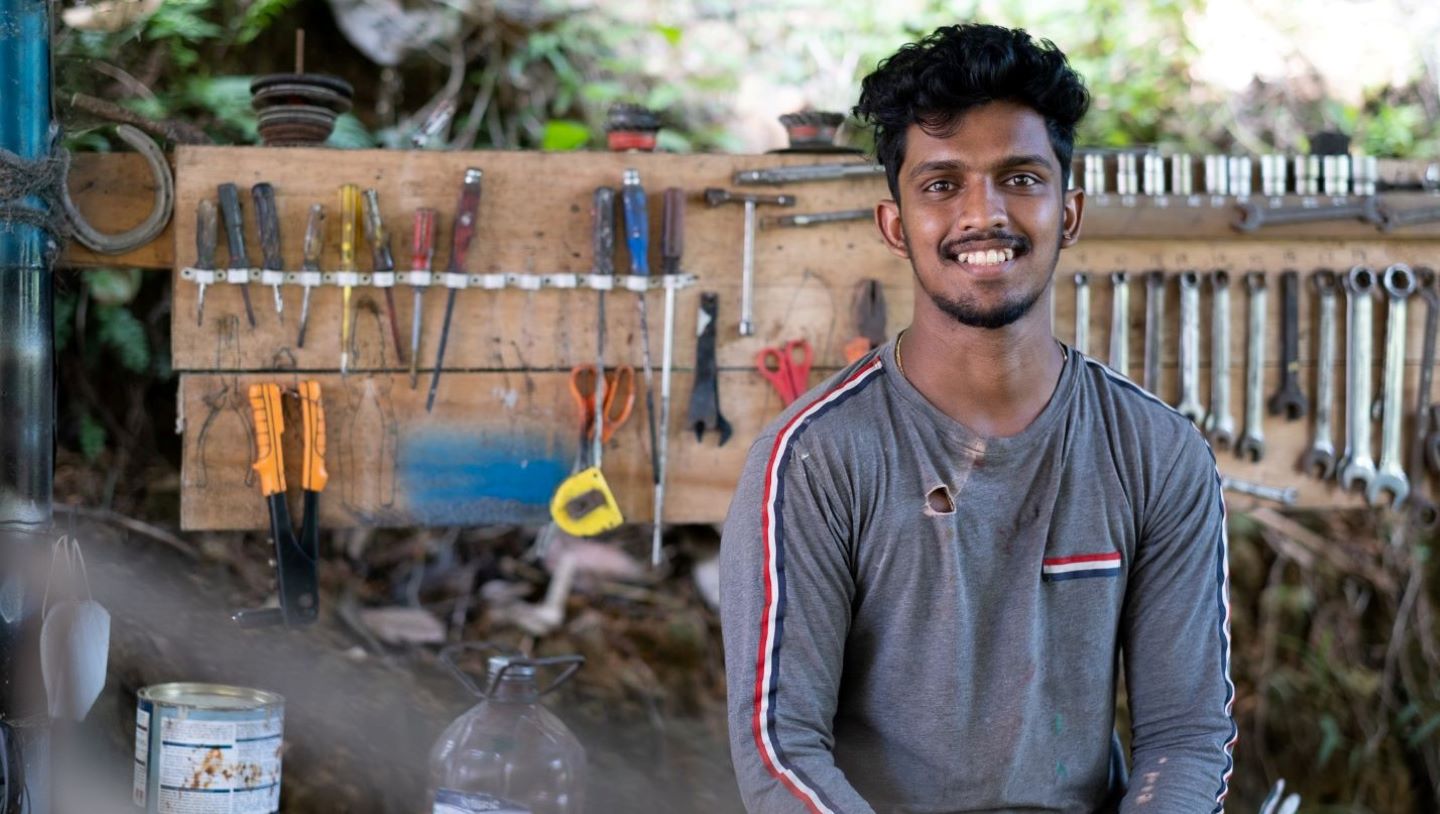
CID records statement of ex-Health Minister Keheliya

December 27th, 2023

Courtesy Adaderana

A team from the Criminal Investigation Department (CID) is currently recording a statement from former Health Minister Keheliya Rambukwella at his residence, the police said.

The relevant statement is being recorded over the controversial sub-standard Immunoglobulin import issue, according to police.

Accordingly, a team of officers from the CID had visited the Environment Minister’s house at around 10.00 a.m. this morning to record the statement.

So far, several high profile arrests have been made in connection with the case including the former Secretary of the Ministry of Health, the Director of the Health Ministry’s Medical Supplies Division and three other officials of the same division, as well as the owner of the relevant company which is said to have imported the batch of substandard Immunoglobulin vials by forging documents.

They are currently in remand custody.

CIDයට කෙහෙළිය දුන්නු සාක්ෂි…”තර්ජනයකුත් කරලා”Ex-Health Minister requested CID to obtain his statement?

December 27th, 2023

Ex-Health Minister requested CID to obtain his statement?

Former Minister of Health Keheliya Rambukwella was not interrogated by the Criminal Investigations Department (CID) as a suspect or an accused in the controversial sub-standard Immunoglobulin import issue, but the minister voluntarily provided a further statement to the CID, according to Attorney-at-Law Manoj Gamage.

Furthermore, he claimed that the CID did not arrive at the former Health Minister’s house to investigate into Rambukwella’s connection with the incident in question as reported by certain media, and that instead they had arrived following a request made by the former minister through President’s Counsel U.R. de Silva on his behalf, in order to provide some evidence documents for further investigations.

The initial case pertaining to this issue was also filed under the directives of MP Keheliya Rambukwella”, he told reporters after statement was recorded.

Meanwhile, Gamage also said that the former Health Minister submitted several written and digital evidence including some video evidence pertaining to the issue of importing substandard Immunoglobulin vials, to the CID today.

Issuing a statement in this regard, the Media Secretary of Minister Keheliya Rambukwella also confirmed the matter.

Earlier today (Dec. 26), it was reported that a team from the CID had arrived at former Health Minister Keheliya Rambukwella’s residence for recording a statement over the controversial sub-standard Immunoglobulin import issue.

It was also reported that the CID officers had later left the minister’s home after recording a statement for over 02 hours. 

So far, several high profile arrests have been made in connection with the case including the former Secretary of the Ministry of Health, the Director of the Health Ministry’s Medical Supplies Division and three other officials of the same division, as well as the owner of the relevant company which is said to have imported the batch of substandard Immunoglobulin vials by forging documents.

They are currently in remand custody.

The many twists and turns in Sri Lanka-Israel relations

December 26th, 2023

By P.K.Balachandran Courtesy NewsIn.Asia

Colombo, December 26 (Daily Mirror): Sri Lanka’s relationship with Israel has been unique. In the past 75 years as an independent nation, Sri Lanka has recognized, derecognized and again recognised Israel, guided by ever-changing ideological, geopolitical and domestic factors.  

But in contrast to Sri Lanka, Israel has been consistent: It has always wanted good relations with Sri Lanka and has helped Sri Lanka whenever its help was sought, irrespective of the official status of the relationship.

Interestingly, war has been one of the determining factors in the relationship. War has brought Sri Lanka and Israel closer, despite the existence of ideological and political factors militating against it.

Although part of the Western alliance, Israel defied the Western nations’ informal ban on arms sales to Sri Lanka during its war with the Tamil militants from the 1980s to 2009 and supplied it with military aircraft and vessels. Without Israeli weaponry the Sri Lankan armed forces could not have defeated the formidable Liberation Tigers of Tamil Eelam (LTTE).

And now, because of the Gaza war, Israel has sought and got Sri Lankan agricultural and construction workers to fill positions vacated by the Palestinian Arabs and other foreign nationalities. While many Arabs fled, Israel itself deported 82,000 Palestinian workers doubting their loyalty.

The Sunday Observer reported that Israel turned to Sri Lanka (and  also India) to urgently fill around 30,000 vacancies in its construction industry. The Israel Builders’ Association (IBA) said that its representatives would be in India and Sri Lanka within days to screen applicants for various roles such as plastering, ceramic tiling, building work and iron bending. The US$ 71 billion Israeli building industry is currently operating at just 15% of its pre-war capacity. The Israeli construction industry needs an estimated 100,000 workers to return to its pre-war capacity.

Sri Lankan workers will be going to work in the agricultural sector also. In November, Sri Lanka had agreed to immediately send 10,000 farm workers. Some 100 of them have already arrived in Israel. Currently, about 8,000 Sri Lankans are working in Israel, mostly as caregivers. Two Sri Lankan caregivers perished in the brutal Hamas attacks, the Times of Israel reported.

All this is happening even when Israel has no embassy in Colombo. While Sri Lanka has a regular embassy in Tel Aviv, Israel operates from its embassy in New Delhi. 

Just as Israel desperately needs Sri Lankan and other foreign workers, Sri Lanka badly needs foreign remittances as the foreign exchange draught continues despite the recent inflow of US$ 4 billion. Sri Lanka is still burdened with a total foreign debt of US$ 52 billion on which it defaulted in April 2022.

Because of the pandemic and the subsequent economic crisis, local unemployment has increased. Youth unemployment is particularly worrying as it stands at 28%. Lankan youth from the poorer classes as well-educated professionals are leaving the country in droves. The government itself has encouraged its employees to go out of the country for employment by giving them leave of absence without pay.

Today, Sri Lanka-Israel relations are cordial, despite the Gaza crisis in which Sri Lanka has sided with the Global South and has voted with the latter in the United Nations.

But relationship has seen great ups and downs in the past. According to Sri Lankan scholar in international affairs, Dr. Punsara Amarasinghe, the Jews’ relationship with Sri Lanka has a long history that dates back to the biblical epoch. Galle is said to be the city of Tarshish, to which King Solomon sent merchant ships.

Amarasinghe further says that the Jewish presence in the island nation thrived under British rule with many European Jews holding  prominent positions in the colonial administration in the island that was known as Ceylon till 1972.  

After its independence in 1948, Ceylon established relations with Israel unlike most of the neighbours in South Asia, which were markedly pro-Palestine and anti-Israel. Under Sri Lanka’s first Prime Minister D. S. Senanayake, Ceylon began buying weapons from Israel, including the naval vessel HMCyS Gajabahu. On the economic front, Israel assisted in the digging of tube wells in the dry zone of northern Sri Lanka.

But when the leftist S. W. R. D. Bandaranaike became Prime Minister and was followed by the even more leftist Sirimavo Bandaranaike, Ceylon (which became Sri Lanka in May 1972) became hostile to Israel, preferring to establish ties with the Palestine Liberation Organization (PLO) instead. Sirimavo Bandaranaike closed down the Israeli embassy in Colombo.  

But Colombo’s attitude to the pro-Western Jewish State changed radically with the coming into power of the pro-West J.R.Jayewardene in 1976. His Minister of Internal Security, Lalith Athulathmudali (who had been a law lecturer at Hebrew University in Jerusalem), and Ravi Jayewardene, founder of the Special Task Force, believed that Sri Lanka should turn to Israel to combat the Sri Lankan Tamil militants. President J.R.Jayewardene allowed an Israeli mission (not an embassy though) opened in Colombo in 1984.

Minister Gamini Dissanayake got Israeli advice to accelerate the Mahaweli development project to settle Sinhalese farmers in the island’s dry zones.

Punsara Amarasinghe quotes Victor Ostrovky and Claire Hoy the authors of By Way of Deception: A Devastating Insider’s Portrait of the Mossad to show how the Sri Lankan government was aided by the Mossad in the early 1980s.

The book reveals that it was a Mossad operative, Amy Yar, who advised Jayewardene’s government to accelerate the country’s ambitious Mahaweli development project as a quick remedy for the energy crisis and, more importantly, as the best strategy to settle Sinhalese farmers in the island’s dry zones.”

Two Israeli academics provided a broad analysis of the project that crucially helped the Sri Lankan government convince the World Bank to invest $250 million. A large portion of the Mahaweli contract was given to Israeli construction company Solel Bonah and Israeli architect Ulrik Plesner, who planned six new towns for the Mahaweli settlements.” Amarasinghe says.

However, the revived Israeli presence in Sri Lanka in the early 1980s and the opening of the Israeli embassy in Colombo in 1984 alarmed the country’s Muslim ethnic minority which was also politically influential. In 1987 India too wanted the Israeli interest section to be closed because at that time, New Delhi was both anti-Israel and anti-US.

In 1992, Sri Lanka-Israel ties were suspended by President R.  Premadasa, who is believed to have told the American Ambassador that Sri Lanka had no Jews but it had a politically significant Muslim minority which he could not alienate.  

Come 2000, ties with Israel were restored, though without an embassy in Colombo. Israel became a key source of weapons and training for the Sri Lanka Armed Forces during the intensified war against the LTTE. Israel sold IAI Kfir fighter jets, Super Dvora Mk III-class patrol boats, Saar 4 class missile boats and Gabriel missiles, according to Amarasinghe.

In 2017, the governments of Israel and Sri Lanka signed an agreement to bring foreign nursing aides to Israel. Sri Lankan nurses have acquitted themselves creditably in Israel and so more are likely to be recruited. In February 2020, Israel offered Sri Lanka technology in agriculture, education, transportation and IT sectors, which was openly welcomed by Sri Lankan President Gotabaya Rajapaksa.

In September 2021, the Sri Lankan government signed an agreement with Israel to upgrade Israeli-made Kfir fighter jets of the Sri Lanka Air Force.

And importantly, opposition from the Sri Lankan Muslim community to any dealings with Israel had disappeared upon the advent of the Rajapaksas in Sri Lankan politics in 2005. Relations with Israel are clearly improving even though Sri Lanka’s Foreign Minister Ali Sabry is a Muslim. If Israel does become a major employer of Sri Lankans, (the number currently envisaged is 100,000), the establishment of an Israeli embassy in Colombo cannot be ruled out.  

Sri Lanka to arrest, repatriate 30 Sri Lankan criminals operating abroad

December 26th, 2023

Courtesy Adaderana

Sri Lanka’s Public Security Minister Tiran Alles said on Tuesday that the country has launched an operation to arrest and repatriate 30 Sri Lankan criminal bosses who operate from outside the country.

The minister told reporters that 29 of these criminals are in Dubai, United Arab Emirates (UAE), and another one is in France.

He said that the Sri Lankan government has obtained red notices for the arrest of these criminals, and is currently holding discussions with the UAE and France.

The minister said these criminals left Sri Lanka in the past decades, and most of the organized crimes in Sri Lanka are directed by these individuals.

Source: Xinhua

Geopolitics of Israel war explained: Gaza, Iran, Saudi, Yemen, Red Sea ship attacks

December 26th, 2023

Geopolitical Economy Report

Is Israel’s war on Gaza expanding into a regional conflict? Why is Yemen attacking ships in the Red Sea? What are the roles of Iran and Saudi Arabia? Journalist Ben Norton discusses the geopolitics of the crisis.

The History of Antisemitism, Zionism & Palestinian Resistance to Colonization, w/ As’ad Abukhalil

December 26th, 2023

Israel has been stealing Palestine for more than 100 years. What are the roots of the genocide in Gaza? How did Zionism form? What has Palestinian resistance to the Zionist project looked like throughout history and how has it impacted Palestinian resistance today? To discuss this and more, Rania Khalek is joined by Professor As’ad Abukhalil for a special live episode of Dispatches.

China’s Colombo port logistic centre gets generous tax relief

December 25th, 2023

By Namini Wijedasa/Sunday Times

Colombo, December 24: President Ranil Wickremesinghe, in his capacity as Investment Promotion Minister, on Friday gazetted the initiative under the 2008 Strategic Development Projects Act (SDPA), stating that the aim was to turn the Colombo Port into a logistics hub for South Asia.

The use of the SDPA goes contrary to IMF strictures.

The multilateral financial agency has consistently held that the Act should be abolished or suspended until structures and processes are in place to evaluate the effectiveness of the offered incentives—that is, to determine whether incentives previously granted under the law have delivered the intended benefits to the country.

According to the gazette, China Merchants Port Holdings Company Limited (CMPort) holds 70 percent and the Sri Lanka Ports Authority (SLPA) holds 15 percent of the special purpose vehicle (SPV) set up to run the South Asia Commercial and Logistics (SACL) Hub. Access Engineering PLC owns the remaining 15 percent.

The company is also not expected to pay withholding tax for the entire project period of two years.

The corporate income tax exemption is for profits and gains generated from its activities and will start from the first year in which the company makes taxable profits or after two years from the commencement of commercial operations (whichever occurs earlier).

Dividends distributed and received by shareholders out of the exempted profits and gains shall be free from income tax for 15 years and one year thereafter. The Value-Added Tax (VAT), the Ports and Airports Development Levy, cess and Customs duties will not apply to imports of any project-related goods, as approved by the Board of Investment (BOI), for two years. The expatriate employees of the project company shall be exempted from income tax for five years (subject to a maximum of 30 expatriates).

Investment in the first phase is stated as US$ 280 million or Rs 91.2 billion based on a debt-to-equity ratio of 70:30 (70 percent debt, 30 percent investment). The total project is to design, construct, finance, develop, operate, manage, maintain, and transfer, and it is a 50-year public-private partnership with the SLPA.

The gazette defines the project as a national interest that is likely to bring economic and social benefit to the country” by providing efficient and effective cargo clearance to or from the logistic warehouses; quality bonded storage facilities; and warehouse facilities including temperature-controlled storage.

The first phase includes building warehouses and offices, for which two years have been granted from the date the agreement is entered into with the Board of Investment (BOI). The second phase will be a distribution and trading centre which will be carried out as a build, operate and transfer agreement.

In 2016, the then-Wickremesinghe-led Government suspended the SDPA under an IMF programme that it had signed on to. In its most recent Governance Diagnostic Report on Sri Lanka, the IMF reiterated that the legislation continues granting wide-ranging tax exemptions without scrutiny”—where projects are selected by the BOI and approved by the Investment Promotion Ministry in consultation with the Finance Ministry.

There is no definition of what criteria need to be satisfied for a project to be of strategic relevance, and the revenue forgone from such projects is not systematically contrasted against their potential benefit in a transparent process,” the IMF report observes. Crucially, the DoFP [Department of Fiscal Policy] is not involved in the selection or evaluation of projects, and any data that may exist is not shared with the department.”

The DoFP is the government’s focal point in shaping the tax system, guiding the reform of most taxes, except for the special commodity levy and customs duties, which are under the authority of the Department of Investment and Trade.

While the specific concessions given to companies benefiting from provisions of the SDP Act differ, the revenue consequences are likely significant,” it states.

Russian collaboration is best if Sri Lanka goes for nuclear power generation

December 25th, 2023

By P.K.Balachandran/Ceylon Today

Colombo, December 25: The Sri Lanka Atomic Energy Authority (SLAEA) chairman, Prof. S.R.D. Rosa told Daily Mirror on December 12, that his office had given the nod to the incorporation of nuclear power in the country’s energy mix. This is in line with President Ranil Wickremesinghe’s exhortation last year that Sri Lankans should seriously think about nuclear power” to overcome the power shortage.

According to Prof.Rosa, the search is on for a foreign development partner. He has said that proposals have been received from Russia, US, Denmark and China to set up a Small Modular Reactors (SMR) that would cost about US$ 2 billion. Delegations from Russia and China have already met the SLAEA. But Russia appears to be the preferred partner and rightly so.

Russia dominates the European market for nuclear energy, even amid its war against Ukraine and US and European sanctions against it.

The safety of nuclear power generation and its economic advantages have been discussed threadbare in a 2018 work by Mahesh N. Jayakody and Jeysingam Jeyasugiththan of Colombo University and Prasad Mahakumara of the government of Sri Lanka. Their study noted that while the installation cost of nuclear plants would be high and disposing of nuclear waste would be challenging,  nuclear plants are marked by low maintenance costs and a minimum adverse environmental impact.

In the long run, nuclear energy would work out to be cheaper, the authors said, while recommending the Russian VVER-1000 and the American AP-1000 models based on Pressurised Water Technology (PWR).

A US Office of Nuclear Energy report of 2021 said that nuclear plants have the highest ‘capacity factor’ (maximum capacity) compared to any other energy source. Nuclear plants are producing maximum power more than 92% of the time during the year. That’s about nearly two times more than natural gas and coal units, and are almost three times or more reliable than wind and solar plants.”

According to the US Office of Nuclear Energy, nuclear power plants require less maintenance and are designed to operate for longer stretches before refuelling (typically every 1.5 or 2 years).

As regards the raw materials the US office said: Uranium and thorium are both more abundant than tin; and with the new generation of fast-breeder and thorium reactors, we would have abundant nuclear energy for millions of years. Yet, even if the resources lasted a mere 1,000 years, we would have ample time to develop exotic new future energy sources.” 

On safety, which is a major concern in Sri Lanka, the Sri Lankan researchers cited above maintain that the evolution of nuclear power plant technologies has made reactors very safe and protected from human error.

According to Physics World nuclear power is hundreds of times” safer than coal, gas, and oil. On the danger from nuclear waste, the website www.world-nuclear.org says: The amount of waste generated by nuclear power is very small relative to other thermal electricity generation technologies; nuclear waste is neither particularly hazardous nor hard to manage relative to other toxic industrial waste.”

Why Russia is the best option

Kristyna Foltynova of Radio Free Europe says that European nations are unable to stop the import of Russian nuclear material even in the midst of the war in Ukraine because Russia dominates the world market in nuclear material.

Russia is among the five countries with the world’s largest uranium resources. But uranium mining is just one step in the nuclear process. Raw uranium needs to be refined into uranium concentrate, converted into gas, and then enriched. And this is where Russia excels, Foltynova says.

In 2020, there were just four conversion plants operating commercially — in Canada, China, France, and Russia. Russia was the largest player, with almost 40% of the total uranium conversion infrastructure in the world, and therefore produced the largest share of uranium in gaseous form (called uranium hexafluoride).”

The same goes for uranium enrichment, the next step in the nuclear cycle. According to 2018 data, Russia once again was responsible for the largest share — about 46%”, the Radio Free Europe researcher said.

According to the latest available data, the European Union purchased about 20% of its natural uranium and 26 % of its enrichment services from Russia in 2020. The US imported about 14% of its uranium and 28% of all enrichment services from Russia in 2021,” Foltynova stated.

Nuclear reactors made in Russia are known as VVER. According to Foltynova, there are 11 countries where various types of VVERs are operating currently.

Nuclear Plant Development

Russia is considered the world leader in the export of nuclear plants.  According to Foltynova, between 2012 and 2021, the Russian nuclear company, Rosatom, initiated the construction of 19 nuclear reactors; 15 of these were abroad. That is far more than the next most prolific providers: China, France, and South Korea.

Currently, there are 11 countries where various types of VVERs are operating, including Bulgaria, the Czech Republic, Hungary, and Finland. On top of that, other countries such as Egypt, Turkey, and Argentina currently have these reactors under construction or plan to build them.

To keep the reactors operating, plants need a regular supply of nuclear fuel and this is where there is an acute dependence on Russia. Although there are several suppliers on the market, the Russian TVEL Fuel Company is currently the only authorized supplier of fuel needed for VVER-440s,” Foltynova points out.

Russia is also able to supply High-Assay Low-Enriched Uranium ( HALEU), which is a type of fuel that will be needed for more advanced reactors that are now under development by many companies in the US.

According to the American Office of Nuclear Energy, HALEU availability in the US is limited. At the moment, the only supplier able to provide the fuel on a commercial scale is Russia’s Tenex (owned by Rosatom), Foltynova says.

Russia is expanding Its Market

Selling nuclear technology is also part of Russia’s foreign policy, especially now, when Western countries are trying to isolate it by boycotts and sanctions. And Russia is succeeding in this venture.

One of the reasons countries want to cooperate with Russia (defying sanctions) is that it offers a package solution”. Russia will not only build a nuclear plant and supply fuel, but it also trains local specialists, helps with safety questions, runs scholarship programs, and disposes of radioactive waste,” Foltynova points out.

Sri Lanka has been offered such assistance according to Prof Rosa.  

Russia also offers attractive loans, which are backed by government subsidies and cover at least 80% of construction costs. Russia has already lent US$ 10 billion to Hungary, US$ 11 billion to Bangladesh and US$ 25 billion to Egypt to build nuclear power plants,” Foltynova adds.

Russia is operating nuclear reactors in 11 countries, and more are under construction or being planned. Besides that, Russia has also signed either MOUs with at least 30 countries, mostly in Africa.

According to Bloomberg, Russia’s nuclear fuel and technology sales abroad rose more than 20% in 2022, according to data compiled by the UK’s Royal United Services Institute. Purchases by EU countries rose to the highest point in three years.

The figures show Nato members including Bulgaria, the Czech Republic, Hungary and Slovakia continued to purchase Rosatom fuel last year, amid Ukrainian pleas to shut down the trade after Russia hijacked Europe’s biggest power plant, Bloomberg said.

Importantly, Rosatom provides about one-fifth of the enriched uranium needed for the 92 reactors in the US. In Europe, utilities that generate power for 100 million people rely on the company.

Cements Ties 

Bloomberg further said that atomic commerce creates relationships that last.

It involves large upfront costs – with Russia usually providing the credit – and long-term agreements to service plants, train their operators and replenish fuel. That kind of financial and technical collaboration can strengthen diplomatic ties too.”


Copyright © 2026 LankaWeb.com. All Rights Reserved. Powered by Wordpress