Who is Politicising the Easter Sunday Attacks?

November 26th, 2023

By  Shivanthi ranasinghe Courtesy Ceylon Today

The call for an independent investigation of the Easter Sunday bombings grew in crescendo during the last months of President Gotabaya Rajapaksa’s tenure in Office. The Catholic Church actively galvanised the anti-government protesters to oust President Gotabaya. Their grievance was not so much than the economic crisis but that the culprits they identified as responsible for the attacks were not brought to book.

The Church was especially upset that Senior DIG of Police Nilantha Jayawardena, who was the Head of the State Intelligence Service (SIS) at the time of the attacks, went on to receive a promotion under the Gotabaya Administration. The Church specifically holds this officer responsible for dereliction of duty.

The manner in which both the Catholics aggrieved over the Islamist extremists’ attack on them and the radical Muslims who wish for Sharia Law in Sri Lanka, found common ground to join the anti

-Government protests, was ironic. It was still more ironic the way these grievances simply melted away with President Gotabaya’s resignation.

For more than a year, we did not hear the Catholic Church’s call for justice or an independent inquiry. The reason for the call to be muted as soon as President Gotabaya left Office is also confounding.

However, that call has re-emerged and has been increasing with gusto. The head of the Church in Sri Lanka Cardinal Malcolm Ranjith is again on a mission to enlist the international community’s support to pressurise the Sri Lankan Government. It is unclear as to what precipitated this change.

According to Cardinal Ranjith, Pope Francis too, has reiterated the call to seek justice for the Easter Sunday victims. Do not give up hope”, was the message delivered by Pope Francis when Cardinal Ranjith and other members of the Catholic Bishops’ Conference, as they met with the Pope in Rome to make the traditional obligatory Ad Limina visit, which takes place every five years.

Channel 4 Documentary

It is not only the Cardinal’s voice that has reawakened. Channel 4 aired a very controversial and factually-incorrect documentary on the attacks. This is the second documentary Channel 4 has done on Sri Lanka. The first one, on alleged war crimes, was just as controversial and factually challenging as this one.

According to this particular documentary, Azad Moulana – a former Government aide to a current Sri Lankan Government Minister – claims that he witnessed a meeting between the NTJ terrorists and the then Head of Military Intelligence, Brigadier Suresh Salley in February 2018 – 14 months before the attack. The problem with this allegation is that Brigadier Salley was not even in the country.

Interestingly, Channel 4 declined to appear before a Commission of Inquiry set up by incumbent President Ranil Wickremesinghe. The reason cited was they need to protect confidential sources. This certainly does not add any credibility to their documentary.

The source’s anonymity can be preserved but the Channel must have done its own investigation to verify facts. That verification must be shared with the Government of Sri Lanka and so facilitate the investigation of the allegations against Brigadier Salley.

Appeal to Australia

In the attacks, two Australians lost their lives. Sri Lankan-born Chathudilla Weerasinghe now domiciled in Australia sustained injuries during the Attack. According to her, one fragment is too close to her heart and thus poses too much of a risk to remove it.

According to her father Ranjith, a Mathematics Lecturer at Monash University, the family believes that there could be truth in the allegations that the Sri Lankan authorities might have been complicit in the Attack. He claims that the Sri Lankan politicians are a different breed to the Australian counterpart.

It is an interesting observation. The LTTE ideologists in Australia are quite vociferous and several Australian MPs have openly expressed their sympathies with the separatists. It is not because they are being misinformed but more in an attempt to attract their Tamil vote base in their constituencies.

New Zealand authorities have been found to have attempted to deport Sri Lankan-origin Islamist extremists to Sri Lanka. However, they failed to share or inform the Sri Lankan authorities of their suspicions or other valuable information pertaining to the deportee. The excuse given is that they fear the deportee’s life would be endangered if such information was shared with the Sri Lankan counterparts. This leaves the glaring question as to the plight of such extremists’ potential victims.

Disregarding these issues, Cardinal Ranjith calls upon the Australian Government to back his call for international pressure for an independent investigation. It is extremely unfortunate that the Cardinal is not using his extraordinary influence to bring balance to this whole scenario.

Allegations against Military Intelligence

Recently a former Senior DIG of Police, Ravi Seneviratne made some damning allegations against the Gotabaya Administration as well as the Military Intelligence (MI). He claimed he and his team were pulled out of the investigation on the Attacks – and this was even before a new Cabinet or Prime Minister was appointed in the Gotabaya Administration. He alleges this to be an illegal act.

Furthermore, he recalls over 700 officers attached to the CID were prohibited from travelling overseas. This in turn, he says, caused fear in the Department.

He also accused the MI of not sharing accurate information pertaining to the Islamist extremism. According to him, the MI directly intervened to prevent the police investigating teams from probing further by claiming that they were involved in National Security Operations.

However, this Officer is not disclosing the whole truth. SSP Shani Abeysekara who was the Director of the CID led a politically motivated campaign against specific MI teams. Thereby he dismantled carefully nurtured MI networks as he exposed the officers and men involved in these teams. He arrested and detained nearly 400 MI officers and men – some were of the highest ranks as the Director of the MI Major General Amal Karunasekera.

It became a weekly media circus as these high-performing MI officers were cuffed, chained and carted back and forth from remand Prison to Courts for over a year. Despite all that hype, the CID investigators could not find a single shred of evidence to substantiate their cases even to file a B-report.

The emergence of voice tapes between the CID Director and a Government MP threw light on the real motivation behind these arrests. It was to coerce the detained Officers and men to name Gotabaya Rajapaksa as the commander of various crimes. At the time, the former Defence Secretary Gotabaya was considered a formidable political threat to the then Government.

As soon as Gotabaya Rajapaksa became President, Shani Abeysekara’s second-in-command left for Switzerland on Political asylum. How he obtained asylum within days of the new President assuming Office is an enigma.

It is suspected that he took with him a number of documents of ‘State importance’. The truth of this is to be verified as none has emerged to date. It was this that led the new administration to impose a travel ban on the CID officers with the forethought they were most likely to leave the country in such a disreputable manner.

Everyone has a theory about the Easter Sunday Attacks. It is unfortunate that most have disregarded facts on the ground to establish their own theory. Instead, these theories are based on their own political thinking and facts that only fit into that model are allowed. It is very sad thus that those who are calling for justice for the victims are not for the victims.

ranasingheshivanthi@gmail.com

By Shivanthi Ranasinghe

Sports Minister reveals SLC corruption exposed by resigned secretary

November 26th, 2023

By DARSHANA SANJEEWA BALASURIYA Courtesy The Daily Mirror

Kandy, Nov 26 (Daily Mirror) – Sports Minister Roshan Ranasinghe said the recently resigned Sri Lanka Cricket Board Secretary Mohan de Silva contacted him from Australia, exposing corruption within the SLC.

“Mohan de Silva called me from Australia revealing his attempts to steer the SLC in the right direction. Witnessing a lack of proper action, he highlighted widespread theft under the guise of investments that took place within the SLC, leading to his resignation,” he said during a visit to Kandy to meet the Maha Nayaka Theras of the Malwathu and Asgiri Chapters.

https://youtu.be/OaRGqx9e5h4

Expressing his commitment to oust corrupt officials, the Minister said he was planning for a proactive approach over the past year.

“I appointed an Interim Committee to identify corrupt officials at SLC. This committee’s appointment is not permanent,” he said.

However, the Minister added that regardless of his efforts, the corrupt individuals may tend to regain power eventually. 

Pointing out the influence of district associations, particularly addressing the Kandy Association, the Minister challenged them to undergo an audit. 

He said those associations should be dissolved due to prevalent issues.

Highlighting the need for cricket-loving individuals to take charge, the Minister proposed committee appointments from among such people, followed by board elections to prevent the emergence of corrupt individuals.

“Urumaya” Freehold Deed Program: A Tribute to Sri Lankan Farmers : President

November 26th, 2023

Courtesy Hiru News

In a historic move to empower the agricultural sector and strengthen the export economy, President Ranil Wickremesinghe unveiled the “Urumaya” Freehold Deed Program during the first phase of the public awareness campaign for the 2024 budget proposal. The President emphasized that this program is a tribute to the farmers who have been the backbone of the nation for generations.

President Wickremesinghe outlined the key objectives of the initiative, stating that the export economy would be significantly fortified by transforming every village into an enterprise village. He also revealed plans to establish agriculture modernization service centers, providing essential facilities to support the growth of the agricultural industry.

Addressing the gathering in Nochchiyagama, Anuradhapura today (26), the President raised a pertinent question, questioning the allocation of freehold land for the Shangri-La Hotel while pondering why a similar privilege couldn’t be extended to the hardworking farmers who have cultivated the land for generations. He emphasized the potential for generating foreign exchange through strategic land allocations, citing the example of providing land to the Shangri-La Hotel while underscoring the importance of modernizing the agriculture industry as a means to strengthen the export economy.

A significant highlight of the program is the allocation of two billion rupees in the 2024 budget to provide “Urumaya” freehold deeds. President Wickremesinghe proposed a departure from the existing deed categories, such as Jaya Bhoomi, Saumya Bhoomi, Swarna Bhoomi, in favor of a unified freehold deed system, slated for implementation in 2024.

In his address, President Wickremesinghe urged unity in working for the country, transcending political differences. Reflecting on the challenges faced upon assuming office, he highlighted the successful efforts to stabilize the country’s economic situation, steering it away from bankruptcy.

The President announced plans to resume stalled development projects, emphasizing the importance of safeguarding cultural and historical sites like Malwathu Oya and Maha Viharaya in Anuradhapura. Additionally, a budget allocation of one and a half billion rupees for cricket development in rural schools was disclosed.

The Governor of the North Central Province Maheepala Herath commended the President for his pivotal role in navigating Sri Lanka through legal and economic challenges. Describing the state of the law in the country as “wild” at one point, Governor Herath praised the President’s acceptance of this challenge and emphasized the commendable efforts that led to the country’s economic recovery. The Governor highlighted the President’s visit to Anuradhapura and the Urumaya program, which is expected to unconditionally grant land rights to farmers. This gesture is seen as a significant step in empowering the agricultural community. Governor Herath underscored the President’s commitment to redirecting the nation’s economy and reclaiming Sri Lanka’s lost standing on the global stage, attributing these achievements to the President’s political maturity.

Minister of State for Finance Shehan Semasinghe revealed that the President has included a groundbreaking provision in this year’s budget, granting freehold land rights to all citizens. Despite facing challenges in incorporating this proposal in the 2023 budget due to prevailing circumstances in the country, the President’s commitment to fulfilling the people’s need for land rights remained unwavering. Minister Semasinghe emphasized the President’s proactive measures in addressing agricultural concerns, particularly the provision of essential fertilizers to farmers, ensuring that the entire requirement for yielding seasons has been met. The President’s comprehensive program has not only established political stability but has also laid the foundation for social and economic stability in the country. He expressed satisfaction in resolving a fundamental issue faced by the people, as they can now enjoy land with the rightful ownership determined by the President’s decisive actions

Member of Parliament Duminda Dissanayake expressed gratitude to President Ranil Wickremesinghe for his leadership and the implementation of the Urumaya program, which grants farmers the heritage of their great-grandfathers. Mr. Dissanayake commended the President’s political maturity, highlighting the effectiveness of this year’s budget in demonstrating the President’s thorough preparation. The MP praised the President’s decision to allocate a ten-thousand-rupee allowance to public servants, provide freehold deeds to farmers, and grant tenants the rightful ownership of their houses. This, according to Mr. Dissanayake, underscores the President’s commitment to addressing the needs of various segments of society and showcases his leadership acumen.

>Member of Parliament S.M. Chandrasena commended the President for the significant financial allocation to the Anuradhapura district in the latest budget announcement. Notably, funds have been designated for crucial projects such as the Malwatu Oya initiative and the Maha Viharaya. MP Chandrasena underscored the President’s commitment to the agricultural community by highlighting the proposal in this year’s budget to grant freehold deeds to farmers. He emphasized that these measures, aimed at providing relief to a nation grappling with economic challenges, exemplify the President’s political maturity and his dedication to addressing key issues faced by the country.

The event witnessed the presence of prominent figures, including the Chairman of the Anuradhapura District Development Committee H. Nandasena, MP Uddika Premaratne, Former Chief Minister S. M. Ranjith, Former Minister P. Harrison, Attorney-at-law Mr. Kasthuri Anuradhanayake, and Land Commissioner General Mr. Bandula Jayasinghe.

Presidential Election: EC looking at polls date from 16 Sep.-17 Oct.

November 25th, 2023

Courtesy The Morning

The forthcoming Presidential Election is slated to take place on a day between 16 September and 17 October next year, as confirmed by Election Commission (EC) Chairman R.M.A.L. Rathnayake.

He told The Sunday Morning that the specific date for the election would be decided and officially announced in July (as per the two-month advance notice prior to the commencement of the stipulated election period).

Emphasising on adherence to constitutional and legal frameworks, Rathnayake highlighted that the selection of the election date would strictly follow the procedures outlined in both the Constitution and the Presidential Elections Act. 

Accordingly, Section 2 of the Presidential Elections Act No.15 of 1981 states: (1) Where the Commissioner of Elections is required by the Constitution to conduct the election of the President, he shall by Order published in the gazette (a) fix the date of nomination of candidates being a date not less than 16 days and not more than one month from the date of publication of such Order, and the place of nomination; and (b) fix the date on which the poll shall be taken, being a date not less than one month and not more than two months from the date of nomination. 

(2) The date fixed under paragraph (a) or paragraph (b) of subsection (1) shall be any day other than a full moon Poya day or any public holiday specified in the First Schedule to the Holidays Act No.29 of 1971; and if, after the publication of the Order under subsection (1), any day specified therein is declared to be a public holiday, such declaration shall in no way affect the validity of anything done on such day for the purposes of that subsection.”

Further, Chapter VII, Section 31(3) of the Constitution states: The poll for the election of the President shall be taken not less than one month and not more than two months before the expiration of the term of office of the President in office.”

Explaining further, the EC Chairman said that essential measures had already been initiated to prepare for the upcoming Presidential Election, including the formation of the electoral registry.

He further disclosed that subsequent tasks, such as securing funds for activities like printing ballot papers and other documentation work, were scheduled to commence in the coming year.

When asked about the General Election, the EC Chairman clarified that the anticipated date was 2025. However, he pointed out the possibility for the newly-elected President to dissolve Parliament and expedite the General Election upon assuming office. This flexibility is contingent upon the preferences of the incoming president.

Meanwhile, President Ranil Wickremesinghe asserted in Parliament last week that both the Presidential and Parliamentary Elections were scheduled to be held next year. 

‘අපි වසර 15ක් හිරේ යයි..’ ක‍්‍රිකට් ලොක්කෝ කතා වෙති.. අස්වූ ලේකම් තොරතුරු දෙයි..

November 25th, 2023

උපුටා ගැන්ම ලංකා සී නිව්ස්

රී ලංකා ක්‍රිකට් ආයතනයේ ලේකම් ධුරයෙන් ඉල්ලා අස් වූ මොහාන් ද සිල්වා මහතා එම ආයතනය වංචා දූෂණ වංචා පිළිබඳව තොරතුරු රැසක් තමන්ට හෙළිදරව් කළ බව ක්‍රීඩා ඇමැති රොෂාන් රණසිංහ මහතා සඳහන් කරයි.

දැනට ඕස්ට්‍රේලියාවේ සිටින හිටපු ලේකම්වරයා දුරකථන මාර්ගයෙන් තමන්ට මෙම තොරතුරු ලබා දුන් බවද හෙතෙම පැවසීය.

අමාත්‍යවරයා මේ බව කියා සිටියේ මල්වතු මහනාහිමියන් බැහැදැකීමට මහනුවර මල්වතු විහාරයට පැමිණි අවස්ථාවේ මාධ්‍ය අමතමිනි.

ක්‍රිකට් ආයතනයෙන් නෙරපනු ලැබූ වුවොත් වසර 15 ක සිර දඩුවම් විදීමට සිදුවනු ඇතැයි එම ආයතනය ප්‍රධානීන් සාකච්ඡා කර ඇති බවද අමාත්‍යවරයා සඳහන් කළේය.

මොහාන් සිල්වා මහතා ලේකම් ධුරයෙන් ඉල්ලා අස් වූයේ ද එම තත්වය දන්නා නිසා බවද හෙතෙම පැවසීය.

වන අලි සුරක්ෂණය වන ජීවී දෙපාර්තමේන්තුවට පමණක් තනිව කල නොහැක – හමුදා සහාය ලබා දිය යුතුයි

November 25th, 2023

චානක බණ්ඩාරගේ

අලි ඇතුන්ගේ වන ඉඩම් ආක්‍රමණය කර ඇත්තේ මිනිසුන් විසිනි. අලි ඇතුන් තවත් යා යුත්තේ කොතැනටද? දිනකට වල් අලියෙක් පමණ මැරෙණ තැනට අද රට පැමිණ ඇත.

වල් අලින් ආරක්ෂා කිරීමට වන ජීවී දෙපාර්තමේන්තුවට තනිව කල නොහැකි බව ඔවුන් ක්‍රියාවෙන් ඔප්පු කර පෙන්වා අවසන්ය.  සිවිල් ආරක්ෂක භටකාය විසිරුවා හැරීමට නියමිත නිසා මින් ඉදිරියට අලි වැටවල් බලා ගැනීමටද කෙනෙක් නොමැති වනු ඇත.

වන ජීවී දෙපාර්තමේන්තුවට යුධ හමුදාවේ ක්‍රියාකාරී සහාය ලබා දීම අත්‍යාවශ්‍ය වේ.

අලි – මිනිස් ගැටුමේදී වන ජීවී දෙපාර්තමේන්තුව අලින්ගේ පැත්තට වඩා මිනිසුන්ගේ පැත්ත ගෙන කටයුතු කර තිබෙන බවට පරිසරවේදීන් චෝදනා කර තිබේ.  බොහෝ තැන් වල වන ජීවී දෙපාර්තමේන්තුව පැමිණෙනුයේ අලි – මිනිස් ගැටුම් වල දරුණුම තත්වයන් අවසන් වූ පසුය.

වනය ආරක්ෂා කලයුතු වන ජීවී නිලධාරින් වනයේ වටිනා ගස් කපා විකුණන බව ප්‍රසිද්ධ වන භූමියක් අසළ නිවසක ජීවත්වන කාන්තාවක් මෙම ලියුම්කරු සමඟ පැවසීය.  

අලි ආරක්ෂා කරන්නේය කියා අලි තර්ජිත ගම්වල වන ජීවී නිලධාරින් සහ ගම් වැසියන් අතර බහින් බස් වීම්, ගැටුම් ඇතිවී තිබේ.

මෙවර අයවැයෙන් පරිසර අමාත්‍යාංශයට වෙන් කර ඇත්තේ රුපියල් බිලියන 36ක් වැනි සොච්චම් මුදලක් වන අවධියේ, රටේ දැනට ඉතිරි වී සිටින අලි ටික හෝ ආරක්ෂා කිරීමට රජයට උවමනාව ඇත්නම් වන ජීවී දෙපාර්තමේන්තුවට යුධ හමුදාවේ ක්‍රියාකාරී සහාය ලබා දීම කල යුතුම දෙයකි. යුධ හමුදාවට බොහෝ පිරිස්, වාහන, උපකරණ බලය තිබේ. මෙවර අය වැයෙන් ආරක්ෂක අමාත්‍යාංශයට රුපියල් බිලියන 600ක පමණ  මුදලක් වෙන් කර තිබේ.

මෙය කල පසු, රජය මේ අයට (වනජීවී සහ හමුදාව) තදින් නිර්දේශ ලබා දිය යුතුයි. කැලෑ එළිකරන්නන්, අලින්ව මරන්නන් නිරන්තරයෙන් පිරික්සා ඔවුනට  එරෙහිව දැඩි දඩුවම් නිතී මඟින් ලබා දීමට කටයුතු කල  යුතු බවට.

රජයන් පවසන්නේ අද ශ්‍රී ලංකාවේ වල් අලි 6000ක් ඇති බවයි. අද ලංකාවේ වනාන්තරවල අලි 2000ක් වත් ඉතුරුව නැතැයි එක් පරිසර විද්‍යාඥයෙකුගේ උපකල්පනය වේ තිබේ.  මේ මැරෙන විදියට අලි 1500ක් වත් ඇද්ද?

අලි සංගණනයක් කියා කලේ මුලාවක් බවයි ඔහුගේ අදහස, එහිදී එකම අලියා දෙතුන් වතාවක් ගැන තිබේ.

වනජීවී උද්‍යෝගිකයෙකු මෙම ලේඛකයාට පැවසුවේ අද වනාන්තරයේ වෙසෙන, වෙඩි තැබීමේ තුවාලයක් නොමැති වැඩිහිටි අලියෙකු සොයා ගැනීම පවා අපහසු බවයි. මෙය ජාතියක් වශයෙන් අප ලජ්ජා විය යුතු දෙයකි.

වනයේ අලියෙක් අඩු තරමින් රුපියල් ලක්ෂ 100ක් වත් වටී. හොඳම තත්ත්වයේ ළපටි/තරුණ අලියෙකුට ලෝක වෙළඳ පොලේ ඇති වටිනාකම ඉතාම ඉහලය; රුපියල් ලක්ෂ 200/300 ක් පමණ විය හැක. මෙවන් තත්ත්වයක, අලියා යනු අධි ආර්ථික වටිනාකමක් ඇති සතෙක් බවට හෝ සලකා හෝ, අලින්ව ආරක්ෂා කිරීමට රජයන් මීට වඩා බොහෝ සැලකිලිමත් විය යුතුයි (පුරාණ රජ කාලයේ ශ්‍රී ලංකාවෙන් අලින් පිටරටවලට විකුණා මුදල් උපයා තිබේ – පැරණි පෘතුගීසි සමයේ වාර්ථා බලන්න. Elephant Pass (අලි මංකඩ) යනු එදා කන්ද උඩරට රජුන් මාන්තොටින් (තලේමන්නාරමින්) අලින් පිට කර යැවීමේදී, අලින්ව රැඳවු/ගමන් කරවූ ප්‍රධාන මාර්ගයකි. 

අලි කොරිඩෝවන් අවුරුදු දහස් ගණනක් තිස්සේ පවතින්නාවූ දේය. අලි ඇතුන් අප විසින් සාදන නව අලි කොරිඩෝ භාවිතා කිරීමට පටන් ගනී යයි අප අපේක්ෂා කිරීම මෝඩකමකි.

අලි වැට අඩු ධාරිතාවයකින් යුත් විදුලි රැහැනකින් (වෝල්ට් 110) විය යුතුය. සමහර ගම්මු මේවා වෝල්ට් 220 ක දක්වා හොරෙන් වැඩි කර, එවැනි රැහැන් මඟින් අලි ඇතුන් විදුලි සැර වද්දවා මරා දමා  ඇති බවට වූ කථා මෙම ලේඛකයා අසා තිබේ.

අලින්ට වෙඩි තැබීමට හක්කා පටස් ඇටවීමට, වගා ලිං වල ගිල්වීම, විදුලි රැහැන් ඇටවීමට වැනි  ක්‍රියාවන් වලට මිනිසුන් පෙළඹෙන්නේ වෙනත් කිරීමට දෙයක් නැති නිසාත්, අලි මරා දැමීමට වග කිව යුත්තේ   අලි-මිනිස් ගැටුමට මැදිවී සිටින මිනිස්සුන් නොවන බවටත් මතයක් දැන් ගොඩ නැගී ඇත. මේ මඟින් සහාසික ලෙස නිරන්තරයෙන් සිදුකරන අලි මරණ සාක්ෂාත් කිරීමට ඇතැමුන් උත්සහ දරත්. මිනිසුනට කලින් ඒ ප්‍රදේශවල (වන වල) වාසයේ කලේ අලින් බව අප සිහිතබා ගත යුතුය.

මනම්පිටිය රෝහලේ කසළ අලි වනාන්තරයක් අසල දමන බවට ප්‍රවෘත්ති පලවී තිබුණි. ඒ කුණු අතර ලේ පෙගුනු වෙළුම් පටි, ඉන්ජෙක්ෂන් සිරින්ජර්, හිස් බෙහෙත්/සේලයින් බෝතල් ඇතුළත්ව තිබී ඇත. මේ නිසා එම ප්‍රදේශයේ අලි ඇතුන් මියගොස් තිබේ. ඔවුන්ගේ පශ්චාත් මරණ පරීක්ෂණවලින් හෙළි වී ඇත්තේ මෙම ද්‍රව්‍ය ඔවුන්ගේ බඩවැල්වල අඩංගුව තිබු බවයි. පොළොන්නරුව යනු හිටපු ජනාධිපතිවරයෙකුගේ ආසනයයි.

මඩකලපුව – කොළඹ දුම්රිය දිගින් දිගටම අලි ඇතුන් වෙත දුම්රිය මාර්ගය තුලදී පිවිසීමෙන් පෙනී යන්නේ මෙම වැදගත්, බරපතල ගැටළුව විසඳීමට අප තදින්ම අපොහොසත් වී ඇති බවයි. අලි ඇතුන් රාත්‍රීයේ දුම්රිය මාර්ගයට පිවිසෙන්නේ උණුසුම සහ නැවුම් වාතය ලබා ගැනීම සඳහායි.  මෙම සමහර ප්‍රදේශවල පුරාණ අලි කොරිඩෝ (අලි මන්කඩන්) ඇත. පැයට කිලෝමීටර 20 ක පමණ වේගයෙන් හෝ මෙම ප්‍රදේශවල දුම්රිය ධාවනය කරවා  මෙම අලි මරණ නතර කර ගත හැකි වේද?

සමහර මඩකලපුව – කොළඹ දුම්රිය රියදුරන් උවමනාවෙන් දුම්රියට අලින් යට කරත්ද? රියදුරන්ගේ අලි මරණ ඉතිහාසය ගැන සොයා බැලිය යුතුයි.

අලි පැටවුන් මඩකලපුව – කොළඹ දුම්රියට හසු වූ විට, දිවි ගලවා ගත් වැඩිහිටි අලි ඇතුන් එම ස්ථානයේ රැඳී සිටිමින් දින කිහිපයක් විලාප තැබූ බවට පුවත්පත් වාර්තා පලවී තිබුණි.

අලි – මිනිස් ගැටුම තදින් දැනෙන සේ ඇරඹියේ මීට වසර 45 කට පමණ පෙර ඇරඹි කඩිනම් මහවැලි යෝජනා ක්‍රමයට ස්තුතිවන්ත වෙන්නය. මහවැලිය වෙනුවෙන් කුළුදුල් වනාන්තර හෙළි පෙහෙළි කලේ අක්කර දස දහස් ගණනින්ය.

අපට 1948 නිදහස ලබන විට රටින් 49%ක්  මහා වනය විය.  2012 දී මේ ප්‍රමාණය 16.5% දක්වා අඩුවී තිබුණි. මේ ප්‍රමාණය එන්න එන්නම ක්ෂයව යයි. අද නියම වනාන්තර මේ රටේ භූමියෙන් 10%ක් වත් වේද?

නමුත්, ජනයා මුළා කිරීම සඳහා රජයන් කියන්නේ මේ සංඛ්‍යාව 30% පමණ වන බවයි. වන ගහනය තවත් වැඩි කරන බවට බොරු  දෙසා බායි.

යාල, විල්පත්තුව,  හැරුණු විට බොහෝ කෑලෑ අද දක්නට ඇත්තේ මතුපිටින් පමණි? වනාන්තරවල ඇවිදින විට, මිනිසා (බලගතු අයවළුන්) සෑම වනයක්ම අභ්‍යන්තරයටම වාගේ අත්පත් කරගෙන ඇති බව පෙනේ. දැන් මෙය වඩාත් සිග්‍රයෙන් සිදුවේ.

මන්ද, රජයන් ඒ දේට නියමින්/අනියමින් සහයෝගය දීමයි. සමහර ප්‍රදේශවල කැලෑ එලි කර ඒවායේ  එළවළු, පලතුරු වවන්නේ හෝ එවැනි දේට අනුබල දෙන්නේ ප්‍රදේශයේ විහාරයේ ප්‍රධාන සංඝයාවහන්සේයි. 

මුලතිව්හි තෙන්නමරච්චි සිට ජනකපුර දක්වා කැලෑ ඩෝසර් කරමින් පවතී. මෙය වැලිඔය, හැලම්භ වැව, සිංහපුර ප්‍රදේශවල ගම්වාසීනට තර්ජනයකි. උතුරේ/නැගෙනහිර සිංහලයා තව තවත් සුළු ජාතියක් කිරීමේ තැතක් ලෙස ඇතැමුන් මෙය දකිත්. නැගෙනහිර පළාතේ පොතුවිල් – මඩකලපුව මාර්ගයේ උරානි ප්‍රද්ශයේ පසුගිය දිනවල දැවැන්ත වන සංහාරයක් සිදු වෙමින් පැවතුණි. මෙය රජය දැනුවත්ව සිදුවන්නක් විය යුතුය. මන්ද, මෙහි ලඳු කැලැව කපන්නේ තිරුක්කෝවිල් සහ ඒ අවට දෙමළ ජනයා මේ ප්‍රදේශයට ගෙනැවිත් පදිංචි කිරීමට යයි පොතුවිල්හි මුස්ලිම් ජනයා පවසන නිසාය. මහ කැලයට ඉතා ආසන්න – රාත්‍රීයට වන අලි මේ ප්‍රදේශයට ඒම නතර කර, මෙහි නව දෙමළ ජනපද සැදීමට යන බවයි බැලු බැල්මට පෙනීමට තිබුනේ.

පුත්තලම, කැකිරාව, තලාව, මැදවච්චිය, දකුණේ සුරියවැව, බුන්දල ඝන කැලෑ තිබු ප්‍රදේශය. අද ඒවා නැත හෝ ඉතා අඩුය. ඒ කැලෑ කපා විනාශ කර දමාය.

අතිශයින් ආරක්ෂා කල යුතු සිංහරාජ වනය මැදින් පවා බස්  යන පාරවල් අප මෑතකදී කැපුවෙමු.

අද සිංහරාජයට අලි 1ක් හෝ 2ක් පමණක් සීමාවී තිබේ. එදා දෙනියාය, රක්වාන, ඇඹිලිපිටිය ප්‍රදේශවල පවා අලින් සැරි සැරූ වනයන් තිබී ඇත. 

මත්තල අනවශ්‍ය ගුවන් තොටක්, සුරියවැව අනවශ්‍ය ක්‍රිකට් ක්‍රීඩාංගනයක් සාදා ඒ කැලෑ වල සිටී වන සතුනට යන එන මං නැති කලේ එකල වූ රජයයි. මෑතක, අම්බලන්තොට නගරයටද රාත්‍රී කාලයේ අලි පැමිණ ඇත.  ඇඹිලිපිටිය නගරයට දහවල් කාලයේ වල් අලියෙක් පැමිණ ඇත. මත්තල/සුරියවැව වනයේ සිටී මොනරුන් සහ වඳුරන් කෑම සොයා අද අහංගමට, හුන්ගමට යත්.  මේ සතුන් අධික පීඩනයෙන් ජීවත් වෙත්.

දැන් හිගුරක්කොගොඩට නව ජාත්‍යන්තර ගුවන් තොටුපොළක් ඉදි කිරීමට රජය සැරසේ. මෙයද අද රටේ අවශ්‍යතාව? මත්තල සුදු අලියාගෙන් අප පාඩමක් ඉගෙන නොගත්තෙමුද? මෙම කාර්යය රටේ තවත් අලි මරණ වැඩිවීමක් නොවන්නේද?

 යාල, විල්පත්තු මැදින් පවා යන පාරවල් කපා තිබේ. මෑතකදී ඉදි කරන ලද B  35 නවීන පාර යාලට තදබලම තර්ජනයකි.

වනසතුන් සිටිනා භූමියක් මැදින් වාහන ගමන් කිරීම පිණිස නව පාරවල් තනනවා යනු එය එම සතුන්ගේ සහ අභය භුමියේ අවසානය ලඟා කර දීමකි.

සමහර වාහන හිමියන් බලෙන්ම මෙම වනසතුන්ව, අලින් පවා, හප්පා ගෙන යන දර්ශණ සමාජ මාධ්‍යන්හි ප්‍රචාරය වී තිබේ.

මනුෂ්‍ය ආක්‍රමණ, වනයන් තුල හෝටල් ඉදි කිරීම ආදිය  නිසා මේ වනභූමි දෙකද කුඩා වෙමින් පවතී.  යාල තුල පමණක් තරු පන්තියේ ඇතුළු සංචාරක හෝටල කොපමණ ඉදි කර ඇද්ද?

රජයන්හි සැඟවුණු අරමුණ ජනයාට රිසි සේ කැලෑ කැපීමට, කැලෑ තුලට ගවයන් දැක්කීම වැනි දේට  ඉඩ දී, යාල, විල්පත්තු වැනි අභය භුමි වලට පමණක් අලින් ඇතුළු වන සතුන් ජීවත්වීම සීමා කිරීමද?   අපට පෙනෙන්නේ එයයි.

වනයන් රැකීමට රජයන් දක්වන උකටලීභාවය නිසා රජයනට මෙවන් සැඟවුණු අභිමතාර්ථයක්  ඇද්දැයි සිතේ.

කැලෑ එලි කිරීමෙන් රටේ කෘෂි නිෂ්පාදනය ඉහල යනු ඇතැයි, විශේෂයෙන්ම 2019 පසු  රජය සිතන බවක් පෙනේ. මෙය මෝඩ ආර්ථික ප්‍රතිපත්තියකි.

අද වායු රයිෆලයක් ඕනෑම කෙනෙකුට ඉතා පහසුවෙන් මිලදී ගත හැක. මේ වෙළඳාමේ යෙදෙන්නේද දේශපාලනඥයන්ද?

වල් ඌරන් වෙඩි තැබීමට විරුද්ධව තිබු නිතීය දැන් ඉවත් කරගෙනය.

කැලෑ එළිකිරීම නිසා වඳුරන්/රිලවුන්ගේ ප්‍රශ්ණය තීර්ව වී තිබේ. මෙය විසඳන්නේ ඒ සතුන්ව චීනයට පැටවීමෙන්ද?

කුරුණෑගල, පුත්තලම, අනුරාධපුරය, පොලොන්නරුව, අම්පාර දිස්ත්‍රික්ක සහ මෑතක සිට හම්බන්තොට,  අපේ අලින්ට ඉතාම අපල ප්‍රදේශයි.   

උඩවලවේ යනු අලින් වෙනුවෙන් බිහි කල අභය භූමියකි. එය තුලට අවට ගම්වාසින් තම කිරි ගවයන් දක්වති. මේ ගවයන් කන්නේ අලි, විශේෂයෙන්ම අලි පැටවුන් කන තණකොළමය.  වනජිවීයේ නිලධාරීන් ගවයන් දැමීමට ඉඩ නොදෙන විට ඇතැම් දේශපාලනයෝ ගවයන්ව අභය භුමිය තුලට දැමීමට ඉඩ දිය යුතුයි කියා කෑ ගසති. කලින් කී පරිදි, ඔවුන් මෙසේ කෑ ගසන්නේ තම චන්ද ගොඩ වැඩි කරගැනීම ගැන සිතායි; අපේ පරිසරය සහ වනජීවීන් ආරක්ෂා කරගත යුතු යයි ඔවුහු නොසිතත්.

මොරගහකන්ද ජලාශයෙන් එන ජලය නිසා මින්නේරි වැව දැන් සැමදා පිරී පැවතී. මෙය වී ගොවියනට ආශිර්වාදයකි. නමුත්, අගෝස්තු/සැප්තැම්බර් මාසවල මෙම වැව සිඳී පැවතිය යුතුය. මන්ද අලි පැටවුනට අත්‍යාවශ්‍ය විල්ලු මෙන් තණ මෙසේ  ජලය අඩුකම නිසා නිරාවරණය වන වැවේ හට ගනී. සිය ගණනින් අලින් ඒ කාලයට මෙම වැවට එක් රොක්වන්නේ එහෙයිනි. නමුත් දැන් මෙය සිදු නොවේ හෝ සිදුවන්නේ අඩුවෙනි.

මෙය මේ රටේ සංචාරක කර්මාන්තයට තදබල පහරකි. ලෝකයේ ලොකුම වන අලි එකතුව වන මෙය නැරභීම සඳහාම ශ්‍රී  ලංකාව වෙත පැමිණෙන සංචාරකයන් මෙහි නොපැමිණෙනු ඇත.

සංචාරක කර්මාන්තය දියුණු කල යුතුයයි රජයන් පුන පුනා කියයි. සංචාරකයන් මේ රටට එන්නේ කැලයේ සිටින අලින් බැලීමට බවද රජයනට අමතකවීද?

රටේ වන සම්පත අප නැති කර සංචාරක කර්මාන්තයද අප නැති කර ගන්නෙමු.

එය රටවැසියාට තේරෙන විට සියල්ල සිදුවී හමාර වේ.

මේ සා විශාල ප්‍රශ්නයක් විසඳීමට රජයනට පැහැදිලි ප්‍රතිපත්තියක් නොමැතිකම සහ ඒ පිළිබඳව දිවා රෑ නොතකා විසඳුම් සෙවීමට උත්සුක නොවීමෙන් පෙනෙන්නේ මෙතෙක් වූ  රජයනට රටේ සහ මිනිසුන්ගේ මෙම දැවෙන ප්‍රශ්නය ගැන අවබෝධයක් නොමැති කමත්, එයට පැහැදිලි, සාර්ථක විසඳුම් ලබාදීමට අවශ්‍ය වූ තදබල කැපවීම සහ උවමනාව නොමැති බවත්ය.

දේශපාලනඥයන්ගේ උවමනාව රටේ සහ මිනිසුන්ගේ ප්‍රශ්ණ විසඳීම දෙවෙනි කොට, කෙසේ හෝ තම දේශපාලන බලය ස්ථාවර කර ගැනීමය. අලින් (ඇතුළු වන ජීවීන්ට) චන්දයක් නොමැති නිසාත්, මිනිසුනට  චන්දයක් තිබෙන නිසාත් මේ ප්‍රශ්නයේදී දේශපාලනඥයෝ සෑම විටම චන්දදායකයන්ගේ පැත්ත ගනිති.

මෙය රටේ සෑම දේශපාලන පක්ෂයකටම පොදුවූ තත්ත්වයකි – පොහොට්ටුව, ශ්‍රීලනිප, එජාප, සජබ, මාලිමාව.

මේ සැවොම ගන්නේ අලින්ව මරණ මිනිස්සුන්ගේ පැත්තයි, අසරණ, අහිංසක අලින්ගේ පැත්ත නොවේ. ප්‍රජාතන්ත්‍රවාදය යනු රටක ප්‍රශ්ණ විසඳීමට වඩා ඒවා වැඩි කරන අවස්ථා ඇති කරන්නක් බව පෙන්වීමට මෙය නිදර්ශනයකි (ප්‍රජාතන්ත්‍රවාදය ප්‍රතික්ෂේප කල යුතුයයි කීමක් නොවේ මෙය).

විසඳිය හැකි මෙම අලි – මිනිස් ගැටුම තවමත් නිරාකරණය නොකීරීමෙන් සහ වැඩි දුර යාමට දීමෙන් අපේ දේශපාලනඥයන් ඔවුන්ගේ නොහැකියාව කදිමට ලොවටම නිරුපනය කර තිබේ.

වන අලින් වෙසෙන ප්‍රදේශයක වූ සිද්ධියක්:

මම කිසියම් වැරැද්දක් කර ඇත්නම් සමාවෙන්න දෙවියනේ. මාව මරන්න එපා. මට දරුවන් තිදෙනෙක් සිටිනවා. ළමයින් පාසලෙන් නිවසට පැමිණ මා සොයා නොගත් විට ඔවුන් ද සාගින්නෙන් මිය යනු ඇත”.

මේ මවක් අලියාට කිවූ දෙයක්. මර බිය නිසා ඇයගේ මුවින් මේ එක් වදනක් වත් පිට නොවීය. ඇයට කළ හැකි වූයේ අලියාගේ දෑස් දෙස ආයාචනාත්මකව බලා සිවීම පමණි.

අලියා කාන්තාවගේ ඇඟ උඩින් තබා තිබු සිය කකුල ඉවතට ගත්තාය.  මිනිත්තු 2ක් පමණ අලියා ද කාන්තාව දෙස බලා කල්පනා කළාය. ඇයව පාගා දැමීම පිණිස නැවතත් කකුල ඔසවා, එය කාන්තාවගේ ඇඟ මත තැබුවාය. කාන්තාව බොහෝ අමාරුවෙන් අත්දෙක එකතු කර අලියාට යළි  වැන්දාය. අලියා ඇගේ කකුල පසෙකට ගෙන, කකුලෙන් දුහිවිලි අවුස්සා, සෙමෙන් කාන්තාවගෙන් ඉවත්ව ගියාය. 

‘ඔබ විසින් මරා දැමූ මගේ දරුවන්/නෑදෑයින් /මිතුරන් කොපමණ නම් ඇද්ද?  අධි විදුලි කම්බි  රැහැන්, හක්ක පටස්, තුවක්කු යොදා කරන වෙඩි තැබීම වලින් අප මරා දමනවා.  අපට ඉන්න හිටින්න නැති වෙන්න අප ජීවත්වෙන කැලෑ කපා ඒවා අල්ලා ගන්නවා.  – කෲර, නපුරු මිනිසුන්’; ඒ ඇතින්න එම කාන්තාව දෙස විනාඩි 2ක් තිස්සේ බලමින් සිතුවේ මෙය නොවේද?

ඒ ශ්‍රේෂ්ඨ අලියා කාන්තාව නොමරා, ඇගේ ජීවිතය බේරා දී යාමෙන් අපට ඉගැන්වුවේ ඉතා කදිම පාඩමකි – අලියා අපට වඩා උතුම් බවද?

අවමංගල්‍ය කටයුතු වලදී මිනී පෙට්ටි අසල ඇත්දළ ප්‍රදර්ශනය කිරීම නැවැත්වීමට නීති හඳුන්වා දෙනු ලැබුවහොත් වඩාත් සුදුසුය. මෙම භාවිතයෙන් කිසිදු සෙතක් කිසිවෙකුට ඉටු නොවන අතර එය අද සමාජයට සුදුසු ද නොවේ. ඇත්දළ සඳහා නිරන්තරයෙන් අලින් මරා දමනු ලැබේ. වනෝද්‍යාන වල ඉන්නා දල ඇතුන් පවා කෙතරම් වෙඩි තබා/වසදී/හක්ක පටස් ගසා මරා දල දෙක පැහැර ගෙන යත්ද?

අවමංගල්‍ය කටයුතු සඳහා කෘතීම ඇත් දල (ලීයෙන් කැපු ඇත් දල වැනි) භාවිතයට ජනතාව හුරු කළ යුතුයි.

අග්බොට නැවත වරක් වෙඩි තබා තිබේ?

ඇතින්නක් තම පැටියාට දුන් උවදෙස – ‘මිනිසයි කියනා දෙපා සතාගේ ලඟින් ගියත් ඇති පොඩි  පුතුනේ ….‘ (ඇත් ගාලේ දරු පෙම’; රචක – ශ්‍රී චන්ද්‍රරත්න මානවසිංහ)

Global Economic Forum Summit at Asia’s Biggest Convention Centre BMICH Colombo Sri Lanka

November 25th, 2023

ANI

Global Economic Forum Summit at Asia’s Biggest Convention Centre BMICH Colombo Sri Lanka
Read more At:
https://www.aninews.in/news/business/business/global-economic-forum-summit-at-asias-biggest-convention-centre-bmich-colombo-sri-lanka20231125171429/

Sri Lanka to OK Sinopec’s $4.5 bln refinery proposal on Monday -minister

November 25th, 2023

Courtesy Reuters.com

COLOMBO, Nov 25 (Reuters) – Sri Lanka will likely approve on Monday a proposal from Chinese state refiner Sinopec to build a $4.5-billion-dollar refinery, the South Asian island nation’s energy minister said on Saturday.

“It’s on the agenda for Monday. Once the cabinet gives approval, we will invite them to sign the agreement,” Power and Energy Minister Kanchana Wijesekera told Reuters.

Sri Lanka, trying to recover from its worst economic crisis in more than 70 years, is hungry for new investment and local fuel supplies.

Sinopec’s investment of at least $4.5 billion “will go up in value as and when they do additions, but they must first come and sign the agreement for us to give any more details,” Wijesekera said.

For Sinopec, the world’s top refinery by capacity and one of the largest petrochemical makers, the investment would mark a breakthrough in a long effort to expand beyond China’s borders. It owns refinery assets in Saudi Arabia and petrochemicals production in Russia.

The Sri Lanka investment follows state-run China Merchant Port Holdings’ 99-year lease at Hambantota port and a $392 million deal to build a logistics and storage hub in Colombo port, Chinese state media reported in April.

That fits into Beijing’s ambitious Belt and Road Initiative, billed as recreating the ancient Silk Road to boost global trade infrastructure, experts say.

Sinopec will start basic engineering design, including finalising the size of the refinery and technical configuration, after getting official approval, a senior company official told Reuters this month.

The investment will add to Sinopec’s recently started fuel retailing business, the third international company with a foothold in Sri Lanka, with a license to operates 150 petrol stations.

In August Sinopec and commodities trader Vitol were shortlisted by the Sri Lankan government to bid for the refinery. Vitol subsequently dropped out, the Sinopec official said.

The refinery may target markets beyond Sri Lanka, where local fuel consumption is low, and use its partnership with China Merchants Port to expand bunker fuel supply at Hambantota, a deep-sea port near busy shipping lanes between Europe and Asia, analysts say.

Sinopec’s fuel oil division, which runs the retail business there, began in 2019 supplying marine bunker fuel at Hambantota, another Sinopec official said.

Sri Lanka’s refinery at Sapugaskanda, commissioned in 1969, can process 38,000 barrels of oil a day.

Reporting by Uditha Jayasinghe and Chen Aizhu; Writing by Krishn Kaushik; Editing by William Mallard

SJB belatedly defends 2017 Foreign Exchange Act, rejects Justice Minister’s claim of funds ‘parked’ overseas

November 24th, 2023

By Shamindra Ferdinando Courtesy The Island

Dr. Rajapakshe and Dr. de Silva

Top SJB spokesman Dr. Harsha de Silva on Monday (20) dismissed Justice Minister Dr. Wijeyadasa Rajapakshe’s claim that well over USD 56.5 bn had been parked overseas by some exporters.

Dr. de Silva also contradicted claims made by rebel SLPP MPs Vasudeva Nanayakkara, Wimal Weerawansa and Gevindu Cumaratunga on the matter.

The Justice Minister and rebel SLPP MPs have declared that the enactment of Foreign Exchange Act No 12 of 2017 had led to the current situation.

Appearing on the live political programme Salakuna on Hiru, the Colombo District lawmaker said that such accusations were nothing but a joke. One-time Economic Reforms and Public Distribution State Minister de Silva declared that it was nothing but a made-up story.

The SJB lawmaker said so when Hiru anchor Chamuditha Samarawickrema asked whether the Yahapalana government contributed to the current crisis by doing away with the time-tested Exchange Control Act No 24 of 1953. Samarawickrema pressed for an answer pointing out that Harsha de Silva and SJB leader Sajith Premadasa were among 94 MPs who voted for the new law whereas 18 voted against.

A section of the UNP registered SJB as a political party, in early 2020, ahead of the general election held in Aug of the same year.

Governor of the Central Bank Dr. Nandalal Weerasinghe, too, has on several occasions raised concerns over the failure on the part of exporters to bring back proceeds.

Samarawickrema said that according to Minister Rajapakse the actual figure could be as much as USD 100 bn though official records were lower.

Dismissing the Justice Minister’s declarations, MP de Silva questioned the recent claim made by the former President of the Bar Association that export proceeds amounting to USD 8 bn hadn’t been repatriated last year. There was no basis for the Justice Minister’s claim on USD 8 bn as well as the previous declarations on over USD 50 bn being held overseas, MP de Silva said, adding that the total amount of exports were USD 12 bn last year.

Accusing some lawmakers of propagating lies, the former UNPer challenged them to reveal where even USD one bn was held.

Referring to leaked Panama Papers and Pandora Papers beginning April, 2016 and Oct 2021, respectively, MP de Silva said they disclosed the amounts parked overseas. I won’t say funds hadn’t been parked. Thieves are everywhere. Some under invoice. Others over invoice. There are people who park money abroad. The funds mentioned in Panama Papers are part of the total amount of money stashed overseas.”

MP de Silva firmly denied that Sri Lanka engaged in large scale export business. There was absolutely no basis of claim regarding USD 56.5 bn, MP de Silva said.

Asked whether Justice Minister lied in this regard, MP de Silva insisted that this figure couldn’t be accepted under any circumstances.

Responding to Samarawickrema’s query whether the new law contributed to the bankruptcy, MP de Silva said that it was meant to pave the way for Sri Lankans to set up businesses abroad. The economist said that Sri Lankans should be allowed to invest overseas the way foreign companies did here. The former State Minister named several such investments made by Sri Lankans.

Dr. de Silva dismissed claims that the Capital Account hadn’t been opened. Utilization of funds had to be approved by the Central Bank on a case-by-case basis.

At the onset of the programme, Dr. de Silva said that the SJB accepted the general direction of President Ranil Wickremesinghe’s budget. One-time Wickremesinghe deputy on economic affairs?? during the yahapalana government, lawmaker de Silva said that SJB is comfortable with the budget in spite of concerns.

Errant politicians, voodoo economists and the verdict of learned judges

November 24th, 2023

by Chandre Dharmawardana  Courtesy The Island

  • chandre.dharma@yahoo.ca

The Supreme Court has ruled (with one dissenting against four assenting voices) on 14th November 2023 that three members of the Rajapaksa family, including two former Presidents and a coterie of their close officials were responsible for the country’s worst economic crisis that ended in bankruptcy.

The petition by civil society activists and NGOs named the current President, Ranil Wickremesinghe as the 1st respondent, while the respondent no. 32A was Gotabhaya Rajapaksa of Pangiriwatte Rd, Mirihana.

Ajith Cabraal, P. B. Jayasundara and other mandarins with murky reputations were found guilty, while academics and economists like Prof. Lakshman learnt that those who lie with the hounds are condemned to contract their fleas.

We consider two aspects of the petition in the following.

· It was claimed that the petitioners were not challenging the policy of the government in these proceedings, but they were challenging the illegal, arbitrary, unreasonable or capricious executive and or administrative actions and or inactions”, … arising from arbitrary and/or capricious decisions, by the executive and/or administrative branches of the Government. It is contended that the respondents breached the ‘public trust’ reposed in them.

· Petitioners claimed that a series of capricious decisions taken by these politicians and their officials, including the decisions to revise taxes, artificially control the exchange rate, failure to contain the depletion of reserves, failure to promptly seek assistance from the International Monetary Fund (IMF), and the failure to optimally adjust interest rates were the main causes for this economic collapse.

When the learned judges concluded that these ministers and their mandarins were pursuing illegal, arbitrary, unreasonable or capricious executive and or administrative actions and or inactions”, this can only resonate positively with the vast majority of Sri Lankans, as they themselves would have already come to that conclusion through their everyday experience.

However, it is the duty of the opposition to have highlighted these matters in Parliament, and exposed them through political, civil and judicial action. When Nanayakkara, Weerawansa and Gammanpila split off from the Rajapaksa-dominated cabinet in protest over signing of midnight deals and other shenanigans, they unwittingly triggered a process that was in sync with the Farmers’ Protests against the arbitrary banning of fertilisers, lack of gasoline and cooking fuel. So, it is surprising that the petitioners did not name as respondents some of the lethargic leaders of the opposition parties, and MPs who do not even attend parliament.

It is equally surprising that the petitioners did not indict the well-known architects of Toxin-Free Lanka” who had paved the way for the collapse of the agriculture sector with the 2015 ban on glyphosate (weed killer) by the Sirisena administration, with the ban extended to all agrochemicals by Gotabhaya in 2021. The Aragalaya had in fact indicted all 225 MPs and demanded their demise.

The second aspect of the petition, covering economic strategies in regard to taxation, exchange rates, reserve funds, and the IMF constitute an epistemological conundrum since at least the time of Hammurabi.

While there was a classical period” when people believed that economics can be made into a reliable science where predictions are possible, today we understand that economic systems are complex systems which may be fully deterministic and computable, but beyond prediction. Henri Poincare showed, towards the end of the 19th century that even perfectly well-defined simple systems subject to many interactions (even just three agents) were beyond prediction even though fully determined. This insight, known to mathematicians and physicists was finally applied to economic systems by von Neumann and others in the context of chaos theory, in the latter half of the 20th century.

If we are to go with the observations of the Nobel Laureate von Hayek (see his Nobel-prize address), or the mathematician von Mises, economic prediction is a bit like predicting the outcome of a football match or a game of cricket. Even if we had all the details of the players, the state of the grounds, coaches etc., the outcome is technically unpredictable although a good educated guess may be possible.

So, even with a vast array of the very best computers, and with the cream of economists at his beck and call, Allen Greenspan, then head of the US Federal Reserve bank had to admit that their team did not foresee the 2008 Economic collapse of Western economies. In fact, just a week prior to the collapse, Greenspan had given a clean bill of health to the US economy. Arguably, the Fed’s easy money policy of the early 2000s ultimately led to the 2007-2008 economic crisis, largely regarded as the worst financial downturn since the Great Depression. However, no one has petitioned against Greenspan. (See Fig. 01)

Just as the economic collapse in the US in 2008 may have roots going back to a decade, even the economic collapse of Sri Lanka must be viewed within a time frame longer than the period chosen by the petitioners in their submission to the supreme court.

In Figure 1 we show the evolution of Sri Lanka’s reserve coverage from 1950 to 2020. It is clear that the country was in the red already from 2010, and already too close to call since 1998. The sharp kink in 2008, coinciding with the Western economic collapse under Greenspan was followed by a period in Sri Lanka where the country’s reserve coverage went from bad to worse.

Availability of energy is the key factor determining economic and social evolution – a fact mostly ignored by social theorists who focus on chimeras like the class struggle, globalization or industrialisation”. Industrialisation needs energy. A small country like Sri Lanka, importing fuel and even foodstuffs that it can grow in the country is captive to global fluctuations in trade that are beyond its control. Sri Lanka has to, and it can, generate most of its energy needs (see: Partitioning water between agriculture and hydro-power to maximise Sri Lanka’s clean energy output, Island 12-08-21). It can also achieve self-sufficiency in food.

This home-grown” solution itself cannot be achieved to modern levels of sophistication without external inputs. Hence, Sri Lanka must also promote and invite foreign capital and investments. The country has been in the red since at least 2010. The Colombo Port City (CPC) project that was to infuse a large amount of forex into the country via the Chinese Belt Road initiative was converted into a disaster by Sri Lanka’s leaders bent on undermining the good works of each other.

It was during this in the red” period (March 2011) that the CPC project was initiated under Mahinda Rajapaksa, with Xi Jinping himself visiting Sri Lanka, with a 15-billion-dollar budget. In addition, extensive investment complementing the Chinese-funded Hambantota harbour was envisaged. The international ambience was such that Western companies were investing in Chinese projects. There were immense prospects of a much-needed forex inflow into the country. The Western Province, the most dynamic regional entity in the country would have seen an immense efflorescence, synergizing the other neighbouring provinces if the full CPC had gone according to plan. Indonesia has successfully followed such a whole-hog Chinese-Belt-Road” policy even though it has to face the full brunt of the China-US Pacific region’s power-play.

Unfortunately, the Yahapalanaya government of 2015 abruptly stopped the CPC as well as developments in the Hambantota port. Self-styled environmentalists claimed dire consequences from the CPC, although they have not garnered supporting environmental data even to date. Any confidence that investors would have had in coming to Sri Lanka evaporated with the capricious and politically short-sighted actions of the Yahapalanaya government, even though some of its leaders was committed to an extreme Ayan-Randian pro-trade policy.

Although the CPC and the Hambantota project were resumed, after paying large amounts of compensation in forex, and under terms less favourable to Sri Lanka, foreign-investor confidence remained shattered. Interestingly, it was during this period that Sri Lanka took upon itself large international sovereign-bond (ISB) loans. Meanwhile, President Sirisena initiated a 52-day coup that further shattered investor confidence. The ISB loans became critical factors in debilitating the yet-to-come Gotabhaya government with its inept finance ministers who believed that wheeler-dealing would always work. (See Fig. 02)

The reserve coverage continued to fall under the Yahapalanaya, as seen in Fig. 1. The purchase of ISGs continued without care, as seen in Figure. 2. Although the New York Times had invented the hypothesis of a Chinese debt trap”, it is clear that the ISGs were the biggest debt burden of the Island nation. If civil society activists had gone before the supreme court and indicted the then President (Sirisena), and the then Prime Minister (Ranil Wickremasinghe) for their capricious and arbitrary actions, what would have been the verdict?

Decisions to print money”, raise or lower taxes, and other tricks belong to the grey area of voodoo economics. A banker can create money” by a mere book entry and lend it to an investor. The banker is betting on the future being rosy and recovering the money with interest! A central banker may lower taxes betting that it will help promote business and hence reap more tax revenue in the future. But what if this expected rosy future fails to arrive? What if an epidemic arrives, as actually happened in 2019?

Can a small nation entirely in the hands of wildly fluctuating global trade go gambling when its reserve holdings are themselves in the red? A country like the USA can get away with just printing money” and such Voodoo economics; its currency is under-pinned in myriad ways including being the petro-dollar”. Unfortunately, the Sri Lankan government threw caution to the winds and set sail on Voodoo economics. The Learned judges have rightly recognized this in their verdict.

The petitioners had indicted the respondents for not going to the IMF soon enough. However, as far as the present writer could ascertain, there was no national consensus of any sort in going to the IMF. The parliamentary debates show that no political leader, either in the government or in the opposition, clearly and unequivocally proposed that Sri Lanka should forth-with seek IMF assistance. Instead, we see much brave and resounding sovereignty statements where the IMF is presented (with good reason) as the mother of disaster capitalism and the harbinger of fire-sales of the assets of the country.

The degree of success obtained by the Wickremasinghe government in obtaining aid from the IMF is unlikely to have been achieved by the Rajapaksa regime that had no effective friends in Washington, Paris or Tokyo, while being hounded by the UN Huma-Rights secretariate under pressure from the US, Canada and UK with their large diasporas hostile to the Rajapaksas.

The regime had deeply angered its friendly Muslim Nations by its refusal of burials to Muslims who died of Covid. The unsubstantiated fear-mongering against burials was done by the very academics and medics who had pushed organic agriculture, claiming that agrochemicals are toxins fed to Sri Lankans since the 1970s. Not surprisingly, the Rajapaksa regime had to beg bilateral emergency help form Sri Lanka’s neighbours.

Availability of energy is the key to development. The first step in saving Sri Lanka” is to achieve energy sovereignty using (a) its vast extent of aquatic bodies that can be used for floating solar installations while also conserving water; (b) cultivating fast-growing non-edible oil-producing plants like Castor for use as diesel and other fuels, and developing bio- and wind energy; (c) boosting Sri Lanka’s very low investment in higher education and research sharply; (d) following evidence-based science advise and rejecting eco-extremism and occult pseudoscience .

As energy becomes available, the corresponding Forex savings can be used for industrial and technical developments, with emphasis on agricultural, mineral and microbial techniques rather than highly capital-intensive technologies. Fast electric trains should take priority over highways for cars. The constitution has to be changed so that the public is not forced to select MPs from the same lists of corrupt candidates fielded by the leading parties. This Gordian knot of stale candidates can be broken by using the model of sortition to choose at least half the MPs, as discussed elsewhere.

Gevindu raises questions about US-funded training for judges, others and funding for BASL

November 24th, 2023

By Shamindra Ferdinando Courtesy The Island

demands that govt. adhere to Fiscal Management (Responsibility) Act

Rebel SLPP MP Gevindu Cumaratunga yesterday (23) said that Sri Lanka should be concerned about external interventions in the judiciary.MP Cumaratunga told The Island that without any malicious intent, on behalf of the Nidahasa Janatha Sabhawa he raised the issue at hand in parliament on Wednesday.

The leader of Yuthukama civil society group urged parliament to provide required funds for judges of the Supreme Court and other courts to receive overseas training. The MP warned against the judges receiving foreign training courtesy USAID against the backdrop of the US development assistance arm being accused of influencing the powers that be.

The National List MP also questioned the influence the USAID had on the Bar Association. Cumaratunga also questioned the amount of money received by the Bar Association from the USAID annually.

The outspoken MP said that if the government felt the necessity to provide foreign expertise to judges at any level it should be at the expense of Sri Lankan taxpayers. The MP raised this issue in the wake of a group of Supreme Court judges receiving US training.

Referring to the happenings during yahapalana administration (2015-2019), MP Cumaratunga recalled the role played by former Lankan Ambassador to Washington and then Foreign Secretary Prasad Kariyawasam, who then served as the USAID paid advisor to the then Speaker Karu Jayasuriya. Referring to the role played by Kariyawasam in the finalization of ACSA (Access and Cross Servicing Agreement) in August 2017, MP Cumaratunga pointed out the then President Maithripala Sirisena is on record as having said that he was not really informed of what was going on.

MP Cumaratunga said that in spite of the country being in such a desperate situation, the Wickremesinghe-Rajapaksa government was following the same suicidal policies and strategies. The MP questioned the failure on the part of the incumbent government to adhere to the Fiscal Management (Responsibility) Bill enacted in 2003. That law was meant to reduce the budget deficit by 5 per cent of the GDP (Gross Domestic Product) by 2006.

When Dr. Harsha de Silva of the SJB pointed out that that law had been violated again, State Finance Minister Shehan Semasinghe quite unashamedly claimed that was not issue, MP Cumaratunga pointed out. How could the government take such an irresponsible stance at a time the government was in dire straits? the rebel MP asked, while exchanging words with State Minister Semasinghe.

Lawmaker Semasinghe alleged that Cumaratunga lacked understanding of the issues involved and misinterpreted facts to prove his argument.

Ranjith Siyambalapitiya, who also holds the State Finance portfolio, said that the government had been able to adhere to the Fiscal Management (Responsibility) Act only in 2016 and 2018. The Kegalle district MP claimed that it was difficult to follow that law under present circumstances.

MP Cumaratunga warned that Sri Lanka would cease to exist unless the government took remedial measures. How could members of parliament declare that laws enacted by parliament could be violated? MP Cumaratunga asked, the government should take whatever measures necessary to adhere to parliamentary Acts or be prepared to face the consequences.

Sri Lanka losing US$ 200 million a year and pay higher insurance tariffs due to non availability of Electronic Navigation Charts – State Minister of Defence

November 24th, 2023

Courtesy The Island

State Minister for Defence, Pramitha Bandara Tennakoon, addressing a Press Briefing held under the theme ‘Collective Path to a Stable Country,’ at the Presidential Media Centre (PMC) today (24) said that Sri Lanka was losing around US$200 million annually as only 116 of the 122 Electronic Navigation Charts (ENC) which  map out Sri Lanka waters were not available. He added that providing ENC’s was a global responsibility of a coastal nation.

The state minister said that as Sri Lanka was located  strategically in the Indian Ocean and between 35,000 to 45,000 container vessels, passenger vessels and tankers traversed through its waters annually.  He pointed out that it was mandatory for each vessel to purchase at least two ENC’s at a cost of US$ 25 each when traversing through Sri Lanka waters. In as much we lose US$ 50 per vessel we have to pay more for the goods we import as well as for exports because the insurance premiums were higher when vessels navigated through uncharted waters.

The law maker said that the firm which undertook to chart Sri Lankan waters decades ago had failed to complete the task and hence the government has taken a policy decision to entrust the charting to the Sri Lanka Navy.

He said to perform the charting it was required to acquire a deep water multi beam echo sounder and a shallow water multi beam echo sounder as well a replacement for the vessel. ‘Sagarika’.  He added that it would take two years to complete the work once the acquisitions were made.

As it was envisaged to establish Sri Lanka as a yacht hub in the future,  priority would be given to mapping out the commercially important waters and added that until such time the operation of the proposed yacht hub at the Colombo Port City will be stalled.

He also said that the National Hydrology Act has been presented to parliament.

Saliya rejects President’s claims he had ambition to be PM

November 24th, 2023

Courtesy The Daily Mirror

COLOMBO (Daily Mirror) – Former Bar Association of Sri Lanka (BASL) President Saliya Pieris PC today rejected the claims by President  Ranil Wickremesinghe in Parliament that Pieris had ambitions to be Prime Minister prior to May 9, 2022.

Sharing a post on Facebook, Pieris said that the President had mentioned his name in Parliament and falsely claimed that he had ambitions to be Prime Minister.

Former BASL President said that President had made these false remarks under cover of Parliamentary immunity where he cannot be replied to.

“I am compelled to say that unlike politicians of his ilk, I have never placed personal ambitions above the needs of the country. I have never sacrificed my principles for personal gain or for the greed of office”, Pieris said in his facebook post.

“The BASL proposals made in May 2022 were never about individuals. They were made after careful thought by its Executive Committee and approved by the Bar Council. The legal community made these proposals with the intention of proposing a solution to Sri Lanka’s political and governance crisis with the interests of Sri Lanka and its people in mind,” the statement further added.

Modara Fisheries Harbour case; Rajitha pleads not guilty of charges

November 24th, 2023

Courtesy The Daily Mirror

Colombo Nov. 24 (Daily Mirror)- Former Minister of Fisheries Rajitha Senaratne and two others who were indicted before the Colombo High Court, for causing losses to the State when leasing out the Modara Fisheries Harbour to a private company in 2014, pleaded not guilty of the charges following the reading out of the charges against them by the interpreter mudliar of the court.

https://youtu.be/hvUT6xsbGVg

The case was called before Colombo High Court judge Navaratne Marasinghe and the indictments against the accused were read out before the open court by the mudliar to the accused and they pleaded not guilty of the charges.

In this case, former Minister of Fisheries Rajitha Senaratna and two others, former Chairman of the Ceylon Fisheries Harbour Corporation (CFHC) Upali Liyanage and its former Managing Director Neil Ravindra Munasinghe are indicted for committing financial losses to the State. 

They are accused of causing losses to the government by urging the Board of Directors of the Ceylon Fisheries Harbour Corporation to lease the Modera Fisheries Harbour to a private company for a scanty amount between the period from August 01 and November 01, 2014, while purposely knowing that a loss would be cause to the State by the transaction.

Institution obtains Rs. 7 bn loans from two State banks using same security: Sajith

November 24th, 2023

BY AJITH SIRIWARDANA AND YOHAN PERERA Courtesy The Daily Mirror

Parliament, Nov.24 (Daily Mirror) Revealing that a certain private institution had obtained a loan amounting to Rs. 7 billion from the Bank of Ceylon and People’s Bank using the same security, Opposition Leader Sajith Premadasa today urged the government to disclose the names of the first ten borrowers of the two State banks who had defaulted massive amounts of loans.

Raising a question under Standing Order 27(2), he said people doubted whether the two State banks were not recovering the loans granted to individuals and institutions that had obtained loans in massive amounts.

“The main income of a bank is the interest charged on loans. The bank will run into a liquidity crisis if the loans given to large-scale borrowers are not recovered,” he said.

The Opposition Leader urged the government to disclose the names of the first ten individuals or institutions that had obtained loans of massive amounts from the two State banks and defaulted them, the amount of the loans they had obtained and whether a decision had been taken to waive off their loans or interests.

He said powerful individuals, large-scale industrialists and companies were treated differently while the property of the micro, small and medium scale businessmen were being auctioned under Parate law for defaulting loans.

Ranil criticizes India

November 24th, 2023

Courtesy The Daily Mirror

Colombo, Nov.24 (Daily Mirror) – President Ranil Wickremesinghe has slammed the Indian government for criticizing Sri Lanka at the United Nations over the issue of Sri Lankan Tamils. I don’t agree with Indian comments. 

I was surprised that India criticized our record,” Wickremesinghe said during an exclusive interview with First post. 

Admitting that Sri Lanka may become a battleground in the geopolitical power struggle between India and China, President Ranil Wickremesinghe assured that his country will not endanger the security of its South Asian neighbour. 

It can happen in Sri Lankan politics. In 1988, Indian troops was a major issue,” Wickremesinghe said. The issue of Chinese ‘spy ships’ visiting ports in Sri Lanka in the recent past had aroused security concerns in India. Wickremesinghe however, asserted that it will not have any negative effect on bilateral ties.

India is worried about its own security. We Won’t do anything to hurt India’s security. We have told New Delhi that we will check on research ships. Sri Lanka is an independent country, why should our friendship depend on these issues?” he said.

Central Bank further relaxes its monetary policy stance

November 24th, 2023

Courtesy Adaderana

The Monetary Policy Board of the Central Bank of Sri Lanka (CBSL) has decided to further reduce the Standing Deposit Facility Rate (SDFR) and the Standing Lending Facility Rate (SLFR) of the Central Bank by 100 basis points (bps) to 9.00% and 10.00%, respectively.

At its meeting on Thursday (Nov.23), the Board arrived at this decision following a careful analysis of the current and expected developments in the domestic and global economy, with the aim of achieving and maintaining inflation at the targeted level of 5% over the medium term, while enabling the economy to reach and stabilise at the potential level.

The Board took note of possible upside risks to inflation projections in the near term due to supply-side factors stemming from the expected developments domestically and globally.

However, the Board viewed that such near-term risks would not materially change the medium-term inflation outlook, as inflation expectations of the public remain anchored and economic activity is projected to remain below par in the near to medium term.

Further, the Board viewed that with this reduction of policy interest rates, along with the monetary policy measures carried out since June 2023, sufficient monetary easing has been effected in order to stabilise inflation over the medium term.

Hence, the Board underscored the need for a swift and full pass-through of monetary easing measures to market interest rates, particularly lending rates, by the financial institutions, thereby accelerating the normalisation of market interest rates in the period ahead.

In its press release, the CBSL mentioned that headline inflation continues to remain low, reflecting subdued demand conditions.

Headline inflation, as measured by the year-on-year change in the Colombo Consumer Price Index (CCPI, 2021=100), was recorded at 1.5% in October 2023, as opposed to 1.3% in September 2023. Food inflation continued to be negative (year-on-year) for the fourth consecutive month in October 2023.

Meanwhile, the National Consumer Price Index (NCPI, 2021=100)-based headline inflation (year-on-year) was recorded at 1.0% in October 2023, compared to 0.8% in September 2023.

Both CCPI and NCPI based core inflation (year-on-year), which reflects underlying demand pressures in the economy, moderated further in October 2023, reflecting the subdued demand pressures in the economy.

A one-off upward movement in inflation is expected in the near term, driven mainly by the changes to the Value Added Tax (VAT) proposed by the government effective January 2024.

The spillover effects of tax measures and other developments are likely to be muted due to subdued underlying demand pressures; hence, this rise in inflation is expected to be transitory. Accordingly, headline inflation over the medium term is expected to converge towards the targeted level of 5%, supported by appropriate policy measures.

The CBSL said market interest rates are expected to normalise in the period ahead. Market interest rates continued to adjust downwards, and most benchmark interest rates have declined significantly. Meanwhile, the yields on government securities are also adjusting downwards with falling risk premia.

The reduction of policy interest rates by 100 bps in this monetary policy review is expected to create further space for market interest rates to adjust downward and normalise in the period ahead.

Reflecting the transmission of the relaxed monetary policy stance, outstanding credit to the private sector by the banking sector expanded on a monthly basis in September as well as in October 2023 based on provisional data.

With the moderation of market lending interest rates, credit to the private sector is expected to increase further in the period ahead, thereby supporting the envisaged rebound of domestic economic activity.

Sri Lanka, EU sign €15mn agreement to promote circular economy in food sector

November 24th, 2023

Courtesy Adaderana

The Sri Lankan government and the European Union (EU) have signed a financing agreement to promote a circular economy and sustainable consumption and production in the food sector. 

The grant of EUR 15 million from the EU aims to increase food availability for vulnerable people through more efficient distribution channels/mechanisms of food, avoiding food waste and/or convert food waste into much needed farming inputs like organic fertilizer, animal feed, etc.

Sri Lanka face numerous challenges, from resource scarcity to effective protection of environmental and other resources. Within these challenges, however, lies an opportunity to adopt a circular economy model that can transform the development of new technologies, business models, and entrepreneurship and innovation, that foster a thriving economy,” said Moreno Carmen, Ambassador of the European Union to Sri Lanka and the Maldives.

Promoting circular economy practices is vital for the country to mitigate the risk of crises in the future and to establish food security and sustainability. The European Union is pleased to support Sri Lanka’s improve the food surplus/waste recovery system and food producers,” Carmen said further.

The EU grant ‘Promoting a Circular Economy in the Food Sector’ amounts to EUR 15 million. Following the signature of the agreement, the EU will proceed to contract implementing partners for the delivery of the support.

The action is aligned with the Paris Agreement, the 2030 Agenda for Sustainable Development and more particularly the external dimension of EU policies under the EU Green Deal and more directly to SDG 12 on responsible consumption and production. It will also contribute to Sri Lanka’s commitments under the 2021 updated National Determined Contributions (NDCs) and the implementation of the National Policy on Sustainable Consumption and Production. 

The project supports the economic crisis in Sri Lanka by building economic resilience and improving food security and nutrition while reducing impact of human activities on human and animal health, the environment, biodiversity, and more generally on the transportation and disposal contribute to greenhouse gas emissions.

Project activities align with following specific objectives: 
• To reduce losses and increase recovery, processing and supply of edible and safe food surplus and/or waste management for the benefit of vulnerable consumers and/or food producers. 
• To enhance effectiveness of the sustainable production, distribution and consumption models related to food waste/loss and single use plastic food packaging.

Breach of public trust; throwing stones from glass houses

November 23rd, 2023

By Raj Gonsalkorale

Economic mismanagement by successive regimes made Sri Lanka bankrupt. Rather than proposing a collective self-reflection, analysing mistakes made and looking to the future rather than dwelling on the past, some politicians are throwing stones from glass houses and pretending they are fully clothed Emperors.

It is common knowledge that the Sri Lankan bankruptcy was the culmination of economic misjudgement and mismanagement by successive regimes. Some politicians however do not think so although they too were complicit in this mismanagement.

While the Supreme Court in the country found that the leadership and senior economic managers of the Gotabaya Rajapaksa presidency breached public trust by not managing the economy of the country for the benefit and wellbeing of the country, the ruling was against a specific fundamental rights case filed before the courts. It was in respect of the performance of the Gotabaya Rajapaksa presidency.

If one were to consider events prior to that, particularly the performance of the regime prior to that, it is worth considering that that between 2015 and 2019, the GDP growth rate had declined from nearly 7% to 2.7%, the debt to GDP ratio had increased from 75% to 96% and ISB borrowings had risen by USD 12 Billion dollars. The current Leader of the Opposition was a senior minister in that regime and has to take collective responsibility for the economic performance of that regime.

The issue for the future of the country however is not about who is best at the blame game. It is about looking back at the mistakes made, and learning some lessons from them so that such mistakes can be avoided in the future. If a survey is done to find out how many Sri Lankans have any confidence in the ability of politicians to manage the economy, the outcome would be very revealing. Judging by the exodus of Sri Lankans to greener pastures and even not so green pastures seeking a better future for them and their families, there cannot be any doubt as to what most Sri Lankans think of their political leaders.

The latest political show and finger pointing directed towards condemning one set of politicians by another set of politicians who smell an opportunity to gain votes and win elections, is another nail in the coffin of a disenchanted population.

Rather than playing the same political games, the opportunistic set of politicians could have looked to the future and perhaps asked a group of academics, economists, business leaders, and civil society leaders to examine the economic performance of regimes in power since the end of the war against the LTTE and identify the key areas of mismanagement and misjudgements so that they, and the public would know what should not be done in the future to make the Sri Lankan Titanic sink for the second time. The post War period is mentioned as the country had suffered in economically, politically, and socially for nearly three decades prior to 2009, and as there were no grounds to justify a lack of economic performance since then.

The political parties also could undertake a self-reflection on the policies governing economic management and what changes are needed to avoid mistakes of the past. Most politicians in Parliament today would have no understanding of economics and how local and global events impact on the economy of the country.

They are driven by a major anomaly in the political structure of the country which is fundamentally short term in nature and practice. Economic planning spans a maximum of 5 years and is all about the next election and how the party in power could win the next election. The role of the Opposition is to throw as many obstacles as possible to prevent the party in power winning the next election.

The electorate unfortunately is also tuned to this scenario and vote for those offering short term relief not realising they are short term measures with negative consequences in the long term.

Sri Lanka needs long term planning, not just economic planning but in other key areas such as education and health. Such planning should be undertaken by experts in the relevant fields and not by politicians and as a minimum, such plans should be of 10 years duration that should be endorsed by all political parties after discussion amongst themselves and with each other. How well a political party in power performs in executing such plans should be the determinant at elections and not about major changes to the plans that have been collectively agreed by all political parties.

In the area of economics, the long-term plan should specify limits on borrowings, both locally and from overseas lenders. There should be an agreement on taxation, personal, company as well as on indirect taxation. Strengthening tax collection measures is an operational issue and the responsibility of a political party in power as expenditure on public programs, salaries etc will be dependent on tax revenue. Setting a limit on expenditure as a percentage of revenue should be an inclusion in the long-term economic plan.

Another key area that requires inclusion in the long-term planning process and legislatively is a policy on how investments, foreign and local, are assessed in regard to the return on such investments. There have been accusations of creating white elephants” using the country’s own financial resources as well as overseas borrowings and these could be avoided if a firm policy is in place by law to assess investments in major projects.

After 75 years of independence, Sri Lanka is not just economically bankrupt but also bankrupt in its education, health, and social outcomes. Many question whether the education policies are grooming the next generation and the ones after that to be the well-rounded, socially conscious citizenry and capable leaders of the country that the country will need. Health services, at one time the envy of many neighbouring countries, have declined and health outcomes are deteriorating. The rich appear to be getting richer while the poor are getting poorer. The gap between these segments is widening.

Some measures have been taken by the President and the government to address major issues relating to corruption, the drug menace and crime. However, these are not sufficient judging by the fact that no one of consequence in the political hierarchy and the public service has been tried in the Courts to ascertain their guilt or otherwise, although the general belief in the country is that some have amassed vast amounts of wealth by illegal means. The drug menace seems to continue unabated judging by reports of instances where drug hauls have been discovered, while the general view is that what is detected is just the tip of a vast iceberg.

The country has major issues that needs addressing if it is to overcome its economic and moral bankruptcy. Fiddling has to stop if the country is to be saved.

SC judgment on MR, GR, BR, PB and Cabraal

November 23rd, 2023

AdaDerana

ගෝඨා කළ කැත වැඩ ගැන විජේදාස කෙළින්ම කියයි – දූෂණය නවත්තන්නේ කොහොමද ? PB සහ මිලින්දගේ මගඩි…

November 23rd, 2023

අනුර බණ්ඩාරනායක මහතාව බෝතලයට ඇබ්බැහිකලේ කවුද? (Who made Anura B a drunkard?)

November 23rd, 2023

චන්ද්‍රසිරි විජයවික්‍රම, LL.B., Ph.D

බෝතලයට ඇබ්බැහිවන අය කොටස් දෙකකි. මාර්ටින් වික්‍රමසිංහ මහතා පොත් ලිව්වේ අඩියක් ගසාගෙනලු. චන්ද්‍රිකා මැතිණිය ඉඳහිටවත් විස්කි බිව්වේය.  බෞද්ධ දර්ශණය පිලිඹද මහාචාර්යතුමෙක්  බෝතලය නිසාම ලෙඩවී මියගියේය. අනුර බණ්ඩාරනායක අකාලයේ මියගියේ ඔහුගේ යාළුවන් ඔහුව ලොස් ඇන්ජලීස් ගෙන්වාගෙන හොඳට සප්පායම් කල නිසාය, මෙම කොටසට ලංකාවේ කියන්නේ බේබ්ද්දන් කියාය. මහගම සේකර, ප්‍රේමකීර්ති ද අල්විස් යන අය නිර්මාණකලේ පොඩි අඩියක් ගහගෙනද කියා මම නොදනිමි.

එහෙත් මෙම සටහන ලිවීමට හේතුව මේ දිනවල සේපාල් මහතා විසින් වාරණ ආනන්ද මහතා සමඟ කරණ  යූටියුබ් සාකච්චාවේදී කරණ ලද බලවත් චෝදනාවක් සම්බන්ධයෙන් මා දන්නා කරුණක් රටවැසියන්ට වාර්තා කිරීම පිණිසය.  තමන්ට බොන්න පුරුදුකලේ මහින්ද රාජපක්ෂ යයි අනුර බණ්ඩාරනායක වරක් ඔහුට පැවසුවේ යයි වාරන ආනන්ද සේපාල්ට කියා සිටියේය. JVP එකට සුදුහුණු ගෑමේ ව්‍යාපාරයක් සඳහා සේපාල් වාරනව යොදා නොගන්නවා යයි සිතීමට මම කැමතිය.  එහෙත් එහිදී සත්‍ය සිද්ධි වෙනුවට අර්ධ සත්‍ය හෝ අසත්‍ය හෝ අතිශයෝක්ති කෙරෙනවා නම්  එය වාරනගේ චේතනාව වන JVP අය අහිංසකයින්ය යන්න පෙන්වීමට  ඔහුගන්නා වෑයම පළුදු කරන්නේය.

1971 දෙසැම්බර් මාසයේදී ආණ්ඩුව විසින් JVP කැරළිකරුවන්ගේ ශාක්ෂි සටහන් කරගැනීම සඳහා නිලධාරීන් 200 ක් යොදාගත්තේ රැඳවුම් කරුවන්ට නිදහසේ තම අදහස් ප්‍රකාශ කිරීමට ඉඩක් ලබාදීම පිණිසය. ඊට සහභාගීවූ නිලධාරියෙක් වශයෙන් (ඒ වනවිට මගේ වයස 26 කි, අනිත් අය අවුරුදු 40 ක් වත් පිරුණු අයවිය) මගේ අත්දැකීම නම් කැරැළ්ලට සහභාගීවු හැමදෙනාමවාගේ රටේ සිස්ටම් චේන්ජ් එකක් උදෙසා අවංකවම සටනට ආ තරුණ-තරුණියන් බවය. එසේ ආ බොහෝ අය සටනින් මියගියේය. වංක නායකයින්ද සිටි බව ඔවුන්ගෙන් එලිදරව් විය. සටන් අවස්ථාවලදීම සෙසු අය පාවාදී, අත්හැර දමා ගිය අය පසුව ආචාර්ය මහාචාර්යලා, මන්ත්‍රීලා, ඇමතිලා, ලොකු නිලධාරීන් හා ආණ්ඩුකාරයින්ද විය.

වාරණ කියන්නේ මහින්ද අනුරව බේබද්දෙක් කර විනාශ නොකරන්නට මහින්දට දේශපාලනයක් ඉතුරු නොවන බවය. එය ඔහු හිතාමතාම කලා යයි වාරණ පවසයි. මේ සම්බන්ධයෙන් මා දන්නා සිද්ධියක් මෙසේය. එය මට පුද්ගලිකවම කිව්වේ මා සිමෙන්ති සංස්ථාවේ සේවය කරද්දී එහි සේවයට  එහි සභාපති ඇල්කඩුවේ මහතා විසින් ගෙනා රාජ්‍ය නිලධාරී අබේසේකර නම් මහතාය. නාගනාදන්ලා යාපනේ කච්චේරිය වටකරණ විට එහි දිසාපතිව සිටි  නිස්සංක විජේරත්න කල්තියාම කොළඹට පැනගත් නිසා ඉතිරිවුනේ උපදිසාපති ඇල්කඩුව හා සහායක (Office Assistant) අබේසේකරත්ය.  පසුව අගමැති බණ්ඩාරනායක අබේසේකරව රජගෙදරට ගෙන්වා ඔලිවර් ගුණතිලක ඉදිරියේ විස්තර අසා දැනගත්තේය. සර් ඔලිවර් ඇඳිරිනීතිය දැම්මේ ඉන් පසුවය.

අබේසේකර පසුව සෙනේට් සභා කාර්යාලයේ සේවය කලේය. මේ කාලයේ අගමැතිණි ගේ කාර්යාලය තිබුණේ සෙනේට් සභා කාර්යාලයේය. එහි තිබු කැන්ටිමට අනුරව ගෙන ගොස් ඔහුට විස්කි ෂොට් එකක් දෙකක් ලබාදීම සිරිමාවෝ විසින් අනුරව බලාගැනීම භාරදී සිටි ලක්ෂ්මන් ජයකොඩිගේ පුරුද්දක් විය. මෙය මවට හොරෙන් ඇගේ ඥාතියා විසින් ඇගේ පුතාට කල දේය. අනුරව රැස්වීම් වලට ගෙනයාම යනාදිය පුහුණු කිරීමද ලක්ෂ්මන්ට භාරව තිබුණි. එවකට අවුරුදු 50 ක් පමණවන අබේසේකර මහතා මට කිව්වේ අගමැතිණිය හැර සෙනේට් බිල්ඩිමේ හැමෝම දැනසිටි රහසක් විය යුතුය.

මෙම කරුණ සේපාල්ට ඊමේල් මඟින් දැන්වූවිට ඔහු එය ඔහුගේ යූටියුබ් එකෙන් එලිකරතැයි මම නොසිතමි. නමුත් මේ දිනවල මහින්දලාට මඩ ගැසීම සේපාල්ගේ JVP ට සීමාවකින් තොරව කඩේයෑමේ කොටසක්ද කියා රටේ ජනයාගේ අවධානයට ලක් විය යුතුය. මහින්දලා රටේ කල වැරදි නිසා අනුරව ඔහු විසින් බේබද්දෙක් කලා යයි කීම සාධාරණද කියා මට සිතේ.

අනුර කෙරෙහි පැවති අසීමිත ආදරය නිසා මව විසින් ඔහුට හානියක් කලා යයි මම සිතමි. ඔහුව ගම සභාවට දමා මහජන සේවය ගම්මට්ටමින් ආරම්භ කරන්නට සැලැස්සුවා නම් චන්ද්‍රිකා වෙනුවට ඔහු ඉදිරියට එන්නට ඉඩ තිබුණි. චීනයේ සංචාරයකදී, අනුර නිසා නිල සාකච්චාවක් පවා ඇය විසින් අවලංගු කලා යයි ඒ ගමනට සහභාගීවූ ගුවන් විදුලි සංස්ථාවේ රිපෝටර් පසුව කියා  තිබෙනවා මම දුටුවෙමි.

ලලිත් ඇතුලත්මුදලි ඔක්ස්ෆර්ඩ් වල ඉගෙන ගනිද්දී සල්ලි නැතිව සිටිබව දැනගත් අගමැති බණ්ඩාරනායක පාර්ලිමේන්තුවෙන් ආධාරමුදලක් සම්මත කරදුන්නේය. ලලිත් මහපොල අරමුදල ආරම්භකලේ මේ මතකය නිසාය. එහෙත් ලන්ඩන් සිට ආ පසු ඔහුව SLFP එකට බඳවා ගන්නට එහි තරුණ පිරිස්, විශේෂයෙන් අගමැතිණිය අකමැතිවූවේ අනුරට, ලලිත් භාධයක් වේයයි ඇය සිතූ නිසායයි මට කිව්වේ ඇමති T.B. ඉලංගරත්නගේ ලඟින්ම සිටි, පසු කලෙක මහවැලි මණ්ඩලයේ සභාපතිව සිටි ජයතිස්ස සමරනායක නම් විශ්‍රාමික සිවිල් නිලධාරියාය.

තොරතුරු මඟින් දැණුම වර්ධනයවී හා ඥානය අවදිවේ (data-> information-> knowledge-> wisdom). මෙවැනි තොරතුරු අපත් සමඟ වැළලී යාමට නොදී වාර්තාගත කිරීම සඳහා හුදී ජනයාගේ පහන් සංවේගය පතා මෙසේ ලියන ලදී.

Explaining Supreme Court Decision: Mismanagement of Economy Leading to Breach of Public Trust

November 23rd, 2023

Dilrook Kannangara

On November 14, 2023 Sri Lanka Supreme Court found Gotabaya, Mahinda, Basil and a few others have breached public trust owing to their mismanagement of the economy from 2019 to 2022. The general public has not been educated sufficiently on the facts of the case. News media were too lite in reporting the gravity of the case. In fact, the gravity of the decision is yet to sink in.

The main thrust of the case is that the persons mentioned above were found to have violated the principle of equal rights (Article 12(1)). This is a very serious violation of the Constitution.  

Article 12(1) states, All persons are equal before the law and are entitled to the equal protection of the law.”

This is what sets Rajapaksas (and others) found guilty by the Supreme Court apart from other politicians who have also committed many crimes. Other politicians were not in a position to violate equal rights of citizens.

Supreme Court also referred to Article 27 of the Constitution, particularly Articles 27(1) and 27(2). Although the executive president has wide powers, they too are guided by Article 27(1) of the Constitution. They have no power to disregard their obligations of Article 27.

The decision states that the mismanagement of the economy by Rajapaksas (and the others) led to a total breakdown of economic and social life of the entire society. Such breakdown ultimately led to the collapse of the public order and the complete undermining of the rule of law.”

This is yet another very serious offence that sets them apart from other offending politicians, insurgents and other disruptive elements. None of the other elements caused a total breakdown” of the economy or social life of the entire society”. Their actions affected a section of the society and caused some disruption of economic and social life. Never a total breakdown” affecting the entire society”.

That’s not all. It was their mismanagement of the economy that ultimately led to the collapse” of the public order and the complete” undermining of the rule of law.

Once again other actors, political and militant, never managed to collapse” public order through their actions. They only managed to disrupt public order. Further, no person or group ever completely” undermined the rule of law. Violent actors only managed to undermine the rule of law in limited instances.

The court dismissed Rajapaksas’ defence trying to attribute their actions (and inaction) to policy decisions.

The court emphasised that they possessed the authority and knowledge to prevent such an outcome but failed to act in the public interest. The cumulative actions and inactions of the respondents (Rajapaksas and others) were identified as key contributors to the economic debacle.

27. (1) The Directive Principles of State Policy herein contained shall guide Parliament, the President and the Cabinet of Ministers in the enactment of laws and the governance of Sri Lanka for the establishment of a just and free society.

(2) The State is pledged to establish in Sri Lanka a Democratic Socialist Society, the objectives of which include –

(a) the full realization of the fundamental rights and freedoms of all persons;

(b) the promotion of the welfare of the People by securing and protecting as effectively as it may, a social order in which justice (social, economic and political) shall guide all the institutions of the national life;

(c) the realization by all citizens of an adequate standard of living for themselves and their families, including adequate food, clothing and housing, the continuous improvement of living conditions and the full enjoyment of leisure and social and cultural opportunities;

The Supreme Court decision can be found in the following link.

http://www.supremecourt.lk/images/documents/sc_fr_195_and_212_2022.pdf

There is another powerful reason why the actions of Rajapaksas and their associates caused total breakdown” of the economic and social life of the entire society”. There were no checks and balances. Established checks and balances were also breached. The parliament, executive president and the Cabinet are kept separate for a good reason. It is the principle of segregation of duties essential to correct government action when it goes awry. However, it cannot happen when the president, the head of parliament (the prime minister) and the most powerful ministries of the Cabinet are held by three brothers (plus more of their own family). This has not happened in any other country, not even in North Korea for good reasons; segregation of duties is essential for any organization to function properly, even a charity.

Supreme Court decision clearly debunks the theory that there was an external conspiracy that led to the complete undermining of the rule of law. The decision states it was the actions of the guilty parties that caused it. Anecdotal evidence supports it. Rule of law vastly improved almost immediately upon the replacement of the said guilty parties. If fueled by an external conspiracy chaos won’t end abruptly (as can be seen in other nations where there were external conspiracies to disrupt them). People in Sri Lanka and armed forces were measured and reasonable in their action though a small number of them exceeded their limits on two days of violence.

The decision must serve as a reminder to future politicians that they too will be found at fault if they follow Rajapaksas. Article 27 of the Constitution should be their only guide in governing the nation. They cannot have their own policies, chinthanaya” or priorities that are not consistent with Article 27.

BUDDHIST VIHARAS AND EELAM Part 10E.

November 23rd, 2023

KAMALIKA PIERIS

The Mullaitivu judge T. Saravanaraja who heard the case relating to the Kurundi vihara, resigned from his position of District judge and Magistrate, on September 23rd 2023.  He said there were threats to his life due to the orders he delivered in the Kurundi case.   Saravanaraja submitted his resignation letter to the Judicial Service Commission on September 23 and went abroad on September 24.

Saravanaraja resigned without formally informing the police or the Judicial Service Commission about the alleged death threats against him. His action is baffling, Justice Minister, Wijedasa Rajapaksa said. As a judge he had the power to deal with death threats.  Sri Lankan judges had power to issue summons and take action against those who attempted to exert influence over them. He asked why the judge concerned had not used his powers.

Saravanaraja has stated on social media,” I have had to resign from all my judicial posts due to life threats, pressures, and harassments that I have been subjected to since delivering the order. Constant pressure was applied by the government to reverse the orders I had issued in Kurunthoormalai case. Members of Parliament and others belonging to the majority community have issued threats against my life, both in Parliament as well as outside it. The police protection afforded to me (the judge) was recently reduced, whilst the intelligence officers continued to surveil me. The Attorney General invited me (Judge) to meet him in his office on 21.09.2023 and during the meeting he compelled me to reverse the orders that I had issued in the Kurunthunmalai case. The above said are just a handful of examples of the threats, pressures, and harassments I received. Two cases have been filed against me personally in the Court of Appeal in connection with the Kurunthoormalai case.

President Ranil Wickremesinghe ordered a comprehensive investigation into the abrupt resignation. CID reported that Mullaitivu Police Station has provided all necessary security to him. No safety or life threatening issue has been raised at any time by him.

Police Inspector Thilakaratne has given a statement that two officers with arms were deployed for the personal protection of the Magistrate and four officers were deployed daily for the security of the official residence including 12 hour shifts.

Mullaitivu SSP D.U.P.Amaratunga has in a statement said that since last January, he has been closely associated with the judge while on duty and personally and at no time has he mentioned that there are any problems related to the judges’ security.

Mullaitivu Magistrate’s Court Registrar has stated in a statement that he has been working in Mullaitivu Court since January this year and the judge never informed him that there was a death threat.

The Judge’s personal security officer, Police Constable Preman has stated that the Judge had never said the security is not adequate and that the judge has never mentioned to him that there is a threat to life.

Court Clerk P. Suchikan, Fiscal S. Sivakumar, Mullaitivu Court official J. Linton Raja, had all said that Judge had never mentioned that there were any threats against him.

Legal authorities told Sunday Times, that Saravanaraja had asked for a lawyer to appear for him in court in the cases against him.  The Attorney General could have refused to appear for the Judge and asked him to retain his own Counsel. Instead, as a courtesy to a judge, a consultation was held in the Attorney General’s Chambers with the participation of the three Senior Counsel who are handling these cases.

The meeting was very cordial. Saravanaraja attended as a client. The submissions to be made to the Court of Appeal were made known to him. Saravanaraja gave instructions and we discussed with him various issues. At no stage was any pressure exerted on the Judge to change his orders.

 There was no threat to life or any other threat to the former Mullaitivu District Judge and Magistrate T. Saravanaraja and his sudden departure abroad was a pre-planned one, concluded CID. He had sold his car a week before going abroad. It is reported that he had come to Colombo and met two ambassadors of western countries, added Wijedasa Rajapaksa.

The CID report said that the judge had applied for leave to travel to India on September 25. This was approved but the judge had instead departed for Dubai on September 24. The return ticket was for travel via Sharjah, Nairobi and Delhi,  but the Magistrate has not proceeded to Nairobi after Sharjah.

Payment for the air ticket was made from Kalmunai area. Ticket was purchased through an American phone number. A Kenyan telephone number had been provided to the ticket sales agent to call back if the given telephone number is not operational.

Anti-Eelamists took a dim view of this departure. Saravanaraja is seeking asylum in a foreign country. Now that he has jumped ship and escaped probably to the West, we will hear that he will be granted asylum as he is facing human rights abuses in Sri Lanka, observed Ranjith Soysa. 

Sunday Times reported that there are seven (7) Writ Applications filed in Supreme Court on the Kurundi court case. Saravanaraja is the 1st Respondent in three (3) of these Writ Applications nos 474, 482 and 528 of 2023. He has been named in person. There is also another case in the Court of Appeal, unconnected to Kurundi, where Saravanaraja was named as a respondent, by another judge.

Jayantha Samaraweera said that he has gone to Supreme Court against the judgments given by   Magistrate Saravanaraja on the Kurundi matter. We have made a complaint against Saravanaraja to the Judicial Services Commission too. The Kurundi issue should be transferred to another court, Samaraweera said. 

Saravanaraja supports the notion of Hindu kovil at Kurundi, continued Samaraweera. He sent an order to break down the stupa. Further, Saravanaraja permitted the arguments in court to be in Tamil only. He did not get a translator for the Sinhala lawyers.  The OIC, Mullaitivu Police had asked for an order to prevent the Pongal ceremony planned for 18.8.2023.  The OIC had waited till evening but did not get the order. Instead on the 18th Saravanaraja gave permission for the Pongal.     ( https://youtu.be/O1HJKrFIvyw )

A new campaign that has been launched in social media abroad, over the resignation of Mullaitivu District Judge and Magistrate T. Saravanarajah, noted  amused observers.  Tamil Separatist Movement depicts Saravanaraja as a hero. Saravanaraja is presented as a righteous judge, and the Kurundi  excavation as an utter fraud. The Tamil Separatist Movement is using Saravanaraja as yet another example of persecution of Tamil separatists.

University  Teacher’s Association, University of Jaffna issued an emotional,   highly exaggerated statement on the matter. Judge T. Saravanarajah, District Court Judge of Mullaitivu, has resigned from all his positions in the judicial system and fled the country amidst threats to his life and political pressure from the top, shouted the UTA.

Judge Saravanarajah  condemned the illegal nature of the archaeological excavation carried out in Kurunthurmalai and issued rulings that are considered fair. He also ruled in defense of people’s right to demoralization, whenever there were attempts to abort commemoration events organized by the Tamil community.

Recently, extreme Sinhala nationalist forces in the South launched a hate campaign and issued threats against this judge who is widely perceived as a person of integrity and great courage. Judges and administrators who refuse to support or connive with the Sinhala-Buddhist agenda face intimidation and come under heavy political duress, declared  UTA.

It is reported in the media that the Attorney General summoned Judge Saravanarajah to his office on the 21st of September 2023 and, in the guise of advising the judge, exerted pressure on him to change his ruling in the Kurunthurmalai issue. If a judge who carried out his responsibilities in line with the law of the land is facing such an unsettling, dangerous situation, what is the predicament of the minority communities who face and resist racism on a daily basis, asked UTA.

The University of Jaffna Teachers’ Association strongly condemns the intimidation and the hate campaign against Judge Saravanarajah and the pressure applied on him to prevent him from discharging his responsibilities in an independent manner. The Association demands that all those who are involved in the hate campaigns and the acts of interference and intimidation against the judge be held accountable. ( End of statement)

The Bar    Association of Sri Lanka    demanded  an  inquiry into the resignation. There were serious questions and concerns about the independence of the judiciary following the resignation of Mullaitivu District Judge T. Saravanarajah, citing threats and harassment  BASL said. Government replied that the JSC was the relevant body to handle the matter. If anyone had any issue, they could complain to the Judicial Service Commission. Government had no powers to investigate a matter involving the Magistrate .

In the Northern and Eastern provinces lawyers boycotted courts , condemning the recent incident where Mullaitivu judge T. Saravanarajah claimed he was forced to resign and flee the country due to threats to his life. A ‘human chain’ protest  was held, organized by civil society  organizations, political parties and lawyers collectives calling for an independent probe over the resignation of the magistrate. The human chain protest was from Jaffna town to Maruthanarmadam covering some ten kilometers along the main Kankesanthurai (KKS) road. Observers noted that while Bar Associations of Northern and Eastern districts protested, Bar associations in the south did not. 

Sarath Weerasekera managed to entangle himself in the Kurundi issue. He had gone to Kurundi when Saravanaraja  had gone there    to check on the stupa. The Magistrate  went because the Chief justice had ordered him to,  but the Tamil Separatist Movement said that he went there to investigate the complaint made by Adisivan Iyer Temple that the construction of the  Kurundi  stupa was being carried out despite court orders, Parliamentarian Sarath Weerasekera was also present there along with  others.   They  had come to look after the interests of Kurundi vihara.

The magistrate had ordered some monks worshipping at the stupa to leave as he had come  on official business.  He also refused to allow Sarath Weerasekera to speak on their behalf. Justice Saravanaraja,  emphasized that since it is a judicial matter, only the submissions of the lawyers could be entertained.. This incident  can be viewed  on https://youtu.be/w68HPcfxJJ8

On July 4th 2023, Mullaitivu magistrate T Saravanaraja visited the site to determine whether the court order was being observed or not, just as a group of monks and politicians were preparing to carry out a religious ceremony. When the magistrate ordered the ceremony to be stopped, parliamentarian Sarath Weerasekera tried to intervene. The magistrate pointed out that  this was a judicial proceeding, only lawyers could speak, not parliamentarians or religious leaders or politicians, reported media.

Sarath Weerasekera spoke on this in Parliament  on 11.July 2023. A few days ago, this Tamil magistrate came to Kurundi vihara on an observational tour. I was also there. I objected to the magistrate asking the monks to leave the stupa on his arrival. Why was this necessary.  We must remind this magistrate that this is a Buddhist country, he said.

The Magistrate  does not have the power  to decide whether  clay, cement or concrete or whatever was used in the restoration, continued Weerasekera. I would add, probably not the  knowledge either. Further, the Magistrate does not have the power to give permission for Hindus to worship a trisula put  there . This is how ethnic disputes start and magistrates of this sort are also responsible, not only politicians , said Sarath Weerasekera in Parliament.. (https://youtu.be/w68HPcfxJJ8)

Tamil Separatist Movement pounced on this joyfully. This was just what the Tamil Separatist Movement was waiting for. University Teachers Association of the University of Jaffna said that  Sarath Weerasekera, MP, made vituperative statements against the judge. The Mullaitivu Bar Association,  unanimously passed a resolution condemning the statement of Rear Admiral Weerasekera, and planned  to hold a protest in front of the Mullaitivu Court.

 Lawyers from the North protested in front of several court complexes saying that SLPP MP Dr. Sarath Weerasekera had undermined the judicial system by making a hateful statement in Parliament in a way that belittled the name and judgement of the Mullaitivu Magistrate.

These protests were held in front of court complexes in Jaffna, Kilinochchi, Mannar, Mullaitivu and Vavuniya districts. Lawyers said that  even though Sarath Weerasekera is a MP, he should bow to the court’s decision and if any decision given by the Mullaitivu court is wrong, they can seek the help of another court and challenge the original decision according to the law of Sri Lanka. Due to these protests which lasted for about two hours in the morning, hearings of all cases in courts in the North came to a standstill.

 In Parliament MA Sumanthiran said that the judge went to Kurundi with other parties to see if the court order related to the Kurunthurmale archaeological site has been violated. He condemned  Sarath Weerasekera’s threatening statement of the government member. Wigneswaran said that  Sarath Weerasekera was inciting Sinhala racism saying this is the country of Sinhalese Buddhists.

Jehan Perera said, Parliamentarians have made use of parliamentary privilege to criticize the judiciary, including by naming them individually. The conduct of some parliamentarians has now reached a point where a judge who was deciding on controversial cases involving ethnic and religious conflict has chosen to resign and even leave the country.

, Parliamentarians have made use of parliamentary privilege to criticize the judiciary, including by naming them individually. The conduct of some parliamentarians has now reached a point where a judge who was deciding on controversial cases involving ethnic and religious conflict has chosen to resign and even leave the country, concluded Jehan Perera. 

The Bar Association of Sri Lanka (BASL) issued a statement objecting to Sarath Weerasekera’s speech in Parliament.  They said   the statement made by MP Sarath Weerasekera in Parliament, on 07 July 2023 was an unfounded, brazen attack on the judiciary The BASL says it is of the view that the judiciary should be allowed to operate free from external pressure, threats or any interference we find the recent statement by Sarath Weerasekera MP in Parliament, on the 7th of July 2023, currently circulating in social media platforms, as an unfounded, brazen attack on the Judiciary . The concluded by referring to the United Nations Basic Principles on the Independence of the Judiciary,

Sarath Weerasekera, replying  the  BASL statement rejected the allegation that his speech in Parliament was a brazen attack on the judiciary. Weerasekera said I think your press release was to show your solidarity with the lawyers in Mullaitivu without probing the relevant incident at Kurundi Buddhist Temple Complex.”

Every citizen in the country is fully aware that the judiciary should be allowed to operate independently, free of external pressures, etc., which the Bar Association doesn’t have to emphasize, continued Weerasekera.

 I would like to remind the Bar Association of the report submitted by the Special Rapporteur Monica Pinto on Sri Lankan judiciary” to the UNHRC,   where she made critical observations on the judiciary. BASL  did not  make any statement against this  derogatory report.

I, as a parliamentarian, am fully aware how to conduct myself in parliament. I request the BASL to visit the North and observe how the Buddhist ruins are being plundered and destroyed by ruffians and how the Chaithyas are raised to the ground. The archaeological officers are threatened with death and cases filed with the help of Mullaitivu lawyers to delay renovations and then destroy what has been already done.  Lawyers  have a moral obligation to think twice before appearing for goons who destroy our heritage.” ( Continued)

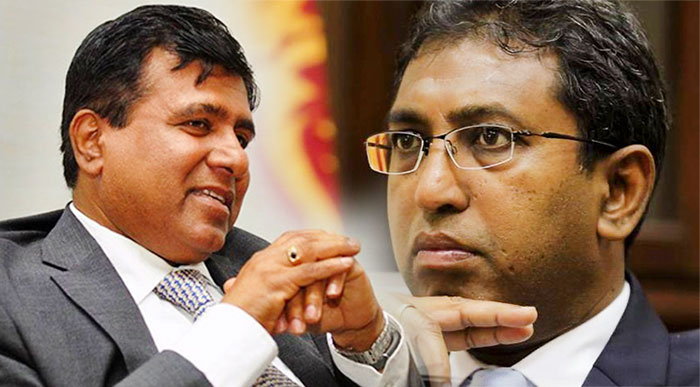
Prez addresses SLPPer’s concerns over new Uni and permanent land deeds to farmers

November 23rd, 2023

By Shamindra Ferdinando Courtesy The Island

SLPP MP Sarath Weerasekera yesterday (22) said that he voted for the 2024 Budget after having received an assurance from President Ranil Wickremesinghe that his concerns over the proposed move to allow Provincial Councils to establish Universities on their own and the issuance of permanent deeds to farmers would be addressed.

The former Public Security Minister said so when The Island asked him what made him vote for the Budget after having had expressed serious concerns over the above mentioned issues. During the Budget debate, the former Navy Chief of Staff strongly protested against both proposals.

The Colombo District MP Weerasekera was among 122 lawmakers who voted for the second Budget presented by President Ranil Wickremesinghe, in his capacity as the Finance Minister. In Sept. 2022, the UNP leader presented an interim budget for 2023. Seventy-seven voted against whereas 26 abstained.

Lawmaker Weerasekera said that President Wickremesinghe gave him an opportunity to meet him at the Presidential Secretariat immediately after he informed Prime Minister Dinesh Gunawardena and Chief Government Whip Prasanna Ranatunga on Tuesday morning (21) that he was contemplating skipping the vote. The move was meant to underscore his opposition to dangerous projects, the MP said.

Responding to another query, MP Weerasekera said that he reminded President Wickremesinghe the crisis caused by the enactment of the 21st Amendment. The former Minister said that he voted against the 21st Amendment, enacted on Oct 21, 2022, primarily because it denied the Head of State the opportunity to appoint the Inspector General of Police and judges to the Supreme Court without being subject to the approval of the Constitutional Council.

Of the 225-member parliament, 179 voted for the 21st Amendment, one voted against whereas 45 abstained.

Very much appreciating the opportunity to make representations to the President, MP Weerasekera said that Provincial Councils shouldn’t be allowed to set up Universities without recommendation/approval from the University Grants Commission (UGC). Even in terms of the 13th Amendment to the Constitution enacted at the behest of India, the degree awarding institutions are in the Concurrent List and not in the Provincial Council List, the ex-Minister said.

The former Law and Order Minister has warned that if the Provincial Councils were granted the authority, they could even set up Sharia and Wahhabi universities.

MP Weerasekera said that he received an assurance from the President that opening of Universities by Provincial Councils would be only on the basis of the UGC.

The MP said that the land issue should be addressed carefully. Weerasekera told The Island that even parliamentarians haven’t really understood the implications. The former Minister said that he urged the President to keep land powers with the State. Issuing permanent deeds can cause quite a crisis. If the government issued permanent deeds, debt ridden farmers will be able to sell their land and multinational companies will exploit the situation.”

The MP quoted the President as having said that foreigners wouldn’t be allowed to buy land and only a person in the same village could buy the available land to cultivate the same crop. The President has said that he was ready to discuss the issues at hand.

Asked whether he received instructions from the SLPP regarding the vote on the Second Reading, MP Weerasekera said that the party never took a decision on this matter. In fact, I asked the higher-ups to give MPs an opportunity to discuss the issues at hand before taking a stand but they didn’t bother to call a meeting. Therefore, I had to inform the Premier and the Chief Government Whip of his decision to abstain.”

Except for a few, the majority of SLPP parliamentary groups voted for the Budget on their own, MP Weerasekera said. That shouldn’t have happened under any circumstances, the ex-Minister added, urging the party leadership to give MPs an opportunity to discuss the entire gamut of issues before the vote on the Third Reading of the Budget on Dec 13 at 6 pm.

Aragalaya led to rise in underworld, drugs: Minister

November 23rd, 2023

Courtesy The Daily Mirror

COLOMBO (Daily Mirror) – The Aragalaya has increased underworld activities and drugs in the country, Public Security Minister Tiran Alles said today.

He told Parliament that police had to fully focus on Aragalaya and related incidents for about a year, which prevented them from engaging in other activities.

Drugs and underworld activities had increased during this period. We are taking measures to gradually curb the underworld and drugs,” he said.

The Minister said there were more than 20,000 vacancies in the Police Department and that steps were being taken to fill these vacancies step by step due to the economic crisis.

We have recruited 2,000 police personnel this year. We are planning to recruit 5,000 police personnel next year,” he said.


President Ranil says Sri Lanka does not allow ‘spy ships’ to dock

November 23rd, 2023

Courtesy Adaderana

President Ranil Wickremesinghe says there was no evidence indicating that the Chinese research vessels that had docked in Sri Lanka were ‘spy ships’.

We asked for evidence, and there was none. These were civilian ships.”

https://www.facebook.com/watch/?v=359472059822114

In an exclusive interview with the Indian news agency Firstpost, the Sri Lankan leader said the island nation would not allow ‘spy ships’ to make port calls here.

Responding to a question on the arrival of two Chinese research vessels in Sri Lanka amidst the concerns raised by India and the United States, Wickremesinghe emphasized that Sri Lanka always welcomes both research and military vessels, not only from China but also from other countries as well.

He pointed out that only the arrivals of Chinese vessels make headlines, despite Sri Lanka often allowing the entry of vessels from other countries as well.

When asked if he thinks Sri Lanka is caught in the ‘great power battle’ between China and India, Wickremesinghe assured that the island nation would not do anything that would compromise the national security of its neighbour.

Commenting on the progress of the debt restructuring process, the President said China, despite being the biggest bilateral creditor, opted to negotiate with Sri Lanka separately because it was not satisfied with the terms of the International Monetary Fund (IMF) and the World Bank. They feel that they should have a bigger role to play in the IMF. So they decided to opt out of it. It is making life more difficult for all of us who are in debt.”

He mentioned that it was not easy to negotiate the terms of Sri Lanka’s debt restructuring in international geopolitics.

In response to a question about India’s efforts to bring all creditors of Sri Lanka to one platform and China’s refusal to join it, Wickremesinghe said dealing with two groups [for debt restructuring] was not easy”, adding that the outcome would nonetheless be the same.

On October 11, the Sri Lankan government said it had reached an agreement on the key principles and indicative terms of a debt treatment with the Export-Import (Exim) Bank of China, noting that the agreement in principle covers approximately USD 4.2 billion of outstanding debt.

Wickremesinghe told Firstpost that the terms of the Colombo-Beijing debt deal have been shared with other creditors.

When asked about the country’s economic recovery, the President said Sri Lanka got through although the past year has been challenging. We are not out of the woods yet but will come out.” He said Sri Lanka still has to balance the budget and trade and increase its revenues. He expressed hopes that things would get better in 2024-2025.

Wickremesinghe is confident that there would not be any problems in unlocking the remainder of the IMF’s bailout package as Sri Lanka has fulfilled the global lender’s benchmarks.

Responding to a question on the upcoming presidential election, which he earlier said would definitely be held in 2024, Wickremesinghe said his priority is to get the economy in shape. Thereafter, I can decide what I want to do.”

Thousands of Sri Lankan workers set to depart for Israel amid war with Hamas

November 23rd, 2023

Courtesy Adaderana

Minister of Labour and Foreign Employment, Manusha Nanayakkara, has revealed that the Ministry has received over 10,000 applications to work on Israeli farms.

Supermarket manager Laknath Dias says the economic crisis in his native Sri Lanka is too much for him to bear. He is getting ready to fly to Israel in December to work as a farmhand for nearly 10 times the pay, despite the war with Hamas.

Dias is among 20,000 workers that Sri Lanka, desperate for dollars and remittances, plans to send to Israel starting early next month to work in the farm and construction sectors, a Sri Lankan minister told Reuters on Thursday.

Israel’s farms, most of which are in the centre and south of the country, traditionally rely on thousands of Thai and Palestinian workers to till the land and bring in the crops.

But many Thais fled Israel after the Hamas assault on Oct. 7, while the Palestinians have largely been banned from the workforce, forcing farms to send out an SOS for workers during the harvest.

Dias, 39, said he has experience living through conflict.

We lived during a war in Sri Lanka,” he said, referring to Sri Lanka’s civil war against Tamil separatists between 1983 and 2009.

I have worked in Colombo where there were suicide bombs going off at one point and even in conflict areas in the east around 2005. So I think we can manage. We are familiar with working on a farm so I’m confident we can face anything.”

He says his monthly salary of 72,000 rupees ($219) is not enough to sustain his family of five because of the high cost of living. Dias expects to make about 700,000 rupees as a farmhand in Israel, where he plans to work for five years.

Sri Lanka’s labour and foreign employment minister, Manusha Nanayakkara, said they had received more than 10,000 applications to work on Israeli farms and workers’ security would be considered.
We are also looking at sending another 10,000 workers for the construction sector next.”

Israel launched its war in Gaza after gunmen from Hamas burst across the border fence, killing 1,200 people and seizing about 240 hostages, according to Israeli tallies. Since then, more than 14,000 Gazans have been killed by Israeli bombardment, according to health authorities in the Hamas-ruled territory.

The Sri Lankan workers will join some 9,000 compatriots already in Israel, working in farming and care for the elderly.

Sri Lanka, an island of 22 million, saw its economy contract 7.8% last year during the country’s worst economic crisis in more than seven decades, pushing 2.5 million people into poverty, according to the World Bank.

It has seen a steep increase in the number of people migrating since the crisis, with about 312,000 leaving in 2022 and 268,000 this year, government data shows. They have gone to countries including Saudi Arabia, the United Arab Emirates, Britain, Canada and New Zealand.

Source – Hindustan Times

President Ranil unveils plans to revive Sri Lanka’s agricultural exports; establish Agro–Technology University

November 23rd, 2023

Courtesy Adaderana

In a significant and forward-looking speech at the 25th Presidential Awards of the Export Development Board (EDB), held today at the Bandaranaike Memorial International Conference Hall (BMICH), President Ranil Wickremesinghe outlined a comprehensive plan to revitalize Sri Lanka’s agricultural sector for export, acknowledging past challenges and missed opportunities.

The President also underscored the importance of modernizing agricultural practices and enhancing research capabilities. He revealed plans to restructure and modernize existing agricultural research institutes, culminating in the establishment of the Agro-Technology University of Sri Lanka. This institution aims to support extension services and further innovation in the sector.

Reflecting on historical setbacks in the agricultural sector due to land reforms in 1972, President Wickremesinghe emphasized their adverse impact on agricultural exports. The President cited missed opportunities to focus on exports during key periods, such as the 60s, early 70s and post-war periods, attributing these lapses to internal conflicts and policy choices. The President expressed regret for not capitalizing on the country’s inherent strengths in agriculture, which other successful nations like Singapore had recognized.

Acknowledging the past neglect of agriculture due to various constraints, he emphasized the need to reposition the sector as a key player in the nation’s export strategy.

The President outlined a multi-pronged approach to agricultural development, targeting both small and large-scale farmers. He stressed the importance of providing financial support for smallholders to embrace agro-technology, aiming to enhance productivity. Additionally, plans were revealed to grant freehold status to individuals holding land development permits, fostering a sense of ownership and incentivizing further development.

In a bid to create opportunities for large-scale agriculture, President Wickremesinghe announced the allocation of previously undeveloped areas, including portions of the Mahaweli scheme and lands owned by government plantation corporations, for agricultural purposes. This strategic move is expected to bring approximately 300,000 acres of land under cultivation within the next few years, requiring significant capital investment.

To ensure the success of these initiatives, President Wickremesinghe emphasized the need for extension services, collaboration with the private sector and the establishment of an agro-technology university. He outlined plans to review the performance of regional plantation companies and shift towards contract farming in the tea and rubber sectors.

Turning to broader economic challenges, President Wickremesinghe acknowledged the country’s lack of growth and opportunities over the past two years. He attributed these issues to a historical imbalance in the trade and emphasized the critical need to address the budget deficit and balance of trade and highlighted the urgency of increasing exports. The President elaborated on measures to improve the country’s fiscal situation and the availability of funds for small and medium industries affected by the economic crisis.

In a global context, President Wickremesinghe acknowledged the challenges posed by international competitors such as China, Vietnam, Thailand and Malaysia in the export-oriented industries. Despite this, he stressed the urgency of the current export drive, emphasizing the need to secure the country’s future and prevent further brain drain.

The President highlighted the importance of attracting investments, both foreign and domestic, to drive innovation and expand export markets. He announced financial support for small and medium industries, underlining the government’s commitment to preserving and strengthening the supply chain.

President Wickremesinghe reiterated Sri Lanka’s historical strength as an exporter of agricultural goods. He urged a return to these roots, emphasizing the potential for value-added exports in tea, rubber and coconut. The President encouraged stakeholders to explore new areas of exports, inviting investments and partnerships to ensure the sustained growth of the country’s export-driven economy.

Concluding his address, President Ranil Wickremesinghe positioned the revival of Sri Lanka’s agricultural exports as a requirement for the nation’s economic turnaround. By combining support for smallholders, large-scale agricultural initiatives and strategic planning for export diversification, the President set forth a comprehensive vision aimed at harnessing Sri Lanka’s rich agricultural legacy for a prosperous future.

The ambitious plans outlined by President Ranil Wickremesinghe signal a pivotal moment for Sri Lanka’s agricultural sector, offering a roadmap for economic revitalization and a renewed focus on export-driven growth.

President Ranil Wickremesinghe conferred the Presidential Awards to recognize the exceptional contributions of Sri Lankan exporters to the export sector and overall economic advancement. In addition to the awards ceremony, President Ranil Wickremesinghe presided over the launch of the Sri Lanka Export Brand, the online application https:pea.edb.gov.lk dedicated to Presidential Export Awards.

The event was attended by Ministers Nimal Siripala de Silva, Bandula Gunawardena, Mahinda Amaraweera, Douglas Devananda, Jeevan Thondaman, State Ministers Dilum Amunugama, Taraka Balasuriya, Kanaka Herath, Aravinda Kumar, Secretary of the Investment Promotion Ministry, M. M. Naimuddin, Dr. Kingsley Barnard, Chairman/Chief Executive Officer of the EDB, Foreign Ambassadors and other officials.

Thailand-Sri Lanka free trade talks set to start next week

November 23rd, 2023

Courtesy Adaderana

Thailand and Sri Lanka plan to conclude negotiations for a bilateral free trade agreement (FTA) by the end of this year, with the pact scheduled for signature in early February 2024, says the chief of trade negotiations of Thailand. 

Chotima lemsawasdikul, director-general of the Thailand’s Trade Negotiations Department, said Thai and Sri Lankan officials are slated to meet Nov 27-29 this year for the eighth round of FTA talks, with Thailand hosting the discussions, the Bangkok Post reported. 

The negotiations aim to reach a substantial conclusion, with another round of talks in December hosted by Sri Lanka, she said. 

Ms Chotima said a final round of negotiations hosted by Sri Lanka is slated for January, aligning with the goal set earlier for a FTA signing on Feb 3, 2024, coinciding with the anniversary of Sri Lanka’s independence. 

The FTA signing is likely to take place in Sri Lanka, she said.

Despite Sri Lanka’s relatively small size and population of only 22 million, studies by the department found the country holds an important geographic position in the Indian Ocean, making it a hub for maritime transport, the report said. 

The island also possesses an abundance of natural resources, such as precious minerals and seafood. 

A Thailand-Sri Lanka FTA is projected to expand Thailand’s economy by 0.02%, equivalent to US$80 million. This includes the expansion of investments and the value of Thai exports to Sri Lanka, the Bangkok Post reports. 

Products that could benefit from the pact include automobiles and auto components, machinery, electrical appliances, metals, sugar and plastics, according to the department. 

Industries in which Thailand could expand its investments in Sri Lanka include processed foods, beverages, textiles, garments and jewellery. 

Two-way trade between Thailand and Sri Lanka amounted to $358 million in 2022, down 16.5% from 2021. Thailand exported goods worth $271 million to Sri Lanka and imported goods valued at $86.9 million. 

In the first nine months of this year, two-way trade between Thailand and Sri Lanka tallied $285 million, up 1.79% year-on-year, with exports from Thailand worth roughly $188 million, a decrease of 12.4%, according to the Bangkok Post. 

Sri Lanka and Thailand first considered establishing an FTA in 2016 when Somkid Jatusripitak, then deputy prime minister of Thailand, made an official visit to the island nation. 

The countries signed a memorandum of understanding on technical cooperation, a letter of intent on cooperation in the area of small and medium-sized enterprise development, and a joint programme on tourism for the period 2016-18. 

The Thai cabinet approved the negotiation framework for the PTA talks with Sri Lanka on May 8, 2018. The framework covers trade in goods, services, investment and comprehensive economic cooperation. 

Source: Bangkok Post 

–Agencies


Copyright © 2026 LankaWeb.com. All Rights Reserved. Powered by Wordpress